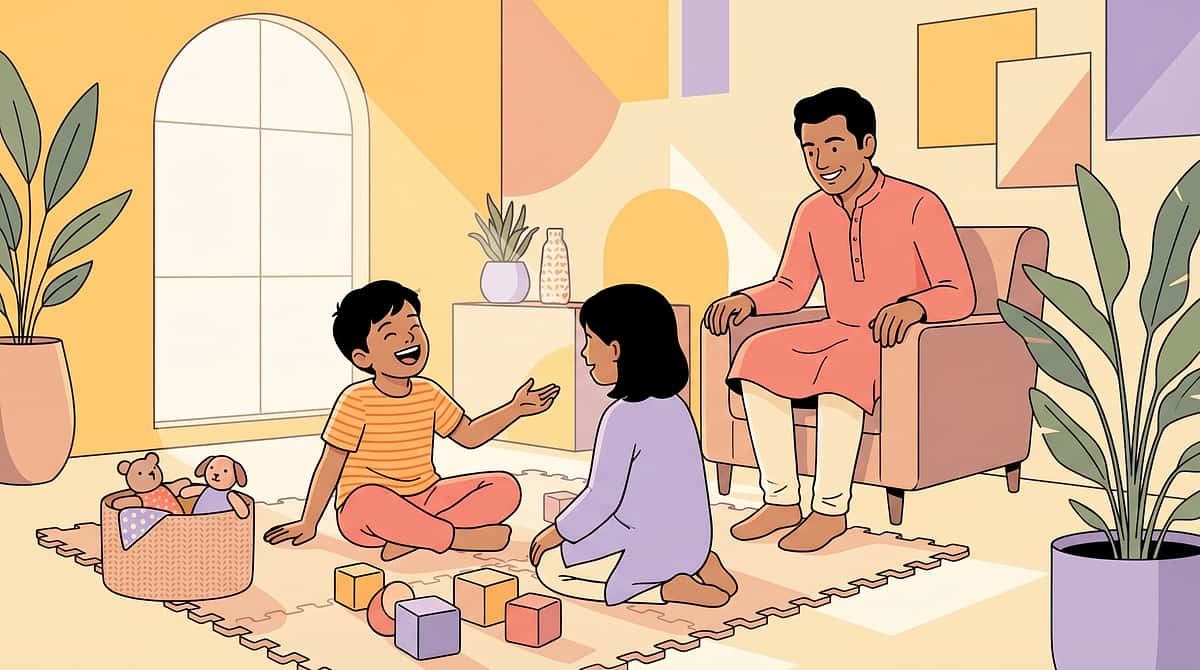
He can ask for juice. He can't say "I love you."
His grandmother walked through the door after three months away and his face lit up with pure joy. He ran to hug her, threw his whole body into her arms. And then — nothing. His AAC device was full of food names and toy labels, but the words for I missed you so much simply were not there.
You are not failing. Your child has so much to say — the vocabulary just hasn't caught up yet.
🏛️ Pinnacle Blooms Consortium
Domain B: Social Communication & AAC
Episode B-227
WHO Nurturing Care Framework (2018): Early identification and parental responsiveness directly determine communication outcomes.
ACT I — Recognition
Millions of families are navigating this exact gap.
The vocabulary gap between requests and connection is not a failure of the child or the family — it is a systemic gap in how AAC systems are typically built. Requesting vocabulary meets immediate needs. Social vocabulary builds a life. Both are essential, and both can be developed with the right materials.
80%
AAC Social Vocabulary Gap
of AAC users have robust requesting vocabulary but limited social vocabulary
1 in 36
Children with Autism (USA)
diagnosed with autism in the USA alone (CDC, 2023)
21M+
GPT-OS® Sessions
therapy sessions delivered under GPT-OS® across 70+ centres
India carries one of the world's largest paediatric neurodevelopmental populations. With limited specialist access outside metros, parent-led home intervention is not just preferred — it is the primary mode of therapeutic delivery for millions of families.
You are among millions of families navigating this. You are seen.
Sources: PMC11506176 | PMC10955541 | CDC Autism Data (2023) | WHO Disability Report (2023) 📞9100 181 181
Neuroscience
The brain wires for survival first. Connection vocabulary comes second.
The Science
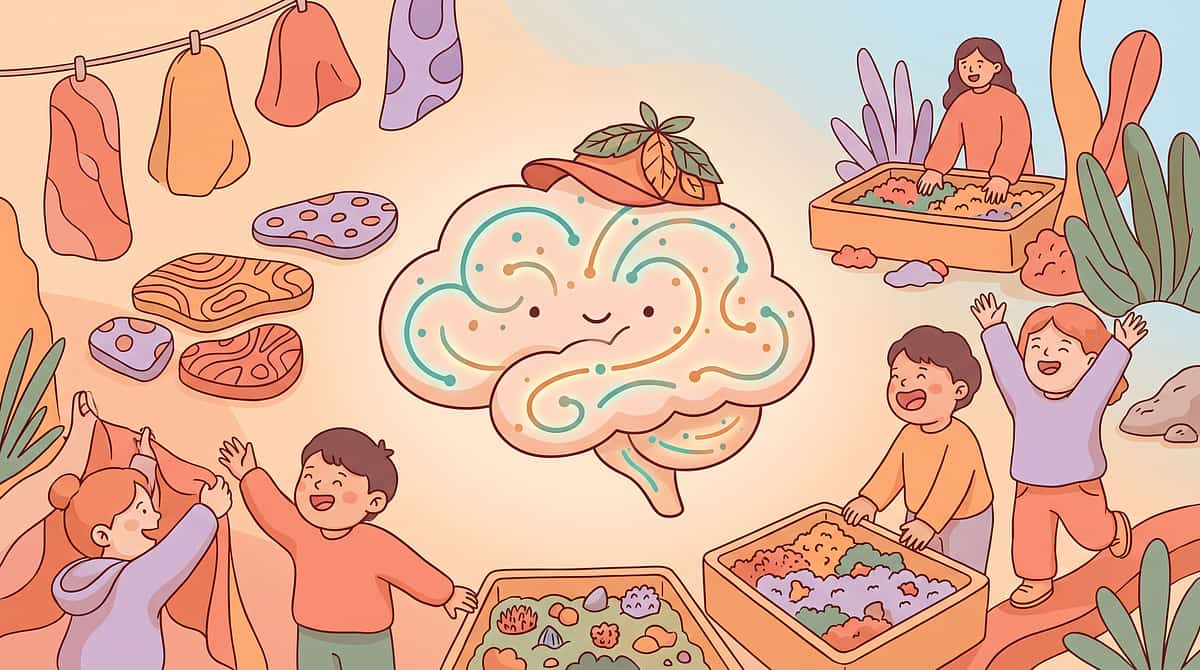
The brain's language centres (Broca's area, Wernicke's area) develop requesting functions first because they are tied to survival circuits — getting food, signalling distress, demanding attention. Social and pragmatic language functions recruit the right hemisphere, prefrontal cortex, and limbic system — areas that require more complex social scaffolding to activate.
In autistic neurology, pragmatic language — the social USE of words — requires explicit instruction rather than incidental learning. The brain can acquire vocabulary symbols readily; what it needs support for is when, why, and how to use words for social connection.
Plain English for Parents
Think of it this way: your child's AAC device has a "I need things" highway that is well-paved and fast. The "I feel things and want to share them" road is still under construction — not because the destination doesn't exist, but because we haven't laid the road yet.
Social vocabulary IS learnable. It needs explicit building, not waiting.
This is a vocabulary access issue, not a social motivation issue. When the words are available, the connection follows.
Frontiers in Integrative Neuroscience (2020): Pragmatic language development in autism requires explicit intervention at the social-cognitive interface, distinct from lexical vocabulary acquisition. DOI: 10.3389/fnint.2020.556660
ACT I — Development
Social vocabulary emerges across the entire developmental arc — and can be built at any age.
Age 0–1
Vocalising, eye contact, joint attention
Age 2–3
First words, requesting, basic needs
Age 4–5
Social phrases, reactions, emotion words
Age 6–12
Conversational narrative, opinion vocabulary
Age 12–18+
Relationship language, humour & conversational repair
↑ B-227 Territory — Entire Zone — Social vocabulary must be explicitly added and modelled at every stage.
For AAC users, this vocabulary must be explicitly added and modelled at every stage. The window is not closed at age 5, 10, or 15. Every age is the right age to build vocabulary for connection. Social vocabulary gaps also co-occur with sensory processing differences, anxiety, and executive function differences — all addressable within the GPT-OS® FusionModule™.
Wherever your child is on this timeline — that is the right starting point. Progress is always possible.
Social vocabulary develops differently from requesting vocabulary because it depends on social context, a responsive communication partner, and repeated naturalistic exposure. It cannot be taught well as a stand-alone drill. AAC systems are often programmed first for survival and requesting language — because those words are urgent and functional — but that can leave social language as an afterthought. When that gap stays unaddressed, it affects more than conversation: it can shape identity, belonging, friendship, and mental health.
What Gets Programmed First
- food requests
- toy labels
- activity choices
- yes/no
- help/stop
- basic needs
What Gets Left Out
- I missed you
- that's funny
- guess what
- I love you
- you're my best friend
- I'm proud of you
- just kidding
- tell me more
Neuroscience tells us that social language acquisition is not limited to early childhood. The brain's social circuits — including mirror neuron systems, the default mode network, and limbic pathways — remain active and plastic across the lifespan. That means late intervention can still produce meaningful gains. With the right teaching, modelling, and practice, adolescents and adults can absolutely expand social vocabulary and strengthen social connection.
Key Insight: There is no age at which social vocabulary becomes impossible to learn. The brain's social language circuits remain plastic throughout adolescence and into adulthood. Starting at age 12 or 15 is not "too late" — it is exactly the right time.
WHO CCD Package (2023) | PMC9978394 | UNICEF MICS Communication Indicators | Tager-Flusberg et al. (2009) | Kasari et al. (2014) | ASHA Social Communication Guidelines (2022)

🛡️ Level I Evidence
The science is clear. Social vocabulary in AAC transforms outcomes.
Systematic Review + Randomised Controlled Trials · Clinically Validated · Home-Applicable · Parent-Proven
ASHA Research (2024)
AAC users who receive explicit social vocabulary intervention demonstrate measurably greater communicative competence, peer acceptance, and quality of life compared to those with request-only vocabulary.
Light & McNaughton (2015)
Communicative competence in AAC requires all four domains — linguistic, operational, social, and strategic. The social domain is most predictive of long-term life outcomes including employment and relationships.
Partner Training Research (Systematic Review)
Communication partner training in social interaction with AAC users is the single strongest predictor of AAC success across all communicative functions.
India Evidence — Padmanabha et al. (2019)
Home-based communication interventions with parent training demonstrated significant outcomes in Indian paediatric populations. Indian Journal of Pediatrics. DOI: 10.1007/s12098-018-2747-4
Clinically validated. Home-applicable. Parent-proven. The evidence demands we give AAC users the full vocabulary of human connection.
PMC11506176 | PMC10955541 | PMC9978394 | NCAEP Evidence-Based Practices Report (2020) | ASHA AAC Portal | WHO NCF (2018)
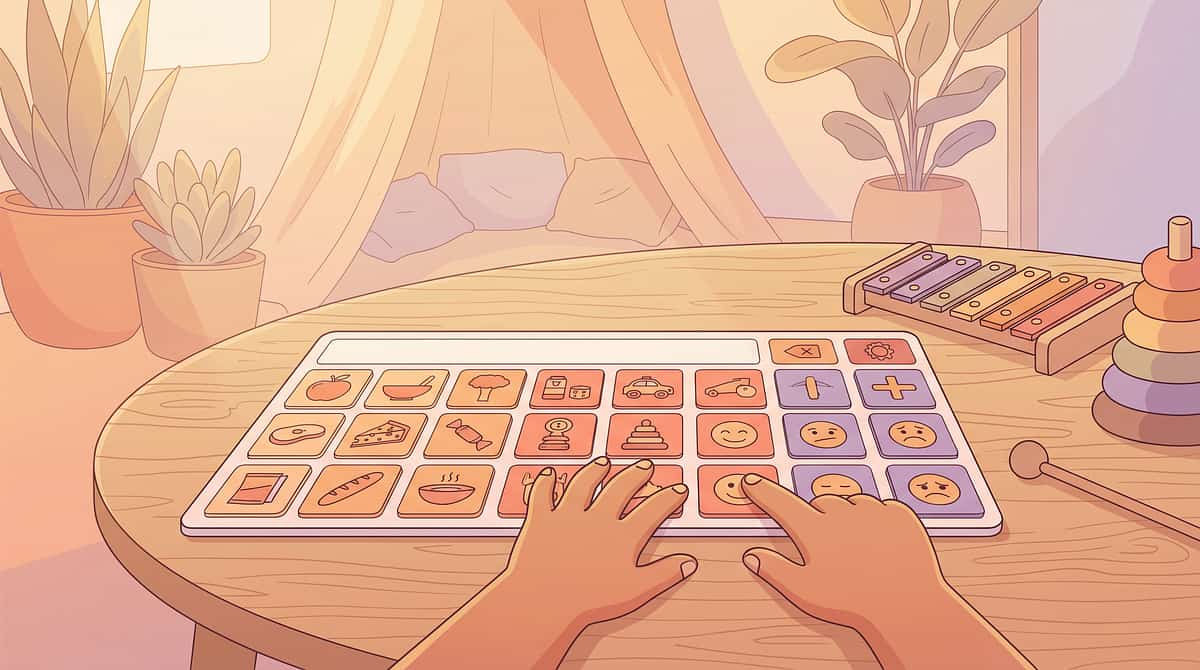
ACT II — Knowledge
Social Vocabulary Expansion in AAC
Parent-Friendly Alias: "Building the Words for Connection"
Definition
Social vocabulary in AAC refers to the words and phrases that enable communication beyond instrumental functions (requesting, rejecting, labelling) to include the full range of social-pragmatic functions: commenting and reacting, sharing experiences and stories, expressing emotions and opinions, building and maintaining relationships, participating in humour and play, asking questions that show care, and maintaining conversational flow.
This is the vocabulary of belonging — not just surviving.
Why It Matters
Most AAC systems are built primarily around requesting vocabulary because requests have immediate, visible outcomes (the child gets something). Social vocabulary has less visible immediate outcomes — but it is the vocabulary that builds friendships, expresses love, shares life, and determines long-term quality and meaning of life.
📱 Domain
Social Communication & AAC
👶 Age Range
2–18+ years
⏱️ Daily Practice
15–20 min embedded in natural activities
Technique ID: B-227
Series: Communication Access & AAC
Episode 227
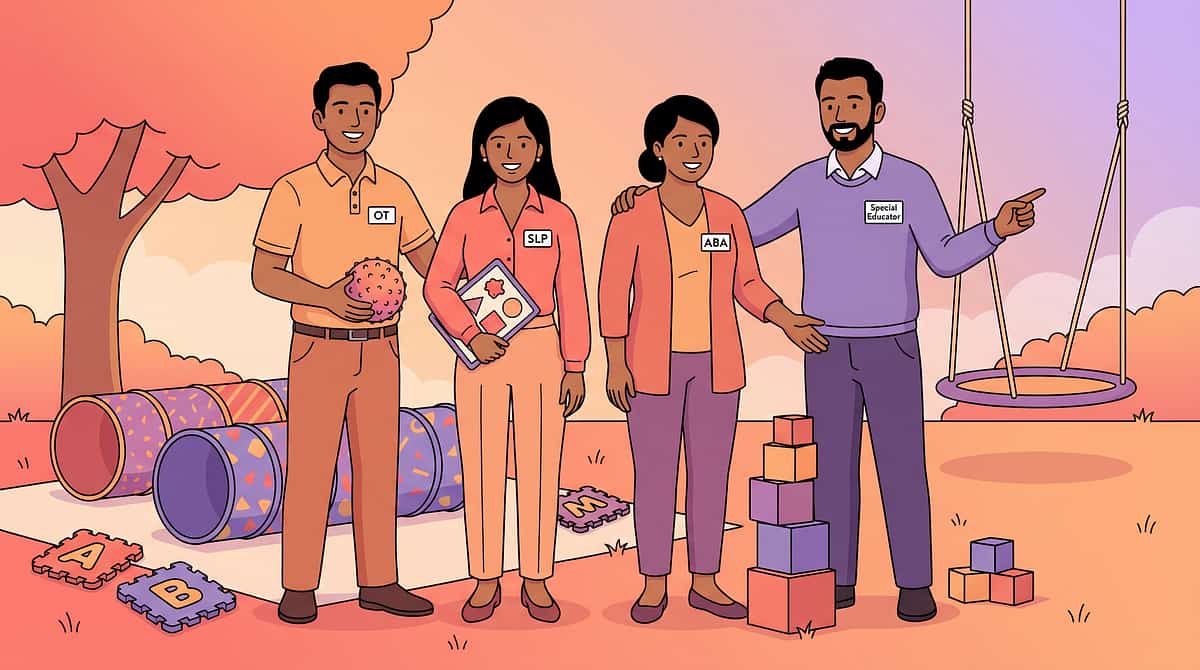
Who Uses This Technique
Social vocabulary in AAC is a consortium discipline — every specialist on your child's team has a role.
Speech-Language Pathologist (Primary Lead)
The SLP drives social vocabulary selection, AAC system programming, pragmatic language assessment, and partner training. The SLP determines which social vocabulary categories are prioritised based on the child's communication profile, environment, and relationships.
ABA / BCBA Therapist
The behaviour analyst designs reinforcement systems that make social communication rewarding, shapes social initiation through structured practice, and ensures generalisation of social vocabulary across settings and partners.
Occupational Therapist
The OT addresses the sensory and motor foundations of social engagement — ensuring the child can access their AAC device comfortably, tolerate social proximity, and regulate themselves during social interactions.
Special Educator
The SpEd teacher integrates social vocabulary into classroom participation — sharing time, peer interaction, group discussion, and academic social language requirements.
NeuroDevelopmental Paediatrician
The NeuroDev specialist provides the diagnostic and pharmacological context, addresses co-occurring conditions (anxiety, ADHD) that affect social initiation, and coordinates the medical layer of the team.
"The brain doesn't organise by therapy type. Social communication requires all of them working together — which is why GPT-OS® FusionModule™ coordinates them as one converged pathway."
📞9100 181 181 | UNICEF/WHO Nurturing Care Framework for SLPs (2022): Multi-disciplinary convergence in communication support.
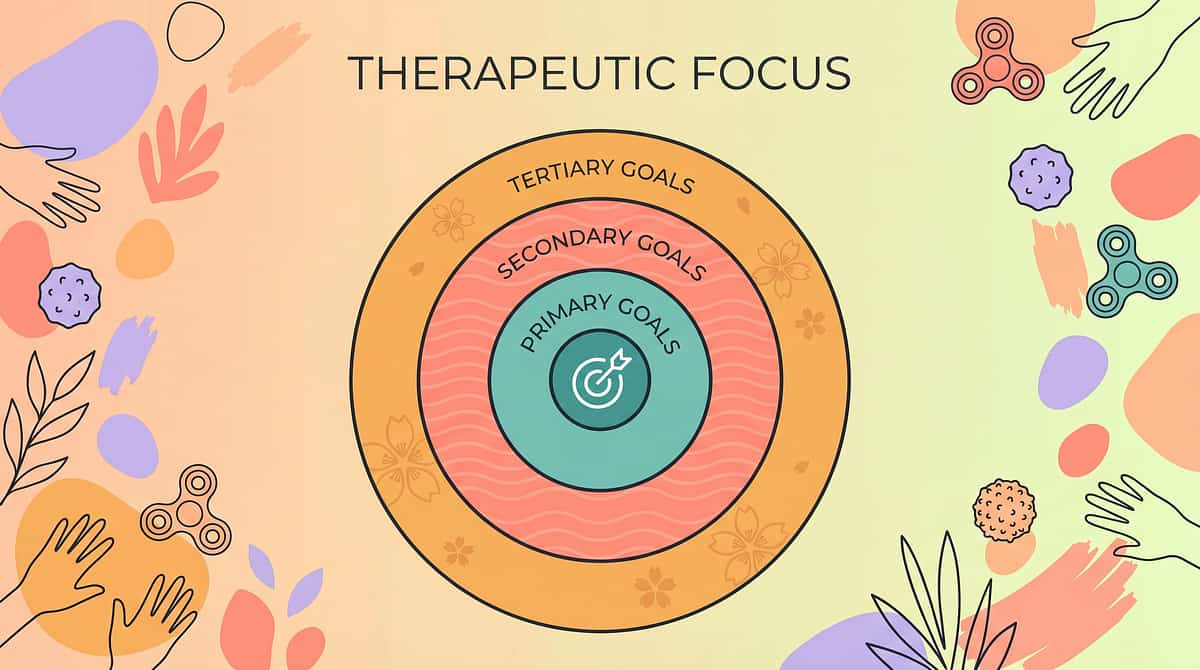
Therapeutic Targets
Social vocabulary expansion is a precision intervention — here is exactly what it targets.
The bullseye framework shows how precision social vocabulary intervention cascades outward — from immediate word access, through relationship and regulatory benefits, to lifelong community participation and quality of life.
Observable Behaviour Indicators
Child uses AAC to comment on experiences (not just request)
Child expresses emotions beyond "happy/sad/mad"
Child initiates social exchanges with peers or family
Child uses humour and playfulness vocabulary
Child asks social questions: "How was your day?" / "Are you okay?"
Child shares stories or recounts events through AAC
Meta-analysis (World J Clin Cases, 2024): Social communication intervention effectively promoted social skills, peer interaction readiness, and adaptive behaviour. PMC10955541
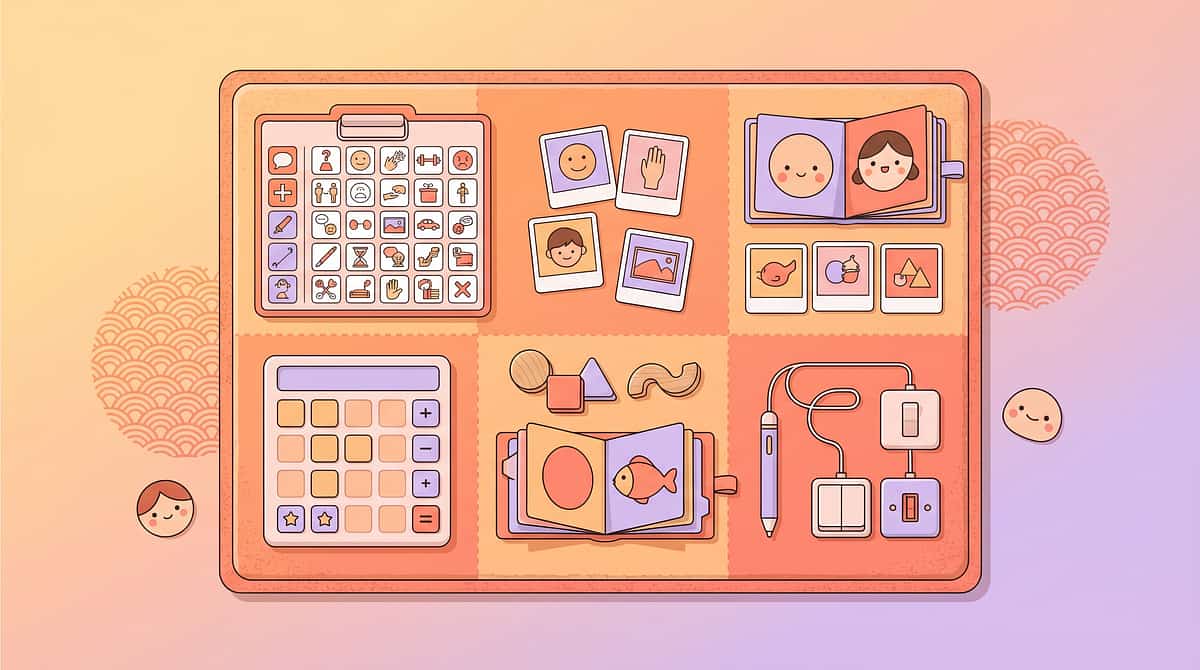
ACT II — Materials Overview
9 Materials That Unlock the Vocabulary of Connection
Most can be started today. Below is your complete guide to each material — what it is, why it works, and where to find it.
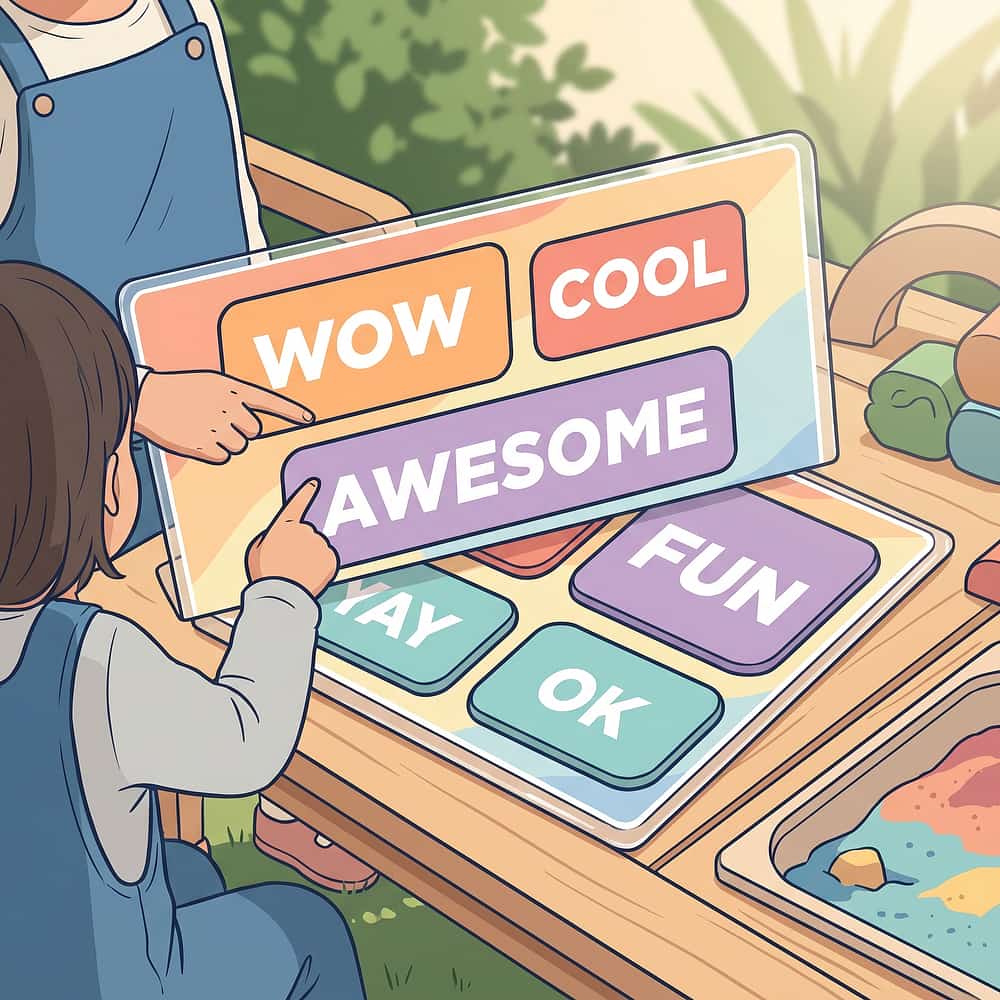
1. Social Comments & Reactions Board
High-frequency social reaction words for genuine engagement
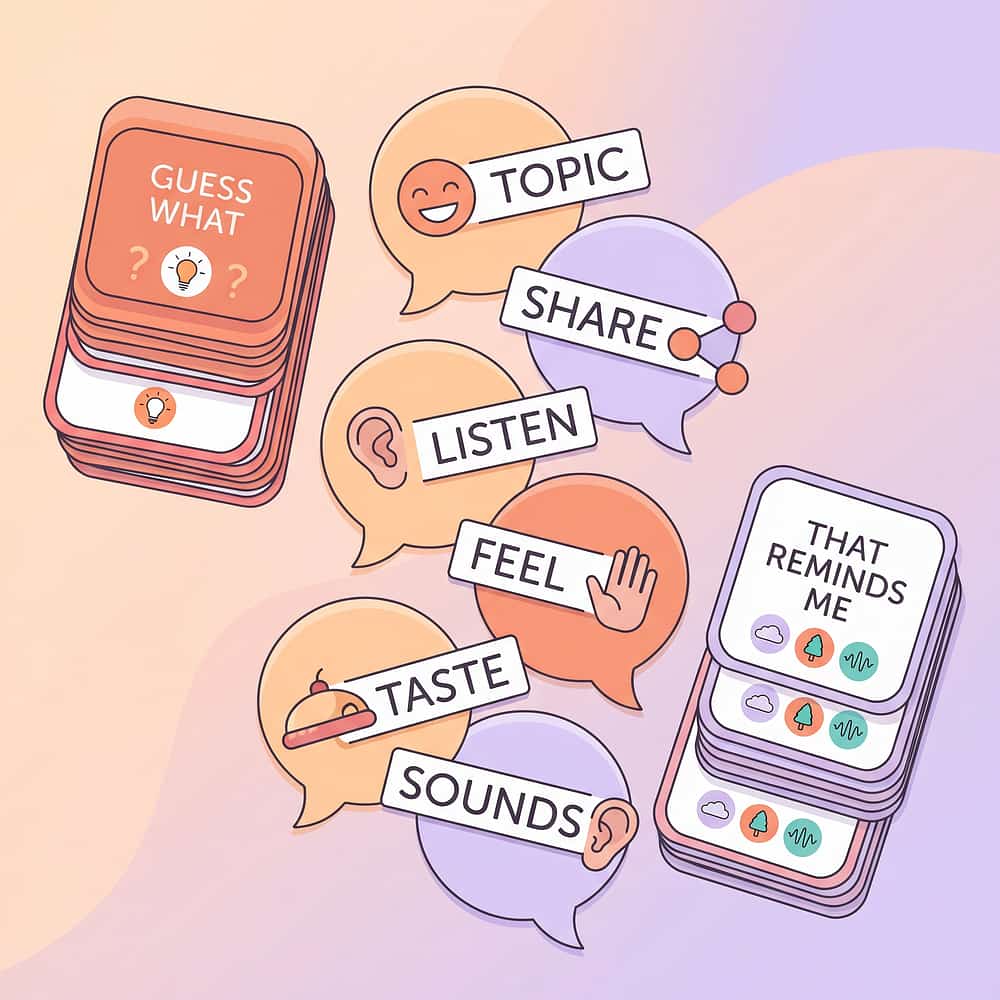
2. Conversational Maintenance Cards
Conversation-flow words that transform statements into dialogue
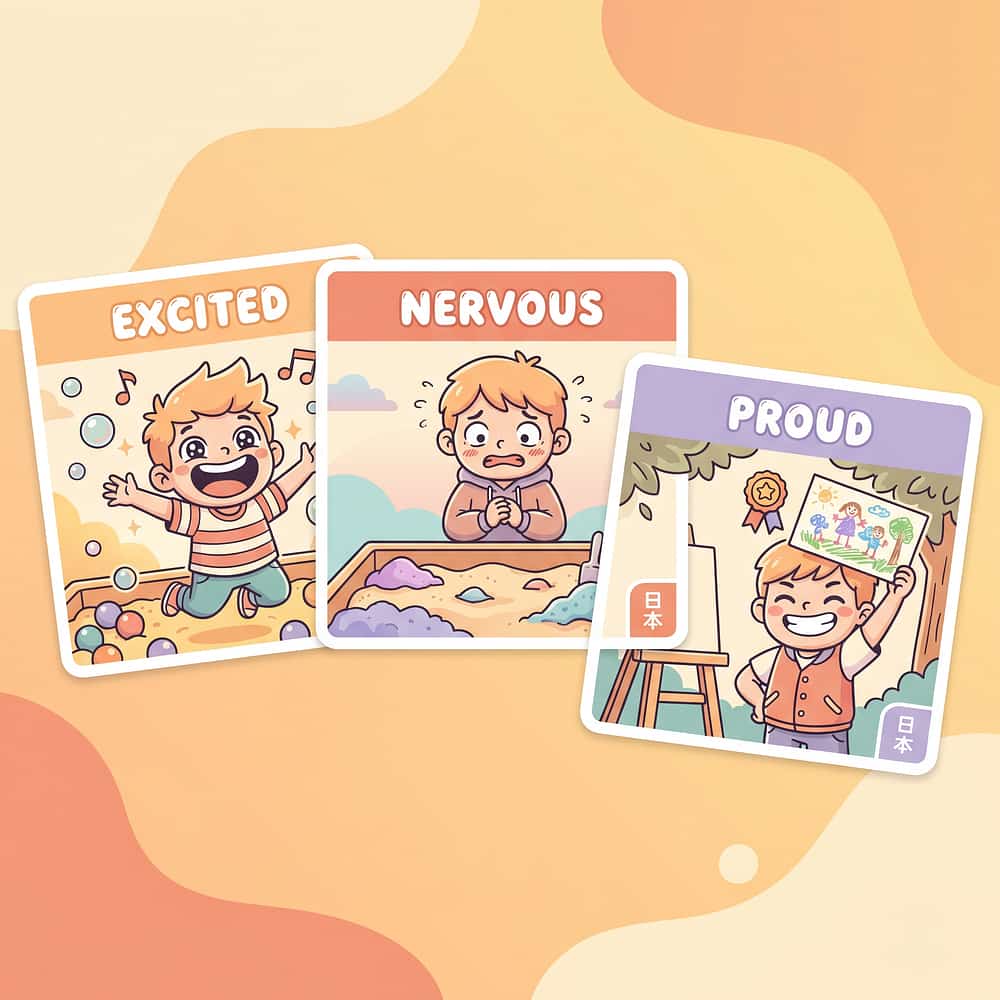
3. Emotion & Feeling Vocabulary
Comprehensive emotion vocabulary with facial expression images

4. Friendship & Relationship Vocabulary
Words that let AAC users actively build and repair relationships
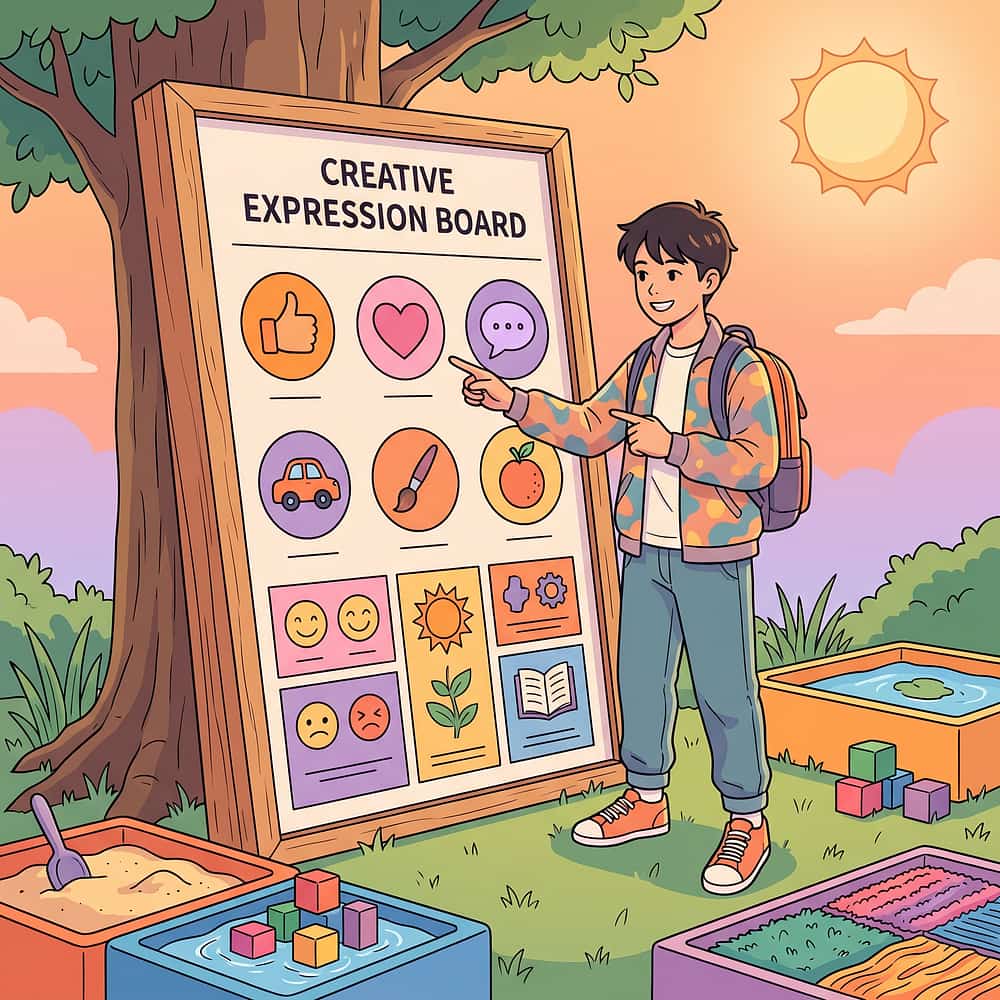
5. Opinion & Preference Tools
Opinion vocabulary that reveals personality and individuality
6. Narrative & Story-Sharing Vocabulary
Storytelling vocabulary so children can share their lived experiences
7. Social Question Words
Questions that signal "I'm interested in you" — acts of connection
8. Humour & Playfulness Vocabulary
Words for jokes, playfulness, and shared laughter
9. Social Modelling Videos & Partner Training
The single strongest predictor of AAC success
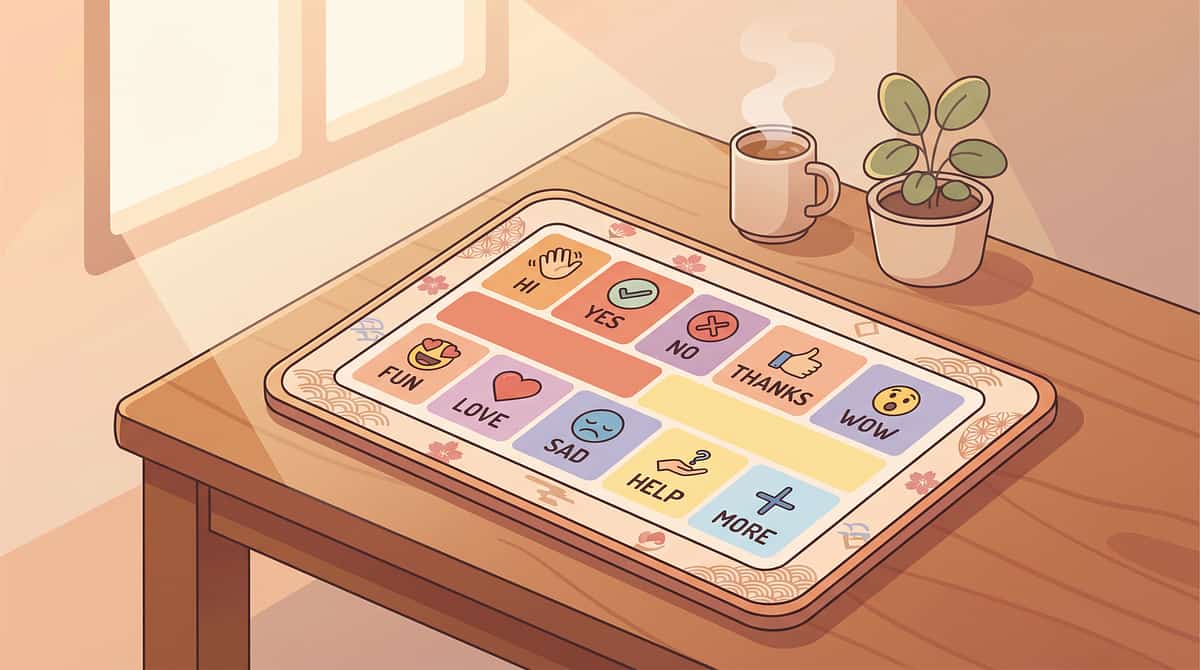
Material 1
Social Comments & Reactions Core Board
What It Is
A dedicated communication board or AAC page featuring high-frequency social reaction words: wow, cool, awesome, yay, uh oh, that's funny, I like that, gross, no way, that's weird, I love it, eww.
Why It Works
These are the verbal "gasps and nods" of conversation — they show engagement, personality, and presence. Speaking peers use these words hundreds of times daily. AAC users deserve equal access.
How to Get It
Canon Category: Communication Boards / Social Vocabulary
Price Range: ₹200–1,500 (printed board) | ₹0 for DIY
Price Range: ₹200–1,500 (printed board) | ₹0 for DIY
🏛️Pinnacle Recommends: Print free from AssistiveWare / Boardmaker community resources
DIY Version: A4 paper + marker + plastic sleeve. Write wow, cool, that's funny, yay, uh oh in large print. Stick on wall at child's eye level. Costs ₹0 and works immediately.
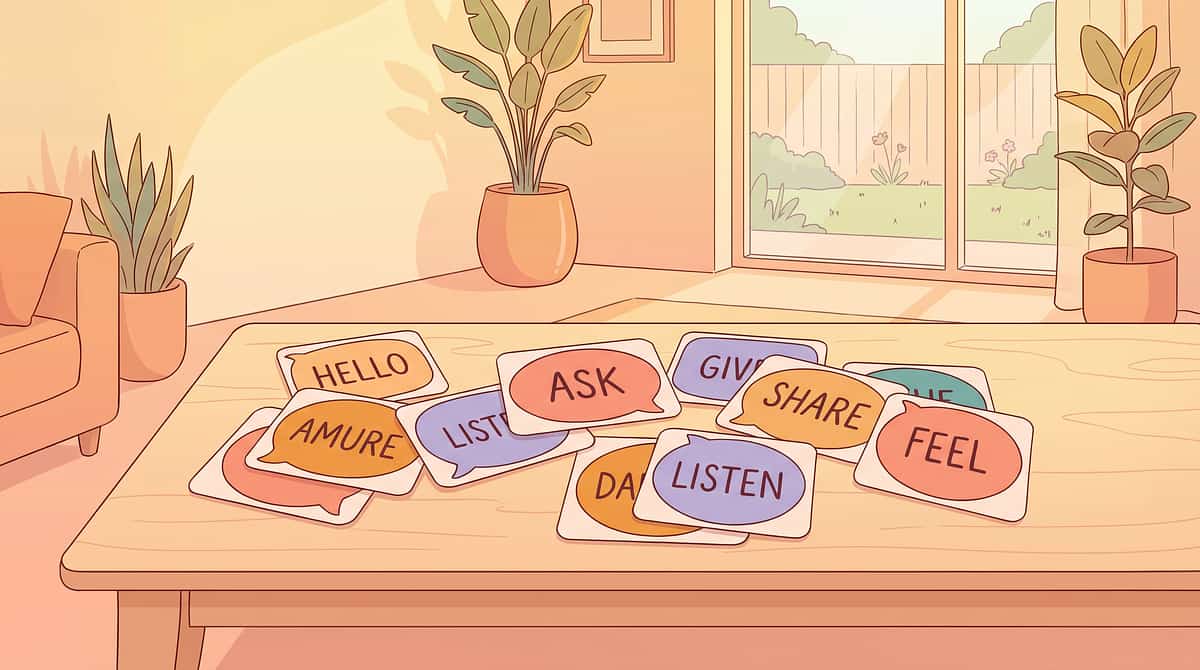
Material 2
Conversational Maintenance Vocabulary Cards
What It Is
Cards or AAC page with conversation-flow words: guess what, and then, that reminds me, wait, one more thing, know what?, hold on, speaking of that, tell me more.
Why It Works
These words transform communication from isolated statements into flowing dialogue. They give the AAC user the power to hold the floor, extend topics, and signal they have more to say — turning a child from a statement-maker into a real conversational partner.
How to Get It
Canon Category: Communication Boards / Conversational Language
Price Range: ₹150–1,000
Price Range: ₹150–1,000
DIY (₹0)
Print and laminate conversation flow word strips. Index cards with conversation words — "Guess what" + a simple drawing. Laminate with cling film. These cost almost nothing and begin building conversational momentum immediately.
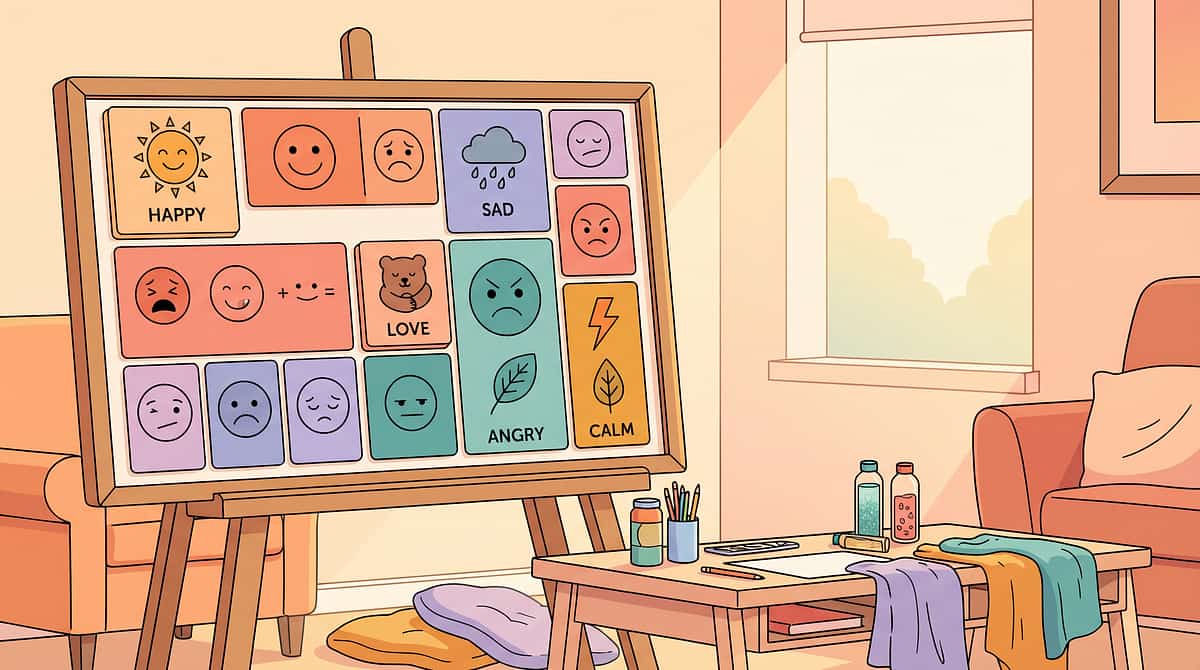
Material 3
Emotion & Feeling Expression Vocabulary
What It Is
AAC board or digital page with comprehensive emotion vocabulary: excited, nervous, proud, embarrassed, frustrated, confused, surprised, lonely, grateful, jealous, overwhelmed, calm, silly — paired with facial expression images for instant visual connection.
Why It Works
Emotion vocabulary supports both expression AND regulation. A child who can say "I'm frustrated" is already managing better than one who can only act frustrated. Naming an emotion is the first step to regulating it — this material is simultaneously a communication tool and an emotional regulation intervention.
How to Get It
Canon Category: Emotion Regulation Materials / Communication Boards
Price Range: ₹200–1,500
Price Range: ₹200–1,500
DIY (₹0): Draw 8 faces on paper: happy, sad, angry, scared, excited, nervous, proud, silly. Label each. That is enough to start today.
Free emotion symbols are also available from Widgit or Boardmaker community resources — printable and immediately usable.

Material 4
Friendship & Relationship Vocabulary Materials
What It Is
Vocabulary set featuring relationship words: I missed you, I love you, you're my friend, want to play together?, that was fun, let's do that again, I'm sorry, are you okay?, I was thinking about you.
Why It Works
Friendships require explicit words — not just shared activities. These words let AAC users actively build, express, and repair relationships rather than passively receiving social attention. When a child can say "I missed you," they become an initiator of love — not just a recipient of it.
How to Get It
Canon Category: Social Skills Materials / Communication Boards
Price Range: ₹200–1,200
Price Range: ₹200–1,200
DIY (₹0): WhatsApp family photos + sticky notes. Write "I missed you" on grandparent's photo. Contextualises the vocabulary immediately — the word is attached to the person who needs to hear it.
📞 Contact 9100 181 181 for EverydayTherapyProgramme™ friendship vocabulary templates

Material 5
Opinion & Preference Expression Tools
What It Is
AAC board with opinion vocabulary: I think, I like, I don't like, my favorite is, the best part, I prefer, I agree, I don't think so, I wonder, in my opinion.
Why It Works
Opinions reveal personality. When AAC users can express what they think and prefer, they become known as individuals — not just people with needs. Opinion vocabulary is the vocabulary of identity, and every child deserves to be known.
How to Get It
Canon Category: Communication Boards / Expressive Language
Price Range: ₹150–1,000
Price Range: ₹150–1,000
DIY (₹0): A "My Favourites" notebook — child points to entries. Opinion made physical without any purchased material. Works immediately and creates a personalised artefact the child owns.

Material 6
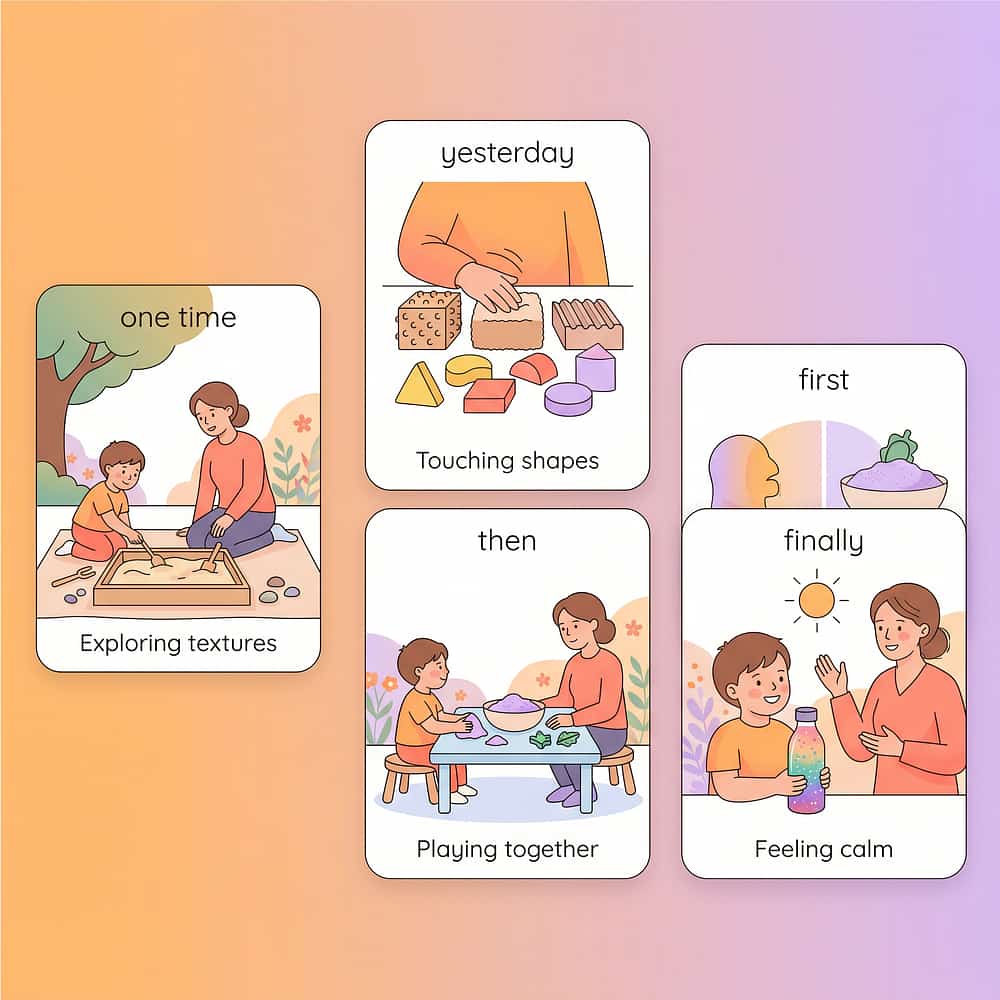
Narrative & Story-Sharing Vocabulary
What It Is
Storytelling vocabulary supports: one time, yesterday, first...then...finally, the funny part was, guess what happened, at school today, remember when, and then, the problem was.
Why It Works
Stories are how humans share their lives. Without narrative vocabulary, AAC users live experiences but cannot communicate them — invisible in the social world. When a child can say "guess what happened at school today," they become a storyteller. They become present in family life in an entirely new way.
How to Get It
Canon Category: Narrative Language / Communication Boards
Price Range: ₹150–1,200
Price Range: ₹150–1,200
DIY (₹0): Story dice from old dice + stickers, OR simply 5 index cards: first / then / next / the funny part / the end. These 5 cards alone give a child the structure of a story.
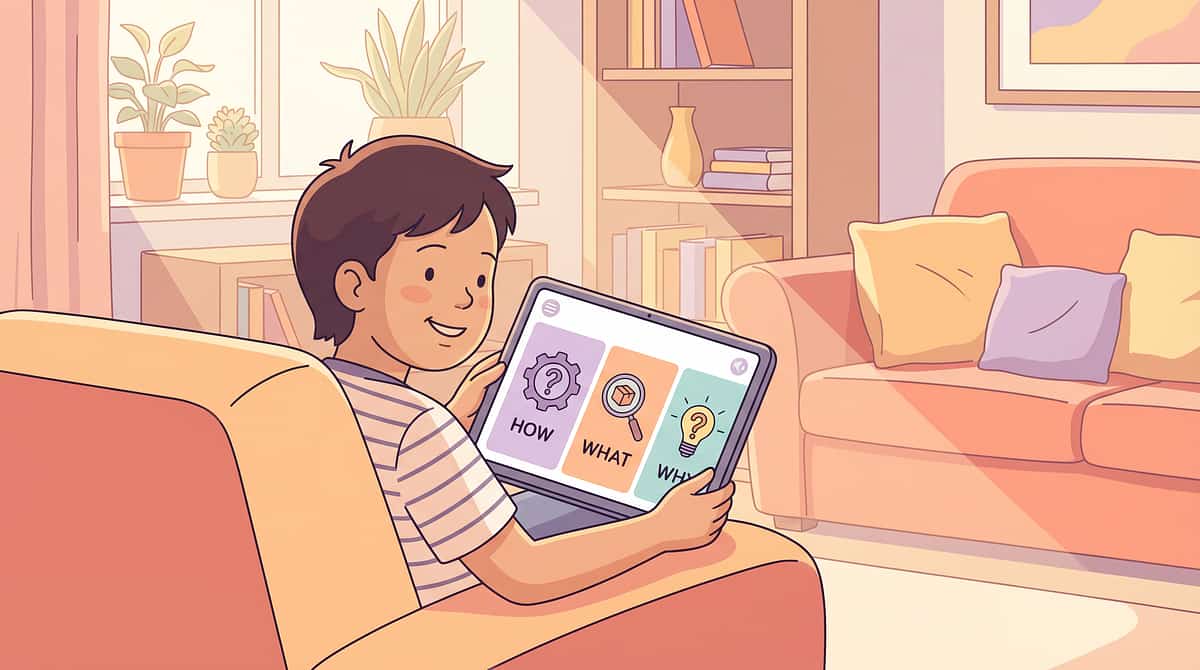
Material 7
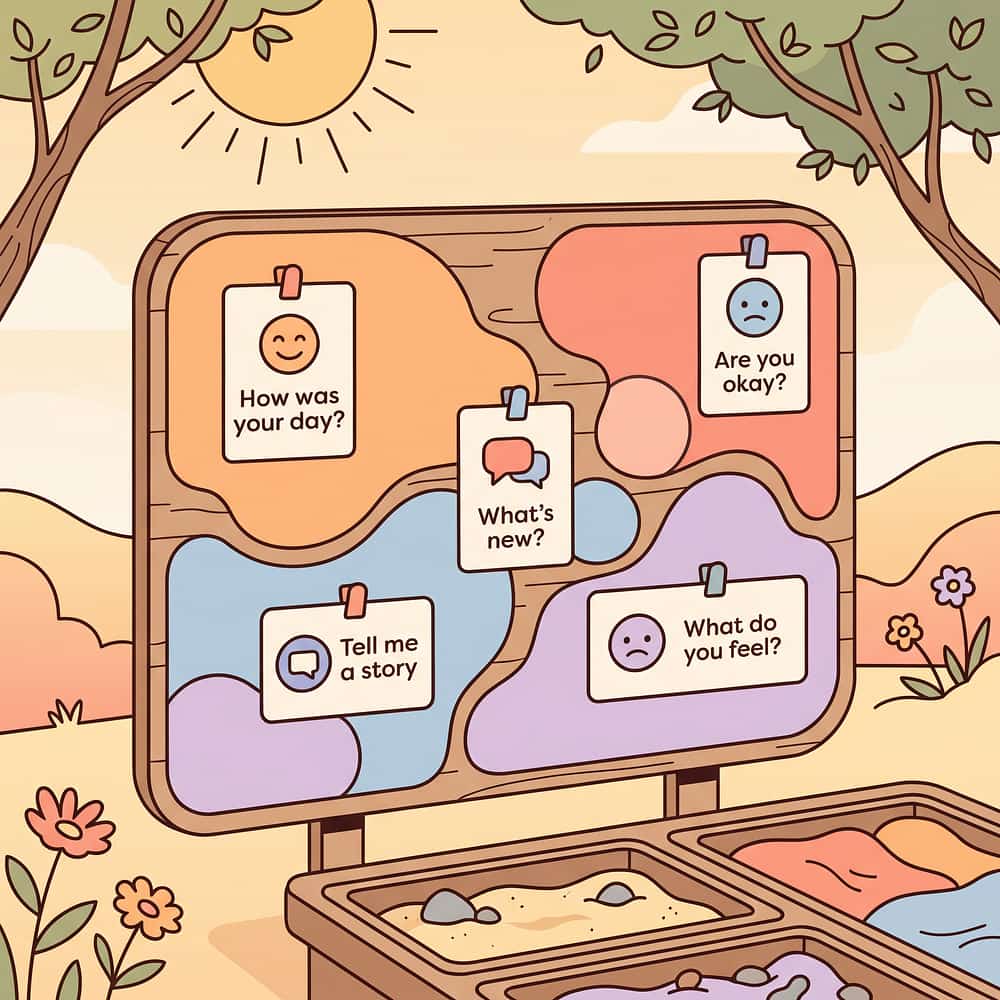
Question Words for Social Curiosity
What It Is
Social question phrase board: how was your day?, what happened?, are you okay?, what do you think?, did you see?, where did you go?, what's your favourite?, do you want to?
Why It Works
Asking questions is an act of connection — it says "I'm interested in you." When a child can ask "How was your day?" they become an active participant in social reciprocity, not just a responder. Questions are the vocabulary of care, and they transform social dynamics profoundly.
How to Get It
Canon Category: Communication Boards / Social Language
Price Range: ₹150–1,000
Price Range: ₹150–1,000
DIY (₹0): 7 question strips hung on the refrigerator — a daily touchpoint during meals. "How was your day?" becomes a pointing practice embedded in the most natural family moment of the day.
Material 8
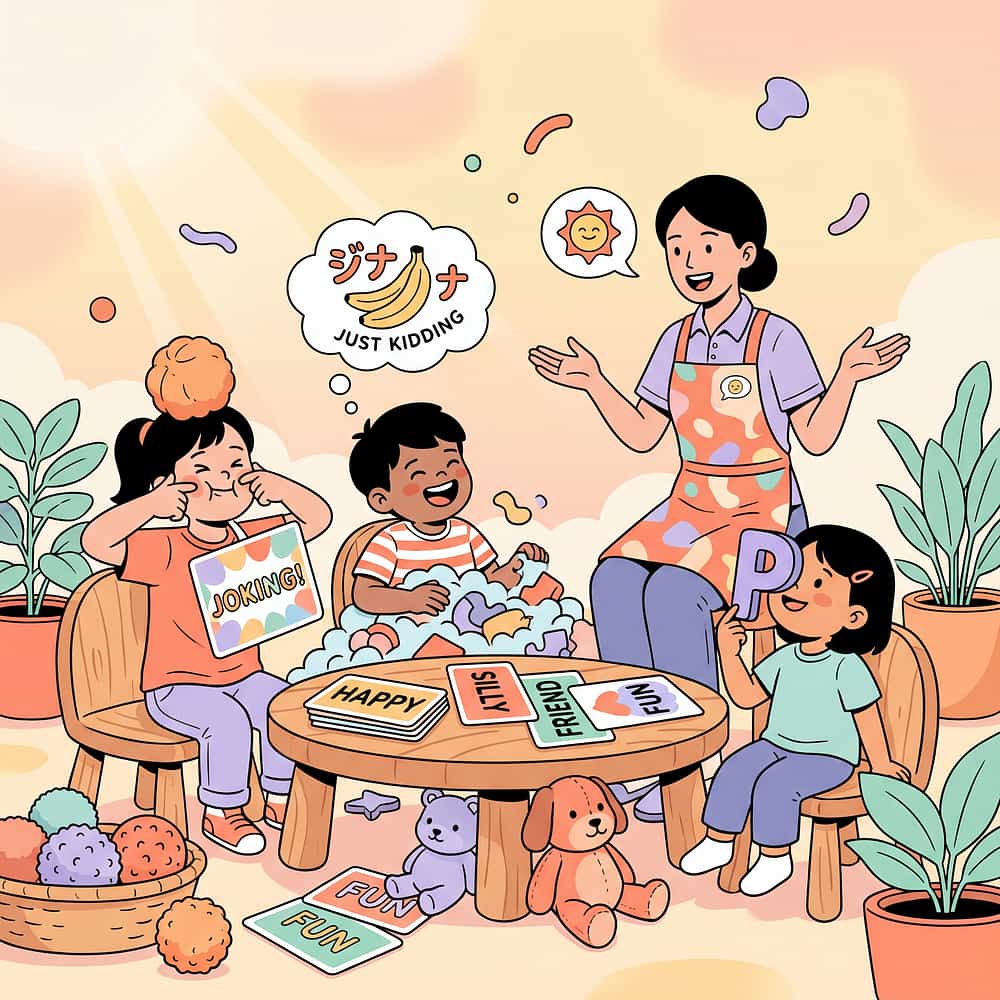
Humour & Playfulness Vocabulary
What It Is
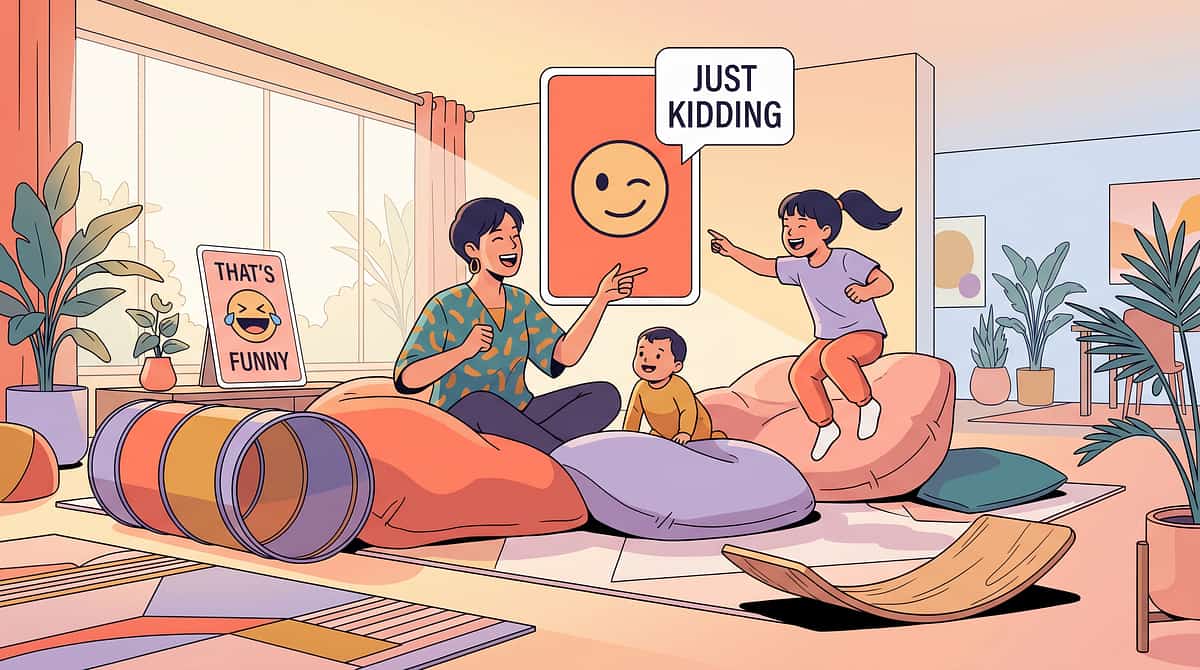
Humour vocabulary set: just kidding, that's funny, that's silly, I'm joking, do it again, watch this, made you laugh, knock knock, gotcha!, oops, silly me, haha.
Why It Works
Shared laughter is one of the strongest social bonds. Humour vocabulary lets AAC users make jokes, be playful, and participate in fun — not just observe it from the outside. The ability to make someone laugh and know that you did it is transformative for a child's sense of social agency.
How to Get It
Canon Category: Social Language / Communication Boards
Price Range: ₹100–800
Price Range: ₹100–800
DIY (₹0): Just 3 cards: just kidding / that's silly / do it again. These 3 words alone will transform social play interaction. Start here.

Material 9
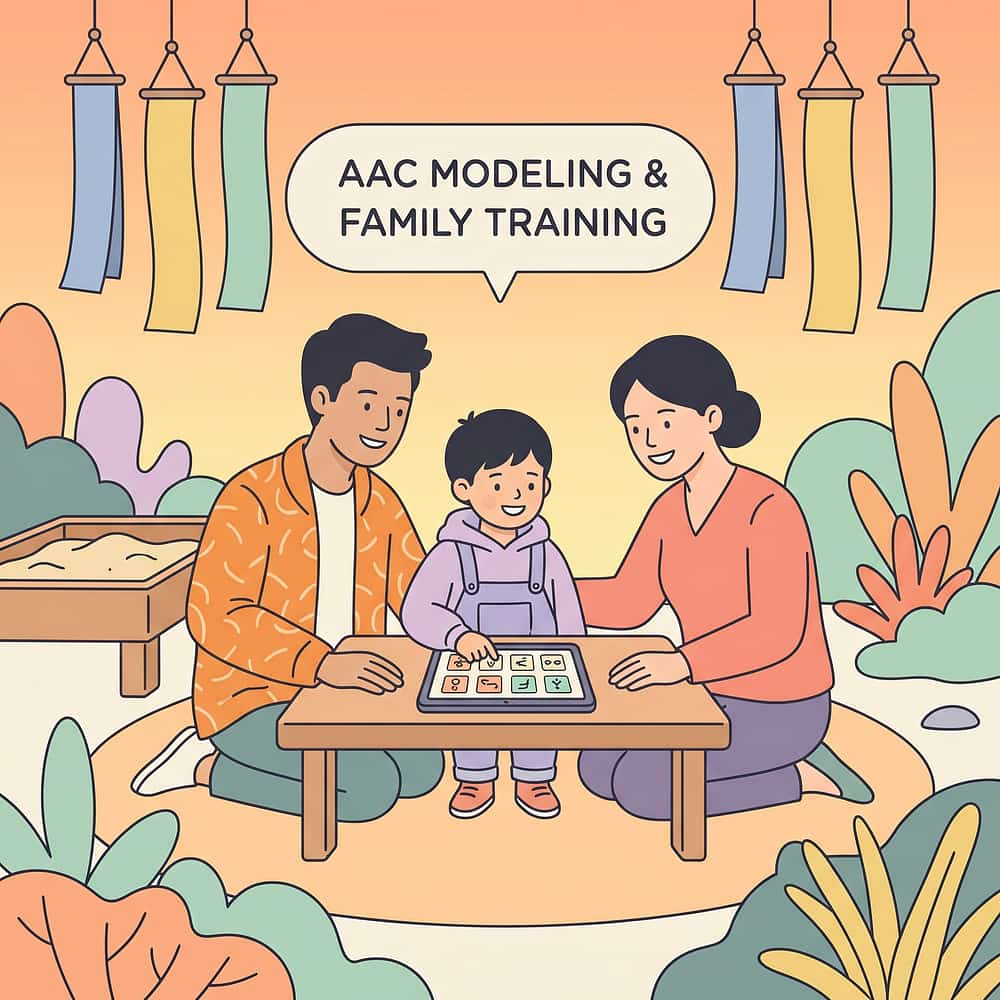
Social Modelling Videos & Partner Training Resources
What It Is
Video collections of AAC being used socially (commenting, reacting, joking, sharing stories), plus partner training modules for family members, teachers, and peers.
Why It Works
Research shows partner training is the single strongest predictor of AAC success. If all interaction is functional, communication stays functional. Model social, get social. When communication partners consistently model social vocabulary, children follow — this is the most high-leverage material on the entire list.
How to Get It
Canon Category: Training Materials / Parent Education
Price Range: ₹500–5,000 (professional training) | ₹0 for online resources
Price Range: ₹500–5,000 (professional training) | ₹0 for online resources
Free Resources: AssistiveWare, PrAACtical AAC, AAC Language Lab
📞Pinnacle EverydayTherapyProgramme™ partner training modules — Call 9100 181 181
Reinforcement Support:The Rosette Imprint Reward Jar for weekly milestones | 1800+ Reward Stickers to boost motivation for social communication practice
Equity Principle
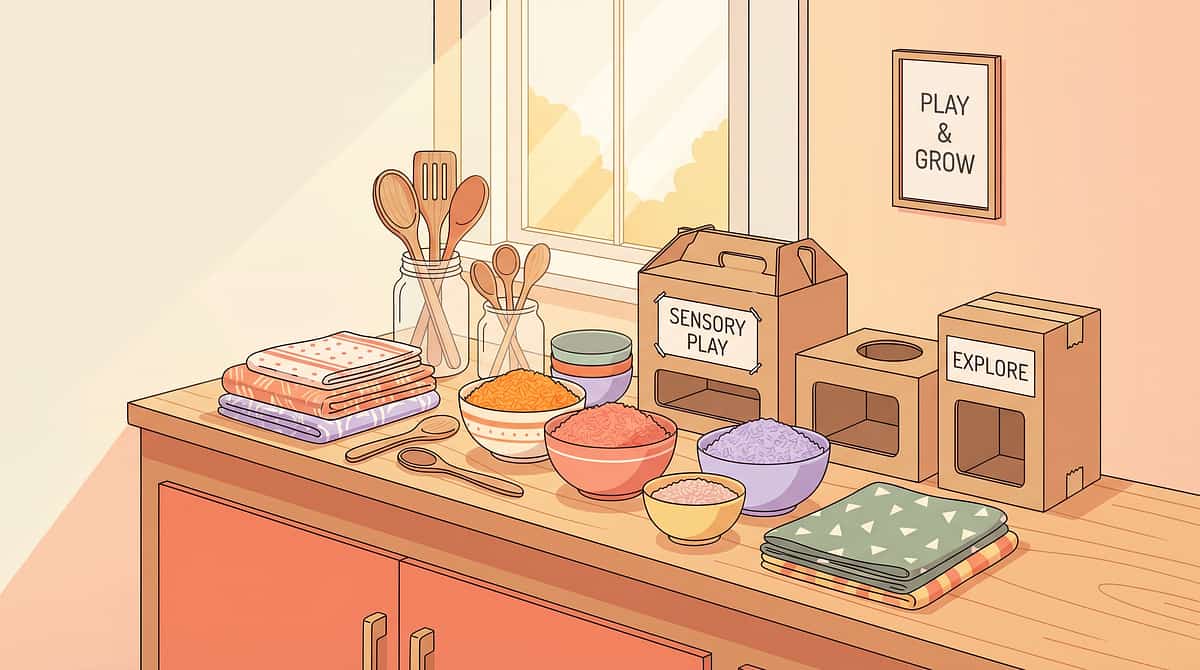
Every material on this list has a ₹0 version. Connection does not require a shopping cart.
The therapeutic principle — giving access to social vocabulary symbols and modelling their use in context — is identical whether the symbol is a ₹1,500 laminated board or an A4 printout. The material enables the vocabulary. The modelling activates it.
Material | Buy This | Make This (₹0 Version) |
Social Comments Board | Printed laminated board ₹200–500 | A4 paper + marker + plastic sleeve: write wow, cool, that's funny, yay, uh oh in large print. Stick on wall at child's eye level. |
Conversation Vocabulary | Printed word cards ₹150–500 | Index cards with conversation words. "Guess what" + simple drawing. Laminate with cling film. |
Emotion Vocabulary | Commercial emotion board ₹200–500 | Draw 8 faces on paper: happy, sad, angry, scared, excited, nervous, proud, silly. Label each. |
Friendship Vocabulary | Specialist AAC materials ₹200–1,200 | WhatsApp family photos + sticky notes: write "I missed you" on grandparent's photo. |
Opinion Tools | Commercial boards ₹150–1,000 | "My Favourites" notebook: child points to entries. Opinion made physical with no purchased material. |
Narrative Vocabulary | Printed story strips ₹150–1,200 | 5 index cards: first / then / next / the funny part / the end. |
Social Questions | Printed question cards ₹150–1,000 | 7 question strips hung on refrigerator: daily touchpoint during meals. |
Humor Vocabulary | Commercial humor boards ₹100–800 | 3 cards: just kidding / that's silly / do it again. |
Partner Training | Professional modules ₹500–5,000 | For one week, use your child's AAC device to comment: "That's SO funny!" / "I love this part!" Costs ₹0. |
Non-Negotiable Caveat: For children with complex AAC needs, visual discrimination challenges, or significant motor access requirements, clinical-grade materials and professional programming by an SLP specialising in AAC is strongly recommended. Contact: 📞 9100 181 181
ACT II — Safety
Safety First: Before You Begin
Social vocabulary practice is gentle, embedded, and parent-led — but these safety principles protect every session.
🟢 Green — Proceed
- Child is in a regulated state (not mid-meltdown or sensory overload)
- Social context is natural and not forced
- Communication partner is genuinely engaged (phone put away)
- Child has had basic needs met (fed, rested, comfortable)
- AAC device or communication board is accessible and functional
🟡 Amber — Modify
- Child shows mild fatigue: shorten session, use only highest-priority social vocabulary
- Child resists a specific vocabulary category: skip today, return tomorrow
- Partner doesn't know how to model yet: watch one modelling video first
- New social vocabulary was just added: give 2 weeks of modelling before expecting output
🔴 Red — Stop & Consult
- Child becomes severely distressed during social interaction attempts
- Child consistently using AAC to refuse social interaction across days
- Vocabulary additions are causing frustration and navigation difficulty
- Signs of regression in other areas coinciding with social vocabulary push
- Sensory overload during social settings making engagement unsafe
Absolute Red Line: Stop immediately if your child shows signs of acute distress. A single calm session tomorrow is worth more than pushing through today. Contact Pinnacle: 📞 9100 181 181
Indian Journal of Pediatrics RCT (2019): Home-based communication interventions safety protocols. DOI: 10.1007/s12098-018-2747-4

Environment Setup
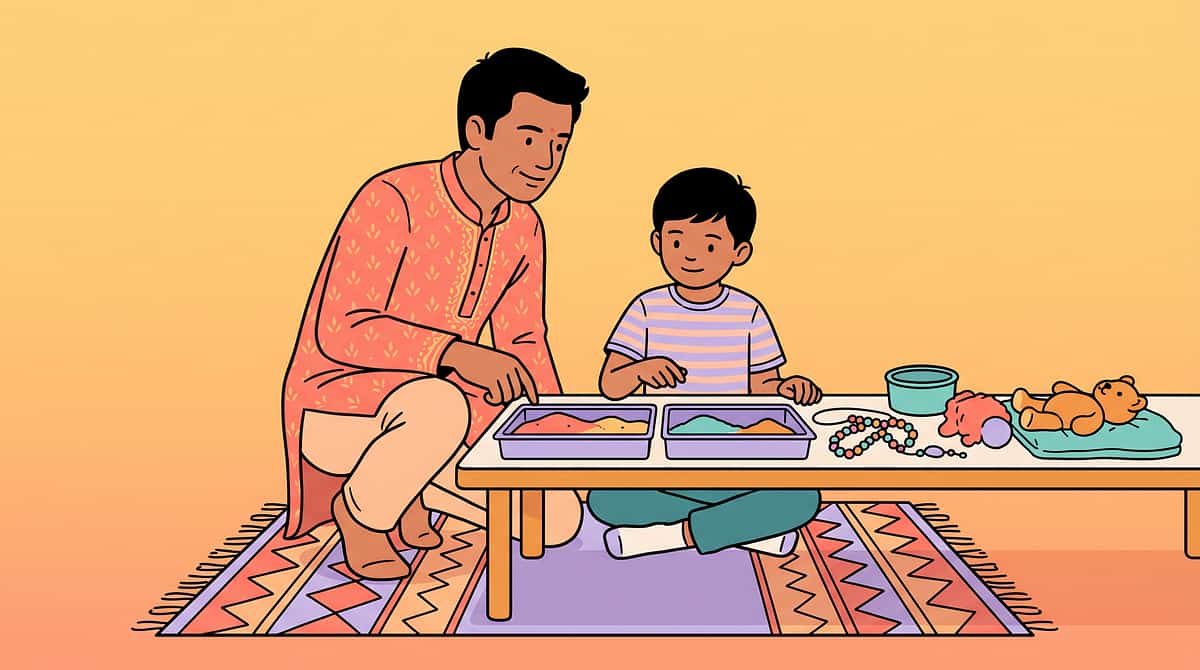
Social vocabulary doesn't need a therapy room — it needs the real social spaces where life happens.
Unlike sensory interventions that need controlled environments, social vocabulary practice is most powerful in natural social settings — the dinner table, the living room couch, the car on the way to school, the playground.
🏠 At Home — Daily Family Spaces
AAC device/board at dinner table (eye level, always accessible). Emotion vocabulary board on refrigerator door. Social comments board near TV / shared entertainment area. Friendship vocabulary near bedroom door (morning and night touchpoints).
🚗 In Transit — Car / Auto / Bus
Narrative vocabulary strip clipped to visor: "at school today / guess what / the funny part was" — perfect for daily debrief. Social questions card: parent models "How was your day?" pointing to AAC.
🌳 At the Playground / Park
5-word "connection card" in pocket or bag: that's cool / want to play? / that was fun / just kidding / do it again — these 5 words cover 80% of playground social vocabulary needs.
🍽️ At the Table — Family Meals
The most powerful social vocabulary training environment. Model opinions: "My FAVORITE part was..." (touch AAC board). Model reactions: "That's SO funny!" (point to reaction word). Model questions: "How was YOUR day?" (ask back with AAC modelling).
The Golden Rule: Have the vocabulary VISIBLE before the social moment happens. Posting the word "I missed you" on the door before grandparent arrives means the word is ready when the emotion is real.
ACT III — Execution
60-Second Readiness Check Before Every Social Vocabulary Session
Before you begin, run through this quick checklist. Observable, not subjective — designed to take under one minute.
1
Basic Needs Met
Child is fed, toileted, and comfortable
2
Regulated State
Child is in a calm emotional state, not mid-meltdown
3
Device Ready
AAC device / communication board is charged, accessible, and functional
4
Partner Present
Communication partner is genuinely present — phone put away
5
Real Social Moment
A genuine social moment is available, not a forced drill
6
Vocabulary Visible
Vocabulary for this specific social situation is visible and accessible
Score | Decision | Action |
6 / 6 ✅ | GO | Begin with natural social moment |
4–5 / 6 | MODIFY | Use only 1–2 highest-priority words for today's specific context |
3 or below | POSTPONE | Do a preferred calming activity instead. Tomorrow is a session. |
If POSTPONE: Not failure — calibration. The best social vocabulary session is one where the child is present and engaged. A forced session teaches avoidance.
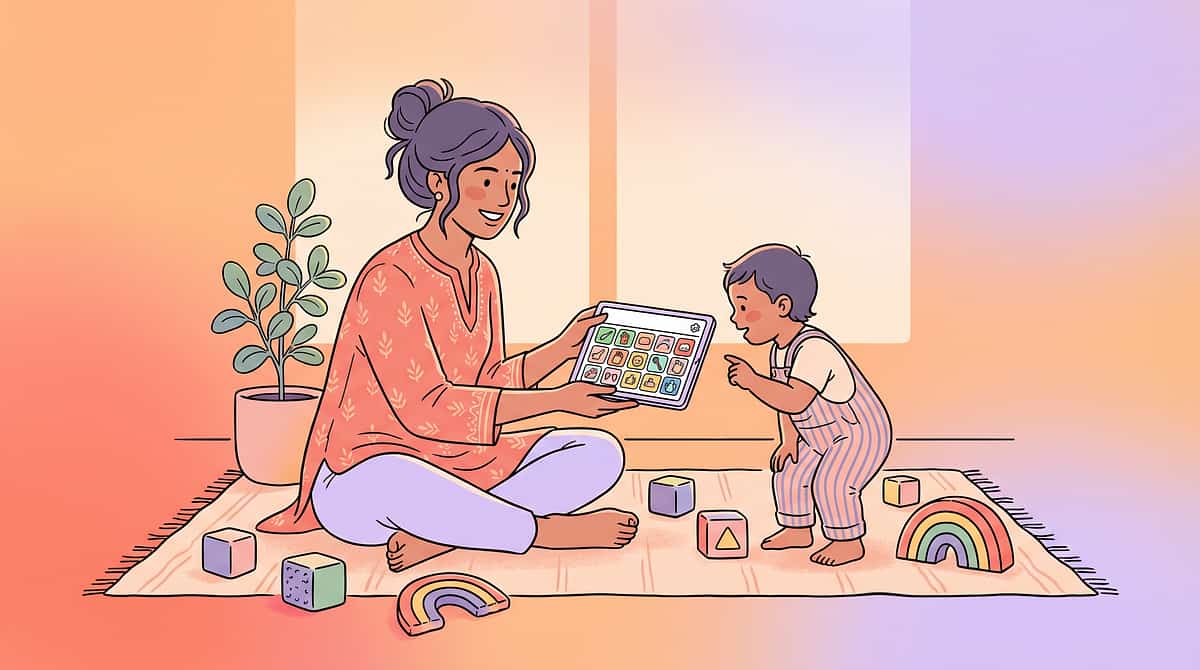
Step 1
Begin with a Real Social Moment, Not a Drill
Social vocabulary cannot be taught in isolation — it must be practised in the actual social moments it serves. The "invitation" is not to a therapy activity — it is to a genuine moment of connection where vocabulary is ready and modelling will occur naturally.
"Hey! Guess what? Come watch this with me." [Touch "guess what" on AAC board while saying it]— OR —"That was SO funny, wasn't it?" [Point to "that's funny" on the reaction board]— OR —"[Child's name], how was school today?" [Model touching "how was your day" on the board]
✅ Acceptance Signals
- Child looks at the board/device
- Child approaches the shared activity
- Child touches or reaches toward a word
- Child shows any reaction (smile, vocalization, engagement)
⏳ If Child Doesn't Respond
Wait 10 seconds. Model the word again yourself. If still no response, that is fine — the modelling has still occurred. The input is being processed even without visible output.
Weeks of modelling precede weeks of output.
ABA Pairing Principles: Establishing positive association with communication contexts before vocabulary demands. OT "Just-Right Challenge" principle applied to social engagement level.
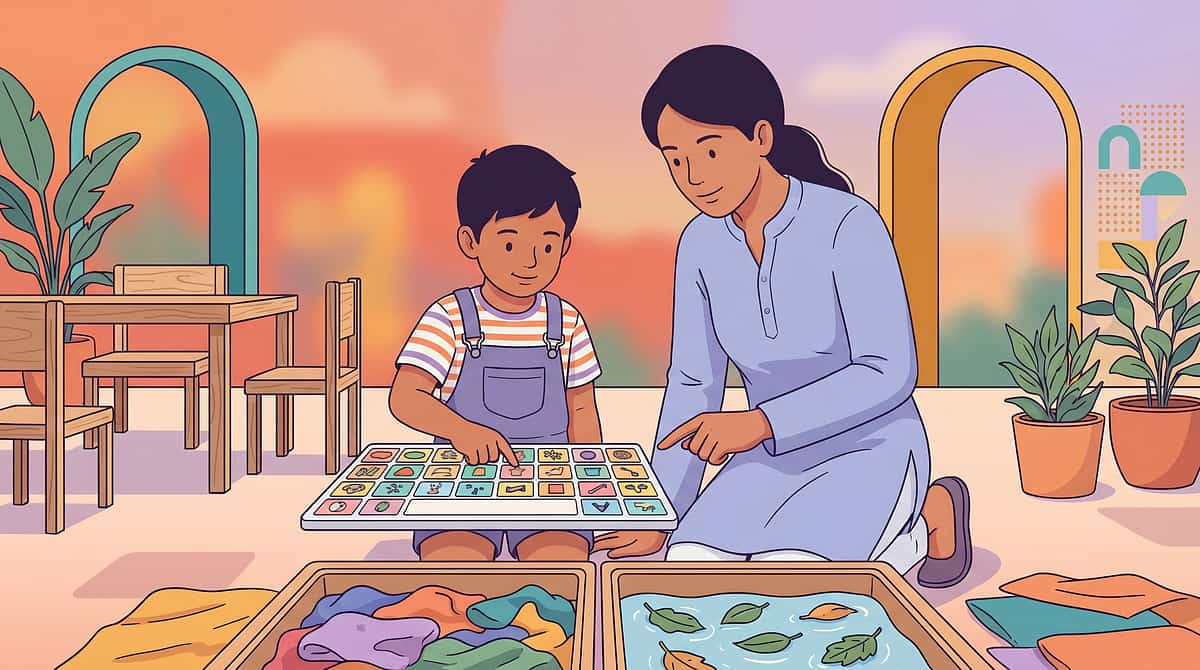
Step 2
Model the Vocabulary In Real Context
The parent (or caregiver) uses the AAC device or communication board to MODEL social vocabulary throughout natural social interactions. This is called "aided language stimulation" or "modelling." The parent is the AAC user's most important teacher — not by drilling, but by demonstrating.
1
Shared Laughter
While watching something funny together → point to "that's funny" on the board + say it
2
Favourite Food
While eating a favourite food → point to "I love this!" + express delight
3
Surprising Moment
After a sibling does something surprising → point to "wow!" + make a wow face
4
Proud Moment
After the child does something cool → point to "I'm so proud!" + hug
5
Bedtime Connection
At bedtime → point to "I love you" + "I missed you today"
The ratio of partner modelling to child output should be 8:1 in early stages. Your input is the seed. Their output is the harvest — it comes later.
PMC11506176 | Aided Language Stimulation literature: Consistent partner modelling of AAC significantly increases child output.
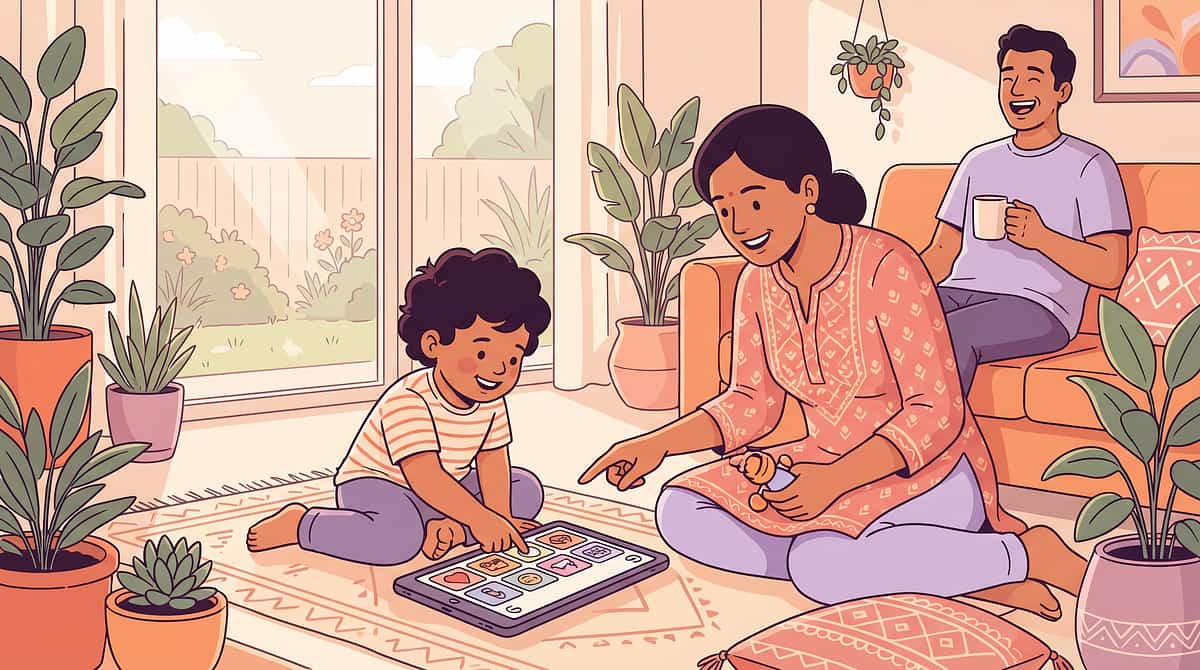
Step 3
The Core Practice: Vocabulary in Natural Social Flow
Over 15–20 minutes of natural social time, the parent creates and uses multiple opportunities to model and elicit each of the social vocabulary categories. Cycle through categories across the week — not all in one session.
Day | Vocabulary Focus | Natural Context |
Monday | Social Reactions | TV time, shared activity |
Tuesday | Emotion Vocabulary | After school / end of day |
Wednesday | Friendship Words | Video call with family/friends |
Thursday | Narrative Vocabulary | Dinner table "what happened today" |
Friday | Opinion Vocabulary | Choose a movie, favourite meal |
Saturday | Humour + Play | Games, silly activities |
Sunday | Conversation Flow | Relaxed family time |
Expectant Pause Example: Show child a funny animal video → pause video at funniest moment → point to "that's funny" → WAIT 10 seconds → respond enthusiastically to any output
🟢 Ideal
Child spontaneously uses social vocabulary in context
🟡 Acceptable
Child points after modelling or with expectant pause
🔴 Monitor
No output after 4+ weeks of consistent modelling — consult SLP
Meta-analysis (World J Clin Cases, 2024): PMC10955541 | NCAEP (2020): Aided AAC modelling meets evidence-based practice criteria for communication intervention.
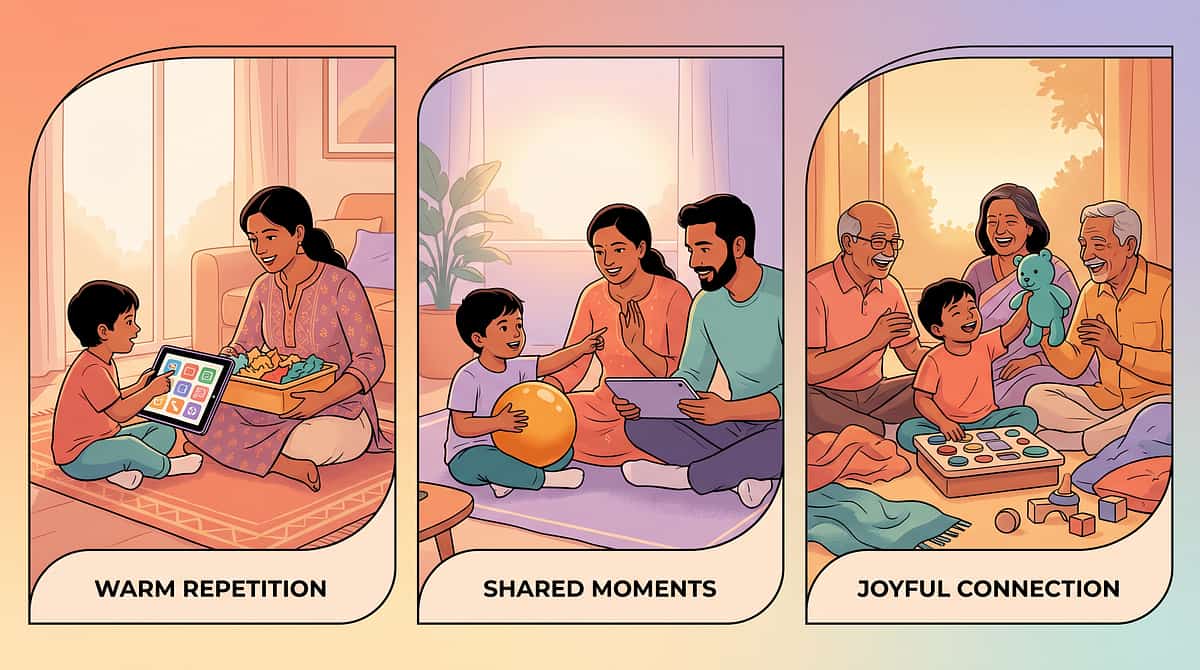
Step 4
Repetition Is the Architecture of Language Learning
Unlike discrete trial training, social vocabulary doesn't have a fixed "rep count." The goal is varied, contextually-rich, naturally-distributed repetition across the week and across communication partners.
Therapeutic Dosage
Daily modelling target: 8–10 instances of social vocabulary modelling per day
Variation is essential: Use the same vocabulary in different contexts, with different partners, for different purposes
Category cycling: 1 focus per week across an 8-week initial cycle — don't try to teach all 9 material categories at once
The Variation Principle
Teach "that's funny" at: home watching videos · at the park when something silly happens · during book reading · during family game night. This cross-context variation creates generalised vocabulary — not just context-specific responses.
Satiation Indicators
- Turns away from the AAC board
- Covers the board or pushes it aside
- Vocalization changes tone to protest
- Shows redirection behaviours
The 3-Quality-Moments Principle: 3 genuine, natural, enthusiastically-responded-to social communication moments > 10 forced, prompted, drilled trials. Quality of response matters more than quantity of attempts.
Step 5
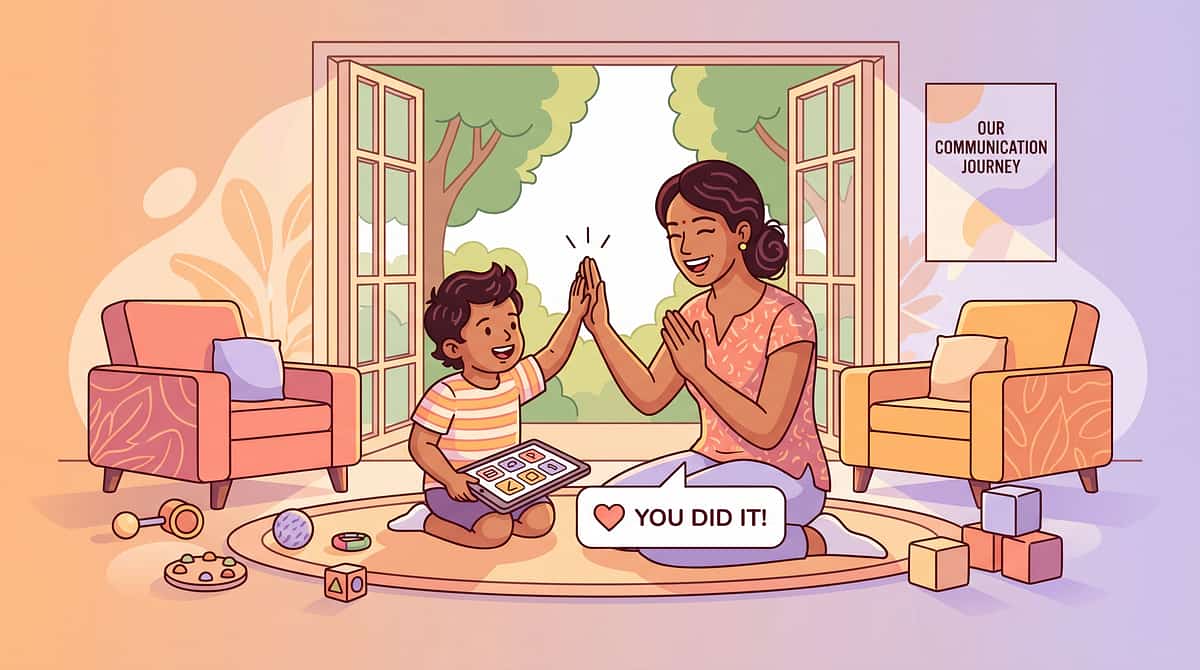
The Most Powerful Reinforcer for Social Vocabulary Is Social Response
Unlike requesting vocabulary (where the reinforcer is getting the requested item), social vocabulary's natural reinforcer is the social response it generates. When the child says "that's funny" and the parent genuinely laughs — that IS the reinforcement.
"That's funny" →
Parent laughs genuinely, agrees: "YES! So funny! The funniest part was when—"
"I love you" →
Parent hugs, says "I love you SO much"
"I missed you" →
Parent says "I missed you TOO. Tell me what happened today!"
"Guess what" →
Parent leans in with genuine curiosity: "What? Tell me EVERYTHING."
Timing: Within 3 seconds of the child's social communication — the immediacy signals that social words WORK.
Additional Reinforcement Tools:The Rosette Imprint Reward Jar for weekly milestones | 1800+ Reward Stickers — 5 social communication attempts = 1 token, 5 tokens = preferred activity
Celebrate the Attempt, Not Just the Success: Even a child who touches "funny" while giggling has communicated socially. That IS the target behaviour. Celebrate it exactly as you would a spoken word.
Step 6
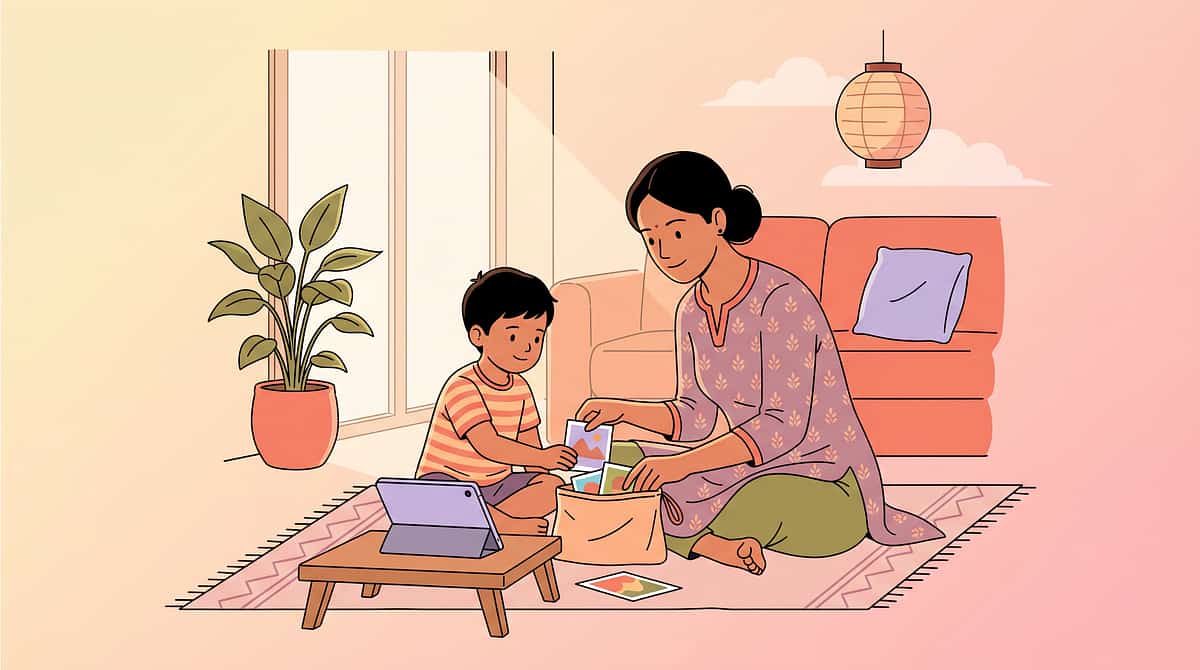
End Every Social Session With Connection, Not Conclusion
Social vocabulary sessions don't end with a buzzer — they end with connection. The cool-down is itself a social vocabulary opportunity. Closing phrases are among the most important social words: "that was fun," "see you later," "I love you," "let's do that again."
1
Transition Warning
"One more and then we'll stop for now." (low pressure, no surprise)
2
Closing Phrase Modelling
Touch "that was fun" / "I like this" on the board
3
Affection Close
Model "I love you" — the most important social word of all
4
Tomorrow Bridge
"Tomorrow we'll look at [new vocabulary] together."
5
Device / Board Care
Child helps put the board in its place — building ownership and ritual
If Child Resists Ending: This is a GOOD sign — the social interaction was rewarding. Say: "I know you want to keep going — that makes me so happy. We'll do more after dinner." Model "I want more" and "later" on the AAC board as transition support.
NCAEP Evidence-Based Practices (2020): Visual supports and transition scripts are evidence-based practices for autism.
Step 7 — Data
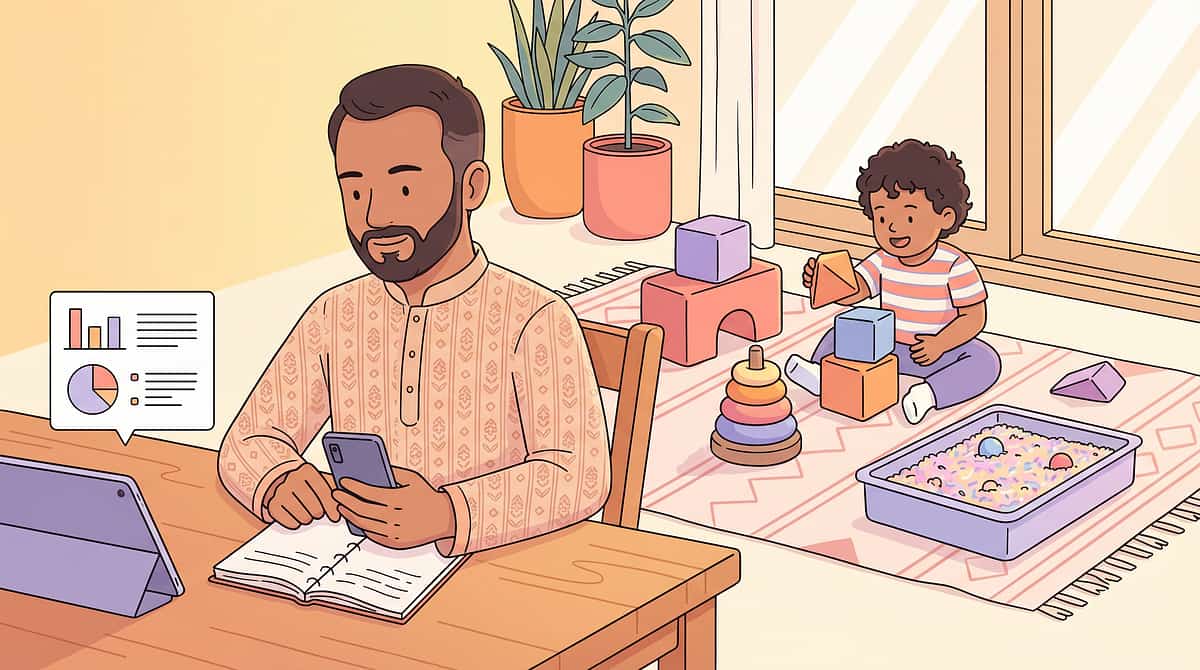
60 Seconds of Data Now. Weeks of Direction Later.
Capture your observations immediately after the session while they are fresh. The pattern across 14 days tells you which vocabulary categories your child is absorbing and which need more modelling. Without data, you are guessing. With it, you are calibrating.
Field 1 — Vocabulary Modelled Today
☐ Social Reactions ☐ Emotion Words ☐ Friendship Words
☐ Opinions ☐ Narrative ☐ Social Questions
☐ Humour ☐ Conversation Flow ☐ Modelling Only
☐ Opinions ☐ Narrative ☐ Social Questions
☐ Humour ☐ Conversation Flow ☐ Modelling Only
Field 2 — Child's Spontaneous Social Communication
Spontaneous attempts: ___ / Prompted: ___ / No response: ___
Field 3 — Today's Highlight
The social moment that worked best today was: ______________________
"60 seconds of data now saves hours of guessing later." — GPT-OS® Data Principle
GPT-OS® Tracker: pinnacleblooms.org/tracker/B-227 | PDF download: B-227 Weekly Tracking Sheet
ABA Data Collection Standards: Frequency, duration, and qualitative recording. BACB Guidelines + Cooper, Heron & Heward (Applied Behavior Analysis, 8th ed.)
📞9100 181 181
Troubleshooting
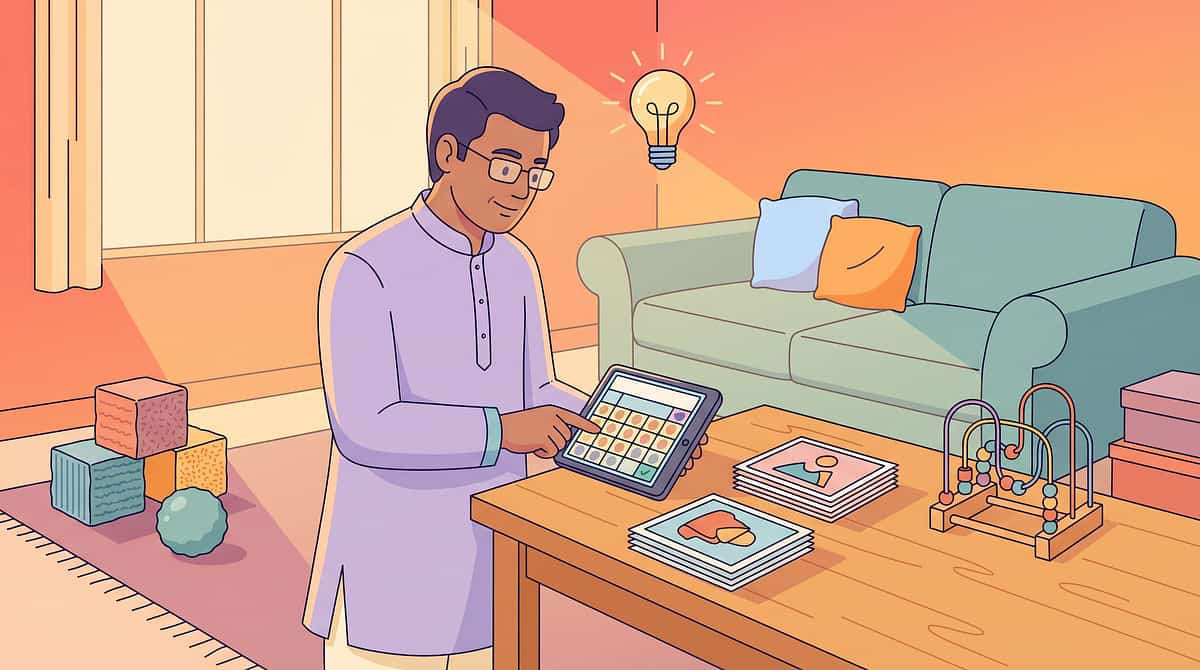
Most Sessions Don't Go Perfectly. Here's What the Data Actually Means.
Child ignores the AAC board completely during social time
Why: The board is not yet associated with rewarding social experiences. Fix: For 2 weeks, YOU use the board to model — child doesn't need to. Input precedes output. The brain is processing even when silent.
Child only uses AAC for requests, never for social words
Why: Request vocabulary has a stronger, more immediate reinforcement history. Fix: Dramatically increase social modelling frequency. For every 1 request the child makes via AAC, make 5 social comments via AAC yourself.
Child uses "wrong" social vocabulary in wrong context
Why: This is normal vocabulary acquisition — the child is attempting to use social words. Fix: Celebrate the attempt. Gently model the contextually accurate word alongside. Do NOT correct. DO model.
Sibling/grandparent doesn't understand AAC social words
Why: Communication partners not trained on the vocabulary or AAC use. Fix: Use the Share function (Card 37) to send a simplified partner guide. Or call 9100 181 181 for a free partner training session.
No progress after 4 weeks of consistent modelling
Why: May need vocabulary selection review, AAC access check, or sensory/regulatory co-occurring factor review. Fix: Schedule SLP AAC review. Pinnacle: 📞 9100 181 181.
Child uses social vocabulary at home but not at school
Why: Generalisation requires explicit training in each environment. Fix: Share the school communication template with the teacher. Request that school partner receive partner training. Consistency across settings requires coordination.
"Session abandonment is not failure — it is data. What stopped the session tells you what to adjust."
Personalisation
No Two Children Are Identical. Here Is How to Calibrate B-227 to Your Child's Exact Profile.
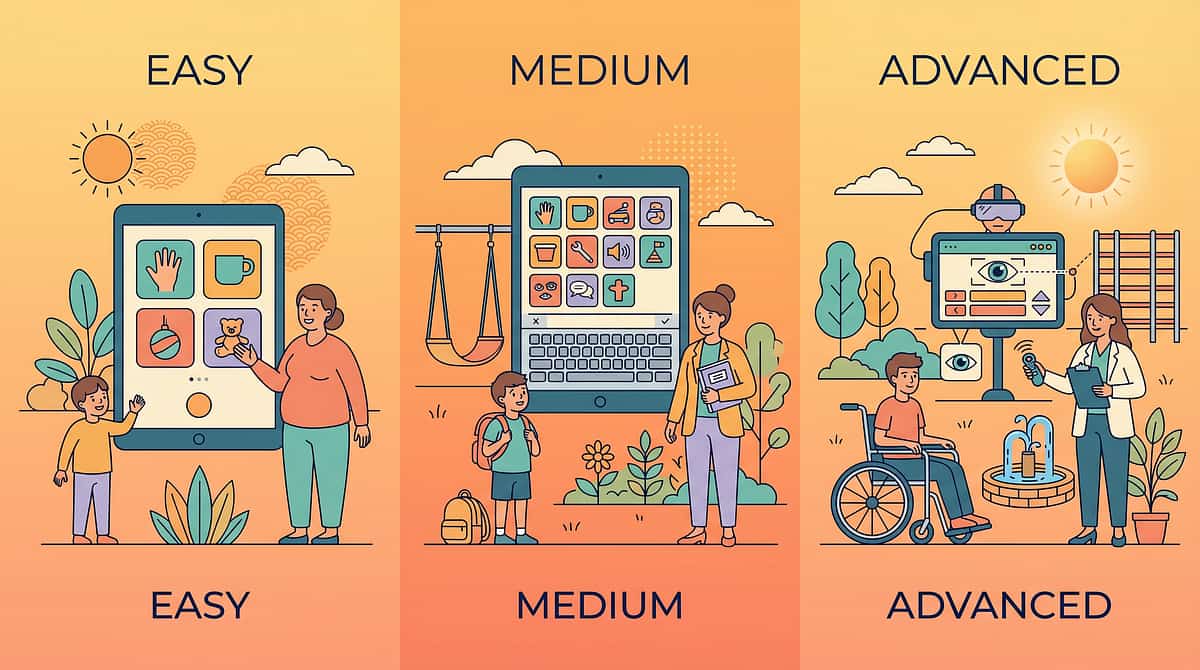
The spectrum above represents the full range of intensity — move your child along it gradually as confidence and output grow.
🌊 Sensory-Seeking Child
Social vocabulary works best DURING high-arousal, shared-excitement moments: sports, music, physical play. "That was AWESOME!" during trampolining. "Do it AGAIN!" during roughhousing.
🤫 Sensory-Avoiding Child
Build social vocabulary in calm, predictable 1:1 moments: bedtime reading, puzzle time, quiet cooking. "I love this book." "My favourite part." Lower sensory load = higher language accessibility.
👶 Younger Child (2–5)
Focus exclusively on reactions (wow/yay/uh oh), simple emotions (happy/sad/excited), and three relationship words (I love you / that was fun / you're my friend). Keep to 10–15 words total.
🧑 Older Child / Adolescent (12+)
Expand to: nuanced emotion vocabulary (embarrassed, nervous, proud), conversational repair language (I didn't mean it / are we okay?), social media AAC extensions, and peer-interaction specific vocabulary.

ACT IV — Progress Arc
Weeks 1–2: You Are Planting Seeds. Most of Them Are Invisible Right Now.
✅ What TO Expect
- Child begins to notice and look at the social vocabulary board when you model it
- Child may reach toward or briefly touch a word (exploration)
- You find natural modelling moments you never noticed before
- Other family members begin to ask "what's on the board?"
- Child may use one familiar social word more frequently (often: "again!" or a reaction word)
❌ What Is NOT Progress Yet (and that's fine)
- Spontaneous, contextually-accurate social vocabulary use
- Multi-word social combinations
- Generalisation across partners
These take weeks 3–8. Weeks 1–2 are ONLY about establishing familiarity and modelling.
"If your child looks at the 'that's funny' card while you're laughing together — that is real progress. The neural pathway from the symbol to the social meaning is forming. Trust the process."
PMC11506176: Systematic review: Social communication intervention outcomes emerge across 8–12 week timelines. Early phase focuses on input density and vocabulary familiarity.

ACT IV — Weeks 3–4
In Weeks 3–4, the First Real Signs of Social Communication Emerge.
🌱 Anticipates Opportunities
Child reaches for board before you model — they are beginning to predict social vocabulary moments
🌱 Consistent Use in Preferred Contexts
Child uses one or two social words consistently in the situations they enjoy most
🌱 Social Question Response
Child responds to "How was your day?" with greater regularity and engagement
🌱 Emotion Vocabulary in Self-Expression
Child shows emotion vocabulary in real contexts ("scared" before doctor visit)
🌱 Social Initiation Begins
Child may initiate a social exchange: "guess what" → [waits for your response]
"By week 4, most parents report: 'I'm actually more comfortable with social modelling now. It feels natural.' You're right — you've become a skilled communication partner. That matters enormously."
When to Increase Intensity: If child is consistently using 3+ vocabulary categories spontaneously: add 1–2 new words per category, introduce to a new communication partner, or increase natural vocabulary opportunities.

ACT IV — Weeks 5–8
Weeks 5–8: The Vocabulary Is Becoming Part of Who Your Child IS.
🏅 Social Vocabulary Mastery — Unlocking
Mastery Criteria for B-227 (specific, observable, measurable)
Child uses social reactions spontaneously in 3+ contexts without prompting
Emotion vocabulary used accurately to self-describe inner states
Child initiates at least one social exchange per day using vocabulary
Friendship vocabulary generalised to at least 2 different partners
Child uses narrative vocabulary to share at least one daily event
Generalisation is the gold standard: Social words appearing in NEW contexts the family didn't practise in — at the grocery store, with a new peer, via video call, with a teacher. When you see this, you have reached B-227 mastery.
PMC10955541 | BACB mastery criteria standards: Generalisation across settings, persons, and stimuli.

Your Child Can Now Say "I Missed You." That Sentence Changed Everything.
You modelled thousands of social words in real moments of life. You stayed patient through weeks of silence. You celebrated tiny attempts. You kept showing up. You taught your child that communication is for connection — not just for getting things. This is one of the most profound gifts a parent can give.
Your Child Can Now:
- React to shared experiences with words ("wow!" / "that's funny!" / "I love this!")
- Express emotions beyond the basics
- Use friendship vocabulary with people they love
- Share at least one story or recount from their day
- Ask a social question showing interest in someone else
Family Celebration Suggestion
Share a meal and go around the table with: "My FAVOURITE part of this week was ______" — using the very vocabulary you've been building. Let your child lead.
Journal Prompt
"The first time [child's name] used a social word that surprised me completely was ___________." Document it. This is a milestone as significant as their first spoken word.

Safety — Red Flags
Awareness Is Protection. These Specific Signs Mean Pause and Consult.
🚨 Red Flag 1 — Zero Output After 8 Weeks
After 8 weeks of consistent modelling, child shows zero output or response to any social vocabulary category — including reactions. May indicate AAC access issue, processing difference, or need for alternative AAC modality.
→ Action: SLP AAC review. Call 📞 9100 181 181.
🚨 Red Flag 2 — Consistent Distress During Social Attempts
Child becomes consistently distressed during social interaction attempts or hides/destroys communication boards. May indicate social anxiety, sensory processing co-occurring issue, or need for clinical calibration.
→ Action: Pause social vocabulary push. Schedule NeuroDev consultation. 📞 9100 181 181.
🚨 Red Flag 3 — Regression in Other Areas
Regression in sleep, eating, or previously acquired skills coinciding with intensive social vocabulary focus. Possible cognitive overload or environmental stress.
→ Action: Reduce vocabulary scope, consult therapist, rule out medical causes.
🚨 Red Flag 4 — Concerning Use Patterns
Child uses social words but consistently in ways that concern communication partners (e.g., using "I love you" with strangers indiscriminately). May need social cognition support alongside vocabulary — OT + SLP coordination.
→ Action: Consult SLP with social communication specialisation.
🚨 Red Flag 5 — Consistent AAC Device Malfunction
Child cannot reliably navigate to social vocabulary pages due to consistent device malfunction or access difficulty. Technical, not clinical — but equally important to address.
→ Action: Device review with SLP/AAC specialist. Check navigation structure.
"Trust your instincts. You know your child. If something doesn't feel right — pause, call, ask."
Escalation Pathway: Self-resolve (1 week) → Teleconsultation → Pinnacle Centre Visit 📞9100 181 181 | pinnacleblooms.org

ACT IV — Progression
You Are Not Done. B-227 Is One Milestone on a Much Longer Journey.
B-227 is the social vocabulary foundation — the prerequisite for all higher-level social communication in AAC. Once mastered, it unlocks the entire peer conversation and community participation pathway.
Peer Interaction Priority
→ B-228: AAC in Peer Conversations
Narrative Emerging
→ B-231: Narrative Language in AAC
Academic Integration
→ B-229: AAC for Academic Participation
Emotional Complexity
→ C-Series: Emotional Regulation techniques
Lateral Alternatives: If B-227 approach didn't fully resonate — Visual Social Stories for vocabulary building (B-221 approach) | Video Modelling for social vocabulary (NCAEP video modelling EBP)
Long-Term Goal: Full communicative participation — your child as a conversational partner, storyteller, joke-maker, friend-builder, and fully-expressed individual.
Related Techniques
Other Techniques in the Social Communication & AAC Domain
You may already have the materials for these techniques — completing B-227 gives you the foundational resources for all of them.
Technique | Code | Level | Materials Overlap |
AAC and Speech Development Together | B-225 | 🟢 Intro | All vocabulary materials |
Building Vocabulary on AAC | B-226 | 🟢 Intro | All vocabulary materials |
AAC in Peer Conversations | B-228 | 🟡 Core | Social vocabulary (this) + peer-specific |
AAC for Academic Participation | B-229 | 🟡 Core | Narrative + opinion vocabulary |
AAC for Adolescents | B-230 | 🔴 Advanced | All + adolescent-specific expansion |
Narrative Language in AAC | B-231 | 🟡 Core | Narrative vocabulary (from this) |
You Already Own Materials For These: Social comments board, emotion vocabulary, friendship words, narrative vocabulary, opinion tools — ALL of which are the foundational materials for B-228, B-229, and B-231.
ACT V — Community
From Families Inside the Pinnacle Network
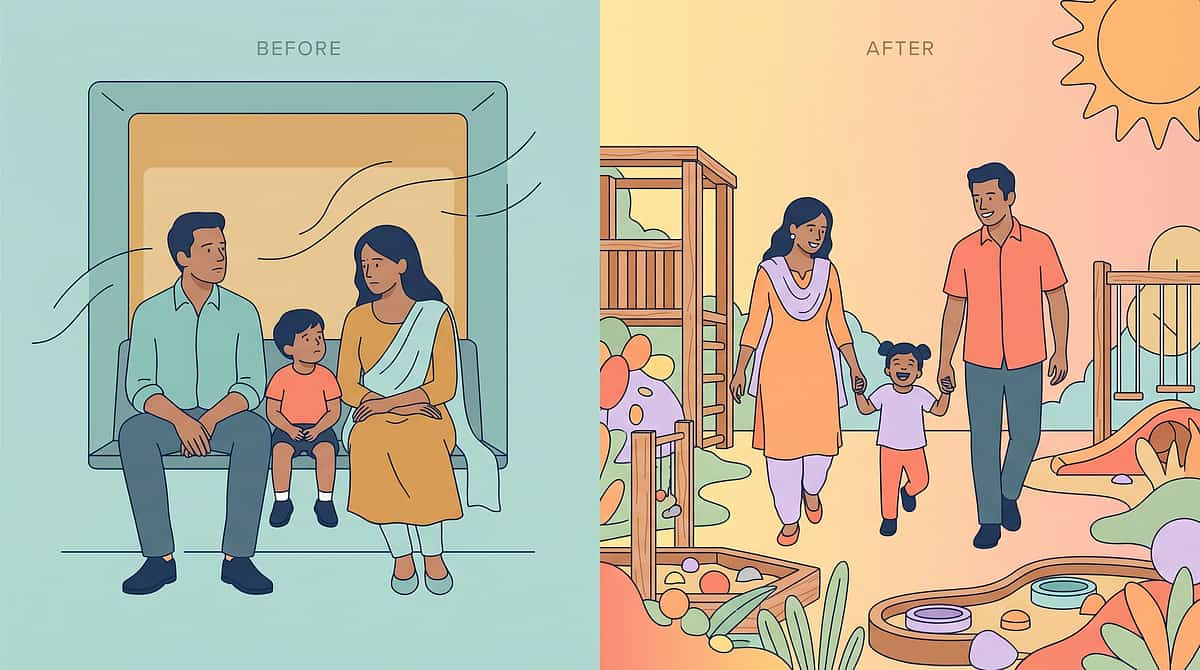
Before and after building social vocabulary — these are the moments that tell the full story.
"For two years of AAC, my daughter could communicate her needs perfectly — food, toys, activities. She had mastered requesting. But when her grandmother came on video call, she would show the screen her snacks. No connection. No joy expressed. No words for what she clearly felt."
Eight weeks after we added friendship and relationship vocabulary and started modelling "I missed you" and "I love you" on the board — she opened a video call, looked at her grandmother, and deliberately touched "I miss you." Her grandmother burst into tears. We all did. That was the moment AAC became something bigger than a need-meeting device.
"She's not just getting needs met anymore. She's connecting. She's known."
From the Therapist's Notes: This family was consistent with modelling across multiple partners. The grandmother received a family guide and began modelling on her end of every video call. Multi-partner consistency accelerated the outcome significantly. — SLP, Pinnacle Blooms Network
Preview of 9 materials that help aac for social words Therapy Material
Below is a visual preview of 9 materials that help aac for social words therapy material. The pages shown help educators, therapists, and caregivers understand the structure and content of the resource before use. Materials should be used under appropriate professional guidance.


Link copied!
"He Discovered He Was Funny. He Has Always Been Funny. He Just Needed the Word."
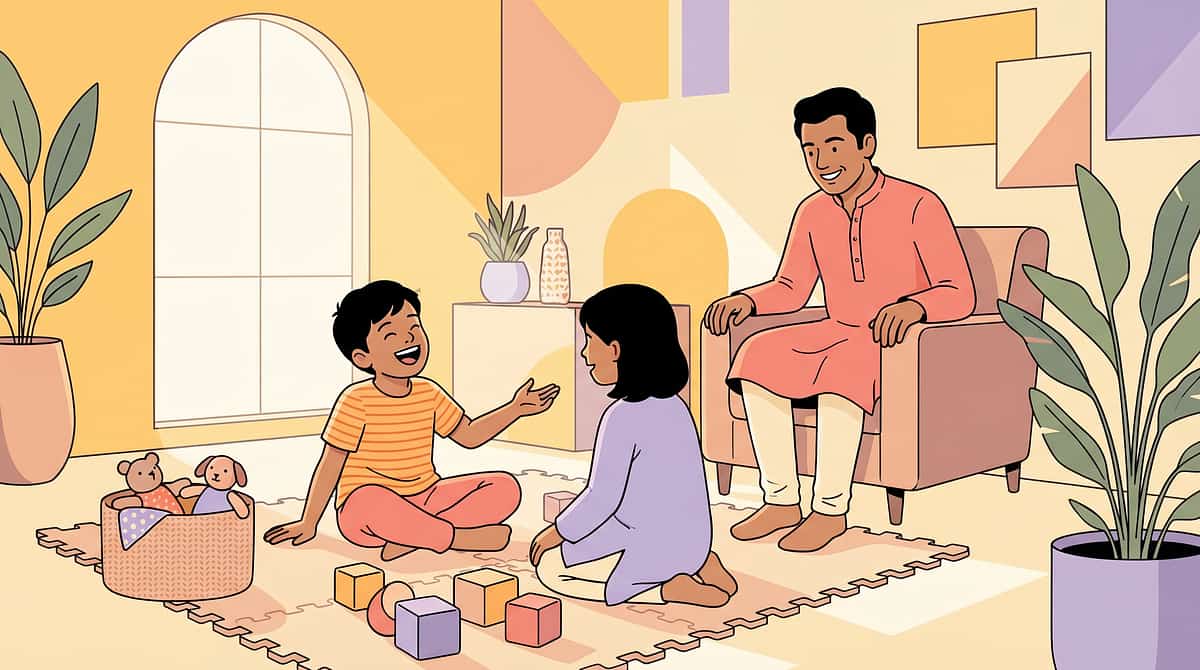
Before: He would laugh at funny things at the playground — he clearly got the humour. But he couldn't share it. He was an observer in conversations, not a participant.
After (7 weeks): We added humour vocabulary: "that's silly," "just kidding," "watch this." Within 7 weeks, he was using "just kidding!" after pretend-scaring his sister. The first time he made a joke on purpose and watched her laugh — his face. He understood that he could create joy in others.
"He discovered he was funny. He has always been funny. He just needed the word."
Note: Illustrative cases based on Pinnacle Network clinical outcomes. Individual results vary. Statistics represent aggregate outcomes across the Pinnacle Blooms Network®.
Parent-reported outcomes research: Qualitative studies show peer narratives are the strongest motivator for home-based intervention adherence.