Teaching First AAC Words
Technique B-222 | Pinnacle Blooms Network® — Your child has the device. The words are coming. This evidence-based protocol shows you exactly how to help.
Act I — Recognition
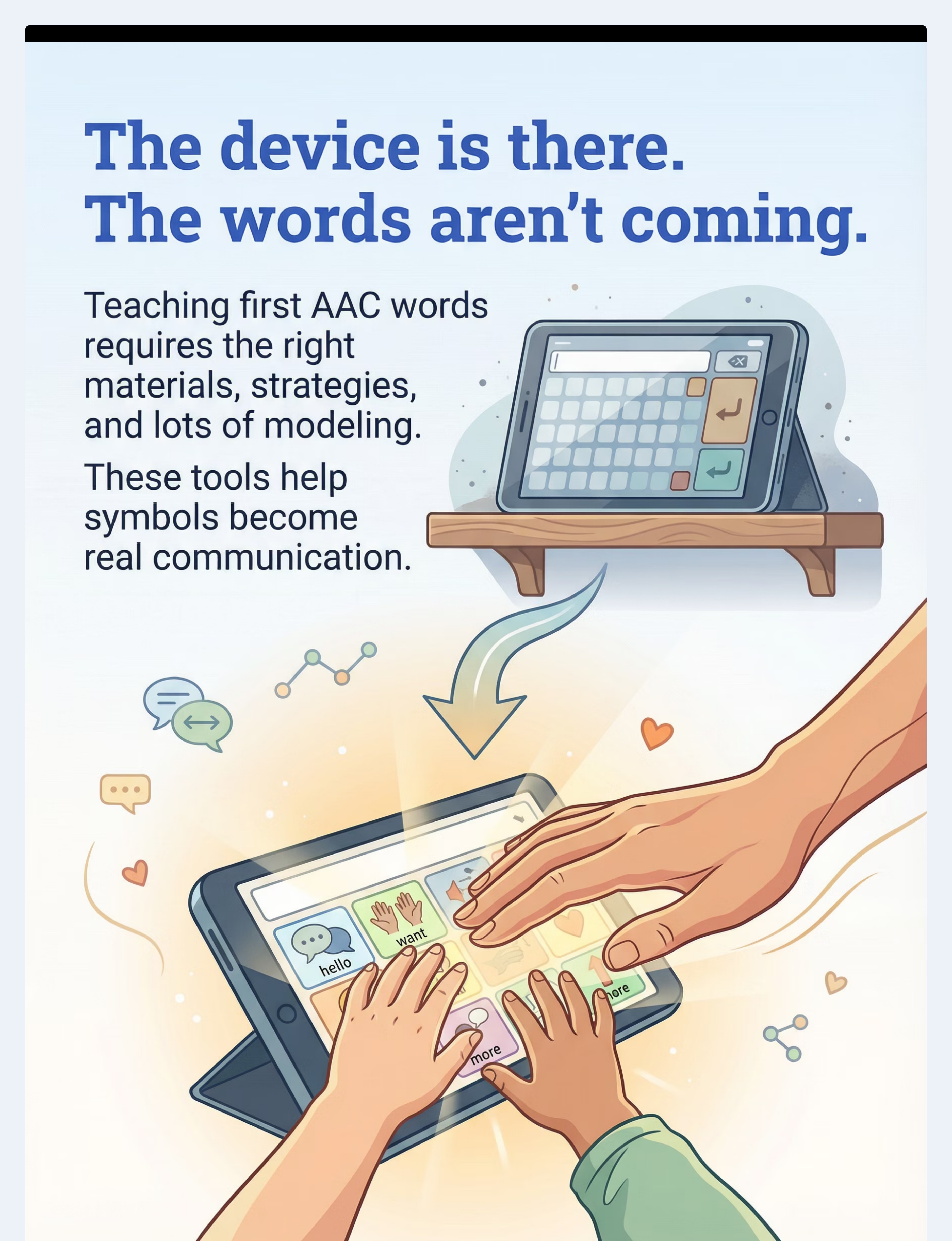
"We got the device three months ago. The words still aren't coming."
You have the tool. You've watched the videos. You model when you remember. But the tablet mostly sits on the shelf — and every day it does, something inside you wonders: Are we failing him?
✦ You are not failing. Your child is in the input phase. The words are coming.
This guide from the Pinnacle Blooms Consortium — validated by SLPs, OTs, BCBAs, Special Educators, and NeuroDevelopmental Paediatricians — gives you a complete, evidence-based protocol for turning symbols into real communication at home.
Validated by the Pinnacle Blooms Consortium | SLP • OT • ABA • SpEd • NeuroDev
📞FREE National Autism Helpline: 9100 181 181 | 16+ languages | 24×7

You Are Not Alone
This is one of the most common moments in AAC journeys.
1 in 100
Children Globally
Diagnosed with autism worldwide
80%
AAC Users
Go through an extended input phase before first words emerge
6–12mo
Average Timeline
From AAC introduction to consistent first words with intensive modelling
"You are among millions of families navigating the gap between 'the device is here' and 'the words are here.' This gap has a name: the input phase. It is not failure. It is learning."
75M+
Children worldwide with communication disabilities (WHO, 2024)
18M+
Children on the autism spectrum in India alone
20M+
Pinnacle therapy sessions confirming the input phase is universal — and temporary
PMC11506176 | PMC10955541 | ASHA Practice Portal: AAC

The Neuroscience
What's Happening in Your Child's Brain
For a symbol to become a word, four distinct neural events must occur — each requiring hundreds of repetitions. Here is what that looks like in plain language.
1
Symbol Recognition
The visual cortex must learn that THIS picture means THIS concept. Requires hundreds of visual exposures.
2
Referential Understanding
The prefrontal cortex must learn that symbols represent real-world meaning. Requires context-linked exposures.
3
Motor Mapping
The motor cortex must build an automatic pathway to reach the correct location. Requires physical repetitions.
4
Communicative Intent
The child must learn that touching a symbol affects another person. Requires consistent partner response.
Speaking children hear a word 500–1,000 times before saying it. Your child needs to see symbols used in context hundreds of times before independently using them. This is not a device problem — this is neurodevelopment doing its job.
Frontiers in Integrative Neuroscience (2020) | DOI: 10.3389/fnint.2020.556660 | Romski & Sevcik AAC acquisition research

Developmental Context
Where Your Child Is Now in the AAC Journey
This timeline is AAC-specific and normal. Children with motor planning differences, sensory processing challenges, or cognitive delays may need extended timelines. This is expected, not exceptional.
Phase | What It Looks Like | Duration | |
Exposure | AAC introduced, modelling begins, no independent production | Months 1–3 | |
Awareness | Child looks at AAC, explores symbols, may touch randomly | Months 2–4 | |
Emergence | First intentional touches, often inconsistent, context-specific | Months 3–9 | |
Establishment | 5–15 consistent core words, increasing independence | Months 6–18 | |
Expansion | Vocabulary grows, combinations emerge | Month 12+ |
WHO CCD Package (2023) | PMC9978394 | UNICEF MICS developmental monitoring

Act I — Evidence
The Evidence Behind Technique B-222
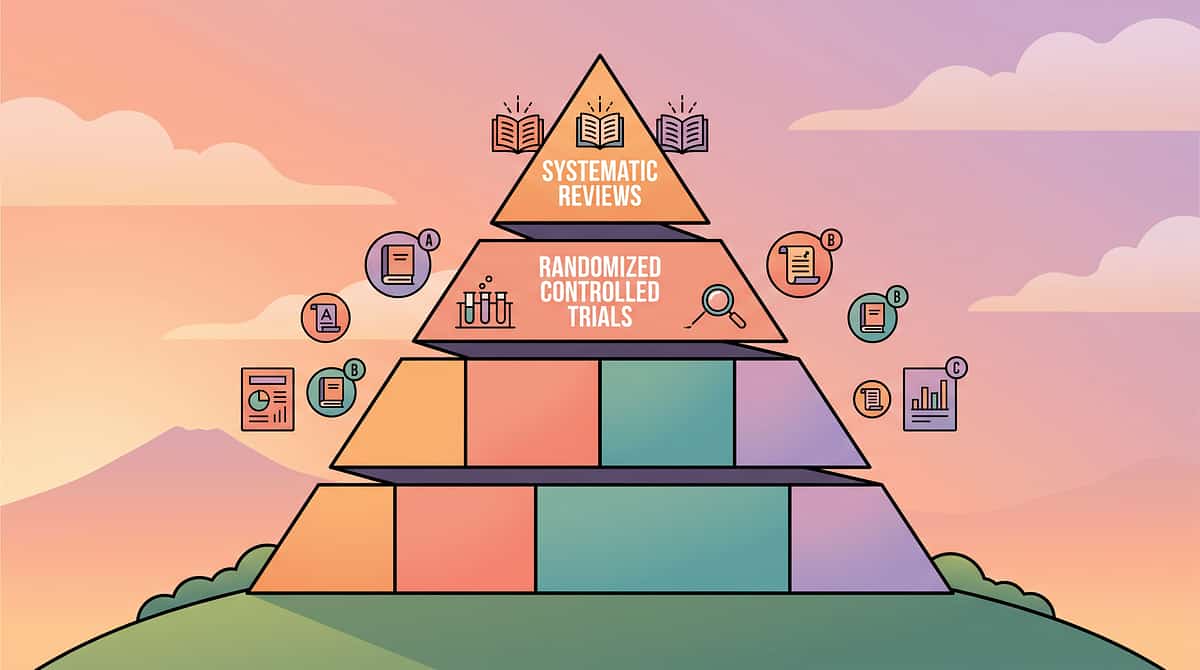
EVIDENCE GRADE: LEVEL I — SYSTEMATIC REVIEW + RCT
Clinically validated. Home-applicable. Parent-proven.
Clinically validated. Home-applicable. Parent-proven.
Study | Finding | |
ASHA Systematic Review (2022) | Aided language stimulation is the primary EBP for AAC vocabulary acquisition | |
Binger & Light (2007) | Modelling increases AAC use rate by 3–5× | |
NCAEP (2020) | Video modelling + aided language input: evidence-based for autism | |
Indian J Pediatr RCT (2019) | Home-based communication intervention: significant outcomes when caregiver-trained | |
Romski & Sevcik | AAC learners follow same acquisition pattern as spoken language — massive input precedes output |
92%
Evidence Confidence
Based on systematic reviews, RCTs, and meta-analyses across multiple peer-reviewed sources

Act II — Knowledge Transfer
Technique B-222: What It Is
Formal Name
AAC Vocabulary Acquisition via Aided Language Stimulation and Core Vocabulary Instruction
Parent-Friendly Name
"Teaching First Words Through Symbols"
Teaching first AAC words means helping a child understand that symbols on a device or board represent real meaning — and can be used to communicate with others. The child is not learning to operate a device — they are learning a language.
It requires the communication partner to model symbols constantly while speaking naturally, create situations where communication is motivated and needed, wait patiently for the child to process and respond, and celebrate every attempt.
Technique Specs
Age Range: 2–18 years+
Session Duration: 10–20 minutes
Frequency: All day, every day
Difficulty: Intermediate → Advanced (for partner)
Domain: Social Communication & AAC
🗣️ Social Communication
Domain B: Pragmatic Language
💬 AAC
Augmentative & Alternative Communication
🧠 Core Vocabulary
High-frequency word acquisition
The Multidisciplinary Team
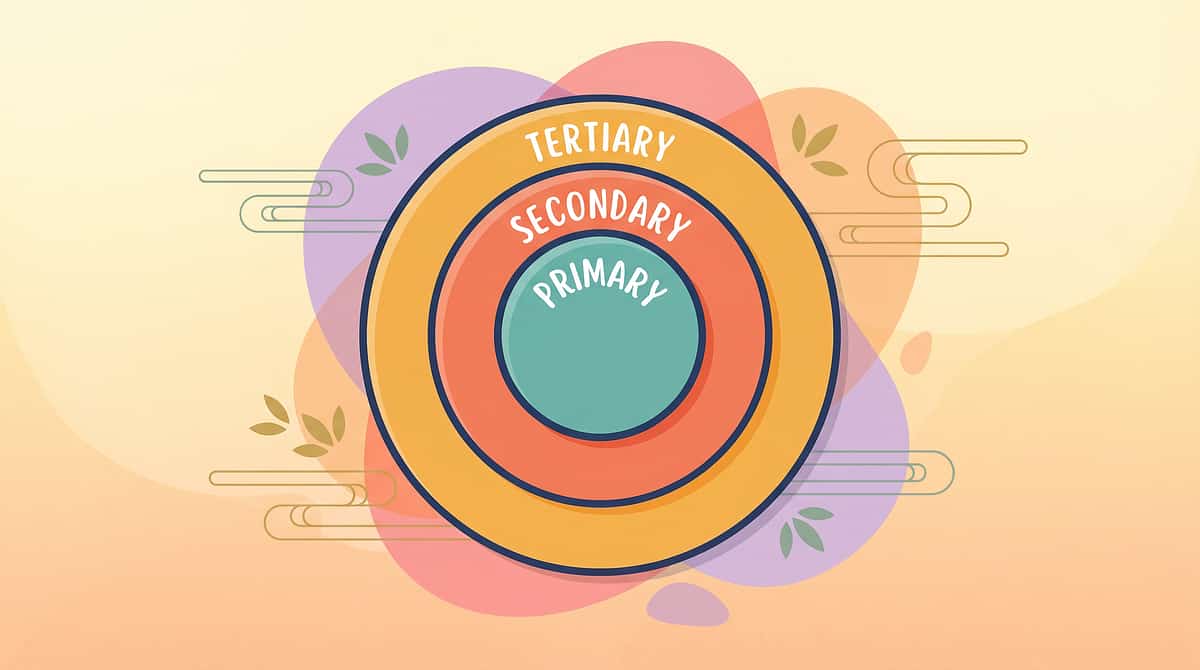
This Technique Lives at the Intersection of Five Therapy Disciplines
Speech-Language Pathologist — LEAD
Selects vocabulary targets, designs modelling strategy, coaches communication partners, adjusts AAC system settings.
Occupational Therapist — MOTOR ACCESS
Addresses fine motor control for symbol selection, positioning, access method optimisation, sensory readiness for AAC use.
BCBA / ABA Therapist — REINFORCEMENT
Designs reinforcement schedules, uses discrete trial teaching for specific vocabulary, and tracks data systematically.
Special Educator — GENERALISATION
Integrates AAC into academic and school routines, ensures vocabulary alignment across environments.
NeuroDevelopmental Paediatrician — BASELINE
Determines communication profile, identifies co-occurring conditions affecting AAC learning, monitors progress.
"The brain doesn't organise by therapy type. First AAC words require motor planning (OT), language modelling (SLP), reinforcement learning (ABA), and environmental integration (SpEd) — simultaneously." — Pinnacle Blooms Consortium
📞9100 181 181 — Connect with the right specialist
Act II — The 9 Materials
Your Complete AAC Toolkit: 9 Materials
Every material below has a clinical rationale, a purchase option (₹100–₹3,000), and a FREE DIY alternative. No family is excluded by economics. The primary investment is time and consistency — not money.
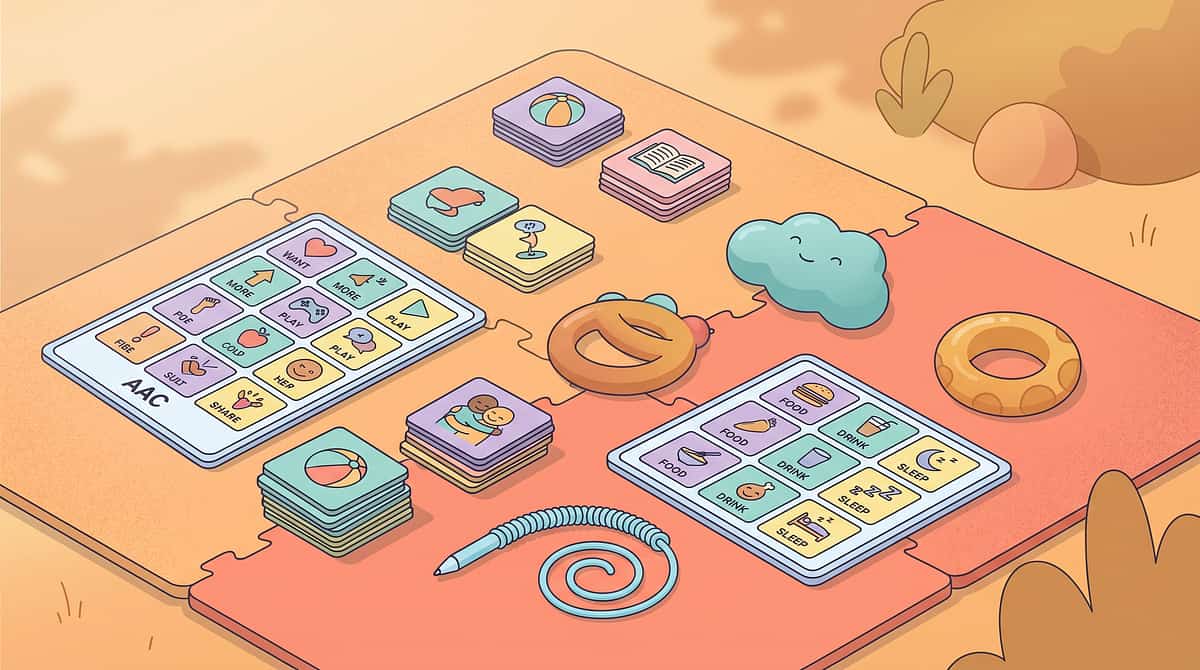
1. Core Word Teaching Sets
High-frequency vocabulary organised for maximum communicative power
2. Modelling Boards
Partner AAC boards so adults can model without taking the child's device
3. Motivating Activity Kits
Cause-effect toys that engineer authentic communication need
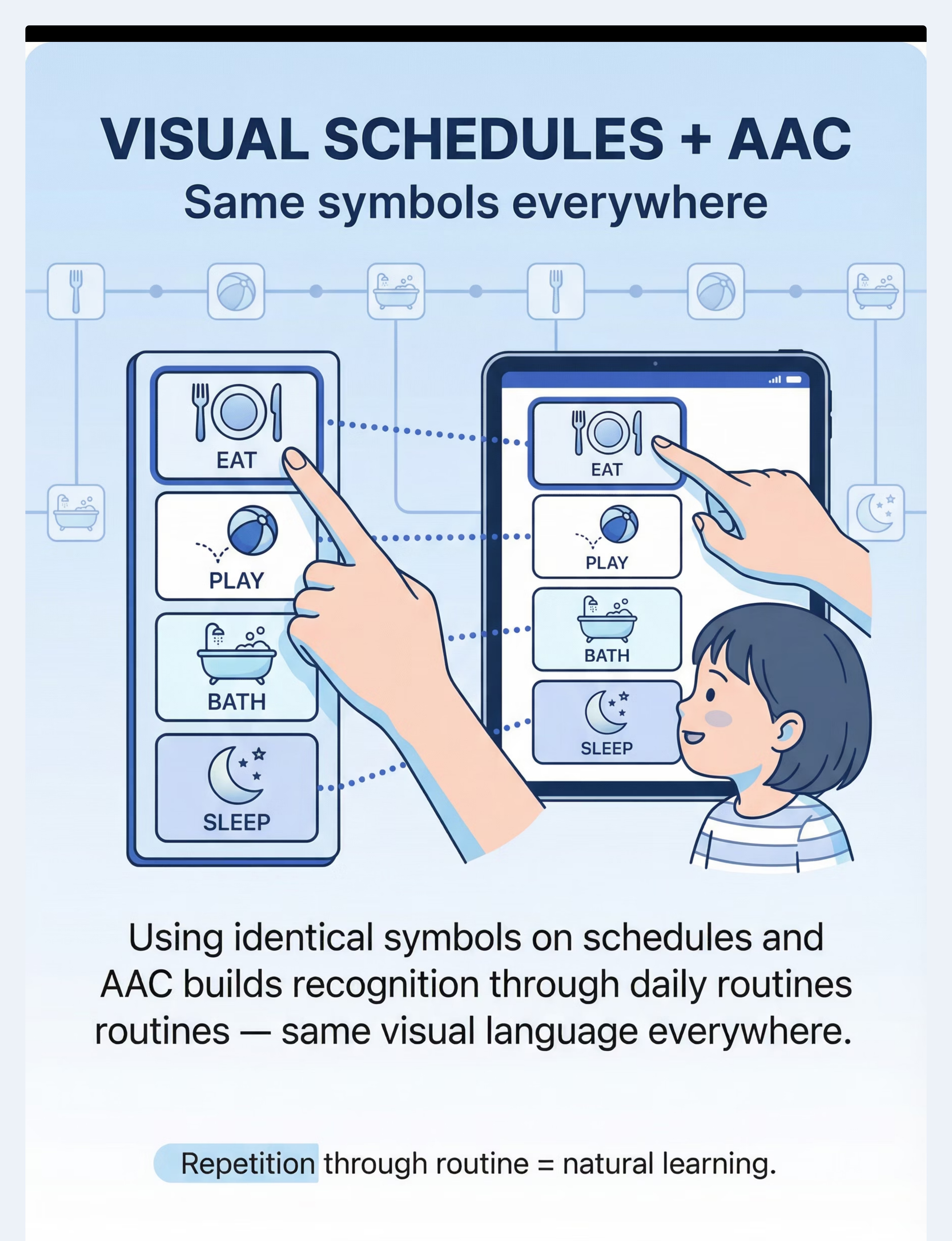
4. Visual Schedules
Embedded AAC symbols creating consistent visual language across environments
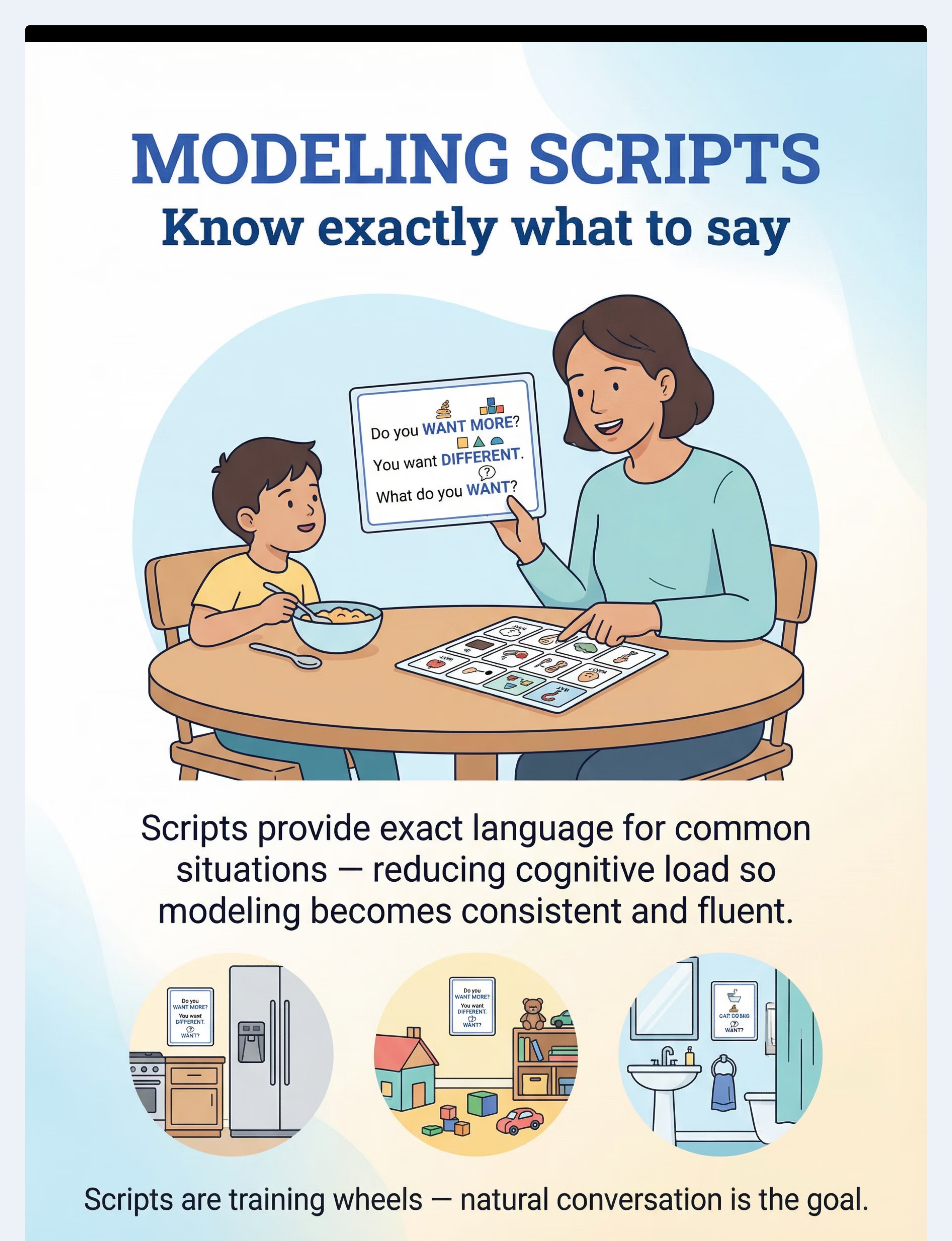
5. Modelling Scripts
Written scripts removing cognitive load from daily AAC practice
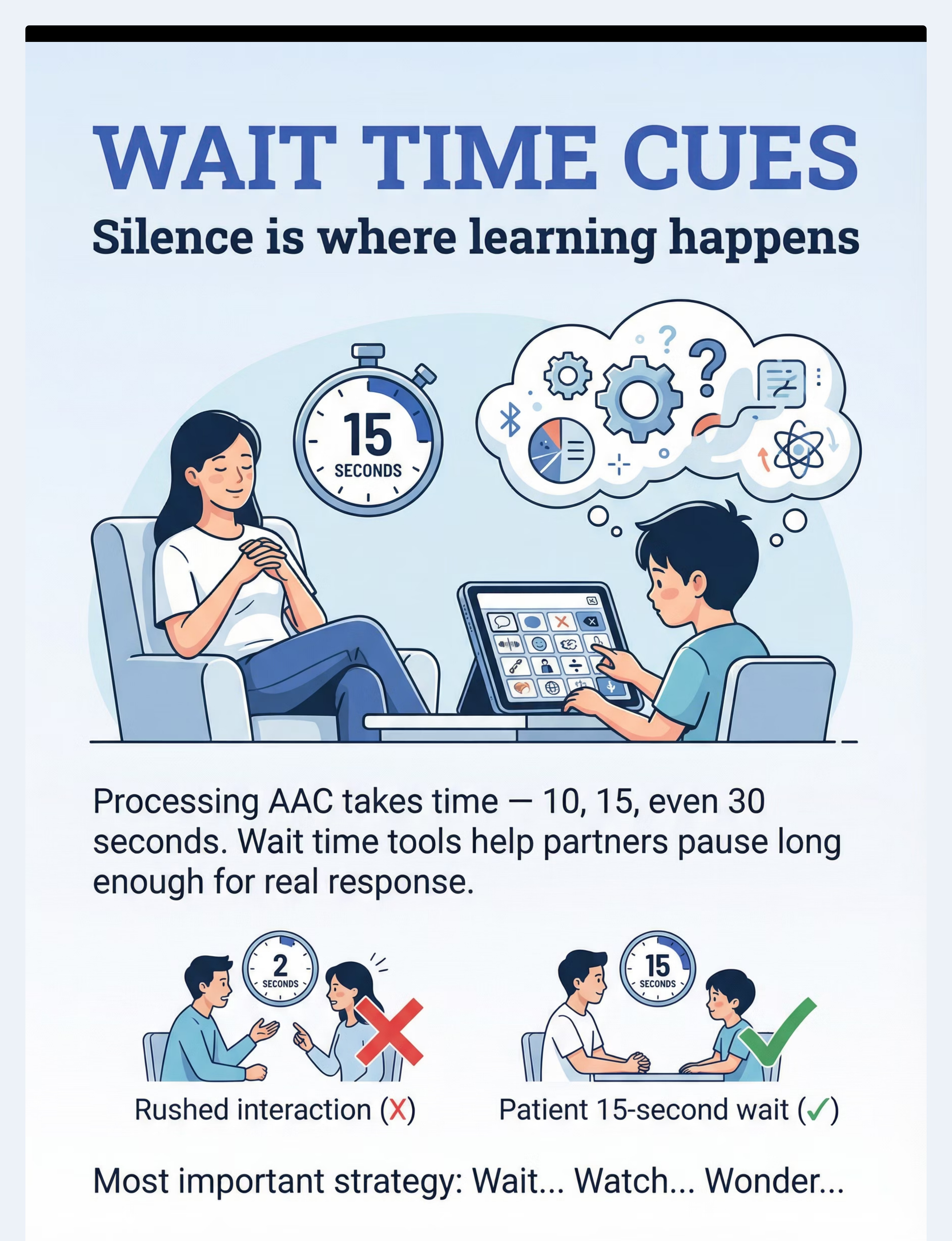
6. Wait Time Tools
Visual timers helping partners pause long enough for children to process
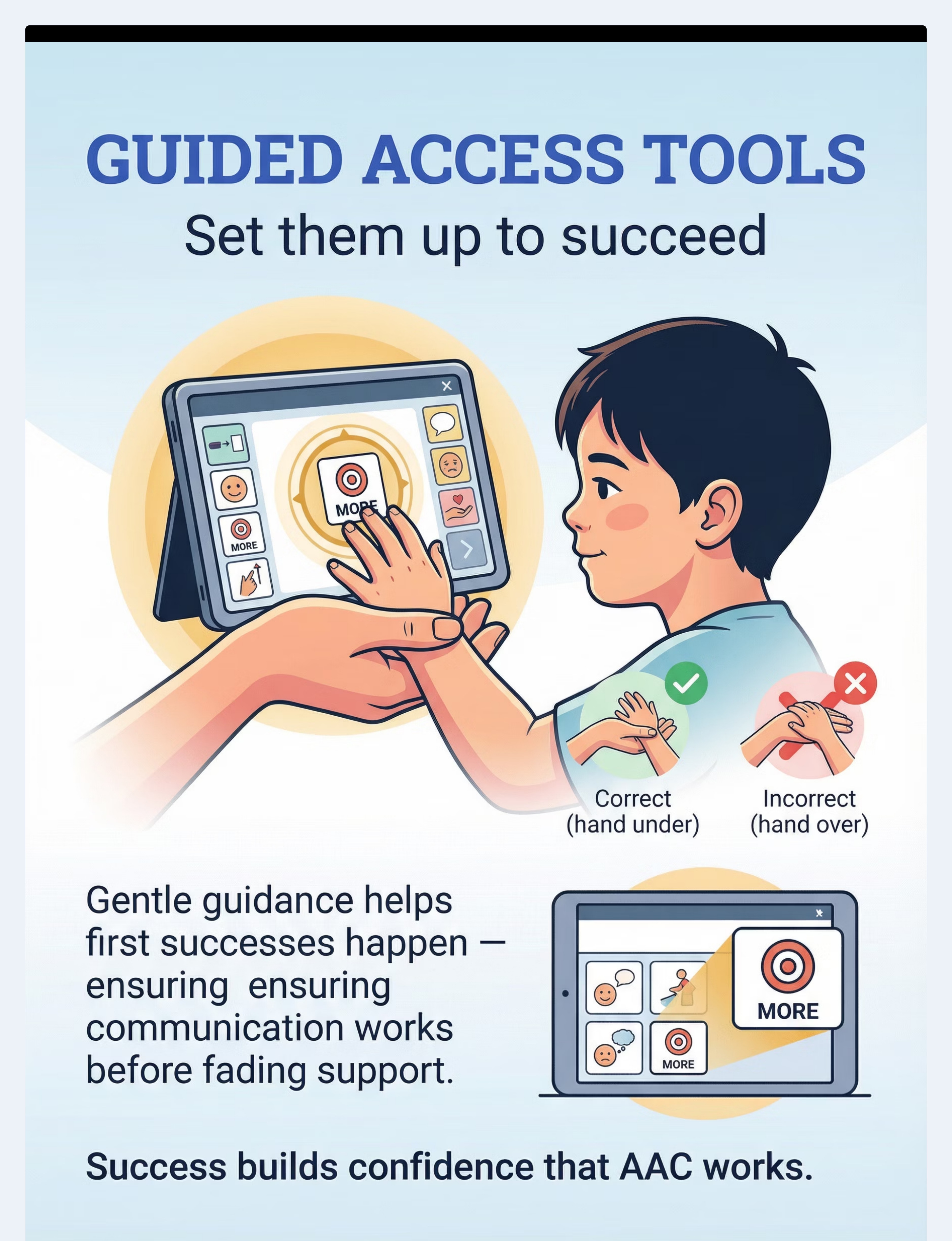
7. Errorless Learning Tools
Guided access supports setting up AAC for guaranteed early success
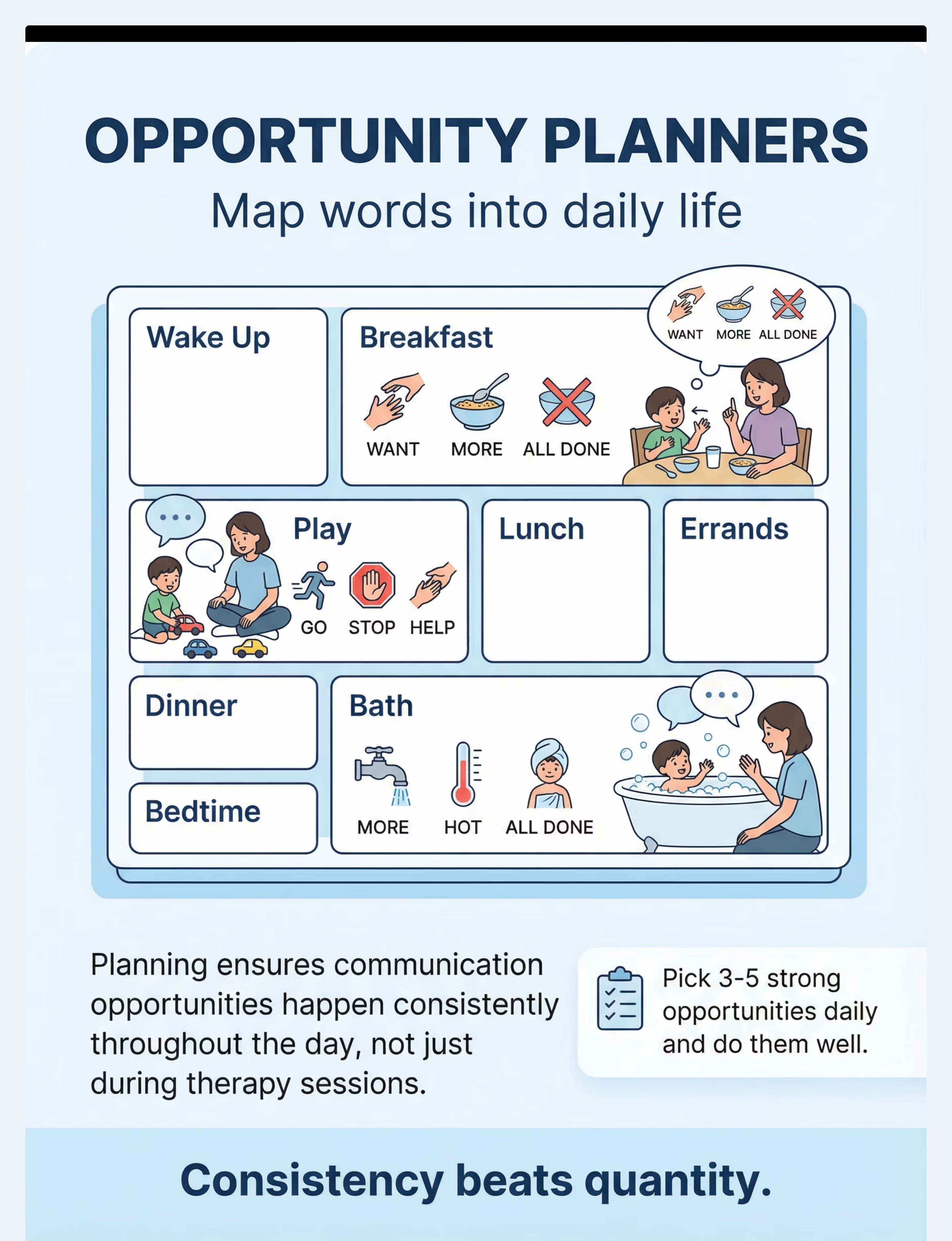
8. Opportunity Planners
Daily routine charts mapping vocabulary targets to every routine
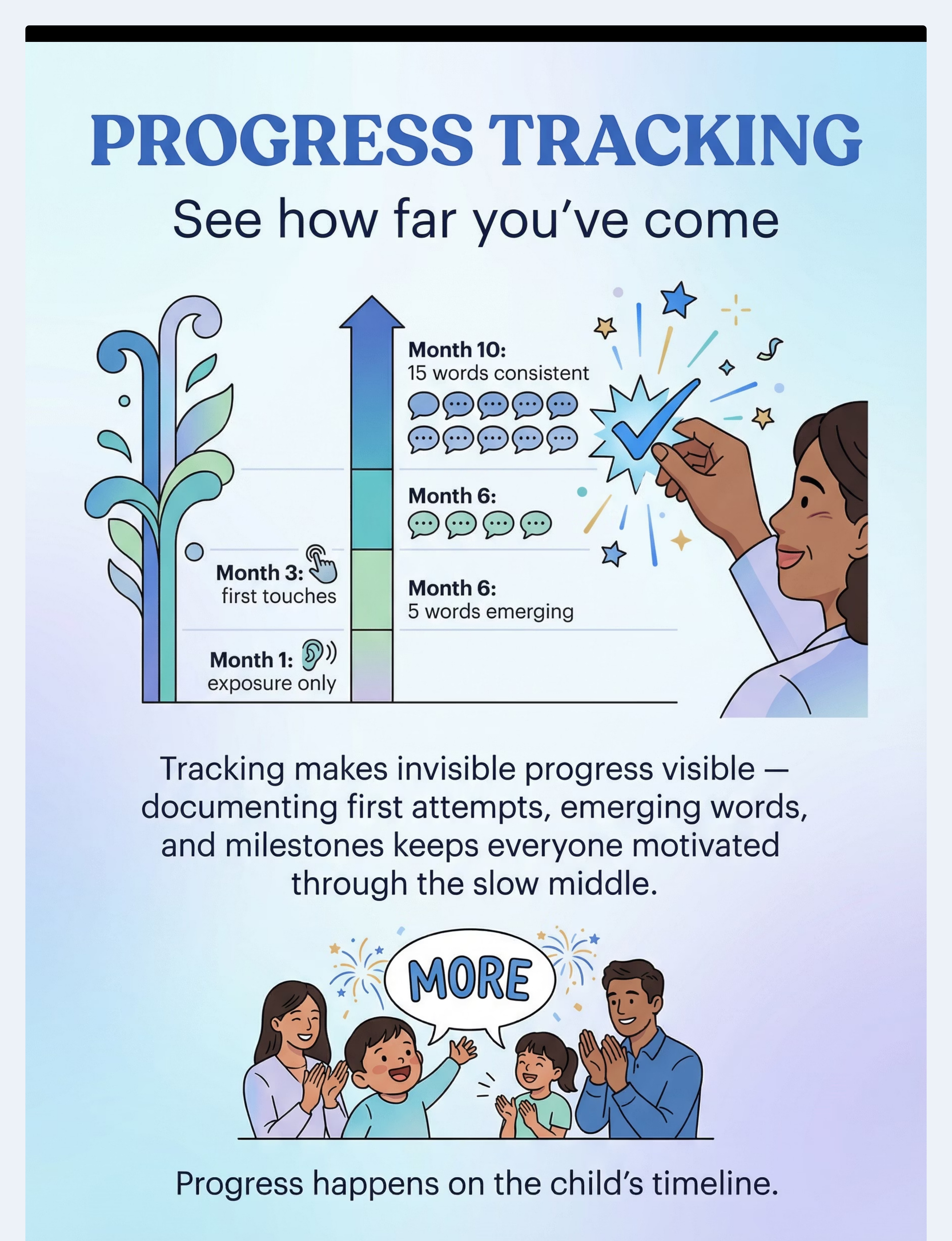
9. Progress Tracking
Tracking sheets making invisible progress visible and celebrating milestones
💡 All 9 materials have FREE DIY alternatives. 📞 FREE consultation: 9100 181 181
Material 1 of 9
Core Word Focused Teaching Sets
What It Is
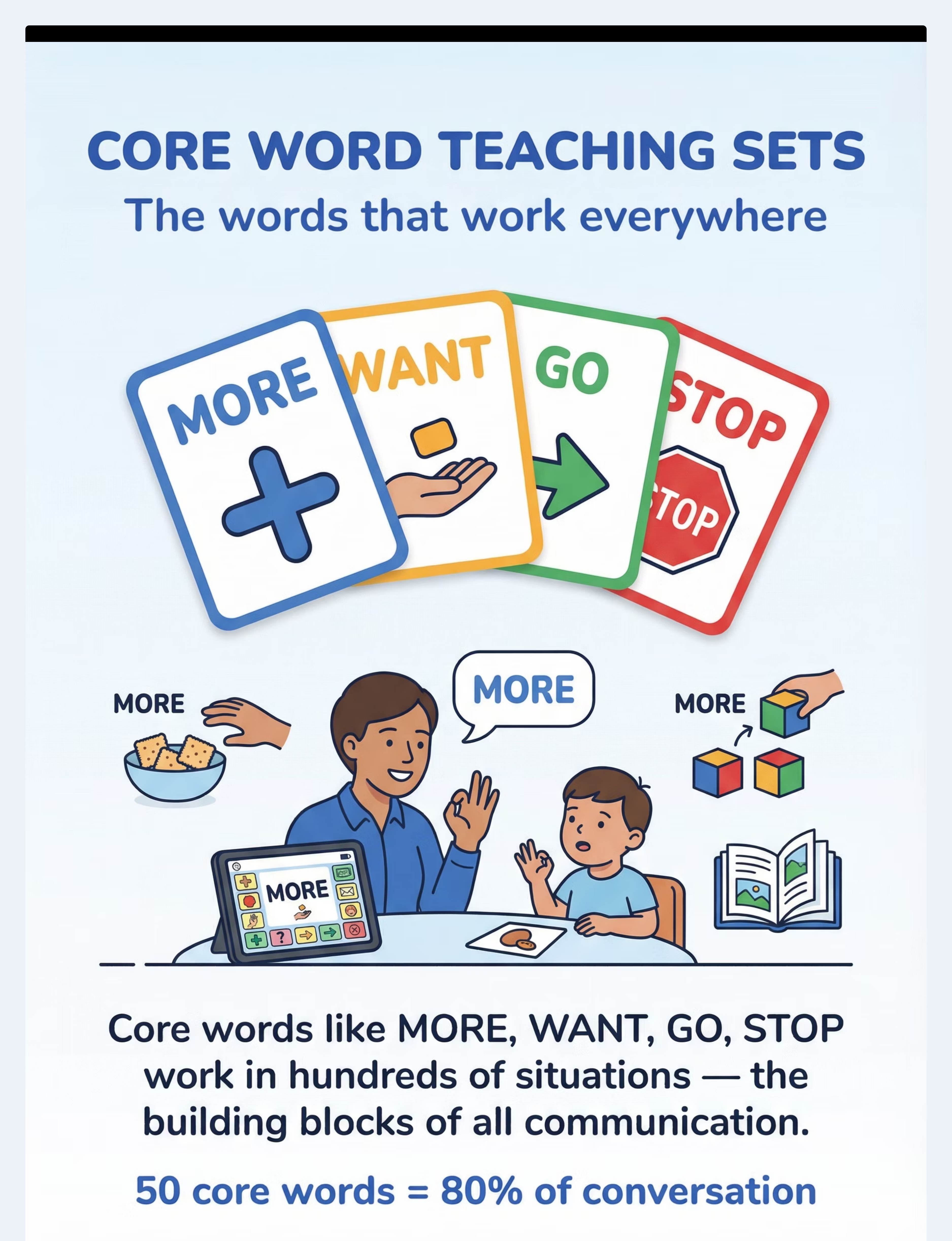
Structured activity sets, visual cards, and teaching guides organised around high-frequency core vocabulary — MORE, WANT, GO, STOP, HELP, ALL DONE, THAT, DIFFERENT. These are the building blocks of all human language.
Why It Works
50 core words account for 80% of everything humans say. Teaching core words first gives children maximum communicative power with minimum vocabulary load. Nouns are single-use; core words are universal.
"Families often focus on nouns — 'ball,' 'juice,' 'cookie.' But nouns are single-use. 'MORE' works at every meal, every play, every routine. Core words are the skeleton of all language." — Pinnacle Consortium SLP
Price Range
₹300–₹2,500
✅ FREE DIY Version
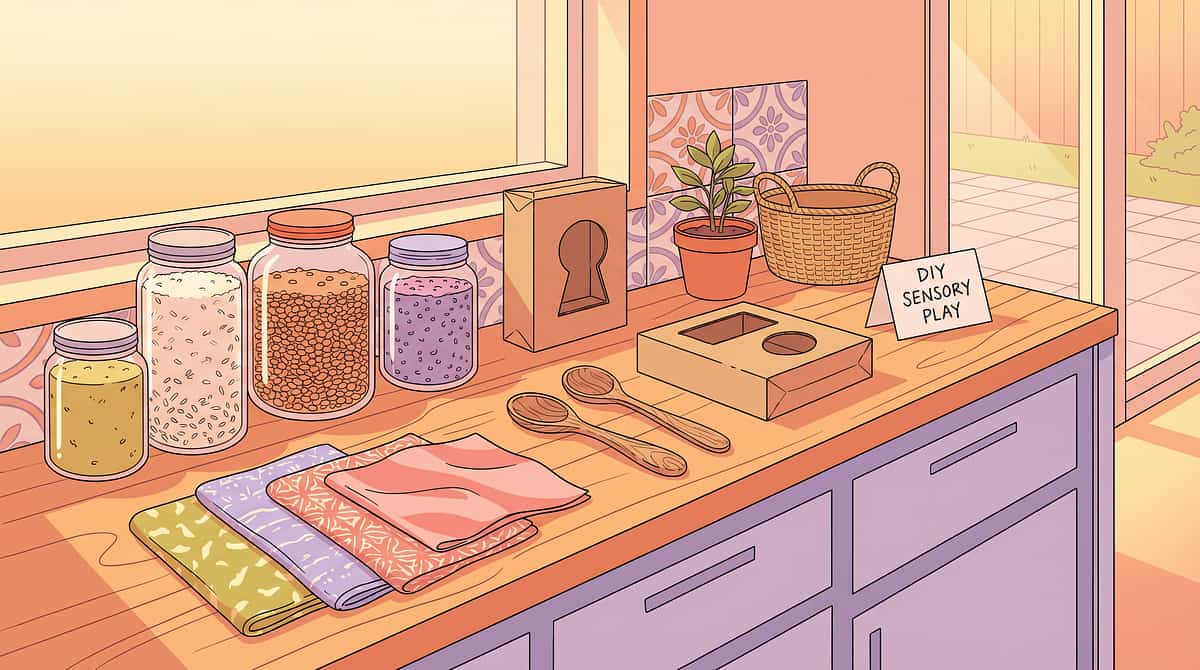
Choose one target word (start with MORE or WANT). Write down 20 daily situations where that word naturally occurs. Model it saturatingly for one week. Free resources at PrAACtical AAC online.
⚠️ Safety Note
Avoid teaching only nouns. Core words build generative language; object labels alone don't.
Material 2 of 9
Modelling Boards and Partner AAC Sets
What It Is
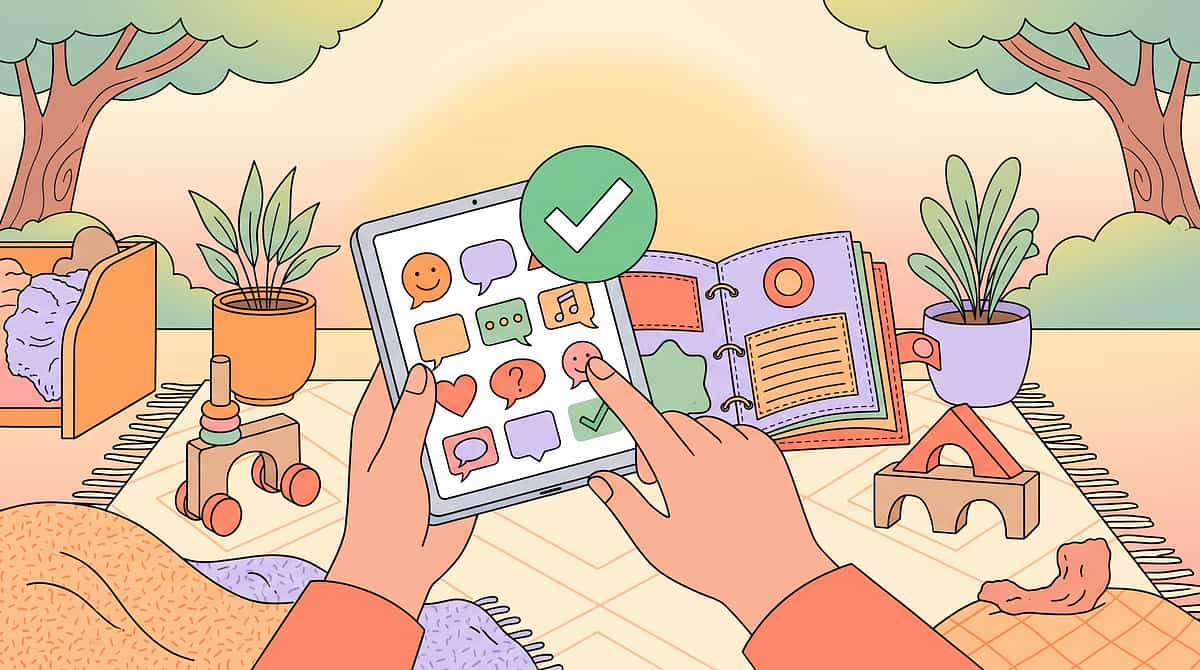
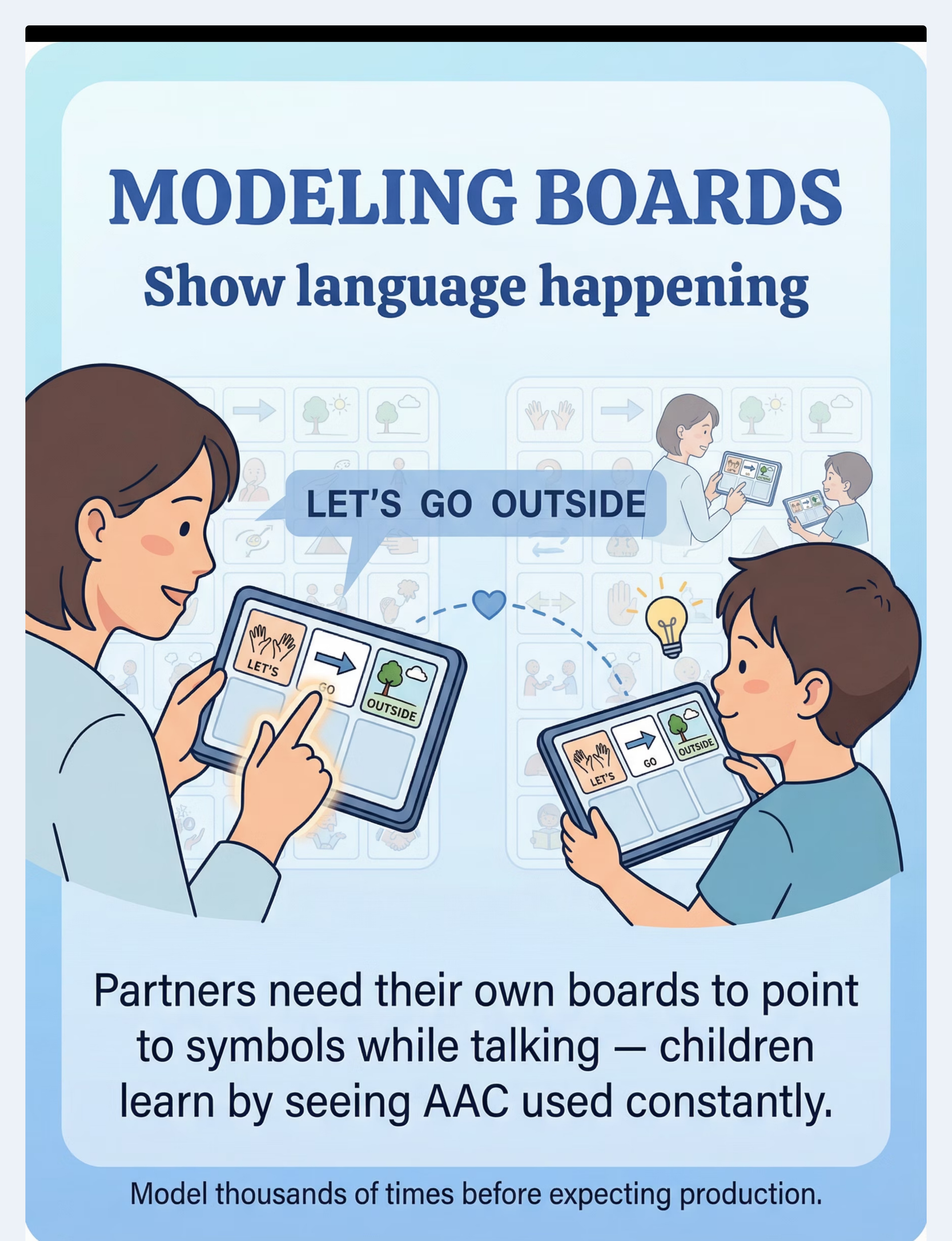
Duplicate copies of the child's communication board that partners use for modelling — so the adult can point to symbols while talking without ever taking the child's device away.
Why It Works
Children learn language by seeing it used. AAC learners need to see symbols in action hundreds of times before producing them. The modelling board IS the teaching tool — it is non-negotiable.
"Taking the child's device to model is like taking their voice to teach them to talk. Never do it. Partners need their own boards, everywhere." — Pinnacle Consortium SLP
Price Range
₹200–₹1,500
✅ FREE DIY Version
Print duplicate copies of the child's AAC pages. Laminate. Place in every room where routines happen — mini boards for kitchen, bathroom, and car.
⚠️ Safety Note
The child's AAC system is their voice and must ALWAYS remain accessible to them. Never borrow it for your modelling.
Material 3 of 9
Motivating Activity Kits
What It Is
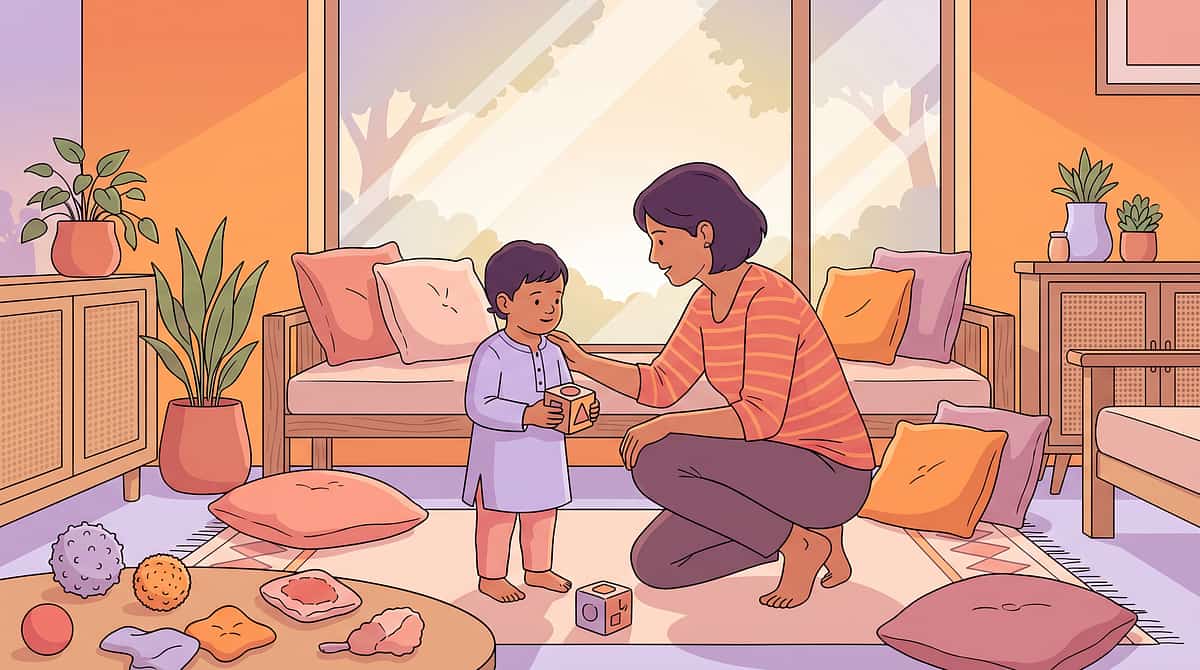
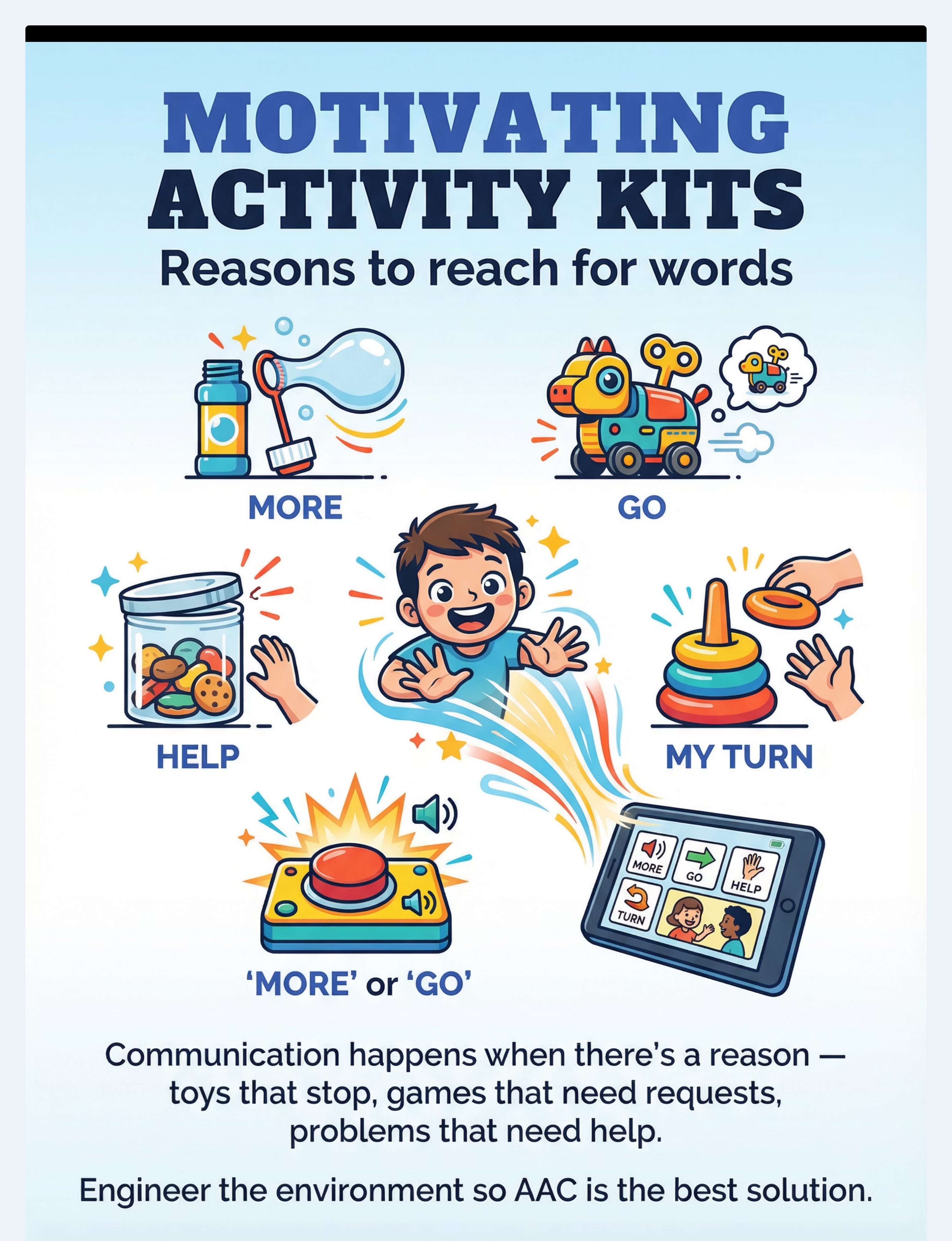
Curated toys and activities specifically designed to create communication opportunities — bubbles that stop (needing MORE), wind-up toys (needing GO), containers that need HELP opening. Every toy is a language invitation.
Why It Works
Words emerge when there is a real reason to communicate. Engineering situations that require communication creates authentic motivation — not drill, but genuine need.
"We call this 'engineering the environment.' If the child can get everything without communicating, why would they? Create situations where AAC is the best solution." — Pinnacle Consortium ABA
Canon Products
Dyomnizy Educational Memory Game (Cause-Effect Toy) — ₹519
Kidology Pull Out Spike Toy (Cause-Effect) — ₹380
Price Range
₹500–₹3,000
✅ FREE DIY Version
Audit your current toys. Bubbles, balloons, wind-up toys, clear containers with preferred snacks, Mr. Potato Head — all create communication need without any additional cost.
⚠️ Safety Note
Balance frustration carefully — motivation, not distress. Always honour communication immediately. If a child is crying or melting down, the frustration level is too high.
Material 4 of 9
Visual Schedules with Embedded AAC Symbols
What It Is
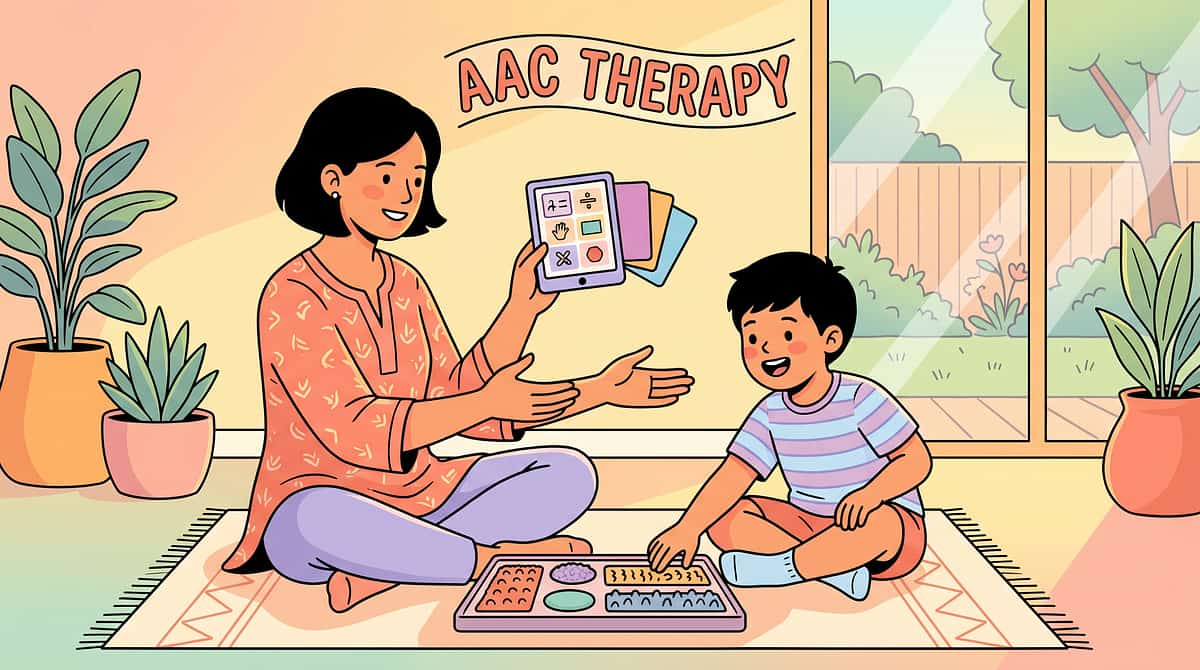
Daily routine schedules using the exact same symbols as the child's AAC device — creating visual language consistency across the child's entire environment. When the child sees the EAT symbol on the schedule and on their device, recognition is reinforced twice.
Why It Works
Symbol consistency is non-negotiable. Every time the same symbol appears across contexts — schedule, device, flashcard — the neural pathway for that symbol strengthens. Same symbol everywhere = faster learning.
"If the schedule shows a fork for 'eat' and the device shows a bowl, you've created two different symbols for one concept. Match them exactly." — Pinnacle Consortium SpEd
Price Range
₹200–₹1,000
✅ FREE DIY Version
Export individual symbols from the child's AAC app and print as schedule cards. Most apps (Proloquo2Go, TouchChat, LAMP) allow symbol export.
⚠️ Safety Note
Never mix symbol systems across materials. Visual consistency is the foundation of symbol recognition — mixing systems creates confusion and slows acquisition.
Material 5 of 9
Aided Language Stimulation Guides and Scripts
What It Is
Written scripts for common daily situations showing exactly what to say while pointing to which symbols — removing the cognitive load of inventing language in the moment. Scripts for mealtime, bathtime, playtime, and transitions.
Why It Works
Most parents want to model but freeze in the moment, unsure what to say. Scripts turn intention into action. "Do you WANT MORE? You want DIFFERENT. What do you WANT?" — posted on the fridge, ready every time.
"Modelling fails when partners freeze. Scripts give them the exact language so they can model fluently, every time, without thinking about it." — Pinnacle Consortium SLP
Price Range
₹200–₹1,500
✅ FREE DIY Version
Write 5 scripts for your most common daily situations. Include which symbols to point to. Laminate. Post where routines happen — mealtime, bathtime, playtime, transitions.
⚠️ Safety Note
Scripts are starting points. Natural conversation is the goal — scripts help parents get there faster. Gradually reduce reliance on scripts as modelling becomes automatic.

Material 6 of 9
Wait Time and Processing Cue Tools
What It Is
Visual timers, sand timers, and cue cards that help communication partners pause long enough for AAC users to process, plan, and respond — typically 10–30 seconds. Most partners wait only 2–3 seconds before prompting or moving on.
Why It Works
Processing AAC takes significant time. When partners move on after 2–3 seconds, they inadvertently teach the child that the partner will do the communicating. Wait time tools make the invisible pause visible and sustainable.
"The hardest thing we ask families to do is nothing. Just wait. Ten seconds. Fifteen. Thirty. The silence feels wrong — but it's where the communication is happening, inside the child's brain." — Pinnacle Consortium SLP & ABA
Price Range
₹100–₹800
✅ FREE DIY Version
Phone timer set to 15 seconds. Sand timer from a craft store. Written cue card: WAIT… WATCH… WONDER… — posted where AAC interactions happen.
⚠️ Safety Note
Never fill the silence with more prompting. Prompting teaches dependence; waiting teaches independence. This is one of the most important principles in the entire protocol.
Material 7 of 9
Errorless Learning and Guided Access Tools
What It Is
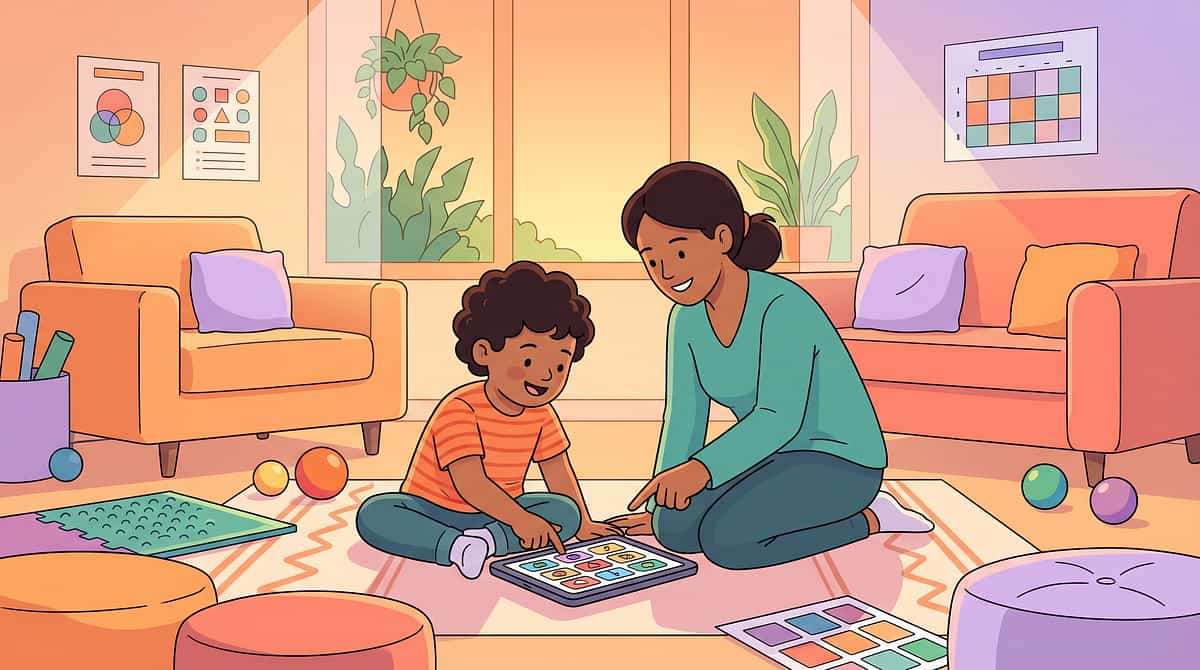
Materials and techniques that set up AAC use for guaranteed success — hand-under-hand guidance, simplified displays, highlighted target symbols — before gradually fading support. First experiences with AAC must succeed.
Why It Works
When the child touches a symbol and gets the desired result, they learn that AAC is worth using. Failure in early stages leads to giving up. Errorless learning builds positive associations with the device from the very first session.
"Hand-UNDER-hand, never hand-OVER-hand. Guide from below, following the child's movement. Never force. The goal is a success experience, then immediate reinforcement, then gradual fading." — Pinnacle Consortium ABA & OT
Price Range
₹100–₹1,000
✅ FREE DIY Version
Practice hand-under-hand technique (place your hand under child's hand, don't grip). Simplify the display temporarily to 2–4 symbols only. Position preferred items to make requesting obvious.
⚠️ Safety Note
NEVER use hand-over-hand forcing. Child autonomy matters from the first session. Guidance must be gentle, respectful, and faded as immediately as possible.
Material 8 of 9
Communication Opportunity Planners
What It Is
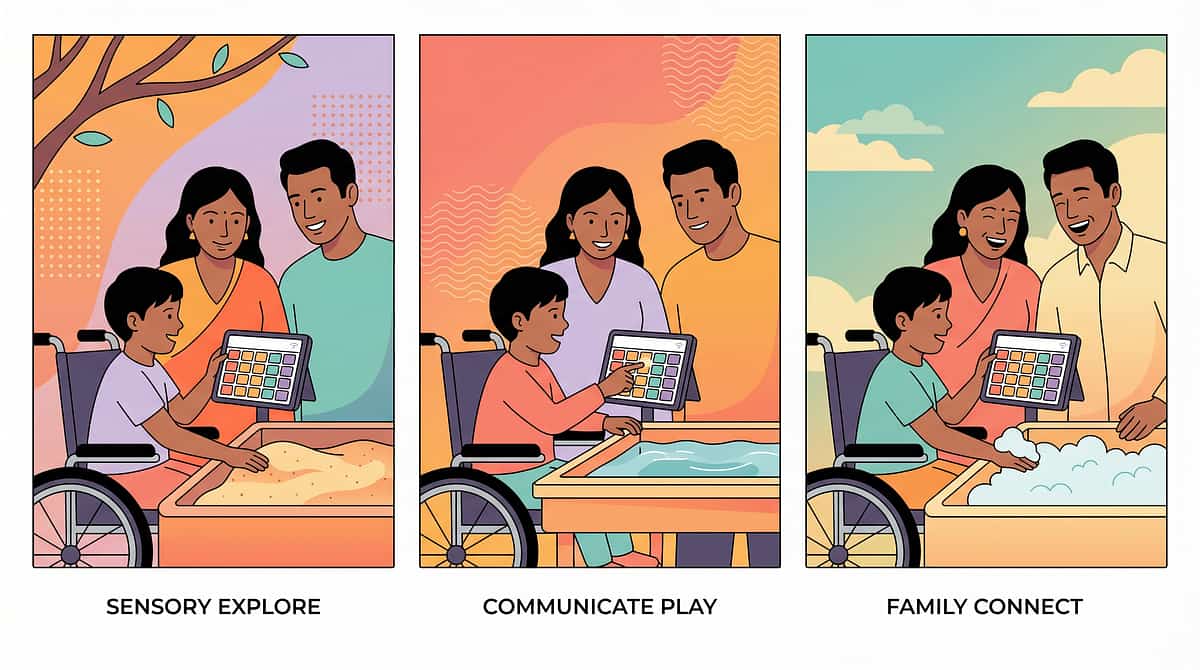
Structured planning charts that map target vocabulary to daily routines — ensuring modelling and communication opportunities happen consistently throughout the day, not just during therapy. Breakfast = MORE, WANT, ALL DONE. Playtime = GO, STOP, HELP. Bathtime = MORE, ALL DONE, HOT.
Why It Works
Without planning, opportunities pass unnoticed. With planning, every routine becomes a language lesson. Thirty minutes a week with a therapist cannot teach a language — the family IS the language environment.
"Planning ensures modelling happens 50+ times a day across all natural contexts." — Pinnacle Consortium SpEd & SLP
Price Range
₹100–₹500
✅ FREE DIY Version
Simple three-column chart: Column 1 = daily routine. Column 2 = 2–3 words to model. Column 3 = how to create the opportunity. Print. Post visibly. Review weekly.
⚠️ Safety Note
Don't overplan to exhaustion. Pick 3–5 strong daily opportunities and execute them well. Consistency beats quantity every time.

Material 9 of 9
Progress Tracking and Celebration Materials
What It Is
Tracking sheets documenting words modelled, emerging touches, first independent uses, and milestones — making invisible progress visible to sustain family motivation through what can feel like a long journey.
Why It Works
AAC vocabulary development is slow. Without documentation, families feel nothing is changing. Tracking proves progress is happening, identifies patterns, and celebrates every milestone — no matter how small.
"Data is not bureaucracy — it's hope. When a parent shows me their log and I can show them that six weeks ago their child never looked at the device, and now they touch it 8 times a session — that's what keeps families going." — Pinnacle Consortium BCBA
Canon Products
🏆 Reward Jar for Milestone Celebrations — ₹589
🌟 1800+ Reward Stickers for Session Milestones — ₹364
Price Range
₹100–₹600
✅ FREE DIY Version
Simple notebook: Date / Word / Context / Independence Level (modelled only / with help / independent). Note first occurrences of anything new. Review monthly. Celebrate visibly.
⚠️ Safety Note
Track for encouragement, not pressure. Progress happens on the child's timeline. Never compare to other children — every AAC journey is unique.
💡 All 9 materials have FREE DIY alternatives. The primary investment is time and consistency, not money. 📞 FREE materials consultation: 9100 181 181

DIY & Substitutes
Every Material Has a ₹0 Version. No Family Is Excluded.
"The WHO Nurturing Care Framework mandates that evidence-based interventions must be accessible regardless of economic status. Every protocol on this page has a household-material alternative."
Material | Clinical Version | Free DIY Version | Why Both Work | |
Core Word Sets | ₹300–2,500 teaching packs | Printed word cards + handwritten activity lists | Same target words, same modelling principle | |
Modelling Board | ₹200–1,500 laminated set | Printed screenshots from AAC app | Identical symbols, same modelling function | |
Motivating Activities | ₹500–3,000 curated kit | Bubbles, balloons, snacks in jars, existing toys | Communication need is the mechanism | |
Visual Schedule | ₹200–1,000 printed system | Printed AAC symbols cut and arranged | Symbol consistency is the mechanism | |
Modelling Scripts | ₹200–1,500 bound guides | Handwritten cards posted in routines | Knowledge transfer, not paper quality | |
Wait Time Tools | ₹100–800 visual timer | Phone timer or sand timer | Time is time, regardless of the device | |
Guided Access | ₹100–1,000 support tools | Hand-under-hand technique (no tools needed) | Technique, not equipment | |
Opportunity Planner | ₹100–500 printed | Simple chart on paper or whiteboard | Planning structure, not format | |
Progress Tracking | ₹100–600 tracking system | Notebook, date, word, context, independence | Data is data, regardless of format |
Safety First
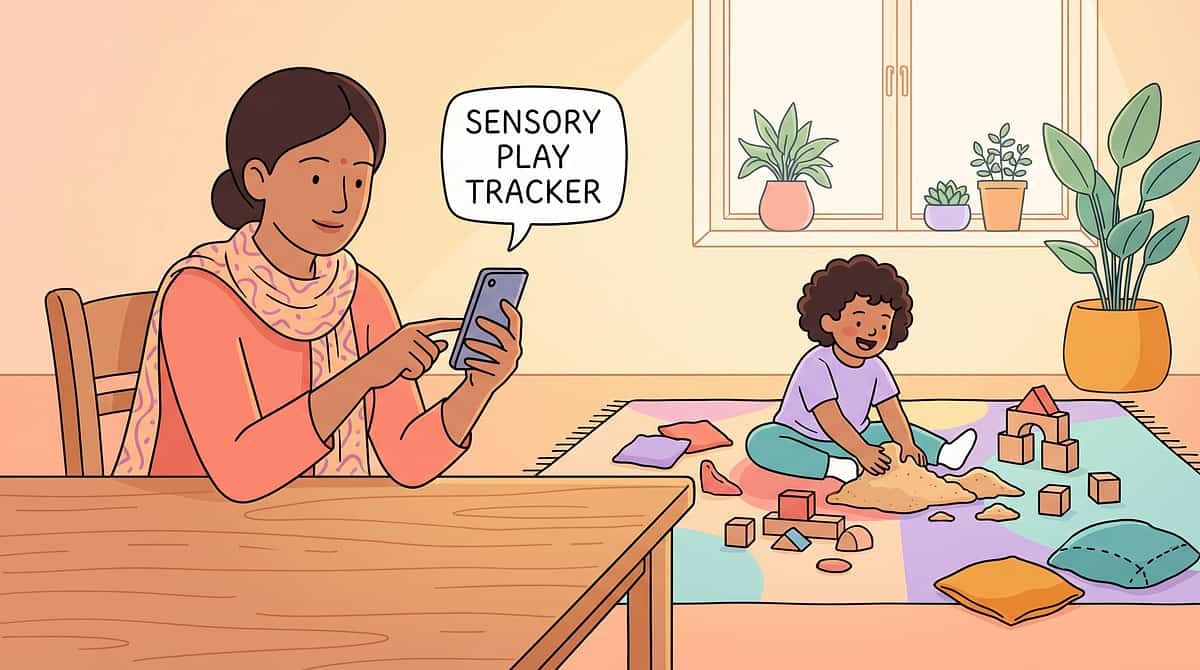
Before You Begin: Safety Rules
🔴 NEVER — Absolute Rules
• NEVER restrict AAC access as punishment — AAC is the child's voice
• NEVER use hand-over-hand forcing — only hand-under-hand guidance
• NEVER tell a child their communication attempt was wrong
• NEVER take the child's device for your own modelling
• NEVER use hand-over-hand forcing — only hand-under-hand guidance
• NEVER tell a child their communication attempt was wrong
• NEVER take the child's device for your own modelling
🟡 AMBER — Proceed With Care
• Engineering frustration: balance motivation vs. distress — if child is crying, frustration is too high
• Hand-under-hand guidance: fade as quickly as possible
• Simplified displays: plan to expand — too simple limits communication
• Hand-under-hand guidance: fade as quickly as possible
• Simplified displays: plan to expand — too simple limits communication
🟢 GREEN — Optimal Conditions
• Child is fed, rested, regulated, and in calm-alert state
• AAC device is charged and within reach at all times
• Partner is patient and has 10–30 seconds to wait
• Environment is calm — low sensory load
• Partner has modelling board ready
• AAC device is charged and within reach at all times
• Partner is patient and has 10–30 seconds to wait
• Environment is calm — low sensory load
• Partner has modelling board ready
STOP THE SESSION IF: Child shows severe distress (crying inconsolably, self-injurious behaviour) | Child appears unwell | Partner cannot maintain calm presence | AAC device is malfunctioning.
📞 Immediate clinical guidance: 9100 181 181
📞 Immediate clinical guidance: 9100 181 181

Environment Setup
Set Up Your Space: Spatial Precision Prevents 80% of Session Failures
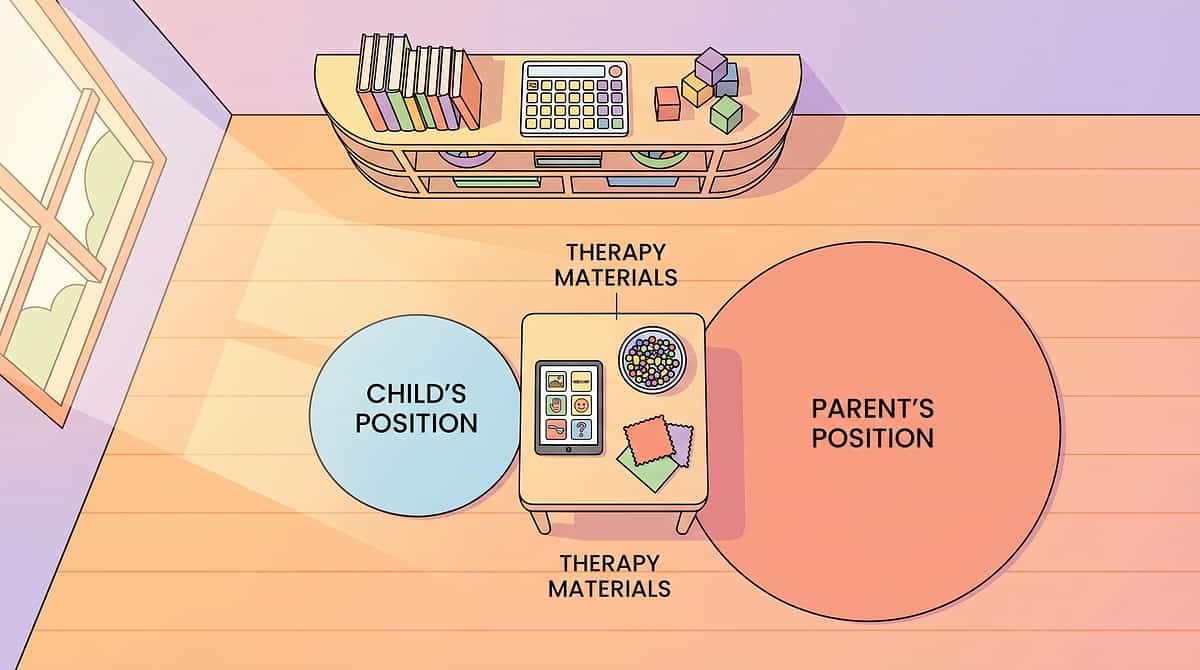
📱 AAC Device Position
Within the child's reach at all times — never on a shelf, never across the room. The device must be physically accessible the moment communication is motivated.
📋 Partner Modelling Board
Partner holds their own board. Position yourself at 45° angle to the child — never directly behind, never over the shoulder. Same level as the child — floor, chair, or lap.
🎯 Motivating Item Placement
Slightly out of reach — this creates the communication need. Close enough to be motivating; far enough to require a request.
🔇 Remove From Space
Competing screens (TV, tablets), high-stimulation toys not in use, interrupting family members, background noise above 60 decibels.
💡 Lighting
Natural or warm. Avoid flickering fluorescents.
🌡️ Temperature
Comfortable — not hot or cold.
⏰ Timing
Not immediately before or after high-stimulation activity.
PMC10955541 — structured 1:1 environment is most effective for AAC instruction
Act III — The Protocol
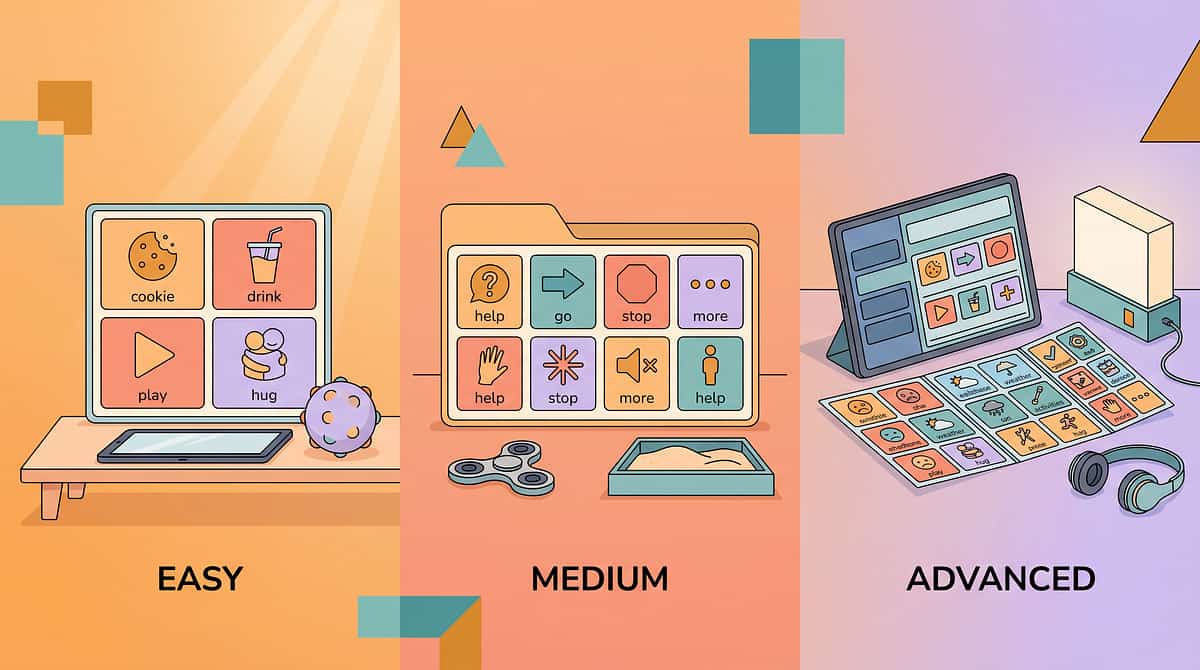
Is Your Child Ready? The Readiness Gate
Before every session, run this 60-second readiness check. The best session is one that starts right. A postponed session is not a failed session.
Indicator | Check | Note | |
Child is fed and not hungry | ✓ | Hunger competes for attention | |
Child is rested — not overtired | ✓ | Fatigue reduces symbol processing | |
Child is in calm-alert state | ✓ | Not already dysregulated | |
No illness or pain signs | ✓ | Physical discomfort prevents engagement | |
AAC device is charged + accessible | ✓ | Technical readiness | |
Partner has modelling board ready | ✓ | Partner readiness | |
Partner has 30 minutes without rush | ✓ | Patience readiness |
✅ ALL GREEN → Proceed
Begin as planned. All conditions are optimal.
⚠️ 2–3 AMBER → Modify
Shorten to 5 minutes, reduce targets to 1 word, increase motivation.
🔴 Any RED → Postpone
Offer a calming activity. Reschedule for after rest or meal.

Protocol — Step 1 of 6
Step 1: The Invitation — Create the Context
ABA Principle: Natural environment teaching — embedding language instruction in motivating, naturalistic contexts.
01
Bring the Motivating Activity
Bring the motivating activity into the space. Place the AAC device within the child's reach. Hold your modelling board.
02
Begin Naturally
Begin the activity naturally — no prompting yet. The invitation happens through engagement, not instruction.
03
Opening Model
As you begin, point to 1–2 symbols naturally while speaking. You go first — always.
Opening Scripts — Choose One:
During Snack
"Are you HUNGRY? Do you WANT a snack?" [point to WANT on modelling board]
During Play
"Let's PLAY! Ready... GO!" [point to PLAY, then GO]
During Routine
"Time to EAT. What do you WANT?" [point to EAT, then WANT]
What You're Building: The child learns that communication opportunities exist before being expected to produce anything.

Protocol — Step 2 of 6
Step 2: The Engagement — Engineer the Opportunity
Choose ONE strategy per session to create a genuine communication need. The goal is authentic motivation — not drill.
Strategy | How | Target Word Created | |
Sabotage | Give the wrong item | "DIFFERENT" or "NO" | |
Stop-start | Start exciting activity, pause | "MORE" or "GO" | |
Offer choices | Hold up two options, wait | "WANT [this one]" | |
Help setup | Offer a closed container | "HELP" or "OPEN" | |
Incomplete routines | Begin routine, stop | Any familiar word |
1
Wait Expectantly
Face the child, lean forward slightly. Do not prompt yet — give the opportunity first.
2
Point to Target Symbol
Point to the target symbol on your modelling board — not on the child's device.
3
Start Your Wait Timer
10–15 seconds minimum. The silence is where learning happens.
Satiation Watch: If the child has received the item 3–4 times without communicating, it is time to change activity.

Protocol — Step 4 of 6
Step 4: Repeat and Vary — Quality Over Quantity
"3 excellent opportunities beat 10 forced ones. End on success, not on completion."
Repetition Protocol
Target: 3–8 quality opportunities per session (not forced repetitions)
Session Length: 10–20 minutes total | Core modelling: 5–10 minutes active
Session Length: 10–20 minutes total | Core modelling: 5–10 minutes active
Satiation Indicators — Time to Change:
- Child looks away consistently
- Child leaves the area
- Child's engagement becomes mechanical
- Child has received item 5+ times without communicating
Variation to Maintain Engagement
After 3 rounds with the same activity, introduce variation — same words, new motivation:
Original | Variation | |
Bubbles (MORE/GO) | Switch to balloons → same words | |
Snack in container (HELP/MORE) | Switch to puzzle pieces → same words | |
Wind-up toy (GO/STOP) | Switch to balloon car → same words |
Protocol — Step 5 of 6
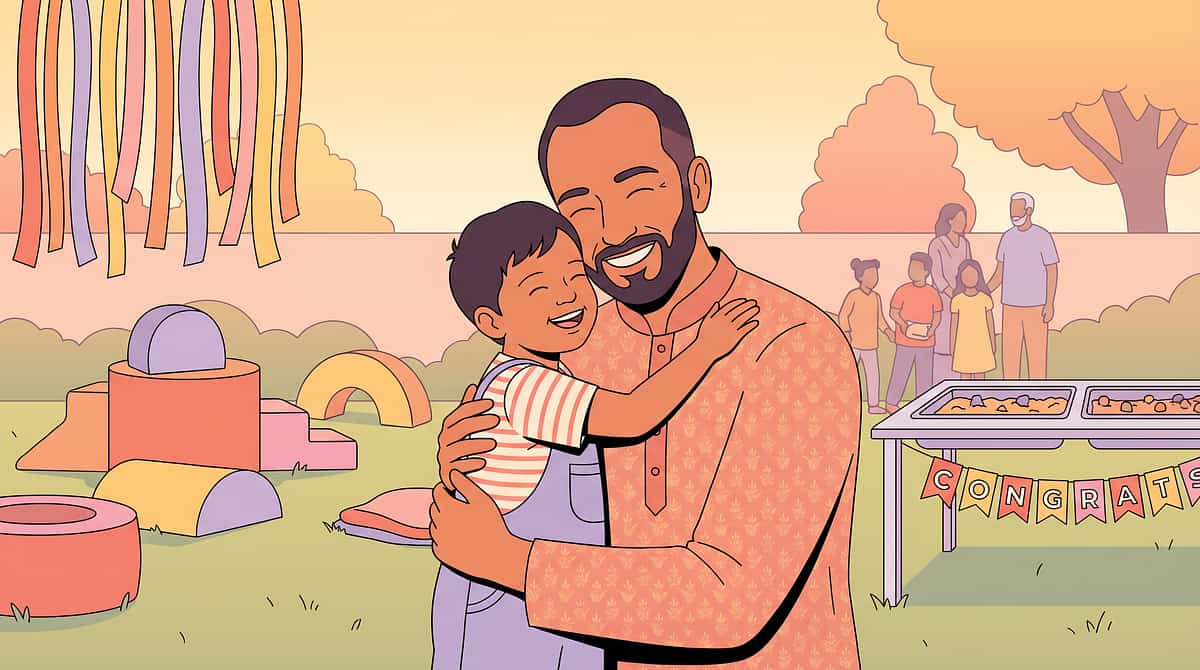
Step 5: Reinforce and Celebrate — Every Attempt Gets a Response
Reinforcement Timing: Within 3 seconds of any communication attempt. Communication that gets a response INCREASES. Never ignore an attempt.
What Child Did | Your Response | |
Independent touch of target word | "YES! You said MORE! MORE bubbles! You TOLD me!" [provide immediately + enthusiastic] | |
Touch with light guidance | "MORE! You wanted MORE! Here's MORE!" [provide + celebrate the attempt] | |
Approximation / nearby symbol | "I see you touching — you want MORE? Here's MORE!" [interpret generously] | |
Looking at device | "You looked at your talker! That was great! Do you want MORE?" [acknowledge + re-model] | |
Any gesture or vocalisation | Respond to the communication, then model the AAC equivalent |
🏆 Reward Jar
Milestone Celebrations — ₹589
🌟 Reward Stickers
1800+ Session Milestones — ₹364
Data Capture
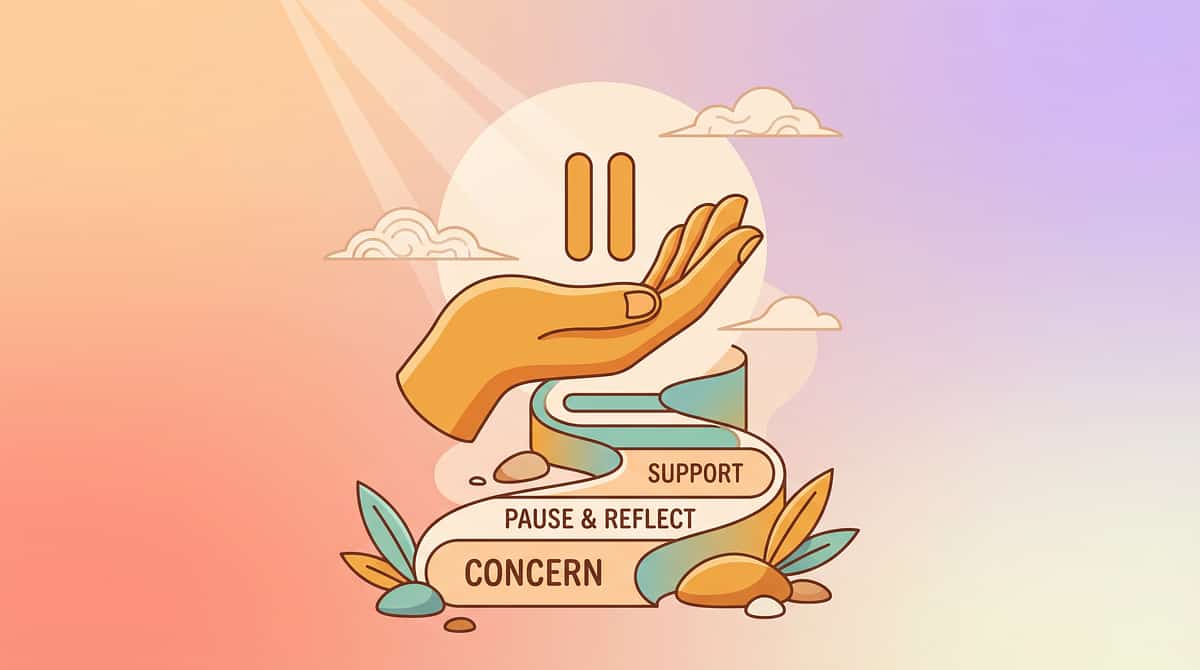
Capture the Data: 60 Seconds Now, Hours of Clarity Later
What to Record Immediately After Session
Field | What to Note | |
Date & Time | When session happened | |
Target Word(s) | Which words were targeted | |
Number of Models | How many times you modelled (estimate) | |
Child Touches | Total symbol touches (any) | |
Independent Touches | Touches without guidance | |
Best Moment | One specific observation |
Simple Rating Scale
⭐ = No response to device
⭐⭐ = Some orientation or exploration
⭐⭐⭐ = Prompted touch(es)
⭐⭐⭐⭐ = Independent touch with some modelling
⭐⭐⭐⭐⭐ = Independent touch, no prompt, clear intent
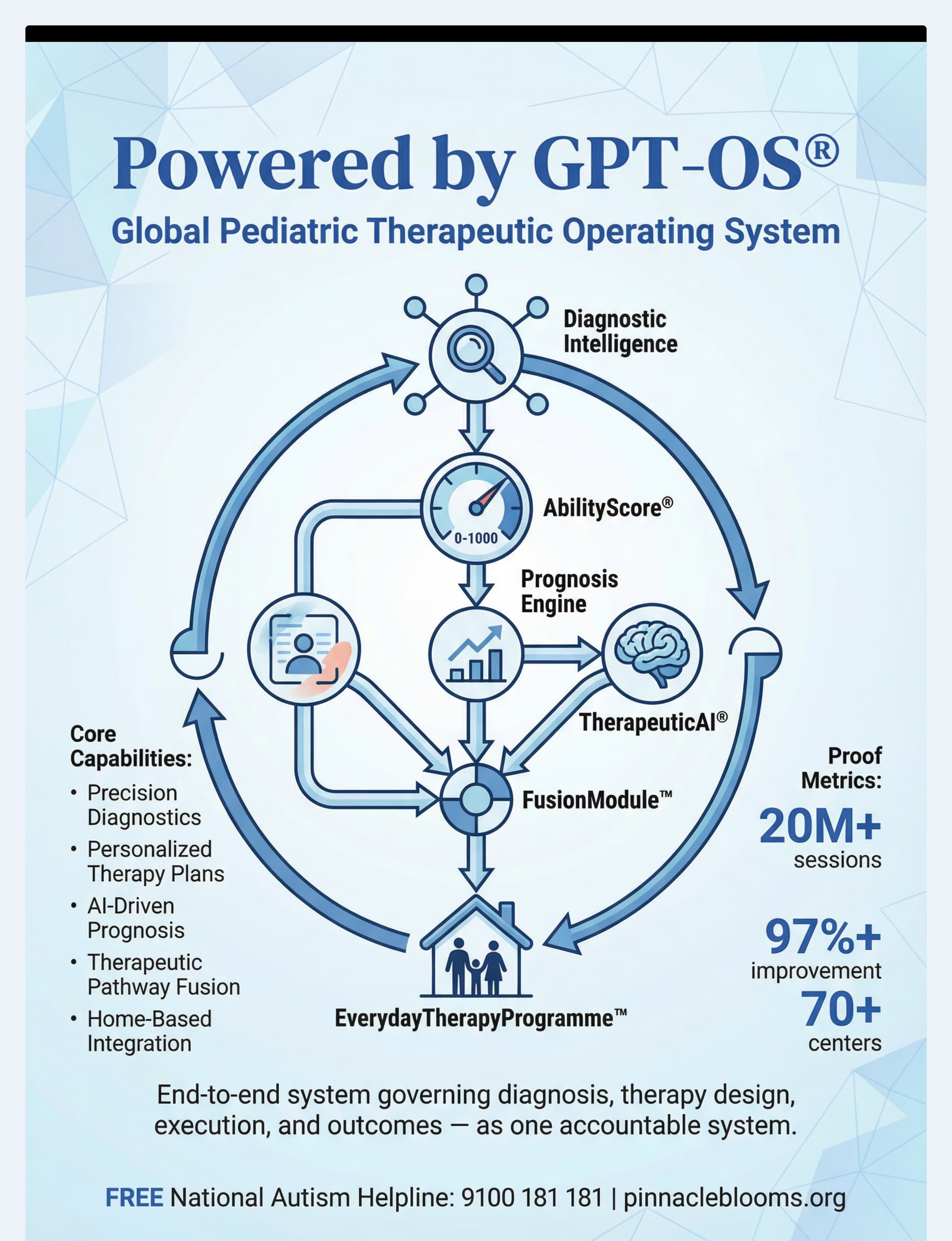
Track via GPT-OS® EverydayTherapyProgramme™ or download the free PDF tracking sheet.
BACB Guidelines — continuous measurement as standard ABA practice. Data is not bureaucracy — it is the evidence of your child's progress.
Troubleshooting
What If It Didn't Go As Planned?
Most sessions don't go perfectly. That's data, not failure. Every challenge has a cause — and a solution.
🔶 Child Ignored the Device Entirely
Why: Low motivation / insufficient wait time / timing off
Fix: Switch to child's highest-preference activity. Ensure device is physically accessible. Increase wait time to 20+ seconds.
Fix: Switch to child's highest-preference activity. Ensure device is physically accessible. Increase wait time to 20+ seconds.
🔶 Child Touched Random Symbols
Why: Normal exploration — it may precede intentional communication
Fix: Interpret generously. Don't correct. Exploration is a positive sign.
Fix: Interpret generously. Don't correct. Exploration is a positive sign.
🔶 Child Melted Down During Session
Why: Frustration level exceeded threshold / session too long
Fix: Provide desired item immediately. Shorten next session. Reduce communication demands temporarily.
Fix: Provide desired item immediately. Shorten next session. Reduce communication demands temporarily.
🔶 No Progress After 2+ Months
Why: Modelling frequency insufficient / vocabulary not motivating / motor access barrier
Fix: Audit modelling rate (aim 50+ models/day). Review vocabulary. Consult OT for motor access assessment.
Fix: Audit modelling rate (aim 50+ models/day). Review vocabulary. Consult OT for motor access assessment.
🔶 Partner Fatigue
Why: Timeline expectations too high / isolation
Fix: Normalise the timeline. Recruit additional modelling partners. Track even small progress. Connect with community.
Fix: Normalise the timeline. Recruit additional modelling partners. Track even small progress. Connect with community.
"Session abandonment is not failure. It is data. What happened teaches you what to do differently."
Adapt & Personalise
No Two AAC Learners Are Identical. Here's How to Adjust.
Profile | Adjustment | |
Motor access challenge | Consult OT for switch access, eye gaze, or large target options | |
High sensory load | Reduce environment complexity, use calmer activities | |
Hyperfocused child | Use special interest as the motivating context | |
Fast learner | Expand vocabulary more quickly, begin two-word modelling | |
Limited attention | Micro-sessions of 3–5 minutes, 5+ times per day | |
Multiple caregivers | Ensure ALL partners model — not just one |
Ages 2–4
5–10 minute sessions, maximum 2 target words, high physical energy in activities.
Ages 5–10
15-minute sessions, 3–5 target words, academic contexts included alongside play.
Ages 11+
Follow interests rigorously — teen topics, independence skills, and self-advocacy words.
Act IV — Progress Arc
Week 1–2: What to Expect
✅ Realistic Indicators for Week 1–2
- Child begins to orient toward device occasionally
- Child shows any awareness when partner models
- Partner is modelling consistently during 3+ routines
- AAC device is always accessible (not on shelf)
- Any exploration or touching of device
⏳ Not Progress Yet — And That's OK
- Independent communication
- Consistent symbol use
- Any "words" emerging
"If your child looked at the device twice this week while you modelled — that is real progress. The brain is absorbing what eyes and body aren't yet showing."
Your Focus This Week:
- Model at every meal (at minimum)
- Engineer one motivating communication opportunity per day
- Practise 15-second wait time until it feels comfortable
PMC11506176 — early phase indicators: attention and participation before production
Progress — Week 3–4
Week 3–4: Consolidation Signs
🗺️ Consolidation Indicators
Child goes to device area (even without touching) when wanting something. Any intentional touch — even once, even with guidance — of a recognisable target. Child shows frustration when communication attempt isn't understood (sign of intent!).
🧠 Neural Pathway Formation
Child begins to look at their own device (not just your modelling board). Consistent symbol location search — eyes scanning for a known symbol. Any vocalisation or gesture paired with device.
👨👩👧 Parent Milestone
You may notice your own modelling is becoming more natural and automatic. That is a real milestone too — celebrate it.
When to Increase Frequency: If your child has touched a symbol intentionally even once — increase modelling of that word and create more opportunities for it throughout the day.

Progress — Week 5–8
Week 5–8: First Words Emerging
First Words Emergence Indicators:
- 1–3 symbols used consistently (often context-specific: only at meals, only for bubbles)
- Child goes to device independently in familiar contexts
- Clear communicative intent visible in body language
- First use of AAC to protest or refuse (milestone — intentional communication!)
What "Emerging" Looks Like:
3+ Uses Per Session
The word is used three or more times in the same session.
2+ Activities
The word is used across two or more different activities.
1+ Other Partners
The word is used with at least one partner who isn't you.
🎉 First intentional word is a celebration moment. Document it. Date it. Share it. Don't expect this word every session yet — emergence is inconsistent before establishment.
Mastery Moments
Celebrating Real Progress: What Mastery Looks Like
Milestone | What It Signals | |
Child goes to AAC independently when wanting something | Symbolic understanding established | |
Same word used across 3+ contexts | Generalisation beginning | |
Word used with 3+ different partners | Social communication emerging | |
5–10 consistent core words | First vocabulary established | |
Two words combined (WANT MORE) | Generative language beginning |
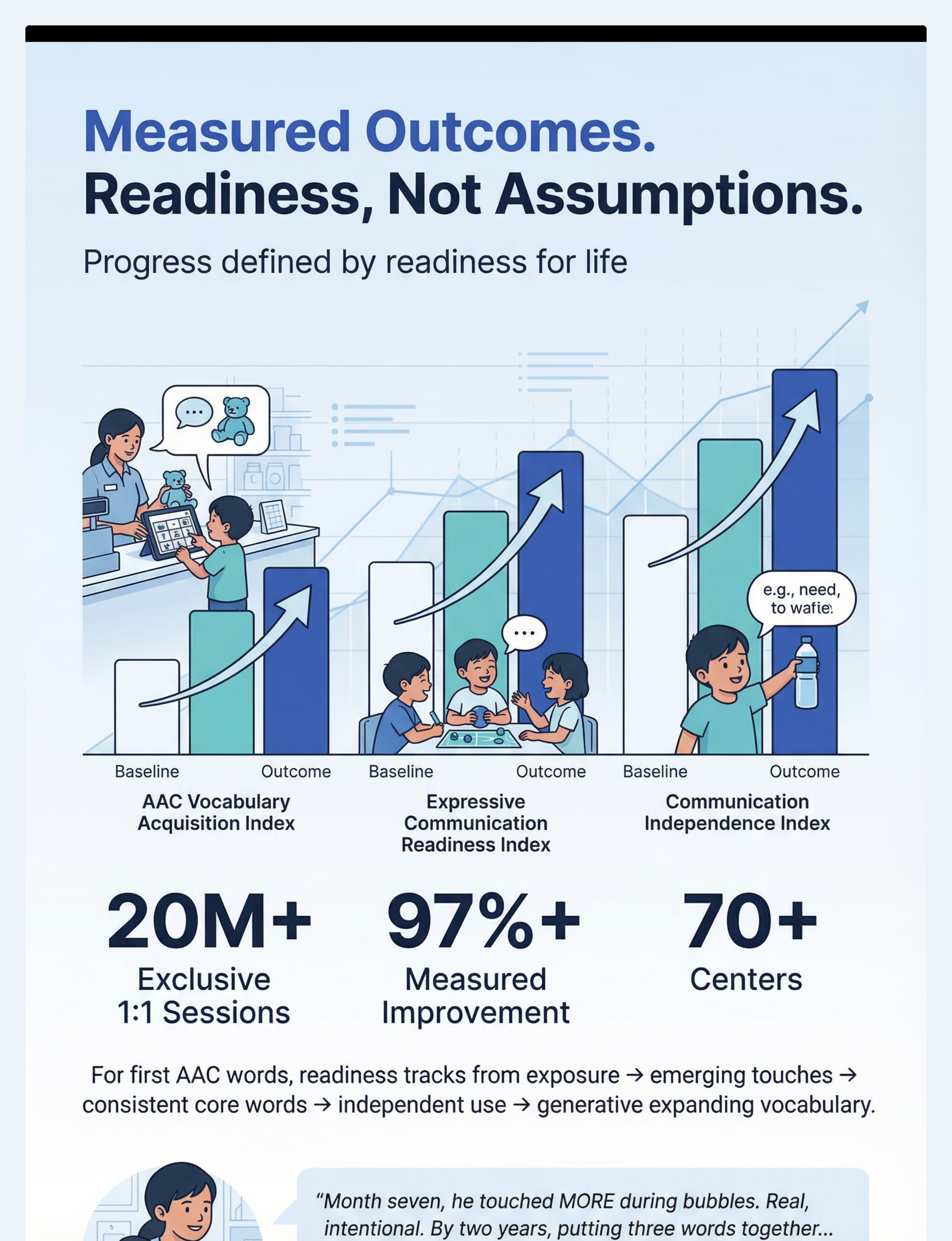
"At month seven, he touched MORE during bubbles. Real, intentional MORE. I cried. By month ten: MORE, WANT, GO, STOP, HELP. Five words. His five words. Now at two years, three words together and over 50 symbols. It took so much longer than I expected. But every word was worth every model." — Parent, Pinnacle Network | AAC Vocabulary Acquisition Index progression documented
Pinnacle GPT-OS® tracks this trajectory — Exposure → Awareness → Emergence → Establishment → Expansion — across all 20M+ sessions.
Red Flags
When to Seek Professional Support
🔴 Seek SLP Consultation Immediately
• 6+ months of consistent intensive modelling with zero response to device
• Child shows signs of giving up or rejecting AAC entirely
• Motor access appears to be a barrier (fine motor challenges, visual tracking)
• Child shows signs of regression (losing previously established words)
• Child shows signs of giving up or rejecting AAC entirely
• Motor access appears to be a barrier (fine motor challenges, visual tracking)
• Child shows signs of regression (losing previously established words)
🟡 Discuss at Next Appointment
• Progress has plateaued for 6+ weeks with consistent implementation
• Same limited vocabulary for 3+ months despite 50+ daily models
• Parent/caregiver burnout affecting consistency
• AAC system seems inappropriate (too complex or too simple)
• Same limited vocabulary for 3+ months despite 50+ daily models
• Parent/caregiver burnout affecting consistency
• AAC system seems inappropriate (too complex or too simple)
🟢 Normal — No Action Needed
• No independent words after first 3 months
• Inconsistent use of emerging words
• Words appearing in only one context
• Slow overall progress — this is the norm, not the exception
• Inconsistent use of emerging words
• Words appearing in only one context
• Slow overall progress — this is the norm, not the exception
📞FREE Professional Consultation: 9100 181 181 — FREE National Autism Helpline | SLP referral | Progress consultation | 24×7 | 16+ languages

Related Techniques
Related Techniques in Domain B: Social Communication
Technique Code | Focus | Difficulty | |
B-220 | Core Vocabulary Instruction — Foundation vocabulary | Intro | |
B-215 | Picture Exchange Communication (PECS) — Low-tech first words | Intro | |
B-218 | Natural Aided Language — Modelling refinement | Core | |
B-210 | Joint Attention for AAC — Shared reference building | Intro | |
B-230 | AAC in Naturalistic Routines — Daily life integration | Core | |
B-224 | Multi-word AAC Combinations — Sentence building | Advanced |
"You already have the materials for several of these techniques. Core vocabulary, modelling boards, and opportunity planners serve multiple protocols across Domain B."
Act V — Community & Ecosystem
Voices From the Journey
"Six months after we got the AAC device, I was ready to give up. My son touched random symbols — nothing that seemed like real communication. The therapist said keep modelling. Hundreds of times, she said, before he'd really get it. It felt impossible. But we made it a game. Every meal, every play, every transition — I pointed to symbols while I talked. Month seven: he touched MORE during bubbles. Real, intentional MORE. I cried. Month ten: MORE, WANT, GO, STOP, HELP. Five words. His five words. Now at two years: three-word combinations and 50+ symbols. Every word was worth every model." — Parent, Pinnacle Network | AAC Vocabulary Acquisition Index progression documented
"The families who succeed with AAC are not the ones who have the best devices or the most expensive materials. They're the ones who model every day, who wait patiently, who celebrate every touch. Technology is the vehicle — the parent is the engine." — Speech-Language Pathologist, Pinnacle Blooms Consortium, 12 years AAC specialisation
20M+
Pinnacle Sessions
Evidence base informing this protocol
97%+
Measured Improvement
Across documented AAC intervention cases
70+
Centres
Across India delivering this protocol
📞9100 181 181 | FREE consultation | Individual results vary

Join the Community
You Don't Have to Do This Alone
AAC Family Community
50,000+ families in the Pinnacle parent network navigating AAC journeys. Weekly online group sessions with AAC modelling practice, Q&A with SLPs, and peer support connecting families at the same stage.
Global AAC Resources
- 🌐 ASHA AAC Resource Portal — clinical guidelines
- 🌐 PrAACtical AAC — free implementation resources
- 🌐 AssistiveWare Blog — evidence-based parent guides
- 🌐 ISAAC International — global AAC community
Pinnacle Community Access
→ Join the Pinnacle Parent Network
📞 Connect via: 9100 181 181
"Consistency across caregivers multiplies impact by 3×. When grandparents, teachers, siblings all model — the child is immersed in language."
Professional Support
Professional Support: When and How to Get It
Seek Support Before
Purchasing or changing any AAC system. A specialist assessment prevents costly mismatches.
Seek Support When
Motor access appears to be a barrier. An OT can identify switch access, eye gaze, or positioning solutions.
Seek Support After
6 months of consistent home implementation with minimal progress. A fresh clinical eye often identifies what's missing.
Seek Support To
Coach school staff and align IEP vocabulary targets with your home programme. Consistency across environments is critical.
📞FREE National Autism Helpline: 9100 181 181
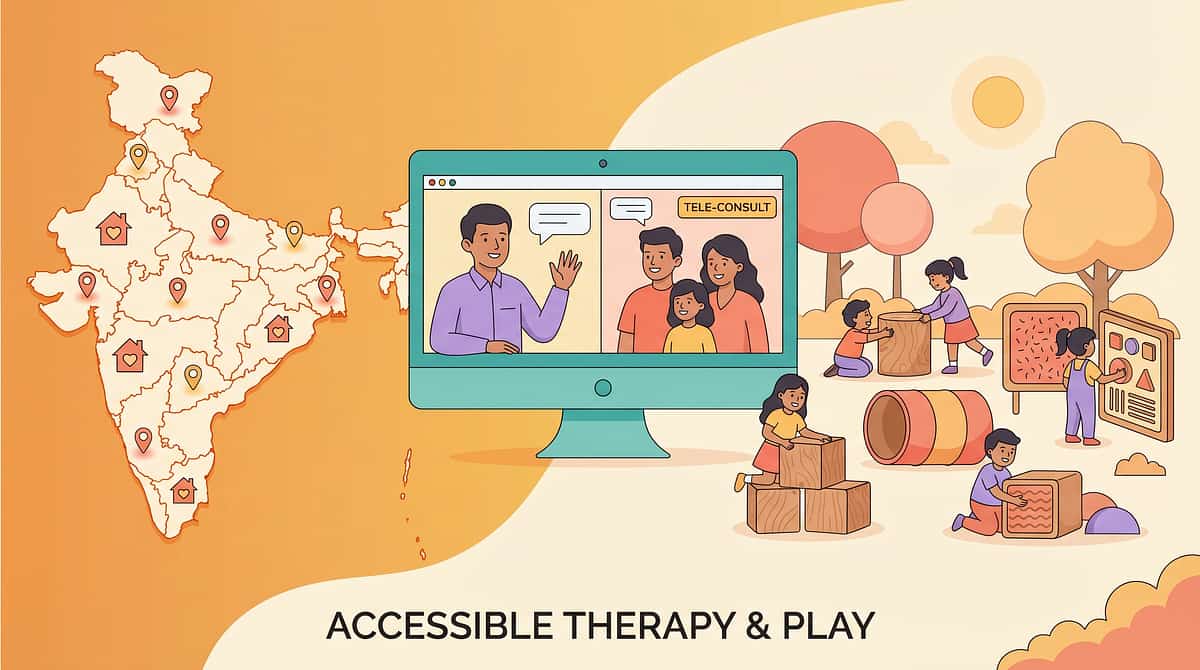
24×7 | 16+ languages | Assessment coordination | No referral needed | 70+ centres across India | Teleconsultation available
24×7 | 16+ languages | Assessment coordination | No referral needed | 70+ centres across India | Teleconsultation available

Watch the Reel
Watch: 9 Materials That Help Teaching First AAC Words
Reel B-222 | Domain B: Social Communication & AAC
Series: Communication Access & AAC Solutions — Episode 222
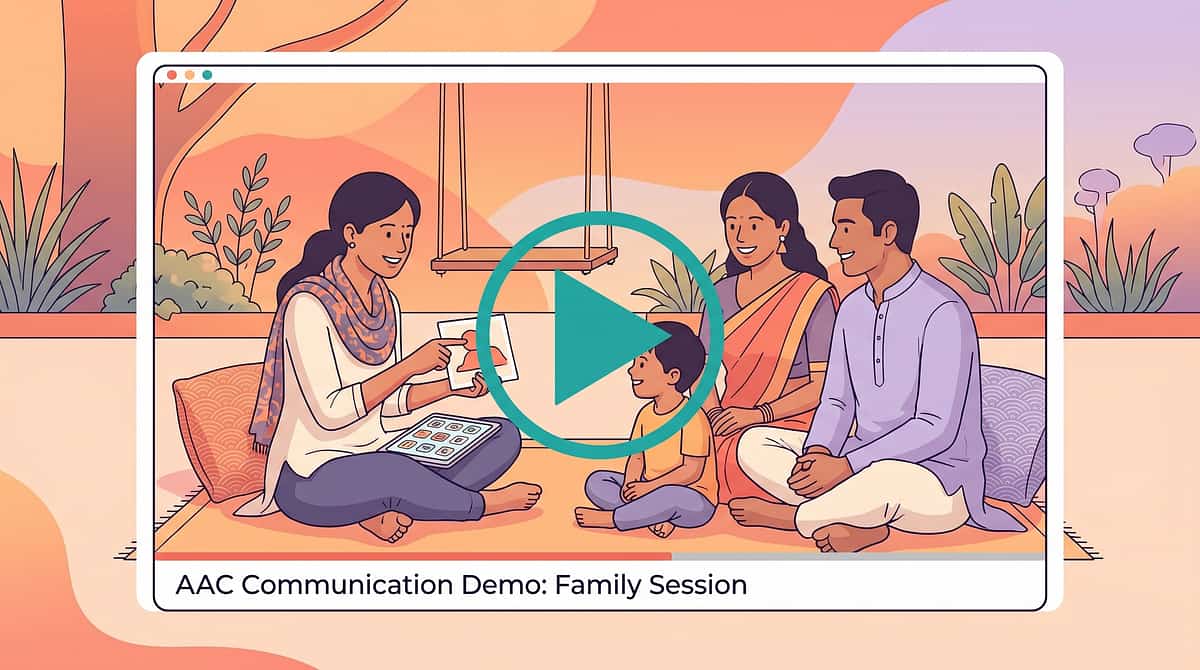
Duration: 75–85 seconds demonstrating all 9 materials with adult-child AAC modelling examples
Series: Communication Access & AAC Solutions — Episode 222
Duration: 75–85 seconds demonstrating all 9 materials with adult-child AAC modelling examples
"Having an AAC device is just the beginning. The real work is teaching those symbols to become words. This takes months of consistent modelling — much more than most families expect. But every model counts. Every opportunity matters. The words are coming. Keep going." — Pinnacle Blooms SLP, AAC Specialist
NCAEP (2020) — Video modelling is a Level I evidence-based practice for autism. Multi-modal learning (visual + text + demonstration) improves parent skill acquisition.
← B-221
Choosing the Right AAC System
→ B-223
Expanding AAC Vocabulary Beyond First Words
Preview of 9 materials that help teaching first aac words Therapy Material
Below is a visual preview of 9 materials that help teaching first aac words therapy material. The pages shown help educators, therapists, and caregivers understand the structure and content of the resource before use. Materials should be used under appropriate professional guidance.


Link copied!
Share With Your Family
Consistency Across All Caregivers Multiplies Impact by 3×
The child who hears a word at home, at school, at grandma's, and in therapy is the child who learns that word fastest. Share this page with everyone in your child's world.
For Grandparents — Simplified Version
"[Child's name] is learning to communicate using pictures on a tablet/board. The most important thing you can do is point to pictures while you talk to them — before meals, during play, all the time. When they touch a picture, respond immediately. Don't take the tablet away. Don't rush them. Just model and wait. Call 9100 181 181 to learn more."
Teacher/School Communication Template
"[Child's name] uses AAC for communication. Please model core vocabulary (MORE, WANT, GO, STOP, HELP) by pointing to their device while speaking. Provide 15–20 second wait time after requests. Honour all communication attempts. Please align vocabulary targets with our home programme — attached."