
AAC for Requesting: 9 Materials That Help
Technique B-225 | Domain B: Social Communication & Pragmatic Language
Your child has AAC but isn't using it to request. Discover 9 evidence-based materials that bridge the gap — from high-motivation sets to errorless teaching.
Your child has AAC but isn't using it to request. Discover 9 evidence-based materials that bridge the gap — from high-motivation sets to errorless teaching.
Pinnacle Blooms Consortium
SLP + BCBA + OT Reviewed
Domain B: Social Communication

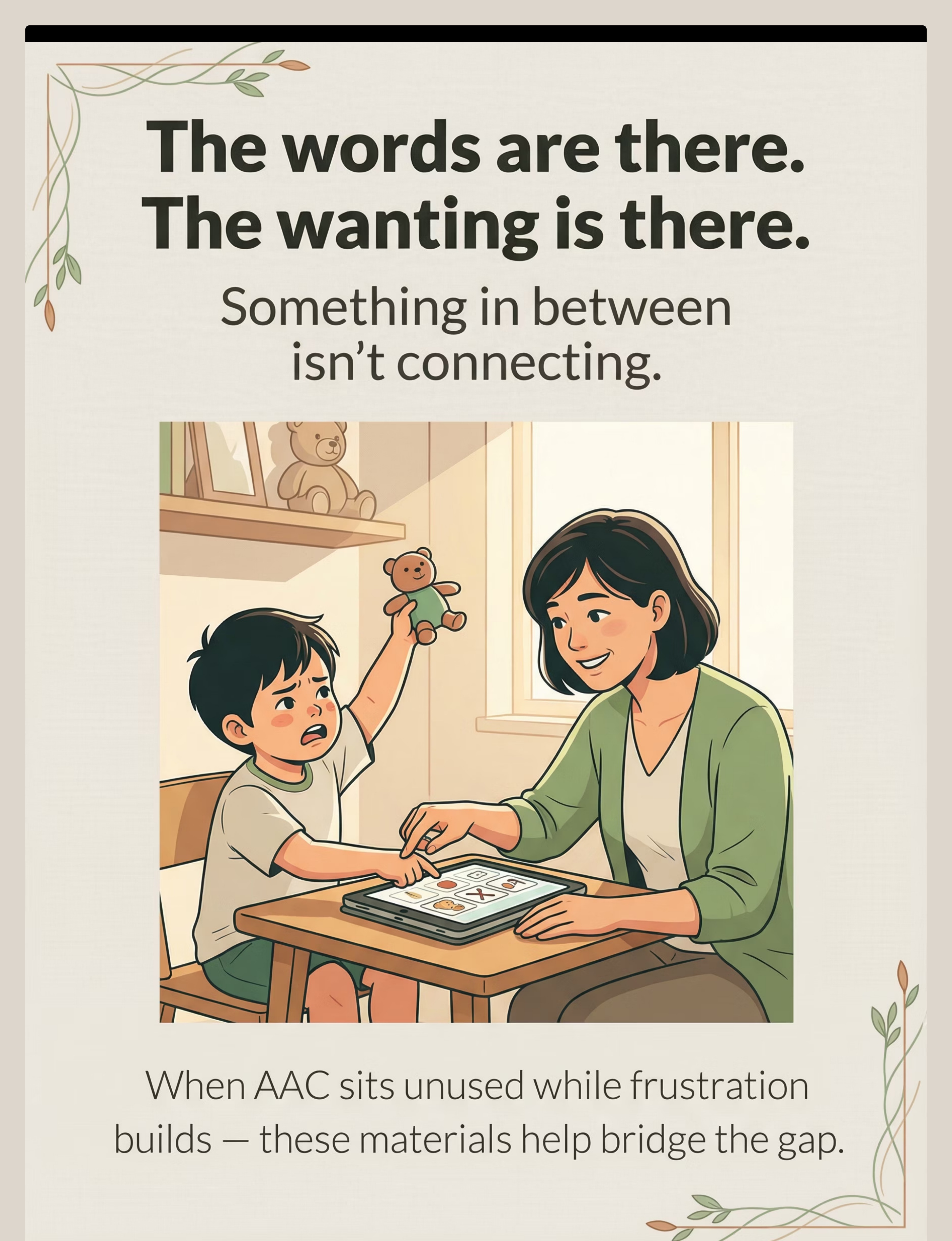
"The words are there. The wanting is there. Something in between isn't connecting."
It's snack time. The crackers are right there. Your child's AAC device — hundreds of words, set up beautifully by the speech therapist — is also right there. But your child pulls your hand to the pantry, whines, starts to melt down. The device doesn't move.
You feel something drop in your chest. Not because they can't communicate. Because they have the tool — and something between the wanting and the using isn't connecting yet.
You are not failing. Your child is not failing. Requesting with AAC is a skill that must be explicitly taught — and it absolutely can be.
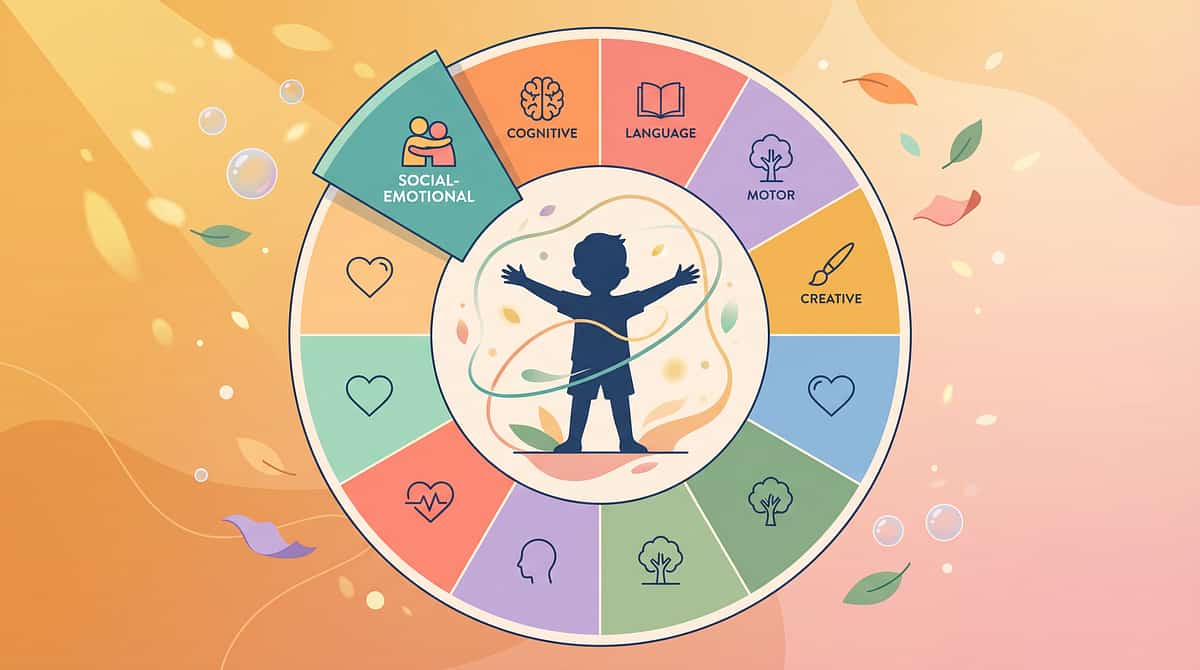
WHO Nurturing Care Framework (2018)
B-225 · AAC for Requesting

You Are Not Alone: The Numbers
This is extraordinarily common. The research is clear — and it is reassuring.
75–80%
Need AAC Support
of children diagnosed with autism display significant communication challenges requiring AAC support (ASHA, 2023)
~30%
Minimally Verbal
of autistic children are minimally verbal and rely on AAC as their primary communication system (Tager-Flusberg et al.)
68%
Underutilisation
of families who received AAC devices report underutilisation in the first 6 months (Light & McNaughton)
Having vocabulary is Step 1. Using it to request is Step 2. Step 2 is learnable — with the right materials and methods.
Across India's 1.8 million children with autism and 70+ million globally, the gap between having AAC and using it for requesting is the most commonly reported challenge families face.

This is not a motivation problem.
It is a neural pathway that hasn't been built yet.
Requesting requires four simultaneous brain processes: forming the want, knowing the symbol represents the item, executing the motor plan to touch the symbol, and trusting that the action will cause the result.
What's Happening in Your Child's Brain
01
Intent Formation
Prefrontal cortex forms the desire — "I want that."
02
Symbol Recognition
Broca's area maps picture to real-world referent.
03
Motor Execution
Motor cortex executes the plan to touch the symbol.
04
Reinforcement Loop
Dopamine fires when request → receive. The circuit strengthens.
"This is a learning architecture difference, not an intelligence limit. With the right inputs, this circuit builds."

Where AAC Requesting Sits in Development
Here is exactly where your child is — and where they are going. Your child is typically at the 12–24 month symbolic requesting stage, regardless of chronological age, building the request → receive neural loop.
1
6–9 Months
Intentional pre-symbolic communication: reaching, eye gaze
2
9–12 Months
Proto-requesting — leading adult to desired item
3
12–18 Months
First symbolic requests: spoken word or sign for highly preferred item
4
18–24 Months
Multi-modal requesting, 50+ words or AAC equivalents
5
2–3 Years
Combining symbols to request (want + item), across contexts
6
3–5 Years
Generalised requesting across partners, environments, novel vocabulary
7
5+ Years
Flexible, spontaneous requesting as daily communication
AAC requesting challenges often co-occur with motor planning difficulties (dyspraxia), auditory processing differences, and limited experience with symbol-referent connections. Each is addressable. The path forward is clear and achievable.
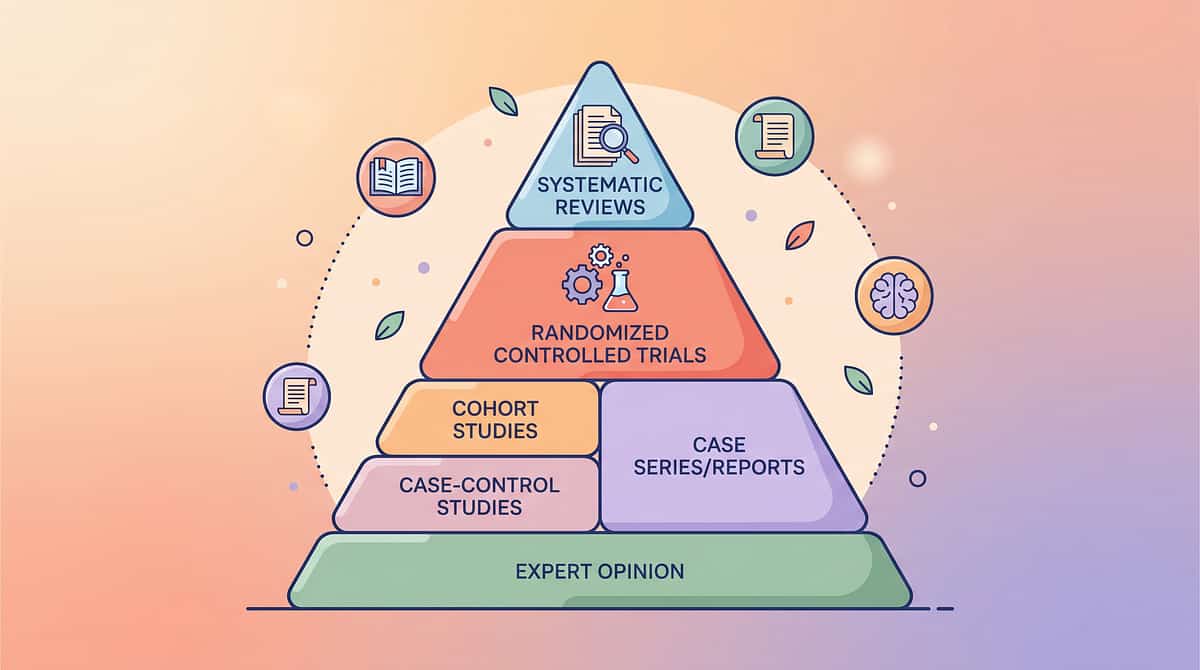
The Evidence Behind This Approach
LEVEL I Evidence
Systematic Reviews + RCTs
PECS RCTs
3+ Tier 1 RCTs confirm structured requesting instruction significantly increases functional communication in minimally verbal children with autism. (Bondy & Frost, 2001; Tien, 2008)
Aided Language Modelling
Multi-site studies confirm modelling AAC requesting is among the most effective strategies for building symbol use. (Drager et al., 2006; Dada & Alant, 2009)
Functional Communication Training
Cochrane-level evidence that systematically teaching requesting reduces problem behaviour and increases communicative acts. (Tiger, Hanley & Bruzek, 2008)
Natural Environment Teaching
Multiple RCTs confirm generalisation of requesting across environments when taught where requesting naturally occurs. (NCAEP 2020 — Level 1)
94%
Evidence Strength
Combined across systematic reviews and RCTs
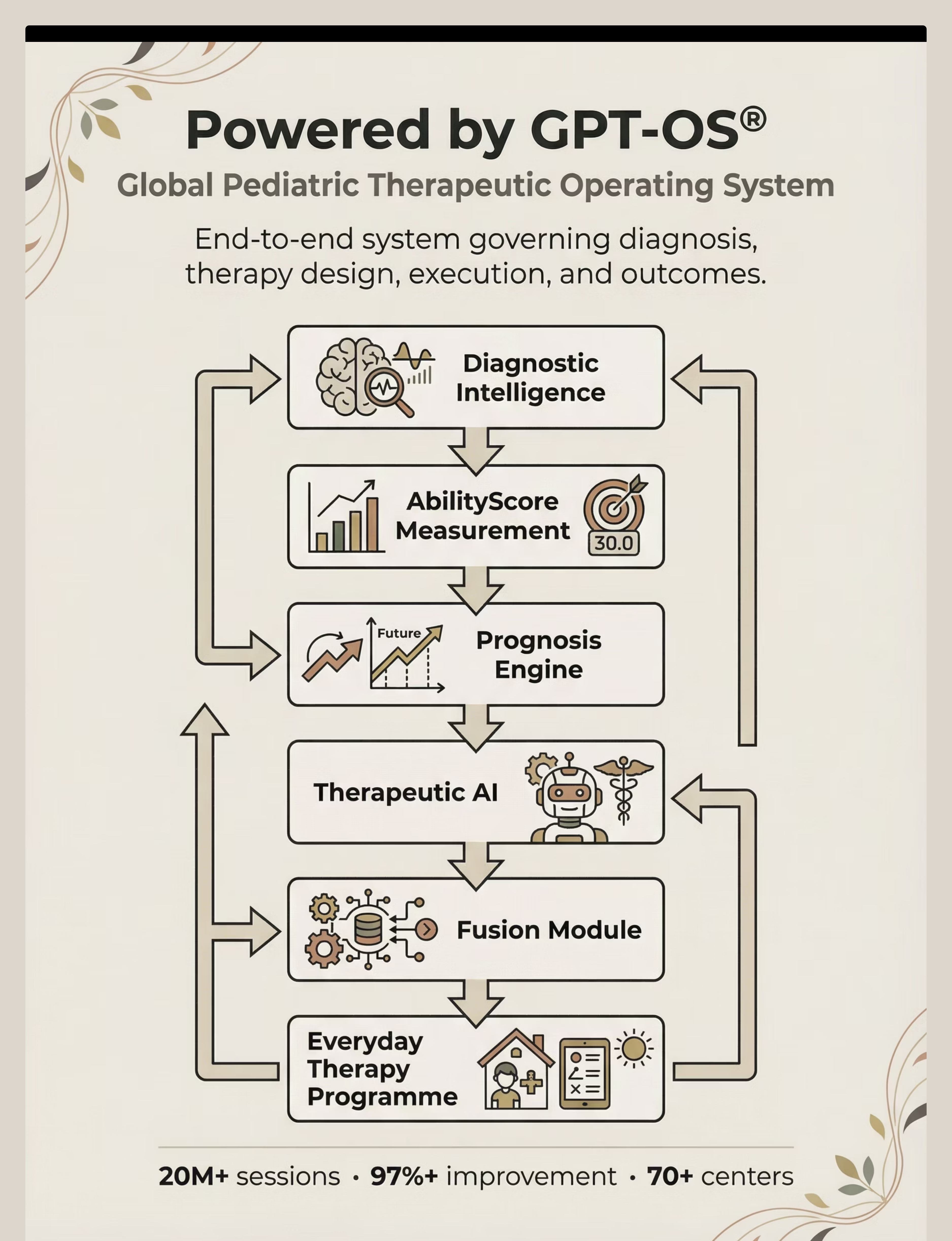
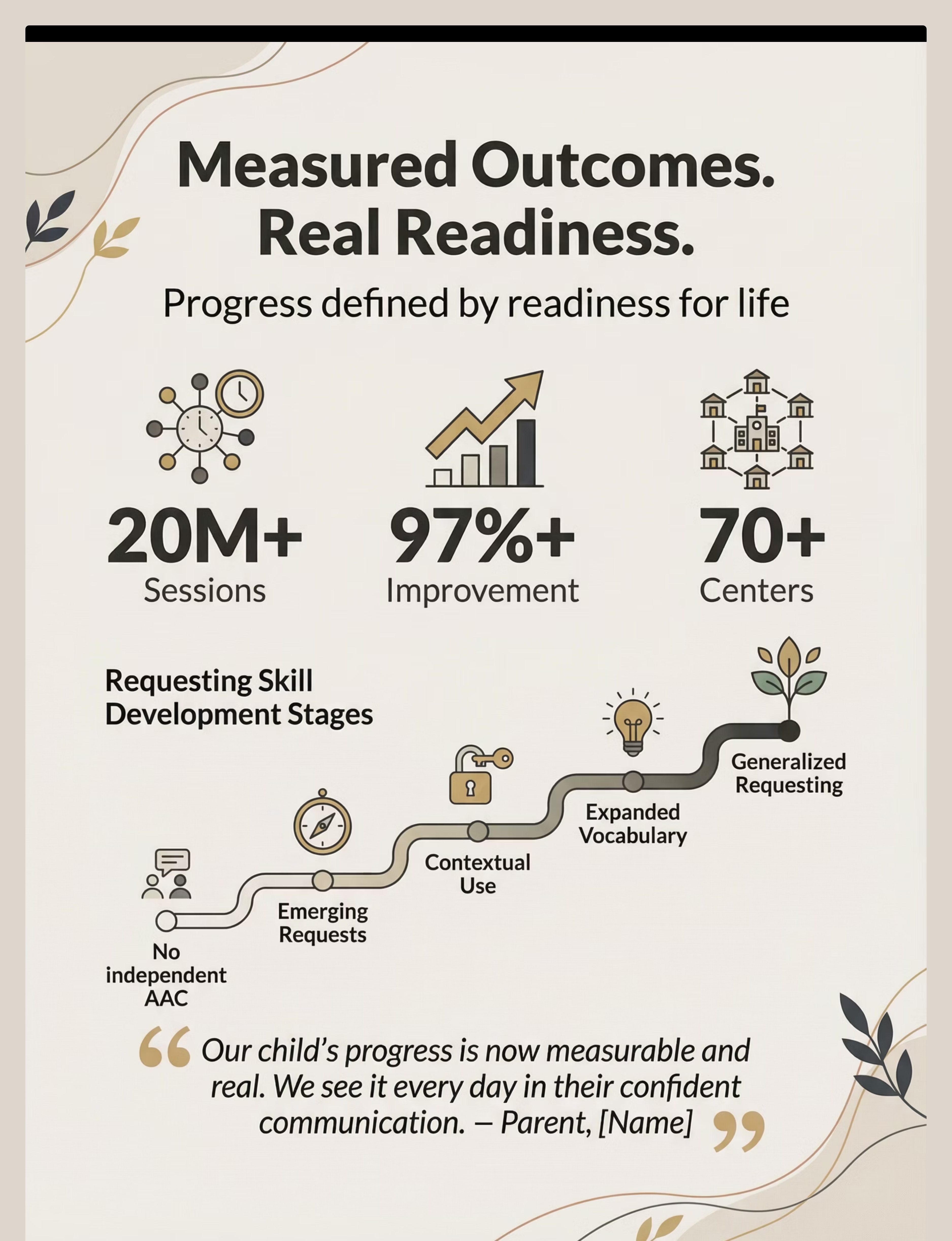
20M+
Therapy Sessions
Delivered across the Pinnacle Network under GPT-OS® guidance
97%+
Improvement Rate
In AAC competency indexes across Pinnacle network families
The Technique: What It Is
Technique B-225
Domain B: Social Communication
Ages 18 months – 12 years
Formal Name
AAC-Based Requesting Instruction / Functional Communication Training via Augmentative & Alternative Communication
Parent-Friendly Alias
"Teaching Your Child That Symbols Get Results"
What It Is
AAC Requesting Instruction is the systematic process of teaching a child that activating a communication symbol — touching a picture, pointing to a card, pressing a button — causes them to receive what they want.
It is one of the most important skills in all of paediatric communication, and the one most often assumed to develop automatically when, in fact, it must be explicitly taught.
The technique combines high-motivation engineering, symbol-referent building, strategic prompting and fading, consistent modelling, and deliberate wait time to create independent, functional requesting behaviour. Once requesting clicks, the entire AAC system becomes the child's voice.
Duration
5–15 minutes per session
Frequency
3–5 sessions daily, embedded in routines
Age Range
18 months – 12 years (and any age building requesting)
Setting
Daily — embedded into every high-motivation opportunity
Who Uses This Technique
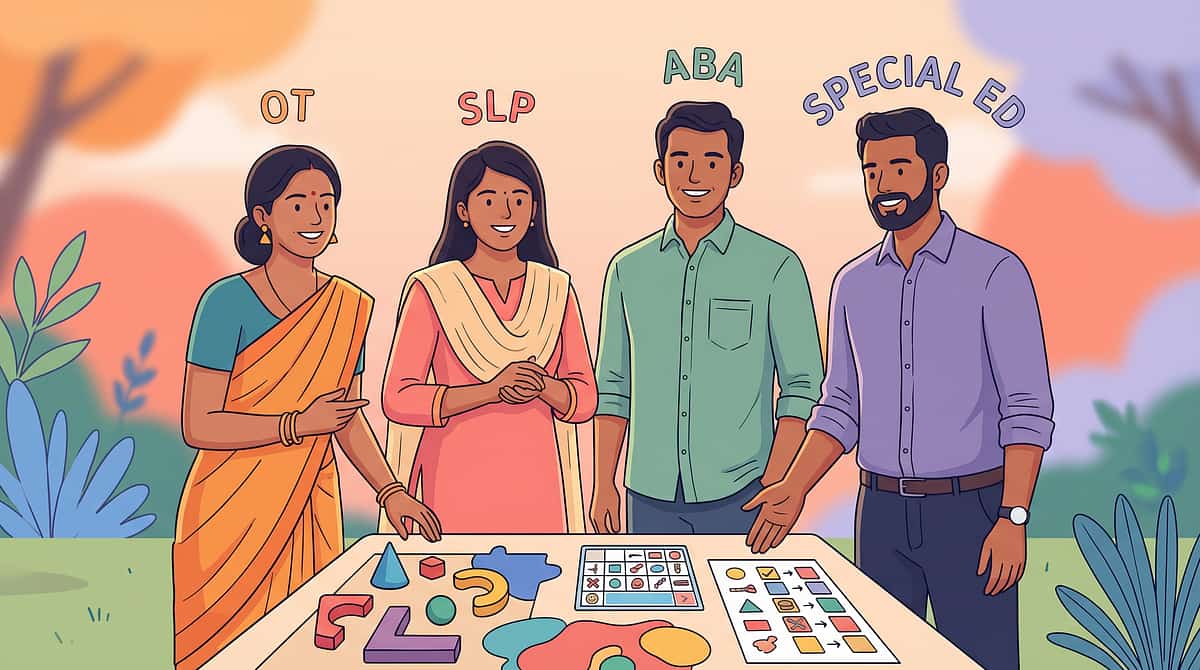
This technique lives at the intersection of speech, behaviour, and occupational therapy — because requesting crosses all three disciplines simultaneously.
SLP — Speech-Language Pathologist (Primary Lead)
AAC system selection, symbol assessment, vocabulary organisation, symbol-referent teaching, modelling protocols, and communication partner training.
BCBA / ABA Therapist
Functional communication training (FCT) design, prompt hierarchy and fading protocols, motivation assessment, contingency management (request → receive reliability), and data systems.
Occupational Therapist
Motor access assessment, sensory readiness for AAC engagement, fine motor support for switch/touch access, and postural positioning for optimal AAC reach.
Special Education Teacher
AAC generalisation across school environments, communication partner training for educational staff, IEP AAC goals, and embedding requesting into classroom routines.
At Pinnacle, our FusionModule™ coordinates all four disciplines into one converged requesting plan — no silos, no contradictions.
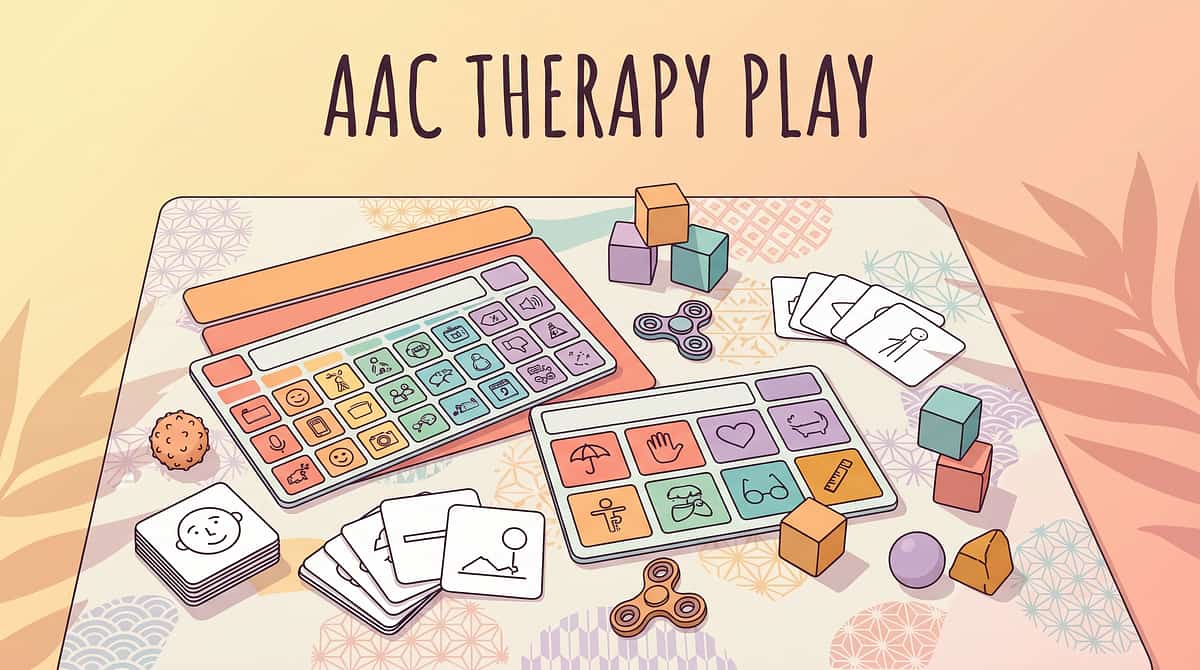
9 Materials That Make It Work
Canon Materials
₹0 to ₹2,000
Every one clinically justified
Nine materials. From completely free DIY to affordable commercial options. Every one has a clear clinical purpose in the requesting journey.
1
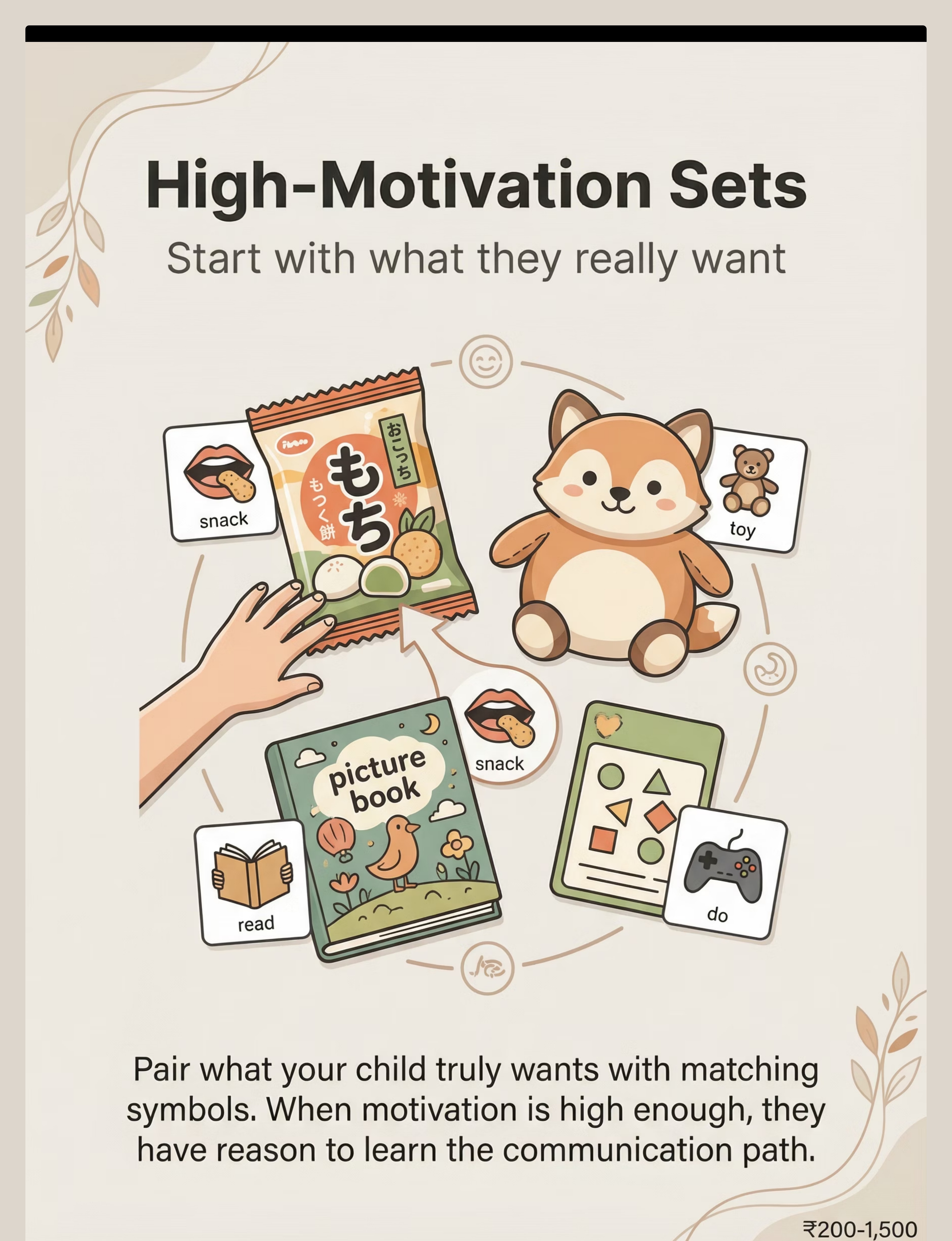
High-Motivation Item Sets with Matching Symbols
The motivational engine of requesting instruction. ₹200–1,500
2
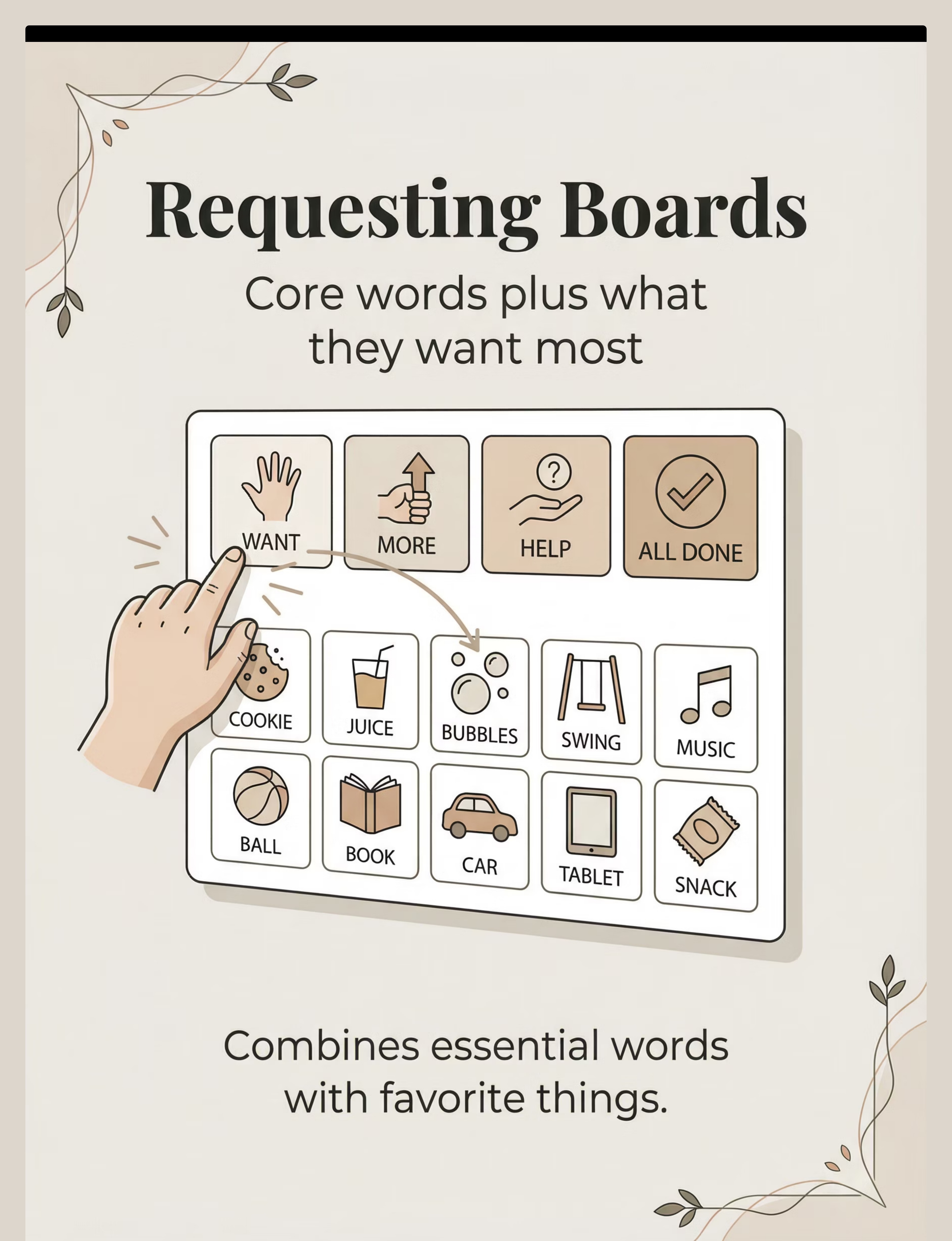
Requesting Communication Boards
Simplified requesting vocabulary — core words + child's real wants. ₹200–1,000
3
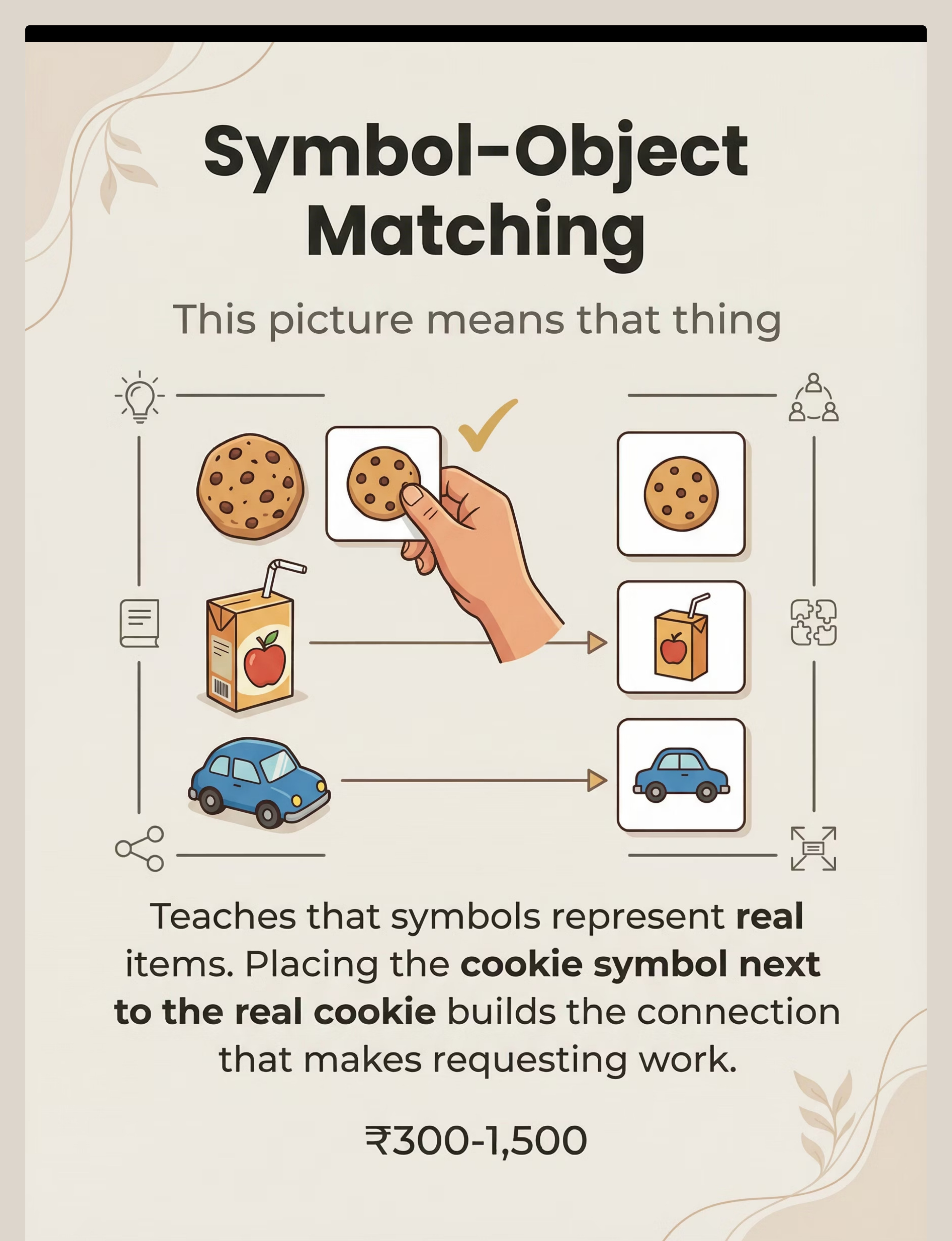
Symbol-to-Object Matching Materials
Builds the foundational understanding that picture = real thing. ₹300–1,500
4
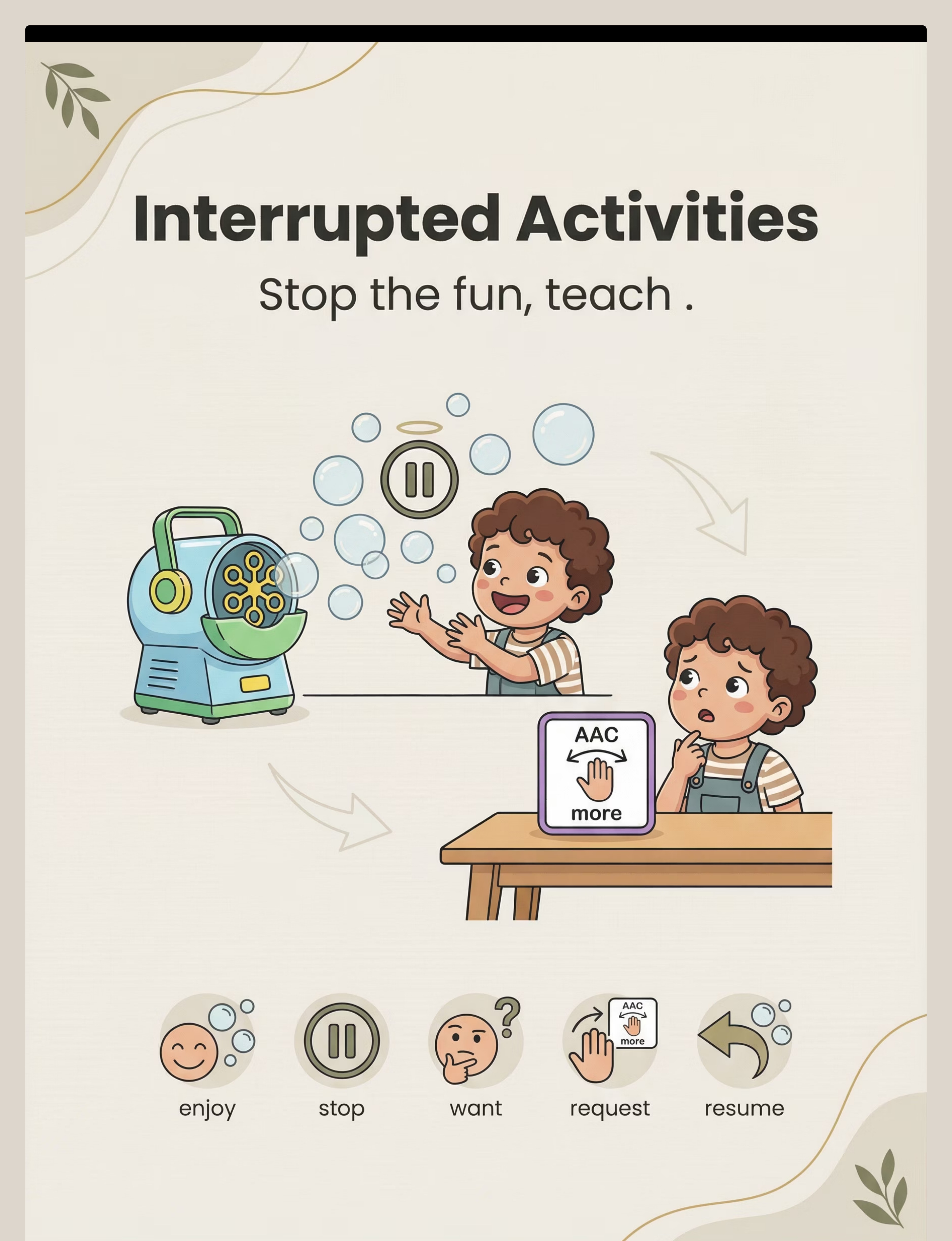
Interrupted Activity Materials
Creates high-motivation requesting opportunities via cause-effect. ₹300–2,000
5
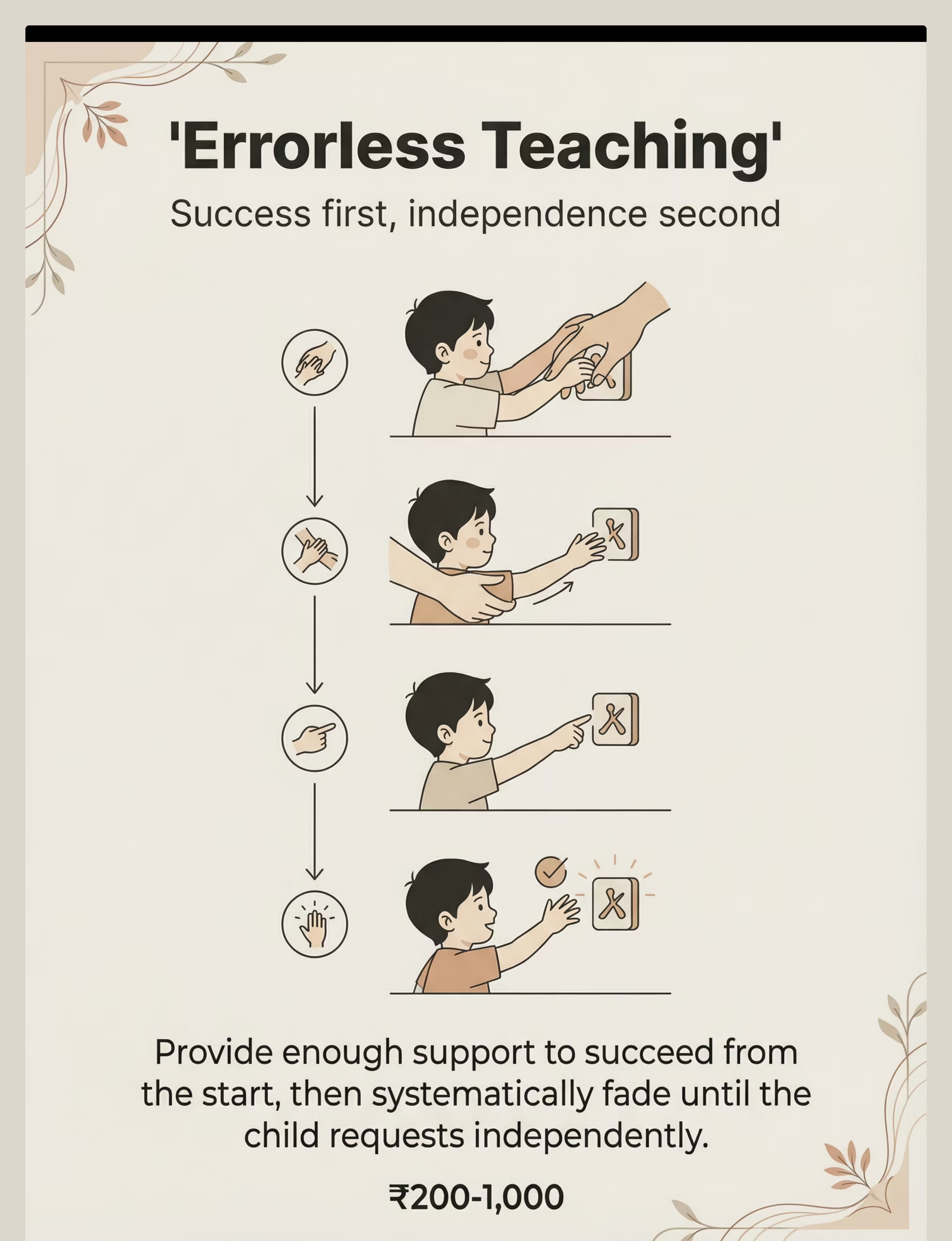
Errorless Teaching & Prompt Fading Guides
Success-first, independence-second teaching protocol. ₹200–1,000
6
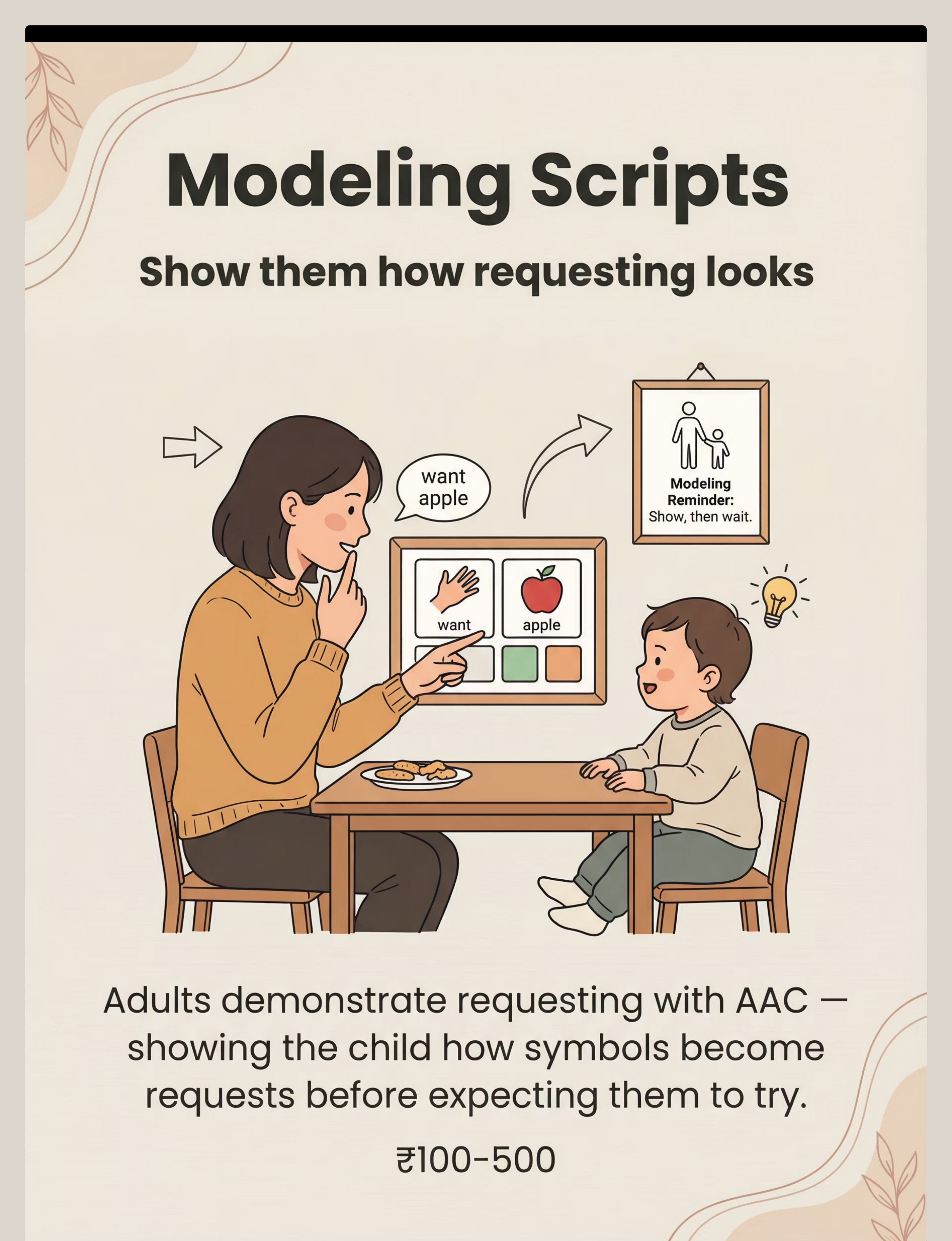
Aided Language Modelling Scripts & Cue Cards
Adults demonstrate requesting — modelling before expecting. ₹100–500
7
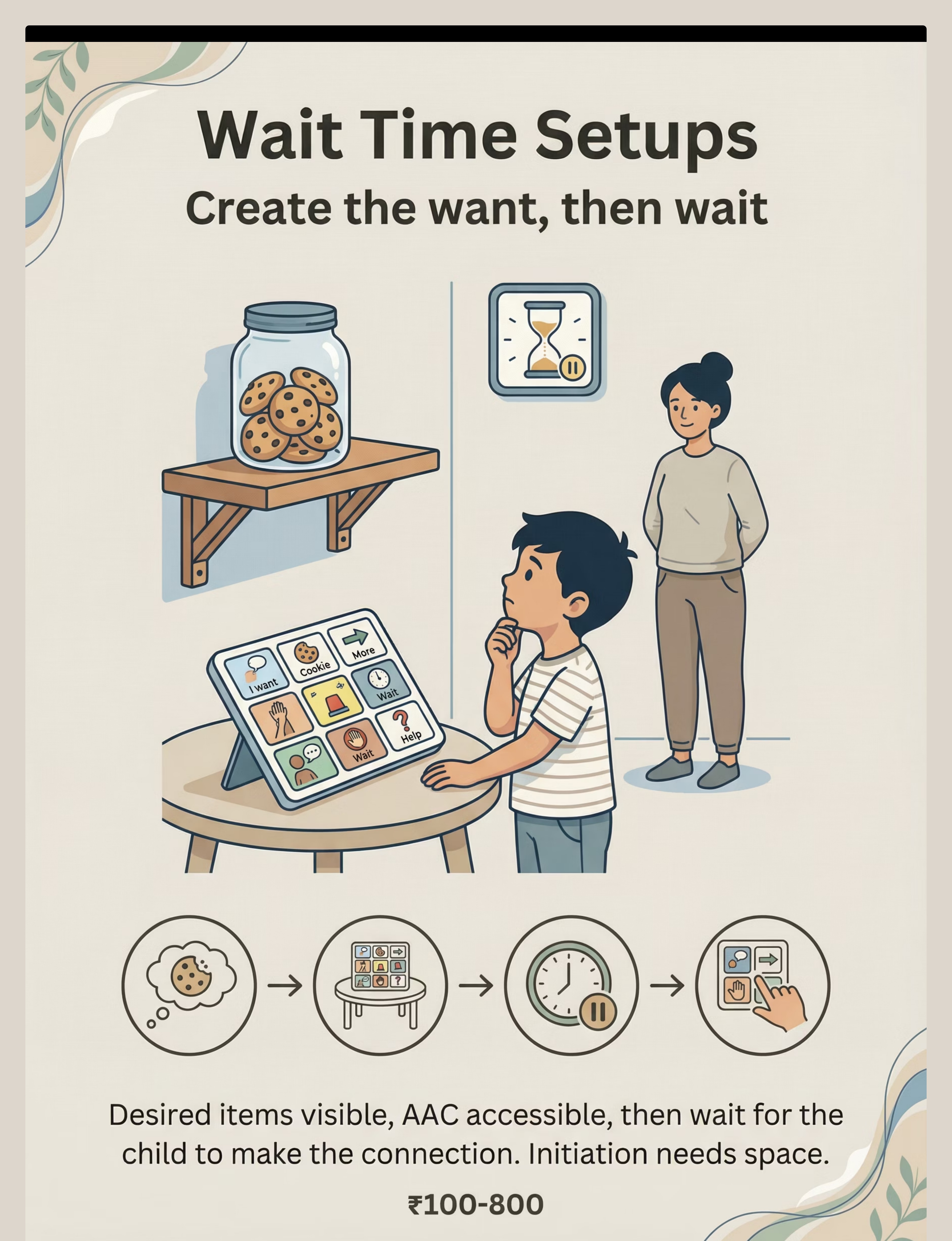
Wait Time & Communication Temptation Setups
Creates initiation space — desire + AAC + wait. ₹100–800
8
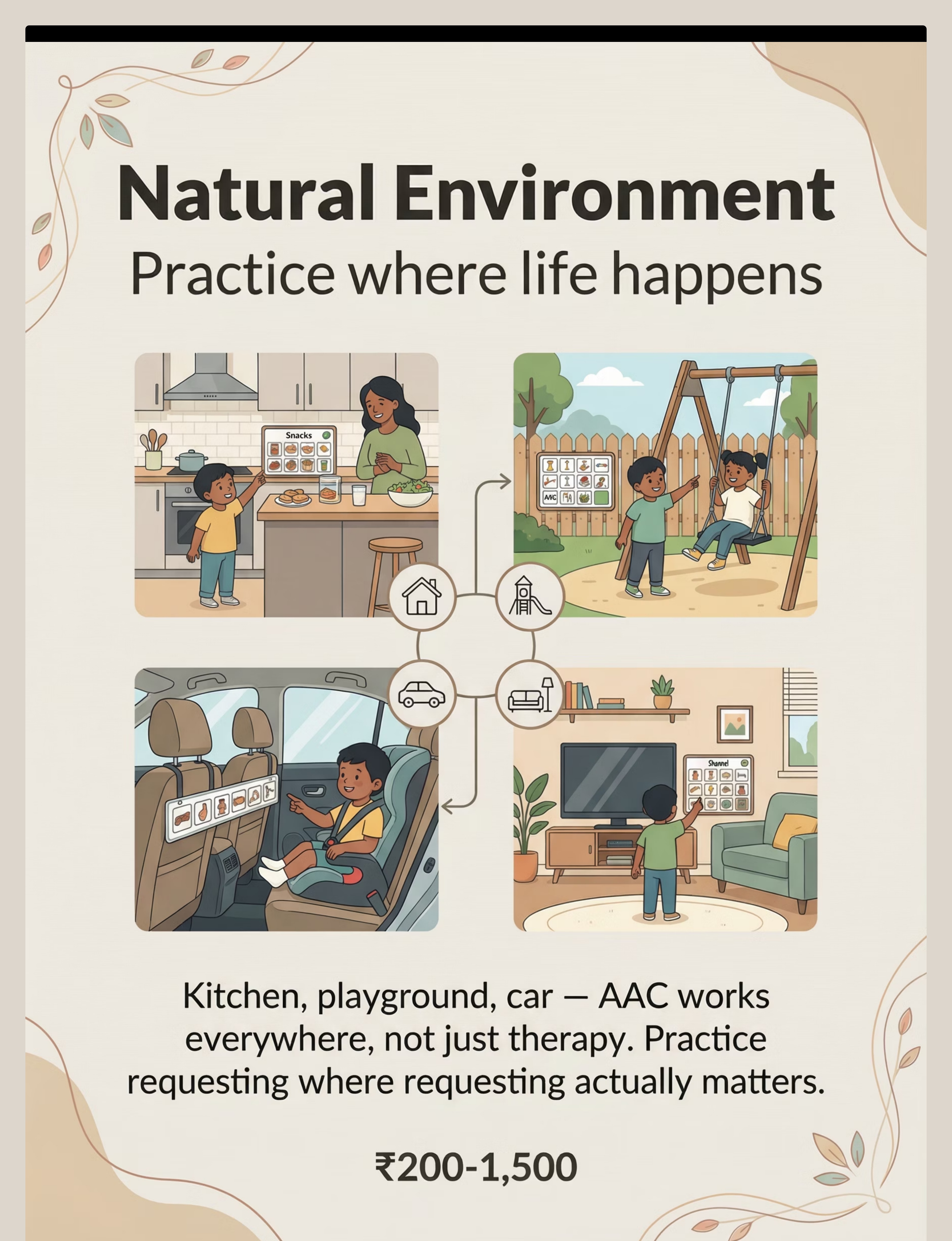
Natural Environment Teaching (NET) Materials
Practice requesting where life happens — not just in therapy. ₹200–1,500
9
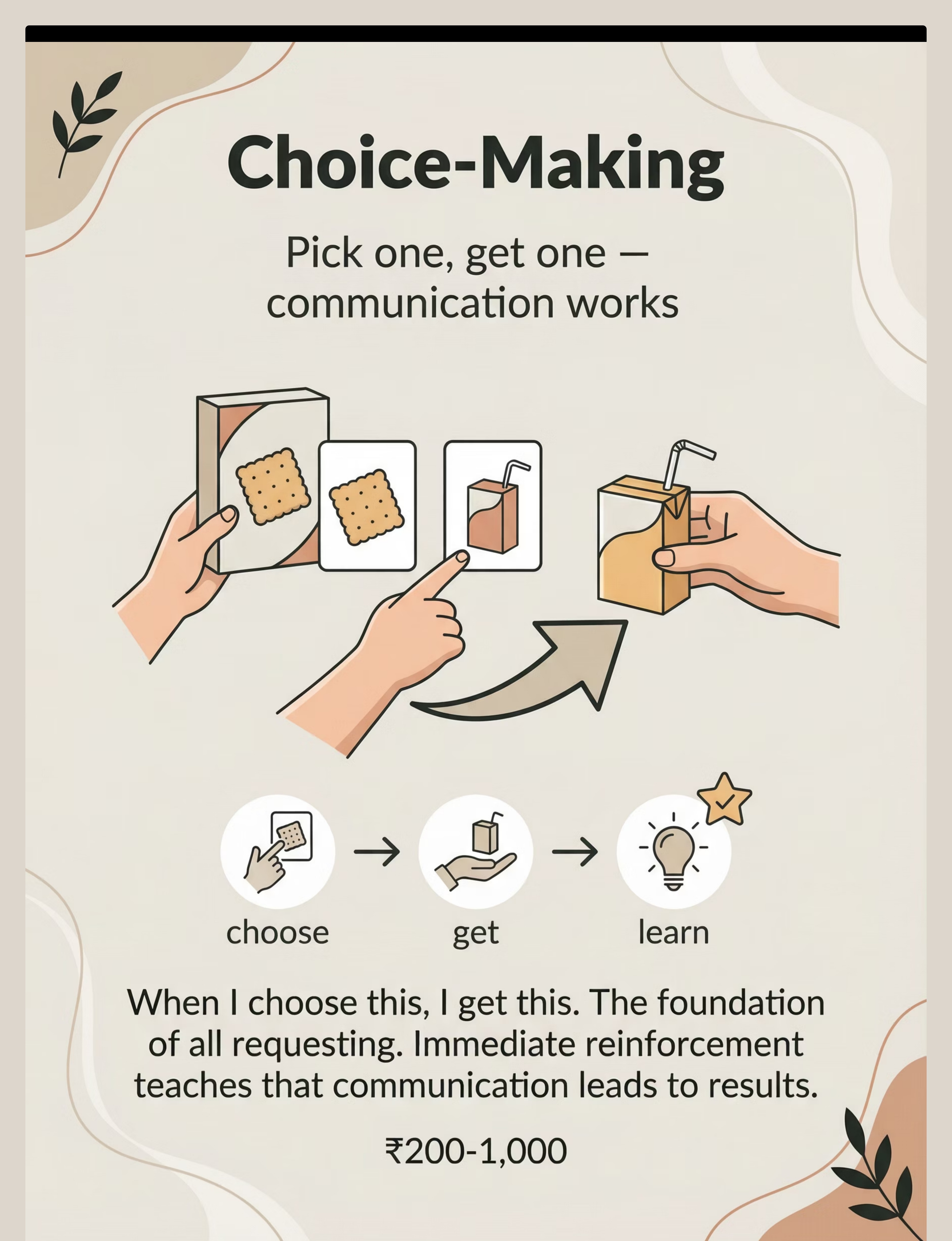
Choice-Making Materials with Immediate Reinforcement
Choice-making = requesting in its simplest form. ₹200–1,000
Total Investment Range: ₹100–2,000 | Most materials fully DIY-able. Need help selecting materials for your child? 📞9100 181 181
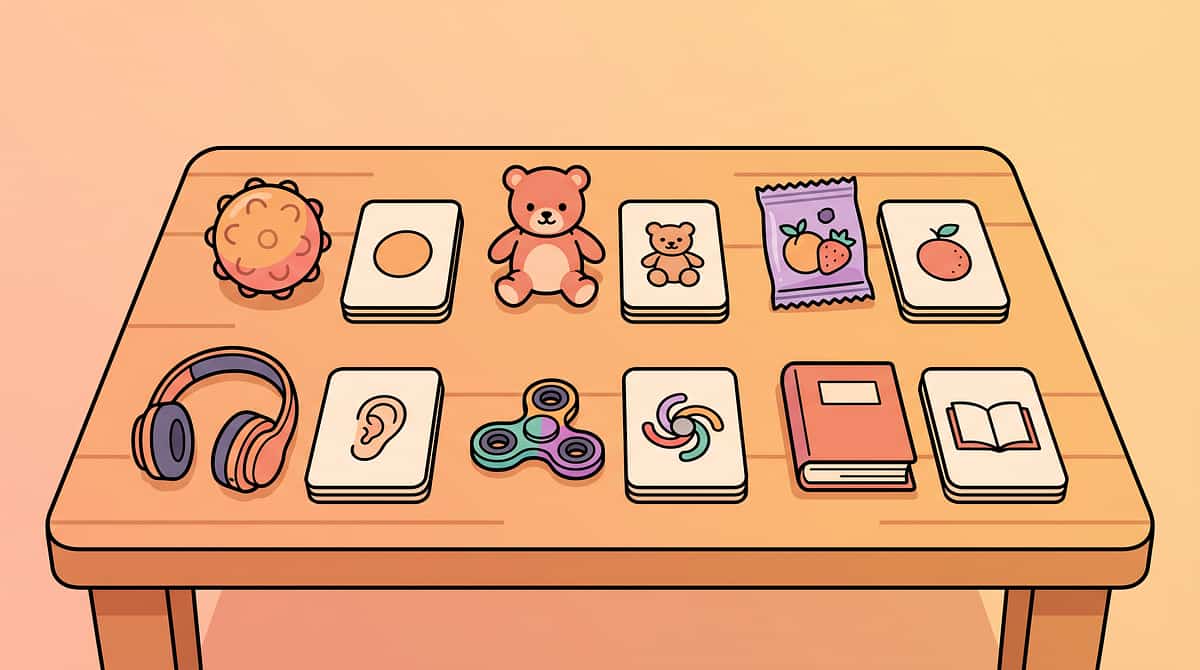
Material 1: High-Motivation Item Sets with Matching Symbols
Canon: Sorting Activities / Categorisation
₹200–1,500
Pinnacle Recommends
Function: The motivational engine of requesting instruction. Without genuine motivation, there is no genuine requesting. These sets ensure the child truly wants what they are being asked to request for.
What It Is
A curated collection of your child's highest-preference items — snacks, toys, videos, sensory items — paired with their corresponding AAC symbols. The child must genuinely, deeply want the item for requesting instruction to be meaningful.
Why It Works
Motivation is the fuel for communication. A child who is mildly interested will not initiate. A child who desperately wants something will find a way to communicate. Your job is to identify that item — then teach the requesting pathway.
Clinical Note
Conduct a formal preference assessment: offer 5–7 items across 5 sessions. Rank by engagement level. Even sensory preferences (music, swinging) count — they often work better than object-based motivators for some children.
🛒Pinnacle Recommends:Brainy Bug Resources Flashcards with App — ₹305
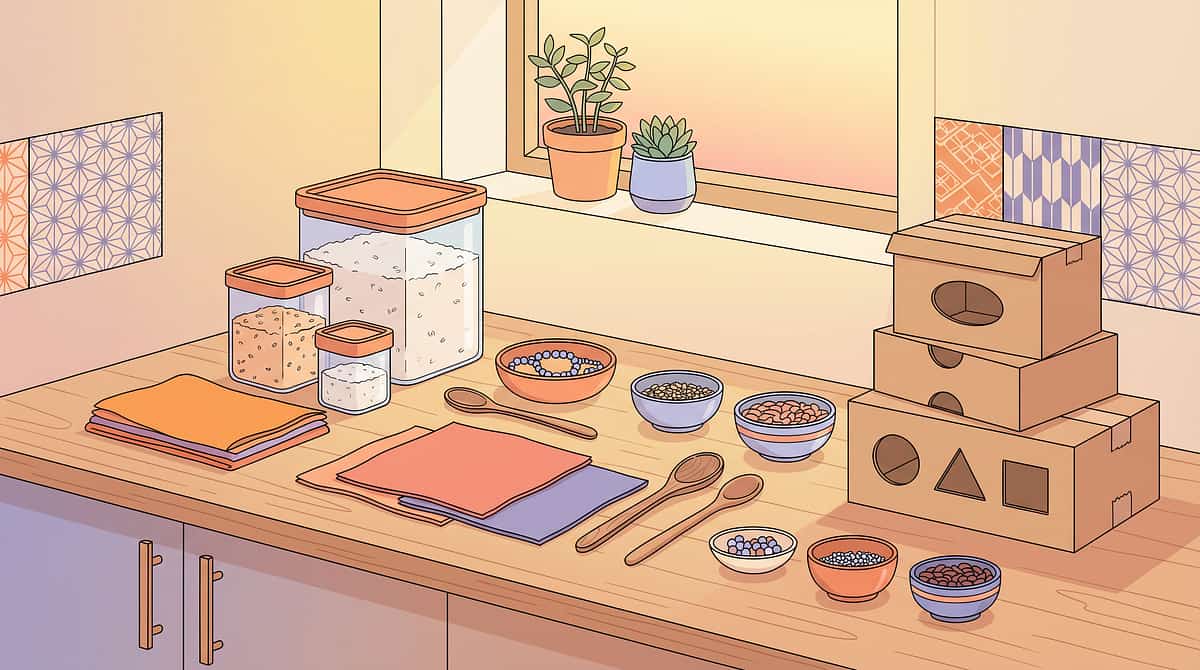
Material 2: Requesting Communication Boards (Core + High-Frequency Wants)
Canon: Communication Boards / AAC (Low-tech)
₹200–1,000
100% DIY-able
What It Is
A simplified requesting vocabulary board — core words (want, more, help, all done) plus your child's actual high-motivation items. This is not the full AAC system. It is a targeted requesting tool.
Why Simplify?
A 500-symbol AAC device is overwhelming for a beginning requester. A 10–15 symbol requesting board is immediately accessible. Master requesting here first, then reintroduce the full system.
How to Build One (Free)
Print PECS-style symbols (free at Boardmaker free trial), glue on cardboard, laminate with sticky tape. Add velcro to swap symbols as motivation changes.
Board Organisation
- Row 1: Core requests — WANT, MORE, HELP, ALL DONE
- Row 2: Child's top 6–8 preferred items (real photos preferred)
- Row 3: Environment-specific symbols (kitchen board vs. living room board)
Your child's real items photographed are more powerful than any generic symbol. A photo of THEIR biscuits beats a cartoon biscuit every time.
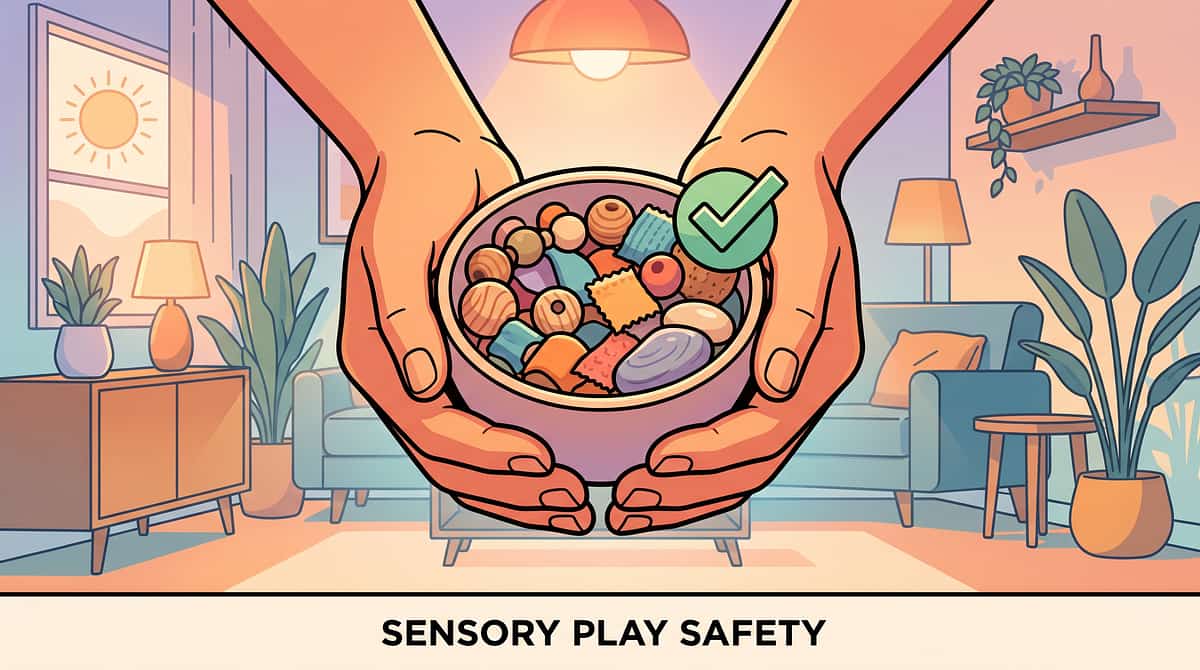
Material 3: Symbol-to-Object Matching Materials
Canon: Matching Games / Memory Games
₹300–1,500
Function: Builds the foundational understanding that picture = real thing. This is the prerequisite for all symbolic communication. If a child doesn't understand that a symbol represents a real-world referent, touching it for requesting is meaningless to them.
Symbol-Referent Connection
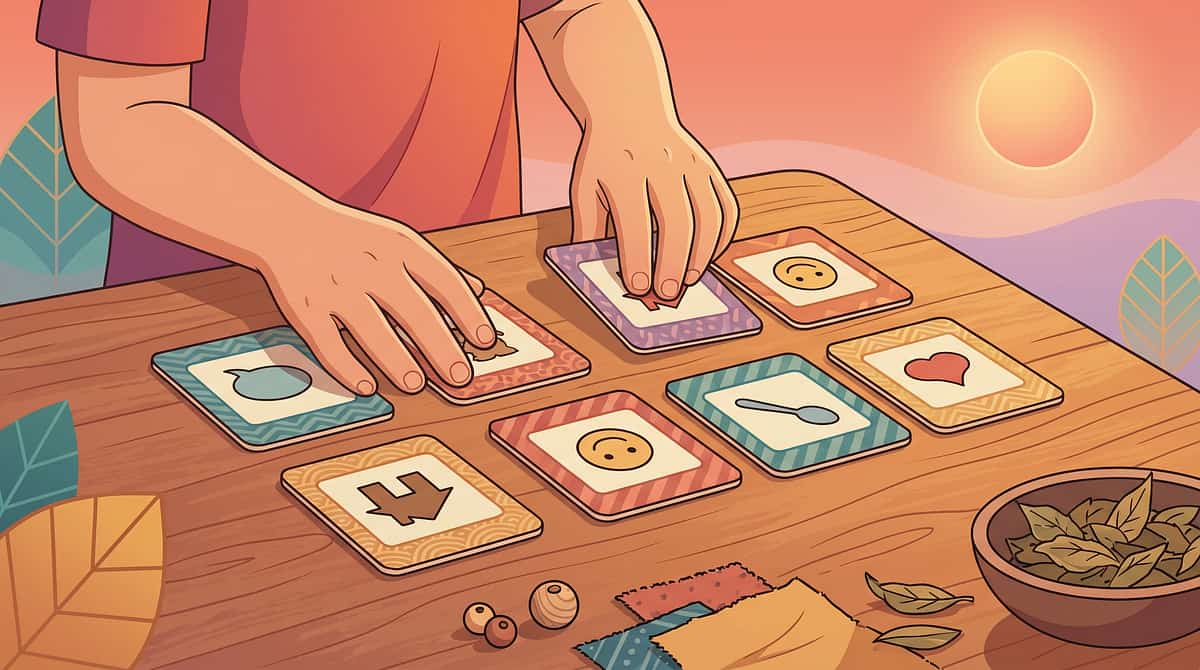
The child must learn: "That picture of the biscuit IS the biscuit." This understanding must be explicitly built through matching, sorting, and pairing activities before requesting can be meaningful.
DIY Method
Print the same photograph twice — once as a card, once to match with the real object. Child matches photo to object, then photo to photo. Simple, zero-cost, highly effective.
When to Use This
If a child presses AAC symbols randomly with no communicative intent, they may not yet have symbol-referent understanding. Spend 1–2 weeks on matching before returning to requesting instruction.
🛒Recommended:Dyomnizy Educational Memory Game with Lights — ₹520
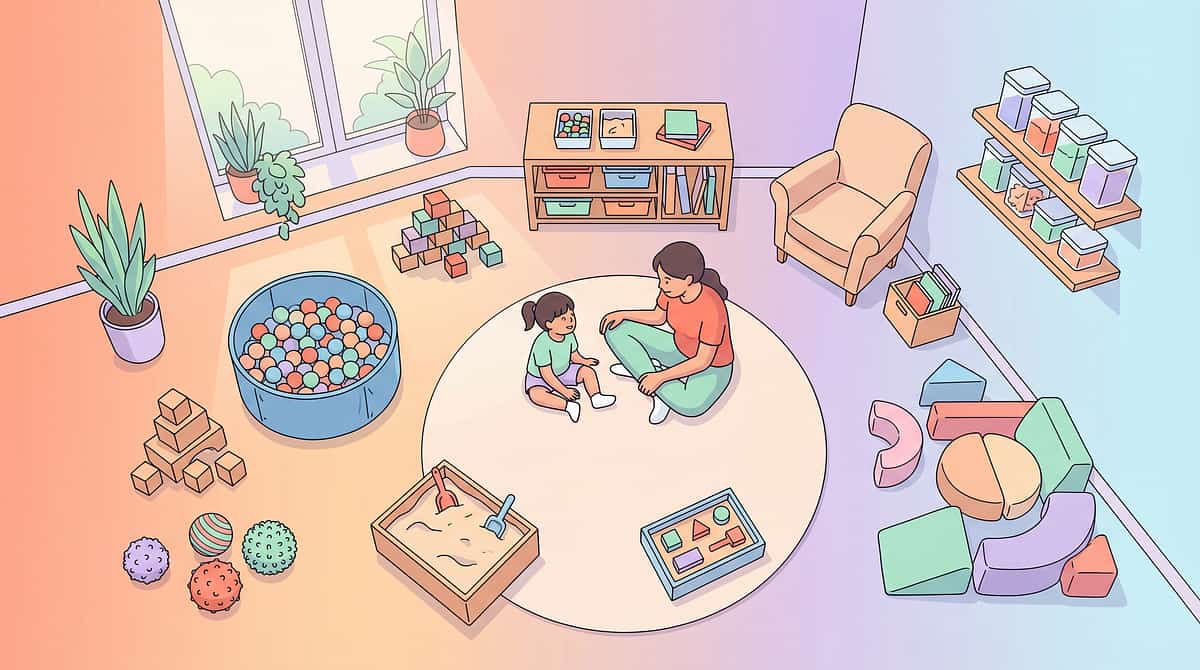
Material 4: Interrupted Activity Materials (Cause-Effect Toys)
Canon: Cause-Effect Toys / Switch Toys
₹300–2,000
DIY: Free with bubbles, tickles, swings
Function: Creates high-motivation requesting opportunities by engineering a delightful activity and then pausing it — waiting for the child to communicate to continue.
The Principle
Start something the child loves. Stop it at the peak of enjoyment. Wait. The child's desire to continue is the most powerful motivator for requesting you can engineer.
Commercial Options
Bubble machines, spinning toys, pausable musical instruments, wind-up toys, light-up cause-effect toys. Start, pause, wait for request, continue.
DIY Options (Free)
Blow bubbles by mouth — pause when child looks excited. Push child on swing — stop mid-swing. Play a tickle game — pause mid-tickle. Works identically to commercial options.
The interrupted activity technique is directly grounded in ABA antecedent arrangement — engineering the environment so that requesting becomes the natural, meaningful response to genuine desire.

Material 5: Errorless Teaching & Prompt Fading Guides
Canon: Instructional Support Materials
₹200–1,000
Fully DIY-able
What Is Errorless Teaching?
A success-first, independence-second approach. Rather than waiting for a child to fail and then correcting, errorless teaching provides enough support that the child succeeds on every trial — then systematically reduces that support until independence emerges.
The logic: Every error that goes unreinforced is a missed learning opportunity. Every success — even a prompted one — builds the circuit.
The Prompt Fading Ladder
Full Physical (Days 1–3)
Hand-over-hand guidance to symbol
Partial Physical (Days 4–7)
Wrist or arm guide — less contact
Gestural (Days 8–14)
Point toward symbol — no touch
Visual (Days 15–21)
Look meaningfully at board
Independent (Day 22+)
Child initiates without any prompt — the goal
Move down one level when the child succeeds 80% of the time at the current prompt level. Do not rush — consolidation at each level matters.

Material 6: Aided Language Modelling Scripts & Cue Cards
Canon: Communication Partner Training
₹100–500
DIY: Free
Function: Adults demonstrate requesting — modelling before expecting. Children learn to request by seeing requesting. These scripts and cue cards keep caregivers consistent.
The Modelling Rule
For every 1 time you prompt the child to request, model requesting 3 times first. Model-to-prompt ratio: 3:1 minimum. Post this rule visibly at every requesting station.
How to Model
Point to WANT symbol → point to [ITEM] symbol → say "I want [item]" → give yourself a tiny piece or moment → smile at child. No performance required — just clear, consistent demonstration.
DIY Cue Cards
Handwrite scripts on sticky notes. Post at snack station, play area, car. "MODEL 3× BEFORE YOU PROMPT" in large letters. Simple, zero-cost, and surprisingly powerful for caregiver habit change.
Video modelling is classified as a Level 1 evidence-based practice for autism (NCAEP 2020). When children see the action, the mirror neuron network activates. The brain begins mapping: touching that picture → getting that thing.
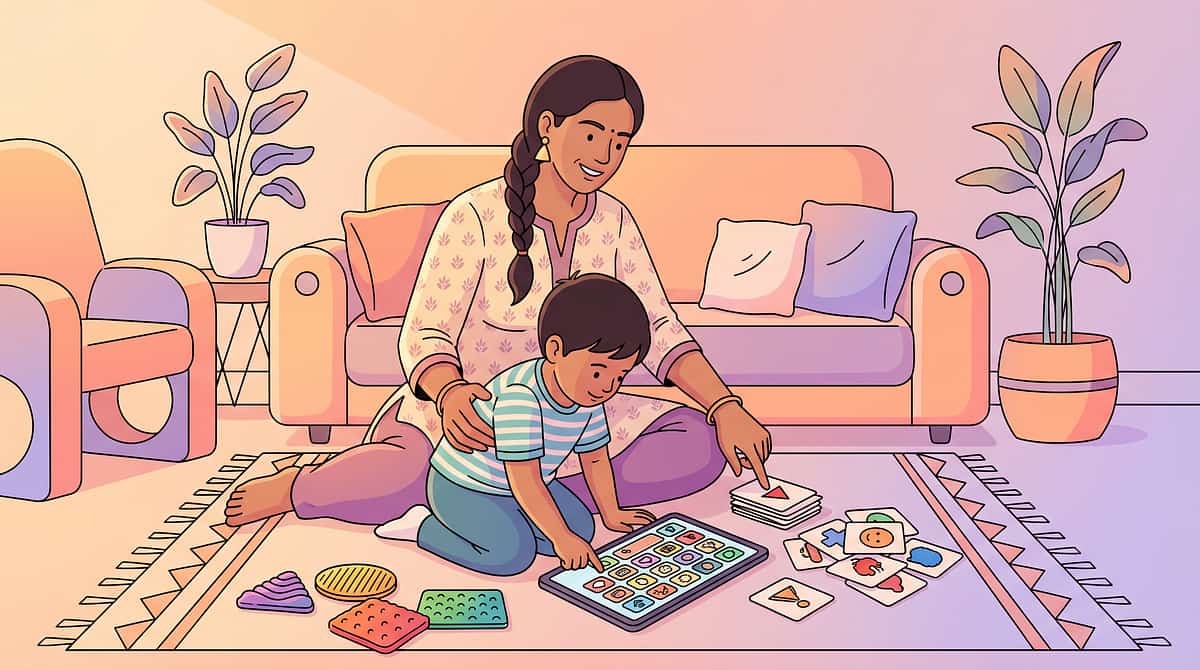
Material 7: Wait Time & Communication Temptation Setups
Canon: Visual Timers / Environmental Setup
₹100–800
DIY: Count aloud
Function: Creates the initiation space — desire + AAC + wait. Wait time is the hardest thing to teach caregivers, and the most transformative. Most adults fill the silence too quickly and inadvertently prevent the child from initiating.
The Wait Time Principle
After staging the desired item and modelling, pause for 5–10 seconds with expectant body language. Eyes between child and AAC board. Eyebrows raised. Body language says: "Now you try." No words yet.
Communication Temptation
Stage desired items visibly but out of reach — on a shelf, in a clear container, in your hand. The child can see it but needs to communicate to receive it. This is the "temptation" that creates requesting opportunities.
DIY Timer
Count aloud: "1…2…3…4…5…" with raised fingers. Or use any hourglass or visual timer. The visual countdown helps the child understand that a wait is happening — not a refusal.
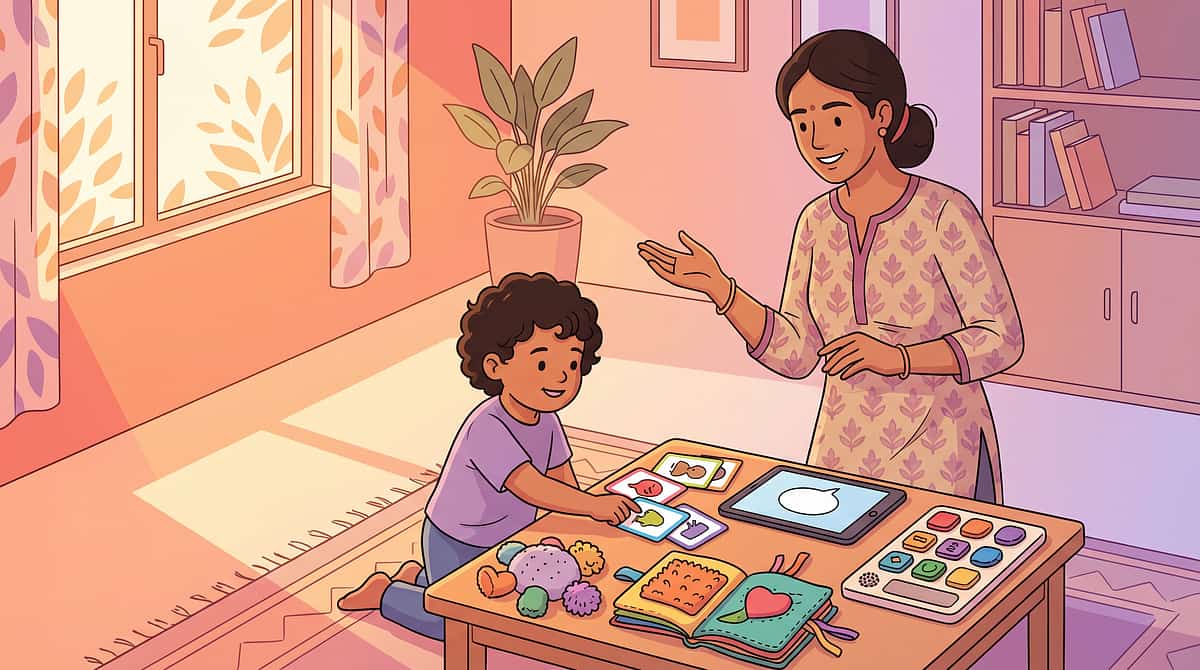
Material 8: Natural Environment Teaching (NET) Materials
Canon: Generalisation & Environment Boards
₹200–1,500
Function: Practice requesting where life happens — not just in a dedicated therapy corner. NET moves requesting instruction into every natural routine so that generalisation occurs organically.
Kitchen Station
Snack requesting board mounted at table level. Preferred foods visible in clear containers. Every snack time becomes a requesting opportunity. 3–5 exchanges per meal.
Living Room Station
Toy requesting board plus favourite toy in clear container on shelf. Child sees it, wants it, is supported to request it. Board stays at child's height.
Car / Outdoor Station
Portable mini-boards for car, playground, grandparent's house. Laminated A5 boards attached to lanyard or bag. Requesting doesn't stop at the front door.
A child who requests successfully with one partner in one room hasn't generalised. NET ensures requesting works everywhere, with everyone — which is the real goal.
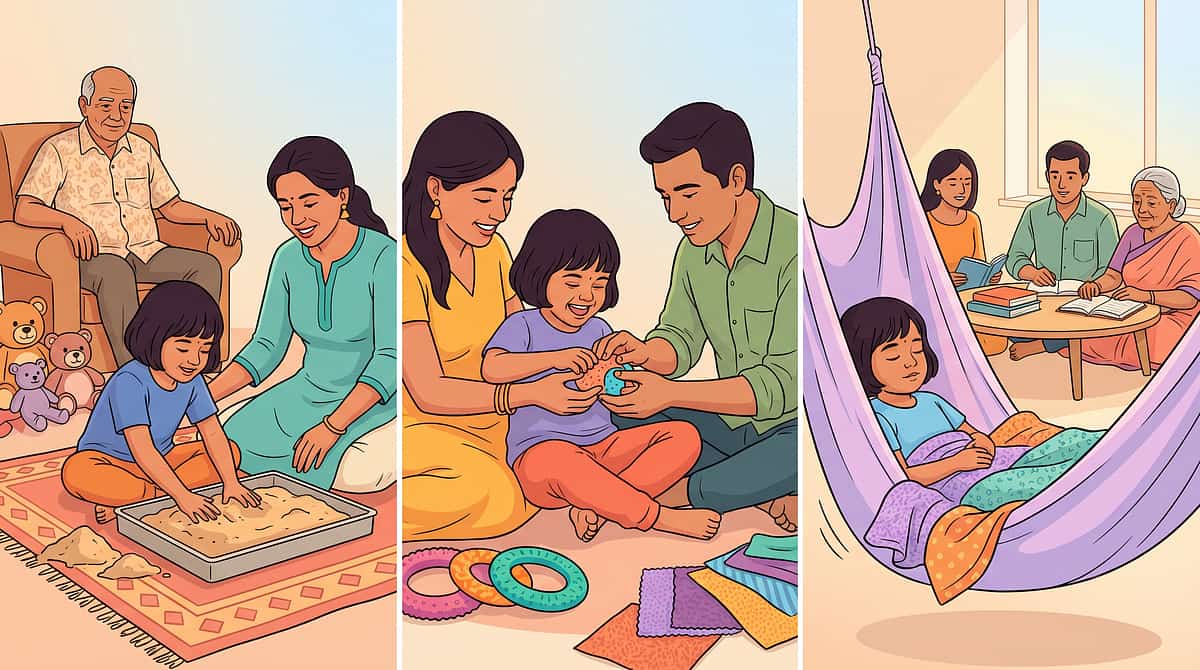
Material 9: Choice-Making Materials with Immediate Reinforcement
Canon: Reinforcement Menus
₹200–1,000
Function: Choice-making is requesting in its simplest form. When a child reaches for one of two offered items, they are communicating a preference. Building from object choices to photo choices to symbol choices is the requesting developmental staircase.
Object Choice
Hold up two real items. Child reaches for one. Give it immediately. Simplest possible requesting.
Photo Choice
Hold up two photographs. Child points to one. Give the real item. Building symbol understanding.
Symbol Choice
Child touches symbol on board. Item is provided immediately. Full AAC requesting achieved.
Reinforcement Menu
Choice board of preferred rewards. Child requests from the menu. Requesting + self-determination.

DIY & Zero-Cost Alternatives
Every material on this page can be made at home. No budget should stop communication.
WHO/UNICEF Nurturing Care Framework principle: interventions must work for families of every economic level. Every technique in the Pinnacle library has a zero-cost path.
Material | Commercial Option | Free DIY Version | |
High-Motivation Sets | Symbol flashcards ~₹305 | Print photos of child's real items. Laminate with sticky tape. | |
Requesting Board | Pre-made boards ₹200–1,000 | Print free PECS-style symbols, glue on cardboard, laminate | |
Symbol-Object Matching | Memory game ₹520 | Print same photo twice — once as card, once to match with real object | |
Cause-Effect Toys | Bubble machine ₹300+ | Blow bubbles by mouth — pause when child lights up. Works identically. | |
Wait Timer | Visual timer ₹150+ | Count aloud: "1…2…3…4…5…" with raised fingers | |
Cue Cards | Printed scripts ₹100 | Handwrite scripts on sticky notes, post at routine stations |
DIY Principle 1
Your child's real items photographed are more effective than any generic symbol.
DIY Principle 2
Lamination with sticky tape achieves 80% of the durability of professional laminating.
DIY Principle 3
The symbol only needs to be recognisable to YOUR child — not beautiful.

Safety First: Before You Begin
Read Before First Session
These are the lines that protect your child and your progress. Read all three sections carefully before beginning any requesting instruction at home.
🔴NEVER DO THIS: Never withhold food, water, comfort items, or basic needs to "motivate" requesting. Use preferred extras and treats only — never basic needs. Never continue hand-over-hand prompting if the child shows significant distress, arching, crying, or sensory defensiveness to touch. Never reinforce random AAC button pressing as intentional requesting — this builds confusion, not communication.
🟡PROCEED WITH CARE: If the child has significant motor planning difficulties (dyspraxia), consult your SLP before choosing access method. If the child has recently experienced significant trauma, a meltdown event, or a change in routine — wait for regulated baseline before beginning requesting instruction. If the child shows self-injurious behaviour when frustrated by communication — have a BCBA design your plan before home implementation.
🟢CLEAR TO PROCEED IF: Child is in a regulated, fed, rested state. AAC system has child's real, actual high-motivation vocabulary. You have identified at least 3 items the child truly, deeply wants. You have a communication partner who will maintain the request → receive contingency consistently. You have read the full 6-step protocol before beginning.
This content is educational. It does not replace individualised assessment and planning by a licensed SLP specialising in AAC.
Any safety concerns? 📞9100 181 181 — FREE, 24x7, 16+ languages

Set Up Your Space
The environment is part of the intervention. Set it correctly and requesting opportunities multiply.
The Requesting Station Concept
Create a "Requesting Station" in each room where high-motivation items live. The station signals to the child: this is where we communicate.
- Kitchen: Snack board + AAC at table level
- Living room: Toy request board + favourite toy in clear container
- Bedroom: Book/toy requesting board at arm's reach
- Car: Portable mini-board on seat or door
Environmental Checklist
- AAC device/board charged and accessible
- High-motivation items identified and staged visibly
- TV/music off or lowered
- Sibling distractions managed
- Timer ready and visible to child
- Data sheet nearby (see Card 20)
- Child in regulated, rested state
Distance & Position
Parent at child's eye level, 60–90cm distance. AAC at arm's reach from child, always visible. High-motivation item visible but requiring communication to access.

Is Your Child Ready? Pre-Session Readiness Check
60 seconds before every session. The best session is one that starts right.
🟢 GO — Proceed
Child is calm, not in distress. Basic needs met (fed, hydrated). Adequate sleep. No fever or physical discomfort. Shows natural motivation toward preferred items. At least 45 minutes since last significant meltdown.
🟡 MODIFY — Shorten Session
Slightly restless → 2 minutes of sensory regulation first (jumping, swinging, deep pressure). Somewhat distracted → move to quieter space. Mildly tired → shorten session to 3–5 minutes maximum.
🔴 POSTPONE — Not Now
In meltdown or recovering. Sick, in pain, or running fever. Extremely hungry — feed first, then practice requesting at next natural meal. Signs of acute sensory overwhelm.
Session abandonment is not failure — it is data. A postponed session protects the requesting routine from becoming associated with distress. Reschedule with confidence.
📞9100 181 181 — FREE clinical support for navigating challenging readiness patterns
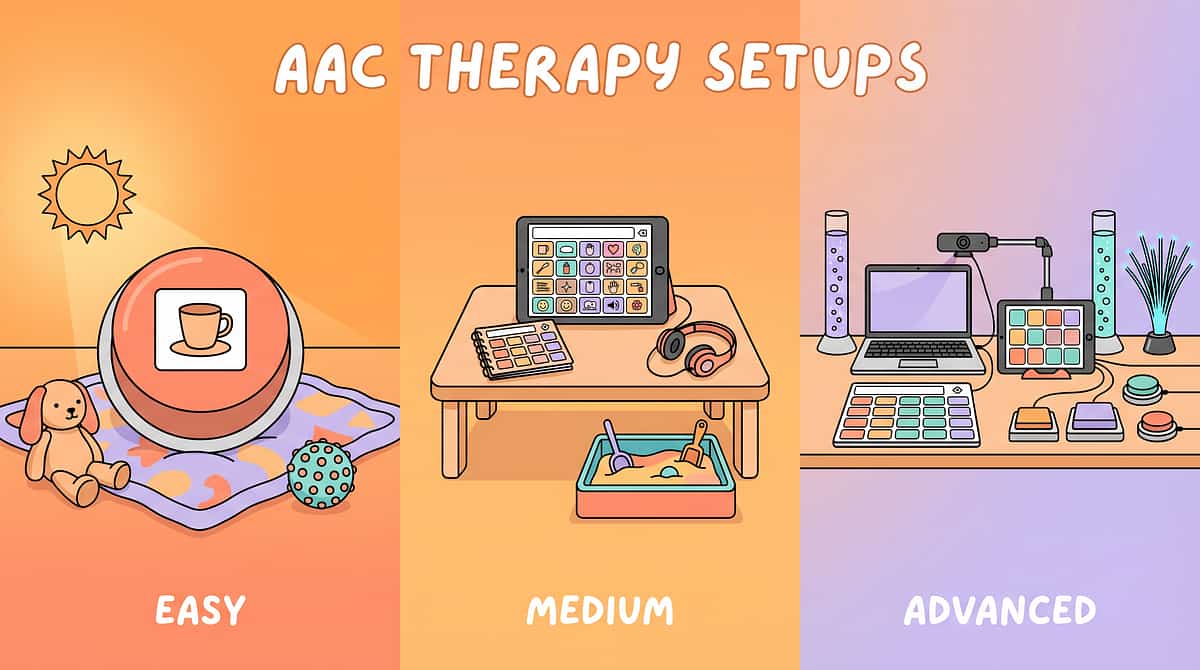
Step 1 of 6: The Invitation
Step 1
Begin with invitation, not instruction
Communication is joyful. Before any prompting or teaching, create the want. Place the high-motivation item visibly near the child — on the table, on a shelf, in your hand. Make it desirable. Let the child see it, reach toward it, light up. Do not give it immediately. This is the moment of genuine wanting — the fuel for requesting.
Invitation Script
"[Child's name], I see you want the [item]." — warm, naming the want. Keep your voice calm and expectant. Keep the AAC board visible between you and the child. Wait 5 seconds for spontaneous initiation.
Engagement Signals to Watch For
Child looks at the item (wanting confirmed). Child looks at you (social bid). Child looks at or reaches toward AAC (emerging initiation!). Child vocalises (wanting expressed — bridge to AAC).
What NOT to Do
Don't give the item before they attempt to request. Don't immediately prompt if you haven't waited 5 seconds. Don't say "say cookie" or "touch cookie" yet — wait for natural initiation first.

Step 2 of 6: Engagement & AAC Modelling
Step 2
Show them requesting before you ask them to do it
Children learn to request by seeing requesting. Before every teaching opportunity, you model: point to the symbol while saying the word. You are showing the child — this is how I get what I want.
01
Point to WANT Symbol
Clearly touch the "want" symbol on the AAC board whilst making eye contact with your child.
02
Point to [ITEM] Symbol
Touch the symbol for the desired item. Say the word clearly: "biscuit," "swing," "more."
03
Say "I want [item]"
Full modelled utterance. Give yourself a tiny piece or moment of the item. Smile. This shows: requesting works.
04
Create Expectant Pause
Eye gaze between child, AAC, and desired item. Eyebrows up. Body language says: "Now you try." No words yet.
The ALM Rule: For every 1 time you prompt the child to request, model requesting 3 times first. Model-to-prompt ratio: 3:1 minimum. Post this rule visibly at your requesting stations.

Step 3 of 6: The Therapeutic Action — Requesting
Step 3
Build the circuit: touch symbol → receive item
Now we build the circuit. Every time. No exceptions.
1
Create Want
Item visible, motivation confirmed (from Step 1)
2
Model Requesting
Step 2 complete — 3:1 modelling ratio met
3
Wait 5–10 Seconds
Expectant pause for spontaneous initiation
4
Use Least Prompt if Needed
Start at the lowest level that achieves success. Fade as fast as possible.
5
Symbol Activated → RECEIVE
The moment the child activates the symbol, at any prompt level, they receive. Immediately. Every time. Non-negotiable.
6
Celebrate Specifically
"You asked! You got it!" Warm, enthusiastic, specific — always.
🟢 Ideal
Child touches symbol independently, looks at adult, waits
🟡 Acceptable
Child touches symbol with gestural or minimal prompt, clear intent
🔴 Concerning
Child is in distress, resisting, escalating — STOP. Return to readiness check.

Step 4 of 6: Repeat, Vary & Fade Prompts
Step 4
Dosage with dignity
3 good, independent repetitions are worth more than 15 prompted ones. Quality of requesting exchanges matters more than quantity.
Repetition Guidelines
- Target per session: 3–8 requesting exchanges
- Quality indicator: Child shows communicative intent — not mechanical compliance
- Satiation signal: Child turns away, pushes item away, shows disinterest — session complete
- Rule: "3 good reps > 10 forced reps. Always."
Variation to Maintain Engagement
- Vary the item being requested (3+ different high-motivation items per session)
- Vary the environment (kitchen, living room, outdoors)
- Vary the communication partner (parent, grandparent, sibling)
- Vary the AAC board position if appropriate
Prompt Fading Timeline
Days 1–3
Full physical — hand-over-hand to symbol
Days 4–7
Partial physical — wrist or arm guide
Days 8–14
Gestural — point toward symbol
Days 15–21
Visual — look meaningfully at board
Day 22+
Independent initiation — the goal 🎯
Documentation Rule: Track today's prompt level. Plan tomorrow's fade step tonight. If you didn't write it down, it didn't happen for tracking purposes.

Step 5 of 6: Reinforce & Celebrate
Step 5
Timing matters more than magnitude
Celebrate the attempt, not just the success. Celebrate the prompted exchange exactly as warmly as the independent one — the same contingency must apply at every prompt level.
The 3-Second Rule: Reinforcement must arrive within 3 seconds of the requesting behaviour. Delay breaks the contingency. The child's brain must map: THAT action → IMMEDIATELY got me this result.
Primary Reinforcer
The requested item itself — the most powerful reinforcer. Natural consequence of requesting. Always use this first.
Social Reinforcer
Specific verbal praise + brief celebratory touch if child tolerates. "YES! You asked for [item]! Here you go!"
Token Reinforcer
Sticker/token toward a reward — for extended requesting goals. Introduce after basic requesting is established. See Reward Stickers ₹165.
Sensory Reinforcer
Brief preferred sensory experience — swinging, tickle, music moment. Especially effective for sensory-seeking children.
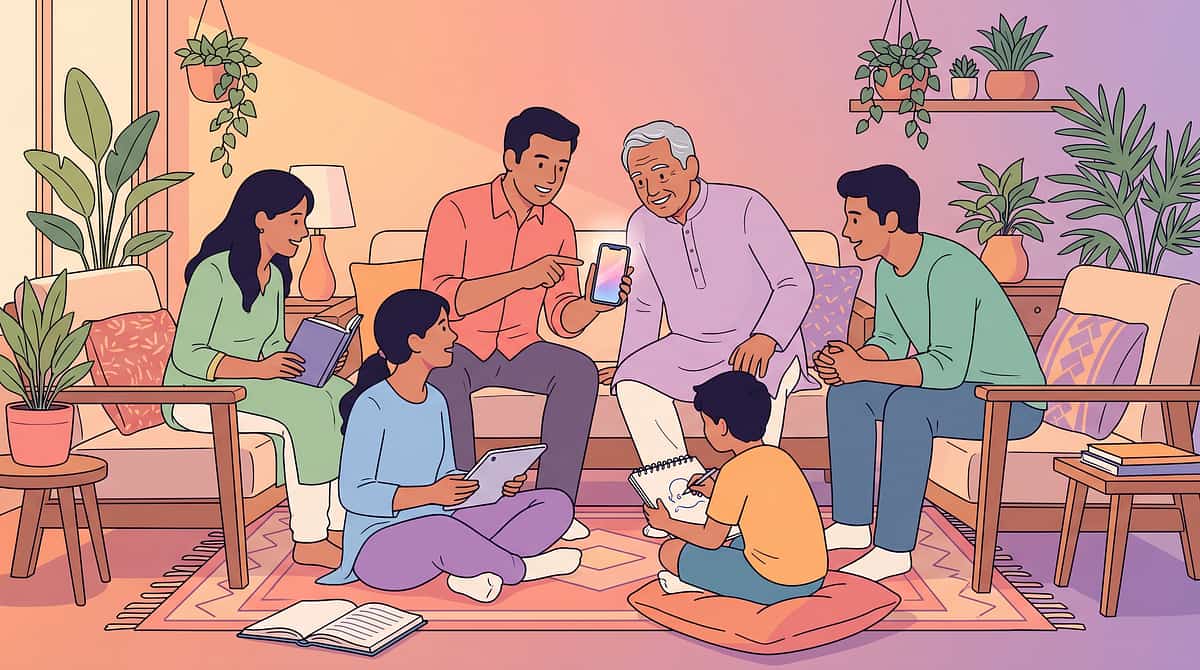
Step 6 of 6: The Cool-Down Transition
Step 6
A clean ending prevents post-session dysregulation
No session ends abruptly. A structured ending is as important as a structured beginning. Plan for 2–3 minutes of transition time at the close of every session.
Visual timers are classified as an evidence-based practice for autism (NCAEP 2020) specifically for transitions. Show the timer winding down: "When the timer ends, all done."
If Child Resists Ending
"I understand you want more. More [item] is coming at [next routine]. All done for now." Brief, calm, predictable. Add a "next time" visual cue to schedule if needed.
Building Ownership
If age-appropriate, have child help place AAC board back in its spot. This small act builds ownership of the communication tool — a crucial long-term investment.
📞9100 181 181 — 24x7 support for challenging transitions
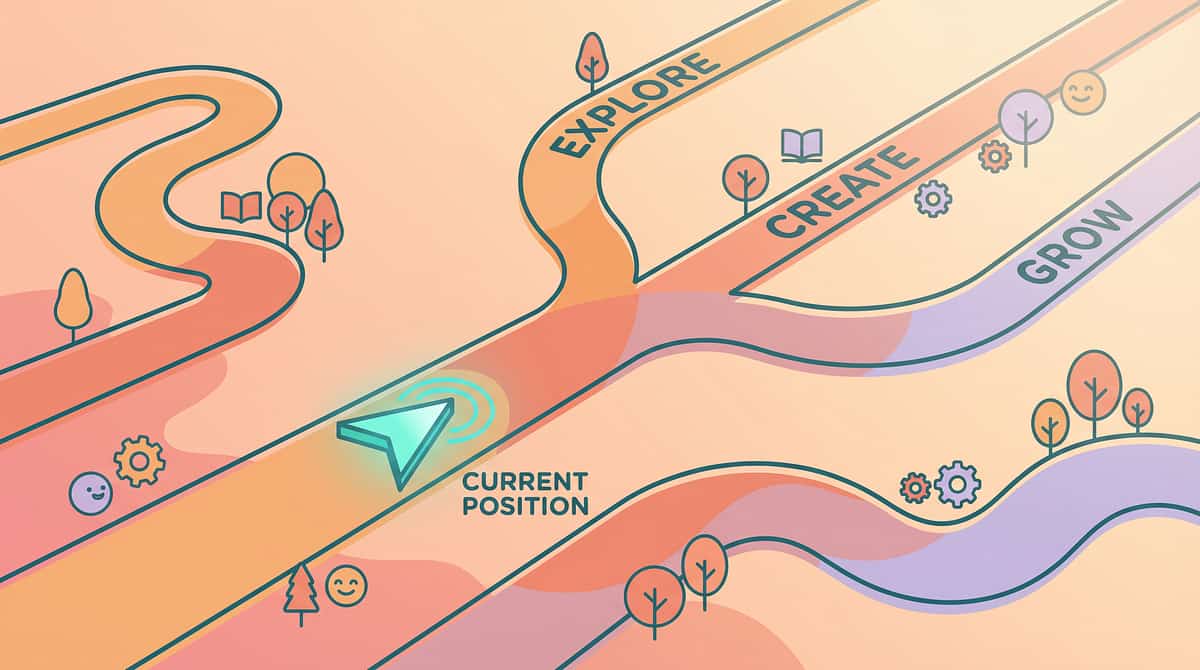
Capture the Data: Right Now
60 seconds of data now saves hours of guessing later. Capture before you forget. This is the habit that transforms home practice into clinical-grade intervention.
Field 1: Prompt Level
Full Physical → Partial Physical → Gestural → Visual → Independent
Field 2: Requesting Exchanges
___ successful out of ___ total opportunities offered today
Field 3: Engagement Quality
1 (resistant) → 2 (neutral) → 3 (engaged) → 4 (enthusiastic)
GPT-OS® Integration: Your data feeds the Functional Communication Readiness Index and AAC Requesting Competency Index. Population-level data from your sessions improves recommendations for all families — your observation matters beyond your household.
"If you didn't write it down, it didn't happen (for tracking purposes). 60 seconds post-session is the habit." 📞9100 181 181
What If It Didn't Go as Planned?
Most sessions don't go perfectly. That is completely normal — and every imperfect session contains valuable information. Here is what to do with it.
Problem: Child Refused All AAC Interaction
Why: Motivation was insufficient, or physical state wasn't ready.
Fix: Identify a higher-motivation item. Check readiness (Card 13). Try a different time of day — pre-meal or first thing in morning.
Fix: Identify a higher-motivation item. Check readiness (Card 13). Try a different time of day — pre-meal or first thing in morning.
Problem: Child Became More Distressed After Prompting
Why: Prompting approach may be aversive. Physical guidance may be triggering.
Fix: Remove physical prompting immediately. Switch to gestural or visual only. Increase modelling ratio to 5:1. Contact SLP for alternative access assessment.
Fix: Remove physical prompting immediately. Switch to gestural or visual only. Increase modelling ratio to 5:1. Contact SLP for alternative access assessment.
Problem: Child Pressed Symbols Randomly
Why: Symbol-referent connection not established yet.
Fix: Back to Material 3: Symbol-Object Matching. Spend 1–2 weeks on matching before returning to requesting.
Fix: Back to Material 3: Symbol-Object Matching. Spend 1–2 weeks on matching before returning to requesting.
Problem: Requesting Worked in Therapy but Not at Home
Why: Generalisation to home environment hasn't been taught.
Fix: Natural Environment Teaching (Material 8). Practice in every room with home-specific motivation items.
Fix: Natural Environment Teaching (Material 8). Practice in every room with home-specific motivation items.
Problem: Regression — Was Requesting, Then Stopped
Why: Common after illness, schedule change, new environment, or change in communication partner.
Fix: Return to the prompt level that was previously successful. Rebuild consistency. Regression is temporary.
Fix: Return to the prompt level that was previously successful. Rebuild consistency. Regression is temporary.
Problem: Nothing Seems to Motivate the Child
Why: Preference assessment hasn't been done systematically.
Fix: Offer 5–7 items across 5 sessions and rank by engagement. Sensory preferences (music, swinging) often work better than object-based motivators.
Fix: Offer 5–7 items across 5 sessions and rank by engagement. Sensory preferences (music, swinging) often work better than object-based motivators.
Stuck? 📞9100 181 181 — FREE clinical consultation, available 24x7
Adapt & Personalise: Your Child's Version
No two children are identical. This card helps you find your child's specific version of Technique B-225.
Motor Access Challenges
Use large-format boards (A4 minimum symbol size). Consider switch access or eye-gaze AAC. OT consultation required before intensive requesting instruction. Avoid hand-over-hand if there is any resistance to touch.
Sensory Seeking Children
Embed requesting into movement routines — requesting before swing push, trampoline bounce, or spinning. Use movement as the natural, powerful consequence of requesting.
Sensory Avoiders
Use gestural or eye-gaze access — avoid hand-over-hand entirely. Use quieter, less stimulating reinforcers. Keep sessions very brief (3–5 minutes). Fewer symbols on board initially.
Younger Children (18 months–3 years)
Use real objects first, then photos, then symbols. Keep board to 2–4 symbols maximum initially. Embed entirely in daily routines — no separate "AAC session" needed.
Older Children (8–12 years)
Work on self-advocacy requesting (help, break, more time). Expand beyond object requesting to action and information requesting. Involve the child in preference assessment — they know what they want.
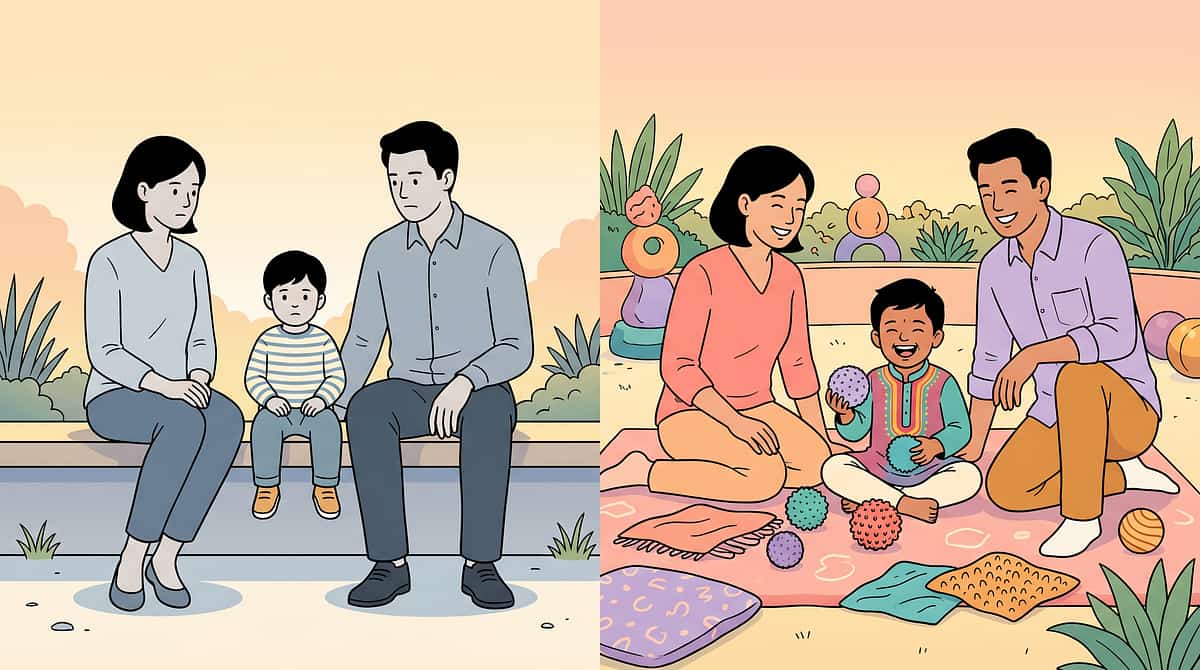
Week 1–2: What to Expect
Foundation Phase
15% Progress Milestone
Weeks 1–2 are about planting the seed. Do not expect the flower yet. Expecting too much too soon is the most common reason families lose confidence in this critical early phase.
✅ What You WILL See
Child tolerates AAC presence without pushing it away. Child watches your modelling with attention. Child makes AAC contact during prompted exchange. Clearer evidence of preference when high-motivation items are presented. You as a parent feel more systematic and less helpless.
⏳ What You Will NOT See Yet
Independent requesting without prompting. Generalisation to different partners. Requesting across different items. Dramatic behavioural change. All of this is completely normal and expected.
"If your child tolerated the requesting exchange without escalating — that is real progress. If they looked at the AAC board once with apparent intent — that is real progress. If you modelled 10 times today without forcing — that is real progress."
Parent Emotional Milestone: You may feel the first glimpse of a system you can trust. That is the most important Week 1 outcome.
Week 3–4: Consolidation Signs
Contingency Building Phase
40% Progress Milestone
The neural pathway is forming. Look for these consolidation signs — they tell you the requesting circuit is beginning to wire.
Anticipation Signal
Child anticipates the requesting exchange — looks at AAC before you prompt. This is the most important early sign of neural consolidation.
Prompt Fading is Working
Child uses a lower level of prompting than Week 1. The fading ladder is progressing as designed.
Reduced Resistance
Child shows less resistance to the requesting routine. The routine itself is becoming familiar and non-threatening.
Emerging Independence
For at least 1 high-motivation item, child shows emerging independent activation without any prompt.
Functional Understanding Signal
Child shows frustration when AAC is removed — a clear sign they understand its function as their communication tool.
When a child begins to LOOK at the AAC board before being prompted, the symbol-referent-action circuit is forming. This is the behavioural signature of neural consolidation. Document it immediately. If child is succeeding at 80%+ of opportunities: increase daily opportunities by 2–3 and fade one prompt level.
Week 5–8: Independence Emerging
Independence Emergence Phase
65% Progress Milestone
Week 5–8 is when most children make their first independent request. This is the breakthrough window — and one of the most profound moments in paediatric communication therapy.
Independence Indicators
1–3 independent requests per session for highest-motivation items. Gestural or visual prompting only — no physical guidance needed. Requesting in 2+ different contexts. 2+ different communication partners.
The Breakthrough Moment
The first truly independent request — child walks to the board, touches a symbol, looks at you — means the circuit is complete: want → symbol → response. Document it. Celebrate it. Call the helpline to log it.
What Changes After
After the first independent request, learning accelerates exponentially. The child now understands what AAC is for. Every subsequent request reinforces the entire system.
📞9100 181 181 — share your child's first independent request with our clinical team!
Celebrate Your Progress
Every independent request is a neurological achievement. Celebrate it as one. These milestones are real, measurable, and worth marking.
1
Milestone 1
First independent request — any item, any context
2
Milestone 2
Requesting with 3+ different items
3
Milestone 3
Requesting with 2+ different communication partners
4
Milestone 4
Requesting in 2+ different environments
5
Milestone 5
Requesting without any physical prompt for 5 consecutive sessions
6
Milestone 6
First two-symbol request — "want" + item
"You taught this. You modelled, waited, faded prompts, and stayed consistent. Your child's first independent request is your achievement as much as theirs. The families who achieve this share one thing: they didn't give up during the weeks when nothing seemed to be happening."
Pinnacle Network Data: 97%+ of children enrolled in GPT-OS® guided requesting instruction reach at least Milestone 3 within 12 weeks.
Red Flags: When to Seek Professional Help
These signals mean escalate — not intensify home practice. Knowing the difference between a difficult session and a clinical signal is essential.
🚨Seek Immediate Support — Call 9100 181 181 TODAY: Child develops new self-injurious behaviour (head-banging, biting self) related to communication frustration. Child's existing challenging behaviour increases significantly during AAC instruction. Child shows signs of regression across multiple developmental domains. Child has not made ANY progress after 8 weeks of consistent home practice.
⚠️Schedule SLP/BCBA Consultation Within 2 Weeks: Child does not tolerate any form of prompting without significant distress after 4 weeks. You suspect motor planning difficulties (dyspraxia) are limiting symbol access. No high-motivation items can be identified despite systematic preference assessment. Child's AAC system seems mismatched to their cognitive or motor level.
📋Routine Check-in at Next Therapy Session: Requesting plateau — same prompt level for 3+ weeks. Generalisation is not occurring after 4–6 weeks. Parent feeling uncertain about prompt fading sequencing.
📞9100 181 181 — FREE National Autism Helpline | 24x7, 16+ languages | Always the first call

Your Child's Requesting Pathway Map
B-225 is one technique in your child's communication journey. Here is the full map — where you came from, where you are, and where you are going.
1
Pre-AAC Foundation
B-220: Getting Started with AAC
B-221: Building AAC Vocabulary
B-221: Building AAC Vocabulary
2
AAC Requesting ← YOU ARE HERE
B-225: AAC for Requesting
This is the foundation of all functional communication
This is the foundation of all functional communication
3
Expanding AAC
B-226: AAC Commenting & Sharing
B-227: AAC Social Interaction
B-227: AAC Social Interaction
4
Functional Language
B-228: AAC Across Environments
B-230: AAC for Behaviour Reduction
B-230: AAC for Behaviour Reduction
B-225 sits in Domain B: Social Communication & Pragmatic Language — connecting to Domain A (Sensory Processing) for regulation prerequisites and Domain C (Emotional Regulation) for frustration management during requesting instruction.
Families Who've Been Exactly Where You Are
From the Pinnacle Network. Anonymised with family consent. Individual outcomes vary by child profile, implementation consistency, and age of intervention.
Arjun's Family — Pinnacle Hyderabad Network
"Arjun had a full AAC device for 9 months and pressed buttons randomly — never to ask for anything. Snack time ended in tears. Week 6, he touched 'more' independently for the first time. It was one word. I cried for an hour. He now requests 14 things daily. The device is his voice."
7-Year-Old's Family — Pinnacle Bangalore Network
"My daughter had been doing 'AAC' for years with no real functional use at home. Natural environment teaching changed everything. We made requesting boards for every room. Now she requests in ALL of them with different partners. Her school is shocked."
"The families who see breakthroughs share three things: they did the preference assessment properly, they modelled before they prompted, and they waited. Wait time is the hardest thing to teach parents — and the most transformative." — SLP, Pinnacle AAC Team
Illustrative cases. Individual outcomes vary by child profile, implementation consistency, and age of intervention. Statistics represent aggregate outcomes across Pinnacle Blooms Network.
Connect With Other Parents
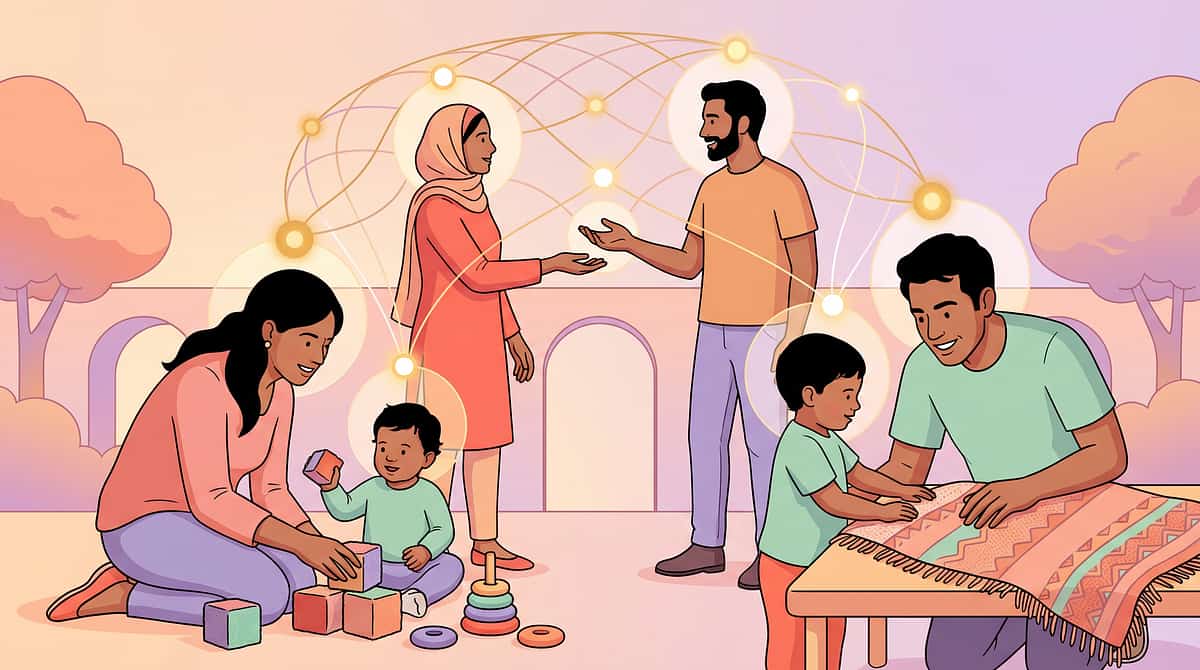
Isolation is the enemy of adherence. Over 1,000 individuals from 111 countries contributed to the WHO Nurturing Care Framework because community knowledge is clinical knowledge. You do not have to do this alone.
WhatsApp Community
Join the Pinnacle AAC Requesting Parent Network — families navigating requesting instruction together, sharing wins and troubleshooting challenges in real time.
Online Forum
pinnacleblooms.org/community/aac-requesting — moderated by Pinnacle SLPs and BCBAs. Ask questions, share data, celebrate milestones.
Local Parent Meetups
Organised through your nearest Pinnacle centre. In-person connection with families at the same stage of the requesting journey.
Peer Mentoring
Connect with a parent whose child has successfully completed B-225. Their experience — their breakthroughs and stumbles — is your most practical resource.
"If B-225 helps your child, share your story. Your experience becomes another family's hope. That is how Pinnacle works."
📞9100 181 181 — also connects you to the parent peer network
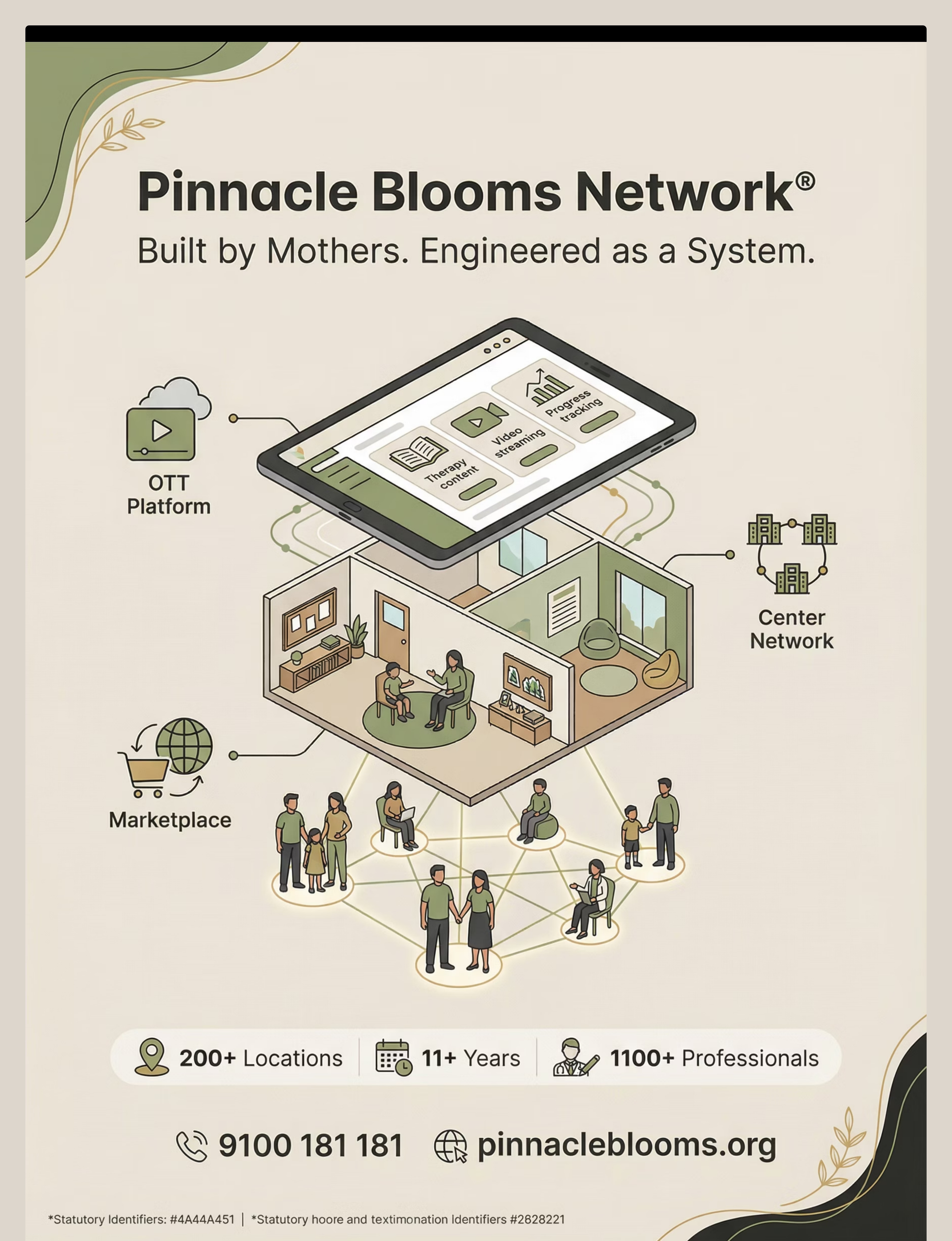
Preview of 9 materials that help aac for requesting Therapy Material
Below is a visual preview of 9 materials that help aac for requesting therapy material. The pages shown help educators, therapists, and caregivers understand the structure and content of the resource before use. Materials should be used under appropriate professional guidance.


Link copied!

Professional Support: Where to Get It
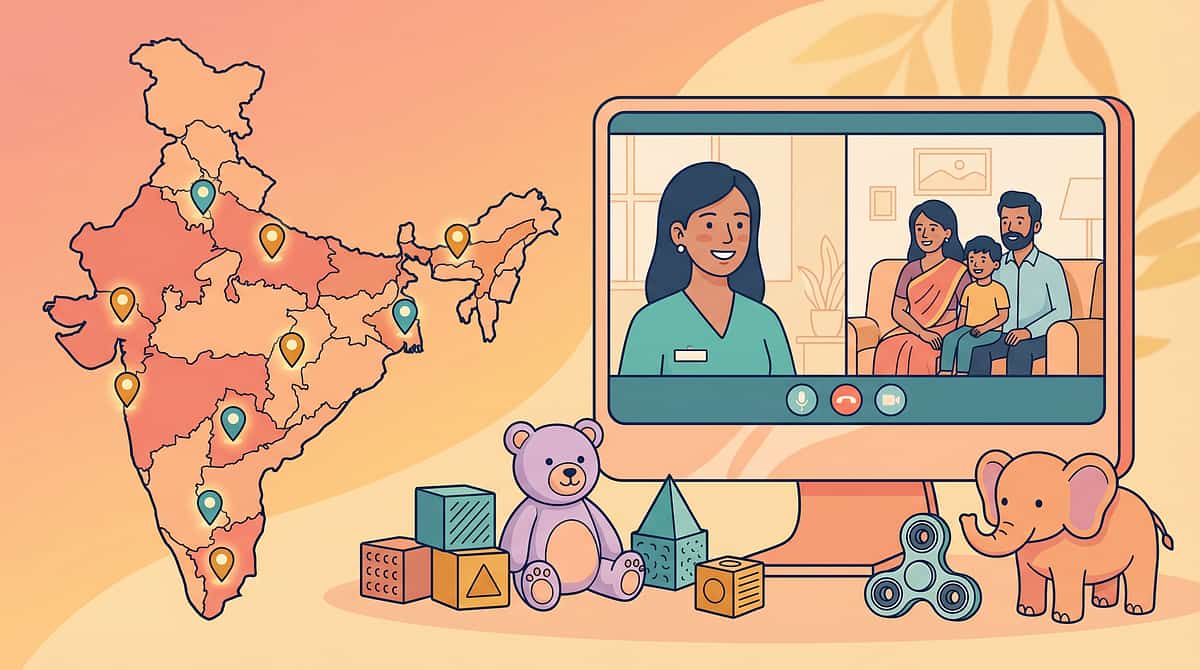
Home practice is powerful. Professional guidance makes it precise. Here is how to access both — wherever you are in India or the world.
🗣️ AAC-Specialised SLP Assessment
Full AAC requesting evaluation including motor access, symbol assessment, preference assessment, and requesting instruction plan. Available at all 70+ Pinnacle centres across India.
🧠 BCBA / ABA Consultation
Functional communication training (FCT) design, prompt hierarchy planning, data analysis, and behavioural support for AAC instruction. Individualised plans, no generics.
✋ OT Motor Access Assessment
For children with physical access challenges — determining optimal AAC access method: direct touch, switch access, or eye-gaze technology.
📱 Teleconsultation
Available for families outside Pinnacle centre reach. Full clinical consultation via video. Serving families in 70+ countries with language interpretation available.
📞 Call
9100 181 181 — FREE, 24x7, 16 languages
🌐 Online
pinnacleblooms.org/assessment
📧 Email
CIN: U74999TG2016PTC113063 | DPIIT: DIPP8651 | MSME: TS20F0009606 | GSTIN: 36AAGCB9722P1Z2