
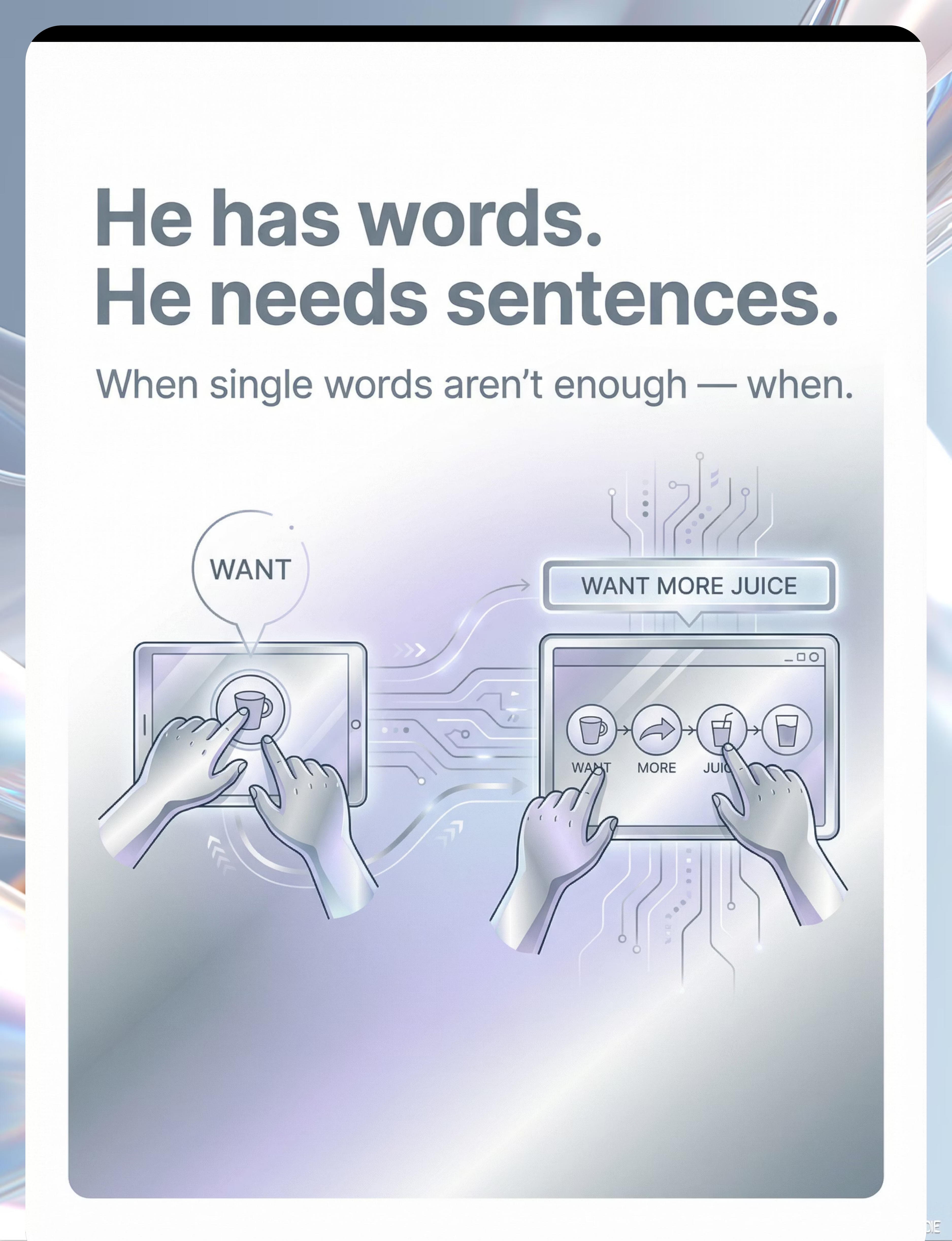
He has words. He needs sentences.
When "want" could mean anything — juice, a hug, outside, stop — your child is trapped in a language that doesn't have enough room. The words are there. The sentence isn't. Not yet.
It's breakfast. He picks up his device and presses WANT. You look at him. "Want what, baby?" He looks back, steady, waiting. You guess: "Water?" He looks away. "Crackers?" Nothing. "Your iPad?" His eyes light — yes, that's it. You breathe. Crisis averted. But you've been guessing for eleven months now. His speech therapist says he's ready to combine words. You have no idea where to start.
You are not failing. Your child's language system is at the exact next threshold. This page shows you how to cross it.
🏛️ Consortium
Developed by SLP + ABA + OT + SpEd + NeuroDev
📞 FREE Helpline
9100 181 181 · 16 languages · 24×7
🔤 Domain
AAC + Phrase Building · Ages 2–18 · 10–20 min/session
WHO Nurturing Care Framework (2018): Early parental awareness and responsive communication directly impacts developmental outcomes. The period from ages 2–8 is critical for language architecture formation.

ACT I: THE EMOTIONAL ENTRY
Millions of families are navigating this exact moment.
Across India alone, an estimated 18 million children have some form of communication delay or disorder. For children using AAC, the journey from single symbols to phrases is the most transformative — and most commonly stalled — transition in expressive language development. Research confirms that without explicit multiword modelling, children reliably remain at single-symbol communication regardless of vocabulary size.
1 in 36
ASD Diagnosis
Children in India diagnosed with autism spectrum disorder
70–80%
Plateau Rate
AAC users who plateau at single-word stage without explicit phrase modelling
21M+
Sessions Delivered
Across Pinnacle's 70+ centres — capturing exactly this progression
You are among millions of families at this exact crossroads. The path forward is documented, practised, and parent-executable.
"I thought he just needed more words on his device. It turned out he needed to see words being combined — thousands of times. Once we shifted to phrase modelling, the combinations started appearing within weeks."
— Parent, Pinnacle Hyderabad Centre
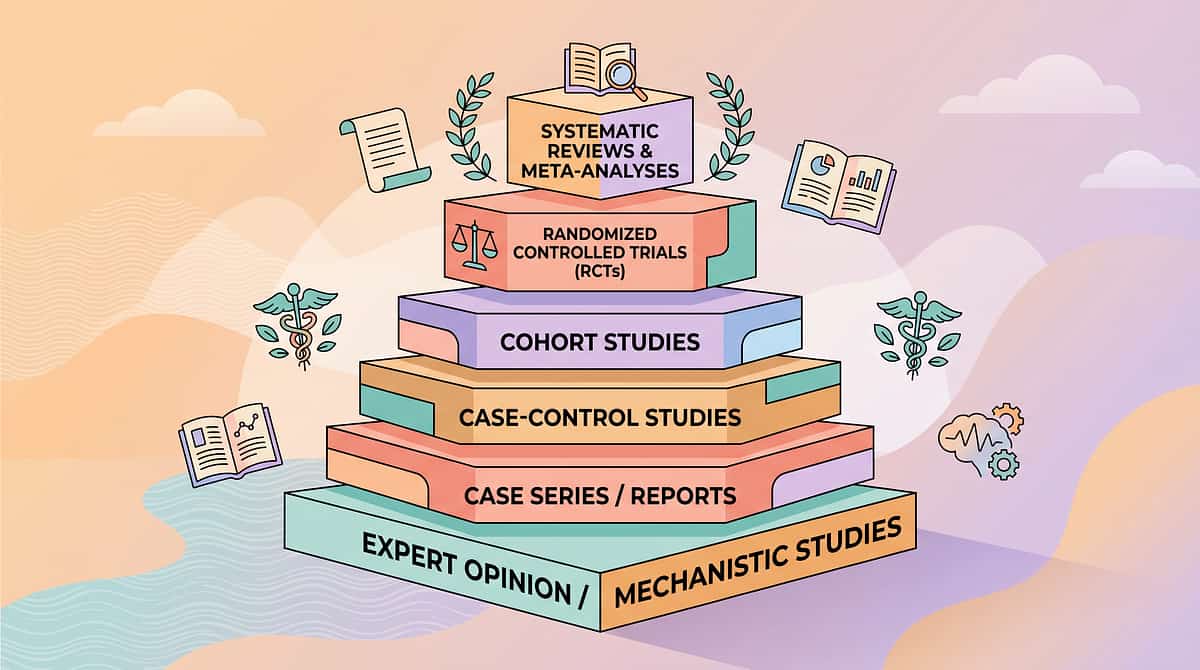
Systematic review (PMC11506176, 2024): AAC language development follows the same trajectory as spoken language. The transition from single words to two-word combinations requires consistent multiword modelling — not more vocabulary. Studies across 16 articles (2013–2023) confirm this intervention meets criteria as an evidence-based practice.
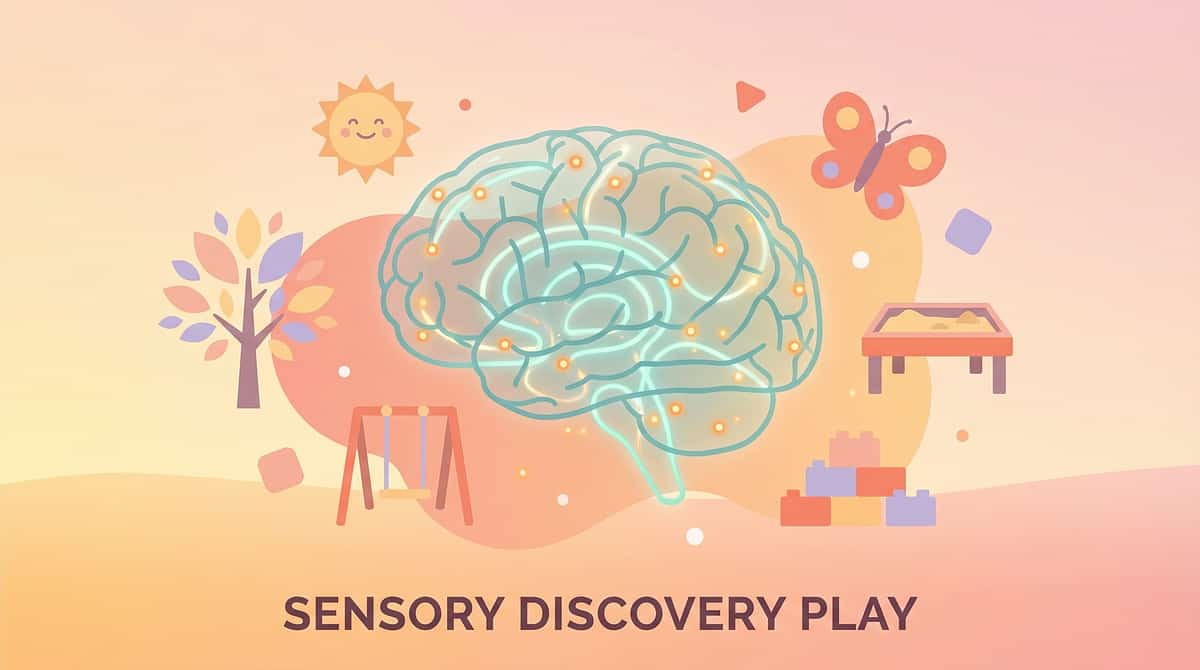
This is a language architecture challenge. Not a behaviour problem.
🧠 The Neuroscience
Broca's Area (left frontal lobe) governs the planning and sequencing of language — including the combination of words into phrases. For many AAC users with autism, this sequencing system needs explicit external scaffolding to activate reliably.
The basal ganglia and supplementary motor areas handle the procedural sequencing needed to select multiple symbols in order. Reduced white matter connectivity in autism can slow this automatisation.
Mirror neuron systems mean that watching someone else combine symbols on an AAC device literally activates the same brain pathways in your child.
💬 What This Means For You
Your child's brain hasn't yet built the automatic "chain" that links WANT → JUICE as a single communicative unit. Right now, each symbol is an island. The goal of phrase-building is to build the bridges between those islands.
When your child selects one symbol and stops, it's not because they've communicated everything. It's because the motor sequence for "select the next symbol" hasn't yet become automatic.
Every phrase you model is a blueprint your child's brain can trace. This is why aided language stimulation is not just helpful — it is neurologically necessary.
"This is a wiring difference, not a willingness difference. Every phrase you model is literally changing neural architecture."
Frontiers in Integrative Neuroscience (2020): Aided language input activates observation-action networks, supporting the procedural learning of multiword sequences. DOI: 10.3389/fnint.2020.556660

Your child is here. Here is where we're heading.
Typically developing children begin combining words around 18–24 months — moving from "ball" to "more ball" to "want more ball" to "I want the red ball." AAC users follow the identical developmental sequence but often need explicit teaching because they don't naturally overhear multiword AAC use around them.
Just as hearing children are immersed in spoken sentences all day, AAC users need to see multiword AAC messages — constantly, across all environments, from all communication partners.
What commonly co-occurs with single-word AAC plateau:
- Executive function challenges (sequencing and planning)
- Motor planning difficulties (multi-step navigation)
- Limited partner modelling of multiword combinations
- Vocabulary organisation that doesn't support easy combination
WHO Care for Child Development (CCD) Package: Age-specific evidence-based recommendations implemented in 54 low- and middle-income countries. References: PMC9978394 | WHO/UNICEF CCD Package (2023)

Clinically validated. Home-applicable. Parent-proven.
The evidence base for AAC phrase building is among the deepest and most consistent in paediatric communication intervention. This is not experimental. This is among the most-studied communication interventions in paediatric AAC.
Study | Key Finding | |
Systematic Review, PMC11506176 (2024) | AAC phrase-building meets evidence-based practice criteria across 16 peer-reviewed studies | |
Meta-analysis, PMC10955541 (2024) | Multiword AAC intervention effectively promotes expressive language complexity, social communication, and adaptive behaviour | |
Binger & Light (ASHA) | Aided language stimulation with phrase-level modelling is the strongest predictor of phrase development | |
NCAEP EBP Report (2020) | Video modelling and aided input classified as EBP for autism communication | |
Padmanabha et al., Indian J Pediatr (2019) | Home-based language stimulation shows significant outcomes in Indian paediatric populations |
"This is not experimental. This is among the most-studied communication interventions in paediatric AAC. The evidence is deep, consistent, and global."
ACT II: THE KNOWLEDGE TRANSFER
AAC Phrase Building
Multiword Symbol Combination for Expressive Language Expansion
Parent-friendly name: "Teaching your child that words go together"
AAC Phrase Building is the structured, systematic process of supporting a child to move from single-symbol communication to multiword combinations — creating more specific, complete, and generative messages. It involves explicit modelling of two-and-three-word combinations on AAC systems, environmental arrangements that create reasons for phrases, visual scaffolding that makes grammar visible, and communication partner training that ensures consistent multiword input across all settings.
This is not a single activity. It is a fundamental shift in how all communication partners interact with the child — modelling phrases instead of single words, every time, across every context.
🔤 Domain
AAC + Expressive Language
📂 Category
AAC System Materials + Phrase Building Tools
👤 Ages
2–18 years
⏱ Session
10–20 min · Daily embedding
Clinical term: AAC Phrase Development / Multiword Combination / Symbol-Based Syntax / Generative Language in AAC
Domain Code: AAC-PHRASE | Series: B (Communication) | Episode: 228
Pinnacle Page:techniques.pinnacleblooms.org/communication/building-aac-phrases-B228
Domain Code: AAC-PHRASE | Series: B (Communication) | Episode: 228
Pinnacle Page:techniques.pinnacleblooms.org/communication/building-aac-phrases-B228

This technique crosses every therapy boundary — because language doesn't care which room it's in.
🗣️ SLP — Primary Lead
Designs the phrase modelling protocol, selects vocabulary targets, programmes AAC system, coaches communication partners.
🖐️ OT — Supporting Role
Addresses motor planning for multi-symbol navigation, seating position for optimal device access, fine motor demands of AAC access.
🎯 ABA/BCBA — Critical Partner
Designs communication temptation setups, manages reinforcement schedules, collects phrase-level data, trains all communication partners.
📚 SpEd — Generalisation Layer
Embeds phrase practice across classroom routines, creates school-based opportunities, ensures IEP language goals match home protocol.
🧬 NeuroDev — Assessment Layer
Rules out neurological barriers, evaluates processing speed for multi-symbol sequences, informs dosage and intensity.
"The brain doesn't organise by therapy type. A phrase-building goal requires the SLP's language knowledge, the ABA specialist's reinforcement architecture, the OT's motor access expertise, the SpEd teacher's generalisation environment, and the NeuroDev physician's neurological roadmap — simultaneously." — Pinnacle FusionModule™ Clinical Protocol

Precision matters. Here is exactly what this technique addresses.
Primary Target — You Will See:
- Child selects two symbols in intentional sequence (not accidental)
- Message bar shows accumulation of 2+ symbols
- Communication is more specific (fewer misunderstandings)
Secondary — Emerging Over Weeks 3–6:
- Child initiates multi-symbol messages without prompting
- Shorter partner interpretation loops
- Child looks at device for second word without being cued
Tertiary — Emerging Over Weeks 6–12:
- Novel combinations not explicitly taught
- Phrases appearing in new settings (school, grandparents' home)
- Child corrects their own single-word attempts by adding a second symbol
Meta-analysis (PMC10955541): AAC language intervention effectively promoted expressive language complexity, social skills, and adaptive behaviour across 24 studies with measurable multi-domain outcomes.
ACT II: MATERIALS
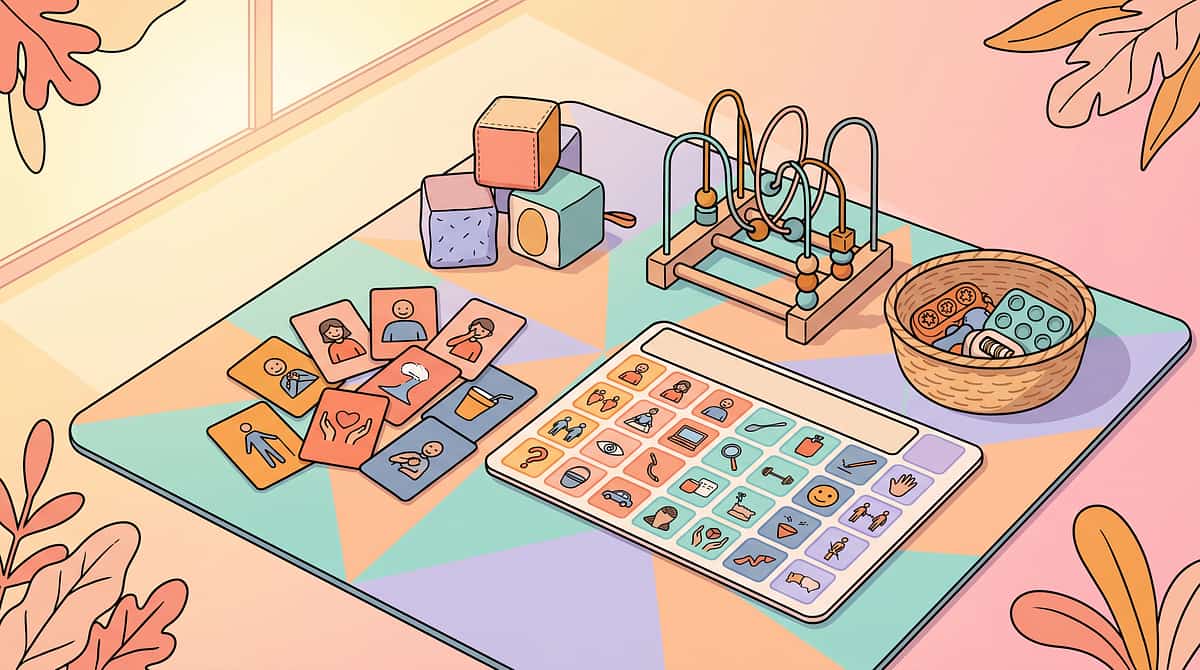
9 materials. Every one clinically mapped. Every one home-usable.
Each material below has been selected from the Pinnacle 128 Canon Materials database and validated against 687 product entries. Every item can be purchased commercially or made at home — the clinical principle is identical either way.
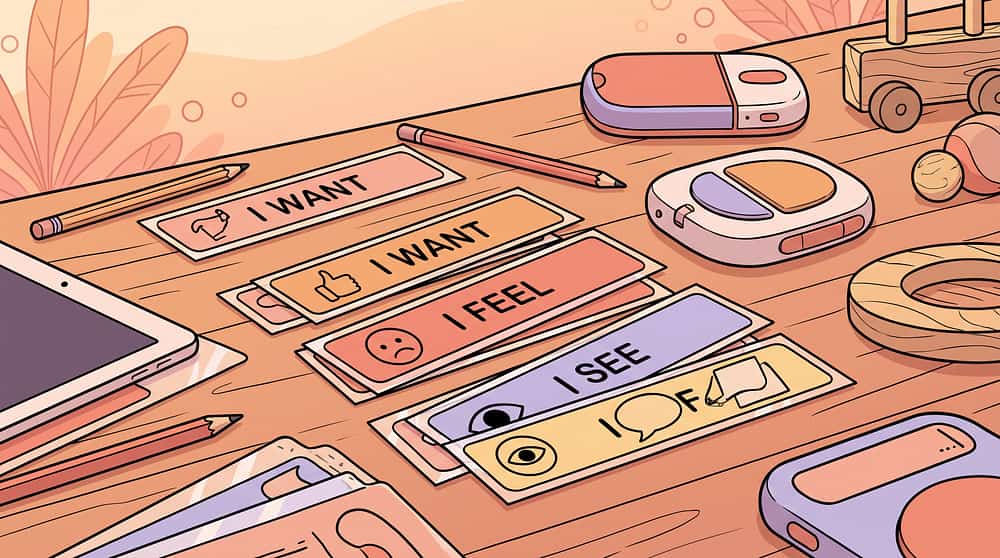
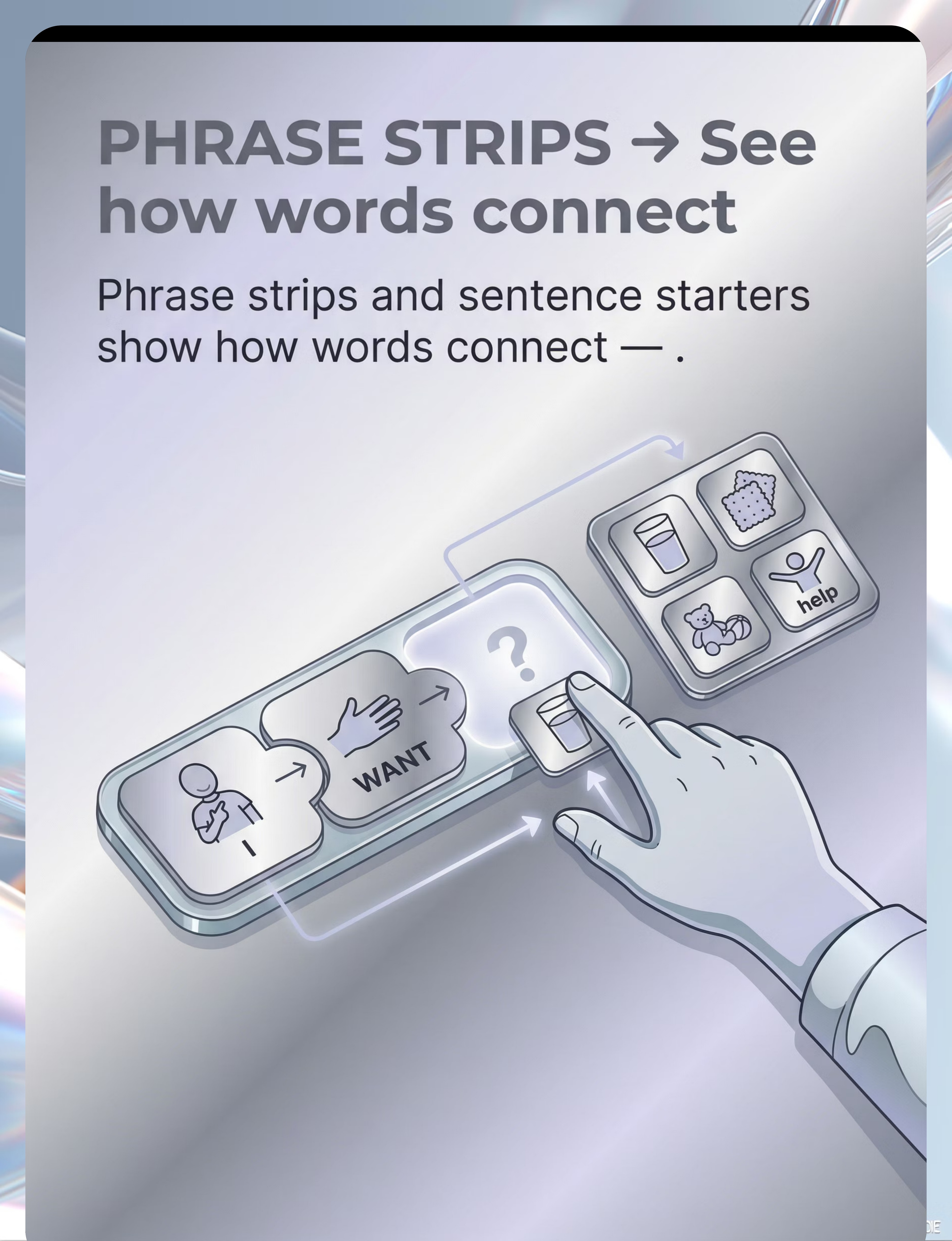
🔤 1. Core Word Phrase Strips & Sentence Starters
Laminated strips printed with sentence-starter frames: "I WANT ___" / "LET'S GO ___" / "I SEE ___" — with a blank the child fills by selecting their AAC symbol. Makes the invisible architecture of sentences visible. Pattern recognition for sentence construction begins here.
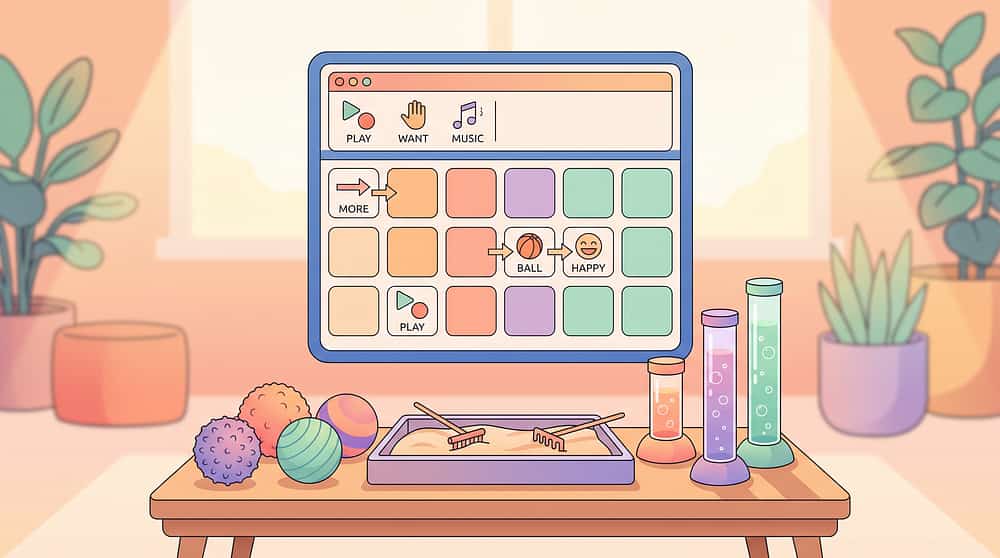
🖥️ 2. Modelling Boards with Message Windows
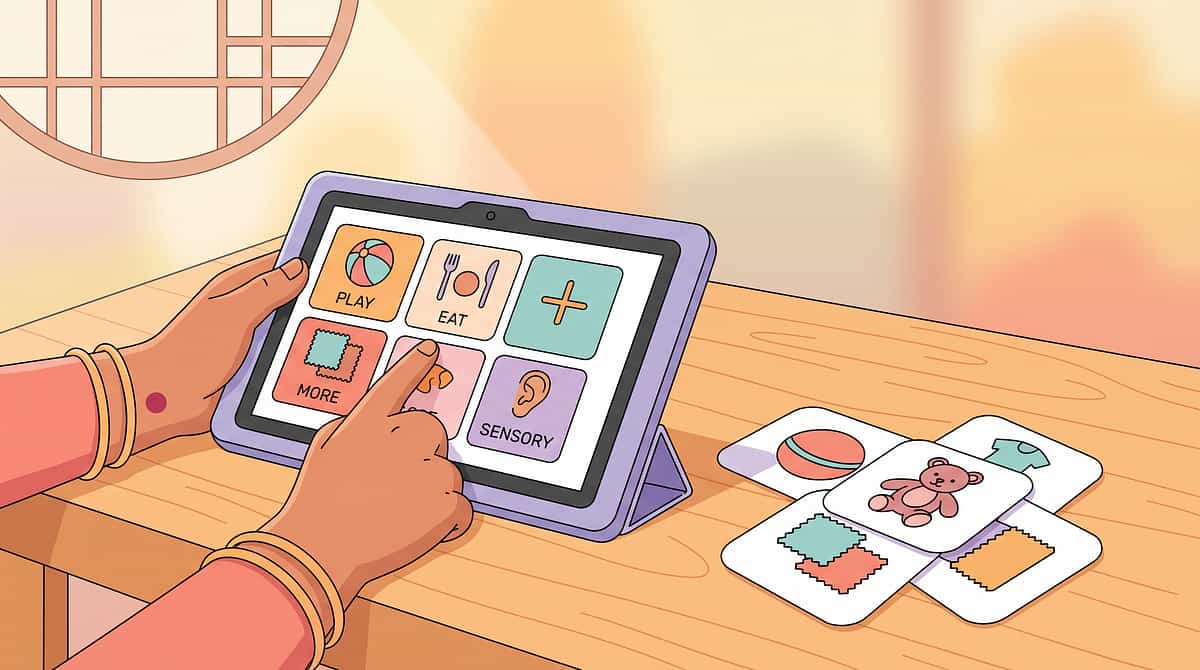
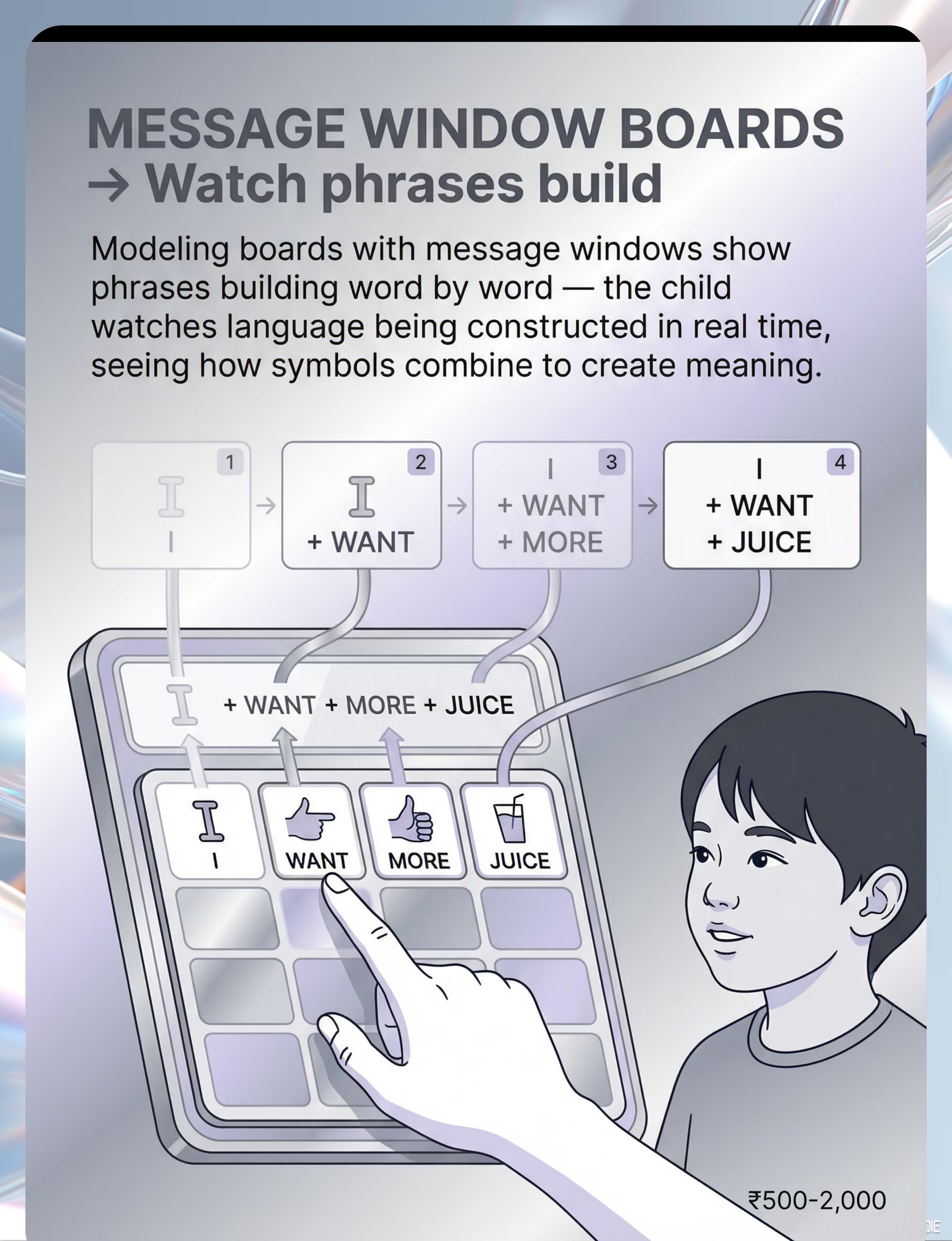
Low-tech communication board or AAC app with a prominent "message bar" that shows symbols accumulating as they are selected — child watches: I → I+WANT → I+WANT+MORE → I+WANT+MORE+JUICE. Visual accumulation teaches that words build meaning.
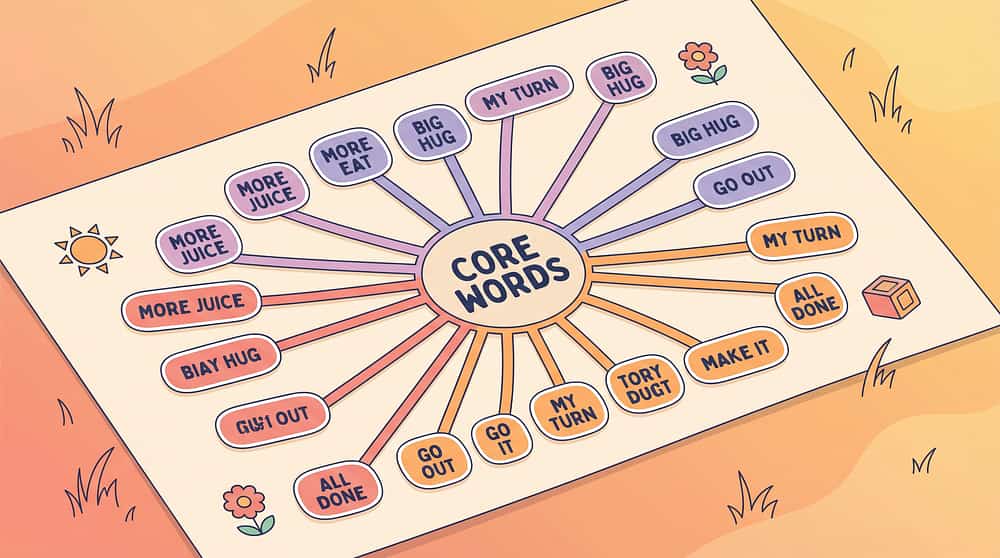
🗺️ 3. Core Word Expansion Mats
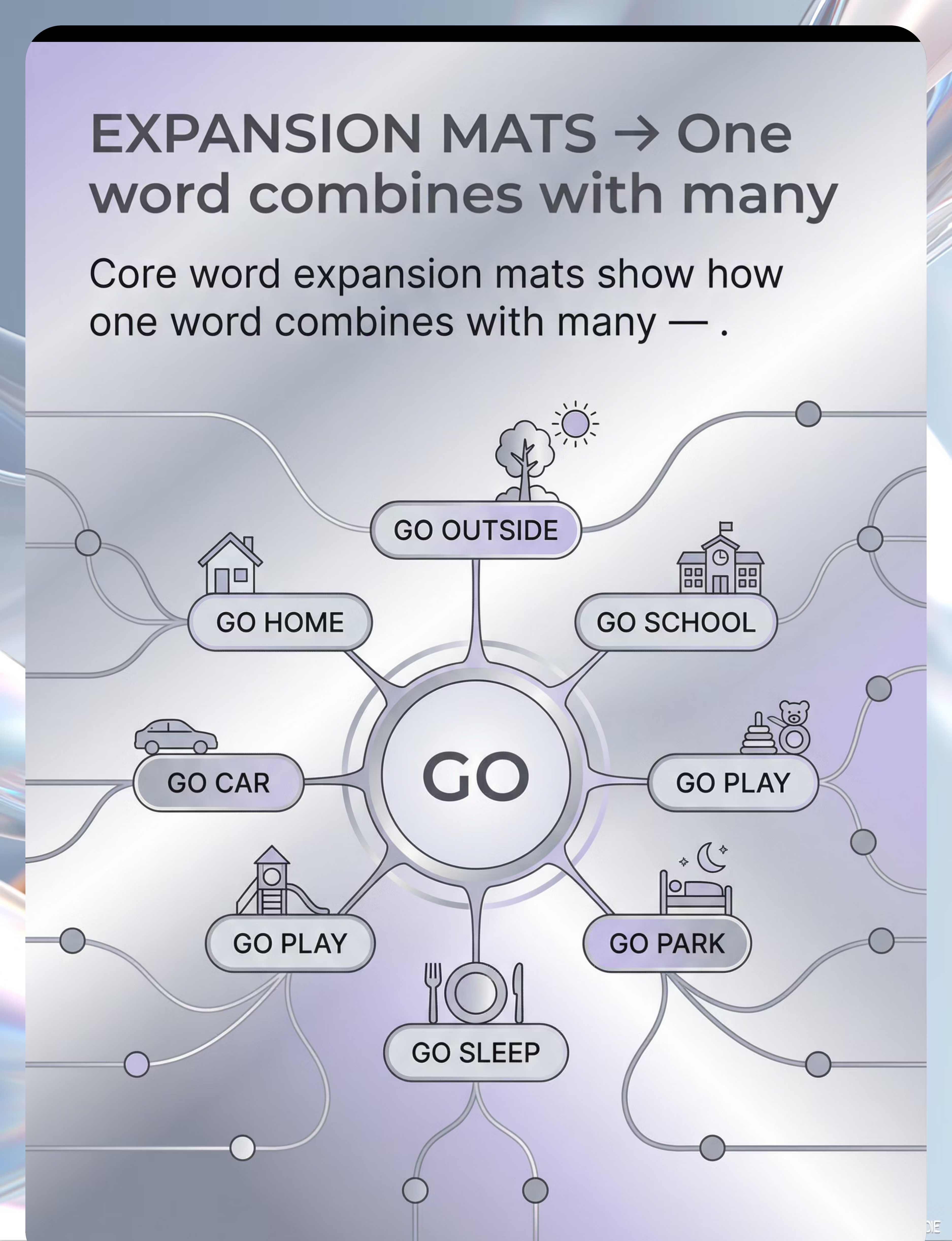
A large printed mat with one core word in the centre (GO, WANT, MORE, LIKE) and spokes radiating out to all the words it combines with: GO+OUTSIDE, GO+HOME, GO+PLAY. Teaches the generative principle — one word unlocks hundreds of messages.
Price: ₹300–1,200 | DIY:✅ A3 paper + marker + velcro picture cards | 🛒 Search core word expansion mat

Materials 4–6: Modelling, Colour & Temptation
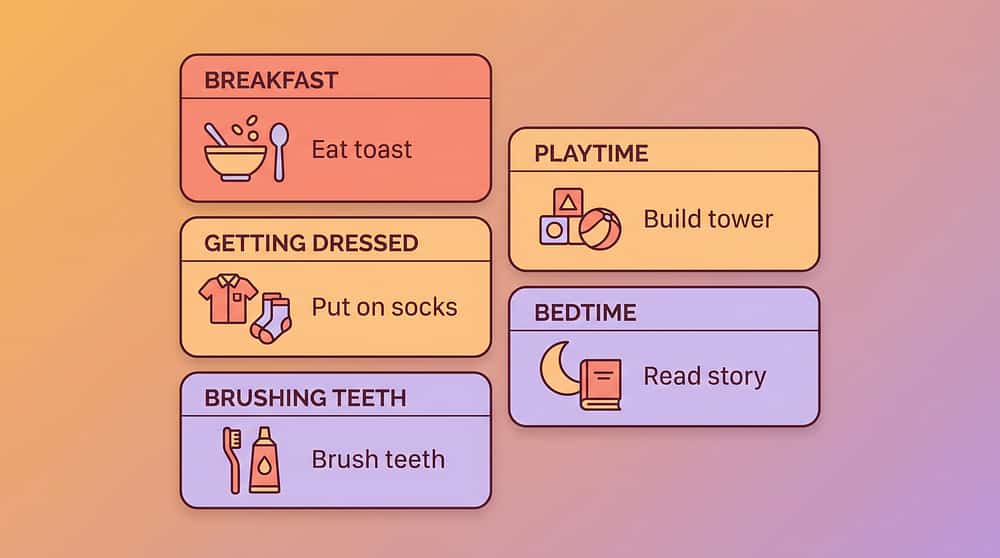
🎯 4. Aided Language Stimulation (ALS) Phrase Modelling Cards
Reference cards for communication partners listing the 20 most common phrases to model on the AAC system during daily activities — a "cheat sheet" for multiword modelling. Partner modelling is the single most important factor in phrase development. These cards ensure every adult models at the phrase level, not single words.
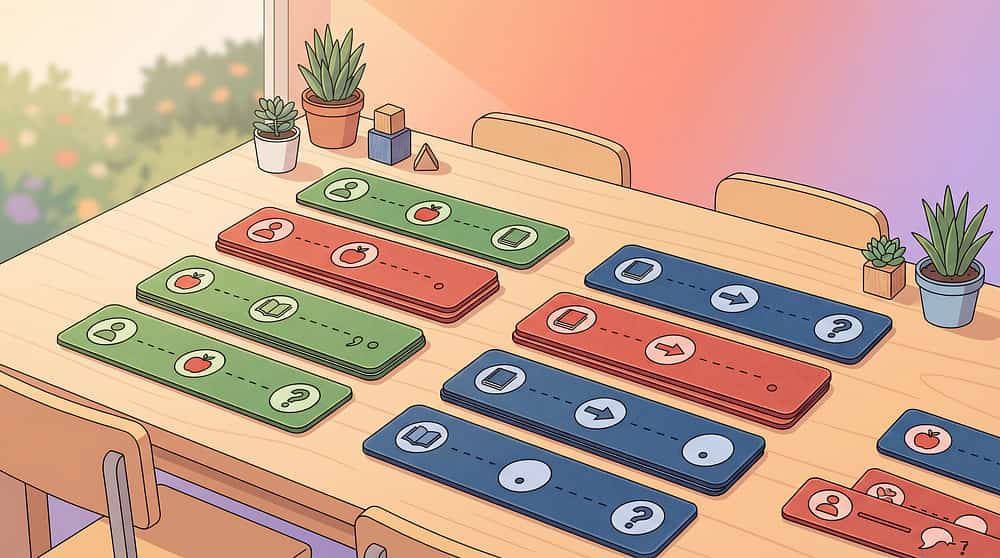
🎨 5. Colour-Coded Word Order Practice Strips
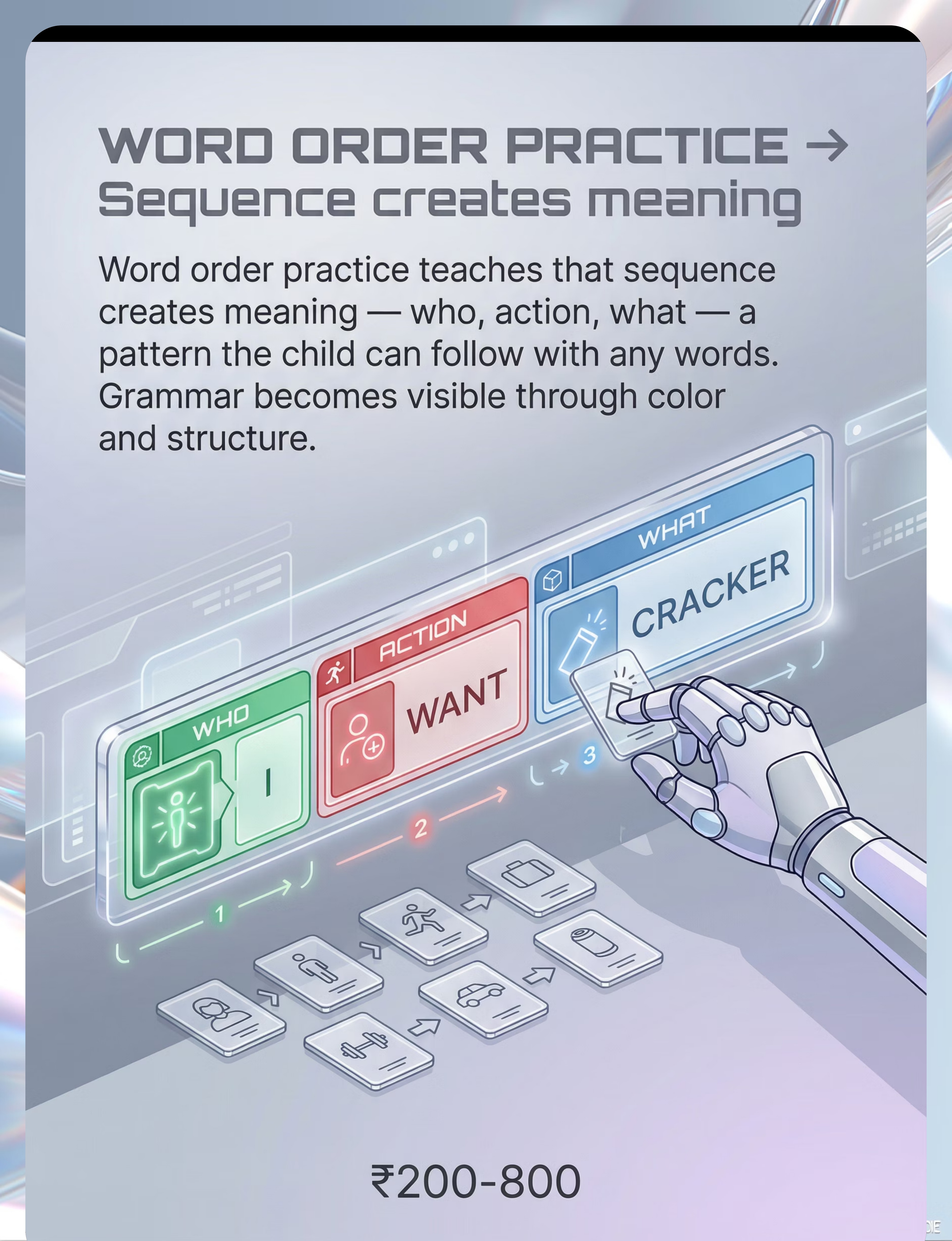
Sentence-building strips where WHO (subject) cards are green, ACTION (verb) cards are red, WHAT (object) cards are blue — making grammar visible through colour. Syntax is invisible until you make it visible. Colour coding makes the pattern of sentences tangible and teachable.
Price: ₹200–800 | DIY:✅ Colour-code existing symbol cards with stickers | 🛒 Monkey Minds Clip Card — Language Activities ₹296
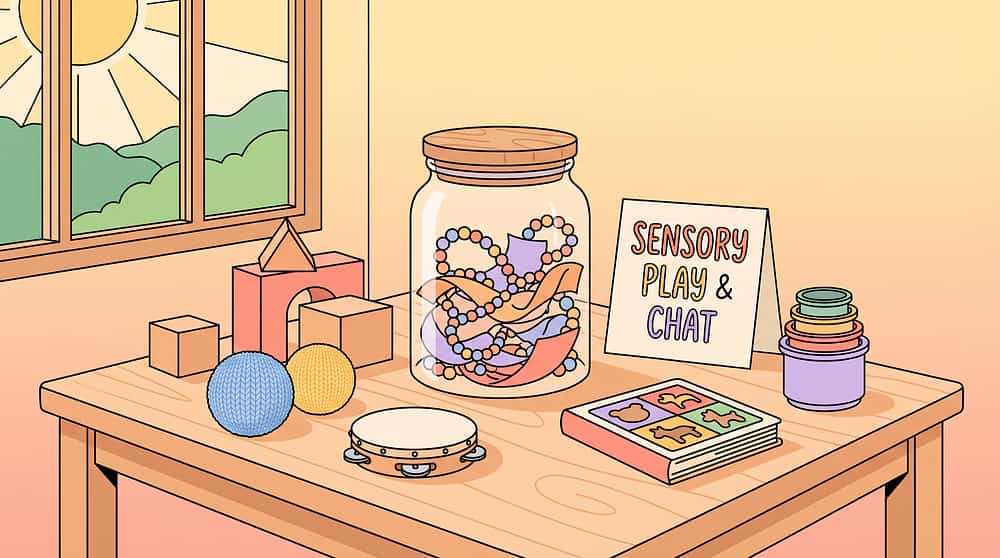
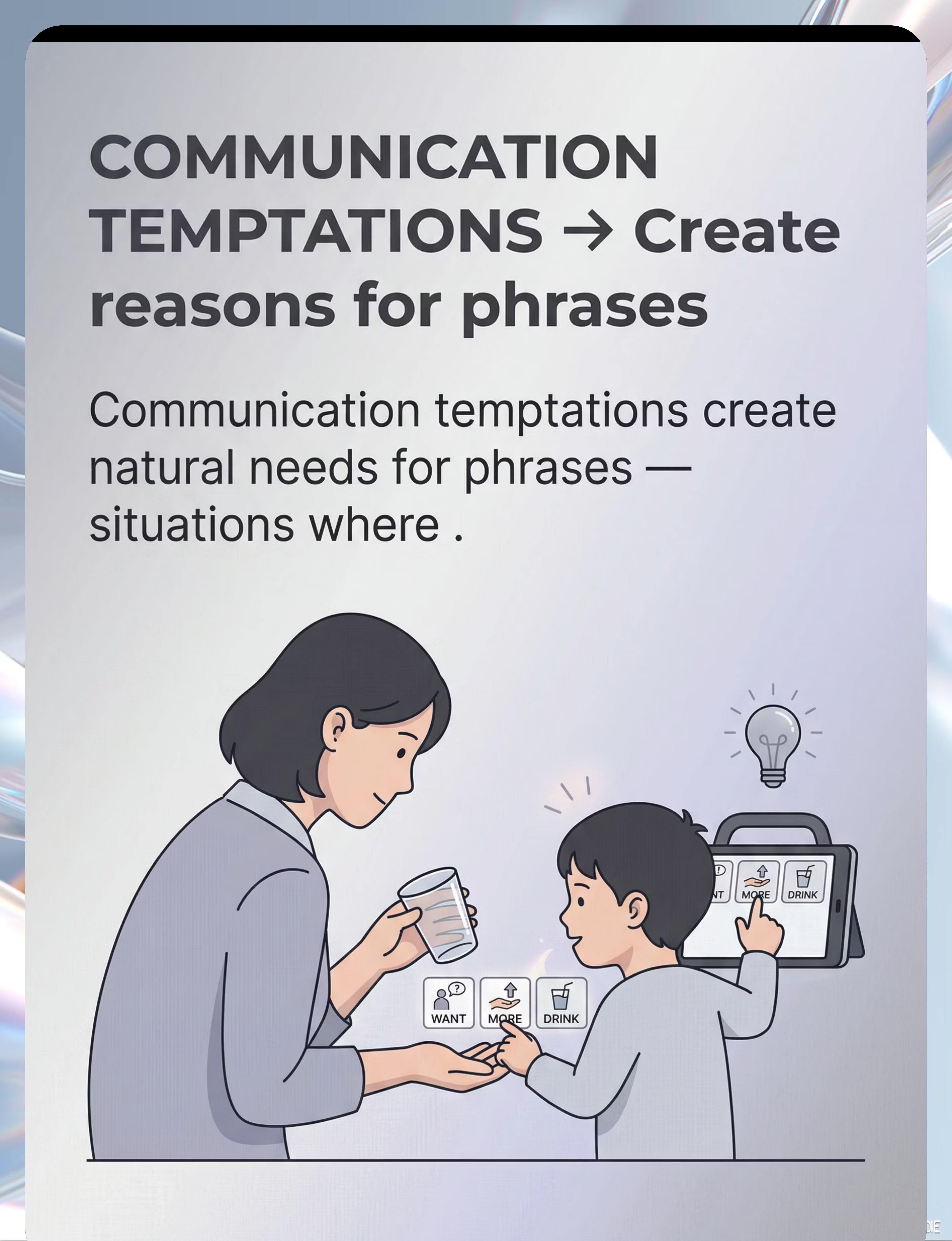
🎮 6. Communication Temptation Setup Kit
A curated set of everyday items arranged to create natural, motivating reasons for phrase-level communication: sealed containers, choice arrays, incomplete routines, items just out of reach. Children learn that phrases work when phrases get better results than single words. Temptation setups make the environment reward specificity.
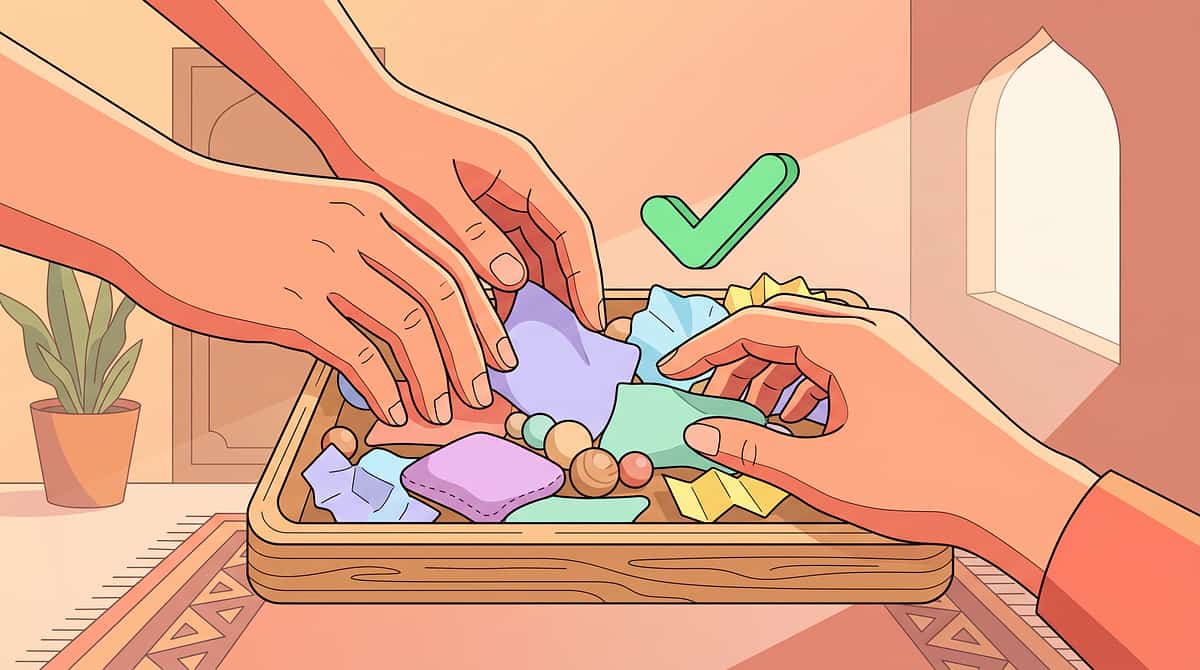
Materials 7–9: Stories, Grammar & Generative Language
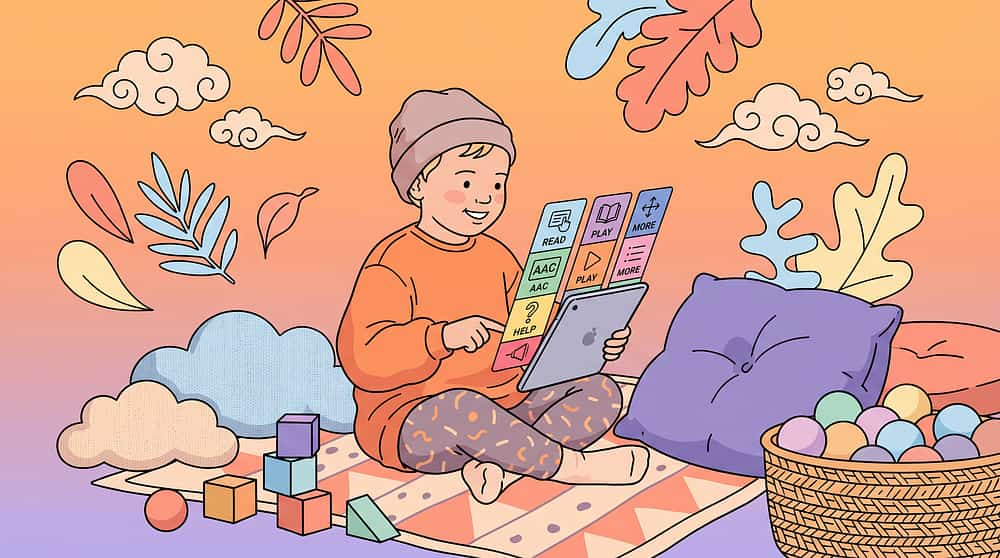
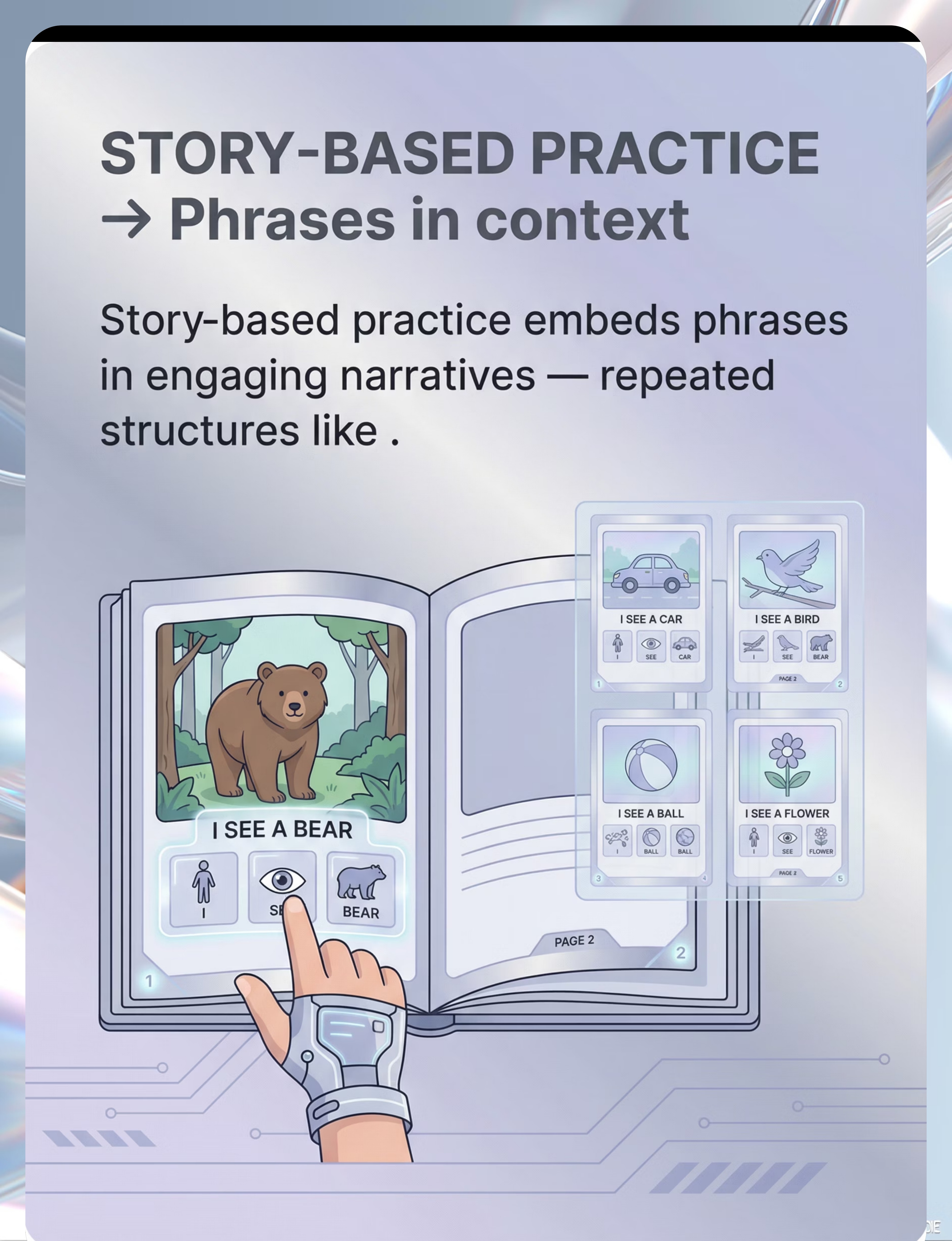
📚 7. Story-Based AAC Phrase Practice Books
Adapted books with repeated phrase structures — "I SEE A ___," "I WANT TO ___," "LET'S GO ___" — with AAC overlays so the child participates by completing each phrase using their device. Stories provide context and repetition simultaneously. The narrative creates motivation; the repeated structure builds pattern recognition. Every page turn is a phrase opportunity.
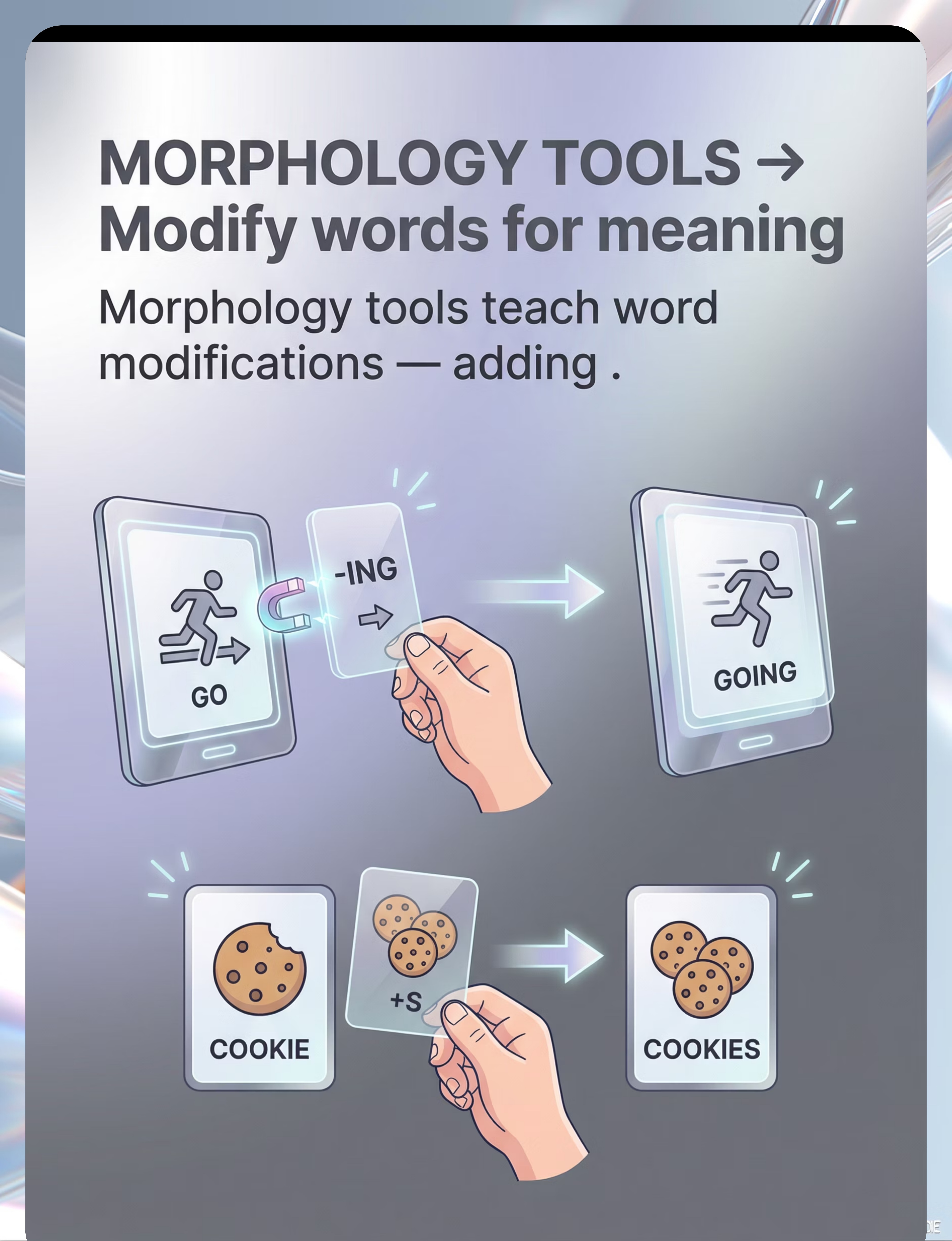
🔧 8. Morphology & Grammar Modification Tools
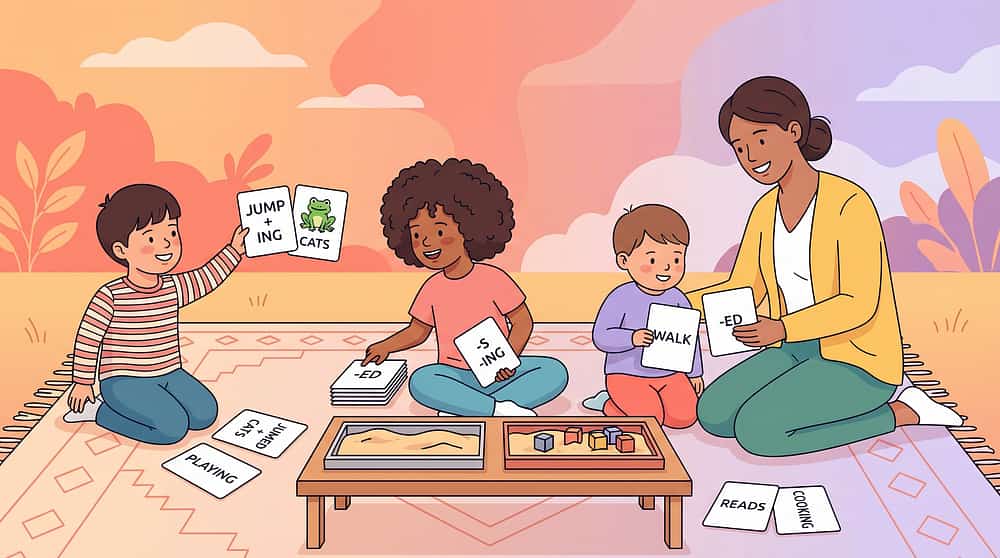
Add-on symbol cards for word endings: -ING, -ED, -S/ES, plus pronoun sets (I/YOU/HE/SHE/WE). Grammar isn't only word order — it's word modification. COOKIE becomes COOKIES. GO becomes GOING. These small changes carry enormous meaning and move children toward fully grammatical language.
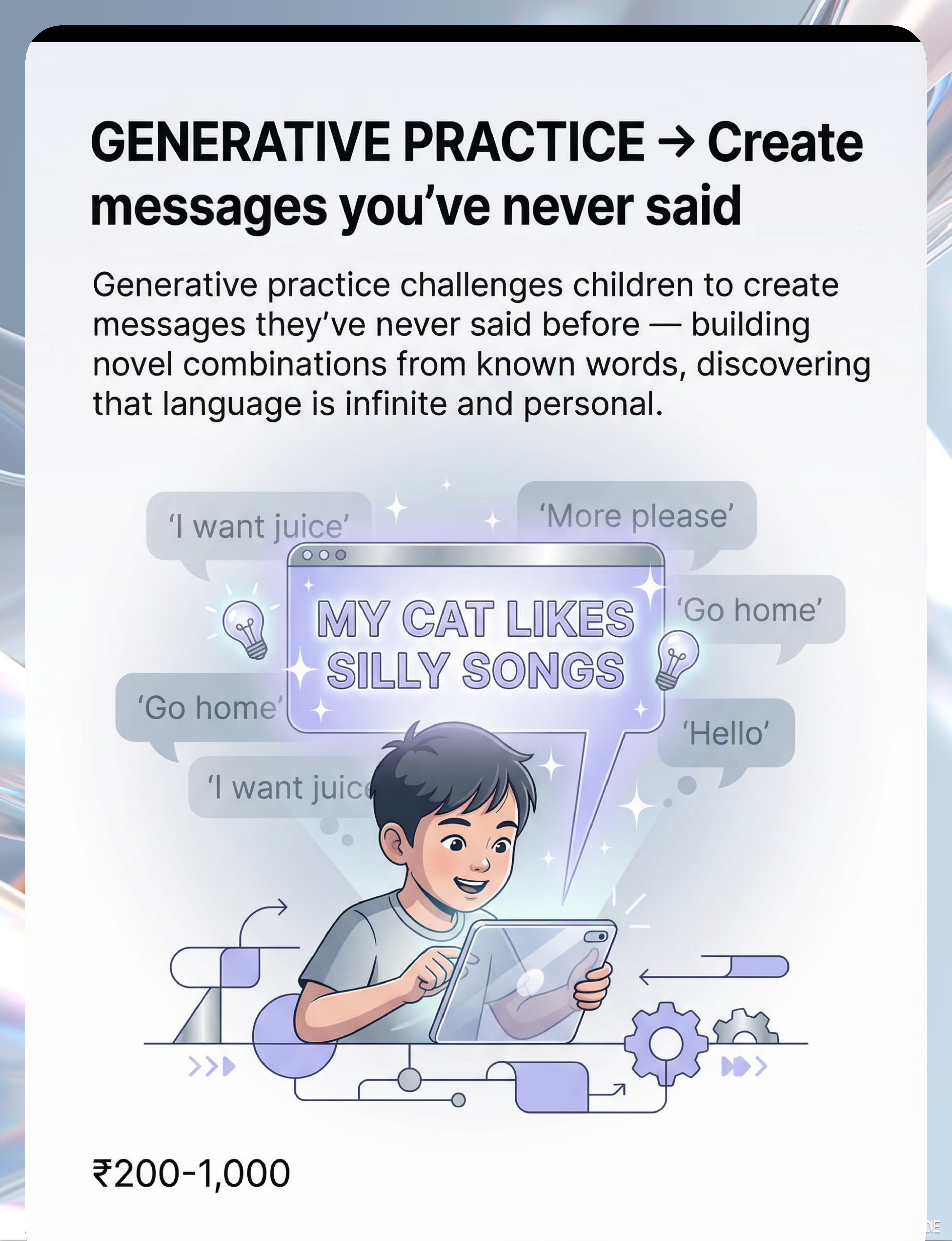
🚀 9. Generative Language Practice Activities
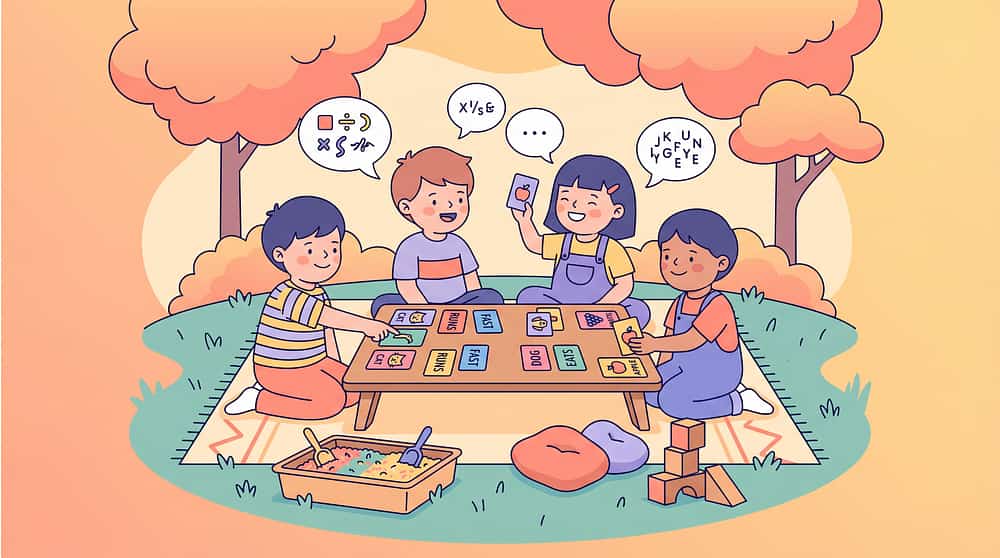
Games and activities that challenge children to construct novel messages they've never said before — using vocabulary they already know in new combinations: description games, silly sentence builders, "tell me something new" challenges. The ultimate goal is generative language — the ability to say anything with known parts.
Price: ₹200–1,000 | DIY:✅ Entirely free (use conversation prompts) | 🛒 Dyomnizy Educational Memory Game ₹519
🎁 Reinforce every phrase attempt:
The Rosette Imprint Reward Jar ₹589(Pinnacle Canon: Reinforcement Menus)
1800+ Reward Stickers ₹364(Pinnacle Canon: Reinforcement Menus)
The Rosette Imprint Reward Jar ₹589(Pinnacle Canon: Reinforcement Menus)
1800+ Reward Stickers ₹364(Pinnacle Canon: Reinforcement Menus)
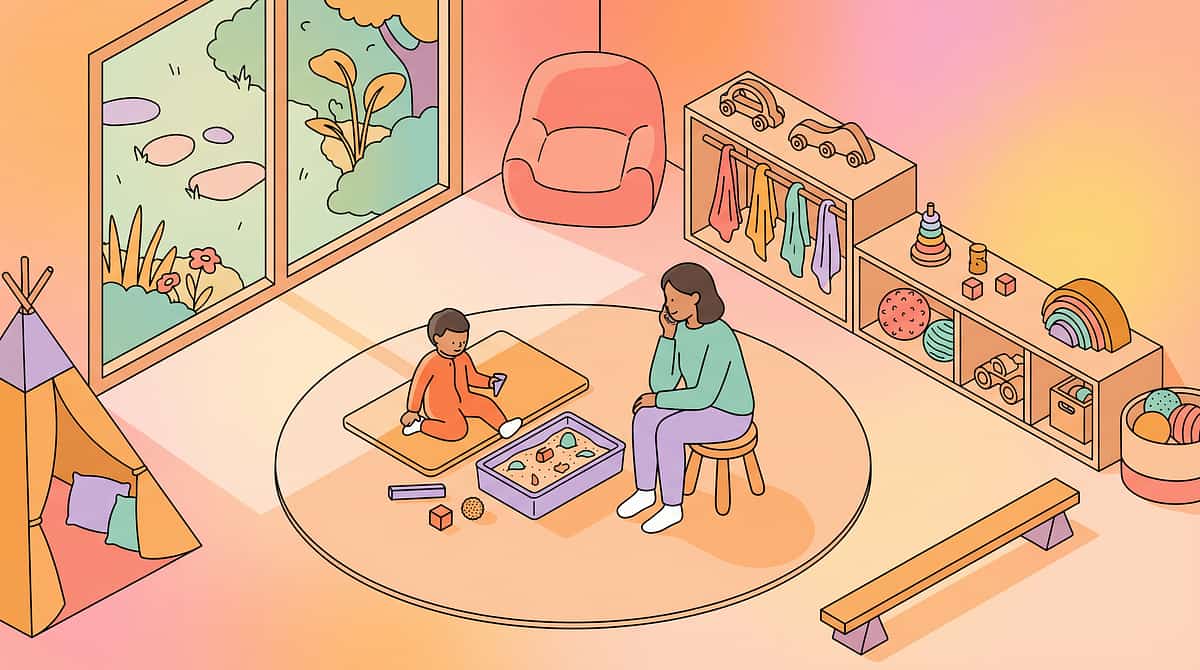
Every family can start today. ₹0 is a complete toolkit.
WHO Nurturing Care Framework (2018): Context-specific, equity-focused interventions are a core principle. No child should be excluded from evidence-based intervention because of economic access.
Commercial Option | DIY / Free Alternative | Why It Works the Same | |
AAC app with message window (₹0–₹2,000/yr) | Printed cardboard board with velcro symbol cards + message strip at top | Same visual accumulation principle — the strip fills word-by-word. Motor principle identical. | |
Printed core word expansion mats (₹300–1,200) | A3 paper + marker + drawn spokes + Post-it notes as combination words | Same generative visual principle. Cost: ₹5. | |
Colour-coded sentence strip sets (₹200–800) | White cardstock cards + coloured stickers (green/red/blue) for WHO/ACTION/WHAT | Colour-coding principle fully replicated. Cost: ₹10. | |
Adapted story books with AAC overlays (₹300–1,500) | Favourite storybook + hand-drawn AAC symbol cards placed at key phrases on sticky notes | Same repetitive phrase-practice principle. Cost: ₹0. | |
Communication temptation kit (₹0–500) | Any sealed container, a cup with tiny amount of juice, a toy in a zip-lock bag | These are household items deliberately arranged. Zero cost. Maximum motivation. | |
Morphology add-on cards (₹300–1,500) | Index cards handwritten with -ING, -ED, -S plus common pronouns | Morphology is language structure, not packaging. Handwritten works. |
🏠 Complete Zero-Cost Setup:
- Cardboard message board (shoebox lid + velcro strips): ₹0
- Printed picture-symbol cards (free from Arasaac.org): ₹0
- Core word expansion mat on A3 paper: ₹5
- Household communication temptations: ₹0
- Partner modelling (your own voice + device/board): ₹0
Total: ₹5 maximum. Full clinical principle. Full outcome potential.
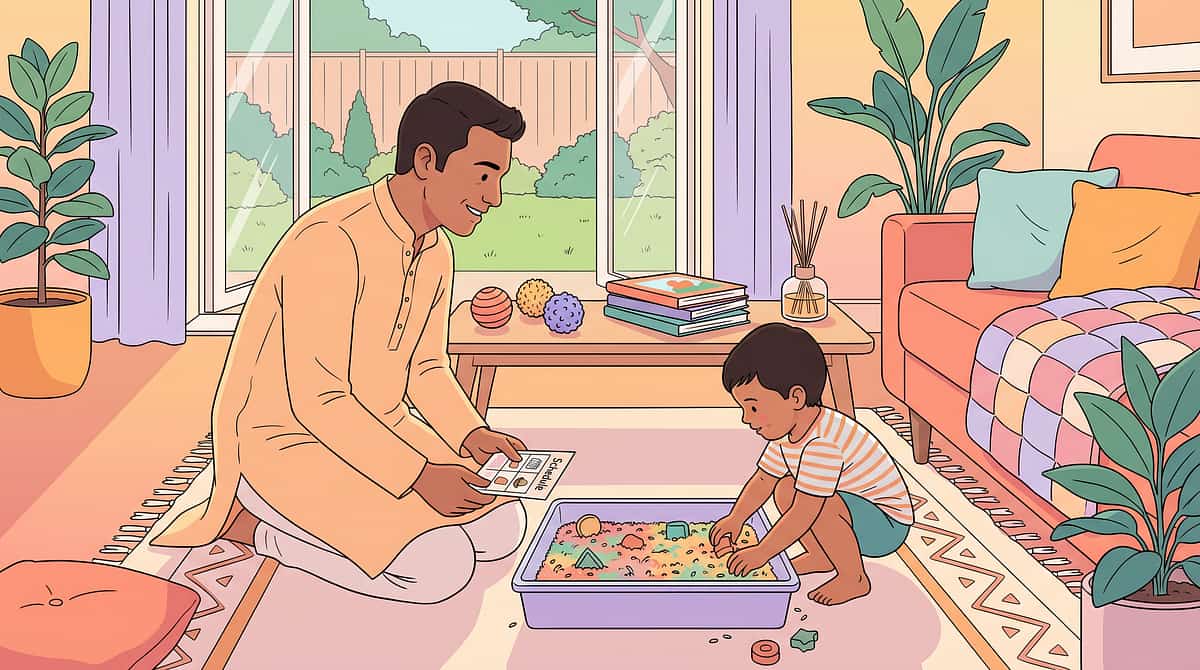
Safety First: Before You Begin
Before every session. Non-negotiable.
🟢 GREEN: Safe to Proceed
- Child is calm, rested, and fed
- Child is in a regulated state (not dysregulated from a previous transition)
- AAC device/board is accessible, charged, and within easy reach
- Communication partner is settled and not rushed
- Environment is reasonably quiet
🟡 AMBER: Modify First
- Child is mildly tired → shorten session, start with highest-motivation activity
- Child had a difficult morning → begin with comfort/reinforcement before phrase work
- Child is showing mild restlessness → embed phrase practice in movement
- Device battery low → use low-tech backup board
🔴 RED: Do Not Proceed
- Child is in active meltdown or severe distress
- Child has recently experienced a significant sensory event
- Child shows signs of illness, pain, or significant fatigue
- Communication partner is stressed, angry, or time-pressured
🛑STOP IMMEDIATELY IF: Child's distress escalates to self-injury, property destruction, or complete shutdown. Respond to the child's emotional need first. Session data: "Not conducted — child dysregulated." This is not failure. This is data.
All symbol cards and boards: no choking hazard concerns (ensure lamination edges are smooth for young children). AAC sessions are purposeful communication, not passive viewing. Never physically prompt the AAC device toward the child's hand without SLP guidance.

Set Up Your Space
Spatial precision prevents 80% of session failures.
The environment in which you practise is not incidental — it is part of the intervention. Each element of your setup either supports or undermines the child's ability to engage with phrase-building.
Position 1 — Parent
Seated directly across or at 90-degree angle to child. Your own modelling board or AAC app is open and ready. You will model on YOUR device while the child has theirs.
Position 2 — AAC Board/Device
At the child's eye level. Screen not reflecting glare. Angle allows both child AND parent to see the screen simultaneously.
Position 3 — Expansion Mats
Flat on table or mounted at eye level on wall. Visible throughout session — not tucked away.
Position 4 — Reinforcement
Visible to the child (motivating) but requiring communication to access (not grabbable).
Position 5 — Phrase Strips
Posted on wall at child's eye level. Environmental reminders of sentence patterns throughout the day, not just during formal sessions.
💡 Lighting
Natural or warm — not harsh overhead
🔊 Sound
Quiet background maximum. Turn off TV.
🌡️ Temperature
Comfortable — thermal discomfort reduces engagement
⏱️ Duration
Visual timer visible to child (15–20 minutes max initially)

ACT III: THE EXECUTION
Is Your Child Ready? Readiness Check
60 seconds of assessment. Hours of effective therapy.
Before every session, a brief readiness check protects both your child's wellbeing and your therapeutic investment. A session started in the wrong state produces zero learning and erodes your child's willingness to engage in future sessions.
Check | ✅ Green | 🟡 Amber | 🔴 Red | |
Alertness | Alert, making eye contact | Drowsy but responsive | Completely checked out | |
Emotional state | Calm, content | Mild frustration, manageable | Active distress/meltdown | |
Hunger/thirst | Fed within last 2 hours | Slightly hungry | Very hungry/thirsty | |
Device access | Knows how to navigate to core words | Needs occasional support | Device feels foreign today | |
Last meltdown | >2 hours ago | 30–120 min ago | <30 minutes ago | |
Motivation | Shows interest in preferred activity | Neutral/uninterested | Actively avoiding | |
Partner state | Calm, unhurried | Slightly stressed but managing | Rushed, anxious, distracted |
✅ 5+ GREEN
PROCEED with full protocol (Steps 1–6)
🟡 3–4 GREEN
MODIFY: begin with highest-motivation communication temptation only
🔴 <3 GREEN
POSTPONE: offer 10-min calming activity, reassess. Bubbles, song, or walk — every interaction is language.
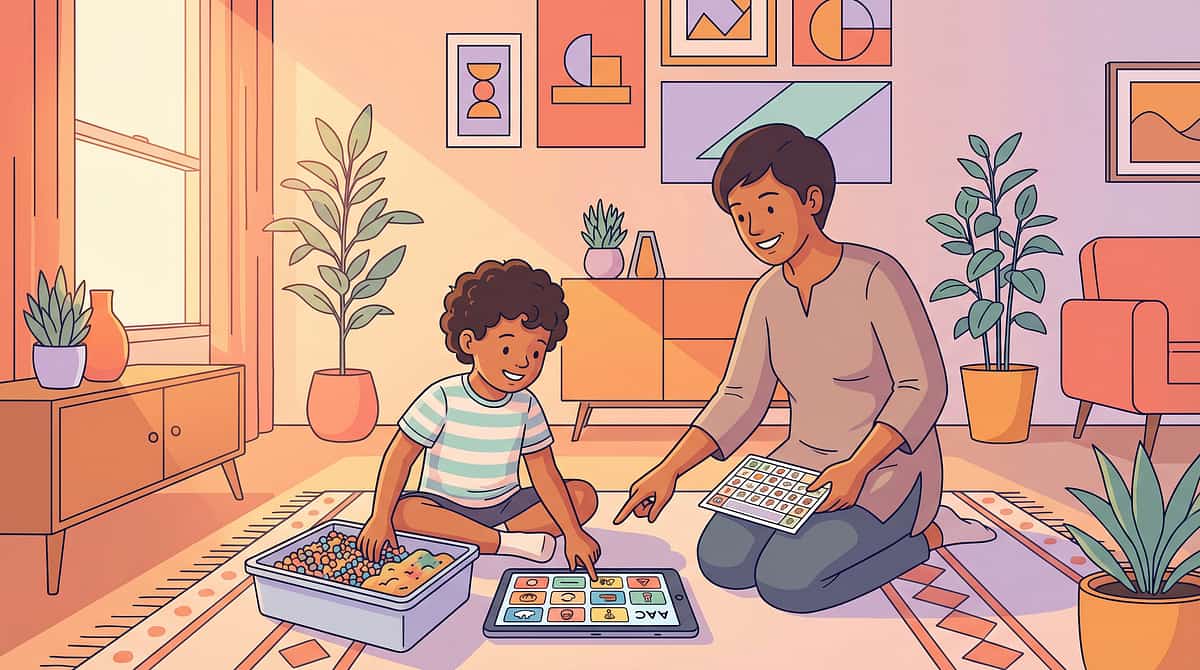
Step 1 of 6
STEP 1: The Invitation
Timing: 30–60 seconds
"Let's play a word game. I'm going to show you something cool — watch my words."
Or for higher-motivation entry:
"[Child's name], I have your [favourite item] — but I need your help first. Show me with your words."
Body Language Guidance
- Get to the child's physical level (sit on the floor if they are)
- Hold the modelling board/device where BOTH of you can see it
- Your energy: calm, curious, inviting — not performative excitement
- Offer the device without putting it in their hands — let them reach for it
Acceptance Cues — Watch For These:
- ✅ Child looks at device or board
- ✅ Child reaches for device
- ✅ Child's body orientation shifts toward you
- ✅ Child stops current activity and waits
Resistance Cues — And What To Do:
- 🟡 Child looks away → wait 10 seconds, re-offer
- 🟡 Child moves away → follow slowly, offer at new location
- 🔴 Child pushes device away → accept, say "OK, not now," wait 5 minutes, try again
This is an invitation, not a command. The child choosing to engage is itself the first communicative act. Honour it.
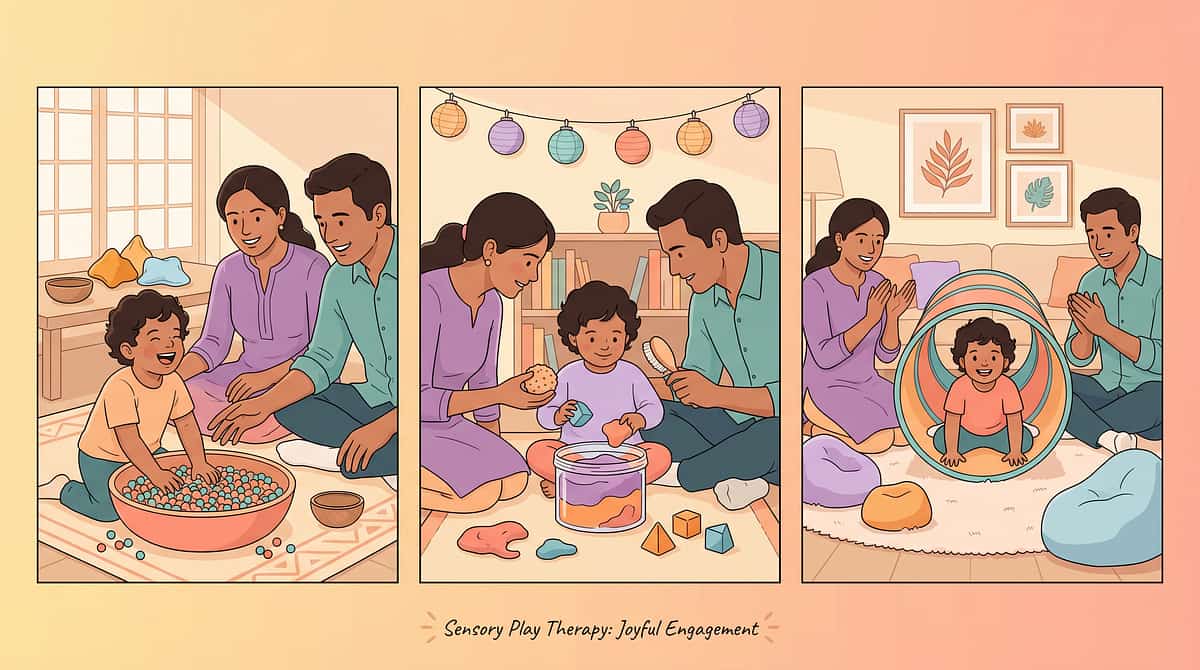
Step 2 of 6
STEP 2: The Engagement
Timing: 1–3 minutes
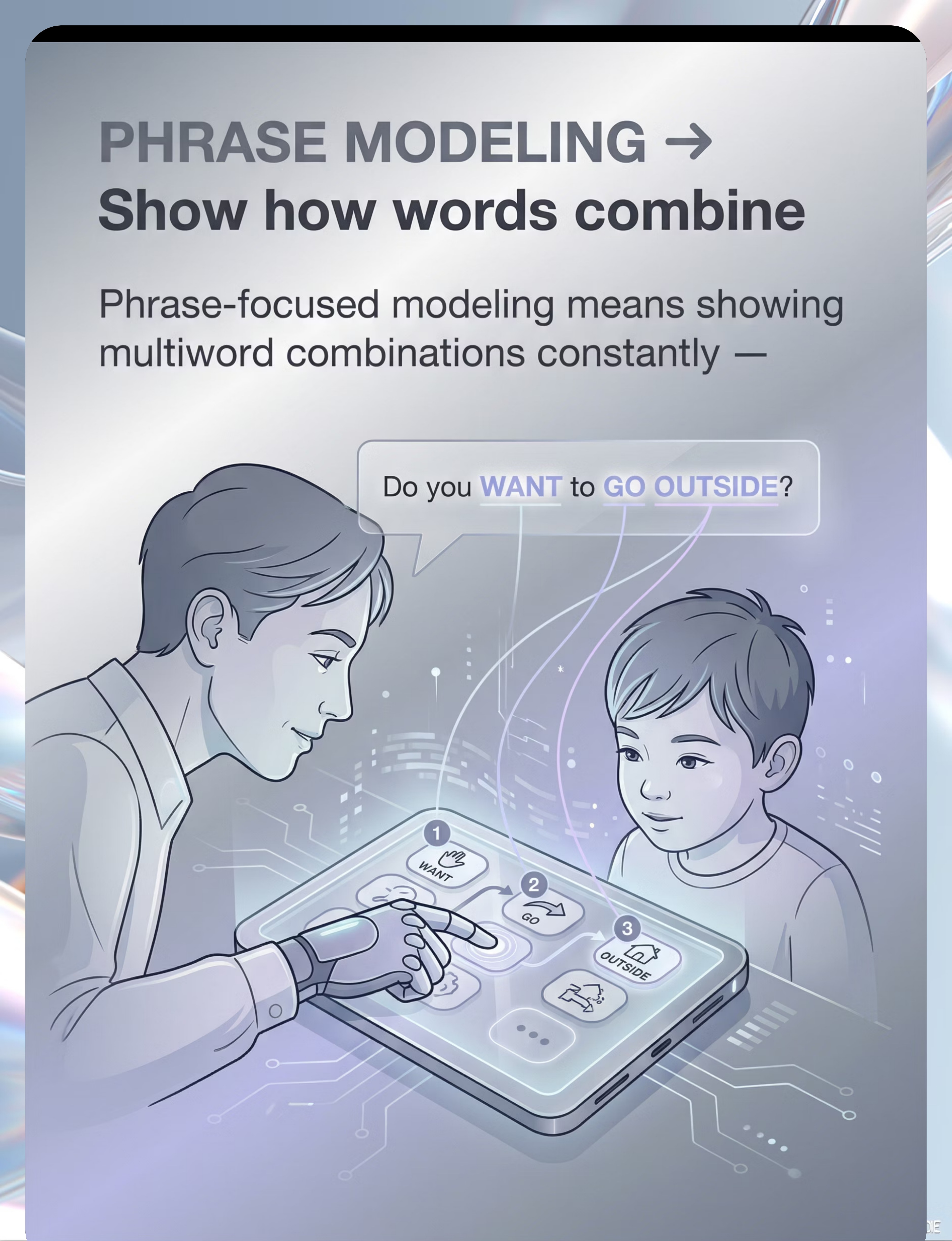
"Watch — I want juice." [Touch WANT on your device. Pause. Touch JUICE. Look at child expectantly.] "I. Want. Juice. Two words."
Or using the expansion mat:
"Look — the word GO can go with SO many words. GO + OUTSIDE. GO + HOME. GO + PLAY." [Point to each combination on the mat slowly, one at a time]
Material Introduction Guidance
- Present materials at normal, unhurried speed
- Position the expansion mat or phrase strip so the child can see it without turning their head
- Your AAC modelling board/device should be in use — YOU are modelling, not just pointing
- Allow 3–5 seconds of child observation before expecting any response
Engagement ✅ | Tolerance 🟡 | Avoidance 🔴 | |
Child watches your modelling | Child glances at device | Child turns away consistently | |
Child touches their device | Child fidgets but stays | Child attempts to leave | |
Child vocalises or points | Child passively observes | Child shows distress cues |
When child makes ANY communicative attempt (single word, look toward device, reaching): immediate verbal praise: "YES! You're talking with your words!"

Step 3 of 6
STEP 3: The Therapeutic Action
Timing: 5–10 minutes | Core of the session
Model. Wait. Respond. Expand.
1
🔷 MODEL (Adult Action)
Every time you speak to your child, touch 2–3 symbols that match your words on YOUR modelling board or device. Speaking: "Do you want more juice?" → touch: WANT + MORE + DRINK. Do not rush. Each symbol gets a deliberate, visible touch.
2
⏸️ WAIT (The Expectant Pause)
After your model, wait 5–10 seconds. Look at the child's device expectantly. Say nothing. This silence is not awkward — it is therapeutic space. The child's brain is processing the sequence it just observed.
3
📢 RESPOND (To Whatever They Produce)
One symbol → celebrate, respond genuinely, THEN model the expanded version. Two symbols → celebrate immediately, respond specifically. Zero symbols → model yourself and provide naturally. Do not withhold.
4
📈 EXPAND (Always Model Up)
Whatever the child produces — whether 0 words or 2 words — your response always includes a modelled expansion at one level above. Single word → model 2-word. 2-word → model 3-word. You are always showing the next step.
❌ Common Error | ✅ Correction | |
Modelling only single words | Every time you speak, touch 2–3 symbols. Practise until automatic. | |
Responding instantly to single word | Brief expectant pause first — show that more is possible | |
Physically guiding child's hands | Never. Model on YOUR device. Their hands are theirs. | |
Drilling outside real communication | Phrase practice must serve genuine communication needs | |
Expecting immediate phrase production | Modelling must occur hundreds of times before production emerges |
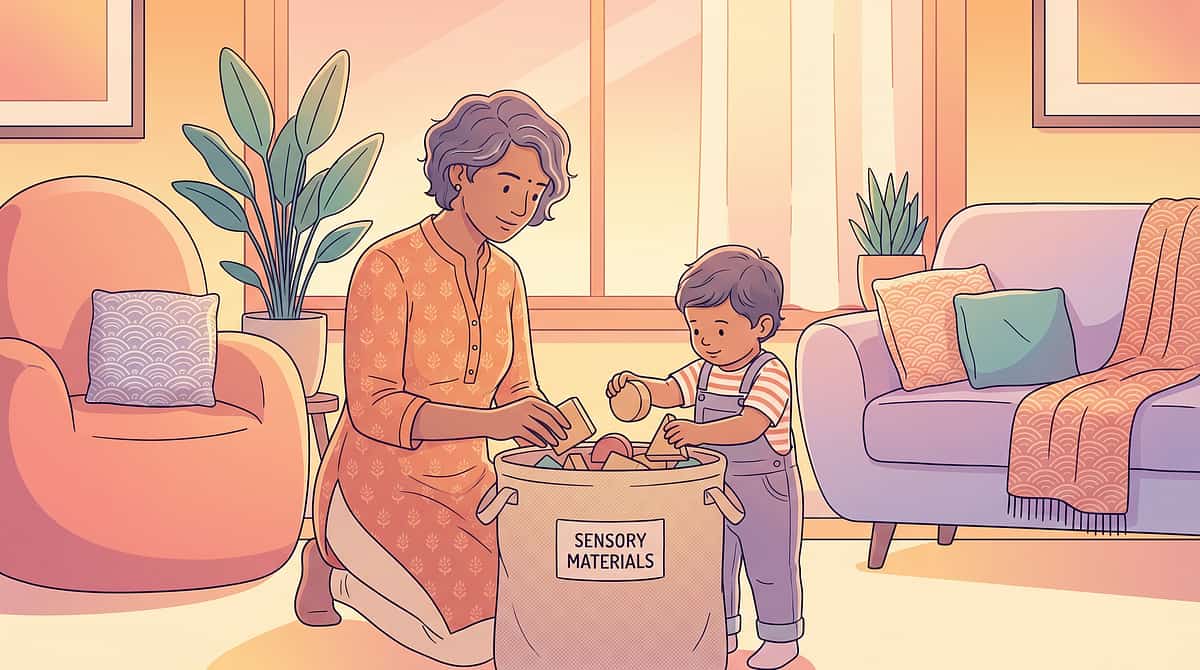
Step 4 of 6
STEP 4: Repeat & Vary
Timing: 3–5 minutes | Therapeutic dosage
3 engaged, genuine communicative exchanges > 10 forced, rote repetitions.
Target 5–10 natural phrase-modelling moments per session. Each "natural moment" = a real communication exchange where you model AND the child has the opportunity to respond. Do NOT count: you modelling with no child engagement, or you modelling while child is looking away.
▶ Vary the Core Word
Monday: WANT combinations | Tuesday: GO combinations | Wednesday: MORE combinations | Thursday: LIKE combinations | Friday: free-choice combination. Same principle, different vocabulary.
▶ Vary the Context
Kitchen: want + food item | Bathroom: need + help + action | Bedroom: go + sleep | Living room: watch + show | Garden: go + outside + play. Same principle, different setting.
▶ Vary the Format
Expansion mat activity → communication temptation → story-based practice → generative game. Rotating format maintains motivation without losing the phrase-building principle.
▶ Vary the Partner
Parent models Monday/Wednesday → Grandparent (briefed) models Tuesday → Older sibling (briefed) models Thursday → Teacher (IEP aligned) models at school. Generalisation is built into the protocol.
Satiation indicators — when you see 2+ of these, move to cool-down:
- 🚦 Child stops initiating any communication attempts
- 🚦 Child's gaze drifts and doesn't return when re-engaged
- 🚦 Child shows increased motor restlessness
- 🚦 Child's symbol selections become random/perseverative
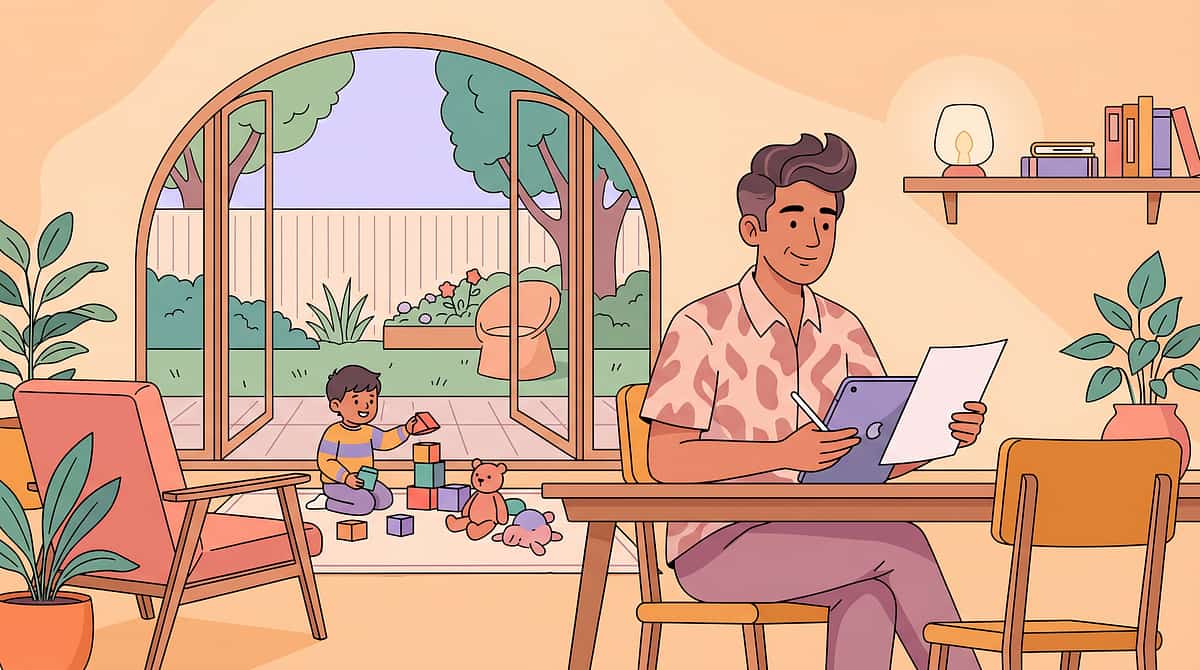
Step 5 of 6
STEP 5: Reinforce & Celebrate
Timing: Continuous throughout session | Key moments: within 3 seconds of phrase attempt
For a 2-symbol combination:
"WANT JUICE — YES! You told me exactly what you want! Here it is. WANT JUICE — brilliant words!"
For a 1-symbol + pause (emerging combination):
"WANT — and then you waited! I saw you think about the next word. That thinking is so important. WANT — JUICE. You almost had it. You'll get it."
For watching/absorbing (no output):
"You're watching so carefully. That means your brain is learning. You don't have to say it yet — I can see you're listening."
⚡ Within 3 seconds
Of the communicative attempt
🎯 Specific
Name what they did: "You combined two words!"
🔗 Natural
The phrase produced the result — that IS the reinforcer
❤️ Matched
Physical or social reinforcement matched to child's preference
Reinforcement Menu — Canon Products
- Reward Sticker Book (₹364): Each 2-word combination earns a sticker. Visual, accumulating, motivating.
- Reward Jar (₹589): Token economy — each phrase attempt adds a token toward a preferred item.
- Natural reinforcer: The phrase that produced the result IS the reinforcer. "Want juice" → received juice → motivation to combine again.
Key Principle
Celebrate the attempt, not just the success. Every communicative reach toward phrase-level language deserves genuine, specific acknowledgment — even if the production was incomplete.

Step 6 of 6
STEP 6: The Cool-Down
Timing: 2–3 minutes | Non-negotiable ending ritual
1
2 Minutes Before
"Two more times with your words, then we're all done. Two more." [Show two fingers. Point to visual timer.]
2
1 Minute Before
"One more — your best words. What do you want to do next?" [Offer choice using AAC — becomes a natural final phrase practice: GO + PLAY, or WATCH + SHOW]
3
Material Put-Away Ritual
Child participation in putting away materials is a transition signal, a motor planning opportunity, and a communication opportunity ("Where does it go? In the BOX? On the SHELF?")
4
Transition to Next Activity
Use a transition object or visual schedule showing "WORDS TIME → [NEXT ACTIVITY]." Animal Soft Toys ₹425 serve as gentle comfort transitions.
If child resists ending:"I know you want more. More later. First [next activity], then [preferred]. I promise." [Model this on your device: MORE + LATER] This itself becomes a phrase model. The cool-down is part of the session.
Capture the Data: Right Now
60 seconds of data now saves hours of guessing later.
Data collection does not require complex tools or specialist knowledge. Three fields, captured within 60 seconds of every session, create the evidence base your child's therapy team needs to make informed decisions — and give you the concrete proof of progress that sustains your motivation through the harder weeks.
Field | What to record | Example | |
1. Best combination today | The highest-level message produced (in symbols) | "WANT + JUICE" or "GO + OUTSIDE + PLAY" | |
2. Spontaneous attempts | How many times child initiated multiword without prompting | "3 spontaneous, 4 with expectant wait" | |
3. Engagement level | 1–5 scale (1=refused, 3=tolerated, 5=driven) | "4 — engaged most of session, one brief avoidance" |
📲 Log Session in GPT-OS®
📥 Download Tracking Sheet
unknown link — 8-week format, print and post
"The pattern in your data tells the story. One session tells you nothing. Eight weeks of data tells you everything: where the combinations are emerging, which contexts produce the most phrases, which partners produce the best results."

What If It Didn't Go As Planned?
Session abandonment is not failure. It's data.
Every experienced AAC therapist will tell you: sessions that don't go as planned are some of the most informative. They reveal what to adjust. Below are the most common challenges parents encounter in the first six weeks — and exactly what to do about each one.
▼ "My child wouldn't touch the device at all."
Why: Device may not be motivating in that context, or readiness criteria weren't fully met.
Next time: Start with a communication temptation using a highly preferred item. The AAC device only appears after natural communication motivation is present.
Next time: Start with a communication temptation using a highly preferred item. The AAC device only appears after natural communication motivation is present.
▼ "My child kept only selecting ONE symbol even when I modelled phrases."
Why: This is completely normal for weeks 1–6. Modelling creates the template; production follows weeks or months later.
Next time: Continue modelling. Do not adjust expectations yet. The absorption phase is real. Trust the data.
Next time: Continue modelling. Do not adjust expectations yet. The absorption phase is real. Trust the data.
▼ "My child got frustrated and pushed the device away."
Why: Possible demand too high, or phrase expected too soon.
Next time: Lower the demand. Return to single-word modelling plus expectant wait. Phrase production readiness may need more time.
Next time: Lower the demand. Return to single-word modelling plus expectant wait. Phrase production readiness may need more time.
▼ "I forgot to model and just asked questions."
Why: Old habit. Questions are easier conversationally but reduce modelling opportunities.
Next time: Replace questions with comments. Instead of "What do you want?" say "I wonder if you want juice... or maybe crackers... [model each]." Comments model. Questions demand.
Next time: Replace questions with comments. Instead of "What do you want?" say "I wonder if you want juice... or maybe crackers... [model each]." Comments model. Questions demand.
▼ "My child produced a phrase but I wasn't sure I saw it correctly."
Why: This moment deserves celebration regardless of certainty.
Next time: React as if it was fully intentional. Even if accidental, the positive consequence makes intentional production more likely.
Next time: React as if it was fully intentional. Even if accidental, the positive consequence makes intentional production more likely.
▼ "We've been doing this for 3 weeks with no phrases."
Why: Three weeks is within normal range. Some children absorb for 4–8 weeks before producing.
Next time: Video record one session and share with your SLP. Ensure ALL communication partners are modelling. Check vocabulary organisation.
Next time: Video record one session and share with your SLP. Ensure ALL communication partners are modelling. Check vocabulary organisation.

Adapt & Personalise
No two children. No one protocol.
The clinical principles behind AAC phrase building are universal — but the delivery must be tailored to your individual child. The following adaptations are drawn from the Pinnacle FusionModule™ protocol and field-tested across 70+ centres.
🔍 For Sensory Seekers
Run phrase practice during physical activity — bouncing on trampoline and requesting with 2 symbols, or requesting a push on the swing with "MORE + PUSH." Movement becomes the reinforcer; phrase is the key.
🛡️ For Sensory Avoiders
Begin with phrase strips only (no device). Physical symbol cards on a low-tech board. Slower pacing. Maximum 5 modelling moments per session in early weeks.
🎯 For High-Routine Profile
Create a "phrase routine" — same 3 phrases practised in same order each morning. Predictability removes anxiety; the child can focus on language rather than managing uncertainty.
🚀 For Strong Visual Learners
Heavy emphasis on expansion mats, colour-coded word order strips, visual sentence frames. Less verbal explanation, more visual demonstration.
Age Group | Focus | |
Ages 2–4 | Maximum 2 symbols per phrase. Focus: WANT + item, MORE + activity | |
Ages 5–8 | 2–3 symbol phrases. Focus: I + WANT + item, GO + PLACE, I + LIKE + activity | |
Ages 9–12 | 3–4 symbol phrases with pronouns and tense. Focus: I WANT TO GO OUTSIDE, I WENT TO SCHOOL | |
Ages 13+ | Morphology, tense, question forms, complex sentences. Goal: conversational equivalence |

ACT IV: THE PROGRESS ARC
Week 1–2: The Absorption Phase
In weeks 1–2, you are planting. You will not see the harvest yet. That is completely correct.
✅ What You WILL See
- Child watches your modelling more attentively than before
- Child's dwell time on device increases slightly
- Less resistance to AAC sessions (familiarity reduces anxiety)
- Occasional accidental two-symbol sequence (may not be intentional yet)
- Parent comfort with multiword modelling increases noticeably
⏳ What You Will NOT See Yet — And That's Fine
- Consistent intentional two-word combinations
- Unprompted phrase construction
- Spontaneous phrases in new settings
"The hardest part of weeks 1–2 is trusting the process when you see so little output. The brain is doing work you cannot observe. Every phrase model you offer is creating a neural template. The template has to be complete before it produces output. You are not failing. You are in the preparation phase."
PMC11506176: Sensory-communication integration intervention outcomes emerge across 8–12 week timelines. Early-phase indicators focus on tolerance and absorption rather than skill production.
Week 3–4: Consolidation Signs
The First Flickers
This is the phase most parents almost miss because they're still waiting for "real phrases." The flickers of consolidation are subtle — but they are real, they are measurable, and they are the immediate precursors to phrase production.
1
🔷 The Look
Child selects a symbol, then looks at the device briefly before looking at you. They are thinking about the next word.
2
🔷 The Pause
After selecting one symbol, child pauses — doesn't immediately reach for your attention. The pause is the space where a second symbol could emerge.
3
🔷 The Almost
Child selects WANT, then reaches toward JUICE but stops short. That reach is not a failure — it's a phrase attempt that didn't complete. Celebrate the reach.
4
🔷 The Echo
Child begins imitating your phrase models — after you model "WANT JUICE" and touch both symbols, child touches both symbols without being prompted. Echoic combination is the immediate precursor to spontaneous combination.
Synaptic strengthening occurs during sleep in the 24 hours after learning. The consolidation you see in weeks 3–4 is partly the cumulative result of nights of neural processing after weeks 1–2 of modelling exposure.
When to increase intensity: If you're seeing consistent "the look" and "the pause" by day 18–21, begin increasing communication temptation frequency. The child's nervous system is ready for more natural opportunities.

Week 5–8: Phrases Becoming Language
🏅 Mastery Zone — Unlocking
Weeks 5–8 mark the transition from therapy activity to emergent language. The combinations your child produces in this phase are not performance — they are genuine communication. This is where the investment pays off.
Mastery Indicator | Observable Evidence | Measurement | |
Consistent 2-word combinations | Child regularly produces WANT + [item] without prompting | 4 out of 5 opportunities in a session | |
Variety in combinations | Different combinations with same core word | 3+ different WANT combinations in a week | |
Generalisation | Two-word combinations appearing at school or with grandparents | Partner report from 2+ environments | |
Spontaneous initiation | Phrases without communication temptation — pure expressive intent | 2+ spontaneous phrases per session | |
Emerging three-word | Occasional three-symbol sequences | Even 1x per week counts |
The Generalisation Milestone — Most Significant: The day your child uses a two-word combination spontaneously, without a setup, in a new environment, with a person who wasn't trained — that is the true mastery moment. That is language, not therapy.
When to progress: Consistent (80%+) two-word combinations across 2+ contexts → begin three-word modelling as your standard. Never go back to single-word modelling as default.
🎉 You did this.
Your child combined words.
Not because of a device. Not because of an app. Not because of any single material.
Because you showed them — hundreds of times — that words go together. Because you waited. Because you responded to every single attempt, no matter how small. Because you kept going through the weeks when nothing seemed to be happening.
The phrases exist because of your commitment.
✅ Understanding
Words combine to create meaning
✅ Motor Sequence
Multi-symbol selection now practised and emerging
✅ Communicative Power
The power of specificity — fewer guessing loops
✅ First Step
Toward generative language — language with no ceiling
📸Document this milestone: Write down your child's first intentional two-word combination. The date, the context, the words. This moment matters. You will tell this story for the rest of your life.
Red Flags: When to Pause
Even in the progress zone — these signs mean pause and seek guidance.
🚨 Regression after phrases emerging
Child returns to exclusively single-word communication and refuses device after previously producing combinations.
Why it matters: Could indicate developmental regression, illness, significant stressor, or device/vocabulary issue.
What to do: Return to single-word modelling + temptations. Consult SLP if persists >2 weeks.
Why it matters: Could indicate developmental regression, illness, significant stressor, or device/vocabulary issue.
What to do: Return to single-word modelling + temptations. Consult SLP if persists >2 weeks.
🚨 Device destruction or aggression during sessions
Child hits or throws AAC device specifically during phrase-practice sessions.
Why it matters: The demand level may exceed current capacity. This is communication.
What to do: Immediately back off phrase demands. Return to low-demand single-word interactions for 1–2 weeks. Consult BCBA.
Why it matters: The demand level may exceed current capacity. This is communication.
What to do: Immediately back off phrase demands. Return to low-demand single-word interactions for 1–2 weeks. Consult BCBA.
🚨 Perseverative phrase (same combination repeated 50+ times)
May indicate scripting replacing functional communication.
What to do: Introduce response variation. Consult SLP to differentiate scripting from functional phrase use.
What to do: Introduce response variation. Consult SLP to differentiate scripting from functional phrase use.
🚨 Complete shutdown during AAC sessions
Child stares blankly, becomes unresponsive, shows dissociative-type withdrawal.
What to do: Stop session immediately. Comfort first. Consult NeuroDev physician if pattern repeats.
What to do: Stop session immediately. Comfort first. Consult NeuroDev physician if pattern repeats.
🚨 No phrase emergence after 12 weeks of consistent modelling
Possible motor access issue, vocabulary organisation problem, or processing barrier.
What to do: Full AAC evaluation by SLP. Review vocabulary organisation. Check motor access method.
What to do: Full AAC evaluation by SLP. Review vocabulary organisation. Check motor access method.
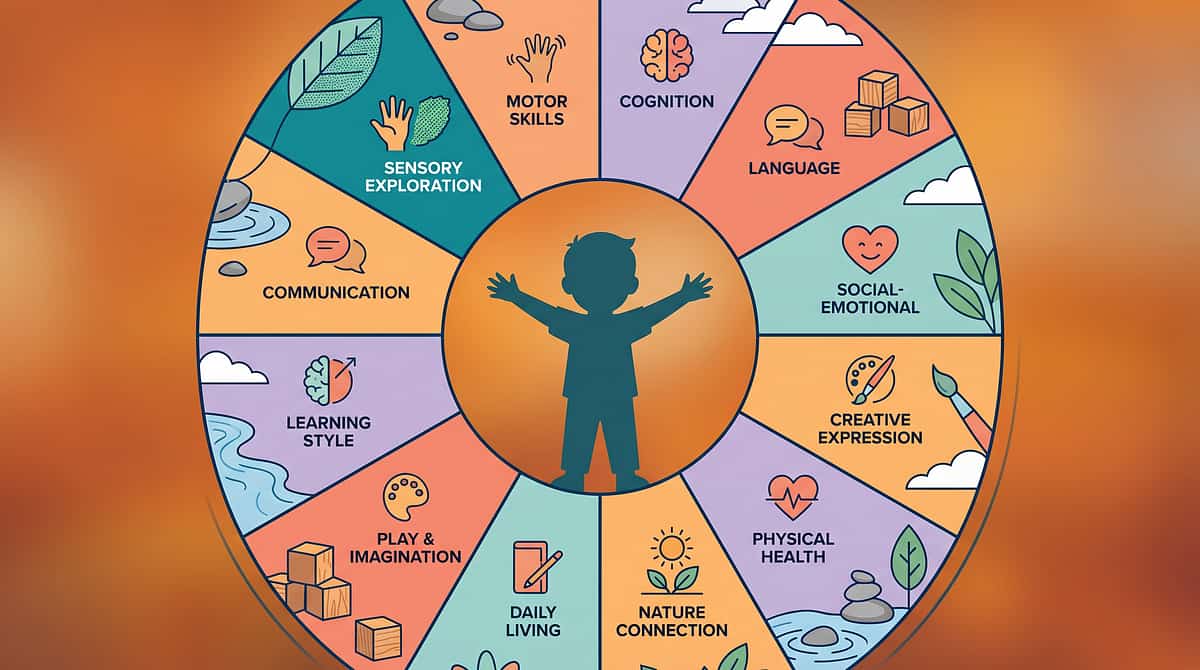
The Progression Pathway
You're not at the end. You're at the beginning of everything that follows.
B-228 sits at the heart of the Communication Domain sequence. Understanding where you've come from and where you're headed helps you see this technique not as an isolated task, but as one step in a carefully designed developmental trajectory.
B-231: AAC Motor Access
If phrases not emerging — evaluate motor access barriers
B-233: Vocabulary Organisation
If navigation impedes combination — reorganise vocabulary architecture
B-235: Partner Training Intensive
If modelling inconsistent across partners — structured training programme
Long-term developmental goal: This technique feeds directly into Generative Language Competency — the ability to create any message from known parts, unlocking academic language, social participation, self-advocacy, and independence across all environments.
Related Techniques in This Domain
Within the Communication Domain — your next explorations.
If you have completed or are working through B-228, the materials you already own give you a significant head start on several adjacent techniques. The Communication Domain is a connected system, not a list of isolated activities.
Technique | Code | Level | Canon Material | |
Building Core Vocabulary in AAC | B-226 | 🟢 Foundation | AAC Core Boards | |
AAC for Commenting, Not Just Requesting | B-227 | 🟡 Core | Modelling Boards | |
Building AAC Phrases ← YOU ARE HERE | B-228 | 🟡 Core | Phrase Strips + Expansion Mats | |
AAC User Gets Stuck on Requests Only | B-229 | 🟡 Core | Communication Temptation Kits | |
Advanced AAC Grammar & Morphology | B-230 | 🔴 Advanced | Morphology Tools | |
AAC for Peer Interaction | B-231 | 🔴 Advanced | Peer Communication Sets |
✅ If you completed this technique's setup (Cards 09–10), you already have materials for B-226, B-227, and B-229.

ACT V: THE COMMUNITY & ECOSYSTEM
From the clinical notes. From the families. From the other side.
Family Story 1 — Mumbai
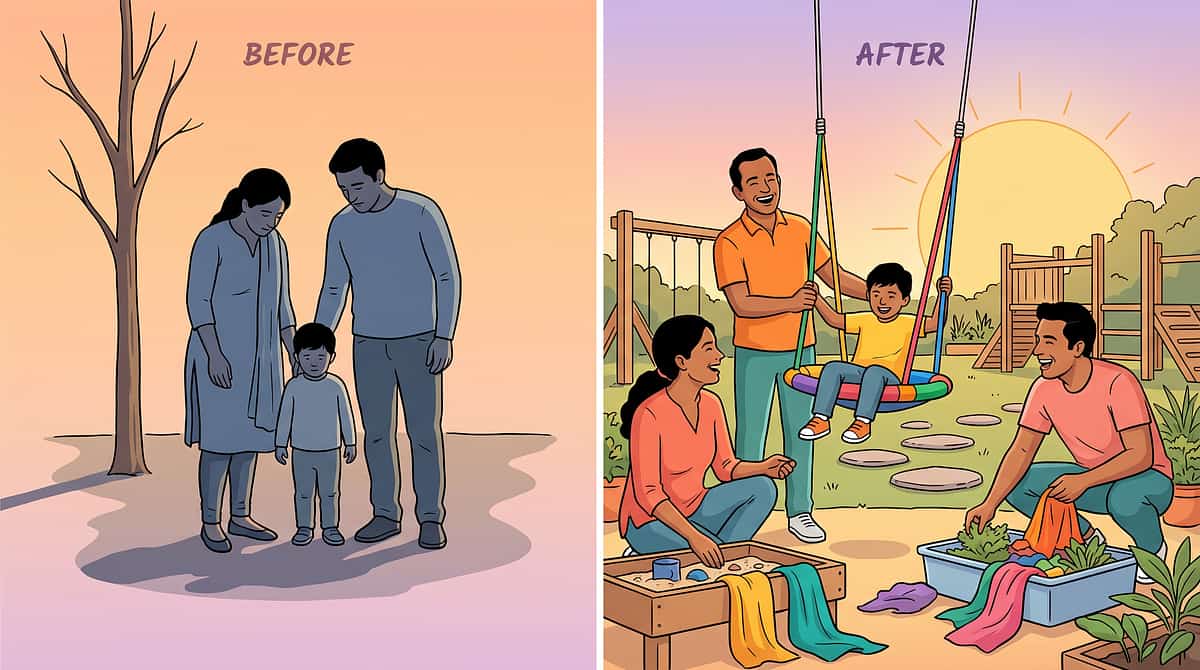
Before: Aryan, 6, had 200+ symbols on his device. Twelve months of consistent AAC use. Everything was one word. Every session ended with his mother guessing 4–7 times before finding what he wanted. She described the look on his face when she finally got it right — relief mixed with exhaustion. She felt it too.
The Turning Point: Their SLP at Pinnacle introduced phrase modelling and expansion mats. His mother practised modelling two symbols — every time, for every sentence — for seven weeks. Week six: nothing visible. Week seven: Aryan selected MORE + CRACKER spontaneously during snack. Unprompted. Real.
After: Three months later, Aryan regularly produces 3-symbol combinations. He told his grandmother "GO + SCHOOL + TOMORROW" the evening before the first day of new term. His family has a video. They watch it regularly.
Timeline: 7 weeks to first phrases | 12 weeks to consistent 3-word combinations — From Therapist's Notes, Pinnacle Mumbai Centre
Family Story 2 — Hyderabad
Before: Priya, 4, was using her AAC device actively — but only for requests. WANT this. WANT that. Her parents were thrilled she could request. Their SLP pointed out she never commented, never described, never combined words.
The Turning Point: Communication temptation setups at home. A sealed jar with her favourite crackers. A choice between two foods she'd have to specify. Her father learned to pause after single words instead of responding immediately.
After: Four months later, Priya produces functional 2–3 word combinations across contexts. School staff confirmed phrase production in the classroom. Her IEP language goal was updated to three-word phrases.
"She went from 'want' to 'I want more juice please' in five months. Once she understood that words combine, everything unlocked." — Parent, Pinnacle Hyderabad Centre. Individual results vary.
"In 15 years of AAC practice, the consistent finding is this: the children who make the phrase transition fastest are those whose parents model phrases every time they speak, without exception, for weeks before expecting any production. The output follows the input. Always." — Senior SLP, Pinnacle Blooms Network®, AAC Specialisation
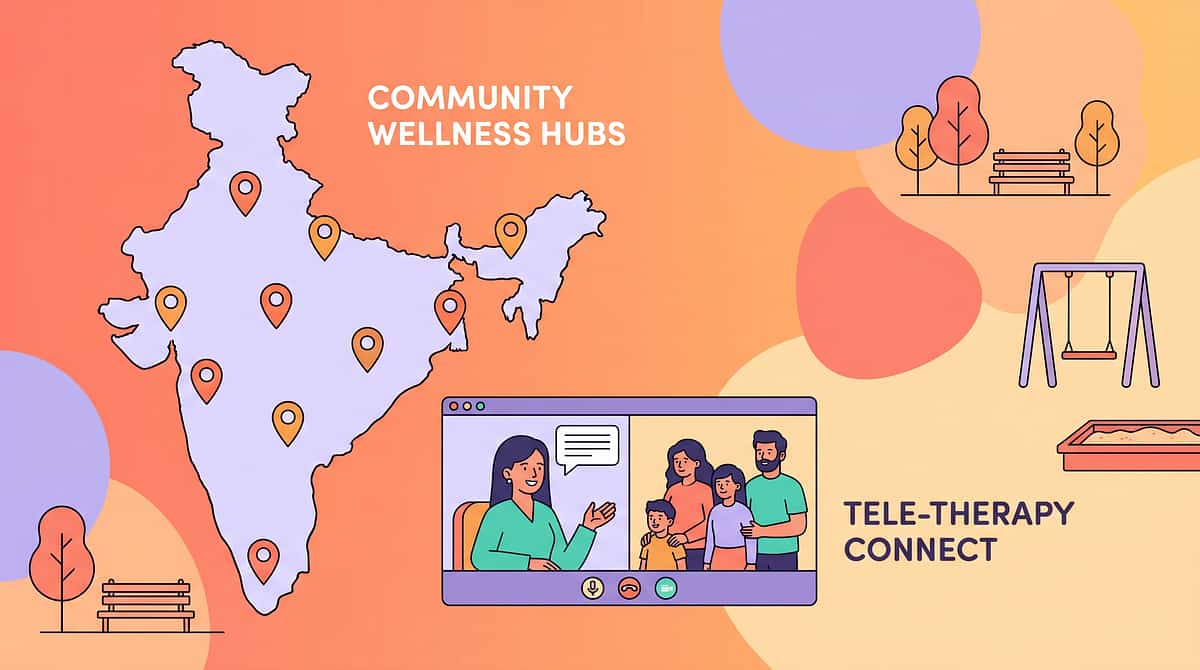
Connect with Other Parents
Isolation is the enemy of adherence. Your community is here.
Research consistently shows that parent support networks are among the strongest predictors of home-based intervention adherence. You are not meant to do this alone. The families ahead of you have been exactly where you are. They have the data. They have the videos. They want to walk this with you.
💬 AAC Phrase Builders Parent Group
Parents navigating this exact transition — sharing what's working, supporting through the weeks with no visible progress, celebrating the first combinations.
unknown link
🌐 Pinnacle Online Community
Forum threads, video testimonials, and monthly live Q&A with Pinnacle SLPs on AAC phrase development.
📍 Local Parent Meetups
In-person parent circles at Pinnacle centres — organised around specific challenges including AAC language expansion.
🤝 Peer Mentoring Programme
Connect with a parent 6–12 months ahead of you on this exact journey. They've done the weeks of modelling with no output. They have the video of the first phrase.
"Your child's progress will inspire the family behind you. Your struggle will be normalised by the family ahead. The community is the intervention infrastructure that makes everything else sustainable."
Your Professional Support Team
Home + clinic = maximum impact. You do not have to do this alone.
The daily home implementation described in this guide is designed to complement — not replace — the specialist guidance of a licensed AAC team. Think of home practice as the application layer; the clinic is where the system is designed, calibrated, and troubleshot.
Need | Specialist | How to Access | |
AAC phrase development protocol | Speech-Language Pathologist (AAC Specialisation) | Call 9100 181 181 | |
Communication partner training | SLP + BCBA Joint Session | Book via pinnacleblooms.org | |
Motor access review (device navigation) | Occupational Therapist (AAC Access) | In-centre assessment | |
IEP language goal alignment | Special Educator + SLP | School consultation service | |
Neurological assessment for phrase stall | NeuroDevelopmental Paediatrician | Referral via centre |
📲 Book Teleconsultation
pinnacleblooms.org/teleconsult
Available in 16 languages | Same-day slots available
Available in 16 languages | Same-day slots available
📞 FREE National Helpline
9100 181 181
16 languages | 24×7 | No referral needed
16 languages | 24×7 | No referral needed
📍 Find a Centre
70+ centres across India
Search by city or pincode
Search by city or pincode

How GPT-OS® Uses Your Data
Your data is not stored. It's activated — for your child, and for every child like yours.
📊 Phrase Emergence Timeline
When do most children produce first combinations after modelling begins? Your data refines this prediction for children with similar profiles to yours.
🏠 Context Effects
In which daily routines do phrases emerge first? Kitchen? Play? School? This informs the EverydayTherapyProgramme™ for your child.
👥 Partner Effect
Which communication partner produces the most phrase attempts? This informs partner training prioritisation across your household and school.
🔒Data Privacy Standards: DPDP Act (India) compliant | No personal identifiers in aggregate analysis | Parent consent required for all data use | Your child's data belongs to your family
Watch the Reel
See it done. By therapists. For parents.
📺 REEL: B-228
"9 Materials That Help Building AAC Phrases"
🎬 Series
Communication Access & AAC Solutions | Episode 228
⏱️ Duration
75–85 seconds
"In this reel, our AAC specialist demonstrates each of the 9 materials in real home settings — showing exactly what phrase-level modelling looks like, how communication temptation setups work, and what the moment of first phrase combination looks like for a child. This is 75 seconds of what 10,000 words in a research paper can't show you." — Pinnacle SLP, AAC Specialisation
Video modelling is classified as an evidence-based practice for autism (NCAEP, 2020). Multi-modal learning — visual + text + demonstration — improves parent skill acquisition significantly over text-only instruction.
Share This with Your Family
One parent knowing this technique helps one child. Every adult in your child's life knowing it — multiplies everything.
The single most powerful predictor of phrase emergence is the consistency of multiword modelling across all communication partners. Every adult who spends time with your child is either accelerating or inadvertently slowing this process. Sharing this knowledge is part of the therapy.
Tell your parents/in-laws this:
"When [child's name] touches a word on their device, wait — then touch two words on your phone and say them together. 'Want juice.' 'Go outside.' Just show them two words every time you talk. That's it. That's the whole thing. Do it every time, with real words that matter in the moment. After a few weeks, watch what happens."
"When [child's name] touches a word on their device, wait — then touch two words on your phone and say them together. 'Want juice.' 'Go outside.' Just show them two words every time you talk. That's it. That's the whole thing. Do it every time, with real words that matter in the moment. After a few weeks, watch what happens."
Teacher Communication Template:
"Dear [Teacher], We are working on building two-word combinations with [child's name]'s AAC device at home. When [he/she] uses a single word, please model an expanded phrase on the device/board. For example, if they say 'WANT', you can model 'WANT + [item]'. Consistency across home and school dramatically accelerates phrase emergence. I've attached the 1-page guide. Thank you."

ACT VI: THE CLOSE & LOOP
Frequently Asked Questions
The questions every parent asks. Answered by the consortium.
▼ How long does it take to see the first two-word combination?
Most children begin producing two-word combinations somewhere between weeks 4 and 12 of consistent multiword modelling. The range is wide because it depends on modelling frequency, child's current language level, vocabulary organisation, and motor access. If you're modelling 20+ two-symbol phrases per day and see no combinations after 12 weeks, request an SLP evaluation.
▼ Should I stop modelling single words now?
No. Continue single-word modelling AND add multiword modelling on top. Your baseline should shift so that most of your AAC communication is at the phrase level, but you never stop meeting the child at their current level when needed. The goal is to model UP — from 2-word to 3-word as phrases become consistent.
▼ My child's AAC app doesn't have a message bar. Does this matter?
It matters for visual learning. A low-tech board with a velcro strip at the top serves the same purpose — place symbols in the strip as you model. The visual accumulation is the key feature, not the technology.
▼ My child uses phrases with me but not at school. Is this normal?
Yes — this is a generalisation stage. Phrases emerge in the most practised, most motivating contexts first. Share this page's teacher guide (Card 37) with school staff and request that the same modelling approach is used in at least 2 school routines per day.
▼ My child's SLP says wait until the vocabulary is bigger before working on phrases. Should I follow this?
The research consistently shows that phrase building can begin as soon as core vocabulary (8–10 core words reliably used) is established. You don't need 200 words before starting combinations. Discuss this page's evidence base with your SLP.
▼ Is the word order important? My child says "juice want" instead of "want juice."
Reverse order combinations are still combinations — and still represent significant developmental progress. Respond fully (give the juice), celebrate, and model the conventional order: "Want juice — here is your juice!" The conventional order will come with exposure.
▼ My child only combines words to request, never to comment. Is that enough for now?
Requesting combinations are the most common early phrases — this is developmentally normal. While working on phrase building, begin modelling commenting phrases too ("I SEE a ___," "I LIKE ___") with equal frequency. Commenting language often follows requesting language by 2–4 weeks at this stage.
▼ Can I do this without an SLP?
The modelling and temptation strategies in this page are parent-implementable. However, vocabulary organisation, device programming, motor access assessment, and complex troubleshooting require licensed SLP guidance. Think of this page as the daily execution layer — your SLP designs the system. Call 9100 181 181 to connect with an AAC-specialised SLP.
Your child has words. Today, you start building sentences.
Everything you need. Clinically validated. Parent-ready. Starting from home.
📞 Book a Consultation
Speak with a Pinnacle AAC Specialist
🔤 Explore the Next Technique
B-229: When AAC User Gets Stuck on Requests Only
🗣️ SLP
Speech-Language Pathology
🖐️ OT
Occupational Therapy
🎯 ABA/BCBA
Behaviour Analysis
📚 SpEd
Special Education
🧬 NeuroDev
Neurodevelopmental Paediatrics
WHO-Aligned | UNICEF-Referenced | PubMed-Backed | 🇮🇳 DPIIT-Recognised
Preview of 9 materials that help building aac phrases Therapy Material
Below is a visual preview of 9 materials that help building aac phrases therapy material. The pages shown help educators, therapists, and caregivers understand the structure and content of the resource before use. Materials should be used under appropriate professional guidance.
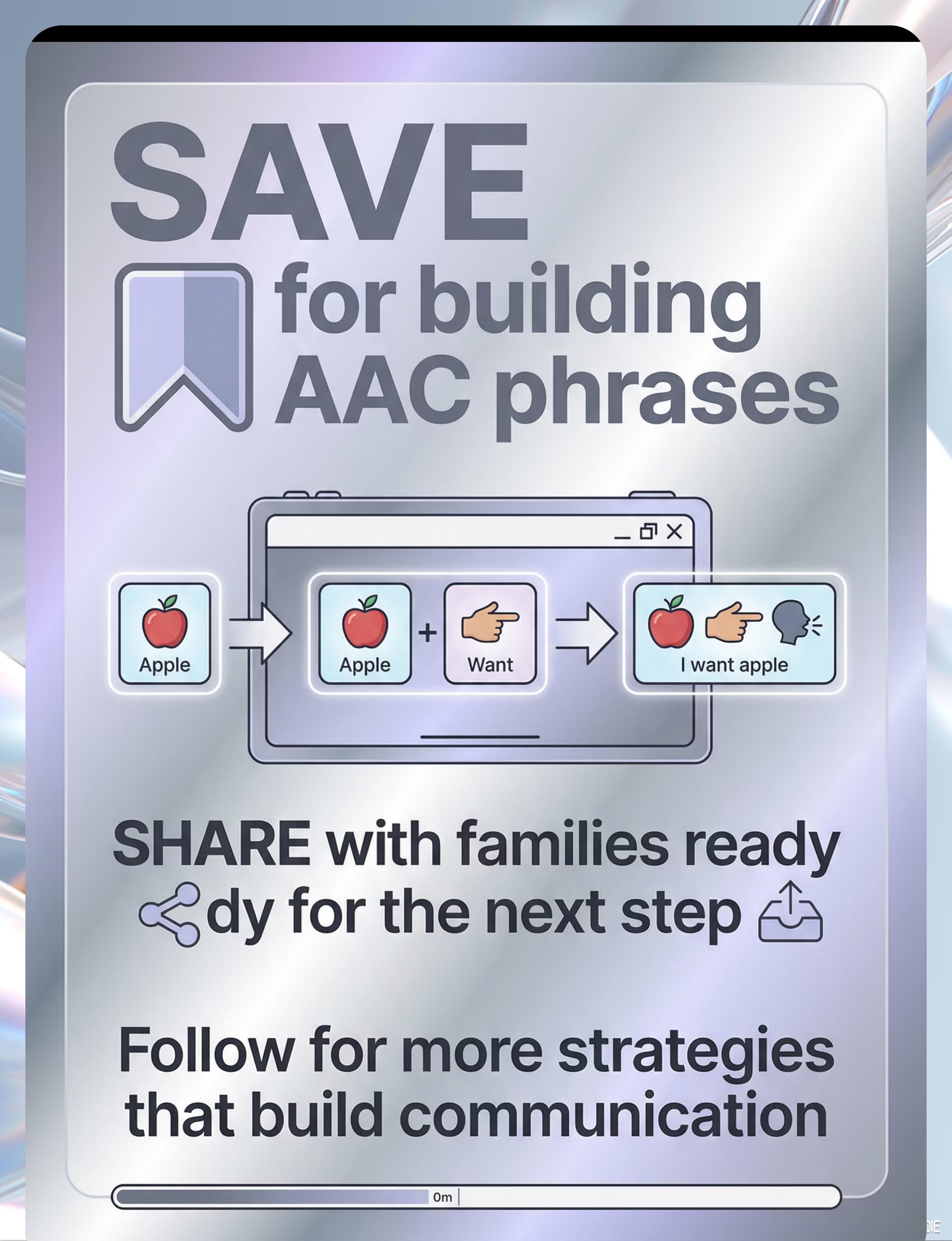
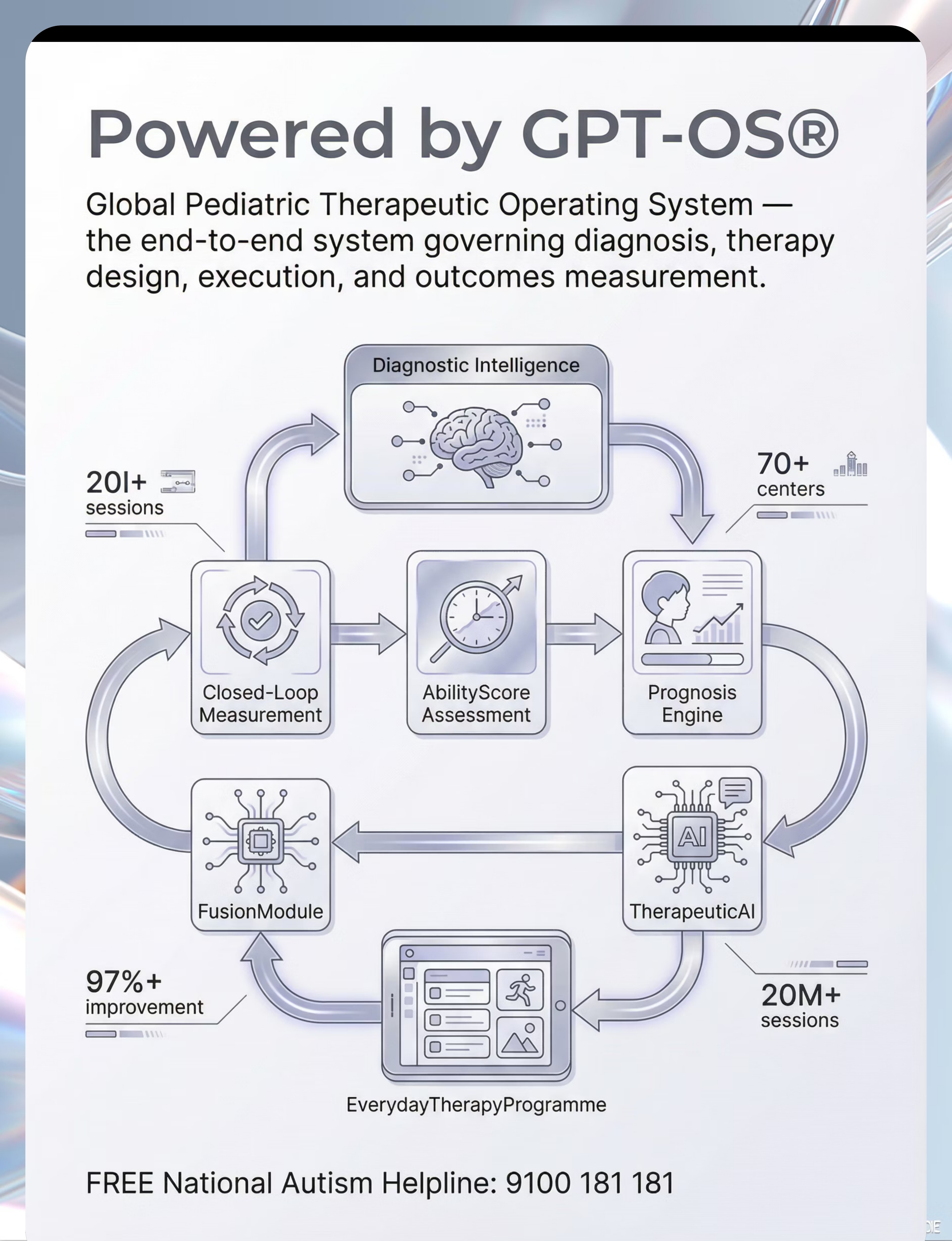

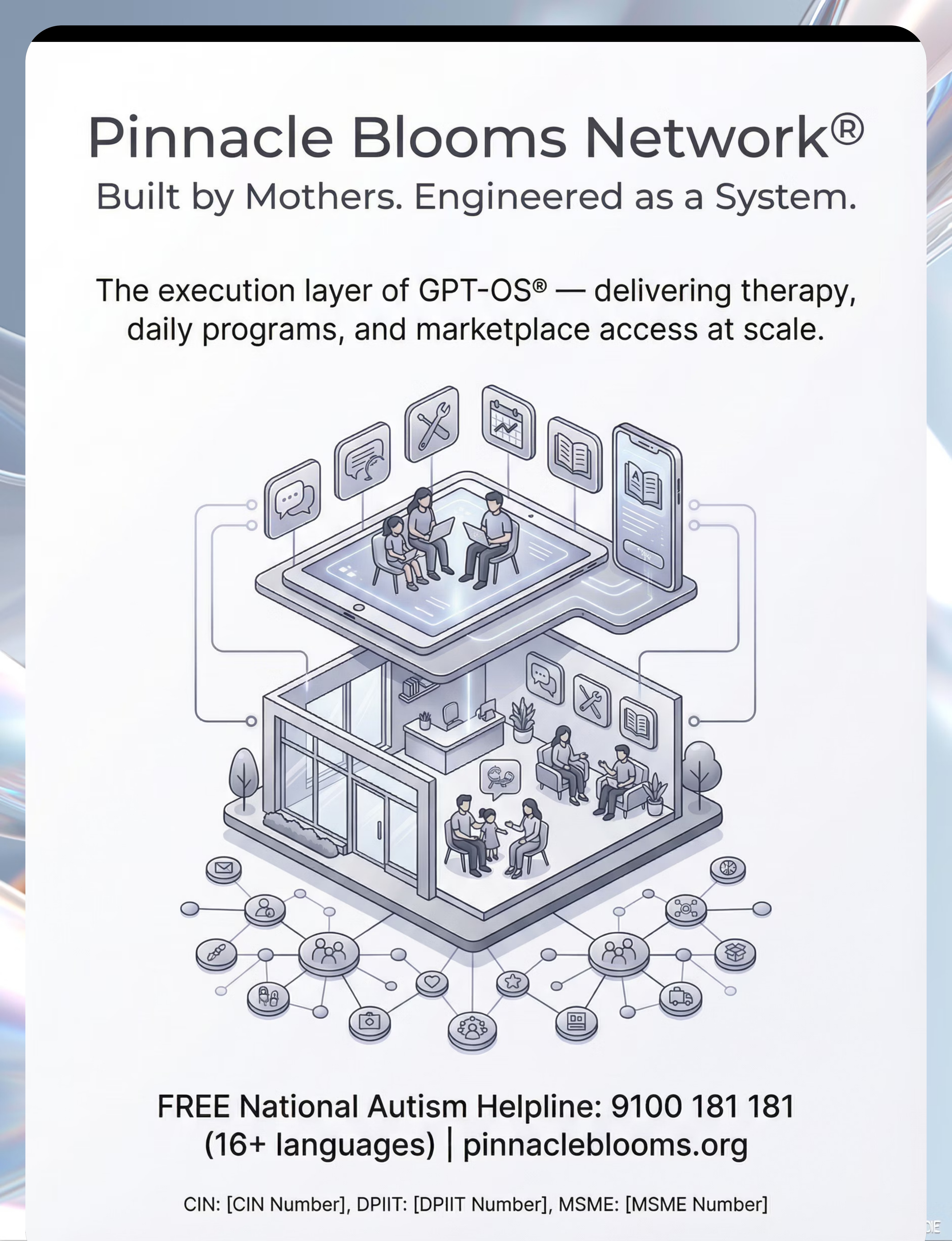


Link copied!

From fear to mastery. One technique at a time.
Pinnacle Blooms Network® exists because every child deserves a communication system that grows with them — from first symbol to full sentence, from home to school to every room of their life.
This page is one of 70,000+ evidence-linked, parent-ready technique guides — the largest structured paediatric intervention knowledge base ever built. Built not by algorithm but by consortium: mothers, fathers, speech pathologists, occupational therapists, behaviour analysts, special educators, neurodevelopmental physicians, and researchers across India and 70+ countries.
Every technique. Every child. Every family. Starting from home.
🏛️ Pinnacle Blooms Network®
Built by Mothers. Engineered as a System.
🌍 WHO-Aligned
Nurturing Care Framework compliant
🔬 PubMed-Backed
Every technique referenced to peer-reviewed literature
🇮🇳 DPIIT-Recognised
DIPP8651 | Govt. of India Startup India
This content is educational. It does not replace assessment and therapy by a licensed speech-language pathologist specialising in AAC. Phrase development strategies should be implemented under professional guidance tailored to the individual child's language level and needs. Individual results may vary. Statistics represent aggregate outcomes across the Pinnacle Blooms Network.
↑ Return to Top
→ Next Technique
🗺️ Full Domain
Pinnacle Blooms Network® | Unit of Bharath Healthcare Laboratories Pvt. Ltd. | CIN: U74999TG2016PTC113063 | DPIIT: DIPP8651 | MSME: TS20F0009606 | GSTIN: 36AAGCB9722P1Z2 | © 2025 All rights reserved | pinnacleblooms.org | 9100 181 181