
"They can't see they've lost you."
When listener feedback is invisible to them — and what you can do about it today.
B-214
Social Communication
Age 5–14
You Are Not Alone: The Numbers
Millions of families are navigating this exact challenge right now. Reading listener cues requires real-time integration of nonverbal signals — facial expressions, body posture, vocal tone, behavioral shifts — that most brains process automatically. For children with social communication differences, autism spectrum disorder, or ADHD, this channel is not automatically received. It must be explicitly taught. Research shows it can be.
45–70%
Pragmatic Difficulties
of children with ASD show significant pragmatic language difficulties, including listener cue reading
1 in 36
ASD Prevalence
children are now diagnosed with ASD globally — social communication challenges are the most common referral trigger
₹0
Cost to Begin
is what it costs to begin the home strategies on this page today
You are among millions of families worldwide navigating this. You found this page. You are already doing the most important thing a parent can do. FREE Helpline: 9100 181 181
This Is Not Selfishness. This Is Neuroscience.
The Brain Science
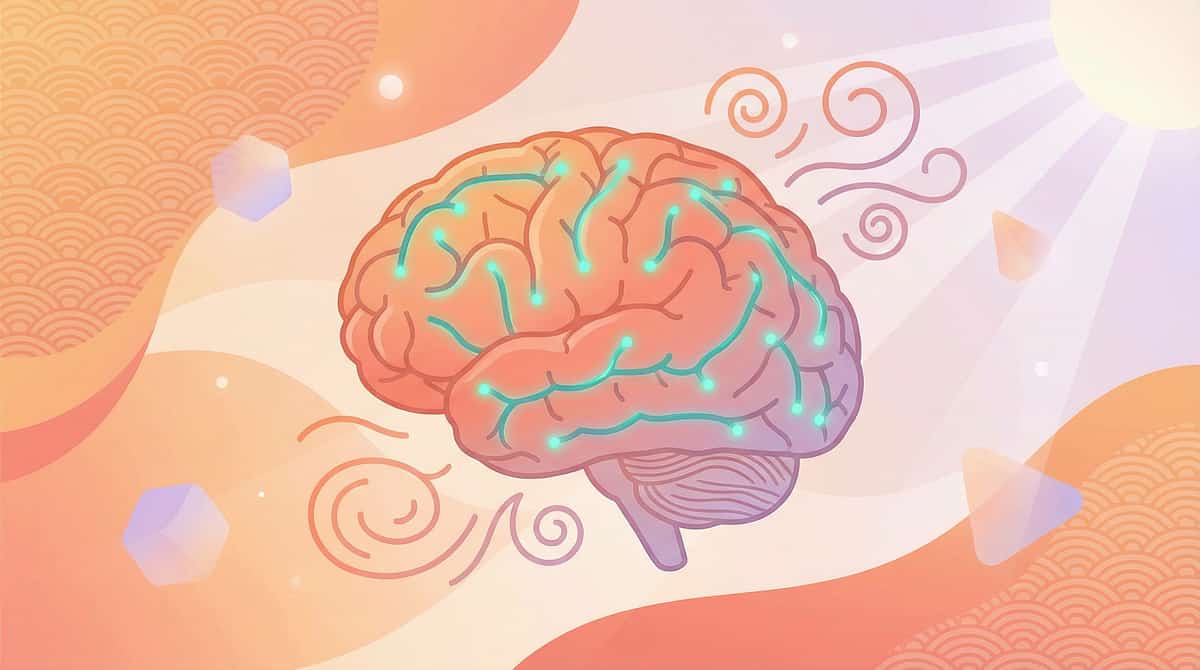
Reading listener cues requires the simultaneous activation of multiple neural networks: the fusiform face area (face processing), the superior temporal sulcus (biological motion and social attention), the anterior insula (interoception and empathy), and prefrontal systems (executive monitoring and real-time adjustment). For children with social communication differences, these networks communicate differently — not deficiently. Incoming social data is processed along alternative pathways, often with delay or requiring conscious attention where others use automatic processing.
Parent Translation
When your child talks without noticing glazed eyes or a turning body — their brain is not choosing to ignore the listener. The listener's face is literally not sending the same signal to their processing centers that it sends to yours. The feedback channel is there. It's just wired differently.
The science tells us: what the brain doesn't wire automatically, it can learn deliberately.
"A wiring difference. Not a character flaw." — Pinnacle Blooms Consortium
Where This Sits in Development
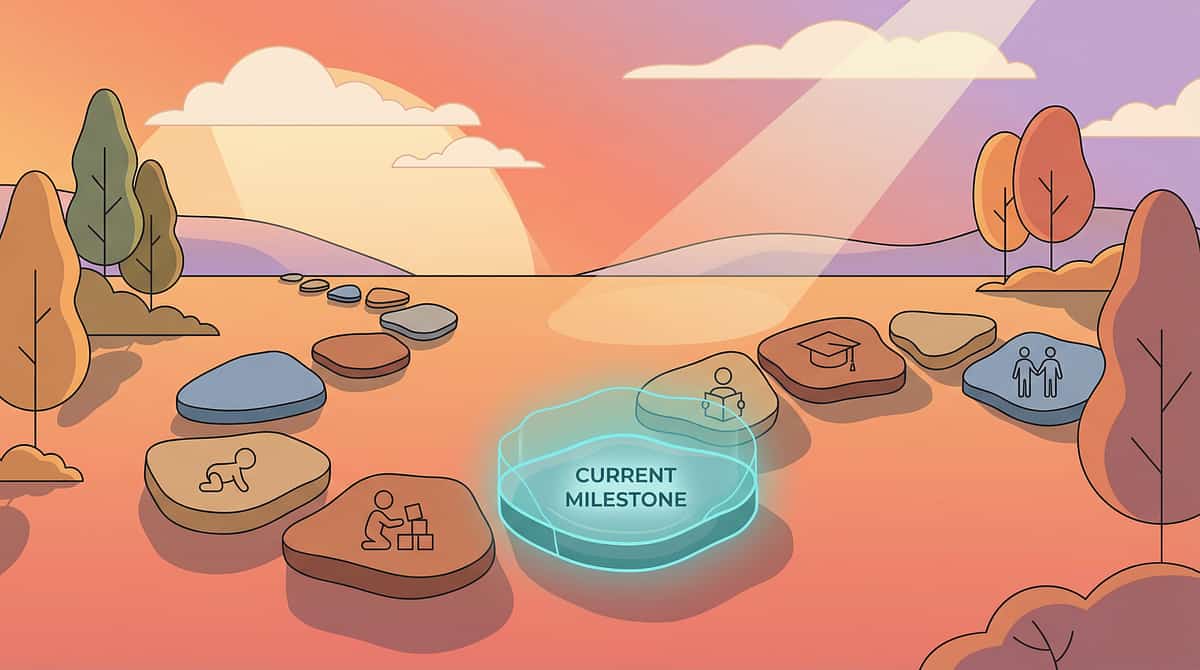
Your child is here. This is where we're going. The social communication developmental arc spans ages 2–14, and listener monitoring is a skill that typically emerges in the middle of that window — but can be explicitly taught when it doesn't.
Age 2–3
Joint attention emerges; basic turn-taking in play
Age 3–5
Reading obvious emotional expressions; simple perspective-taking
Age 5–7 ⚠️
Listener monitoring typically begins — noticing bored faces, reading when to stop
Age 7–10 ⚠️
Cue reading complexity increases — subtle signals, multi-channel reading
Age 10–14 ⚠️
Peer-level sophistication expected — real-time adjustment, reciprocal conversation
If your child is 5–14 and missing this developmental band — this page is exactly where to start. Listener cue reading difficulties commonly co-occur with: Autism Spectrum Disorder, ADHD, Social (Pragmatic) Communication Disorder, Language Processing Disorders, and Anxiety.
The Evidence Behind This Technique
Clinically validated. Home-applicable. Parent-proven. Every strategy on this page is grounded in peer-reviewed research — not guesswork, not marketing.
Key Research Findings
NCAEP 2020
Video modeling for social communication is a classified Evidence-Based Practice for autism — one of 28 EBPs endorsed
PRISMA Systematic Review (2024)
16 studies across 2013–2023 confirm structured social communication intervention is evidence-based for ASD (PMC11506176)
Padmanabha et al. (2019)
Home-based structured intervention programs deliver significant outcomes when parents are trained as co-therapists
Pinnacle Confidence Data
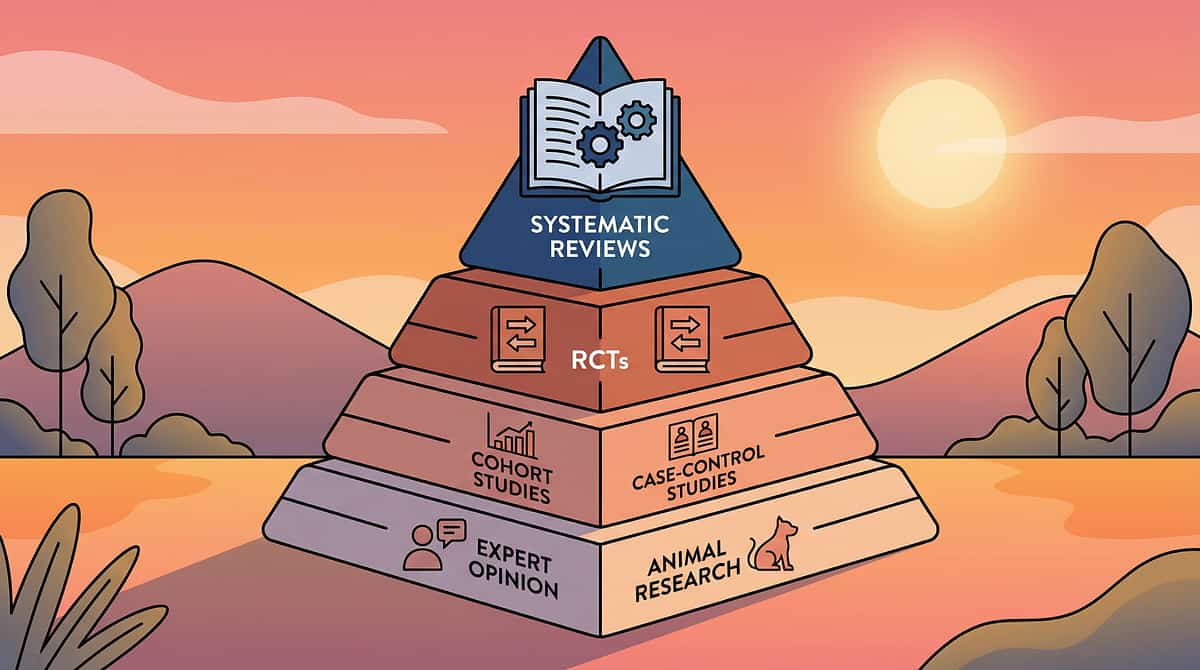
Evidence Grade: Level II — Multiple RCTs + Systematic Review
97%+ measured improvement across Social Communication Readiness Index
20M+ 1:1 sessions delivered
70+ centers across India
This content is educational and does not replace assessment by a licensed SLP. Call 9100 181 181 for guidance.
The Technique: What It Is
Domain B: Social Communication
Age 5–14
10–20 min daily
Formal Name: Listener Cue Reading Intervention | Parent-Friendly Alias: "The Listener Check" — Making the Invisible Visible
Reading listener cues is the ability to continuously monitor and interpret the feedback that conversation partners provide — through facial expressions, body language, vocal tone, verbal responses, and behavioral signals — and to adjust one's own communication in real time. Children who miss these cues continue speaking without noticing that their audience has disengaged, become confused, or checked out.
This is not social indifference; it is a social perception difference that can be addressed through explicit teaching, structured practice, and progressive skill-building.
📍 Domain
Social Communication & Pragmatic Language
⏱️ Duration
10–20 minutes daily
📊 Outcome
Social Communication Readiness Index
📅 Frequency
Daily, embedded in natural conversations
Who Uses This Technique
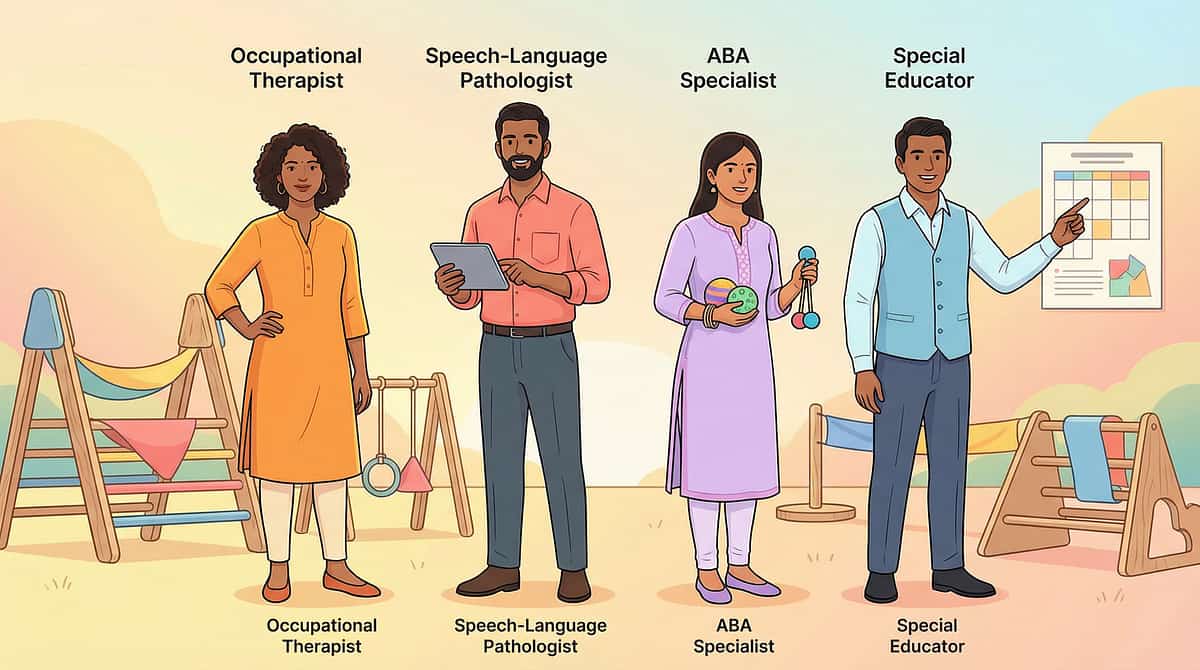
This technique crosses therapy boundaries — because conversation doesn't respect clinic silos. When a child learns to read listener cues, it's not just a speech therapy win. It's an ABA win, a special education win, and a neurodevelopmental win.
SLP (Lead)
Primary practitioner. Addresses pragmatic language deficits, nonverbal communication processing, conversational reciprocity, and perspective-taking as part of social communication goals.
ABA / BCBA
Structures reinforcement systems for cue-noticing behaviors, builds stimulus control for check-in habits, conducts functional analysis of conversational patterns.
Special Education
Implements classroom-based cue reading supports, facilitates peer interaction practice, creates IEP goals for social communication in educational settings.
Occupational Therapy
Addresses attention allocation challenges that interfere with listener monitoring; sensory processing factors that affect social awareness.
NeuroDev. Pediatrics
Provides diagnostic clarity (ASD, ADHD, SCD), medical oversight, and coordinates multi-disciplinary care pathway through GPT-OS®.
What This Targets
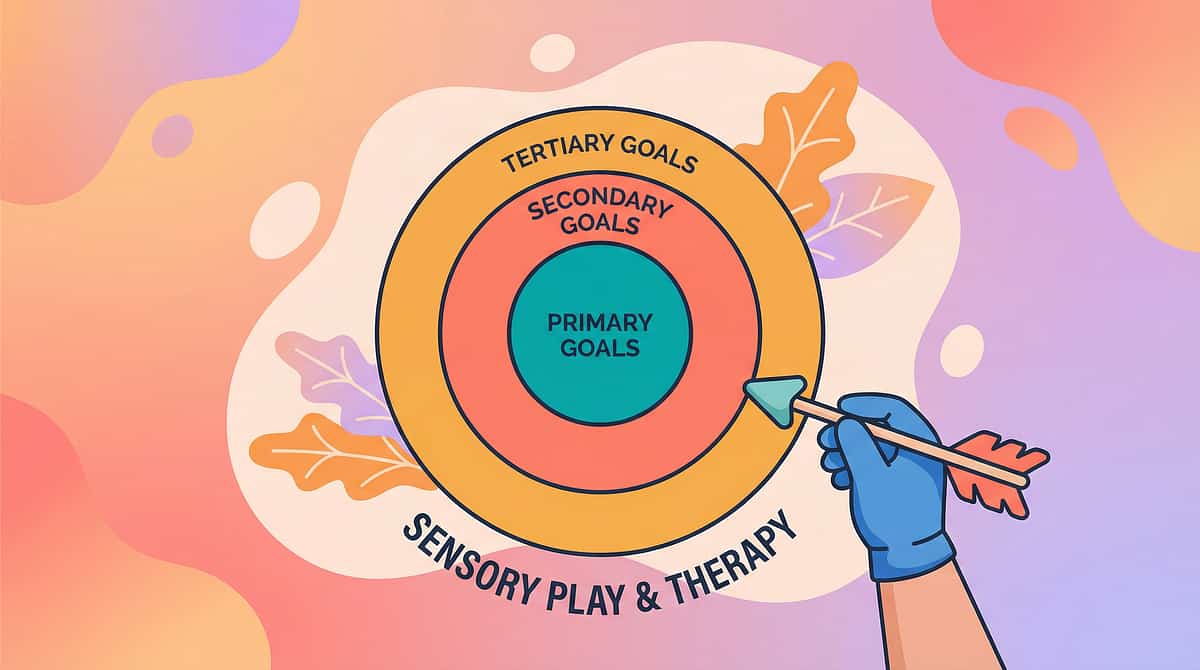
This is not a random activity. It is a precision instrument designed to build real-time listener monitoring from the ground up — with measurable outcomes at every level.
✅ Child pauses to glance at listener's face
✅ Child asks "Am I going on too long?"
✅ Child changes topic when listener disengages
✅ Child invites listener: "What do you think?"
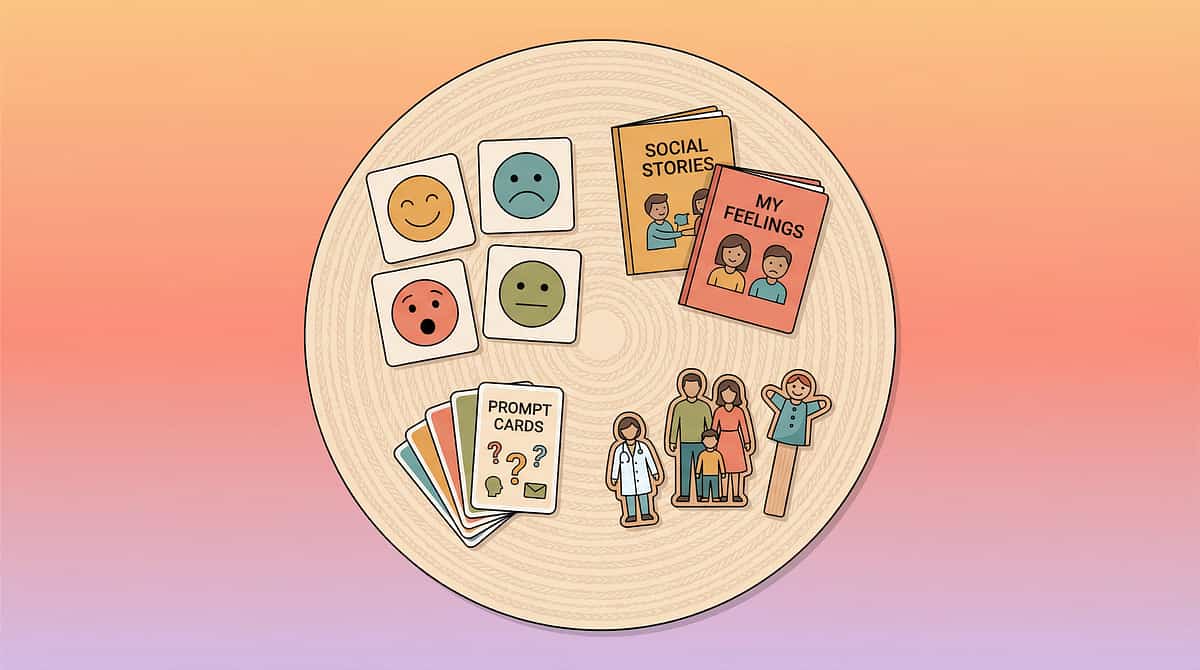
9 Clinician-Selected Materials
These 9 materials were selected by Pinnacle's Consortium of SLPs, ABA specialists, and NeuroDevelopmental Pediatricians specifically for listener cue reading intervention. Each one targets a distinct layer of the skill. Most can start today at zero cost.
# | Material | Function | Price Range | |
1 | 📸 Facial Expression Photo Cards & Charts | Build visual vocabulary for listener faces | ₹0–1,000 | |
2 | 📱 Video Clips for Cue Detection Practice | Slow-motion cue reading practice | ₹0–500 | |
3 | 🧍 Body Language Cue Cards & Guides | Teach the body's communication vocabulary | ₹200–800 | |
4 | 📖 Social Stories About Checking Listeners | Explicit step-by-step cue reading explanation | ₹200–1,000 | |
5 | 🃏 "Check-In" Prompt Cards | Build the habit of looking at the listener | ₹50–300 | |
6 | 🎭 Role-Play & Practice Conversations | Safe practice with deliberate cues | ₹0–500 | |
7 | 📋 Signal Cards for Conversation Partners | Make feedback unmistakably visible | ₹50–300 | |
8 | 💭 Thought Bubble Perspective-Taking Games | Build theory of mind — the foundational skill | ₹200–1,000 | |
9 | ⚖️ Conversation Balance Visuals | See the give-and-take pattern | ₹100–500 |
Total Range: ₹0–1,000 for the complete toolkit — most materials are DIY-free. FREE Helpline: 9100 181 181
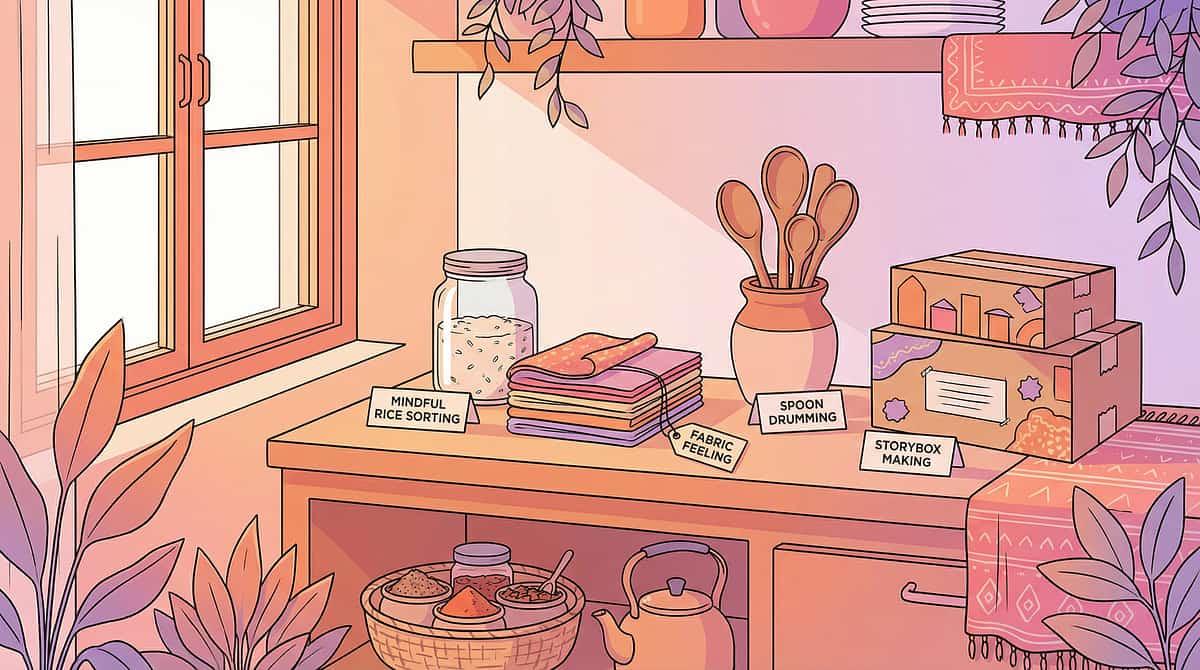
DIY & Substitute Options
Every family can start today — regardless of budget. The WHO Nurturing Care Framework mandates that evidence-based interventions be accessible to every family regardless of economic status. Every strategy on this page has a zero-cost version.
Material | Buy It | Make It (Free) | |
Facial Expression Cards | Emotion flashcard sets ₹200–1,000 | Photograph family members showing different listening states. Print and laminate. | |
Video Clips | Social skills video programs ₹0–500 | Pause TV shows during conversations. Record family interactions (consented). | |
Body Language Guides | Cue card sets ₹200–800 | Draw "Interested Body" vs "Bored Body" on paper. Label each signal. | |
Social Stories | Published books ₹200–1,000 | Write personalized stories using Carol Gray's framework. Use child's real settings. | |
Check-In Prompts | Printed reminder cards ₹50–300 | Write "How does my listener look?" on an index card. Place near conversation spots. | |
Role-Play | Scenario cards ₹0–500 | Practice at home — family members show deliberate cues. No materials needed. | |
Signal Cards | Partner cue card sets ₹50–300 | Create "I want to speak" / "I'm confused" cards with paper and marker. | |
Thought Bubble Games | Perspective-taking games ₹200–1,000 | Draw thought bubbles over photos in magazines. Guess what the person is thinking. | |
Balance Visuals | Conversation balance tools ₹100–500 | Draw a scale after conversations. Use tokens to track turns. |
DIY alternatives work on the same neurological principles as commercial materials. The therapeutic mechanism is identical. What matters is consistent, structured practice — not the product brand.

Safety First: Before You Begin
Read this before every session. Session outcomes are determined as much by the conditions you create as by the materials you use. This traffic-light system ensures every practice session builds skill — and never undermines safety.
🟢 GREEN — Proceed
Child is calm and regulated • Has eaten and is not overtired • Setting is quiet with minimal sensory input • Practice partner is warm and patient • Focus is on building skill, not correcting failures
🟡 AMBER — Modify
Child is slightly elevated — reduce to 5 minutes; use only 1–2 materials • Bad day at school — skip cue practice; use only thought bubble games • Child resists — make it a game: "Let's see if you can catch me being bored"
🔴 RED — Stop Immediately
Child shows signs of emotional dysregulation • Child expresses practice makes them feel "bad" or "stupid" • Child experiences social rejection directly related to this skill — address emotional wellbeing FIRST
Absolute Principle: Never frame cue-missing as selfishness. Never remove rewards for missing cues — reward noticing, even imperfect noticing. Emotional safety is non-negotiable. A hurt child cannot learn. Clinical concerns? Call 9100 181 181.
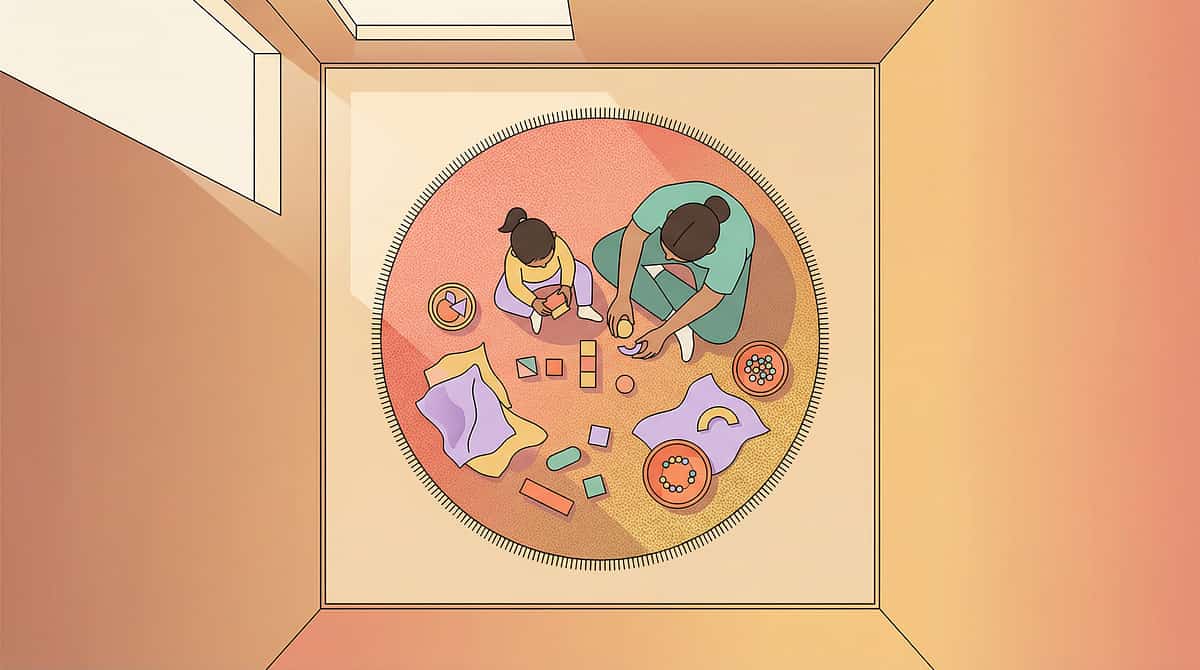
Set Up Your Practice Space
The right environment multiplies results. Research shows 1:1 structured individual sessions in controlled environments produce the highest intervention effect sizes. 80% of session failures begin with poor setup — not poor technique.
Ideal Room Layout
Quiet room — natural light preferred
Child ←— 3–4 feet —→ Practice Partner
Seated comfortably | At eye level, visible face
Seated comfortably | At eye level, visible face
Materials within easy reach | Phone/TV/distractions REMOVED | Door closed or quiet corner
Setup Checklist
- ✅ Seating at eye level — full face visible to both
- ✅ Materials ready before child enters the room
- ✅ Minimal background noise — TV off, phone on silent
- ✅ Natural or warm lighting — no backlighting
- ✅ 15–20 minutes of protected, uninterrupted time
- ✅ Partner briefed on session plan in advance
- ✅ Positive framing ready: "We're going to practice a really cool skill today"
- ✅ For video sessions: tablet at eye height, earphones for audio clarity
Your job as a practice partner is to be genuinely expressive. Show real listener states — real interest, real confusion, real readiness to speak. Children learn from authentic signals, not theatrical performances.

Is Your Child Ready? 60-Second Check
Never skip this. The best listener cue session is one where the child arrives safe and curious. Forcing practice when these conditions aren't met teaches nothing except that practice is unpleasant.
Indicator | ✅ Go | 🟡 Modify | 🔴 Postpone | |
Emotional state | Calm, regulated | Mildly elevated | Dysregulated | |
Last meal | Within 3 hours | 3–4 hours ago | Hungry or overly full | |
Last major social stress | Not today | Hours ago | Today / recent | |
Willingness | Curious or neutral | Slight resistance | Active refusal | |
Energy level | Awake, alert | Slightly tired | Exhausted | |
Recent meltdown | None today | Several hours ago | Within last hour |
✅ If GO
Proceed to Step 1 — Build the Visual Vocabulary
🟡 If MODIFY
Use only Materials 1 or 8; limit to 5 minutes; skip role-play
🔴 If POSTPONE
Do a preferred activity together instead. Note what happened. Try again tomorrow.
FREE Helpline: 9100 181 181 | 16+ Languages | 24×7

Step 1 of 6
Material 1: Facial Expression Cards
5–7 min daily | Weeks 1–2
Build the Visual Vocabulary
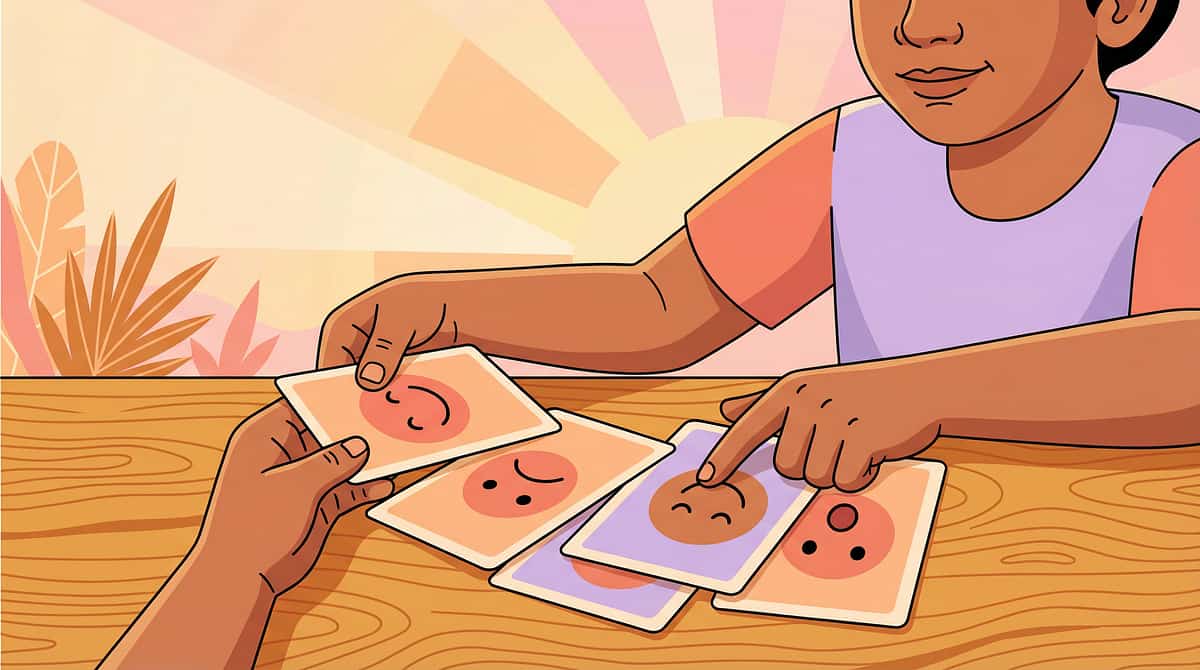
Before a child can catch a listener's expression in real-time, they need to know what they're looking for. Facial expression cards build the visual vocabulary — the dictionary of what faces mean — in a no-pressure environment where they can study, match, and learn without the demands of live conversation.
01
Lay out 4–6 expression cards face-up
Start with: Interested, Bored, Confused, Wants to Speak, Ready to Leave
02
Study each card together
Name the expression. Ask: "What is this face saying?"
03
Play matching
You make a face → child matches it to the card
04
Progress check
Child can name 3+ listener states reliably → ready for Step 2
DIY Version: Take 6 photos of a willing family member showing each expression. Print, label, laminate. Cost: ₹0. Consortium Insight: Most children are taught basic emotions — happy, sad, angry. Listener cue reading requires a different vocabulary: interested, bored, confused, wanting to speak, ready to leave. Build the right dictionary first.
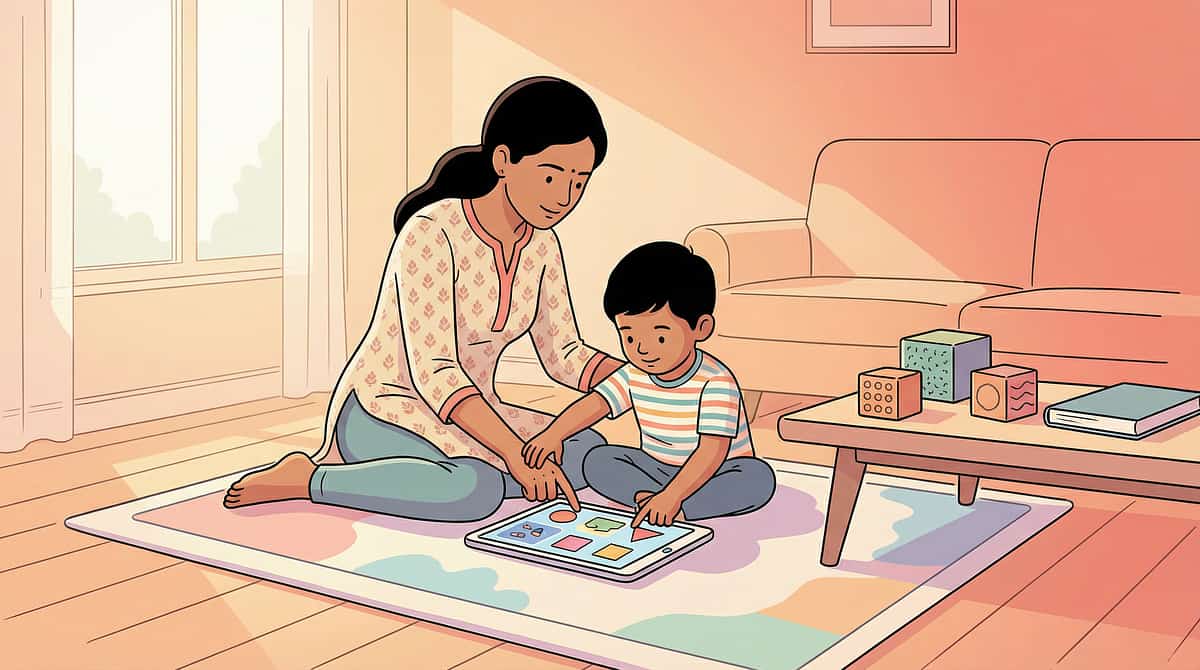
Step 2 of 6
Material 2: Video Clips
7–10 min | 3–5×/week | Weeks 1–4
Slow-Motion Practice with Video Clips
Real-time conversation moves faster than learning can track. Video gives the essential advantage: pause, rewind, discuss. The child practices reading cues without the simultaneous cognitive demand of speaking. Pattern recognition builds here before live application.
Pause Protocol — Exact Script
Parent pauses video: "Okay, freeze. Look at [listener's name]. What is their face doing? What is their body doing? What do you think they want to happen next in this conversation?"
Discuss correct identification. Replay to confirm. Celebrate noticing.
What to Do
- Select a short clip (2–3 min) showing a natural conversation
- Watch once together without pausing
- Rewatch — pause at 3–4 moments where listener is showing clear feedback signals
- Ask: "What is the listener's face doing here? What should the speaker do?"
- Progress check: Child identifies 2–3 obvious listener states → ready for Step 3
DIY Version: Pause any TV show or movie during a conversation. No special materials needed. Cost: ₹0.
Step 3 of 6
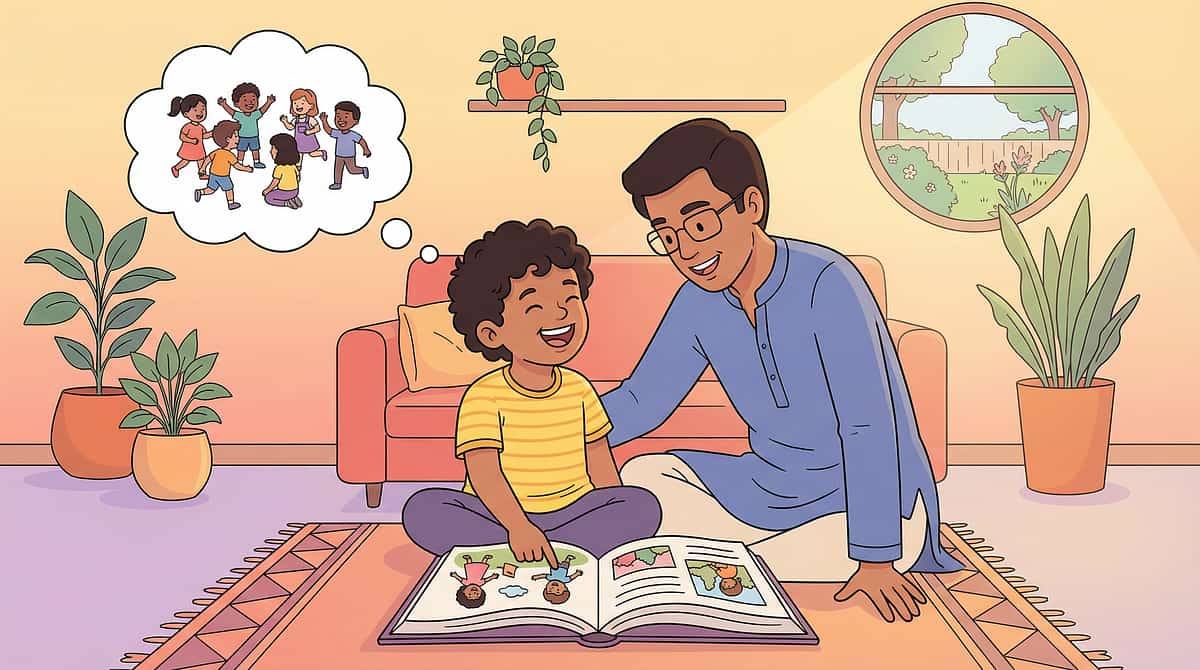
Material 4: Social Stories
5–8 min | 2–3×/week
Explain the Why: Social Stories
Social Stories® (Carol Gray, 1991) provide explicit, personalized explanations of social situations — the WHY behind cue reading, what signals to look for, and what to do when you notice them. They normalize the challenge without judgment and build cognitive frameworks that transfer to real situations.
"When I'm talking with someone, I like to share things I'm interested in. Sometimes the other person is enjoying the conversation. Sometimes they might be confused or ready to hear something different. I can check my listener by looking at their face and body. If they look interested — eyes on me, nodding, smiling — I can keep sharing. If they look bored or confused — looking away, short answers, body turning — I can ask: 'Is this interesting?' or 'Do you want to talk about something else?' Checking my listener helps conversations feel good for both of us." — Sample Social Story: "Checking My Listener"
Use the child's real name
Include real settings
Classroom, family dinner, recess
Add real photos
Actual environments where conversations happen
DIY: ₹0
Notebook + colored pens + drawings or printed photos
Step 4 of 6
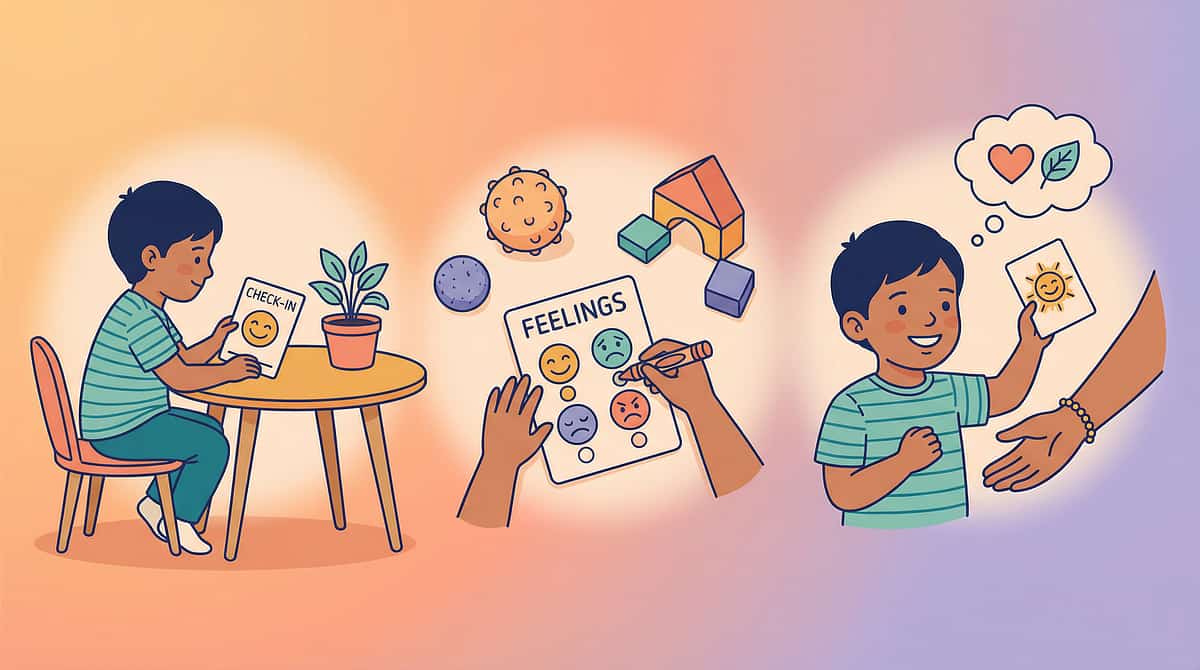
Material 5: Check-In Prompt Cards
Used during all practice conversations | Daily
Build the Habit: Check-In Prompt Cards
Knowing what cues look like is not enough if the child never looks. The cognitive load of speaking can fully absorb attention, leaving no resources for listener monitoring. Check-in prompt cards provide external reminders that gradually become internalized habits.
What to Do
- Create a simple card: front reads "👀 How does my listener look?"
- Place visibly in the child's hand or sight line during practice conversations
- When child glances at the card → they look at the listener's face
- Celebrate every check-in: "You looked! What did you notice?"
- Gradually fade the card across weeks 3–5
Exact Script:"Before we start talking, put this card where you can see it. Every time you think to look at my face, that's the card working. You don't have to check perfectly — just check."
Fading Protocol
External (Visible)
Card clearly in view
Tactile
Card in pocket
Visualized
Child imagines it
Internalized
Automatic habit
DIY Version: Index card + marker. Write "👀 Check my listener." Cost: ₹5–10. | ABA Principle: External antecedent stimuli gradually transfer to internal self-monitoring.
Step 5 of 6
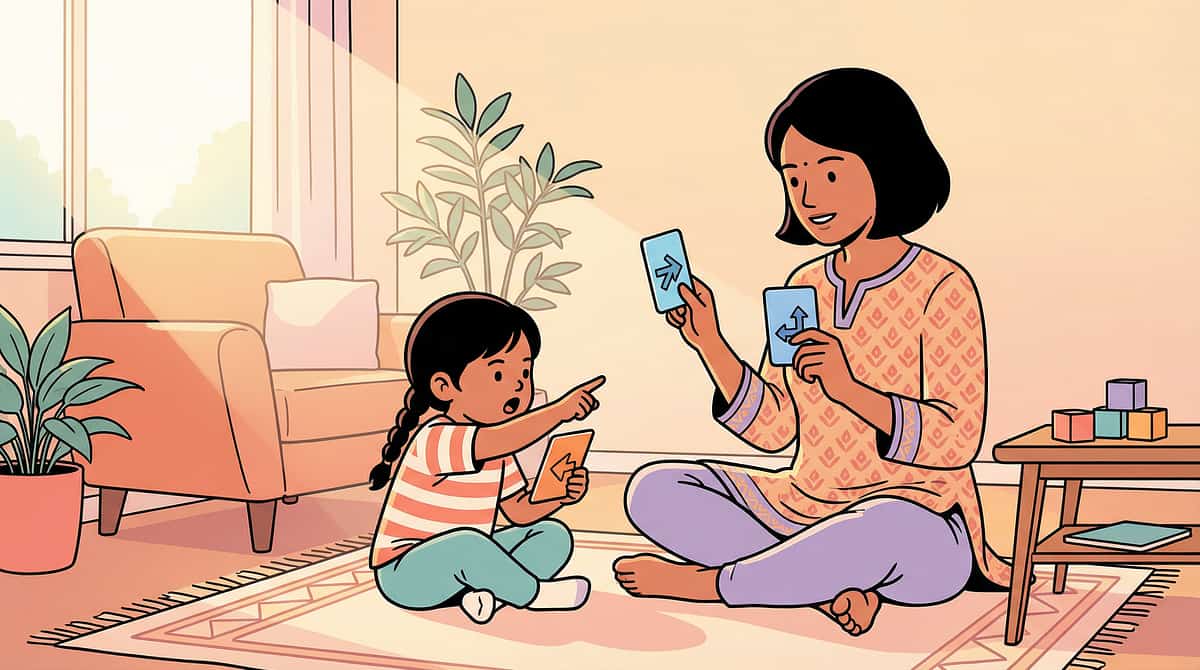
Materials 6 & 7: Role-Play + Signal Cards
10–15 min | Daily | Weeks 2–6
Practice Noticing: Role-Play with Signal Cards
Safe, structured practice is where skills crystallize. Role-play allows the child to try, fail safely, try again, and receive immediate warm feedback — the learning loop that builds neural pathways for real-world performance.
1
Phase A (Week 2–3)
Partner shows exaggerated boredom: ceiling-gazing, long sighs, "yeah..." responses. Child's job: Notice and say anything showing they noticed.
2
Phase B (Week 3–4)
Partner holds up signal card ("I want to say something" / "I'm confused"). Child reads and responds. Associate card signal with natural expression.
3
Phase C (Week 4–5)
Partner shows realistic disengagement: looking away occasionally, shorter responses. Child uses check-in card to scan listener.
4
Phase D (Week 5–6+)
Natural conversation with real listener monitoring expected. Partner provides gentle positive feedback when child checks in spontaneously.
DIY: No materials required for role-play. Signal cards: paper + marker. Cost: ₹0. Celebrate noticing regardless of response quality — the looking IS the skill being built.
Step 6 of 6
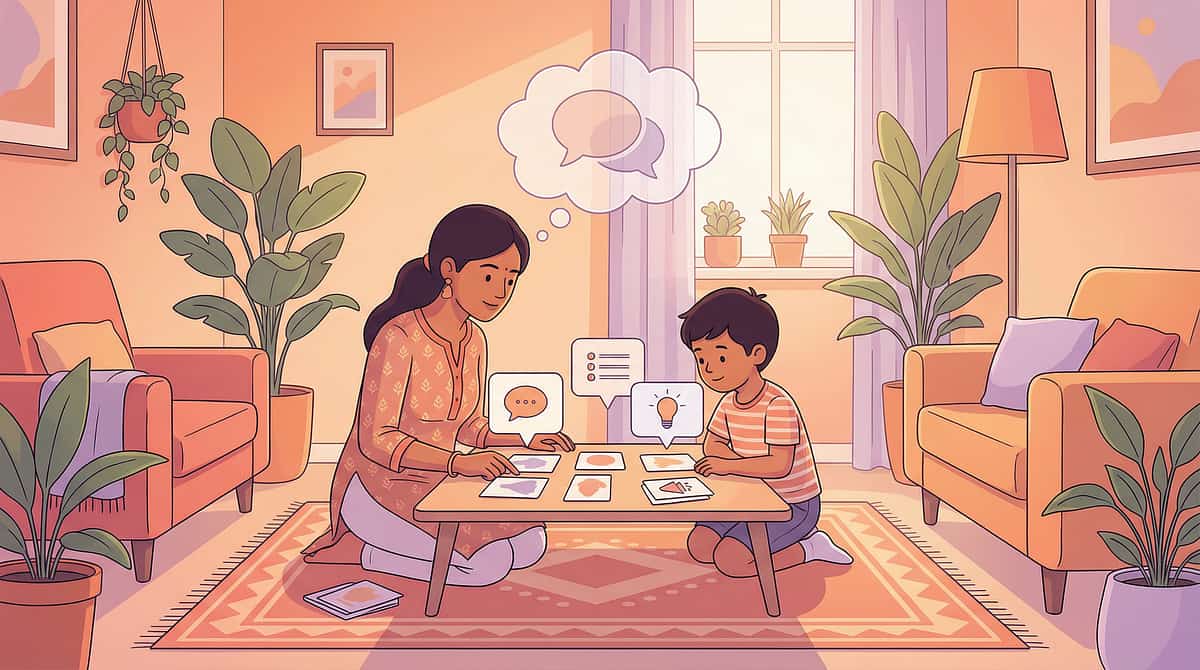
Materials 8 & 9: Thought Bubbles + Balance Visuals
10 min | 2–3×/week
Deepen the Foundation
The deepest layer of listener cue reading is theory of mind — wondering what the conversation partner is thinking and feeling. Thought bubble games exercise this "wondering muscle." Balance visuals create metacognitive awareness about conversational give-and-take.
💭 Thought Bubble Games
- Open a picture book, magazine, or family photo album
- Point to a person's face: "What do you think this person is thinking right now?"
- Draw or point to an empty thought bubble above the image
- Child fills it in (verbally or drawn)
- Discuss: "What clues in their face/body told you that?"
DIY: Draw thought bubbles on any photos. Cost: ₹0.
⚖️ Conversation Balance Visuals
- After a practice conversation, draw a simple balance scale together
- Left side: "Me talking" — Right side: "You talking"
- Estimate: Was the conversation balanced? Lopsided?
- Discuss: "When the scale tips too far one way, what does the listener start to feel?"
- Set a goal: "Next time, let's check the balance after 3 sentences"
DIY: Draw balance scale on paper. Cost: ₹0.
"Theory of mind is the cognitive engine of social connection. Every thought bubble game is strengthening the neural circuits that make listener monitoring possible." — Senior SLP, Pinnacle Blooms Network®

Capture Your Session Data
What gets measured, gets better. Five fields. Sixty seconds. Every data point you submit improves TherapeuticAI®'s recommendations for your child. Your session data is encrypted and private — and in aggregate, it helps every family in the Pinnacle network.
Date & Materials Used
Record today's date and check which materials you used: ☐ Expression Cards ☐ Video ☐ Social Story ☐ Prompt Card ☐ Role-Play ☐ Signal Cards ☐ Thought Bubbles ☐ Balance Visual
Readiness & Check-Ins
Rate readiness at session start (1–5 stars). Record number of spontaneous check-ins (without prompting).
Cues Noticed Today
☐ Facial expression ☐ Body language ☐ Verbal tone ☐ Short responses ☐ Turning away ☐ Looking at phone/clock
Parent Observation
☐ No change yet | ☐ Noticed when prompted | ☐ Noticed spontaneously | ☐ Noticed AND responded | ☐ Initiated topic change based on cue
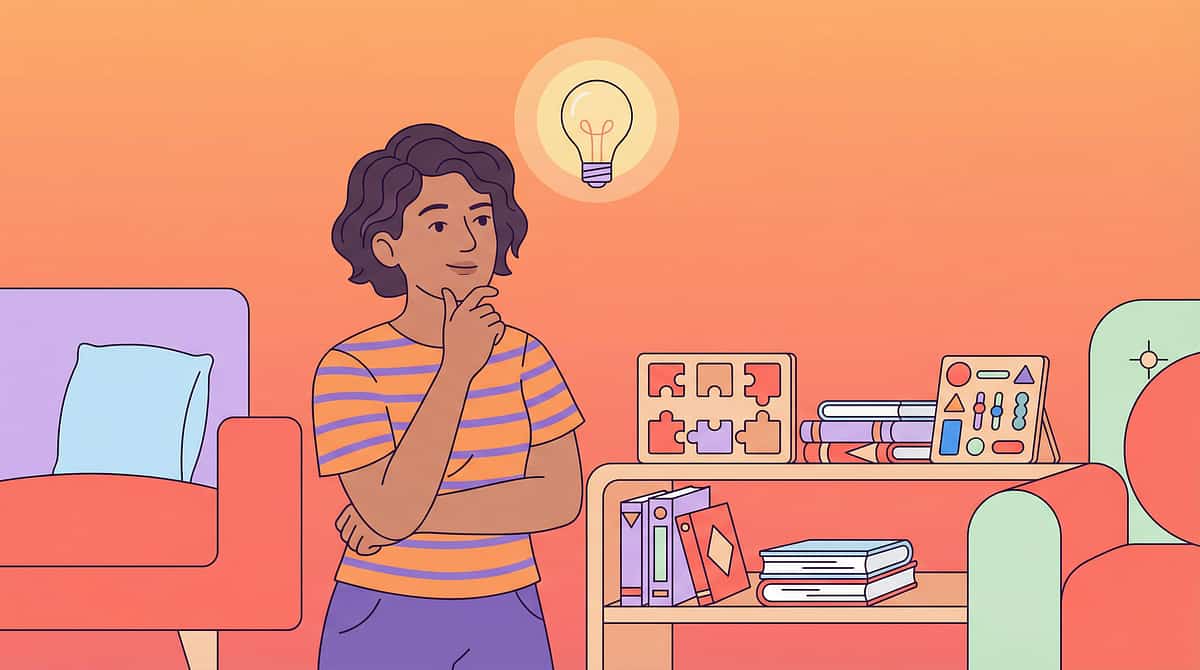
Troubleshooting: When It's Not Working
Every family hits walls. Here's how to break through. These are the most common challenges families face with B-214 — and the exact strategies that work.
"My child says 'I already know this' but still misses cues in real life"
The gap between knowing and doing. Shift to role-play (Step 5) with increasingly realistic cues. Real-life performance requires a different kind of practice than card recognition.
"My child notices boredom in videos but not in live conversation"
Normal progression. Video to live is a significant jump. Introduce signal cards as a bridge — make feedback explicitly visible before expecting them to read natural cues.
"My child gets upset when we practice and feels 'bad at talking'"
Stop technique-focused practice immediately. Spend 2 weeks on thought bubble games only — fun, low-pressure, no failure possible. Rebuild emotional safety first.
"My child is noticing but not responding — they see the boredom but keep talking"
Add response strategy practice. Create a menu of 3 things to DO when you notice a cue: (1) Ask a question (2) Change topic (3) Say "I've been talking a lot — your turn."
"My child refuses to practice"
Make it a game, not a lesson. "Can you catch me being confused?" Reverse roles — they show you cues, you practice noticing. Remove any sense of being tested.
Progress very slow or child in significant distress? Call 9100 181 181 for professional guidance. SLP assessment can identify specific processing differences requiring targeted approaches beyond home practice.
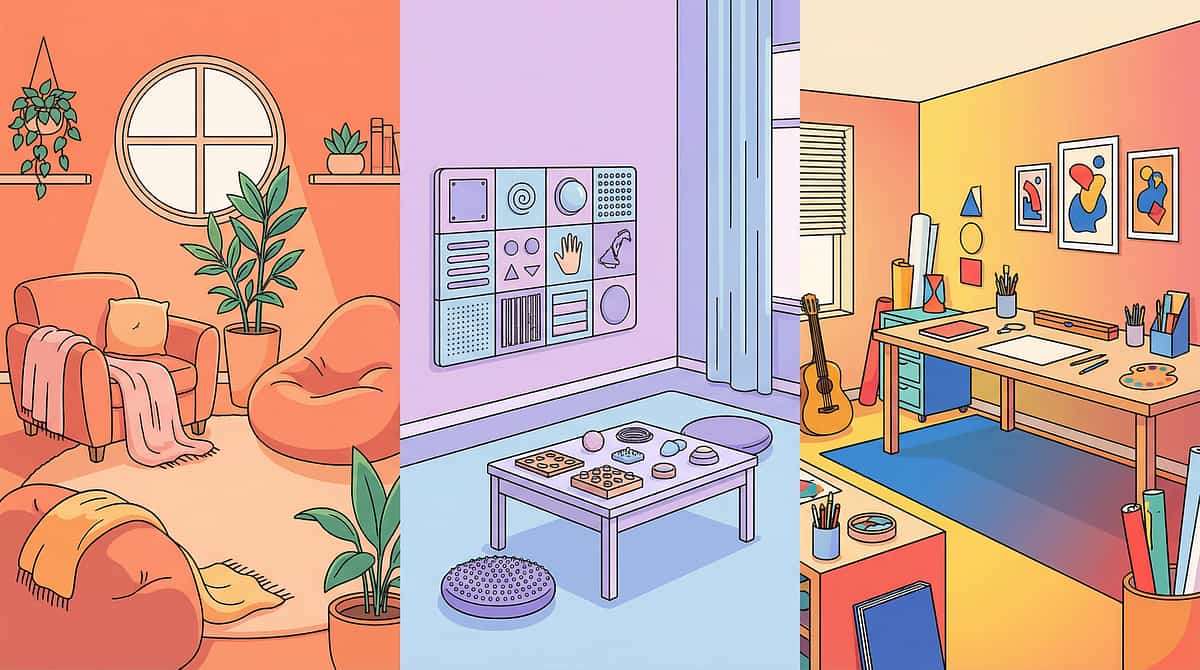
Personalize Your Approach
One technique. Infinite variations. Match your child. The B-214 protocol is designed to flex — not every child learns the same way, and individual adaptation is what transforms good technique into lasting change.

Highly Anxious Child
Focus exclusively on thought bubble games and video analysis for first 4 weeks. Avoid role-play that could feel evaluative. Celebrate noticing privately, not with effusive praise that draws attention.
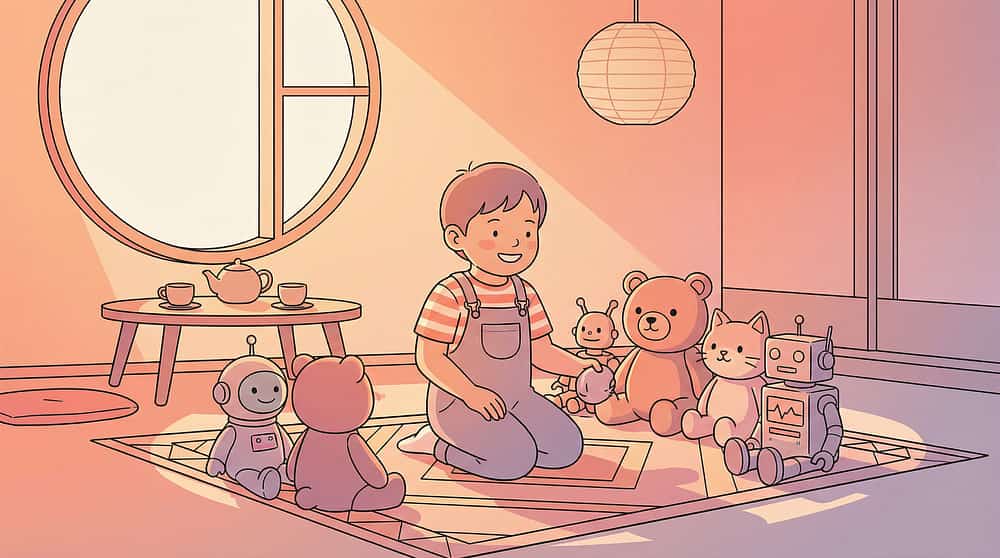
Very Young Child (5–7)
Use cartoon characters instead of real faces initially. Keep sessions to 5 minutes maximum. Focus only on 2 listener states: "Still listening" vs "Done for now."

Older Child (11–14)
Frame as social intelligence, not therapy. Use video analysis from teen shows/YouTube they already watch. Let them design their own check-in strategy — ownership improves adherence.
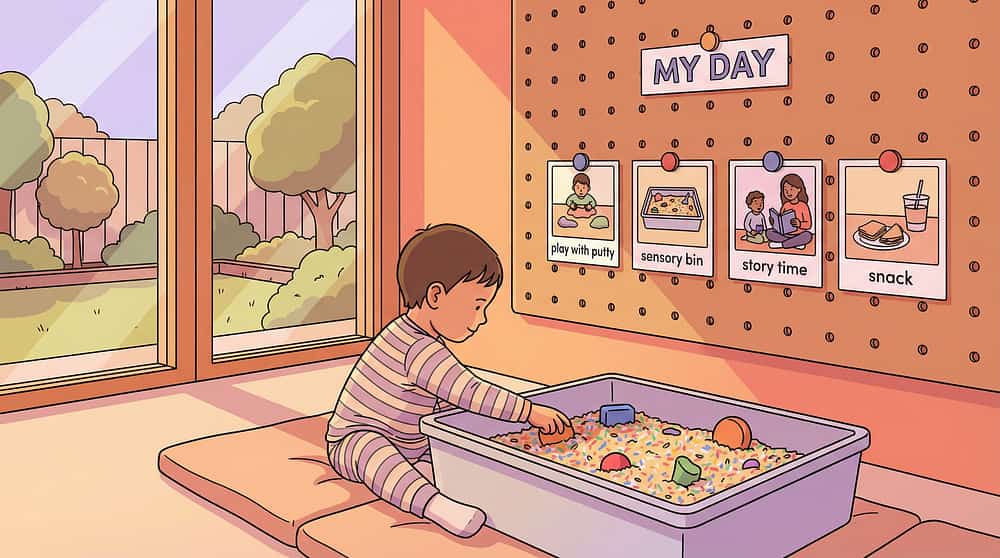
Strong Visual Learner
Lead with all visual materials. Create a visual "listener cue dictionary" they design themselves. Use visual timer for self-monitored check-in intervals.

Week 1–2: What to Expect
Slow is right. Here's what real progress looks like in the first two weeks. Progress in weeks 1–2 looks invisible to outsiders — it is happening inside. Stick with it.
✅ What You Will See
- Child can name 3–4 listener states from expression cards
- Child notices obvious cues in paused video clips
- Child is aware conversations have "listener feedback"
- Check-in card is used when visibly prompted
❌ What You Won't See Yet (Normal)
- Spontaneous cue-noticing in live conversation
- Topic changes in response to boredom signals
- Natural, unprompted check-ins
"If your child can say 'that face means they're bored' when looking at a photo — that is genuine, measurable progress. The brain is building the pattern library."

Week 3–4: Consolidation Signs
The neural pathways are forming. These are the signs. When your child starts doing something spontaneously that you only taught in structured practice — that is exactly what neuroplasticity looks like in real time.
✅ Catches obvious cues in role-play
With prompt card — responding to signal cards with appropriate conversational behavior
✅ Uses check-in card unprompted
Begins to look at the card without being reminded, then looks at listener's face
✅ Can narrate what they noticed
"You were looking away — does that mean you're bored?" — metacognitive awareness emerging
✅ Spontaneous glances in casual conversations
Parent notices child checking listener face during everyday conversations — even outside practice structure
When to increase frequency: If child is consistently noticing in structured settings → increase unstructured practice opportunities. Add a weekly family conversation game where listener cues are the focus. Synaptic strengthening follows predictable timelines with sustained intervention.

Week 5–8: Emerging Proficiency
Something has changed. Here's how to know it's real.
Your child asks, in the middle of a real conversation (not practice): "Am I talking too much?" or "Do you want to say something?" or "Should we talk about something else?" This is the moment. This is what weeks of practice has built.
✅ What Emerging Proficiency Looks Like
- Catches most obvious listener cues in live conversation with check-in card
- Responds to noticed cues — asks a question, pauses, changes topic
- Conversation balance has shifted — more reciprocal exchanges
- Peers are responding differently — less avoidance, more engagement
- Child reports feeling "better at talking" — self-confidence growing
⏳ What Still Needs Time
- Subtle cues — mild interest waning, polite disengagement
- Multiple simultaneous channels: face AND body AND tone together
- High-pressure social situations — large groups, new people
Celebrate the wins explicitly: "I watched you check on me during our conversation today. I saw you look at my face when I paused. That's a huge skill. I'm so proud of you."
Mastery Indicators: When You Know It's Worked
This is what success looks like. You'll know it when you see it — and when you do, acknowledge it clearly and warmly. This is what weeks of patient, consistent practice produces.
Natural Monitoring
Monitors listener faces naturally during conversation without external prompt, across different settings
Real-Time Adjustment
Adjusts communication based on what they notice — asks questions, changes topic, pauses mid-sentence
Reciprocal Conversations
Conversations feel balanced — both people contributing. Peers engaging more comfortably and consistently
Empathy-Linked Behavior
"I think you're tired — do you want to stop?" Self-corrects mid-conversation: "Sorry, I think I've been going on too long"
You did this. You read research. You set up sessions. You stayed patient through weeks when progress was invisible. You kept going. This is what parenting as therapeutic partnership looks like. — Pinnacle Blooms Network®

Red Flags: When to Escalate Immediately
When home practice is not enough — act now. Most children make steady progress with consistent home practice. But certain signs indicate that professional evaluation is needed and should not be delayed.
🔴 Seek Professional Evaluation If:
- Child cannot identify any listener states from expression cards after 4+ weeks of practice
- Social isolation is worsening — child is actively excluded by peers
- Child's emotional wellbeing is significantly affected (depression, anxiety, school refusal)
- Difficulty reading cues is accompanied by other social communication challenges across multiple domains
- Family history or clinical presentation suggests autism spectrum disorder not yet evaluated
- Child has language processing difficulties alongside cue reading challenges
- Practice sessions consistently result in significant emotional distress
Professional | What They Do | |
Speech-Language Pathologist | Pragmatic language assessment; structured social communication intervention | |
Psychologist | Social cognition assessment; ASD evaluation; anxiety management | |
NeuroDevelopmental Pediatrician | Comprehensive developmental evaluation; diagnostic clarity; GPT-OS® access |
📞FREE National Helpline: 9100 181 181 | 16+ Languages | 24×7 | First guidance call is FREE. This content is educational. Clinical diagnosis requires licensed professional evaluation. Pinnacle Blooms Network® CIN U74999TG2016PTC113063.
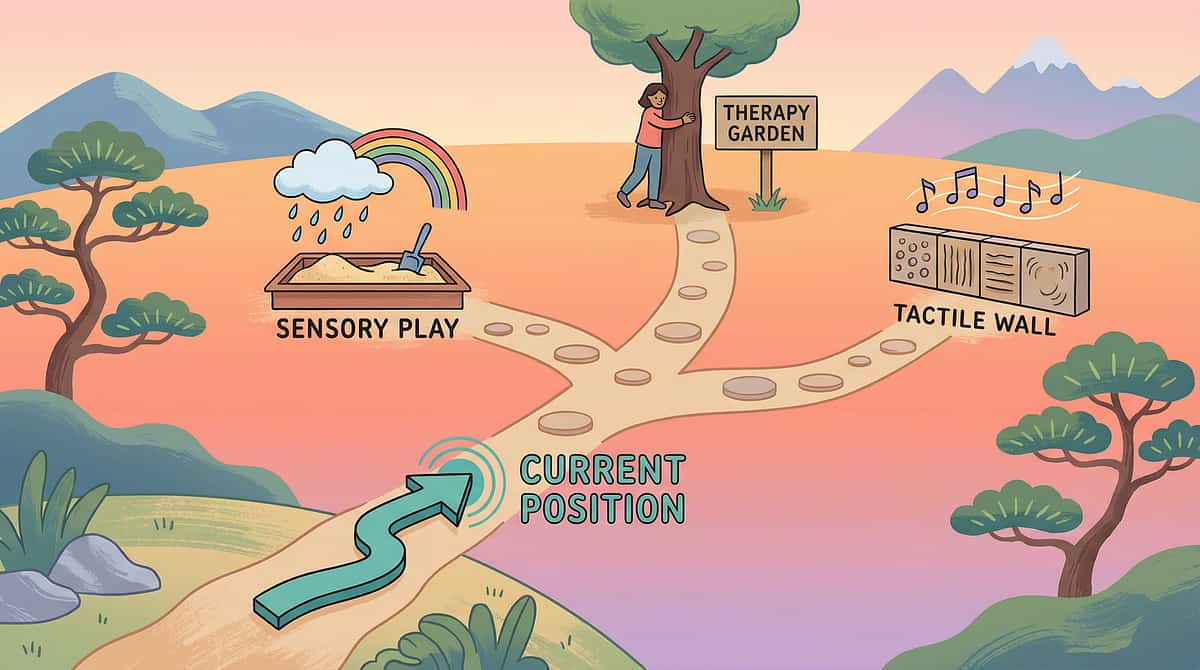
Your Pathway Map: What Comes Next
B-214 is one step on a larger journey. Understanding where it fits in the Social Communication domain helps you plan your child's full therapeutic arc with confidence.
← Prerequisite Techniques
- B-212: Topic Maintenance Challenges
- B-213: Difficulty With Conversational Repair
↔ Lateral Alternatives
- B-210: Interrupting Constantly
- B-211: Turn-Taking in Conversation
→ Next-Level Techniques
- B-215: Adjusting Communication to Context
- B-216: Understanding Nonliteral Language
- B-220: Perspective-Taking Difficulties (deeper work)
Long-Term Goal: Spontaneous, fluent conversational reciprocity across all social contexts — friendships, family, school, community.
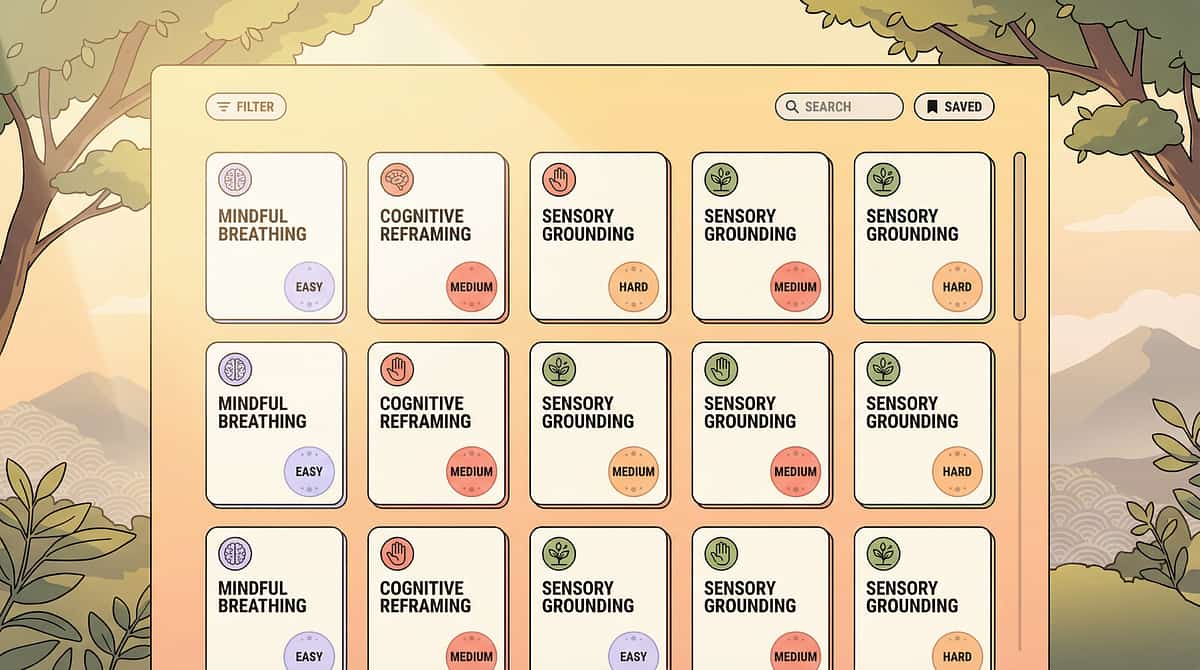
Related Techniques in the B Domain
Keep building. Here are the techniques that work alongside B-214. You likely already own the materials for several of them — zero additional cost to begin.
Technique | Code | Difficulty | Materials You Already Have | |
Topic Maintenance | B-212 | 🟡 Core | Expression Cards, Social Stories | |
Conversational Repair | B-213 | 🟡 Core | Role-Play, Signal Cards | |
Context-Based Communication | B-215 | 🔴 Advanced | All B-214 materials + visual context cards | |
Nonliteral Language | B-216 | 🔴 Advanced | New: idiom/metaphor cards | |
Interrupting | B-210 | 🟢 Intro | Signal Cards (already owned) | |
Turn-Taking | B-211 | 🟢 Intro | Balance Visuals (already owned) |
You have the materials for B-210 and B-211 already. Zero additional cost to begin those techniques today. Browse the full B-Domain at pinnacleblooms.org/domain-b
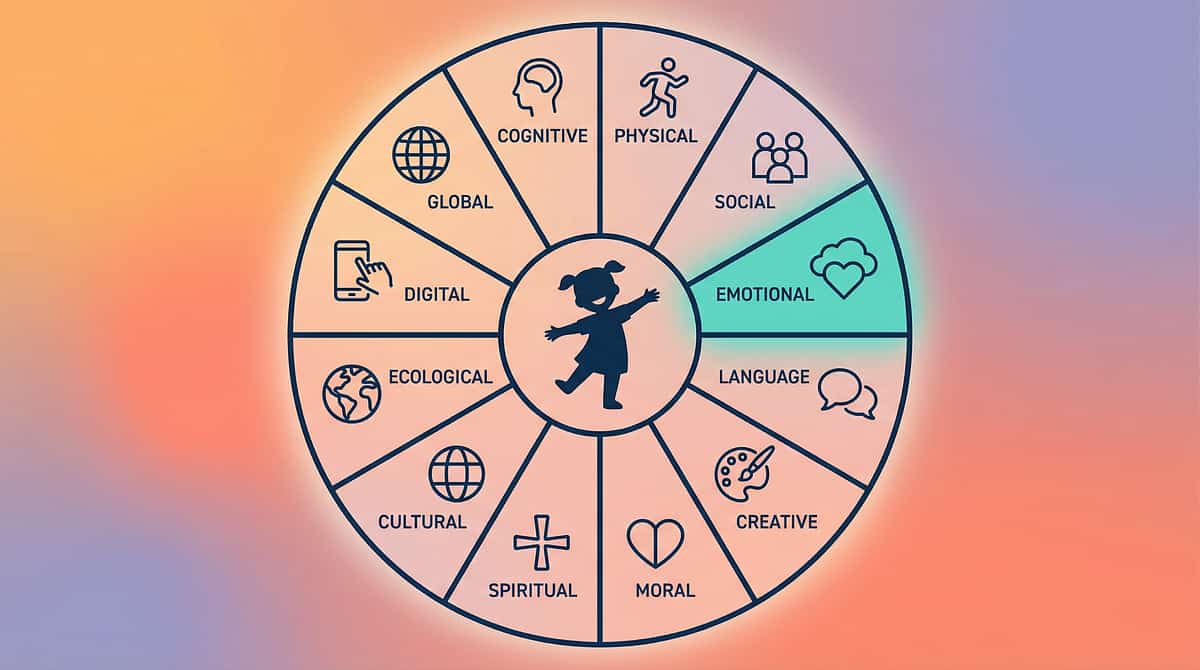
Your Child's Full Developmental Map
B-214 is one piece. Here's the whole picture. Listener cue reading (Domain B) connects directly to Emotional Regulation (Domain C), Perspective-Taking (Domain B/E overlap), and Cognitive Self-Monitoring (Domain J).
Domain Connections for B-214
- Domain C: Emotional Regulation — safety enables monitoring
- Domain E: Language & Communication — vocabulary for cues
- Domain J: Academic Readiness — classroom participation
- Domain F: Cognitive Development — theory of mind foundation
GPT-OS® Integration
Your child's B-214 progress feeds into the Social Communication Readiness Index, which shapes their personalized GPT-OS® therapy pathway across all 12 developmental domains.
FREE Helpline: 9100 181 181 | WHO/UNICEF Nurturing Care Framework — five components of nurturing care require holistic developmental monitoring.
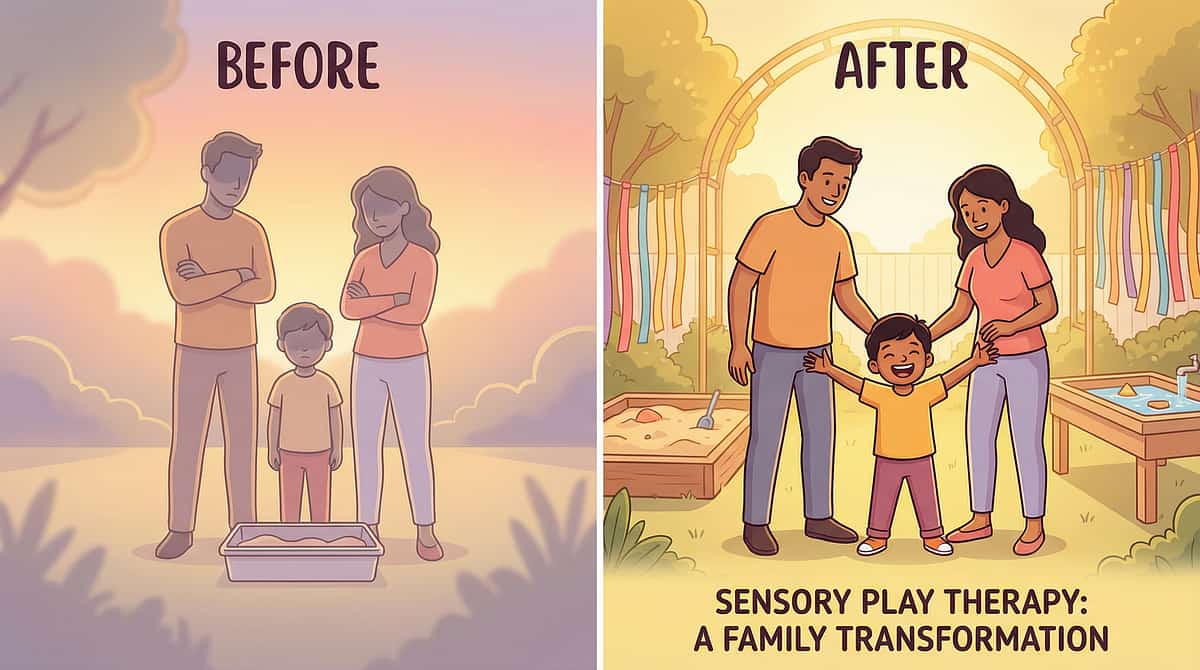
Families Who've Been Here
Real families. Real conversations. Real change. These are anonymized accounts from families who completed the B-214 protocol through the Pinnacle Network.
Family Story 1 — Week 10
Before: "My daughter talked at people, not with them. Fifteen minutes about her book series while her listener checked their phone. Her classmates were starting to avoid her."
After: "She interrupted herself mid-story to ask: 'Do you want to hear more about this or should we talk about something else?' Her classmate said 'wow, I love that you asked.' I almost cried." — Parent, Pinnacle Network (anonymized) | B-214, 10 weeks
Family Story 2 — Week 6
Before: "My son knew emotions — happy, sad, angry. But listener states were completely foreign. He'd keep talking while his grandfather literally stood up to leave."
After: "He made a facial expression dictionary with photos of our family. He now asks 'Grandpa, am I boring you?' — and Grandpa loves it." — Parent, Pinnacle Network (anonymized) | Started with expression cards
"The breakthrough moment for listener cue reading is always the same: the child stops mid-conversation, looks at the listener's face, and notices something. That pause — that intentional looking — is everything we've been building toward." — Senior SLP, Pinnacle Blooms Network®
Outcomes represent actual anonymized cases. Individual results vary. Statistics represent aggregate outcomes.

Connect With Other Parents
Isolation is the enemy of consistency. You don't have to do this alone. Research confirms that parent networks improve adherence, reduce caregiver burnout, and accelerate child outcomes — WHO NCF (2018).
WhatsApp Parent Group
B-Domain Pragmatic Language Parent Group. Request to join via helpline 9100 181 181.
Pinnacle Parent Forum
Online community at pinnacleblooms.org/community — questions, progress shares, peer encouragement.
Local Center Meetups
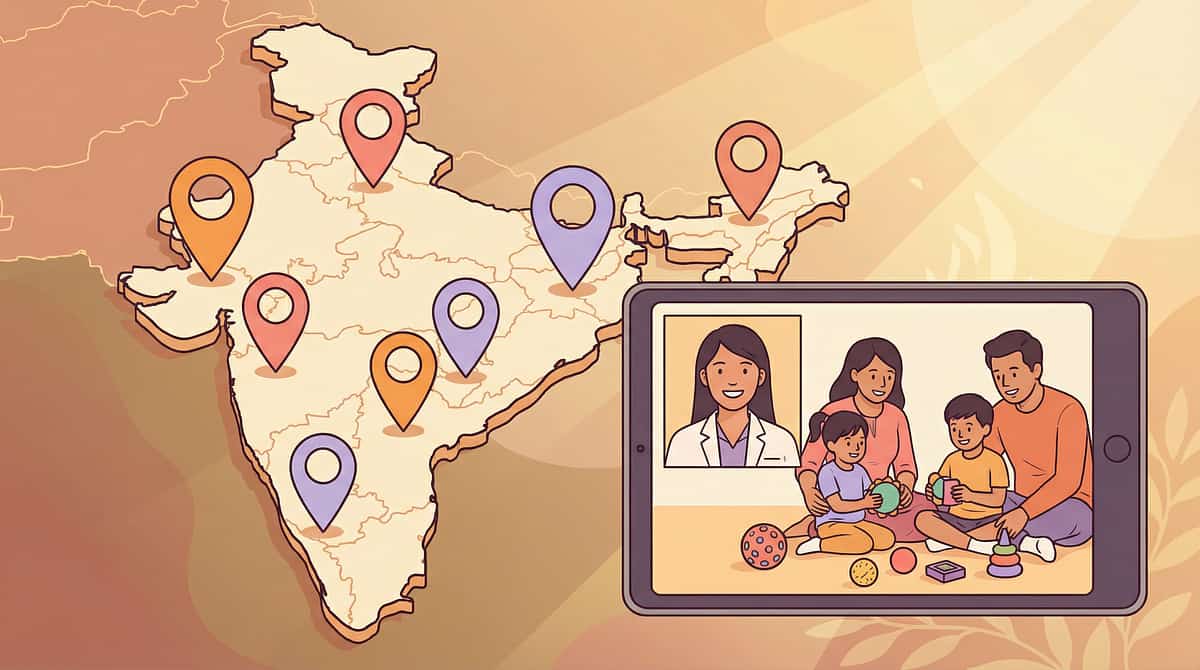
70+ centers across India. In-person parent meetups where you can meet families navigating the same journey.
Peer Mentoring
Connect with a parent who has completed B-214. Ask at 9100 181 181. Their week 4 story may be what keeps you going through yours.
"The single most helpful thing for us was talking to a parent who had already done this. They told us what weeks 3–4 feel like when nothing seems to be working. Knowing it was normal kept us going." — Parent, Pinnacle Network
When to Bring in a Professional
Home practice is powerful. Professional expertise is irreplaceable. These are not competing approaches — they are partners. Here's who does what, and how to reach them through the Pinnacle Network.
Speech-Language Pathologist
Pragmatic language assessment; structured social communication therapy; formal evaluation of listener cue reading within language profile.
Psychologist / Neuropsychologist
Social cognition assessment; comprehensive ASD evaluation; anxiety management that may be affecting listener monitoring.
NeuroDev. Pediatrician
Comprehensive developmental evaluation; diagnostic clarity (ASD, ADHD, SCD); GPT-OS® AbilityScore® assessment initiation.
📞FREE National Helpline: 9100 181 181 — Our coordinators will guide you to the right professional within the Pinnacle Network or nearest verified partner. 16 languages. 24×7. No cost. No commitment. Just guidance.
The Research Library
Deeper reading for the curious parent — and for professionals who want to review the evidence base. All materials and protocols on this page are derived from peer-reviewed evidence. We do not cite studies we have not read.
Study | Finding | Reference | |
PRISMA Systematic Review (2024) | Social communication intervention is evidence-based for ASD | PMC11506176 | |
Meta-analysis — World J Clin Cases (2024) | Structured intervention promotes social skills, adaptive behavior, communication across 24 studies | PMC10955541 | |
Padmanabha et al. — Indian J Pediatr (2019) | Home-based structured programs demonstrate significant outcomes when parents are trained | DOI: 10.1007/s12098-018-2747-4 | |
NCAEP Evidence-Based Practices (2020) | Video modeling and social skill training are classified EBPs for autism | NCAEP 2020 | |
WHO CCD Package (2023) | Age-specific caregiver-administered interventions effective across 54 LMICs | PMC9978394 | |
Int J Speech-Lang Pathol (2022) | Multi-disciplinary approach aligned with WHO Nurturing Care Framework | DOI: 10.1080/17549507.2022.2141327 |

How GPT-OS® Uses Your Data
Your session data makes your child's therapy smarter — and helps every child like yours. Here's exactly how the system works, with full transparency.
What GPT-OS® Learns from B-214 Data
- Speed of visual vocabulary acquisition (expression card mastery rate)
- Transfer rate from video to live practice (generalization velocity)
- Prompt dependency curve (how fast check-in becomes internalized)
- Response quality when cues are noticed (naming vs. acting)
- Social consequence correlation (cue reading improvement vs. peer relationship change)
Privacy Assurance
All session data is encrypted at rest and in transit. Pinnacle operates under ISO/IEC 27001 (Information Security). Your data is never sold.
Population Impact: When thousands of families track B-214 progress, the system learns what works fastest for which child profiles. Your contribution is a gift to families you'll never meet.
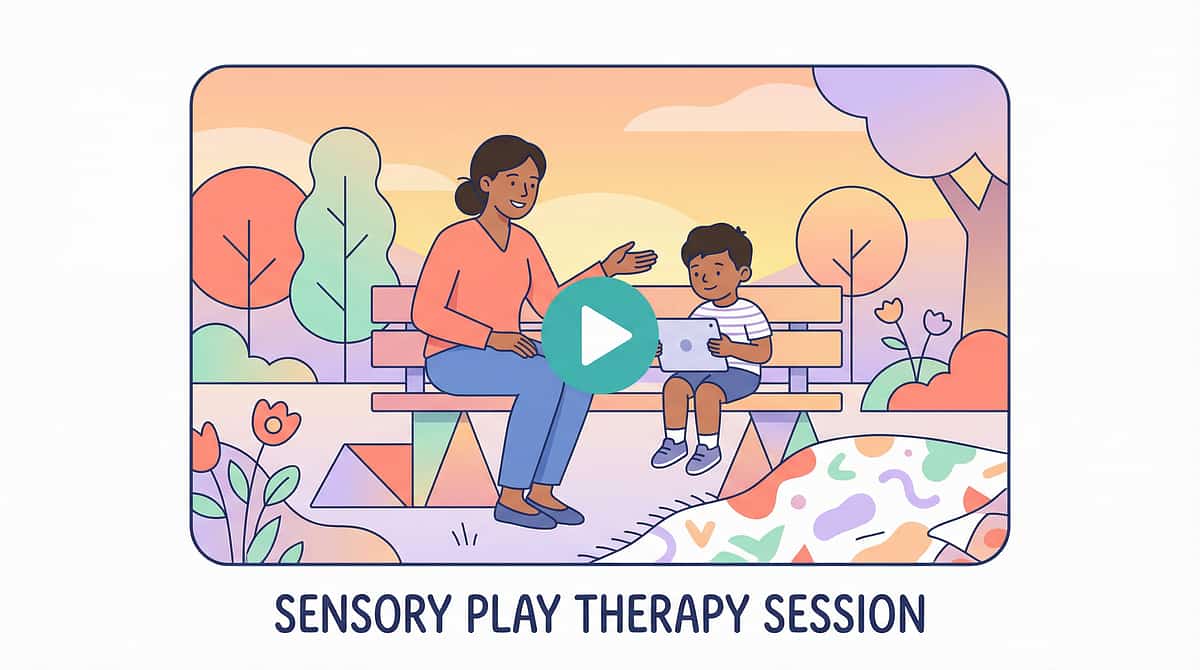
Watch the B-214 Reel
9 Materials That Help Reading Listener Cues | Episode 214 | Social Communication & Pragmatic Language Solutions Series
"Children who miss listener cues aren't self-centered or uncaring. They're often missing an entire channel of communication that others receive automatically. The listener's feedback — through face, body, and tone — simply doesn't register the same way. The good news: these cues can be taught. The invisible can be made visible." — Therapist Introduction, B-214 Reel
This Reel introduces all 9 materials in 60 seconds — facial expression cards, video analysis, body language guides, social stories, check-in prompts, role-play, signal cards, thought bubble games, and conversation balance visuals. Watch it to see each material in action before starting your home practice.
Multi-Modal Principle: Video + text + practice = the three-channel learning model that produces fastest skill acquisition. Watch the Reel, read this page, then practice. The combination is more powerful than either alone.
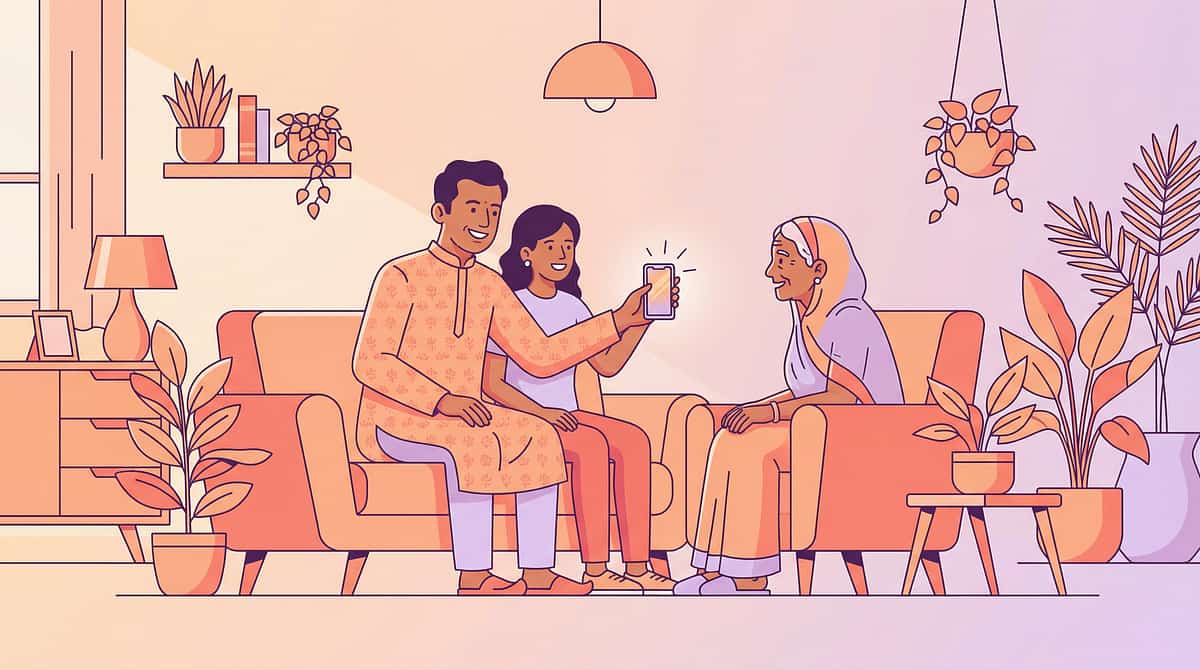
Share This With Your Family
Consistency across caregivers multiplies impact. Research shows multi-caregiver consistency is one of the strongest predictors of pragmatic language generalization (WHO CCD Package, PMC9978394).
For Grandparents — Simplified Version
"[Child's name] is learning to notice when people are still interested in a conversation. When they're talking to you, try showing your face reactions clearly — smile when you're enjoying it, look a little puzzled when you're confused. After conversations, you can kindly ask: 'Did you notice what my face was doing when you were talking?' That's the whole strategy. Thank you for being part of this."
Teacher Communication Template
"Dear [Teacher], [Child's name] is working on reading listener cues as part of their communication development. At home, we're using facial expression cards and check-in prompts. If you could use explicit verbal feedback ('I'm confused — can you explain that differently?') rather than relying only on facial expressions, it would help build the skill in the classroom. Thank you for your partnership."
Frequently Asked Questions
Your questions, answered by our consortium of SLPs, ABA specialists, and NeuroDevelopmental Pediatricians.
My child identifies expressions on cards but misses them in real conversation. Why?
Recognition in a static context and detection in real-time conversation are different cognitive tasks. The card-to-live transfer requires a bridge — use video clips (Step 2) and role-play with check-in prompts (Steps 4–5) to build that bridge systematically. This gap is normal and expected.
How long does it take to see results in real-life conversations?
Most families report first spontaneous cue-noticing in live conversation between weeks 4–8 with daily practice. Research shows social communication intervention outcomes emerge across 8–12 week timelines. Pace varies with child profile, practice consistency, and starting baseline.
Is this only for children with autism?
No. Listener cue reading difficulties occur in children with ASD, ADHD, Social (Pragmatic) Communication Disorder, language processing differences, and some neurotypical children who simply haven't developed the skill yet. These materials work across profiles.
My child is 12. Is it too late?
Not at all. Pragmatic language is learnable throughout adolescence and beyond. Older children (11–14) often make faster gains because their metacognitive capacity is stronger. Frame it as social intelligence, not remediation.
Should I tell my child WHY we're practicing this?
Yes, age-appropriately and compassionately. "I've noticed that sometimes in conversations, it's hard to know what the other person is thinking. We're going to practice a skill that will help you have better conversations." Transparency + framing as a skill — not a deficit — builds motivation.
What if my child refuses to practice?
Make it a game. Reverse the roles — let them show YOU listener cues and see if you can catch them. Embed practice into activities they already love. Remove all sense of evaluation. When practice feels playful, resistance drops.
We practice but I don't see any change at school. Why?
Skill generalization from home practice to school requires additional steps: explicit instruction about school-specific situations, role-play in school-context scenarios, teacher awareness, and ideally, a school-based social skills group. Call 9100 181 181 for guidance.
When should I stop using the check-in prompt card?
When the child checks in without looking at the card. Fade systematically: visible card → card in pocket → visualization of card → no card needed. The goal is internalization, which typically happens between weeks 6–10 for consistent practicers.
Didn't find your answer? Ask GPT-OS® at pinnacleblooms.org/gpt-os | Book a teleconsultation at pinnacleblooms.org/book | Call FREE: 9100 181 181

You Have Everything You Need to Start Today.
The listener's face is about to become visible to your child. Starting is the hardest part. Everything else is practice.
🔬 Get Your Child's AbilityScore®
Free assessment entry point. 15-minute intake. Understand your child's Social Communication Readiness Index baseline. Personalized GPT-OS® pathway generated.
📞 Call Our FREE Helpline
9100 181 181 | 16+ Languages | 24×7
Talk to a Pinnacle specialist right now. No cost. No commitment. Just guidance.
Talk to a Pinnacle specialist right now. No cost. No commitment. Just guidance.
📚 Start Practice Today — Free
No cost. No registration. Start with facial expression cards (Step 1) right now using the DIY version. Your child's journey begins with one practice session.
CIN: U74999TG2016PTC113063 | DPIIT: DIPP8651 | MSME: TS20F0009606 | GSTIN: 36AAGCB9722P1Z2 | This page is educational. It does not replace clinical assessment or therapeutic planning by licensed professionals. Individual results may vary.
Preview of 9 materials that help reading listener cues Therapy Material
Below is a visual preview of 9 materials that help reading listener cues therapy material. The pages shown help educators, therapists, and caregivers understand the structure and content of the resource before use. Materials should be used under appropriate professional guidance.


Link copied!

The Pinnacle Promise
Every page in this library — all 70,000+ technique pages — was built on one conviction: that a parent armed with the right knowledge, the right materials, and the right system is a therapeutic force that no clinic can replicate.
You know your child. You are with them 24 hours a day. You can embed learning into every conversation, every meal, every car ride. Pinnacle's job is to give you exactly what you need — clinically validated, scientifically grounded, practically executable — so that you can transform your home into the most powerful therapy environment your child will ever access.
This is not a service. This is a system. And you are now part of it. — Pinnacle Blooms Network® Founders
Continue Your Journey: B-215 — Adjusting Communication to Context
Your child's next step is ready. Begin B-215 →
Your child's next step is ready. Begin B-215 →
© 2025 Pinnacle Blooms Network®, unit of Bharath Healthcare Laboratories Pvt. Ltd. All rights reserved.
CIN: U74999TG2016PTC113063 | DPIIT DIPP8651 | MSME | GSTIN: 36AAGCB9722P1Z2
pinnacleblooms.org | care@pinnacleblooms.org | FREE Helpline: 9100 181 181
CIN: U74999TG2016PTC113063 | DPIIT DIPP8651 | MSME | GSTIN: 36AAGCB9722P1Z2
pinnacleblooms.org | care@pinnacleblooms.org | FREE Helpline: 9100 181 181
This content is educational. It does not replace assessment by a licensed speech-language pathologist, psychologist, or healthcare provider. Persistent difficulty reading social cues should be evaluated comprehensively to understand underlying causes and guide appropriate intervention. Individual results may vary. Statistics represent aggregate outcomes across the Pinnacle Blooms Network®.