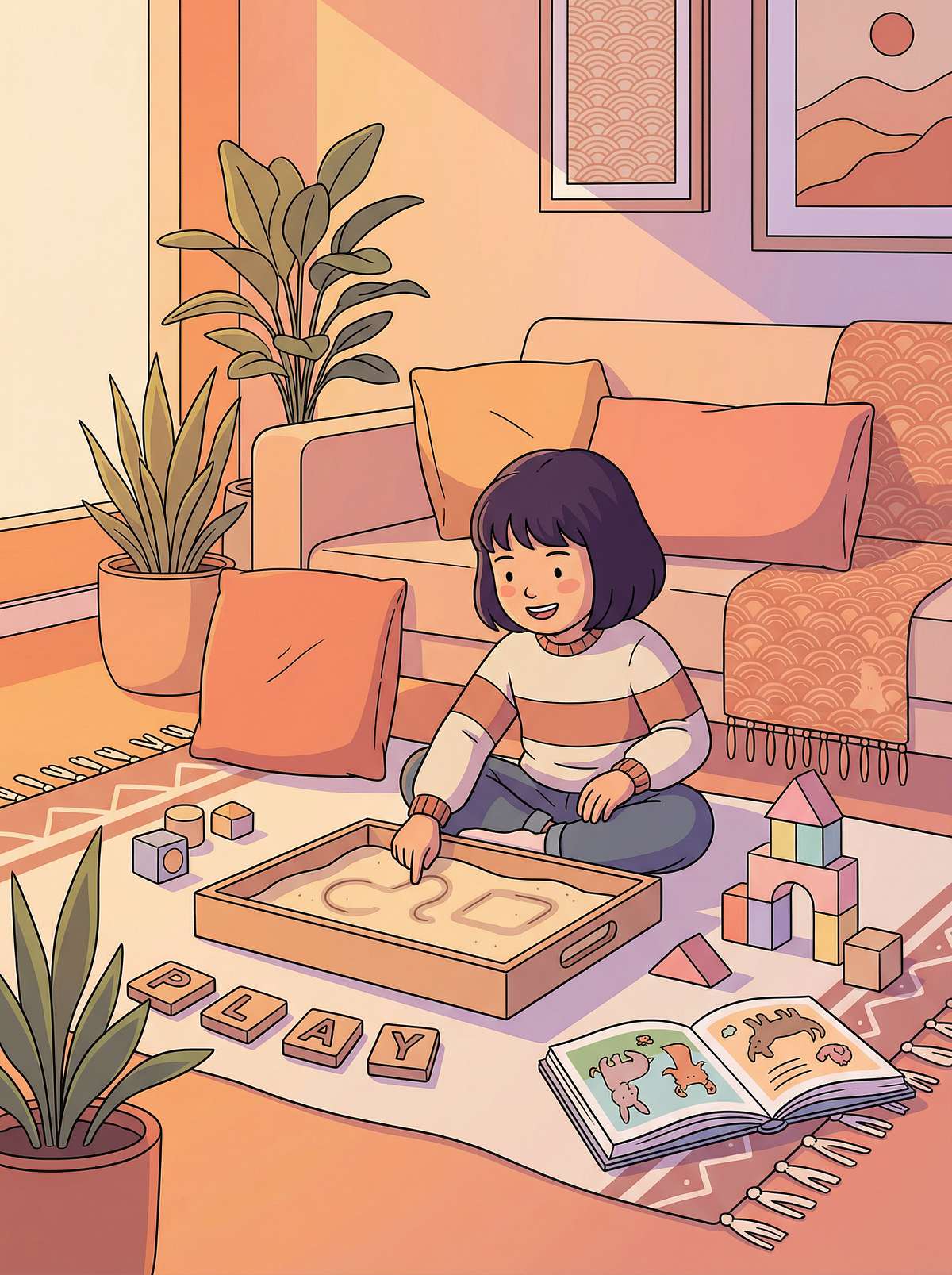
It's homework time. Your son is at the table, pencil in hand, textbook open — and completely, utterly elsewhere. Not because he doesn't care. Not because he isn't trying. But the moment you hand him a number grid to jump on, or let him build the story with blocks, he lights up. He IS brilliant. School just isn't asking in a language his brain speaks yet.
You are not failing. Your child's learning system is simply wired for more pathways.
WHO Nurturing Care Framework (2018): Early caregiver awareness directly shapes developmental trajectories.

If your child learns differently, they are in extraordinary company.
Millions of families worldwide are navigating this exact challenge. The children who struggle to learn the traditional way are often the ones who learn most powerfully — when given the right pathways.
Children Globally
Experience some form of learning difference — visual, auditory, tactile, or kinesthetic processing variance. UNESCO Global Education Monitoring Report, 2023
Learn Better Multi-Sensorily
Of all children learn significantly better through multi-sensory approaches than through traditional single-modality instruction. Dual Coding Theory, Paivio
Diagnosed Learning Difference
Of school-age children have a diagnosed learning difference (dyslexia, dyscalculia, ADHD) making multi-sensory instruction essential — not optional. International Dyslexia Association, 2023
Systematic review (2024): 80% of children with autism display sensory processing differences affecting learning. PMC11506176 | PMC10955541 | DOI: 10.12998/wjcc.v12.i7.1260
This is not a learning problem. It's a learning pathway difference.
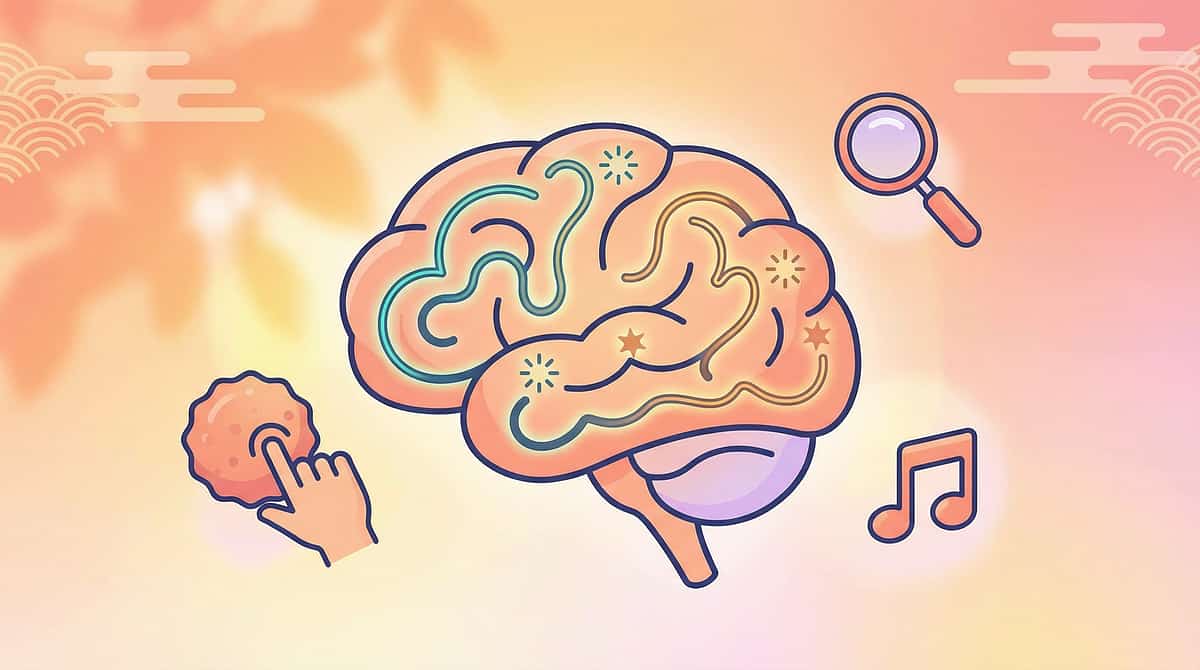
Every time your child sees, hears, touches, or moves through information — a different part of their brain activates. When multiple pathways fire simultaneously, the brain creates a network of memory traces — not just one fragile thread.
Traditional schooling engages primarily two pathways: visual (reading the board) and auditory (listening to the teacher). Multi-sensory learners need three or four pathways firing at once — not because they're less capable, but because their memory-formation architecture is richer and more interconnected.
The science word: Dual Coding Theory (Paivio, 1971 — still the gold standard). Information encoded through both verbal and non-verbal channels is remembered with significantly greater accuracy and durability.
What this means for your child: When your child traces a letter in sand WHILE saying the sound WHILE seeing the symbol — three neural pathways fire simultaneously. The memory lives in three places, not one.
This is a wiring difference, not a broken brain.
Four Pathways. One Memory.
👁 VISUAL
Occipital lobe — "Sees it"
👂 AUDITORY
Temporal lobe — "Hears it"
✋ TACTILE
Somatosensory cortex — "Feels it"
🏃 KINESTHETIC
Motor cortex + Cerebellum — "Moves with it"
When more pathways activate, more memory forms. All four arrows flow into the hippocampus — the memory formation zone.
Every child begins multi-sensory. School often narrows it. We widen it back.
Understanding where your child sits on the developmental map helps you see that multi-sensory needs are not a flaw — they are the developmental default being squeezed out by narrow instructional approaches.
Birth – 18 Months
Pure multi-sensory explorer. Taste, touch, sight, sound, smell — ALL channels fully open. This is the developmental default. WHO CCD: Foundational sensory integration window.
18 Months – 3 Years
Language and symbolic understanding emerge. Multi-sensory exploration intensifies. Children learn through doing, touching, and moving.
3–5 Years
Early Childhood. Multi-sensory approaches essential for letter formation, number concepts, and early literacy. Active play is the primary learning vehicle.
5–8 Years ★ YOUR WINDOW
School narrows instruction to visual-auditory. Children needing tactile/kinesthetic pathways begin to struggle — not from inability, but from pathway mismatch. This is where multi-sensory materials make the biggest difference.
8–12 Years
Consolidation phase. Orton-Gillingham and structured literacy interventions show strongest outcomes here. Multi-sensory approaches bridge to academic confidence.
12–14 Years
Self-advocacy development. Learner begins to identify and request preferred modalities. Multi-sensory study strategies support secondary academic demands.
WHO Care for Child Development (CCD) Package | UNICEF MICS indicators | PMC9978394

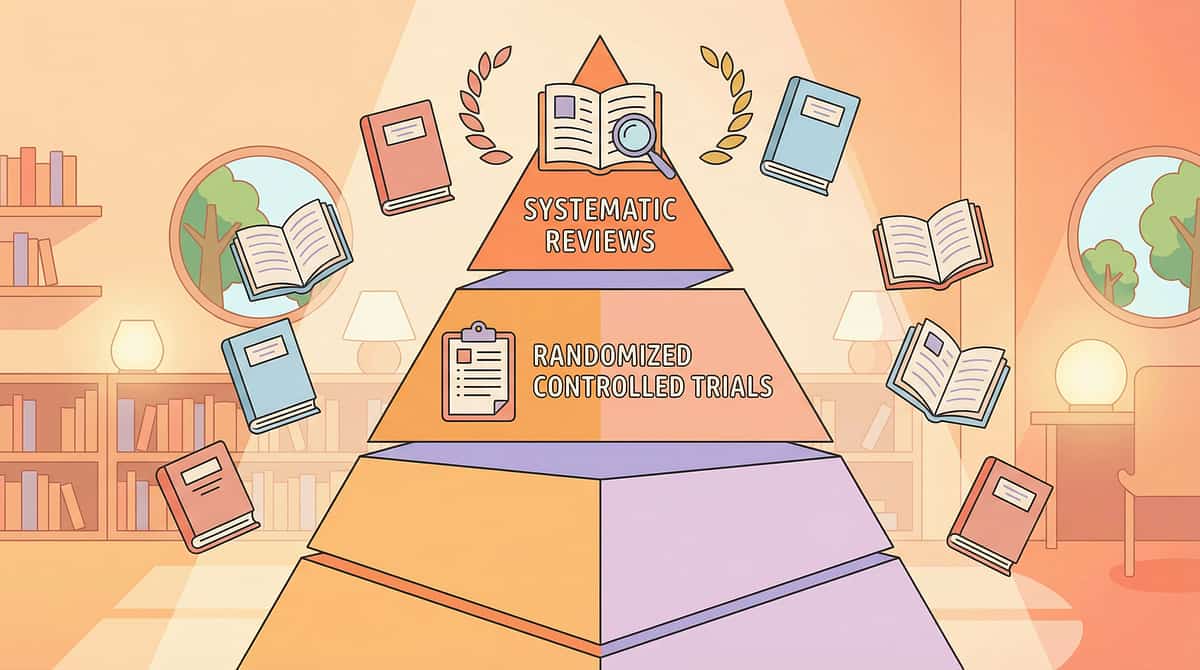
Nearly a century of research. Consistent findings. Clinically validated.
Evidence Grade
LEVEL I
SYSTEMATIC REVIEW
Supporting Studies: 24+ peer-reviewed studies (2013–2024)
Intervention Type: Multi-Sensory Learning / Sensory Integration / Structured Multi-Modal Instruction
Clinical Confidence
■■■■■■■■■□ HIGH (90%)
🏛 The Foundational Framework (1930s–Present)
The Orton-Gillingham approach — nearly 90 years of multi-sensory instruction research. Simultaneous visual, auditory, and kinesthetic-tactile engagement is its core mechanism. International Dyslexia Association: Gold standard for structured literacy.
📊 The Meta-Analysis (2024)
Systematic review of 24 studies confirms sensory integration therapy effectively promotes social skills, adaptive behaviour, sensory processing, and motor skills in children with ASD. World J Clin Cases, 2024 | PMC10955541
📋 The PRISMA Review (2024)
16 articles from 2013–2023 confirm sensory integration meets criteria as evidence-based practice for children with ASD. Home-based implementation is specifically validated. Children, 2024 | PMC11506176
🇮🇳 The India RCT (2019)
Home-based sensory interventions demonstrated significant measurable outcomes for Indian children — validating that parent-administered multi-sensory approaches produce real-world results. Padmanabha et al., Indian Journal of Pediatrics | DOI: 10.1007/s12098-018-2747-4
Clinically validated. Home-applicable. Parent-proven. 20M+ Pinnacle sessions confirm: multi-sensory approaches work when delivered with consistency.
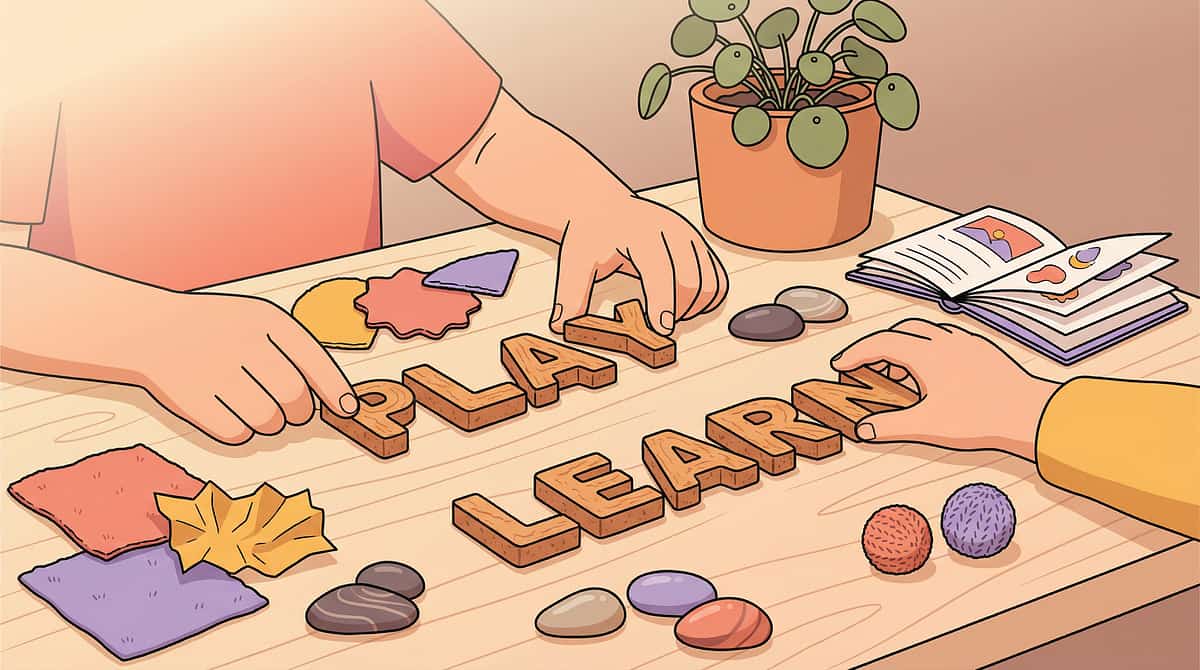
Multi-Sensory Learning
Parent-friendly alias: "Learning Through All Your Senses" | H-755 | Domain H
📂 Domain
Learning & Educational Support (Domain H)
🎯 Age Range
4–14 years
⏱ Session Duration
15–30 minutes daily
🏠 Setting
Home + School + Therapy + Tutoring
Formal Clinical Classification: Domain Code: MSL-LEARN | Taxonomy: Multi-Modal Instruction / VAK Learning / Orton-Gillingham Aligned / Sensory-Based Education | Pinnacle 20 Category: Learning Approaches | 128 Canon: Multi-Sensory Learning Materials
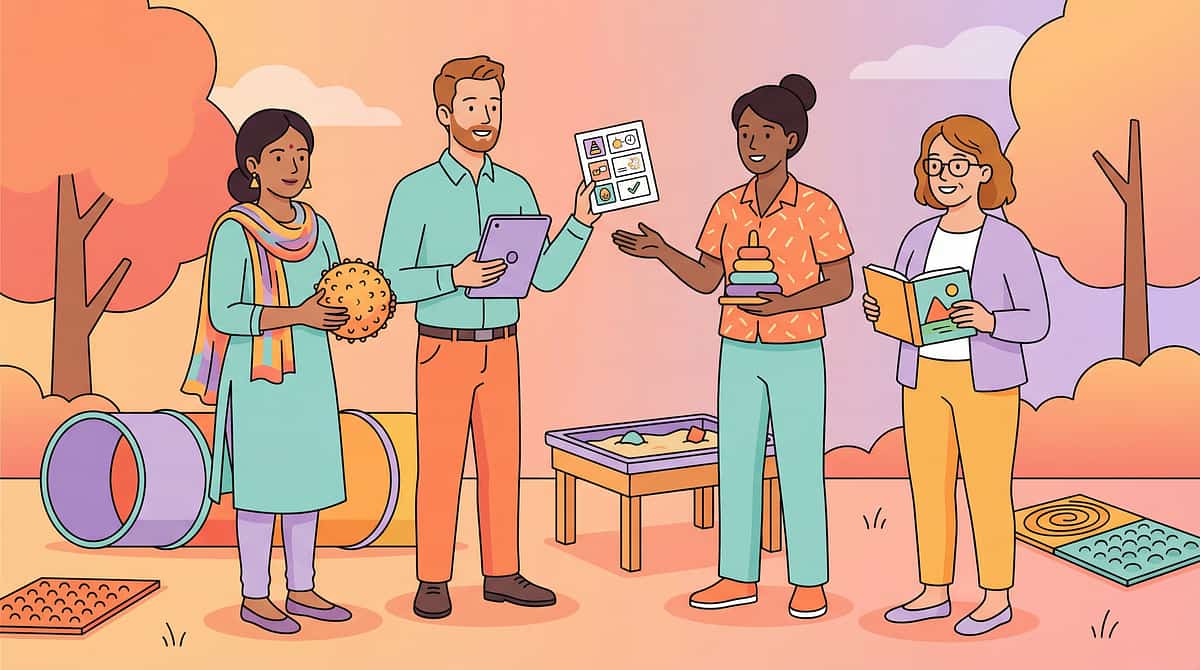
This technique crosses therapy boundaries — because learning doesn't respect specialty silos.
Four disciplines contribute to the most complete implementation of multi-sensory learning. Each brings a distinct clinical lens that strengthens the overall approach.
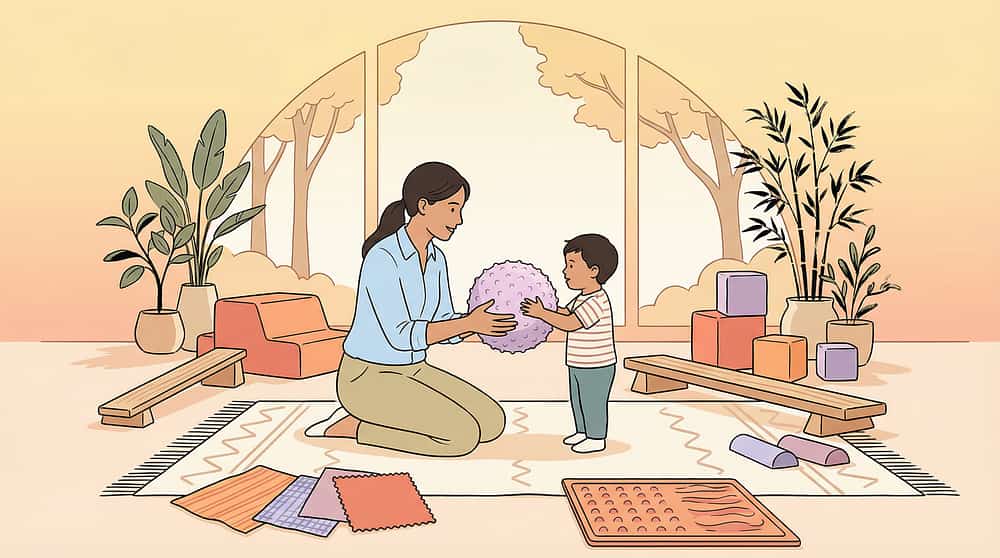
🔵 Occupational Therapist — Lead Discipline
The OT assesses the child's sensory profile, identifies over- or under-responsive pathways, and designs multi-sensory learning environments that match neurological needs. Core tools: sensory writing trays, textured materials, movement-integrated learning, proprioceptive input during learning tasks.
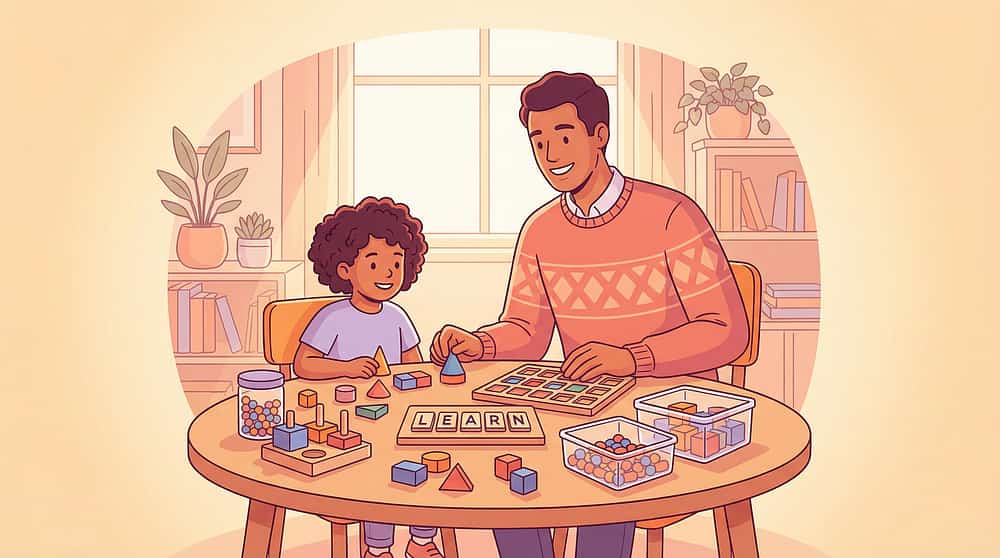
🟢 Special Educator — Structural Architect
Implements Orton-Gillingham methodology for literacy and Concrete-Pictorial-Abstract (CPA) progression for mathematics. Sequences materials, tracks academic readiness indexes, and ensures multi-sensory approaches align with IEP goals and curriculum demands.
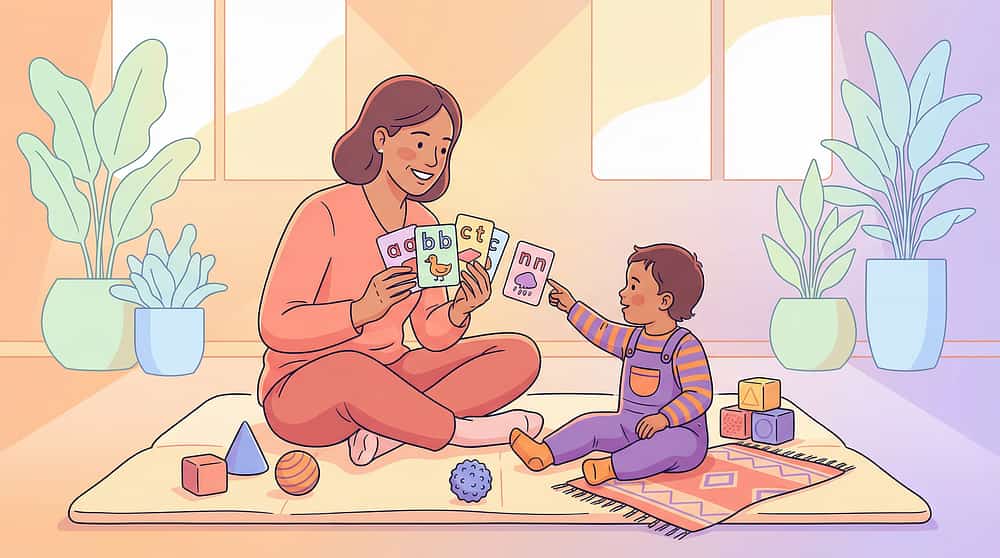
🟠 Speech-Language Pathologist — Language Bridge
Integrates multi-sensory approaches into phonological awareness, reading, and language processing interventions. Audio resources, rhyme-based materials, and interactive story materials directly support the SLP's communication targets.
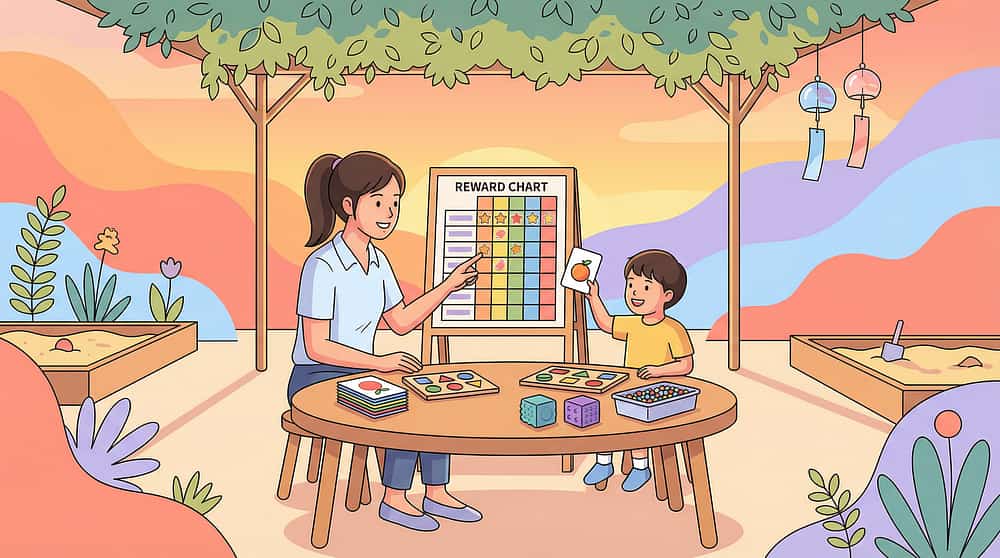
🔴 ABA / BCBA — Behaviour Architecture
Governs HOW multi-sensory materials are introduced through pairing, reinforcement schedules, data collection, and skill generalisation. Ensures sessions follow antecedent-behaviour-consequence frameworks with correctly timed and delivered reinforcement.
"This technique crosses therapy boundaries because the brain doesn't organise by therapy type. Sensory processing, motor learning, language, and behaviour are integrated functions — and the most powerful interventions address them as an integrated whole." — Pinnacle Blooms Network® Consortium
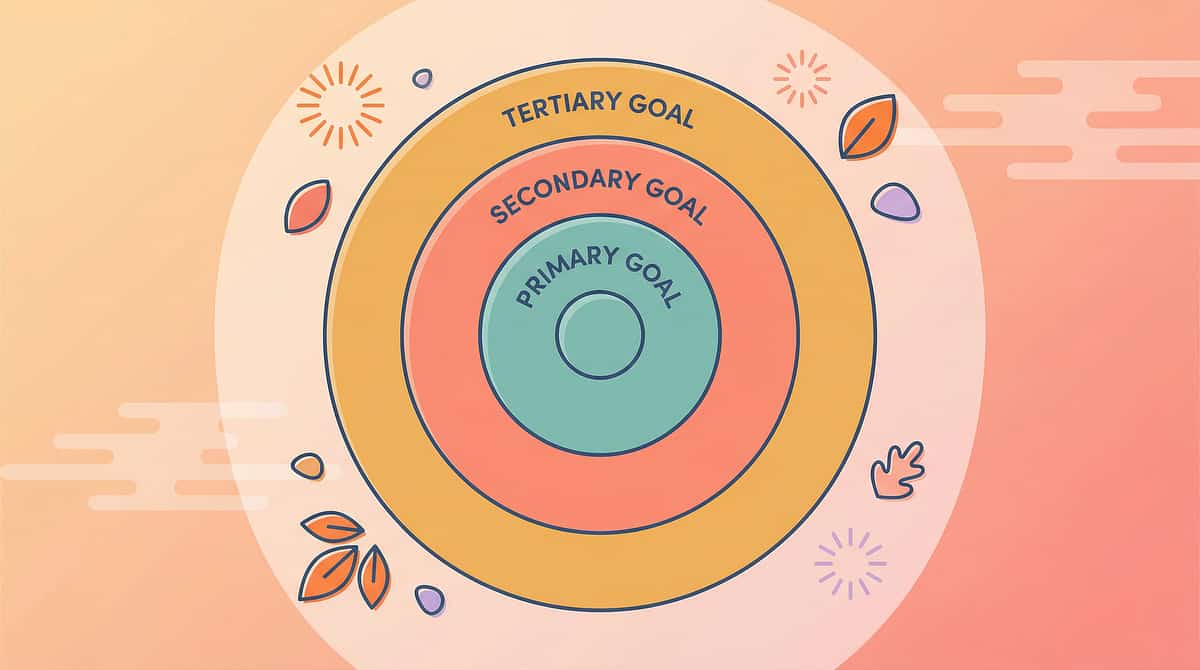
9 materials. Every sensory pathway covered. Start with what you have. Scale as you go.
These are the 9 evidence-mapped materials for multi-sensory learning. Each one activates a different pathway to the brain. Together, they build a home learning ecosystem that rivals any clinic.
1 — Textured Letter & Number Tiles
Tactile + Visual + Motor
2 — Manipulative Maths Materials
Tactile + Visual + Kinesthetic
3 — Movement-Based Learning Cards
Kinesthetic + Auditory + Visual
4 — Audio & Rhyme Resources
Auditory + Rhythm/Melody
5 — Visual Charts & Mind Maps
Visual + Spatial
6 — Building & Construction Materials
Kinesthetic + Tactile + Visual + Spatial
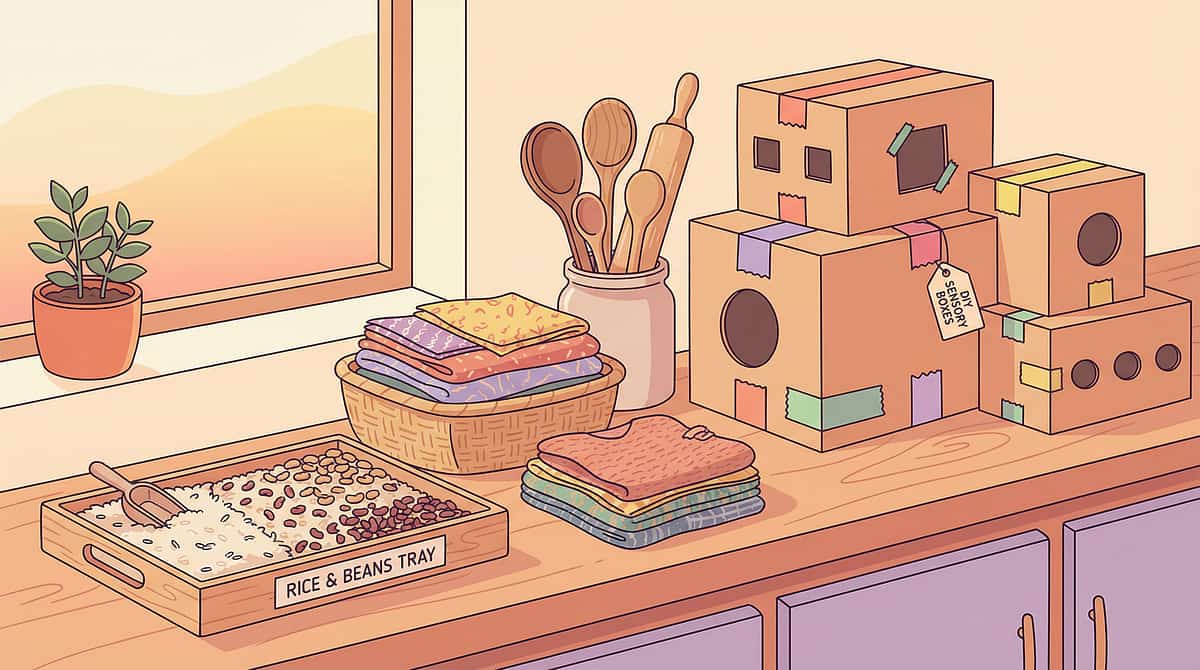
7 — Sensory Writing Trays
Tactile + Motor + Visual
8 — Interactive Story & Sequencing
Visual + Kinesthetic + Auditory + Narrative
9 — Multi-Sensory Spelling Kits
Visual + Auditory + Tactile + Motor
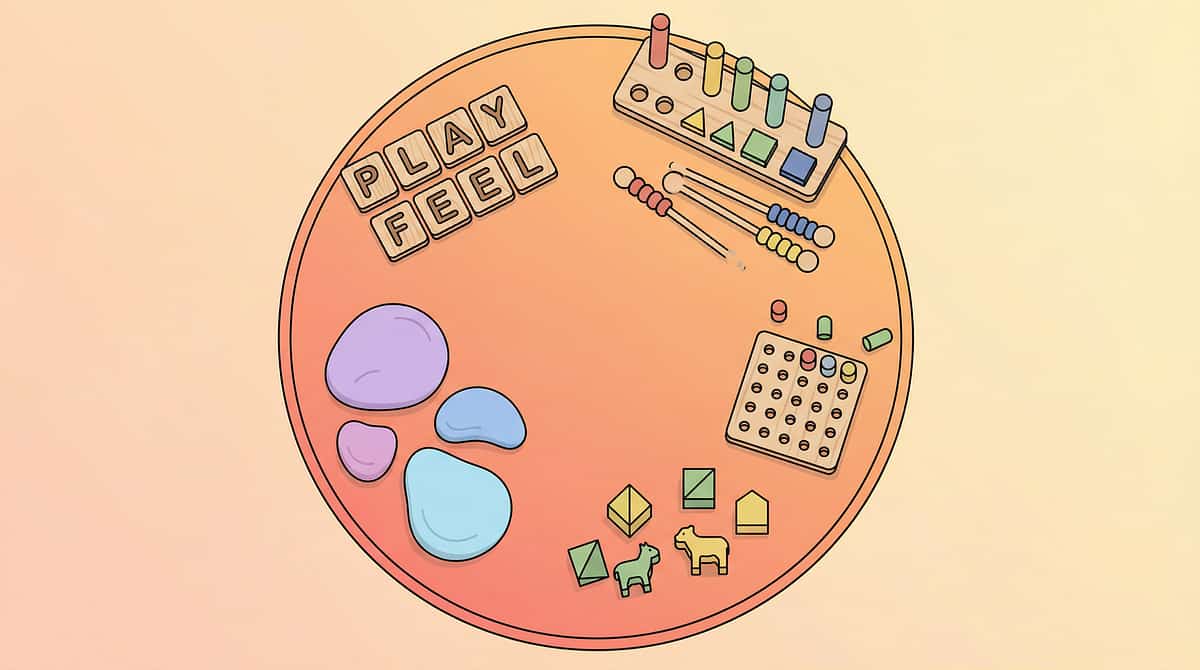
Material 1 — Textured Letter & Number Tiles
Canon Category: Multi-Sensory Learning Tools | Tactile Learning Materials
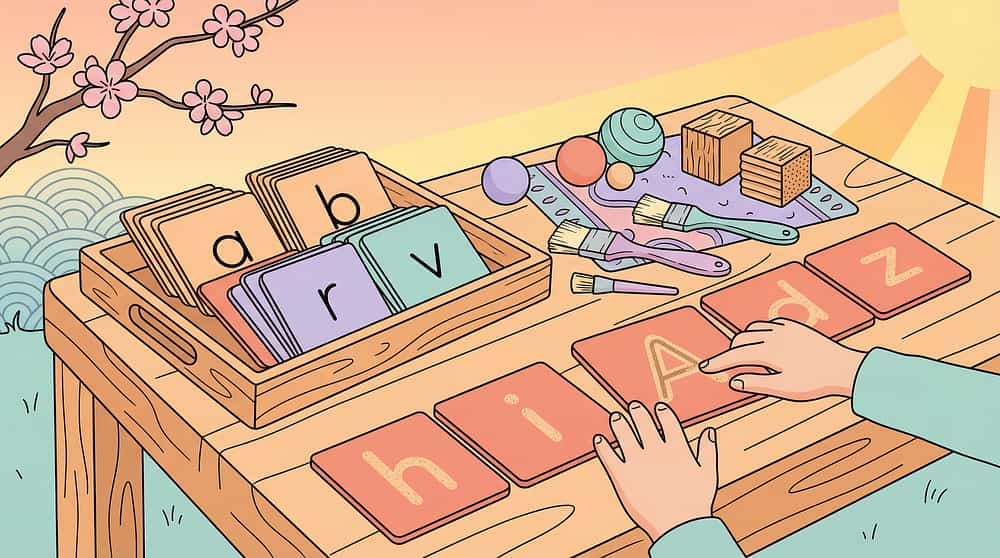
Core Mechanism: Touch adds a neural pathway to abstract symbol learning. When children trace sandpaper letters or raised number tiles, they simultaneously activate visual, tactile, AND motor memory — creating three-pathway encoding for every letter and number.
Commercial Option
Textured sandpaper alphabet tiles
₹400–1,200
🛒 Search on Amazon.in: "Textured sandpaper alphabet tiles kids learning"
🏠 DIY Substitute (₹0)
Sandpaper + cardstock: cut letter shapes from fine sandpaper, glue onto cardstock. Trace with finger while saying letter sound.
Why it works: Same tactile-visual-motor pathway. Sandpaper texture provides identical proprioceptive feedback.
Material 2 — Manipulative Maths Materials
Canon Category: Educational Manipulatives | Number/Counting Materials
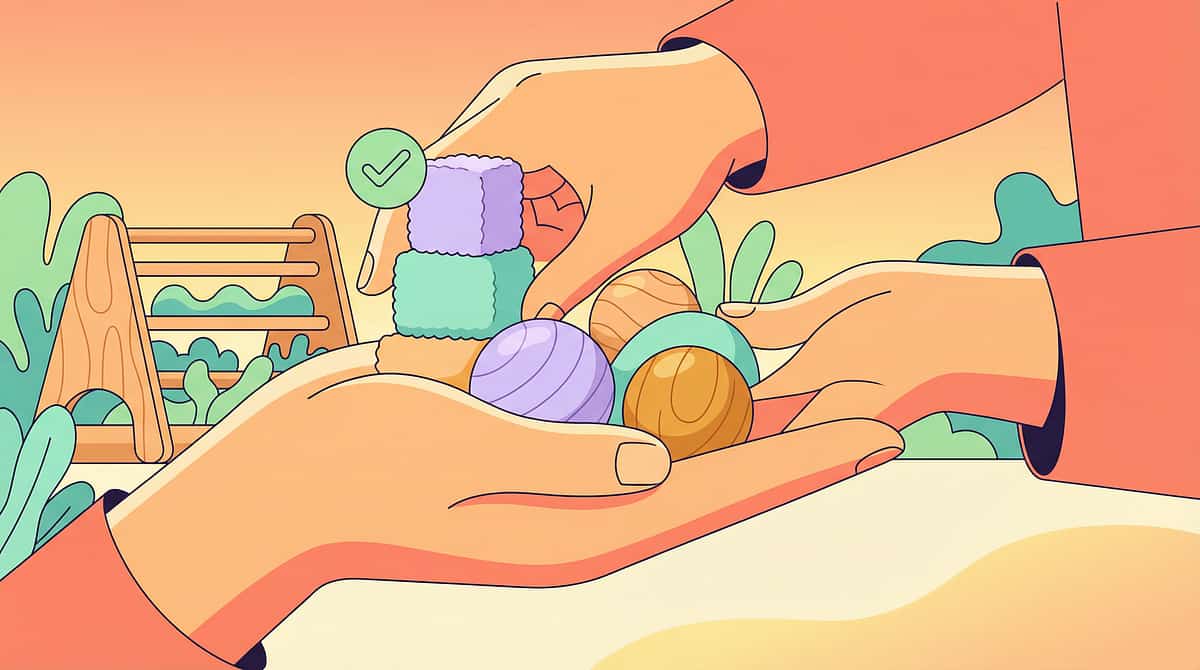
Core Mechanism: Abstract mathematical concepts become concrete and touchable. Base-ten blocks make place value visible. Fraction tiles show part-whole relationships. When children hold and move the concept, understanding deepens far beyond what worksheets can reach.
Pinnacle Recommends
Smartivity Interactive Clock — ₹673
General search: "base ten blocks math manipulatives children India" | ₹300–1,500
🏠 DIY Substitute (₹0)
Dried beans, stones, or bottle caps for counting. Rubber bands for grouping. Cut paper strips for fractions.
Why it works: Same concrete manipulation principle. Physical grouping creates identical mathematical understanding.
Material 3 — Movement-Based Learning Cards & Games
Canon Category: Kinesthetic Learning Materials | Active Learning Tools
Core Mechanism: The body is a memory system. When children jump to spell words, hop to answer maths facts, or dance through sequences, motor memory encodes academic content alongside cognitive memory — creating dual pathways to recall.
Commercial Option
Floor letter mat / alphabet jump learning game
₹200–800
🛒 Search on Amazon.in: "floor letter mat alphabet jump learning game children"
🏠 DIY Substitute (₹0)
Write letters/numbers on A4 sheets, tape to floor in hopscotch pattern. Child jumps to spell words, hops to answer maths.
Why it works: Same motor-memory mechanism. Floor space + paper = complete kinesthetic learning environment.
Material 4 — Audio Learning Resources & Rhyme-Based Materials
Canon Category: Auditory Learning Materials | Phonological Awareness Tools
Core Mechanism: Songs encode information in memory more durably than spoken instruction. Rhythm creates phonological hooks. For children with reading difficulties, audio bypasses the struggling visual pathway and delivers content through the auditory strength channel.
Pinnacle Recommends
Monkey Minds Rhyming Words Card Game — ₹296
General search: "educational songs children phonics alphabet rhyme learning India" | ₹200–1,000
🏠 DIY Substitute (₹0)
Parent-recorded phone voice notes: sing multiplication tables, phonics songs, spelling rules to simple tunes. Free YouTube: "phonics songs" + "maths rhymes."
Why it works: Same auditory-rhythmic encoding. Parent voice often more effective for young children than professional recordings.
Material 5 — Visual Learning Charts, Graphic Organisers & Mind Maps
Canon Category: Visual Learning Materials | Graphic Organisers
Core Mechanism: Visual learners process spatial arrangements and graphic representations more efficiently than linear text. Graphic organisers transform verbal information into a visual format — showing HOW ideas connect, not just WHAT the ideas are.
Commercial Option
Graphic organiser / mind map sets for children
₹150–600
🛒 Search on Amazon.in: "graphic organizer mind map children learning school India"
🏠 DIY Substitute (₹0)
A4 paper + markers + crayons. Teach child to draw circles, lines, and arrows to connect ideas.
Why it works: Identical visual-spatial processing. The STRUCTURE matters, not the paper quality.
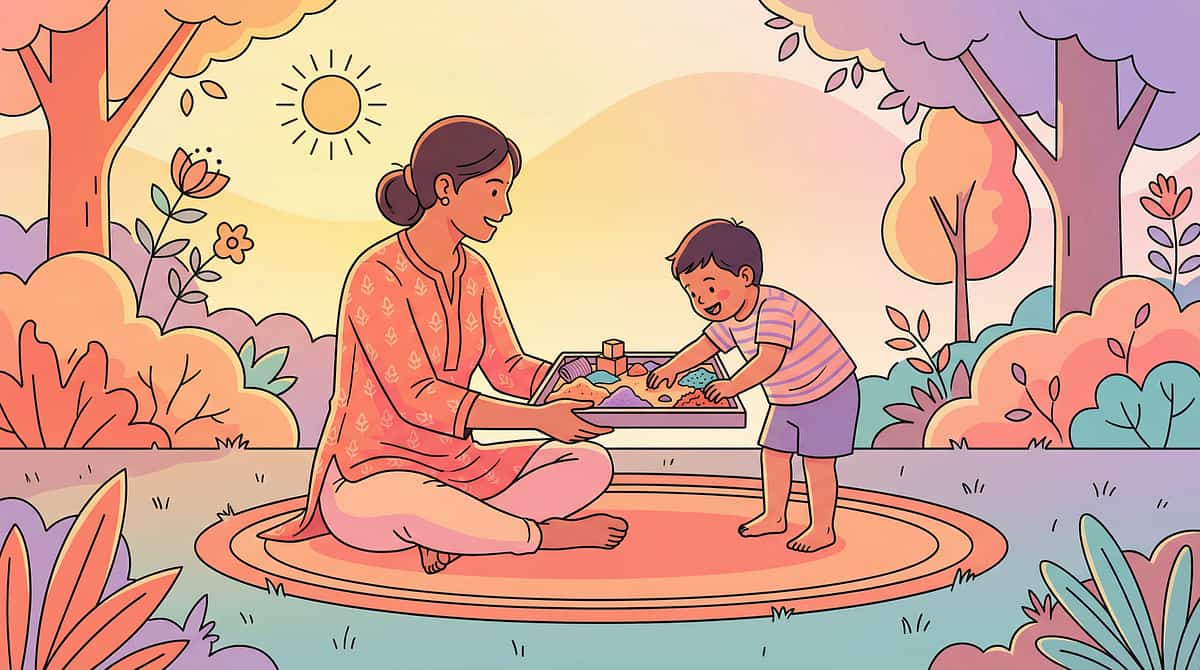
Material 6 — Building & Construction Learning Materials
Canon Category: Constructive Play Materials | STEM Learning Manipulatives
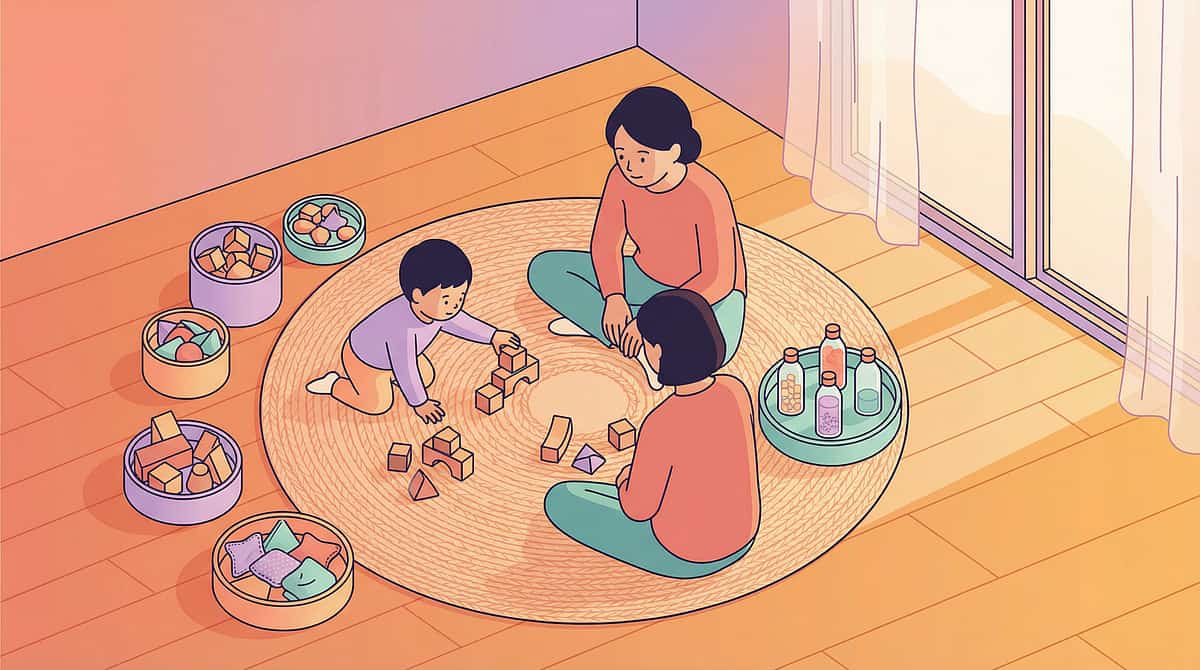
Core Mechanism: Construction externalises thinking. When a child BUILDS a letter from blocks, they engage spatial reasoning, fine motor skill, and kinesthetic memory simultaneously. Abstract concepts become three-dimensional realities they can hold.
Commercial Option
Magnetic building tiles / LEGO learning sets
₹400–2,000
🛒 Search on Amazon.in: "magnetic building tiles children LEGO learning alphabet math"
🏠 DIY Substitute (₹0)
Playdough (1 cup flour + ½ cup salt + ½ cup water + food colour). Cardboard tubes, craft sticks, newspaper rolls.
Why it works: Same tactile-spatial-kinesthetic mechanism. Child builds letters and numbers from any mouldable material.
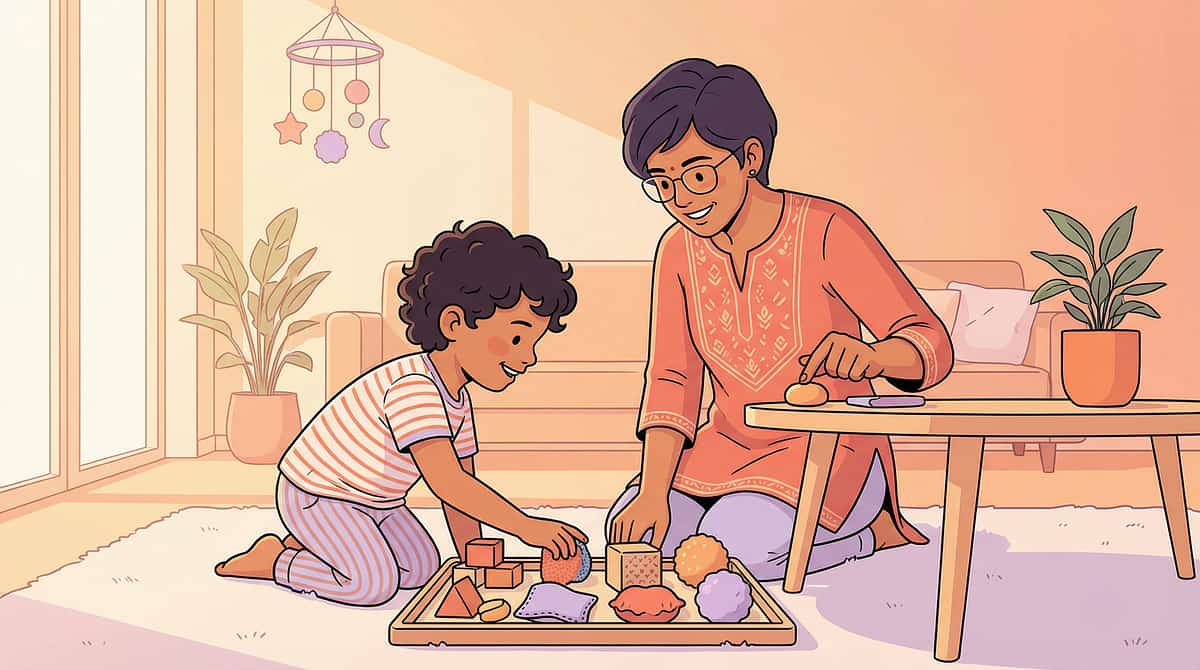
Material 7 — Sensory Writing Trays & Surfaces
Canon Category: Tactile Learning Materials | Sensory Processing Tools
Core Mechanism: Writing in sand, salt, or gel bags reduces the anxiety of pencil-on-paper practice while dramatically increasing tactile engagement. The forgiving, erasable surface allows risk-free repetition. Fingers learn formation before pencils are introduced.
Commercial Option
Sand writing tray for children / sensory learning tray
₹200–700
🛒 Search on Amazon.in: "sand writing tray children learning letters India sensory"
🏠 DIY Substitute (₹0)
Any shallow tray/plate + rice, sand, or salt. Sprinkle 1 cm deep. Child writes with one finger. Shake to erase and repeat.
Why it works: IDENTICAL sensory mechanism. The rice tray IS the clinical gold standard.
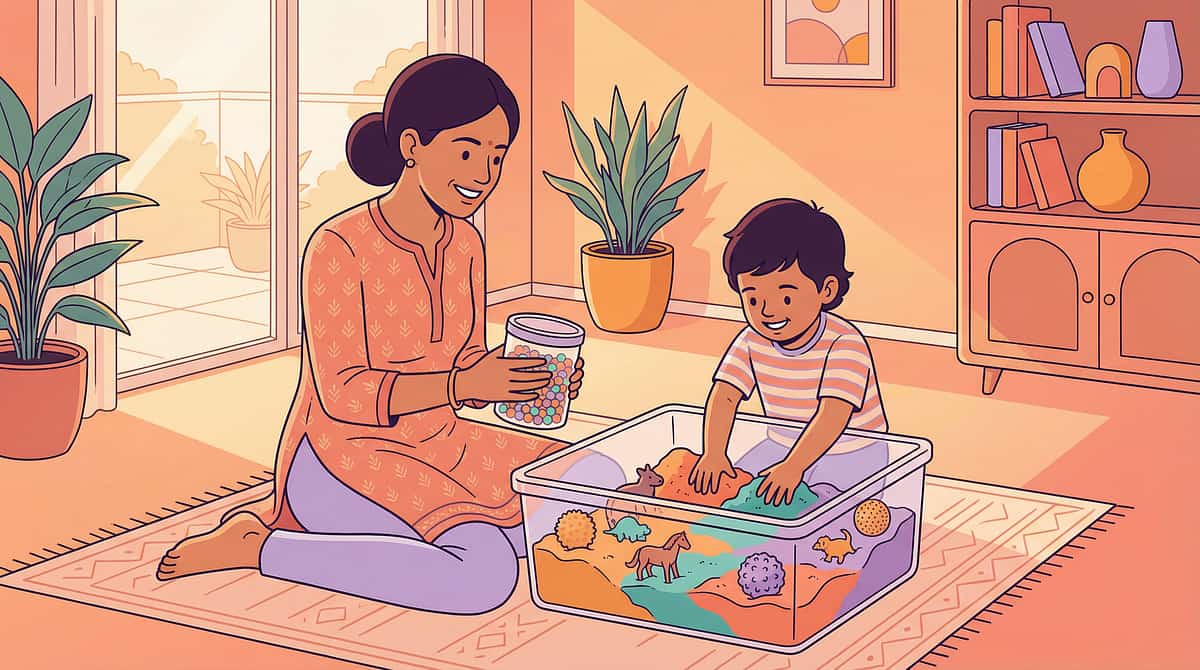
Material 8 — Interactive Story & Sequencing Materials
Canon Category: Language & Literacy Materials | Narrative Development Tools
Core Mechanism: Passive listening transforms into active, multi-sensory engagement when children physically move story pieces, animate puppets, and arrange sequence cards. Active storytelling deepens comprehension and makes narrative memorable through multiple encoding pathways.
Commercial Option
Story sequencing cards / felt board puppets
₹300–1,200
🛒 Search on Amazon.in: "story sequencing cards children felt board puppets learning India"
🏠 DIY Substitute (₹0)
Cut characters from old magazines or draw on paper. Laminate with clear tape. Use magnetic tape on back to place on fridge as a felt board alternative.
Why it works: Same manipulation and sequencing mechanism. Physical movement of story pieces is the active ingredient — not material quality.
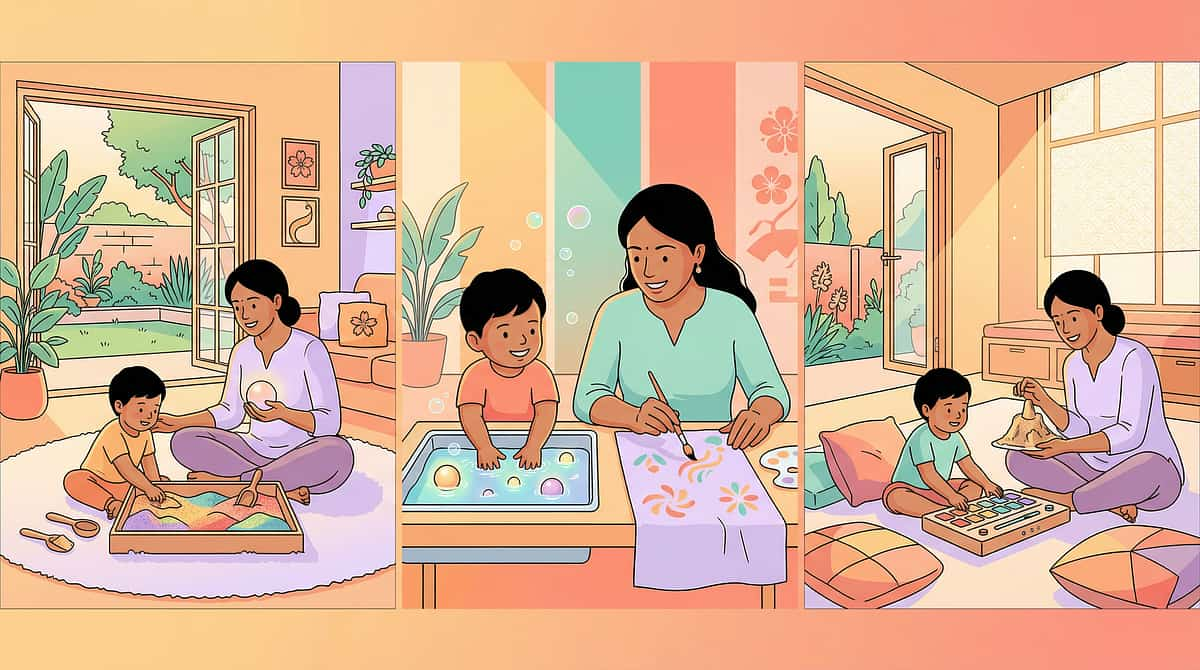
Material 9 — Multi-Sensory Spelling & Word Study Kits
Canon Category: Multi-Sensory Learning Tools | Orton-Gillingham Materials
Core Mechanism: Spelling mastery requires all three channels simultaneously — visual memory (how the word looks), auditory processing (how it sounds), and motor memory (how it feels to write). The Orton-Gillingham sequence — see it, say it, trace it, build it, write it — is the gold standard for multi-sensory spelling instruction.
Commercial Option
Letter tiles spelling kit / Orton-Gillingham materials
₹400–1,500
🛒 Search on Amazon.in: "letter tiles spelling kit Orton Gillingham India children learning"
🏠 DIY Substitute (₹0)
Cut individual letters from cardstock. Use sand tray (Material 7). Dry-erase on plastic sheet protector over paper.
Why it works: Same OG sequence works with any physical letter manipulatives.
Zero-Cost Complete Session: Rice tray (₹0) + cardstock letters (₹0) + parent-sung phonics rhyme (₹0) + floor hopscotch with chalk (₹0) = Complete multi-sensory literacy session.

Read this before you begin. Every time.
A few minutes of safety assessment before each session protects both your child and the therapeutic relationship you're building. Use this traffic-light system every time.
🔴 RED — ABSOLUTE STOP
Do NOT proceed if: Child is in active meltdown or crisis. Child has open wounds or skin sensitivities. Child has fever or significant physical discomfort. You are angry, exhausted, or emotionally unavailable. Child has had a traumatic sensory experience within the last 2 hours.
🟡 AMBER — MODIFY & PROCEED
Child is mildly tired: shorten to 10 minutes. Child shows mild material resistance: offer the DIY alternative. Child has known texture sensitivities: begin with PREFERRED texture only. Small children (under 5): supervise all small pieces — choking hazard. Audio sensitivity: use open speakers, not headphones.
🟢 GREEN — FULL SESSION
Child is calm, regulated, alert. Child has eaten in the last 2 hours. Environment is ready (see Card 12). All materials prepared before calling child in. You have 20–30 uninterrupted minutes available.
Some children with severe sensory processing difficulties may need OT assessment before introducing new tactile materials. If in doubt, call the Pinnacle OT team: 9100 181 181
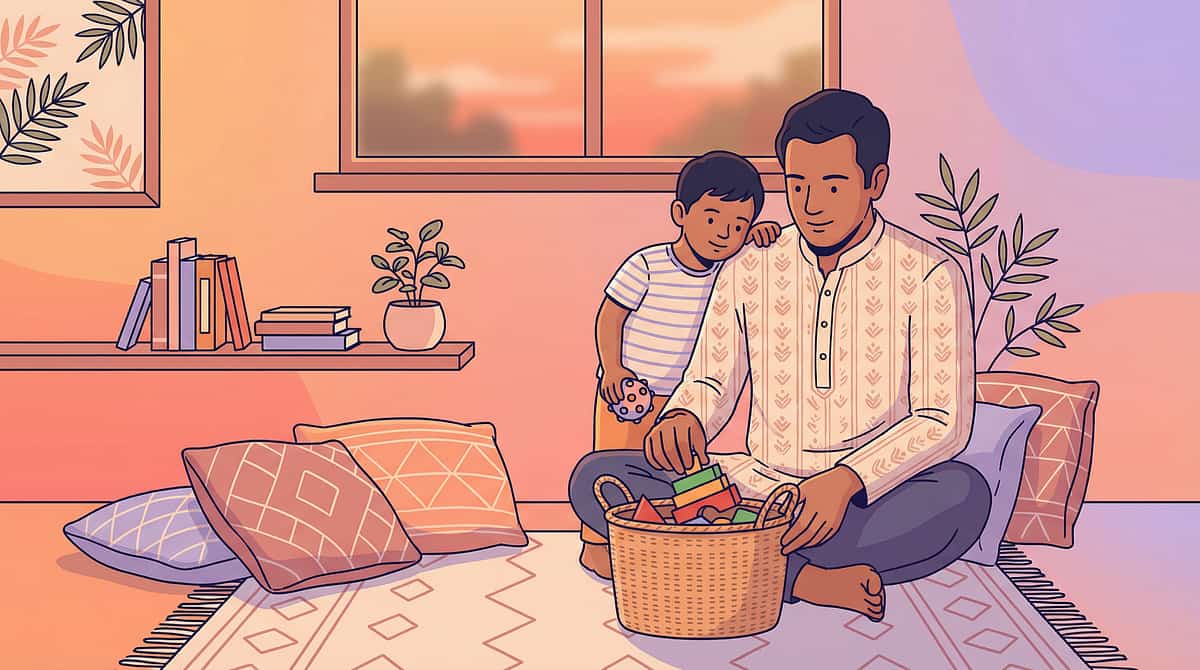
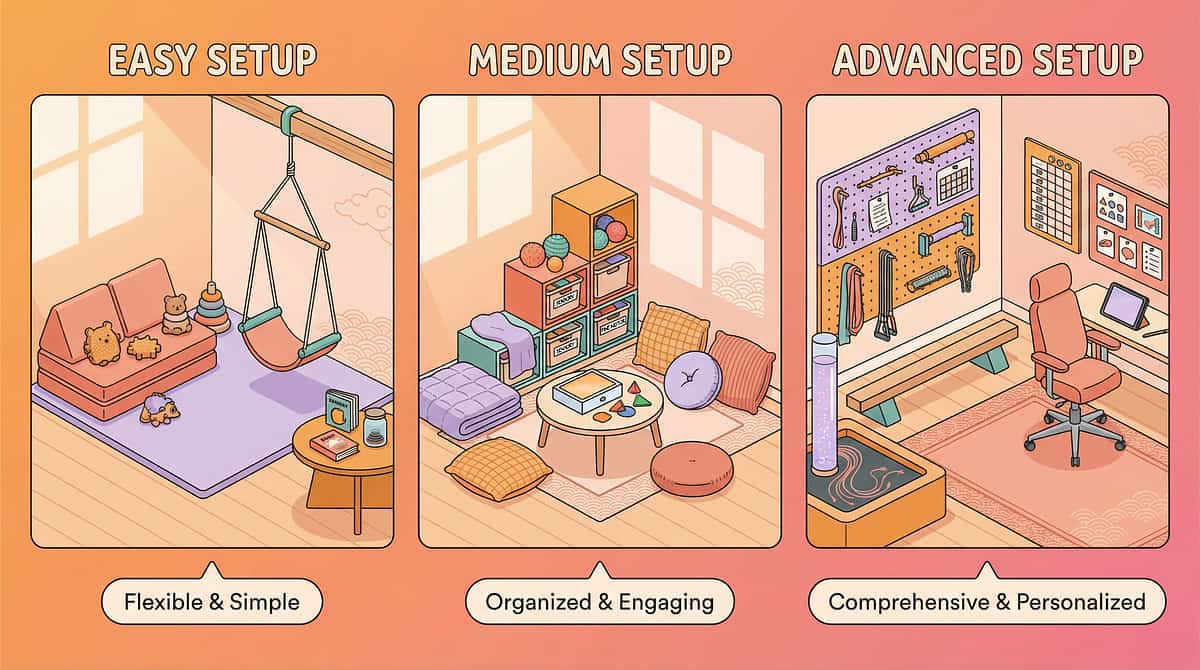
The right environment is 50% of the session. Set it up before you call your child in.
✅ What to Add to the Space
- Natural light or warm lamp (not harsh overhead fluorescent)
- Small table or floor mat at child's working height
- All materials pre-arranged BEFORE child enters
- Visual timer (phone timer with visible countdown)
- Reward menu visible but not immediately accessible
- Calming background music at LOW volume (optional — assess child's response)
🌡 Temperature, Light, Sound
Temperature: 22–26°C | Lighting: Natural light preferred; warm lamp as alternative; avoid fluorescent flicker | Sound: Below 55 dB background; no television; optional nature sounds or soft instrumental at 40 dB
❌ What to Remove
- Screens (TV, phone) — visual competition for attention
- Other toys — competing reinforcers
- Background noise — TV, loud music, family conversations
- Other children — session is 1:1
- Time pressure — do this when you have 30 minutes, not 5
📋 Quick Setup Checklist
- Room cleared of distractions
- Materials prepared and within reach
- Timer visible
- Reinforcers ready but not yet visible to child
- Parent seated at child's level
- Your phone on silent
Sensory Integration Theory (Ayres): Environmental setup is a core principle. Meta-analysis confirms 1:1 individual treatment sessions requiring structured environment showed maximum effectiveness. PMC10955541
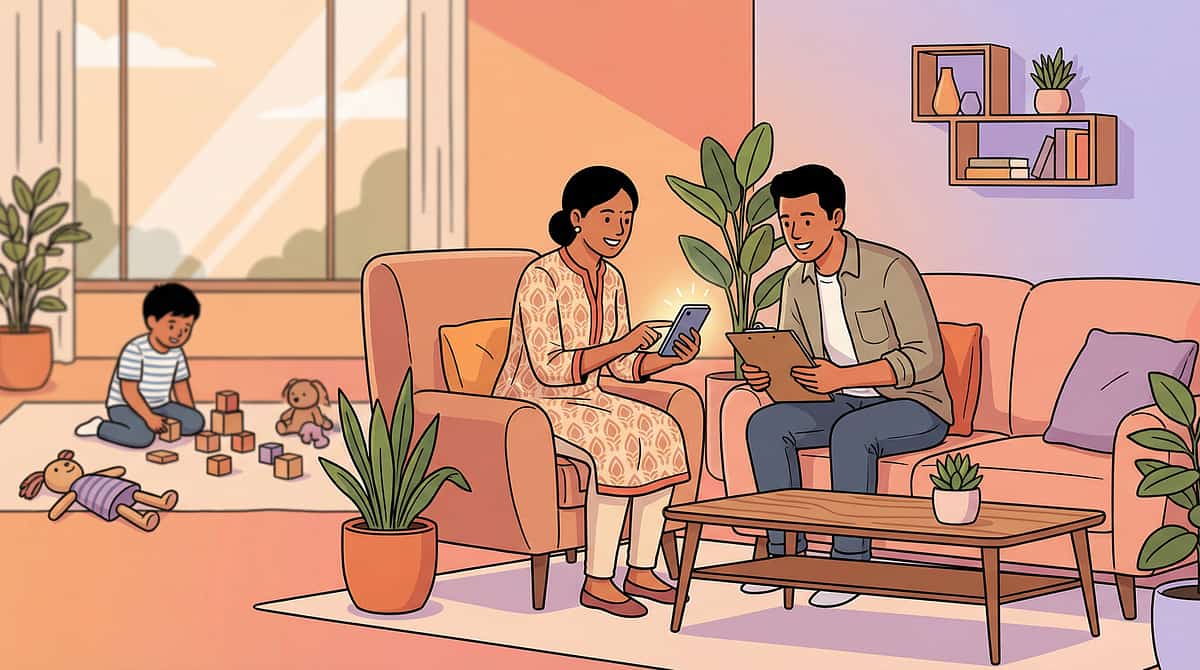
60 seconds before you begin. The best session is one that starts right.
Run through these 7 observable indicators before every session. They take less than a minute and dramatically improve session quality.
Physical State
🟢 GO: Rested, fed, no illness | 🟡 MODIFY: Slightly tired — shorten | 🔴 POSTPONE: Sick, in pain, exhausted
Emotional Regulation
🟢 GO: Calm, neutral, or mildly positive | 🟡 MODIFY: Mild irritability — preferred material only | 🔴 POSTPONE: Active meltdown or emotional crisis
Engagement Window
🟢 GO: Active but not over-stimulated | 🟡 MODIFY: After demanding school session — 15-min regulation break first | 🔴 POSTPONE: Major sensory event in last hour
Material Reaction
🟢 GO: Positive or neutral response to material | 🟡 MODIFY: Wary — begin with pure invitation, no demand | 🔴 POSTPONE: Immediate rejection or distress
Attention Availability
🟢 GO: Can attend 15+ seconds | 🟡 MODIFY: Scattered — highest-preferred activity first | 🔴 POSTPONE: Unable to attend to any input
Time Available
🟢 GO: 20+ uninterrupted minutes | 🟡 MODIFY: 10 minutes — single-material mini-session | 🔴 POSTPONE: Under 5 minutes — session will feel rushed and aversive
Your Own State
🟢 GO: Calm, patient, present | 🟡 MODIFY: Mildly stressed — deep breathing first | 🔴 POSTPONE: Significantly upset — a dysregulated parent dysregulates the child

Step 1 — The Invitation
What this step does: Brings the child into the learning activity through playful, low-demand engagement. No pressure. No demand. Pure curiosity invitation. ABA pairing meets OT just-right challenge.
"Hey, look what I've got here. Do you want to see something cool?"
(Place one material — ideally the child's most interesting one — on the table or floor. Make no demand. Simply show curiosity yourself.)
"I'm going to try this. You can watch, or you can join in whenever you feel like it."
👤 Parent Body Language
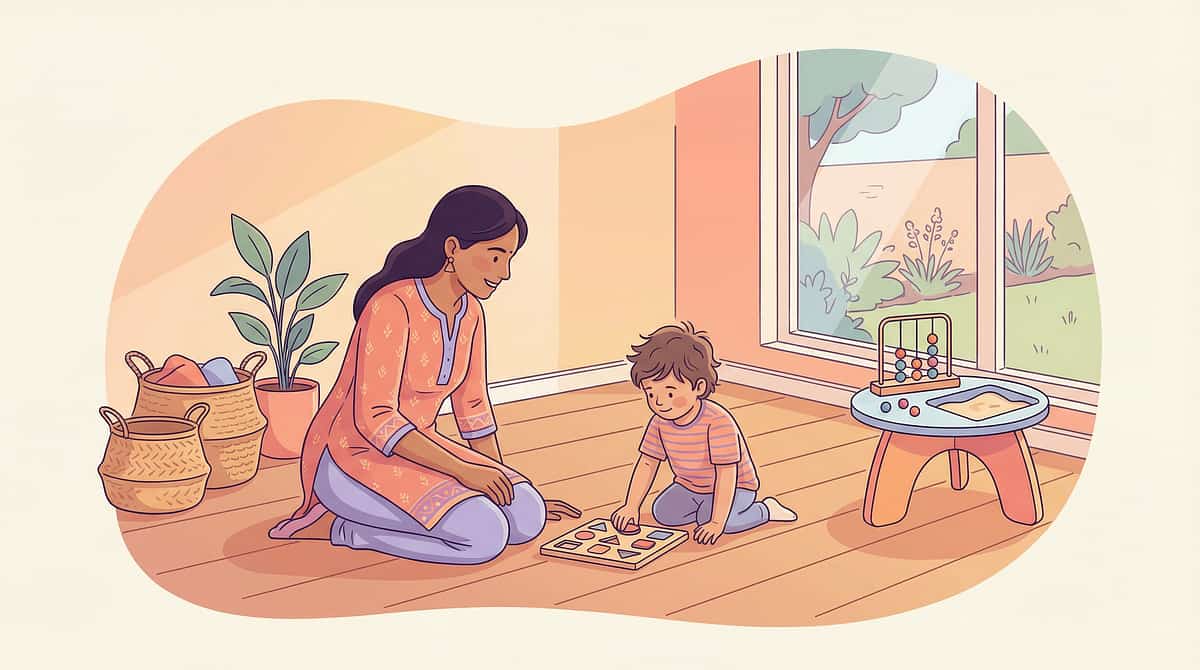
- Sit at child's level (floor or child-height chair)
- Lean slightly toward material, not toward child
- Relax your face — no expectation, no evaluation, no pleading
- Match the child's pace — if they go slow, you go slow
✅ Acceptance Cues → Proceed
- Child glances at material
- Child moves toward the table
- Child reaches for material
- Child makes any verbal or non-verbal inquiry
🔄 If Child Resists
Continue playing with material yourself. Narrate: "Oh, this feels bumpy…" Wait 2 minutes. If still no interest, end session gracefully — "That's okay, maybe later."
ABA Pairing Procedures: Establishing motivating operations before demand placement. OT "Just-Right Challenge": Matching task demand to current capacity.
Step 2 — The Engagement
What this step does: Child is now curious or engaged. This step introduces the therapeutic material with clear sensory invitation. The academic content is embedded — but the child experiences it as PLAY, not learning.
Reinforcement Begins Here
The moment the child engages with the material:
- Immediate specific praise: "Yes! You're doing it!"
- Warm eye contact + smile
- Match their enthusiasm level (don't over-excite a calm child)
Child Response Spectrum
🟢IDEAL: Child explores freely, makes spontaneous attempts
🟡ACCEPTABLE: Child watches demonstration, makes small attempts
🔴CONCERNING: Child actively refuses or shows distress → go to Troubleshooting (Card 21)
Systematic review (Children, 2024): Sensory integration intervention with structured material introduction meets evidence-based practice criteria. PMC11506176

Step 3 — The Therapeutic Action
What this step does: The main learning event. This is where multi-sensory encoding happens — simultaneously engaging 2–4 sensory pathways around a single academic target.
❌ Going Too Fast
Each modality needs 15–30 seconds to register. SLOW down.
❌ Demanding Perfection
The goal is multi-sensory EXPOSURE, not perfect letter formation yet.
❌ Too Many Words
Begin with 2–3 target words per session. Depth over breadth.
❌ Skipping Movement
The kinesthetic step is the one parents most often drop. It's the most powerful.
Duration Guidance: New learners: 5–7 minutes | Experienced learners: 10–15 minutes | Maximum: 20 minutes (after which sensory fatigue reduces encoding).
Meta-analysis (World J Clin Cases, 2024): Core therapeutic action occupies 40–60% of session time. PMC10955541
Step 4 — Repeat and Vary
The Dosage Principle: 3 good repetitions are worth more than 10 forced ones.
Variation prevents satiation. Same multi-sensory principle, different physical expression. The brain gets multiple novel exposures to the same content.
📉 Satiation Indicators — When to Stop
- Decreased engagement quality (going through motions)
- Loss of eye contact or attention
- Physical restlessness significantly increasing
- Errors that weren't present in Repetition 1 (fatigue)
When you see these: one final enthusiastic rep → move to Step 5.
🔀 Variation Menu by Material
Textured Tiles: trace → write in air → write in sand → write on parent's back
Math Manipulatives: group → split → regroup → draw → narrate aloud
Movement Cards: jump-spell → hop-count → dance the concept → teach parent
Audio Resources: listen → sing → sing and clap → teach parent the song

Step 5 — Reinforce and Celebrate
The Reinforcement Principle: Timing matters more than magnitude. Immediate, specific, enthusiastic reinforcement builds the neural connection between "doing the thing" and "feeling good."
🎉"YES! You traced that AND said it AND jumped it — THAT is multi-sensory learning! You're doing it!"
🎉"Did you feel how your fingers remembered that? Your brain just made a triple memory!"
🎉"I'm putting a sticker on your chart right now. Because that was REAL learning."
Reinforcement Menu — Choose What Works for YOUR Child
⭐ Sticker Reward Jar
Rosette Reward Jar — ₹589
🗣 Verbal Praise
Loudest, most specific you can manage
🤗 Physical Celebration
High five, fist bump, hug (if child accepts touch)
📸 Photo of Work
Show them their achievement on your phone
⏱ Earned Free Choice
5 minutes of preferred activity after session
🎮 Token Economy
One token per successful rep → exchange at end of week

Step 6 — The Cool-Down
Why this step matters: No session ends abruptly. A hard stop creates transition dysregulation — the child experiences the ending as a loss, and the next session becomes harder to start. A structured cool-down preserves the positive association.
The Warning (60 seconds before end)
"Two more, and then we're all done for today." Show the visual timer: 1 minute remaining.
Final Repetition (with fanfare)
"Last one — make it your best one!" Child does final multi-sensory rep. Parent celebrates enthusiastically.
The Closing Ritual
"Let's put our materials away together." Child helps put materials in their designated spot. This gives closure and reinforces that materials are valuable — stored, not discarded.
The Bridge Statement
"We did [X] today. Next time we'll do [Y]. That was GREAT learning."
Transition to Free Activity
"Now it's [preferred activity] time. You EARNED it."
Visual supports and transition tools: Classified as evidence-based practice for autism. NCAEP Evidence-Based Practices Report (2020)
Capture the Data — Right Now
60 seconds of data now saves hours of guessing later. Your daily records feed the GPT-OS® algorithm — and over 8 weeks, this data identifies your child's strongest learning modality, shows whether intensity needs adjustment, and triggers personalised next-technique recommendations.
Engagement Level
1 = Refused / Minimal | 2 = Tolerated | 3 = Engaged | 4 = Enthusiastic | 5 = Flow State
Sessions Since Start
Tally mark count: | | | | | = Week 1, Session 5
Modality Response
Circle strongest today: Visual | Auditory | Tactile | Kinesthetic | All Equal
📋 Bonus Data (30 seconds more)
- Which material worked BEST today: ___________
- Any material the child refused: ___________
- One word describing today's session: ___________
ABA Data Collection Standards: Frequency, duration, and latency measurement as standard behavioural analytic intervention tracking.
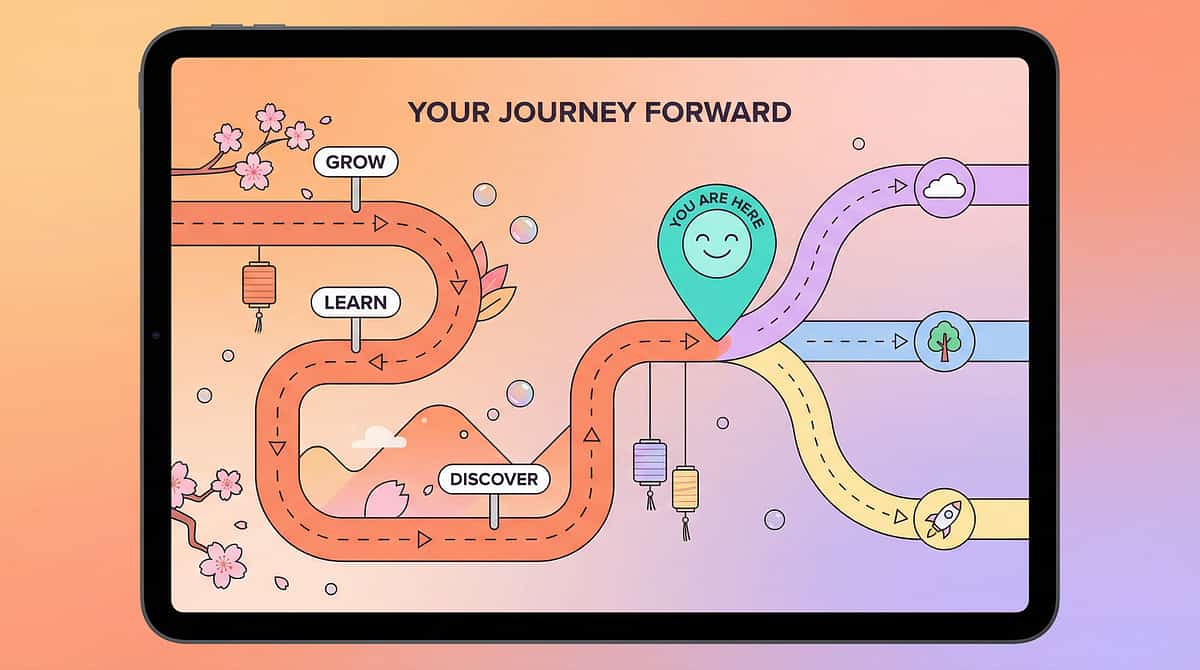
Session abandonment is not failure. It's data.
Most sessions don't go perfectly — especially in the first 2 weeks. Here are the 7 most common challenges and exactly what to do about each one.
Problem 1: Child refused to engage with any material
Why: The material may be too novel, too aversive, or introduced at the wrong moment. Fix: Place the material in the room passively tomorrow — no structured session. Let child encounter it naturally. Reduce demand to zero: just presence near the material.
Problem 2: Child used materials non-functionally (threw blocks, ate sand)
Why: This IS engagement — sensory exploration. It is actually the first stage. Fix: Let them explore non-functionally for 3 sessions. Join without redirection. Academic use will emerge.
Problem 3: Session lasted only 2 minutes before child left
Why: 2-minute sessions in Week 1 are NORMAL. Duration builds over weeks. Fix: Do not extend. Celebrate the 2 minutes. Tomorrow aim for 2 minutes + 30 seconds. Tiny increment targets.
Problem 4: Child did tactile step but refused the auditory/verbal step
Why: Some children have auditory processing sensitivities — saying words aloud while doing tasks is effortful. Fix: Remove the verbal demand. Do silent tactile + visual only. Verbal engagement will emerge when the material relationship is secure.
Problem 5: Child showed extreme distress when switching between materials
Why: Transition difficulties are common in ASD and sensory processing differences. Fix: Use one material per session only. Introduce a visual signal for material change: "Now we're going to the sand tray. Look — here it is."
Problem 6: Child mastered the materials quickly and seems bored
Why: Excellent! This means you need to increase difficulty or add complexity. Fix: Go to Adapt & Personalise — increase challenge level. Move to next-stage technique H-756.
Problem 7: You felt frustrated and the session ended badly
Why: Parent emotional state transmits immediately to children. Hard days happen. Fix: Don't apologise for the session being imperfect — just reconnect warmly afterward. "We had a hard session today. Tomorrow is new." Your repair matters more than perfection.
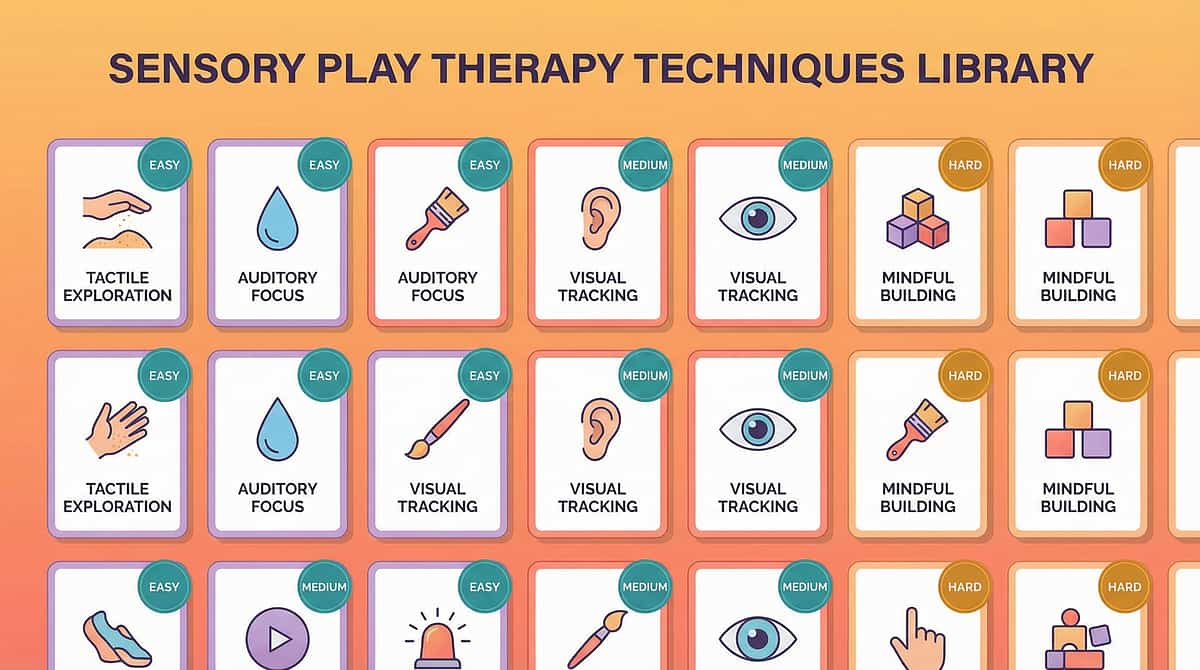
No two brains are identical. This technique is a starting point, not a fixed prescription.
⬅ EASIER — For Difficult Days or Beginners
- Single material only (just tactile alone or auditory alone)
- Zero academic content: pure sensory exploration
- Parent models, child watches — no participation expected
- 5-minute sessions only
- Child CHOOSES the material, parent follows
⬛ CORE — Standard Protocol
- 2–3 materials engaged simultaneously
- Specific academic target (2–3 words, a maths concept)
- 15–20 minute sessions
- Parent leads, child participates
➡ HARDER — For Mastery-Stage Learners
- All 4 pathways simultaneously: see it + say it + trace it + move to it
- Multi-syllable words, multi-step maths
- Child teaches PARENT the multi-sensory sequence
- Generalise to different settings: outdoors, kitchen, car
- Child rates their own engagement level (self-monitoring)
🔺 For Sensory Seekers (Seeks Intense Input)
- Use heavy materials (weighted blocks, dense playdough)
- Add vibration (vibrating pen, electric toothbrush handle on table surface)
- Increase movement component significantly
- Louder, more rhythmic audio
🔻 For Sensory Avoiders (Over-Responsive)
- Begin with visual-auditory only (no tactile until trust established)
- Offer a tool (stylus, brush) instead of direct finger contact
- Low-volume audio through speaker, not headphones
- Gradual texture grading: smooth → slightly textured → rough over weeks
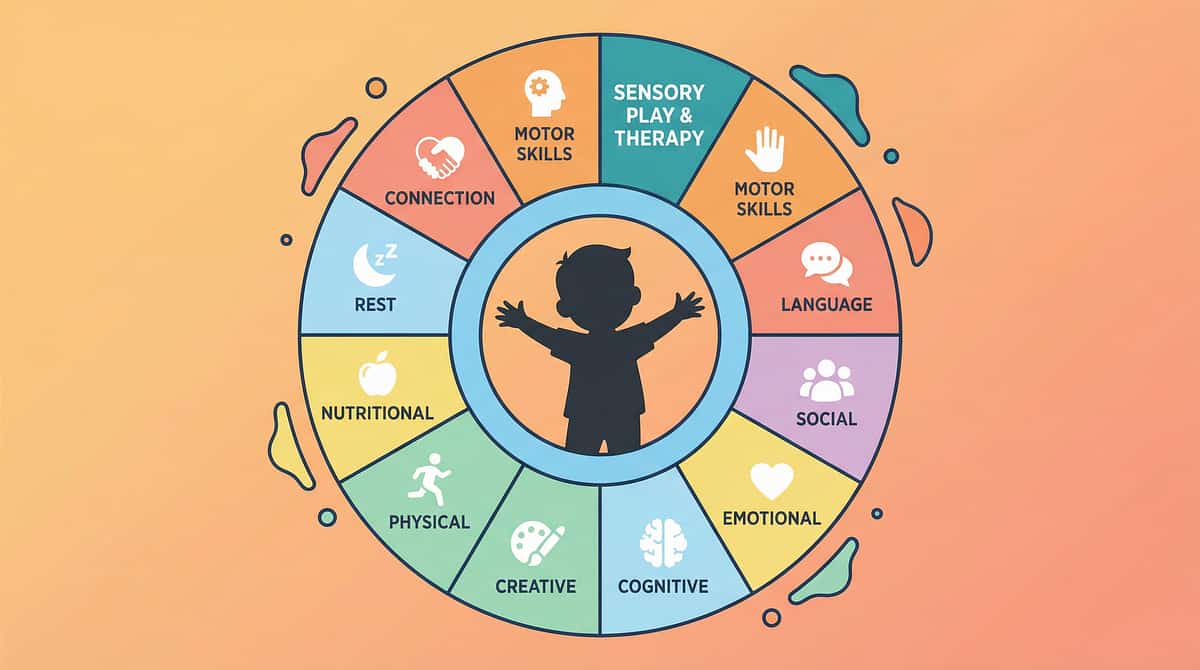
Week 1–2: Tolerance is progress. Expect small. Celebrate smaller.
Week 1–2 Progress
15% of the full 8-week journey. Early-phase progress is invisible to the eye but visible in your data.
✅ What REAL Progress Looks Like (Weeks 1–2)
- Session length increased by 30 seconds or more — neural pathway forming
- Child touches a material they initially refused — sensory tolerance expanding
- Child stops resisting being brought to the session — association becoming positive
- Child makes any spontaneous vocalisation during tactile activity — multi-sensory integration beginning
- Child's hand-eye coordination slightly more fluid — motor memory initiating
❌ What Is NOT Progress Yet
- Mastery of academic targets (reading words correctly) — this comes Weeks 5–8
- Consistent enthusiasm — engagement varies day to day in early weeks
- Generalisation to school setting — this requires more weeks of repetition
Week 1–2 is the hardest. The technique feels new, the child is cautious, and you're unsure if it's working. It is. The data you're collecting will show you what you cannot yet feel. Systematic review (Children, 2024): PMC11506176
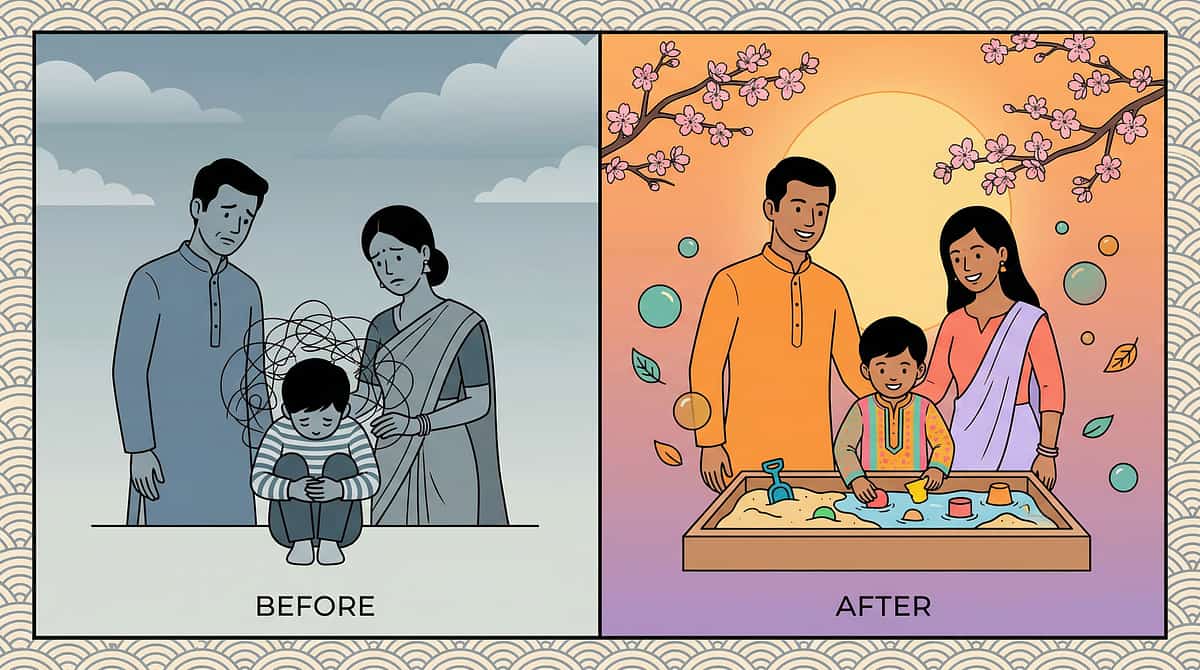
Week 3–4: Your child anticipates the session. That's a neural pathway forming.
Week 3–4 Progress
40% of the full journey. Consolidation signals are now observable and specific.
Child moves toward the material area WITHOUT being prompted
Anticipation has formed. The brain has begun predicting the positive experience.
Child asks "Are we doing the sand tray today?"
Spontaneous verbal anticipation is a consolidation milestone — not just tolerance, but active expectation.
Child demonstrates the technique to a sibling or toy
Generalisation seed. The child is teaching what they've learned — the highest form of encoding.
A previously refused material is now tolerated for 10+ seconds
Sensory tolerance expanding. The nervous system is adapting.
Accuracy on academic targets improves in the multi-sensory context
The first glimpse of the academic benefit you've been building toward.
At this stage, the brain is creating and strengthening synaptic connections between the sensory experience and the academic memory. When child shows consistent consolidation for 3+ consecutive sessions → add one more academic target, or introduce a new material, or add one more sensory pathway.
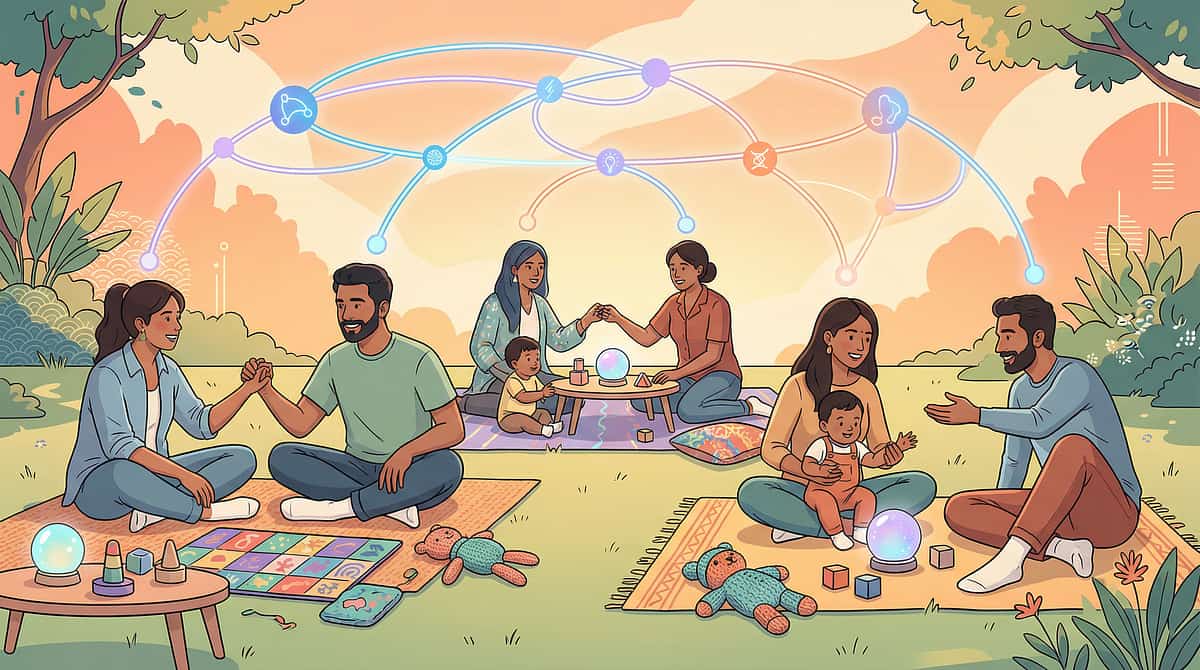
Week 5–8: The brain has built the pathway. Now watch what happens.
Week 5–8 Progress
75% of the journey. Mastery indicators are now specific, observable, and measurable.
Spontaneous Multi-Modal Application
Child independently uses multi-sensory strategies WITHOUT being prompted — traces letters when writing, hums a rhythm when doing maths, builds concepts in play.
Cross-Setting Generalisation
The learning built at home appears at school: teacher reports child now tries harder, writes more carefully, or attempts spelling that was previously refused.
Modality Self-Selection
Child begins to CHOOSE their preferred pathway: "I want to do it in the sand first." Self-advocacy for learning preference is a cognitive milestone.
Academic Target Improvement
Specific measurable improvement in the academic targets practised: letter recognition, spelling accuracy, maths fact recall.
Session Duration Extension
Sessions that were 5 minutes in Week 1 are now 20+ minutes — with child-initiated extensions.
You did this. Your child grew because of your consistency.
You showed up. Day after day. Even when sessions were hard. Even when you weren't sure it was working. You set up the sand tray. You sang the spelling songs. You jumped on the floor mat. You tracked the data.
And your child's brain built new pathways because you gave them the materials to do it.
This is not a small thing. This is the most important educational work happening in your home.
✅ Multiple Sensory Pathways
Your child can now access learning through visual, auditory, tactile, and kinesthetic channels.
✅ Home Learning Ecosystem
Your home is now a structured multi-sensory learning environment.
✅ Learner Identity
Your child has experienced success as a learner — possibly for the first time.
✅ Skills and Data
You have the skills and the data to continue, adjust, and advance.
You already have the materials for several of these. Explore what's next.
These six related techniques share Canon materials with H-755. You may already own what you need to begin.
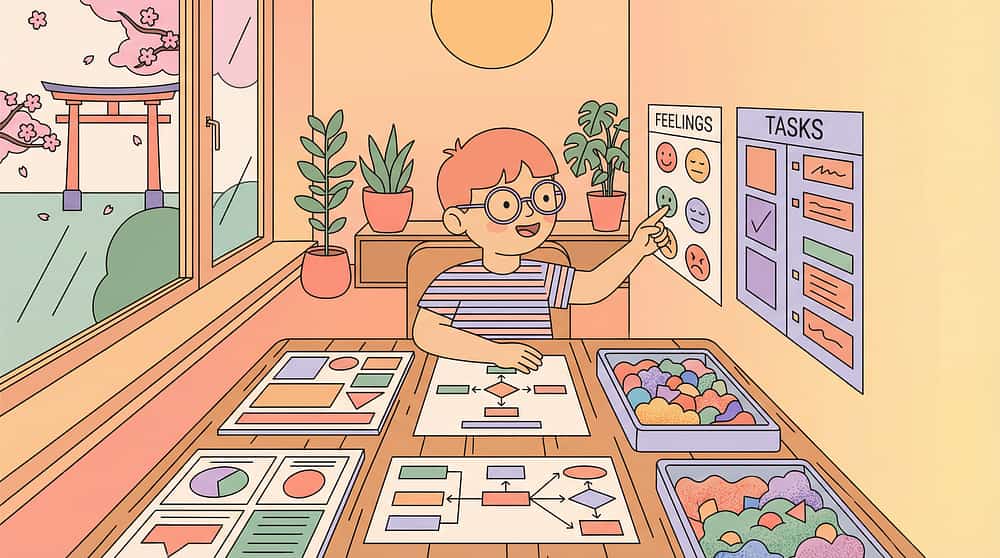
H-753 — Visual Learning Supports
Difficulty: INTRO | Domain: Learning Support
You already own: ✅ Visual Organiser (Material 5 from this session)
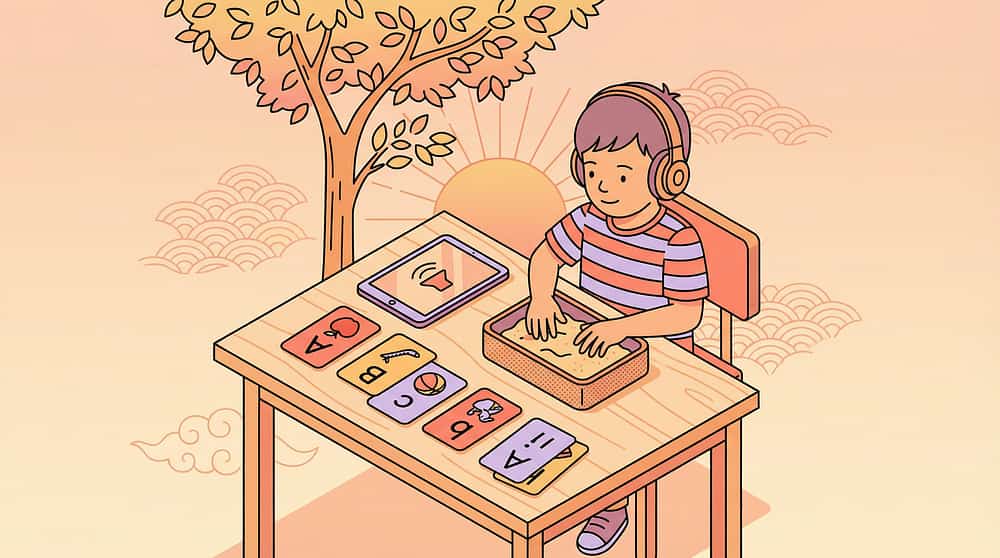
H-754 — Auditory Processing and Learning
Difficulty: CORE | Domain: Learning Support
You already own: ✅ Audio Learning Resources (Material 4 from this session)
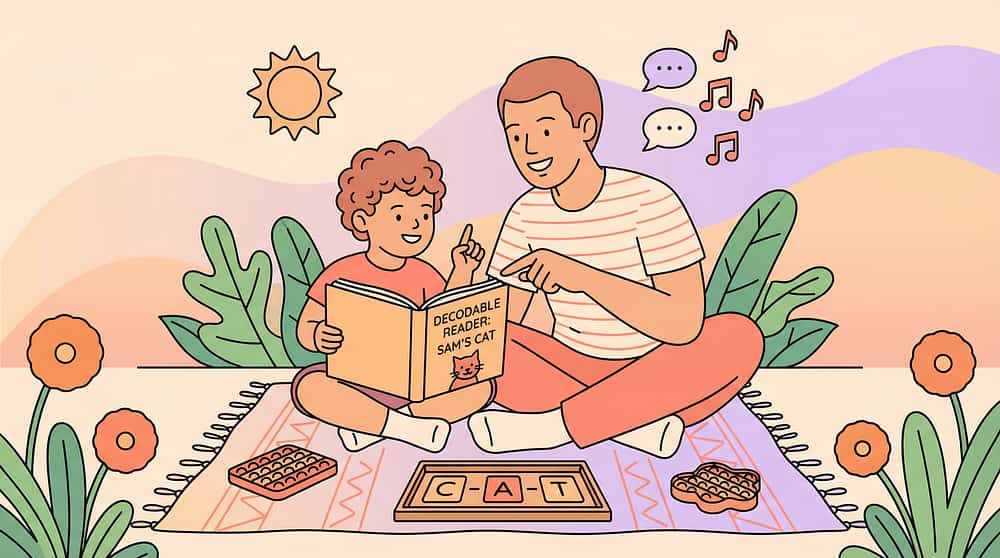
H-756 — Reading Fluency Materials
Difficulty: ADVANCED | Domain: Literacy Support
Natural next step after H-755 mastery. Canon Material: Decodable Readers | Fluency Trackers
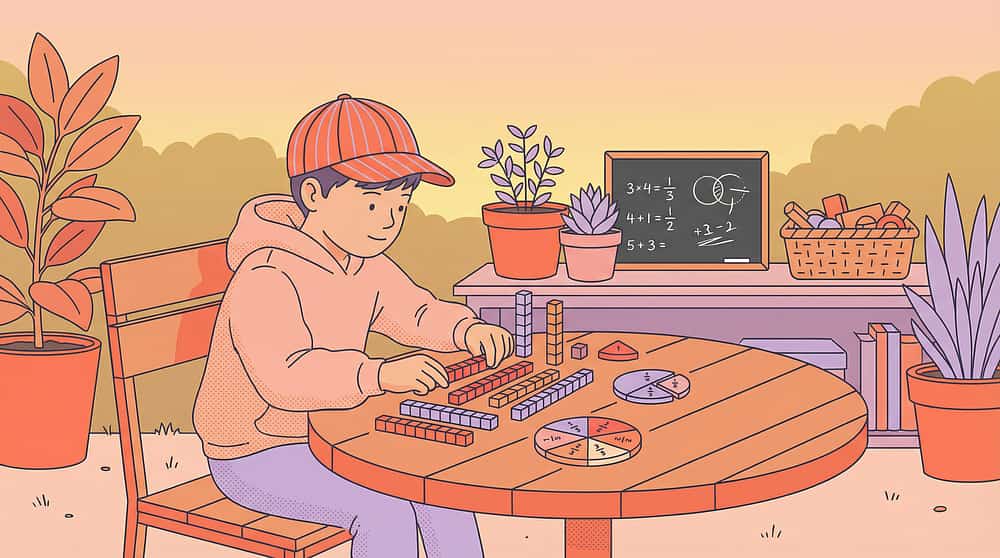
H-757 — Maths Concept Development
Difficulty: CORE | Domain: Mathematical Learning
You already own: ✅ Maths Manipulatives (Material 2 from this session)
H-760 — Structured Literacy Approaches
Difficulty: ADVANCED | Domain: Literacy / Dyslexia
You already own: ✅ Textured Tiles (Material 1) + Spelling Kit (Material 9)
A-090 — Sensory Diet Planning
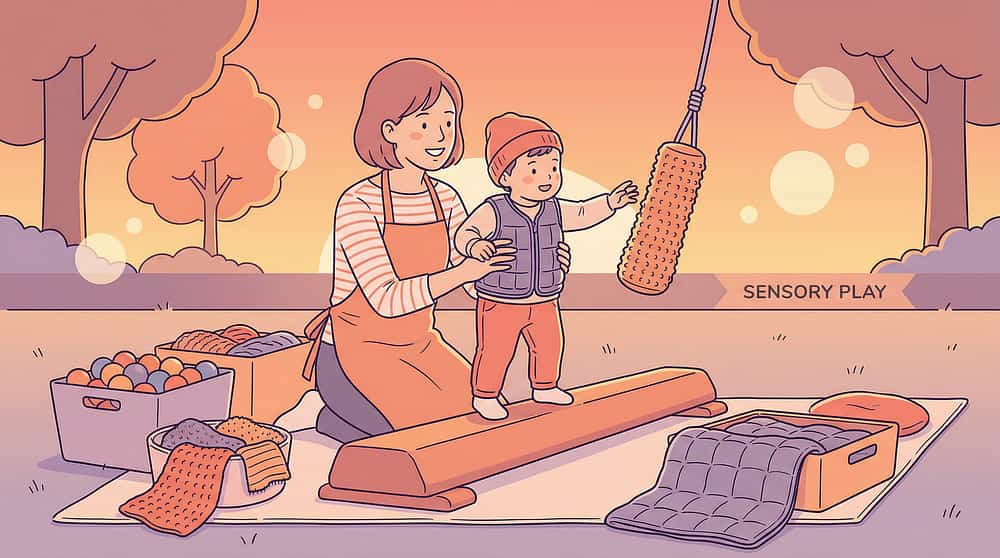
Difficulty: CORE | Domain: Sensory Processing (Domain A)
Essential companion for children with significant sensory processing needs.
These families started exactly where you are.
Before: "Not Academic"
"My son was labelled 'not academic' by his school. He couldn't sit through a lesson, couldn't read a worksheet. Everyone told us he wasn't a learner. We believed them."
After 8 weeks (H-755 + H-756): He learned multiplication tables by jumping on a number grid. He understood fractions by cutting parathas. He mastered spelling using a rice tray. And last week he told us: "I think I'm actually smart. I just need to do it my way."
— Parent, Pinnacle Hyderabad Network | Child: 9 years
Before: "Letters Scrambled"
"Our daughter could speak fluently and reason brilliantly. But reading? She'd stare at a page and nothing. Letters scrambled. Words disappeared. We thought she might never read."
After 12 weeks (H-755 + Orton-Gillingham pathway): The sand tray was the first thing she didn't resist. Now she reads her own books — slowly, carefully, with her finger tracking the line — but SHE reads. She earned that.
— Parent, Pinnacle Bengaluru Network | Child: 7 years, confirmed dyslexia
Before: "Learning Felt Impossible"
"My son with autism would spin materials, throw materials, or eat materials. 'Learning' felt impossible at home."
After 6 weeks (H-755 adapted for sensory integration): We started with just the rice tray — no academic target at all. Just play. By week 3 he was making marks. By week 6 he was tracing his name. The OT told us: "The exploring WAS the learning."
— Parent, Pinnacle Pune Network | Child: 5 years, ASD Level 2
Note: Outcomes vary by child, underlying profile, and intervention consistency. These are real outcome trajectories, not guaranteed results.
You are not navigating this alone. Hundreds of families are working on the same thing — right now.
Multi-Sensory Learning Parent Community — WhatsApp
Active families sharing what's working, what isn't, and real session photos. Join the H-755 Parent WhatsApp Group and connect with families in your exact situation.
Pinnacle Parent Online Forum
Moderated by Pinnacle therapists. Full archives of parent questions and expert answers. Join at: learning-support.pinnacleblooms.org/forum
Local Parent Meetups
70+ Pinnacle centres host monthly caregiver meetups by domain area. Find a parent group near you through the Pinnacle Centre Locator.
Peer Mentoring
Connect with an experienced parent who has already completed H-755 with their child. Request a Peer Mentor at pinnacleblooms.org/peer-mentoring
"Your experience helps others. Once you've completed 8 weeks of H-755, consider sharing your journey with a family just starting."
Isolation is the enemy of adherence. Community is the accelerant of outcomes. WHO NCF: Community engagement is a core principle. Parent support networks improve intervention outcomes.
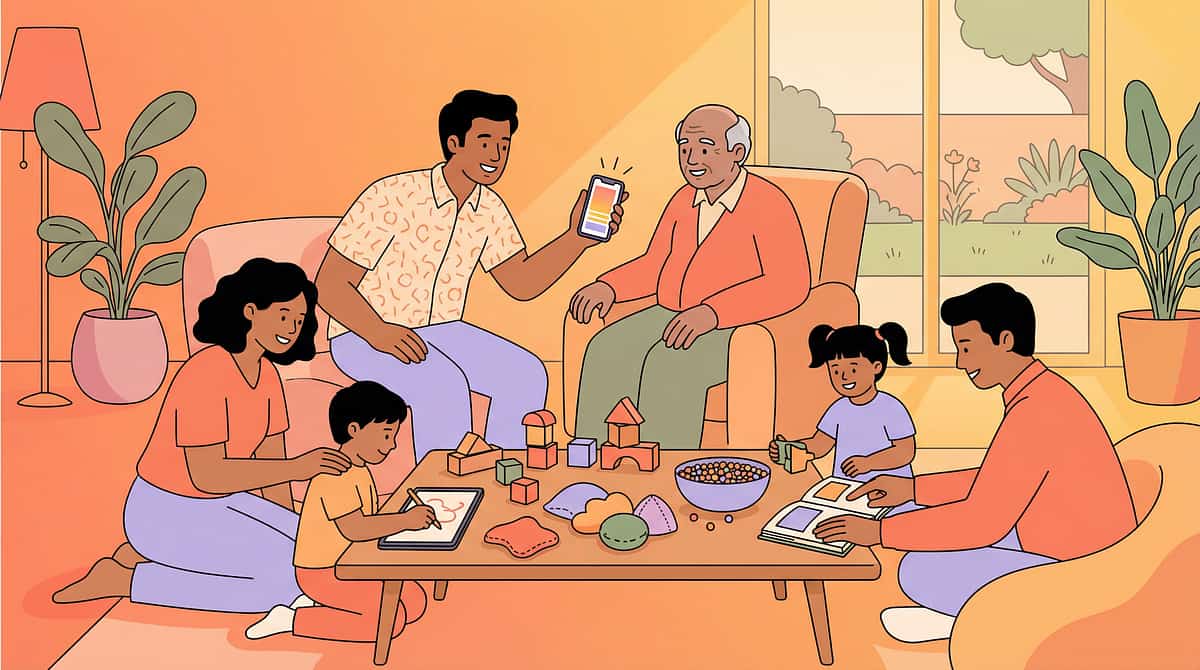
Home + clinic = maximum impact. Here's how to connect the two.
Connect With the Right Therapist
🔵 Occupational Therapist
Sensory profile assessment, tactile material selection, sensory writing progression
🟢 Special Educator
Academic multi-sensory session design, Orton-Gillingham sequencing, IEP alignment
🟠 Speech-Language Pathologist
Literacy and language component, phonological awareness integration
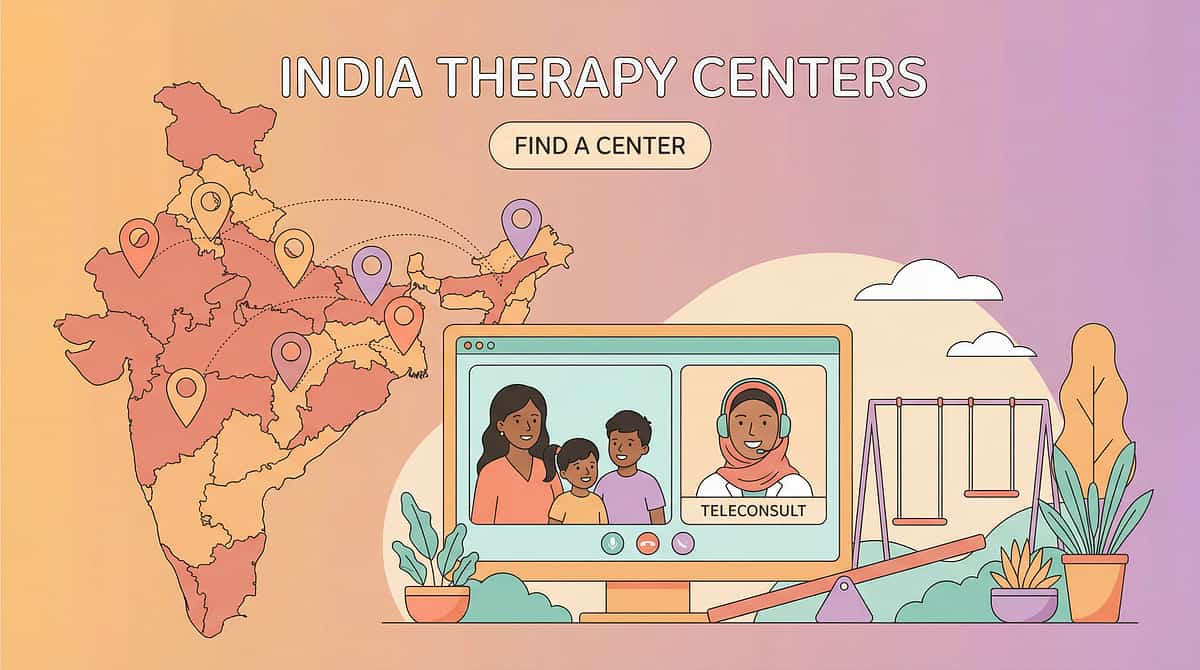
Consultation Options
Option 1: In-Centre Assessment
AbilityScore® Assessment + Learning Modality Profile + Academic Readiness Index. Duration: 90 minutes. Available at all 70+ Pinnacle Centres.
Option 2: Teleconsultation
Therapist-guided multi-sensory session review via video call. Duration: 45 minutes. Available worldwide.
Option 3: FREE Helpline
📞9100 181 181 | WhatsApp | 16+ languages | 24×7
Your 60-second session records feed a system that helps every child like yours.
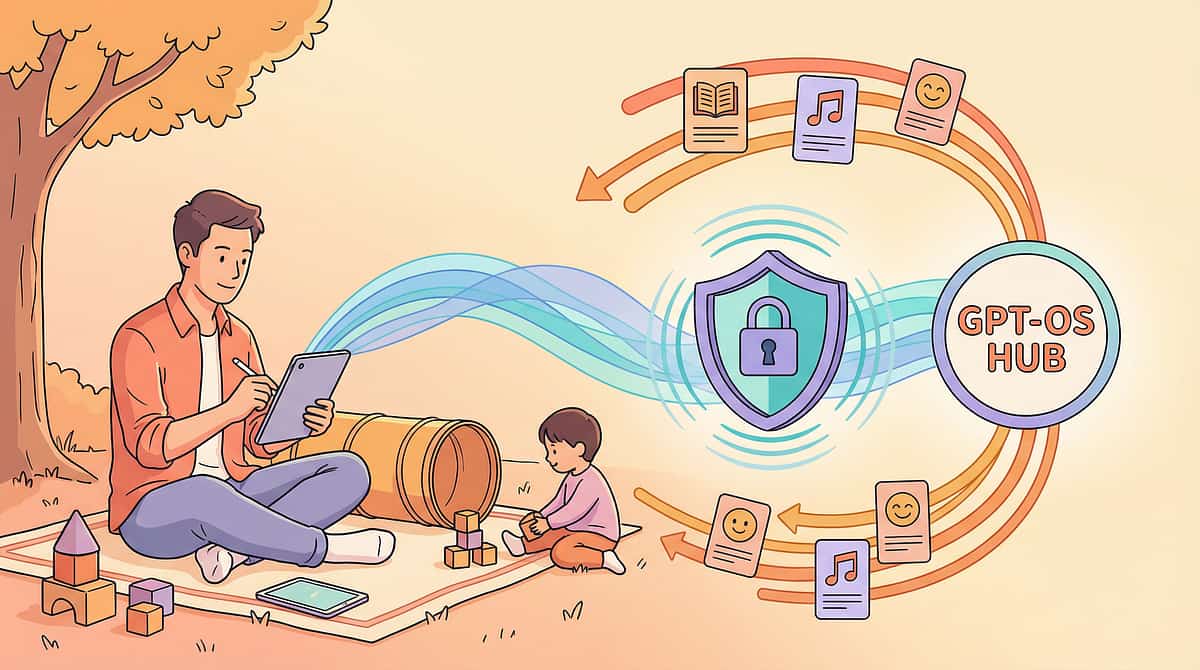
What GPT-OS® Learns from Your H-755 Data
- Your child's strongest learning modality (tactile vs. kinesthetic vs. auditory vs. visual)
- Session duration trajectory (engagement curve over 8 weeks)
- Material-specific responses (which of the 9 materials resonates most)
- Academic target acquisition rate
- Optimal session timing and frequency for this child profile
🔒 Privacy Assurance
- Encrypted end-to-end
- Never sold to third parties
- Anonymised before population-level analysis
- Deletable upon request at any time
- Governed under Indian PDPB data protection standards
GPT-OS® Stack: AbilityScore® → Prognosis Engine → TherapeuticAI® → EverydayTherapyProgramme™ → FusionModule™ → Closed-Loop Therapeutic Control
Digital health interventions for ASD: 21 RCTs, 1,050 participants (2024 meta-analysis) — gamified digital health tools show measurable outcomes.

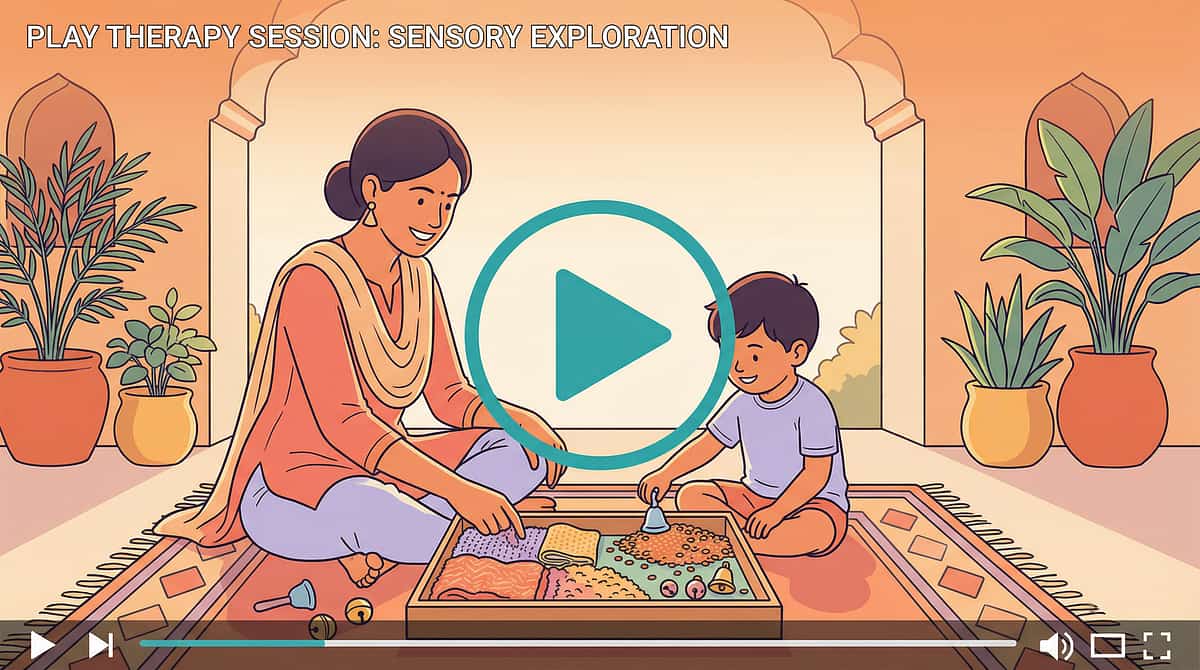
9 Materials That Help With Multi-Sensory Learning — Watch the Original Reel
This Reel introduced you to the 9 materials that open multi-sensory learning pathways. Watch a Pinnacle therapist demonstrate each material in a real home setting — so you can see exactly what each one looks like in action before you try it.
The Reel-to-Page Connection
This Reel (H-755) led you to this web page — which gives you the full protocol. The Reel shows WHAT. This page shows HOW, WHY, and WHAT NEXT.
📹 H-754
9 Materials That Help With Auditory Processing
📹 H-755 ← You Are Here
9 Materials That Help With Multi-Sensory Learning
📹 H-756 — Coming Next
9 Materials That Help With Reading Fluency
📹 H-757
9 Materials That Help With Maths Concepts
Video modelling: Classified as evidence-based practice for autism (NCAEP, 2020). Multi-modal learning (visual + text + demonstration) improves parent skill acquisition.
Preview of 9 materials that help with multi sensory learning Therapy Material
Below is a visual preview of 9 materials that help with multi sensory learning therapy material. The pages shown help educators, therapists, and caregivers understand the structure and content of the resource before use. Materials should be used under appropriate professional guidance.


The Pinnacle Promise
"From fear to mastery. One technique at a time."
H-755 is part of the Pinnacle GPT-OS® library of 70,000+ evidence-linked intervention techniques — the largest structured paediatric intervention knowledge base on Earth. Built by mothers. Engineered as a system. Validated by 20 million sessions.
🌐techniques.pinnacleblooms.org | 🏠pinnacleblooms.org | 📞 9100 181 181 | 📧care@pinnacleblooms.org
CIN: U74999TG2016PTC113063 | DPIIT: DIPP8651 (Government of India) | MSME: Udyog Aadhaar TS20F0009606 | GSTIN: 36AAGCB9722P1Z2
© 2025 Pinnacle Blooms Network®, unit of Bharath Healthcare Laboratories Pvt. Ltd. All rights reserved. | H-755 | Version 1.0 | Generated: Pinnacle GPT-OS® Content Engine
"He knows the answers. School just isn't asking in a language his brain speaks."