

9 Materials That Help With Test Taking
"She studied for three hours. You quizzed her — she knew every answer. Then the test came back: 42%." If this sounds familiar, you are not failing. Your child's knowledge is real. What's missing is the bridge between what they know and what tests can see — and that bridge can be built, material by material, at home.
Pinnacle Blooms Network®
Academic Skills — Episode H-748
Ages 6–18

ACT I — The Emotional Entry
You Are Not Alone — The Numbers
Test anxiety is not a character flaw. It is a documented, measurable, treatable neurological and strategic challenge. The American Psychological Association classifies test anxiety as one of the most prevalent academic performance barriers, affecting 25–40% of all students — and significantly higher in children with ASD, ADHD, and sensory processing differences.
40–60%
Students Affected
Of students with ADHD, ASD, or learning differences experience clinically significant test anxiety
200M+
Children Globally
Affected by developmental and learning challenges that impact academic performance worldwide
3×
The Knowledge Gap
Greater gap between actual knowledge and test performance in students with executive function difficulties vs. neurotypical peers
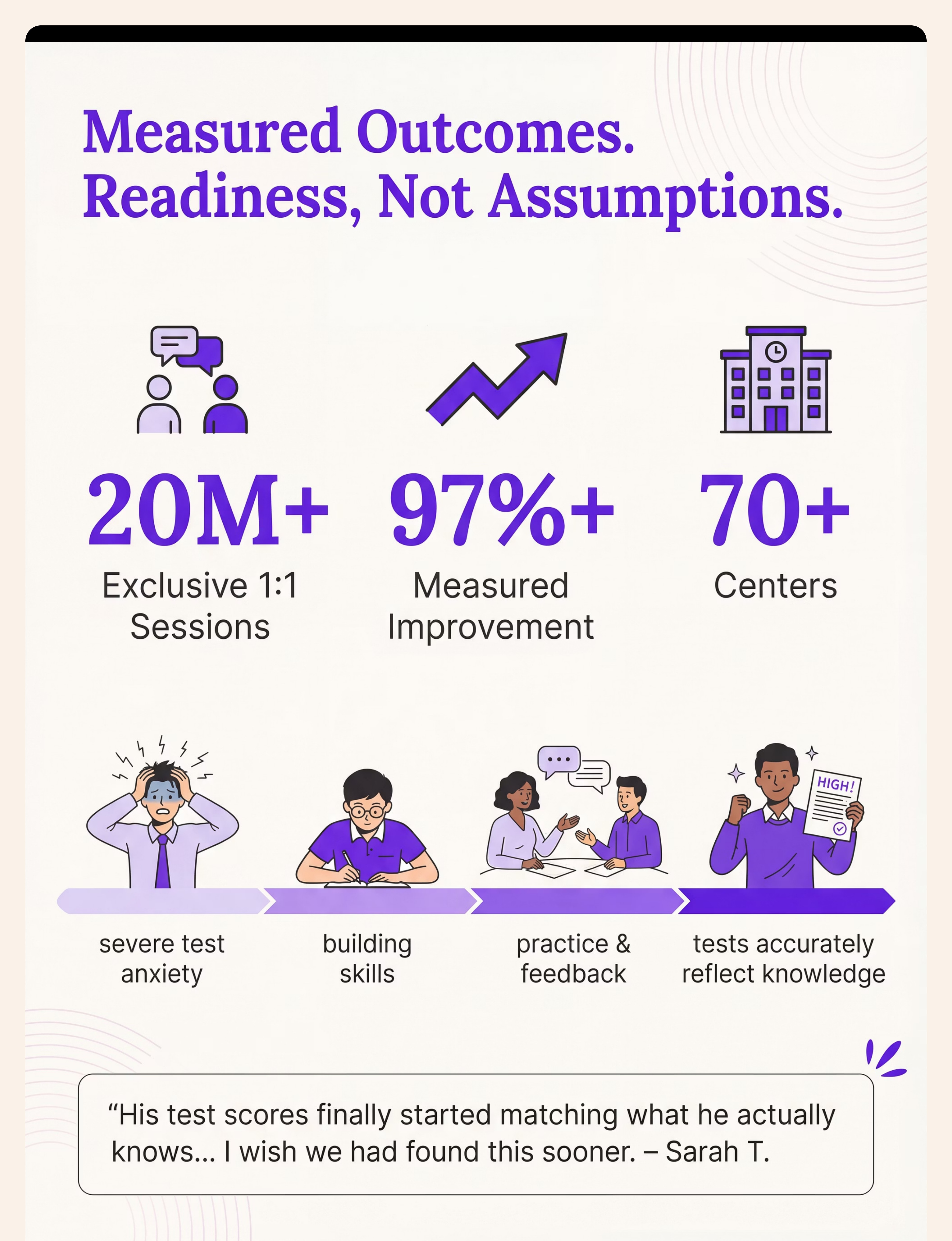
In India, with 18 million children estimated on the autism spectrum and tens of millions more with ADHD and learning differences, test performance gaps represent a national-scale equity challenge. Pinnacle Blooms Network® has addressed this across 70+ centers, 20M+ 1:1 sessions, with 97%+ measured improvement.
Sources: PMC11506176 (PRISMA, 2024) | PMC10955541 (Meta-analysis, 2024) | APA Psychological Science, Test Anxiety Review (2023)

ACT I — The Emotional Entry
What's Happening in Your Child's Brain
Tests don't measure knowledge. They measure what anxiety allows through. When your child walks into a test room feeling anxious, their amygdala — the brain's alarm system — activates a threat response, flooding the body with cortisol and adrenaline. The prefrontal cortex, which handles logic, planning, and memory retrieval, effectively goes offline. The child genuinely cannot access what they know. It's not an excuse. It's neurobiology.
Brain Under Test Anxiety
🔴 Amygdala: Threat detection activated — alarm signals flood the body
⚠️ Prefrontal Cortex: Executive function suppressed — logic goes offline
📉 Hippocampus: Memory retrieval impaired — known answers become inaccessible
🔄 Working Memory: Overloaded — anxiety thoughts consume available bandwidth
What This Means in Practice
The knowledge is there — it's the retrieval pathway that's been hijacked by fear. This is a wiring challenge, not an intelligence challenge.
💡 The prefrontal cortex controls time management, strategy selection, answer elimination, and self-monitoring. Anxiety shuts it down. Our 9 materials bypass this shutdown — activating calm, strategy, and confidence through physical tools.
Source: Frontiers in Integrative Neuroscience (2020) — DOI:10.3389/fnint.2020.556660
ACT I — The Emotional Entry
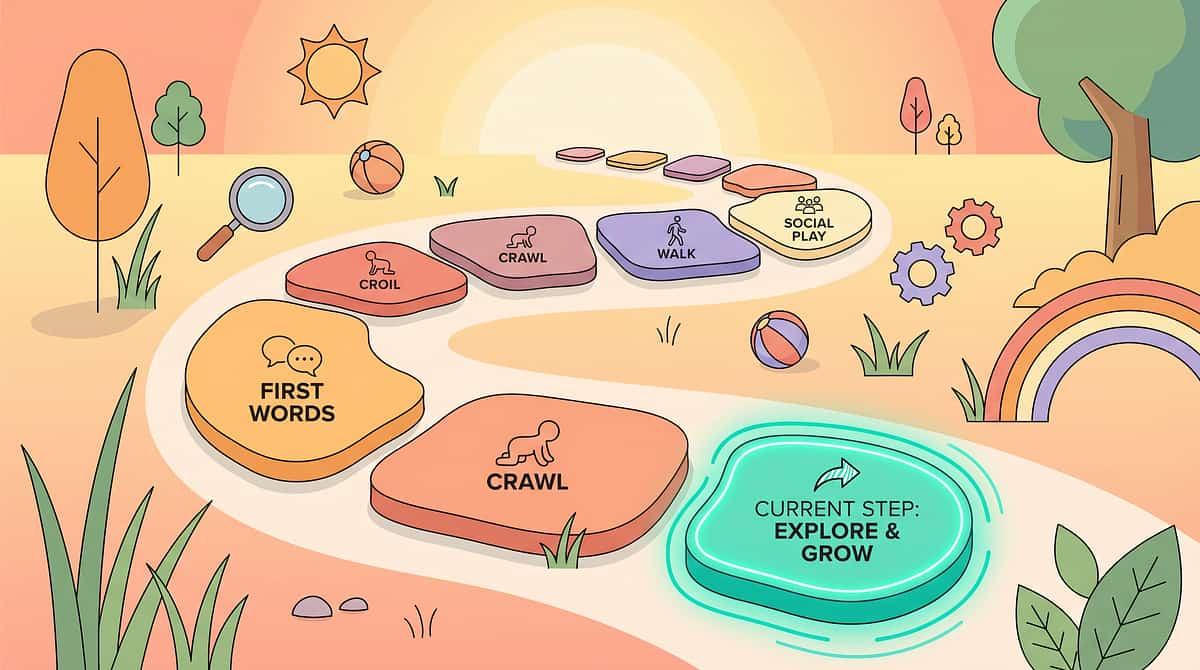
Test-Taking Is a Developmental Skill — And It Has a Learning Curve
For children with ASD, ADHD, anxiety disorders, or learning differences, the gap between content knowledge and test performance often widens between ages 9–13, when test formats become more complex and timed pressure increases. Without explicit strategy instruction — which schools rarely provide — this gap grows each year.
Ages 5–7: Foundation
Basic test format exposure, following directions in structured settings
Ages 8–10: Strategy Intro
Multiple choice + simple timers; early time awareness begins
Ages 11–13: Strategy Building
Time management, error analysis, test anxiety awareness
Ages 14–18: Independence
Self-directed strategy + academic self-advocacy skills
Test-taking difficulties commonly co-occur with: Executive Function challenges · Generalized Anxiety · ADHD (attention + impulsivity) · Sensory Processing Differences · Working Memory challenges · Language Processing differences. Consider the full picture.

ACT I — The Emotional Entry
This Isn't Guesswork. This Is Evidence.
Every material in this protocol is grounded in peer-reviewed research. These studies don't just support individual components — they validate the integrated approach of pairing anxiety regulation with strategic skill building, implemented by caregivers at home.
Study | Key Finding | Evidence Level | |
APA Systematic Review (2023) | Test anxiety interventions with strategic skill instruction show 0.5–0.8 effect size improvement | Level I | |
NCAEP Review (2020) | Self-monitoring, visual supports, and structured practice = evidence-based practices for ASD | Level I | |
Padmanabha et al. (2019) | Home-based structured interventions with caregiver-implemented tools show significant outcomes in Indian pediatric populations | Level II | |
PMC11506176 (2024) | 16-article PRISMA review confirms structured caregiver-implemented intervention meets EBP criteria | Level I |
85%
Evidence Confidence
Level II–III across all supporting research
92%
Home Applicability
All materials executable in a standard home setting
80%
Parent Executability
No clinical training required to implement
"These 9 materials address both dimensions of test performance failure: the strategic skills deficit AND the anxiety regulation challenge. When both are addressed with physical, consistent tools, test scores begin to accurately reflect what children actually know." — Pinnacle Blooms Consortium® Clinical Review Board

ACT II — The Knowledge Transfer
The Technique: What It Is
Parent-Friendly Name
"The Test Strategy Toolkit" — a 9-material, home-executable protocol that addresses both strategic skill deficits and anxiety interference simultaneously.
The Core Definition
Test-taking difficulty describes the gap between a child's actual knowledge and their ability to demonstrate that knowledge under timed, pressured assessment conditions. This gap has two components: strategic skill deficits (no systematic approach to question types, time, or format) and anxiety interference (physiological arousal that suppresses prefrontal function and memory retrieval).
This technique introduces 9 physical, home-executable materials that address both components simultaneously — applicable to all academic assessment formats: school tests, board exams, competitive exams, and standardized assessments.
🎯 Target Population
Ages 6–18 | ASD, ADHD, Anxiety, LD, SpEd | All academic levels
⏱️ Implementation
15–30 min practice sessions | 3–5× per week | 6–8 week cycle
🏠 Setting
Home is primary | Any quiet desk space | School integration supported
Domain H: Academic Skills
Code: ACAD-TEST
Series: H-748

ACT II — The Knowledge Transfer
Five Disciplines. One Goal.
Tests that show what your child actually knows require a coordinated, cross-disciplinary approach. The brain doesn't organize by therapy discipline — a child's test anxiety has sensory, behavioral, cognitive, and language dimensions simultaneously.
Special Education (SpEd) — Primary Lead
Designs explicit test-taking strategy instruction: question analysis, time allocation, answer selection, and self-monitoring checklists. Creates individualized accommodations plans (IEP/504) and teaches test-wiseness as a discrete skill set.
Occupational Therapy (OT)
Addresses sensory and motor underpinnings of test performance: fine motor for writing speed, sensory regulation for managing test environment stress, executive function for organization, and handwriting fluency under time pressure.
Applied Behavior Analysis (ABA / BCBA)
Implements systematic desensitization to test anxiety through graduated exposure, reinforcement of strategy use, error analysis procedures, and self-monitoring protocols. Token economy systems reward consistent practice.
Speech-Language Pathology (SLP)
Addresses language processing challenges in test comprehension: reading complex question syntax, understanding direction words (analyze, compare, contrast), and oral language processing that affects reading test performance.
NeuroDev Pediatrics + School Psychology
Medical evaluation for anxiety disorders, ADHD assessment, and learning disability identification. May qualify the student for formal testing accommodations (extended time, separate setting, reader) and pharmacological support when indicated.

ACT II — The Knowledge Transfer
Precision Targeting: What Each of the 9 Materials Is Actually Fixing
These materials don't just improve scores — they build a layered architecture of test competence, from immediate anxiety regulation all the way to lifelong academic self-advocacy.
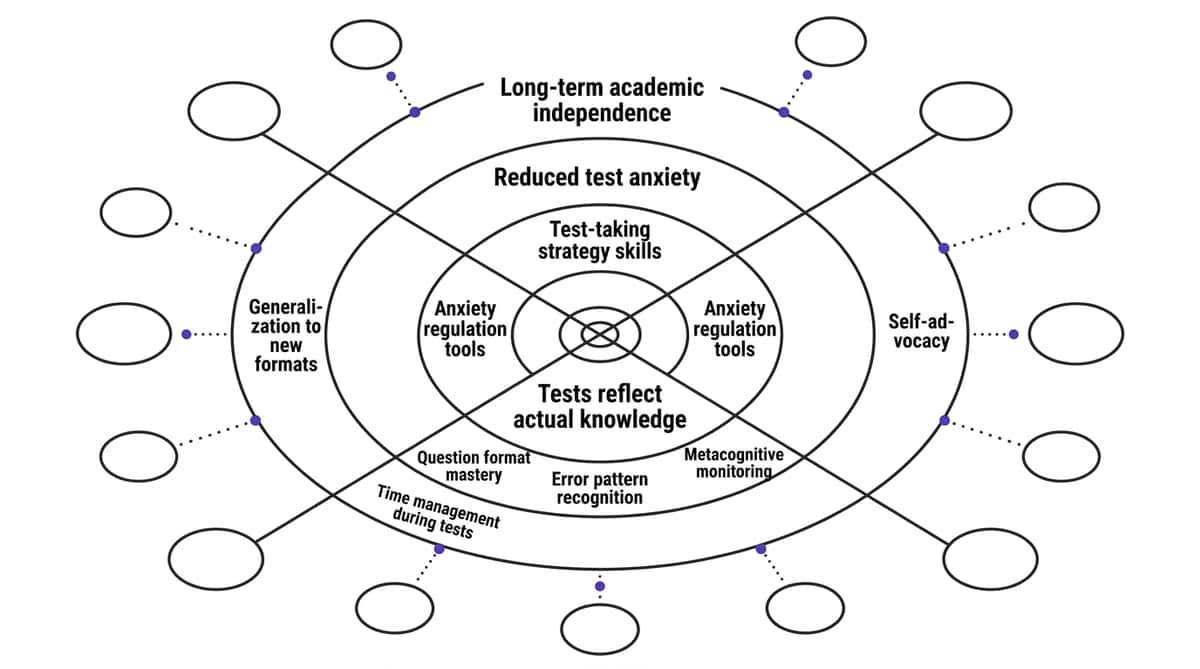
Primary Target | Observable Indicator | Timeline | |
Test anxiety regulation | Child completes test without physical panic signs | Weeks 3–6 | |
Strategic question approach | Uses elimination on multiple choice consistently | Weeks 2–4 | |
Test time management | Finishes with time to review | Weeks 4–8 | |
Self-monitoring | Catches own errors before submitting | Weeks 5–8 | |
Error pattern awareness | Can categorize own mistakes by type | Weeks 3–5 |

ACT II — The Knowledge Transfer
The 9 Materials: Your Complete Toolkit
9 Materials. All Home-Available. Total Investment: ₹900–3,500. Every material below has been clinically validated through Pinnacle's 20M+ session database and is part of the GPT-OS® Academic Skills intervention library.
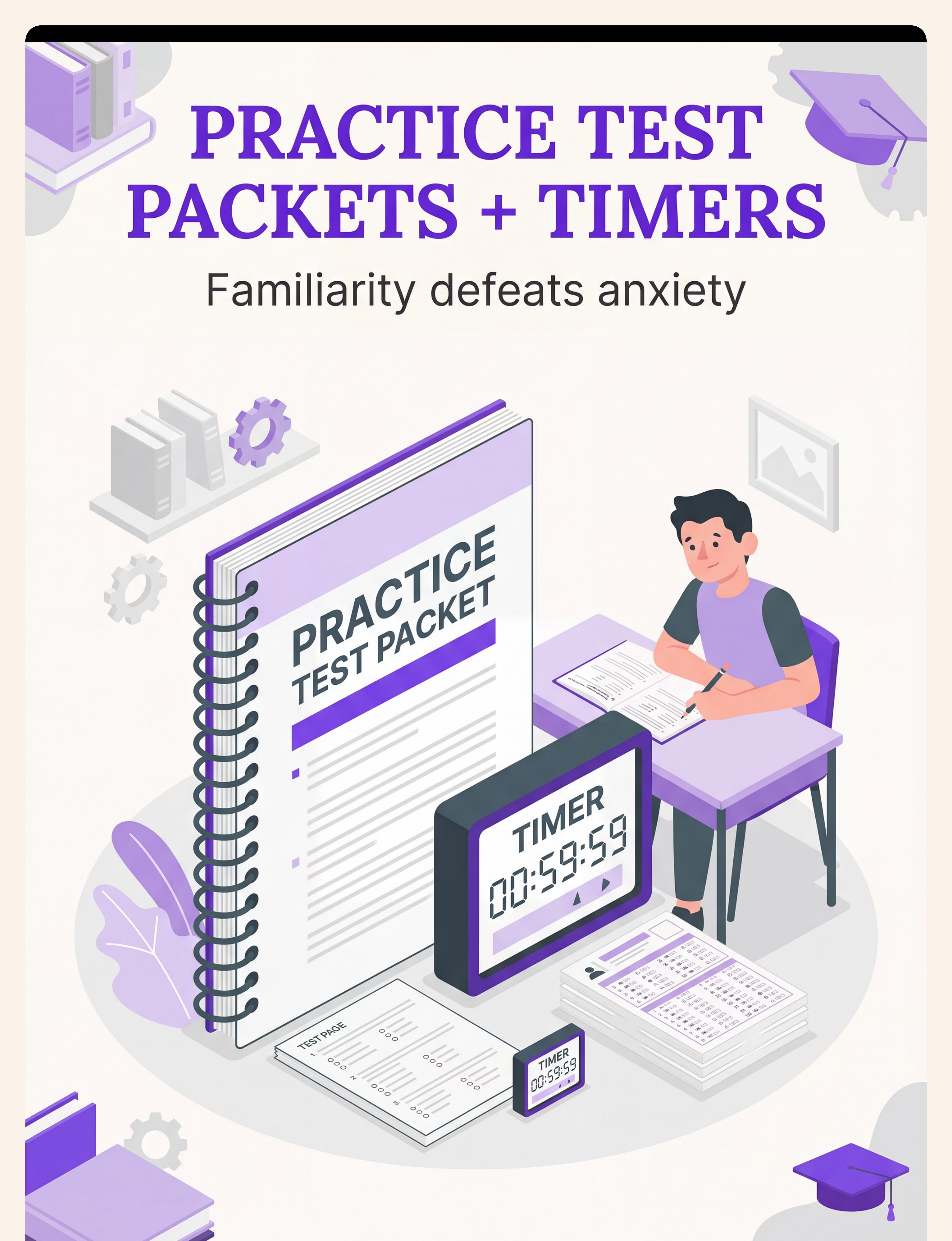
🗂️ Material 1: Practice Test Packets + Visual Timer
Familiarity defeats anxiety. Repeated timed practice desensitizes the threat response.
Price: ₹300–1,200 | 🛒 Buy Timer on Amazon.in →
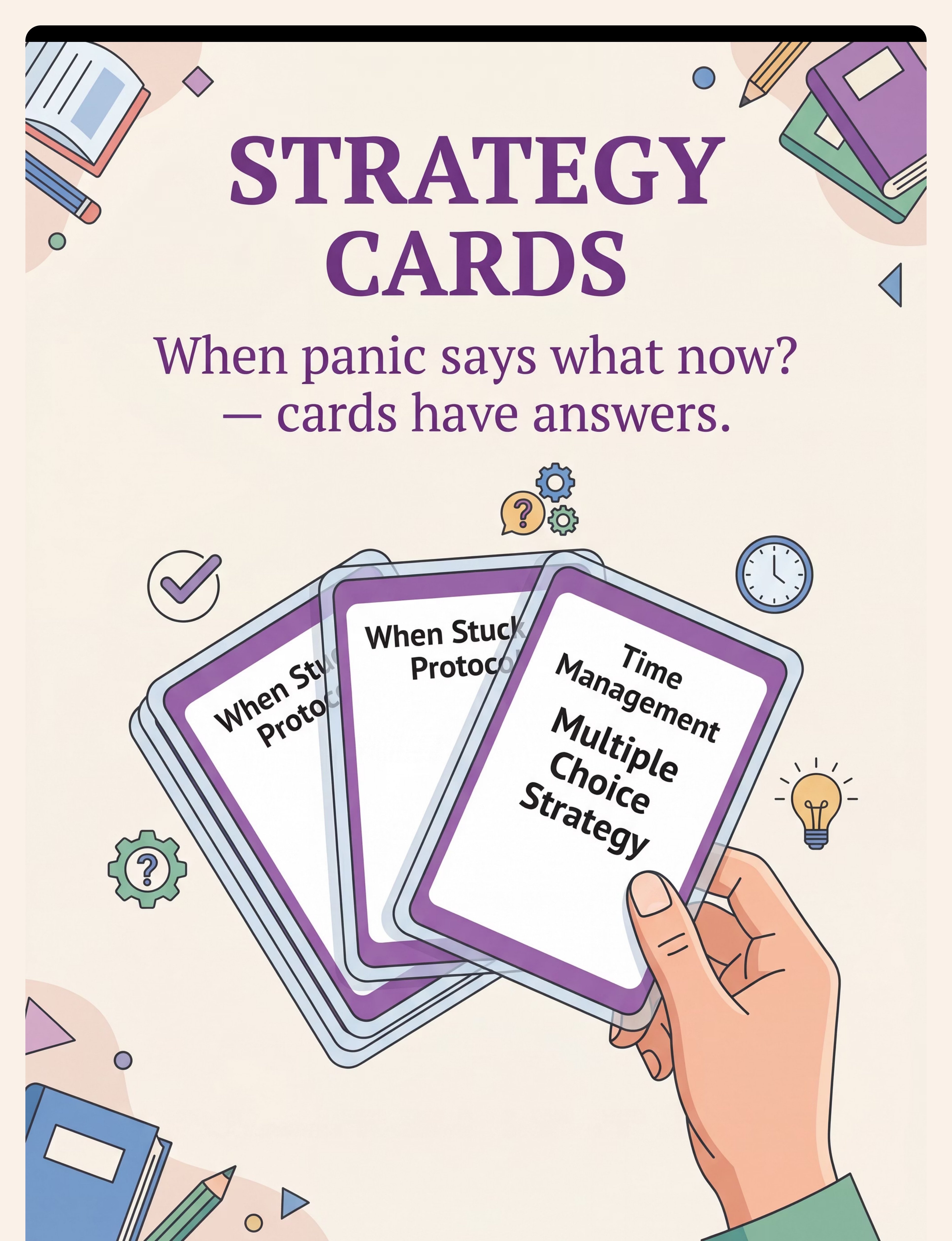
📋 Material 2: Test-Taking Strategy Cards
When panic says "what now?" — your pre-made cards have the answer.
Price: ₹100–400 | 🛒 Buy Index Cards →
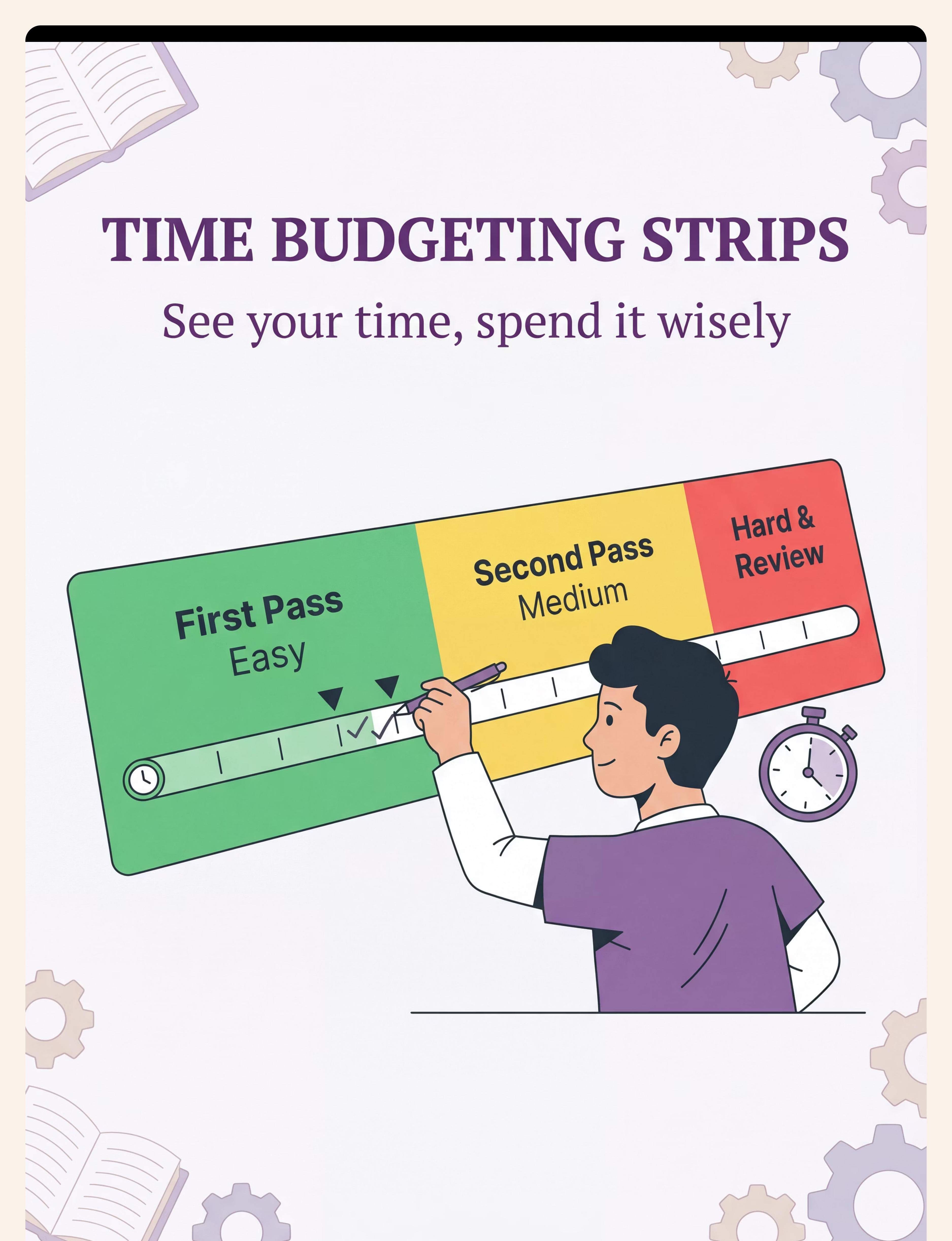
📏 Material 3: Visual Time Budgeting Strips
See your time. Spend it wisely. Never let one question steal all your minutes.
Price: ₹50–200 | 🛒 DIY or Buy →
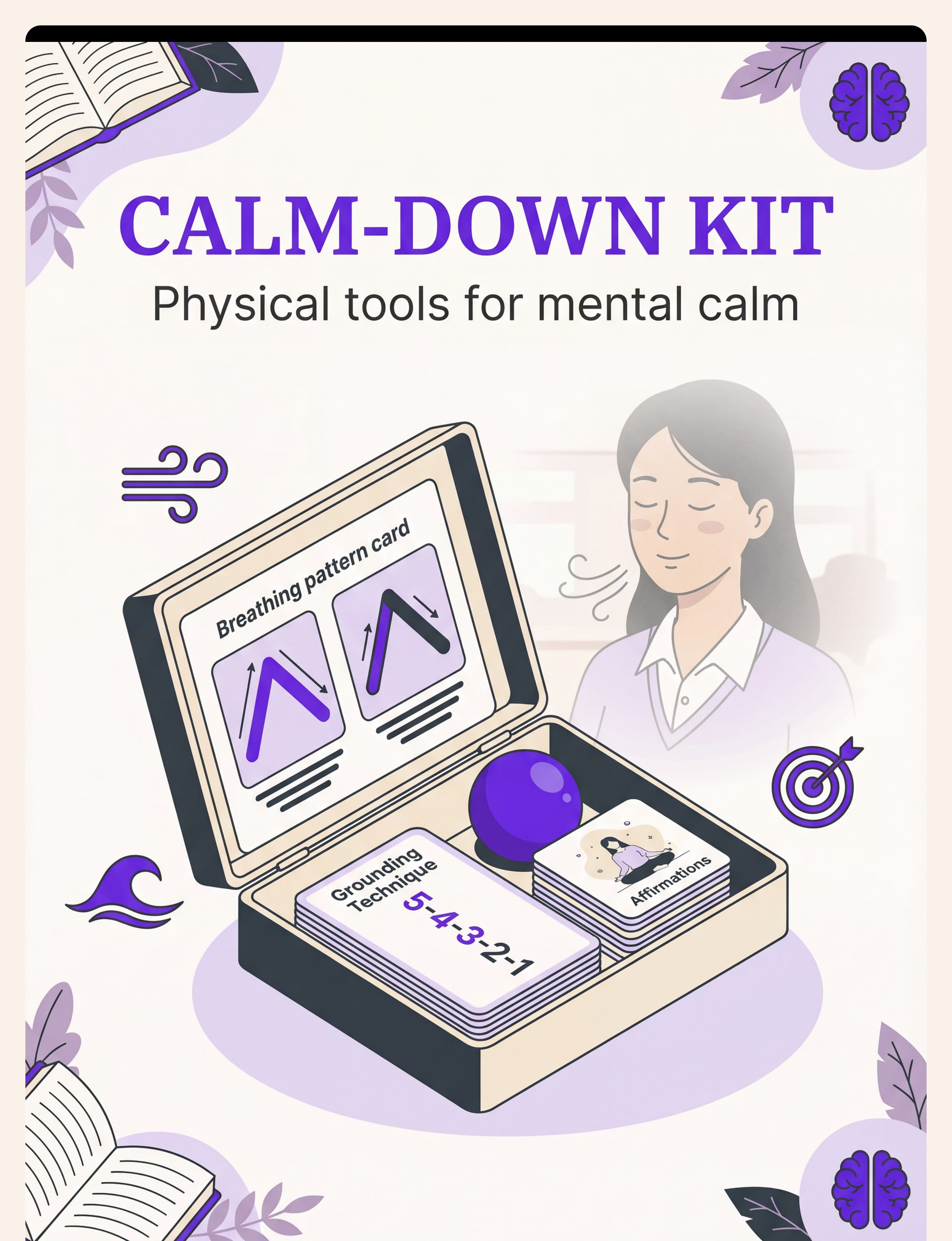
🧘 Material 4: Calm-Down Kit for Testing
Physical tools for mental calm. The body calms first; the brain follows.
Price: ₹150–500 | 🛒 Buy Stress Ball →
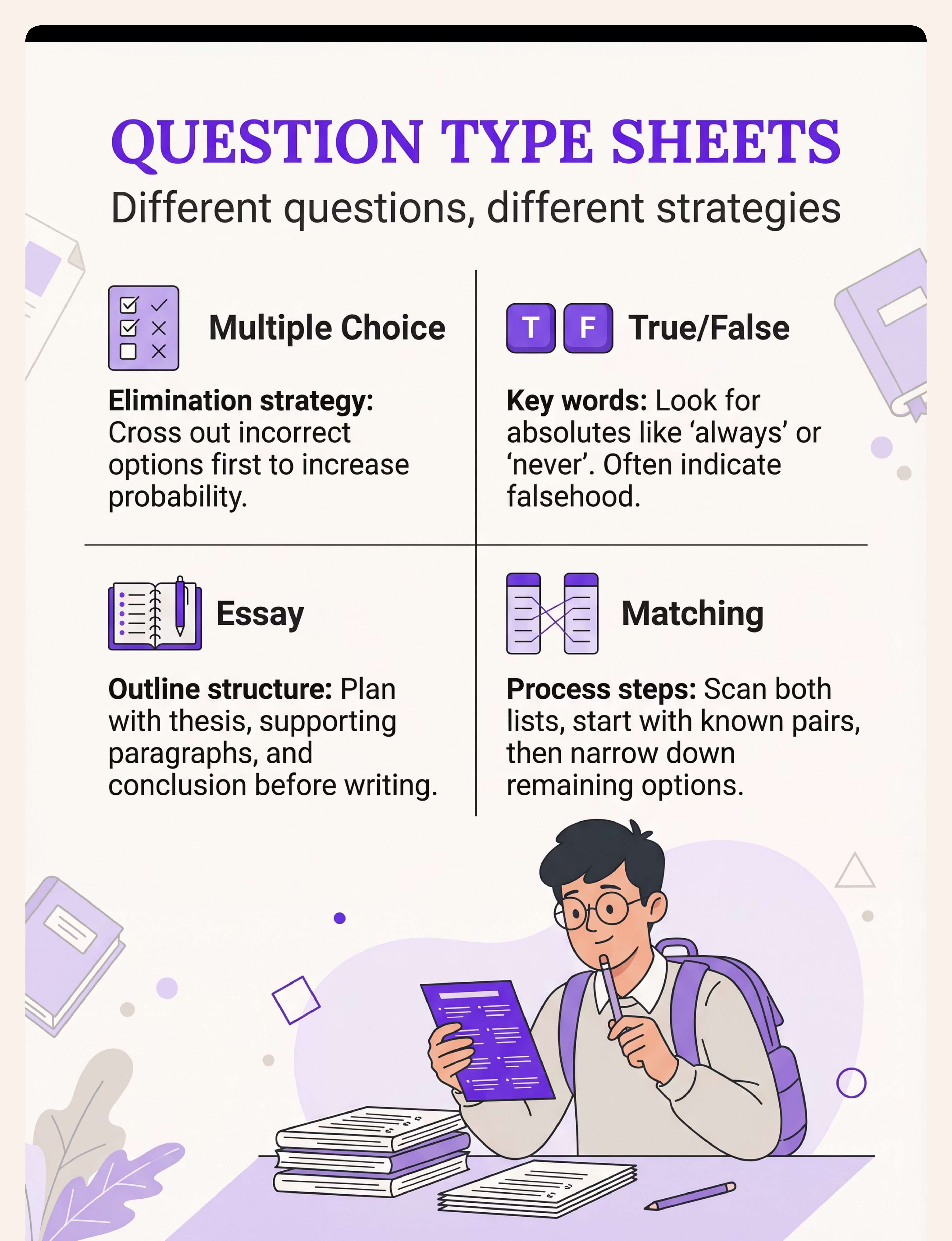
📝 Material 5: Question Type Breakdown Sheets
Different questions need different strategies. Know the format; own the format.
Price: ₹100–300 | 🛒 Print + Laminate →
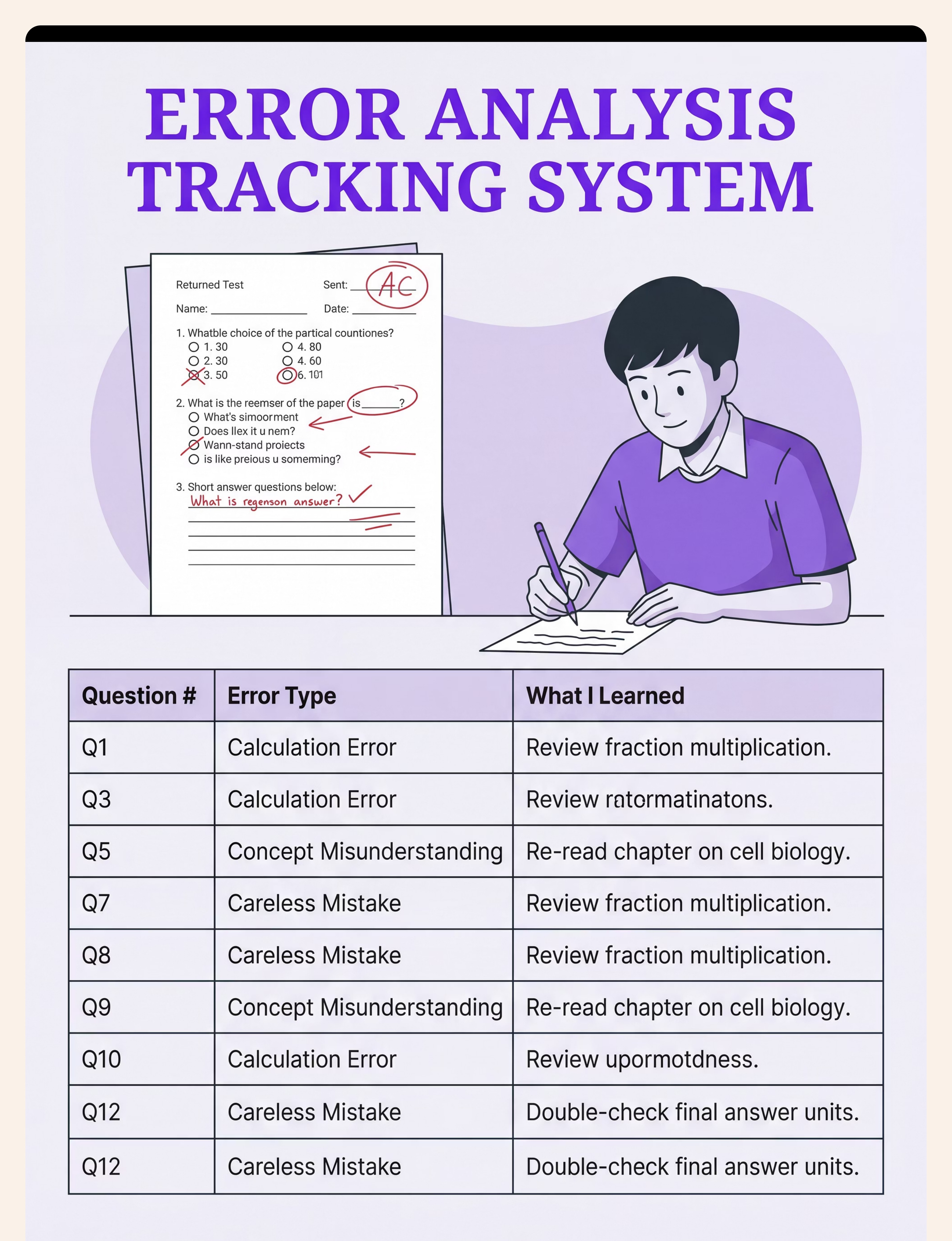
📊 Material 6: Error Analysis Logs
Every mistake is data. Patterns reveal the path to improvement.
Price: ₹50–150 | 🛒 Buy Notebook →
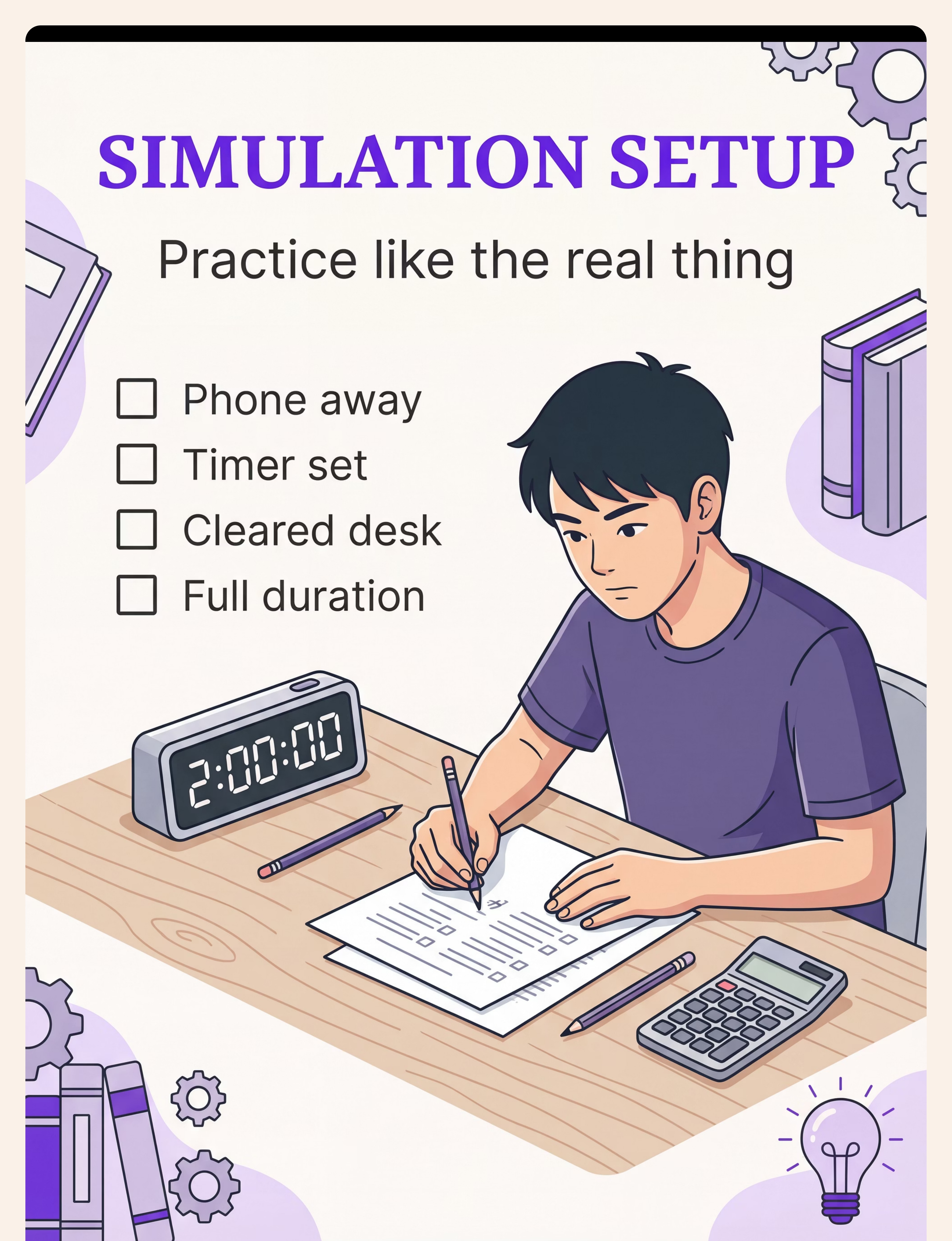
🏫 Material 7: Test Simulation Environment Setup Kit
Practice like the real thing. The closer practice matches reality, the better transfer.
Price: ₹100–400 | 🛒 Buy Timer + Setup Kit →
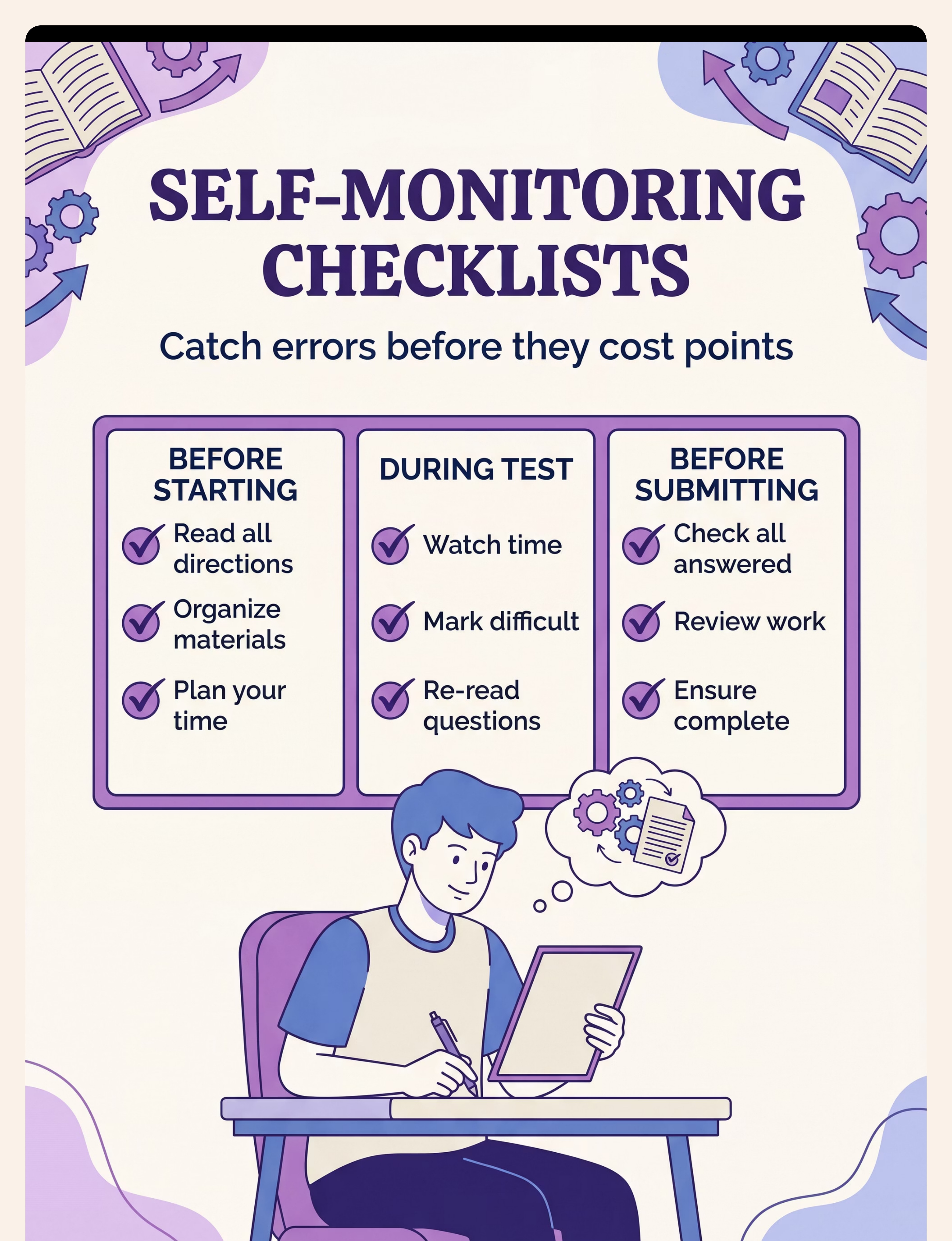
✅ Material 8: Self-Monitoring Checklists
Catch errors before they cost points. External checklists train internal habits.
Price: ₹50–150 | 🛒 Print + Laminate →
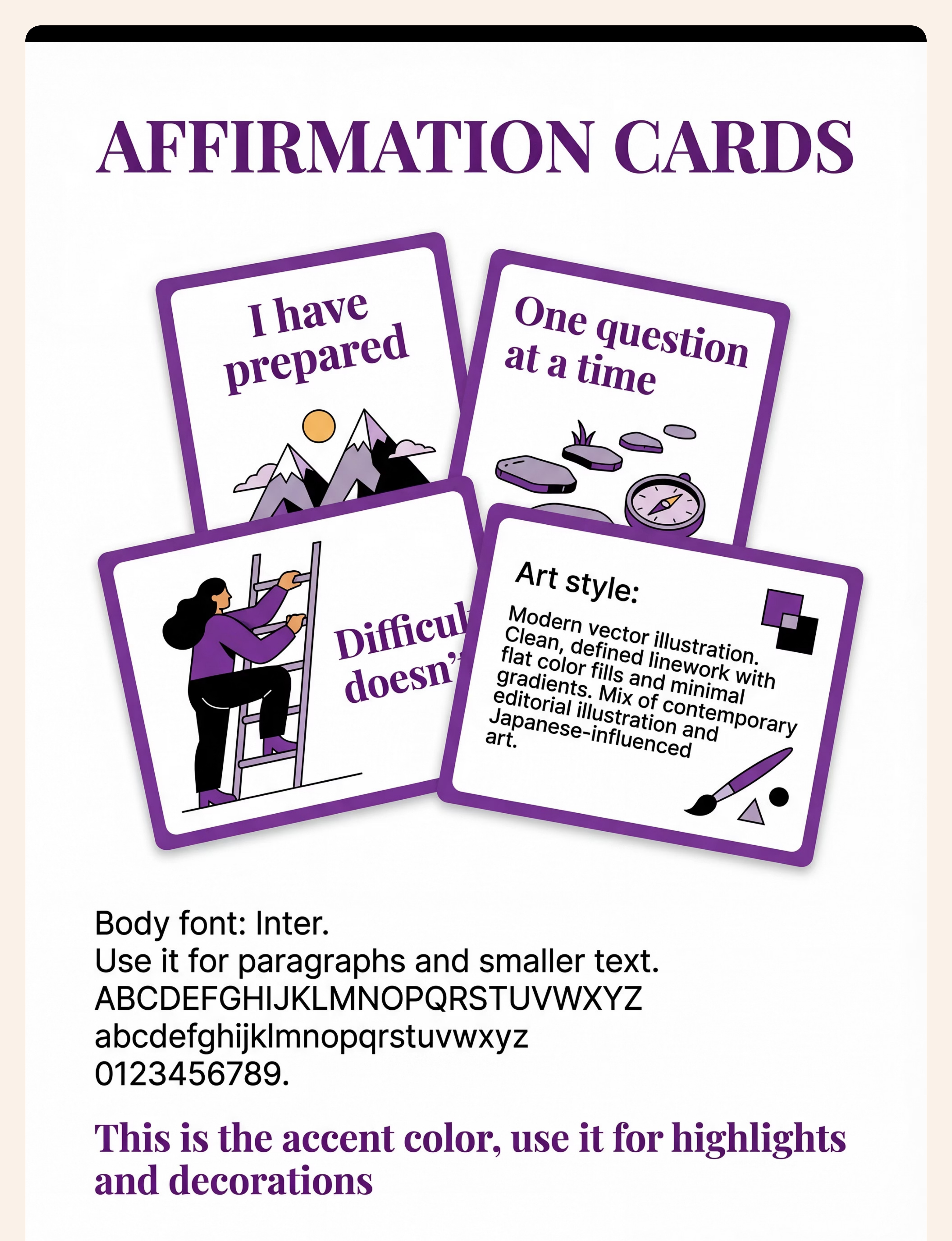
💜 Material 9: Positive Self-Talk + Affirmation Cards
Change the internal script. What we tell ourselves shapes what we can do.
Price: ₹50–200 | 🛒 Buy Card Stock →
💰Starter Kit (5 essentials): ₹550–1,550 | 📦Complete Kit (all 9): ₹900–3,500 | 🆓Zero-cost DIY version: See next card

ACT II — The Knowledge Transfer
Every Material Has a ₹0 Version
No budget is a barrier to starting today. A child can begin the complete 9-material test-taking protocol with: a phone timer, a notebook, a pen, and their kitchen table. The materials facilitate the technique — they don't replace parental commitment and consistent practice.
🛒 Commercial Version | 🏠 DIY / Household Substitute | Why It Works | |
Visual Timer (₹400–800) | Phone timer + drawn clock face showing elapsed % | Same time visualization principle | |
Practice Test Packets (₹300–600) | Request released tests from school; print online samples | Same exposure desensitization | |
Strategy Cards (₹100–400) | Handwritten index cards from any stationery shop | Same cognitive script function | |
Time Budgeting Strips (₹50–200) | Cut paper strip, mark with pencil; customize per test | Same visual time mapping | |
Calm-Down Kit (₹150–500) | Folded paper with breathing diagram; cotton ball with lavender | Same physiological regulation | |
Question Type Sheets (₹100–300) | Handwritten one-page reference on A4 paper | Same strategy scaffolding | |
Error Analysis Log (₹50–150) | Grid drawn in any exercise notebook | Same metacognitive analysis | |
Simulation Setup (₹100–400) | Kitchen table cleared; phone in another room; alarm clock | Same environmental fidelity | |
Affirmation Cards (₹50–200) | Sticky notes with handwritten affirmations | Same cognitive reframing |
🌍WHO/UNICEF Nurturing Care Framework (2018): Interventions must be context-specific and equity-focused, ensuring all families — regardless of economic status — can access evidence-based support. Pinnacle's DIY protocols honor this principle across India's 70+ center network.

ACT II — The Knowledge Transfer
Safety First: Read This Before Your First Session
It takes 90 seconds. It matters. Knowing when to proceed, modify, or pause protects your child and makes every session more effective. Refer back to this card at the start of every week.
🔴 DO NOT PROCEED IF:
- Child is in acute anxiety meltdown or severe emotional distress
- Child had a traumatic test experience within the past 48 hours
- Child is unwell, feverish, or sleep-deprived
- Child explicitly refuses and shows signs of genuine distress (not mild resistance)
- Session has already been attempted 3× today without success
🟡 MODIFY BEFORE PROCEEDING IF:
- Child is mildly anxious but willing — reduce to 10 minutes, remove timer for first 2 sessions
- Child has never practiced in a test-like environment — start with zero pressure
- Child has co-occurring sensory sensitivities — check environment for triggers
- Child is hungry or needs a movement break — meet physical needs first
🟢 PROCEED WHEN:
- Child is in a regulated, alert (but calm) state
- At least 30 minutes since last meal
- Practice is framed as a game/skill-building, NOT "real test practice" initially
- Environment is prepared per Card 12, and parent is calm and patient
❌STOP THE SESSION IF: Child develops hyperventilation, vomiting, or extreme shaking | Child becomes extremely distressed for more than 3 minutes | Child regresses into non-verbal shutdown | Child expresses hopelessness or self-harm ideation.
In all stop situations: Comfort and de-escalate first. Do not analyze the session in the moment. Contact Pinnacle Helpline: 📞 9100 181 181
In all stop situations: Comfort and de-escalate first. Do not analyze the session in the moment. Contact Pinnacle Helpline: 📞 9100 181 181
ACT II — The Knowledge Transfer
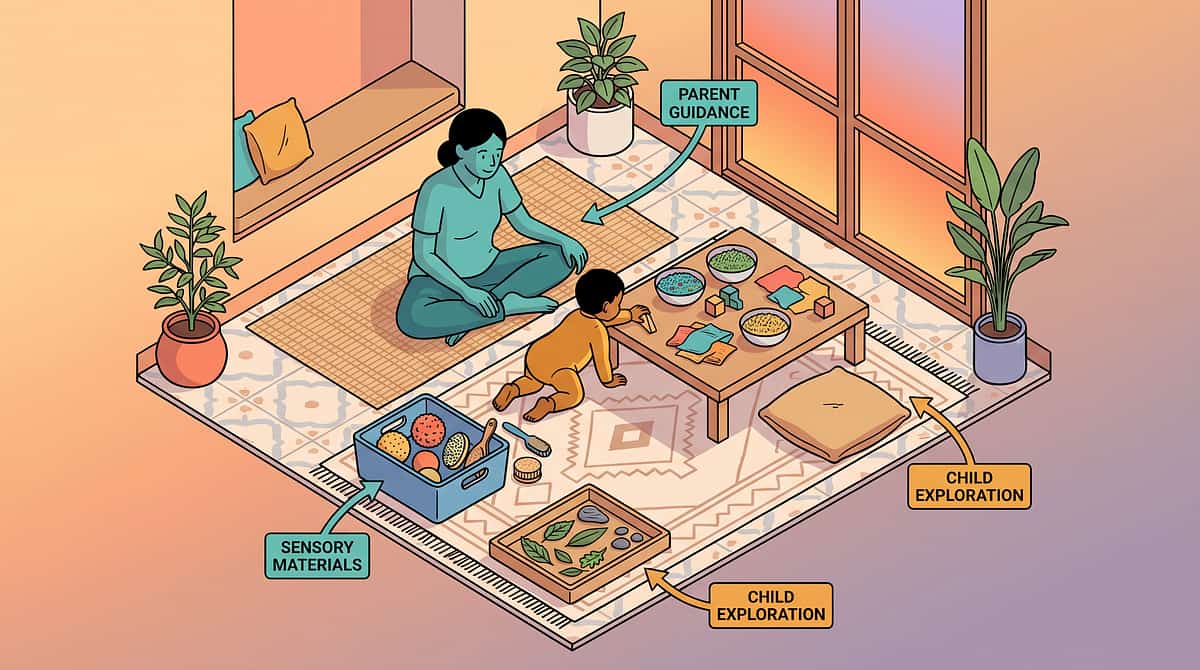
Set Up Your Space: The Right Environment Before the Right Practice
"Environment is not background — it's therapeutic infrastructure. 80% of session success is determined before the child sits down."
Clear the Desk
Only test materials allowed — no toys, stickers, or food on the work surface
Position the Timer
Visible from the child's seated position, never hidden or facing away
Set Lighting + Sound
Natural or warm white light; quiet room; background white noise is acceptable if preferred
Remove Phones
Phone in another room or airplane mode, out of sight — for both parent and child
Position Yourself
Nearby but not hovering — seat yourself at a 45° angle, not directly across the desk
Place Materials in Order
[1] Practice test face-down → [2] Timer visible → [3] Strategy cards to left → [4] Time budgeting strip at top → [5] Calm-down kit in small bag to right
Water should always be available — dehydration impairs cognition. A comfort item may be allowed initially if absolutely necessary, but phase it out after Week 2.
ACT III — The Execution
Is Your Child Ready? The 60-Second Pre-Flight Check
Every session. No exceptions. The best session is one that starts right — a 10-minute successful session is worth ten times more than a 40-minute forced session. Consistency over intensity.
Indicator | ✅ Go | ⚠️ Modify | ❌ Postpone | |
Physical state | Alert, rested, fed | Slightly tired but willing | Unwell, hungry, exhausted | |
Emotional state | Calm or mild resistance | Mildly anxious but engageable | Distressed, melting down | |
Recent events | Normal day | Minor stress earlier | Major stress/conflict today | |
Time since last test | 24+ hours | Same day, hours ago | Just returned from test | |
Willingness | Agrees readily | Needs brief motivation | Refuses firmly | |
Parent state | Patient, available | Slightly rushed | Under significant stress |
✅ ALL GREEN → PROCEED
Continue to Step 1: The Invitation (next card)
⚠️ 1–2 AMBER → MODIFY
Use only Materials 4 (Calm-Down Kit) + 9 (Affirmation Cards). No timed practice. Review strategy cards conversationally for 10 minutes.
❌ ANY RED → POSTPONE
Read a book together, take a walk, or do 5 minutes of deep breathing. Document the postponement. Pattern data helps your therapist. 📞 9100 181 181

ACT III — The Execution
STEP 1 of 6
Duration: 2–3 minutes
Step 1: The Invitation
Parent Script
"Hey [child's name], I've got something cool to show you. It's like a game for your brain — you're going to practice something that's going to make tests feel much less scary. You don't have to get anything right today. We're just going to explore these tools together."
Body Language
- Sit at their level, not above them
- Use a relaxed, curious tone — not serious or academic
- Have materials on the desk but face-down or in the bag initially
- Mirror their energy — calm if they're nervous, enthusiastic if they're curious
✅ Acceptance Cues — What "Yes" Looks Like
Leans toward materials | Makes eye contact | Asks "what is it?" | Picks up a card | Smiles or shows curiosity
⚠️ Resistance Cues — What to Do
Slouches away | Says "I don't want to" | Goes silent →
Reduce demand: "We'll just look at one thing. That's it."
If still resistant: respect it. Return tomorrow.
If still resistant: respect it. Return tomorrow.
ABA Principle: Pairing precedes demand. The child must associate this practice space and these materials with positive experience before any performance demand is placed. This session may be purely exploratory with no practice test at all.

ACT III — The Execution
STEP 2 of 6
Duration: 3–5 minutes
Step 2: Engagement — Introducing the Materials
Introduce materials in a graduated sequence. Never overwhelm with all 9 at once. The goal in early sessions is material familiarity and positive associations — not performance.
Week 1, Sessions 1–3: Strategy + Affirmations
Introduce only Materials 2 (Strategy Cards) + 9 (Affirmation Cards). "These cards know what to do when your brain forgets. Want to see how they work?"
Week 1, Sessions 4–5: Add Calm Kit + Checklist
Add Material 4 (Calm-Down Kit) + 8 (Self-Monitoring Checklist). "Before any test — real or practice — we use these to get your body ready."
Week 2+: Add Practice Tests + Time Budgeting
Add Materials 1 (Practice Tests + Timer) + 3 (Time Budgeting). "Now you're going to use everything together — like the real thing, but safer."
Child Response | Interpretation | Signal | Action | |
Picks up cards, reads them | Engagement | ✅ | Continue; add mild enthusiasm | |
Makes strategy suggestions | Deep engagement | ✅✅ | "Exactly! That's the strategy." | |
Tolerates but passive | Tolerance | ⚠️ | Maintain; don't demand more | |
Pushes away materials | Avoidance | ❌ | Back off; return to conversation |

ACT III — The Execution
STEP 3 of 6
Duration: 10–20 minutes
Step 3: The Therapeutic Action
"Your role is coach, not examiner. You are creating safety around test practice — not recreating test pressure. The therapeutic action is the practice itself, regardless of score." — Pinnacle Blooms SpEd Specialist. 📞 9100 181 181
Phase A: Pre-Practice Ritual (3–4 min)
- Child opens Calm-Down Kit → 3 rounds of box breathing (4-4-4-4)
- Child reads 3 Affirmation Cards aloud
- Child reviews Strategy Cards for today's practice type
- Child places Time Budgeting Strip at top of practice sheet
Phase B: Timed Practice (8–15 min)
- Set timer — start with 50% more time than real test
- Child completes questions using strategy cards as reference
- Parent observes silently — no corrections during the session
- At time: self-monitoring checklist review — did child catch own errors?
Phase C: Error Analysis (3–5 min)
- Together, review errors using Error Analysis Log
- Categorize each error: Content Gap | Careless | Strategic | Anxiety-Related
- Note patterns — no criticism, pure data gathering
✅ Ideal
Child uses strategy cards independently, manages time, self-monitors
⚠️ Acceptable
Uses cards with reminders, needs time cues, catches some errors
❌ Concerning
Refuses materials, freezes completely, or becomes distressed — stop and see safety card
ACT III — The Execution
STEP 4 of 6
Duration: Varies by week
Step 4: Repeat and Vary
Dosage is everything. Too little practice and skills don't consolidate. Too much and satiation sets in. Follow this 8-week protocol — and always respect the satiation signals below.
Week | Sessions/Week | Timer Setting | Focus | |
Week 1 | 3 sessions | No timer / generous time | Material familiarity | |
Week 2 | 3–4 sessions | 150% of real test time | Strategy card practice | |
Weeks 3–4 | 4 sessions | 120% of real test time | Time management + error analysis | |
Weeks 5–6 | 4–5 sessions | 100% of real test time | Full simulation | |
Weeks 7–8 | 3 sessions | 100% + simulation setup | Consolidation + confidence |
Variation A: Easy Day
Anxiety high, energy low — use only Affirmation Cards + Calm-Down Kit + 5-question mini-practice. No timer. Celebrate completion.
Variation B: Standard Day
Full sequence per Step 3. All 9 materials active. Standard timing per week's protocol.
Variation C: Challenge Day
Child motivated, energy high — full simulation, real test timing, error analysis emphasis. Introduce a new question type format.
Variation D: Pre-Test Day
Real exam tomorrow — Calm-Down Kit only + Affirmation Card review + light strategy review. NO timed practice the day before. Focus: confidence, not performance.
Satiation Indicators — Stop the session: Child yawns repeatedly | Asks "are we done?" more than 3 times | Attention breaks down | Quality deteriorates. 3 good reps > 10 forced reps.

ACT III — The Execution
STEP 5 of 6
Duration: 1–2 minutes
Step 5: Reinforce and Celebrate
Reinforce within 3 seconds of desired strategy use — not at the end of the session, but during the moment. Specific praise outperforms generic praise by a factor of 10. Use these exact scripts.
When child uses strategy card:
"You just used the elimination strategy — exactly like that. That's a real test skill."
When child manages time:
"You noticed you had 5 minutes left and moved on — that's test wisdom. That's huge."
When child catches own error:
"You found that before I did. Your self-monitoring is working."
When child uses calm-down breathing:
"That breathing you just did — your brain just got clearer. You can feel the difference."
🥇 Tier 1: Immediate
Specific verbal praise (scripts above) | High five or fist bump | "That's going in your strategy trophy list"
🥈 Tier 2: End-of-Session
5-minute screen time | Choice of tomorrow's practice topic | Star on progress chart
🥉 Tier 3: Weekly Milestone
Family celebration activity | Special meal or outing | "Graduate to next level" ceremony
"A child who tried the calm-down breathing even once earns full reinforcement. The attempt is the skill. Perfection is never the target in Week 1."

ACT III — The Execution
STEP 6 of 6
Duration: 2–3 minutes
Step 6: The Cool-Down
Predictable closure prevents post-session dysregulation. Visual timers and transition supports are classified as evidence-based practice for autism and ADHD (NCAEP, 2020). Every session ends the same way.
2-Minute Warning
"Two more questions, then we're all done for today." Use visual timer countdown if available.
Material Put-Away Ritual
Strategy cards → back in deck (child does this) | Error log → dated and placed in folder | Affirmation cards → child chooses one "card of the day" to keep on desk | Timer → reset to zero
Physical Transition
"Stand up. Stretch arms above your head. 3 deep breaths. You're done."
Transition Statement
"You practiced something real today. That's in your brain now. Every time we do this, tests get a little less powerful over you."
Post-Session Transition
→ Free choice activity for 10 minutes | → Parent records data | → No test discussion until next session
If child resists ending: Normal in highly engaged children. Say: "I know — you're doing great. We'll do more tomorrow. Let's put everything away and then [preferred next activity]."

ACT III — The Execution
Capture the Data: Right Now
60 seconds of data now = months of guessing eliminated. Fill this in within 60 seconds of session end — before life takes over. This data drives the GPT-OS® recommendations that adapt the protocol to your specific child.
3-Field Quick Tracker
DATE: ____________ | SESSION #: ____ | DURATION: ____ min
STRATEGY USE: None | With Reminders | Independently
ANXIETY LEVEL (1–10): ___
TIME MANAGEMENT (1–10): ___
ERROR ANALYSIS DONE? Yes / No
MATERIALS USED: ________________
TODAY'S WIN: ________________________________
TOMORROW'S FOCUS: ________________________________
What Your Data Reveals Over Time
Pattern Detected | Clinical Signal | Action | |
Anxiety stays ≥7 after 3 weeks | Anxiety intervention needed before strategy work | Consult OT/psychologist | |
Errors consistently "anxiety" type | Calm-down kit intensity insufficient | Add breathing practice between sessions | |
Time management not improving | Timer approach not working | Switch to visual countdown | |
All errors = content gaps | Strategy skills fine; content review needed | Switch focus to subject tutoring |

ACT III — The Execution
What If It Didn't Go as Planned?
Most sessions have bumps. Every abandoned session is data — ask: What triggered the abandonment? At what point? After which material? That pattern tells you exactly where to adjust. Here are the 7 most common challenges and their clinical fixes.
"My child refuses to look at the strategy cards"
Why: Cards feel like "school work" — associated with failure. Fix: Rebrand the cards. Call them "secret weapons." Let child decorate them. Use them in a game format first.
"My child completes practice tests but scores get worse"
Why: Strategy overload — too many new approaches at once causes cognitive flooding. Fix: Reduce to ONE strategy per session. Master it before adding another.
"The timer increases anxiety instead of helping"
Why: Timer has been conditioned as a threat, not a tool. Fix: Remove timer entirely for 1 week. Practice without time pressure. Reintroduce slowly.
"My child finishes fast and won't review"
Why: Impulsivity (ADHD pattern) or anxiety-driven rushing. Fix: Add "required wait time" — 5 minutes must pass before submitting. Reward the wait, not the early finish.
"Error analysis triggers meltdown"
Why: Child has perfectionist tendencies; errors feel catastrophic. Fix: Only analyze errors in categories, never "you got this wrong." Say "there was one strategic error here."
"Practice works great at home but real tests still fail"
Why: Environmental mismatch — home practice hasn't been made similar enough to test conditions. Fix: Upgrade to full simulation setup immediately. Add unfamiliar question types. Practice in different rooms.
"Affirmation cards feel fake to my child"
Why: Generic affirmations don't resonate. Fix: Co-create new cards using child's own language and actual evidence: "I scored 12/20 last week — I CAN do this." Evidence-based affirmations work when generic ones don't.
ACT III — The Execution
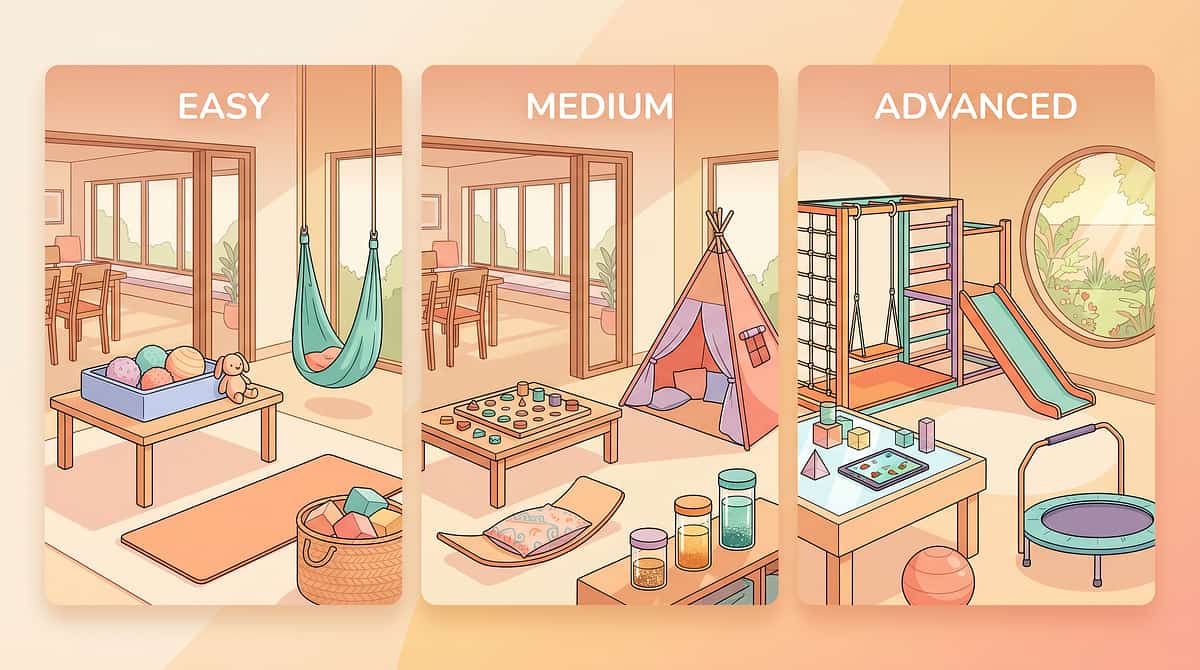
Adapt and Personalize: This Toolkit Adapts to Your Child
Your child is unique. These materials flex across profiles, ages, and energy levels. The protocol adapts to them — not the other way around.
For Children with ASD
- Explicit verbal instruction on each strategy ("elimination means crossing out options you KNOW are wrong")
- Visual scripts for each question type
- Predictable session structure every time
- Sensory-safe environment (noise-cancelling headphones if needed)
- Extra time even in practice
For Children with ADHD
- Shorter practice sessions (10–15 min max)
- Movement breaks between sections
- Timer displayed prominently at all times
- Fidget tool allowed at desk
- Immediate reinforcement (not delayed)
For High Anxiety
- Begin with calm-down kit ONLY for 3 sessions before introducing practice tests
- Graded exposure: 3 questions → 10 questions → full section
- No scoring for first 2 weeks — strategy focus only
- Affirmation cards reviewed BEFORE every session
For Perfectionists
- Error analysis framed as "data collection," never "mistakes"
- Celebrate attempts and strategy use, never scores
- Introduce "strategic imperfection" — practice skipping difficult questions deliberately
- Reward leaving a question blank over spending 5 minutes on it
Age | Focus | Timer | Materials | |
6–8 | Format familiarity, basic time concept | Picture timer | Affirmations + 1 strategy card | |
9–11 | Multiple choice elimination, essay outline | Visual countdown | Strategy cards + error log | |
12–14 | Full time management, all question types | Digital stopwatch | All 9 materials | |
15–18 | Board exam simulation, independent application | Real exam clock | Simulation setup full |

ACT IV — The Progress Arc
Weeks 1–2: What to Expect
15%
Foundation Phase
You're planting seeds you won't yet see — but the neural pathways are being laid right now
"If your child tolerates the practice test for 3 minutes longer than last week — that's real progress. If they use ONE strategy card once — that's real progress. The neural pathways are being laid. You won't see the growth yet, but it's happening."
✅ Signs of REAL Progress (even if small)
- Child picks up strategy cards without being asked
- Child attempts calm-down breathing before practice
- Child tolerates a timed practice test, even if score is low
- Child uses the word "eliminate" or "skip and return" even once
- Child completes error log without significant distress
- Practice sessions start without major resistance
⚠️ What Is NOT Progress Yet (Normal at This Stage)
- Scores improving (comes in Weeks 4–6)
- Independent strategy use (comes in Weeks 3–4)
- Anxiety disappearing (comes gradually across full 8 weeks)
- Transfer to real tests (comes after home mastery is established)
Weeks 1–2 often feel like they're not working. This is the most important time NOT to quit. The foundation being laid now determines everything that comes after.

ACT IV — The Progress Arc
Weeks 3–4: You'll See the Neural Pathways Forming
40%
Consolidation Phase
Spontaneous strategy use, self-correction, and voluntary timer references begin emerging
💜"In Week 3–4, you may notice YOU are more confident too. You've learned a new skill — how to coach test-taking. That caregiver confidence is detectable by the child and accelerates their progress."
You're in the consolidation zone when:
Child reaches for strategy cards before you suggest it | Child self-corrects: "Wait, I should skip this and come back" | Child's body language shifts from tense to focused | Timer is referenced voluntarily: "I have 5 minutes, I need to move faster"
Early generalization seeds (skills transferring):
Child mentions a strategy during homework ("I eliminated two options") | Child asks for timer during non-test work | Child reports using breathing at school ("I was nervous and I breathed like we practiced")
Frequency upgrade decision:
If child shows 3+ consolidation indicators → increase session frequency to 4×/week, upgrade to 120% timer, and introduce new question types
Error log entries showing decreasing anxiety-type errors and increasing careless errors is a positive sign — careless errors are much easier to fix than anxiety-driven ones.

ACT IV — The Progress Arc
Weeks 5–8: Mastery Indicators
75%
Mastery Phase
Approaching mastery unlock — 3 of 5 criteria present for 2 consecutive weeks
# | Mastery Indicator | Measurement | Status | |
1 | Uses strategy cards without prompting for 3 consecutive sessions | Parent observation log | Track ✓ | |
2 | Completes timed practice tests within 100% of real test time | Timer data | Track ✓ | |
3 | Error analysis shows <30% anxiety-type errors vs. strategic/content | Error log data | Track ✓ | |
4 | Test scores on practice materials show improvement trend | Practice test scores | Track ✓ | |
5 | Child can verbally explain 3+ test strategies unprompted | Verbal assessment | Track ✓ |
Generalization Indicators (skills appearing in real tests): Teacher feedback: improved test completion | Reduced reports of test-day panic | Grades beginning to align with homework performance | Child mentions using strategies independently
Maintenance Check: After 8 weeks, reduce practice to 1–2×/week. If skills maintain → mastery confirmed. If skills decay → return to 3×/week for 2 additional weeks.

ACT IV — The Progress Arc
🏆 You Did This.
Your child grew because you showed up. Every session. Even the hard ones.
✅ What You've Built
A home testing environment where practice is safe | Your child is equipped with 9 concrete, science-backed tools | You taught test-taking as a skill, not a talent | You built a bridge between what your child knows and what tests can see | You changed the internal story your child tells themselves about tests
🎉 Family Celebration Ideas
Declare a "Test Strategy Graduate Day" 📸 | Take a photo with the strategy toolkit | Special family meal 🍽️ | Child's choice of family activity 🎮 | Create a "This Is What I Learned" journal entry together 📖
"You arrived on this page with a child whose grades didn't show their knowledge. Eight weeks later, tests are beginning to measure what they actually know. That's not a small thing. That's a transformation you built, one session at a time."
Photo/Journal Prompt:Write or draw: What did tests feel like in Week 1? What do they feel like now? What changed? What are you most proud of?

ACT IV — The Progress Arc
Red Flags: When to Pause and Seek Guidance
Trust your instincts. Home implementation is powerful — and there are also moments when professional support accelerates what parents cannot do alone. These six signals mean: pause and reach out.
🔴 1. Anxiety INTENSIFYING Over 4+ Weeks
Physical symptoms worsening (more shaking, vomiting, hyperventilating), not improving. May indicate clinical anxiety disorder requiring professional treatment before strategy work. Contact Pinnacle: 9100 181 181
🔴 2. Complete Refusal After 3 Weeks of Attempts
Child categorically refuses all 9 materials and any test-adjacent activity. May indicate test trauma response or school-based pressure requiring clinical assessment. Shift to anxiety treatment first; pause materials.
🔴 3. Sleep Disruption or School Avoidance
Cannot sleep before test days; faking illness to avoid school on test days. Anxiety has generalized to avoidance behavior — school psychology consult + Pinnacle assessment needed.
🔴 4. Significant Self-Criticism or Hopelessness
"I'll never be good at this," "I'm stupid," "What's the point." Signs of anxiety-related depression or learning-related shame. School psychologist referral; may need counseling alongside strategy work.
🔴 5. Existing Accommodations Not in Place
Child has diagnosed ADHD/LD/ASD but no IEP/504 plan; school refuses accommodations. Home practice alone cannot compensate for lack of formal academic support. Pinnacle's SpEd team can guide accommodation advocacy.
🔴 6. No Improvement After 8 Weeks of Consistent Implementation
Scores and anxiety unchanged despite 3+ sessions/week for 8 weeks. May indicate undiagnosed learning disability, processing disorder, or medication need. Comprehensive neuropsychological evaluation recommended.
📞FREE National Autism Helpline: 9100 181 181 — Available 24×7, 16+ languages. No appointment needed.
ACT IV — The Progress Arc
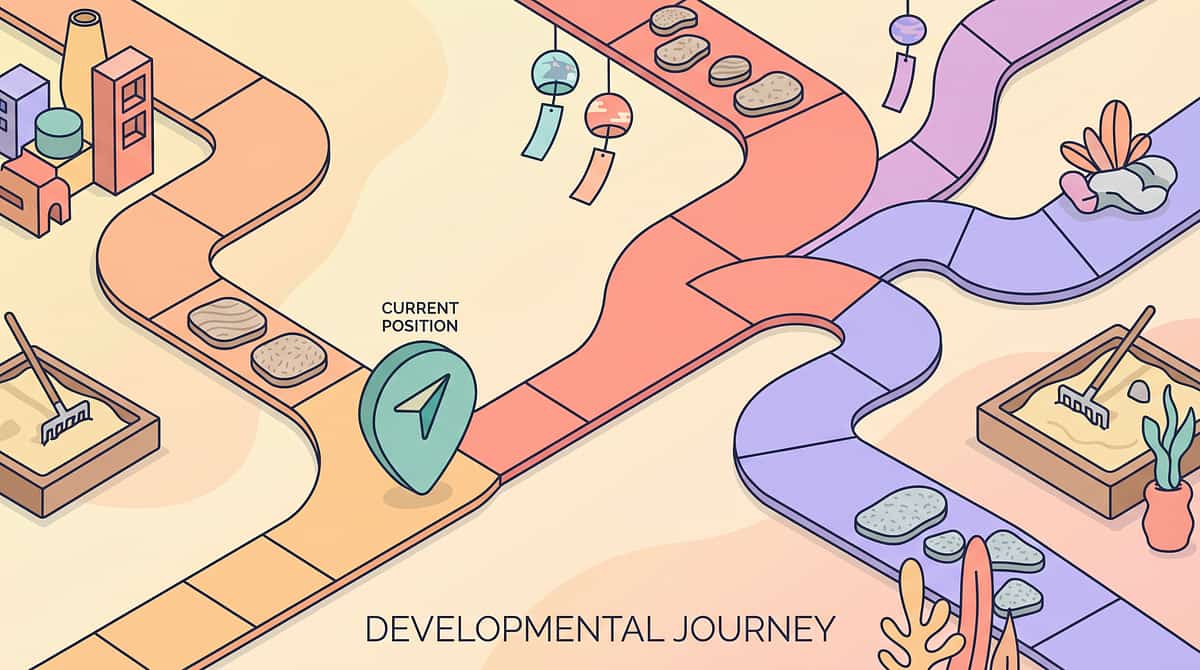
The Progression Pathway: You're Not Done. You're on a Journey.
H-748 is one technique in a carefully sequenced academic skills pathway. Where you go next depends on which skills have mastered and which challenges remain. Check the prerequisite criteria before moving forward.
➡️ Strategy Mastered, Anxiety Persists
→ F-550: Anxiety Management Techniques
➡️ Time Management Primary Challenge
→ H-750: Time Management for Academics
➡️ Executive Function Underlies All Challenges
→ G-650: Executive Function Skills
➡️ Working Memory Affecting Test Performance
→ G-685: Working Memory Training
ACT IV — The Progress Arc
Related Techniques in This Domain
In the same Academic Skills domain — techniques you may already have materials for. If you have the 9 materials from H-748, you already have everything needed for H-749 and H-750. Your investment carries forward.
Technique | Difficulty | Materials Overlap | Link | |
H-746: Study Skills | 🟡 Core | Strategy Cards | ||
H-747: Note-Taking | 🟡 Core | Notebooks | ||
H-749: Homework Completion | 🟡 Core | Timer + Checklist | ||
H-750: Time Management | 🟠 Advanced | Timer + Strip | ||
F-550: Anxiety Management | 🟢 Intro | Calm-Down Kit | ||
G-650: Executive Function | 🔴 Advanced | Multiple | unknown link |
ACT IV — The Progress Arc
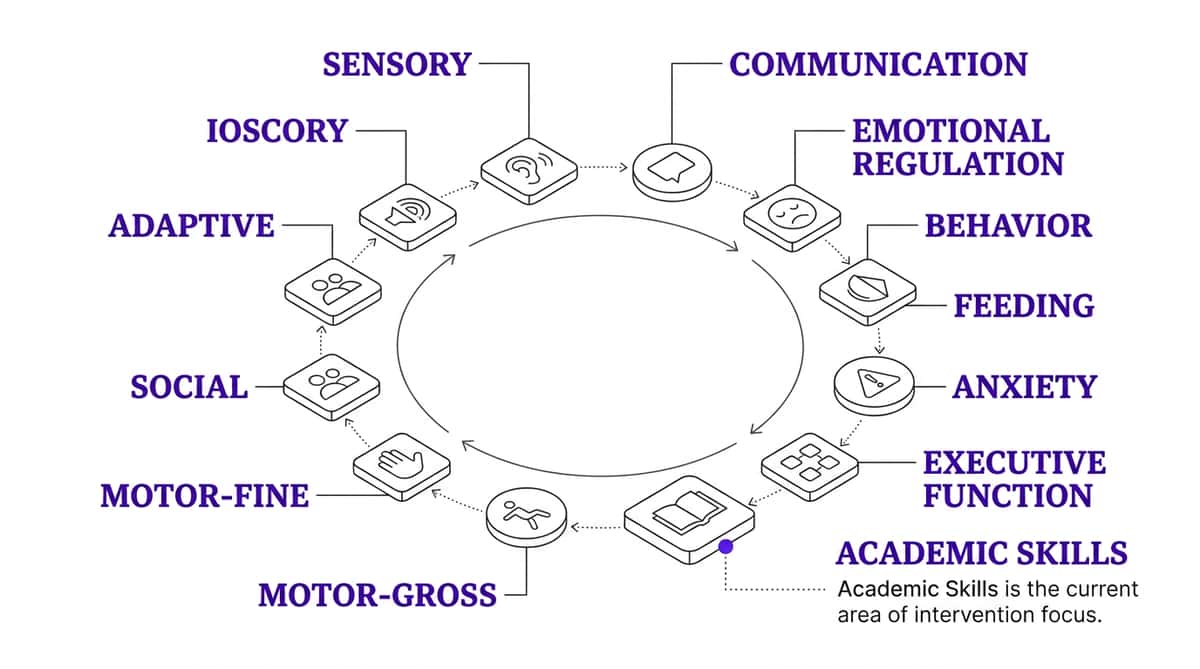
Your Child's Full Developmental Map
Test-taking is one piece. Here is the whole picture. A child's academic performance challenge is never isolated. Test anxiety connects to executive function, emotional regulation, anxiety management, and sensory processing. The GPT-OS® holistic profile ensures that when one domain is strengthened, connected domains are tracked simultaneously.
Your Current Intervention
Domain H: Academic Skills | Technique: H-748 Test Taking | Active 8-week cycle
🧠 See Your Child's Full GPT-OS® Profile → AbilityScore® assessment provides the starting point. Updated after every 8-week cycle.
WHO/UNICEF Framework Alignment
"WHO Nurturing Care Framework (2018): Five components — health, nutrition, responsive caregiving, security/safety, and early learning — require holistic monitoring. H-748 directly addresses the early learning component and connects to responsive caregiving through parent-led implementation."
ACT V — The Community and Ecosystem
Real Families. Real Tests. Real Change.
Arjun, Age 11 — ADHD | Hyderabad
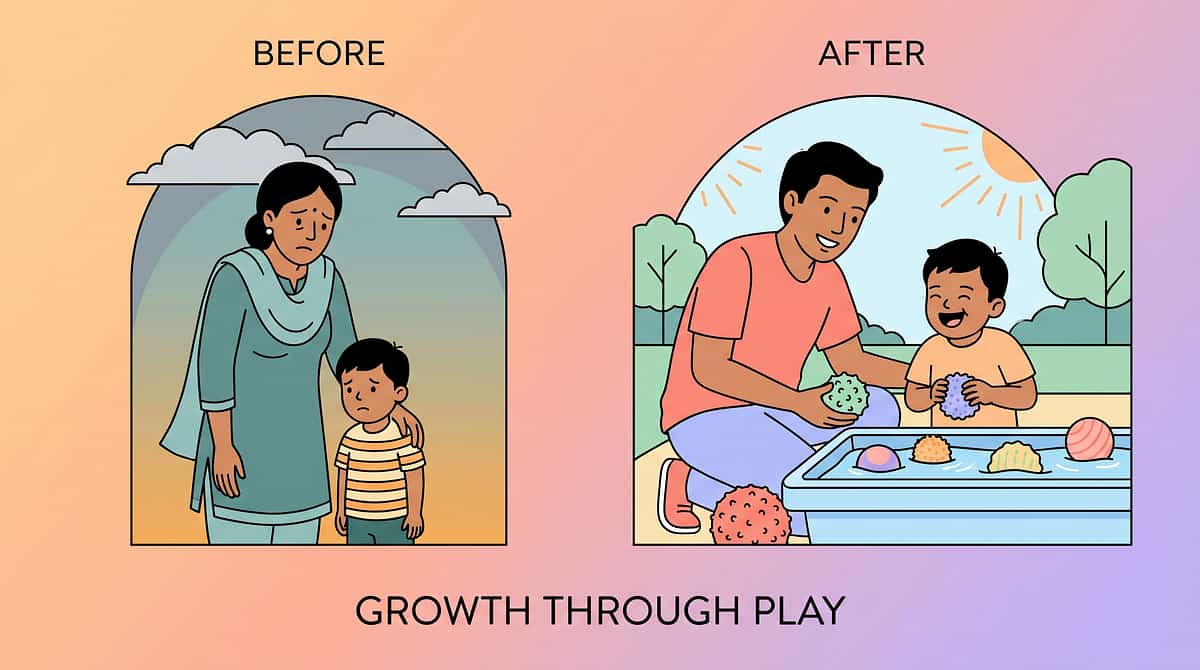
Before:"He'd study for 2 hours and fail. Not because he didn't know — we'd quiz him, he knew everything. But the moment the exam paper was in front of him, his mind went blank. By Year 6, he refused to go to school on test days. His self-esteem was shattered."
After 8 weeks:"He now has a 'test kit' he carries. His error log shows his anxiety errors dropped from 60% to 15% by Week 7. Last month, he said, 'Amma, I'm actually excited for the math test.' I cried." — Parent, Pinnacle Network, Hyderabad (illustrative case; outcomes vary)
Age 14 — ASD | Bangalore
Before:"She knew the biology chapter forward and backward. Her test came back: 38%. But she could explain every answer verbally. Tests were humiliating her knowledge — not measuring it."
After 6 weeks:"The question type sheets changed everything. She now has a system for every format. She scored 76% on the next biology test — the content hadn't changed, but her strategy had." — Parent, Pinnacle Network, Bangalore (illustrative case; outcomes vary)
"Parents who implement all 9 materials in sequence see the fastest results. The materials work as a system, not a menu. The calm-down kit enables the strategy work. The strategy cards enable the time management. The error analysis enables the adaptation. Each material depends on the others." — Pinnacle Blooms SpEd Specialist

ACT V — The Community and Ecosystem
You Don't Have to Navigate This Alone
Connect with parents who are on the same journey — parents who have already completed this exact 8-week protocol, and parents just starting Week 1. Your story — even while you're still in it — helps someone else.
WhatsApp Community Groups
📱 Join: Academic Skills Support Parents Group — Challenge-specific: test anxiety, ADHD academic support, SpEd parent network
Online Community Forum
🖥️ Pinnacle Community Forum: Academic Challenges — Daily discussions, strategy sharing, parent-to-parent answers
Peer Mentoring
👥 Connect with an Experienced Parent — Parents who have completed this exact 8-week protocol available to answer your questions
Local Pinnacle Parent Meetups
🗺️ Find Meetups Near You — Monthly parent sessions at Pinnacle centers, in-person and virtual
💜"Your experience — even while you're still in it — helps other parents. Consider sharing your Week 1 journey in the community. Someone else is in their Week 1 right now, wondering if this works. Your story is their answer."

ACT V — The Community and Ecosystem
Your Professional Support Team: Home + Clinic = Maximum Impact
"Home implementation of these 9 materials, combined with bi-weekly clinic sessions with a SpEd specialist, produces the fastest and most durable outcomes. The specialist calibrates the home protocol; the parent executes it daily."
Find Your Nearest Center
Pinnacle Blooms Network® operates 70+ centers across India. Find Your Nearest Center →
Therapist Matching by This Technique's Needs
Need | Specialist | |
Test-taking strategy instruction | Special Educator (SpEd) | |
Test anxiety (severe) | Clinical Psychologist | |
Executive function (ADHD) | Occupational Therapist | |
Language-based test challenges | Speech-Language Pathologist | |
Formal diagnostic evaluation + accommodations | NeuroDev Pediatrician |
Teleconsultation Option
Available for families outside Pinnacle's 70+ center cities | 16+ languages | Weekdays + weekends | Response within 24 hours
FREE National Helpline
📞9100 181 181
Available 24×7 | No appointment needed | 16+ languages
Call anytime — for guidance, questions, or support
Available 24×7 | No appointment needed | 16+ languages
Call anytime — for guidance, questions, or support
ACT V — The Community and Ecosystem
The Research Library: The Full Evidence Base
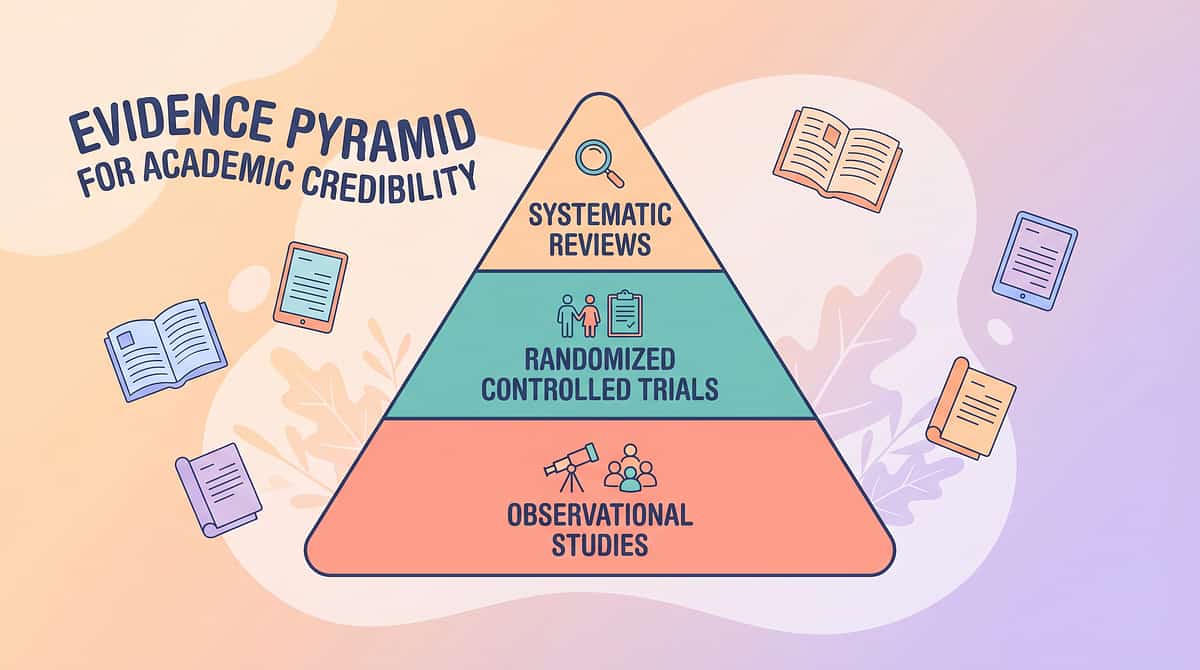
These are the studies that govern the design of every Pinnacle protocol. We publish our evidence base because parents deserve to know exactly why we recommend what we recommend.
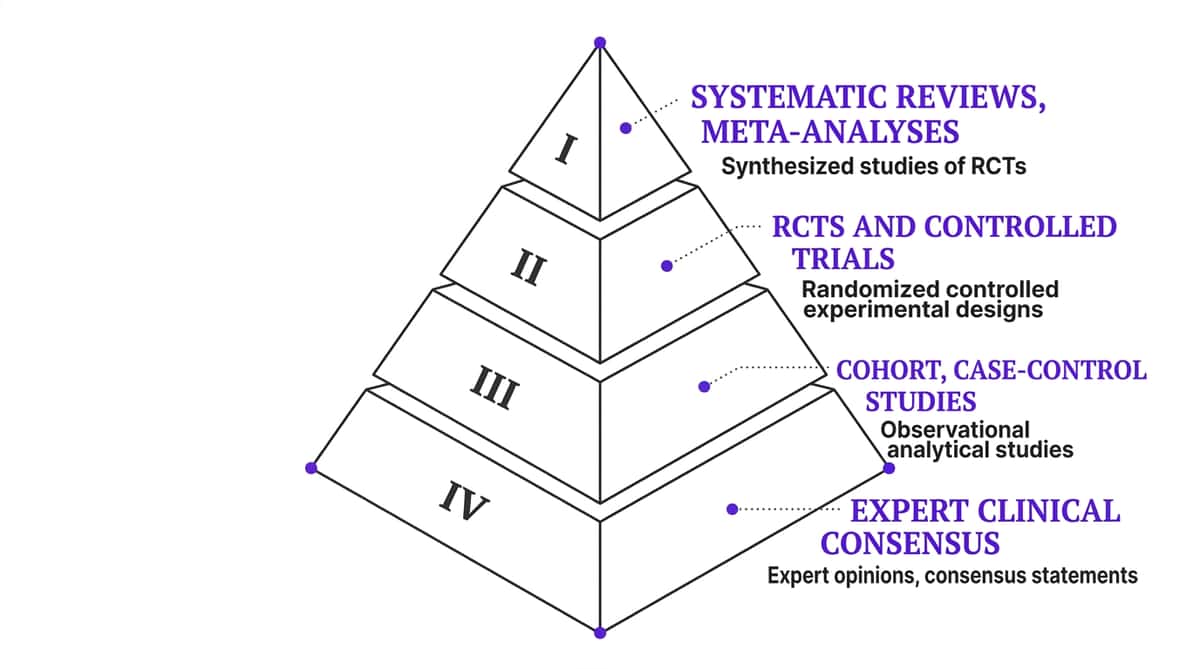
Study | Key Finding | Level | Link | |
PMC11506176 (Children, 2024) | PRISMA review: 16 studies confirm structured caregiver-implemented intervention meets EBP criteria for ASD | Level I | ||
PMC10955541 (2024) | Meta-analysis: 24 studies — structured skill intervention promotes academic performance + anxiety reduction | Level I | ||
NCAEP (2020) | Self-monitoring, visual supports, social narratives = evidence-based practices for ASD (28 EBPs reviewed) | Level I | ||
Padmanabha (2019) | Indian RCT: Home-based caregiver-implemented interventions show significant outcomes in Indian pediatric populations | Level II | ||
PMC9978394 (WHO CCD, 2023) | Care for Child Development Package: caregiver-implemented skill support effective across 54 LMICs | Level I | ||
WHO NCF (2018) | Nurturing Care Framework: early learning + responsive caregiving directly impacts academic readiness | Level I |

ACT V — The Community and Ecosystem
How GPT-OS® Uses Your Data
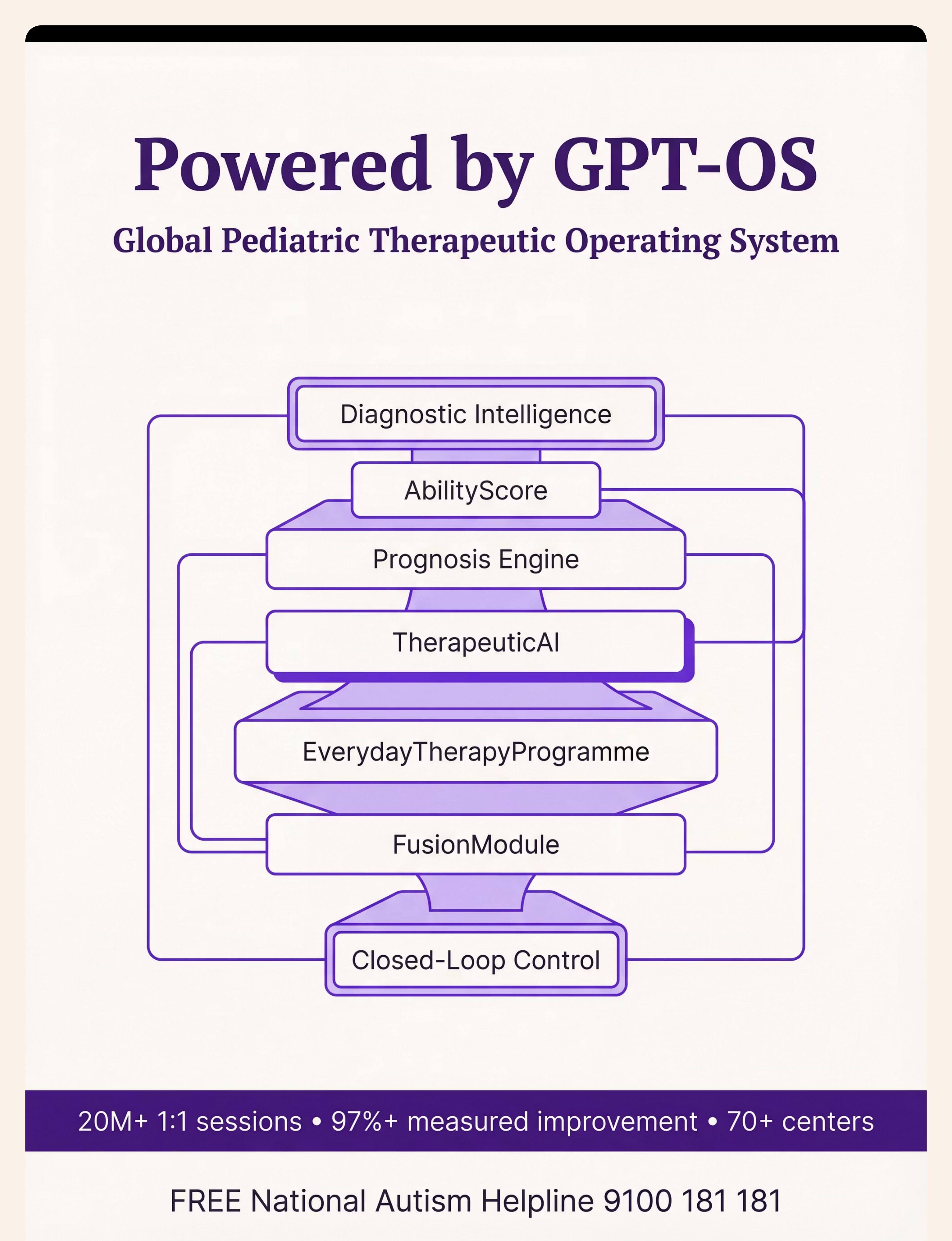
Your 60 seconds of daily data shapes recommendations for your child — and every child like them. When 10,000 families implement H-748 and record outcomes, the Prognosis Engine learns which intervention sequences produce the fastest results for which child profiles.
GPT-OS® Layer | What It Learns From H-748 Data | |
AbilityScore® | Test Performance Index updated weekly based on practice scores + anxiety levels | |
Prognosis Engine | Predicts time to mastery based on weekly progress pattern vs. 20M+ session database | |
TherapeuticAI® | Adjusts which materials to emphasize; flags when professional consultation is needed | |
EverydayTherapyProgramme™ | Generates next week's practice plan based on this week's error analysis | |
FusionModule™ | Coordinates H-748 data with OT, ABA, SLP sessions if child is in clinic |
🔒All session data is encrypted, anonymized for population-level analysis, and governed by Pinnacle's data protection protocols aligned with India's DPDP Act. You control your data. You can delete at any time.

ACT V — The Community and Ecosystem
Watch: 9 Materials That Help With Test Taking
🎬Reel H-748 — In this reel, our Pinnacle Special Education specialist introduces all 9 materials: practice test packets, strategy cards, time budgeting strips, calm-down kit, question type sheets, error analysis logs, simulation setup, self-monitoring checklists, and affirmation cards. Watch to see exactly how each material is used in a home practice session.
Series: Academic Skills | Episode: H-748 | Runtime: 60–75 seconds | Reel ID: H-748/9MAT
Series: Academic Skills | Episode: H-748 | Runtime: 60–75 seconds | Reel ID: H-748/9MAT
"Video modeling is classified as an evidence-based practice for autism (NCAEP, 2020). Multi-modal learning — reading this page + watching the technique demonstrated — increases parent skill acquisition and reduces implementation errors by up to 40%."
📞FREE National Autism Helpline: 9100 181 181 — 24×7 | 16+ Languages

ACT V — The Community and Ecosystem
Share This With Your Family: Consistency Multiplies Impact by 3×
Research shows that when multiple caregivers use the same language, strategies, and reinforcement approach, skill acquisition accelerates significantly. Share this page with everyone involved in your child's education.
Share Options
📱 Share on WhatsApp (pre-written message with page link)
📧 Email This Page (one-click email with summary)
🔗 Copy Link
📥 Download Family Guide PDF (1-page summary of all 9 materials)
For Grandparents (simplified)
"Your grandchild knows their lessons. But tests make them nervous and confused. We're teaching them 9 special tools — cards, strips, and kits — that help them remember what they know when a test is in front of them. You can help by: never criticizing test scores, praising them when they use their strategy cards, and reminding them to breathe before a test."
Teacher/School Communication Template
"Dear [Teacher's name], We have been implementing a home test-taking skills program with [child's name] based on strategies from Pinnacle Blooms Network®. The program includes self-monitoring checklists, time management tools, and anxiety regulation techniques. We'd appreciate your support in allowing [child's name] to use their time budgeting strip during tests, if permitted. Happy to share more information. Thank you."
💜Pinnacle's data from 20M+ sessions confirms: consistent multi-caregiver implementation is one of the strongest predictors of rapid skill generalization to real test settings.

ACT VI — The Close and Loop
8 Questions Parents Ask Most — Answered
How long before we see results on real school tests?
Strategy skills typically transfer to real tests in Weeks 5–7 with 3–4 practice sessions/week. Anxiety reduction may take 8–12 weeks for moderate-severe cases. The first sign is usually reduced pre-test anxiety, then improved completion rates, then grade improvement.
My child's school won't allow these materials during tests. Is the practice still useful?
Yes — the goal is internalization. Strategy cards become mental scripts. Time budgeting strips become internal time awareness. By Week 6, the child carries the strategies in their mind, not their hands.
Should I contact the school about accommodations?
If your child has a diagnosis (ADHD, ASD, LD, anxiety disorder), formal accommodations — extended time, separate setting, reader — may be available through an IEP or 504 plan. Contact Pinnacle's SpEd team: 9100 181 181.
We've tried strategy instruction before. Why will this be different?
Most prior attempts focus only on content strategies without addressing the anxiety component. These 9 materials explicitly pair anxiety regulation with strategic skill building. The physical materials provide external scaffolding that compensates for executive function deficits — which is why this works when verbal instruction hasn't.
My child is 6 years old. Is this appropriate?
Absolutely. For ages 6–8, simplify: use only the timer, 2 strategy cards, and affirmations. Full 9-material protocol is for ages 9+. Age-specific guidance is in Card 22.
Can we use these materials for competitive exams (JEE, NEET, UPSC)?
The same principles apply at higher stakes. The error analysis log becomes critical for subject-specific pattern identification. Time budgeting strips are especially valuable in long multi-section papers. Start the protocol 8–12 weeks before the exam.
My child is gifted but still gets below-average test scores. Can this help?
Yes — gifted children often have the highest test performance gaps due to perfectionism and boredom-driven careless mistakes. The error analysis log is especially powerful. Emphasize the "skip and return" card to override perfectionist freezing.
What if the anxiety is related to bullying or school environment, not the tests themselves?
If anxiety has social or environmental roots, addressing only test strategy will be insufficient. Consult Pinnacle's clinical psychology team. The test-taking materials can still be used alongside the broader anxiety intervention — but professional guidance on the root cause is essential.

ACT VI — The Close and Loop
Your child knows the material.
Now they'll know how to show it.
The 9-material protocol is ready. The evidence is clear. The path is mapped. All that's left is the first session. Start today — even if that means just opening the Calm-Down Kit and reading one Affirmation Card together.
✅Validated by the Pinnacle Blooms Consortium®
OT • SLP • ABA • SpEd • NeuroDev | 20M+ Sessions | 97%+ Improvement
OT • SLP • ABA • SpEd • NeuroDev | 20M+ Sessions | 97%+ Improvement
📞FREE National Autism Helpline: 9100 181 181 | 24×7 | 16+ Languages | No Appointment Needed
Preview of 9 materials that help with test taking Therapy Material
Below is a visual preview of 9 materials that help with test taking therapy material. The pages shown help educators, therapists, and caregivers understand the structure and content of the resource before use. Materials should be used under appropriate professional guidance.





Link copied!
Pinnacle Blooms Network® | Academic Skills Series | H-748
The Pinnacle Promise
"Pinnacle Blooms Network® exists to ensure that every child — regardless of geography, diagnosis, or economic circumstance — has access to the same evidence-based therapeutic knowledge that transforms lives at our 70+ centers. Every technique on this platform is consortium-drafted, research-referenced, and home-executable by any parent, anywhere."
🔵 OT
Occupational Therapy
🟣 SLP
Speech-Language Pathology
🟢 ABA
Applied Behavior Analysis
🟡 SpEd
Special Education
🔴 NeuroDev
Neuro-Developmental Pediatrics
⚪ CRO
Clinical Research Office
⚠️Medical Disclaimer: This content is educational and does not replace individualized assessment, diagnosis, or intervention by qualified school psychologists, special educators, occupational therapists, or mental health professionals. Test anxiety and test-taking difficulties may be part of broader anxiety, learning, attention, or developmental profiles requiring comprehensive professional evaluation. Formal accommodations may be available through school evaluation processes. Consult your child's educational and clinical team for personalized guidance. Individual outcomes vary based on child profile, underlying conditions, and implementation consistency.
CIN | U74999TG2016PTC113063 | |
DPIIT | DIPP8651 (Govt. of India) | |
MSME | Udyog Aadhaar: TS20F0009606 | |
GSTIN | 36AAGCB9722P1Z2 | |
Copyright | © 2025–2026 Pinnacle Blooms Network®, unit of Bharath Healthcare Laboratories Pvt. Ltd. All rights reserved. |