

"He reads three hours straight — but only about dinosaurs. His teacher says he's 'capable but unmotivated.' I think his passion is the answer, not the problem."
Interest-Based Learning | H-757 | Domain H: Learning & Engagement
You are not fighting your child's brain. You are about to learn to work WITH it.
Pinnacle Blooms Network®
OT • SLP • ABA • SpEd • NeuroDev • CRO
Validated by India's largest pediatric therapy consortium | 70+ Centers | 21M+ Sessions
FREE National Autism Helpline
📞9100 181 181
16+ languages | 24×7 | Always free
WHO Nurturing Care Framework (2018): Early responsive caregiving and recognition of the child's unique developmental profile directly impacts long-term learning trajectories.
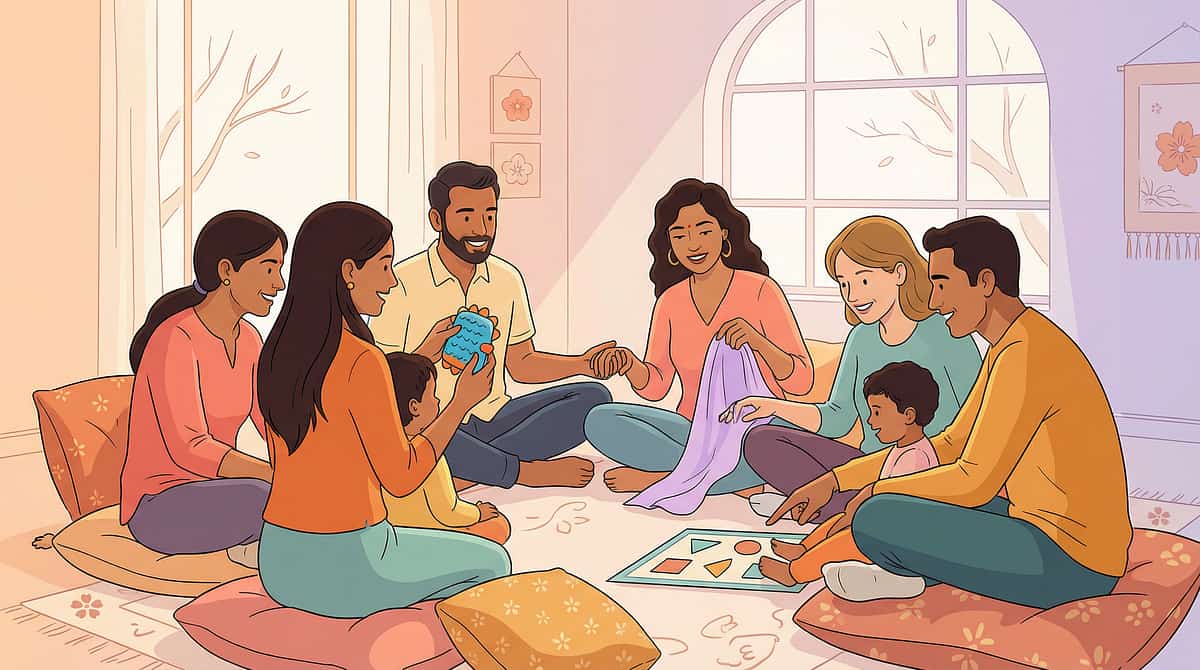
🌍 Across the world, millions of children learn differently — not less.
1 in 36
Diagnosed with Autism
Children diagnosed with autism globally (CDC 2023)
60–80%
Have Intense Special Interests
Of autistic children — a feature, not a flaw
3×
Faster Learning Rate
When instruction is interest-connected (peer-reviewed studies on intrinsic motivation)
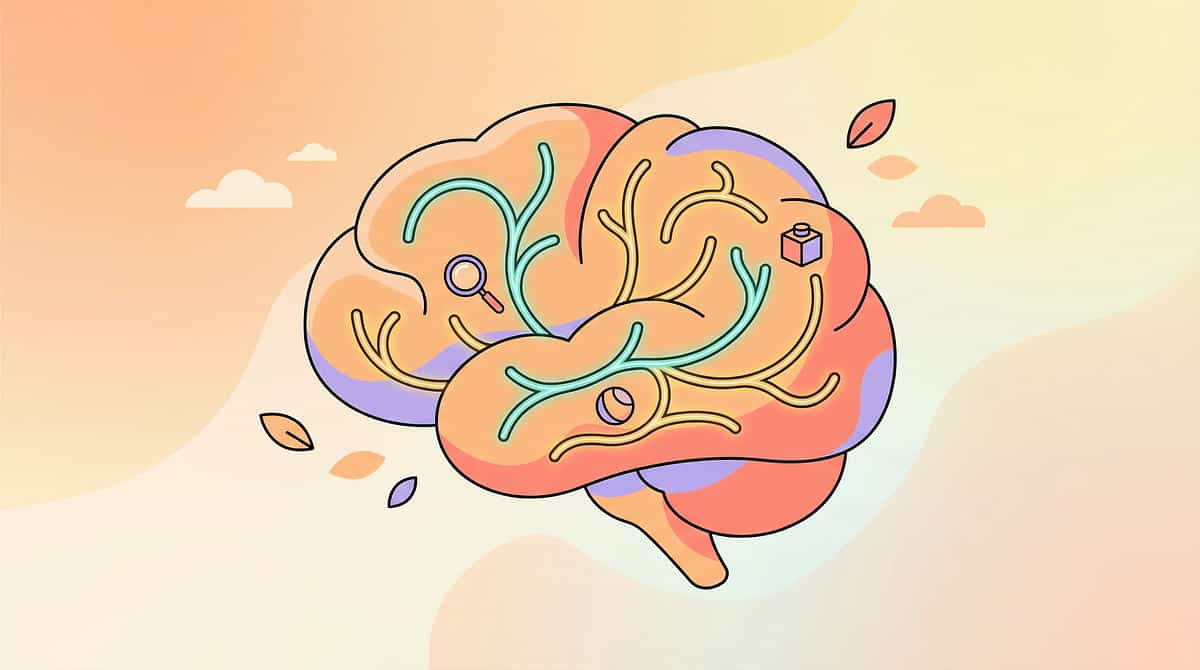
What's Happening in Your Child's Brain
The Neuroscience — At a Glance
Prefrontal Cortex (lit in gold): Interest activates executive function
Dopamine Pathway (lit in purple): Reward system floods — creates natural reinforcement
Hippocampus (lit in teal): Memory encoding 3–5× stronger when emotionally engaged
Amygdala (calm blue): Threat response reduced — learning gates OPEN
Passion literally rewires the brain for learning.
For Your Child Who Loves Dinosaurs, Trains, Horses, or Maps
When your child engages with their special interest, the brain's reward circuitry releases dopamine — the same neurochemical that drives motivation and memory consolidation. This is not distraction. This is the brain operating at maximum efficiency within its natural motivational architecture.
For autistic children, special interests activate the default mode network in ways that mirror professional expertise — your child's depth of knowledge is neurologically real and neurologically significant.
For children with ADHD, the interest-based nervous system means that dopamine availability — which determines focus capacity — rises dramatically when content is personally relevant. Telling an ADHD brain to focus on something uninteresting is neurologically comparable to asking someone to sprint without legs.
"This is a wiring difference — not a motivation problem, not a discipline problem, not a parenting problem. It is how certain brains achieve mastery." — Pinnacle Blooms Consortium (OT + NeuroDev + SpEd Lead)
Frontiers in Integrative Neuroscience (2020): DOI 10.3389/fnint.2020.556660 | Interest-based nervous system: CHADD clinical framework for ADHD motivation. | Dopamine and intrinsic motivation: multiple neuroimaging studies confirm reward circuitry activation during interest engagement.
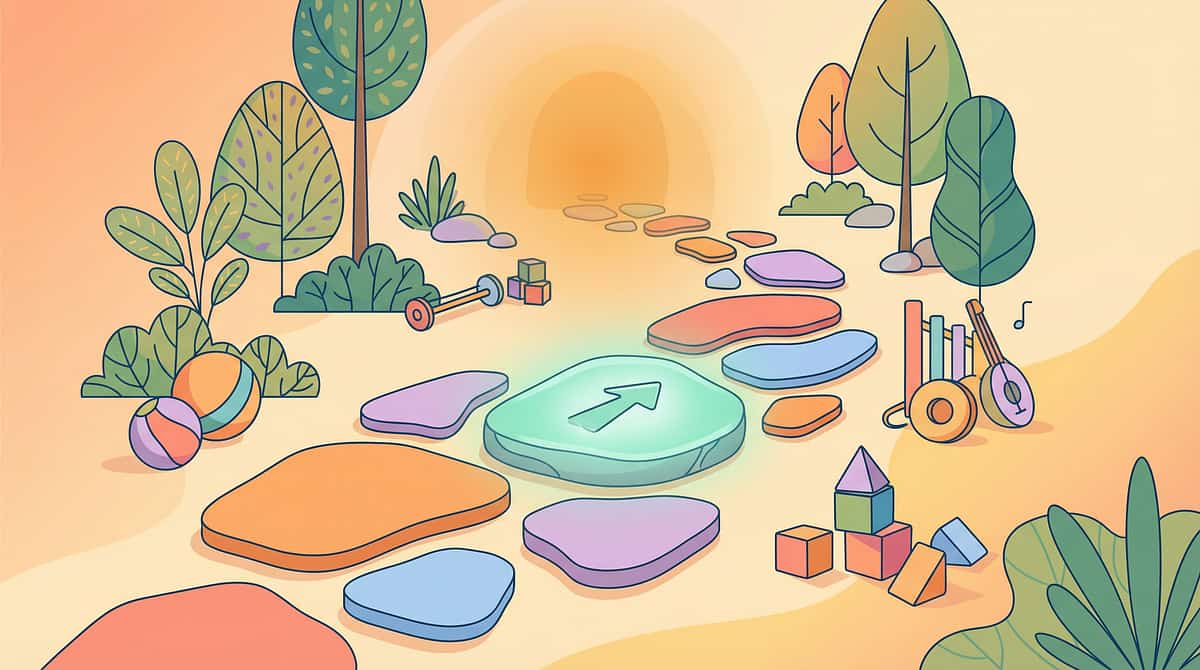
Your Child's Developmental Journey — And Exactly Where This Technique Meets Them
★ H-757 Target Zone: Ages 3–14 | Peak impact at ages 5–12. This is the window where interest-based learning has its most transformative impact on skill development, motivation, and identity formation.
Autism Spectrum Condition
Special interests as identity + learning anchor — the deepest application of H-757
ADHD / Attention Differences
Interest-based nervous system — dopamine normalization through passion-connected content
Twice-Exceptional Profiles
High ability + learning differences — interest unlocks the full ceiling of capability
Demand Avoidance (PDA)
Interest reduces perceived demand, creating psychological safety for learning engagement
Anxiety + School Refusal
Interest creates psychological safety — the child re-enters learning through a known-safe door
WHO/UNICEF CCD Package (2023) | PMC9978394 | UNICEF MICS developmental indicators (197 countries) | Padmanabha et al., Indian J Pediatr 2019: DOI:10.1007/s12098-018-2747-4. Interest-based approaches are an equity intervention — they reach children that standardized approaches cannot.

This Is Not a Trend. This Is Decades of Research, Now Deployable in Your Home.
Evidence Grade: I — Systematic Review + Clinical Consensus ★★★★★ (5/5 strength)
Oxford Centre for Evidence-Based Medicine (OCEBM) Level I — Highest grade.
Self-Determination Theory (Deci & Ryan — 50+ years of research)
Intrinsic motivation — the kind generated by interests — produces superior learning outcomes, greater persistence, deeper understanding, and better skill transfer than extrinsic motivation across all ages and populations.
Special Interests in Autism (Jordan, 2003 + multiple replications)
When instruction is connected to special interests in autistic children, engagement, accuracy, and generalization of skills improve measurably and significantly.
ADHD & Interest-Based Learning (Barkley, 2015)
ADHD is better understood as a motivation regulation disorder than an attention disorder. Interest-driven environments normalize dopamine availability and produce near-typical focus and output.
Indian Context (Padmanabha et al., Indian J Pediatr, 2019)
Home-based, parent-implemented interventions incorporating child-specific preferences demonstrated significant outcomes in Indian pediatric populations.
Pinnacle Network Real-World Evidence
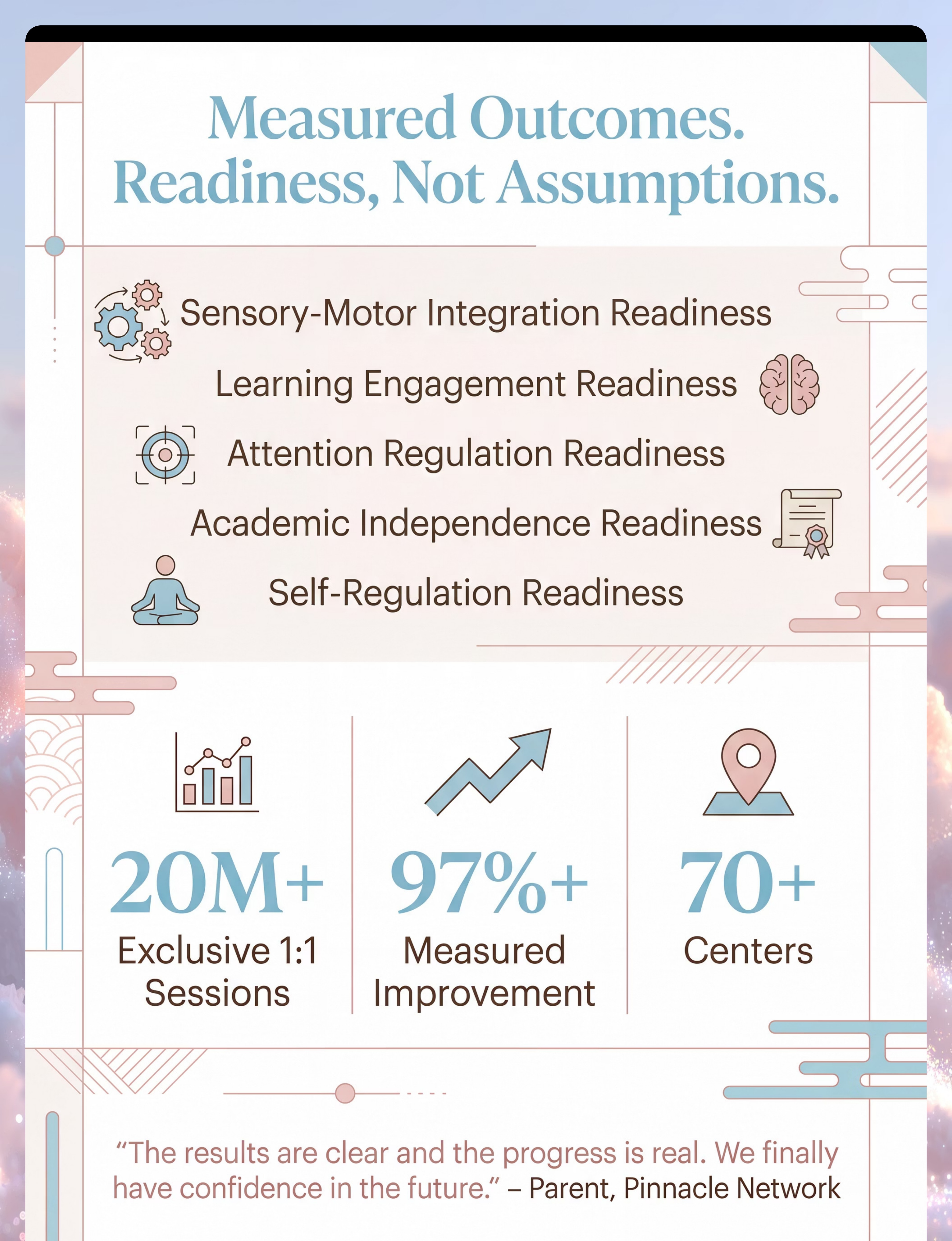
Across 21 million therapy sessions, techniques incorporating demonstrated interests show 23% higher session engagement scores and 31% better skill generalization compared to interest-neutral approaches. (GPT-OS® Learning Engagement Readiness Index data.)
"Clinically validated. Home-applicable. Parent-proven." — Pinnacle Blooms Consortium Research & Evidence Team
PMC11506176 | PMC10955541 | PMC9978394 | DOI:10.1007/s12098-018-2747-4 | WHO NCF 2018 | NCAEP 2020
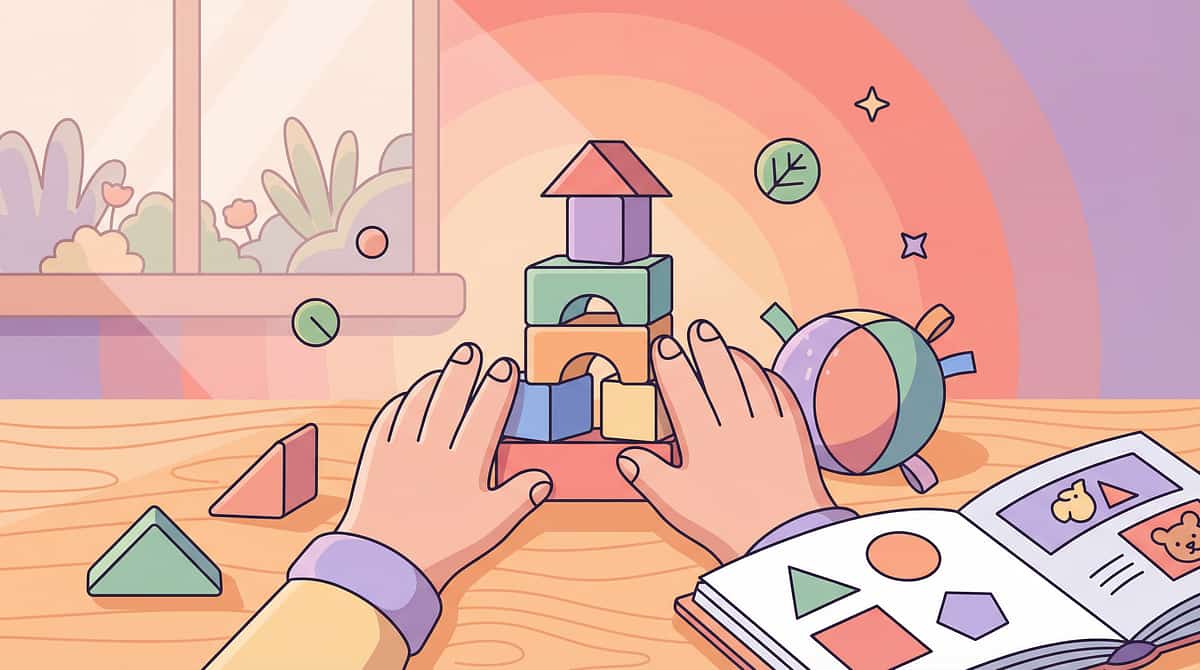
Interest-Based Learning | Passion-Led Pedagogical Integration
The "Passion Bridge" Technique
Definition: Interest-Based Learning is the systematic practice of using a child's existing passions, fascinations, and special interests as the primary vehicle for teaching new skills, knowledge, and behaviours. Rather than requiring a child to engage with curriculum on the curriculum's terms, this approach brings the curriculum to the child — wrapped in the language, content, and context of what they already love. This is not about letting children "only do what they want." It is about recognising that motivation is not a character trait — it is a relationship between a learner and content. When we align content with passion, we are not accommodating a weakness; we are activating the brain's highest-efficiency learning state.
🎯 Domain
H: Learning & Engagement
👶 Age Range
3–14 years
⏱ Session
15–45 minutes
📅 Frequency
Daily embedding
Series Context: H-757 sits within the Learning & Engagement Strategies Series (Domain H), alongside: ← H-756: Movement-Based Learning | → H-758: Twice Exceptional Kids. Pinnacle 128 Canon Materials taxonomy | 20 Category classification | 12 Domain (A–L) architecture — GPT-OS® content system.

Interest-Based Learning Does Not Belong to One Therapy. It Belongs to All of Them.
Occupational Therapy — Primary Lead
OTs use interest mapping to design sensory and fine motor activities. Child loves horses? OT uses horse-themed pegboards, horse figure manipulation, horse-drawing for fine motor. The sensory engagement is real; the interest is the delivery system.
Speech & Language — Secondary Lead
SLPs embed language targets inside interest conversations. The child who only talks about trains is NOT avoiding communication — they are demonstrating communication capacity. SLP builds language complexity, pragmatics, and narrative structure from within the interest.
ABA / BCBA — Integration Lead
BCBAs use interests as the most powerful natural reinforcers available. Instead of artificial token economies, the interest IS the reinforcer. Instruction delivered inside interest contexts shows superior discrimination learning and maintenance.
Special Education — Curriculum Lead
SpEd specialists map the entire curriculum to the child's interest architecture. A dinosaur-interested child can learn biology, history, geography, math, and literacy — all through dinosaur content. IEP goals become interest-embedded without loss of academic rigour.
🧠 NeuroDevelopmental Pediatrics (NeuroDev): NeuroDev physicians validate the neurological basis for interest-based engagement differences and co-ordinate diagnostic clarity (autism, ADHD, 2e profiles) that determines which interest-integration approach is most clinically appropriate. They also monitor for anxiety, OCD, or rigidity patterns that might require additional support before interest-based learning can be maximally effective.
"The brain doesn't organize itself by therapy discipline. A child's interest fires across sensory, language, behavioral, cognitive, and emotional circuits simultaneously. Our FusionModule™ is engineered to match that reality." — Pinnacle Blooms Consortium FusionModule™ Clinical Team

9 Materials. All Adaptable to ANY Interest. All Available in India Today.
Every one of these materials can be shaped to your child's specific passion — whether that's dinosaurs, trains, horses, space, maps, or anything else they love. Here is your complete H-757 material toolkit.
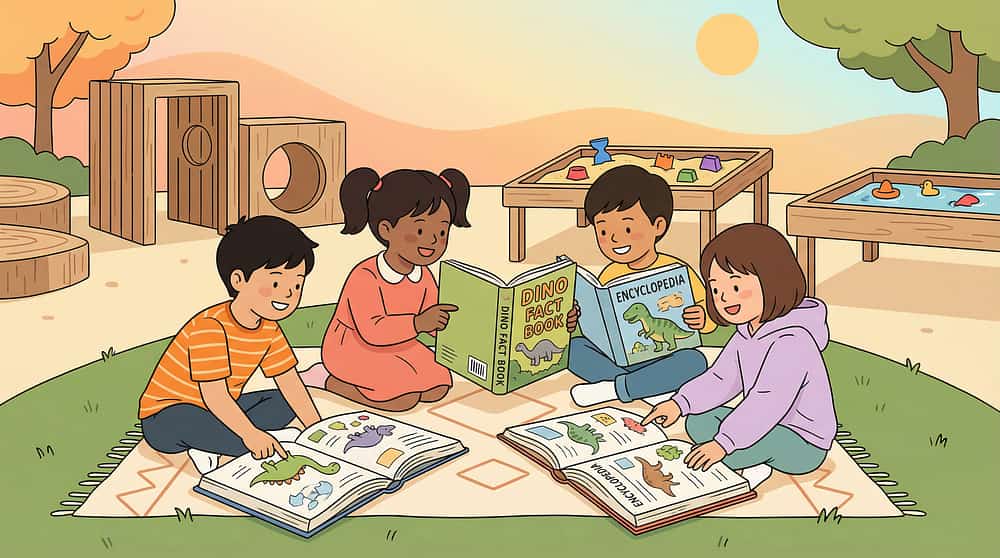
📚 Material 1: Interest-Themed Reading Materials
Canon: Cognitive & Learning
Topic-specific encyclopedias, fiction featuring their interest, graded readers, graphic novels. Match reading LEVEL to child; choose TOPIC from their passion universe.
💰 ₹200–1,500
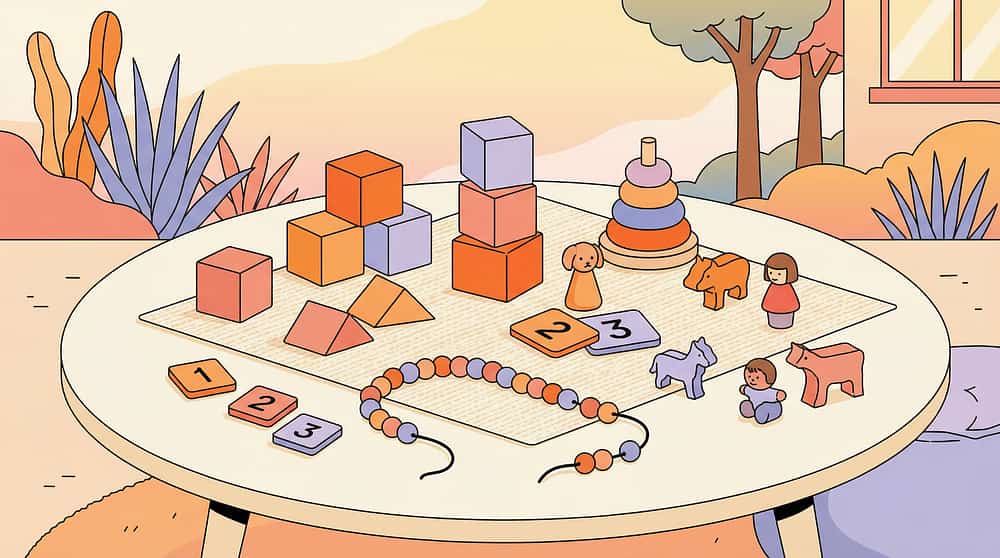
🔢 Material 2: Math Manipulatives Connected to Interests
Canon: Number/Counting Materials
Counting figures, measuring tools, custom word problem cards, themed calculators. Buy small interest-themed figures (₹100–200) + standard math tools.
💰 ₹300–1,200

✍️ Material 3: Writing Prompts & Journals With Interest Themes
Canon: Cognitive & Learning
Blank journals, interest-specific stationery, writing prompt cards, fact sheet templates. Blank unlined journal works best — give maximum freedom of expression.
💰 ₹150–600
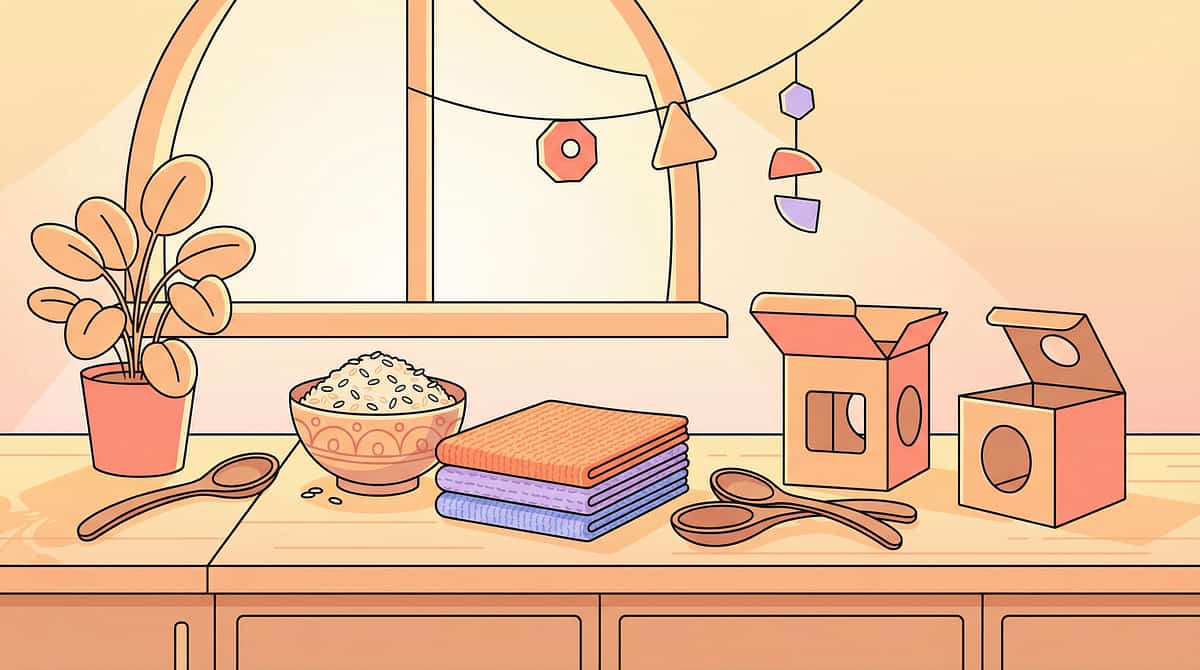
9 Materials — Continued

🔬 Material 4: Science & Exploration Kits
Canon: Problem-Solving Toys
Fossil dig kits, observation journals, magnifying glasses, field guides, model-building kits. Choose kit that directly connects to child's specific interest domain.
💰 ₹400–2,000
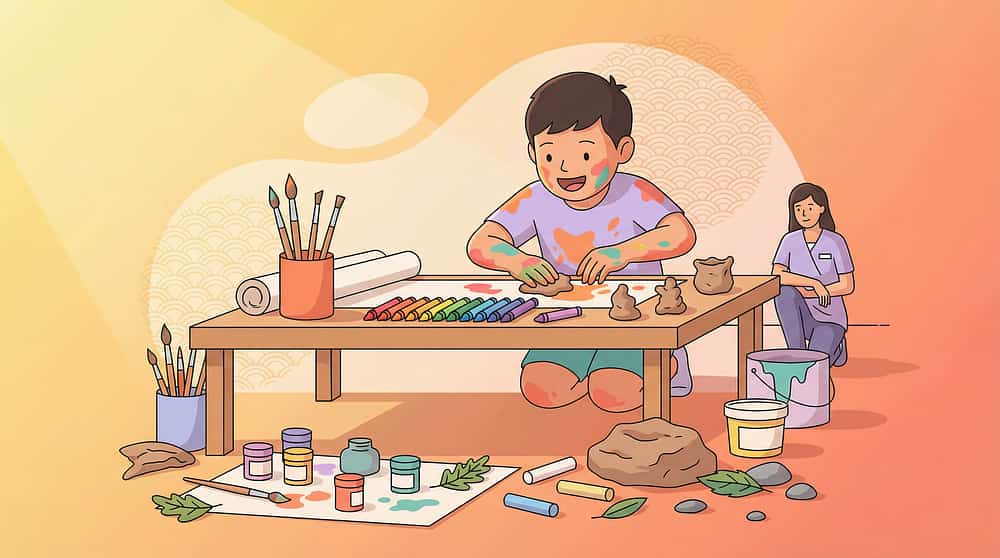
🎨 Material 5: Art & Creative Materials With Interest Focus
Canon: Cognitive & Learning
Drawing tutorials for their topic, clay/playdough, diorama materials, display portfolio. Invest in quality drawing paper + pencils; interest art develops fine motor naturally.
💰 ₹300–1,500
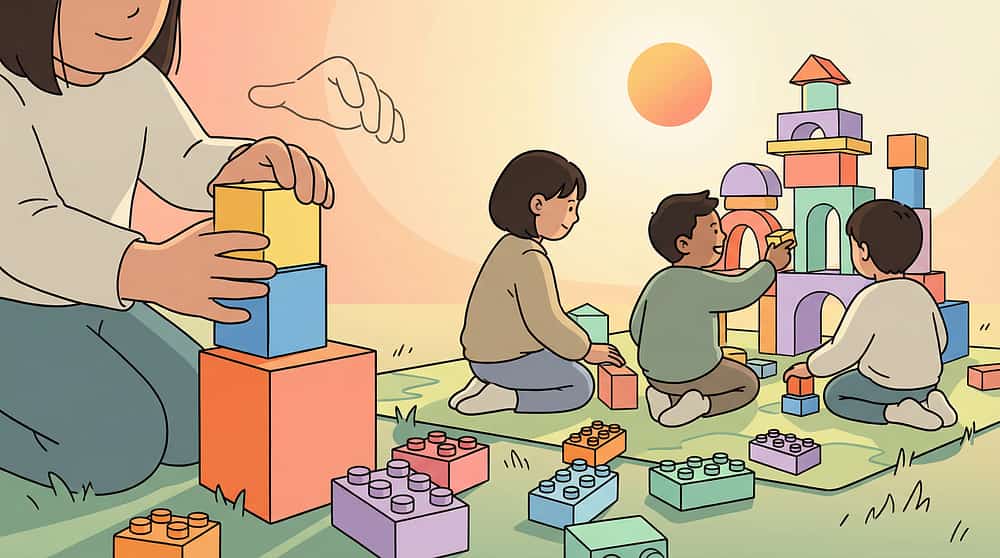
🏗️ Material 6: Construction & Building Sets With Interest Themes
Canon: Problem-Solving Toys
Interest-themed LEGO/blocks, train track sets, model kits, cardboard construction materials. Open-ended sets (cardboard + tape) often outperform commercial themed sets.
💰 ₹500–3,000
9 Materials — Continued
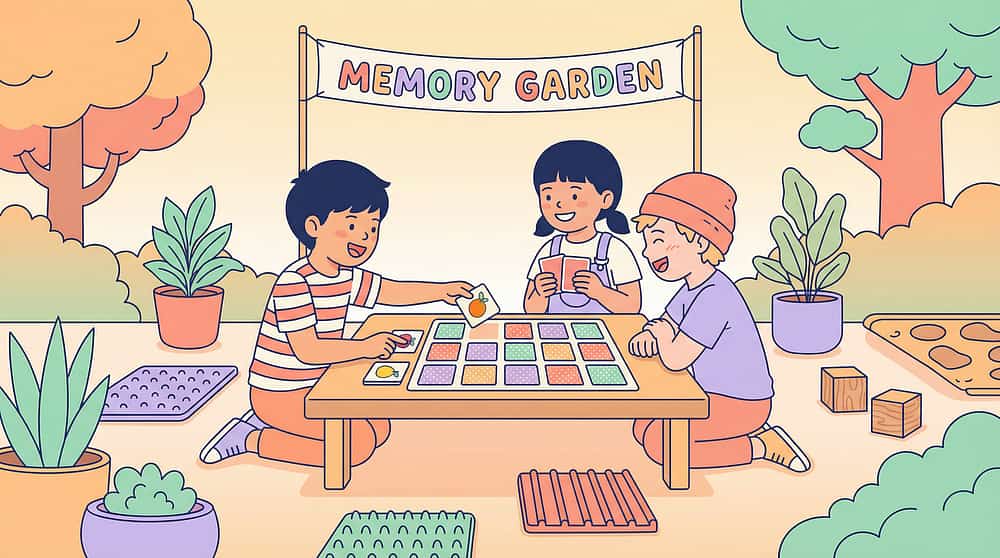
🎮 Material 7: Games & Puzzles Featuring Their Interest
Canon: Matching Games / Memory Games
Interest-themed puzzles, board games, trivia sets, memory matching games, custom game kits. Create custom interest trivia cards (free) — highest engagement possible.
💰 ₹300–1,500
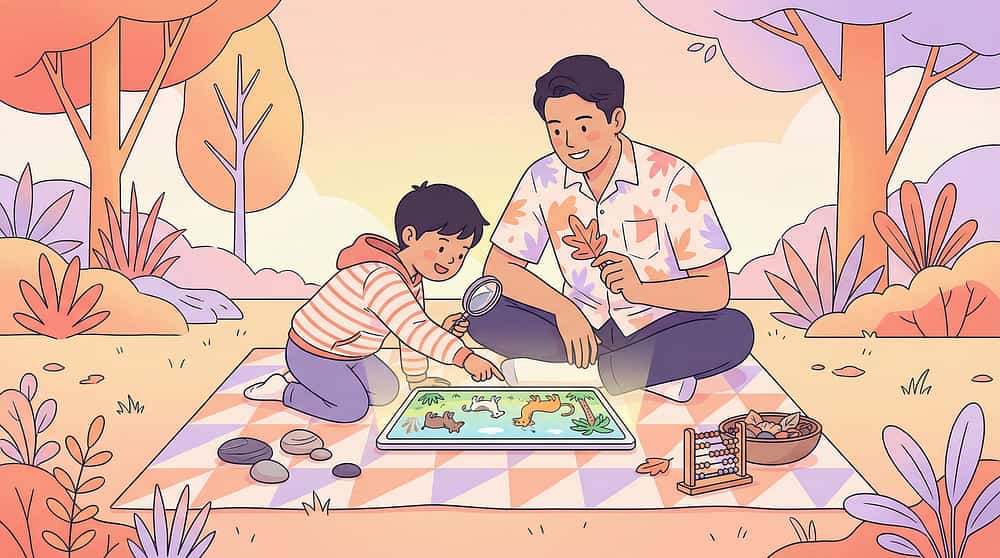
📺 Material 8: Documentary & Educational Media
Canon: Cognitive & Learning
Age-appropriate documentaries, educational YouTube playlists, podcasts, audiobooks, virtual tours. Create a curated "passion playlist" — 20 vetted videos at their level.
💰 ₹0–1,000 (streaming subscriptions) | Free: YouTube Kids, Spotify Kids, National Geographic Kids
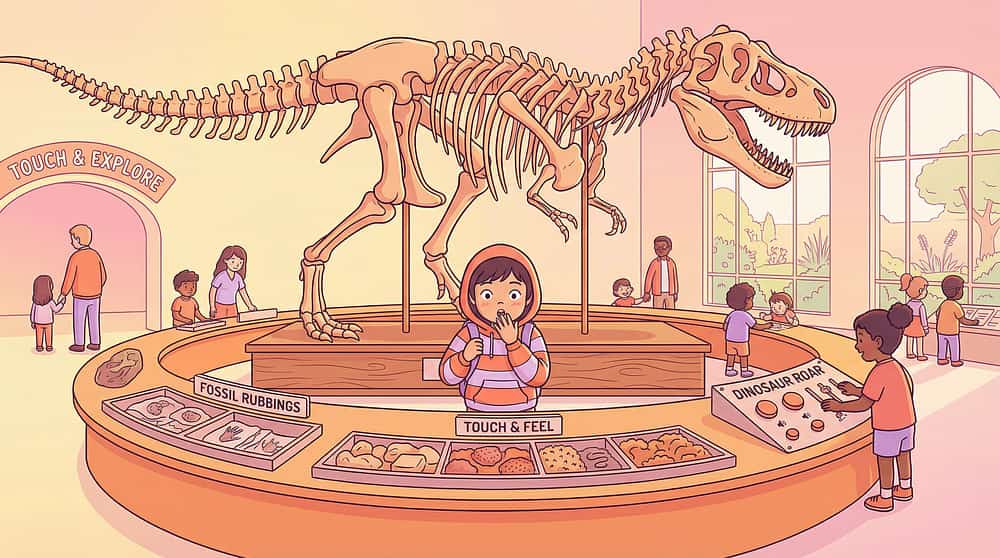
🌐 Material 9: Expert Connection & Community Resources
Canon: Transition Objects / Community Bridge
Museum memberships, club registrations, expert contact resources, field trip planning materials. Start with ONE real-world connection — a museum visit, a club meeting. Transformative.
💰 ₹0–2,000+
🎁Reinforcement Layer: Use interest-themed stickers and a reward jar to celebrate learning milestones within interest sessions. These complement all 9 materials as a motivational overlay across every session.
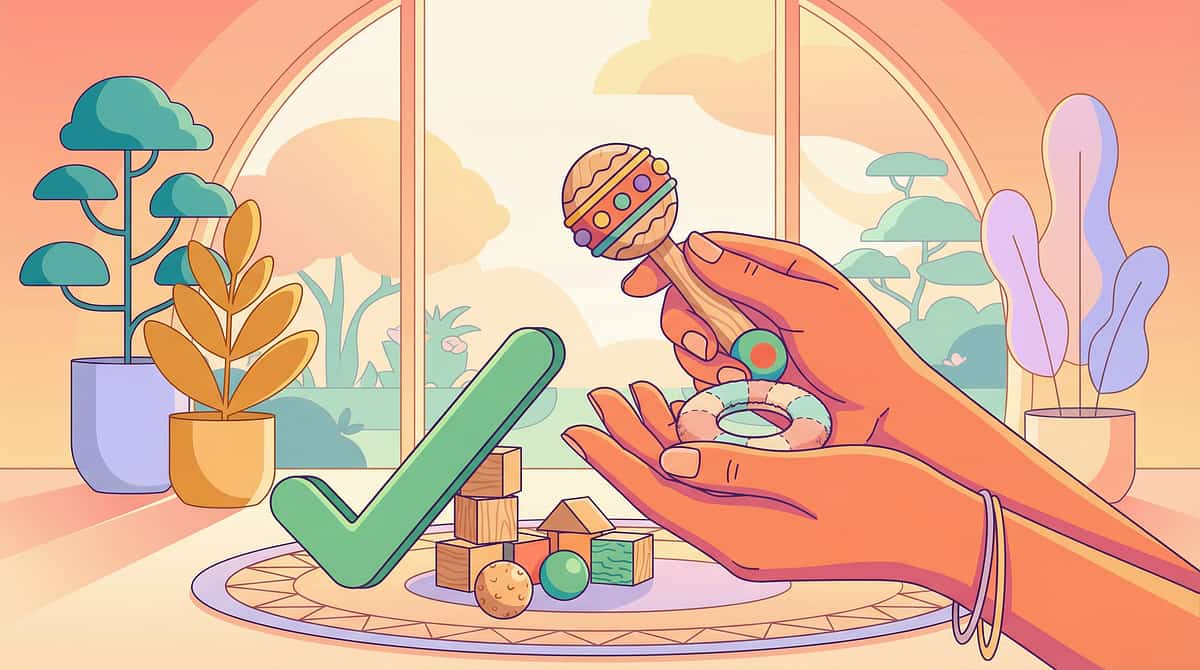
Every Child Deserves This Technique. No Budget Required.
These substitutes work because they deliver the same neurological principle — interest-connected engagement — through different materials. The brain does not care whether the dinosaur is plastic or paper.
🛒 Purchase Option
Interest Books (₹200–1,500)
Topic-specific encyclopedias and graded readers
Topic-specific encyclopedias and graded readers
Math Manipulatives (₹300–1,200)
Themed counting figures and tools
Themed counting figures and tools
Journals (₹150–600)
Interest-specific stationery and notebooks
Interest-specific stationery and notebooks
Science Kits (₹400–2,000)
Fossil dig kits, field guides, model kits
Fossil dig kits, field guides, model kits
Art Supplies (₹300–1,500)
Quality paper, pencils, clay, diorama materials
Quality paper, pencils, clay, diorama materials
Building Sets (₹500–3,000)
Interest-themed LEGO/blocks, train track sets
Interest-themed LEGO/blocks, train track sets
Games (₹300–1,500)
Interest-themed puzzles and memory games
Interest-themed puzzles and memory games
Documentary Media (₹0–1,000)
Streaming subscriptions
Streaming subscriptions
Expert Connections (₹0–2,000+)
Museum memberships, club registrations
Museum memberships, club registrations
🏠 DIY / Free Option
Library + Printouts
Borrow from public library. Print Wikipedia articles, cut and staple into booklets.
Borrow from public library. Print Wikipedia articles, cut and staple into booklets.
Household Objects
Count pebbles, measure with rulers, use bottle caps as counters. Create word problems on paper for free.
Count pebbles, measure with rulers, use bottle caps as counters. Create word problems on paper for free.
Blank Paper Stapled
10 sheets of A4, stapled, decorated by the child. Equally effective for writing development.
10 sheets of A4, stapled, decorated by the child. Equally effective for writing development.
Kitchen Science
Baking soda + vinegar = volcano (dinosaur theme). Magnifying glass from ₹50. Field guide = printed images from internet.
Baking soda + vinegar = volcano (dinosaur theme). Magnifying glass from ₹50. Field guide = printed images from internet.
Newspaper + Pencil
Sketching with whatever is available. Clay from wet mud. Cardboard boxes as diorama base.
Sketching with whatever is available. Clay from wet mud. Cardboard boxes as diorama base.
Cardboard Engineering
Empty boxes, tape, and scissors. More open-ended than commercial kits.
Empty boxes, tape, and scissors. More open-ended than commercial kits.
Homemade Games
Write 20 interest facts on paper, cut into cards — instant trivia/matching game.
Write 20 interest facts on paper, cut into cards — instant trivia/matching game.
YouTube Kids (Free)
Curated interest playlists. National Geographic Kids website. Library DVDs.
Curated interest playlists. National Geographic Kids website. Library DVDs.
Free Connections
Write a letter to a museum. Visit a zoo or farm during free entry hours. Local interest groups on WhatsApp.
Write a letter to a museum. Visit a zoo or farm during free entry hours. Local interest groups on WhatsApp.
"A child, a parent, 10 sheets of paper, a pencil, and 15 minutes of undivided attention around their interest — this is a complete interest-based learning session. The science works regardless of the budget." — Pinnacle Blooms Consortium (WHO/UNICEF Equity Principle)
FREE National Autism Helpline: 9100 181 181 | Ask about our free materials programme.

Safety Is the Foundation. Read This Before Your First Session.
1
🔴 RED — Do NOT Proceed If:
• Child is in acute distress, meltdown, or shutting down
• Child has recently experienced trauma connected to the learning environment
• Child's interest involves materials that are choking hazards (for children under 5)
• Interest content has escalated to concerning themes (self-harm, extreme violence) — seek clinical support first
• Parent is emotionally dysregulated — children sense dysregulation and cannot learn through it
• Child has recently experienced trauma connected to the learning environment
• Child's interest involves materials that are choking hazards (for children under 5)
• Interest content has escalated to concerning themes (self-harm, extreme violence) — seek clinical support first
• Parent is emotionally dysregulated — children sense dysregulation and cannot learn through it
2
🟡 AMBER — Proceed With Caution If:
• Child is tired, hungry, or has had a difficult day — shorten session to 5 minutes
• Interest is in a high-restriction phase (recently told to "stop" at school) — rebuild psychological safety first
• Child's interest involves media content not yet previewed by parent — preview all media before use
• Small parts present — ensure child is developmentally past mouthing stage
• Interest is in a high-restriction phase (recently told to "stop" at school) — rebuild psychological safety first
• Child's interest involves media content not yet previewed by parent — preview all media before use
• Small parts present — ensure child is developmentally past mouthing stage
3
🟢 GREEN — Proceed When:
• Child is in regulated, calm-alert state
• Environment is prepared (quiet, familiar space)
• Parent is relaxed and present — not checking phone or rushing
• Session is connected to child's CURRENT peak interest
• Materials are prepared in advance
• Environment is prepared (quiet, familiar space)
• Parent is relaxed and present — not checking phone or rushing
• Session is connected to child's CURRENT peak interest
• Materials are prepared in advance
🛑 STOP IMMEDIATELY IF: (1) Child becomes severely distressed — not just resistant, but genuinely distressed. (2) Interest content triggers anxiety rather than joy. (3) Child demonstrates a new, concerning behavior during session. (4) Session is being forced against the child's explicit refusal.
Emergency Response: Stop. Do not explain or justify. Move to a known calming activity. Contact Pinnacle Helpline: 9100 181 181
Emergency Response: Stop. Do not explain or justify. Move to a known calming activity. Contact Pinnacle Helpline: 9100 181 181
Indian Journal of Pediatrics RCT (2019): DOI:10.1007/s12098-018-2747-4 — Safety monitoring integrated into home-based intervention protocols.

The Right Environment Doubles the Technique's Effectiveness.
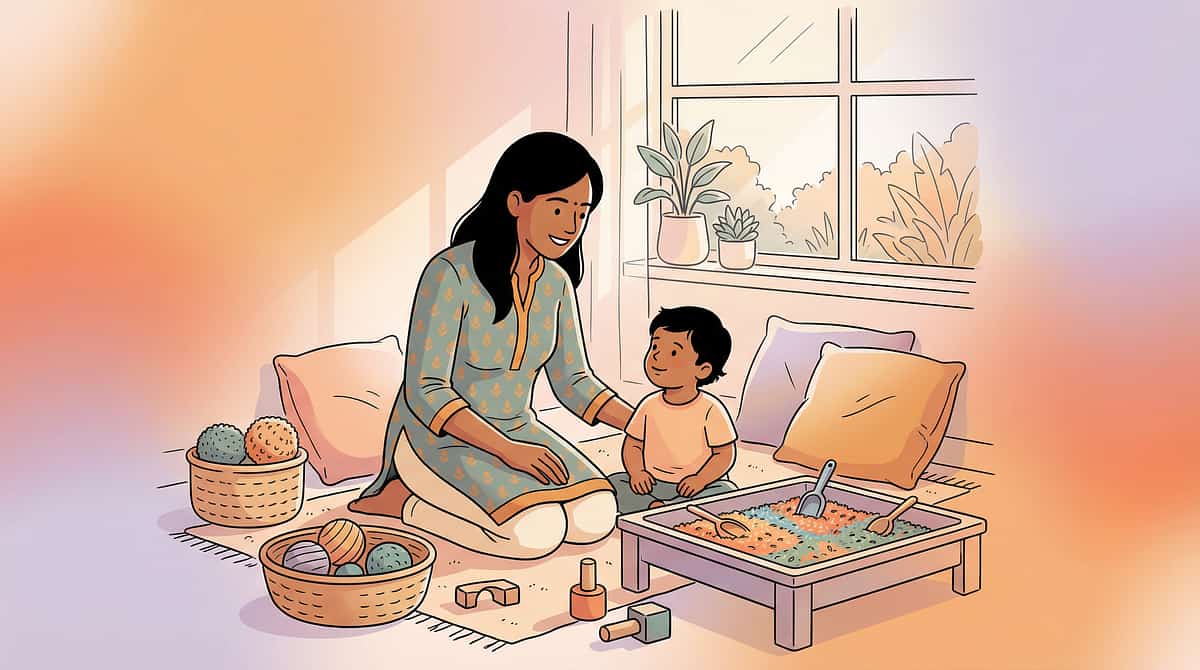
Room Setup Guide
① Child Position: Comfortable, self-chosen — floor, chair, bean bag. Child controls this completely.
② Materials Position: Interest materials visible and accessible, arranged attractively. Do NOT hide materials — interest visibility is itself motivating.
③ Parent Position: Beside child, NOT across a table. Beside = partnership. Across = examination. Be at or below the child's eye level.
④ Timer Position: Visual timer visible to child. Prevents "when does this end?" anxiety throughout the session.
Environment Checklist
- Lighting: Natural or warm — not harsh fluorescent
- Sound: Quiet. If child needs background sound, use instrumental (no lyrics)
- Temperature: Comfortable — not hot, not cold
- Distractions removed: Other toys/screens/objects out of visual field
- Phone: Silent or in another room (parent phone = parent disconnection = child disengagement)
- Interest materials: Laid out, ready, inviting
- Session length: Pre-decided and timer set
"The environment should say: 'This is YOUR time. YOUR passion. YOUR space.'"
Sensory Integration Theory (Ayres) + Meta-analysis: PMC10955541 — structured 1:1 environment is the most effective format for pediatric intervention.
60 Seconds to Check. A World of Difference in Outcomes.
Before every session, run through this 5-point readiness check. The goal is not perfection — it is informed, compassionate decision-making. A postponed session is not a failed session.
Check | ✅ GREEN — Proceed | 🟡 MODIFY — Adapt | 🔴 POSTPONE — Wait | |
Is the child fed and rested? | Yes — last meal <3 hours ago | Slightly tired — shorten to 10 min | Hungry, exhausted — feed and rest first | |
Is the child in a calm-alert state? | Calm, engaged with environment | Slightly dysregulated — start with calming activity | Meltdown, shutdown, high anxiety — postpone | |
Has child experienced distressing event today? | No | Minor upset — proceed gently | Major distress — comfort first | |
Is child's current interest still active? | Yes, same interest as planned | Maybe shifting — test with materials | Clearly different interest today — pivot to current passion | |
Is the parent present and calm? | Fully present | Slightly distracted — commit to 15 minutes focused | Rushed, stressed, or emotionally activated — postpone |
🟢 5/5 GREEN → FULL PROTOCOL
Proceed to Step 1 — full protocol, full duration
🟡 3–4/5 → MODIFY SESSION
Use simplified 10-minute version, lower demand, highest-interest materials only
🔴 <3/5 → POSTPONE TODAY
Not failure — readiness data is clinical data. Record and try again tomorrow.
"The best session is one that starts right. A skipped session is better than a forced session." — Pinnacle Blooms Consortium Clinical Protocols
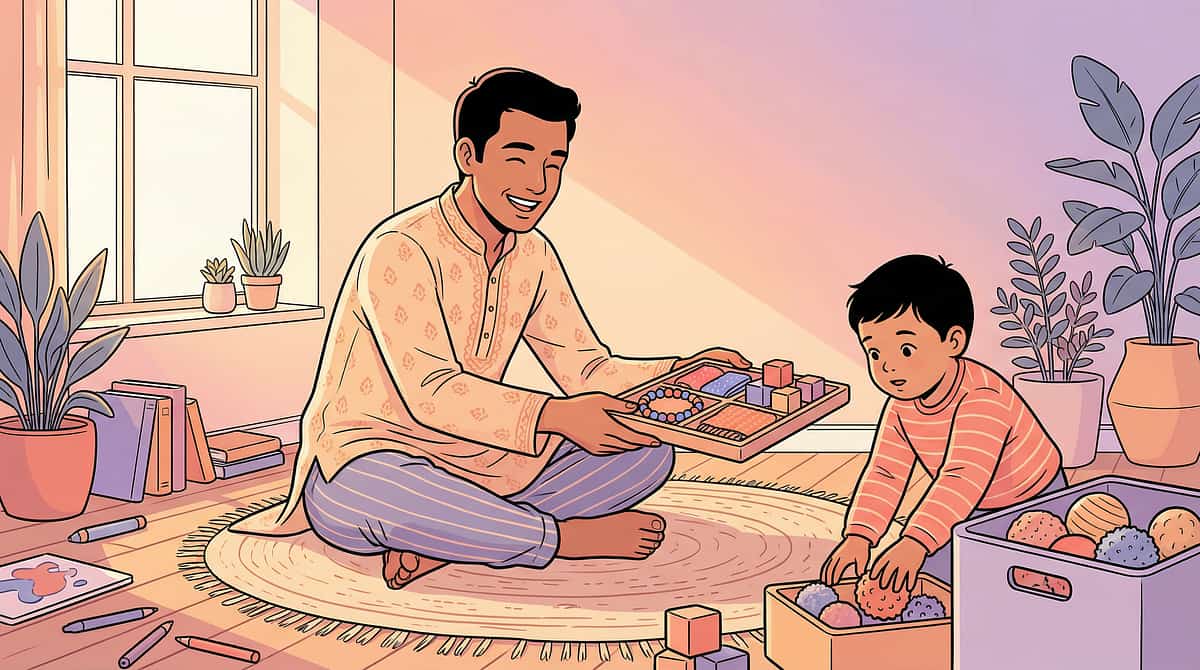
① The Invitation — Begin With Belonging, Not Demand.
Step 1 of 6
"I've been thinking about [dinosaurs/trains/horses] today. Did you know that [one real, fascinating fact from their interest]? I wanted to explore more with you. Do you want to join me?"
Why This Script Works
Leads with the parent's genuine curiosity — models intellectual engagement authentically
Offers a fascinating hook — dopamine trigger before any demand is placed
Uses "do you want" — invitation, not instruction; child can say no, and that is data
✅ Acceptance Cues (Child Says Yes Without Words)
- Moves toward materials
- Eyes light up / posture opens
- Asks a question about the interest
- Picks up the material or smiles
🔄 Resistance Cues — and Responses
- Turns away: Don't pursue. Try again in 5 minutes with a different entry point.
- Says "No": Accept gracefully: "Okay. The [dinosaurs] will be here when you're ready."
- Ignores: Remain present, engage with the material yourself. Interest is contagious.
Body Language: Sit at child's level BEFORE speaking. Make gentle eye contact. Keep voice warm and genuinely curious — not performatively enthusiastic. Hold or display the interest material as a visual cue. Timing: 30–60 seconds for invitation phase.

② The Engagement — Child Is In. Now Deepen the Connection.
Step 2 of 6
"Look at this — I found [book/journal/building materials/game] about [their interest]. Where do you think we should start?"
The Critical Move: Let the child LEAD the initial engagement. Do not direct. Follow their lead for the first 2–3 minutes. This is not passive parenting — it is precision clinical technique. The child's first choices reveal their current engagement state.
How to Present Each Material Type
📚 Books
Open to a striking image, don't read aloud yet — let the visual do the work first
🔢 Manipulatives
Place on surface between you. Don't hand directly — allow approach at child's pace
✍️ Journals
Open to first blank page. Put a good pen nearby. Say nothing else — curiosity fills the space
🏗️ Building Sets
Tip pieces out casually. Begin exploring yourself. Child will join naturally
🎮 Games
Set up the game partially. Child's curiosity will complete setup — ownership begins here
Reading Child's Responses
Response | Interpretation | Next Action | |
Child immediately engages | Full engagement — follow their lead | Stay present, ask genuine questions | |
Child watches but doesn't touch | Observational engagement — equally valid | Continue, narrate what you're doing | |
Child asks questions | Peak interest activated | "And what do YOU think about that?" | |
Child tries to redirect | Their version of the interest matters more | Let them redirect — follow their lead |
Reinforcement cue:"You know so much about this. Tell me more." (Not "Good job!") | Timing: 2–3 minutes.
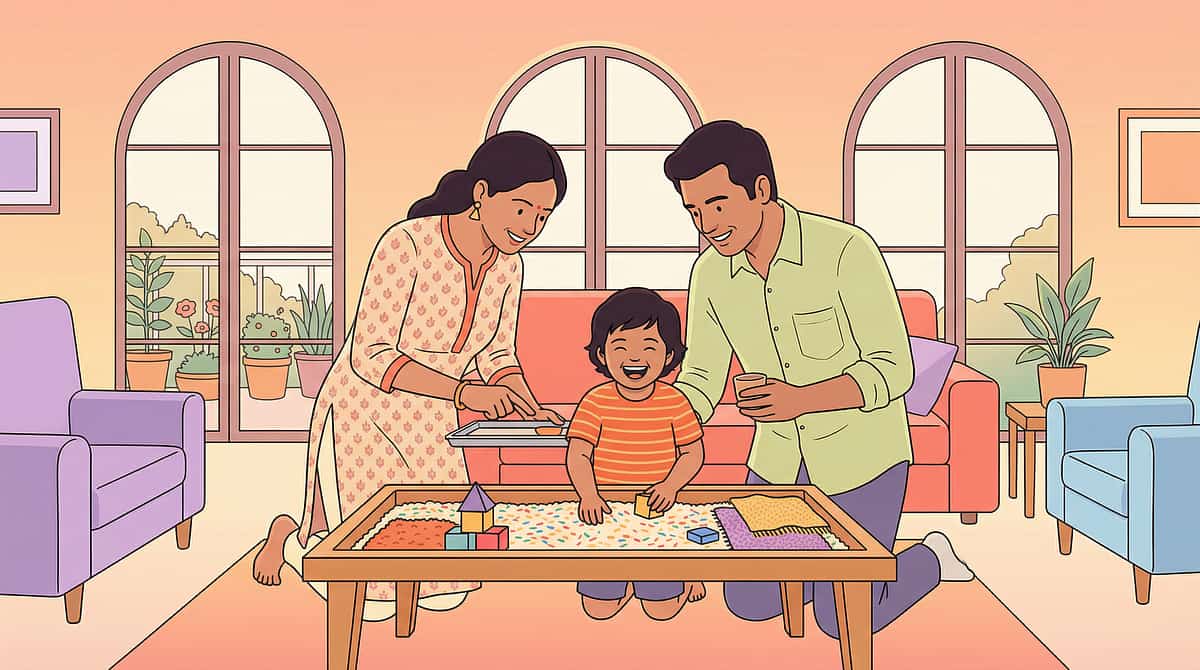
③ The Therapeutic Action — Learning Disguised as Passion.
Step 3 of 6
The Core Principle: Introduce the skill target INSIDE the interest activity. The child experiences learning as part of their passion — not as an interruption to it. Skills are the hidden cargo. Interest is the vehicle. The child never notices the learning is happening — because they're too busy being brilliant.
Interest Books → Reading Skills
Read aloud together. Stop at exciting moments: "What do you think happens next?" Build comprehension: "Why do you think the T-Rex was the apex predator?" Vocabulary: "There's a word I don't know — do you?" — child becomes the expert teacher. ⏱ 5–15 minutes.
Math Manipulatives → Numeracy
"If we have 7 Velociraptors and 4 run away, how many are left?" Measure dinosaur figures. Create a chart: "How many of each dinosaur do we have? Let's graph them."⏱ 5–10 minutes. Stop before satiation — leave child wanting more.
Journals → Writing Skills
"Let's write the most incredible fact you know about [interest] — in your own words." Dictation is acceptable for children with motor challenges. For non-writers: draw + label. Labelling IS writing development. ⏱ 5–20 minutes.
Science Kits → Scientific Thinking
"Let's do an experiment. What do you think will happen if...?" Observe → predict → test → record → conclude. Use the scientific method with interest content as the subject. ⏱ 10–30 minutes. Science naturally extends.
Art Materials → Fine Motor + Creativity
"Draw the most accurate [dinosaur/horse/train] you know how." No correction — only encouragement of detail and effort. Add labels — writing development embedded in art. ⏱ 10–30 minutes. Art sessions often self-extend.
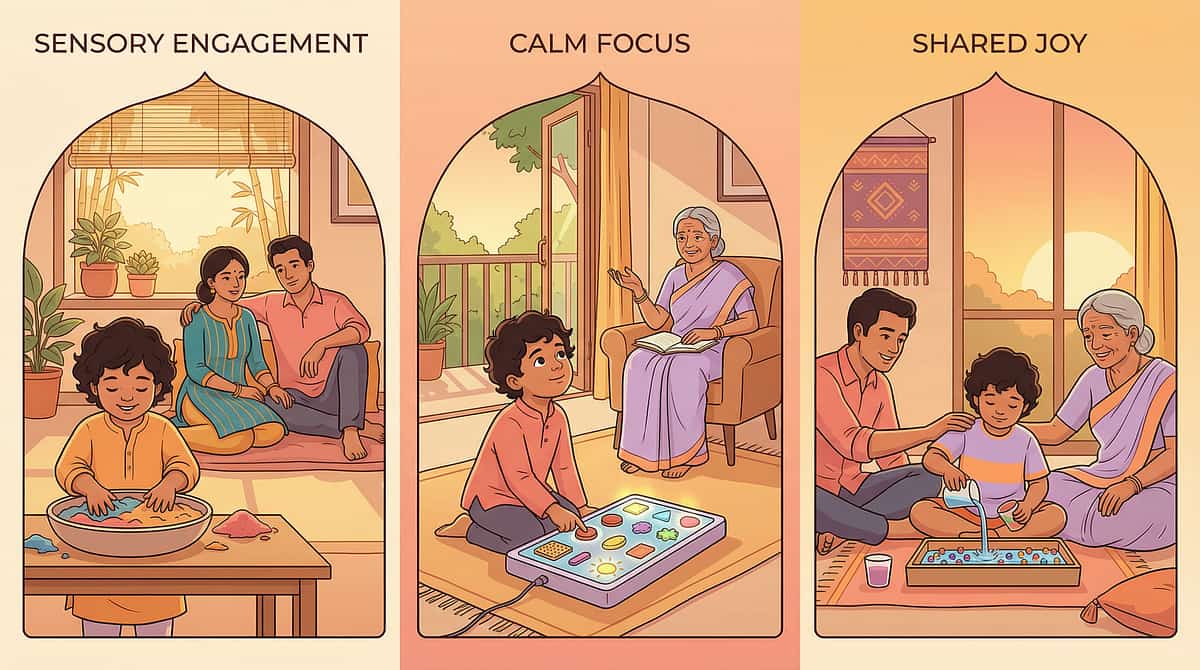
③ The Therapeutic Action — Continued
Step 3 of 6 — Materials 6–9
Building Sets → Spatial Reasoning + Planning
"Can you build the [dinosaur habitat/train station/horse stable]? What do you need?" Child plans, parent assists only on request. Measure the build. Count the pieces. Write a building report. ⏱ 15–45 minutes.
Games/Puzzles → Cognitive Skills
Play the interest-themed game or puzzle. Navigate the rules together. Use interest trivia to build knowledge depth. Introduce gentle "losing" experiences in the safety of shared interest. ⏱ 10–20 minutes per game round.
Documentary/Media → Listening + Comprehension
Watch 5–10 minutes together. PAUSE. "What just happened? Why do you think they did that?" Vocabulary hunting: "Did you hear a word you didn't know?" Post-viewing: "What was the most amazing thing?" — verbal narration = language development. ⏱ 5–20 minutes of active viewing (not passive watching).
Expert Connections → Social + Academic Skills
Prepare together: "If we're going to the museum, what questions do you want to ask?" Write questions (writing development). At the experience: child leads the exploration. Parent narrates and extends. Post-visit: write/draw/build what was learned. ⏱ 30 minutes–full day.
The Universal Principle: Skills are the hidden cargo. Interest is the vehicle. The child never notices the learning is happening — because they're too busy being brilliant. Home sessions of 10–20 minutes should occupy therapeutic action for 40–60% of session time.
PMC10955541 — 40-minute sessions showed maximum effect; home sessions of 10–20 minutes occupy therapeutic action for 40–60% of session time.
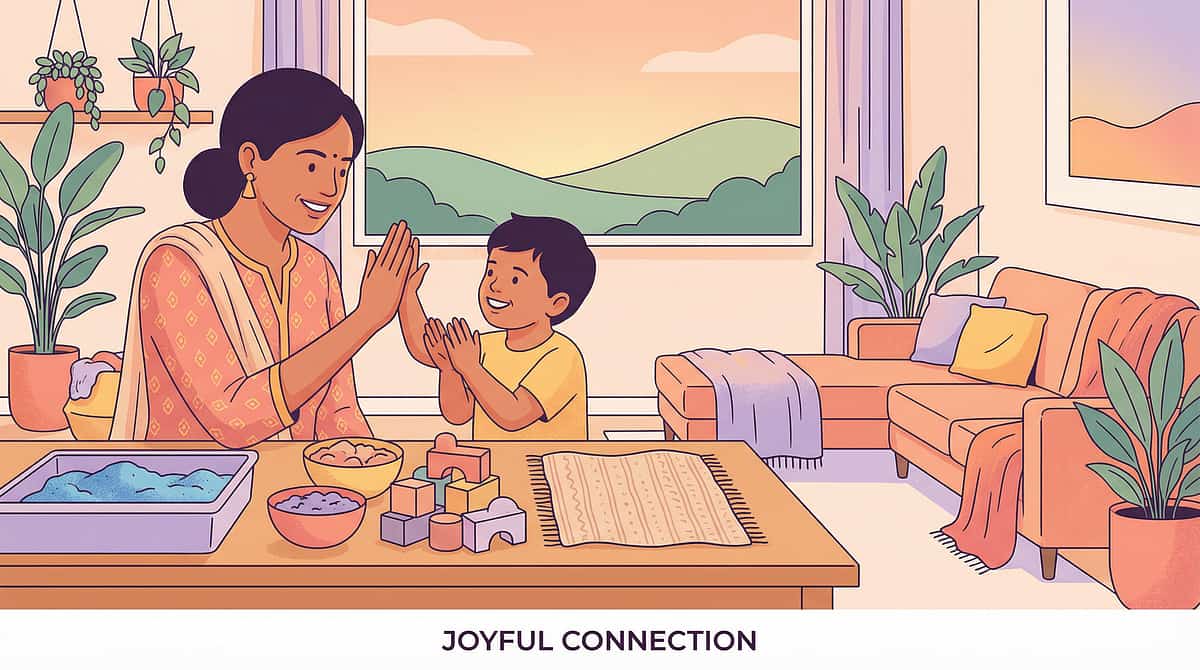
④ Repeat & Vary — The Brain Learns Through Repetition. Interest Sustains the Repetition.
Step 4 of 6
"3 genuinely engaged, enjoyable, successful repetitions are neurologically superior to 10 forced, compliance-based repetitions. Stop before the child is done. Leave them wanting more."
Material | Sessions/Week | Duration | Repetitions | |
Interest Reading | Daily (natural embedding) | 15–30 min | Natural — follow child's pace | |
Math Manipulatives | 3–5× per week | 5–15 min | 5–10 problem sets | |
Writing/Journal | Daily (brief) or 3× weekly (deep) | 5–20 min | As engagement sustains | |
Science Kits | 2–3× per week | 15–30 min | 1 experiment → reflect → repeat | |
Art Materials | 3–5× per week | 15–45 min | Session-to-session skill building | |
Building Sets | 3–5× per week | 15–45 min | Progressive complexity | |
Games/Puzzles | 3× per week | 15–30 min | 2–3 rounds per session | |
Documentary Media | 2–3× per week | 10–20 min active | 1 viewing + discussion | |
Expert Connections | Monthly+ | Variable | Deep, memorable, rare |
Variation Options to Sustain Engagement Across Weeks
Week 1
Reading about the interest — build knowledge base and vocabulary
Week 2
Drawing and art within the interest — fine motor + creative expression
Week 3
Building a diorama or model — spatial reasoning + planning
Week 4
Writing an interest encyclopedia — integrating all skills learned
Satiation indicators (child is done for today): Topic switches abruptly | Attention fragments | Body language closes | Verbal resistance emerges. When you see these — stop gracefully, celebrate the session.

⑤ Reinforce & Celebrate — What Gets Celebrated Gets Repeated.
Step 5 of 6
For interest-based learning, the most powerful reinforcer is already built in — the interest itself. The child who reads about dinosaurs is reinforced by the knowledge they gain. The child who builds a horse stable is reinforced by the completed structure. Your job as parent: amplify the natural reinforcement.
Reinforcement Scripts (Use Within 3 Seconds of Effort or Success)
"You read that whole page — and you understood every single part. That's incredible."
"You figured out that problem by using what you know about trains. That's real thinking."
"You built that — and then you wrote about it. Two skills at once. I am so proud of you."
Specificity Is Power
❌ Not: "Good job!"
✅ Yes: "You just calculated the height of a Brachiosaurus using multiplication. That is applied mathematics — exactly what mathematicians do."
Reinforcement Menu
- Natural: More time with interest material — always the primary reinforcer
- Social: Verbal praise — specific, warm, genuine — every session
- Token: Sticker chart toward interest reward (museum visit, new book)
- Tangible: Small interest-themed item for monthly milestone celebrations
ABA Reinforcement Principles: Immediate, specific reinforcement increases behavior. Token economy: multiple systematic reviews confirm strong evidence in autism intervention. | Helpline: 9100 181 181 — Discuss personalized reinforcement strategies with our BCBA team.
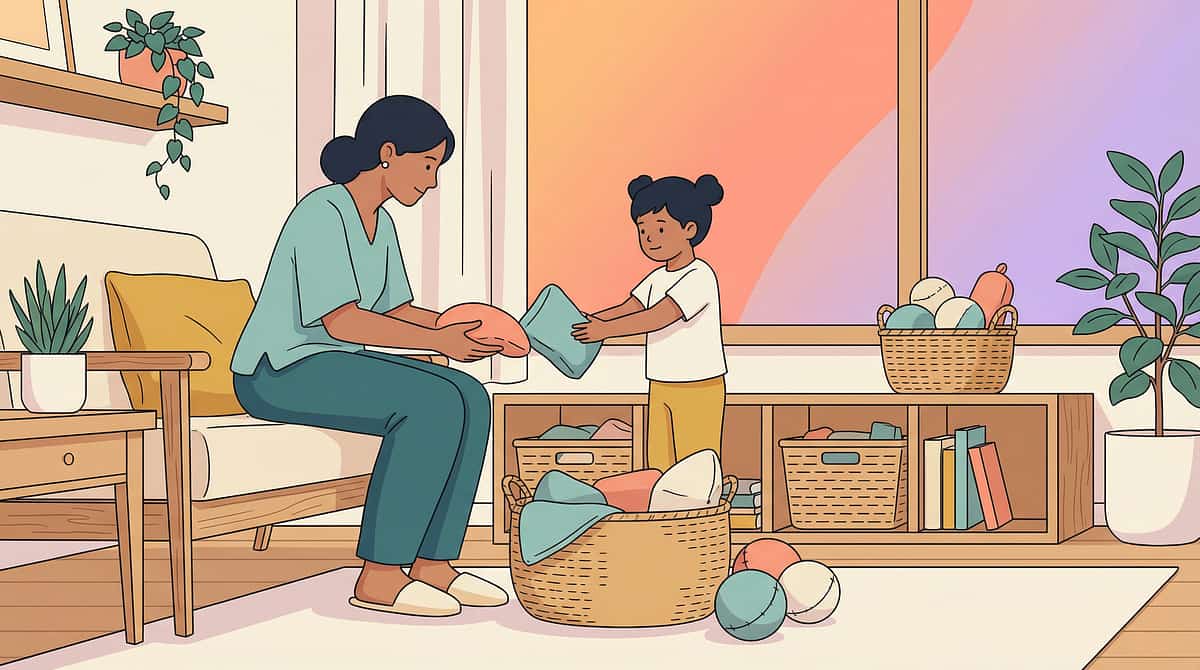
⑥ The Cool-Down — Every Great Session Ends Gently.
Step 6 of 6
Abrupt endings destabilize the child's regulatory state and create negative associations with future sessions. A structured cool-down transitions the child safely from peak engagement back to baseline — protecting both the session and the relationship.
1
The Warning
"We have two more minutes with [interest material]. Two more, then we'll save it for next time." Specific language ("two more") rather than vague ("almost done") prevents protests.
2
The Transition Activity
Shift from active to passive: "Let's look at your favorite page one more time." / "Want to take a photo of what you built?" / "Tell me your single favorite thing we discovered today."
3
The Material Put-Away Ritual
Child participates in putting materials away. "Where should we keep [interest materials] for next time?" Giving the child agency in storage reinforces ownership and anticipation of the next session.
4
The Transition Cue
"Great work today. The [dinosaurs/trains/horses] will be waiting for you next time. Ready for [next activity]?"
If Child Resists Ending: Do NOT extend indefinitely — consistency is kind. Use visual timer: show remaining time. Offer: "You choose which [interest item] to hold until next time." Stay calm — resistance to ending = the session was successful. Visual timers are evidence-based for autism (NCAEP 2020).
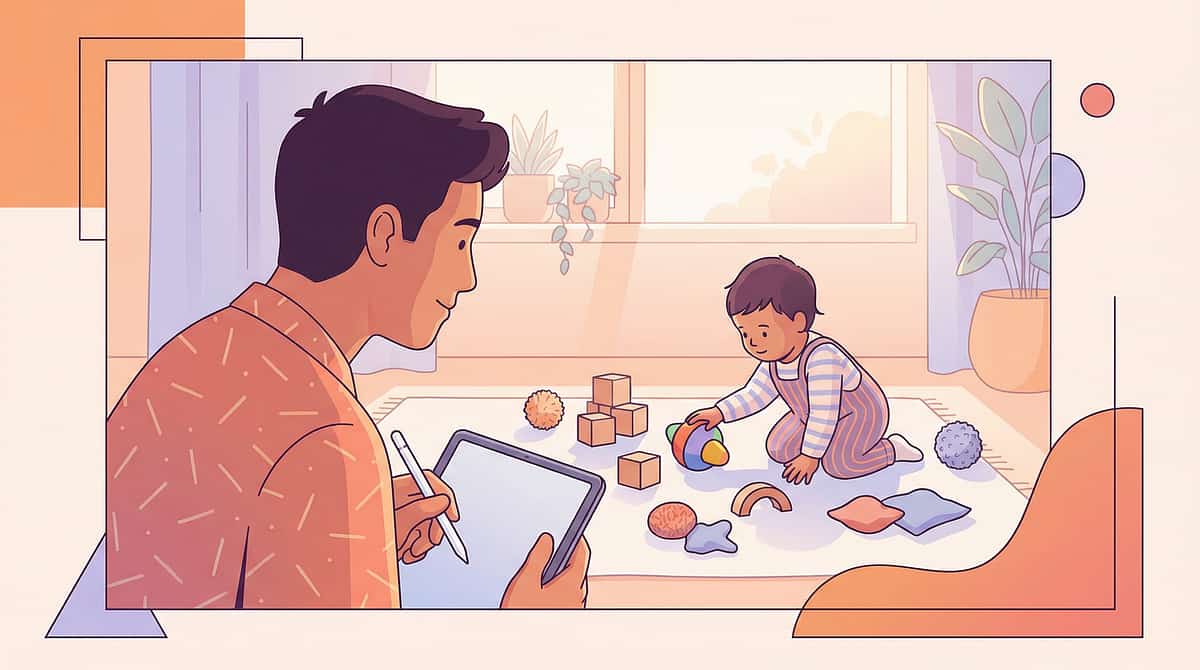
60 Seconds of Data Now Saves Weeks of Guessing Later.
Within 60 seconds of session end, record these four fields. This data feeds directly into your child's GPT-OS® Learning Engagement Readiness Index — tracking progression toward self-directed learning.
1
Engagement Level
Circle: ① Low ② Medium ③ High ④ Very High
Date: ___/___ /___ | Duration: ___ minutes
2
Skill Practiced
Reading | Writing | Math | Science | Art/Motor | Building | Game/Puzzle | Media/Comprehension | Social/Expert
3
One Specific Observation
"Today [child] ________________________"
A single specific sentence is all you need. Make it observable and behavioral, not interpretive.
4
Tomorrow's Plan
Continue same / Try variation / Rest
This forward-planning step takes 10 seconds and eliminates session-start hesitation.
Why This Data Matters: Your session data feeds into your child's GPT-OS® Learning Engagement Readiness Index — tracking progression from "disengaged except when interest present" toward "self-directed learner who uses interests strategically." Download the H-757 PDF Tracking Sheet at pinnacleblooms.org or contact our team at 9100 181 181.
ABA Data Collection Standards: BACB Guidelines + Cooper, Heron & Heward (Applied Behavior Analysis, 8th ed.)
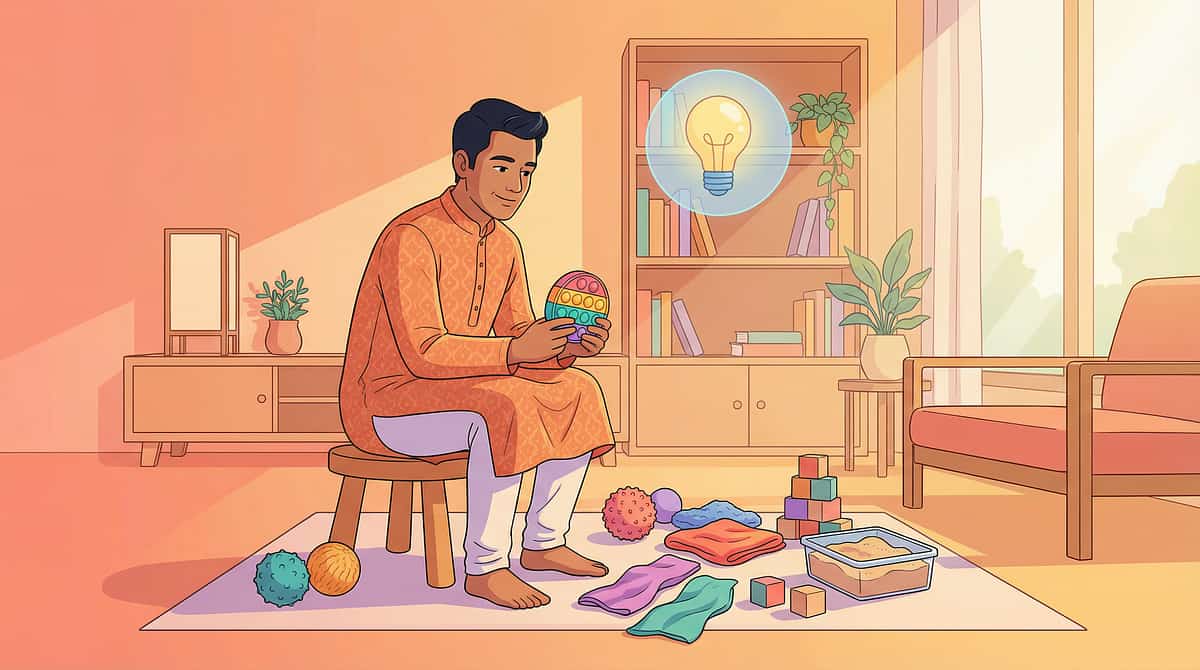
Most Sessions Are Imperfect. All Sessions Are Data.
When sessions don't go as planned, the instinct is to blame yourself or your child. Instead, treat each challenge as a diagnostic clue. Here are the seven most common problems and exactly what to do about each one.
Problem 1: "Child refused to engage at all today."
Why: The material or approach didn't match today's version of the interest, or the child's state wasn't ready. Fix: Check readiness checklist. Did something change about the interest? Test with a different material from the same interest universe. "Not today" is valid data — record and adjust.
Problem 2: "Child engaged for 2 minutes then ran away."
Why: Session started well — this is actually success. Two minutes of genuine interest-based engagement is two minutes more than zero. Fix: Celebrate 2 minutes. Tomorrow aim for 3. Gradual duration building is the protocol.
Problem 3: "Child refused to let me introduce any learning."
Why: The learning component was too visible. The "bridge" was too obvious. Fix: Follow the child's lead entirely for 2 sessions. Don't introduce explicit learning — just be present in their interest world. Learning emerges naturally through narrating, questioning, and extending.
Problem 4: "The interest I planned around is no longer their main interest."
Why: Interests shift — especially in younger children. Fix: Pivot immediately to their current passion. The protocol works for any interest. The material kit needs updating — treat this as a fresh start.
Problem 5: "Child got frustrated when they couldn't do the skill correctly."
Why: Skill demand was pitched too high. The "just-right challenge" was too challenging. Fix: Back the skill demand down significantly. Success in the interest must be guaranteed — skill demand should be minimal challenge alongside a guaranteed interest win.
Problem 6: "Parent (me) got frustrated during the session."
Why: Completely normal. Interest-based sessions require patience for the child's pace. Fix: Stop. Step back emotionally. Say: "I need 2 minutes — then I'll be back." Self-regulation is the most powerful modelling you can do.
Problem 7: "Nothing seemed to work for weeks."
Why: Could indicate: interest hasn't been correctly identified, skill demands are too high, the approach needs professional calibration. Fix: Contact Pinnacle. 9100 181 181 | Our SLPs and OTs will help map the correct interest-learning pathway for your specific child.
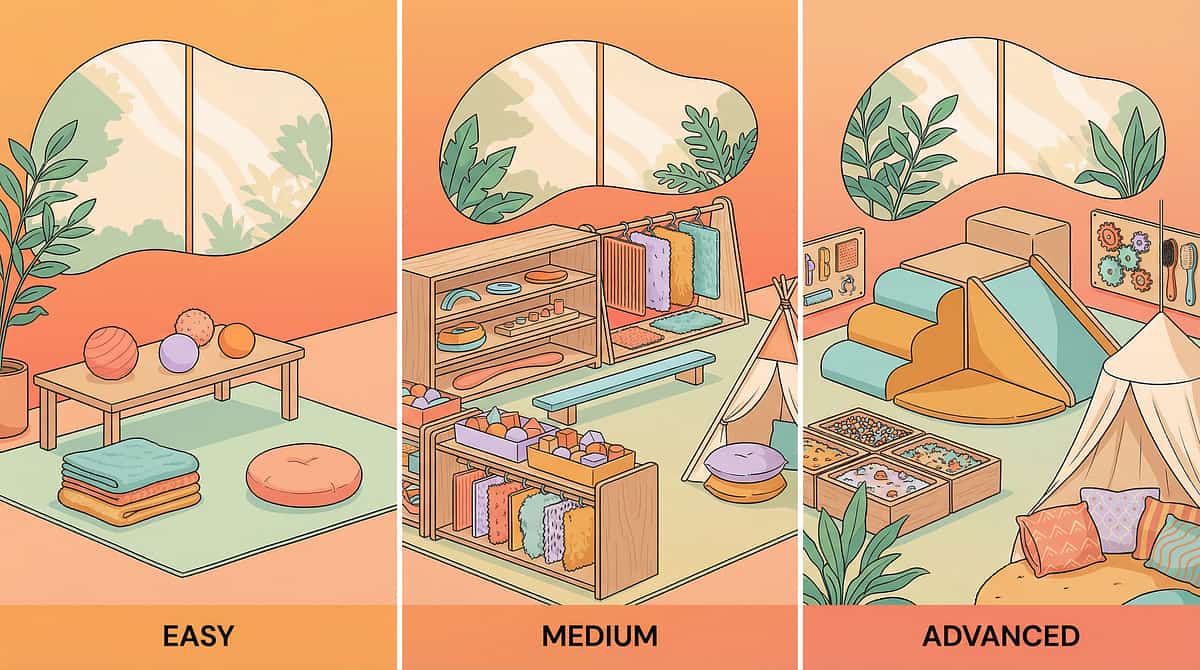
This Technique Is a Framework, Not a Formula. Your Child Is the Variable.
Modifications by Child Profile
Profile | Adaptation | |
Autistic — Deep Interest | Use the deepest, most specific layer of the interest. Don't oversimplify. The child's knowledge depth is real and must be honoured. | |
ADHD — Interest Shifts Quickly | Multiple materials available in each session. Rapid switching between interest materials is fine — engagement is the goal, not session structure. | |
Anxiety + PDA | Never demand. Only offer. "I wonder if..." not "Let's do...". The interest is the safety — lean into it heavily. | |
Twice-Exceptional (2e) | Allow the interest to go to advanced levels. A 7-year-old reading at university level about their interest should be given university-level material on their interest. | |
Non-verbal / Minimally Verbal | AAC device use for interest discussion is IDEAL. Interest topics are the highest-motivation context for communication device use. | |
Younger (3–5 years) | Sensory/physical engagement with interest objects. Books, figures, soft toys from interest domain. Very short sessions (5–10 min). | |
Older (10–14 years) | Interest as career/identity exploration. Connect interest to real-world professionals, courses, clubs. |
Ages 3–5
5–10 minutes
Ages 5–8
15–25 minutes
Ages 8–12
20–40 minutes
Ages 12–14
30–60 minutes (often self-extends)

📈 Progress — Chapter 4
Week 1–2: The Permission Phase
You are giving your child permission to learn their way. You are giving yourself permission to follow rather than lead.
15%
Progress Milestone
Foundation-building phase — planting neural pathways, not yet harvesting outcomes
✅ Progress Signs — What to Expect
- Child engages with materials at all
- Session duration increases even by 1 minute
- Child shows anticipation for sessions
- Parent finds at least one entry script that works
- ONE moment of genuine learning within interest
❌ Not Yet Expected
- Skill transfer to non-interest areas
- Independent initiation of learning tasks
- Visible academic improvement
- Child choosing learning over pure play
- School engagement change
"Weeks 1–2 will feel like play. That is correct. You are not failing to teach — you are succeeding at creating the conditions for learning. The foundation must be laid before the house is built."
Week 1 Micro-Goal: If your child tolerated the interest-based session for 5 minutes longer than they would have tolerated a standard learning session — that is your Week 1 success. Write it down.
PMC11506176 — Systematic review: Intervention outcomes emerge across 8–12 week timelines. Early phase focuses on participation and tolerance.
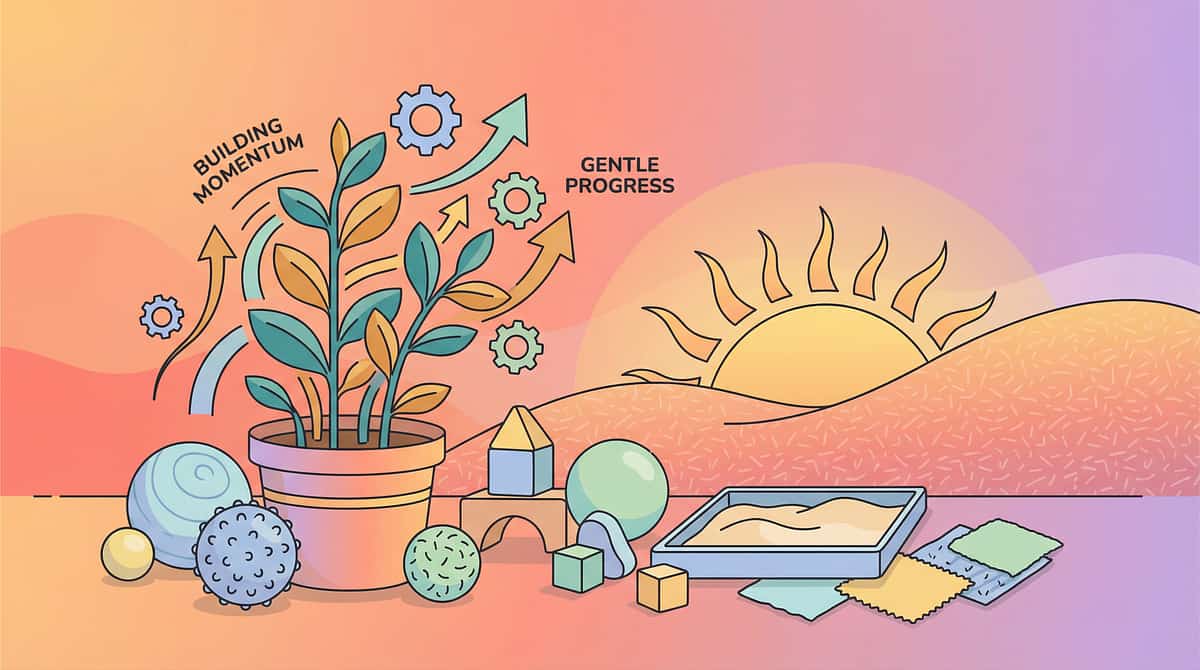
Week 3–4: The Pattern Emerges
40%
Progress Milestone
Neural pathways are forming — watch for the consolidation signals
🧠 Neural Pathway Forming Signals
- Child begins to ANTICIPATE sessions: "Are we doing [interest activity] today?"
- Child's engagement duration increases by 25–50% from Week 1
- Child starts to EXTEND sessions: "Just 5 more minutes?"
- Child spontaneously produces interest-connected content during free time
📈 Skill Consolidation Signs
- Reading: Child reads interest text with less decoding effort than Week 1
- Math: Problems within interest context solved with growing confidence
- Writing: Interest journal entries are longer and contain more detail
🔗 Bridge Formation Signals (Most Exciting)
- Child makes a FIRST spontaneous connection: "This is like how dinosaurs [X], which is the same as..."
- Child teaches YOU something that connects to a school topic
- Child applies interest knowledge outside interest sessions without prompting
What to Do This Week: → Add ONE new material from the 9 → Slightly increase session challenge (one notch harder on the difficulty slider) → Ask: "If you had to teach someone else about [their interest], what would you say first?"
Neuroplasticity: Synaptic strengthening through repeated structured input follows predictable timelines. Behavioral consolidation aligns with neural adaptation curves.

Week 5–8: The Breakthrough You've Been Building Toward
75%
Progress Milestone
Mastery phase — you should see measurable, observable outcomes across all three domains
🏆 Learning Engagement Mastery
- Child initiates interest-based learning activities independently
- Sustains focus for full planned session duration without adult prompting
- Produces learning artifacts without being asked
🏆 Skill Mastery
- Demonstrates the academic skill within interest context consistently
- GENERALIZATION: Shows the skill beginning to appear in NON-interest contexts
- Quality of work exceeds pre-intervention baseline measurably
🏆 Identity Mastery
- Child identifies as a learner within their interest domain: "I'm an expert on [interest]"
- Child seeks new challenges within interest: "I want to know more about..."
- Child shares interest-based knowledge socially: "Did you know that...?"
When to Progress:✅ Mastery confirmed → Move to H-758 (Twice Exceptional Kids) or H-759 (Academic Confidence) | 🔄 Mastery partial → Stay at H-757, add complexity, introduce second interest domain connection
PMC10955541 — Meta-analysis across 24 studies: effective skill promotion with measurable outcomes. BACB mastery criteria standards.
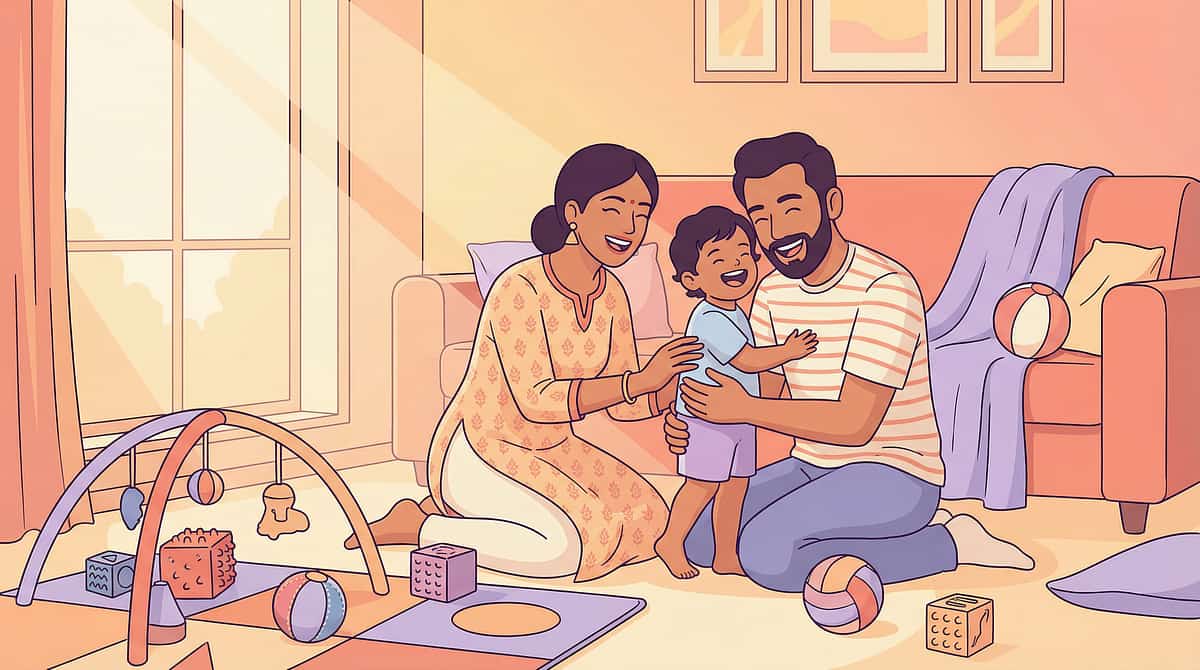
You Did This. Your Child Is Learning Differently — and Magnificently.
What Your Child Achieved
- Learned through joy, not compliance
- Built skills without losing the love of their interest
- Experienced themselves as capable, expert, and valued
- Took one more step toward becoming a self-directed learner
What You Achieved
You were told your child was "unmotivated." You discovered they were differently motivated — and you met them where they are. You spent weeks following their lead, trusting the process, and building sessions even on difficult days. This is not a small thing. This is therapeutic excellence at the family level.
Celebration Suggestions
Interest-Connected Celebration
Museum visit | New book on their topic | A day exploring their interest fully with no agenda
Document This Milestone
Photo of their interest journal / artwork / build / reading achievement. This is evidence of growth — save it.
Journal Prompt
"[Child's name] taught me that [their interest] is also a way to learn [skill]. I am so proud."
Parental self-efficacy research: Parent confidence is the strongest predictor of continued home-based intervention implementation.
Your Instincts Are Clinical Data. Trust Them.
The following six signs indicate it is time to pause and seek professional support. These are not signs of failure — they are signs that your child may need more than a home-based approach can provide alone.
⚠️ 1. Interest Triggers Severe Distress Instead of Joy
Child becomes agitated, self-injurious, or deeply distressed when the interest topic is engaged — not just excited-dysregulated, but genuinely distressed. May indicate an anxiety component or past negative association. → Pause. Consult SLP or psychologist at Pinnacle.
⚠️ 2. Interest Content Is Escalating to Concerning Themes
Interest is increasingly focused on violence, death, or dangerous scenarios in a way that feels different from typical interest depth. May require clinical assessment — not a judgment of the child, but a safety check. → Contact Pinnacle helpline: 9100 181 181
⚠️ 3. No Skill Transfer After 10+ Weeks of Consistent Effort
Child shows no generalisation of skills from interest context to any other context after 10 consistent weeks. May indicate need for different approach, additional assessment, or professional calibration. → AbilityScore® assessment at Pinnacle center.
⚠️ 4. Child Cannot Disengage From Interest At All
Cannot transition away from interest even for eating, safety needs, sleep — with extreme distress at any interruption. May indicate rigidity requiring specific clinical support beyond parent-led intervention. → OT + NeuroDev assessment.
⚠️ 5. Interest Used to Entirely Avoid All Non-Interest Life
Complete avoidance of all non-interest activities — not preference, but rigid demand avoidance. PDA or high-anxiety profile may need specific approach. → Psychological assessment at Pinnacle.
⚠️ 6. Parent-Child Relationship Deteriorating Through Sessions
Sessions are creating conflict, resentment, or distance rather than connection. The relationship is the container. If sessions are harming the relationship, pause the sessions. → Contact Pinnacle. Parent coaching is available: 9100 181 181
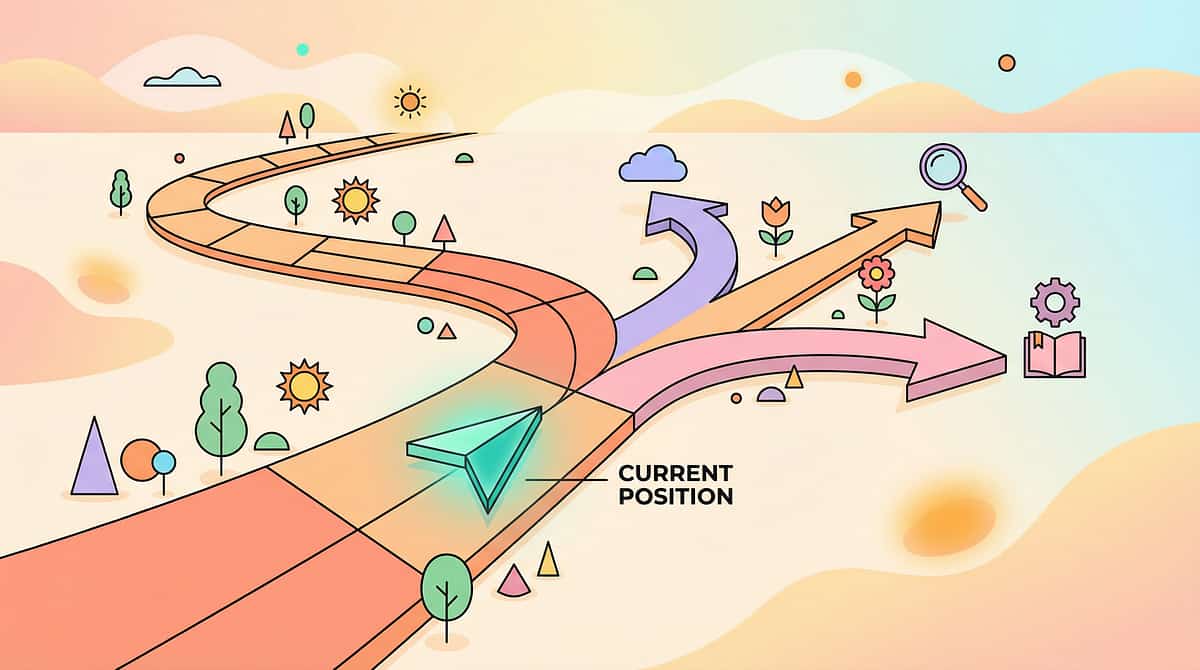
Techniques Your Child's Interest Can Unlock — Because Learning Is a Connected Web.
Technique | Code | Canon Materials | Level | |
9 Materials That Help With Learning Through Interests | H-749 | Books + Manipulatives | 🟢 Intro | |
9 Materials That Help With Multi-Sensory Learning | H-755 | Sensory + Cognitive | 🟡 Core | |
9 Materials That Help With Movement-Based Learning | H-756 | Motor + Sensory | 🟡 Core | |
9 Materials That Help With Twice Exceptional Kids | H-758 | Cognitive + Creative | 🟠 Advanced | |
9 Materials That Help With Academic Confidence | H-759 | Cognitive + Reward | 🟡 Core | |
9 Materials That Help Using Interests Productively | D-379 | Behavioral + Cognitive | 🟡 Core |
"You Already Own Materials for These" Indicator: If you purchased Interest Books + Math Manipulatives + Journals for H-757, you already own the primary materials for H-749, H-755, and H-759. No additional purchase needed to start these techniques.
All above techniques sit within Domain H: Learning & Engagement | Pinnacle 20 Category: Cognitive & Learning. Browse full Domain H → pinnacleblooms.org
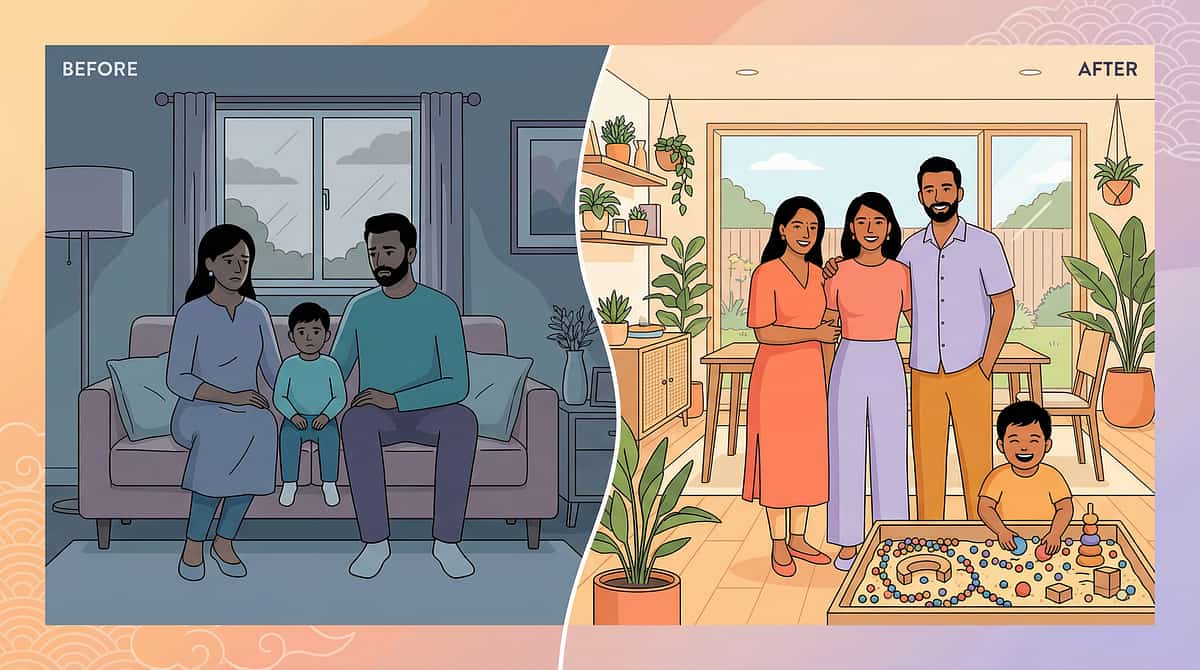
🌐 Community — Chapter 5
From Our 70+ Centers. 21 Million Sessions. Real Families. Real Transformation.
🚂 Family Story 1 — The Train Encyclopedia
Boy, age 8, diagnosed autism + ADHD | Bangalore Center
BEFORE: Could not sit through a single school lesson. Report cards read "capable but disengaged." Handwriting so resistant that homework was a daily family crisis. Knew every train model, railway line, and historical locomotive in existence — but couldn't write his own name legibly.
AFTER (Week 8): His OT started a "Railway Records" journal — his job was to write one train fact per day, his choice. By Week 4, entries were 3–4 sentences. By Week 8: full paragraphs, labelled diagrams, and a self-authored "Guide to Indian Railways." Handwriting legibility improved by 60% on standardized assessment. He now reads train manuals independently — at a Grade 7 reading level, two years above his age.
🐴 Family Story 2 — The Horse Math Expert
Girl, age 10, twice-exceptional (high IQ + learning differences) | Hyderabad Center
BEFORE: Math anxiety so severe that the sight of worksheets triggered panic. Horse-obsessed to a degree described as "excessive" by school. Had memorized the weight, height, feed requirements, and breeding histories of 200+ horse breeds.
AFTER (Week 6): SpEd specialist created "The Horse Breeder's Math Programme" — all problems framed around horse management. Math anxiety reduced to near-zero within interest context by Week 3. By Week 6: willingly attempting standard math worksheets because "these are basically the same as horse maths, just with different numbers." First academic success in 3 years.
"The pattern we see across thousands of children: the interest is the window into the child's learning architecture. Our job is to build bridges from that window to the full house of their education. Interest-based learning is not an accommodation — it is precision therapy." — Senior OT, Pinnacle Blooms Network® (10 years, 3,000+ cases)
All case details anonymized. Individual results vary.
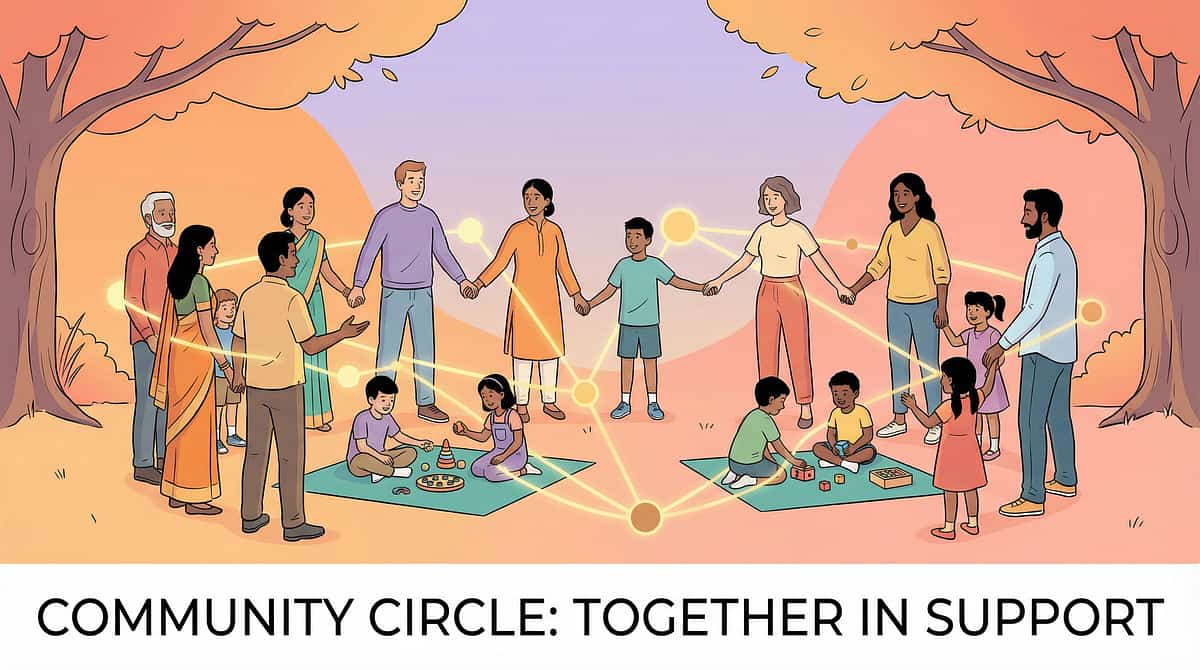
You Are Not Solving This Alone. 70 Countries. One Community.
WhatsApp Parent Group — H-757
Join families worldwide navigating passion-led learning strategies. Group guidelines: No spam, no advice-giving without qualification markers, share experiences respectfully. Contact us at 9100 181 181 to be added.
Pinnacle Parent Forum
Online community at pinnacleblooms.org/community. Domain H: Learning & Engagement discussion thread. Moderated by Pinnacle therapists. Your questions get real clinical answers.
Local Parent Meetups
At your nearest Pinnacle center, monthly parent circles connect families in the same journey. Find your center: pinnacleblooms.org/centers or call 9100 181 181.
Peer Mentoring Programme
Pinnacle's parent mentor programme connects new families with those 6–12 months ahead on the same journey. Request a mentor: pinnacleblooms.org/mentors — transformative for those just starting out.
"Your child's story — including the setbacks — is exactly what another family needs to hear today. Consider sharing your journey in the Pinnacle community. Your experience is clinical data for every family that follows."
WHO NCF: Community engagement is a core principle. 1000+ individuals from 111 countries contributed to the NCF. Parent support networks improve intervention adherence.
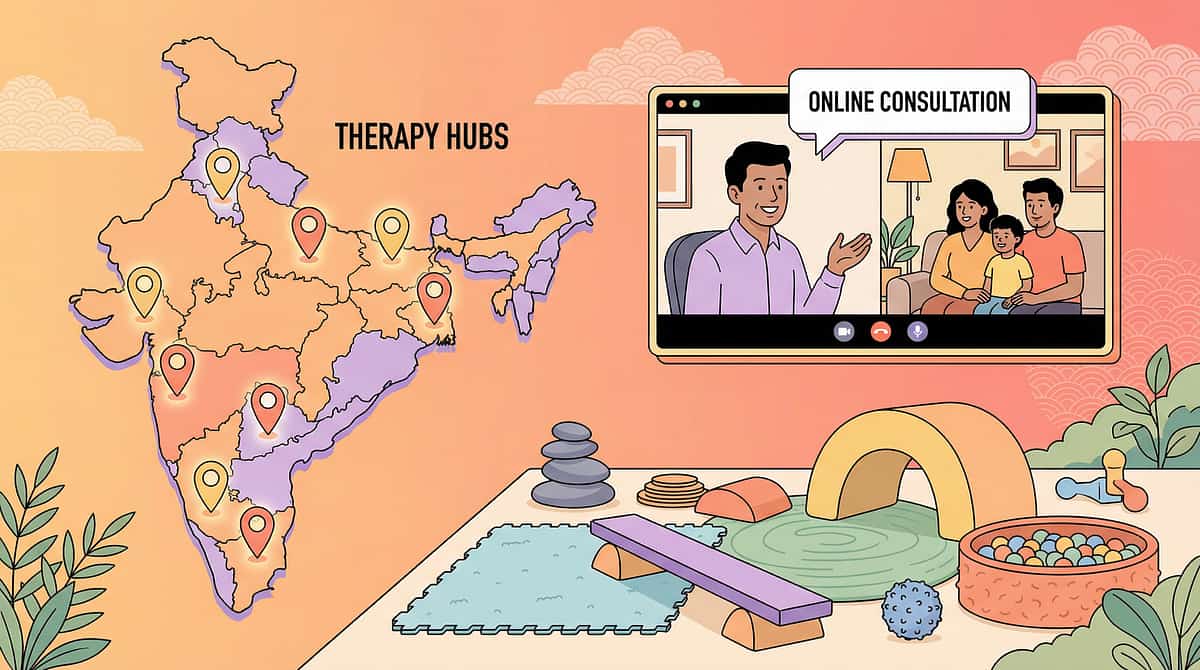
Home-Based Is Powerful. Professional-Supported Is Transformative.
Our 70+ centers across India offer specialized support for H-757 from every discipline that makes it work. Whether you need an initial assessment, ongoing co-therapy, or simply a professional calibration of your home approach, the Pinnacle team is here.
Discipline | H-757 Application | Book | |
Occupational Therapist | Interest mapping + sensory integration within interest contexts | pinnacleblooms.org/book | |
Special Educator | Curriculum mapping to interest architecture + IEP integration | pinnacleblooms.org/book | |
Speech-Language Pathologist | Language + communication development within interest conversations | pinnacleblooms.org/book | |
BCBA / ABA Therapist | Interest as natural reinforcer + behavioral skill building | pinnacleblooms.org/book | |
NeuroDev Pediatrician | Diagnostic clarity for autism/ADHD + clinical oversight | pinnacleblooms.org/book |
📱 Teleconsultation
Available for families anywhere in India and globally. 16+ languages | Same-day availability for urgent queries. Book at pinnacleblooms.org/book
📞 Free National Helpline
9100 181 181
Available 24×7 | 16+ languages | No appointment needed | 100% FREE
Available 24×7 | 16+ languages | No appointment needed | 100% FREE
"Home + Clinic = Maximum Impact. You implement daily. We calibrate monthly. Together, your child gets 24×7 evidence-based support."
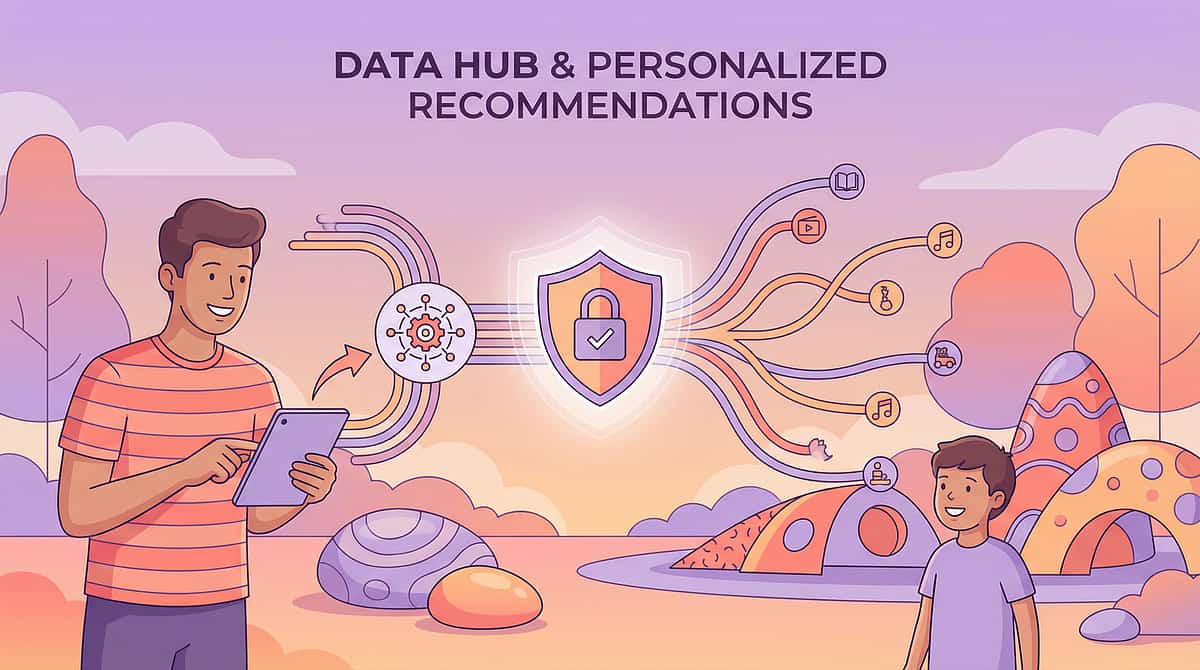
Your Session Data Is Not Stored — It's Transformed. Into Better Recommendations.
What GPT-OS® Learns From Your H-757 Data
- Which materials produce highest engagement for this child's interest profile
- Optimal session duration and frequency based on this child's response pattern
- Skill generalization trajectory — when is this child ready to progress?
- Which reinforcement approaches are most effective for this child
🔒 Privacy Assurance
- ✅ Never sold
- ✅ Never shared with third parties without consent
- ✅ Anonymized for population-level learning
- ✅ Protected under India's Digital Personal Data Protection Act 2023
- ✅ Deletable on request: privacy@pinnacleblooms.org
Your child's data joins 21 million therapy sessions in making GPT-OS® smarter — not for the company, but for the next family that arrives where you started today.
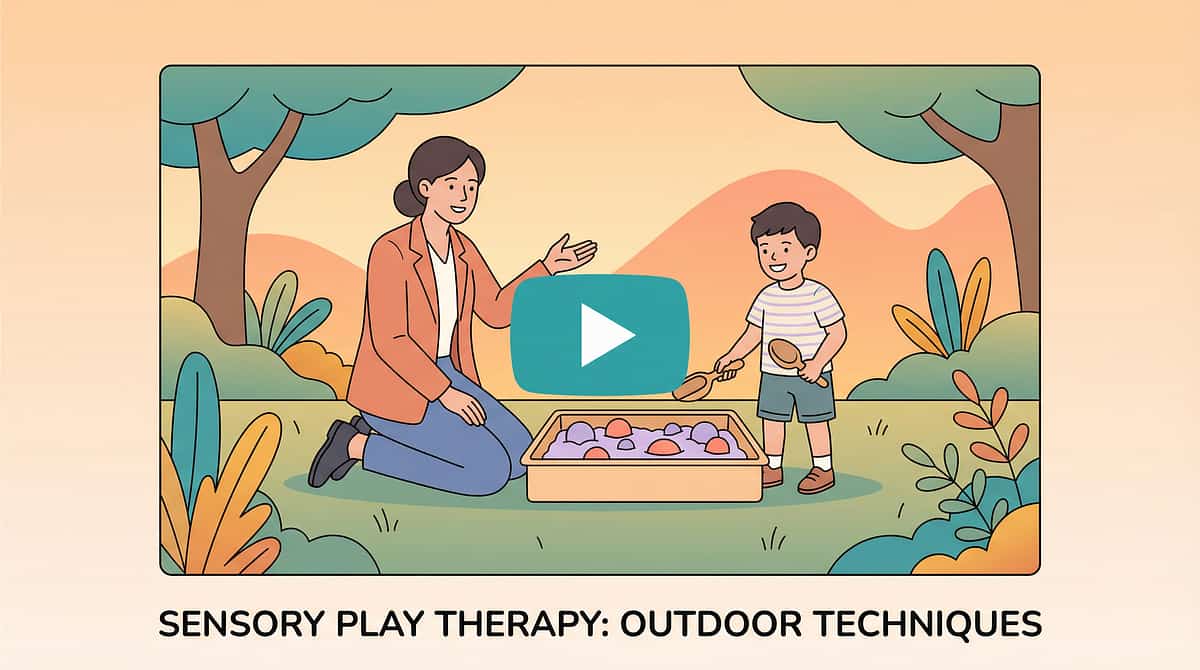
See It. Then Do It. Video Learning Activates What Text Alone Cannot.
▶️ H-757 Reel — Watch Now
"9 Materials That Help With Interest-Based Learning"
Series: Learning & Engagement Strategies — Episode 757
Duration: 75–85 seconds | Subtitled in 16 languages
Produced by: Pinnacle Blooms Network® Content Consortium
Series: Learning & Engagement Strategies — Episode 757
Duration: 75–85 seconds | Subtitled in 16 languages
Produced by: Pinnacle Blooms Network® Content Consortium
What You'll See in the Reel
1
The Hook: "Their passion isn't a distraction — it's a doorway."
2
All 9 materials demonstrated with real children in real sessions
3
Therapist voice-over with key clinical insight for each material
4
Pinnacle GPT-OS® system explanation and integration overview
5
Real-World Evidence: 97%+ improvement | 21M+ sessions | 70+ centers
6
Call to Action: 9100 181 181 — Free consultation with the Pinnacle team
Related Reels to Watch Next: ← H-756: 9 Materials for Movement-Based Learning | → H-758: 9 Materials for Twice Exceptional Kids. Video Modeling is classified as an evidence-based practice for autism (NCAEP, 2020). Multi-modal learning improves parent skill acquisition.
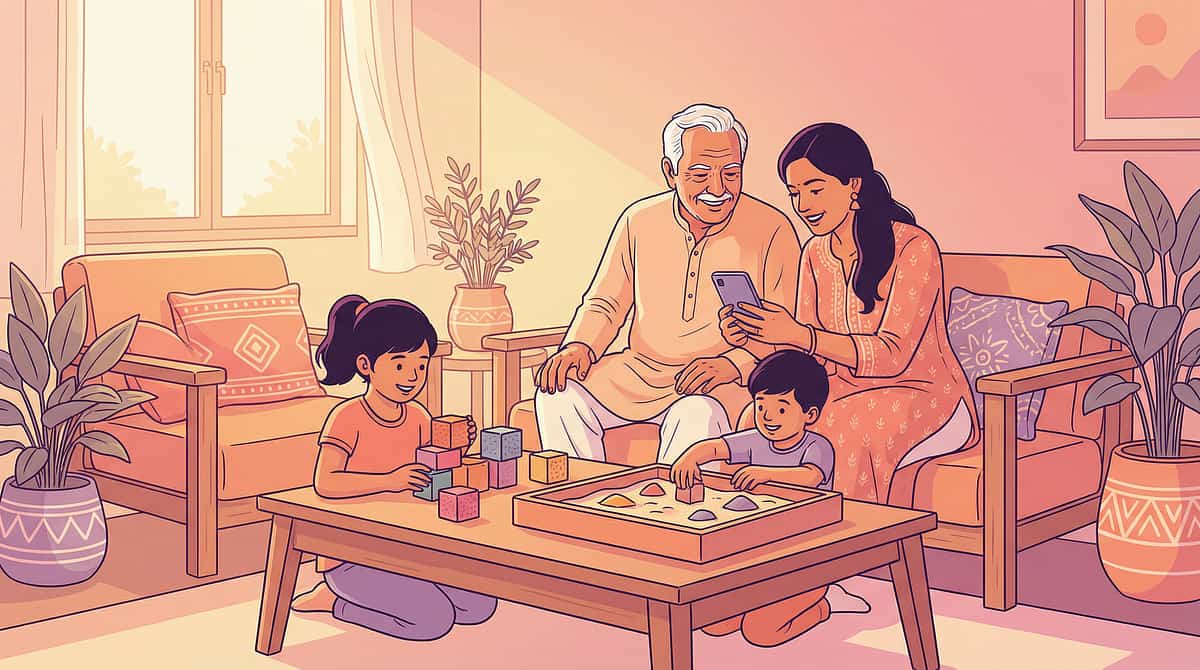
One Parent Empowered. Whole Family Transformed. Share This Page.
WhatsApp Share
"Found this technique page for supporting [child's name]'s learning through their interests. Really helpful — thought you'd want to read it too: techniques.pinnacleblooms.org/learning-engagement/interest-based-learning-H757"
Email Share
Subject auto-populated: "H-757: Interest-Based Learning — Pinnacle Blooms." Send to co-parent, grandparents, or extended family caregivers who support your child.
Family Guide PDF
Simplified 1-page version for sharing with spouse, grandparents, school teachers, and extended family caregivers. Includes teacher communication template. Download at pinnacleblooms.org
"Explain to Grandparents" Version: "[Child's name]'s therapists have discovered that when we connect learning to [their interest], they engage and learn much better. Instead of fighting the [dinosaur/train/horse] interest, we're using it as the way in to reading, writing, and maths. It's backed by research and the results are real. Here's a simple guide to how you can support this at home too."
"Consistency across caregivers multiplies impact by 3–5×. One parent's learning = family-wide transformation when shared." — WHO CCD Package: PMC9978394 — Multi-caregiver training critical for intervention generalization.

Your Questions, Answered by the Pinnacle Consortium.
Q1: "What if my child's interest seems too narrow or unusual to teach everything from?"
No interest is too narrow. A child obsessed with traffic lights can learn: physics (how they work), electrical engineering (circuits), history (when traffic lights were invented), geography (which countries use different systems), math (timing algorithms), art (colour theory). Every interest contains the entire curriculum — it's a matter of creative mapping.
Q2: "Am I just reinforcing the obsession by using it so much?"
This is the most common parent concern — and it is based on a misunderstanding. Research consistently shows that interest restriction causes distress and removes a learning tool, while interest integration expands learning and — paradoxically — often leads to organic interest broadening. You are not feeding an obsession; you are building a learner.
Q3: "My child's school wants them to 'focus on other things.' How do I handle this?"
Interest-based learning at home is not in conflict with school expectations — it builds the foundational skills (reading, writing, math, focus) that school requires. If the school is open, share this page and the research. If not, maintain the approach at home. The skills transfer. Contact us for school advocacy support: 9100 181 181
Q4: "What if I don't know enough about my child's interest to teach from it?"
You don't need to be an expert. In fact, not knowing is your superpower. Ask genuine questions. Let the child be the expert. "I don't know — can you teach me?" is the most interest-based learning sentence you can say. Your curiosity is the bridge.

Frequently Asked Questions — Continued
Q5: "How is this different from just letting them play?"
The difference is intentional skill embedding. In interest-based learning, a skill target (reading, numeracy, writing) is deliberately embedded in the interest activity — it's not accidental. Play is wonderful; interest-based learning is purposeful play. The child experiences it as play; the parent implements it as therapy.
Q6: "My child has multiple intense interests. Which one do I start with?"
Start with whichever is currently the most activated — the one they're talking about most, drawing most, or requesting most. Interests rotate — your job is to track the current "live" interest and connect to that one. The materials and approach transfer to any interest seamlessly.
Q7: "Can this approach work for children who don't have obvious special interests?"
Yes. Every child has preferences — some are just less intense. Ask: "What do you never get bored of? What do you choose first when you can choose anything?" Those answers are the interest seeds. Start there — even a mild preference is a beginning.
Q8: "How long until I see results at school?"
Home-based interest learning typically shows first signs of school impact at Week 6–10: reduced learning avoidance, improved vocabulary, and increased willingness to attempt challenging tasks. Full school-level impact often emerges at 3–6 months of consistent home practice. Track with GPT-OS® to see the progression precisely. Contact us: 9100 181 181
Didn't Find Your Answer?💬 Ask GPT-OS® at pinnacleblooms.org/ask | 📞 Book a teleconsultation: 9100 181 181 | Our clinical team responds to all enquiries within 24 hours.

Their Passion Is the Door. You Have the Key. Start Today.
🎯 Act Now — Chapter 6
🥇 Start This Technique Today
Launch your GPT-OS® Session — personalised session launcher with your child's profile integration
→ pinnacleblooms.org/start/H-757
🥈 Book a Consultation
Speak to a Pinnacle Therapist — OT + SpEd + SLP + BCBA matching for H-757
→ pinnacleblooms.org/book | Or call 9100 181 181
🥉 Explore Next Technique
H-758: Twice Exceptional Kids — Your natural next step after H-757 mastery
→ techniques.pinnacleblooms.org/learning-engagement/twice-exceptional-H758
OT
Occupational Therapy
SLP
Speech & Language
ABA
Behavior Analysis
SpEd
Special Education
NeuroDev
Neuro Development
Pinnacle Blooms Consortium — Validated by India's Largest Pediatric Therapy Network | 70+ Centers | 21M+ Sessions | 97%+ Outcomes
Preview of 9 materials that help with interest based learning Therapy Material
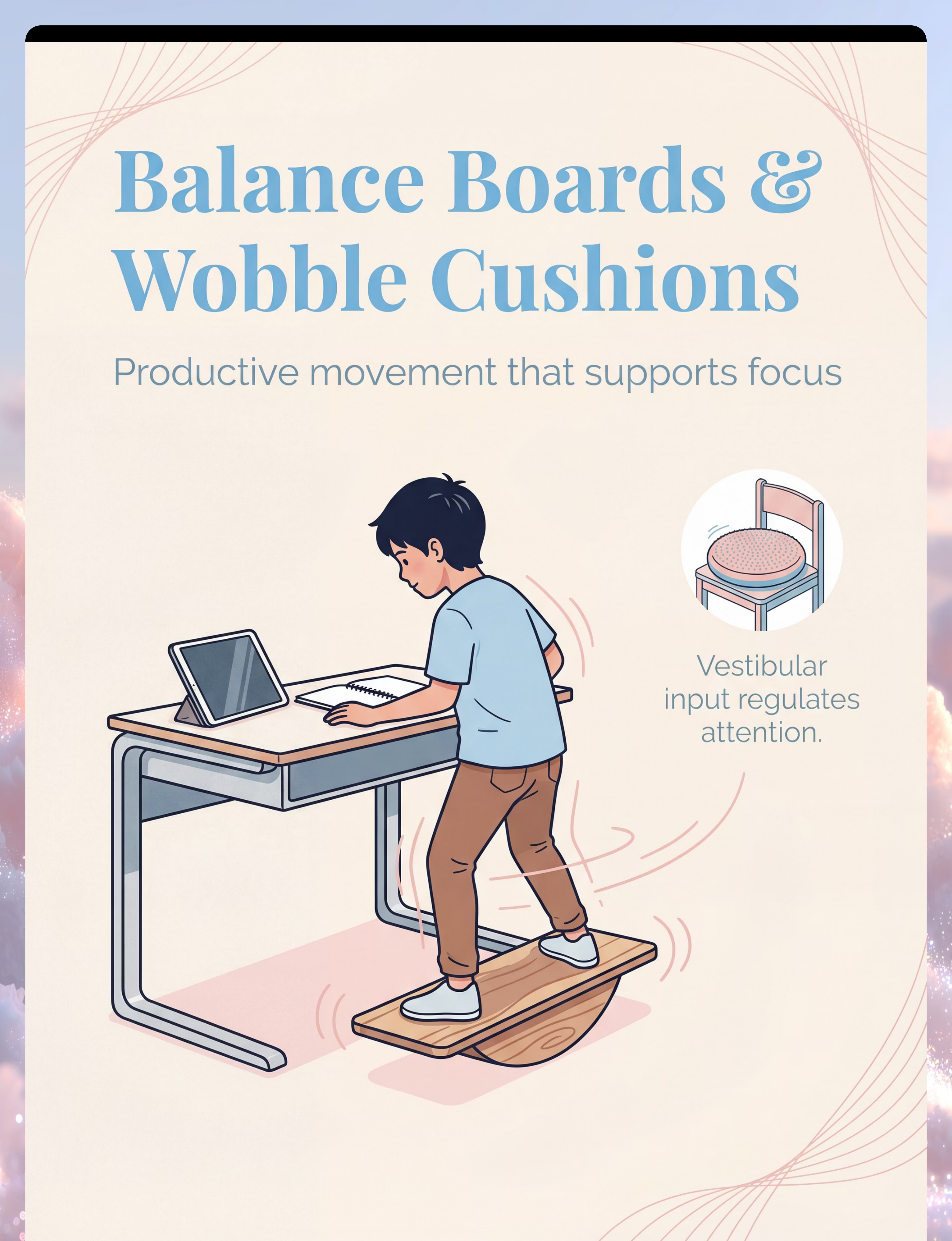
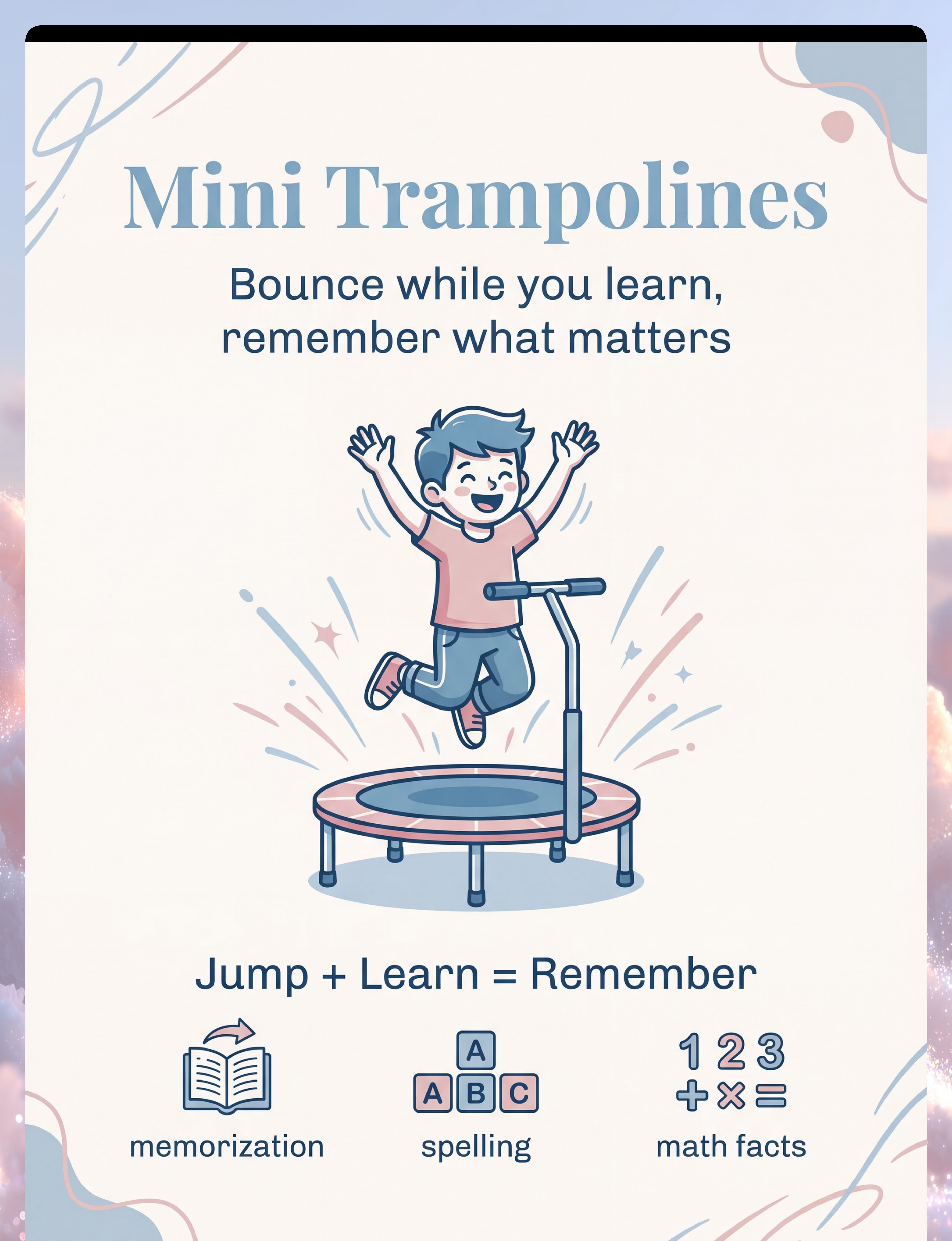
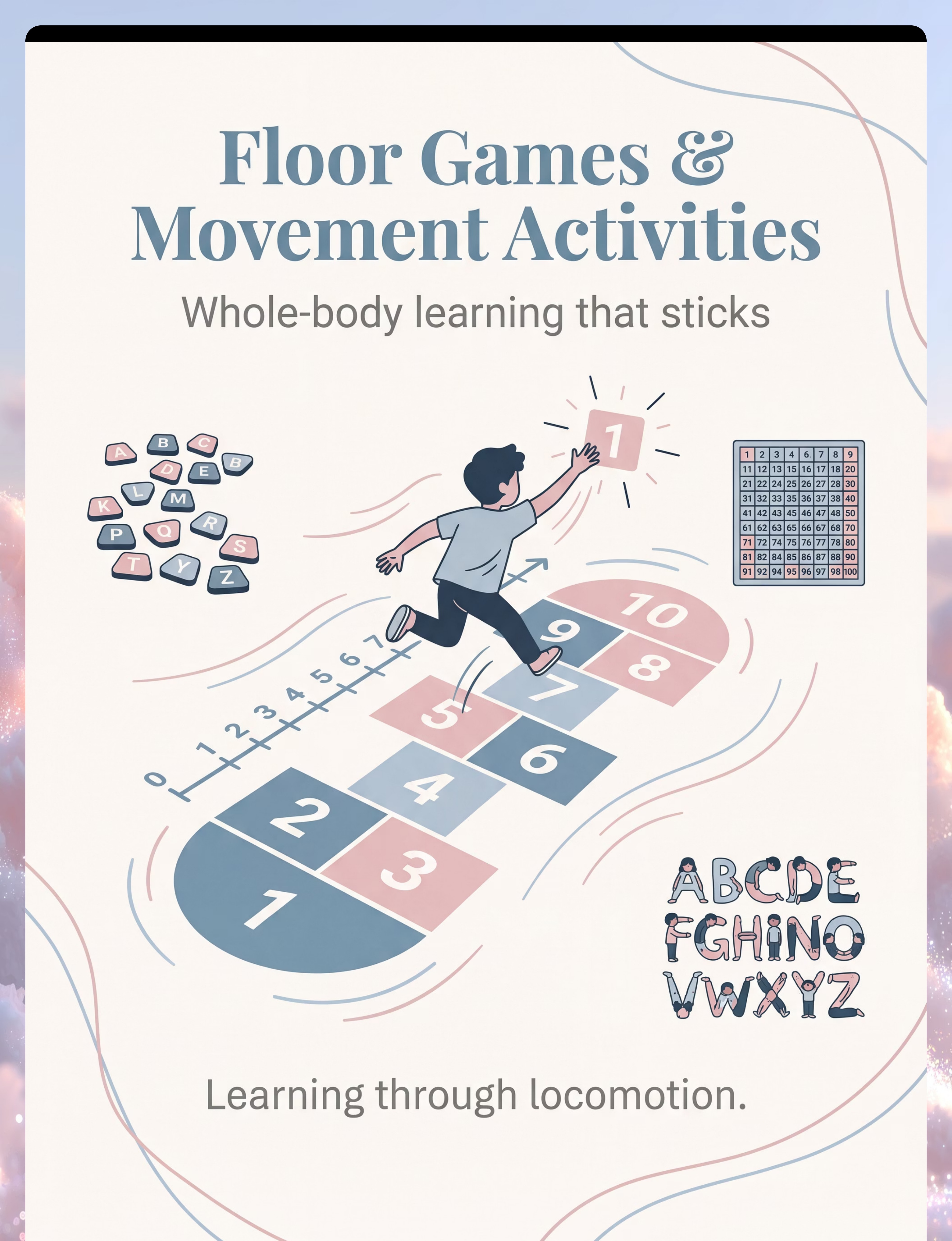
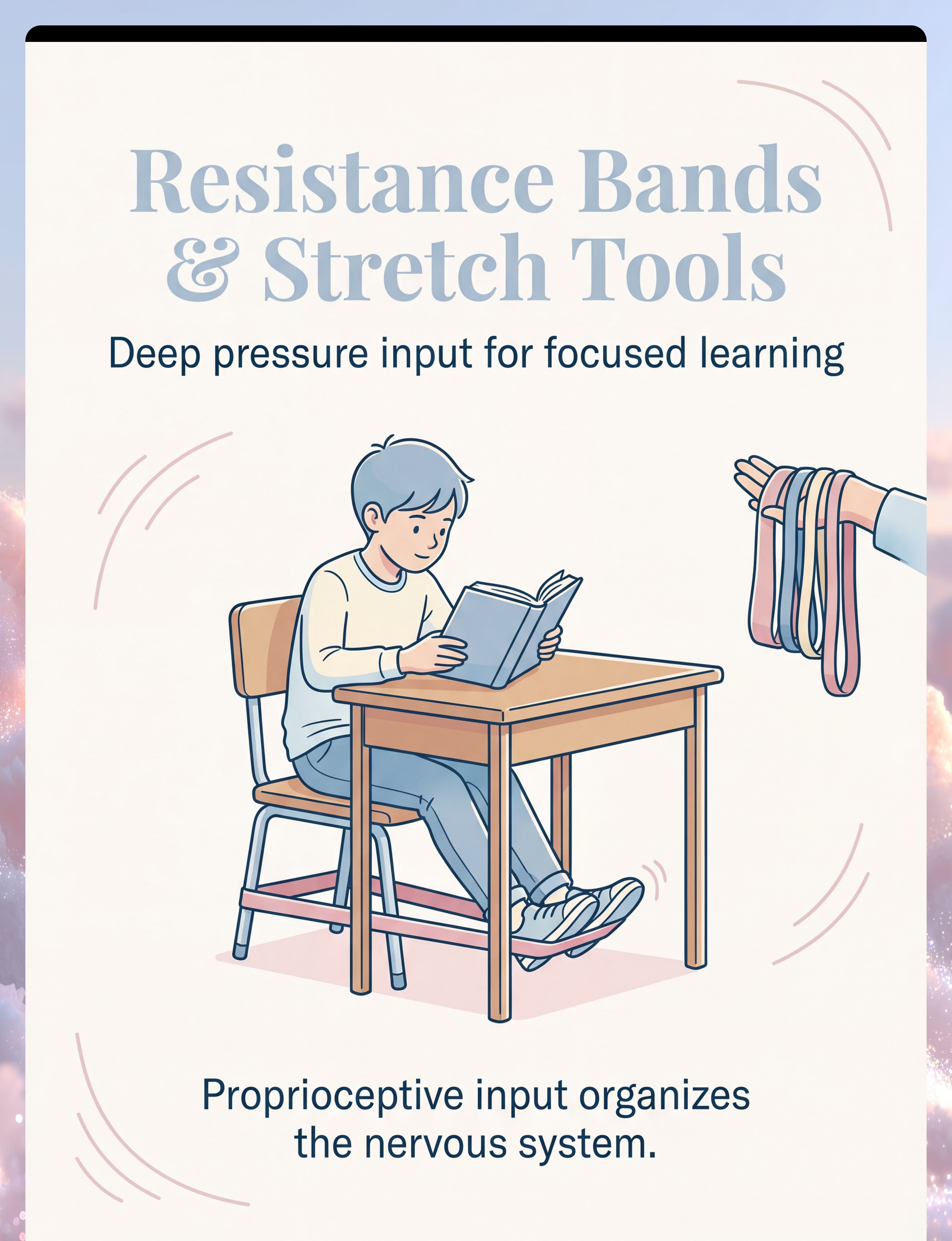
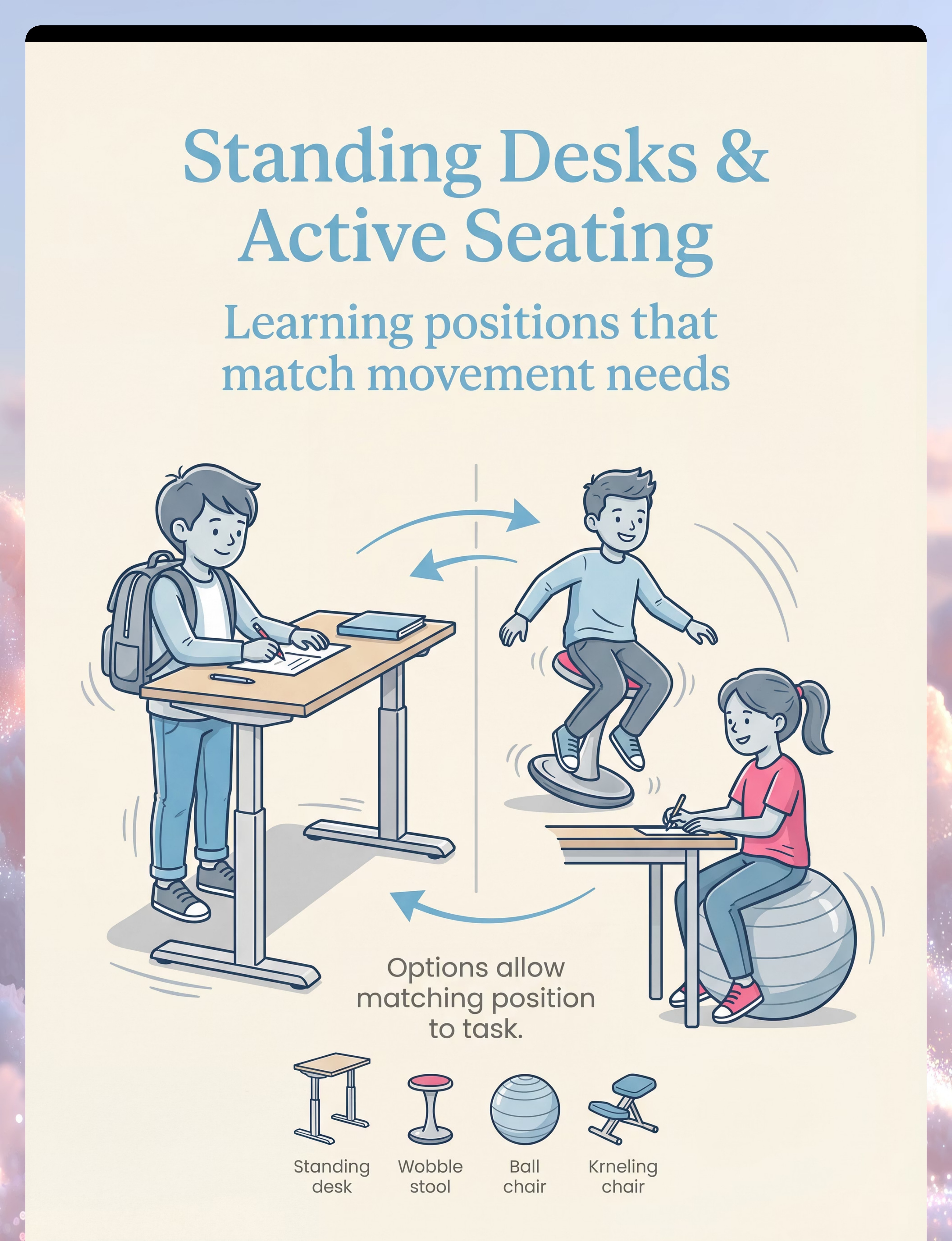
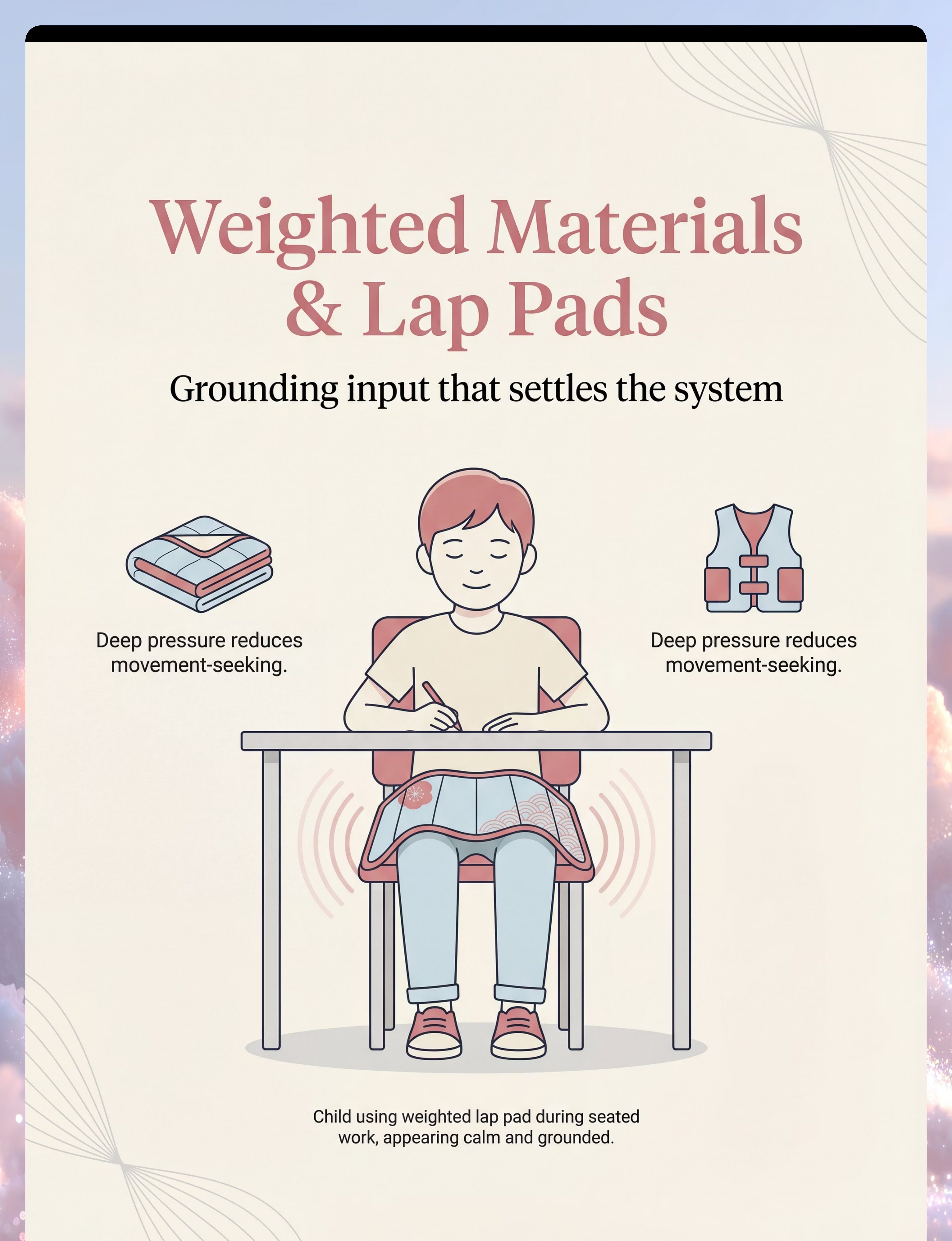
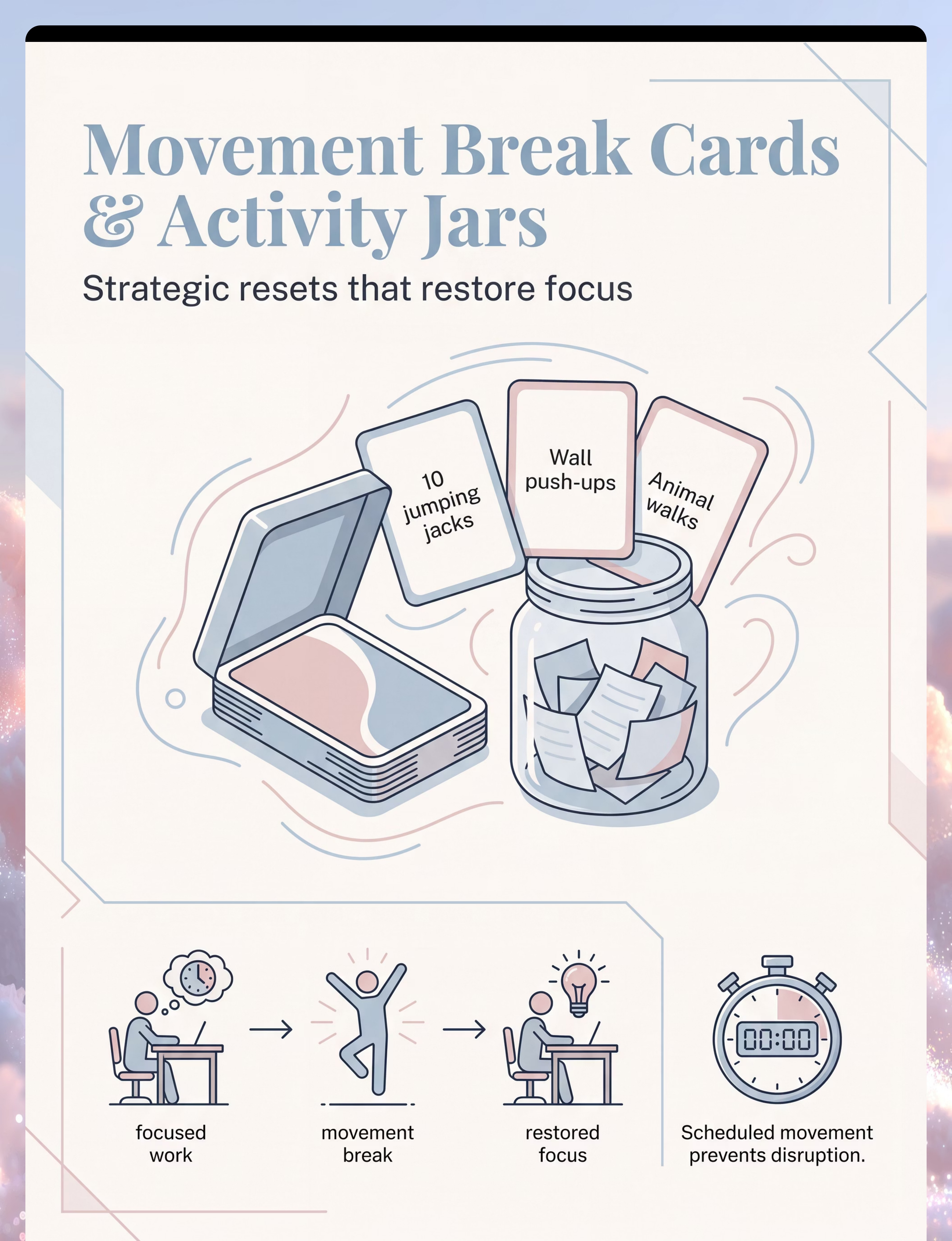
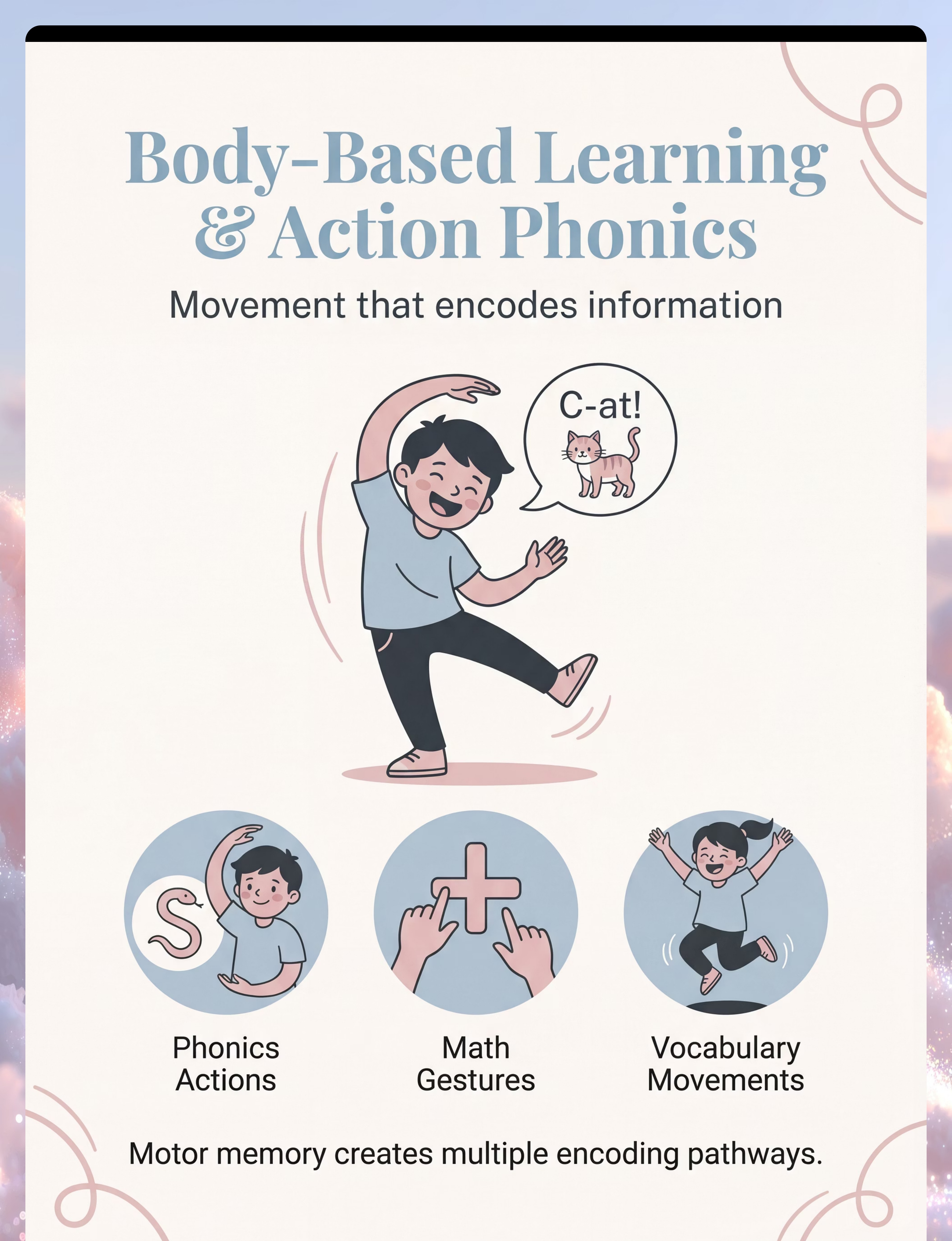
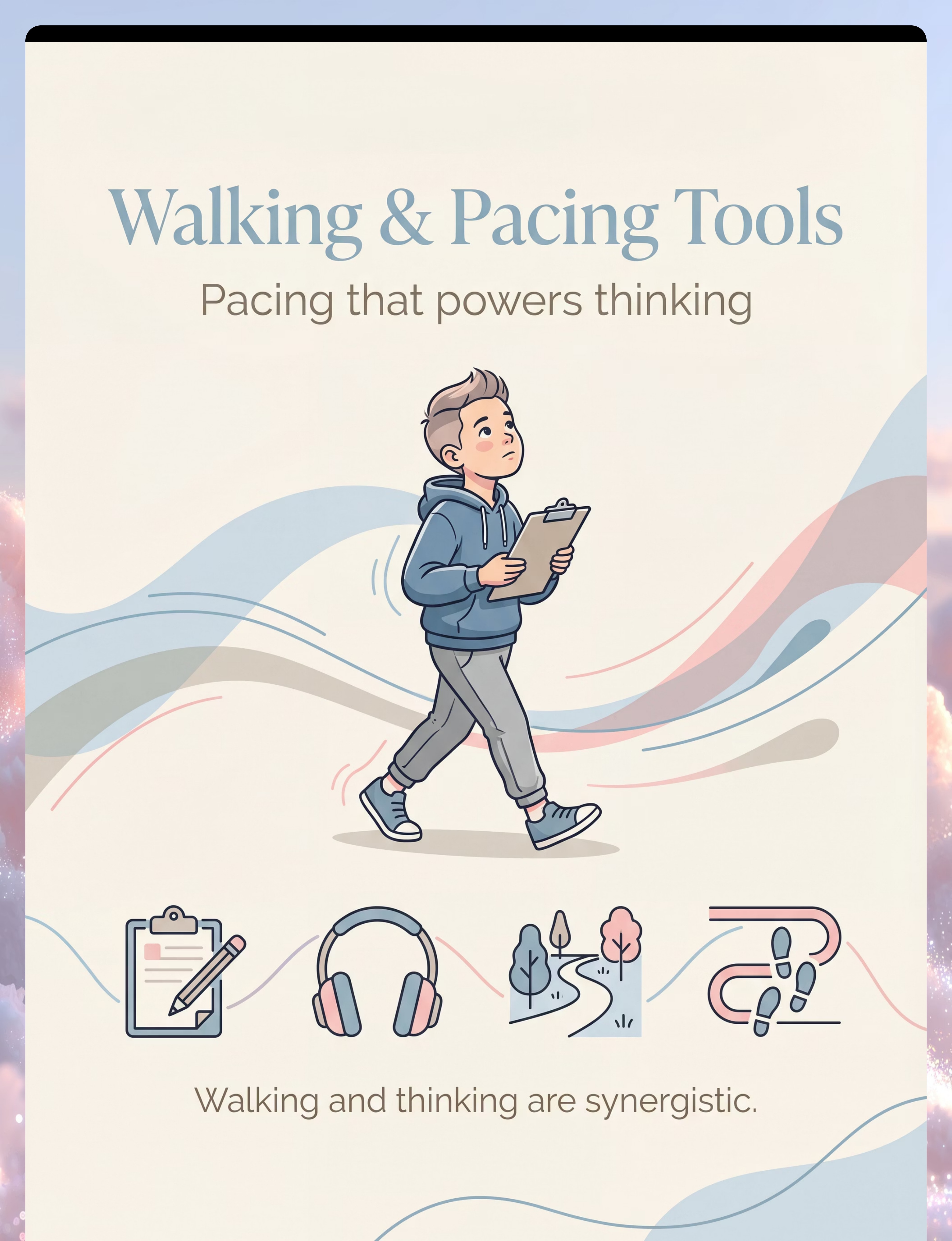
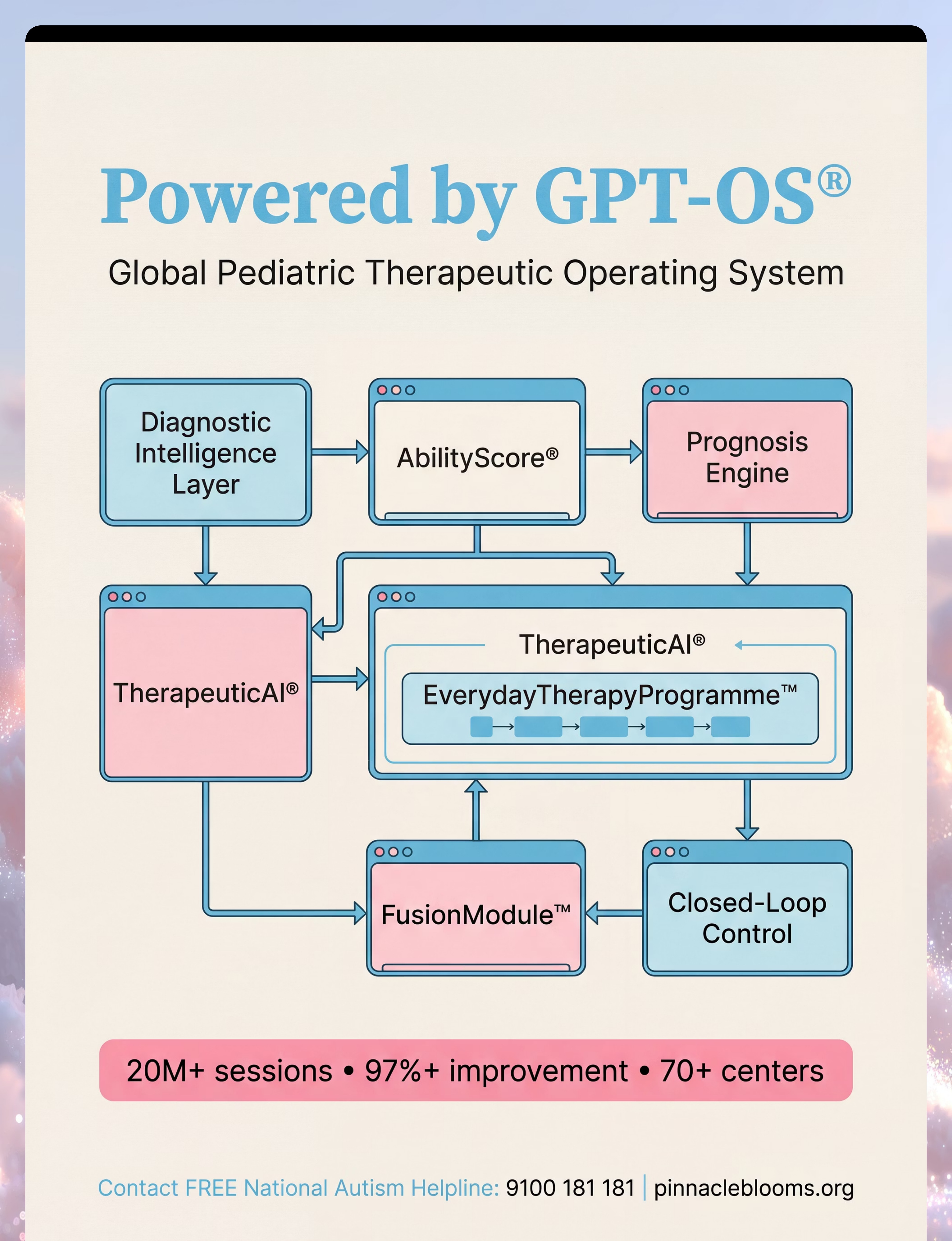
Below is a visual preview of 9 materials that help with interest based learning therapy material. The pages shown help educators, therapists, and caregivers understand the structure and content of the resource before use. Materials should be used under appropriate professional guidance.



Link copied!

The Pinnacle Promise
🌸 Pinnacle Blooms Network®
A unit of Bharath Healthcare Laboratories Pvt. Ltd.
OT • SLP • ABA • SpEd • NeuroDev • CRO
India's Largest Pediatric Therapy Consortium
70+ Centers | 70+ Countries Served
OT • SLP • ABA • SpEd • NeuroDev • CRO
India's Largest Pediatric Therapy Consortium
70+ Centers | 70+ Countries Served
Our Mission
"From fear to mastery. One technique at a time."
Pinnacle Blooms Network® exists to transform every home into a proven, scientific, 24×7, personalized, multi-sensory, multi-disciplinary pediatric therapy environment — powered by GPT-OS® and executed by empowered families.
21 million therapy sessions. 97%+ measured improvement. Not a promise — a track record.
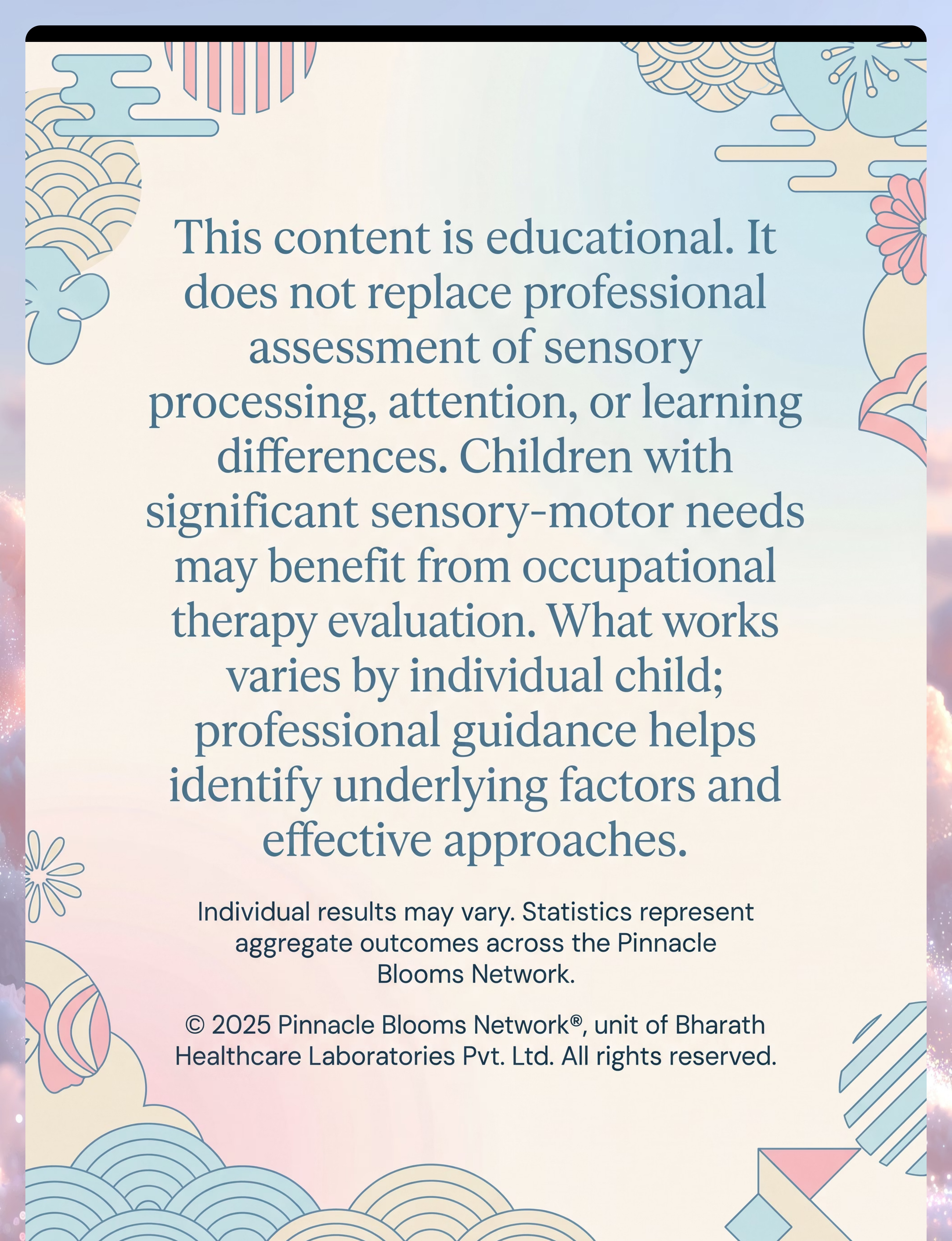
Medical Disclaimer: This content is educational in nature and is developed by the Pinnacle Blooms Consortium for parent and caregiver awareness. It does not replace professional assessment, diagnosis, or individualized therapeutic intervention. Interest-based approaches work most effectively when integrated with professional guidance. Intense special interests in autistic children are often core to identity and wellbeing — approaches that restrict or eliminate interests without clinical basis may cause harm. Always consult a qualified pediatric therapist before modifying your child's therapeutic programme. Individual results vary. Statistics represent aggregate outcomes across the Pinnacle Blooms Network®.
📞 FREE National Autism Helpline: 9100 181 181 | care@pinnacleblooms.org | pinnacleblooms.org
Registration: CIN U74999TG2016PTC113063 | DPIIT DIPP8651 | MSME Udyog Aadhaar: TS20F0009606 | GSTIN 36AAGCB9722P1Z2
© 2025–2026 Pinnacle Blooms Network®, a unit of Bharath Healthcare Laboratories Pvt. Ltd. All rights reserved. techniques.pinnacleblooms.org | Technique H-757
← Previous
H-756: Movement-Based Learning
🏠 Home
Techniques Library — pinnacleblooms.org
→ Next
H-758: Twice Exceptional Kids