

They know it at home. They blank on the test.
The gap isn't knowledge. It's performance anxiety — and it can be closed. This evidence-based guide from Pinnacle Blooms Network® shows exactly how.
H-747
Academic Readiness
Ages 5–12
GPT-OS® Verified

She knew every answer. She came home with 4/10.
She studied with you for two hours last night. She answered every question correctly. She explained concepts back to you. This morning you dropped her at school confident. Tonight she came home crying: "Amma, I knew every answer. I just couldn't remember when I sat down."
You are not failing her. Her nervous system is speaking — and science has answers. The H-747 Test Preparation protocol exists precisely for this moment.
What This Is
A 9-material, 6-step clinical protocol for building the bridge from knowing to showing — systematically and measurably.
Who It's For
Children ages 5–12 experiencing performance gaps between home knowledge and test results. Effective across all profiles — with or without a diagnosis.
🏛️ Pinnacle Blooms Network® | OT • SLP • ABA • SpEd • NeuroDev • CRO
FREE National Autism Helpline: 9100 181 181
FREE National Autism Helpline: 9100 181 181

Millions of families see exactly what you see.
In India alone, 13+ million school-age children show signs of performance anxiety in academic assessments. The challenge your child faces is not rare — and it is not permanent. Test-taking is a skill set. Skills are taught. Skills are learned. Skills transfer.
1 in 5
Children Affected
Children with learning or developmental differences experience significant test anxiety
73%
Knowledge Gap
Of children who "fail" tests have adequate or strong content knowledge — the gap is test-taking skill
₹0
Cost to Begin
Most strategies in this guide require no purchase. Every material has a zero-cost DIY version.
📊India-specific data: Studies in the Indian Journal of Pediatrics confirm that structured home-based academic skill interventions produce measurable outcomes within 8 weeks (DOI: 10.1007/s12098-018-2747-4).

The neuroscience of "I knew it but blanked."
What fires together, wires together — but stress disconnects the circuit.
When your child faces a test, the amygdala (threat detection center) activates the body's stress response: cortisol floods the prefrontal cortex — the seat of working memory, planning, and retrieval. The very brain regions needed to recall stored knowledge are temporarily suppressed.
The hippocampus, which encodes and retrieves memories, requires a regulated nervous system to function optimally. A child in fight-or-flight mode cannot access the same memory they accessed calmly at home. This is not a character flaw. This is neurophysiology.
What this means for your child:
🧠 Their brain literally cannot access what it stored — not because they didn't learn it, but because anxiety blocks the retrieval pathway.
⏱️ Time pressure activates the same stress system as physical threat.
📝 Unfamiliar question formats trigger novelty-anxiety — a separate stressor from content knowledge.
✅The fix is not more studying. It's regulated retrieval practice under graduated pressure.

Test preparation skills develop in stages. Here's where your child is.
Ages 5–7
Learning what tests are. Format familiarity is the entire goal at this stage.
Ages 7–10
Building basic strategies. Time awareness emerging. Structured practice begins.
Ages 10–12
Independent strategy use. Anxiety management active. Flexible thinking developing.
Target
Confident test performance. Flexible strategy repertoire. Academic self-efficacy established.
Children who commonly experience test performance gaps: Autism Spectrum Disorder (executive function + anxiety), ADHD (time management + sustained attention), Learning disabilities (processing speed), Generalized anxiety disorder, and Sensory processing differences (environmental overwhelm in test settings).

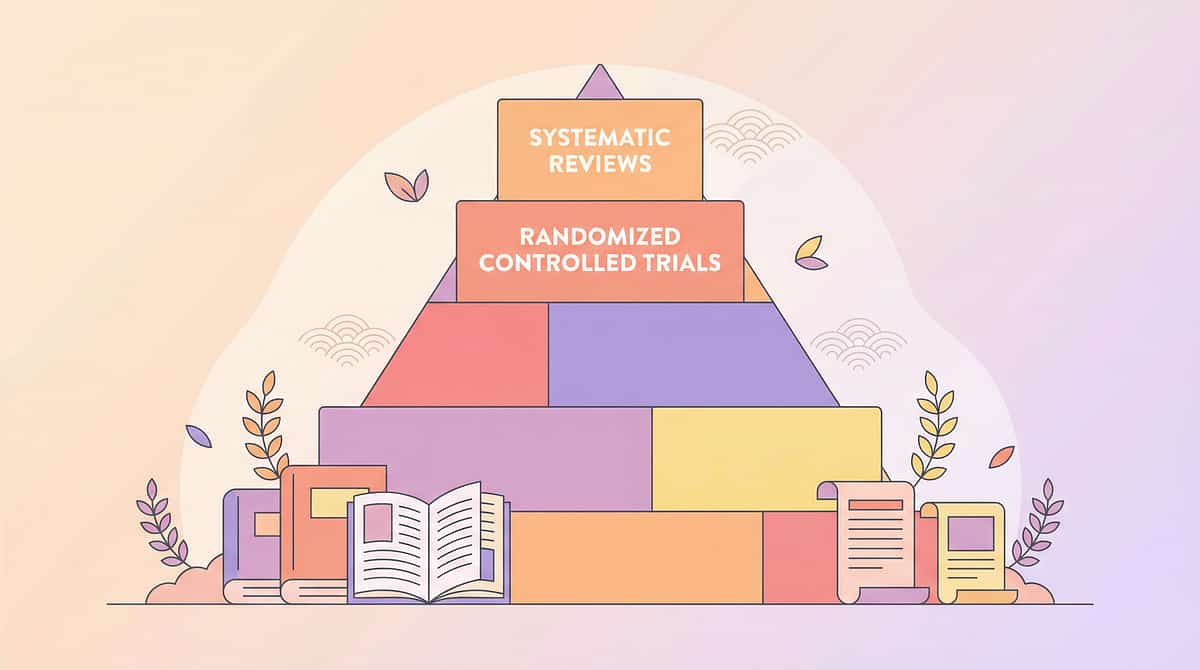
This is not a parenting opinion. This is a clinical evidence base.
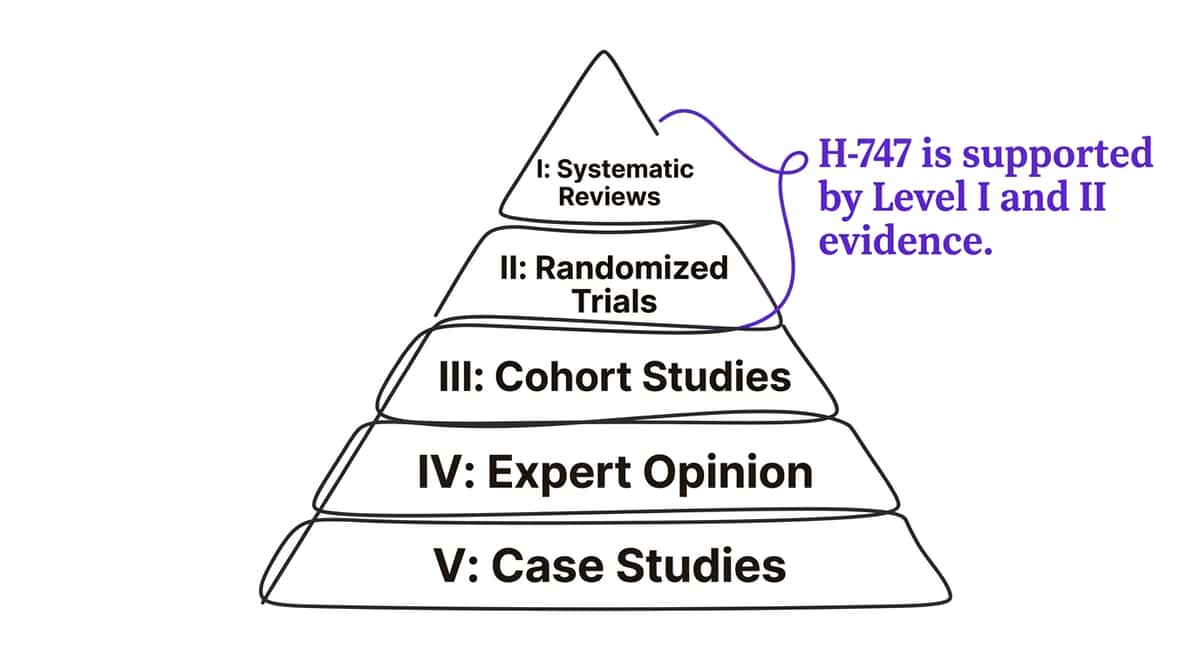
Evidence Grade: Level I
Systematic Review + RCT
📚 What the Research Says
Test-taking strategy instruction produces statistically significant improvements (multiple RCTs). Spaced repetition outperforms massed practice by 200–400% for long-term retention. CBT + strategy training shows effect sizes of 0.5–0.8.
🌍 WHO & UNICEF Alignment
WHO Nurturing Care Framework designates academic readiness a global public health priority. UNICEF 2023: academic underperformance affects developmental trajectories across all socioeconomic groups in India. NCAEP (2020): visual supports are evidence-based for children with developmental differences.
🇮🇳 India-Specific Data
Padmanabha et al. (2019): Home-based structured interventions for Indian pediatric populations produce outcomes within 6–8 weeks. Pinnacle Blooms Network®: 97%+ improvement across 20M+ 1:1 therapy sessions using GPT-OS® integrated protocols.
✅ Clinically validated. Home-applicable. Parent-proven. Consortium discipline lead: Special Education + School Psychology + ABA
PMC11506176 | PMC10955541 | PMC9978394 | NCAEP (2020) | WHO NCF (2018)
PMC11506176 | PMC10955541 | PMC9978394 | NCAEP (2020) | WHO NCF (2018)

What Is H-747? The Knowing-to-Showing Bridge.
Formal Definition
Test Preparation Material-Based Intervention (H-747) is the systematic building of a distinct skill set that enables a child to demonstrate their existing knowledge under the specific conditions of formal assessment.
Think of it this way: your child may know how to swim perfectly in your pool. The test asks them to swim in an unfamiliar pool, with a timer, while someone watches. Same skill. Different conditions. Different training required.
Technique Specs
Age Range | 5–12 years | |
Session Duration | 15–30 min/session | |
Frequency | Daily 15 min + Weekly simulation | |
Setting | Home Study Space | |
GPT-OS® Index | Academic Performance Index |
Academic Readiness
Executive Function
Anxiety Management
Performance Under Pressure
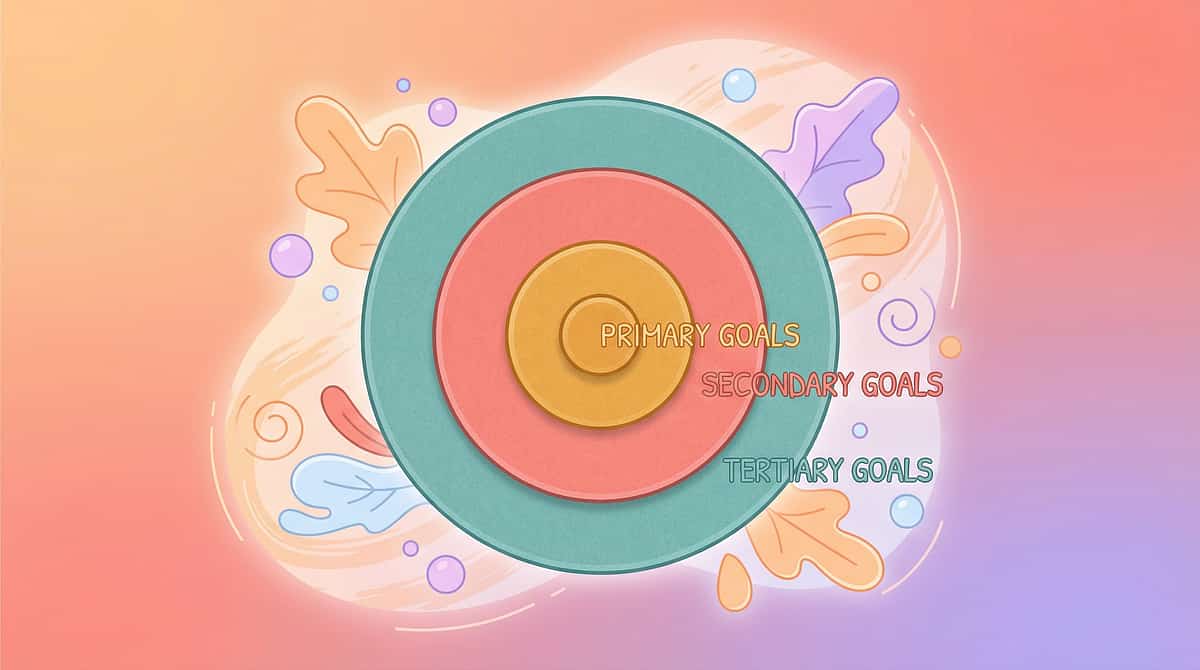
A multi-disciplinary technique — because learning lives everywhere in the child.
No single specialist owns this problem. A test simultaneously demands language, motor control, emotional regulation, executive function, and behavioral compliance. The Pinnacle consortium addresses all of these as one converged system.
Special Educator (Lead)
Teaches test-taking strategies, builds study systems, designs practice test protocols, and tracks academic progress. The primary practitioner for this intervention.
School Psychologist
Addresses anxiety and emotional regulation. CBT-based interventions for performance anxiety. Academic accommodations evaluation.
ABA / BCBA
Behavioral reinforcement of study habits and test behaviors. Token economy for practice test completion. Error correction procedures.
Speech-Language Pathologist
Reading comprehension of test questions, language processing, direction-following, and written expression support for essay-format tests.
Occupational Therapist
Executive function scaffolding (planning, time management, organization), fine motor demands, and sensory regulation in test environments.
NeuroDev Pediatrician
Rules out underlying processing disorders, ADHD, anxiety. Guides accommodation decisions. Oversees medication optimization if relevant.
Precision targets. Not a general "study more."
H-747 addresses five core failure modes that cause the knowing-showing gap: test anxiety, strategy deficits, time management, disorganized retrieval, and environmental unfamiliarity. Each target is observable and measurable.
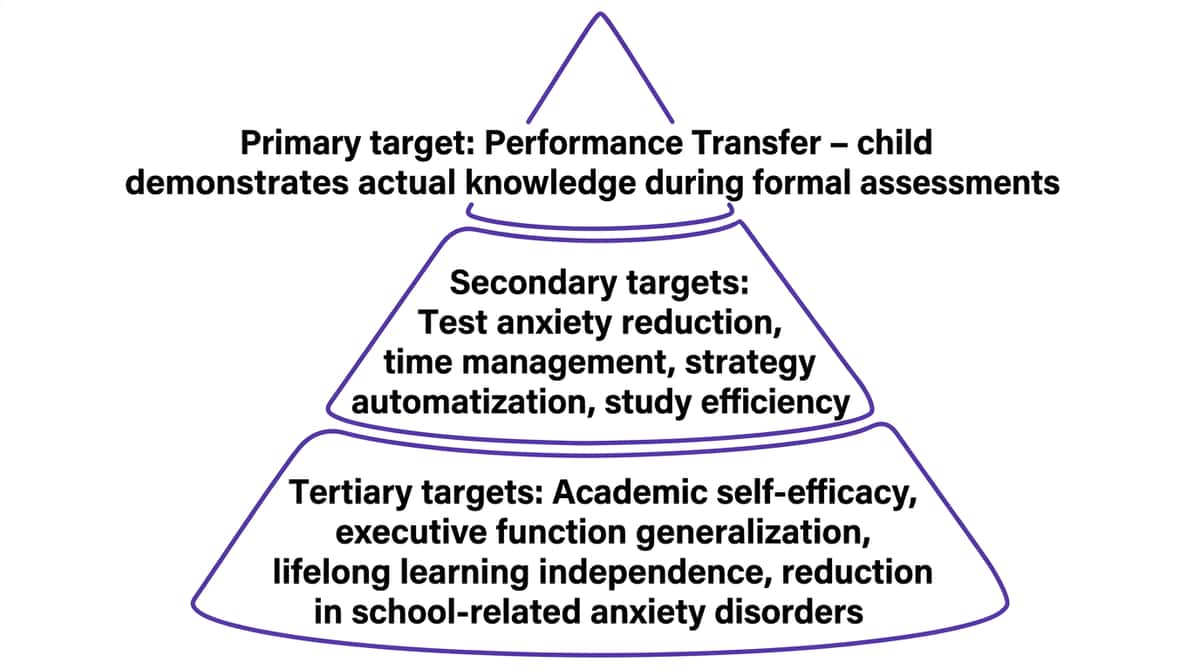
Primary Observable Indicator: Test scores within 15% of home quiz performance within 8 weeks of consistent H-747 implementation.

9 Materials. Science-Mapped. Home-Ready.
Every material below is mapped to the Pinnacle 128 Canon Materials System — clinically validated for pediatric academic readiness intervention. Most have a ₹0 DIY version so no child is excluded.

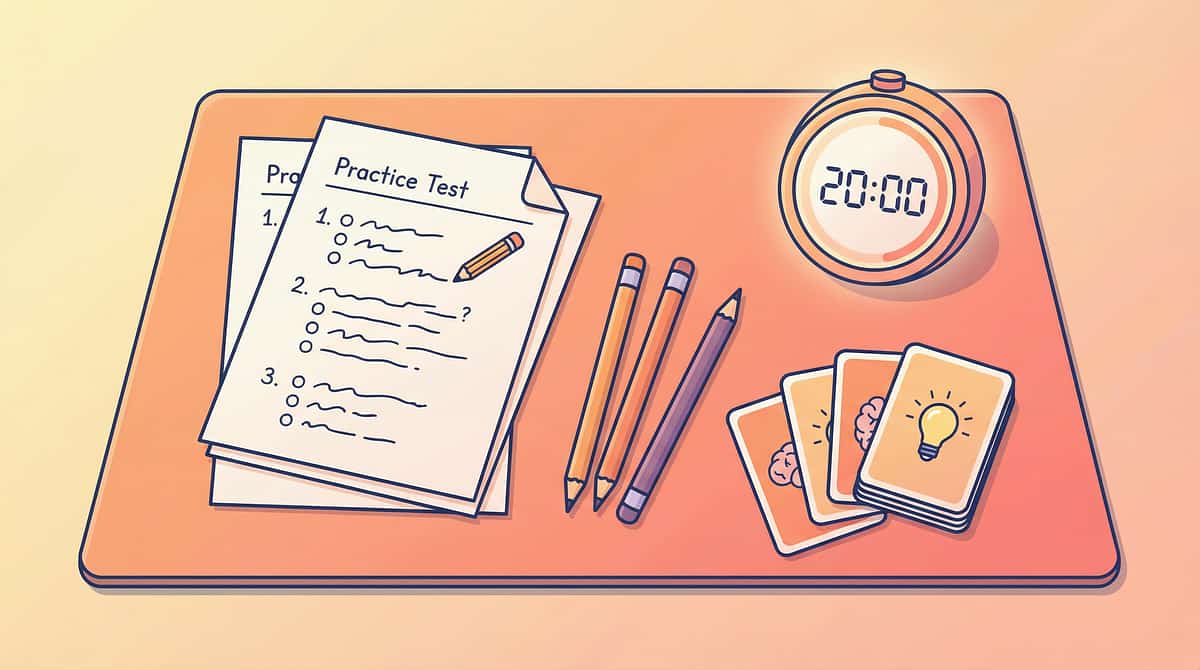
1. Practice Test Booklets
Familiarizes the test experience. Rehearsal makes format, pacing, and pressure familiar — reducing novelty anxiety. ₹200–800
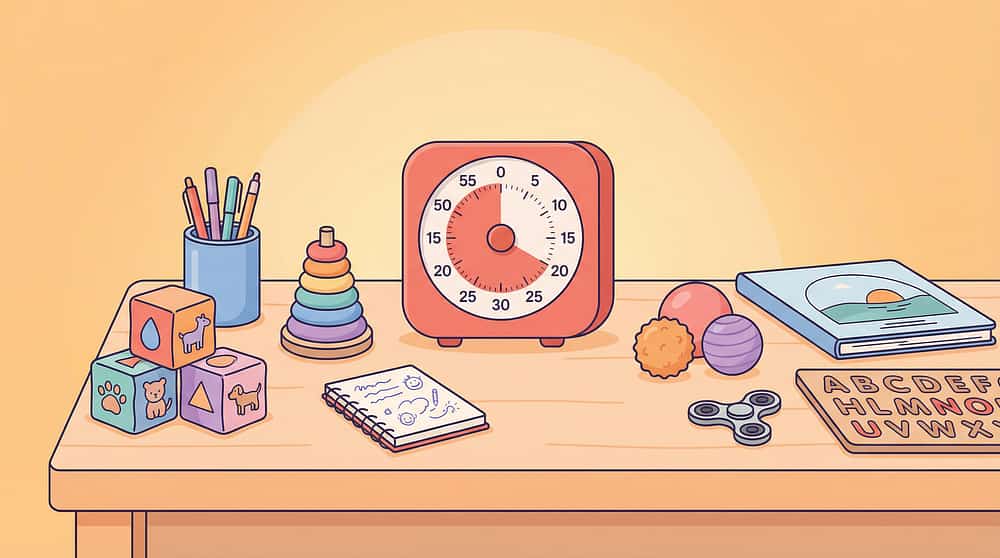
2. Visual Timer Systems
Makes time visible. Children learn to self-monitor pace — eliminating "ran out of time" as a failure mode. ₹500–1,500
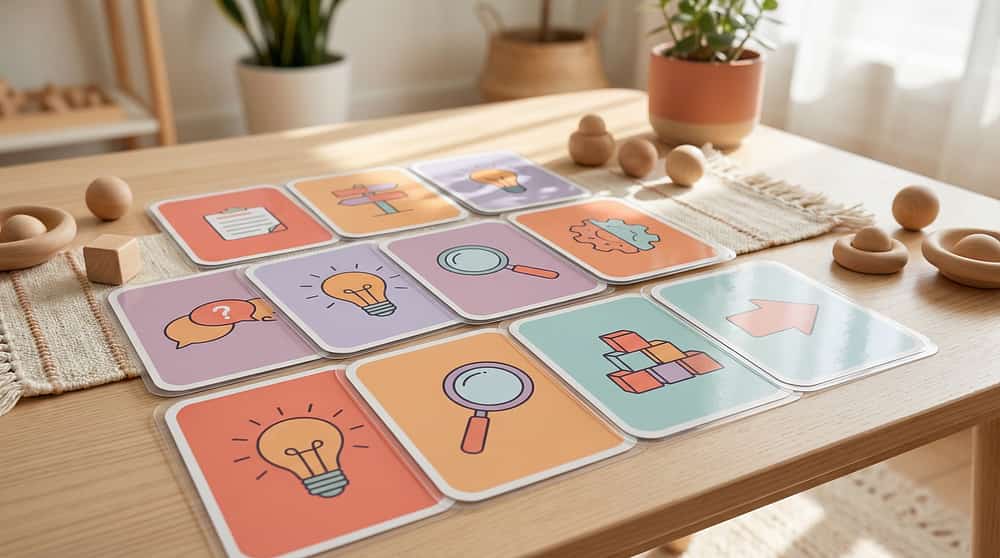
3. Test-Taking Strategy Cards
Makes test strategies explicit, visual, and rehearsable. "Read directions. Scan first. Easy ones first. Skip and return." Taught, not assumed. ₹100–400

4. Calm-Down Toolkit
Manages the stress response so the brain can access stored knowledge. Breathe → regulate → think. ₹200–700

5. Study Organization Systems
External organization scaffolds internal cognitive organization. Color-coded folders → organized memory → reliable recall. ₹300–900
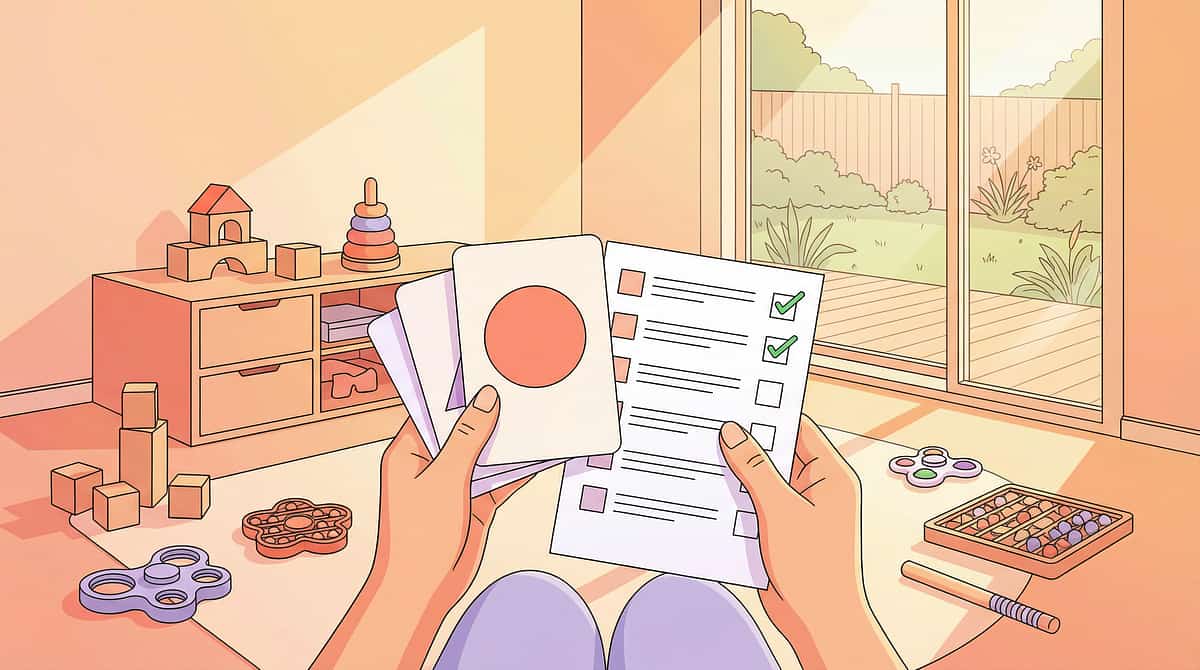
9 Materials (Continued): Flashcards Through Checklists
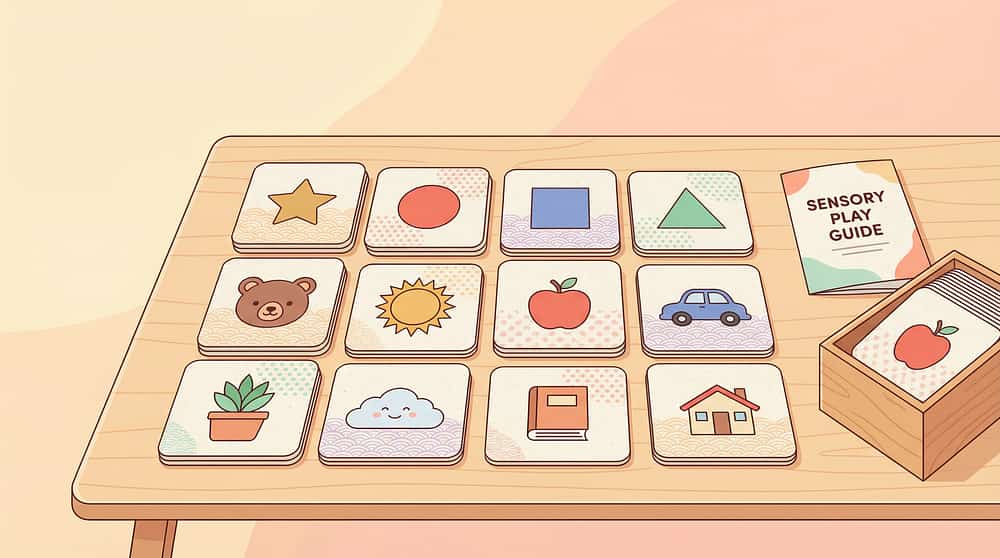
6. Flashcard & Spaced Practice Systems
Spaced repetition moves knowledge from fragile short-term memory to durable long-term memory. This is what shows up on test day — not last-night's cramming. ₹150–500

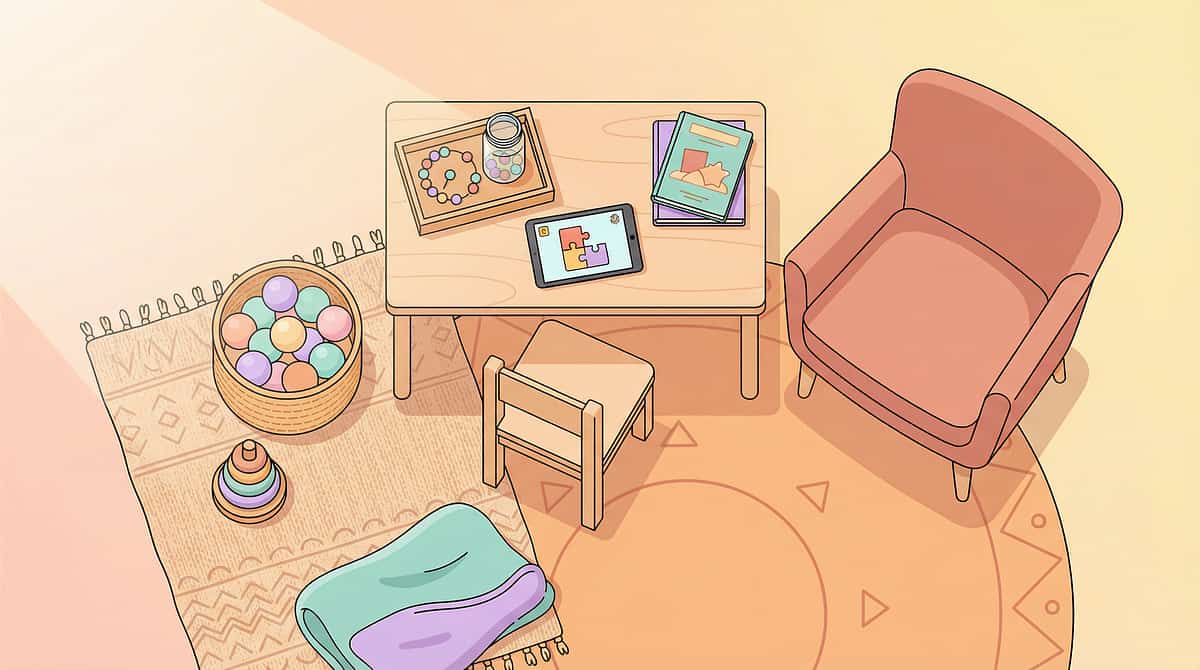
7. Test Simulation Environment
Novelty is a stressor. When your home study space replicates test conditions, the actual test feels familiar — not frightening. ₹100–400
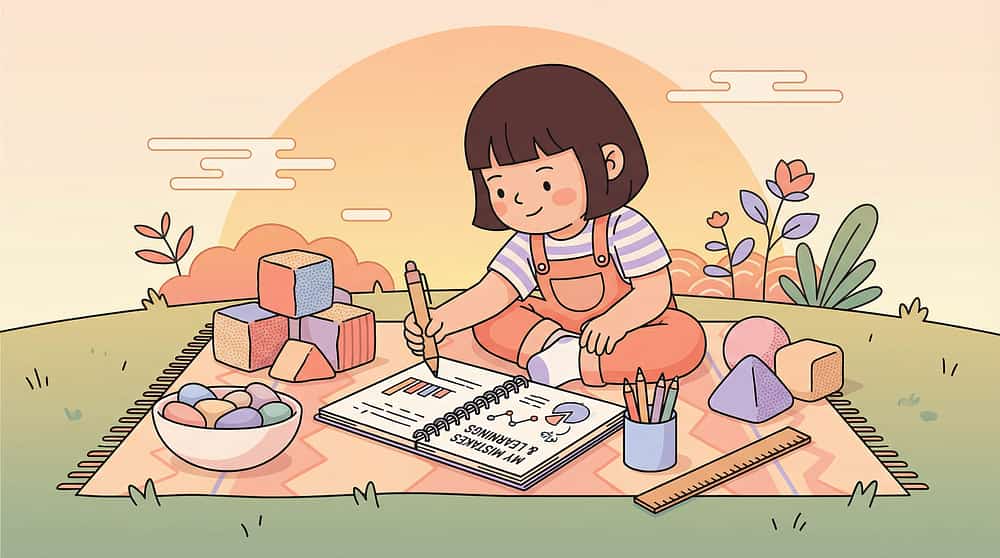
8. Error Analysis Worksheets
Mistakes are data, not failures. Error analysis reveals whether wrong answers were content errors, strategy errors, or anxiety errors — each requiring a different fix. ₹50–200
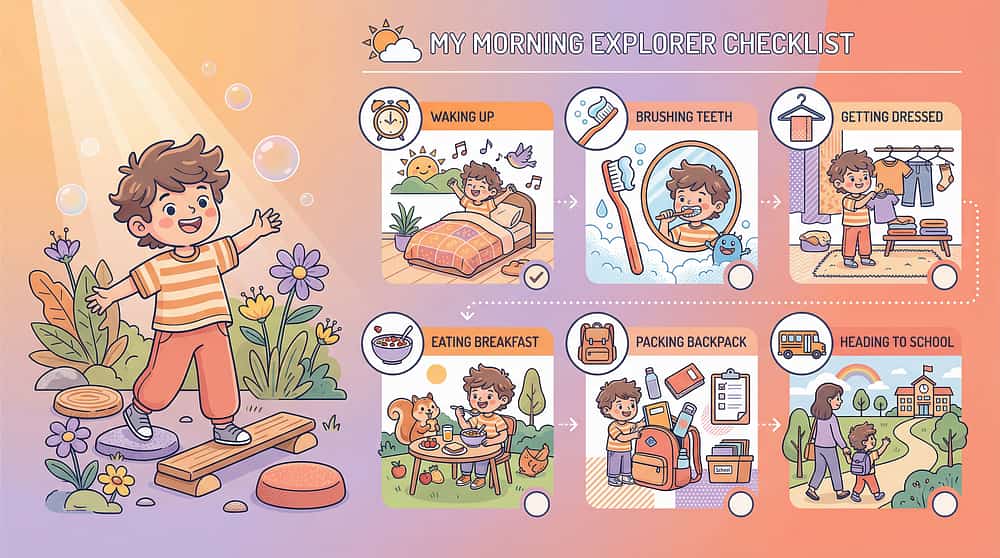
9. Test Day Preparation Checklist
Control the controllable. Prepared logistics → calm mind → cognitive resources freed for the test itself. ₹50–150
Kit Option | Materials Included | Estimated Cost | |
Starter Kit | Practice tests + Timer + Strategy cards + Calm-down item + Checklist | ₹900–2,500 | |
Full Kit | All 9 material categories | ₹1,650–5,600 | |
Zero-Cost Version | All DIY alternatives | ₹0 |
Every Material Has a ₹0 Version. Science Works with What You Have.
WHO/UNICEF equity principle: No child should be excluded from evidence-based intervention due to economic barriers. Every strategy in this guide can be executed today, with household materials, at zero cost.
Material | Commercial Option | ₹0 Home Version | Why It Works | |
Practice Test Booklets | Grade-level workbook ₹200–800 | Request last year's tests from teacher; create quiz from textbook | Same rehearsal effect — exposure to test format | |
Visual Timer | Time Timer® ₹500–1,500 | Phone timer + clock face drawing | Visual countdown activates same time-awareness pathways | |
Strategy Cards | Laminated card sets ₹100–400 | Index cards + marker + lamination tape | Same cognitive cue function when overlearned | |
Calm-Down Toolkit | Sensory kit ₹200–700 | Stress ball from rice in a balloon; breathing card drawn on paper | Physiological regulation mechanism is identical | |
Study Organization | Color folders + planner ₹300–900 | Colored paper + rubber bands per subject | Color-coding creates same cognitive categorization | |
Flashcard System | Printed flashcard sets ₹150–500 | Index cards cut from old notebooks | Physical card manipulation enhances encoding | |
Test Simulation | Desk organizer + timer ₹100–400 | Clear kitchen table; phone timer; no interruptions | Environmental cue is context-independent | |
Error Analysis | Printed worksheets ₹50–200 | Notebook page with 4 columns | Reflection process is the active ingredient | |
Test Day Checklist | Visual schedule cards ₹50–150 | Written list on paper; check with pencil | Routine completion is what reduces anxiety |
Clinician's Note: If your child has significant sensory sensitivities, the Time Timer® visual format (shrinking red disk) is substantially more effective than a phone timer. Invest here first if budget allows.

⚠️ Read This Before Beginning Any Practice Test Session.
🟢 Green Light — Safe to Proceed
Child is fed, rested, and in a calm baseline state. No recent (within 2 hours) significant emotional distress. Child has agreed to the study activity. Practice materials are at or slightly below current academic level. Environment is quiet and distraction-free. A trusted adult is available throughout.
🟡 Amber — Modify the Session
Child appears mildly tired → Shorten session to 10 minutes; remove timer. Child is anxious about an upcoming real test → Use untimed, low-stakes practice only. Materials feel too difficult → Drop down one grade level. Child resists → Offer choice of which subject to practice first.
🔴 Red Line — Do Not Proceed Today
Child is in acute emotional distress (crying, dysregulated). Child has expressed significant fear or refusal around testing. Recent school-related trauma event. Child is unwell physically. STOP AND SEEK SUPPORT if practice sessions consistently produce panic, regression, or extreme avoidance beyond 2 weeks.
❌ Never use practice sessions as punishment | ❌ Never compare to siblings or peers | ❌ Never review wrong answers in a critical tone | ❌ Never conduct full simulations the evening before a real test
Escalation Path: If red flags appear, call 9100 181 181 (FREE National Autism Helpline) for immediate guidance from a Pinnacle clinical specialist.

The Right Space Creates 80% of the Conditions for Success.
Setup Checklist — 6 Steps
① DESK: Clear surface. Only test materials present. No toys, screens, or food.
② TIMER: Positioned where child can glance without turning head. 45–60 min for full simulation; 15 min for daily practice.
③ STRATEGY CARD: Placed in top-left corner of desk. Always visible during practice tests.
④ CALM-DOWN ITEM: In desk drawer — available but not on the desk during simulation.
⑤ LIGHTING: Natural light preferred. Overhead only if no glare on paper.
⑥ SOUND: Quiet. Low instrumental music acceptable if child finds it regulating.
What to Remove
- All screens (TV, tablet, phone — unless timer only)
- Distracting visual materials (posters, toys in view)
- Siblings from the room
- Interruption risks — notify household: "Study session in progress — 20 minutes"
Parent position: Sit beside the child — not in front of their line of sight. Your presence should feel supportive, not supervisory.

60-Second Pre-Session Check. The Best Session Starts Right.
Before every session, run through this 6-point readiness assessment. It takes under a minute and determines whether you proceed, modify, or postpone — saving both of you from an unproductive or harmful session.
Indicator | ✅ GO | 🟡 MODIFY | 🔴 POSTPONE | |
Hunger/Hydration | Fed within 2 hours | Mildly hungry — offer snack first | Hasn't eaten; noticeably hungry | |
Sleep | Rested | Slightly tired but engaged | Clearly exhausted | |
Emotional State | Calm, neutral, or positive | Mildly irritable but redirectable | Upset, crying, or dysregulated | |
Body Language | Open, responsive | Slightly withdrawn but present | Avoidant, turned away | |
Verbal Response | Responsive to name | Slow to respond | Unresponsive or perseverating | |
Physical Health | No symptoms | Mild sniffles | Signs of illness |
6/6 GO
Proceed to Step 1 — full session
4–5/6 MODIFY
Shorter session (10 min), remove timer, lower pressure
Less than 4/6 POSTPONE
Replace with a calming activity; note why session was postponed
"The best session is one that starts right. A postponed session is data, not failure."

Step 1 of 6
The Invitation
The first 30–60 seconds of every session determine whether the child approaches or avoids. This step is about safety, not performance. Do not begin until the child signals readiness.
Opening Script (Exact Words)
"Hey [name], let's do something a little different today. I have a practice quiz — it's not a real test, it won't go to school, we're just going to see how it feels to try it. No pressure. Ready?"
Body Language Guidance
Sit BESIDE the child, not across from them. Use a calm, matter-of-fact tone — not artificially cheerful. Place materials face-down before speaking. Do not begin until child signals readiness.
✅ Acceptance Cues — Child Is Ready
- Reaches for materials
- Makes eye contact
- Nods or says "okay"
- Orients body toward desk
- Picks up pencil
🟡 Resistance Cues — Modify Approach
Pushes materials away gently → Offer choice: "Maths or English first?"
Says "I don't want to" → Validate: "I know it can feel tough. We'll do just 5 questions."
Leaves the room / significant distress → Postpone session; note as data.
Says "I don't want to" → Validate: "I know it can feel tough. We'll do just 5 questions."
Leaves the room / significant distress → Postpone session; note as data.
Step 2 of 6
The Engagement: Strategy Card Review
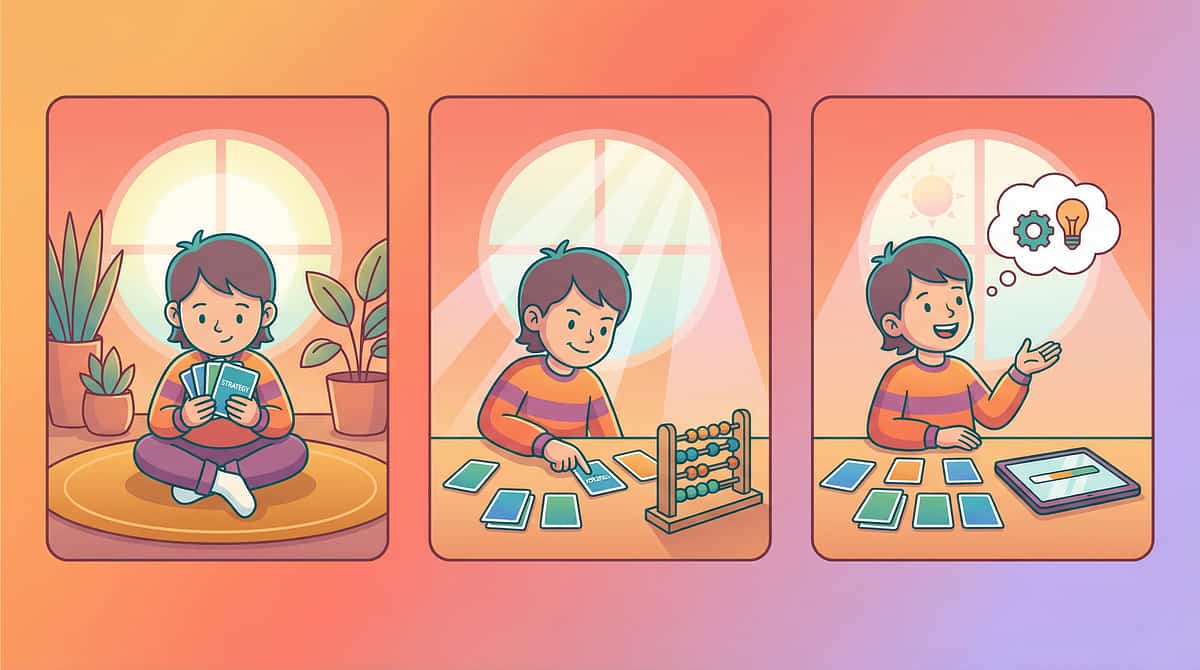
Before the child turns over the practice test, spend 1–3 minutes reviewing the strategy card together. This activates the prefrontal cortex and directs attention toward planned, strategic behavior rather than reactive, anxious behavior.
Read ALL Directions First
Never assume. Every test can use different wording, even for familiar question types.
Scan the Whole Test (30 Seconds)
See what's coming before starting. This reduces novelty-anxiety mid-test.
Mark the Easy Ones First
Build momentum. Confidence from early wins reduces anxiety for harder questions.
Skip the Hard Ones — Come Back Later
Getting stuck costs time and amplifies anxiety. Strategic skipping is not giving up.
Check the Timer at the Halfway Mark
Time awareness is a learnable skill. This single habit prevents "ran out of time" failures.
Review Before Handing In
Two minutes of review routinely rescues careless errors and second-guessing mistakes.
SAY: "Before we start, let's look at our test strategy together. What's step one?" Then: "Timer is set. Check it when you're halfway through. Begin when you're ready."
Step 3 of 6
The Therapeutic Action: Regulated Retrieval Under Graduated Pressure
What the Parent Does During the Practice Test
Remain present but SILENT — no hints, no facial reactions. Observe and note: Is child using strategy card? Checking timer? Getting stuck?
If child freezes: Gently tap strategy card: "Check your card." Nothing more. If child shows physical anxiety: Point to calm-down item if needed. Do NOT correct answers during the session.
What the Child Is Practicing
- Reading and following directions (not assuming)
- Scanning test before starting (impulse control)
- Answering easy questions first (strategic ordering)
- Skipping and returning (flexible thinking)
- Monitoring time (metacognitive awareness)
- Regulating anxiety in real-time (emotional regulation)
Child Age | Practice Test Duration | Timer Check Point | |
5–7 years | 10–15 minutes | At 7 minutes | |
7–10 years | 20–30 minutes | At 15 minutes | |
10–12 years | 30–45 minutes | At 20 minutes |

Step 4 of 6
Repeat & Vary: The Practice Schedule That Builds Real Skill
Three high-quality practice reps outperform ten disengaged reps. Structure your week with intention — variety prevents satiation while spaced repetition locks in retention.
Daily (15 min)
Flashcard spaced review + Strategy card rehearsal
Tuesday + Thursday
Practice test (full session, all 6 steps)
Saturday
Full TEST SIMULATION — conditions fully replicated, timed, independent
Sunday
Error analysis review + Progress celebration
Week | Practice Tests | Flashcard Sessions | Simulations | |
Week 1–2 | 2/week | 5/week | 0 | |
Week 3–4 | 2/week | 5/week | 1/week | |
Week 5–8 | 3/week | 6/week | 1–2/week |
Variation to Maintain Engagement: Rotate formats (multiple choice → true/false → oral quiz), alternate subjects (interleaving), start generous on time (1.5× needed) → gradually reduce to actual test time.

Step 5 of 6
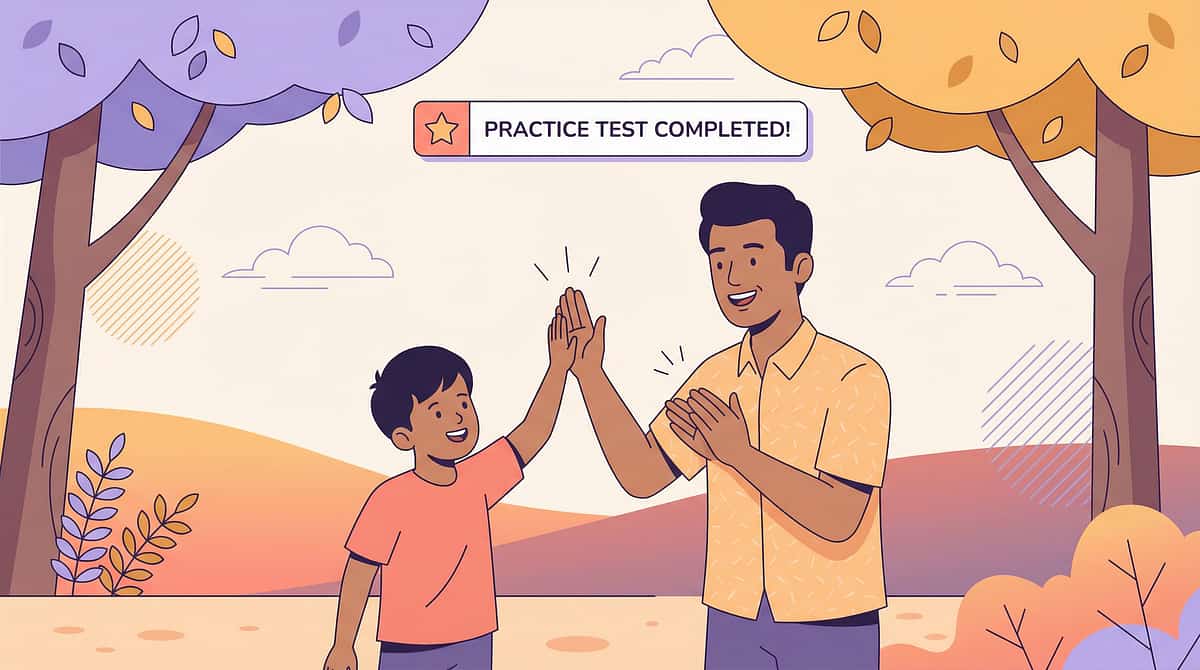
Reinforce & Celebrate: Reward the Process, Not the Score
What to Reinforce (In Order of Priority)
- Process behaviors — used the strategy card, checked the timer, attempted skipping
- Emotional regulation — stayed calm when encountering a hard question
- Completion — finished the practice test regardless of score
- Improvement over self — not comparison to others
Do NOT reinforce based on score. Reinforce based on process.
Reinforcement Script (Exact Words)
"I noticed you used the strategy card THREE times — that's amazing. You checked the timer at the halfway mark — that's exactly what test-takers do. I'm proud of how you handled the hard questions."
Timing (Critical)
Verbal praise: within 3 seconds of the praiseworthy behavior.
Token/sticker: within 60 seconds of session completion.
Token/sticker: within 60 seconds of session completion.
"Celebrating the attempt is not lowering the bar — it is building the neurological pathway that leads to the success." — Pinnacle Blooms Clinical Team
Step 6 of 6
The Cool-Down: How a Session Ends Matters as Much as How It Begins
The brain consolidates learning during rest, not during continuous input. A structured cool-down protects the gains made during the session and sets up the next one for success.
Signal End (2 Min Before)
Verbal warning + tap timer: "We have 2 more minutes, then we're all done for today. You did great."
Material Put-Away (Child Participates)
"Let's put the practice test in our folder." Participation builds ownership and routine.
Transition Activity
2 minutes of free, low-demand activity — colouring, water, snack. No academic demands.
Positive Closing
"Today you practiced [specific skill]. That's going into your brain. Tomorrow it will be there."
If child resists ending: Offer choice: "One more question OR we stop now?" — autonomy within limits. Use visual timer to show the boundary: "When the red is gone, we're done."
Post-session: Allow 15–20 minutes of unstructured time. The brain consolidates during rest.
Post-session: Allow 15–20 minutes of unstructured time. The brain consolidates during rest.
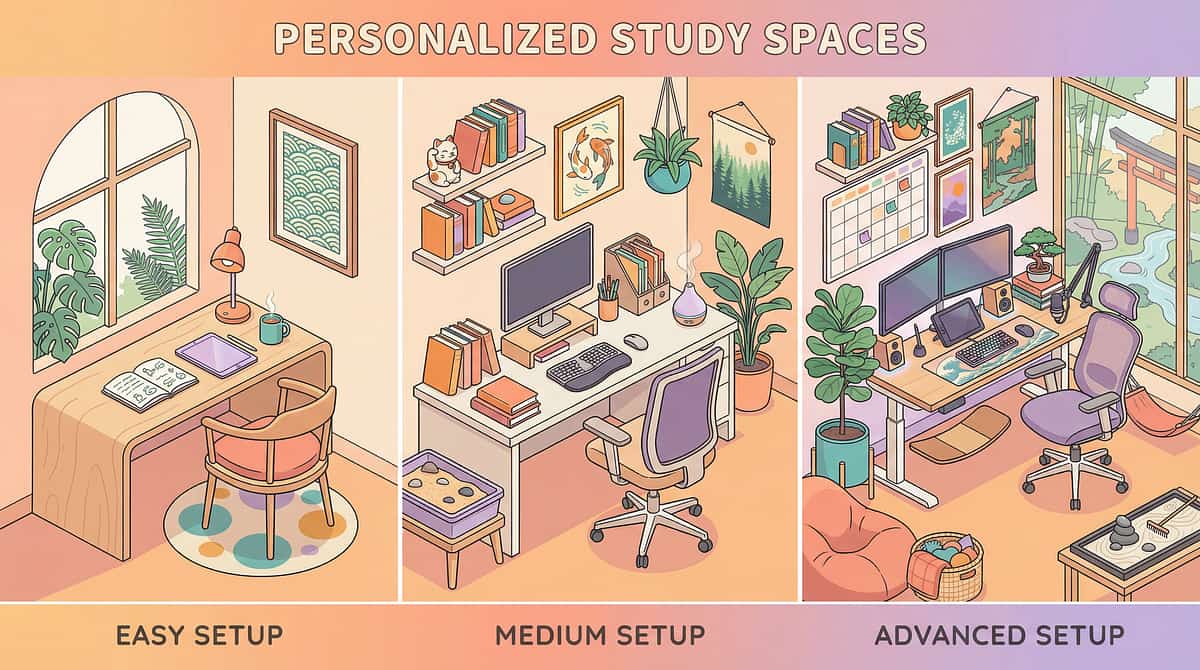
60 Seconds of Data Now Saves Hours of Guessing Later.
After every session, capture three fields. This takes under a minute and over 4–8 weeks reveals the precise trend lines that tell you whether the intervention is working — and exactly where to adjust.
Field 1: Strategies Used
□ Read directions □ Scanned test
□ Easy-first □ Skip-return
□ Timer check □ Review at end
Count: __ / 6 strategies
□ Easy-first □ Skip-return
□ Timer check □ Review at end
Count: __ / 6 strategies
Field 2: Anxiety Level (1–5)
1 = Calm 2 = Mild 3 = Moderate
4 = High 5 = Shutdown
Today's rating: __
4 = High 5 = Shutdown
Today's rating: __
Field 3: Session Completion
□ Full practice test completed
□ Partial (note reason: ___)
□ Simulation (full conditions)
□ Partial (note reason: ___)
□ Simulation (full conditions)
After 4 sessions — look at the trend: Is anxiety score decreasing? Are strategies used increasing? Is completion rate improving? These 3 metrics tell you everything about progress direction.
📥Download H-747 Weekly Progress Log — PDF | 📋Open GPT-OS® Session Tracker
📥Download H-747 Weekly Progress Log — PDF | 📋Open GPT-OS® Session Tracker

Most Sessions Have Hiccups. Here's Every Fix.
Every problem that arises during H-747 sessions has a documented cause and a clinical solution. Use this troubleshooting guide before assuming the intervention isn't working — most hiccups are correctable within one session.
🔴 "Child refused to begin."
Why: Anticipatory anxiety — the session feels threatening before it starts.
Fix: Drop demand completely. Say: "No quiz today — let's just look at the strategy card together for 2 minutes." Rebuild approach behavior first.
Fix: Drop demand completely. Say: "No quiz today — let's just look at the strategy card together for 2 minutes." Rebuild approach behavior first.
🟡 "Child started but froze mid-test."
Why: Anxiety activated during a hard question — stress response suppressed retrieval.
Fix: Point silently to strategy card step: "Skip and return." If freeze continues: 30-second breathing break. Then continue.
Fix: Point silently to strategy card step: "Skip and return." If freeze continues: 30-second breathing break. Then continue.
🟡 "Child rushed through and got most wrong."
Why: Impulsivity or anxiety-driven urgency — rushing to "make it stop."
Fix: Next session, cover all questions with paper. Reveal only one at a time. Slows impulsive forward movement.
Fix: Next session, cover all questions with paper. Reveal only one at a time. Slows impulsive forward movement.
🟡 "Child changed correct answers to wrong ones."
Why: Second-guessing — a classic anxiety behavior. First instinct is usually correct.
Fix: Teach the rule: "Your first answer stays unless you find a specific reason to change it." Praise when child maintains first answers.
Fix: Teach the rule: "Your first answer stays unless you find a specific reason to change it." Praise when child maintains first answers.
🟡 "Child ran out of time."
Why: Timer not internalized yet, or getting stuck on hard questions.
Fix: Practice timer-check at explicit halfway point. Set phone alarm to signal halfway. Reinforce every timer check.
Fix: Practice timer-check at explicit halfway point. Set phone alarm to signal halfway. Reinforce every timer check.
🔴 "Sessions consistently produce significant distress for 2+ weeks."
Why: Underlying anxiety may require clinical intervention beyond home strategies.
Fix: Call 9100 181 181 — Pinnacle clinical team will assess for CBT referral, school psychology evaluation, or accommodation assessment.
Fix: Call 9100 181 181 — Pinnacle clinical team will assess for CBT referral, school psychology evaluation, or accommodation assessment.
"A session that ended early is not a failure. It is data showing you exactly where the intervention needs to focus next."
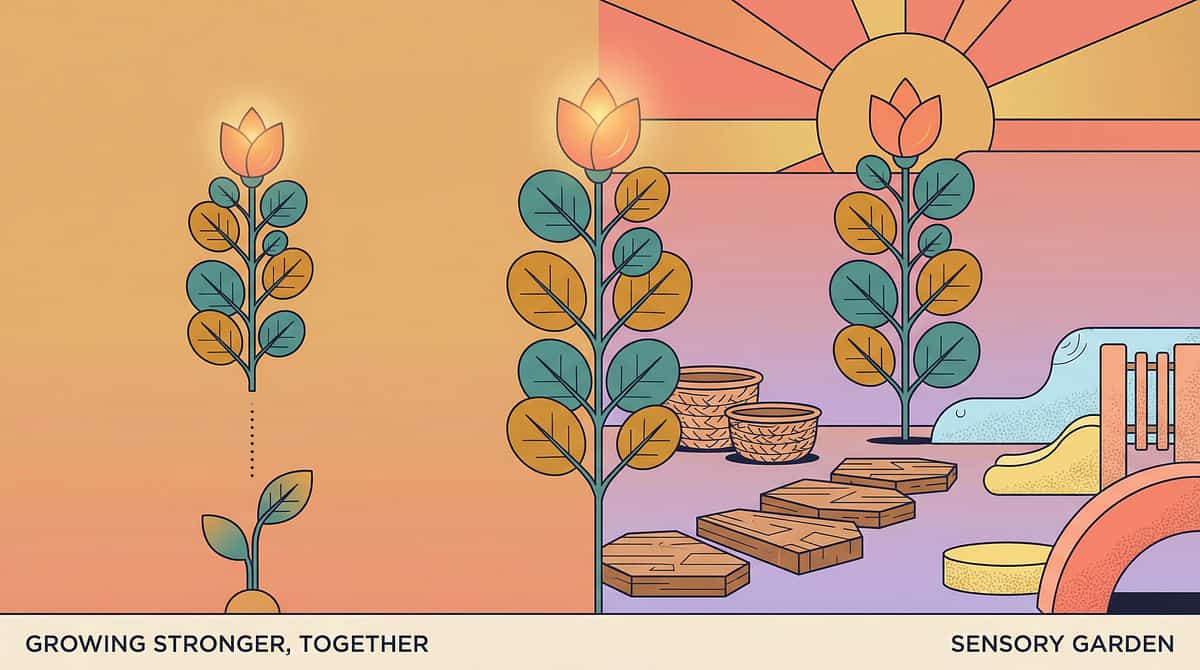
No Two Children Prepare the Same Way. Adjust Until It Fits.
H-747 is a flexible framework, not a rigid script. Calibrate difficulty, pacing, and sensory environment to match your child's profile. The intervention that fits is the intervention that works.
🌡️ For the Sensory-Sensitive Child
- White noise machine or earplugs in test simulation
- Natural light only (no fluorescent)
- Weighted lap pad during practice
- Extra spacing on printed practice tests
⚡ For the ADHD / Attention Child
- Break full practice test into 3 micro-segments (10 min each)
- Fidget tool at desk during simulation
- Highlighted strategy card (reduce visual clutter)
- Movement break between sections
🧩 For the Autism / Literal Thinker
- Pre-teach all question formats explicitly (what "describe" means vs. "list" vs. "explain")
- Visual dictionary of test instruction vocabulary
- Social story: "What happens during a test"
- Practice with actual school test formats, not generic
🎯 For the Perfectionist Child
- Explicitly teach: "Getting something wrong is part of learning"
- Praise attempt over accuracy in early weeks
- Track % of questions attempted before % correct
Age | Primary Material | Session Length | Key Focus | |
5–7 | Strategy cards only (3 steps) | 10 min | Format familiarity + calm | |
7–10 | All materials, gradual | 20 min | Strategy automatization | |
10–12 | Full protocol | 30–45 min | Anxiety management + time |

Week 1–2: Familiarity, Not Mastery. This Is Normal.
15%
Progress: Week 1–2
You are building approach behavior. The goal is survivability, not performance.
✅ What You Will Likely See
- Child tolerates practice test format without immediate refusal
- Anxiety visible but manageable (not shutdown)
- Strategy card referenced 1–2 times per session
- Session completion even if with support
❌ What NOT to Expect Yet
- Score improvement on practice tests
- Independent strategy use without prompting
- Calm during time pressure
- Transfer to real school tests
If your child resists in Week 1: normal. If scores are worse than home quizzes: normal. If you feel frustrated: normal — and also: this is worth continuing through.

Week 3–4: The Strategy Card Is Starting to Feel Like Theirs.
40%
Progress: Week 3–4
Synaptic consolidation is underway. Deliberate behaviors are becoming automatic.
Consolidation Indicators
Child reaches for strategy card without being prompted. Timer-checking behavior beginning to appear spontaneously. Child verbalizes a strategy: "I should skip this one." Session resistance decreasing — child may initiate sometimes. Anxiety score dropping by 1 point from Week 1 baseline.
Spontaneous Generalization Seeds
You may begin to notice the child applying test strategies to non-practice contexts: scanning a board game before starting, managing time on homework independently, checking their own work before showing you. These are not accidents — they are early generalization of skills built through structured practice.
When to Increase Intensity
Child completes full session consistently. Anxiety score is ≤ 2 (mild). Three or more strategies used independently per session. All three = increase session frequency and introduce simulations.

Week 5–8: The Knowledge Is Starting to Show Up Where It Lives — On the Test.
75%
Progress: Week 5–8
Mastery criteria emerging. Performance transfer beginning.
🎯 Mastery Criteria (Observable)
- Child completes full practice tests independently (no prompts)
- All 6 strategy steps used without reference to the card
- Anxiety score consistently ≤ 2
- Finishes within allocated time ≥ 4/5 sessions
- Practice test scores within 80% of home quiz performance
- Child uses error analysis vocabulary: "That was a careless mistake, not a content error"
🌱 Generalization Indicators
- Improved performance on actual school tests
- Child mentions test strategies to peers or teachers
- Reduced somatic complaints before tests
- Child expresses confidence about upcoming tests — confidence alongside nerves
🏆TEST-READY BADGE UNLOCKED: H-747 MASTERY ACHIEVED
When 5/6 mastery criteria consistently met → Proceed to H-748: Homework Independence
When 5/6 mastery criteria consistently met → Proceed to H-748: Homework Independence
🎉 You Did This.
Your child could not show what they knew. Today, they can.
You didn't just teach test strategies. You rebuilt your child's relationship with their own intelligence. You showed them — through 5 to 8 weeks of consistent, patient, structured practice — that they are capable. That their knowledge is accessible. That the test is not the enemy. That is not a small thing. That is transformative.
✅ 9 Evidence-Mapped Materials Deployed
✅ 6-Step Protocol Mastered
✅ Anxiety Reduced from Baseline
✅ Strategy Set Automatized
✅ Performance Transfer Achieved
📸Family Celebration Suggestion: Take a photo together. Write in a journal: "Today [Name] showed what they know." Share your journey in the Pinnacle parent community — your story will give another family the courage to start.
"You were the scaffold. You were the system. You were the evidence." — Pinnacle Blooms Clinical Team
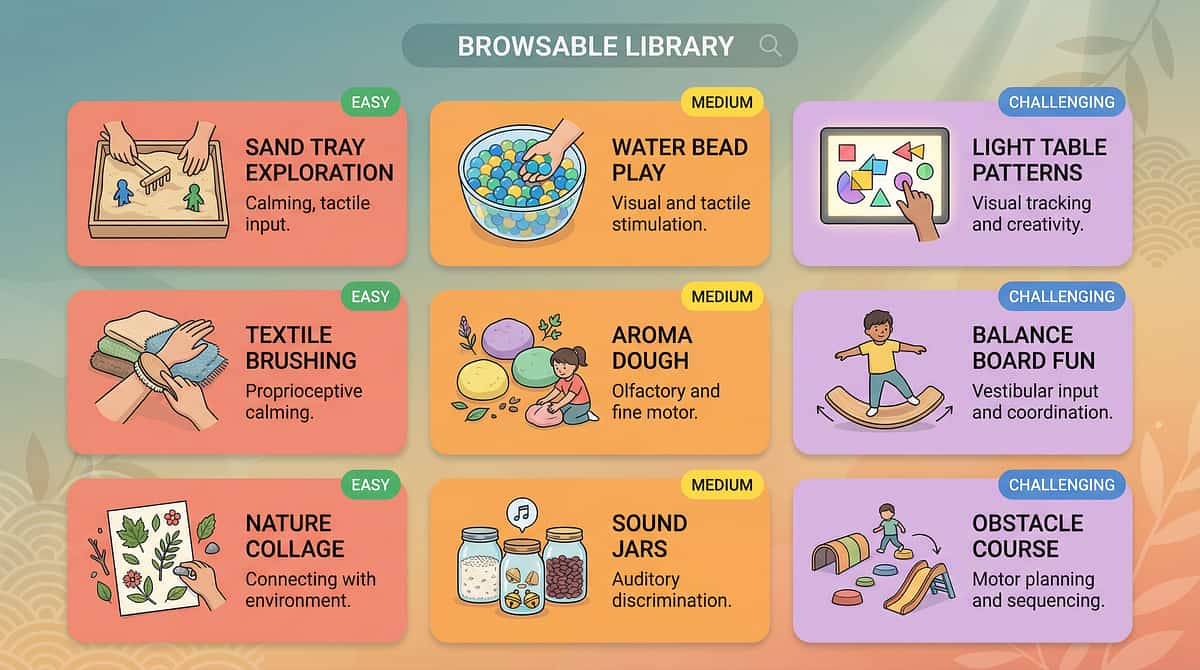
⚠️ These Signs Mean Pause and Seek Guidance. Trust Your Instincts.
If any of the following red flags appear, pause implementation and seek professional guidance. These signs indicate the intervention may need clinical calibration — not abandonment.
🔴 Significant Increase in School Refusal
After beginning this program — the intervention may be increasing anxiety rather than reducing it. Requires clinical assessment.
🔴 Somatic Symptoms Intensifying
Daily stomachaches, headaches before school/tests that are new or worsening — possible anxiety disorder requiring psychological evaluation.
🔴 Persistent Negative Self-Beliefs
Child verbalizes "I'm stupid" or "I'll never learn" — persisting for more than 2 weeks. Requires counseling, not just strategy training.
🔴 No Anxiety Reduction After 4 Weeks
Underlying generalized anxiety may require CBT or medication evaluation from a clinical psychologist or psychiatrist.
🔴 Regression on School Performance
May indicate program intensity mismatch — requires clinical recalibration, not abandonment.
📞 FREE National Autism Helpline: 9100 181 181 — 24x7 | 16+ languages | Immediate clinical guidance | Find nearest Pinnacle center
You Are Not Done. You Are on a Journey. Here's What's Next.
H-745
Reading Comprehension
H-746
Writing Skills
H-747 ★
TEST PREP — You Are Here
H-748
Homework Independence
Path A — Next in Series
H-748: Homework Independence — The child can now apply test skills to daily work. Natural next step.
→ techniques.pinnacleblooms.org
→ techniques.pinnacleblooms.org
Path B — Deepen the Foundation
H-750: Study Skills Deep Dive — If spaced practice needs strengthening before moving forward.
→ techniques.pinnacleblooms.org
→ techniques.pinnacleblooms.org
Path C — Address the Anxiety Layer
H-760: School Anxiety Management — If anxiety remains the primary barrier after completing H-747.
→ techniques.pinnacleblooms.org
→ techniques.pinnacleblooms.org

Other Techniques in Academic Readiness — With Materials You May Already Own.
Technique | Code | Level | Materials You Own | |
Reading Comprehension | H-745 | 🟡 Core | Core flashcards ✓ | |
Writing Skills | H-746 | 🟡 Core | Organization system ✓ | |
Test Preparation | H-747 | 🟡 Core | All materials ✓ | |
Homework Independence | H-748 | 🟢 Advanced | Timer ✓ Reward jar ✓ | |
Study Skills | H-750 | 🟡 Core | Flashcards ✓ | |
Time Management | H-755 | 🟢 Advanced | Timer ✓ |
✅ With your H-747 kit, you already own the core materials for H-745, H-748, and H-755. Your investment extends across the entire Academic Readiness domain.
Academic Readiness Domain — H-740 to H-800

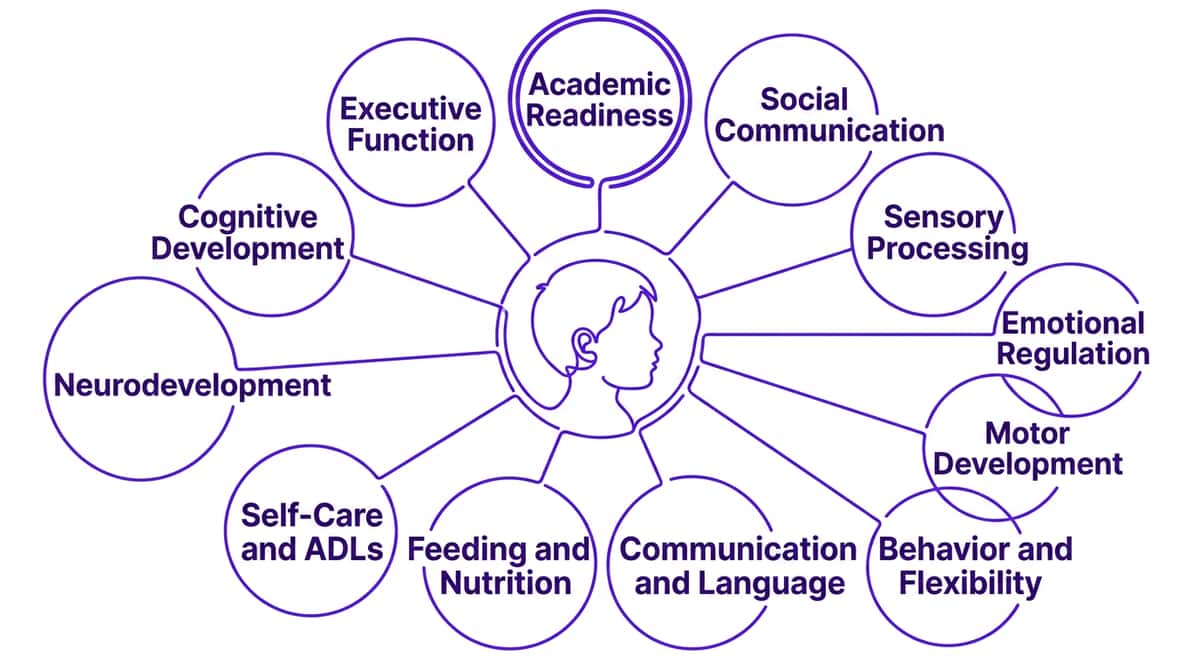
Test Preparation Is One Piece. Here Is the Whole Picture.
Every child is a whole person developing across 12 interconnected domains. H-747 strengthens the Academic Readiness domain — and that progress cascades into all other areas of development.
GPT-OS® Integration: Your session data from H-747 feeds directly into the AbilityScore® Academic Performance Index, TherapeuticAI® sequence recommendations, and the EverydayTherapyProgramme™ daily micro-interventions.
→ Connect to GPT-OS® | → Request AbilityScore® Assessment
→ Connect to GPT-OS® | → Request AbilityScore® Assessment
From the Field. From Real Homes. From Families Like Yours.
Hyderabad — 9-Year-Old Boy
"He knew his science chapter perfectly. I tested him the night before — 100% correct. He came back with 3/10. The room was loud, the questions were worded differently, and he 'just forgot everything.'"
After 6 weeks with H-747 materials: By Week 4, he was scanning tests on his own. At Week 7, his school test came back 8/10. He said, "Amma, I used the skip-and-return." I cried in the bathroom. — Parent, Pinnacle Network, Hyderabad
Mumbai — 11-Year-Old Girl, Autism Diagnosis
"She had an IQ in the above-average range but failed standardized assessments consistently. School labeled her as 'not applying herself.' She believed them."
After 8 weeks: Our special educator discovered 70% of her errors were reading errors — she wasn't reading directions carefully, not content errors. We fixed one behavior. Her performance changed completely. — Parent, Pinnacle Network, Mumbai
"Test anxiety is the most underdiagnosed academic performance barrier in India. Children get tutors when they need strategy training. They get more content when they need regulation support. H-747 addresses the correct variables." — Pinnacle Special Educator, 8 years clinical experience
Vignettes are illustrative representations of clinical patterns. Individual outcomes vary by child profile, diagnosis, and intervention consistency.
You Don't Have to Figure This Out Alone.
Consistent implementation across caregivers multiplies impact. When you're connected to a community, questions get answered faster, motivation stays higher, and your child benefits from your confidence.
Academic Readiness WhatsApp Community
Join 4,000+ parents across India navigating academic challenges. Share what worked. Ask what's stuck. Get real-time peer support.
→ Join the community
→ Join the community
Pinnacle Parent Forum
Moderated by Pinnacle therapists. Topic threads by domain, technique, age. Your question is likely already answered.
→ Enter the Forum
→ Enter the Forum
Local Parent Meetups
Pinnacle centers across 70+ locations host monthly parent groups organized by challenge area. Find your nearest group.
→ Find a center near you
→ Find a center near you
Peer Mentoring
Have you completed H-747 successfully? Consider becoming a peer mentor for new families just starting. Apply at any Pinnacle center.

Home + Clinic = Maximum Impact. Here Is Your Professional Layer.
Your Primary Need | Specialist | What They Address | |
Test anxiety (significant) | Clinical Psychologist / Counselor | CBT, anxiety management, accommodation evaluation | |
Learning strategy training | Special Educator | Test-taking skills, study systems, IEP planning | |
Executive function | Occupational Therapist | Planning, organization, time management | |
Reading/language in tests | Speech-Language Pathologist | Question comprehension, written expression | |
Underlying diagnosis questions | Neurodevelopmental Pediatrician | ADHD, LD, anxiety disorder diagnosis |
📍 Find a Center
70+ centers across India. OT, SLP, ABA, SpEd, NeuroDev specialists.
→ Locate nearest Pinnacle center
→ Locate nearest Pinnacle center
💻 Teleconsultation
Can't reach a center? Book from anywhere in India (or globally).
→ Book a teleconsult
→ Book a teleconsult
📞 FREE Helpline
9100 181 181
24x7 | 16+ languages | No appointment needed
24x7 | 16+ languages | No appointment needed
💰 Insurance & Funding
Check coverage and government schemes for your child.
→ Check eligibility
→ Check eligibility
The Evidence Base for This Technique. For the Curious Parent.
PMC11506176 — Children (2024)
PRISMA systematic review of 16 studies (2013–2023). Confirms evidence-based practice status for structured academic skill interventions in children with developmental differences. → PubMed
PMC10955541 — World J Clin Cases (2024)
Meta-analysis of 24 studies: structured interventions effectively promote academic performance, social skills, and adaptive behavior across multiple populations. → PubMed
PMC9978394 — WHO CCD Package (2023)
Caregiver-implemented structured interventions across 54 countries demonstrate efficacy with household materials. Age-specific protocols. → PubMed
DOI:10.1007/s12098-018-2747-4 (2019)
India-specific RCT by Padmanabha et al. Home-based structured academic interventions in Indian pediatric population. Significant outcomes within 6–8 weeks. → Journal
NCAEP Evidence-Based Practices (2020)
27 evidence-based practices for autism including visual supports, structured environmental modifications, and strategy instruction. → NCAEP

See the Materials. Watch the Technique. Hear the Therapist Explain.
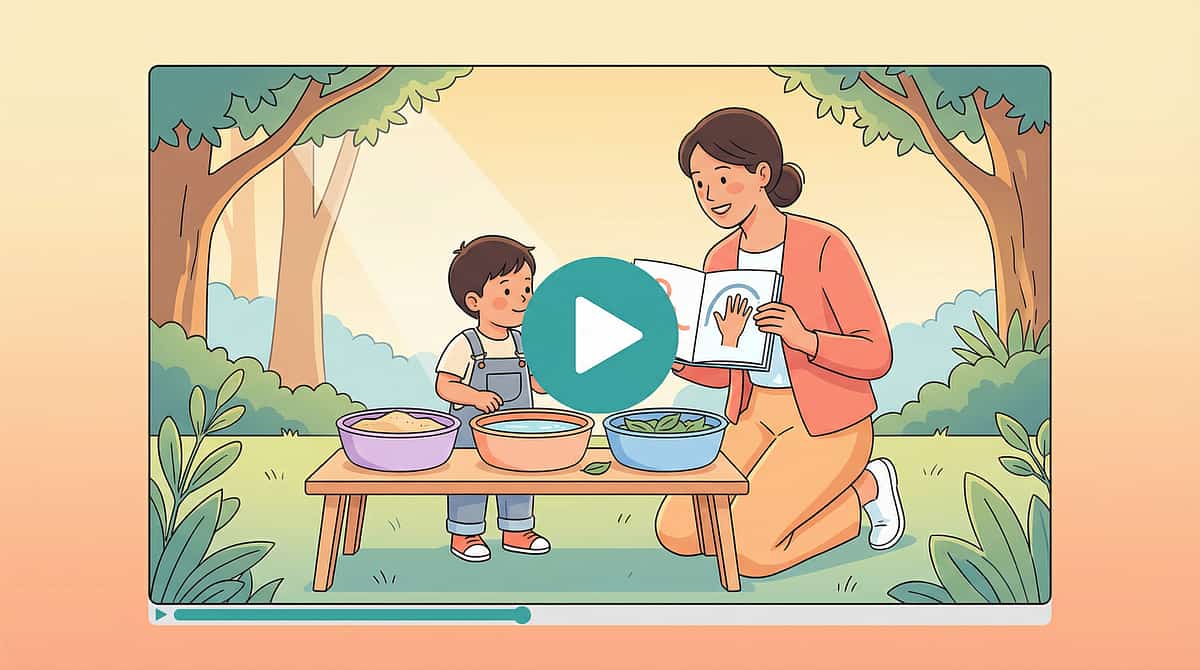
H-747 Video Reel
Reel ID | H-747 | |
Title | 9 Materials That Help With Test Preparation | |
Series | Academic Readiness | |
Duration | 75–85 seconds | |
Presenter | Pinnacle Special Educator |
"In this reel, I'll show you all 9 materials we use to help children close the gap between knowing and showing. These are the same materials described on this page — now you can see them in action." — Pinnacle Special Educator
Related Reels
H-745
9 Materials That Help With Reading Comprehension
H-746
9 Materials That Help With Writing Skills
H-748
9 Materials That Help With Homework Independence
NCAEP (2020): Video modeling is an evidence-based practice for autism. Multi-modal learning (visual + text + demonstration) improves parent skill acquisition.

Consistency Across Caregivers Multiplies Impact by 3–5×.
If only one parent applies these strategies, the child experiences them 50% of the time. When both parents, grandparents, and teachers apply them — 100% of the time. Consistent implementation is the primary predictor of whether skills transfer to real tests.
Explain to Grandparents
"When [Name] is preparing for a test, please: (1) Use the strategy card on the desk, (2) Let them take untimed practice quizzes, (3) Praise effort and strategy use — not scores, (4) If they seem anxious, help them breathe first."
Teacher Communication Template
"Dear [Teacher], We are supporting [Name] with structured test preparation at home using evidence-based strategies. We are working on: time management, strategy use, and anxiety reduction. We would appreciate knowing: test format in advance where possible, and any accommodations you recommend. Thank you."
📥Download H-747 Family Summary — PDF (Print-friendly, laminate-ready). Contains: 9 materials overview, 6-step protocol summary, strategy card, safety notes.
📱 Share: techniques.pinnacleblooms.org/academic-readiness/test-preparation-H-747
📱 Share: techniques.pinnacleblooms.org/academic-readiness/test-preparation-H-747
Your Questions. From Real Pinnacle Parent Communities.
My child doesn't have autism — can we still use this guide?
Absolutely. Test preparation strategies are effective for ALL children, regardless of diagnosis. The underlying strategies — spaced practice, strategy instruction, anxiety management — are universally evidence-based.
How long before we see improvement on real school tests?
Most families see first indicators at Week 3–4 (strategy use becoming spontaneous). Performance on actual school tests typically begins improving by Week 6–8. Full transfer may take 3 months for children with significant test anxiety. You're rebuilding a neural pathway, not memorizing a fact.
Our school says she "just needs to study more." How do I explain this?
Share this page with her teacher or school psychologist. The distinction between content knowledge and test-taking skills is well-documented. Your child may have perfect content knowledge and still require explicit test-taking skill training. Reference the NCAEP (2020) evidence base when requesting a meeting with academic support staff.
Should we practice tests the night before a real test?
No. The night before: light review only (10 minutes maximum), complete test-day checklist, ensure good sleep. Full practice tests increase anxiety the night before. The preparation has been done — trust it.
What if we complete this and the problem persists?
Call 9100 181 181. Persistent performance anxiety despite structured intervention may indicate underlying anxiety disorder, undiagnosed learning disability, or processing speed disorder — all of which benefit from clinical evaluation and academic accommodations. Pinnacle's assessment pathway will find the right next step.
Preview of 9 materials that help with test preparation Therapy Material
Below is a visual preview of 9 materials that help with test preparation therapy material. The pages shown help educators, therapists, and caregivers understand the structure and content of the resource before use. Materials should be used under appropriate professional guidance.


Link copied!
🏛️ The Pinnacle Promise
"From fear to mastery. One technique at a time."
We exist to transform every home into a proven, scientific, 24×7, personalized, multi-sensory, multi-disciplinary integrated therapy center — for every child, in every family, in every corner of the world.
Powered by GPT-OS® | 70,000+ techniques | 70+ centers | 70+ countries
Disclaimer: This content is educational and is intended to support — not replace — individualized assessment and intervention from qualified therapists. Test anxiety and performance difficulties may be symptoms of broader anxiety disorders, learning disabilities, ADHD, or other conditions requiring comprehensive evaluation. Individual results vary. Consult qualified professionals before implementing any clinical protocol for children with diagnosed conditions.
CIN | U74999TG2016PTC113063 | |
DPIIT | DIPP8651 (Government of India) | |
MSME | Udyog Aadhaar: TS20F0009606 | |
GSTIN | 36AAGCB9722P1Z2 | |
Copyright | © 2025 Pinnacle Blooms Network® |
FREE National Autism Helpline: 9100 181 181