

9 Materials That Help With Categorisation
Building the mental filing system that organises language, learning, and daily life. Evidence-based categorisation materials for children aged 2–10 — clinically selected, parent-ready, and home-applicable.
Cognitive Development
Evidence Grade I
Ages 2–10

ACT I — EMOTIONAL ENTRY
The Recognition Moment
"She put the dog next to the spoon next to the triangle. Not randomly — she was trying her best. She just couldn't see what connected anything to anything else."
The world is organised by categories. Your child is working to find the patterns. Here is how to build the mental filing system together.
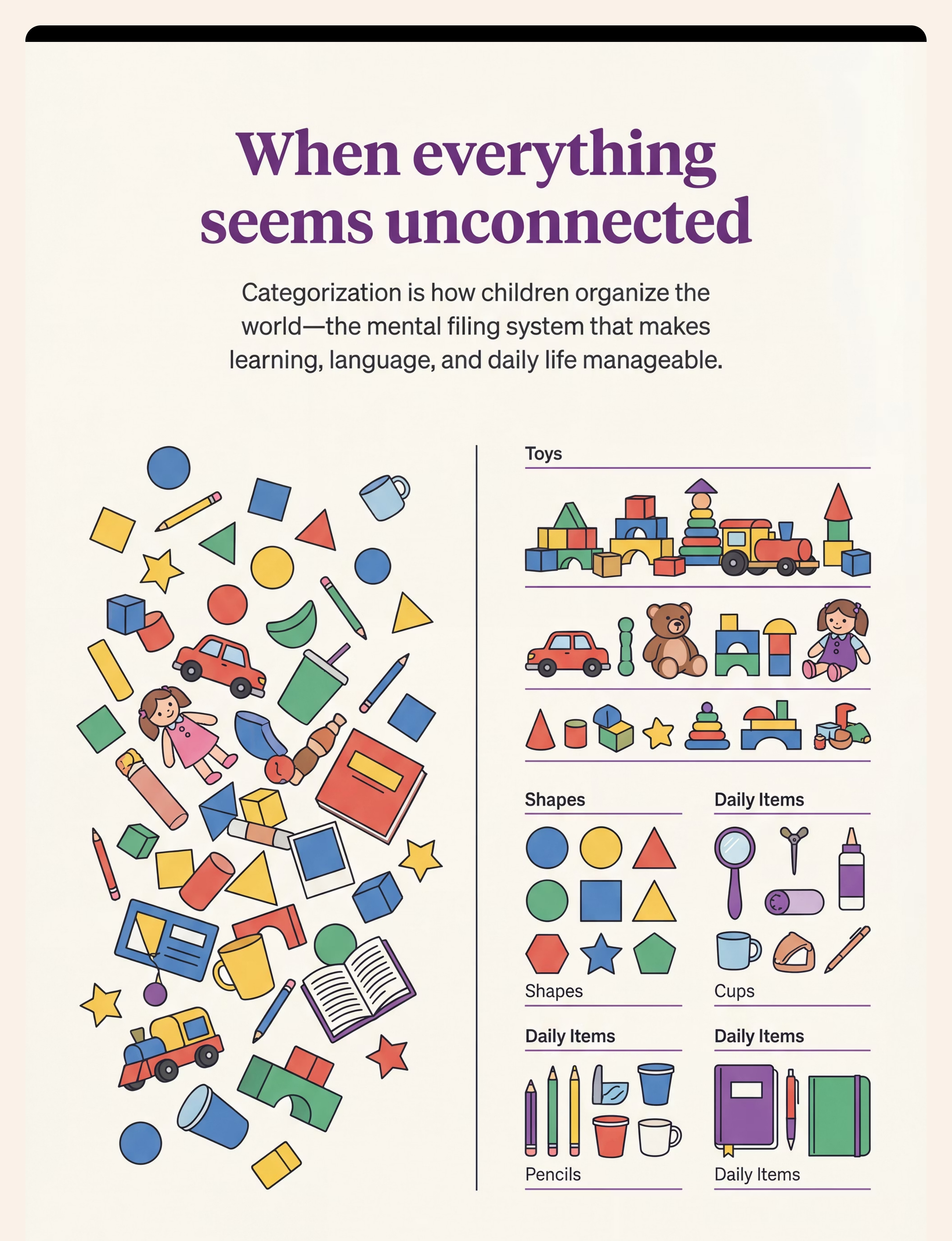
Every parent has watched this moment. The sorting activity. The picture cards spread on the table. Other children moving items into neat piles — animals here, vehicles there, food over there. Your child staring. Moving things. Trying. But the invisible logic that groups a dog and a cat and a fish together simply hasn't clicked yet.
This is not a mystery. It is a developmental skill called categorisation — the cognitive ability to recognise that items share common attributes and belong together. And it can be systematically built.
You are not failing. Your child's cognitive wiring is still building the filing system. This page is your construction guide.
🏛️ Pinnacle Blooms Consortium
Multi-disciplinary clinical authority behind every technique
🧠 Cognitive Development
Domain COG-CAT — the mental filing system
👶 Ages 2–10
Developmental range for structured categorisation building
🗣️ SLP + SpEd + NeuroDev
Consortium-validated, evidence-linked intervention
WHO Nurturing Care Framework (2018): "The period from pregnancy to age 3 is key for a child's development" — early identification and parental awareness directly impacts cognitive outcomes.

ACT I — YOU ARE NOT ALONE
The Numbers Behind What You're Experiencing
1 in 36
ASD Prevalence
Children diagnosed with ASD in the US (CDC 2023)
80%
Show Difficulties
Of children with ASD show cognitive organisation difficulties
20M+
Therapy Sessions
Delivered by Pinnacle — categorisation is among the top 10 skill targets
Categorisation difficulties are not rare. They are among the most commonly observed cognitive challenges across autism spectrum disorder, developmental language disorders, intellectual disability, and attention differences. When children struggle to form mental groups, it ripples through vocabulary development, reading comprehension, daily organisation, and social communication.
Globally, an estimated 53 million children under age 5 experience developmental delays that include cognitive organisation skills (WHO, 2018). In India, studies suggest 1–2% of children meet diagnostic criteria for ASD, with categorisation and semantic organisation challenges present in the majority.
"You are among millions of families navigating this exact challenge. The materials and methods exist. You are not starting from zero."
ACT I — NEUROSCIENCE
What's Happening in Your Child's Brain
The Mechanism
Categorisation is governed by the prefrontal cortex (executive planning, rule application), the temporal lobe (semantic memory — where word meanings and category knowledge live), and the hippocampus (binding individual items into organised memory networks).
When children sort a dog and a cat into "animals," they are activating distributed neural networks that recognise shared features, compare those features against stored semantic knowledge, and apply a grouping rule. This process requires:
- Feature detection — noticing that both have four legs, fur, faces
- Semantic retrieval — accessing the stored concept "animal"
- Flexible rule application — applying the same rule to new examples
Plain English for Parents
"Think of your child's brain as a library under construction. The books are arriving — words, objects, experiences — but the shelving system that tells you WHERE to put each book is still being built. Your child isn't failing to read the books. They're waiting for the shelves."
In children with ASD or developmental language differences, any of these three steps may be disrupted — not absent, but differently organised or slower to activate.
"This is a wiring difference in how semantic memory organises. It is not a behaviour problem. It is not stubbornness. It is neurodevelopment in progress."
Frontiers in Integrative Neuroscience (2020): Comprehensive neurological framework for evaluating categorisation and semantic organisation in ASD, establishing brain-based rationale for structured categorisation intervention. DOI: 10.3389/fnint.2020.556660

ACT I — DEVELOPMENT
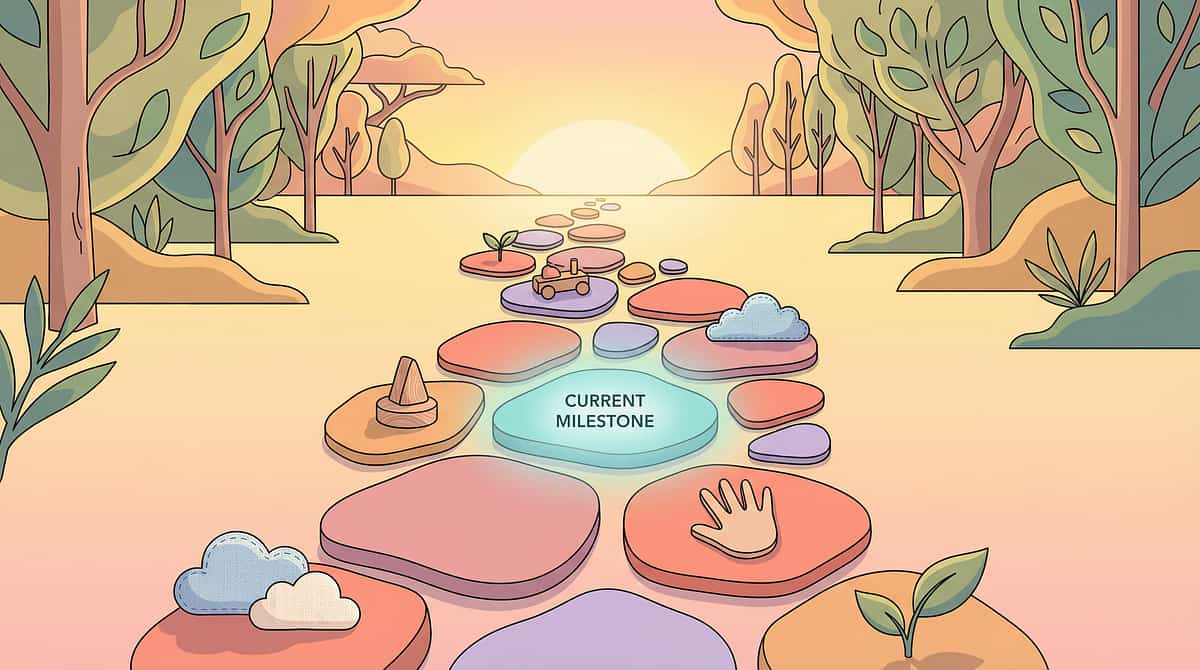
Your Child's Categorisation Development — The WHO Milestone Map
12–18 Months
Basic object recognition — animal vs. vehicle in habituation studies
2–3 Years
Sort by single feature with support (color, shape). Names basic categories: food, animals, vehicles
3–4 Years
Names basic categories. Sort by function (things you eat, things that go)
4–5 Years
Sort by function independently. Hierarchical categories begin (animal → pet → dog)
5–7 Years
Hierarchical categories. Large + red + animal multi-attribute sorting
7–10 Years
Multi-attribute flexible categorisation across all domains
Categorisation difficulties commonly co-occur with expressive and receptive language delays, attention and working memory differences, reading comprehension challenges, daily organisation difficulties, and social reasoning gaps. Your child is at a specific waypoint on a developmental journey with a clear forward direction. This is not a wall — it is a rung on a ladder. The next rung is visible, reachable, and documented.
ACT I — EVIDENCE
What the Research Says About Teaching Categorisation
Evidence Grade I
Systematic Review + RCT Supported
Study | Finding | Reference | |
Systematic review, 16 studies, 2013–2023 | Structured categorisation intervention meets evidence-based practice criteria for children with ASD | PMC11506176 (Children, 2024) | |
Meta-analysis, 24 studies | Cognitive intervention with semantic organisation targets effectively promotes vocabulary and learning across ASD population | PMC10955541 (World J Clin Cases, 2024) | |
Indian RCT (Padmanabha et al., 2019) | Home-based intervention for cognitive and language skills demonstrated significant outcomes across Indian paediatric population | DOI: 10.1007/s12098-018-2747-4 | |
WHO CCD Package (2023) | Caregiver-administered cognitive stimulation activities in home settings produce measurable developmental gains | PMC9978394 | |
NCAEP Evidence-Based Practices (2020) | Visual supports, structured teaching, and naturalistic developmental behavioural interventions targeting categorisation classified as evidence-based for ASD | NCAEP 2020 |
"Clinically validated. Home-applicable. Parent-proven. The materials on this page are backed by peer-reviewed evidence and 20M+ real therapy sessions at Pinnacle Blooms Network®."

ACT II — KNOWLEDGE TRANSFER
🧠 Categorisation Skill Building Through Structured Material Exploration
Parent-friendly alias: "The Mental Filing System"
Categorisation is the cognitive ability to recognise that items share common attributes — visible features, functions, or abstract properties — and can be grouped together based on those shared features. This fundamental skill underlies efficient learning, memory organisation, vocabulary development, and problem-solving. It is the brain's filing system: the invisible infrastructure that makes language retrievable, learning efficient, and daily life manageable.
WHO IT'S FOR: Children aged 2–10 who show difficulty grouping objects or pictures by type, struggle with "same and different" concepts, display disorganised vocabulary or word-finding difficulties, cannot follow category-based instructions ("bring me something to wear"), or who treat every object as if it exists in isolation without connection to related items.
Level 1
Perceptual sorting (colour, shape, size) — 18 months–3 years
Level 2
Functional categories (things you eat with) — 3–4 years
Level 3
Semantic categories (animals, vehicles, food) — 3–5 years
Level 4
Hierarchical categories (dogs → pets → animals) — 5–7 years
Level 5
Abstract categories (things that make you happy) — 6–9 years
Level 6
Multi-attribute flexible categorisation — 7–10 years
🏷️ Domain
Cognitive Development + Speech-Language + Special Education
👶 Age Range
2–10 years
⏱️ Duration
10–20 minutes per session
📅 Frequency
3–5 times per week
ACT II — MULTI-DISCIPLINARY
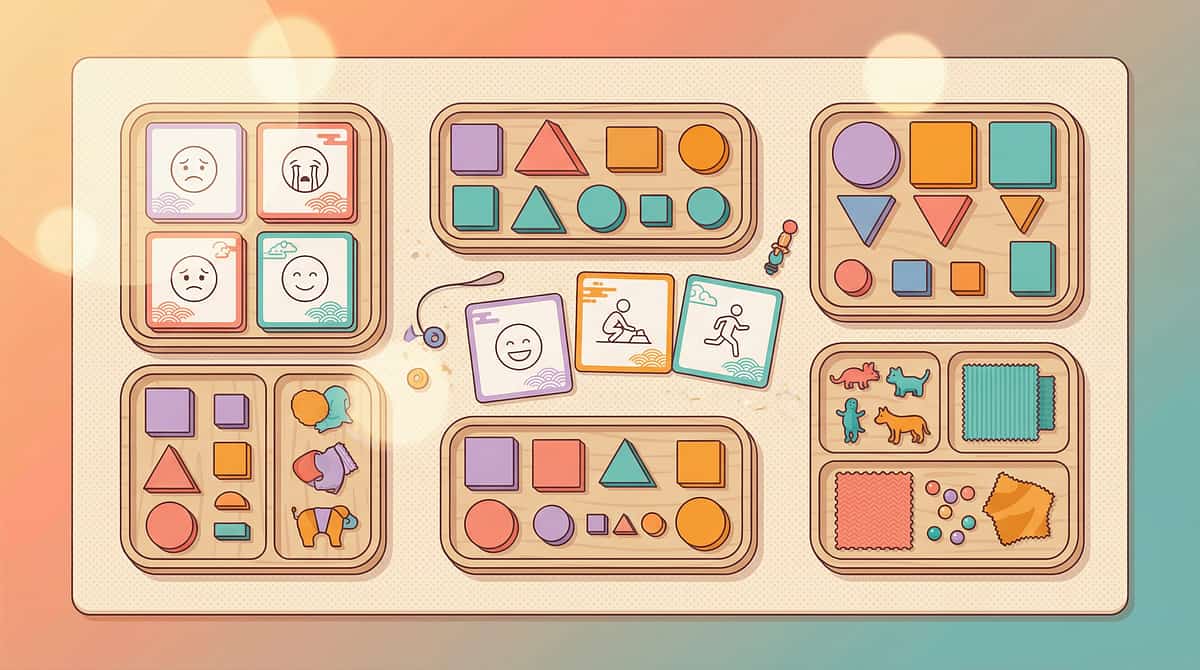
The Consortium Disciplines Behind Categorisation Intervention
Speech-Language Pathologist (Primary Lead)
Targets semantic organisation — the way words and concepts are stored and retrieved by category. SLPs use categorisation work to build vocabulary depth, improve word-finding, and develop coherent narrative language. When a child cannot name an animal when asked, categorisation may be the underlying skill gap.
Special Educator (Co-Lead)
Embeds categorisation into academic learning across all subjects. Every school subject relies on category understanding — text genres, maths operations, science classifications, historical periods. SpEd specialists build explicit category scaffolding that supports classroom participation.
Occupational Therapist (Supporting)
Uses categorisation in executive function intervention, daily living skills organisation, and fine motor manipulation activities — sorting trays, object collections. OTs address the environmental and motor demands of categorisation tasks.
ABA/BCBA Therapist (Protocol Layer)
Provides systematic teaching protocols: discrete trial training for category naming, natural environment teaching for generalisation, and data-based decision-making for skill progression. ABA structures the learning trials that build category knowledge.
NeuroDev Paediatrician (Assessment Anchor)
Assesses whether categorisation difficulty signals broader cognitive, neurodevelopmental, or language disorder requiring comprehensive evaluation. Coordinates the diagnostic picture that informs which disciplines lead.
"This technique crosses therapy boundaries because the brain doesn't organise by therapy type. Categorisation is a cognitive skill, a language skill, a behaviour, and a daily living skill — simultaneously."
ACT II — PRECISION TARGETS
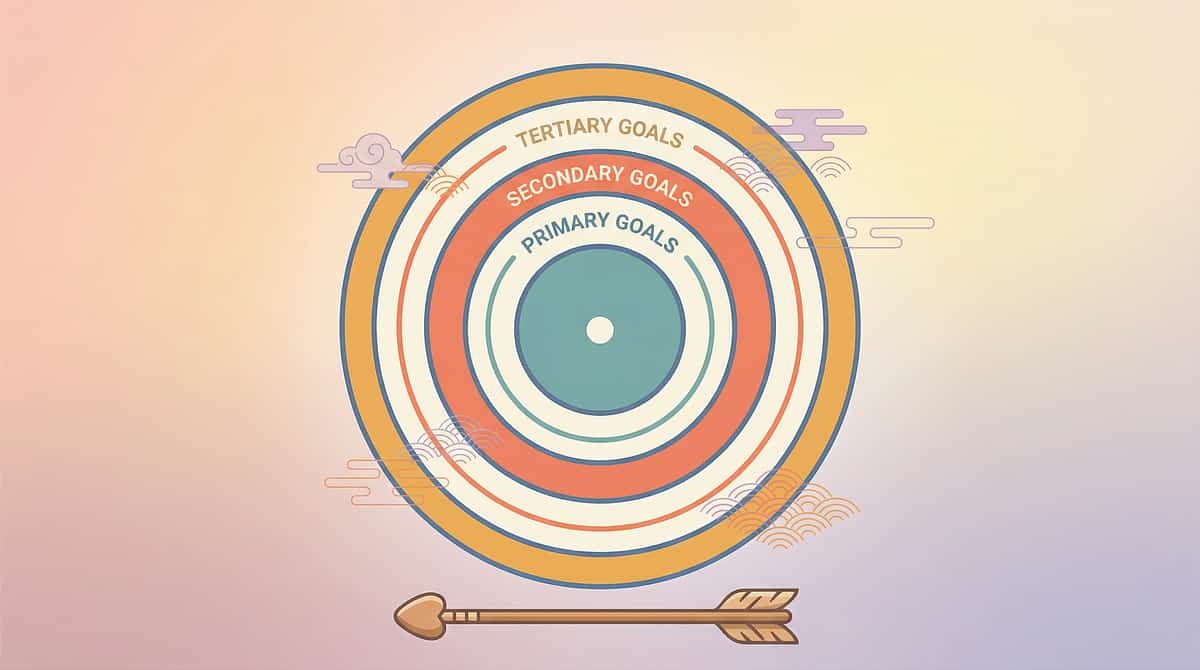
The Precision Targets of Categorisation Intervention
Primary Targets
- Group objects or pictures by shared attribute (colour, shape, function, type)
- Semantic category knowledge — naming categories, identifying members
- Flexible re-categorisation — same items sorted by different criteria
- Category-based receptive language ("Get me something to eat")
Observable Behaviour Indicators
- ✅ Child places all red items together when asked to "find the red ones"
- ✅ Child names "animals" when shown dog, cat, fish group
- ✅ Child identifies odd one out ("which one doesn't belong?")
- ✅ Child uses category language in conversation ("that's a type of vehicle")
- ✅ Child organises toys or belongings by type spontaneously

ACT II — MATERIAL 1 OF 9
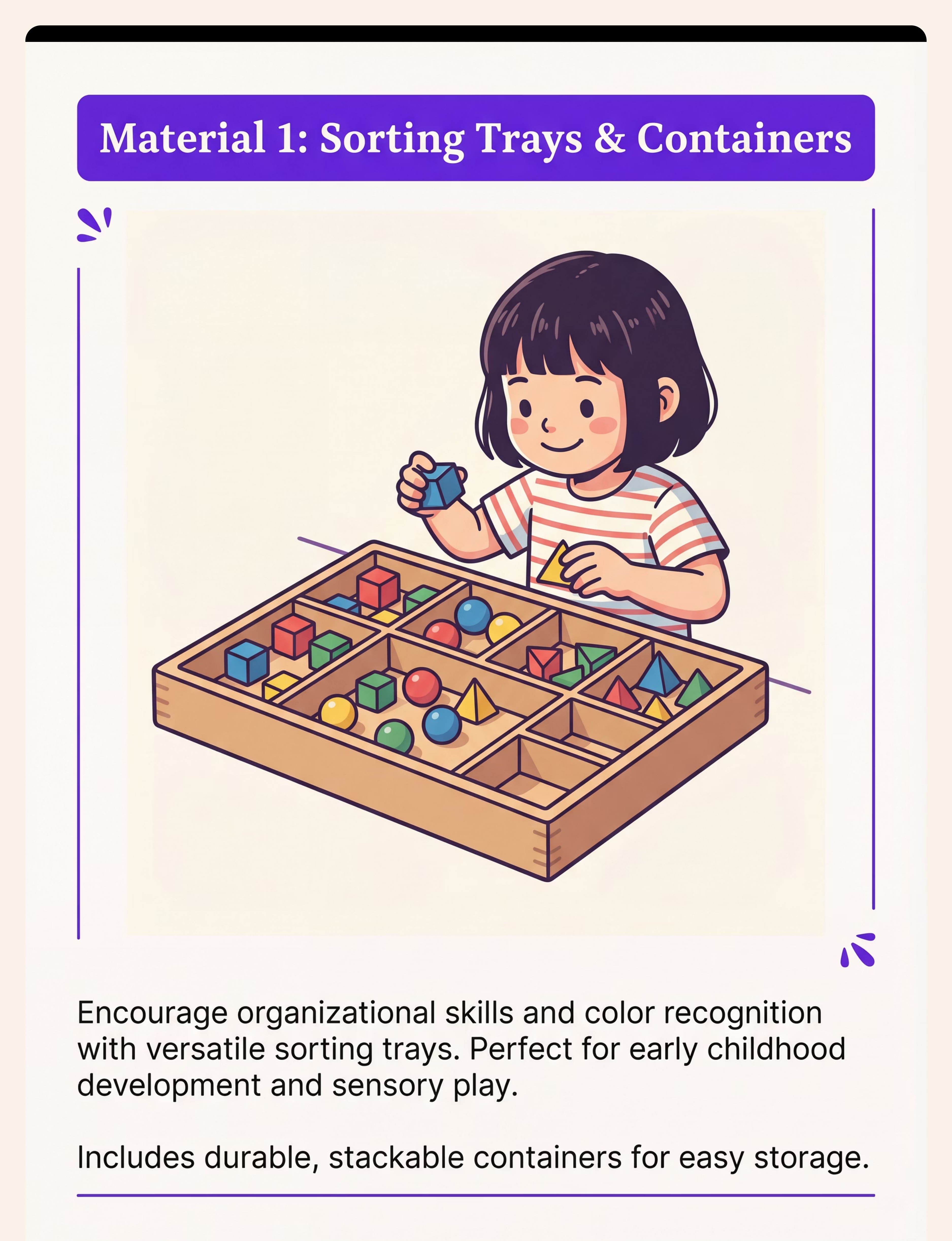
🟣 Material 1: Sorting Trays & Containers
Why This Material Works
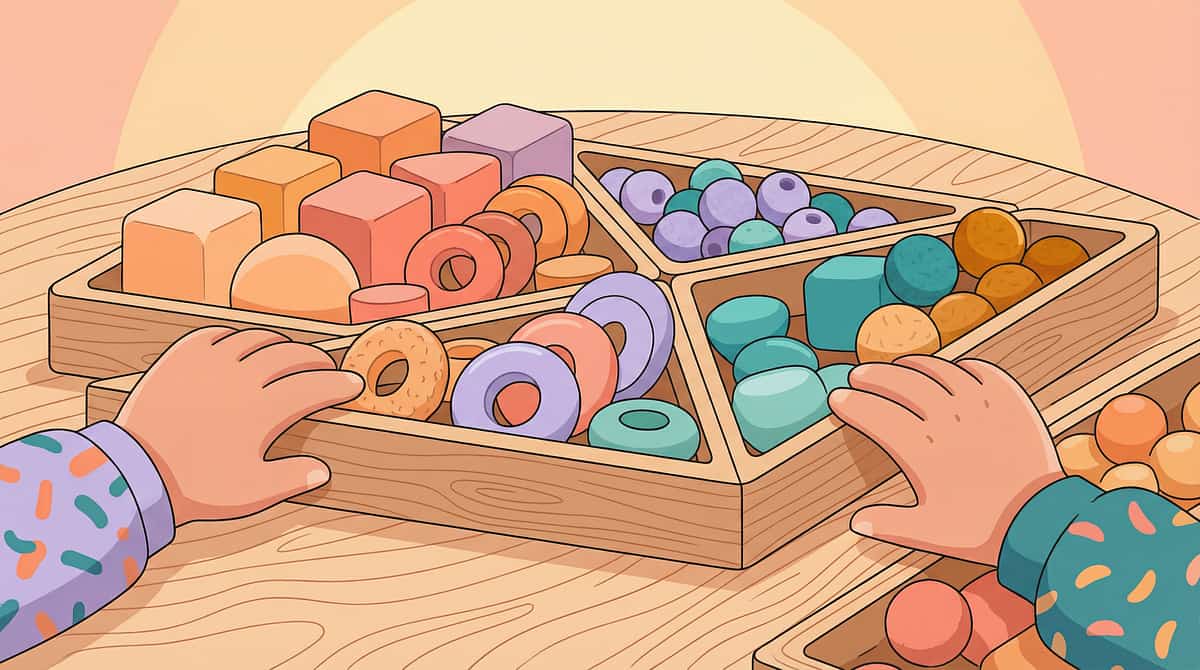
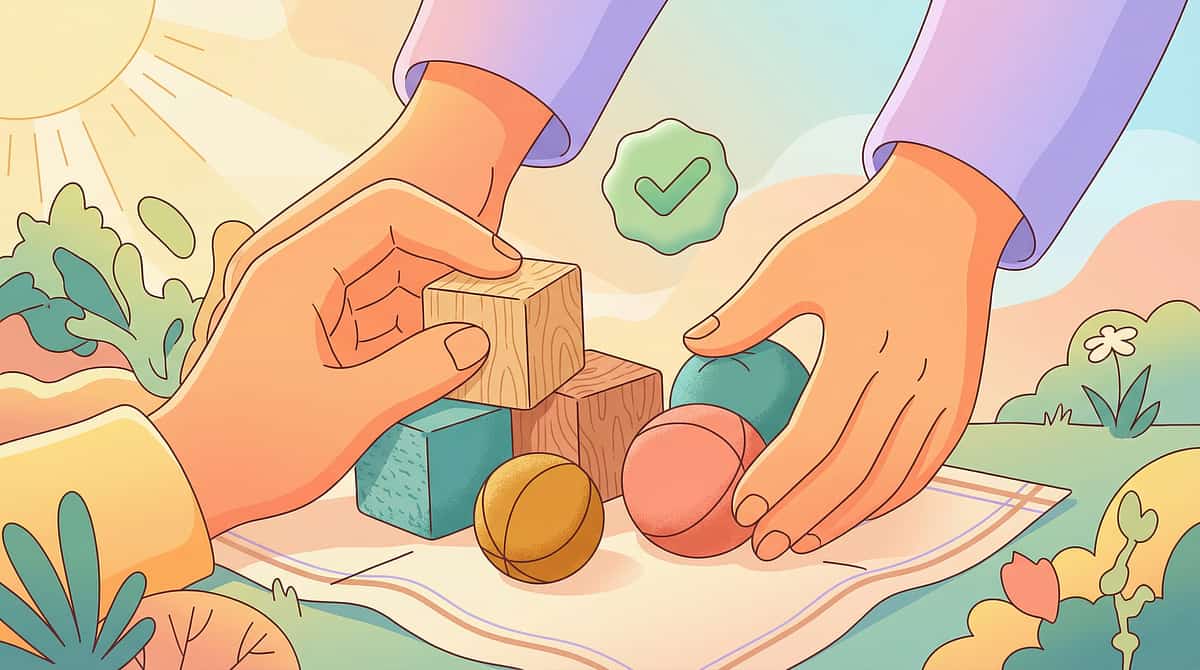
Sorting trays make categories physical and visible. Abstract grouping becomes concrete when items literally have a physical location in separate compartments. The tray's divisions do the cognitive scaffolding work — they say "these things go here, those things go there" before the child has the internal concept to do so independently.
This externalisation of category boundaries is the single most important principle in early categorisation intervention. The container creates the concept.
Recommended Product
Lattooland Rainbow Sorting Activity Set for Toddlers
💰 ₹628 | ⭐ Pinnacle Recommends
Canon Category
Sorting Activities / Categorisation
Best For
Ages 18 months–5 years. Perceptual and semantic category levels. Tactile learners and visual learners equally.
ACT II — MATERIAL 2 OF 9
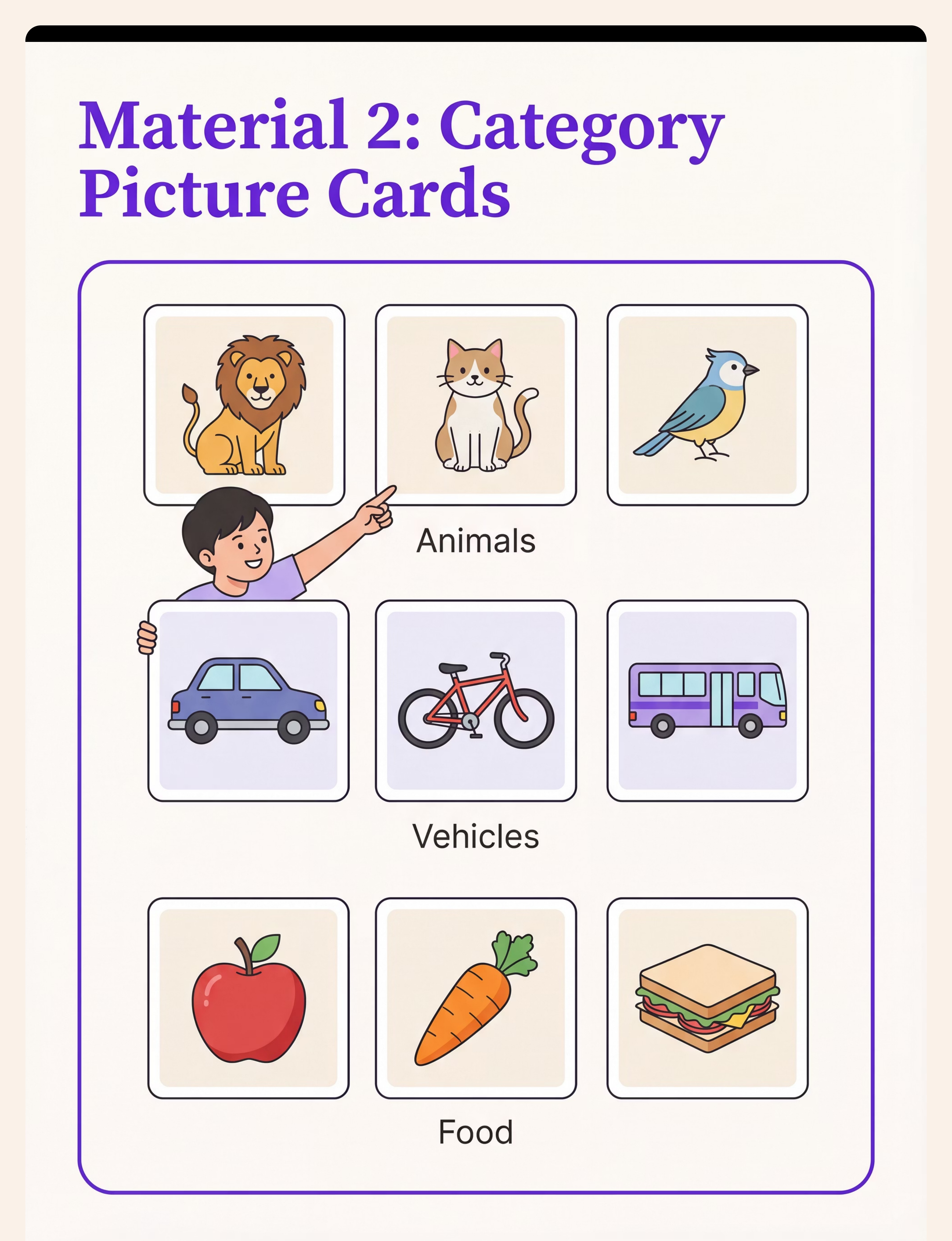
🟣 Material 2: Category Picture Cards
Why This Material Works
Picture cards provide systematic practice across all semantic categories. Standardised images focus on category-relevant attributes without the three-dimensional distraction of physical objects. Cards can be spread, shuffled, matched, and sorted in unlimited combinations — making them the single most versatile tool in the categorisation toolkit.
For children who are overwhelmed by 3D objects, cards reduce sensory demand whilst preserving the cognitive challenge of grouping by category.
Recommended Product
Brainy Bug Resources Flashcards with App-Enabled Audio Feature
💰 ₹305 | ⭐ Pinnacle Recommends
Canon Category
Sorting Activities / Categorisation
DIY Alternative
Magazine cutouts laminated; printed images from free educational websites; phone photos of household items
ACT II — MATERIAL 3 OF 9
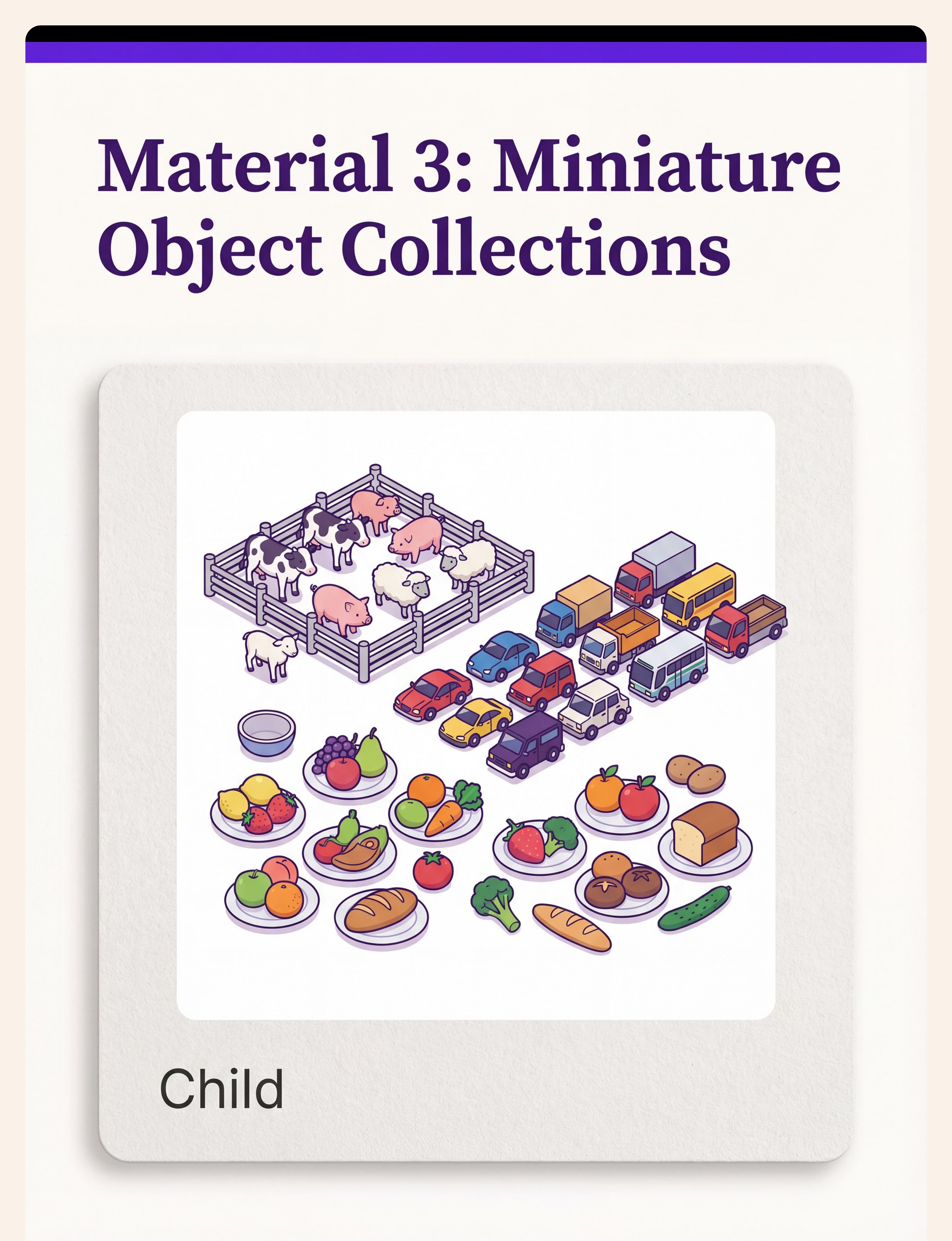
🟣 Material 3: Miniature Object Collections
Why This Material Works
Three-dimensional objects engage proprioceptive and tactile systems that flat cards cannot. When a child holds a miniature dog in their hand — feeling its weight, texture, and form — the sensory encoding of "animal" becomes multi-modal. Holdable, manipulable representations build concrete category understanding for tactile learners and for children who are not yet fully engaged by 2D stimuli.
Miniature object collections also allow for sorting in ways that cards cannot — by placing objects into containers, on mats, or in physical spaces that mirror real-world organisation.
Where to Find
💰 ₹500–2,000 range
DIY Alternative
Party favour toy sets, Happy Meal collectibles sorted by type, buttons, pasta shapes
Canon Category
Sorting Activities / Categorisation

ACT II — MATERIAL 4 OF 9
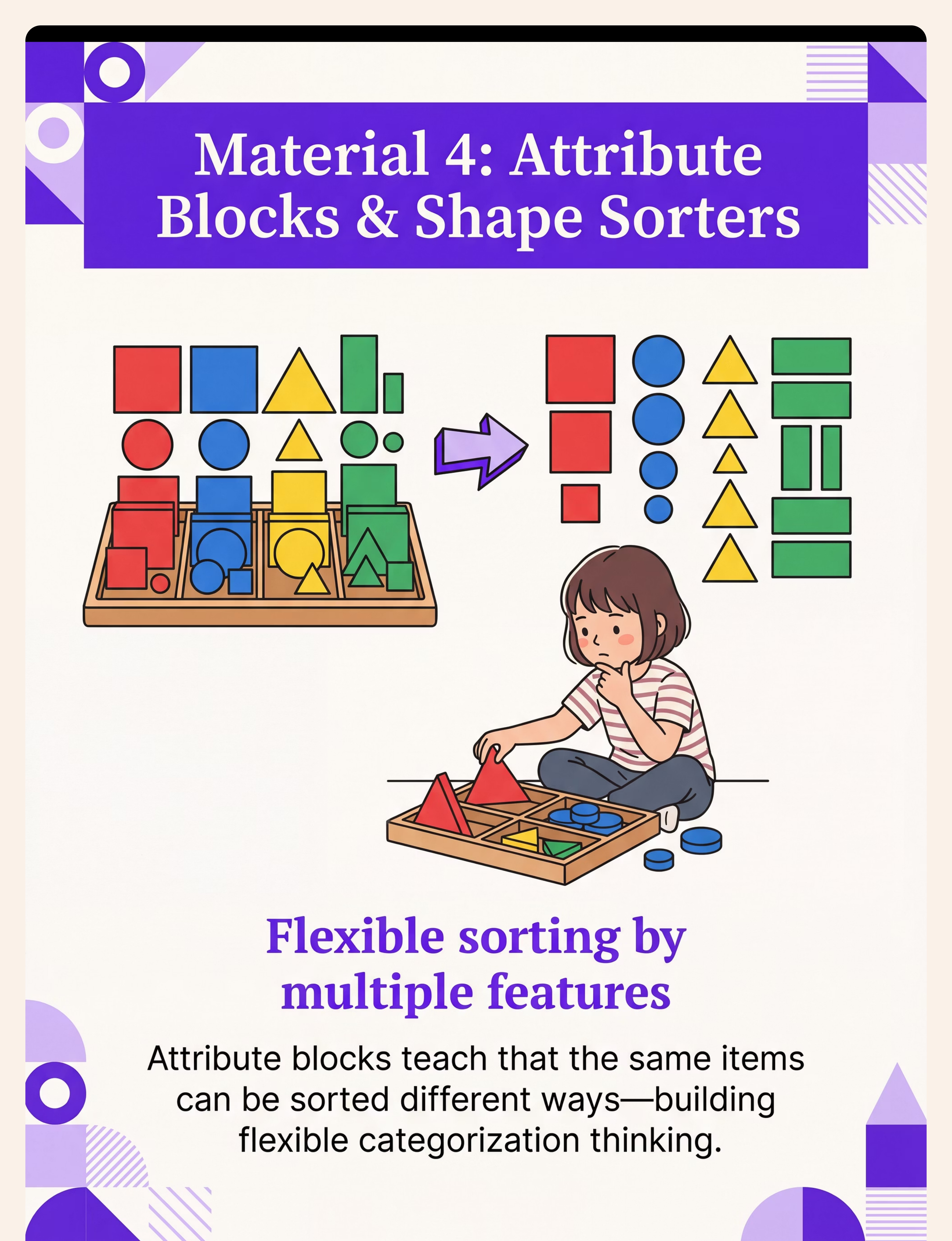
🟣 Material 4: Attribute Blocks & Shape Sorters
Why This Material Works
Attribute blocks teach flexible categorisation at its most fundamental level. The key insight these materials deliver is that the same items can be sorted by different criteria — the red circle can go with the red things OR with the circles. This cognitive flexibility — understanding that category membership is rule-dependent, not fixed — is the foundation for all higher-level categorisation work.
Shape sorters introduce this principle through physical constraint: the hole defines the rule. Attribute blocks expand it into an open sorting challenge.
Recommended Product
Dyomnizy Educational Memory Game with Shape Sorting
💰 ₹519 | ⭐ Pinnacle Recommends
Canon Category
Matching Games / Memory Games | Shape Sorters / Colour Recognition
DIY Alternative
Coloured foam shapes cut from craft sheets; buttons varying by size, colour, holes; LEGO bricks

ACT II — MATERIAL 5 OF 9
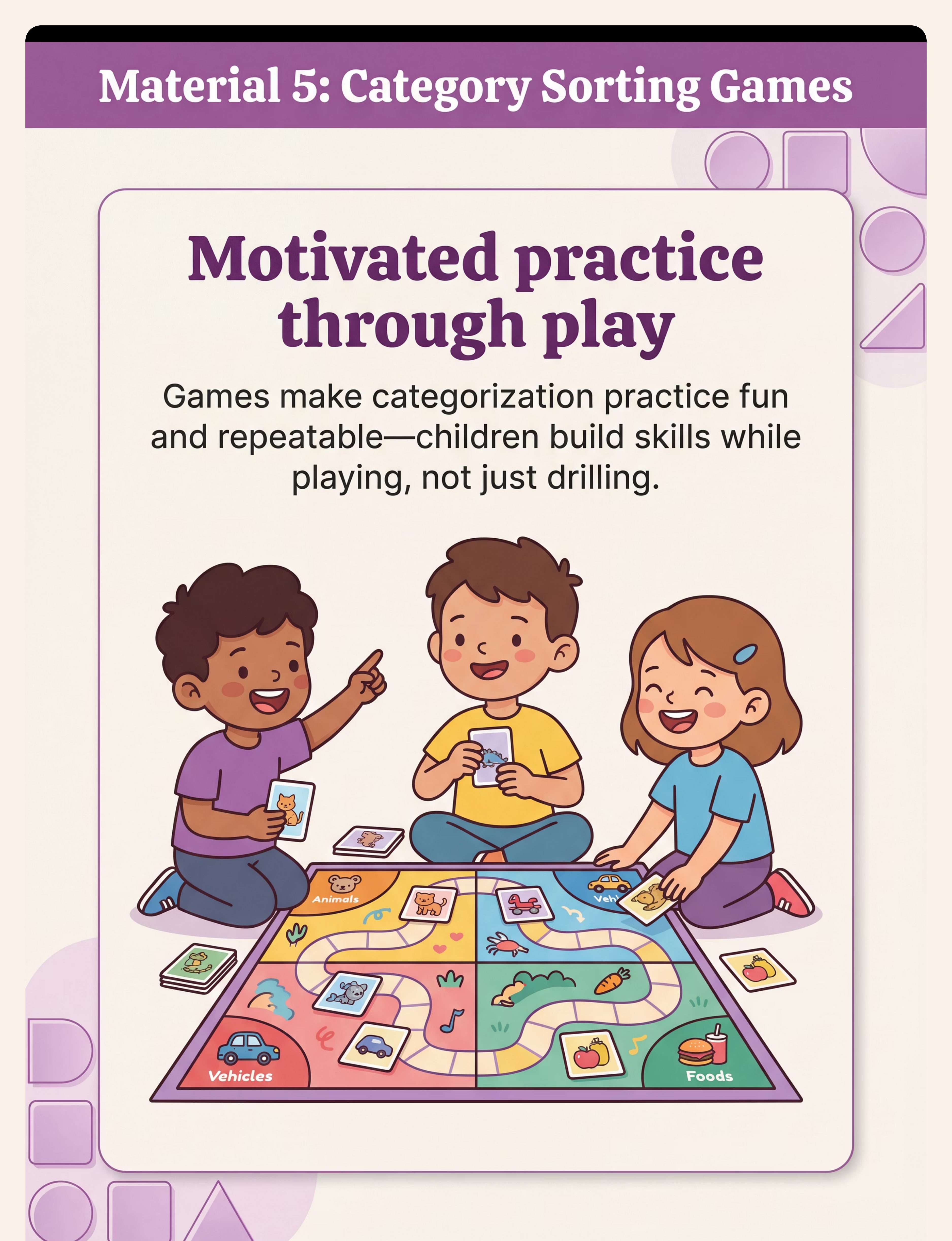
🟣 Material 5: Category Sorting Games
Why This Material Works
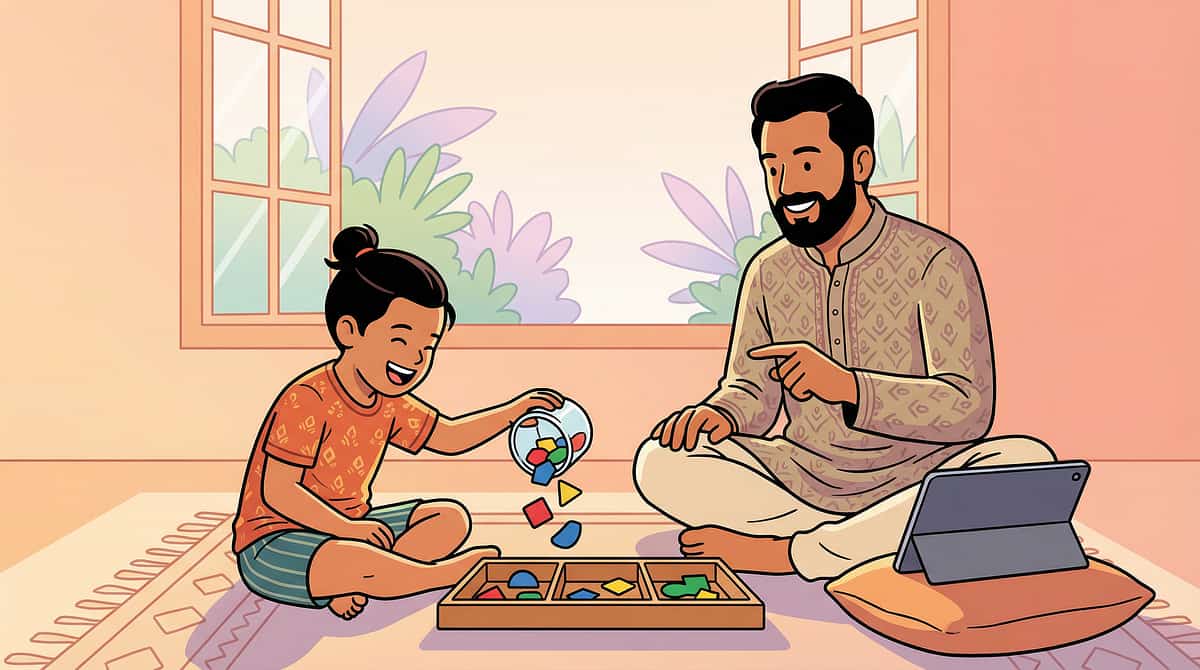
Games embed practice in motivation. When categorisation lives inside an engaging game mechanic, the child is not doing "therapy" — they are playing. This distinction matters enormously for children who have developed resistance or anxiety around learning demands.
Game-based categorisation is naturally repeatable (the child asks to play again), social (creates shared attention opportunities), and self-motivating (winning or completing provides intrinsic reinforcement). The therapeutic dose accumulates inside the fun.
Recommended Product
SHINETOY 8 Dice Shut The Box Game (adapt for categories)
DIY Alternative
DIY bingo boards; "Sort the Room" — hunt and collect household items by category
Canon Category
Sorting Activities / Categorisation | Problem-Solving Toys
ACT II — MATERIAL 6 OF 9
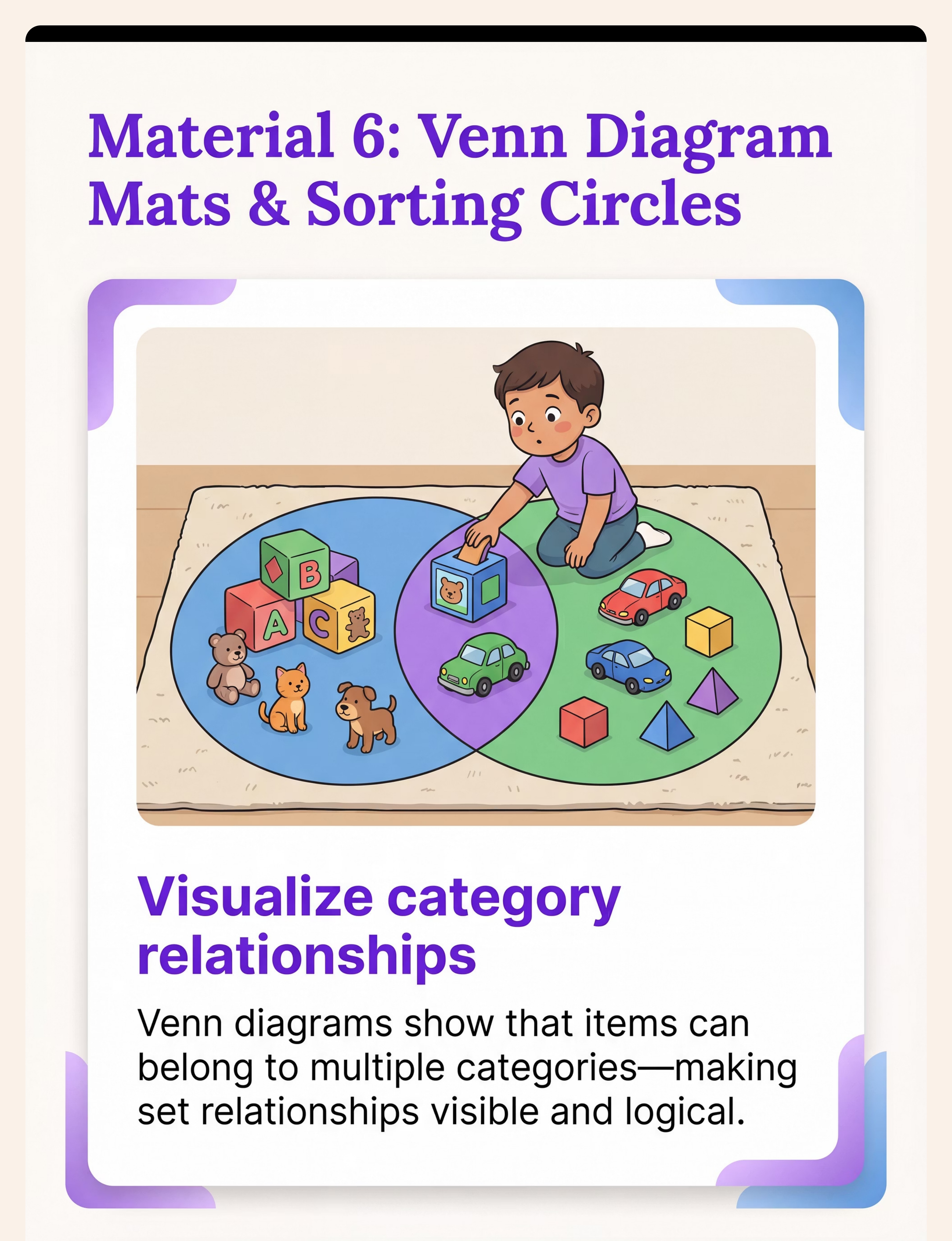
🟣 Material 6: Venn Diagram Mats & Sorting Circles
Why This Material Works
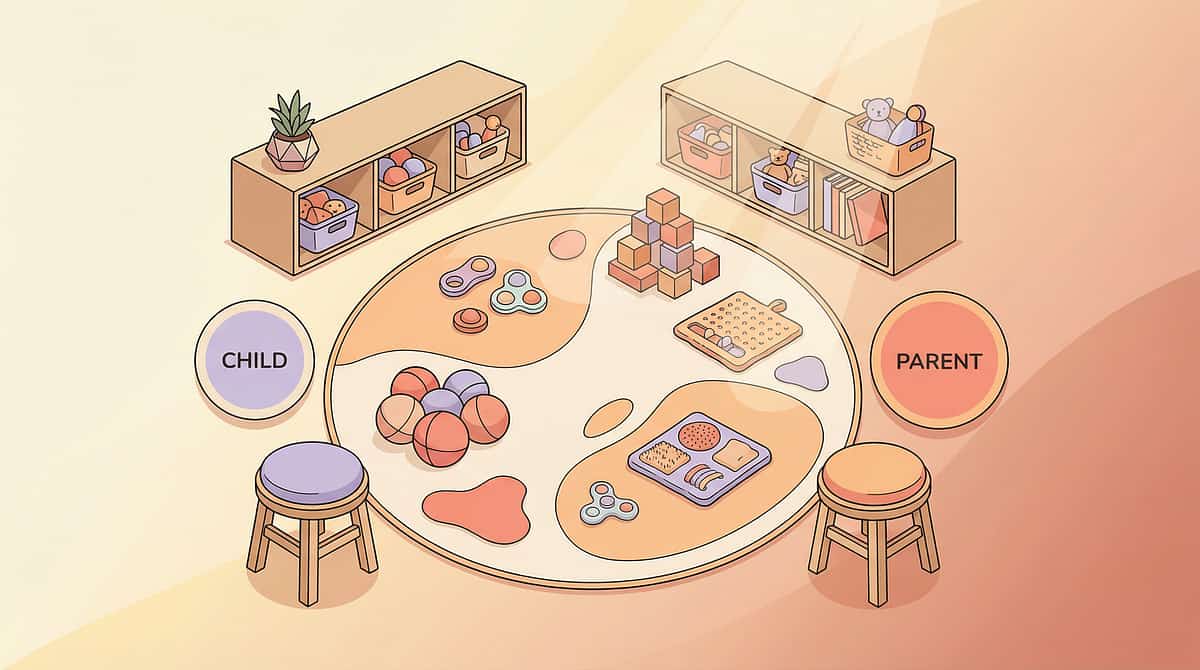
Venn diagram mats make the logic of category overlap visible. One of the most common categorisation errors children make is treating categories as mutually exclusive — an item can only be in one group. A Venn diagram mat physically shows that a duck can be both an animal AND a thing that swims.
This visual externalisation of overlap addresses the most frequent conceptual error in category development and builds towards abstract, multi-attribute flexible categorisation (Level 6). It is the bridge from rigid sorting to flexible thinking.
Where to Find
💰 ₹200–700 range
DIY Alternative
Two hula hoops overlapping; chalk circles on floor; rope or yarn circles; masking tape on carpet
Canon Category
Sorting Activities / Categorisation
ACT II — MATERIAL 7 OF 9
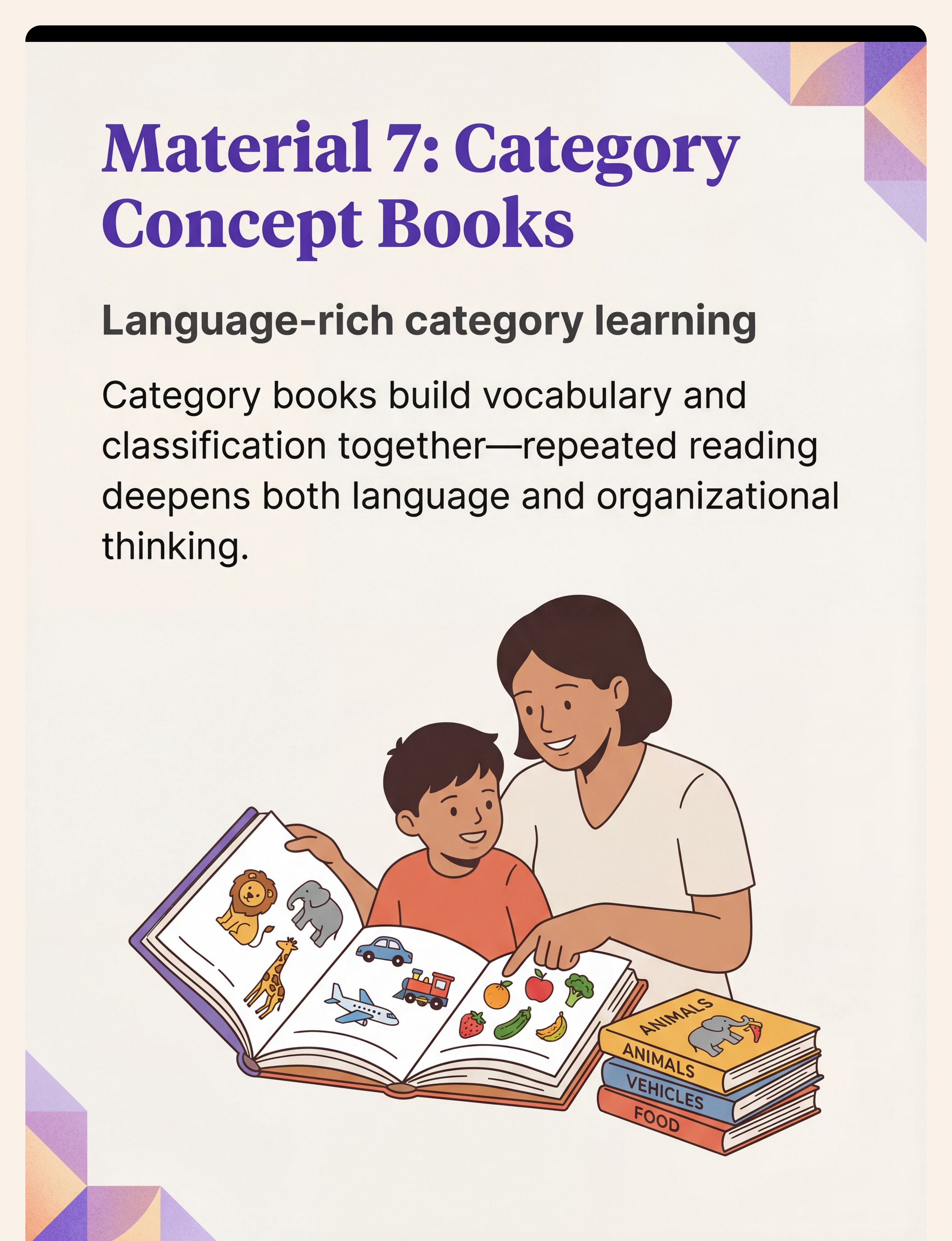
🟣 Material 7: Category Concept Books
Why This Material Works
Language-rich category exposure through narrative context. Books organised by category provide vocabulary and classification learning simultaneously — each page reinforces that these items belong together, these items share a name, and these items can be talked about as a group.
Unlike clinical materials, books come with pictures, stories, and a social reading context that creates shared attention and emotional warmth around category concepts. The child hears the adult naming categories repeatedly in a natural, non-evaluative context — exactly the input pattern that builds semantic memory.
Where to Find
💰 ₹150–600 range
DIY Alternative
Homemade books from magazine pictures; library books (free); digital category books
Canon Category
Problem-Solving Toys
ACT II — MATERIAL 8 OF 9
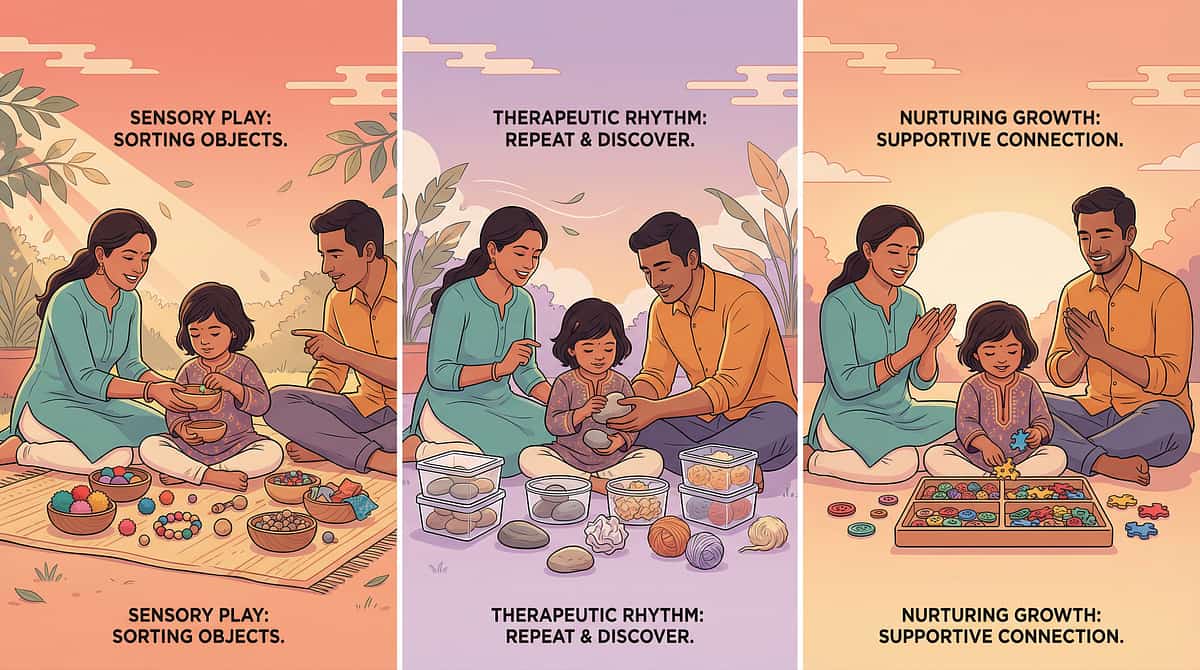
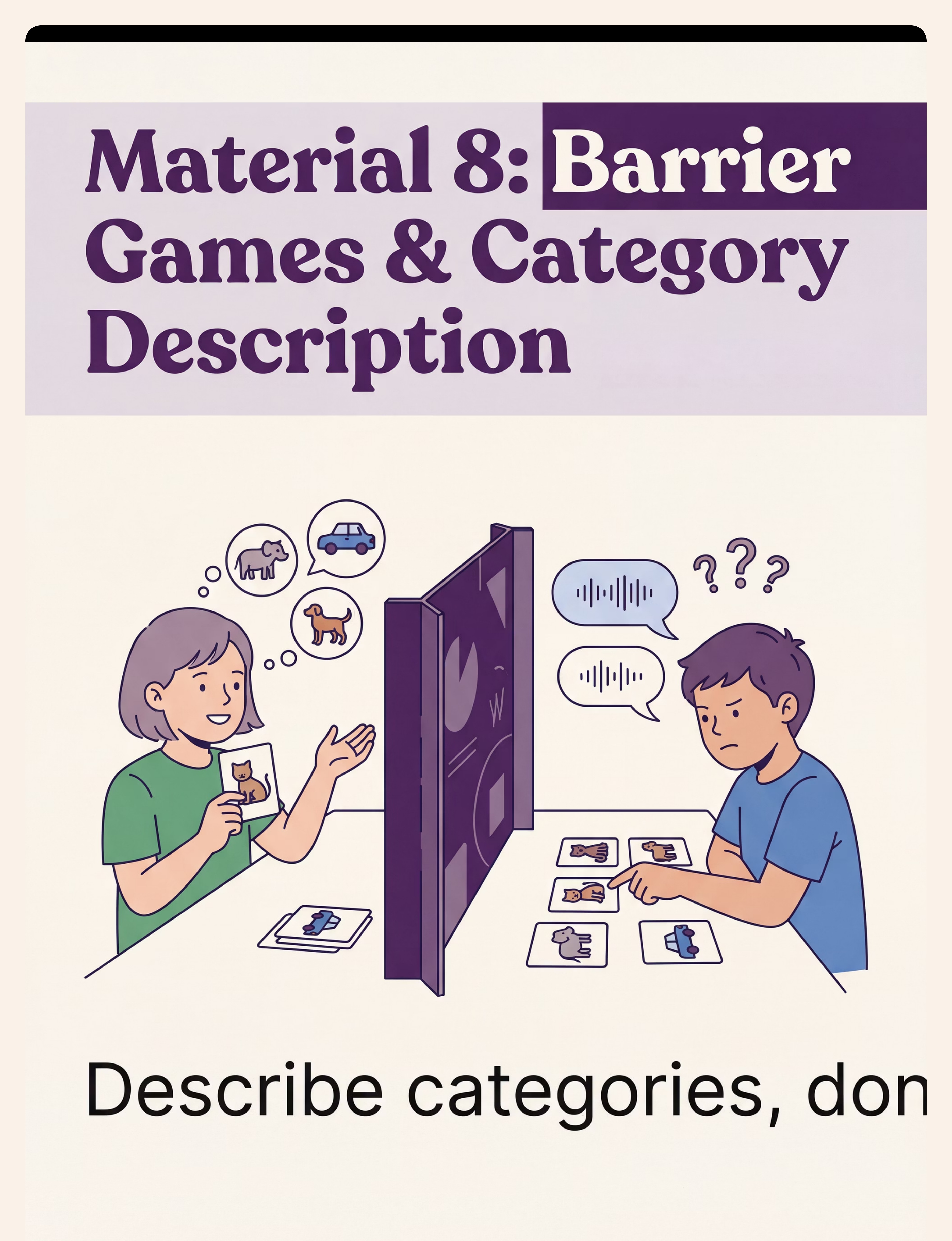
🟣 Material 8: Barrier Games & Description Materials
Why This Material Works
Barrier games bridge sorting skills to category language. In a barrier game, the child must describe items using category features — they cannot show; they must tell. This forces the leap from implicit category knowledge (I know this is an animal) to explicit verbal expression (I'm thinking of an animal that lives in water).
This is the critical transfer from receptive categorisation (sorting) to expressive categorisation (talking about categories) — the skill that directly improves vocabulary organisation and narrative language in conversation.
Where to Find
💰 ₹200–800 range
DIY Alternative
Large book standing between players; cardboard folder; two copies of printed picture cards
Canon Category
Sorting Activities / Categorisation

ACT II — MATERIAL 9 OF 9
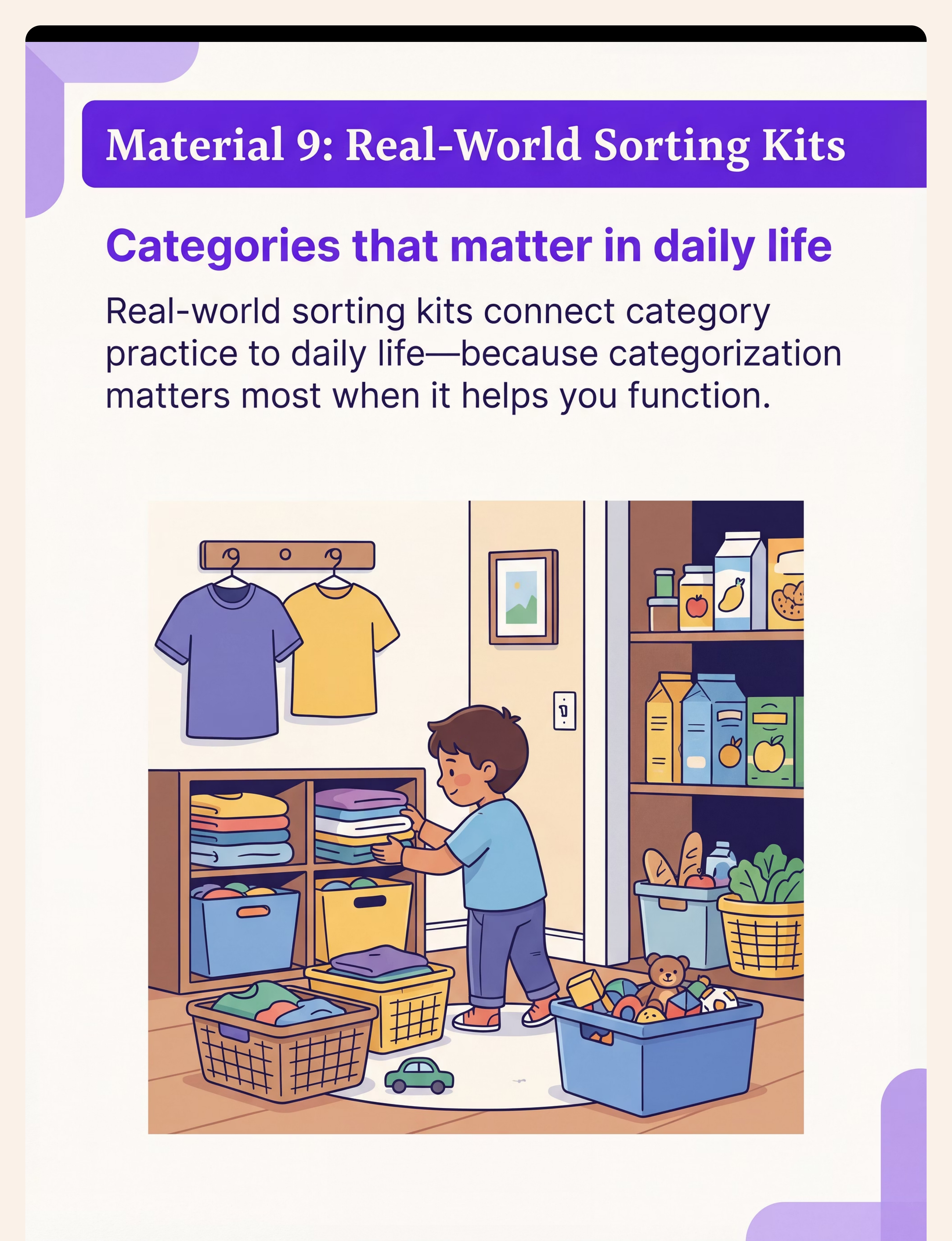
🟣 Material 9: Real-World Sorting Kits
Why This Material Works
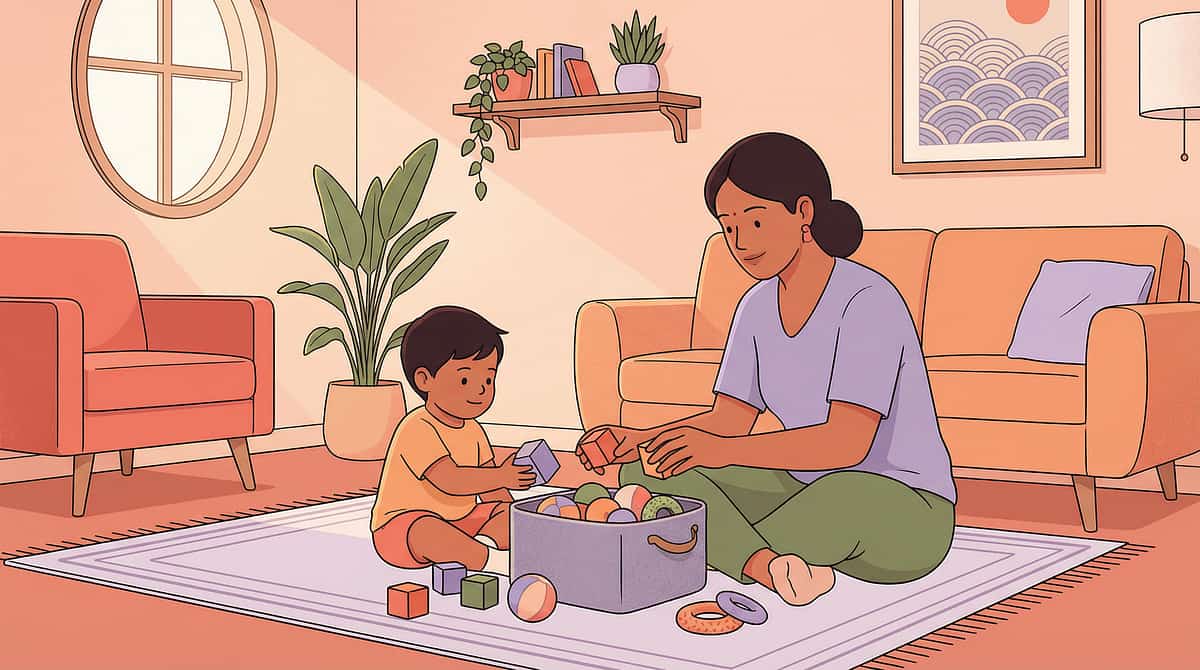
Real-world sorting kits transfer the skill to daily life. Household items, laundry, groceries, toys — categorisation practice that has functional meaning and built-in motivation. When a child sorts the laundry into dark clothes and light clothes, they are not doing therapy — they are helping. The category is real. The outcome is visible. The reinforcement is natural.
This is the final and most important transfer: from the therapy table to the living world. Everything that happens in sessions is preparation for this moment.
What You Need
💰₹0–500 — use household items
No purchase required. Everything you need is already in your home.
Examples
- Laundry — sort by type, colour, or person
- Groceries — sort after shopping trip
- Toys — sort by category at clean-up time
- Cutlery — sort into drawer sections
Full Starter Kit Estimate
₹2,300–9,300 for complete setup | Budget version: ₹0–500 using household items + DIY materials
ACT II — EQUITY & ACCESS
Zero-Cost Versions of Every Categorisation Material
Because equity is non-negotiable — every family deserves access to evidence-based intervention regardless of budget.
Material | 🛒 Buy This | 🏠 Make This (Free) | |
Sorting Trays | Lattooland sorting set ₹628 | Muffin tin, egg carton, ice cube tray, divided plate — already in your kitchen | |
Category Cards | Brainy Bug flashcards ₹305 | Magazine cutouts laminated; printed images from free educational websites; phone photos | |
Miniature Objects | Safari Ltd animal sets ₹500–2,000 | Party favour toy sets, Happy Meal collectibles sorted by type, buttons, pasta shapes | |
Attribute Blocks | Commercial block set ₹400–1,500 | Coloured foam shapes cut from craft sheets; buttons varying by size, colour, holes; LEGO bricks | |
Sorting Games | Commercial game ₹300–1,000 | DIY bingo boards; "Sort the Room" — hunt and collect household items by category | |
Venn Diagrams | Commercial mat ₹200–700 | Two hula hoops overlapping; chalk circles on floor; rope or yarn circles; masking tape | |
Category Books | Commercial books ₹150–600 | Homemade books from magazine pictures; library books (free); digital category books | |
Barrier Games | Commercial sets ₹200–800 | Large book standing between players; cardboard folder; two copies of printed picture cards | |
Real-World Kits | No purchase needed | Laundry, groceries, toys — categorisation practice at clean-up and meal times |
"The therapeutic principle of categorisation training is physical separation of items into groups. Any container, any household items, any visual boundary creates the same cognitive demand as clinical materials. The brain doesn't know the difference between a muffin tin and a ₹2,000 sorting tray — it only knows: separate, group, organise."

ACT II — SAFETY
Read This Before the First Sorting Session
1
🟢 GREEN — Proceed
- Child is fed, rested, and in a calm-alert state
- Materials are age-appropriate (no small parts for children under 3)
- Space is clear of competing stimuli
- Child has had a bowel/bladder break if needed
- Adult is present and engaged (not distracted)
2
🟡 AMBER — Modify
- Slightly tired → shorten to 5 minutes; reduce to 2 categories
- Sensory-overloaded → 1 material type; reduce number of items
- Recent emotional dysregulation → skip demands; free play first
- Limited interest → follow child's lead; use preferred materials only
3
🔴 RED — Stop / Do Not Start
- Child is ill, running a fever, or in acute pain
- Child is in active meltdown or significant emotional distress
- Materials are unsafe for child's age (choking hazard for under-3s)
- Child shows extreme aversion — do not force; consult therapist
Material Safety Notes
- ⚠️ Small objects (attribute blocks, miniature animals): supervised use only under age 3
- ⚠️ Laminated cards: check for sharp lamination edges; round all corners
- ⚠️ Sorting trays: ensure no sharp compartment edges
- ⚠️ Floor sorting circles (hula hoops, ropes): secure to prevent trip hazards
- ✅ All Pinnacle-recommended Amazon products meet standard safety ratings
"The best session is one that starts right. A session that begins when the child isn't ready accomplishes nothing and may create aversion to the activity itself." — 📞 For safety questions: FREE Helpline 9100 181 181

ACT II — ENVIRONMENT SETUP
Set Up Your Space — Before You Call Your Child
The optimal categorisation environment should be set up 2 minutes before the child arrives. Every variable in the environment is either supporting your child's focus or competing with it.
1
Materials
Lay out ONLY the materials for this session — not everything at once
2
Sorting Trays
Position in centre of workspace, oriented so child can reach all sections
3
Starting Items
Place 6–8 items (2–3 per category) to the left of the tray; rest in reserve
4
Visual Labels
Category header cards visible at each tray section if using
5
Remove Distractors
TV, other toys, phones (face down + silent), competing visual clutter
6
Environment
Bright natural or warm light; quiet or soft neutral music; comfortable temperature
7
Your Chair
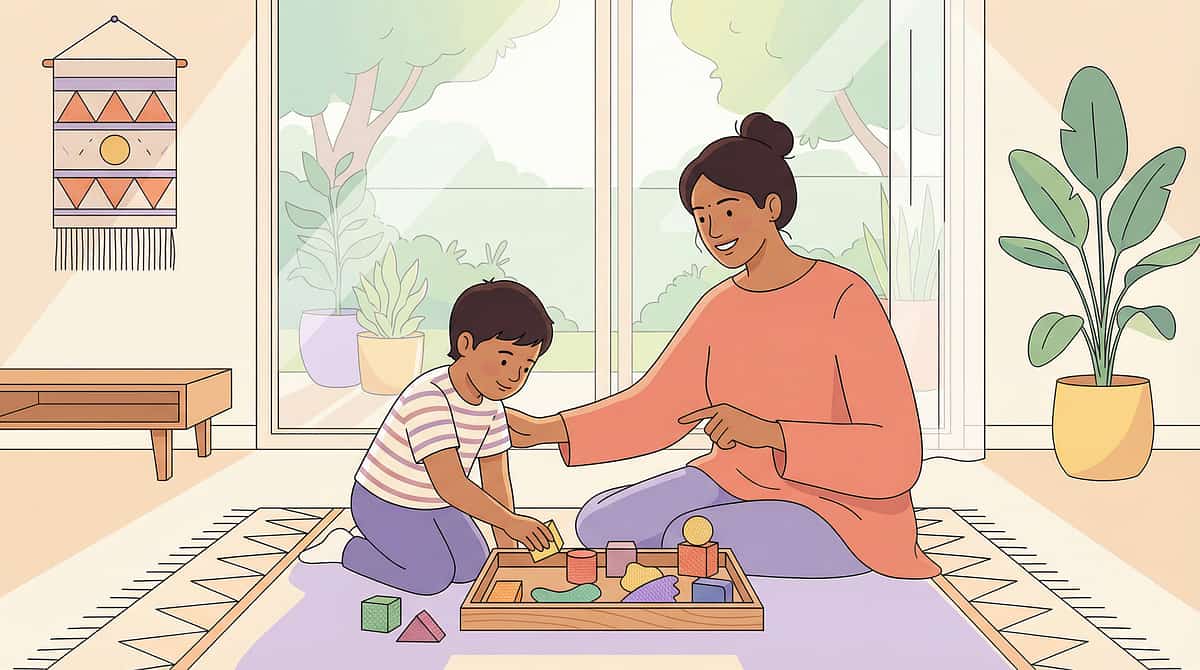
Positioned to the SIDE (not opposite) — collaborative, not interrogative
"Set the stage so the materials are the most interesting thing in the room."
ACT III — THE EXECUTION
60-Second Pre-Session Readiness Check
Run this check every time — before every single session. It takes 60 seconds and prevents wasted sessions.
✅ Indicator | 🟢 GO | 🟡 MODIFY | 🔴 POSTPONE | |
Fed in last 2 hours? | Yes | Just had small snack | No / very hungry | |
Rested? | Alert + calm | Slightly tired | Exhausted or hypersensitive | |
Regulated? | Settled, baseline | Mildly elevated | Active meltdown or shutdown | |
Recent meltdown? | More than 2 hours ago | 1–2 hours ago | Less than 1 hour ago | |
Signs of illness? | None | Mild/recovering | Fever, active illness | |
Engaged with you? | Making contact | Tolerating presence | Avoiding, withdrawn |
✅ 4+ GO
Proceed with full session plan
🟡 2–3 MODIFY
Run simplified version: 2 categories, 5 items, 5 minutes, child leads
🔴 Any POSTPONE
Skip session; offer 10 minutes free play; try again tomorrow

ACT III — STEP 1 OF 6
Step 1: The Invitation — Begin With Curiosity, Never Command
⏱️ Duration: 30–60 seconds
"Hey [child's name], look what I found! I've got all these things mixed up — can you help me figure out where they all go?"
Script Variations
For younger/less verbal children:
"Look — a dog! And a car! And an apple! Let's see... [hold items up one at a time, with genuine curiosity in voice]"
"Look — a dog! And a car! And an apple! Let's see... [hold items up one at a time, with genuine curiosity in voice]"
For visual learners:
Hold the tray, point to sections without speaking. Wait 5–10 seconds. See if curiosity draws the child in.
Hold the tray, point to sections without speaking. Wait 5–10 seconds. See if curiosity draws the child in.
Body Language
- Sit BESIDE the child, not opposite
- Body angled toward materials — less pressure on child
- Genuine curiosity face — you are discovering together
- Voice: warm, relaxed — not high-pressure "learning voice"
Acceptance Cues — Child is Ready
- Looks at the materials
- Moves toward the table
- Picks up or touches an item
- Makes any vocalization about the items
Resistance Cues — Modify
- Pushes materials away → move slightly back; reduce demand
- Walks away → follow with one item, offer without pressure
- Begins stimming → wait; this may be processing
- Verbal protest → "You don't want to right now. That's okay. The things are here when you're ready."

ACT III — STEP 2 OF 6
Step 2: The Engagement — Introduce the First Category
⏱️ Duration: 1–3 minutes
Name it, show it, let them touch it.
"See these? [Hold up dog, cat] These are both ANIMALS. They're the same kind of thing — animals. Let's give them a home here [place in left section of tray]."
Script by Categorisation Level
Level 1 — Perceptual (colour/shape):
"See this one? It's red. And this one? It's red too. Red things go here."
"See this one? It's red. And this one? It's red too. Red things go here."
Level 2 — Functional:
"This is a fork. This is a spoon. These are both things you eat with. Let's put them together."
"This is a fork. This is a spoon. These are both things you eat with. Let's put them together."
How to Present Materials
- Hold items at child's eye level or slightly lower
- Present one at a time initially
- Name each item AND its category
- Pause after each placement; look with expectation (not pressure)
Child Response Spectrum
- 🟢Engagement: Child reaches for items, begins placing independently → reduce prompts, follow their lead
- 🟡Tolerance: Child watches but doesn't act → model 2–3 more placements; offer item directly into child's hand
- 🔴Avoidance: Child looks away, moves away → reduce to 2 items; narrate without demanding
Reinforcement Cue
The moment the child places any item — even in the wrong location — say: "Yes! You put it there! [pause] Should this one be with the animals or the vehicles? Let's check." Reinforce the ATTEMPT, correct the categorisation gently.

ACT III — STEP 3 OF 6
Step 3: The Therapeutic Action — Systematic Sorting With Category Naming
⏱️ Duration: 5–10 minutes — 40–60% of session time
The active ingredient. Present a mixed collection of 6–12 items (2–4 per category). Ask the child to sort them into the tray sections. The therapeutic event is not just the physical sorting — it is the adult naming categories during the sort AND the child gradually beginning to apply category labels independently.
1
Round 1 — Guided Sorting
Place all items in a pile. Ask: "Can you find all the ANIMALS? Put them here." Model first item if needed. Name each item + category as child sorts. Complete one category before introducing the next.
2
Round 2 — Independent Sorting
Mix items again. Ask: "Can you sort everything? Animals here, vehicles here, food here." Observe without prompting — note which items child hesitates on. After sorting: "Tell me about this group. What are these?"
3
Round 3 — Category Naming
Point to completed category: "What do we call all of these?" Accept any approximation: "anem-als," pointing, signing. Model the word: "Animals. They're all animals."
Common Execution Errors
- ❌ Going too fast — give 5–10 seconds processing time between items
- ❌ Correcting every error immediately — let the child finish placing, then review together
- ❌ Asking "Why?" questions prematurely — categorisation first, explanation later
- ❌ Using too many items at once — 6–8 items maximum for beginners
- ❌ Using only pictures — alternate with 3D objects for multi-sensory encoding

ACT III — STEP 4 OF 6
Step 4: Repeat & Vary — Dosage Matters
⏱️ Duration: 3–5 minutes
Target: 3–5 complete sorting rounds per session
"3 good repetitions beat 10 forced ones — every time."
▸ Vary the CATEGORIES
Session A: Animals + Vehicles + Food
Session B: Clothing + Furniture + Tools
Session C: Colours (red, blue, yellow)
Session D: Shapes (circles, squares, triangles)
Rotate systematically to build broad category knowledge
Session B: Clothing + Furniture + Tools
Session C: Colours (red, blue, yellow)
Session D: Shapes (circles, squares, triangles)
Rotate systematically to build broad category knowledge
▸ Vary the MATERIALS
Day 1: Picture cards
Day 2: Miniature 3D objects
Day 3: Real household items
Day 4: Mix of pictures + objects
Variation prevents habituation and builds generalisation
Day 2: Miniature 3D objects
Day 3: Real household items
Day 4: Mix of pictures + objects
Variation prevents habituation and builds generalisation
▸ Vary the DEMAND LEVEL
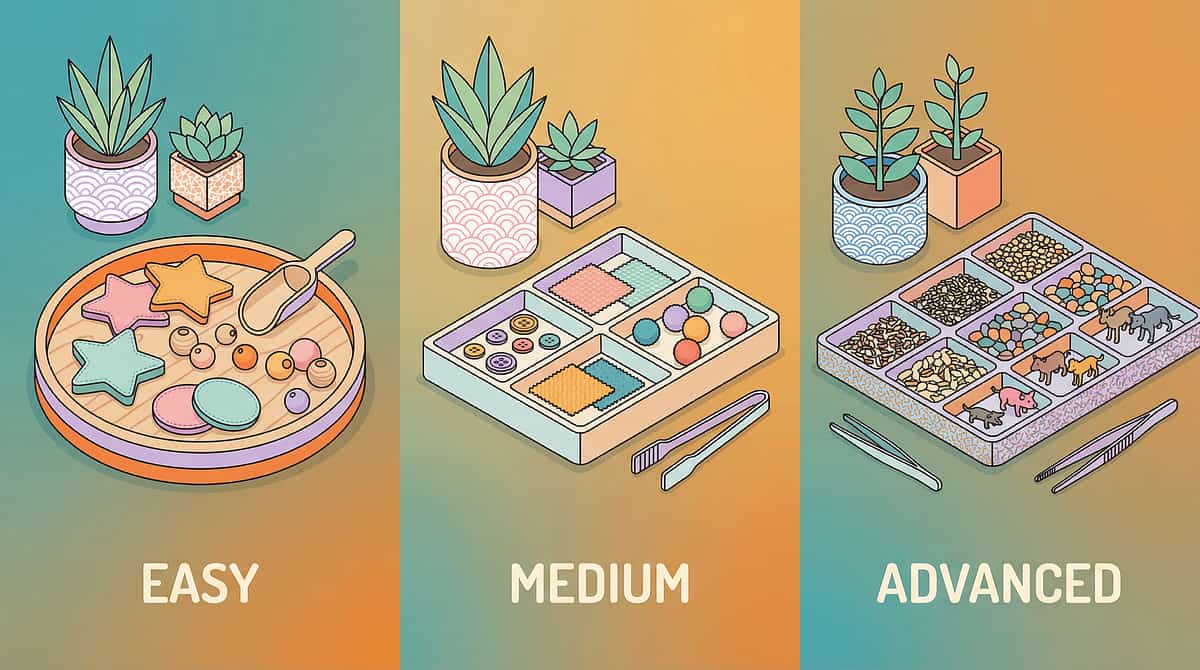
Easy: Sort 2 categories, 4 items each
Medium: Sort 3 categories, 4 items each
Hard: Sort 3 categories including "odd one out"
Expert: Re-sort same items by a different criterion
Medium: Sort 3 categories, 4 items each
Hard: Sort 3 categories including "odd one out"
Expert: Re-sort same items by a different criterion
▸ Vary the FORMAT
Tray sorting → Card matching → Game (go fish by category) → Real-world sort
Satiation Indicators — Child Has Had Enough
- Begins doing anything else with the materials (stacking, throwing, examining non-categorically)
- Eye contact decreasing despite prompts
- Response time increasing dramatically
- Affect flattening or irritability emerging
- Attempting to leave the activity
At satiation: "We did so much sorting! Let's put everything away." Child participates in clean-up = bonus categorisation practice.

ACT III — STEP 5 OF 6
Step 5: Reinforce & Celebrate — Timing Matters More Than Magnitude
⏱️ Within 3 seconds of any correct categorisation
1
For a correct placement:
"YES! The dog goes with the animals — you got it!"
"YES! The dog goes with the animals — you got it!"
2
For attempting (even if incorrect):
"You tried! I love that you're thinking about it. Let's look together — is this animal or vehicle?"
"You tried! I love that you're thinking about it. Let's look together — is this animal or vehicle?"
3
For naming a category correctly:
"ANIMALS! You said animals! That's exactly right!"
"ANIMALS! You said animals! That's exactly right!"
4
For completing an entire sort:
"Look at that — you sorted everything! Animals here, vehicles here, food here. You did that!"
"Look at that — you sorted everything! Animals here, vehicles here, food here. You did that!"
Type | Example | When to Use | |
Verbal praise | "Yes! Animals! You got it!" | Every attempt; every success | |
Physical affirmation | High five, thumbs up, hug if welcomed | After completing a full sort | |
Token | Sticker on chart | After every 3–5 correct placements | |
Tangible | Brief access to preferred toy | At session end |
Recommended reinforcement products: 🌟 Reward Jar — The Rosette Imprint ₹589 | 🌟 1800+ Reward Sticker Book ₹364
"Celebrate the attempt, not just the success. A child who tries and fails is building a skill. A child who doesn't try is not. Reinforce the bravery of the attempt first."
ACT III — DATA
Capture the Data — Right Now
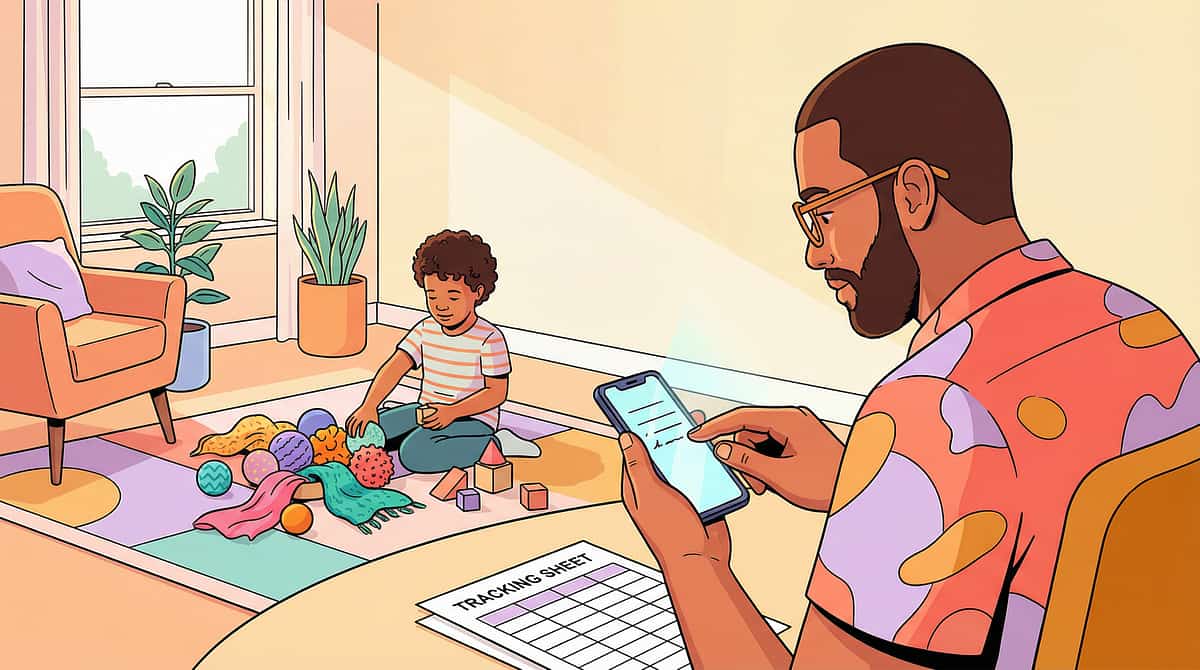
60 seconds of data now saves hours of guessing later. Track these 3 data points within 60 seconds of every session ending.
1
Session Completion
Full session ✅ / Modified session 🟡 / Postponed 🔴
Duration: ___ minutes
Duration: ___ minutes
2
Categorisation Performance
1 — Refused / no engagement
2 — Tolerated with full prompting
3 — Sorted with moderate prompting
4 — Sorted with minimal prompting
5 — Sorted independently with category naming
2 — Tolerated with full prompting
3 — Sorted with moderate prompting
4 — Sorted with minimal prompting
5 — Sorted independently with category naming
3
Child State
Regulation level at session end: Calm / Slightly elevated / Dysregulated
Any notable behaviours: ___________
Any notable behaviours: ___________
"You are not doing clinical research. You are collecting breadcrumbs. A trail of weekly ratings shows you the trend — and the trend is what tells you whether the intervention is working."
📞 FREE Helpline 9100 181 181 for data interpretation support. Log in GPT-OS® App → Cognitive Domain → G-669 for digital tracking.

ACT III — TROUBLESHOOTING
When It Didn't Go as Planned — Problem-Solution Pairs
Problem 1: Child Sorted Everything Randomly
Why: Child may not yet have the concept that items CAN be grouped — binary sort first.
Fix: Reduce to 2 categories only; use highly contrasting items (tiny dog toy vs. toy car); model extensively before asking child to sort.
Fix: Reduce to 2 categories only; use highly contrasting items (tiny dog toy vs. toy car); model extensively before asking child to sort.
Problem 2: Child Sorted by Colour Regardless
Why: Perceptual features are more salient than categorical membership — this is developmental.
Fix: HONOUR this — colour sorting IS categorisation at Level 1. Use it as a bridge: "Yes! The red ones! And some of the red ones are animals..." Dual criteria sorting comes later.
Fix: HONOUR this — colour sorting IS categorisation at Level 1. Use it as a bridge: "Yes! The red ones! And some of the red ones are animals..." Dual criteria sorting comes later.
Problem 3: Child Refused After Initial Engagement
Why: Cognitive demand may have increased too quickly; task may feel evaluative.
Fix: Remove expectation; do "parallel play" — you sort, narrating aloud; don't require anything; curiosity usually returns within 2–3 minutes.
Fix: Remove expectation; do "parallel play" — you sort, narrating aloud; don't require anything; curiosity usually returns within 2–3 minutes.
Problem 4: Child Mastered Sorting but Won't Name Categories
Why: Receptive category knowledge ahead of expressive language — very common.
Fix: Accept non-verbal responses (pointing, selecting header card); model the category name without requiring repetition; pair with AAC/PECS if applicable.
Fix: Accept non-verbal responses (pointing, selecting header card); model the category name without requiring repetition; pair with AAC/PECS if applicable.
Problem 5: Child Became Distressed When Items "In Wrong Place"
Why: Inflexibility may signal need for explicit flexible categories instruction.
Fix: Introduce "mistake cards" — deliberately place one wrong; make it playful: "Oops! The dog is with the food! That's silly!" Show that errors are correctable, not catastrophic.
Fix: Introduce "mistake cards" — deliberately place one wrong; make it playful: "Oops! The dog is with the food! That's silly!" Show that errors are correctable, not catastrophic.
Problem 6: Familiar Categories Fine, Novel Ones Fail
Why: Category knowledge is item-specific, not yet rule-based — generalisation not yet established.
Fix: Introduce 2 new category members per session; explicitly connect: "Look — penguin! Is a penguin an animal? Let's think: does it have a body like animals?"
Fix: Introduce 2 new category members per session; explicitly connect: "Look — penguin! Is a penguin an animal? Let's think: does it have a body like animals?"
Problem 7: Session Ended in Meltdown
"Session abandonment is not failure — it is data. Something in this session was too much: too many items, too many demands, wrong time of day, wrong state. Document what was happening when the distress escalated. That's your signal."
ACT III — PERSONALISATION
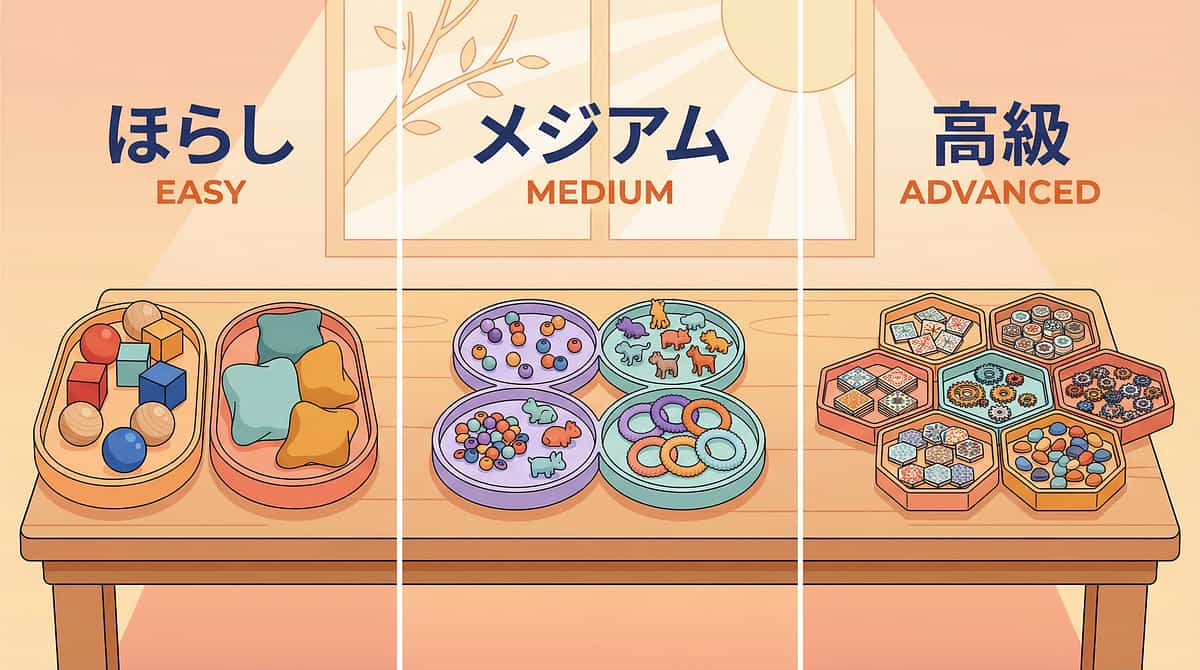
Adapt & Personalise — Tuning the Technique to Your Child
Your child is unique. These modifications ensure the technique fits their exact sensory, cognitive, and language profile.
For the Sensory Seeker
Use 3D miniature objects rather than flat cards. Add sensory bins: bury items in rice or beans, find and sort. Large-scale floor sorting with hula hoop circles and full-body movement. Category bingo with physical markers.
For the Sensory Avoider
Begin with pictures only — no tactile demands. Allow distance from materials: child points, adult places. Use familiar, preferred objects as category examples first. Slow presentation; no surprises.
For the Visual Learner
Category header cards always visible with image + word. Colour-code tray sections to match category labels. Venn diagram mat as visual anchor. Written category words for literate children.
For the Verbal Learner
Emphasise oral naming throughout. "Tell me about this group" prompts after every sort. Barrier game format: describe, don't show. Category naming games (I Spy, category 20 questions).
Age | Adaptation | |
2–3 years | 2 categories only; highly contrasting; 4 items max; perceptual features (colour, shape) | |
3–5 years | 2–3 semantic categories; 6–8 items; picture cards + objects | |
5–7 years | 3–4 categories; introduce odd-one-out; begin hierarchical categories | |
7–10 years | Multi-attribute sorting; Venn diagrams; abstract categories; barrier games |
ACT IV — THE PROGRESS ARC
Week 1–2: What to Expect Before You Worry
Progress: ~15%
What You Will Likely See
- ✅ Child tolerates the activity for longer than day 1 (even 30 seconds more = progress)
- ✅ Child looks at the materials with interest, even without sorting
- ✅ Child accepts adult naming of categories without protest
- ✅ Child begins imitating your placement (without being asked)
- ✅ Session completion improving: 3 minutes → 5 minutes → 8 minutes
What Is NOT Expected Yet
- ❌ Independent sorting without prompts
- ❌ Naming categories spontaneously
- ❌ Generalising categories to new settings
- ❌ Verbal explanation of why items belong together
"If your child tolerates the tray for 3 seconds longer than last week — that is real, measurable neural pathway activity. Early-phase categorisation progress is invisible to the naked eye. You are measuring tolerance today. Mastery comes later."
Parent Emotional Note: Weeks 1–2 are the hardest. You are building the habit, not yet seeing the results. The urge to stop is highest here. The data shows that families who persist through this phase reach measurable outcomes by weeks 5–8 in 97%+ of cases (Pinnacle clinical data). 📞 FREE Helpline 9100 181 181 if weeks 1–2 feel impossible.

ACT IV — THE PROGRESS ARC
Week 3–4: The Neural Pathways Are Forming
Progress: ~40%
🧠 Anticipation
Child anticipates the activity — goes to the table when materials appear
🧠 Agency
Child selects preferred items to sort first, showing ownership within the task
🧠 Independence
Child begins placing items correctly before adult prompts
🧠 Engagement
Sessions reaching 10–15 minutes with maintained engagement
"When your child starts EXPECTING the activity and moving toward it — that is the first sign that the categorisation schema is forming in long-term memory. The brain is beginning to have a place for this skill."
Spontaneous Generalisation Seeds — watch for these outside of sessions (celebrate if you see them):
- Child grouping their own toys at play
- Child noticing "those are the same kind"
- Child responding to category-based instructions ("get something to drink") more reliably
When to Increase: If child is sorting 2 categories independently for 3+ sessions → add a 3rd category.
"You may notice you're more confident too. You've built a routine, learned to read the readiness signals, and adapted the technique to your child. That skill is yours — it transfers to every technique that follows."
ACT IV — THE PROGRESS ARC
Week 5–8: The Mastery Criteria
Progress: ~75%
🏆 Mastery Milestone
Specific, observable, measurable. All 3 criteria required for mastery.
1
Independent Sorting
Child sorts a novel set of items (never seen in session before) into correct categories without prompting — 3 consecutive sessions
2
Category Naming
Child can name the category when shown a completed group — at least 3 different categories
3
Generalisation
Child demonstrates category behaviour in at least one natural setting outside of structured sessions (clean-up, grocery sort, meal preparation)
Skill Level | Mastery Indicator | |
Perceptual (Level 1) | Independently sorts any new items by colour, shape, or size | |
Semantic (Level 3) | Names 5+ different categories; sorts items into correct named groups | |
Flexible (Level 6) | Re-sorts same items by different criteria when asked |
"Mastery is the beginning of generalisation. The skill now lives in your child's cognitive toolkit. The next step is deploying it across every domain — vocabulary, classroom, daily life, social reasoning. That is where the real transformation happens."

ACT IV — CELEBRATION
You Did This. Your Child Grew Because of Your Commitment.
Over 5–8 weeks, you have executed categorisation sessions consistently 3–5 times per week, learned to read your child's readiness signals, modified in real-time, and reinforced systematically. You have witnessed your child build the mental filing system that will organise their language, learning, and daily life.
"When you started, your child treated every object as if it existed in isolation. No connections. No groups. No patterns. Today, your child can look at a dog and a cat and a fish and say — or show — that they belong together. You gave your child a shelf to put their knowledge on. That is irreversible."
🏡 Family Celebration
Create a "Categories Walk" — walk through your neighbourhood or a market and play "find something in the [category]." Make the skill visible in the world.
📓 Journal Prompt
"Date: ___ | My child sorted [X categories] independently today. The look on their face when they put the last item in the right spot was ___."
📞 Share Your Story
Call the FREE Helpline 9100 181 181 to share your achievement. Your experience helps every family that follows.

ACT IV — SAFETY
Red Flags — When to Pause and Seek Guidance
These signs mean pause — even during otherwise successful progress. Trust your instincts.
Red Flag | What It Looks Like | Why It Matters | What To Do | |
Severe distress during categorisation | Meltdowns at task introduction, hours of recovery time | May indicate sensory processing or anxiety disorder requiring clinical assessment | Pause; consult Pinnacle SLP + OT | |
Rigid, inflexible categorisation rules | Extreme distress if item placed in "wrong" category; cannot accept items can be sorted differently | May signal anxiety or OCD-spectrum features complicating cognitive flexibility | Consult NeuroDev + ABA | |
No progress at 8 weeks despite consistent sessions | Performance rating not improving after 24+ sessions | Suggests baseline assessment may have missed a contributing factor | Full AbilityScore® reassessment | |
Regression: skills that were present are now absent | Child who was sorting independently stops | May signal illness, sleep disruption, life stressor, or neurological change | Paediatric evaluation; consult Pinnacle | |
New challenging behaviours emerging | Aggression, SIB, severe anxiety during or around sessions | Sessions may be creating demand overload | Immediate ABA consultation |
🟡 Self-Resolve
Modify session intensity; rest for 3–5 days; review readiness signals
🟠 Teleconsult
Book Pinnacle teleconsultation — explain red flag observed
🔴 Clinic Visit
In-person assessment with SLP + NeuroDev + OT team
"Trust your instincts. If something feels wrong — even if you can't name it — pause and ask. Your observation is clinically valuable. No professional knows your child's baseline better than you." 📞 FREE Helpline 9100 181 181 | 🗺️ pinnacleblooms.org/centers
ACT IV — RELATED TECHNIQUES
Other Techniques in the Cognitive Development Domain
You may already own the materials. Every technique below shares materials with G-669 — your investment carries forward.
Technique | Domain | Difficulty | Materials You Already Have | |
G-667: 9 Materials That Help With Matching Skills | Cognitive | ⭐ Intro | Sorting trays ✓, Picture cards ✓ | |
G-668: 9 Materials That Help With Sorting Skills | Cognitive | ⭐ Intro | Sorting trays ✓, Attribute blocks ✓ | |
G-670: 9 Materials That Help With Sequencing | Cognitive | ⭐⭐ Core | Category cards ✓ | |
G-671: 9 Materials That Help With Pattern Recognition | Cognitive | ⭐⭐ Core | Attribute blocks ✓ | |
G-680: 9 Materials That Help With Word-Finding | SLP | ⭐⭐ Core | Category cards ✓ | |
G-690: 9 Materials That Help With Vocabulary Organisation | SLP | ⭐⭐⭐ Advanced | Category books ✓, Barrier games ✓ |
"YOU ALREADY OWN MATERIALS FOR THESE" — Every technique above shares materials with G-669. Your investment in categorisation materials carries forward across the entire cognitive development domain.
ACT V — COMMUNITY & ECOSYSTEM
Families Who've Been Here — Vignette 1
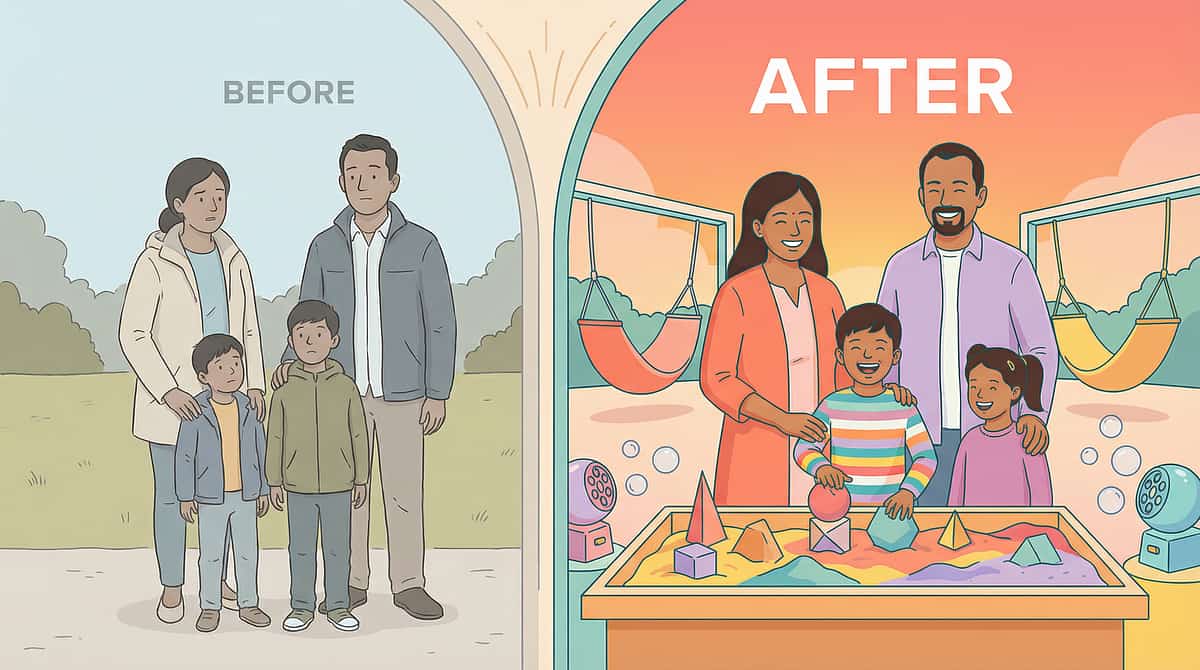
Aisha, 4 years, Delhi — SLP + SpEd intervention, 9 weeks
Before
Aisha knew 200 words but couldn't organise them. When her speech therapist asked "name some animals," she would say "dog" and then stop. She knew 15 animal names but couldn't access them as a group. Sorting activities were incomprehensible to her — she would move every item to the same place or line them up by size regardless of category.
After (Week 9)
Aisha's SLP placed a mixed set of 12 picture cards in front of her. Aisha sorted them into 4 categories — animals, vehicles, food, clothing — in under 90 seconds. No prompting. When she finished, she looked up at her mother and said "Amma, animals!" It was the first time she had used a category label spontaneously. Her word-finding scores improved 31% in 12 weeks.
"I didn't understand why the therapist kept doing 'the sorting thing.' Now I understand — she was building Aisha's brain's filing system. Every new word Aisha learns now has a place to go." — Aisha's mother
Note: Outcomes are illustrative. Individual results vary based on child profile, baseline, and intervention intensity.
ACT V — COMMUNITY & ECOSYSTEM
Families Who've Been Here — Vignette 2
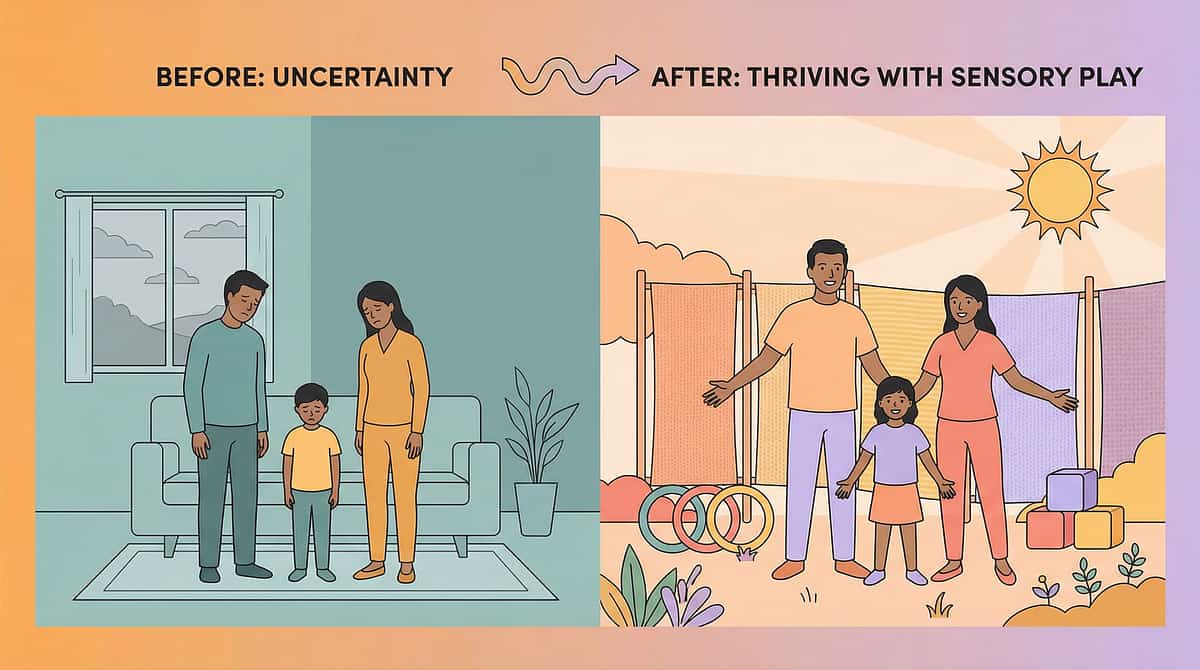
Rohan, 6 years, Hyderabad — OT + ABA + SLP Converged Intervention, GPT-OS® EverydayTherapyProgramme™
Before
Rohan could read simple words but his comprehension was fragmented. He didn't understand that "birds" was a category that included sparrows, pigeons, and eagles. He treated every bird as a separate, unrelated creature. In school, concept maps and classification tasks were impossible.
After (Week 7)
Rohan's mother noticed him organising his toy collection unprompted — cars in one box, animals in another. He told his father: "These are all vehicles, Daddy — they go here." His science teacher reported he correctly categorised living and non-living things in class for the first time. Reading comprehension improved with the introduction of text categorisation strategies.
"Rohan's categorisation breakthrough was the moment his vocabulary became usable. Before, he had words. After, he had organised knowledge." — From the Therapist's Notes
Note: Outcomes are illustrative. Individual results vary based on child profile, baseline, and intervention intensity.
ACT V — COMMUNITY & ECOSYSTEM
Families Who've Been Here — Vignette 3
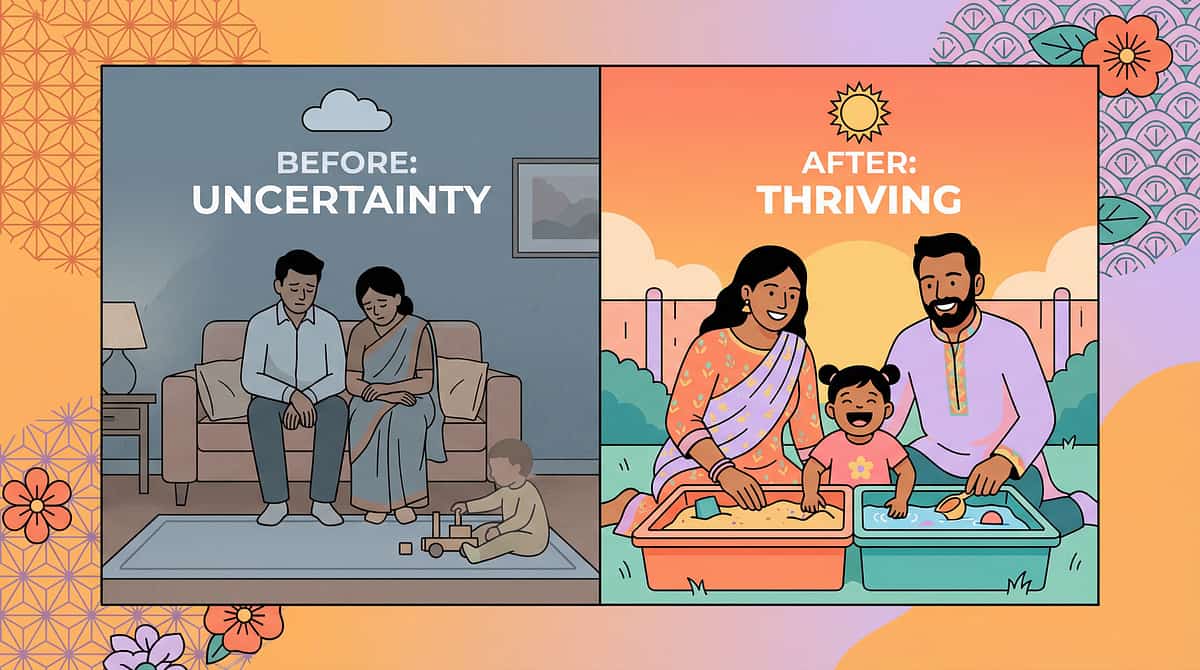
Meera, 3.5 years, Bangalore — Early Intervention, Home-Based
Before
Meera's parents had been told she had a "cognitive delay." She couldn't sort by colour, shape, or type at 3.5 years — 18+ months behind developmental milestones. The family felt overwhelmed and uncertain where to begin.
After (Week 6)
Using a muffin tin from the kitchen and small household objects, Meera's mother ran 10-minute sorting sessions daily for 6 weeks. By week 6, Meera was sorting by colour independently and beginning to identify food items as a category. Her language therapist noted emerging category labels in spontaneous speech.
"I used a muffin tin. Literally a muffin tin from my kitchen. And my daughter learned to categorise. No expensive equipment. Just patience, consistency, and this framework." — Meera's mother
Note: Outcomes are illustrative. Individual results vary based on child profile, baseline, and intervention intensity.
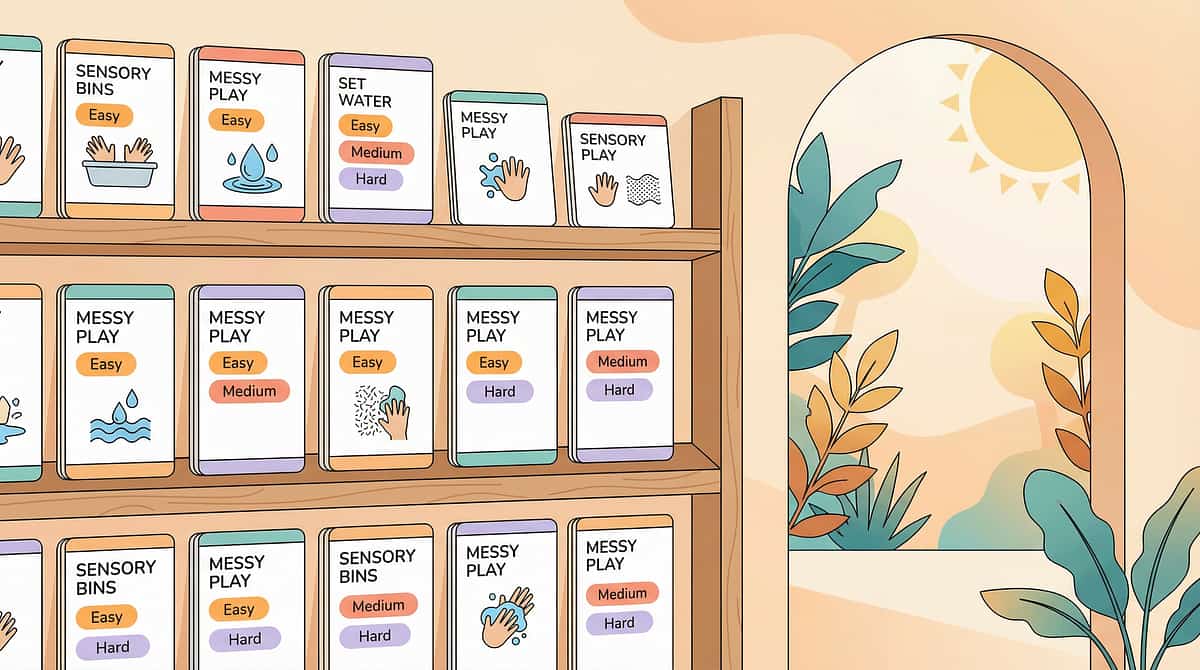
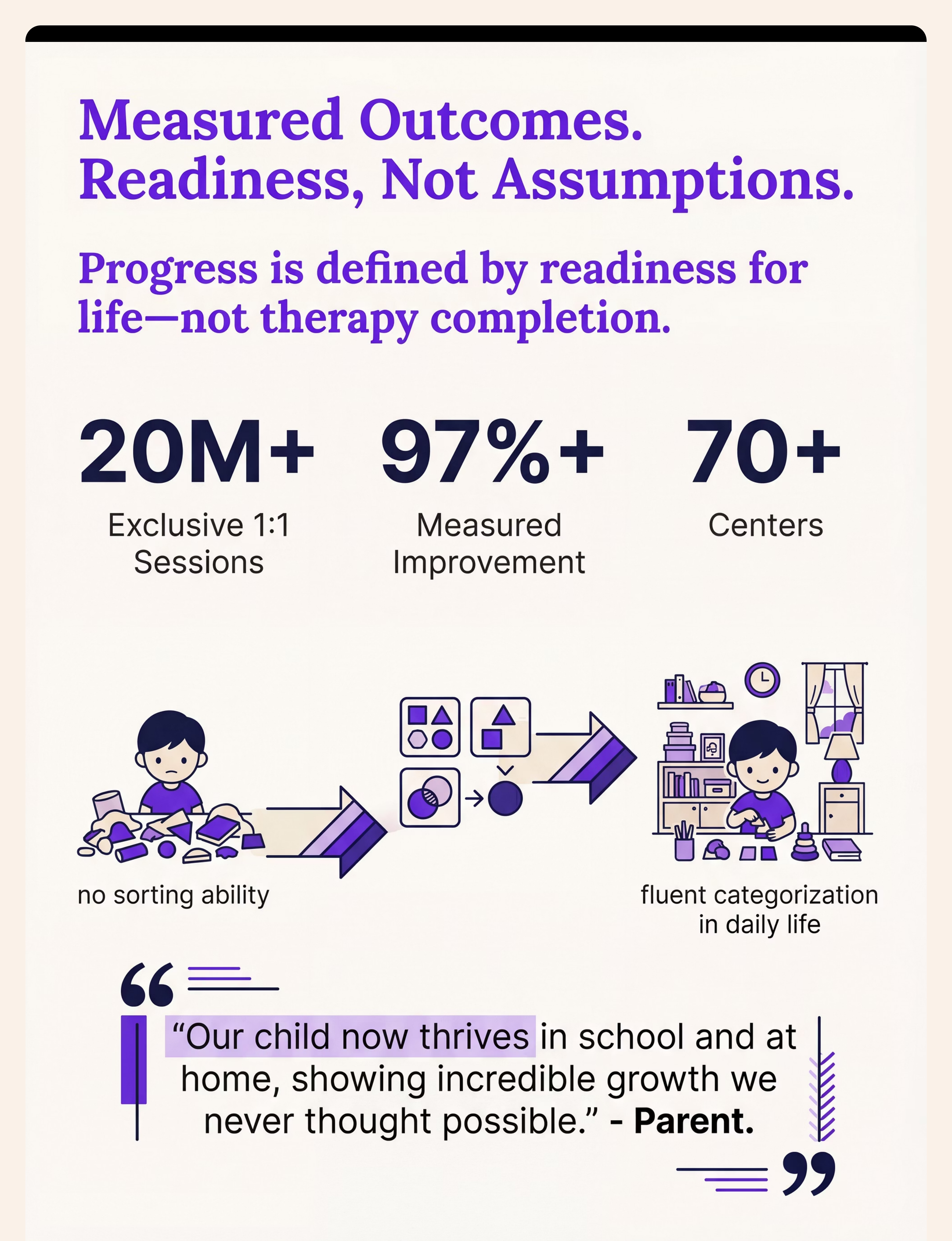
Preview of 9 materials that help with categorization Therapy Material
Below is a visual preview of 9 materials that help with categorization therapy material. The pages shown help educators, therapists, and caregivers understand the structure and content of the resource before use. Materials should be used under appropriate professional guidance.


Link copied!
ACT V — COMMUNITY
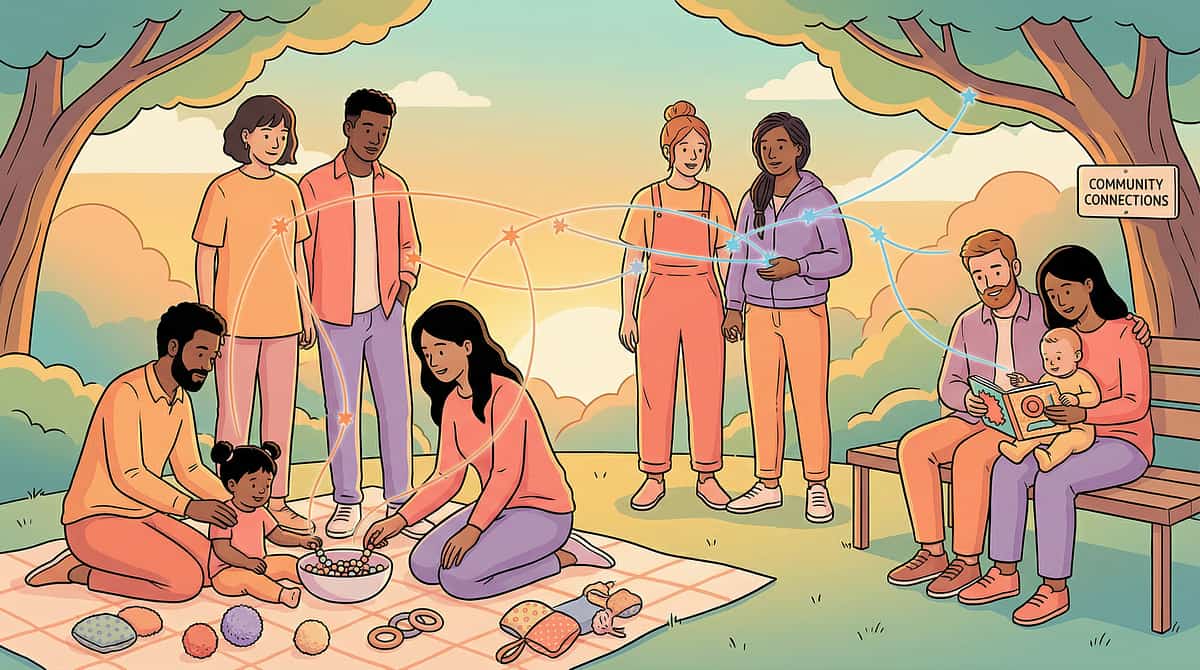
Isolation Is the Enemy of Adherence — Here Is Your Community
📱 WhatsApp Support Group
Parents navigating the same cognitive development journey. Share observations, ask questions, celebrate wins. Join: Categorisation Skills Parent Circle — Pinnacle Network.
💻 Online Forum
Moderated parent forum with Pinnacle therapist input. Search G-669 for technique-specific threads. Visit: pinnacleblooms.org/community/cognitive-development
🏢 Local Parent Meetups
70+ centres across India host monthly parent sessions. Meet families in your area: pinnacleblooms.org/centers
👥 Peer Mentoring
Families 3–6 months ahead on the same journey, available for 1:1 conversation. Connect: pinnacleblooms.org/peer-mentors
"When you share your child's categorisation session with another parent — even a three-line message — you create accountability. You normalise the effort. And you may give another family the exact encouragement they needed to not give up in week 2."
📞 FREE Helpline 9100 181 181