

9 Materials That Help With Task Completion
From starting to finishing — building the executive function scaffolding that makes follow-through possible. Science-backed. Home-applicable. Parent-proven.
G-664
Executive Function Series
Pinnacle Blooms Network®

ACT I — RECOGNIZE
Does This Sound Familiar?
"Everything is half-finished. The homework sits there. The art project abandoned. The chore left at step two. And you've tried everything."
It's Sunday evening. The math worksheet is still open on the table — exactly where your child left it two hours ago. They wandered off. They don't even seem to know they stopped. Their bedroom has three incomplete Lego builds, a half-coloured drawing, and a puzzle frozen at the border. Their teacher sent a note home again: "Incomplete classwork — has the ability but doesn't finish."
You've tried reminders. Consequences. Rewards. Sitting right next to them for every single problem. When you're there, they finish. The moment you step away — gone.
You are not failing as a parent. Your child's brain is not choosing to be difficult. The executive function systems that orchestrate task completion are still developing — and they can be supported.

ACT I — THE NUMBERS
You Are Not Alone — The Numbers Behind This Challenge
Task completion difficulties are among the most common presentations seen across Pinnacle's 70+ centers. Research published in World Journal of Clinical Cases (2024) confirmed that executive function deficits — including task persistence and completion — affect the majority of children with autism spectrum disorder, ADHD, and learning disabilities.
30–60%
ADHD Daily Challenge
Children with ADHD report task completion as their #1 daily challenge at school and home
70M+
Families Worldwide
Families globally navigating executive function differences in their children
1 in 8
Indian Children
Indian school-aged children show clinically significant executive function difficulties
"80% of children diagnosed with autism display executive function differences that directly impact their ability to complete tasks independently." — PRISMA Systematic Review, 2024 (PMC11506176)
Pinnacle Blooms Network has delivered 20 million+ exclusive 1:1 therapy sessions to children across India, with task completion skills consistently in the top 5 intervention targets for ages 3–14. You are among tens of millions of families navigating this exact challenge. The isolation you feel is not because this is rare — it's because it's invisible.

ACT I — NEUROSCIENCE
What's Actually Happening in Your Child's Brain
The Prefrontal Cortex Orchestra
Task completion requires the coordinated activation of six distinct executive function systems in the prefrontal cortex (PFC):
- Working Memory — holds task goal + step sequence while working
- Sustained Attention — maintains focus across time despite distraction
- Task Initiation — activates the neural "start" signal
- Goal-Directed Persistence — maintains effort toward delayed outcomes
- Self-Monitoring — tracks progress and recognizes completion
- Emotional Regulation — manages frustration, boredom, overwhelm mid-task
What This Means for Your Child
Finishing a task is not one thing your brain does. It's six systems that have to work together in sequence. When your child starts the homework worksheet and then wanders away 3 minutes later — they didn't decide to stop. One of those six systems lost the signal.
The working memory that was holding "I'm doing page 3 of math" got overwritten by something else. Or the attention system that was monitoring the task just... quietly switched off. This is a wiring pattern, not a behavior choice.
The PFC doesn't fully mature until the mid-20s. In children with autism, ADHD, or learning differences, the development of these systems follows a different — not broken — timeline.
"What the parent sees as 'not trying' is often the brain genuinely not holding the goal anymore. The executive scaffolding collapsed silently." — Frontiers in Integrative Neuroscience, 2020

ACT I — DEVELOPMENT
Where Task Completion Sits on the Developmental Timeline
Ages 2–3
Simple 1-step tasks with full guidance. Foundation phase — routines and predictability are the intervention.
Ages 3–5
Short tasks with heavy scaffolding. Cannot maintain independent completion. Parent step-by-step presence expected.
Ages 6–8
Brief tasks (5–10 min) with minimal supervision. Your child's challenge zone — intervention now creates the most impact.
Ages 9–11
Extended tasks with periodic check-ins. Self-monitoring emerging. Professional EF assessment recommended if still needing constant supervision.
Task completion difficulties commonly co-occur with: Autism Spectrum Disorder (ASD) — executive function as core feature | ADHD — sustained attention and working memory directly impact completion | Specific Learning Disabilities — fatigue and frustration accelerate abandonment | Anxiety — perfectionism causes task paralysis and fear of judgment prevents finishing.
WHO Care for Child Development Package, implemented in 54 low- and middle-income countries, validates that structured caregiver intervention at any age accelerates developmental progress.

ACT I — EVIDENCE
The Evidence Behind These 9 Materials
Evidence Grade: Level I
Systematic Review + RCT | Multiple Independent Sources
97%
Measured Improvement
Across Learning Readiness Index with structured EF intervention
54
Countries
WHO CCD Package implemented worldwide
Key Studies
PRISMA Review 2024 — PMC11506176
16 articles confirm visual supports, TEACCH, and behavioral interventions meet criteria as evidence-based practices for task completion in ASD
Meta-analysis, WJCC 2024 — PMC10955541
24 studies confirm structured intervention effectively promotes adaptive behavior, task persistence, and goal-directed behavior
NCAEP 2020
Visual timers, work systems, task analysis, and token economies classified as evidence-based practices for autism
Indian RCT — Padmanabha et al. 2019
Home-based structured interventions with visual supports demonstrated significant outcomes in Indian pediatric population
"The materials in this page are not experimental. They are the same tools clinicians across 54 countries deploy daily — adapted for your home, your child, and your hands." Clinically validated. Home-applicable. Parent-proven.

ACT II — KNOWLEDGE
9 Materials That Help With Task Completion
Parent-friendly alias: "The Finish-Line Toolkit"
OT-EF
Ages 3–14
5–20 min setup
Daily use
All settings
Task completion difficulties refer to the persistent challenge of carrying activities from initiation through to independent completion. This is not a motivation problem and not a defiance problem — it is an executive function scaffolding problem. The brain systems responsible for holding goals in memory (working memory), staying on-task (sustained attention), knowing when done (self-monitoring), and managing the frustration that arises mid-task (emotional regulation) are not yet reliably orchestrated.
These 9 materials are external scaffolding tools — they do for the child's environment what the brain's executive systems cannot yet do internally. They hold the sequence, show time passing, make progress visible, create completion criteria, and make finishing reinforcing. Over time, with consistent use, the brain internalizes the scaffolding and needs it less.
Cluster Position
G-662 Task Initiation → G-663 Task Persistence → G-664 Task Completion ← YOU ARE HERE → G-665 Organization → G-666 Time Management
ACT II — DISCIPLINES
Which Therapy Disciplines Use These Materials — And How
Occupational Therapy (Primary)
OTs use task analysis, work systems, and environmental modification to externalize executive demands. Sensory environment optimization, fidget tools, and workspace setup fall under OT's sensory-motor expertise.
Applied Behavior Analysis (ABA/BCBA)
BCBAs design token economies, First-Then contingencies, and reinforcement schedules that make task completion behaviorally rewarding. Task chaining breaks complex tasks into teachable steps.
Special Education (SpEd)
Special educators implement visual schedules, task analysis cards, and work systems in classroom and home learning settings, aligning task completion scaffolding with IEP goals and academic accommodation plans.
Neuro-Developmental Pediatrics
NeuroDev physicians provide diagnostic clarity (ADHD, ASD, executive dysfunction) that guides which materials are most relevant for each child's profile and monitor medication interactions with attention capacity.
Speech-Language Pathology (SLP)
SLPs address working memory and multi-step instruction-following components that underlie task completion — particularly for children whose language processing affects their ability to hold task sequences.
"Task completion is the intersection of every therapy. It requires sensory regulation (OT), behavioral motivation (ABA), learning scaffolding (SpEd), cognitive processing (NeuroDev), and language comprehension (SLP) — all at once." — Pinnacle Blooms Consortium

ACT II — TARGETS
What These 9 Materials Target — Precision Tools, Not Guesswork
Before Implementation
- Tasks abandoned mid-completion
- Needs adult present throughout
- "I'm done" when clearly not done
- Meltdown when frustrated mid-task
- Can't find place after distraction
After 8–12 Weeks
- Tasks completed to visible endpoint
- Needs setup support only
- Accurate self-assessment of completion
- Uses break card, returns to task
- Uses visual checklist to re-locate
ACT II — MATERIALS 1–3
Your Task Completion Toolkit — Materials 1 to 3
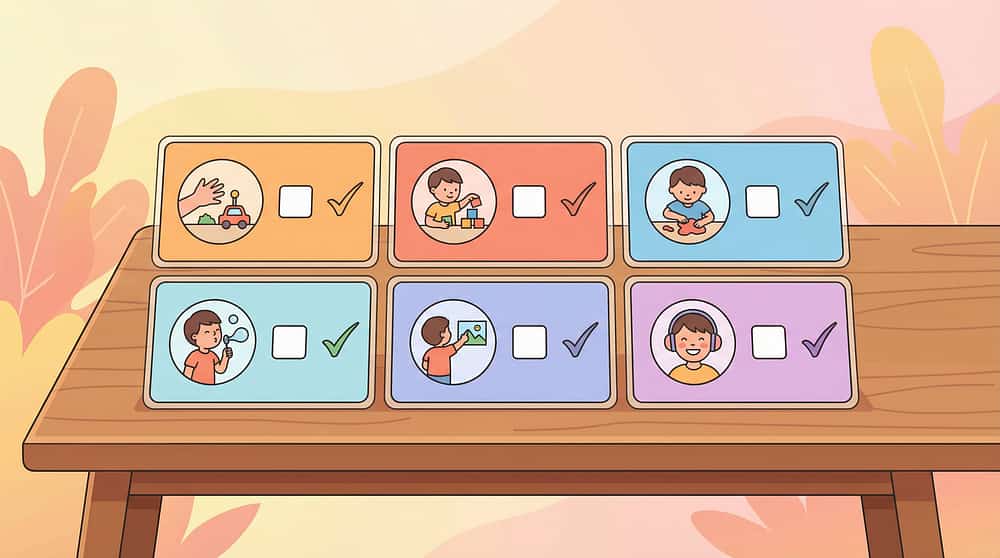
Material 1: Task Analysis Cards + Visual Checklists ⭐⭐⭐⭐⭐
Step-by-step picture/text cards that break any task into visible, sequential steps with check-off tracking. Canon Category: Visual Schedules / Task Analysis.
Price: ₹300–900 | DIY: ₹0 (card stock + printer)
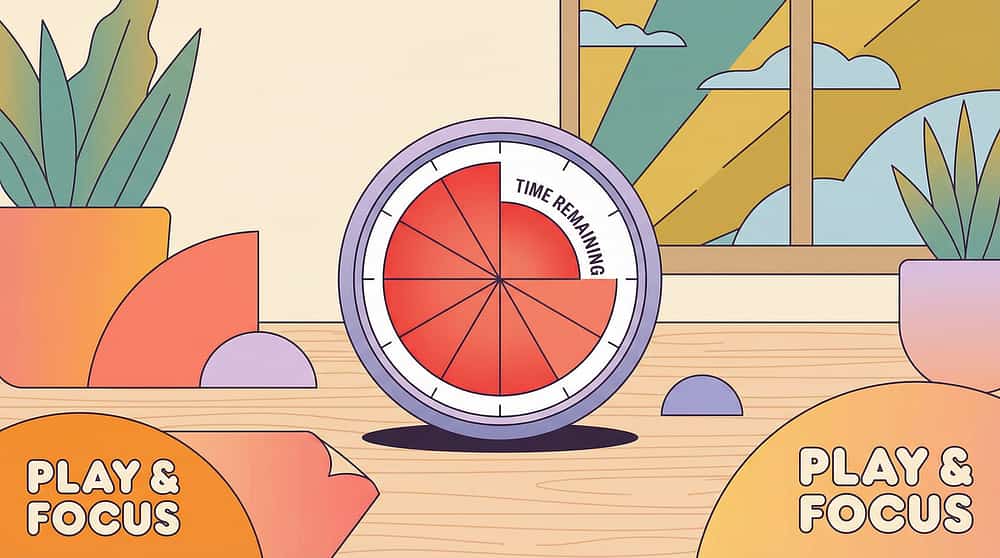
Material 2: Visual Timers ⭐⭐⭐⭐⭐
Time Timer®, sand timers, or countdown apps that make time visible as a shrinking visual. Canon Category: Time Tools / Visual Timers.
Price: ₹600–2,000 | DIY: Sand timer ₹50

Material 3: First-Then Boards ⭐⭐⭐⭐⭐
Two-panel visual board showing First (task to complete) → Then (motivating reward). Canon Category: Visual Schedules / Contingency Tools.
Price: ₹200–600 | DIY: ₹0 (paper + velcro ₹50)

ACT II — MATERIALS 4–6
Your Task Completion Toolkit — Materials 4 to 6
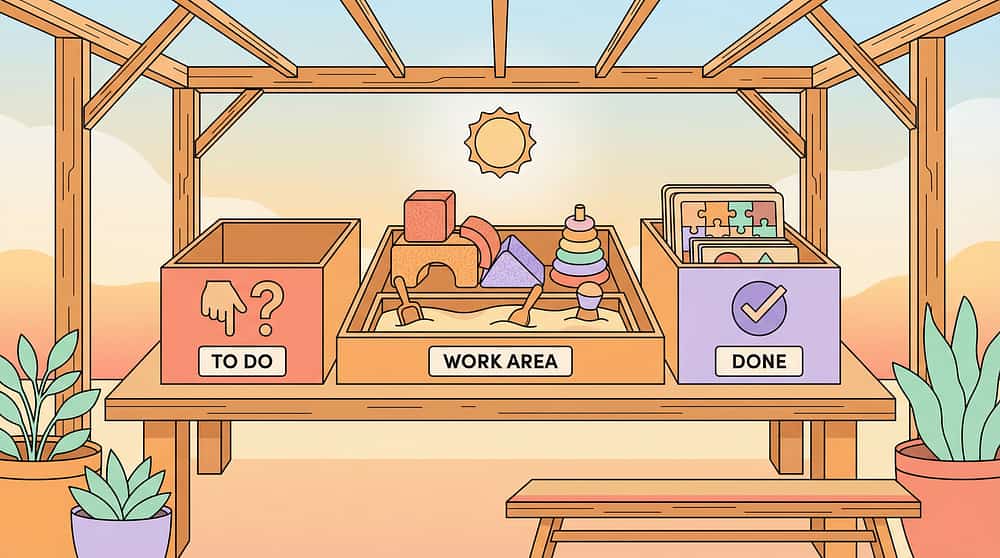
Material 4: Work System Bins + Task Boxes (TEACCH-style) ⭐⭐⭐⭐⭐
Left-to-right physical work system — To-Do tasks on left, Finished bin on right, visual task count in center. Canon Category: Work Systems / Structured Learning.
Price: ₹500–1,500 | DIY: Repurpose trays/boxes ₹0
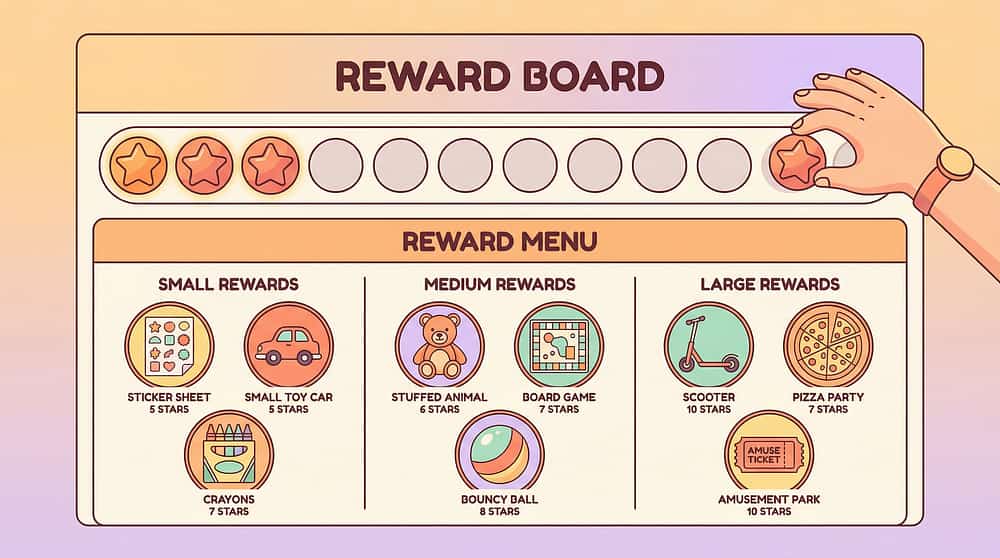
Material 5: Token Boards + Reinforcement Menus ⭐⭐⭐⭐⭐
Token collection board + individualized reward menu — earn tokens for completing tasks, exchange for preferred rewards. Canon Category: Reinforcement Menus (Active Canon SKU).

Material 6: Fidget Tools ⭐⭐⭐⭐
Quiet, one-hand-use tactile/proprioceptive tools that anchor attention during desk work. Canon Category: Sensory Tools / Attention Supports.
Price: ₹100–500 | DIY: Stress ball ₹30 (balloon + flour)
ACT II — MATERIALS 7–9
Your Task Completion Toolkit — Materials 7 to 9

Material 7: Workspace Organization Tools ⭐⭐⭐⭐
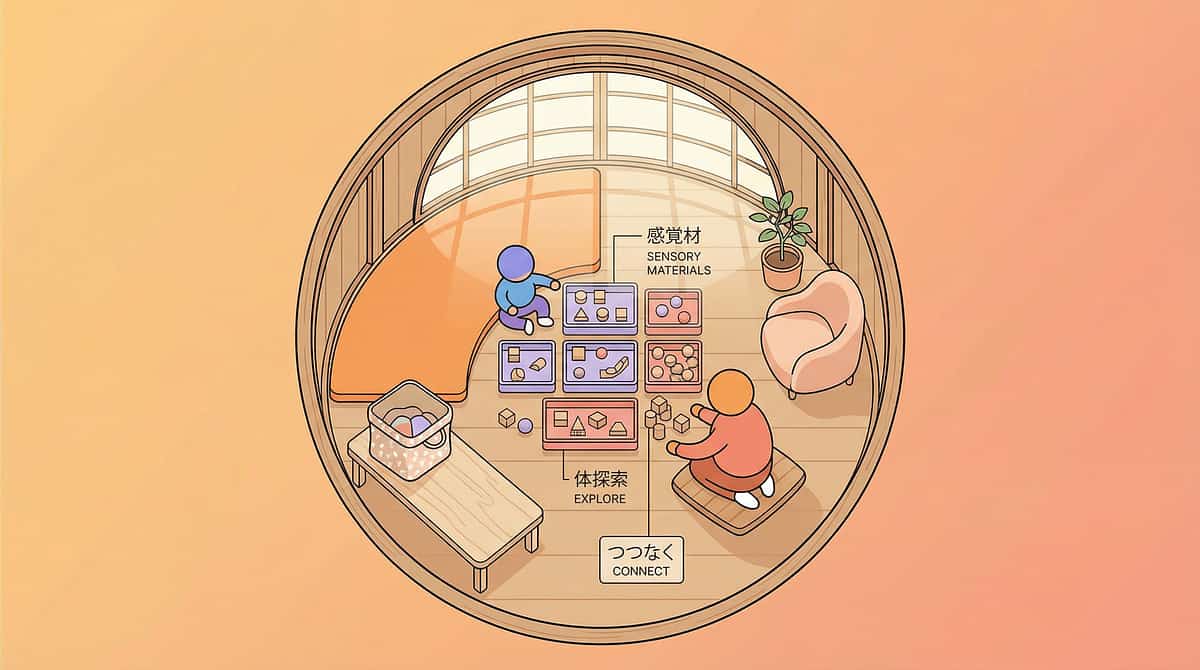
Designated work tray, desk organizer, visual workspace boundary (placemat), noise-reducing headphones. Canon Category: Environmental Modifications.
Price: ₹300–1,200 | DIY: ₹0 (repurpose household items)

Material 8: Done / Not Done Bins ⭐⭐⭐⭐⭐
Two clearly labeled containers (To Do / Done) — work moves physically from one to the other as completed. Canon Category: Work Systems / Completion Tracking.
Price: ₹200–500 | DIY: ₹0 (any two different containers, handwritten labels)
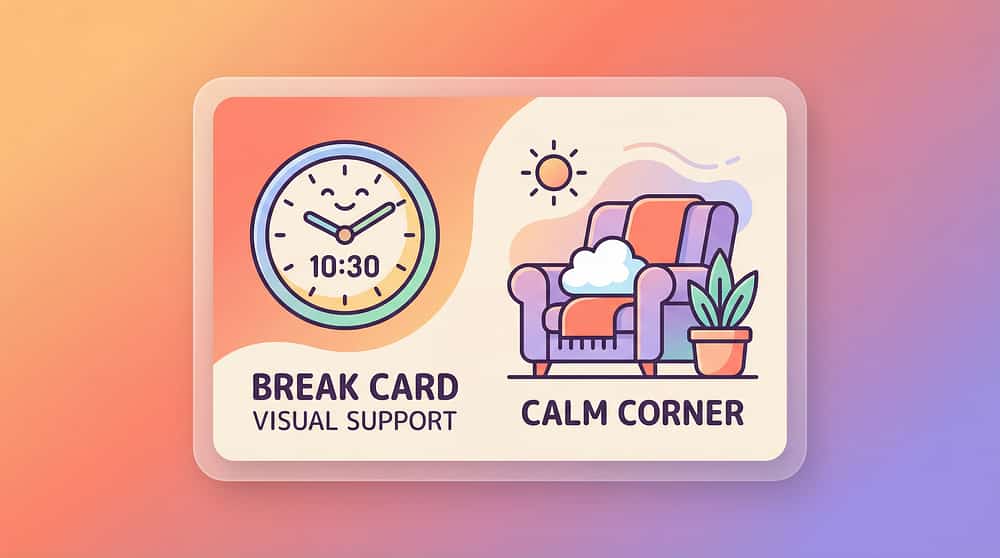
Material 9: Break Cards + Regulation Tools ⭐⭐⭐⭐
Visual card child presents to request a structured, time-limited break — pause without abandonment. Canon Category: Self-Regulation Supports / Behavior Tools.
Price: ₹100–400 | DIY: ₹0 (index card + laminate) | Transition Tool — ₹425 →
Minimum viable setup (₹0–500): DIY task cards for 2–3 daily tasks + phone timer + paper First-Then board + two labeled boxes (To Do / Done) + sticker chart. You can begin TODAY with items from your home.

ACT II — DIY ALTERNATIVES
You Don't Need to Buy Anything to Start Today
The WHO Nurturing Care Framework, implemented across 54 low- and middle-income countries, establishes that household-material-based interventions are equally effective when the same therapeutic principle is preserved. These DIY options preserve every therapeutic principle.
Material | Commercial Version | DIY Version (₹0) | ||
Task Analysis Cards | Laminated picture card sets (₹300–900) | Index cards + drawn/printed pictures + paperclip binding | ✅ | |
Visual Timer | Time Timer® (₹600–2,000) | Phone timer face-on + sand timer from two plastic bottles | ✅ | |
First-Then Board | Foam board with velcro (₹200–600) | Folded paper, two boxes labeled FIRST and THEN, pictures from magazines | ✅ | |
Work System | Stackable trays (₹500–1,500) | Three repurposed containers: To Do pile, work surface, Done box | ✅ | |
Token Board | Printed token chart (₹364–589) | Paper grid + stickers from any stationery shop (₹20) | ✅ | |
Fidget Tool | Commercial fidget (₹100–500) | Stress ball (balloon + flour), dry rice in ziplock bag | ✅ | |
Workspace Org | Desk organizer set (₹300–1,200) | Clear away everything except task items; use a placemat as visual boundary | ✅ | |
Done/Not Done Bins | Commercial trays (₹200–500) | Any two containers (boxes, bags, plates) with written labels | ✅ | |
Break Card | Printed card (₹100–400) | Any index card, write BREAK with a clock drawing, laminate with tape | ✅ |

ACT II — SAFETY
Safety Gate — Read Before You Begin Any Session
🔴 RED — Do Not Proceed If:
- Child is in active meltdown or severe dysregulation
- Child is ill, running fever, or in physical pain
- Task demands are significantly beyond the child's actual ability level
- Session has already had a major disturbance today (allow 2-hour reset)
- You (the caregiver) are significantly stressed — the child reads your regulation state
🟡 AMBER — Modify Before Proceeding If:
- Child is mildly tired — shorten task duration by 50%, increase break frequency
- Child is hungry — light snack first; blood glucose directly affects PFC function
- Task is new — simplify to 2–3 steps maximum, high support present
- High sensory environment — reduce noise, dim lights if overstimulating
- Child has had a difficult day (school, social, sensory) — use preferred task only
🟢 GREEN — Proceed If:
- Child is fed, rested, and in regulated state
- Environment is prepared (setup complete)
- Task is familiar or appropriately challenging (just-right challenge)
- Task analysis / visual supports are ready before child sits down
- You have 15–20 uninterrupted minutes available
🛑STOP IMMEDIATELY if child becomes severely distressed, self-injurious, or aggressive. If task completion failures are causing significant daily distress, contact the FREE National Autism Helpline: 9100 181 181

ACT II — SETUP
Set Up Your Space — The Physical Environment Is the First Intervention
Face child toward wall or neutral surface (not window, TV, or busy room view)
Place ALL task materials at workstation BEFORE child sits down — no getting-up-to-find
Position visual timer in child's natural sightline (not behind them, not hidden)
Place To Do items on child's left, Done bin on child's right (left-to-right is work-system standard)
Task analysis cards visible — on wall, stand, or laminated card in front. First-Then board visible from work position.
Remove everything except the current task's materials from work surface. Fidget tool placed UNDER desk or beside workspace.
Lighting: adequate task lighting, no glare. Parent position: within 3 metres but NOT at the table — available but not hovering.
"Environmental setup is not secondary to the technique — it IS part of the technique. Structured environmental design alone improves task completion rates by 20–35% before any other intervention is added." — Pinnacle OT Consortium

ACT III — EXECUTE
60-Second Pre-Session Readiness Check
Observe your child RIGHT NOW. Answer each item honestly before beginning any session.
Indicator | ✅ Yes (Proceed) | ⚠️ Partial (Modify) | ❌ No (Postpone) | |
Child is calm and not in distress | Calm body, regulated | Mildly restless | Meltdown, tears, shutting down | |
Child had a meal/snack in last 90 min | Yes | Snack available | Significantly hungry | |
Child is not ill or in pain | Healthy | Mild sniffles | Fever, pain, illness | |
Child can follow 2-step instructions | Yes | With visual cue | Not processing verbal | |
Environment is prepared | Ready | Partially ready | Not set up | |
You are regulated and available | Calm, present | Mildly stressed | Significantly stressed |
🟢 5+ YES → Proceed
Run full session as planned
🟡 3–4 YES → Modify
Shorten to 2–3 steps, increase breaks, simplify materials
🔴 2 or fewer → Postpone
20-minute calming activity, re-assess, try simplified version or different time

ACT III — STEP 1 of 6
Step 1: The Invitation — How to Begin (Not Command)
Parent Script
"Hey [child's name], I've got your [task name] set up for you. Come take a look — I put everything you need right there. Want to see what we're doing today?"
Body Language
- Be at child's level (crouch/sit — not standing over them)
- Face relaxed, tone curious and warm — not urgent
- Point to the prepared work area, not at the child
- Allow 5–10 seconds for child to orient — don't rush
When Child Resists
"I don't want to" → "You don't have to do it all at once. Just come see what's here."
Physical avoidance → "Okay, come help me set up the timer — you pick how long"
Ignoring → Reduce demand: "I'll do the first step with you, then you take over"
Escalating distress → Use First-Then board: "First [task], then [preferred]"
ABA Pairing Principle: Before any demand is placed, the child needs to associate the work environment with positive experience. Your job is to make the work station a PLEASANT place to be — not a demand station.

ACT III — STEP 2 of 6
Step 2: Orient the Child to Their Task Completion System
"Okay, so here's how this works today. Your tasks are here on the left. When you finish one, you move it here. The timer shows you how much time. And if you need a break, here's your break card — you show it to me."
Point to To Do area: "This is what we're doing"
Show the task analysis card for the first task: "Here are the steps — you follow these"
Point to visual timer: "This shows time. When this much red is gone, we check in"
Show First-Then board: "First [task], then [reward]" — show the reward clearly
Show Done bin: "When you finish, it goes HERE"
Hand child the break card: "This is yours. You hold it. If you need a break, show it to me."
For an avoidant child: Use the First-Then board exclusively. Make the "Then" immediately visible and highly motivating. Reduce first task to the absolute minimum — even 1 step counts as completion. Any verbal engagement with the materials → immediate, specific praise: "Great job looking at your task cards. That's exactly what you do."
Timing: 1–2 minutes for orientation. Don't extend — child fatigue starts here.

ACT III — STEP 3 of 6
Step 3: The Work Session — Supporting Task Completion Without Taking It Over
Child begins working on the task using the materials and systems set up. Your job NOW is active non-intervention — present and available but not prompting, redirecting, or helping unless specifically requested or a significant off-track moment occurs.
Wait 10 seconds
Many "stuck" moments self-resolve — the first and lowest prompt level
Gesture Prompt
Point to task analysis card without speaking
Indirect Verbal
"Where are you on your checklist?" (not "Do this")
Direct Verbal
"Step 3 is [name the step]"
Work Interval by Age
Ages 3–5: 5–8 min | Ages 6–8: 10–15 min | Ages 9–14: 15–20 min. Work toward independence: by weeks 5–8, aim for full interval without intervention.
Completion Criteria
Task is complete when child moves finished work to Done bin AND checks off the final item on the task analysis card. Both actions required.

ACT III — STEP 4 of 6
Step 4: Multiple Tasks, Multiple Completions — Building the Habit
The goal is not to complete tasks — the goal is to complete tasks consistently enough that completion becomes automatic. This requires repetition with variation. Same system, different tasks, daily.
Weeks 1–2
2 tasks per session, both short, both familiar. System use is the primary goal, not task difficulty.
Weeks 3–4
3 tasks per session. Introduce one moderately challenging task. System now familiar.
Weeks 5–8
4–5 tasks or longer single tasks. Task completion without constant system reference.
Vary the Task
Same system, different content daily — homework, chore, self-care routine. The system transfers across contexts.
Vary the Reinforcement
Rotate the reward menu weekly. Stale rewards = declining motivation. Ask child what they're working for.
Vary the Timer
Calibrate to actual completion time. If child consistently finishes early, reduce timer. If running over, increase. The timer should feel achievable.
3 Good Completions > 10 Forced
A session with 3 tasks completed with genuine engagement is worth more than 10 tasks completed through caregiver pressure.

ACT III — STEP 5 of 6
Step 5: Reinforce Completion — The Timing Changes Everything
Core ABA Principle: Reinforcement must occur within 3 seconds of the target behavior to strengthen it. The target behavior here is not "working on the task" — it is completing the task. This distinction matters enormously.
Tier 1 — Token Delivery (Immediate)
The moment the child moves completed work to the Done bin: deliver token immediately. "You finished that task — take your star." Specific, immediate, paired with brief enthusiastic verbal acknowledgment.
Tier 2 — Verbal Praise (Specific, Not Generic)
Not "Good job." → "You followed all your steps AND you moved it to Done. That's exactly task completion." Specificity matters: the child's brain needs to know WHAT behavior produced the reinforcement.
Tier 3 — First-Then Delivery (Session Completion)
When all tasks in the work system are done and the To Do area is empty: deliver the "Then" promised. This is a contract. Honor it exactly as promised.
"Look at your Done bin — look how much you finished. All of that was empty when we started. You did this. [Child's name], you are a person who finishes what they start."
What NOT to do: Never remove previously earned tokens as punishment. Never add extra tasks after completion as "reward" — this destroys completion motivation. Never deliver reward late — late reinforcement is no reinforcement.
ACT III — STEP 6 of 6
Step 6: The Session End — Transitions That Prevent Post-Session Dysregulation
No session ends abruptly. Abrupt endings cause carry-over dysregulation into the rest of the day. A 2–3 minute cool-down transition is not optional — it is the final therapeutic step.
Parent Script — Ending the Session
"Work time is done. Now you get [Then reward / next activity]. Great work today."
For children who resist ending: "Work is done. Timer says done. Materials are away. What comes after work?" Show First-Then board: "First was work. Then is [reward]. Then is now."
Post-Session Window
Do not introduce new demands for 15 minutes after session. Allow the brain to settle. High stimulation immediately after a focus session increases dysregulation risk. Transition Object — ₹425 →

ACT III — DATA
60 Seconds of Data Right Now Drives 8 Weeks of Progress
Record these three fields immediately after every session. This data is the engine of your child's progress — and informs GPT-OS® recommendations for all subsequent sessions.
Field 1: Tasks Completed
How many tasks did you set up? How many did the child complete to Done bin? Record as: "3/4 tasks completed" or "2/3 steps of main task"
Field 2: Intervention Level
0 = Independent | 1 = Gesture only | 2 = Verbal prompt | 3 = Direct instruction | 4 = Physical guidance
Field 3: Session Quality
1 (significant difficulty/shutdown) → 3 (mixed) → 5 (excellent, independent completion)
Quick tracking format: Date: _____ | Tasks: ___/___ | Prompt level: 0/1/2/3/4 | Quality: 1–5 | Notes: _____
"60 seconds of data now saves hours of guessing later." Your data also contributes to the population-level intelligence that improves recommendations for every child in the Pinnacle network. Week 1 prompt level vs. Week 8 = your progress evidence.

ACT III — TROUBLESHOOT
When Sessions Don't Go as Planned — The 7 Most Common Failures + Fixes
"My child won't sit down to start at all"
Why: Task aversion is high; work area association is still negative; or First-Then reward isn't motivating enough. Fix: Re-evaluate the "Then" reward. Reduce First task to absolute minimum (even 1 step). Start with a preferred task to rebuild positive association.
"My child started but abandoned 30 seconds in"
Why: Task was too long, too hard, or the timer created anxiety. Fix: Shorten task to 2–3 steps only. Sit closer during first 2 minutes. Ensure task analysis card is right in front of them.
"My child said 'done' when clearly not done"
Why: Genuine self-monitoring deficit — child may not have an internal checklist for what "done" means. Fix: Walk child through checklist: "Let's check — is each step marked? Is the work in Done bin?" Physical movement to Done must accompany verbal "done."
"My child used the break card but never returned"
Why: Break became an escape route; break activity was too reinforcing; duration wasn't defined. Fix: Set timer for break BEFORE child leaves the table. Break activity must be defined in advance (not screens). Return is not negotiable when timer beeps.
"My child destroyed the materials in frustration"
Why: Task demand exceeded emotional regulation capacity. Fix: Session ends immediately (without anger). Tomorrow: shorter task, more breaks, lower demand. Call Pinnacle helpline if pattern continues: 9100 181 181
"My child completes tasks with me but not with anyone else"
Why: Systems not transferred; other caregiver running different procedure. Fix: All caregivers must know the exact procedure. Same system, same words, same sequence. Consistency across caregivers is the intervention.
"Nothing seems to improve week after week"
Why: Underlying diagnosis not yet identified; task difficulty never adjusted; supports not individualized. Fix: Contact Pinnacle for AbilityScore® assessment. The Executive Function Readiness Index will identify the specific bottleneck. Helpline: 9100 181 181
"Session abandonment is not failure — it's data."

ACT III — ADAPT
No Two Children Are Identical — Personalize These 9 Materials to Your Child
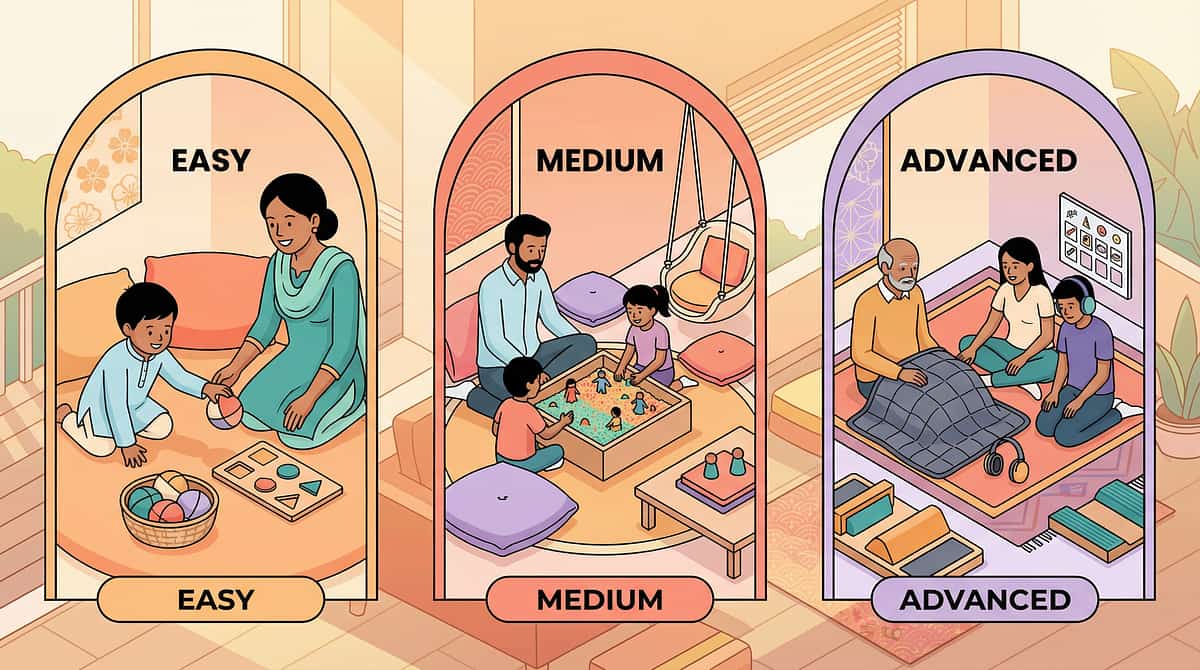
Difficulty Spectrum — Easier
- 1-step tasks, 1-minute timer
- 1 task box, immediate token
- Parent nearby throughout
Difficulty Spectrum — Harder
- Multi-part projects, 20+ min sessions
- Sequential multi-day tasks
- Delayed reward (30 tokens), parent available only

ACT IV — PROGRESS
Weeks 1–2: What Progress Actually Looks Like at the Start