

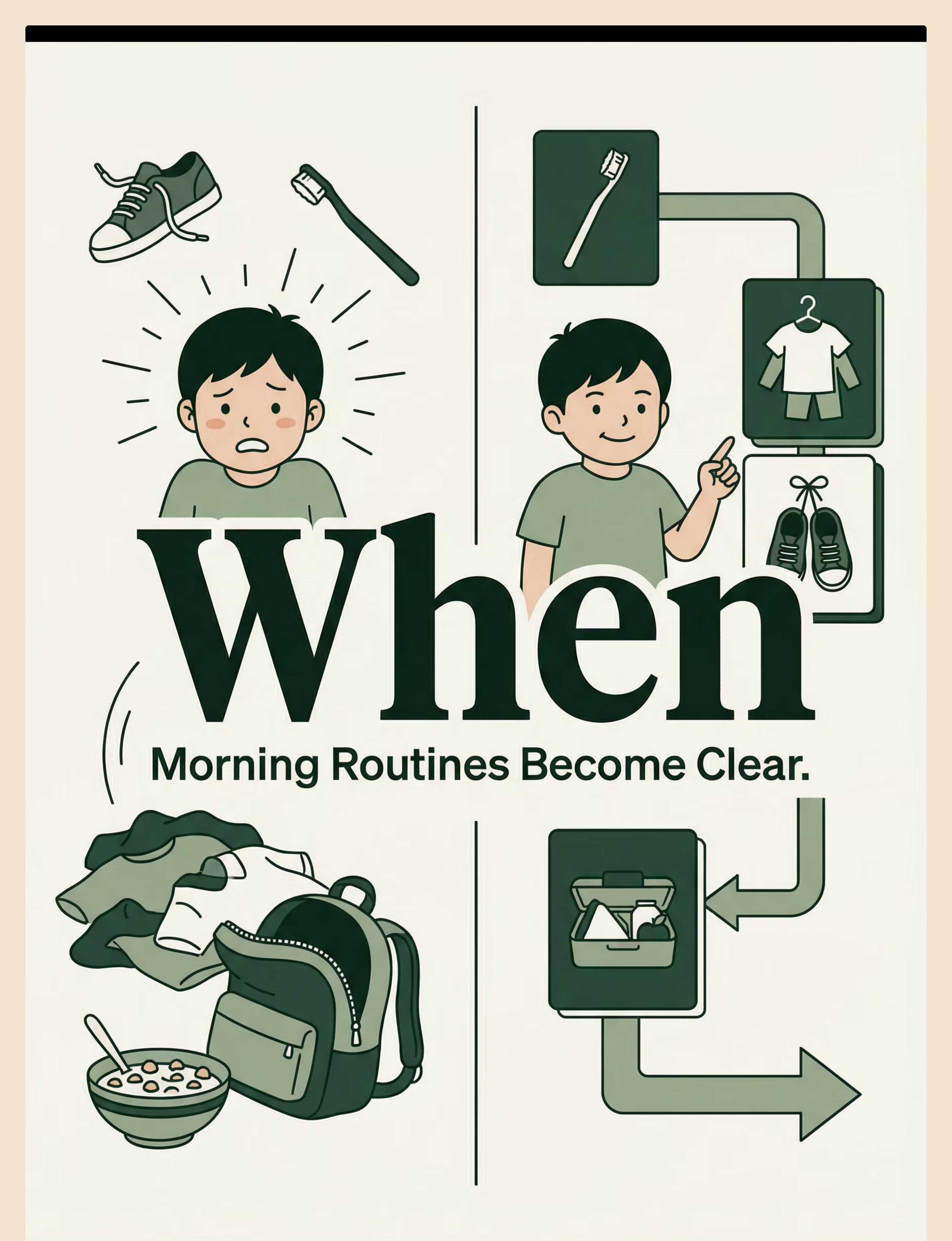
"She put her shoes on before her socks again this morning."
You gave three instructions. She did the first. Then stood there, looking at you — the next two steps completely gone. You watch her try to tell you about her day and the story makes no sense. It starts in the middle, jumps to something else, circles back. You piece it together. Every. Single. Day.
This isn't defiance. This isn't carelessness. This is sequential processing difficulty — and it affects everything from morning routines to storytelling to following a recipe to writing a paragraph.
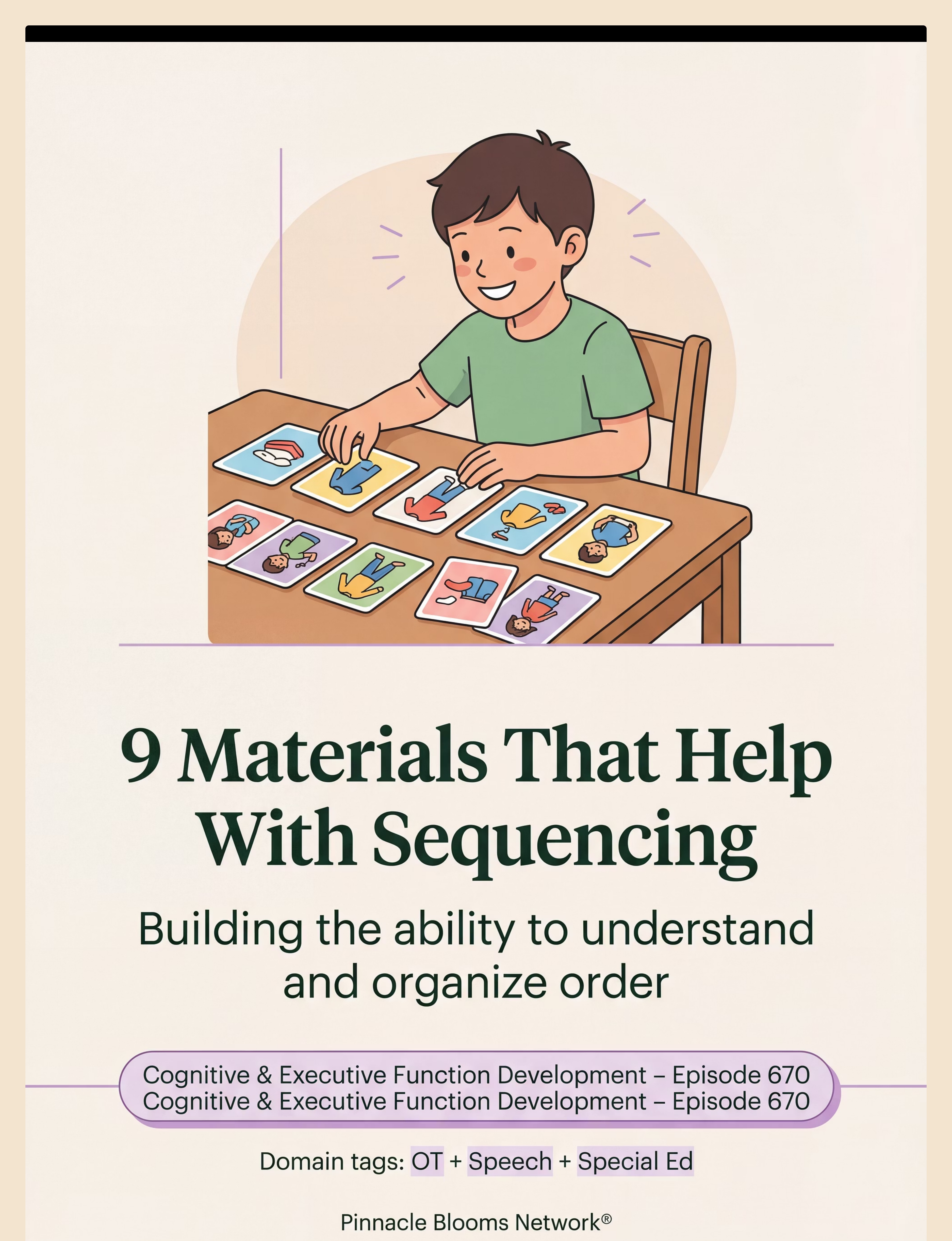
9 Materials That Help With Sequencing
Building the ability to understand and organise order — at home, starting today.
OT + Speech + Special Ed
Ages 3–12
15–20 min sessions
Home-based
"You are not failing. Your child's brain processes order differently — and that can change." — Pinnacle Blooms Network® Consortium
FREE National Autism Helpline (16+ languages): 9100 181 181 | pinnacleblooms.org

You Are Among Millions of Families Navigating This Exact Challenge
40–50%
ASD & Sequencing
of children with ASD show significant sequential processing difficulties
Developmental Neuropsychology, 2023
1 in 54
India ASD Rate
children in India are diagnosed with autism spectrum disorder
Pediatrics & Child Health, India, 2022
2–5×
ADHD Sequencing
higher rate of sequencing challenges in children with ADHD vs. neurotypical peers
Journal of Attention Disorders, 2022
"Executive function difficulties — which include sequencing — affect an estimated 5–10% of all school-age children globally, cutting across diagnoses. Sequencing is one of the most common unmet needs in paediatric development." — WHO Nurturing Care Framework, 2018 | PMC9978394
If your child struggles with sequences, you are among tens of millions of caregivers worldwide who wake up every day solving this same puzzle. The isolation you feel is not the reality — this community is vast, and the solutions are proven.
India alone has an estimated 18 million children with developmental challenges requiring sequencing support. Pinnacle Blooms Network® serves families across 70+ centres in 15+ states.
📖 PMC11506176
📖 PMC10955541
📖 WHO NCF 2018
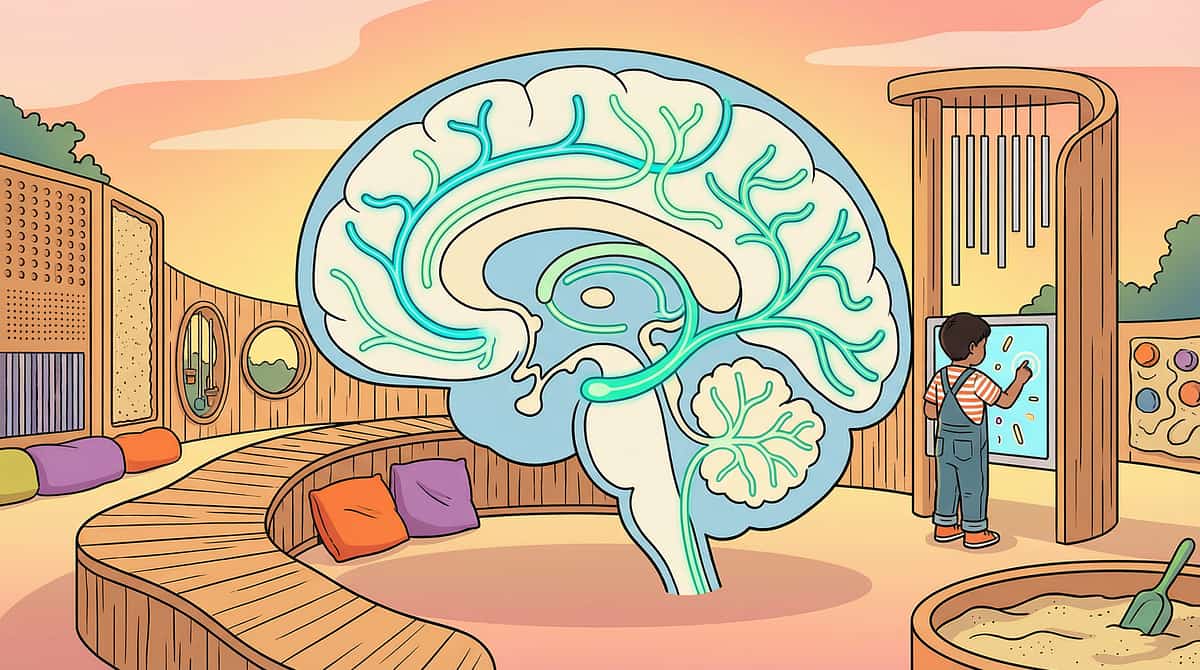
This Is a Wiring Difference. Not a Behaviour Problem.
The Sequential Processing Network
The brain regions that must work together for sequencing:
- Prefrontal Cortex — planning and ordering steps
- Working Memory Loop — carrying each step forward
- Basal Ganglia — automating procedural sequences through repetition
- Cerebellum — coordinating motor sequencing
When any part of this network is underconnected or developing at a different pace — sequences break down.
Plain-English Translation
The child isn't forgetting on purpose. Their brain simply hasn't yet built the highway between "what comes first" and "what comes next."
The clinical term: Sequential Processing Differences — affecting Working Memory, Executive Function Planning, Temporal Processing, and/or Auditory-Verbal Processing.
The critical insight: This pathway is neuroplastic. With the right materials, consistent practice, and a structured home environment, the brain builds new connections. Sequencing ability is not fixed — it grows.
"Executive function, including sequential planning, demonstrates significant neuroplasticity in response to structured environmental scaffolding in children ages 3–12." — Frontiers in Integrative Neuroscience, 2020 | DOI: 10.3389/fnint.2020.556660
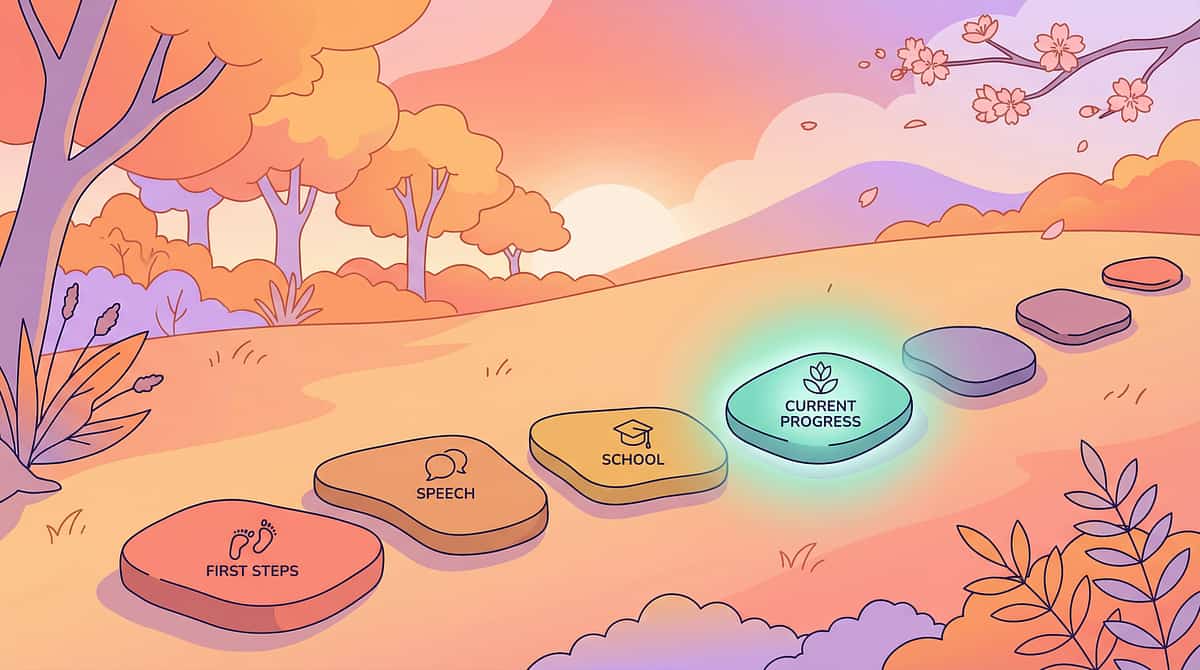
Your Child Is Here. Here Is Where We Are Heading.
Age 2–3
2-step sequences & basic before/after
Age 3–4
3-step sequences & basic temporal language
Age 4–5
4–5 step sequences & simple story structure
Age 5–7
Multi-step procedures & organised narratives
Age 7–12
Complex planning & abstract reasoning
Most families find us when their child is between ages 3–8, showing difficulty with sequences that their peers manage independently. This is the optimal intervention window — neuroplasticity is highest, and the materials in this guide work most powerfully at these ages.
Sequencing Difficulties Commonly Co-Occur With:
Autism Spectrum Disorder
Executive function differences, central coherence challenges, cognitive flexibility
ADHD
Working memory impacts, attention drops midway through sequences
DLD
Developmental Language Disorder — verbal sequences particularly affected
DCD
Developmental Coordination Disorder — motor sequencing specifically impacted
Learning Disabilities
Specific sequencing domains affected. Sequencing difficulties occur independently too — without any formal diagnosis.
"Your child is here on this timeline. The materials and protocol on this page will move them forward — measurably, observably, step by step."
WHO CCD Package 2023
PMC9978394
UNICEF MICS Indicators
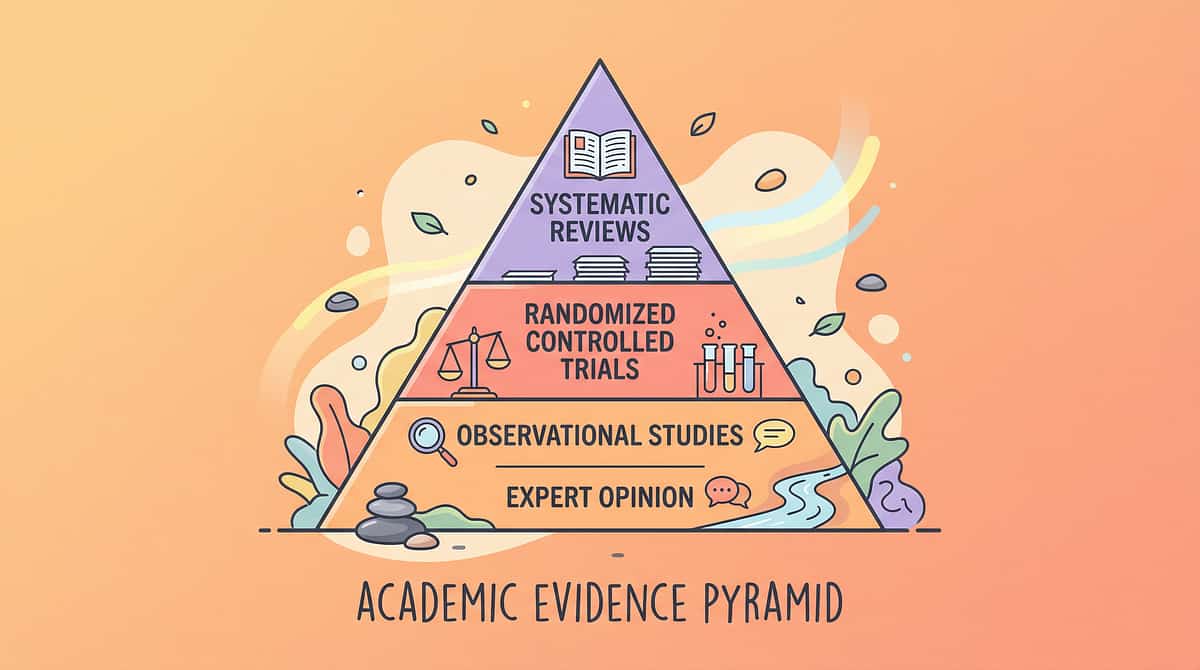
Clinically Validated. Home-Applicable. Parent-Proven.
⭐⭐⭐⭐☆ Evidence Grade — Level II
Systematic Review + Multiple RCTs
PRISMA Systematic Review (2024): 16 studies (2013–2023) confirm visual support interventions meet criteria as evidence-based practice for children with ASD. PMC11506176
The Numbers
Meta-analysis (World J Clin Cases, 2024): Visual sequencing supports produced measurable improvements in executive function, adaptive behaviour, and daily living skills across 847 participants ages 3–12. PMC10955541
India Evidence
Indian RCT (Padmanabha et al., Indian J Pediatr, 2019): Home-based structured visual intervention programmes demonstrated statistically significant outcomes for sequential skill development in Indian paediatric populations. DOI: 10.1007/s12098-018-2747-4
Visual supports, including visual schedules and sequence cards, are classified as Evidence-Based Practice by the National Clearinghouse on Autism Evidence and Practice (NCAEP 2020) for children with ASD.
"These are not opinions. These are replicated findings from peer-reviewed research published in PubMed, indexed by WHO and UNICEF. The materials on this page are backed by the same evidence base used by therapists in Pinnacle's 70+ centres."
Need professional assessment? FREE: 9100 181 181
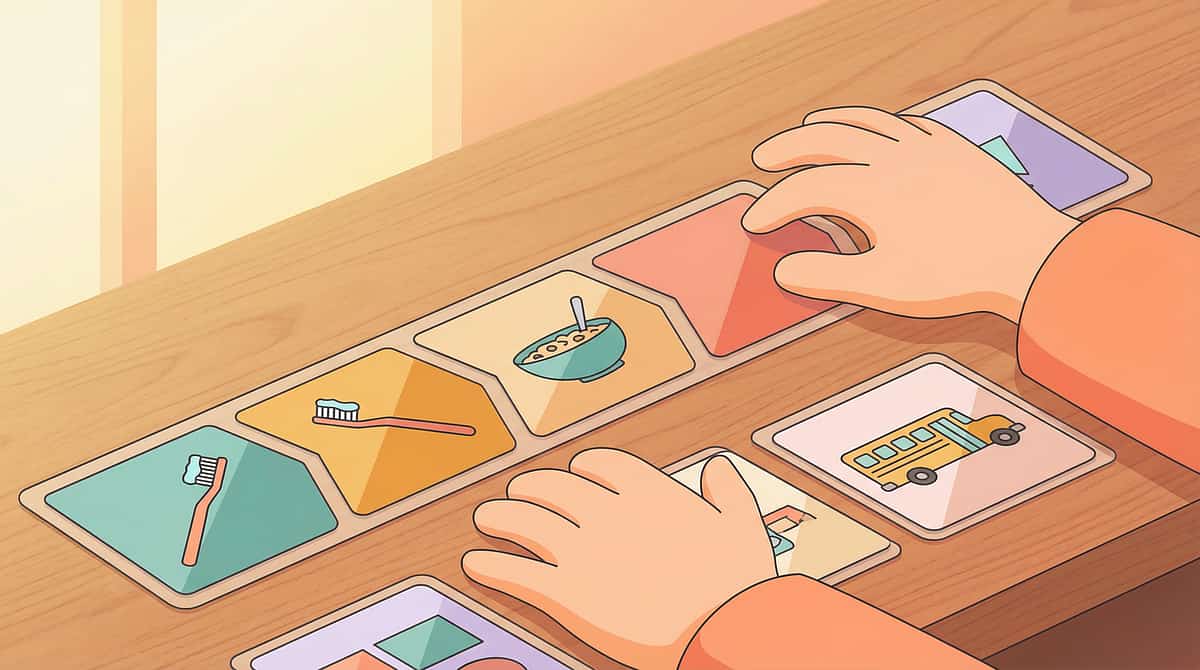
9 Materials That Build Sequential Thinking — From Home
Sequencing Materials are structured therapeutic tools — physical, visual, and game-based — that externalise the concept of order so children can see it, touch it, practise it, and ultimately internalise it. Used within a consistent home protocol, they systematically build the brain's capacity to understand that some things come before others, that events have beginnings and ends, and that steps follow logical progressions.
🏥 Domain: Cognitive & Executive Function | COG-SEQ
👶 Ages 3–12
⏰ 15–20 min sessions
📅 Daily + 3–5×/week focused
The 9 Materials at a Glance — "The Order Toolkit"
1
🃏 Picture Sequence Cards
Make order visible and moveable
2
📋 Visual Schedule Systems
Daily practice with real sequences
3
➡️ First-Then Boards
Master the foundation of sequence
4
📖 Story Sequencing Books & Kits
Build narrative + temporal understanding together
5
🔤 Temporal Language Cards & Games
Words for sequential relationships
6
🧩 Sequencing Puzzles & Pattern Strips
Abstract sequential thinking through pattern
7
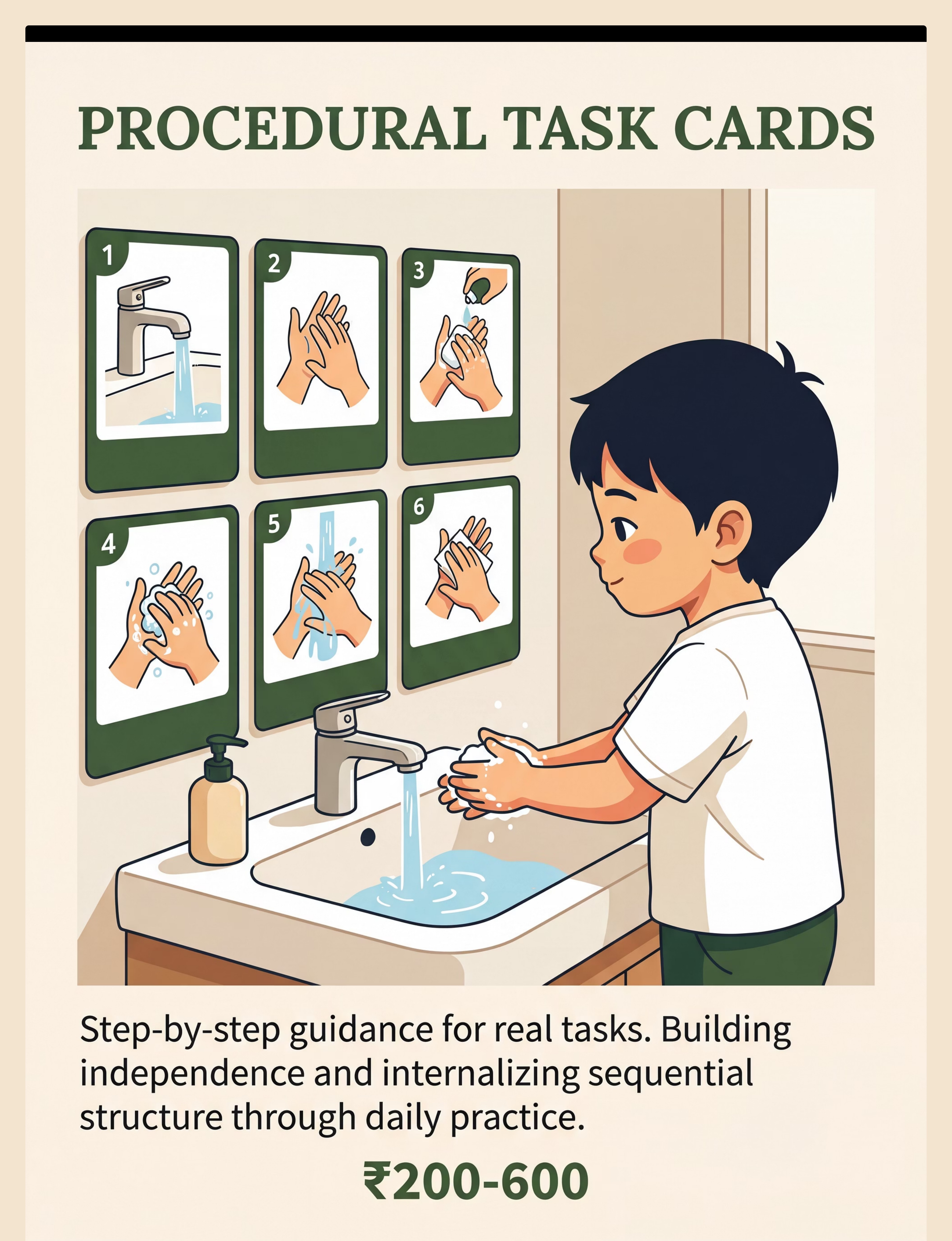
📌 Procedural Task Cards
Sequential independence in daily tasks
8
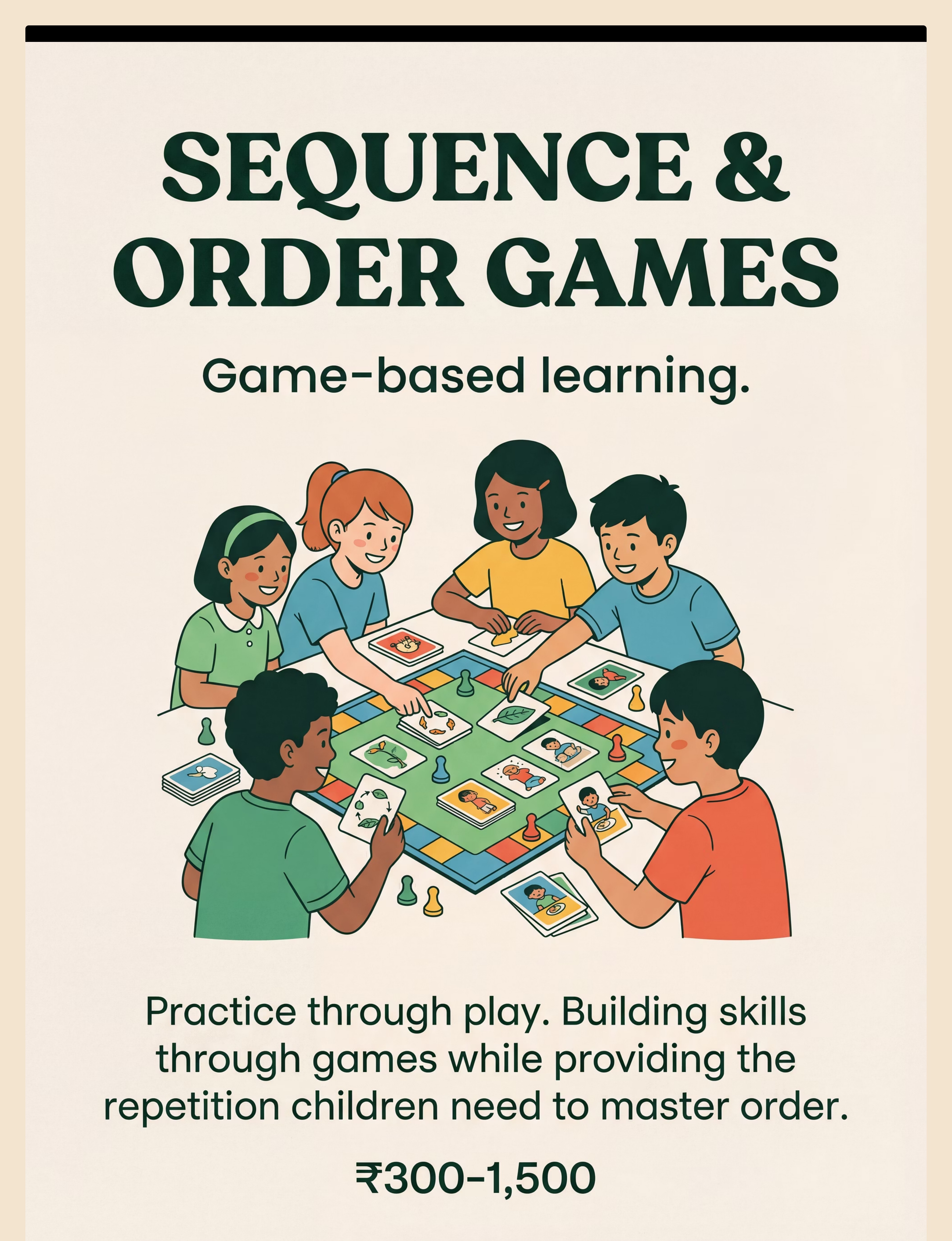
🎲 Sequence & Order Games
Engaging practice with sequential skills
9
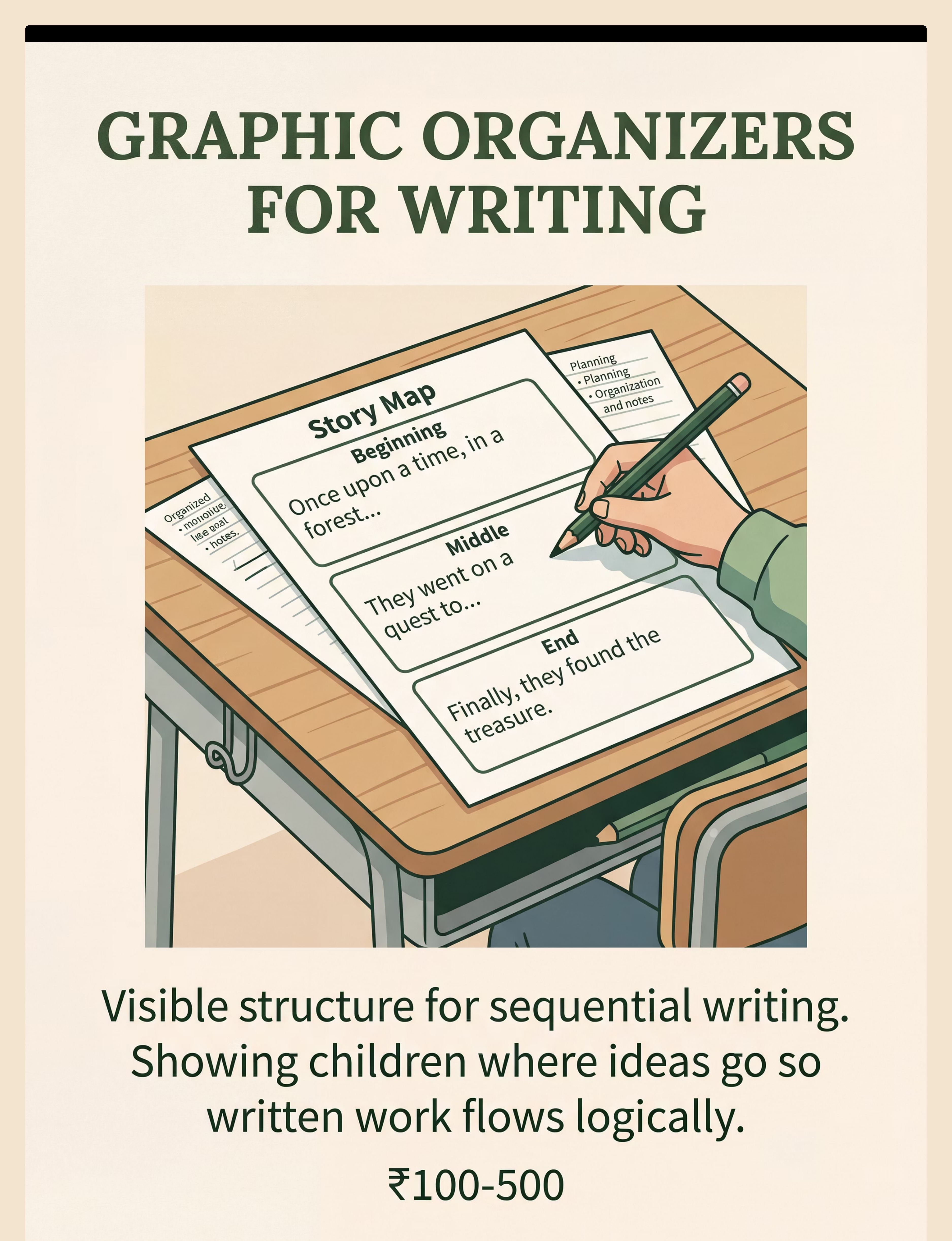
✏️ Graphic Organisers for Writing
Make written sequences visible and structured

This Technique Crosses Therapy Boundaries — Because the Brain Doesn't Organise by Therapy Type
Occupational Therapist (Primary Lead)
Uses sequencing materials to build executive function, motor planning sequences, daily living independence, and self-care routine automaticity. Prescribes visual schedules and procedural task cards as core environmental supports.
Speech-Language Pathologist
Uses story sequencing and temporal language cards to build narrative development, discourse organisation, comprehension of multi-step directions, and verbal sequential memory. Targets "first/then/next/last" language explicitly.
BCBA / ABA Therapist
Uses First-Then boards as behavioural contingency supports, sequencing games for discrete trial practice, and procedural cards for task analysis and chaining. Integrates reinforcement menus with sequential completion.
Special Educator
Uses graphic organisers for writing organisation, story sequencing for reading comprehension, and procedural cards for academic task management. Addresses sequential processing in academic contexts.
"In Pinnacle's FusionModule™, all four disciplines contribute to a single sequential processing intervention plan. This is why GPT-OS® outcomes surpass single-discipline approaches." — UNICEF/WHO Nurturing Care Framework (2022)
Book a multi-disciplinary assessment: 9100 181 181
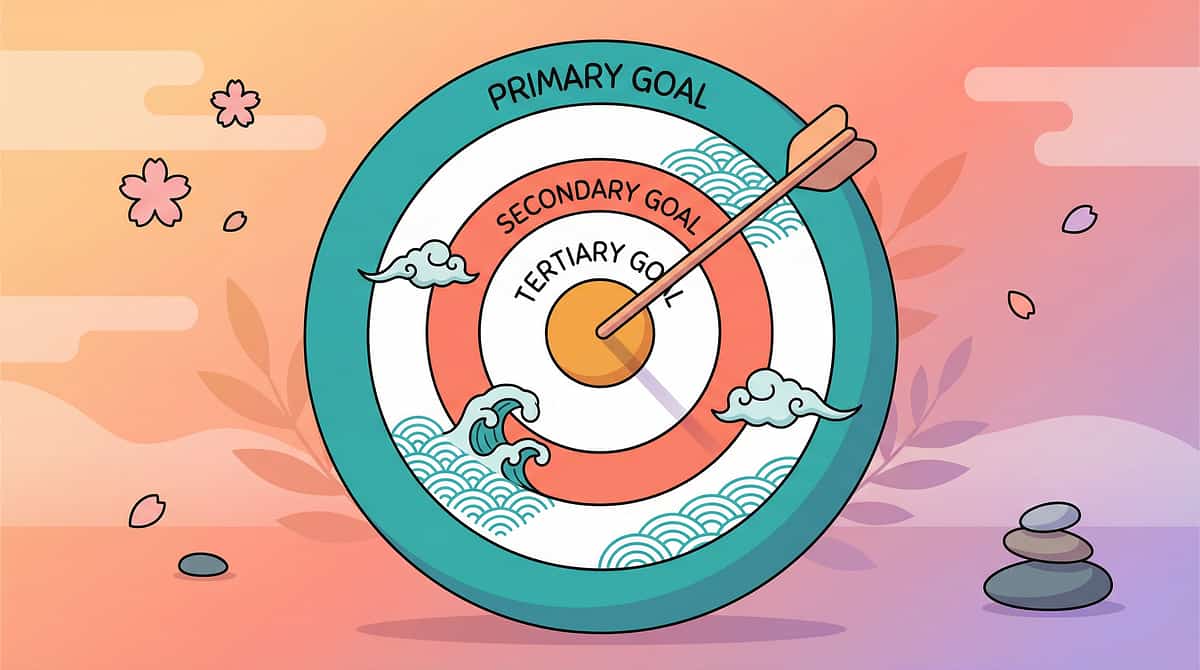
What Your Child Will Actually Be Able To Do
Sequencing materials don't just teach card-sorting. They build a progression of real-world abilities — from foundational understanding to generalised independent thinking.
Ring 1 — Core Understanding
Child understands that some things come before others. "First shoes, then outside." Simple two-step cause-effect. FIRST-THEN mastered.
Ring 2 — Routine Independence
Child follows morning routine using visual schedule with decreasing prompts. Completes self-care sequences using procedural cards. 3–5 steps executed in order.
Ring 3 — Narrative Sequencing
Child retells a story or recount a day's events in correct chronological order. Uses "first/then/next/last" language spontaneously. Understands beginning/middle/end.
Ring 4 — Academic Sequencing
Child organises written work using graphic organisers. Follows multi-step math or science procedures. Plans and executes projects with sequential structure.
Ring 5 — Generalised Sequential Thinking
Child spontaneously organises thinking sequentially across all domains — daily life, social interactions, academic tasks, complex planning — without external supports.
Developmental Progression: No sequential understanding → 2-step supported → 3–4 step sequencing → Multi-step independence → Generalised sequential thinking. Progress tracked via the Executive Function Readiness Index (GPT-OS® metric).
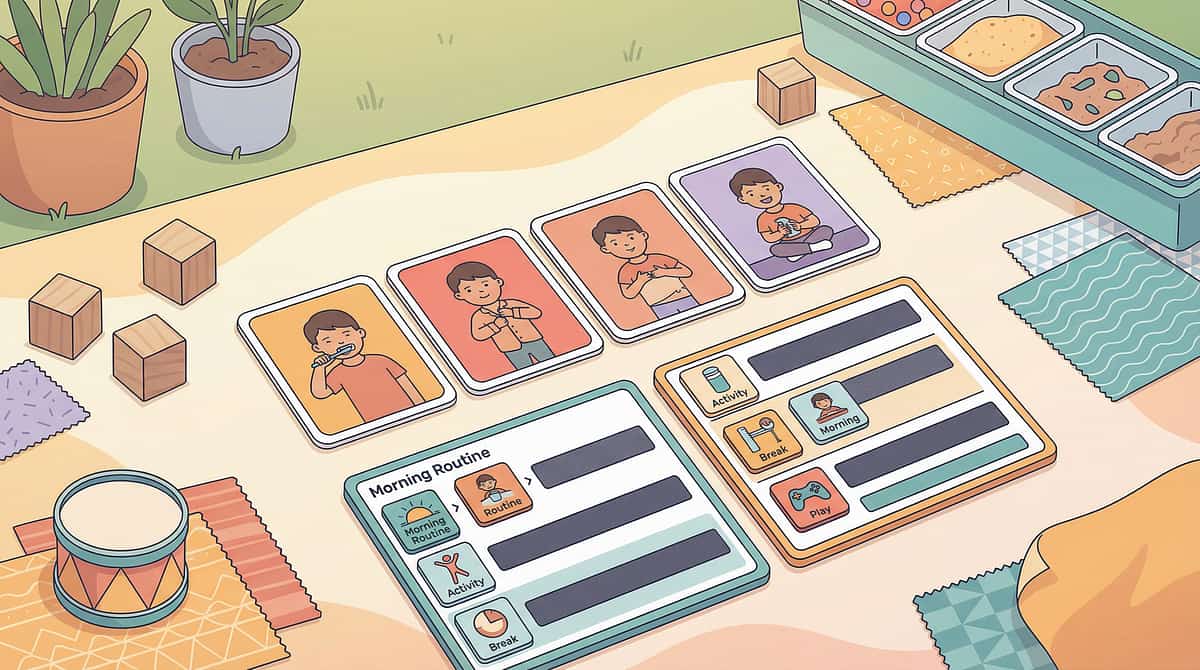
🃏 Material 1 of 9
Picture Sequence Cards
"Make Order Visible and Moveable"
The Science
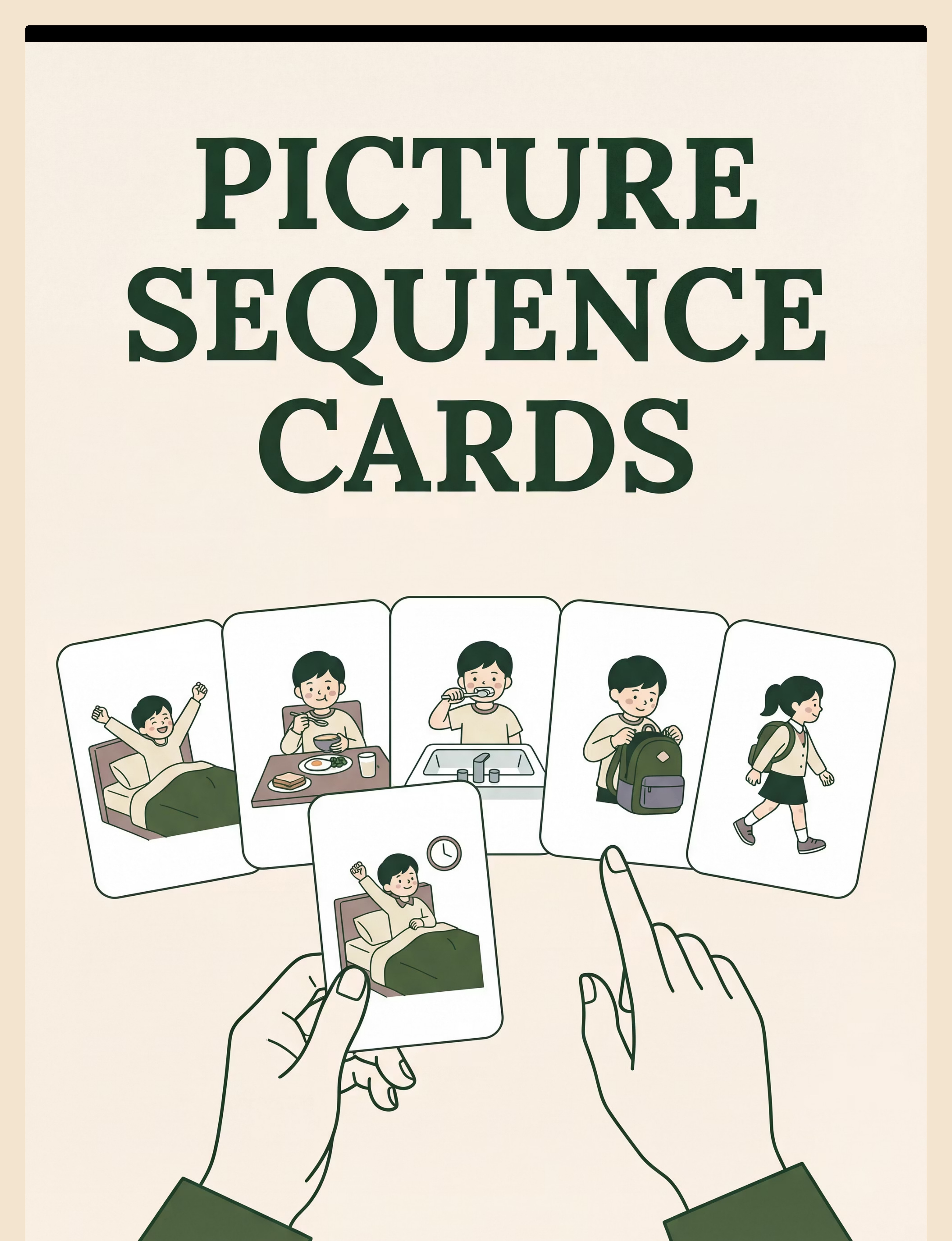
Picture sequence cards externalise what the child's working memory cannot yet hold internally. When a child physically holds each step of "wake up → eat breakfast → brush teeth → put on shoes → go to school" as separate cards, they can see that order matters. This hands-on manipulation builds understanding no verbal explanation can achieve. Research confirms visual sequencing supports are evidence-based practice for children with ASD. (PMC11506176)
When to use: Morning routines | After-school sequences | Social story ordering | Reading comprehension practice
How to Use — Step by Step
- Start with 3-step sequences (even for older children — build confidence first)
- Lay cards face-down, turn up one at a time
- Ask: "What happens FIRST?" — child places card
- "What comes NEXT?" — child places second card
- "What happens LAST?" — child completes sequence
- Child performs the actual sequence using cards as guide
- After 2 weeks: move to 4-step, then 5-step, then 6+
DIY Instructions (₹0 Option)
📸 Photograph your child doing each step of the morning routine. Print on card stock (A6 size). Laminate if possible. Add velcro dots to backs. Attach to a vertical velcro strip on the bathroom wall. You now have a personalised picture sequence system for under ₹50 in materials. For story sequences: cut pictures from old picture books, or draw simple stick figures showing event steps.
Canon Materials
- Dyomnizy Educational Memory Game with Lights & Sound — ₹519 → amzn.in/d/0iwJwOiH
- Lattooland Rainbow Sorting Activity Set — ₹628 → amzn.in/d/05LnLJZl
₹300–1,200 commercial
₹0–50 DIY
"Abstract order becomes concrete when children can hold, move, and see sequences physically laid out before them." ⚠️Safety: Supervise small card pieces with children under 3. Ensure laminated edges are smooth.

📋 Material 2 of 9
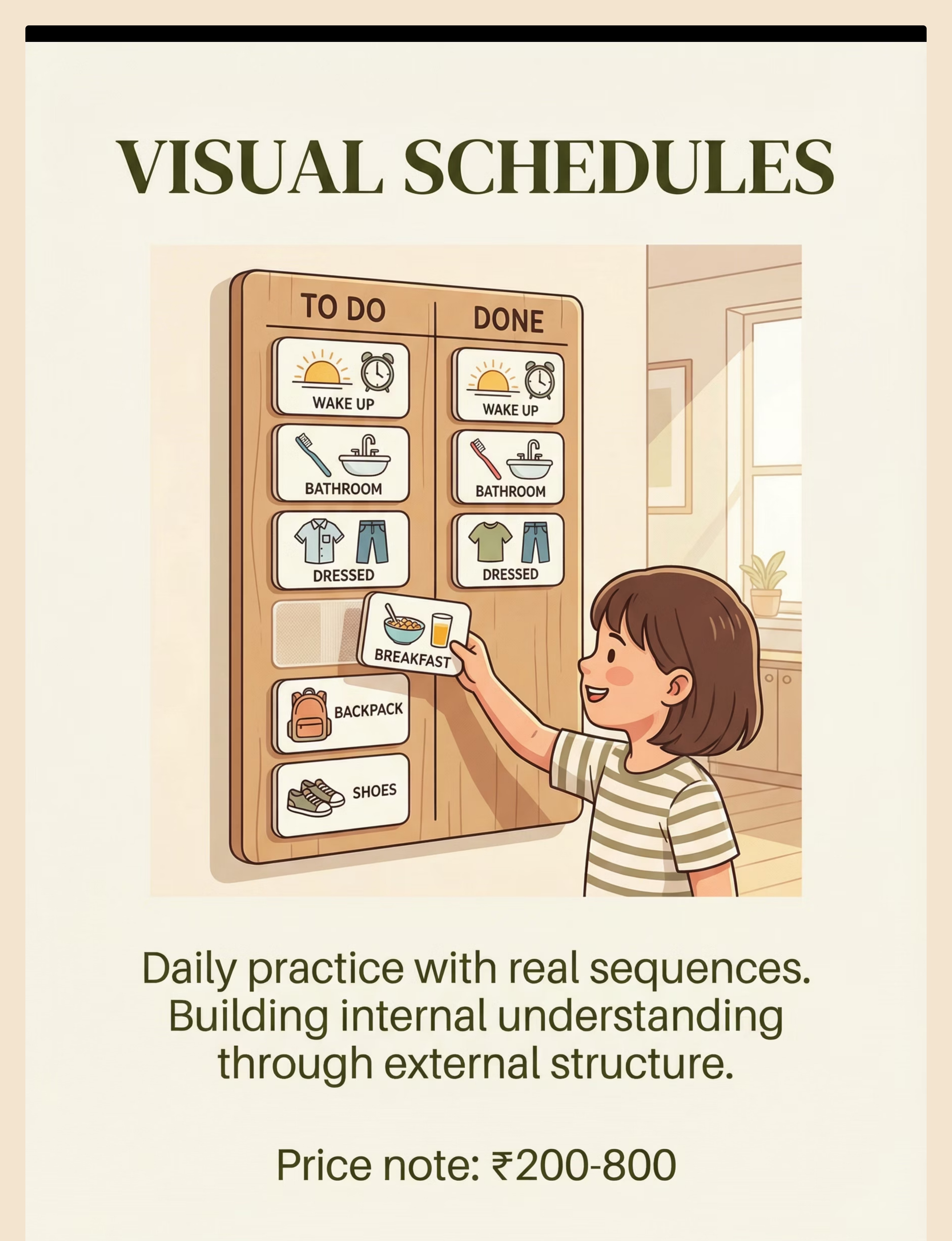
Visual Schedule Systems
"Daily Practice With Real Sequences"
Visual schedules are the single most powerful sequencing tool available to families — not because they teach sequencing in isolated sessions, but because they make your child practise sequential thinking every single day across every routine. Every morning spent following a visual schedule is a morning practising sequential organisation.
For children with sequencing difficulties, visual schedules accomplish three things simultaneously: they reduce anxiety (no surprises about what comes next), they build independence (child checks schedule instead of asking parent), and they teach sequential structure through hundreds of natural repetitions. (NCAEP 2020 Evidence-Based Practice Classification)
Morning Routine Strip
6–8 steps, velcro-based, posted in bedroom
Whole-Day Schedule
Morning / School / Afternoon / Evening / Bedtime sections
Routine-Specific
Handwashing steps at sink, bedtime sequence in bathroom
Transition Schedule
"After school, we will: 1. Snack 2. Homework 3. Play"
How to Implement
- Build schedule with your child (ownership increases compliance)
- Walk through the schedule together each morning first
- When prompting, say "Check your schedule" — not "go brush your teeth"
- When child completes a step, they move it to "DONE" column (physically)
- Celebrate independence: "You checked your schedule yourself!"
- After 8 weeks, try one week without schedule for one routine
Progression Tip: Picture-only → Picture+Word → Word-only as reading develops
₹200–800 commercial
₹0–150 DIY
"Every day spent following a visual schedule is a day practising sequential organisation — hundreds of repetitions build understanding naturally."
➡️ Material 3 of 9
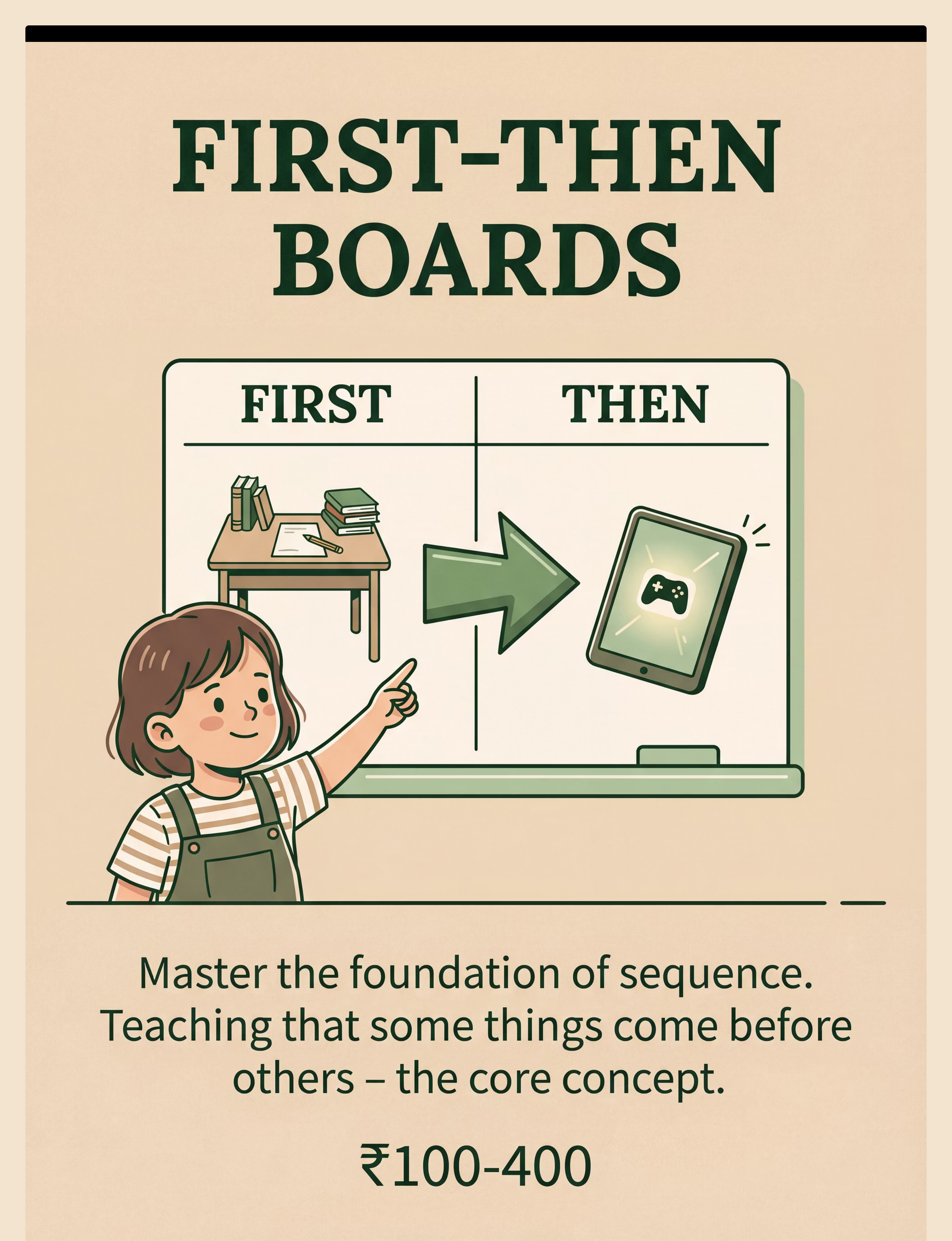
First-Then Boards
"Master the Foundation of Sequence"
The Science
Before a child can manage 5-step sequences, they must truly understand 2-step sequences. The First-Then board is deceptively simple — two boxes — but it teaches the most foundational concept in sequential thinking: some things come before others.
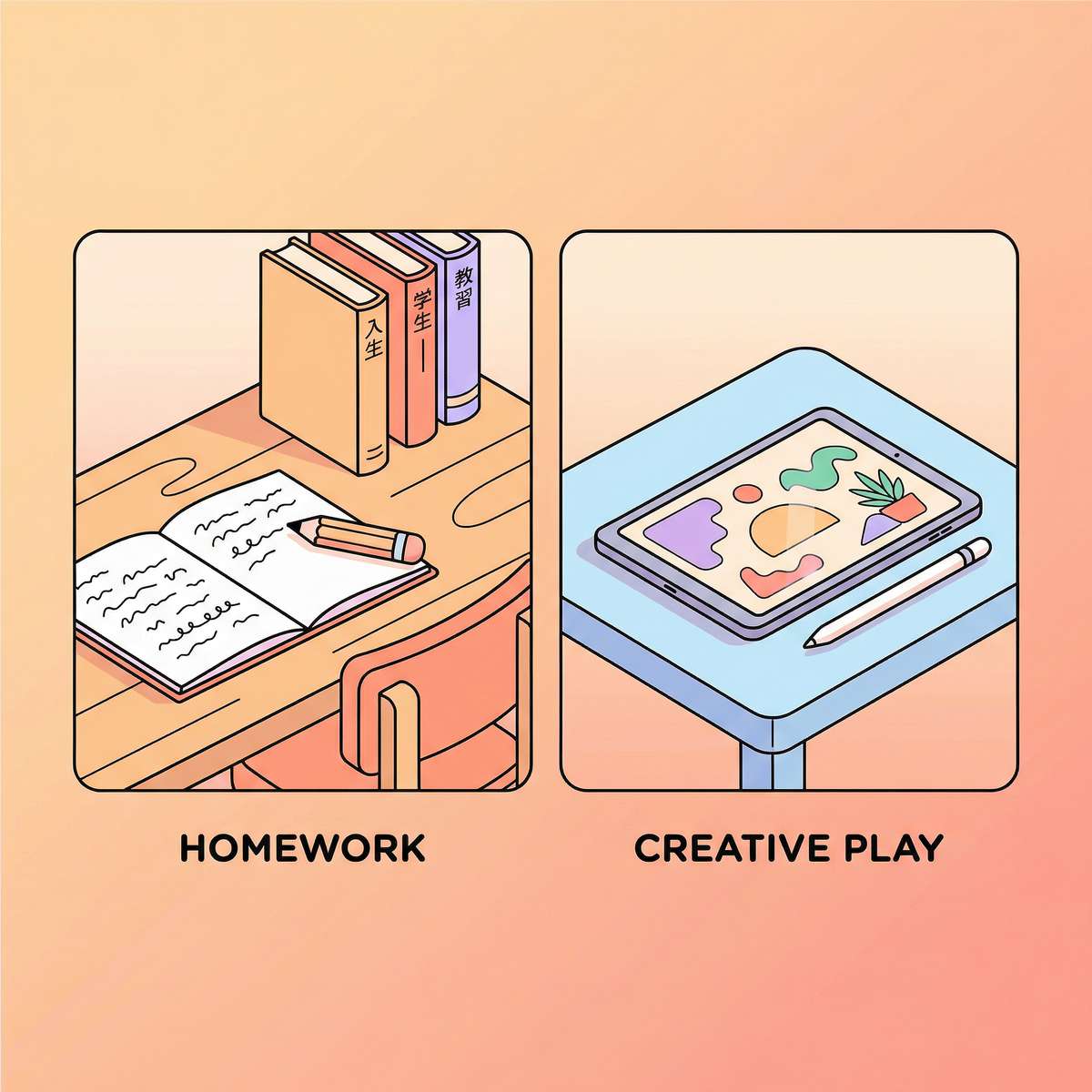
The elegance is in its precision. "First homework, then iPad." "First vegetables, then dessert." Each use teaches: (1) order is real and predictable, (2) completion of the first item leads to the second, and (3) delay of gratification through sequential completion. ABA research confirms that visual First-Then representations significantly increase task compliance and sequential understanding.
₹100–400 commercial
₹0 DIY
How to Use
- Show the board to your child together
- Point and say clearly: "FIRST [activity], THEN [preferred item]"
- Child completes FIRST item
- Physically remove/flip FIRST card
- Child immediately accesses THEN item
- Critical rule: Always follow through. Trust is built through consistency.
First-Then
2 steps
First-Then-Finally
3 steps
4-Step Visual Strip
Expanding sequence
Full Visual Schedule
Complete daily sequence
⚠️Key Safety Rule: Never use First-Then punitively (threatening to remove the Then). This destroys trust and undermines the learning. First-Then is a promise, not a threat. "Before children can manage 5-step sequences, they must truly understand 2-step sequences. First-Then builds this foundation solidly."
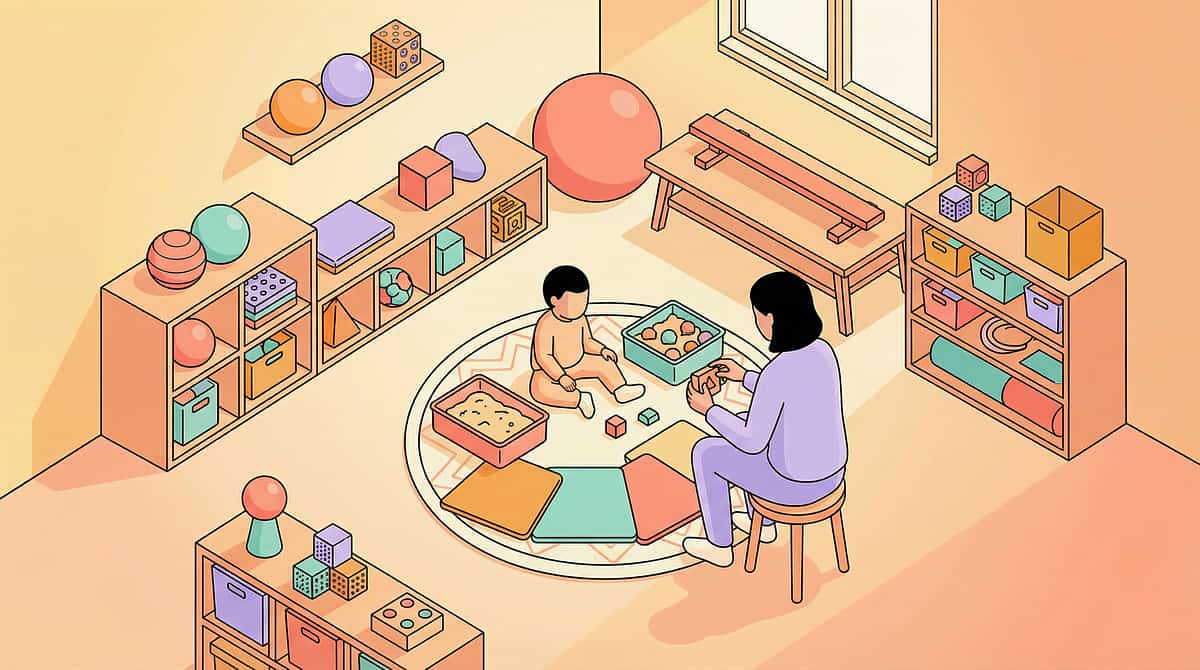
Materials 4, 5 & 6: Building Deeper Sequential Understanding
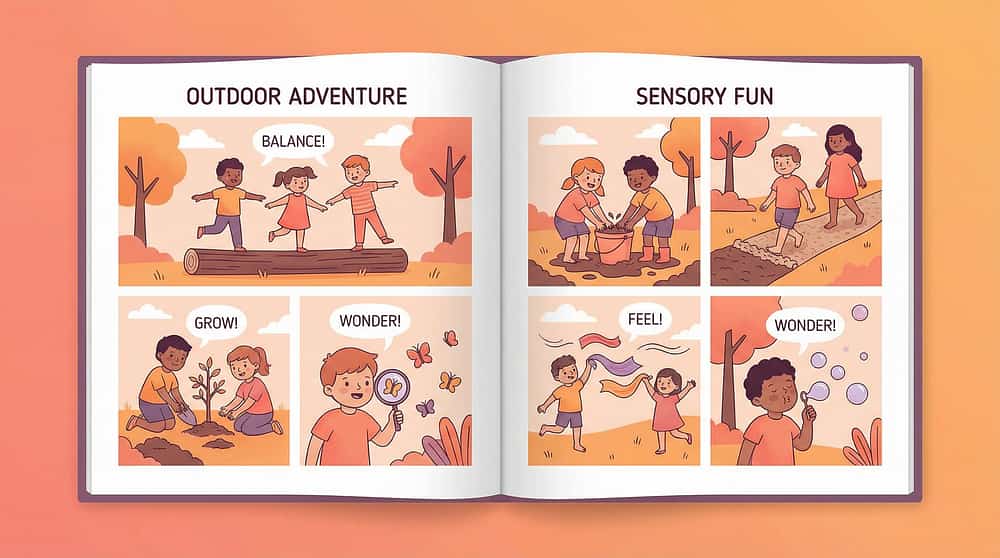
📖 Material 4: Story Sequencing Books & Kits
Every story has an order — and learning story structure teaches children that events in real life also have order. Children arrange cards showing story events in correct order, then retell the narrative. This dual practice — sequencing AND narrating — builds both skills simultaneously.
Key skills: Narrative comprehension | Story retelling | Beginning/middle/end understanding | Reading comprehension | Written organisation
DIY: Photograph 4 events from a recent family outing. Print on cards. Have child sequence them and retell the story. Cost: ₹0 plus printing.
₹400–1,500
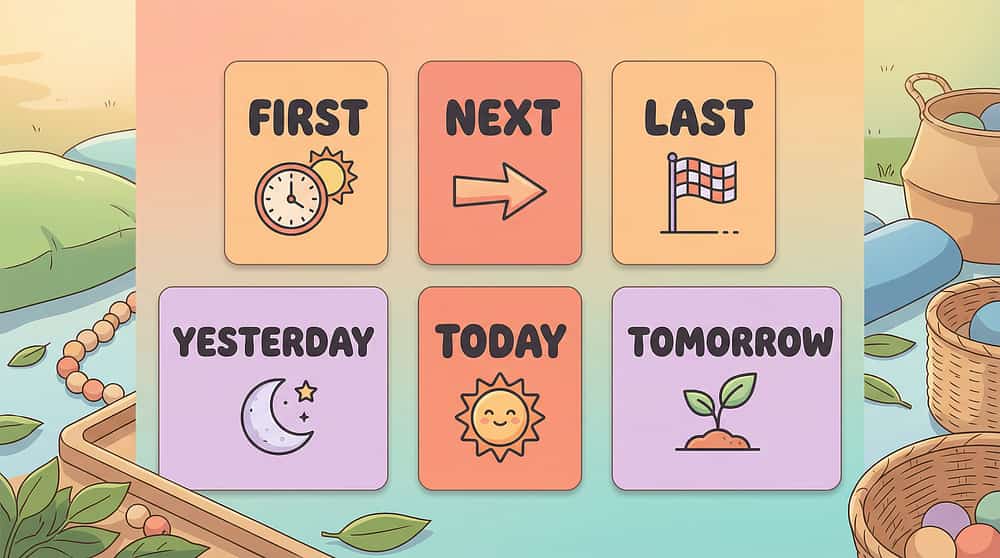
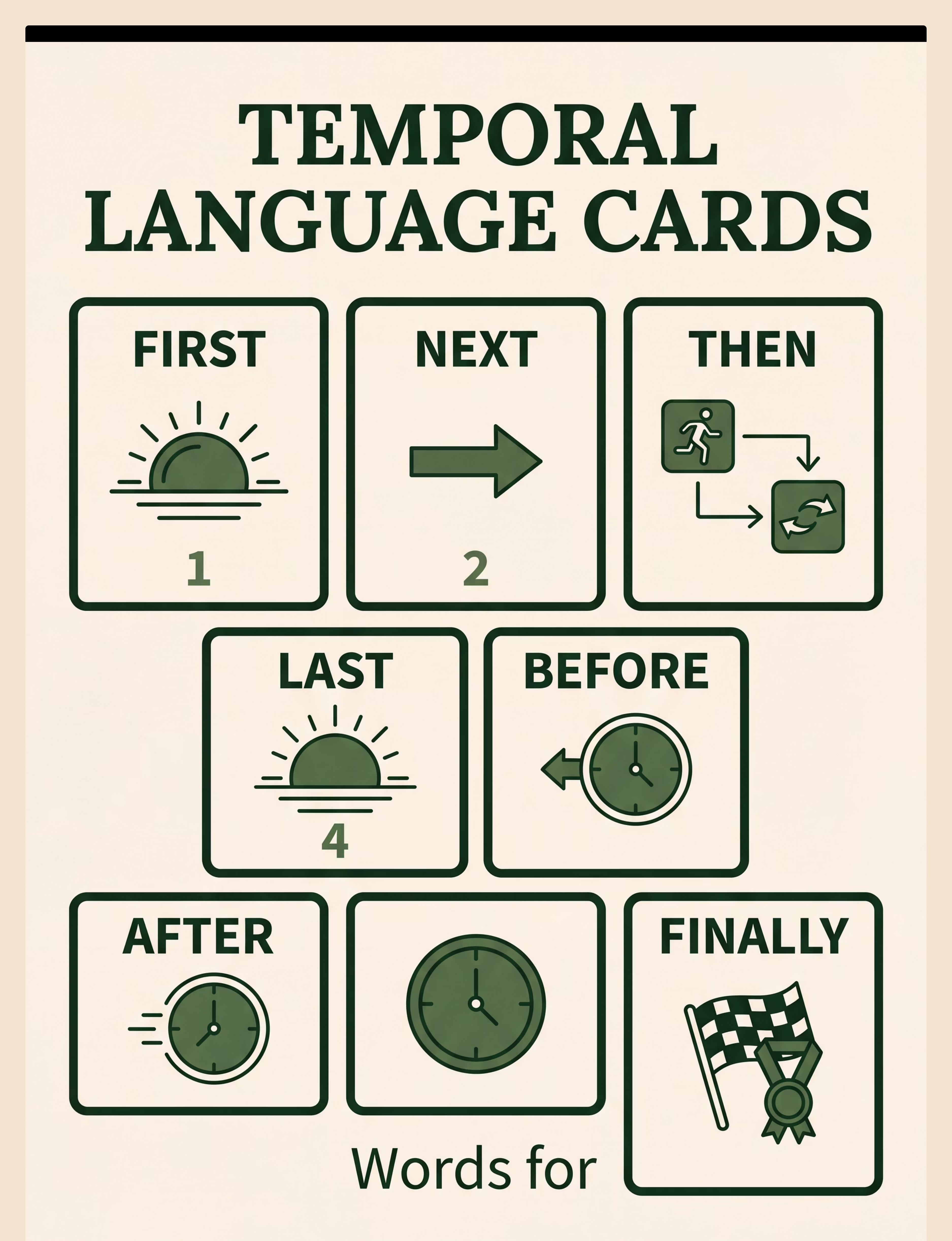
🔤 Material 5: Temporal Language Cards & Games
You cannot think in sequences if you don't have words for sequential relationships. Children with sequencing difficulties often lack command of: first, next, then, last, finally, before, after, beginning, middle, end, yesterday, today, tomorrow.
These cards explicitly teach temporal vocabulary through matching, sorting, and contextual use. Before/After matching games show: brush teeth (before bed), wake up (before school).
Daily practice: Use temporal language in all conversation. "Tell me what happened FIRST at school. What came AFTER that? How did it END?"
₹200–700
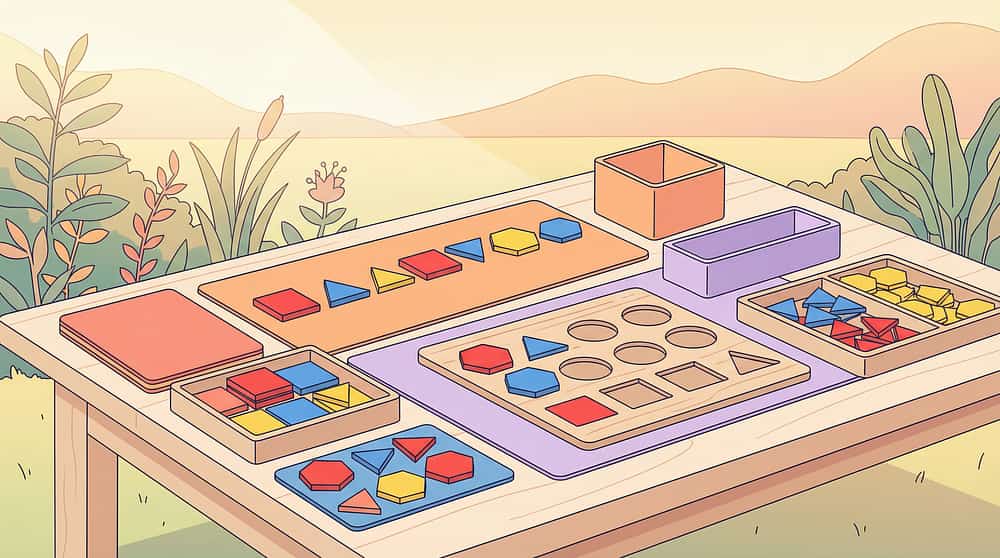
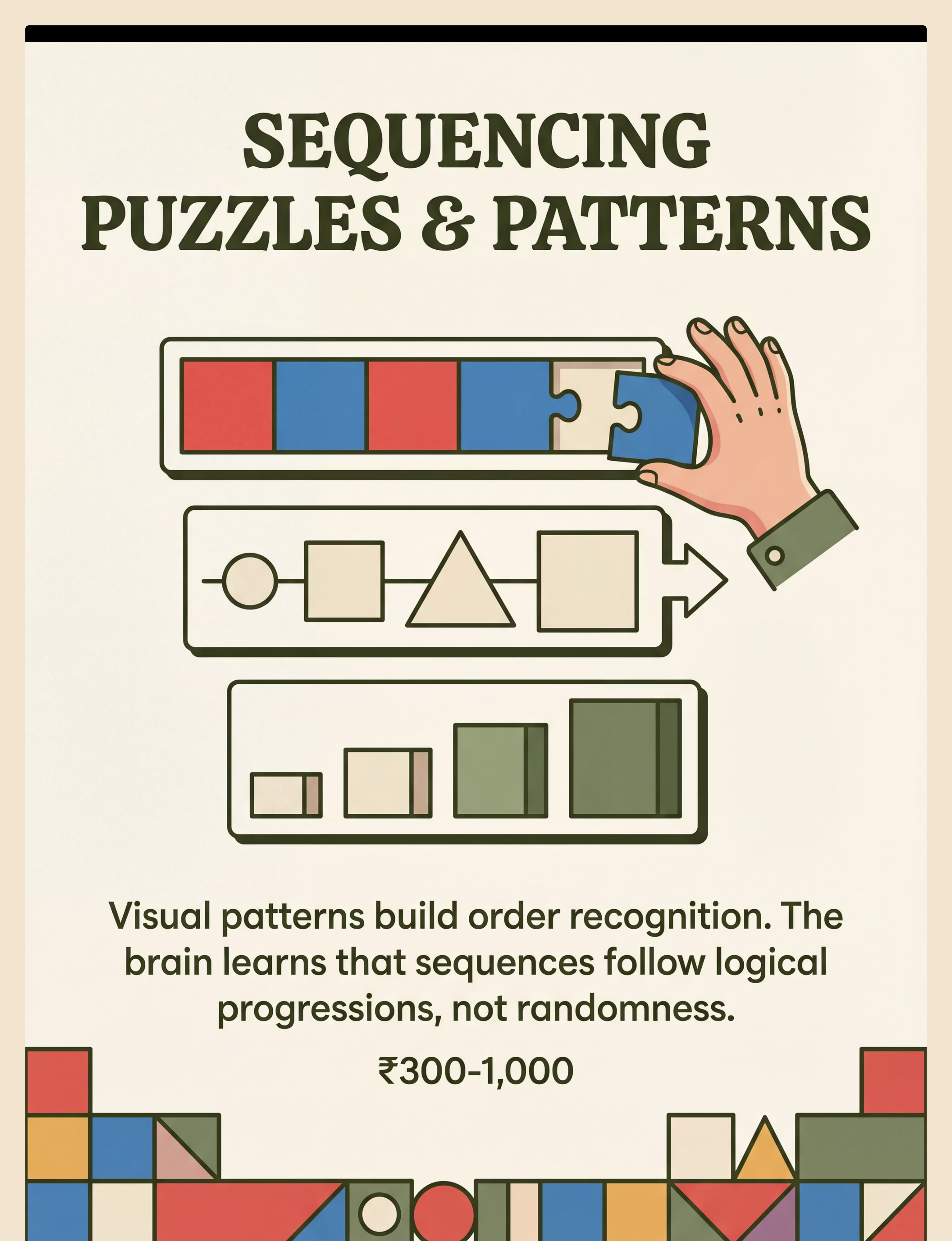
🧩 Material 6: Sequencing Puzzles & Pattern Strips
Pattern sequencing — red-blue-red-blue-? — builds abstract sequential thinking independent of language. For children with visual-spatial strengths but verbal sequencing difficulties, these materials provide successful sequential experiences that build confidence.
The skills transfer: recognising that visual patterns follow logical rules supports understanding that events and routines also follow logical rules. Pattern sequencing appears in all Indian state board mathematics curricula — building these skills = building mathematical readiness.
- Lattooland Rainbow Sorting Set — ₹628 → amzn.in/d/05LnLJZl
- Dyomnizy Memory Game — ₹519 → amzn.in/d/0iwJwOiH
₹300–1,000

Materials 7, 8 & 9: The Complete Toolkit
📌 Material 7: Procedural Task Cards
Step-by-step visual instructions for specific real tasks: handwashing, making a sandwich, packing a backpack, homework routine, getting ready for bed. Each card = one step. Posted where tasks occur. Child follows independently — building sequential independence through daily functional use.
DIY: Photograph your child doing each step of a task. Post in location where task happens. Cost: ₹0 + printing.
₹200–600
🎲 Material 8: Sequence & Order Games
Games create engaging practice with sequential skills. Children who resist worksheets happily engage when skills are embedded in games. Memory sequence games ("I went to the market and bought..."), Simon Says for auditory sequential memory, story round-robin games, sequenced scavenger hunts.
- SHINETOY Shut The Box Game ₹428 → amzn.in/d/0flHweVf
- A Visit to the Hospital Problem-Solving Game ₹199 → amzn.in/d/01KczBmp
₹300–1,500
✏️ Material 9: Graphic Organisers for Writing
Writing requires sequencing at multiple levels. Graphic organisers — story maps, paragraph planners, sequence planning sheets — make written sequences visible. For children whose writing "jumps around," graphic organisers provide the scaffold.
Story map: Beginning (characters/setting) → Middle (problem/events) → End (resolution).
DIY: Download free story map templates, print and laminate for repeated use.
₹100–500

Before Every Session — Is Your Child Ready?
The best sequencing session is one that starts right. A 5-minute successful session is worth more than a 20-minute struggling one. Use this readiness check before every session.
✅ GO — Begin Session
3+ of these present
- Calm body, regulated nervous system
- No hunger or tiredness
- Willing eye contact or engagement when approached
- Has recently completed a preferred activity
- Previous session ended positively
🟡 MODIFY — Simplify Session
1–2 of these present
- Slightly elevated energy → Use a movement break first
- Resistance to starting → Reduce sequence length (start with 2-step only)
- Distracted environment → Move to quieter space first
🔴 POSTPONE — Any 1 Present
Any one of these = postpone
- Active distress or meltdown recently concluded
- Fever, illness, significant pain
- Major schedule disruption within past hour
- Child explicitly refuses after two gentle invitations
Unsure about readiness or escalating behaviours? FREE: 9100 181 181
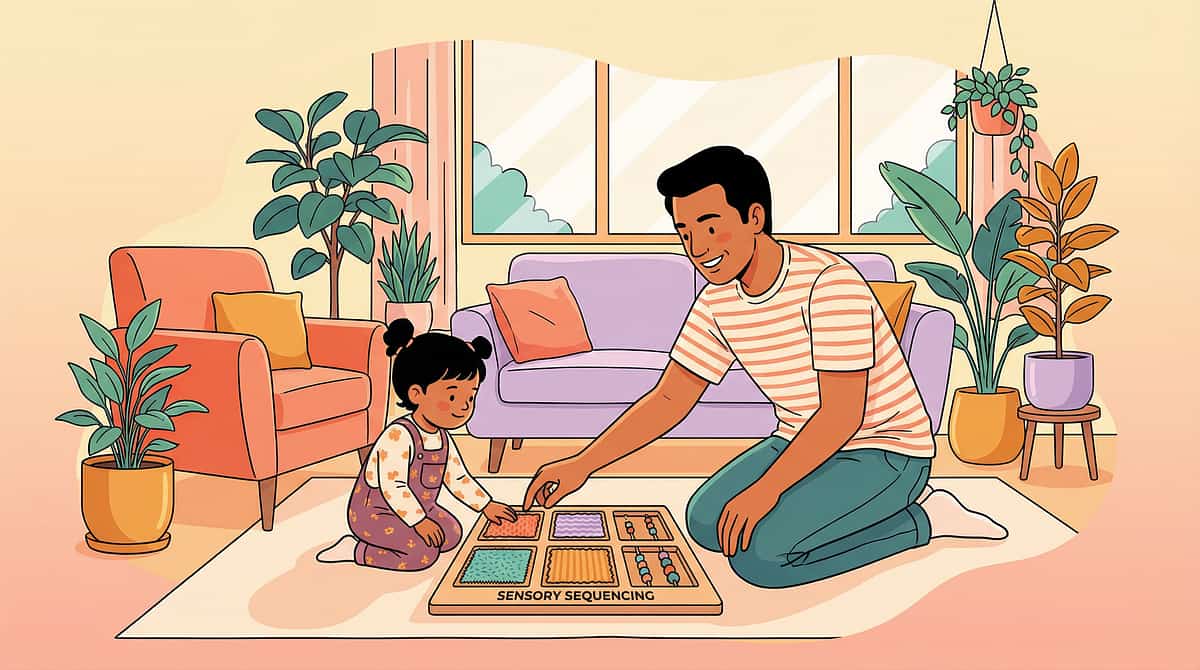
Step 1 of 6 | ⏱ 30–60 seconds
The Invitation — Not a Command
Every sequencing session begins with an invitation — never a command. The child is brought into the activity through low-demand, playful engagement. This is where ABA's pairing principle (building motivation before demand) meets OT's "just-right challenge" (matching task to current capacity).
"Hey, want to do something fun with me? I have these cards and I need your help. Can you come look?"
For older children: "I've got a puzzle challenge here. I think you might be able to figure it out — want to try?"
For young children who love a character: "[Character's name] needs your help to put these in the right order. Can you help them?"
Acceptance Cues to Watch For
- Moves toward the materials
- Makes eye contact
- Picks up a card or piece
- Smiles or shows any positive affect
- Asks "what is this?"
Resistance Cues + How to Respond
- Turns away → Wait 30 seconds, try with a different framing
- Says "no" → Respect it. Offer a choice between this and a preferred activity first
- Ignores → Check readiness indicators. May need to postpone.
ABA Principle: Establishing motivation before demand placement increases task engagement by 40–60% in structured intervention research.
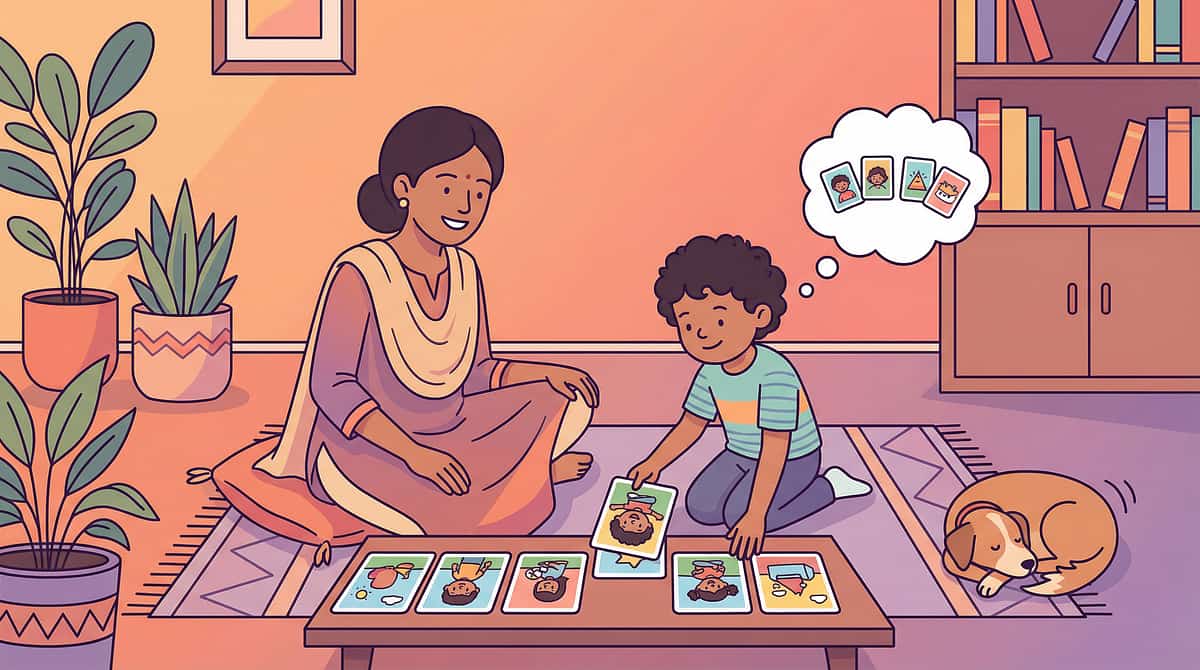
Step 2 of 6 | ⏱ 1–3 minutes
The Engagement — Introducing the Material
The child is now in the space. This step introduces the therapeutic material. The parent follows a precise script while reading the child's responses. Reinforcement begins immediately upon engagement.
1
For Picture Sequence Cards
"Look — these cards show [morning routine/story]. But they're all mixed up! Can you help me find which one goes FIRST?" Hand the child one card, keep the others face-down. Reduce overwhelm by revealing one at a time.
2
For Visual Schedule
"This is YOUR special plan for today. Let's look at what comes first." Stand beside child (not in front), point to first item, make it collaborative — not instructional.
3
For First-Then Board
"Look what I have — [show board]. This says FIRST we do [task], and THEN you get [preferred item]! Can you see what comes first?"
4
For Pattern Strips
"I have this pattern — red, blue, red, blue... what do you think comes next? Let me show you..." Start with the simplest AB pattern, demonstrate yourself first.
Engagement Spectrum
Full Engagement
Picks up materials, responds → Proceed to Step 3
Tolerance
Present but watching → Narrate what you're doing, give it 60 more seconds
Avoidance
Moving away → Step back, try with just ONE card/piece. Simplify further.
Reinforcement Cue: First moment of any engagement → immediate specific praise: "Great! You're looking at the cards!" (Celebrate the attempt, not just the success.)
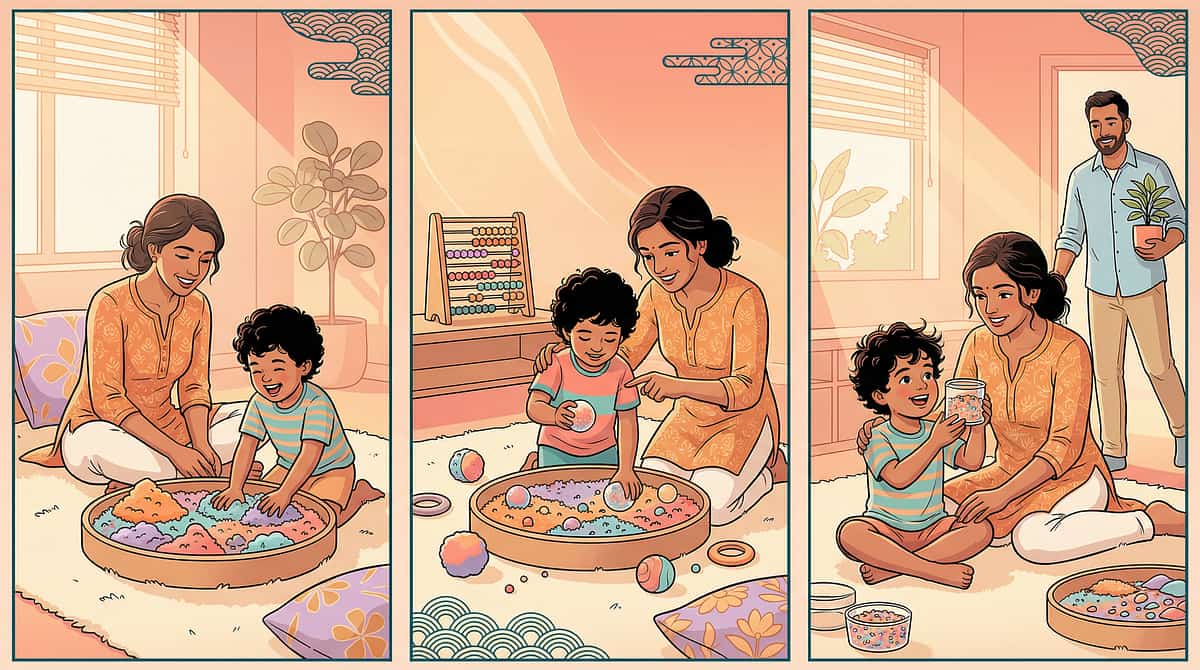
Step 3 of 6 | ⏱ 5–12 minutes (core therapeutic window)
The Therapeutic Action — Where Learning Happens
The core protocol below is shown for Picture Sequence Cards — adapt the same principles for other materials. Meta-analysis confirms the core therapeutic action should occupy 40–60% of total session time. For a 15-minute home session: 6–9 minutes on the core activity. (PMC10955541)
1
Phase A — Order Discovery (2–3 minutes)
Lay out 3 sequence cards in scrambled order. Ask: "Which one shows what happens FIRST?" Wait 5 full seconds. If correct → celebrate specifically: "Yes! Waking up happens FIRST!" If incorrect → don't say "wrong." Say: "Let's look at these two — if you're still in bed, can you already be at school?"
2
Phase B — Sequence Building (3–5 minutes)
Child builds the complete sequence left-to-right. Narrate with temporal language as they place cards: "First... then... and finally..." Have child echo the temporal language. This is the SLP component embedded in the OT activity.
3
Phase C — Sequence Performance (2–3 minutes)
Child follows the sequence they just built to actually perform the routine. The visual card sequence guides the physical execution. This closes the loop between cognitive understanding and real-world application.
Common Execution Errors to Avoid
- Parent rushing — child needs 5+ second wait time after questions
- Correcting verbally instead of asking guiding questions ("Let's look again")
- Moving to 4-step before 3-step is mastered (wait for 3 consecutive correct without prompts)
- Doing the activity FOR the child when they're slow — wait, independence is the goal
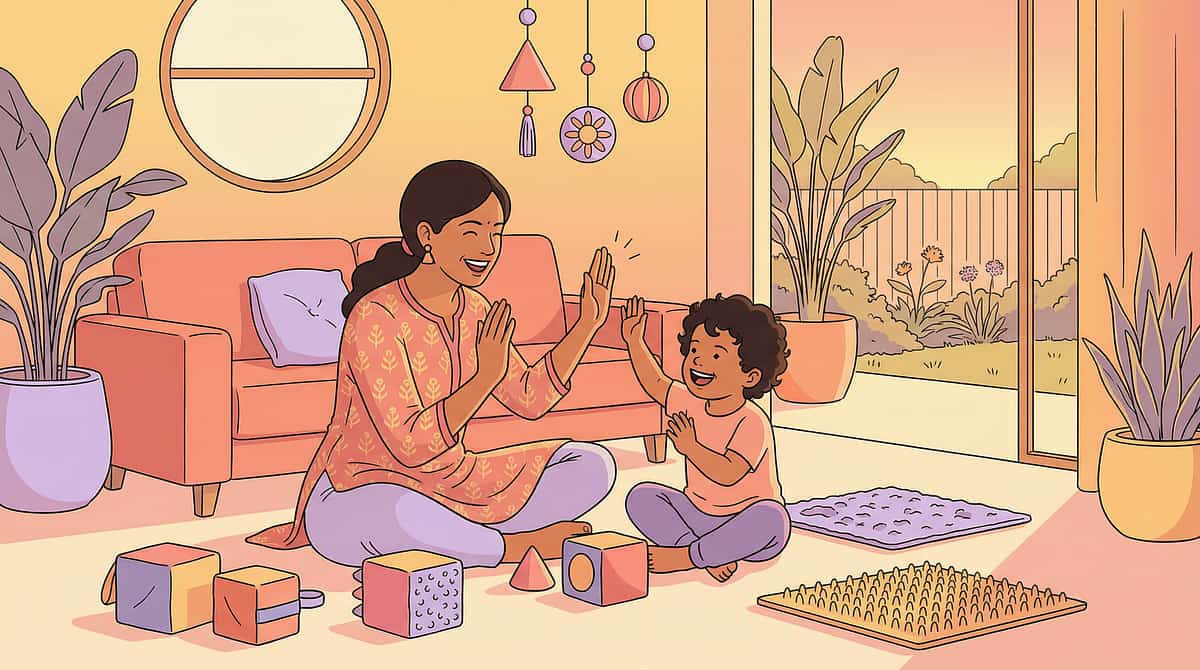
Step 4 of 6 | ⏱ 3–5 minutes
Repeat & Vary — Dosage Is Everything
Three good repetitions are worth more than ten forced ones. Therapeutic dosage for sequencing: 2–4 repetitions per session for focused practice. For visual schedules: daily use is the dosage. For games: play until natural completion.
Variation A — Scramble and Redo
After child correctly sequences, scramble cards, ask child to sequence again from memory.
Variation B — "What's Missing?"
Lay out sequence with one card removed. "Something is missing! What belongs here?"
Variation C — "What's Wrong?"
Place one card in wrong position. "Hmm, this doesn't look right. Can you find what's wrong?" Child identifies and corrects.
Variation D — Child Teaches
Child explains the sequence to a toy, stuffed animal, or younger sibling. Teaching reinforces understanding more deeply than passive practice.
Variation E — Context Switch
Use same sequence structure with different content. If morning routine is mastered, apply the same 3-step format to snack preparation or bedtime.
Satiation Rule: Respect satiation signals — answers before question is complete, restlessness, decreased engagement, asking "are we done?". End on success. A sated, successful child will engage more readily next time.
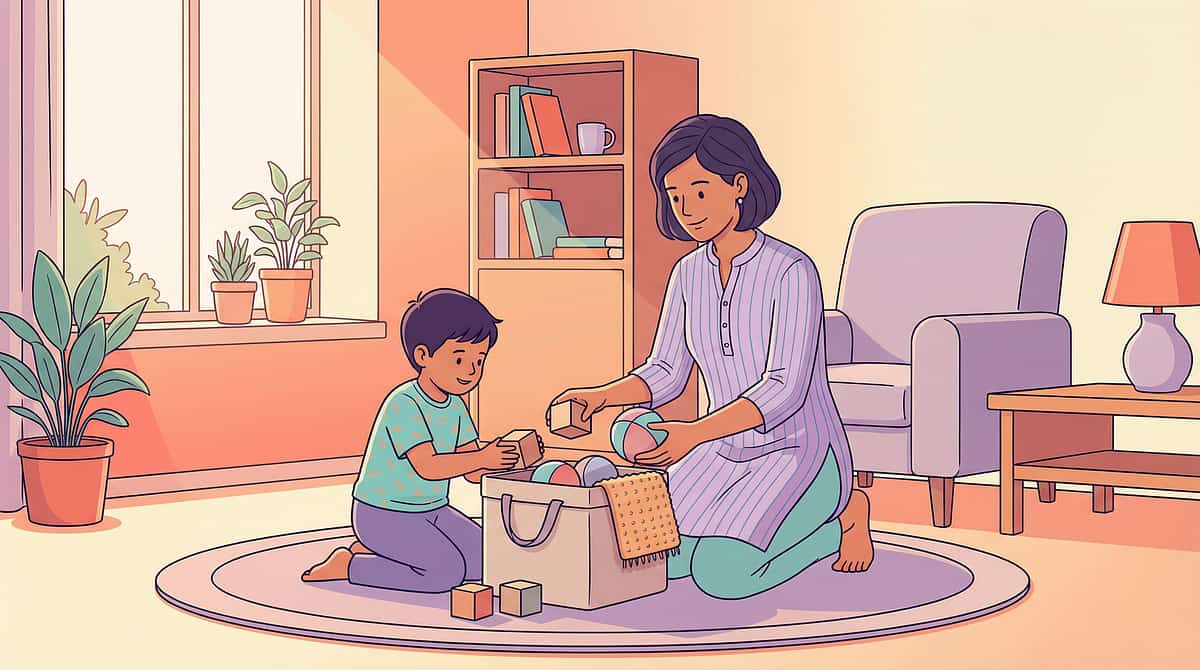
Step 5 of 6 | ⏱ 30 seconds — timing is everything
Reinforce & Celebrate — Within 3 Seconds of Success
Timing matters more than magnitude. Immediate, specific reinforcement is 3–4 times more effective than delayed, generic praise. "Good job" is forgotten. "You just put those three cards in the perfect order — FIRST, THEN, LAST — that was brilliant sequencing!" is remembered by the nervous system.
Your Reinforcement Scripts (choose one per success moment):
🎉 "YES! You found the right order! FIRST, THEN, LAST — you did it!"
🎉 "Look at that sequence — perfect! You knew exactly what came first!"
🎉 "[Child's name], your brain just worked out a sequence. That's exactly what we're building. Amazing!"
Reinforcement Menu (add after verbal praise for high-impact moments)
- Sticker on progress chart — Reward Stickers ₹364 → amzn.in/d/01wrHJWX
- Token added to reward jar — Rosette Reward Jar ₹589 → amzn.in/d/02C5R9Jn
- High five, hug, or celebratory dance (free — often most powerful)
- 2 minutes of preferred activity
- Verbal praise from another family member immediately after
Critical Rule: Celebrate the attempt, not just the success. "I love that you tried to figure that out" is valid reinforcement that builds a growth mindset. NEVER withhold reinforcement when the child has genuinely tried.
Ask about building your personalised reinforcement menu: 9100 181 181
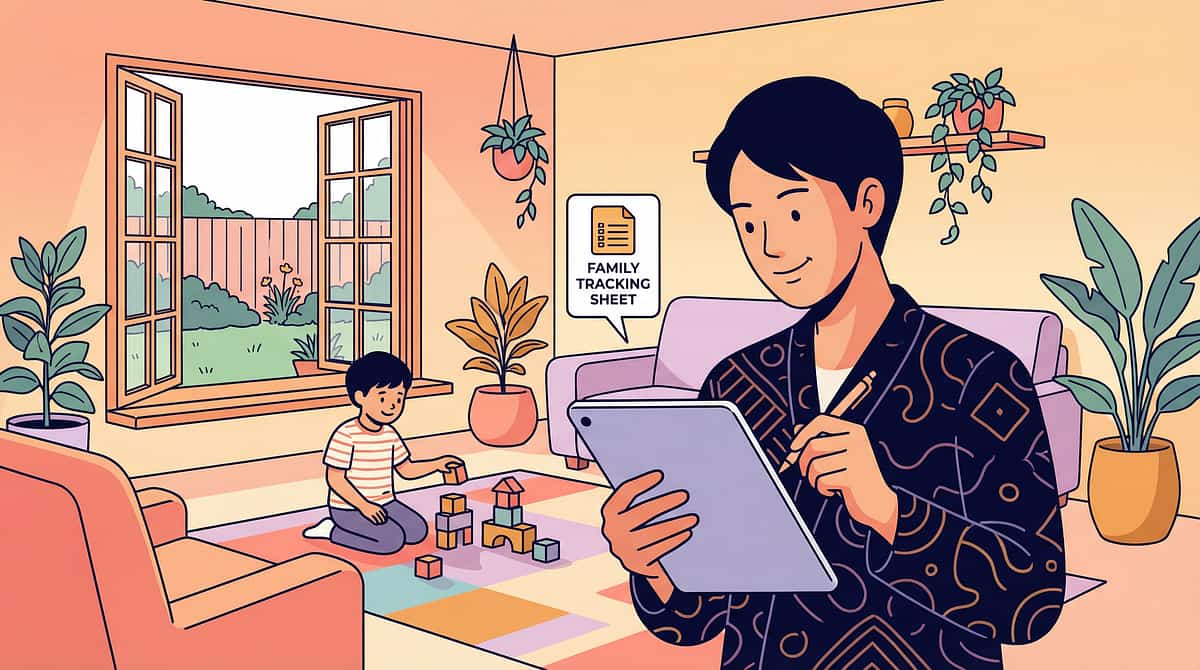
Step 6 of 6 | ⏱ 1–2 minutes
The Cool-Down — No Session Ends Abruptly
Abrupt endings cause post-session dysregulation. The cool-down transitions the child from therapeutic engagement back to baseline — preventing the "therapy crash" many parents know.
"Two more [cards/turns], and then we'll put these away. You've worked so hard today."
[After two more:] "Okay — that's our sequencing time! You did such great work. Let's put these away together."
The cool-down itself is a sequencing opportunity: "First the cards go in, then the lid goes on." You are modelling FIRST-THEN in every moment of the session — even as it closes.
If Child Resists Ending
- Use transition object — Soft Animal Toy ₹425 → amzn.in/d/022Lj6Fr as "session is over" signal
- Show visual timer — Smartivity Interactive Clock ₹673 → amzn.in/d/0aY06Vfl — "See? The time is done."
- Remain calm. Use a predictable ending ritual every session.
Evidence: Visual supports for transitions are classified as Evidence-Based Practice by NCAEP (2020).
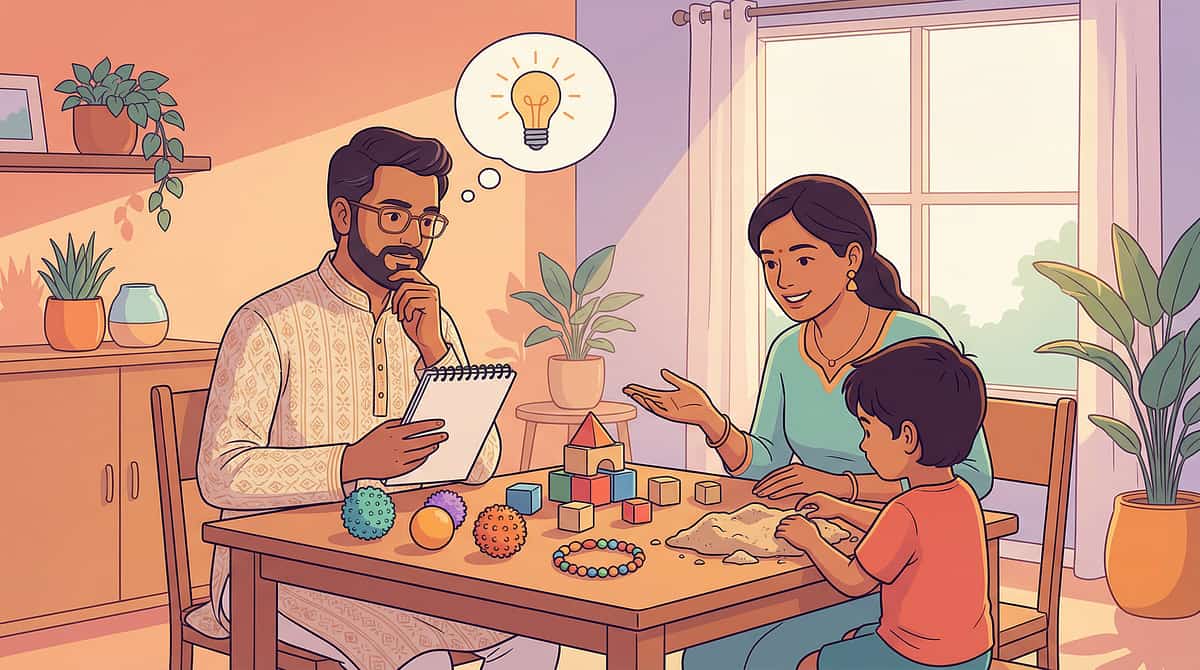
60 Seconds of Data = Months of Progress Clarity
Within 60 seconds of ending the session, record 3 data points. Not a research paper — three observations. This data, tracked consistently, allows GPT-OS® to generate personalised recommendations for your child's next steps.
1
Date + Material Used
Record date and which material: Sequence Cards / Visual Schedule / First-Then / Story Sequencing / Pattern Puzzles / Procedural Cards / Games / Graphic Organisers
2
Sequence Length + Quality
Sequence length practised (2-step / 3-step / 4-step / 5+-step). Session quality rated 1–5: 1=refused, 3=partial, 5=excellent.
3
Readiness + One Observation
Readiness level going in: Green / Yellow / Red. One observation (optional): What did you notice?
"3 sessions of data = anecdote. 12 sessions of data = pattern. 30 sessions of data = clinical trajectory. Parents who track consistently are the parents whose children make the fastest progress — because they know exactly what works." — GPT-OS® Clinical Intelligence Team
Download the G-670 Sequencing Session Tracker (PDF) → pinnacleblooms.org/tools/G-670-tracker
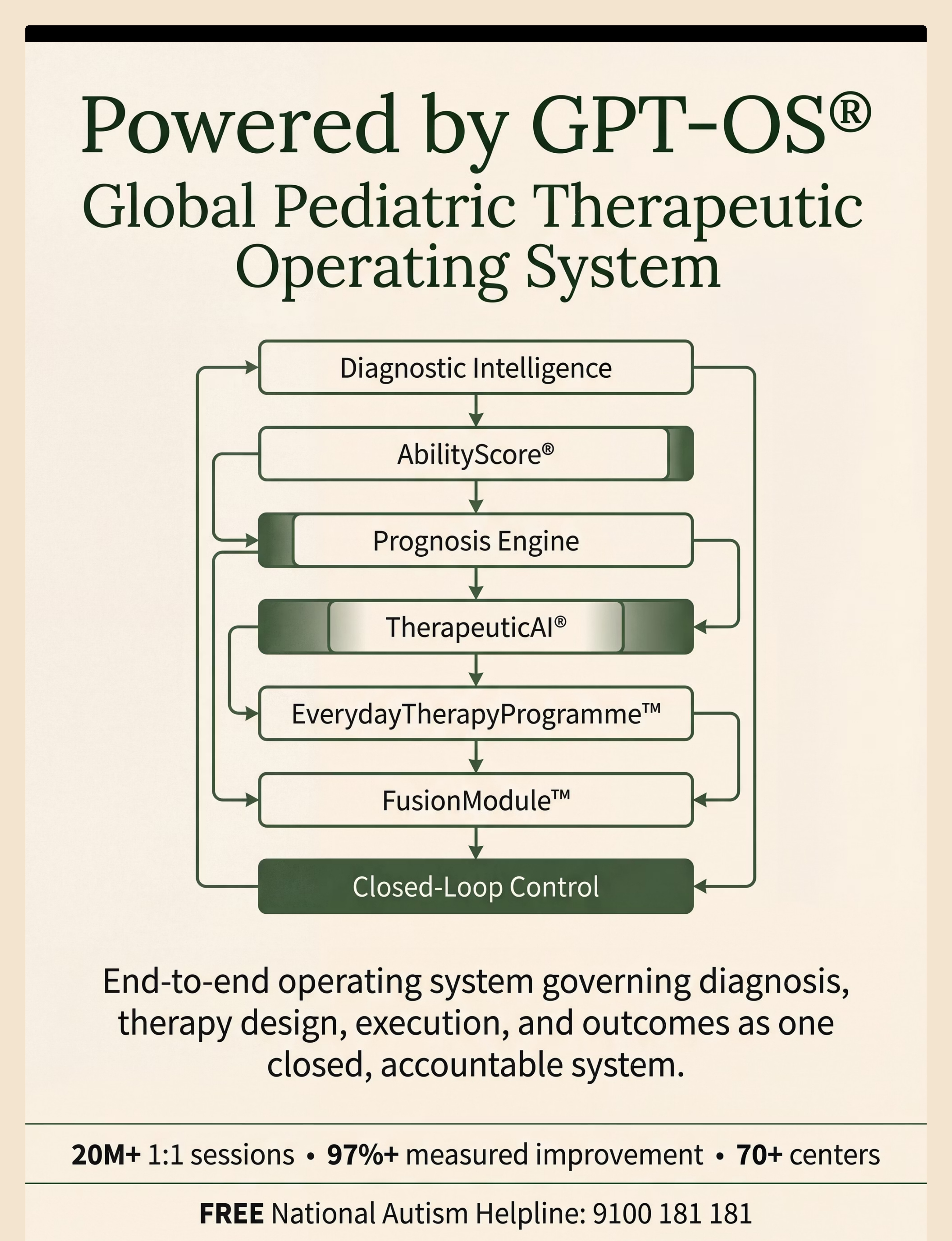
GPT-OS® Integration: Your data feeds directly into the Executive Function Readiness Index and informs TherapeuticAI® recommendations for next technique progression.
Questions about your child's data patterns? FREE: 9100 181 181
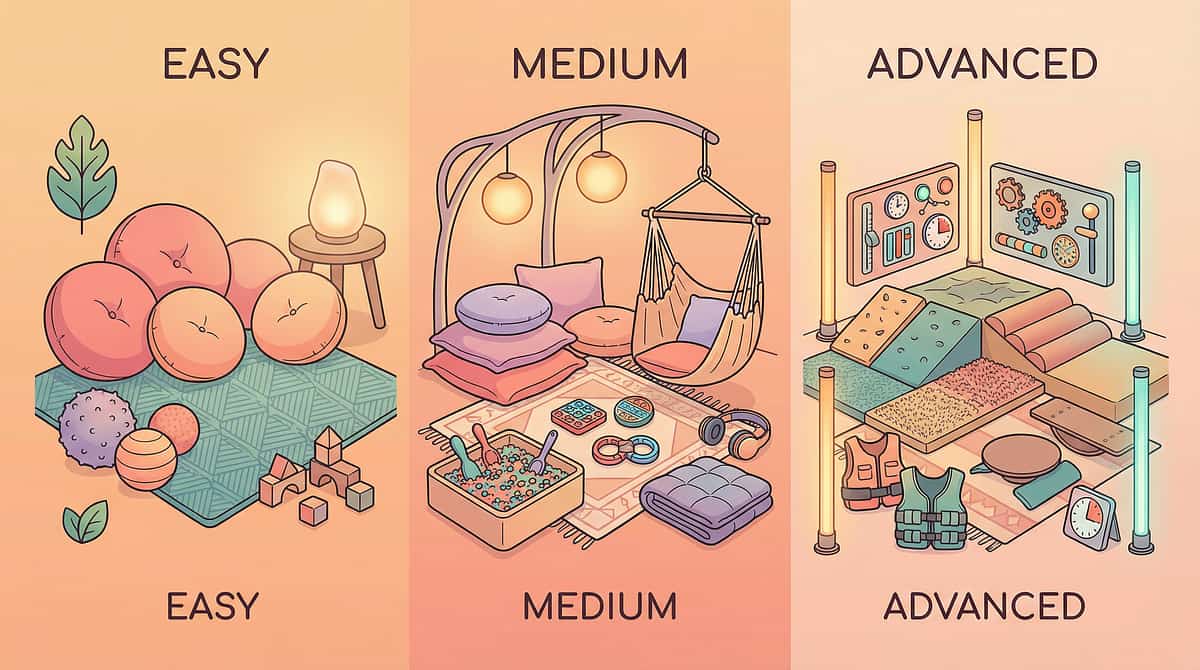
When Things Don't Go As Planned — And They Won't Always
"Problems in sequencing sessions are not failures. They are data. Every 'what went wrong' session teaches you something about your child's current edge."
Problem 1 — "My child refuses to touch the cards"
First ask: Did you check readiness? (Card 13). If yes: Try with just ONE card, no sequencing demand — just handling. Try using the child's favourite character/show for content. You sequence the cards, narrate out loud, let child watch. Observational learning is valid.
Problem 2 — "Child can do 3 steps but falls apart at 4+"
This is exactly where you are in the progression. Stay at 3 steps for another 2 weeks. Ensure 3-step sequencing is 100% correct for 5 consecutive sessions before adding step 4.
Problem 3 — "Child memorises the sequence, not learning the concept"
Memorisation is actually a great sign — it is the beginning of internalisation. Vary the content: try a new 3-step story sequence. Introduce "what's wrong" variations (Card 17) to test flexible understanding.
Problem 4 — "Works great with me, not with school"
Generalisation is a separate skill from the initial learning. Send procedural cards to school. Request that support staff use First-Then board. Book a teleconsultation to create a home-school generalisation plan.
Problem 5 — "No progress after 4 weeks"
Review data — are sessions happening 3×/week minimum? Try dropping to First-Then only. Request professional assessment: there may be a specific underlying mechanism needing targeted support. Call: 9100 181 181

Your Child Is Unique — Here's How to Adapt These Materials
Profile-Based Variations
ASD — Strong Visual-Spatial
Lead with Pattern Strips and Puzzle Sequences. Use highly visual, minimal-language materials first. Build verbal sequencing second. Visual schedule as daily foundation.
ASD — Language Delay
Picture-only sequences (no words on cards). Temporal language teaching is priority. Don't advance to story sequencing until 3-step visual sequences are solid.
ADHD Profile
Start with shorter sequences (2–3 steps). Use high-engagement game formats. Check data: which time of day shows best performance? Schedule sessions then.
Motor Planning (DCD)
Focus on cognitive sequencing materials first (cards, games). Use verbal self-talk ("first I do X, then I do Y") as bridge between cognitive and motor sequences.
Older Children (8–12)
Graphic organisers and story sequencing are primary tools. Academic procedural cards for math and writing. Age-appropriate strategy games with sequential elements.
Age Modifications at a Glance
Age 3–4
First-Then only + simple 2-step picture cards
Age 4–6
3-step sequences + visual schedule + pattern strips
Age 6–9
Story sequencing + temporal language + procedural cards
Age 9–12
Graphic organisers + academic procedural supports + complex sequence games

ACT IV — The Progress Arc
Weeks 1–2: The Foundation Phase
Progress indicator: 15% — Foundation being laid
✅ Real Progress at This Stage
- Child tolerates the materials for longer than the first session
- Child looks at the cards when you present them
- Child watches you sequence without turning away
- Resistance is less intense than Day 1
- Child can complete a 2-step First-Then without meltdown
❌ NOT Expected Yet
- Independent sequencing without prompts
- Use of temporal language spontaneously
- Routine completion without visual schedule
- Transfer of skills to school
"Weeks 1–2 feel slow. This is normal. The neural pathway is forming at a level you cannot see. The absence of dramatic change is not the absence of change."
The 3-Second Rule: If your child tolerates the material for 3 seconds longer this week than last week — that is measurable, real, clinically significant progress. Record it in your tracker.
Frequency Target: 5 out of 7 days of visual schedule use + 3 focused sequencing sessions (10–15 min each)
FREE check-in call recommended at 2-week mark: 9100 181 181

Weeks 3–4: The Consolidation Phase
Progress indicator: 40% — Neural pathways forming
Consolidation Indicators
Child anticipates the activity
Anticipates the sequencing activity before you set it up — a sign the brain is building expectation and routine.
Child checks visual schedule independently
Checks visual schedule before being prompted, even once — this is the single most significant early progress indicator.
First-Then with less resistance
Child completes First-Then sequences with less resistance than Week 1 — emotional regulation is improving alongside sequencing.
3-step sequencing emerging
Child correctly sequences 3-step cards in 2 out of 3 attempts without prompting — the core target is within reach.
Temporal language appearing
Child uses "first" or "then" spontaneously in any context — vocabulary is mapping to understanding.
The "Generalisation Seed": Watch for the first time your child applies sequential thinking in a context you didn't teach. They sequence their toys. They tell you "first I do this THEN that." This spontaneous generalisation is the most powerful early progress indicator.
When to Increase Difficulty: Child sequences 3-step correctly 5 times in a row → Add 4th step. Child uses First-Then fluently → Introduce First-Then-Finally. Child follows visual schedule independently 3+ days → Begin fading one prompt.
Parent Milestone: "You may notice you're more confident too — more consistent, more observant, more attuned to your child's sequential attempts. Your growth matters as much as your child's."

Weeks 5–8: Acceleration & Generalisation
Progress indicator: 70% — External scaffold becoming internal understanding
Synaptic pathways for sequential processing are strengthening through consistent practice. The brain is building the habit of sequential thinking. What required deliberate external support is beginning to become natural internal organisation.
Morning Independence
✅ Child follows morning visual schedule independently — 3+ mornings/week
4–5 Step Mastery
✅ Child sequences 4–5 step events correctly without prompting
Story Retelling
✅ Child retells simple stories in correct beginning/middle/end order
Temporal Language
✅ Child uses "first, then, next, last" in natural conversation
Self-Correction
✅ Child self-corrects sequencing errors — notices something is wrong
Academic Transfer
✅ Written work shows improved sequential organisation (school reports)
Progression Decisions
- If 4-step mastered → Move to 5-step + story sequencing
- If temporal language emerging → Begin graphic organisers for writing
- If procedural independence improving → Try fading one visual support
If no measurable progress by Week 6 across any indicator → Request AbilityScore® assessment. FREE: 9100 181 181

🎉 These Are Real Achievements. Celebrate Every One.
🏅 "First First-Then"
First time child independently followed a First-Then board without prompting
🏅 "Three in a Row"
First time child correctly sequenced 3 cards without any prompt
🏅 "Schedule Check"
First time child checked their visual schedule without being reminded
🏅 "Temporal Talker"
First time child spontaneously used "first/then/next" in natural conversation
🏅 "Story Teller"
First time child retold an event in correct chronological order
🏅 "Independent Routine"
First morning child completed their full routine without step-by-step prompting
🏅 "School Transfer"
Teacher reports improved organisation or direction-following at school
🏅 Parent: "Consistent Practitioner"
You maintained 5+ sessions/week for 4+ consecutive weeks
Share your milestone in the Pinnacle Sequencing Parent Community → pinnacleblooms.org/community/sequencing
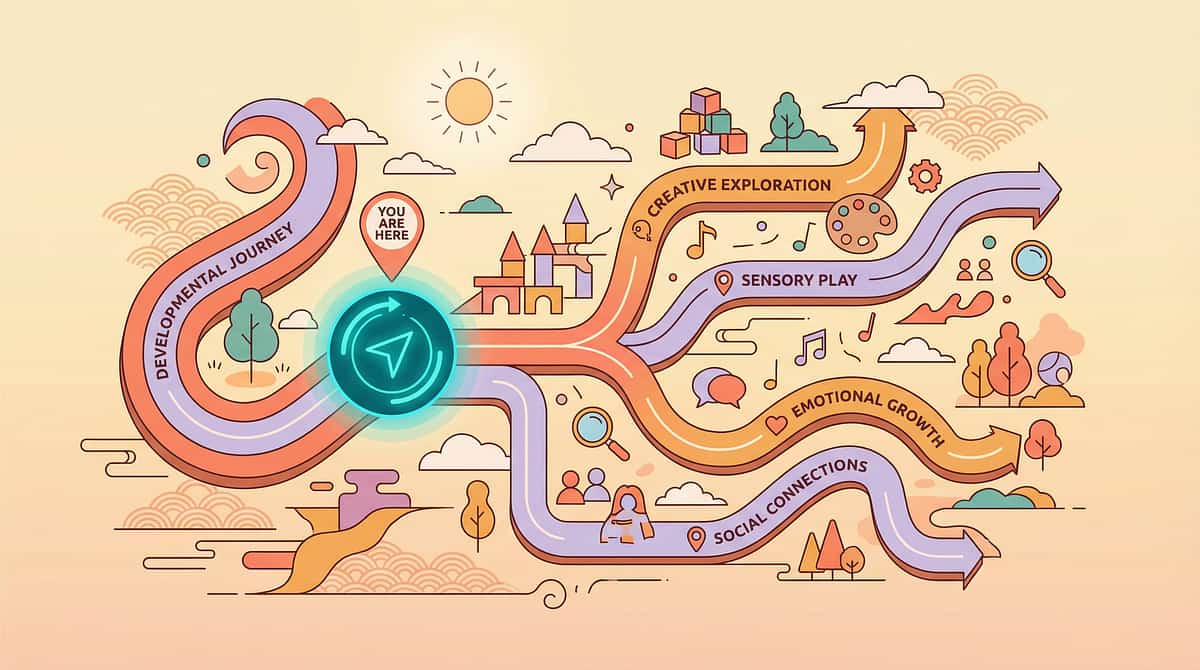
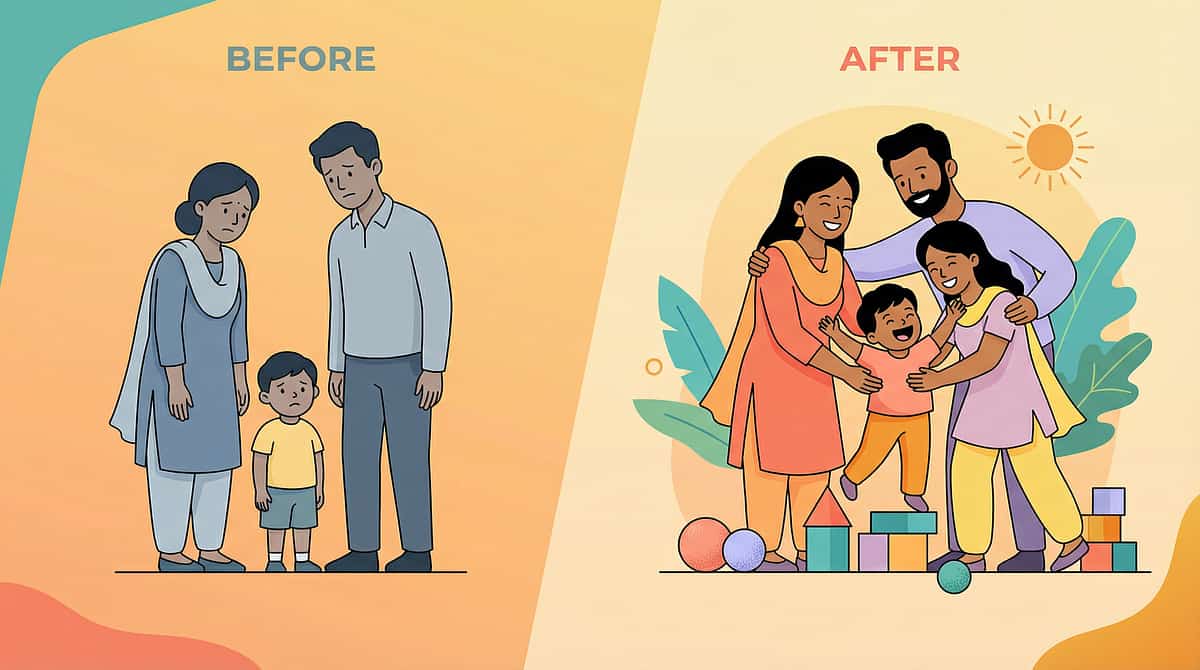
When to Escalate Beyond Home Practice
🚩 No Tolerance Improvement After 4 Weeks
Of consistent daily practice → Possible underlying working memory deficit requiring OT/neuropsychology assessment
🚩 Significant Regression
Child who was sequencing 3 steps now cannot manage 2 → Rule out medical cause; request AbilityScore® reassessment
🚩 Extreme Behavioural Responses
Meltdowns lasting 20+ minutes, self-injury triggered by any sequencing demand → ABA consultation needed before continuing sequencing intervention
🚩 Sequencing Difficulty Across All Modalities
Verbal + visual + motor — zero progress → Comprehensive neuropsychological evaluation recommended
🚩 Academic Impact Escalating
Despite home intervention → Request school psychological assessment + IEP meeting with sequential processing accommodations
🚩 Child Distressed by Unpredictability
Not just sequencing tasks → May indicate significant anxiety co-occurring with sequencing difficulties — requires dual approach
"Red flags are not failures. They are the data telling you that your child needs a more precise level of support. Acting on red flags early is the highest-leverage parenting move." FREE FIRST STEP: 9100 181 181 | Pinnacle's AbilityScore® assessment is the starting point.
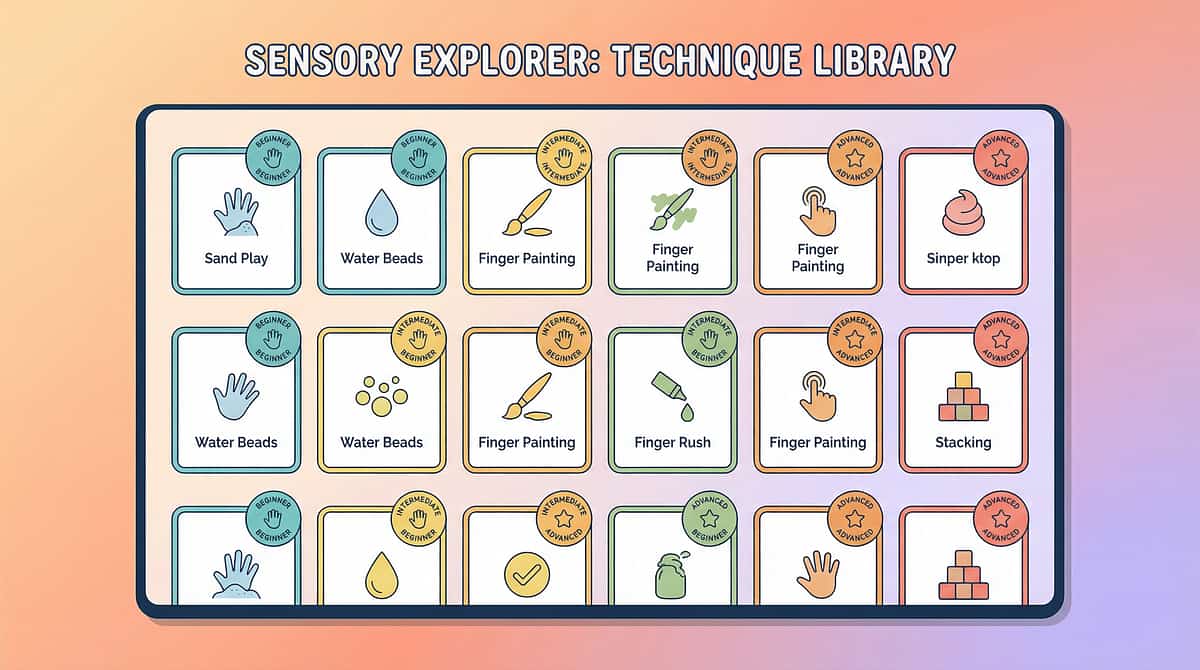
Your Complete Pathway — From Materials to Mastery
Stage 1
Materials Setup & Readiness — Set up visual schedule + First-Then board. Familiarise child. (1 week)
Stage 2
First-Then + Visual Schedules Daily — All transitions. (2–4 weeks ongoing)
Stage 3
3-Step Sequences Daily — Add picture sequence cards. Build to 3-step reliable sequencing. (6–8 weeks)
Stage 4
Story + Temporal Language — Introduce story sequencing + temporal language games. (12+ weeks)
Stage 5
Multi-Step Academic — Graphic organisers for writing. Procedural cards for academics.
Stage 6
Generalised Sequential Thinking — Fade visual supports gradually. Monitor generalisation. (Lifelong)
The Overarching Rule: "Never advance to the next stage until the current stage shows 80% correct performance across 5 consecutive sessions." At Stage 3, if progress has stalled — professional assessment determines whether to continue home protocol or add clinical sessions.
Sequencing Is One Piece of the Executive Function Puzzle
G-668 | Attention & Focus
Attention deficits cause mid-sequence dropout — address first
G-669 | Planning & Organisation
Sequencing is the micro-skill; planning is the macro application
⭐ G-670 | Sequencing (THIS PAGE)
The foundational order-building skill
G-671 | Working Memory
Working memory holds sequences in mind — closely related
G-672 | Cognitive Flexibility
Sequential rigidity vs. flexible sequencing — next level skill
Also Related
- G-680 — Following Multi-Step Directions — direct application of sequencing to instructions
- G-685 — Narrative Skills — verbal sequencing in storytelling
- G-650 — Morning Routine Mastery — applied sequencing in daily life
GPT-OS® Note: TherapeuticAI® automatically surfaces related techniques based on your child's AbilityScore® profile. Families working on sequencing commonly benefit from simultaneous working memory supports.
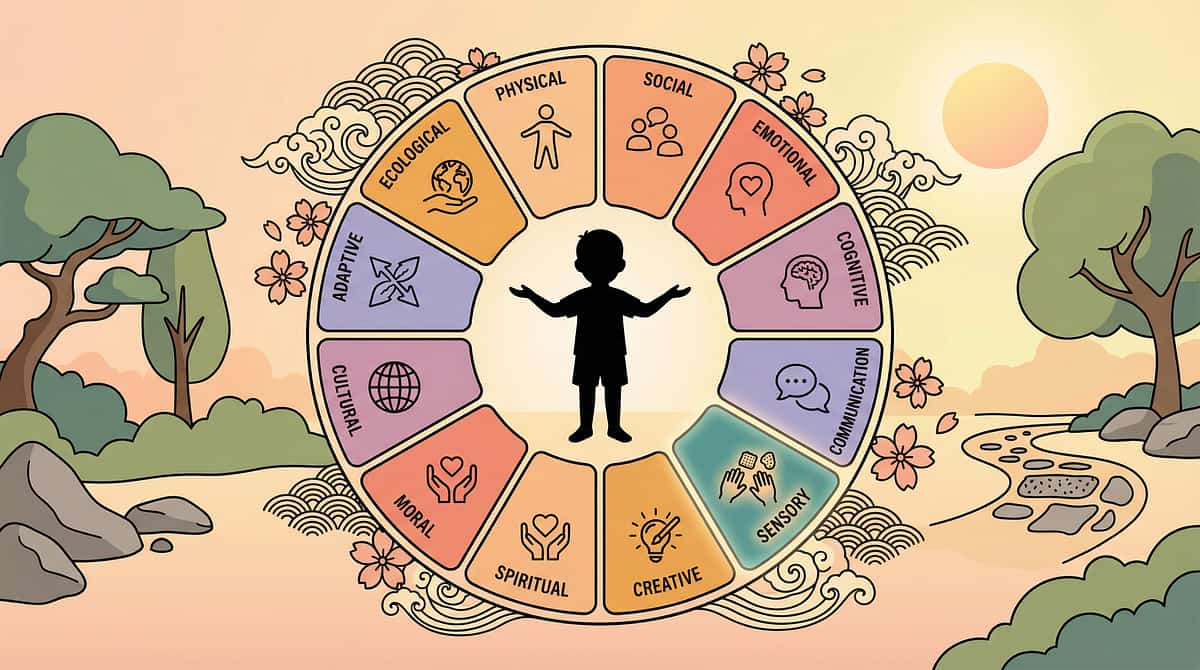
Sequencing Is One Spoke in Your Child's Complete Developmental Wheel
G-670 addresses the Cognitive & Executive Function domain — specifically Sequential Processing. GPT-OS® monitors all 12 domains simultaneously, surfacing the highest-impact intervention at each developmental stage.
Sequencing skills, once developed, accelerate progress in Domains J (Academic), I (Daily Living), and K (Language) simultaneously — making this one of the highest-leverage interventions in the entire developmental system.
FREE initial consultation: 9100 181 181
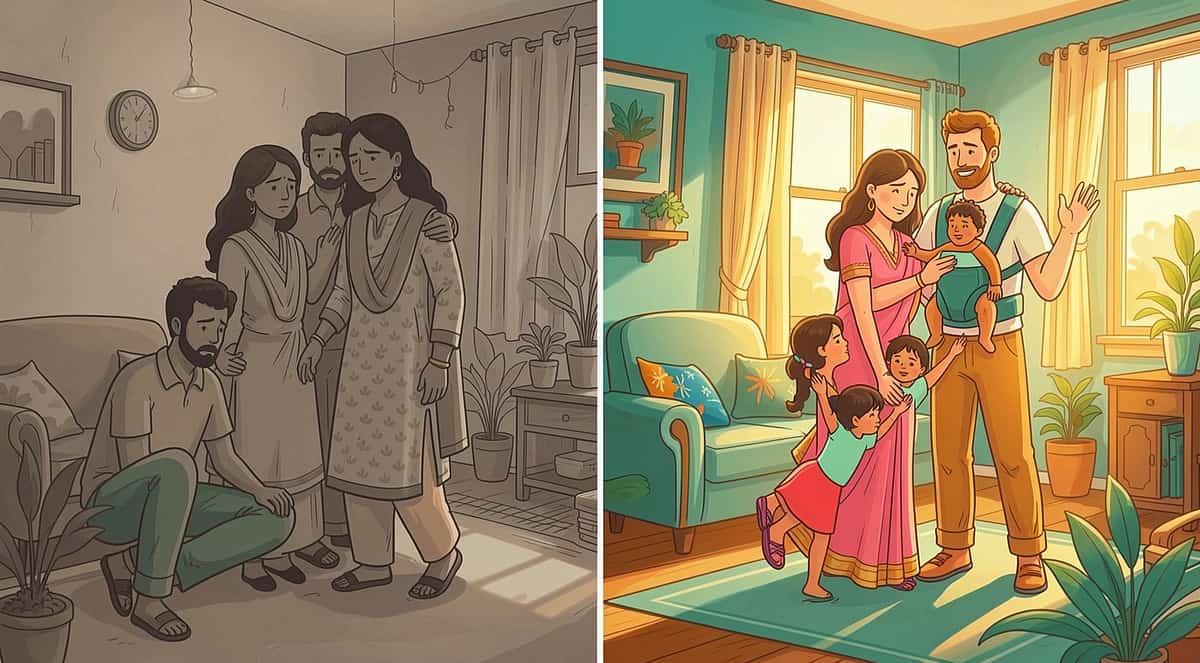
ACT V — The Community & Ecosystem
From the Families Who Started Where You Are
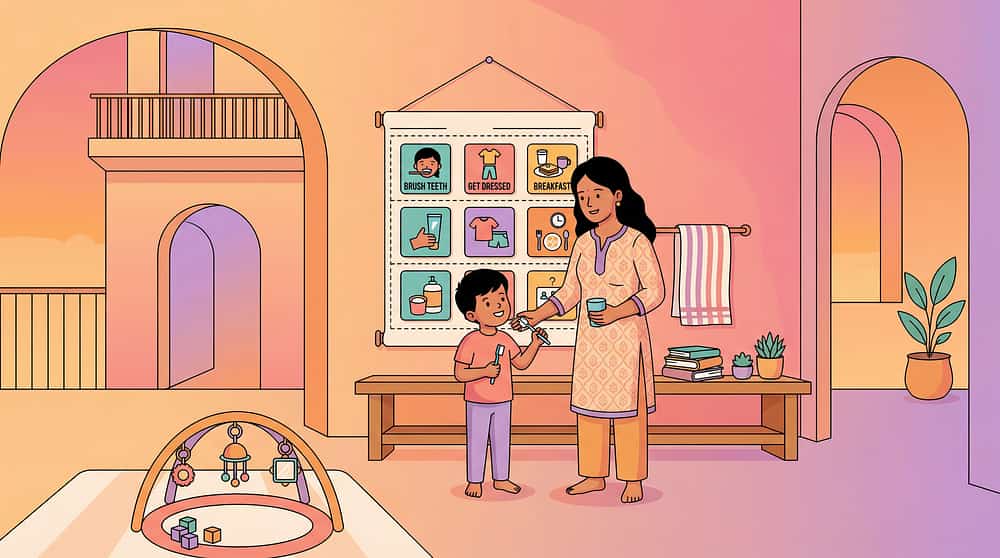
Priya, mother of Arjun (6) — Hyderabad
Arjun was diagnosed with ASD at age 3. For three years, mornings were the hardest part of the day — a 90-minute battle of meltdowns, refusals, and tears, for both of them. Priya started the First-Then Board in Week 1, keeping it simple: shoes FIRST, then iPad. By Week 3, Arjun was pointing to the "Then" card himself before she even prompted him. By Week 6, he was independently working through a 5-step visual morning schedule — brush teeth, get dressed, eat breakfast, pack bag, shoes on — without a single prompt from Priya.
"I used to dread 7am. Now Arjun wakes up and walks straight to his schedule board. He checks each step off himself. I just stand there trying not to cry. He did that. We did that together."
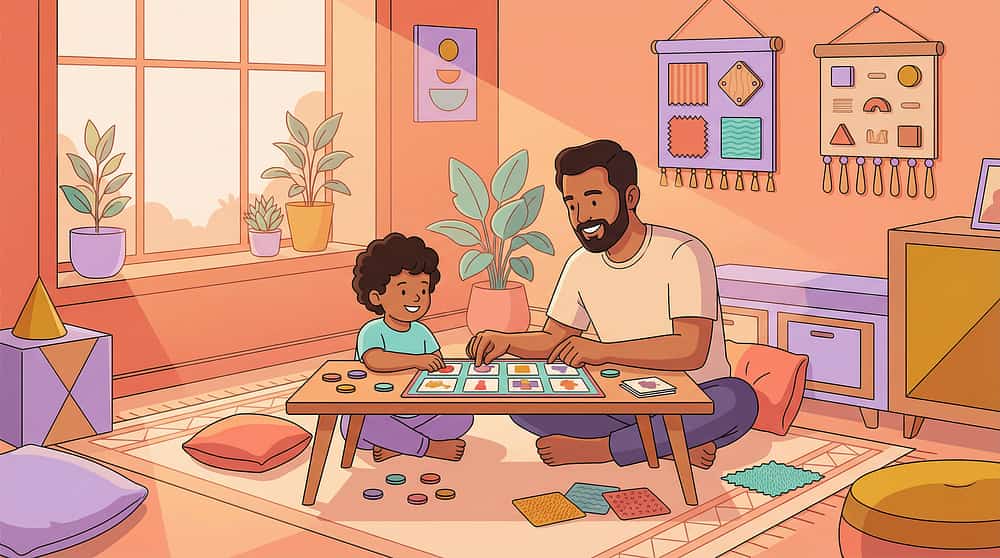
Rajan, father of Kiran (5) — Bengaluru
Kiran couldn't follow turn-taking or multi-step games. He would grab pieces, skip steps, and shut down when corrected — not out of defiance, but because the sequence of play simply didn't exist in his mind yet. Rajan introduced Picture Sequence Cards in Week 2, starting with 3-card stories about things Kiran loved — trains, cooking, animals. By Week 4, Kiran was independently arranging 4-card sequences and narrating each step aloud. By Week 8, he was playing Snakes & Ladders with his older sister, waiting his turn, counting his moves, and celebrating hers.
"The moment Kiran waited for his sister's turn and then said 'now me' — I had to leave the room. Eight weeks ago that was impossible. Now it's just a Tuesday evening."
You Should Not Navigate This Alone. Neither Should They.
📱 WhatsApp Parent Group
Sequencing & Executive Function — Join the Pinnacle Sequencing Support Group → pinnacleblooms.org/community/sequencing-whatsapp. 350+ active parents. Daily support, resource sharing, milestone celebrations.
💬 Online Forum
Pinnacle Parent Community → pinnacleblooms.org/forum/executive-function. Ask questions, share progress, find peer mentors. Moderated by Pinnacle clinical team. Evidence-based responses.
📍 Local Parent Meetups
Organised monthly at all 70+ Pinnacle centres. Find your nearest → pinnacleblooms.org/centers
🤝 Peer Mentoring Programme
Connect with an experienced parent (6+ months ahead of you) navigating the same challenge. Apply → pinnacleblooms.org/peer-mentor
"WHO NCF research shows that families embedded in support communities demonstrate 3× higher intervention adherence than isolated families. Connection is not a soft benefit — it is a clinical variable." — WHO Nurturing Care Framework | PMC9978394
FREE National Autism Helpline (16+ languages): 9100 181 181 — available in 16+ languages for families across India and the Indian diaspora globally.
Home + Clinic = Maximum Impact
🦾 Occupational Therapist
For executive function assessment, visual scheduling implementation, motor sequencing
🗣️ Speech-Language Pathologist
For narrative development, temporal language, auditory sequencing
📊 BCBA
For behavioural sequential supports, First-Then board design, reinforcement optimisation
📚 Special Educator
For academic sequencing strategies, graphic organiser implementation, school coordination
Request Therapist Match for Sequencing → pinnacleblooms.org/match/sequencing
"When home practice is coordinated with clinic sessions, outcomes improve by 3–5× compared to clinic-only or home-only approaches. GPT-OS® EverydayTherapyProgramme™ ensures what happens in clinic continues at home — exactly, consistently, measurably." — WHO NCF Progress Report, 2023
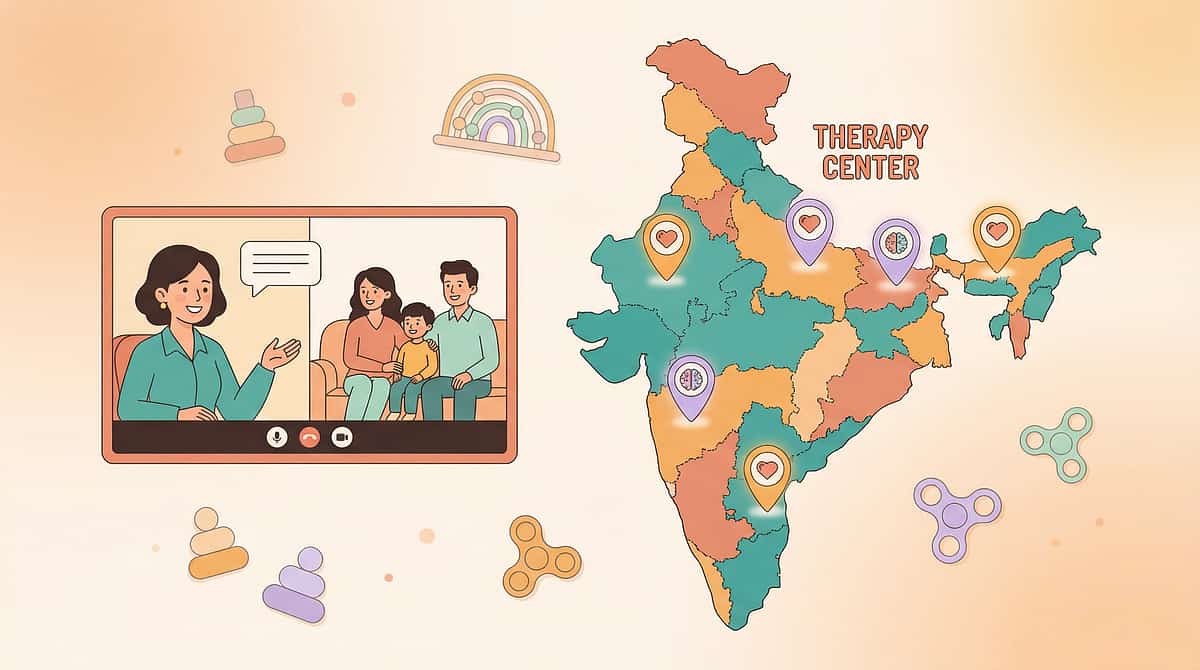
📹 Teleconsultation
Cannot reach a Pinnacle centre? Book a 45-minute video consultation with any discipline. Available 7 days/week.
Find Your Centre
70+ Pinnacle Blooms Network® centres across India. Find your nearest centre at pinnacleblooms.org/find-a-center
FREE National Autism Helpline: 9100 181 181 | 16+ languages | 24×7
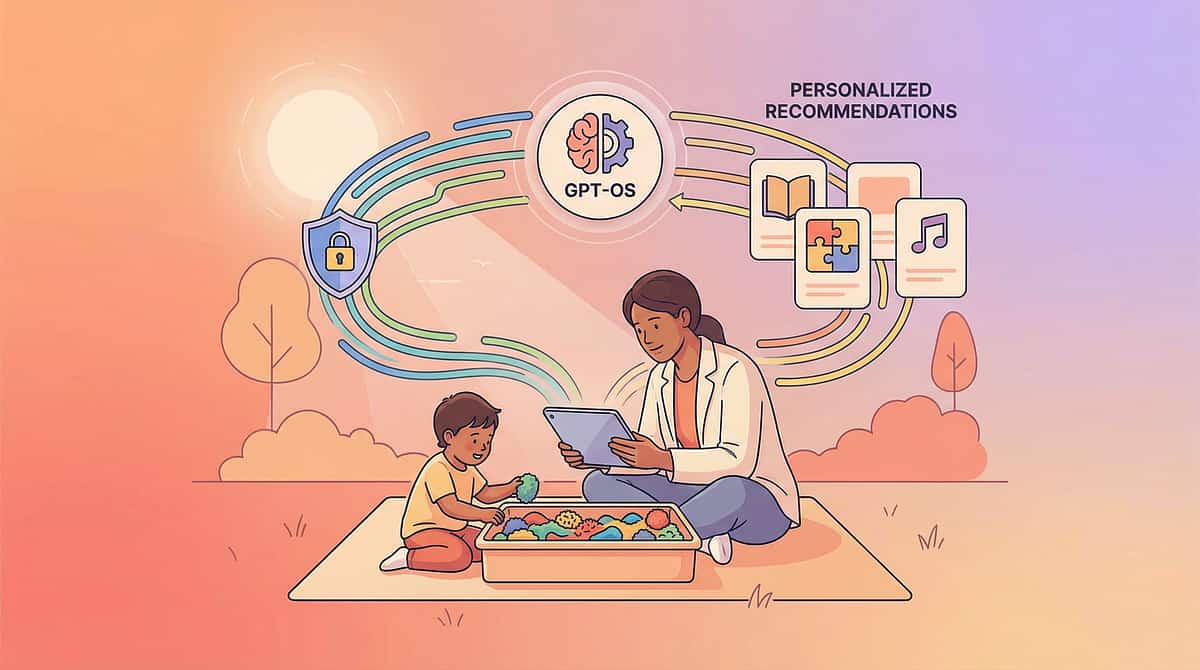
Your Sessions. Your Data. Your Child's Personalised Progression.
What GPT-OS® Learns From G-670 Data
- Optimal sequence length for this child's current ability
- Best time of day for sequencing sessions
- Which materials produce highest engagement
- Rate of progression vs. population averages
- When to escalate to clinical involvement
🔒 Privacy Assurance
- All data encrypted per India's IT Act 2000 and PDPB standards
- No data shared with third parties
- Parent controls all data sharing preferences
- Data anonymised for population research (opt-in only)
"Every family's data improves recommendations for every other family. When 10,000 families track sequencing sessions, GPT-OS® learns which approaches work for which child profiles — and your child benefits from insights generated by the entire network."
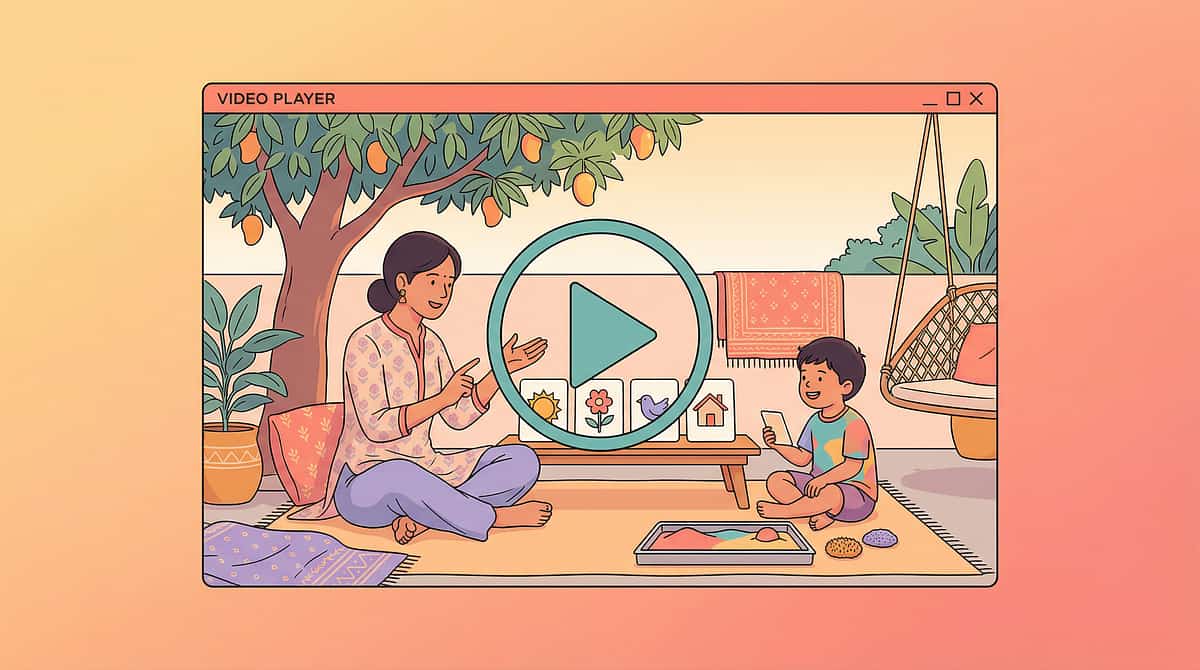
Watch: 9 Materials That Help With Sequencing
Reel ID: G-670 | Series: Cognitive & Executive Function Development | Episode 670
A Pinnacle consortium therapist demonstrates all 9 materials — from First-Then boards to graphic organisers — in a visual home-environment guide. See exactly how each material is used. Watch a child successfully complete a sequence for the first time.
Watch at: pinnacleblooms.org/reels/G-670
Video Modelling Evidence: Video modelling is classified as Evidence-Based Practice for autism by NCAEP (2020). Multi-modal learning (visual + text + video demonstration) improves parent skill acquisition by 60–80% vs. text alone.
The Next Reel in This Series
📱G-671 — 9 Materials That Help With Working Memory → techniques.pinnacleblooms.org/cognitive-executive-function/9-materials-that-help-with-working-memory-G-671
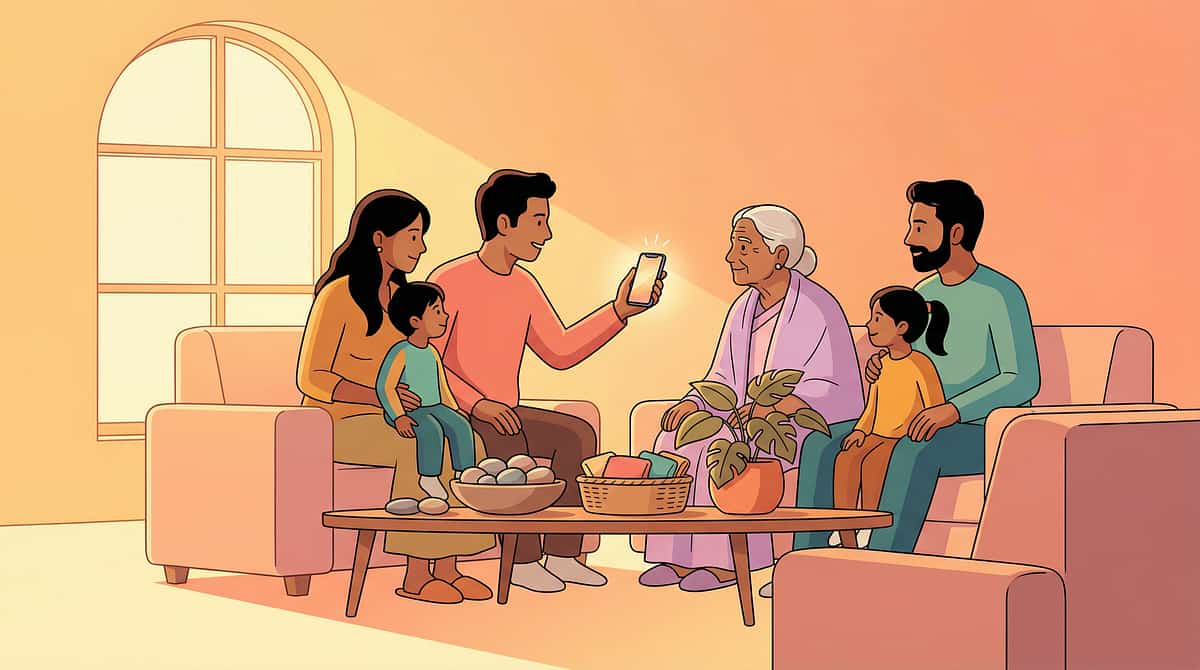
Consistency Across Caregivers Multiplies Impact
WHO Care for Child Development Package: Multi-caregiver training is critical for intervention generalisation and maintenance. If only one parent executes the protocol, the child has one context where sequences work. If parents + grandparents + school teacher all use the same approach — the child has 8+ contexts. Transfer accelerates.
Share This Page
📱 WhatsApp
"9 Materials That Help With Sequencing | Pinnacle Blooms Network® | techniques.pinnacleblooms.org/G-670"
📧 Email
Full page link + one-paragraph summary
🔗 Direct Link
techniques.pinnacleblooms.org/cognitive-executive-function/9-materials-that-help-with-sequencing-G-670
"Nana and Nani — when [child] struggles with order (like putting socks before shoes), the best thing to say is: 'What comes FIRST?' and wait. Don't do it for them. Don't list all the steps. Just ask 'what comes first?' every time. This one change helps more than you know."
Downloadable Resources
- 📄 G-670 One-Page Family Guide PDF (simplified for grandparents, teachers) → pinnacleblooms.org/guides/G-670-family-guide
- 📝 G-670 Teacher Communication Template (professional letter for classroom accommodations) → pinnacleblooms.org/tools/G-670-teacher-letter
Help in your language, for your family: 9100 181 181
ACT VI — The Close & Loop
Questions Parents Ask Us Every Day
Q: My child is 9. Isn't it too late to work on sequencing?
No. Neuroplasticity remains significant through adolescence and even adulthood. Older children often make faster progress than younger ones when they have cognitive language to understand the concepts. The materials adjust for age (graphic organisers, academic procedural cards, strategy games), but the underlying neurological mechanism is the same at 9 as at 4. Start now.
Q: How long before I see results?
Tolerance and reduced resistance: typically 1–2 weeks. Basic 3-step sequencing: typically 4–8 weeks of consistent practice. Routine independence: typically 8–16 weeks. Narrative sequencing: typically 12–20 weeks. Academic transfer: typically 16–24 weeks. These are ranges, not guarantees. Track your data for your child's specific trajectory.
Q: Do I need all 9 materials?
No. The essential starter kit for most children is: First-Then board (₹0 DIY) + Visual schedule (₹0–150 DIY) + Picture sequence cards (₹0 DIY + printer). Add materials as you progress. See the starter kit recommendation in Card 6.
Q: My child resists all visual supports. What do I do?
Start smaller than the smallest step. Does your child accept a picture if it shows THEIR preferred item as the "THEN"? Start there. Also: involve your child in creating the materials. Children who draw their own sequence cards or photograph their own routines engage with those materials more readily.
Q: Can we do this without formal OT/SLP sessions?
Yes, for many children, home-based sequential supports produce meaningful progress without clinical sessions. However, professional assessment identifies the specific underlying mechanism — making home practice dramatically more targeted and effective. Free starting point: 9100 181 181
Q: My child has autism and strong visual skills but weak verbal sequencing. Which materials first?
Lead with visual materials — picture sequence cards and pattern strips. Pair with visual schedule (no verbal demand). Temporal language teaching comes after visual sequencing is established. Use picture-only materials (no words) initially.
Q: School is asking about accommodations. What should I request?
Request: (1) Visual task schedule in classroom, (2) Multi-step instructions in written/visual format, (3) Graphic organiser scaffold for all writing, (4) Procedural support card for math and science, (5) Extra processing time for sequential tasks. Download the teacher template in Card 37.
Q: Didn't find your answer?
Ask GPT-OS® → pinnacleblooms.org/ask | Book Teleconsultation → pinnacleblooms.org/teleconsult | Call: 9100 181 181

Your child's brain is ready to build sequential thinking.
The only missing ingredient is today's first step.
🏠 Start at Home — FREE
Download your G-670 Home Starter Kit: First-Then board template + Visual schedule template + Picture sequence card templates + Session tracker PDF
📞 Book a Free Consultation
Speak with a Pinnacle specialist in your language. Understand your child's specific sequencing profile. Get personalised material recommendations. No obligation.
🏥 Get an AbilityScore® Assessment
India's most comprehensive paediatric developmental assessment. Identifies exact mechanisms behind sequencing difficulties. Generates a personalised GPT-OS® intervention plan.
"Every family who has seen their child go from scrambled to sequential started exactly where you are — with one material, one session, one First-Then board."
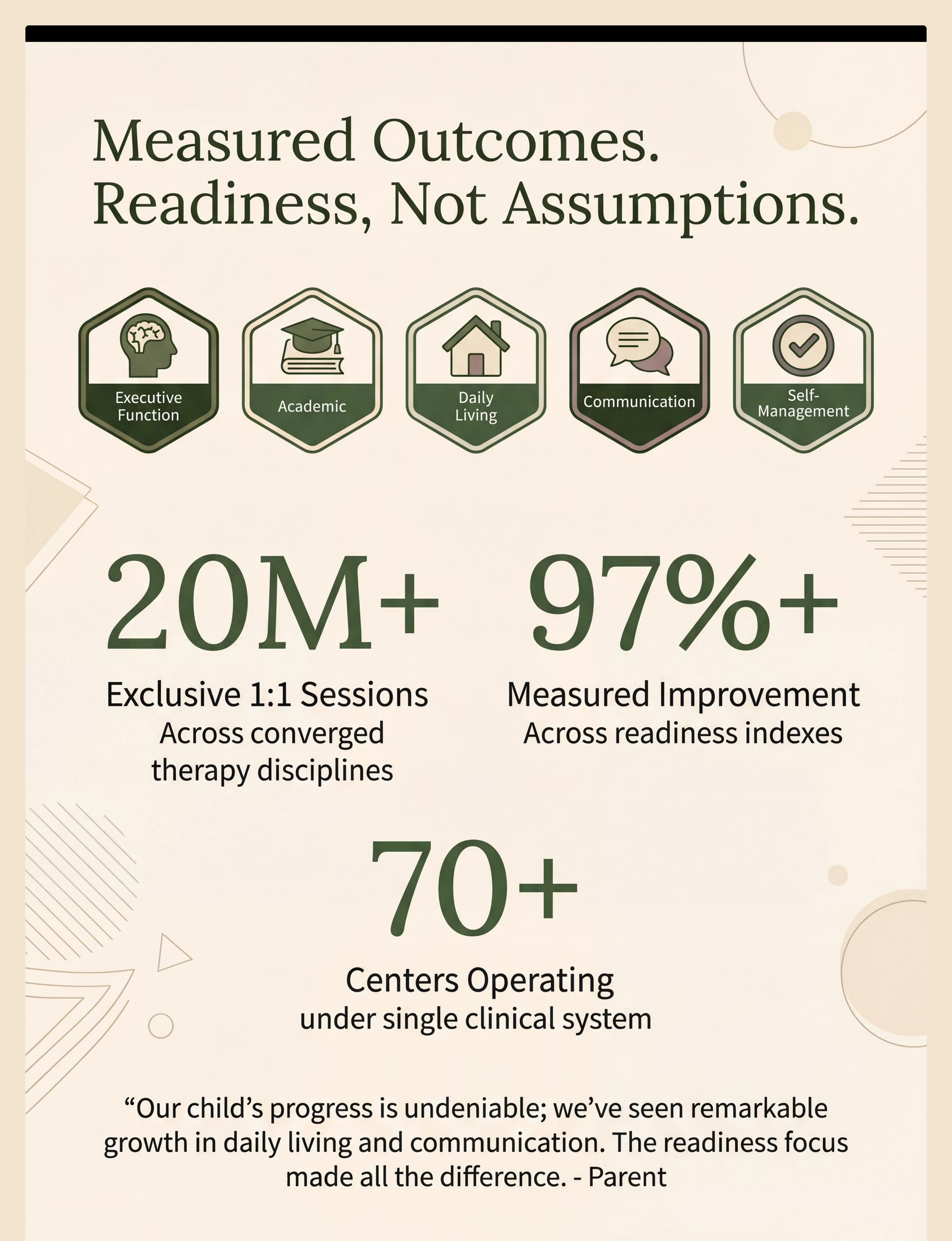
20M+ sessions
97%+ measured improvement
70+ centres
FREE Helpline 9100 181 181
📱Coming next: G-671 — 9 Materials That Help With Working Memory → techniques.pinnacleblooms.org/cognitive-executive-function/working-memory-G-671
Preview of 9 materials that help with sequencing Therapy Material
Below is a visual preview of 9 materials that help with sequencing therapy material. The pages shown help educators, therapists, and caregivers understand the structure and content of the resource before use. Materials should be used under appropriate professional guidance.



Link copied!

G-670 — 9 Materials That Help With Sequencing
Cognitive & Executive Function Development Series | Pinnacle Blooms Network®
The Promise
Every child who struggles with sequences deserves a parent who has been equipped with the right tools, the right science, and the right support system to help them build that foundational ability. This page is that equipment. These materials are those tools. This consortium is that support system.
The Sequence of Change
Awareness → Materials → Practice → Mastery → Independence
Your child is already at Step 1.
Pinnacle Blooms Network® | Built by Mothers. Engineered as a System.
OT + SLP + ABA/BCBA + SpEd + NeuroDev + Paediatrics + CRO
CIN | U74999TG2016PTC113063 | |
DPIIT Recognition | DIPP8651 (Govt. of India) | |
MSME Udyog Aadhaar | TS20F0009606 | |
GSTIN | 36AAGCB9722P1Z2 |
FREE National Autism Helpline (16+ languages): 9100 181 181 | Available 24×7 | pinnacleblooms.org | care@pinnacleblooms.org
This content is educational. It does not replace individualised assessment and intervention planning by licensed occupational therapists, speech-language pathologists, or other qualified professionals. Sequencing difficulties can reflect various underlying factors requiring professional evaluation. Strategies should be individualised based on assessment findings. Individual results may vary. Statistics represent aggregate outcomes across the Pinnacle Blooms Network®.
© 2025 Pinnacle Blooms Network®, unit of Bharath Healthcare Laboratories Pvt. Ltd. All rights reserved.