
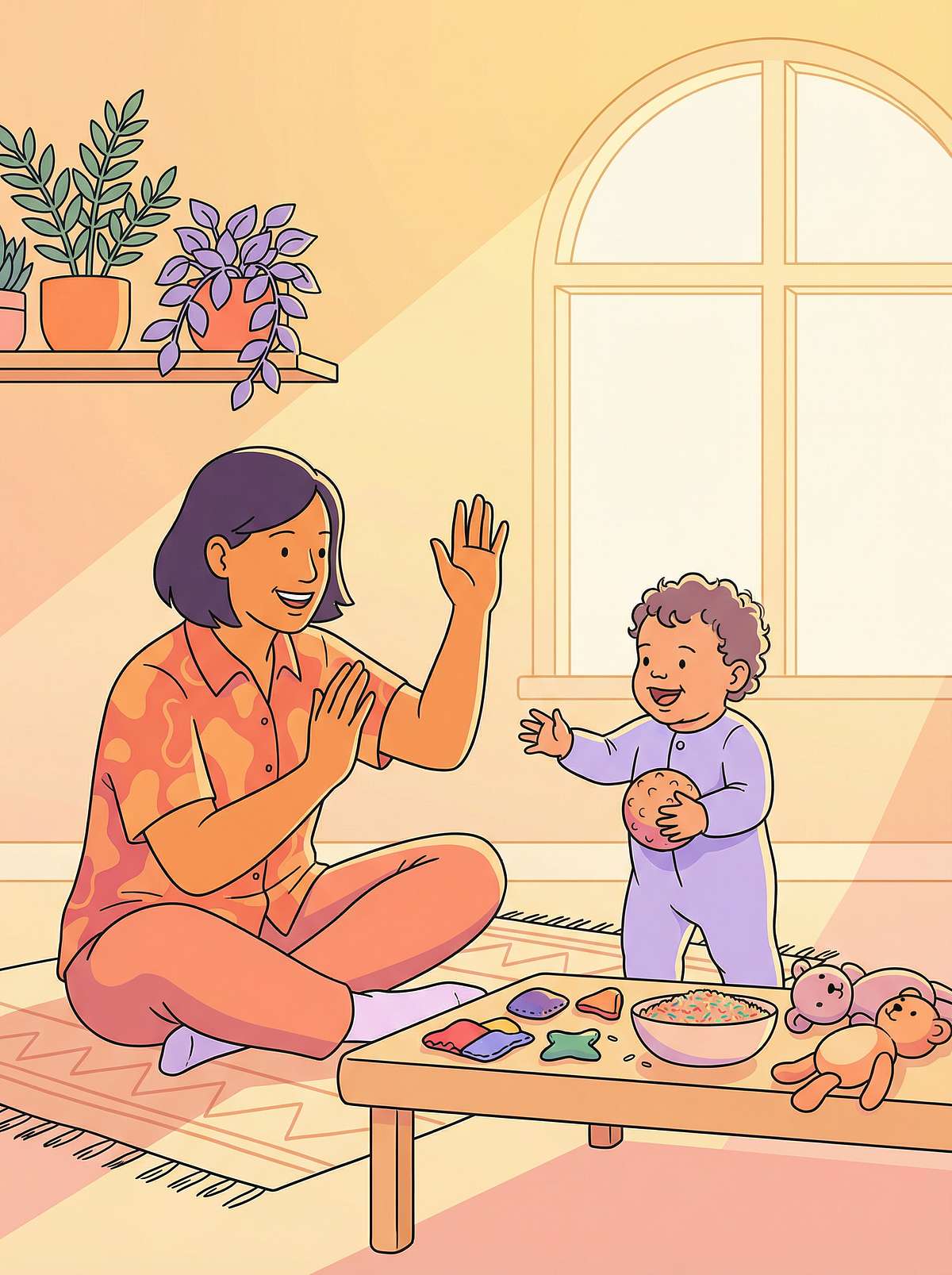
"I wave. Nothing. I clap. Nothing. I make a silly face and she just stares past me — like I'm not even there."
You noticed something other parents haven't been told to watch for. And you were right to notice.
ABA + SLP + OT + NeuroDev + SpEd
Age: 12m – 8y
Domain: Core Developmental
Reel G-666
Pinnacle Blooms Network® — Built by Mothers. Engineered as a System.
You Are Among Millions of Families Navigating This Exact Challenge
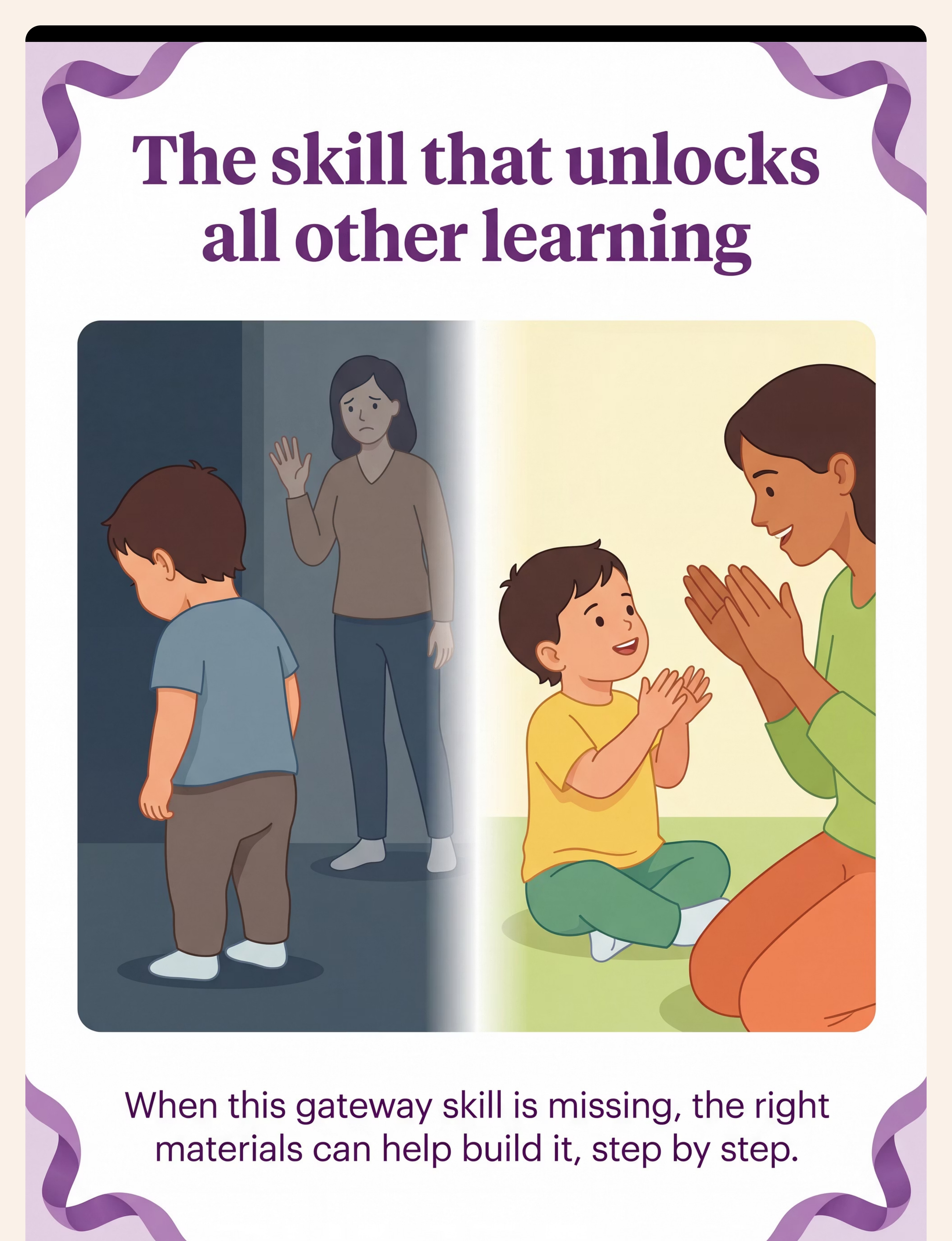
Every toddler at the playgroup claps to the music. Every other child at the birthday party mimics the balloon animal. Your child watches — but doesn't copy. Not the wave. Not the clap. Not the funny face. Not the sound. Imitation is the invisible skill that most children absorb automatically — and the one that, when delayed, silently closes the door on language, play, social learning, and self-care.
1 in 36
Children in India
Born with autism spectrum conditions — where imitation delays are the most consistent early marker
80%
ASD & Imitation
Of children with ASD display imitation deficits as a core developmental challenge
21M+
Therapy Sessions
Delivered by Pinnacle Blooms Network® across 70+ centres — imitation skills among the most frequently targeted domains
Globally, developmental researchers have reached consensus: imitation is not a "nice to have" milestone. It is the primary learning mechanism through which human children acquire language, social behaviours, play skills, and the 10,000+ daily micro-behaviours that define functional independence. When imitation is delayed, the developmental cascade begins silently. Words are not picked up. Gestures are not absorbed. Peer learning cannot happen.
📞 FREE National Autism Helpline: 9100 181 181 — Available 24×7 in 16 languages. No referral needed.
Neuroscience
The Neuroscience Your Child's Therapist Sees
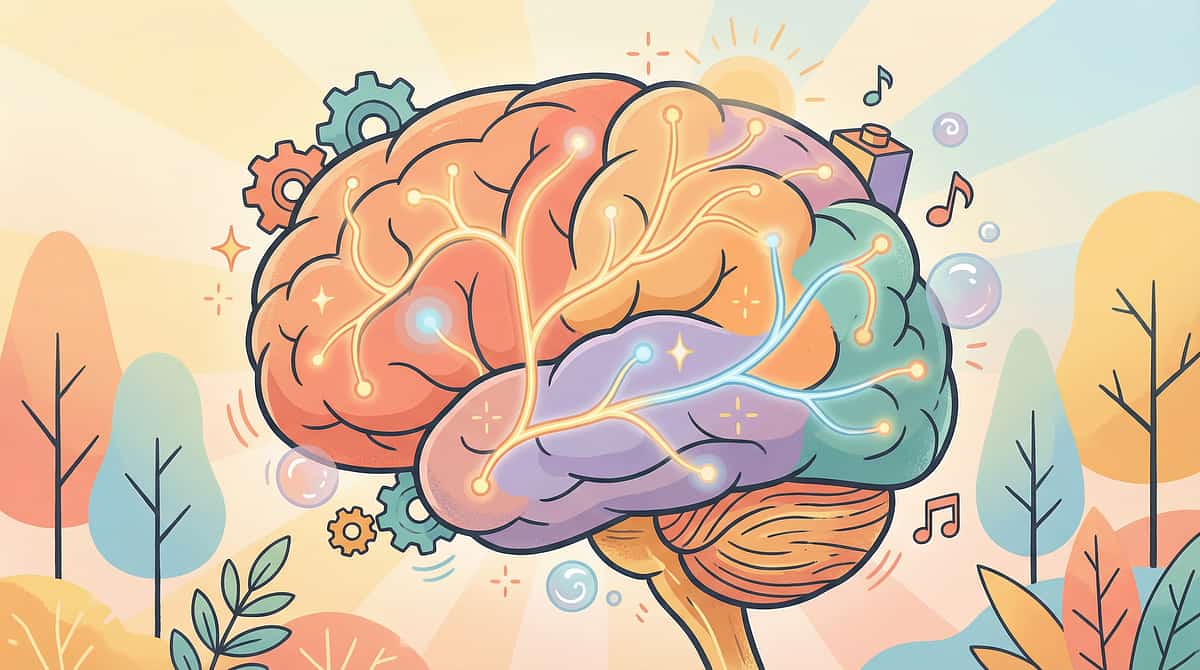
The Mirror Neuron System
Discovered at the University of Parma, the Mirror Neuron System (MNS) is a network of brain cells that fires both when you perform an action AND when you watch someone else perform the same action.
In neurotypical development, a 9-month-old sees a parent clap → the MNS fires → the motor cortex mirrors the pattern → the hands begin to clap. This happens automatically, without any instruction.
The superior temporal sulcus — the brain region integrating social action observation — shows reduced activation in response to biological movement in children with ASD, directly affecting how the child perceives and responds to a model.
In Children with Developmental Differences
The MNS shows atypical activation patterns. The signal between observation and motor execution is weakened, delayed, or inconsistently processed. This is a wiring difference — not a choice, not stubbornness, not a behaviour problem.
What this means for you: Your child is not ignoring you. Their brain has not yet built the strong, reliable pathway between "I see it" and "I do it." That pathway can be built — through systematic, evidence-based intervention using the right materials.
Research: Frontiers in Integrative Neuroscience (2020): DOI 10.3389/fnint.2020.556660 | Rizzolatti & Craighero (2004), Annual Review of Neuroscience
Development
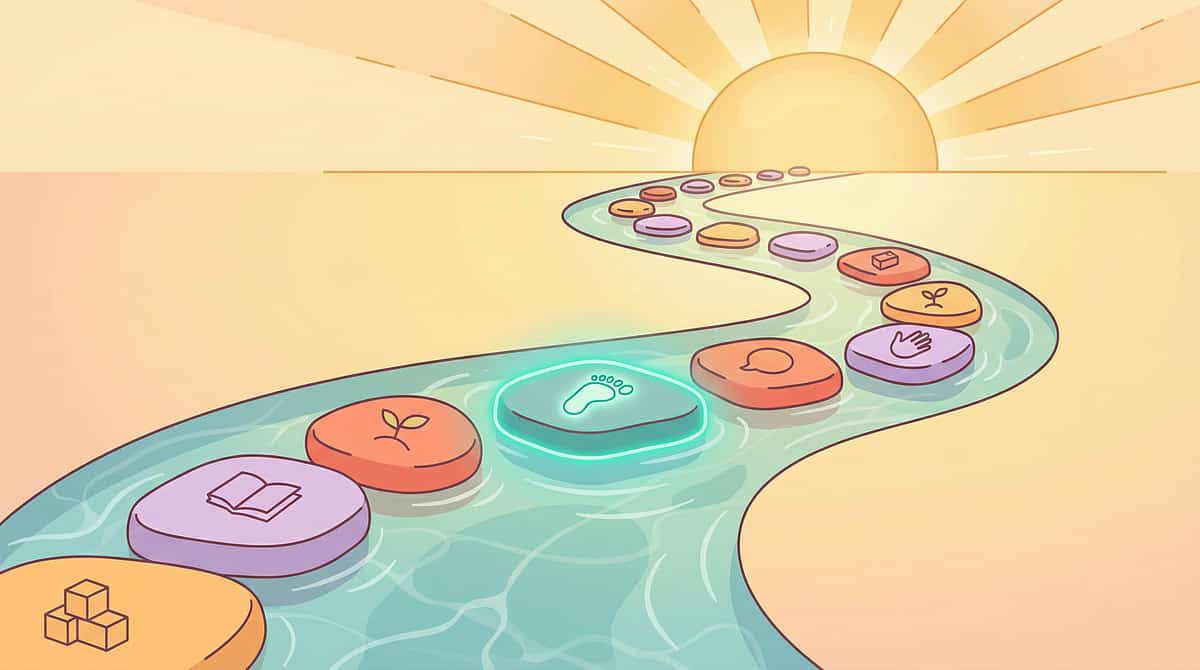
The Imitation Milestone Map — Where Is Your Child?
6–9 Months
Simple familiar actions — banging, shaking. Back-and-forth vocalising begins.
12 Months
Waves, claps, first word attempts via imitation. Novel gesture copying emerges.
18 Months
Novel object imitation, deferred imitation (copying from memory), new gestures.
24 Months
Pretend play sequences, word and phrase copying. First deferred imitation active.
3–5 Years
Peer learning, observational classroom learning, complex social imitation emerges.
5–8 Years
Classroom observational learning, subtle social copying, academic peer modelling.
Common co-occurrences with imitation delays: Joint Attention delays · Verbal communication delays · Social referencing difficulties · Motor planning challenges · Sensory processing differences. The WHO and UNICEF developmental frameworks identify imitation as a milestone cluster — not a single skill — spanning the first 36 months and continuing through school age.
Research: WHO Care for Child Development Package (2023): PMC9978394 | UNICEF MICS developmental indicators (42-country data)

Evidence
Clinically Validated. Home-Applicable. Parent-Proven.
Evidence Grade: Ia
Systematic Review + Multiple RCTs
Confidence Level
87%
Evidence Confidence
What the Science Confirms
- 16 peer-reviewed studies (2013–2023) confirm systematic imitation training meets criteria as an evidence-based practice for children with ASD (PRISMA, 2024)
- Video modelling for imitation: classified as EBP by the National Clearinghouse on Autism Evidence and Practice (NCAEP, 2020)
- ABA-based imitation training (DTT + NET): among the most replicated intervention approaches across 5 decades of behavioural research
- Home-based imitation intervention: Indian RCT (2019) demonstrated significant outcomes with parent-administered protocols
- Mirror and visual feedback tools: supported by sensory integration theory and motor learning research
"Imitation skills can be systematically taught through structured intervention. Improvement in imitation consistently correlates with gains in language, play, and social development." — JABA, multiple systematic reviews
Citations: PubMed PMC11506176 | PMC10955541 | PMC9978394 | NCAEP 2020 EBP Report | DOI: 10.1007/s12098-018-2747-4
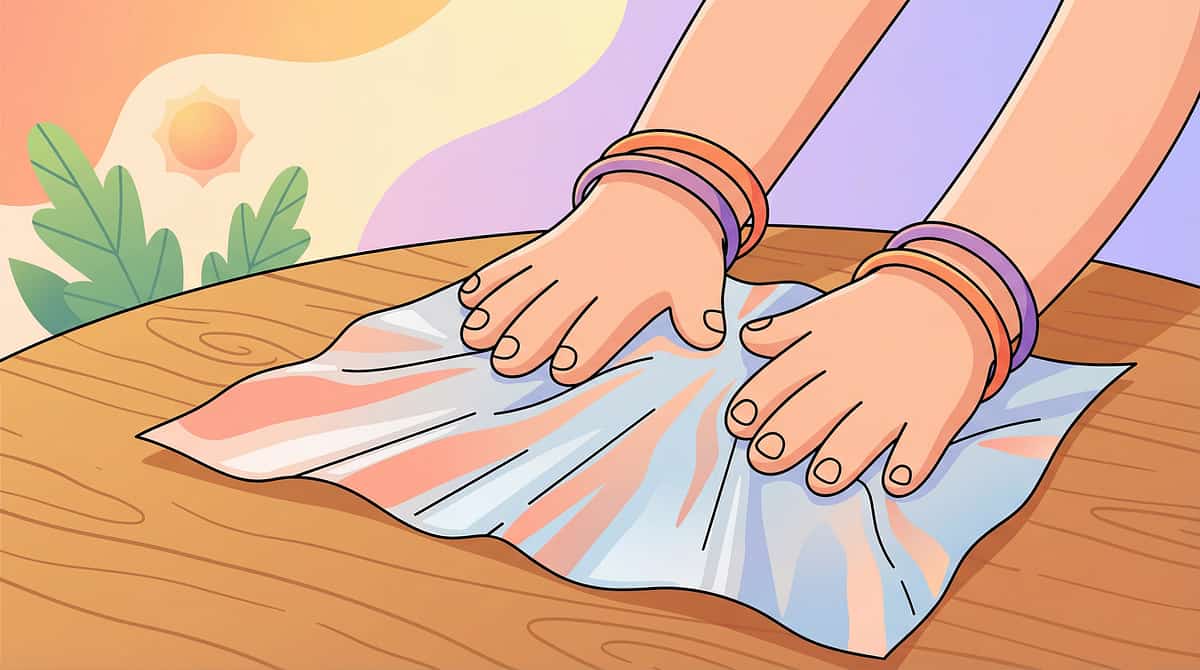
The Technique
G-666
🪞 Imitation Skills Training — The Copy-Me Toolkit
What It Is
Imitation Skills Training is a systematic, evidence-based intervention approach that uses carefully selected materials to teach children how to observe an action, process the visual-motor information, and reproduce it with their own body or voice. It targets the foundational learning pathway through which children naturally acquire language, play, social skills, and daily living abilities.
This protocol spans three imitation modalities:
- Motor Imitation — copying body movements, gestures, and actions with objects
- Verbal/Vocal Imitation — copying sounds, syllables, and words (echoic)
- Social Imitation — copying interactive sequences and play routines
Specifications
- 🎯Age Range: 12 months – 8 years
- ⏱️Session Duration: 10–20 minutes (home)
- 📅Frequency: Daily preferred; minimum 5×/week
- 🏠Setting: Home, clinic, school, community
- 📈Expected Timeline: 5–8 weeks for initial skill emergence
Domain Badges
Applied Behavior Analysis | Developmental Psychology | Speech-Language Pathology | Occupational Therapy | Early Intervention
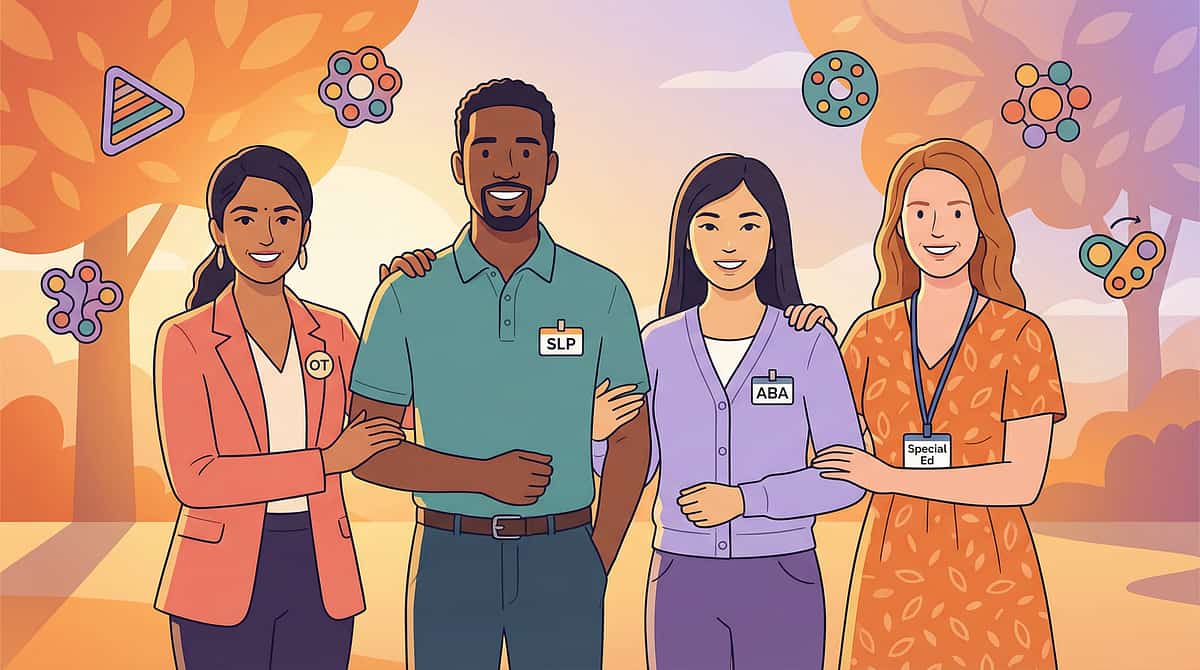
Multidisciplinary
This Technique Crosses All Therapy Boundaries
"The brain doesn't organise itself by therapy type. Imitation is a whole-brain, whole-body, whole-relationship skill — which is why every discipline in our consortium uses it." — Pinnacle Blooms Consortium
🧠 ABA / BCBA
Primary Lead for Motor + Verbal Imitation
Uses DTT and Natural Environment Teaching (NET) to systematically build imitation targets from object actions → gross motor → fine motor → oral motor → sound → words. Data-driven with clear mastery criteria.
🗣️ Speech-Language Pathology
Primary Lead for Verbal & Oral Motor Imitation
Focuses on the verbal imitation hierarchy: oral motor awareness → non-speech sounds → vowels → CV syllables → words → phrases. Uses oral motor tools, mirrors, and recording devices.
✋ Occupational Therapy
Primary Lead for Motor Planning & Sensory Processing
Addresses underlying motor planning (dyspraxia), proprioceptive awareness, and sensory modulation that may be interfering with the child's ability to accurately perceive and reproduce movements.
📚 Special Education
Lead for Observational & Classroom Learning
Adapts imitation skills for academic contexts — learning through demonstration, peer modelling, and classroom routines. Bridges therapeutic imitation gains to educational settings.
🧬 NeuroDevelopmental Paediatrics
Diagnostic & Oversight Lead
Identifies neurological or medical factors contributing to imitation deficits, coordinates with all disciplines, and monitors developmental trajectory across readiness indexes.
Material 1 of 9
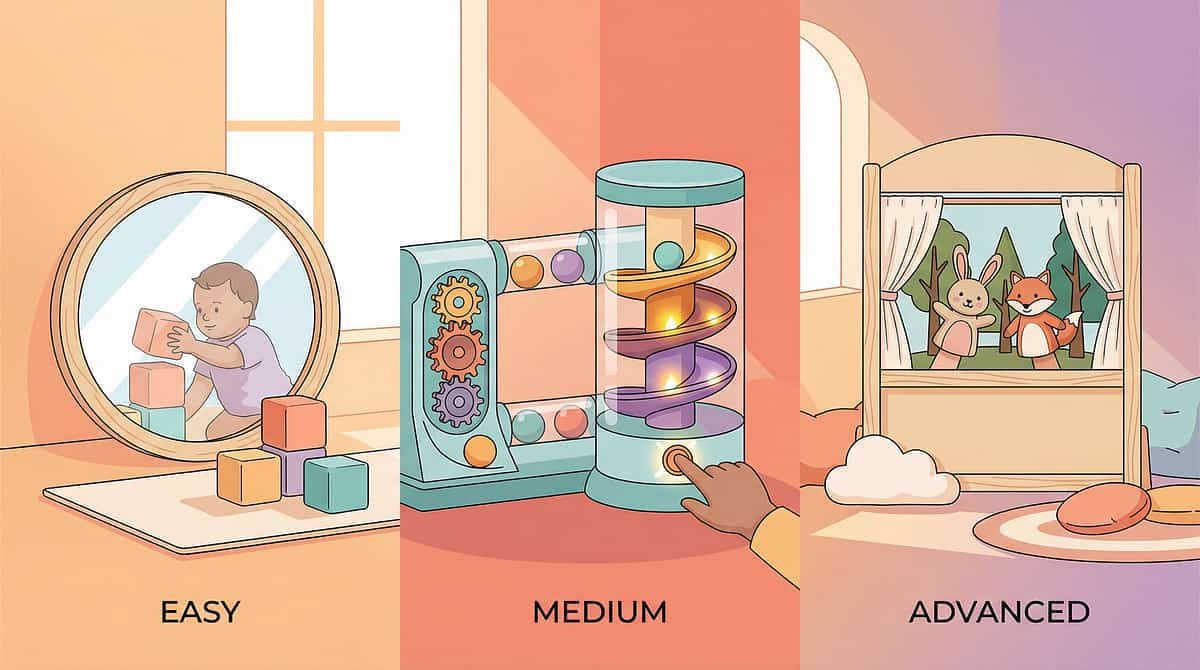
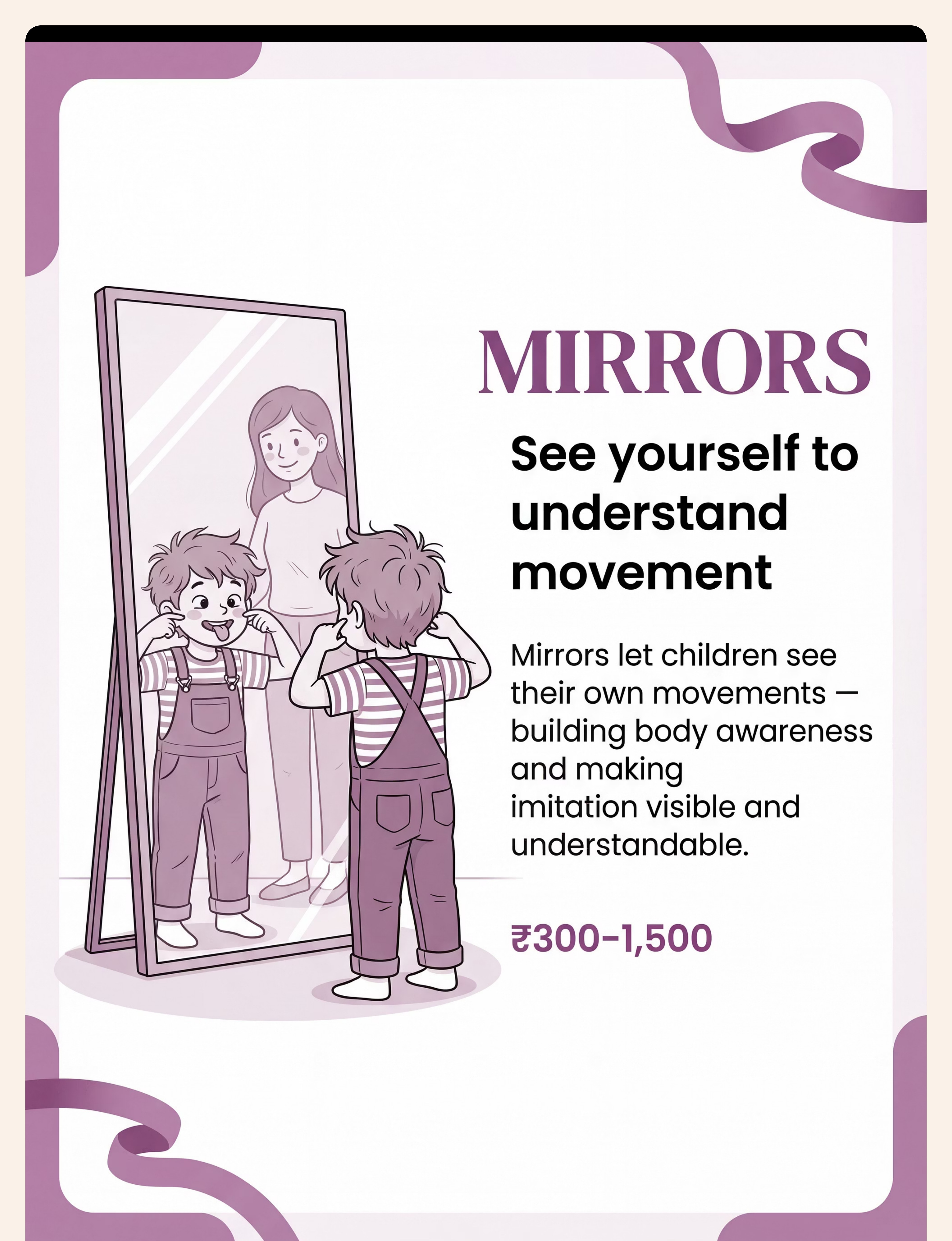
🪞 Material 1: Mirrors & Reflective Surfaces
Canon Category
Visual Feedback Tools
Price Range
₹300 – ₹1,500
Recommended
Full-length unbreakable mirror (wall-mounted, child height) + handheld child-safe mirror
Why This Material Works
Mirrors build body awareness and make imitation visible. When a child sees their own movement alongside — or instead of — watching a person, the mapping challenge is dramatically reduced. The mirror acts as a bridge between "watching someone else" and "watching yourself," which is cognitively easier for many children with imitation delays.
The child does not have to mentally map another person's body onto their own. They see themselves in real time. This reduces social demand while preserving the imitation opportunity — making it an ideal first tool for children who find direct face-to-face interaction overwhelming.
Therapist tip: Sit beside your child — not in front — so both of you appear in the mirror together. This creates a shared visual field that naturally supports joint attention and turn-taking within the reflection.
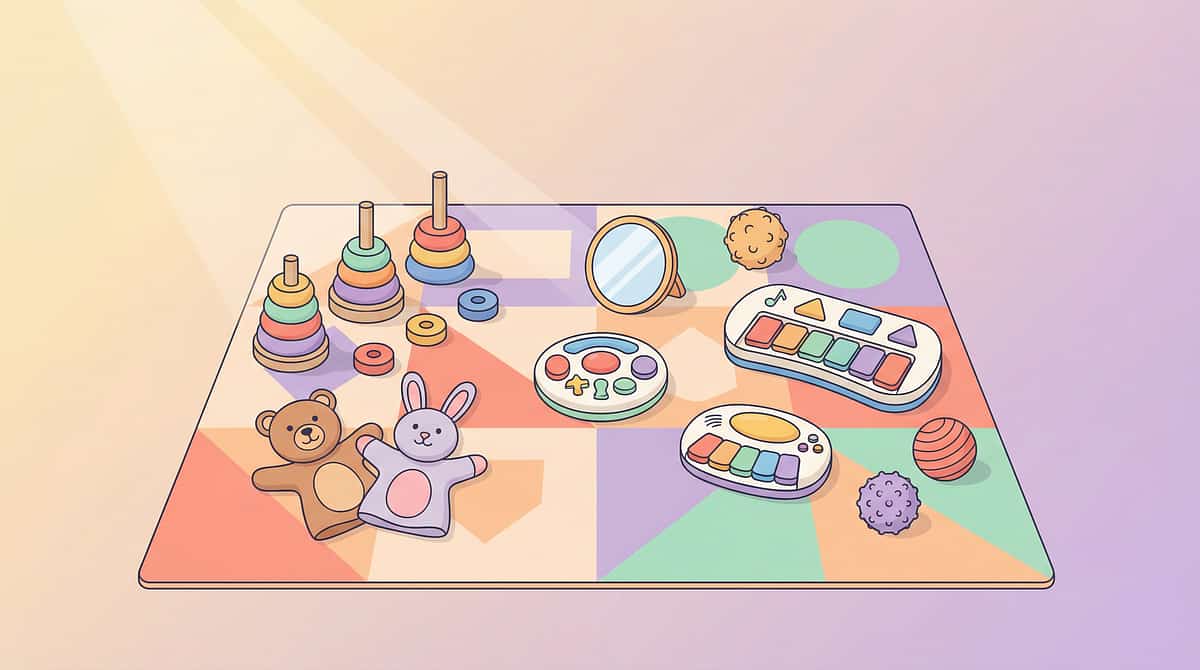
Material 2 of 9
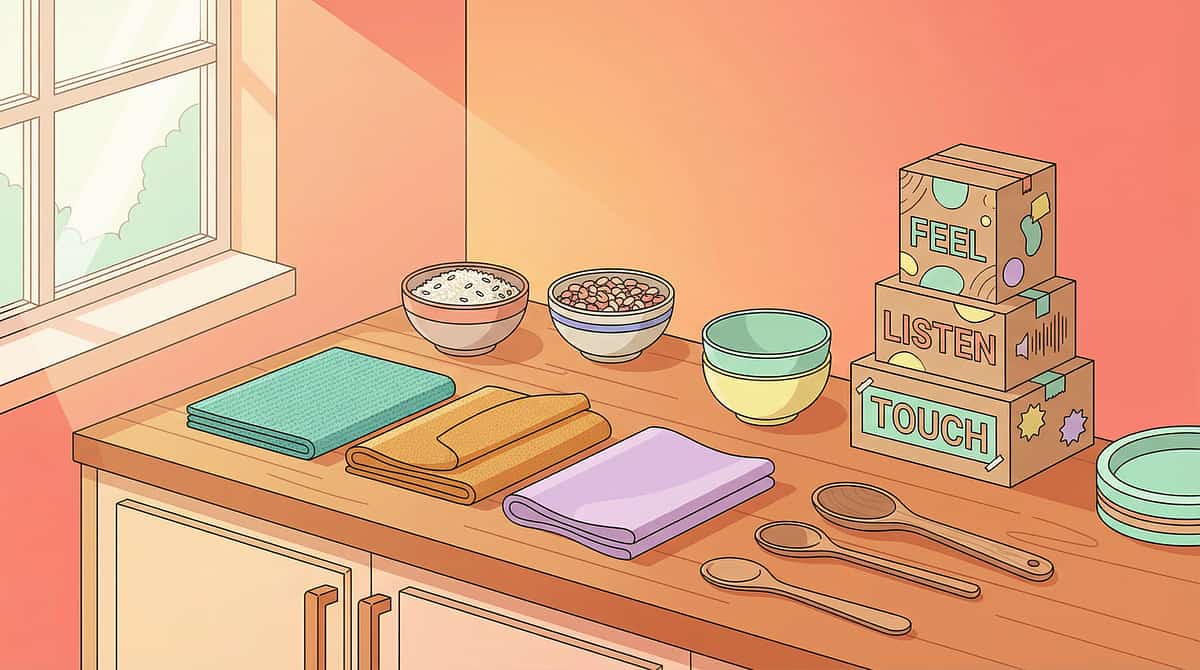
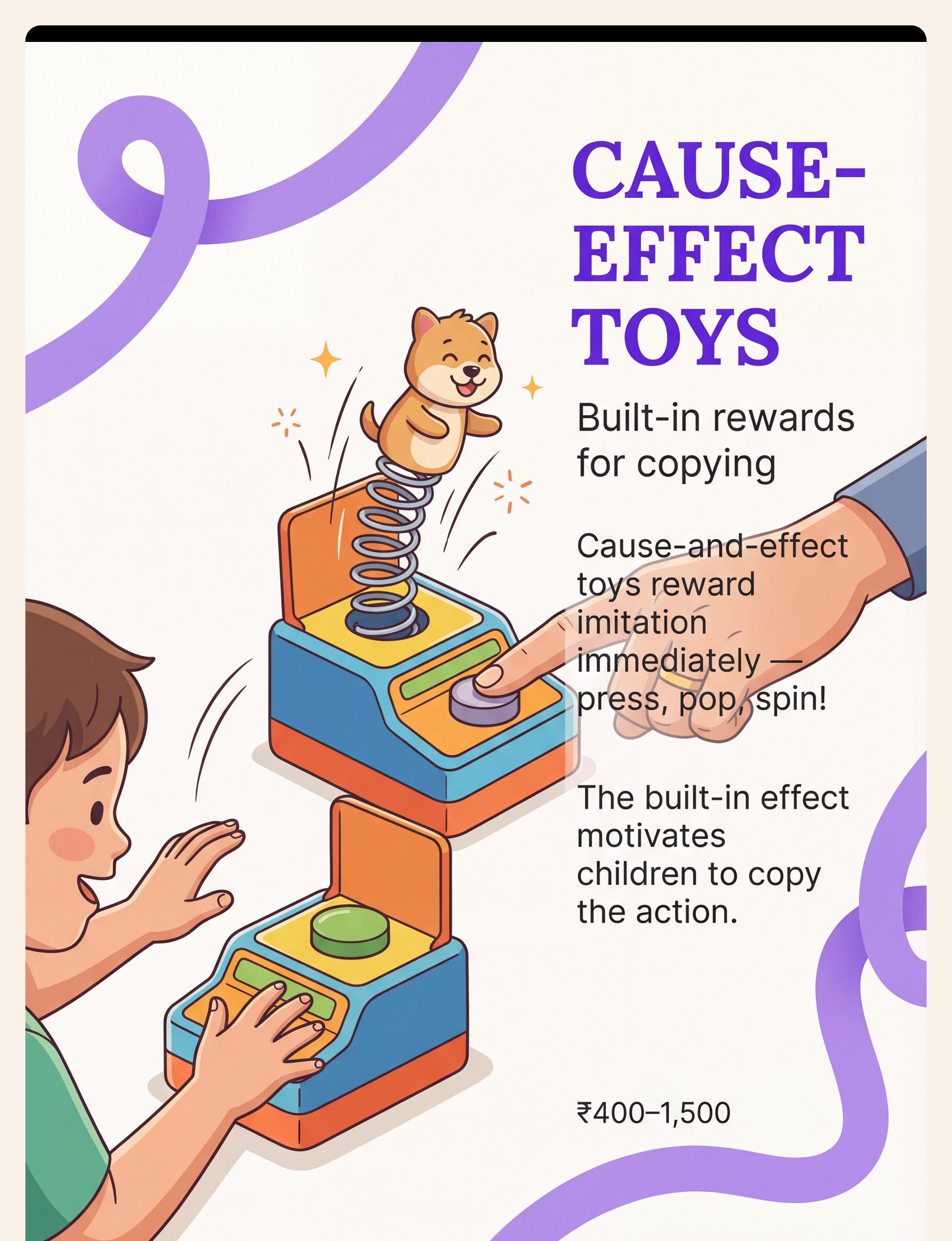
🎲 Material 2: Cause-and-Effect Toys
Why This Material Works
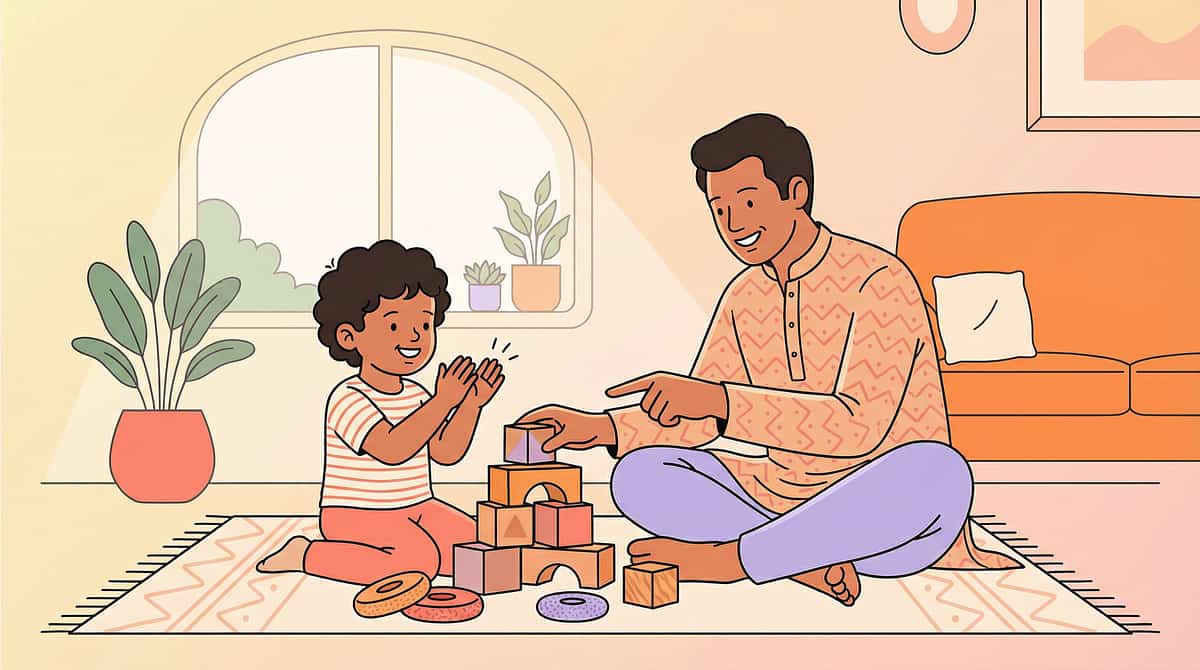
Cause-and-effect toys have built-in reinforcement: press → pop, push → spin. The child imitates the action and the toy rewards them immediately. The value of copying becomes obvious and motivating — the child learns that "when I do what you do, something exciting happens." This transforms imitation from an abstract social demand into a concrete, rewarding interaction.
These are the highest-success-rate starter materials for object imitation, making them the recommended first material for all beginner sessions. The immediate sensory payoff reduces the latency between trial and response, accelerating skill acquisition.
Therapist tip: Present the toy at the child's exact eye level. Demonstrate the action slowly and clearly, then pause. Let the toy's effect do the motivating work — you don't need to add verbal pressure.
Canon Category
Cause-Effect Toys / Switch Toys
Price Range
₹400 – ₹1,500
Active Canon SKU
Dyomnizy Interactive Toy — ₹519
Material 3 of 9
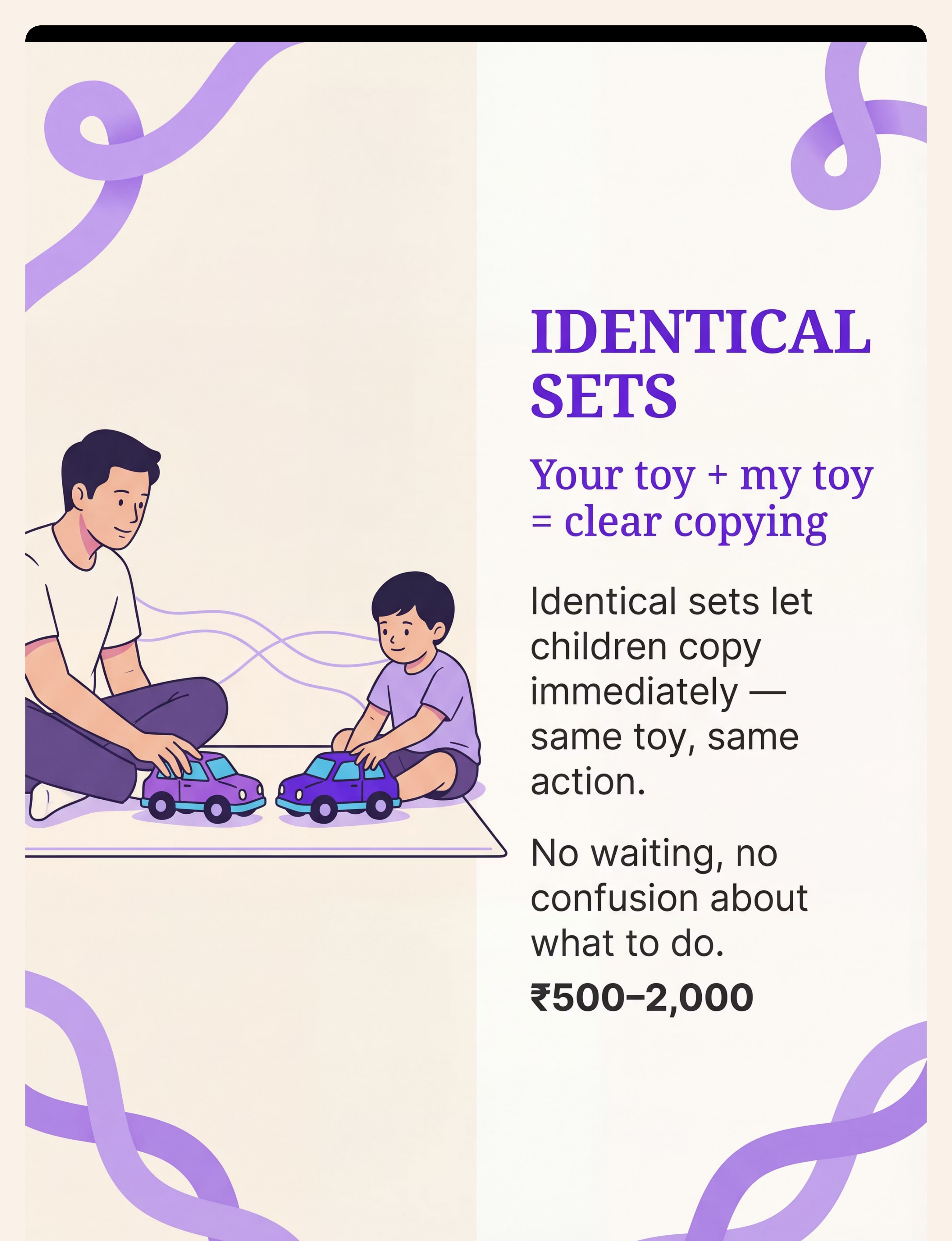
🪆 Material 3: Identical Object Sets
Canon Category
Matching Games / Memory Games
Price Range
₹500 – ₹2,000
Active Canon SKU
Lattooland Rainbow Sorting Set — ₹628
Why This Material Works
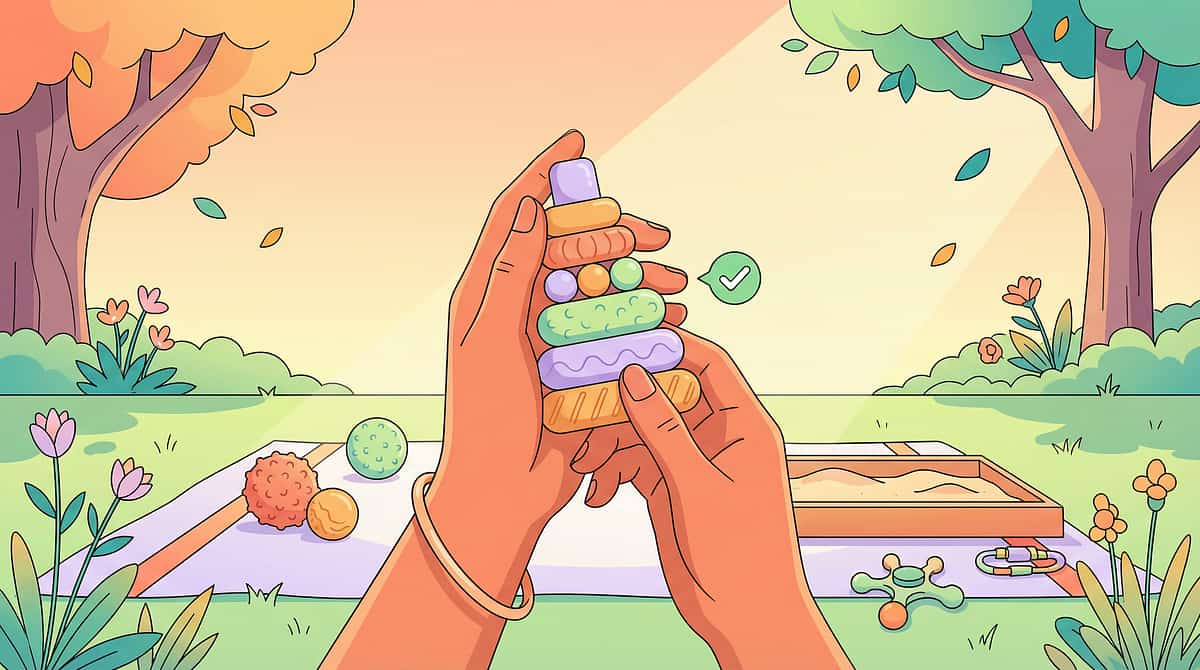
One for parent, one for child — same toy, same action. The instruction becomes elegantly simple: "Do with your ball what I do with mine." Identical sets eliminate the barriers of sharing, waiting, ambiguity about whose turn it is, and the demand to hand something over. Each person has their own complete set, and the only task is to watch and copy.
This removes a major confound from early imitation sessions: children who struggle with sharing or who become fixated on a specific object can now engage with their own identical item, keeping attention on the imitation task itself rather than on possession or turn-taking dynamics.
Therapist tip: Sit side by side rather than face to face — this creates a "parallel play" frame that feels less demanding while still providing a clear model to copy.
Material 4 of 9
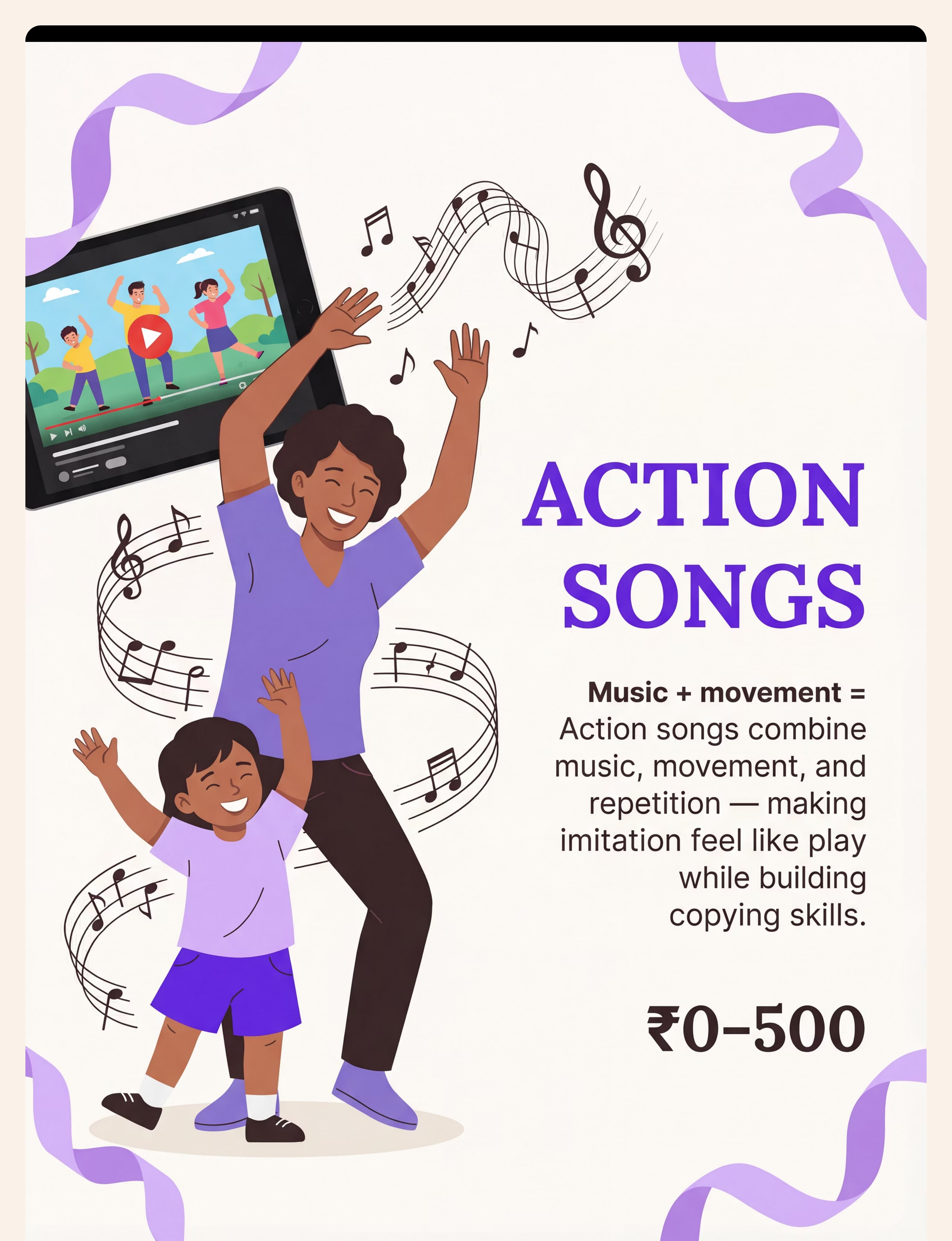
🎵 Material 4: Action Songs & Movement Videos
Music + repetition + predictability = dozens of imitation opportunities inside one joyful activity. Action songs such as Wheels on the Bus, Itsy Bitsy Spider, and Head Shoulders Knees and Toes are not just entertainment — each verse is a structured, repeated imitation trial embedded in a highly motivating, low-demand format. The child knows what is coming next, which reduces anxiety and increases the likelihood of spontaneous copying.
Why This Material Works
The predictable structure of action songs means children can anticipate the movement before it happens — this forward prediction is a powerful scaffold for the imitation response. As the song repeats, the child's nervous system begins to pre-program the motor sequence. What starts as a prompted response becomes an anticipated, spontaneous one.
Therapist tip: Use the same song for 3–5 consecutive sessions before introducing a new one. Familiarity is not boredom for children learning imitation — it is the neural repetition that builds the pathway.
Canon Category
Music & Rhythm Materials
Price Range
₹0 – ₹500
Free videos to purchased playlists
Material 5 of 9
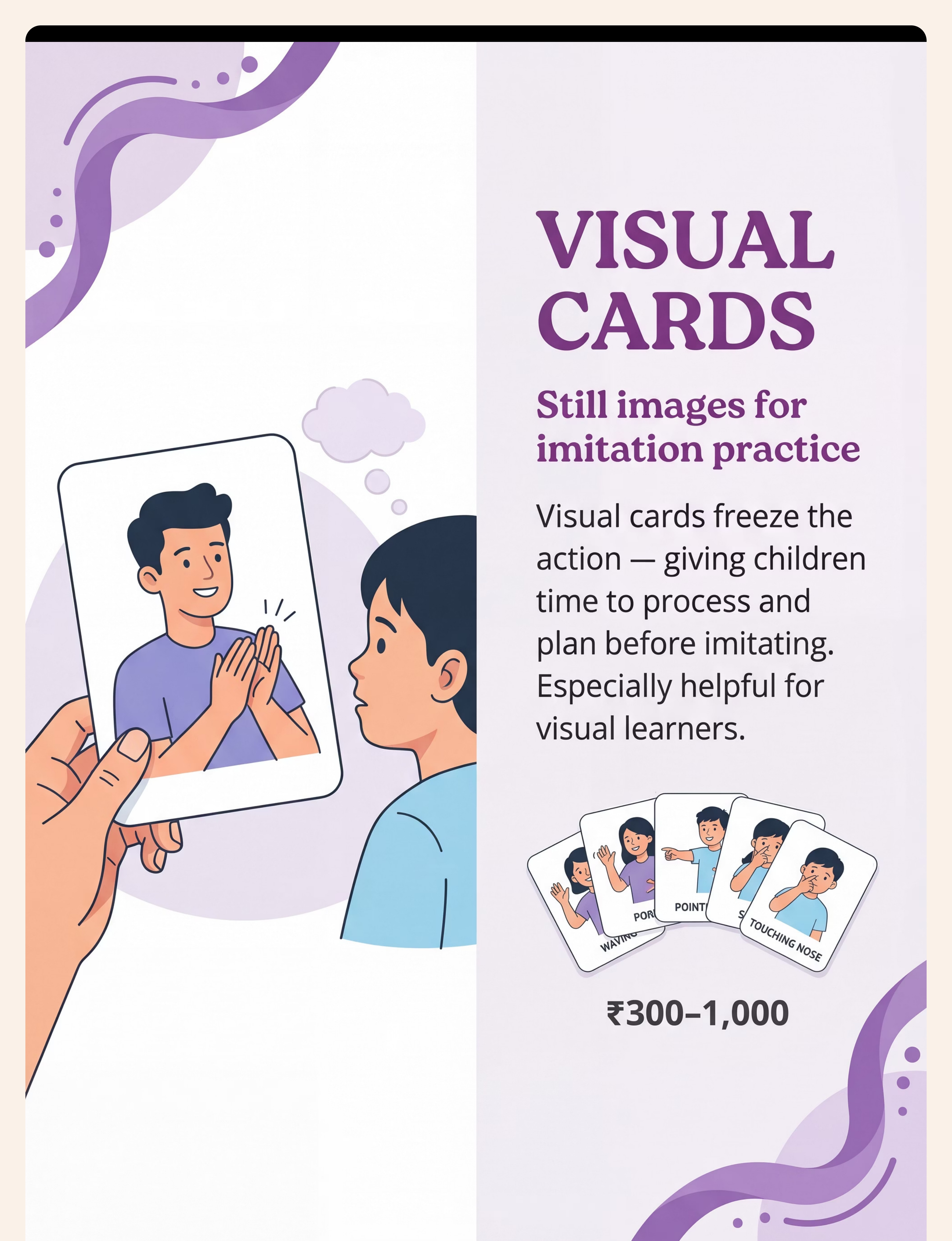
🃏 Material 5: Visual Imitation Cards
Canon Category
Flashcards / Visual Cards
Price Range
₹300 – ₹1,000
Ideal For
Visual learners overwhelmed by moving live models
Why This Material Works
Still images freeze the action — giving children time to process and plan before imitating. This is critical for visual learners who are overwhelmed by moving live models. A live demonstration lasts 1–2 seconds. A card stays still as long as the child needs.
For many children with imitation delays, the challenge is not the motor execution of the movement — it is the speed of processing a moving social stimulus. Visual imitation cards address this directly by slowing down the information delivery to a static, stable, non-socially-demanding format.
Therapist tip: Begin with cards showing simple, familiar gestures (wave, clap) before progressing to multi-step sequences. Laminate home-printed cards for durability — a smartphone photograph of the target action can be printed and laminated at any print shop for pennies.
Material 6 of 9
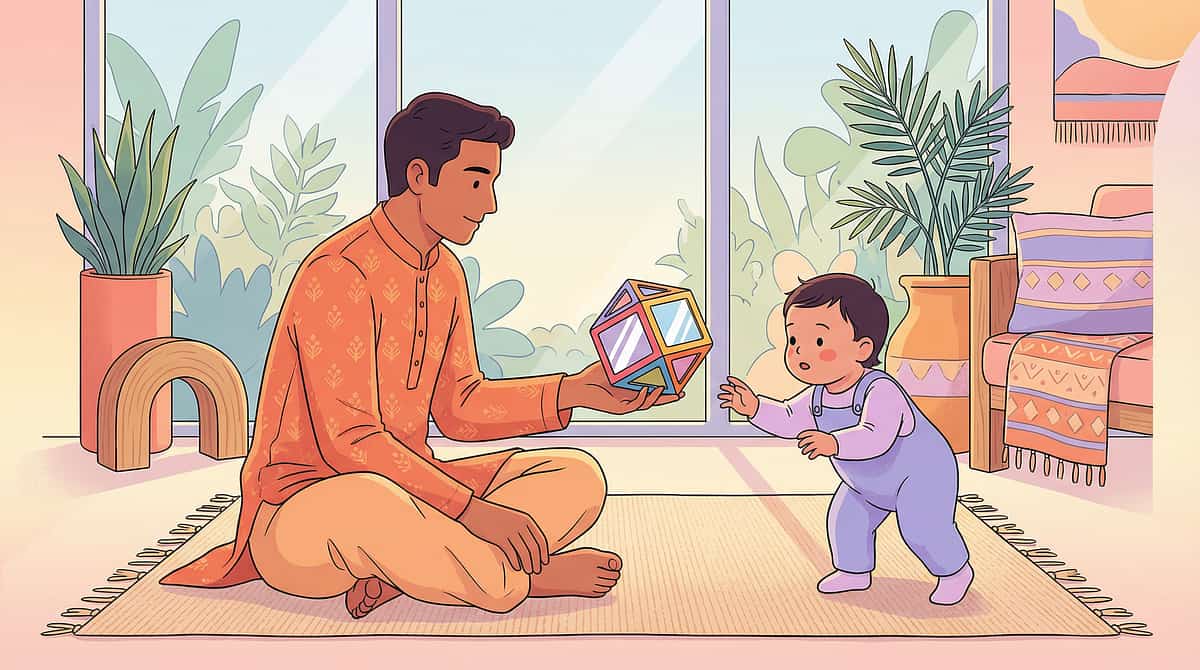
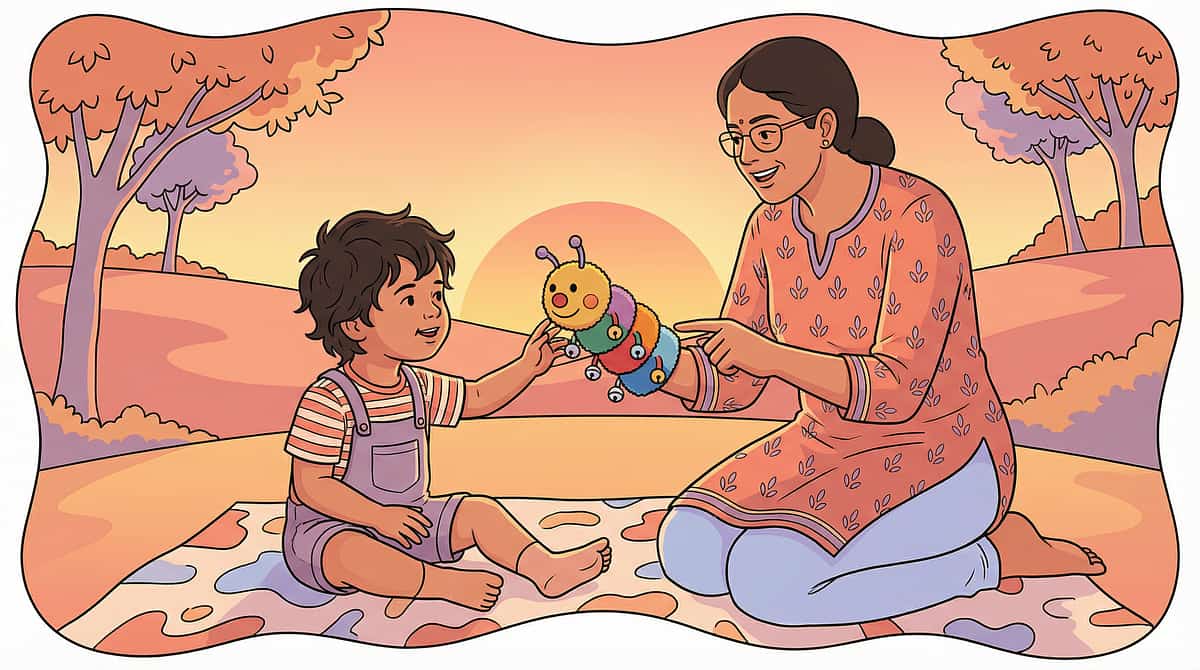
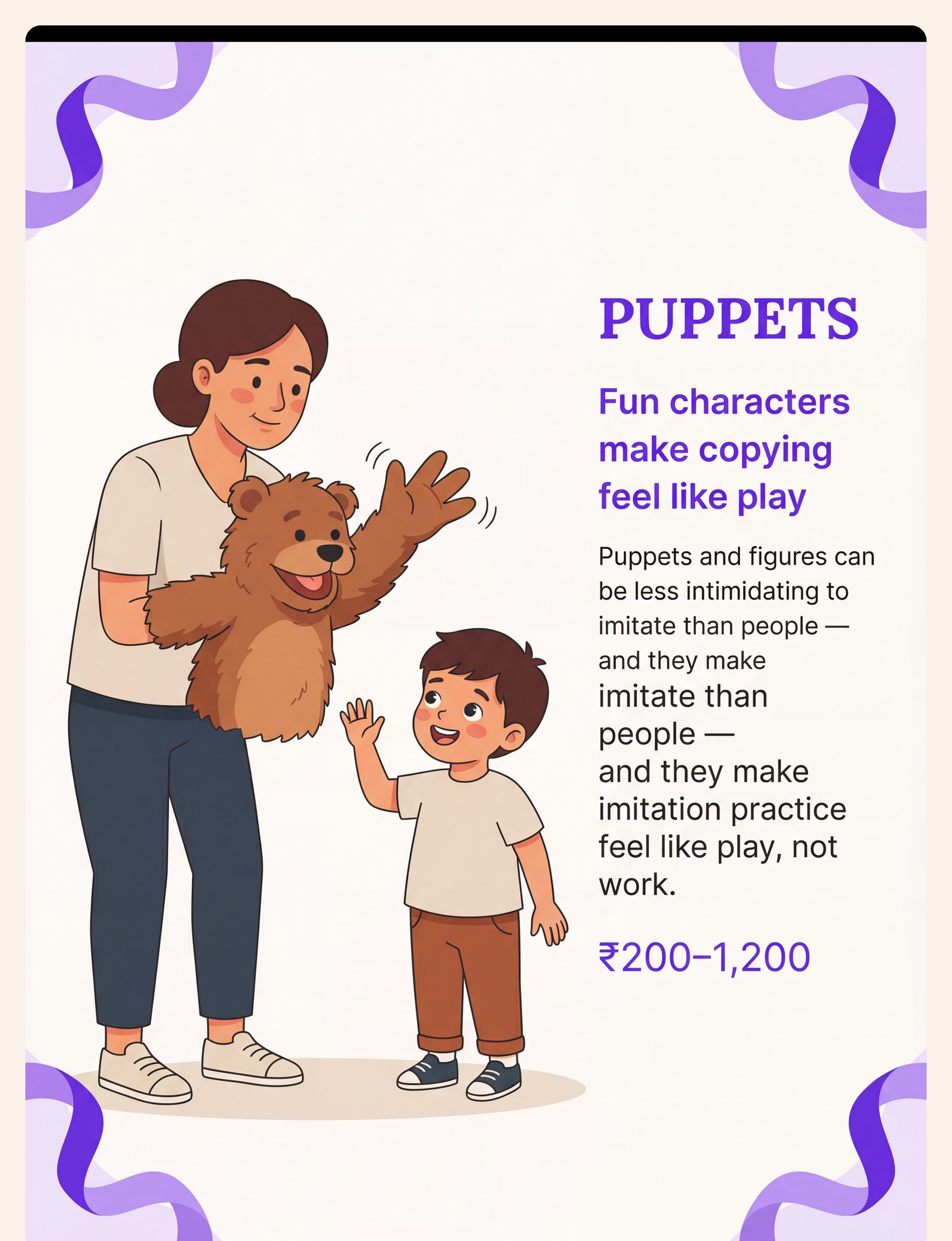
🧸 Material 6: Puppets & Figure Play Sets
Why This Material Works
Puppets are less intimidating than copying a person directly. They allow exaggerated, clear, slow movements that are easier to perceive and reproduce. For children who find the social demand of face-to-face interaction high, a puppet provides a social buffer — the child is relating to the puppet, not directly to the adult.
Puppets also make imitation feel like play, not work. A puppet that waves, claps, or bounces naturally elicits the child's curiosity and desire to interact. The imitation happens within the relational frame of play rather than within a structured demand frame — which dramatically reduces resistance and increases spontaneous attempts.
Therapist tip: Let the puppet "copy" the child first. Reverse imitation — where the adult's puppet mirrors what the child's toy is doing — establishes the concept of copying within a framework the child controls, before asking the child to copy in return.
Canon Category
Puppet / Figure Play
Price Range
₹200 – ₹1,200
Material 7 of 9
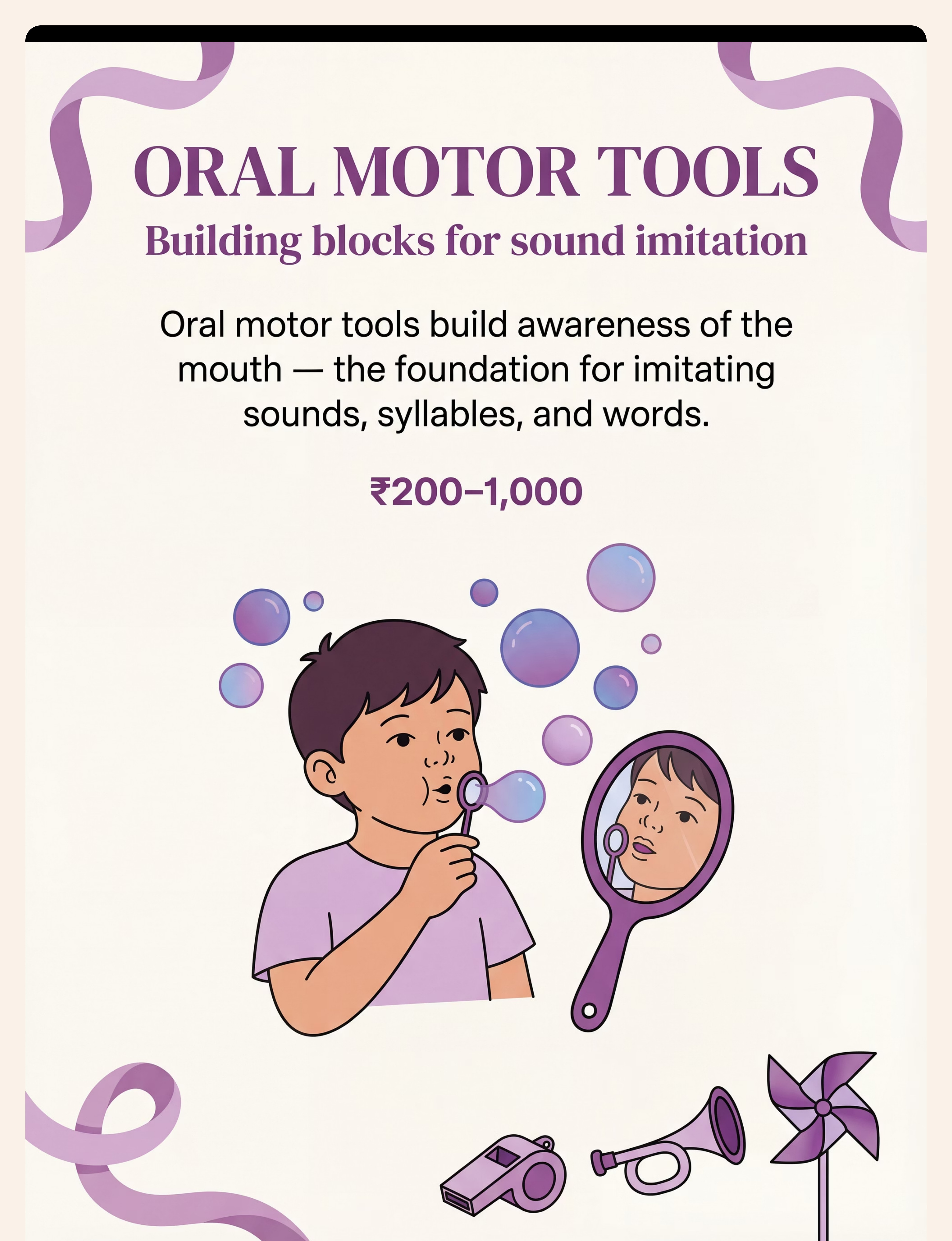
💨 Material 7: Oral Motor Tools
Canon Category
Oral Motor / Blowing Tools
Includes
Bubbles, pinwheels, whistles, horns, straws
Price Range
₹200 – ₹1,000
Why This Material Works
Bubbles, pinwheels, whistles, and horns build oral awareness and airflow control — the pre-verbal foundation for imitating sounds, syllables, and words. Before a child can copy "ba" or "ma," they need conscious awareness of the oral cavity and the ability to direct and control breath voluntarily.
Oral motor tools make this pre-verbal work feel like play. Blowing bubbles is inherently motivating and visually rewarding. A child who learns to blow on request has begun the imitation chain for verbal production — they have demonstrated that they can observe an oral action, plan a motor response, and execute it on demand.
Safety note: Clean all oral motor tools before every use. No shared tools between children. Check for latex allergy before using balloons or rubber items.
Material 8 of 9
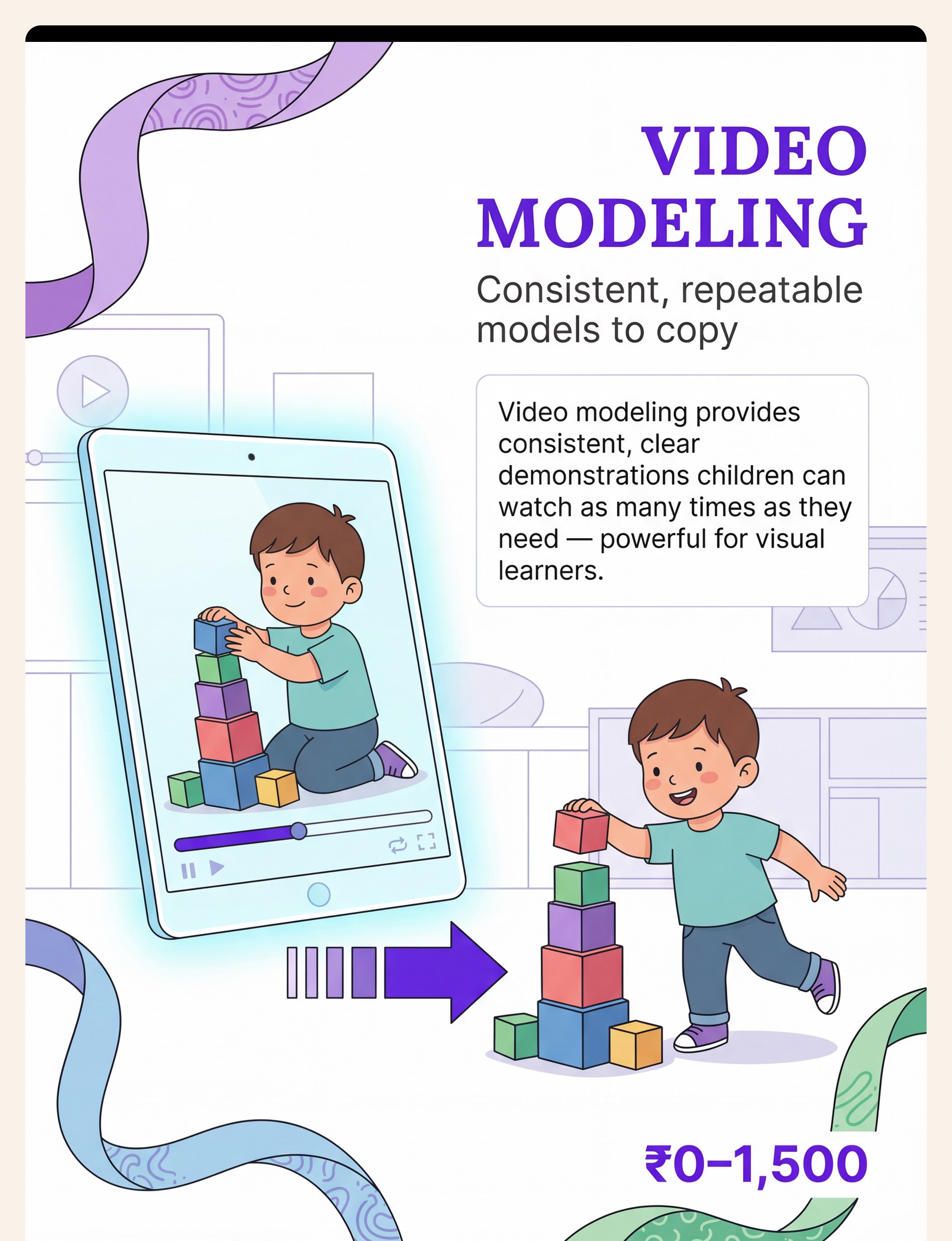
📱 Material 8: Video Modelling Tools
Why This Material Works
Video modelling is an NCAEP 2020 classified evidence-based practice. Videos are consistent, repeatable, and pausable — the child can watch as many times as needed without the adult becoming frustrated or changing the model. Each viewing is identical, providing the repetition the nervous system needs without the social variability of a live model.
A parent's own smartphone can create custom video models of exactly the targets being worked on. A 10-second video of "arms up" filmed this morning can be watched 20 times today and 20 more times tomorrow — with perfect consistency. Video self-modelling (the child watching themselves succeed) is particularly powerful: children who need to see themselves doing it before they believe they can are ideal candidates for this approach.
Therapist tip: Film the target action at the child's eye level. Keep videos under 15 seconds. Use the same consistent setting and framing across sessions for maximum processing efficiency.
Canon Category
Digital / Video Modelling
Evidence Status
NCAEP 2020 Classified EBP — 28 studies on video modelling alone
Price Range
₹0 – ₹1,500 (DIY to apps)
Material 9 of 9
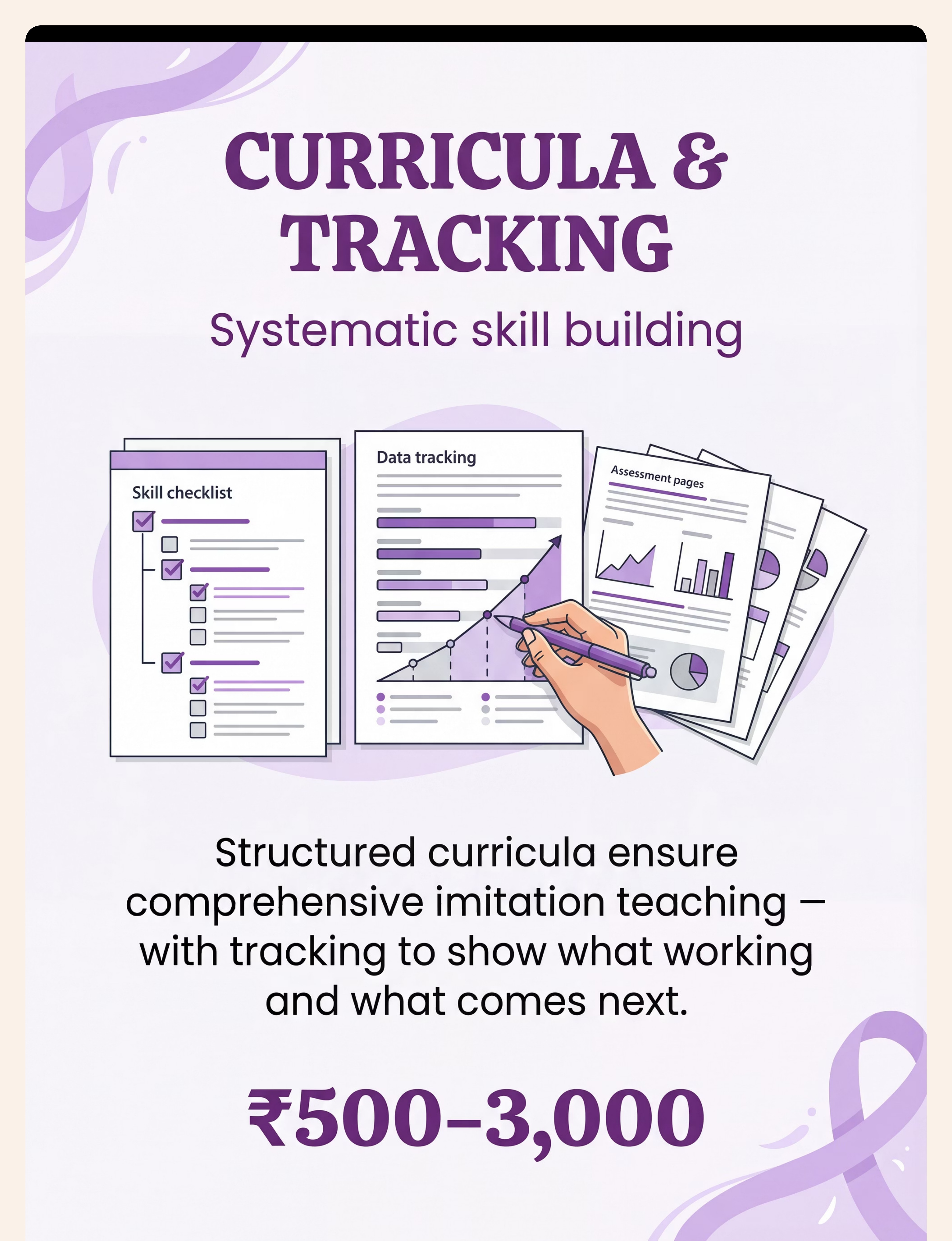
📋 Material 9: Curriculum & Tracking Materials
Canon Category
Data Collection / Progress Tracking
Price Range
₹500 – ₹3,000
What It Answers
"What do I teach next?" — Systematic skill hierarchy + data tracking ensures comprehensive coverage across all imitation types
Why This Material Works
Systematic skill hierarchy + data tracking answers the question every parent asks: "What do I teach next?" A good curriculum ensures comprehensive coverage across all imitation types — object, gross motor, fine motor, oral motor, and verbal — and prevents the common error of getting stuck on mastered skills while neglecting emerging ones.
Data makes progress visible. Without a tracking system, parents often feel sessions are not working because individual improvements are too small to notice day-to-day. With even a simple tracking sheet, you can see that Week 1 produced 2 prompted imitations, Week 3 produced 8, and Week 6 produced 15 independent ones. That trajectory is unmistakable — and it sustains the effort required to see it through to mastery.
Therapist tip: Free imitation skill lists based on ABLLS-R frameworks are available via PubMed resources. Paper and pen data tracking is clinically equivalent to digital systems — the consistency of recording matters more than the tool used.
🏅Pinnacle Recommends: All 9 materials above are validated by the Pinnacle Blooms Consortium across 21M+ therapy sessions. Total Starter Kit Estimate: ₹2,500–₹11,000 for comprehensive setup | ₹700–₹1,200 for essentials-only.
Equity & Access
Every Child Deserves This — Regardless of Budget
"WHO/UNICEF equity principles mandate that evidence-based intervention must be accessible to every family — not just those with purchasing power." — Pinnacle Blooms Consortium
🛒 Commercial Version | 🏠 Zero-Cost Household Version | |
Full-length unbreakable mirror (₹300–1,500) | Smartphone screen (selfie camera mode), aluminium foil on cardboard, back of a large cooking tray | |
Cause-effect pop-up toy (₹400–1,500) | Container with lid (open-close), plastic bottle with beans inside (shake), wooden spoon on metal bowl (bang) | |
Identical toy sets (₹500–2,000) | Two spoons, two cups, two socks, two blocks — any household objects you have two of | |
Oral motor kit: bubbles + pinwheel (₹200–500) | DIY bubbles (dish soap + water + wire loop), paper pinwheel, straw in water glass, tissue paper blowing races | |
Hand puppets (₹200–1,200) | Sock puppet (sock + buttons for eyes), paper bag puppet, spoon puppet, old soft toy with movement | |
Visual imitation cards (₹300–1,000) | Photos printed from phone and laminated with tape, or simply hold phone showing a still image | |
Video modelling tablet (₹0–1,500) | Parent's own smartphone — record 10-second videos of target actions for child to watch and copy | |
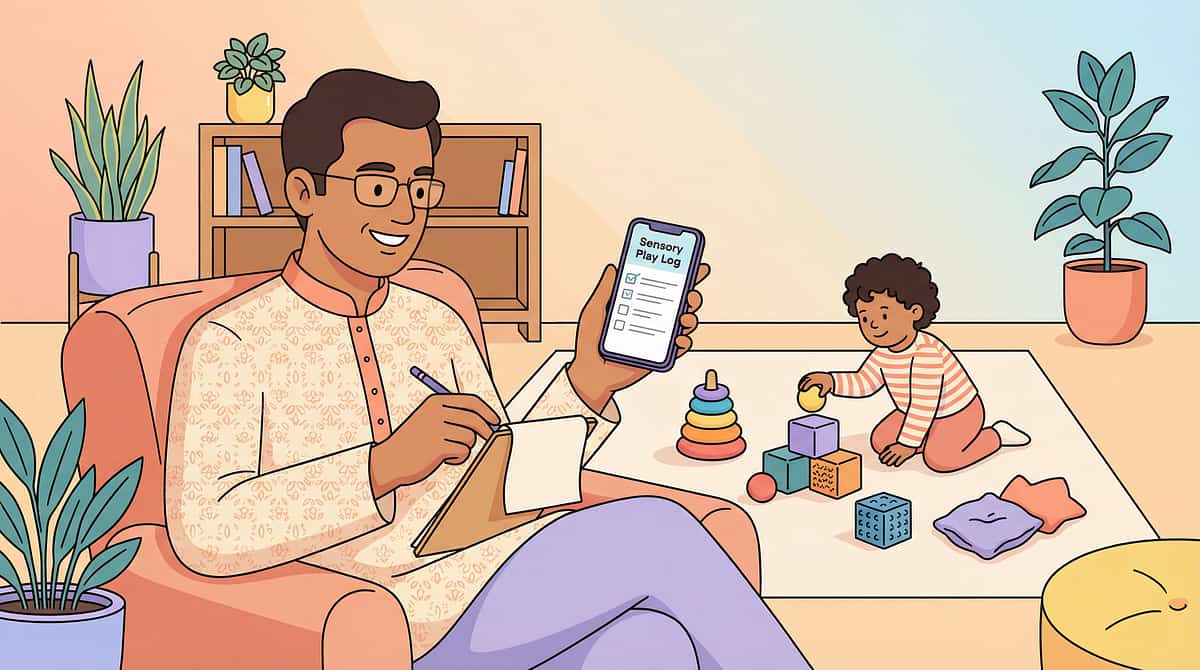
Curriculum materials (₹500–3,000) | Download free ABLLS-R imitation skill list from PubMed resources; use paper + pen for data tracking |
Zero-Cost Complete Session Example: Mirror activity with phone selfie camera → sock puppet imitation game → "Wheels on the Bus" (free YouTube) → data tracking on notepad. Total cost: ₹0. The therapy works because of the systematic teaching procedure — not the price of the toy.
Safety First
Safety First — Before You Begin
1
🔴 DO NOT PROCEED IF:
- Child is in active meltdown or post-meltdown recovery (within 30 minutes)
- Child is showing signs of illness (fever, pain, respiratory distress)
- Child has not eaten in 3+ hours (hunger disrupts engagement and learning)
- Child has had a severe trauma trigger in the last 24 hours
- Oral motor tools not confirmed clean, age-appropriate, and latex-checked
2
🟡 MODIFY SESSION IF:
- Child is tired but not distressed — shorten to 5 minutes, reduce to 1–2 targets
- Child had a difficult morning — begin with preferred cause-effect toy only
- New environment or visitor present — use familiar materials only
- Child shows sensory overload signs (ear covering, rocking, flushing) — switch to quieter activities
3
🟢 PROCEED WHEN:
- Child is fed, rested, and in a regulated state
- Environment is prepared (setup complete)
- Materials are ready and within reach
- Adult is calm and present — your nervous system speaks to theirs
Material Safety Notes: Mirrors must be unbreakable/shatterproof only and firmly secured. Oral motor toys cleaned before every use — no sharing between children. Any toy with pieces smaller than 3.5cm is a choking hazard for children under 3. Secured battery compartments only. Puppets: non-toxic, washable, no loose decorations.
STOP IMMEDIATELY IF: Child exhibits self-injurious behaviour, prolonged inconsolable distress, vomiting, choking, or severe regression compared to yesterday's baseline. 📞If unsure: Call 9100 181 181 (FREE) before starting.
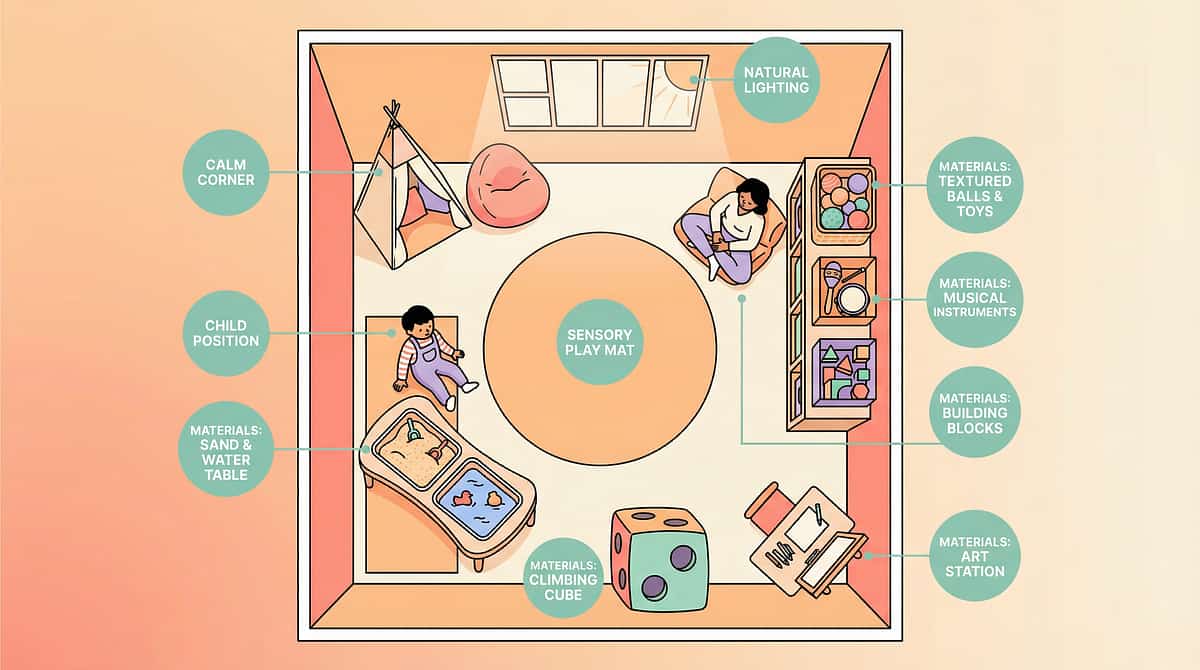
Space Setup
The Right Space Changes Everything
Child Position
On the floor (mat), low stool, or at a small table. Hips and feet supported. Child faces mirror or adult — not the door.
Adult Position
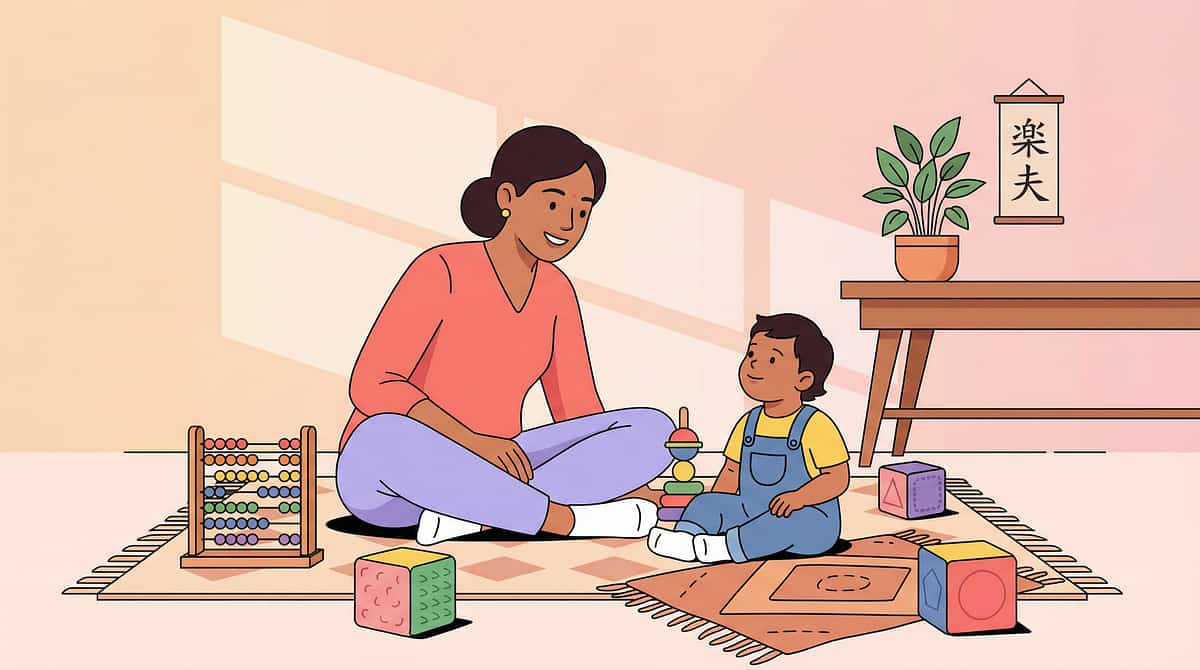
At child's level — floor or low chair. Not looming above. If using mirror, sit beside the child so both are visible in the reflection.
Mirror Placement
Mounted or propped at child's exact eye level. Test before session — the child should see their own face without craning or bending.
Materials Placement
Within the adult's reach during setup; presented to child one at a time during session — not all visible at once (prevents distraction and overwhelm).
Distractors Removed
TV off. Siblings in another room if possible. Excess toys cleared. Only session materials in the space.
Sensory Environment
Soft, neutral lighting (not harsh overhead fluorescent). Background noise minimal. Temperature comfortable. Nothing scratchy on the floor.
Session Timing: Best time is 30–60 minutes after a meal, mid-morning or mid-afternoon. Avoid immediately post-nap (groggy), pre-mealtime (hungry), or during TV-watch time (high arousal). Have a preferred calming item nearby for cool-down transition.
Readiness Check
The 60-Second Pre-Flight Check
Run through this checklist before every session. Clinical intelligence begins with knowing when conditions are right — and when they are not.
Child has eaten in the last 2 hours
Child is not showing signs of fatigue (rubbing eyes, limp posture)
Child is in a regulated state — no ongoing distress or dysregulation
Child responded to their name at least once in the last 10 minutes
Child has not had a significant meltdown in the last hour
Space is set up and materials are ready within adult's reach
You are calm and unhurried
1
✅ All 8 Checked → GO
Begin with Step 1: The Invitation (next card).
2
⚠️ 5–7 Checked → MODIFY
Start with just one cause-effect toy, 5-minute session, zero demands. Follow the child's lead. Attempt 1–2 imitation opportunities naturally.
3
❌ Fewer than 5 → POSTPONE
This is not failure. This is clinical intelligence. Offer 10 minutes of preferred, low-demand activity. Reschedule for later today or tomorrow.
"The best session is one that starts right. A session that ends in distress teaches the child that imitation = stress. A session that ends in success teaches the child that imitation = joy and reward." — Pinnacle ABA Consortium
Step 1 of 6
The Invitation
Step 1: The Invitation
Time: 30–60 seconds | Bringing the child in through playful, zero-demand engagement
What You Are Doing
Bringing the child into the activity through playful, zero-demand engagement. No copying expected yet. Just connection and curiosity. This step is about establishing the child's willingness to be in the space with you — not about producing any imitation response.
Script (say exactly or naturally adapt)
"Hey! Come see what I have... Look at this!" _(Hold up one cause-effect toy at child's eye level. Make it do something. Express genuine delight.)_ "Ooh! Did you see that? Wow!"
Body Language
- Get on the floor at child's level
- Open posture — no reaching toward child
- Animated face and voice — this is the draw
- Maintain comfortable eye contact (don't force — just offer)
Acceptance Cues ✅
- Orients toward the toy or your hands
- Reaches for the toy or leans forward
- Makes a sound or vocalization
- Any eye contact with you or the material
Resistance Cues ⚠️
- Turns away or leaves the space
- Pushes material away
- Flat affect or no response for 20+ seconds
If Resistance:
Put toy away. Imitate what the CHILD is doing for 60 seconds. Reverse the game — you become the mirror. Then re-offer.
Step 2 of 6
The Engagement
Step 2: The Engagement
Time: 1–3 minutes | Introducing the imitation frame: "This is a copy-me game"
What You Are Doing
Deepening the interaction by introducing the imitation frame. The child begins to understand: "This is a copy-me game." The transition from Step 1 to Step 2 is subtle — you are simply adding a clear model and an expectant pause to the playful engagement that is already working.
Script
"Watch me... Do this!" _(Perform one clear, simple action with the cause-effect toy. Pause. Look at child with expectant smile.)_ "Your turn!"
How to Present the Material
- Slow, exaggerated movements — not rushed
- Position at child's exact eye level — not above or beside
- Wait silently after the model — resist the urge to repeat immediately
- The pause IS the instruction: it says "now it's your turn"
Child Response Indicators
- Full engagement: Child copies action independently → CELEBRATE immediately
- Partial engagement: Child looks at toy but doesn't act → provide gentle physical prompt
- Tolerance: Child is present and watching but not copying → acceptable early response; continue modelling, reduce demand
- Avoidance: Child disengages → drop to zero demand, imitate the child, rebuild the connection
Research: PMC11506176 — structured material introduction protocols

Step 3 of 6
The Therapeutic Action
Step 3: The Therapeutic Action
Time: 5–10 minutes | The core session sequence
Prompt Hierarchy (reduce over time)
- Full physical: hand-over-hand through entire movement
- Partial physical: start movement, child completes
- Gestural: point or touch near action location
- Verbal: "push it down" added to "do this"
- Independent: model only, no support
Targets for This Session (choose 2–3 max)
Object imitation (beginners): Push car / Roll ball / Bang drum / Shake rattle / Stack block
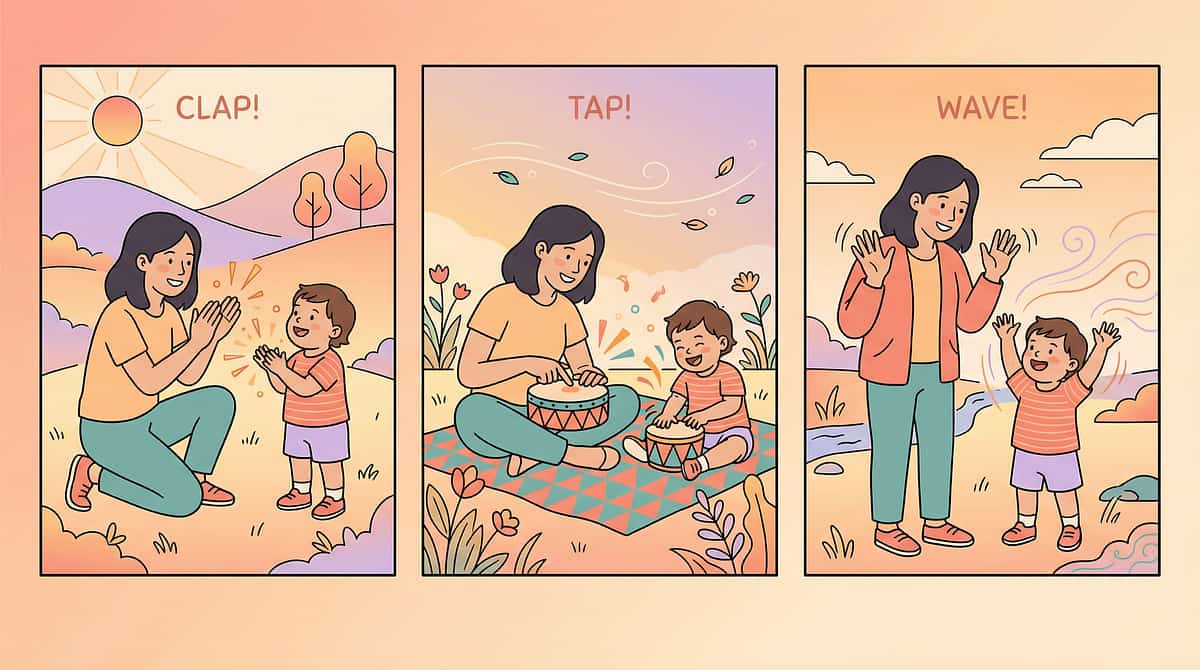
Gross motor: Clap hands / Arms up / Touch head / Stomp feet / Wave
Oral motor: Open mouth wide / Stick out tongue / Blow / "Ah" / "Ba"
Common Errors to Avoid
- Repeating "do this" more than once before waiting → it becomes noise
- Prompting too fast (before the child has time to process) → wait the full 5 seconds
- Inconsistent models (different speed or angle each time) → standardise your demonstration
Research: PMC10955541 | BACB discrete trial training standards
Step 4 of 6
Repeat & Vary
Step 4: Repeat & Vary
Time: 3–5 minutes | Therapeutic dosage and variation to maintain engagement
Therapeutic Dosage
- Target: 10–20 trials per session for a focused skill
- Quality rule: 3 good, engaged repetitions are worth more than 10 forced ones
- Satiation watch: If the child is no longer engaged by repetition #5, vary — don't persist
Satiation Indicators — Stop Before This
- Looking away consistently after model
- Flat affect during previously rewarding activity
- Perseveration on the toy (not attending to you)
- Whining, fussing, or active disengagement
Variation Framework
Same action, new toy
Stack blocks → stack cups → stack rings (same motor pattern, novel object)
Same material, new action
Ball → roll it → bounce it → put in container (same toy, varied demand)
Interleave mastered + new
70% targets the child knows, 30% new targets — the massed→distributed practice ratio
Action Songs
"Wheels on the Bus" → each verse = one imitation trial. 5-verse song = 5–10 natural repetition opportunities. Zero forced-trial feeling.

Step 5 of 6
Reinforce & Celebrate
Step 5: Reinforce & Celebrate
Timing: Within 3 seconds of the correct response — always
"Timing matters more than magnitude. Immediate, specific, enthusiastic delivery — even of a small reward — teaches faster than a delayed big reward."
Verbal Reinforcement Scripts
- "YES! You did it! You copied me! Amazing!"
- "Look at you! You pushed the car just like me!"
- "High five! You did 'arms up' — just like that!"
Pair vocal praise with physical celebration (high five, fist bump, tickle — whatever this child loves).
Critical Principle
"Celebrate the attempt, not just the success. A child who tries and gets 80% right should receive 80% enthusiasm. A child who attempts but gets it wrong should receive 50% enthusiasm. A child who refuses should receive 0% — but the next correct response gets 120%."
Reinforcement Menu
- 🌟 Social praise + physical affection
- 🎯 Access to preferred toy for 10 seconds
- 🍬 Small edible (if used in this child's programme)
- ⭐ Token on a visual token board
- 🎵 10-second dance party
- 📱 5-second video clip of preferred content
Step 6 of 6
The Cool-Down
Step 6: The Cool-Down
Time: 1–2 minutes | A predictable, gentle ending that becomes a transition ritual
Sessions that end abruptly teach the child that imitation activities end unpredictably. This increases resistance to starting next time. A predictable, gentle ending becomes a transition ritual the child learns to expect and accept — and often to look forward to.
Transition Warning (start at 2 minutes remaining)
"Two more, and then all done!" _(Hold up 2 fingers.)_ "One more! Last one! You did it!" _(Complete final trial with full reinforcement.)_ "All done! Time to put away."
Cool-Down Activity (60–90 seconds) — Choose ONE:
- Child-led play with a preferred toy (no demands)
- Brief sensory break: gentle rocking, joint compression, heavy work
- Calm song (not an action song — just calming music)
- Child helps put away materials (builds routine ownership)
Visual Timer
Children with imitation delays often have difficulty with verbal time warnings. A visual timer (such as a Time Timer) provides the predictability the auditory warning cannot. Highly recommended — classified as EBP for autism (NCAEP 2020).
Transition Cue
A consistent phrase + gesture that signals "therapy time is over, free time is starting." Choose one and use it EVERY time:
"All done working! Play time!" _(hands open, palms up gesture)_
If Child Resists Ending
Do NOT extend the session — this reinforces the behaviour. Offer a transition object, use the visual timer countdown, and maintain the end point calmly.
Personalisation
No Two Children Are Identical. Neither Should Their Protocol Be.
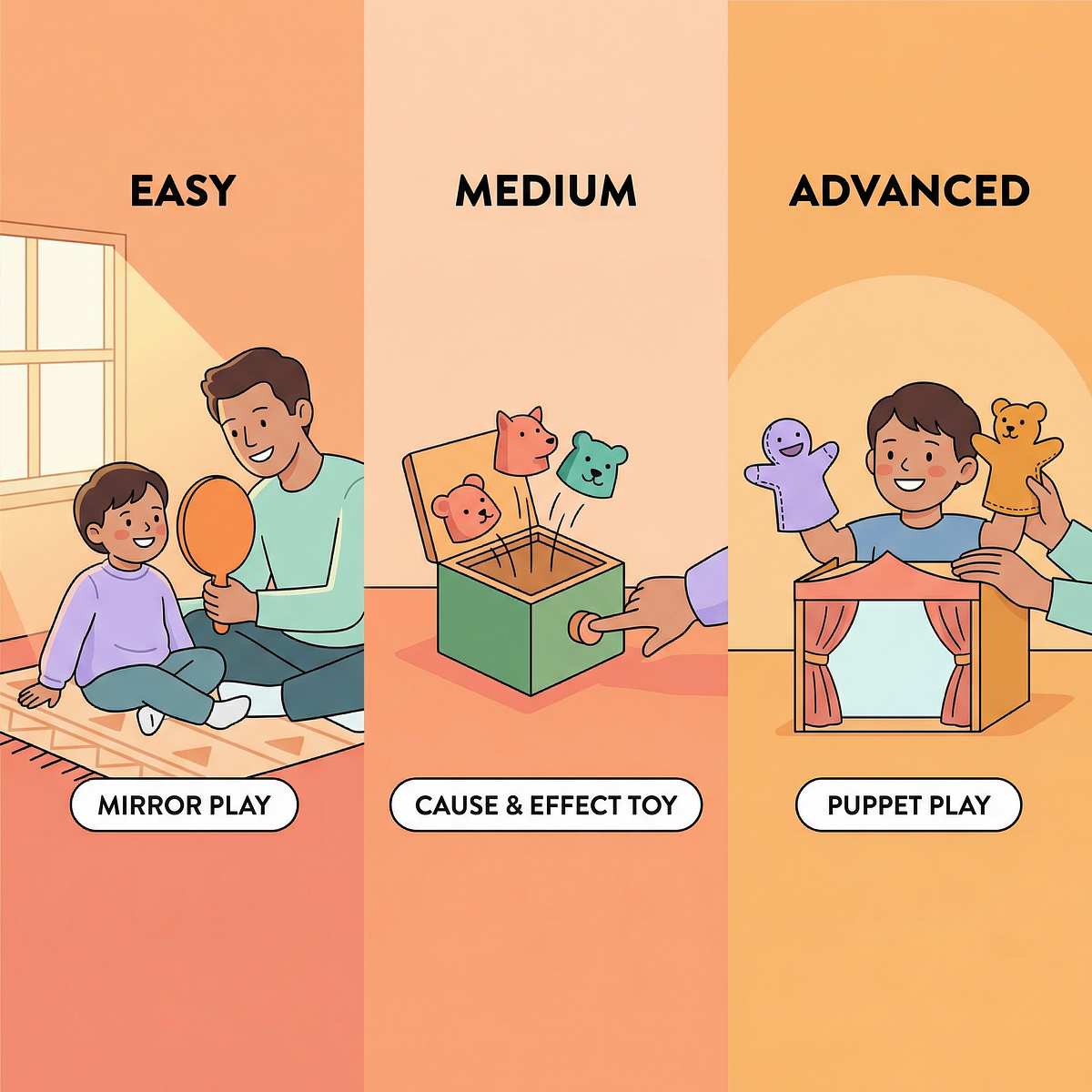
Adapt for Easier (bad days, new skills)
- Use only the child's single most preferred cause-effect toy
- Reduce to 3 trials maximum
- Full physical prompt for every trial (no independent demand)
- Use action song instead of structured "do this" format
- Session length: 5 minutes maximum
Adapt for Harder (mastery days, progress)
- Introduce novel, unfamiliar targets (not just mastered ones)
- Reduce prompt level by one step
- Introduce 2-step imitation sequences (clap THEN touch head)
- Begin generalisation: same target with different person or material
- Introduce deferred imitation: "Remember what we did yesterday? Do that."
Age-Based Modifications
- 12–18 months: Object imitation only, 5-min sessions, caregiver on floor, total 3–5 trials
- 2–3 years: Object + gross motor, 10 min, action songs as primary vehicle
- 4–6 years: Full hierarchy including verbal, 15–20 min, peer-based imitation games introduced
- 6–8 years: Observational learning contexts (classroom, peer play), generalisation across environments
Sensory Profile Variations
Sensory Seeker: Action songs with big movements, cause-effect toys with dramatic effects, jump-and-copy gross motor activities.
Sensory Avoider: Quieter cause-effect toys, mirror-based activities, visual imitation cards (no noise), low-movement fine motor targets.
Progress
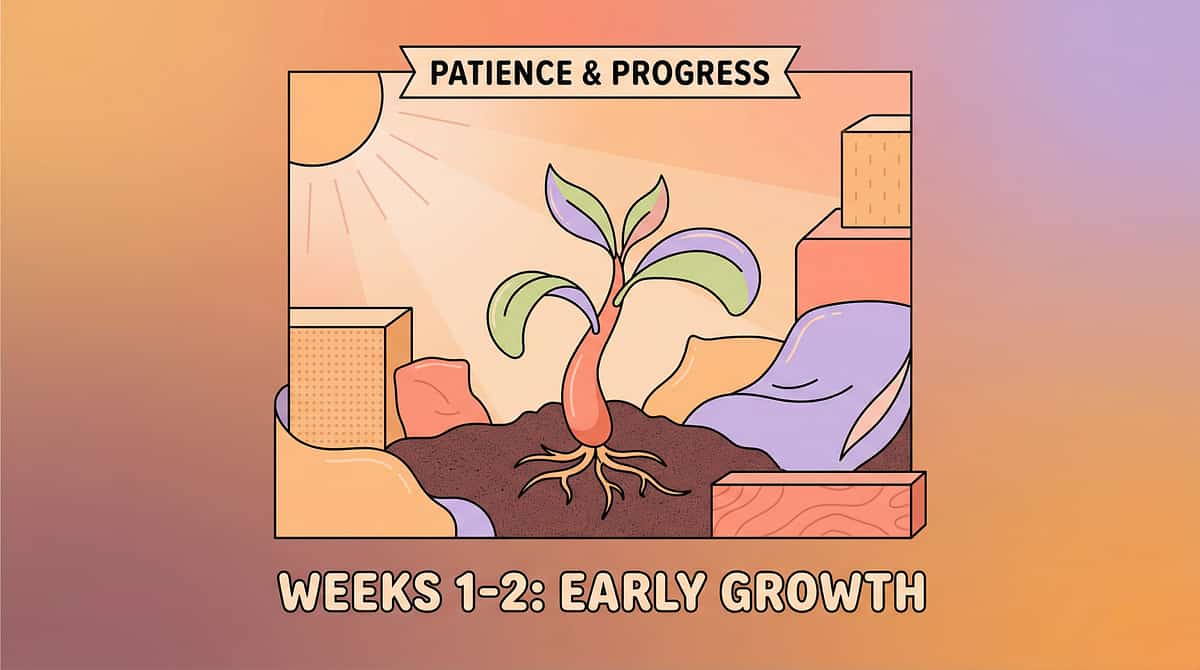
Weeks 1–2
Weeks 1–2: Foundations Being Laid Underground
15%
Laying the Foundation
The groundwork is being established — even when it doesn't feel like it
Real Progress Indicators in Weeks 1–2
- Child tolerates sitting in the setup space for 5+ minutes (without this previously)
- Child oriented toward the toy or your hands at least once per session
- ANY attempted imitation — even partial, even with full physical prompt
- Child's resistance to the session decreased from Day 1 to Day 7
- Child did not leave the space (even without copying)
- One spontaneous vocalisation or gesture during the session
What Is NOT Expected Yet
- Independent imitation of body movements without prompts
- Verbal imitation of sounds or words
- Generalising imitation to other people or settings
- Consistent performance across days
Parent Emotional Calibration
Week 1 often feels discouraging. The child's nervous system is learning that this space = predictable, manageable, enjoyable. Neural pathways are being mapped before any visible output.
"If your child tolerated the mirror for 3 seconds longer than yesterday — that is real, measurable, neurologically-grounded progress."
📞 Questions about Week 1–2 progress? Call 9100 181 181 (FREE)
Progress
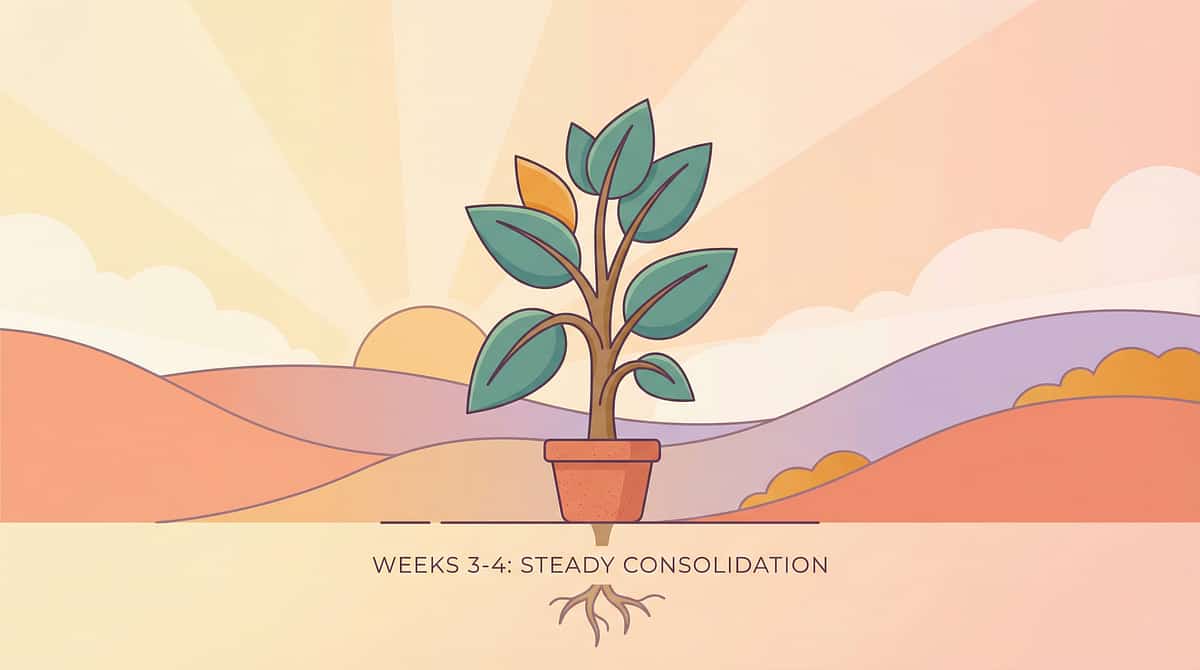
Weeks 3–4
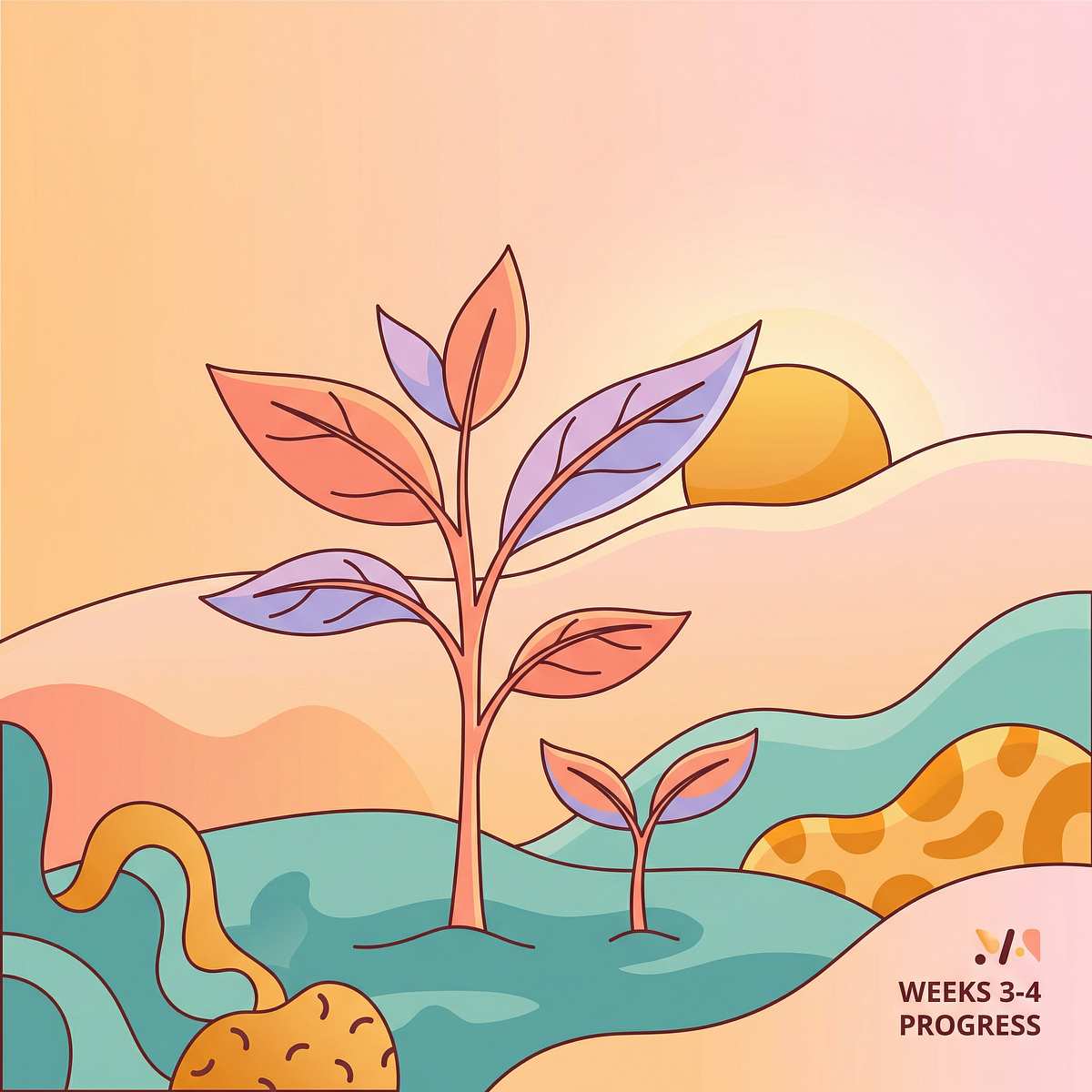
Weeks 3–4: Neural Pathways Forming
40%
Consolidation Phase
The "I'm starting to understand the game" signals begin to appear
Child anticipates the "do this" cue
Body orients before you finish saying it — anticipatory motor preparation has formed
Child reaches toward the cause-effect toy when it appears
Motivation established — the child knows this activity is rewarding
Child begins imitating with partial prompts
Where full prompts were needed before — a clear signal of prompt fading working
First spontaneous imitation outside of structured sessions
You clap, child claps — without being asked. The skill is beginning to generalise.
Child enjoys the session — smiling, laughing, returning voluntarily
The association between imitation and reward is now established in the child's nervous system
What's Happening Neurologically
Synaptic strengthening. The mirror neuron pathways, motor cortex connections, and attention networks are being reinforced through repeated, structured, rewarded practice. The brain is building the biological infrastructure for observation-to-action translation.
When to Increase
If 4+ consolidation indicators are present by Day 21 → add one new imitation target per week. Begin mixing gross motor targets into object imitation sessions.
"You may notice you're more confident too. You've developed an eye for your child's engagement signals. You've become a clinically attuned caregiver."
Progress
Weeks 5–8
Weeks 5–8: Approaching Mastery
75%
Approaching Mastery
Mastery badge unlock criteria coming into reach
🏅 Mastery Badge Unlock Criteria
The following must be met across 2 consecutive sessions with 2 different materials and 2 different adults (if possible):
80%+ Independent Imitation
Of target actions with no prompts needed across two consecutive sessions
Generalisation
Same action copied with a new toy, new person, or new setting — not just in the original training context
Maintenance
Skill present when re-tested after a 2-day break with no practice — the learning has stuck
Speed
Response latency under 5 seconds (not 15–20 seconds as in early sessions)
When to Advance vs. Maintain
- 80%+ mastery across 3 sessions: Move to next level in hierarchy
- 60–79% mastery: Stay at this level, vary materials, increase spontaneous opportunities
- Below 60% after 8 weeks: Clinical consultation recommended
Spontaneous Generalisation
The clearest mastery signal: child copies a peer without being asked. The skill has moved from trained behaviour to natural learning mechanism.
🏅 Milestone
You Did This. Your Child Grew Because of Your Commitment.
You have spent 5–8 weeks showing up every day. Preparing the space. Running the sessions. Collecting the data. Adjusting when it didn't work. Celebrating every small success. You have done what trained therapists do — and you have done it inside your own home, for your own child, with love as the most powerful reinforcement of all.
What Your Child Can Now Do (That They Couldn't 8 Weeks Ago)
Observe & Reproduce
Observe an action and reproduce it — the foundational learning mechanism is now functional
Structured Interaction
Participate in an imitation-based interaction — the social framework of "watching and copying" is established
Learn From Watching You
Begin to absorb language, play skills, and daily behaviours from watching — the gateway is open
Connect Copying with Reward
Associate imitation with connection and reward — the motivational foundation for ongoing natural learning
This is the opening of the gateway skill. Language can now begin to be absorbed by watching. Play skills can now be modelled and copied. The thousand tiny behaviours that make up human daily life can now begin to be passed from you to your child — not through explicit teaching, but through the miracle of imitation.
Journal Prompt: "The first time I saw [child's name] copy me without being asked was... and the look on their face was..." 📞 Ready for the next level? Call 9100 181 181 to discuss your child's progression pathway.
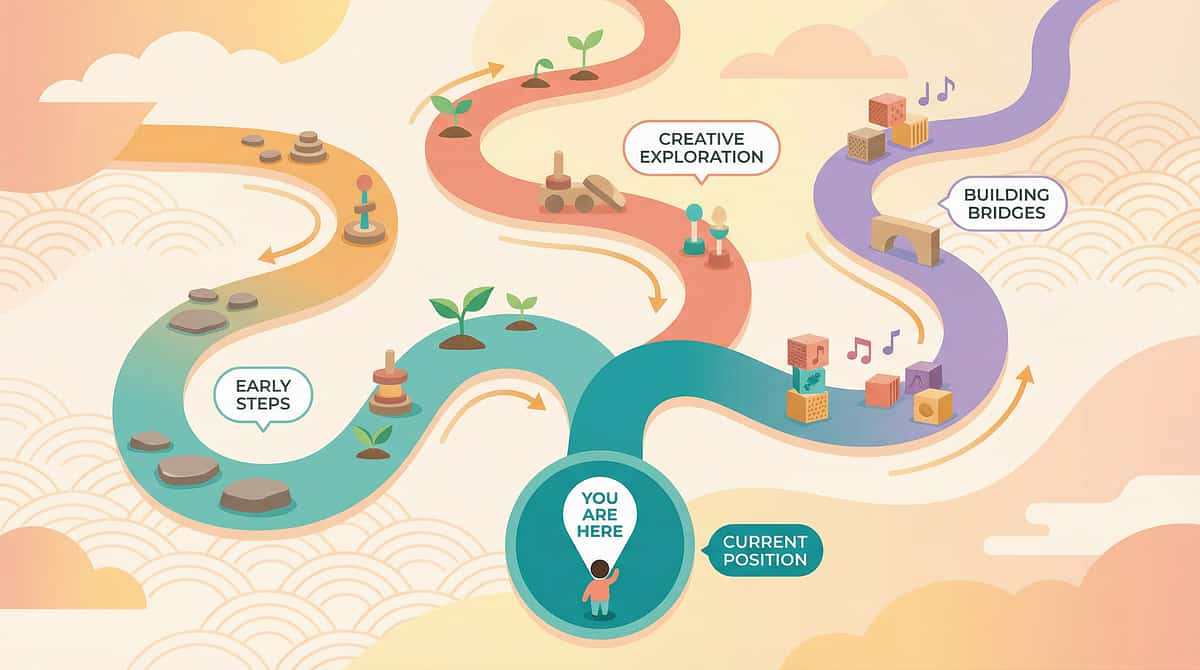
Related Techniques
You Already Have the Materials for These
The G-666 starter kit overlaps significantly with adjacent techniques in the Core Developmental domain. If you have assembled your imitation materials kit, you are already equipped for 5 of the 6 techniques below.
Technique | Difficulty | Shares Materials with G-666 | |
G-664: Attention Skills | 🟢 Intro | Mirror, cause-effect toys | |
G-665: Joint Attention | 🟡 Core | Identical sets, action songs | |
G-667: Motor Planning | 🟡 Core | Cause-effect toys, visual cards | |
G-668: Social Referencing | 🟡 Core | Mirror, puppets | |
G-670: Verbal Communication | 🔴 Advanced | Oral motor tools, video modelling | |
F-575: Movement Imitation | 🟡 Core | Mirror, action songs, visual cards |
Domain: Core Developmental Skills — Group G (episodes 660–675). The curriculum and tracking materials from G-666 apply directly to all techniques listed above.
Families Who've Been Here
From Where You Are to Where They Got To
Mehta family — Pune
Before: At 26 months, Aarav had almost no eye contact, didn’t respond to his name consistently, and didn’t copy simple actions like clapping or tapping the table.
Technique used: G-666 Imitation Skills Training with a mirror, cause-effect toys, action cards, and short turn-taking games.
After 8 weeks: He was copying 6 actions independently, imitating sounds during play, and initiated peek-a-boo with his grandmother at the door.
“For the first time, he was trying to join us instead of just watching from the side.”
Reddy family — Hyderabad
Before: At 31 months, Kavya would often look away during interaction, had very limited response to name, and could not copy even familiar gestures like waving goodbye or blowing kisses.
Technique used: G-666 Imitation Skills Training with identical toy sets, action songs, hand-motion routines, and visual cue cards.
After 8 weeks: She copied 8 movements in a row during song time, began imitating her brother’s play actions, and started bringing toys to adults to restart the game.
“We finally saw her understand that ‘your turn’ could become ‘my turn’ too.”
Chatterjee family — Kolkata
Before: At 24 months, Ishan had no copying skills for everyday actions, rarely responded to playful bids, and would not imitate with household objects even when adults modeled them repeatedly.
Technique used: G-666 Imitation Skills Training with cause-effect toys, puppets, mirror play, and short modeled routines built into snack and play time.
After 8 weeks: He began copying 5 new actions across the day, imitated his mother’s tapping and pushing routines, and independently started a “repeat after me” game with his father.
“The biggest change wasn’t just skills — it was seeing him want to connect.”
Your child’s story can be next — one small success at a time, built with the right materials and the right steps.
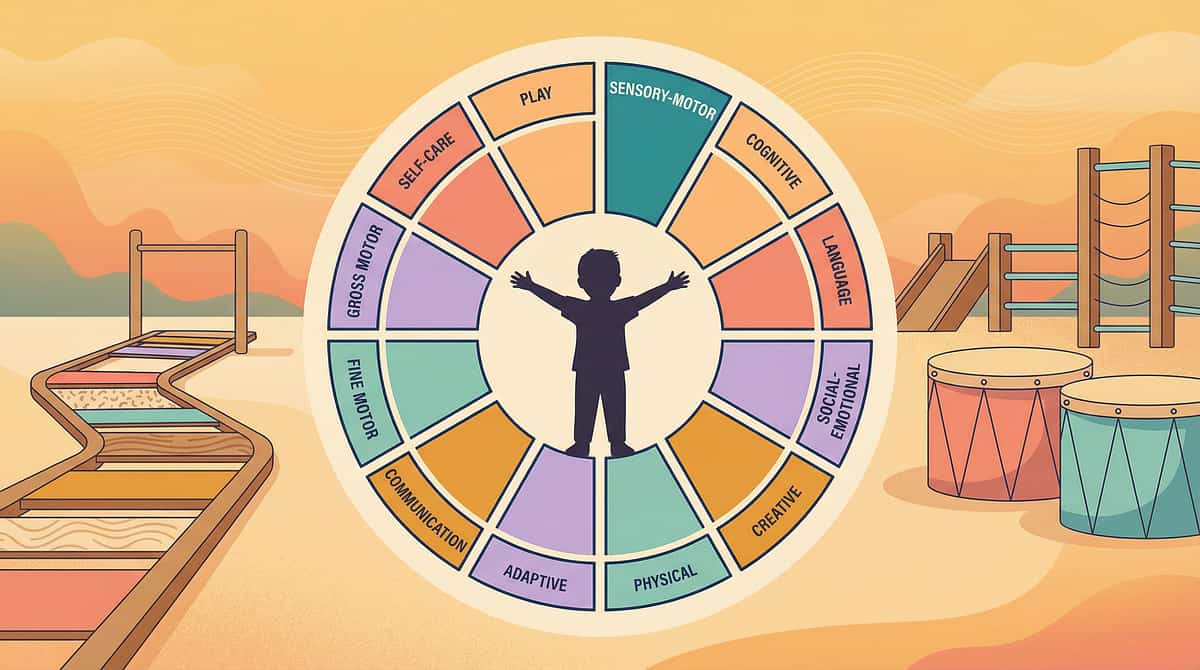
Family Story 1
Ananya, 3.5 Years, Hyderabad
Ananya's Story — Hyderabad
Before (Week 1)
Ananya had no object imitation despite 6 months of general play exposure. She did not wave, clap, or respond to "do this." Her SLP noted zero echoic attempts. Family reported she seemed to look "through" them rather than "at" them.
After (Week 8)
Independent object imitation of 12 trained actions. First spontaneous wave emerged in Week 6 — unprompted, during a familiar goodbye routine. First word approximation ("ba" for ball) in Week 7.
Parent Voice
"We didn't believe the mirror would do anything. On Day 4, she stood in front of it and stuck her tongue out — just because she saw her own reflection do it first. We both cried." — Ananya's mother, Pinnacle Network Hyderabad
From the Therapist
"Object imitation built the foundation. The mirror reduced the social demand enough for her to explore self-imitation. From there, the bridge to person imitation built naturally." — Pinnacle ABA Therapist
Family Story 2
Rohan, 5 Years, Bangalore
Rohan's Story — Bangalore
Before (Week 1)
Rohan imitated with objects but refused all body movement imitation. No verbal imitation. Strong visual learner. Cause-effect toys were his only engagement point.
After (Week 8)
Gross motor imitation of 8 trained movements. First attempts at "clapping" during action songs. Video modelling proved the key — watching himself in a recorded video produced the first spontaneous arm raise outside of session.
Parent Voice
"Video self-modelling changed everything. He watched himself doing 'arms up' and then immediately did it again. Like he needed to see himself succeed before he believed he could." — Rohan's father, Pinnacle Network Bangalore
Outcomes are anonymised case summaries. Individual results vary by profile, baseline, intervention intensity, and family consistency. — Pinnacle Blooms Network® Clinical Documentation
Community
Isolation Is the Enemy of Progress
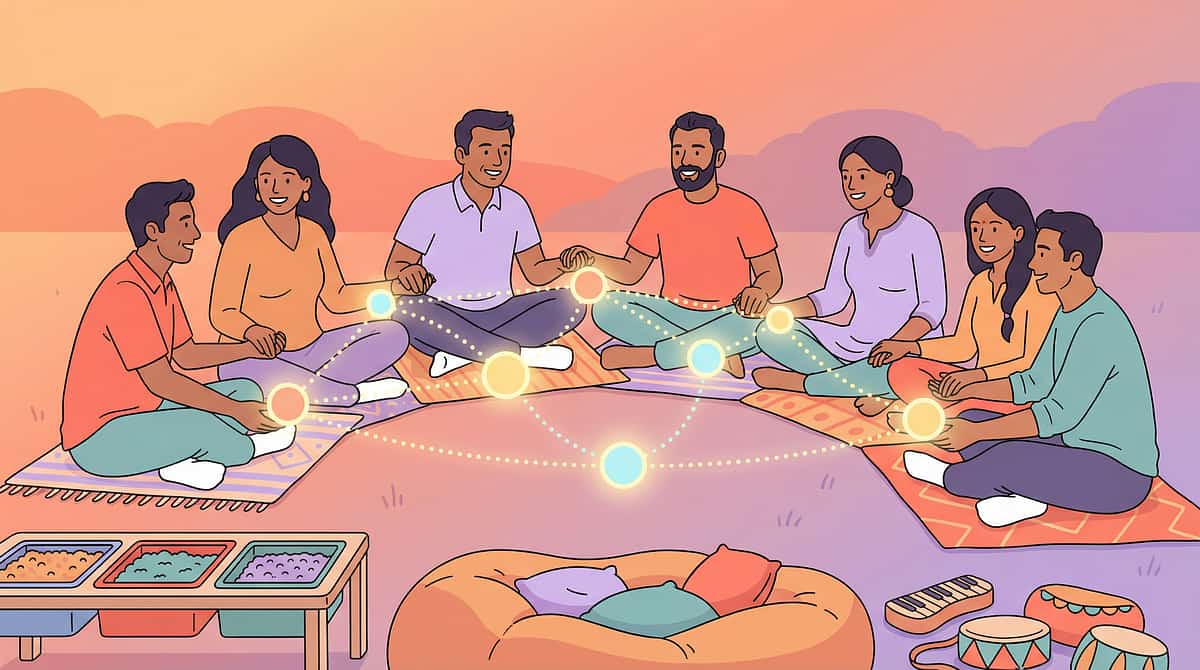
You are not running a solo experiment. Across 70 Pinnacle centres in India, and in 70+ countries through GPT-OS®, tens of thousands of families are navigating the exact same imitation journey you are. Connection with those families multiplies your own effectiveness — you gain access to lived experience, practical tips, and the irreplaceable reassurance of someone who truly understands.
📱 WhatsApp Parent Support Circle
Daily tips, session sharing, wins, and real questions answered by experienced parents and Pinnacle-trained community facilitators in the Imitation Skills — Parent Support Circle group.
💬 Online Community Forum
Searchable library of parent questions + expert responses, session troubleshooting threads, and progress milestone sharing at techniques.pinnacleblooms.org/community/imitation-skills
🤝 Peer Mentor Matching
Connect with a parent who was exactly where you are now — and reached mastery. Pinnacle's parent mentor network matches by child age, profile, and location.
📍 Local Parent Meetups
Monthly in-person sessions at 70+ Pinnacle centres — facilitated by therapists, parent-led discussions, material demonstrations across India.
"The WhatsApp group saved us in Week 2. We were about to give up. Another parent shared a single sentence: 'Use the sock puppet first, then the real toy.' That one tip changed everything." — Imitation Skills Parent Community Member
Professional Support
Home + Clinic = Maximum Impact
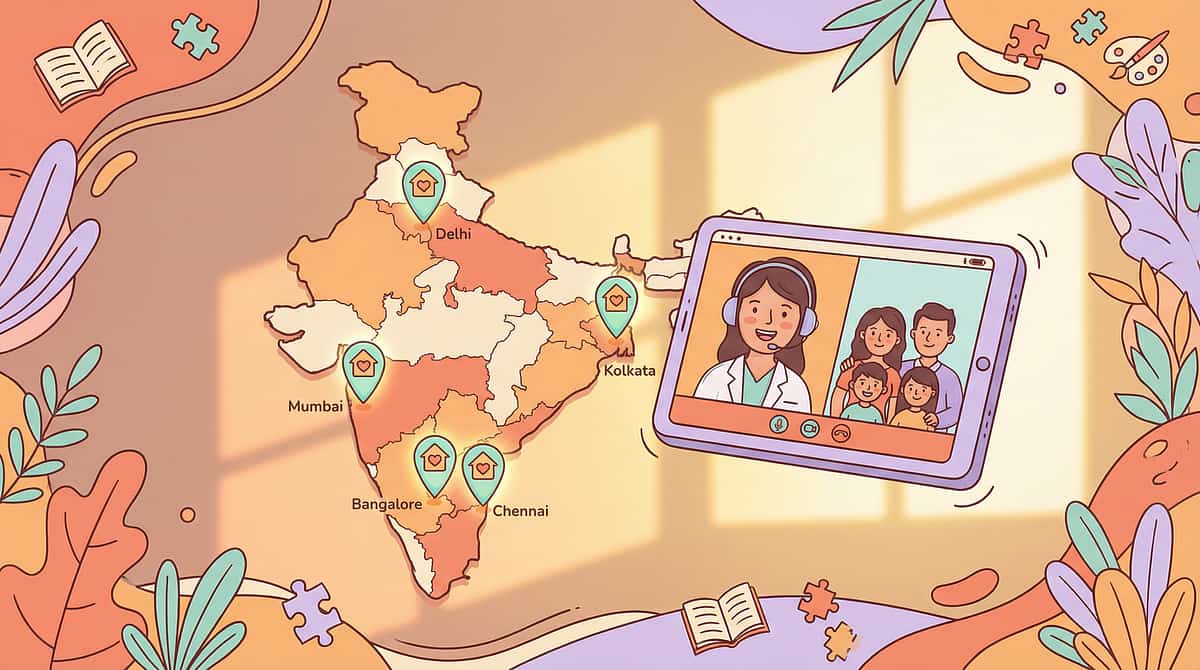
The research is clear: parent-implemented home programmes combined with professional clinical support produce better outcomes than either alone. Your home sessions build the repetition volume that clinics cannot match. Your clinic sessions bring the assessment precision, data systems, and clinical expertise that home sessions cannot replicate. Together, they are exponentially more effective.
Primary Discipline | What They Provide | |
ABA / BCBA | Formal imitation assessment, DTT programming, data system setup, prompt fading protocols | |
Speech-Language Pathologist | Verbal imitation hierarchy, oral motor evaluation, AAC assessment if needed | |
Occupational Therapist | Motor planning assessment, sensory profile, proprioceptive interventions supporting imitation | |
Special Educator | Classroom generalisation, IEP goals for observational learning |
Pinnacle Centre Locator
70+ Centres Across India: Hyderabad • Bangalore • Chennai • Mumbai • Delhi • Pune • Kolkata • Ahmedabad + 60 more cities
Languages: 16+ | Available: 7 days/week
Pinnacle Network
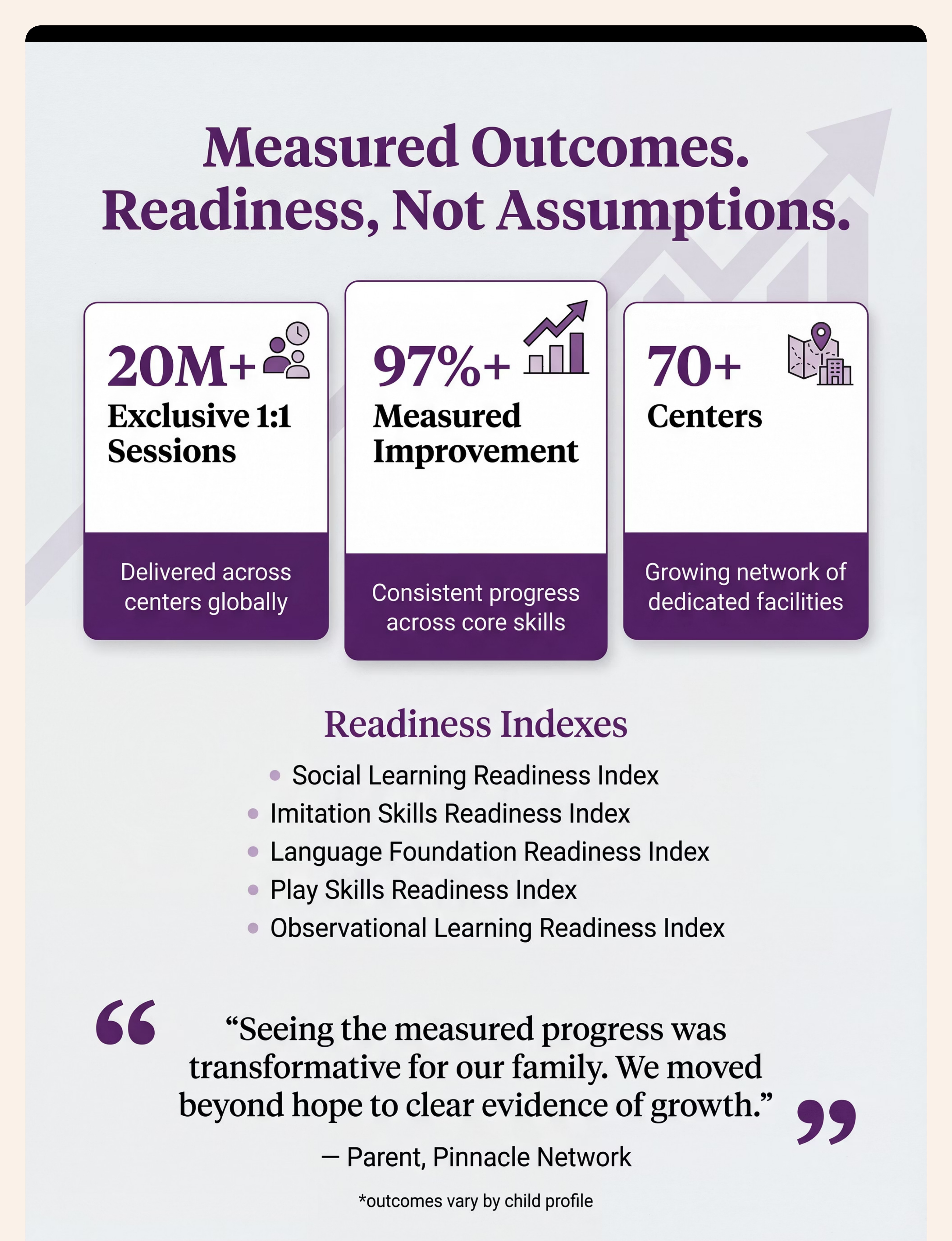
- 20M+ sessions delivered
- 97%+ measured improvement
- 70+ centres across India
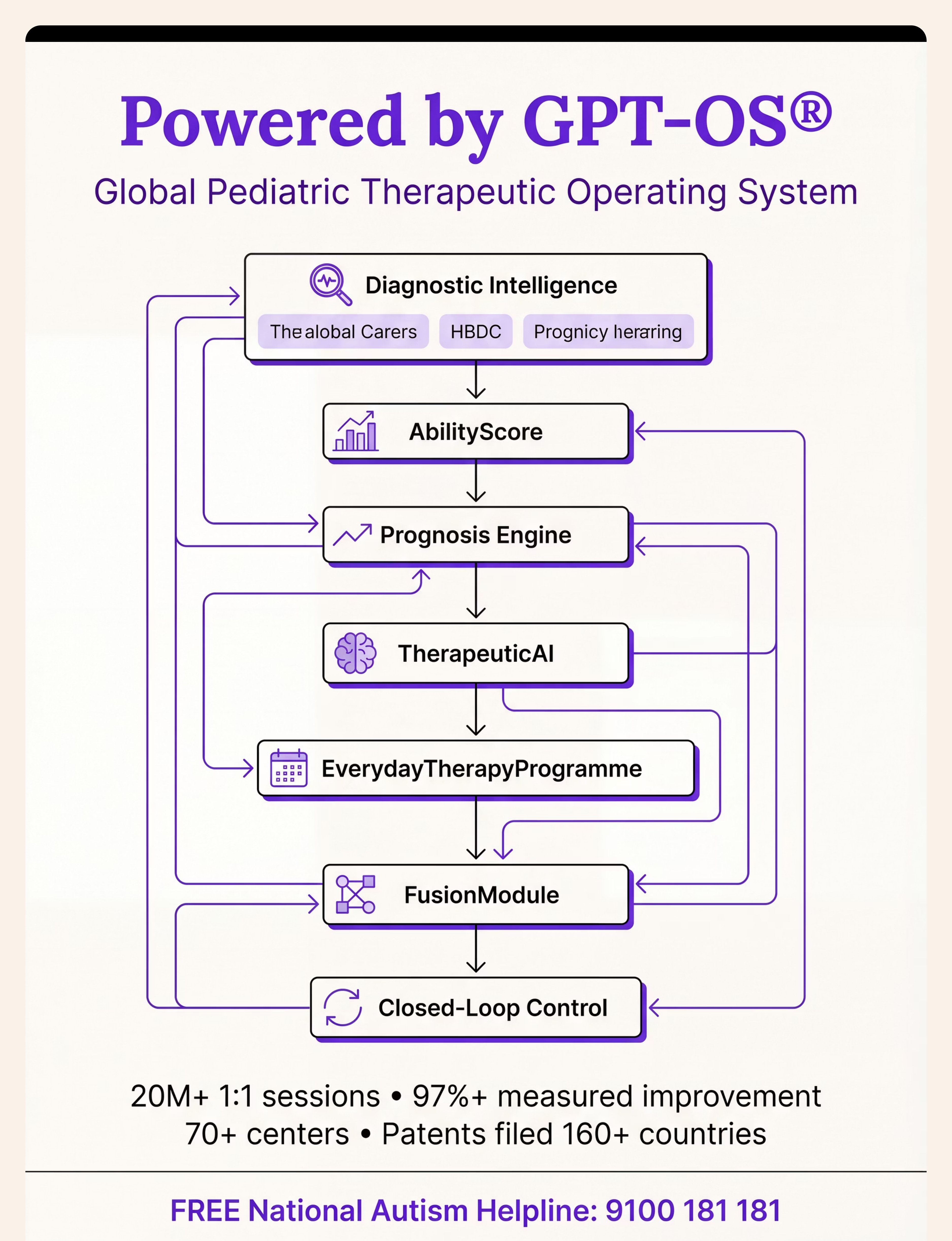
- Operating in 70+ countries through GPT-OS®
📞FREE National Autism Helpline: 9100 181 181
24×7 | 16 languages | Zero cost | No referral needed
Watch the Reel
G-666
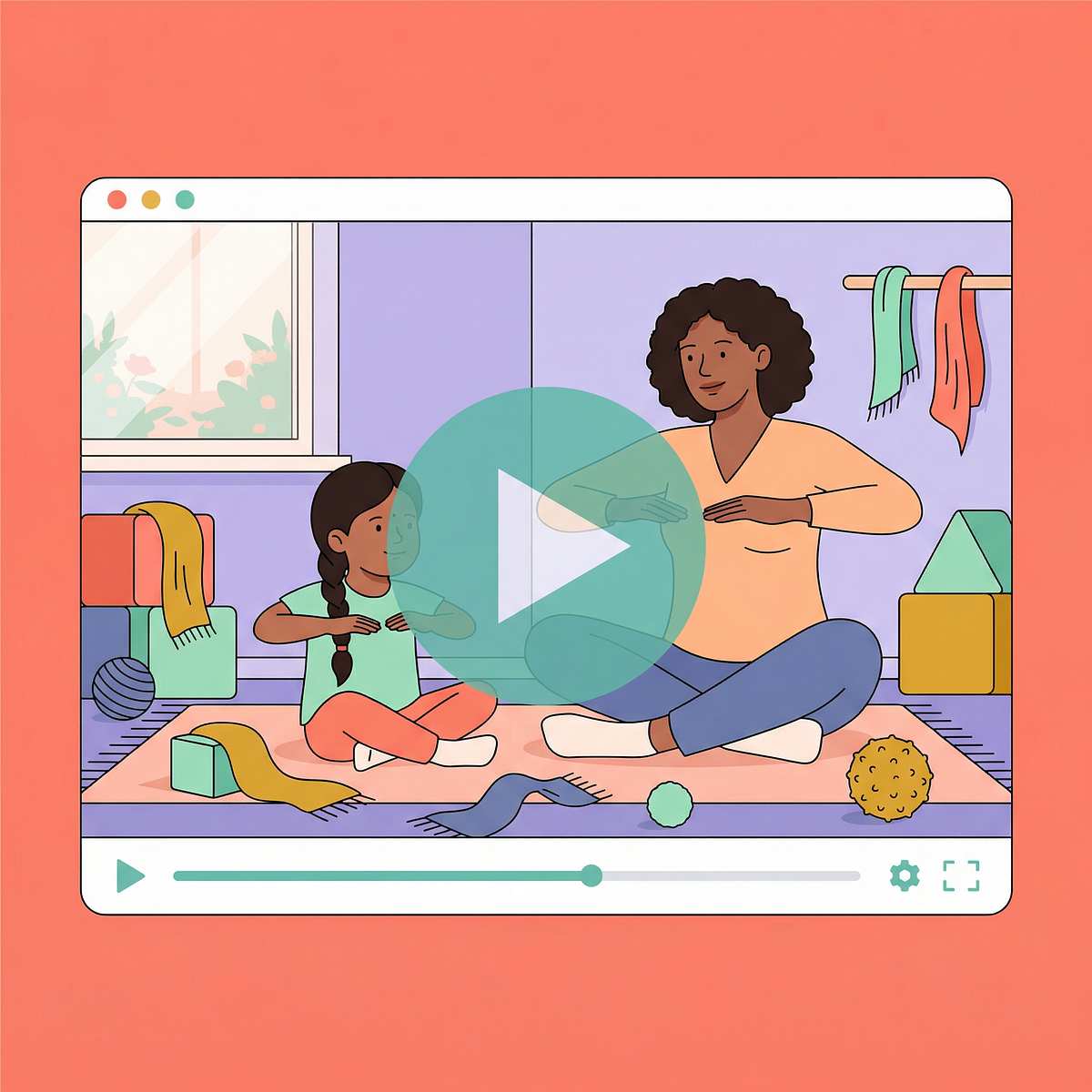
Watch the Reel That Started This Page
Reel Identity
- Domain: G — Core Developmental Skills
- Reel ID: G-666
- Series: 9 Materials That Help With...
- Episode: 666
- Format: 60 seconds | Therapist-narrated | Mobile-optimised
Related Reel
🎬F-575: "9 Materials That Help With Movement Imitation" — companion reel focusing on physical movement imitation specifically.
Therapist Introduction
"In this Reel, our consortium of ABA therapists, speech-language pathologists, and occupational therapists walks you through the 9 materials that clinical practice and research evidence have validated for building imitation skills. Each material targets a specific component of the imitation chain — from body awareness (mirrors) through to systematic skill tracking (curriculum tools). Watch once for the overview. Then use this page for the implementation depth." — Pinnacle Blooms Consortium Clinical Team
NCAEP (2020): Video modelling as EBP for autism | Multi-modal learning improves parent skill acquisition
Share With Family
Consistency Across Caregivers Multiplies Impact
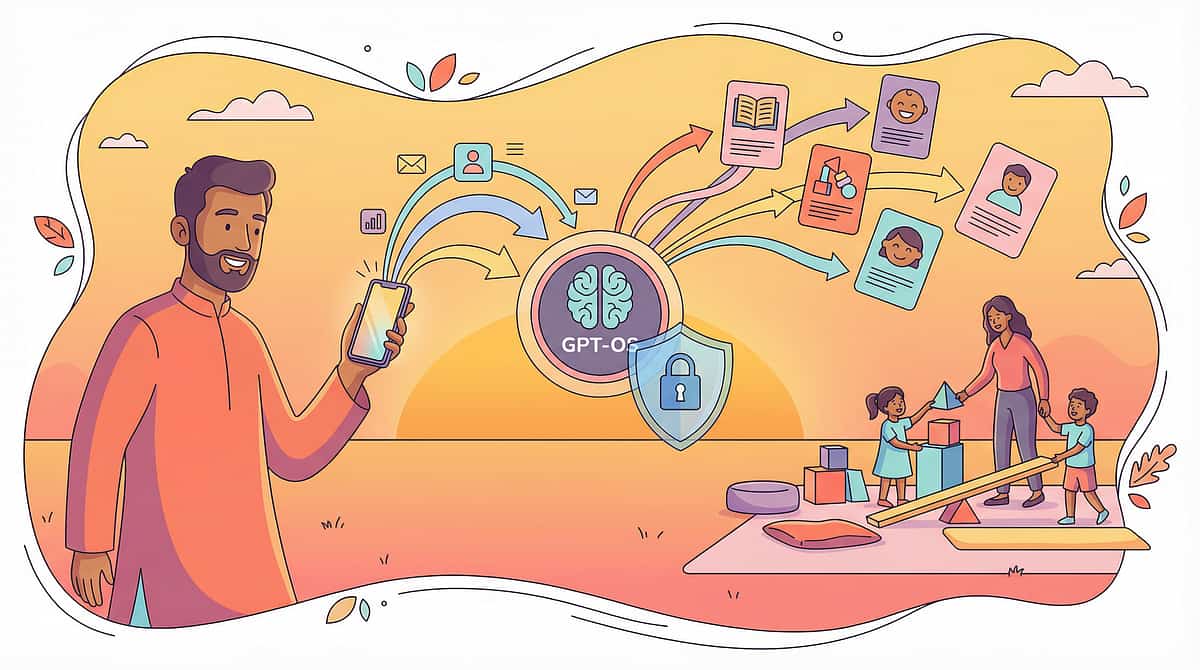
One parent running this protocol achieves a meaningful outcome. Both parents aligned achieves more. Grandparents and school teachers included creates the maximum generalisation that produces lasting, permanent change. Imitation skills generalise most reliably when every environment the child inhabits uses the same approach, the same language, and the same celebration.
Share This Page
Share via WhatsApp, Email, or copy link. Download the PDF Guide for offline use and printing.
"Explain to Grandparents" Version
"Your grandchild's brain needs extra practice learning to copy what they see. Hold up a toy, do something with it, and wait. If they copy — celebrate loudly! If not — gently guide their hands. Do this 5 times, then play freely. Call 9100 181 181 if you need help."
Teacher/School Communication
A professionally written letter for parents to share with class teachers — explaining the imitation goals being worked on at home and requesting consistency support in the classroom.
Research: PMC9978394 — multi-caregiver training as critical for generalisation and maintenance
Preview of 9 materials that help with imitation skills Therapy Material
Below is a visual preview of 9 materials that help with imitation skills therapy material. The pages shown help educators, therapists, and caregivers understand the structure and content of the resource before use. Materials should be used under appropriate professional guidance.


Link copied!
Pinnacle Blooms Network®
The Pinnacle Promise
"From fear to mastery. One technique at a time." — The Pinnacle Blooms Consortium
What You Leave With
You arrived at Card 01 with a concern. You now leave with:
- The neuroscience behind your child's challenge
- 9 clinically validated materials
- A step-by-step protocol to execute at home
- A progress tracking system
- A professional support network
- A community of families who understand
✦ Pinnacle Blooms Network® ✦
Built by Mothers. Engineered as a System.
OT | SLP | ABA/BCBA | SpEd | NeuroDev Paediatrics
GPT-OS® Powered • WHO/UNICEF Aligned
20M+ Sessions | 97%+ Measured Improvement | 70+ Centres | 70+ Countries
📞9100 181 181 | 24×7 | 16 languages
CIN: U74999TG2016PTC113063 | DPIIT: DIPP8651 | MSME: TS20F0009606 | GSTIN: 36AAGCB9722P1Z2
Medical Disclaimer: This content is educational in nature and is designed to support, not replace, individualised assessment and therapy by licensed speech-language pathologists, applied behaviour analysts, occupational therapists, or developmental specialists. Imitation skills should be assessed comprehensively to identify underlying factors affecting development. Intervention must be individualised based on professional assessment findings. If imitation delays are suspected, seek professional evaluation immediately.
Legal Notice: Individual results may vary. Statistics represent aggregate outcomes across the Pinnacle Blooms Network® system. Standard citations: PMC11506176 | PMC10955541 | PMC9978394 | WHO NCF 2018 | NCAEP 2020 | Padmanabha et al., Indian J Pediatr 2019 (DOI: 10.1007/s12098-018-2747-4). © 2025 Pinnacle Blooms Network®, a unit of Bharath Healthcare Laboratories Pvt. Ltd. GPT-OS®, AbilityScore®, TherapeuticAI®, FusionModule™, EverydayTherapyProgramme™ are proprietary marks of Bharath Healthcare Laboratories Pvt. Ltd.