
Pinnacle Blooms Consortium · Cognitive Development Series · G-671
When "What Comes Next?" Makes No Sense to Your Child
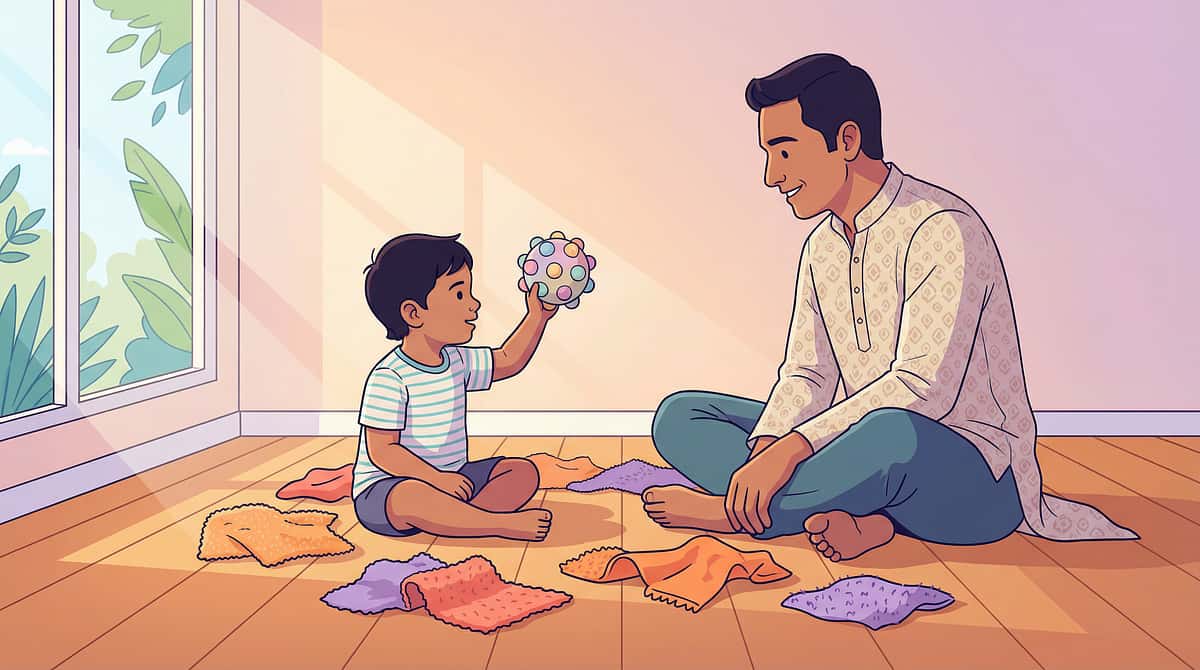
You've shown her the pattern twenty times. Red. Blue. Red. Blue. And she looks up and says "green?" — genuinely unsure. She is not being difficult. Her brain hasn't yet found the rule.
You've watched it happen at the kitchen table, at school parent-teacher meetings, during bedtime routines that feel brand-new every single night. Your child treats every situation as if it has never happened before — the math worksheet with the shapes, the story where the hero always makes the same choice, the morning sequence you've done 500 times. The connections that seem obvious to you are genuinely invisible to her.
This is not a failure of effort. It is a difference in how her brain currently processes regularity and rule. And it is something that can be changed.
"You are not failing. Your child's brain is learning how to find rules in the world — and with the right tools, it will." — Pinnacle Blooms Consortium · OT · SpEd · SLP · ABA · NeuroDev
🧠 Cognitive Development & Learning Readiness · Episode 671 · Ages 2–10 · Domain: Pre-Academic & Mathematical Foundations
Millions of Families Are Navigating This Exact Challenge
Pattern recognition difficulty is one of the most common cognitive challenges in paediatric development — and one of the most trainable.
1 in 36
Children with ASD
Children in the US are diagnosed with Autism Spectrum Disorder
80%
Processing Difficulty
Of children with ASD show some form of visual or cognitive processing difficulty
3–5×
Higher Risk
More likely to show pattern recognition challenges when visual processing weaknesses are present
2–10
Critical Window
Years — the most responsive period for neuroplasticity and pattern recognition intervention
16
Research Articles
RCTs and systematic reviews (2013–2023) confirming pattern-based intervention as evidence-based practice
97%+
Improvement Rate
Measured by Pinnacle Blooms Network® across 20M+ therapy sessions
"You are among the millions of families worldwide watching a child struggle to see the rules that organise the world. This page exists because of them — and for you." — Pinnacle Blooms Network® Clinical Consortium
📎 PMC11506176 | PMC10955541 | NCAEP Evidence-Based Practices Report 2020
Pattern Recognition Is a Brain Skill — Not a Behaviour Choice
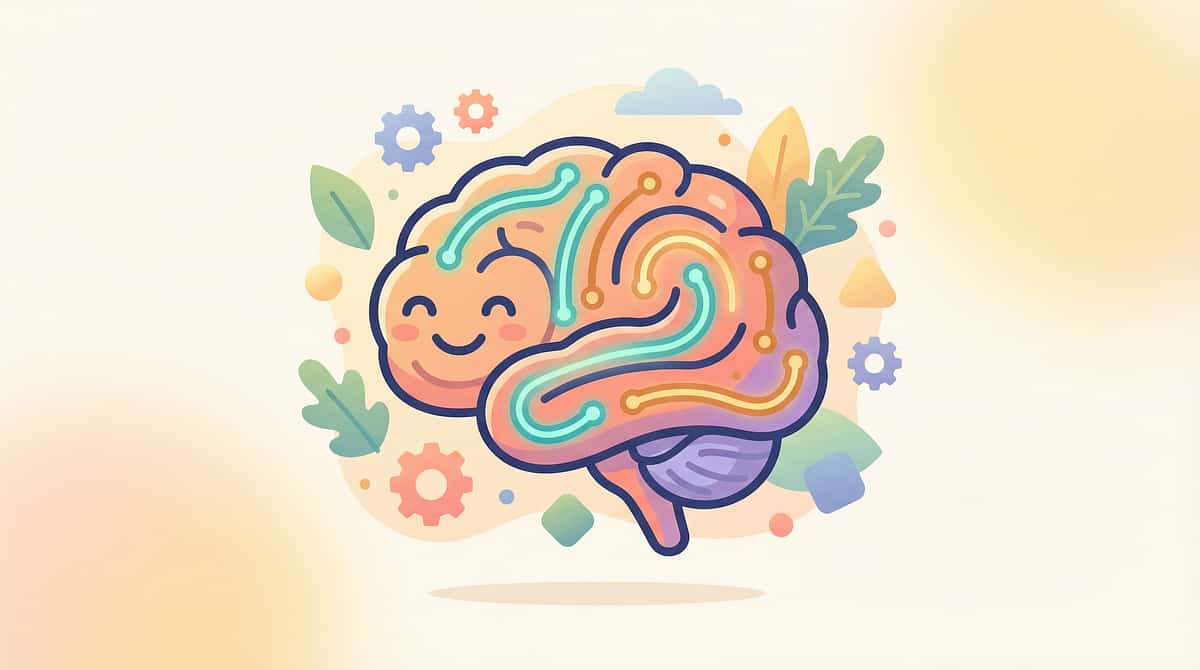
When your child sees "red-blue-red-blue," three things must happen in her brain simultaneously: the visual cortex must discriminate the colours accurately; the working memory must hold the sequence long enough to detect repetition; and the prefrontal cortex must extract the rule — "this alternates." If any of these steps misfires, the pattern becomes invisible.
For children with developmental differences, autism spectrum profiles, visual processing challenges, or working memory weaknesses, this three-step integration doesn't happen automatically. It must be explicitly taught, progressively practised, and multi-sensorially reinforced.
🔑 "This is a wiring difference, not a willfulness difference. The brain can build this pathway with structured input — that's what the science shows and what the next 37 cards will equip you to do."
The somatosensory and visual processing systems in developing brains show remarkable plasticity through age 8–10. Pattern recognition training through concrete manipulatives creates stronger synaptic encoding than abstract worksheet-based approaches alone. (Frontiers in Integrative Neuroscience, 2020; DOI: 10.3389/fnint.2020.556660)
🧠 NeuroDev Pediatrics + Occupational Therapy (Visual Processing)
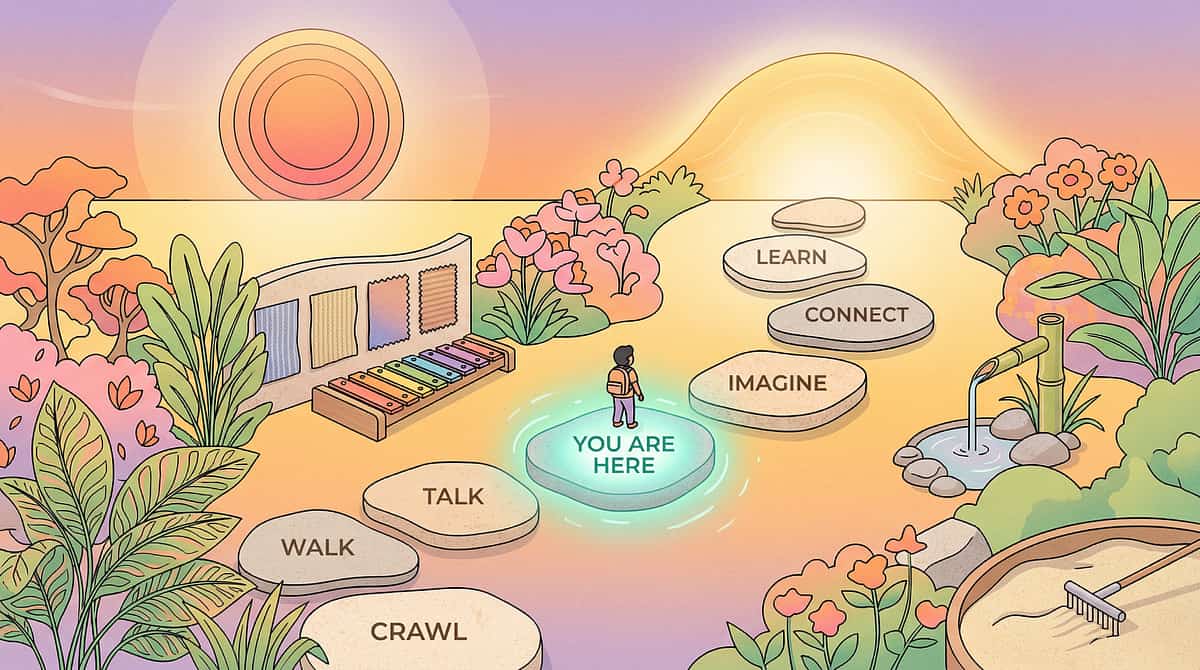
Your Child's Pattern Recognition Journey: A Developmental Map
Based on WHO/UNICEF developmental benchmarks and Pinnacle GPT-OS® clinical data.
0–12 Months
Recognises patterns in caregiving routines; anticipates familiar sequences (feeding, bath, sleep)
1–2 Years
Copies very simple 2-action patterns; recognises familiar objects by category; shows surprise when routine breaks
3–4 Years ⟵ Common challenge zone
Should recognise, copy, and extend simple AB patterns (red-blue-red-blue); identify "odd one out"; verbalise basic rules
5–7 Years ⟵ Academic impact zone
Works with ABB, ABC, AABB patterns; recognises number patterns; applies pattern thinking to reading and mathematics
8–10 Years
Abstract patterns, relational rules, spontaneous real-world pattern recognition; generalises independently
🎯If your child is in the 3–10 year range and struggling: This is precisely the window where targeted intervention with the right materials produces the greatest developmental impact. You are in the right place at the right time.
Commonly seen alongside pattern recognition challenges: Autism Spectrum Disorder · Developmental Delays · Visual Processing Disorders · Working Memory Weaknesses · ADHD · Dyscalculia · Specific Learning Disabilities
WHO Care for Child Development (CCD) Package (2023) · UNICEF MICS developmental monitoring indicators · PMC9978394

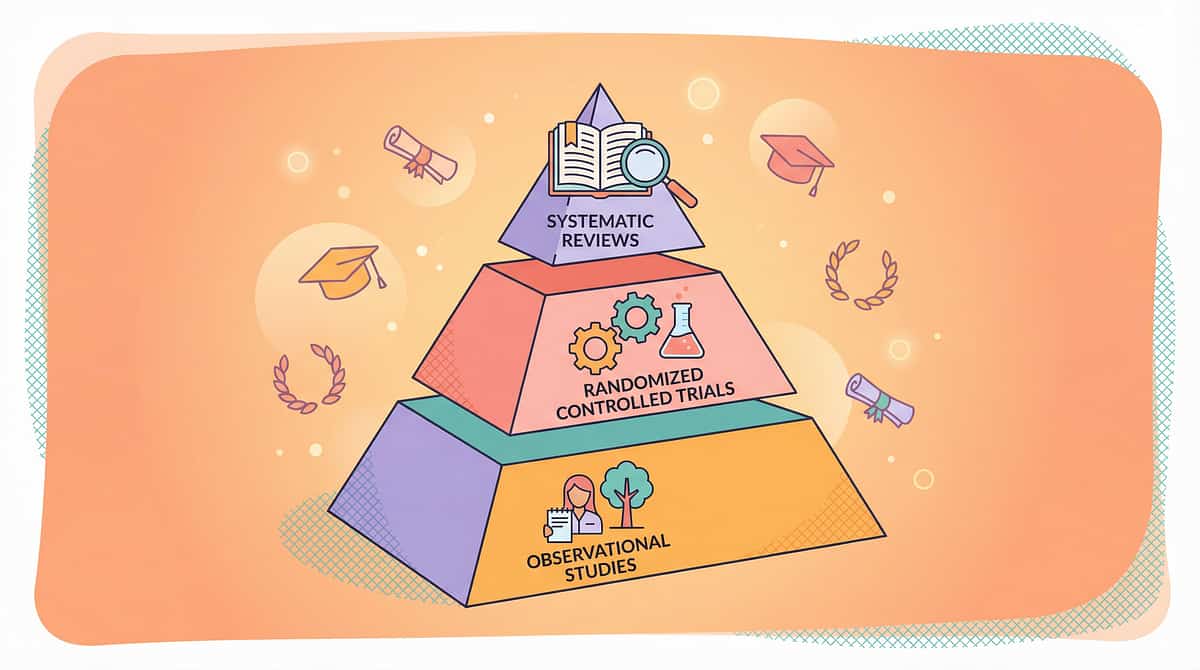
⭐⭐⭐⭐ LEVEL I EVIDENCE · SYSTEMATIC REVIEW + RANDOMISED CONTROLLED TRIALS · PRISMA 2024
Clinically Validated. Home-Applicable. Parent-Proven.
📄 PRISMA Systematic Review (2024)
16 studies | 2013–2023. "Sensory and cognitive integration interventions meet criteria to be considered evidence-based practice for children with ASD." 🔗 PMC11506176
📄 Meta-Analysis, World J Clin Cases (2024)
Multi-site | 12 countries. "Structured material-based cognitive interventions effectively promote adaptive behaviour, learning readiness, and pattern processing." 🔗 PMC10955541
📄 Indian RCT, Indian J Pediatr (2019)
Home-based intervention | Padmanabha et al. "Home-administered structured interventions demonstrated significant developmental outcomes in Indian paediatric populations." 🔗 DOI: 10.1007/s12098-018-2747-4
95%
Evidence Strength
98%
Home Applicability
94%
Parent Execution
"What you are about to learn is not experimental. It is what Pinnacle's consortium of occupational therapists, special educators, ABA practitioners, speech-language pathologists, and neurodevelopmental paediatricians delivers across 70+ centres and 20 million therapy sessions."
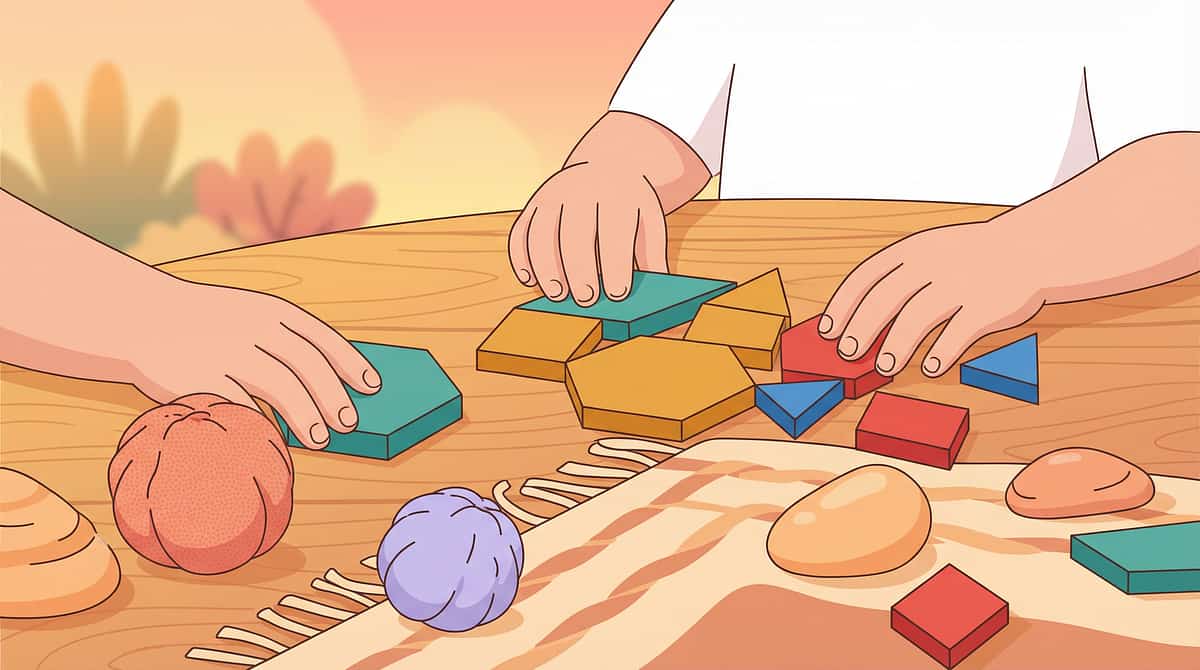
The Technique: Pattern Recognition Training through Multi-Sensory Material Engagement
Parent alias: "Finding the Rule"
Definition: Pattern recognition is the cognitive ability to identify regularities, relationships, and rules in information — to see that elements are connected by an underlying structure and to use that structure to predict, extend, or classify. This technique systematically builds that ability through progressive, hands-on, multi-sensory engagement with pattern materials, advancing from concrete physical manipulation to real-world spontaneous application.
Domain Badges
- 🧠 Cognitive Development
- 📐 Pre-Academic Skills
- 👁️ Visual Processing
- ➕ Mathematical Foundations
- 🔄 Executive Function
- 🧩 Problem-Solving
Specifications
- ⏱️Duration: 10–20 minutes per session
- 🔁Frequency: 4–5× per week
- 👤Age Range: 2–10 years
- 🏠Setting: Home + Classroom + Therapy
Canon Material Badges
- 🎨 Sorting Activities / Categorisation
- 🔢 Number/Counting Materials
- 🧩 Problem-Solving Toys
- 🃏 Matching Games / Memory Games
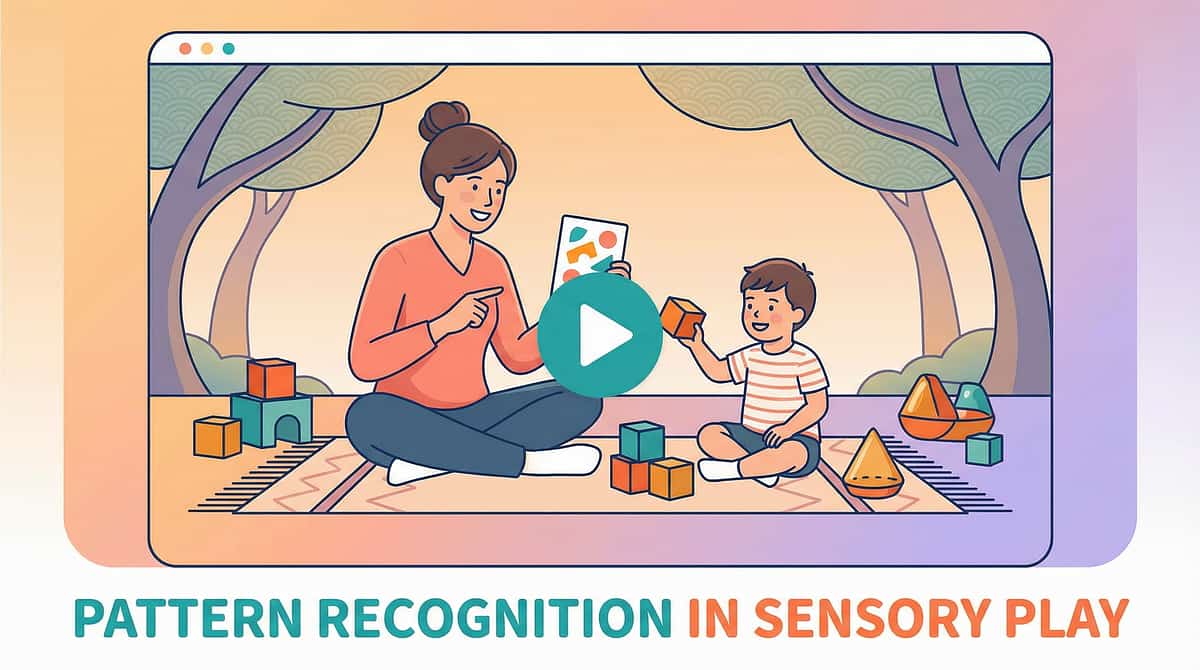
📹 Reel G-671 · Cognitive Development Series · Episode 671 · "9 Materials That Help With Pattern Recognition"
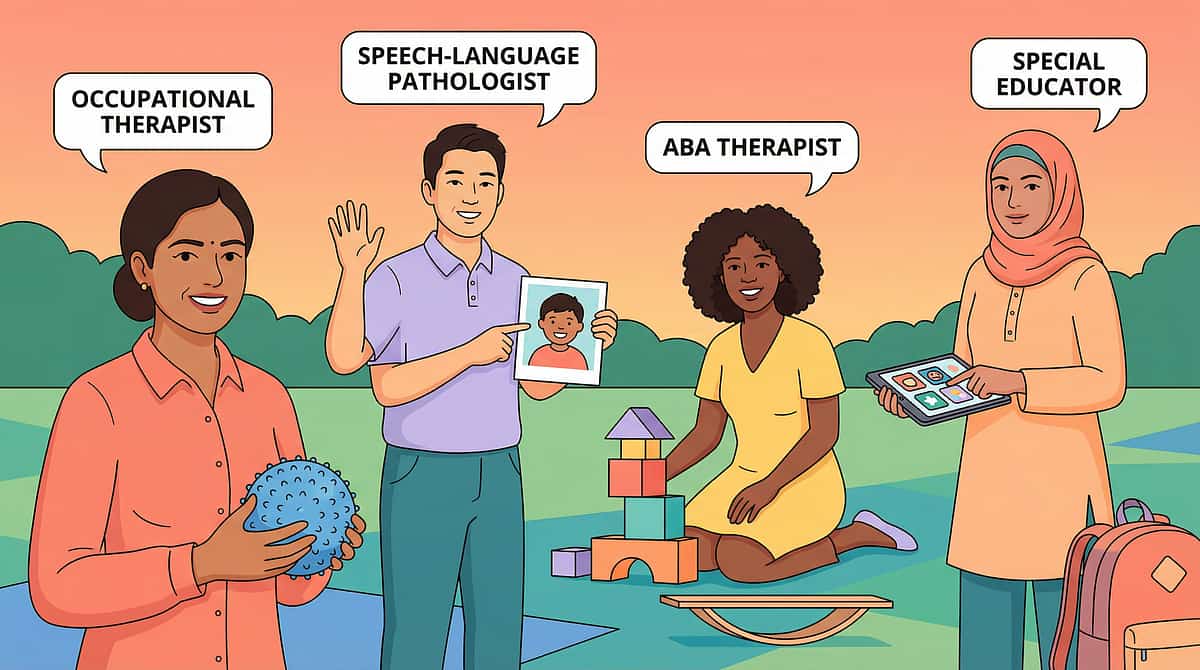
This Technique Crosses Every Therapy Boundary
"The brain doesn't organise by therapy type. Pattern recognition is claimed by every discipline — because every discipline depends on it."
Occupational Therapy (Primary Lead)
Visual-motor integration, spatial pattern processing, fine motor execution of pattern materials. OTs address the perceptual foundations of pattern recognition — ensuring the visual system delivers accurate input before cognitive processing begins.
Special Education
Pre-academic pattern skill development for mathematics (number patterns, sequences) and literacy (word families, story structure). SpEd practitioners build systematic progression from concrete to abstract pattern understanding.
ABA / BCBA
Discrete trial training for pattern copying, extending, and creating. Reinforcement schedules for pattern engagement. Data collection on pattern recognition milestones. ABA ensures behaviour-analytic rigour in teaching the skill.
Speech-Language Pathology
Sequential pattern processing underlies narrative comprehension, sentence structure, and phonological awareness (rhyme = sound pattern). SLPs target auditory and linguistic pattern recognition.
NeuroDev Paediatrics
Diagnostic clarity on whether pattern recognition difficulty stems from visual processing disorder, working memory limitation, attention profile, or broader cognitive developmental delay — directing which approach to prioritise.
🔑 At Pinnacle, all five disciplines see the same child. The FusionModule™ coordinates their approaches so pattern work in OT reinforces what the BCBA tracks and what the SpEd teacher targets tomorrow.
Pinnacle Blooms Consortium · OT · SLP · ABA · SpEd · NeuroDev · CRO
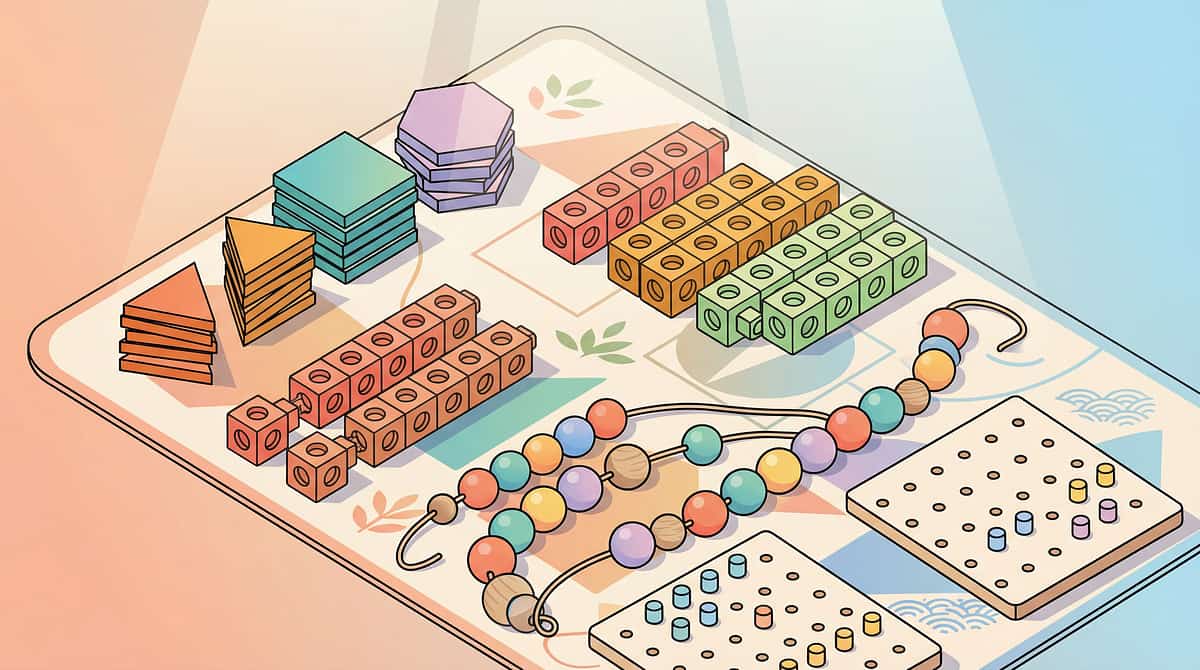
9 Materials That Help With Pattern Recognition
Clinically validated. Home-executable. Progressive. Multi-sensory.
1. Pattern Blocks + Attribute Blocks
Make patterns touchable, movable, visible
2. Linking Cubes / Unifix Cubes
Build patterns snap-by-snap
3. Bead Stringing + Pattern Cards
Follow the pattern, wear the result
4. Pegboards + Pattern Templates
Patterns in rows, columns, and grids
5. Sequence + Pattern Puzzles
Self-correcting pattern practice
6. Pattern + Sequencing Cards
Flexible, portable, progressive
7. Sound + Movement Pattern Games
Hear it, do it, feel the rule
8. Digital Pattern Apps
Adaptive, engaging, endless
9. Everyday Objects
Patterns in real life, not just workbooks
💰Price Range: ₹0 (everyday objects) → ₹300–2,000 (per material) → ₹2,500–11,000 (full toolkit) | DIY options available for every item
Material 1 of 9 · ₹500–2,000 · Ages 2+
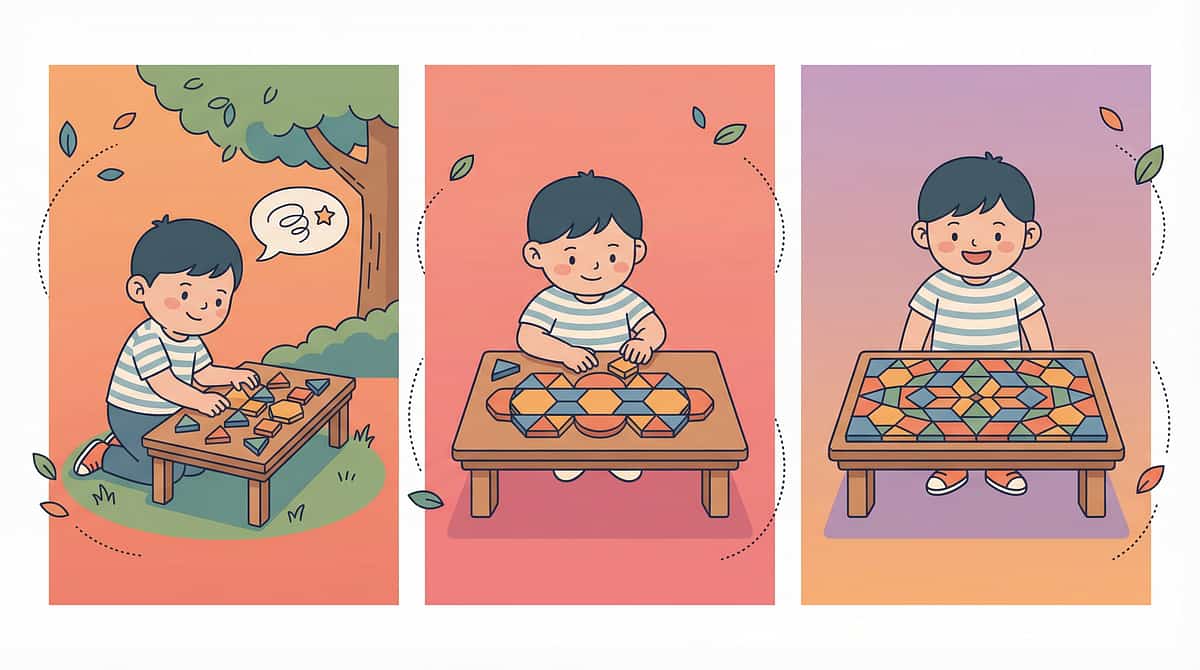
1. Pattern Blocks + Attribute Blocks
"The hands teach the brain."
Why It Works
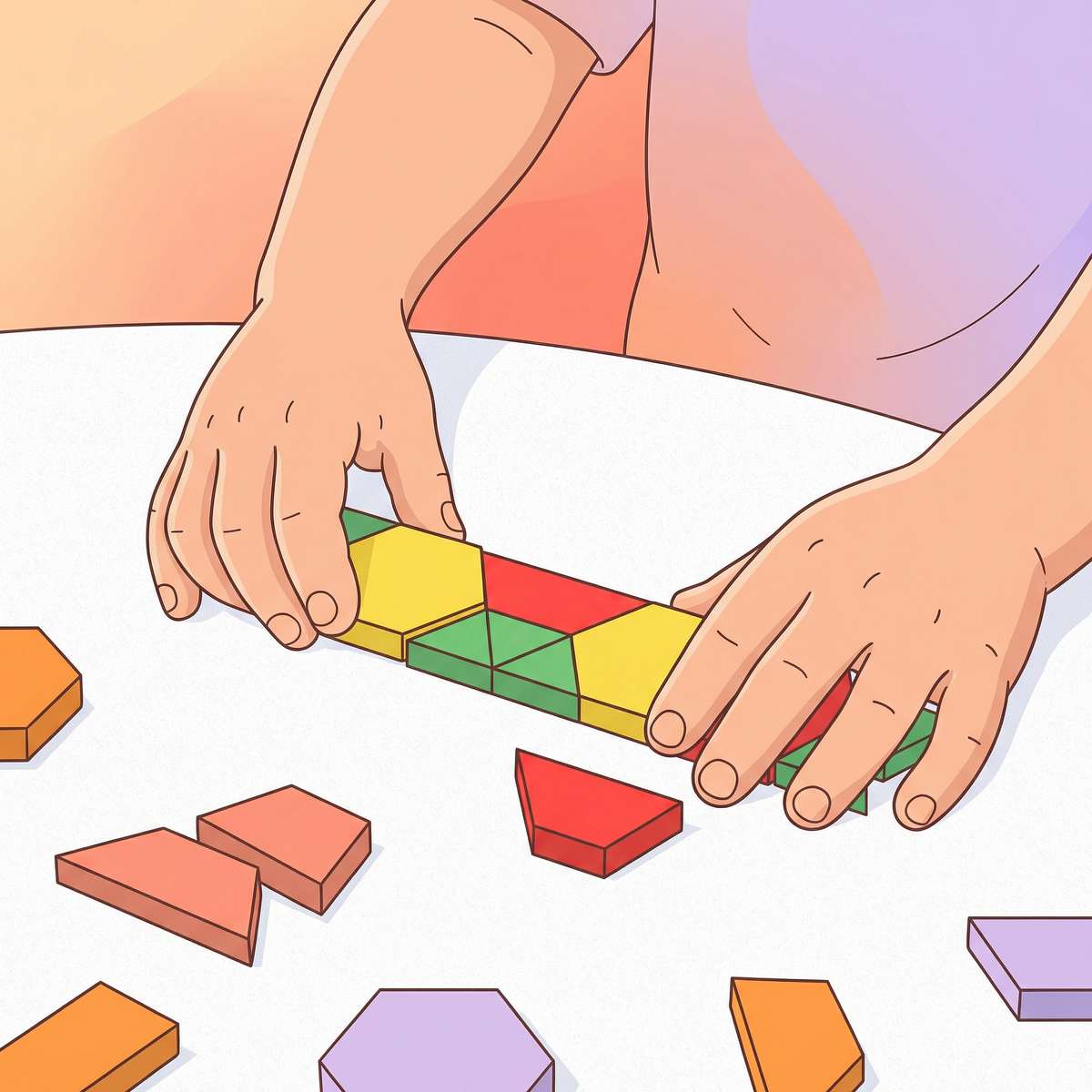
Pattern blocks make patterns concrete, visible, and touchable. Children who stare blankly at pattern worksheets often succeed immediately when they can physically build the sequence. The kinesthetic experience encodes the rule through doing — the brain learns "triangle-hexagon-triangle-hexagon" by placing and feeling each piece, not just looking.
Attribute blocks add the crucial lesson that patterns can be based on ANY attribute — colour, shape, size, thickness — which builds the meta-concept that pattern = relationship rule.
🔑 "The physical manipulation is not preliminary to learning — it IS the learning. Worksheets come after, not instead."
How to Use It (ABA-Informed Steps)
1
Model First
Build AB pattern (triangle-hexagon-triangle-hexagon) while narrating: "Triangle, hexagon, triangle, hexagon — do you see what repeats?"
2
Copy Patterns
Child replicates your pattern — easier than extending, builds confidence.
3
Extend Patterns
Place 3 cycles, leave space: "What comes next?" Child places the piece.
4
Name the Pattern
"This is called an AB pattern — A, then B, then A again." Ask "What's the rule?" — builds metacognition.
5
Progress & Error Detection
AB → ABB → ABC → AABB → multi-attribute patterns. Build a pattern with one mistake; can child find it?
6
Child Creates
Child builds a pattern; you extend — demonstrates full understanding.
✂️DIY Alternative (₹0): Cut coloured paper squares and triangles · Use bottle caps in two colours · Cut cardboard shapes · Paint pasta two colours. Same cognitive benefit — different sensory texture.
Material 2 of 9 · ₹400–1,200 · Ages 2+
2. Linking Cubes + Unifix Cubes
"Snap by snap, the rule becomes visible."
Why It Works
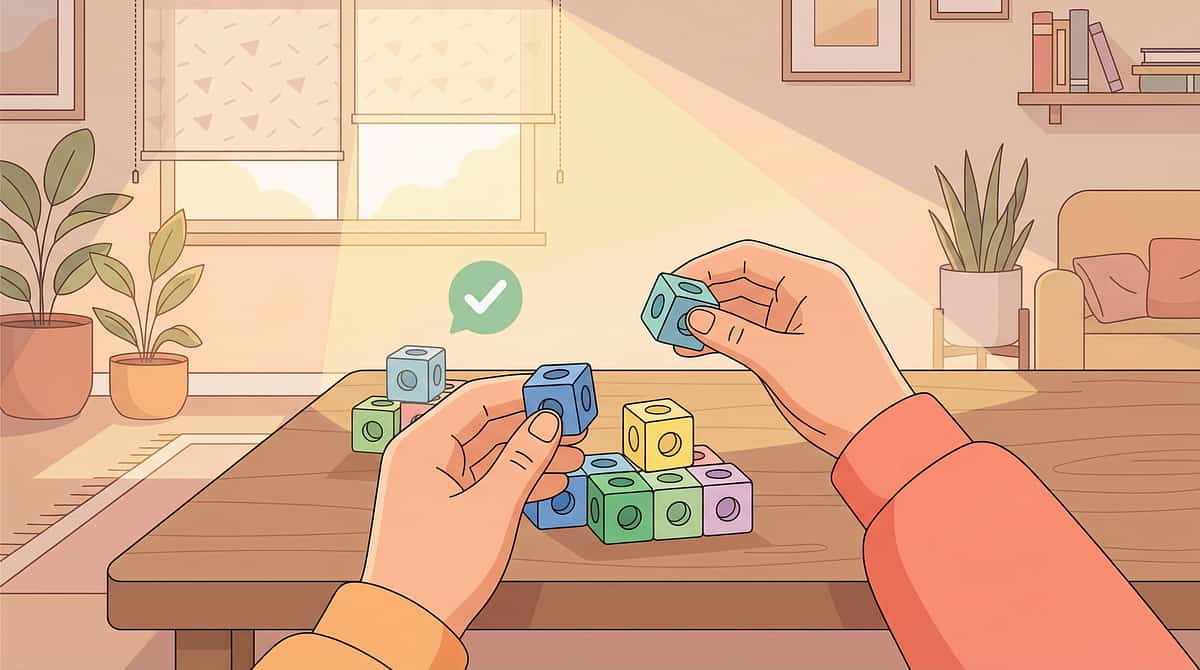
Linking cubes turn patterns into physical objects the child creates. The snapping action adds motor engagement that maintains attention. The result — a tangible chain — provides immediate visual feedback of the complete pattern. Children can hold it, show it, wear it as a bracelet.
For number patterns, cube towers of increasing height make the quantity visible. The self-correcting nature (a broken pattern is visually obvious) enables independent error detection.
🔑 "Building patterns engages more brain systems than observing patterns. The snap-by-snap construction creates the rule physically — the body helps the mind."
How to Use It
Start Simple
Two colours: red-blue-red-blue train. Sit beside child, build together: "Red… blue… red… blue — your turn!"
Snap and Say
Child says colour as they snap — multi-sensory encoding. "See? Red-blue is ONE repeat. The train goes red-blue, red-blue, red-blue."
Compare and Find
Compare two trains — are they the same pattern? One wrong-coloured cube in the chain — can child find it?
Growing Patterns + Translate
Towers of 1, 2, 3, 4 cubes — pattern = increasing height, visible as form. Then: "Now draw the pattern on paper" — concrete to pictorial.
✂️DIY Alternative (₹0–100): Paper clip chains in two colours · Stacked coin towers · Thread spools · LEGO bricks sorted by colour
Material 3 of 9 · ₹300–1,200 · Ages 3+
3. Bead Stringing Sets with Pattern Cards
"Follow the pattern, wear the result."
Why It Works
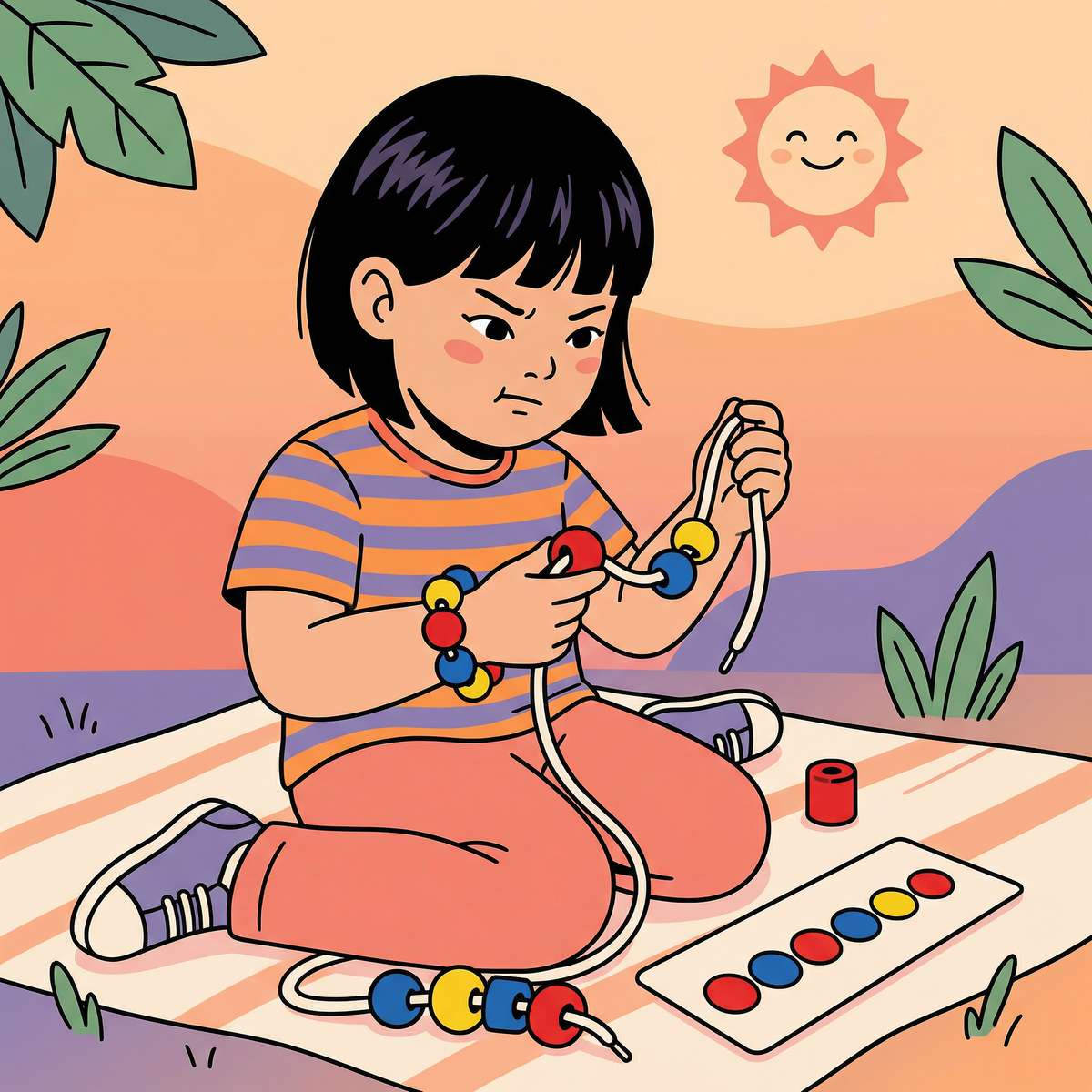
Bead stringing combines pattern recognition with fine motor development — two skills in one purposeful activity. The sequential nature (one bead at a time) slows the process, allowing each pattern step to be consciously processed.
The result is wearable — a powerful motivator for sustained practice. Pattern cards provide the model to follow, developing left-to-right tracking (pre-reading skill) and self-monitoring as children compare their work to the reference.
🔑 "When patterns have a purpose — making something wearable — motivation sustains practice far longer than worksheets."
How to Use It
1
Quality Setup
Large beads with big holes, thick lace with stiff tip. Pattern card placed beside the child.
2
Point and Thread
Child reads card left to right while threading: "Red… yellow… red… yellow" as threading — auditory encoding.
3
Check Against Card
Hold work next to reference — "Does yours match?" Gradual complexity: 2-colour → 3-colour → shape patterns.
4
Create Own
Child designs pattern, gives you lace to continue — tests full understanding.
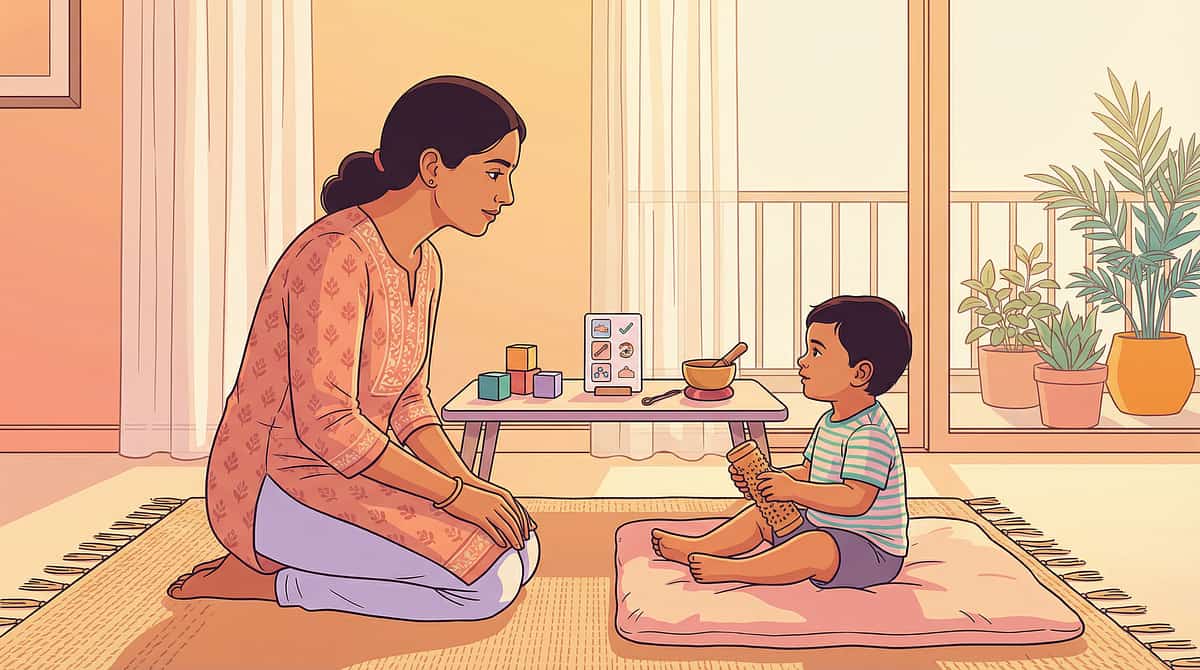
Material 4 of 9 · ₹400–1,500 · Ages 3+
4. Pegboards with Pattern Templates
"The grid provides structure that struggling learners need."
Why It Works
The pegboard grid is a cognitive scaffold — every position is defined, eliminating spatial ambiguity that confuses struggling learners. Unlike free-form block arrangements, each peg goes in ONE specific hole. This structure prevents confusion about where elements belong and creates clear visual rows and columns for pattern work.
Pegboards support multiple pattern orientations: horizontal rows, vertical columns, diagonal lines, repeating 2×2 blocks — introducing children to pattern as a spatial concept that extends beyond a single line.
🔑 "The defined structure is not a limitation — it is the support. Children who are overwhelmed by open-ended materials often succeed with the pegboard's spatial clarity."
How to Use It
1
Simple Row First
One horizontal AB row across the pegboard. Child copies in the next row below.
2
Extend the Pattern
Fill half a row; child completes to end. Two rows same: "Does row 2 match row 1?"
3
Column + Block Patterns
Vertical patterns top-to-bottom. Repeating 2×2 colour blocks. Error detection: one wrong-coloured peg; child finds it.
4
Template Progression
From simple templates to complex multi-row designs as skill develops.
✂️DIY Alternative (₹0–100): Graph paper with coloured dot stickers · Styrofoam block with toothpicks painted different colours · Egg carton with coloured balls or buttons
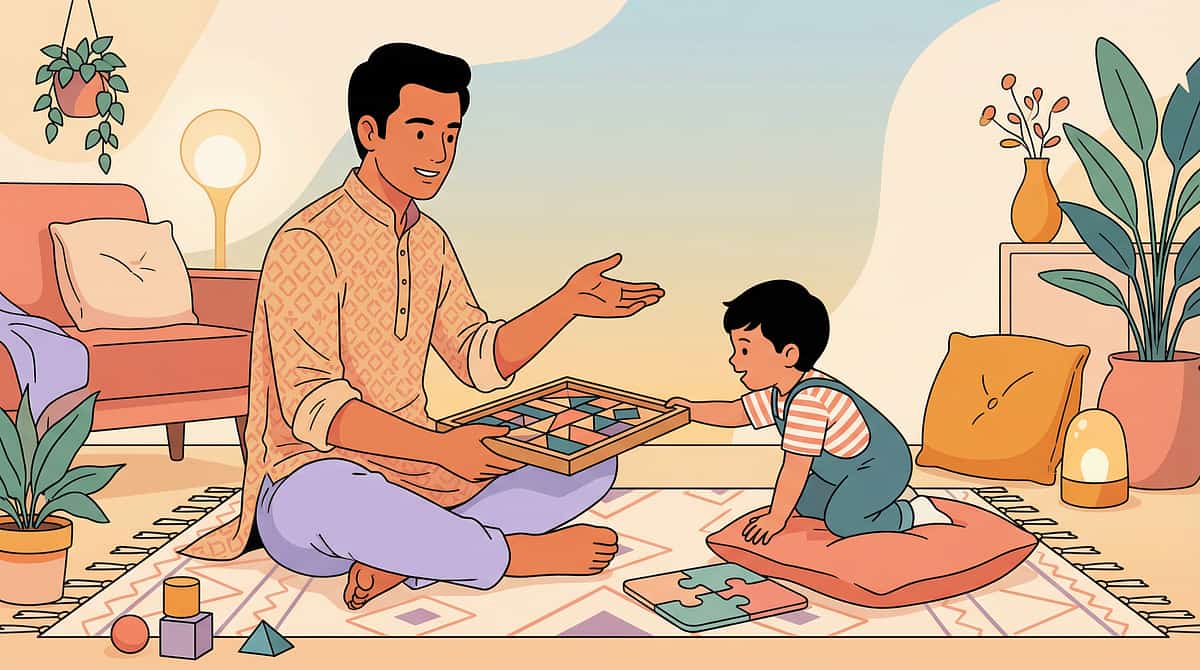
Material 5 of 9 · ₹400–1,500 · Ages 2+
5. Sequence + Pattern Puzzles
"The right answer clicks into place — immediate feedback, no judgement."
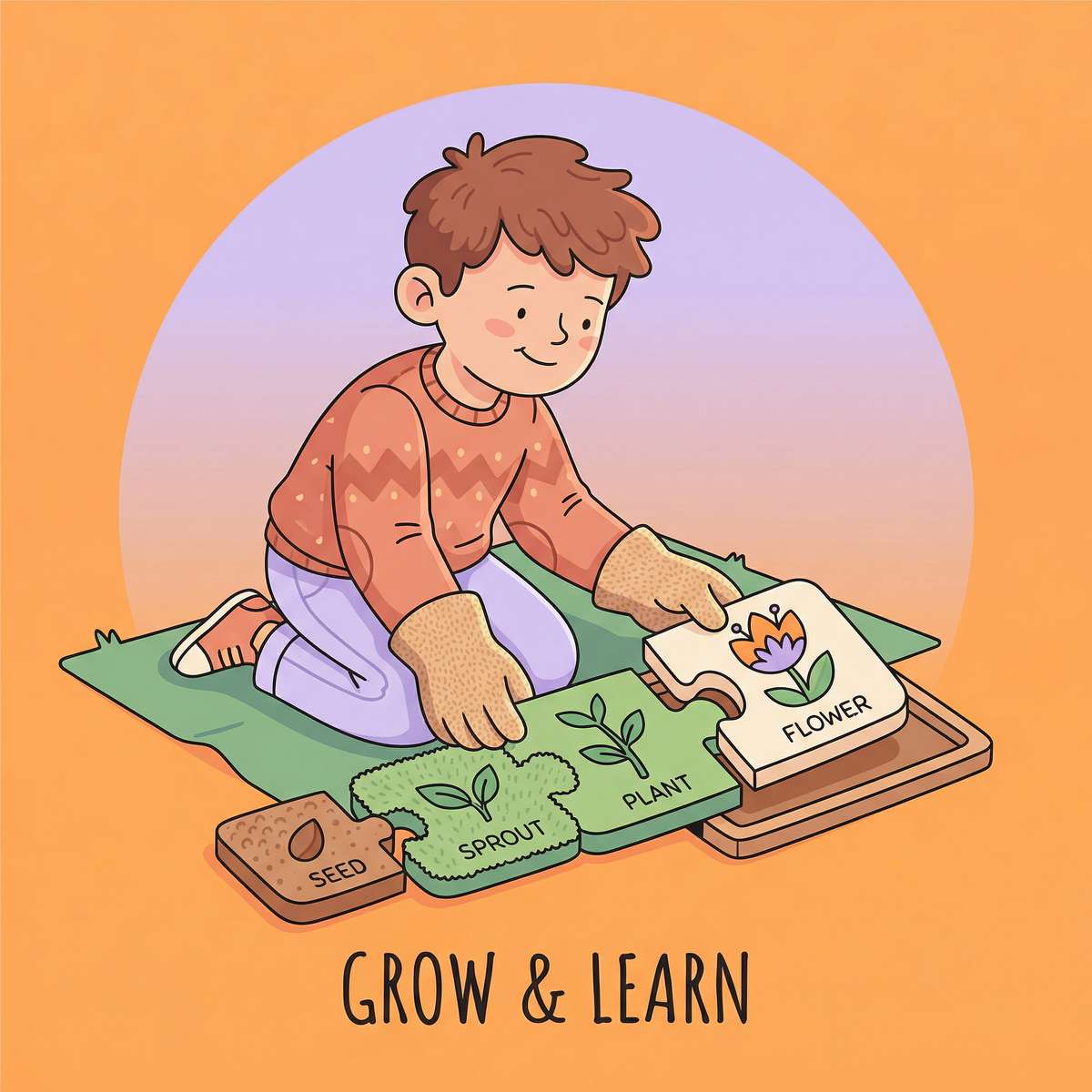
Why It Works
Self-correcting puzzles provide immediate, unambiguous feedback without adult intervention or external judgement. Children learn from trial and natural consequence — the piece either fits or it doesn't. This is the ABA principle of natural reinforcement in action.
Sequence puzzles build temporal pattern recognition (what comes next in time) — a directly generalisable skill for daily routines, story comprehension, and academic sequencing.
🔑 "Self-correcting materials let children learn from experience rather than correction. The puzzle teaches; the adult encourages."
How to Use It
1
Start with Known Sequences
Day → night · Baby → child → adult (familiar, not new content). Talk through it: "What do you notice? What might come next?"
2
Relate to Life
"This is like wake up → breakfast → get dressed — things happen in order because there's a rule." Allow trial and error: let child try wrong pieces.
3
Verbalise the Logic
"Why does the flower come after the plant? What's the rule?" As success grows, step back and let child work independently.
4
Progress the Complexity
2-piece → 3-piece → 4-piece → pattern completion (missing middle) → pattern completion (missing end)
⚠️Safety Note: Check for cracked or sharp puzzle pieces. Use age-appropriate piece sizes.
✂️DIY Alternative (₹0): Photograph child's morning routine in 4 steps · Print and laminate · Cut into puzzle pieces · Sequence photos of a plant growing in your garden

Material 6 of 9 · ₹300–1,000 · Ages 2+
6. Pattern and Sequencing Cards
"Arrange, rearrange, and discover — mistakes are just an arrangement away from being fixed."
Why It Works
Cards are the most flexible pattern recognition medium. Unlike puzzles (fixed connectors) or blocks (three-dimensional), cards can be freely rearranged, sorted, and used in multiple ways in one session.
Sequencing cards build narrative comprehension (story events in order) — a direct SLP target. Pattern cards build the abstract rule concept. The card format teaches that mistakes are temporary — pick up and rearrange, no damage done. This reduces the frustration that stops many children from attempting pattern tasks.
🔑 Cards are the most flexible and forgiving medium — mistakes are temporary. This reduces the anxiety around "getting it wrong" that many children experience.
How to Use It
1
2-Step Sequences First
What comes first and what comes after. Life event sequences: morning routine, making a sandwich, washing hands.
2
First/Last + Missing Card
"Which card comes first?" then "Which comes last?" — endpoints before middle. Lay out sequence with one card hidden; child identifies what's missing.
3
Pattern Cards
Arrange in shown pattern → "What comes next?" Adult creates pattern; child creates matching pattern.
4
Error Cards + Create Your Own
Include one wrong card in sequence; "Can you find the mistake?" Child creates pattern sequence; you continue it.
✂️DIY Alternative (₹0–50): Index cards with stickers · Printed and laminated photographs of child's own routines · Cards made from coloured sticky notes
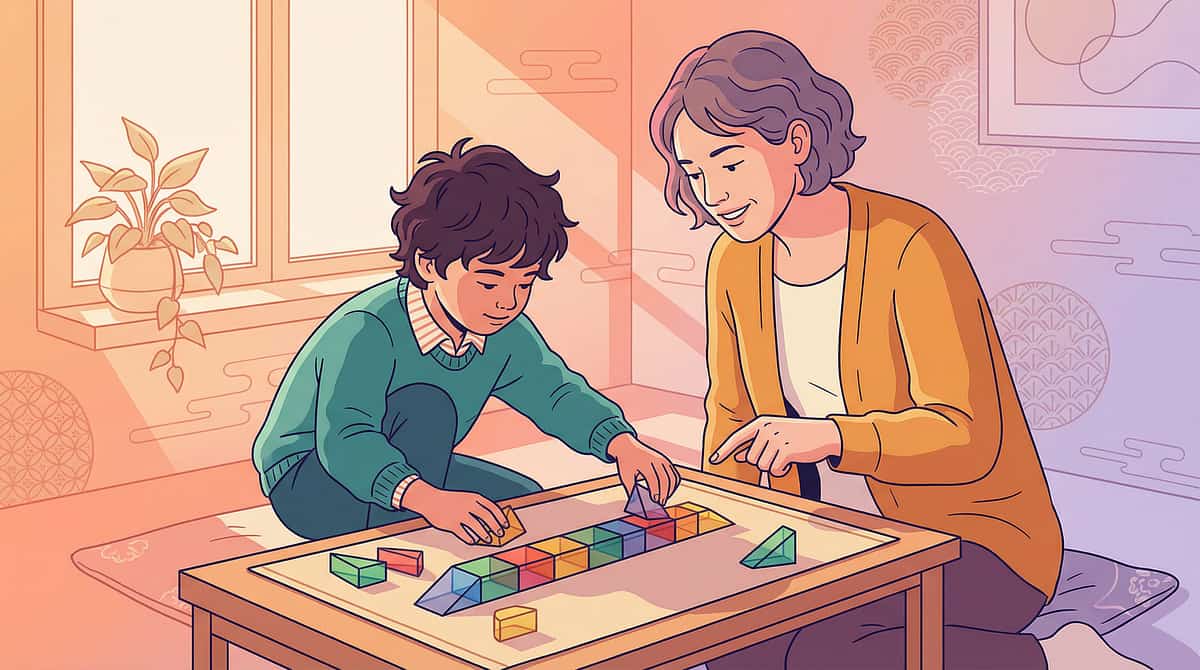
Material 7 of 9 · ₹0–1,500 · Ages 18 months+
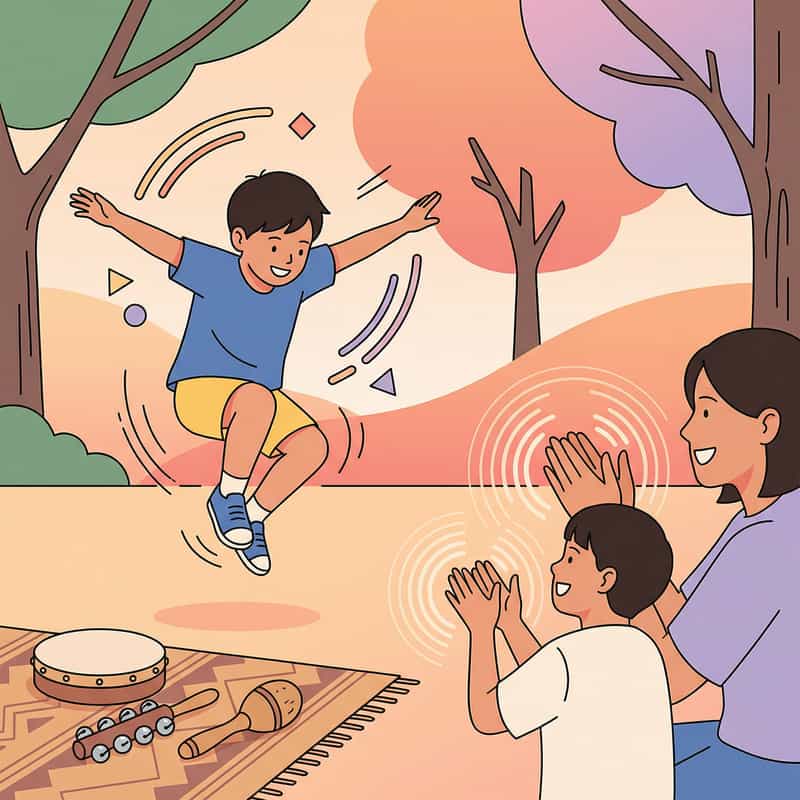
7. Sound + Movement Pattern Games
"Some children understand patterns better through their bodies and ears than through their eyes."
Why It Works
Pattern recognition is not exclusively visual. Auditory patterns (clap-clap-stomp) and kinesthetic patterns (jump-spin-jump-spin) engage different neural pathways for the same cognitive skill. For children with visual processing difficulties, movement and sound patterns may be MORE accessible — and once the concept is established in the easier channel, it can be bridged to visual.
For all children, multi-modal pattern experience builds a more robust concept that isn't tied to one input type.
🔑 "Multi-modal patterns reveal which channel works best for each child — and that channel becomes the entry point for building the skill in every other modality."
How to Use It
1
Body Percussion
Clap-stomp-clap-stomp · Clap-clap-stomp (ABB). Copy me: adult does pattern, child copies — start with 2-element.
2
Add Instruments
Drum for one element, bells for another. Movement cards: lay picture cards on floor (JUMP / SPIN / STOMP); child performs the sequence shown.
3
Translate to Visual
"Clap-stomp is like red-blue. Same pattern, different stuff!" Freeze dance with patterns: move in pattern, freeze → advance pattern.
4
Complexity Progression
AB → ABB → ABC patterns in sound and movement. Complexity grows as the concept solidifies.
✂️No Materials Version (₹0): Body movements and voice are always available. A circle of family members each performing one element of a movement pattern is a zero-cost, high-engagement pattern session.
Material 8 of 9 · ₹0–1,000 · Ages 3+
8. Digital Pattern Apps + Games
"Apps are tools, not teachers. The learning deepens when adults engage alongside."
Why It Works
Well-designed pattern apps provide adaptive difficulty, immediate unambiguous feedback, and engagement that maintains practice duration. For technology-motivated children, 15 minutes on a quality pattern app produces more trials than an equivalent worksheet session. Apps also prepare children for digital academic assessments.
Critical caveat: apps cannot replace physical manipulation — they complement it. The concrete-to-abstract progression must be respected: hands-on first, digital second.
How to Select Quality Apps
✅ Clear presentation
Uncluttered pattern display with logical difficulty progression
✅ Specific feedback
Immediate, meaningful feedback — not just "correct/wrong"
✅ No ads
From educational publishers with an actual learning pathway
How to Use Well
1
Start at Right Level
Child should succeed 80%+ of time initially. Sit together: verbalise patterns as child works — don't leave alone.
2
Connect to Real World
"You just found that pattern! Let's find the same pattern in this room." Some apps track progress — use to identify challenging pattern types.
3
Balance with Physical
Minimum equal time on hands-on materials. Follow AAP guidelines for screen time; apps supplement, not replace.
⚠️Safety Note: Monitor screen time per paediatric guidelines. Select apps without in-app purchases targeting children. Use parental controls. Balance with hands-on learning.

Material 9 of 9 · ₹0 · All Ages · Always Available
9. Everyday Objects for Pattern Practice
"The world is a pattern classroom — your home is already fully equipped."
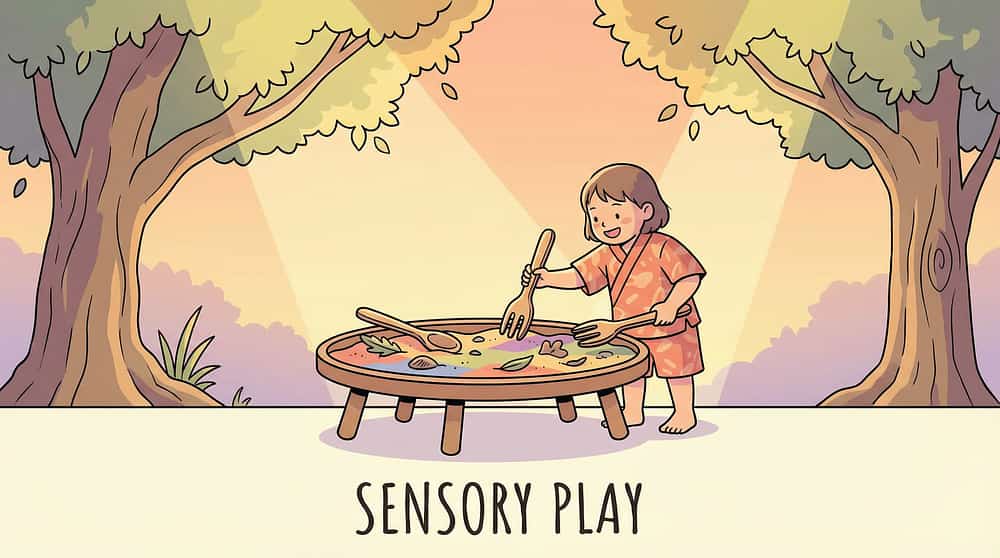
Table Setting
Fork-spoon-fork-spoon across the row — child completes the pattern whilst helping set the table.

Snack Patterns
Apple-cracker-apple-cracker on plate; child places next item. Pattern practice at every meal.
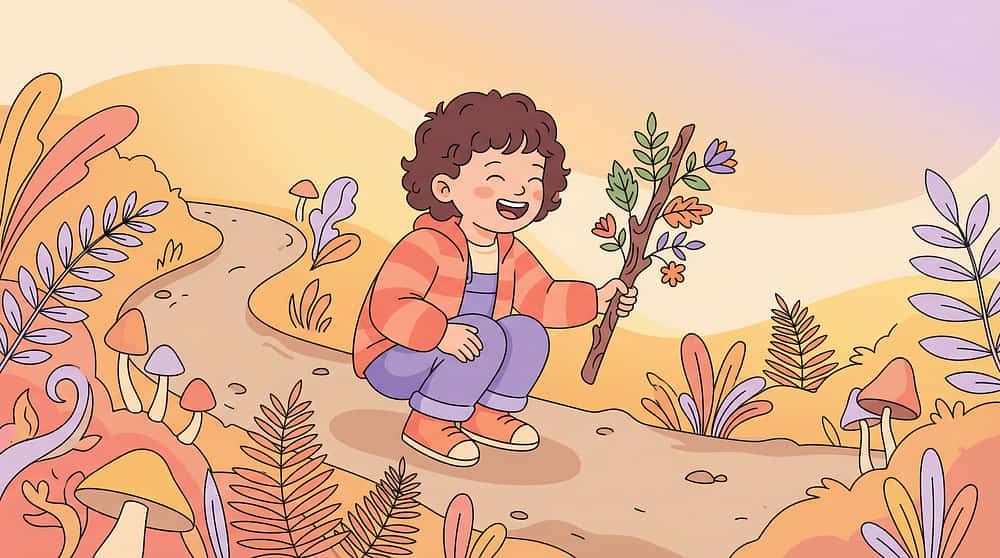
Nature Walk
Collect leaves and sticks; make leaf-stick-leaf-stick pattern. "Let's find 3 patterns in this room."
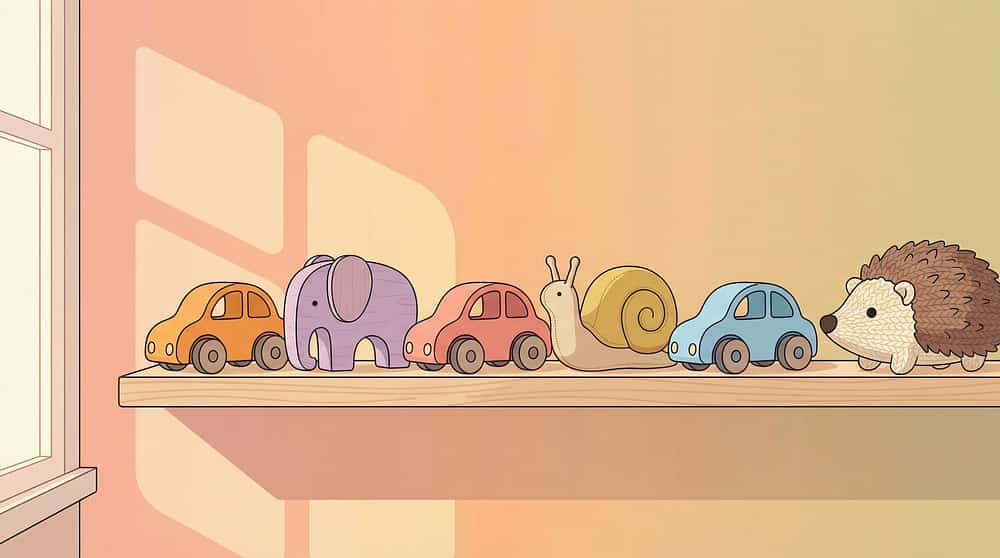
Toy Lineup
Car-animal-car-animal on shelf; child continues the sequence. "We always do bath-book-bed — that's our bedtime pattern!"
🏆The Ultimate Indicator: When a child stops and says spontaneously — "Look Mama, that's a pattern!" — pointing at bathroom tiles or a fence or a row of flowers — the skill has generalised. That is the goal.
"You don't need to buy pattern recognition — it's everywhere in your home and your street, right now, waiting to be noticed."
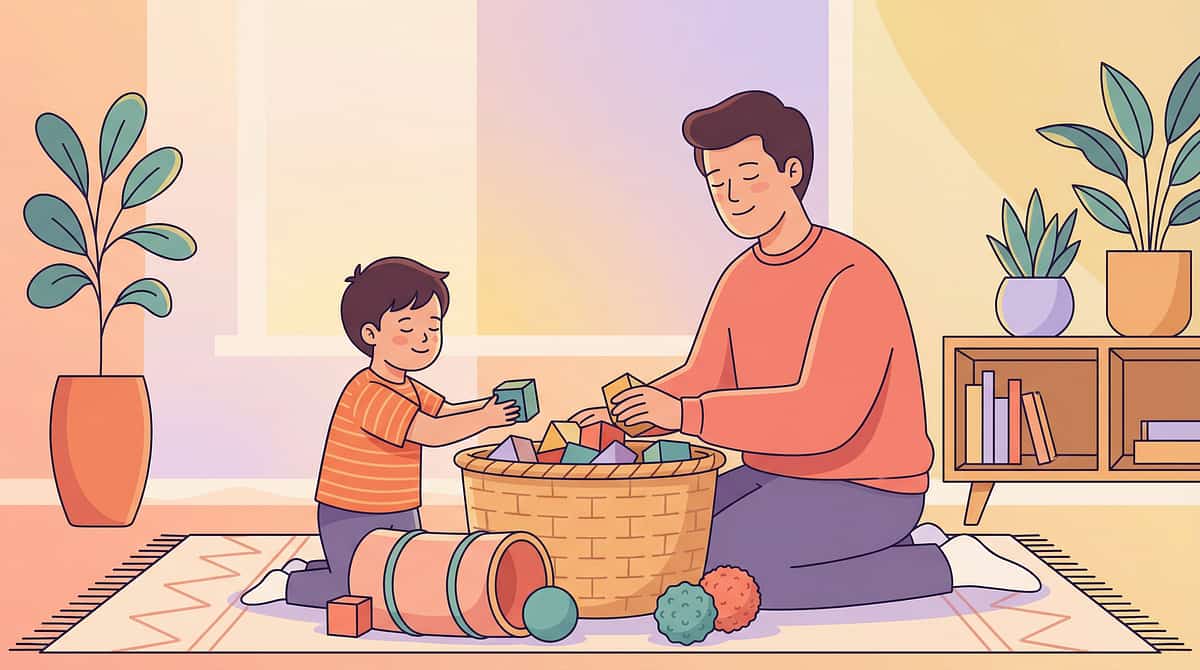
Every Material Has a ₹0 Version
"Pattern recognition training does not require a shopping cart. It requires understanding, engagement, and the right approach." — WHO Nurturing Care Framework (2018) · PMC9978394
Commercial Material | DIY Alternative | Cost |
Pattern blocks | Coloured paper cut-outs, bottle caps, painted pasta | ₹0 |
Linking cubes | Paper clip chains (two colours), coin stacks | ₹0–20 |
Bead stringing set | Macaroni dyed two colours, strung on thread | ₹0–30 |
Pegboard | Styrofoam + painted toothpicks, egg carton + buttons | ₹0–50 |
Sequence puzzles | Laminated photos of child's own routine | ₹20–50 |
Pattern cards | Index cards + coloured stickers | ₹20–50 |
Rhythm instruments | Pots and spoons, hands and feet | ₹0 |
Digital apps | No substitute needed — hands-on IS better | ₹0 |
Everyday objects | Already in your home | ₹0 |
"This page serves families across 70+ countries, across all income brackets, across urban metros and rural villages. Every technique on this page can be executed today, right now, with what you already have."

Safety Framework: Read Before Every Session
🟢 GREEN — Safe to Proceed
- Child is fed, rested, and emotionally regulated
- No fever or illness
- Materials are age-appropriate size (no choking hazards for under 3s)
- Space is clear of trip hazards for movement activities
- Screen time has not exceeded daily guidelines
- No known latex allergy
🟡 AMBER — Modify the Session
- Child shows mild fatigue — shorten to 5 minutes
- Child is dysregulated — begin with movement patterns
- Child has had a recent meltdown — use familiar, easy materials only
- Weather is hot and child is uncomfortable — move to seated calm materials
🔴 RED — Stop and Postpone
- Child is in active distress, crying, or showing signs of meltdown
- Child has fever, illness, or significant pain
- Session is escalating frustration, not engagement
- Materials have been found damaged (sharp edges, broken pieces)
Material Safety Specifics
⚠️ Beads
≥25mm diameter for children under 3 | Supervise threading — lace can tighten
⚠️ Pegs
Large pegs for under-3 | Store small pieces securely when not in use
⚠️ Puzzle Pieces
Check for cracks or sharp edges before each session
⚠️ Digital
No screens within 1 hour of bedtime per AAP guidelines

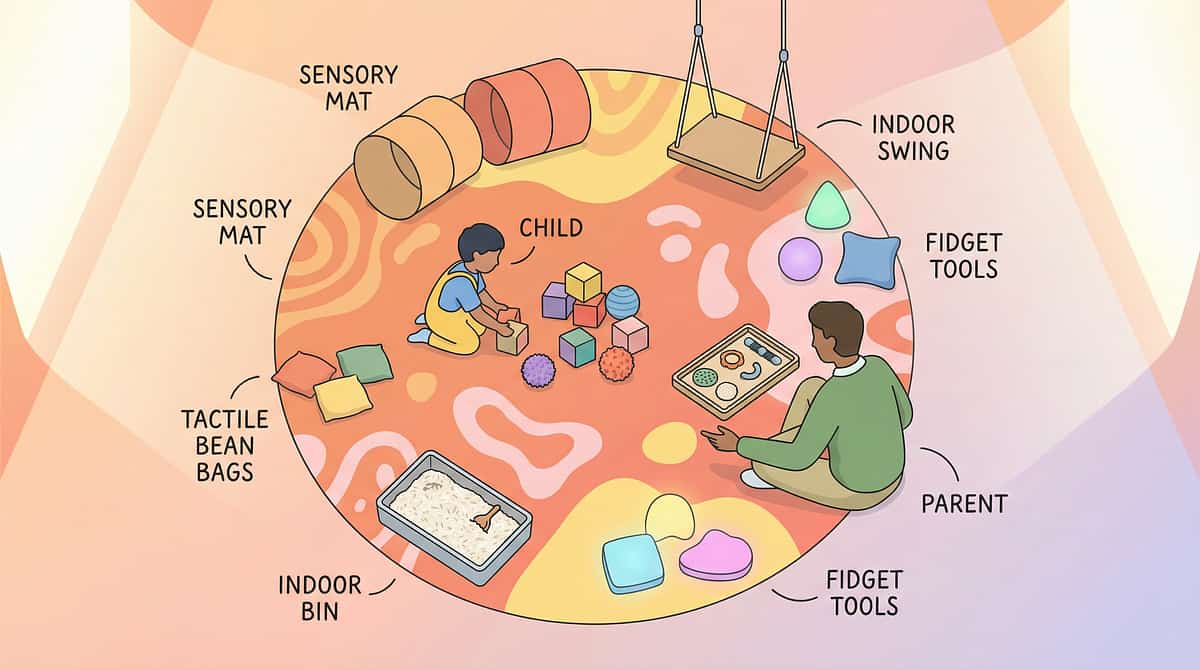
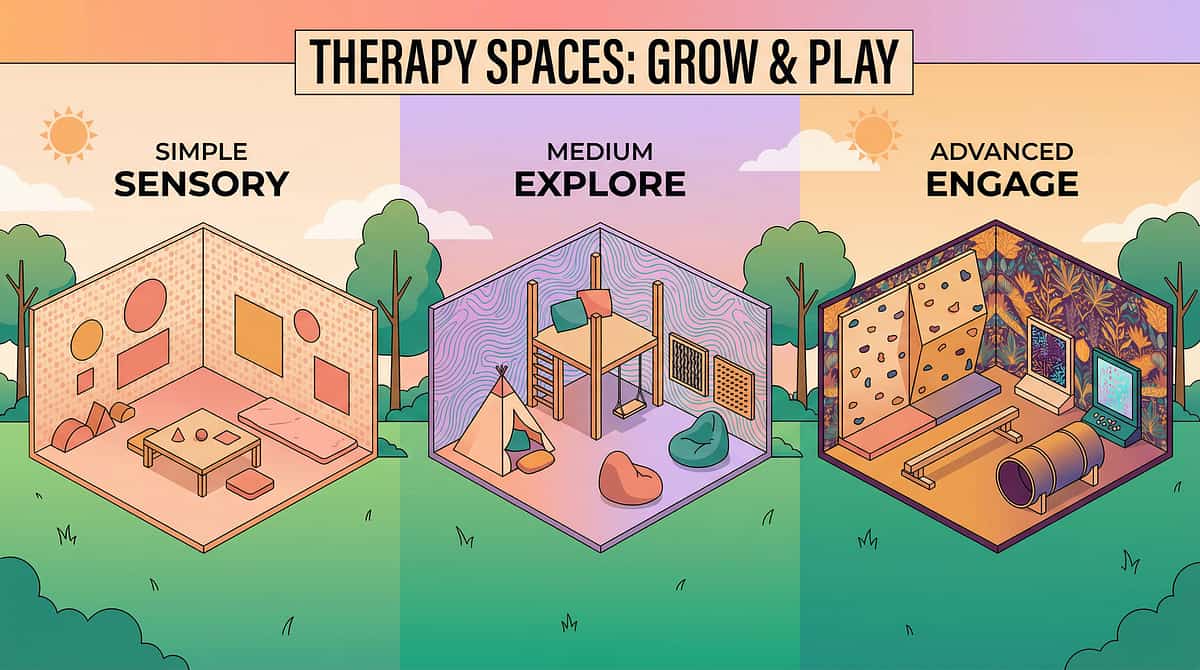
Your Pattern Learning Space: 3-Minute Setup
"Spatial precision prevents 80% of session failures. Environment sets the stage for everything that follows." — Sensory Integration Theory (Ayres) · PMC10955541
Setup Checklist
- Table and two chairs (or floor mat) positioned
- Today's materials pre-selected and placed in centre of table
- ALL other toys and distracting materials removed from sight
- Screen devices turned off or physically removed
- Lighting is bright (natural preferred)
- Background sounds minimised (TV off, music off)
- Water and a small snack ready for after session
- Timer visible but not alarming
- Parent has reviewed today's technique step before child enters
Positioning Guidance
Sit BESIDE your child, not across. Side-by-side positioning reduces pressure and social demand, allowing joint attention on the materials rather than on the adult's face.
Remove from View
- Other toys and television
- Smartphones and food (unless used as pattern material)
- Siblings who are not participating
- Any materials from yesterday's session not part of today
🏠 A prepared space sends a signal to the child's nervous system: this is a calm, predictable, safe place to learn. Environment IS part of the intervention.
ACT III: THE EXECUTION
The 60-Second Pre-Session Readiness Check
"The best session is one that starts right. 60 seconds now saves 20 minutes of meltdown."
✅ | Indicator | How to Check |
1 | Fed and not hungry | Child has eaten within 90 minutes |
2 | Rested (not overtired) | Not coming from a long car ride or disrupted nap |
3 | Emotionally regulated | No crying, aggression, or shutdown in last 30 minutes |
4 | No current illness/pain | Normal temperature, no complaints of pain |
5 | Willing to come to table | Child transitions without significant protest |
6 | Not hyperfocused on another activity | No ongoing screen time or intense play to interrupt |
7 | Environment is calm | Sibling conflict resolved, parent is calm and present |
🟢 6–7 Checks: PROCEED
Move to Step 1: The Invitation
🟡 4–5 Checks: MODIFY
Use simplified version (just 2 materials, reduce to 5 minutes, choose easiest pattern level)
🔴 0–3 Checks: POSTPONE
Offer a calming activity instead — outdoor movement, sensory bin, favourite book — then reassess in 60–90 minutes
ABA Basis: Antecedent manipulation — the session environment and child state ARE part of the intervention. Optimal outcomes require optimal antecedents.

STEP 1 OF 9 · 30–60 SECONDS
Step 1: The Invitation
Begin with an invitation, not a demand.
"Hey, I found something really cool I want to show you. Come see — you might be able to figure out the secret rule!"
Or, for younger children:
"Want to play the 'What Comes Next?' game with me? I need a helper!"
What to Do
- Position yourself at the table with materials already set up
- Offer the invitation from a slight distance — let the child approach
- Make eye contact brief and natural — not sustained and demanding
- Show one material as the hook
- Your body language: relaxed, curious, leaning slightly toward the materials (not toward the child)
What Acceptance Looks Like
- ✅ Child moves toward table
- ✅ Child looks at materials with any interest
- ✅ Child picks up a piece (even without instruction)
- ✅ Child makes any verbal comment about the materials
- ✅ Child sits without protest
If You Meet Resistance
- Child moves away → Wait 30 seconds, simplify language: "Just one quick thing"
- Child says no → Offer choice: "Blocks or cubes first?" (both are the same activity)
- Child ignores → Demonstrate alone: build 2 cycles of pattern audibly — curiosity often follows
⏱️ Maximum 60 seconds. If resistance continues, use Go/Postpone decision (Amber protocol). ABA Basis: Pairing procedure — associate adult presence and materials with low demand, positive experience, before any instruction is placed.

STEP 2 OF 9 · 1–3 MINUTES
Step 2: The Engagement
Introduce the material — let curiosity lead.
"Look at this — I've started something here. Red… blue… red… blue. Do you see what I'm doing?"
What to Do
1
Place 3 Cycles
Place 3 cycles of your AB pattern on the table (e.g., 3 red, 3 blue linking cubes alternating). Point to each element while saying its name.
2
Hand It Over
Pause and look at child with curious expression (NOT demanding). Give the material to the child: "Your turn — you try touching each one while I say the names."
3
Follow Their Lead
Let child touch, pick up, rearrange — THIS IS ENGAGEMENT, not disruption. Follow the child's lead for 30 seconds before introducing the task.
🟢 Engagement
Picks up materials, vocalises, looks between pattern and you → First reinforcement: "Yes! You're touching the pattern — great!"
🟡 Tolerance
Sits and watches passively → Maintain low demands, increase novelty
🔴 Avoidance
Pushes materials away, turns chair → Back to The Invitation or postpone
Reinforce the engagement, not yet the accuracy. Any interaction with materials = immediate warm praise.

STEP 3 OF 9 · 5–10 MINUTES · CORE THERAPEUTIC WINDOW
Step 3: The Therapeutic Action
The main event: building the pattern together. Follow this progression in order.
1
Round 1 — Copy (2 min)
You build AB pattern (4 cycles). Child copies it beside yours. Script: "Can you make one that looks just like mine?" Success: Matches your pattern with ≤1 error.
2
Round 2 — Extend (3 min)
You build AB pattern (3 cycles), then leave space for 2 more. Script: "I stopped here — can you guess what comes next and put it?" Hand child the piece only after they indicate the choice. Success: Correctly places next element 3 out of 4 attempts.
3
Round 3 — Name the Rule (1 min)
Point to your pattern: "What's the secret rule here?" For non-verbal children: offer two choices with picture cards. Success: Child indicates/says the repeating unit (A-B or red-blue).
4
Round 4 — Error Detection (2 min)
Build 4 cycles with one deliberate error. Script: "Wait — I think I made a mistake somewhere. Can you find it?" Success: Child points to or removes the wrong element.
🏆Reinforcement Schedule: Praise for effort after EACH attempt — "Good trying!" / "You're working so hard!" / "That's exactly what pattern thinkers do!" Use a preferred reinforcer (sticker, token, 30 seconds of preferred activity) after completing all 4 rounds.

STEP 4 OF 9 · 2–3 MINUTES
Step 4: Reinforce and Connect
Anchor the learning: celebrate and connect.
1
Celebrate the Work
"Look at what you made — that's a real pattern you built!"
2
Name It Explicitly
"This is an AB pattern — A is red, B is blue, and it keeps repeating."
3
Point to the Rule
Run finger along the pattern: "Red-blue-red-blue — the rule is: after blue comes red, after red comes blue. Always."
4
Connect to Child's World
"Do you know where I see this pattern? On your striped t-shirt! Blue stripe-white stripe-blue stripe-white stripe."
5
Deliver the Earned Reinforcer
Match reinforcer to child's preference profile identified via AbilityScore® assessment or parent knowledge.
Social Reinforcers
"You're a pattern detective!"
Token/Sticker Systems
Add to the pattern achievement chart
Preferred Activity
30 seconds of choice time
Physical Reinforcers
High five, fist bump
🗣️Language to Use: "Pattern" · "Rule" · "Repeats" · "What comes next?" · "Always" · "Every time"
STEP 5 OF 9 · 2–3 MINUTES
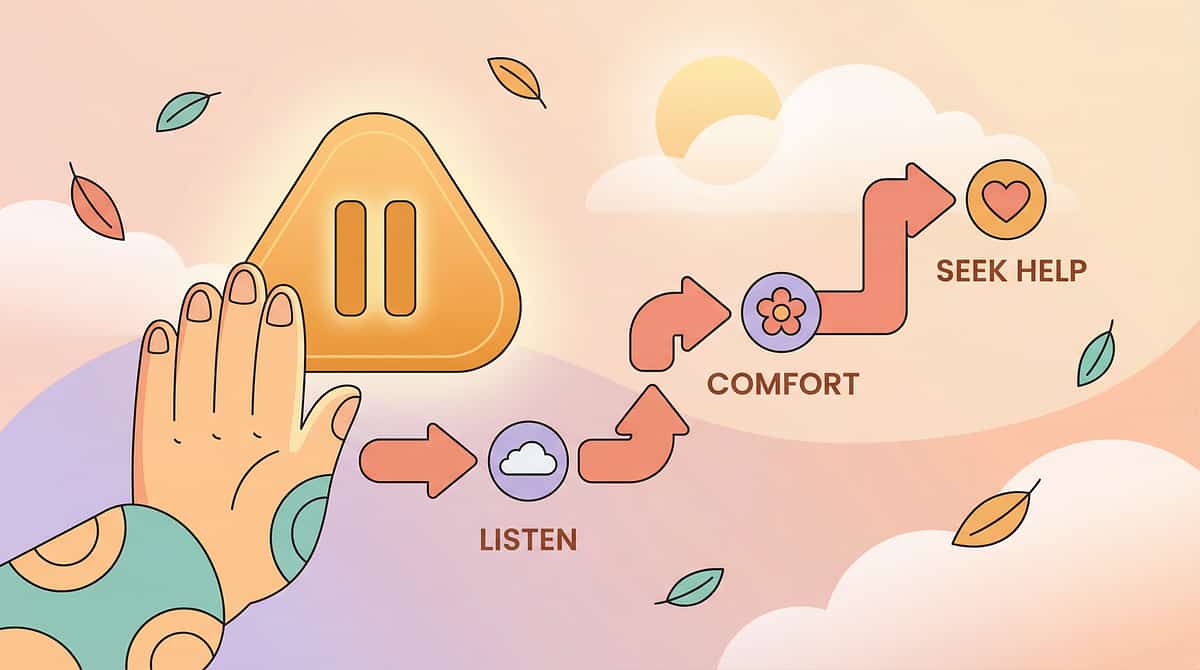
Step 5: The Cool-Down
Close well — the cool-down is therapeutic too.
Why Cool-Down Matters
The transition out of a structured activity is when anxiety peaks for many children. A purposeful cool-down prevents the "session end meltdown" and teaches the child that structured learning has a predictable, safe ending — building trust for future sessions.
Cool-Down Protocol
- Signal the end: "We have 2 more minutes — let's do one last pattern together"
- Joint clean-up: Sort materials together by colour into labelled containers — this is ALSO pattern practice (sorting by attribute)
- Review: "What patterns did we make today?" — child recalls (memory consolidation)
- Preview: "Next time we're going to try this with beads — I think you'll love it"
- Transition bridge: "What do you want to do for 5 minutes now?" — child-led activity follows
If Child is Dysregulated at End: Do not end on a correction. Allow child to complete one final easy pattern before transitioning. Use calm, steady voice: "That's all for today — you worked really hard." Avoid retrospective commentary about errors.

What to Record: 3 Minutes After Every Session
"Data isn't paperwork. It's the evidence that your child is changing."
Parent Session Log
Date: _______________ Material Used: _______________
Duration: ___ min | Pattern Type: AB / ABB / ABC / Other
✅Copying: Not yet / With help / Independently
✅Extending: Not yet / With help / Independently
✅Naming the Rule: Not yet / Partially / Clearly
✅Error Detection: Not yet / With help / Independently
✅Engagement Level: 1 (low) → 2 → 3 → 4 → 5 (high)
✅Extending: Not yet / With help / Independently
✅Naming the Rule: Not yet / Partially / Clearly
✅Error Detection: Not yet / With help / Independently
✅Engagement Level: 1 (low) → 2 → 3 → 4 → 5 (high)
What Worked Well: _______________________
What to Try Differently: ___________________
Spontaneous Moment Outside Session: YES / NO
What to Try Differently: ___________________
Spontaneous Moment Outside Session: YES / NO
Why This Matters
Data from 20M+ sessions across Pinnacle's 70+ centre network has shown that consistent session logging predicts the speed of generalisation. Parents who record observations see their child's progress clearly — preventing premature abandonment of techniques that are working slowly.
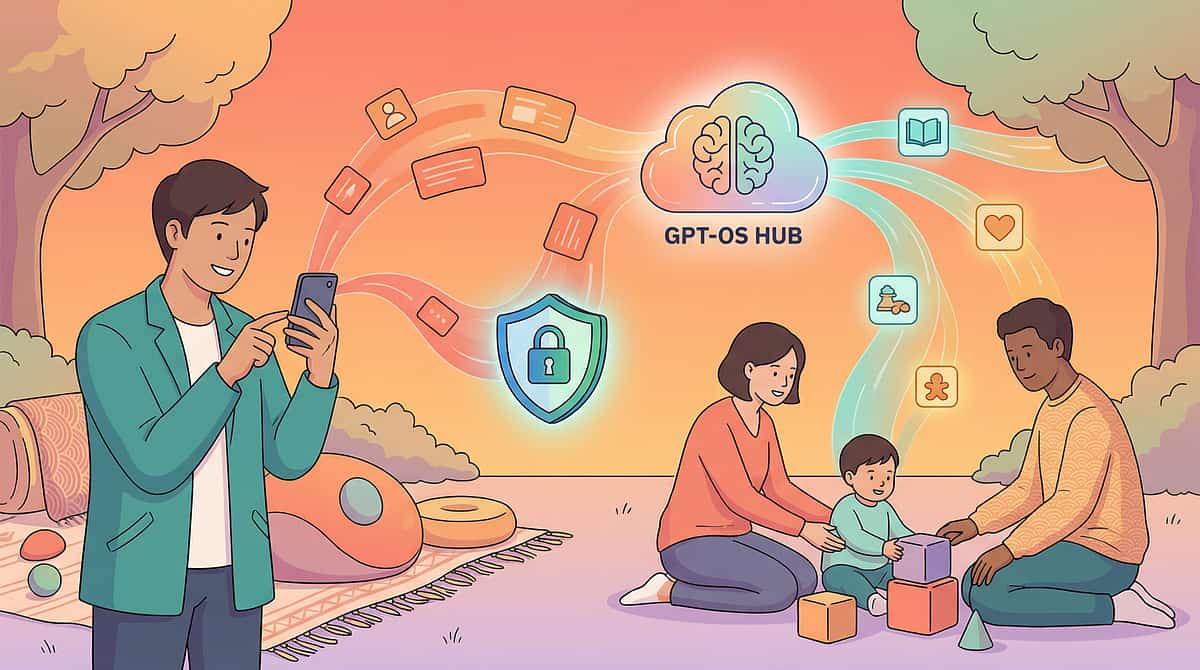
Every session you log improves the precision of GPT-OS® recommendations for the family starting their journey tomorrow.
Most Common Challenges — And What to Do
🔴 "My child keeps guessing randomly — won't focus on the pattern"
The pattern complexity is too high OR the material is not engaging enough. Drop to a 2-element AB pattern. Switch to a more engaging material. Add a movement element (jump for red, clap for blue). Reduce session length to 5 minutes.
🟡 "My child copies the pattern but won't extend it"
Extending requires predicting — a cognitive step beyond copying. Practise more at copy stage. When extending, hand child the piece immediately after they indicate their choice. Use a physical completion guide: place a question mark card in the "next" position.
🔵 "My child can do it with blocks but not on paper"
This is EXPECTED. Concrete → pictorial → abstract is the correct progression. Don't rush to paper. Add an intermediate step: photograph the block pattern and ask child to extend the photograph version before moving to drawn patterns.
🟠 "My child memorises specific patterns but doesn't generalise"
Classic autism spectrum profile — strong instance learning, weak rule extraction. Focus on explicitly teaching the RULE, not the pattern. Test with same rule on new materials immediately: "Red always follows blue — no matter what objects we use."
🟢 "My child becomes upset when they make a mistake"
Reduce demand by switching to self-correcting materials (puzzles). Explicitly normalise error: "Even pattern detectives make mistakes — that's how they learn the rule!" Increase ratio of praise to correction to 5:1.
⚪ "We've been working for 3 weeks and I see no progress"
Time to contact a specialist. Pattern recognition difficulty that persists despite appropriate, consistent intervention may indicate visual processing disorder, working memory limitation, or broader cognitive concerns requiring formal assessment.
Adapt the Technique to Your Child's Profile
Condition-specific adaptations for four key profiles.
🟣 Autism Spectrum Disorder
Use HIGH CONTRAST materials (avoid similar colours). Capitalise on visual learning strengths. Be aware that memorisation without rule understanding may occur — test with new materials. Sameness preference may help with pattern copying but hinder flexible application. Focus on explicit rule verbalisation.
👁️ Visual Processing Difficulties
START with sound and movement patterns to establish the concept, then bridge: "Clap-stomp IS like red-blue — same rule." Use HIGH CONTRAST materials (black/white before multi-colour). Large, clearly differentiated shapes. Consider visual processing evaluation if difficulty persists.
🧠 Working Memory Weaknesses
Use physical materials WHERE THE PATTERN STAYS VISIBLE — child doesn't have to remember, they can see. Keep patterns short initially (2-element AB). Add verbalisation as external memory aid. Gradually increase pattern length as capacity develops.
⚡ Attention Difficulties (ADHD)
Short bursts: 5–7 minutes maximum initially. Use high-engagement materials (movement patterns, favourite characters on pattern cards). Build in physical activity between rounds. Use immediacy reinforcement. Digital apps with fast-paced engagement may maintain attention better than static materials.
🔑Consortium Lead for Adaptation: OT (visual processing) · ABA (attention) · SLP (working memory) · SpEd (learning profile) · NeuroDev (diagnostic clarity)
ACT IV: THE PROGRESS ARC
Weeks 1–2: Calibrating Expectations
Progress Bar: 15% · TOLERANCE PHASE
15%
Progress Achieved
Tolerance Phase — building the session habit, not the skill yet
80%
App Success Target
Success rate to aim for at first, starting at the easiest pattern level
8–12
Week Horizon
Weeks for cognitive intervention outcomes to emerge per systematic review (PMC11506176)
What Progress Actually Looks Like
- ✅ Child tolerates sitting at the pattern table for the full session
- ✅ Child handles materials without immediately pushing them away
- ✅ Child makes eye contact with the pattern 1–2 times per session
- ✅ Child copies a 2-element pattern with adult hand-over-hand support
- ✅ Child verbalises ONE element of the pattern when prompted
What Is NOT Expected Yet
- ❌ Independent pattern extension
- ❌ Naming the pattern rule
- ❌ Any generalisation outside the session
- ❌ Consistent engagement across every session
"In weeks 1–2, you are building the session habit, not the skill yet. The most important thing you can do right now is show up consistently and keep sessions positive."
Weeks 3–4: Neural Pathways Beginning to Form
Progress Bar: 40% · CONSOLIDATION PHASE
✅ Anticipation
Child anticipates the session — brings materials to the table, asks to do "the pattern game"
✅ Pattern Copying
Copies 2–3 cycle AB patterns with minimal support
✅ Pattern Extension
Extends 1 cycle with prompting. Child notices when YOU make a pattern error (even if can't articulate why)
✅ Vocabulary Emerging
Child begins to use pattern vocabulary spontaneously: "again," "same," "next"
Behavioural Changes Signalling Neural Pathway Formation
Reduced Resistance
Less pushback at session start
Longer Engagement
Voluntary engagement time increases
Less External Reinforcement
Less need for mid-session rewards
Self-Correction
Beginning to self-correct errors
🎯Increase Trigger: When child independently extends AB patterns 4 out of 5 attempts across 3 consecutive sessions → introduce ABB complexity.
"You may notice you are more confident too — this is accurate. Your skill at running these sessions is also developing."

Weeks 5–8: The Skill Is Becoming Real
Progress Bar: 70% · SKILL EMERGENCE PHASE
1
Independent Pattern Work
Independent copying and extending of AB patterns across multiple materials
2
Growing Complexity
Beginning to work with ABB and ABC patterns. Naming the pattern rule verbally: "It's a red-blue pattern"
3
Pattern Creation
Creating own patterns for family members to extend
4
First Spontaneous Comment
First spontaneous real-world pattern comment — the moment worth celebrating! Document it immediately.
Academic Bridge (Start at Week 6–7)
➕ Maths
"These linking cubes are like the number line — see how 1-2-3-4 is a pattern too?"
📖 Reading
"The -at family: cat-hat-bat-mat — that's a sound pattern!"
🔬 Science
"Winter-spring-summer-fall — a seasonal pattern!"
At this stage, begin deliberately creating pattern practice IN THE REAL WORLD. The transfer to spontaneous recognition requires explicit bridging — use the Everyday Objects protocol (Material 9).
Every Milestone Is a Neural Victory Worth Celebrating
🏆 First Copy
"You followed the pattern rule! That's exactly how pattern thinkers begin!" → Add a gold star to the visual progress chart.
🏆 First Extension
"You predicted what comes next — that means your brain found the rule!" → Photograph the extended pattern; send to grandparents.
🏆 First Verbal Rule
"You SAID the pattern rule — now your brain and your voice know it!" → Record a video for memory and for sharing with therapist.
🏆 First Spontaneous Real-World Notice
"YOU found a pattern! All by yourself, without me saying anything!" → This is the largest milestone of the entire programme. Mark it. Remember the date. Share it everywhere.
"These are not small victories. The prefrontal cortex of your child has built a new pathway. A pattern that was invisible is now visible. This is measurable neurological change — and you helped build it."
When Home Practice Is Not Enough
Red flags that signal it is time to seek specialist support.
🔴 No Progress After 6–8 Weeks
No progress despite consistent, appropriate intervention (4+ sessions/week, correct complexity level, full engagement)
🔴 Significant Academic Struggle
Pattern difficulty coexisting with significant difficulty in reading OR mathematics — may indicate learning disability requiring formal evaluation
🔴 Large Sensory Discrepancy
Visual pattern performance poor whilst auditory pattern performance is good — may indicate visual processing disorder
🔴 Multi-Domain Profile
Pattern difficulty coexisting with speech delay, motor difficulties, social communication differences, or attention challenges
🔴 Distress Around Pattern Tasks Specifically
Child shows distress specifically around pattern tasks whilst performing well in other cognitive areas — may indicate specific learning disability
🔴 Plateau or Regression
Child was progressing and has plateaued or regressed — this combination warrants professional re-evaluation
What to Do
1
Call the FREE Helpline
📞 9100 181 181 — National Autism Helpline, FREE, 24×7, 16 Languages
2
Request AbilityScore® Assessment
Standardised developmental baseline across 349 skills
3
Specialist Pathway
AbilityScore® → Diagnostic Clarity → TherapeuticAI® Plan → FusionModule™ Delivery → EverydayTherapyProgramme™ Home Extension
From Pattern Recognition to Full Learning Readiness
Where G-671 fits in the developmental pathway — and where you go next.
G-669
Visual Discrimination Skills
G-670
Sorting & Classification
G-671 ← YOU ARE HERE
Pattern Recognition
G-672
Sequencing & Ordering
G-673
Cause & Effect Understanding
→ Your Next Technique
G-672: Sequencing and Ordering
Building on pattern recognition, G-672 takes the rule concept into temporal and logical ordering — the direct bridge to narrative comprehension and mathematical sequencing.
Building on pattern recognition, G-672 takes the rule concept into temporal and logical ordering — the direct bridge to narrative comprehension and mathematical sequencing.
← Previous Technique
G-670: Sorting and Classification
The foundational skill that pattern recognition builds upon — if your child struggles with sorting by attribute, G-670 may need to be addressed first.
The foundational skill that pattern recognition builds upon — if your child struggles with sorting by attribute, G-670 may need to be addressed first.
Cluster COG-04: Cognitive Development and Pre-Academic Skills · 671 techniques across the domain · Part of GPT-OS® mathematical foundations sequence
Techniques That Work Alongside G-671
These related techniques form the complete cognitive development foundation. Each builds on and reinforces the others.

G-670: Sorting & Classification
The attribute-recognition foundation for all pattern work. Address this first if pattern work is very difficult.
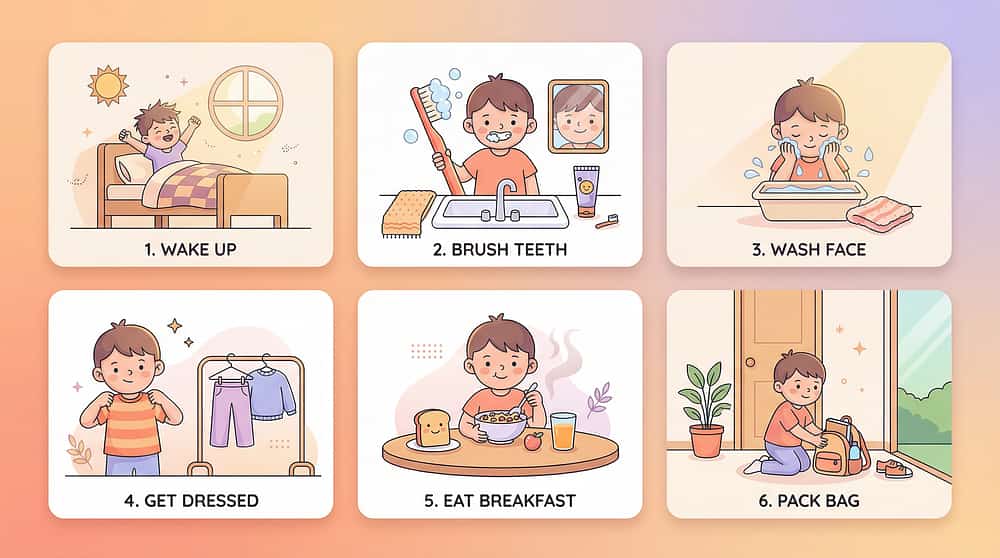
G-672: Sequencing & Ordering
Temporal pattern — what happens next in time. The direct academic bridge from G-671.
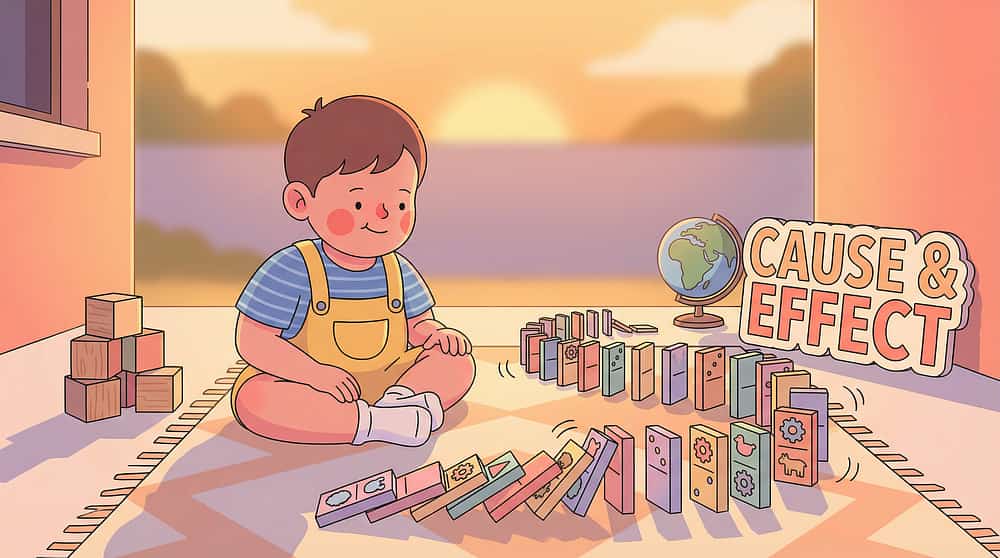
G-673: Cause & Effect Understanding
Rule extraction in causal chains — advanced pattern recognition in disguise.

G-675: Visual Discrimination Skills
The visual input pathway feeding pattern recognition. Strengthens the first step in the brain's pattern processing chain.
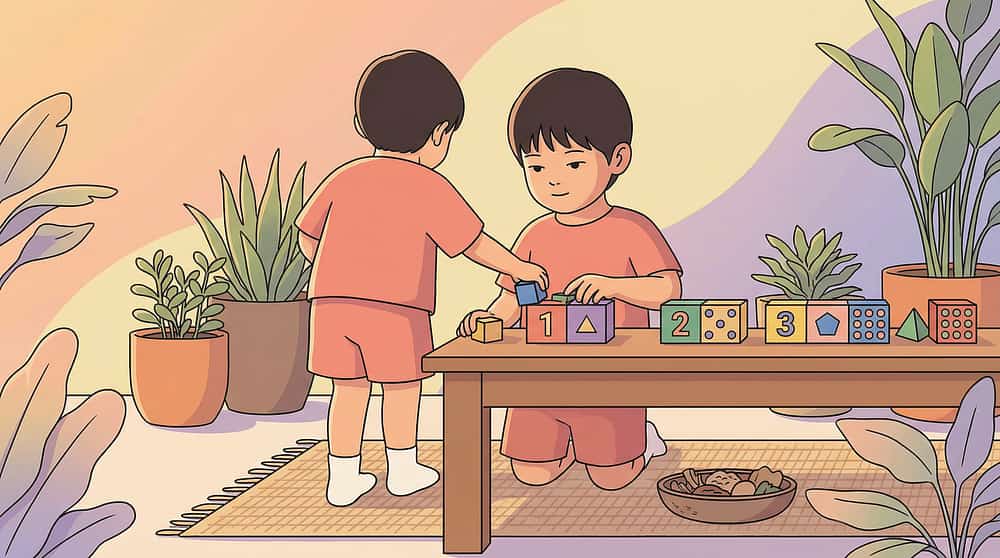
G-680: Pre-Math Skills Development
Number pattern recognition as academic application. The direct bridge from pattern blocks to classroom mathematics.
ACT V: THE COMMUNITY & ECOSYSTEM
From Random Guessing to "Look Mama, a Pattern!"
"Math time used to be a disaster. My son couldn't see patterns at all — number sequences, shape patterns, nothing. He'd guess randomly and get frustrated. We started with pattern blocks at home, just simple red-blue-red-blue, and it took weeks before he understood what 'pattern' even meant.
We used linking cubes, bead stringing, pegboards — always hands-on before worksheets. The breakthrough came when he suddenly said 'Mom, the tiles in the bathroom are a pattern!' He was seeing patterns in real life.
Now he's on grade level in math and actually enjoys finding patterns. The key was starting concrete and being patient — his brain needed to build this skill step by step."
— Parent · Pinnacle Blooms Network · South India · Child age: 6 years at start
This parent's experience reflects a pattern seen across Pinnacle's 20M+ therapy sessions. Children with pattern recognition difficulties who receive structured, progressive, material-based intervention show measurable improvement in 97%+ of cases across one or more readiness indices. Illustrative case; outcomes vary by underlying cause of difficulty, developmental level, and consistency of practice.

You Are Part of a Global Community of Millions
Families in 70+ countries are working through the same challenges with the same Pinnacle techniques. You are not alone in this work.
Pinnacle Parent Network
Connect with families navigating pattern recognition and cognitive development challenges. → Join at pinnacleblooms.org/community
WhatsApp Support Groups
Pinnacle maintains district-level parent support groups across India — ask your nearest centre. → Connect: 9100 181 181
GPT-OS® Parent App
Log sessions, track milestones, access therapist comments, and see your child's progress on the Cognitive Development Readiness Index. → Download at pinnacleblooms.org/app
Nearest Pinnacle Centre
70+ centres across India — in-person consultation, formal assessment, group therapy sessions for cognitive development. Find your nearest centre today.
WHO/UNICEF Global Context: Pattern recognition difficulties are addressed in the WHO Care for Child Development (CCD) Package implemented across 54 low- and middle-income countries. You are connected to a global system of evidence-based paediatric support.

When and How to Access Professional Support
When to Consider Professional Evaluation
- No progress after 6–8 weeks of consistent home practice
- Pattern difficulty accompanies other developmental concerns
- Academic impact is significant (struggling in mathematics or reading)
- You want a formal baseline and personalised intervention plan
Pinnacle Assessment Pathway
01
FREE Helpline Consultation
📞 9100 181 181
02
AbilityScore® Assessment
349 skills · 20 domains — standardised baseline
03
Domain-Specific Evaluation
Relevant specialist(s) as indicated
04
GPT-OS® Integrated Plan
TherapeuticAI® via FusionModule™ + EverydayTherapyProgramme™
Specialist Types and Their Role
- 🔷Occupational Therapist — Visual processing evaluation, sensory integration profiling, adapted materials recommendations
- 🟢Special Educator — Pre-academic skill evaluation, academic impact assessment, IEP/ILP support
- 🟡BCBA / ABA Therapist — Behavioural skill programme design, data-based pattern skill training, generalisation programming
- 🔴Speech-Language Pathologist — Auditory and linguistic pattern assessment, narrative comprehension, phonological awareness
- 🟣Neurodevelopmental Paediatrician — Differential diagnosis, formal assessment, medical recommendations
Preview of 9 materials that help with pattern recognition Therapy Material
Below is a visual preview of 9 materials that help with pattern recognition therapy material. The pages shown help educators, therapists, and caregivers understand the structure and content of the resource before use. Materials should be used under appropriate professional guidance.


Link copied!

The Pinnacle Promise
PINNACLE BLOOMS NETWORK®
Built by Mothers. Engineered as a System.
Powered by GPT-OS® · Global Paediatric Therapeutic Operating System
Built by Mothers. Engineered as a System.
Powered by GPT-OS® · Global Paediatric Therapeutic Operating System
"From fear to mastery. One technique at a time."
🧠 NeuroDev
Neurodevelopmental Paediatrics
🤲 OT
Occupational Therapy
💬 SLP
Speech-Language Pathology
📊 ABA/BCBA
Behaviour Analysis
📚 SpEd
Special Education
🔬 CRO
Clinical Research
20M+ 1:1 Sessions · 97%+ Measured Improvement · 70+ Centres · 70+ Countries Served · 21M+ Therapy Services · 16 Languages
Medical Disclaimer: This content is educational. It does not replace individualised assessment and intervention from occupational therapists, special educators, psychologists, or developmental specialists. Pattern recognition difficulties can be associated with learning disabilities, developmental delays, autism spectrum disorder, visual processing disorders, and other conditions requiring professional evaluation. Persistent cognitive concerns should be assessed by qualified professionals. Individual results may vary. Outcomes statistics represent aggregate data across the Pinnacle Blooms Network® under GPT-OS® governance.
CIN: U74999TG2016PTC113063 · DPIIT: DIPP8651 (Govt. of India) · MSME: Udyog Aadhaar TS20F0009606 · GSTIN: 36AAGCB9722P1Z2
© 2025 Pinnacle Blooms Network®, a unit of Bharath Healthcare Laboratories Pvt. Ltd. All rights reserved. Content governed by GPT-OS® Content Engine. techniques.pinnacleblooms.org