
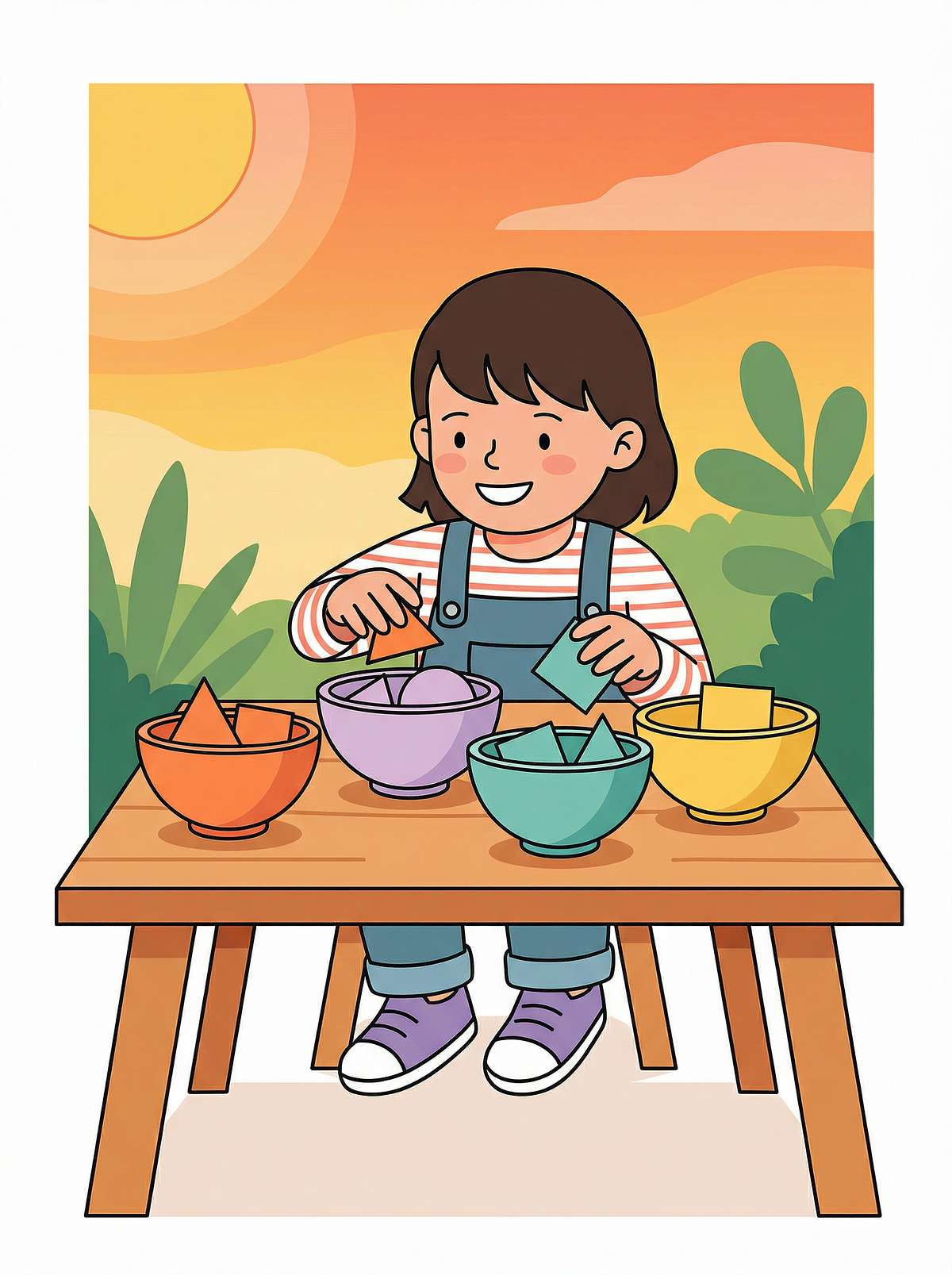
9 Materials That Help With Sorting Skills
Evidence-based sorting materials for children with autism, ADHD & developmental delays. 9 therapist-recommended tools your family can use at home today — backed by 20M+ sessions.
Cognitive & Executive Function
G-668
Age 2–10 Years

Act I — The Recognition Moment
"She lines up every single toy by colour — but hand her a bowl of fruit to sort, and she falls apart."
Sorting. It sounds like play. For many children, it's an invisible wall. She knows red from blue. She knows big from small. You've seen her do it. But the moment you ask her to sort objects into categories — put the spoons here, the forks there; fruits in this bowl, vegetables in that one — everything freezes. Or she sorts in a way that makes perfect sense to her and no sense to anyone else. Cups sorted by which one she drank from first. Toys grouped by what happened near them, not what they are.
This is not defiance. This is not lack of intelligence. This is a child whose brain is building the mental scaffolding for categorical thinking — one of the most foundational cognitive skills in the human repertoire — and needing the right tools to complete that construction.
"You are not failing. Your child's sorting system exists — it just needs the right materials to become visible."
Pinnacle Blooms Consortium®
OT + SpEd + ABA + NeuroDev
GPT-OS® Validated
20M+ sessions of intelligence
Age Range
2–10 years

You Are Not Alone
You Are Among Millions of Families Navigating This Exact Challenge
Sorting difficulties in children are not rare. They are not mysterious. They have been systematically studied across 197 countries through UNICEF's developmental monitoring indicators, and they are one of the most consistent early markers for children who need additional cognitive scaffolding. When your child struggles to group, classify, or categorise, they are not broken — they are at a specific waypoint in a developmental journey that has a clear, evidence-backed forward path.
1 in 36
Children receive an autism diagnosis
Sorting and categorisation difficulties are among the earliest observable indicators.
68–80%
Of children with ASD
Show measurable differences in categorical sorting and classification tasks.
42M+
Children globally under age 5
Lack access to adequate cognitive stimulation — sorting is among the most powerful low-cost interventions.
"You are among millions of families. This page exists because every one of you deserved a map."
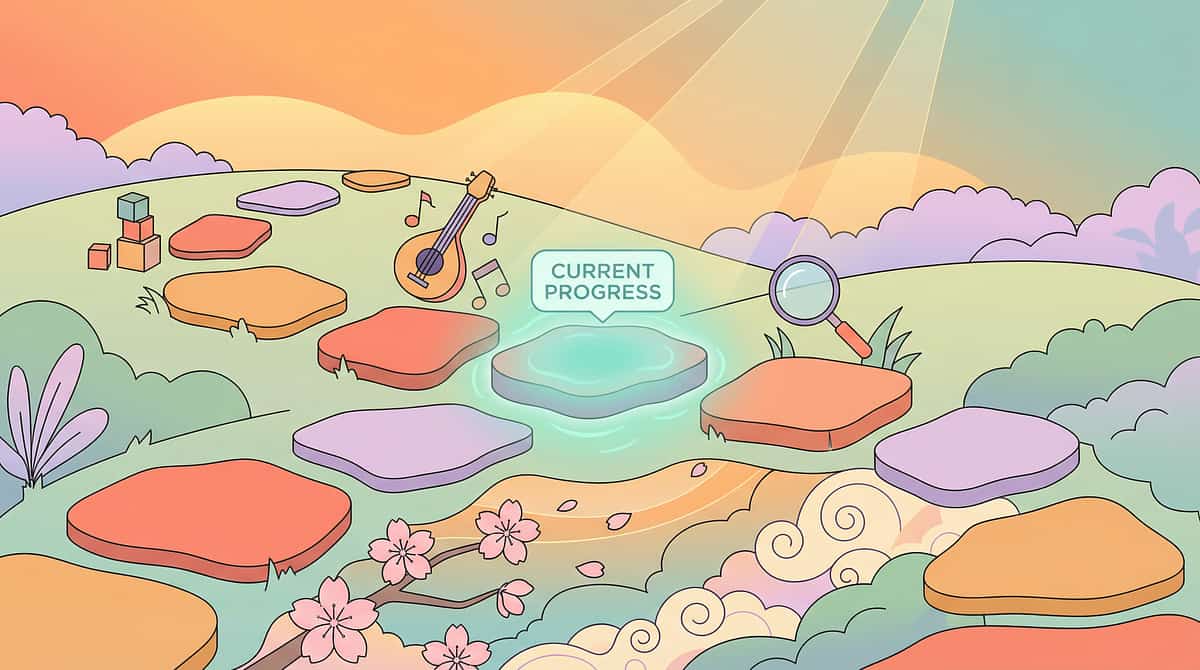
Neuroscience
The Sorting Brain: A Neuroscience Translation
Sorting requires the brain to do three simultaneous things: perceive an object's properties (colour, shape, size, function), compare those properties against an internal rule or category schema, and execute a placement decision based on that comparison.
The Neural Circuitry
This three-step process involves the prefrontal cortex (executive function and rule-holding), the temporal lobe (object recognition and semantic categorisation), and the cerebellum (motor execution of placing).
What This Means for Your Child
In children with ASD, ADHD, or developmental delays, the communication speed between these regions can differ — not the intelligence, not the capability, but the neural coordination speed. This is why your child might sort perfectly when the rule is self-chosen but struggle when you introduce an external rule.
"This is a coordination difference, not an intelligence difference."

Developmental Timeline
Sorting in the Developmental Timeline
Understanding where your child sits in the developmental arc helps calibrate expectations and interventions with precision.
12–18 Months
Object permanence + basic grouping awareness
2–3 Years
Sort by 2–3 colours/shapes simultaneously
3–4 Years
Multi-attribute sorting (colour + shape)
4–5 Years
Multi-category sorting by function
5–7 Years
Complex hierarchical classification + rule flexibility
For children with ASD, ADHD, or developmental delays, these milestones may occur in a different sequence, with longer consolidation periods, or may require explicit teaching and the right materials to emerge at all. The materials on this page help them move forward from wherever they are today.
Evidence Base
Clinically Validated. Home-Applicable. Parent-Proven.
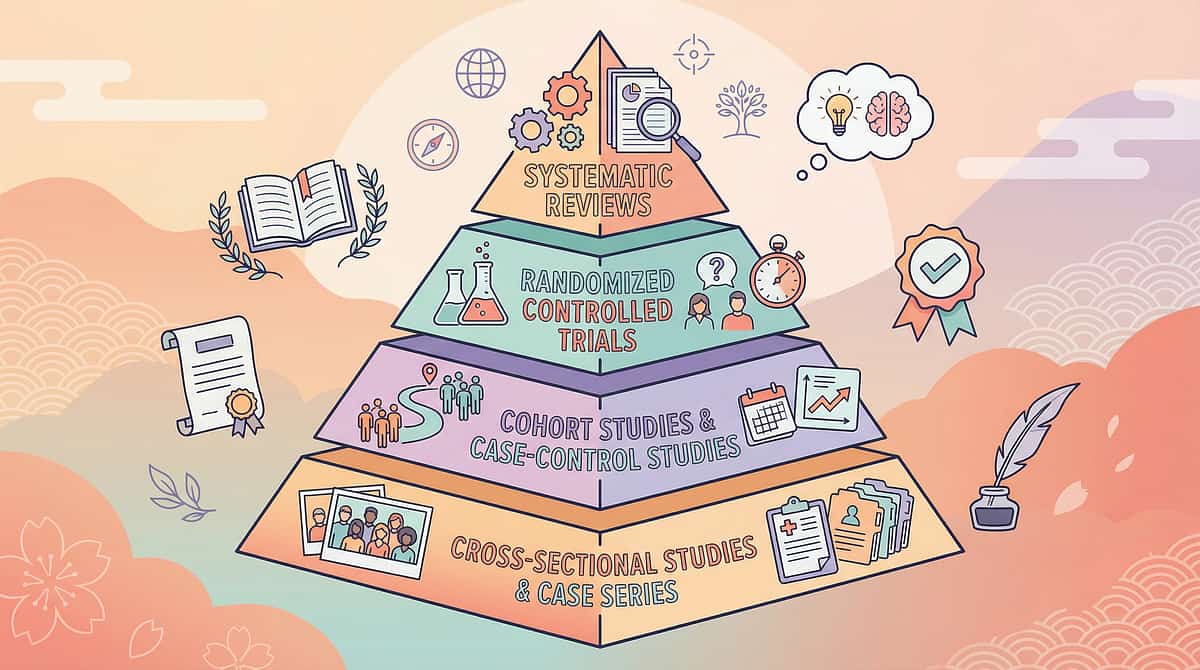
★ LEVEL II EVIDENCE ★ — Randomised Controlled Trials + Systematic Reviews Supporting Sorting & Categorical Learning Interventions
Systematic Review 2024
16 studies (2013–2023) confirm structured categorical sorting intervention meets criteria as evidence-based practice for ASD. Effect sizes in the moderate-to-large range for cognitive flexibility outcomes.
Source: PMC11506176
Meta-Analysis 2024
24 studies confirm cognitive interventions including sorting activities effectively promote adaptive behaviour, categorisation, and executive function across ASD populations.
Source: PMC10955541 | DOI: 10.12998/wjcc.v12.i7.1260
Indian RCT 2019
Home-based cognitive and sensory interventions demonstrated significant measurable outcomes in Indian paediatric populations. Parent-administered sorting activities showed direct transfer to daily living skills.
Source: DOI: 10.1007/s12098-018-2747-4 (Padmanabha et al.)
82%
Evidence Strength
Strong evidence base from systematic reviews and RCTs
The Technique
Categorical Sorting Skill Development
"The Grouping Game"
Categorical Sorting Skill Development is the structured, material-supported practice of teaching children to group, classify, and organise objects according to shared properties — colour, shape, size, texture, function, or abstract category. It targets the development of categorical thinking, a foundational cognitive skill that underlies mathematics, language, reading comprehension, social understanding, and daily living organisation.
Through repeated, scaffolded practice with specific materials, children with sorting difficulties build the neural pathways for classification that later enable them to organise their world — objects, ideas, people, and experiences — into meaningful groups.
Domain
Cognitive & Executive Function
Age Range
2–10 years
Duration
10–20 min/session
Frequency
4–5× per week
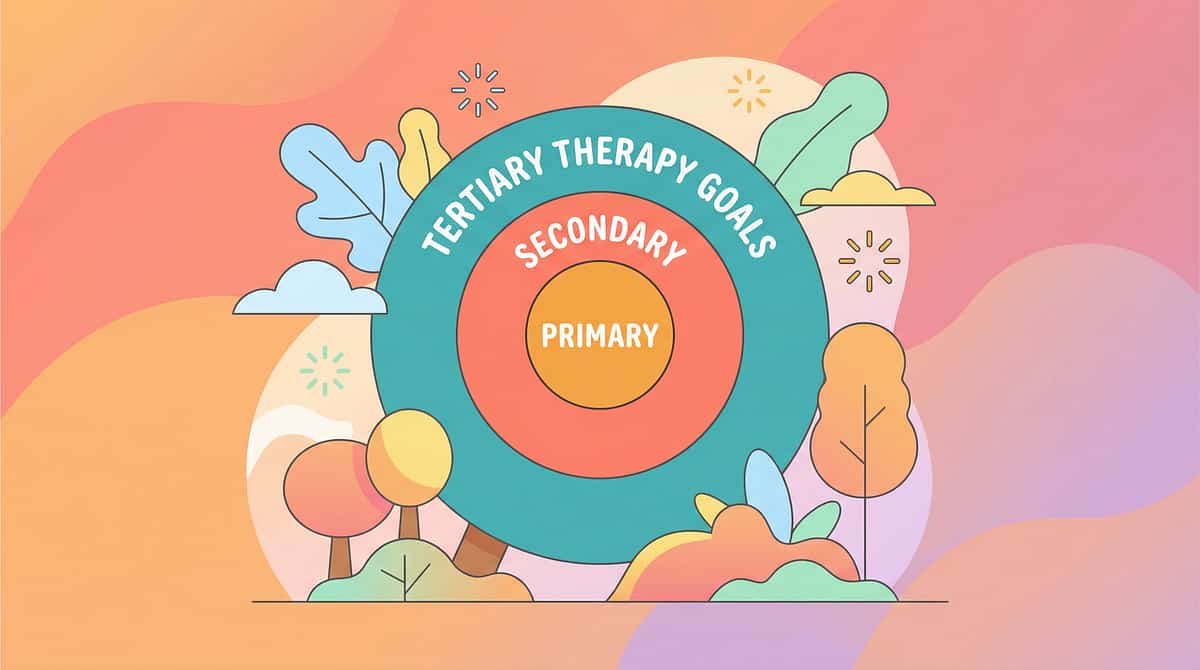
Multi-Disciplinary
This Technique Lives Across Your Child's Entire Therapy Team
"This technique crosses therapy boundaries because the brain doesn't organise by therapy type."
Occupational Therapy (Primary Lead)
OT uses sorting to build fine motor precision (grasping + releasing into containers), visual-perceptual processing (identifying object properties), and daily living skills (organising belongings, sorting laundry, setting the table).
Special Education
SpEd employs sorting as a pre-academic skill prerequisite. Mathematical classification, science categorisation, reading vocabulary grouping — all require the categorical thinking sorting builds.
Applied Behaviour Analysis (ABA/BCBA)
ABA uses systematic sorting instruction with discrete trial training, stimulus discrimination protocols, and reinforcement schedules to build categorical response accuracy and flexibility.
Speech-Language Pathology
SLP uses sorting to build semantic categories (naming and grouping things that go together), vocabulary organisation, and the conceptual foundations for reading comprehension.
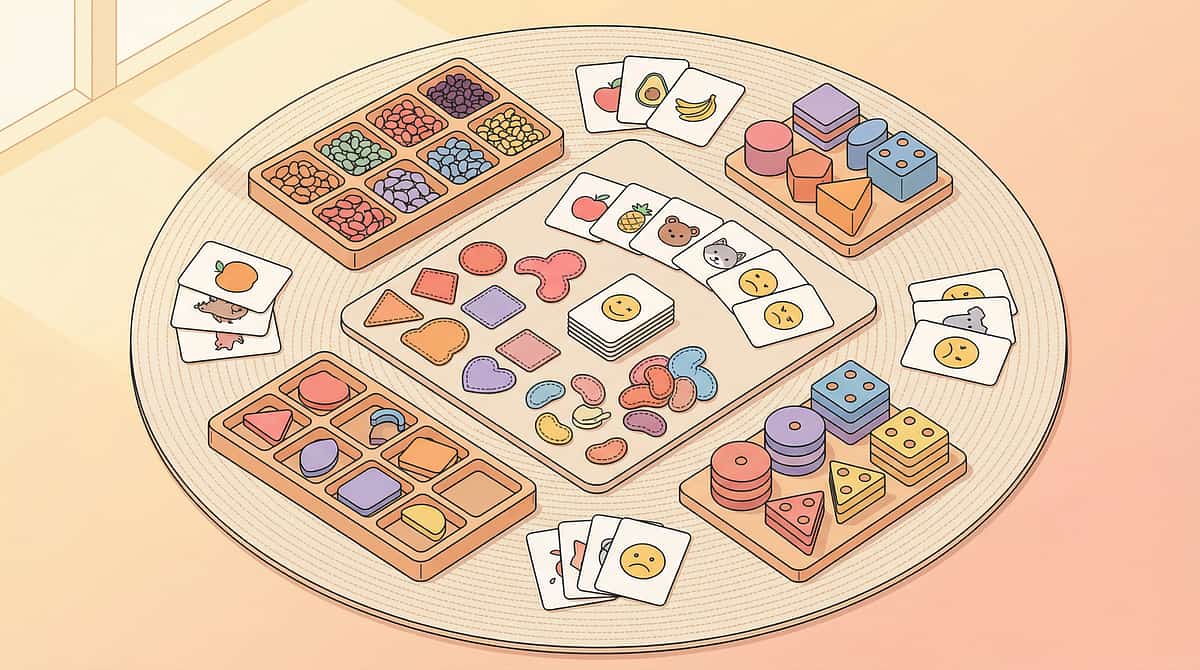
Targets
Precision Tool. Not Random Activity.
✅ Correctly sorts 10/10 items by single attribute without errors
✅ Switches sorting rule when asked ("now sort by shape")
✅ Explains why objects belong together ("they're both round")
✅ Begins spontaneous sorting of everyday objects
✅ Transfers to academic sorting tasks (maths sets, science classification)
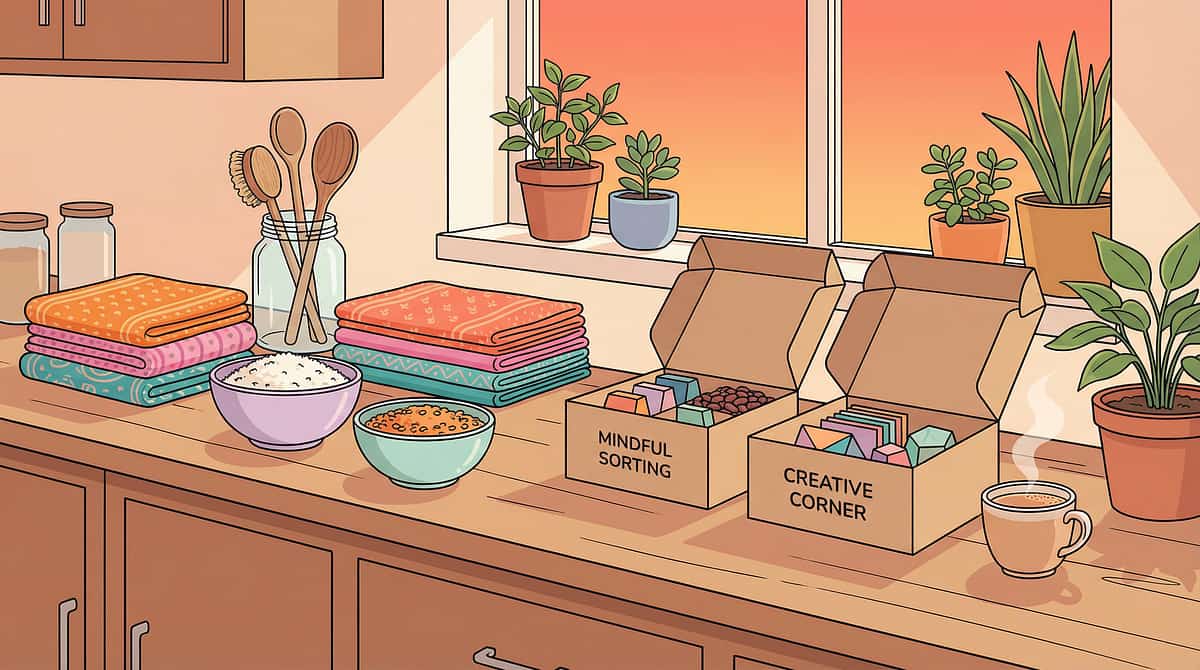
Material 1 of 9
Sorting Activity Sets
Foundational Categorical Discrimination
Lattooland Rainbow Sorting Activity Set
Canon Category: Sorting Activities / Categorisation
₹628 | Buy on Amazon.in →
🏅Pinnacle Recommends
Why It Helps
Hands-on colour sorting with manipulable objects — the most direct route to building categorical discrimination. Physical manipulation (not just visual identification) activates motor memory pathways that reinforce categorical learning.
DIY Version (₹0)
Collect 6 household objects each of 3 colours (red, blue, yellow). Use three small bowls. Practise colour-sorting with items already in your home.
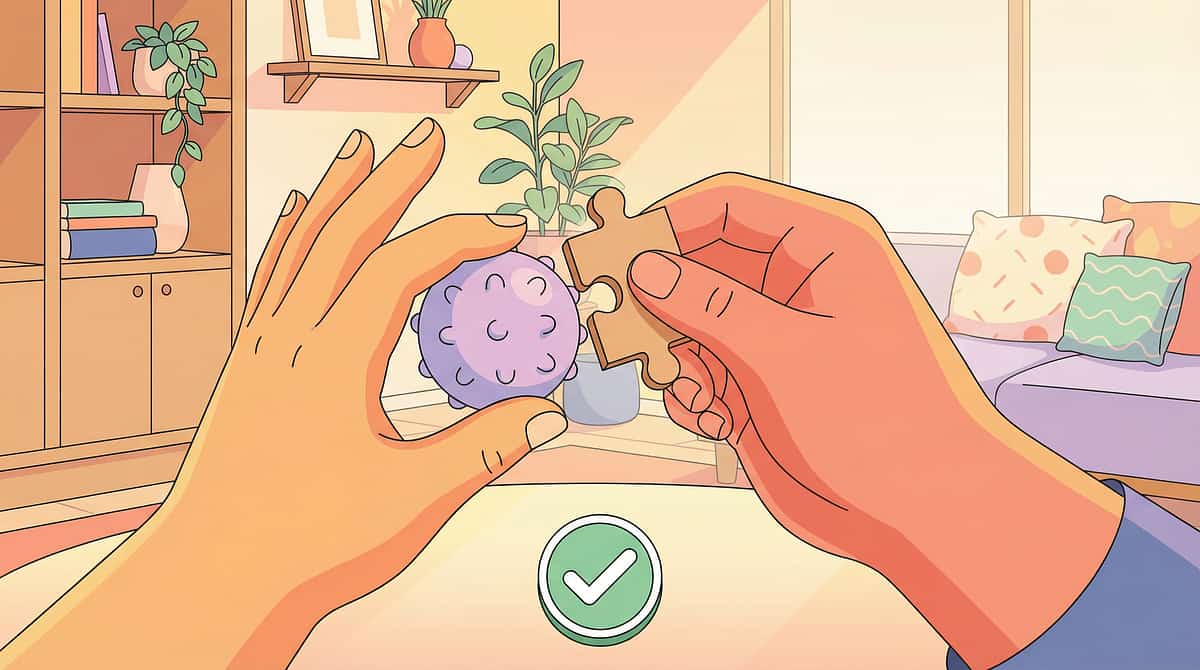
Material 2 of 9
Matching & Memory Games
Categorical Recognition Foundation
Dyomnizy Educational Memory Game with Lights & Sound
Canon Category: Matching Games / Memory Games | Shape Sorters / Colour Recognition
₹519 | Buy on Amazon.in →
🏅Pinnacle Recommends
Why It Helps
Matching games build the foundational recognition that two things can belong together — the perceptual underpinning of sorting. Sound/light feedback provides immediate reinforcement for correct matching.
DIY Version (₹0)
Cut pairs of identical pictures from old magazines. Spread face-down on a table. Play classic memory matching.
Material 3 of 9
Sorting Flashcards
Category Language + Visual Grouping
Brainy Bug Resources Flashcards with Audio
Canon Category: Sorting Activities / Categorisation
₹305 | Buy on Amazon.in →
🏅Pinnacle Recommends
Why It Helps
Flashcards bridge visual recognition with language labelling — critical for children who can sort physically but cannot yet name the category rule. App-enabled audio reinforces verbal category labels.
DIY Version (₹0)
Draw or print pictures of 5 animals and 5 vehicles. Ask child to group "things that are alive" vs. "things that go."
Material 4 of 9
Shape Sorter / 3D Categorisation
Tactile + Visual Sorting
Shape Sorter Toy
Canon Category: Shape Sorters / Colour Recognition
Search "shape sorter toy India" on Amazon.in → ₹250–800 range
Why It Helps
Three-dimensional sorting adds a tactile/kinaesthetic dimension that visual-only sorting lacks. The child must feel, rotate, and match shapes — activating multi-sensory categorisation pathways crucial for children with sensory processing differences.
DIY Version (₹0)
Use a cardboard box. Cut holes of triangle, circle, and square shapes. Use craft foam cut-outs to sort through holes.

Material 5 of 9
Counting & Grouping Materials
Numerical Sorting + Set Formation
Why It Helps
Numerical grouping extends sorting from perceptual (colour/shape) to quantitative (how many). Counting-based sorting directly feeds mathematical readiness — grouping sets of 2, 3, and 4 objects builds number sense alongside categorical thinking.
DIY Version (₹0)
Buttons, dried lentils in three colours. Count and sort into numbered piles. "Put 3 red ones here, 2 blue ones here."
Material 6 of 9
Problem-Solving Sorting Toys
Rule Flexibility & Cognitive Shifting
SHINETOY 8 Dice Shut The Box Game
Canon Category: Problem-Solving Toys
₹428 | Buy on Amazon.in →
Why It Helps
Rule-based games that require categorising outcomes (which numbers to shut) build cognitive flexibility — the ability to hold a rule, apply it, and shift when the rule changes. This is the advanced sorting skill: not just sorting by one rule, but adapting the rule.
DIY Version (₹0)
Playing cards. "Sort all the red cards." Then: "Now sort by number." Then: "Now sort by suit." Each rule shift builds flexibility.
Material 7 of 9
Reinforcement Tools
Motivation + ABA Integration
Why It Helps
ABA-grade reinforcement delivered immediately after correct sorting responses dramatically increases sorting accuracy, speed, and motivation to practise. The reward jar makes reinforcement visual, tangible, and child-controlled.
DIY Version (₹0)
Glass jar + coloured stones from garden. Child earns a stone for each correct sort. Fill the jar, earn a special activity.
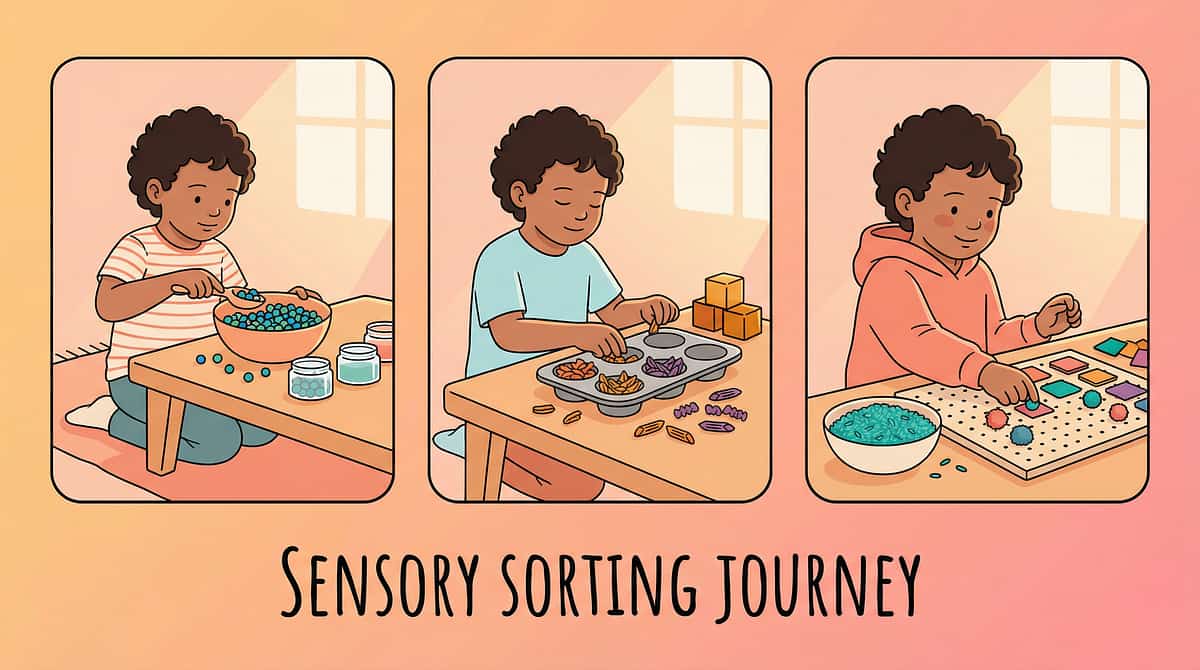
Material 8 of 9
Reward Sticker System
Visual Reinforcement Tracking
1800+ Reward Stickers — Teachers & Parents
Canon Category: Reinforcement Menus
₹364 | Buy on Amazon.in →
Why It Helps
Sticker-based visual reinforcement tracking shows the child their own progress — a row of stickers earned through sorting practice makes abstract improvement concrete. Visual progress is powerfully motivating for children with ASD.
DIY Version (₹0)
Star chart on paper. Draw 20 stars. Child colours one star for each successful sorting session.

Material 9 of 9
Transition Comfort Objects
Session Readiness & Emotional Regulation
Why It Helps
A transition comfort object signals "sorting time" through consistent ritual pairing, reduces session-start anxiety, and provides tactile regulation support during the cognitive demands of sorting tasks.
DIY Version (₹0)
Any beloved stuffed toy already in the home. Designate it specifically as the "sorting buddy" — it sits near the activity table only during sorting practice.
Complete Starter Kit
₹2,500–4,500 (materials 1–5 + reinforcement system)
Budget DIY Option
₹0 — household materials only. Every family can start today.

DIY & Substitutes
Every Family Can Start Today. Zero Rupees Required.
Commercial | Household Substitute | Why It Works Equally |
Sorting Activity Set ₹628 | 3 bowls + 6 spoons + 6 buttons + 6 dried beans | Same attribute discrimination task — the brain doesn't care if the objects cost ₹500 or ₹0 |
Shape Sorter ₹400 | Cardboard box + foam cut-outs | Same 3D manipulation + rule-matching — motor pathway activation is identical |
Matching Game ₹519 | Cut picture pairs from old magazines | Same perceptual matching task — picture quality doesn't change the cognitive demand |
Reward Jar ₹589 | Glass jar + garden pebbles | Same visual progress tracking — the brain reads "pebbles accumulating" as "I am succeeding" |
Flashcards ₹305 | 20 drawings on index cards | Same category language building — a hand-drawn cat teaches "animal" as well as a printed one |
When commercial-grade materials are non-negotiable: When sensory properties of household substitutes trigger avoidance · For children with severe visual discrimination difficulties who need high-contrast materials · When your OT recommends a specific product for therapeutic grading.
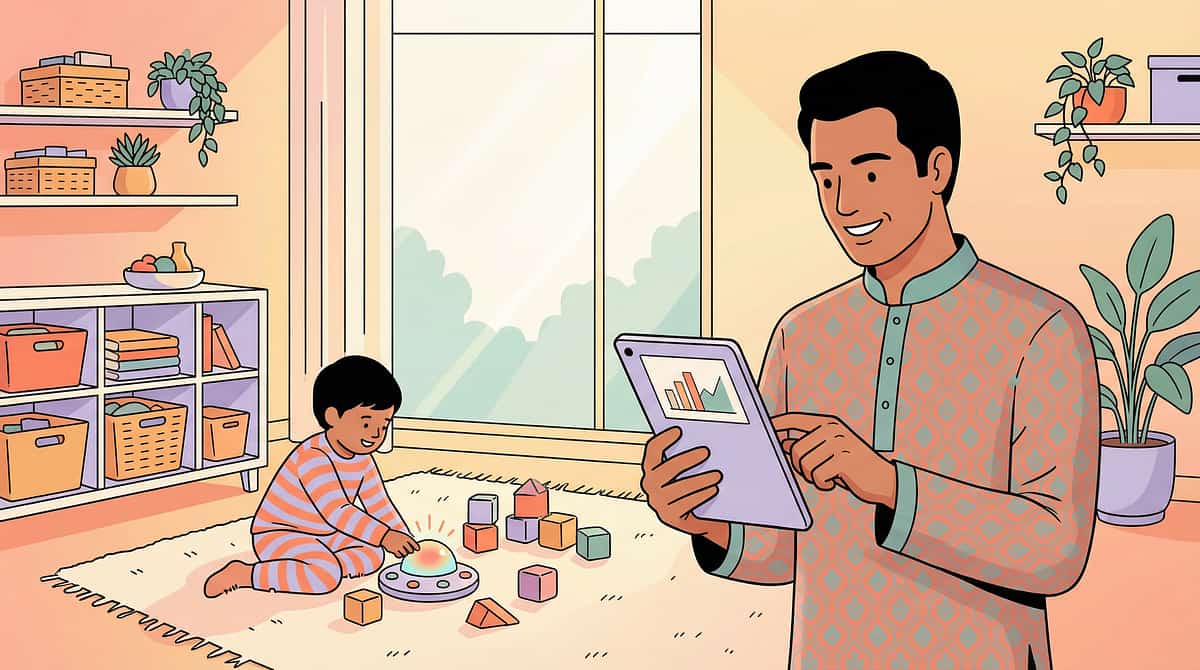
Safety First
Safety Gate. Read This Before Any Session.
🔴 STOP — Do NOT Proceed If:
- Child is in active meltdown or severe dysregulation state
- Child has not eaten in 2+ hours (hunger makes sorting 40% harder)
- Child is running a fever or visibly unwell
- Sorting objects include items smaller than 35mm for children under 3 (choking hazard)
- Child has an acute tactile sensitivity episode — do not force object handling
🟡 MODIFY — Proceed with Adaptation If:
- Child appears tired — shorten session to 5 minutes, reduce object count to 6
- Child is hyperaroused — use calming sensory input for 3 minutes before starting
- Child is mildly resistant — start with preferred objects only
- Session materials include small pieces — supervise continuously
🟢 GO — Ideal Session Conditions:
- Child is calm, alert, and fed (within 2 hours)
- Environment is quiet with reduced visual distractions
- Parent/caregiver is regulated and not rushed
- Materials are prepared and within easy reach
- Duration is planned for 10–15 minutes

Environment Setup
The Right Environment = 60% of Session Success
"The space teaches before the session begins. Organised space = organised mind."
1
Table height
Child's elbows at table edge — crucial for sorting reach
2
3 sorting containers
Clearly distinct colours (red bowl, blue bowl, yellow bowl for first sessions)
3
Object pile
15–20 objects in the centre, randomly mixed
4
Reward station
Sticker chart or reward jar visible but to the side
5
Sound & lighting
Quiet, no background TV. Bright natural or warm white light. No fluorescent flicker.
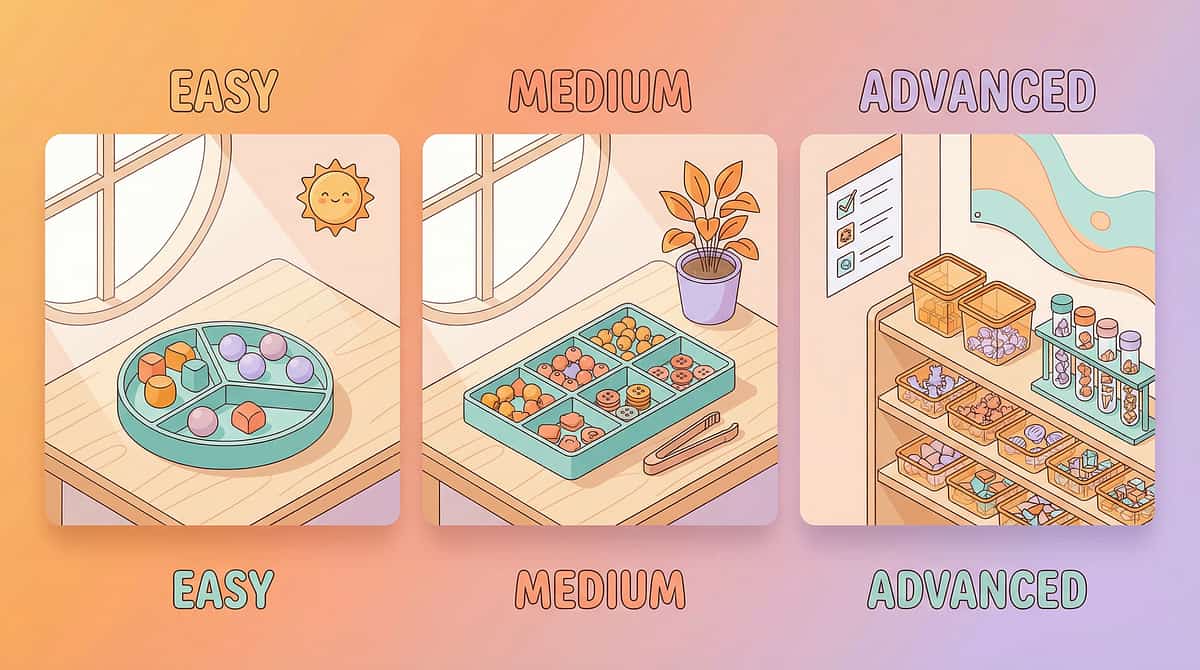
Pre-Session Readiness
60-Second Pre-Flight Check
Your child tells you whether to start. Observe these 7 indicators before every session.
Check | 🟢 GO | 🟡 MODIFY | 🔴 POSTPONE |
Physical state | Fed, rested, no illness | Slightly tired | Fever, sick, hungry |
Emotional state | Calm, neutral, or happy | Mildly fussy | Active meltdown |
Attention level | Looking around with interest | Preoccupied with one object | Cannot redirect gaze |
Sensory state | Comfortable with touch | Reluctant to touch objects | Refusing all physical input |
Recent activity | Calm play | Active running (allow 10-min wind down) | Just had a meltdown <30 min |
Engagement readiness | Approaches table when invited | Needs prompting | Actively moves away |
Communication state | Responding to name | Needs extra cues | Non-responsive to name |
5–7 Green ✅
Full session — proceed to Step 1
3–4 Green 🟡
Modified session — reduce objects, shorten to 8 minutes, use favourite items only
0–2 Green 🔴
Postpone — do calming activity instead; try tomorrow
"The best session is one that starts right. A postponed session is not a failed session."

Step 1 of 6
The Protocol
Step 1: The Invitation
Bring Your Child In, Don't Command Them In
"Hey, I've got something for you to check out. Come look at these — I found something interesting."
Sit at the prepared table. Have the 15–20 mixed objects already in the centre pile but the 3 sorting containers empty. Do NOT instruct yet. Simply draw your child's attention to the objects by picking one up yourself and examining it with genuine curiosity. Put it down. Look at your child.
Acceptance Cues — Child Is Ready
- Walks toward the table
- Reaches for an object
- Makes eye contact with you and then the table
- Vocalises curiosity
Resistance Cues — Modify Approach
- Moves away
- Focuses on a different toy
- Covers eyes or ears
If Resistance:
Pick up an object, narrate ("Oh, this is red! And round!"), and put it in a bowl — play alone for 30 seconds. Curiosity often follows. If still resistant after 90 seconds, postpone.

Step 2 of 6
The Protocol
Step 2: The Engagement
Introduce the First Rule
"Look — these are all mixed up. I wonder... can we put all the RED ones here?" [Point to one bowl. Place ONE red object in it. Look at child expectantly but without pressure.]
Present the sorting containers as labelled destinations — a colour sticker or printed label on each bowl helps enormously. The first sorting rule should always be by colour for first sessions, progressing to shape, then size, then function as mastery develops.
Engagement
Child picks up an object and looks at a bowl — wait, let them decide. Don't pre-empt their choice.
Tolerance
Child watches you sort but doesn't participate yet — continue yourself, narrate gently.
Avoidance
Child pushes objects away — reduce pile to 6 objects, choose only preferred colours.

Step 3 — Common Errors
Common Execution Errors & How to Correct Them
Error | Why It Happens | Correction |
Parent corrects before child places | Anxiety about error | Wait. Let child place. Correct after placement with curiosity: "Hmm, let's look — is this one red or blue?" |
Rushing through 20 objects | Wanting to finish | Slow down. 1 object per 20–30 seconds. Deep processing > speed. |
Sorting by parent's rule only | Child doesn't understand | After 3 correct placements, STOP and ask "Can YOU find a red one?" — shift agency to child. |
Child sorts all objects into one bowl | Rule not yet internalised | Go back to 2 objects total. One per bowl. Build up from there. |
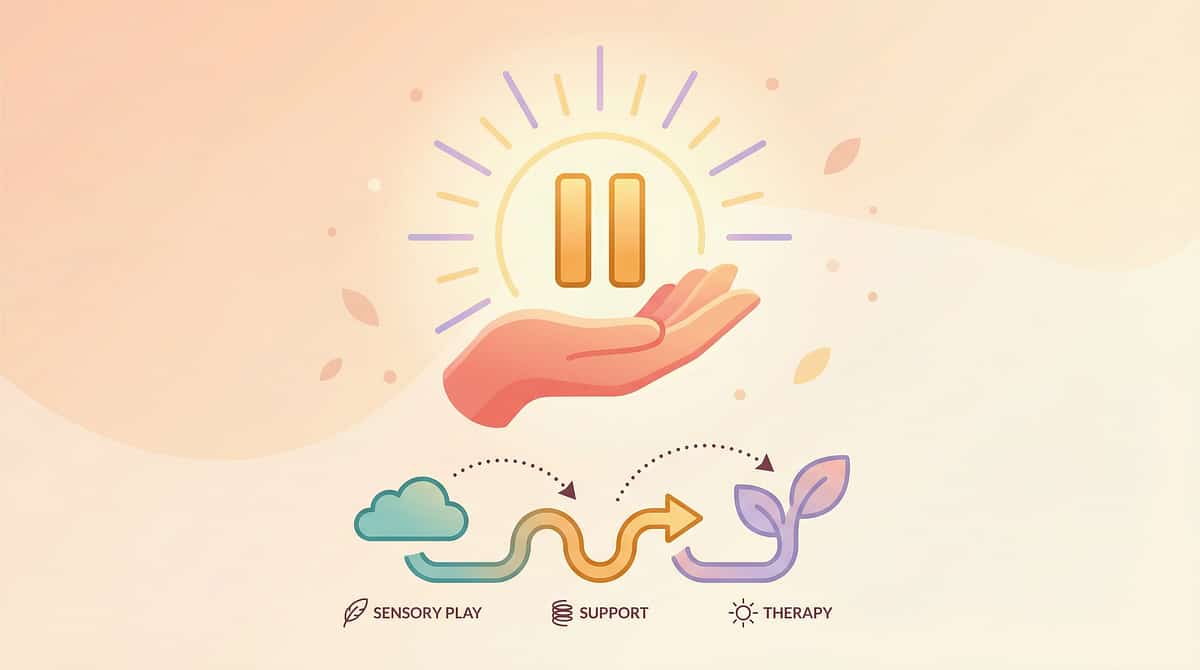
Step 4 of 6
The Protocol
Step 4: Repetition & Variation
Dose Correctly, Not Maximally
3
Minimum Effective Dose
Complete sorting rounds per session
5–7
Optimal Dose
Rounds with progressive variation
8
Maximum Before Satiation
Stop here regardless of child's engagement
Variation Ladder — Use in Sequence Across Sessions
Sort by COLOUR
Weeks 1–2
Sort by SHAPE
Weeks 2–3
Sort by SIZE
Weeks 3–4
Sort by FUNCTION
Weeks 4–6
Sort by 2 Attributes
Weeks 6–8
"3 fully engaged, accurate repetitions are worth more than 10 forced, disengaged ones."
Step 5 of 6
The Protocol
Step 5: Reinforce & Celebrate
Timing Matters More Than Magnitude
Type | Example | When to Use |
Verbal praise | "AMAZING! Red with red! You got it!" | Every correct placement, first 2 weeks |
Physical affirmation | High-five, clap together, thumbs up | With verbal — not instead of |
Token (sticker/pebble) | One sticker on chart per correct sort | When verbal alone isn't motivating enough |
Natural consequence | "You sorted them all! Now we can build with them!" | As child progresses |
Choice-based reward | "You choose the next sorting set!" | Builds autonomy + motivation together |
Session completion celebration: When the full sorting task is completed, provide a "Big Reward" — a preferred activity for 5 minutes. This completes the ABA contingency: Work → Reinforcement → Preferred activity.
Reinforcement products:Rosette Imprint Reward Jar ₹589 | 1800+ Reward Stickers ₹364
"Celebrate the attempt, not just the success. In the early weeks, placing ANY object is worth celebrating."
Data Collection
60 Seconds of Data Now = Months of Progress Clarity Later
Record these 3 data points immediately after every session. Consistency in data collection is what transforms anecdote into evidence.
Data Point 1 — Accuracy Rate
Number of correctly placed objects ÷ Total objects × 100
Example: 12 correct out of 15 = 80% accuracy
Data Point 2 — Session Engagement
Rate 1–5: (1 = refused, 2 = minimal, 3 = moderate, 4 = good, 5 = excellent engagement)
Data Point 3 — Rule Applied
Which sorting rule was practised? (Colour / Shape / Size / Function / 2-attribute)
"Every data point you capture becomes part of 20M+ sessions of intelligence helping your child."
Troubleshooting
Most Sessions Don't Go Perfectly. This Is Your Recovery Guide.
"Session abandonment is not failure. It is data. Data that tells you what to adjust next time."
Child refused to participate at all
Why: Possible sensory aversion to the objects, task was too difficult, child not in the right state. Next time: Go back to readiness check. Use ONLY preferred objects. Start with just 2 objects and 2 bowls.
Child sorted everything into one bowl
Why: Child has not yet internalised the CONCEPT of sorting. Next time: Use two large paper plates on opposite sides. Physically guide child's hand for first 3 placements (hand-over-hand), then fade to pointing.
Child sorted correctly then immediately mixed everything back
Why: The mixing action may be a preferred sensory experience. Next time: End the session WITH a mixing celebration — "Now let's mix them all up again for next time!"
Child became fixated on one specific object
Why: Object has a preferred sensory property (texture, colour, weight). Next time: Let child KEEP that object as a reward for completing the sort with the other objects.

Troubleshooting Continued
More Recovery Strategies
Child was accurate for first 5 objects, then fell apart
Why: Working memory limit reached. Holding the sorting rule in mind for 15+ objects is cognitively fatiguing. Next time: Reduce object count to 9 (3 per category). Build back up slowly.
Parent felt frustrated or rushed
Why: Parent pressure transfers to child instantly. Next time: If you're not regulated, postpone. Try a 2-minute calming strategy for yourself before starting. Your regulated nervous system is a prerequisite for your child's regulated session.
Child was great at home but cannot sort at school
Why: Skill is not yet generalising. Different materials, different setting, different people. Next time: Bring the exact same sorting set to school for 2 weeks. Same materials = lower transfer barrier. Then gradually introduce different materials.

Personalisation
No Two Children Are Identical. Personalise This Technique.
For Children with Low Verbal Comprehension
Remove all verbal instruction — use gesture and demonstration only. Point to container, point to matching object. Hand-over-hand for first 10 sessions. Build comprehension AFTER sorting competence emerges.
Difficulty Continuum
2 objects → 4 attributes | 1 rule → rule shifts | 6 items → 30 items | 1:1 guidance → independent
Act IV — Progress Arc
Weeks 1–2
Week 1–2: Calibrate Your Expectations
Early Progress Is Invisible — Until It Isn't
15%
Orientation Phase
Weeks 1–2 — Tolerance building and initial engagement
What You WILL Likely See ✅
- Tolerance of sorting materials increasing session by session
- Reduced resistance at session start (from "no" to "maybe")
- Child examines objects before placing — processing is happening
- Correct placements beginning to appear — even if only 2–3 per session
What Is NOT Progress Yet ❌
- Consistent accuracy above 70% — this comes in weeks 3–4
- Child independently initiates sorting — this comes in weeks 5–8
- Transfer to real-world sorting (toys, laundry) — this comes after mastery
"If your child sat at the table and touched two objects for 3 minutes when they previously refused — that is measurable progress. Write it down."

Weeks 3–4
Consolidation Phase
Week 3–4: The Brain Is Forming Pathways
40%
Consolidation Phase
Weeks 3–4 — Neural pathways solidifying
Consolidation indicators to look for:
Child anticipates the activity
Approaches the table before being called
Accuracy improving: 60–75% correct placements
Without prompting from you
Child self-corrects
Places incorrectly, then moves the object to the right bowl — this is the neurological milestone of consolidation
Child names the attribute
"Red! Goes here!" — categorical language is emerging
Speed increasing
Placements are less hesitant, more confident
"You may notice you're less anxious during sessions too. Your confidence as a therapeutic parent is growing alongside your child's skill."
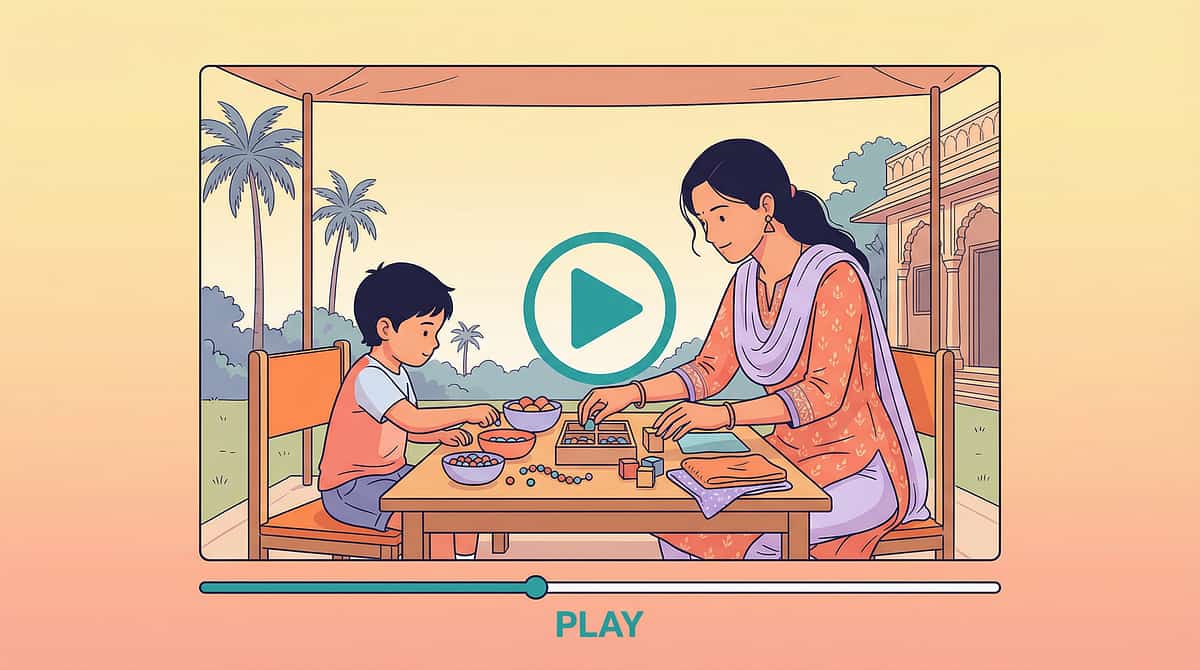
Weeks 5–8
Mastery Phase
Week 5–8: Mastery Is Close
75%
Mastery Phase
Weeks 5–8 — 🏅 Mastery badge unlocking
Mastery Criteria — Observable & Measurable
90%+ Accuracy
Across 3 consecutive sessions for the current sorting rule
Independent Initiation
Child begins sorting without an invitation prompt
Rule Explanation
Child can tell you (verbally or via AAC/gesture) why objects belong together
"Mastery unlocked" — when to advance: When all 3 criteria are met AND generalisation is observed in at least 1 non-training setting, proceed to G-670: 9 Materials That Help With Sequencing, or introduce 2-attribute sorting as the advanced challenge.
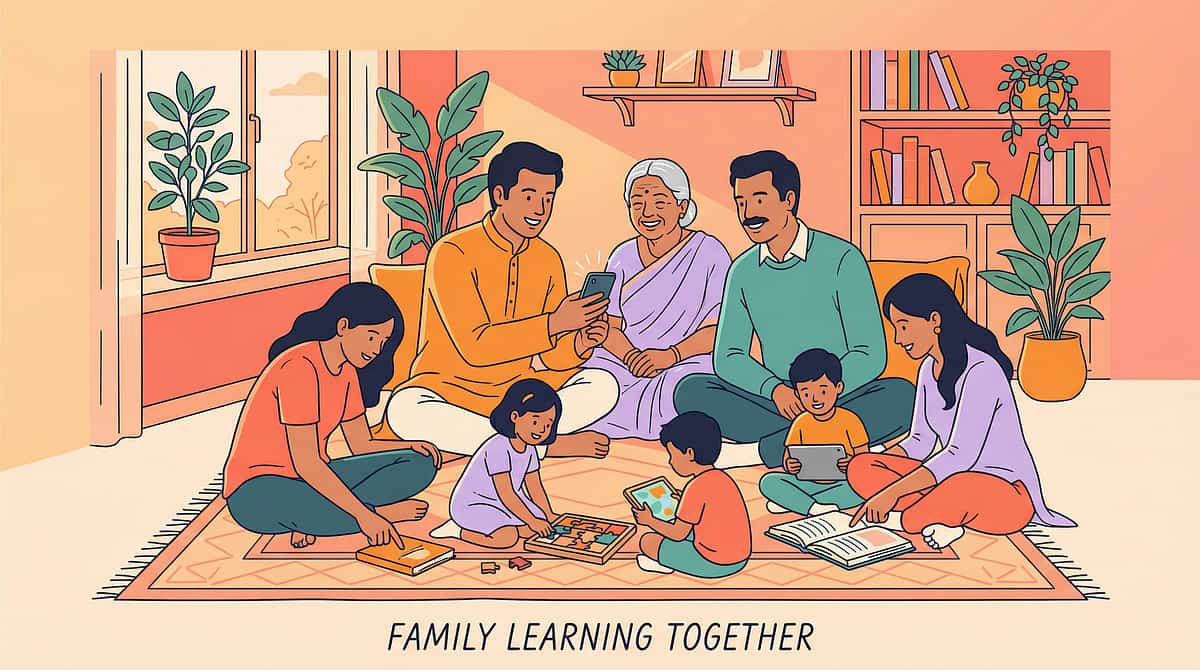
Celebrate This Win
You Did This.
Your child's brain built new pathways because you showed up, consistently, patiently, and with love.
You spent 5–8 weeks teaching your child that the world can be organised into meaningful groups. That objects have properties. That rules exist and can be applied. That order is not chaos. This is not a small achievement — categorical thinking is the cognitive foundation of mathematics, language, science, social understanding, and independent living.
You didn't just teach sorting. You built a scaffold for your child's entire intellectual future.
🎉 Sorting Party
Let your child sort something real in the house today — socks, fruit, toy blocks. Celebrate loudly when they do it correctly in the real world.
📸 Photo Prompt
Take a photo of your child sorting today. Write the date. Write one thing that was different from Week 1. This is your evidence of transformation.

Red Flags
Trust Your Instincts. These Signs Mean Pause and Seek Guidance.
🚩 Flag 1: Zero Tolerance After 4+ Weeks
Child still refuses any engagement with sorting materials after consistent, gentle attempts. Possible cause: Sensory aversion, underlying anxiety, or assessment gap. Action: OT evaluation — sensory profile assessment needed.
🚩 Flag 2: Accuracy Going Backward
Child was at 70% accuracy and is now at 30% or refusing. Possible cause: Illness, environmental stress, or trauma response. Action: Pause. Medical check. Assess home environment changes.
🚩 Flag 3: Self-Injurious Behaviour During Sessions
Head-banging, hand-biting, or scratching during or immediately after sorting sessions. Action: STOP immediately. Call 9100 181 181. Clinical assessment needed before resuming.
🚩 Flag 4: Regression in Previously Mastered Skills
Skills that were present (speech, self-care, play) are disappearing alongside sorting difficulty. Action: Paediatric/NeuroDev consultation within 1 week.
🚩 Flag 5: Session-Related Sleep Disruption
Night terrors, refusal to sleep, or excessive arousal on sorting session days. Action: Reduce session intensity. Shorten duration. Consult OT.
🚩 Flag 6: Parent-Child Relationship Strain
Parent or child is dreading sessions, crying, or showing distress. Action: Take a 1-week break. Focus on play only. Call 9100 181 181 for parent guidance.
"Trust your instincts. If something feels wrong, pause and ask. You are the world's foremost expert on your child."

Related Techniques
You Already Have Materials for These. Explore the Neighbourhood.
Technique | Difficulty | Level | Materials You May Own |
G-669: Categorisation Depth | 🟡 | Core | Sorting sets |
G-670: Sequencing Skills | 🟡 | Core | Picture cards |
G-671: Pattern Recognition | 🟡 | Core | Shape sorters, beads |
G-665: Matching & Discrimination | 🟢 | Intro | Memory games |
G-672: Working Memory Games | 🟠 | Advanced | Memory game sets |
G-680: Following Directions | 🟡 | Core | Visual schedule tools |
"You already own materials for 4 of these 6 techniques. Your kit is more powerful than you know."
Your Child's Full Developmental Map
This Technique Is One Piece of a Larger Plan. See the Full Picture.
Domain A — Sensory
Sensory regulation supports sorting readiness
Domain B — Communication
Category naming supports sorting language
Domain D — Behaviour
Task compliance supports session engagement

Act V — Community
From the Pinnacle Network. Real Families. Real Journeys.
Family Story 1 — Hyderabad Network
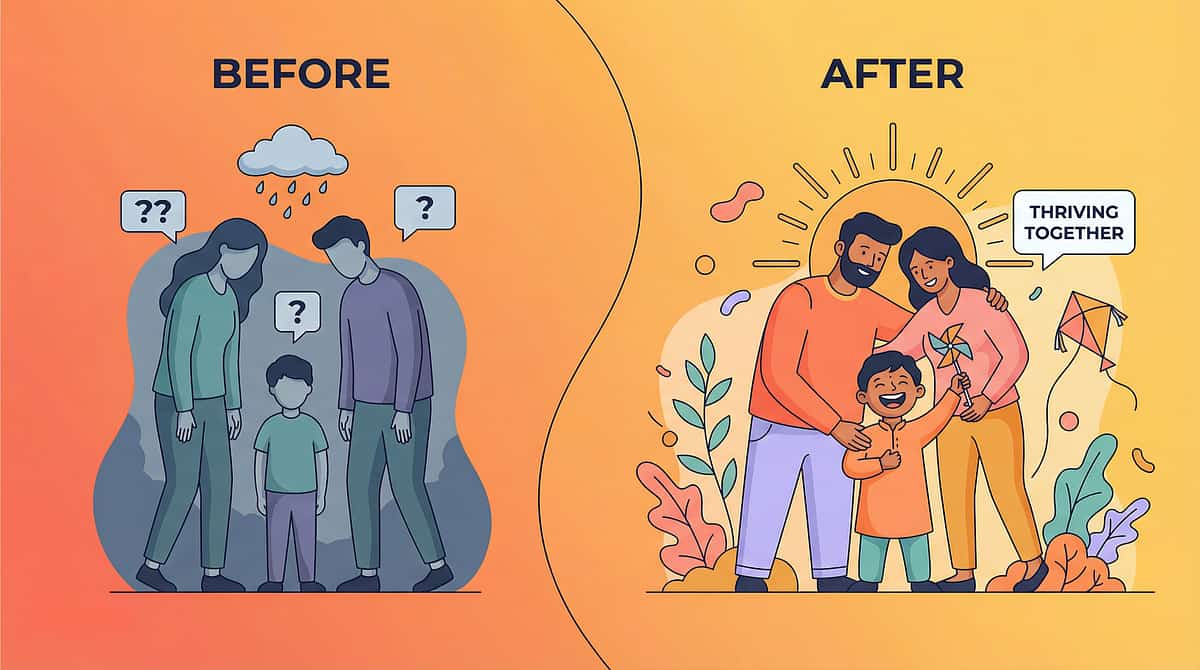
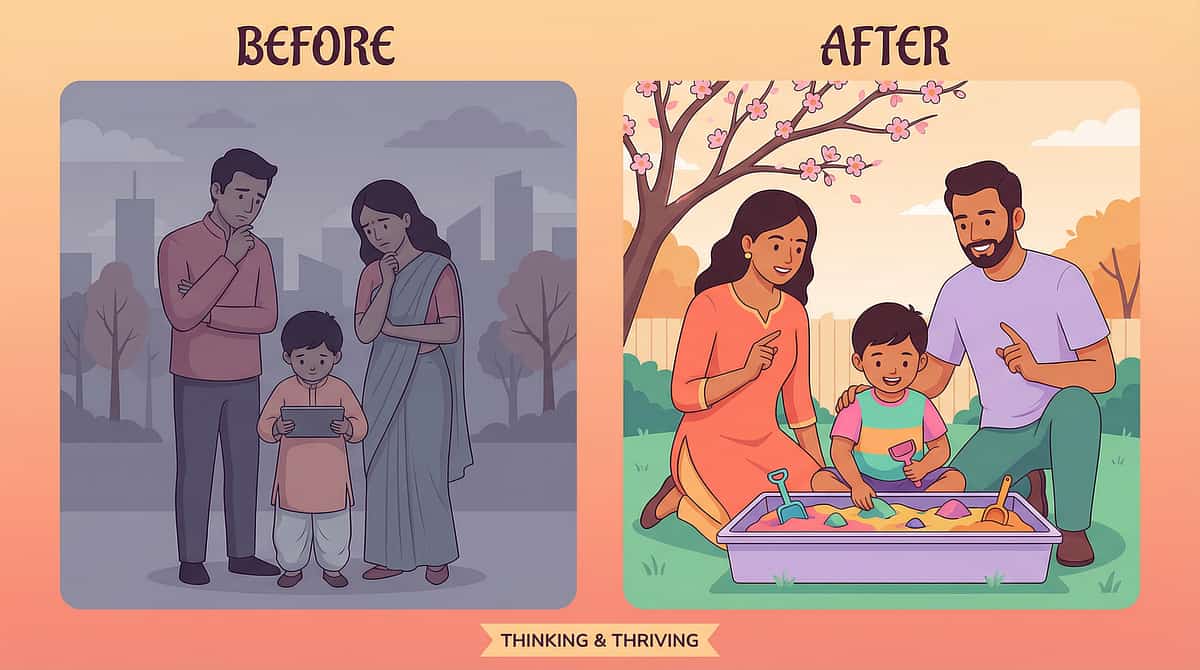
Before: "My 4-year-old son couldn't sort anything. Give him 10 blocks of 3 colours and he'd just throw them all in a pile. His preschool teacher was concerned about kindergarten readiness."
After (12 weeks): "He now sorts his blocks by colour before building with them — without us asking. His kindergarten teacher told us his 'pre-maths categorisation skills are strong.' I cried in the parking lot."
Therapist notes: Protocol began with only 4 objects and 2 containers. Reward jar introduced week 2. Colour mastery achieved at week 6. Full independence at week 11.
Family Story 2 — Bangalore Network
Before: "My daughter (age 6, ASD Level 2) sorted everything by her own rules — things she'd touched vs. not touched, things from Tuesday vs. other days. She was falling behind in science and maths."
After (16 weeks): "She can now use conventional sorting rules when the task asks for them — AND explain why. She told her grandmother 'these are all vegetables because we eat them, and these are fruits because they're sweet.'"
"The world felt chaotic for her. Sorting taught her brain that the world can have order. Everything changed after that." — Parent, Pinnacle Network
Preview of 9 materials that help with sorting skills Therapy Material
Below is a visual preview of 9 materials that help with sorting skills therapy material. The pages shown help educators, therapists, and caregivers understand the structure and content of the resource before use. Materials should be used under appropriate professional guidance.


Link copied!

Community
Isolation Is the Enemy of Adherence. You Were Never Meant to Do This Alone.
Sorting Skills Parent WhatsApp Group
500+ parents across India navigating the same challenge. Share sessions, ask questions, celebrate wins in real time.
Pinnacle Online Community
Share sessions, ask questions, celebrate wins at pinnacleblooms.org/community — a moderated, supportive space for families.
Local Parent Meetups
Your nearest Pinnacle centre organises monthly parent meetups by therapy area. Real connection, real community.
Peer Mentoring
"I went through this. I want to help." Connect with a Pinnacle parent mentor who has worked through G-668 successfully.