

"You've said 'pay attention' a hundred times today."
The homework sits untouched. The teacher's notes say "easily distracted." You watch your child hyperfocus on their favorite cartoon for three hours — but ask them to hold one thought through a 10-minute task, and they're gone before you reach step two. This isn't laziness. This isn't defiance. This is attention — a skill in development.
🧠 Cognitive Development
📅 Ages 3–12 Years
⏱ 10–20 Min/Session
🏠 Home Executable
9 Materials That Help With Attention Skills
"You are not failing. Your child's attention system is still being built — and the right tools accelerate that building."

ACT I — THE EMOTIONAL ENTRY
You Are Among Millions of Families Navigating This Exact Challenge
When your child's mind drifts during a lesson, when they lose the thread mid-task, when "selective attention" only fires for preferred activities — this is not a parenting failure. It is a developmental reality experienced in tens of millions of households globally. Attention is not a fixed trait. It is a collection of trainable, measurable cognitive skills. Families who start working on it with the right tools see real, documented change.
1 in 5
Children Affected
Show clinically significant attention difficulties at some point in childhood
80%
ASD Co-occurrence
Of children diagnosed with autism experience attention regulation challenges as a co-occurring feature
30M+
Indian Families
School-age children affected by attention-related learning difficulties in India alone
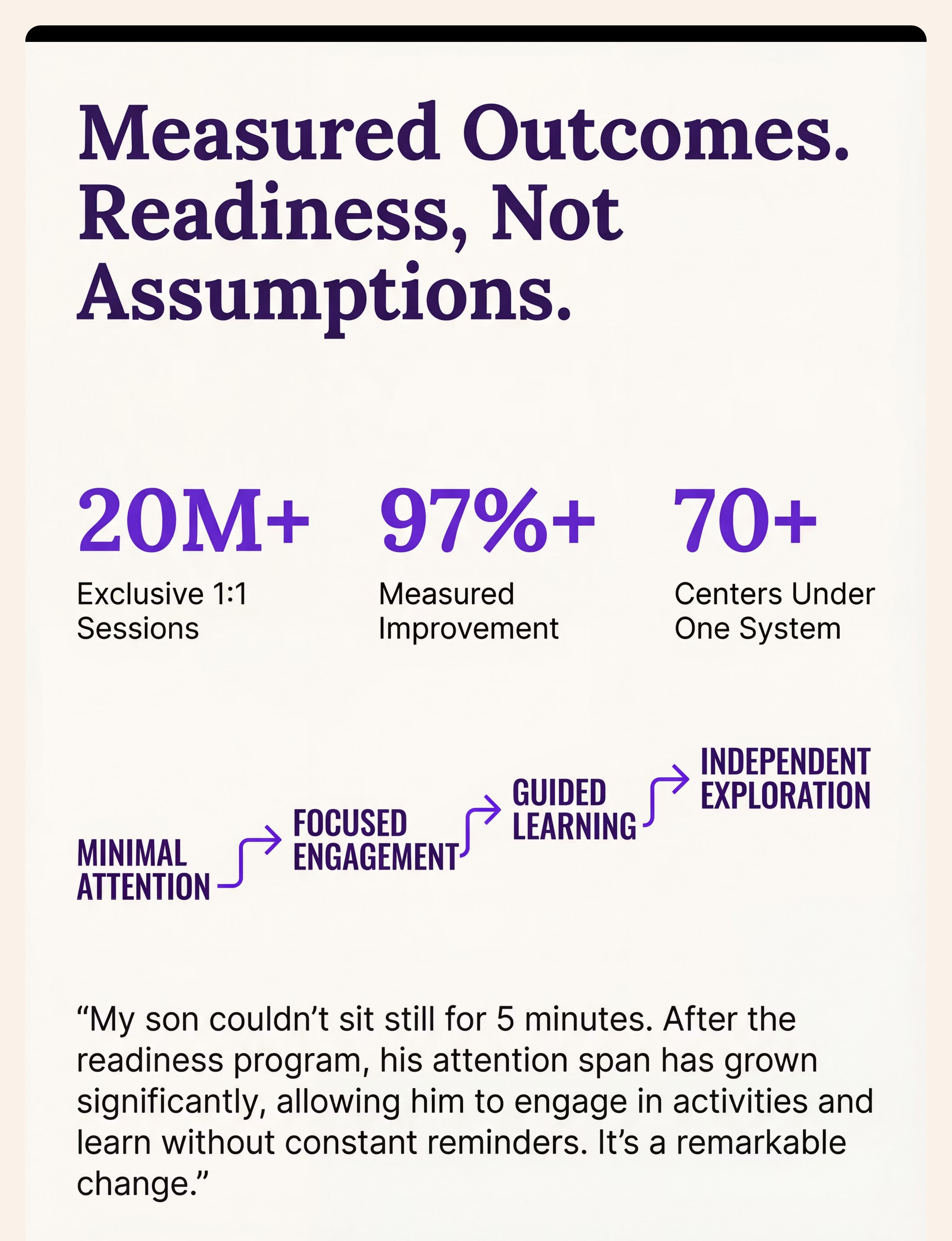
Pinnacle Evidence: Among children who complete structured attention-building programs, 97%+ of Pinnacle families demonstrate measurable improvement in one or more executive function readiness indexes. — GPT-OS® Real-World Evidence, 20M+ Sessions

This Is a Wiring Difference — Not a Willpower Problem
The attention system isn't one switch — it's four interconnected engines, each governed by distinct brain regions still actively developing in your child. Understanding what's happening neurologically transforms frustration into informed, compassionate action.
🔵 Sustained Attention
Staying with a task over time. Governed by the prefrontal cortex and thalamus. Incomplete myelination in developing brains means attention "shorts out" — not a character flaw, but a developmental stage.
🟡 Selective Attention
Filtering out distractions. The anterior cingulate cortex acts as the brain's distraction filter. When under-regulated, every sound and movement competes equally for attention bandwidth.
🟢 Attention Shifting
Moving from one task to another. Requires smooth handoffs between the dorsolateral prefrontal cortex and parietal lobes. "Getting stuck" reflects delayed development of this shifting mechanism.
🟠 Working Memory
Holding information while using it. When the hippocampus–prefrontal link is weak, children lose the thread mid-instruction — not because they didn't hear you, but because the information evaporated before they could act.
"The prefrontal cortex — the brain's CEO for attention — continues developing until age 25. What looks like attention 'problems' in childhood is often a developing brain working at its current capacity." — Consortium NeuroDev Team, Pinnacle Blooms Network®
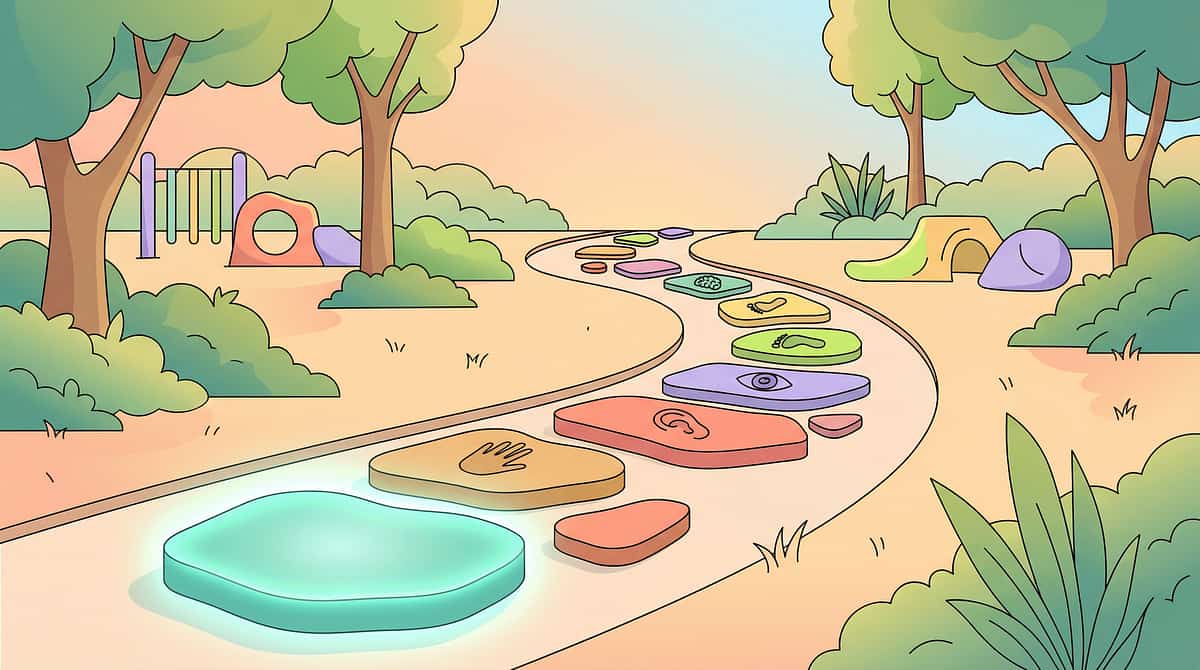
Your Child Is Here — And Here Is Where We're Heading
Attention span is not fixed — it grows predictably with age and, crucially, with the right support. Your intervention window (ages 3–12) is when attention training delivers the highest neuroplasticity returns. Here is where your child sits on the developmental map, and what's possible from here.
Age | Typical Sustained Attention | What You Might Observe | |
3–4 years | 5–10 min (adult-directed) | Drifts quickly; long focus only on beloved topics | |
5–6 years | 10–15 min | Better but still pulled by novelty and movement | |
7–8 years | 15–25 min | Improving filtering; inconsistent under boredom | |
9–10 years | 25–35 min | Growing independence; still benefits from structure | |
11–12 years | 35–45 min | Approaching adult capacity with support |
Co-Occurring Conditions That Amplify Attention Challenges
ASD
Attention shifting and selective attention frequently affected
ADHD
Sustained and selective attention are neurobiologically impacted
Sensory
Auditory/visual overwhelm consumes filtering capacity
Anxiety
Cognitive load of worry reduces available attention bandwidth
Sleep Issues
Prefrontal cortex performance drops 20–40% with insufficient sleep
"Your child is at a waypoint — not a destination. With consistent technique application, attention spans develop measurably. This is documented. This is achievable. And it starts today."

The Evidence Behind This Approach
Clinically Validated. Home-Applicable. Parent-Proven.
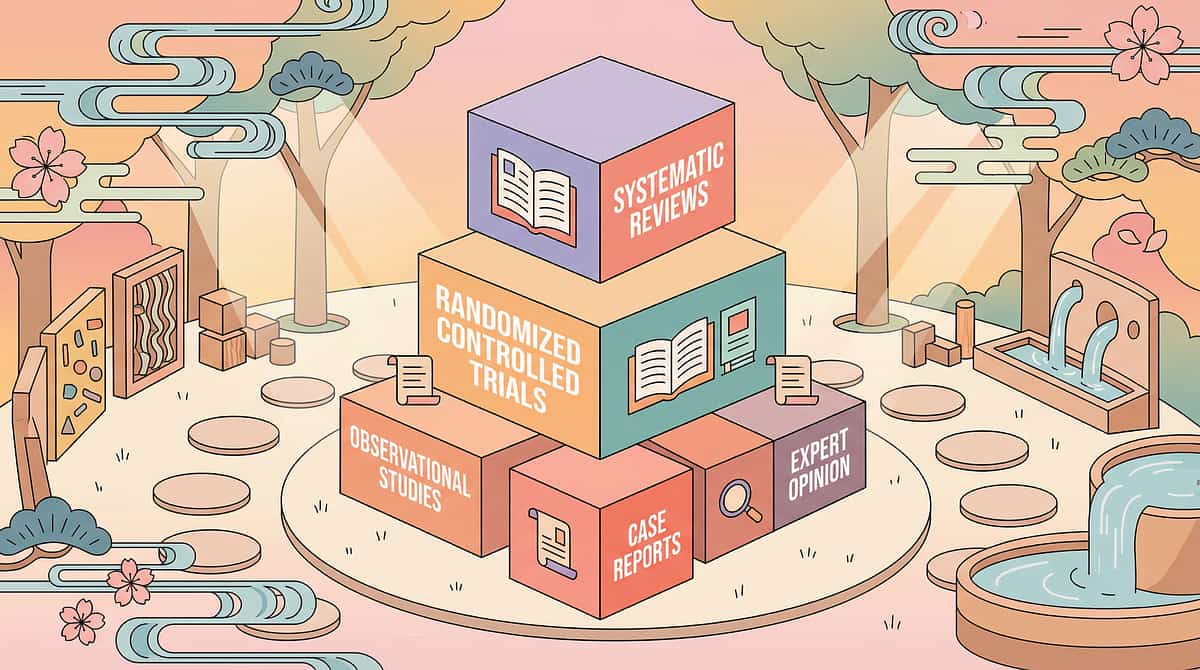
🏅 LEVEL I EVIDENCE — Systematic Reviews & Meta-Analyses
Multiple systematic reviews and RCTs support structured attention training and environmental modification as effective interventions for pediatric attention difficulties. These 9 materials are not anecdotal recommendations — they emerge from converged evidence across occupational therapy, applied behavior analysis, educational psychology, and developmental neuroscience, filtered through 20M+ Pinnacle therapy sessions.
Study | Key Finding | Source | |
PRISMA Systematic Review (2024) | Structured material-based intervention meets evidence-based practice criteria for children with ASD + attention challenges | PMC11506176 | |
Meta-analysis, 24 studies (2024) | Sensory-motor and attention tools effectively promote executive function, adaptive behavior, and sustained focus | PMC10955541 | |
WHO/UNICEF CCD Package (2023) | Parent-administered home interventions across 54 countries produce measurable developmental gains | PMC9978394 | |
Indian RCT, Padmanabha et al. (2019) | Home-based structured interventions show significant outcomes in Indian pediatric populations | DOI: 10.1007/s12098-018-2747-4 | |
NCAEP Evidence-Based Practices (2020) | Visual supports, self-monitoring, and structured reinforcement are evidence-based practices for autism | NCAEP 2020 Report |
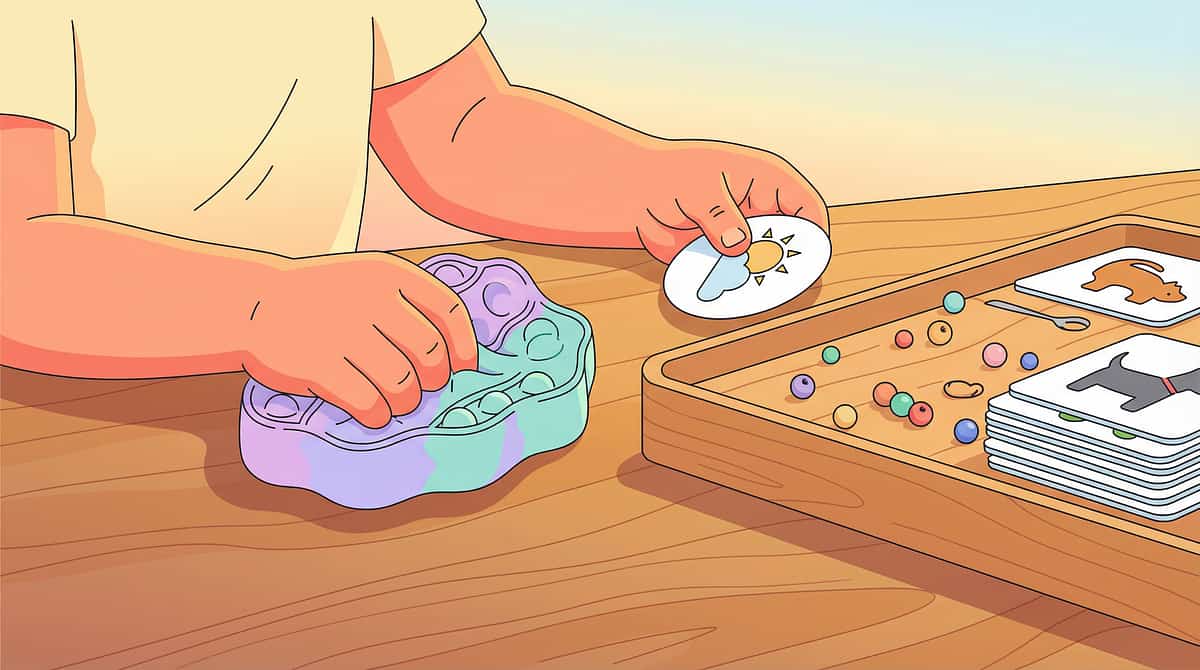
ACT II — THE KNOWLEDGE TRANSFER
The Technique: What It Is
🎯 Attention Skills Development — Multi-Material Protocol
Episode G-661
Attention is not a single skill — it is a family of related cognitive abilities that can be systematically strengthened through the right materials and structured practice. This technique introduces 9 clinically-validated material categories, each targeting a different component of the attention system: time perception, sensory regulation, neural pathway training, executive organization, auditory filtering, postural stability, visual anchoring, working memory, and self-monitoring.
Together, these materials form a complete home-based attention support toolkit — designed to be introduced progressively, adapted to each child's profile, and sustained across the developmental window where neuroplasticity is highest.
🧠 Cognitive Development
⚙️ Executive Function
🎯 Sustained Attention
🔍 Selective Attention
🔄 Attention Shifting
💾 Working Memory
Age Range: 3–12 Years | Session Duration: 10–20 Minutes | Frequency: Daily or 3–5×/week | Setting: Home, School, Therapy Center

Who Uses This Technique
Attention development doesn't belong to one therapy discipline — the brain doesn't organize by therapy type. G-661 is designed to be executed at home by parents and coordinated across the full multi-disciplinary team. Here's how each professional contributes:
🔵 Occupational Therapist (OT) — Primary Lead
OTs use sensory-motor tools (fidgets, seating supports, noise management) to regulate the body-brain interface. They prescribe environmental setup, sensory diet integration, and postural supports that create the physical foundation for focus.
🟢 ABA/BCBA Therapist — Reinforcement & Data Lead
Behavior analysts structure the reinforcement system (reward menus, token economies) that motivates sustained effort and track attention duration and task completion over time. Self-monitoring tools are an ABA specialty.
🟡 Special Education Teacher — Classroom Application Lead
Special educators operationalize visual schedules, task organizers, and attention anchors in academic settings — translating clinical tools into classroom accommodations, IEP goals, and homework strategies.
🟠 Speech-Language Pathologist — Auditory Attention Lead
SLPs address auditory processing and listening attention — the capacity to hold and act on verbal instructions. Working memory tools and auditory attention games are within the SLP's attention intervention scope.
⚪ NeuroDev Pediatrician — Diagnostic & Medical Oversight
Neurological and developmental pediatricians rule out or diagnose underlying conditions (ADHD, ASD, processing disorders) ensuring the material toolkit is aligned with the child's complete clinical profile.
FusionModule™: At Pinnacle, no single discipline owns attention. The FusionModule™ coordinates OT, ABA, SpEd, SLP, and NeuroDev inputs into a single converged attention development pathway — eliminating the silos that leave families navigating five separate clinicians with five separate recommendations.
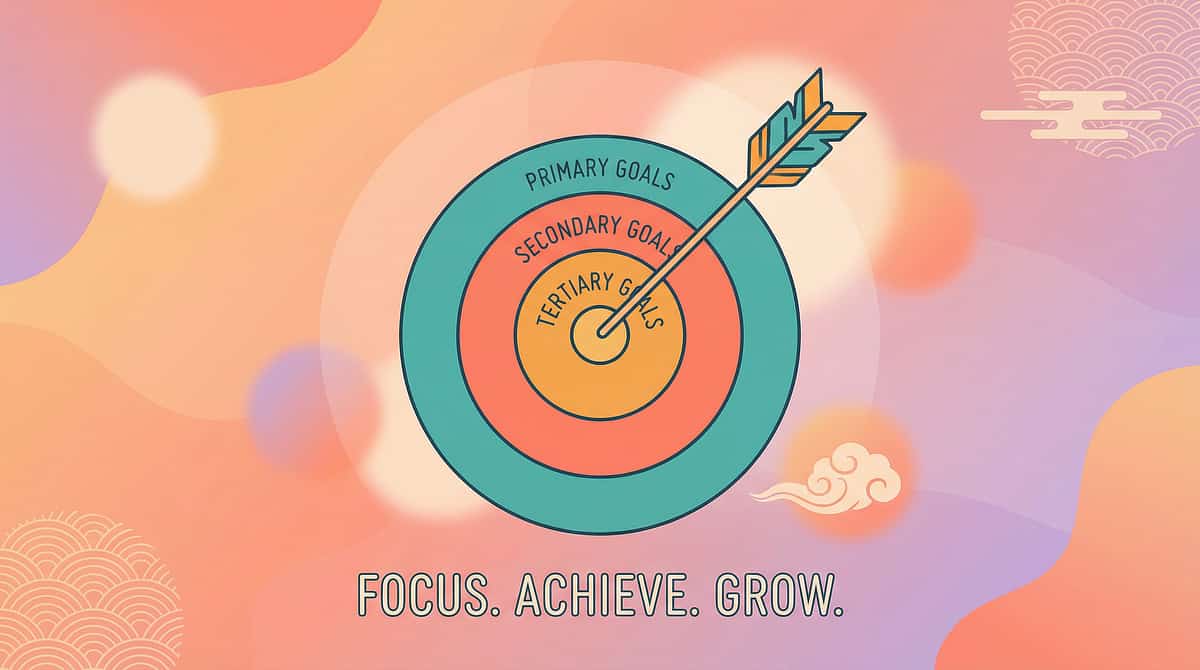
This Isn't a Random Activity. It's a Precision Toolkit.
Every material in G-661 is mapped to a specific attention target. The primary goal is measurable — sustained focus and task completion. The secondary and tertiary benefits cascade outward from that core, touching academic readiness, emotional regulation, and family harmony.
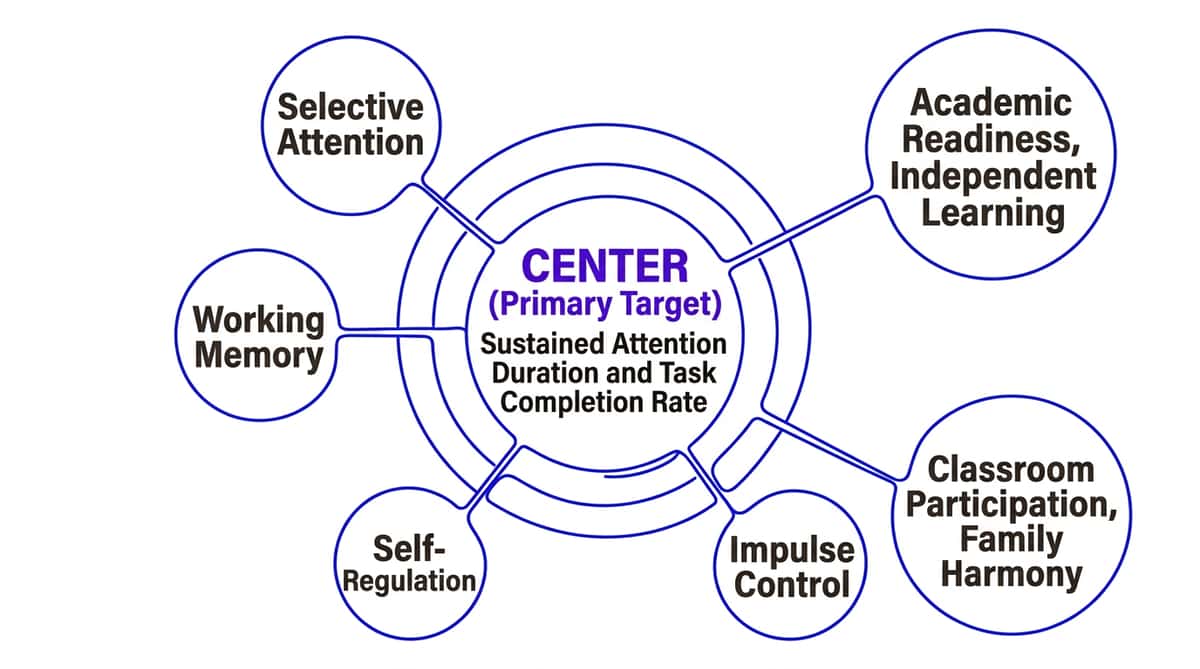
Observable Indicators You're Hitting the Target
Child begins a task within 60 seconds of instruction — without repeated prompting
Child maintains focus on a 10–15 minute task with no more than 1–2 environmental reminders
Child completes multi-step work sequences without abandoning mid-task
Child demonstrates appropriate re-engagement after a brief distraction
Research: PMC10955541 — Meta-analysis confirming attention intervention produces cascading executive function, academic, and social skill gains.
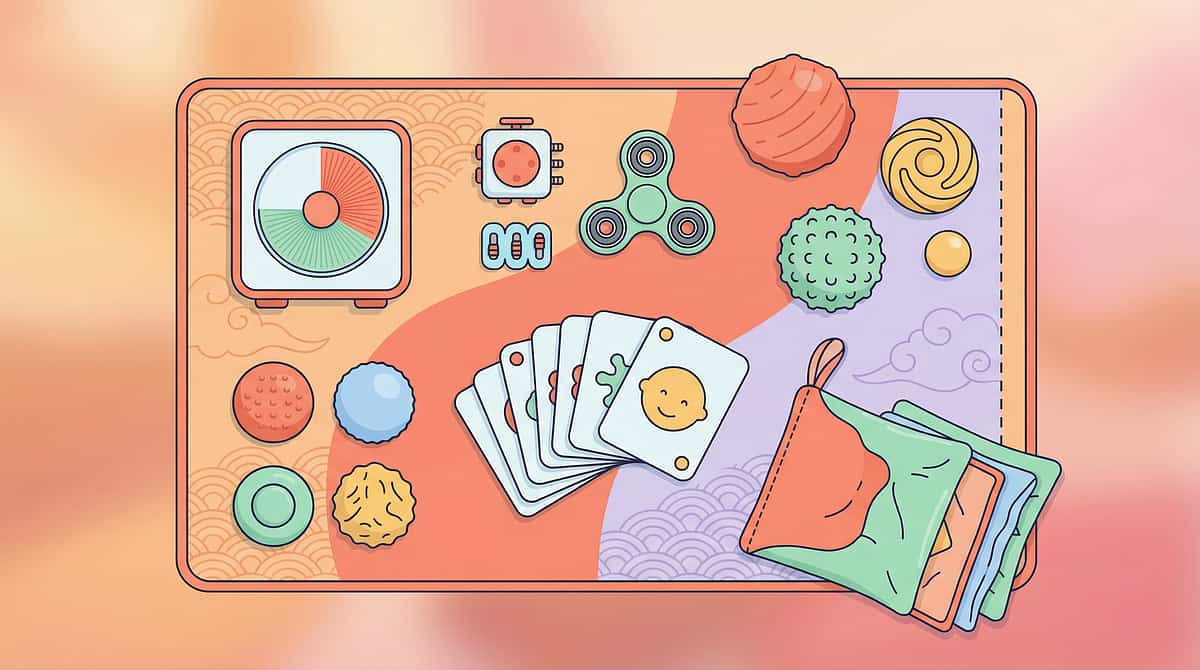
Materials 1–3
Your Attention Toolkit — Clinically Curated, Home-Ready
🛒 Pinnacle Canon Catalog
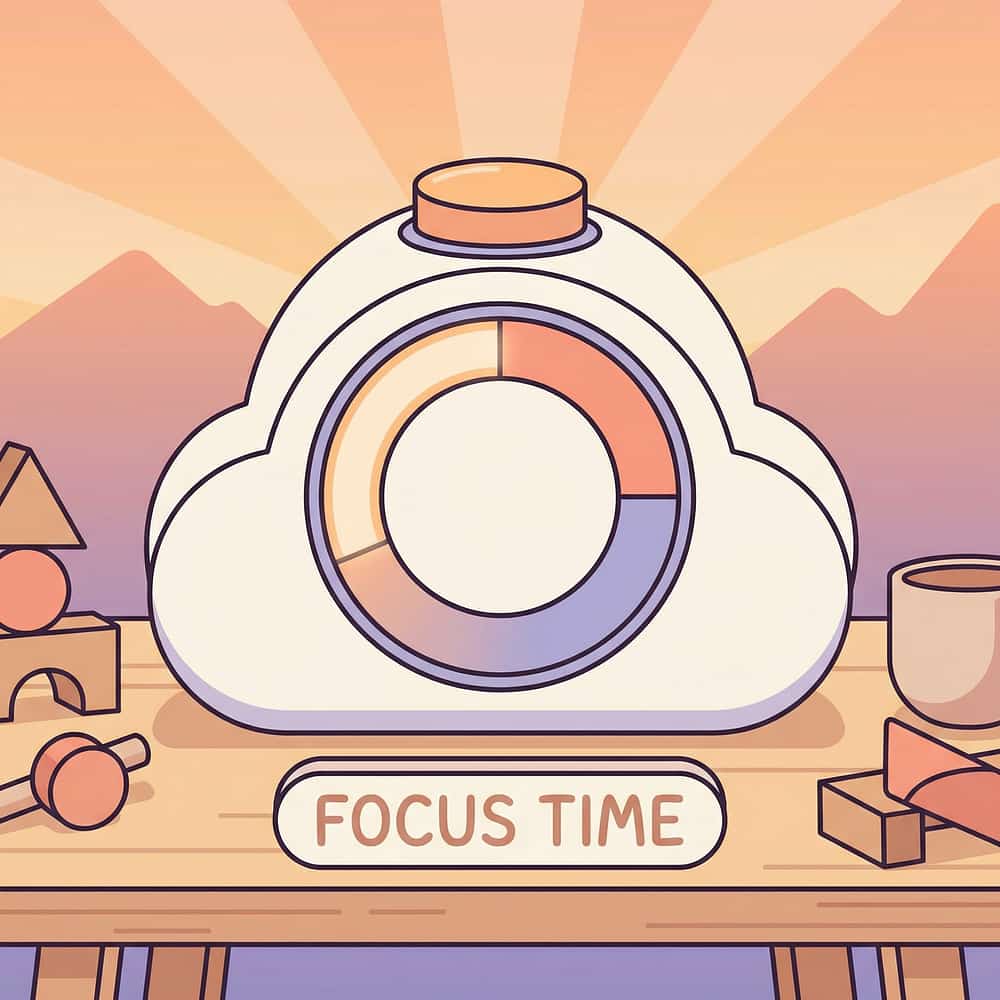
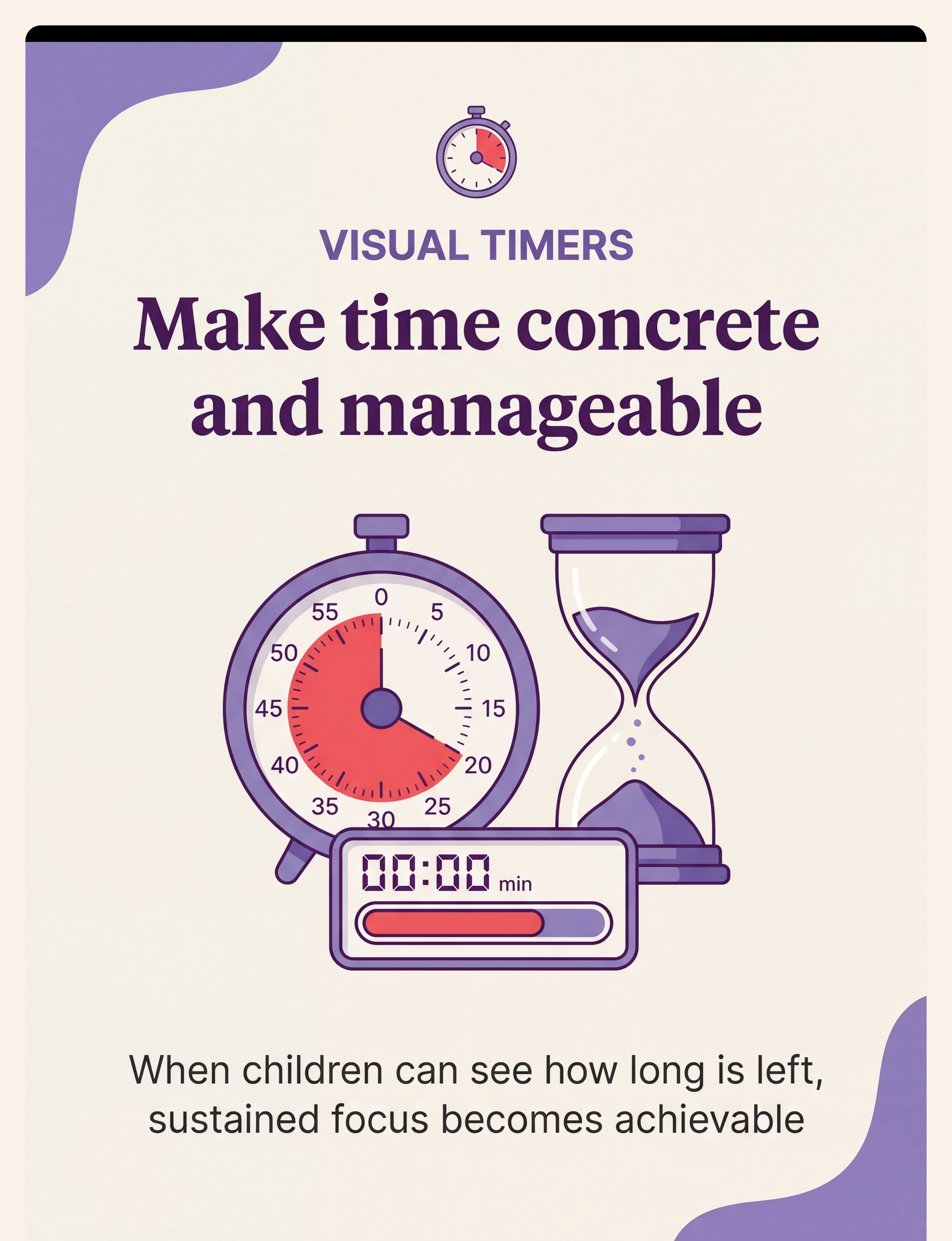
Material 1 — Visual Timers
Canon Category: Cognitive Support Tools
Why it works: Makes time visible — transforms open-ended tasks into bounded, achievable challenges. Time becomes concrete, not abstract.
- Smartivity DIY Interactive Clock with Stationary Organizer — ₹673 | Buy on Amazon ✓ Pinnacle Recommends
- Sand timers (₹200–400) or Time Timer® app (₹0) as budget alternatives
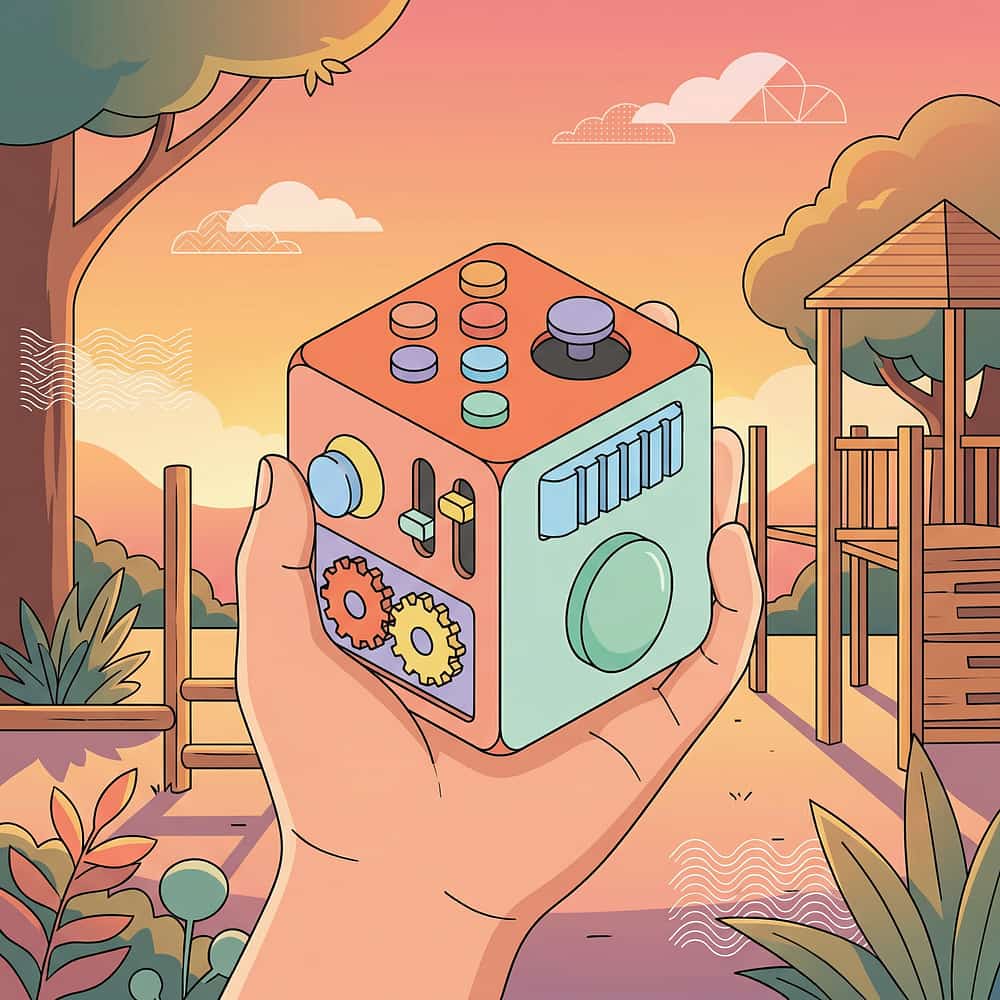
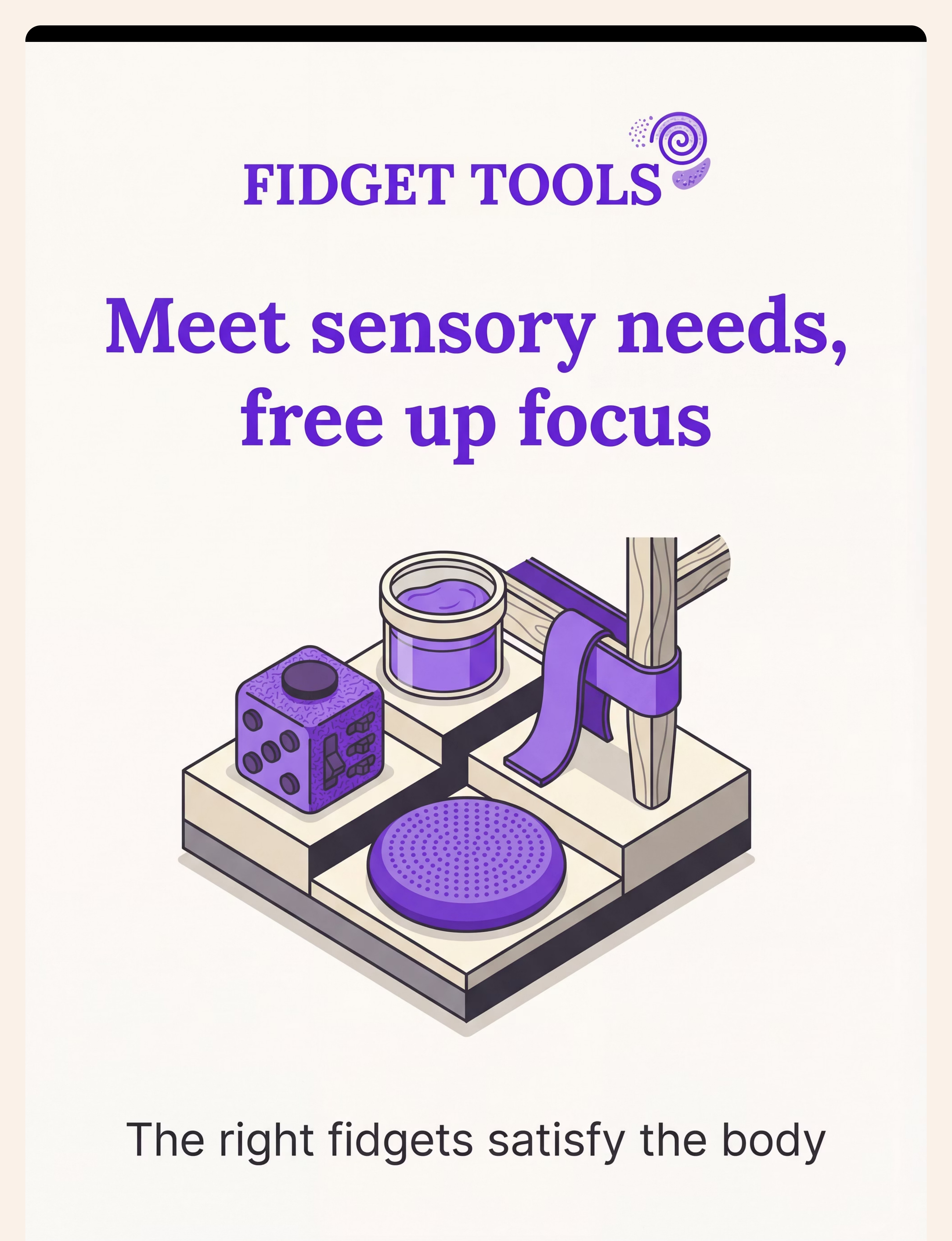
Material 2 — Fidget Tools & Sensory Supports
Canon Category: Sensory Regulation Tools
Why it works: Provides proprioceptive input that satisfies the movement-seeking brain, freeing cognitive capacity for focus. The body is regulated; the mind can attend.
- Kidology Pull Out Spike Toy — ₹380 | Buy on Amazon
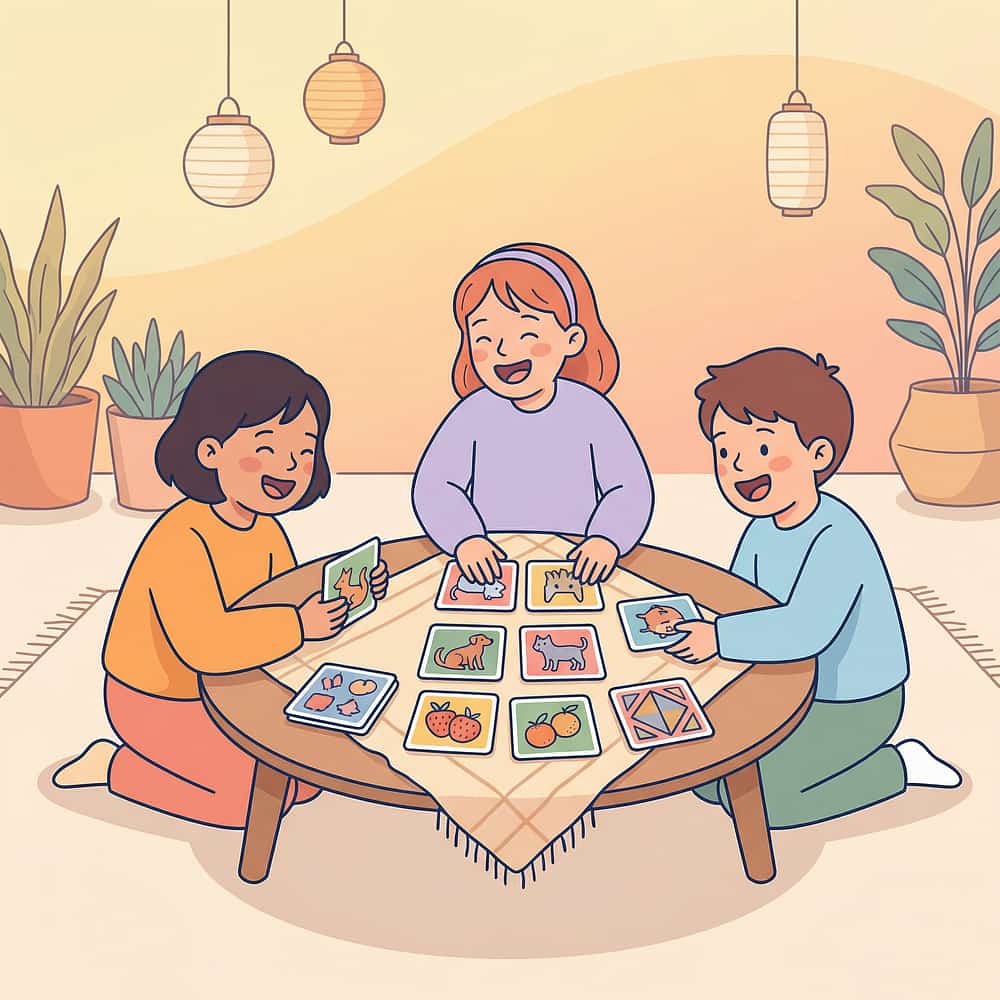
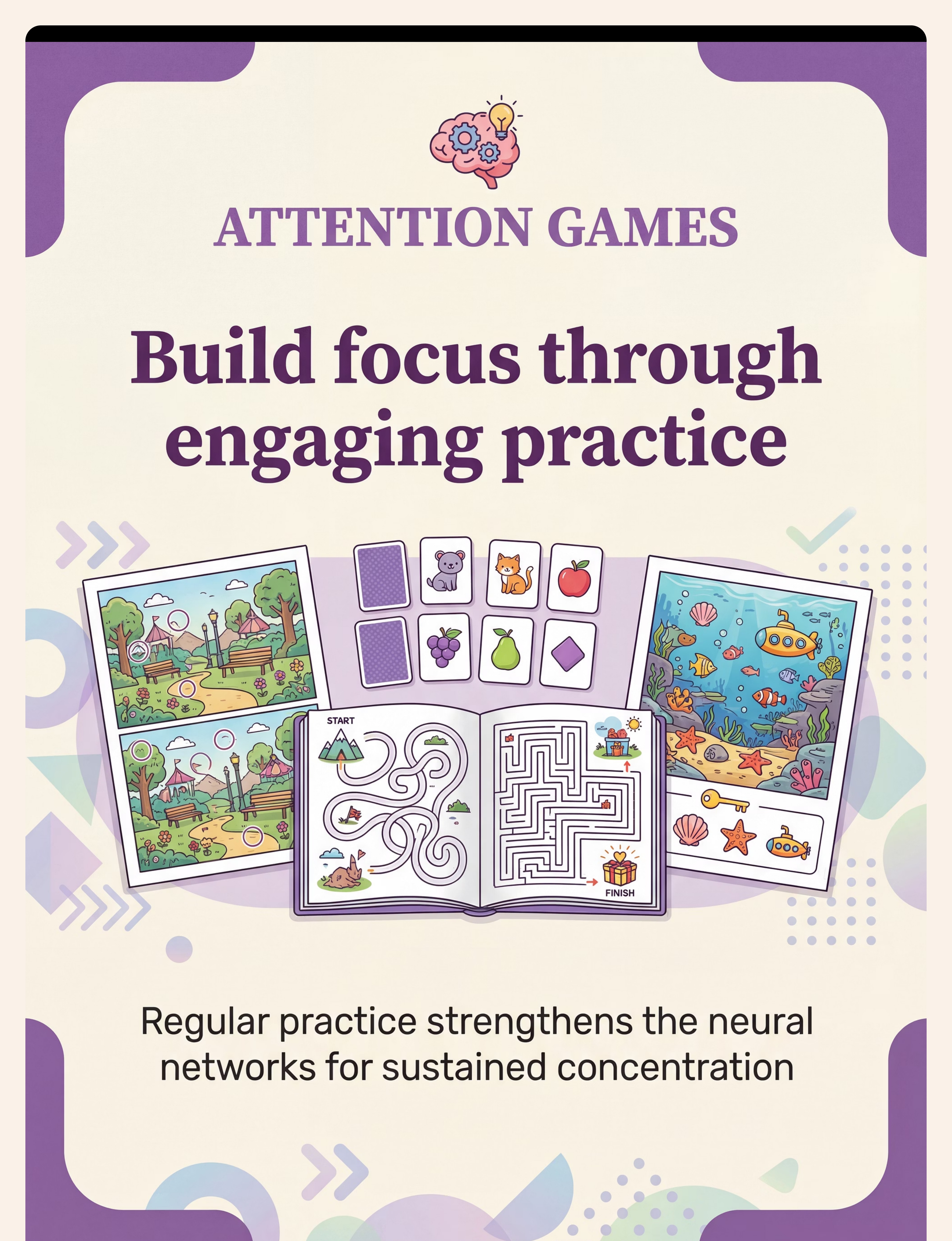
Material 3 — Attention Training Games
Canon Category: Problem-Solving Toys | Matching Games / Memory Games
Why it works: Strengthens neural pathways for attention through structured, enjoyable practice. Play is the most powerful teacher for the developing brain.
- SHINETOY Shut The Box Game — ₹428 | Buy on Amazon
- Dyomnizy Educational Memory Game — ₹519 | Buy on Amazon ✓ Pinnacle Recommends
- Monkey Minds Rhyming Cards — ₹296 | Buy on Amazon

Materials 4–6
Building the Environment Around Your Child's Attention
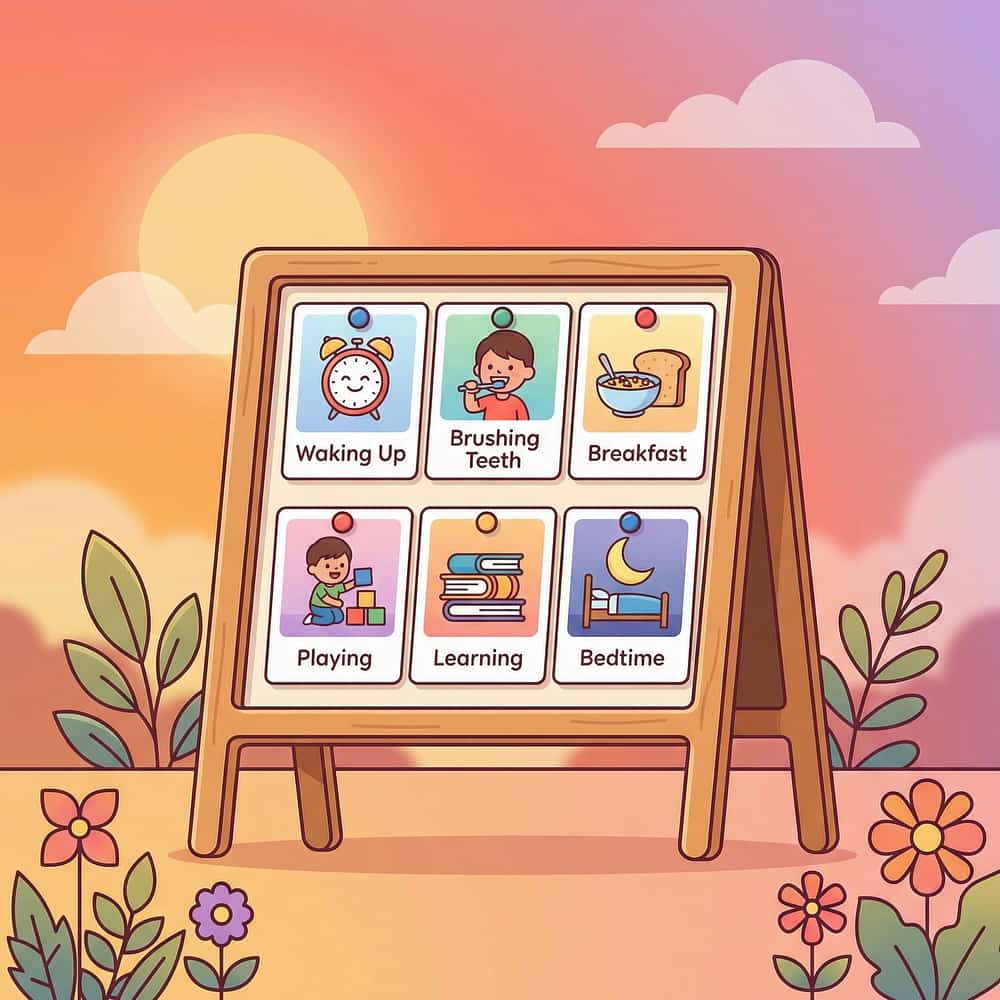
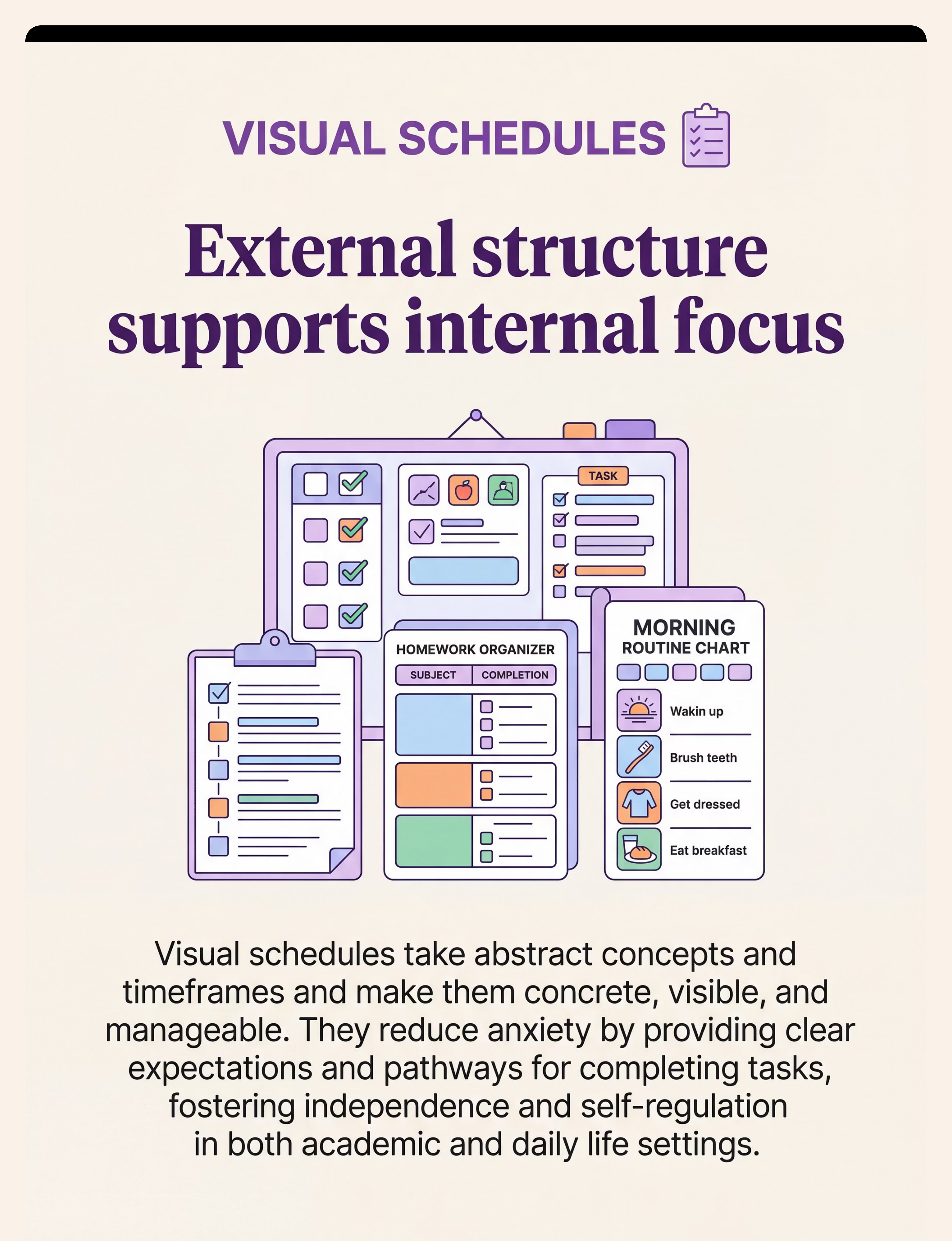
Material 4 — Visual Schedules & Task Organizers
Canon Category: Environmental Supports
Why it works: Externalizes executive function — reduces cognitive load by making "what's next" visible. Children can't attend to a task when their working memory is consumed with tracking the sequence.
- DIY: Printed picture cards + whiteboard = ₹100–200 total

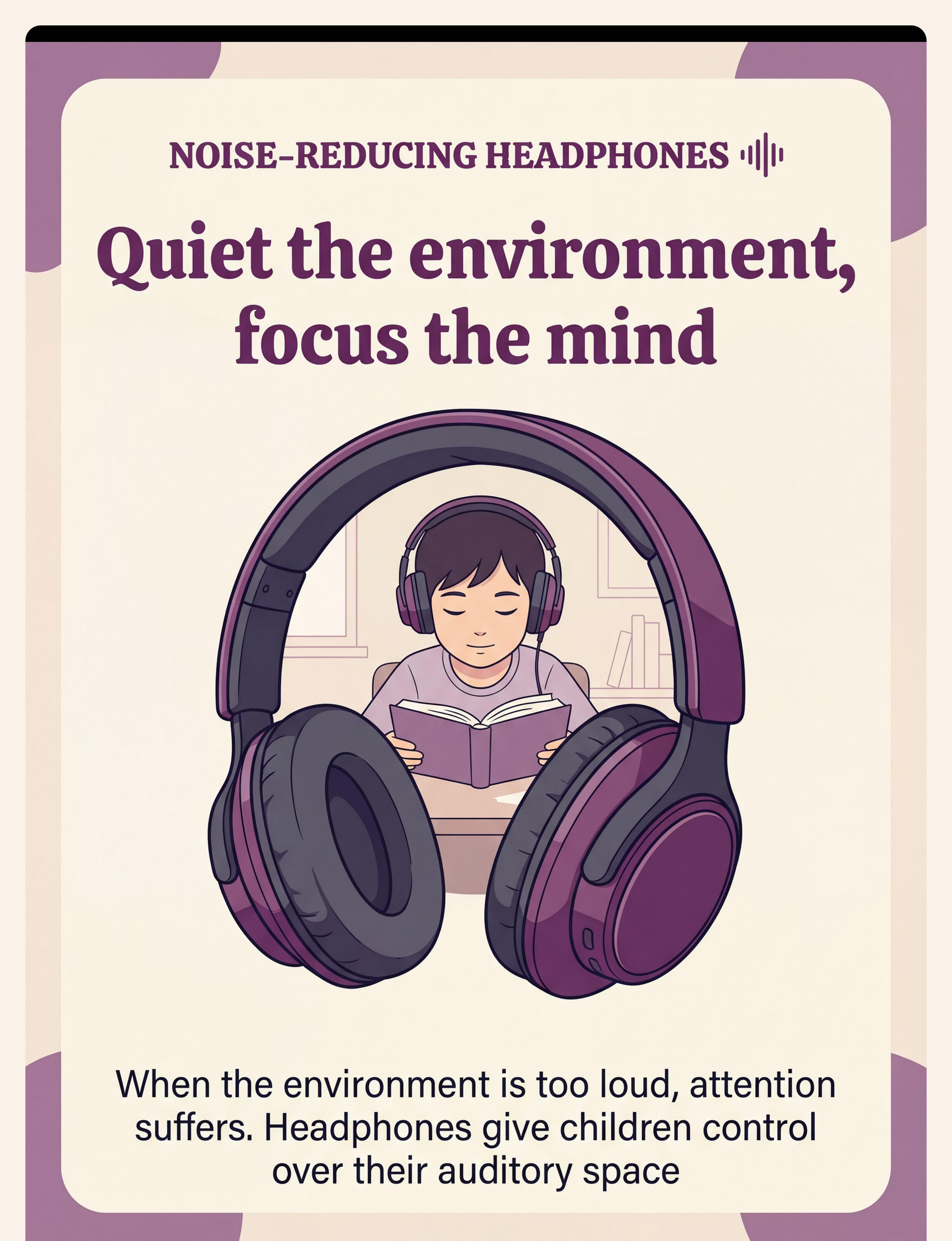
Material 5 — Noise-Reducing Headphones
Canon Category: Sensory Regulation — Auditory
Why it works: Reduces auditory filtering load, freeing cognitive resources for the primary task. For sensory-sensitive children, background noise consumes the attention bandwidth before the task even begins.
- Price Range: ₹500–3,000 | Volume-limiting models only (max 85dB)

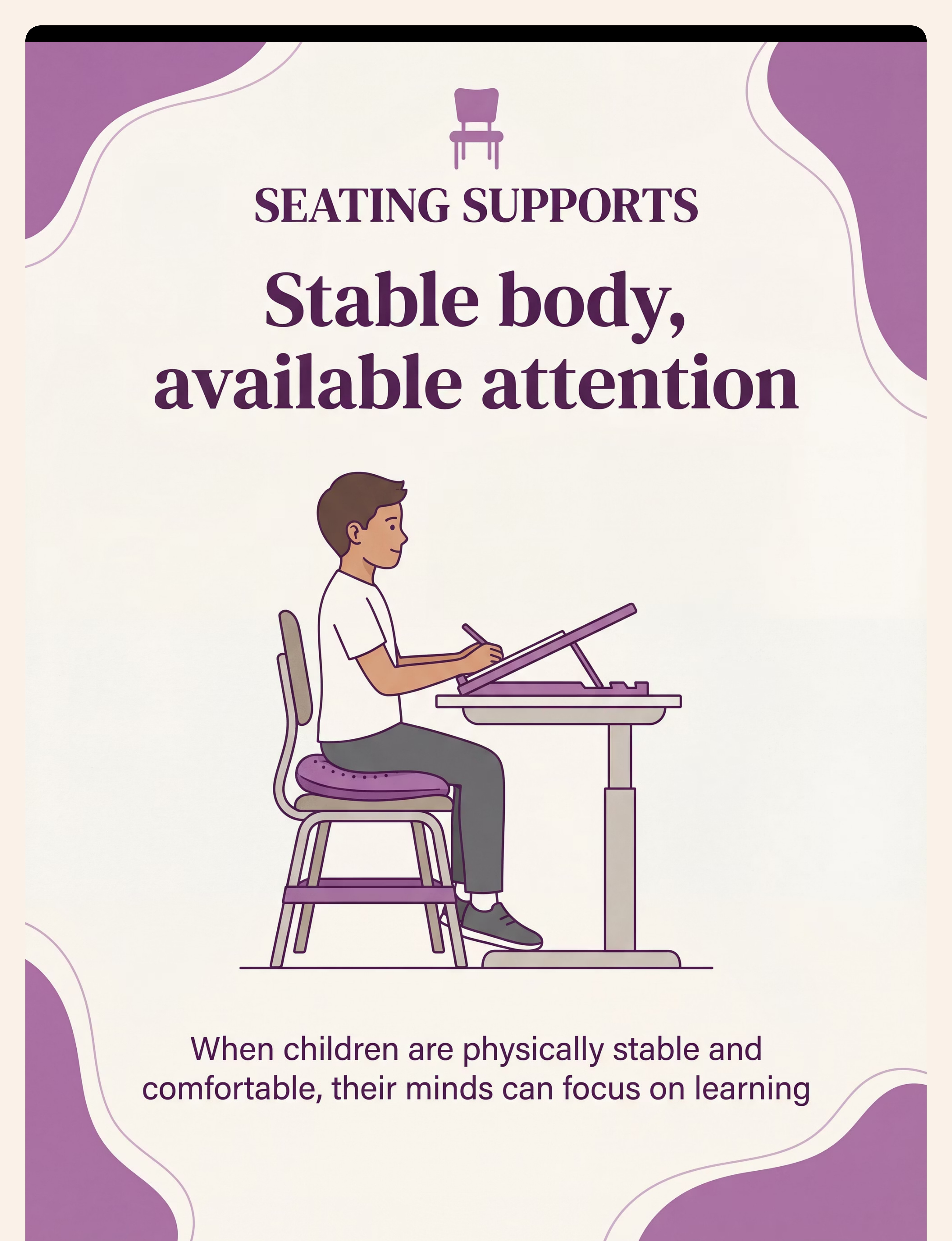
Material 6 — Seating Supports
Canon Category: Postural & Sensory Supports
Why it works: Stable body = available attention. Proprioceptive input while seated satisfies movement needs without disrupting desk work. Children who fidget in their chair are often self-regulating.
Materials 7–9
Anchoring Attention, Memory & Motivation

Material 7 — Visual Attention Anchors
Canon Category: Visual Learning Supports
Why it works: Provides physical return-to-task cues, reducing the need for adult verbal reminders. A laminated card on the desk that says "Eyes on task" does the redirecting — so you don't have to.
- Laminated cue cards + reading strips = ₹50–150
- Highlighters: ₹80–150

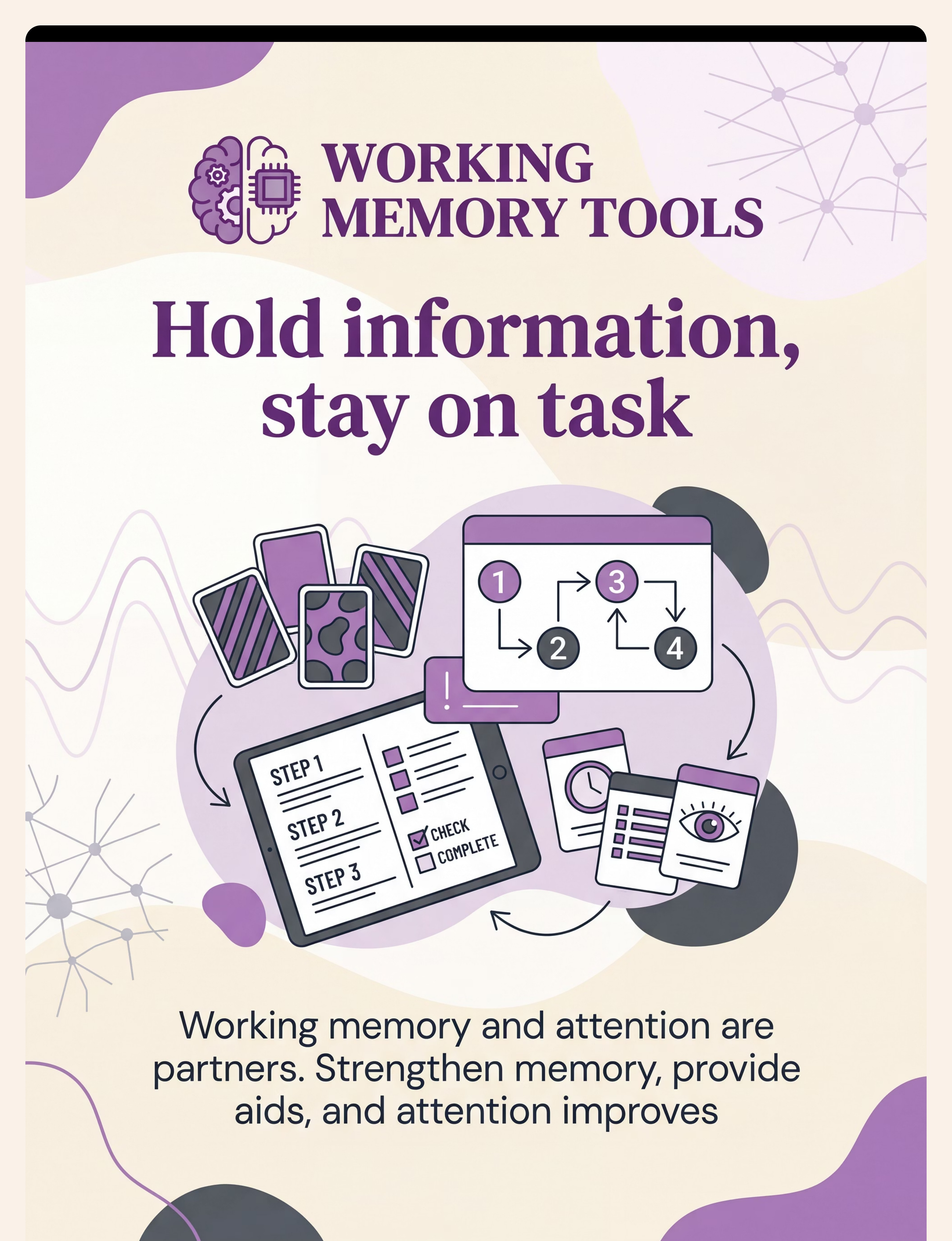
Material 8 — Working Memory Aids
Canon Category: Matching Games / Memory Games
Why it works: Strengthens the memory-attention link through progressive challenge. As working memory grows, children can hold more of the task in mind — reducing attention failures mid-sequence.
- Dyomnizy Memory Game — ₹519 | Buy on Amazon
- Brainy Bug Flashcards with App — ₹305 | Buy on Amazon
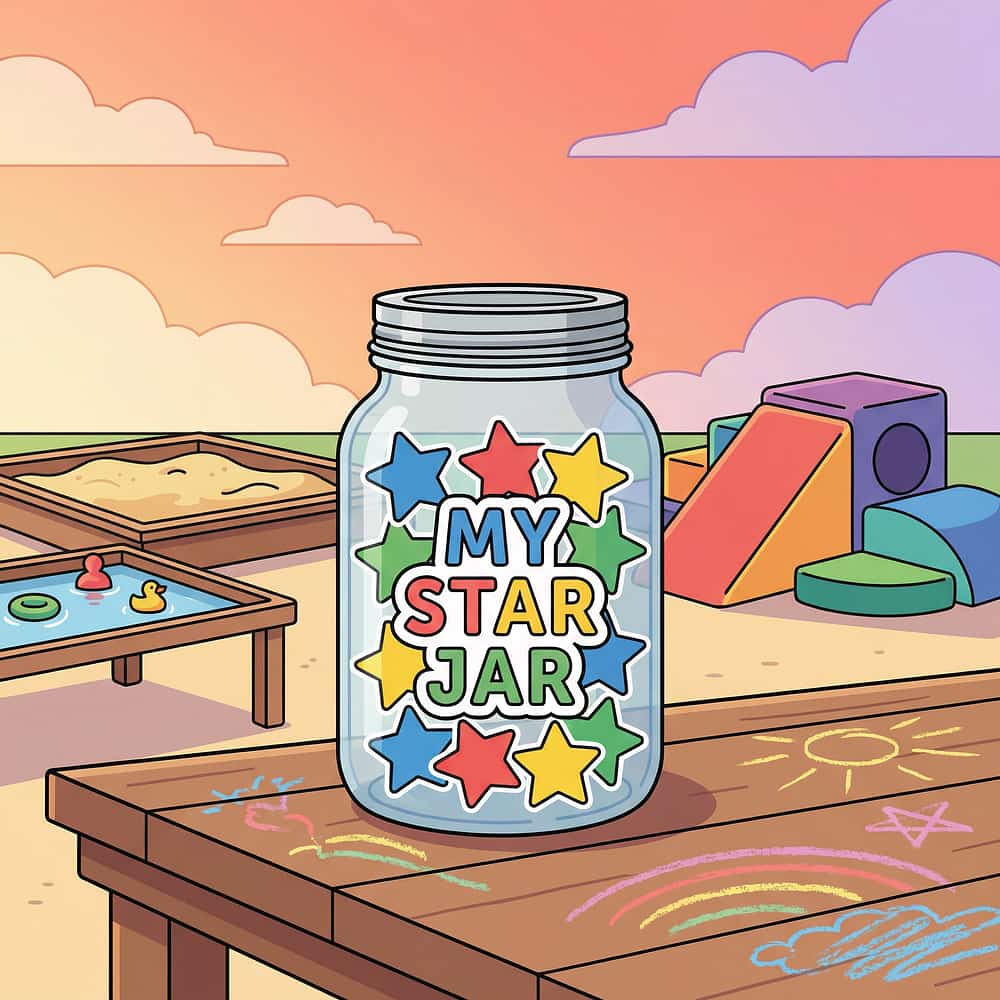
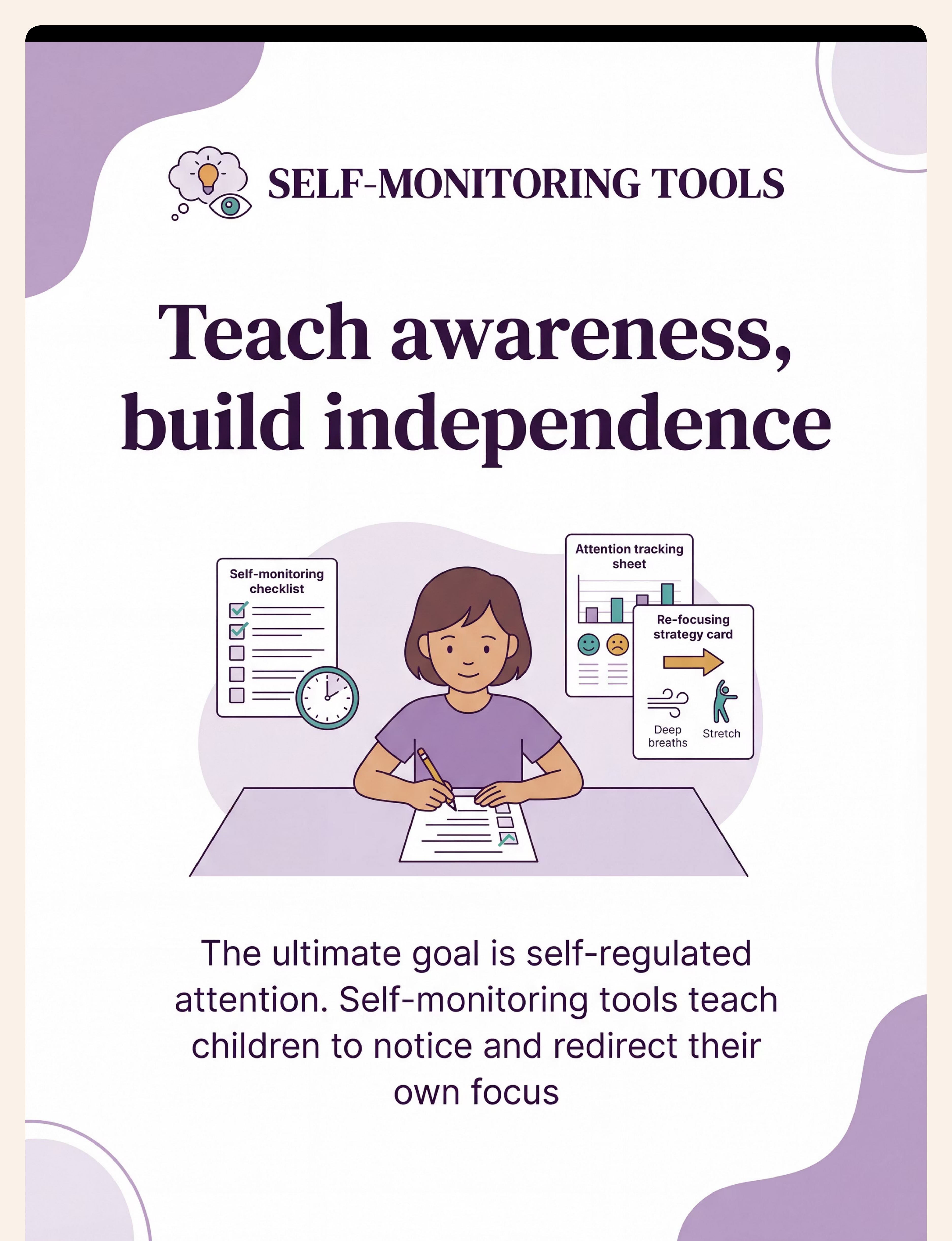
Material 9 — Reinforcement Menus & Self-Monitoring Tools
Canon Category: Reinforcement Menus
Why it works: Motivates sustained effort and teaches children to self-regulate attention. External reward bridges the gap until internal motivation develops.
- Rosette Imprint Reward Jar — ₹589 | Buy on Amazon ✓ Pinnacle Recommends
- 1800+ Reward Stickers Book — ₹364 | Buy on Amazon ✓ Pinnacle Recommends
Total Starter Kit Estimate: ₹2,200–4,500 with Pinnacle products. Zero-Cost Version: Fully available — see next card for DIY alternatives.

Every Parent Can Execute This Technique Today — Zero Budget Required
WHO/UNICEF Nurturing Care Framework Principle: Effective early childhood interventions must be accessible regardless of family income. Every material in this toolkit has a household substitute that delivers the same therapeutic mechanism.
Material | Buy Option | DIY / Zero-Cost Alternative | Why It Works | |
Visual Timer | Time Timer® ₹800–1,800 | Sand in a plastic bottle OR phone countdown timer on table | Same temporal visualization principle — makes time concrete | |
Fidget Tool | Fidget Cube ₹300–800 | Smooth river stone in pocket | Rolled fabric tube | Proprioceptive input satisfies movement need | |
Attention Games | Memory card set ₹300–500 | Old playing cards + household objects for memory games | Same neural pathway training through matching | |
Visual Schedule | Commercial board ₹400–800 | Cardboard + hand-drawn pictures + velcro dots | Same executive externalization function | |
Noise Headphones | Commercial ₹500–3,000 | Large over-ear headphones ₹200 | Move to quieter room | Auditory filtering load reduced either way | |
Wobble Cushion | Balance disc ₹400–1,200 | Partially inflated balloon under cushion | Rolled towel | Proprioceptive input while seated | |
Visual Anchors | Laminated cards ₹200 | Paper + pencil cue cards | Sticky notes on desk | Same return-to-task cuing function | |
Memory Aids | Memory game ₹300–500 | Written checklists on paper | Voice memo for instructions | External storage replaces working memory load | |
Reinforcement Menu | Sticker book ₹364 | Star drawn on paper | Tally marks on whiteboard | Same behavioral reinforcement mechanism |
When clinical-grade materials are non-negotiable: If your child has significant sensory processing differences confirmed by an OT, professional-grade weighted tools, certified noise-reduction equipment, or therapeutic seating may be medically indicated. Call 9100 181 181 for guidance.

Pre-Session Safety Gate — Read Before Every Session
🔴 DO NOT PROCEED IF:
- Child is in active meltdown or within 30 minutes post-meltdown
- Child is unwell, feverish, or showing signs of illness
- Child has not eaten in more than 3 hours
- Environment is chaotic and cannot be modified — postpone
🟡 MODIFY APPROACH IF:
- Child is tired but not exhausted — use 5-minute version only
- Child is mildly resistant — use high-preference activity, reduce demand
- You are stressed or short on time — abbreviated session is always better
- New environment or visitors present — reduce demands by 50%
🟢 PROCEED WHEN:
- Child is fed, rested, and in a regulated baseline state
- Environment is prepared per Card 12 setup
- Parent/caregiver is calm with uninterrupted 10–20 minutes
- Child shows neutral-to-positive affect
Material Safety Checks
- ✅ No small parts for children under 3 (choking hazard)
- ✅ Weighted items: do not exceed 10% of child's body weight
- ✅ Sand timers: ensure glass-free options for young children
- ✅ Noise headphones: volume-limiting models only; max 85dB
- ✅ Wobble cushions: partially inflated only; supervise initially
Stop Immediately If:
- Child becomes distressed and cannot be redirected within 2 minutes
- Physical symptoms emerge: headache, nausea, dizziness
- Child becomes aggressive toward materials or self
- Any unexpected sensory reaction to a new material
📞9100 181 181 — Pinnacle FREE Helpline for safety questions before beginning any home protocol. 24×7, 16+ Languages.

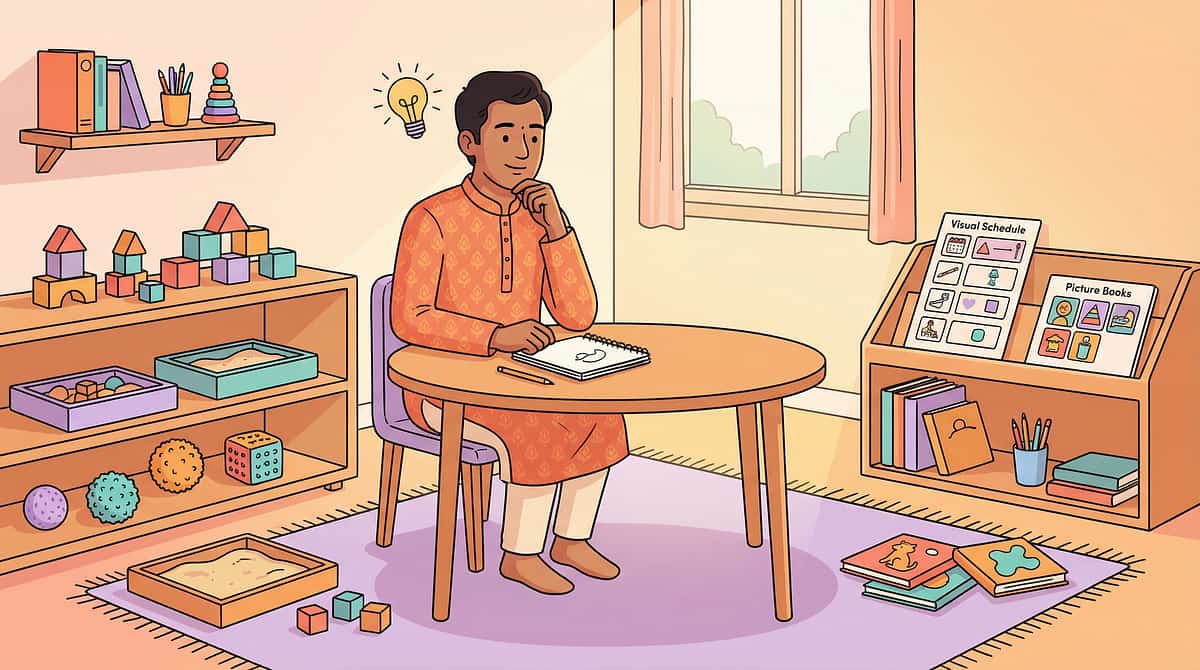
The Right Environment Predicts 80% of Session Success
Before your child ever sits down, the environment either sets them up to succeed or silently works against them. Three to five minutes of intentional setup creates the conditions where attention can actually build.
Space Selection
Dedicated desk or table — not bed or couch. Backed against wall (reduces visual field from behind). Same consistent location every session builds anticipatory focus.
Visual Field Management
Remove toys and screens from eyeline. Clear the desk — only session materials present. Close or blind windows facing activity-rich areas. Warm, neutral lighting throughout.
Auditory Environment
Close the door to block hallway noise. Turn off television and music (unless using white noise). Notify household members: "Session in Progress — Do Not Disturb." Phone on silent — yours too.
Material Pre-Arrangement
Timer placed and set before child sits. Select only 1–2 materials per session (not all 9 simultaneously). Reinforcement menu visible at a distance — motivating, not distracting.
Temperature & Comfort
Room temperature 20–24°C (cooler = better alertness). Child's feet flat on floor. Parent seated at same level as child — never towering above.
Setup Time: 3–5 minutes. Pre-set everything BEFORE bringing child to the space. The session begins the moment they enter the room.

ACT III — THE EXECUTION
Is Your Child Ready? The 60-Second Pre-Flight Check
The best session starts with the best readiness read. Take 60 seconds before every session to run this check — it prevents wasted effort and protects the parent-child relationship from unnecessary friction.
# | Readiness Check | Yes → Go | No → Action | |
1 | Child has eaten in the last 2 hours | ✅ | ⚠️ Feed first | |
2 | No meltdown or major emotional event in last 30 minutes | ✅ | ⛔ Postpone | |
3 | Child is not showing signs of illness or physical discomfort | ✅ | ⛔ Postpone | |
4 | Child's body is in "alert but calm" state (not over-aroused, not drowsy) | ✅ | ⚠️ Modify | |
5 | Parent/caregiver is calm and has full undivided 10–20 minutes | ✅ | ⚠️ Wait 15 min | |
6 | Environment is set up per setup guidelines | ✅ | ⚠️ Set up first | |
7 | No major transitions or events immediately following this session | ✅ | ⚠️ Adjust timing |
🟢 7/7 YES → GO
Full session. Proceed to Step 1: The Invitation.
🟡 4–6 YES → MODIFY
Reduce to 5–7 minutes. Single high-preference material only. Eliminate data collection. Positive engagement only.
🔴 <4 YES → POSTPONE
Alternative calming activity instead. Try again in 1–2 hours. "Postponing is not failure — it is clinical judgment."

Step 1 of 6 | ⏱ 30–60 seconds
🟢 The Invitation — Every Protocol Begins Here, Never with a Command
Exact Words to Use
"Hey [child's name], I've got something interesting for us to try together today. Want to see?"
Pause. Wait for any acknowledgment — eye contact, body orientation, vocalization, or approach. Never rush this pause.
Alternative Scripts
- "Look what I found — I think you might like this." (curiosity-motivated children)
- "It's [material] time! You know what that means..." (routine-anchored children)
- "I need your help with something. Can you be my helper?" (helper-motivated children)
Body Language Guidance
- Sit at child's eye level — never stand above
- Open, relaxed posture — no pointing or directing yet
- Material visible but not handed over yet
- Neutral-positive affect — calibrate enthusiasm to child's sensory tolerance
Acceptance Cues (Child Is Ready)
- Approaches the material or table
- Makes eye contact or looks at the material
- Reaches toward the material
- Any vocalization indicating interest
Resistance Cues & Responses
- Turns away → Don't pursue; try again in 5 minutes
- Says "No" → Offer a choice: "Timer game or memory cards?"
- Seems distracted → Follow their attention briefly, then re-invite
Step 2 of 6 | ⏱ 1–3 minutes
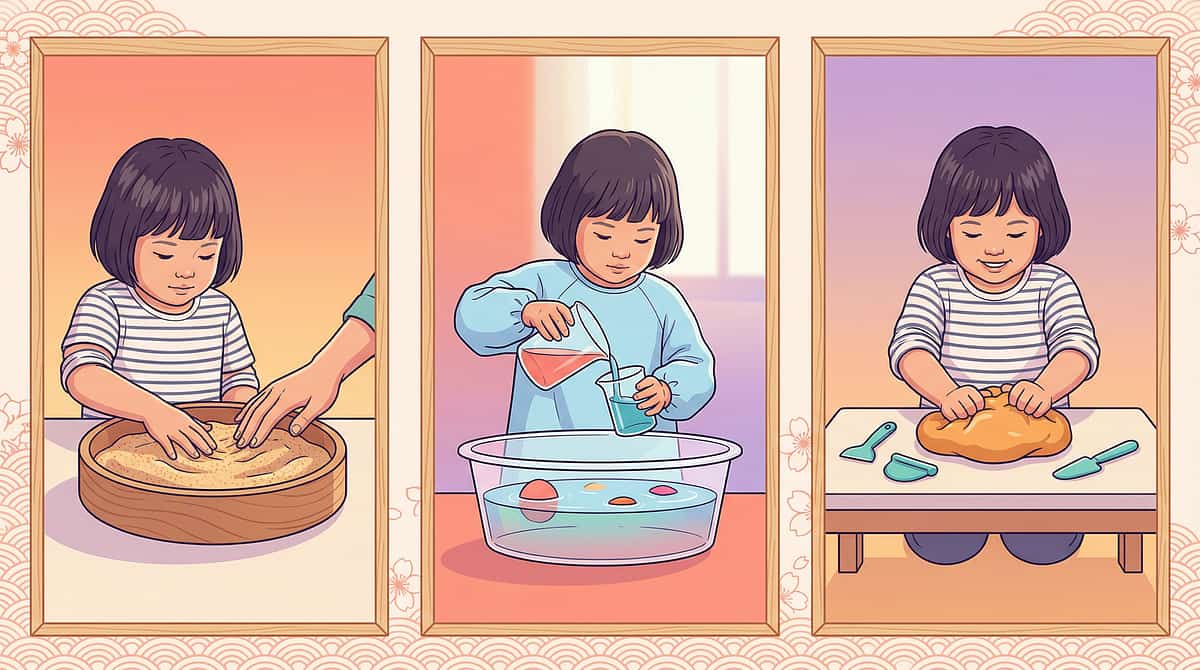
🔵 The Engagement — The Child Is In. Now Deepen the Connection.
Once the child has accepted the invitation, introduce the specific attention material for today's session. Present one material at a time — never overwhelm with all 9 options simultaneously. First praise at moment of engagement, not at completion: "I love how you're trying this!"
Weekly Rotation Recommendation
Week 1–2
Visual Timer (Sessions 1–3) + Fidget Tool (Sessions 4–7)
Week 3–4
Attention Games (Sessions 8–12) + Visual Schedule (Sessions 13–16)
Week 5–6
Headphones (Sessions 17–20) + Seating Support (Sessions 21–24)
Week 7–8
All 9 materials integrated into daily routine
Material Introduction Scripts
⏱ Visual Timer
"This is our focus timer. When the red part disappears, we're done. Watch it go... ready to try?" Start with 3-minute duration. Demonstrate together first.
🖐 Fidget Tool
"This is your thinking tool. Your hands can hold this while your brain does the hard work." Allow 30 seconds of free exploration before beginning any task.
🎮 Attention Game
"This is the memory game. We take turns. I wonder if you can beat me?" Start with only 4 pairs — increase as skill grows.
📋 Visual Schedule
"This is our plan for today. First [Task 1], then [Task 2], then free choice. Let's check it off as we go!" Child participates in checking items off.
🎧 Noise Headphones
"These are your focus headphones. They make it quieter so your brain can concentrate." Child puts on voluntarily — never force. 2-minute trial first.

Step 3 of 6 | ⏱ 5–12 minutes (core session time)
🟡 The Therapeutic Action — This Is Where Attention Gets Built
Every session should exercise one of the following attention mechanisms. Rotate across sessions to build all four attention subtypes progressively and prevent satiation.
Mechanism A: Time-Bounded Focus
Tool: Visual Timer. Set timer → state task clearly → child works → timer completes → celebrate. Duration progression: 2 min (Wk 1) → 5 min (Wk 3) → 10 min (Wk 5–8). Always set for a duration the child can achieve. Success builds tolerance.
Mechanism B: Sensory Regulation
Tool: Fidget + Seating. Child uses sensory tool during an attention-demanding task. The tool satisfies movement needs without competing for visual attention. Compare on-task time with fidget vs. without across 5 sessions.
Mechanism C: Neural Pathway Training
Tool: Attention Games. Sustained: mazes, puzzles with time constraints. Selective: spot-the-difference, hidden pictures. Shifting: Simon Says with rule changes. Working Memory: increasing memory pairs, sequence recall.
Mechanism D: Executive Organization
Tool: Visual Schedule. Child references schedule independently to transition between tasks without adult verbal prompting. Goal: reduce adult redirections from baseline by 50% within 8 weeks.
Child Response | Meaning | Action | |
✅ Ideal: Fully engaged, minimal redirection | Mechanism is working | Maintain + gradually increase challenge | |
🟡 Acceptable: Engaged with 1–2 redirections | Good progress | Continue; track redirection frequency | |
🔴 Concerning: Needs >4 redirections or distressed | Mechanism too demanding | Reduce duration, simplify task, adjust material |

Step 4 of 6 | ⏱ 3–5 minutes
🟠 Repeat & Vary — 3 Good Repetitions > 10 Forced Ones
Therapeutic Dosage
- Attention games: 3–5 rounds per session
- Timer-based tasks: 1–2 full timer cycles per session
- Sensory tools: Entire session duration (background support)
- Visual schedules: Throughout the day (environmental scaffold)
Variation Principle
Never repeat the exact same trial with identical stimuli. Variation within the same mechanism maintains engagement while building generalization:
- Memory game: rotate the card set weekly
- Timer: vary the task, not the timer duration
- Attention games: alternate type (maze → hidden pictures → memory)
- Visual schedule: change icons as child masters reading the routine
Satiation Indicators — Stop Repetitions When You See:
- Child's response time increases significantly
- Attention duration shortens despite same task difficulty
- Child begins seeking escape behaviors (looking away, asking to stop)
- Quality of responses deteriorates across repetitions
Engagement Maintenance During Repetitions
- Introduce mild novelty: "This time, can you do it faster?"
- Add a social element: take turns with the parent
- Use a countdown: "3 more and then break!"
- Let child set the variation: "What should we try differently?"

Step 5 of 6 | ⏱ 30–60 seconds per reinforcement delivery
🏆 Reinforce & Celebrate — The Timing of Your Praise Matters More Than Its Magnitude
Critical Principle: Deliver reinforcement within 3 seconds of the target behavior. Delayed praise loses its behavioral function entirely. The brain learns what is reinforced — reinforce the right moment.
Target Behaviors to Reinforce
Completed the timer without leaving the task ✓
Used the fidget tool appropriately ✓
Referenced the visual schedule independently ✓
Re-engaged after a brief distraction without prompting ✓
Self-monitored attention — noticed own drift and corrected it ✓
Reinforcement Scripts
"You stayed the whole timer! That's real focus — I'm so proud of that.""You came back to the task on your own. That's exactly what building attention looks like.""You used your fidget tool and kept working. Your brain is getting stronger every session."
Token Economy Structure (using Reward Jar or Sticker Book)
Achievement | Tokens | |
Completed full timer duration | 🏅 1 token | |
Used attention material correctly | 🏅 1 token | |
Self-corrected attention drift | 🏅 2 tokens (premium) | |
Completed all steps of session | 🏅 3 tokens |
5 tokens = 15 minutes of preferred screen time / special activity / choice of dinner. Celebrate the attempt, not just the success — 30 seconds of genuine engagement is a data point, not a failure.
Step 6 of 6 | ⏱ 2–3 minutes
🌙 The Cool-Down — No Session Ends Abruptly
Abrupt session endings spike cortisol and create negative associations with the entire therapeutic activity. A well-executed cool-down embeds a positive session memory, smooths the transition to the next activity, and reduces post-session dysregulation. The cool-down is not optional — it is part of the therapy.
Advance Warning (1 minute before end)
"One more minute, then we're all done for today." Point to the timer. Show the ending is predictable, not sudden.
30-Second Warning
"Almost done — last one!" Help child reach a natural stopping point if possible.
Session Close Ritual
"We're all done! Great work today. Let's put our tools away together." Child participates in returning materials to organized space.
Transition Cue
Give child clear information about what comes next: "After we clean up, it's snack time / play time / [preferred activity]."
If Child Resists Ending
"I know you want to keep going — that means your brain loved it! We'll do more tomorrow." Hold the boundary. Never negotiate session extension — it trains resistance to future endings.
A consistent put-away routine (timer goes in box, fidget goes in drawer, cards back in case) builds anticipatory structure for the next session. Same ritual, every time.
Capture the Data: 60 Seconds Now Saves Hours of Guessing Later
Data turns hope into evidence. When you track three simple metrics per session, you transform your anecdotal experience into a scientific record of your child's growth. Plot it weekly — a trend line moving in the right direction is your proof of work.
📊 Attention Duration
What: How many minutes child maintained focus without redirection How: Tally in minutes (e.g., "8 min")
📉 Redirection Count
What: How many times you had to prompt child to return to task How: Tally marks per session
⭐ Engagement Quality
What: Overall session quality rating How: 1–5 scale (1 = very difficult, 5 = excellent)
GPT-OS® automatically generates your child's Executive Function Readiness Index from this data — and recalibrates recommendations across all 12 developmental domains accordingly.

What If It Didn't Go As Planned? Session Abandonment Is Not Failure — It's Data.
Even experienced therapists don't run perfect sessions every time. When a session goes sideways, the right response is analysis, not self-blame. Each problem has a clinical explanation and a practical fix.
Problem 1: Child refused to engage at all
Why: Timing was off (hunger, fatigue, prior dysregulation) or the material wasn't motivating. Fix: Reassess readiness check. Switch to a different material category. Never force engagement.
Problem 2: Engaged 30 seconds then drifted repeatedly
Why: Timer duration or task demand was above current attention capacity. Fix: Reduce timer to 2 minutes. Simplify task to one step. That 30-second capacity IS your current baseline — it will grow.
Problem 3: Fidget tool became a distraction
Why: Wrong fidget type selected, or novelty effect of a new tool. Fix: Switch to tactile/proprioceptive fidget (therapy putty, squeeze ball). Allow 2–3 sessions for novelty to decrease.
Problem 4: Task completed but attention wasn't really there
Why: Completion ≠ engagement — motor/habit response without actual attending. Fix: Add a comprehension check — ask one question about the completed work. Celebrate both completion AND comprehension.
Problem 5: Sibling/household noise destroyed the session
Why: Environmental setup was insufficient. Fix: Pre-brief household. Schedule sessions during sibling nap or school hours. Post a "Session in Progress" door sign.
Problem 6: Parent ran out of patience mid-session
Why: One of the most common and least-discussed session failure modes. Parental stress is the most powerful predictor of session outcome. Fix: Shorter sessions are always better than strained sessions. 5 minutes of calm > 20 minutes of tense. Your regulated nervous system co-regulates your child's.
Problem 7: Child had a meltdown during the session
Why: Demand exceeded regulatory capacity — possibly combined with an undetected prior stressor. Fix: Review readiness check. Reduce demand by 50% for next 3 sessions. Call 9100 181 181 if meltdowns occur in >20% of sessions.
Emergency Protocol: If child becomes severely distressed — stop immediately. Do not complete the task. Provide calming input. Resume only when regulated. 📞9100 181 181 if distress is severe or frequently recurs.

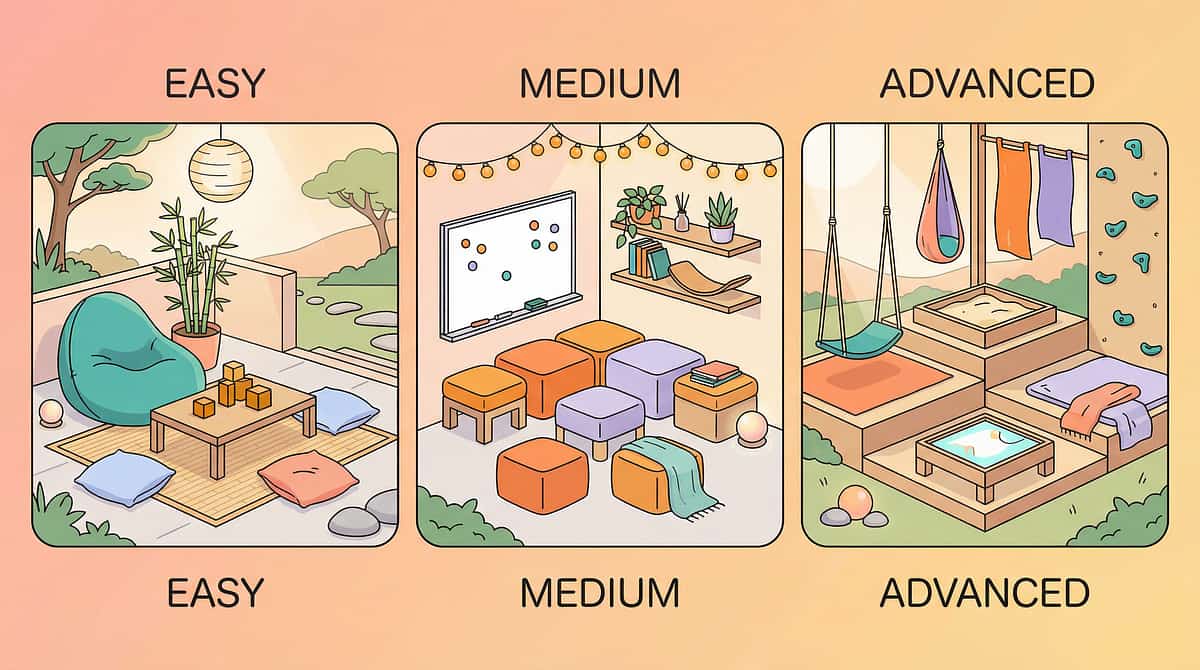
No Two Children Are Identical — This Toolkit Flexes for Every Profile
Adapt by Sensory Profile
🔴 Sensory SEEKER (Under-Responsive)
- Heavier proprioceptive fidgets (therapy putty, stress ball)
- Wobble cushion or balance disc highly recommended
- Movement break BEFORE sitting tasks (10 jumping jacks → 5 min focused work)
- More physical reinforcement (high-five, spinning, jumping)
🔵 Sensory AVOIDER (Over-Responsive)
- Noise-reducing headphones essential
- Aggressively reduce visual clutter in study space
- Light touch, gentle textures for fidget tools
- Dim lighting; avoid fluorescent
- Calm, quiet, predictable environment above all else
Adapt by Age
Age | Key Adjustments | |
3–4 years | 2-minute max sessions. 2–3 material rotations. Parent-directed play. Very high reinforcement density. | |
5–7 years | 5–7 minute sessions. Child begins referencing visual schedules. Self-monitoring with adult support. | |
8–10 years | 10–15 minute sessions. Child-directed game selection. Written self-monitoring checklists introduced. | |
11–12 years | 15–20 minute sessions. Metacognitive tools primary. Fade adult prompting toward independence. |
Adapt by Underlying Condition
Condition | Priority Materials | |
ADHD | Visual timers + fidgets + self-monitoring | |
ASD | Visual schedules + noise headphones + reinforcement menus | |
Sensory Processing | Seating supports + OT-prescribed fidgets + environmental modification | |
Anxiety | Predictable visual schedules + low-demand entry + relaxation integration |

ACT IV — THE PROGRESS ARC | Week 1–2
Progress in Weeks 1–2 Looks Smaller Than You Think — And Matters More Than You Know
🔵 Foundation Building — 15% Progress
Week 1–2 progress is below the surface. Neural change is happening before behavior changes above it. These are the real indicators — not mastery, but the seeds of it. Each one is a measurable win that deserves to be celebrated.
Child tolerates the timer being present
Didn't protest it being set — that's a measurable Week 1 win.
Child attempted the attention game for at least 1 round
Even if they disengaged after — participation IS progress.
Visual schedule was referenced once without adult prompting
The first flicker of internalization.
Fidget tool used for at least 30 seconds during a task
The sensory system is beginning to engage the scaffold.
You executed 5+ sessions in 2 weeks
Consistency is the primary Week 1–2 variable. You showing up is the intervention.
What Is NOT Expected Yet: Homework completion without prompting. Self-initiated material use. Attention span matching developmental peers. Teacher reports of school improvement (school generalization takes 4–8 weeks). Be patient with these — they come later.

Week 3–4 — Consolidation Phase
These Are the Signs That Neural Pathways Are Forming
🔵 Consolidation Phase — 40% Progress
Weeks 3–4 mark the shift from tolerance to internalization. Watch for these specific consolidation indicators — they signal that the attention tools are being encoded into your child's emerging neural architecture, not just tolerated as external demands.
🧠 Anticipatory Behavior
Child begins to bring the timer, ask for the memory game, or set up their own visual schedule — unprompted. This is the first sign of internalization.
🎯 Reduced Resistance
Transition into a session no longer requires significant negotiation. Child may even initiate. A dramatic quality-of-life improvement for your household.
⏱ Measurable Duration Increase
Your data tracker should show attention duration up by 20–30% from Week 1 baseline. Track it — seeing it in numbers makes it real.
📉 Redirection Count Drop
From Week 1 baseline, redirection count in sessions should be trending downward. Fewer "come back to the task" prompts = growing internal focus capacity.
🌱 Spontaneous Generalization
Child uses a session skill in a non-session context — sets the phone timer for a game, or references the visual schedule for a different routine.
"By Week 3–4, you will likely notice you're more confident in executing these sessions. Your calm, consistent presence has been the most powerful therapeutic variable in this entire protocol."
Week 5–8 — Mastery Phase
Mastery Is When the Skill Appears Without the Scaffold
🔵 Mastery Phase — 75% Progress
Mastery is not perfection — it is independence. When your child demonstrates the skill without the full support structure that taught it, that is your proof of genuine neural consolidation. These specific, observable, measurable criteria define mastery for G-661.
Skill | Mastery Indicator | |
Sustained Attention | Child completes a 10–15 minute age-appropriate task with ≤1 adult redirection | |
Selective Attention | Child maintains task focus in an environment with moderate background noise | |
Timer Management | Child sets own timer and works without supervision for the full duration | |
Visual Schedule Use | Child references schedule independently across ≥3 different daily routines | |
Self-Monitoring | Child notices own attention drift and self-corrects ≥50% of the time |
Generalization Check — Mastery Is Confirmed When the Skill Appears In:
- ✅ Homework settings (not just therapy sessions)
- ✅ School settings (teacher reports at least one positive attention observation)
- ✅ New activities not used during training
Maintenance Check
Remove one support for 2 sessions. If skill holds → true mastery. If skill degrades → maintenance phase needed (continue 2×/week for 4 more weeks).
Mastery Unlocked → Readiness for G-662: When Week 5–8 mastery criteria are met, your child is ready to progress to G-662: Task Initiation — the next technique in the Cognitive Development Series.
You Did This. Your Child Grew Because of Your Commitment.
In 5–8 weeks of consistent practice, something profound has happened in your home — and in your child's brain.
🏠 Built a Daily Therapeutic Routine
A sustainable evidence-based practice running inside your home
🧰 Introduced 9 Evidence-Based Materials
Each targeting a different component of the attention system
📊 Tracked Real Data
Data that proves real change — not guesswork, not hope
🧠 Strengthened Neural Pathways
Sustained, selective, and self-monitored attention — measurably stronger
🎓 Built Academic Readiness
Your child is measurably closer to independent learning and classroom participation
"There was no professional standing over you every day. No clinic monitoring every session. This was you — parent, therapist, coach, believer — executing a scientific protocol out of love. The results belong to your family."
Family Celebration Suggestion:📸 Take a photo. Write one sentence: "On [date], [child's name] focused on their own for [X] minutes — and last month it was [Y]." That sentence is the most important scientific record in your family's history.
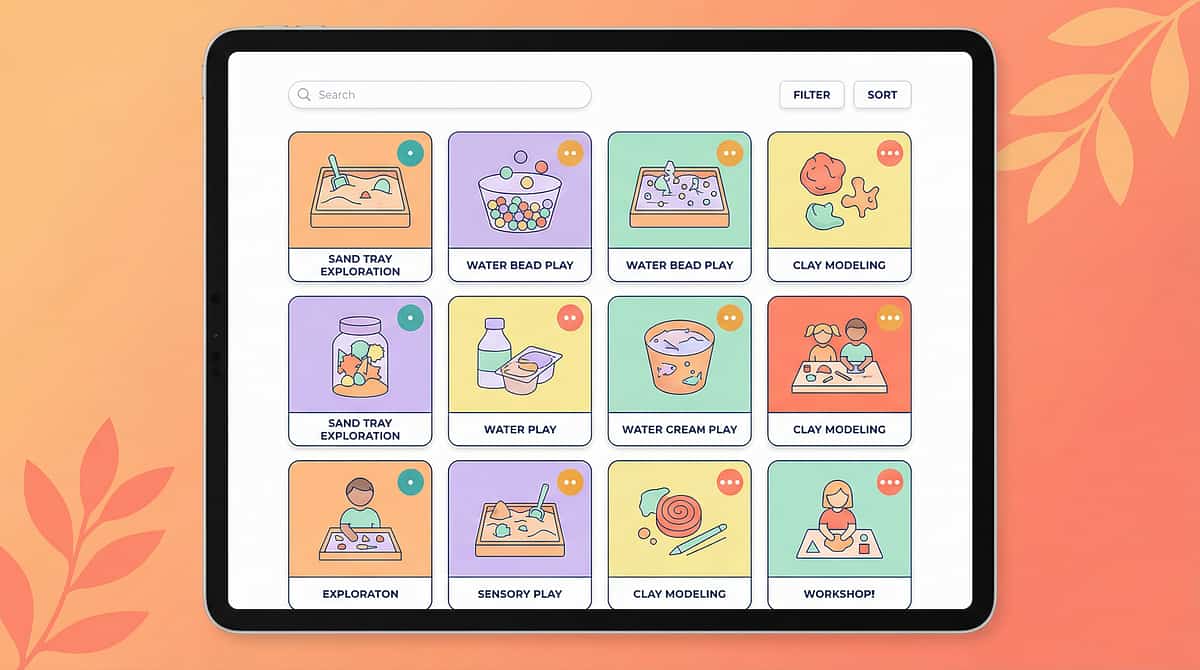
Trust Your Instincts — If Something Feels Wrong, Pause and Ask
🚨 Red Flags: When to Pause
The vast majority of G-661 journeys proceed safely and progressively. But there are specific signals that warrant pausing the home protocol and seeking professional input. You know your child — trust that knowledge.
🚨 Flag 1: Increasing Distress Over Time
Sessions are becoming more meltdown-prone in Weeks 3–4, not less. May indicate technique is triggering underlying anxiety or sensory overwhelm rather than building capacity. Action: Pause. Call 9100 181 181 for teleconsultation.
🚨 Flag 2: Regression Across All Settings
Attention appears to be deteriorating everywhere — home, school, therapy — across 2+ weeks. May signal a medical issue (sleep disorder, iron deficiency, thyroid) or major life stressor. Action: Medical evaluation — rule out physical causes first.
🚨 Flag 3: Attention Toolkit Becomes a Battleground
Child shows severe resistance to all 9 materials; sessions cause relationship strain. Misalignment between current child state and technique demands — therapeutic relationship must be repaired. Action: Full pause. Return to play-based, demand-free interaction for 2 weeks.
🚨 Flag 4: Suspected ADHD/ASD Diagnosis Not Yet Confirmed
Attention challenges are severe, pervasive, and completely resistant to all material supports. Professional diagnostic assessment and potentially medical management may be indicated. Action: Request comprehensive assessment. Call 9100 181 181.
🚨 Flag 5: Physical Symptoms During Sessions
Child reports headaches, eye strain, dizziness, or shows physical agitation consistently. May indicate visual processing, vestibular, or neurological issues. Action: Immediate medical consultation.
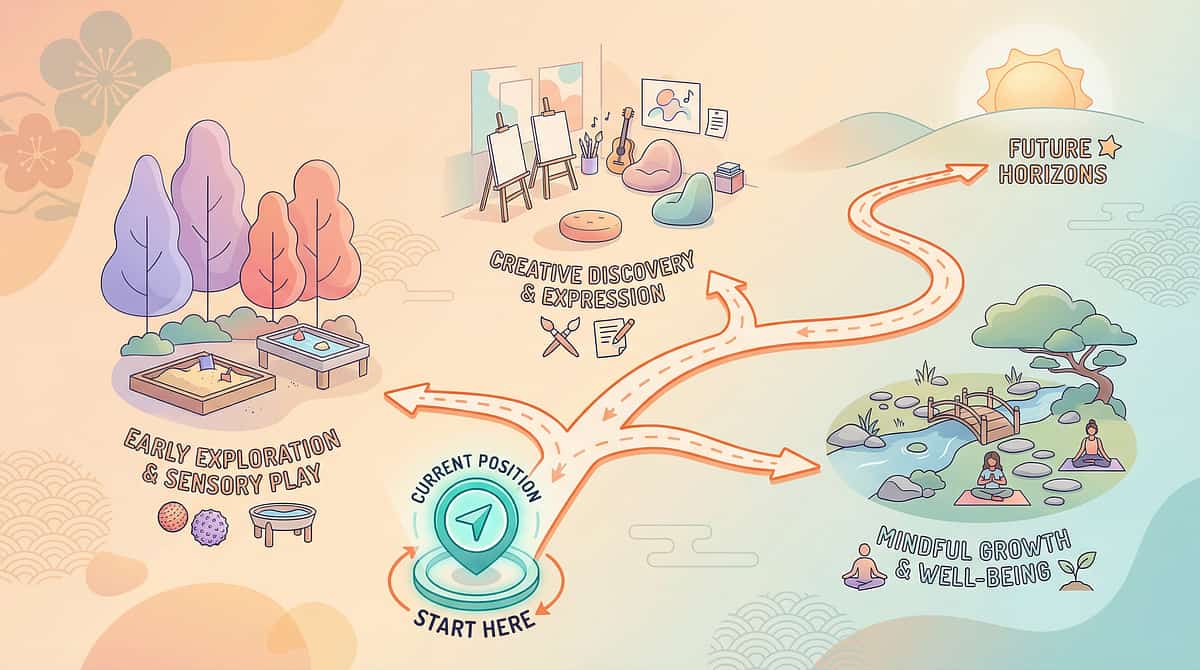
You Are Not Done — You Are on a Journey
G-661 is a milestone, not a destination. Mastering attention skills opens the door to the full Cognitive Development Series — a sequenced progression where each technique builds on the neural foundation laid by the one before it.
Path Selection Guide
Child struggles to START tasks
Child starts but never finishes
Child's environment is chaotic
Child acts before thinking
→ G-670: Impulse Control
Long-Term Goal: All six techniques in the Executive Function cluster (G-659 through G-665) completed = Academic Readiness Index milestone — the threshold at which GPT-OS® determines readiness for mainstream school inclusion with minimal supports.
You Already Own Materials for These Techniques
One of the most powerful features of the G-661 toolkit is cross-utility. The materials you've already introduced — the visual timer, memory games, visual schedule, reward jar — are foundational tools for the entire Cognitive Development Series. Your investment compounds.
Technique | Code | Level | Shared Materials | |
G-659 | ⭐ Intro | Memory game ✓ | ||
G-660 | ⭐⭐ Core | Timer ✓ | ||
Attention Skills — CURRENT | G-661 | ⭐⭐ Core | All 9 materials | |
G-662 | ⭐⭐ Core | Visual schedule ✓ Timer ✓ | ||
G-663 | ⭐⭐ Core | Visual schedule ✓ Reward jar ✓ | ||
G-665 | ⭐⭐⭐ Advanced | Visual schedule ✓ |

This Technique Is One Piece of a Larger Plan — See the Whole Picture
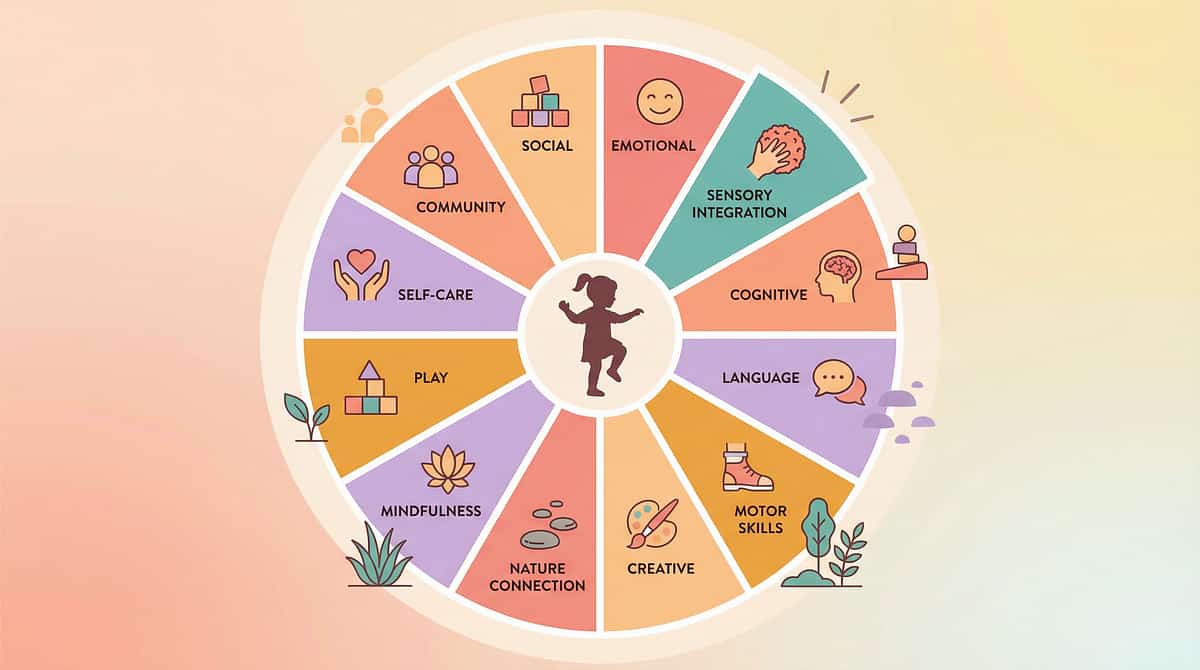
G-661 strengthens Domain E (Cognitive Development), which directly feeds Domain I (Academic Readiness) and co-regulates Domain B (Social Communication — attention during conversation) and Domain C (Emotional Regulation — frustration when attention breaks down). No domain exists in isolation.
A — Sensory Processing
B — Social Communication
C — Emotional Regulation
D — Behavior & Flexibility
E — Cognitive Development ← G-661
F — Motor Skills
G — Speech & Language
H — Self-Care & Independence
I — Academic Readiness
J — Play & Creativity
K — Family & Social Participation
L — Medical & Nutritional Support
When you log your G-661 session data, GPT-OS® automatically updates your child's Executive Function Readiness Index and recalibrates recommendations across all 12 domains accordingly.

ACT V — THE COMMUNITY & ECOSYSTEM
From the Families Who Proved It's Possible
Family Story 1 — Hyderabad
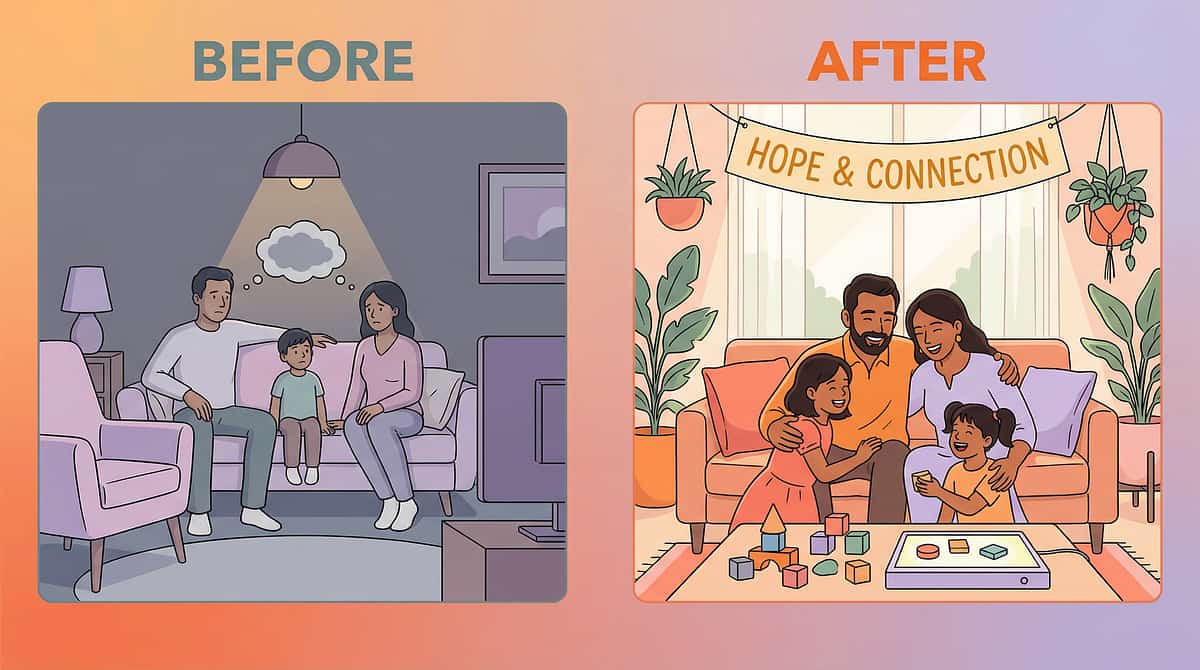
Before
"Arjun (8 years) couldn't sit through a single worksheet without wandering. Teachers were frustrated. Homework took 3 hours because his mind was somewhere else entirely every 2 minutes."
After 8 Weeks
"We started with just the visual timer and the memory game. By Week 4, he was setting the timer himself. By Week 8, his teacher messaged me: 'What happened to Arjun? He stayed focused the entire group activity today.' I cried reading that message."
🩺Therapist Notes: Arjun's underlying challenge was working memory depletion causing attention failure. The memory games built capacity; the timer created structure. His Executive Function Readiness Index improved from 32 to 61 in 8 weeks — a clinical milestone.
Family Story 2 — Bengaluru
Before
"Priya (6 years) could focus for 3 minutes maximum on anything but her favorite cartoon. Multi-step instructions were impossible. She would start dressing herself and somehow end up playing with toys, completely forgetting what she'd started."
After 6 Weeks
"The visual schedule was the game-changer. She now has morning routine, homework time, and bedtime posted on her wall. She completes her morning routine independently — without a single reminder from me."
🩺Therapist Notes: Priya's attention issues were primarily executive function-based — she couldn't maintain the "action plan" in working memory. The visual schedule externalized that plan entirely. Her working memory could then focus on execution, not planning.
Individual results vary. Cases are anonymized composites representing typical outcome patterns. GPT-OS® clinical data shows 97%+ of children demonstrate measurable improvement in one or more readiness indexes following systematic 8-week protocols.
Isolation Is the Enemy of Adherence — Join Your Community
Research consistently shows that parents who share their journey with peers maintain higher intervention consistency, troubleshoot more effectively, and experience less burnout. You are not meant to do this alone.
🟢 WhatsApp Group — "Focus & Attention Parents"
Moderated by Pinnacle therapists. Share daily session logs, ask questions, celebrate wins in real time with parents on the same journey. Join the Group →
💬 Online Forum — Cognitive Development Series
Discussion threads for every technique in the G-659 to G-700 series. Searchable, archived, and moderated for quality. Join the Forum →
🤝 Peer Mentoring — Connect with an Experienced Parent
Matched with a parent who has completed the full G-661 protocol and is 12+ weeks ahead of you. Real experience, not clinical distance. Request a Mentor →
📍 Local Parent Meetup — Find Families Near You
Monthly meetups organized by nearest Pinnacle center. Share strategies, materials, and encouragement in person. Find Your Local Group →
"Your experience — the sessions that worked, the ones that didn't, the Week 4 breakthrough — helps the family who is on Week 1 right now. Consider sharing your journey."

Home + Clinic = Maximum Impact
Home implementation and professional clinical support are not alternatives — they are multipliers. The families who see the fastest, most durable attention development are those who run structured home sessions AND engage their professional team. Here's what each discipline provides specifically for G-661.
Discipline | What They Do for G-661 | Book Now | |
Occupational Therapist | Sensory profile assessment + personalized fidget prescription + seating evaluation | ||
ABA/BCBA Therapist | Attention behavioral assessment + reinforcement program design + data review | ||
Educational Psychologist | Comprehensive attention/executive function assessment + IEP planning | ||
NeuroDev Pediatrician | ADHD/ASD diagnostic evaluation + medical management consultation |
Teleconsultation Available Nationwide: Can't visit a center? Our therapists consult remotely in 16+ languages. 📹Book a Teleconsultation — 30 Min | Available Same Week →📞FREE National Helpline: 9100 181 181 | 24×7 | 16+ Languages | Guidance, Triage, Booking
For the Curious Parent Who Wants to Go Deeper
These 9 materials are not anecdotal recommendations — every one is anchored in peer-reviewed evidence from multiple disciplines and research traditions. The evidence behind G-661 is broad, deep, and convergent.
# | Study | Key Finding | Source | |
1 | PRISMA Systematic Review (Children, 2024) | Structured material-based intervention meets Level I evidence criteria for pediatric attention development in ASD | ||
2 | Meta-Analysis, 24 studies (World J Clin Cases, 2024) | Sensory-motor and attention tools promote executive function, adaptive behavior, and focus across diverse pediatric populations | ||
3 | WHO/UNICEF Care for Child Development Package (2023) | Parent-administered structured home interventions across 54 LMICs produce measurable developmental gains | ||
4 | Padmanabha et al., Indian J Pediatr (2019) | Indian RCT: Home-based structured interventions demonstrate significant outcomes in Indian pediatric population | ||
5 | NCAEP Evidence-Based Practices Report (2020) | Visual supports, self-monitoring, and structured reinforcement are classified as evidence-based practices for autism | ||
6 | Frontiers in Integrative Neuroscience (2020) | Comprehensive neurological framework for attention and sensory integration intervention |
WHO Nurturing Care Framework
UNICEF Early Childhood Development
WHO Care for Child Development

Your Data Helps Every Child Like Yours
What GPT-OS® Learns from Your G-661 Data
Data Point | GPT-OS® Use | |
Attention duration trends | Calibrates when to recommend progression to G-662 | |
Redirection count | Identifies which materials are most effective for your child's profile | |
Material effectiveness ratings | Personalizes next session material recommendations | |
Session completion rate | Adjusts session frequency recommendations | |
Week-over-week change | Updates Executive Function Readiness Index |
The Complete GPT-OS® Stack for Attention
- Diagnostic Intelligence: 591+ attention-domain observations → standardized diagnostic clarity
- AbilityScore®: Baseline attention score (0–1000) established before G-661 begins
- Prognosis Engine: Predicts attention development trajectory using 20M+ session data
- TherapeuticAI®: Sequences which of the 9 materials to prioritize for your child's profile
- EverydayTherapyProgramme™: Converts G-661 into daily micro-interventions
- FusionModule™: Coordinates OT, ABA, SpEd inputs into unified attention plan
- Closed-Loop Control: Session data → updated recommendations → next session optimized
🔒Privacy Assurance: All data is anonymized before population-level analysis, stored under Indian data protection standards, never sold to third parties, and used only to improve therapeutic outcomes.

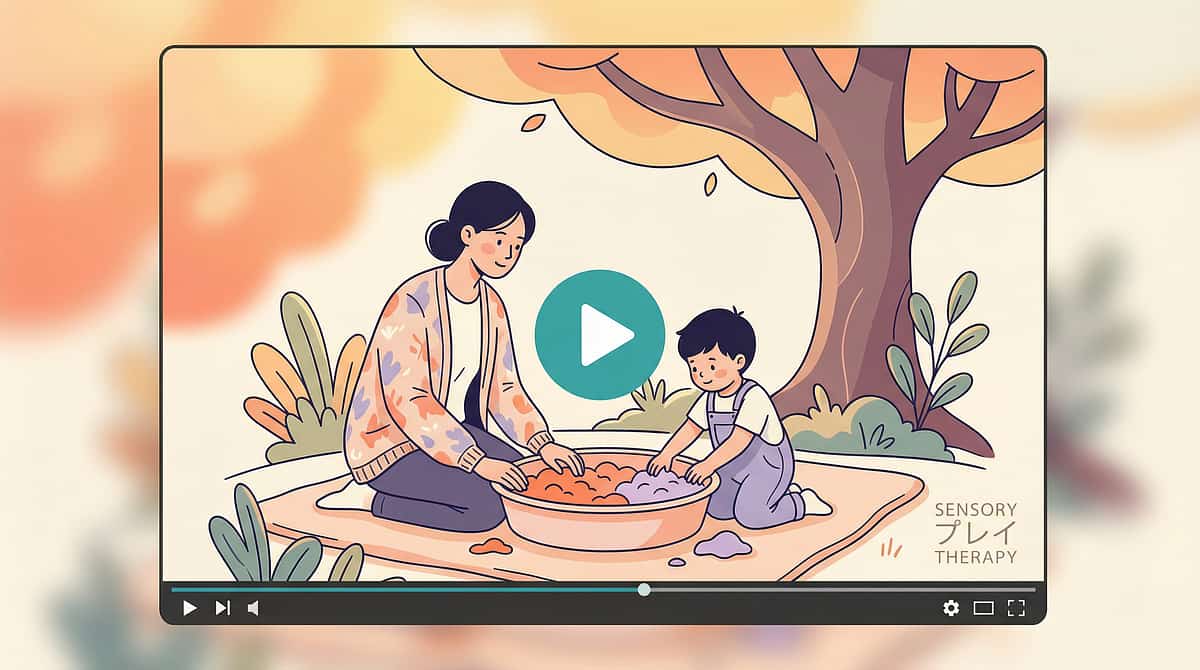
See the Materials in Action — Visual Learning That Reinforces Everything You've Read
🎬 Title
9 Materials That Help With Attention Skills
📺 Series
Cognitive Development — Episode 661
⏱ Duration
75–85 seconds
👤 Presenting
Pinnacle Blooms Network® Consortium Therapy Team
What you'll see in this reel: The 9 materials shown in clinical context — how a Visual Timer is set for a focused work session, how a child correctly uses a fidget while listening to instructions, how an Attention Game is played in a supportive home environment, and how a Self-Monitoring Checklist looks when used independently.
Reel Companion Series
G-661 — CURRENT
9 Materials That Help With Attention Skills
Follow @pinnacleblooms on all platforms | New reel every day from the 999 Reels Master Library | NCAEP (2020): Video modeling is a classified evidence-based practice for autism.

Consistency Across Caregivers Multiplies Impact — Share This Page
When grandparents, teachers, babysitters, and co-parents all use the same tools with the same language, generalization accelerates. Consistency is not a nice-to-have — it is a clinical variable. Share this page to multiply the therapeutic effect across every hour of your child's day.
📲 Share via WhatsApp
Pre-formatted message: "Found this amazing resource for [child's name]'s attention skills — we've been using it at home and seeing real results. Check it out: techniques.pinnacleblooms.org/cognitive-development/attention-skills-G-661"
📋 Teacher Communication Template
"Dear [Teacher], we have been working on [child's name]'s attention skills at home using a structured program. We would like to share these tools with you so we can be consistent: [link to family guide]. Could we have 10 minutes to discuss classroom accommodations? Warm regards, [Parent name]"
👴 "Explain to Grandparents" Version
"Nana/Dadu, when [child] seems to be in their own world, it's because their brain's attention system is still developing. We use a special timer and some attention games every day to help build their focus. Here's what you can do when you're with them: [3-step simplified protocol from Step 3 Mechanism A]"
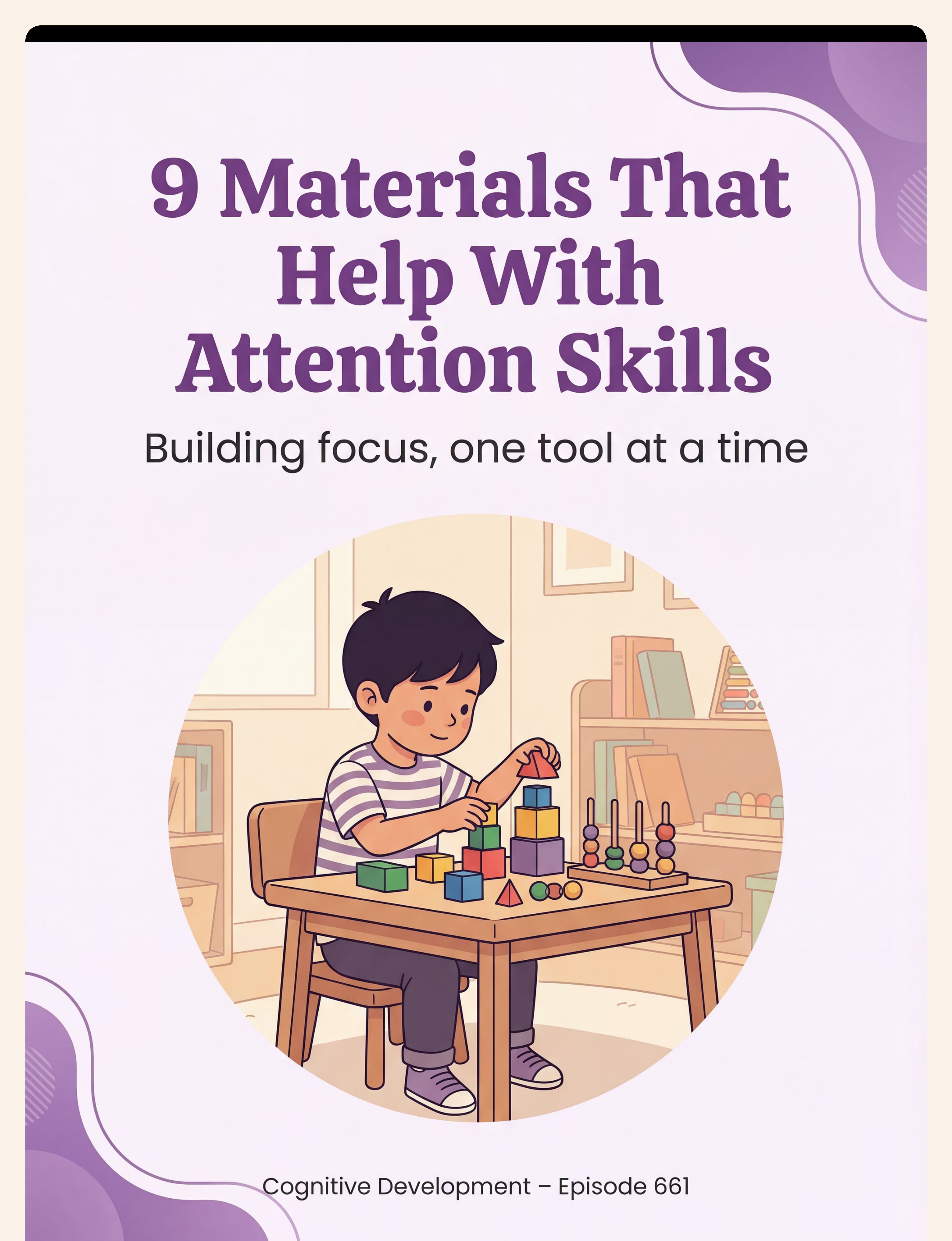
Preview of 9 materials that help with attention skills Therapy Material
Below is a visual preview of 9 materials that help with attention skills therapy material. The pages shown help educators, therapists, and caregivers understand the structure and content of the resource before use. Materials should be used under appropriate professional guidance.





Link copied!

ACT VI — THE CLOSE & LOOP | Frequently Asked Questions
Questions Parents Ask Most — Answered by the Pinnacle Consortium
Q: How do I know if my child needs professional evaluation for ADHD or ASD vs. just these materials?
If attention difficulties are: (1) present across multiple settings (home + school + social), (2) significantly below developmental peers, (3) not improving after 8 weeks of consistent material use, or (4) accompanied by other concerns (behavior, social, language) — professional evaluation is strongly recommended. These materials support development but do not replace diagnosis. 📞 Call 9100 181 181 for assessment guidance.
Q: My child can focus for 2 hours on YouTube but not 5 minutes on homework. Is this really an attention problem?
Yes — and it's the most common attention profile we see. Preferred-activity hyperfocus co-existing with non-preferred-task attention failure is characteristic of attention dysregulation. The brain's dopamine system creates intrinsic motivation for preferred activities that doesn't activate for non-preferred ones. These materials build the external scaffold that supports attention while intrinsic motivation develops.
Q: How long before I see results?
Observable behavioral change typically emerges at Week 3–4 for tolerance and participation measures, and Week 5–8 for measurable attention duration increases and generalization. Track your data from Week 1 — even 30-second improvements are real neurological progress.
Q: Can I use all 9 materials at once?
No. Introduce one material at a time over 1–2 weeks before adding the next. Overwhelming the session with multiple new materials creates confusion and reduces the ability to attribute progress to specific tools. Follow the weekly rotation in the Engagement step.
Q: My child uses the fidget tool and becomes MORE distracted. What do I do?
This is a very common initial response. Don't abandon fidgets — switch the TYPE. If visual fidgets (spinners, sand art) are distracting, switch to tactile/proprioceptive fidgets (therapy putty, squeeze ball, resistance band). The goal is sensory input the brain processes automatically — not input that demands visual attention.
Q: Should I use these tools only during sessions or throughout the day?
Both. Environmental supports (visual schedule, visual anchor cards, noise headphones) should be used throughout the day. Structured training tools (attention games, timer-bounded tasks, memory games) work best in dedicated daily sessions. Environmental tools are the scaffolding; training sessions are the construction.
Q: We have 3 children and very limited time. What's the minimum viable version?
Minimum Viable G-661 = Visual Timer + Visual Schedule. These two tools, deployed consistently (10 minutes/day), deliver the core executive function benefits. Once these are working, add one material every 2 weeks. Perfect consistency over a limited toolkit beats sporadic use of all 9 materials.
Q: My child's school won't allow fidget tools or noise headphones. What do I do?
Request a meeting with the class teacher and/or school counselor. Bring this page and the research from the Research Library. A letter from your Pinnacle OT therapist carries formal weight. 📞 Call 9100 181 181 for school advocacy guidance.
Your Child's Attention Can Be Built. Start Today. Not Someday. Today.
✦ PINNACLE BLOOMS NETWORK® ✦ Multi-Disciplinary Pediatric Therapy Consortium | OT | SLP | ABA/BCBA | SpEd | NeuroDev | CRO Governed by GPT-OS® | Global Pediatric Therapeutic Operating System
20M+
Exclusive 1:1 Sessions
97%+
Measured Improvement
70+
Centers Across India
160+
Countries with IP Protection
This content is educational. It does not replace individualized assessment by licensed professionals including occupational therapists, psychologists, or physicians. Attention difficulties can stem from various causes — professional evaluation is recommended for persistent attention concerns. Individual results may vary. Statistics represent aggregate outcomes across the Pinnacle Blooms Network® over 20M+ exclusive 1:1 therapy sessions.
CIN U74999TG2016PTC113063 | DPIIT DIPP8651 | MSME TS20F0009606 | GSTIN 36AAGCB9722P1Z2 | Entity Bharath Healthcare Laboratories Pvt. Ltd.
© 2025–2026 Pinnacle Blooms Network®, unit of Bharath Healthcare Laboratories Pvt. Ltd. All rights reserved. GPT-OS®, AbilityScore®, TherapeuticAI®, EverydayTherapyProgramme™, FusionModule™ are proprietary systems of Bharath Healthcare Laboratories Pvt. Ltd. Patent applications filed across 160+ countries.