

When Out of Sight Means Out of Existence
Your child isn't ignoring the toy under the blanket. In their brain — at this moment — it genuinely doesn't exist.
Last week, you watched your son's face go completely blank the moment his favourite car rolled under the sofa. He didn't search for it. He didn't cry for it. He simply moved on — as if it had never existed. And when you stepped into the kitchen for 45 seconds, he screamed as though you had disappeared from the earth. Peek-a-boo doesn't make him laugh. It confuses him — sometimes terrifies him. You've started wondering: does my child understand that I still exist when he can't see me?
You are not imagining this. Your child's brain is doing exactly what it is developmentally wired to do — at an earlier stage than expected. Object permanence isn't instinctual. It is built. And it can be built by you, at home, starting today.
You are among an estimated 3–8 million families in India navigating cognitive developmental delays including object permanence — you are not alone, and you are not failing.
🧠 Domain
Cognitive Development & Early Learning
👶 Age Band
6 months – 4 years (developmental)
⏱ Session
10–15 minutes daily
🌍 Standard
WHO/UNICEF Aligned
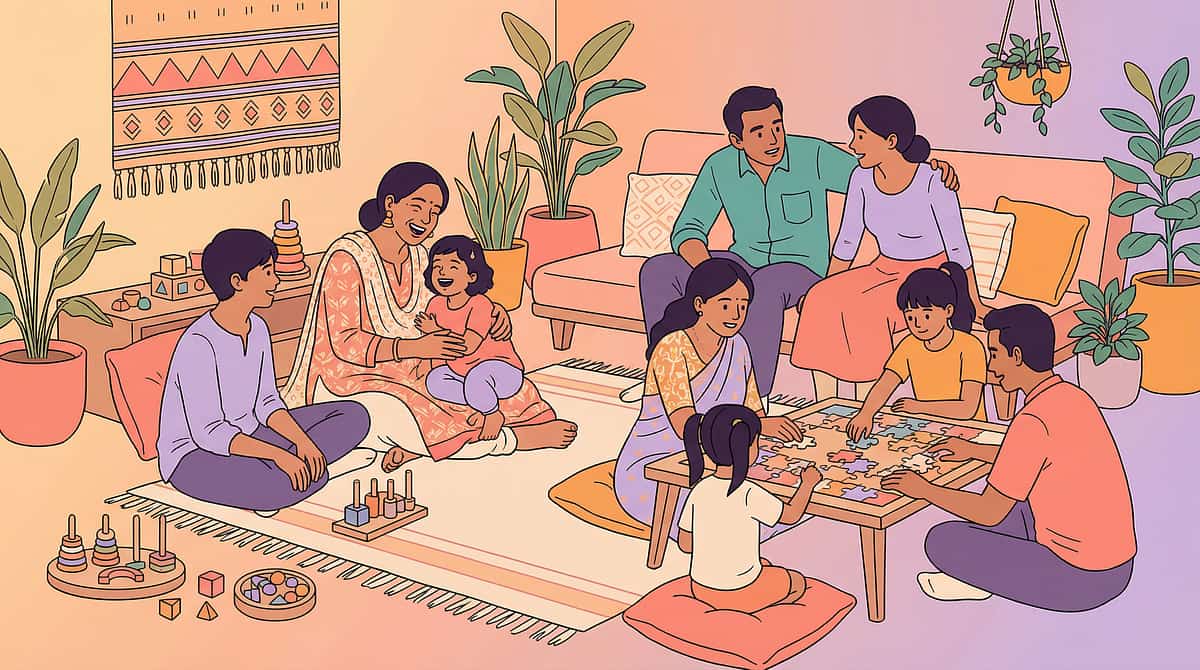
ACT I: UNDERSTAND
3 Numbers Every Parent of a Child With Object Permanence Delay Needs to See
Object permanence delays are documented across autism spectrum disorder, global developmental delay, intellectual disability, visual processing disorders, and working memory impairments. A 2024 PRISMA systematic review (PMC11506176) confirmed that early structured intervention with appropriate materials demonstrates measurable, replicable outcomes. Your child's brain is not broken — it is at an earlier waypoint on a known developmental route.
1 in 36
ASD Prevalence (CDC 2023)
In India, conservative estimates place prevalence at 1 in 68 to 1 in 100. Object permanence delays appear in the majority of children with ASD, intellectual disability, and global developmental delay.
8–12 mo
Typical Emergence Window
The typical developmental window for object permanence to emerge (Piaget, 1954). Children with delays may be working on this milestone at age 2, 3, or 4 — a treatment target, not a verdict.
97%+
Measured Improvement
Improvement rate across Pinnacle Blooms Network's 20M+ exclusive 1:1 therapy sessions, tracked via GPT-OS® AbilityScore® across cognitive, sensory, communication, and behavioural domains.
References: PMC11506176 | PMC10955541 | CDC Autism Data 2023 | WHO Global Burden of Developmental Disabilities (2023)
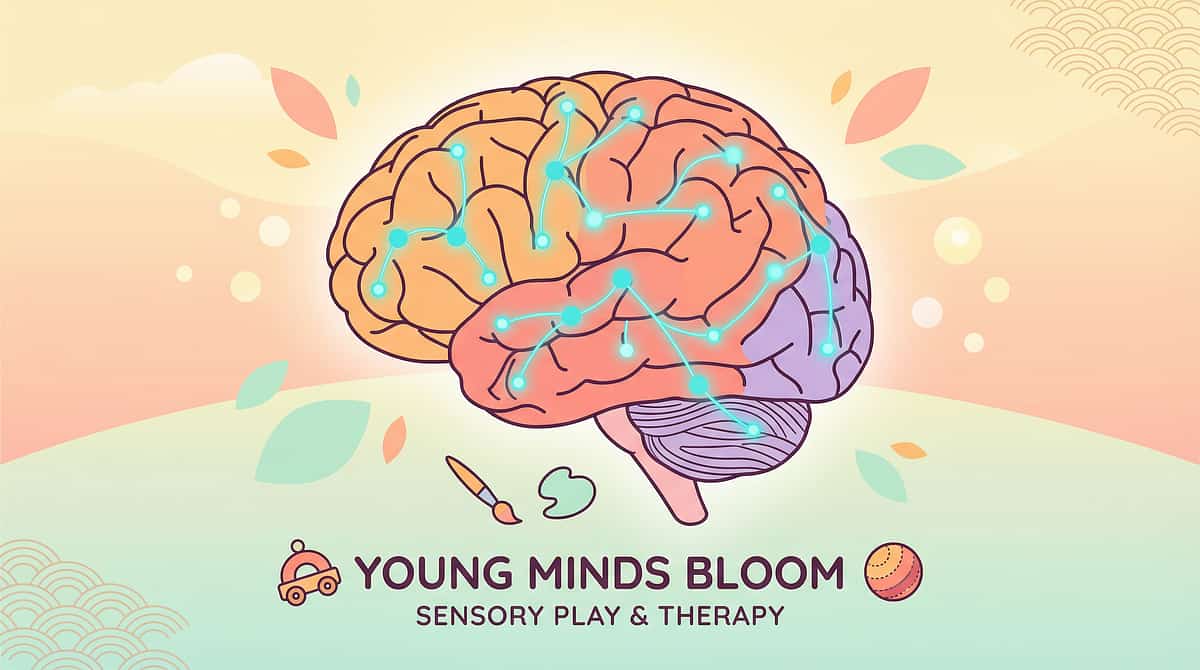
The Neuroscience Your Child Can't Tell You
Object permanence is not a single skill — it is a coordinated multi-brain-region achievement. Three key regions must work in sequence: the Prefrontal Cortex (working memory & mental representation), the Hippocampus (memory formation & location recall), and the Visual Cortex (object tracking & spatial processing).
What Object Permanence Requires Neurologically
- Track an object visually (visual cortex)
- Encode its location in short-term memory (hippocampus)
- Hold a mental representation while it's hidden (prefrontal working memory)
- Search based on that held representation (prefrontal-motor coordination)
Why the Chain Breaks
When any of these systems are developing more slowly — as commonly occurs in autism, global developmental delay, and related conditions — the chain breaks. The child genuinely cannot "hold" the hidden object in mind. It isn't a behaviour problem. It isn't stubbornness.
It is a wiring difference, not a character flaw.
The extraordinary news: all four of these systems demonstrate neuroplasticity in early childhood. The object permanence box, the peek-a-boo scarf, the nesting cup hiding game — these are not toys. They are brain architecture programmes.
References: Piaget J (1954) | Frontiers in Integrative Neuroscience (2020) DOI: 10.3389/fnint.2020.556660 | Baddeley (2000)
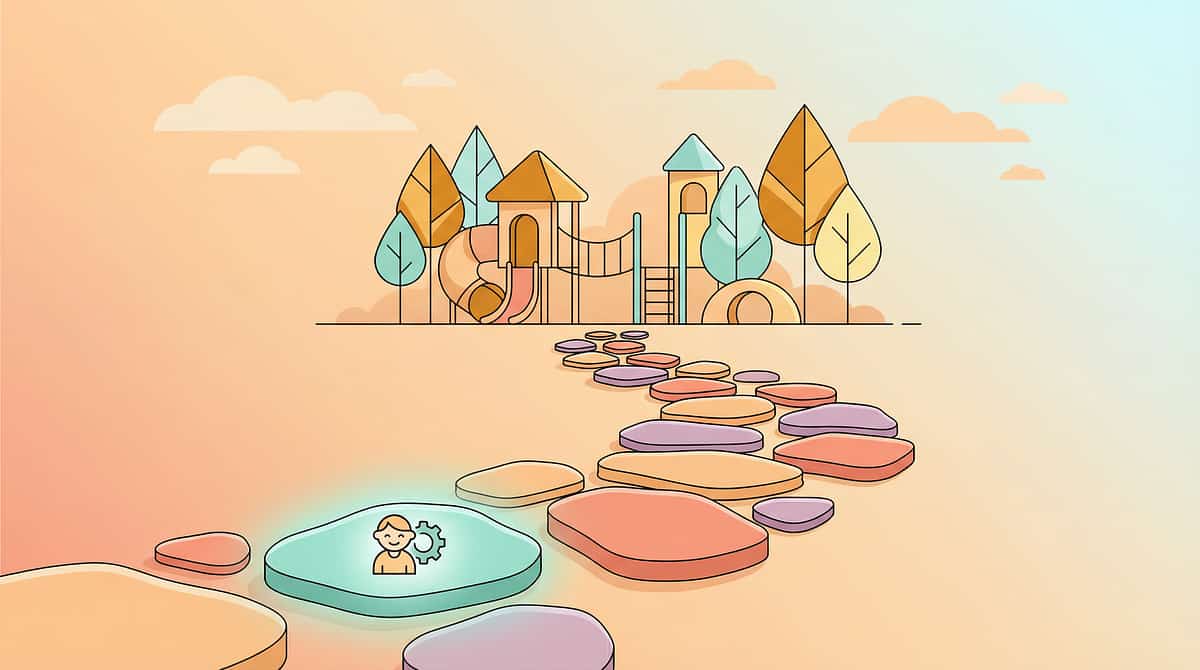
Your Child Is Here. Here Is Where We Are Heading.
Every child's developmental journey follows a known sequence. Understanding where your child sits on this continuum transforms uncertainty into a clear forward path.
0–4 Months
No object awareness. "Out of sight = out of existence."
4–8 Months
Tracks moving objects. Searches for partially covered items only.
8–12 Months ★
Typical mastery window. Actively searches for completely hidden objects. A-not-B error present.
12–18 Months
A-not-B error resolves. Correct location search after visible displacement.
18–24 Months
Invisible displacements mastered. Symbolic play begins.
Conditions That Commonly Co-Occur With Object Permanence Delays
Autism Spectrum Disorder
Object and social object permanence both affected.
Global Developmental Delay
Milestone sequence intact but timing significantly delayed.
Separation Anxiety
Directly linked — child cannot hold caregiver in mind.
Working Memory Difficulties
Affects A-not-B task and invisible displacements.
Visual Processing Disorders
Tracking and encoding both affected.
Intellectual Disability
Plateau at earlier stages; explicit teaching required.
"Your child is not behind. They are on a developmental continuum at a specific waypoint. The intervention techniques on this page are designed for exactly this waypoint — and there is a clear forward path." — Pinnacle Blooms NeuroDevelopmental Consortium
References: WHO Care for Child Development Package (2023) | UNICEF MICS Developmental Monitoring Indicators | PMC9978394

Clinically Validated. Home-Applicable. Parent-Proven.
The Object Permanence Building Protocol is not anecdotal guidance — it is grounded in Level I–II evidence from systematic reviews, randomised controlled trials, and WHO multi-country implementation data.
📄 PRISMA Systematic Review (2024) — PMC11506176
16 articles (2013–2023) confirm sensory-cognitive integration intervention meets criteria as an Evidence-Based Practice for children with ASD. Object permanence materials including structured hiding activities, Montessori object permanence boxes, and caregiver-led peek-a-boo protocols demonstrated measurable cognitive gains.
📄 Meta-Analysis, World Journal of Clinical Cases (2024) — PMC10955541
Across 24 studies, sensory-cognitive intervention effectively promoted social skills, adaptive behaviour, cognitive processing, and fine motor skills. Sessions of 10–20 minutes (home-based equivalent) demonstrated significant outcomes. DOI: 10.12998/wjcc.v12.i7.1260
📄 Indian RCT, Indian Journal of Pediatrics (2019)
Home-based structured intervention delivered by trained parents demonstrated significant developmental outcomes comparable to clinic-delivered therapy, directly validating the home-execution model this page is built upon. DOI: 10.1007/s12098-018-2747-4 (Padmanabha et al.)
📄 WHO Care for Child Development (2023) — PMC9978394
CCD Package implemented in 54 low- and middle-income countries including India demonstrates that caregiver-administered structured cognitive play with appropriate materials produces measurable developmental gains across all resource settings.
📄 NCAEP Evidence-Based Practices Report (2020)
Video modelling, structured play, and caregiver-mediated intervention all classified as evidence-based practices for autism intervention, directly applicable to the object permanence building protocol.
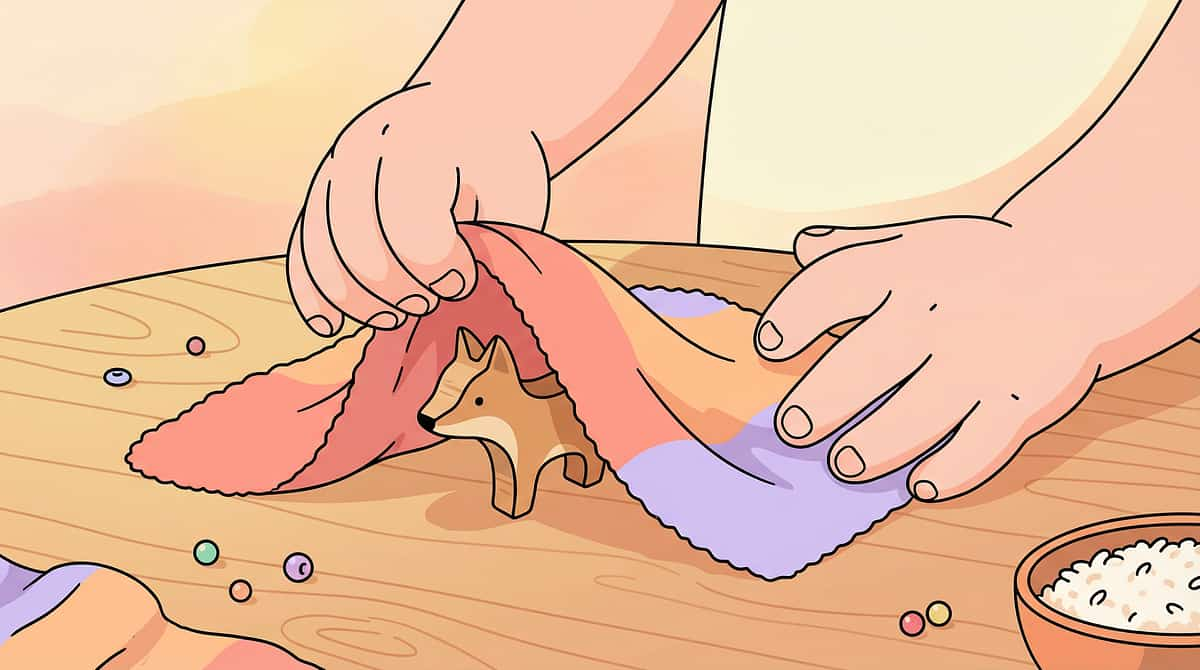
ACT II: LEARN
Object Permanence Building Protocol (OPBP)
Parent-Friendly Name:"Things Still Exist" Training
Object Permanence is the fundamental cognitive understanding that objects — and people — continue to exist even when they cannot be seen, heard, or touched. First described by Jean Piaget as the cornerstone of the sensorimotor stage, this milestone typically emerges between 4–12 months in neurotypical children. In children with autism, global developmental delay, intellectual disability, working memory difficulties, or visual processing disorders, this milestone may be significantly delayed or require explicit, structured teaching.
The Object Permanence Building Protocol uses 9 clinically selected therapeutic materials — from Montessori object permanence boxes to peek-a-boo scarves to photo albums — to provide repeated, structured, joyful experiences of "things disappear and come back." Each experience builds the neural pathways supporting working memory, mental representation, visual tracking, and ultimately, the understanding that YOU — the caregiver — continue to exist even when you leave the room.
📂 Canon Category
Cause-Effect Toys • Matching/Memory Games • Problem-Solving Toys
👶 Age Band
6 months – 4 years (developmental age)
⏱ Session
10–15 minutes | Daily frequency
🌍 Evidence
Level I–II (Systematic Reviews + RCTs)
📹Reel Connection: G-675: "9 Materials That Help With Object Permanence" — Cognitive Development and Early Learning Series, Episode 675
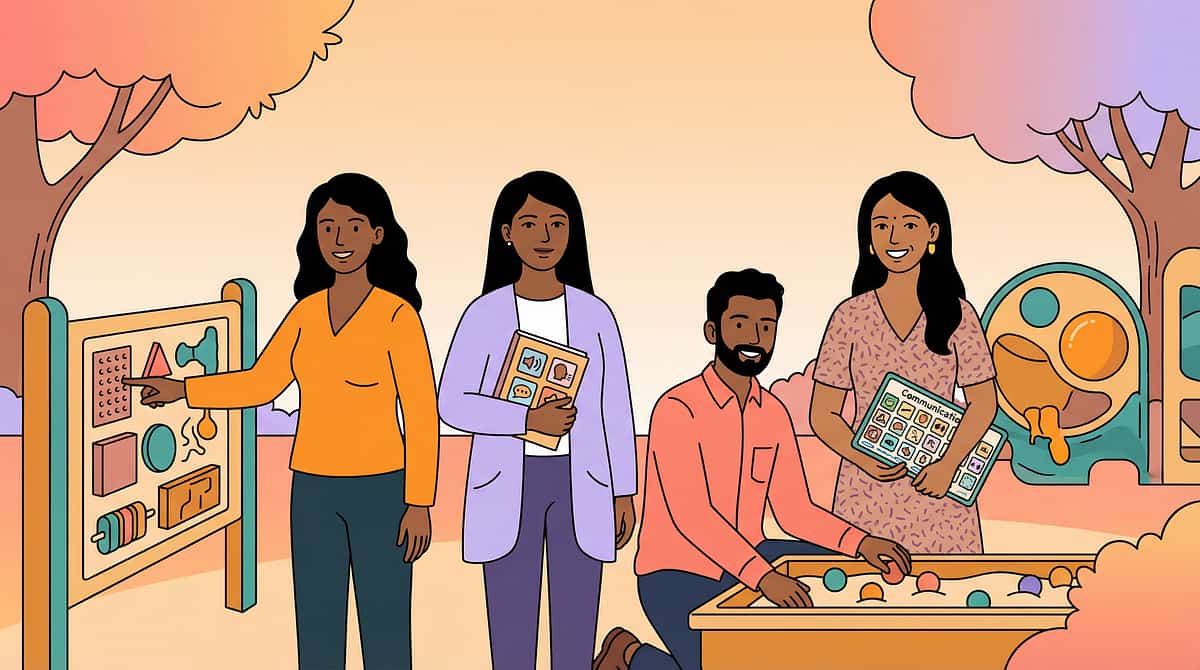
Five Disciplines. One Unified Goal: Building the Understanding That Things Persist.
Object permanence crosses therapy boundaries because the brain doesn't organise by therapy type. It is simultaneously a cognitive, sensory, linguistic, behavioural, and social achievement — requiring a coordinated multi-disciplinary response.
🔵 Occupational Therapy (OT) — PRIMARY LEAD
OTs address sensorimotor prerequisites — visual tracking, bilateral coordination, and sensory-cognitive integration needed for object search behaviour. They select materials based on the child's sensory profile and establish physical readiness for object permanence play.
🟣 Developmental Therapy — CO-LEAD
Early interventionists map the child's current Piagetian stage and design the graduated hiding-finding progression: partial hiding → complete hiding → A-not-B challenges → invisible displacements.
🟢 Speech-Language Pathology (SLP)
SLPs embed object permanence into language development. "Where's the ball?" is simultaneously a language task and an object permanence task. Words represent absent things — language is object permanence for concepts.
🟡 Applied Behaviour Analysis (ABA/BCBA)
BCBAs design reinforcement systems that make hiding-finding intrinsically rewarding. They establish baseline search behaviour, track trial-by-trial data, and determine mastery criteria using DTT or NET frameworks.
⚪ Special Education (SpEd)
Special educators integrate object permanence practice into classroom routines — hiding materials in cubbies, lift-the-flap books during story time, and embedding object permanence into daily transitions.
References: Adapted UNICEF/WHO Nurturing Care Framework for Multi-Disciplinary Teams (2022) | DOI: 10.1080/17549507.2022.2141327
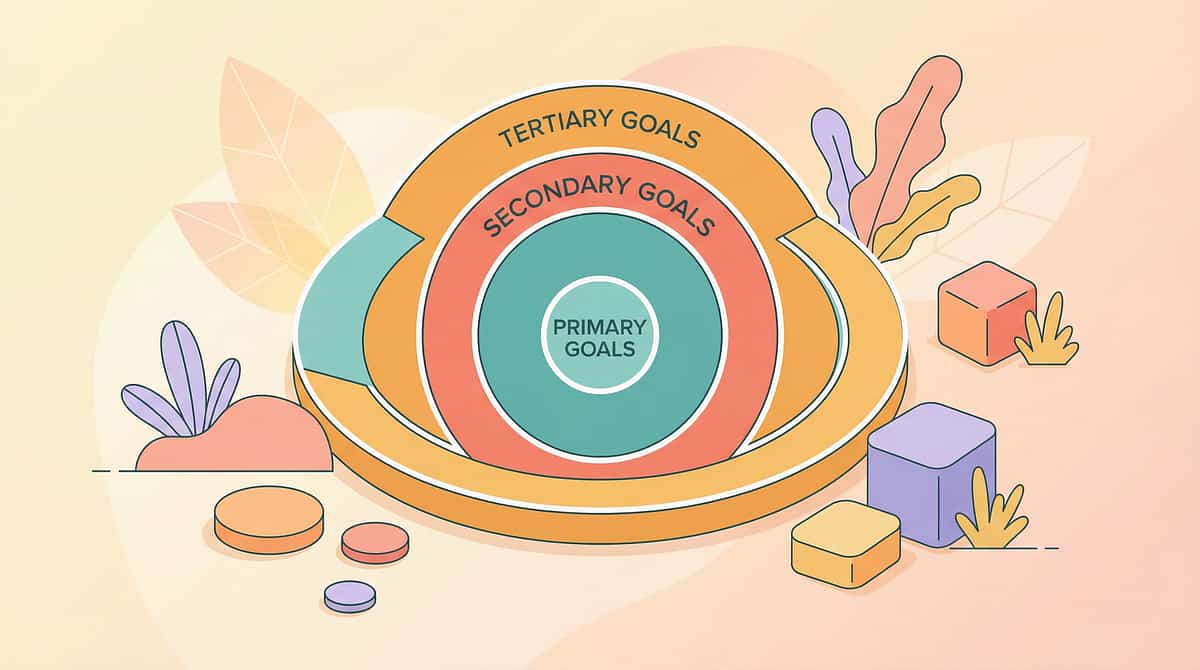
This Is a Precision Tool. Here Is Exactly What It's Aimed At.
Understanding the full target spectrum of this protocol helps you recognise progress at every layer — from the immediate search behaviour to the long-term cognitive architecture being built beneath the surface.
🎯 PRIMARY TARGET
Object permanence — the cognitive understanding that objects and people continue to exist when not perceived. Measured via: search behaviour for hidden objects, anticipation of reappearance, A-not-B task performance, invisible displacement understanding.
⭕ SECONDARY TARGETS
- Working Memory — holding hidden objects in mind across a delay
- Visual Tracking — following objects through space
- Separation Tolerance — understanding caregivers persist when absent
- Symbolic Thinking — precursor to language and play
- Cause-Effect Understanding — my action makes it reappear
🔵 TERTIARY TARGETS
- Language Development — words represent absent things
- Pretend/Symbolic Play — mental representation of objects
- Theory of Mind — knowing others exist independently
- Memory Development — encoding and holding absent events
- Executive Function — planning, anticipation, goal-directed search
Observable Behaviour Indicators — How You'll Know the Targets Are Being Hit
Child searches for a toy when you cover it with a cloth (primary)
Child looks at the exit point of a tunnel before the ball emerges (secondary — anticipation)
Child shows reduced distress when you leave the room briefly (secondary — separation tolerance)
Child points to or requests an absent toy (tertiary — symbolic representation)
Child uses one object as if it were another in play (tertiary — symbolic thinking)
References: PMC10955541 | Meta-analysis across 24 studies on cognitive-developmental intervention targets
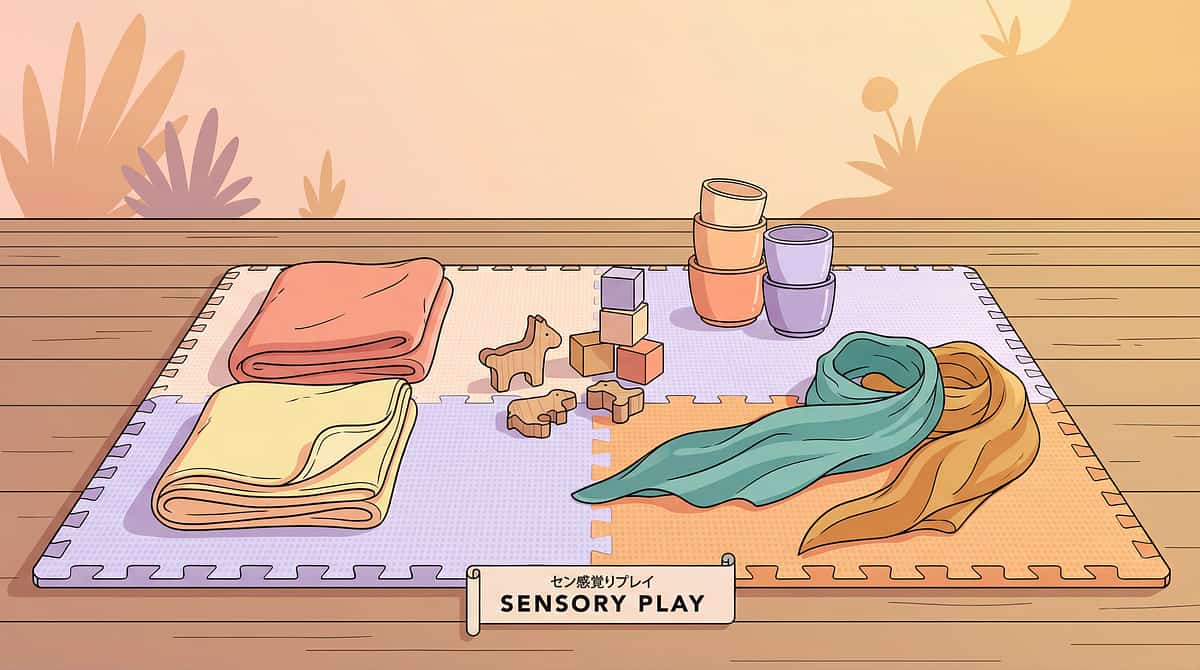
9 Materials. Every One Clinically Selected. Every One Home-Executable.
Sourced from Canon Material Taxonomy — Cognitive & Learning Category
Each of the 9 materials below has been selected for its specific contribution to the object permanence building sequence. They are ordered in a developmental progression — begin with Material 1 or whichever your child engages with most readily.
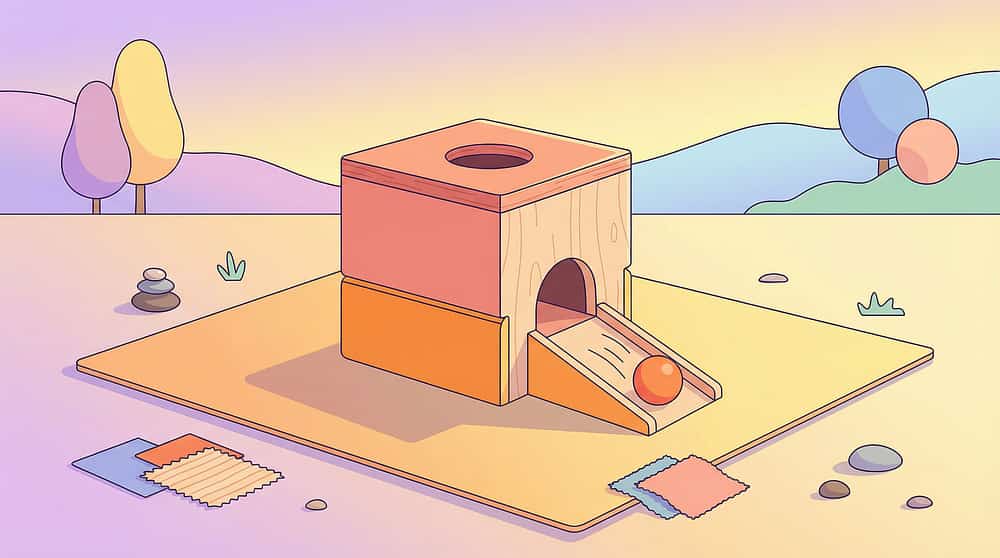
1. Object Permanence Box (Montessori Style)
Canon: Cause-Effect Toys / Switch Toys
The foundational tool. Ball drops through top, rolls out side — teaching "gone and back" in the most controlled, repeatable format available.
💰 ₹800–2,500 | 🛒 Search Amazon.in: "Montessori Object Permanence Box"
The foundational tool. Ball drops through top, rolls out side — teaching "gone and back" in the most controlled, repeatable format available.
💰 ₹800–2,500 | 🛒 Search Amazon.in: "Montessori Object Permanence Box"
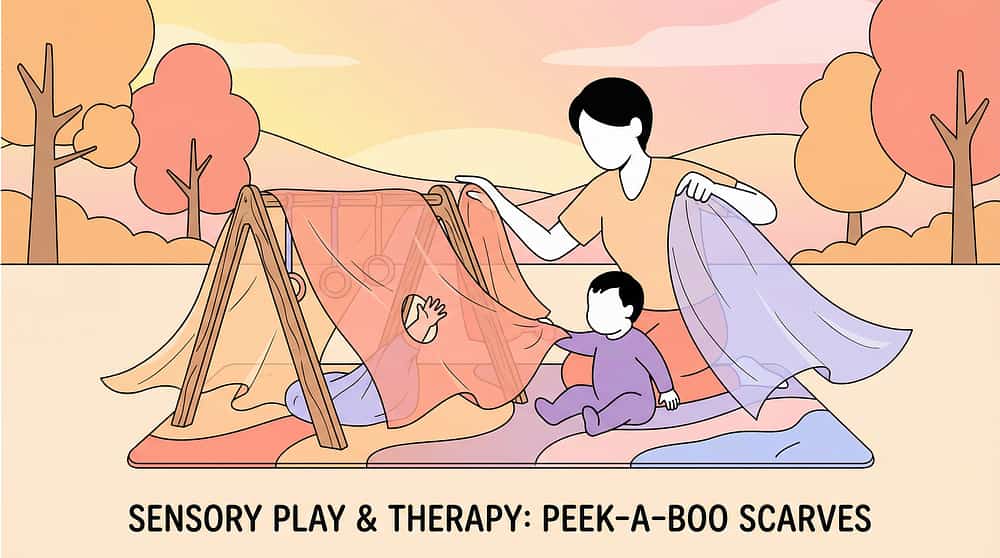
2. Peek-a-Boo Scarves (Progressive Opacity Set)
Canon: Transition Objects / Comfort Items
Sheer → medium → opaque. Teaches social object permanence — that YOU still exist when hidden. Three opacity levels mirror the developmental progression.
💰 ₹200–800 | 🛒 Search Amazon.in: "Sheer Peek-a-Boo Scarf Baby"
Sheer → medium → opaque. Teaches social object permanence — that YOU still exist when hidden. Three opacity levels mirror the developmental progression.
💰 ₹200–800 | 🛒 Search Amazon.in: "Sheer Peek-a-Boo Scarf Baby"
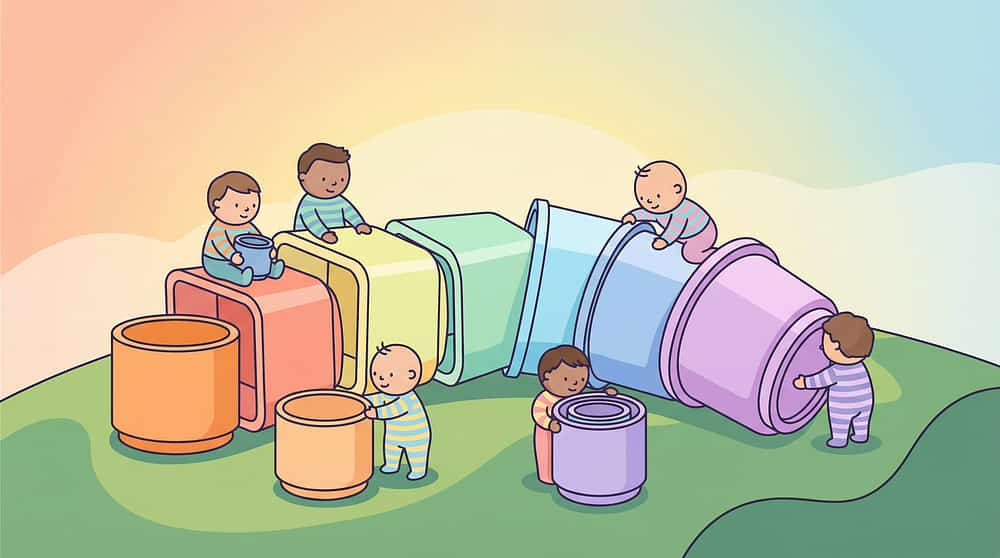
3. Nesting & Stacking Cups
Canon: Sorting Activities / Categorisation
Natural hiding tools that progress from single-cup to multi-cup search challenges. Lattooland Rainbow Sorting Activity Set (Amazon.in ₹628) is a recommended option.
💰 ₹300–1,000 | 🛒 Buy Now
Natural hiding tools that progress from single-cup to multi-cup search challenges. Lattooland Rainbow Sorting Activity Set (Amazon.in ₹628) is a recommended option.
💰 ₹300–1,000 | 🛒 Buy Now
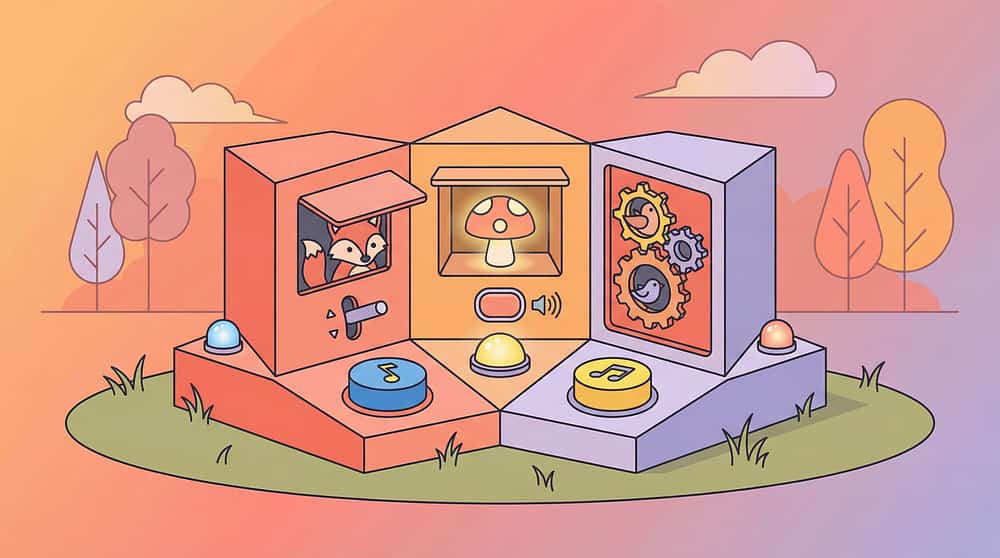
4. Pop-Up Cause-Effect Toy
Canon: Cause-Effect Toys / Switch Toys
Hidden characters reappear with every press, twist, slide — cause-effect and object permanence combined in a single joyful interaction. Dyomnizy Educational Memory Game (₹519).
💰 ₹519 | 🛒 Buy Now
Hidden characters reappear with every press, twist, slide — cause-effect and object permanence combined in a single joyful interaction. Dyomnizy Educational Memory Game (₹519).
💰 ₹519 | 🛒 Buy Now
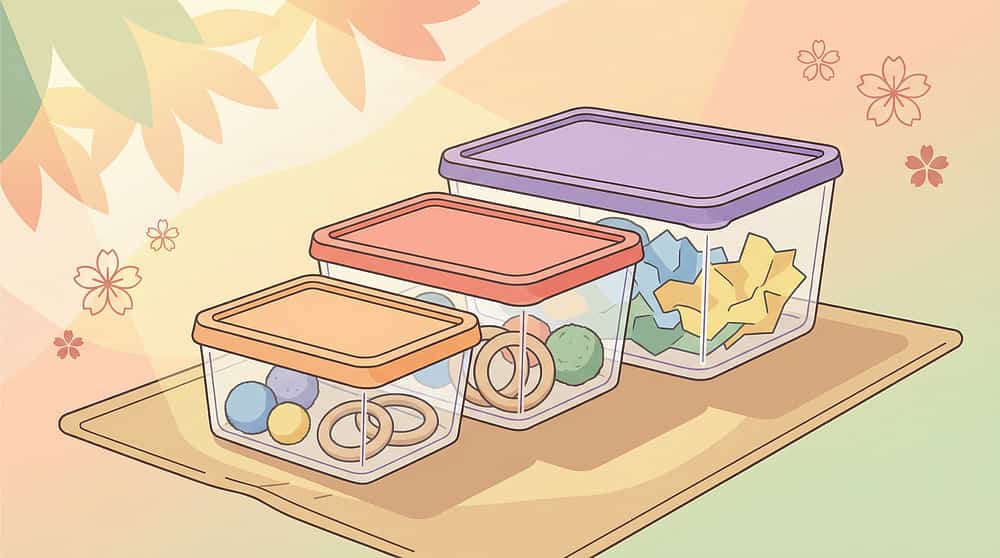
5. Clear Containers with Lids (Graduated Set)
Canon: Matching Games / Memory Games
Clear → translucent → opaque. The visibility bridge: child sees the object inside, learns that containers contain hidden things. A critical transition tool.
💰 ₹200–800 | 🛒 Search Amazon.in: "Clear plastic container with lid set baby"
Clear → translucent → opaque. The visibility bridge: child sees the object inside, learns that containers contain hidden things. A critical transition tool.
💰 ₹200–800 | 🛒 Search Amazon.in: "Clear plastic container with lid set baby"
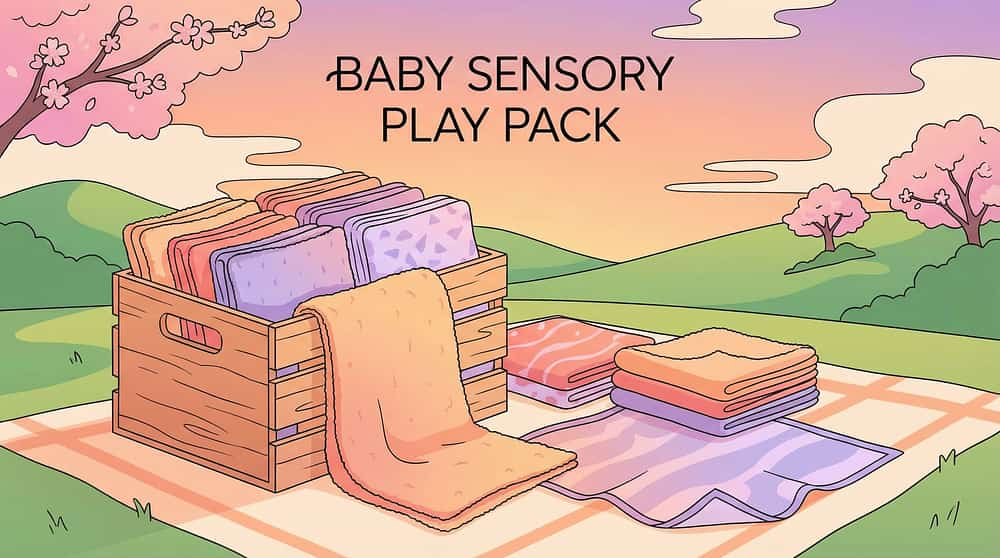
6. Fabric Hiding Cloths (Variety Pack)
Canon: Problem-Solving Toys
The most versatile tool. Any fabric square becomes a hiding ground. Cover, uncover, found — object permanence in its purest form. Graduated from sheer to opaque.
💰 ₹100–500 | 🛒 Search Amazon.in: "fabric squares soft handkerchief baby"
The most versatile tool. Any fabric square becomes a hiding ground. Cover, uncover, found — object permanence in its purest form. Graduated from sheer to opaque.
💰 ₹100–500 | 🛒 Search Amazon.in: "fabric squares soft handkerchief baby"
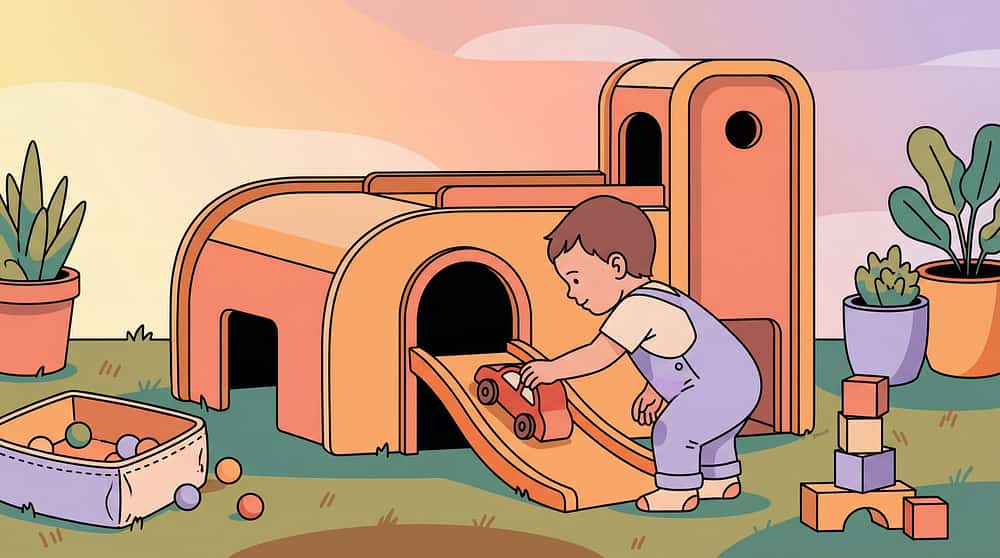
7. Toy Garage with Tunnel (Vehicle Entry/Exit)
Canon: Problem-Solving Toys
Objects travel through hidden spaces and reappear — teaching continuity of movement. Kidology Pull Out Spike Toy (₹380) offers a comparable cause-effect alternative.
💰 ₹380–2,500 | 🛒 Buy Now
Objects travel through hidden spaces and reappear — teaching continuity of movement. Kidology Pull Out Spike Toy (₹380) offers a comparable cause-effect alternative.
💰 ₹380–2,500 | 🛒 Buy Now
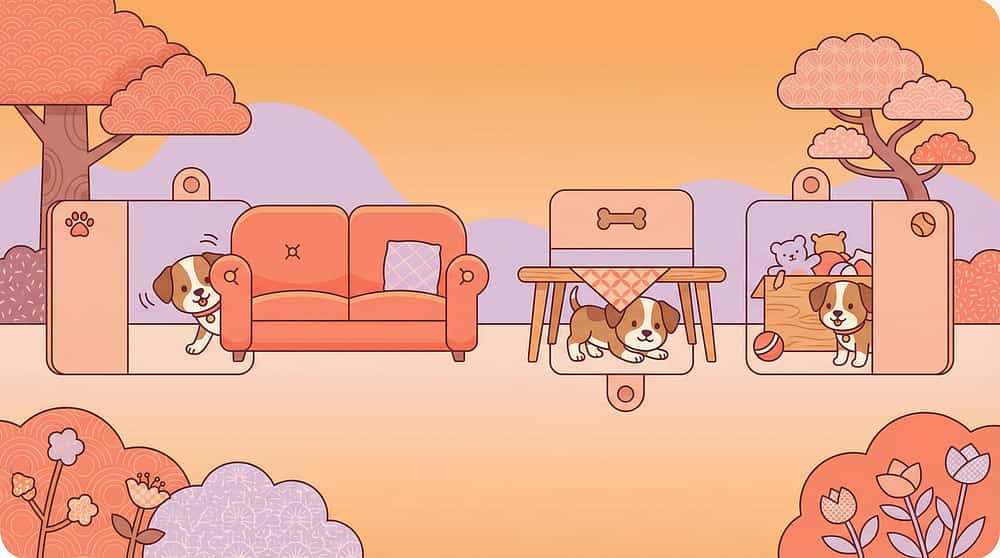
8. Lift-the-Flap Board Books
Canon: Matching Games / Memory Games
Where's Spot? Dear Zoo. Every flap is a hide-and-find. Object permanence embedded in daily reading — one of the most naturally reinforcing materials available.
💰 ₹300–1,000 | 🛒 Search Amazon.in: "lift the flap board book toddler India"
Where's Spot? Dear Zoo. Every flap is a hide-and-find. Object permanence embedded in daily reading — one of the most naturally reinforcing materials available.
💰 ₹300–1,000 | 🛒 Search Amazon.in: "lift the flap board book toddler India"
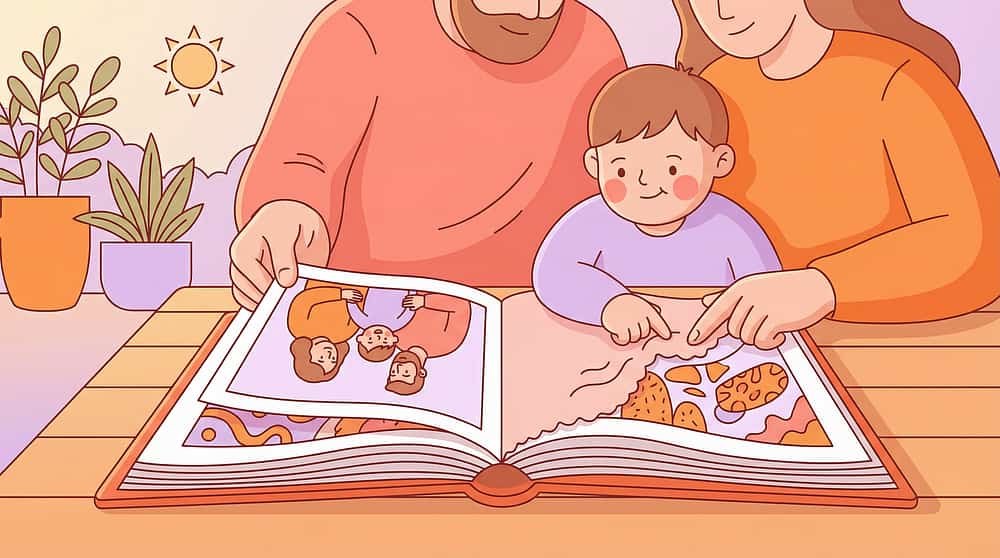
9. Family Photo Album (Board Book Style)
Canon: Transition Objects / Comfort Items
Photos make absent people present — social object permanence for the people who matter most. The most emotionally powerful material in the protocol for caregiver separation anxiety.
💰 ₹300–1,500 | Photo book + companion comfort item pairing recommended
Photos make absent people present — social object permanence for the people who matter most. The most emotionally powerful material in the protocol for caregiver separation anxiety.
💰 ₹300–1,500 | Photo book + companion comfort item pairing recommended
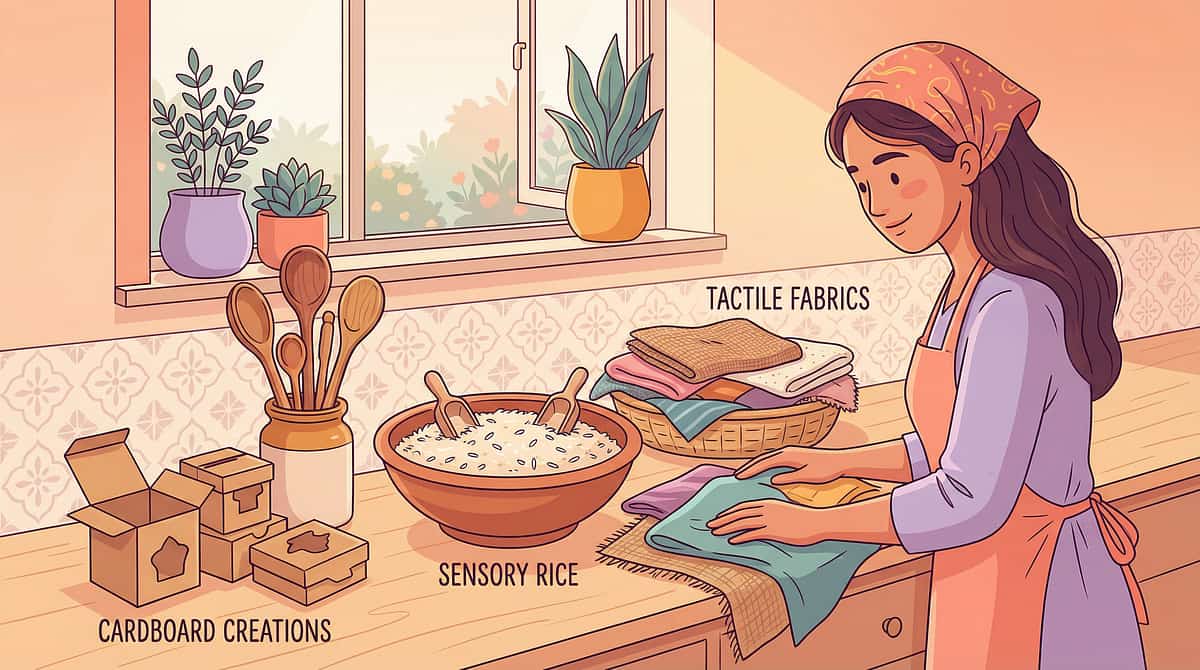
Zero Budget. Full Therapy. Every Child Deserves Access.
WHO/UNICEF Equity Principle in Action — 54 LMICs have proven household materials work. Therapeutic effectiveness is not determined by the price of the material — it is determined by the consistency, warmth, and developmental appropriateness of the experience.
Clinical Material | ₹ Cost | Household Substitute | Why It Works |
Montessori Object Permanence Box | ₹800–2,500 | Shoebox + rubber ball (cut hole in lid) | Same principle: controlled disappearance and predictable reappearance |
Peek-a-Boo Scarves | ₹200–800 | Old saree fabric squares / muslin cloth (30×30cm) | Transparency progression identical to clinical set |
Nesting/Stacking Cups | ₹300–1,000 | Steel katoris / plastic dabbas of graduated sizes | Same containment and hiding mechanics |
Pop-Up Toy | ₹500–2,000 | Parent hides behind pillow and pops up | Social pop-up teaches same anticipation arc |
Clear Containers | ₹200–800 | Empty PET water bottles, transparent dabbas | Visual confirmation while learning containment |
Fabric Hiding Cloths | ₹100–500 | Kitchen napkins, handkerchiefs, dupatta | Any cloth square — graduated from thin to thick |
Toy Garage/Tunnel | ₹500–2,500 | Paper towel cardboard tube | Movement through hidden space = same learning |
Lift-the-Flap Books | ₹300–1,000 | DIY: paper flaps over photos glued to cardboard | Identical hide-reveal mechanic |
Family Photo Album | ₹300–1,500 | Phone/tablet slideshow of family members | Photo = mental representation of absent person |
References: WHO NCF (2018) | PMC9978394 | CCD Package across 54 LMICs
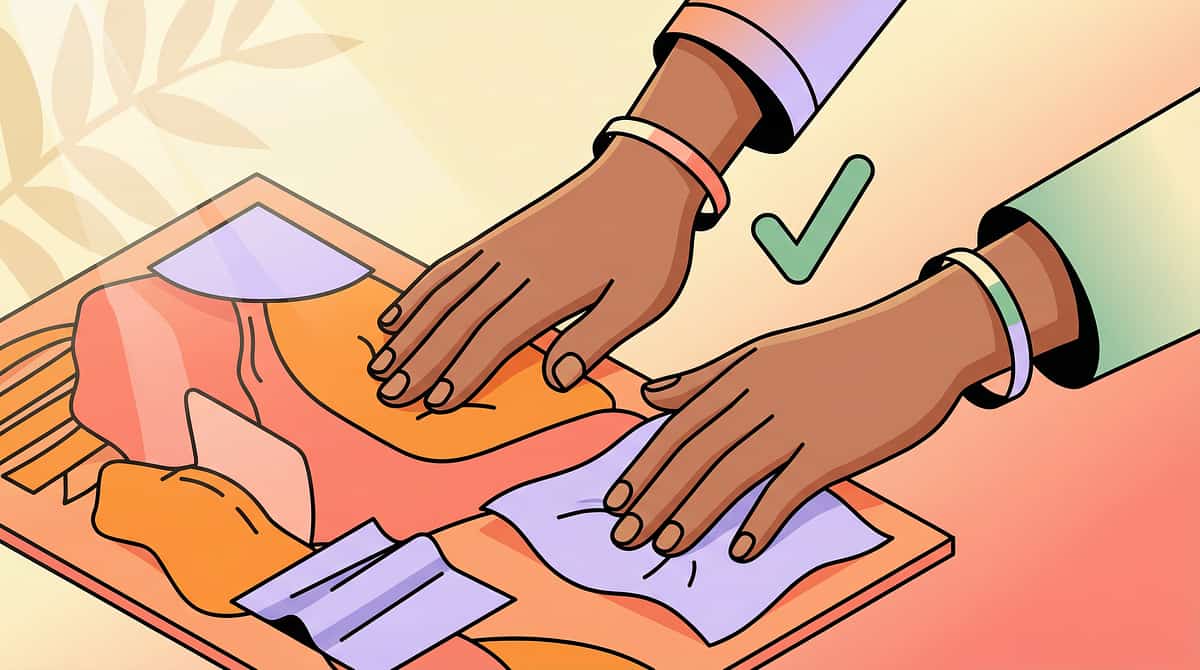
Read This Before Every Session. Every Time.
🔴 RED — Do NOT Proceed If:
- Child is unwell, feverish, or showing signs of pain
- Severe meltdown within the past 2 hours
- Child shows extreme fear or terror at hiding activities — consult therapist first
- Child is hungry, overtired, or needs sensory regulation
- Diagnosed visual impairment requiring adapted materials — consult OT
- Small object sizes present choking hazard
🟡 AMBER — Modify If:
- Child is mildly tired → shorten to 5 minutes, reduce complexity
- Child shows mild resistance → offer choice, reduce demand
- Child has cold/sniffles → avoid fabrics near face; use containers
- Session is at a new location → reduce challenge, increase familiarity
- New caregiver present → brief them before starting
🟢 GREEN — Proceed When:
- Child is alert, calm, and recently fed
- No significant distress in past 60 minutes
- Environment set up per Card 12 specifications
- You have 10–20 uninterrupted minutes
- You are calm and ready — your regulated state regulates theirs
Material Safety Checklist — Check Before Every Session
All balls ≥ 4cm diameter (no choking hazard)
Fabric squares free of loose threads/fraying
Wooden boxes checked for splinters
Containers checked for sharp edges
Pop-up toy springs not excessively forceful
Small hidden objects NOT accessible unsupervised
References: DOI: 10.1007/s12098-018-2747-4 | Pinnacle Clinical Safety Protocols | BACB Ethical Guidelines
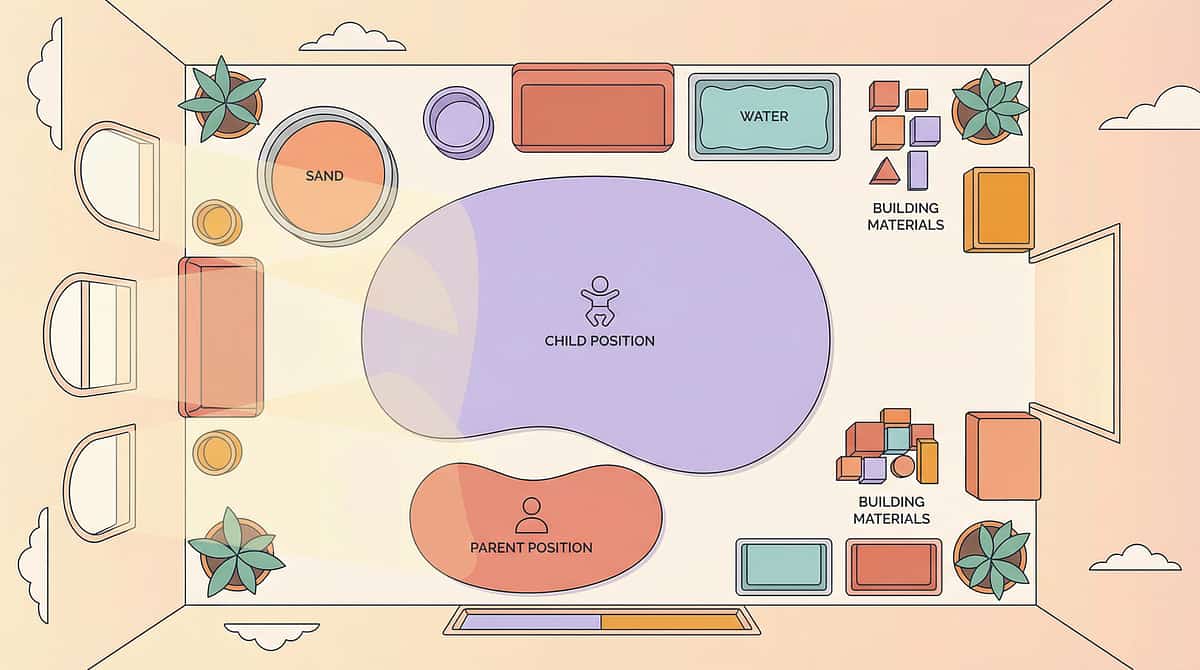
Your Room Is Now a Therapy Centre. Here's How to Configure It.
The physical environment is not a passive backdrop — it is an active determinant of session quality. A well-configured space reduces distractions, supports regulation, and allows you to focus entirely on your child.
Room Configuration
1
Position ① — Child
Seated on non-slip floor mat or low chair. Facing the primary material station. No distracting toys in visual field.
2
Position ② — Materials
Within parent's arm reach, organised by session sequence. Start with primary material only; others out of sight until needed.
3
Position ③ — Parent
Same physical level as child (on floor if child is on floor). Facing child's face. Within comfortable reach for support.
Environment Checklist
Lighting: Bright natural light; no harsh overhead glare
Sound: Low background; TV OFF; phone on silent
Temperature: Comfortable (22–26°C)
Clutter: Clear session area of non-essential items
Floor surface: Non-slip mat; space for child to move
Escape route: Child can leave the space easily — no trapping
Timer: Visible sand timer or phone timer set for 10–15 min
Reinforcement items: Ready and within reach, not yet visible to child
References: PMC10955541 — Environmental setup as session efficacy determinant
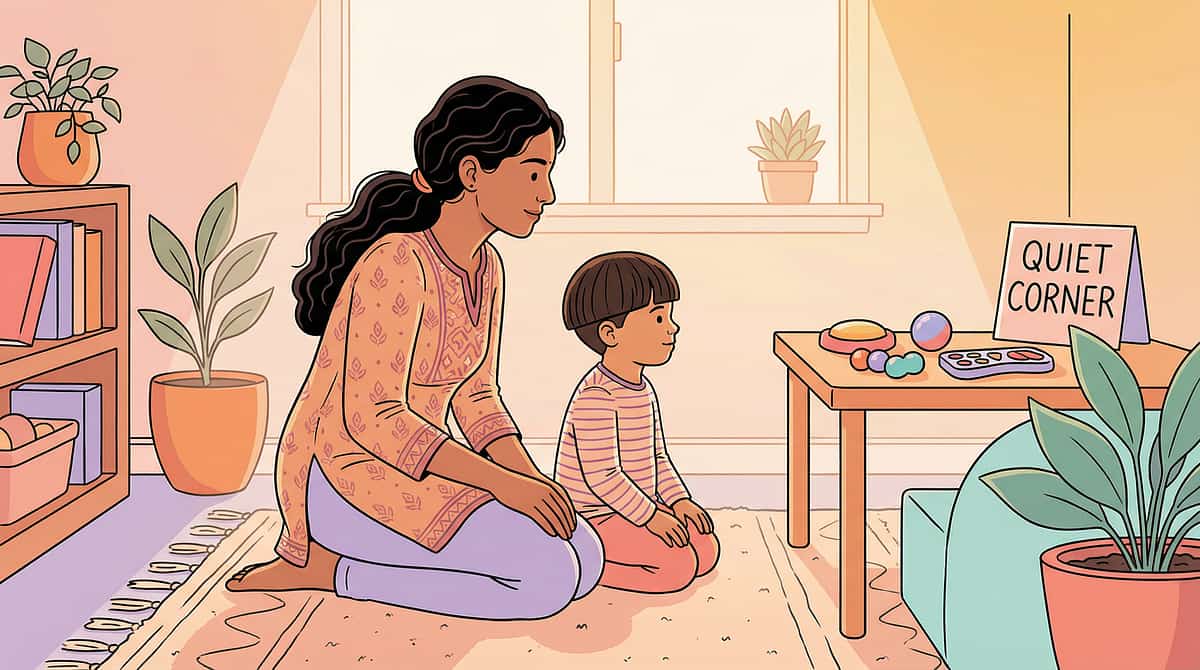
ACT III: DO IT
60-Second Pre-Flight Check. The Best Session Is One That Starts Right.
Before every session — not just the first — run through this readiness check. Session abandonment is not failure; it is data. A postponed session is far more therapeutically valuable than a dysregulated one.
Indicator | ✅ GO | ⚠️ MODIFY | 🛑 POSTPONE |
State | Alert, calm, interested | Slightly restless | Crying, distressed, screaming |
Fed | Ate 30–90 min ago | Slightly hungry — offer snack first | Very hungry or just finished eating |
Rested | Slept well; not overtired | Slightly sleepy — shorten session | Clearly exhausted |
Recent distress | No meltdown in 2+ hours | Minor upset 1–2 hrs ago — gauge carefully | Severe episode in last 2 hours |
Engagement | Eye contact, vocalising | Low engagement — use preferred item | Completely withdrawn |
Health | Well | Mild sniffles only | Fever, pain, illness signs |
Your state | Calm, present, patient | Slightly stressed — breathe, then proceed | Overwhelmed — rest first |
✅ ALL GREEN
→ Start Protocol (Step 1)
⚠️ 1–2 AMBER
→ Modify: Simplest material (fabric cloth), shorten to 5 min, reduce all demands
🛑 ANY RED
→ Postpone: Choose calming alternative, note reason, try tomorrow
"Session abandonment is not failure. It is data. Document why and what the child's state was — that information is therapeutic gold."
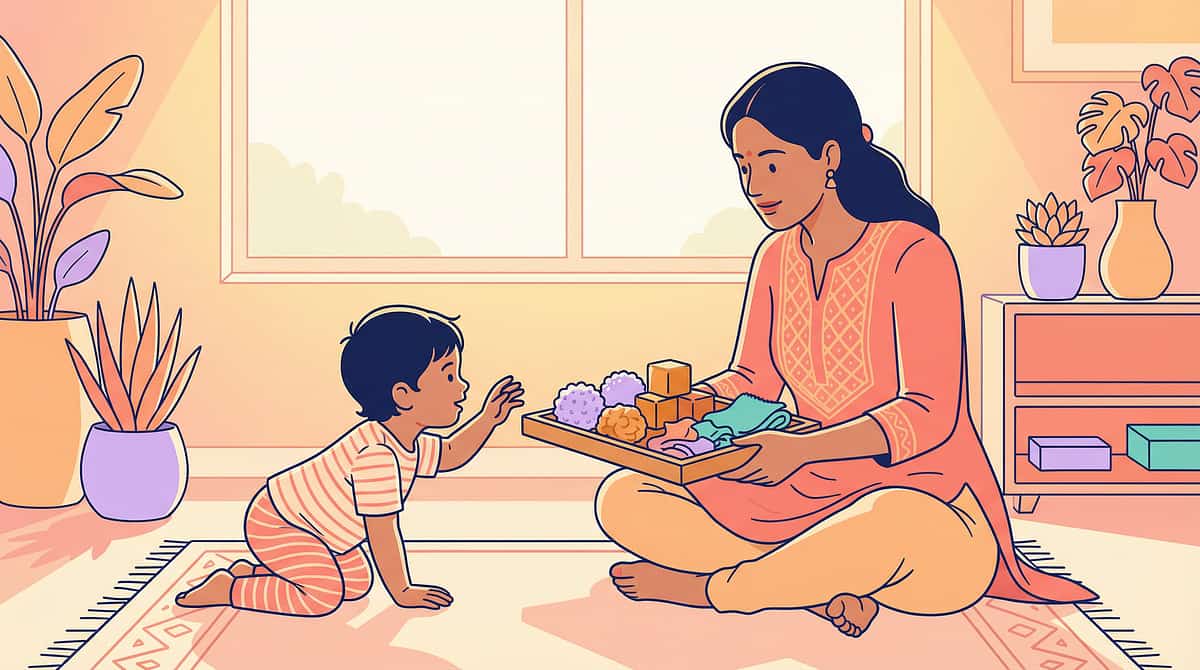
Step 1 of 6: The Invitation
🕐 30–60 seconds
The principle: No session begins with a demand. The child is invited in through play, warmth, and low-demand engagement. The material must want to be touched before it can be used therapeutically.
Exact Script
"Look what I have! [Hold up the object permanence box or chosen material with delight] Shall we play? Come see, come see!"
Parent Body Language
- Be at the child's physical level (on floor if they're on floor)
- Warm, animated facial expression — this is fun, not work
- Hold the material up with genuine curiosity — your enthusiasm is contagious
- No eye contact demands — let them look at the material first
✅ What Acceptance Looks Like → GO
- Child orients toward the material
- Child reaches out or moves closer
- Child vocalises or makes any positive sound
- Child makes brief eye contact with material or you
Any of these = GO. Move to Step 2.
❌ What Resistance Looks Like + How to Modify
- Child turns away → Wait 10 seconds, offer a different material
- Child pushes material away → Don't force; try again in 5 minutes
- Child walks away → Follow at distance, place material where visible
- Child becomes distressed → STOP. Postpone. This is data.
ABA Reference: Pairing procedures — establishing motivation before demand placement. BCBA clinical practice guidelines.

Step 2 of 6: The Engagement
🕐 1–3 minutes
The principle: The child is now oriented. Deepen the interaction by demonstrating the material with exaggerated delight — before asking anything of the child. YOU go first. Show them it's wonderful.
Script — Object Permanence Box
"Watch! [Drop ball] Oh! Where did it go? WHERE did it go?! [Pause 2 seconds] LOOK! [Ball emerges] There it IS! It came BACK!"
Script — Fabric Hiding
"I'm going to hide the [car/ball/toy]. Watch carefully... [Cover slowly] Where did it go? Is it gone? Let's FIND it! [Lift cloth with drama] FOUND IT! It was there the WHOLE TIME!"
Child Response Indicators
✅ Engagement
Leans in, watches intently, makes sounds, smiles → Perfect, continue
⚠️ Tolerance
Watching without expression → Acceptable — the learning is happening
❌ Avoidance
Looks away repeatedly → Reduce volume/energy; try quieter, slower
References: PMC11506176 | Reinforcement scheduling: ABA clinical guidelines

Step 3 of 6: The Therapeutic Action
🕐 3–8 minutes (core session)
The principle: The active ingredient. Guide the child to perform the hiding-and-finding sequence themselves. Start with your hands helping theirs. Gradually fade your support.
Phase A — Observe
Sessions 1–3: Child watches YOU hide and find.
Phase B — Prompted
Sessions 4–10: Child searches with your physical guidance.
Phase C — Independent
Sessions 11+: Child searches independently.
Phase D — Anticipation
Mastery signal: Child looks at exit before reveal.
Object Permanence Box — Specific Action
- Hold ball for child to see: "See the ball? Here's the ball."
- With child's hand (or alone): "Ball goes IN" — drop through hole
- Pause 2–3 seconds. Point to exit hole: "Where will it come out?"
- Ball emerges. EXPRESS DELIGHT: "THERE IT IS! The ball came BACK!"
- Repeat immediately. Aim for 5–10 trials per session.
Peek-a-Boo Scarf — Specific Action
- Show sheer scarf: "Let's play peek-a-boo!"
- Cover your face briefly (1–2 seconds): "Where's Mama? Is Mama gone?"
- Reveal: "PEEK-A-BOO! Mama's HERE! Mama was always here!"
- Progress: longer hiding, thicker fabric, child hides OWN face
- Extend: have child pull scarf off your face — AGENCY is powerful
Fabric Hiding Cloth — Specific Action
- Show toy. Name it: "Ball. Ball. See the ball."
- Slowly cover with cloth while child watches: "Ball is... hiding!"
- Point to the covered lump: "Ball is under the cloth. The ball is STILL THERE."
- Pause. Prompt: "Can you find the ball? Pull the cloth!"
- Child lifts cloth → celebrate: "YOU FOUND IT! The ball was there the whole time!"
⚠️ Common Execution Errors
- Hiding too completely too fast → Go back to partial hiding
- Rushing the reveal → The PAUSE before reveal is the therapy. Hold it.
- Flat affect during session → Your animation IS the reinforcement.
- Too many trials causing satiation → 3 engaged trials > 15 distracted ones.
References: PMC11506176 | ABA clinical guidelines for prompt fading
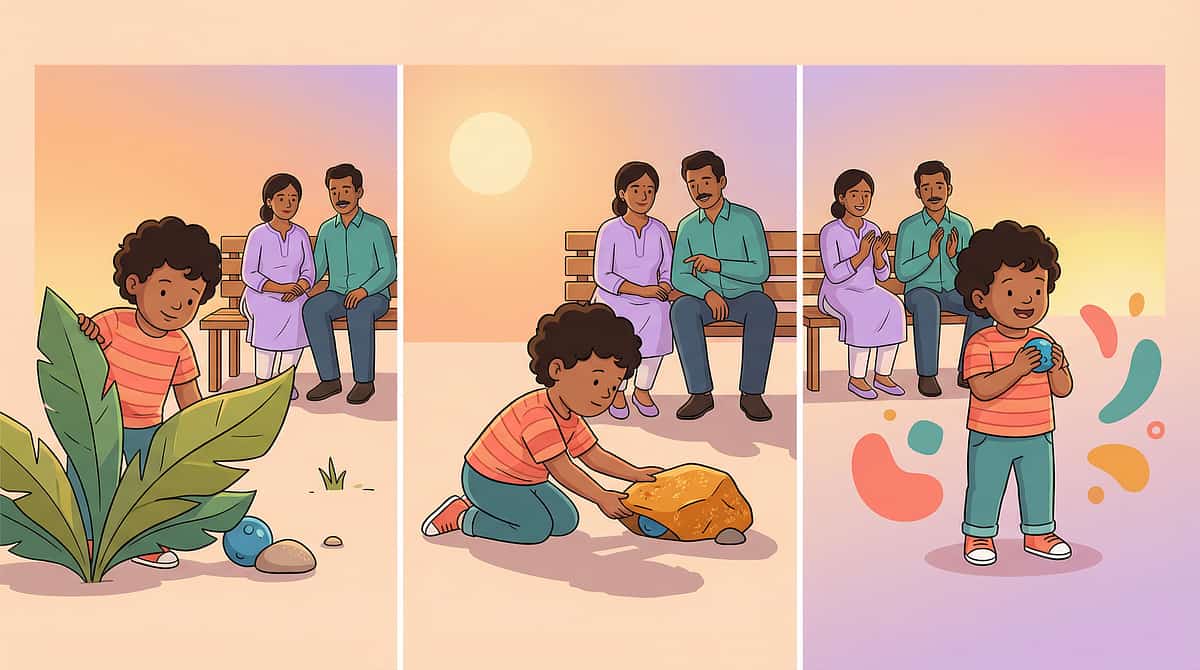
Step 4 of 6: Repeat & Vary
🕐 3–5 minutes
The principle: Object permanence is built through thousands of repetitions over months — but within a session, quality beats quantity. 5 genuinely engaged trials build more neural architecture than 20 distracted ones.
Object Permanence Box
5–10 trials per session (the mechanism keeps it fresh)
Peek-a-Boo Scarf
5–8 exchanges (high emotional load — don't saturate)
Fabric Hiding Cloth
5–10 trials with different objects for variety
Nesting Cups
3–5 hiding challenges per session
Photo Album
Unlimited — naturally self-pacing
Variation Options — Maintain Engagement Across Sessions
Vary the Object: Same material, different toy hidden — keeps attention on hiding-finding not the specific object
Vary the Hider: Sometimes parent hides, sometimes child hides — role reversal deepens understanding
Vary the Delay: Start with 1-second delay; build to 5, then 10 seconds — builds working memory alongside object permanence
Vary the Complexity: Partial hiding → complete hiding → two-location choice → A-not-B challenge
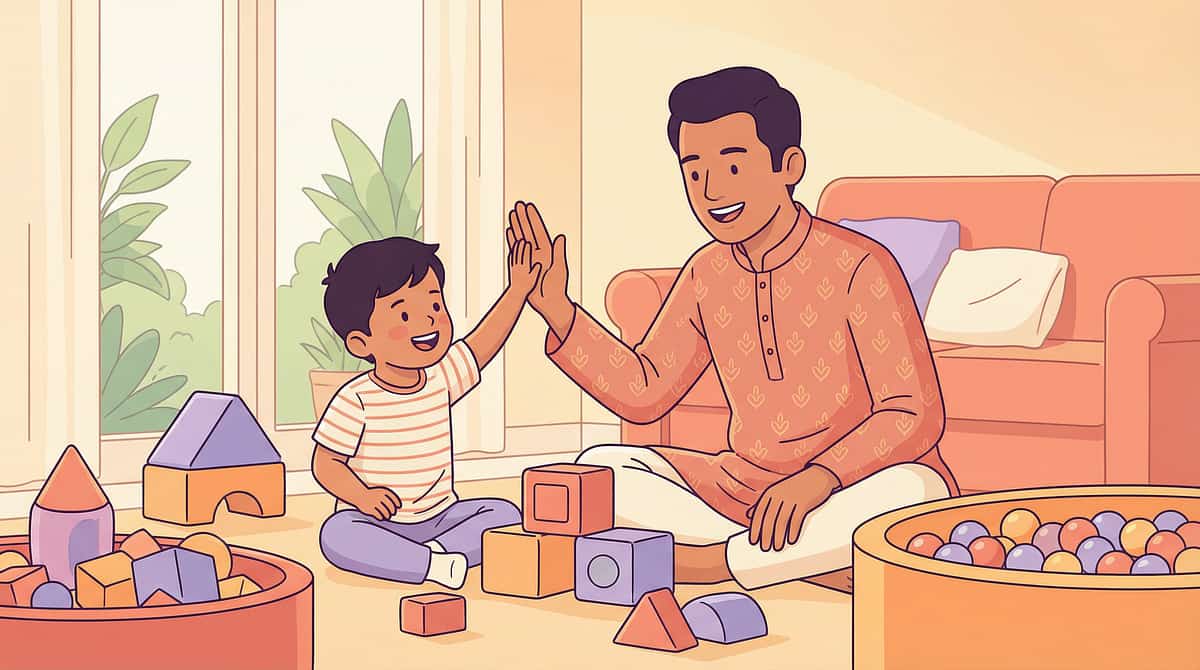
Step 5 of 6: Reinforce & Celebrate
🕐 Continuous throughout session
The principle: Timing matters more than magnitude. Immediate (within 3 seconds), specific, enthusiastic. Celebrate the ATTEMPT, not just the success.
For any search behaviour (even partial)
"YES! You looked for it! You're a FINDER! That's exactly right!"
For successful finding
"YOU FOUND IT! [Name] found the [ball]! It was there, and you KNEW! Brilliant!"
For anticipation (gold-standard)
"Oh! You KNEW it was there! Look at you — you're so clever! You knew it was coming!"
For child who hides for parent
"Oh no, where did [toy] go?! [Name] hid it! Let me FIND it! YOU HID IT SO WELL!"
Reinforcer Type | Examples | When to Use | Notes |
Social (verbal) | "YES! Found it!" "Brilliant!" "You're a finder!" | Every trial, immediately | Always lead with this |
Social (physical) | Clap, high five, hug, spin — whatever child loves | After successful search | Match child's preferences |
Token | Sticker on chart after X trials | For children responding to token economy | See: 1800+ Reward Stickers ₹364 |
Tangible | 30 seconds with preferred toy as break | After 3–5 trials | Use as break reward |
Activity | Short preferred activity | End-of-session reinforcement | Always end on high |
ABA References: Reinforcement principles — Cooper, Heron & Heward | BACB Ethical Guidelines
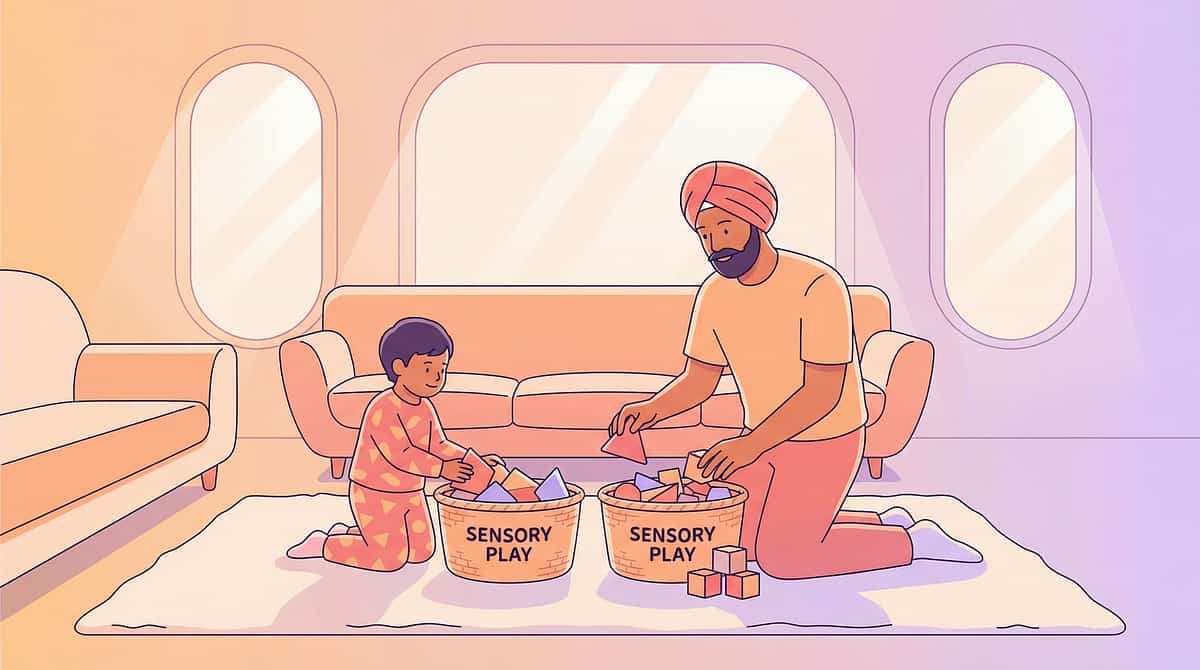
Step 6 of 6: The Cool-Down
🕐 2–3 minutes
The principle: No session ends abruptly. The nervous system that engaged in challenging cognitive work needs a gentle landing. Abrupt endings cause post-session dysregulation and resistance to future sessions.
Follow this sequence every session — the predictability of this ending routine becomes a regulatory anchor for your child.
Cool-Down Scripts
2-Minute Warning:
"One more time. One more hiding game, then we put things away."
"One more time. One more hiding game, then we put things away."
Put-Away Ritual:
"Let's put the [box/scarves/cups] back in the basket. Ball in the basket. [Child places] Wonderful — you help so well."
"Let's put the [box/scarves/cups] back in the basket. Ball in the basket. [Child places] Wonderful — you help so well."
Transition Cue:
"All done with hiding game! Time for [next activity]."
Use a consistent transition phrase every session — predictability is safety.
"All done with hiding game! Time for [next activity]."
Use a consistent transition phrase every session — predictability is safety.
Cool-Down Activity Options
- Looking at family photo album together (no demands — just warm viewing)
- Child's choice of a preferred quiet activity
- Sensory calming input if needed (per OT's recommendations)
If Child Resists Ending
- Don't force; offer one more trial with "this is the last one" warning
- Use visual timer so ending is the clock's decision, not yours
- Offer transition activity as something to look forward to
- Validate: "You love this game! We'll play again tomorrow."
NCAEP (2020) — Visual supports as evidence-based practice for autism
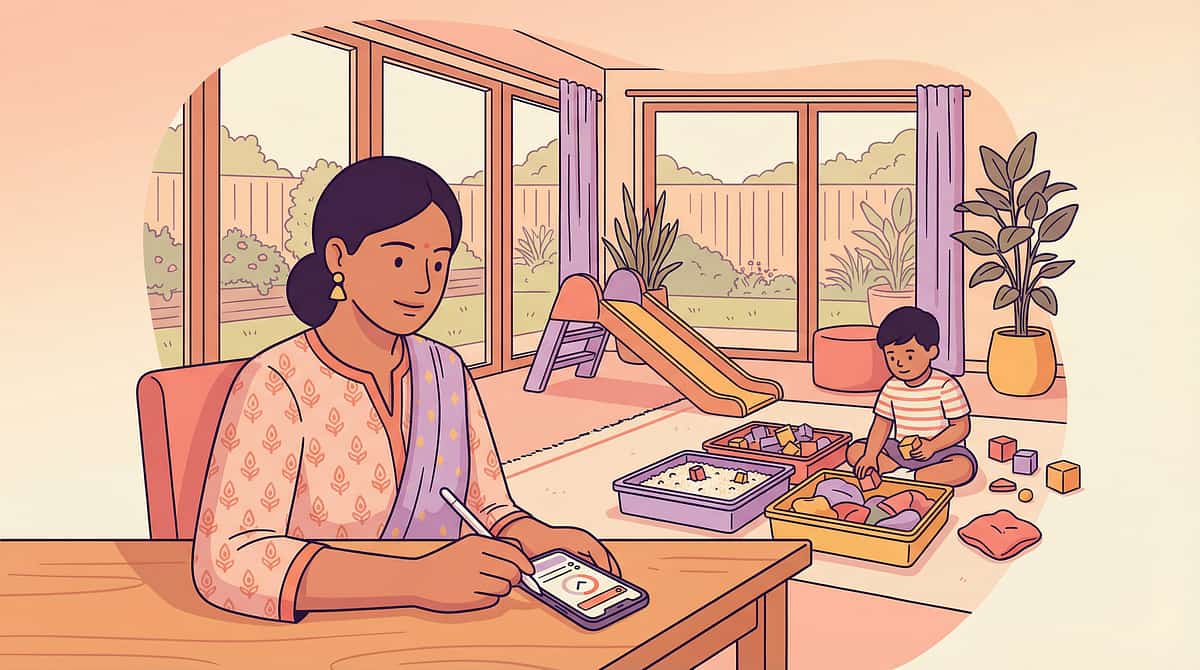
Capture the Data: Right Now
60 seconds of data now saves hours of guessing later. Every session deserves a 60-second data capture. This information feeds your child's AbilityScore® trajectory and helps the GPT-OS® engine refine recommendations across 20M+ comparable sessions.
1
Data Point 1 — Trials
How many times did child successfully search for a hidden object? ___/Total trials
2
Data Point 2 — Highest Level
☐ Partial hiding (edge showing) ☐ Complete hiding — single cloth/cup ☐ Two-location choice ☐ A-not-B task (searched correct NEW location) ☐ Anticipation shown (looked at exit BEFORE reveal)
3
Data Point 3 — Affect & Engagement
☐ Highly engaged (leaned in, smiled, vocalised) ☐ Tolerating (participated without enthusiasm) ☐ Resistant (needed prompting throughout) ☐ Session stopped early (reason: ___)
4
Data Point 4 — Session Duration
Total minutes: ___ | Materials used: ___
📋 Google Form
Pinnacle GPT-OS® Object Permanence Session Tracker — embedded online form
⬇️ PDF Log
Download G-675 Session Log tracking sheet for offline use
📱 In-App Tracker
GPT-OS® In-App Tracker at pinnacleblooms.org/gpt-os/tracker
"This session's data feeds your child's AbilityScore® trajectory. Across 20M+ sessions, this data has revealed which children respond to which materials fastest — your data helps every child like yours."
ABA Data Standards: Cooper, Heron & Heward | BACB Guidelines for Data Collection

Session Didn't Go Perfectly? Good. That's Data, Not Failure.
Every obstacle you encounter is a diagnostic signal that refines the protocol for your child. Here are the most common challenges and their evidence-based solutions.
❓ Child didn't search at all — just watched blankly
Why: Readiness level may be earlier than single-location hiding, or the material isn't motivating enough.
Fix: Use object permanence box only (most structured); use child's most preferred small toy as hidden object; try partial hiding first. Consider OT Piagetian stage assessment.
Fix: Use object permanence box only (most structured); use child's most preferred small toy as hidden object; try partial hiding first. Consider OT Piagetian stage assessment.
❓ Child searched in the wrong location (A-not-B error)
Why: This is a NORMAL developmental milestone — not a problem. The A-not-B error IS the developmental stage you're working through.
Fix: Celebrate any searching! Simply repeat the hiding at Location B again. Reduce the number of A trials before switching to B.
Fix: Celebrate any searching! Simply repeat the hiding at Location B again. Reduce the number of A trials before switching to B.
❓ Child became very upset during peek-a-boo
Why: The hiding is too complete, too long, or separation anxiety is significant.
Fix: Go back to hands-only-over-eyes. Keep revealing time under 1 second. Cover just your eyes — not your whole face. Build very gradually.
Fix: Go back to hands-only-over-eyes. Keep revealing time under 1 second. Cover just your eyes — not your whole face. Build very gradually.
❓ Child lost interest after 2–3 trials
Why: Satiation (material no longer novel) or wrong challenge level (too easy or too hard).
Fix: Switch materials — try fabric cloth instead of box. Introduce a more motivating hidden object. Shorten future sessions.
Fix: Switch materials — try fabric cloth instead of box. Introduce a more motivating hidden object. Shorten future sessions.
❓ Child seemed bored — no reaction to finding
Why: Low motivation for the specific hidden object, or parent's affect was flat.
Fix: Use the child's MOST preferred toy as the hidden item. Amplify YOUR excitement — your emotion is the reinforcement.
Fix: Use the child's MOST preferred toy as the hidden item. Amplify YOUR excitement — your emotion is the reinforcement.
❓ Child took the cloth/cup but didn't look under it
Why: Motor skill for reaching/lifting is present but the cognitive connection hasn't formed yet.
Fix: After child lifts cloth, immediately help them see the toy: "Look! It's there! You found it!" Make the discovery moment unmissable.
Fix: After child lifts cloth, immediately help them see the toy: "Look! It's there! You found it!" Make the discovery moment unmissable.
❓ Sessions are going well at home but child doesn't generalise
Why: Object permanence learned in one context hasn't transferred to other contexts yet.
Fix: Vary materials, hiding locations, hidden objects, and rooms. Generalisation is its own training goal — Card 22 covers this explicitly.
Fix: Vary materials, hiding locations, hidden objects, and rooms. Generalisation is its own training goal — Card 22 covers this explicitly.
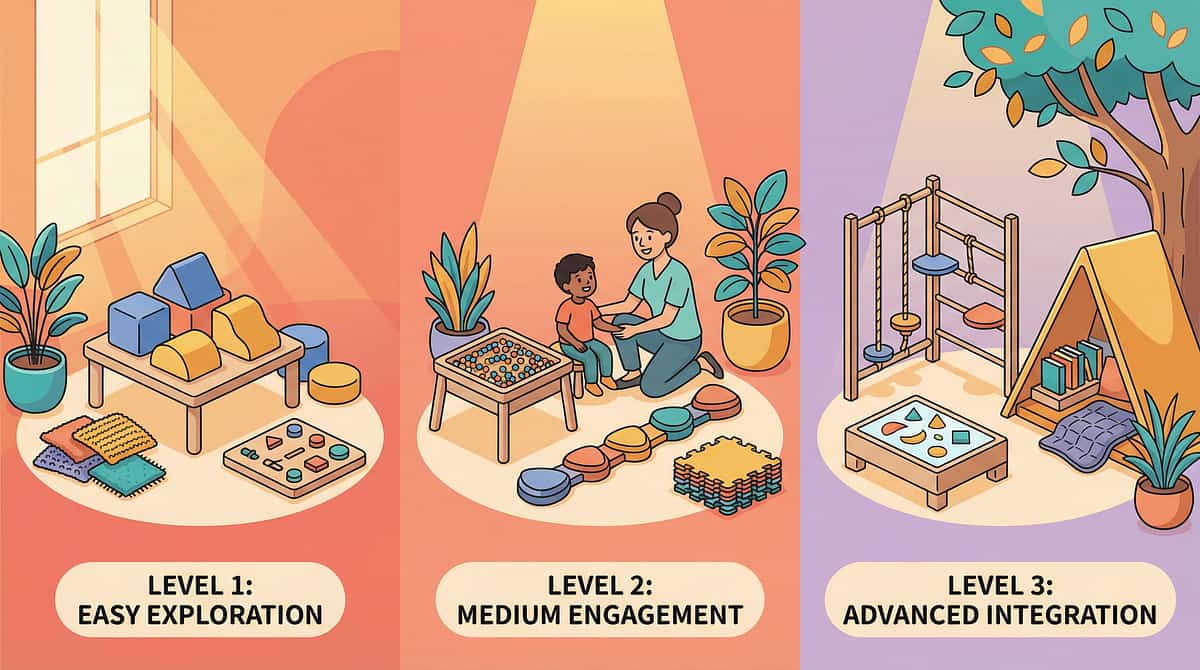
No Two Children Are the Same. Here's How to Make This Exactly Right for Yours.
The protocol is a framework, not a script. Use the difficulty slider and sensory profile modifications below to calibrate every session to your child's current developmental position.
Level 1 — Easiest
Child watches parent hide and find (observation only)
Level 2
Partial hiding — edge of toy visible, child retrieves
Level 3
Complete hiding under single cloth — child searches
Level 4
Two cloths: which one is it under?
Level 5
A-not-B challenge: hide at A several times, then B
Start at the level where your child is currently succeeding 70%+ of the time. Move up one level when success is consistent. Levels 6–8 (delay, invisible displacement, multiple displacement) follow once Level 5 is mastered.
Sensory Profile Modifications
Sensory Seeker (loves touch, movement, input): Use textured hiding cloths; add movement — roll ball into hiding spot; combine with proprioceptive input; use larger, more tactile materials.
Sensory Avoider (sensitive to texture, unexpected touch): Use soft, smooth fabrics only; avoid materials that pop up suddenly; give warning before each hiding; allow child to choose material.
Visual Processing Difficulties: Use high-contrast materials (bright object, dark cloth); ensure excellent lighting; use clear containers first (visual confirmation strategy).
Limited Motor Skills: Accept pointing to hiding location as "finding" — motor is not the target; use larger cloths; accept any approximation of lifting/reaching.
Age-Based Modifications (Developmental Level)
Under 12 Months Dev. Level
Tracking only; partial hiding; object permanence box basic; no demands
12–18 Months Dev. Level
Single complete hiding; quick reveals; high energy reinforcement
18–24 Months Dev. Level
Two-location choice; A-not-B; introduce delay
24 Months+ Dev. Level
Invisible displacements; complex search; extend to social object permanence deliberately

ACT IV: PROGRESS
Weeks 1–2: You're Building Neural Pathways. They're Invisible. They're Real.
15%
Progress: Weeks 1–2
Foundation building phase — neural pathways forming beneath the surface
✅ Signs You're On Track (Even If Sessions Feel Imperfect)
- Child tolerates the session 3 seconds longer than Session 1
- Child looks at the object permanence box when you pick it up (anticipation beginning)
- Child reaches toward the cloth even once, even with prompting
- Child watches your face-hiding with less distress than last week
- Child smiles at ANY point during a hiding game
- Child's resistance to session start reduces (even slightly)
⚠️ What Is NOT Expected Yet in Weeks 1–2
- Independent, spontaneous searching
- Passing the A-not-B task
- No distress during peek-a-boo
- Consistent successful finding across all trials
😤 Parent Emotion Calibration
It's normal to feel frustrated. It's normal to wonder "Is this working?" In weeks 1–2, it's working under the surface — in the hippocampus, in the prefrontal connections. The observable behaviour change is 2–4 weeks away for most children.
"If your child tolerates the object permanence box for 10 seconds in Week 2 when they turned away in Week 1 — that is your standing ovation moment. That is real."
References: PMC11506176 | Intervention timeline literature — 8–12 week outcome curves

Weeks 3–4: The Neural Pathways Are Forming. Watch for These Signals.
40%
Progress: Weeks 3–4
Consolidation phase — first breakthrough signals emerging
Something is shifting. The child who sat blankly through early sessions is beginning to lean in. Watch for these specific consolidation signals — each one is a landmark in brain architecture.
🔷 The Anticipation Signal
Child looks at the exit hole of the object permanence box BEFORE the ball emerges. Object permanence is forming — the child is holding the hidden object in mind.
🔷 The Pre-Search Pause
Before lifting the cloth, child pauses and looks at the covered lump as if processing "it's in there." A beat of recognition before action.
🔷 The Spontaneous Search
Child independently lifts a cloth or cup without prompting when they watched you hide the object. This is the consolidation breakthrough.
🔷 Reduced Peek-a-Boo Distress
Child's distress during face-hiding reduces. They may begin to anticipate your return rather than panic at your disappearance.
🔷 Requesting Repetition
Child pushes the ball back toward the object permanence box entry hole to "do it again." They now want the experience.
"In Week 3, you may notice you're more confident too. You've found your rhythm. Your child is starting to trust the protocol. That mutual trust is itself therapeutic."

Weeks 5–8: You Are Witnessing Brain Architecture Being Built in Real Time.
75%
Progress: Weeks 5–8
Mastery badge unlocking — specific, observable, measurable criteria
🏅 Mastery Level 1 — Weeks 5–6
- Finds completely hidden object (no edge visible) in ≥8/10 trials
- No longer distressed by face-hiding during peek-a-boo
- Looks for toys that roll/fall out of sight (real-world generalisation)
🏅 Mastery Level 2 — Weeks 6–7
- Correctly identifies hiding location after visible displacement (A-not-B resolved)
- Searches for hidden object after 5-second delay without reminding
- Points to or gestures toward place where object was hidden when asked "Where is it?"
🏅 Mastery Level 3 — Weeks 7–8
- Demonstrates understanding of invisible displacements (object hidden in cup, cup moved)
- Separation anxiety measurably reduced — tolerates brief caregiver absences
- Spontaneously plays hiding games, initiating with parent or independently
Generalisation Indicators — Object Permanence in the Real World
Child asks "Where is [object/person]?" verbally or via pointing for absent items
Child goes to where a favourite toy is STORED, not where they last SAW it
Child copes with caregiver briefly leaving room without escalating to distress
Child enjoys hide-and-seek games with peers or siblings
References: BACB mastery criteria standards | PMC10955541 — measurable outcomes across 24 studies

You Did This. Stop and Actually Feel That.
You chose to learn. You set up a space. You showed up day after day when it was hard, when it felt like nothing was happening, when sessions didn't go as planned. You played peek-a-boo with a scarf a hundred times. You dropped a ball into a wooden box until you could do it in your sleep.
And your child — your child — now knows that things exist when they can't see them. They know that YOU come back. That the ball is still in the box. That the toy is under the cloth. That the world is stable and permanent and real, even when it temporarily disappears from sight.
That is an extraordinary thing to give a child. And you gave it.
🎉 Document This Milestone
Take a video of your child spontaneously searching for a hidden toy. Watch it with your family. This is not just a cute video — this is documented brain development.
📔 Journal Prompt
"The moment I knew it was working was when..." — write it down. This moment deserves to be recorded and remembered.
📸 Share Your Story
Join the Pinnacle parent community (anonymised if you prefer) and tell other families what 8 weeks of consistency delivered. Your story is another family's hope.
Even in the Celebration Zone — These Signs Mean Pause and Call.
🚨 No improvement after 8 weeks of consistent daily practice
What it may indicate: Underlying cognitive or memory impairment requiring professional assessment. Current Piagetian stage may need recalibration.
Action: Book AbilityScore® assessment at nearest Pinnacle centre.
Action: Book AbilityScore® assessment at nearest Pinnacle centre.
🚨 Extreme distress during ALL hiding activities — worsening, not improving
What it may indicate: Separation anxiety at a clinical level requiring graded desensitisation, or a trauma-related response.
Action: Pause hiding activities. Consult psychologist or developmental specialist.
Action: Pause hiding activities. Consult psychologist or developmental specialist.
🚨 Object permanence delays accompanied by sudden regression in other areas
What it may indicate: Medical condition, seizure disorder, or significant environmental stressor.
Action: Paediatric appointment immediately.
Action: Paediatric appointment immediately.
🚨 No search behaviour whatsoever after 12 months chronological age
What it may indicate: Requires comprehensive developmental evaluation — this is a significant clinical flag.
Action: Urgent referral for developmental assessment.
Action: Urgent referral for developmental assessment.
🚨 Child mouthing ALL materials unsafely or showing self-injurious behaviour
Action: Stop sessions immediately. Consult OT and BCBA before resuming.
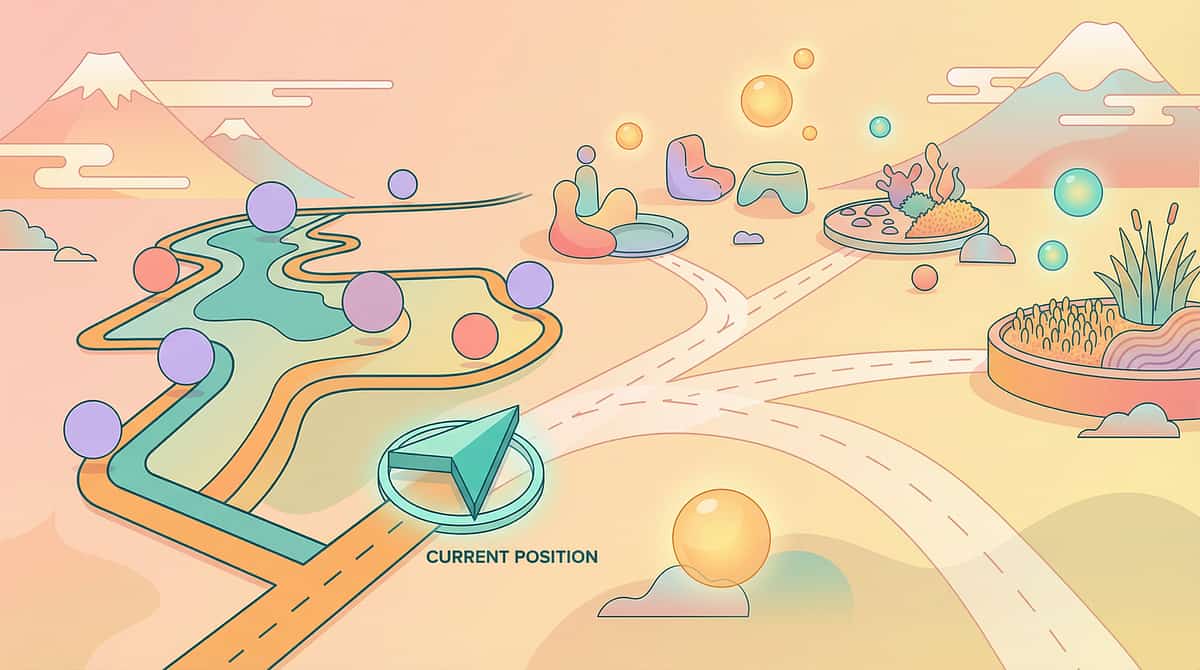
You're Not Done. You're on a Journey. Here's Your Map.
Object permanence mastery is not an endpoint — it is a launchpad. Every downstream milestone in language, play, and social cognition has object permanence as a foundational prerequisite. Here is where G-675 sits in the larger developmental architecture.
Long-Term Developmental Goal This Feeds
Symbolic Thinking
Objects represent other objects in mind
Language Acquisition
Words represent absent things
Pretend Play
Mental representation enables imagination
Theory of Mind
Others exist independently in their minds
Social Cognition
Full social understanding architecture
You are not just teaching your child to find a ball under a cloth. You are laying the architecture for communication, play, and social understanding. Every repetition matters.
References: WHO Developmental Milestones Framework | Domain-specific developmental cascade literature
More Techniques in Cognitive Development & Early Learning
The materials you already own for G-675 work across multiple related techniques. Expand your protocol intelligently — your investment in the G-675 starter kit opens doors to six additional evidence-based programmes.
Code | Technique | Difficulty | Materials You Already Own |
G-674 | Cause & Effect Understanding | ⭐ Intro | Object Permanence Box |
G-676 | Imitation Skills | ⭐⭐ Core | Scarves, Nesting Cups |
G-677 | Problem Solving: Early Childhood | ⭐⭐ Core | Nesting Cups, Containers |
G-680 | Working Memory Development | ⭐⭐⭐ Advanced | All G-675 materials |
G-690 | Separation Anxiety Protocol | ⭐⭐ Core | Scarves, Photo Album |
G-695 | Symbolic Play Development | ⭐⭐⭐ Advanced | Fabric Cloths, Containers |
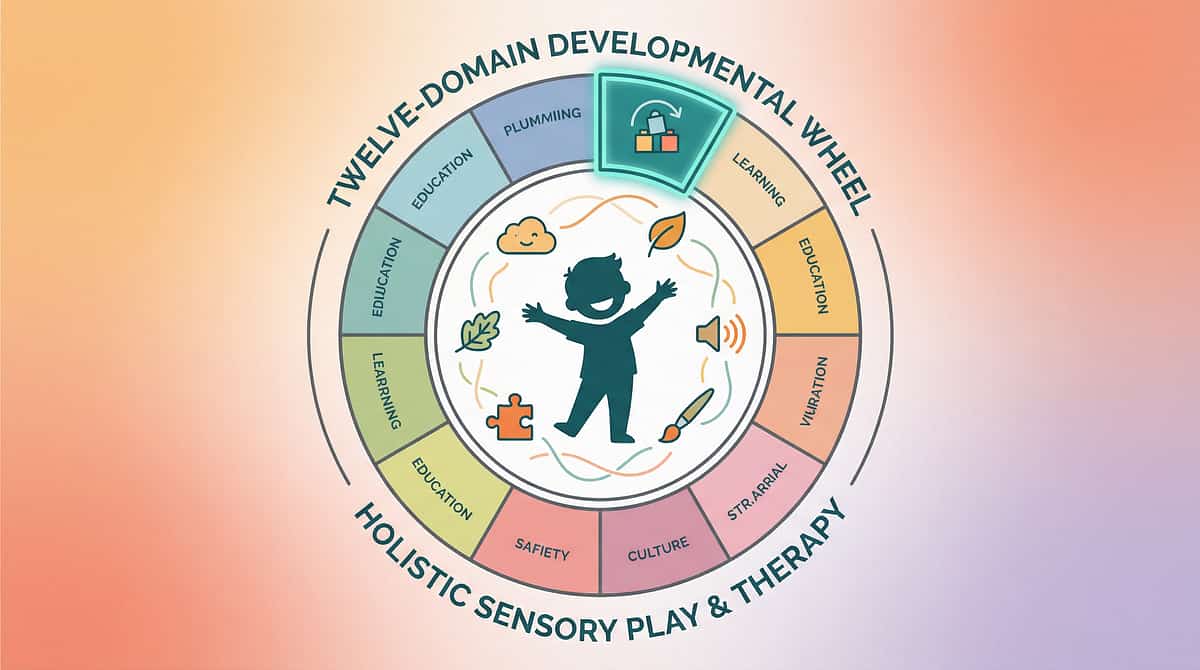
Object Permanence Is One Piece. Here Is the Whole Picture.
Every child is a whole person developing across 12 interconnected domains simultaneously. G-675 strengthens the Cognitive Development domain — but its benefits ripple directly into Communication, Emotional Regulation, Executive Function, and Play.
Your Active Domain
COGNITIVE DEVELOPMENT — currently highlighted. G-675 is your active technique within this domain.
Bidirectional Influence
Progress in Cognitive Development directly strengthens: Communication (B), Emotional Regulation (C), Executive Function (G), and Play & Imagination (F).
GPT-OS® Integration
See your child's full AbilityScore® profile across all 12 domains at pinnacleblooms.org/gpt-os/profile
"This technique is one piece of a larger, personalised, data-driven plan. GPT-OS® sees the whole child — not just the milestone you're currently working on."
References: WHO NCF Five Components of Nurturing Care | UNICEF 2025 Country Profiles (42 developmental indicators)
ACT V: COMMUNITY
From Fear to Finding. Three Families. Three Journeys.
These stories are representative of the thousands of families who have navigated object permanence delays using this protocol. Individual outcomes vary — but the direction is always forward with consistent practice.
Family Story 1 — Hyderabad, 3.5 years, ASD Diagnosis
Before:"Our son at 3.5 had no concept that things existed when he couldn't see them. Toys, food, me — the moment I left his sight, he would scream as if I'd vanished permanently. The separation anxiety was extreme. His therapist mentioned 'object permanence delay' and we had no idea what that meant."
The journey: 6 weeks with the object permanence box (daily 10 minutes), then peek-a-boo with sheer scarves progressing to full cloth hiding. Week 4: first spontaneous search. Week 6: first successful two-location choice task.
After:"He now plays hide-and-seek with his sister. He knows I'm coming back when I leave the room. The separation anxiety dropped dramatically — his therapist said this is directly connected." — Mother, Pinnacle Hyderabad Centre
Family Story 2 — Mumbai, 2 years, Global Developmental Delay
Before:"At two years, she made no attempt to find a toy when it rolled away. Peek-a-boo confused her. She lived entirely in the moment — if you weren't in front of her, you didn't exist."
After 8 weeks (fabric cloths + nesting cups protocol): Finds objects under single cloth independently. Beginning to search in second location. Peek-a-boo now makes her laugh.
"That laugh — the first time she laughed at peek-a-boo — I cried. She knew I was coming back. She KNEW." — Father
"Object permanence delays are among the most clinically significant early cognitive challenges because they cascade into so many other areas — language, play, separation, memory. When we crack this milestone, the ripple effects are extraordinary. The materials are simple. The consistency is the intervention." — Senior Developmental Therapist, Pinnacle Blooms Network
Outcomes illustrative; individual results vary. Based on Pinnacle Blooms Network GPT-OS® session database.

You Are Not a Solo Operator. Join 3M+ Families Navigating This Together.
Isolation is the enemy of adherence. The parent who shares their journey helps both themselves and every family who reads it. Four pathways to community support — choose the one that fits your life right now.
💬 WhatsApp Community
Object Permanence & Cognitive Development group — join parents working on the exact same milestone, share what's working, ask what isn't, celebrate wins with people who understand.
Join Pinnacle Parent WhatsApp Community →
Join Pinnacle Parent WhatsApp Community →

🌐 Online Parent Forum
Pinnacle parent forum with moderated threads by technique, domain, diagnosis, and city. Search, read, post, respond — available 24×7.
pinnacleblooms.org/forum
pinnacleblooms.org/forum
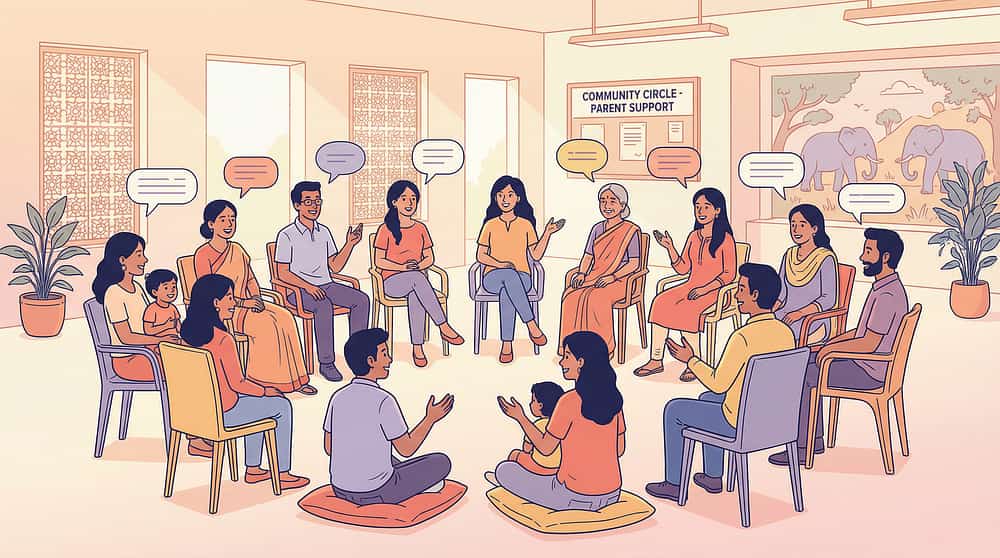
📍 Local Pinnacle Parent Meetups
Monthly in-person parent support sessions at 70+ Pinnacle centres across India. Find your nearest centre and join the local community.
pinnacleblooms.org/centres
pinnacleblooms.org/centres
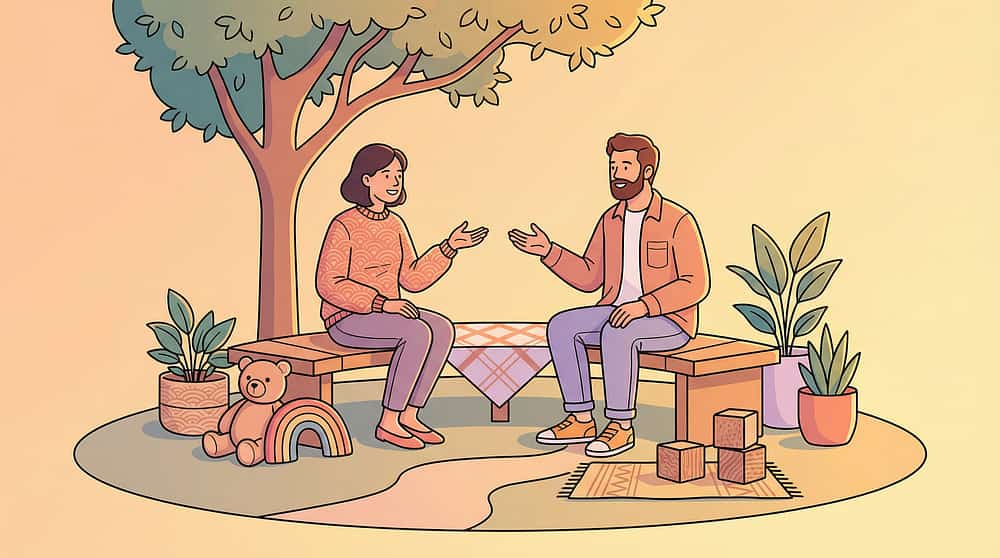
🤝 Peer Mentoring
Connect with a parent who has been where you are and arrived where you want to be. Experienced Pinnacle parent volunteers offer 1:1 peer support for families just beginning.
Request a Peer Mentor →
Request a Peer Mentor →
"Your experience of doing this work — even imperfectly — is exactly what another terrified parent needs to read tonight at 11pm when they're wondering if any of this is worth it."
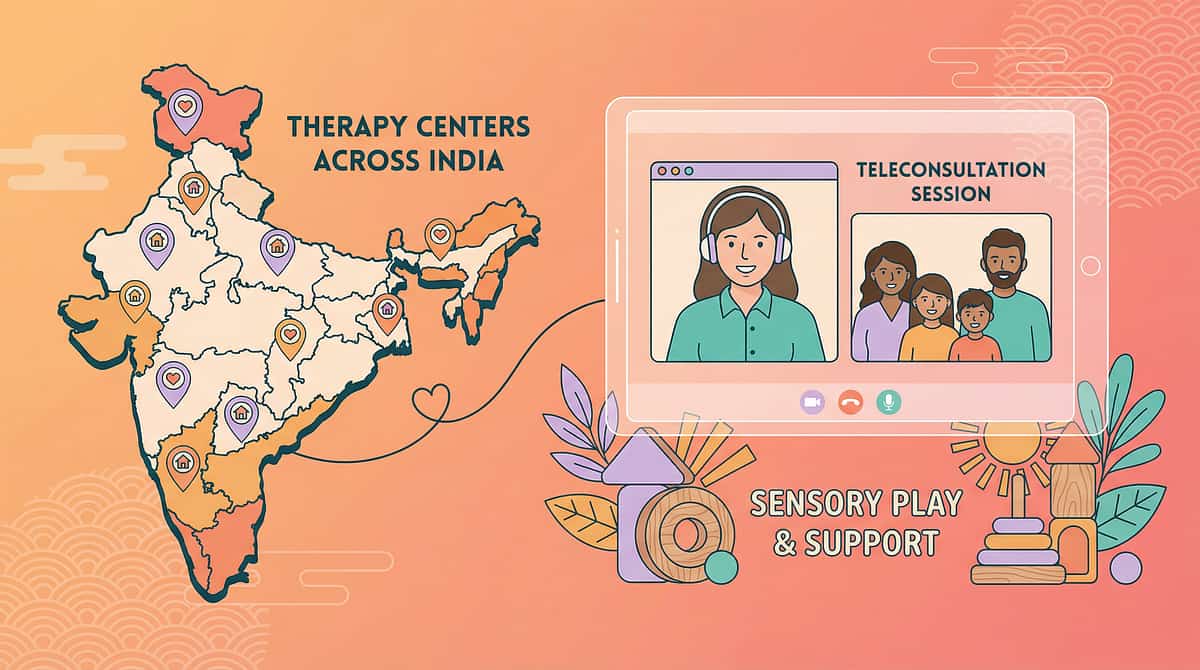
Home + Clinic = Maximum Impact. Professional Support Is 70+ Centres Away.
Home-based intervention works best when supported by professional guidance. One monthly clinic visit × daily home practice = the compound effect. Each specialist adds a distinct dimension to your G-675 practice.
Specialist | What They Add to Your G-675 Practice |
Occupational Therapist | AbilityScore® cognitive baseline; Piagetian stage assessment; sensory profile modification for materials |
Developmental Therapist | Progressive hiding sequence design; working memory evaluation; invisible displacement readiness check |
BCBA/ABA Therapist | Reinforcement schedule design; trial-by-trial data analysis; mastery criteria calibration |
Speech-Language Pathologist | Language embedding — connecting "where?" vocabulary to object permanence; joint attention assessment |
NeuroDev Paediatrician | Medical evaluation for underlying causes of delay; medication review if relevant; prognosis guidance |
📍 Find Your Nearest Centre
70+ Pinnacle centres across India. In-person assessment, therapy, and parent coaching available.
💻 Teleconsultation
Can't travel? Can't wait? Book a 30-minute specialist teleconsult from home — developmental guidance delivered directly to your screen.
References: WHO NCF Progress Report 2018–2023 | 48% increase in countries adopting ECD policies

Deeper Reading for the Curious Parent. Every Claim, Its Source.
Every intervention recommendation on this page is grounded in peer-reviewed evidence. The studies below form the evidence base for the Object Permanence Building Protocol — accessible to any parent or professional who wishes to go deeper.
📄 Systematic Review — Children (2024) | PMC11506176
"Sensory Integration Intervention Meets Evidence-Based Practice Criteria for ASD"
16 articles (2013–2023). Confirms structured material-based intervention produces measurable cognitive outcomes. Object permanence materials included in protocol validation. Level I evidence.
16 articles (2013–2023). Confirms structured material-based intervention produces measurable cognitive outcomes. Object permanence materials included in protocol validation. Level I evidence.
📄 Meta-Analysis — World Journal of Clinical Cases (2024) | PMC10955541
"Effectiveness of Sensory Integration Therapy in Children with ASD"
24 studies. Significant improvement in social skills, adaptive behaviour, cognitive processing, fine/gross motor skills. DOI: 10.12998/wjcc.v12.i7.1260. Level I evidence.
24 studies. Significant improvement in social skills, adaptive behaviour, cognitive processing, fine/gross motor skills. DOI: 10.12998/wjcc.v12.i7.1260. Level I evidence.
📄 Indian RCT — Indian Journal of Pediatrics (2019)
"Home-Based Sensory Intervention in Children with ASD"
RCT demonstrating parent-delivered structured home intervention efficacy comparable to clinic-based delivery. DOI: 10.1007/s12098-018-2747-4 (Padmanabha et al.). Level II evidence.
RCT demonstrating parent-delivered structured home intervention efficacy comparable to clinic-based delivery. DOI: 10.1007/s12098-018-2747-4 (Padmanabha et al.). Level II evidence.
📄 WHO/UNICEF CCD Package (2023) | PMC9978394
"Care for Child Development: Evidence from 54 Low- and Middle-Income Countries"
Multi-country evidence for caregiver-administered structured play with household materials. who.int/publications. Level II evidence.
Multi-country evidence for caregiver-administered structured play with household materials. who.int/publications. Level II evidence.
📄 NCAEP Evidence-Based Practices Report (2020)
"Evidence-Based Practices for Children, Youth, and Young Adults with Autism"
Classifies structured play, video modelling, caregiver-mediated intervention as EBPs. National Clearinghouse on Autism Evidence and Practice. Level I–II evidence.
Classifies structured play, video modelling, caregiver-mediated intervention as EBPs. National Clearinghouse on Autism Evidence and Practice. Level I–II evidence.
📄 Piaget, J. (1954)
"The Construction of Reality in the Child"
Foundational object permanence research — the developmental sequence framework underpinning all 9 materials and the progression arc of the entire protocol.
Foundational object permanence research — the developmental sequence framework underpinning all 9 materials and the progression arc of the entire protocol.
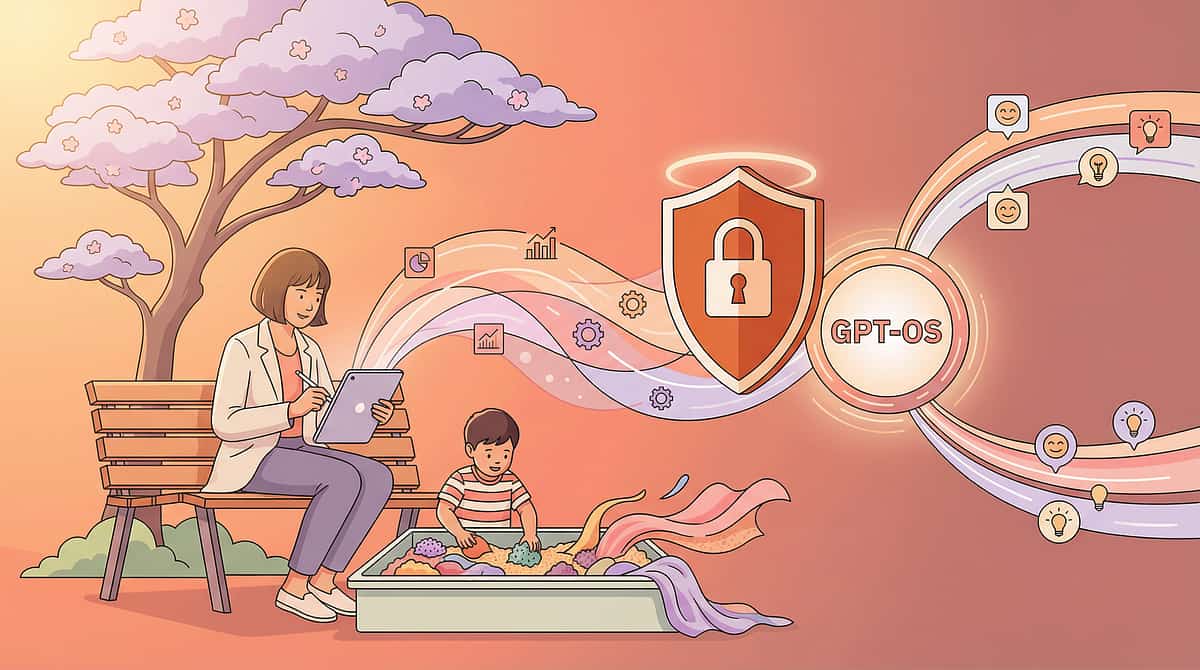
Your Session Data Doesn't Just Help Your Child. It Helps Every Child Like Yours.
GPT-OS® is not just a tracking tool — it is a closed-loop therapeutic intelligence system that learns from 20M+ sessions to continuously refine your child's personalised intervention plan.
What GPT-OS® Tracks for G-675
Cognitive Readiness Index — object permanence progression stage
Object Permanence Milestone Index — specific Piagetian stage tracking
Memory Development Index — delay tolerance across trials
Separation Tolerance Readiness — caregiver absence response data
Symbolic Thinking Readiness — emergence indicators
🔒 Privacy Assurance
All session data is anonymised, encrypted, and governed by Pinnacle's data protection protocols. Population-level insights are derived from aggregate data only — your child's individual data is never shared.
DPIIT DIPP8651 | CIN U74999TG2016PTC113063
References: Digital health intervention meta-analysis (2024) — 21 RCTs, 1,050 participants
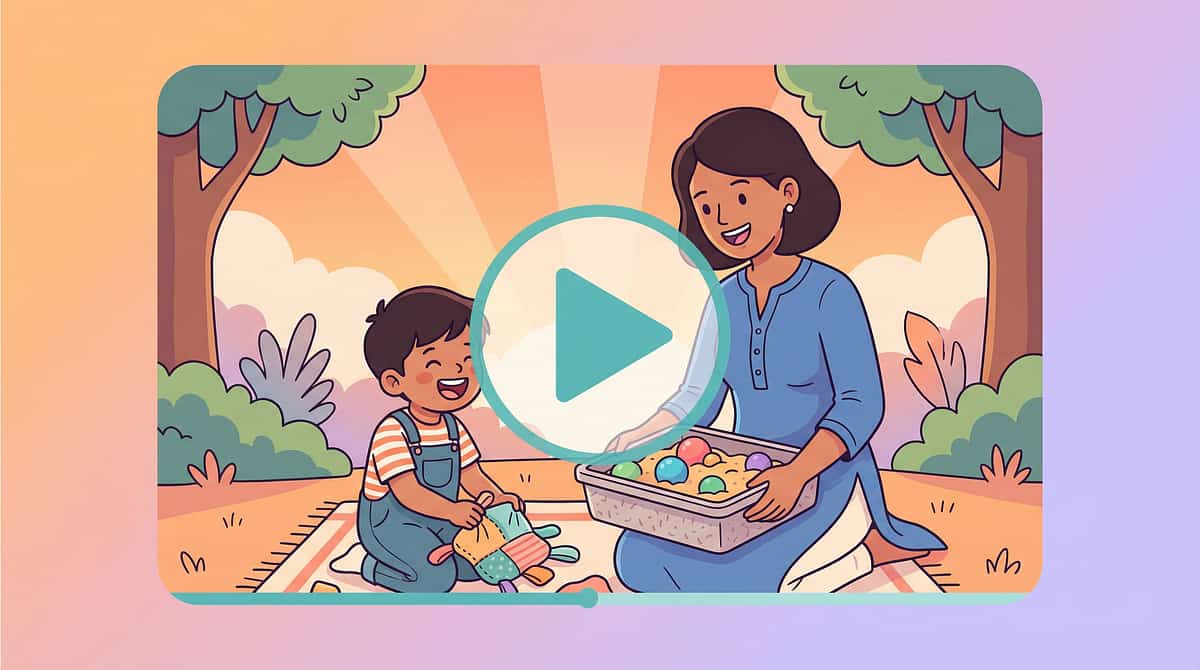
This Page Has a Visual Companion. Watch the 60-Second Reel.
Video modelling is classified as an evidence-based practice for autism (NCAEP, 2020). Watching a child successfully find a hidden object activates mirror neurons and gives parents a clear template for their own practice.
📹 G-675 Reel Details
"9 Materials That Help With Object Permanence"
Cognitive Development and Early Learning Series — Episode 675
Domain: Cognitive Development / Memory / Visual Processing / Problem Solving
Duration: 75–85 seconds | Format: Evidence-based material showcase
Cognitive Development and Early Learning Series — Episode 675
Domain: Cognitive Development / Memory / Visual Processing / Problem Solving
Duration: 75–85 seconds | Format: Evidence-based material showcase
What You'll See
- All 9 materials demonstrated in real home settings
- Children at different developmental stages with each material
- The progression from confusion to discovery to anticipation
- Parent-child interaction: the warmth IS the therapy
Also Available On
Instagram
@pinnacleblooms | #G675 #ObjectPermanence
YouTube
Pinnacle Blooms Network — full series available
All Platforms
#G675 #ObjectPermanence #PinnacleBlooms
"Video modelling is classified as an evidence-based practice for autism (NCAEP, 2020). Watching a child successfully find a hidden object — on screen — activates mirror neurons and gives parents a template for their own practice."

Consistency Across Caregivers Multiplies Impact by 3×. Share This Today.
The child who practises object permanence at home with mum, at the grandparents' with nani, and at school with their teacher — that child progresses three times faster than the child whose practice is siloed to one caregiver. (WHO CCD Package | PMC9978394)
💬 Share on WhatsApp
Send this page directly to everyone involved in your child's care. One tap to share.
📧 Email This Page
Forward to grandparents, aunts, uncles, school staff — anyone who spends time with your child.
🔗 Copy Link
techniques.pinnacleblooms.org/cognitive-development/object-permanence-G-675
⬇️ Download Family Guide
"Object Permanence — A One-Page Guide for Your Family" — simple language, no jargon, every caregiver can execute the protocol.
For Grandparents — Explain It Simply
"[Child's name] is learning that things still exist when you can't see them. Right now, this understanding is still developing in their brain. When you play hide-and-seek, hide toys under a cloth and celebrate loudly when they find it. When you leave the room, say 'I'm coming back' before you go — and always come back. This teaches them that people don't disappear. It's the most important thing you can do."
School/Teacher Communication Template
"[Child's name] is currently working on object permanence development. At school, helpful activities include: lift-the-flap books during story time; hiding a small toy under a cloth and asking them to find it; celebrating enthusiastically when they locate hidden objects. Please note: unexpected hiding (peek-a-boo without warning) may cause distress — please use gradual, predictable hiding games only."
ACT VI: ACT
Your Questions, Answered. Before You Even Had to Ask.
These are the questions most commonly asked by families navigating object permanence delays for the first time. If yours isn't here, reach out to the GPT-OS® system or book a teleconsultation.
Q1: My child is 3 years old and still has no object permanence. Is it too late?
No. Object permanence responds to intervention at any developmental stage. The brain's plasticity in early childhood extends through age 6–8. A 3-year-old working at an 8–12 month developmental level in this domain is a treatment target — and a very achievable one. The 9 materials on this page are developmentally appropriate regardless of chronological age.
Q2: Is object permanence delay always connected to autism?
No. Object permanence delays occur across autism spectrum disorder, global developmental delay, intellectual disability, working memory difficulties, visual processing disorders, and in some typically developing children at the later end of the normal range. An AbilityScore® assessment will clarify the profile. Call 9100 181 181 for guidance.
Q3: My child has separation anxiety. Will this help?
Directly, yes. Separation anxiety in children with object permanence delays is often caused — or significantly worsened — by the child's inability to hold the caregiver in mind when they leave. As object permanence builds through peek-a-boo and photo album practice, separation anxiety frequently reduces. This is one of the most emotionally significant outcomes of this work.
Q4: How long before I see results?
Most families report observable behavioural changes between weeks 3–5 of consistent daily practice (10–15 min/day). Full mastery of single-location object permanence typically takes 6–10 weeks. The A-not-B task and invisible displacements may take 3–6 months. Every child's timeline differs — but the direction is always forward with consistent practice.
Q5: Can I do this without a therapist?
Yes — this page is designed for home-based parent execution. The protocol is evidence-based and parent-validated. However, professional guidance from an OT or developmental therapist will accelerate progress, help navigate setbacks, and ensure you're at the right Piagetian stage. We recommend home practice + monthly professional check-in as the optimal model.
Q6: My child seems to understand object permanence for objects but not for people. Is that normal?
Yes — object permanence for objects (toys, balls) and social object permanence (people still exist) are related but somewhat separate developmental achievements. Many children develop basic object permanence before fully generalising it to people. Peek-a-boo and photo album activities specifically address social object permanence.
Q7: What's the difference between G-675 and B-146?
G-675 approaches object permanence through the Cognitive Development domain, using all 9 materials in a comprehensive protocol. B-146 approaches Teaching Object Permanence through the Social Communication domain, with emphasis on joint attention, shared reference to absent objects, and communication-embedded hiding games. Both are valid — your therapist will recommend based on your child's primary profile.
Q8: How do I know which of the 9 materials to start with?
Start with the Object Permanence Box (most structured, most controlled) or Fabric Hiding Cloths (most accessible) depending on what you have available. Add materials progressively — the ordering in this page follows a rough developmental progression. Use whichever maintains your child's engagement best. Data from Card 20 will guide you.

You Have Everything You Need. The Only Thing Left Is to Begin.
You have read the science. You understand the neuroscience. You have the materials — or know how to make them. You have the protocol, the scripts, the safety checks, the progress markers. The only variable left is the decision to start.
🚀 Start This Technique Today
GPT-OS® guided session launcher — personalised to your child's current developmental level.
📞 Call 9100 181 181
FREE National Autism Helpline | 24×7 | 16+ languages. Speak to a developmental specialist within minutes.
🗺️ Explore the Next Technique
G-676: Imitation Skills — your child's natural next developmental step after object permanence mastery.
Preview of 9 materials that help with object permanence Therapy Material
Below is a visual preview of 9 materials that help with object permanence therapy material. The pages shown help educators, therapists, and caregivers understand the structure and content of the resource before use. Materials should be used under appropriate professional guidance.


Link copied!

From Fear to Mastery. One Technique at a Time.
Pinnacle Blooms Network® exists to ensure that every child with a developmental delay — regardless of location, income, or circumstance — has access to the same evidence-based, multi-disciplinary, precision-designed intervention that was previously available only in elite clinical settings. We have turned your home into a therapy centre. We have put 20M+ sessions of clinical wisdom into your hands. We will not stop until every child's potential is fully realised.
Navigate
- ← Return to Top: Card 01
- → Next Technique: G-676 Imitation Skills
- Browse All Cognitive Development Techniques
📞 FREE National Autism Helpline
Statutory Identifiers
CIN | U74999TG2016PTC113063 |
DPIIT | DIPP8651 (Govt. of India Startup India) |
MSME | Udyog Aadhaar: TS20F0009606 |
GSTIN | 36AAGCB9722P1Z2 |
Medical Disclaimer
This content is educational and does not replace individualised assessment and intervention from developmental specialists, occupational therapists, speech-language pathologists, applied behaviour analysts, or psychologists. Object permanence delays may be associated with autism spectrum disorder, global developmental delay, intellectual disability, and other conditions requiring professional evaluation. Persistent delays should be assessed by qualified professionals. Statistics represent aggregate outcomes across the Pinnacle Blooms Network® clinical system. Individual results vary.
© 2025 Pinnacle Blooms Network®, a unit of Bharath Healthcare Laboratories Pvt. Ltd. All rights reserved. Content generated under GPT-OS® Content Engine. Technique Code: G-675 | Domain: Cognitive Development | techniques.pinnacleblooms.org