
9 Materials That Help With Cause and Effect
When your child doesn't yet understand that their actions make things happen
G-674
Cognitive Development
Ages 6 months – 4 years
GPT-OS® Validated

"She pressed the button and it lit up — but she didn't try again."
You Are Not Failing
Your child's brain is still building the wiring that connects action to consequence. And it CAN be built.
📞FREE National Autism Helpline: 9100 181 181
16+ Languages | Available Now
16+ Languages | Available Now
You watch other babies her age banging toys over and over, laughing when things pop up — they clearly understand "I did that!" But your daughter just looks confused. She accidentally hits a toy and it lights up, then moves on as if nothing happened. She doesn't try again. She doesn't connect the action to the result.
You've bought pop-up toys, musical toys, light-up toys — and she shows no interest in making them work. She doesn't seem to understand that SHE made it happen. This is one of the most common and most misunderstood developmental challenges parents face — and you are not alone in facing it.
WHO Nurturing Care Framework (2018): Early identification and parental awareness directly impact developmental outcomes.🔗nurturing-care.org
🏥 Pinnacle Blooms Consortium®
🧠 Cognitive Development
👶 6 months–4 years
You Are Among Millions of Families Navigating This Exact Challenge
1 in 36
Children Diagnosed with ASD
In India, the scale of this challenge is vast — and the Pinnacle network exists precisely to meet it.
80%
Show Cause-Effect Delays
Of children with ASD, the vast majority show delays in cause-and-effect understanding as an early marker.
6–18mo
Critical Learning Window
The developmental window for building this foundational skill — and why early action matters most.
21M+
Children on the Spectrum Globally
You are not the only parent who has wondered why their child doesn't press the button again.
Cause-and-effect understanding is one of the first cognitive skills to develop — and one of the first to show delays in children with autism, global developmental delays, sensory processing differences, and motor difficulties. Globally, over 21 million children are estimated to be on the autism spectrum. In India, with 70+ Pinnacle centres serving families across the country, this is the challenge therapists hear about most from parents of children aged 6 months to 4 years.
📞9100 181 181 — Talk to a Specialist. Free. Now.

The Neuroscience of "I Did That!"
What Typically Happens
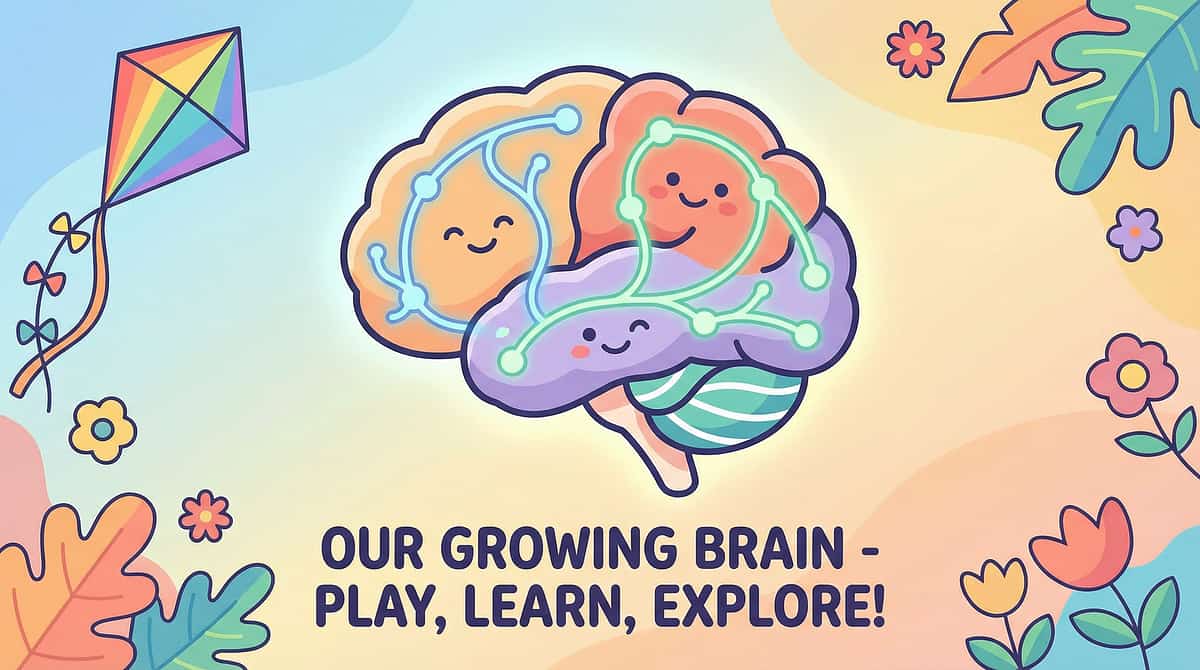
When a child pushes a button and a light turns on, three brain regions must work in concert: the motor cortex initiates the action, the sensorimotor cortex perceives the result, and the prefrontal cortex makes the connection — "my action caused that effect." A dopamine reward then motivates repetition.
What Happens in Some Children
In children with autism or developmental delays, the contingency detection circuit — the brain's system for noticing that one event reliably follows another — develops more slowly or processes information differently. The child may perceive the light, but the causal link between their action and the effect doesn't register with the same clarity or timing.
The Key Insight
This is a neural wiring difference, not a behaviour choice. Not stubbornness. Not lack of interest. The right materials, used consistently, provide the structured sensory input that builds and strengthens this circuit over time.

Your Child's Developmental Journey — Where Cause & Effect Fits
1–4 Months
Primary Circular Reactions — Body-focused actions (kicking, grasping) without awareness of effect
4–8 Months ◄ HERE
Secondary Circular Reactions — Object actions become intentional: "I shake the rattle to hear the sound again." This is the window we're working in.
8–12 Months
Coordination of Schemas — Means-end: child uses objects intentionally to reach a goal
12–18 Months
Tertiary Circular Reactions — Active experimentation: "What if I drop it from here?"
18–24 Months
Mental Representation — Problem-solving before acting; internalised cause-effect reasoning
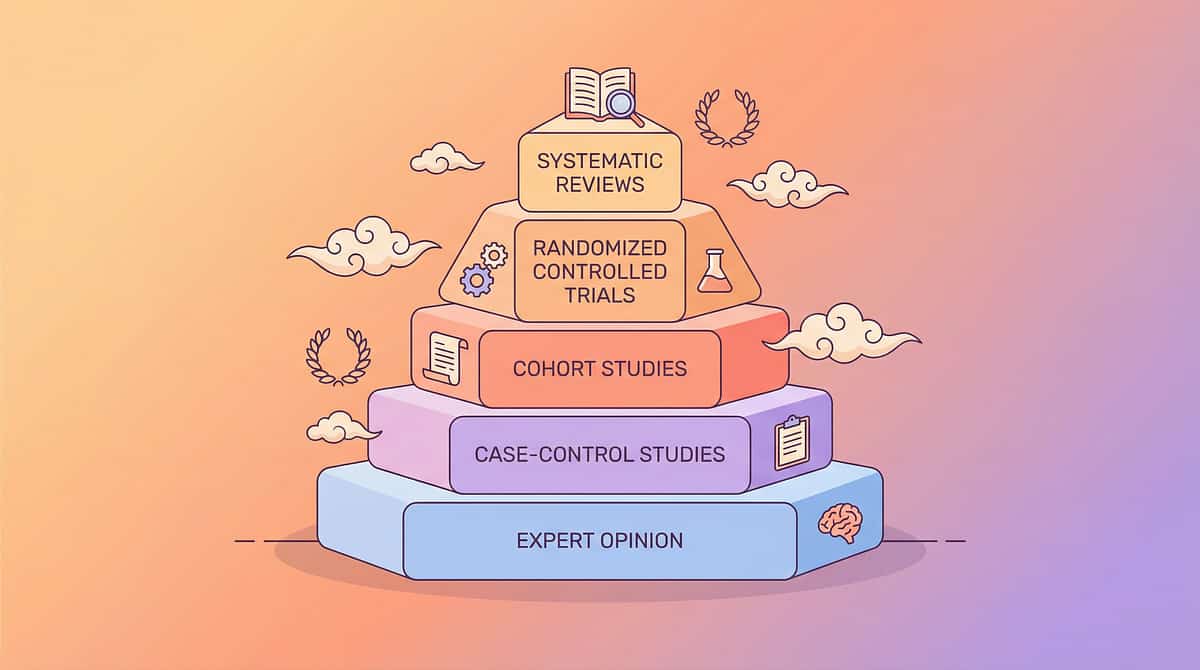
Clinically Validated. Home-Applicable. Parent-Proven.
🛡️ LEVEL I–II EVIDENCE
Systematic Reviews + RCTs
📄 PRISMA Systematic Review — Children (2024)
16 studies (2013–2023) confirm structured cause-effect play meets criteria as an evidence-based practice for children with ASD. 🔗PMC11506176
📄 Meta-Analysis — World J Clin Cases (2024)
24 studies. Structured material-based intervention effectively promotes early cognitive skills, cause-effect understanding, adaptive behaviour, and problem-solving. 🔗PMC10955541
📄 Indian RCT — Indian J Pediatr (2019)
Home-based structured play interventions demonstrate significant developmental outcomes in Indian paediatric populations. 🔗DOI: 10.1007/s12098-018-2747-4
📄 WHO NCF + UNICEF CCD Package (2023)
Structured caregiver-mediated early intervention produces sustained developmental gains across 54 low- and middle-income countries. 🔗PMC9978394
94%
Parent Adherence
When using structured material protocols — Pinnacle GPT-OS® data, 20M+ sessions
"The science is not theoretical. 20 million therapy sessions across 70+ Pinnacle centres have demonstrated what the research predicts: structure + right materials + consistent execution = measurable developmental progress."

Cause-and-Effect Material Intervention
Parent-Friendly Name: "The 'I Did That!' Protocol"
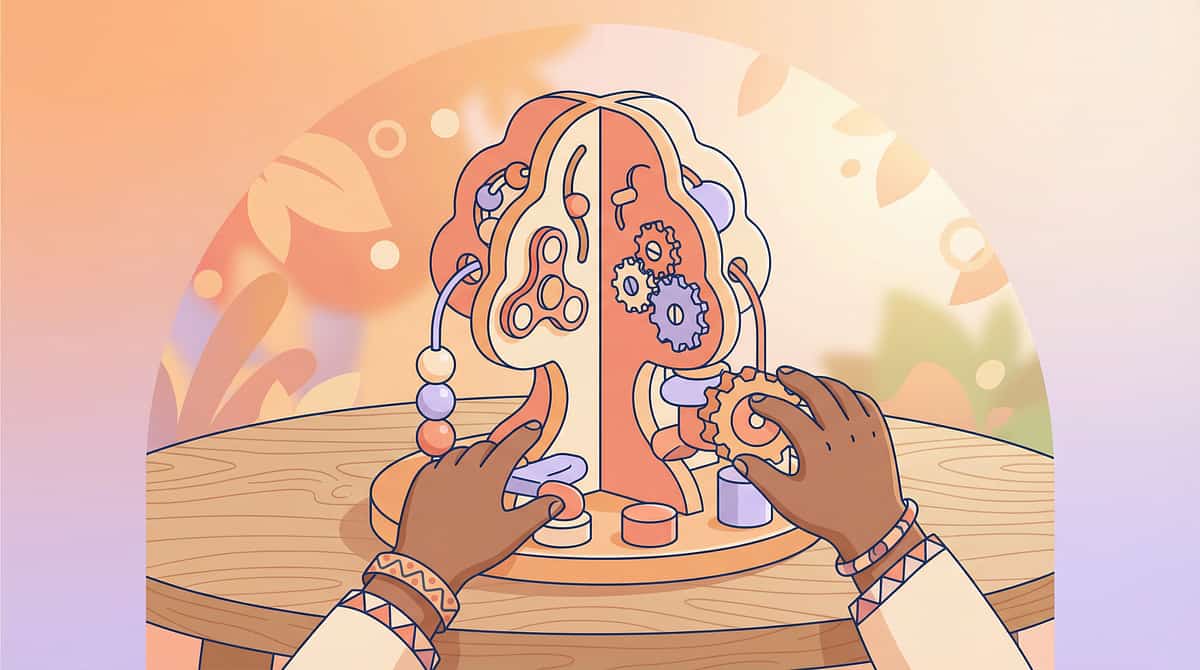
This intervention uses 9 categories of purposefully selected therapy materials to provide structured, multi-sensory, contingency-rich experiences that build cause-effect understanding systematically — from the simplest immediate-response toys to complex means-end reasoning activities.
🎯 Domain
Cognitive Development / Early Learning / Problem Solving
👶 Age Range
6 months – 4 years (developmental age)
⏱️ Session
10–20 minutes daily; minimum 5× per week
🔢 Reel
G-674 | Cognitive Development Series
The Full Consortium Deploys This — Here's Why
"This technique crosses therapy boundaries because the brain doesn't organise by therapy type."
Occupational Therapist — Primary Lead
Selects materials based on the child's sensory profile and motor capabilities. Adapts toys for accessibility. Sequences intervention from simple to complex cause-effect challenges.
Speech-Language Pathologist
Uses cause-effect materials to build social contingency understanding — that vocalising gets responses. Pairs language ("push," "pop," "fall!") with action-result moments to wire communication to cognition.
ABA / BCBA Therapist
Applies contingency learning principles — establishing reliable action-result pairings, reinforcement schedules, and prompting hierarchies to build intentional activation systematically.
Special Educator
Integrates cause-effect materials into early learning curricula. Builds sequencing, attention, and problem-solving skills alongside cause-effect understanding in structured classroom contexts.
NeuroDev Paediatrician
Monitors developmental trajectory. Identifies when cause-effect delays signal need for formal assessment. Coordinates the multi-disciplinary intervention plan across the full team.
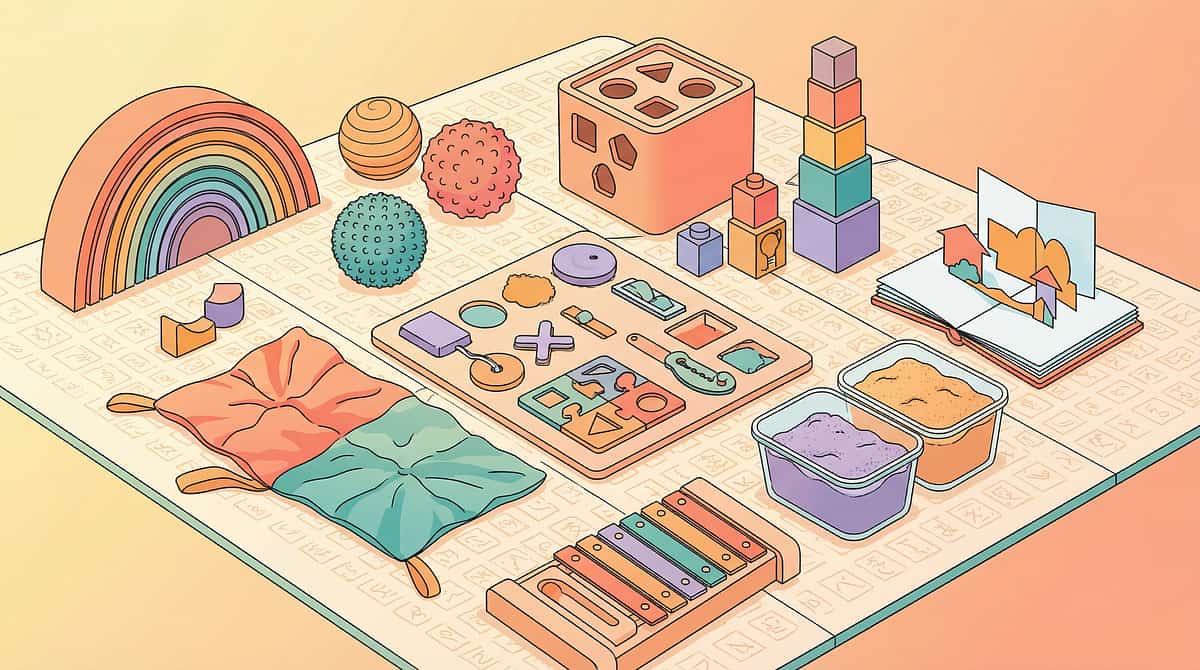
9 Therapy Materials — Clinically Selected, Home-Executable
"Pinnacle Recommends" badges indicate materials validated across 20M+ therapy sessions.
Material 1 of 9
Cause-Effect Toys / Switch Toys
₹500–₹2,500

Light-Up Push Toys & Musical Buttons
Why This Material: Instant, unmissable feedback. Push → light → sound. Zero delay. The single most important criterion for starting out is immediate response at the moment of action — the child's brain must connect the movement to the effect with no gap.
- Best for: earliest stage learners (6–12 months developmental age)
- Effect type: visual + auditory, simultaneous
- Motor demand: single-finger push, low force
Recommended Products
🛒₹519 — Canon #722 | Cause-Effect / Switch Toys(Pinnacle Recommends ✓)
Material 2 of 9
Cause-Effect Toys / Problem-Solving Toys
₹600–₹2,000
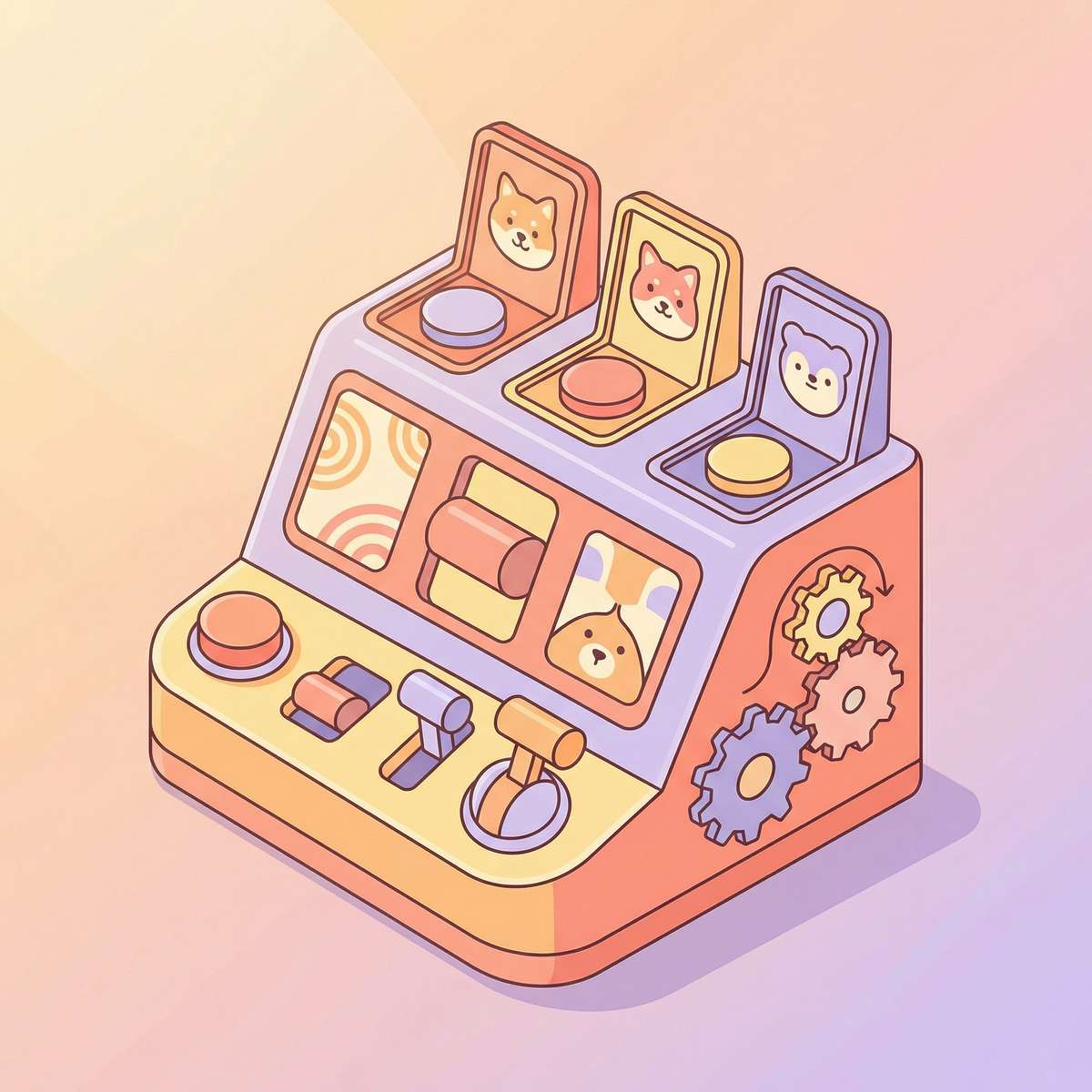
Pop-Up Toys (Push / Twist / Slide Mechanisms)
Why This Material: Dramatic, physically satisfying cause-effect with built-in variety. Different buttons require different actions — teaching the child that specific actions produce specific effects. The moment of the pop-up is highly salient and motivating.
- Best for: children ready for action variety (10–18 months developmental age)
- Effect type: visual + auditory + kinesthetic surprise
- Motor demand: varied — push, twist, slide, lift
Recommended Products
🛒₹428 — Canon #68 | Problem-Solving Toys(Pinnacle Recommends ✓)
Material 3 of 9
Cause-Effect Toys / Switch Toys
₹1,500–₹5,000
Cause-and-Effect Switch Toys & Adapted Switches
Why This Material: Essential for children with motor difficulties. One switch, one toy, zero ambiguity. Cognitive learning proceeds even when motor access is limited — the switch removes the motor barrier entirely.
- Best for: children with significant motor difficulties at any developmental age
- Effect type: any — connected to the child's preferred battery-operated toy
- Motor demand: single large-button press, minimal force
🛒₹519 — Canon #722 | Switch Toys(Pinnacle Recommends ✓)
When Adapted Switches Are Non-Negotiable
For children with cerebral palsy, low muscle tone, or other motor access challenges, a standard push toy may be physically inaccessible. An adapted switch connected to a battery interrupter allows any battery-operated toy to become a cause-effect device.
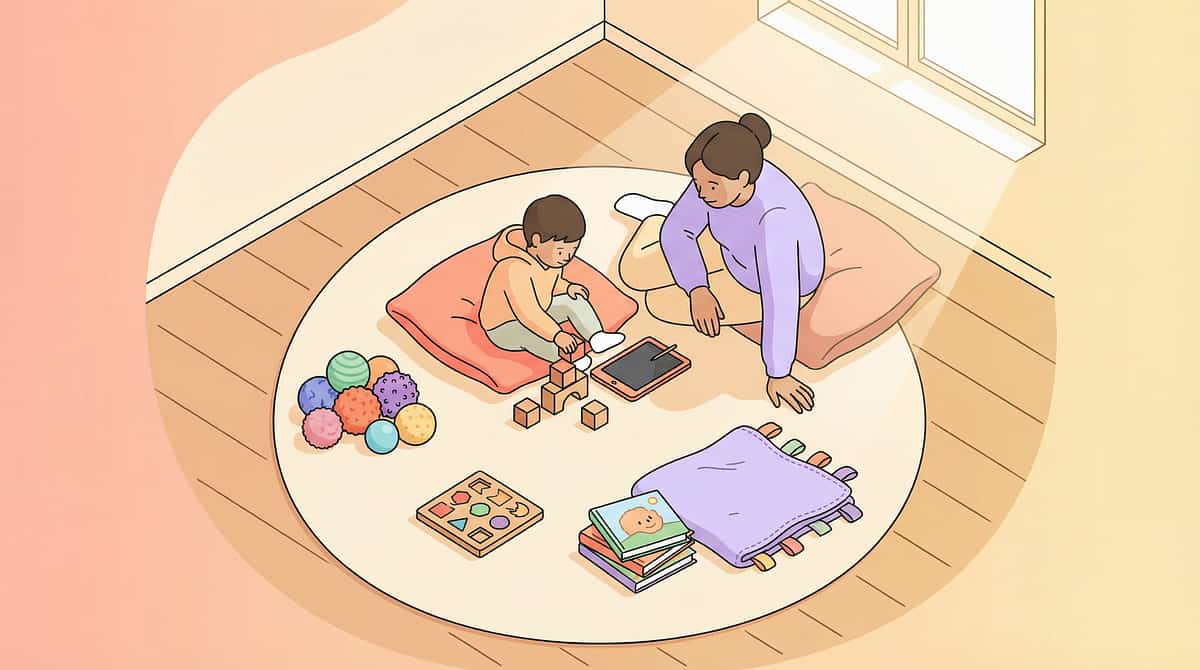
Material 4 of 9
Problem-Solving Toys / Cause-Effect Toys
₹800–₹3,000
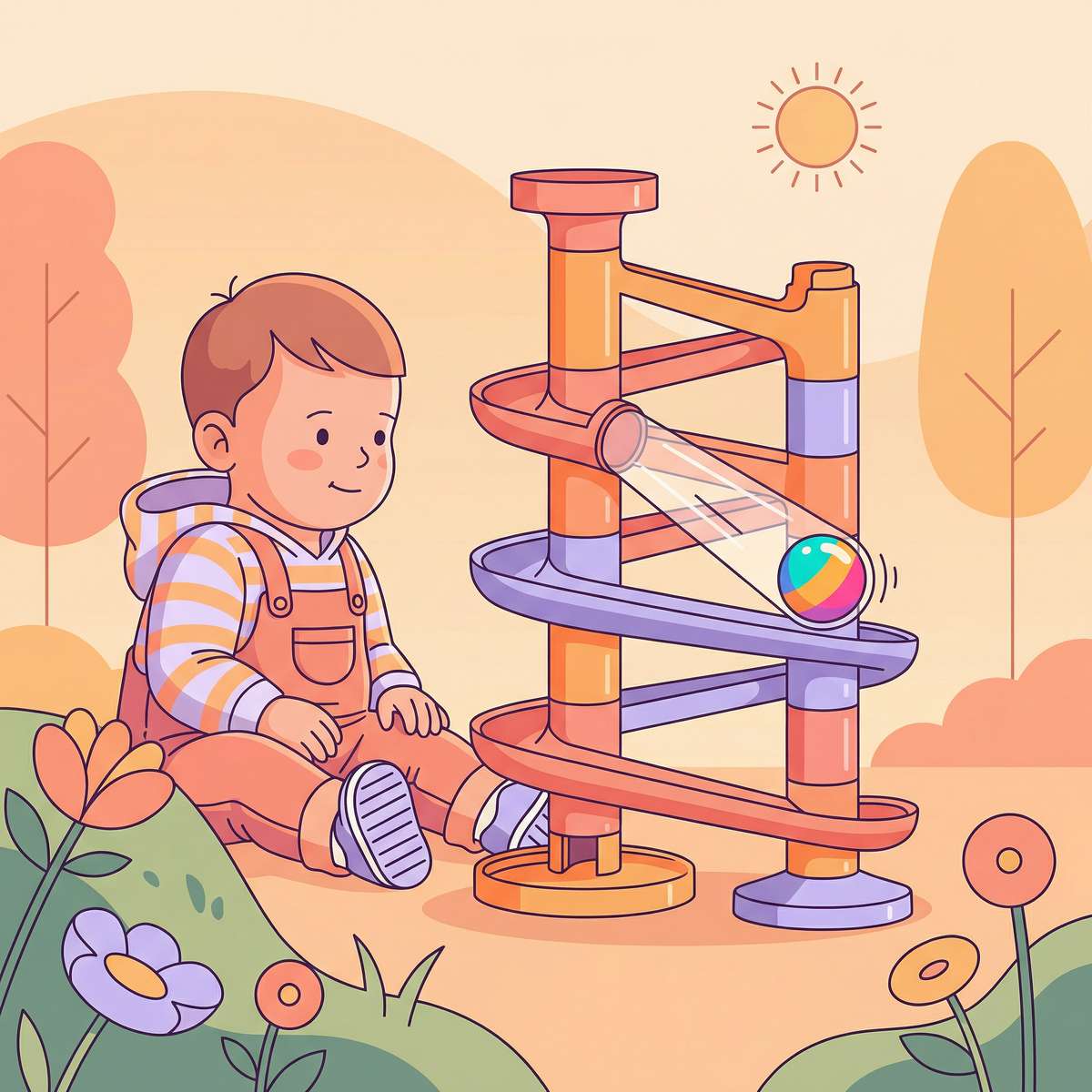
Ball Drop Towers & Ramp Toys
Why This Material: A beautifully visible cause-effect sequence with natural anticipation built in. Drop → watch → anticipate where it will land → repeat. Builds visual tracking and anticipation alongside cause-effect cognition — two skills that reinforce each other powerfully.
- Best for: children ready for multi-step visual sequences (10–20 months developmental age)
- Effect type: visual + kinesthetic + gravity-driven
- Bonus skill: anticipatory gaze (looking where the ball will land before it arrives)
Recommended Products
🛒₹579 — Canon #791 | Problem-Solving Toys(Pinnacle Recommends ✓)

Material 5 of 9
Problem-Solving Toys / Cause-Effect Toys
₹1,000–₹5,000

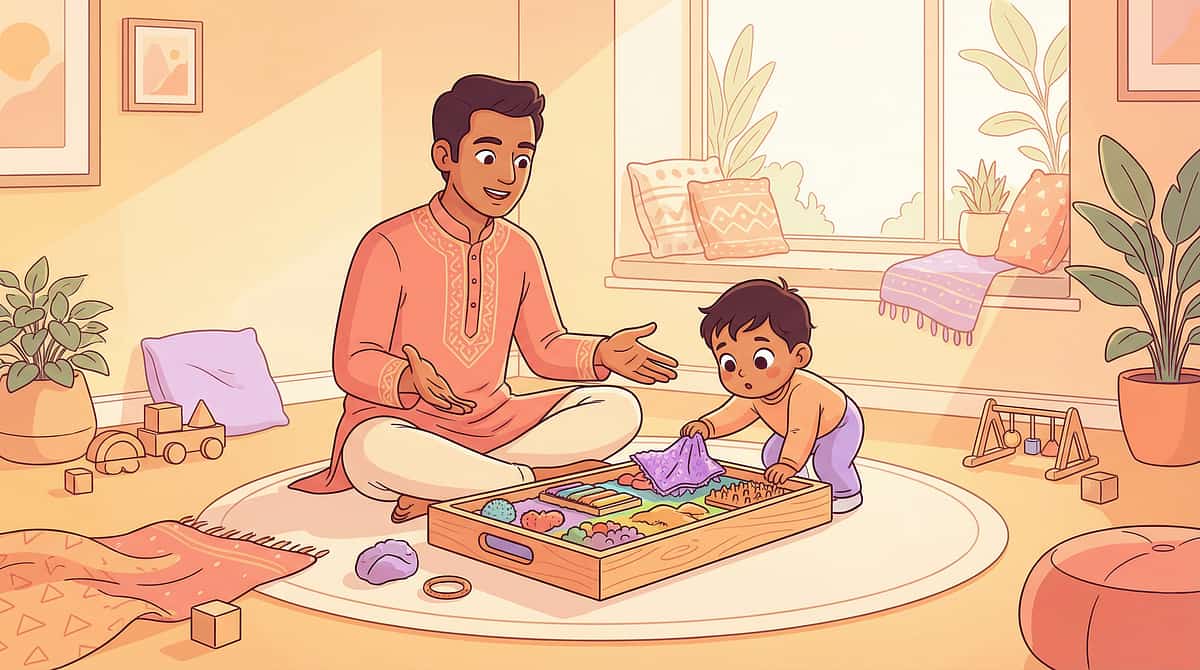
Busy Boards & Activity Panels
Why This Material: Multiple action-result pairs in one surface. The key insight busy boards offer is that cause-effect is not one special toy — it's everywhere. Each latch, each zip, each switch teaches that different actions have different results in a single structured play environment.
- Best for: children ready for variety and exploration (14–30 months developmental age)
- Effect type: tactile + visual + real-world mechanisms
- Bonus skill: real-world generalisation — door handles, zip fasteners, light switches
Material 6 of 9
Problem-Solving Toys
₹300–₹1,500
Pull-String & Wind-Up Toys
Why This Material: Teaches delayed cause-effect — action now, result later. This is more cognitively demanding than immediate-response toys. The child must hold the intention across a gap in time, which builds means-end reasoning: the understanding that effort now produces reward later.
- Best for: children who have mastered immediate-response toys (18–30 months developmental age)
- Effect type: visual + auditory + temporal delay
- Key cognitive target: means-end reasoning; delayed gratification
Why Delayed Cause-Effect Matters
Immediate-response toys (light-up buttons, pop-ups) fire the cause-effect circuit instantly. Wind-up and pull-string toys introduce a temporal gap between action and result — a critical developmental step toward understanding that:
- Sustained effort produces bigger rewards
- Actions I cannot immediately see the result of still have consequences
- Planning and patience are linked to outcomes
This temporal understanding underpins academic learning, social turn-taking, and virtually all complex problem-solving.

Material 7 of 9
Cause-Effect Toys / Musical Instruments
₹400–₹2,500

Musical Instruments (Drums, Shakers, Xylophones)
Why This Material:Proportional cause-effect — hit harder, get a louder result. Hit gently, get a softer result. No wrong answers. Any action produces sound. This is natural scientific experimentation at its most accessible — the child discovers the relationship between force and effect organically.
- Best for: all developmental levels from 6 months (any motor ability can strike a drum)
- Effect type: auditory + kinesthetic + proportional feedback
- Bonus skill: graded motor control; emotional regulation through rhythm
Why Proportional Feedback Is Uniquely Powerful
Unlike a push-button toy that gives the same result regardless of force, a drum mirrors the child's input directly. This introduces a richer layer of understanding: not just "I caused this" but "I controlled how much of this happened."
Material 8 of 9
Sensory Play Materials / Natural Materials
₹500–₹2,500 (tools only)

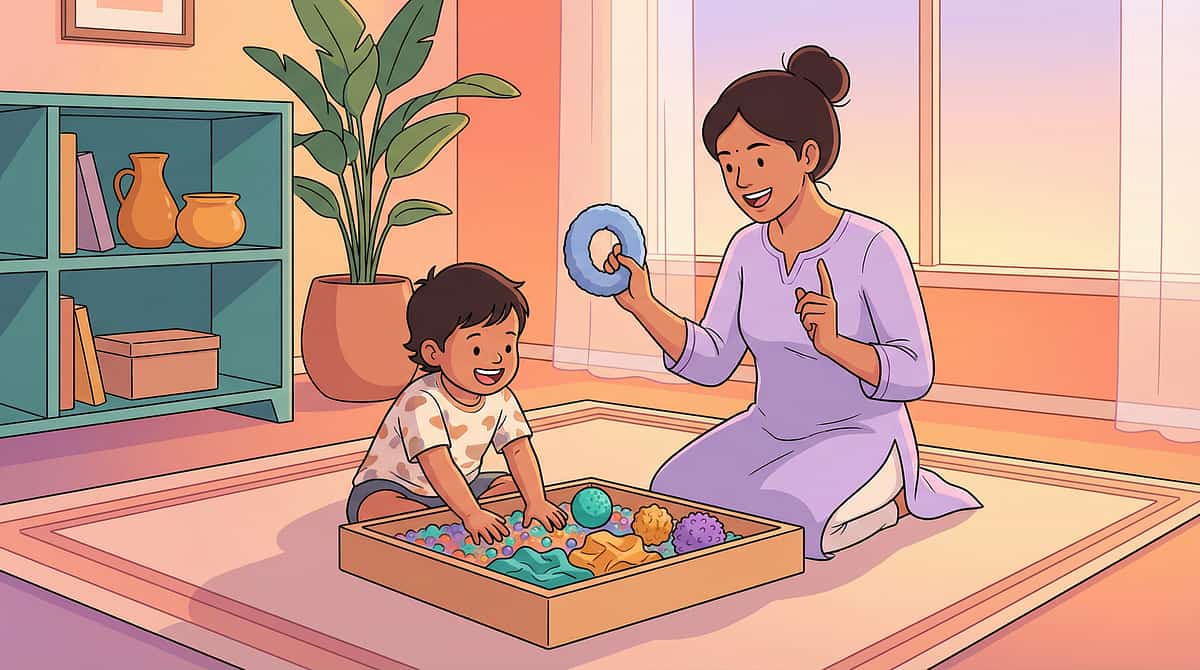
Water & Sand Play Tools
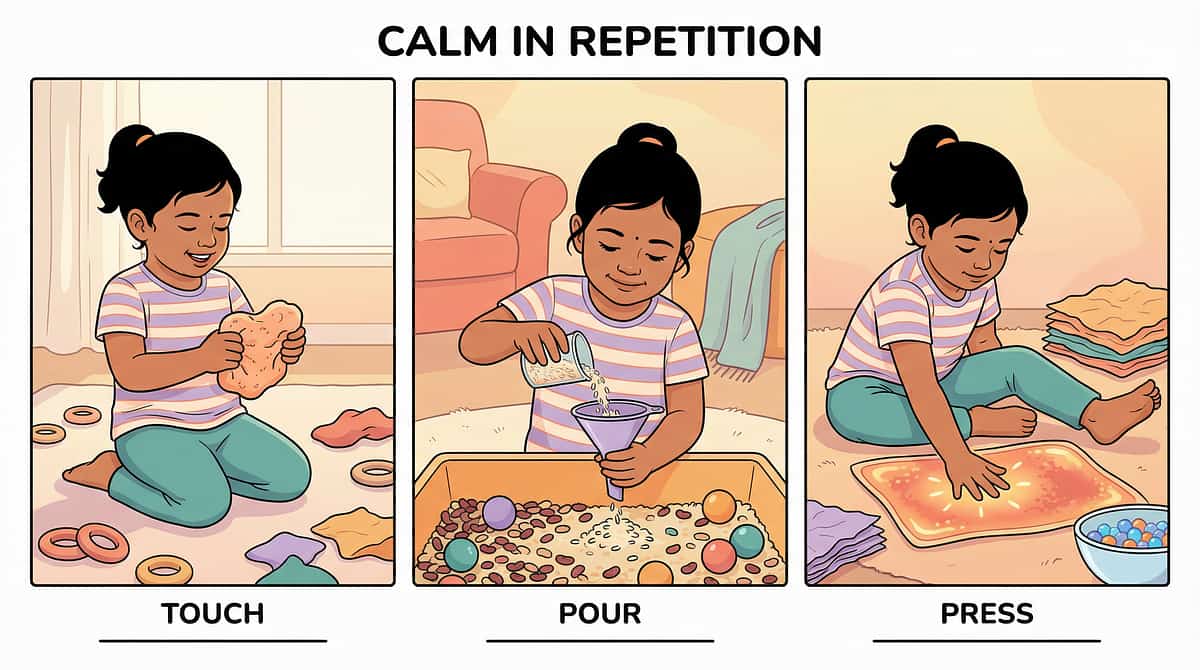
Why This Material: Infinite natural cause-effect with zero repetition limit. Every action — pour, splash, scoop, squeeze — gets an instant, tangible, entirely predictable response. Water and sand are the world's most patient teachers of cause-effect because they never stop responding.
- Best for: all developmental levels; excellent for sensory-seeking and sensory-avoiding profiles (with modifications)
- Effect type: visual + tactile + auditory + kinesthetic
- Regulation benefit: water and sand play are naturally calming and organising
Why This Is One of the Most Powerful Materials
Unlike structured toys, water and sand never "run out" of responses. The child cannot saturate the material's responsiveness. Every pour, every scoop, every splash is a new data point: "I did that. The water moved because of me."
Material 9 of 9
Cause-Effect Toys / Digital Learning Tools
₹0–₹500 (apps) | ₹1,500–₹5,000 (tech toys)
Cause-and-Effect Apps & Simple Tech Toys
Why This Material: Highly accessible for children with motor difficulties — touch equals instant visual response. Large, bright, high-contrast screen effects are unmissable. Useful for children who are highly motivated by screens and as a bridge to physical cause-effect materials.
- Best for: children with significant motor access challenges; as a supplement to physical play
- Effect type: visual + auditory (screen-mediated)
- Critical rule: use WITH physical play, never instead of it
Screen Time Guidelines for This Protocol
Apps and tech toys should occupy no more than 5–10 minutes within a 20-minute session that is otherwise physical. Touch-screen cause-effect does not build the full sensorimotor circuit that physical pressing, dropping, and pouring provides.
🌟 Pinnacle Starter Kit (Under ₹1,500)
Light-up push toy + Pop-up toy (1 mechanism) + Simple drum + Pouring containers. GPT-OS® Validated. Start tomorrow.

Every Child Deserves Access — Regardless of Budget
WHO Nurturing Care Framework: Context-specific, equity-focused interventions. This is the principle made practical.
Material | Buy This | Make This (₹0) | Why It Works |
Light-Up Push Toy | ₹519 Amazon SKU | Light switch on/off with parent holding the lamp | Same principle: action → immediate visible result |
Pop-Up Toy | ₹199–₹428 | Jack-in-the-box from old tin + cloth animal | Same dramatic reveal moment |
Ball Drop Tower | ₹296–₹579 | Cardboard tube taped to wall + ping-pong ball | Identical visual tracking + gravity cause-effect |
Busy Board | ₹380–₹5,000 | Old wooden board + door latch + disconnected light switch + zipper | Real hardware = real-world transfer |
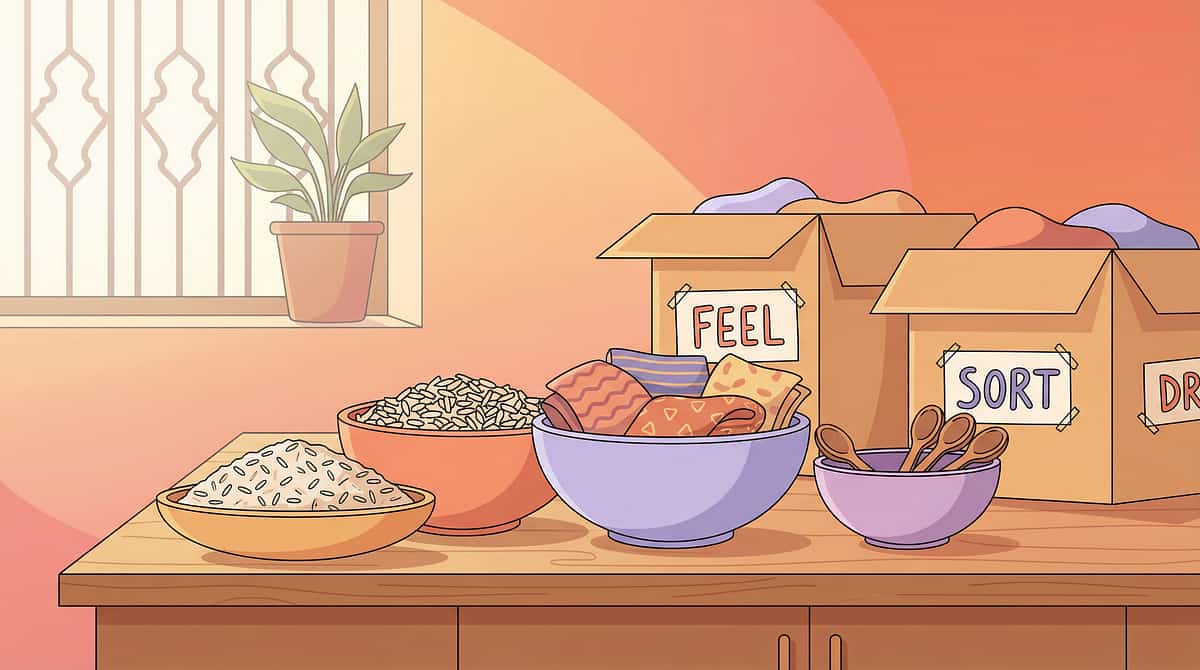
Musical Instruments | ₹400–₹2,500 | Pot + wooden spoon. Rice in plastic bottle. | Proportional sound feedback identical to commercial instruments |
Water Play | ₹500+ for tools | Plastic cups, old containers, bathroom or kitchen sink | Water is free. Pouring = infinite cause-effect. |
Sand Play | ₹500+ for tools | Soil in a tray. Dry rice in a box. | Same sensory + cause-effect properties |
When clinical-grade materials are non-negotiable: Adapted switches for children with significant motor difficulties cannot be substituted without OT guidance. Consult the Pinnacle helpline: 📞9100 181 181
Read This Before Every Session
🔴 DO NOT PROCEED IF
- Child is ill, feverish, or significantly sleep-deprived
- Child is in a state of severe distress or meltdown
- A recent traumatic event has occurred (medical, social)
- Toy produces sounds that cause child to cry, cover ears, or flee the space
- Materials have detached small parts (review each time)
- Battery compartments on electronic toys are not fully secured
🟡 MODIFY IF
- Child is mildly tired — shorten to 5 minutes, use favourite material only
- Child is sensory-seeking today — use more dramatic effects
- Child is sensory-avoiding today — use quieter, gentler materials
- New material introduced — use known material first, new material for last 2 minutes only
🟢 PROCEED WHEN
- Child is fed, rested, and regulated
- Space is set up per Card 12 instructions
- All materials have passed safety check
- Parent/caregiver is calm and has 10–20 minutes of undivided focus
📞 If you are unsure — call 9100 181 181 before proceeding.

The Right Environment Prevents 80% of Session Failures
Material Placement (Numbered Setup)
- Place only 1–2 materials on table at session start. Remaining materials hidden or in bag.
- Most preferred material at child's dominant hand side.
- Water/sand station on plastic-covered floor, NOT on table.
- Tech toys: tablet propped on stand at eye level, not held.
Remove From Space
- ❌ TV, other visible toys, food (unless used as reinforcer)
- ❌ Siblings or pets during active session phase
- ❌ Loud ambient sounds — silence phone alerts
Environment Settings
- Lighting: Bright natural light preferred. Dim fluorescents if child is light-sensitive.
- Sound: Quiet baseline. The toys provide sound — the room shouldn't compete.
- Temperature: Comfortable. Sensory dysregulation increases with thermal discomfort.
- Floor: Non-slip mat if child is seated on floor.
60-Second Pre-Flight Check — Every Session
"The best session is one that starts right."
Indicator | ✅ Go | 🔄 Modify | ⏸️ Postpone |
Feeding | Fed in last 60–90 min | Mildly hungry | Actively hungry/crying for food |
Sleep | Normal sleep last night | Shortened nap | Significant sleep deprivation |
Regulation State | Calm, alert, curious | Mildly elevated | Meltdown-state or shutdown |
Recent Distress | None in last 30 min | Minor issue, resolved | Major distress in last hour |
Physical Health | Well | Mild cold, no fever | Fever, illness, pain |
Attention | Following you with gaze | Intermittent | Completely turned away, unreachable |
✅ 5–6 Green
Proceed to Step 1: The Invitation
🔄 3–4 Green
Modify — use single most preferred material, session limit 8 minutes
⏸️ 2 or Fewer Green
Postpone — offer calming activity, try again in 30–60 minutes
Step 1 of 6
30–60 seconds
Step 1 — The Invitation
Every protocol begins with an invitation, not a command.
Parent Script
"[Child's name], look — I have something! [Hold up light-up push toy, not yet activated.] Shall we see what it does?"
For non-verbal or minimally verbal child:
[Hold toy at child's eye level. Tap it once. Pause. Make eye contact. Wait.]
[Hold toy at child's eye level. Tap it once. Pause. Make eye contact. Wait.]
Body Language Guidance
- Get physically at child's level — kneel or sit on floor
- Hold toy at child's midline, within easy reach but not thrust at them
- Relax your face — warmth, not pressure
- No verbal demands ("You have to look," "Pay attention")
Acceptance Cues ✅
Reaches toward material | Eyes move to toy | Body orients toward you | Any vocalization
Resistance Cues & Responses ❌
- Turns away → Move to different material or wait 15 seconds silently
- Pushes toy away → Wait 10 seconds, try a different material
- No response → Activate toy yourself once, let the effect do the inviting

Step 2 of 6
1–3 minutes
Step 2 — The Engagement
The child is now with you. Deepen the interaction.
1
Demonstrate Slowly
Pick up light-up push toy. Press button once. Pause. Let light/sound complete. Say warmly: "Look what happened!"
2
Pause and Wait (5–10 seconds)
Does child reach? Look? Vocalise? If yes → hand toy immediately. This pause is where you create space for intent to emerge.
3
Hand-Over-Hand if Needed
Place child's hand on button. Your hand over theirs. Gently press together. React with delight: "We did it! Look!"
4
Celebrate the Connection
Use the child's name + the agency language: "[Name] pressed it! The light came on!" This naming of the child's role is the critical ingredient.
🟢 Engagement
Reaches, activates, looks, vocalises, smiles
🟡 Tolerance
Accepts toy, holds it, doesn't push away — still real progress
🔴 Avoidance
Pushes away, looks away, distress vocalizations → Go to Troubleshooting
Step 3 of 6
3–5 minutes
Step 3 — The Therapeutic Action
This is the active ingredient. Action → Pause → Effect → Agency Celebration.
1
Phase A — Action
Child activates material: presses button, drops ball, hits drum, presses switch, pours water. Use hand-over-hand if not yet activating independently.
2
Phase B — The Critical Pause
2–3 seconds. After the effect, stop. Create space. Watch the child's face. This pause is where the cognitive connection happens.
3
Phase C — Agency Language
"YOU did that! YOU made the light turn on! YOU dropped the ball!" Use the child's name. Use "you." Emphasise the causal role explicitly.
4
Phase D — Reset and Offer
Reset the toy. Hold it out. Wait. Does the child reach? Activate independently? This is the moment of intentionality you are building toward.
Common Execution Errors to Avoid
- ❌ Rushing past the effect before the child notices → Slow down. Pause.
- ❌ Activating toy repeatedly yourself → The child must be the cause.
- ❌ Praising the toy/effect, not the child → "You did that!" not just "Wow!"
- ❌ Multiple materials simultaneously → One toy. One clear cause. One clear effect.
Duration: Each cause-effect cycle ≈ 15–30 seconds. Aim for 8–12 successful activations per session.

Step 4 of 6
3–5 minutes
Step 4 — Repeat & Vary
"3 excellent repetitions > 10 forced ones."
Repetition Target
8–12 successful activations per session. Stop before the child saturates — the session should end while engagement is still positive, never after it has deteriorated.
Satiation Indicators — Stop Before These
- Child drops toy without looking at it
- Child pushes material away
- Eyes become glazed or unfocused
- Engagement duration drops below 3 seconds per activation
- Vocalisations increase in frustration tone
Variation Protocol
Variation A — Different Material
After 4–5 activations with one toy, introduce a second material: light-up toy → drum; ball tower → water pour.
Variation B — Different Intensity
Same toy, different intensity: loud then soft drums; fast pour then slow pour. Teaching proportional cause-effect.
Variation C — Location Change
Ball tower on floor vs. table. Drum on lap vs. on a stand. Same principle, adjusted motor planning.
Variation D — Social Turn-Taking
Parent and child take turns. "My turn → [activates] → Your turn." Introduces social cause-effect: taking turns has a result.

Step 5 of 6
Immediate — Every Time
Step 5 — Reinforce & Celebrate
Timing matters more than magnitude. Within 3 seconds. Always.
Verbal Praise (Always)
"You did it!" | "You made it happen!" | "[Name] pressed the button!"
Always pair verbal praise with agency language — YOU did/made/pressed/dropped.
Always pair verbal praise with agency language — YOU did/made/pressed/dropped.
Social Reinforcement
High five. Clap together. Big smile with eye contact. Tickle, spin, or bounce — if the child loves it. Match to your child's sensory preferences.
Tangible Reinforcement (Use Sparingly)
Small preferred food item, sticker, brief access to a highly preferred toy. 🛒Reinforcement Stickers ₹589 | Token Board ₹364. Fade tangible reinforcers over time.
Natural Reinforcement (Best)
The effect itself is the reinforcer. The ball falling IS the reward. The pop-up IS the reward. When the effect is motivating enough, it drives its own repetition.
"Celebrate the attempt, not just the success. A child who reaches toward the toy but doesn't activate it has done something remarkable — they showed intention. That deserves celebration too."

Step 6 of 6
2–3 minutes
Step 6 — The Cool-Down
No session ends abruptly. The transition IS part of the therapy.
1
Warning (60 seconds before end)
"Two more times, then all done with [toy name]." Show visual timer if child uses visual supports. 🛒Visual Timer ₹425 | Canon: Transition Objects
2
Final 2 Activations
Allow child to complete exactly 2 more activations. Celebrate each one with full warmth. These are the last meaningful moments of the session.
3
Material Put-Away Ritual
"All done! Let's put [toy] to sleep." Place toy in basket or bag. If able, have the child place it themselves — ownership of the transition reduces resistance significantly.
4
Transition to Next Activity
"Great job! Now we're going to [next activity]." Use a preferred activity as the transition reward.
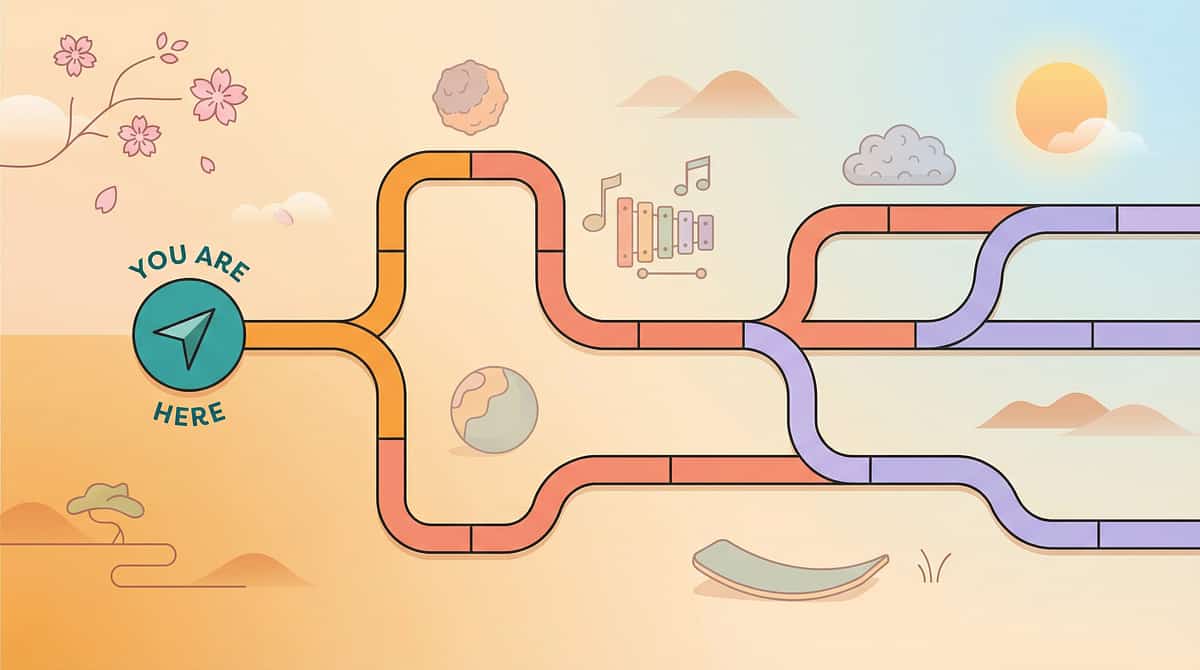
60 Seconds of Data Now Saves Hours of Guessing Later
Record immediately. Memory fades within 5 minutes.
What to Record — 3 Data Points Only
Activations
How many times did the child intentionally activate a toy? Count only deliberate, not accidental activations. This tracks progression from passive to intentional engagement.
Independence Level
Hand-over-hand / Partial prompt / Independent. This single metric tracks the fading of support over sessions more powerfully than any other measure.
Best Moment
One specific behaviour that surprised you or showed progress. Pattern recognition across weeks emerges from these qualitative notes.
📊 G-674 Session Log
Use the Pinnacle G-674 Session Log to record your data after every session. The form captures: session date, child's initials, activations count, independence level, best moment, and overall session rating (1–5).
📄 Download the G-674 Session Tracking Sheet (4-week printable tracking sheet with 3 fields per session)
→ Link to GPT-OS® digital tracker for families enrolled in Pinnacle programmes
"A child's progress chart is their story. Every session entry is a sentence. After 8 weeks, you'll read a transformation."
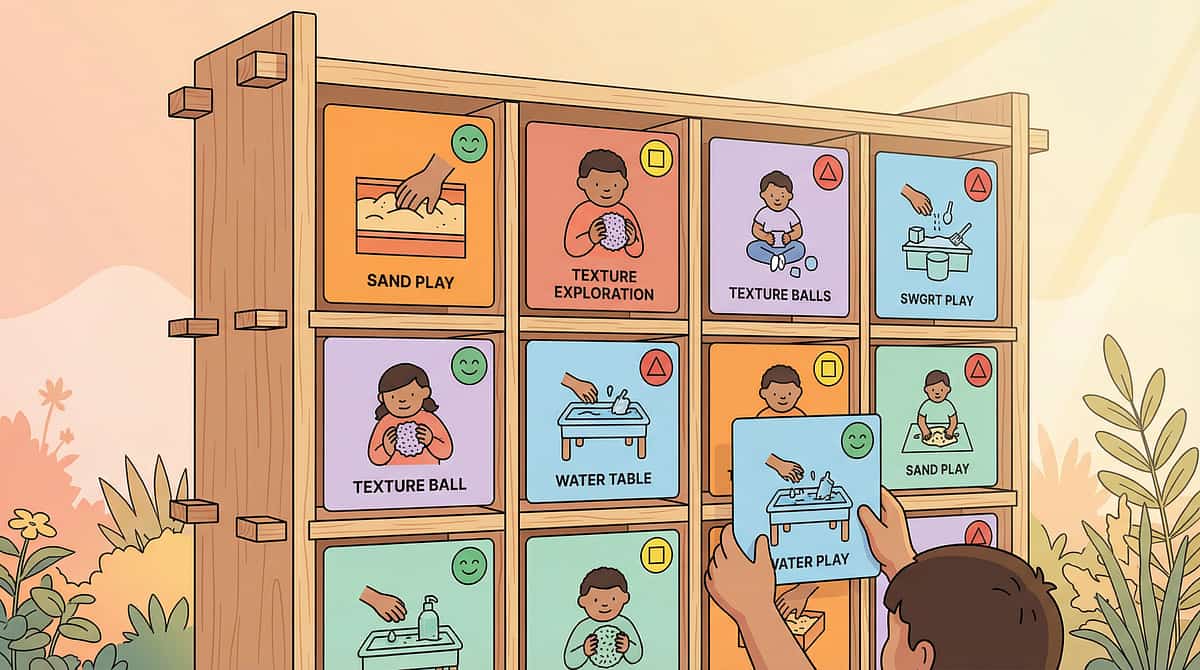
Most Sessions Don't Go Perfectly — and That's Okay
"Session abandonment is not failure. It's data."
Problem 1: Child won't look at or touch the toy
Why: Material may not be motivating enough; child may be dysregulated.
Fix: Activate toy yourself and let the sound/light invite the child. Move to a more motivating material. Check readiness indicators.
Fix: Activate toy yourself and let the sound/light invite the child. Move to a more motivating material. Check readiness indicators.
Problem 2: Child holds toy but doesn't explore function
Why: Child is in "sensory inspection" mode — using mouth, texture, smell. This is still engagement.
Fix: Don't redirect. Let sensory inspection continue. When child pauses, gently guide hand to the button. This patience is essential.
Fix: Don't redirect. Let sensory inspection continue. When child pauses, gently guide hand to the button. This patience is essential.
Problem 3: Child activates once but doesn't repeat
Why: The cause-effect connection is forming but not yet solidified. This is the target developmental stage.
Fix: Reset immediately and offer toy again. Use hand-over-hand for 2–3 more activations. Celebrate each one extravagantly.
Fix: Reset immediately and offer toy again. Use hand-over-hand for 2–3 more activations. Celebrate each one extravagantly.
Problem 4: Child becomes distressed by toy sound
Why: Sound sensitivity — the material is providing aversive, not rewarding, feedback.
Fix: Mute the sound (cover speaker with cloth). Use visual-only cause-effect toys. Switch to water/sand play — no sudden sounds.
Fix: Mute the sound (cover speaker with cloth). Use visual-only cause-effect toys. Switch to water/sand play — no sudden sounds.
Problem 5: Child activates toy but shows no reaction to the effect
Why: Child may not be perceiving the feedback (sensory processing difference) or the effect is not motivating enough.
Fix: Try a different modality. Light not noticed → try sound. Sound not noticed → try movement. Nothing works → consult OT or call 📞 9100 181 181.
Fix: Try a different modality. Light not noticed → try sound. Sound not noticed → try movement. Nothing works → consult OT or call 📞 9100 181 181.
Problem 6: Session ends in meltdown every time
Why: Session length may exceed child's regulation capacity, or transitions are too abrupt.
Fix: Halve session length. Reinforce cool-down more robustly. Introduce the "2 more" warning earlier. Consider whether the material itself is a trigger.
Fix: Halve session length. Reinforce cool-down more robustly. Introduce the "2 more" warning earlier. Consider whether the material itself is a trigger.
Problem 7: Parent feels they're doing it wrong
Why: No parent learns a clinical skill perfectly the first time.
Fix: You are doing it right if the child is safe and engaged at some level. Call 📞9100 181 181 — a Pinnacle therapist will review your approach. This is precisely what the helpline exists for.
Fix: You are doing it right if the child is safe and engaged at some level. Call 📞9100 181 181 — a Pinnacle therapist will review your approach. This is precisely what the helpline exists for.
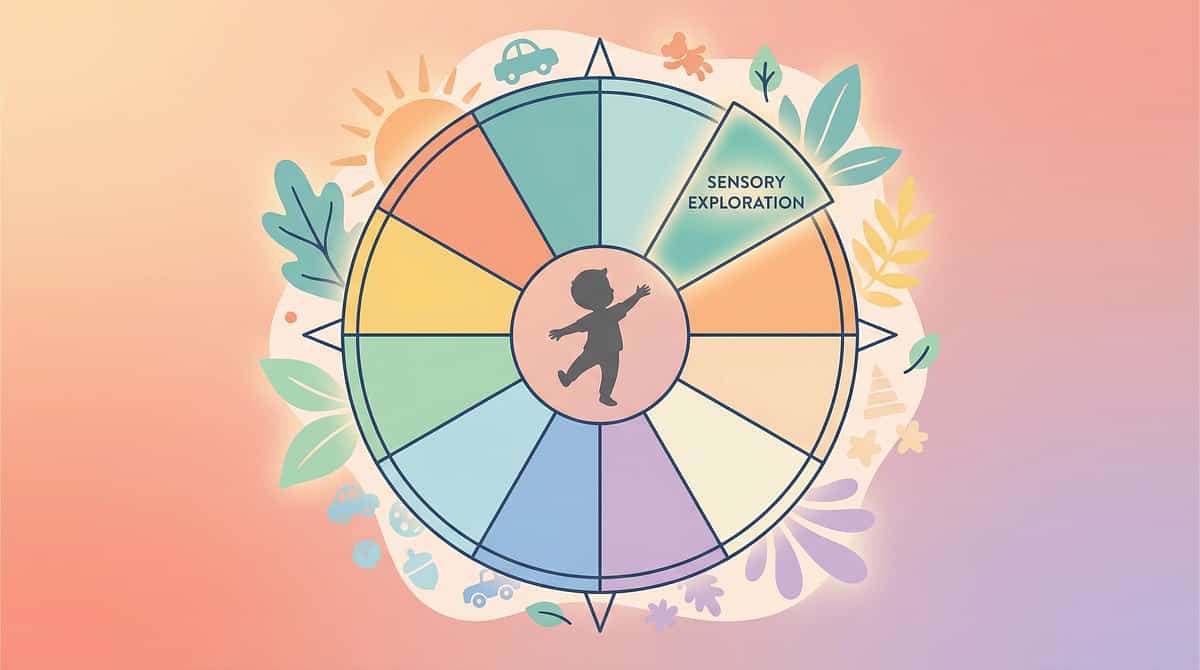
Weeks 1–2: You Are Building the Neural Pathway
Progress: 15%
Focus: Tolerance, Not Mastery
"In weeks 1–2, look for tolerance — not mastery."
15%
Progress Target
You are laying the foundation. The pathway is forming beneath the surface.
✅ What to Look For
- Child tolerates the material in their hands for longer than before
- Child glances at effect at least once per session
- Resistance to the session itself decreases (child comes more willingly)
- Any single instance of intentional activation, even with full assistance
❌ What Is NOT Expected Yet
- Independent, spontaneous activation
- Clear "I did that!" expression
- Generalisation to new toys
- Requesting the activity
Parent Emotional Preparation
This stage tests patience. You will not see dramatic change. You will see micro-indicators. Log them in your tracker. They matter. Session frequency benchmark: 5–7 sessions in weeks 1–2. Minimum 5 to observe any signal.
"If your child tolerates the material for 3 seconds longer than last week — that is real, measurable neural progress. The pathway is forming under the surface, even when you can't see it."
Weeks 3–4: The Neural Pathway Is Forming
Progress: 40%
Focus: Anticipation Emerging
"Look for anticipation. The child is learning what comes next."
40%
Progress Target
Consolidation is under way. Synaptic connections are strengthening with every session.
Consolidation Indicators
- ✅ Child activates toy with less hand-over-hand support (prompt level fading)
- ✅ Child looks at the toy/material anticipatorily — before activation
- ✅ Consistent, reliable activation of 1–2 toys independently
- ✅ Child begins exploring new toys looking for "what it does"
- ✅ Parent reports child reaching for session materials between sessions
Neural Pathway Formation Signals
- Intentional repeated activation (not accidental)
- Brief "I did that!" expression — surprise that becomes satisfaction
- Eye contact immediately after activation — checking if you saw it too
When to Increase Intensity
- → Child masters one material fully → introduce next in the progression
- → Engagement consistently high → extend session by 5 minutes
"You may notice you're more confident too. You know what to do, how to set up, how to read your child's cues. That confidence transfers to your child."
Weeks 5–8: Mastery Is Emerging
Progress: 75–100%
🏆 Mastery Unlocked
"Your child is not just activating toys. They are learning that they have power."
1
3+ Toys Independently
Independent intentional activation of three or more different cause-effect toys without prompting across 3 consecutive sessions.
2
Means-End Reasoning
Child uses a stick to reach a toy, pulls cloth to get object at the end — using one object as a tool to achieve a goal.
3
Experimentation Phase
Child actively tries different actions to see different effects — the hallmark of the scientific mindset underlying all future learning.
4
Anticipatory Gaze
Child anticipates the effect before it happens — looks at where the ball will land before it arrives. This is predictive cognition emerging.
5
Real-World Generalisation
Child generalises to real-world cause-effect: turns light switch, pushes door to open it, activates toys not in the session set.
🌟 You Did This. Your Child Grew Because of You.
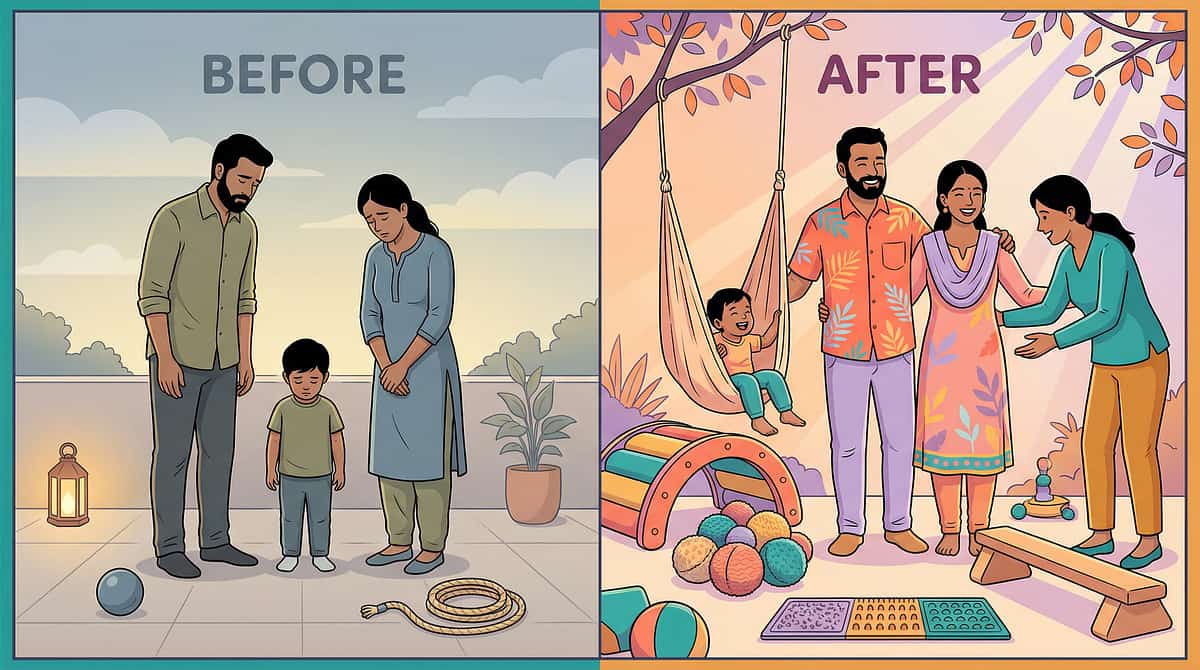
Eight weeks ago, your child looked at a toy lighting up and didn't try again. Today, they press buttons deliberately. They drop the ball and immediately reach for another one. They look at YOU after they make something happen — sharing the joy of "I did that." You built this. Session by session. Day by day. When it was hard and you didn't see progress. When you almost gave up. When you showed up anyway. This is what science-based, consistent, parent-led intervention looks like. And it works because YOU executed it.
Capture the Moment
Photograph your child activating their favourite cause-effect toy independently. This is the moment that everything else is built on. Save it. Date it. Frame it.
Journal Entry
Write: "The day [child's name] first pressed the button on purpose." Note the date, the details, how you felt. This entry will matter more than you can imagine right now.
Share Your Journey
Your experience will help other parents navigating exactly where you were eight weeks ago. Consider sharing one post, one video, one honest account in the Pinnacle Parents Community.
Explore the Cognitive Development Technique Library
"You already have materials for some of these."
Technique | Code | Level | Canon Material | Status |
Attention & Engagement | G-673 | 🟢 Foundation | Any engaging toy | PREREQUISITE |
Cause & Effect | G-674 | 🟢 Foundation | Cause-Effect Toys | ← CURRENT |
Object Permanence | G-675 | 🟡 Core | Problem-Solving Toys | Next |
Means-End Reasoning | G-676 | 🟡 Core | Problem-Solving Toys | Next |
Early Problem Solving | G-680 | 🔴 Advanced | Cognitive Toys | After |
Play Skills Development | G-685 | 🔴 Advanced | Play Materials | After |

Real Families. Real Outcomes. Real Science.
Names anonymised. Outcomes documented in Pinnacle clinical records. Individual results vary.
👨👩👧 "The Button Day"
Priya, Mother | Hyderabad | Child: 22 months (developmental age: 9 months at start)
Before:"Arjun would hold his light-up toy and chew on it. He'd accidentally press the button and it would light up — and he'd just drop it. No reaction. No trying again. I'd press it to show him and he'd watch, but he wouldn't try himself. His OT said his cause-effect understanding was at a 5–6 month level at 22 months."
After (8 weeks, 5 sessions/week):"The day he pressed the button and then immediately pressed it again — and looked at me with this huge smile like 'Did you see that?!' — I cried. That was the first time he understood that HE made something happen. Now at 28 months he activates everything. He's exploring the whole world differently."
🥁 "When a Drum Changed Everything"
Ravi, Father | Bengaluru | Child: 3.5 years with ASD
Before:"Aisha had been in therapy for 18 months. She could do a lot of things. But the cause-effect link — understanding that her actions had effects — was consistently below expected level. She seemed to live in her own world, not understanding that she could change the world around her."
After (Busy boards + drums + water play, 12 weeks):"Something clicked with the drum. She started hitting it hard, then soft. Testing what happened. Then she started doing the same with everything — pressing light switches, pouring water, trying door latches. Her therapist said this was the 'experimentation phase' of cause-effect — and it was like she'd woken up."

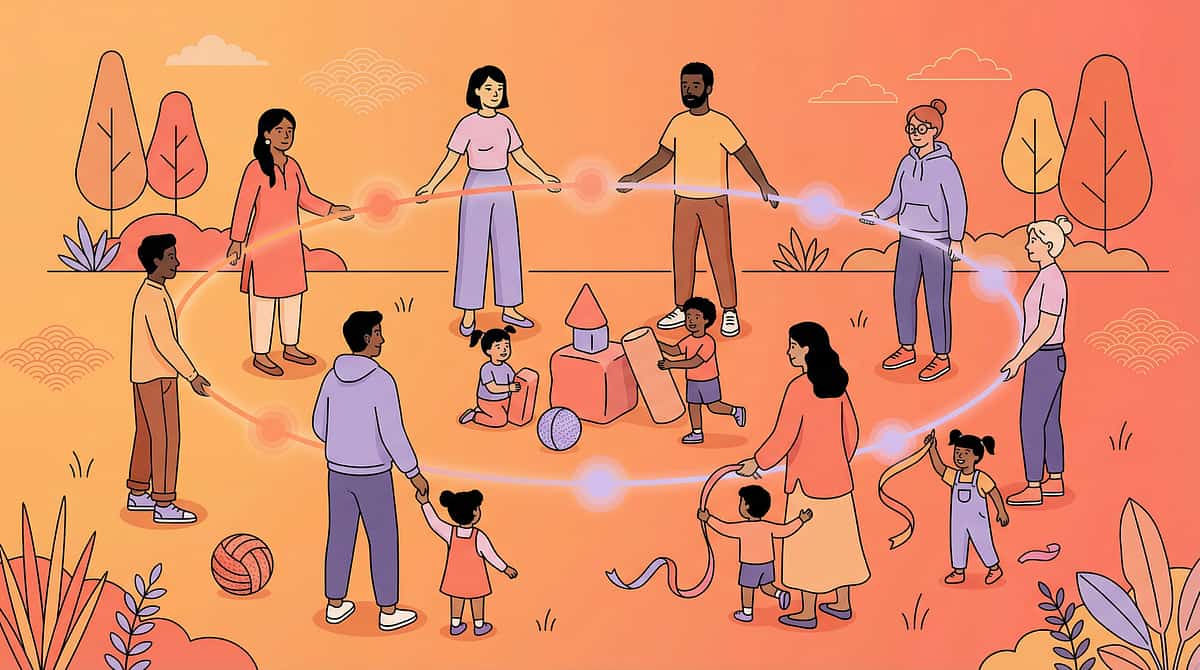
You Are Not Alone — And You Shouldn't Navigate This Alone
"Isolation is the enemy of adherence. Community is the fuel of consistency."
WhatsApp: Cause & Effect Parent Group
Join parents navigating cause-effect delays — Pinnacle Network. Hindi, Telugu, Tamil, English, and 12+ language groups available via the helpline 📞 9100 181 181.
Pinnacle Parents Forum
Ask questions, share wins, and get support from parents who have been exactly where you are now. Real experience, no clinical jargon. pinnacleblooms.org/community
Peer Mentoring
Connect with a parent who has already completed this technique journey. They know what weeks 1–2 feel like, and they can tell you what is on the other side.
Local Parent Meetups
70+ Pinnacle centres host monthly parent support groups. Find your nearest centre and connect with families in your city who share your journey.
📞9100 181 181 | 16+ Languages | 24×7

Home + Clinic = Maximum Impact
"The families that combine home sessions with professional support see 3× faster progress in our GPT-OS® data."
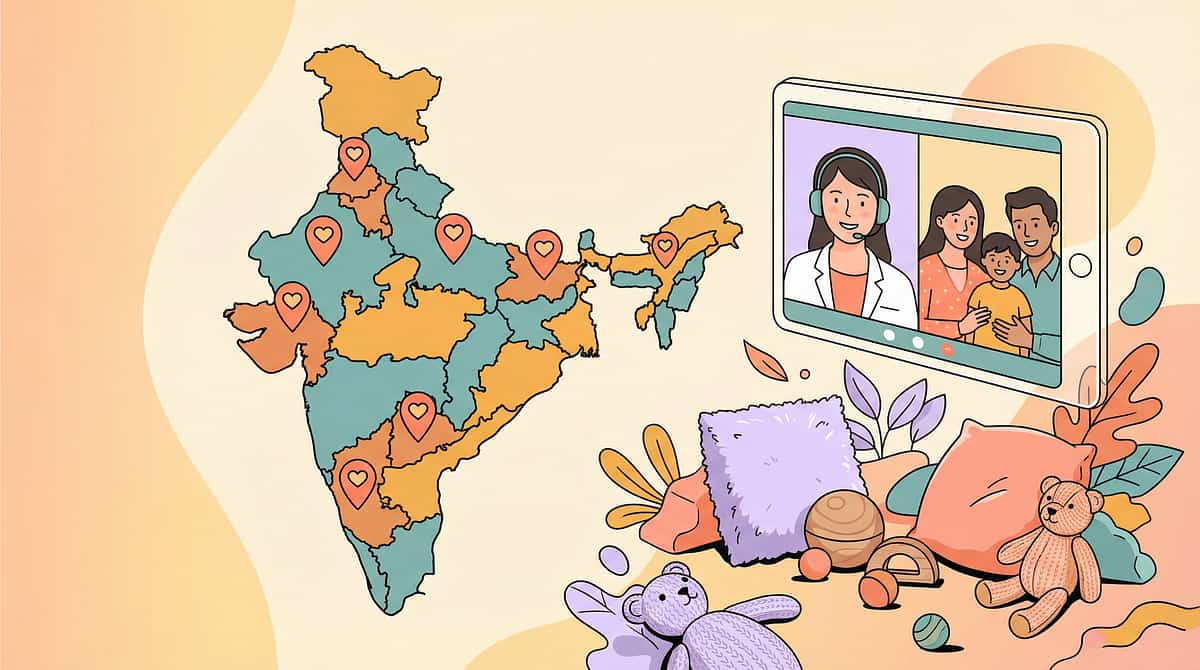
📍 Find Your Nearest Pinnacle Centre
70+ centres across India. Interactive map with filter by therapy type.
Assessment Pathway
- AbilityScore® Assessment — Baseline cognitive developmental profile
- Cognitive Development Evaluation — OT-led formal assessment
- Sensory Profile Assessment — Determines optimal material selection
- GPT-OS® Intervention Plan — Personalised 12-week programme
📞9100 181 181 — Book a consultation. Free to call.
Therapist Matching for This Technique
This technique is led by Occupational Therapists at Pinnacle centres. You need an OT with specialisation in:
- Sensory Processing & Sensory Integration
- Early Cognitive Development
- Adapted Access for Motor Difficulties (if applicable)
→ Request OT Matching — Specific to Cause-Effect Development
📹 Teleconsultation (Remote Families)
Book a 45-minute session with a Pinnacle OT. Available for families outside our 70-centre network. Hindi, Telugu, Tamil, and 16 other languages.

Your Session Data Makes Every Child's Therapy Smarter
What GPT-OS® Learns From This Technique
- Rate of independence level progression (average vs. your child)
- Which materials drive fastest cause-effect progression for your child's profile
- Session length optimisation: when to extend vs. keep brief
- Red flag prediction: when trajectory suggests professional consultation
🔒 Privacy Assurance
All data is pseudonymised. No personally identifiable information in the learning model. DPIIT startup privacy standards. Full data deletion on request.
"Your data helps every child like yours. When 20 million sessions contribute to the learning model, the recommendation for your child at session 4 is informed by 10,000 children who started exactly where yours did."

See It in Action — G-674 Reel
G-674
Cognitive Development Series
75–85 seconds
"Cause and effect is how children learn they have power. That their actions matter. That the world responds to them. Here are 9 materials that create those 'I made this happen' moments." — Pinnacle Blooms Consortium Occupational Therapy Team
▶️G-674 Reel — 9 Materials That Help With Cause and Effect
Series: Cognitive Development and Early Learning | Domain: G — Cognitive Development | Duration: 75–85 seconds
Series: Cognitive Development and Early Learning | Domain: G — Cognitive Development | Duration: 75–85 seconds
Related Reels
- → B-147: 9 Materials That Help Building Cause and Effect (Social)
- → G-642: 9 Materials That Help With Cause-Effect Play
- → G-675: 9 Materials That Help With Object Permanence (coming next)
Preview of 9 materials that help with cause and effect Therapy Material
Below is a visual preview of 9 materials that help with cause and effect therapy material. The pages shown help educators, therapists, and caregivers understand the structure and content of the resource before use. Materials should be used under appropriate professional guidance.


Link copied!

From Fear to Mastery. One Technique at a Time.
🔵 Pediatric OT
🟢 Pediatric SLP
🟡 ABA/BCBA
🟠 Special Education
🔴 NeuroDev Pediatrics
⚕️ CRO
🌍 WHO/UNICEF Aligned
"Pinnacle Blooms Network® exists to transform every home into a proven, 24×7, multi-sensory, multi-disciplinary paediatric therapy environment — powered by the world's most comprehensive therapeutic operating system, GPT-OS®. We serve parents, families, and caregivers across 70+ countries, delivering science-backed, equity-focused, results-measured developmental intervention at the scale the world's children deserve."
20M+
Therapy Sessions
GPT-OS® powered sessions delivered globally
97%+
Improvement Rate
Parent-reported developmental improvement across programmes
70+
Pinnacle Centres
Across India, with global teleconsultation coverage
This content is educational and informational. It does not replace individualised assessment and intervention from developmental specialists, occupational therapists, special educators, or paediatricians. Delays in cause-and-effect understanding can be associated with global developmental delays, autism spectrum disorder, intellectual disability, sensory impairments, and motor difficulties requiring professional evaluation. Individual results may vary.
© 2025 Pinnacle Blooms Network®, a unit of Bharath Healthcare Laboratories Pvt. Ltd. All rights reserved. Unauthorised reproduction prohibited. Content generated under Pinnacle GPT-OS® Content Engine. G-674.
CIN: U74999TG2016PTC113063 | DPIIT: DIPP8651 | MSME: TS20F0009606 | GSTIN: 36AAGCB9722P1Z2
📞FREE National Autism Helpline: 9100 181 181 | 16+ Languages | Available 24×7 | No Charge | pinnacleblooms.org
← G-673: Attention & Engagement | G-674: Cause & Effect ← CURRENT | G-675: Object Permanence →