

Making the Invisible Visible — Because You Deserve to Know
You are not failing. You are not imagining things. You simply haven't been given the tools to SEE what is actually changing.

"Two years. Thousands of hours. Lakhs of rupees. And I genuinely cannot tell you if it's working."
Some days you think you see change. Other days it feels like you're exactly where you started — or going backward. When the therapist says "he's making progress," you nod. But you have no data, no charts, no proof. Just feelings. And feelings aren't enough when you're making decisions that cost everything.

The Scale of This Problem Across Families
Feeling Uncertain
of parents receiving pediatric therapy services report feeling uncertain whether therapy is producing measurable gains
Have a System
of families have a systematic progress tracking system in place at home
Annual Investment
average annual family investment in pediatric therapy services — made largely without objective outcome data
With 1 in 36 children globally on the autism spectrum (CDC, 2023), and India home to an estimated 18 million individuals with autism, the need for parent-accessible progress tracking is at population scale. Pinnacle's 21 million therapy sessions provide the largest real-world evidence base for progress monitoring practices available in India.

Why Progress Is Hard to See Without Data
The brain's progress-detection system was designed for dramatic, fast change — not the gradual, 2% weekly improvements that characterize pediatric therapy.
Memory Adaptation
Humans neurologically adapt to their baseline. Your child's current level becomes "normal" — making yesterday's gains invisible through habituation.
Narrative Bias
Memory reconstructs rather than records. Without data, the brain compares an idealized memory of "before" against a harsh real-time view of "now" — systematically underestimating progress.
Recency Effect
A bad day three days ago feels like "how things always are." A good day two weeks ago is forgotten. Data counters recency bias with longitudinal evidence.
"Documentation is memory that doesn't degrade." — Pinnacle Consortium Clinical Advisory

The Therapy Timeline — Where Tracking Lives
Progress monitoring is not an add-on to therapy. It IS therapy. Without tracking, goals drift from measurable to vague, plateaus go undetected for months, approach changes happen too late — or too early, and advocacy with schools, insurance, and doctors becomes impossible.
Age Band | Primary Tracking Focus | Key Domains |
0–3 years | Developmental milestone emergence | Motor, language precursors, sensory regulation |
3–5 years | Skill acquisition rate | Communication, play, social-emotional, pre-academic |
6–12 years | IEP goal progress + generalization | Academic, behavioral, adaptive independence |
13+ years | Functional independence indicators | Vocational readiness, social competence, self-advocacy |

The Evidence Behind Progress Tracking
ABA Data-Based Decision Making
Multiple systematic reviews confirm that clinicians using ongoing progress data achieve significantly better outcomes than those operating on clinical intuition alone.
Response to Intervention Research
Regular progress monitoring with defined decision rules leads to better outcomes than intervention without systematic monitoring — across speech, OT, ABA, and special education.
Parent Involvement
Research on parent-implemented intervention demonstrates that active parental data collection improves therapy adherence, parent confidence, and child outcomes. (NCAEP, 2020)
Visual Analysis Effectiveness
Single-subject research confirms that graphed data enables reliable identification of intervention effects — more actionable than numerical summaries alone.
Families who track progress systematically are more likely to make effective therapy decisions, advocate successfully, and achieve measurable developmental outcomes than families who rely on impressions alone.

📊 Progress Tracking Through Systematic Documentation
Parent-Friendly Name: "Making the Invisible Visible"
Progress tracking in pediatric therapy refers to the systematic collection, recording, organization, and analysis of evidence that a child's skills, behaviors, or developmental domains are changing over time. Effective progress monitoring transforms subjective impressions ("I think he's getting better") into objective evidence ("His language score moved from the 8th percentile to the 18th percentile over 12 months; here are 9 comparison videos showing the change.")
Session Notes & Therapy Logs
Goal Tracking Charts
Video Documentation
Developmental Milestone Checklists
Standardized Assessment Reports
Age Range | All ages — birth through adulthood |
Setting | Home + Therapy + School + Community |
Session Frequency | Continuous — after every session |
Cost Range | ₹0 (free printables) to ₹8,000 (full system) |
Complexity | Beginner → Comprehensive (scaled to family capacity) |

The Full Consortium Perspective on Progress Tracking
Every discipline contributes a unique lens — and every lens is essential. No single provider sees the full picture. Together, they do.

🧠 ABA / BCBA
Primary discipline for data collection. BCBAs build data collection into every session as standard practice — frequency counts, duration measures, trial-by-trial data, interval recording. Parents can learn BCBA-grade data methods at home.

🗣️ Speech-Language Pathology
Language milestone and vocabulary tracking lead. SLPs track mean length of utterance, vocabulary counts, articulation accuracy percentages. Audio and video documentation is particularly critical for capturing speech changes.

✋ Occupational Therapy
Motor progress and sensory regulation tracking lead. OTs track motor skill acquisition, handwriting development, fine motor precision, sensory tolerance, and adaptive behavior.
📚 Special Education
Academic and IEP goal monitoring lead. Special educators track IEP goal progress using curriculum-based measurement, work samples, and standardized academic assessments. IEP tracking is legally mandated — parents have rights to this data.

👶 NeuroDev Pediatrics
Standardized developmental assessment lead. Neurodevelopmental doctors administer Bayley, Vineland, ADOS evaluations. Tracking scores over time shows developmental trajectory.

👨👩👧 Parents & Families
Home-based continuous data layer — the most important source. Parents are present 24/7 across all settings. No therapist has this access. Parent-collected data captures what clinic observation misses.
"The brain doesn't organize by therapy type. Progress tracking doesn't either. Every discipline's data, integrated in one system, gives the complete picture." — GPT-OS® Clinical Consortium
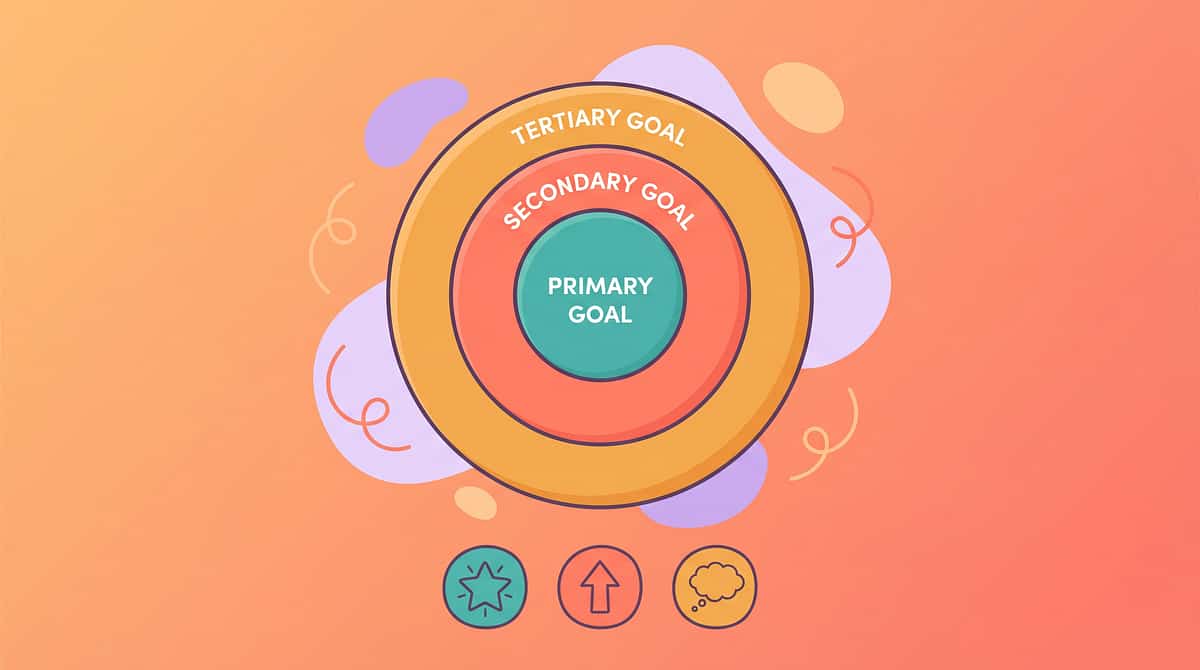
Primary → Secondary → Tertiary Tracking Targets
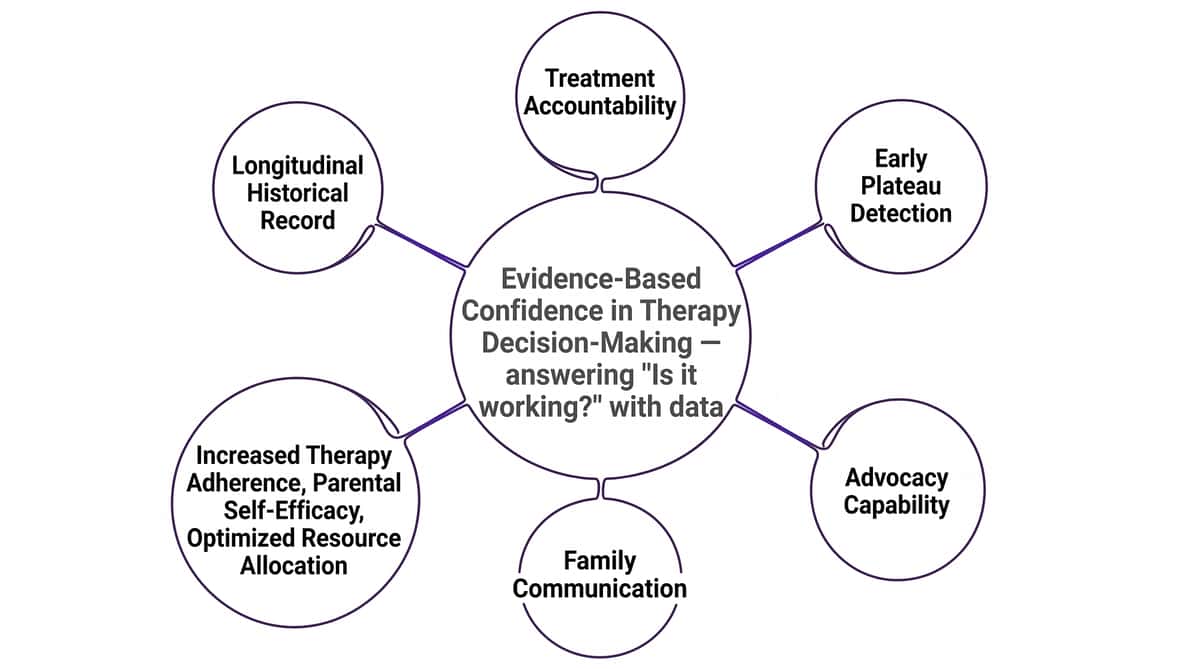
The ability to answer "Is it working?" with specific data — and use that answer to make informed decisions about continuing, modifying, or changing approaches — is the core target. Secondary targets include treatment accountability, early plateau detection, and advocacy capability. Long-term tertiary outcomes include parental self-efficacy, optimized resource allocation, and a longitudinal historical record that persists through provider changes, relocations, and school transitions.

9 Materials That Make Progress Visible
From ₹0 to ₹8,000 — Start Where You Are
Each material below is a complete tracking system in itself. Use one. Use all nine. The most important thing is to begin.
1. Developmental Milestone Checklists
Age-graded skill checklists across motor, language, social-emotional, cognitive, and adaptive domains — dated and compared over time.
2. Goal Tracking Charts
SMART goal targets plotted on line graphs showing progress session-by-session, week-by-week.
3. Video Documentation
Systematic video recording of the same activities at regular intervals — compared months apart to reveal change.
4. Session Notes & Therapy Logs
Structured narrative records of every therapy session — what was targeted, what happened, what worked, what to do next.
5. Standardized Assessment Reports
Professional evaluation scores (Bayley, Vineland, CELF, ADOS, SRS) tracked across evaluation dates to show developmental trajectory.
6. Skill Frequency & Duration Counters
Simple tally counts and duration measures tracked consistently. "27 words today vs. 42 words last month" is evidence. "He's talking more" is a hope.
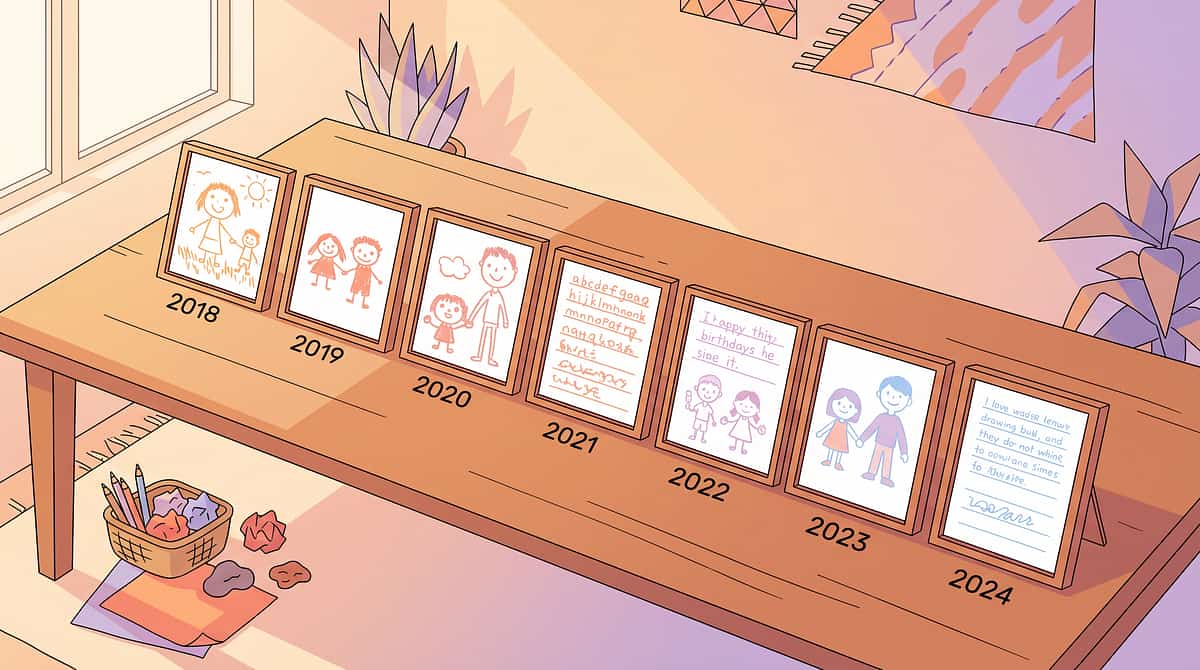
7. Work Sample Portfolios
Dated collections of drawings, handwriting samples, worksheets — compared over months and years. The progress becomes visible, undeniable, and permanent.
8. Parent Rating Scales
Validated questionnaires (Vineland, ABAS, Sensory Profile, CBCL, SRS) completed at regular intervals — turns parent impressions into clinical-grade data.
9. Progress Report Binders
A unified, organized archive — physical binder or digital folder — that organizes all tracking tools into one accessible system. Scattered data is invisible. Organized data is power.

Material 1: Developmental Milestone Checklists
What it is: Age-graded skill checklists across motor, language, social-emotional, cognitive, and adaptive domains — dated and compared over time. The ASQ-3, CDC Milestones checklists, and domain-specific developmental sequences are recommended starting points. Free printables are widely available and carry the same evidentiary value as paid versions.
Pinnacle Recommends: ASQ-3, CDC Milestones (cdc.gov/milestones — free), domain-specific developmental sequences. The CDC milestone checklist is completely free and covers all core developmental domains.
Material 2: Goal Tracking Charts & Visual Progress Displays
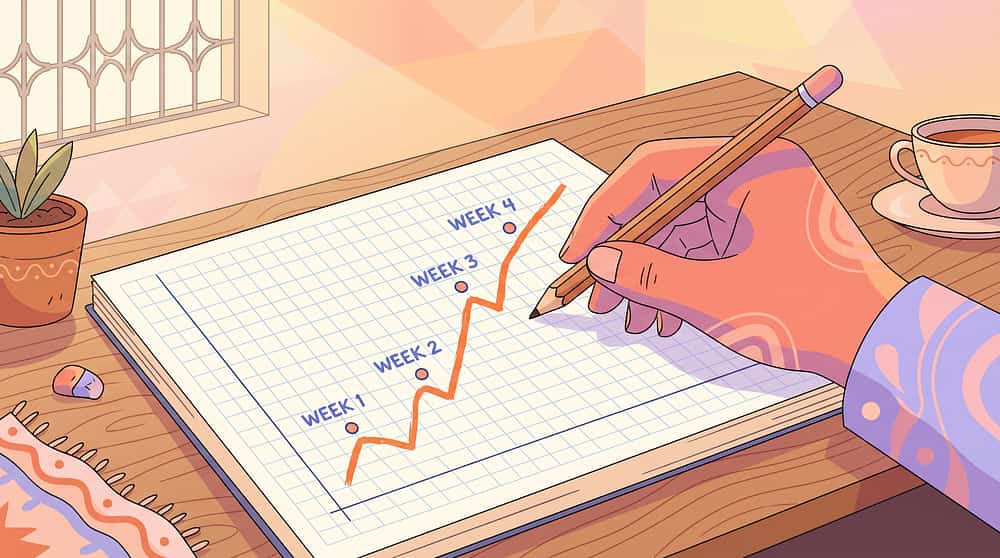
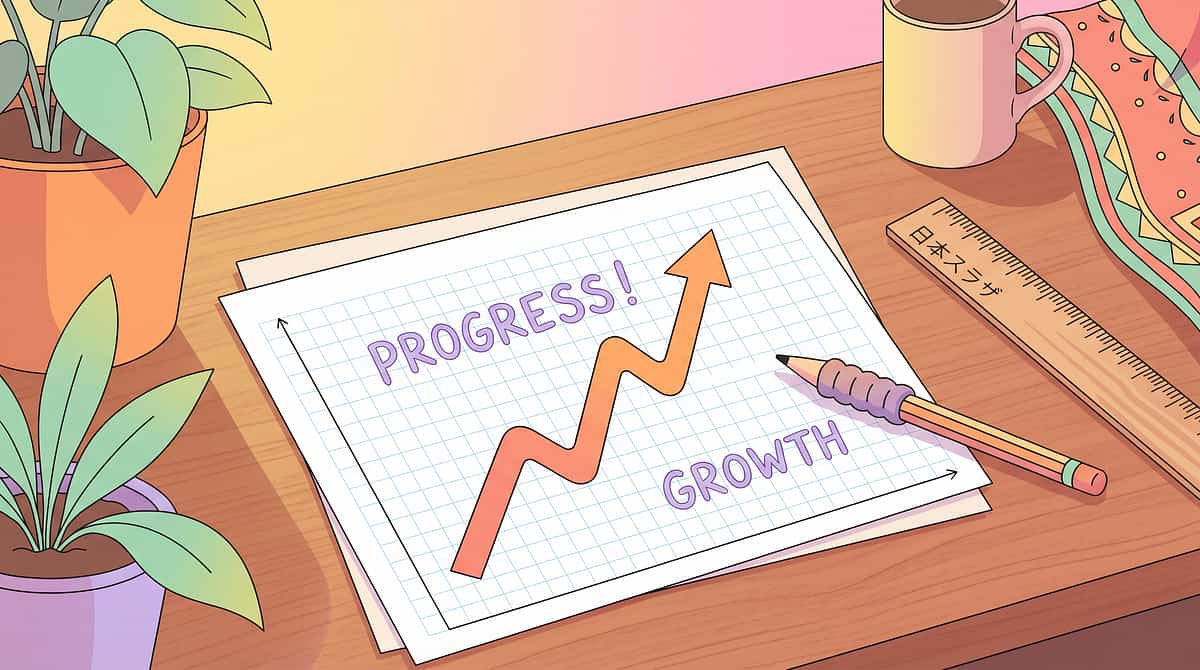
What it is: SMART goal targets plotted on line graphs showing progress session-by-session, week-by-week. Paper graphs are entirely free and carry the same evidentiary weight as digital dashboards. The act of plotting a data point weekly is itself a reinforcing behavior — you see the line move.
Free Option
A4 graph paper + pencil + ruler. A hand-drawn line graph showing progress over time is identical in evidentiary value to a digital dashboard.
Digital Option
Google Sheets, Excel, or dedicated therapy apps. Useful for automatic graphing but not required. The data matters — the delivery format does not.

Material 3: Video Documentation & Comparison Archives
What it is: Systematic video recording of the same activities at regular intervals — compared months apart to reveal change that memory cannot capture. Record a 2-minute video on the first day of each month of your child performing a key target skill or activity. Label it: MMYYYY_ChildName_SkillArea.
Your existing smartphone is clinical-grade documentation equipment. The archive matters, not the device. Use free Google Photos or iCloud for organized, date-labeled storage. Privacy note: store securely and do not share publicly on social media platforms.

Material 4: Session Notes & Therapy Log Templates
What it is: Structured narrative records of every therapy session — what was targeted, what happened, what worked, what to do next. A ₹50 dated notebook outperforms an organized app abandoned after week two. The format matters far less than the consistency.
Minimum Viable Entry (60 seconds):
- Date
- What skill/goal was targeted
- What happened (count, percentage, duration, or level)
- One notable observation

Material 5: Standardized Assessment Reports & Score Tracking
What it is: Professional evaluation scores — Bayley, Vineland, CELF, ADOS, SRS — tracked across evaluation dates to show developmental trajectory over time. You don't need to pay for new assessments to use this material. Collect and organize every report your providers have already given you and build a score-tracking sheet from existing data.
Create a simple table: Assessment Name | Date | Score | Percentile. As new evaluations are completed, add a row. Over 2–3 years, this table tells the developmental trajectory story with the highest level of objective precision available.

Material 6: Skill Frequency & Duration Counters
What to Track
- How many words spoken spontaneously
- How many requests made
- How many instances of eye contact
- Tantrum duration in minutes
- Attention span length per activity
The Evidence Principle
"27 words today vs. 42 words last month" is evidence.
"He's talking more" is a hope.
Tally marks on paper, dated, are identical information to any app. The brain doesn't care about the delivery method.
Free options: tally marks on paper, phone counter apps (free tier). Paid options: dedicated behavior tracking apps (₹0–500). The free paper version is clinically equivalent.
Material 7: Work Sample Portfolios & Artifact Collection
What it is: Dated collections of drawings, handwriting samples, worksheets, and photographs of constructions — compared over months and years. Date every piece. File it by month. The folder does not need to cost money — a labeled cardboard folder per month works perfectly.
Organize by domain: Motor, Language/Writing, Academic, Social/Creative. Add the child's age and current developmental level on a sticky note at the front of each monthly folder. Over 2–3 years, this portfolio becomes an extraordinary record of growth.

Material 8: Parent Rating Scales & Behavioral Questionnaires
What it is: Validated questionnaires completed by parents at regular intervals — scores tracked as data. Your observations, structured and comparable across time, turn parent impressions into clinical-grade data. Complete these every 3 months and track the scores on a simple date/score table.
Vineland Adaptive Behavior Scales
Adaptive behavior across communication, daily living, socialization
ABAS-3
Adaptive behavior assessment system for daily functional skills
Sensory Profile
Sensory processing patterns across environments
SRS / CBCL
Social responsiveness and behavioral functioning scales

Material 9: Progress Report Binders & Documentation Systems
What it is: A unified, organized archive — physical binder or digital folder — that organizes all eight other tracking tools into one accessible, coherent system. A ₹80 binder with handwritten tab labels works as well as a ₹2,000 premium system. Organization is the principle; the container is secondary.
Professional Assessment Reports
All standardized evaluations, organized chronologically
Standardized Score Tracking Sheet
Simple table: assessment, date, score, percentile
Parent Rating Scale History
Completed questionnaires with date and score noted
Copy of Current Therapy Goals
Active goals visible at every review and team meeting

Every Material Has a ₹0 Version
Per WHO/UNICEF equity principles: no family should be excluded from evidence-based progress monitoring due to cost.
Material | Professional Version | Zero-Cost DIY Alternative | Why It Works |
Milestone Checklists | ASQ-3 (professional tool) | CDC free checklists at cdc.gov/milestones | Same domains, same evidence base — free download |
Goal Tracking Charts | Digital dashboard software | A4 graph paper + pencil + ruler | A hand-drawn line graph is identical in evidentiary value |
Video Archive | Dedicated tablet + cloud storage | Existing smartphone + free Google Photos | Phone video is clinical-grade. The archive matters, not the device. |
Session Notes | Specialized therapy note apps | A ₹50 notebook with dates | Dated handwritten notes outperform an app abandoned after week two |
Standardized Assessments | Professional evaluation ₹3,000–15,000 | Collect and file all reports given by providers | Tracking scores you've already received costs nothing |
Frequency Counters | Behavior tracking apps | Tally marks on paper, dated | A tally sheet with dates is identical information |
Work Sample Portfolios | Archival binders with sleeves | A labeled cardboard folder per month | Date the work. File it. The folder doesn't need to cost money. |
Parent Rating Scales | Purchased validated instruments | CDC ASQ:SE (free), Pinnacle observation forms | Multiple validated free instruments available online |
Documentation System | Cloud-synced digital system | One physical binder with handmade tab dividers | A ₹80 binder with handwritten labels works. |
"A parent with a ₹50 notebook and a smartphone — used consistently — will generate more useful progress data than a parent with ₹10,000 in tracking apps who uses them twice and stops. Sustainability beats sophistication."

Safety & Accuracy Principles for Progress Documentation
🟢 GREEN — GO: Best Practices
- Date EVERYTHING. Undated documentation cannot be compared and has no evidentiary value.
- Record typical performance, not best-day performance. Accurate documentation requires honest capture — including hard days.
- Store documentation securely using password-protected platforms.
- Track regression and skill loss, not only gains. Setbacks are data too — often the most clinically important data.
🟡 AMBER — CAUTION: Common Mistakes
- Starting complex tracking systems and abandoning them in two weeks. A simple system used consistently is infinitely more valuable.
- Using tracking to fuel comparison with other children. Track YOUR child against THEIR baseline.
- Sharing progress videos publicly. Your child's developmental records are sensitive.
- Waiting until you have the "right" system. Start with a dated notebook today.
🔴 RED — STOP: Non-Negotiables
- Recording inaccurate data to make progress look better. False documentation undermines clinical decision-making.
- Using progress tracking data as a weapon in family disagreements. Data is for the child's benefit.
- Allowing tracking anxiety to overwhelm family functioning.
- Allowing tracking to replace clinical judgment. Data informs; qualified professionals interpret.

Building Your Home Tracking Station
A tracking-ready home does not require a dedicated room or expensive equipment. Five simple zones transform your existing space into a documentation system that runs on habit, not willpower.
Zone 1 — The Observation Wall
Goal tracking chart at parent eye level. Current week's tally sheet nearby. Visual reminder: "VIDEO DAY — 1st of every month."
Zone 2 — Session Documentation Corner
Therapy log notebook + pen always accessible. 60-second data entry form (laminated, reusable). "Session ended → WRITE NOW" visual prompt.
Zone 3 — The Portfolio Archive
One labeled folder per month for work samples. Organized by domain: Motor, Language, Academic, Social. Clearly dated with child's current age at filing.
Zone 4 — The Digital Layer
Smartphone camera folder organized by month. Cloud backup enabled. One folder per skill area with date-labeled subfolders.
Zone 5 — The Master Binder
Professional assessment reports, standardized score tracking sheet, parent rating scale history, and copy of current therapy goals.
Tracking Activity | Time Per Occurrence | Frequency | Monthly Total |
Session note entry | 2 minutes | After each session | 20–30 min |
Goal chart update | 1 minute | Weekly | 4–5 min |
Video documentation | 5 minutes | Monthly | 5 min |
Rating scale completion | 15 minutes | Quarterly | 5 min/month |
Work sample filing | 2 minutes | Monthly | 2 min |
Total per month | ~40 minutes |

Before Each Documentation Session — The 60-Second Readiness Check
✅ Physical Readiness (Check all 3 to proceed)
- Tracking materials are accessible (notebook, phone, chart)
- Last documentation was dated and filed
- Current goals list is visible or accessible
📊 Data Quality Readiness (Check all 3 for valid data)
- You're capturing typical performance — not a special-occasion good day or an unusually bad day
- The conditions are comparable to previous documentation (same activity, similar time of day)
- You have 2 minutes available immediately after the session — not 3 hours later when memory has faded
💛 Emotional Readiness (Check all for sustainable tracking)
- You're approaching this as information-gathering, not judgment
- You're prepared to record accurately even if today's data is discouraging
- Tracking today is for the child — not to prove anything to yourself or anyone else
✅ ALL GREEN → Document Now
Data captured today is tomorrow's proof.
🟡 SOME AMBER → Capture What You Can
Partial data is better than no data.
🔴 MULTIPLE RED → Reschedule
A forced or inaccurate entry is worse than a gap.
"The best tracking entry is one that starts right. An honest 30-second note beats a polished 30-minute reconstruction."

Begin Every Session With a Documentation Commitment
"Today's session generates evidence. Before I begin, I commit to 60 seconds of honest documentation at the end."
This mental pre-commitment — made before the therapy session begins — increases follow-through on documentation by setting an intention. The ABA principle of stimulus control applies to parent behavior too: pre-committing to track changes the probability that tracking will happen.
Place materials visibly before the session begins
Notebook or phone in view before therapy starts — not retrieved afterward
Write today's date on the tracking sheet before the session
A dated sheet waiting to be filled is a powerful behavioral prompt
Set a phone reminder for 5 minutes after session ends
Label it "DOCUMENT NOW" — do this for 3 weeks until automatic
"I don't have time" | Pre-written format means 60 seconds is enough. Set up the form beforehand. |
"Nothing happened today" | "Nothing happened" IS data. Write it. |
"I'll remember and write it tonight" | Memory fades 73% in 6 hours. Write now. |

During the Session — Active Observation Mode
Real-time observation requires a three-layer framework. What you see in the moment is the raw data — the numbers and notes that will form your evidence record.
Layer 1 — Skill Performance
What did the child DO? How many times? For how long? With what level of support? (independent / with prompting / with full assistance)
Layer 2 — Response Quality
Emotional state during the session (engaged / tolerant / avoidant / dysregulated). Any unexpected responses. Comparison to last session's performance.
Layer 3 — Context Clues
What might be affecting today's performance? (sleep, food, stress, health). What setting variable helped or hindered? What worked especially well — that you want to repeat?
Child Response | What It Means | What to Record |
Engaged, initiating | Optimal performance | Note any new skills or higher-than-usual performance |
Tolerating, compliant | Acceptable performance | Record standard metrics |
Avoidant, resistant | Modified session | Note the resistance — it's data |
Dysregulated, distressed | End or modify session | Record: session ended early + observable cause |

Within 60 Seconds of Session End — The 3-Field Entry
The minimum viable documentation entry establishes a barrier low enough that it actually happens. A 3-field entry done 300 times is more valuable than a comprehensive entry done 12 times.
DATE
Without this, the entry has no evidentiary value. Use DD-MM-YYYY consistently.
PERFORMANCE METRIC
Count / Percentage / Duration / Level (independent → assisted) / Rating (1–5). Choose the most appropriate for this goal.
NOTABLE OBSERVATION
One sentence. What you noticed that the number doesn't capture.
Waiting until evening | Memory is already reconstructed. The data is no longer real. |
Trying to document everything | Pick 1–3 metrics per goal. Comprehensive beats exhaustive. |
Not dating the entry | A dated entry from 6 months ago is evidence. An undated entry is noise. |

Weekly — Turn Data Points Into a Trend
Individual data points tell you what happened today. A line graph tells you whether things are changing. The difference between "I don't know if it's working" and "I can see the line is trending up" is a 10-minute weekly graphing session.
Trend Pattern | What It Means | What to Do |
Consistent upward trend | Intervention is working | Stay the course; celebrate weekly |
Flat / plateau | Approach may need adjustment | Discuss with therapy team; try a modification |
Downward trend (2+ weeks) | Something is affecting performance | Check context; consult team; do NOT assume failure |
High variability (zigzag) | Performance is unstable | Look for patterns: what predicts good days vs. bad? |
Dramatic jump up | Possible breakthrough | Verify with additional observation; document context |
Weeks 1–2
Baseline / initial exposure / high variability normal
Weeks 3–4
First consolidation signs / trend direction becomes visible
Weeks 5–8
Mastery indicators / consistent performance / generalization begins
Month 3+
Generalization to new settings; maintenance without structured protocol

Reinforce YOUR Tracking Behavior — Not Just Your Child's
ABA's reinforcement science applies to parent behavior as much as child behavior. If tracking produces positive experiences — visible progress, confidence, meaningful conversations with therapy teams — tracking behavior is reinforced and continues. Build a weekly ritual that makes tracking feel rewarding.
Data Point Milestone
When your tracking sheet reaches 30 entries, you've built a longitudinal record. Mark it.
Graph Celebration
When the trend line shows a clear upward direction for 3 weeks in a row — screenshot it. Share it with your partner or support network.
Goal Achievement
When a tracked skill reaches its target — celebrate. Make it visible. Take a photo of the chart at goal achievement.
Video Comparison Moment
Play today's video next to one from 6 months ago. Let yourself feel what the numbers mean.
"I was watching today. I saw you [specific behavior]. A few months ago, you [comparison]. Look how much you've grown. I'm so proud of your work."

Monthly — File, Review, and Set Next Month's Tracking Target
The monthly documentation ritual takes 15 minutes on the first Sunday of each month and creates the long-game infrastructure that transforms individual session notes into a coherent developmental story.
File New Material (5 min)
Move session notes into master binder. File professional reports. Archive work samples. Upload and label the month's documentation video.
Compare (5 min)
Open the goal tracking chart — compare this month to 3 months ago. Watch this month's video next to the video from 6 months ago. Notice patterns in session notes.
Set Next Focus (5 min)
Which goal shows clearest progress → keep tracking closely. Which goal is plateaued → flag for therapy team. Is a new skill emerging that deserves its own tracking column?
Material Put-Away Ritual: Notebook back in the designated spot. Tracking charts in the visible location for next week. Phone video archive backed up to cloud. Treat documentation review like a session — close it intentionally. Don't let it bleed into anxiety.

60 Seconds. 3 Fields. This Session's Data.
📋 Track This Session Right Now
- Date of session: Today's date (DD-MM-YYYY)
- Skill/goal tracked: The specific target from today's session
- Performance today: Count, %, duration, or level
- Notable observation: One sentence — what you noticed that the number doesn't capture (optional)
The Data Hierarchy (What to Track, in Priority Order):
- The primary therapy goal — whatever your BCBA/SLP/OT has set as this quarter's target
- One functional behavior — words spoken, requests made, tantrum duration — whatever matters most at home
- One parent observation — one sentence: what you noticed that the therapist can't see
"60 seconds of data now saves hours of guessing later. Every entry is a brick in the evidence wall." — GPT-OS® Clinical Principle

7 Common Tracking Failures — And Their Fixes
"Session documentation failure is not failure — it's information about what your system needs to work."
"I forgot to document after the session."
Fix: Set a phone alarm labeled "DOCUMENT NOW" for 5 minutes after your scheduled session time. Do this for 3 weeks until it's automatic.
"The data looks the same — no progress."
Fix: Check that you're measuring the RIGHT thing. "Communication" is too broad. "Spontaneous word use during dinner" will show change. Refine the metric with your therapy team.
"My partner doesn't believe the tracking shows anything."
Fix: Watch a video comparison together. Two minutes of video from 9 months ago next to today is more persuasive than any chart. Lead with video.
"The tracking system has become overwhelming."
Fix: Reset to minimum viable tracking: date + 1 sentence per session. Don't try to catch up on the backlog — start fresh from today with a simpler system.
"My child's performance is so variable — the data doesn't make sense."
Fix: Add a context column to your tracking sheet: sleep quality, school day (yes/no), unusual event (yes/no). Run this for 4 weeks. The pattern will emerge.
"The therapy center doesn't share data with me."
Fix: Request session notes in writing. You're paying for the services; you're entitled to the records. GPT-OS®-partnered centers provide 100% data transparency as a baseline standard.
"The data is discouraging — it looks like things are getting worse."
Fix: Initial tracking often shows worse numbers as you start observing accurately (the "honeymoon effect of measurement"). If declining trend persists over 3+ weeks, flag for therapy team. This is the system working.

Calibrate Your System to Your Family's Actual Capacity
Choose the tier you'll do in February, not the tier you want to do in January.
Tier 1 — Minimal (5 min/month)
For families in crisis mode, single parents, high-intensity schedules. Monthly video of 1 key skill. Weekly 1-sentence session note (date + what happened). File all professional reports when received.
Tier 2 — Moderate (30 min/month)
For engaged families with moderate time availability. All of Tier 1 PLUS: weekly goal tracking chart update, monthly work sample filing, parent rating scale every 3 months.
Tier 3 — Comprehensive (60+ min/month)
For families seeking full advocacy-ready documentation. All of Tiers 1 + 2 PLUS: session-by-session frequency/duration data, standardized score tracking, monthly video comparison review, master binder with table of contents.
Tracking for a Sensory Seeker | Focus on duration metrics — how long sustained engagement, how long before dysregulation. Trend improvements show as extended tolerance windows. |
Tracking for a Sensory Avoider | Focus on approach frequency — how many times approached the activity. Trend improvements show as increased approach behavior. |
Younger Children (0–5) | Milestone checklists are the primary tool. Video is critical. Frequency counting of any communicative attempt is highly sensitive to early change. |
Older Children (6+) | Academic work samples become central. IEP goal tracking is mandatory. Standardized score tracking is the primary longitudinal evidence. |

Week 1–2: Early Phase Tracking — Calibration, Not Performance
Most families experience a calibration effect in the first 2 weeks of systematic tracking. This is the system orienting itself — not a signal of failure or slow progress.
High variability is normal
You're establishing a baseline, not seeing a trend yet. Zigzag data in week 1–2 is expected and appropriate.
The numbers may feel discouraging
Because you're now observing accurately instead of optimistically. This is the system working, not a sign of regression.
Your system will need adjustment
You may discover the metric you chose doesn't capture what matters most. Modify it now, before you have weeks of data in the wrong format.
Increased tolerance | Child sits with the material 3 seconds longer than last week. This is measurable progress. |
Reduced resistance | Child doesn't cry immediately upon seeing the activity. |
Emerging awareness | Child looks toward the tracking material, shows anticipation. |
Parent calibration | You can now describe exactly what's happening — not just how it feels. |
"If your child tolerates the documentation context for 3 sessions in a row without protest — that is your first data point worth celebrating."

Week 3–4: Consolidation Phase — The Trend Line Starts to Speak
Progress Milestone
Consolidation phase — patterns begin to emerge and the trend line direction becomes visible
Routine Predictability
The tracking routine itself becomes predictable — child may anticipate session ending + documentation time. Data entries become more efficient — 60 seconds or less.
Variability Smoothing
Reduced session-to-session variability: the zigzag smooths into a slightly upward line. Synaptic consolidation — repeated structured sessions strengthen neural pathways.
Generalization Seeds
Spontaneous moments appearing outside structured sessions. Child may show anticipatory behavior — approaching materials rather than waiting to be invited.
"By week 3–4, you may notice that YOU are more confident too. You have 20+ data points. You can describe your child's progress specifically. When the therapist asks 'how is it going?' — you have an answer."

Week 5–8: Mastery Phase — Your Data Is Now Evidence
Consistent Trend Direction
Your goal tracking chart shows a clear upward trend over the 5–8 week window — not just individual high points, but a consistent directional movement across the data line.
Generalization Visibility
Session notes and video documentation show the target skill appearing in non-structured contexts — at the dinner table, in the car, on the playground. The therapy is transferring to life.
Maintenance Check
On days when the formal session doesn't happen, the skill persists. The child doesn't regress to baseline overnight. This is the sign of neural consolidation.
Advocacy Readiness
You can walk into any IEP meeting, doctor's appointment, or insurance review with your documentation and present a clear, data-backed progress narrative.
Decision-Making Clarity
When a therapy decision needs to be made, you have data to inform it. You're no longer choosing based on hope.
"I started therapy not knowing if it was working. Now I have 8 weeks of data, 8 comparison videos, a goal chart with a clear trend, and a binder that tells the complete story. I know exactly what is working, what needs adjustment, and what my child needs next."

You Did This.
Your child grew because you showed up — consistently, honestly, systematically.
📋 Milestone Checklist
A dated milestone checklist showing which skills have emerged since you began
📈 Goal Tracking Chart
A goal tracking chart with a visible, undeniable trend line
📹 Video Archive
8 comparison videos documenting real, visible change across every key domain
📓 Session Notes
40+ session notes capturing the narrative of your child's therapy journey
Today, [child's name] demonstrated [specific skill]. Eight weeks ago, this was [description of previous level]. The evidence is right here. This growth happened because of consistent effort — from them, and from us.
6 Signs Your Tracking Data Requires Professional Review
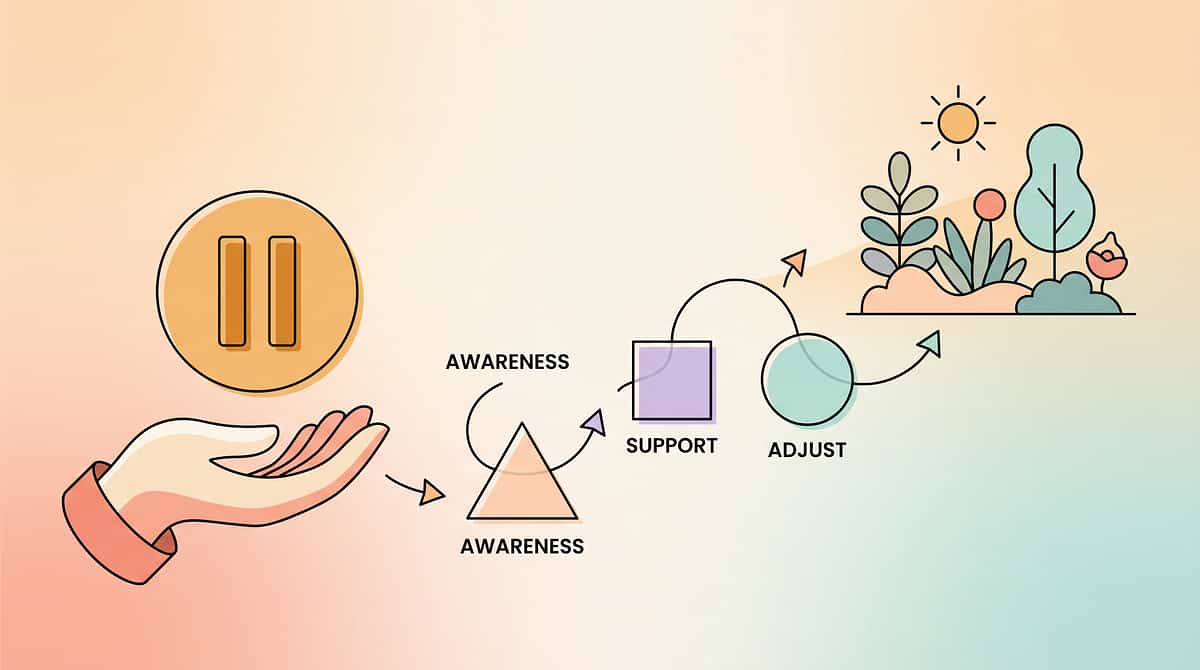
These are not causes for panic — they are precisely what systematic tracking is designed to reveal. This is the system working.
🚨 Consistent Decline Over 3+ Weeks
The trend line shows a sustained downward direction across multiple weeks — not just variability. Bring the actual chart (not just your impression) to the next therapy session.
🚨 Complete Plateau — No Change in 8+ Weeks
The data is flat across a 2-month window despite intensive intervention. Request a formal progress review meeting with your therapy team.
🚨 Newly Appearing Harmful Behaviors
Session notes document new self-injurious behavior, aggression, or significant dysregulation not present before intervention began. Pause the technique immediately. Call the therapy team the same day.
🚨 Skill Regression in a Mastered Domain
A skill your child had reliably mastered is disappearing from the data. Note when the regression began, any potential causes, and consult your team.
🚨 Parent Data Contradicts Professional Reports
Your documentation shows plateauing or regression; the therapy center's reports say "making excellent progress." Bring your data and request to see specific session data behind the provider's reports.
🚨 Tracking Anxiety Affecting Family Mental Health
The documentation system has become a source of significant stress or family conflict. Consult your therapy team about adjusting tracking intensity. Tracking should empower, not overwhelm.

Your Tracking System Is Built. What Comes Next?
Your documentation system is not just a tracking tool — it is the infrastructure for everything that comes next in your child's therapeutic journey. Every technique downstream depends on the evidence you are building right now.
If tracking shows | Next Recommended Step |
Strong communication progress | K-908: Therapy Generalization — track skill transfer across settings |
A plateau | K-909: Knowing When to Change Approach — your data is the evidence |
School advocacy need | K-912: Advocating at IEP Meetings — your documentation portfolio is your IEP evidence |
Goals are too vague to track | Return to K-906: Setting Measurable Goals |
Want clinical-grade baseline | GPT-OS® AbilityScore® Assessment — integrates with your home tracking |
More Techniques in Therapy Management & Parent Empowerment
Materials you already own for K-907 apply to many of these techniques.

K-905: Choosing the Right Therapies
🔵 Core | Session Notes | How to evaluate therapy options systematically before committing resources.
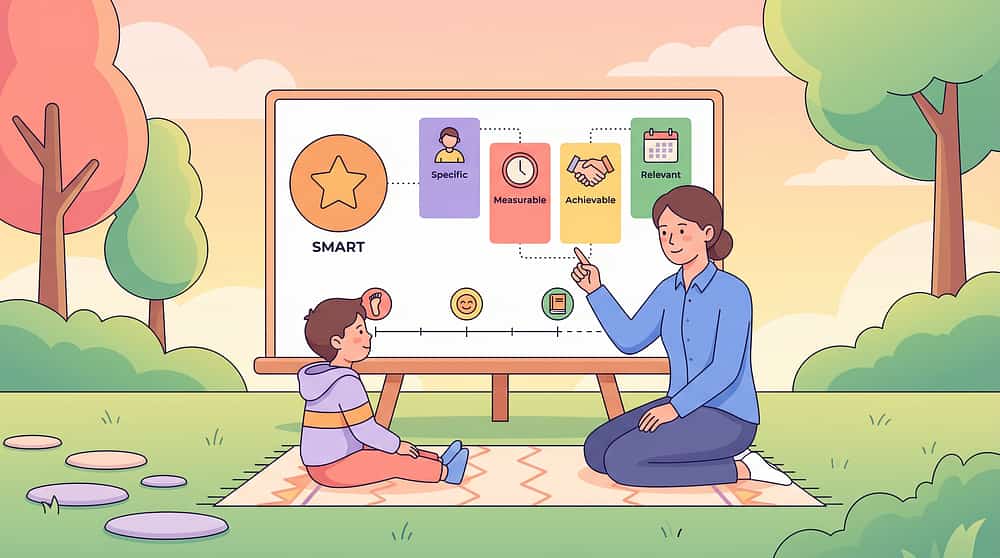
K-906: Setting Measurable Goals
🟢 Intro | Goal Charts | Transform vague goals into trackable SMART targets. Return here if your goals are too vague to track.

K-908: Therapy Generalization
🔵 Core | Video Documentation | Ensure skills transfer from clinic to real life using your tracking data.

K-909: Knowing When to Change
🟠 Advanced | Data Systems | Data-driven decision framework for therapy pivots. Use your K-907 data here.

K-912: Advocating at IEP Meetings
🟠 Advanced | Documentation Binder | Use your records to advocate effectively at school meetings.

K-915: Coordinating Multiple Therapies
🟠 Advanced | Session Notes + Goal Charts | Multi-provider coordination through unified documentation.
Preview of 9 materials that help with tracking progress Therapy Material
Below is a visual preview of 9 materials that help with tracking progress therapy material. The pages shown help educators, therapists, and caregivers understand the structure and content of the resource before use. Materials should be used under appropriate professional guidance.


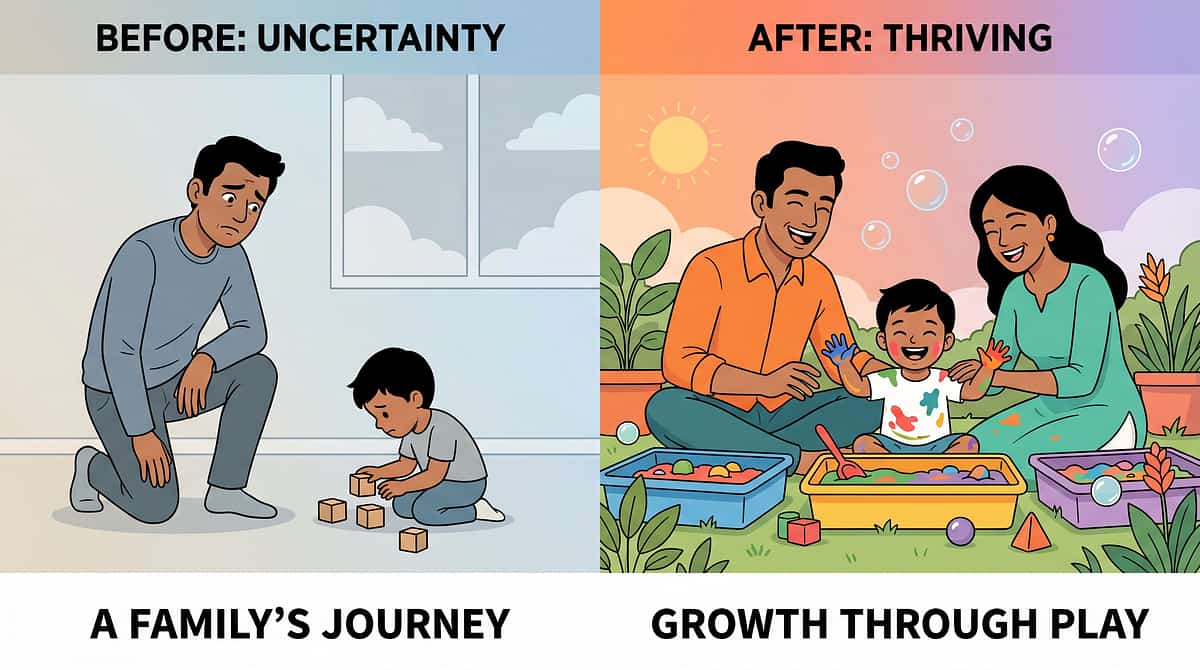
From "Flying Blind" to "Here's the Evidence"
Priya, Mother of Aarav (Age 6, Autism, Bangalore)
Before: "I had binders of random therapy notes, a phone full of unorganized videos, and conflicting verbal reports. When the pediatrician asked for developmental documentation, I found nothing useful. I was spending ₹4.5 lakhs per year on therapy and couldn't answer whether any of it was working."
After (8 months of systematic tracking): "I brought a folder to the IEP meeting. Inside: Aarav's language score from the CELF at year 1 (8th percentile) and year 2 (18th percentile). A goal chart showing spontaneous word use going from 12 per day to 47 per day. The school team said they had never seen a parent walk in with this level of documentation. We got every service we requested."
"I stopped wondering if therapy was working. I stopped hoping. I started knowing."
Ravi & Sunitha, Parents of Krishna (Age 4, Speech Delay, Hyderabad)
Before: "Krishna's SLP would say 'good progress' every week. But when I tried to explain to my mother-in-law why we were continuing speech therapy, I had nothing. Just 'the therapist says it's going well.' She didn't believe therapy was necessary. My husband was starting to wonder too."
After (12 weeks of video documentation): "I showed them the video comparison. Krishna at 2 years 8 months: pointing at things but no words. Krishna now at 3 years 8 months: 'Mama, I want water, please.' The room went silent. Nobody questioned therapy after that. The video did in 2 minutes what I couldn't do in 12 months of explaining."
9 Materials That Help With Tracking Progress