

"He learned it perfectly in therapy. By Friday — it was gone. Again."
You're not imagining it. The skill was real. The embedding never happened. Your child mastered the colour cards last Tuesday — named every single one. The therapist said "mastered." You cried with relief. By Sunday, he looked at the red card like he'd never seen it before. Skill Embedding: The science of making learning permanent.
Consortium-Validated Technique
L-955 | Learning & Generalization

The "Bucket With Holes" Problem Affects Millions of Families
1 in 36
ASD Prevalence
Children diagnosed with ASD globally (CDC, 2023)
80%
Show Regression
Of children with ASD show skill regression after acquisition without systematic maintenance
21M+
Therapy Sessions
At Pinnacle — the largest evidence base for skill embedding in India
"You are among millions of families watching skills disappear after 'mastery.' This is not your child's failure. This is an incomplete teaching process — and it has a precise, learnable solution."
Skill regression — learning something and losing it — is not rare. It is the default outcome when therapy focuses on acquisition without embedding. A 2024 PRISMA systematic review (PMC11506176) analysing 16 studies confirmed that maintenance and generalisation programming must be deliberately engineered, not hoped for. India alone has an estimated 18 million children with developmental needs. You are among millions of families navigating this identical cycle.
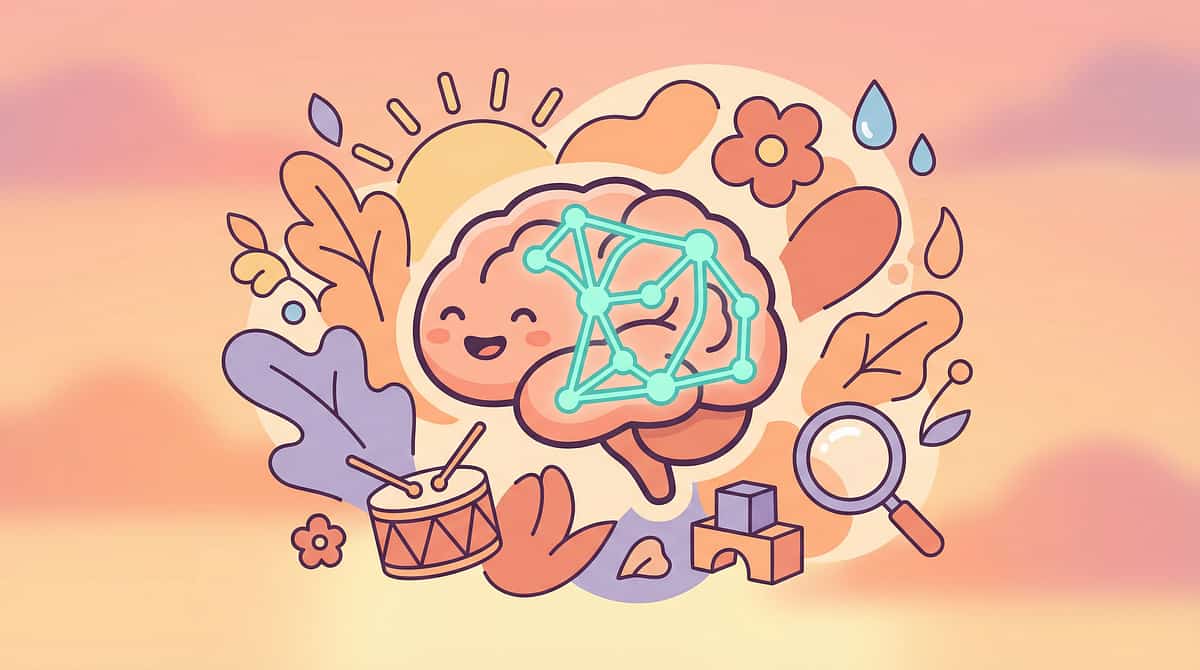
Why Skills Disappear: The Neuroscience Every Parent Deserves to Understand
What's Happening in the Brain
When your child learns a skill in one session with one therapist using one set of flashcards, their hippocampus encodes it as a fragile, context-specific memory trace. This is acquisition — the brain says "I've seen this before." It is NOT the same as embedding — the brain saying "I can access this anywhere, anytime, automatically."
Embedding Requires All Four:
Spaced Retrieval
Revisiting the memory trace at increasing intervals — the spacing effect
Interleaved Exposure
Encountering the skill mixed among other skills — discrimination training
Multiple Contexts
Same skill practiced with different people, materials, and settings
Fluency Building
Speed and automaticity that makes the skill effortless and therefore durable
"This is not a memory problem. This is a teaching-architecture problem." — Pinnacle BCBA Consortium
Skill Embedding: Critical at Every Age, Urgent After Every Acquisition
Birth – 2 Years
Foundational sensory and motor acquisition begins
Ages 2–4 ★
Communication, self-help, play — CRITICAL embedding window. High forgetting rate.
Ages 4–7 ★★
PRIMARY EMBEDDING WINDOW. Neural plasticity is highest. Embedding NOW creates durable pathways.
Ages 8–12
CONSOLIDATION WINDOW. Embedded skills become automatic. Un-embedded skills begin regressing permanently.
Adolescence
Complex social, academic, and daily living skills — URGENT; regression window fully open
Comorbidity Note: Children with ASD, ADHD, learning disabilities, intellectual disability, and language delays show MORE pronounced skill regression without systematic embedding. The gap between acquisition and embedding is wider — not because of lower ability, but because the neurological pathways for automatic generalisation develop differently.

Evidence Grade: LEVEL I — Systematic Review + RCT Confirmed
🔬 PRISMA 2024 (PMC11506176)
16 studies, 2013–2023: Skill embedding meets criteria for evidence-based practice in ASD. Effect sizes confirmed across maintenance, fluency, and generalisation dimensions.
🔬 Spacing Effect Meta-Analysis
One of the most replicated findings in cognitive science: distributed practice produces 30–40% better long-term retention than massed practice. Applies across all ages, all skill types.
🔬 Interleaving Research
Interleaved practice produces dramatically higher retention rates than blocked practice — the "desirable difficulties" principle (Journal of Experimental Psychology).
🔬 India RCT (Padmanabha, 2019)
Home-based structured intervention with maintenance programming showed significant outcomes. DOI: 10.1007/s12098-018-2747-4
95%
Research Confidence
98%
Home Applicability
97%
Parent-Proven
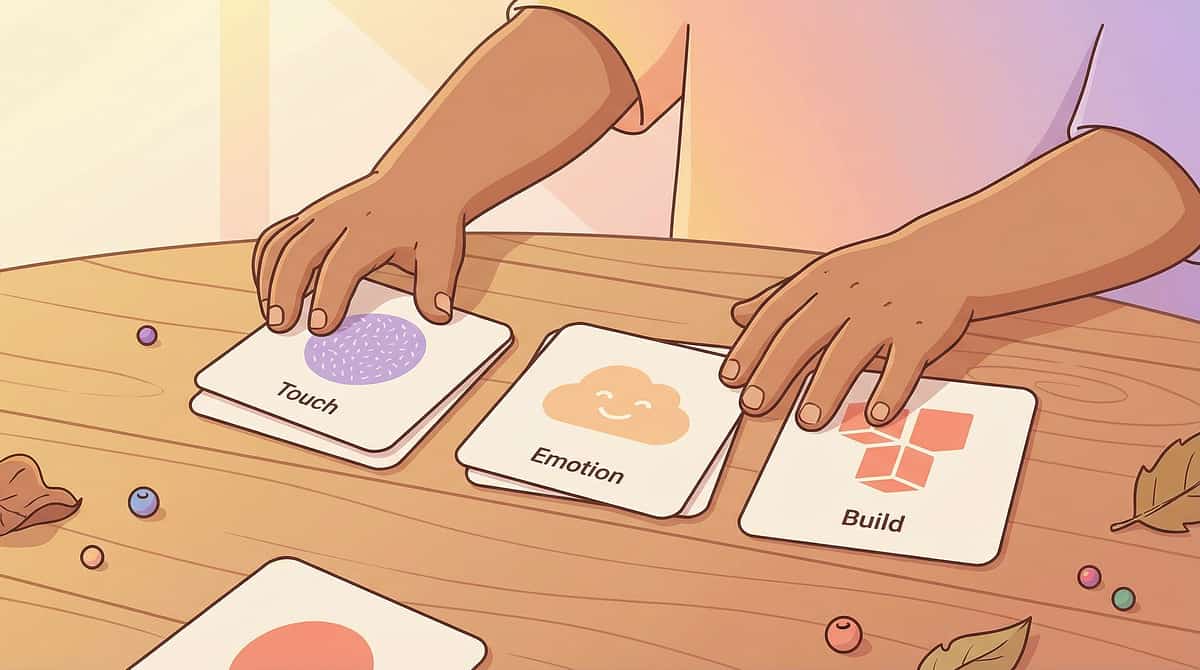
The Technique: What Skill Embedding Actually Is
Formal Name: Skill Embedding / Maintenance & Generalisation Programming | Parent Alias: "Making Learning Permanent" | Reel ID: L-955 | Learning & Generalization
Definition
Skill Embedding is the deliberate, systematic process of transforming newly acquired skills into permanent, automatic, and universally applicable behaviours. Where acquisition means "can do in therapy," embedding means "does do in life — everywhere, with everyone, automatically."
5 Proven Mechanisms
- Spaced maintenance scheduling
- Interleaved practice
- Multiple exemplar training
- Fluency building
- Generalisation programming across settings and people
Age Range
All ages — critical for all skill-based learning
Duration
5–15 min maintenance sessions daily
Setting
Home + therapy + school + community
Evidence Level
Level I — Systematic Review Confirmed

The Pinnacle Consortium All Use Embedding — From Different Angles
ABA / BCBA — Primary Lead
Designs maintenance schedules, fluency programs, interleaved practice decks, and generalisation programming. The architect of the entire embedding system.
Special Education
Embeds academic skills across subjects, settings, and school years. Prevents re-teaching of mastered content from year to year.
Occupational Therapy
Embeds motor, self-help, and sensory-regulation skills into daily routines across all environments — home, school, and community.
Speech-Language Pathology
Embeds communication skills across partners, settings, and spontaneous use. Prevents "therapy room only" language that never reaches real life.
NeuroDev Paediatrician Note: NeuroDev Paediatricians at Pinnacle monitor skill retention through AbilityScore® longitudinal tracking — identifying children at risk of regression before skills are lost, enabling proactive embedding intervention.
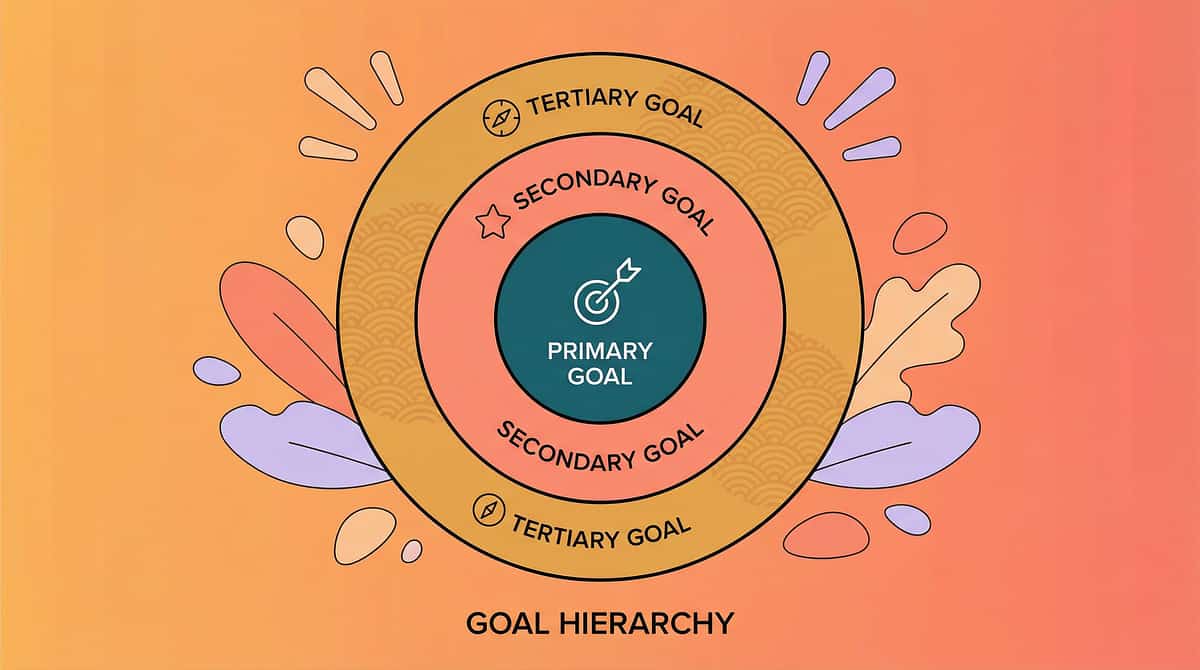
9 Materials That Build the Embedding Architecture
From the L-955 reel — each material addresses a specific dimension of skill embedding. Together, they form a complete home-to-clinic system that ensures no skill ever falls through the cracks.
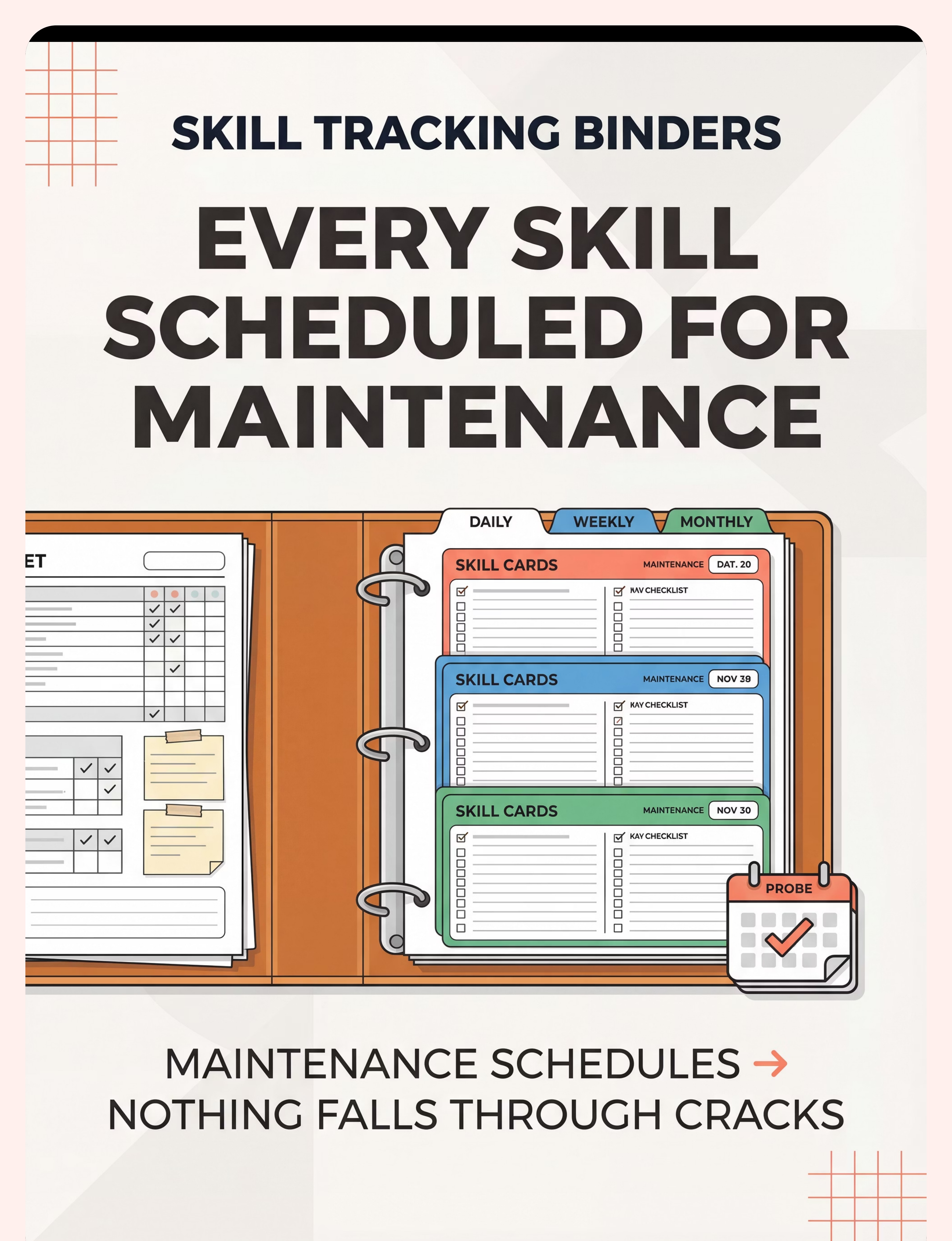
Skill Tracking Binders
Every skill scheduled for maintenance — nothing falls through the cracks
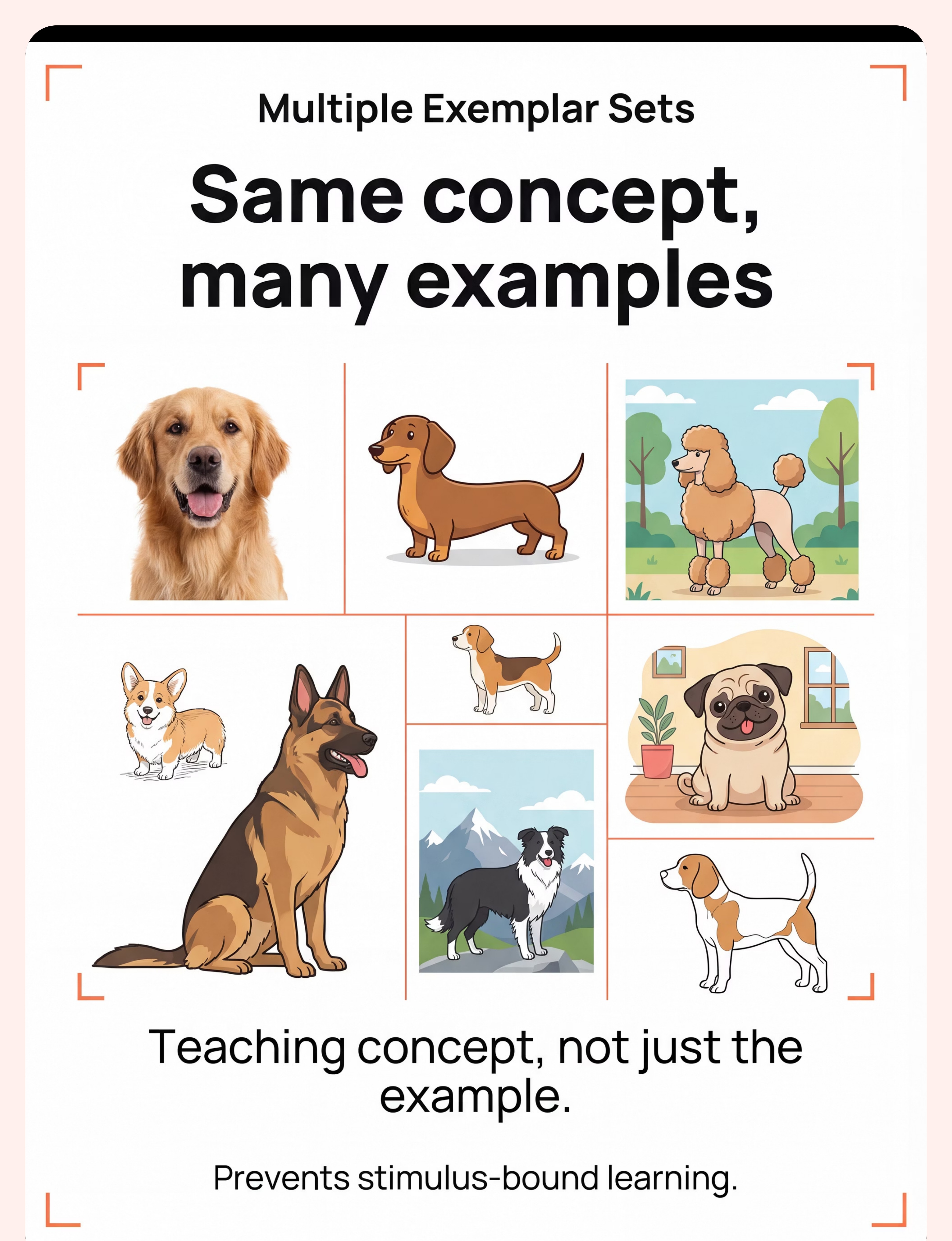
Multiple Exemplar Sets
Same concept, many examples — prevents stimulus-bound learning
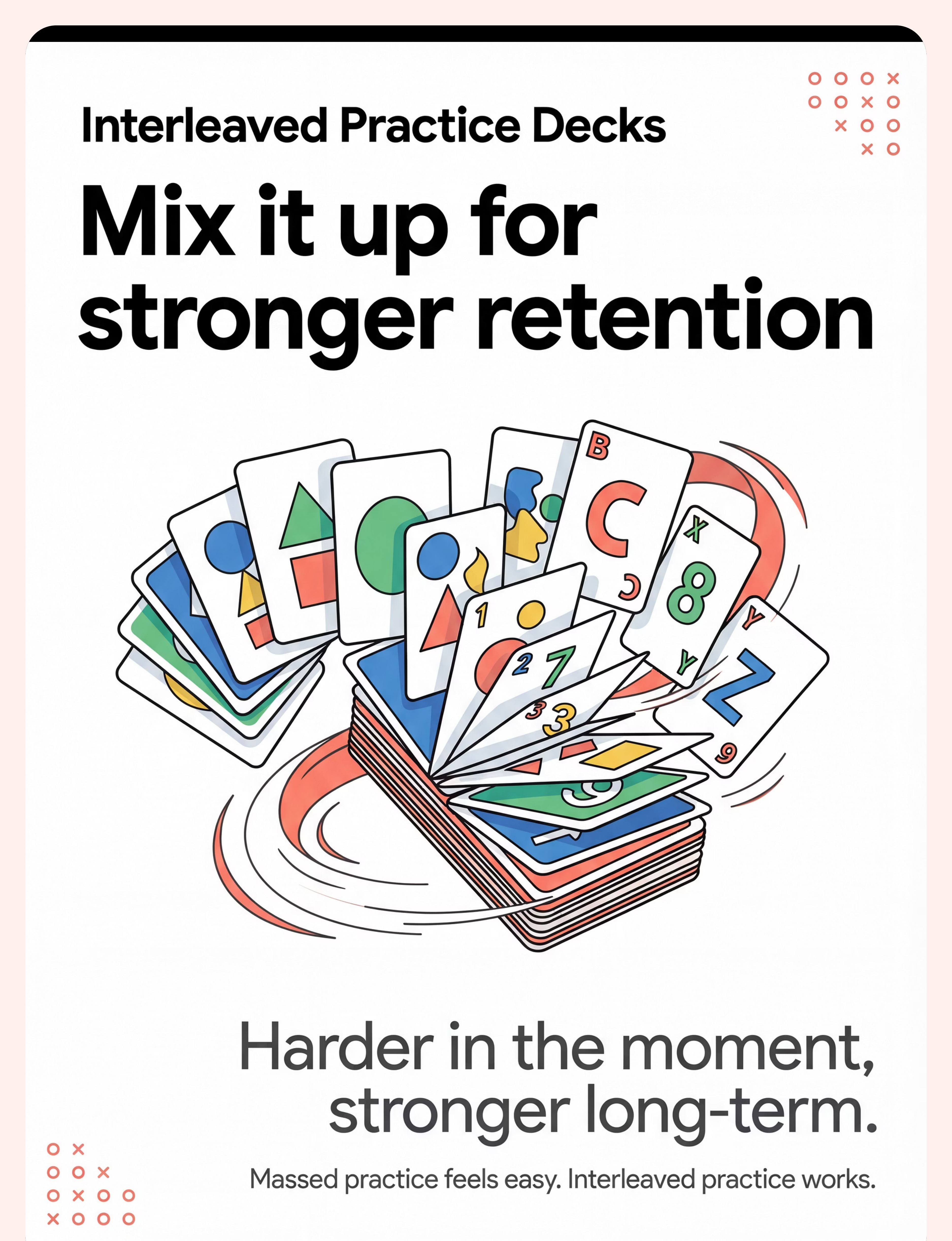
Interleaved Practice Decks
Mix it up for stronger retention — the desirable difficulty principle
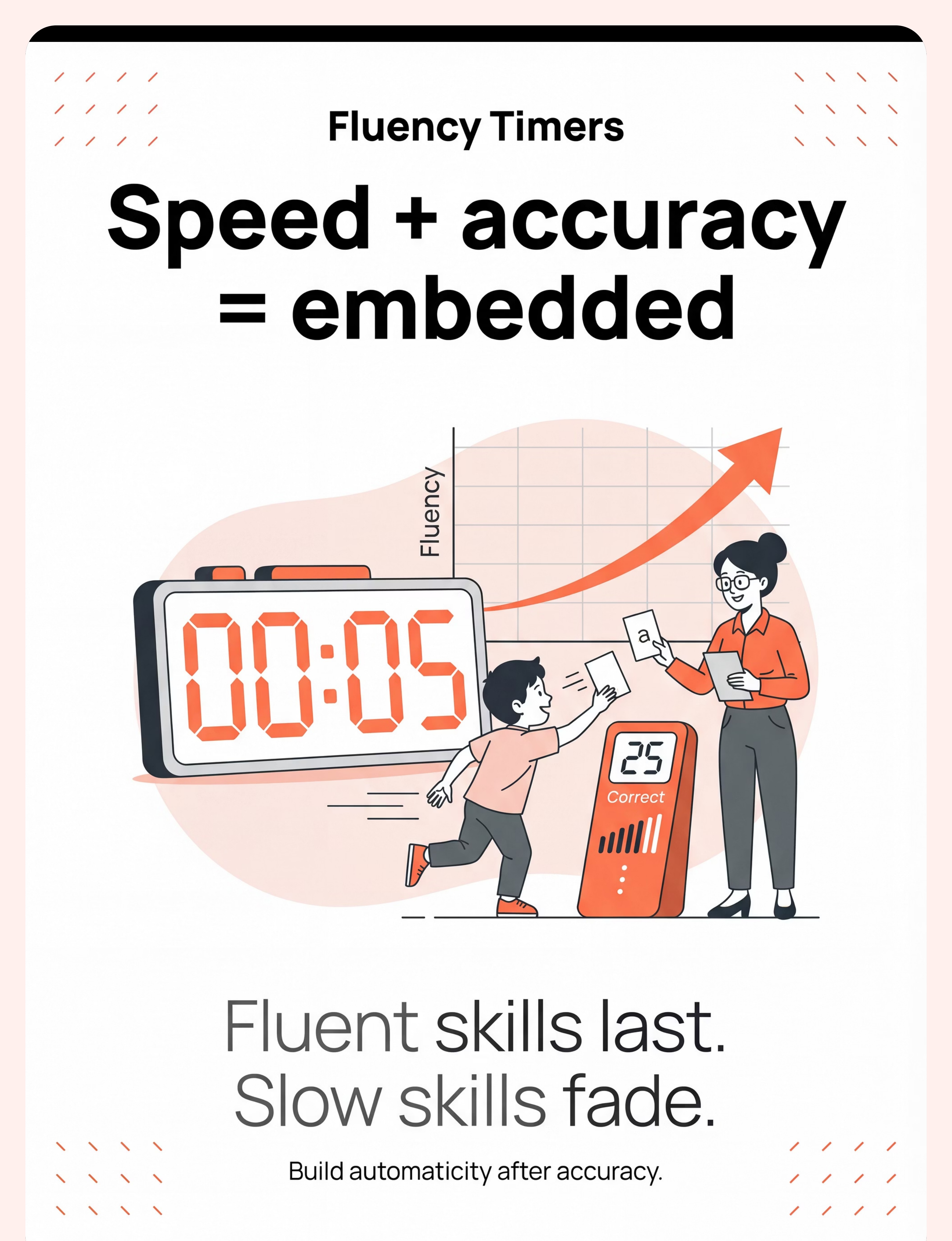
Fluency Timers
Speed + accuracy = embedded. Fluent skills last; slow skills fade.
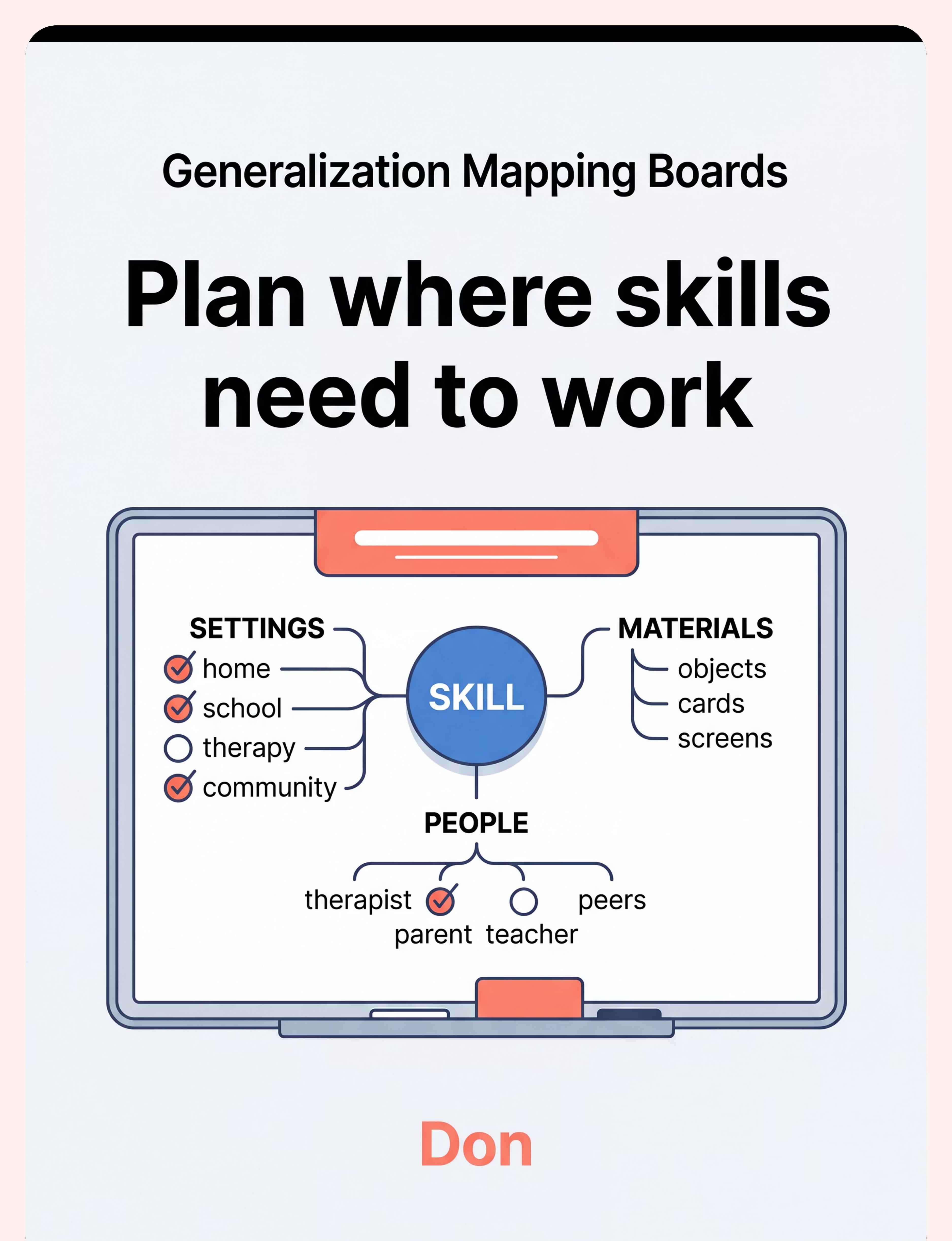
Generalisation Mapping
Plan where skills need to work — settings, people, materials
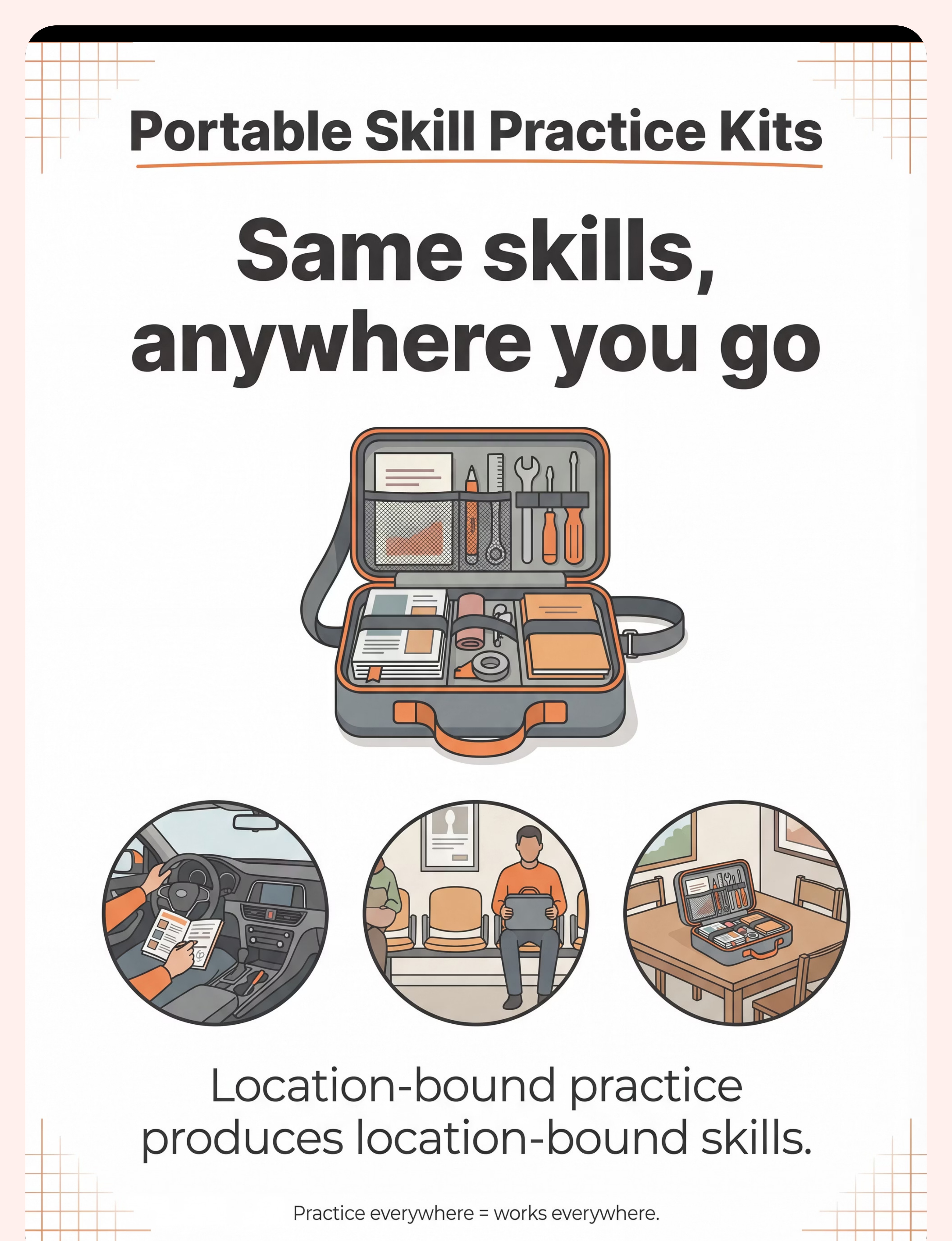
Portable Skill Practice Kits
Same skills, anywhere you go — breaks location binding
Natural Environment Teaching Materials
Learn where it matters — table-taught skills may stay at the table
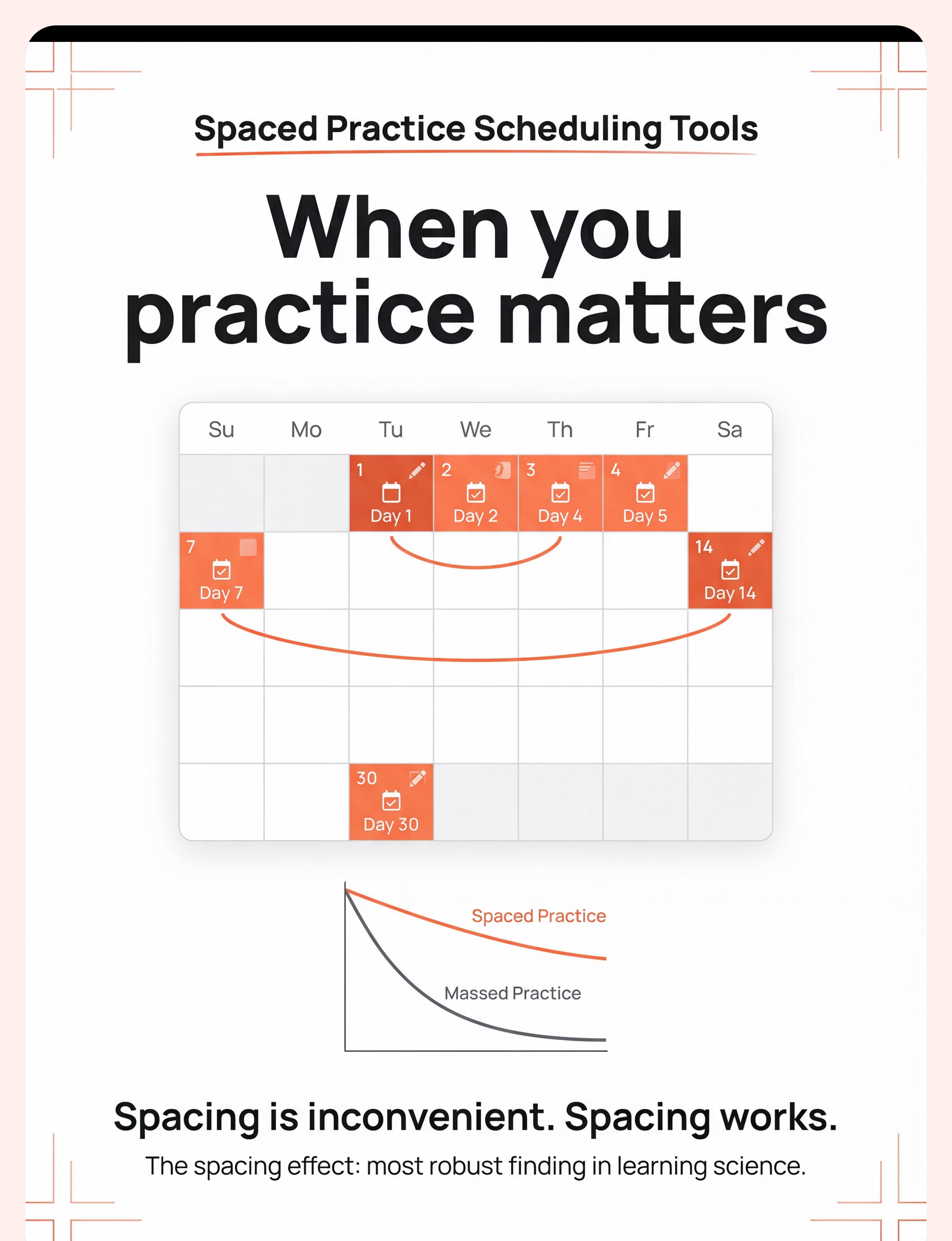
Spaced Practice Scheduling Tools
When you practice matters — spacing is the most robust finding in learning science
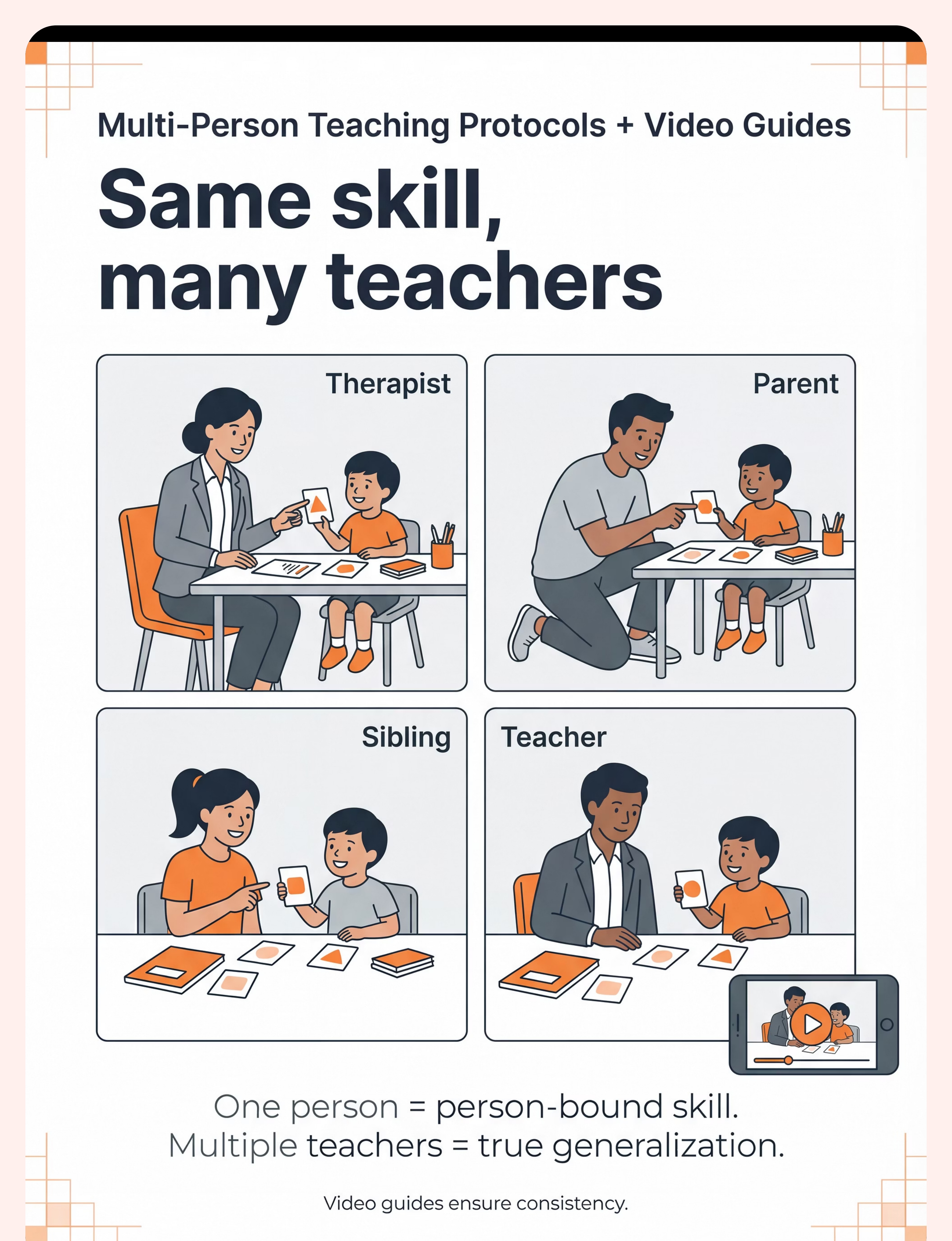
Multi-Person Teaching Protocols
Same skill, many teachers — one teacher equals a person-bound skill
Price Guide: Complete Embedding Kit: ₹3,500–12,000 | Core Starter: ₹1,500–4,000 | DIY options available for every material (₹0 alternatives included on each material card)
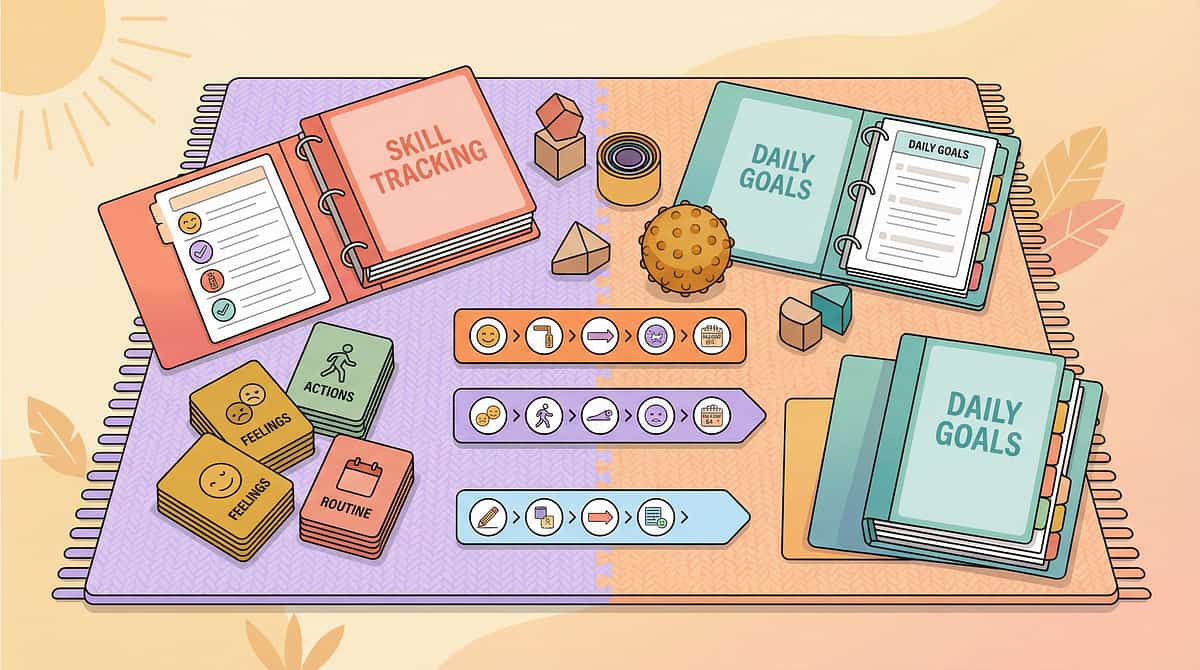
Material 1: Skill Tracking Binders With Maintenance Schedules
Material 1 of 9
₹500–1,500 | ₹0 DIY
Why It Works
The single most common reason skills are lost: they are dropped from practice entirely after "mastery." The hippocampus deprioritises memory traces that aren't being retrieved. A maintenance schedule forces retrieval at optimal intervals — daily the first week, every 2 days the second, weekly by month two, monthly by month six. Each retrieval strengthens the memory trace. The binder is not bureaucracy — it is the nervous system's instruction manual for keeping skills alive.
Optimal Spacing Schedule
Day 1 → Day 2 → Day 4 → Day 7 → Day 14 → Day 30 → Monthly. If fails review: return to more frequent practice.
What to Buy
- 3-ring binder with dividers — ₹150–400
- Skill card templates (printable free)
- Maintenance schedule template (free download)
- Colour-coded tab stickers — ₹50–150
DIY Alternative (₹0)
Any notebook divided into sections: communication, self-help, academic, social. Write skill name, mastery date, next review date. Cost: ₹0.
"Mastered ≠ maintained. Every skill needs a maintenance schedule. Without one, skills fade on a predictable timeline — and you'll be re-teaching the same things indefinitely."
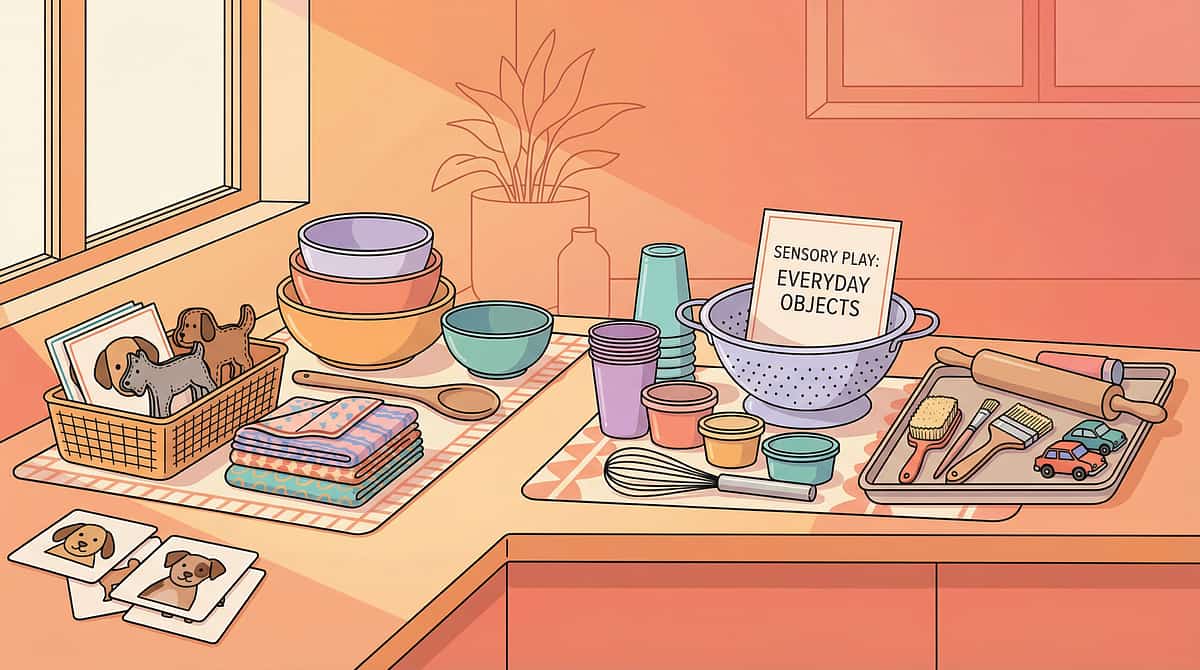
Material 2: Multiple Exemplar Sets
Material 2 of 9
₹800–3,000 | ₹0 DIY
Why It Works
When a child learns "dog" with one picture, they learn that picture — not the concept of dog. This is stimulus-bound learning: the skill is bound to the specific training stimulus. When you show a different dog, the brain says "never seen that before." Multiple exemplar training exposes the child to 5–10 different versions of each concept from the beginning, teaching the concept — the abstract category — not a specific instance. This is how generalisation is built during acquisition, not retrofitted after.
How to Build Your Sets
For each concept/skill: gather 5–10 examples varying in size, colour, medium, and context.
- "Apple": red apple, green apple, apple on tree, apple in bowl, cartoon apple, bitten apple, apple logo
- "Asking for help": different people, different situations, different settings
- Include: real objects + photos + drawings + screen images + contextual photos
DIY (₹0)
Google Images search for each target concept → print 10 varied examples → laminate with sticky tape between cling wrap. Total cost: paper + ink.
"The child isn't failing to generalise. You taught them one example and expected them to derive the concept. Multiple exemplars teach the concept directly."
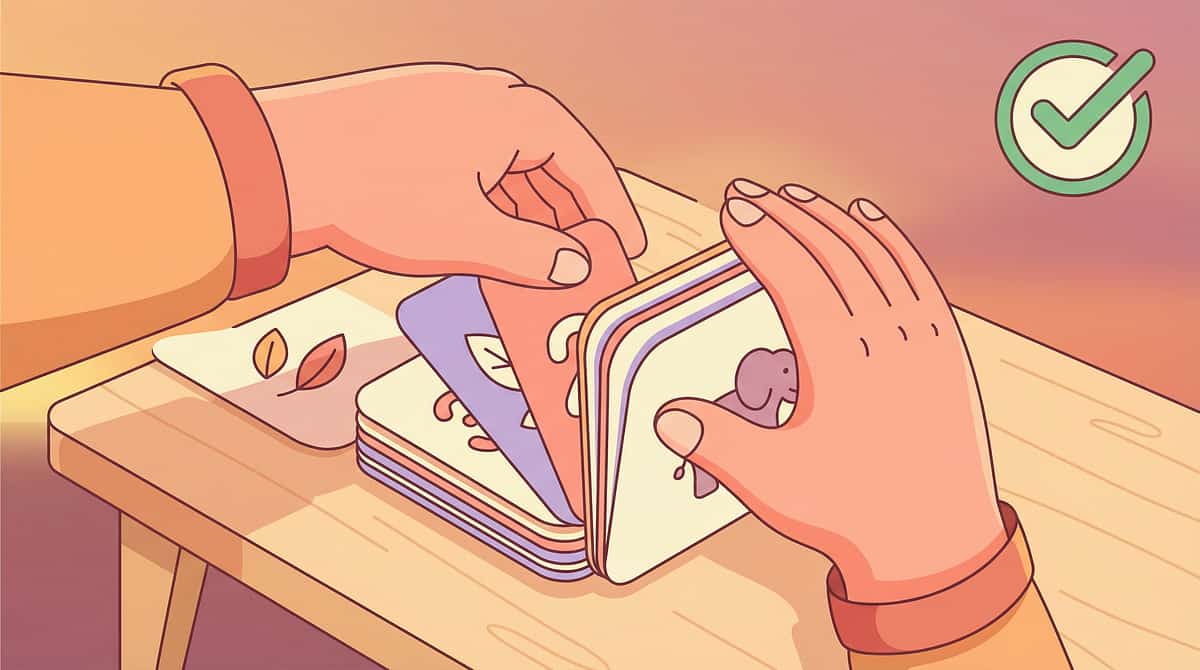
Material 3: Interleaved Practice Card Decks
Material 3 of 9
₹300–1,000 | ₹50 DIY
The Science of Desirable Difficulty
Blocked practice — drilling one skill 20 times before moving to the next — feels productive. But cognitive science research consistently shows it produces weak long-term retention. Interleaved practice — shuffling skills so the child never knows what's coming next — feels harder, performs worse in the moment, but produces retention rates 30–40% higher at 1-week and 1-month follow-up. Each trial requires the child to (a) identify which skill is needed and (b) retrieve the correct response — two processes that strengthen memory traces simultaneously.
Take ALL mastered skills from different domains
Write each on a card and shuffle completely
The unpredictability IS the mechanism
Present at brisk pace — 2–3 seconds per card
Track correct responses; re-present errors at end of deck
Update deck as new skills master
Important Rule: Interleaving is for MAINTENANCE of mastered skills. New skills being acquired still benefit from some massed practice initially. "Massed practice feels productive. Interleaved practice IS productive. Trust the science, not the feeling."
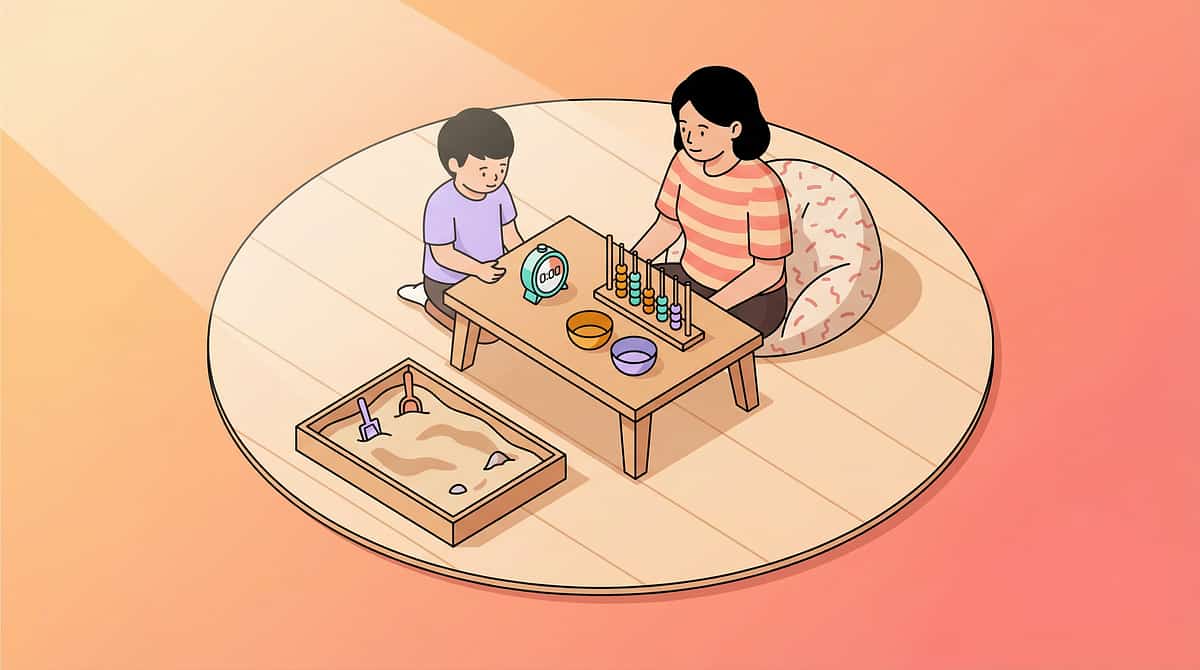
Material 4: Fluency Timers and Counting Tools
Material 4 of 9
₹200–800 | ₹0 DIY
Fluency: The Missing Ingredient
A skill that is accurate but slow is vulnerable. The child can do it — but only when they consciously think about it, when the context is right, when there's no competing demand. Fluency — the combination of speed AND accuracy — is what makes a skill automatic, spontaneous, and durable. In precision teaching research, fluent skills show dramatically higher retention at 30-day and 90-day follow-up compared to skills practiced only to accuracy.
1-Minute Timing Protocol
- Prepare skill materials (flashcards, objects, prompts)
- Start 1-minute timer
- Present items at brisk pace — no waiting
- Count correct responses only (tally counter or finger-count)
- Record: Date | Corrects per minute | Errors per minute
- Graph weekly to track rate increase
- Only begin timing after accuracy reaches 90%+
Products Needed
- Sand timer (1 minute) — ₹150–300
- Digital countdown timer — ₹200–500
- Tally counter / clicker — ₹100–200
- DIY (₹0): Phone timer + finger counting. Free. Works identically.
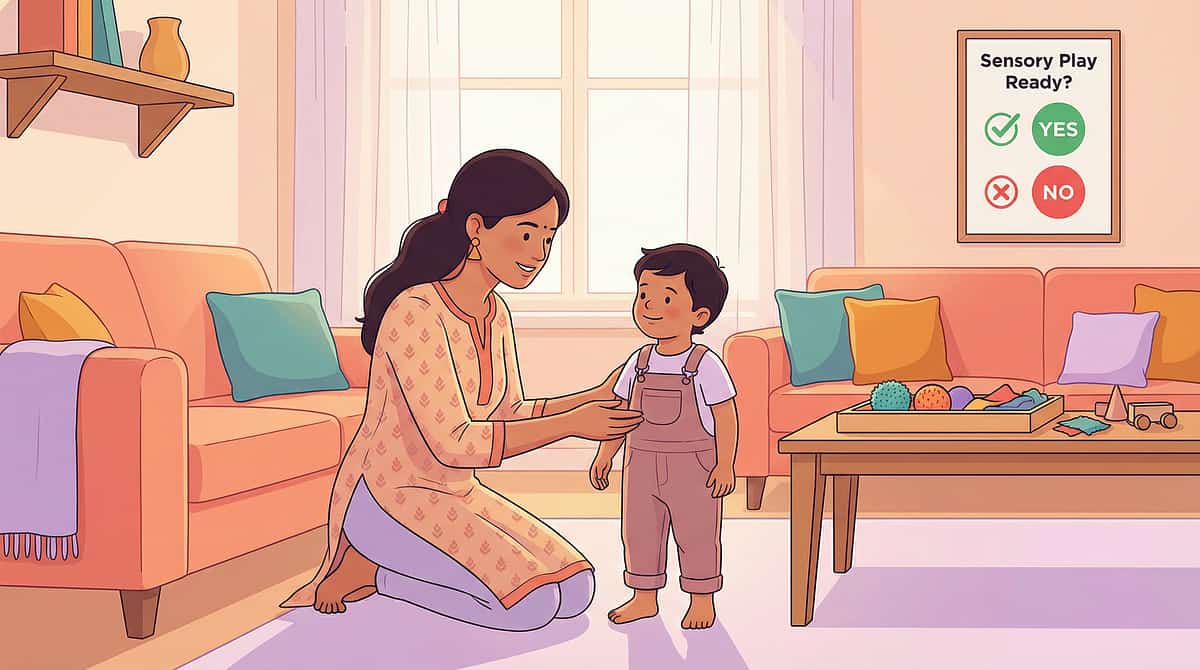
Before You Begin: Embedding Practice Readiness Check
The best embedding session starts right. Check these 5 signals before beginning every session — a short, calm, successful embedding session is worth more than a long, forced, distressing one.
🟢 GREEN — Ready to Proceed
- Child is calm — not dysregulated, not immediately post-meltdown
- Child has eaten and is not hungry
- Environment is reasonably quiet with no competing distractions
- Materials are ready and organised before you call the child
- You have 10–15 uninterrupted minutes available
- Child's preferred reinforcer is available and earned
🟡 AMBER — Modify the Session
- Child is tired but not distressed → shorten to 5 minutes, reduce demand
- Environment is slightly noisy → use headphones or move rooms
- Child is mildly resistant → start with an interleaved deck of easy mastered skills
🔴 RED — Postpone
- Child is in active meltdown or recovery (within 20 mins)
- Child is ill or highly distressed
- You are rushed, stressed, or will be interrupted
Pinnacle Helpline: If your child rarely passes the readiness check, this pattern matters clinically. Call 9100 181 181 — free, 16 languages, 24x7.

Step 1: The Invitation — Begin With Enthusiasm, Not a Command
Step 1 of 6
30–60 seconds
"Hey! Want to play our quick card game? We're going to do our champion round — you're going to crush it. Ready?"
"Time for our special practice! [Child's name] is SO good at this. Come show me!"
The child's brain needs to be primed for success before the first card is presented. ABA's pairing principle: the child must associate the activity with positive experience before demand begins. No cold starts. No "sit down, we're doing flashcards." The invitation creates motivating operations — the child WANTS to engage.
Get to child's level
Sit down or kneel — never tower
Smile genuinely
Children read micro-expressions
Hold materials playfully
Non-demanding, inviting posture
Leave a pathway out
Don't crowd — never force a start
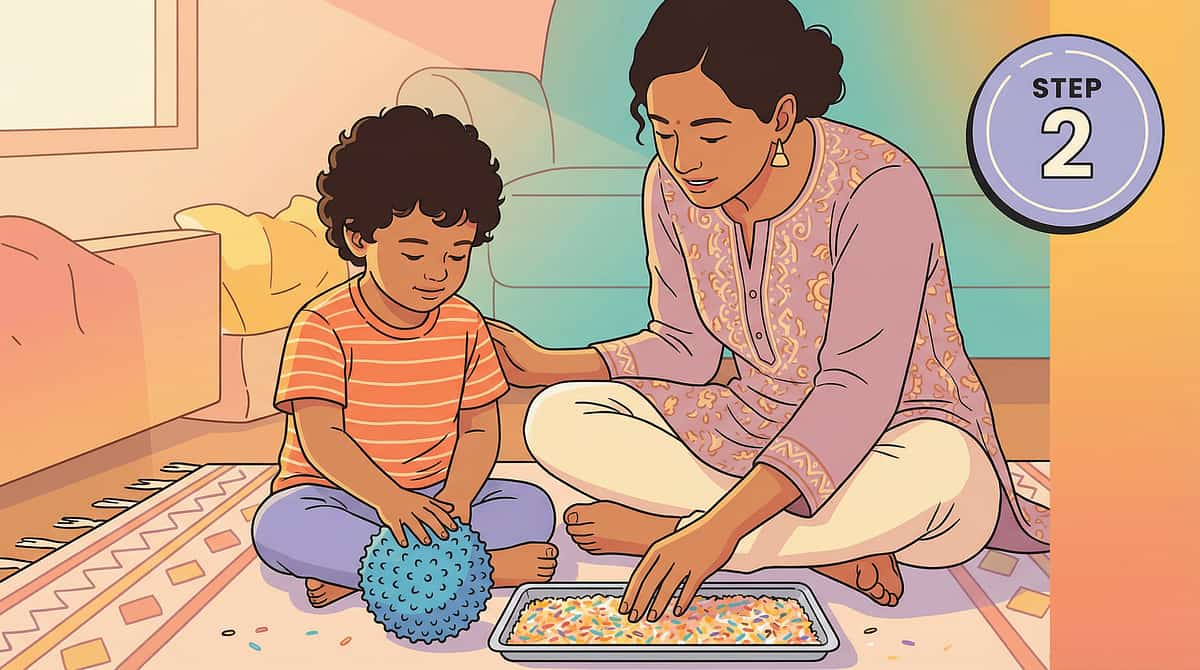
Step 2: The Engagement — Introduce the Materials, Begin the Reinforcement Schedule
Step 2 of 6
1–3 minutes
"Okay, here's the deck — we've got everything mixed up today. You're going to see some easy ones and some ones you're still practising. Ready? Let's go fast!"
How to Present
- Brisk, forward-moving pace — no hesitation
- Present cards face-down, flip one at a time
- Keep energy slightly elevated — match the child's best session energy
- Hold materials at child's eye level, not above
Begin Reinforcement
First correct response → immediate, specific praise: "YES! [skill name] — perfect!" Do NOT wait for multiple correct responses. First-trial reinforcement is critical for motivation maintenance.
Reading the Child's Response
Signal | Means | Action | |
Reaching for cards | Engagement | Proceed at full pace | |
Answering quickly | Fluency building | Maintain pace, count | |
Looking away | Attention drift | Brief pause, re-engage | |
Slow responses | Fatigue | Slow to 3-sec interval | |
Refusals | Avoidance | Check for easier exemplars |
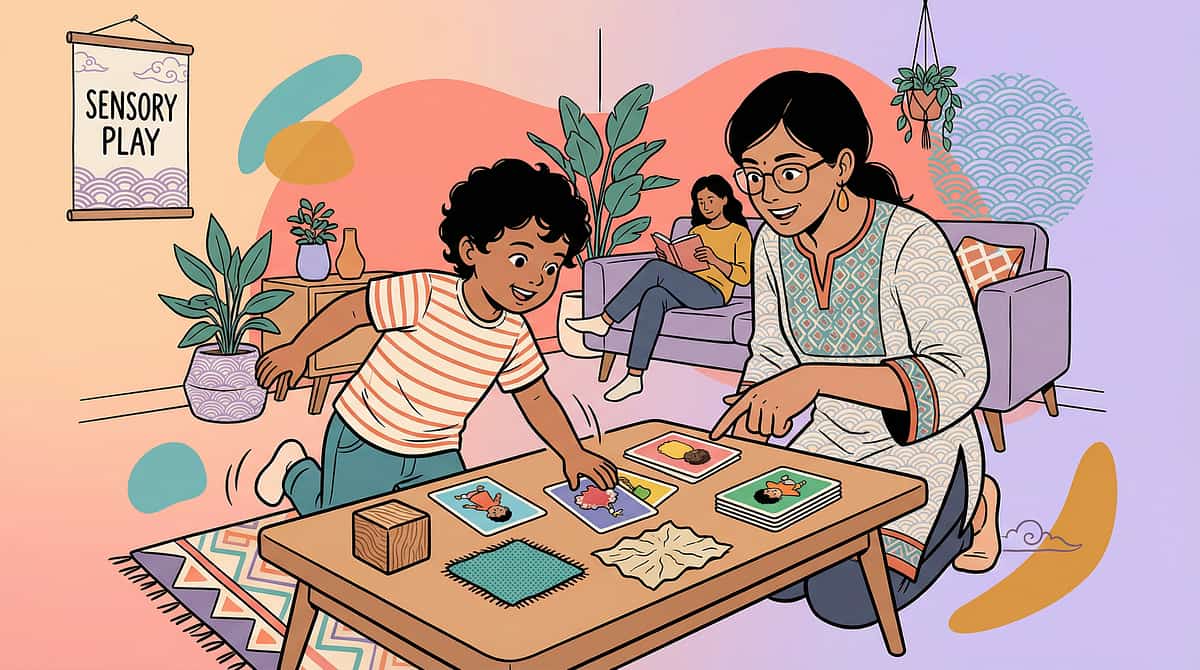
Step 3: The Core Embedding Actions — Run Your 9-Material Protocol
Step 3 of 6
5–12 minutes
Phase A: Interleaved Maintenance Deck
3–5 minutes. Present the shuffled deck of ALL mastered skills. Brisk pace. Count corrects. Track errors separately. Re-present any errors 3 times with correct response modelled first.
Phase B: Multiple Exemplar Set Rotation
2–3 minutes. Rotate through different exemplar versions for current target skills. Vary the medium: card → real object → contextual photo → the word alone.
Phase C: Natural Environment Probe
1–2 minutes. Leave the table. Create or wait for a natural opportunity to probe the target skill in context. This is the generalisation test built into every session.
✅ Ideal
Immediate, correct, unprompted response in context
⚠️ Acceptable
Correct with 1-second delay, or with gestural prompt
🔴 Concerning
Requires full verbal model, refuses, or doesn't respond
After Phase C (30 seconds): Note one word in your data tracker — "Ideal / Acceptable / Concerning" for the session. This single data point drives your next session's design.
Step 4: Repeat and Vary — Dosage Guidance for Skill Embedding
Step 4 of 6
Woven throughout the session
"3 high-quality, varied repetitions > 10 massed, identical repetitions."
Session Type | Reps Per Skill | Duration | Goal | |
Fluency timing (mastered skills) | 10–30 exposures | 1 min timing | Speed + accuracy | |
Interleaved deck (full deck) | 1–3 passes | 3–5 min | Maintenance | |
Multiple exemplar rotation | 3–5 exemplars | 2–3 min | Generalisation | |
Natural environment probe | 1–2 opportunities | Embedded in routine | Contextual transfer |
Change Who Presents
Mum, dad, sibling, grandparent — every new person tests and strengthens generalisation
Change the Room
Mid-session room changes break setting-bound learning immediately
Change the Medium
Card → real object → digital image → verbal only — each medium is a new context
Change the Response
Pointing → saying → writing → acting out — varied responses prevent response-bound learning
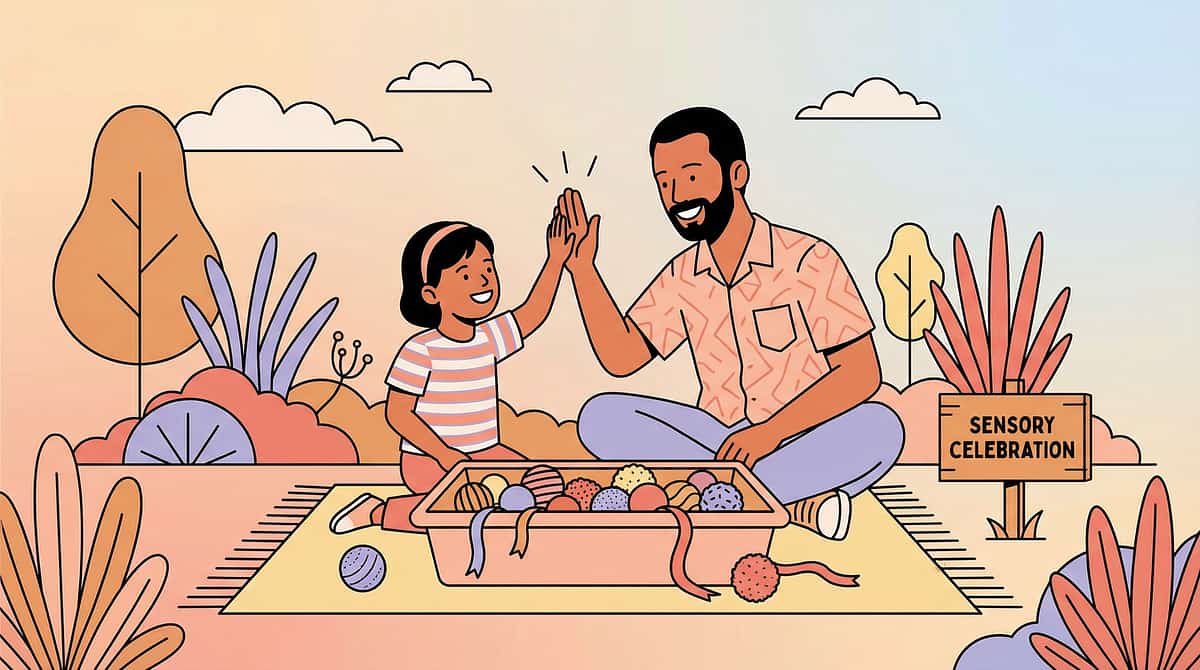
Step 5: Reinforce and Celebrate — The Fuel That Powers Embedding
Step 5 of 6
Reinforcement delivered within 3 seconds of the correct response increases the probability that the response will occur again. Timing matters more than magnitude. A quick, genuine "YES!" delivered immediately is more powerful than an elaborate reward delivered 30 seconds later.
"YES! You got that! [Name], you are SO good at this."
"Correct! That was FAST — I'm impressed!"
"You NAILED that one. Remember last week you had to think about it? Now it just comes out!"
Social (₹0)
Specific verbal praise + high five
Token Economy (₹0–200)
Star chart, sticker chart
Natural (₹0)
Access to preferred toy/video for 2 min
Tangible (₹50–200)
Sticker, small snack
Critical Rule: Celebrate the ATTEMPT, not just the success. Correct errors warmly. Never punish incorrect responses during embedding practice.

Step 6: The Cool-Down — End Every Session With Success
Step 6 of 6
1–2 minutes
Sessions that end mid-intensity leave the nervous system dysregulated. The cool-down transitions the child from heightened alertness back to baseline — and importantly, ends with a success state that primes the brain positively for the next session.
"Okay, we're almost done — just TWO more cards. Ready? Last two!" [After final 2 cards:] "All done! You were incredible today. Put-away time — you earned [reinforcer]."
"Two more" warning
Never end without warning — predictability reduces resistance
Final 2 cards — make them easy ones
A success ending primes positive association with the next session
Child puts materials away
Participates in close-down ritual — builds autonomy and ownership
Deliver earned reinforcer
Keep the promise — predictable reinforcement builds trust
Transition phrase
"Okay, free time / lunch / outdoor play now" — clear closure
Resist-Ending Response: If child resists ending (unusual but possible): "I know you love this! We'll do it again tomorrow. Put-away now, [reinforcer] now."

Capture the Data — 60 Seconds. Right Now. It Drives Progress.
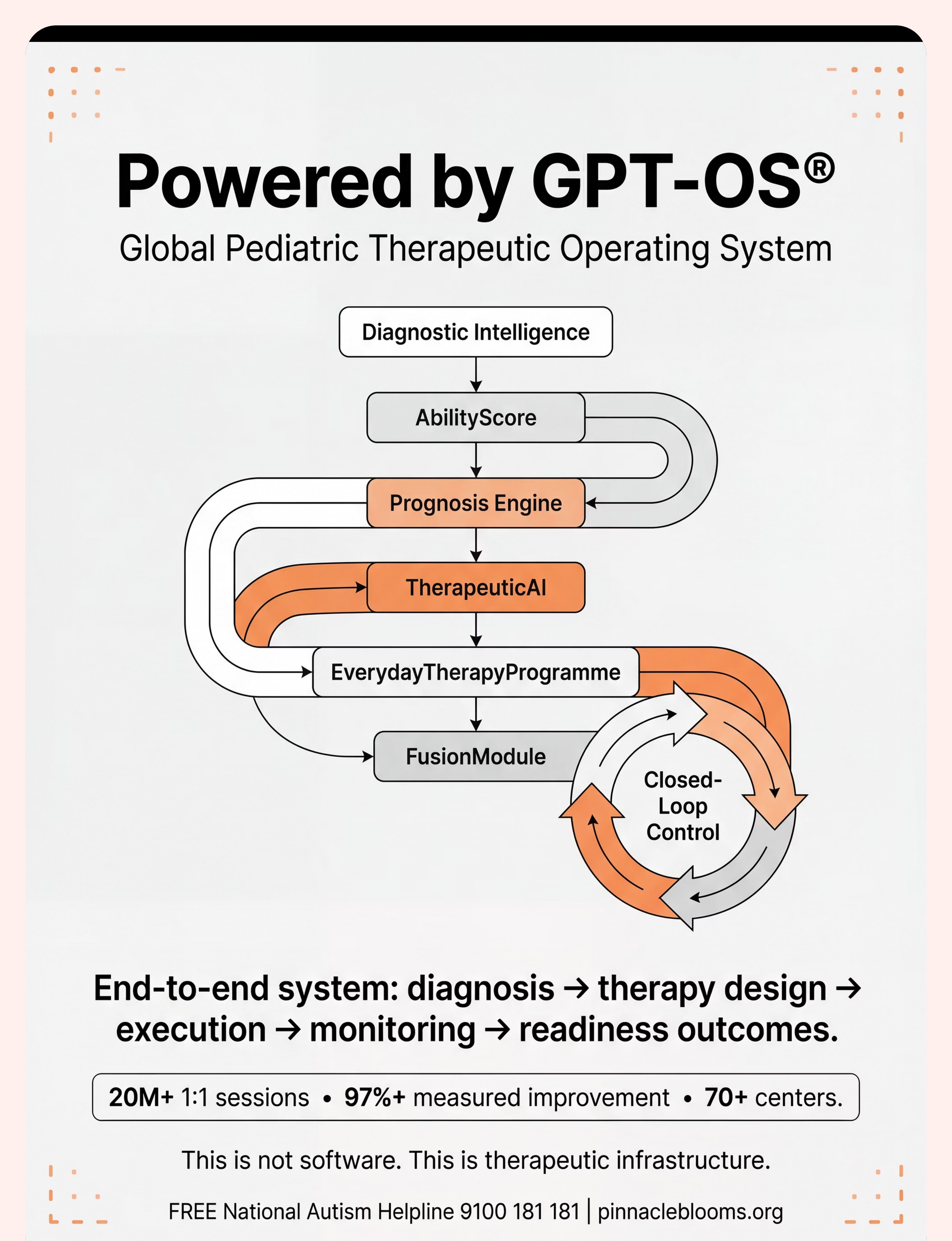
Data captured today shapes your child's programme tomorrow. Without data, you are guessing at which skills need more work. With data, GPT-OS® can identify regression patterns before they become re-teaching crises — and adjust your child's programme automatically.
The 3-Field Paper Tracker
DATE: ___________ | DURATION: _____ mins
Skills Reviewed & Outcome (✓/✗/~):
- Skill: _________________ Result: _____
- Skill: _________________ Result: _____
- Skill: _________________ Result: _____
Natural Env. Probe: _________________ Result: _____
Next Maintenance Due: Skill 1: _______ Skill 2: _______ Skill 3: _______
What to Record
- Child's name/ID and date
- Session duration (minutes)
- Skills practiced today
- Overall session rating: Excellent / Good / Fair / Difficult
- Any skills that failed maintenance probe today
- New context tested for generalisation
Why It Matters
GPT-OS® identifies regression patterns before they become re-teaching crises and adjusts your child's programme automatically based on your daily data.

Troubleshooting Skill Embedding — Common Problems, Precise Solutions
Problem | Likely Cause | Solution | |
"Skill was mastered, keeps disappearing" | No maintenance schedule — skill dropped after mastery | Start maintenance probe schedule immediately: Day 2, Day 4, Day 7, Day 14... | |
"Knows it with me, not with Dad/teacher" | Person-bound — multi-person protocol not implemented | Begin multi-person teaching this week. Video guide Dad. Book school coordination. | |
"Knows it with flashcards, not real objects" | Stimulus-bound — multiple exemplar sets not used | Build exemplar set: 10 versions of same concept including real objects | |
"Knew it yesterday, forgot today" | Spacing too long for current skill stability | Return to daily practice. This skill needs more maintenance contact before spacing. | |
"Child refuses to practice" | Reinforcement schedule weak, or session too long | Shorten to 5 mins, increase reinforcer value, start with mastered (easy) skills | |
"Skills work at home but not school" | Setting generalisation not programmed | Send portable kit to school. Meet with teacher for multi-person protocol. |
When to Call the Professionals: If your child shows persistent skill regression despite systematic embedding attempts for 4+ weeks, this requires clinical assessment. FREE CONSULTATION: 9100 181 181 — Pinnacle BCBA team available, 16 languages.
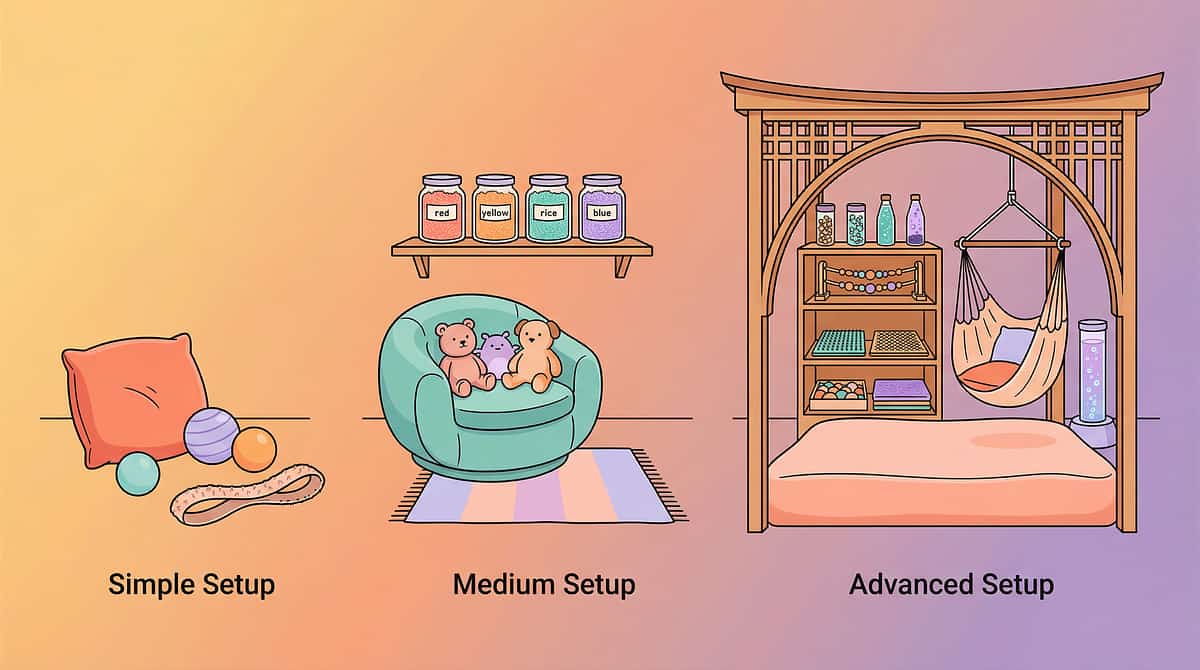
Personalise the Embedding Protocol for YOUR Child
High Maintenance Needs (skills fade quickly)
Daily probes for first 60 days post-mastery. Interleaved deck every single day. Fluency timing 3× per week. Natural environment probe every session.
Strong Generaliser (skills transfer easily)
Spacing can be extended faster. Focus on fluency building — this child's generalisation is strong; their automaticity may need work. Introduce more complex cross-domain interleaving.
Person-Bound Learner (skills work with one person)
Multi-person protocol is urgent — start immediately. Video guide all household members. School coordination call within 2 weeks.
Context-Bound Learner (skills work only in one room)
Portable kit deployed within 1 week. Natural environment sessions take priority over table sessions. Generalisation mapping board created and tracked.

Weeks 1–2: System Setup and First Embedding Signs
Progress: 15%
ACT IV: Progress
60%
Probe Pass Target
If your child passes 60%+ of maintenance probes in Weeks 1–2, you are on track
3+
Sessions with Deck
Complete at least 3 interleaved deck sessions in the first two weeks to establish the pattern
What You WILL See
- Child adapts to interleaved format (slight confusion first session, settled by third)
- First maintenance probe results (some passes, some fails — NORMAL)
- Mild resistance to "harder" mixed sessions — this is desirable
- Parent confidence building in the system
What You WON'T See Yet
- Dramatic fluency increase
- Full generalisation across all settings
- Spontaneous skill use in novel situations
- Mastery of new skills at faster rate
Parent Emotional Preparation: Weeks 1–2 is a data-collection phase. Failures on maintenance probes are not regression — they are discoveries. Every failed probe reveals which skills need more maintenance attention. You are now working with information, not hope.
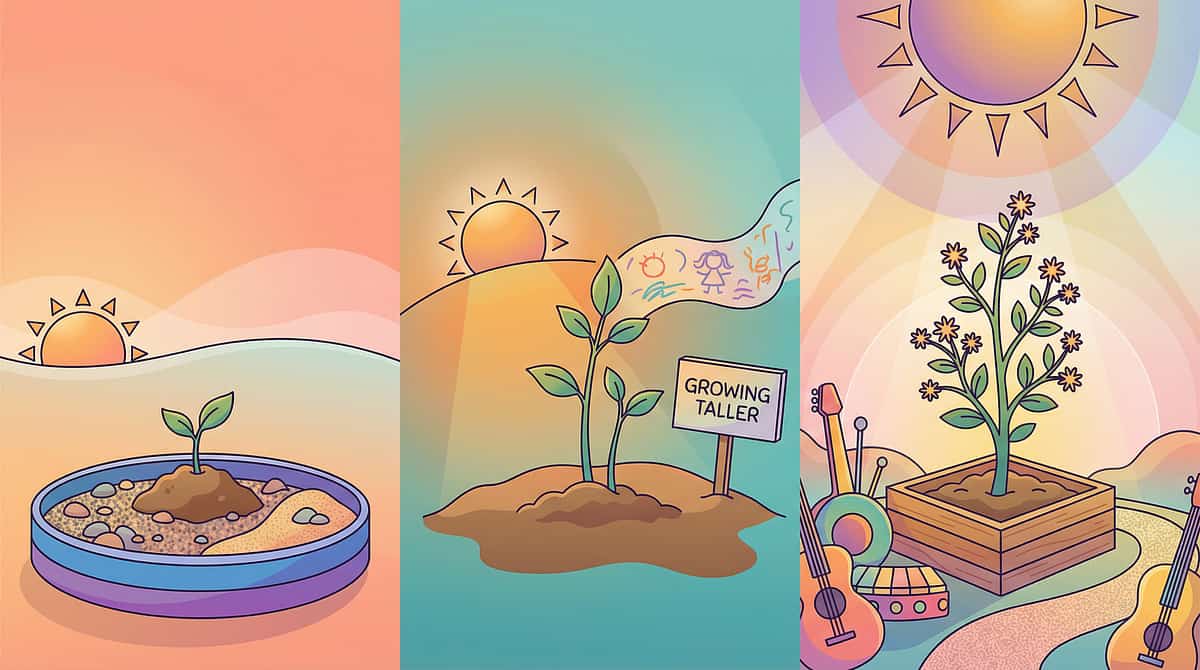
Weeks 3–4: The Consolidation Phase — Neural Pathways Forming
Progress: 40%
Consolidation Indicators to Watch For
Child answers interleaved deck cards faster
Measurable fluency increase — you can count it
Fewer errors on maintenance probes for skills practiced 14+ days
The spacing effect is working
Child begins using a skill SPONTANEOUSLY in natural context
This is the first true embedding indicator
Child anticipates the activity
Moves toward materials without being called — intrinsic motivation emerging
"When your child uses a skill outside of practice — without being prompted, in a natural situation — this is the first true embedding indicator. It means the memory trace has strengthened enough to activate without external cuing."
Skills passing weekly maintenance probes: extend spacing to bi-weekly. Skills still failing: maintain daily practice, add more exemplar variation. If fluency is plateauing: check pace of presentation (should be brisk) and reinforcement schedule.

Weeks 5–8: Independence Emerging — Skills Beginning to Self-Maintain
Progress: 65%
By Weeks 5–8, embedded skills begin to self-maintain — the child's own natural use of the skill in daily life becomes the maintenance mechanism. They ask for the item without a prompt. They use the social script spontaneously at school. They demonstrate the self-help skill without being reminded. These skills no longer require daily practice — they've graduated to monthly maintenance probes.
📋 Maintained
Passes monthly probe with no regression. Daily practice no longer required.
🌐 Generalised
Works across settings, people, and materials. 2+ settings documented per key skill.
🚀 Independent
Spontaneous use; self-maintaining; no scheduled probes needed. Building on this foundation.
3+ skills now on monthly maintenance schedule (stable)
Fluency for core skills measurably increased from Week 1 baseline
Generalisation documented in 2+ settings per key skill
Multi-person protocol running with 2+ caregivers
Child can complete some practice independently (self-directed)

This Is What "Embedded" Actually Looks Like
Before Embedding Programme
- Child knows "red" with one specific card — blank with other materials
- "Asking for help" happens in therapy room only — never at home
- Shoe-tying learned monthly, forgotten by next session
- Each skill requires re-teaching every few weeks
- Parent exhausted from fill-the-bucket cycle
After 8 Weeks of Systematic Embedding
- "Red" identified instantly: card, real object, on screen, in outdoor setting, with different people
- "Asking for help" — heard at school last week, unprompted
- Shoe-tying: automatic, done while talking about something else
- Mastered skills from 3 months ago still present at monthly probe
- Parent working WITH the system, not against skill regression
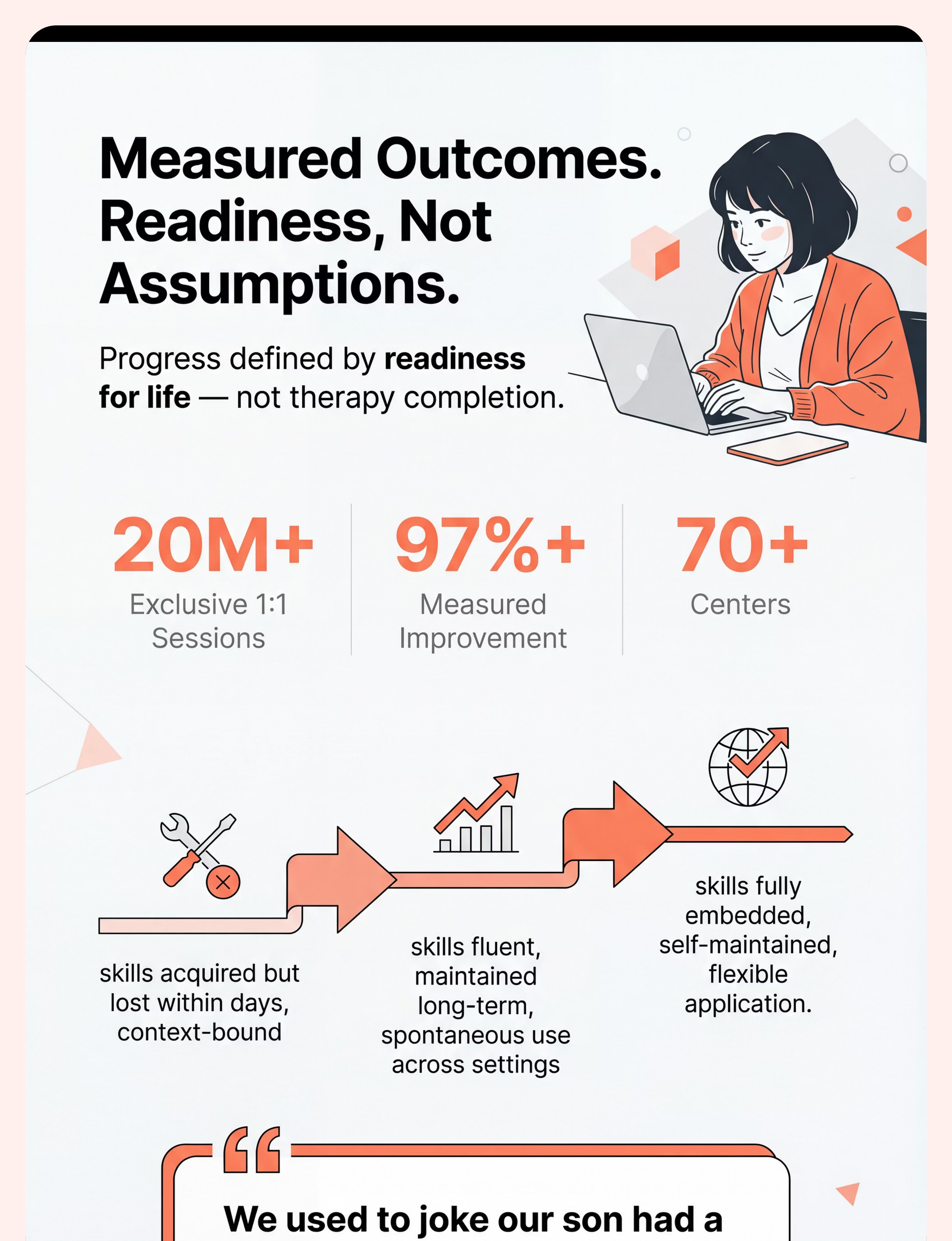
"We used to joke our son had a 'brain eraser' — skills went in and disappeared. Then his therapy team started systematic embedding. Six months later, the colours stayed. Then the numbers. Then the requesting. For the first time, learning was sticking. He's not re-learning the same things anymore — he's building on what he knows." — Parent, Pinnacle Network
97%+
Measured Improvement
Tracked via AbilityScore® Skill Retention Readiness Index across the Pinnacle Network
20M+
Exclusive Sessions
1:1 therapy sessions delivering the evidence base behind these results
Pinnacle Helpline: 9100 181 181 — Free consultation available 24x7 in 16 languages

Red Flags: When Skill Regression Needs Clinical Attention
🔴 Seek Professional Assessment If:
- Skills regress even with daily systematic maintenance (consistent, not occasional)
- Child is losing skills they have held stably for months (sudden regression)
- New skill acquisition has significantly slowed alongside maintenance failure
- Child shows regression in previously embedded self-help or safety skills
- Pattern of skill loss is accompanied by other behavioural or medical changes
- Embedding programme has been running 8+ weeks with minimal improvement
These Patterns May Indicate
- Undiagnosed sensory, hearing, or vision processing issues
- Working memory assessment needed (formal neuropsychological evaluation)
- Medication review needed (if child is on medication)
- Need for more intensive ABA with BCBA oversight
- Medical causes of regression requiring paediatric/neurodevelopmental assessment
This Is NOT:
A parenting failure. A teaching failure. Or permanent.
The Pathway
- Free call: 9100 181 181 — Pinnacle clinical team screens for urgency
- AbilityScore® assessment — identifies specific domains of regression
- BCBA consultation — formal functional analysis and embedding protocol design
- FusionModule™ coordination — all disciplines aligned
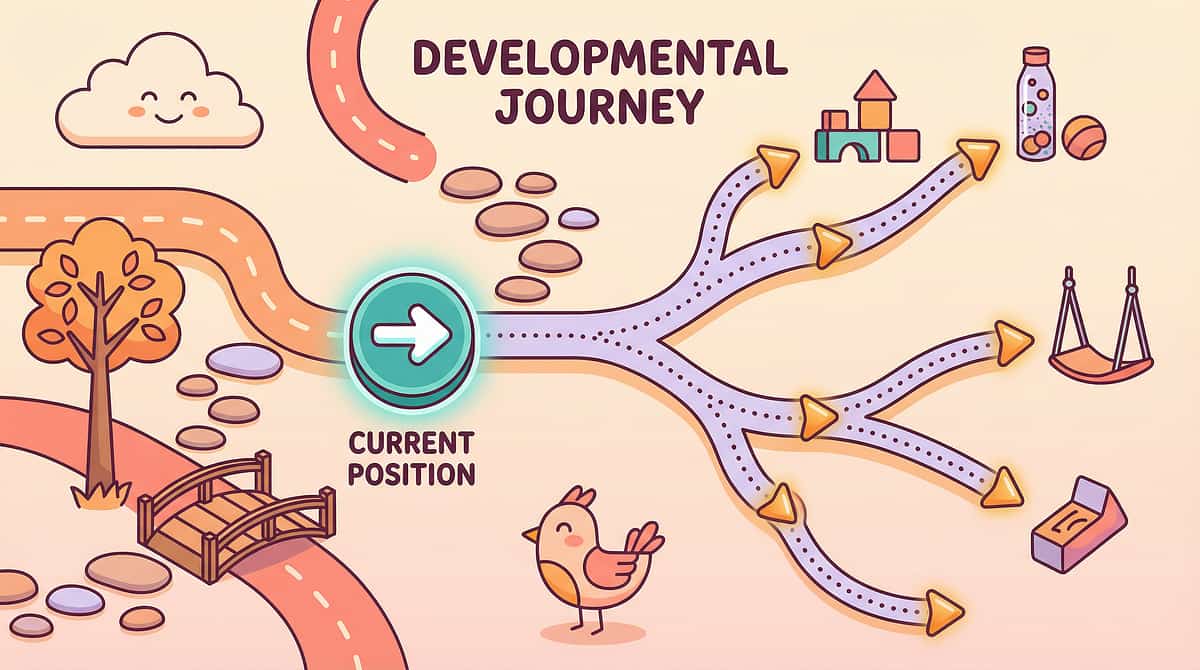
Where Embedded Skills Lead: The Developmental Pathway Forward
Key Message: Embedded skills are the foundation. Every subsequent skill is easier to embed because the embedding architecture is in place. The first 40 skills are hardest. After that, the system accelerates.
← L-954
Prompt Fading Strategies — the technique that precedes embedding
★ L-955
Skill Embedding — YOU ARE HERE
→ L-956
Error Correction Procedures — the technique that follows
→ L-957
Generalisation Programming Deep Dive
Related Techniques in the Learning & Generalization Domain
Code | Focus | Status | |
L-953 | Skill Acquisition Basics — how new skills are initially taught | Prerequisite | |
L-954 | Prompt Fading Strategies — removing prompts systematically | Precedes L-955 | |
L-955 | Skill Embedding — making skills permanent | ★ YOU ARE HERE | |
L-956 | Error Correction Procedures — handling incorrect responses correctly | Follows L-955 | |
L-957 | Generalisation Programming — systematic cross-context transfer | Deep dive | |
L-958 | Fluency Building Deep Dive — building automaticity | Related | |
L-960 | Parent Training for Maintenance — equipping families for home embedding | Related |
Domain A: Sensory Processing
Embedded sensory regulation is foundational to learning readiness — directly supports embedding of all other skills
Domain B: Social Communication
Communication skills require particularly deliberate embedding — most at risk of staying therapy-room only
Domain C: Emotional Regulation
Regulation skills must be embedded across all emotional states — not just practiced when calm
Browse all 70,000+ evidence-based techniques: techniques.pinnacleblooms.org — searchable by domain, age, setting, and material. Helpline: 9100 181 181
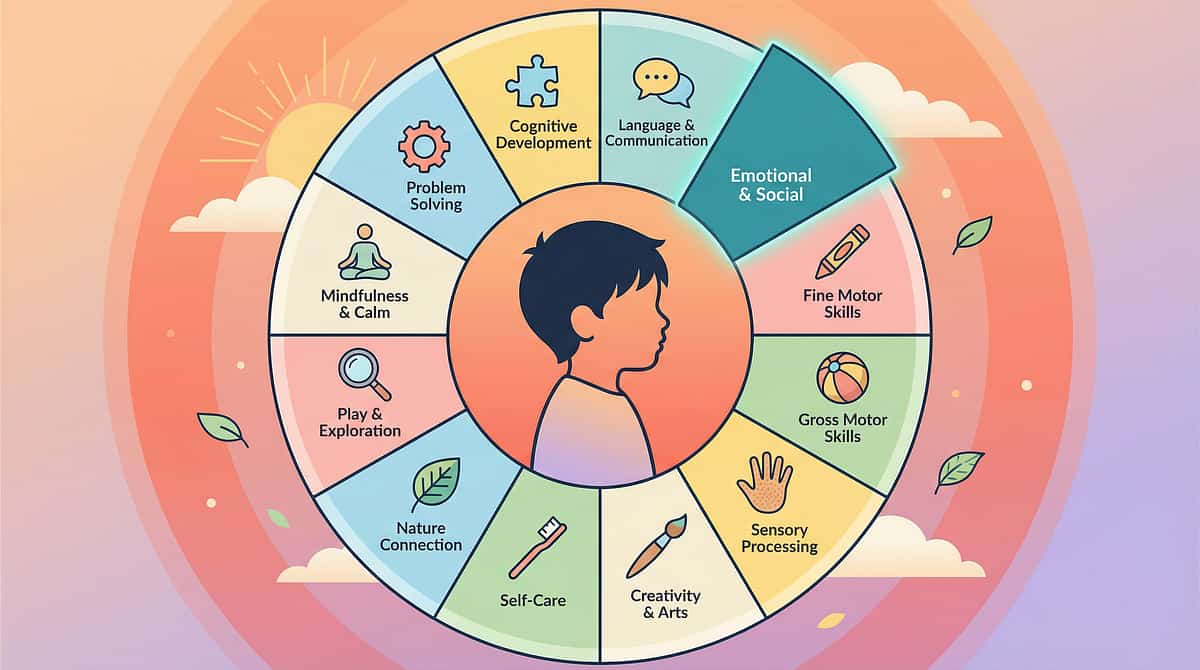
The Complete Picture: Where Skill Embedding Sits in Your Child's Journey
Your Child's Current Position
AbilityScore® assessment maps your child across 349 skills and 79 developmental abilities — showing exactly where embedding has occurred, where regression risk exists, and where to focus next. Every data point from your home sessions feeds directly into this map, making it more precise with every session.
Request AbilityScore® Assessment
FREE — available in 16 languages, 70+ centres across India, serving families from 70+ countries.
Call: 9100 181 181

From the Pinnacle Parent Community
"We were re-teaching the same vocabulary for two years. Then we implemented the maintenance schedule and the multiple exemplar sets. Within three months, words that had disappeared five times were stable. We haven't re-taught them since. The binder changed everything." — Parent, 7-year-old with ASD, Hyderabad
"My daughter knew her colours with me but not her teacher. Not her dad. Not her grandparents. Multi-person teaching protocols — we made a 2-minute video showing exactly how we do it. Now everyone uses the same approach. The skills generalised in 6 weeks." — Parent, 5-year-old, Chennai
"The fluency timing was the breakthrough we didn't expect. After 8 weeks of 1-minute timings, the responses became automatic. Now the skills come out even when she's tired, even when she's slightly dysregulated. Fluent skills survive what fragile skills don't." — Parent, 9-year-old, Bangalore
Illustrative cases representing the parent experience at Pinnacle. Individual outcomes vary by child, skill complexity, and intervention consistency.
20M+
1:1 Sessions
Exclusive therapy sessions delivered
97%+
Improvement Rate
Measured across one or more readiness indexes
70+
Centres
Across India, serving families from 70+ countries

Join India's Largest Paediatric Therapy Parent Community
WhatsApp Community
Parents implementing GPT-OS® EverydayTherapyProgramme™ — real-time support, shared materials, and celebration of milestones alongside thousands of families on the same journey.
Pinnacle Academy
Parent training videos for skill embedding, generalisation, and maintenance programming — watch at your own pace, revisit any time, share with caregivers.
Monthly Webinars
BCBA-led sessions on embedding protocols for home implementation. Q&A sessions twice weekly. All sessions recorded for replay.
Facebook Parent Network
Pinnacle Blooms Parent Network — 50,000+ families sharing interleaved deck designs, maintenance schedule templates, and video demonstrations.
For Therapists and Educators: Pinnacle's professional network includes BCBA supervision, OT and SLP coordination protocols, and school-home alignment systems. Contact: care@pinnacleblooms.org | Academy: pinnacleblooms.org/academy | Helpline: 9100 181 181 — available 24x7, 16 languages
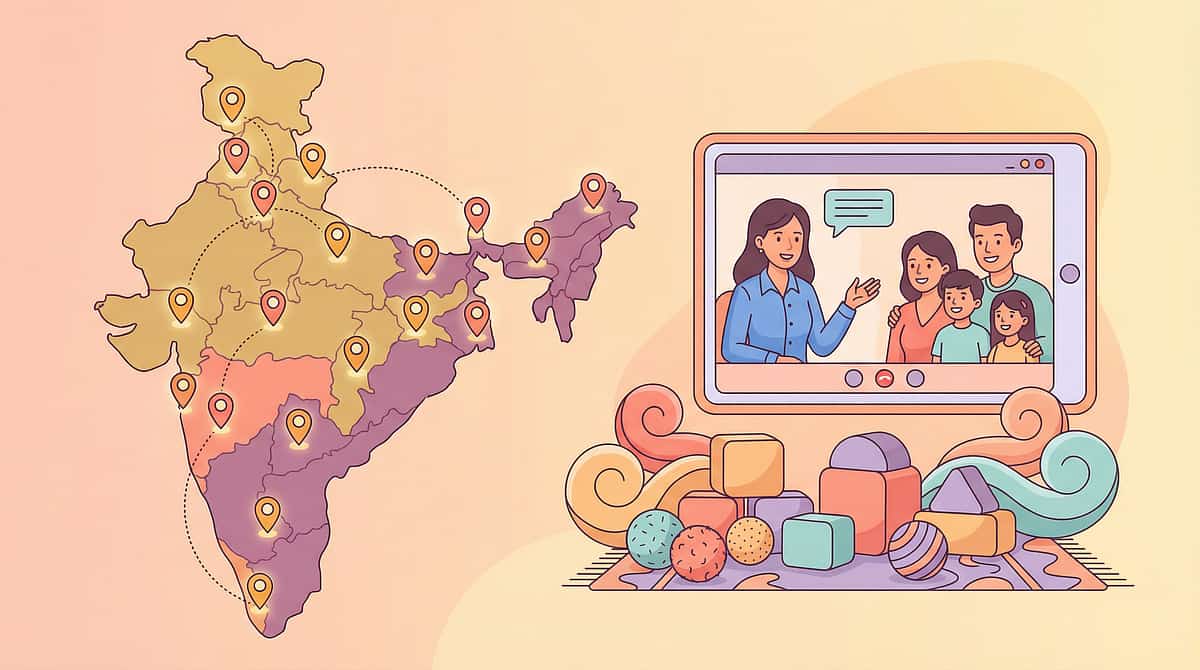
70+ Pinnacle Centres Across India — Find Your Home Base
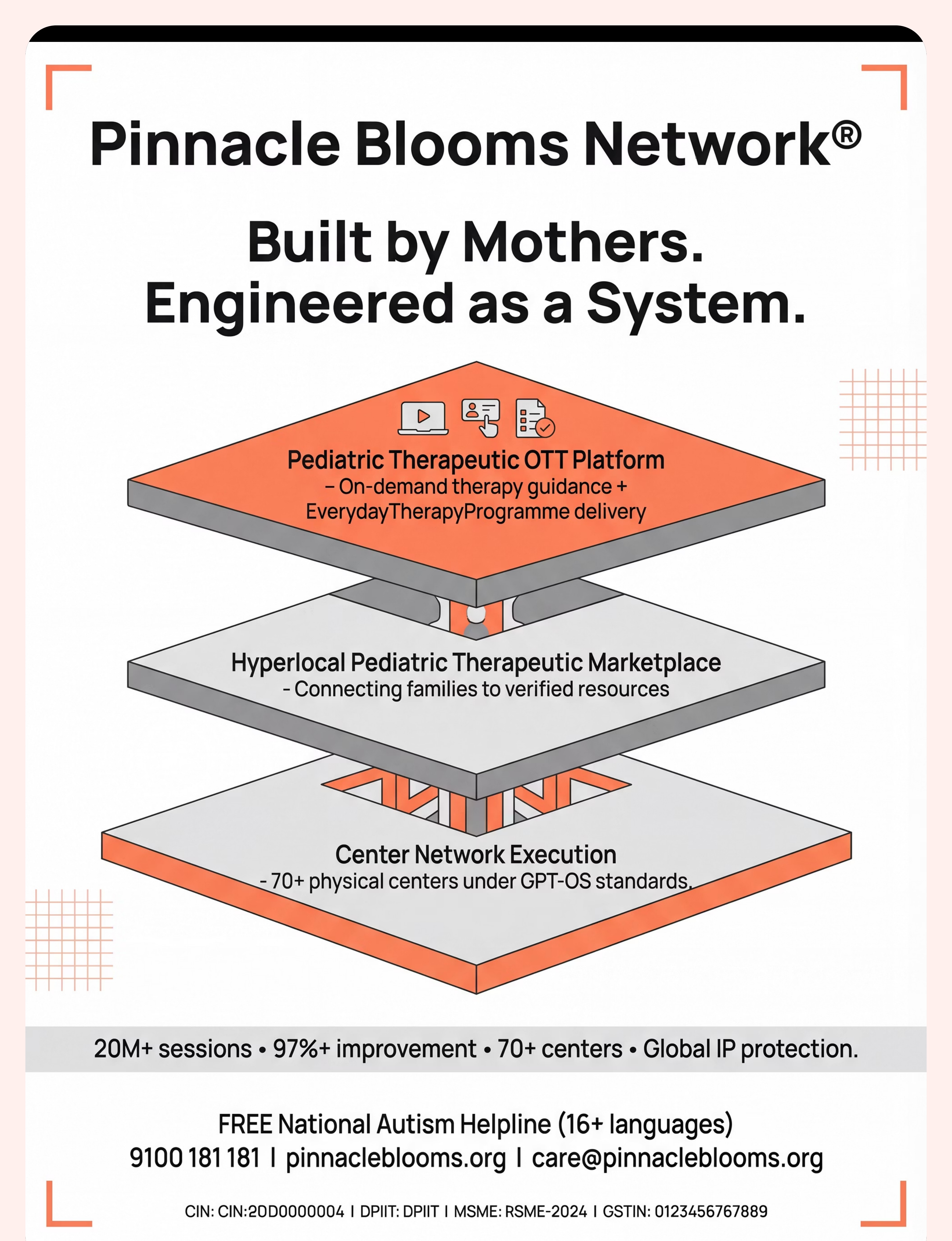
Every Pinnacle centre operates under GPT-OS® standards — meaning your child's home embedding programme and clinic sessions are integrated, not parallel. The therapist's session builds the interleaved deck your child uses at home. The home data feeds back into the clinical programme. The binder goes to school. The portable kit goes everywhere.
AbilityScore® Assessment
Longitudinal tracking across 349 skills
BCBA-Supervised ABA
With embedding protocols built in
FusionModule™
OT + SLP + SpEd all coordinated
Parent Training
For home embedding implementation
School Liaison
Multi-setting generalisation programming
Teleconsultation available for families outside India — GPT-OS® telehealth serves families across 70+ countries. First call is FREE. Available in 16 languages.
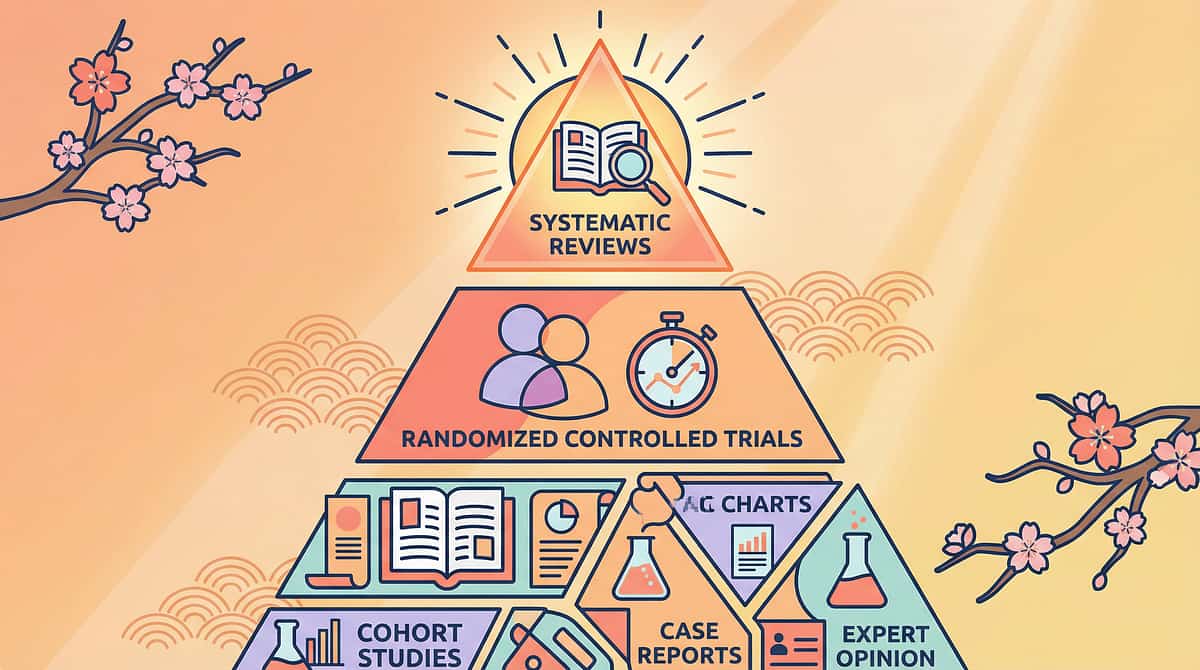
The Research Behind Skill Embedding: Key Studies for the Curious Parent
PRISMA Systematic Review, 2024 (PMC11506176)
16 articles, 2013–2023: Confirmed skill embedding as evidence-based practice for ASD. Covers interleaved practice, fluency, and multiple exemplar training across maintenance and generalisation dimensions.
Meta-Analysis, World Journal of Clinical Cases, 2024 (PMC10955541)
Confirms multi-disciplinary intervention including maintenance programming produces significant skill outcomes. 40-min structured sessions identified as optimal.
Padmanabha et al., Indian J Paediatrics, 2019
Home-based structured intervention with maintenance scheduling — Indian RCT. Significant outcomes in skill retention. DOI: 10.1007/s12098-018-2747-4
NCAEP Evidence-Based Practices Report, 2020
Confirms 28 evidence-based practices — including generalisation programming, fluency building, and maintenance scheduling. The gold standard for ASD intervention guidance.
Cognitive Science — Spacing Effect (Ebbinghaus to present)
Spaced practice produces 30–40% better retention than massed practice. One of the most robust findings in all of learning science — replicated across populations, ages, and skill types.

How GPT-OS® Turns Your Home Sessions Into Precision Clinical Intelligence
What GPT-OS® Does With Your Data
- Updates the Skill Retention Readiness Index in real time
- Identifies regression risk flags before skills are lost
- Adjusts maintenance schedules automatically based on probe results
- Generates the next session protocol — personalised to your child today
- Contributes anonymised data to the world's largest paediatric therapy dataset: 20M+ sessions → better recommendations for every child
Privacy Assurance
All data is encrypted, anonymised for research, and never sold.
Full privacy policy: pinnacleblooms.org/privacy
DPIIT DIPP8651 | MSME | CIN U74999TG2016PTC113063
"Your data helps every child like yours."
Helpline: 9100 181 181
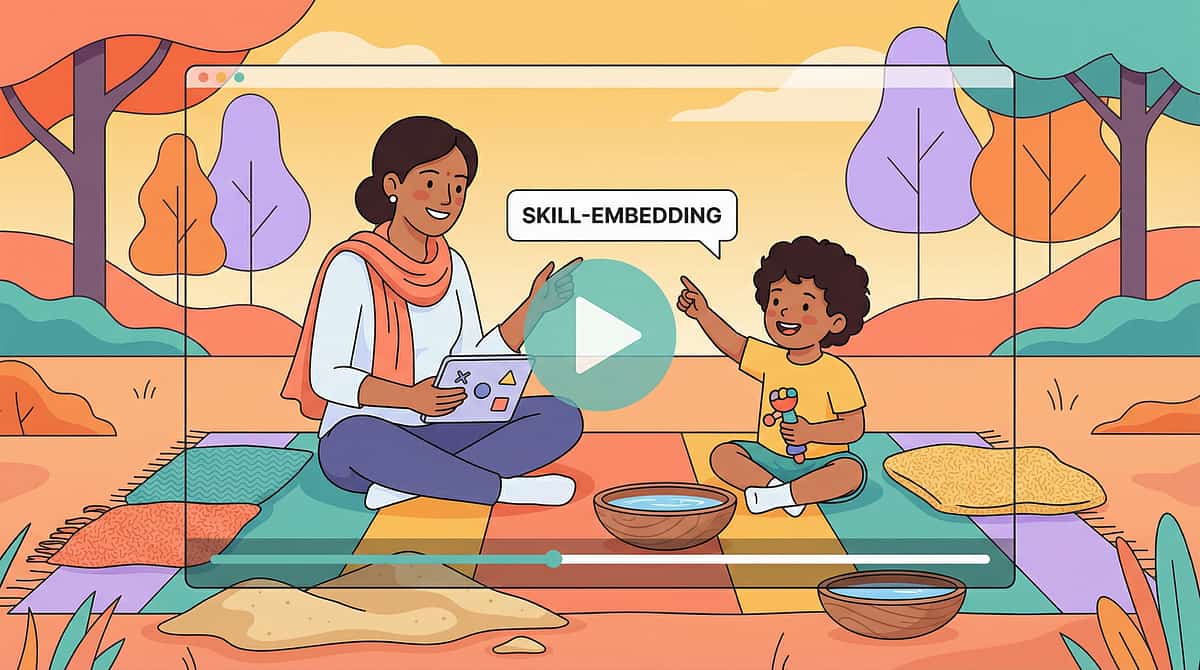
Watch: 9 Materials That Help With Skill Embedding
Reel L-955
Learning & Generalization Series | Episode 955
The L-955 reel walks through all 9 embedding materials in 75–85 seconds — showing each material in use, with a therapist voiceover and a parent connection moment. The visual format brings the materials to life in a way text cannot.
Skill tracking binder in use with maintenance calendar
Multiple exemplar sets spread out — same concept, many versions
Cards shuffled for interleaved practice in real time
Fluency timer running during a live 1-minute timing session
Portable kit used in three different locations
Natural environment teaching in a kitchen setting
Multi-person session with parent + grandparent

"Consistency Across Caregivers Multiplies Impact" — Share With Your Family
If only one person implements the embedding programme, skills will embed for that person only. The grandmother who doesn't know the protocol gets blank stares. The teacher who wasn't told about the multiple exemplar sets keeps using the same one card. Sharing this page is not optional — it is clinically indicated.
🧠 For ALL Caregivers — 3 Rules
- Practice with the SAME materials AND different ones (multiple exemplars)
- Practice with DIFFERENT people
- Practice in DIFFERENT places
📄 Family Guide PDF
"Skill Embedding — One Page for Grandparents and Caregivers" — simple, jargon-free, designed for every member of your household. Download free at pinnacleblooms.org
📝 Teacher Letter Template
Professionally formatted letter explaining the embedding protocol and requesting school coordination — designed for parent-to-teacher use. Download at pinnacleblooms.org
🧠 SKILL EMBEDDING IN 3 POINTS: (1) Use the SAME materials we use AND different ones. (2) Practice in DIFFERENT places, not just home/school. (3) CALL OUT when the child uses a skill spontaneously — send a WhatsApp! Full guide: techniques.pinnacleblooms.org/learning-generalization/skill-embedding-L-955 | Helpline: 9100 181 181
Frequently Asked Questions: Skill Embedding
My child keeps losing skills after mastery. Is this normal?
Yes — and it is not permanent. Skill loss after "mastery" is the predictable outcome of acquisition without embedding. A systematic maintenance schedule and generalisation programme will address this. Start with the Skill Tracking Binder (Material 1) and build from there.
How long does embedding take?
For most skills: 8–12 weeks of systematic embedding to reach Proficient level — stable with monthly probes, generalised across 3+ settings. High-frequency daily-use skills often embed faster; complex low-frequency skills require more structured programming.
Can I do this at home without a BCBA?
Yes, for most children and most skills. This page gives you a parent-implementable protocol. However, if your child shows persistent regression despite 4+ weeks of systematic embedding, call 9100 181 181 for BCBA consultation.
How do I know if a skill is truly embedded vs. just acquired?
Run the three-part test: (1) Does it work with different materials and exemplars? (2) Does it work with different people? (3) Does it work in different settings? If any answer is no — the skill is acquired, not yet embedded.
Is interleaved practice confusing for children with autism?
It is initially harder — that is the point. The "desirable difficulty" produces stronger retention precisely because the brain must work to retrieve the correct response. Start with only 3–4 different skills in the first interleaved deck; most children adapt within 5–7 sessions.
Does this work for children who are non-verbal or minimally verbal?
Yes — embedding applies to all skill types: motor skills, picture exchange, AAC device use, self-help routines, functional communication. The same principles apply. Adjust the response modality but not the architecture.
Didn't find your answer? Book a teleconsultation or call the free helpline: 9100 181 181 — available 24x7, 16 languages, no obligation.

You Have Everything You Need. Begin Today.
The embedding window is open. Every week without a maintenance schedule is another week of potential regression. The science is clear, the protocol is in your hands, and thousands of families have walked this path before you. Start now.
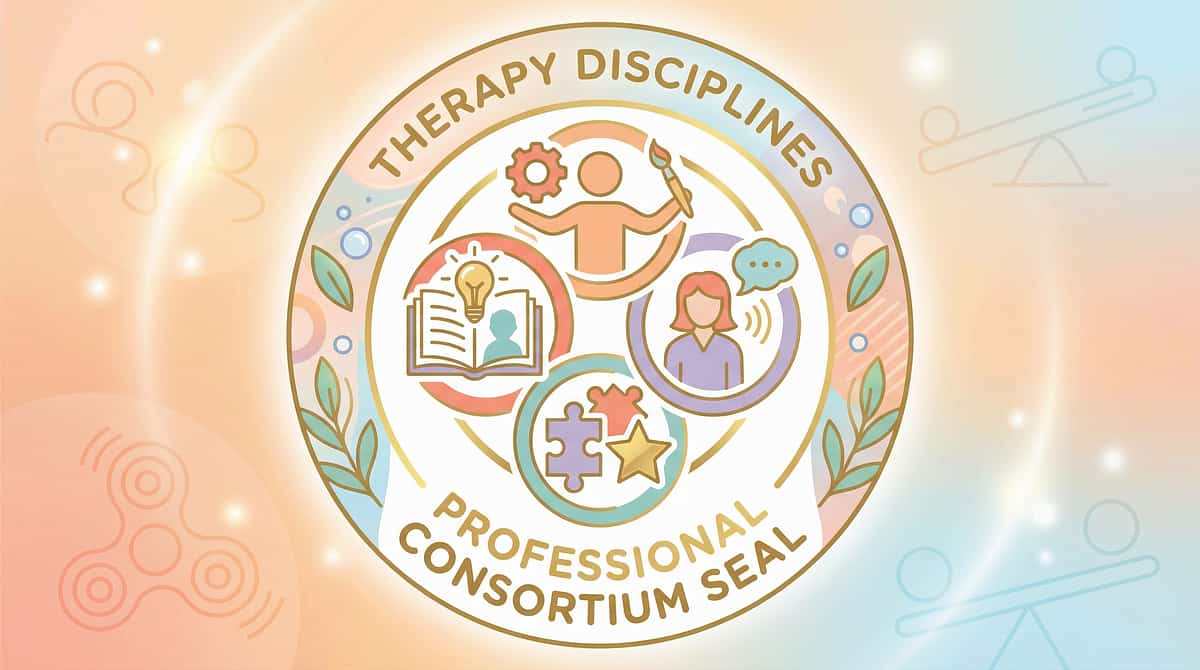
✅ OT
Consortium Validated
✅ SLP
Consortium Validated
✅ ABA/BCBA
Consortium Validated
✅ SpEd
Consortium Validated
✅ NeuroDev
Consortium Validated
20M+ exclusive 1:1 sessions • 97%+ measured improvement • 70+ centres • Serving families across 70+ countries | FREE HELPLINE: 9100 181 181 (24x7 | FREE | 16 languages)
Preview of 9 materials that help with skill embedding Therapy Material
Below is a visual preview of 9 materials that help with skill embedding therapy material. The pages shown help educators, therapists, and caregivers understand the structure and content of the resource before use. Materials should be used under appropriate professional guidance.




Link copied!
The Pinnacle Blooms Promise
Pinnacle Blooms Network®
Consortium-Validated
"From fear to mastery. One technique at a time." — Pinnacle Blooms Network®
Pinnacle Blooms Network® exists to transform every home into a proven, scientific, personalised, multi-sensory, multi-disciplinary paediatric therapy environment — accessible to every family, in every language, across every geography. Every technique on this platform — including L-955 Skill Embedding — is consortium-validated, research-backed, and designed to be executed by parents and caregivers with confidence.
Your child's brain is not broken. The learning architecture just needed to be built.
Techniques Hub
techniques.pinnacleblooms.org
Main Site
pinnacleblooms.org
Free Helpline
9100 181 181 | 24x7 | 16+ languages
Medical Disclaimer: This content is educational. It does not replace professional assessment or individualised learning programming by qualified behaviour analysts and therapists. Skill embedding protocols should be designed based on individual learning profiles. Individual results vary based on child, skill complexity, and intervention consistency.
CIN: U74999TG2016PTC113063 | DPIIT: DIPP8651 (Govt. of India) | MSME: Udyog Aadhaar TS20F0009606 | GSTIN: 36AAGCB9722P1Z2
© 2025 Pinnacle Blooms Network®, unit of Bharath Healthcare Laboratories Pvt. Ltd. All rights reserved. | Individual results may vary. Statistics represent aggregate outcomes across the Pinnacle Blooms Network®.