

When the body knows — but can't figure out how
It's Tuesday morning. You've said "put on your shirt" four times. Your child is standing there, shirt in hand, staring at it — not refusing, not distracted — genuinely trying to figure out where to begin. You know they're trying. You know they're not lazy. But you don't know how to help.
"You are not failing. Your child's brain and body have a communication gap — and it has a name, a cause, and a solution."
MOTOR PLANNING (PRAXIS)
Age: 3–12 yrs
Domain F – Motor Development
Pinnacle Blooms Consortium® | OT · PT · ABA · SpEd · NeuroDev | FREE Helpline: 9100 181 181

You Are Among Millions of Families Navigating This Exact Challenge
Motor planning difficulties — also called dyspraxia or praxis disorder — affect children across the globe, across all socioeconomic backgrounds, and across diagnostic categories. In India alone, an estimated 4–6 million children experience significant motor planning challenges impacting daily life, learning, and social participation. This is not rare. This is not your family's private struggle.
1 in 20
Children with DCD
Developmental Coordination Disorder — the clinical form of persistent motor planning difficulty
50–70%
Co-occurring in Autism
Children with autism show motor planning difficulties as a co-occurring feature
97%+
Pinnacle Improvement Rate
Tracked improvement rate across motor domains when intervention begins before age 8
"You are among millions of families asking the same question every morning: Why is this so hard for my child when it looks so easy for everyone else?"
Research: PRISMA systematic review (2024): 80% of children diagnosed with ASD display sensory processing and motor planning difficulties. Meta-analysis confirms sensory-motor integration therapy effectively promotes gross and fine motor skills. 🔗 PMC11506176 | PMC10955541

The Neuroscience of Motor Planning — Explained for Parents
The Science: Three Brain Systems
Ideation
Premotor cortex & prefrontal regions generate the concept of movement — "I want to catch that ball."
Motor Planning
Supplementary motor area & cerebellum organize the sequence of muscle activations — right hand up, eyes track, fingers close.
Execution
Primary motor cortex fires precise commands to muscles — now, move, this force, this timing.
In children with dyspraxia, the planning loop between the supplementary motor area and cerebellum misfires. The child has the concept and the physical capability — but the neural bridge that translates "what to do" into "how to do it" is inefficient.
In Plain English: The GPS Analogy
Imagine your child's brain as a GPS system. The destination is clear. The car works perfectly. But the route-planning software keeps crashing before it can give directions.
Your child knows they want to get dressed — their muscles are strong enough — but their brain can't generate the step-by-step sequence fast enough. Every single movement still requires conscious, effortful planning that other children do automatically.
"This is a wiring difference, not a behavior choice. The brain's motor planning circuit can be strengthened — that's exactly what these 9 materials do."
Research: Frontiers in Integrative Neuroscience (2020): Established the neurological framework for evaluating sensory integration and motor planning treatment in ASD. 🔗 DOI: 10.3389/fnint.2020.556660

Motor Planning on the Developmental Map
Motor planning challenges become most apparent between ages 3–5 when children are expected to learn complex sequences — dressing, handwriting, sports, classroom tasks. The gap between "knows what to do" and "can do it" becomes visible and frustrating.
Common Co-Occurring Conditions
- Autism Spectrum Disorder (ASD)
- Sensory Processing Disorder
- ADHD
- Developmental Language Disorder
- Childhood Apraxia of Speech
The Forward Path
With structured sensory-motor intervention using the right materials and protocols, most children make measurable progress within 8–12 weeks. Motor planning is not fixed — it is trainable.
Your Child's Position
Your child is here on this map. The techniques on this page will move them forward. The brain's motor planning system strengthens through exactly the kind of structured sensory-motor practice these materials provide.
Research: WHO Care for Child Development (CCD) Package — age-specific evidence-based recommendations implemented in 54 countries. 🔗 PMC9978394

This Is Not Guesswork. This Is Evidence.
LEVEL I–II EVIDENCE
Systematic Review + RCT Grade
Sensory Integration Therapy
Study | Key Finding | Grade | |
PRISMA Systematic Review 2024 (PMC11506176) | 16 studies confirm SI therapy is evidence-based for ASD including motor planning domains | Level I | |
Meta-analysis, World J Clin Cases 2024 (PMC10955541) | SI therapy across 24 studies effectively promotes gross motor, fine motor, adaptive behavior | Level I | |
Indian RCT, Indian J Pediatr 2019 | Home-based sensory-motor interventions showed significant outcomes in Indian pediatric population | Level II | |
NCAEP EBP Report 2020 | Motor imitation, sensory integration, structured movement classified as evidence-based for autism | Level I | |
Frontiers Integrative Neuroscience 2020 | Establishes neurological basis for sensory-motor intervention targeting praxis | Level II |
"Clinically validated. Home-applicable. Parent-proven. The 9 materials on this page are drawn from Ayres Sensory Integration theory, DCD intervention research, and Pinnacle's 20M+ session evidence base. 97%+ measured improvement across Pinnacle's 70+ center network."
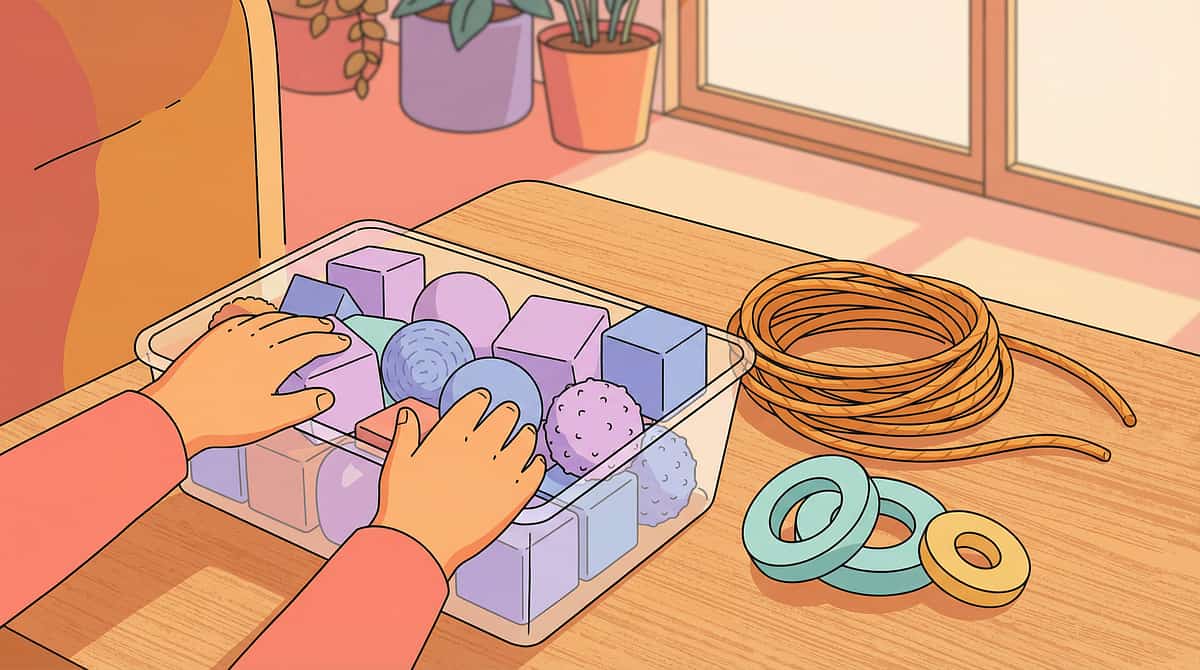
Motor Planning Practice via Therapeutic Materials
Parent-Friendly Alias: "Teaching the Brain to Move On Purpose"
Domain F – Motor Development
OT-PRAX-MOTOR
Ages 3–12 yrs
15–25 min/session
3–5 sessions/week
Motor planning — clinically known as praxis — is the neurological process of conceiving, organizing, sequencing, and executing unfamiliar motor actions. It involves three inseparable components:
Ideation
Generating the concept of what movement to perform
Motor Planning
Determining the step-by-step sequence of muscle activations required
Execution
Carrying out the plan with appropriate timing, force, and coordination
Children with motor planning difficulties (dyspraxia) struggle primarily with the planning component. They have the physical strength, the cognitive understanding, and the motivation — but their nervous systems cannot efficiently translate intention into organized movement. This page provides 9 evidence-based materials that directly train and strengthen the motor planning circuit.
Series Context: F-574 is part of the Motor Development & Coordination series. Previous: F-573 – Vestibular Processing | Next: F-575 – Bilateral Coordination
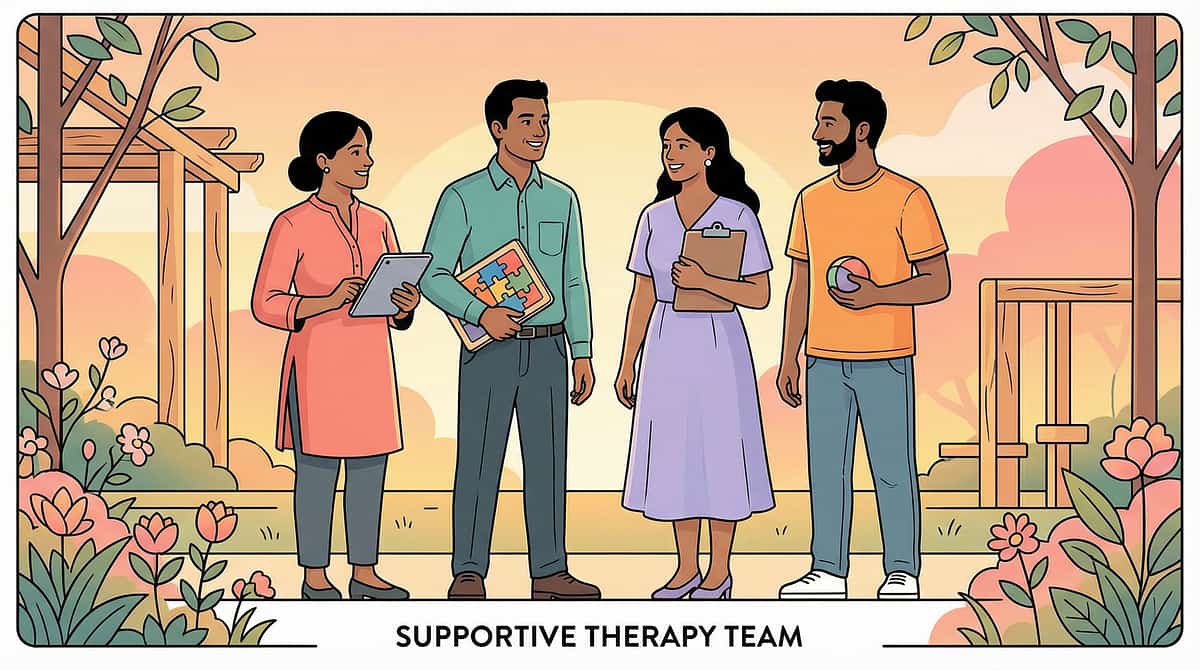
A Multi-Disciplinary Technique — Used Across the Pinnacle Consortium
Occupational Therapist (PRIMARY)
The lead discipline for motor planning intervention. OTs assess praxis using standardized tools (SIPT, Beery VMI, BOT-2), design sensory-motor treatment environments, and prescribe specific materials and graded activities. Home programs extend OT clinic work.
Physical Therapist
When gross motor planning (gait, balance, sports movements) is severely impacted, PT co-leads intervention. Focuses on postural control, bilateral coordination, and movement sequences for locomotion and physical activity participation.
Special Educator
Adapts academic tasks — handwriting, cutting, classroom tool use — for children with motor planning difficulties. Creates visual sequence supports, modifies assignment format, and coordinates with OT for classroom accommodations.
ABA / BCBA
Structures the behavioral reinforcement layer of motor planning practice. Creates motivating antecedent conditions, designs reinforcement schedules that reward effortful motor attempts (not just success), and tracks data on task engagement and completion.
"The brain doesn't organize by therapy type. A child's motor planning circuit crosses OT, PT, ABA, and educational domains simultaneously. That's why Pinnacle's FusionModule™ coordinates all four disciplines into a single converged motor planning pathway."
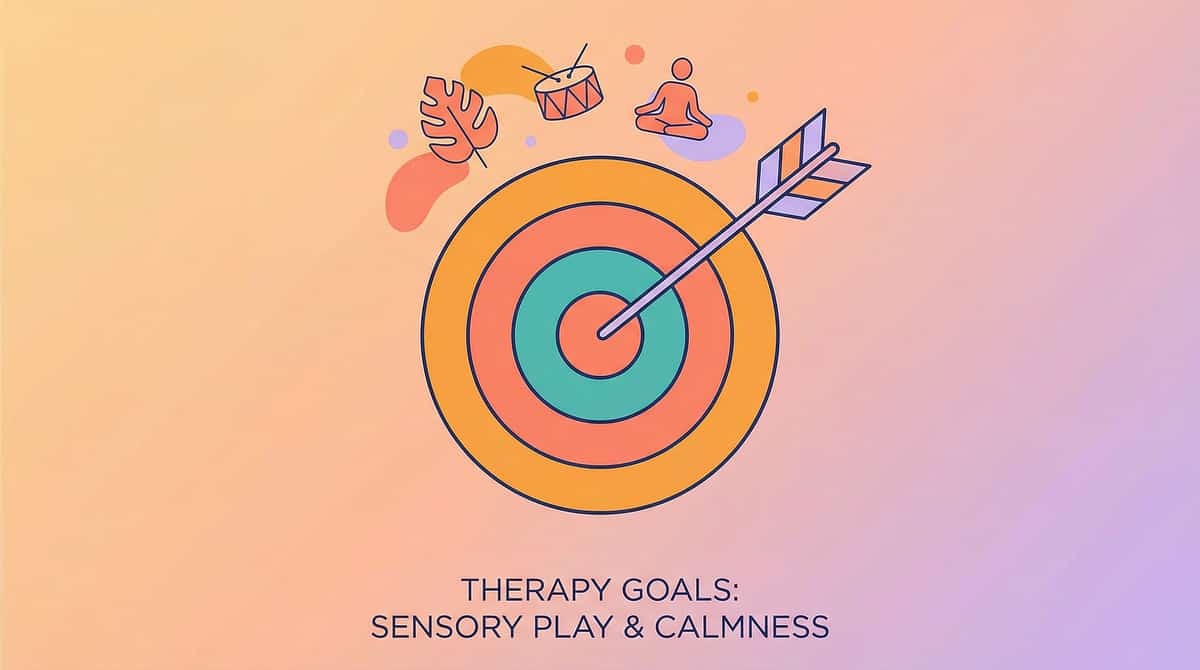
What Motor Planning Practice With These Materials Actually Changes
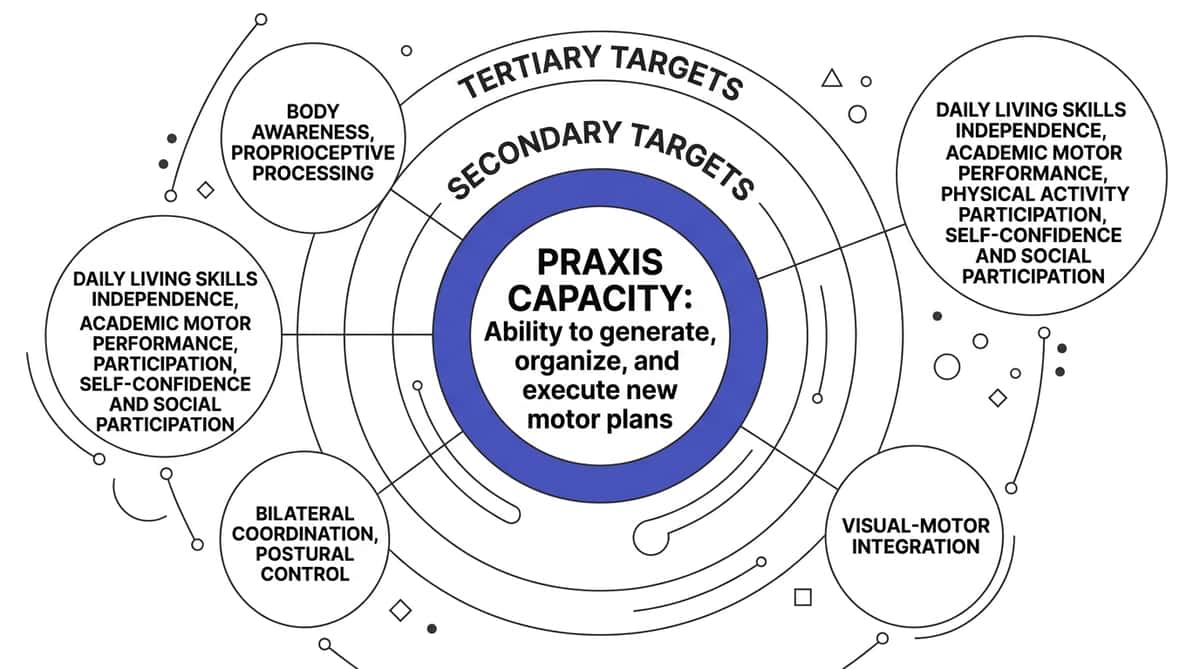
Target | Before Intervention | After 8–12 Weeks | |
Praxis Capacity | Freezes when approaching novel motor tasks | Attempts new movements with reduced hesitation | |
Body Awareness | Bumps into objects, misjudges spaces | More accurate spatial navigation | |
Dressing | 30–45 minute morning routine | 10–15 minutes, partially independent | |
Physical Play | Avoids and watches others | Attempts and participates with effort |
Research: Meta-analysis (World J Clin Cases, 2024): SI therapy across 24 studies effectively promoted social skills, adaptive behavior, sensory processing, and motor skills. 🔗 PMC10955541
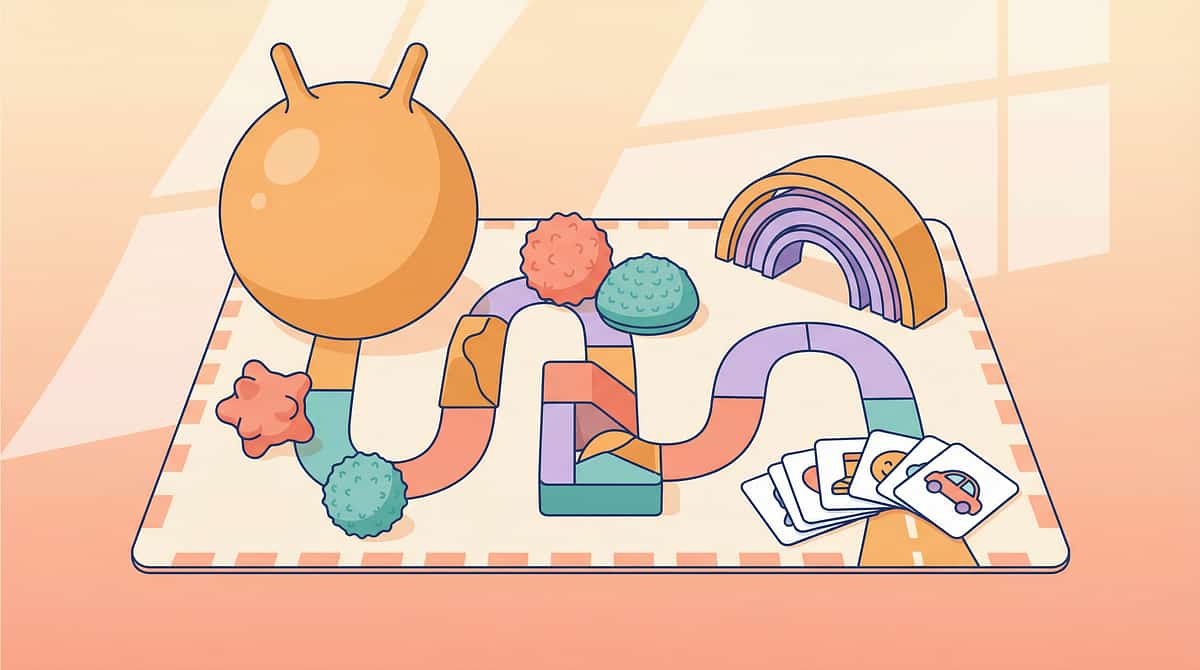
9 Materials. One Mission: Build the Brain-Body Connection.
These 9 materials are drawn from the Pinnacle 128 Canon Materials system and validated across 20M+ therapy sessions via GPT-OS®.
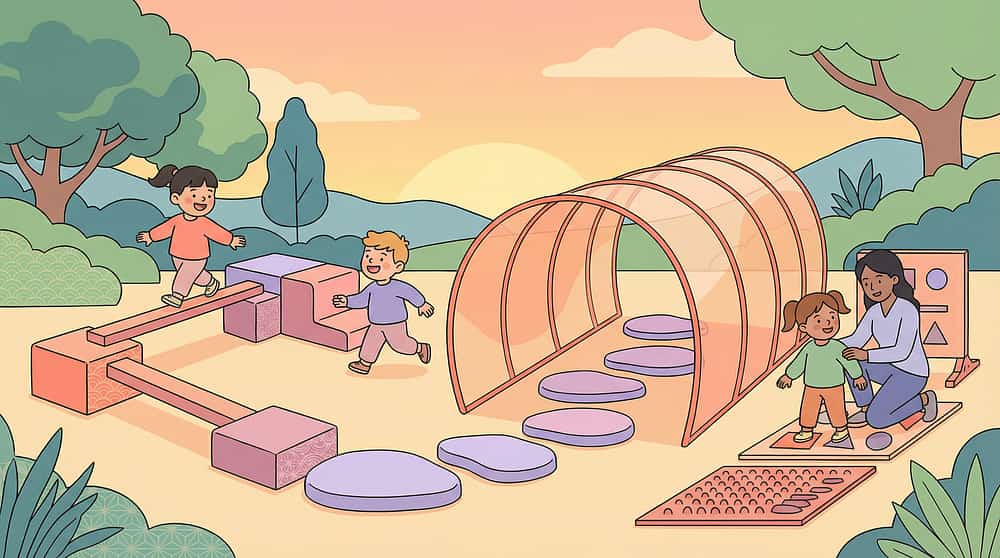
1. Obstacle Course Components
Why It Works: Forces the child to look ahead, plan a sequence of diverse movements, execute each obstacle, and transition — demanding flexible, novel motor planning with every configuration. The gold standard for praxis training.
₹1,000–8,000 | 🛒 Search: "children obstacle course therapy set"

2. Weighted Lap Pad / Vest
Why It Works: Provides deep pressure proprioceptive input — enhancing the body's sense of where it is in space. Better body awareness equals better motor planning. The proprioceptive system is the foundation of the planning circuit.
₹800–3,000 | 🛒 Search: "weighted lap pad children therapy"
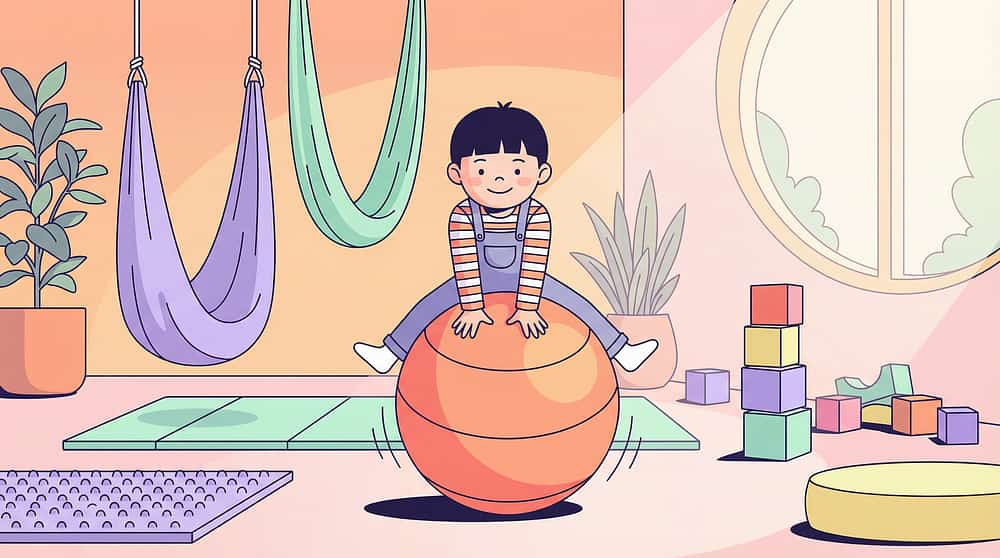
3. Therapy Ball (Large Exercise Ball)
Why It Works: An unstable surface demands constant postural motor planning micro-adjustments. Every bounce, every balance correction is the brain generating real-time motor plans. Vestibular + proprioceptive input in one tool.
₹500–1,500 | 🛒 Search: "therapy exercise ball children 55cm"

Materials 4–6: Visual, Resistive, and Movement Tools
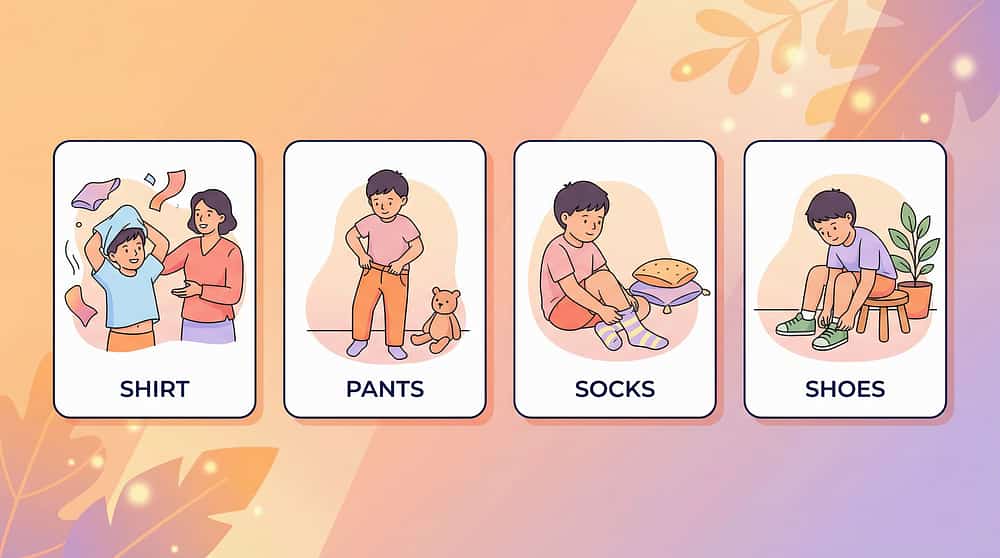
4. Visual Sequence Cards for Motor Tasks
Why It Works: Externalizes the motor plan. The child sees the steps in order — reducing the neural demand of generating the sequence independently. With repetition, the brain internalizes the plan and the visual support can be faded.
₹200–800 | Also: FREE DIY (photo cards) | 🛒 Search: "visual sequence cards children dressing"
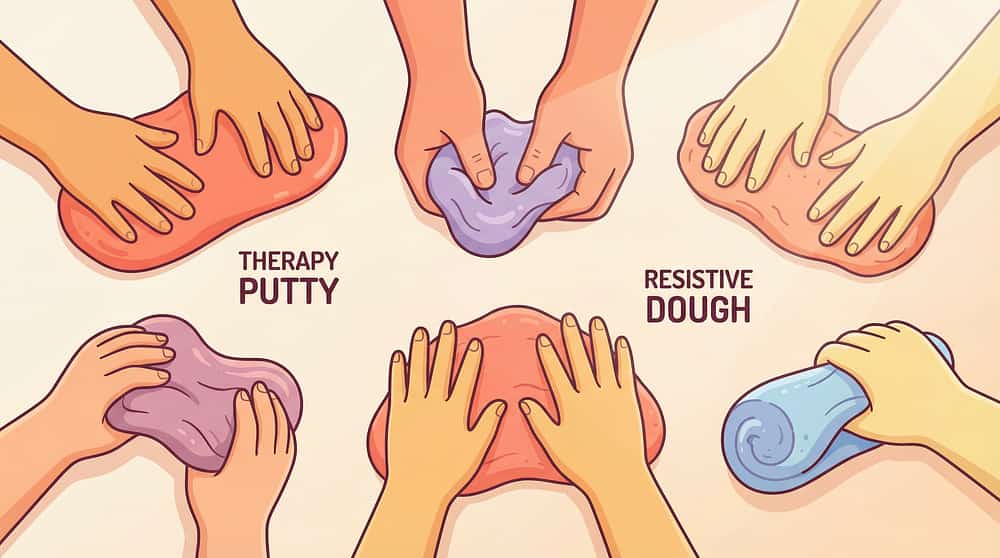
5. Resistive Putty / Therapy Dough
Why It Works: Resistance provides rich proprioceptive feedback to the hands while requiring purposeful fine motor planning. Pulling, pinching, rolling, hiding objects — each action trains the planning → execution loop for fine motor sequences.
₹300–800 | Also: DIY flour-salt dough (₹0) | 🛒 Search: "therapy putty children set resistive"
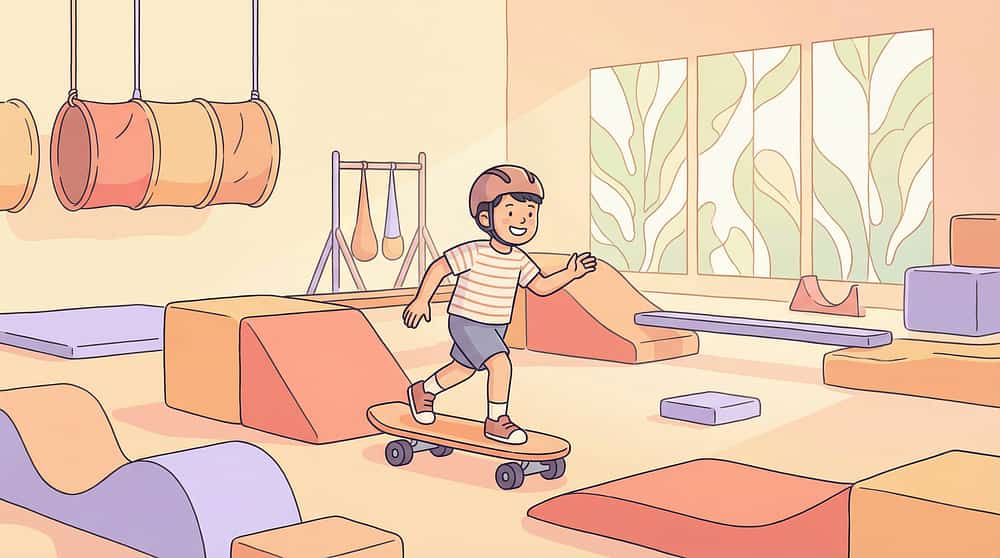
6. Scooter Board
Why It Works: Requires coordinated bilateral motor planning — arms or legs must sequence together while the board moves. Adds vestibular challenge. Prone and seated positions demand different motor plans. Goal-directed scooter activities intensify the planning demand.
₹800–2,500 | 🛒 Search: "scooter board children therapy"

Materials 7–9: Fine Motor, Balance, and Imitation Tools
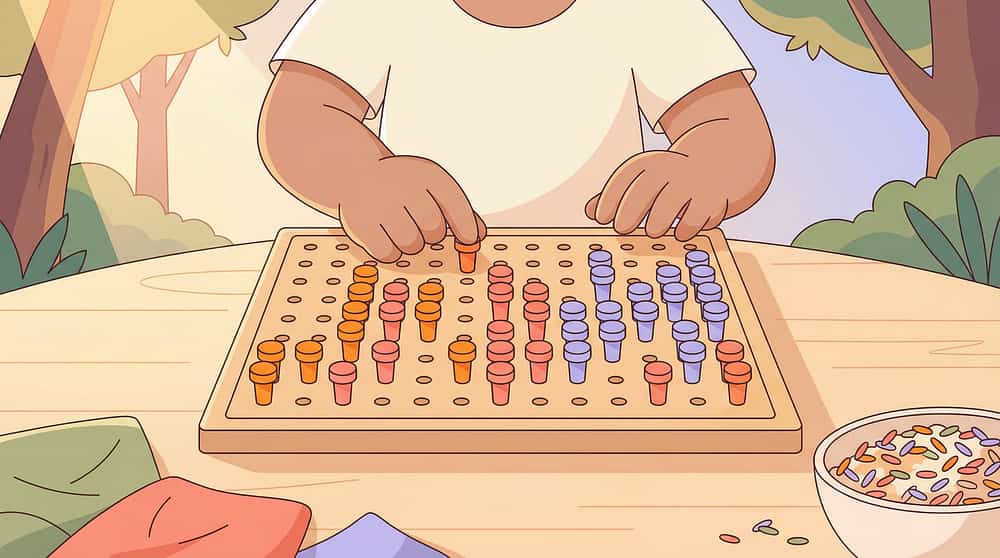
7. Pegboard with Patterns
Why It Works: Combines visual-motor planning with fine motor execution. The child must translate a visual pattern into a precise sequence of motor placements — ideation → planning → execution in a controlled, measurable format.
₹300–1,200 | 🛒 Search: "pegboard patterns children therapy set"
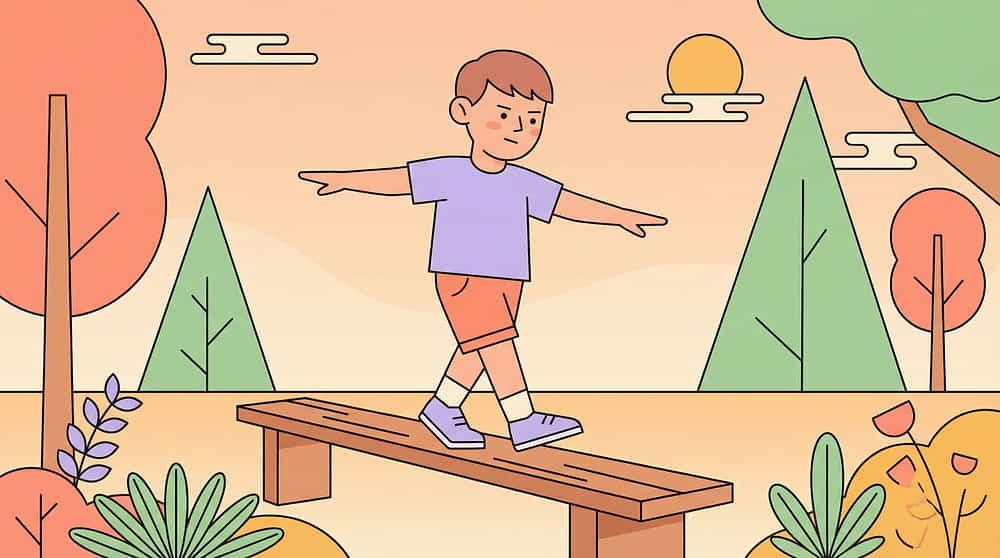
8. Balance Beam / Walking Rail
Why It Works: A narrow surface forces slow, deliberate, conscious motor planning for each step — exactly the practice children with dyspraxia need. Controlled, slowed-down movement practice builds capacity that generalizes to faster, automatic movement.
₹500–2,000 | Also: Tape line on floor (₹0) | 🛒 Search: "balance beam children therapy wood"

9. Imitation Activity Cards
Why It Works: Motor imitation is motor planning in its purest form — the child observes a position, generates the motor plan to replicate it, and executes. Systematic imitation practice builds the visual-to-motor translation capacity that underlies all learning by demonstration.
₹200–800 | Also: DIY printed pose cards (₹0) | 🛒 Search: "yoga pose cards children imitation"
Pinnacle Recommends: These materials are validated across Pinnacle's OT/PT clinical protocols. All have DIY alternatives — equity of access is a core Pinnacle and WHO principle.

Every Material Has a Zero-Cost Version. Here's How.
WHO/UNICEF Equity Principle: No family should be unable to begin intervention due to access or cost barriers.
Material | Clinical Version | ₹0 DIY Alternative | Same Principle? | |
Obstacle Course | Pop-up tunnel, commercial stepping stones, adjustable hurdles | Blanket-over-chairs tunnel, couch cushions, tape lines, pillows to jump between | ✅ Same planning demand — reconfigure regularly | |
Weighted Lap Pad | Commercial weighted pad 1–2kg | Small rice-filled cloth bag; bag of lentils in a pillowcase | ✅ Same deep pressure — check weight at ~5% body weight | |
Therapy Ball | 55cm therapy ball | Large inflatable ball (football/beach ball) | ✅ Same unstable surface principle | |
Visual Sequence Cards | Laminated printed cards | Smartphone photos of each step, arranged in notes app | ✅ Same externalized planning scaffold | |
Resistive Putty | Commercial therapy putty | Stiff salt-dough (1c flour + ½c salt + ¼c water) | ✅ Same resistance principle — add flour to increase stiffness | |
Scooter Board | Commercial wheeled scooter board | Smooth-bottomed plastic laundry basket on tile floor | ✅ Same bilateral coordination demand | |
Pegboard | Commercial pegboard with pegs | Egg carton + cut straws as "pegs"; coloured dot stickers to copy patterns | ✅ Same visual-motor planning demand | |
Balance Beam | Wooden beam on floor | 5cm-wide tape line on floor; single plank board | ✅ Same deliberate step-planning demand | |
Imitation Cards | Commercial pose card set | Print 12 yoga poses from a free website; animal movement photos | ✅ Same observe → plan → execute loop |
When Clinical Grade Is Non-Negotiable: For children with severe proprioceptive processing disorder, accurate weighted item specifications matter. Weighted items should not exceed 10% body weight. Seek OT consultation before using weighted items at home.

Read This Before Every Session. Every Time.
🔴 RED — Do Not Proceed If:
- Child is acutely ill, feverish, or in pain
- Child has had a seizure in the last 24 hours
- Child has an injury to any joint or muscle being used
- Child is in full meltdown or extreme distress
- Weighted items are being used without OT guidance
- Any equipment is damaged, unstable, or incorrectly assembled
🟡 AMBER — Proceed With Modification If:
- Child is tired but not exhausted — shorten to 8–10 minutes
- Child seems anxious about a specific material — begin with their preferred material
- Space is limited — simplify obstacle course to 2–3 elements
- Child had a difficult day — use calming sensory input first before demanding tasks
🟢 GREEN — Full Session When:
- Child is fed, hydrated, rested (not immediately post-nap)
- Child is in a calm-alert state (not hyperaroused or lethargic)
- Space is clear, materials are ready, phone is on silent
- Parent is regulated and has 20 minutes of uninterrupted time
Material Safety Checklist
- Obstacle course secured — no tipping hazards, fall zones clear
- Therapy ball size appropriate — hips at 90° when seated
- Weighted items within OT-recommended weight range
- Putty is non-toxic; no small hidden objects for children under 4
- Balance beam at floor level until child is confident
- Scooter board on smooth floor only — no rugs, no stairs
- 30cm clearance around all equipment
Stop Immediately If: Child shows signs of panic, persistent crying, self-injurious behavior, vomiting, dizziness, or any disproportionate response. Contact your Pinnacle OT or call 9100 181 181.
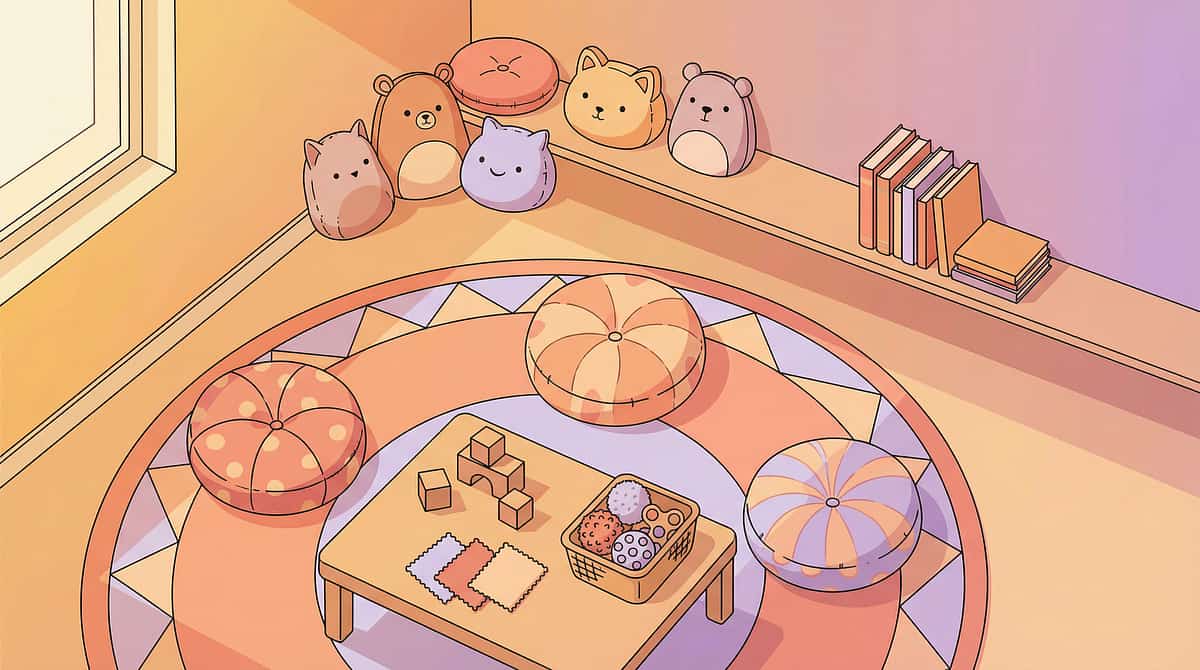
Environment Is Therapy. Set This Up Before Every Session.
Clear the Space
Remove furniture, rugs, loose objects from obstacle zone. 2m clear length minimum.
Configure the Obstacle Course
Change configuration from last session — novel planning demand is therapeutic.
Lay Out Fine Motor Station
Pegboard + pattern cards at child-height table. Position visual sequence cards at eye level.
Position Weighted Items
Lap pad at seated station for pre/post session use. Therapy ball in open area with 50cm clearance.
Prepare Cool-Down Corner
Soft mat + visual timer visible from activity zone. Screens off, pets secured, distractions removed.
Lighting
Bright, natural light preferred. No flickering lights.
Sound
Quiet background music acceptable. No TV. No loud sibling noise.
Your Phone
Silent or airplane mode. Your presence is the therapeutic tool.

ACT III: THE EXECUTION
60 Seconds Before You Begin — Check These 7 Signs
Indicator | Green ✅ | Amber 🔶 | Red ❌ | |
Last meal | 60–90 mins ago | Under 30 mins | Empty / Starving | |
Sleep | Rested, no fatigue | Slightly tired | Overtired / post-nap | |
Emotional state | Calm-alert | Mild anxious / silly | Dysregulated / meltdown | |
Body | Settled, not fidgety | Some restlessness | Hyperactive / lethargic | |
Motivation | Positive about session | Neutral | Active refusal | |
Recent illness | None | Recovering | Acute | |
Last session | Positive | Mixed | Severely distressing |
5–7 Green ✅
Full session — proceed to Step 1
3–4 Green, some Amber
Modified session — shorten to 10 min, use preferred materials first
Any Red ❌
Postpone — use 10-minute calming activity instead (swing, deep pressure, quiet play)
"A skipped session is not a failed session. A forced session builds negative associations that make every future session harder. Trust the data from your child's body."

Step 1 of 6 — The Invitation
Step 1 / 6
Duration: 60–90 seconds
Begin With an Invitation, Never a Command
The Opening Script
"Hey [child's name], I have something really cool set up for you today. Want to see what we're doing?"
Lead them by hand toward the setup. Let curiosity pull them in.
If they hesitate:"You don't have to do anything yet — just come look."
If they engage immediately:"Wow, you spotted [tunnel/ball/beam] right away! What do you think we should try first?"
Body Language Guidance
- Crouch to their eye level — never tower over
- Open, relaxed posture — no crossed arms
- Enthusiastic but calm energy — excited, not urgent
- Let them lead initial exploration for 30 seconds before introducing structure
What Acceptance Looks Like
✅ Moving toward materials | ✅ Pointing at something | ✅ Making eye contact | ✅ Body facing the space
What Resistance Looks Like — And What To Do
- ❌ Body turning away → Sit beside them and model the activity yourself first
- ❌ Verbal refusal → "Okay, we'll just watch" — reduce demand to observation
- ❌ Running away → Follow calmly, try 5 minutes later
"Pairing yourself with positive experiences before placing demands is the foundation of therapeutic engagement. The child must want to be in this space before we ask them to work in it."
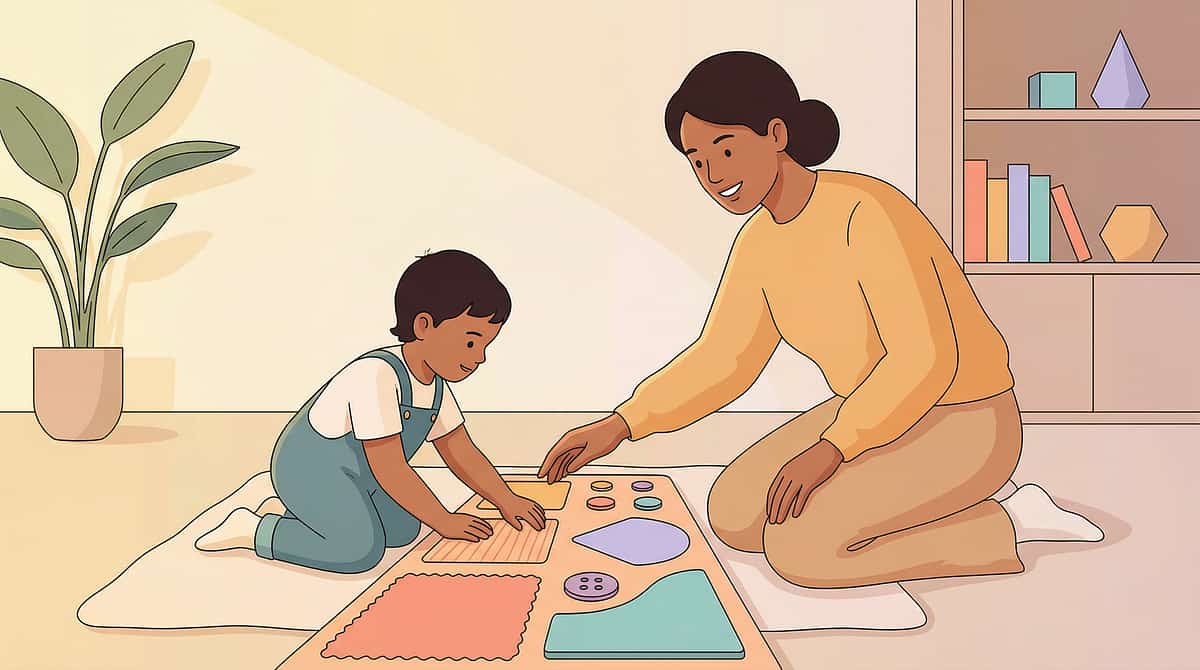
Step 2 of 6 — The Engagement
Step 2 / 6
Duration: 1–3 minutes
Introduce the First Material — Read Every Response
For Obstacle Course (Primary material)
"Okay, let's see if you can get from here to there — look at the path! First you go through [tunnel], then step on those [spots], then over the [hurdle]. Want to watch me try first?"
→ Model the first run yourself, with exaggerated planning language: "Okay, I need to figure out... first I'll go through here... then step on those..."
For Therapy Ball (Proprioceptive Warm-Up)
"Let's get the big ball. Can you sit on it? Just try to stay on — I've got you."
→ Hold the ball still initially. Let the child feel the surface. Introduce gentle bouncing after 30 seconds.
For Visual Sequence Cards
"Look at these cards — they show exactly what to do, step by step. Let's read them together."
→ Point to each card as you read it. Don't rush.
Engagement
Child looks at materials, reaches toward them, follows your model
Tolerance
Child participates without joy but without refusal — acceptable at week 1
Avoidance
Child moves away, pushes material — back off, reduce demand, try shorter exposure
Reinforcement Cue: Deliver first reinforcement HERE — before success, for trying: "You're looking at the course — that's great planning already!"
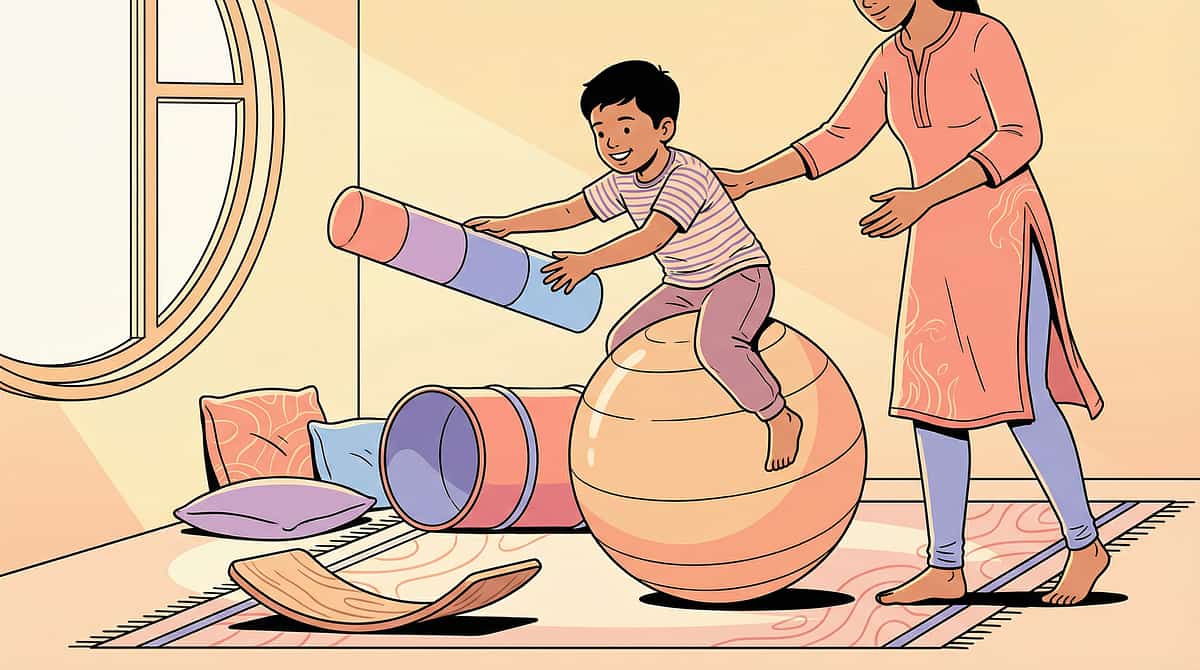
Step 3 of 6 — The Therapeutic Action
Step 3 / 6
Duration: 8–12 minutes
The Active Ingredient — Run the Motor Planning Circuit
Obstacle Course — Motor Planning Protocol
Run 1: With full verbal guidance from parent Run 2: Child says the plan out loud before doing it Run 3: Child executes without verbal support Key: Change ONE element between runs 2 and 3 — forces new motor plan generation
Therapy Ball Sequence
Sit on ball (30–60 sec) → Bounce gently while staying seated (30–60 sec) → Reach for object while bouncing → Prone over ball (parent support) — upper body motor planning
Visual Sequence Cards — Dressing Target
Display card sequence for putting on a shirt. Child looks at Card 1 (arms in holes), does it, looks at Card 2, does it. Fade to every-other-card as skill improves.
Resistive Putty Sequence
Roll into snake → pinch 10 times → flatten and hide 3 small beads → find the beads with fingers only (no looking). Each task = a motor plan executed against resistance.
Pegboard Pattern Copying
Present 4-dot pattern. Child copies it. Increase to 6-dot, then 9-dot, then add color. Each placement = visual-motor plan executed precisely.
✅Ideal: Child attempts, self-corrects, shows effort | 🔶Acceptable: Child attempts with struggle, seeks help, persists | ❌Concerning: Child becomes distressed → move to cool-down immediately
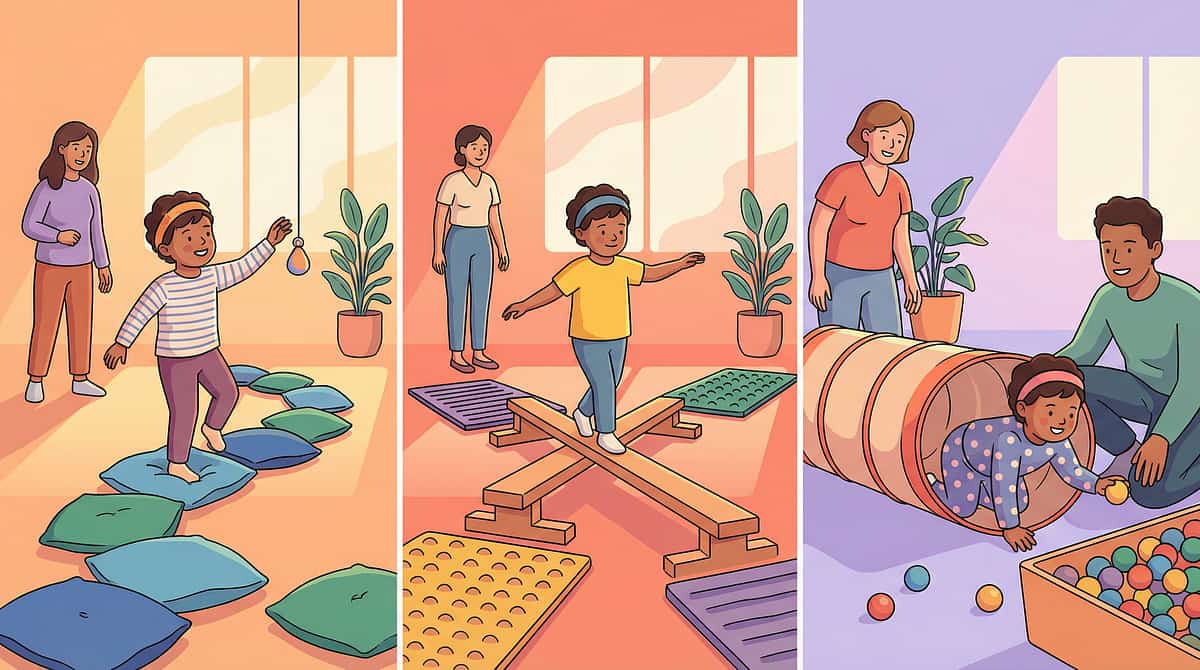
Step 4 of 6 — Repeat & Vary
Step 4 / 6
Duration: 3–5 minutes
Repetition Builds Circuits. Variation Prevents Rote.
Motor planning improves through sufficient repetition of novel motor challenges — not through endless repetition of the same route. The brain learns when it has to generate a NEW plan, not execute a memorized one.
Material | Target Reps/Session | Variation Principle | |
Obstacle Course | 3–5 complete runs | Change 1 element each run | |
Therapy Ball | 3–4 different activities | Same ball, different demands | |
Visual Sequence Cards | 2–3 complete task runs | Fade one card per run | |
Resistive Putty | 8–12 purposeful manipulations | Different shape/task each time | |
Pegboard | 2–3 pattern copies | Increase complexity each time | |
Imitation Cards | 5–8 poses | Progress from static → moving | |
Balance Beam | 3–4 complete crossings | Add challenge each crossing | |
Scooter Board | 3–4 propulsion activities | Change direction/goal |
The Satiation Signal: Watch for yawning, reduced accuracy, increasing distraction, rising frustration. These signal the motor planning system is fatigued. 3 good, effortful reps are worth more than 10 mechanical ones.
"The therapeutic magic is in the novelty. The moment a movement becomes automatic, it no longer trains motor planning — it's now a rote motor pattern. Keep varying. Keep the brain working."

Step 5 of 6 — Reinforce & Celebrate
Step 5 / 6
Throughout Session
The ABA Principle That Makes Everything Else Work
Deliver reinforcement within 3 seconds of the desired behavior. Not after the session. Not after they finish perfectly. The moment they attempt with effort — reinforce.
For effort (not just success)
"I saw you figure that out! Your brain planned all of those steps — amazing!"
For persistence after difficulty
"You tried that and it was hard — and you kept going. That's exactly how brains get stronger."
For independent planning
"You looked at the course and figured it out yourself — that's what we're building!"
Reinforcement Menu Options
Verbal Praise
Specific, enthusiastic acknowledgment of effort
Physical
High five, fist bump, spin
Token
Star on chart, bead in jar
Activity
2 minutes of preferred game or activity
❗ Praise the ATTEMPT. Children with motor planning difficulties need to learn that trying hard movements is the right behavior — even when the execution isn't perfect yet.

Step 6 of 6 — The Cool-Down
Step 6 / 6
Duration: 2–3 minutes
No Session Ends Abruptly. The Cool-Down Is Therapeutic.
The Transition Sequence
2-Minute Warning:"Two more turns and then we're all done for today." → Show visual timer. Let them see it counting down.
1-Minute Warning:"One more run — make it your best one." → This "last best run" often produces the child's best motor planning performance of the session.
If the Child Resists Ending:
"I know you want to keep going — that means we did a great session. Let's set up for next time." Never force abrupt ending. The goal is the child leaving with a positive emotional association.
Cool-Down Activity (Choose One)
Heavy Work
Child helps stack/put away obstacle course equipment — carrying provides deep pressure cool-down
Weighted Lap Pad
Child sits with lap pad for 3–5 minutes while doing a calm preferred activity
Slow Rocking
Gentle, slow side-to-side rocking on therapy ball — organizing vestibular input
Joint Compressions
Parent gently compresses child's shoulders and hands — proprioceptive regulation
Material Put-Away Ritual: Child participates in putting away materials — names each one, places it correctly. This short motor planning task is itself therapeutic AND builds session closure routine.
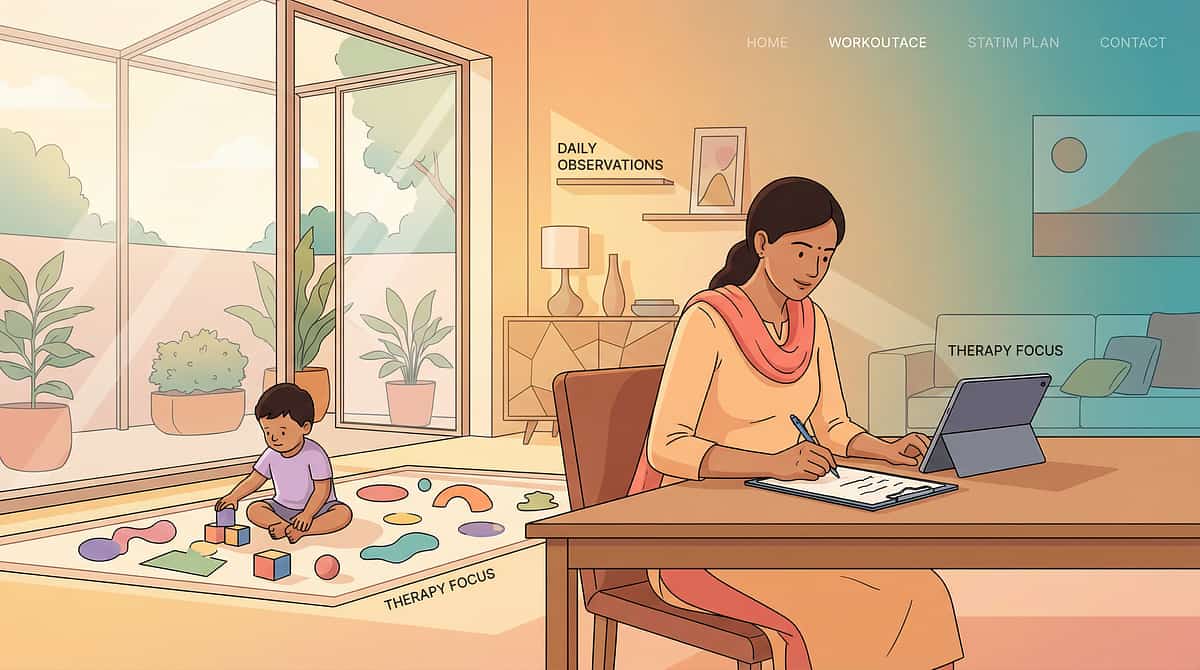
60 Seconds of Data Now. Months of Clarity Later.
Do This Before Leaving the Session Space.
The 3-Point Tracker
DATE: _____________ SESSION #: _____________ DURATION: _____________
1. ENGAGEMENT RATING: ☐ 1 (refused) ☐ 2 (minimal) ☐ 3 (moderate) ☐ 4 (good) ☐ 5 (excellent)
2. WHICH MATERIALS USED: _________________________ OBSTACLE COURSE: _____ runs | BEST ITEM TODAY: _________________________
3. ONE OBSERVABLE CHANGE (specific behavior, not general impression): Example: "Paused before obstacle 3 and said 'now I step' — first time self-narrating" Today: _______________________________________________
4. NOTES / FLAGS: _______________________________________________
Why This Matters
"60 seconds of specific data now saves hours of guessing in your next therapist consultation. Patterns emerge in week 3–4 that are invisible without records. The child's own data is the most powerful evidence for adjusting their program."
Google Form Tracker
Embed Pinnacle F-574 Motor Planning Session Tracker — feeds to GPT-OS® dashboard for therapist review
📥 Downloadable PDF
F-574 Motor Planning 8-Week Home Session Log — A4 PDF format

Most Sessions Don't Go Perfectly. Here's What to Do.
❓ Child refused to enter the obstacle course space
What happened: Novel environment anxiety. The course looked overwhelming. Why: Children with motor planning difficulties often have high anticipatory anxiety — they "pre-know" it will be hard. Next time: Introduce 1 element only. Let them watch you do it. Offer a choice: "Tunnel or the spots first?"
❓ Child did the same course route every single run
What happened: The child found a workable plan and repeated it to avoid generating a new one. Why: This is adaptive but not therapeutic — rote execution, not motor planning. Next time: Move one element before the second run. Frame positively: "Oh look, it changed! Let's figure out the new way."
❓ Therapy ball session ended in crying
What happened: Vestibular overwhelm. The ball surface was too stimulating. Why: Some children with sensory processing differences are vestibular-sensitive. Next time: Keep ball still. No bouncing — just sitting. Introduce micro-movement over 3–4 sessions before bouncing.
❓ Child seemed "worse" after using weighted vest
What happened: Weight was too heavy or worn too long. Why: Weighted input must be prescribed by an OT. Incorrect weight = sensory disruption, not regulation. Next time: Consult OT. Use weighted LAP PAD instead until OT guidance is obtained.
❓ Dressing sequence didn't transfer to daily life
What happened: Generalization takes more time than in-session performance. Why: Motor planning improvements in practice context precede functional carryover by 2–4 weeks. Next time: Continue. Post visual sequence cards at the dressing location. Expect functional transfer at week 6–8.
"Session abandonment is not failure — it's data. Every imperfect session tells you something specific about your child's nervous system that a perfect session never would."
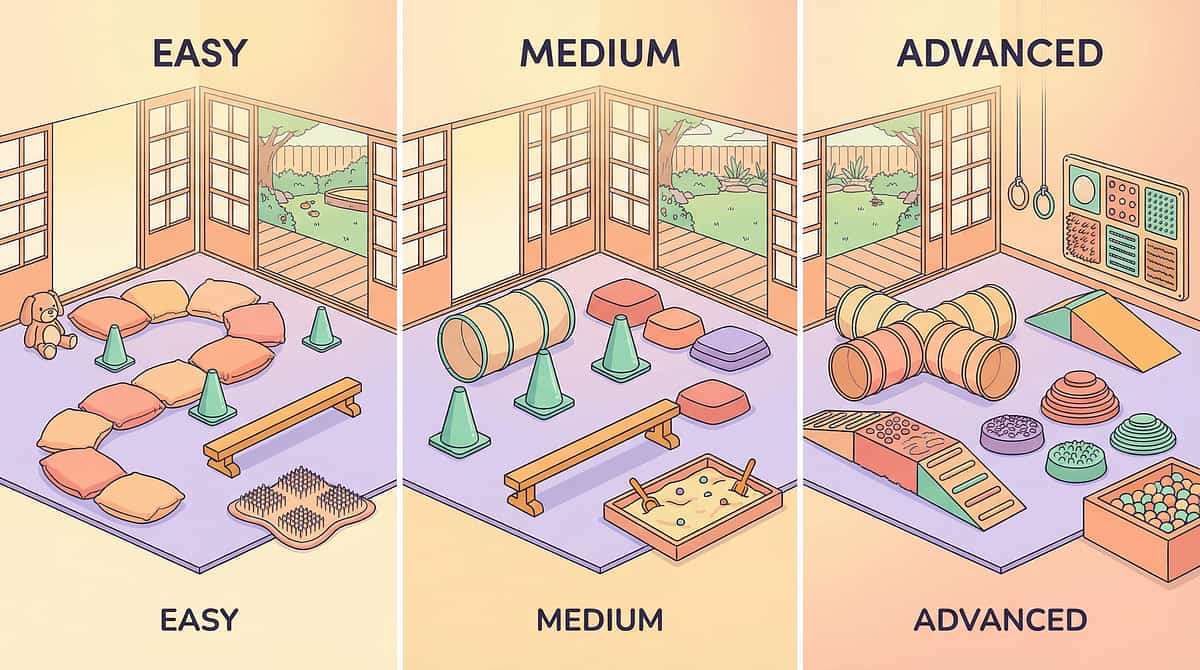
Your Child Is Not the Average. Personalize This Protocol.
⬅ Easier Modifications
For bad days, early weeks, high anxiety
- Obstacle course: 2 elements only, same configuration, parent walks alongside
- Weighted lap pad: 5-minute use before ANY motor task (proprioceptive priming)
- Therapy ball: Ball against wall for stability, no bouncing
- Pegboard: 3-dot simple pattern, large pegs
- Visual cards: Full sequence displayed, parent reads each step aloud
- Balance beam: Wide tape line on floor only
- Putty: Soft resistance, unstructured exploration
➡ Harder Modifications
For good days, weeks 5–8, consolidation phase
- Obstacle course: 6+ elements, change configuration mid-session, add cognitive task
- Therapy ball: Reach for objects at different positions while bouncing
- Scooter board: Prone on board, propel ONLY with arms across room to collect objects
- Pegboard: Complex multi-color patterns, time the task, reproduce from memory
- Imitation cards: Moving sequences, 3-pose sequence to memorize and repeat
- Balance beam: Carry object while walking, step over obstacles placed on beam
Age Adaptations
Ages 3–5
Emphasize obstacle course and therapy ball. Visual cards for dressing/shoes. 10-minute sessions max.
Ages 6–8
Introduce pegboard and imitation cards. Scooter board. Extend to 20 minutes.
Ages 9–12
Add sport-related motor planning. Timed challenges. Self-monitoring data tracking.

ACT IV: THE PROGRESS ARC
Weeks 1–2: You're Building Trust — Not Skills
What You Will See ✅
- Child tolerates the materials without full refusal
- Child watches curiously, even if not fully participating
- Session length increases from 5 to 10 minutes without meltdown
- Child references the materials outside of sessions ("can we do the ball today?")
- Parent begins to read the child's engagement signals more accurately
What You Will Not See Yet ❌ (And That's Okay)
- Spontaneous independent use of motor planning strategies
- Dressing / daily skills suddenly improving
- Obstacle course navigated smoothly without verbal guidance
- Pegboard patterns copied accurately and quickly
Patience Metric: "If your child tolerates the weighted lap pad for 3 minutes longer than last week — that is measurable neural adaptation. That is real progress. Document it."
"Weeks 1–2 are for YOU as much as your child. You're learning what your child's nervous system looks like in a motor planning challenge. You're building your own reading skills. This is investment, not result."
Research: Systematic review (Children, 2024): SI intervention outcomes emerge across 8–12 week timelines. Early-phase indicators focus on tolerance and participation rather than skill mastery. 🔗 PMC11506176

Weeks 3–4: Something Is Changing — Here's How to Recognize It
In the Session ✅
- Child pauses at start of obstacle course and LOOKS before moving (planning emerging)
- Child spontaneously self-corrects an error mid-course (real-time planning adjustment)
- Child narrates what they're doing while doing it ("now I step here")
- Therapy ball bouncing coordination improves — fewer falls, smoother adjustments
- Putty manipulation more purposeful — less random squeezing, more intentional shapes
Outside the Session ✅
- Dressing independently begins (even if slow) on some mornings
- Child navigates a new physical environment with less hesitation
- Sports/PE performance shows subtle improvement (teacher may comment)
- Child asks to do preferred motor planning activities voluntarily
When to Increase Intensity: If you see 3+ consolidation signs above, add one new obstacle course element, increase pegboard pattern complexity, introduce scooter board, and reduce verbal guidance by 50% to challenge independent planning.
"When your child pauses before acting — that pause is the motor planning circuit engaging. It looks like hesitation. It IS the brain working. Celebrate that pause."

Weeks 5–8: The Neural Circuit Is Becoming Automatic
75% Progress
Mastery Phase
Mastery Criteria — Specific, Observable, Measurable
Motor Planning Mastery Checklist
- ☐ Child approaches novel physical environments without freezing or excessive hesitation
- ☐ Dressing routine independently completed in ≤15 minutes on 4/5 mornings
- ☐ Child navigates a new obstacle course configuration with minimal verbal support
- ☐ Pegboard patterns of 9+ dots reproduced accurately in under 4 minutes
- ☐ Child can describe their motor plan before executing ("I'll go under, then step, then jump over")
- ☐ Balance beam crossed forward AND backward without hand support
- ☐ New sport skill attempted within 2 tries (versus needing 10+)
Generalization Indicators ✅
- School PE participation noticeably improved (teacher feedback)
- Playground equipment attempted that was previously avoided
- New physical activity (swimming, dance, martial arts) approached with confidence
- Dressing skills maintained across caregivers, not just the primary implementing parent
Mastery Unlocked — What to Do Next: When 5+ mastery criteria are met → Continue weekly maintenance sessions → Proceed to F-575: Bilateral Coordination → Book an AbilityScore® re-assessment to document progress and update the developmental plan.

You Did This. Your Child Grew Because of Your Commitment.
"Five to eight weeks ago, you watched your child freeze in front of a task that other children do automatically. You didn't look away. You didn't just hope it would get better. You learned the science, gathered the materials, set up the space, showed up for sessions even when it was hard — and you kept going. Your child's motor planning circuit is stronger today because of what you did in this kitchen, this living room, this space you transformed into a therapy room. That is not small. That is everything."
Specific Achievement Summary
Your child has moved along the Motor Planning Readiness Index from:
"Requires conscious planning for all movements with significant difficulty executing"
→ toward: "Plans and executes most daily motor tasks with age-appropriate efficiency"
Family Celebration Suggestion
Plan a special family activity involving the motor skills your child has been building. A trip to the playground. A bicycle ride. A cooking session. Let the skill they worked so hard to develop become the vehicle for joy.
Journal Prompt
"Write one specific moment from these 8 weeks that you want to remember forever. Not the technique — the look on your child's face when something clicked."

Progress Doesn't Mean Ignore These Signals
5 Red Flags for Motor Planning Intervention
🔴 Flag 1: Persistent Self-Injury During Motor Tasks
What it looks like: Head-banging, biting, hitting self when confronted with motor challenges. Why it matters: High frustration response — the technique is exceeding the child's current window of tolerance. Do: Pause ALL motor planning challenges. Return to purely preferred sensory activities. OT consultation urgently.
🔴 Flag 2: Significant Regression After Apparent Progress
What it looks like: Skills that appeared to be consolidating suddenly disappear. Why it matters: May indicate illness, significant life stress, or an exacerbated sensory processing difference. Do: Rule out illness. Note any major home/school changes. Continue maintenance sessions at easy level. Teleconference with OT.
🔴 Flag 3: Weighted Items Causing Distress
What it looks like: Child removes weighted items immediately, becomes more agitated with weighted input. Why it matters: The child may be tactile-hypersensitive or the weight is incorrect. Do: Discontinue weighted items immediately. Consult OT for weight calibration and sensory profile assessment.
🔴 Flag 4: Motor Planning Difficulty With Neurological Signs
What it looks like: Sudden deterioration, asymmetry of movement, new drooling, visual changes, gait disturbance. Why it matters: Neurological underpinnings require urgent medical evaluation. Do: Pause all home intervention. Consult developmental pediatrician urgently.
🔴 Flag 5: Consistent Distress Beyond 3 Sessions
What it looks like: Three consecutive sessions ending in significant distress despite modifications. Why it matters: This approach may not be the right fit without professional support to modify it. Do: Pause. Book Pinnacle consultation. 📞9100 181 181
Self-Resolve
Minor issues — modify and continue
Teleconsultation
Moderate concerns → pinnacleblooms.org
Clinic Visit
Persistent or worsening concerns
Emergency
📞 9100 181 181 — immediate concern
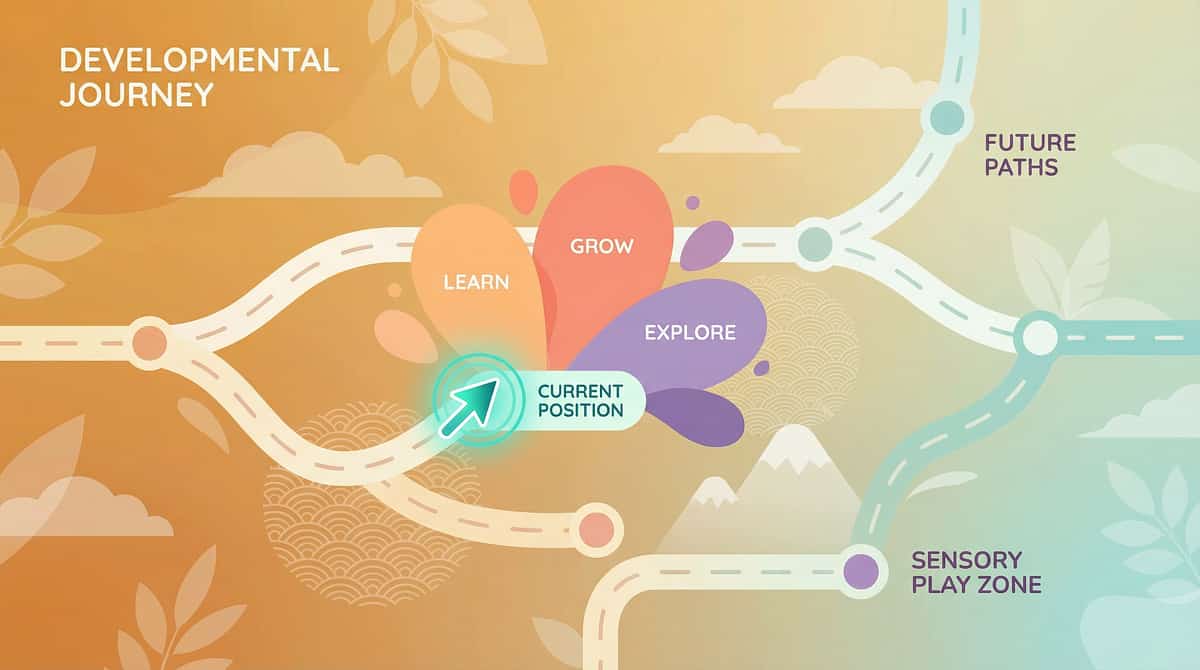
You Are Not Done. You're on a Journey With a Map.
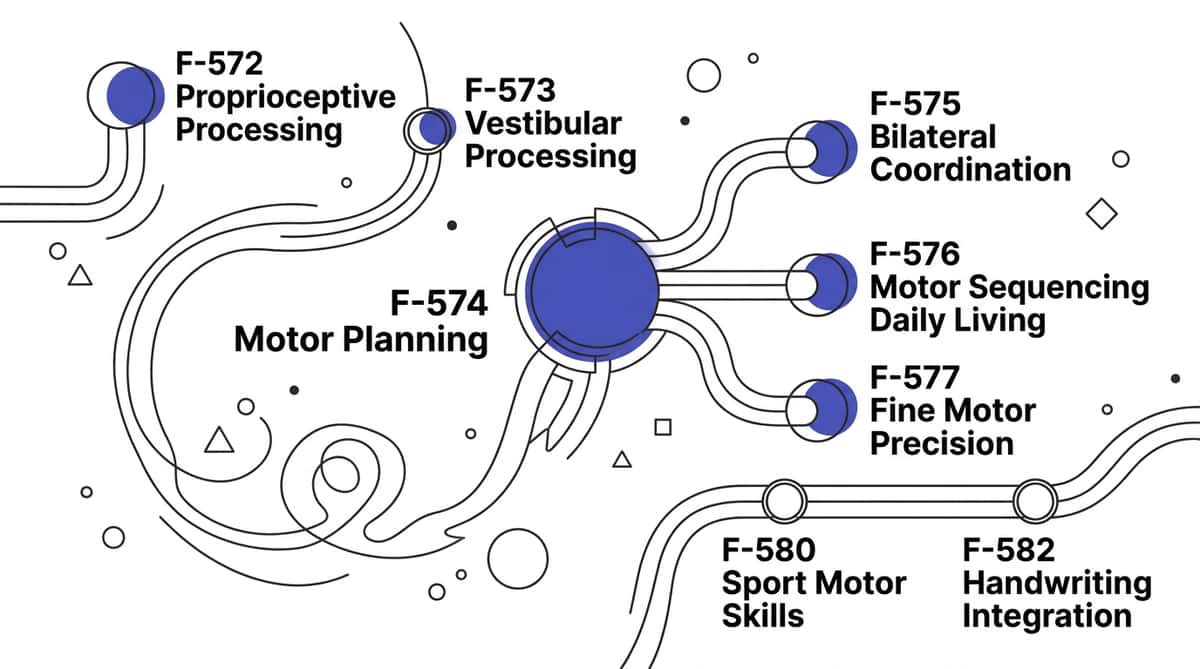
Choosing Your Next Technique
Dressing / Self-Care Sequences
Next: F-576: Motor Sequencing for Daily Living Skills
Using Two Hands Together
Next: F-575: Bilateral Coordination
Handwriting / Fine Motor Precision
Next: F-577: Fine Motor Precision
Revisit Sensory Foundation
Consider: F-572: Proprioceptive Processing or F-573: Vestibular Processing
"Every motor planning technique you complete feeds into your child's Motor Development Readiness Index — a GPT-OS® metric that tracks from 'conscious planning for every movement' to 'automatic, flexible motor performance across novel challenges.' You are building toward that."
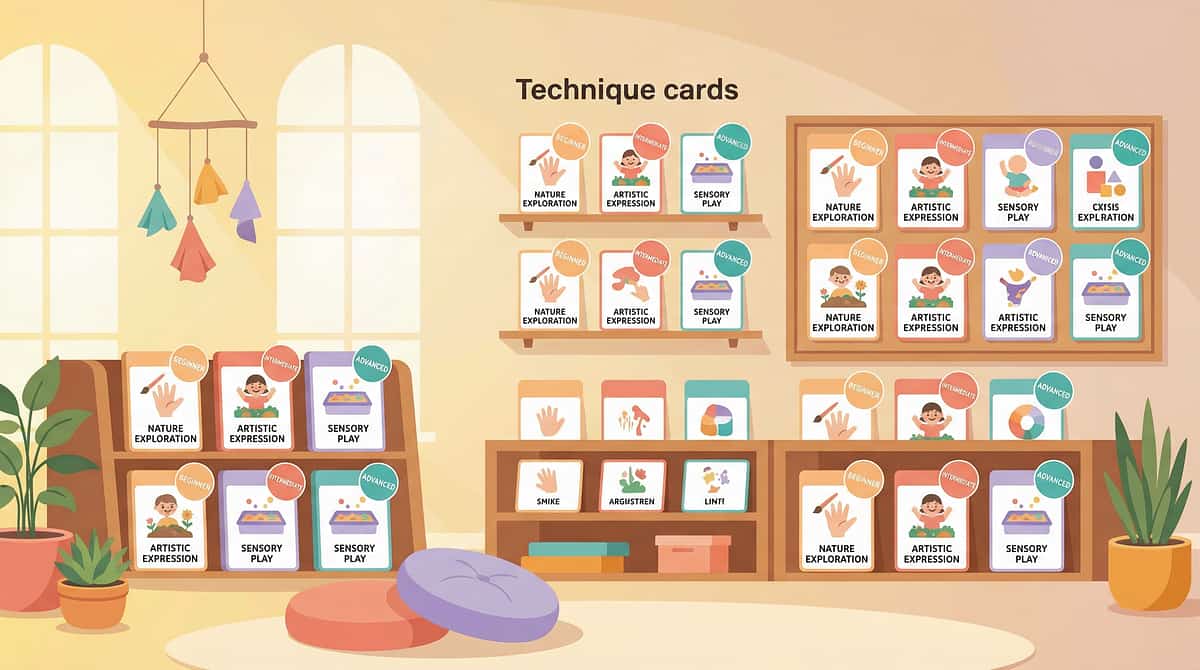
Other Techniques in the Motor Development Domain
Materials you already have from F-574 are highlighted ✅ — you can begin these immediately without any additional purchases.
Technique | Code | Difficulty | Materials You Have | |
Proprioceptive Processing | F-572 | ★ Intro | ✅ Weighted vest, therapy ball | |
Vestibular Processing | F-573 | ★ Intro | ✅ Therapy ball, scooter board | |
Motor Planning | F-574 | ★★ Core | ← CURRENT | |
Bilateral Coordination | F-575 | ★★ Core | ✅ Obstacle course | |
Motor Sequencing Daily Living | F-576 | ★★ Core | ✅ Visual sequence cards | |
Fine Motor Precision | F-577 | ★★★ Advanced | ✅ Putty, pegboard |
"You Already Own Materials for These" Panel: With your F-574 materials kit, you can begin F-572, F-573, F-575, F-576, and F-577 immediately — without any additional purchases.
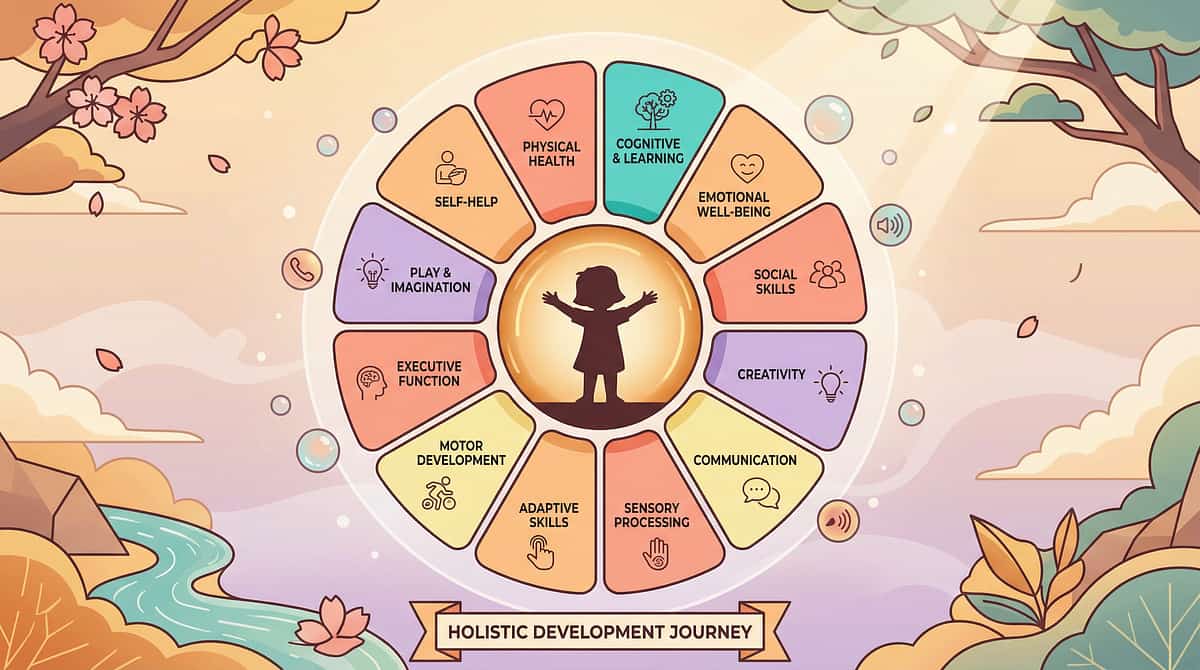
Motor Planning Is One Piece. Here Is the Whole Picture.
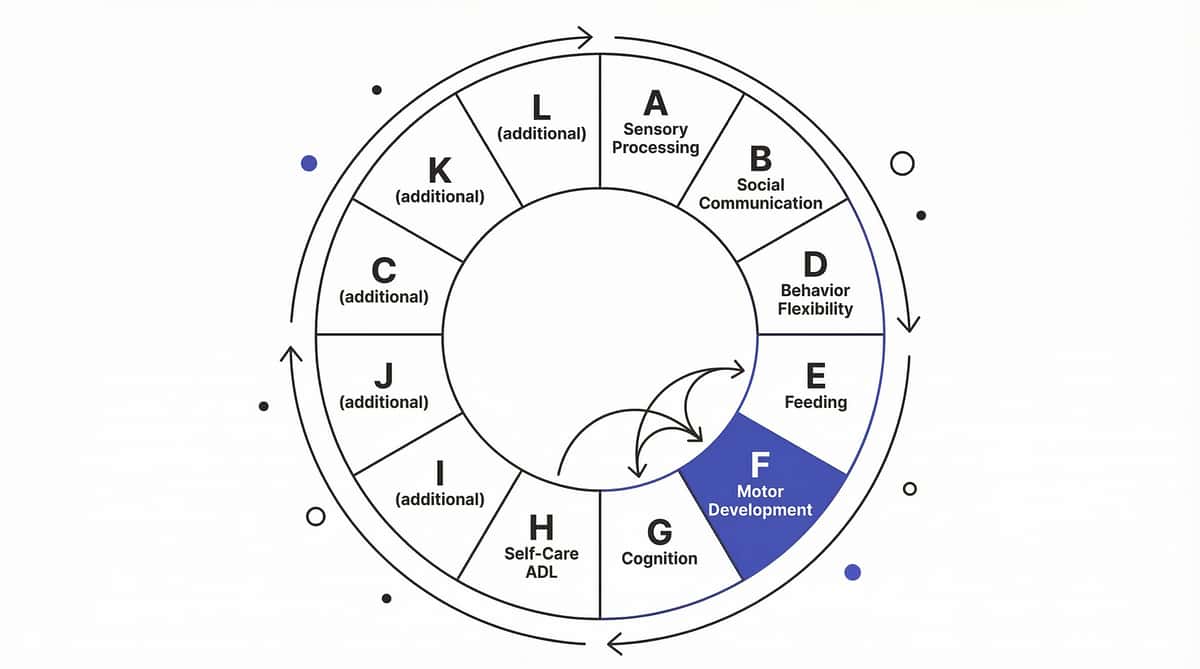
This Technique's Domain Position
Motor Planning (F-574) sits at the core of Domain F and feeds directly into:
- Domain H (Self-Care): Dressing, grooming sequences
- Domain E (Feeding): Tool use, self-feeding sequences
- Domain G (Cognition): Visual-motor learning, academic tool use
- Domain B (Social Communication): Physical play participation
GPT-OS® Integration
"If your child is being tracked on GPT-OS®, their Motor Planning Readiness Index score updates with each session. Their full 12-domain developmental profile is visible to your assigned therapist, allowing real-time program adjustments."
Research: WHO/UNICEF NCF: Five components of nurturing care require holistic developmental monitoring. 🔗 WHO NCF (2018) | PMC9978394
ACT V: THE COMMUNITY & ECOSYSTEM
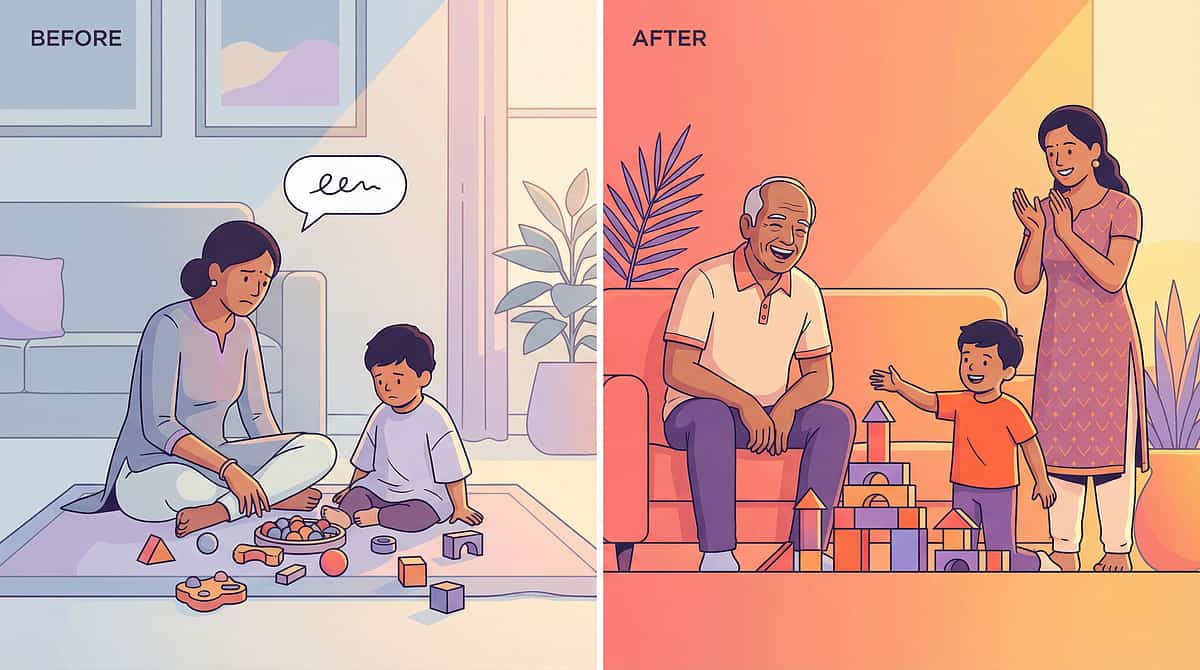
Real Families. Real Progress. Real Timelines.
Arjun, 6 — Hyderabad
Before (Week 0):"Every morning was a 45-minute battle to get dressed. He'd stand holding his shirt, tears streaming down his face, not knowing where to begin. His teacher reported he couldn't hold scissors properly. He refused to go to PE."
After (Week 10):"He still takes longer than his classmates to get dressed — but he does it independently now. We put the visual sequence cards up in his room and he uses them himself. His teacher said his pencil grip improved. He finally tried the climbing frame at school."
Parent Quote:"The obstacle course became our thing. Every Saturday morning, we'd rebuild it. He loved the challenge of figuring out the new configuration. I didn't realize I was watching his brain learn to plan."
Therapist Note: Arjun presented with classic praxis difficulty — ideation and planning components both affected. Visual sequence cards bridged his ideation gap while obstacle course variability trained his planning component. 12-week OT program + home execution 4x/week. Dressing independence achieved at week 9.
Priya, 8 — Chennai
Before (Week 0):"Sports day was the worst day of the year for her. She wanted to participate so badly — you could see it on her face — but her body just wouldn't cooperate. She'd trip, misjudge, always be a beat behind. She started refusing any physical activity."
After (Week 12):"She joined a dance class. Actual dance. Her instructor says she's one of the more determined students. She still has to think more consciously than other kids, but the gap between her and her classmates has narrowed enough that she doesn't feel different anymore."
Parent Quote:"The therapy ball was the turning point for us. Something about working on an unstable surface seemed to wake up her whole system. Like her body started getting better information."
All outcomes reflect individual results. Statistics represent aggregate data across the Pinnacle Network. Results vary by child profile and intervention consistency.
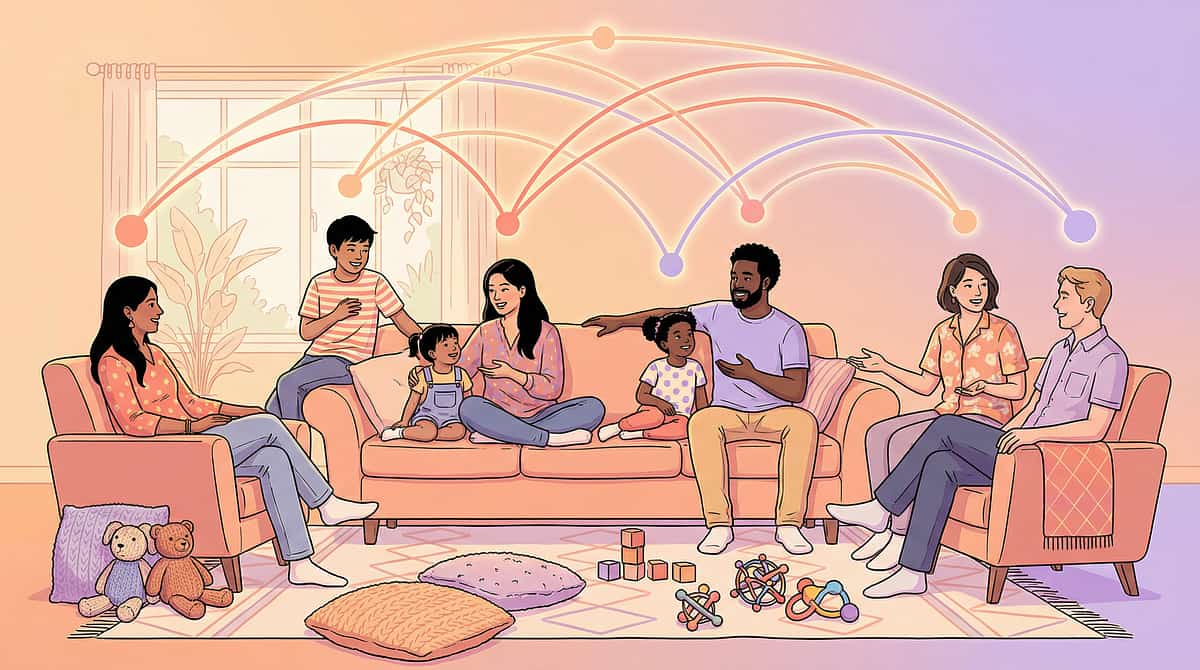
You Don't Have to Figure This Out Alone
Isolation is the single biggest barrier to consistent home-based intervention. Parents who are connected to others navigating the same challenge are 3x more likely to maintain their home therapy program over 12 weeks.
🟢 Motor Planning Parent Group (WhatsApp)
For parents implementing motor planning and praxis interventions. Share daily wins, ask questions, get peer support.
Join: pinnacleblooms.org/community/motor-planning | 📞 9100 181 181
💬 Pinnacle Parent Forum
Online community with threads for every technique domain. Expert therapist moderation. Search 500+ motor planning parent discussions.
pinnacleblooms.org/forum
📍 Local Pinnacle Parent Meetups
Monthly parent circles at Pinnacle centers across India. Facilitated by Pinnacle OTs. Network with families in your city.
Find your nearest meetup → pinnacleblooms.org/centers
🤝 Peer Mentoring
Be matched with an experienced Pinnacle parent who has completed this same motor planning journey 12–18 months ahead of you.
Request a mentor: 9100 181 181
"Every family that shares their journey makes the next family's journey easier. Consider sharing when you're ready."

Home + Clinic = Maximum Impact
70+ Pinnacle Centers · 16+ Languages · One National Helpline
Occupational Therapist (Lead)
Primary clinical lead for motor planning assessment and treatment. Conducts SIPT, Beery VMI, BOT-2. Designs your child's individualized praxis program. Supervises home implementation.
📞 Book OT Assessment → 9100 181 181
Physical Therapist (Co-lead for Gross Motor)
Essential if balance, gait, or sports participation are significantly affected alongside motor planning.
📞 Book PT Assessment → 9100 181 181
Teleconsultation
Remote families: Full OT/PT teleconsultation available. Therapist observes your home session via video, provides real-time guidance and program modifications.
Book Teleconsult → pinnacleblooms.org/teleconsult
Insurance / Funding
Pinnacle works with multiple insurance providers. Contact 9100 181 181 for guidance on covered OT/PT services for your child's condition.
📞FREE National Autism Helpline: 9100 181 181 | 16+ languages | 24×7 | FREE
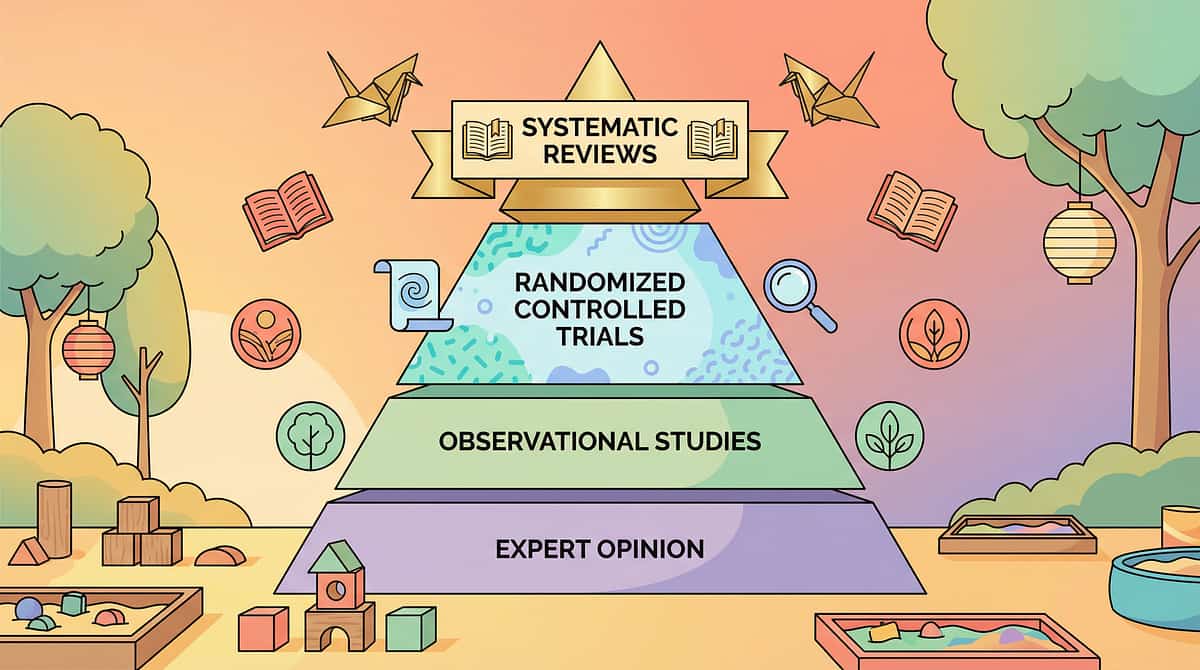
The Science Behind Every Card on This Page
Citation | Key Finding | Evidence Level | Link | |
Children (2024), PRISMA Systematic Review | 16 studies confirm SI therapy is evidence-based practice for ASD including motor domains | Level I | PMC11506176 | |
World J Clin Cases (2024), Meta-analysis | SI therapy across 24 studies promotes gross motor, fine motor, adaptive behavior, social skills | Level I | PMC10955541 | |
Indian J Pediatr (2019), Padmanabha et al. | Home-based sensory-motor interventions: significant outcomes in Indian pediatric population | Level II | DOI:10.1007/s12098-018-2747-4 | |
Frontiers Integrative Neuroscience (2020) | Neurological framework for SI treatment in ASD — establishes brain basis for praxis intervention | Level II | DOI:10.3389/fnint.2020.556660 | |
NCAEP Evidence-Based Practices (2020) | Motor imitation, SI, structured movement = evidence-based for autism | Level I | ncaep.fpg.unc.edu | |
WHO Nurturing Care Framework (2018) | Early parental intervention directly impacts developmental trajectories | WHO Policy | nurturing-care.org | |
WHO/UNICEF CCD Package (2023) | Home-based intervention across 54 LMICs — caregiver-administered protocols efficacy | Level I | PMC9978394 |
Your Data Makes Your Child's Program Smarter
What GPT-OS® Learns From F-574 Data
- Which of the 9 materials produces highest engagement for this child's sensory profile
- Rate of motor planning consolidation across the 8-week trajectory
- Correlation between session frequency and readiness index progression
- Which troubleshooting patterns signal need for OT intervention
Privacy Assurance
🔒Data protected under Indian IT Act, 2000 and Pinnacle Privacy Policy. No individual child data shared without explicit parental consent. Aggregate anonymized data only used for population-level intelligence.
Population-Level Impact
"When your child's data joins 20 million sessions in the GPT-OS® evidence base, it helps calibrate recommendations for the next family facing the same motor planning challenge. Your child's data helps every child like yours."

Watch the Reel That Brought This Page to Life
Reel F-574
9 Materials That Help With Motor Planning
Motor Development Series · Episode 574 of 999
Reel Metadata
Domain
F — Motor Development / Occupational Therapy
Duration
75–85 seconds
Series
Motor Development & Coordination in Children
Therapist Introduction
"Motor planning — praxis — is one of the most underdiagnosed and misunderstood difficulties in pediatric development. Parents are often told their child is 'clumsy' or 'not trying' when in fact their child is working harder than anyone in the room. These 9 materials create the sensory-motor experiences their nervous system needs to build the planning circuit. Use this page alongside the reel to go deeper."
— Pinnacle Consortium OT Team
Content Interconnect: ← Reel F-573: Vestibular Processing → Reel F-575: Bilateral Coordination
ACT VI: THE CLOSE
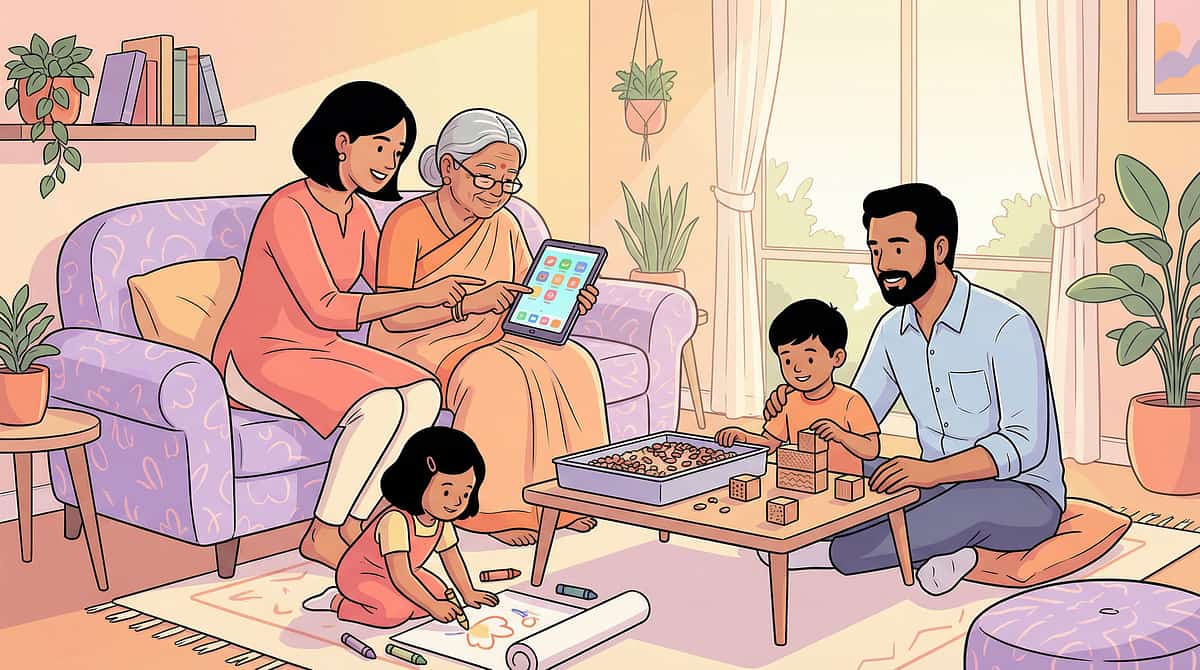
Consistency Across Caregivers Multiplies Impact
If only one caregiver implements this technique, progress is limited to 1/5 of the child's waking hours. Share this page with everyone in your child's life.
Share With Your Family
The simplified 1-page Family Guide includes the 9 materials + key safety rules + session structure for grandparents, babysitters, school teachers, PE teachers, and weekend parents.
Explain to Grandparents (Simplified Script)
"[Child's name] has a difficulty called motor planning — their brain knows what movement to do but takes longer to figure out the steps. The therapy materials help the brain learn to plan faster. When you do sessions with them: (1) always tell them what's coming next, (2) give them time to figure it out themselves before helping, (3) praise the trying, not just the success. That's all."
Teacher Communication Template
"Dear [Teacher], I wanted to let you know that [child's name] is currently receiving intervention for motor planning difficulties (praxis disorder). This means they need extra time to initiate and execute movement sequences. Please allow additional time for physical tasks, offer visual step-by-step instructions for motor activities, and avoid penalizing slowness in physical education settings. Thank you for your support."
Research: WHO CCD Package: Multi-caregiver training is critical for intervention generalization and maintenance. 🔗 PMC9978394
Preview of 9 materials that help with motor planning Therapy Material
Below is a visual preview of 9 materials that help with motor planning therapy material. The pages shown help educators, therapists, and caregivers understand the structure and content of the resource before use. Materials should be used under appropriate professional guidance.


Link copied!

Questions Parents Ask Most at Pinnacle Centers
Q1: How do I know if my child has motor planning difficulties vs. just being "clumsy"?
Motor planning difficulty (dyspraxia) is specifically about novel movements — your child struggles most with movements they haven't automated. If they can walk fine but freeze when learning a new dance move, motor planning is likely involved. True clumsiness (DCD) affects even practiced movements. Both benefit from these interventions. A formal OT assessment clarifies the profile.
Q2: Can motor planning difficulties be "cured" or do they persist?
Motor planning can improve significantly with the right intervention. Many children build enough capacity that their difficulties become functionally invisible in daily life. The goal is not "curing" a wiring difference but building sufficient capacity to live and participate fully.
Q3: How important is 3–5x/week frequency vs. once a week?
Frequency matters significantly. Motor planning circuits strengthen through repeated, varied practice. Think of it like learning a musical instrument — one lesson a week with no practice between produces minimal improvement. 3–4x/week home sessions combined with clinic work produces the fastest progress.
Q4: My child has autism — does motor planning therapy look different?
The materials are the same; the implementation may differ. Children with autism may need more predictability in session structure, more explicit verbal motor planning narration, and more careful attention to sensory overwhelm thresholds. Your Pinnacle OT will adapt the protocol for your child's autism profile.
Q5: Can I use all 9 materials in one session?
Not recommended. Select 2–3 materials per session. A typical session: proprioceptive warm-up (weighted lap pad, 5 min) → primary activity (obstacle course or therapy ball, 10 min) → fine motor cool-down (putty or pegboard, 5 min). Rotate materials across sessions rather than using all 9 every time.
Q6: The visual sequence cards aren't working — my child ignores them. What now?
Try standing next to the child and physically pointing to each card as they execute each step. After 3–4 sessions, fade your physical prompting. If still not working, photograph YOUR OWN hands doing each step — personal familiarity increases relevance.
Q7: Is there a link between motor planning and speech difficulties?
Yes. Childhood Apraxia of Speech (CAS) is essentially motor planning difficulty applied to the speech system. Many children with motor planning difficulties also have speech motor planning challenges. Pinnacle's FusionModule™ addresses both simultaneously.
Q8: When should I stop home sessions and rely only on clinic therapy?
Never — home therapy and clinic therapy are complementary, not competing. Clinic sessions provide therapeutic depth and professional monitoring; home sessions provide the frequency and generalization that produces functional change. The most effective outcomes consistently come from clinic + structured home practice combined.
Didn't find your answer? 📞9100 181 181 | Book Teleconsult → pinnacleblooms.org/teleconsult | Ask GPT-OS® → pinnacleblooms.org/gpt-os