
Clothespin Activities for Pinch Strength & Fine Motor Development
9 evidence-based materials that build hand strength and fine motor skills through clothespin activities. Pediatric OT-designed. WHO/UNICEF-aligned. Executable from home with GPT-OS®.
Pediatric OT
Fine Motor Development
Ages 3–8
Home Executable
GPT-OS® Validated
"She couldn't even open it. The clothespin just sat there — and I realised I had no idea how much her hands were struggling."
Your occupational therapist handed you a bag of clothespins and said "practice daily." You thought — it's just a clothespin. Then you watched your child try to open one. The fingers slipped. The whole hand tensed. The frustration crossed their face in three seconds flat.
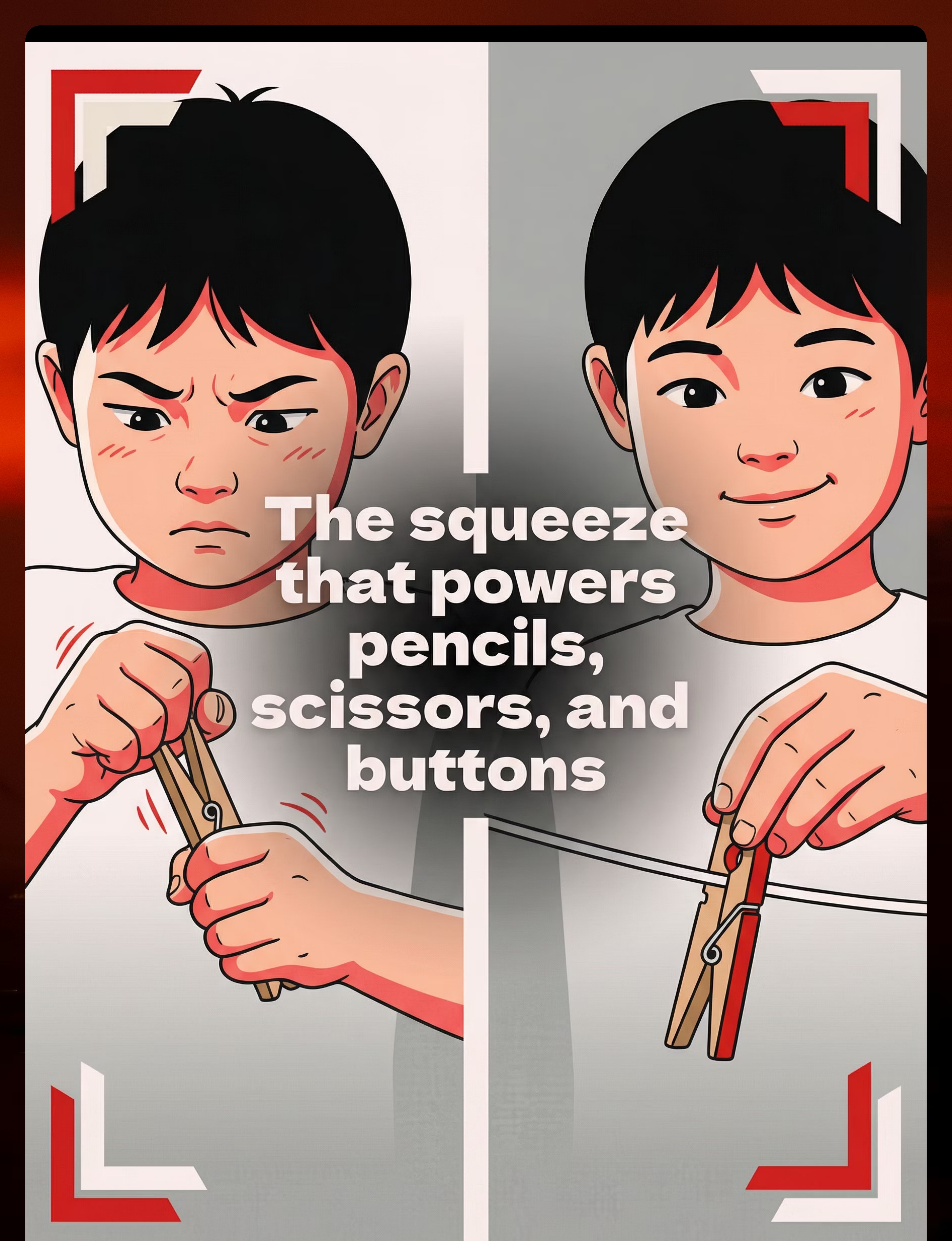
That moment — that exact moment — is the one that changes everything when parents understand what's actually happening beneath the surface. This isn't about a clothespin. It's about the pinch strength that powers pencils, scissors, buttons, and every fine motor task your child will face in school and daily life.
"You are not failing. Your child's hands are speaking — and this page will teach you to listen and respond." — Pinnacle Blooms Consortium, Pediatric OT Division
Validated by Pinnacle Blooms Network® | CRO • OT • SLP • ABA • SpEd • NeuroDev
WHO Nurturing Care Framework (2018): Early identification and parental awareness during ages 0–8 directly determines developmental trajectory outcomes. nurturing-care.org
You Are Among Millions of Families Navigating This Exact Challenge
1 in 36
Children Diagnosed
Children diagnosed with autism in India — CDC / INCLEN India Autism Prevalence Study
80%
Fine Motor Delays
Children with ASD experience fine motor delays — PRISMA Systematic Review, 2024
21M+
Sessions Delivered
Therapy sessions delivered through GPT-OS® at Pinnacle Blooms Network® Clinical Data
When a child cannot operate a clothespin with correct form, it signals that the intrinsic muscles of the hand — the small, precision-control muscles between the finger bones — lack the strength and coordination for the pinch pattern foundational to all tool use. Across India's 70+ Pinnacle centers, pinch strength deficit is among the top 5 most commonly identified fine motor concerns in children ages 3–8.
You are not alone. You are, in fact, in the majority of families seeking answers for exactly this challenge.
"Fine motor delays affect approximately 40–60% of children with developmental differences, with hand strength deficits identified as a primary barrier to academic readiness." — World Journal of Clinical Cases, 2024 (PMC10955541)
This Is a Wiring & Strength Difference — Not a Behaviour Problem
The Pinch Pattern Explained
When your child squeezes a clothespin, five intrinsic hand muscles must coordinate simultaneously:
- Opponens Pollicis — rotates the thumb to face the fingers (opposition)
- Flexor Pollicis Brevis — provides the pressing force of the thumb
- Adductor Pollicis — pulls the thumb toward the palm with strength
- First Dorsal Interosseous — stabilises the index finger during contact
- Lumbricals — position the fingers optimally for precision pinch
What Compensation Looks Like
If any of these muscles are underdeveloped, the child compensates — using the whole fist, the side of the thumb, or extreme body tension. These compensations reinforce incorrect patterns that directly impair pencil grip, scissor control, and self-care.
"The spring resistance of a clothespin provides measurable, consistent training for exactly these five muscles. The same muscles that open a clothespin are the ones that hold a pencil correctly." — Pinnacle OT Consortium Clinical Brief

Your Child's Pinch Strength Journey: A Developmental Map
Ages 2–3
Emerging pincer grasp — picking up small objects with effort
Ages 3–4
Modified clothespins — manageable with effort
Ages 4–5
Easy clothespins — fairly manageable
Ages 5–6
Standard clothespins — fairly easy ← GOAL ZONE
Ages 6–8
Sustained — 30+ reps without fatigue
Comorbidity Awareness
Children experiencing clothespin/pinch challenges commonly also present with delayed pencil grip maturation, scissor avoidance, difficulty with buttons and snaps, handwriting fatigue, resistance to drawing or craft activities, and low core/shoulder stability.
"Pinch strength develops rapidly between ages 3–7. Children who miss critical hand-strengthening experiences can fall measurably behind. Early, structured intervention closes this gap."
Clinically Validated. Home-Applicable. Parent-Proven.
Evidence Grade: I-B
Systematic Review + Multiple RCTs
WHO/UNICEF Aligned
Study | Finding | Source | |
PRISMA Systematic Review (2024), 16 studies | Sensory integration + fine motor intervention meets evidence-based practice criteria for ASD | ||
Meta-Analysis, 24 studies (World J Clin Cases, 2024) | Fine motor therapy significantly promoted adaptive skills and functional independence | ||
Indian RCT (Padmanabha et al., 2019) | Home-based OT interventions demonstrated significant measurable outcomes across Indian pediatric populations | ||
NCAEP Evidence-Based Practices Report (2020) | Fine motor and manipulative play classified as evidence-based practice for developmental populations |
"This technique is not experimental. It is grounded in decades of occupational therapy research, validated in Indian clinical settings, and executable in your home today."
Clothespin Activities for Pinch Strength Development
F-614
Fine Motor Development
OT-CLP Domain
"The Squeeze That Powers Everything"
Definition: Clothespin Activities are a structured occupational therapy technique that uses the spring-resistance of clothespins to train the pincer grasp pattern — the thumb-opposing-fingers movement used in virtually every precision tool task. The therapeutic goal is to systematically build the intrinsic hand muscles responsible for pencil control, scissor operation, button manipulation, and sustained fine motor endurance. Unlike general grip strengthening, clothespin activities specifically target thumb opposition — the foundational movement pattern of all human tool use.
Parameter | Value | |
Age Range | 3–8 years | |
Session Duration | 10–20 minutes | |
Frequency | Daily (minimum 5×/week) | |
Setting | Home / School / Clinic | |
Lead Discipline | Pediatric Occupational Therapy | |
GPT-OS® Index | Fine Motor Independence + Hand Strength Readiness |
This Technique Crosses Therapy Boundaries — Because the Brain Doesn't Organise by Therapy Type
🟣 Occupational Therapy (Primary Lead)
OT therapists deploy clothespin activities as the primary strength-building tool in fine motor programmes. They assess pinch strength with standardised instruments, prescribe resistance progression, and monitor grasp pattern correction.
🔵 Special Education
SpEd professionals integrate clothespin activities with literacy and maths content — clipping answers, building sequences — so hand strengthening happens simultaneously with curriculum support.
🟢 Applied Behaviour Analysis
Behaviour analysts design reinforcement schedules around clothespin practice, use timed challenges as motivation structures, and integrate progress data into broader behavioural intervention plans.
🟠 Speech-Language Pathology
SLPs incorporate fine motor warm-ups including hand strengthening as part of oral-motor readiness programmes — hand and mouth muscles share neural development patterns.
"At Pinnacle, we don't assign this technique to one therapist. OT leads. ABA structures. SpEd integrates. SLP connects. FusionModule™ coordinates all four into one coherent therapeutic programme." — GPT-OS® FusionModule™ Clinical Design Principle
Precision is Power: What Clothespin Activities Actually Build
Primary Targets
- Pinch Strength — measurable force generated by thumb-to-finger opposition
- Thumb Opposition — rotational positioning of thumb to face fingertips
- Hand Endurance — sustained precision use without fatigue
Observable: Child opens standard clothespin with correct form; 20+ reps; no compensatory patterns
Secondary & Tertiary Targets
- Pencil grip stability and endurance
- Scissor control and sustained cutting ability
- Button, snap, and zipper manipulation
- Academic readiness (all paper-based tasks)
- Self-care independence
- Emotional confidence in manual tasks
9 Evidence-Based Materials That Make Clothespin Therapy Work
The 9 materials below represent the complete therapeutic toolkit for clothespin activities. Each addresses a different engagement, progression, or skill dimension. You can start with just Materials 1–3 and a set of clothespins — everything else builds on that foundation.
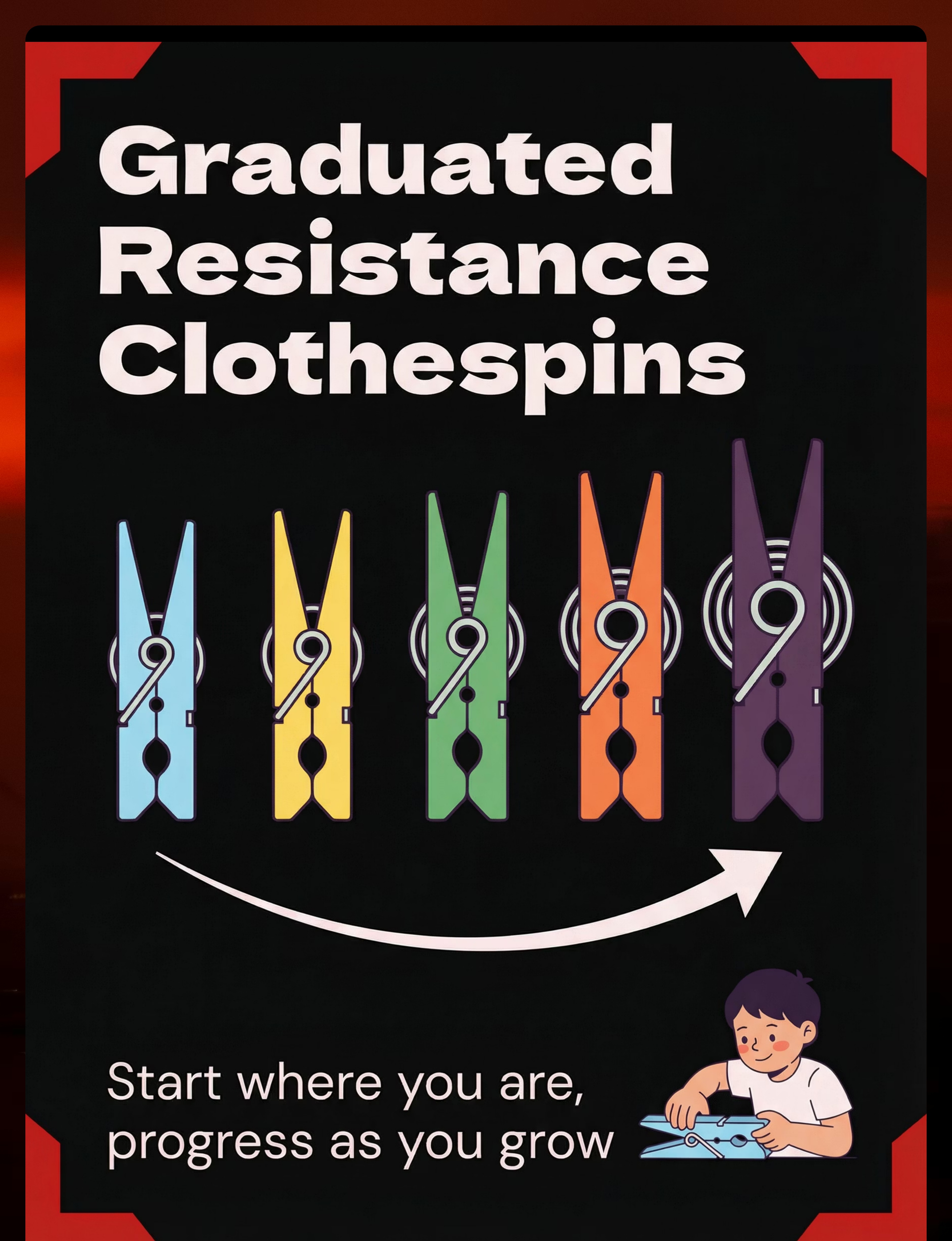
Graduated Resistance Clothespins
Progressive resistance — the foundation of the programme
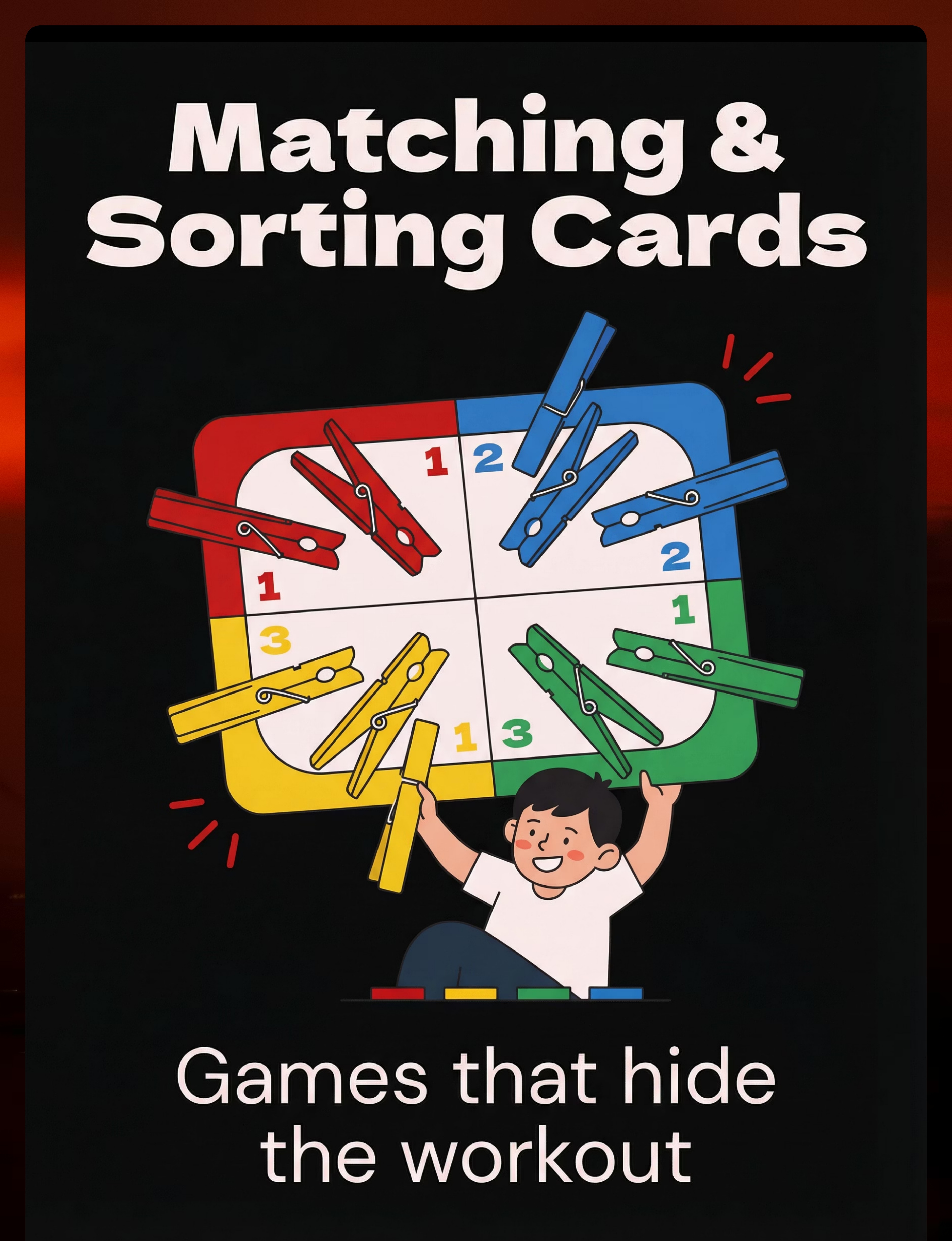
Matching & Sorting Cards
Game-embedded repetitions for cognitive + motor integration
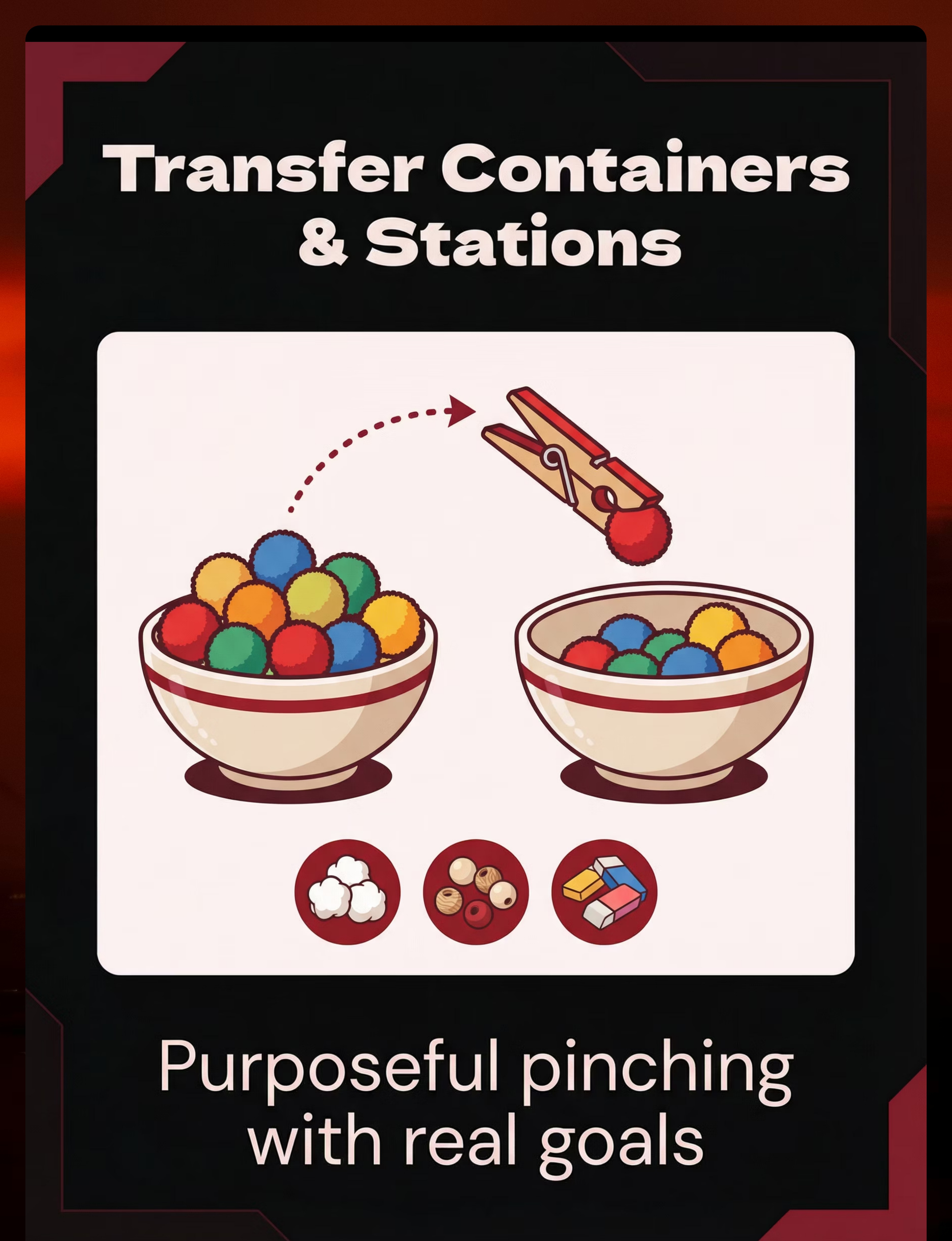
Transfer Containers & Stations
Purposeful bilateral coordination tasks
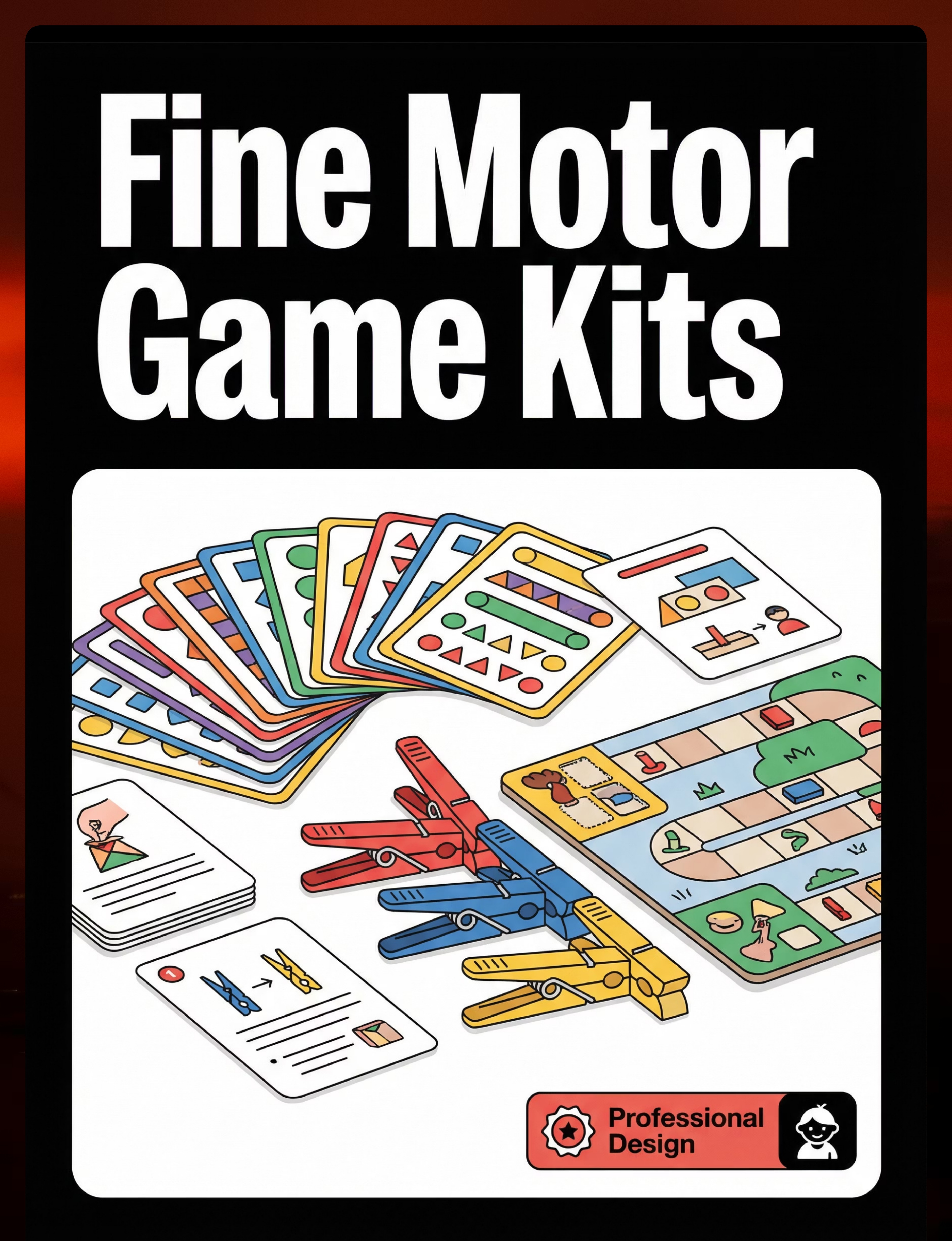
Fine Motor Game Kits
Replay value and structured engagement
Clothespin Creatures & Character Building
Creative motivation through art and pretend play
Clothesline & Clip-Up Activities
Vertical motor tasks with real-world purpose
Wheel & Pattern Boards
Visual-perceptual challenge + motor planning
Math & Literacy Cards
Academic dual-purpose learning integration
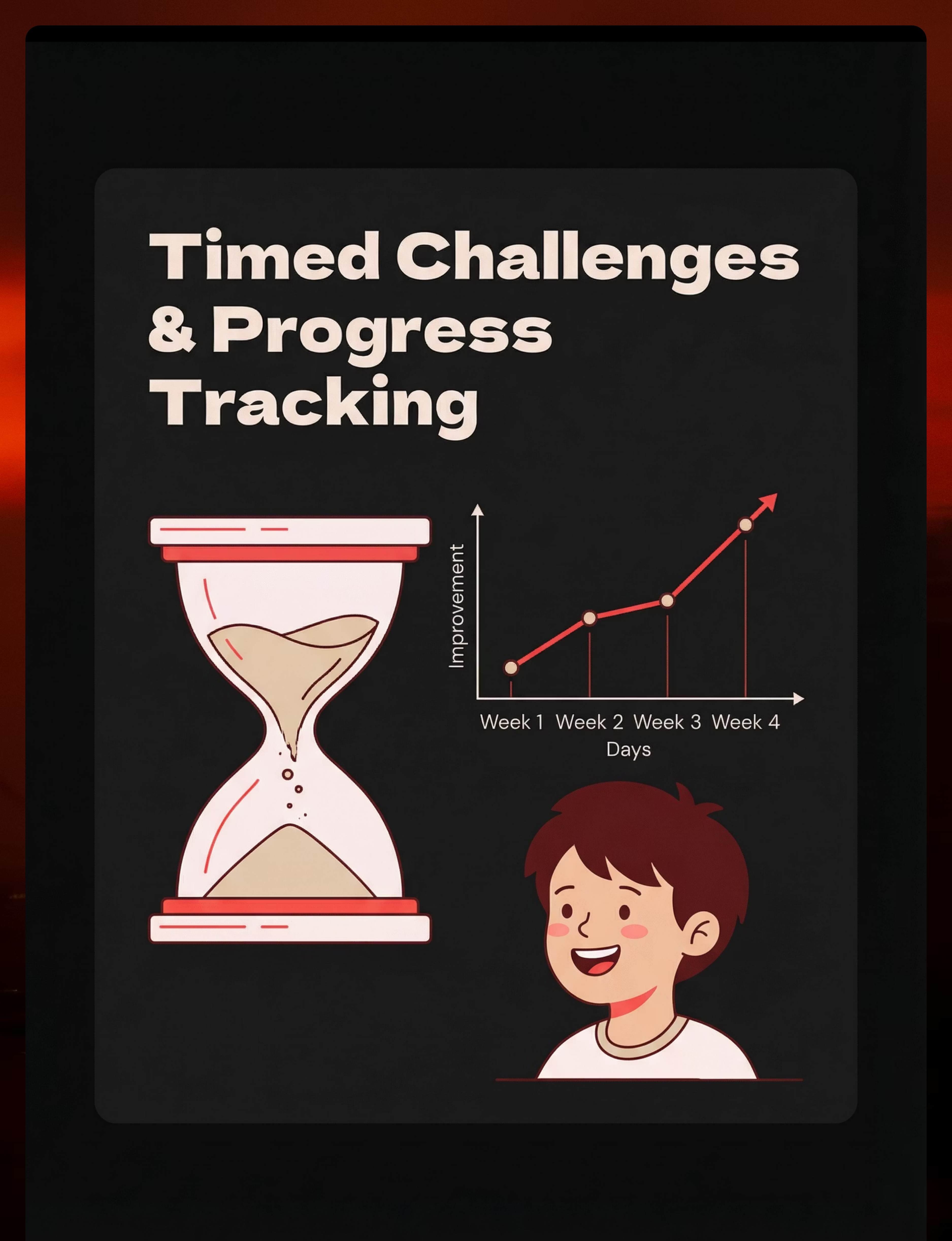
Timed Challenges & Progress Tracking
Visible progress and motivational momentum
Material 1: Graduated Resistance Clothespins
Material 1 of 9
Fine Motor Tools / Progressive Resistance
Price Range: ₹300–800 | 🛒 Search Amazon.in
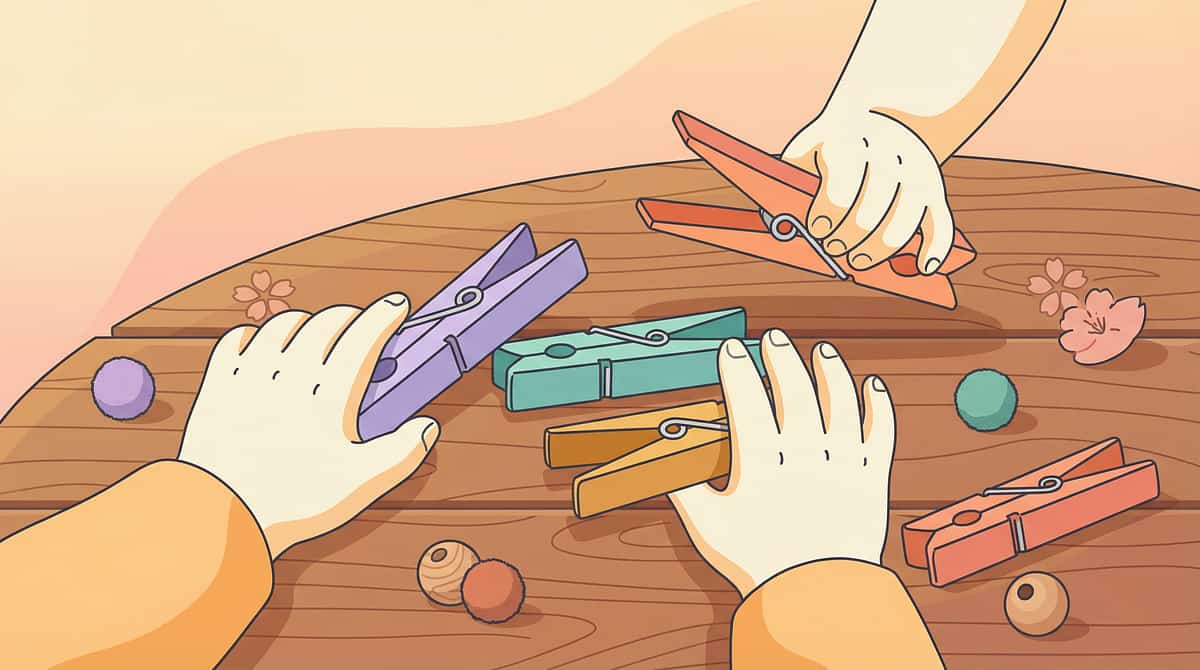
Standard clothespins have fixed resistance — typically too hard for children with weak pinch, causing frustration and compensatory patterns. Graduated sets (colour-coded by spring tension: blue → yellow → green → orange → purple) allow children to begin at their actual current strength level and progress systematically. Beginning with success is non-negotiable: if a child uses their whole fist because they can't manage correct pinch form, they're reinforcing the wrong muscle pattern.
Key Principle: Progressive resistance training for hands obeys the same rules as any strength training — start manageable, increase systematically, prioritise correct form over maximum load.
DIY Version (₹0)
Remove the spring from a standard clothespin, stretch it slightly, replace it, and colour-code with tape. Test resistance before child use. Create 3–5 resistance levels from your household clothespin collection. Mark "GOAL" level with gold tape.
Therapist Safety Note
Ensure modified springs are secure. Test 10 times before giving to child. Inspect before each session to confirm spring integrity.
Material 2: Clothespin Matching & Sorting Cards
Material 2 of 9
Sorting Activities / Categorisation
Price Range: ₹150–500 | 🛒 Available: Lattooland Rainbow Sorting — ₹628
When a child focuses on a cognitive game — matching colours, counting objects, completing patterns — the pinching becomes incidental. The brain's preference for purposeful activity over drill means children accumulate 30–50 repetitions without noticing. Matching cards add visual-motor integration (eye → target → clip accurately) and cognitive skill-building alongside pure strength training.
Colour Matching
Clip matching coloured clothespins to colour-coded cards around their edges
Number Counting
Number cards requiring that count of clips — maths meets motor
Letter-Picture
Letter-picture matching cards for dual literacy and fine motor benefit
DIY Version (₹0): Laminated cardstock cards. Draw coloured circles along card edges. Use permanent marker. Reinforce clip edges to prevent tearing.
Material 3: Clothespin Transfer Containers & Stations
Material 3 of 9
Fine Motor Manipulation / Purposeful Play
Price Range: ₹100–400 | Household items work perfectly
Transfer activities — using clothespins to pick up pompoms, cotton balls, or small erasers from one bowl and move them to another — require sustained pinch strength (holding pin open while gripping the object), coordinated release (opening at the right moment to drop), and bilateral coordination (holding container with one hand, operating pin with the other). The task has a natural beginning and end, providing completion satisfaction.
Setup Instructions
Two bowls/muffin tins, 15–20 pompoms, age-appropriate clothespins. Theme the containers ("Feed the monster", "Fill the treasure chest") to maximise motivation. The story context transforms a drill into an adventure.
DIY Version (₹0)
Kitchen bowls + pompoms from craft store (₹50 for 100 pieces). Cotton balls. Crinkled paper balls. Any household small, grippable items appropriate for child's age and safe for independent use.
Material 4: Clothespin Fine Motor Game Kits
Material 4 of 9
Problem-Solving Toys / Fine Motor Games
Price Range: ₹400–1,200 | 🛒 Search Amazon.in
Commercial kits bring professional game design — tested activity progressions, visual timers, competitive elements, and replay value. A child who requests the game accumulates more therapeutic repetitions than a child who tolerates the exercise. Kits also signal "play time" rather than "therapy time," reducing resistance significantly. Look for kits with 5+ activity variations and built-in difficulty progression to sustain engagement over weeks.
DIY Version (₹0): Use matching cards, wheel boards, and timed challenges (all described in this guide) as your DIY kit. Create a dedicated box/tin — the physical container signals "game time" and creates a predictable routine boundary your child will come to anticipate positively.
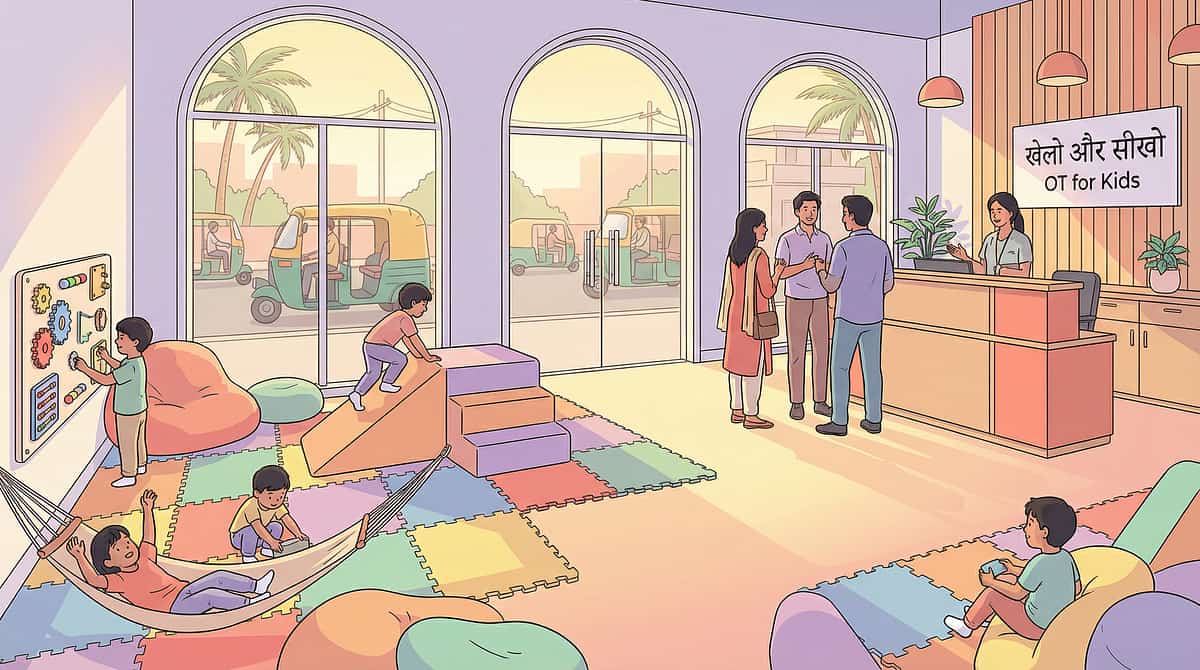
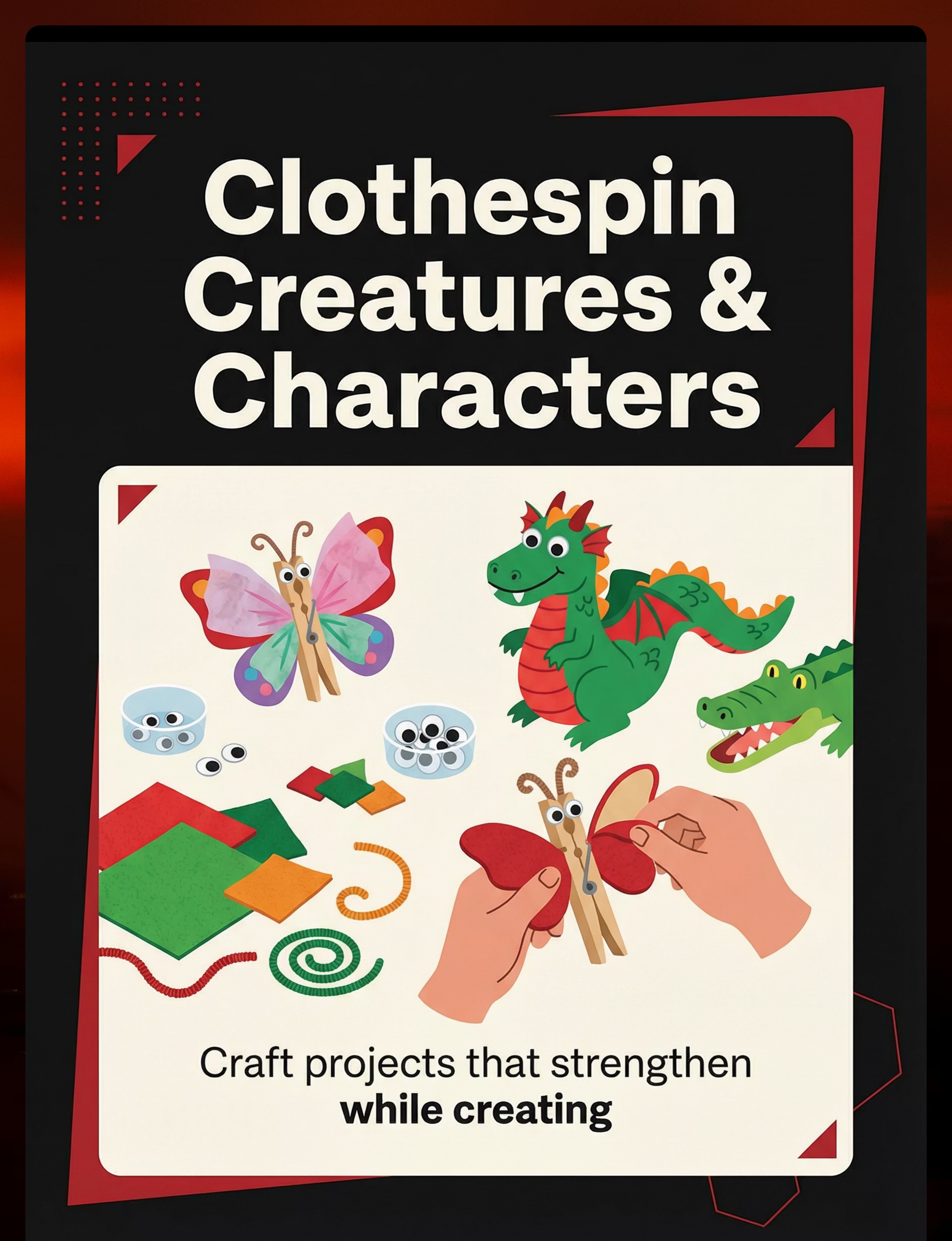
Material 5: Clothespin Creatures & Character Building
Material 5 of 9
Creative Arts / Fine Motor Craft
Price Range: ₹200–600 | Craft supplies from any stationary store
Creative clothespin crafts (dragonflies, butterflies, alligators, dinosaurs) transform strengthening into art. Each decoration attached — a googly eye, a felt wing, a pipe cleaner leg — is another therapeutic pinch. The focus is on creation, not exercise. The finished creature becomes a toy. This approach is particularly powerful for children who resist structured activities but engage readily with art and pretend play.
Why This Format Works
When children are absorbed in making something beautiful, they forget they're "doing therapy." The creative investment — naming the creature, choosing its colours, building its story — generates intrinsic motivation that sustains 40–60 pinch actions per session naturally.
DIY Version (₹0)
Wooden clothespins + construction paper + pencil = butterfly. Googly eyes (₹50/pack) transform any pin into a character instantly. Full creature from household materials: total cost ₹0. Start with one creature; let the child decide what to build next.
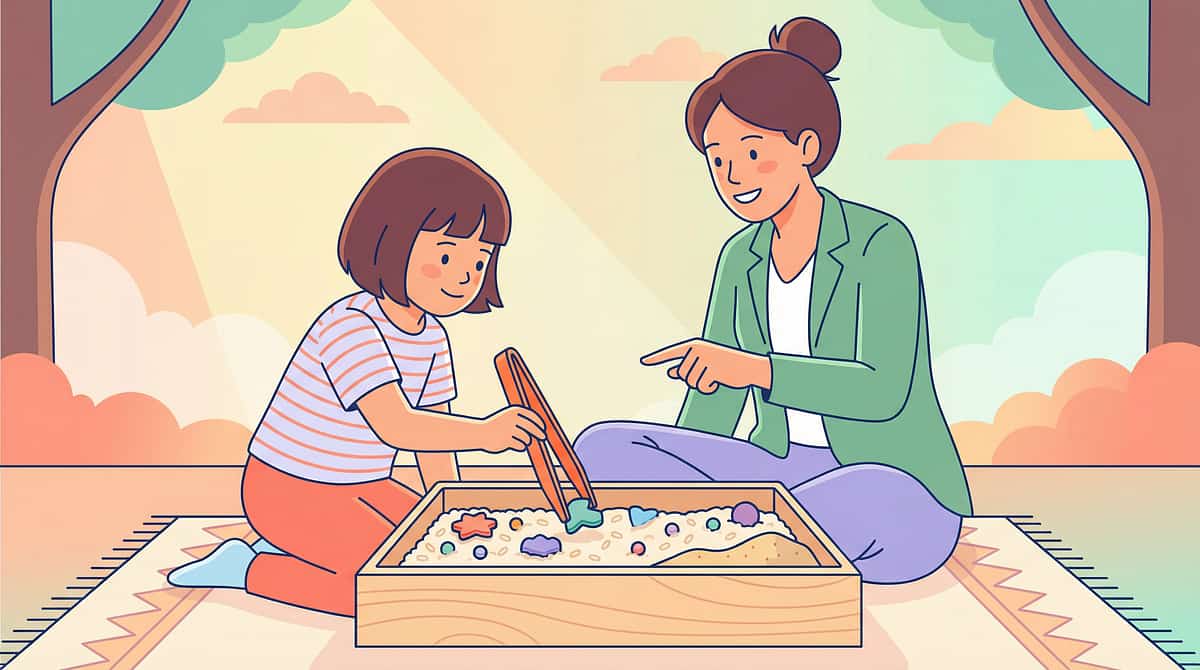
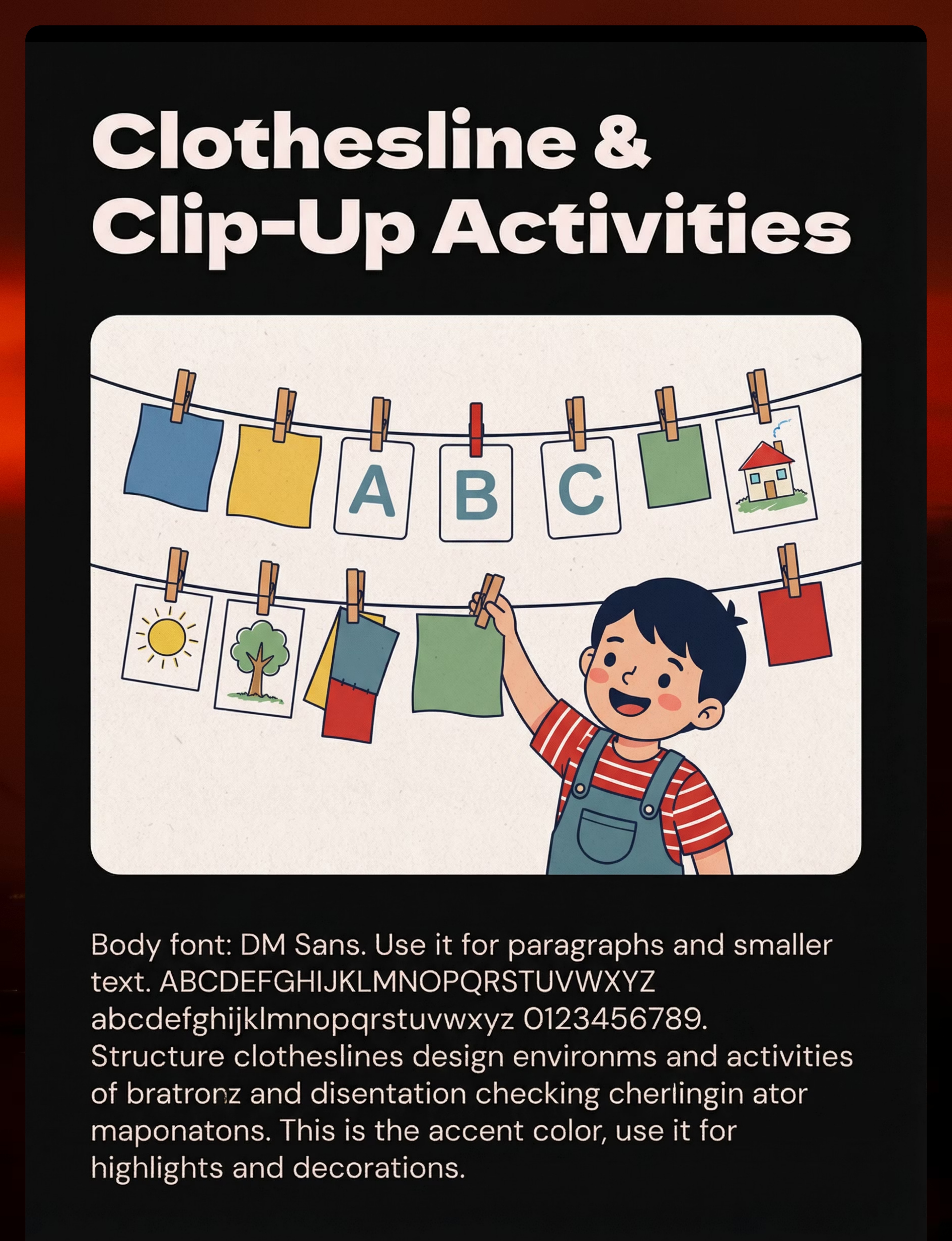
Material 6: Clothesline & Clip-Up Activities
Material 6 of 9
Functional Life Skills / Vertical Motor Tasks
Price Range: ₹100–350 | String + hooks from any hardware store
A mini indoor clothesline (string between two chairs or doorframe hooks) brings real-world purpose to clip practice. The vertical orientation challenges hand-eye coordination differently from tabletop tasks — reaching up and across adds postural control and bilateral coordination demands. Hang alphabet cards in sequence, sort picture cards by category, clip doll clothes. The visual result — a full, beautifully hung line — provides evidence of completed work and tangible pride in accomplishment.
Academic Integration
Hang alphabet or number cards in sequence — literacy meets fine motor simultaneously
Sorting & Categorising
Sort picture cards by colour, category, or pattern before clipping — adds cognitive challenge
Pretend Play
Clip doll clothes, paper outfits, fabric scraps — functional and imaginative
DIY Version (₹0): Any string/ribbon + two chairs. Tension cord between doorframe. Doll clothes, paper cards, fabric scraps as items to clip.
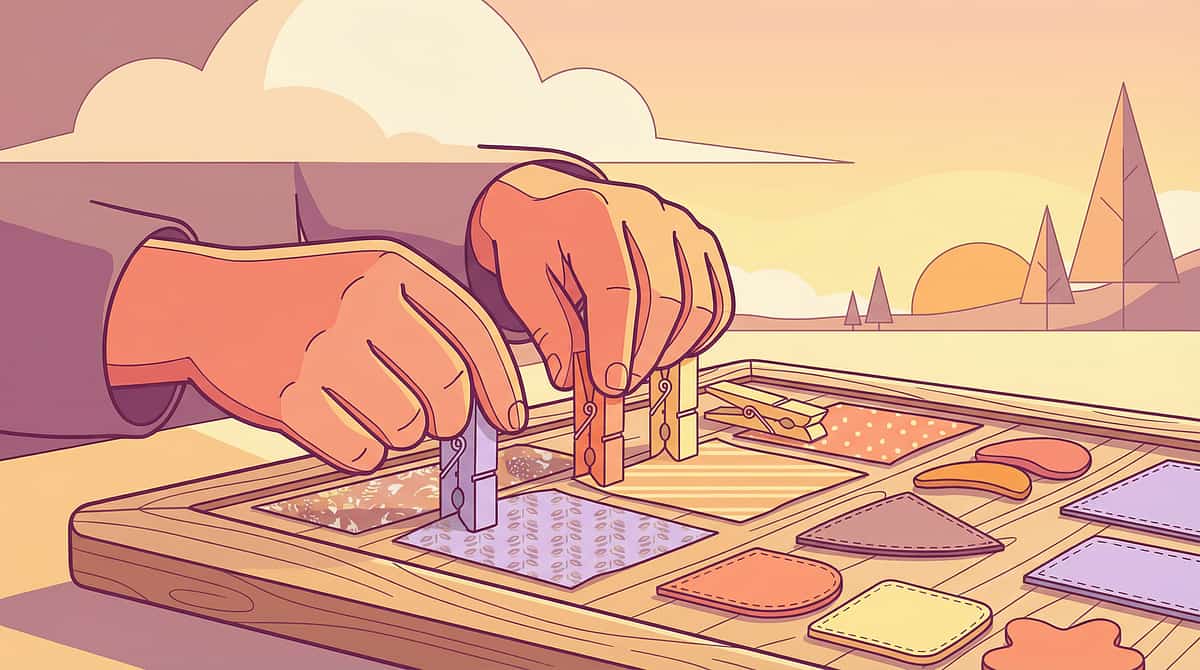
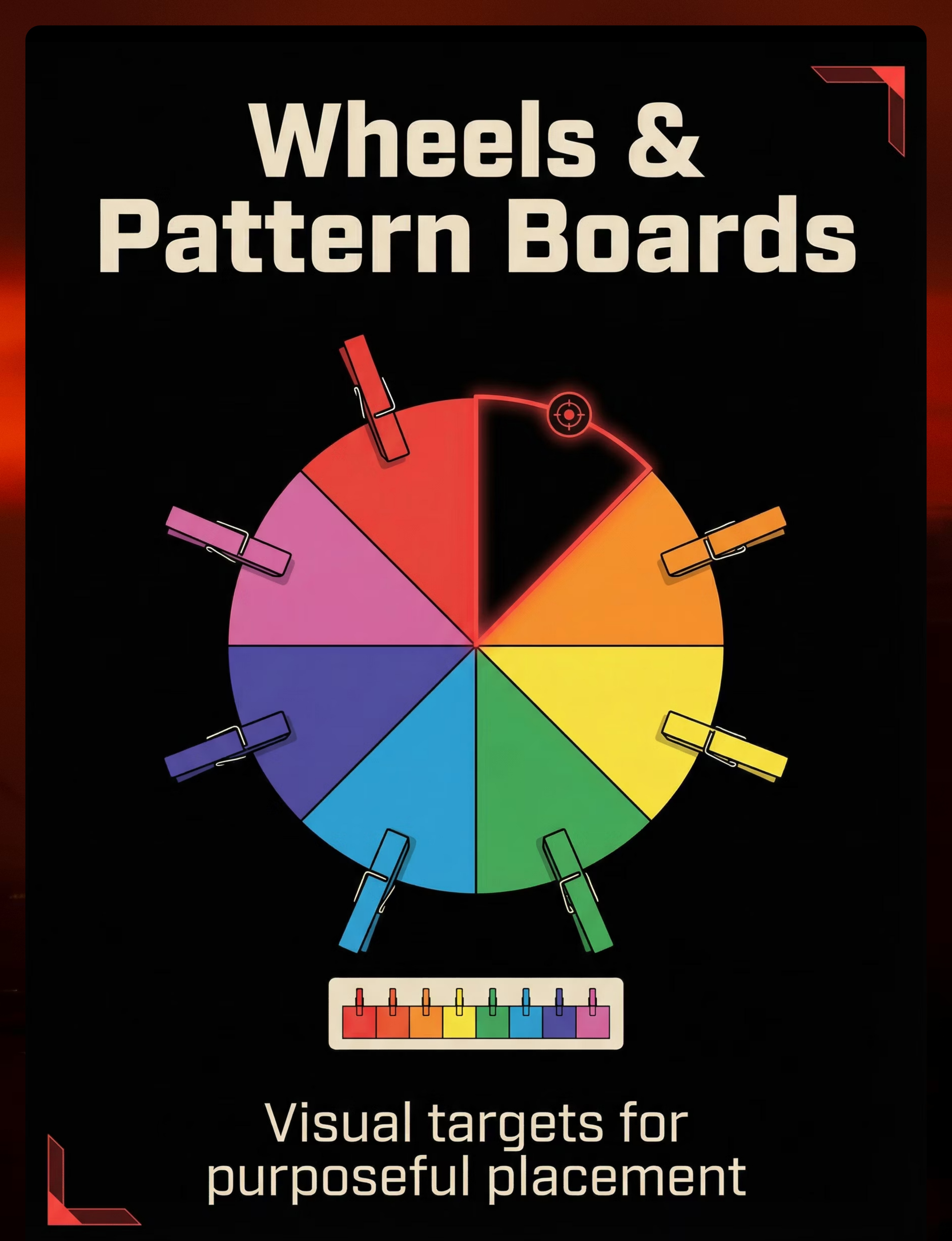
Material 7: Clothespin Wheel & Pattern Boards
Material 7 of 9
Visual-Perceptual Tools / Pattern Completion
Price Range: ₹200–500 | Cardboard + markers = free
Colour-coded wheels (clip matching colour pins around the perimeter) and pattern strips (replicate red-blue-red-blue sequences with coloured pins) combine pinch strength training with visual-perceptual challenge — colour matching, pattern recognition, spatial organisation. The circular format requires clips at varied angles, adding motor planning complexity. Adding a spinner creates a game: "Spin, then clip that section. First to complete wins."
What Makes This Unique
Unlike transfer tasks (forward-backward motion), wheel activities require clipping at varied angles around a perimeter. This recruits the intrinsic hand muscles in different orientations — building the 360-degree strength that transfers to real-world tool use.
DIY Version (₹0)
Cut a circle from a cardboard box. Divide into 8 colour sections with markers. Use coloured tape or crayon. Test durability — laminate if possible for extended use across multiple sessions.
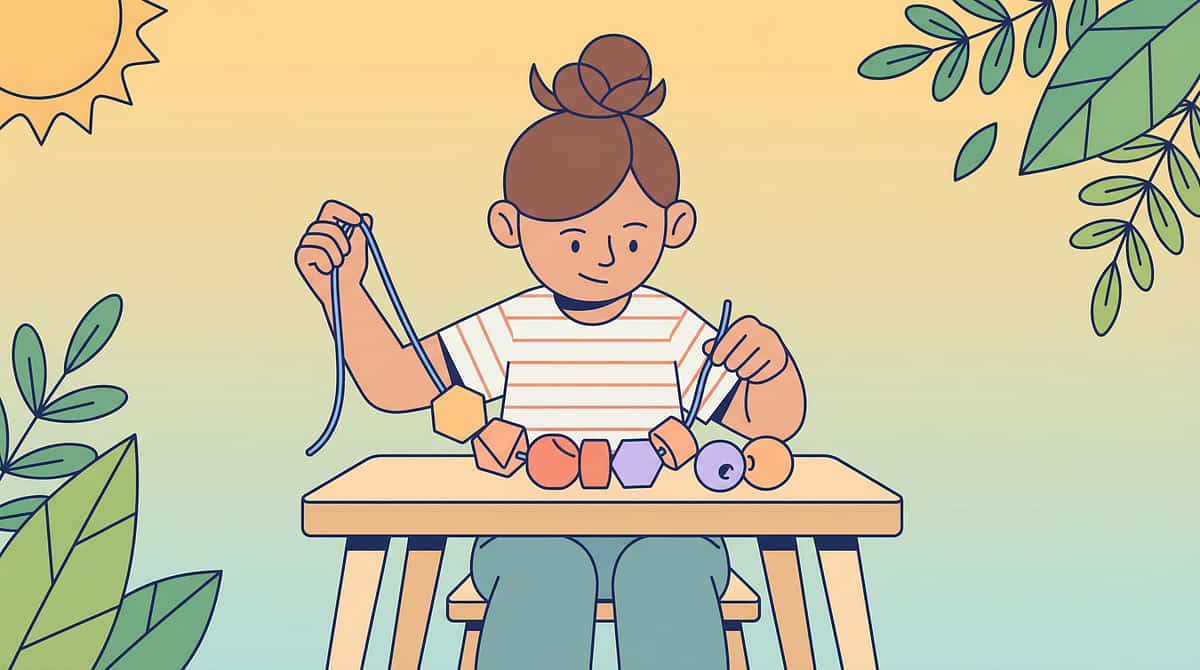
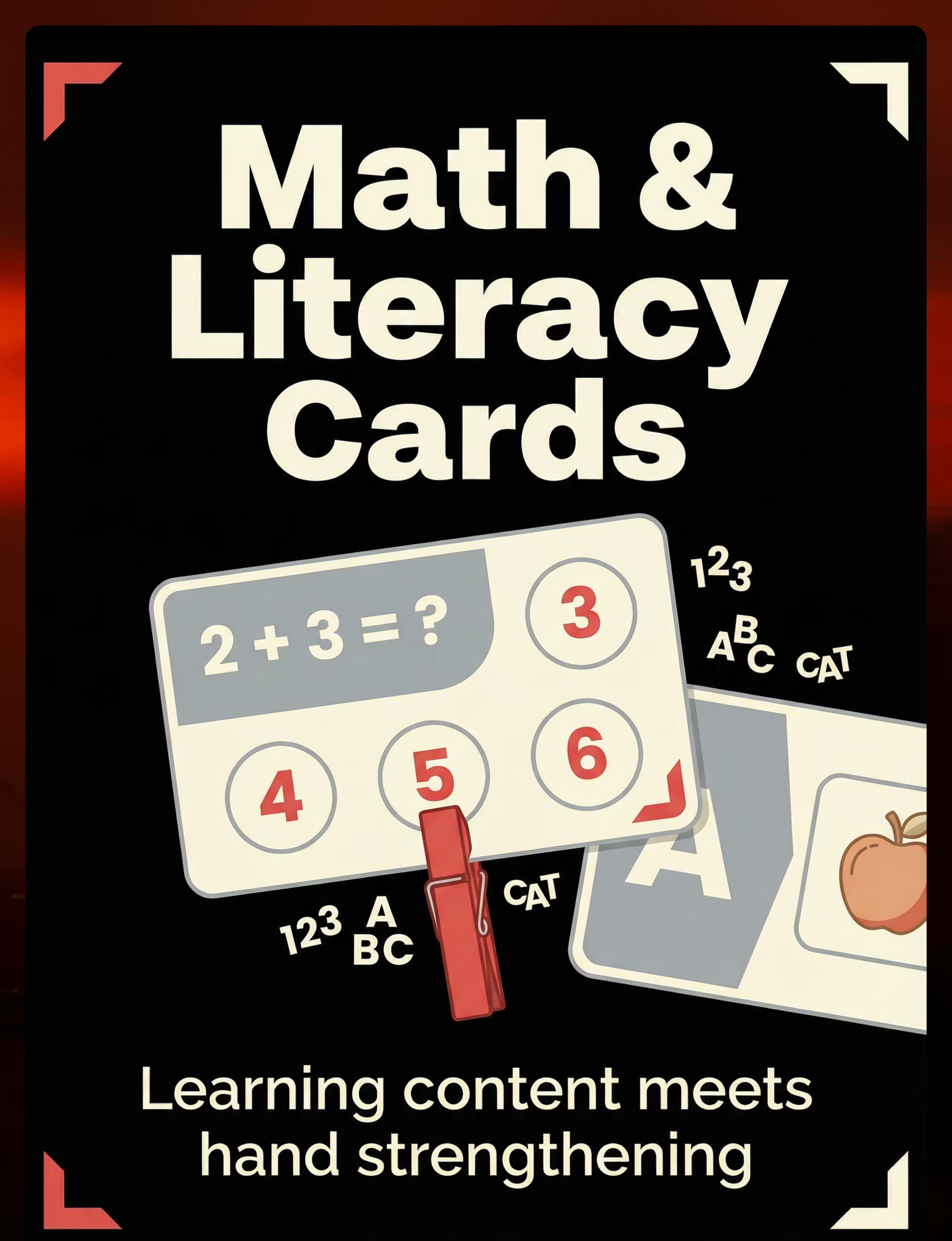
Material 8: Clothespin Math & Literacy Cards
Material 8 of 9
Academic Integration / Dual-Purpose Learning
Price Range: ₹150–450 | DIY with cardstock
Academic cards (2+3=? → clip "5") accomplish two developmental goals simultaneously: building hand strength AND reinforcing school curriculum. For reluctant practisers, the academic focus shifts attention from the motor effort. For eager learners, the game format makes practice engaging. The kinesthetic act of clipping the correct answer may also enhance memory encoding. Self-checking cards (correct answer marked on the back) enable independent practice without adult oversight.
Maths Integration
Addition, subtraction, number recognition — clip the correct answer around the card's edge
Literacy Integration
Letter-sound matching, sight words, beginning letter identification
Self-Checking
Dot the correct answer edge on the back — child checks independently, building autonomy
DIY Version (₹0): Print or draw maths problems on cardstock. Circle 3–4 answer choices around card edge. Dot the correct answer edge with a coloured marker on the back for self-checking.
Material 9: Timed Challenges & Progress Tracking Tools
Material 9 of 9
Progress Monitoring / Motivational Tools
What gets measured gets improved. Visual sand timers create urgency and focus. Progress charts provide concrete evidence that practice is working. For competitive children, beating their own record is intrinsically motivating. For data-oriented parents, the numbers guide appropriate progression. The Reward Jar and Sticker systems from Pinnacle's Canon Reinforcement Menus integrate directly into the tracking system — each personal record earns a sticker, each milestone earns a reward.
DIY Version (₹0): Tally marks on paper. Date and count. Graph on grid paper. Phone timer for timed challenges. Homemade sticker chart from any notebook. Simple, consistent, effective.
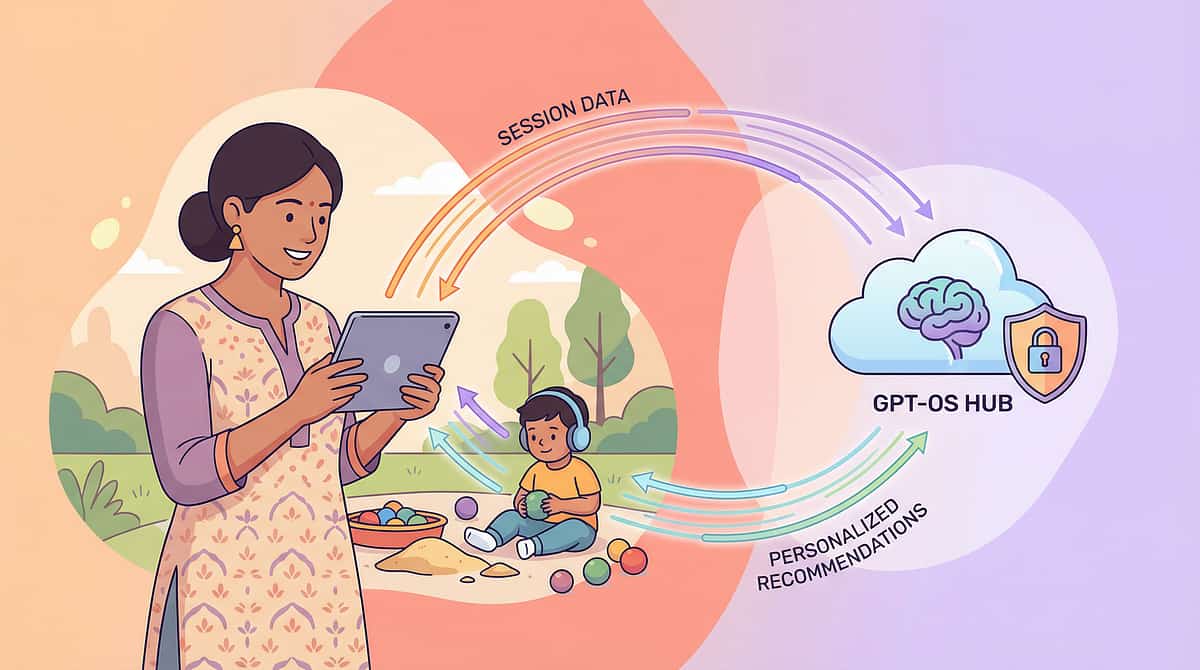
GPT-OS® Integration: All progress data feeds into the Hand Strength Readiness Index within AbilityScore®, automatically adjusting your child's recommended programme parameters based on real session outcomes.
Every Child Deserves This Intervention — Regardless of Budget
"The WHO Nurturing Care Framework mandates context-specific, equity-focused interventions accessible to all families regardless of economic status. This page ensures every parent can execute this technique TODAY with household items."
BUY THIS | MAKE THIS (₹0) | |
Graduated resistance clothespins (₹300–800) | Stretch standard pin springs + colour-code with tape | |
Matching sort cards (₹150–500) | Cardstock + markers + lamination | |
Transfer pompoms (₹50–150) | Cotton balls from bathroom cabinet | |
Fine motor game kit (₹400–1,200) | Combine all DIY materials in a dedicated box | |
Clothespin creatures kit (₹200–600) | Newspaper + scissors + tape + googly eyes (₹50) | |
Mini clothesline kit (₹100–350) | Any string + two chairs + paper cards | |
Pattern wheel (₹200–500) | Cardboard circle + coloured markers | |
Sand timer (₹150–300) | Phone timer / Alexa / any countdown app | |
Reward stickers (₹364) | Hand-drawn stars on homemade chart |
When Clinical-Grade Materials Matter: For formal OT assessment of pinch strength using standardised Pinch Gauge instruments and when building a documented baseline for GPT-OS® tracking, clinical-grade tools are non-negotiable. For daily home practice, household substitutes are fully therapeutic.

Safety Gate: Read This Before Every Session
🔴 DO NOT PROCEED IF:
- Child has joint hypermobility syndrome
- Child reports pain during hand activities
- Child has recent hand injury, fracture, or surgical recovery
- Child is in active distress, meltdown state, or severely dysregulated
- Modified DIY clothespin spring appears loose or unstable
- Transfer items include small objects that pose choking hazard
🟡 PROCEED WITH MODIFICATION IF:
- Child shows low muscle tone affecting multiple body areas (use lightest resistance; consult OT)
- Child has tactile hypersensitivity to certain textures
- Child recently had a difficult session (reduce to 5 minutes)
- Child has not eaten or is fatigued (shorten session; prioritise preferred materials)
🟢 GO SIGNALS:
- Child is calm, regulated, adequately fed and rested
- Materials are age-appropriate and safety-checked
- Parent has read this card and understands stop signals
- Environment is prepared
Medical Disclaimer: This content is educational. It does not replace evaluation and treatment by licensed healthcare providers. Hand weakness and fine motor difficulties may indicate underlying conditions requiring professional assessment. If your child has significant difficulty affecting daily functioning, please consult appropriate professionals for comprehensive evaluation. FREE National Autism Helpline: 9100 181 181 (24×7, 16+ languages)
Spatial Precision Prevents 80% of Session Failures
Table & Chair Setup
Child's feet flat on floor (use footstool if needed). Table at elbow height when seated. Back naturally supported. Postural stability directly supports hand function — this step is not optional.
Materials Placement
Clothespins within easy reach on dominant-hand side. Transfer containers in front. Cards/pattern boards at visual midline. Timer visible to child. Progress chart at child's eye level.
Environmental Preparation
Reduce auditory distractions (TV off). Bright, even lighting. Remove visual clutter from work area. Mobile devices away for both parent and child (unless used as timer).
Parent Positioning
Sit beside your child, not opposite. Side-by-side positioning is collaborative; face-to-face creates a power dynamic that increases resistance. Your role here is facilitator, not examiner.

The 60-Second Pre-Flight Check
Indicator | ✓ Ready | ✗ Not Yet | |
Fed in the last 2 hours? | Proceed | Snack first, wait 20 min | |
Rested (no active fatigue)? | Proceed | Postpone to next session | |
Regulated (no meltdown in last 30 min)? | Proceed | 15-min calming activity first | |
Showing initial willingness/curiosity? | Proceed | Use invitation strategy (Step 1) | |
No physical complaints (hand pain)? | Proceed | Skip today, monitor carefully | |
Materials safety-checked? | Proceed | Return to Safety Card |
✓ ALL GREEN
→ Proceed to Full Session (Step 1: Invitation)
⚠ SOME AMBER
→ Proceed with modification — 5-min session, preferred activity only
✗ ANY RED
→ Postpone. Alternative: free play with soft materials
"The best session is one that starts right. A 5-minute session where the child is willing and uses correct form is worth five times more than a 20-minute session the child resists." — Pinnacle Clinical Data, 20M+ Sessions
Step 1 of 6 — The Invitation
Step 1
Timing: 30–60 seconds
"Hey, I found something interesting — want to see? These are special pinching tools. The purple one is the easiest. I wonder if you can open it..."
Body Language Guidance
- Bring material to child's eye level — hold it at their height
- Maintain calm, curious tone (not instructional)
- Do not make eye contact demands — look at the material together
- Hold the clothespin loosely in your own hand first (modelling without demand)
If Child Resists
- Turns away → Lower demand: "I'll just leave this here. You can look if you want."
- Says "no" → Respect it; offer again in 10 minutes with different framing
- Freezes → Demonstrate on yourself first (self-modelling)
ABA Principle: Pairing the activity with positive association before placing any demand reduces resistance by an estimated 60–80% in structured programmes. — ABA Pairing Procedures | Pinnacle BCBA Clinical Protocols
Step 2 of 6 — The Engagement
Step 2
Timing: 1–3 minutes
"Look — there are different ones. This blue one opens easiest. This yellow one is a bit trickier. Let's see which one you like..."
Present one clothespin at a time (not a pile — overwhelming). Place it on the table, not in the child's hand (preserves autonomy). If using matching cards: lay the card down first, then introduce clothespins. If using transfer station: show the "journey" — pompom goes from this bowl to that bowl.
Child Response | Meaning | Action | |
Picks up and tries | Active engagement | Praise immediately | |
Watches you | Tolerance | Continue demonstration | |
Picks up but doesn't try | Curiosity | Model, then offer again | |
Pushes away | Avoidance | Reduce demand; return to invitation |
Reinforcement Cue — Start Here:"Oh, you picked it up! That's exactly right. Now let's see that squeeze..."
Praise the ATTEMPT, not the result. The grip attempt is the behaviour you want to reinforce from the very first moment.
Praise the ATTEMPT, not the result. The grip attempt is the behaviour you want to reinforce from the very first moment.
Step 3 of 6 — The Therapeutic Action
Step 3 — Core Action
Timing: 5–12 minutes (40–60% of session)
✓ CORRECT Grasp Pattern
- Thumb PAD contacts pin
- Finger PADS contact pin
- Wrist in neutral position
- Arm relaxed throughout
- Pad-to-pad opposition
✗ INCORRECT Patterns
- Side of thumb (lateral pinch)
- Fingertips only (tip pinch)
- Wrist bent down or up
- Whole arm tense
- Fist closure (whole hand)
Verbal cues that work:"Pads together like a crab claw" or "Thumb and pointer, best friends." Use stickers on thumb pad and pointer finger pad as visual targets for correct contact points. Count repetitions silently — goal is 30–50 per session.
Therapeutic Dosage: Home sessions of 10–20 minutes should concentrate the therapeutic action in a focused 5–12 minute core segment with the remainder allocated to warm-up, reinforcement, and cool-down.
Step 4 of 6 — Repeat & Vary
Step 4
Timing: 3–5 minutes additional
30–50
Session Target
Pinch actions per session
20
Minimum Meaningful
Actions for therapeutic effect
50+
Mastery Phase
Actions with correct form throughout
Day | Primary Activity | Variation | |
Monday | Transfer station (pompoms) | Theme: "Feeding animals" | |
Tuesday | Matching colour cards | 4 colours → 6 colours | |
Wednesday | Clothespin creatures | Dragon family build | |
Thursday | Timed challenge | Beat Monday's record | |
Friday | Pattern wheel | Add spinner game | |
Saturday | Math/literacy cards | Current school content | |
Sunday | Clothesline | Sort + hang + unclip |
"3 good repetitions with correct pincer form are worth more than 30 forced repetitions with compensatory whole-hand grip. Form over quantity. Always." — Pinnacle OT Consortium Clinical Standard
Step 5 of 6 — Reinforce & Celebrate
Step 5
Within 3 seconds of desired behaviour
"BRILLIANT! That's the perfect pinch! Thumb pad to finger pad — exactly right!"
"You just transferred 10 pompoms! That's 10 perfect squeezes. I'm writing this down!"
Timing Is Everything: Reinforcement delivered within 3 seconds of the target behaviour has 3–5× the effect of delayed praise. The brain links the action to the consequence only within this window.
Type | Example | When to Use | |
Verbal praise | "Perfect pinch!" | Every correct attempt | |
Specific descriptive | "Thumb pad to pointer pad — exactly right" | Correct form moments | |
Physical (if accepted) | High five, fist bump | Milestone moments | |
Token/sticker | Star on progress chart | End of session record | |
Reward Jar | Weekly personal records |
"Celebrate trying. Celebrate tolerating. Celebrate 1 more second than yesterday. Mastery is built on ten thousand small celebrations."
Step 6 of 6 — The Cool-Down
Step 6 — Final Step
Timing: 1–2 minutes
"Two more clips, then we're done for today. You've done such great work."
(After two more) "All done! Let's put the clothespins back. You get to choose where they go."
Hand Shake-Out
"Shake the work out of your hands" — gentle muscle release after exertion
Hand Stretches
Open wide then relax × 5 — restores resting hand position and prevents tension buildup
Hand Massage
Light lotion massage (if tolerated) — provides proprioceptive input and positive sensory closure
Put-Away Ritual
Child participates in material put-away — ownership, transition completion, continued gentle fine motor use
If child resists ending: "I know you want to keep going — that means you're really good at this! We'll do it again tomorrow. Let's put them to bed for tonight." Use the same words every time — predictability reduces transition resistance.
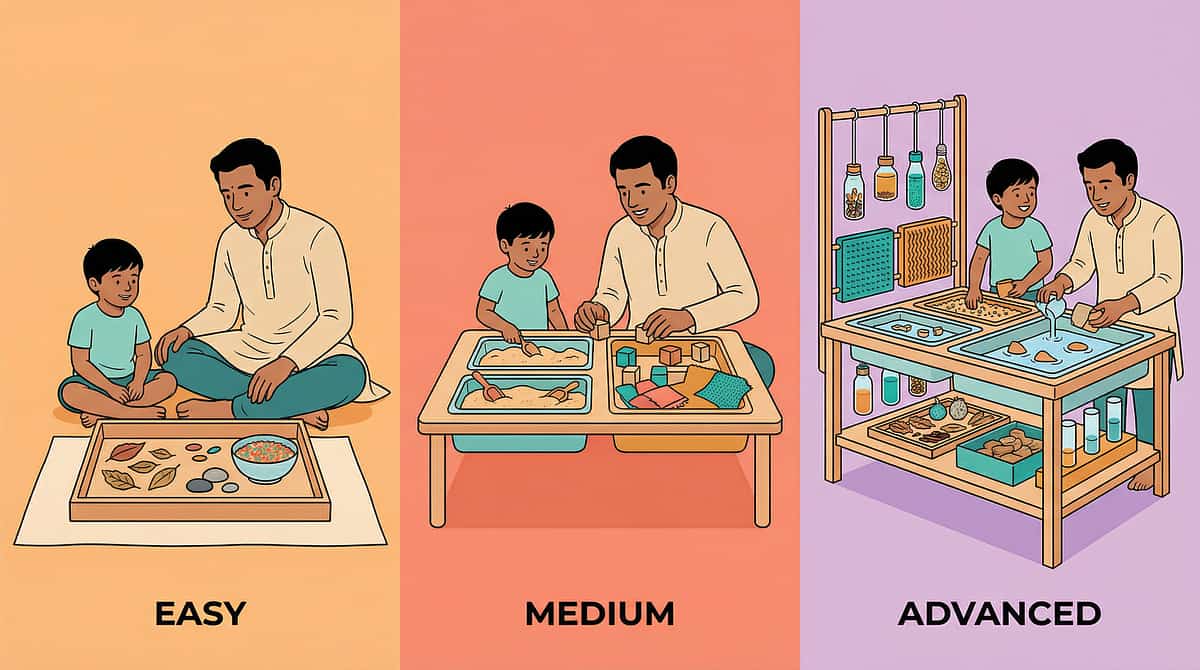
60 Seconds of Data Now Saves Hours of Guessing Later
1. Repetition Count
How many total pinch actions with correct or near-correct form? Record the number and date after every session.
2. Resistance Level
Which clothespin resistance level? (1=Easiest → 5=Standard). Progress to next level when 20+ reps with correct form for 3 consecutive sessions.
3. Engagement Rating
How willing was the child? (1=Refused/distress → 3=Neutral/compliant → 5=Enthusiastic/requested the activity)
Pattern | Meaning | Action | |
Reps increasing week-over-week | Strength building | Stay at level; increase reps target | |
Reps plateau for 2 weeks | Strength consolidating | Increase resistance level | |
Engagement dropping | Novelty wear-off | Rotate to new activity format | |
Reps decreasing | Fatigue / illness / regression | Reduce resistance; consult OT |
GPT-OS® In-App Tracker: Your data feeds directly into AbilityScore® → Hand Strength Readiness Index → TherapeuticAI® adjusts your child's next recommended session parameters. Connect at pinnacleblooms.org/gptos
Session Abandonment Is Not Failure — It Is Data
Child Cannot Open ANY Clothespin
Why: Spring resistance too high for current pinch strength. Fix: Begin with pre-clothespin strengthening — playdough pinching, putty squeezing, paper crumpling. Return to clothespins with maximally reduced springs after 2–3 weeks.
Child Uses Whole Fist Instead of Pincer
Why: Intrinsic hand muscles insufficient for correct pattern. Fix: Reduce resistance. Place stickers on thumb pad and pointer pad as tactile targets. Verbal cue: "Pads together."
Child Refuses the Activity Entirely
Why: Previous frustration history; activity feels aversive. Fix: Reduce resistance. Change format to creature craft. Embed in natural play. Offer choice. Shorten to 3 minutes.
Child Fatigues After 5–10 Repetitions
Why: Endurance below dosage target; resistance too high. Fix: Reduce resistance. Interleave rest periods: "clip 5, shake hands, clip 5 more." Track endurance as a separate metric.
Sessions Becoming a Battle
Why: Demand too high; routine feels coercive. Fix: Return to invitation-only approach for one week. No clothespin demands. Only playful exploration. Let the child lead.
Great Skill But No Functional Progress
Why: Generalisation gap — clinic skill not transferring to everyday context. Fix: Embed practice directly in functional tasks: button practice, dressing, kitchen help.
Progress Slowing Despite Good Sessions
Why: Strength has plateaued at current resistance level. Fix: Increase to next resistance level. Add duration. Introduce bilateral challenges.

No Two Children Are Identical. Neither Are Two Sessions.
Sensory Seeker
Craves input. Higher resistance. Timed challenges. Competitive elements. Maximum repetitions encouraged. Bilateral challenges introduced earlier.
Sensory Avoider
Easily overwhelmed. Lower resistance. Shorter sessions. Creature crafts (indirect pinching). Maximum choice and control at all times.
Age-Based Modifications
Age | Modification | |
3–4 years | Very easy springs only. 5–10 reps. Creature crafts preferred. | |
4–5 years | Easy to medium springs. 10–20 reps. Matching cards engage well. | |
5–6 years | Medium to standard. 20–30 reps. Timed challenges motivate. | |
6–8 years | Standard to challenging. 30–50 reps. Academic cards + competition. |
Bad Day Protocol: On days of illness, emotional difficulty, or sleep disruption — use the easiest material (creature craft), target 10 reps minimum, maximise reinforcement for minimal participation. Record the session — any participation is a valid data point.
Weeks 1–2: Tolerance, Not Mastery
Progress Phase 1
~15% Complete
Programme Progress
Early foundation-building phase underway
What You WILL Likely See
- Child begins to accept the activity without immediate refusal
- 3–10 repetitions with some correct form (not all — this is normal)
- Resistance level: easiest available pin
- Engagement: tolerating rather than enthusiastic
- Hand fatigue appears quickly (expected — target muscles are working!)
What You Will NOT See Yet
- Spontaneous requests for clothespin practice
- Correct form throughout entire session
- Evidence of strength transfer to pencil grip or scissors
- Mastery of standard clothespins
"If your child tolerates the activity for 3 seconds longer than last week — that is real, measurable neural progress. Patience is not passive. It is the most active therapeutic ingredient in weeks 1–2."
Weeks 1–2 are often the hardest for parents. The work doesn't look dramatic. The progress feels invisible. Trust the biology: the intrinsic hand muscles are beginning to receive consistent strengthening stimulus for possibly the first time. Neural adaptation and muscle fibre recruitment patterns are changing below the surface of what behaviour can show yet.
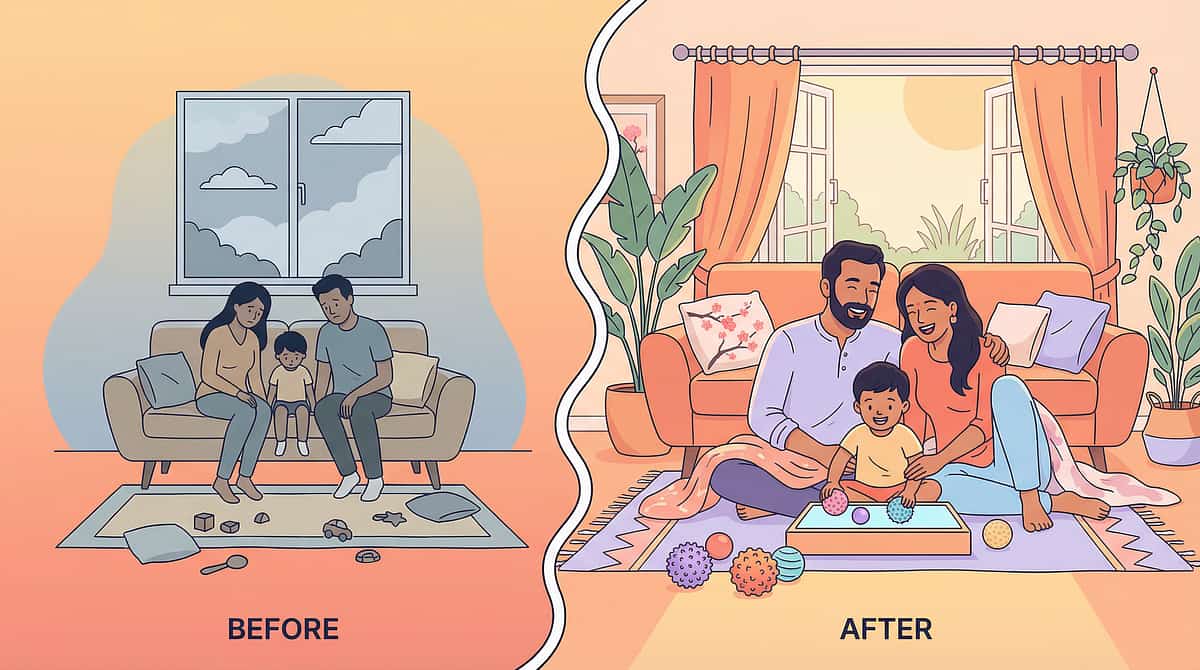
Weeks 3–4: The Shift You've Been Waiting For
Progress Phase 2
~40% Complete
Programme Progress
Neural pathway formation is occurring
Consolidation Indicators — these are the signals that neural pathway formation is occurring:
Child anticipates the session — gets materials without prompting
Preferred activity format emerging (creatures? cards? timed?)
Resistance to the activity is notably reduced
Repetition count has increased by 30–50% from Week 1 baseline
First signs of strength transfer: pencil held slightly differently; one button managed
"You may notice that YOU are more confident too. The session structure has become routine. That parent confidence is the strongest predictor of continued programme adherence."
When to Progress: If child is doing 20+ reps consistently with correct form → move to next resistance level. If engagement is consistently 4–5 (enthusiastic) → consider adding a second short session per day.
Weeks 5–8: The Mastery Milestone
Progress Phase 3
~75% Complete
Programme Progress
Mastery criteria within reach
🏅 Mastery Criterion 1
Child operates standard clothespins (not modified) with correct pincer grasp form
🏅 Mastery Criterion 2
30+ repetitions in a single session without significant fatigue; correct form maintained throughout
🏅 Mastery Criterion 3
Skill generalises — pincer improvement visible in pencil grip, scissor use, or button manipulation
🏅 Mastery Criterion 4
Child requests clothespin activities spontaneously — without adult prompting
When to Move to the Next Level: → F-615: Bead Threading (higher precision demand) → F-606: Pencil Grip Development (direct academic application) → F-613: Finger Isolation Exercises (if finger independence needs deepening)
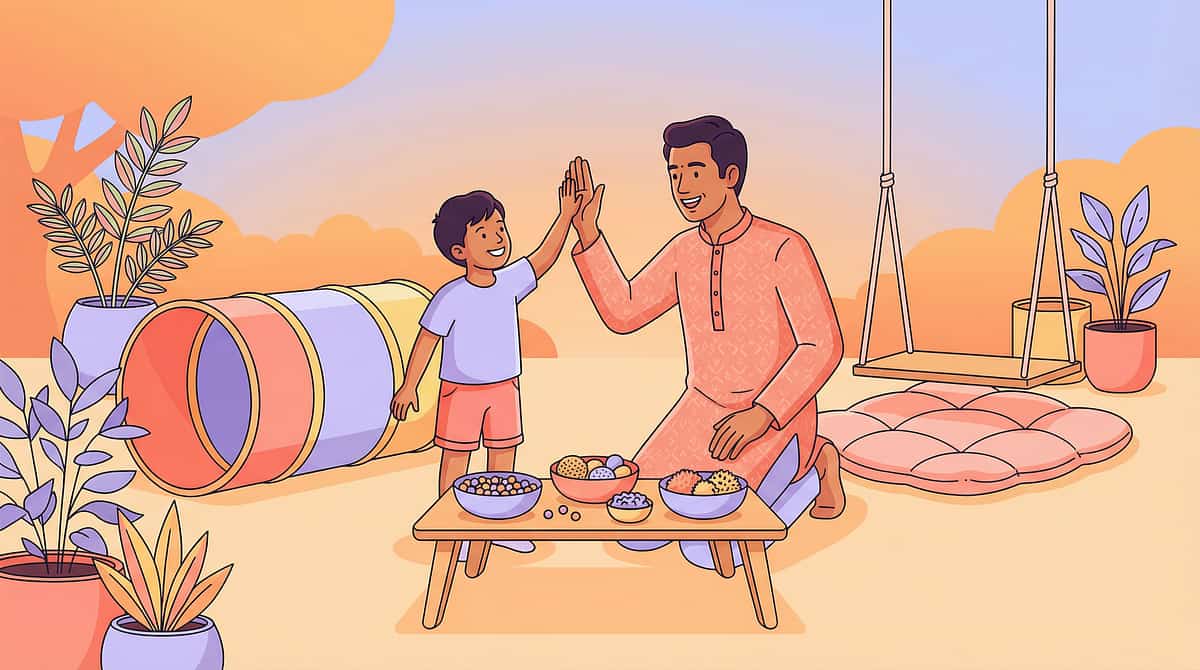
You Did This. Your Child Grew Because of Your Commitment.
✨ You Showed Up Daily
For your child's developmental future — every single session, even the hard ones
✨ You Built the Foundation
The pinch strength that now powers academic success and daily independence
✨ You Made the Ordinary Therapeutic
Transformed household clothespins into a clinical-grade intervention tool
✨ You Proved the Home Works
The most powerful therapy centre is a committed, loving home
"Create a 'Strong Hands' wall in your home. Let your child choose a poster, sticker, or drawing that celebrates what their hands can do now that they couldn't do 8 weeks ago. Specific, named, permanent. The brain stores acknowledged wins."
Photo/Journal Prompt: Take a video of your child opening a standard clothespin today. Compare it to Day 1. Document what you see. This is the evidence of 8 weeks of love, structure, and science. Your story is someone else's hope.
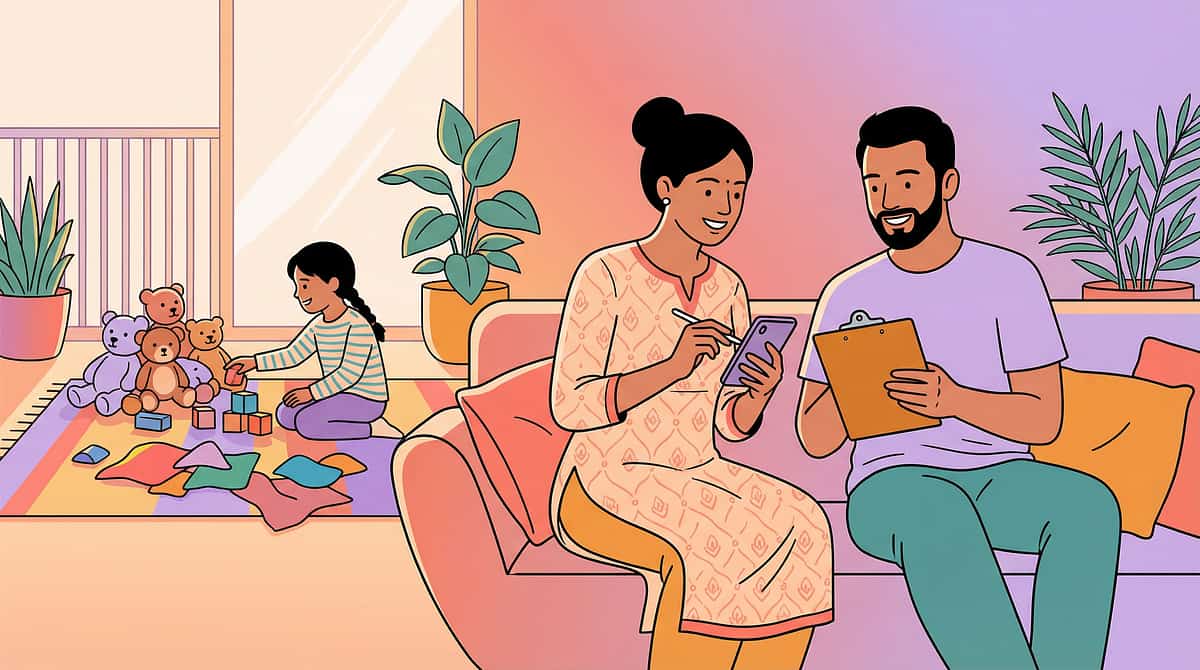
Isolation Is the Enemy of Adherence. You Don't Have to Do This Alone.
WhatsApp Parent Group — Fine Motor (F-Domain)
Connect with 2,000+ parents navigating fine motor challenges across India. Join via pinnacleblooms.org/community/fine-motor
Pinnacle Online Parent Forum
Technique-specific discussion boards. F-614 thread: "Clothespin Activities — What's Working?" pinnacleblooms.org/forum/f614
Local Parent Meetups
Pinnacle centres host monthly parent skill-building sessions. Find your nearest: pinnacleblooms.org/meetups
Peer Mentoring
Connect with an experienced Pinnacle parent who has navigated the same fine motor journey. Request a peer mentor: 9100 181 181
"Your Week 3 breakthrough is someone else's reason to continue through their Week 2 frustration. The Pinnacle community is built by families, for families."
Everything Parents Ask About F-614
Q: My child is 7 and still can't open a standard clothespin. Is this too late to fix?
Not at all. Intrinsic hand muscles respond to structured resistance training at any age within the paediatric window. The 5–8 week programme works at ages 3–8. Strength building is not age-dependent in this range — it is stimulus-dependent.
Q: How do I know if difficulty is autism-specific or general developmental delay?
Both can present identically in terms of hand weakness and the programme approach is the same regardless of diagnosis. GPT-OS® AbilityScore® assessment distinguishes between profiles, which informs intensity and sequencing. Call 9100 181 181 for assessment guidance.
Q: Can I do clothespin activities alongside other OT activities?
Yes. Clothespin activities can run concurrently with other fine motor techniques. F-614 + F-606 (Pencil Grip) is a common combination at Pinnacle centres. Aim for one primary fine motor activity per day, with clothespins as the strength-building foundation.
Q: My child uses their left hand. Does the programme work differently?
The anatomy and programme are identical for left-handed children. Adjust all setup to favour the left dominant hand. Bilateral training (both hands) is ultimately beneficial and should be introduced once the dominant hand achieves 20+ reps at target resistance.
Q: When do I move from DIY modified clothespins to commercial ones?
When your child achieves 20+ repetitions with correct pincer form at their current resistance level for 3 consecutive sessions, they are ready to progress to the next level. The GPT-OS® tracker will alert you when this threshold is reached.
Q: What if my child refuses clothespins entirely but has fine motor weaknesses?
Begin with non-clothespin pinch strengthening: playdough, therapy putty, paper crumpling, tweezers (F-612). After 2–3 weeks of indirect strengthening, re-introduce clothespins using the creature craft format (lowest demand, highest intrinsic motivation).
Q: Should I do this before or after school/therapy sessions?
Best timing: late afternoon/early evening, after school as a transition activity, OR after OT sessions as clinic reinforcement. Avoid immediately before handwriting homework — don't fatigue the hands before high-demand writing tasks.
Q: Can grandparents and teachers execute this accurately?
Yes, with the Family Guide (above). Three critical elements any caregiver needs: (1) use lightest resistance that maintains correct form; (2) praise every correct attempt within 3 seconds; (3) count repetitions and record them. Everything else is refinement.
Didn't find your answer? Ask GPT-OS® | Book teleconsultation | Call 9100 181 181
Your Child's Hands Are Ready to Get Stronger. Are You Ready to Start?
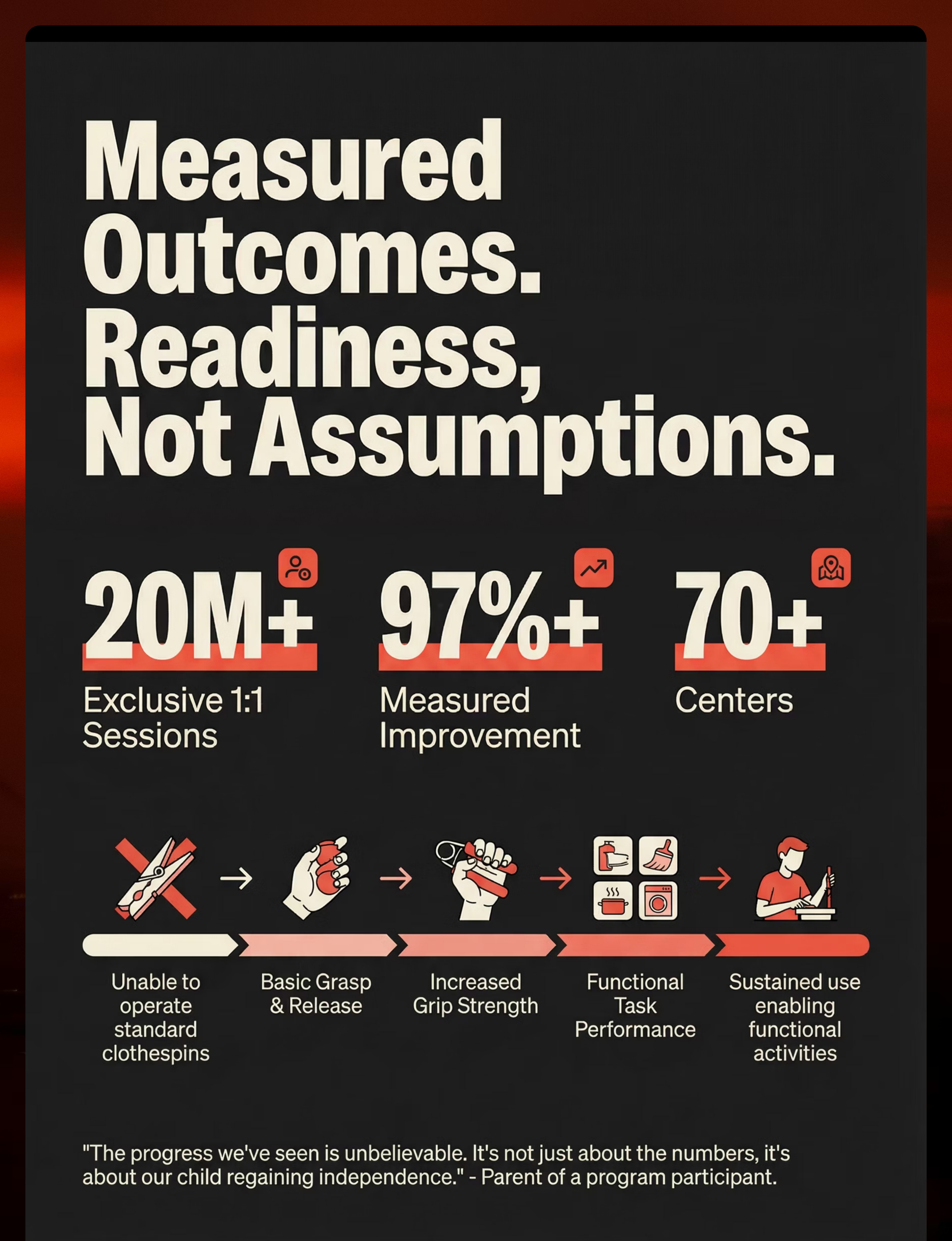
70+
Centres Across India
GPT-OS® clinical standards at every location
20M+
Sessions Delivered
Evidence behind every recommendation on this page
97%+
Measured Improvement
Across the Pinnacle Blooms Network® aggregate outcomes
🔵 OT
🟣 SLP
🟢 ABA/BCBA
🟠 SpEd
🔴 NeuroDev
🌐 WHO-Aligned
FREE National Autism Helpline: 9100 181 181 | 24×7 | 16+ Languages
Preview of 9 materials that help with clothespin activities Therapy Material
Below is a visual preview of 9 materials that help with clothespin activities therapy material. The pages shown help educators, therapists, and caregivers understand the structure and content of the resource before use. Materials should be used under appropriate professional guidance.




Link copied!
From Fear to Mastery. One Technique at a Time.
Pinnacle Blooms Network® exists to transform every home on Earth into a proven, scientific, 24×7, personalised, multi-sensory, multi-disciplinary therapy ecosystem — so that every child, regardless of geography or economic status, receives the intervention they deserve.
You arrived at this page because a clothespin revealed a gap in your child's hand strength. You leave with 9 evidence-based materials, a 6-step protocol, an 8-week progress arc, clinical safety guardrails, and the knowledge that 20M+ therapy sessions support every recommendation on this page.
Your child's hands are ready. Your home is the clinic. The programme starts now.
Medical Disclaimer: This content is educational. It does not replace evaluation and treatment by licensed healthcare providers. Hand weakness and fine motor difficulties may indicate underlying conditions requiring professional assessment. Consult appropriate professionals for comprehensive evaluation. Individual results may vary. Statistics represent aggregate outcomes across the Pinnacle Blooms Network.
© 2025 Pinnacle Blooms Network®, unit of Bharath Healthcare Laboratories Pvt. Ltd. All rights reserved. | Content developed by the Pinnacle GPT-OS® Content Engine under consortium oversight. | Evidence citations: PMC11506176 | PMC10955541 | PMC9978394 | WHO NCF 2018 | NCAEP 2020
CIN: U74999TG2016PTC113063 | DPIIT: DIPP8651 | MSME: UDYAM-TG-08-0015525 | GSTIN: 36AAGCB9722P1Z2
techniques.pinnacleblooms.org/fine-motor/clothespin-activities-F614 | pinnacleblooms.org | 9100 181 181