

Smart kid. Great ideas. Unreadable handwriting.
When the gap between what they know and what they can write becomes a daily battle — this page exists for you.
"My child can narrate an entire movie from memory, solve math problems in their head, and explain how volcanoes work. But the moment a pencil touches paper, everything collapses. Letters giant on one line, microscopic the next. Words that crash together like they've never met a space. Homework that should take 10 minutes stretches into 90 — with tears, crumpled paper, and me writing while they dictate because we're both too exhausted. Their teacher says the work is illegible. I can barely read it myself. And I love this child with every cell in my body."
You are not failing. Your child's nervous system is speaking — and today, you'll learn its language.
🏥 Pinnacle Blooms Consortium®
Multi-disciplinary pediatric therapy network
🇮🇳 India's Largest Pediatric Therapy Network
70+ centers across India
20M+ Sessions
Real-world evidence base powering every recommendation

The numbers behind the struggle — and why they matter
Handwriting difficulties are far more common than many parents realize, often acting as a silent barrier to a child’s confidence and academic joy.
1 in 5
Significant Struggles
Children who face genuine handwriting difficulties in the classroom.
30%
Fine Motor Delays
School-age children experiencing delays that directly impact their writing.
3x
Time Burden
Longer time spent by these children on simple written tasks.
87%
Teacher Reports
Teachers noting that legibility significantly impacts academic assessment.
These figures are more than just data points; they represent the daily reality of frustration, exhaustion, and self-esteem challenges for countless children. When a child struggles to translate their brilliant ideas onto paper, it doesn't just affect their grades—it affects how they see their own potential. At Pinnacle Blooms Consortium®, we recognize that these numbers reflect a systemic need for specialized, empathetic support across our 70+ centers in India.
Behind every statistic is a child who deserves to be understood — not just corrected.

It's not in the hand. It's in the brain-to-hand pathway.
Handwriting is not a "simple" motor task. It is one of the most neurologically complex fine motor activities a child performs — requiring simultaneous coordination of multiple brain systems working in perfect concert.
🧠 Motor Planning (Praxis)
The prefrontal cortex must plan each letter's stroke sequence before the hand moves — a complex executive function demand.
👁️ Visual-Motor Integration
Area V5/MT of the visual cortex must translate what the eyes see into precise motor commands for the hand.
🤚 Proprioception
The somatosensory cortex must receive constant feedback about where the hand is in space — without looking.
💪 Intrinsic Hand Muscle Activation
The 20 small muscles within the hand (interossei, lumbricals, thenar muscles) must fire in precise sequence.
🏛️ Postural Stability
The trunk and shoulder girdle must provide a stable platform — or the hand cannot do precision work.

Developmental Timeline
The handwriting readiness sequence — and where intervention matters most
Handwriting readiness is a developmental cascade that begins in infancy. Before a child can write legibly, they need a complete foundation built layer by layer from birth onward. When foundations are incomplete, children reach the Fluency Layer without the scaffolding to support it. Practice alone cannot fix this — but the right materials can rebuild the foundation at any age.
0–3 Years: Foundation Layer
Gross motor stability → shoulder girdle strength → bilateral coordination. Scribbling with fist grip.
3–5 Years: Pre-Writing Layer
Pre-writing strokes → in-hand manipulation → finger individuation. Circular scribbles, vertical lines, copies dots.
5–7 Years: Emergent Writing Layer
Letter formation → line awareness → spacing → size consistency. Draws 6-part person, copies letters.
7–12 Years: Fluency Layer
Speed + legibility + endurance + automaticity. THIS IS WHERE F-607 INTERVENES.
WHO Care for Child Development (CCD) Package | PMC9978394 | UNICEF MICS developmental indicators

Evidence Grade: Level I
Clinically validated. Home-applicable. Parent-proven.
Evidence Grade: Level I
Systematic Review + RCT
16 studies | 2013–2024
Evidence Confidence: 92%
Why This Grade Matters
The 9 materials in this technique are not guesses. They are the clinical translation of peer-reviewed science into tools any parent can hold in their hands — starting today.
Level I evidence means this technique has survived the highest standards of scientific scrutiny — systematic review with meta-analysis.
Study | Finding | Population |
PRISMA Systematic Review 2024 (PMC11506176) | Sensory-motor intervention meets evidence-based practice criteria for ASD | 16 studies, 2013–2023 |
Meta-Analysis, World J Clin Cases 2024 (PMC10955541) | SI therapy significantly improved fine motor + visual-motor skills | 24 RCTs reviewed |
Indian RCT, Indian J Pediatr 2019 | Home-based sensory interventions show significant outcomes in Indian pediatric population | N=85, India-based |
NCAEP Evidence-Based Practices Report 2020 | Visual supports, hand strengthening, and motor training classified as EBP for autism | US + global data |
ACT II — KNOWLEDGE TRANSFER
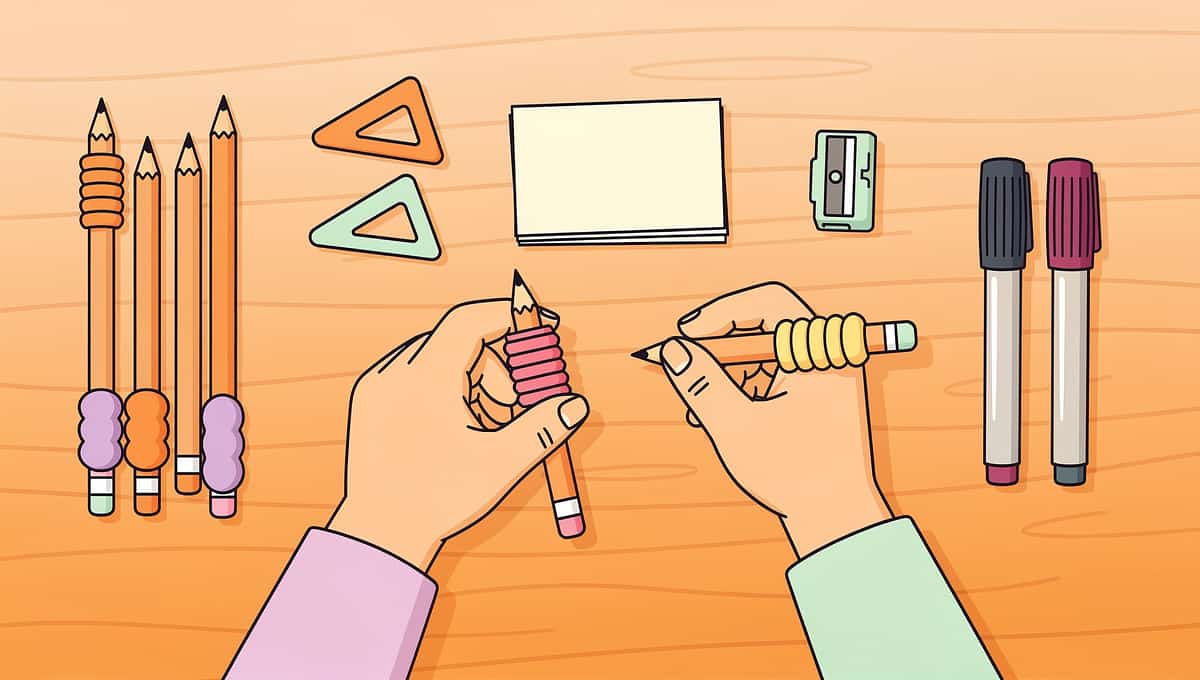
F-607: 9 Materials That Help With Handwriting
"The Handwriting Toolkit" — 9 tools that give your child's hand what practice alone cannot provide. This technique introduces 9 clinically-validated, occupational therapy-grade materials targeting different root causes of handwriting difficulty in children aged 4–12. Unlike generic "practice more" approaches, each material addresses a specific neuromotor foundation.
Grip & Positioning
Pencil Grips + Slant Board
Strength & Endurance
Theraputty / Resistance Dough
Visual & Tactile Support
Raised Line Paper + Letter Formation Cards + Visual-Motor Workbooks
Sensory Feedback
Weighted Pencils + Vibrating Pen
Legibility Support
Word Spacer Tool
Fine Motor Skills
Handwriting / Graphomotor
Visual-Motor Integration
Proprioception
Academic Readiness
Pre-Writing Skills

This isn't a general activity. Each material is a precision tool.
The 9 materials in F-607 are organized around a three-tier target structure — from the core neuromotor foundations, to functional classroom behavior, to long-term academic participation and self-confidence.
PRIMARY: Pencil Grip & Formation
Pencil grip efficiency, letter formation accuracy, line awareness, word spacing consistency, writing endurance
SECONDARY: Posture & Regulation
Improved sitting posture, reduced homework resistance, increased task initiation, better attention-to-task during written work
TERTIARY: Academic Independence
Academic grades reflecting true cognitive ability, teacher-readable written work, child-authored creative expression, independence in written school tasks
Grip Quality
Functional tripod/quadrupod grip without fatigue within 5 minutes
Letter Accuracy
Correct stroke sequence ≥80% of trials
Line Awareness
Writing stays within baseline and top line ≥75% of letters
Word Spacing
Consistent single-finger-width gaps between words
Endurance
Completes age-appropriate task without hand complaint
Material 1 of 9
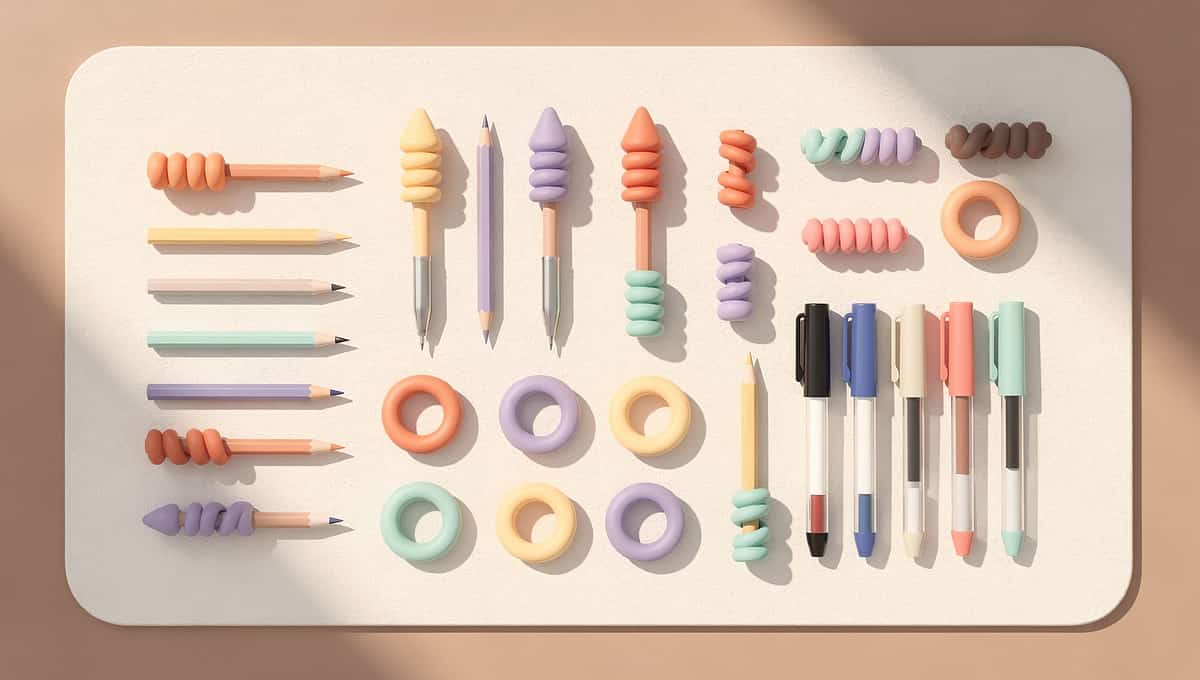
Material 1: Pencil Grips / Grip Trainers
Canon Category
Fine Motor Tools
Price Range
₹50–300 per grip (sets available)
Primary Targets
Grip pattern efficiency, fatigue reduction, proprioceptive input
Clinical Rationale
Pencil grips guide fingers into a biomechanically efficient position, offloading the cognitive demand of "how to hold" so the brain can focus entirely on letter formation. When a child no longer has to consciously think about grip, working memory is freed for spelling, sentence construction, and letter shape recall.
Triangular and ergonomic grips are the most commonly prescribed. Match grip shape to the specific grip error your child shows — thumb-wrap, fisted grasp, or lateral pinch each respond to slightly different grip geometries.
🛒Find it: Search "pencil grip trainer children" on Amazon.in
Material 2 of 9
Material 2: Slant Board / Writing Wedge
Canon Category
Positioning Equipment
Price Range
₹300–1,500
Primary Targets
Wrist position, posture, visual access, proprioceptive feedback through forearm
Clinical Rationale
A 20–30° elevation places the wrist in optimal extension, reduces postural slump, and frees cognitive energy for fine motor control. Without a slant board, children frequently write with a flexed wrist ("hook" position), which reduces intrinsic muscle efficiency and creates rapid hand fatigue.
The slant board also changes the visual angle — the child sees their work more directly, reducing the need to tilt the head and improving visual-motor feedback during writing.
🛒Find it: Search "writing slant board children OT" on Amazon.in
Material 3 of 9
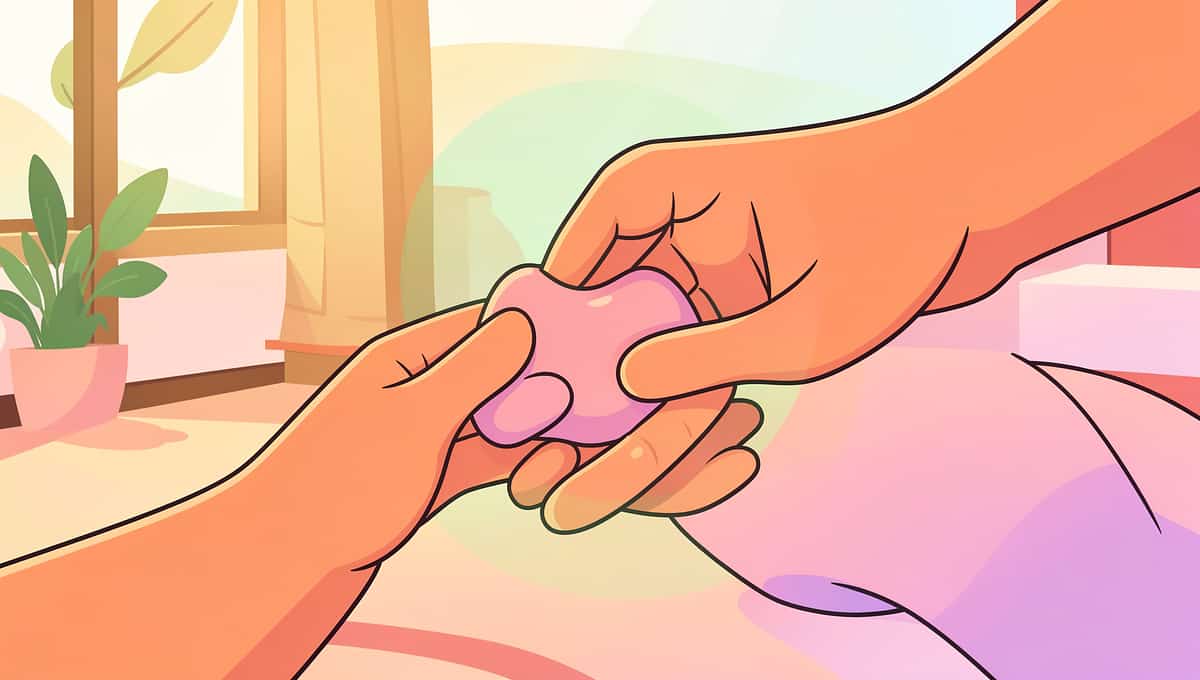
Material 3: Theraputty / Resistance Dough
Canon Category
Hand Strengthening Materials
Price Range
₹200–600
Primary Targets
Intrinsic hand muscle strength, in-hand manipulation, pinch force
Clinical Rationale
Theraputty provides direct strengthening of the 20 intrinsic hand muscles that power pencil control — in a play-based format children genuinely enjoy. Unlike grip strengtheners, theraputty targets the specific finger individuation and pinch strength needed for functional pencil use.
Resistance levels (extra-soft to extra-firm) allow OTs and parents to progressively load the muscles as strength builds. Used as a 5-minute warm-up before writing, theraputty primes the hand's proprioceptive system and is the single highest-ROI material in this toolkit.
🛒Find it: Search "theraputty hand therapy putty children" on Amazon.in

Material 4 of 9
Material 4: Triangular Pencils / Ergonomic Writing Tools
Canon Category
Grip & Posture Correction Tools
Price Range
₹150–500
Primary Targets
Pencil grip formation, finger placement, tripod grasp development
Clinical Rationale
Triangular pencils naturally guide the fingers into the correct tripod grip — the three-finger hold that underpins all functional handwriting. Unlike round pencils, the flat facets physically prevent incorrect finger placement, making the right grip the path of least resistance.
Children who grip too tightly, hold the pencil in a fist, or place their thumb over their fingers benefit most. The ergonomic shape reduces hand fatigue during longer writing tasks and builds muscle memory for correct grip without constant verbal correction.
🛒Find it: Search "triangular pencil grip children ergonomic" on Amazon.in or at any stationery store
Material 5 of 9
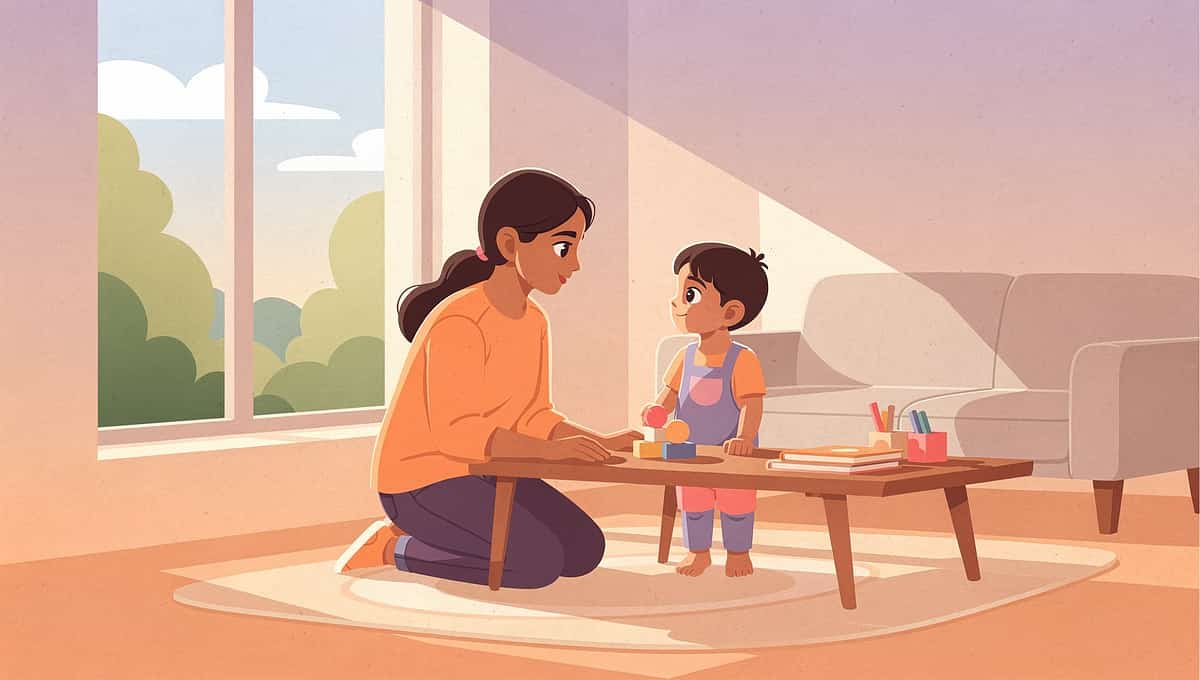
Material 5: Letter Formation Cards / Stroke Sequence Guides
Canon Category
Visual Learning Supports
Price Range
₹200–800
Primary Targets
Motor planning for letter formation, stroke sequence consistency, automaticity
Clinical Rationale
Letter formation cards teach the most efficient motor path for each letter through numbered stroke sequences and directional arrows — reducing inconsistency and fatigue. Many children with handwriting difficulties have learned letters by visual result rather than motor sequence, leading to idiosyncratic formations that become slower and more effortful over time.
By relearning with consistent stroke sequence, children build motor programs that become automatic. The result: less cognitive load per letter, faster writing speed, and more consistent output quality.
🛒Find it: Search "letter formation cards handwriting children" on Amazon.in
Material 6 of 9
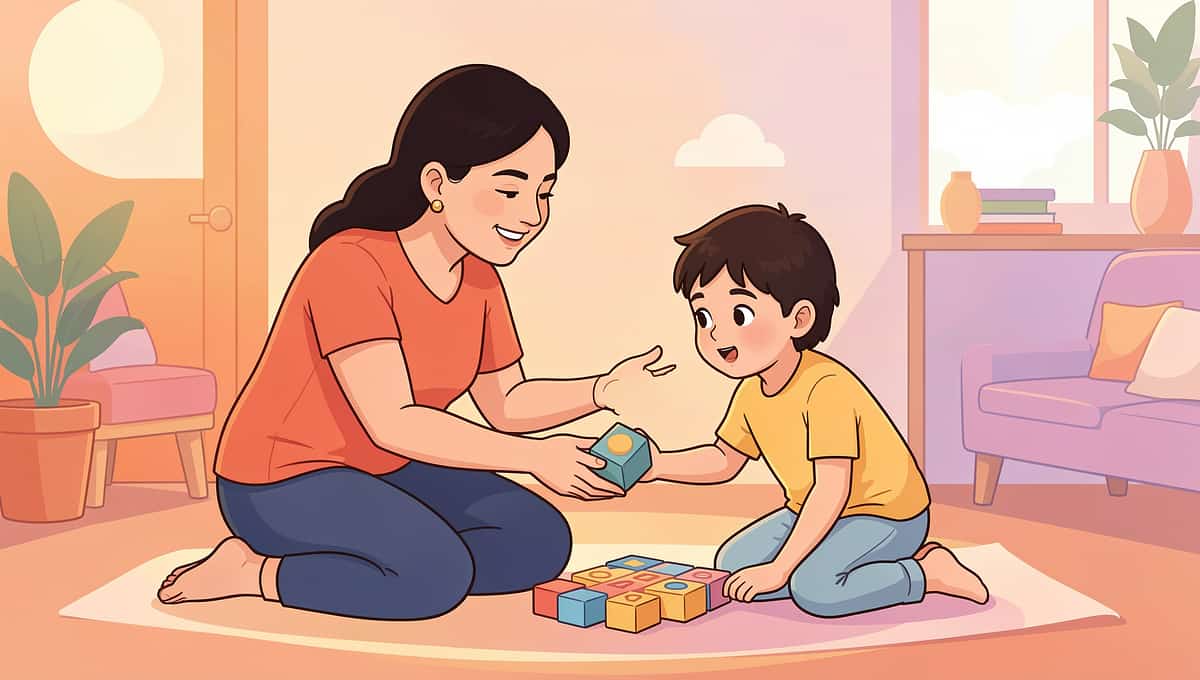
Material 6: Weighted Pencils / Weighted Writing Tools
Canon Category
Sensory Feedback Tools
Price Range
₹200–700
Primary Targets
Proprioceptive awareness, pressure regulation, grip consistency
Clinical Rationale
Enhanced proprioceptive feedback from a weighted pencil helps the brain register hand position without visual monitoring — improving control and reducing the over- or under-pressure that causes torn paper or invisible lines. The added weight activates the muscle spindles and joint receptors in the hand more strongly, giving the nervous system clearer "where is my hand?" information.
Most effective for children who press too hard, too lightly, or inconsistently. Some children show immediate improvement in their first session; others need 2–3 sessions to adapt to the different feel.
🛒Find it: Search "weighted pencil children therapy" on Amazon.in
Material 7 of 9
Material 7: Visual-Motor Workbooks / Pre-Writing Pattern Books
Canon Category
Visual-Motor Training Materials
Price Range
₹150–600
Primary Targets
Eye-hand coordination, motor planning, visual perceptual skills
Clinical Rationale
Visual-motor workbooks build foundational visual-motor integration through pre-writing patterns, mazes, and tracing — the prerequisite neural pathway for letter formation. Before a child can form letters consistently, their eyes and hands must learn to work as a coordinated system.
Workbooks are particularly important for children whose handwriting problems originate in visual processing rather than hand strength. Progress through a difficulty hierarchy: matching → tracing → copying → independent completion. Never push to grade level — match difficulty to current ability.
🛒Find it: Search "visual motor workbook children fine motor" on Amazon.in

Material 8 of 9
Material 8: Word Spacer / Finger Spacer Tool
Canon Category
Legibility Aids
Price Range
₹50–200
Primary Targets
Word spacing consistency, legibility, cognitive load reduction
Clinical Rationale
A word spacer creates consistent inter-word gaps without cognitive monitoring — freeing mental resources for content generation. When children must simultaneously focus on letter formation, spelling, and spacing, working memory is quickly overwhelmed. Spacing is typically the first thing to go.
The physical tool makes spacing automatic rather than effortful, allowing the child's attention to remain on the content of their writing rather than its mechanics. As the motor pattern becomes automatic (typically 6–8 weeks), the spacer can be gradually faded.
🛒Find it: Search "word spacer writing tool children" on Amazon.in
Material 9 of 9
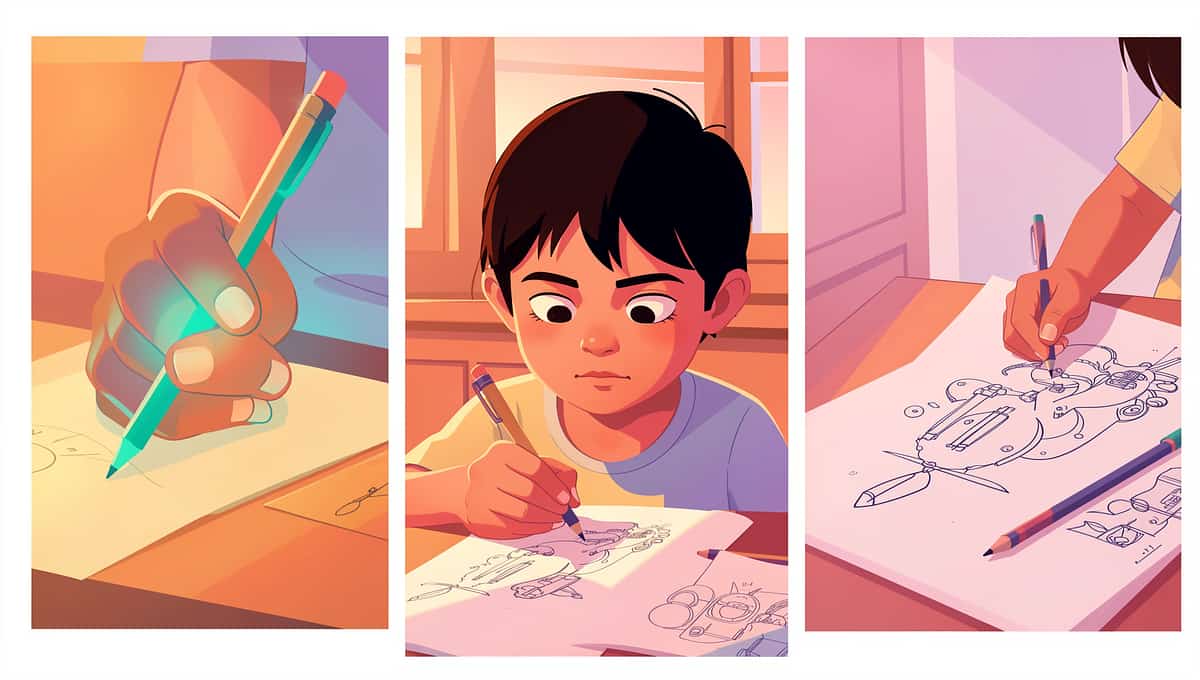
Material 9: Vibrating Pen / Sensory Writing Tool
Canon Category
Sensory Input Tools
Price Range
₹300–900
Primary Targets
Proprioceptive/tactile awareness, attention during writing, sensory regulation
Clinical Rationale
Continuous vibrotactile input increases hand awareness, satisfies sensory needs, and provides alerting input for hypoaroused children. For children who struggle with attention during writing tasks, the vibration provides a constant sensory anchor that keeps the nervous system engaged with the task.
The vibrating pen is particularly effective for children who seek sensory input (sensory seekers) and those with proprioceptive processing differences. Never force on tactile-defensive children — always test response first and immediately discontinue if the child dislikes the sensation.
🛒Find it: Search "vibrating pen sensory writing children" on Amazon.in

What You Need: The Complete Starter Guide
You don't need all 9 materials immediately. Start with the Essential 4 that address the most common handwriting challenges, and add materials as you identify your child's specific needs.
Essential 4 for Most Families
Pencil Grip + Slant Board + Theraputty + Raised Line Paper
Estimated Cost: ₹700–2,400
Full Toolkit
All 9 materials covering every neuromotor target
Estimated Cost: ₹1,550–5,500
Add Motivation
Reinforcement tools to celebrate handwriting milestones

DIY & Substitute Options — regardless of budget or geography
Not every family can access or afford specialized therapy materials. These DIY substitutes are clinically informed, parent-tested, and effective — built from items most households already own.
Pencil Grip Substitute
Wrap a rubber band or foam hair curler around the pencil shaft. Creates tactile feedback and encourages a 3-finger grip.
Cost: ₹0–20
Slant Board Substitute
Use a thick hardcover book (3–5 cm height) or a 3-ring binder placed flat. Elevates the writing surface to the ideal 20° angle.
Cost: ₹0
Theraputty Substitute
Mix 1 cup flour + ½ cup salt + ½ cup water + food colouring. Knead to desired resistance. Refrigerate between sessions.
Cost: ₹10–30
Raised Line Paper Substitute
Place a rubber mat or window screen mesh under plain paper. The texture creates tactile resistance that mimics raised lines.
Cost: ₹0–50
Word Spacer Substitute
Use a popsicle stick, a finger-width strip of cardboard, or a craft stick between words. Teaches consistent spacing without a commercial tool.
Cost: ₹0–5
Weighted Pencil Substitute
Wrap 2–3 rubber bands tightly around the lower barrel of a standard pencil. Adds mild proprioceptive feedback.
Cost: ₹0

Safety First
Read this before you touch any material.
The most effective session is a safe one. Taking 2 minutes to run through this safety checklist before each session protects your child, protects you, and ensures that handwriting time stays positive and therapeutic — not aversive.
🔴 DO NOT PROCEED IF:
Child is in active meltdown or post-meltdown recovery (wait 20+ min) • Child is ill or feverish • Child hasn't eaten in 3+ hours • Medical professional has advised against hand-pressure activities • Child is latex-allergic (check all putty/grip products) • Vibrating pen contraindicated for photosensitive epilepsy or vibration hypersensitivity
🟡 MODIFY IF:
Child slept less than 8 hours (reduce to 10 min, simplify task) • Child had a difficult sensory day (start with putty only) • Grip tool causing visible discomfort (switch to DIY rubber band) • Child is resistant (1 material only, play-based, no demands)
🟢 PROCEED WHEN:
Child is fed, rested, and in regulated state • Space is prepared • Materials are selected and ready • Parent is calm and unhurried • No competing demands for next 20–30 minutes
Environment Setup
The right environment does 30% of the work before the session begins.
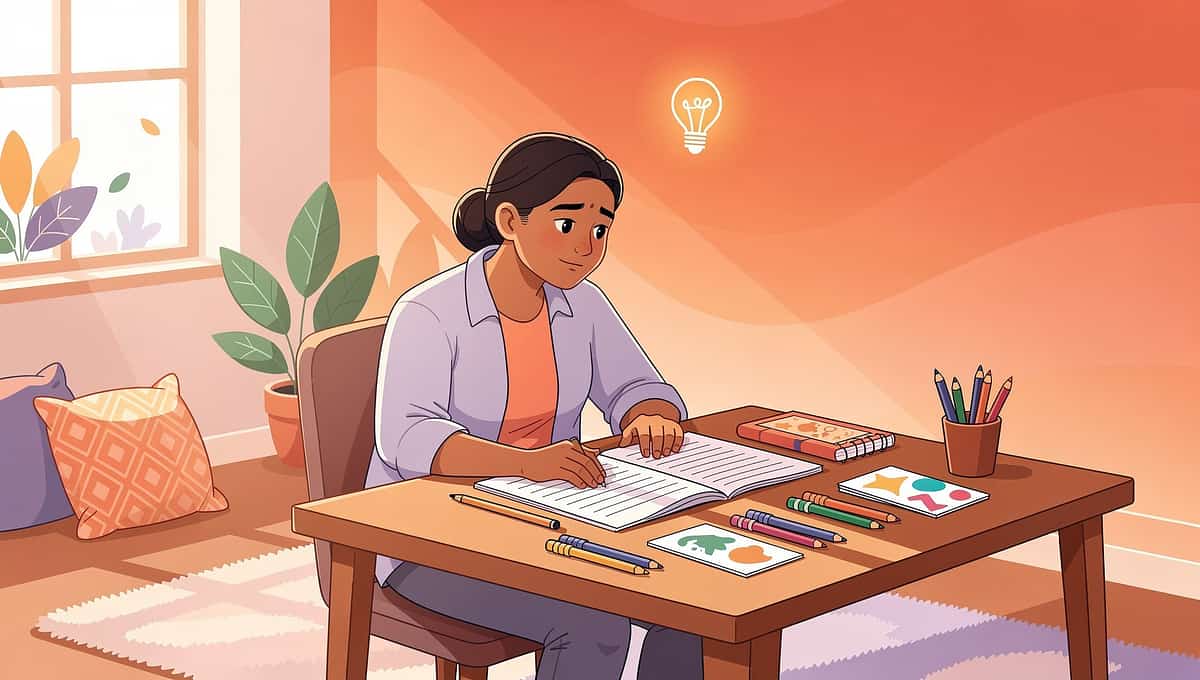
Before the first material is touched, your environment is already working for or against your child's nervous system. A properly configured space reduces sensory distraction, supports optimal posture, and signals to your child's brain that this is a focused, safe, and predictable activity.
Desk Height
Elbows rest at 90° when seated. Use cushion or foot stool if needed to achieve correct height.
Seating
Feet flat on floor or footrest. Back supported. Hips at 90°. Stability at the base enables fine motor precision at the hand.
Lighting
Natural light preferred. No glare on paper. Avoid harsh overhead fluorescent lighting.
Materials Tray
All materials in tray to child's dominant-hand side. Remove toys, devices, food, and siblings from immediate space.
Timer & Reinforcement
Visual timer (sand or digital) set for session duration — visible to child. Preferred items identified, briefly shown, set aside as goal.
Parent Position
Beside the child at same level — never behind, never hovering over. Same-level positioning reduces anxiety and supports collaboration.
ACT III — THE EXECUTION
60 seconds before you begin. The best session starts right.
A readiness check is not bureaucratic — it's clinical. The 7-point check below takes under a minute and predicts session quality with high accuracy. A session that starts right is exponentially more likely to produce the data and outcomes you're working toward.
Indicator | What to Look For | Decision |
Fed | Child ate within the last 2 hours | ✅ / ❌ |
Rested | No signs of extreme fatigue; not falling asleep | ✅ / ❌ |
Regulated | Calm baseline, no active distress, no recent meltdown | ✅ / ❌ |
Hands warm | Fingers not cold or stiff | ✅ / ❌ |
Space ready | Desk, slant board, materials in position | ✅ / ❌ |
Parent calm | You are not rushed, frustrated, or time-pressured | ✅ / ❌ |
Child willing | Child accepts proximity to materials (even neutral is OK) | ✅ / ❌ |
🟢 ALL 7 CHECKED → FULL SESSION
Proceed to Step 1: The Invitation
🟡 4–6 CHECKED → MODIFIED SESSION
Theraputty warm-up only. Reduce duration to 10 minutes. Accept any engagement as success.
🔴 FEWER THAN 4 → POSTPONE TODAY
Do a 5-minute enjoyable activity instead. Record: "Postponed — readiness score X/7." Not failure — data.
"The best session is one that starts right. A short session that goes well is infinitely more valuable than a long session that ends in tears."

Step 1 of 6
① INVITATION — Begin with curiosity, not command.
⏱️ 30–60 seconds
The invitation is the most important moment in the session. How you approach the first 30 seconds determines whether your child's nervous system registers this as a safe, curious experience or a demand to be avoided. Always begin with wonder, not instruction.
Script Option 1
"Hey, I found something cool. Want to see what this does?" [Show one material — start with theraputty or the material your child finds most appealing visually]
Script Option 2
"We're going to do your writing warm-up today. You pick — should we start with the putty or the slant board?"
✅ Acceptance Cues (Green)
- Child reaches toward material
- Child makes eye contact with you or the material
- Child asks "what is that?"
- Child picks up or touches material
⚠️ Resistance Cues & Modification
- Child moves away → wait 10 seconds, don't repeat offer immediately
- Child says no → say "OK, in a few minutes" and do a calming activity
- Child ignores → narrate your own play with the material, invite through curiosity
Body Language: Crouch or sit to child's eye level. Place material on table — don't hand it directly (reduces demand feel). Make eye contact briefly, then look at material. Smile — your calm energy transfers to your child.

Step 2 of 6
② ENGAGEMENT — The material is now a shared experience.
⏱️ 1–3 minutes
Engagement means the child is actively interacting with the material — not necessarily writing yet. This phase builds the positive association between the material and enjoyable interaction that will sustain the practice habit over weeks and months.
Starting with Theraputty
"Squeeze it! See how hard it is? Now pull it — can you make a snake? Let's hide this button inside and find it..." Sequence: Roll → Pinch → Pull → Hide/find small object
Starting with Slant Board
"Look — your paper goes here and it's like a little hill. Put your arm on it... does that feel different?" Let child position paper. Draw a single line. Observe posture change.
Starting with Pencil Grip
"This is your new grip. Let's put it on your pencil — you put your fingers here, here, and here..." Guide grip placement. Child draws circles with correct grip.
Child Response | Meaning | Action |
Active engagement | Optimal | Continue, increase challenge slightly |
Passive tolerance | Acceptable | Maintain, add verbal narration |
Avoidance | Warning | Reduce demand, return to invitation |

Step 3 of 6
③ THERAPEUTIC ACTION — Here's where the brain builds new pathways.
⏱️ 8–15 minutes | This is the active ingredient. Each material has a specific core action that produces its therapeutic effect. Follow these protocols precisely — the details matter.
Pencil Grips — Core Action
Position grip on pencil. Child writes 5–10 letters or short word using grip. Do 3 sets of 5 words. Correct: Thumb and index form web space, middle finger supports below, ring and pinky tucked. Common error: Child removes grip → alternate grip-on/off every 2 letters for gradual conditioning.
Slant Board — Core Action
Paper clipped to board. Child writes name or copies 3 words. Observe: head upright? Shoulders not hunched? Wrist in slight extension? Common error: Child slides arm off board → use non-slip pad; tape board to desk.
Theraputty — Warm-Up (5 min before writing)
Sequence: (1) Squeeze and release × 10, (2) Pinch-pull stretch × 10 with thumb + index, (3) Roll into snake, (4) Hide 3 small objects and find using one hand only, (5) Form ball using palm arching. All activities use isolated finger movements, not whole-hand gripping.
Raised Line Paper — Core Action
Child copies 1–2 sentences from near-point model. Allow finger-trace first. "Can you feel the line? Try to stay between the bumps."Common error: Child ignores tactile lines initially → verbally cue "feel the bump" each time they cross.
Letter Formation Cards — Core Action
Select 3–4 target letters (same formation family). Show card, say formation cue, child traces in air first, then on card with finger, then writes on paper. Common error: Child forms letter correctly but with wrong sequence → count strokes aloud together.
Word Spacer — Core Action
Model: write word → place spacer → write next word → remove spacer → continue. Examine result with child: "Look how readable that is!"Common error: Child forgets spacer mid-sentence → verbal reminder only, don't take pencil.
Step 4 of 6
④ REPEAT & VARY — 3 good repetitions beat 10 forced ones. Every time.
⏱️ 3–5 minutes
Repetition is what builds neural pathways — but only if the child is sufficiently engaged to produce quality repetitions. Never sacrifice quality for quantity. When affect drops, reduce demand immediately rather than pushing through.
Material | Target Reps/Session | Weekly Frequency | Notes |
Theraputty warm-up | 5 min continuous | Daily (7×) | Non-negotiable foundation |
Pencil Grip practice | 3–5 short writing tasks | Daily (7×) | Build grip endurance gradually |
Slant Board writing | Full homework/practice session | 5–7× per week | Replace flat-surface writing |
Raised Line Paper | 1–3 sentences | 5× per week | Fade to standard paper at mastery |
Letter Formation Cards | 3–4 letters × 5 reps each | 5× per week | Group by formation family |
Weighted Pencil | 5–10 words | 3× per week | Monitor fatigue closely |
Visual-Motor Workbook | 1–2 pages | 3× per week | Match difficulty to ability |
Word Spacer | Every writing task | Until automatic | Fade gradually |
Vibrating Pen | 5–10 minutes | 2–3× per week | Never force; monitor response |
Good Days
Increase writing length by 20%. Introduce a new letter family. Add spacing demands.
Neutral Days
Same task, same length. Consistency is the win today.
Hard Days
Theraputty only. No writing demands. Count engagement as progress.
"The neural pathways being built today are invisible. You won't see them this session. But in 3 weeks, you'll wonder when they appeared."
Step 5 of 6
⑤ REINFORCE & CELEBRATE — Immediate. Specific. Enthusiastic.
⏱️ Ongoing throughout + session close
Reinforcement is not a reward for good output — it is the mechanism by which the brain associates effort with positive experience. When reinforcement is immediate, specific, and enthusiastic, the neural pathways you're building get tagged as "worth doing again." This is the ABA mechanism that sustains the practice habit across weeks and months.
For grip improvement
"I can see your fingers are in the perfect position. That's exactly what we're practicing — you're doing it!"
For staying on lines
"You felt that bump and you stayed inside — that's your hand learning something new!"
For completing a writing task
"You just wrote [X words/sentences]. That took real work from your hand. I'm proud of how you kept going."
For effort regardless of output
"The way you kept trying when it got hard — that's what makes your hand stronger."
Primary Reinforcers
Verbal praise + thumbs up + high-five throughout session
Token Economy
1 token per completed writing task → 5 tokens = preferred activity. Visual Reward Token Board — ₹589
Session Close
Sticker chart completion, 10 min preferred activity. Reward Sticker Chart Set — ₹364
Key Principle: Celebrate the attempt, not just the success. The attempt IS the success.

Step 6 of 6
⑥ COOL-DOWN — No session ends abruptly. The transition is part of the therapy.
⏱️ 2–3 minutes
The cool-down is not optional — it is a therapeutic component. Abrupt session endings create anxiety about the next session. A predictable, child-led transition sequence signals safety, preserves the positive association, and prepares the nervous system for the next activity.
2-Minute Warning
"Two more words, then we're all done for today." Show visual timer or count down fingers.
1-Minute Warning
"One more. Your last one. Make it a good one."
All Done
"That's it! Great work. Now let's put everything away together." Child participates in material put-away — purposeful bilateral coordination activity.
Cool-Down Activity
Hand stretches: open wide, make fist × 5 | Theraputty squeeze-release × 5 (light pressure) | Shake hands loosely × 10 sec | Wash hands with warm water (proprioceptive + transition signal)
If child resists ending: "I hear you want to keep going. We'll do it again tomorrow. You can choose what we start with next time."
Use a Transition Object (₹425 → Amazon.in) to signal session end and next activity beginning.
ACT III — DATA CAPTURE
60 seconds of data now saves hours of guessing later.
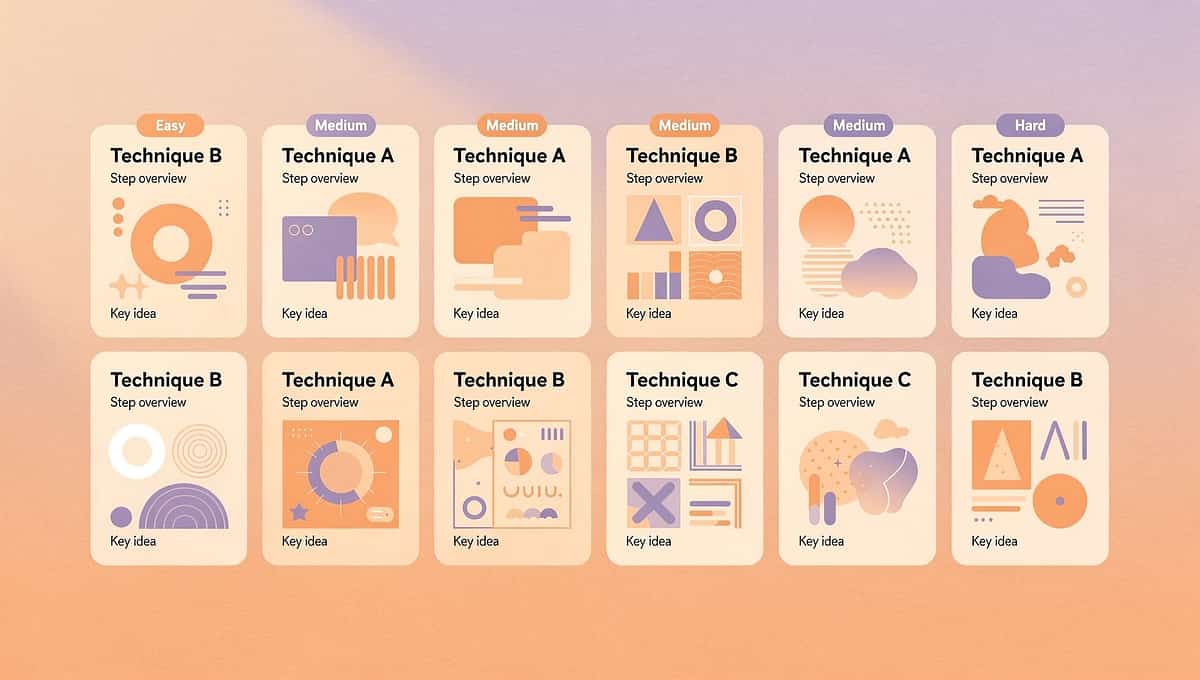
Your daily session notes are not busywork — they are the clinical engine that drives GPT-OS® recommendations, flags when OT consultation is needed, and gives you undeniable evidence of your child's progress when you need it most (at the school meeting, at the clinic, when doubt creeps in at Week 2).
📋 F-607 SESSION TRACKER
Date: _______ | Duration: _____ min | Materials Used: _____________
1. GRIP QUALITY today (1–5): 1=fisted/awkward → 5=functional tripod throughout
2. LINE AWARENESS today (1–5): 1=ignored lines → 5=stayed within lines consistently
3. CHILD'S AFFECT today:😤😐🙂😊😄 (frustrated → enthusiastic)
Notes: ________________________________________________
Your daily notes feed into GPT-OS®'s Prognosis Engine. When you record "grip quality 2" for 5 sessions, the system flags this for OT consultation. When you record "child affect 😊" for 10 sessions, it confirms the reinforcement schedule is working. You are not just a parent doing exercises — you are a data-contributing member of the world's largest pediatric therapy evidence base.
Troubleshooting
Session abandonment is not failure. It's data.
Every challenge you encounter in a handwriting session has a specific clinical explanation and a practical solution. The most common problems — and their evidence-based fixes — are documented here so you can troubleshoot in real time without losing confidence.
❓ "My child refused to touch the materials at all."
Why: The activity feels like a demand. The context feels evaluative. Fix: Unstructured exposure first. Leave theraputty on the table during a preferred activity. Let them observe you using the slant board. Curiosity before demand.
❓ "My child used the grip correctly for 2 minutes then threw it off."
Why: Grip use is fatiguing when it's new. Correct position requires more muscle activation initially. Fix: Alternate grip-on/off every 2–3 words. Gradual duration building. Celebrate each grip-on moment specifically.
❓ "The writing got WORSE with the slant board."
Why: Novel positioning requires adaptation. First 3–5 sessions almost always show temporary quality dip. Fix: Continue. This is neural adaptation, not failure. Compare Week 2 to baseline, not Session 1 to Session 1.
❓ "My child said the vibrating pen is 'annoying' and refuses to use it."
Why: Tactile sensitivity is real. Not all children respond positively to vibration. Fix: Discontinue vibrating pen. Try weighted pencil instead (different sensory channel — proprioceptive not tactile).
❓ "The theraputty ends up everywhere except being used therapeutically."
Why: Exploratory play is developmental and appropriate. Therapeutic use needs more scaffolding. Fix: Lead specific activities: "Do exactly what I do" for 2 minutes. Imitation-based learning entry point.
❓ "My child gets frustrated on raised line paper because they can 'feel the mistakes.'"
Why: The tactile feedback that helps is also highlighting every error. Fix: Reduce writing length. Celebrate each letter that "stayed between the bumps." Pre-trace lines with finger before writing.
❓ "Nothing seemed different after 2 weeks."
Why: Two weeks is the tolerance-building phase, not the improvement phase. Fix: Review data — is affect improving? Is resistance decreasing? Is session length extending? Legibility improvement typically begins in Weeks 3–5.
Adapt & Personalize
No two children are identical. Here's how to tune this for yours.
The F-607 protocol is a starting framework — not a rigid prescription. Every child's sensory profile, diagnosis, age, and learning style requires personalization. Use these profile-based variations as your guide.
For the Sensory Seeker
Seeks heavy input, presses hard, breaks pencils. Prioritize: Theraputty (firm), Weighted Pencil, Slant Board. Start every session: Wall push-ups × 10. Writing surfaces: carpet square under paper for resistance.
For the Sensory Avoider
Tactile defensive, dislikes new textures. Prioritize: Visual-Motor Workbooks, Letter Formation Cards, Word Spacer. Handle materials before using. Introduce slowly: Theraputty, Vibrating Pen, Raised Line Paper — with graduated exposure.
For Hypotonia
Low muscle tone, fatigues quickly. Prioritize: Theraputty daily, Slant Board (reduces postural energy cost). Build duration by 2 min/week. Core activation warm-up (3 min floor-based gross motor) before desk work.
For Autism-Related Motor Planning
Prioritize: Letter Formation Cards (predictable, repeatable). Same pencil and paper every session. Use visual schedule: picture of each material in session order posted at desk. Verbal cues must be identical each time.
For ADHD-Related Attention
Prioritize: Slant Board (engagement through novelty), Vibrating Pen (alerting input). Break sessions: 5 min writing → 2 min movement → 5 min writing. Use high-interest topics for writing content.
1
Ages 4–6
Pre-writing strokes, letter formation only, theraputty daily. 10-min sessions maximum.
2
Ages 7–9
Full protocol, 15–20 min sessions. Academic content appropriate for curriculum level.
3
Ages 10–12
Typing as parallel skill, cursive if school requires, endurance building. Longer writing targets.

ACT IV — THE PROGRESS ARC
⏳ Week 1–2: The Tolerance Phase
✅ What Progress Looks Like Right Now
- Child tolerates session for 5 more seconds than previous session
- Child's emotional state during writing shifts from distress → neutral
- Grip is used correctly for at least 2–3 consecutive words
❌ What Is Not Progress Yet
- Don't expect legibility improvement — this is foundation building
- Don't expect child to ask for writing practice
- Don't expect full session compliance — any engagement counts
"Weeks 1–2 are the hardest. You're asking the nervous system to change patterns it's spent years building. Tolerance before transformation."

Week 3–4
📈 Week 3–4: The Consolidation Phase
Something shifts in the third week. The resistance begins to soften. The materials become familiar. Your child's nervous system has moved from "threat" to "known quantity" — and known quantities can be engaged with. This is neuroplasticity made visible in behavior.
Child begins to reach for preferred material independently
Anticipation of sessions signals the positive association is building — a major clinical milestone.
Session resistance decreasing
Initiation within 2 minutes instead of 10. Reduced meltdowns around homework time.
Theraputty exercises becoming automatic
Child does warm-up sequences without step-by-step prompting. Motor programs are forming.
First consistent line awareness improvements visible
1–2 letters now reliably touching the baseline on raised line paper. Child self-corrects their own grip without reminder — self-monitoring begins.
"You may notice that YOU are more confident too. You know how to set up the space, you know the scripts, you know what each material does. That expertise is yours now."
Week 5–8
🏆 Week 5–8: The Mastery Phase
Mastery means the skill is no longer effortful — it is becoming automatic. The neural pathways built across 35+ sessions are now thick enough that the child's brain routes through them by default. You are not just seeing better handwriting; you are seeing a different nervous system at work.
✅ Functional Grip
Child completes age-appropriate writing task with functional grip for full duration — no fatigue cues within the session.
✅ Line Compliance
75%+ of letters touch baseline on standard paper — transitioning off raised lines. Significant legibility improvement vs. Week 1 baseline.
✅ Spacing Automaticity
Consistent word spacing without spacer tool — the tool has been successfully faded. Child no longer needs physical cue.
✅ Positive Writing Affect
Child initiates writing tasks with neutral or positive affect (not avoidance). Teacher reports improvement in written work legibility.
Next Level Options: Cursive writing (if school requires) • Keyboard as parallel skill • Longer writing endurance (2+ paragraphs) • Creative writing engagement
🎉 You did this. Your child grew because of your commitment.
Over the past 5–8 weeks, something profound happened at your kitchen table or study desk. It didn't look dramatic. It happened in 20-minute increments, on ordinary days, through sessions that sometimes felt too short to matter. But the cumulative effect of consistent, correctly-targeted intervention is remarkable — and it belongs to your family.
35–56
Sessions Executed
Therapy sessions completed at home by you, for your child
9
Neural Targets
Neuromotor foundations rebuilt through the right materials
8
Weeks to Mastery
The evidence-based timeline from tolerance to functional handwriting
Red Flags — Read Carefully
Trust your instincts. If something feels wrong — pause and ask.
Progress is not always linear, and some changes in your child's behavior or performance warrant pausing the protocol and seeking professional input. The following red flags are not signs of failure — they are your clinical data system working correctly. Honor them.
🚨 Severe Hand Pain (under 5 minutes of writing)
Action: Stop all writing activities. Medical consultation to rule out orthopedic issue. Escalation: Clinic visit
🚨 Regression — Skills That Were Improving Suddenly Worsen
Action: Review for illness, life stress, sleep disruption. Pause protocol 3–5 days. Escalation: OT teleconsult if regression persists more than 1 week
🚨 Extreme Emotional Distress Specifically Around Writing
Action: Reduce writing demands entirely. Return to pre-writing play-based activities only. Escalation: Psychological/ABA consultation for writing anxiety
🚨 Letter Reversals Persisting Past Age 8
Action: Formal OT evaluation for dysgraphia screening. Escalation: Clinic assessment — AbilityScore® evaluation
🚨 Complete Refusal Despite Appropriate Scaffolding for 2+ Weeks
Action: ABA functional assessment of writing avoidance. Escalation: OT + ABA joint consultation at nearest Pinnacle center
🚨 Signs of Vision Problems: Squinting, Head Tilting, Eye Strain
Action: Ophthalmology referral before continuing visual-motor work. Escalation: Vision therapy + OT coordination
Escalation Pathway: Self-resolve (3 days) → Teleconsult 📞 9100 181 181 → Clinic visit → Specialist assessment
What Comes Next
You're not done. You're on a journey with a clear forward path.
You have successfully completed this technique guide. Remember, this is one piece of a broader, integrated system designed to support your child's development, and consistency remains your most powerful tool.
Move forward with confidence knowing you have a structured pathway ahead. We are here to support you at every stage of this progress.
Continue daily practice
Track progress weekly
Explore the next technique (F-608)
Connect with your nearest Pinnacle center
Related Techniques
Techniques that use materials you may already own.
The Pinnacle Fine Motor Domain contains a sequence of 20+ evidence-based techniques. Each one builds on the foundation laid by the previous. If you've completed F-607, these are your natural next steps — and your existing materials will serve you immediately.
F-605: Weak Pencil Grasp
🟢 Intro
Materials: Grips, Putty. The prerequisite technique — master grip mechanics before handwriting materials.
F-606: Pre-Writing Skills Delays
🟢 Intro
Materials: Putty, Workbooks. Foundational stroke patterns before letter formation.
F-608: Scissor Skills
🟡 Core
Materials: Scissors, Putty. Bilateral coordination — your theraputty is already the warm-up tool.
F-610: Visual-Motor Integration
🟡 Core
Materials: Workbooks, Cards. If VMI is the primary deficit, this technique goes deeper.
F-612: In-Hand Manipulation
🟡 Core
Materials: Putty, Pegs. If intrinsic strength remains the limiting factor after F-607.
H-742: Handwriting at School
🟡 Core
Materials: Slant Board, Grips. Bridging home practice to classroom performance.

The Whole Picture
Handwriting is one piece. Here's the whole developmental map.
Handwriting improvement is significant — and it ripples outward. When a child's written output begins to match their cognitive ability, teachers reassess, grades shift, and most importantly, the child begins to experience themselves as capable in ways they couldn't access before. But handwriting exists within a broader developmental picture that deserves your awareness.
A: Sensory Processing
The root system for all fine and gross motor development
B: Social Communication
Verbal and nonverbal interaction skills
C: Emotional Regulation
The capacity to manage internal states during demanding tasks
H: Fine Motor ⭐ F-607
Pencil Grip • Handwriting • Scissor Skills • Pre-Writing • In-Hand Manipulation • Visual-Motor Integration
F: Gross Motor
The postural foundation that enables fine motor precision
I: Academics
Where handwriting mastery ultimately expresses — and where this journey began
"From fear to mastery. One technique at a time." — The Pinnacle Blooms Consortium®
About Pinnacle Blooms Network®
India's largest multi-disciplinary pediatric therapy consortium, operating 70+ centers across India. Powered by GPT-OS® — the Global Pediatric Therapeutic Operating System — Pinnacle has delivered 20M+ exclusive 1:1 therapy sessions achieving 97%+ measured improvement across readiness indexes.
This technique page is one of 70,000+ being deployed at techniques.pinnacleblooms.org as part of the world's largest structured pediatric intervention knowledge base.
🦾 OT
🗣️ SLP
🎯 ABA
📚 SpEd
🧠 NeuroDev
🏥 Pediatrics
🔬 CRO
📞 FREE National Autism Helpline
9100 181 181
Available 24×7 in 16+ languages
📍 70+ Centers Across India
Platform Layers
- Pediatric Therapeutic OTT Platform
- Hyperlocal Therapeutic Marketplace
- 70+ Center Network
This content is for educational purposes only. It does not replace individualized assessment and intervention from licensed occupational therapists. Persistent handwriting difficulties may indicate underlying conditions requiring professional evaluation. Consult an occupational therapist for personalized recommendations. Individual outcomes vary based on child profile, underlying diagnosis, intervention consistency, and co-occurring conditions.
CIN: U74999TG2016PTC113063 | DPIIT: DIPP8651 (Govt. of India) | MSME: Udyog Aadhaar TS20F0009606 | GSTIN: 36AAGCB9722P1Z2 | © 2025–2026 Pinnacle Blooms Network®, unit of Bharath Healthcare Laboratories Pvt. Ltd. All rights reserved. GPT-OS® is a registered trademark.
Fine Motor Techniques
Handwriting Help
Occupational Therapy Guide
Autism Therapy Materials
Pinnacle Centers
GPT-OS®
Preview of 9 materials that help with handwriting Therapy Material
Below is a visual preview of 9 materials that help with handwriting therapy material. The pages shown help educators, therapists, and caregivers understand the structure and content of the resource before use. Materials should be used under appropriate professional guidance.


Link copied!

Keep Moving Forward
Consistency wins. Every small step builds lasting mastery.
You’ve already seen the progress. Don't stop now. Every therapy session and every practiced movement strengthens your child's neural connections. These fine motor gains are the building blocks for independence, confidence, and real-world success.
You are the most important part of this process. Keep showing up, keep practicing, and trust the method. Pinnacle Blooms Network® is here to ensure you have the right tools to reach the next milestone.