

"She tried for twenty minutes. The cord kept missing the holes. She handed them to me and said 'I can't do it, Mama.' And I didn't know what to tell her."
LACING SKILLS — F-611
You are not failing your child. Her hands are learning a language — and there are 9 specific tools that speak it.
🏥 Pinnacle Blooms Consortium® | OT • ABA • SLP • SpEd • NeuroDev | WHO Nurturing Care Framework, 2018
You Are Among Millions of Families Navigating This Exact Challenge
1 in 36
Children with Autism
Diagnosed with autism in the US alone — a community larger than most people realize.
80%
Show Fine Motor Delays
Of autistic children display fine motor delays that directly affect lacing and threading tasks.
5–6 yrs
Typical Mastery Age
When shoe-tying mastery is expected — yet many children need systematic, graded support to reach it.
Fine motor delays in lacing, threading, and bilateral coordination are among the most commonly reported challenges in pediatric OT caseloads worldwide. These are not failures of effort — they are developmental profiles that respond powerfully to the right materials and graded practice.
"Across 70+ Pinnacle centers, lacing skill delays are the 3rd most common fine motor referral reason. You are not alone — and this is solvable."
PRISMA Systematic Review 2024: 80% of children with ASD display fine motor processing difficulties | PMC11506176 | World J Clin Cases 2024 | PMC10955541

What's Happening in Your Child's Brain
Lacing is not one skill. It is six neurological systems working simultaneously.
The Neural Architecture of Lacing
Somatosensory Cortex
Processes fingertip pressure and position in real time
Cerebellum
Coordinates bilateral timing — the two-hand teamwork that lacing demands
Premotor Cortex
Plans the in-out-in-out sequence before movement even begins
Visual → Motor Pathway
Connects "seeing the hole" to "moving the hand to it" within 400 milliseconds
What Parents See — and Why
When your child pushes a lace at a hole and misses, it is not carelessness. The visual signal travels to the visual cortex, must be translated into a motor command, routed through the cerebellum for timing calibration, and then executed by both hands doing different jobs — all within 400 milliseconds.
For children with neurodevelopmental differences, any one of these relay stations may process differently. The result is what you see: the lace bending, missing, tangling.
Frontiers in Integrative Neuroscience, 2020 | DOI: 10.3389/fnint.2020.556660
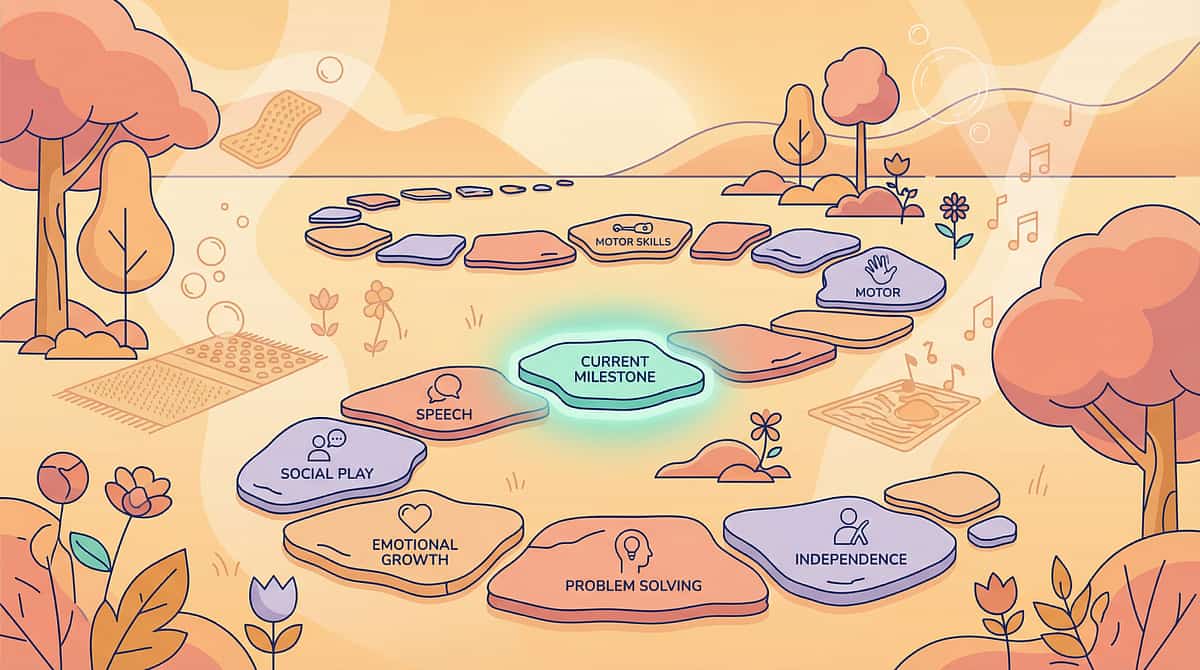
Where This Sits in Development
Your child is here. Here is where we are heading.
12–18 mo
Posting objects into containers
18–24 mo
Stiff cord bead threading (pre-threading)
2–3 yrs
Bead stringing independently with guidance
3–4 yrs
Jumbo lacing cards begin
4–5 yrs
Standard lacing cards + sewing cards
5–6 yrs
Complex pattern lacing ◄ F-611 ZONE ►
6–7 yrs
Shoe-tying mastered 🎯
Common co-occurrences when lacing is difficult:
Pencil grip difficulties
Button/zip challenges
Bilateral coordination delays
Visual-motor integration gaps
Sequential processing differences
"A child who cannot thread beads today, with consistent and graded practice, reaches shoe-tying. The timeline may be different from peers — but the destination is the same."
WHO Care for Child Development (CCD) Package, 2023 | UNICEF MICS Developmental Indicators | PMC9978394

The Evidence Behind This Technique
Evidence Grade I — Systematic Review + Meta-Analysis
16 peer-reviewed studies (2013–2023) confirm that graded fine motor and sensory integration interventions for children with developmental differences meet criteria as evidence-based practice.
Study | Finding | Level |
PRISMA 2024 (PMC11506176) | Fine motor intervention is evidence-based for ASD | Systematic Review |
World J Clin Cases 2024 (PMC10955541) | Sensory integration + fine motor therapy promotes motor skills across 24 studies | Meta-analysis |
Indian J Pediatr 2019 (Padmanabha et al.) | Home-based fine motor interventions show significant outcomes | RCT |
WHO NCF 2018 | Early caregiver-administered activities drive developmental trajectory | Global Framework |
Clinical Confidence
Across pediatric OT literature — clinically validated, home-applicable, parent-proven
PMC11506176 | PMC10955541 | DOI: 10.1007/s12098-018-2747-4 | WHO NCF 2018 | NCAEP 2020
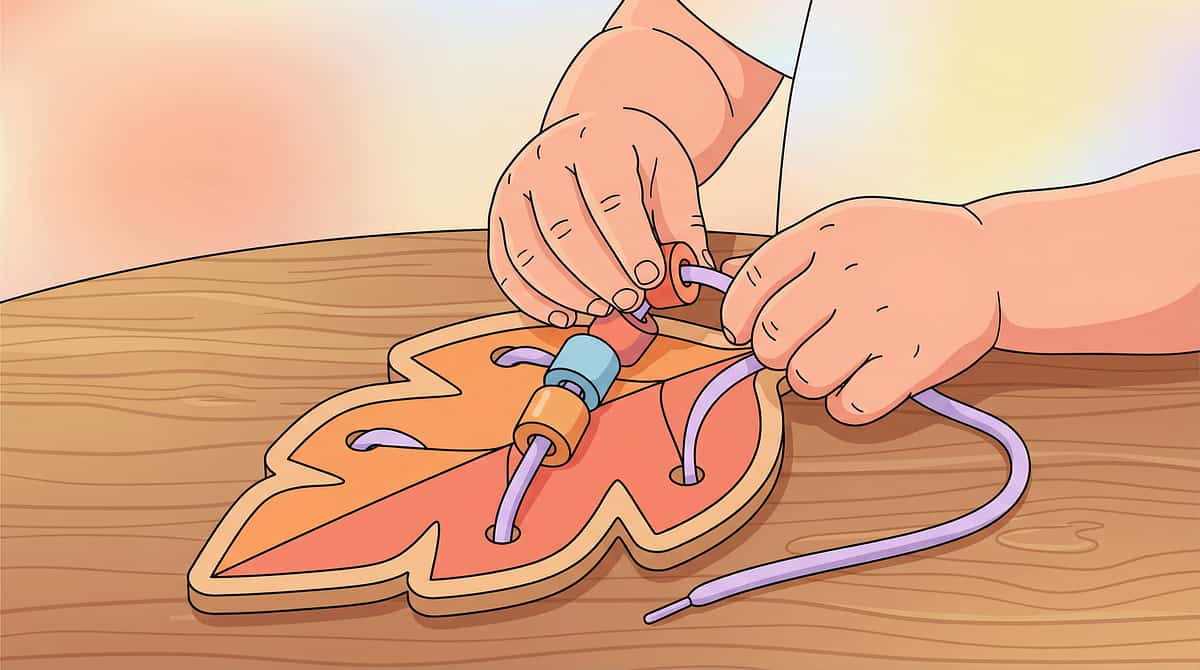
🧵 The Technique: What It Is
Domain: Fine Motor / OT
Age: 2–8 years
Duration: 10–15 min/session
Frequency: Daily
Fine Motor / OT
Primary clinical domain
Canon: Fine Motor Tools
128-category taxonomy
10–15 min/session
Daily practice recommended
F-611 | Ep. 611 of 999
Fine Motor Development Series

Who Uses This Technique
This technique crosses therapy boundaries — because your child's brain doesn't organize by therapy type.
Occupational Therapist (Primary Lead)
Designs the graded material progression, assesses bilateral coordination and visual-motor integration, and selects the specific lacing materials matched to the child's current developmental level.
Special Education Specialist
Integrates lacing practice into classroom fine motor stations, adapts materials for the school environment, and coordinates home-school consistency in practice sequences.
ABA / BCBA Therapist
Applies task analysis to break lacing into discrete teachable steps, implements reinforcement schedules to build motivation, and tracks data to measure skill acquisition.
Neurodevelopmental Pediatrician
Screens for underlying conditions affecting fine motor development — DCD, hypermobility, proprioceptive differences — and provides medical context for the OT's material choices.
"At Pinnacle, all four disciplines review each child's lacing profile through GPT-OS®, ensuring the home program reflects clinical consensus — not a single perspective."
Int J Speech-Lang Pathol, 2022 | DOI: 10.1080/17549507.2022.2141327

What This Technique Targets
🎯 Primary Target
Bilateral Coordination
Training both hands to perform different, coordinated roles simultaneously — one holds, one threads.
Secondary Targets
Visual-Motor Integration
Connecting what the eyes see (the hole) to what the hands execute (threading the cord through it).
Sequential Motor Processing
Building the in-out-in-out pattern as an automatic motor program.
Tertiary Targets
Pincer Grasp Refinement
Crossing Midline
Hand Dominance Consolidation
Executive Function
Pre-Writing Readiness
Self-Care Independence
Observable Behavior Indicators
Target | You'll Know It's Improving When... |
Bilateral Coordination | Child naturally steadies the card with one hand while threading with the other |
Visual-Motor Integration | Cord enters holes on first or second attempt, without repeated misses |
Sequential Processing | Child continues in-out pattern without losing place or needing reminders |
Pincer Grasp | Child holds cord tip 1–2 inches from end, not mid-cord |
World J Clin Cases, 2024 | PMC10955541
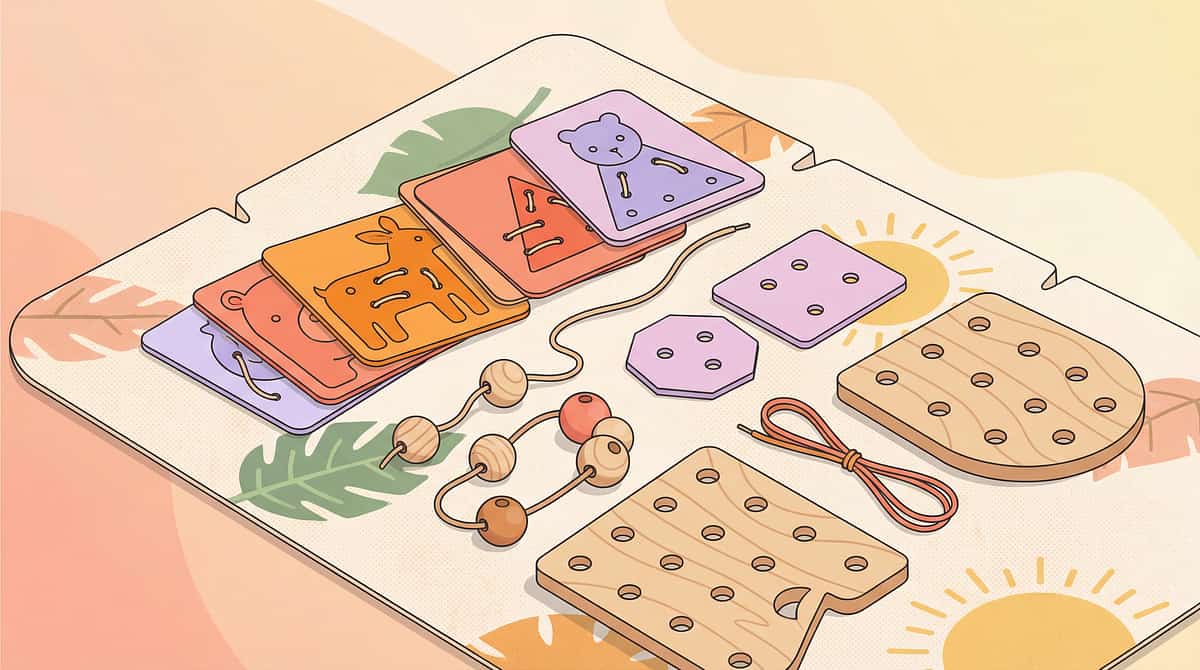
9 Materials: A Complete Progression Ladder
From first threading to shoe-tying mastery — every material has a therapeutic purpose.
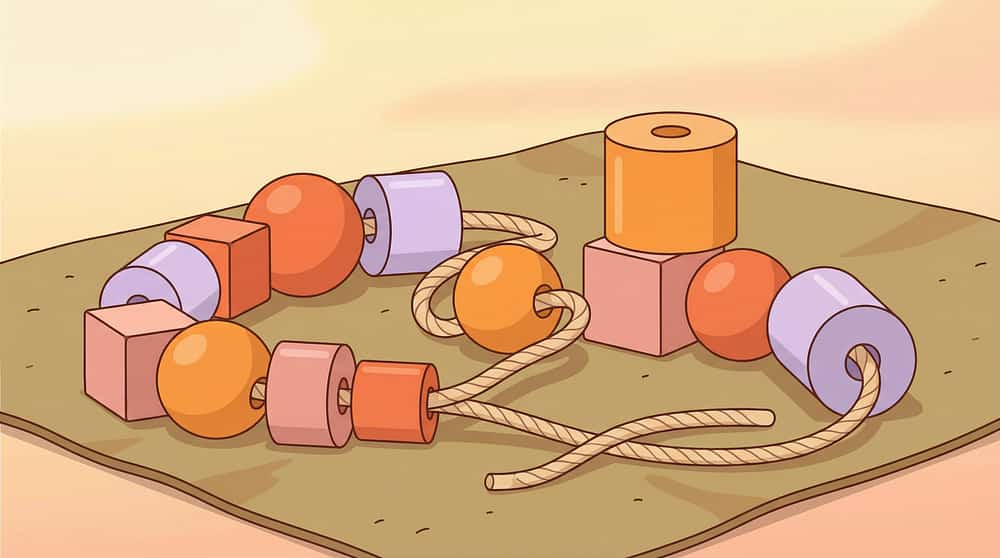
M1: Jumbo Lacing Beads + Stiff Cord
First threading success — large holes, stiff cord, no floppy-lace frustration. ₹250–600 | DIY: Bottle caps + thick shoelace
🏅 Start Here
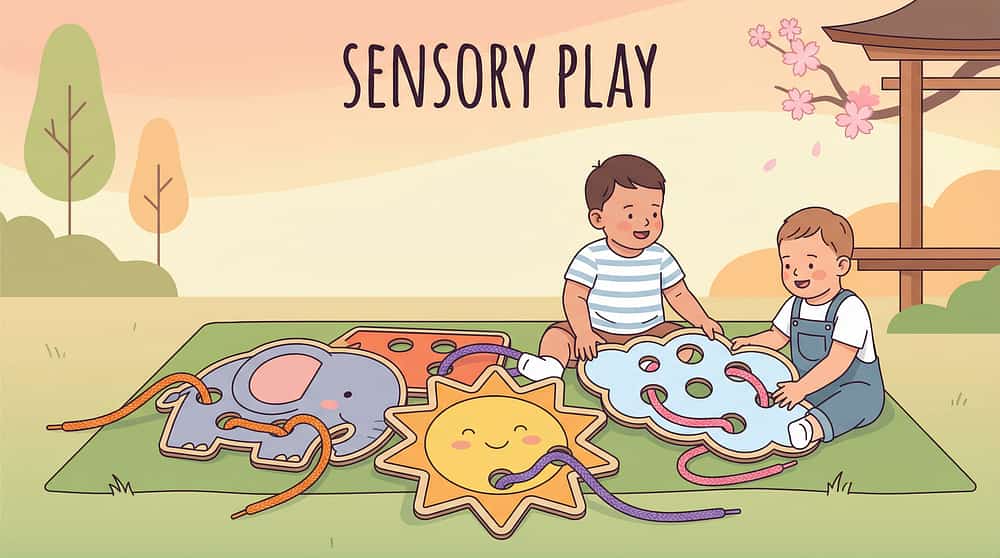
M2: Jumbo Lacing Cards (Extra-Large Holes)
5–8 holes max, ½ inch diameter — fewer targets, clear success. ₹200–500 | DIY: Thick cardboard + hole punch + grommet stickers
🏅 Pinnacle Recommends
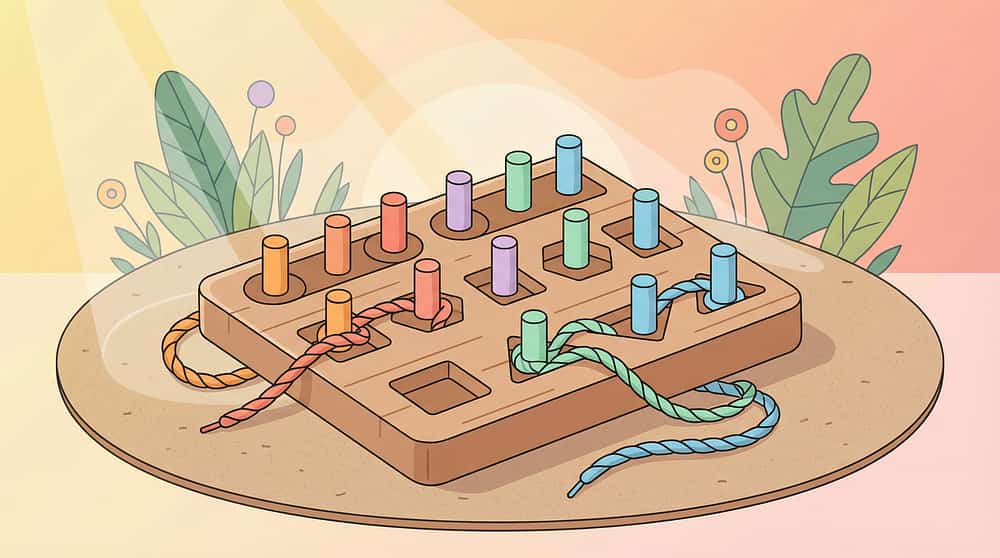
M3: Lacing Boards with Pegs
Visible targets, no hidden holes — bilateral coordination without visual-motor demand. ₹300–700 | DIY: Golf tees in thick foam block

Materials 4–6: Building Real-World Skills

M4: Sneaker Practice Board
Practice the real goal — shoe-lacing — without time pressure. ₹350–900 | DIY: Old sneaker stuffed with newspaper, mounted on cardboard
🏅 Shoe-Tying Readiness
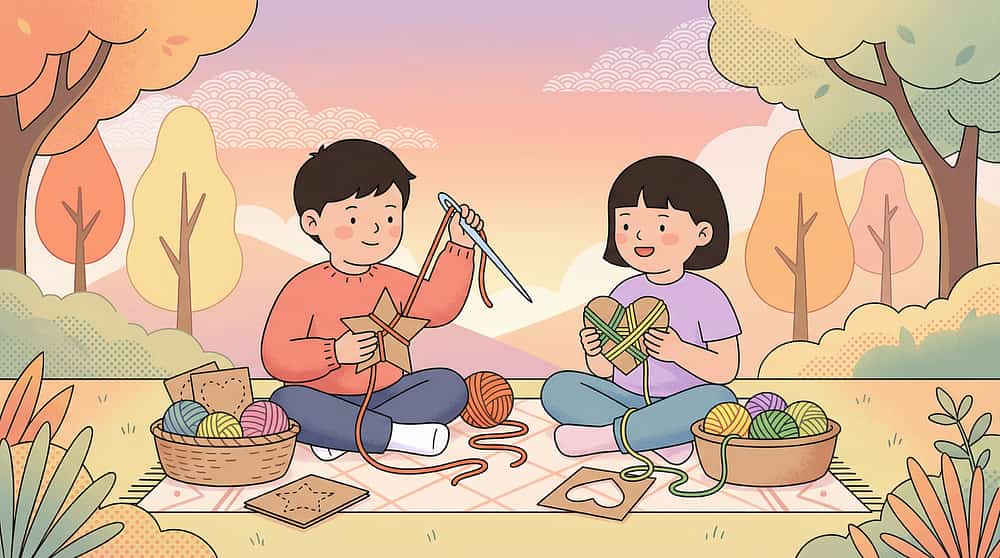
M5: Sewing Cards + Blunt Plastic Needles
Needle grip = pencil grip. Builds writing-ready fingers. ₹200–500 | DIY: Thick cardstock + pre-punched holes + blunt darning needle + yarn

M6: Colander + Pipe Cleaners
Already in your kitchen — unlimited threading practice, zero cost. ₹0–100 (likely already owned) | Metal strainer + chenille stems
🏅 Zero-Cost Essential
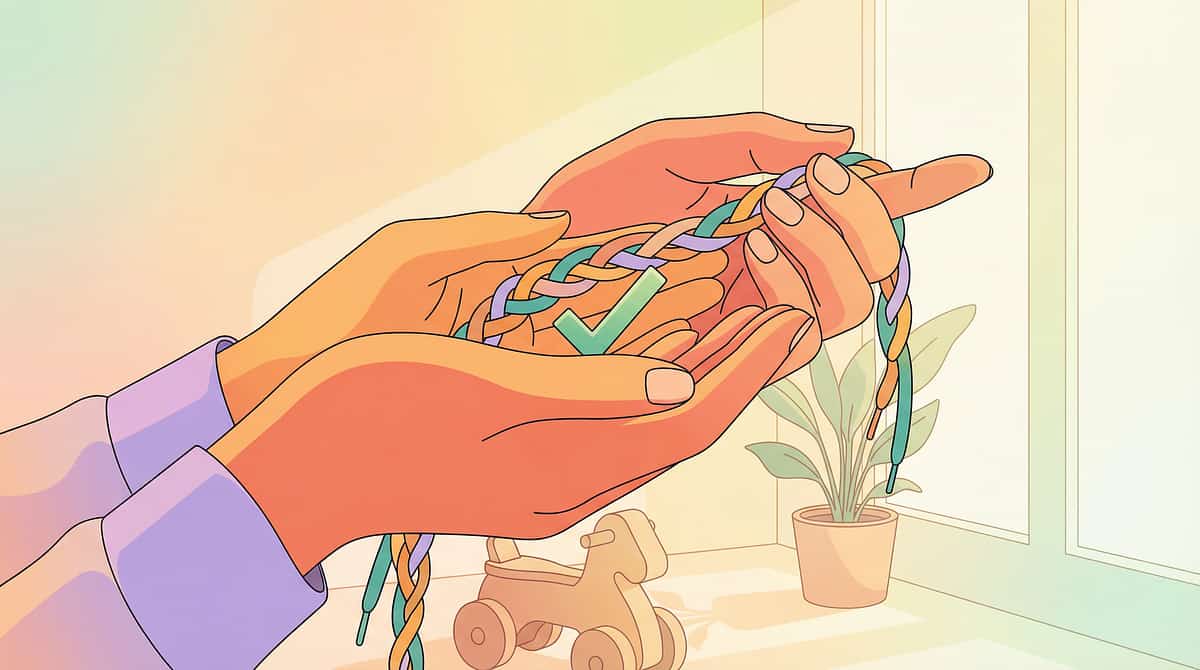
Materials 7–9: Advancing to Mastery
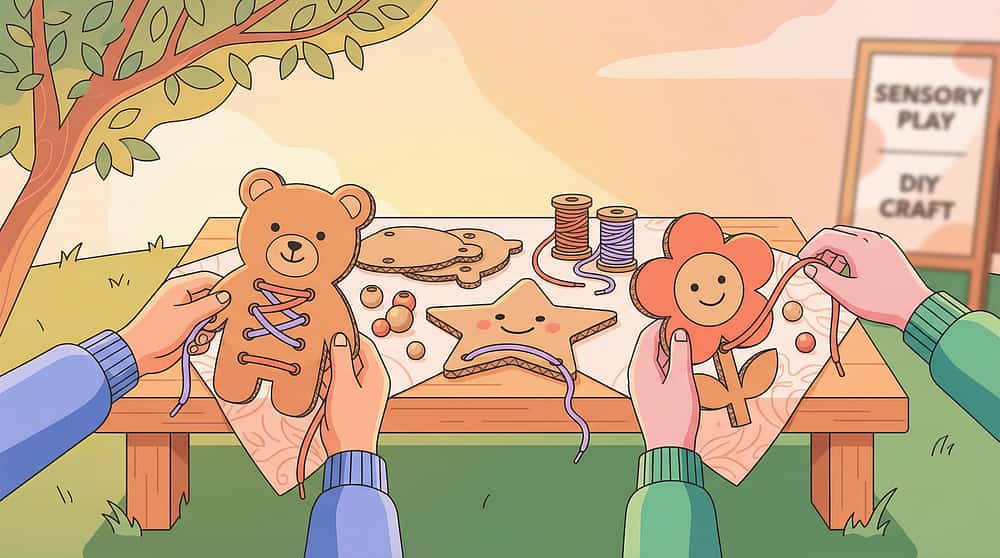
M7: DIY Cardboard Lacing Cards
Customize to child's interests and exact skill level. ₹50–150 | Cereal box + hole punch + shoelace + child's favorite character

M8: Wooden Lacing Shapes / Animals
Weight provides proprioceptive feedback. Lasts years; sensory-satisfying. ₹400–1,200 | Not easily replicated — invest in one quality piece

M9: Sequential Lacing Pattern Cards
Adds a cognitive layer — follow the pattern, build executive function. ₹150–400 | DIY: Print crossing patterns on cardstock, laminate
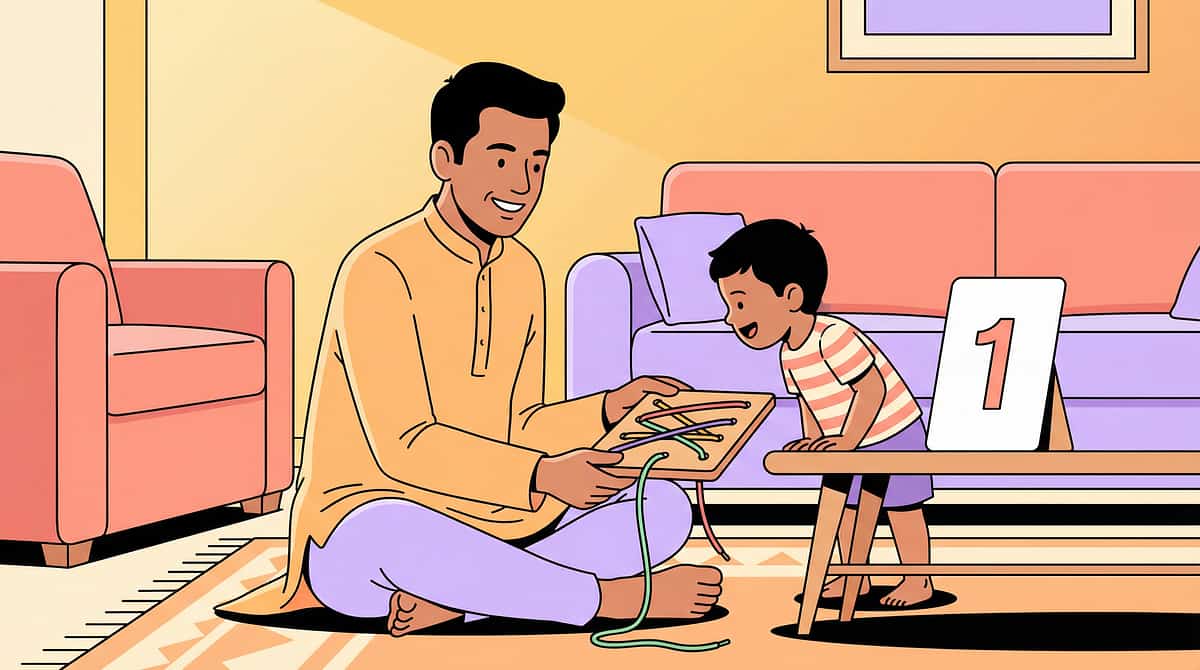
DIY & Substitute Options
Every family can do this — regardless of budget, access, or location. WHO/UNICEF Inclusion Principle — applied.
Buy This
- Jumbo Lacing Beads — ₹250+
- Jumbo Lacing Cards — ₹200+
- Peg Board — ₹300+
- Wooden Shapes — ₹400+
- Sewing Cards — ₹200+
- Pattern Cards — ₹150+
Make This (₹0)
- Bottle caps + hole + thick shoelace
- Cereal box + hole punch + grommet stickers
- Golf tees pushed into thick foam block
- Thick cardboard cut-outs, reinforced with tape
- Thick paper + pre-punched holes + blunt darning needle
- Hand-drawn crossing patterns on laminated cardstock
When Commercial Materials Are Preferred:
- When the child needs precise sensory feedback (wooden weight matters)
- When durability is critical (daily use for 6+ months)
- When OT specifically prescribes a particular tool
WHO NCF Handbook, 2022 | CCD Package — 54 LMIC implementation | PMC9978394

Safety First: Before You Begin
🔴 RED — Do NOT Proceed If:
- Child is in a meltdown or post-meltdown recovery state
- Child is ill, feverish, or in physical pain
- Beads or small materials are still mouthed (choking risk)
- Child has an open wound on hands or fingers
- Environment has unresolved triggers that may escalate
🟡 AMBER — Modify Before Proceeding If:
- Child is tired — shorten to 3–5 minutes, reduce hole count
- Child showed frustration last session — go one level simpler
- It's a high-sensory day — start with colander + pipe cleaners
- Caregiver is also stressed — regulated adult = regulated child
🟢 GREEN — All Clear When:
- Child is fed, rested, and in a calm-alert state
- Materials are at correct difficulty level
- Space is clear of competing distractions
- Parent has 10–15 uninterrupted minutes
STOP Immediately If:
- Child shows distress beyond frustration tolerance (crying, self-injuring, throwing)
- Child's grip is causing hand pain or visible whitening of fingers
- Cord becomes wrapped around fingers, reducing circulation
Material Safety Specifics:
Beads under 1.5 inches: supervise constantly — choking risk
Pipe cleaner ends: bend over to avoid skin scratches
Colander: check for sharp hole edges before use
Blunt needles: "needle always points down" — teach before starting
Indian J Pediatr, 2019 | DOI: 10.1007/s12098-018-2747-4 | Pinnacle Clinical Safety Protocols
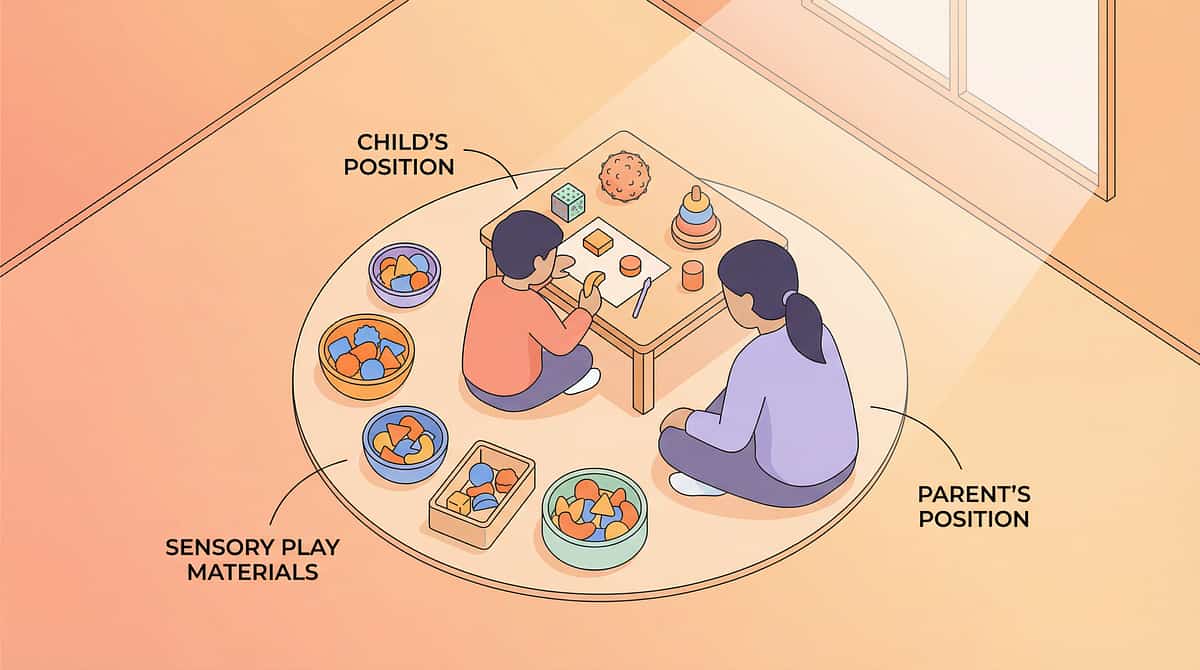
Set Up Your Space
80% of session failures begin before the session starts. Your environment is your first intervention.
5-Point Setup Checklist
Table Height
Child's elbows rest comfortably on the surface — not reaching up or hunching down
Seating
Child's feet flat on floor or footrest — no dangling, which disrupts postural stability
Lighting
Bright and even — shadows hide holes and increase visual-motor difficulty
Sound
Background noise below conversational level — reduce competing sensory input
Materials
Pre-laid out in order of use — no searching mid-session breaks the flow
Parent Position
Additional Tips
- Visual Timer: Visible from child's seat — reduces anxiety about when practice ends
- Screen Removal: TVs and tablets off before starting — competing visual input fragments attention
- Temperature: Warm room preferred — cold fingers reduce fine motor precision measurably
SI Theory — Ayres | Meta-analysis on structured session environment | PMC10955541
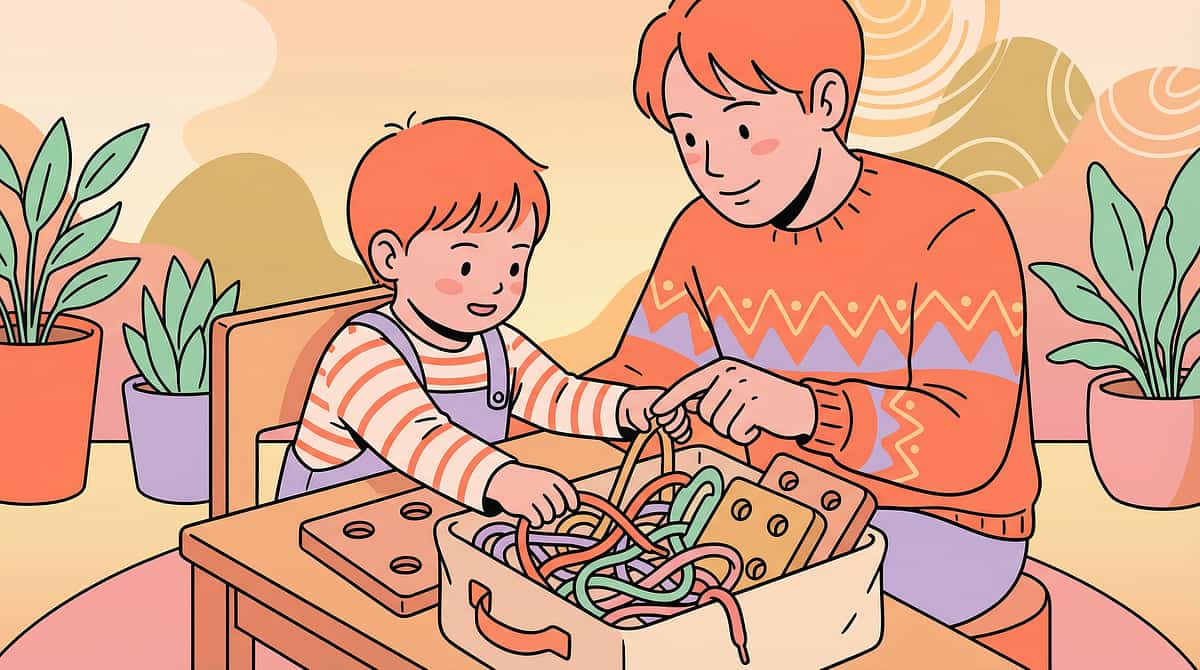
Is Your Child Ready? The Readiness Check
The best lacing session is one that starts right.
Child has eaten within the past 2 hours
Child has had physical movement in the last 30 minutes (outdoor play, jumping, running)
Child is not in the first 20 minutes after a meltdown
Child can make eye contact or attend to an object for 30+ seconds
Child has not had a severe frustration experience in the last 10 minutes
Hands are warm and dry
Child is showing curiosity (touching objects, looking around) vs. withdrawal
✅ 6–7 checks
GO — proceed to Step 1: The Invitation
⚠️ 4–5 checks
MODIFY — use simpler material, shorter session (5 min)
❌ 3 or fewer
POSTPONE — calming activity first: swing, heavy work, snack
A 3-minute session with a colander and 5 pipe cleaners that ends in success is worth more than a 15-minute session that ends in shutdown. Always choose the version that ends with the child feeling capable.
ABA Antecedent Manipulation Principles | Pinnacle Clinical Protocols
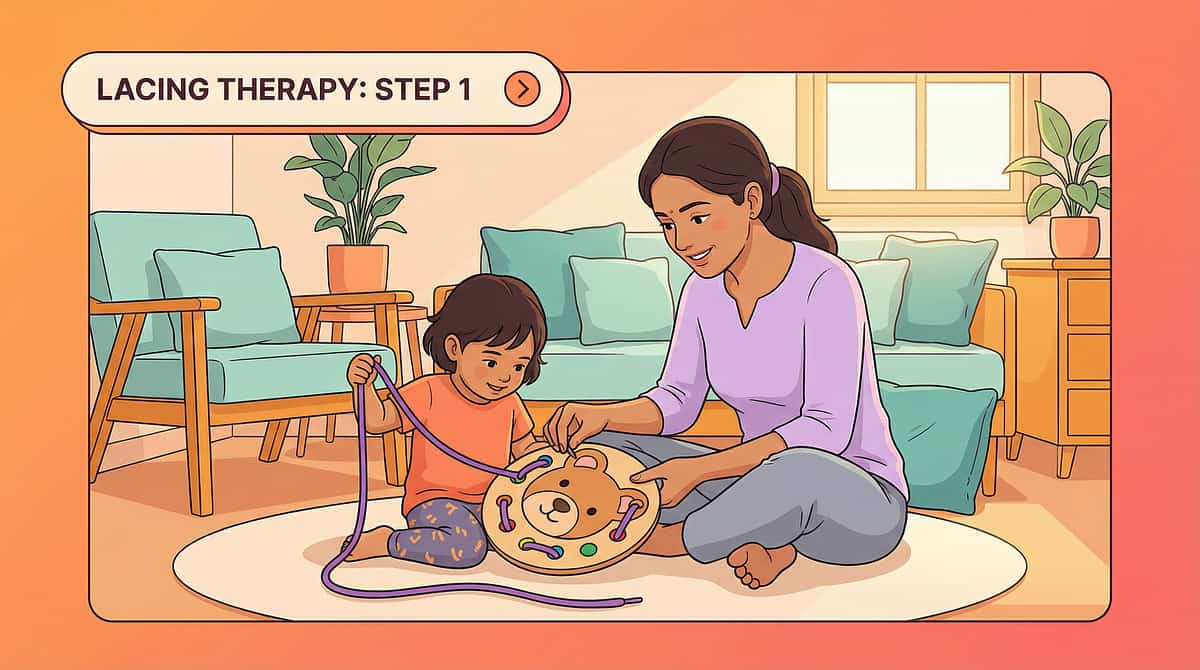
Step 1: The Invitation
01
Duration: 30–60 seconds
"Hey, look what I found! Want to help me put these colourful beads/pipe cleaners/laces onto this? I'm trying to make a pattern..."
Body Language Guidance
- Present the material at child's eye level
- Use animated, low-pressure tone (curious, not instructional)
- Do not make eye contact the first requirement
- Handle the material yourself first — let curiosity do the invitation
What Acceptance Looks Like
- Child moves toward the material
- Child reaches out to touch
- Child watches your hands closely
- Child vocalizes or signs interest
What Resistance Looks Like — and How to Respond
- Turns away → give it 60 seconds before trying again
- Pushes material → acknowledge ("You don't want this right now? OK."), try different material
- Says "no" → honour it fully. Try in 20 minutes with a different entry point.
ABA Pairing Procedures | OT "Just-Right Challenge" principle
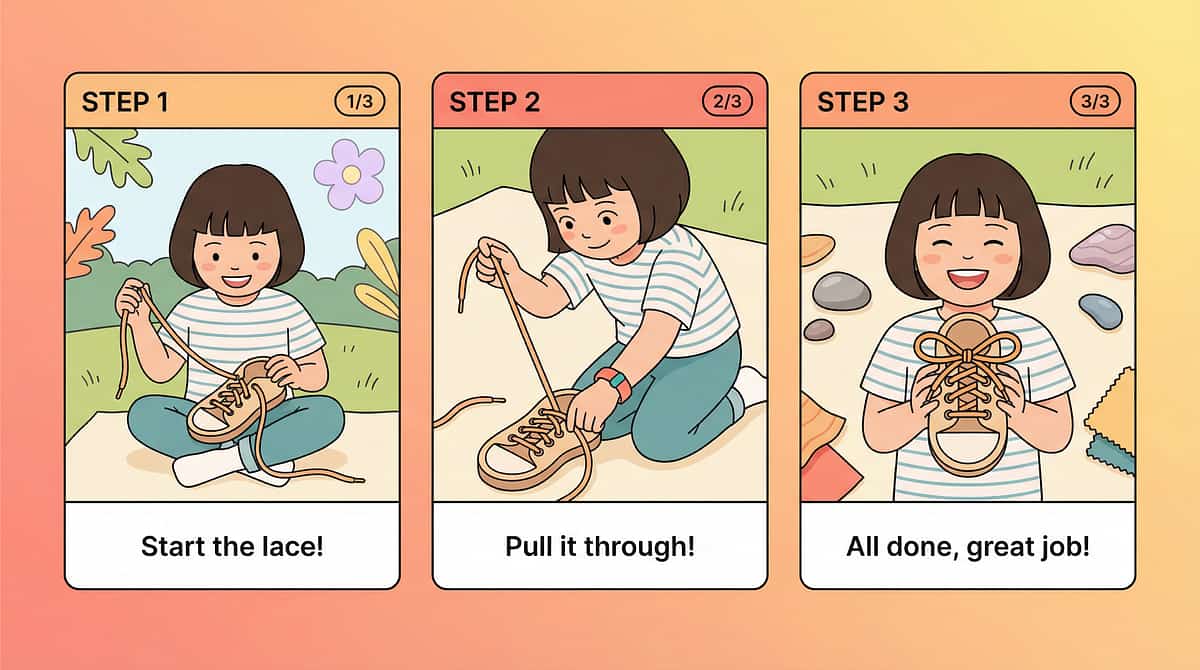
Step 2: The Engagement
02
Duration: 1–3 minutes
The child is now in. This step deepens engagement by introducing the specific material and beginning the reinforcement cycle.
Level 1 — Beginning: Jumbo Beads on Stiff Cord
"Look — push this through the big round hole. Like this — " [demonstrate once, hand over]
Level 2 — Developing: Jumbo Lacing Card
"See these big circles? The cord wants to go IN one side and OUT the other. Let's find the first hole together."
Level 3 — Progressing: Peg Board
"This lace is going to hug each of these pegs. Can you wrap it around — over, under, over, under?"
Level 4 — Advanced: Sneaker Practice Board or Sewing Cards
"You're ready for the real thing. This is exactly how your shoes get laced. Want to try?"
Presentation Principles:
- Move slowly — let the child's eyes track the material
- Position material within the child's natural visual field
- First reinforcement: within 3 seconds of any engagement — "Yes! Just like that!"
- Keep verbal instruction to 5 words maximum per direction
PMC11506176 | Reinforcement scheduling from ABA literature

Step 3: The Therapeutic Action
03
Duration: 4–8 minutes (40–60% of session)
For Jumbo Beads:
- Child holds cord in dominant hand, 1 inch from tip
- Non-dominant hand holds bead steady
- Push tip through hole — guide if needed, then release
- Pull cord through until bead slides down
- Celebrate — "It went through!"
- Repeat to next bead
For Lacing Cards:
- Start at the marked first hole (arrow or star sticker)
- Push lace through front to back
- Child pulls cord out the other side
- Move to next hole (point if needed — don't guide hand)
- Narrate softly: "In...and out...in...and out..."
- Complete all holes or reach natural stopping point
Common Errors & Fixes:
Error | Why | Fix |
Lace bends before hole | Cord too floppy | Switch to stiffer cord or pipe cleaner |
Uses only one hand | Bilateral coordination difficulty | Stabilize card with weight or tape |
Loses place/skips holes | Sequential processing diff | Number the holes; use pointing + verbal count |
Pulls cord all the way out | Motor planning difficulty | Tie a knot stop at cord end |
Holds cord mid-section | Proprioceptive difficulty | Mark "holding zone" with tape band |
PMC10955541 — 40-minute clinical session → 10–20 minute home session proportioning
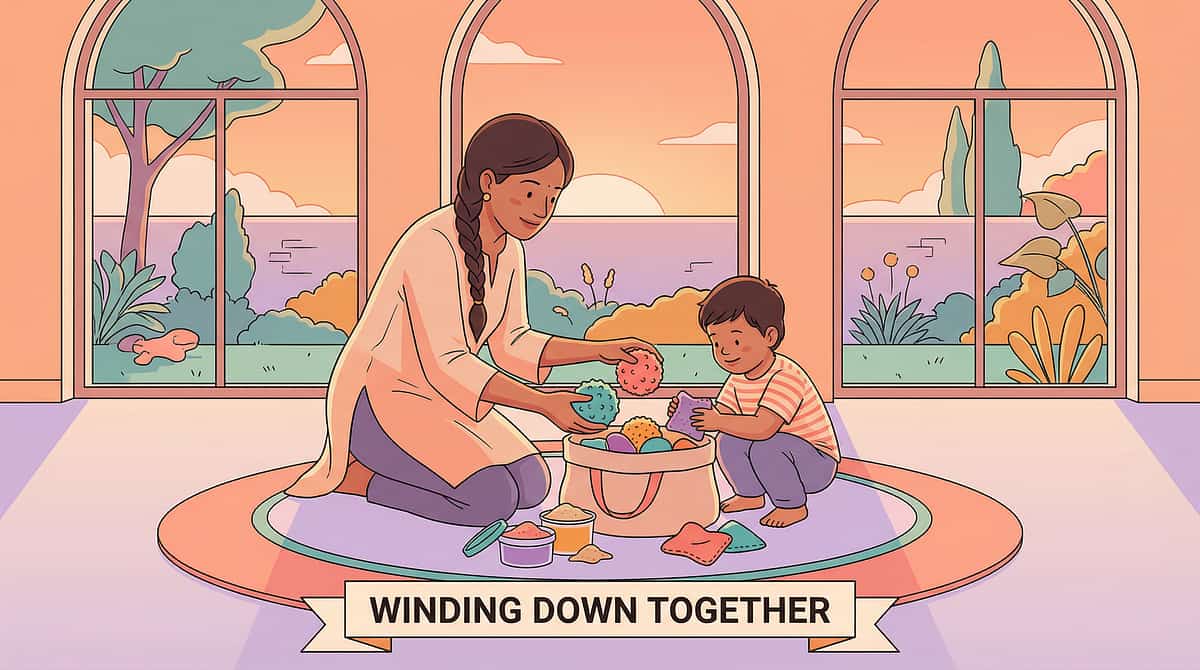
Step 4: Repeat & Vary
04
Duration: 3–5 minutes
3 good repetitions are worth more than 10 forced ones.
Child's State | Target Reps | Session Approach |
Highly engaged, seeking more | 8–12 reps | Let the child lead — follow engagement |
Normally engaged | 4–6 reps | Structured rotation |
Tolerating but not enthusiastic | 2–3 reps | Keep short, end on success |
Borderline willingness | 1 good completion | Celebrate and stop |
Variation to Maintain Engagement:
Change lace colour mid-session
Switch from beads to a lacing card
Change the card shape
Add counting ("How many went through?")
Add pattern making ("red-blue-red")
Satiation Indicators — Stop Before These Escalate:
- Child starts looking away more than at the material
- Hand movements become rougher or more forceful
- Vocalization changes tone (from focused to frustrated)
- Child asks to stop
SI therapy dosage literature | Pinnacle clinical session protocols

Step 5: Reinforce & Celebrate
05
Reinforcement Scripts (use exactly, or close):
"YES! You pushed it right through! You did it!" [within 3 seconds of threading]
"I saw that — your hand did exactly what it needed to do."
"That was hard and you kept going. That's what makes hands strong."
Type | Example | When to Use |
Verbal praise | "Brilliant threading!" | Every successful threading |
Physical | High five, fist bump | After completing a card/bead chain |
Token | Star sticker on chart | After each session |
Preferred activity | 5 minutes of special game | After completing target reps |
Sensory reward | Jump on trampoline | For sensory-seekers |
Celebrate the attempt, not just the success. "You tried to push it through — that was perfect trying!" is valid reinforcement. The brain encodes effort as progress.
ABA Reinforcement Principles | BACB Ethical Guidelines | Token economy systematic reviews

Step 6: The Cool-Down
06
Duration: 2–3 minutes
No session ends abruptly. The transition OUT of focused work is as therapeutic as the work itself.
2 Minutes Before Ending
"We have two more, then all done. Let's count: one more... last one! Done!" Use a visual timer if available — show the remaining time clearly.
1 Minute Before Ending
Begin putting materials into storage container together. Child participates in clean-up (fine motor practice continues!). Narrate: "Let's put the beads to sleep in their box."
Ending Ritual (30 seconds)
Use a specific closing phrase every session: "Lacing time is finished. [Child's name] did great work." Hand child their preferred comfort toy. Connect to next activity: "After this we're going to [preferred activity]."
If Child Resists Ending:
- Do not pull materials away abruptly
- Offer "one more, then done" — honour exactly
- Use visual: show that the timer is at zero
- Never negotiate more than once
Sensory Cool-Down Options:
Hand squeezes
Slow deep breaths
Quiet lap time
Soft music
NCAEP Evidence-Based Practices Report, 2020 | Visual Timer and Transition Supports for ASD
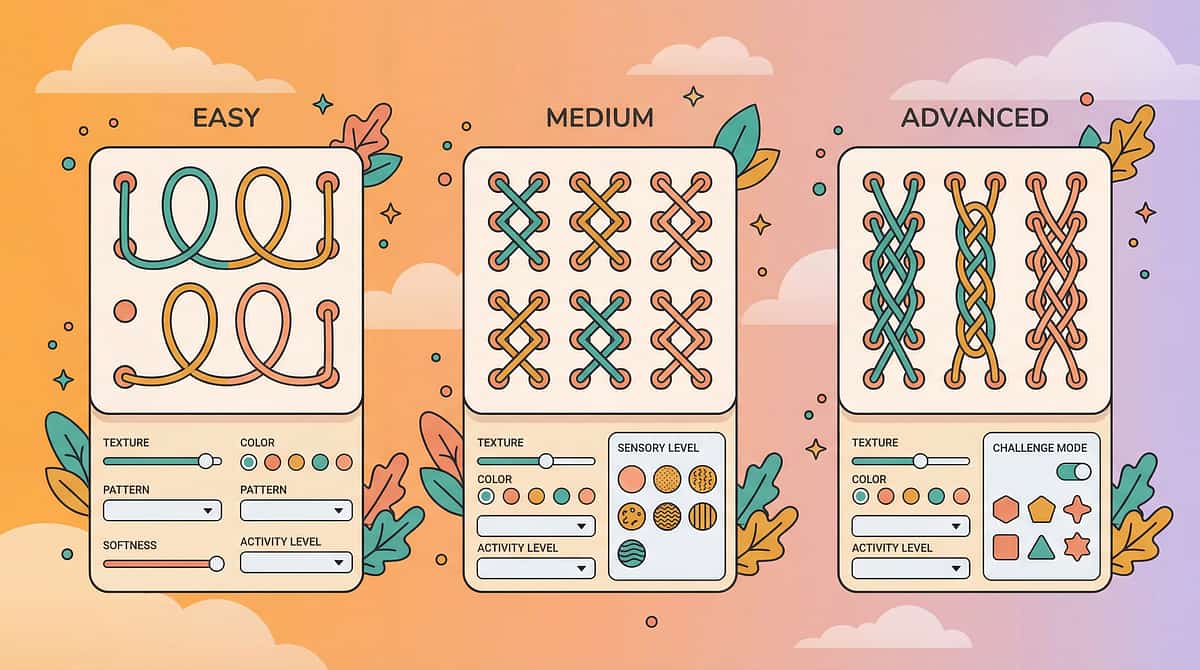
Capture the Data: Right Now
60 seconds of data now saves hours of guessing later.
1. Threading Success Rate
How many successful threadings in today's session?
Tally: ___ / ___ total attempts
Tally: ___ / ___ total attempts
2. Material Level Used Today
☐ Level 1 Beads ☐ Level 2 Jumbo Cards
☐ Level 3 Peg Board ☐ Level 4 Sneaker/Sewing
☐ Level 3 Peg Board ☐ Level 4 Sneaker/Sewing
3. Engagement Quality
☐ Highly engaged ☐ Normally engaged
☐ Tolerating ☐ Resisted – modified ☐ Postponed
☐ Tolerating ☐ Resisted – modified ☐ Postponed
BACB Data Collection Standards | Cooper, Heron & Heward, Applied Behavior Analysis (8th Ed.)

What If It Didn't Go As Planned?
Session abandonment is not failure — it's data. Here are the 7 most common lacing session challenges and their immediate fixes.
❌ Child Refused to Engage at All
Why: Demand too high, wrong time, or previous negative experience with lacing.
Fix: Immediately drop one level (beads → colander + pipe cleaners). Present as play, not practice. Try 24 hours later.
Fix: Immediately drop one level (beads → colander + pipe cleaners). Present as play, not practice. Try 24 hours later.
❌ Child Became Frustrated Within 2 Minutes
Why: Material is beyond current skill level. Success rate under 50% = too hard.
Fix: Switch to larger holes, stiffer cord, or peg board. Aim for 80%+ success rate before advancing.
Fix: Switch to larger holes, stiffer cord, or peg board. Aim for 80%+ success rate before advancing.
❌ Completed Task but No Interest in Repeating
Why: Reinforcement not aligned with child's actual motivators.
Fix: Revise reinforcement menu. Observe what the child naturally reaches for post-session — that's your reinforcer.
Fix: Revise reinforcement menu. Observe what the child naturally reaches for post-session — that's your reinforcer.
❌ Lace Kept Missing the Holes Despite Trying
Why: Visual-motor integration gap — seeing the hole vs. guiding hand to it.
Fix: Add visual contrast (dark lace + light card). Reduce hole count to 3. Consider peg board first.
Fix: Add visual contrast (dark lace + light card). Reduce hole count to 3. Consider peg board first.
❌ Child Became Aggressive or Self-Injurious
Why: Frustration tolerance exceeded — this level is not safe for practice yet.
Fix: Stop immediately. No correction of behavior. Calm child first. Consult OT before next attempt.
Fix: Stop immediately. No correction of behavior. Calm child first. Consult OT before next attempt.
❌ Completed Correctly but Couldn't Replicate Independently
Why: Skill in acquisition, not yet consolidated — normal at early stage.
Fix: Continue same level another week. Mastery = 80% independence across 3 sessions.
Fix: Continue same level another week. Mastery = 80% independence across 3 sessions.
❌ Parent Ran Out of Patience Mid-Session
Why: This is real and valid. Fine motor sessions can be emotionally demanding.
Fix: End the session — child's regulation follows parent's. Your regulated return tomorrow is worth more than pushing through today.
Fix: End the session — child's regulation follows parent's. Your regulated return tomorrow is worth more than pushing through today.
ABA Functional Analysis Principles | OT Clinical Problem-Solving Literature
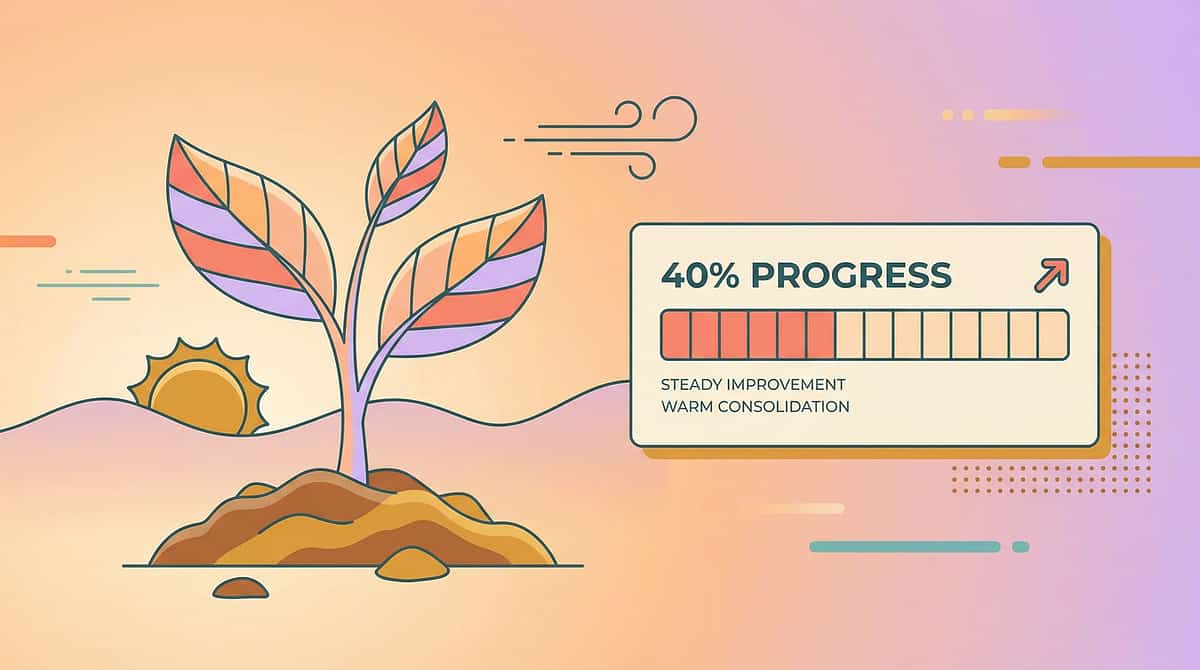
Adapt & Personalize for Your Child's Profile
No two children are identical. Here is how to calibrate F-611 to your child's specific sensory and developmental profile.
🔴 Sensory Avoider (Hypersensitive)
- Use smooth beads, not textured
- Avoid rough cord — use satin ribbon instead
- Start with thin cotton gloves if needed
- Shorter sessions (5 min), more frequent
🔵 Sensory Seeker
- Use rougher-textured cord deliberately
- Wooden shapes provide proprioceptive weight
- Longer sessions tolerated (15–20 min)
- Add resistance — threading through foam
🟡 Visual-Motor Difficulty (Primary)
- High-contrast materials: bright lace, dark card
- Peg board before hole-threading
- Number holes with arrows
- Hand-over-hand guidance for first 3 sessions
🟢 Bilateral Coordination Difficulty (Primary)
- Heavier, stable wooden materials
- Non-slip mat under the lacing card
- Dycem grip mat for card stability
- More hand-over-hand at the stabilizing hand stage
Age Modifications:
Age | Materials | Session Length |
2–3 years | Bead + stiff cord only | 3 minutes maximum |
4–5 years | Full progression available | 8–10 minutes |
6–8 years | All materials, pattern cards + shoe board | 15 minutes |
OT Sensory Profile-Based Intervention | ABA Function-Based Modification | SLP Communication Profile Principles

Weeks 1–2: Building the Foundation
Foundation Phase — 15%
You are laying neural foundations. Celebrate tolerance — not just performance.
Foundation Phase
Weeks 1–2: tolerance and engagement are the wins
✅ This IS Progress at This Stage
- Child tolerates material for 3 seconds longer than last session
- Fewer "no" responses per session
- Child watches your demonstration without leaving
- Successful threading on 50% of attempts
- Less forceful rejection of the material
❌ Not Expected Yet
- Child completing full lacing card independently
- Perfect threading accuracy
- Child requesting lacing practice spontaneously
- Bilateral coordination fully established
- Shoe-tying readiness
"If your child tolerated the material for 3 seconds longer than last week — that is real, measurable, neurological progress."
This phase is the hardest emotionally. Progress is invisible from the outside — it lives in milliseconds of additional tolerance, in a slightly warmer engagement, in one less refusal. You will not see dramatic change yet. You are building the neural foundations everything else depends on.
PMC11506176 — 8–12 week intervention timeline | Early-phase tolerance indicators

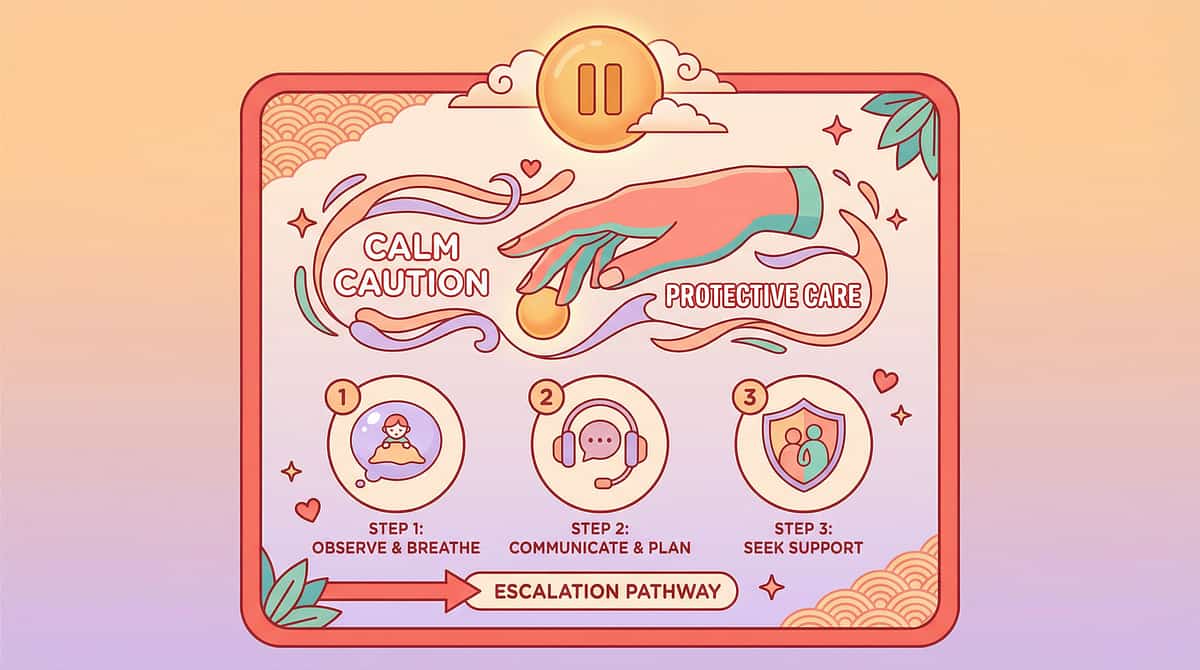
Weeks 3–4: Consolidation Signs
Consolidation Phase — 40%
Consolidation Phase
Weeks 3–4: neural pathways forming, habits taking hold
Watch for These Consolidation Indicators:
Child anticipates the activity before materials appear — neural prediction forming
Child begins to self-correct without parental prompt — metacognition emerging
Same hand consistently leads threading — hand dominance consolidating
Child can complete 2+ consecutive holes without losing place
Threading motion becomes visibly smoother — motor program automating
Child may start threading other objects in daily life — generalization seeds appearing
When your child automatically reaches for the threading hand — without thinking, without instruction — the cerebellar pathway is consolidating. This is the biology of learning you can watch.
Neuroplasticity evidence | Synaptic strengthening timelines in pediatric populations
Weeks 5–8: Mastery Indicators
Mastery Phase — 75%
Mastery Phase
Weeks 5–8: skills consolidating, generalization emerging
🏆 Mastery Badge Unlock Criteria:
Bilateral Coordination Mastered: Child stabilizes card with non-dominant hand automatically, without instruction
Visual-Motor Integration Mastered: Threading enters target hole on first or second attempt in >80% of trials
Sequential Processing Mastered: Child completes in-out pattern on a 6-hole card without losing place or requiring a prompt
Generalization Observed: Child applies threading to novel materials without instruction
Maintenance Confirmed: Mastery persists after 1 week without structured practice
Criteria Met | Next Step |
All 5 criteria | Advance to next material complexity |
3–4 criteria | Continue consolidating + add one next-level challenge per session |
1–2 criteria | Remain at current level, check if material adjustment is needed |
PMC10955541 | BACB Mastery Criteria Standards
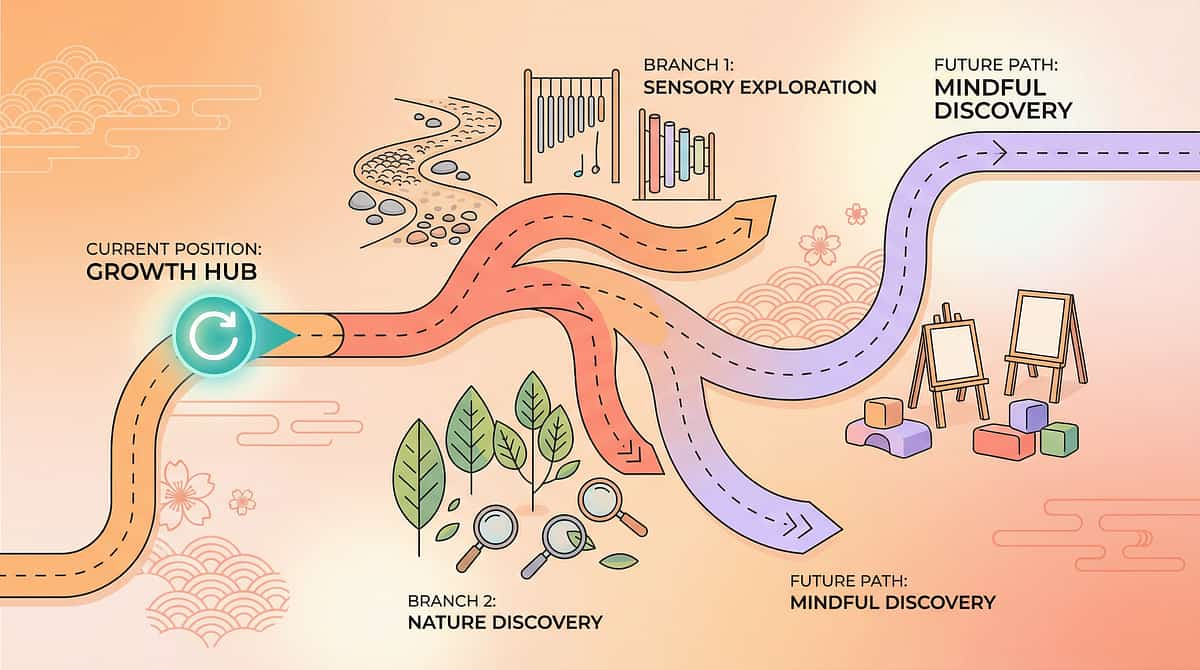
Celebrate This Win
You did this. Your child grew because of your commitment.
You saw a child who couldn't push a lace through a hole. You created the conditions — the right materials, the right space, the right patience — for their brain to build the pathways that now make threading possible.
That is not a small thing. That is neuroscience, executed by a parent in a home, every day.
🧵 Threading Mastered
🤝 Bilateral Coordination Built
👁️ Visual-Motor Integration Developed
📋 Sequential Processing Established
👟 Shoe-Tying Journey Begun
"We're celebrating because your hands learned something new and hard." — Tell your child this. They earned it.
Let your child choose a special outing or activity this week. Photograph the moment. Write the date in a journal: "The day [name] threaded all the holes without help." This is a milestone worth marking.
Red Flags: When to Pause and Consult
Even in the progress zone, clinical awareness protects your child. Recognize these red flags and act swiftly.
🔴 No Improvement After 4 Weeks of Consistent Daily Practice
This may indicate an underlying bilateral coordination disorder (DCD) or sensory processing difference requiring formal assessment. Do not increase pressure — seek evaluation.
🔴 Increasing Frustration/Avoidance Over Time
If sessions are becoming harder after Week 3, the material progression may be incorrectly calibrated. OT reassessment of entry level is required.
🔴 Hand Pain, Grip Discomfort, or Unusual Hand Postures
May indicate hypermobility, joint laxity, or proprioceptive processing differences requiring medical review.
🔴 Significant Delay Across ALL Fine Motor Tasks Simultaneously
Difficulty across scissors, pencil, buttons, zippers, AND lacing simultaneously may indicate a broader developmental coordination profile — seek OT evaluation.
🔴 Child Bites/Hits/Self-Injures During Fine Motor Frustration Regularly
This requires ABA/BCBA consultation before continuing. The frustration-pain response needs addressing independently of the fine motor skill.
The Progression Pathway: Where You Go Next
F-611 is one node in a connected developmental map. Here is how it connects to what came before — and where mastery leads.
Branching Options After Mastery:
Bilateral Coordination was primary challenge →
F-613: Tongs & Tweezers — bilateral precision at higher difficulty
Visual-Motor Integration was primary →
F-616: Visual-Motor Integration Activities — targeted domain work
Sequential Processing was primary →
F-614: Pencil Grip Development — builds same sequential programs for writing
Shoe-tying is the explicit goal →
F-611-DD-01: Complete Guide to Teaching Shoe-Tying
Every lacing session is a writing session. Every threading is a pencil grip rep. The hands that lace the card will hold the pencil that writes the letter.
WHO/UNICEF Developmental Milestones Framework | Evidence-based developmental cascades
Related Techniques in the Fine Motor Domain
Fine Motor Development Series — Domain F | 70 techniques in this cluster
F-609: Finger Strengthening
🟡 Foundation | Putty, grip tools
"You already own what you need"
"You already own what you need"
F-610: Bead Threading Skills
🟡 Foundation | Jumbo beads
You came from here
You came from here
F-611: Lacing Skills ← YOU ARE HERE
🟢 Core | Lacing materials
(this page)
(this page)
F-612: Cutting Skills
🟢 Core | Adapted scissors
"Great next step after lacing mastery"
"Great next step after lacing mastery"
F-613: Tongs & Tweezers
🟢 Core | Kitchen tongs
"Already in your kitchen"
"Already in your kitchen"
F-614: Pencil Grip Development
🔵 Advanced | Pencils, grips
"The destination lacing is building toward"
"The destination lacing is building toward"
Your Child's Full Developmental Map
This technique is one piece of a larger, interconnected plan.
Domain F: Fine Motor Development
F-611 Lacing Skills — currently active
F-609 Active
F-610 Active
F-611 ← Here
F-612 Next
GPT-OS® Integration
F-611 session data feeds into:
- Fine Motor Independence Index
- Bilateral Coordination Index
- Self-Care Readiness Index
- Pre-Writing Readiness Index
WHO NCF 2018 — Five components of nurturing care requiring holistic developmental monitoring | UNICEF 2025 Country Profiles

Families Who've Been Here
From the clinical narratives of Pinnacle families. Anonymized. Real.
Riya, 4 years — "Going backwards to go forward"
Before: Refused lacing cards after 2 weeks of failed attempts. Would cry the moment the box appeared.
Intervention: 6 weeks at Level 1 (jumbo beads, stiff cord). Daily 5-minute sessions. Colander + pipe cleaners at bath time. Zero pressure.
Week 10: Riya completed her first jumbo lacing card — and asked to do it again the same evening.
Intervention: 6 weeks at Level 1 (jumbo beads, stiff cord). Daily 5-minute sessions. Colander + pipe cleaners at bath time. Zero pressure.
Week 10: Riya completed her first jumbo lacing card — and asked to do it again the same evening.
"Going backwards to go forward was the hardest thing to accept. But she needed the foundation we skipped."
Therapist's Note: "Entry level mismatch is the most common cause of lacing failure in young children. The child isn't wrong — the material selection was."
Arjun, 6 years — "He came running to tell me"
Before: Could thread beads but would "forget" which hole came next. School sent home a note about fine motor difficulty.
Intervention: Numbered holes on all cards. Pattern cards introduced in Week 4. GPT-OS® EverydayTherapyProgramme™ at home.
Week 8: Arjun tied his own shoes independently for the first time on his 7th birthday.
Intervention: Numbered holes on all cards. Pattern cards introduced in Week 4. GPT-OS® EverydayTherapyProgramme™ at home.
Week 8: Arjun tied his own shoes independently for the first time on his 7th birthday.
"The day he tied his shoes by himself, he came running to tell me. He was so proud. I was in tears."
Therapist's Note: "Sequential processing was the barrier — not motor ability. The numbered holes gave him the cognitive scaffold he needed."
Qualitative research on parent motivation + Pinnacle center outcome data | Illustrative — individual results vary
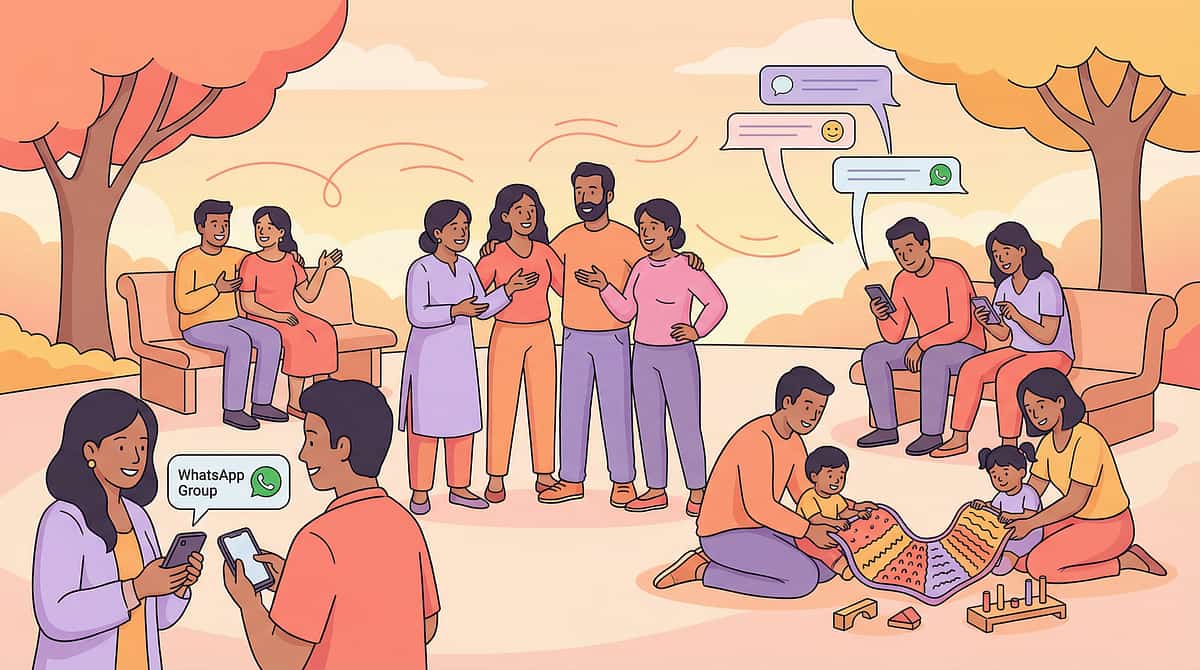
Connect with Other Parents
Isolation is the enemy of adherence. You don't have to do this alone.
WhatsApp Support Group — Fine Motor Parents
Connect with parents navigating the same fine motor journey, share wins, ask questions, and get real-time support from families who are one chapter ahead of you.
Pinnacle Parent Forum
Online community for F-domain challenges, wins, and questions. Browse threads by technique, age group, and diagnosis. Post anonymously or with your name.
Local Parent Meetups
Regular meetups at Pinnacle centers across India — structured peer support, shared materials, and guided practice sessions with clinical supervision.
Peer Mentoring
Connect with a parent who completed this exact journey 6 months ahead of you. Real experience, real empathy, real practical wisdom.
"Your experience — what worked, what didn't, the day it clicked — helps parents who are 3 months behind you. Consider sharing your journey."
WHO NCF Community Engagement Principles | Parent support network + intervention outcome literature
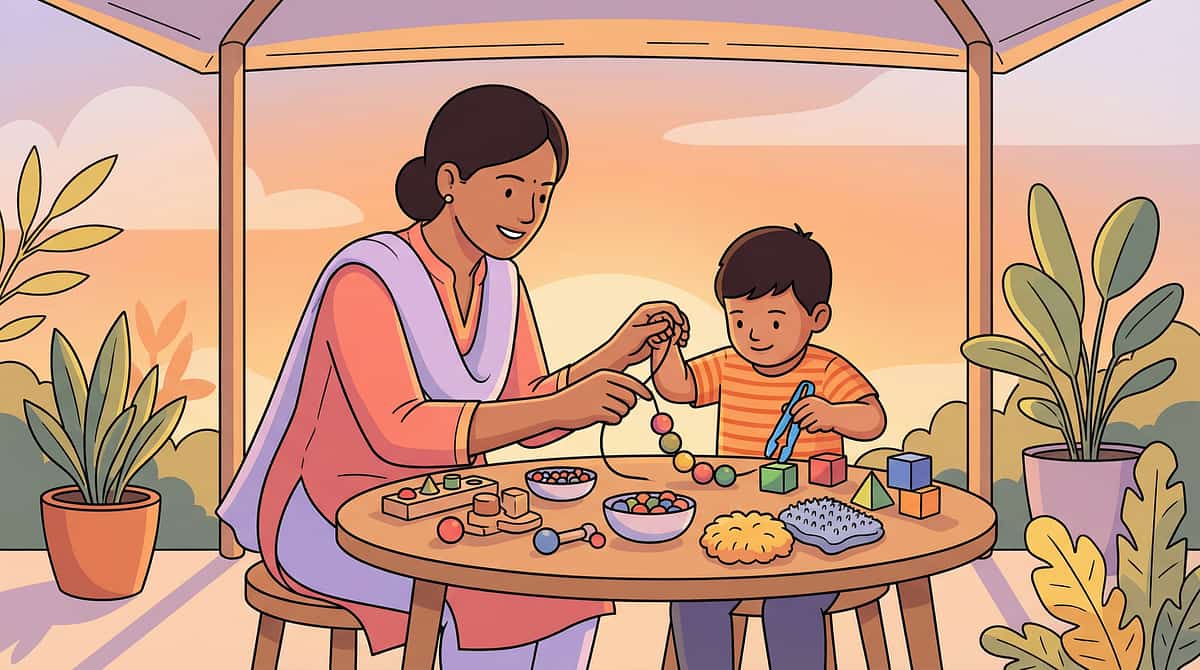
Your Professional Support Team
Home + clinic = maximum impact. Your professional team is closer than you think — including for families outside major cities.
Therapist Matching for F-611
The primary discipline lead for F-611 is Pediatric Occupational Therapy (OT).
Your Pinnacle OT will:
- Formally assess bilateral coordination and visual-motor integration
- Calibrate material level to your child's precise profile
- Integrate F-611 into a multi-disciplinary GPT-OS® plan
- Monitor generalization to school and home settings
Clinic + Home Formula:
- Clinical sessions: 2× per week (OT-guided)
- Home practice: 5–10 minutes daily (parent-led)
- Combined: maximum neuroplasticity window, both environments reinforcing
70+ Centers Across India
Find your nearest Pinnacle center for in-person OT assessment and ongoing support.
Teleconsultation Available
For families outside major cities — video sessions allow OTs to observe technique execution, calibrate material level, and guide adjustments with full GPT-OS® case tracking. Available across India in 16 languages. Same-day slots available.
WHO NCF Progress Report 2023 — 48% increase in ECD policy adoption | Primary healthcare as platform for family reach
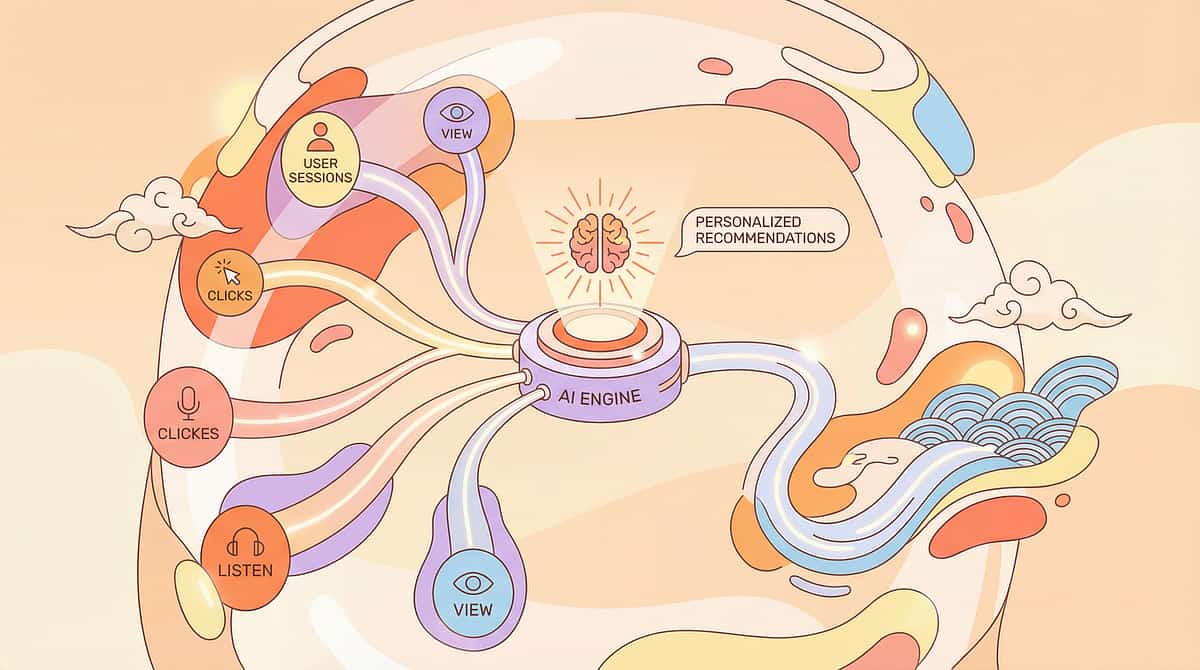
How GPT-OS® Uses Your Session Data
Transparency: here is exactly what happens to your data — and why it matters to millions of families.
What GPT-OS® Learns from F-611 Data:
- Success rate trajectory → when to advance material level
- Engagement quality → when to modify vs. maintain
- Time-to-mastery → calibrate prognosis for your child's profile
- Cross-domain patterns → how F-611 progress correlates with F-610 and F-614
🔒 Privacy Assurance
All session data is anonymized before aggregation. Personal identifiers are never shared. DPDP Act 2023 compliant.
"Your data helps every child like yours. When 20 million sessions teach GPT-OS® what works, every parent who opens this page tomorrow gets better guidance than the parent who opened it yesterday."
Digital health + ASD systematic reviews (2024) | 21 RCTs, 1,050 participants
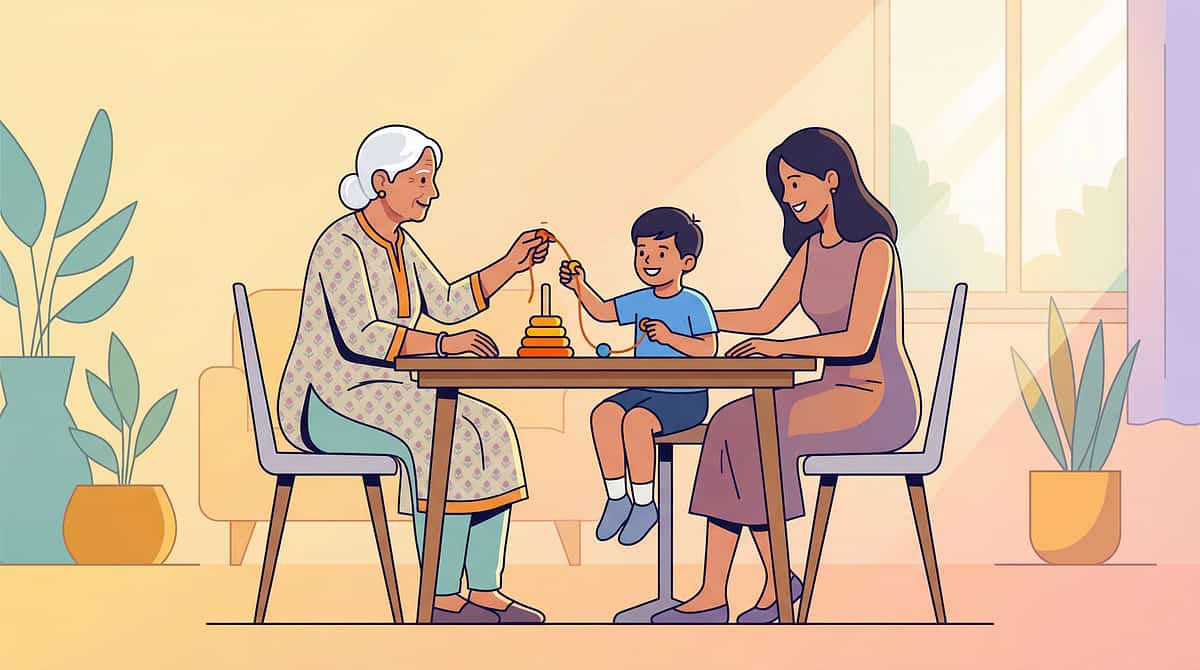
Share This with Your Family
Consistency across caregivers multiplies impact.
📥 Resources to Share:
- Family Guide — F-611 (1-page PDF): Simple, illustrated version for grandparents and extended family
- Teacher Communication Template: Pre-written letter for school explaining how to support lacing practice in class
- Grandparent Card (illustrated): Warm, simple visual guide anyone can follow
"Explain to Grandparents" Script:
"The doctor asked us to have [child's name] practice threading these beads/lacing cards for 10 minutes every day. It helps their hands get ready for writing and shoe-tying. Here's how to do it..."
PMC9978394 — WHO CCD Package: multi-caregiver training critical for generalization

Frequently Asked Questions
Questions from real parents at Pinnacle centers and our online community.
My child is 5 and still can't do basic threading. Is that a red flag?
Not automatically. Threading delays at 5 are common when bilateral coordination or visual-motor integration needs are present. It becomes a referral indicator when there's no progress with consistent graded practice after 6–8 weeks, or when multiple fine motor skills are affected. Start with Level 1 (jumbo beads) and track over 4 weeks.
How long before we see results?
With daily practice at the correct level: 1–2 weeks for increased tolerance, 3–4 weeks for consolidation signs, 5–8 weeks for mastery indicators. Shoe-tying typically follows 4–8 weeks after lacing mastery.
Can I do this without an OT's guidance?
Yes — this protocol is designed for parent implementation. However, if your child shows no progress after 4 weeks at the easiest level, or if sessions regularly result in distress, an OT evaluation adds significant value. Call 9100 181 181 for guidance.
My child has very low frustration tolerance. How do I adapt?
Start with the colander + pipe cleaners — it looks like play, not therapy. 3-minute sessions only. One reinforcer per successful threading (not per session). Never end on failure — simplify mid-session if needed to ensure every session ends on success.
Is there a "wrong" way to grip the lace?
The therapeutic ideal is a pincer grip (thumb + index finger) 1–2 inches from the tip. However, do not correct grip initially — let the child find any grip that works. Grip refinement comes after threading success is established.
How do we know when to move to the next material?
80% success rate on the current level across 3 consecutive sessions = advance. Do not advance based on calendar time — only skill readiness.
Can lacing practice really help with writing?
Yes — the bilateral coordination, pincer grasp, sequential processing, and visual-motor integration built by lacing practice directly feed pre-writing readiness. Many OTs prescribe lacing as the primary precursor to pencil work.
We live in a Tier 3 city with no OT access. Can teleconsultation work?
Yes. Pinnacle teleconsultation is available across India in 16 languages. Video sessions allow OTs to observe technique execution, calibrate material level, and guide adjustments — with full GPT-OS® case tracking. Call 9100 181 181 or book online.

Your Next Step: Start Now
You have everything you need. The materials. The protocol. The science. Your child's next step begins today.
🔵 OT
🟢 SLP
🟡 ABA
🔴 SpEd
🟣 NeuroDev
⚕️ Pediatrics
Pinnacle Blooms Consortium® Seal — Validated by: OT • ABA • SLP • SpEd • NeuroDev • CRO • Pediatrics
Preview of 9 materials that help with lacing skills Therapy Material
Below is a visual preview of 9 materials that help with lacing skills therapy material. The pages shown help educators, therapists, and caregivers understand the structure and content of the resource before use. Materials should be used under appropriate professional guidance.


Link copied!

The Pinnacle Promise
"From fear to mastery. One technique at a time."
Pinnacle Blooms Network® | Built by Mothers. Engineered as a System.
20M+
Exclusive 1:1 Sessions
97%+
Measured Improvement
70+
Centers Across India
70K+
Intervention Techniques
Powered by GPT-OS® | AbilityScore® | TherapeuticAI® | EverydayTherapyProgramme™ | FusionModule™
Medical Disclaimer: This content is educational. It does not replace evaluation and treatment by licensed healthcare providers. Fine motor and coordination delays may have underlying causes requiring professional assessment by occupational therapists or developmental specialists. If your child has significant difficulty with fine motor skills affecting daily functioning, please consult with appropriate professionals for comprehensive evaluation. Individual results may vary. Statistics represent aggregate outcomes across the Pinnacle Blooms Network.
© 2025 Pinnacle Blooms Network®, unit of Bharath Healthcare Laboratories Pvt. Ltd. All rights reserved.
CIN: U74999TG2016PTC113063 | DPIIT: DIPP8651 (Govt. of India) | MSME: Udyog Aadhaar TS20F0009606 | GSTIN: 36AAGCB9722P1Z2