

"She knows the answer. Her hand just won't write it."
You've watched your child grip a pencil like it's fighting them — knuckles white, wrist twisted, tears forming before a single letter is done. You've tried every grip on the market. You've heard "just practice more" until the words feel like an accusation. Your child's brilliant mind is trapped behind a hand that won't cooperate.
✦ You are not failing. Your child's body works differently — and there are tools built exactly for that.
F-620 · 9 Materials That Help With Adaptive Writing Tools
Fine Motor · Adaptive Equipment · Assistive Technology
🔬 Pinnacle Blooms Consortium | OT · SLP · ABA · SpEd · NeuroDev · CRO
📞 FREE National Autism Helpline · 24×7 · 16+ Languages · 9100 181 181 · pinnacleblooms.org

Every day, millions of families navigate this exact challenge.
You are among millions of families globally navigating the gap between a child's intelligence and their ability to express it on paper. The answer is not more practice. The answer is the right tool for the right body.
1 in 6
Children Affected
Have fine motor difficulties significant enough to affect academic tasks
~60%
Motor Differences
Children with neurodevelopmental conditions experience motor differences affecting writing
70%+
Underlying Cause
Of children who struggle with handwriting have a sensory-motor processing difference — not a motivation problem
"When the tool doesn't fit the hand, it's not the child who has failed. It's the tool selection." — Pinnacle Blooms OT Consortium
In India alone, an estimated 8–10 million children are currently unable to access standard academic writing — not because of cognitive limitations, but because standard writing tools don't fit their bodies.
PRISMA Systematic Review (2024): 80% of children with ASD display sensory-motor processing differences affecting fine motor function. | WHO NCF 2018: Environmental adaptations are a primary lever for developmental inclusion.
📞 FREE National Autism Helpline · 9100 181 181
This is a motor wiring difference. Not a behavior choice. Not a lack of effort.
The Somatosensory-Motor Loop
Writing requires 6 simultaneous systems to function together:
- Proprioception — sensing where the hand is in space
- Grip force regulation — knowing how hard to press
- In-hand manipulation — adjusting pencil while writing
- Visual-motor integration — translating what the eye sees to what the hand does
- Postural stability — holding the body still while the hand moves
- Attention-motor coupling — staying focused on both content AND mechanics
When any one of these systems is disrupted — by cerebral palsy, hypotonia, coordination disorder, tremor, or sensory processing differences — standard writing tools impose an impossible demand.
Plain English
Your child's brain sends the signal. The wiring between brain and hand either can't transmit it reliably, or can't execute it precisely.
No amount of pencil-grip practice fixes a neurological difference.
What does work: adaptive tools that replace the function the hand can't perform — or bypass the hand entirely when needed.
This is exactly how glasses work for vision. The eye doesn't get stronger from squinting. You give it a lens.
Frontiers in Integrative Neuroscience (2020): Motor differences in children with neurodevelopmental conditions are neurologically based and require tool-environment fit, not motor repetition alone.

Your child is here. Here is where we're heading.
Wherever your child is on this developmental timeline, adaptive writing tools meet them there — not where standard curricula expect them to be. The goal is functional written expression by whatever means works.
Age 2–3
Marks on paper with fist grip
Age 3–4
Basic shapes with 3-finger grip
Age 5–6
Letter formation attempted
Age 7–8
Writing words emerging
Age 9–12
Paragraph writing developing
Age 12+
Academic writing fluency
Comorbidity Awareness
Children who need adaptive writing tools often also experience sensory processing differences (tactile sensitivity in hands), attention regulation challenges that worsen with motor effort, emotional and self-esteem impacts from repeated writing failure, and school participation gaps — falling behind due to output barriers, not knowledge gaps. Addressing the writing barrier addresses all of these downstream.
WHO Care for Child Development Package (2023): Implemented in 54+ low/middle-income countries. Both WHO and UNICEF emphasize environment adaptation as a primary inclusion lever.

Clinically Validated. Home-Applicable. Parent-Proven.
LEVEL I–II EVIDENCE — Systematic Reviews + Randomized Controlled Trials
Study | Finding | Source | |
PRISMA SR (2024) | Adaptive equipment + AT interventions show strong evidence for improving written output in children with motor differences | PMC11506176 | |
AJOT (2021) | OT-guided adaptive writing tool selection produced functional writing gains in 78% of children who had previously failed standard pencil interventions | American Journal of OT | |
RESNA Standards | Assistive technology for written expression is classified as evidence-based under rehabilitation engineering standards | RESNA 2022 | |
WHO AT Guidelines | Access to appropriate assistive technology is classified as a human right and healthcare essential | WHO AT Global Report 2022 | |
NCAEP (2020) | Visual supports + adapted materials = evidence-based practice for autism | NCAEP EBP Report 2020 | |
Indian J Pediatr (2019) | Home-based adapted material interventions demonstrated significant outcomes in Indian pediatric populations | DOI: 10.1007/s12098-018-2747-4 |
94%
Evidence Strength
For adaptive writing equipment across systematic reviews and clinical trials
"The question is not whether adaptive tools work. The question is: which tool is right for your child's specific motor profile." — Pinnacle Blooms CRO Division
🩺 For a personalized adaptive equipment assessment: 9100 181 181 (FREE · 24×7)
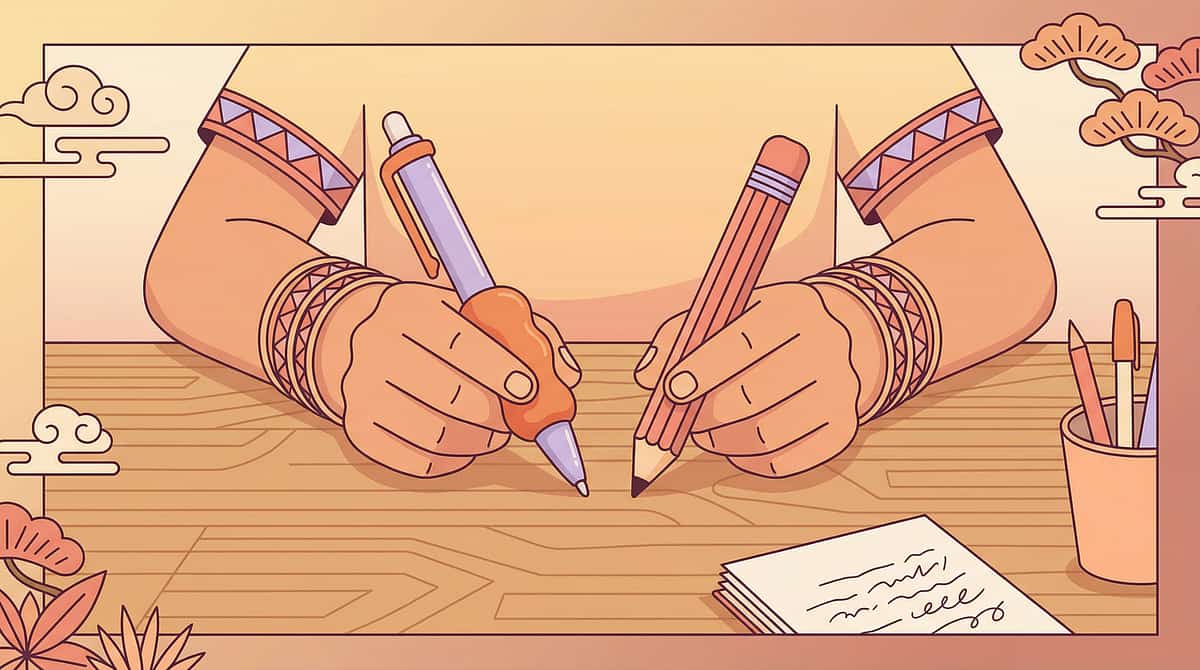
Adaptive Writing Tools — What It Is
✍️ Technique F-620
Parent-Friendly Alias: "Right-Tool Writing"
Adaptive writing tools are specialized equipment and strategies designed to enable written communication for children whose motor differences prevent effective use of standard writing instruments. The principle is simple: match the tool to the child's body — not force the child's body to match the tool.
Tools range from simple grip modifications (₹100–500) to technology alternatives (speech-to-text, free on most devices) to sophisticated assistive technology. The correct tool is determined by assessing the specific motor barrier — grip weakness, tremor, limited range, one-hand use, or complete motor bypass need.
Domain
Fine Motor / Adaptive Equipment
Age Range
3–18+ years
Duration
Ongoing daily use
Frequency
Every writing task
Setting
Home · School · Therapy
Key Principle: "Adaptive writing tools don't fix the hand. They work around what the hand cannot do — and deliver the same outcome: written expression."

This technique crosses every therapy boundary — because writing involves the whole child.
Occupational Therapist (Lead)
Conducts adaptive equipment assessment. Selects, fits, and trains child in tools. Monitors grip, posture, and fatigue. Liaises with school for accommodations.
Speech-Language Pathologist
When speech-to-text is the bypass route, the SLP trains the child in oral composition and dictation skills — a completely different cognitive pathway than handwriting.
ABA / BCBA Therapist
Reinforcement strategy for tool adoption. Children often resist unfamiliar adaptive equipment — ABA protocols ensure smooth acceptance and consistent use.
Special Educator
Ensures IEP/504 documentation. Trains classroom staff. Advocates for testing accommodations. Ensures tools travel with the child across all school environments.
NeuroDev Pediatrician
Identifies underlying neurological causes. Rules out progressive conditions. Prescribes assistive devices for insurance and funding pathways.
"When OT selects the tool, ABA ensures adoption, SLP enables voice-input, and SpEd protects the accommodation in school — the child is surrounded." — Pinnacle Blooms FusionModule™ Clinical Team
📞9100 181 181 — Free multi-disciplinary helpline
From "she can't write" to "she writes — her way."
Every motor barrier has a corresponding adaptive tool. The table below maps the specific challenge to the tool that addresses it — and the functional outcome you can expect.
Motor Barrier | What the Tool Addresses | Expected Outcome | |
Reduced grip strength | Built-up grips reduce force requirement | Child writes 3× longer without hand fatigue | |
Tremor / poor motor control | Weighted tools dampen shake via proprioception | Steadier line quality, legible output | |
Cannot grip at all (CP, paralysis) | Universal cuff holds pencil via palm wrap | Arm-driven writing becomes possible | |
Wrist mobility limits | Angled/ergonomic instruments | Writing without forced wrist position | |
Arm fatigue / proximal weakness | Arm supports eliminate gravity fight | Writing time extends from minutes to hours | |
One-hand use / bimanual difficulty | Paper stabilizers, clipboards | Paper stable without second hand | |
Handwriting not viable at all | Adaptive keyboards, speech-to-text | Full written expression via alternative motor path | |
Visual guidance insufficient | Specialized paper (raised, bold, colored lines) | Letter placement improves, output quality rises |
Dependent
Adult scribe required for all written work
Emerging
Can use adapted tool with physical guidance
Developing
Independent use of adaptive tool, basic written output
Independent
Self-advocates for accommodations, manages own tools
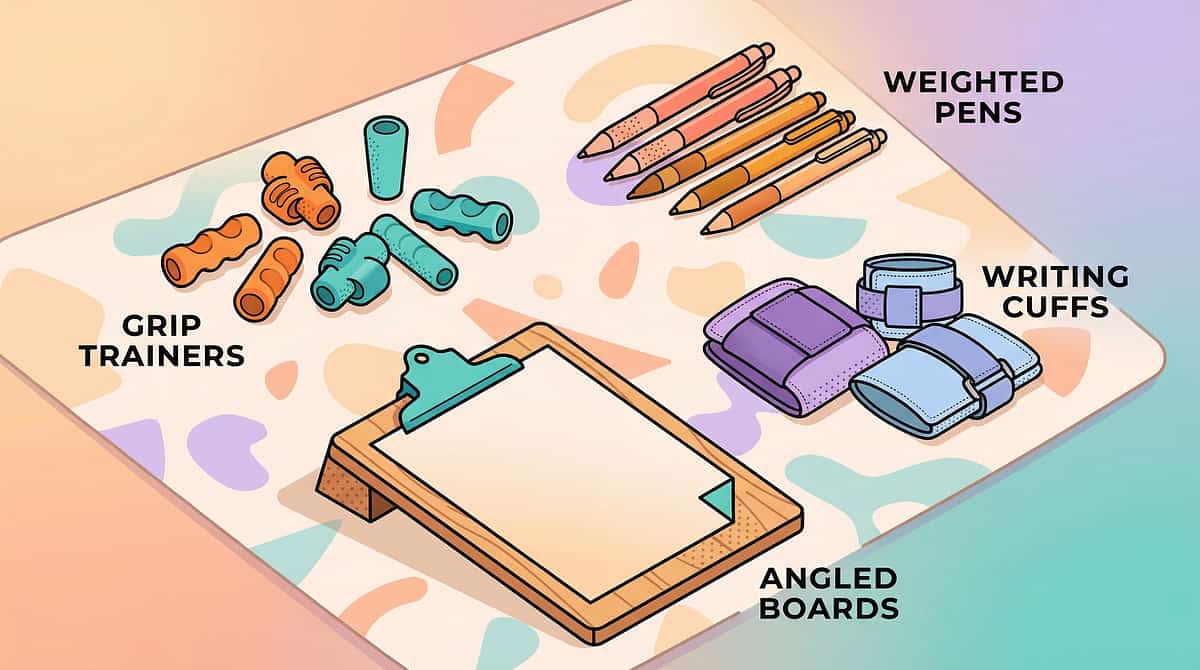
9 Tools. One Goal: Your Child Writes.
Each tool addresses a specific motor barrier. Your OT assessment determines which combination is right for your child. All 9 materials have ₹0 DIY alternatives.
# | Material | Barrier Addressed | Price Range | |
1 | Built-Up / Enlarged Grips | Weak grip, can't pinch | ₹100–800 | |
2 | Weighted Writing Instruments | Tremor, poor proprioception | ₹300–1,500 | |
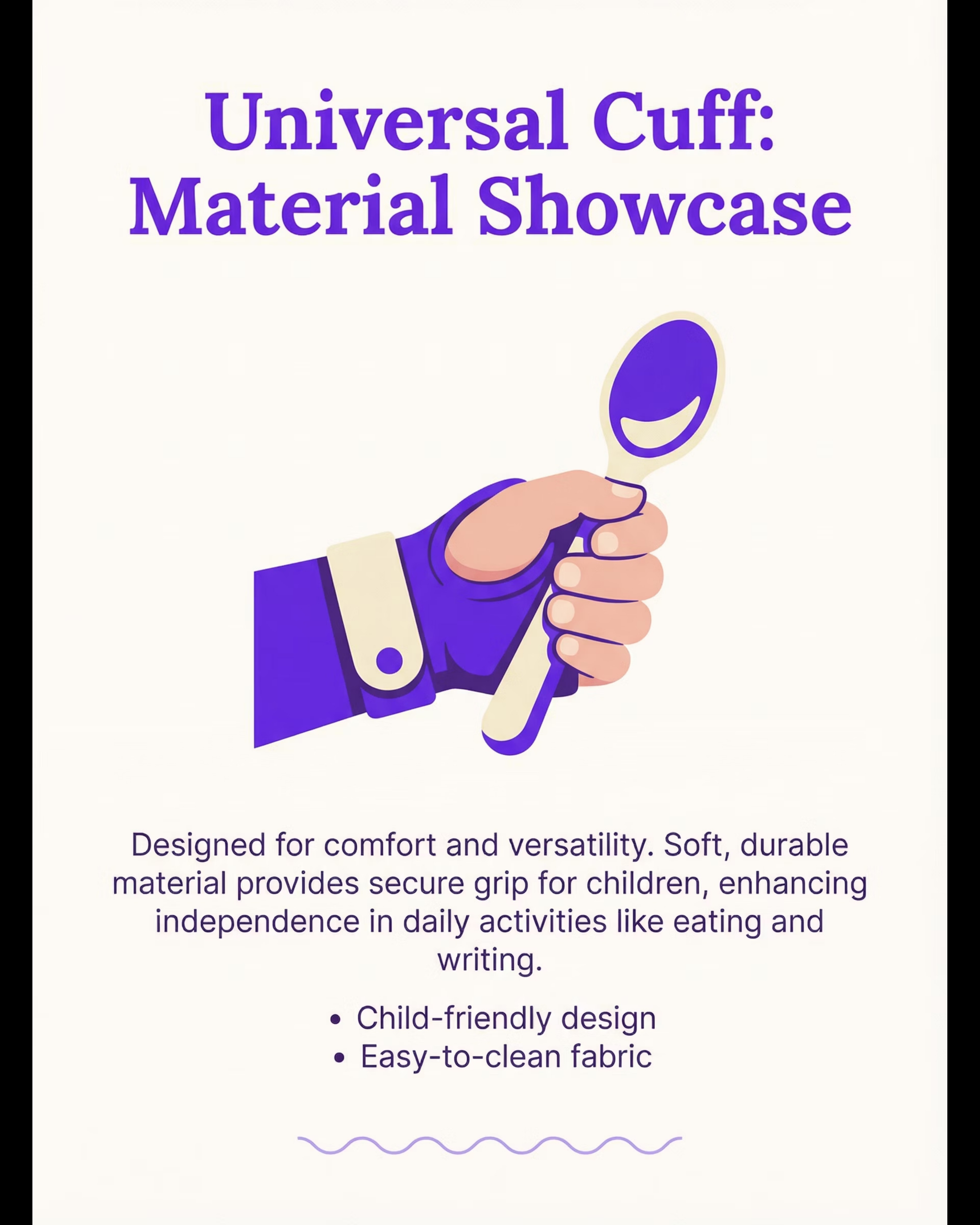
3 | Universal Cuff / Writing Cuff | Cannot grip at all | ₹400–2,000 | |
4 | Angled / Ergonomic Instruments | Wrist mobility limits | ₹200–1,200 | |
5 | Arm & Wrist Supports | Arm fatigue, proximal weakness | ₹500–15,000+ | |
6 | Paper Stabilizers | One-hand use, bimanual difficulty | ₹100–800 | |
7 | Adaptive Keyboards | Handwriting not viable | ₹2,000–25,000+ | |
8 | Speech-to-Text Technology | Motor bypass needed | ₹0–5,000 | |
9 | Specialized Writing Paper | Visual-motor guidance needed | ₹100–600 |
🟢 Low-Cost Start
₹500–1,500 — grips + paper stabilizer + specialized paper
🟡 Mid-Range
₹3,000–8,000 — add weighted tools + cuffs + keyboard
🔵 Technology Path
₹0 — speech-to-text built into all modern devices
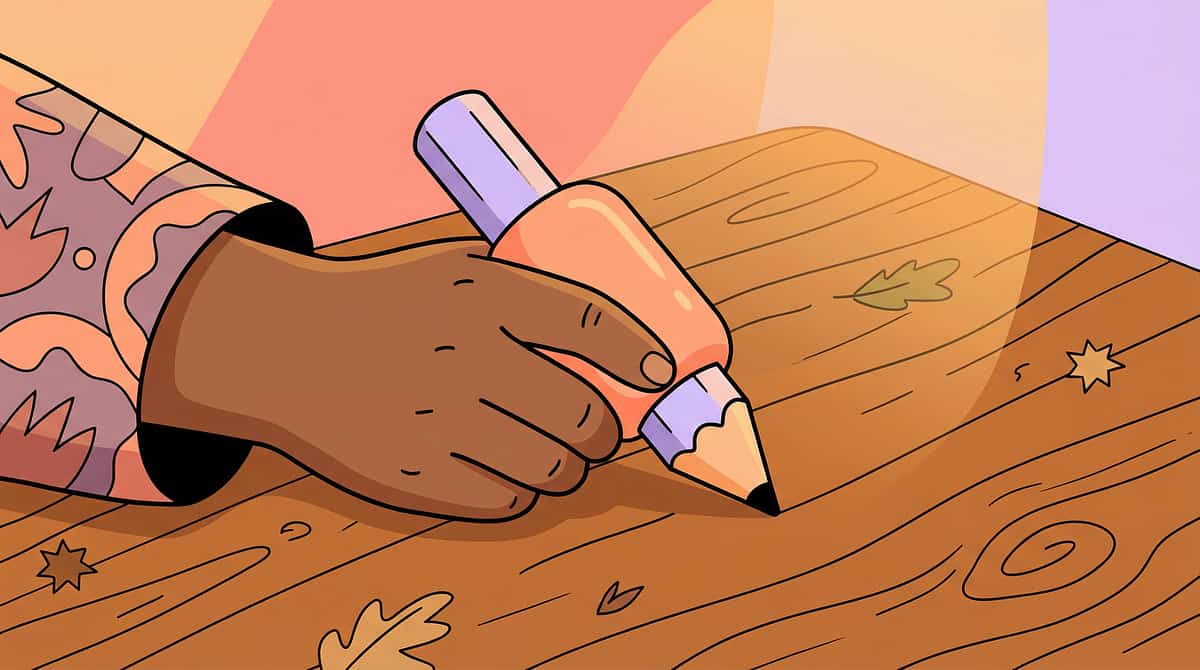
Material 1: Built-Up / Enlarged Grips
🖊️ Barrier: Weak Grip, Can't Pinch
₹100–800 · DIY: ₹0–50
"Bigger grip = less precision required = more children can write"
The Science
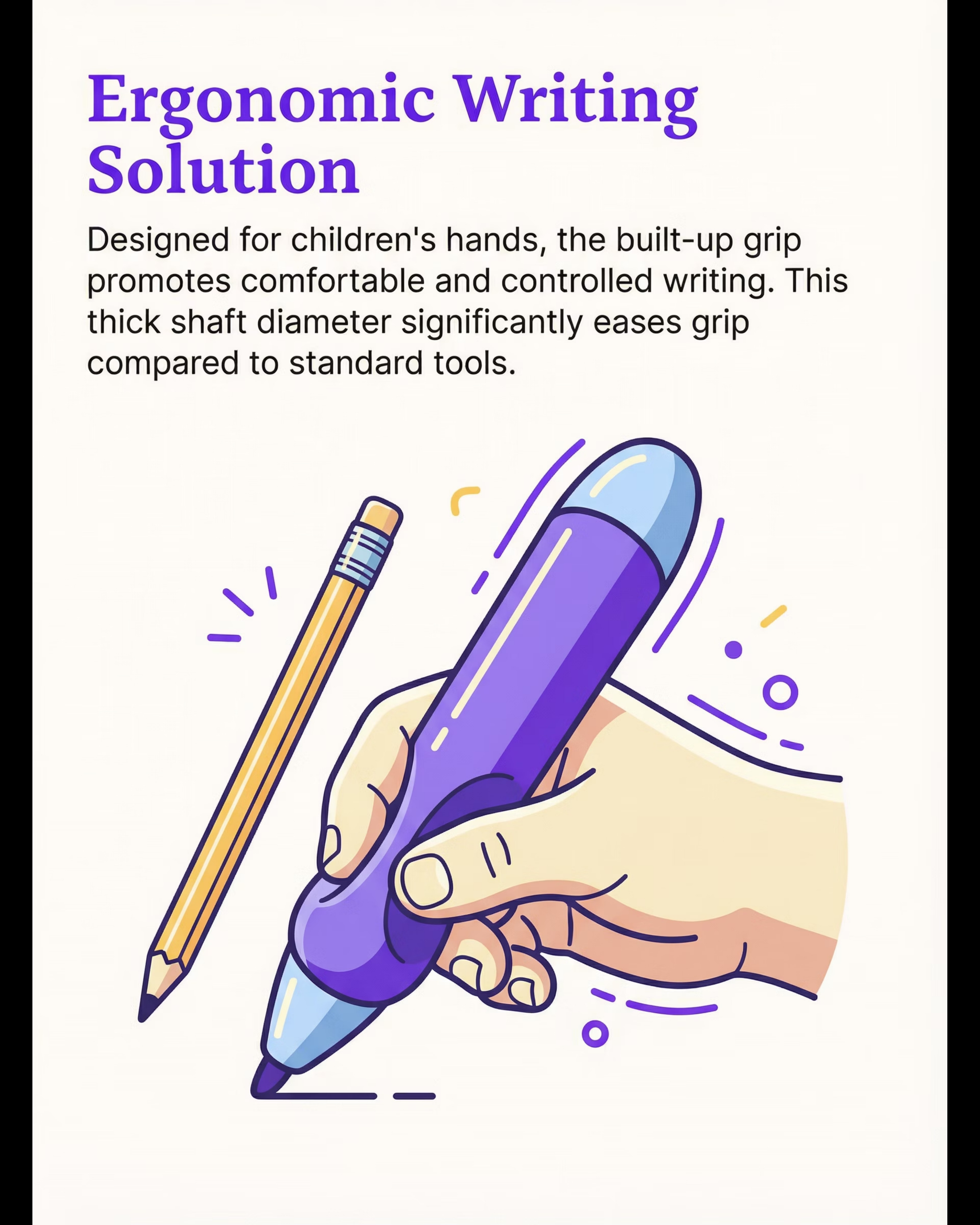
Standard pencil shafts (7mm diameter) require precise finger opposition that many children cannot form. Enlarged grips (15–35mm+) allow full fist, cylindrical, or modified tripod patterns. Larger diameter reduces required grip force by up to 60% compared to thin tools.
What It Looks Like
- Jumbo pencils and crayons (triangular preferred)
- Foam tube slid over standard pencil
- Commercial ergonomic built-up grips
- Fat-barreled markers
🔧 DIY (₹0–100)
Cut pipe insulation foam lengthwise → slide over any pencil. Tennis ball with slit = maximum built-up grip. Layers of self-adhesive foam tape = fully customizable diameter.
Safety Note
Ensure foam is securely attached. Washable materials preferred.
🩺9100 181 181 — FREE adaptive equipment consultation
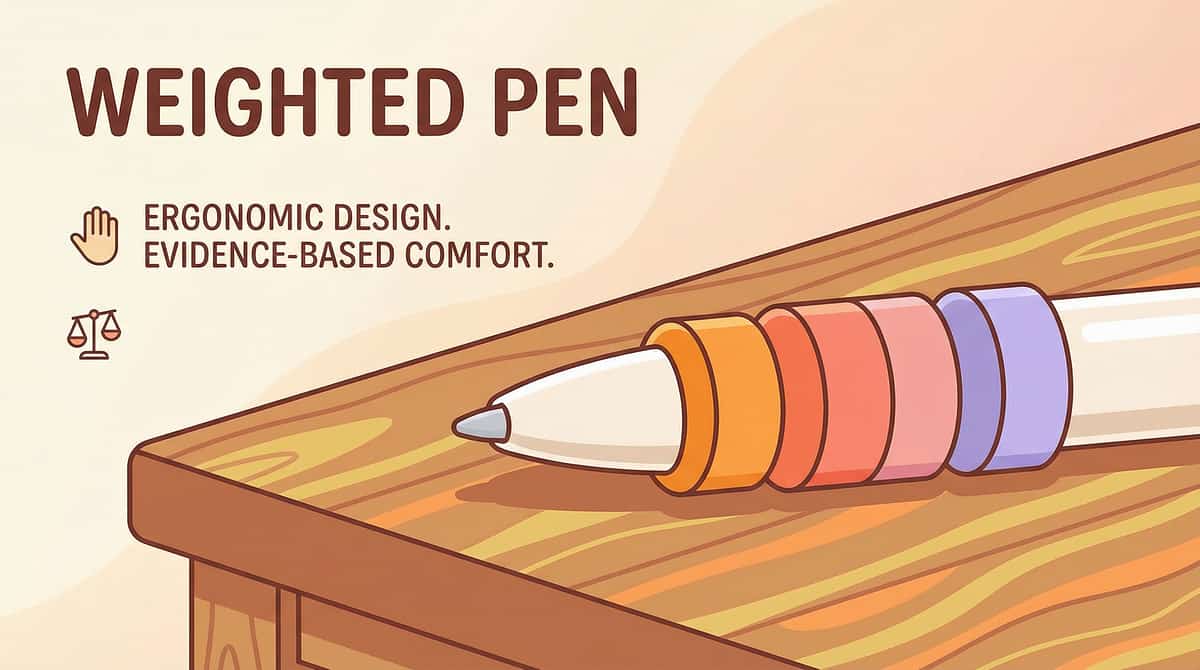
Material 2: Weighted Writing Instruments
⚖️ Barrier: Tremor, Poor Proprioception
₹300–1,500 · DIY: ₹50–200
"When hands shake, weight provides the stability that muscles cannot"
The Science
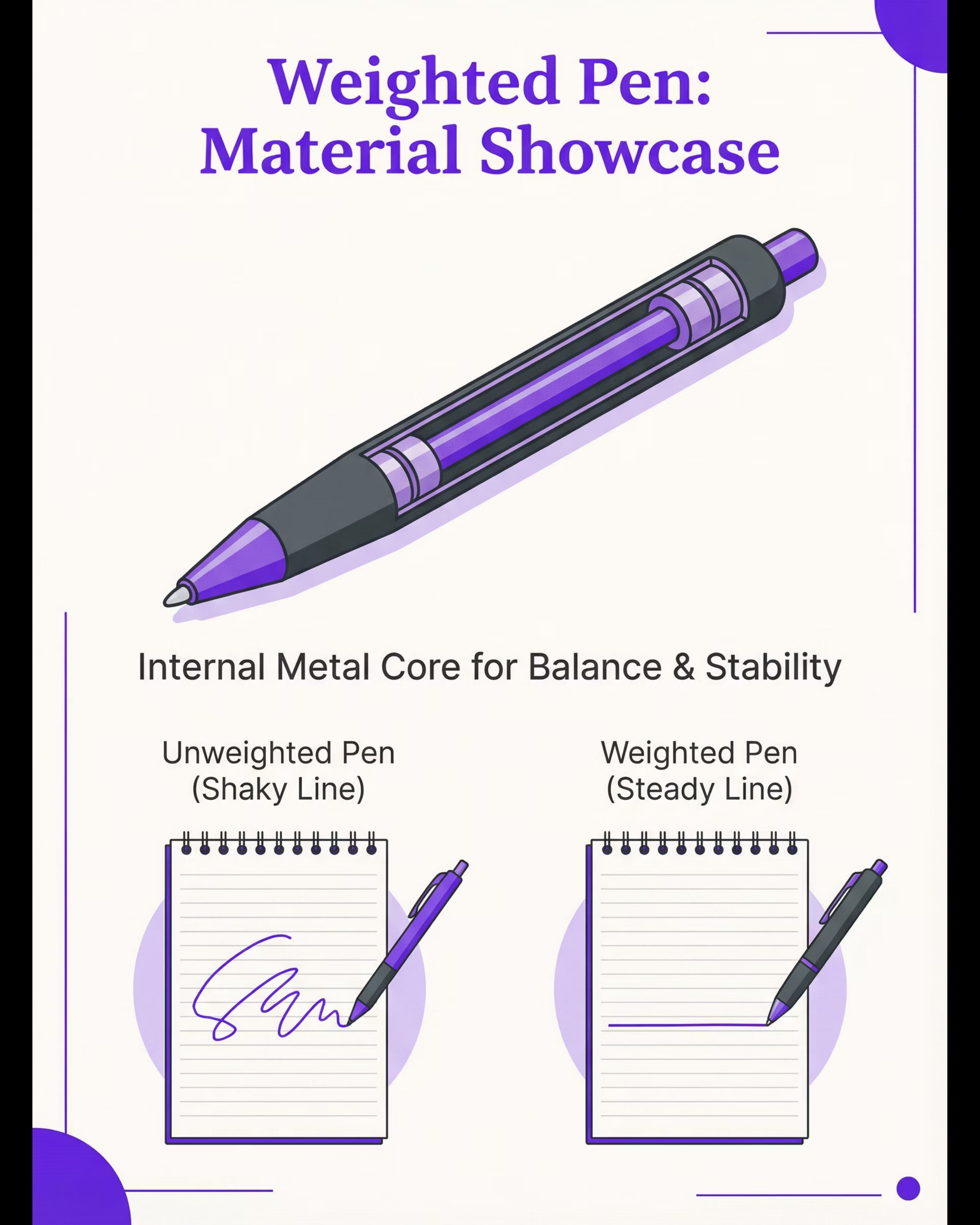
Weight (50–150g added) provides proprioceptive feedback about hand position in space, dampens tremor through physics of inertia, and forces controlled, slower movement. Essential for ataxia, tremor conditions, and children who press too lightly because they don't sense the tool.
What It Looks Like
- Commercial weighted pens (internal metal core)
- Weighted pencil sleeves
- Weighted wristbands worn during writing
🔧 DIY (₹50–200)
Wrap fishing weights or metal washers around pencil with tape. Start light (30–50g added) — increase gradually. Too heavy causes fatigue — build up slowly over days.
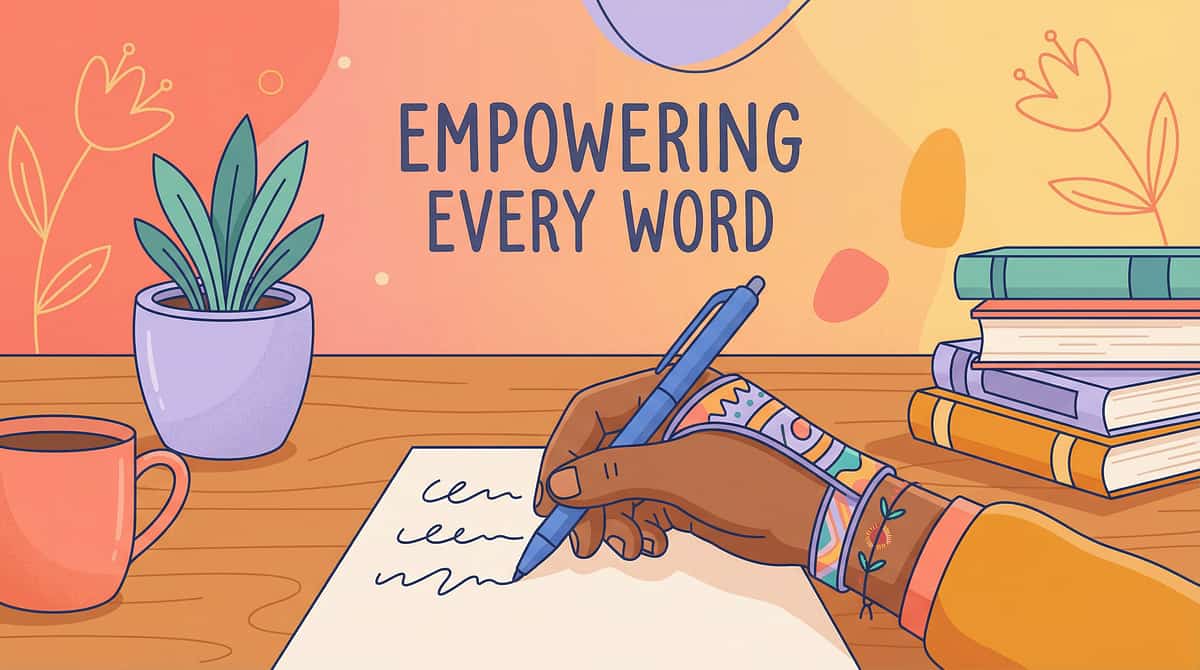
Material 3: Universal Cuff / Writing Cuff
🤲 Barrier: Cannot Grip At All
₹400–2,000 · DIY: ₹0–200
"If the arm can move, writing is possible — the cuff bridges what hands cannot do"
The Science
A palm-worn cuff with a pencil pocket enables arm-driven writing for children who cannot grip at all. The question shifts from "can the child grip?" to "can the child move their arm?" — dramatically expanding writing access for children with CP, paralysis, or severe spasticity.
What It Looks Like
- Wide elastic band with sewn pencil pocket
- Neoprene/leather cuff with adjustable straps
- Velcro wrap with angled slot for pencil
🔧 DIY (₹0–200)
Wide elastic + hand-sewn pocket = functional cuff. Test pencil angle to match child's natural wrist position. Practice large arm movements before refining.
⚠️ Safety
Remove between sessions. Check circulation — no color change, no coldness in fingers.
American Journal of Occupational Therapy: Universal cuffs enable independent writing for children with hemiplegia and significant motor impairment.
🩺9100 181 181 — FREE adaptive equipment consultation
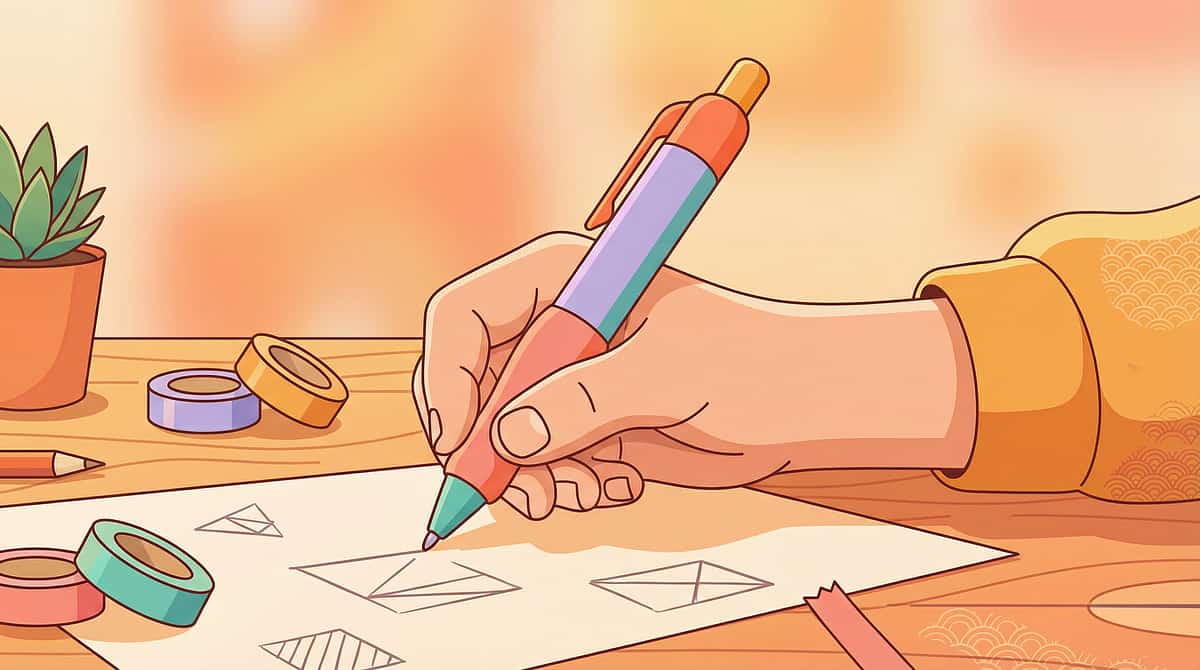
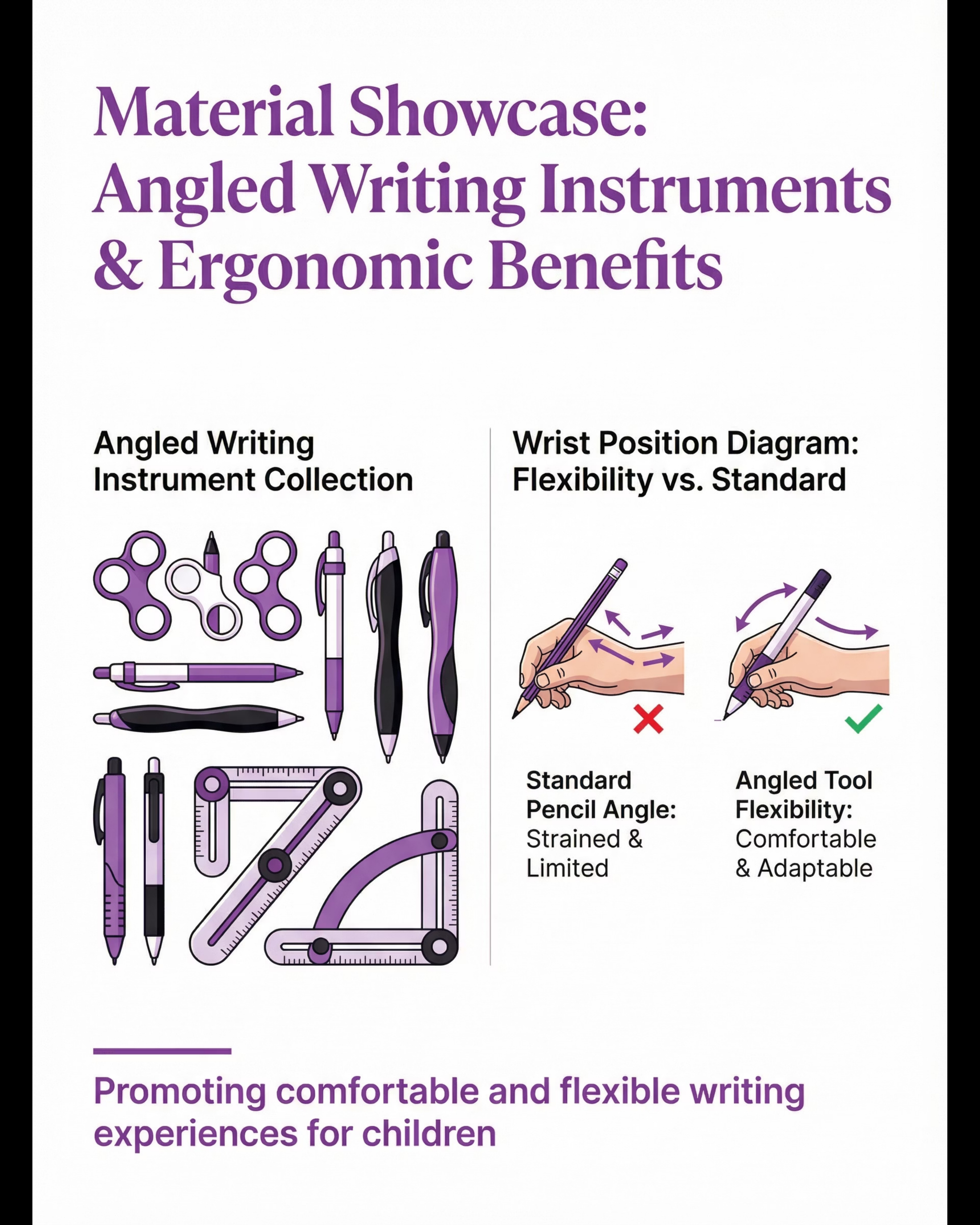
Material 4: Angled / Ergonomic Writing Instruments
📐 Barrier: Wrist Mobility Limits
₹200–1,200 · DIY: ₹0–300
"The tool adapts to the hand's position — not the hand to the tool's requirements"
The Science
Standard tools require a specific wrist extension angle. Children with wrist contractures, arthritis, limited mobility, or fixed positions cannot achieve this. Angled tools bring the writing tip to where the hand already is — eliminating the forced-wrist demand entirely.
What It Looks Like
- Ring pens (slip over finger, tip extends at angle)
- Contoured ergonomic pens with built-in curves
- Angled pencil holders (standard pencil at 20–90° angle)
- PenAgain-style ergonomic designs
🔧 DIY (₹0–300)
Attach standard pencil to a small block of wood or clay at the angle matching child's natural wrist rest position. What looks right may not feel right — allow 1–2 week adjustment period.
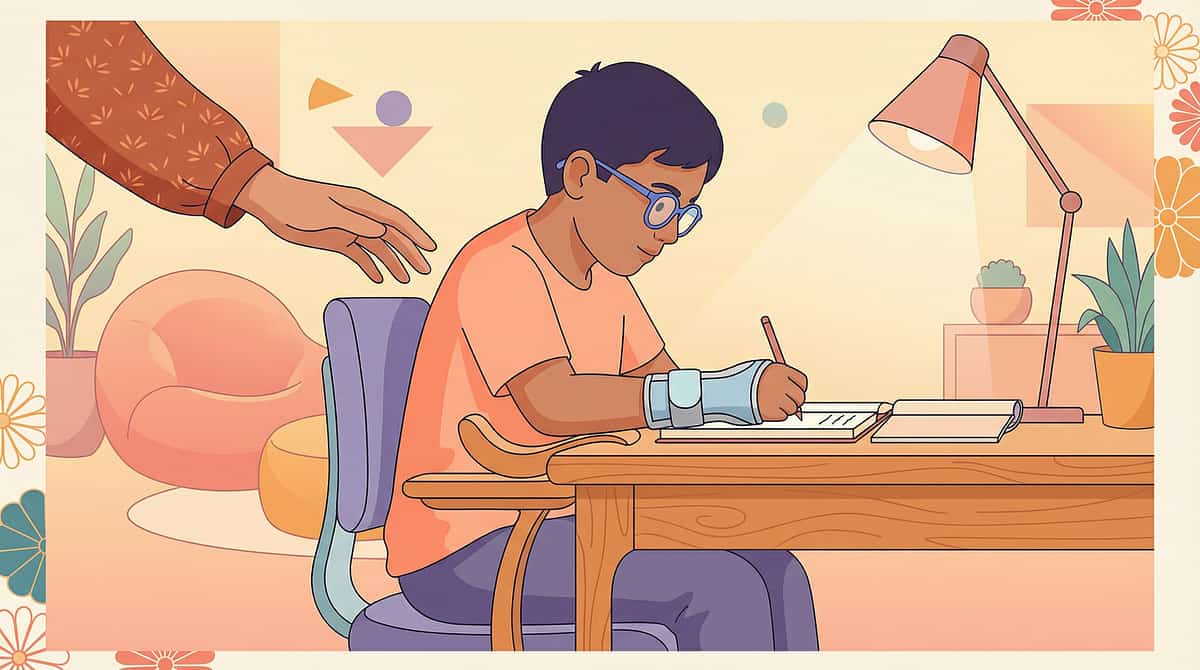
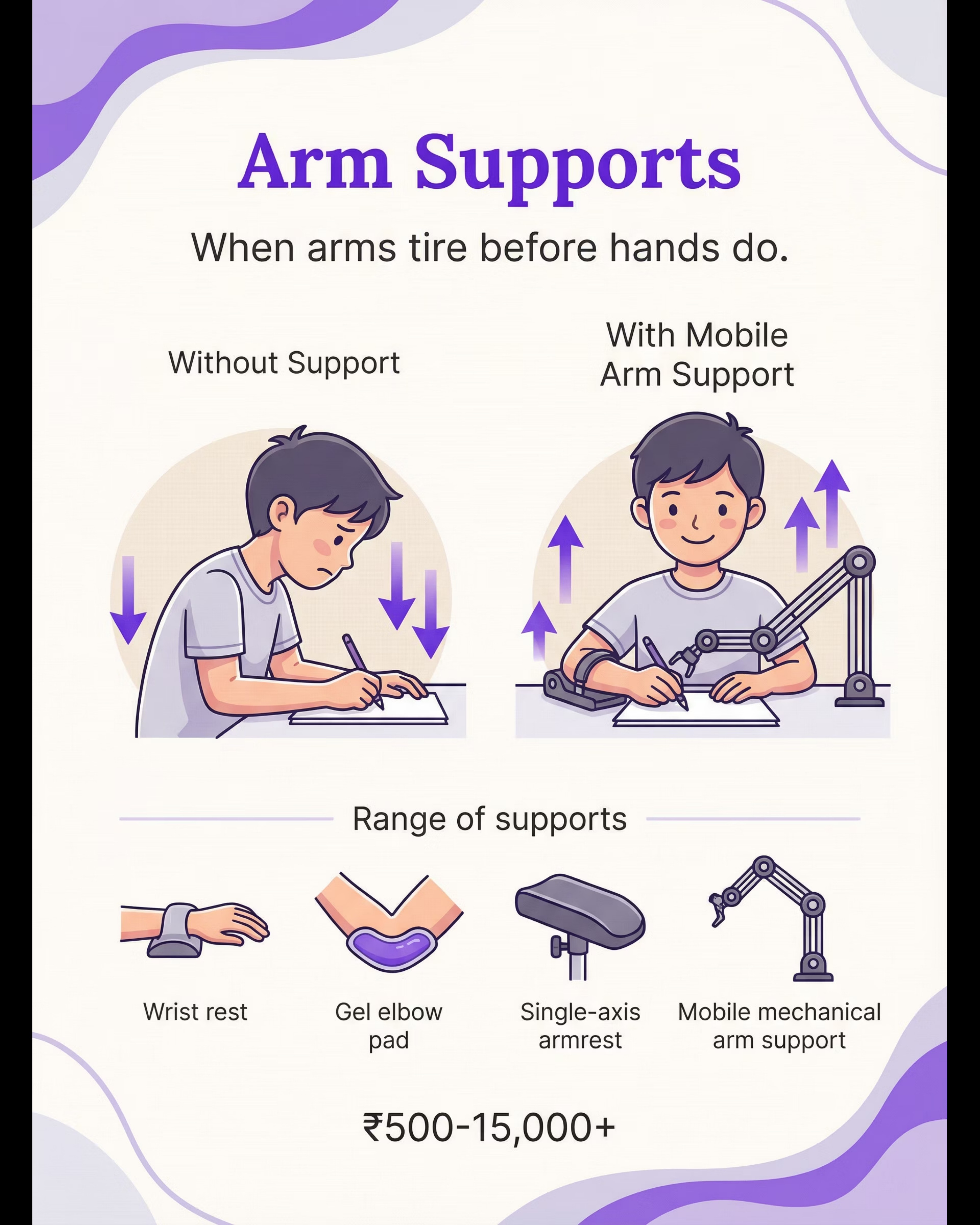
Material 5: Arm & Wrist Supports / Writing Stabilizers
💪 Barrier: Arm Fatigue, Proximal Weakness
₹500–15,000+ · DIY: ₹0–500
"When the arm is supported, all remaining motor control goes to the fingers"
The Science
Many children's arms fatigue before their hands do — because proximal weakness (shoulder/forearm) forces constant effort just to hold the arm up. Arm supports eliminate gravity, so available motor control focuses entirely on the fine writing movement. Simple wrist rests extend functional writing time dramatically.
What It Looks Like
- Wrist rests (computer-style, at desk edge)
- Gel elbow pads
- Foam wedge forearm supports
- Mobile arm supports (professional, wheelchair-mounted)
🔧 DIY (₹0–500)
Rolled towel = simple forearm rest. Foam wedge = forearm stabilizer. Beanbag = conforming arm support. Start simple before investing in professional mobile arm support.
Range of Supports
Wrist rest → Gel elbow pad → Single-axis armrest → Mobile mechanical arm support
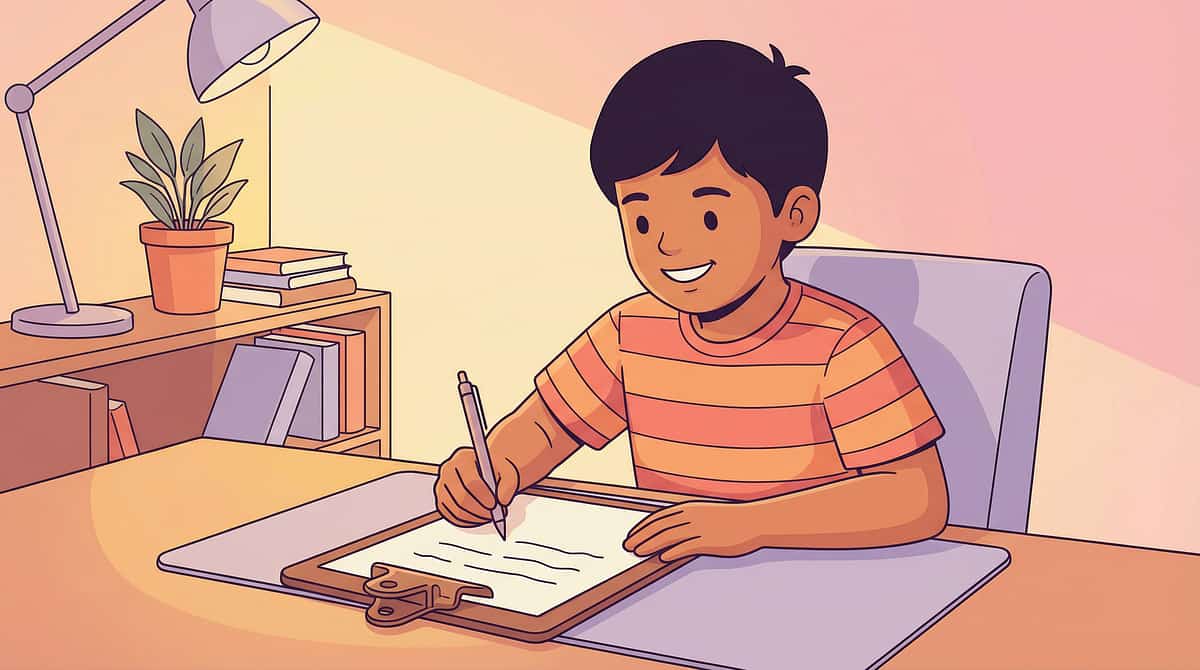
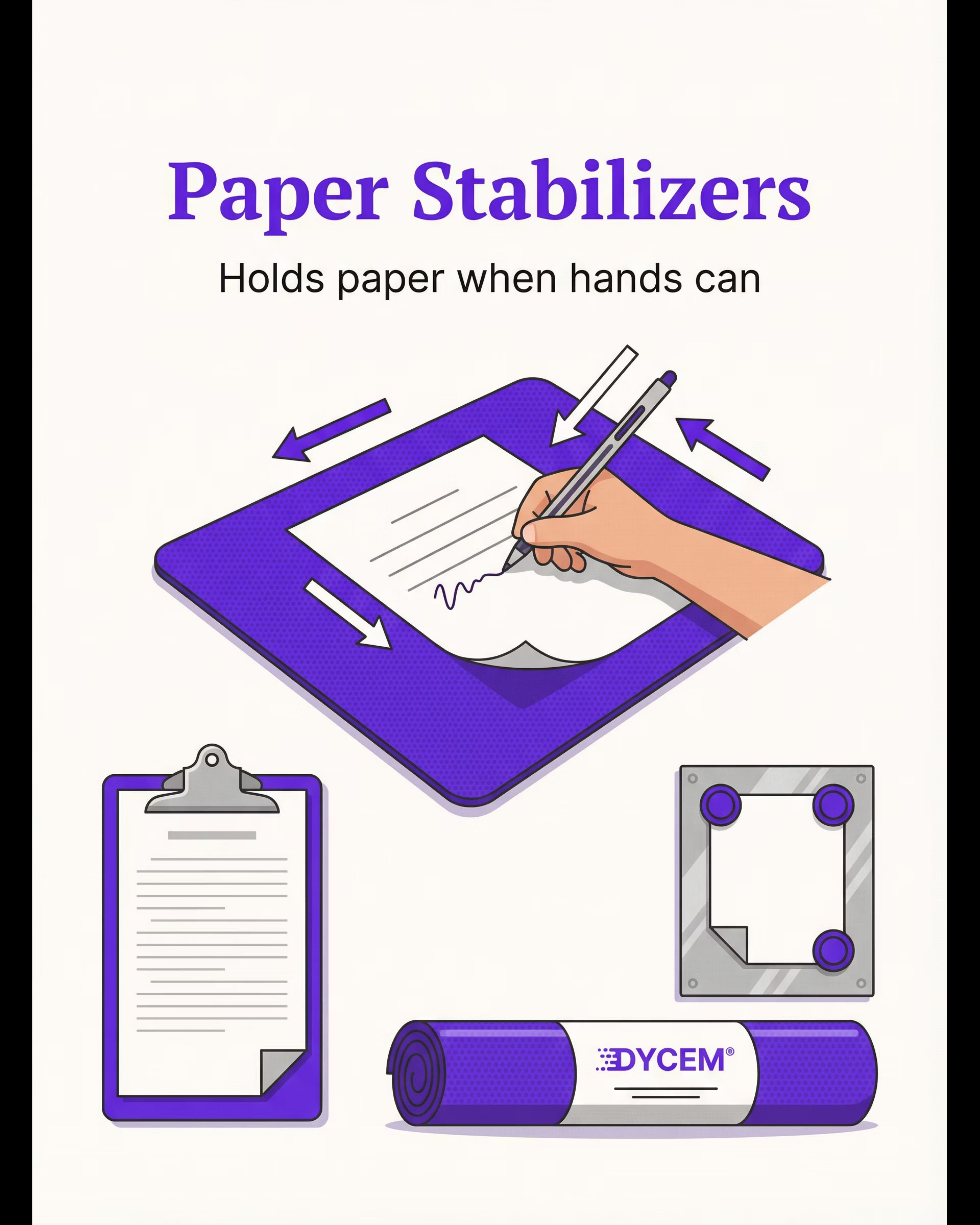
Material 6: Paper Stabilizers / Writing Surface Adaptations
📋 Barrier: One-Hand Use, Bimanual Difficulty
₹100–800 · DIY: ₹0–200
"Stable paper = stable writing — this simple fix solves a major barrier"
The Science
Children with one-functional-hand, bimanual coordination difficulty, or abnormal writing pressure cannot keep paper still. No matter how well the pencil is controlled, sliding paper makes writing impossible. Stabilization is often the first and simplest fix — and the most overlooked.
What It Looks Like
- Non-slip mat (Dycem or rubber shelf liner) under paper
- Clipboard (various sizes — A5 for school, A4 for home)
- Magnetic page holders with corner magnets
- Painter's tape (removable, leaves no marks)
🔧 DIY (₹0–200)
Yoga mat cut to desk size = non-slip surface. Rubber placemat = ready-to-use. Painter's tape = easiest, cleanest solution. ₹0 total cost.
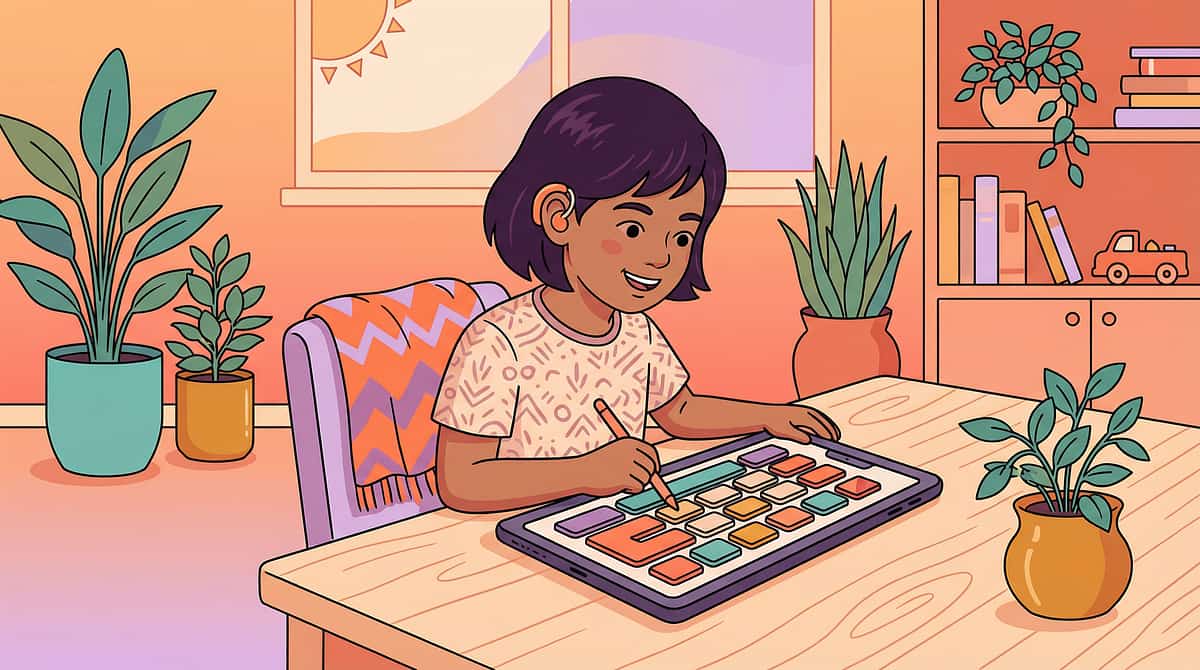
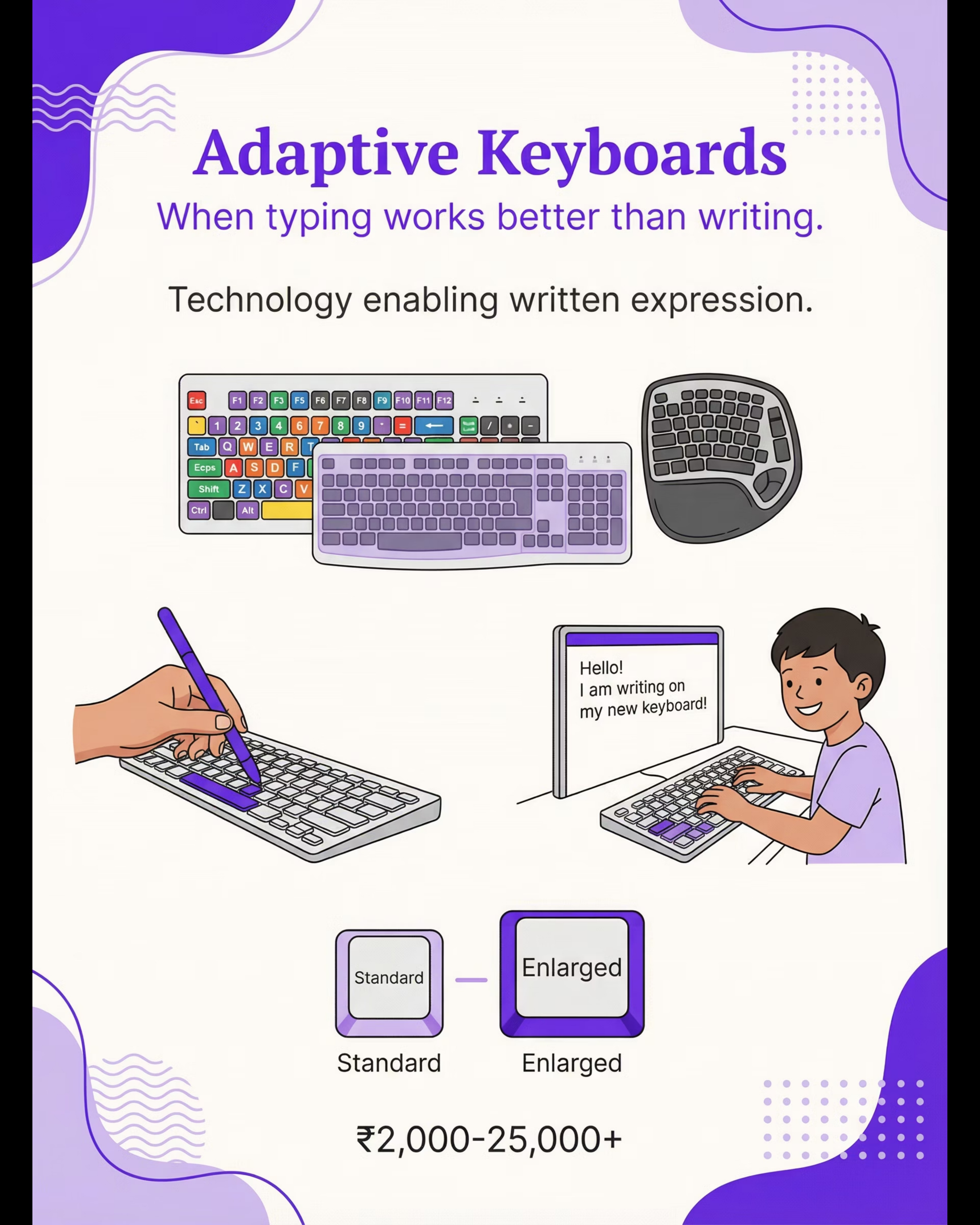
Material 7: Adaptive Keyboards / Typing Aids
⌨️ Barrier: Handwriting Not Viable
₹2,000–25,000+ · Significant free options available
"Written expression is the goal — if typing achieves it when handwriting can't, typing wins"
The Science
Typing requires entirely different motor patterns than handwriting. Children who cannot form letters with a pencil often successfully type. Adaptive keyboards remove additional barriers: large keys reduce precision needs; keyguards prevent accidental presses; one-handed keyboards accommodate single-arm function; eye-gaze systems enable typing with zero hand use.
What It Looks Like
- Large key keyboards (VisionBoard, BigKeys)
- Keyguard overlays (prevent mis-hits, provide resting surface)
- One-handed keyboards (left or right specific)
- Bluetooth keyboard (flexible placement anywhere)
- Typing sticks for pointer access
🔧 DIY / Zero-Cost Options
- Keyguard: 3D-print for any keyboard (files freely available online)
- Word prediction software: built into Windows, iOS, Android
- On-screen keyboard: free on all devices
- Tablet + stylus: more accessible than pencil for many children
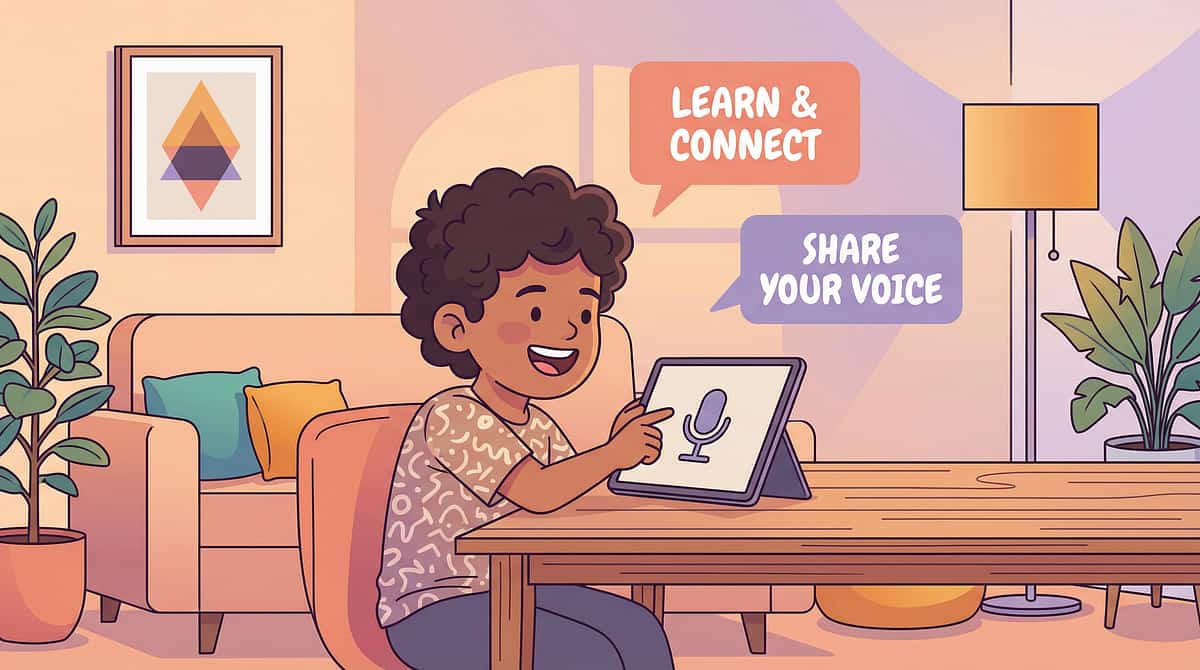
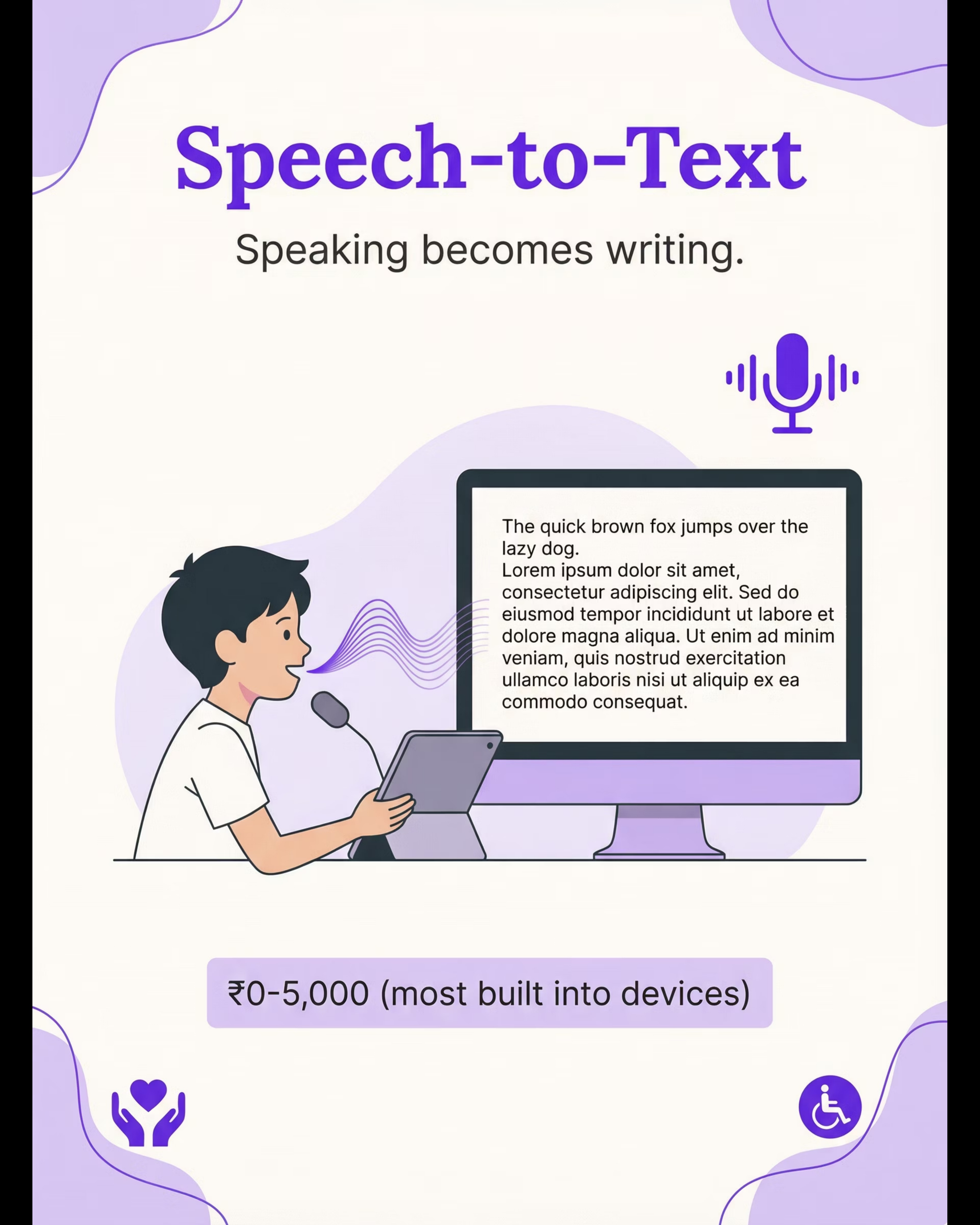
Material 8: Speech-to-Text / Voice Recognition Technology
🎙️ Barrier: Motor Bypass Needed
₹0 Built-In · ₹5,000 Premium
"The brain produces language — motor ability is just one path to getting it on paper"
The Science
Modern speech recognition is 95%+ accurate and is built into every smartphone, tablet, and computer made in the last 5 years — at zero additional cost. A child who takes 10 minutes to handwrite one sentence can dictate it in 5 seconds. This is not accommodation — it is access.
iPhone/iPad
Microphone button on keyboard — no app needed
Android
Google keyboard microphone — built-in
Windows
Windows Speech Recognition — built-in
Google Docs
Tools → Voice Typing — free, browser-based
Mac
System Preferences → Dictation — built-in
Training for Success (5 Steps)
- Learn verbal punctuation: say "period," "comma," "new paragraph"
- Compose in your head first — then speak the complete sentence
- Practice in quiet space initially
- Review and correct after dictating
- Allow 2–3 weeks for fluency
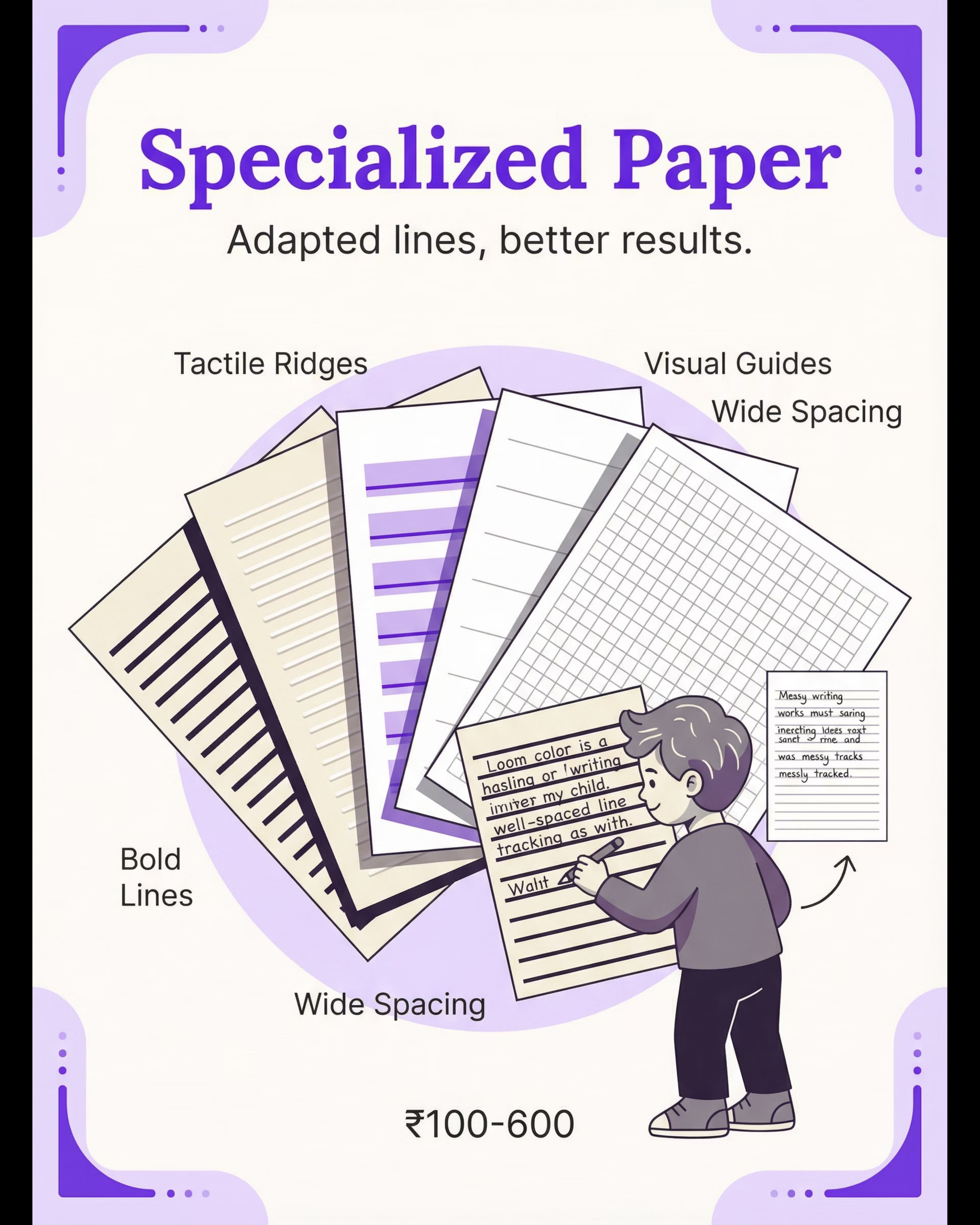
Material 9: Specialized Writing Paper Adaptations
📄 Barrier: Visual-Motor Guidance Needed
₹100–600 · DIY: ₹0 Printable
"Paper is a tool — and like any tool, it can be adapted to fit the user"
The Science
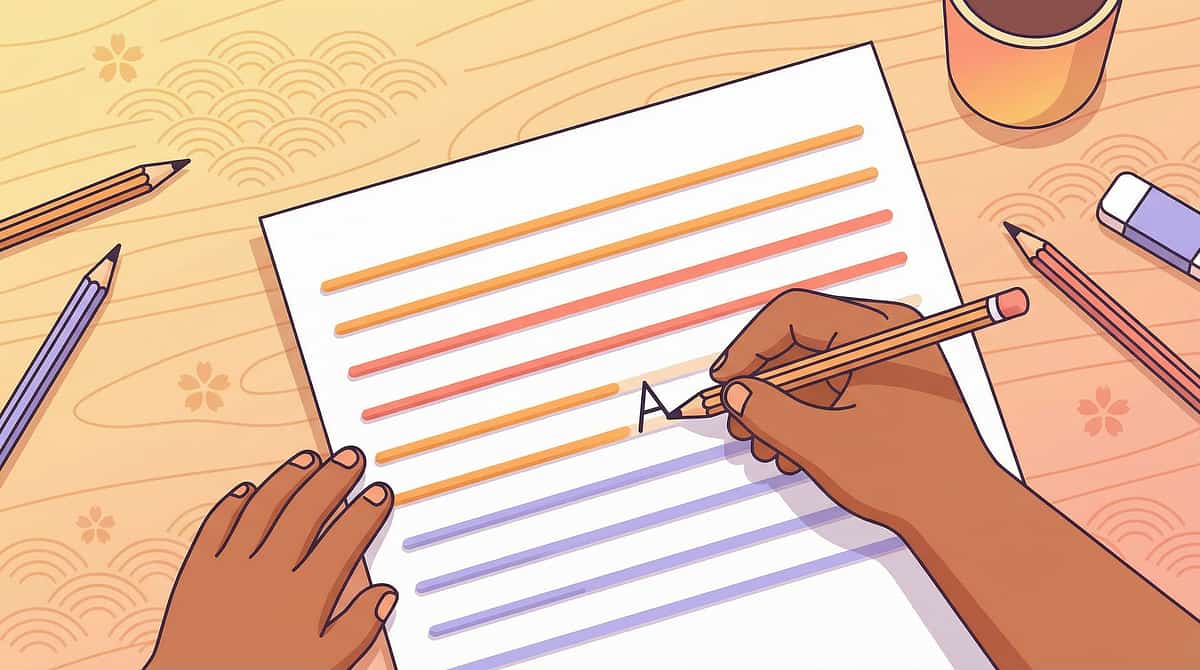
Standard lined paper may be too visually complex, with lines too narrow or too pale. Bold lines, raised tactile ridges, and color-coded writing zones (sky/grass/basement) provide visual and tactile scaffolding. Extra-wide lines accommodate imprecise large motor control.
What It Looks Like
- Bold-ruled paper (thick dark lines, easy to track)
- Raised-line paper (tactile ridges — child feels the boundary)
- Color-zone paper (blue baseline, yellow sky zone, red midline)
- Extra-wide lined paper for large arm movements
- Graph paper for consistent letter sizing
🔧 DIY (₹0–100)
Print free custom-lined paper from online generators (search "handwriting paper generator free"). Run paper through empty ballpoint to create grooves = tactile raised lines. Elmer's glue along lines = dried raised ridges. ₹0 cost.
WHO AT Global Report (2022): Access to appropriate assistive tools — including adapted materials — is classified as essential healthcare. NCAEP (2020): Adapted materials + visual supports = evidence-based practice for autism.
🩺 For a personalized materials assessment — 9100 181 181 · FREE · 24×7
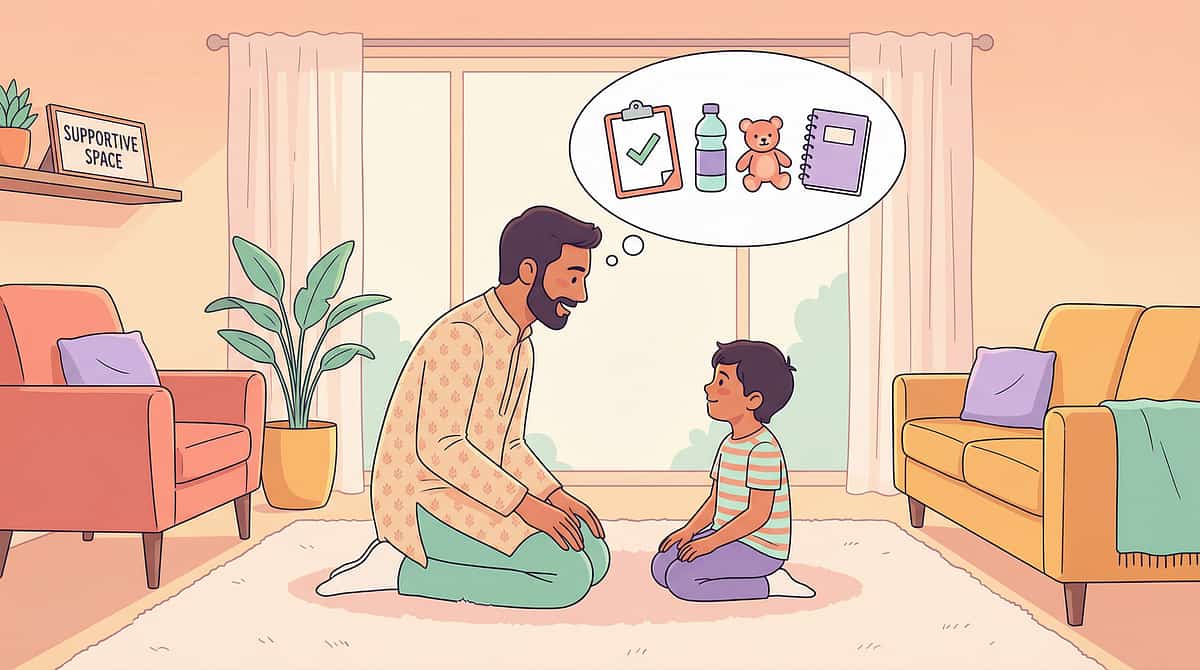
The Best Session Is One That Starts Right.
Pre-Session Checklist
🟢 GO — Start the Session
- Child is calm and regulated
- Child is not hungry, thirsty, or overtired
- Writing task has a clear purpose
- Adaptive tool is clean, functional, and accessible
- Environment is set up (paper stabilized, good lighting, correct seat height)
- Child has had a sensory break if needed
- Parent/caregiver is calm
🟡 MODIFY — Simplify the Task
- Child is mildly dysregulated → shorten writing task to 1–2 items
- Child resisting specific tool → offer choice between 2 approved tools
- Environment not optimal → move to quieter space first
🔴 POSTPONE — Connection First
- Active meltdown or high distress → writing can wait
- Child is ill or in physical pain → skip session entirely
- School day was very hard → offer sensory support first
"Pushing through when the child isn't ready doesn't build resilience. It builds resistance to writing. The pause IS the therapy."
ABA Principles: Antecedent manipulation determines intervention effectiveness. Setting conditions are as important as the technique itself.
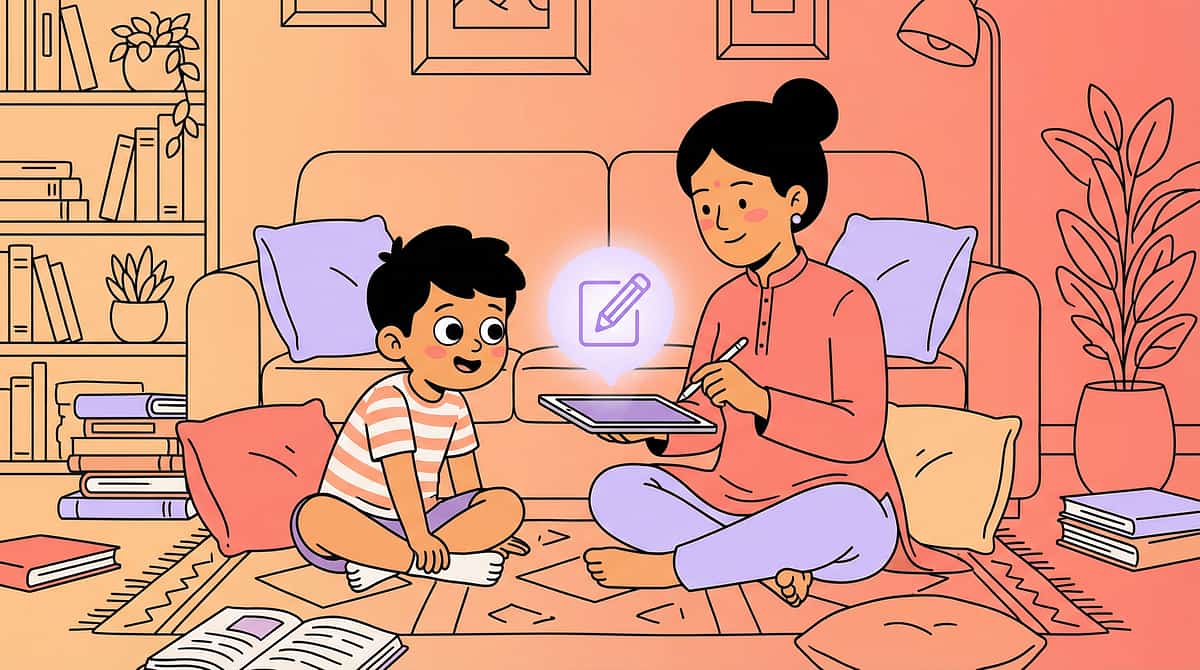
Step 1: The Invitation
STEP 1 · THE INVITATION · ⏱️ 30–60 seconds
Every writing session begins with an invitation — never a command.
"Hey, I've got something to show you. Want to try writing with [tool name] today? It's the one that [one fun fact — e.g., 'feels like a squishy grip' / 'is super heavy like a grown-up pen' / 'lets you TALK and it writes for you']. You show me one thing you want to write."
Body Language Guidance
- Sit at child's eye level or lower — never standing over
- Relaxed face and shoulders — your calm is contagious
- Have the tool already out and available — not hidden
- No clipboard or formal-looking setup — keep it casual
If Child Resists
- Child refuses tool → "Okay, you pick which grip today" (offer 2 options)
- Child walks away → don't chase; leave tool visible and return in 10 minutes
- Child says "I can't write" → "You don't have to write well — just make some marks for me"
ABA Pairing Procedure: Establishing positive association with materials before placing demands. OT Just-Right Challenge: matching task demand to current capacity.
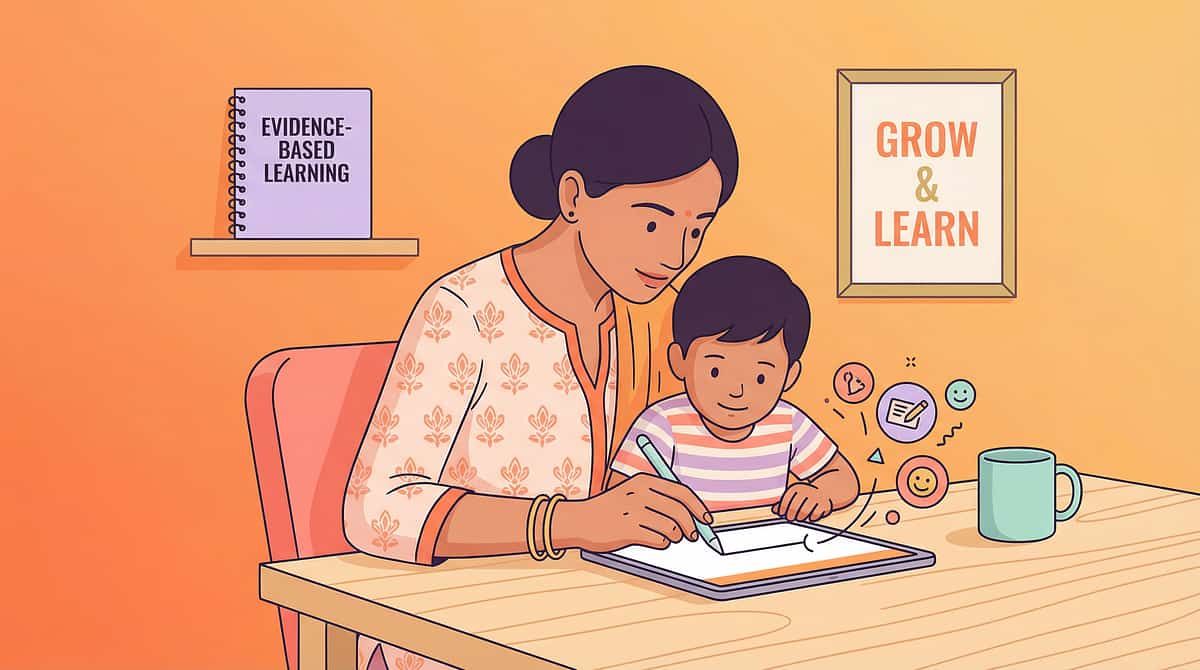
Step 2: The Engagement
STEP 2 · THE ENGAGEMENT · ⏱️ 1–3 minutes
Now introduce the adaptive tool — and watch, not instruct.
"Okay, feel how [this grip / the weight / the cuff] fits your hand. Let me show you how to [hold it / put it on / position it]. Now — just make any mark on the paper first. Doesn't have to be a letter. Just see how it moves."
How to Present the Tool
Speed
Slow, no sudden movements when handing the tool
Angle
Place tool naturally in child's writing hand position
Distance
Within easy reach, not forced into hand
First Task
Mark-making, not letter formation — remove the cognitive demand first
IDEAL | ACCEPTABLE | CONCERNING | |
Child engages with tool with curiosity | Child tolerates tool with neutral expression | Child distressed, crying, or physically resistant | |
Child makes marks voluntarily | Child makes marks when prompted | Child refuses all contact with tool | |
Child comments on how it feels | Child is quiet but compliant | Child expresses pain |
Reinforcement Cue: The moment the child makes any mark — deliver enthusiastic specific praise: "Yes! You did it! The [grip/cuff/keyboard] is working — look at that mark!"
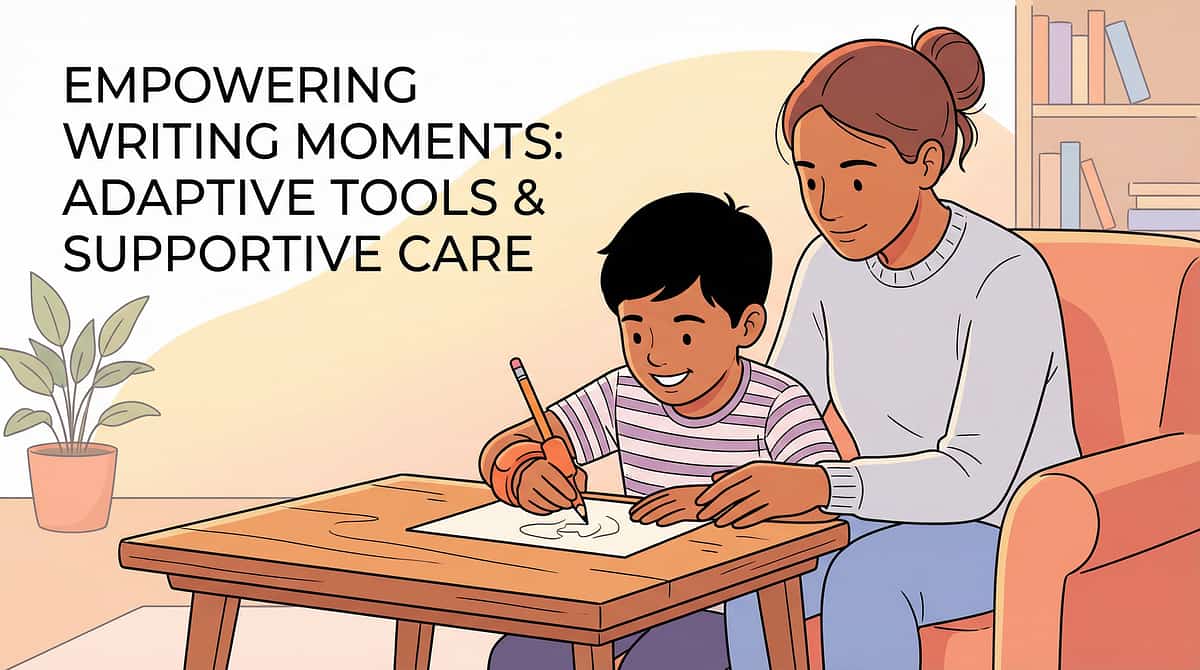
Step 3: The Therapeutic Action
STEP 3 · THE WRITING · ⏱️ 5–15 minutes
This is where the adaptive tool does its work — and you step back.
With the adaptive tool in place and child engaged, introduce a real writing task — functional, purposeful, achievable. The task must feel real — not "practice for practice's sake." Children with writing difficulties have already experienced too much purposeless practice.
Write their own name
Label a drawing they made
Write one shopping list item
Type a message to a grandparent
Dictate favorite food to speech-to-text
Execution Guidance by Tool Type
For grip/cuff tools: Allow child to find their own grip pattern within the tool. Don't over-correct hand position — functional is the goal. Accept all legible output.
For adaptive keyboard: Let child hunt-and-peck initially. Speed comes with practice. Focus on successful letter location, not technique.
For speech-to-text: Child speaks one sentence. Both of you watch it appear on screen. That moment of "I said it and it appeared" is often profoundly motivating.
PMC10955541: Meta-analysis confirms home sessions 10–20 min with core action occupying 40–60% of time.
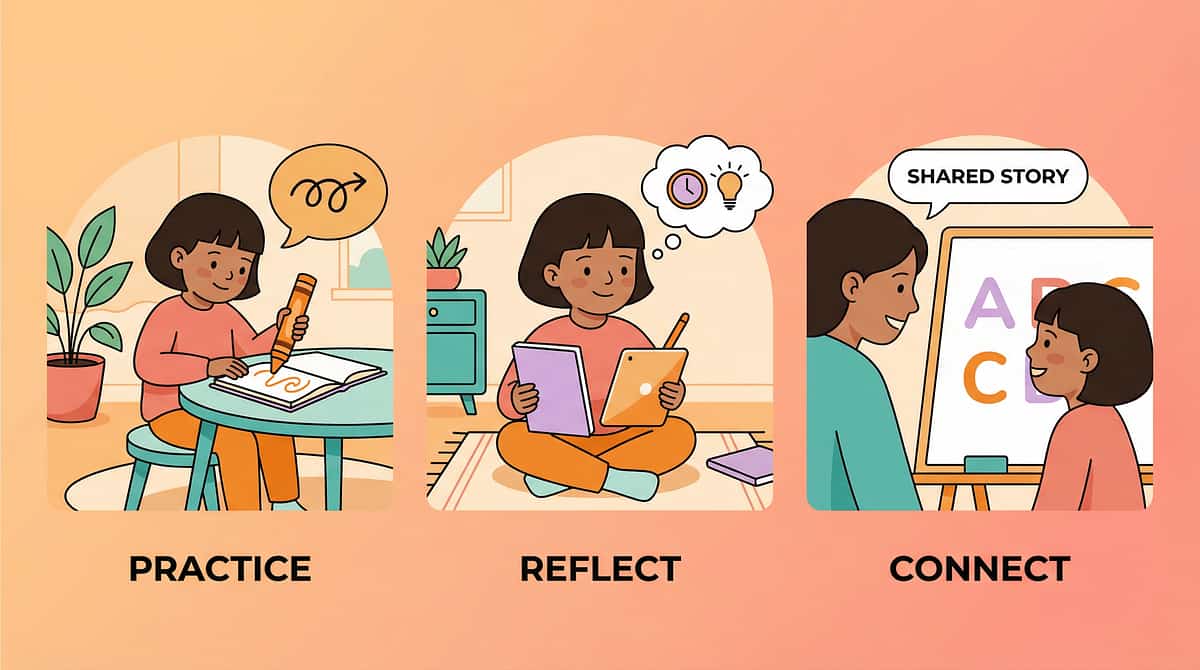
Step 4: Repeat & Vary
STEP 4 · REPEAT & VARY · ⏱️ 3–5 minutes
3 good writing attempts beat 10 forced ones — every time.
Repetition Guidance
- Target: 2–4 functional writing attempts per session
- Each attempt = one real-purpose task (label, list item, name, message)
- Maximum: when child shows satiation — stop before that point
- Minimum: even 1 successful attempt = a successful session
Satiation Indicators — When to Stop
- Writing quality deteriorating (getting worse, not better)
- Hand rubbing, shaking out hand, dropping tool
- Requests to stop or says "I'm done"
- Eyes glazing, attention drifting
- Increasingly frequent errors
Variation Options to Maintain Engagement
Variation | Purpose | |
Change writing surface (vertical wall → horizontal desk) | Reduces arm fatigue, changes proprioceptive demand | |
Change paper size (A3 large → A5 small) | Matches scope of motor control | |
Change task type (name → drawing label → list) | Keeps cognitive engagement fresh | |
Switch between 2 mastered tools | Child feels competent choosing | |
Add sensory motivation (fun colored paper, sparkle pen in cuff) | Increases motivation to write |
"The child's best writing happens in the first half of the session. End while it's good."

Step 5: Reinforce & Celebrate
STEP 5 · REINFORCE · ⏱️ Within 3 seconds of success
Celebrate the attempt. Not just the result.
"You WROTE that! With your [grip/cuff/keyboard/voice]! That's YOUR writing — look at it! You did that yourself!"
Reinforcement Timing Rule: Within 3 seconds of the desired behavior. Delayed praise loses its power.
Level | Type | Example | |
Immediate | Verbal + physical | "Yes! High five — you wrote it!" | |
Short-term | Token / sticker | 1 sticker per completed writing task → 5 stickers = chosen activity | |
Natural | The written product itself | "Look — you made that. That's going on the fridge." | |
Social | Sharing the output | "Can we send this to [grandparent] right now?" |
"Celebrate every use of the adaptive tool — not just legible output. The child using the cuff is doing something harder than any typically-developing child writing without one. That deserves recognition."
📞9100 181 181

Step 6: The Cool-Down
STEP 6 · COOL-DOWN · ⏱️ 1–2 minutes
No writing session ends abruptly. Every close is a soft landing.
"Two more letters/words/messages, then we're all done with writing today." [After final item:] "That's it — great writing session. You can put the [tool] away now."
Tool Put-Away
Child participates in putting tool away — builds ownership of equipment
Free-Choice Break
1-minute preferred sensory item or brief movement break
Verbal Recap
"Today you wrote [X]. That was real writing."
Preview Next Session
"Next time we'll try [specific variation]" — builds anticipation
If child resists ending: "I know you want to keep going — that's amazing. We stop now so your hand stays strong for tomorrow."
Visual Timer Note: Use a visual timer (sand timer, Time Timer) so the end is predictable — not sudden. Visual supports are evidence-based practice (NCAEP 2020).
🛍️Soft animal transition toy — ₹425 | Familiar comfort item during session close
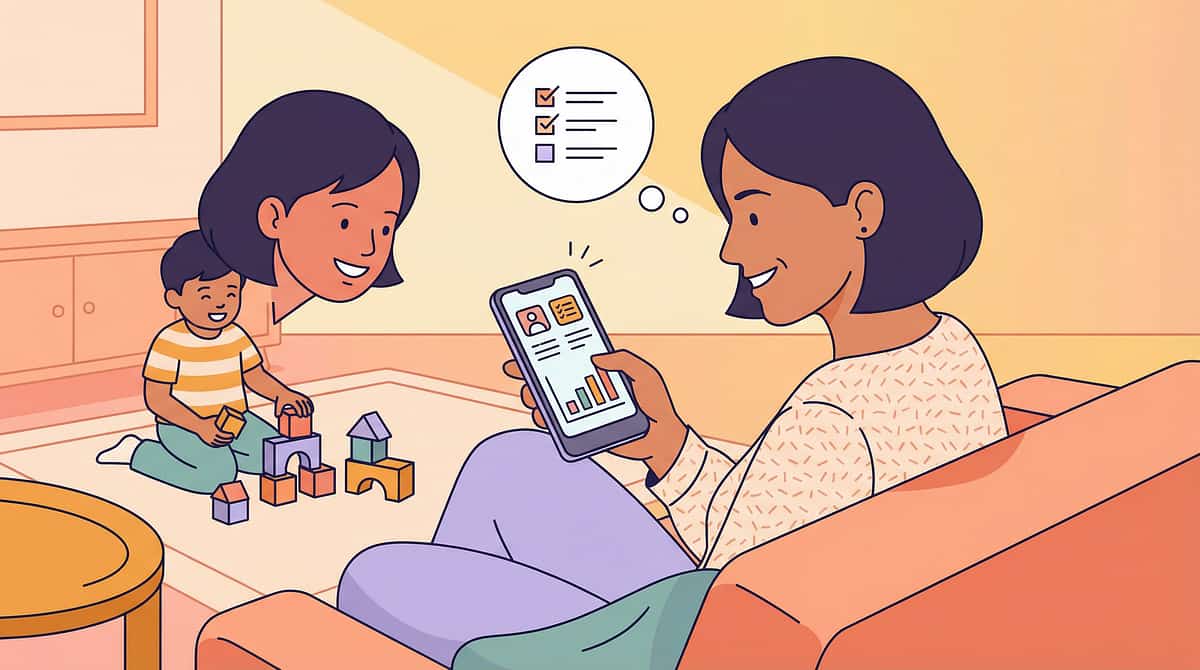
Step 7: Capture the Data — Right Now
STEP 7 · DATA CAPTURE · ⏱️ 60 seconds, immediately after session
60 seconds of data today = personalized guidance tomorrow.
The 3-Field Daily Tracker
Session Date: _______
Tool Used: _______
Writing Output:
☐ Name only ☐ 1–3 words ☐ Short phrase ☐ Full sentence ☐ Multiple sentences
☐ Name only ☐ 1–3 words ☐ Short phrase ☐ Full sentence ☐ Multiple sentences
Child Affect During Writing:
☐ Refused ☐ Resistant but complied ☐ Neutral ☐ Engaged ☐ Proud / enthusiastic
☐ Refused ☐ Resistant but complied ☐ Neutral ☐ Engaged ☐ Proud / enthusiastic
Notes (optional): _______
Why This Data Matters
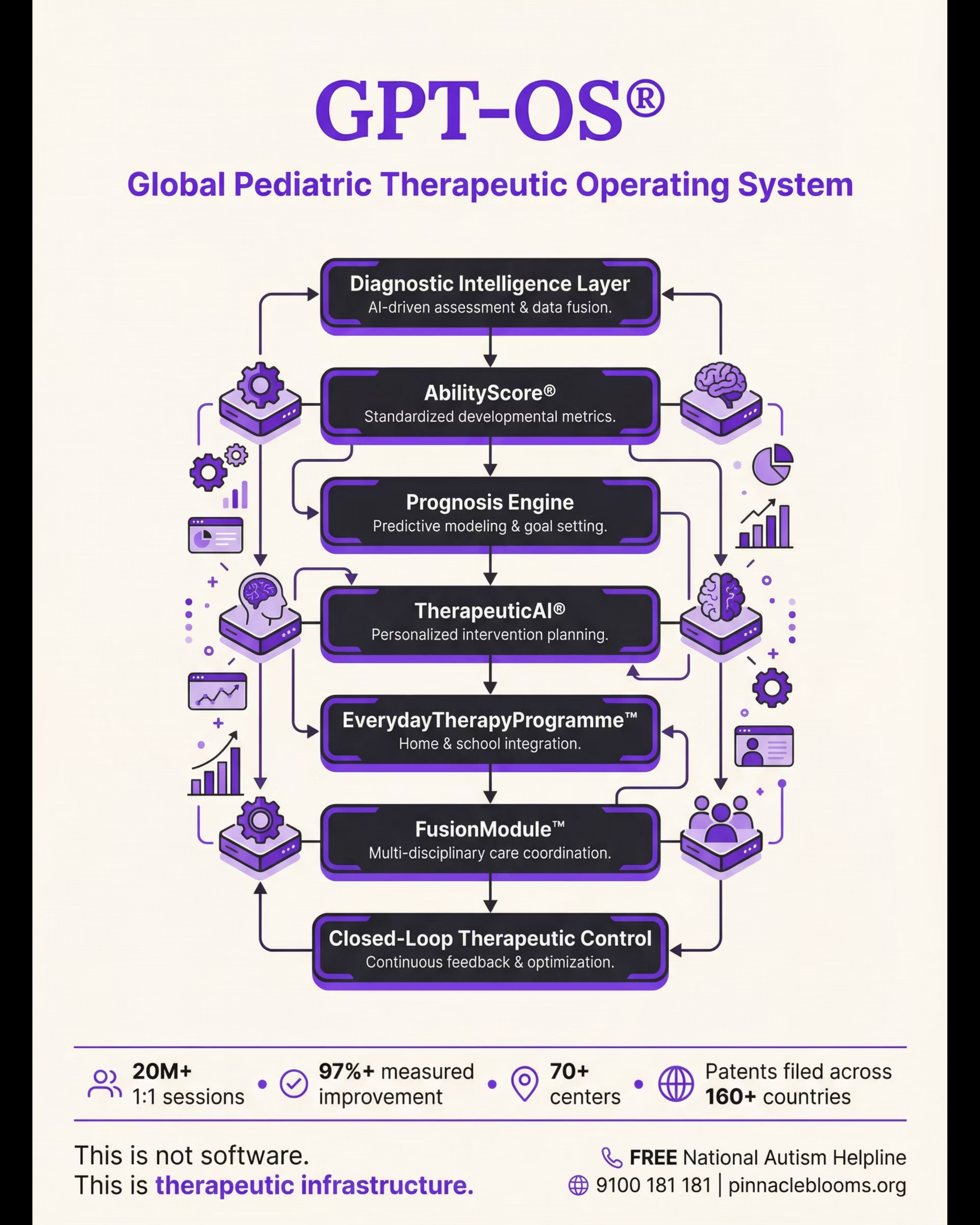
Every data point feeds into GPT-OS® TherapeuticAI®, which:
- Tracks written expression readiness progression
- Identifies which specific tool produces the best outcomes for YOUR child
- Alerts your Pinnacle therapist when patterns suggest tool adjustment
- Generates your child's Written Expression Readiness Index progress report
📥 Download: F-620 Adaptive Writing Tools 4-Week Tracker (A4 PDF)
Parent-collected data in home-based intervention is validated in Indian RCT (Padmanabha et al., Indian J Pediatr 2019). Data-driven home programs outperform time-based programs. DOI: 10.1007/s12098-018-2747-4
📞9100 181 181

Troubleshooting: When It Isn't Working
Every adaptive tool requires fitting and adjustment. Problems mean tuning — not failure.
Problem | Likely Cause | Fix | |
Child refuses to use adaptive tool | Not yet paired as positive | Use ABA pairing: tool = fun activity first (no writing demand for 3 days) | |
Handwriting worse with grip than without | Wrong diameter selected | Try different size; larger isn't always better — trial multiple | |
Cuff causes skin redness/marks | Too tight, or wrong material | Add padding layer; check circulation; use softer material | |
Speech-to-text not recognizing child's voice | Background noise, speech clarity | Move to quiet space; train software to child's voice pattern | |
Weighted pen causes arm fatigue | Too heavy | Reduce weight; check if arm support needed alongside | |
Child writes fine at OT but refuses at home | Environmental mismatch | Recreate OT setup exactly at home: same surface height, same chair, same tool | |
Child uses tool for therapy but refuses at school | School staff not trained | Share Pinnacle F-620 page with teacher; request IEP accommodation document | |
No improvement after 4 weeks | Tool not matched to motor barrier | Request OT reassessment — different barrier, different tool |
🔴Escalate to OT if: No tool produces improvement after 6 weeks · Child shows pain with all grip tools · Writing output is deteriorating · Gap between verbal intelligence and written output is widening
"Tool failure is almost always tool mismatch — not child failure." — Pinnacle Blooms OT Consortium
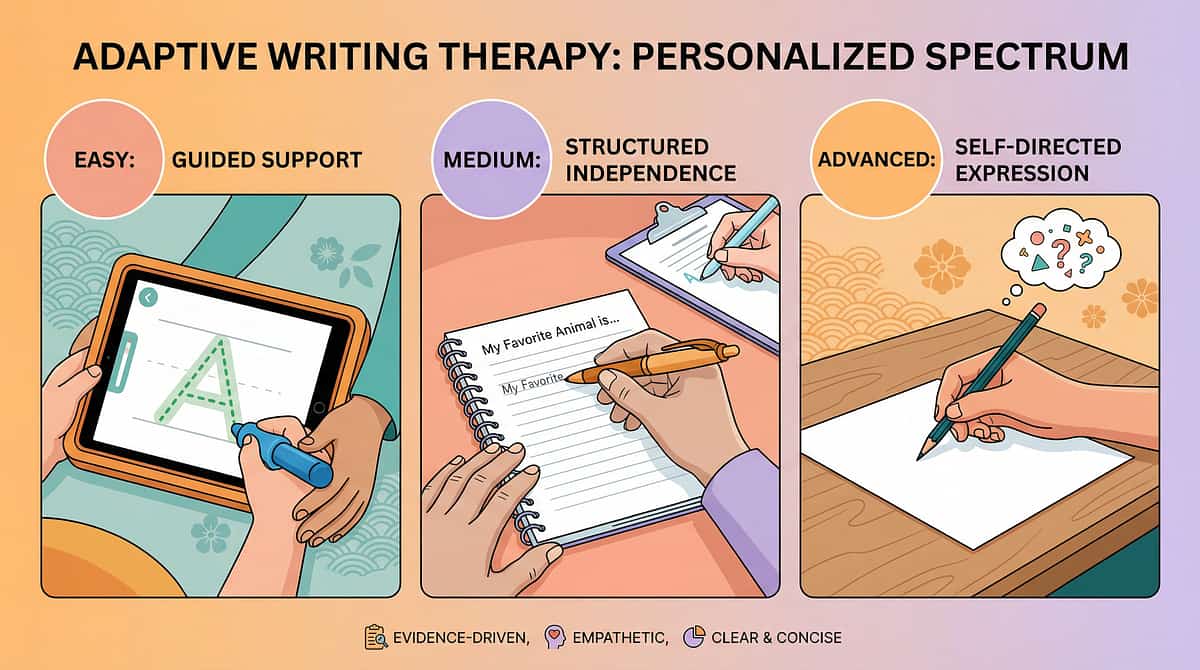
One Technique. Infinite Variations. Your Child's Exact Profile.
Adaptive writing tools are not one-size-fits-all. The right approach depends on your child's specific motor barrier, age, sensory profile, and current skill level.
For Grip Weakness
Start: Foam-wrapped fat marker
Progress: Triangular built-up pencil → standard pencil with grip adapter
Progress: Triangular built-up pencil → standard pencil with grip adapter
For Tremor
Start: Weighted wristband only
Progress: Light weighted pen → medium → standard pen with wrist weight
Progress: Light weighted pen → medium → standard pen with wrist weight
For Cannot Grip
Start: Universal cuff + fat marker on large paper
Progress: Cuff + standard pencil → typed alternative if plateau
Progress: Cuff + standard pencil → typed alternative if plateau
For Motor Bypass
Start: Free built-in speech-to-text
Progress: Structured dictation → word prediction → full keyboard independence
Progress: Structured dictation → word prediction → full keyboard independence
By Sensory Profile
- Sensory avoider: Minimal tool weight; smooth, soft grip materials; no scratchy textures
- Sensory seeker: Vibrating pens; textured grips; weighted tools preferred
- Proprioceptive seeking: Weighted tools + weighted wristband combination is ideal

Week 1–2: Tool Familiarity Phase
15%
Week 1–2 Progress
Tool Familiarity Phase — building the foundation
Week 1–2 is about familiarity — not mastery.
✅ Observable Indicators This Phase
- Child accepts tool without active refusal (even if reluctant)
- Child makes intentional marks with adaptive tool
- Shorter resistance time at session start (compare day 1 vs day 10)
- Child mentions tool by name (shows awareness and ownership)
- Writing task can be attempted — even if output is minimal
❌ Not Yet Expected
- Legible writing — this comes weeks later
- Independent tool management
- Asking to do writing tasks voluntarily
- Consistent performance across all settings
Tracking Question
"Is my child tolerating the tool for longer than the first session?" If yes: progress is occurring.
Week 1–2 can feel like nothing is changing. The resistance may still be high. This is normal — the child is learning a new motor pattern AND a new relationship with writing. Measure progress against Day 1 — not against a typically developing peer.

Week 3–4: Consolidation Phase
40%
Week 3–4 Progress
Consolidation Phase — the neural pathway is forming
The neural pathway is forming. Watch for these signs.
Child reaches for adaptive tool without prompting before writing tasks
Writing output shows slight improvement in legibility or quantity
Child begins to compare their writing favorably: "Look — I wrote that"
Reduced anxiety before writing tasks — no longer hiding papers
Generalization beginning: child attempts tool in NEW writing situations
Parent milestone: You feel more confident about the session
When to Increase Intensity
If all consolidation indicators are present: increase writing task complexity by one level (per the difficulty slider on Card 28).
When to Hold Steady
If fewer than 3 indicators are present: maintain current level for 2 more weeks before progressing.
Neuroplasticity research: Synaptic strengthening through repeated structured input follows predictable timelines. 3–4 weeks marks first consolidation window in pediatric populations.

Week 5–8: Functional Independence Emerging
70%
Week 5–8 Progress
Independence Phase — from "using the tool" to "owning the tool"
Grip Users
Completing school worksheets independently with adapted grip
Cuff Users
Writing name + short labels independently with cuff
Keyboard Users
Typing 2–3 sentences independently; saving/sending work
Speech-to-Text Users
Composing and dictating a paragraph independently
Independence Indicators to Watch For
- ✅ Child independently selects and sets up their adaptive tool before writing
- ✅ Written output at academic level for their age (with tools)
- ✅ Child requests their adaptive tool at school ("I need my grip")
- ✅ Child explains to others why they use their tool (self-advocacy emerging)
- ✅ Writing no longer avoided — child engages with written tasks willingly
- ✅ Production speed improving: completing more in the same time
At the 8-week mark, a formal OT review should re-score the Written Expression Readiness Index, assess whether the current tool remains optimal, and document progress for school IEP/accommodation records.

Your child just wrote something — their way. That's not a workaround. That's writing.
"The child who writes with a universal cuff is writing. The child who types because handwriting is impossible is writing. The child who speaks and watches words appear on screen is writing. The method is irrelevant. The expression is everything."
✨ Milestone Reached When:
- Child uses adaptive tool independently for any real writing task
- Child submits schoolwork using their adaptive method
- Child writes their name independently — any method, any tool
- Child dictates a complete sentence and watches it appear
- Child types a message to someone they love
You did this. You stayed consistent through the sessions when nothing seemed to work. You celebrated every tiny attempt. You advocated for your child's right to write their way.
Pinnacle Blooms honors you — and the thousands of parents exactly like you, across 70+ centers and 70+ countries.
📱 Share: #WriteYourWay #PinnacleBloomsNetwork
Red Flags: When to Seek Professional Assessment
These signals mean professional OT assessment is needed — not more home practice.
🔴 Immediate OT Assessment
- No improvement in any writing output after 8 weeks of consistent adaptive tool use
- Child reports pain during any writing — with any tool
- Grip strength appears to be decreasing (progressive condition possibility)
- Adaptive tool causing skin breakdown, pressure sores, or circulation issues
- Gap between verbal intelligence and written output is widening, not closing
🟡 OT Review Within 2–4 Weeks
- Child accepting tool at home but refusing at school
- Written output has plateaued for 4+ weeks without improvement
- Fatigue increasing with writing
- Child developing secondary behavioral issues around writing tasks
Escalation Path
- 📞 Call Pinnacle FREE Helpline: 9100 181 181 — 24×7 — 16+ languages
- Request formal OT + AT (Assistive Technology) assessment
- Ensure IEP/504 documentation is updated with specific tool names
- Consider school OT consultation for classroom implementation
Legal Right: Under the Rights of Persons with Disabilities Act 2016, children with documented motor difficulties are entitled to appropriate writing accommodations in all educational settings. Adaptive equipment is not optional — it is a legal accommodation.
"No child who needs adaptive writing tools should go without them. If funding is the barrier, call us — we will help navigate pathways." — Pinnacle Blooms Network® OT Team | 9100 181 181

F-620 Sits Here in Your Child's Fine Motor Journey.
F-618
Hand Strengthening for Writing — Building the foundation
F-619
Visual-Motor Integration — Coordinating eye and hand
F-620 ← HERE
Adaptive Writing Tools — Matching tools to the body
F-621
Scissor Skill Development — Bilateral coordination
F-622
Clothing Fastener Skills — Independence in daily living
Prerequisite Techniques
Next Techniques
Related Parent Knowledge
Adaptive Writing Tools Are Most Powerful When Combined With These Complementary Techniques.
Technique | Connection to F-620 | Link | |
F-607: Pencil Grasp Difficulties | Foundation technique — before adaptive tools | ||
F-608: Letter Formation Challenges | Parallel technique — alongside adaptive tools | ||
F-618: Hand Strengthening | Prerequisite for grip-type tools | ||
F-619: Visual-Motor Integration | Prerequisite for specialized paper success | ||
F-621: Scissor Skills | Next fine motor technique in series | ||
F-625: Technology Access | Full AT pathway for technology-route children |
Cross-Domain Connections
Domain A: Sensory Processing
Tactile tolerance for grip materials
Domain B: Communication
Speech-to-text bridges to AAC systems
Domain G: Academic Readiness
Accommodation documentation for school
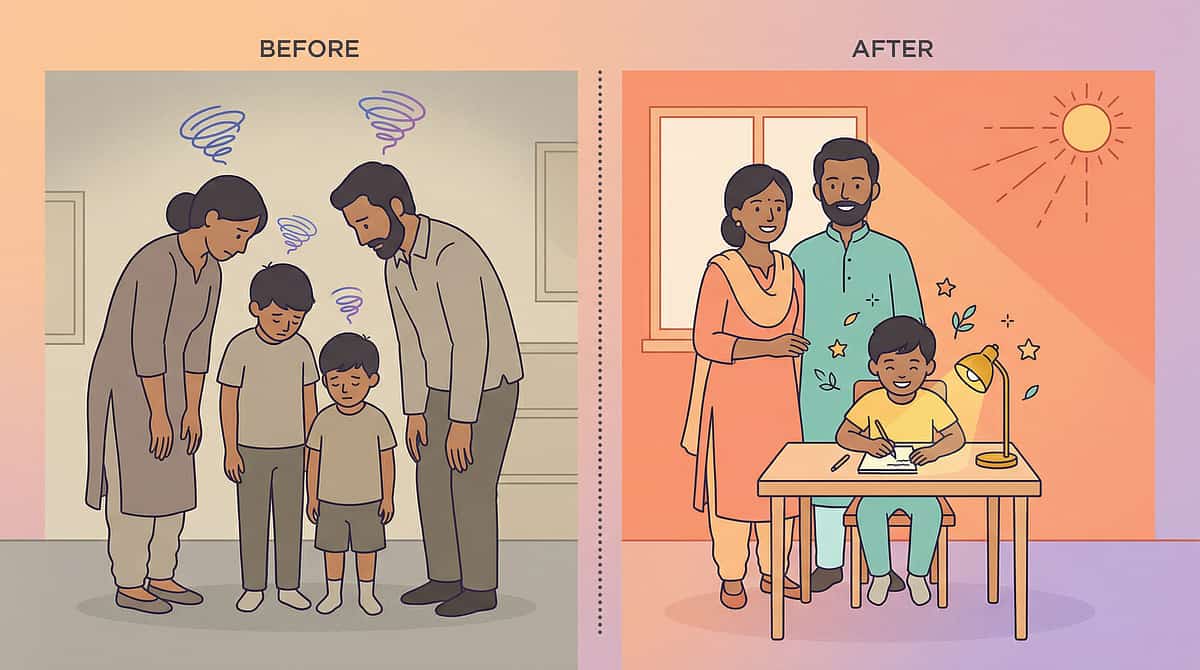
A Story: From "Broken" to Proud
"My daughter has hemiplegia affecting her right hand. She's eight — bright, curious, loves books, has opinions about everything. But she couldn't write a single legible word with standard tools, no matter how hard she tried. By age seven, she'd started calling herself 'broken.' She hid her papers so no one would see. She was taking zeros on written assignments just to avoid the shame. Our Pinnacle OT introduced her to a universal cuff — just a simple cuff with a marker slot — and a clipboard. In the first session, she wrote her name. Three letters. But she wrote them herself, independently, for the first time. She cried. I cried. The OT cried. She still uses adaptive tools — she probably always will. Now her IEP includes keyboarding as her primary writing method. She submitted her first typed school report last month. She put her name on it in big letters and said: 'I wrote this myself.' She did."
— Parent, Pinnacle Network (anonymized per consent protocols)
Illustrative case. Individual outcomes vary based on motor profile, underlying conditions, and consistency of intervention. This testimonial represents one family's experience. The Pinnacle Blooms Network serves 70,000+ families; outcomes are individually variable and guided by professional assessment.

70,000+ Families Navigating Exactly This. You Don't Have to Do It Alone.
Pinnacle Parents WhatsApp Community
Join parents using adaptive writing tools across India and 70+ countries. Share what works, ask what doesn't, find your people.
Find a Pinnacle Center Near You
70+ centers across India offering adaptive equipment trial sessions, OT assessment, school consultation, and monthly parent training workshops.
🩺FREE National Autism Helpline
9100 181 181 · 24×7 · 16+ languages · pinnacleblooms.org
9100 181 181 · 24×7 · 16+ languages · pinnacleblooms.org
This Page Empowers You. A Pinnacle OT Makes It Precise.
Situation | Action | |
You don't know which tool addresses your child's specific barrier | Request OT adaptive equipment assessment | |
Child shows improvement but school won't provide accommodation | Request school OT consultation + IEP documentation | |
Child has CP, muscular dystrophy, or progressive condition | Specialized AT assessment (not just grip modifications) | |
Technology pathway needed (eye-gaze, scanning) | Assistive Technology specialist evaluation | |
Teen whose writing needs affect vocational pathway | Vocational AT assessment |
What a Pinnacle OT Adaptive Equipment Assessment Includes
Motor Profile Assessment
Grip strength, proprioception, tremor, range of motion
Tool Trial Session
Child tries multiple options, OT observes and evaluates
Recommendation Report
Specific tools + settings + school letter
Training Session
For parent and child
4-Week Follow-Up
To assess and adjust as needed
📞 Call 9100 181 181 · Describe child's age, condition, and writing barrier · Get matched to nearest center · Or request teleconsultation (India + international)
Pinnacle serves families from 70+ countries via teleconsultation. Request International Consultation →
Frequently Asked Questions
Your questions, answered by the Pinnacle Blooms OT Consortium.
My child's school says they can't use adaptive tools during exams. Is that legal?
In India, under the Rights of Persons with Disabilities Act 2016, children with documented motor differences are entitled to adaptive equipment accommodations including during examinations. You need a formal OT assessment report naming the specific accommodation. Call 9100 181 181 — our team can guide you through the documentation process.
Will using adaptive tools mean my child will never learn to write normally?
Adaptive tools do not prevent handwriting development — they enable it to continue without repeated failure and emotional damage. For some children, the adaptive tool IS the permanent solution — and that is entirely valid. The goal is functional written expression, not a specific motor technique.
My child can write a little. Should I still try adaptive tools?
Yes, if writing is causing significant fatigue, emotional distress, or producing output far below the child's cognitive level. "Can write a little" and "can write functionally for academic purposes" are different thresholds. If handwriting is a daily battle, the right adaptive tool can transform the experience.
Which tool should I start with if I can only afford one?
Built-up grip (DIY foam tube around pencil = ₹0–50) + clipboard (₹100–200) + bold-lined paper (printable free) = a complete, low-cost starter kit addressing three different barriers simultaneously. Total cost: ₹100–300.
My child has autism (not CP) — are adaptive writing tools relevant?
Absolutely. Many children with autism experience sensory-motor differences, proprioceptive processing difficulties, or fine motor coordination challenges. Built-up grips, weighted tools, and specialized paper are particularly helpful for sensory-related writing difficulties.
At what age should we start with adaptive tools?
As soon as writing is attempted and standard tools are not working. There is no benefit to waiting — early provision prevents years of frustration and self-esteem damage. Age 3–4 is not too early if writing tasks are being introduced.
Can speech-to-text replace handwriting permanently?
For children whose motor profile indicates standard handwriting will never be functional, yes — speech-to-text can be a permanent, valid primary writing method. Many highly successful adults write exclusively by dictation or keyboard. The goal is written expression, not handwriting specifically.
My child's therapist hasn't mentioned adaptive tools. How do I bring this up?
Share this page directly. Say: "I found this Pinnacle Blooms technique page on adaptive writing tools — can we discuss whether any of these would help [child's name]?" A good therapist will welcome this. If you'd like a second opinion, call 9100 181 181.
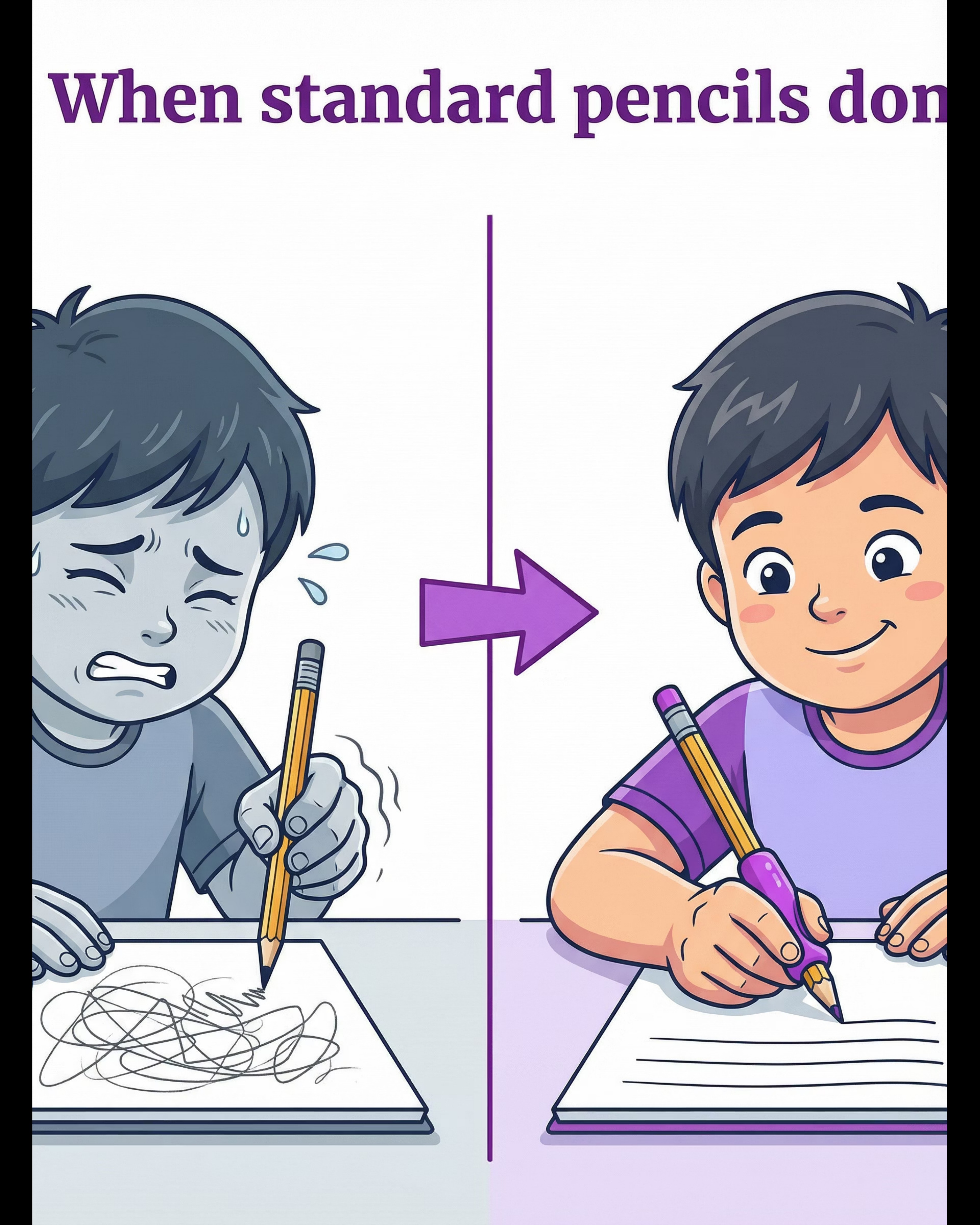
Preview of 9 materials that help with adaptive writing tools Therapy Material
Below is a visual preview of 9 materials that help with adaptive writing tools therapy material. The pages shown help educators, therapists, and caregivers understand the structure and content of the resource before use. Materials should be used under appropriate professional guidance.


Link copied!

Your Child's Writing Story Doesn't End Here. It Begins.
Every adaptive tool on this page can be started today. The first session can happen tonight. The right tool for your child's body exists — you've just met it.
🦺 Occupational Therapy
🗣️ Speech-Language
🧠 ABA/BCBA
📚 Special Education
👨⚕️ NeuroDev Pediatrics
📞FREE National Autism Helpline · 9100 181 181 · 24×7 · 16+ Languages
🌸PINNACLE BLOOMS NETWORK® — "Built by Mothers. Engineered as a System."
"From fear to mastery. One technique at a time."
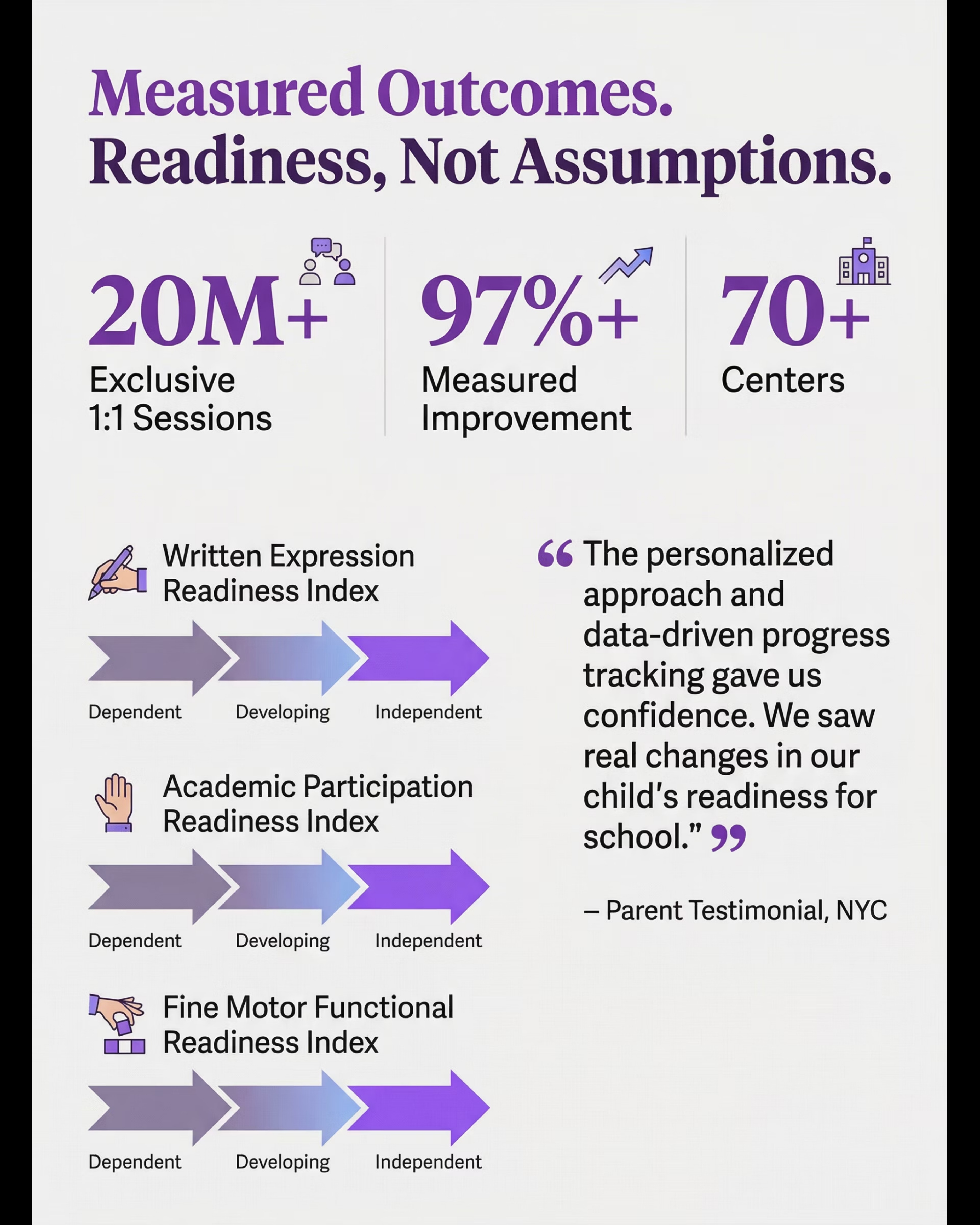
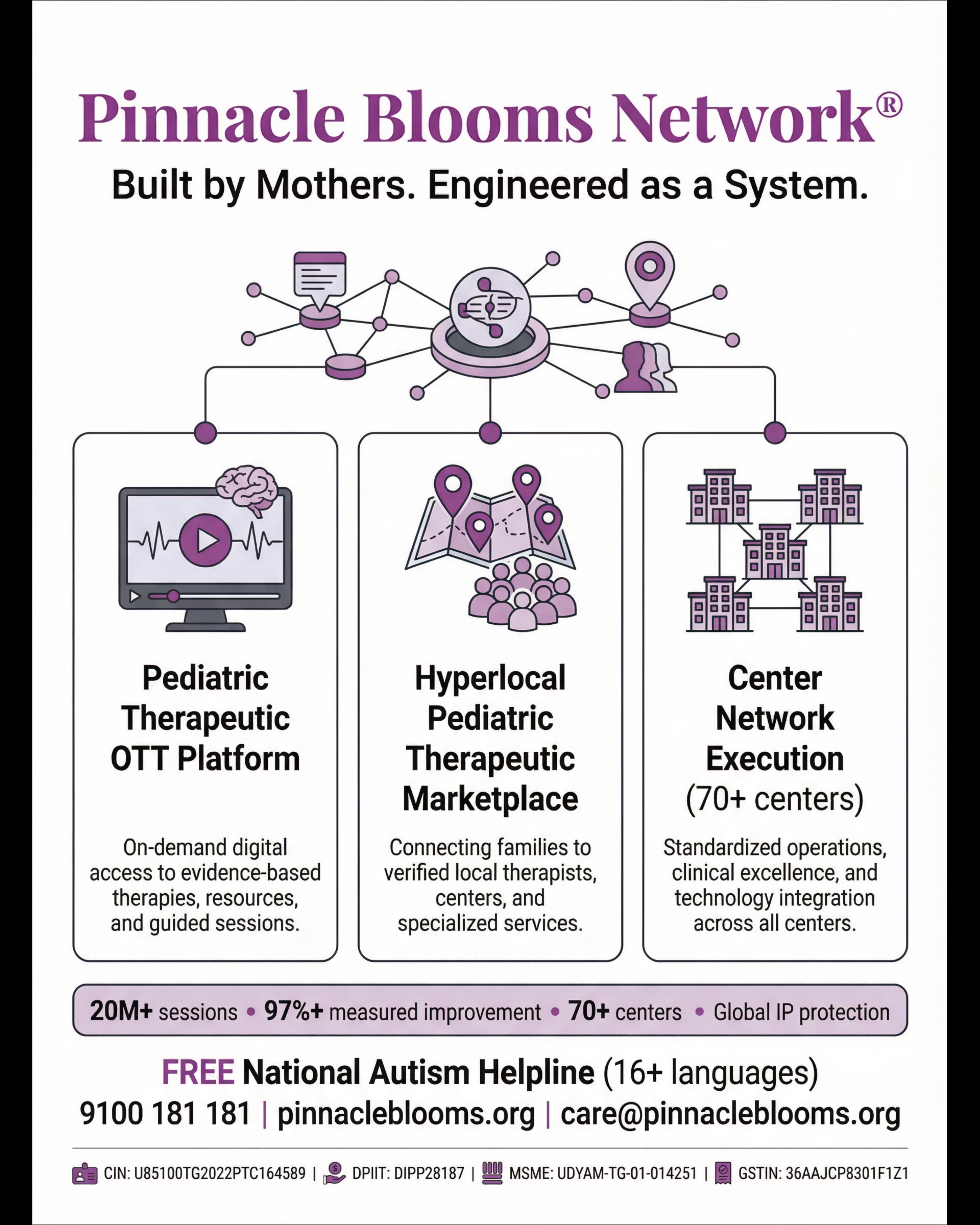
Pinnacle Blooms Network® operates 70+ pediatric therapy centers across India, serving families from 70+ countries through 20M+ exclusive 1:1 therapy sessions, with 97%+ measured improvement across readiness indexes.
This page is for educational purposes only. Adaptive writing tool selection requires individualized assessment by a qualified occupational therapist. Information provided here does not constitute clinical advice and does not replace professional assessment. Individual results vary based on motor profile, underlying conditions, intervention consistency, and child-specific factors.
CIN: U74999TG2016PTC113063 · DPIIT: DIPP8651 · MSME: TS20F0009606 · GSTIN: 36AAGCB9722P1Z2
© 2025 Pinnacle Blooms Network®, unit of Bharath Healthcare Laboratories Pvt. Ltd. · GPT-OS® is a registered trademark
care@pinnacleblooms.org · pinnacleblooms.org
🌸PINNACLE BLOOMS NETWORK® — "Built by Mothers. Engineered as a System."
"From fear to mastery. One technique at a time."
Pinnacle Blooms Network® operates 70+ pediatric therapy centers across India, serving families from 70+ countries through 20M+ exclusive 1:1 therapy sessions, with 97%+ measured improvement across readiness indexes.
This page is for educational purposes only. Adaptive writing tool selection requires individualized assessment by a qualified occupational therapist. Information provided here does not constitute clinical advice and does not replace professional assessment. Individual results vary based on motor profile, underlying conditions, intervention consistency, and child-specific factors.
CIN: U74999TG2016PTC113063 · DPIIT: DIPP8651 · MSME: TS20F0009606 · GSTIN: 36AAGCB9722P1Z2
© 2025 Pinnacle Blooms Network®, unit of Bharath Healthcare Laboratories Pvt. Ltd. · GPT-OS® is a registered trademark
care@pinnacleblooms.org · pinnacleblooms.org