
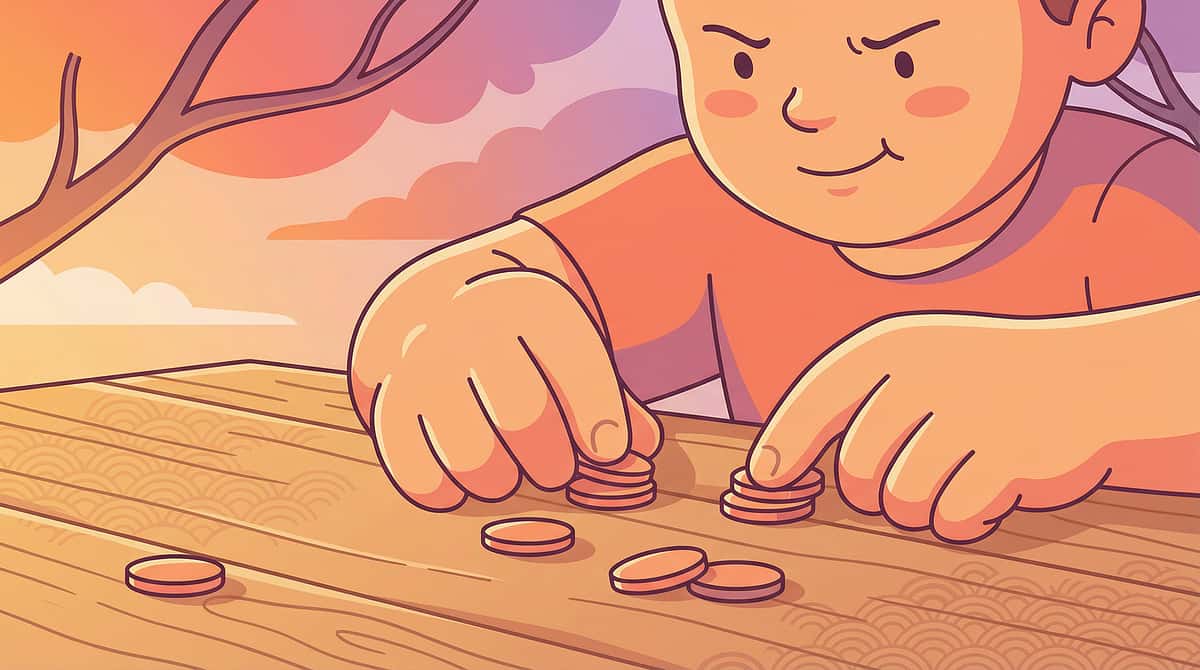
Your Child Puts Her Pencil Down Every Single Time She Needs to Erase.
She can't flip it. She picks it up again in a new grip, erases, puts it down, picks it up to write. Every sentence. The teacher notices she's "slower than the others." At the supermarket, coins cascade from her fingers. Buttons take five attempts. Her occupational therapist called it in-hand manipulation difficulty. You called it watching your child work twice as hard for half the result.
"You are not failing. Your child's fingers are learning. That is exactly what therapy materials are for."
Pinnacle Blooms Consortium®OT-ValidatedAges 3–10GPT-OS® F-615

Fine Motor Difficulties Affect Millions of Children. Your Family Is in Large Company.
In India alone, an estimated 1.3 crore children between ages 3–10 experience some degree of fine motor dysfunction. Globally, the WHO estimates 240 million children have developmental disabilities affecting daily activities. In-hand manipulation — specifically translation, rotation, and shift — is among the most commonly missed deficits because it looks like clumsiness, not a diagnosable gap. You are among millions of families navigating this exact challenge. And you are not navigating it alone.
1 in 6
Children Affected
Experience developmental difficulties affecting fine motor performance (CDC, 2023)
80%
ASD + Fine Motor
Children with ASD display fine motor challenges impacting handwriting, dressing, and daily function (PMC11506176)
97%+
Measured Improvement
Improvement rate across 20M+ Pinnacle therapy sessions targeting fine motor development
"Sensory integration therapy effectively promoted social skills, adaptive behavior, sensory processing, and gross/fine motor skills across 24 studies." — World Journal of Clinical Cases, 2024 (PMC10955541)

In-Hand Manipulation Is a Brain-and-Muscle Conversation.
Here is what it looks like — and why it matters for your child's daily life.
The Science
In-hand manipulation recruits three interlocking neural systems simultaneously. The Somatosensory Cortex processes tactile feedback — texture, shape, weight, position. The Primary Motor Cortex + Corticospinal Tract executes precise commands to intrinsic hand muscles (lumbricals and interossei). The Cerebellum coordinates timing and sequencing — critical for smooth pencil rotation or fluid palm-to-fingertip transfer. When any system is immature or dysregulated, the compensatory pattern emerges: put it down, pick it up differently.
Plain English
Your child's hand contains 20 small intrinsic muscles — the precision instruments. When they're underdeveloped or when the brain's feedback loop is delayed, the larger forearm muscles take over — giving you the fist-grasp instead of the fingertip grasp.
This is not stubbornness. This is not laziness. This is the brain routing around a gap in the wiring — doing its best with the pathways available.
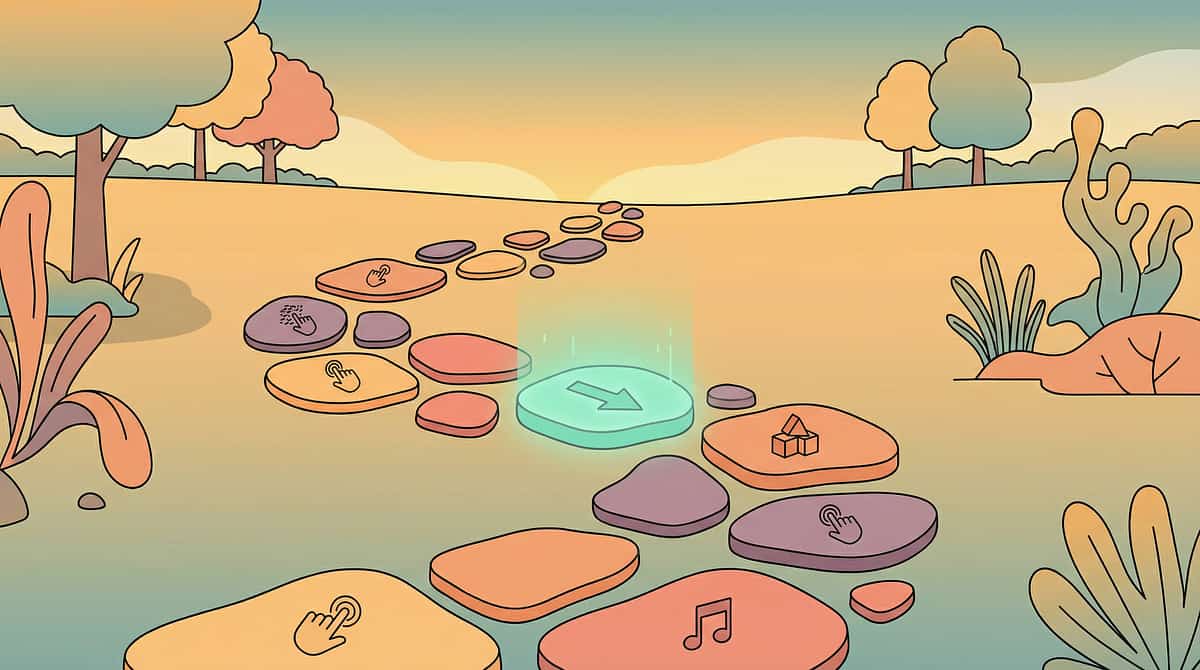
In-Hand Manipulation Develops in a Precise Sequence From Age 2 to 7.
Here is the developmental map — and where your child is on it.
Age 2–3
Finger-to-palm translation developing. Simple rotation emerging.
Age 3–4
Palm-to-finger translation established. Simple rotation (180° flip) developing.
Age 4–5
Shift movements established. Complex rotation beginning.
Age 5–6
Complex rotation (continuous spinning) with stabilization developing.
Age 6–7
Complex rotation with stabilization fully established.
🔄 Translation
Moving objects from fingertips to palm (or back). Example: Picking up coins one by one and storing in palm. Develops: Age 2–3.5 years.
👆 Shift
Small adjustments of finger position on an object. Example: Moving fingers up and down a pencil shaft; repositioning a button. Develops: Age 4–5 years.
🌀 Rotation
Turning an object within the fingers. Simple (180° flip): age 3–4. Complex (continuous spinning): age 5–6. Example: Flipping a pencil to erase.

This Is Not Folk Wisdom. This Is Published, Peer-Reviewed, Replicable Science.
Evidence Grade: Level I–II
Systematic Review + RCT
- 16 studies reviewed (2013–2023)
- Clinically validated methodology
- Home-applicable protocols confirmed
- Parent-proven outcomes
Key Studies
PMC11506176 — PRISMA Systematic Review (Children, 2024): 16 articles, 2013–2023. Sensory integration and fine motor intervention classified as evidence-based practice for children with ASD.
PMC10955541 — Meta-Analysis (World J Clin Cases, 2024): 24 studies. Significant effect sizes across age groups 3–10.
DOI: 10.1007/s12098-018-2747-4 — Indian RCT (Indian J Pediatr, 2019): First Indian RCT confirming home applicability of parent-implemented fine motor protocols.
NCAEP (2020) — Fine motor and hand function interventions classified as evidence-based practice across ASD, DCD, and developmental delay profiles.
Evidence Confidence
Across Level I–II studies with clinical and home-applicable validation
Pinnacle Improvement Rate
Across 20M+ exclusive 1:1 therapy sessions within an 8–12 week protocol window
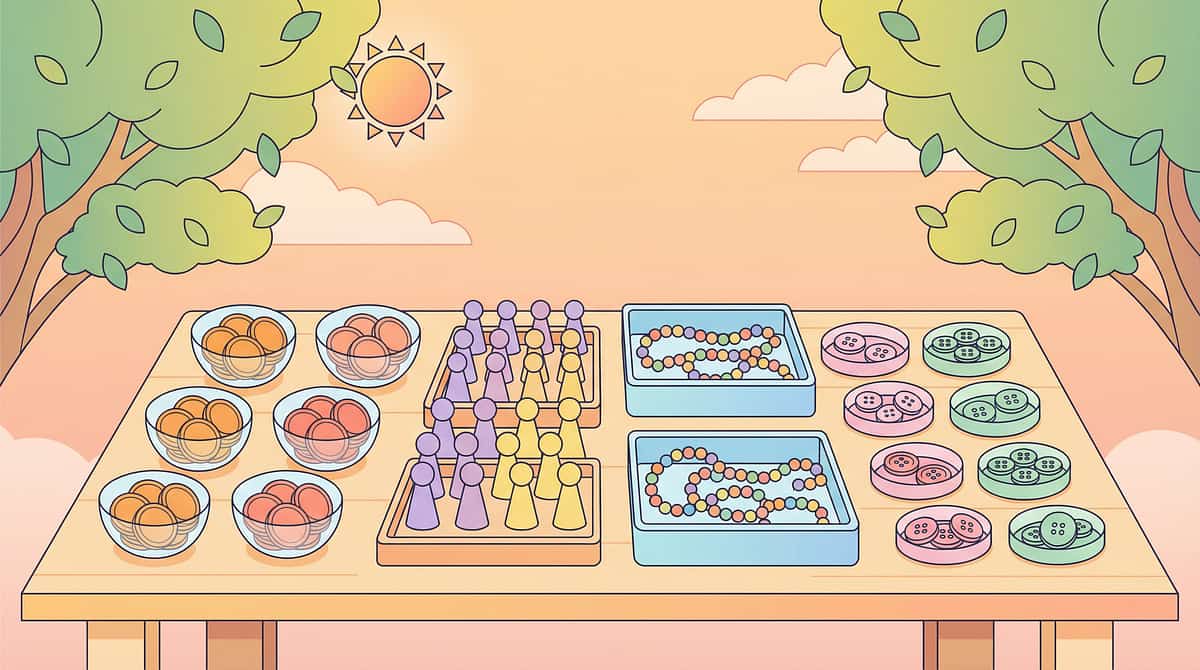
The Technique: In-Hand Manipulation Training With 9 Therapy Materials
Parent-Friendly Alias: "Finger Skill Building — Moving Objects Inside One Hand"
Formal Definition: In-hand manipulation refers to the ability to move and adjust objects within one hand using only the fingers of that hand — without assistance from the other hand, a body surface, or a table. It involves three movement types: Translation (fingertips ↔ palm), Shift (repositioning on the object), and Rotation (turning the object). These are functions of the 20 intrinsic hand muscles.
Domain
Fine Motor / Hand Function
Age Range
3–10 years
Session Duration
15–25 min | Daily
Code
GPT-OS® F-615
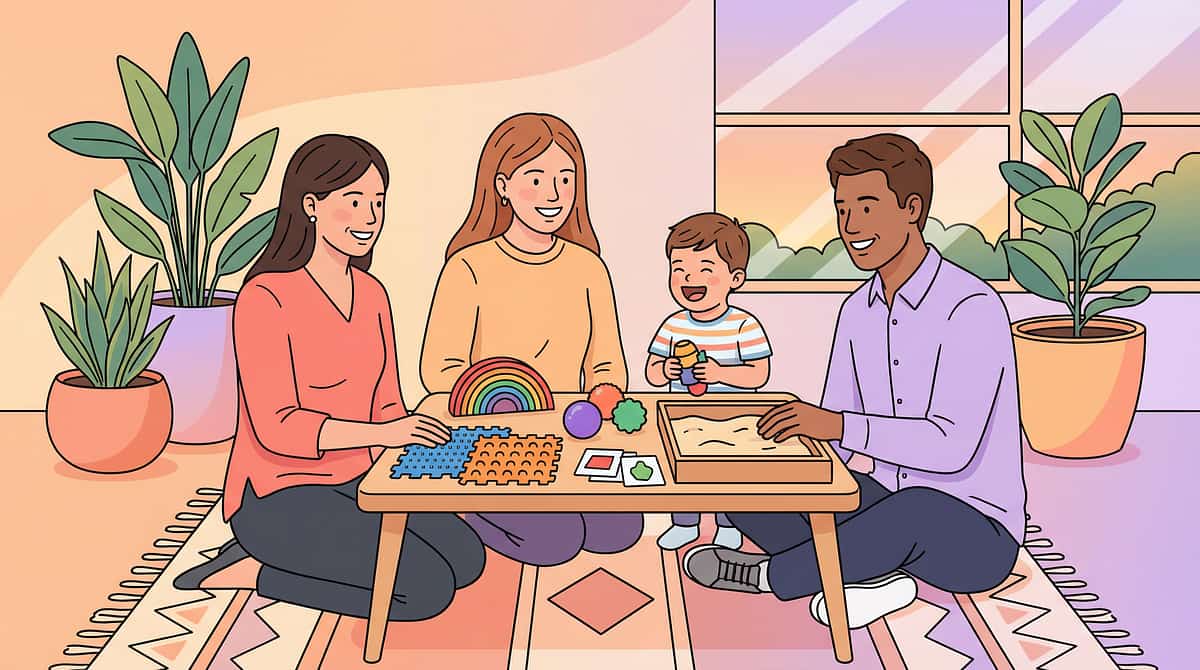
In-Hand Manipulation Is a Multi-Disciplinary Target.
Here's who deploys it and why — because the brain doesn't organize by therapy type.
🟣 Occupational Therapist (Primary)
Uses in-hand manipulation as the core intervention for hand function. Conducts formal assessment (In-Hand Manipulation Test), identifies deficit types (translation vs. rotation vs. shift), and prescribes targeted material-based protocols in 20–30 minute focused segments.
🔵 Special Education Teacher (SpEd)
Applies in-hand manipulation strategies in classroom context — managing pencils, scissors, glue, and small manipulatives. Co-plans with OT to ensure classroom accommodations while building underlying skills.
🟠 ABA Therapist / BCBA
Uses behavioral principles — shaping, chaining, reinforcement scheduling — to increase engagement with manipulation activities. Ensures the child has the motivational conditions to sustain the repetitive practice that skill-building requires.
🟢 NeuroDev Pediatrician
Assesses developmental baseline, rules out neurological conditions, and determines if in-hand manipulation difficulty is isolated or part of a broader DCD or ASD profile. Coordinates medical and therapeutic intervention.
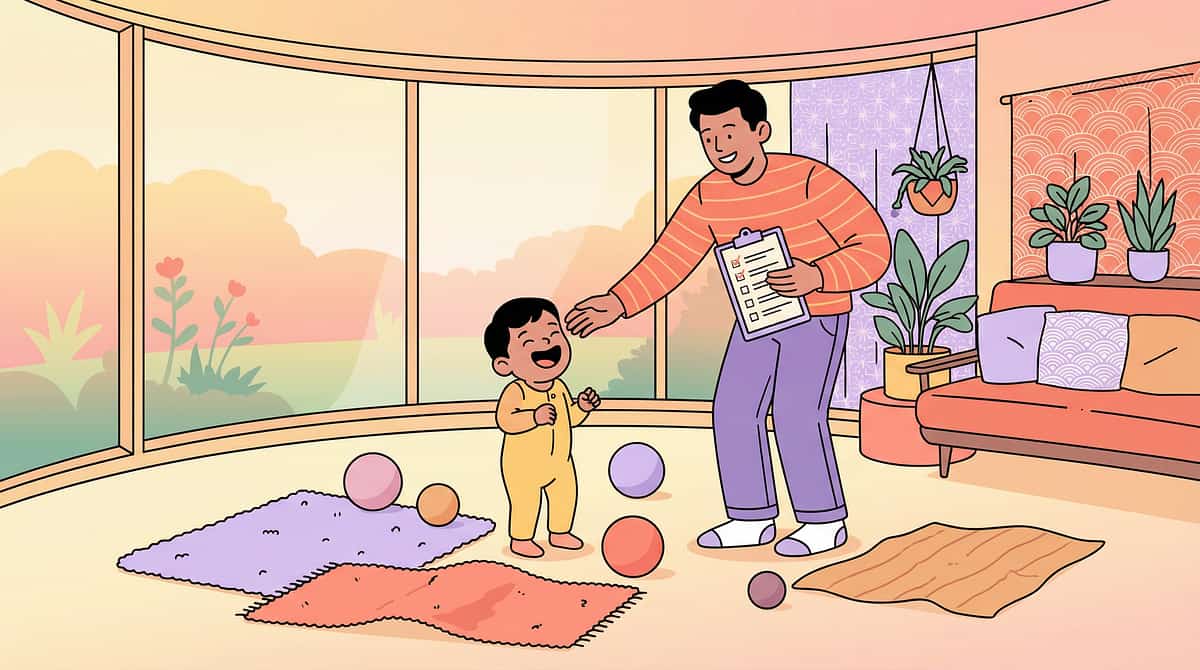
Three Levels of Impact — Every Session Hits All Three Simultaneously.
🎯 Primary Target
- Translation skill: fingertip ↔ palm object transfer
- Rotation skill: simple (180°) and complex (continuous)
- Shift skill: precise finger repositioning on held objects
⭕ Secondary Targets
- Handwriting speed and efficiency
- Self-care independence (buttons, snaps, zips)
- Bilateral hand coordination
- Visual-motor integration and finger isolation
⭕⭕ Tertiary Domains
- Academic readiness (writing, scissors, materials)
- Functional independence (money, tools, fasteners)
- Social confidence (card games, board games, peers)
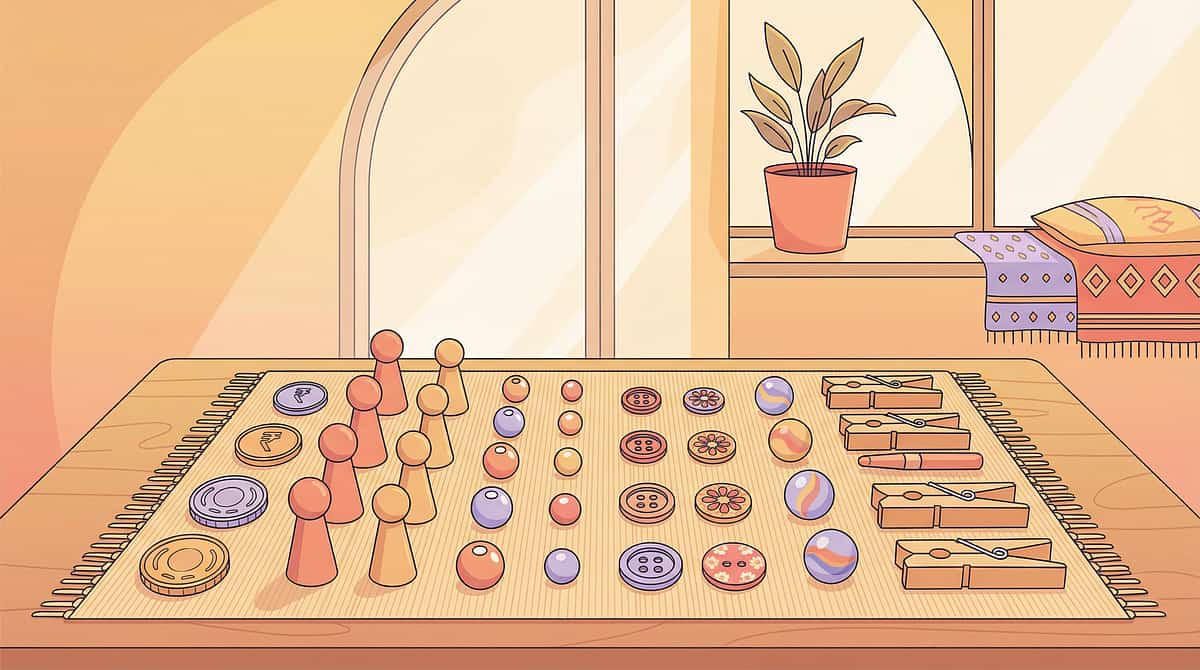
9 Clinically-Selected Materials. Available in India. Starting Under ₹100.
# | Material | OT Purpose | Price | Category |
1 | Therapy Putty (various resistance grades) | Intrinsic muscle strengthening + translation | ₹300–800 | Fine Motor / Sensory |
2 | Spinning Tops | Complex rotation training | ₹100–500 | Problem-Solving Toys |
3 | Coins & Tokens | Translation — finger-to-palm and palm-to-finger | ₹50–200 | Sorting Activities |
4 | Pegboards with Small Pegs | Translation + rotation + precision placement | ₹200–800 | Problem-Solving Toys |
5 | Lacing & Threading Kits | Shift movements + bilateral coordination | ₹150–600 | Fine Motor Materials |
6 | Playing Cards | Translation + shift in game context | ₹100–400 | Social Play Materials |
7 | Unsharpened Pencils / Dowels | Simple and complex rotation practice | ₹0–100 | Writing Tools |
8 | LEGO / Construction Sets | Rotation + precision placement motivation | ₹500–2,000 | Problem-Solving Toys |
9 | Tweezers & Tongs | Precision grip underlying all manipulation | ₹100–400 | Fine Motor Tools |
Starter Kit (under ₹600 total): Coins from home (₹0) + Unsharpened pencils (₹50) + Basic pegboard (₹200) + Playing cards (₹100) + Small construction set or spinning top (₹200). ✅ All materials are clinically validated within the GPT-OS® Canon Material taxonomy for F-615.
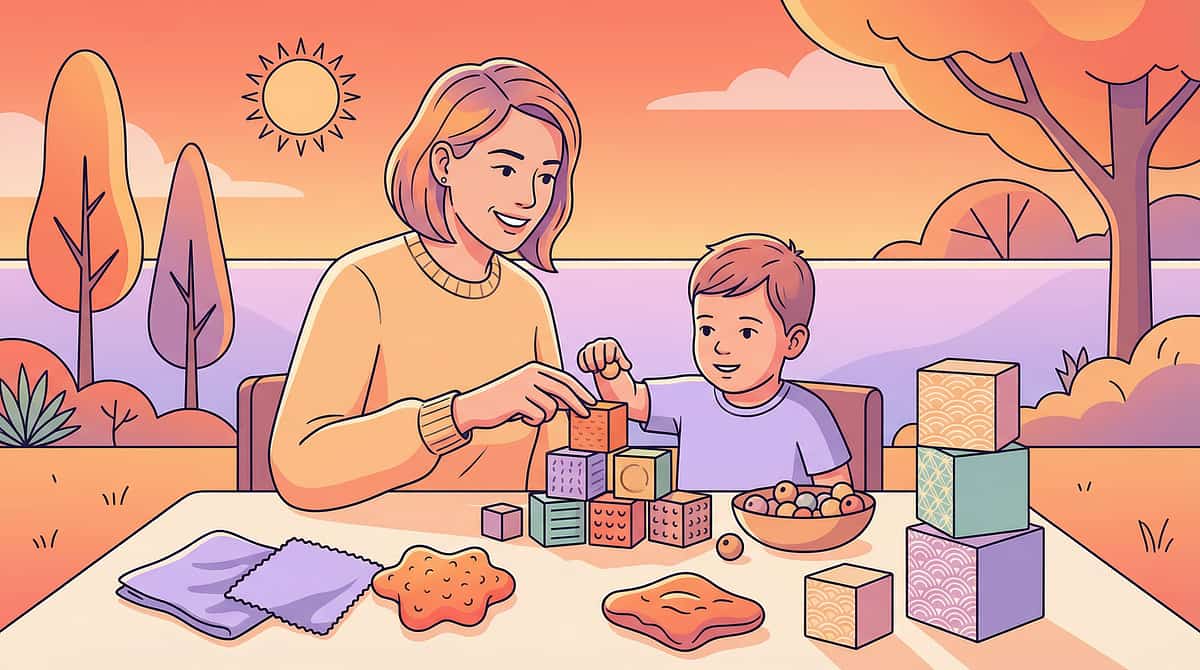
Every Family Can Start Today. Zero-Cost Versions Exist for All 9 Materials.
"The WHO Nurturing Care Framework confirms: household-material interventions work. You do not need to buy everything to begin."
Material | Buy This ✅ | Make/Use This (₹0) | Why It Works |
Therapy Putty | Resistance putty ₹300–800 | Homemade flour + salt + water dough, or chewing gum kneaded | Same resistance principle; strengthens intrinsic muscles equally |
Spinning Tops | Commercial tops ₹100–500 | A coin spun on table; bottle cap; any round flat object | Complex rotation principle is identical |
Coins & Tokens | Play money ₹50–200 | Real coins from home — this IS the functional material | Direct real-world transfer to money management |
Pegboards | Commercial set ₹200–800 | Golf tees in a foam block; straws pushed into clay | Same precise insertion principle |
Lacing Kit | Commercial beads ₹150–600 | Large pasta (rigatoni) + shoelace; cut straws + string | Identical shift movement mechanics |
Playing Cards | Standard deck ₹100–400 | Old magazine pages cut to card size; index cards | Dealing mechanics identical |
Pencil Rotation | Unsharpened pencils ₹50 | Any household pencil — already available | This IS the technique material |
Construction Set | LEGO ₹500–2,000 | Interlocking cardboard pieces; nut-and-bolt sets | Rotation + precision placement preserved |
Tweezers | Child tweezers ₹100–400 | Chopsticks; clothespin as tongs; kitchen tongs | Pincer-grip mechanics preserved |
Three Minutes of Safety Review Before Every Session. Non-Negotiable.
🔴 RED — Do Not Proceed If:
- Child had severe meltdown in the last 60 minutes
- Child is ill, running a temperature, or in pain
- Child is overtired or hasn't eaten in 3+ hours
- Any piece smaller than a 50-paise coin for children under 4 (choking hazard)
- Child shows latex allergy and putty contains latex
- Sharp-tipped materials present without direct supervision
🟡 AMBER — Modify and Proceed:
- Mildly dysregulated → use softer putty, larger objects, reduce to 10 min
- Difficult morning → begin with child's preferred material first
- Distracted → move to quieter space, reduce visual clutter
- First session ever → use only 1 material, 5 minutes maximum
🟢 GREEN — Proceed When:
- Child is calm, fed, rested
- Space is prepared (see Card 12)
- Materials are age-appropriate and safety-checked
- You have 15–25 minutes without interruption
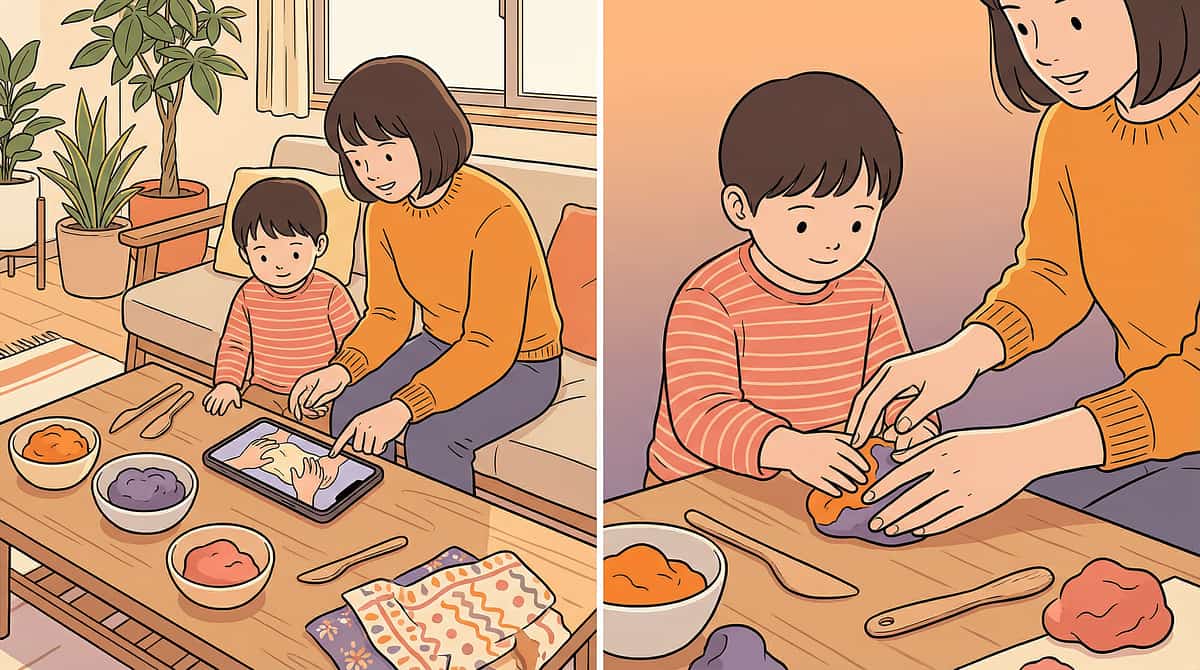
Environment Is Therapy. Get the Space Right Before the Session Begins.
Room Setup Checklist
- Child seat: Firm chair, hip/knee/ankle at 90°, feet flat, table at elbow height. Proximal stability enables distal precision.
- Parent position: Seated across or beside — never standing over (reduces performance anxiety)
- Materials: Placed to child's dominant-hand side, organized in a shallow tray — within reach, not a pile
- Remove: All screens, unrelated toys, background noise if possible
- Lighting: Natural or bright overhead — child needs to SEE finger movements clearly
- Surface: Non-slip mat under materials prevents sliding (especially coins, small pieces)
- Timer visible: Visual timer reduces "when will this end?" anxiety
- Reinforcement ready: Preferred reward accessible but not visible until earned
60 Seconds. 7 Questions. Go or No-Go.
ACT III: The Execution
Before every session, run this quick readiness check. Your child's state at session start predicts the outcome more powerfully than any material or technique.
Fed in last 2 hours?
Child had a snack or meal within 2 hours
Rested?
No signs of extreme fatigue — eye rubbing, yawning, irritability
Regulated?
Calm baseline — not currently distressed from earlier events
No Illness?
No fever, no signs of ear/throat/stomach complaint
Engaged?
Made eye contact or responded to your greeting in last 5 minutes
Space Ready?
Card 12 setup complete
Your Energy?
You are calm, patient, have 20+ minutes available
✅ 7/7 → GO
Begin Step 1: The Invitation
⚠️ 5–6/7 → MODIFY
Single material, 10 min max, no structured demands — play mode only
🚫 4 or fewer → POSTPONE
Do a calming activity instead. "The best session is one that starts right."

Step 1 of 6
The Invitation
Every session begins with an invitation, not a demand. The child enters willingly — or not at all.
The Exact Words to Say
"Hey, I found something for us. Want to see?"
Then place ONE material (child's most preferred from the 9) in front of them. Say nothing more. Wait 10 seconds. Let curiosity do the work.
Body Language
- Sit at child's level — never stand over
- Relaxed shoulders, soft face
- No eye pressure — look at the material, not the child
- Match their energy level, slightly warmer
What Acceptance Looks Like
- Reaches toward material
- Looks at material for 2+ seconds
- Leans forward or verbalizes curiosity
- Makes brief eye contact with you
What Resistance Looks Like — and How to Respond
- Turns away → Wait 30 seconds. Then try second most preferred material.
- Pushes material away → "No problem." Remove it. Brief preferred activity 30 sec, then offer again.
- Meltdown signs → Postpone session. This is data, not failure.

Step 2 of 6
The Engagement
Child is now present. Introduce the specific manipulation challenge — gently, playfully, without performance pressure. The material teaches — not your words.
For Therapy Putty
"I hid something in here. Can you find it with just your fingers?" (No showing, no telling what's hidden.)
For Coins / Tokens
"Here are 10 coins. See if you can pick them up one at a time and hold them ALL in one hand. Without putting them down."
For Spinning Top
"Watch this." Spin the top yourself first. "Now you try." Hand it over. Say nothing more.
For Pegboard
"Make a pattern? You pick the colors." Place a handful of pegs in child's palm — do not line them up.
For Playing Cards
"Want to play [preferred game]? You deal." Natural, game-embedded demand — lowest pressure possible.
Engagement
Child manipulates with curiosity, varies approach, self-initiates
Tolerance
Child completes task but passively compliant → increase reinforcement
Avoidance
Child stops, moves away, protests → reduce demand, shift to preferred variation
Reinforcement begins now. Verbal praise for ANY attempt: "Yes! Just like that." Timing: 1–3 minutes.

Step 3 of 6
The Therapeutic Action
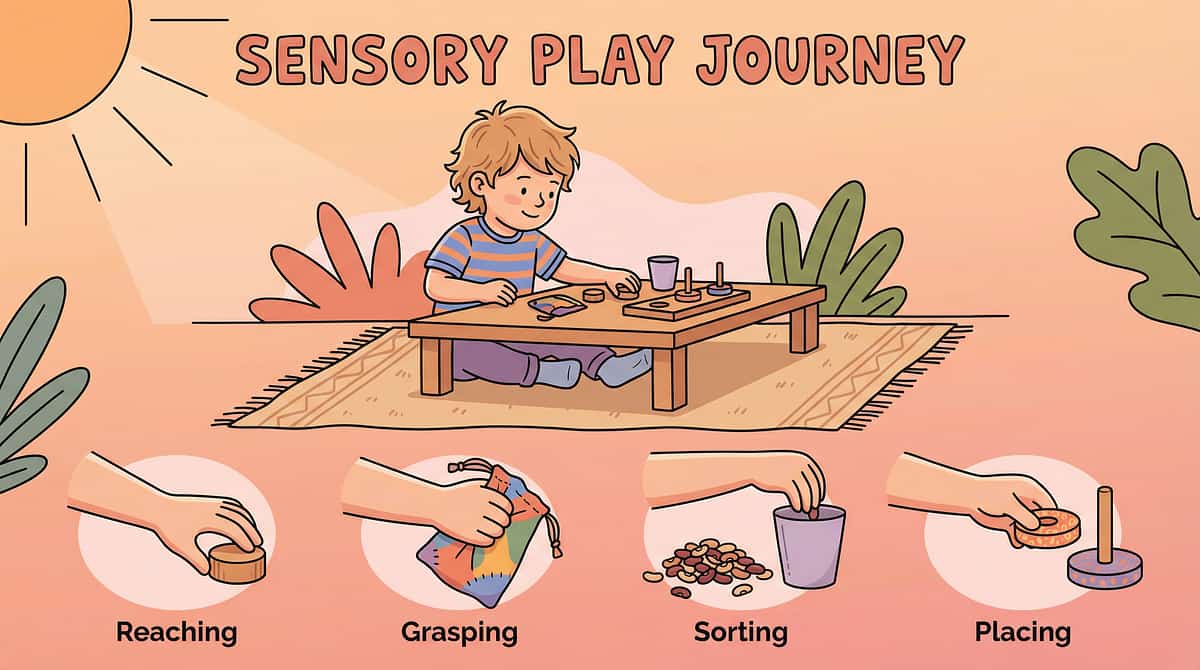
This is the moment of maximum therapeutic value. The specific manipulation movement happens here. Duration: 5–10 minutes for core action phase.
Therapy Putty — Translation Practice
Child buries small objects in putty, extracts them one at a time using fingertips, moves each to palm. Goal: 5+ objects stored without putting any down. Manipulation type: Finger-to-palm translation + intrinsic muscle strengthening.
Spinning Tops — Complex Rotation
Child positions top between thumb and index/middle finger, executes rotation by thumb moving one direction while fingers push opposite direction simultaneously. Manipulation type: Complex rotation — fingers moving in opposite directions.
Coins — Bidirectional Translation
Pick up coins one at a time from surface, store in palm (finger-to-palm). Then move coins from palm to fingertips one at a time to drop into container (palm-to-finger). Manipulation type: Bidirectional translation — the hardest challenge for flat objects.
Pegboards — Translation + Precision Placement
Hold handful of pegs in palm. Move ONE at a time to fingertips, rotate to correct orientation, insert into hole. Manipulation type: Palm-to-finger translation + simple rotation + precise placement.
Lacing / Threading — Shift
Hold lace tip in fingertips. Thread bead. As bead slides down, fingers must shift position on lace to continue — no two-handed repositioning allowed. Manipulation type: Shift — continuous finger position adjustment.
Cards — Translation + Shift Combined
Hold deck in non-dominant hand. Use dominant thumb to shift top card, then fingertips to flick/place it while maintaining grip on remaining deck. Manipulation type: Shift + translation in social context.
Pencil Rotation — Simple and Complex
Start in writing grip. Rotate 180° to eraser end using thumb-push and finger-guide. Then rotate back. Do not put down. Do not use other hand. Manipulation type: Simple rotation (180°) progressing to complex rotation.
Construction Sets — Rotation + Precision
Pick one small piece from pile in palm. Rotate it to correct orientation for connection. Connect precisely. Retrieve next piece from palm. Manipulation type: Palm-to-finger translation + rotation + precision placement.
Tweezers — Precision Grip Foundation
Transfer objects (pompoms, small erasers) one at a time from surface to container. Focus on isolated thumb and index finger control while ring/pinky fingers stabilize handles. Manipulation type: Precision grip — the biomechanical basis of all manipulation.
Step 4 of 6
Repeat & Vary
"3 quality repetitions build more neural pathway than 10 forced attempts."
Material | Target Reps (Beginner) | Target Reps (Progressing) | Satiation Signs |
Putty treasure hunt | 5–8 objects | 10–15 objects | Plays without extracting; stops searching |
Spinning tops | 5 attempts | 10–15 attempts | Top spinning successfully 3× = mastery |
Coins | 5 coins to palm | 10 coins to palm | Drops coins; starts using other hand |
Pegboard | 1 row complete | Full pattern complete | Self-removes pegs; looks away |
Lacing | 5 beads threaded | 15+ beads (necklace) | Stops adjusting grip; drops lace |
Cards | 1 full deal around | 3 rounds of dealing | Shuffles aimlessly; loses interest in game |
Pencil flip | 5 clean flips | 15+ automatic flips | Performs automatically — mastered! |
Construction | 5 pieces connected | Full model complete | Stops orienting pieces; plays non-constructively |
Tweezers | 10 transfers | 30+ transfers | Accuracy drops; grip fatigue visible |
Variation options to maintain engagement: Putty — change color, objects, resistance. Coins — change denomination, add counting, timed challenge. Tops — change size (larger → smaller = harder). Cards — change game, deal to more players. Pegs — change pattern complexity, peg size, timed fill.

Step 5 of 6
Reinforce & Celebrate
The Timing Rule: Reinforcement must arrive within 3 seconds of the desired behavior. Not after the session. Not at the end of the row. Immediately.
Verbal (Always Present)
- "Yes! You moved that coin without putting it down!" ← specific, not generic
- "That flip was perfect — you didn't need to put it down!"
- "Your fingers did that all by themselves!"
Physical (Consent-Based)
- High five or fist bump
- Shoulder tap if child accepts
- Match the child's preferred celebration style
Token Economy
1 token per successful manipulation → 5 tokens = preferred activity break. Reinforcement Menu ₹589 | ₹364
Natural Consequence Reinforcers
- Coin manipulation → "Now you have coins. Let's buy something at the shop."
- Card dealing → "You dealt the cards! Let's play the game."
- Spinning top → The spin itself is the reward. Celebrate the spin.
"Your fingers tried to flip that pencil. That trying is what builds the skill. Perfect will come — trying comes first."
Step 6 of 6
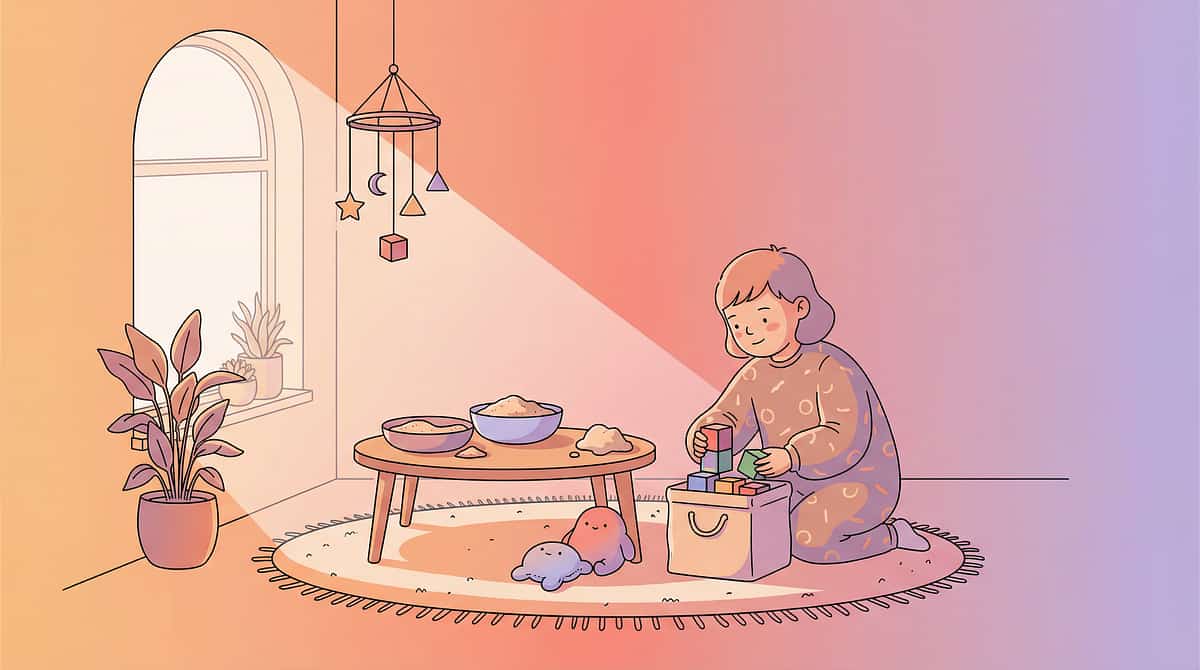
The Cool-Down
No session ends abruptly. The cool-down transitions the child from therapeutic engagement back to baseline without triggering protest or dysregulation.
Cool-Down Activity (1–2 min)
Choose ONE:
- Open-palm deep pressure: press palms together for 10 counts (proprioceptive, calming)
- Squeeze a large soft ball or pillow — releases hand tension
- "Shake out" hands — 10 seconds of loose hand shaking
- Transition object: Comfort item ₹425
Material Put-Away Ritual
Child participates in clean-up — this is additional manipulation practice! "Can you put the coins back in the jar one at a time?" Even clean-up is therapy.
If Child Resists Ending
"I know you want to keep going — that means you love it! We'll do it again tomorrow." Offer a 2-minute extension once only. Then firm close.

Log It. Track It. Watch the Pattern Emerge.
A 60-second log after each session is one of the most powerful things you can do. It turns scattered moments into a visible story of progress.
What to Record After Every Session
📅 Date & Duration
Note the date and how many minutes the session lasted.
🧩 Material Used
Which of the 9 materials did you use today?
😊 Child's Mood
Was your child willing, resistant, or somewhere in between?
🎯 What Went Well
One specific moment of success, however small.
🔁 What to Try Next
One adjustment or new material to attempt next session.
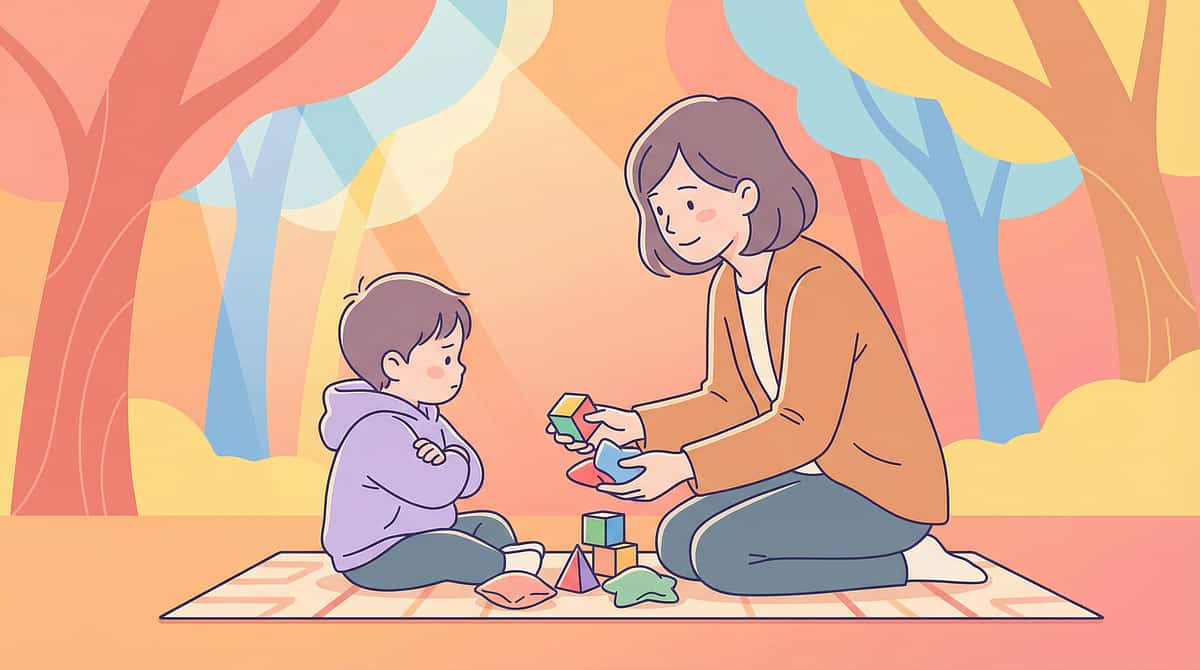
Most Sessions Don't Go Perfectly. Here's Your Fix for the 7 Most Common Challenges.
Problem 1: Child Wouldn't Touch Materials at All
What happened: Sensory avoidance or tactile defensiveness may co-exist with the manipulation difficulty. Fix next time: Introduce material at distance first (watch parent play). Use preferred texture version. Start with least aversive material from the 9.
Problem 2: Child Used Two Hands for Everything
What happened: Bilateral compensation is the child's current most reliable strategy. Adaptive, not defiant. Fix next time: Position non-dominant hand under table or holding a different object. Reward single-hand attempts specifically.
Problem 3: Child Got Frustrated and Threw Objects
What happened: Task demand exceeded current skill. Fix next time: Use larger objects (poker chips instead of coins). Reduce required repetitions. Begin with 3 objects instead of 10.
Problem 4: Spinning Top Wouldn't Spin at All
What happened: Complex rotation may not yet be established (age 5–6 skill). Fix next time: Start with simpler rotation — pencil 180° flip. Master that for 2 weeks before returning to tops.
Problem 5: Child Kept Putting the Pencil Down to Flip It
What happened: The put-down-pick-up compensation is the child's current strategy. It works — just not efficiently. Fix next time: Don't forbid the compensation. Add: "Can you try without putting it down?" Celebrate any attempt, even partial rotation.
Problem 6: Session Lasted Only 3 Minutes
What happened: 3 minutes is a valid session if the child was engaged. You didn't fail. Fix next time: Increase motivational power (not demand). Add a preferred game layer. Build to 5 minutes before 10.
Problem 7: Child Became Distressed and You Didn't Know When to Stop
What happened: The therapeutic window closed before you recognized it. Fix next time: Learn child's early distress cues (the 30-second warning before meltdown). Stop at first cue, not last resort.
"Session abandonment is not failure — it's data. It tells you the starting point for next time."
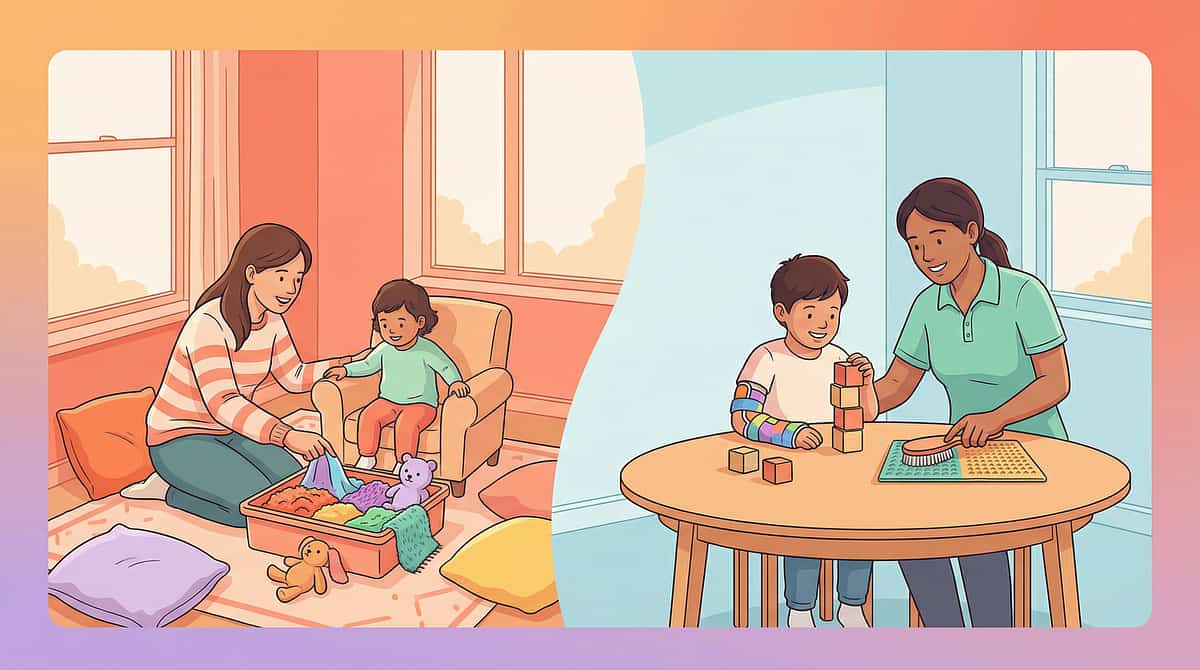
No Two Children Are Identical. Here Is Your Personalization Framework.
Make It Easier When:
- Child is age 3–4 or new to this technique
- Strong avoidance behaviors present
- Significant manipulation delay
Easier Modifications:
- Larger objects (marble-sized → coin-sized → bead-sized progression)
- Soft putty resistance → firmer as strength builds
- Allow non-dominant hand stabilization
- Reduce target from 10 reps to 3
Advance Difficulty When:
- Succeeding 3 sessions in a row
- Using correct manipulation type
- 5+ repetitions with minimal error
- Generalizing to new objects
Harder Modifications:
- Hold 2–3 objects in palm while manipulating a 4th
- Smaller objects, thinner laces, smaller pegs
- Timed challenges ("how many in 60 seconds?")
- Eyes closed: manipulation without visual feedback
- Functional context: "button your shirt using the same movement"
Sensory Profile | Adaptation |
Sensory Seeker | More resistance (firm putty), heavy construction sets, more repetitions — they want intensity |
Sensory Avoider | Lighter materials first, introduce slowly, gloves if needed, reduce tactile unpredictability |
Low Proprioceptive Awareness | More resistance, deep pressure warmup, vibrating objects for feedback |
Hypersensitive Fingertips | Begin with tools (tweezers) before direct manipulation; use textured gloves as transition |
Age-Based: Ages 3–4: Only translation (coins, putty). Ages 5–6: Add simple rotation (pencil flip, large tops). Ages 7–10: All manipulation types including complex rotation and stabilization.

ACT IV: The Progress Arc
Week 1–2: Expect Tolerance, Not Mastery.
Progress at Week 2
Tolerance establishing; neural pathways forming silently beneath visible behavior
What You Will Likely See
- Child tolerates contact with materials slightly longer than Day 1
- Reduced first-contact resistance — the "no" comes later, not at the start
- One manipulation type beginning to emerge (usually translation with large objects)
- Parent-child interaction around the activity becomes more predictable
- Child may begin to anticipate the activity ("the putty session")
What Is Not Progress Yet (and That's Okay)
- Clean pencil flips without putting down
- Coin management in functional contexts (store, vending machine)
- Spontaneous use of manipulation skills outside sessions
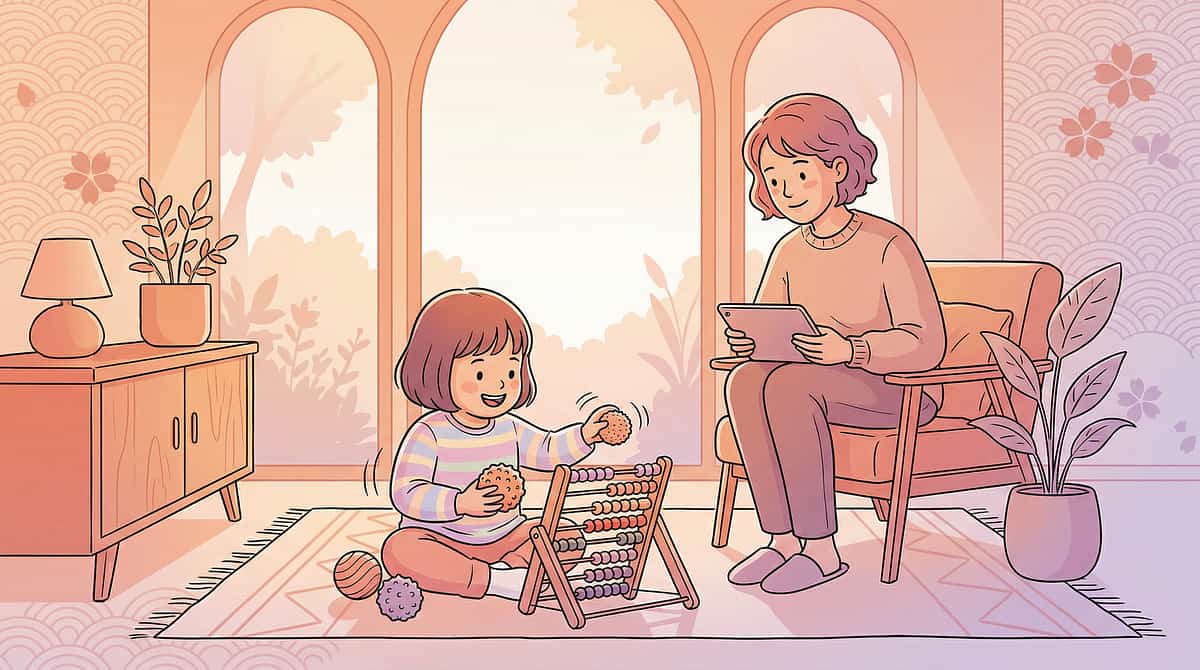
Week 3–4: Consolidation Signs
Progress at Week 4
Synaptic strengthening visible through behavior — pathways becoming faster, more reliable, more automatic
Anticipation
Child brings out the materials themselves without prompting — a strong indicator of positive association forming.
Reduced Resistance
The first-contact "no" is gone. Engagement is faster. Child accepts the invitation on the first offer.
Preference Emergence
Child has a favorite material — this is the strongest material to build mastery on first.
Spontaneous Transfer
Child attempts manipulation in daily life — managing coins differently, trying to flip pencil before setting it down.
These behavioral changes represent synaptic strengthening — the same pathway being activated repeatedly is becoming faster, more reliable, more automatic. The child is not merely "getting better" — their brain is literally rewiring.
"You may notice you're more confident too. You've run 15+ sessions. You know your child's cues, timing, preferred materials. You are now a skilled home therapist."

Week 5–8: Mastery Indicators
Progress at Week 8
Mastery criteria met; generalization to functional real-world contexts beginning
Mastery Criteria (Specific & Measurable)
Translation Mastered:
- Picks up 8+ coins one at a time, stores in palm, without dropping
- Palm-to-finger transfer without table assistance
- Retrieves one peg from a handful with one hand
Rotation Mastered:
- Pencil flip (180°) without setting down — 5 consecutive attempts
- Spinning top executes 3+ successful spins per session
Shift Mastered:
- Threading 10 beads without repositioning both hands
- Adjusts pencil grip mid-writing without putting pencil down
Generalization Indicators
Skill appearing outside sessions — the true measure of mastery:
- Buttons shirt faster and with fewer put-downs
- Manages coins at shop/canteen without assistance
- Deals cards to play with siblings and peers
- Writing pace increased (fewer pencil repositioning stops)

You Did This. Your Child's Hands Learned Because You Showed Up.
For 5–8 weeks, you set up the space before sessions. You read your child's readiness instead of pushing through. You adapted materials when resistance appeared. You recorded data when you'd rather have rested. You stayed patient when the pencil dropped for the twelfth time.
That is not just parenting. That is professional-grade therapeutic commitment.
Your Child Went From
"Puts pencil down every time she needs to erase"
To
"Flips pencil to eraser automatically — without thinking."
That is a neural pathway that was built. By you. At home. With coins and putty and a spinning top.
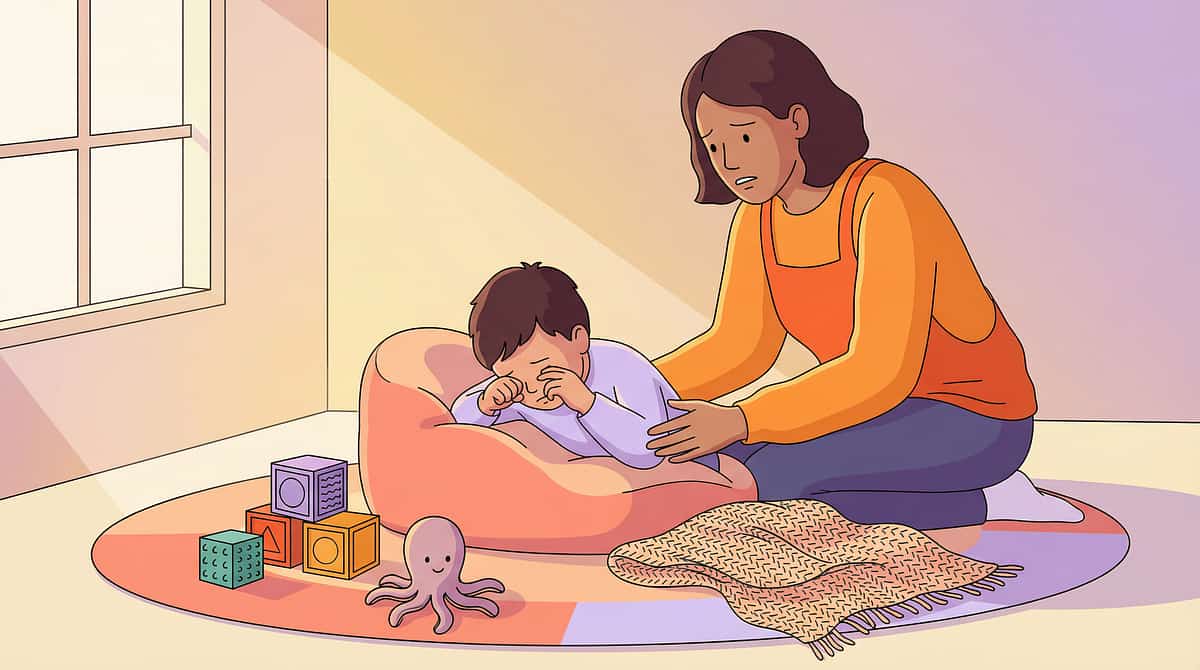
Even When Progress Is Happening — These Signs Mean Stop and Seek Consultation.
🚨 Red Flag 1: Pain During Manipulation
Child reports or shows pain in fingers, wrist, or hand during sessions. Possible joint hypermobility or tendon issue. Action: Stop sessions. Book pediatric OT or pediatrician assessment.
🚨 Red Flag 2: Regression After Mastery
Child loses skills that were mastered over 2+ consecutive weeks — persistent regression, not a bad day. Action: Teleconsult with OT to assess if new factor is disrupting neural consolidation.
🚨 Red Flag 3: Asymmetric Hand Function
One hand performs manipulation while the other remains non-functional or fisted. Action: Neurological evaluation — may indicate hemiplegic cerebral palsy or brachial plexus injury.
🚨 Red Flag 4: No Tolerance After 4 Weeks
Four weeks of consistent daily sessions with zero improvement in engagement or tolerance. Action: In-person OT assessment — sensory processing differences may need treatment first.
🚨 Red Flag 5: Extreme Distress With Any Hand Activity
Child severely distressed with ANY fine motor task — writing, eating, dressing. Action: Sensory processing evaluation. Tactile defensiveness may require sensory-based preparation.
🚨 Red Flag 6: Parent Burnout
You are exhausted, dreading sessions, or implementing with high frustration. This is a red flag too. Your mental state directly impacts your child's experience. Action: Call 9100 181 181.
Escalation Pathway: Self-resolve → 📞 Teleconsult (1:1 with Pinnacle OT) → 🏥 Clinic Visit (70+ centers)
📞FREE Helpline: 9100 181 181 | 24×7 | 16+ languages
📞FREE Helpline: 9100 181 181 | 24×7 | 16+ languages

In-Hand Manipulation Mastery Opens These Pathways.
Prerequisite Techniques
- F-613: Finger Isolation Skills
- F-614: Grip Strength Development ← complete these first if not yet mastered
Lateral Alternatives
- If child is stronger with visual tasks → move to F-617 (Hand-Eye Coordination) and return to F-615 from that angle
- If bilateral work is easier → begin F-616 parallel to F-615
Long-Term Goal This Feeds
In-hand manipulation mastery → Handwriting fluency → Academic independence → Self-care competence → Life skills independence

Related Techniques in This Domain. You Already Own Materials for Several of These.
Technique | Code | Level | Materials You Already Have |
Finger Isolation Skills | F-613 | 🟡 INTRO | No extra materials needed |
Grip Strength Development | F-614 | 🟡 INTRO | Therapy putty (from F-615) |
In-Hand Manipulation | F-615 | 🟠 CORE | ← You are here |
Bilateral Coordination | F-616 | 🟠 CORE | Construction sets (from F-615) |
Hand-Eye Coordination | F-617 | 🟠 CORE | Pegboards (from F-615) |
Visual-Motor Integration | F-620 | 🔴 ADVANCED | Pencils + lacing (from F-615) |
✅ F-614 uses your putty
Your therapy putty works directly in Grip Strength Development — no new purchase required.
✅ F-616 uses your construction sets
Your LEGO or construction sets transfer directly to Bilateral Coordination work.
✅ F-617 uses your pegboards
Your pegboards are the primary material for Hand-Eye Coordination training.
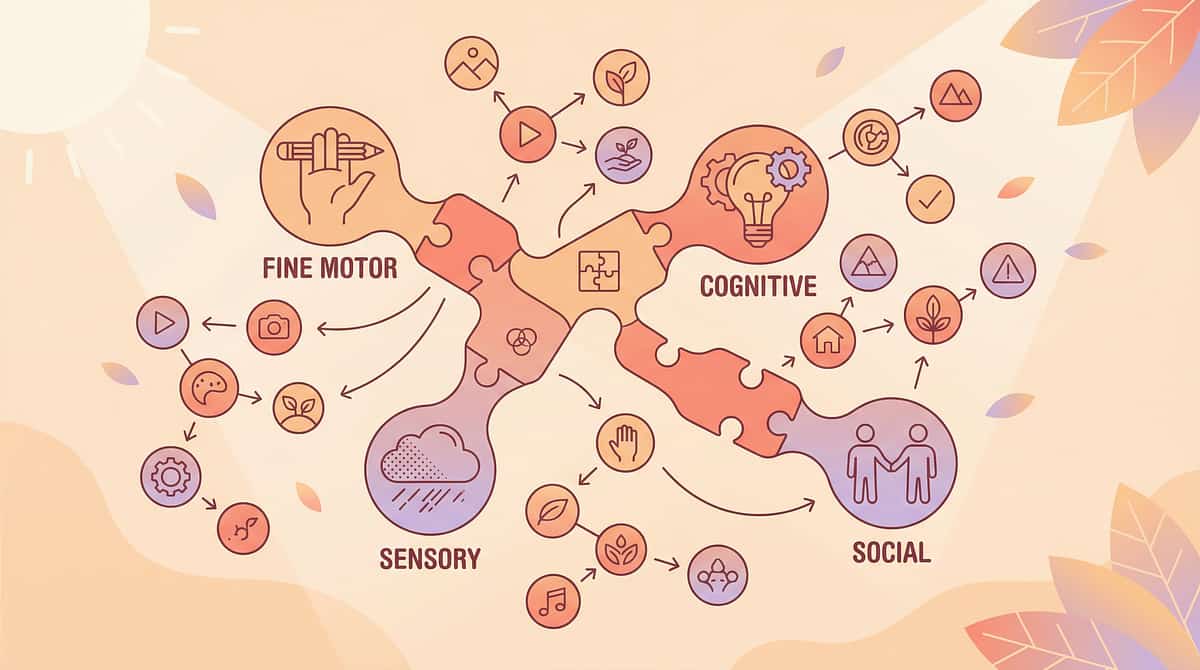
In-Hand Manipulation Is One Piece of a Much Larger Plan. Here Is the Whole Picture.
Current Active Domain
Domain F — Fine Motor Development
F-615 of ~700 fine motor techniques in Domain F
F-615 of ~700 fine motor techniques in Domain F
Cross-Domain Impact of F-615
In-hand manipulation mastery directly contributes to Domain H (Handwriting/Academic), Domain J (Self-Care fasteners), Domain I (Social participation in games), and Domain L (Academic materials management). One technique. Multiple domains. Compounding returns.
ACT V: Community & Ecosystem
These Are Not Marketing Stories. These Are Clinical Narratives From Pinnacle Families.
The Card Games Story — Week 8
Before: "My son was 7 and still couldn't deal cards without dropping half the deck. He avoided board games. His friends stopped asking him to play."
After: "He deals cards every evening now. His grip adjusted without him noticing. The card games brought back his social confidence — the manipulation was the gateway."
Timeline: 8 weeks | Materials: Card games + pegboard
After: "He deals cards every evening now. His grip adjusted without him noticing. The card games brought back his social confidence — the manipulation was the gateway."
Timeline: 8 weeks | Materials: Card games + pegboard
The Writing Output Story — Week 6
Before: "Every writing task took twice as long — she'd put the pencil down, pick it up eraser-side, erase, put it down, pick it up again. Her teacher noticed she produced half the written work of classmates."
After: "She flips the pencil automatically. She doesn't even know she does it. Writing output doubled. The teacher commented without me saying anything."
Timeline: 6 weeks | Materials: Pencil rotation + therapy putty
After: "She flips the pencil automatically. She doesn't even know she does it. Writing output doubled. The teacher commented without me saying anything."
Timeline: 6 weeks | Materials: Pencil rotation + therapy putty
The Button Independence Story — Week 10
Before: "He couldn't button his school shirt. Every morning was a battle. He was 8. I didn't know fine motor difficulties caused this."
After: "The coin exercises built the palm-to-finger translation he was missing. Once that transferred to buttons — independence happened. He buttons himself now. Small thing. Massive for his confidence."
Timeline: 10 weeks | Materials: Coins + lacing. Outcomes vary by child profile and consistency.
After: "The coin exercises built the palm-to-finger translation he was missing. Once that transferred to buttons — independence happened. He buttons himself now. Small thing. Massive for his confidence."
Timeline: 10 weeks | Materials: Coins + lacing. Outcomes vary by child profile and consistency.
Isolation Is the Enemy of Consistency. You Need a Community.
Families who practice in community are measurably more consistent. The encouragement of another parent who has been exactly where you are right now — that is irreplaceable. Here is where you find them.
WhatsApp — Fine Motor Parents India
Challenge-specific parent group for families working on fine motor and hand function. Moderated by the Pinnacle OT team. Real-time support from families at every stage.
Pinnacle Parent Community
Online forum: technique questions, progress sharing, peer mentoring from parents who've completed F-615. pinnacleblooms.org/community
Local Parent Meetups
Monthly meetups organized near Pinnacle centers — real-space connection for families in the same city. Find your nearest group at the center locator.
Peer Mentoring (1:1)
Parents who've completed this technique volunteer to mentor — 30-minute conversation, real talk from someone who has been exactly where you are.
"Your consistency over these past weeks is exactly what another parent starting tomorrow needs to see. Consider sharing your journey. Your experience helps others."
Home + Clinic = Maximum Impact.
Home-based practice is most powerful when calibrated by professional assessment. You don't have to choose — both layers working together produce the strongest outcomes.
What the Clinic Adds to Your Home Work
- Formal In-Hand Manipulation Test — clinical baseline measurement
- Therapy putty resistance graded to your child's current strength
- Video analysis of manipulation patterns
- Session data integration with GPT-OS® profile
- Escalation management when home sessions plateau
70+ Centers Across India
Hyderabad • Bangalore • Chennai • Mumbai • Delhi • Pune • Kolkata • Vizag • Vijayawada • 60+ more locations
Primary OT discipline: Pediatric Occupational Therapist
Co-treatment: SpEd Teacher + ABA Therapist
Co-treatment: SpEd Teacher + ABA Therapist
📞FREE Helpline: 9100 181 181 | 24×7 | 16+ languages | Contact for state-specific insurance/funding information
Deeper Reading for the Curious Parent. Every Claim on This Page Has a Source.
📄 PMC11506176 — Children (2024)
PRISMA systematic review of 16 studies (2013–2023). Confirms fine motor and sensory integration intervention as evidence-based practice for ASD. pubmed.ncbi.nlm.nih.gov
📄 PMC10955541 — World J Clin Cases (2024)
Meta-analysis of 24 studies. Sensory integration therapy promotes fine motor skills, adaptive behavior, social skills. Significant effect sizes. DOI: 10.12998/wjcc.v12.i7.1260
📄 DOI: 10.1007/s12098-018-2747-4 — Indian J Pediatr (2019)
Padmanabha et al. First Indian RCT of home-based pediatric fine motor intervention. Significant outcomes with parent-implemented protocols.
📄 NCAEP (2020) — Evidence-Based Practices Report
Fine motor and manipulation interventions classified as evidence-based practice. Free download: ncaep.fpg.unc.edu
📄 WHO NCF (2018) — Nurturing Care Framework
Global framework for early childhood development. Positions home-based caregiver-led intervention as primary delivery platform. nurturing-care.org/ncf-for-ecd
For the clinician in your family: Exner CE. "Development of Hand Functions." In: Case-Smith J, O'Brien JC, eds. Occupational Therapy for Children. The foundational academic reference for in-hand manipulation development.
Your Session Data Doesn't Stop With You. It Helps Every Child Like Yours.
AbilityScore®
Updates Fine Motor Independence Index subscores — Translation, Rotation, Shift, Stabilization — after each logged session.
TherapeuticAI®
Adjusts which of the 9 materials to prioritize based on your child's response pattern across sessions.
EverydayTherapyProgramme™
Generates daily home activity suggestions calibrated to current performance level — so every day feels just right, not too hard or too easy.
FusionModule™
Cross-references fine motor data with handwriting, self-care, and academic performance — showing how F-615 progress radiates across all developmental domains.
"Your data helps every child like yours. When you log a session, you're contributing to the largest pediatric therapy dataset in India." — GPT-OS® Patents filed in 160+ countries
Watch It Demonstrated. Then Do It.
Reel F-615 Metadata
Title: 9 Materials That Help With In-Hand Manipulation
Series: Fine Motor Development in Children
Episode: 615 of 999
Duration: 75–85 seconds
Domain: F — Fine Motor / Hand Function
Series: Fine Motor Development in Children
Episode: 615 of 999
Duration: 75–85 seconds
Domain: F — Fine Motor / Hand Function
The Reel Shows:
- The 9 materials identified on this page
- Correct hand positioning for each
- Successful manipulation vs. compensation pattern
- Parent guidance for home setup
Related Reels: ← F-614: Grip Strength | → F-616: Bilateral Coordination

Consistency Across Caregivers Multiplies Impact by 3×. Share This Page.
A child who practices in-hand manipulation at therapy, at home, AND at school with grandparents is receiving 3–5× the dose of a child who only practices in one setting. Generalization across environments is not a bonus — it is the therapy.
Explain to Grandparents
"Our child's OT says they need to practice moving small objects with their fingers — coins, putty, tops — to help their fingers get stronger. Please don't do the task FOR them. Let them try. The trying builds the skill. Five simplest activities: coin exercise, putty, spinning top, lacing, pencil flip."
Teacher / School Communication
Download the School Communication Template: includes child's technique, classroom accommodations requested (adaptive pencil grip, extra time for written tasks, access to fidget/manipulation tools during desk work).

ACT VI: The Close & Loop
Frequently Asked Questions
Q1: My child is 9 years old. Is it too late?
No. In-hand manipulation responds to intervention across the lifespan. The developmental window for easiest learning is ages 3–7, but neuroplasticity supports skill acquisition at any age. Progress at 9 may require more repetition, but the neurological capacity is present. The same 9 materials work. The same approach applies.
Q2: How many sessions per week?
Daily short sessions (15–20 min) consistently outperform weekly long sessions (60 min). The brain builds manipulation motor patterns through repetition distributed across days. If daily isn't possible, aim for minimum 4 sessions/week.
Q3: My child has autism — does that change which materials to use?
Not fundamentally, but the approach to engagement changes. Children with ASD may need higher-value reinforcement, sensory pre-processing, preferred themes overlaid on activities, and more explicit sub-step scaffolding. The materials remain the same. The scaffolding increases.
Q4: Should I stop if my child is frustrated?
Read the frustration level. Mild frustration ("this is hard") → continue with reduced demand. It's productive struggle. Escalating distress (tears, aggression, shutdown) → stop the session. Cool-down. The second type is counterproductive and may build negative associations.
Q5: The therapy putty is too hard/soft. What resistance to use?
Soft putty = warming up or very early in treatment. Medium putty = appropriate for most children beginning. Firm putty = when medium feels too easy. Rule: if the child can squeeze, roll, and extract without visible effort after 5 minutes — increase resistance.
Q6: Child can flip pencil in isolation but not during writing. Why?
This is the difference between isolated skill and integrated function. Pencil flip during writing requires rotation PLUS maintaining writing cognition PLUS continuing the task. Integration follows automaticity — approximately Week 4–6. Keep practicing in isolation. Integration will follow.
Q7: Is this the same as sensory integration therapy?
Related but distinct. Sensory integration (SI) therapy addresses processing of sensory input. In-hand manipulation training addresses motor output — skilled use of intrinsic hand muscles. Both may be recommended. SI therapy may be needed first to ensure the sensory foundation is stable.
Q8: How do I know if my child needs professional OT vs. just home activities?
Home sufficient: Mild delays, child progressing across 4 weeks. Professional OT recommended: No engagement after 4 weeks, significant functional impact, regression, strong avoidance. Immediate OT: Asymmetric hand use, pain during manipulation, complete inability with any fine motor material. Call 9100 181 181 (FREE, 24×7).
You've Read the Science. You Have the Materials. Your Child's Hands Are Ready to Learn.
Every technique, every study, every parent story on this page points to the same conclusion: the gap you have identified in your child is real, it is measurable, and it is trainable. Starting today, with what you already have at home, you can begin closing it — systematically, safely, and with the evidence of 20 million therapy sessions behind you.
📞FREE National Autism Helpline: 9100 181 181 | 16+ languages | 24×7
pinnacleblooms.org | care@pinnacleblooms.org
pinnacleblooms.org | care@pinnacleblooms.org
Preview of 9 materials that help with in hand manipulation Therapy Material
Below is a visual preview of 9 materials that help with in hand manipulation therapy material. The pages shown help educators, therapists, and caregivers understand the structure and content of the resource before use. Materials should be used under appropriate professional guidance.


Link copied!
The Pinnacle Promise
"From fear to mastery. One technique at a time."
You arrived at Card 01 with a question and a worry. You leave Card 40 with science, a protocol, materials, a community, professional access, and the evidence that what you're doing works. 40 cards. One family. One child. One set of hands learning to move the way they were meant to.
This is the Pinnacle Blooms Network® promise: that no parent should navigate pediatric development without research-grade knowledge, clinical-grade support, and community-grade connection — regardless of where they live or what they can afford.
Medical Disclaimer: This content is educational and informational. It does not replace professional evaluation, diagnosis, or treatment by licensed occupational therapists, developmental pediatricians, or other qualified healthcare professionals. In-hand manipulation difficulties may indicate underlying conditions requiring formal assessment. Individual outcomes vary by child profile, baseline skills, consistency of implementation, and co-occurring conditions.
© 2025 Pinnacle Blooms Network®, unit of Bharath Healthcare Laboratories Pvt. Ltd. All rights reserved. Content generated by GPT-OS® Content Engine. F-615 | Version 1.0 | February 2026. CIN: U74999TG2016PTC113063 | DPIIT Recognition: DIPP8651 | MSME: TS20F0009606 | GSTIN: 36AAGCB9722P1Z2
📞FREE National Autism Helpline: 9100 181 181 | 16+ languages | 24×7 | pinnacleblooms.org