

When Letters Come Out Backwards, Uneven, or Nothing Like They Should Be
You've watched your child stare at the paper, grip the pencil so tight their knuckles go white, and produce something that looks nothing like the letter they were trying to write. You correct it. They try again. It comes out the same — or mirrored.
You are not failing as a parent. Your child is not being careless. What you are witnessing is a specific neuromotor challenge — and it is addressable. This is your complete home intervention guide.
Technique F-608
Domain F: Handwriting & Written Expression

Millions of Families Are Navigating This. Right Now.
Letter formation challenges do not resolve on their own through repetition of incorrect patterns. Without structured intervention using the right materials and protocols, children default to compensatory strategies — unusual grips, avoidance, illegible scripts — that become entrenched. Early, targeted material-based intervention at home changes this trajectory.
1 in 5
Children Affected
Exhibit significant handwriting difficulties affecting school participation (Feder & Majnemer, 2007)
80%
ASD & Fine Motor
Of children with ASD experience fine motor and graphomotor challenges impacting letter formation (PMC11506176, 2024)
27M
Children in India
Estimated children currently facing handwriting-related learning difficulties requiring structured intervention

This Is a Wiring Difference, Not a Willpower Problem
Understanding what's happening in your child's brain transforms frustration into compassion — and directs intervention with precision.
What Typically Happens
When a child sees the letter "A," the visual cortex captures its shape. The parietal lobe integrates spatial relationships. The motor cortex fires the precise muscle sequence — from the correct starting point, in the correct direction, at the correct size.
What Happens in Letter Formation Challenges
One or more links in this chain are immature or inconsistently mapped — the child's brain hasn't locked direction, automatised stroke sequence, or integrated visual-motor signals with precision.
The Four Breakdown Points
Directionality Processing
Unstable — brain hasn't locked which direction a letter faces (b vs d, p vs q)
Motor Memory
Hasn't automatised the stroke sequence — every attempt requires exhausting conscious planning
Visual-Motor Integration
Below developmental expectation — brain "sees" the letter but the hand doesn't receive precise movement instructions
Proprioceptive Feedback
Insufficient — the child cannot feel whether the stroke is going the right way
Key Insight: This is not about intelligence. Children with letter formation challenges often have exceptionally strong verbal or spatial reasoning. The motor-writing circuit is separate from cognitive capacity — it simply needs targeted sensory input to form the right neural pathways.

Your Child's Letter Formation Timeline — and Where to Go From Here
Development follows a predictable sequence. Knowing where your child is — and what's next — turns anxiety into a clear action plan.
Age 2–3
Scribbling & grip exploration
Age 3–4
Imitates simple shapes (circles, squares)
Age 4–5
Copies basic letters (H, T, I)
Age 5–6
Prints own name with letters — reversals still normal
Age 6–7 ⚠️
Alert Zone: Consistent letter formation should be mastering
Age 7–8+
Fluent, automatic writing ✅
Letter formation challenges commonly co-occur with Autism Spectrum Disorder (ASD), Developmental Coordination Disorder (DCD/Dyspraxia), Dyslexia, ADHD, and low muscle tone. Your child is here — on a journey with a clear, navigable forward path.

Level I Evidence. Home-Applicable. Parent-Proven.
F-608 is not built on intuition. Every material, every protocol step, every dosage recommendation is grounded in the highest levels of clinical evidence — tested across populations, validated in Indian contexts, and running in 70+ Pinnacle centres.
Study | Finding | Source |
PRISMA Systematic Review (2024) — 16 RCTs | Sensory-motor integration intervention is evidence-based practice for paediatric fine motor outcomes | PMC11506176 |
Meta-Analysis, World J Clin Cases (2024) — 24 studies | SI therapy shows significant improvement in motor skills including graphomotor performance | PMC10955541 |
Padmanabha et al., Indian RCT (2019) | Home-based structured motor interventions demonstrate significant outcomes in Indian paediatric population | DOI:10.1007/s12098-018-2747-4 |
WHO/UNICEF CCD Package (2023) — 54 LMICs | Caregiver-administered structured motor practice produces development-equivalent outcomes | PMC9978394 |
NCAEP EBP Report (2020) | Motor imitation, visual supports, multisensory learning = evidence-based practices for ASD | NCAEP 2020 |
90%
Clinical Evidence Strength
For material-based letter formation intervention — HIGH CONFIDENCE
"Clinically validated. Home-applicable. Parent-proven. Running in 70+ Pinnacle centres across India." — Pinnacle Blooms Network® Consortium | 📞 9100 181 181
The Technique: What It Is
ACT II: The Knowledge Transfer
Material-Based Letter Formation Intervention Protocol — "The 9 Tools That Teach Letters Through Touch, Sight, and Feel"
Letter Formation Intervention using structured materials is an Occupational Therapy technique that addresses the neuromotor, proprioceptive, and visual-motor integration challenges underlying inconsistent or reversed letter production in children. Rather than drill-based repetition of incorrect patterns, this approach uses nine categories of specialised materials — from adaptive pencil grips to sand trays to raised-line paper — to re-route how the brain encodes letter shapes. Each material provides a different sensory channel (tactile, proprioceptive, visual, kinaesthetic) through which the motor memory for correct letter formation can be built and consolidated.
🏷️ Domain
F: Handwriting & Written Expression
👶 Age Range
4–12 years
⏱️ Session
10–20 minutes
🔁 Frequency
3–5× per week
📋 Category
Fine Motor · Graphomotor · VMI

This Technique Lives Across Four Disciplines
Letter formation is not the territory of any single profession. The brain doesn't organise handwriting by discipline — it integrates vision, movement, memory and sensation simultaneously. Four professional roles collaborate to make this work.
Paediatric Occupational Therapist (Primary Lead)
Selects grip type, slant board angle, paper type. Assesses VMI and proprioceptive profile. Designs the progression sequence across all 9 materials.
Special Educator (Secondary)
Integrates letter formation practice into academic literacy goals. Uses formation cards with phonics instruction. Monitors classroom generalisation.
BCBA / ABA Therapist (Support)
Designs the reinforcement schedule around correct stroke attempts. Implements token economy for session consistency. Addresses avoidance behaviours.
NeuroDev Physician (Oversight)
Rules out or monitors DCD, dyspraxia, neurological comorbidities. Interprets VMI assessment scores. Guides intensity and duration decisions.

Precision Tool. Defined Targets. Measurable Outcomes.
Every element of the F-608 protocol targets a specific, observable behaviour — at three levels of depth. Progress is not subjective. It is measured.
Target | Observable Behaviour | Measurement |
Letter formation | b/d confusion eliminated | % correct on 10-trial probe |
Grip normalisation | No white-knuckle pressure visible | Parent rating 1–5 |
Size regulation | Letters staying within lines | % on-line letters |
Endurance | Writes 5+ letters without hand shake | Duration tracking |
The 9 Materials — What They Are, Why They Work
Materials 1–3
Each material targets a different sensory-motor channel. Used progressively, they build a complete letter formation programme at home. Here are the first three essential tools.
1 — Pencil Grips / Adaptive Writing Tools
What it does: Guides fingers into the dynamic tripod position, reduces grip pressure, reduces fatigue, enables stroke control.
Types: Triangular grip, Grotto grip, Crossover grip.
Price: ₹150–₹800 | Amazon.in →
Types: Triangular grip, Grotto grip, Crossover grip.
Price: ₹150–₹800 | Amazon.in →
2 — Slant Board / Writing Slope
What it does: Positions paper at 20–30° angle — optimises wrist extension, improves visual access, increases proprioceptive feedback. Clinical sweet spot: 25°.
DIY: Stack 3 hardcover books under a clipboard (~20°).
Price: ₹800–₹3,500 | Amazon.in →
DIY: Stack 3 hardcover books under a clipboard (~20°).
Price: ₹800–₹3,500 | Amazon.in →
3 — Raised Line / Highlighted Line Paper
What it does: Provides tactile boundary cues in addition to visual cues — child feels the line with pencil tip. Dramatically improves size regulation.
DIY: Trace ruled lines with a hot glue gun on plain paper.
Price: ₹200–₹600 | Amazon.in →
DIY: Trace ruled lines with a hot glue gun on plain paper.
Price: ₹200–₹600 | Amazon.in →
The 9 Materials — What They Are, Why They Work
Materials 4–6
The next three materials build the visual map, the sensory memory, and the physical strength that letter formation demands. Each opens a different neurological door.
4 — Letter Formation Cards with Directional Arrows
What it does: Provides an explicit visual map of stroke sequence with numbered arrows and start-point dots (green = start). Eliminates guessing. Builds procedural motor memory.
DIY: Print free Handwriting Without Tears® charts, laminate.
Price: ₹300–₹1,200 | Amazon.in →
DIY: Print free Handwriting Without Tears® charts, laminate.
Price: ₹300–₹1,200 | Amazon.in →
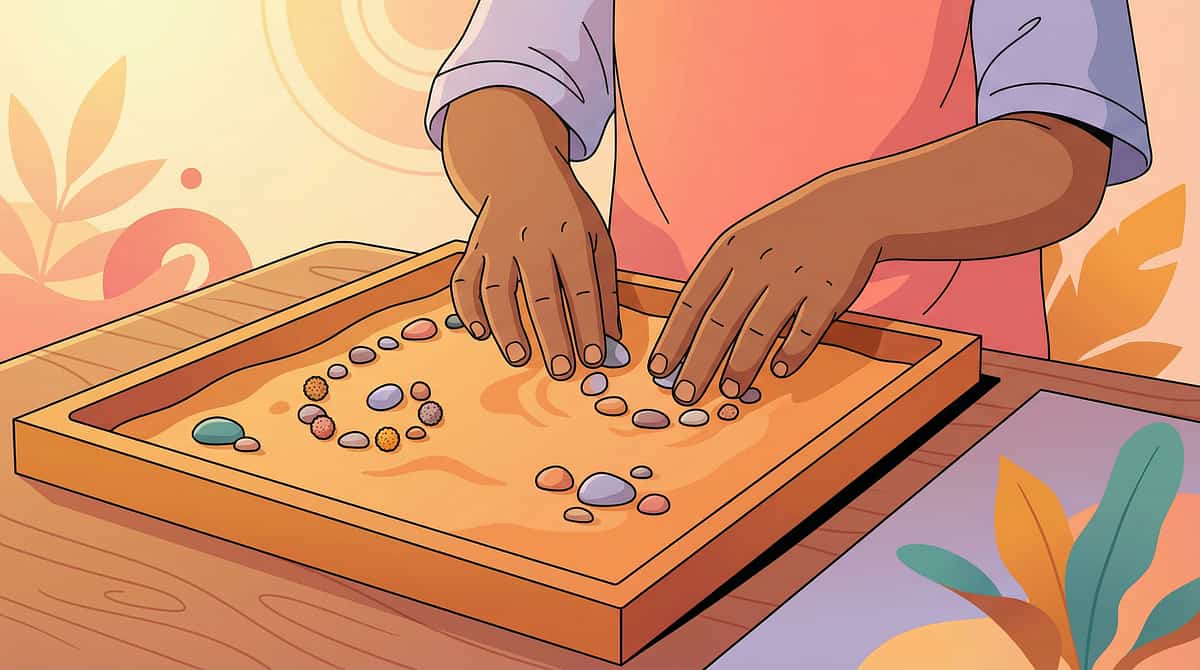
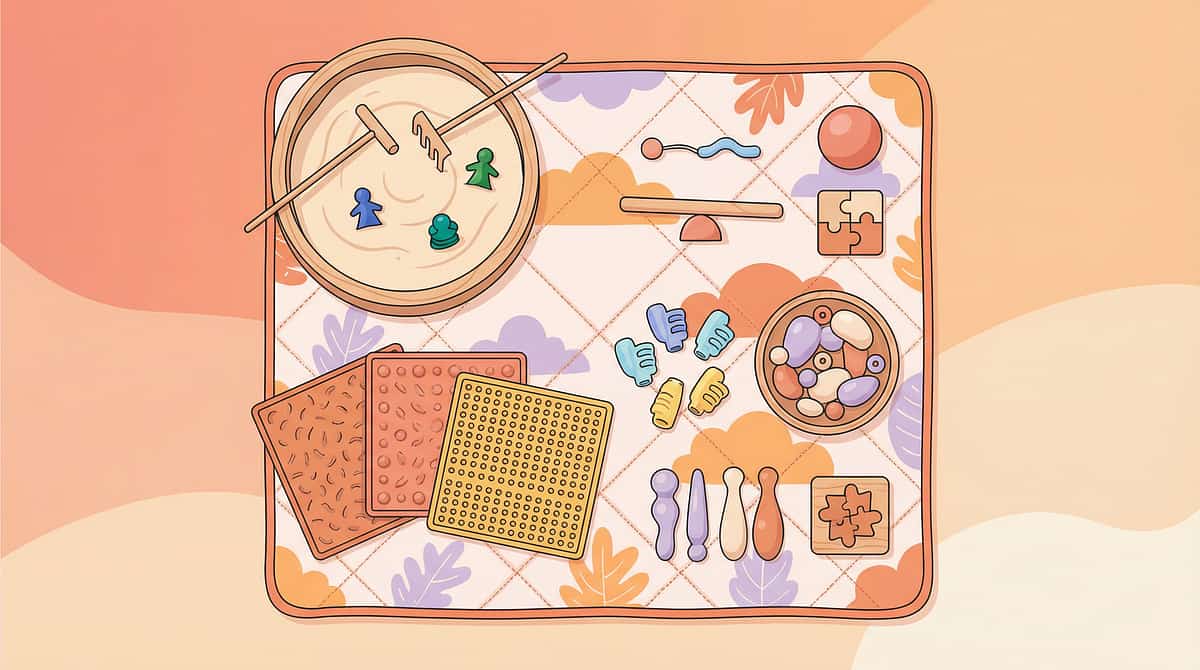
5 — Multisensory Letter Materials (Sand Tray, Clay, Texture Boards)
What it does: Encodes letter shape through touch and proprioception — not just vision. Kinesthetic-proprioceptive memory is far stronger than visual tracing alone.
Components: Sand tray, air-dry clay, sandpaper letter boards, shaving foam tray.
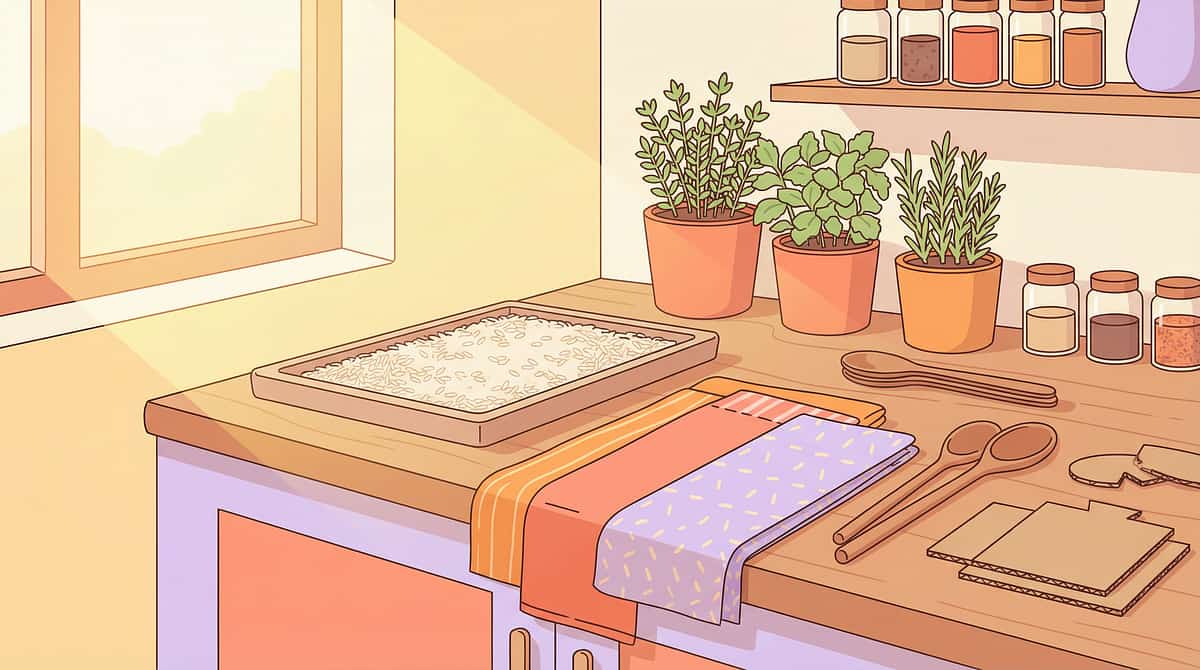
DIY: Sand in baking tray = ₹50. Shaving cream on smooth surface = ₹80.
Components: Sand tray, air-dry clay, sandpaper letter boards, shaving foam tray.
DIY: Sand in baking tray = ₹50. Shaving cream on smooth surface = ₹80.
6 — Fine Motor Strengthening Tools
What it does: Builds intrinsic hand muscle strength required for controlled pencil pressure. Children who grip too hard are often compensating for weak intrinsic muscles.
Tools: Therapy putty, tweezers + beads, clothespins, spray bottle pumping.
DIY: Homemade salt dough, kitchen tweezers = ₹0.
Tools: Therapy putty, tweezers + beads, clothespins, spray bottle pumping.
DIY: Homemade salt dough, kitchen tweezers = ₹0.
The 9 Materials — What They Are, Why They Work
Materials 7–9
The final three materials complete the system — building independent recall, conquering letter reversals, and ensuring the body is physically ready to write. Stable trunk = stable hand = stable letters.
7 — Tracing and Copy Work Progression System
What it does: Structured progression through 4 stages — Full trace → Dotted trace → Copy → Memory write. Prevents keeping children at tracing indefinitely.
Price: ₹100–₹500 (workbooks) or print-at-home.
DIY: Trace any letter lightly in pencil; erase gradually across sessions.
Price: ₹100–₹500 (workbooks) or print-at-home.
DIY: Trace any letter lightly in pencil; erase gradually across sessions.
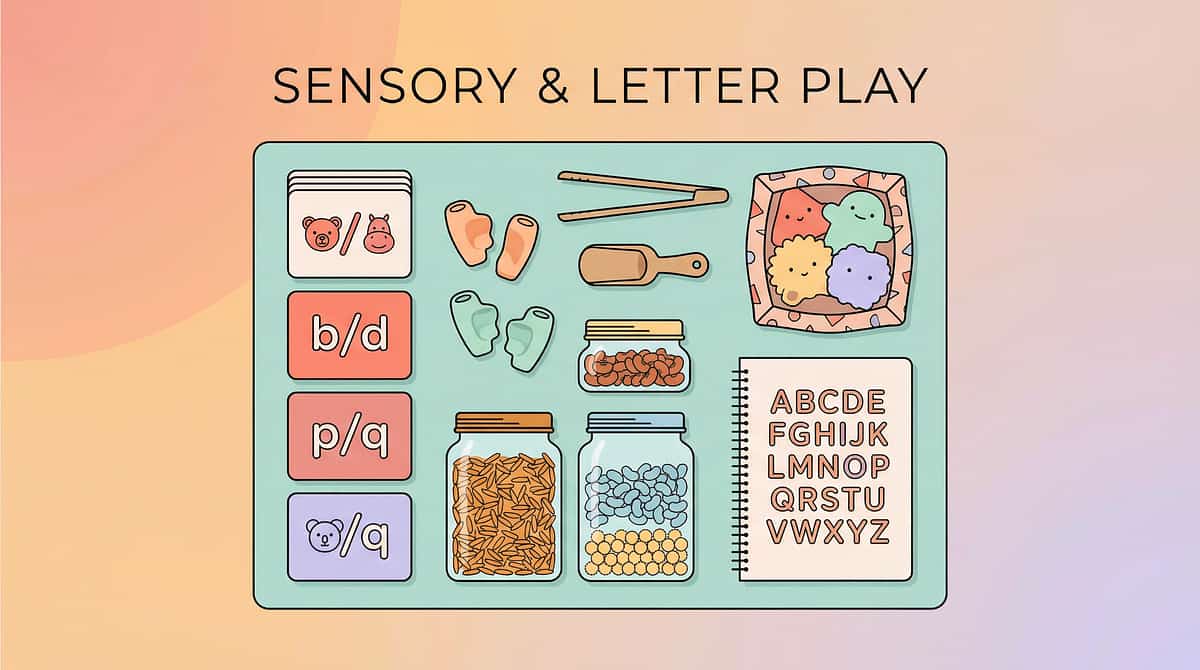
8 — Letter Reversal Intervention Tools
What it does: Specifically targets b/d/p/q confusion using mnemonic visual anchors (the "bed" trick), alphabet reference cards, and directional start cues.
Materials: Desk alphabet strip, "bed" visual card, thumbs-up cue cards, directionality wristband.
DIY: Draw "bed" mnemonic on a card. Print and laminate. ₹0.
Materials: Desk alphabet strip, "bed" visual card, thumbs-up cue cards, directionality wristband.
DIY: Draw "bed" mnemonic on a card. Print and laminate. ₹0.
9 — Posture and Stability Supports
What it does: Stable trunk = stable hand = stable letters. Children with poor postural support compensate by gripping tighter and hunching — both destroy letter formation quality.
Components: Footrest (feet at 90°), non-slip cushion, Hokki stool / wobble cushion.
DIY: Stack books as footrest. Fold a bath towel as cushion. ₹0.
Components: Footrest (feet at 90°), non-slip cushion, Hokki stool / wobble cushion.
DIY: Stack books as footrest. Fold a bath towel as cushion. ₹0.
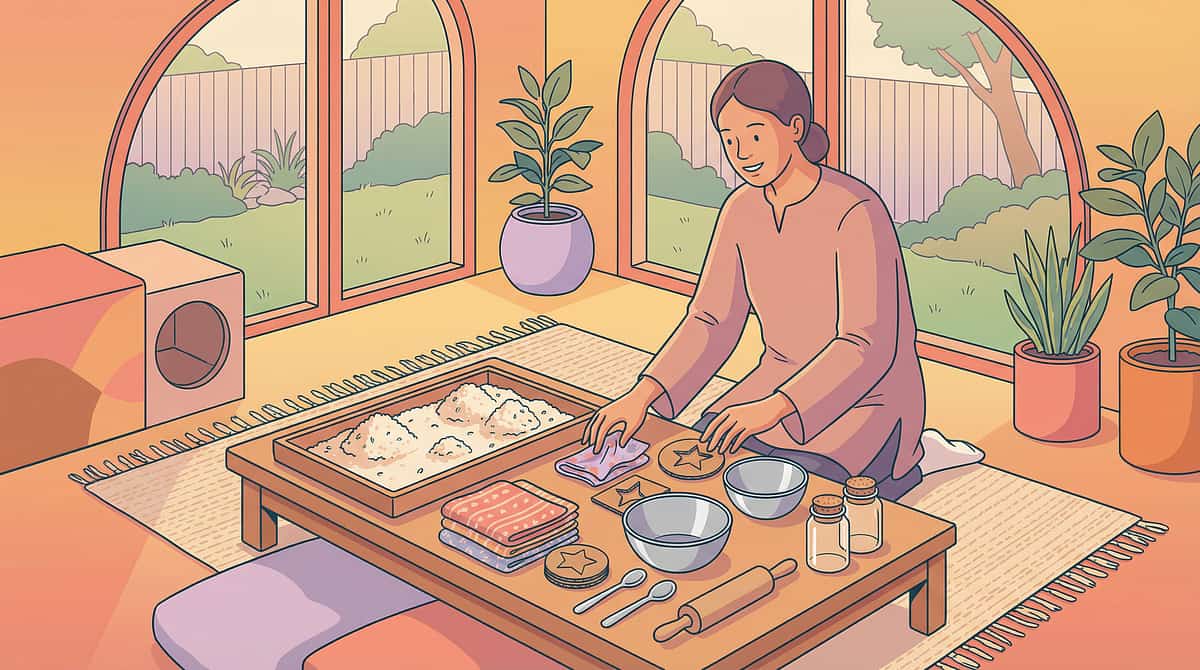
Every Child Deserves Access. Zero-Budget Versions That Work.
Every single material in the F-608 protocol has a ₹0 household alternative. The sensory-motor principle is identical. The cost is not.
🛒 Clinical Grade | 🏠 Household DIY | Why It Works the Same |
Pencil grip (₹150–800) | Wrap 2 rubber bands around pencil in triangular pattern | Creates tactile width cue and finger placement guide |
Slant board (₹800–3,500) | 3 hardcover books under clipboard | Achieves ~20° angle, same biomechanical benefit |
Raised line paper (₹200–600) | Hot glue gun lines on ruled paper, or dry ballpoint pressed hard | Same tactile feedback mechanism |
Letter formation cards (₹300–1,200) | Print free formations from internet, laminate with sticky tape | Identical visual content |
Sand tray (₹500–1,500) | Baking tray + kitchen salt or sand from a park | Same proprioceptive-kinesthetic encoding |
Therapy putty (₹300–1,000) | Salt dough (1 cup flour + ½ cup salt + water), cooked | Near-identical resistance properties |
Footrest (₹500–2,500) | Stack of hardcover books taped together | Same postural support outcome |
Shaving foam tray (₹200–500) | 1 can shaving cream + plastic tray | ₹80 complete, identical sensory input |
💛This is the WHO/UNICEF inclusion principle in action. Pinnacle's interventions are designed to be accessible to families from Srinagar to Kanyakumari, regardless of household income. Your child's neurological development does not require a large budget — it requires consistency, structure, and love.

Pre-Session Safety Gate. Read Before Every Session.
🔴 RED LIGHT — DO NOT PROCEED IF:
- Child has open wounds, abrasions, or skin sensitivity on hands affected by sand/clay/putty
- Child is in active meltdown, post-meltdown dysregulation, or showing signs of illness
- Child has a documented latex allergy (check grip and putty packaging)
- Child has a diagnosed joint hypermobility condition — consult OT before resistance materials
- Child is exhibiting severe avoidance, distress, or refusal requiring physical coercion — STOP
🟡 AMBER LIGHT — MODIFY SESSION IF:
- Child is tired but alert (shorten to 5 minutes, lowest-resistance materials only)
- Child has had a difficult day emotionally (begin with 2 minutes of preferred sensory activity)
- Child shows mild grip avoidance (start with clay/sand, not pencil grip)
- Child ate in last 30 minutes (use fine motor tools only)
🟢 GREEN LIGHT — PROCEED WHEN:
- Child is calm, alert, and had a meal 45–90 minutes prior
- Child's hands are clean and dry
- Environment is quiet and set up correctly
- You as the parent/caregiver are calm and unhurried
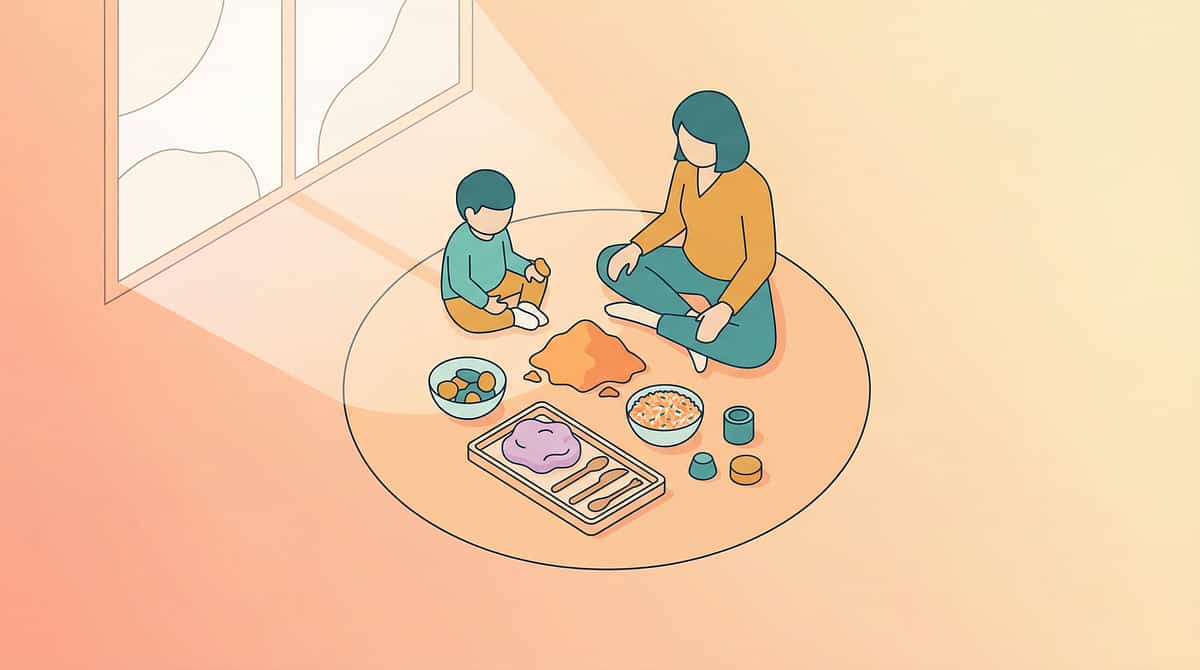
The Right Space Is Half the Session. Set This Up Before You Begin.
A correctly configured environment is not a nice-to-have — it is a therapeutic prerequisite. Research confirms structured environment as a predictor of session efficacy.
Child's Seating
Feet flat on floor or footrest (90° hip, knee, ankle angles). Hips at back of chair, slight forward lean. Table height = 2 cm above bent elbow. Non-slip mat under chair feet if needed.
Writing Surface
Slant board or book stack at 20–30°. Paper secured with clip or tape — paper must NOT slide. Formation reference card placed directly above writing zone in child's visual field.
Materials Arrangement
Today's primary material in front of child. Remaining materials out of sight. Reinforcement (reward jar / token board) visible but not reachable.
Parent Position
Seated at child's dominant-hand side. Never behind child (creates startle anxiety). At child's eye level or slightly below.
Environment Check
✅ Natural light or warm overhead — NO flickering fluorescent. ✅ Music off or soft instrumental at low volume. ✅ Remove screens, toys, food, pets. ✅ Visual timer visible to child.
60-Second Readiness Check Before Every Session
ACT III: The Execution
The best session is one that starts right. A 5-minute session in a ready child outperforms a 20-minute session in a dysregulated one. Run this check every time — no exceptions.
✅ Readiness Indicator | If NO → | Check |
Child has eaten a meal 45–90 minutes ago | Feed first, wait 30 min | ☐ |
Child is calm (not mid- or post-meltdown within 1 hour) | Postpone, offer calming activity | ☐ |
Child is alert (not drowsy, not just woken from sleep) | Wait 20 minutes | ☐ |
No illness signs (fever, stomach ache, unusual irritability) | Rest day — light fine motor play only | ☐ |
You (parent/caregiver) have 15–20 uninterrupted minutes | Reschedule if you'll be interrupted | ☐ |
Space is set up correctly (Card 14 done) | Complete setup first | ☐ |
Child's hands are clean and at comfortable temperature | Warm briefly if cold | ☐ |
🟢 All 7 YES
GO — full session with chosen material
🟡 4–6 YES
MODIFY — 5-minute version, easiest material only
🔴 Under 4 YES
POSTPONE — 10-minute calming activity instead (playdough squeezing and rolling)

Step 1: The Invitation — Make It Irresistible, Not Obligatory
The first 20 seconds determine the entire session. A child who enters willingly produces far better motor output than one who enters under protest. The invitation must feel like play, not therapy.
For Verbal Children
"Hey [name], I found something cool — we're going to write letters in SAND today. Want to come see?"
"It's [name]'s special writing time. Today we're trying the slant board — it makes your hand feel really different. Let's see what happens."
"It's [name]'s special writing time. Today we're trying the slant board — it makes your hand feel really different. Let's see what happens."
For Early Verbal / AAC Users
[Show the sand tray visually] "Sand. Letters. You and me. Come." Pair with symbol card or AAC page.
For Children Who Resist Transitions
First show the visual timer: "Writing time — 5 minutes, then [preferred activity]."
Use "first-then" board: FIRST writing → THEN [preferred item].
Use "first-then" board: FIRST writing → THEN [preferred item].
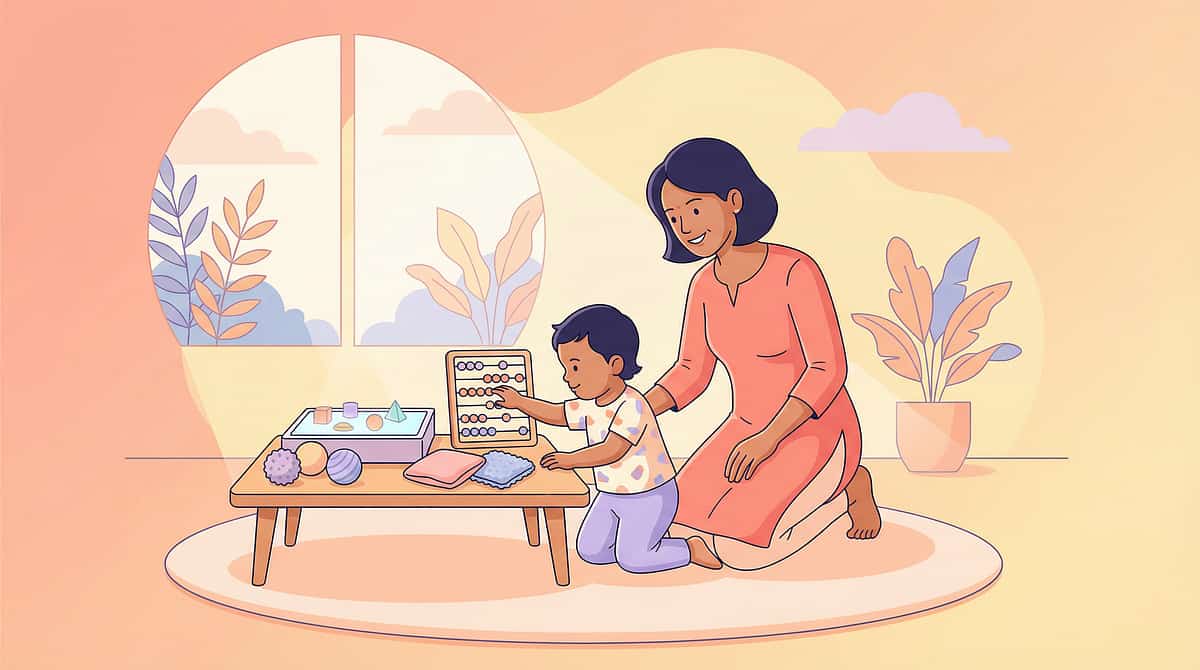
Step 2: Orient the Child to the Material Before the Task
Never start the therapeutic task immediately. Allow 2–3 minutes of free exploration of the material first. The nervous system needs to register "this is safe and interesting" before it can focus on motor learning.
Material | Orientation Activity (2–3 min) | Signal to Proceed |
Sand tray | Let child pour, drag hands, make patterns freely | Child makes spontaneous shapes → "Let's make letters!" |
Slant board | Let child tap it, put their arm on it, feel the angle | Child settles hands on board → begin |
Putty/clay | Free squeezing, rolling, poking for 2 min | Child's hands warm up → form first letter |
Formation cards | Child looks at cards, points at favourite letter | Child points → "Let's start with THAT one!" |
Raised line paper | Child runs finger along raised line | Child notices the ridge → "Can you write ON the bump?" |
Parent Body Language: Sit at child's level, relaxed posture. Mirror the child's exploration (put your own hand in the sand). Narrate what you see without correcting: "You made a big swirly! I wonder if that could become a letter…"
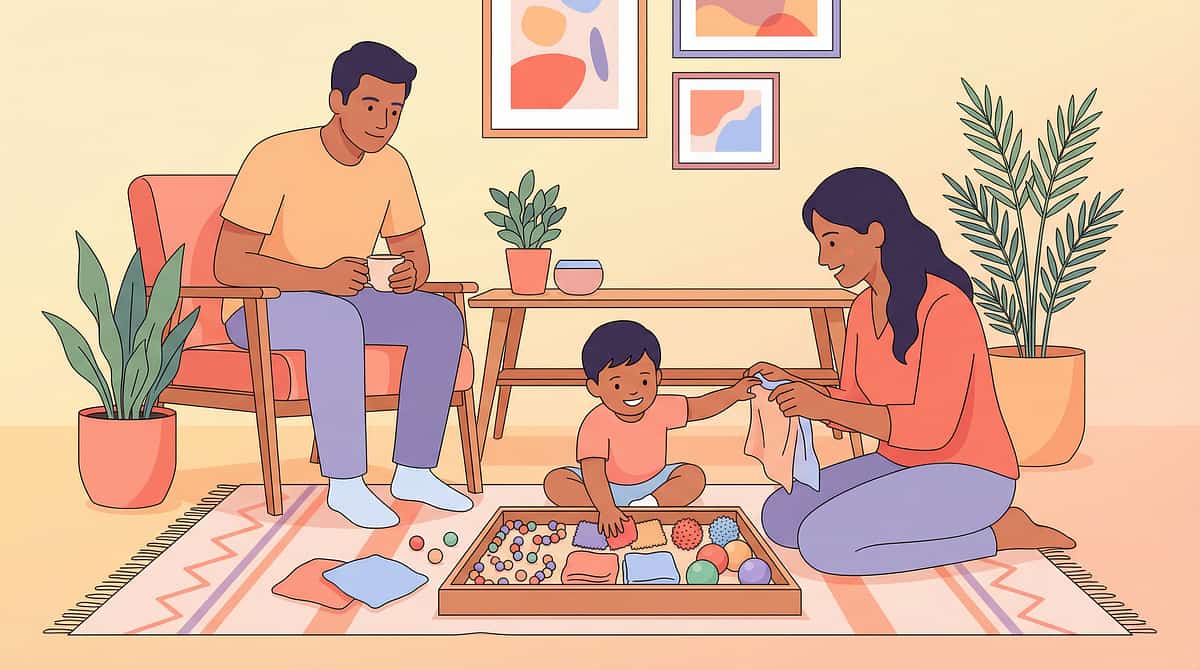
Step 3: The Core Therapeutic Action — Letter by Letter, Channel by Channel
Choose ONE material per session, rotate across the week. The core action occupies 40–60% of total session time. Four evidence-based protocols — one for each primary material type.
Protocol A — Sand Tray Letter Formation
1. Show formation card + say letter name + start-point cue. 2. Demonstrate tracing in sand with index finger, narrating direction. 3. Child traces with index finger 3–5 times. 4. Child traces with stylus/pencil. 5. Erase and repeat. Celebrate each correct directional attempt.
Protocol B — Slant Board + Pencil Grip
1. Secure raised line paper to slant board. 2. Fit pencil grip, demonstrate correct finger placement. 3. Show formation card above paper. 4. Child copies letter 3 times with verbal cue: "Start at the green dot — go [direction]." 5. After 3 copies, remove the card: "Try from memory — you know this one!"
Protocol C — Clay / Playdough Letter Building
1. Roll clay into a snake shape together. 2. Use the snake to BUILD the letter shape on the table. 3. Discuss shape while building. 4. Child rebuilds without help (3 times). 5. Transition to paper: "You built it — now draw it on paper."
Protocol D — Tracing Progression (within-session)
Solid letter model → Child traces exactly on top (full guide). Dotted outline → Child traces dots. Copy from model → Child copies next to it. Memory write → Remove all models, child writes from memory. Complete in 8–10 minutes for a single target letter.
Child Response | Meaning | Action | |
🟢 | Traces correctly, consistent direction | Neural path forming | Celebrate + add 1 more rep |
🟡 | Traces wrong direction but corrects self | Self-monitoring active | Praise the correction |
🟠 | Consistent reversal, no self-correction | Procedural memory not yet formed | Return to directional arrow card |
🔴 | Avoidance, hand withdrawal, distress | Material or demand mismatch | Switch material, reduce demand |
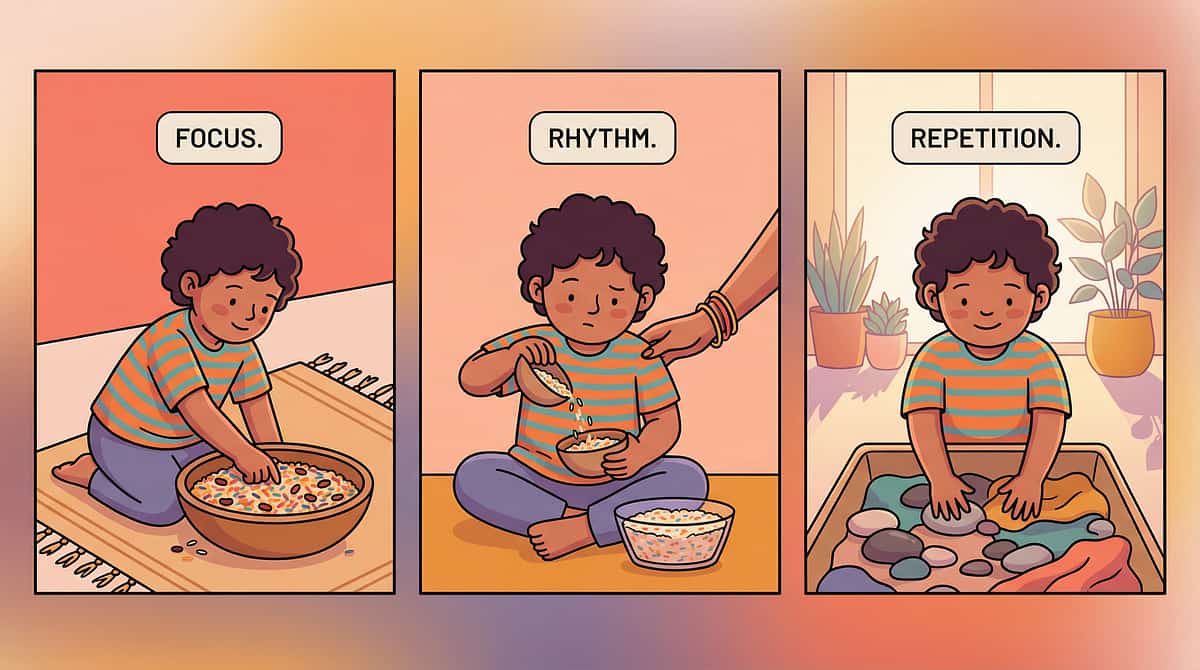
Step 4: 3 Good Reps Beat 10 Forced Ones
Dosage matters as much as the material. Quality repetitions build neural pathways; fatigued or forced repetitions reinforce compensatory patterns. Know when to advance — and when to stop.
Repetitions per Letter
3–5 correct-direction attempts (quality over quantity)
Letters per Session
1–3 maximum (depth > breadth in early stages)
Total Active Time
8–15 minutes core work
Session Total
15–20 minutes with setup/cool-down
Variation Options to Maintain Engagement
If Child Is... | Switch To... |
Bored with sand tray | Shaving foam tray (same sensory principle, new novelty) |
Fatigued on pencil | Clay letter building (active hands, no pencil pressure) |
Rejecting formation cards | Use their name letters only (personal motivation) |
Ready for challenge | Reduce scaffold one step (from trace to copy, from copy to memory) |
Having a great day | Add a second letter using the same material |
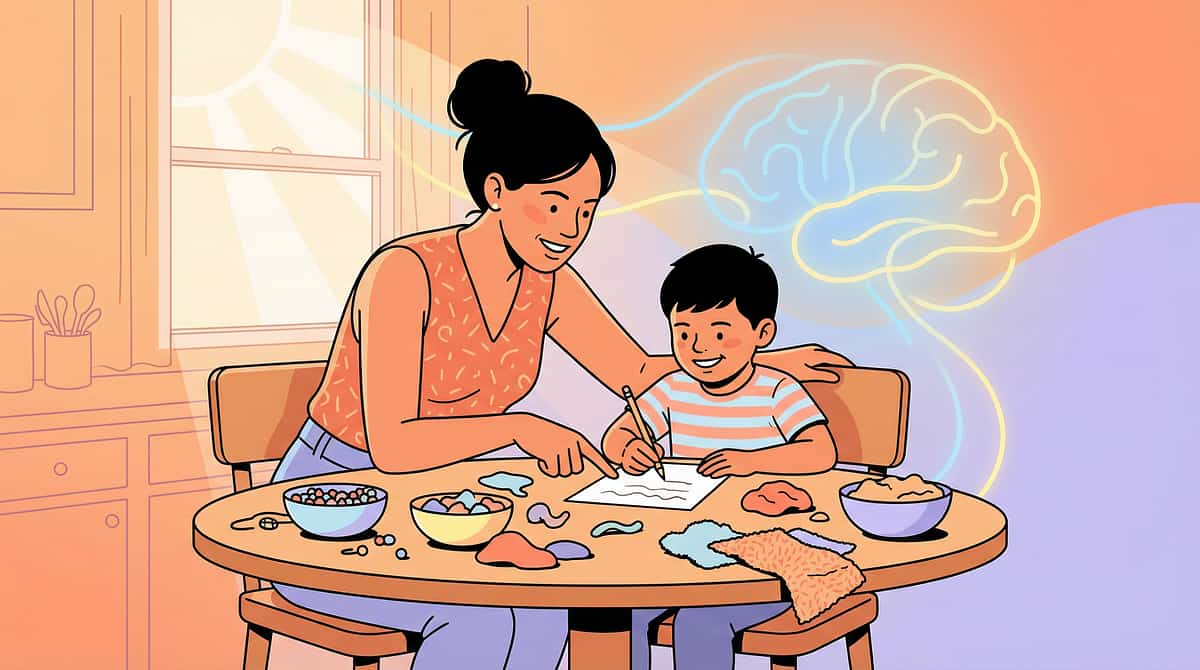
Step 5: The Reinforcement Architecture — Timing Is Everything
Immediate, specific, enthusiastic reinforcement delivered within 3 seconds of the correct behaviour is 10× more effective than delayed or generic praise. This is not a parenting opinion — it is ABA science.
For Correct Letter Direction
"YES! Down-left, down-right — THAT'S the letter A. You got the direction RIGHT!"
For Correct Start Point
"You started at the GREEN dot! That's exactly how a [letter name] begins. High five!"
For Any Attempt (Early Stages)
"You tried it! That counts. Let's look at it together — what direction did your pencil go?"
Reinforcement Menu
1 sticker / token per correct-direction attempt
5 tokens → 2 minutes of preferred activity (child's choice)
End of session with any attempts → verbal celebration + physical (high five, fist bump)
5 tokens → 2 minutes of preferred activity (child's choice)
End of session with any attempts → verbal celebration + physical (high five, fist bump)
🏆Canon Product: The Rosette Imprint Reward Jar — ₹589 | Amazon.in
What to Avoid
- ❌ "Almost!" followed by nothing (ambiguous reinforcement)
- ❌ Comparing to a sibling or peer
- ❌ Correcting after reinforcing ("That's great BUT…")
- ❌ Delayed praise ("You did so well earlier today")
"Celebrate the attempt, not just the perfection. Motor memory builds through accumulated tries, not just correct ones."
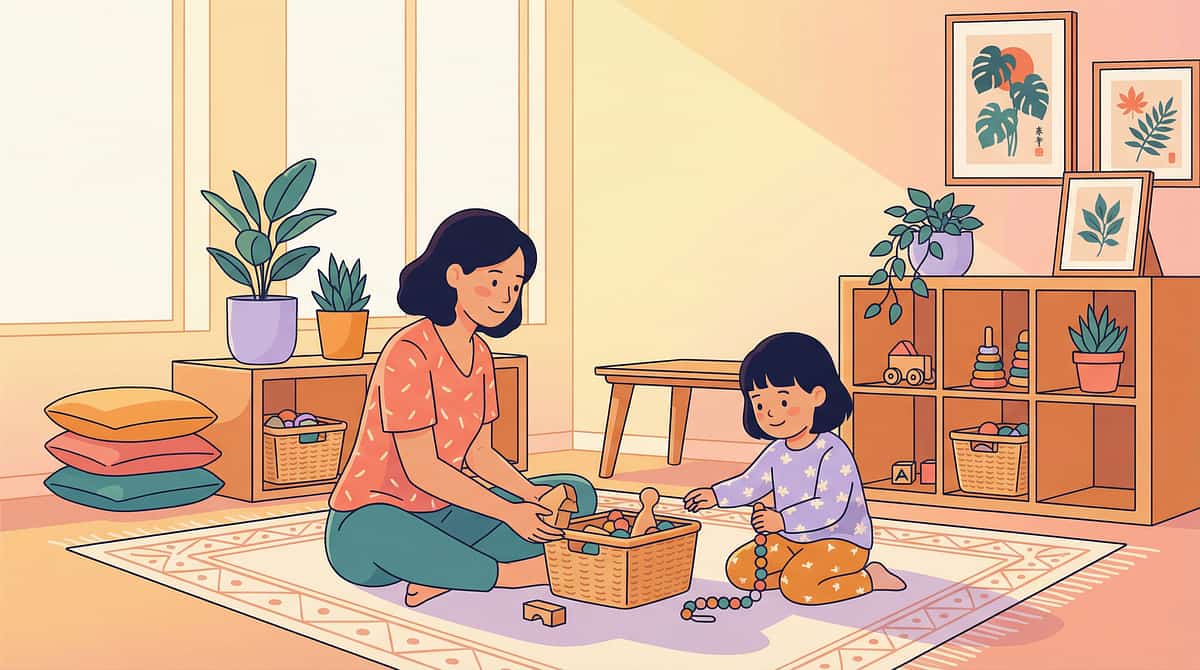
Step 6: No Session Ends Abruptly. The Cool-Down Is Therapeutic.
Abrupt endings create transition anxiety and can dysregulate the child for the next activity. The cool-down is not "winding down" — it is active regulation preparation. Every session must close with these five steps.
Countdown Warning (30–60 sec before end)
"Two more letters, then we're all done with writing today." Point to visual timer showing final minute.
Final Celebration Statement
"You worked SO hard today. You wrote [X] letters. That is real brain-building."
Material Put-Away Ritual (Child Participates)
"Help me put the sand back. Good — lid on. Now the pencil in its jar. Done." Child's participation in pack-up = ownership of the activity = reduced avoidance next session.
Transition Cue
"Writing time is done. Now it's [preferred activity] time." Use first-then board with visual support.
Sensory Cool-Down (if post-session activation)
Hand washing with warm water (proprioceptive reset). 2 minutes of quiet heavy work. Calm music or preferred sensory input.
Within 60 Seconds of the Session Ending — Record 3 Data Points
Data captured today drives tomorrow's personalised protocol. What you record now is what GPT-OS® uses to adapt next session's recommendations. This takes 60 seconds and changes everything.
# 1 — Letters Practiced
Write initials of letters worked on this session (e.g., A, B)
# 2 — Correct Direction Attempts
Count correct out of total attempts (e.g., 3/5)
# 3 — Child's Engagement Rating
1 (refused/distressed) → 5 (enthusiastic, asked for more)
Date: _____ | Letters: _____ | Correct/Total: ___/___ | Engagement: 1-2-3-4-5
Material used today: _____________________ | Notes: _____________________
Every Struggle Has a Specific Cause and a Specific Fix
When a child isn't responding the way you expected, the protocol hasn't failed — the material or demand may simply need adjustment. Every problem has a known solution in the F-608 clinical framework.
Problem | Most Likely Cause | Fix |
Child refuses to touch sand/clay | Tactile defensiveness | Start with a tool (stylus, paintbrush) instead of bare hands. Build skin tolerance gradually with hand massage first. |
Letters still reversed after 4 weeks | Directionality not consolidated | Isolate specific confusion (b/d?). Use "bed" mnemonic at ALL writing times. Add coloured start-dot on every letter. |
Grip too tight / hand cramps | Intrinsic hand weakness | More putty strengthening. Shorter writing bursts (2 min on / 2 min rest). Check slant board angle. |
Child loses interest after 3 minutes | Demand too high or novelty worn off | Rotate material more frequently. Add a motivating theme (writing Pokémon names, favourite characters). |
Letters inconsistent size | Size regulation not anchored | Switch to raised line paper exclusively. Add size cue card (tall/small/below-line letter guide). |
Can trace but can't copy | VMI gap (visual-motor delay) | More multisensory encoding before paper work. More clay and sand. Reduce paper demands temporarily. |
Progress plateaued since Week 3 | Generalisation hasn't occurred | Change the environment (try kitchen table vs desk). Change the material. Introduce new letters. |
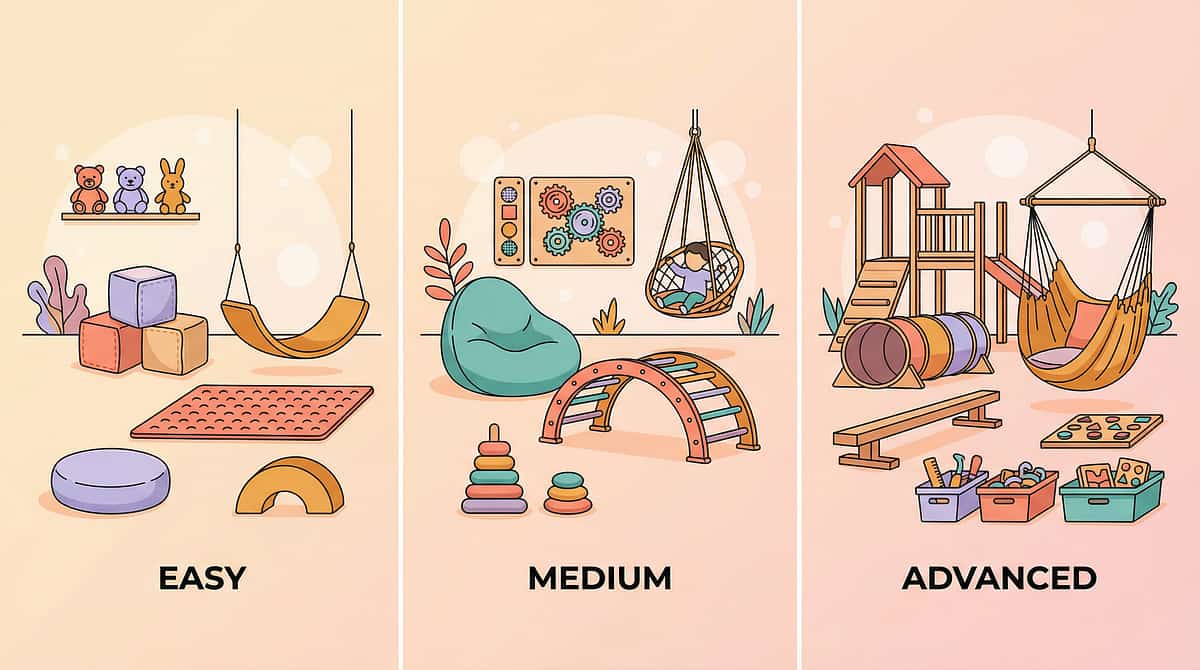
This Protocol Adapts to Your Child — Not the Other Way Around
Every child's sensory profile, age, and readiness level is different. The F-608 protocol is built with flexibility at its core — adjustable difficulty, sensory profile variations, and age-specific targets.
For the Tactile Defensive Child
Begin with a tool in sand/foam — never bare hands first. Raised line paper is ideal as primary entry point. Clay in a zip-lock bag (child manipulates without skin contact). Gradual desensitisation programme — consult OT.
For the Sensory Seeker Child
Sand tray and shaving foam are highly motivating. Allow more orientation time (5 min free play first). Use weighted pencil holder for proprioceptive input. Incorporate movement breaks between writing bursts.
Age Modifications
Age | Primary Material | Letter Target | Duration |
4–5 yrs | Clay + sand tray only | Name letters + H, T, I | 8–10 min |
5–6 yrs | Slant board + raised line paper | All uppercase letters | 10–15 min |
6–8 yrs | Full protocol rotation | Uppercase + lowercase | 15–20 min |
8–12 yrs | Copy → Memory progression | Lowercase + words | 15–20 min, 2× daily |

Week 1–2: You Are Building the Foundation. It Looks Like Chaos. It Isn't.
ACT IV: The Progress Arc
Foundation Phase
Weeks 1–2 — establishing tolerance, building the sensory-motor relationship
✅ What You Will Likely See
- Child tolerates the material longer than the first session (even 30 seconds longer = real progress)
- Child stops completely refusing the activity (compliance is itself a neurological shift)
- Occasional correct letter direction — not consistent, but occurring
- Child begins to narrate stroke direction after you model it
❌ What Is NOT Expected Yet
- Consistent letter formation (neural path not yet consolidated)
- Generalisation to new letters (too early)
- Independent writing without prompts (scaffolding still fully needed)
Data Focus Weeks 1–2
Track engagement rating (1–5) and session duration only. Formation accuracy data starts in Week 3.
"If your child tolerates the sand tray for 4 minutes when they lasted 90 seconds last week — that is measurable neurological progress. The foundation is being poured, even when the surface looks the same."

Week 3–4: Neural Pathways Are Forming. Watch for These Signs.
40%
Consolidation Phase
Weeks 3–4 — directional control emerging, self-monitoring coming online
Session Anticipation
Child less resistant, possibly asks for "sand time" — neural engagement shifting from avoidance to approach
50–60% Correct Direction
Letter attempts with correct directional orientation — a measurable neurological milestone
Self-Correction Mid-Stroke
Huge — this means self-monitoring is online. Child corrects a reversal while writing without your prompt.
States Start Point
Child can state the start point before beginning: "start at the top!" — procedural memory crystallising
When you see a child spontaneously trace a letter in air, on a foggy window, or in food — something significant is happening in their brain. The pathways are beginning to fire independently.
Week 5–8: Mastery Is Emerging. Here Is How to Recognise It.
Mastery Phase
Weeks 5–8 — automatisation, generalisation, independence
Mastery criteria are observable, specific, and measurable — not a feeling. Use this checklist to confirm your child has genuinely consolidated the skill before advancing.
8/10 Memory Write Accuracy
Target letters written correctly from memory on first attempt in 8/10 trials
Zero Reversals — 3 Consecutive Sessions
No reversals of previously mastered letters across 3 consecutive sessions
Sentence-Level Maintenance
Letter formation maintained when writing moves to sentences, not just isolated letters
True Generalisation
Child writes correctly on novel paper, in a different room, for a different adult (teacher, grandparent) — the skill belongs to the child, not just your kitchen table
Writing Endurance
5+ consecutive letters without hand shake or complaint
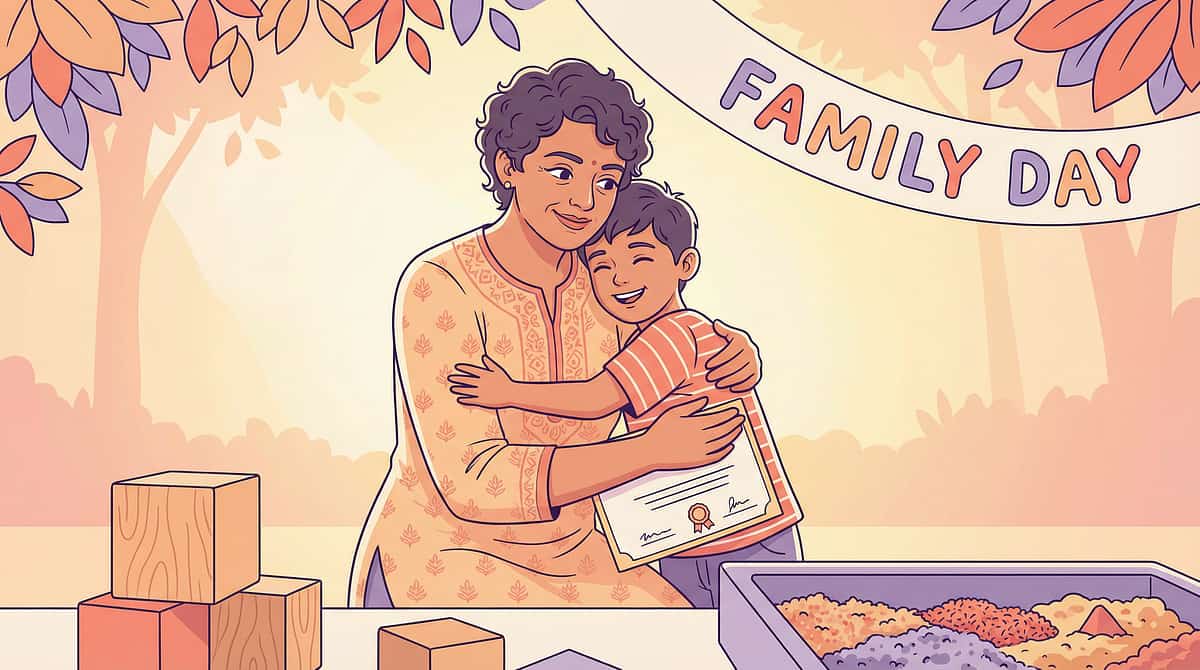
You Did This. Your Child Grew Because of Your Commitment.
"You showed up — every session, every week. You learned how the brain processes letter formation. You adapted when it wasn't working. You celebrated every small attempt. You gave your child something that no amount of money can buy: a parent who understands their nervous system and acts on it."
— Pinnacle Blooms Network® | 20 million sessions strong
Neural Route Built
Developed a reliable neural pathway for target letters through consistent multisensory input
Grip Transformed
Shifted from white-knuckle grip to functional pencil hold through progressive material work
Tolerance Built
Built tolerance for the writing demand that once caused shutdowns and avoidance
Proof of Growth
Demonstrated that your child's brain can adapt, grow, and master new motor skills
Family Celebration Suggestions: Let your child "teach" a family member how to write a letter in sand (teaching = mastery proof). Create a "Letter Formation Hall of Fame" on the fridge. Take a photo of today's best writing to compare with Week 1.
Journal Prompt: "Write 3 sentences about what was hardest, what surprised you, and what your child did that made you proudest."
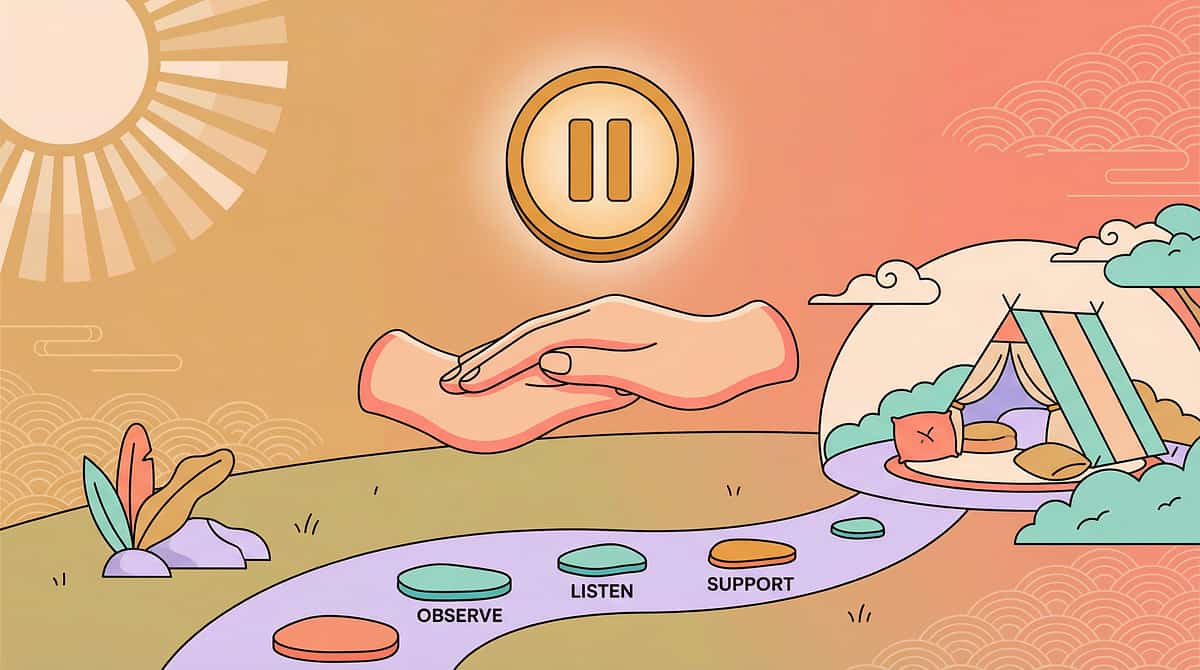
Home Intervention Has Limits. Know When to Escalate.
🔴 Escalate Immediately — Call 9100 181 181 Today
- Child reports pain in hand, wrist, or forearm during or after writing
- You observe a new tremor or shaking that wasn't present before
- Child is 10+ years old with no improvement after 8 weeks of structured home protocol
- School has raised concerns about handwriting affecting learning access
- Significant regression in fine motor skills (not just a bad day)
🟡 Schedule Professional Assessment Within 2–4 Weeks
- Consistent b/d reversal persisting past age 8 with no home protocol improvement
- Child's writing hand significantly weaker than the other (visible fatigue in under 2 minutes)
- VMI concerns: child cannot copy a simple geometric shape accurately
- Grip has not responded to any grip tool after 4+ weeks
🟢 Home Programme Appropriate — Check In at 8 Weeks
- Normal session-to-session variability in letter quality
- Some letters mastered, others in progress
- Child engaged, showing effort
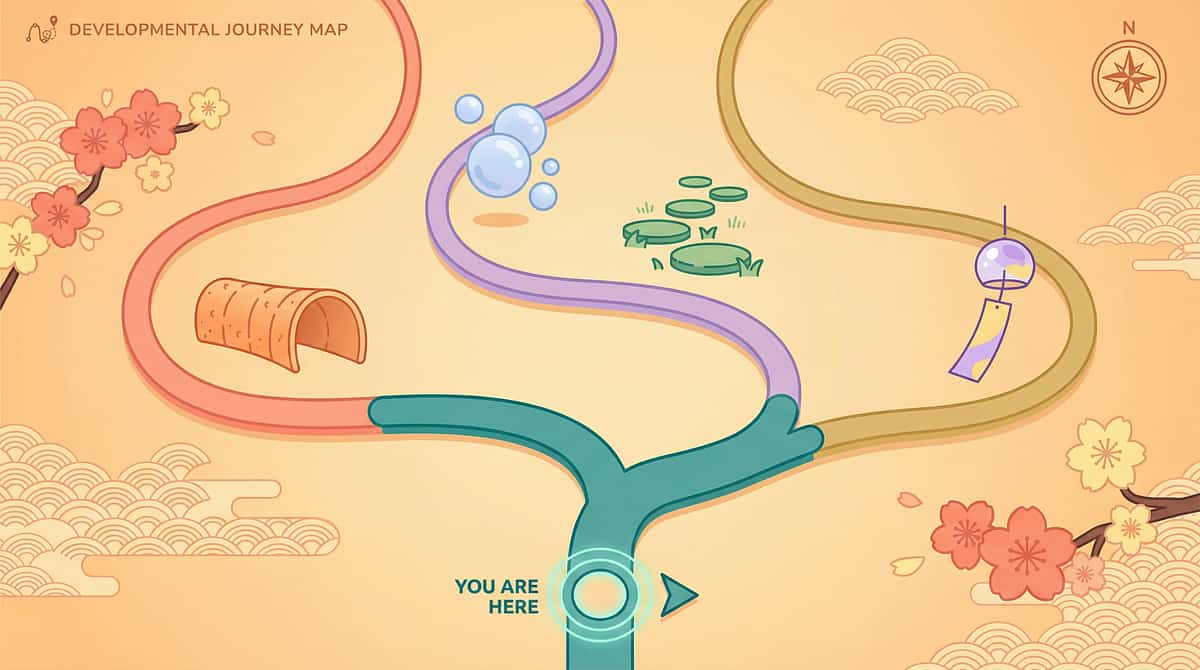
F-608 Is One Milestone on a Larger Journey
Every technique in the Pinnacle library builds on the ones before it and feeds into the ones ahead. Knowing your pathway forward transforms a single intervention into a coherent developmental strategy.
Lateral Alternatives
If the F-608 approach didn't fully resonate for your child, these parallel techniques offer different entry points:
- F-606 — Multi-Sensory Writing Without Letters — start earlier in the readiness sequence
- F-611 — Handwriting Readiness: Pre-Writing Shapes — foundational shape work before letters
Long-Term Goal This Feeds
Functional, legible written communication → academic independence → self-advocacy → full participation in education and life.
Letter formation is not an endpoint. It is the first step of a complete developmental journey that Pinnacle's 999 Reels map from first strokes to independent written expression.
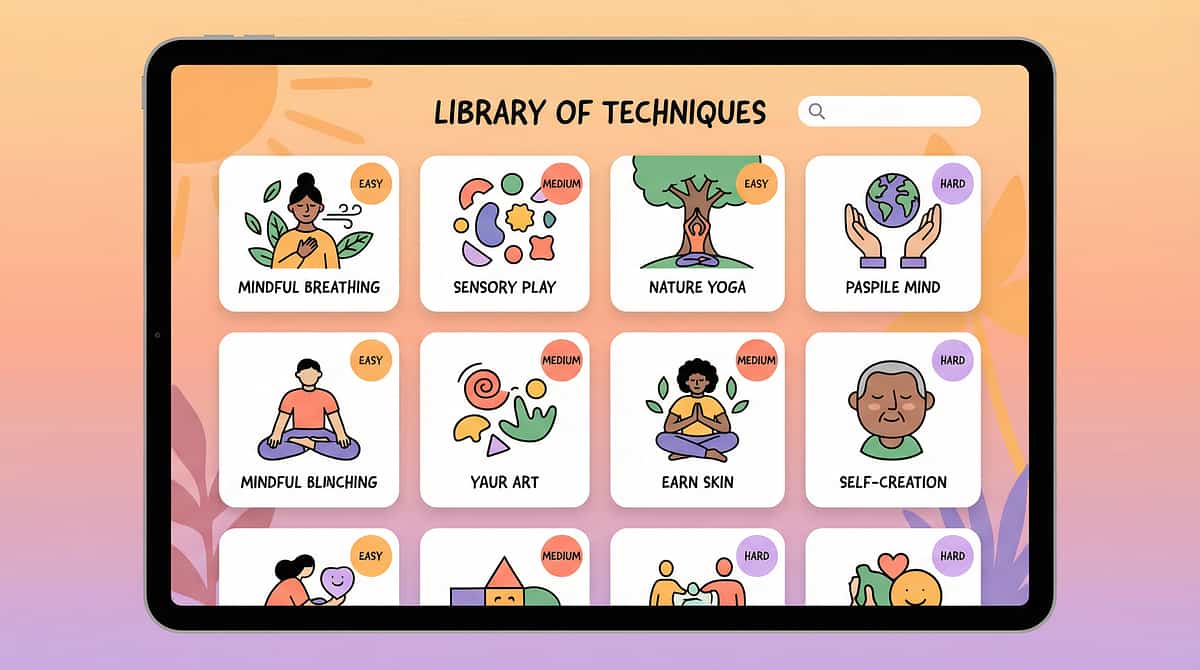
Other Handwriting & Written Expression Techniques in Domain F
If you own a slant board and pencil grip from F-608, you already own the primary materials for F-607, F-609, and F-610. ✅ Your investment works across the full Domain F series.
Technique | Code | Difficulty | Primary Material |
9 Materials That Help With Handwriting | F-607 | 🟢 Intro | Pencil + Paper |
9 Materials That Help With Letter Formation | F-608 | 🟡 Core | YOU ARE HERE ✅ |
9 Materials for Pencil Pressure Problems | F-609 | 🟡 Core | Weighted tools |
9 Materials for Letter Spacing | F-610 | 🟡 Core | Spacing rulers |
9 Materials for Handwriting Readiness | F-611 | 🟢 Intro | Pre-writing shapes |
9 Materials for Written Expression | F-612 | 🔴 Advanced | Graphic organizers |
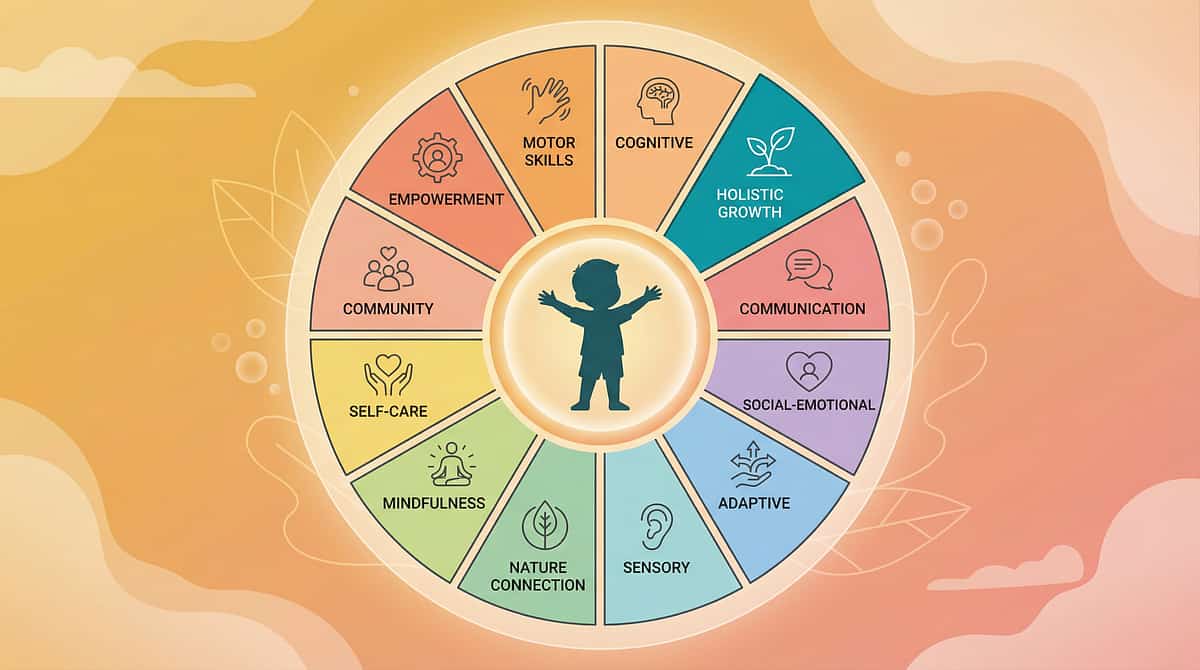
F-608 Is One Instrument in a Full Developmental Orchestra
Letter formation is one piece of your child's complete developmental plan. GPT-OS® maps all 12 domains and sequences them for maximum cross-domain benefit.
Domain | Area | Status |
F | Handwriting & Written Expression | 🔵 Active (F-608) |
A | Sensory Processing | View at pinnacleblooms.org |
B | Social Communication | View at pinnacleblooms.org |
C | Emotional Regulation | View at pinnacleblooms.org |
D | Behaviour & Flexibility | View at pinnacleblooms.org |
G | Reading & Literacy | View at pinnacleblooms.org |

Real Families. Real Progress. These Journeys Started Where Yours Is.
ACT V: The Community & Ecosystem
"Priya," 6 years, Hyderabad
Before: Every 'b' came out as 'd.' Every 'd' came out as 'b.' Her teacher was concerned. Her parents tried drilling — 100 letter corrections a day. Priya started crying when she saw paper.
Intervention: F-608 protocol at home with sand tray and directional arrow cards. Slant board DIY with books.
After Week 6: b/d reversal rate dropped from 80% to 18%. She began correcting herself spontaneously. Her teacher sent home a note: "Priya's writing is transforming."
Intervention: F-608 protocol at home with sand tray and directional arrow cards. Slant board DIY with books.
After Week 6: b/d reversal rate dropped from 80% to 18%. She began correcting herself spontaneously. Her teacher sent home a note: "Priya's writing is transforming."
"The sand tray was the turning point. When she felt the letter instead of just seeing it, something clicked in her brain that 6 months of correction hadn't done."
"Arjun," 8 years, Pune — ASD Diagnosis
Before: Arjun's letters were inconsistent in size — some microscopic, some sprawling off the line. His OT visits were 1× per week. Parents wanted more.
Intervention: Raised line paper and clay-building at home, 4× per week using F-608 structure.
After Week 8: 70% of letters within correct size band. Line adherence measurable for the first time.
From the Therapist's Notes: "The raised line paper created the tactile boundary his proprioceptive system needed. His home practice amplified our clinic work 4-fold."
Intervention: Raised line paper and clay-building at home, 4× per week using F-608 structure.
After Week 8: 70% of letters within correct size band. Line adherence measurable for the first time.
From the Therapist's Notes: "The raised line paper created the tactile boundary his proprioceptive system needed. His home practice amplified our clinic work 4-fold."
"Kavya," 5 years, Bengaluru
Before: Kavya gripped the pencil so hard that her wrist ached after 3 letters. She had started avoiding all writing.
Intervention: Triangular pencil grip + slant board at 25°. Fine motor putty work daily for 5 minutes before writing.
After Week 5: Grip pressure visibly reduced. Writing duration increased from 2 letters to a full row. No more wrist complaints.
Intervention: Triangular pencil grip + slant board at 25°. Fine motor putty work daily for 5 minutes before writing.
After Week 5: Grip pressure visibly reduced. Writing duration increased from 2 letters to a full row. No more wrist complaints.

You Are Not Navigating This Alone. A Community Waits.
Your experience is the most powerful curriculum another parent will ever receive. Consider sharing your F-608 journey once you complete it — your story could unlock another family's breakthrough.
WhatsApp Support Group
Pinnacle Handwriting Support Group — Domain F parents sharing real-time sessions, wins, and troubleshooting.
Join Group →
Join Group →
Online Parent Forum
Pinnacle Parent Community — Written Expression Channel. Deep conversations, session diaries, material reviews.
Join Forum →
Join Forum →
Local Centre Meetups
Nearest Pinnacle Centre Parent Meetup. Meet families navigating the same journey in your city.
Find Your Centre →
Find Your Centre →
Peer Mentoring
Connect with a parent who has completed F-608. Get first-hand guidance from someone who has been exactly where you are.
Request Mentor →
Request Mentor →
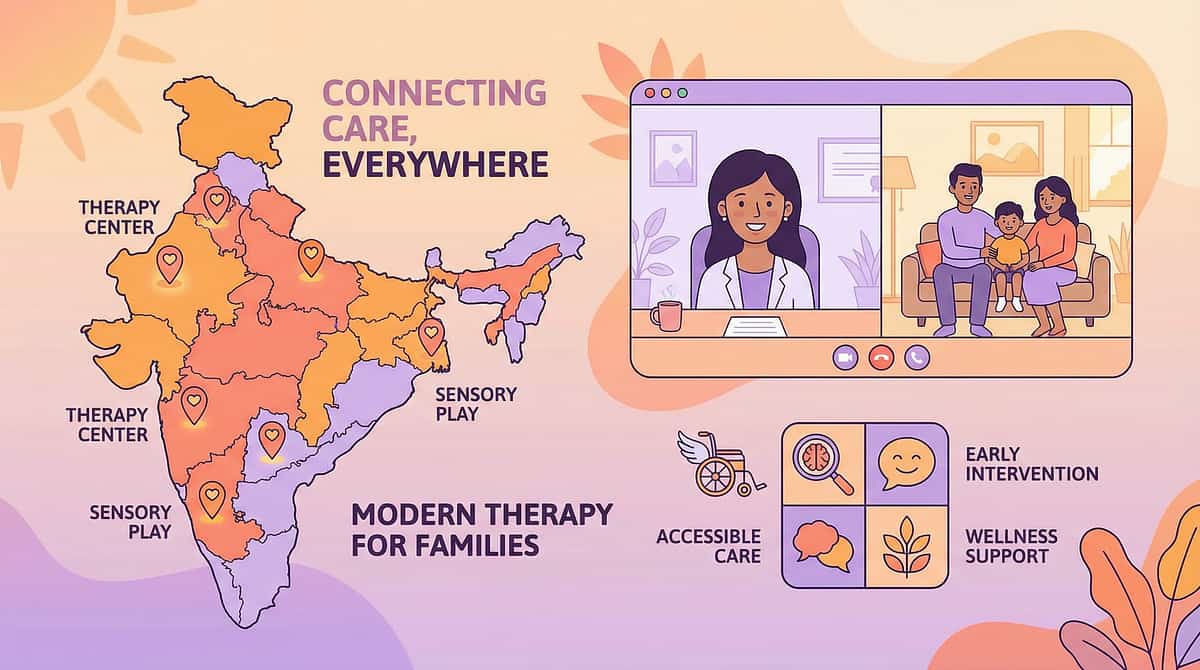
From Home Programme to Full Clinical Support — Pinnacle Has Every Level
Whether you are just starting with this guide or ready for intensive multi-disciplinary intervention, Pinnacle's service architecture meets you exactly where you are — across all of India.
🏠 Home Programme — Free
F-608 self-directed with this complete guide. Everything you need is on this page. Start today.
📱 GPT-OS® Digital
Personalised protocol, AI-adapted to your child's specific profile and session data. pinnacleblooms.org/gpt-os
📞 Tele-Assessment
OT assessment by video, 60 minutes. Comprehensive profile, personalised protocol. Call 9100 181 181.
🏛️ Centre-Based OT
1:1 Paediatric OT sessions + home programme at 70+ centres across India. pinnacleblooms.org/book
🔬 Intensive Programme
Multi-disciplinary: OT + SpEd + ABA + NeuroDev. For complex profiles requiring coordinated clinical care. Flagship centres only.
70+ Centres Across India: Hyderabad · Bengaluru · Mumbai · Chennai · Pune · Delhi NCR · Kolkata · Ahmedabad · Visakhapatnam · and 60+ more cities.
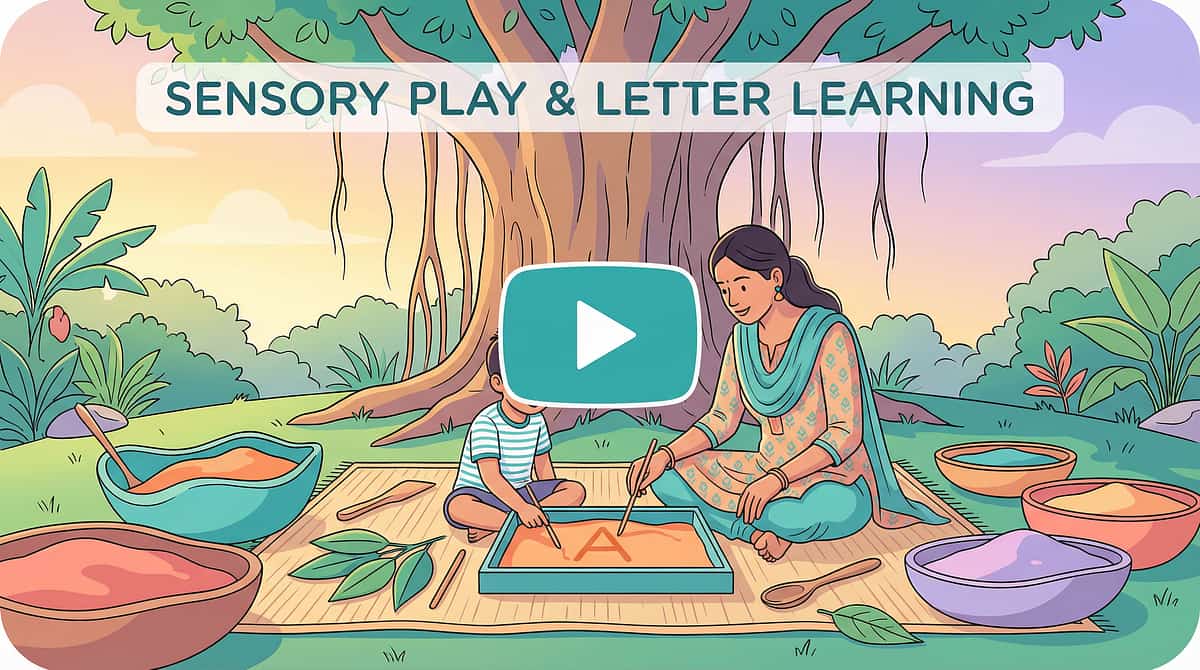
See F-608 in Action: The Original Reel That Started This Journey
The Reel "9 Materials That Help With Letter Formation" is the visual companion to this complete intervention guide. The 9 materials shown in the Reel correspond exactly to the 9 materials detailed in this page. The Reel gives you the visual; this guide gives you the protocol.
🎬 Reel ID: F-608
"9 Materials That Help With Letter Formation"
🏷️ Domain: F
Handwriting & Written Expression Challenges
📺 Episode 608
Of the Pinnacle 999 Reels Series
⏱️ Duration: ~90 seconds
Visual walkthrough of all 9 materials by Pinnacle Paediatric OT
NCAEP (2020) classifies video modelling as an evidence-based practice for ASD. Multi-modal learning — watching the Reel AND reading this guide — improves parent skill acquisition outcomes significantly over either alone.
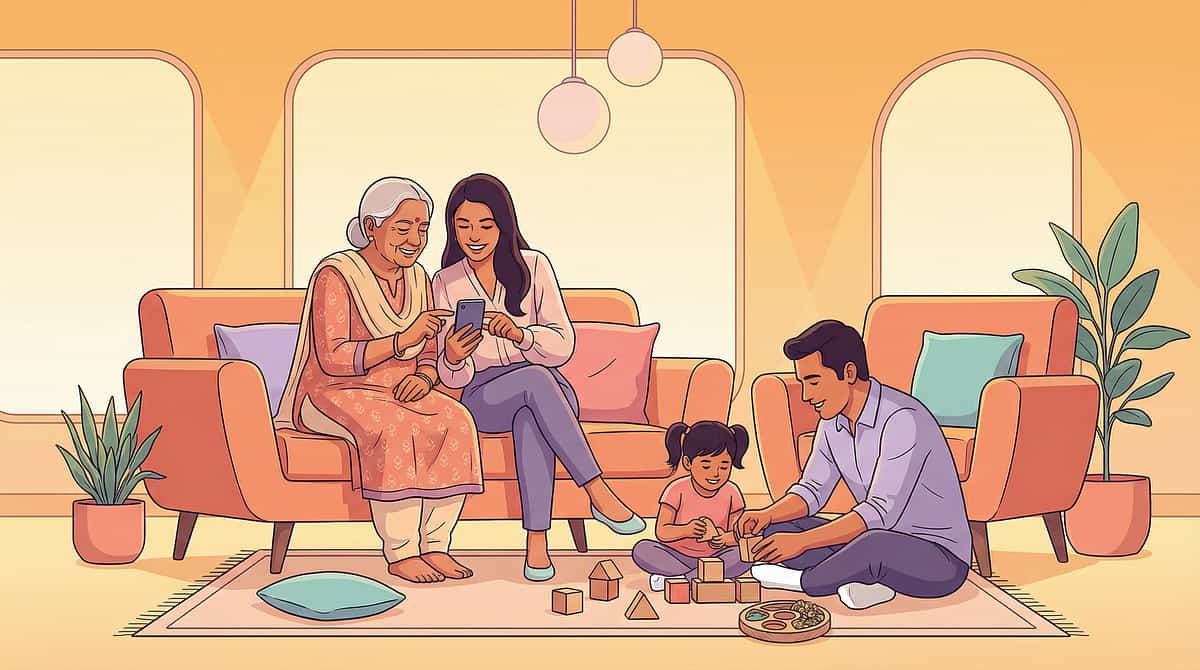
Consistency Across Caregivers Multiplies Impact
Research shows that intervention generalises fastest when all caregivers in a child's life use the same techniques, language, and materials. Share this guide with everyone who supports your child's writing.
📱 Share with Caregivers
Share this page on WhatsApp with grandparents, babysitters, tutors, and anyone supporting your child's writing practice.
📄 Grandparent-Friendly Version
"When [child's name] does writing practice, we use special materials — sand, clay, and a slanted board — that help their brain learn the correct way to form letters. Always put the letter guide card above the paper so [name] can see it while writing."
🏫 Teacher Communication Template
"Dear [Teacher], we are currently implementing a structured handwriting programme at home (F-608, Pinnacle Blooms Network® protocol). We would appreciate: (1) use of slant board or clipboard tilt in class, (2) raised line paper for written tasks, (3) allowing our child to use the formation reference card."
Your Questions — Answered by Pinnacle's Clinical Team
ACT VI: The Close & Loop
Why does my child write letters backwards?
Letter reversals (especially b/d, p/q) are neurologically normal up to age 6–7 as the brain's directionality processing system matures. After age 7, persistent reversals indicate that the visual-motor memory has encoded an incorrect motor programme. The sand tray and directional arrow cards in F-608 specifically re-encode the correct directional programme through multi-sensory input.
Does the slant board really make a difference?
Yes — it is one of the most evidence-supported environmental modifications in paediatric OT. A 20–30° writing slope optimises wrist extension angle, improves visual access to the writing surface, reduces neck strain, and increases proprioceptive feedback through the forearm. Most families see grip improvement within the first 2 sessions.
Which pencil grip should I buy?
Triangular grip → for children who position fingers correctly but too tightly. Grotto grip → for children who wrap fingers around the barrel without separation. Crossover grip → for children whose fingers cross over each other. Your Pinnacle OT can recommend specifically — call 9100 181 181.
My child refuses the sand tray. What do I do?
This is tactile defensiveness — a sensory processing difference, not defiance. Begin with a tool (a paintbrush or plastic stylus) rather than bare hands. Progress to one fingertip, then full finger, then full hand across multiple sessions. Never force skin contact.
How long before I see results?
First observable changes in tolerance and engagement at 2–3 weeks. First consistent directional letter formation at 4–6 weeks. Full mastery (memory write, generalised) at 8–12 weeks with 3–5 sessions per week. GPT-OS® tracks your specific trajectory.
Can I use all 9 materials in one session?
No — and you shouldn't try. Each session uses ONE primary material. Rotate across the week. Using too many materials in one session creates sensory overload and reduces the depth of motor encoding. Protocol: Monday (sand), Wednesday (slant board + raised line paper), Friday (clay).
My child's school doesn't allow slant boards in class. What do I do?
Request a written accommodation plan from your OT (Pinnacle can provide this). An OT-issued recommendation for classroom accommodations is typically accepted by most schools. The Card 37 teacher communication template helps open this conversation.
Is this approach suitable for my child with autism?
Yes — the F-608 protocol was developed with autism-specific adaptations throughout: sensory profile variations, tactile defensiveness modifications, reinforcement architecture, and readiness checks. 80% of children in the Pinnacle 20M session dataset with ASD show fine motor challenges that respond to material-based OT intervention.
Your Child's Writing Future Is Being Written Right Now.
Every day of structured home practice is a day of neural pathway building. You have everything you need on this page. The one thing you choose next determines the trajectory.
🏠 Start the Home Programme Today
Download the F-608 Quick Start Guide and begin your first session within the hour.
📊 Connect to GPT-OS®
AI-adapted protocol for your child's specific profile. Personalised from session one.
📞 Speak to a Paediatric OT
FREE national helpline | 16+ languages | 24-hour response
Built by Mothers. Engineered as a System. Validated by 20 Million Sessions.🌸Pinnacle Blooms Network®
Preview of 9 materials that help with letter formation Therapy Material
Below is a visual preview of 9 materials that help with letter formation therapy material. The pages shown help educators, therapists, and caregivers understand the structure and content of the resource before use. Materials should be used under appropriate professional guidance.


Link copied!
A Child Who Writes Freely Will Tell Their Own Story.
Letter formation is not an administrative skill — it is a gateway to self-expression, academic confidence, and life participation. When your child holds a pencil and produces a recognisable letter, something profound happens in their brain: the proof of competence is written in ink.
Every correct "A," every mastered "B," every conquered reversal is a neurodevelopmental milestone — built by you, at your kitchen table, with nine materials and an architecture designed by a consortium that has dedicated its entire existence to making this possible.
You are not alone. You are part of a global family of 200,000+ caregivers who are choosing evidence over hope, structure over prayer, and action over waiting. Welcome to the Pinnacle movement.
© 2025 Pinnacle Blooms Network® | All rights reserved | CIN: U74999TG2016PTC113063 | DPIIT: DIPP8651 | MSME Registered | GPT-OS® is a registered trademark of Pinnacle Blooms Network®. This content is educational and does not replace individualised assessment and intervention from licensed occupational therapists or qualified professionals. Techniques Library: techniques.pinnacleblooms.org | F-608 | Domain F: Handwriting & Written Expression | Published: 2025 | Review cycle: Annual | Consortium reviewed: ✅