
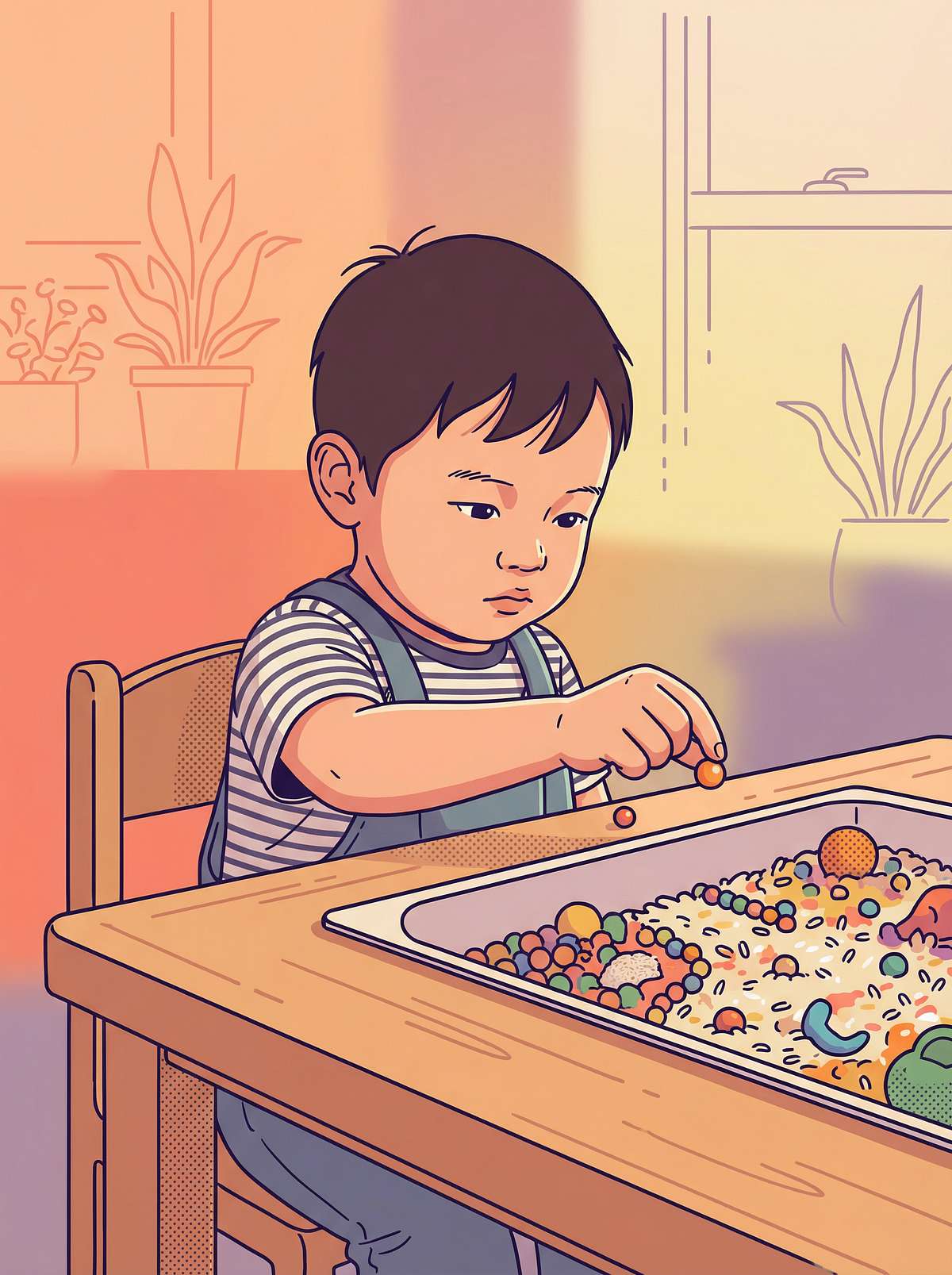
9 Materials That Help With Tongs and Tweezers
Building the Precision Grip That Unlocks Writing, Buttons, and Independence
🖐️ Tongs & Tweezers Intervention
OT-FMT | Age 2–8 Years
F-613 | Episode 613

"She can't button her shirt. She holds her pencil in a fist. She drops small things constantly — and she's starting to say 'I can't do it' before she even tries."
You are not failing. Her hands are speaking a language — and today you learn to answer.
🧠 ACT I — The Emotional Entry

You Are Not Alone: The Numbers
Before we talk about what to do, hear this first: what you are watching your child struggle with is not rare, not your fault, and not permanent. The data from 54 countries says so.
1 in 36
Autism Diagnoses in the US
CDC, 2023. In India: ~1 in 40 per AIIMS data.
80%
Experience Fine Motor Challenges
Of autistic children experience fine motor challenges affecting daily function. PRISMA systematic review, PMC11506176.
21M+
Therapy Sessions Delivered
By Pinnacle Blooms Network® with 97%+ measured improvement across 70+ centers, GPT-OS® tracked.
"You are among millions of families navigating this exact challenge. The difference between struggle and mastery is consistent, joyful practice with the right tools."
PMC11506176 | PMC10955541 | DOI: 10.12998/wjcc.v12.i7.1260 — World J Clin Cases, 2024: Sensory integration therapy effectively promotes fine and gross motor skills.
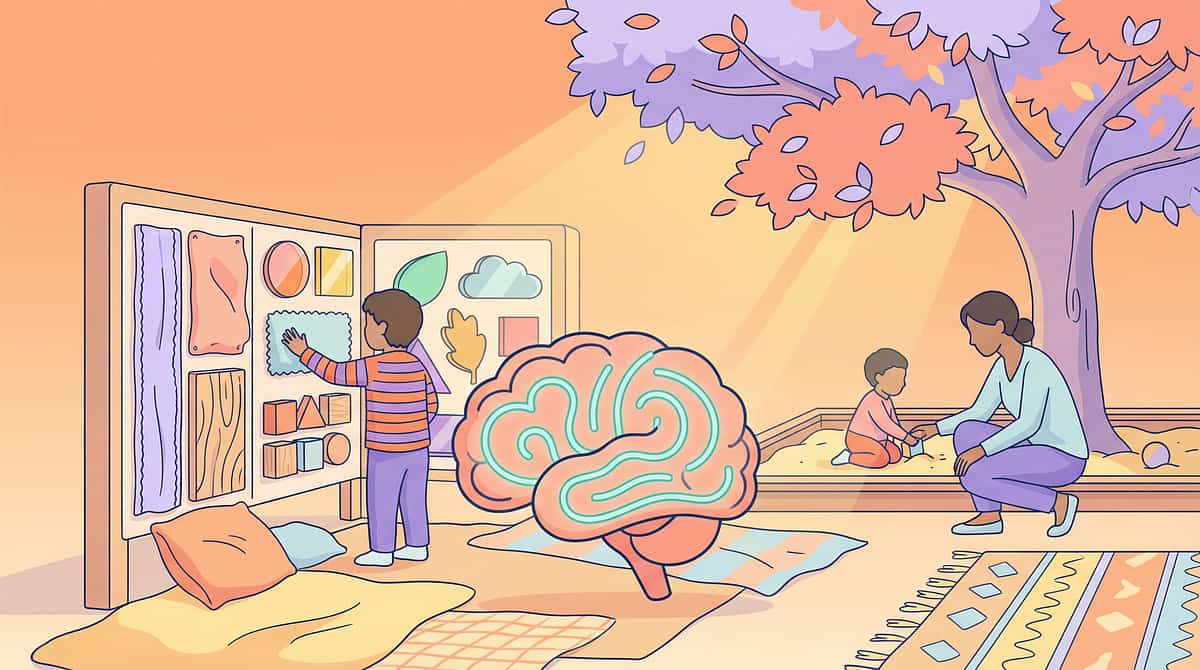
What's Happening in Your Child's Brain
The Neuroscience — In Plain English
Why the "Whole Fist Grab" Happens
Your child's intrinsic hand muscles — the small muscles inside the hand that control precise finger movements — have not yet developed the neural connections for independent finger action. The brain's motor cortex defaults to the older, more established whole-hand grip pattern.
What Tongs Training Does
Every time your child squeezes tongs, the motor cortex fires a new pathway: thumb opposes index finger, intrinsic muscles engage, pressure is graded. Repeated firing = myelin formation = a faster, more reliable neural highway to precision grip.
This Is Wiring, Not Willpower
A child cannot "try harder" to fix an immature motor pathway. You cannot scold them into a pincer grasp. But you CAN build the pathway — one fun repetition at a time.
Frontiers in Integrative Neuroscience (2020): DOI: 10.3389/fnint.2020.556660 — Neurological basis for sensory-based fine motor interventions in ASD.

Where This Sits in Development
📅 Your Child's Developmental Timeline
6–12 Months
Raking grasp emerges, then pincer grasp develops.
18–24 Months
Whole-hand tools use. Jumbo spring-loaded tongs appropriate.
2–3 Years
Emerging tripod patterns. Jumbo to medium tongs.
3–4 Years
Tripod pencil grasp developing. Standard tongs, pinch tools.
4–5 Years
Fingertip use emerging. Tweezers, precision tasks.
5–7 Years
Mature precision grip. All 9 materials, complex tasks.
Fine motor delays often appear alongside writing difficulty, scissor challenges, difficulty with buttons/zippers, reduced pencil endurance, and avoidance of craft activities. These are expressions of the same underlying skill gap, not separate problems. WHO Care for Child Development (CCD) Package | PMC9978394 | UNICEF MICS developmental indicators.

The Evidence Behind This Technique
✦ Clinically Validated. Home-Applicable. Parent-Proven.
Evidence Grade
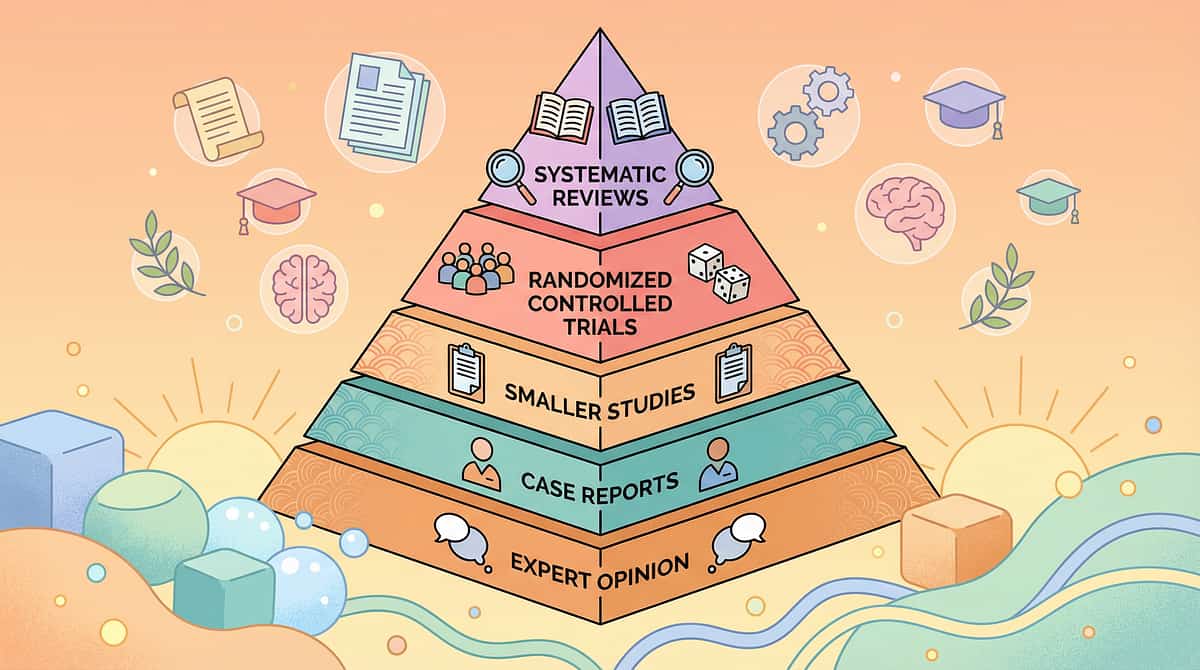
LEVEL I
Systematic Review + RCT Support
Evidence Confidence: High (Level I–II)
Children who receive consistent, graded tong and tweezer practice demonstrate measurable improvements in pincer grasp strength, pencil grip maturity, and self-care independence within 6–8 weeks.
Key Studies
Study | Finding |
PRISMA Systematic Review (2024) | 16 studies confirm fine motor + sensory integration intervention is evidence-based practice for ASD. PMC11506176 |
Meta-Analysis, World J Clin Cases (2024) | 24 studies: SI therapy promotes fine motor, social, adaptive skills. PMC10955541 |
Indian RCT, Padmanabha et al. (2019) | Home-based intervention: significant fine motor outcomes in Indian children with ASD. DOI:10.1007/s12098-018-2747-4 |
WHO CCD Package (2023) | Caregiver-delivered activities improve developmental outcomes across 54 LMICs. PMC9978394 |
NCAEP Evidence Report (2020) | Fine motor + tool-use practice classified as evidence-based practice for autism. |
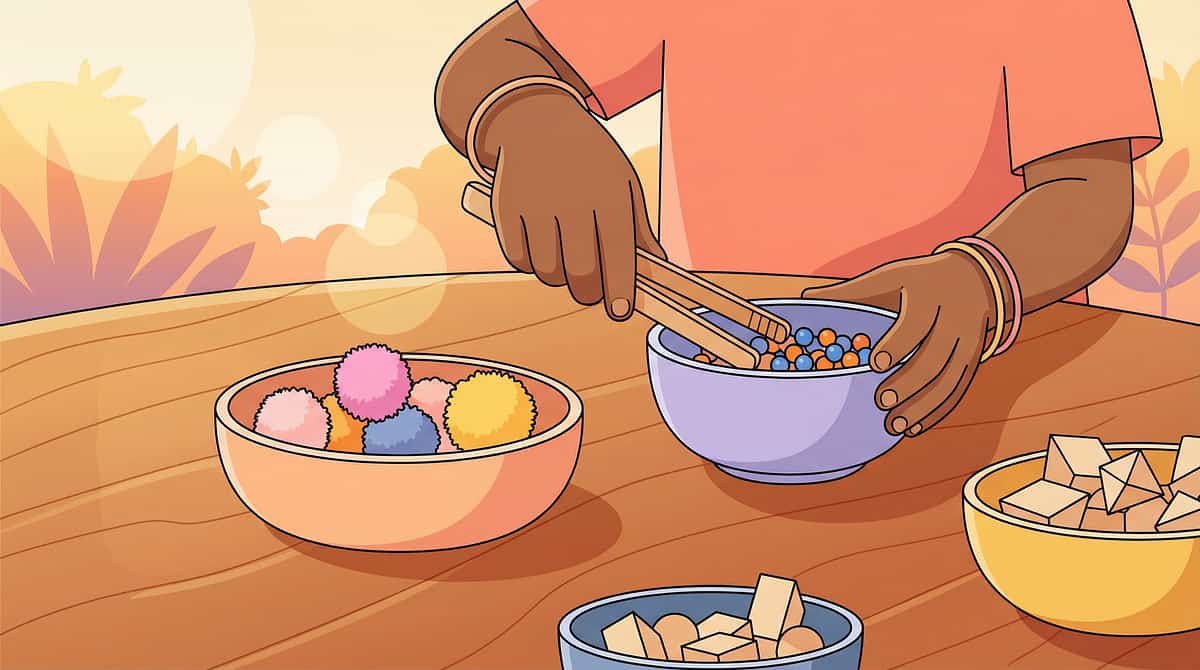
The Technique: What It Is
🖐️ ACT II — The Knowledge Transfer
What It Is
A structured, playful intervention using tongs and tweezers of graduated difficulty to build intrinsic hand muscle strength, pincer grasp pattern, and pressure modulation skills.
What It Does
Trains the thumb-to-fingertip movement required for mature pencil grasp through engaging, game-like activities the child experiences as play — not therapy.
Who It's For
Children aged 2–8 who show: whole-hand grasp for small objects, immature pencil grip, difficulty with buttons/zippers, or any fine motor delay identified by an OT.
OT-FMT
Age 2–8 Years
10–15 min/session
Daily Practice
6–8 Week Protocol
Fine Motor Skill Development | Pincer Grasp Training | In-Hand Manipulation | Tool Use Development | Pre-Writing Skills | Intrinsic Hand Muscle Strengthening

Who Uses This Technique
The Pinnacle Consortium approaches this technique as a unified, multi-disciplinary team. Each specialist plays a distinct and essential role.
Occupational Therapist (PRIMARY)
Assesses hand function, designs the progression from jumbo tongs to fine tweezers, grades difficulty, and monitors grip pattern development. Conducts formal assessments: pinch strength, in-hand manipulation, Beery VMI.
ABA Therapist / BCBA
Designs the reinforcement schedule for tool-use practice. Creates challenge card systems, token economy for session completion, and data collection for pincer grasp frequency and accuracy.
Special Educator
Connects tong practice directly to pre-writing curriculum, pencil grip readiness, and scissor skill development for academic success. Coordinates with classroom teachers.
Speech-Language Pathologist
Fine motor skills of the hands and oral motor skills share neural architecture. SLP may use tong activities alongside oral motor work and for children with feeding-related fine motor challenges.
NeuroDev Pediatrician
Rules out underlying neurological causes for fine motor delay. Monitors for conditions requiring medical management. Clears red flags before intensive home practice.
Parent / Caregiver (HOME LEAD)
After clinic-based assessment and protocol design, YOU become the most important practitioner. 10 minutes daily of GPT-OS® guided tong games = more neural pathway building than any clinic session alone.
"The brain doesn't organize itself by therapy type. Your child's hands need OT, ABA, SpEd, and SLP working as one — that's why the Pinnacle FusionModule™ exists."
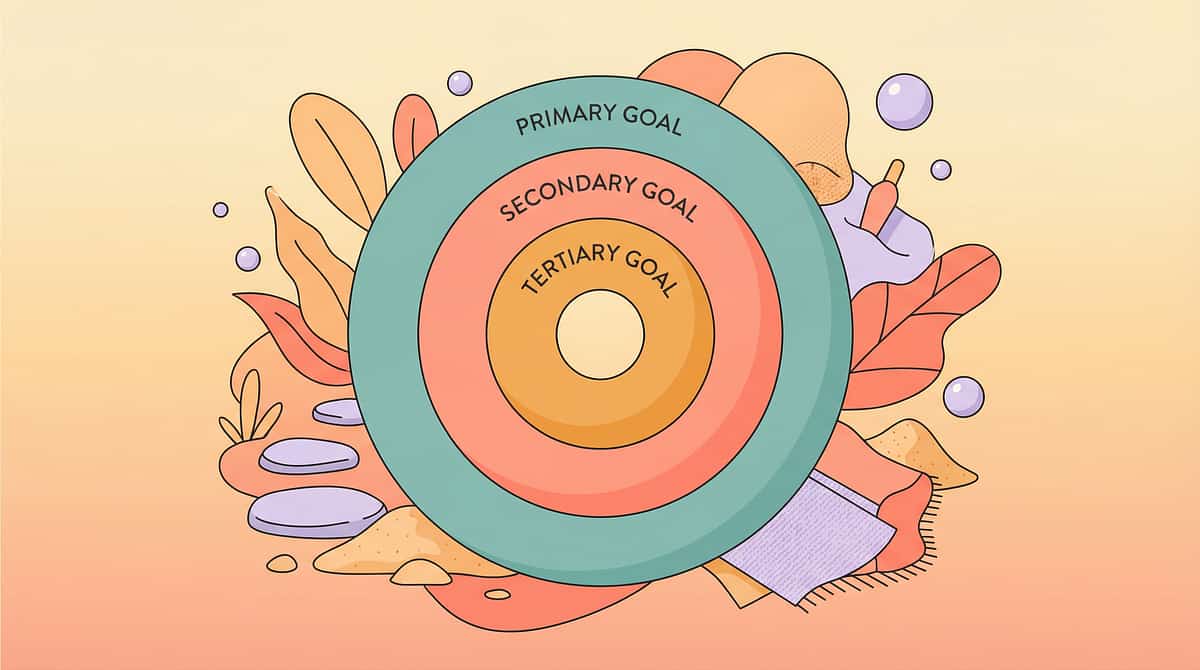
What Tongs & Tweezers Training Targets
Target | "I'm Seeing Progress" Sign |
Pincer grasp | Child picks up small object between thumb tip and finger tip (not fingernail) |
Pressure control | Child transfers water bead without crushing it |
Tool use | Child positions tong tips on object before squeezing |
Pencil transfer | Pencil grip shifts from fist toward tripod pattern |
Self-care | Child attempts button fastening independently |
PMC10955541: Meta-analysis confirming sensory integration targets motor, social, and adaptive skill domains simultaneously.
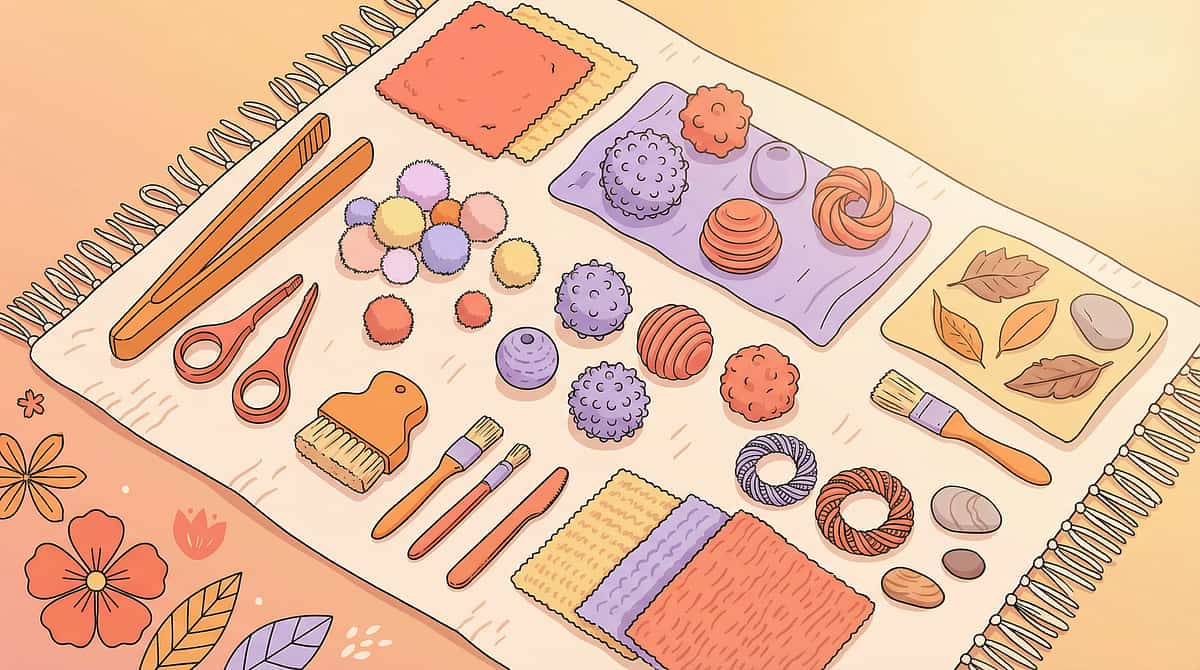
Material 1: Jumbo Easy-Grip Tongs
📌 Canon: Fine Motor Tools
Entry Level
Why This Material Works
The entry point for all hand-strength building. The spring-loaded mechanism provides just enough resistance to challenge intrinsic hand muscles without overwhelming a beginner. When the child squeezes, the spring assists opening — meaning immediate success is almost guaranteed, building the positive association with tool use that sustains the protocol.
How to Use It
Start with large, soft pom-poms and wide bowls placed side by side. Narrate: "The tong is hungry — it wants the red ball!" Celebrate every single pick-up attempt, regardless of success.
Price Range: ₹200–600 | Available at toy stores and Amazon.in (search: jumbo easy grip tongs children occupational therapy)
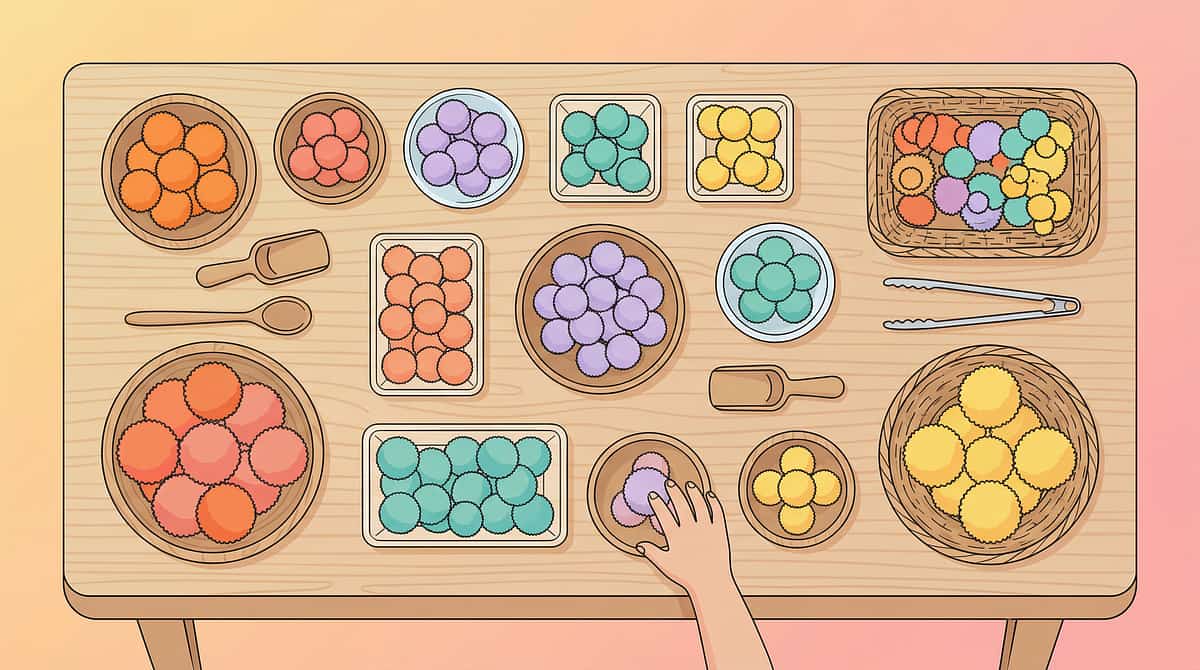
Material 2: Pom-Pom Sorting Set
📌 Canon: Sorting Activities / Categorization
Entry Level
Why This Material Works
Pom-poms are the ideal first object for tong practice: they are soft (forgiving if dropped or squeezed), colorful (motivating for sorting games), and large enough for early grippers but small enough to teach precision. The cognitive layer of color-sorting adds a second dimension to the challenge without increasing physical difficulty — keeping the child mentally engaged while the hands work.
How to Use It
Sort by color into muffin tins, small bowls, or color-coded compartments. Count aloud as each one lands. Try timed challenges: "Can you sort all the red ones before the sand timer runs out?"
Price Range: ₹150–400 | Lattooland Rainbow Sorting Set — ₹628 on Amazon.in

Material 3: Pinch-Style Tweezers / Strawberry Huller
📌 Canon: Fine Motor Tools
Intermediate Level
Why This Material Works
This is where the pincer grasp pattern is most directly trained. Unlike tongs (which use a whole-hand squeeze), pinch tweezers require the child to use primarily the thumb and index finger — the exact opposition pattern needed for pencil grip, button fastening, and precise tool use. The spring mechanism reduces the extensor demand, making it accessible before full hand strength is developed.
How to Use It
Introduce after 1–2 weeks of successful jumbo tong use. Use with pom-poms first, then graduate to smaller objects. If child shows frustration, return to tongs. The transition to tweezers is a milestone worth celebrating.
Price Range: ₹100–350 | Search Amazon.in: pinch tweezers children fine motor therapy. DIY: kitchen strawberry huller ₹50–80.

Material 4: Water Bead Transfer Kit
📌 Canon: Sensory Exploration Materials
Pressure Modulation
Why This Material Works
Water beads are the master teacher of pressure modulation — the skill of knowing exactly how hard to squeeze without crushing or dropping. When a child squeezes a water bead too hard, it shoots away immediately. This instant feedback teaches the nervous system to calibrate grip pressure in real time, which is the same precise skill needed to hold a pencil without pressing too hard or dropping it. The sensory engagement of the slippery, smooth texture also significantly extends practice time.
Safety Note
⚠️ Supervisory eye contact at ALL times. Never leave a child alone with water beads. For children who still mouth objects, substitute with cooked tapioca pearls (sabudana) instead.
Price Range: ₹150–400 | Search Amazon.in: water beads therapy children sensory. DIY: cooked sabudana or ice cubes.
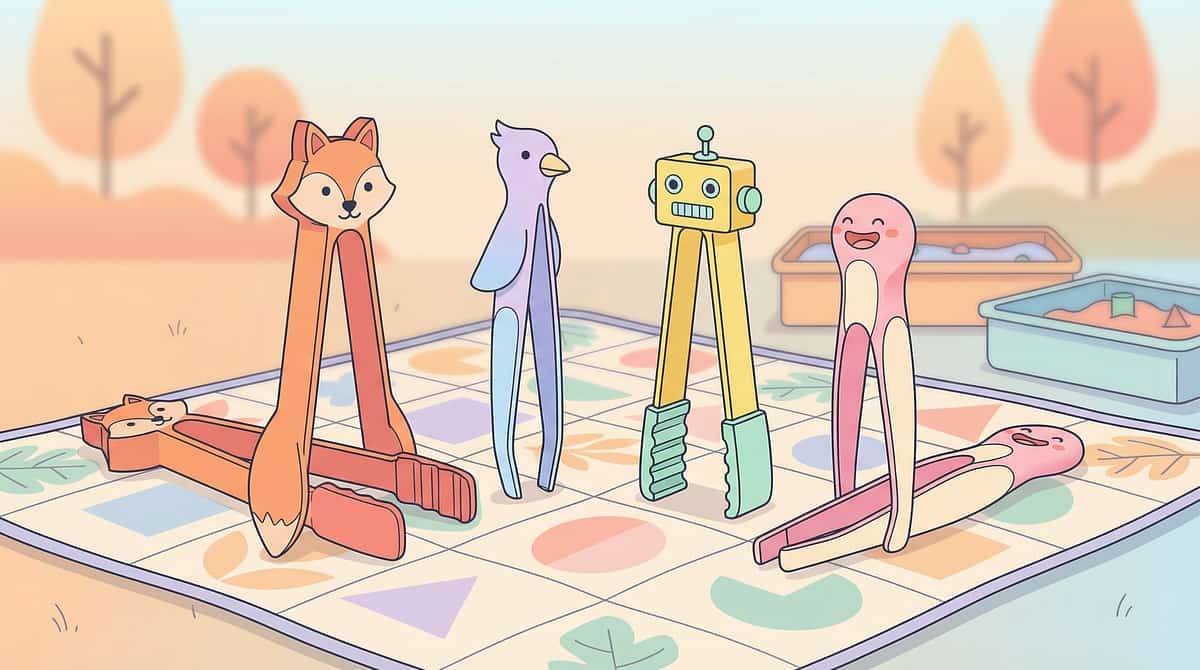
Material 5: Themed Tongs / Tweezers Set
📌 Canon: Fine Motor Tools
Motivation & Play Narrative
Why This Material Works
The therapeutic mechanism of tongs training is identical across all tool shapes — but the child's motivation to use the tool is dramatically influenced by whether it feels like play or work. Alligator tongs that "bite," dinosaur claws that "grab prey," or robot arms that "pick up power cells" transform a repetitive motor exercise into a narrative adventure. The child stops thinking about their hand and starts thinking about the story — which is precisely when the best learning happens.
How to Use It
Let the child name their tool. Build a story over multiple sessions. The alligator is always hungry. The dinosaur is always building a nest. Consistent narrative = consistent motivation = consistent neural pathway building.
Price Range: ₹250–700 | Search Amazon.in: animal shaped tongs kids fine motor. DIY: tape an animal face drawing onto any tong.
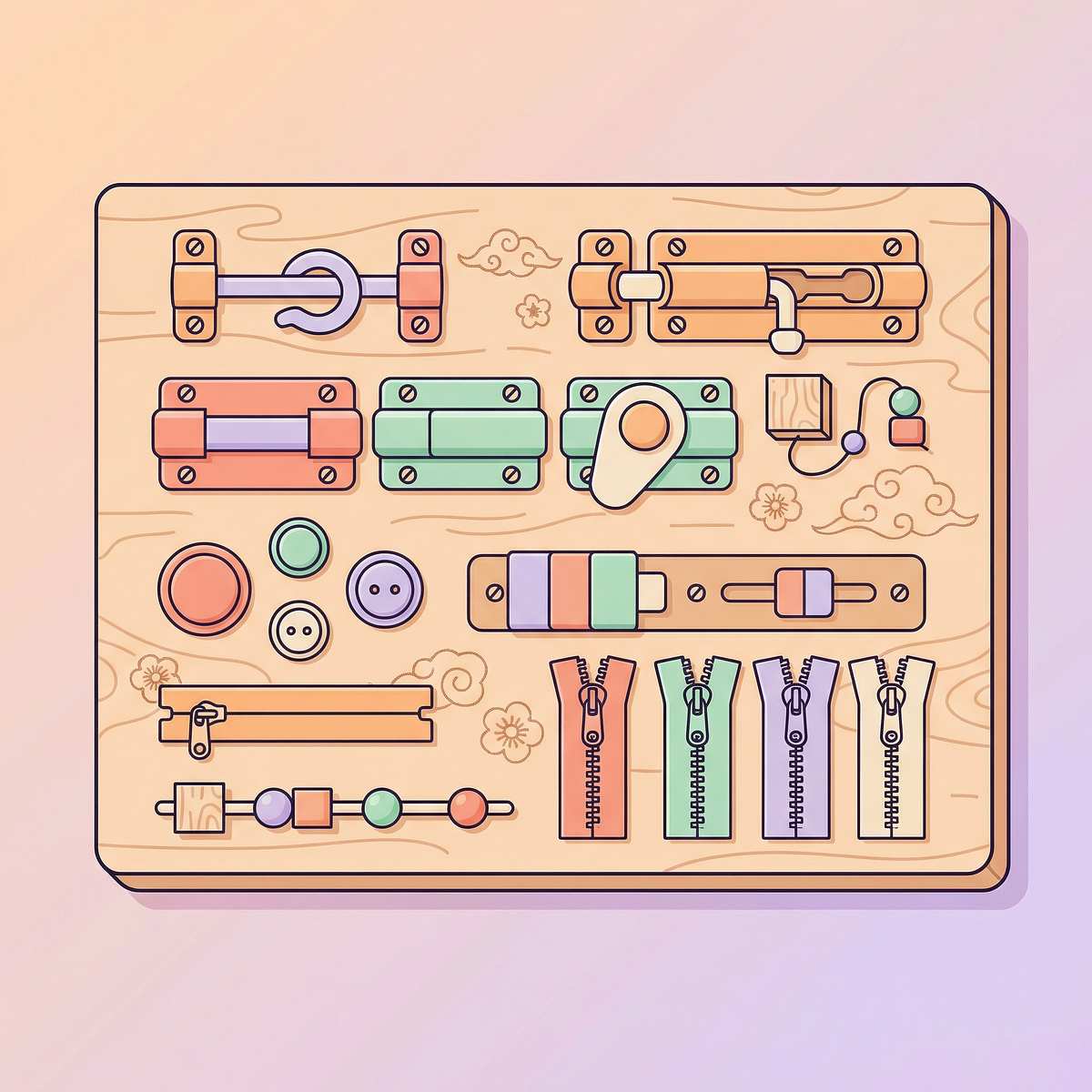
Material 6: Fine Motor Busy Board
📌 Canon: Sorting Activities / Categorization
Independent Practice
Why This Material Works
A busy board provides structured multi-activity format in a single, self-contained setup. Because the tasks are clearly defined and bounded (each compartment has a clear goal), children can engage in semi-independent practice — reducing the parental demand during sessions and building the self-direction skills that transfer to classroom independence. The format also naturally introduces task sequencing: complete compartment 1, move to compartment 2.
How to Use It
Set up the busy board before the session. Allow the child to choose which section to start with (autonomy = engagement). Rotate objects between sessions to maintain novelty. This is an excellent option for siblings who want to participate alongside.
Price Range: ₹500–1,500 | Search Amazon.in: busy board fine motor tongs activities. DIY: ice cube tray + muffin tin with small objects.
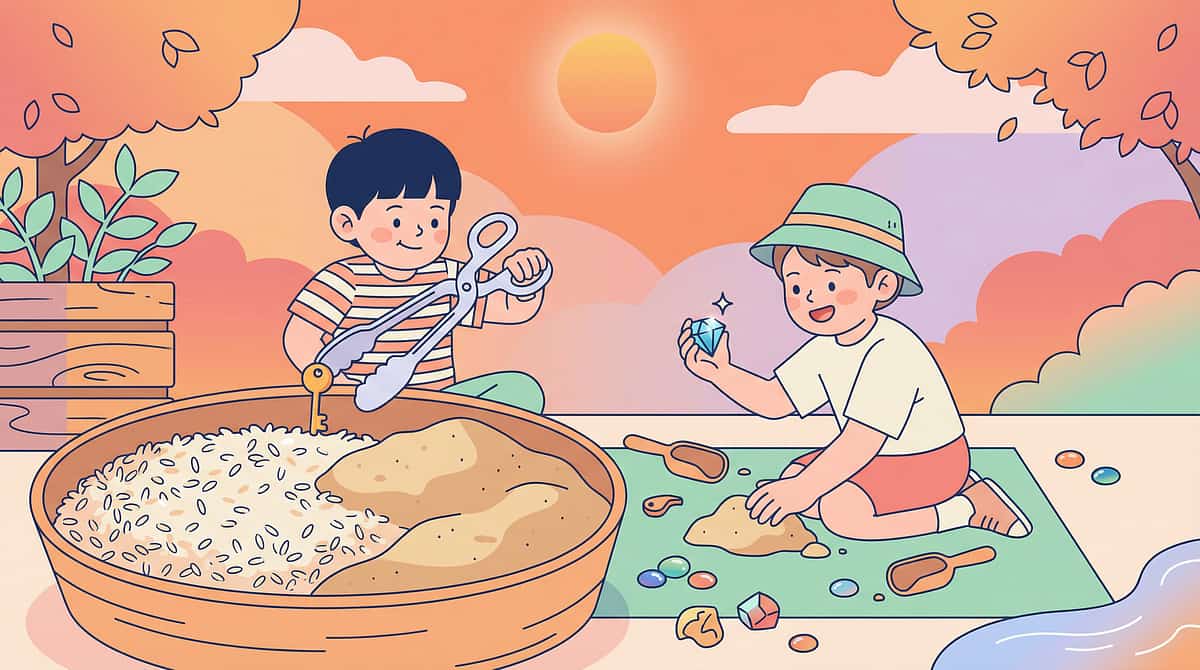
Material 7: Sensory Bin + Hidden Objects
📌 Canon: Sensory Exploration Materials
Sustained Engagement
Why This Material Works
The "hunt" motivation is one of the most powerful engagement mechanisms in pediatric OT. When objects are hidden inside a rice-filled bin and the child must use tongs to find and retrieve them, every session becomes a treasure hunt. This sustains practice time dramatically — children often continue 2–3× longer than with standard transfer tasks because the reward (finding the hidden object) is unpredictable, which activates the brain's dopamine system more powerfully than guaranteed success.
How to Use It
Hide 10 objects of different sizes. The rule: "Find all 10 using ONLY the tong." Vary objects weekly. Add a visual tracking sheet so the child can check off each found treasure. DIY Cost: ₹0 — any bowl + dry rice/lentils from your kitchen.
Price Range: ₹300–800 | Search Amazon.in: sensory bin rice children therapy.
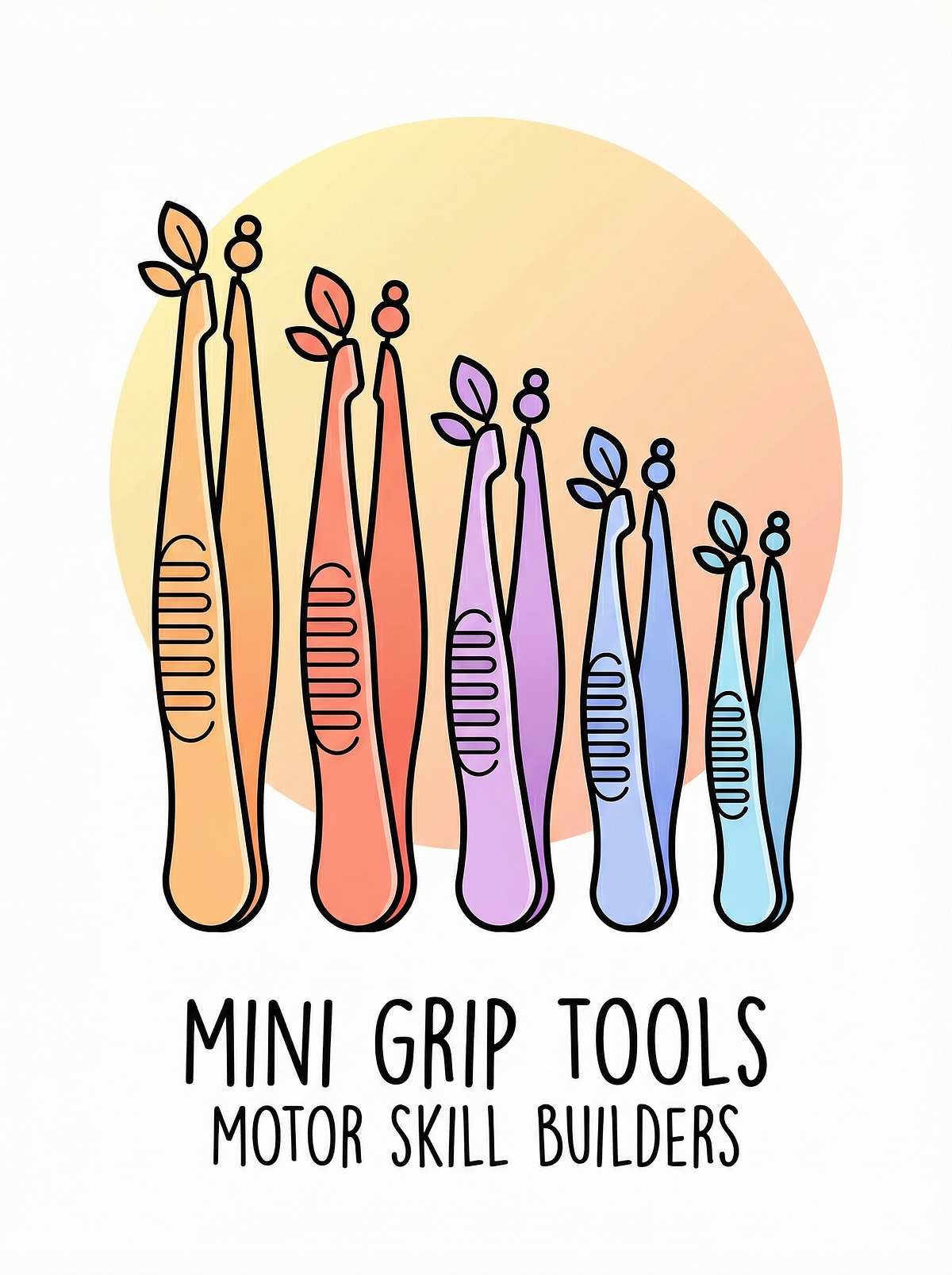
Material 8: Graduated Tweezer Set
📌 Canon: Fine Motor Tools
Skill Progression
Why This Material Works
A 4-level graduated tweezer set is the backbone of a clinically structured progression. The key principle: the right challenge level is one where the child succeeds approximately 60–80% of the time. Too easy (90%+ success) = no neural growth. Too hard (below 50% success) = frustration and avoidance. A properly graduated set gives you the ability to move precisely up or down in challenge level mid-session, keeping your child in the therapeutic sweet spot at all times.
How to Use It
Begin the session at the child's current mastery level. If the session is going well, move up one level for the final 5 repetitions. If frustration appears, drop down immediately. The graduated set removes the guesswork from difficulty adjustment.
Price Range: ₹300–900 | Search Amazon.in: graduated tweezers set children occupational therapy. DIY: kitchen tongs → clothes clips → standard tweezers progression.
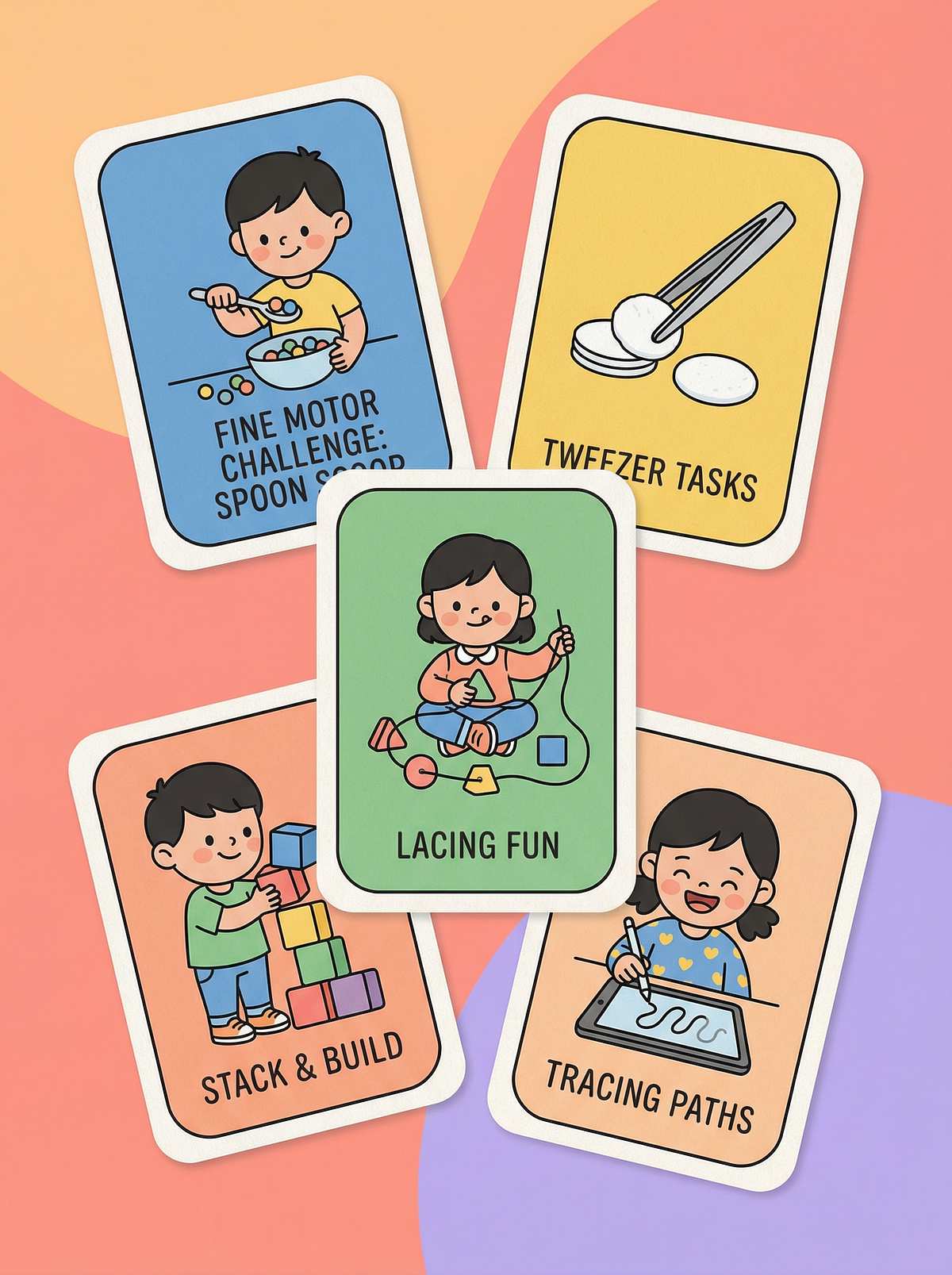
Material 9: Transfer Games / Challenge Cards
📌 Canon: Sorting Activities / Categorization
Structured Motivation
Why This Material Works
Open-ended practice ("just transfer objects") loses motivational power after the novelty wears off. Challenge cards transform open practice into structured goal-pursuit: a card might say "Transfer 8 blue pom-poms in under 2 minutes" or "Sort 3 colors into 3 bowls — red, blue, green." The presence of a clear goal activates the prefrontal cortex alongside the motor cortex, creating richer and more durable neural encoding. Children who play against challenge cards consistently outperform peers doing identical motor practice without goal structures.
How to Use It
Draw one challenge card at the start of each session. Let the child "complete" the card and put it in a "Done" pile — visual progress over weeks is deeply motivating. DIY: Write challenges on paper slips in a jar. Total cost: ₹0.
Price Range: ₹200–600 | Search Amazon.in: fine motor challenge cards transfer games children.
Your Complete Home Toolkit: All 9 Materials
All 9 materials sourced from the Pinnacle 128 Canon Materials system. Start with the Starter Kit — you can begin today.
Jumbo Easy-Grip Tongs
Spring-loaded. Entry point for all hand-strength building. ₹200–600
Pom-Pom Sorting Set
Soft, forgiving, colorful. Dual motor+cognitive challenge. ₹150–400
Pinch-Style Tweezers
Direct pincer grasp training. Spring mechanism reduces complexity. ₹100–350
Water Bead Transfer Kit
Teaches pressure modulation. Sensory engagement extends practice. ₹150–400
Themed Tongs/Tweezers Set
Alligator, dinosaur, robot shapes — transforms therapy into play. ₹250–700
Fine Motor Busy Board
Structured multi-activity format. Self-directed independent practice. ₹500–1,500
Sensory Bin + Hidden Objects
Hunt motivation sustains long practice. Rice/sand bin with treasure. ₹300–800
Graduated Tweezer Set
4-level progression. Right challenge for every skill stage. ₹300–900
Transfer Games / Challenge Cards
Goals, rules, achievement. Transforms open practice into structured motivation. ₹200–600
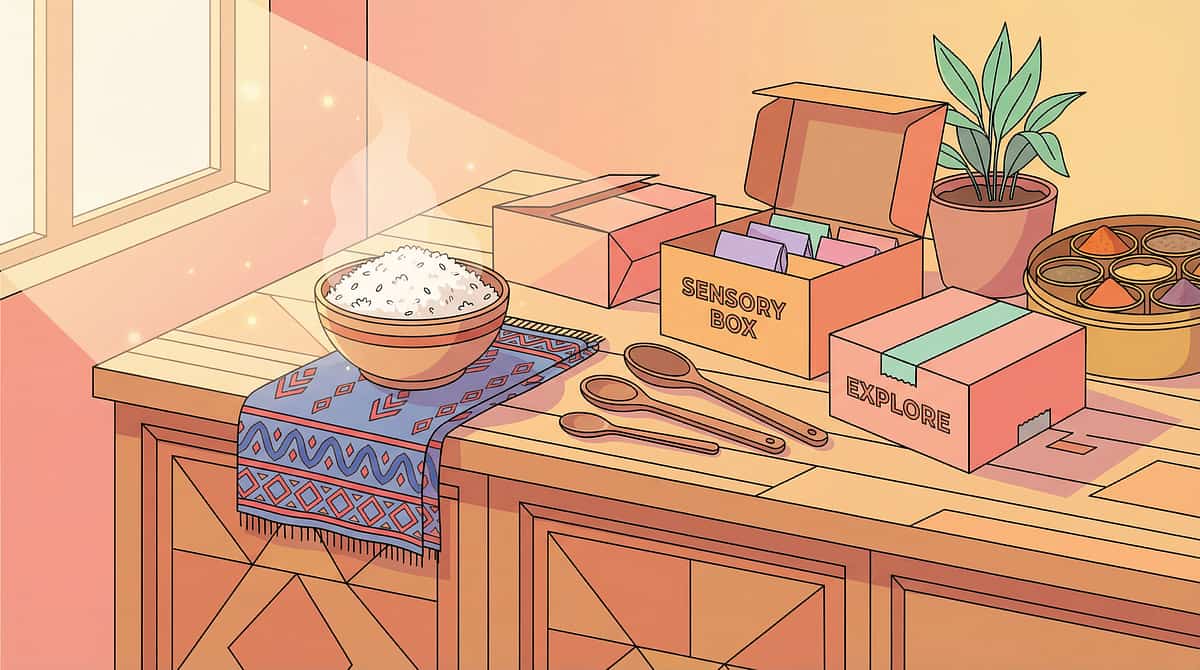
Every Family Can Do This — Including Yours, Today
DIY & Substitute Options
WHO/UNICEF Principle: Equity of access means no child waits because materials are unaffordable. Every technique has a ₹0 version.
Material | Buy | DIY / Substitute — Why It Works |
Jumbo Tongs | ₹200–600 | Kitchen salad tongs — same spring mechanism, same hand challenge |
Pom-Poms | ₹150–400 | Cotton balls, paper balls, crumpled tissue — same soft, forgiving texture |
Pinch Tweezers | ₹100–350 | Strawberry huller from kitchen ₹50–80 — thumb-to-finger opposition identical |
Water Beads | ₹150–400 | Cooked tapioca pearls (sabudana), ice cubes — slippery pressure-challenge preserved |
Themed Tongs | ₹250–700 | Tape animal face drawing on any tong — narrative play still activates imagination |
Busy Board | ₹500–1,500 | Ice cube tray + muffin tin with objects — structured compartment-filling identical |
Sensory Bin | ₹300–800 | Any bowl + dry rice/lentils from kitchen — sensory exploration principle preserved |
Graduated Tweezers | ₹300–900 | Kitchen tongs → clothes clips → tweezers — size/resistance graduation fully achievable |
Challenge Cards | ₹200–600 | Write challenges on paper slips in a jar — goal-setting motivation fully preserved |
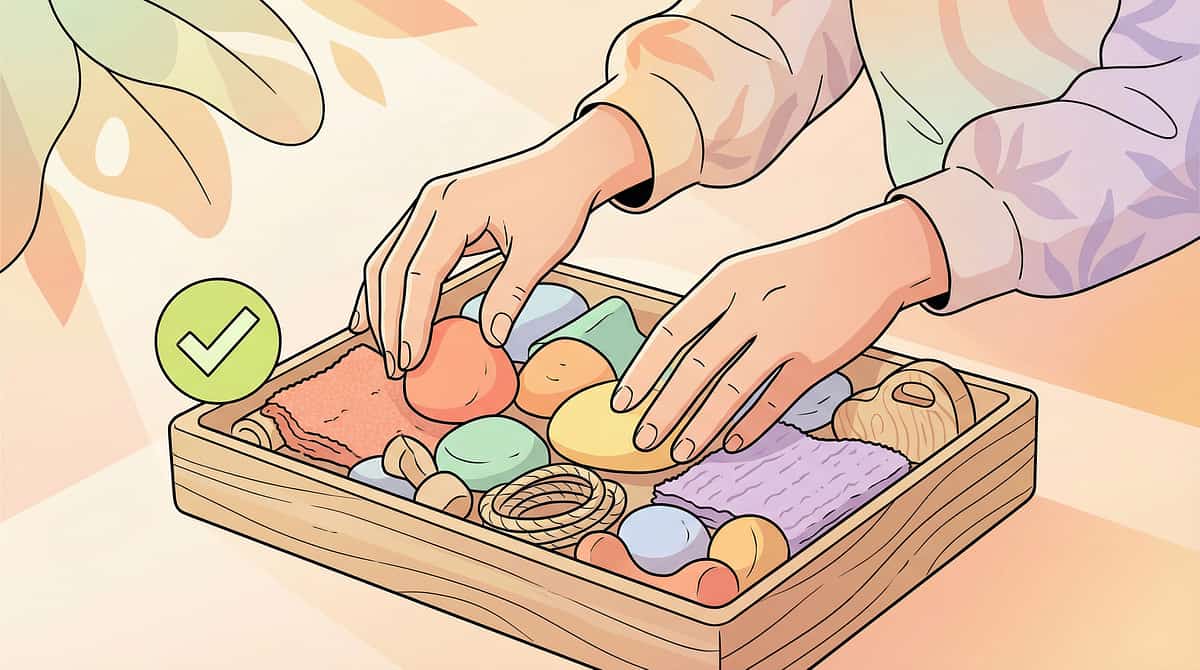
⚠️ Safety First: Before You Begin
Read before every session. These guidelines protect your child and protect the therapeutic relationship.
🔴 RED — Absolute Stop
- Child is unwell, feverish, or in physical discomfort — STOP
- Child is in active meltdown or extreme dysregulation — POSTPONE
- Water beads with a child who still mouths objects — SUBSTITUTE with cotton balls
- Fine-tip tweezers with children under 3 — supervision mandatory
- Any sign of joint pain, swelling, or unusual hand sensitivity — CONSULT OT FIRST
🟡 AMBER — Modify
- Difficult morning → Start with 3 minutes, not 10
- Sensory sensitivities to textures → Offer choice of filler material
- Cold hands → Squeeze playdough 5–10 times first as warm-up
- Child shows reluctance → Drop to easier tool; success > challenge today
- Metal tweezers with ages 3–5 → Supervise continuously, use rubber-tip versions
🟢 GREEN — Proceed When
- Child has had a snack within 30 minutes (not hungry)
- Child is in a calm, alert state (not drowsy, not over-excited)
- You have 10–15 uninterrupted minutes
- Materials are prepared at child's table before session begins
- You are calm and not rushed
Indian J Pediatr (2019): Safety protocols for home-based sensory interventions. DOI:10.1007/s12098-018-2747-4
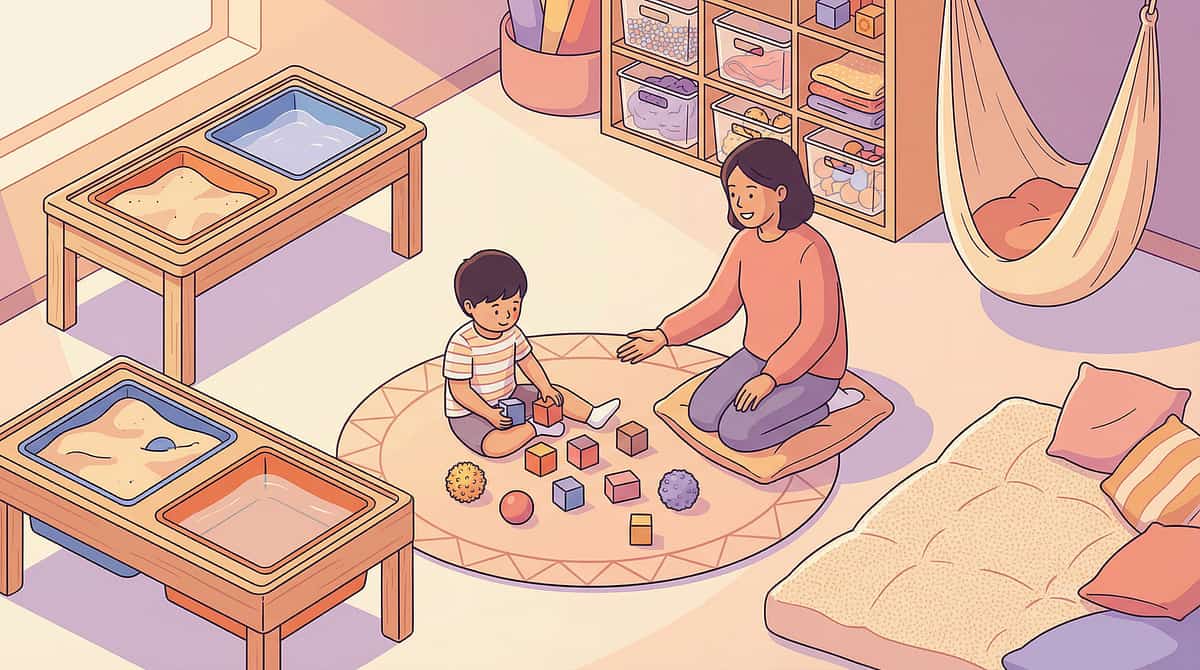
Set Up Your Space
Stage the Environment Before You Begin
Table Height
Child's elbows at 90° when seated. If table is too high, use a cushion to raise the child. Proper height prevents shoulder compensation.
Material Positioning
All materials within arms reach. Start transfer bowls side by side; progress to 20–30 cm apart as skill builds.
Remove Distractions
Other toys out of sight, screens off, food not related to activity removed, siblings in another space if possible.
Lighting & Sound
Bright natural light preferred. No shadows over work surface. Low background noise — soft instrumental music OR silence, based on your child's preference.
Parent Position
Sit to the SIDE of the child, not directly opposite. Side position lets you see the grip without blocking the task visually.
Child's Chair
Feet flat on floor or footrest. Supported posture = better fine motor control. Don't skip this step.
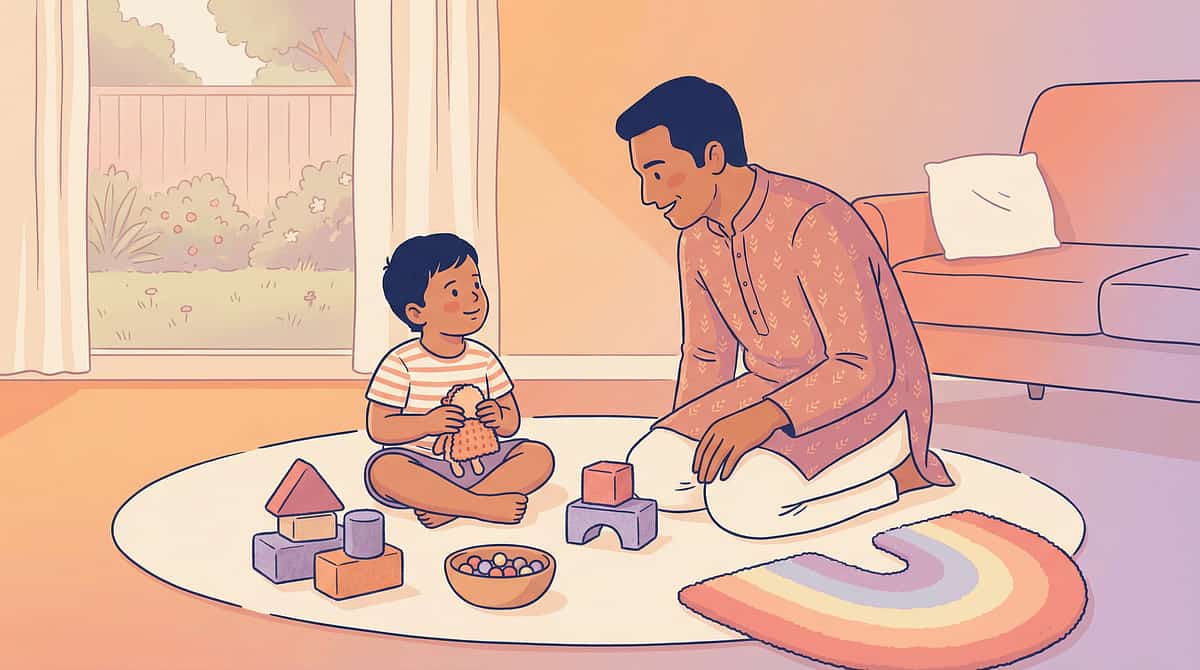
Is Your Child Ready? 60-Second Pre-Flight Check
🧠 ACT III — The Execution
Run this before every session. 2 minutes now prevents a failed 20-minute session.
Check | ✅ Green | ⚡ Amber | ❌ Red |
Last meal | <2 hrs ago | 2–4 hrs ago | >4 hrs, hungry now |
Sleep last night | Adequate for child | Slightly less than usual | Very poor night |
Emotional state | Calm, neutral, curious | Slightly irritable | Upset, crying, angry |
Recent meltdown | None today | >2 hrs ago | <1 hr ago |
Response to voice | Responsive, engaged | Delayed, distracted | Non-responsive |
✅ 5–6 Greens → GO
Begin protocol as planned.
⚡ 3–4 Greens → MODIFY
Use easiest tool, 5 minutes max, extra reinforcement. Stop at first sign of frustration.
❌ 2 or Fewer → POSTPONE
Do a calming activity instead: deep pressure, preferred play. Try again in 1 hour or tomorrow.
"The best session is one that starts right. A 5-minute success is worth 10 times more than a 15-minute struggle."

Step 1: The Invitation
Step 1 of 6
🎉 Begin With Joy, Not a Demand
What to Say
"Hey — want to play the alligator game with me? The hungry alligator needs to eat ALL the green balls before I can!"
"Can you help me sort these? I can't do it without you."
Body Language
- Get to child's eye level — kneel, don't tower
- Warm, excited tone — not clinical, not demanding
- Show the material first; let them explore with hands
- Offer choice: "Red tongs or blue tongs?" — autonomy = engagement
What Acceptance Looks Like
- ✅ Child picks up the tool and examines it
- ✅ Child looks at objects and containers
- ✅ Child makes eye contact (even briefly)
- ✅ Child moves toward the table
- ✅ Child says "okay" or any form of yes
What Resistance Means & What to Do
- ⚡ Child turns away → Bring the object to them, let them touch it first
- ⚡ Child pushes material away → Play with it yourself visually, wait 60 sec
- ❌ Child screams/hits → Today is a POSTPONE day
Timing: 30–60 seconds for the invitation. If no engagement in 90 seconds, MODIFY or POSTPONE.

Step 2: Introduce the Tool & Material
Step 2 of 6
🖐️ Engagement
Show Before You Ask
Hold the tong. Open and close it slowly, making it "talk" or "bite" if themed. Narrate: "See how it opens and closes? The alligator opens his mouth... and BITES the green ball!"
Demonstrate
Pick up one object yourself. Go slowly. Narrate: "I squeeze here... the alligator grabs it... and carries it to the bowl. One!"
Invite Attempt
"Now you try! Can the alligator get the red one?" Place objects in a pile (not scattered). Start container close (5 cm away). One material at a time.
Child Response | What It Means | What To Do |
Immediately grasps correctly | High readiness | Progress to challenge |
Grasps but incorrect position | Typical for beginners | Gently reposition fingers |
Grasps with whole fist | Tool too hard | Switch to easier/bigger tong |
Throws material | Overstimulated or frustrated | Simplify, reduce demand |
Uses hands instead | Rule hasn't landed | Introduce "only tong" rule playfully |

Step 3: The Therapeutic Action
Step 3 of 6
🎯 The Core Therapeutic Event
The child uses tongs or tweezers to pick up objects and transfer them between containers. The active ingredient is not the transfer — it is the squeeze-and-release pattern repeated with enough variety to build neural pathways without fatigue.
Correct Grip Position
- Tong held between thumb pad and index-middle finger pads (not fingernails)
- Ring and pinky fingers curled into palm or resting on tool for support
- Wrist relatively neutral (not severely bent)
- Elbow lifted slightly off table during transfer
Therapeutic Dosage
- Per attempt: 1 pick-up, transfer, release = 1 repetition
- Per session: 10–30 repetitions depending on age, attention, and skill
- Quality rule: 5 good repetitions with correct grip > 20 rushed ones with fist grip
- Duration of core action: 5–10 minutes within 10–15 minute session
Common Errors & Corrections
Error | Correction |
Fisted grip | Switch to larger/spring tong; shorter sessions |
All-finger grip | Hold small object in ring+pinky as they practice |
Crushing objects | Use pressure-feedback objects (water beads teach this) |
Cannot release | Use spring-loaded tong that releases automatically |
Tips miss object | Hand-over-hand guidance briefly; visual model |
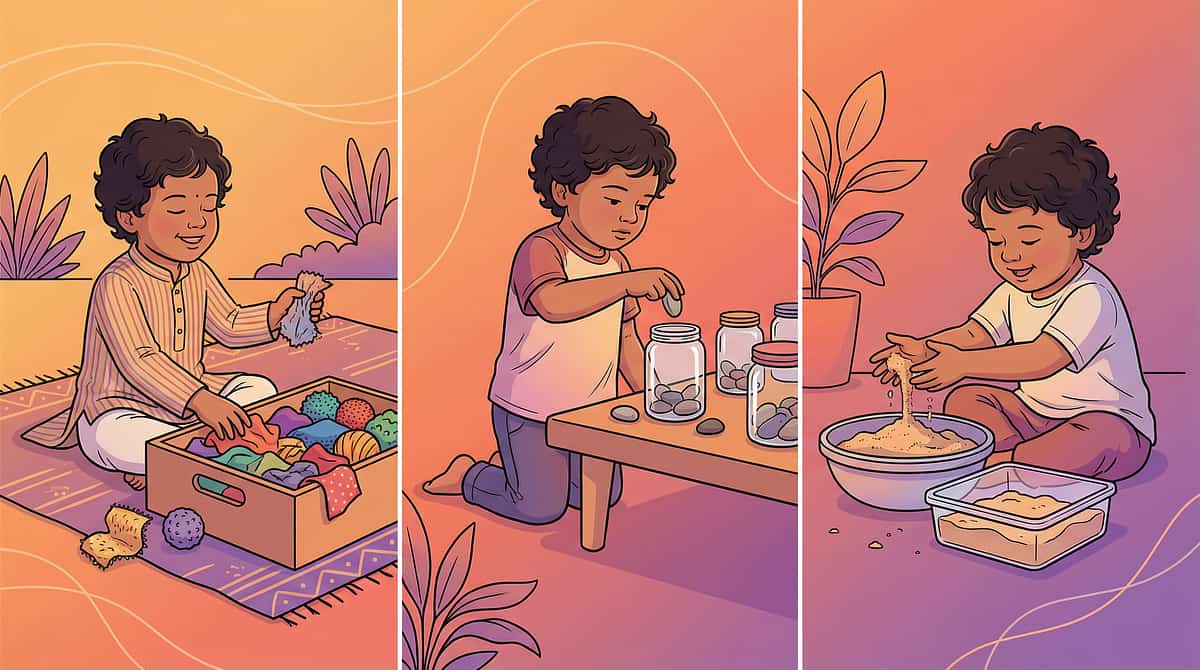
Step 4: Repeat & Vary
Step 4 of 6
🔄 Repetition With Variety = Neural Building
Change the Object
Start: large soft pom-poms → smaller pom-poms → water beads → cereal pieces → small beads. Gradual size reduction increases precision demand.
Change the Task
Sorting by color → Counting → Pattern making (red, blue, red, blue) → Speed challenge (30-second race). Cognitive layers sustain engagement.
Change the Story
"Alligator is still hungry — now he wants the BLUE ones." "The dinosaur is building a nest — 10 eggs!" "Chef needs 5 carrots AND 5 peas sorted."
Change the Container
Wide bowl → Muffin tin compartment → Narrow tube opening → Ice cube tray cell. Smaller openings require greater precision on release.
Age | Target Reps Per Session | Quality Bar |
2–3 years | 5–10 | 70% correct grip |
3–4 years | 10–15 | 80% correct grip |
4–5 years | 15–20 | 85% correct grip |
5–7 years | 20–30 | 90% correct grip |
"3 quality repetitions with correct grip build more neural pathway than 10 rushed ones with a fist. Stop before frustration. End on a success."

Step 5: Reinforce & Celebrate
Step 5 of 6
🎉 Celebrate the Attempt, Not Just the Success
ABA Principle:What gets reinforced gets repeated. Every time you celebrate an attempt — even an imperfect one — you write a neurological instruction: "This action is worth doing again." Reinforce within 3 seconds of the desired behavior. Delayed praise loses 90% of its reinforcement value.
For Correct Grip
"YES! Look at how you're holding it — right there between your fingers!"
For Successful Transfer
"That one was PERFECT! You picked it up and placed it exactly!"
For Persistence After Failure
"You dropped it and tried AGAIN — that's the whole game!"
For Task Completion
"All 10! You just trained your brain!"
Type | Example | Use When |
Verbal praise | "Amazing grip!" "You're SO strong!" | Every single attempt |
Physical affirmation | High five, fist bump, thumbs up | Successful transfer |
Token/sticker | Star on chart, sticker on hand | Session completion |
Activity reward | Extra 2 min preferred toy | Full session completion |
Step 6: The Cool-Down
Step 6 of 6
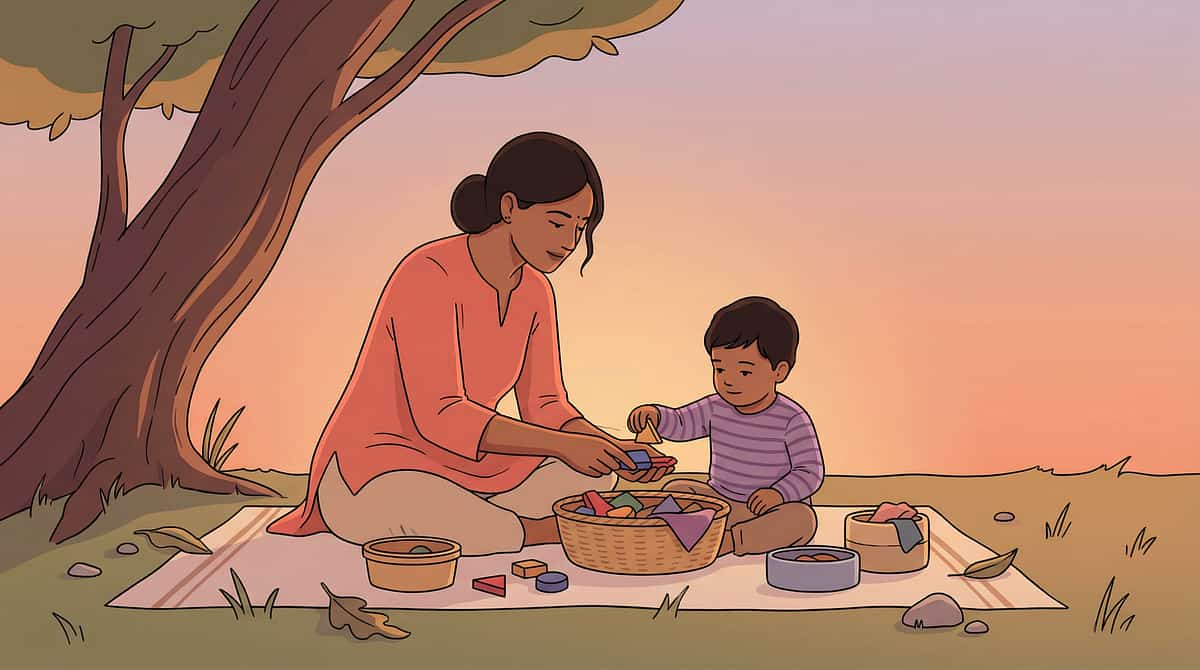
🌙 End Every Session Intentionally
No session ends abruptly. The cool-down is as therapeutic as the session itself. Abrupt endings cause protest and dysregulation. Warning = predictability. Predictability = safety. Safety = willingness to start the next session.
Hand Shake-Out (30 sec)
"Let's shake our hands out — like this." Shake hands loose at wrists. Relieves intrinsic muscle tension built up during the session.
Put-Away Ritual (1 min)
Child participates in returning materials to containers. Teaches closure and order, and gives 1 more minute of low-demand tool practice. Win-win.
Heavy Work Ending (30–60 sec)
Firm hand clap together (parent-child), wall push (hands flat on wall, push 10 seconds), or gentle hand massage. Proprioceptive input calms the nervous system.
Transition Cue
Visual timer shows zero. You say: "Tong time is done. Next we [preferred activity]." If child resists: "One more, and then it's YOUR choice time."

Capture the Data: Right Now
📊 60 Seconds of Data Now = Months of Clarity Later
The 3-Field Session Tracker
Field 1: Session Duration
How many minutes did the child engage? (Target: 10–15 min. Even 5 min counts.)
How many minutes did the child engage? (Target: 10–15 min. Even 5 min counts.)
Field 2: Grip Quality Rating (1–5)
1 = Whole fist only | 2 = Mix fist/fingers | 3 = Mostly fingers | 4 = Consistent finger grip | 5 = Correct pincer consistently
1 = Whole fist only | 2 = Mix fist/fingers | 3 = Mostly fingers | 4 = Consistent finger grip | 5 = Correct pincer consistently
Field 3: Transfers Completed
How many successful object transfers in the session? Tally marks — simple, fast, honest.
How many successful object transfers in the session? Tally marks — simple, fast, honest.
Bonus Field: Any notable observation? (e.g., "Used water beads for first time — no crushing!")
Why This Data Matters
Shows real progress — prevents parent discouragement when progress feels slow
Enables your OT to adjust the protocol remotely via teleconsult
Feeds GPT-OS® AbilityScore® to track Fine Motor Independence Index
Creates a record for school readiness documentation
📞 FREE Helpline: 9100 181 181 — Our team reviews data and adjusts protocol.
Families Who've Been Here
💬 Real Journeys from the Pinnacle Network
Arjun, 5 Years — Hyderabad
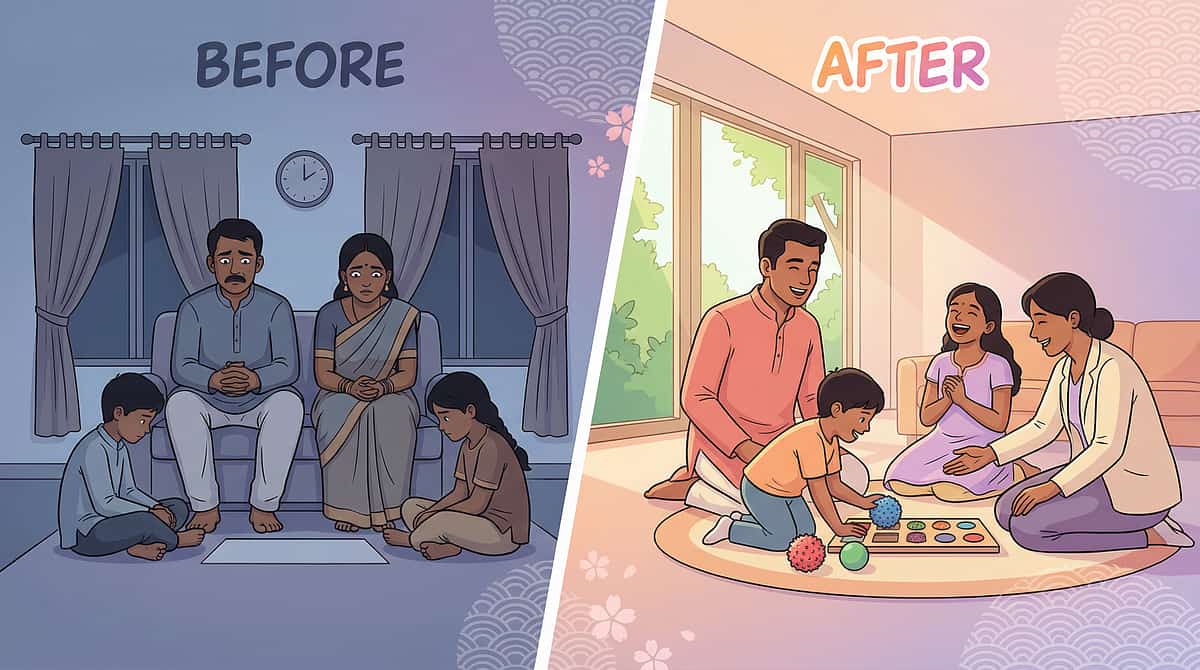
Before (Week 0): Kindergarten teacher sent a note: "Arjun's pencil grip is affecting his writing speed. He holds the pencil in a fist and tires after 5 minutes." At home, he couldn't pick up small Lego pieces, dropped food constantly, and refused all craft activities. He threw tweezers across the room the first time they were offered.
After (Week 8): Arjun now uses a functional tripod grip. He writes for 5–20 minutes without fatigue. He picks up rice grains with tweezers for a school project.
"The turning point was the alligator tongs. He didn't know he was doing therapy — he was feeding the alligator. Eight weeks of that, and everything changed."
Riya, 3.5 Years — Bengaluru
Before (Week 0): Riya couldn't button her school shirt without crying from frustration. Her OT identified significantly underdeveloped intrinsic hand muscles. She avoided all small-object play.
After (Week 10): Riya can button 3 of 4 shirt buttons independently. She uses child scissors with better control. She plays with her bead threading set for 20+ minutes voluntarily.
Ishaan, 6 Years — Pune
Before: Ishaan's writing was illegible due to immature grasp and excessive pencil pressure. He pressed so hard his pencil broke regularly.
After (Week 8): Water bead practice taught him pressure modulation — the same skill needed to moderate pencil pressure. His writing legibility improved significantly.
Individual results vary. These are illustrative accounts representing the range of outcomes documented across the Pinnacle Network. All data per GPT-OS® tracking protocols.

Connect With Other Parents
🤝 You Don't Have to Navigate This Alone
📱 WhatsApp Community
Pinnacle Parents Fine Motor Group — share wins, ask questions, get peer advice from parents 2–3 months ahead of you.
💻 Online Parent Forum
F-613 dedicated thread: "Tongs & Tweezers — What's Working." Visit community.pinnacleblooms.org
🤝 Peer Mentoring Program
Connect 1:1 with a parent who completed the tongs protocol with their child. WhatsApp support.
📍 Local Parent Meetups
Pinnacle centers host monthly parent education sessions. Meet families navigating the same challenges in your city.

Your Professional Support Team
🏥 Home Practice + Professional Guidance = Maximum Impact
Therapist Matching for This Technique
Primary
Pediatric Occupational Therapist — Pincer Grasp & Fine Motor
Supporting
ABA Therapist / BCBA — Reinforcement Protocol
Coordinating
NeuroDev Pediatrician — Medical Clearance + Red Flag Monitoring
What a Professional Session Adds
- Formal pinch strength measurement (dynamometry)
- Validated assessments: Beery VMI, Bruininks-Oseretsky
- Customized tool selection and progression plan
- Direct observation of grip patterns and motor planning
- Integration with school IEP/SRP documentation
The Home-Clinic Formula
7×
1 clinic session/week + 6 home sessions/week = 7× more therapeutic dosage than clinic alone.
Teleconsultation Options
For families outside major cities, or for remote protocol review. Available in 16+ languages. Response within 24 hours.
📞 FREE Helpline: 9100 181 181
Speak to an OT for immediate guidance.
Speak to an OT for immediate guidance.
The Science Behind This Page
📚 Research Library
For the parent who wants to go deeper. Direct links. Oxford EBM levels. No paywalls where possible.
# | Study | Key Finding |
1 | PRISMA Systematic Review, Children (2024) — PMC11506176 | 16 studies: Sensory integration + fine motor intervention = evidence-based practice for ASD |
2 | Meta-Analysis, World J Clin Cases (2024) — PMC10955541 | 24 studies: SI therapy promotes fine motor, social, adaptive behavior |
3 | WHO CCD Package (2023) — PMC9978394 | Caregiver-delivered activities improve developmental outcomes in 54 LMICs |
4 | Padmanabha et al., Indian J Pediatr (2019) — DOI:10.1007/s12098-018-2747-4 | Home-based sensory intervention: significant outcomes in Indian ASD children |
5 | NCAEP Evidence-Based Practices (2020) | Fine motor and tool-use practice: evidence-based for ASD |
6 | Frontiers Integrative Neuroscience (2020) — DOI:10.3389/fnint.2020.556660 | Neurological basis for sensory-based motor interventions |
How GPT-OS® Uses Your Data
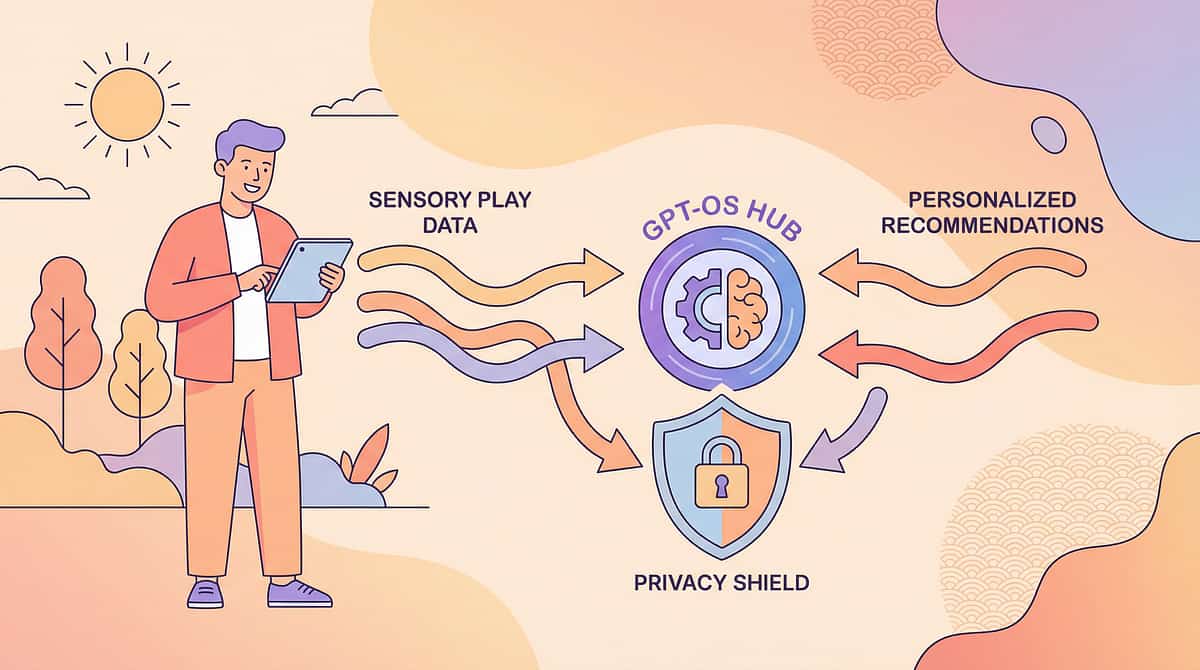
⚙️ Your Sessions Feed a System That Serves Every Child Like Yours
The GPT-OS® Stack
AbilityScore®
Universal developmental score (0–1000) tracking Fine Motor Independence Index.
TherapeuticAI®
Determines progression timing and next technique recommendations.
EverydayTherapyProgramme™
Generates your personalized daily home session plan.
FusionModule™
Coordinates fine motor data with OT, ABA, SLP, SpEd records.
Prognosis Engine
Predicts readiness for school-relevant fine motor milestones.
"Your 10-minute tong session today helps calibrate better protocols for 10,000 families tomorrow. That's therapeutic infrastructure at scale."

See It in Action: The Original Reel
🎬 F-613 Video
About This Reel
Title: 9 Materials That Help With Tongs and Tweezers
Reel ID: F-613 | Series Episode 613
Domain: OT-FMT | Fine Motor / Pincer Grasp / Tool Use
Duration: ~75–85 seconds
Available: Instagram, YouTube, Pinnacle OTT Platform
Reel ID: F-613 | Series Episode 613
Domain: OT-FMT | Fine Motor / Pincer Grasp / Tool Use
Duration: ~75–85 seconds
Available: Instagram, YouTube, Pinnacle OTT Platform
In this 60-second reel, our Pediatric OT demonstrates all 9 materials — from jumbo tongs to fine-tip tweezers — showing you exactly what each material looks like in practice with a child. If you've just read through this page, watching the reel will cement the techniques into visual memory.
Related Reels:
← F-612: 9 Materials for Playdough Manipulation
→ F-614: 9 Materials for Scissors Skills
← F-612: 9 Materials for Playdough Manipulation
→ F-614: 9 Materials for Scissors Skills
Follow for 70,000+ Techniques: @pinnacleblooms on Instagram | YouTube | OTT Platform
Share This With Your Family
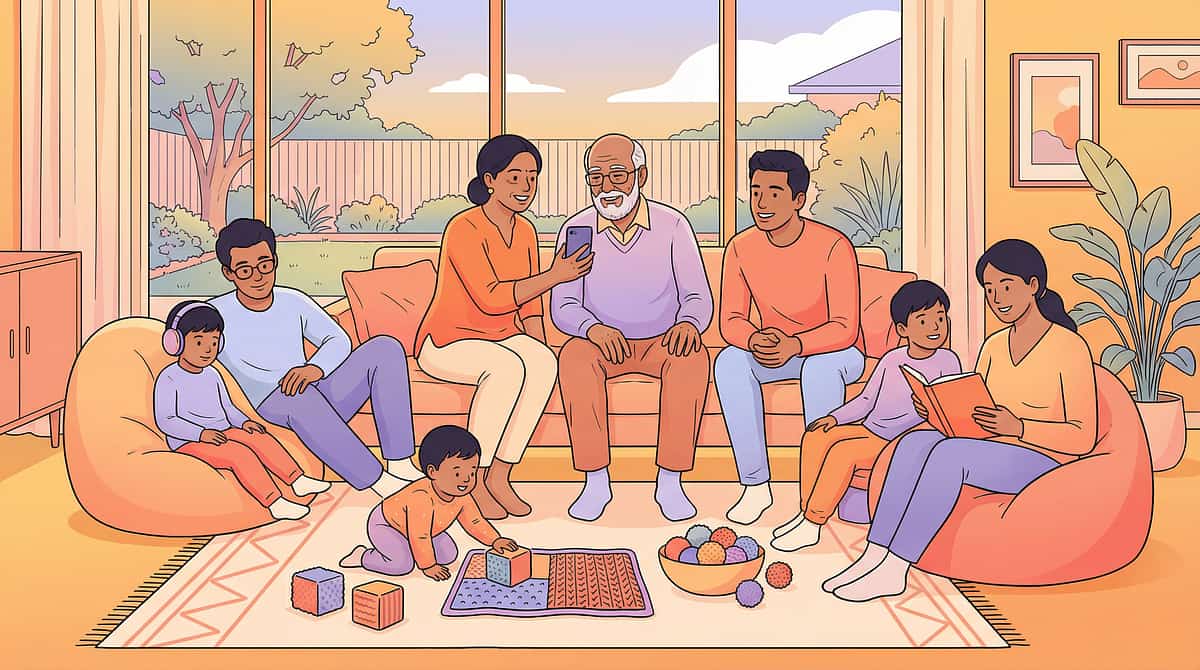
📤 Consistency Across ALL Caregivers Multiplies Impact
A child receiving 10-minute tong sessions from one parent, one grandparent, and one teacher = 3× the therapeutic dosage. But only if ALL use the same materials, same approach, and same reinforcement language. Inconsistency undoes progress.
"Raju needs to practice squeezing things with his fingers, not his whole hand. Give him the tong/tweezer and let him pick up cotton balls into a bowl for 5 minutes every day. Celebrate every success, even small ones. That's it. Same game, every day. Don't change the tool or the objects — consistency is how it works."
— "Explain to Grandparents" simplified version
PMC9978394: WHO CCD Package — multi-caregiver training is critical for intervention generalization and maintenance across settings.
Share & Download
📲 Share via WhatsApp
unknown link

Frequently Asked Questions
❓ ACT VI — The Close & Loop
How long before I see results?
Most parents notice small but observable change in grip quality by Week 2–3 (reduced throwing, increased tolerance). Measurable grip pattern improvement is typically visible by Week 4–5. Functional independence transfer (pencil, buttons) usually Week 6–8. Every child's timeline varies based on baseline skill level and session consistency.
My child refuses the tong — is this technique wrong for them?
Refusal at the start is extremely common and does not mean the technique is wrong. Review Cards 14–15 on the invitation protocol. Start with 30 seconds of free play before any demand. Change the narrative (themed tools). Lower the difficulty entirely. Refusal is a communication — not a final answer.
Do I need all 9 materials, or can I start with fewer?
Start with 3: Jumbo tongs + pom-pom set + basic tweezers. That's a complete Starter Kit covering the full difficulty range. Add materials as your child masters each level and as budget allows.
My child uses tongs well but pencil grip hasn't improved — why?
The neural transfer from tong skill to pencil grip usually lags 2–4 weeks behind tong mastery. The pathway is being built; the application follows. Continue tong work and begin introducing F-610 (Pencil Grip) techniques alongside.
Is this safe to do every day?
Yes, for properly graded sessions. Intrinsic hand muscles recover quickly in children. 10–15 minutes daily is well within safe therapeutic dosage. The daily consistency is what drives neuroplastic change — less frequent practice significantly reduces effectiveness.
How do I know which level of tool to use?
The 80% rule: If the child succeeds with the current tool 80%+ of the time, add a challenge. If success is below 50%, reduce difficulty. The sweet spot is 60–80% success — challenging enough to build skill, rewarding enough to maintain motivation.
Can I use this with a child without an autism diagnosis?
Absolutely. Fine motor delays and pincer grasp challenges occur in children across developmental profiles — with and without autism. This technique is evidence-based for any child with fine motor skill gaps in this developmental stage.
✅ You Have Everything You Need
You've read the science. You've seen the protocol. You've met families who were where you are. The only thing left is to begin.
20M+
Therapy Sessions
Delivered across the Pinnacle Network
97%+
Measured Improvement
Across all tracked GPT-OS® sessions
70+
Centers in India
And families in 70+ countries worldwide
Preview of 9 materials that help with tongs and tweezers Therapy Material
Below is a visual preview of 9 materials that help with tongs and tweezers therapy material. The pages shown help educators, therapists, and caregivers understand the structure and content of the resource before use. Materials should be used under appropriate professional guidance.


Link copied!

The Pinnacle Promise
✦ Pinnacle Blooms Network®
"From fear to mastery. One technique at a time." — The Pinnacle Blooms Consortium
OT
Occupational Therapy
SLP
Speech-Language Pathology
ABA/BCBA
Behavior Analysis
SpEd
Special Education
NeuroDev
Neurodevelopmental Pediatrics
Technique F-613: 9 Materials That Help With Tongs and Tweezers
Part of the GPT-OS® Intervention Library — 70,000+ evidence-linked techniques
Published at: techniques.pinnacleblooms.org/fine-motor/tongs-tweezers-f-613
Part of the GPT-OS® Intervention Library — 70,000+ evidence-linked techniques
Published at: techniques.pinnacleblooms.org/fine-motor/tongs-tweezers-f-613
CIN: U74999TG2016PTC113063 | DPIIT: DIPP8651 (Govt. of India) | MSME: TS20F0009606 | GSTIN: 36AAGCB9722P1Z2
📞 9100 181 181 | 24×7 | 16+ languages | pinnacleblooms.org
This content is educational and does not replace evaluation or treatment by licensed healthcare providers. Fine motor skill delays may have underlying causes requiring professional assessment by Occupational Therapists or developmental specialists. If your child has significant difficulty with hand skills affecting daily functioning, please consult with appropriate professionals for comprehensive evaluation. Individual results may vary. Statistics represent aggregate outcomes across the Pinnacle Blooms Network. © 2025–2026 Pinnacle Blooms Network®, unit of Bharath Healthcare Laboratories Pvt. Ltd. All rights reserved.