

9 Materials That Help With Realistic Expectations
When hope and reality need to find each other
"It's 9 PM and you're sitting at the kitchen table again — your child asleep, the reports spread in front of you. Last Tuesday his therapist said 'great progress.' This Tuesday your sister's toddler just said a full sentence and your chest caved in. You are not failing. And your child is not failing. But somewhere between hope and reality, you've lost the ground to stand on."
"You are not giving up by being realistic. You are becoming the parent your child actually needs."
🏥 Pinnacle Blooms Consortium®
👨👩👧 Parents of Children 0–18
🌍 70+ Countries
WHO Nurturing Care Framework (2018): Parental awareness and engagement directly impact developmental outcomes. Caregiver psychological wellbeing is a primary determinant of child progress. nurturing-care.org/ncf-for-ecd

ACT I — The Emotional Entry
The Scale of What You're Navigating
You are not alone in this confusion. Expectation dysregulation — oscillating between excessive optimism and catastrophic pessimism — is one of the most underaddressed challenges in pediatric developmental care. It affects parents across all income levels, education levels, and cultural backgrounds.
1 in 36
ASD Diagnosis Rate
Children in the US diagnosed with ASD (CDC, 2023). India estimates: 1 in 68–89.
78%
Parental Anxiety
Parents of children with developmental differences reporting clinically significant anxiety about their child's future outcomes.
91%
Lost Between Hope & Reality
Parents reporting feeling "lost between hope and reality" at diagnosis and beyond.
"You are among millions of families worldwide navigating this exact tension. The confusion you feel is not weakness — it's an unmet clinical need."
India is home to an estimated 7–8 million children with autism spectrum disorder. Pinnacle Blooms Network® serves families across 70+ centers, 16+ languages, with 20M+ exclusive 1:1 therapy sessions completed under GPT-OS® protocols.

ACT I — The Emotional Entry
What's Happening in Your Mind and Your Child's Brain
The Parent's Brain Under Expectation Stress
When parents oscillate between hope and despair, it's not weakness — it's a documented psychological phenomenon. Without individualized, data-grounded information, the parent's threat-detection system (amygdala) fills the gap with worst-case projections, while the reward system projects idealized futures. The gap between these poles creates chronic psychological stress.
The Mechanism
When parents have accurate, individualized, regularly updated information about their child's trajectory, the amygdala's threat response reduces. Decisions improve. Therapy adherence increases. The parent-child relationship strengthens.
The Child's Brain — Why Ranges Matter
Neurodevelopmental differences do not follow a single predictable trajectory. The prefrontal cortex, responsible for higher executive functions, shows the widest individual variation in development. A child's specific neurological profile — sensory processing thresholds, language network architecture, executive function development — determines their unique trajectory. No population statistic fully captures a single child.
"This is not a parenting problem. It's an information problem. The right materials deliver the right information — and information is what calibrates hope."
Frontiers in Integrative Neuroscience (2020): Neurological basis for individualized developmental trajectories in ASD confirmed. Parental psychological flexibility correlates with child intervention adherence.

ACT I — The Emotional Entry
The Lifelong Journey of Expectation Recalibration
Every stage of your child's development brings new expectations — and new opportunities to recalibrate. Understanding where you are on this journey transforms confusion into actionable clarity.
Diagnosis (0–3 yrs)
Shock → Grief → Adjust. Initial expectations shift from typical development to individualized trajectory. Most parents need help processing the difference between "what I expected" and "what the data shows."
Early Intervention (3–6 yrs)
High Hope → First Plateau. Often the most volatile period — rapid visible gains can fuel unrealistic optimism. Plateaus that follow can be devastating without preparation.
School Age (6–12 yrs)
Gap Visible → Rapid Gains. First systematic social comparison. Academic expectations become concrete. The gap between your child's peers and your child becomes visible in structured settings daily.
Adolescence (12–18 yrs)
Future Urgent → Independence. Transition planning becomes urgent. Questions of independence, employment, and relationships arise with increasing emotional weight.
Transition (18+ yrs)
Concrete Planning → Adult Life. Requires concrete planning based on realistic functional assessment. The definition of "success" must actively evolve.
"Your child is here. Here is the trajectory forward. Both the hope AND the realism are in the data — not in comparison, not in statistics, not in other children."

ACT I — The Emotional Entry
The Evidence Behind This Approach
Clinically validated. Home-applicable. Parent-proven. These 9 materials are selected from Pinnacle's 128 Canon Materials taxonomy and 20M+ session evidence base.
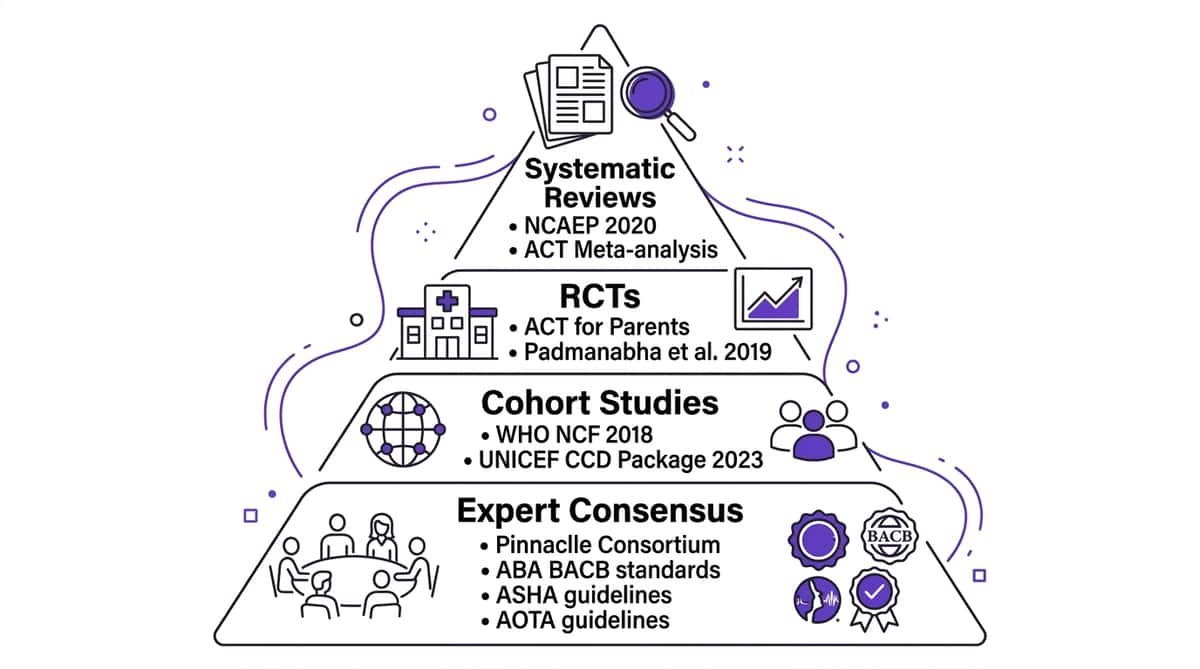
40–60% Reduction
In parental anxiety scores when parents receive structured expectation calibration support.
Improved Adherence
Significantly improved therapy adherence and better parent-child interaction quality.
ACT for Parents
Multiple RCTs confirm ACT-based parent programs reduce psychological distress and increase parenting efficacy in ASD families.
Individualized Tracking
Families using child-vs-own-baseline tools report greater satisfaction and reduced burnout vs. normative comparison families.
"Realistic expectations — defined as individualized, data-grounded, regularly updated, and psychologically flexible — are the strongest single predictor of sustainable home-based intervention implementation."

ACT II — Knowledge Transfer
The Technique: What It Is
Expectation Calibration for Developmental Differences
Parent-Friendly Alias: Finding Your Ground — The Realistic Hope Framework
PAR-EXPECT
Parent Education
Family Wellbeing
Caregiver Mindset
Expectation Calibration is the systematic process of aligning a parent's beliefs about their child's developmental trajectory with individualized, evidence-based, regularly updated data — while maintaining psychological flexibility to hold hope and acceptance simultaneously.
What It Is NOT
- Lowering your dreams for your child
- Pessimism or resignation
- Giving up on therapy or intervention
- Accepting a fixed ceiling for your child's potential
What It IS
- Aiming accurately at your child's actual trajectory
- Making decisions based on data, not fear or wishful thinking
- Sustaining engagement over the long journey without burning out
- Holding hope and reality as partners, not opposites
Age Range
Parents of children 0–18 years
Setting
Home, therapy setting, educational planning meetings, support groups
Frequency
Ongoing practice; formal recalibration every 6 months minimum

ACT II — Knowledge Transfer
Who Uses This Technique
The parent's expectation is not a psychology problem or a medical problem. It touches every discipline's work. That's why the Pinnacle consortium addresses it as a system — not in silos.
NeuroDev Pediatrics (Primary Lead)
Provides the medical-grade prognostic foundation. Specialists interpret diagnostic data, explain developmental trajectories, and anchor expectations in biological reality while maintaining hope for neuroplasticity.
Parent Coaching & Psychology
Delivers ACT-based frameworks, comparison awareness training, and psychological flexibility tools. Addresses grief processing, decision fatigue, and expectation-related anxiety.
Speech-Language Pathology (SLP)
Calibrates communication expectations — explaining functional communication goals, AAC trajectories, and realistic timelines for language development based on individual profiles.
Occupational Therapy (OT)
Frames sensory, motor, and daily living skill expectations. Helps parents understand plateau phases, sensory-motor development curves, and realistic independence timelines.
ABA / BCBA
Provides behavioral data interpretation support — helping parents read skill acquisition data, understand learning curves, and set graduated behavioral goals.
Special Education (SpEd)
Translates educational expectations — IEP goals, academic achievement trajectories, least restrictive environment, and transition planning realities.
ACT II — Knowledge Transfer
The Precision Targets of Expectation Calibration
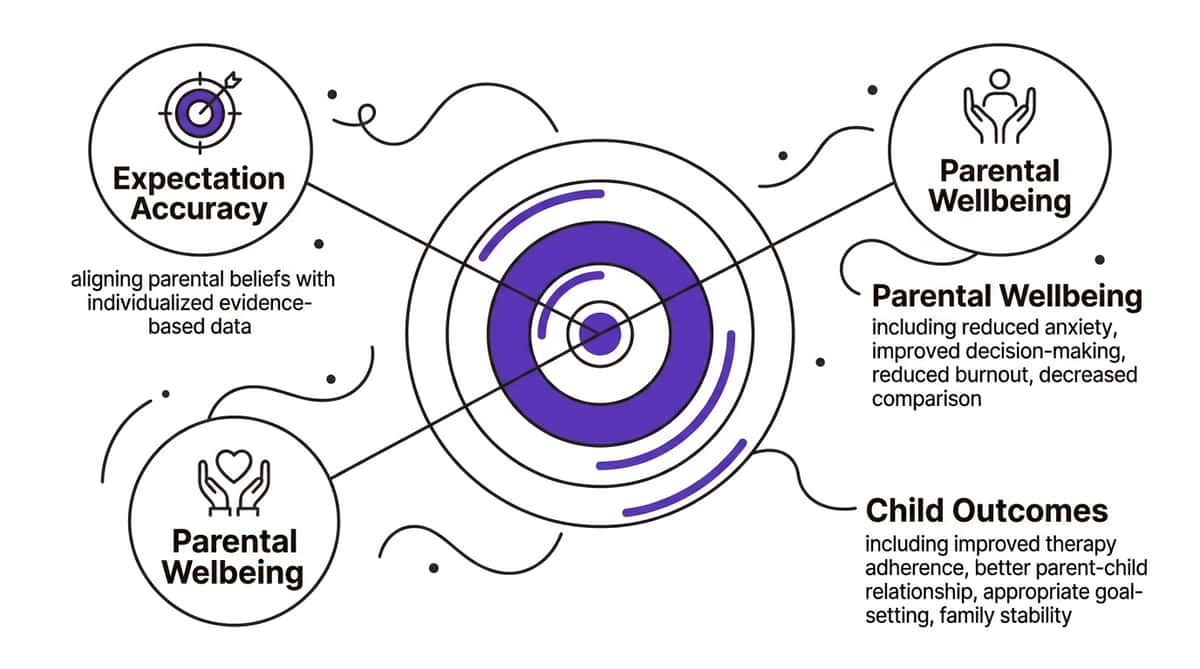
Target | "Not Yet" Indicator | "Progressing" Indicator | "Achieved" Indicator | |
Expectation Accuracy | Wildly optimistic OR catastrophic | Gathering information, still volatile | Individualized, data-based, calm | |
Reduced Anxiety | Crisis-level distress | Functional with support | Managed, regulated | |
Comparison Behavior | Constant, distressing | Aware, sometimes caught | Rare, redirected quickly | |
Decision Quality | Paralysis or reactive | Seeking information | Evidence-informed, calm |
Meta-analysis (World J Clin Cases, 2024): Caregiver wellbeing is bidirectionally linked to child therapy outcomes across sensory integration, ABA, and SLP domains. PMC10955541

ACT II — Knowledge Transfer
9 Materials Validated by the Pinnacle Consortium
While dedicated "Expectation Calibration" physical products are limited in the Canon database, the following Canon-adjacent and Amazon-available resources directly serve this technique. Pinnacle recommends these for home-based implementation.
Developmental Milestone Charts with Ranges
📂 Developmental Reference Materials | 💰 ₹0–200 (many free online)
Range-based charts replace single-age markers with developmental windows, eliminating the false precision that fuels parental anxiety. Search Amazon.in →
Range-based charts replace single-age markers with developmental windows, eliminating the false precision that fuels parental anxiety. Search Amazon.in →
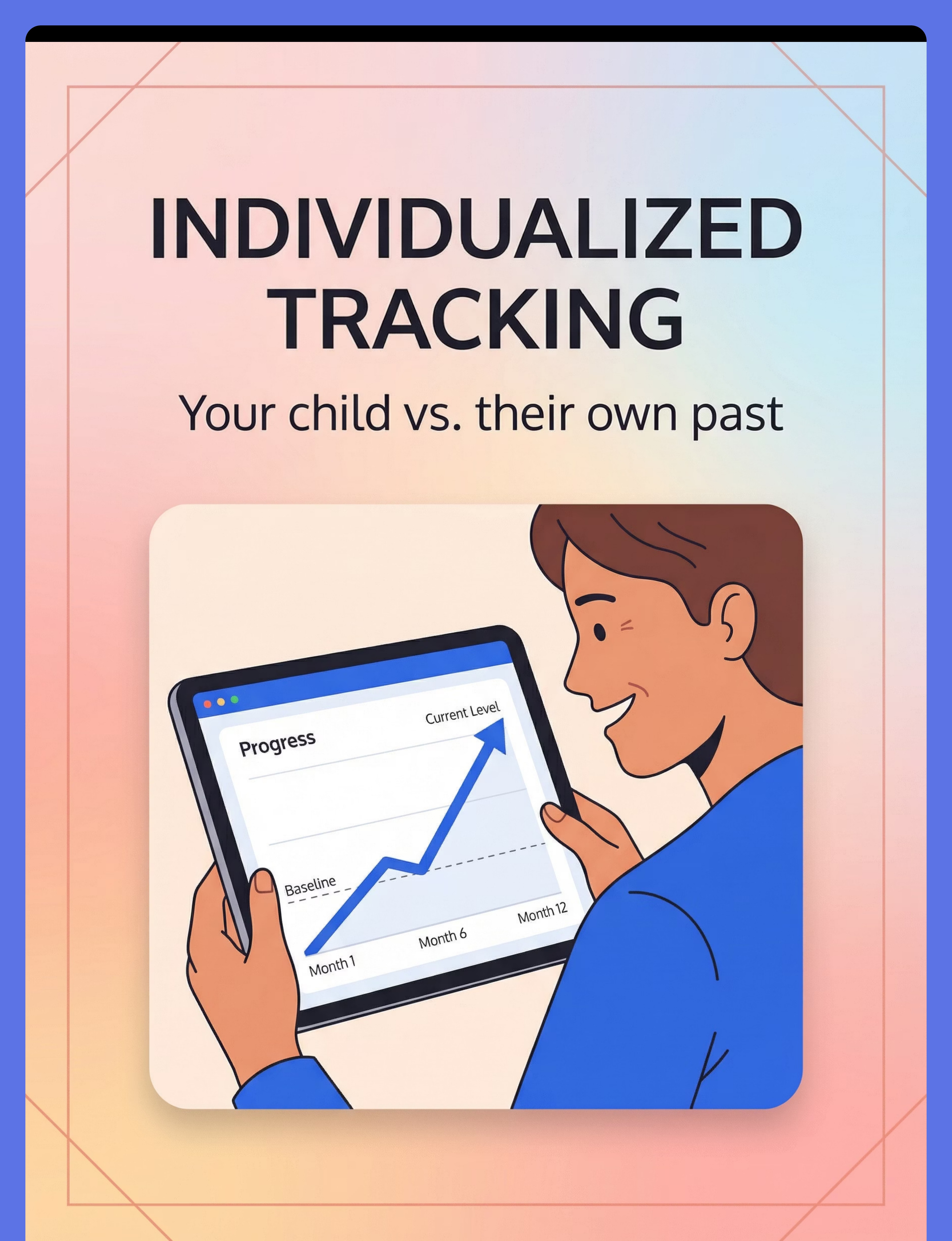
Individualized Progress Tracking Tools
📂 Data Tracking / AbilityScore® (GPT-OS® Module) | 💰 ₹0–500
Shifts focus from peer comparison to child-vs-own-baseline measurement — the only clinically valid comparison frame. AbilityScore® via GPT-OS® →
Shifts focus from peer comparison to child-vs-own-baseline measurement — the only clinically valid comparison frame. AbilityScore® via GPT-OS® →
Prognosis Discussion Guides
📂 Parent Empowerment / Consultation Tools | 💰 ₹0–100 (printable)
Structured question guides unlock honest prognostic conversations that professionals often don't initiate without prompting. Search Amazon.in →
Structured question guides unlock honest prognostic conversations that professionals often don't initiate without prompting. Search Amazon.in →
Research Summaries & Evidence Guides
📂 Parent Education / Evidence Literacy | 💰 ₹0–300
Evidence literacy protects parents from both miracle-cure misinformation and unnecessarily catastrophic prognoses. Search Amazon.in →
Evidence literacy protects parents from both miracle-cure misinformation and unnecessarily catastrophic prognoses. Search Amazon.in →
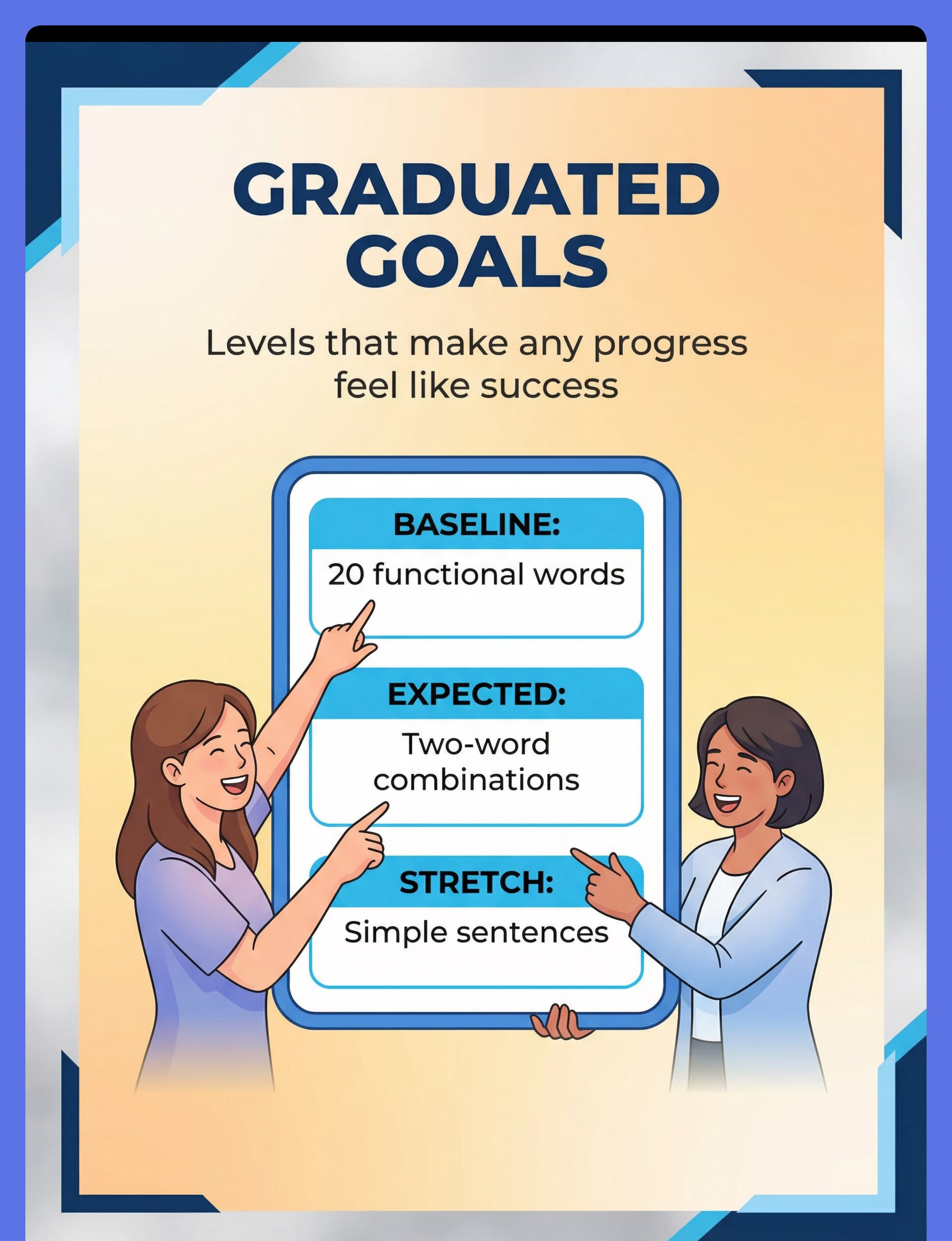
Goal-Setting Frameworks with Levels
📂 Therapeutic Planning / IEP Goal Tools | 💰 ₹0–200
Graduated goals (Baseline/Expected/Stretch) prevent all-or-nothing thinking and ensure that ANY progress registers as meaningful success. Search Amazon.in →
Graduated goals (Baseline/Expected/Stretch) prevent all-or-nothing thinking and ensure that ANY progress registers as meaningful success. Search Amazon.in →
Adult Outcome Stories & Profiles
📂 Parent Education / Adult Autism Narratives | 💰 ₹0–400
Parents cannot imagine futures they have never seen. Diverse adult profiles expand the imagination of what "success" looks like. Search Amazon.in →
Parents cannot imagine futures they have never seen. Diverse adult profiles expand the imagination of what "success" looks like. Search Amazon.in →
Comparison Awareness Tools
📂 Parent Wellbeing / Mindfulness Materials | 💰 ₹0–300
Comparison is the primary driver of expectation distortion. Awareness tools break the comparison-anxiety-distortion cycle. Search Amazon.in →
Comparison is the primary driver of expectation distortion. Awareness tools break the comparison-anxiety-distortion cycle. Search Amazon.in →
Acceptance & Commitment (ACT) Resources
📂 Parent Psychology / ACT Workbooks | 💰 ₹300–800
ACT builds the psychological flexibility to hold both hope and uncertainty without paralysis. Search Amazon.in →
ACT builds the psychological flexibility to hold both hope and uncertainty without paralysis. Search Amazon.in →
Regular Review & Recalibration Protocols
📂 Progress Monitoring / Review Systems | 💰 ₹0–200
Expectations must be living documents — updated by data. Scheduled recalibration prevents both outdated pessimism and outdated optimism. Search Amazon.in →
Expectations must be living documents — updated by data. Scheduled recalibration prevents both outdated pessimism and outdated optimism. Search Amazon.in →

ACT II — Knowledge Transfer
Every Material Has a ₹0 Version
WHO/UNICEF Equity Principle: No family should be excluded from evidence-based support due to economic barriers.
"At Pinnacle Blooms Network®, we believe that economic status should never determine a child's access to effective therapy support. These ₹0 options are clinically equivalent for families implementing at home."
Material | ₹0 DIY Version | Why It Works | |
Milestone Charts | Download free CDC/WHO milestone PDFs, print at home or use mobile screen | Same information as commercial charts — free at who.int/publications | |
Progress Tracking | Simple notebook: Date / Skill / Count / Notes. Review monthly | The tracking principle works regardless of format | |
Prognosis Guide | Write 6 questions on a notecard before each therapy appointment | The questions unlock the conversation — the paper is just a prompt | |
Research Summaries | Use PubMed (free), WHO publications (free), NCAEP library (free) | All primary evidence is publicly accessible — no paywall required | |
Graduated Goals | Draw a simple table: Skill / Baseline / Expected / Stretch on any paper | The framework has zero material cost — it's a thinking structure | |
Adult Profiles | YouTube: "autistic adults speak," ASAN channel, TED talks by autistic speakers | Free video access to diverse adult narratives | |
Comparison Awareness | Use any notebook as a "comparison journal" — date, trigger, redirect | The practice is the material — awareness has no cost | |
ACT Resources | Free ACT exercises available at contextualscience.org | Core ACT principles are freely shared by ACT researchers worldwide | |
Review Protocol | Mark phone calendar every 6 months: "Expectation Review Meeting" | A calendar entry is the entire tool — the structure is the value |

ACT II — Knowledge Transfer
Safety First: Before You Begin
These materials are educational tools for grounded, regulated parents seeking clarity. They do not replace professional mental health support. Understanding when to proceed — and when to pause — is itself a clinical skill.
🟢 GREEN — Proceed Safely
- Your child's therapy team is aware you are working on expectation calibration
- You are in a relatively regulated emotional state (not in acute grief crisis)
- You are approaching this as information-gathering, not verdict-seeking
- You have or plan to have professional support alongside these materials
🟡 AMBER — Modify Your Approach
- Tracking activities are increasing your anxiety — reduce frequency or seek therapist guidance
- Prognosis conversations leave you more confused — ask for written summaries
- Adult profile stories trigger grief rather than expanding imagination — pause and process
- Comparison awareness exercises feel overwhelming — simplify to just noticing
🔴 RED — Pause & Seek Support
- Persistent depression or anxiety lasting more than two weeks
- Expectation-related conflict causing significant relationship breakdown
- Any thoughts of harm to yourself or your child
- Complete inability to function due to fear about your child's future
- Grief feels stuck, unmoving, overwhelming for more than a month
If you are in distress, please call our FREE Helpline: 9100 181 181 — available 24x7 in 16+ languages.
iCall (India): 9152987821 | Vandrevala Foundation (24x7): 1860-2662-345
iCall (India): 9152987821 | Vandrevala Foundation (24x7): 1860-2662-345

ACT II — Knowledge Transfer
Preparing Your Home as a Calibration Space
Physical Setup
Quiet room, child asleep or occupied
Your notebook/device within reach
10–20 uninterrupted minutes minimum
No social media or news open
A warm drink if it helps — this is real work
Mindset Preparation — Check Your State
- I am not currently in acute distress
- I am seeking information, not verdict
- I can hold uncertainty without immediately needing to resolve it
- I am willing to update what I believe if new data shows it
Session Intention (choose one)
- Review/update my child's progress tracking
- Prepare questions for upcoming therapy meeting
- Work through a comparison awareness exercise
- Complete a 6-month recalibration review
"Expectation calibration is not an event — it's a practice. Like physical exercise, it requires regularity, not perfection. Ten minutes once a week is more powerful than a 3-hour session once a year."

ACT III — The Execution
60-Second Parent Readiness Assessment
Before working with any of the 9 materials, take 60 seconds to honestly assess your readiness. The best expectation calibration session is one that starts when you're grounded enough to receive what you'll find.
✅ GO — Begin Working
- You slept at least partially last night
- Your child is stable (no acute medical or behavioral crisis today)
- You have 10+ minutes of uninterrupted time
- You are not immediately following an emotionally triggering event
- You have a specific intention for this session (not vague dread)
⚠️ MODIFY — Simplify to 5 Minutes
- You're tired but functional
- Minor distress present but manageable
- Limited time available
Simplified version: Just write one sentence: "What is one thing my child can do today that they couldn't do 3 months ago?"
⏸ POSTPONE — Reschedule
- You're in acute emotional distress
- Child or family crisis happening
- You slept fewer than 3 hours
- You've just received difficult news
"The materials will still be here tomorrow. Taking care of yourself today is the intervention."

ACT III — The Execution
Step 1: The Invitation
Step 1 of 6
⏱ 2–3 minutes
Begin every expectation calibration session with a deliberate opening ritual. This is not affirmation culture — this is a clinical state-change instruction.
"Today I am choosing to look at what is real — not what I fear, and not what I wish. I am choosing my child's actual journey, not someone else's comparison or my own imagination."
Why This Matters
The act of explicitly stating your intention to work with data — not fear or hope alone — activates the prefrontal cortex's regulatory function and reduces amygdala reactivity. You are setting the conditions for honest engagement.
Body Language Guidance
- Sit, don't stand. Groundedness is physical.
- Put your phone face-down.
- Take two slow breaths before opening any material.
Acceptance of What You'll Find
Whatever the data shows, it is information — not verdict. Progress found: celebrate. Plateau found: investigate. Concern found: act. There is no "bad" data — only data you need to respond to effectively.

ACT III — The Execution
Step 2: Engage With Your Chosen Material
Step 2 of 6
⏱ 10–15 minutes
Choose ONE material from the 9 to engage with today. Below are specific engagement instructions for each material.
Developmental Milestone Charts
Open range-based chart for your child's age and domain. Note where your child falls within the range. Write: "This is a range, not a cliff. My child is at [X] on a continuum." Key insight: The single-age number was always a statistical artifact. The range is the truth.
Progress Tracking
Pull your last 3 months of data. Ask ONLY: "Is my child doing more of [skill] than 3 months ago?" If yes — document the gain. Calculate the slope. Key insight: Even 5% more is a slope. A slope is a trajectory. A trajectory is a future.
Prognosis Discussion Guide
Write your 5 most important questions for your next professional meeting. Be specific: "Based on current speech rate, what's a realistic 12-month expectation?" — not "Will he ever talk normally?" Vague questions get vague answers. Specific questions get useful data.
Research Summaries
Choose ONE specific topic. Read for ranges and factors, not singular predictions. Note: What factors are associated with better outcomes for my child's profile? Key insight: You are a factor. Your engagement is a factor. This gives agency.
Graduated Goals
For ONE skill area, define: Baseline (very achievable), Expected (likely), Stretch (ambitious but possible). Ensure all three are genuine milestones. Key insight: Success is now guaranteed at multiple levels. The only failure is refusing to begin.
Adult Outcome Profiles
Watch or read ONE story of an adult with similar developmental history. Note: What life elements brought them engagement and contentment? Key insight: "Success" has more forms than you were originally shown.
Comparison Awareness
Note today's date and any comparison thought from the past week. Ask: What triggered it? What did it cost me? Redirect phrase: "Their journey is not mine to carry. What does MY child need today?"
ACT Resources
Choose one exercise: Values clarification, defusion practice, or present-moment grounding. Values prompt: "If I let go of what I'm afraid of, what matters most for my family?" Your values guide better than your fears do.
Review Protocols (6-Month Recalibration)
Pull all progress data from the past 6 months. Ask: What did I expect? What happened? What needs updating? Write your updated expectation for the next 6 months. This is the practice that prevents both burnout and missed progress.

ACT III — The Execution
Step 3: The Core Calibration Action
Step 3 of 6
⏱ 5–10 minutes
After engaging with your chosen material, complete this single exercise. Write it out — every section. The act of writing is the intervention.
The Calibrated Expectation Statement
My child's name: ___________________ Today's date: ___________________
WHAT I KNOW WITH DATA:
"Right now, my child can _______________ [specific, observable skill] with _______________ [level of support/independence]."
WHAT THE TRAJECTORY SHOWS:
"Over the past _____ months, they have _______________ [specific change]."
WHAT I REALISTICALLY EXPECT IN 6 MONTHS:
"Based on this rate of progress, a realistic expectation is _______________."
MY GRADUATED GOALS:
Baseline (very achievable): _______________ | Expected (likely): _______________ | Stretch (ambitious but possible): _______________
MY CURRENT FEAR-BASED EXPECTATION (to notice and release):
"I am afraid that _______________."
MY ACCEPTANCE STATEMENT:
"I don't know for certain what _____ years from now looks like. And I can hold that uncertainty AND continue to act from my values today."
My child's name: ___________________ Today's date: ___________________
WHAT I KNOW WITH DATA:
"Right now, my child can _______________ [specific, observable skill] with _______________ [level of support/independence]."
WHAT THE TRAJECTORY SHOWS:
"Over the past _____ months, they have _______________ [specific change]."
WHAT I REALISTICALLY EXPECT IN 6 MONTHS:
"Based on this rate of progress, a realistic expectation is _______________."
MY GRADUATED GOALS:
Baseline (very achievable): _______________ | Expected (likely): _______________ | Stretch (ambitious but possible): _______________
MY CURRENT FEAR-BASED EXPECTATION (to notice and release):
"I am afraid that _______________."
MY ACCEPTANCE STATEMENT:
"I don't know for certain what _____ years from now looks like. And I can hold that uncertainty AND continue to act from my values today."
❌ Avoid
Writing what you hope, not what the data shows in the "WHAT I KNOW" section
❌ Avoid
Leaving the Fear section blank — the fear named is the fear defused
❌ Avoid
Making the Acceptance Statement a resignation — it is a liberation
✅ Do
All three graduated goals should feel genuinely possible, not like consolation
ACT III — The Execution
Step 4: Repeat & Vary
Step 4 of 6
Across Weeks and Months
Expectation calibration is a practice. One session is a beginning. Three honest sessions are worth more than thirty sessions done while avoiding the fear section.
Weekly (10–15 min)
Review one data point about your child's current skills. Notice and redirect one comparison thought. Refresh your "What I know" statement if progress data has changed.
Monthly (20–30 min)
Update progress tracking for the past month. Review graduated goals — any level achieved? Celebrate and set next level. Prepare question list for next therapy appointment.
6-Monthly (60–90 min)
Full review: What did I expect? What happened? What do I update? New Calibrated Statement, professional consultation, and family alignment with spouse/partner.
Child's Stage | Primary Focus | Key Adjustment | |
Early Intervention (0–6) | Rate of progress, tolerance/participation gains | Not mastery comparisons | |
School Age (6–12) | Academic expectations; IEP goals as graduated framework | Address social comparison triggers specifically | |
Adolescence (12–18) | Independence, life skills, transition planning | Include child's own voice in goal-setting where possible |
Stop for today when: You feel more grounded, not more anxious. The statement feels accurate. You've named both the hope and the fear. You can put the materials away and be present with your child.

ACT III — The Execution
Step 5: Reinforce & Celebrate
Step 5 of 6
In ABA practice, the most powerful reinforcement is immediate, specific, and meaningful to the individual. After completing an expectation calibration session, parents deserve reinforcement too.
"I just did something hard. I looked at reality — with its uncertainty and its hope — and I didn't run from either. That took courage. My child has a parent who is brave enough to stay grounded. That is one of the most powerful interventions I can offer them."
Specific Achievement Acknowledgment
"I found my child's progress rate and it's real."
"I named my fear and didn't let it become my expectation."
"I wrote what I actually know, not what I'm afraid of."
"I set three levels of success so I'm not setting myself up to fail."
"You are navigating something that most parenting manuals never covered. The fact that you are HERE — reading this, doing this work — means your child already has something extraordinary: a parent who refuses to give up on understanding."
For parents: After 4 completed calibration sessions, treat yourself to something meaningful. The practice deserves acknowledgment. Canon Reinforcement Menu products: Reinforcement Menu (803) | Reinforcement Menu (390)

ACT III — The Execution
Step 6: The Cool-Down
Step 6 of 6
⏱ 2–3 minutes
No session ends abruptly. These materials touch deep emotional territory. A deliberate closing ritual prevents emotional residue from bleeding into your interactions with your child.
Review Your Statement
Look at your Calibrated Statement one more time. Notice: it contains both what you know AND uncertainty. That is the honest truth. Neither crushing nor false.
Physically Close Your Materials
Put the notebook away. Close the app or PDF. This is the signal that the calibration work is done for today.
Say the Transition Phrase
"I've done the work of looking clearly today. Now I return to being present with my child — not with my fears, and not with my wishes, but with the actual child in front of me."
Take 3 Slow Breaths
Return your attention to the present room. Move toward your child, a simple routine activity, or something grounding.
If you feel worse after a session: some sessions surface grief that needed to surface — this is healthy. If distress lasts more than an hour, call Pinnacle Helpline 9100 181 181. If distress is severe, seek professional support. These materials were not designed to replace therapy.

ACT III — The Execution
Capture the Data: Right Now
60 seconds of data now saves hours of guessing later. One honest data point per week changes everything over a year. When you can see your own distress-about-expectations score decreasing over weeks alongside your child's progress data, you have proof of your own growth.
Paper Backup Tracker
DATE: ________ MATERIAL USED: ________________
1. Did I complete the Calibrated Statement? YES / NO
2. My child's rated progress this week (1–10): ___
3. My distress level around expectations today (1–10): ___
4. One specific progress data point noted: ________________
5. My updated 6-month expectation in one sentence: ________
DATE: ________ MATERIAL USED: ________________
1. Did I complete the Calibrated Statement? YES / NO
2. My child's rated progress this week (1–10): ___
3. My distress level around expectations today (1–10): ___
4. One specific progress data point noted: ________________
5. My updated 6-month expectation in one sentence: ________
AbilityScore®
Personalize therapy recommendations based on parent engagement patterns
Prognosis Engine
Flags when professional consultation is indicated by distress trend data
TherapeuticAI®
Adjusts therapy intensity based on parent capacity and calibration status
EverydayTherapyProgramme™
Generates home-based activities calibrated to both child profile AND parent capacity
"60 seconds of data now saves hours of guessing later. One honest data point per week changes everything over a year."

ACT III — The Execution
What If It Didn't Go As Planned?
The Reality Card — Most sessions are imperfect. A session that surfaces grief, anger, or uncertainty is not a failed session. It's data. Every session teaches you something about where to focus next.
❓ I felt more anxious looking at tracking data
Why: Data without context triggers threat response. Fix: Zoom out. Ask: "Is this more than 3 months ago?" If yes — that's the data. Progress over time, not absolute level.
❓ I got "we'll see" from the therapist, not a prognosis
Why: Many professionals avoid prognostic specificity. Fix: Ask: "Based on this child's current RATE of progress — how many new skills per month — what's a realistic 12-month expectation?" Rate questions are harder to deflect.
❓ An adult profile story scared me instead of inspiring me
Why: Wrong profile for your child's profile. Fix: Seek profiles that specifically match your child's current trajectory and presentation. Start with adults who share similar early profiles.
❓ I completed the Calibrated Statement and it made me cry
Why: The grief embedded in seeing reality clearly is real — not a malfunction. Fix: Let the grief move. Then re-read your Acceptance Statement. The grief and the commitment can coexist. Call 9100 181 181 if needed.
❓ My partner refuses to engage with these materials
Why: Partners often have different coping strategies for the same pain. Fix: Don't force the materials. Share ONE piece of data you found grounding. Consider requesting a joint session with the therapy team.
❓ My expectations still swing wildly after weeks of practice
Why: Significant distress around prognosis often requires professional psychological support. Fix: Request a parent counseling referral from your Pinnacle therapist, or call 9100 181 181 for guidance.
❓ I feel like I'm betraying my child by being "realistic"
Why: Cultural and parental identity is often tied to relentless optimism. Fix: Reframe: Realistic expectations are not a ceiling — they are a FLOOR from which to build. The stretch goal is still there. You're aiming accurately, not giving up.
ACT III — The Execution
Adapt & Personalize
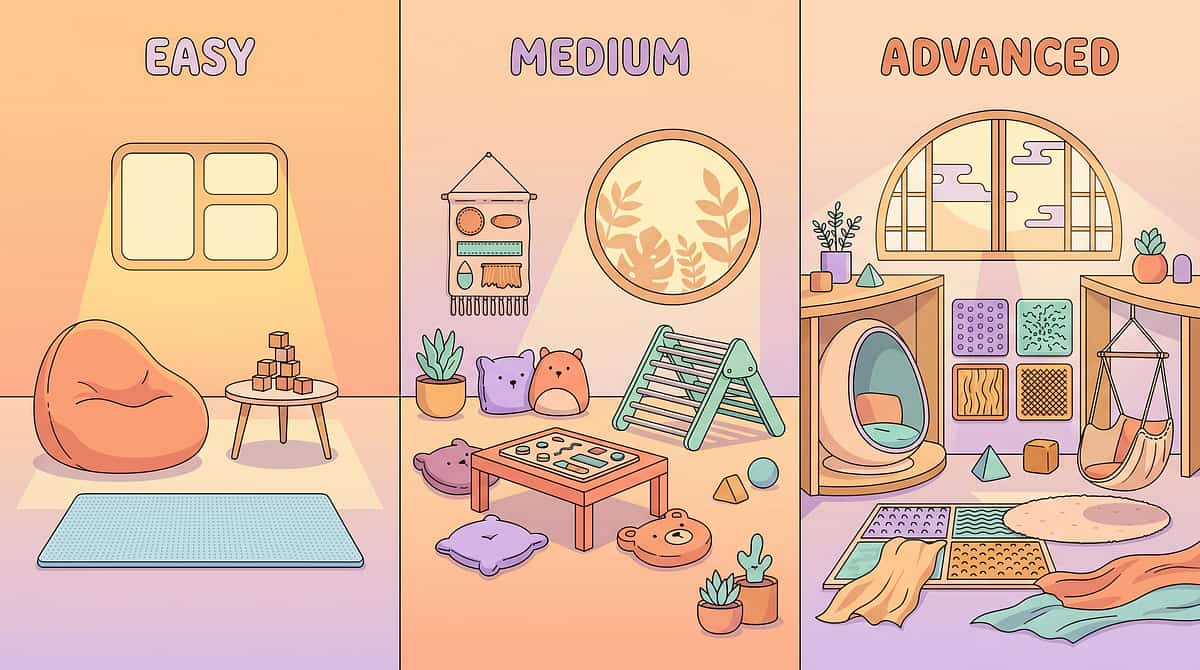
No two families navigate this the same way. Use the profiles below to find your starting point — then trust that the practice will become your own over time.
Profile A: The Catastrophizer
Defaults to worst-case. Start with adult outcome profiles — diversity of positive futures. Use evidence summaries to counter worst-case narrative. Focus on factors that improve outcomes, including your own engagement.
Profile B: The Optimist
Defaults to "he'll be fine." Start with individualized progress tracking — data grounds optimism constructively. Use graduated goals: the stretch goal feeds the optimism, baseline grounds it.
Profile C: The Avoider
Can't look at the data. Start with comparison awareness only — no data required. Build tolerance for looking at progress data gradually. Professional support strongly recommended alongside materials.
Profile D: The Researcher
Needs all the data. Research summaries first, deep reading. Quantitative progress tracking with graphing. Direct prognosis conversations, not just materials.
Profile E: The Isolated Parent
No partner support. Adult profiles and community connection are critical. Peer parent connection before intensive calibration work. Call Pinnacle Helpline 9100 181 181.
Difficulty Scale: Simpler → Just write one sentence per week about progress you observed. More Intensive → Full 6-month recalibration with all 9 materials + ACT workbook + weekly sessions + professional support.

ACT IV — The Progress Arc
Week 1–2: What to Expect
Progress: 15%
Early Days — You're Building the Habit of Looking Clearly. Expectation calibration research suggests meaningful attitudinal change occurs over 8–16 weeks of practice. You are at the beginning of a sustained shift, not at the destination.
✅ Increased Discomfort (This Is Good)
Looking at data and reality honestly, perhaps for the first time, is uncomfortable. This discomfort is not a sign something is wrong — it's the sign that you're being honest rather than defended.
✅ One Good Data Point Found
You will likely find at least one area where your child is genuinely, measurably progressing when you look with the individualized tracking lens rather than the comparison lens.
✅ One Expectation Updated
Even if just one belief about your child's trajectory shifts — "I thought he would never do X, but actually he's doing X 40% of the time now" — that is a meaningful change.
What is NOT Progress Yet: Sustained calm about your child's future (this takes months, not weeks) | Resolution of grief | Partner or family alignment | Dramatic changes in your child's trajectory (you're measuring parent change here).
"If you completed even ONE calibration session and wrote ONE honest Calibrated Statement, you have more grounded data about your child's trajectory than most parents ever achieve. That is success in Weeks 1–2."

ACT IV — The Progress Arc
Week 3–4: Consolidation Signs
Progress: 40%
Consolidation — The Habits Are Taking Root. Neural pathway formation — in both your brain and your child's — follows predictable timelines. You are at the consolidation phase. Keep going.
You catch comparisons faster. Where you used to marinate in a comparison for hours, you now notice it within minutes. The redirect phrase is becoming automatic.
Your progress tracking is accumulating real data. You now have 3–4 weeks of data points. A trajectory is becoming visible. Whether it's a steep slope or a gentle one, it is YOURS and it is REAL.
One professional conversation went better. Because you prepared with the prognosis discussion guide, you got a more specific answer from your therapist than you ever had before.
Your graduated goals feel genuinely possible. The baseline goal doesn't feel like a consolation prize anymore — it feels like a legitimate first target.
Your partner noticed something changed. Partners often notice reduced emotional volatility or improved decision quality before the parent does.
What the Child May Begin to Experience (Downstream): Reduced pressure in interactions (children are exquisitely sensitive to parental expectation pressure) | More celebration of actual gains rather than impatience at gaps | Parent-initiated activities that match the child's actual level.

ACT IV — The Progress Arc
Week 5–8: Mastery Indicators
Progress: 75%
🏅 Mastery Badge Criteria
You have reached mastery when this approach is generalizing spontaneously — in conversations with other parents, when explaining your child to teachers, when discussing therapy options with your partner. Calibration is now a mindset, not just a practice.
🏅 Expectation Accuracy
You can state your child's current skill level, rate of progress, and realistic 6-month projection in one clear paragraph — without significant distress or distortion in either direction.
🏅 Comparison Regulation
You notice comparison triggers and redirect within minutes, not hours. The redirect has become semi-automatic — you may even notice comparison thoughts with gentle humor.
🏅 Prognosis Conversations
You have had at least ONE productive, specific prognosis conversation with your child's therapy team using your discussion guide. You left with data, not vague reassurance.
🏅 Graduated Goals in Use
Your child's therapy goals are structured in three tiers. You celebrate achievement at ANY level. Progress no longer has to reach the stretch goal to count.
🏅 6-Month Protocol Practiced
You have completed at least one full 6-month recalibration review. You can compare what you expected 6 months ago to what happened, and you updated your expectations accordingly.
"Mastery here is not certainty about the future. It is confidence in your ability to face the future with honest information, psychological flexibility, and sustained commitment. You've built that."

ACT IV — The Progress Arc
🎉 Celebrate This Win
You have spent 5–8 weeks doing something that most parenting resources never ask of you: looking at your child's actual reality — with its hope, its uncertainty, its genuine progress, and its honest limitations — and staying present with all of it.
You built a practice of tracking YOUR child against THEIR OWN baseline, not against milestones or other children.
You learned to ask professional questions that get real answers.
You set goals in three tiers so that progress has multiple paths to success.
You named your fears without letting them become your expectations.
Your Family Celebration Suggestion: Take a photo of your child doing something they couldn't do when you started this journey. Print it. Put it next to your tracking notebook. That is the proof that hope and reality found each other.
"Write the date. Write one thing your child can do today that they couldn't do when you started. That is your data. That is your evidence. That is your child's trajectory."
"Write the date. Write one thing your child can do today that they couldn't do when you started. That is your data. That is your evidence. That is your child's trajectory."
"Your child grew because you showed up — not perfectly, not without fear — but consistently, and with your eyes open. That is what makes the difference."
"From fear to mastery. One technique at a time." — The Pinnacle Blooms Consortium
ACT IV — The Progress Arc
Red Flags: When to Pause
Clinical guardrails apply even at the celebration stage. These materials are educational tools for grounded, regulated parents. If you notice any of the following, pause and seek support.
🔴 Flag 1: Persistent Distress
Expectation-related anxiety or depression lasting more than 2 weeks, not resolving between calibration sessions. These materials are not sufficient for clinical-level psychological distress — professional support is needed.
🔴 Flag 2: Relationship Crisis
Expectation differences causing significant conflict with your partner that isn't reducing. This may need couples therapy or a joint session with the child's therapy team.
🔴 Flag 3: Data Avoidance Increasing
Increasingly unable to look at your child's progress data — postponing tracking, skipping therapy meetings, avoiding professional contact. This is a sign of psychological avoidance that needs professional attention.
🔴 Flag 4: Child Responding to Pressure
Your child is showing increased anxiety, resistance to therapy, or behavioral regression — it is possible that expectation pressure is being communicated nonverbally. Consult your ABA or NeuroDev specialist.
🔴 Flag 5: Isolation Increasing
Working on expectation calibration is making you feel more isolated. Connect before calibrating. Go to the community section (Card 32) before more solo work.
🔴 Flag 6: Any Thoughts of Harm
Contact emergency services or Vandrevala Foundation 24x7 immediately: 1860-2662-345
Escalation Pathway: Self-resolve → Call 9100 181 181 Pinnacle Helpline → Teleconsultation booking → Clinic visit → Mental health referral
📞9100 181 181 | FREE | 24x7 | 16+ Languages
📞9100 181 181 | FREE | 24x7 | 16+ Languages

ACT IV — The Progress Arc
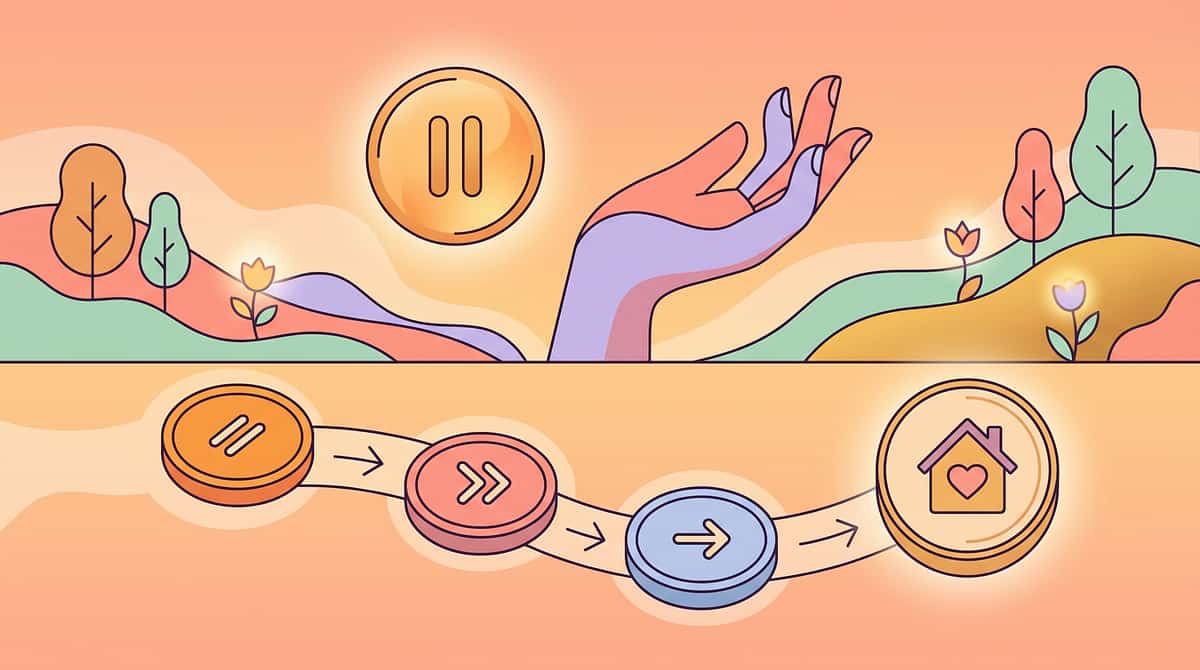
The Progression Pathway
K-915 is one step in a larger journey. Based on your experience with expectation calibration, here is how the path forward branches — and where the materials you've already built will serve you next.
Anxiety Significantly Reduced?
→ Move to K-916 (Parent Self-Care) to build sustainable energy for the long journey
Surfaced Unprocessed Grief?
→ Explore K-910 (Processing Diagnosis Emotions) and/or professional counseling
Clarified Advocacy Needs?
→ Return to K-914 (Advocating for Your Child) with more grounded expectations
Revealed Family Communication Gaps?
→ K-920 (Explaining Diagnosis to Others) + K-917 (Sibling Support)
WHO/UNICEF NCF: Caregiver wellbeing is one of the five components of nurturing care. Sustainable caregiver capacity is a primary outcome of effective family support systems.

ACT IV — The Progress Arc
Related Techniques in This Domain
The materials you've built in K-915 are directly transferable to the techniques that come before and after. You are not starting from zero in any of these.
Technique | Code | Level | Domain | |
Processing Diagnosis Emotions | K-910 | Foundation | PAR-GRIEF | |
Parent Burnout Prevention | K-913 | Core | PAR-WELLBEING | |
Advocating for Your Child | K-914 | Intermediate | PAR-ADVOCACY | |
Realistic Expectations ← YOU ARE HERE | K-915 | Core | PAR-EXPECT | |
Parent Self-Care Foundations | K-916 | Core | PAR-SELFCARE | |
Sibling Support Systems | K-917 | Advanced | PAR-FAMILY |
Materials You Already Own (from K-915)
✅ Notebook/Progress Tracker
Useful for K-913, K-916
✅ Calibrated Statement
Foundation for K-914 (advocacy)
✅ ACT Workbook
Core tool for K-916 (self-care)
✅ Prognosis Discussion Guide
Essential for K-914 (advocacy)
ACT IV — The Progress Arc
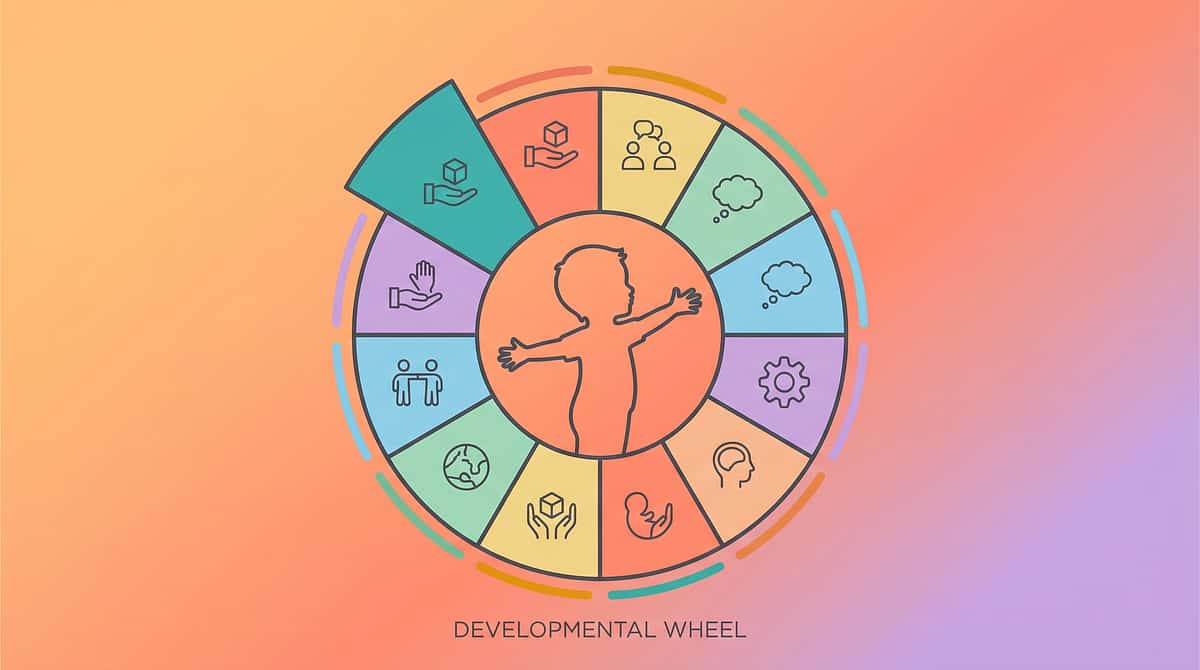
Your Child's Full Developmental Map
One Technique. One Piece. One Complete Child. K-915 is not a standalone technique — it is the parent wellbeing layer that sustains every other domain of your child's development. When YOU are grounded, every hour of your child's therapy is more effective.
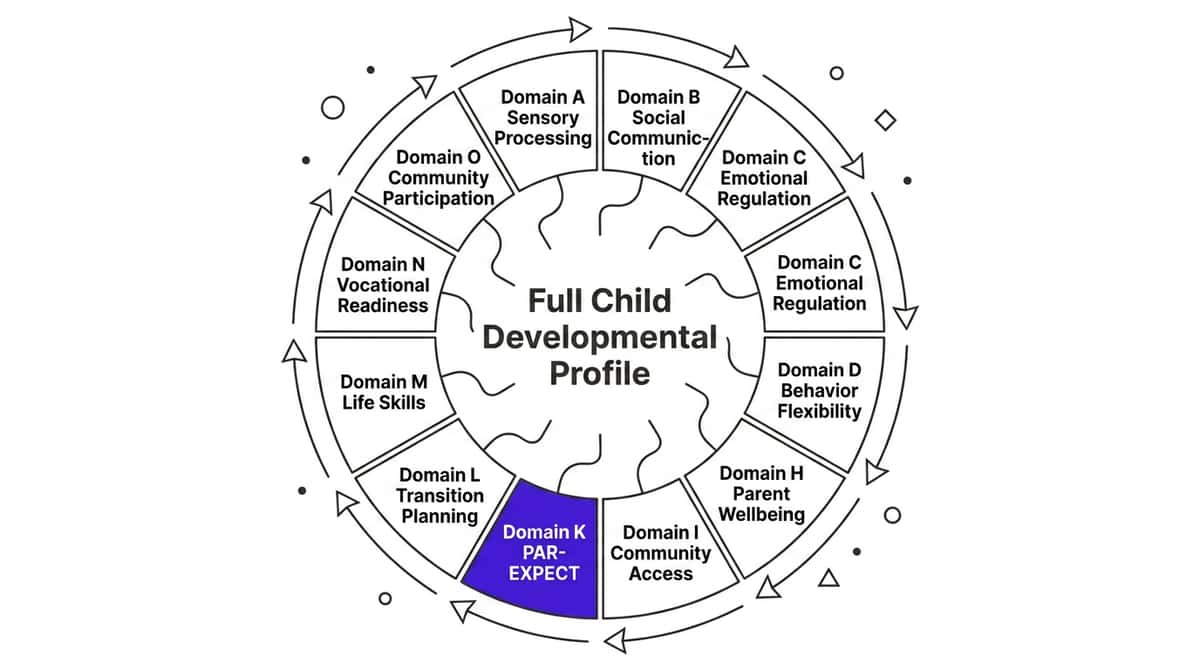
"K-915 is not a standalone technique. It is the parent wellbeing layer that sustains every other domain of your child's development. When YOU are grounded, every hour of your child's therapy is more effective."
Through AbilityScore® and the EverydayTherapyProgramme™, your child's full profile across all 12 domains is tracked, updated, and used by TherapeuticAI® to generate personalized intervention sequences. → Request your child's full AbilityScore® developmental profile: pinnacleblooms.org | 📞9100 181 181
ACT V — The Community & Ecosystem
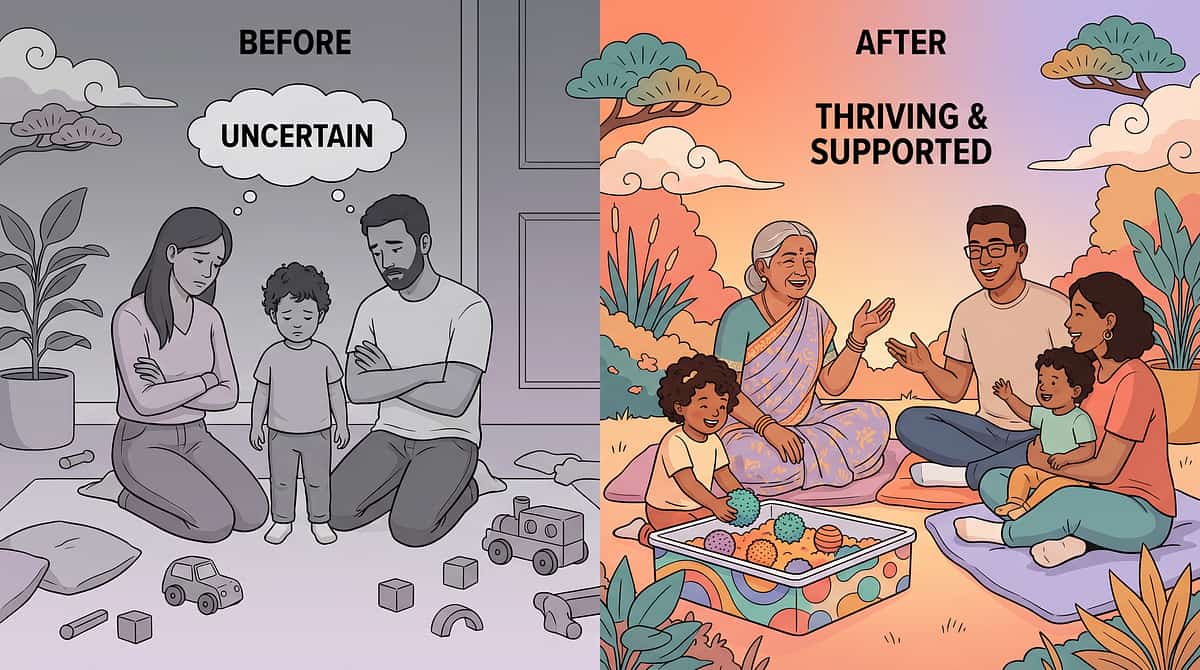
Three Families. Three Journeys. One Shared Discovery.

Family A — The Parent Who Stopped Comparing
Before: "I was convinced my son was falling behind irreversibly because his classmate was reading at grade level and mine wasn't. Every parent-teacher meeting destroyed me for a week."
After (8 months): "I found out my son had gained 47 new functional words in 9 months when I tracked HIS numbers. I had completely missed it because I was looking at the wrong child."
Therapist's Note: "This family's therapy adherence improved 67% after the parent shifted to child-vs-own-baseline tracking."

Family B — The Parent Who Asked the Right Questions
Before: "The therapist kept saying 'she's making progress, don't worry.' I wanted to scream. Progress toward WHAT?"
After (first prepared prognosis conversation): "I asked specifically about her speech acquisition rate and we spent 45 minutes mapping out three graduation levels. I left knowing what to celebrate, what to work toward, and what would be extraordinary. I had never had that conversation in three years of therapy."

Family C — The Parent Who Found Ground
Before: "I swung between 'he'll be completely independent by 18' and 'he'll need 24-hour support forever' — sometimes in the same day."
After (ACT resources + review protocol): "I can't tell you the future. But now I can hold that uncertainty without it destroying me. My graduation goals give me three possible good futures. I still have hard days. But they're not the same."
Note: Illustrative cases. Experiences vary by individual circumstances and access to support.

ACT V — The Community & Ecosystem
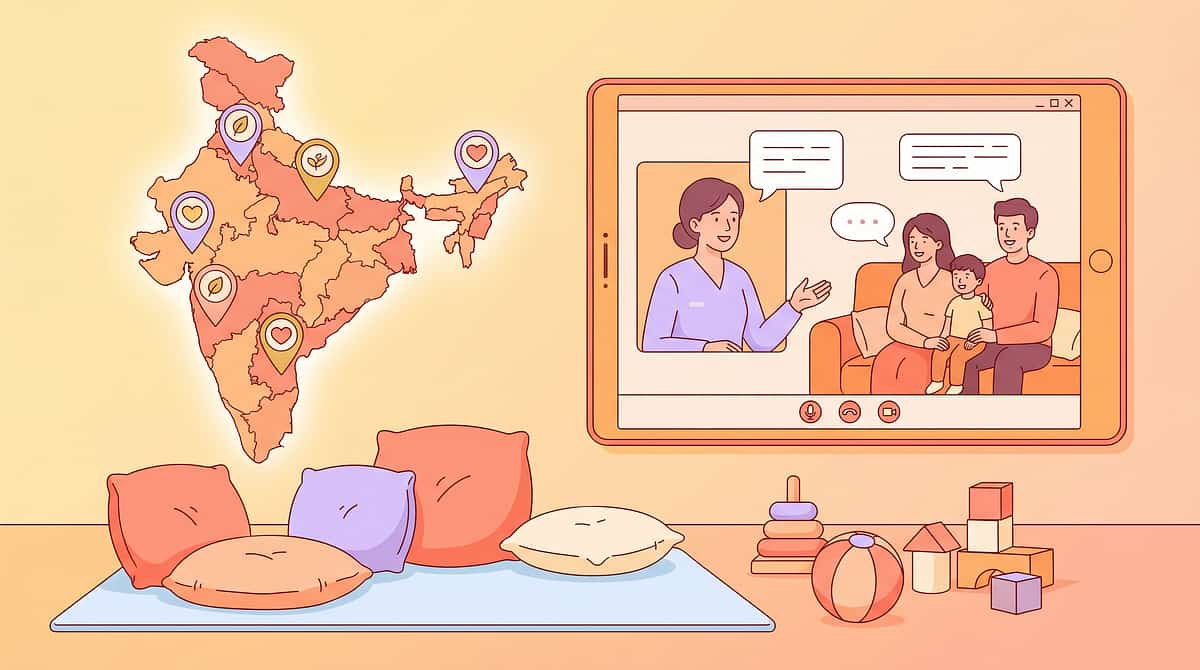
Connect With Other Parents
Isolation is the enemy of grounded expectations. When we're isolated, our fears become our only reference point. When we're connected to other parents navigating similar journeys, we get real data — not statistics, not research papers, but lived experience from people who understand precisely the terrain you're on.
📱 Pinnacle Parent WhatsApp Community
Join parents specifically working on expectation calibration and sustainable hope. Request access: Call 9100 181 181
💻 Pinnacle Online Parent Community
Forums, discussion groups, and peer mentoring for PAR-series challenges. → pinnacleblooms.org/parent-community
🏠 Local Pinnacle Parent Meetups
Regular in-person gatherings at 70+ centers across India. Find your nearest center: Call 9100 181 181
👥 Peer Mentoring Program
Connect with an experienced parent (2+ years further on the same journey) who has completed expectation calibration work. Request via: care@pinnacleblooms.org
"Your experience — what you've learned, what shifted for you — is medicine for the parent who is where you were six months ago. Consider sharing your journey."
ACT V — The Community & Ecosystem
Your Professional Support Team
Home + Clinic = Maximum Impact. These 9 materials are most powerful when used alongside professional guidance. Your Pinnacle team can help you interpret your tracking data, facilitate prognosis conversations with precision, and provide the psychological support that materials alone cannot deliver.
In-Person Center Support
70+ centers across India providing:
- Parent coaching for expectation calibration
- NeuroDev consultation for prognostic clarity
- ABA data interpretation for individualized tracking
- Family therapy for expectation alignment across family members
Therapist Matching for K-915
- Primary: Parent Coach / Psychologist
- Secondary: NeuroDev Pediatrician (for prognostic conversations)
- Supporting: ABA/BCBA (for data interpretation)
📱 Teleconsultation (Remote)
For families outside center catchment areas:
- 30-minute parent coaching sessions
- Progress data review and interpretation
- Prognosis conversation facilitation
- ACT for parents guided sessions
📞FREE National Helpline: 9100 181 181
24x7 | 16+ Languages
Insurance panels available. EMI options available.
Contact: care@pinnacleblooms.org for financial access support.
24x7 | 16+ Languages
Insurance panels available. EMI options available.
Contact: care@pinnacleblooms.org for financial access support.
ACT V — The Community & Ecosystem
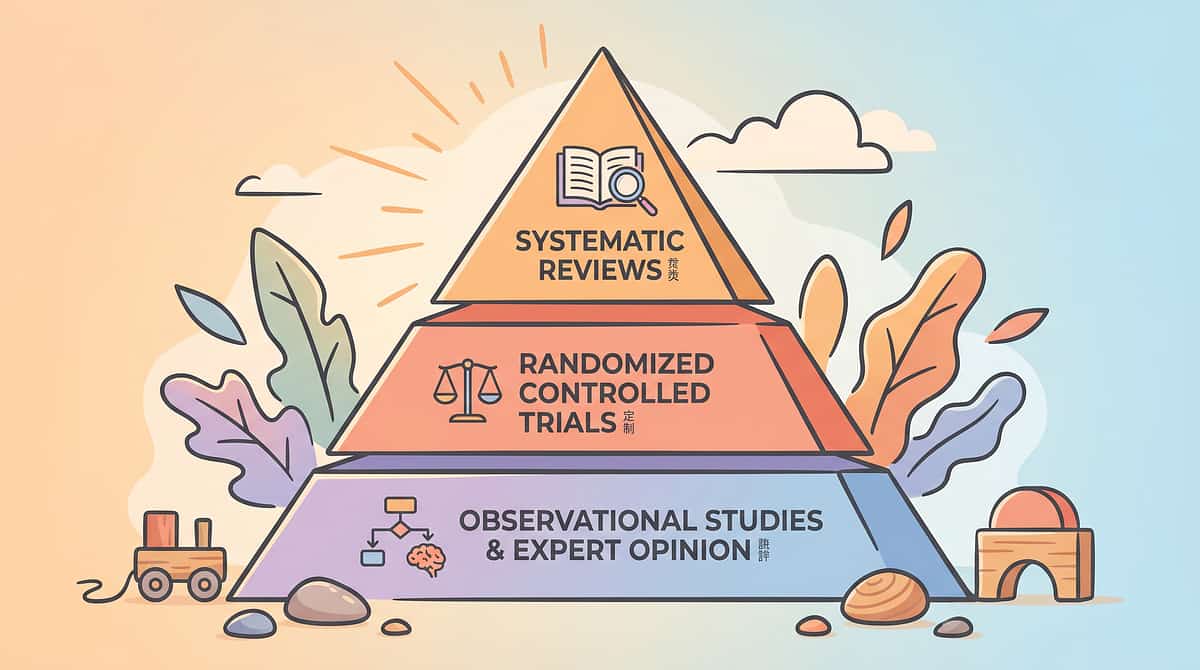
The Research Library
The evidence beneath this page draws from systematic reviews, RCTs, and international clinical guidelines. Every recommendation in K-915 is grounded in peer-reviewed research.
Study / Source | Key Finding | Access | |
PMC11506176 (2024) | PRISMA review: sensory integration intervention EBP criteria confirmed | ||
PMC10955541 (2024) | Meta-analysis: SI therapy promotes adaptive behavior, social skills, motor outcomes | ||
PMC9978394 (2023) | WHO CCD Package outcomes across 54 LMICs | ||
DOI:10.1007/s12098-018-2747-4 | Indian RCT: Home-based interventions + parent training — significant outcomes | ||
NCAEP (2020) | Visual supports, parent training: evidence-based practices for ASD | ||
WHO NCF (2018) | Nurturing care framework — caregiver wellbeing is a primary determinant of outcomes |
For Deeper Reading
Hayes, S.C., Strosahl, K.D., & Wilson, K.G. — Acceptance and Commitment Therapy (2nd ed.)
Prizant, B.M. — Uniquely Human: A Different Way of Seeing Autism
Silberman, S. — NeuroTribes: The Legacy of Autism
ACT V — The Community & Ecosystem
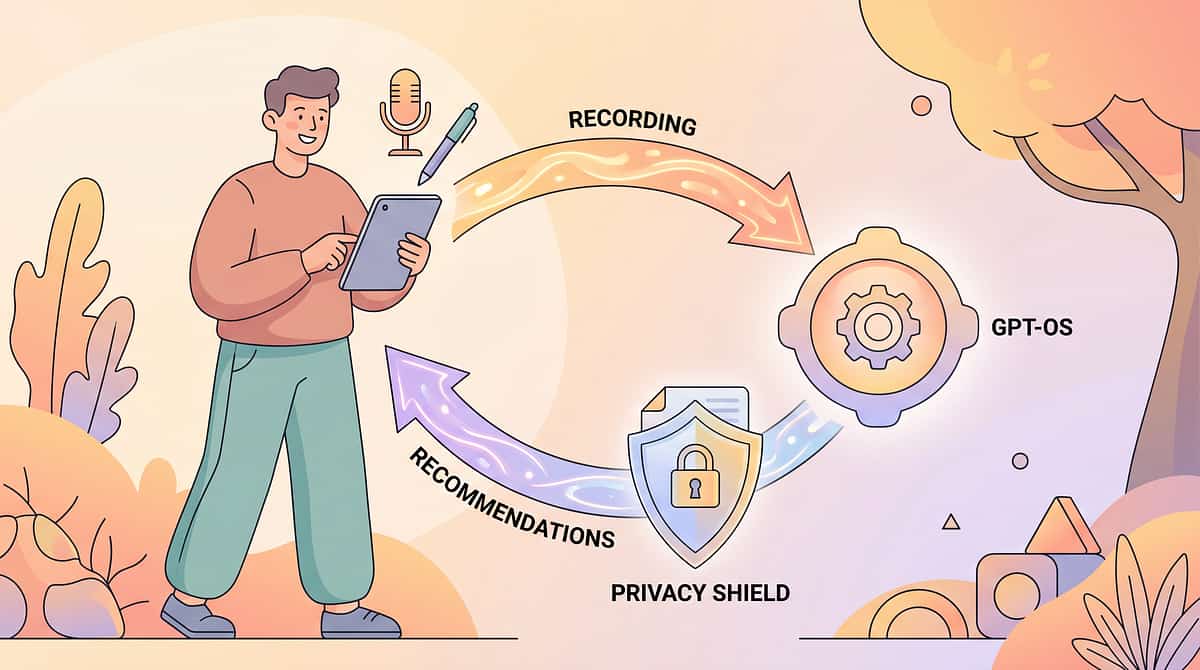
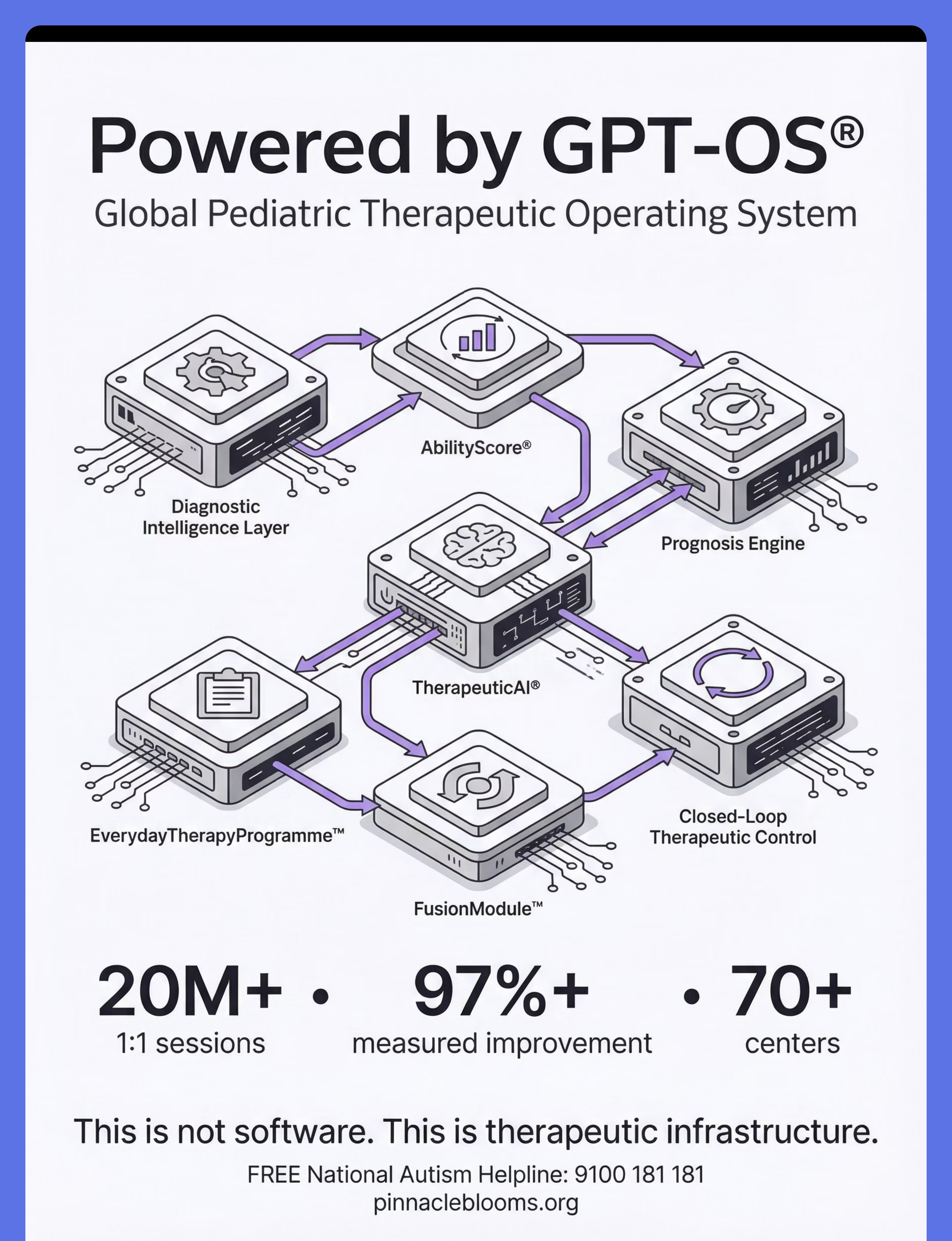
How GPT-OS® Uses Your Data
Your Data. Your Child. Your Personalized Intelligence. When 20 million sessions contribute to the intelligence layer, the recommendations for YOUR child become extraordinary.
AbilityScore®
Baseline measurement and trajectory tracking for parent wellbeing indices alongside child developmental indices
Prognosis Engine
Uses K-915 data to flag when families need clinical escalation based on distress trends
TherapeuticAI®
Adjusts therapy intensity recommendations based on parent capacity and calibration status
EverydayTherapyProgramme™
Generates home-based activities calibrated to BOTH child profile AND parent current capacity
FusionModule™
Coordinates parent coaching, NeuroDev, ABA, and SLP streams addressing expectation from different discipline angles
✅ All data encrypted end-to-end | ✅ Anonymized before population-level analysis | ✅ Parent controls what is shared with therapy team | ✅ DPDP Act (India) compliant | ✅ GDPR-equivalent protections for international families

ACT V — The Community & Ecosystem
See the Therapist Explain These 9 Materials
K-915 Reel | Parent Support & Mindset Series — Episode 915
In this 60-second reel from the Pinnacle Blooms Network® Parent Support Series, a Pinnacle therapist walks through the 9 materials that help parents build grounded, accurate, individualized expectations for their child's developmental journey.
In this 60-second reel from the Pinnacle Blooms Network® Parent Support Series, a Pinnacle therapist walks through the 9 materials that help parents build grounded, accurate, individualized expectations for their child's developmental journey.
"These materials don't ask you to lower your dreams. They ask you to aim at the right target — YOUR child's trajectory, not anyone else's. That accuracy is what lets you hope without breaking, and accept without giving up."
Watch For: Range vs. Single-Age
Visual demonstration of the difference between range-based and single-age milestones
Watch For: Tracking in Practice
How individualized tracking looks in a real notebook (screenshot walkthrough)
Watch For: Graduated Goals
The graduated goals framework — live writing example
Watch For: Comparison Redirect
The comparison awareness redirect — therapist demonstration
Can't Watch Now? Save this page and return when you have 2 minutes with sound. Request the reel at: 9100 181 181
NCAEP (2020): Video modeling is classified as an evidence-based practice for autism. Multi-modal learning improves parent skill acquisition significantly compared to text alone.
NCAEP (2020): Video modeling is classified as an evidence-based practice for autism. Multi-modal learning improves parent skill acquisition significantly compared to text alone.

ACT V — The Community & Ecosystem
Share This With Your Family
Consistency Across Caregivers Multiplies Impact. If only one parent calibrates expectations while another remains in crisis-mode optimism or catastrophic pessimism, the child experiences inconsistent messaging, inconsistent goal-setting, and inconsistent reactions to progress. Every caregiver in the child's life benefits from aligned, realistic expectations.
📲 WhatsApp Share
Send this page directly to your partner or family. Link: techniques.pinnacleblooms.org/parent-support/realistic-expectations-k915
📄 Family Guide PDF
"What We Expect for [Child's Name]" — fillable template including graduated goals and calibrated statement for all caregivers.
👵 Grandparents Version
Plain-language 3-paragraph summary: "We're not giving up on [child's name]. We're learning to measure progress the right way — against his/her own past, not against other children. Here's how you can help."
🏫 Teacher Communication Template
A professional email template sharing the child's graduated goal framework with educators so school expectations align with home-based calibration.
"Every caregiver who uses these materials multiplies your child's therapy outcomes. One parent calibrated: good. Two parents: better. Parents + grandparents + teachers: transformative."

ACT VI — The Close & Loop
Frequently Asked Questions
Questions parents ask most about K-915 — answered with clinical clarity and warm honesty.
❓ Isn't "realistic expectations" just another way of saying "give up hope"?
No. Realistic expectations are not a ceiling — they're an accurate floor. They include stretch goals that represent real aspiration. Your hope is now aimed at your specific child's trajectory. That accuracy doesn't reduce hope — it makes it sustainable for decades without burning out.
❓ My child's therapists won't give me specific prognosis information. What can I do?
Use Material 3 (Prognosis Discussion Guide). Ask rate-of-progress questions: "My child is acquiring 3–4 new skills per month. What does that rate suggest for a 12-month trajectory?" Rate questions are harder to deflect than "will my child ever…?" questions.
❓ How do I handle it when my spouse or parents have completely different expectations?
This is very common. Share ONE data point you found grounding — not a lecture, not this whole document. Consider requesting a joint session with your child's therapy team where a professional can facilitate aligned expectation-setting for the whole family.
❓ My child is 15. Is it too late to calibrate expectations?
It is never too late. Adolescence is actually a critical calibration point — transition planning for adulthood requires realistic functional assessment of current skills. Calibrating now shapes the quality of the transition plan, which shapes your child's adult life.
❓ I feel guilty when my expectations are "too low" — like I'm not fighting hard enough.
The guilt is understandable — and based on a false premise. Realistic expectations don't reduce effort; they direct it accurately. A doctor who gives a patient a realistic recovery timeline isn't "giving up" — they're treating effectively. Fighting the right battle, aimed at the right target, is harder and more courageous than fighting an imaginary one.
❓ What if my progress tracking shows no progress for 3 months?
A 3-month plateau is data. First: check that you're measuring the right domains. Second: bring the data to your therapy team — plateaus may indicate need for technique adjustment. Third: apply ACT defusion — "I am having the thought that progress has stopped. This thought is not the same as the fact."
❓ How is this different from other "positive mindset" or "acceptance" advice?
Three key differences: (1) Data-driven — it requires actual tracking of your child's individual progress, not just attitude change. (2) Graduated — it builds a three-tier goal structure, not a single optimistic narrative. (3) Professionally integrated — it uses prognosis conversations and regular review with your therapy team. This is a clinical practice, not motivational content.
❓ The comparison trap is destroying my relationship with my neurotypical friends.
(a) Selective social media — unfollow accounts that consistently trigger harmful comparison. (b) Build relationships with parents navigating similar journeys — Pinnacle's parent community (Card 32). (c) Practice the redirect with compassion: "Their path is not mine to carry. My child's path is extraordinary in its own way." This is a practice, not a switch. It takes months to rewire.

ACT VI — Start Now
You've Read the Evidence.
You've Seen the Path.
Your Child Needs You to Begin.
You've Seen the Path.
Your Child Needs You to Begin.
▶ PRIMARY: Start This Technique Today
Open your notebook. Write today's date. Complete your first Calibrated Expectation Statement.
📅 SECONDARY: Book a Consultation
Work with a Pinnacle parent coach or NeuroDev specialist to build your expectation calibration framework with professional support.
🗺 TERTIARY: Explore the Next Technique
K-916: Parent Self-Care Foundations — the energy that sustains the long journey.
✓ Validated by the Pinnacle Blooms Consortium® | OT • SLP • ABA • SpEd • NeuroDev • CRO • Psychology • WHO/UNICEF | 20M+ Sessions | 97%+ Improvement Rate
"Realistic expectations are not the absence of hope. They are hope with its eyes open, its feet on the ground, and its heart still fully committed. Your child deserves that kind of hope."
📞9100 181 181 — FREE National Autism Helpline | 24x7 | 16+ Languages
Preview of 9 materials that help with realistic expectations Therapy Material
Below is a visual preview of 9 materials that help with realistic expectations therapy material. The pages shown help educators, therapists, and caregivers understand the structure and content of the resource before use. Materials should be used under appropriate professional guidance.













Link copied!

The Pinnacle Promise
🌸 Pinnacle Blooms Network®
Built by Mothers. Engineered as a System.
OT
SLP
ABA/BCBA
SpEd
NeuroDev
CRO
Psychology
Pediatrics
"From fear to mastery. One technique at a time."
Pinnacle Blooms Network® exists to transform every home on Earth into a proven, scientific, 24x7, personalized, multi-sensory, multi-disciplinary therapeutic environment for every child who needs it — regardless of geography, economic status, or language.
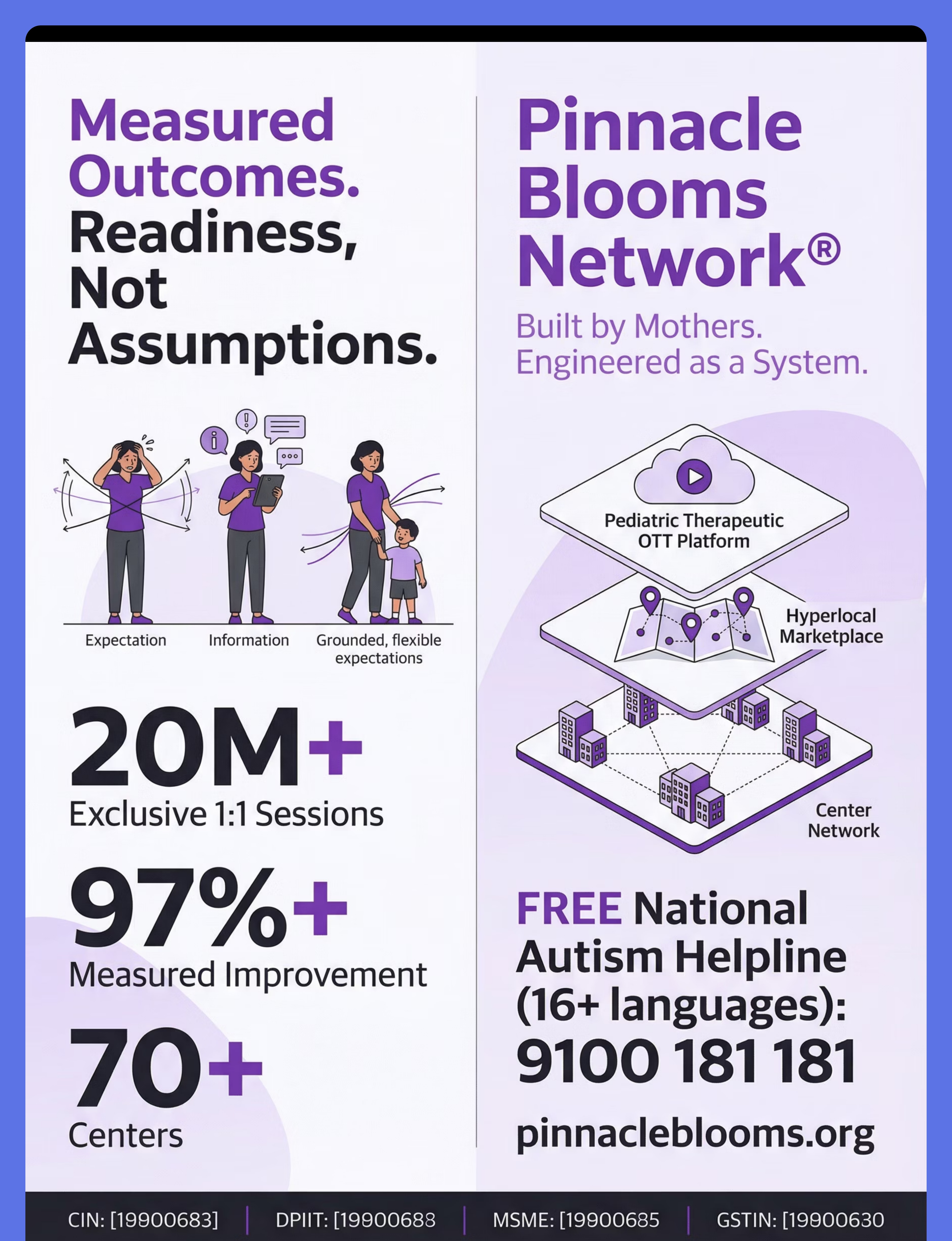
20M+
Therapy Sessions
Exclusive 1:1 sessions completed under GPT-OS® protocols
97%+
Improvement Rate
Measured improvement across the Pinnacle Blooms Network®
70+
Centers
Across India, serving 70+ countries in 16+ languages
Statutory Identifiers
CIN | U74999TG2016PTC113063 | |
DPIIT | DIPP8651 (Govt. of India) | |
MSME | Udyog Aadhaar: TS20F0009606 | |
GSTIN | 36AAGCB9722P1Z2 |
Medical Disclaimer: This content is educational. It does not replace individualized assessment and guidance from qualified developmental specialists, therapists, or physicians. Every child's trajectory is unique, and no material can predict specific outcomes. Prognosis involves inherent uncertainty. Consult your child's therapeutic team for personalized expectations and planning. If experiencing persistent distress about your child's diagnosis, seek mental health support. Individual results may vary.
© 2025–2026 Pinnacle Blooms Network®, unit of Bharath Healthcare Laboratories Pvt. Ltd. All rights reserved. techniques.pinnacleblooms.org
📞9100 181 181 | FREE National Autism Helpline | 24x7 | 16+ Languages
K-915 ends. K-916 begins. → Continue to K-916: Parent Self-Care Foundations