

Five therapists. Three doctors. One school team. Zero coordination between them — except through you.

"It's 11:47 PM. You're cross-referencing what the OT said last Tuesday against what the behavioral therapist recommended on Thursday — because you noticed they're contradicting each other. Nobody else will notice. Nobody else sees both. You are the only thread holding your child's care together. You're not a case manager. You're a parent. But the system made you both."
You are not failing. The system is fragmented. You are the human bridge.
🏥 Pinnacle Blooms Consortium
Care Management Series — Episode K-908
👨👩👧 All Ages
Children from 0 through adulthood
🌍 70+ Countries
Families worldwide navigating this burden
WHO Nurturing Care Framework (2018) | PMC9978394 | UNICEF 2025 Country Profiles

The Coordination Crisis Is Everywhere
Average Providers
A child with autism sees simultaneously
Professionals Involved
When medical complexity is added
Per Week
Hours parents spend on coordination — unpaid, unrecognized
Research from the American Academy of Pediatrics confirms: care coordination is one of the most critical unmet needs for children with developmental differences. The burden falls almost entirely on families — not because parents are unprepared, but because the system was designed for single-provider episodic care, not multi-disciplinary long-term intervention.
You are among millions of families navigating this exact burden. It is not personal failure. It is structural fragmentation.

Why Fragmented Care Costs More Than Money
Current Reality
Five isolated providers — SLP, OT, ABA, SpEd, MD — each holding different information, none able to share without risking liability, none aware of the others' approaches.
One overwhelmed parent in the center, with lines radiating to every provider. Parent as the Only Hub.
What Fragmentation Does to Outcomes
- 🔴Contradictory approaches: Your OT recommends deep pressure; your behavioral therapist inadvertently reinforces avoidance. Neither knows what the other said.
- 🟡Redundant assessments: Four different intakes. Four times repeating the same history. Same information gathered in isolation.
- 🟡Goal gaps: No provider realizes that the skill between "what OT works on" and "what SLP works on" is being addressed by nobody.
- 🔴Parent burnout: Cognitive load of holding all information in memory while simultaneously parenting — it's unsustainable, and the research confirms it.
Studies consistently show that coordinated, integrated care produces measurably better developmental outcomes than fragmented care — across communication, motor, behavioral, and adaptive skill domains.
Antonelli RC, McAllister JW, Popp J (2009) | AAP Medical Home Principles | Family Voices Care Coordination Research | PMC10955541

Coordination Burden Intensifies at Every Transition
Birth → Early Intervention (0–3)
Multiple new therapists arrive; parents learning the system from scratch.
Age 3 → Part C to Part B Transition
EI services end; school-based begin; new team, new language, new coordination demands.
School → IEP Development
School team joins 4–6 existing providers; different goals, different terminology.
Diagnosis Period → Evaluation Layer
Neurologist, psychologist, developmental ped added; history repeated at every intake.
Adolescence → New Complexity
Mental health, puberty, transition planning begins; adult systems previewed.
Age 18+ → Full Provider Transition
Entire pediatric team replaced; complete knowledge transfer required.
WHO Care for Child Development Package (2023) | UNICEF MICS indicators | PMC9978394

This Isn't Organization Advice. It's Clinical Infrastructure.
📚 American Academy of Pediatrics (2005, reaffirmed 2023)
Care coordination in the medical home: Integrating health and related systems for children with special healthcare needs. Demonstrates that coordinated care reduces hospitalizations, improves treatment adherence, and produces better family outcomes.
📚 Antonelli RC et al. (2009)
Making Care Coordination a Critical Component of the Pediatric Health System. Multi-disciplinary framework demonstrating that coordination burden on families directly correlates with poorer child outcomes and higher parent burnout.
📚 WHO Nurturing Care Framework (2018)
Identifies care coordination as essential infrastructure for reaching all children — especially in low-resource contexts where family-based coordination is the default.
Evidence Strength
Multiple systematic reviews + clinical consensus
Home Applicability
Very high — parent-executable without clinical training
Parent-Executability
High — tools require organization, not clinical expertise
"Clinically validated. Parent-executed. System-transforming."

Therapy Coordination System Building
"Your Child's Care Command Centre"
⏱ Setup Time
4–6 hours (one-time investment)
⏱ Maintenance
1–2 hours per week ongoing
🔁 Duration
Continuous — grows with your child
CCM-THC Domain | GPT-OS® Care Coordination Efficiency Index | WHO NCF (2018)
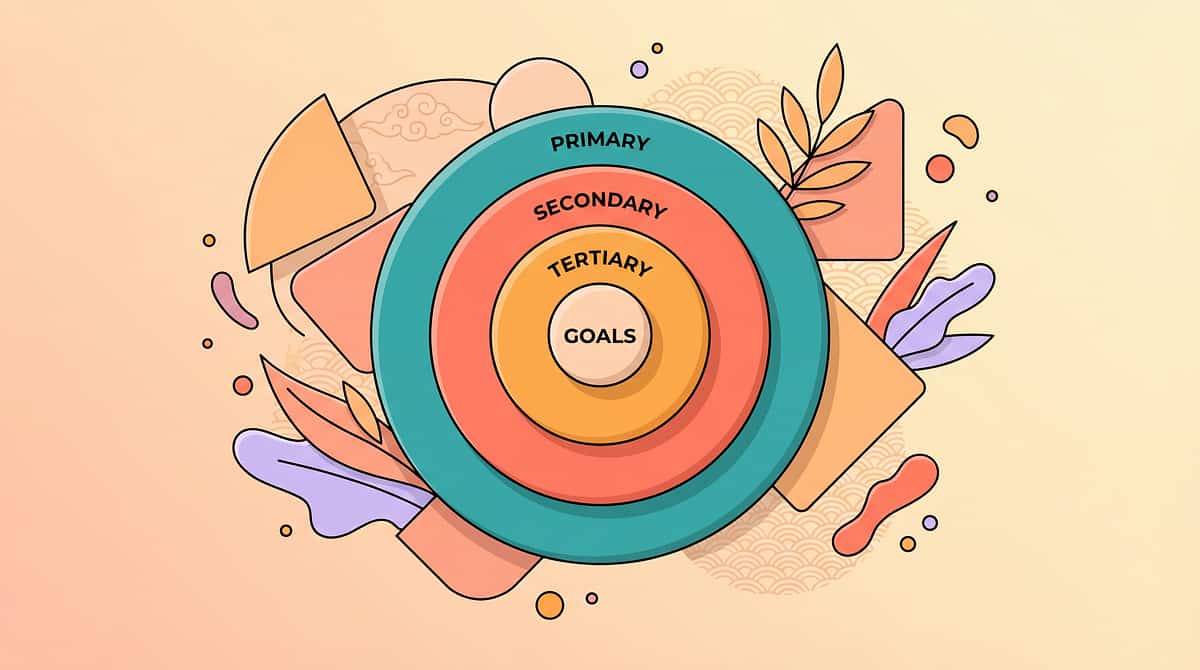
Coordination Is the Fifth Therapy No One Talks About
Occupational Therapist (OT)
Uses coordination systems to ensure sensory diet recommendations and fine/gross motor goals are communicated to school, home, and other therapists. Without coordination, OT's environmental modifications get undone by providers who don't know about them.
Speech-Language Pathologist (SLP)
Communication goals require extraordinary consistency across settings. SLPs depend on parents to relay whether AAC strategies or language targets are being used at home, school, and in behavioral sessions. The session log is the SLP's most important coordination tool.
ABA/BCBA Behavior Analyst
Behavioral programs require absolute consistency — a reinforcement schedule used in ABA that is undermined at home or school loses up to 70% of its effectiveness. Coordination ensures the behavior plan is implemented everywhere.
Special Education (SpEd)
IEP goals are legally binding documents that must be informed by therapy progress. SpEd teachers are often the last to know what therapists are working on — and the first to see whether home and clinic gains generalize to school.
NeuroDevelopmental Pediatrics / CRO
The medical team sets the diagnostic and pharmaceutical framework. They need current information from all therapy providers to make accurate decisions about medication, re-evaluation, and referral. Without coordination, they operate on information 3 months out of date.
"The brain doesn't organize itself by therapy type. Neither should the care team." — Pinnacle Blooms Consortium, FusionModule™ Design Principle

Coordination Has Four Clinical Functions
📁 Documentation
Portable, organized records allowing any provider to get current, comprehensive information without requiring verbal history repetition.
📢 Communication
Facilitating structured information flow between providers. Authorization forms and templates serve this function.
📊 Tracking
Making all goals from all providers visible simultaneously. Pattern identification — overlaps, gaps, conflicts — only becomes possible when goals are visible together.
🗓 Organization
Managing the logistical complexity of multi-appointment, multi-provider care. Missed authorizations and expired renewals can halt care entirely.
PMC10955541 | AAP Care Coordination Framework | MCHB Standards for Children with Special Healthcare Needs

9 Materials. Four Functions. One Coordination System.
# | Material | Function | Cost |
1 | 📁 Comprehensive Care Binder | Documentation | ₹500–2,000 |
2 | 📄 One-Page Medical Summary | Documentation | ₹0–500 |
3 | ✅ Communication Authorization Forms | Communication | ₹0 |
4 | 📊 Cross-Provider Goal Tracking Matrix | Tracking | ₹0–500 |
5 | 📓 Session Notes & Progress Logs | Tracking | ₹100–800 |
6 | 🗓 Appointment & Service Calendar System | Organization | ₹0–1,000 |
7 | 📋 Provider Contact Directory | Organization | ₹0 |
8 | ✉️ Inter-Provider Communication Templates | Communication | ₹0 |
9 | 🤝 Care Coordination Meeting Toolkit | Communication | ₹0 |
MCHB Family-Centered Care Coordination Standards | Family Voices Resource Database | PMC9978394

Every Family Can Build This System — Regardless of Budget
💜 Buy This
- 3-inch D-ring binder (₹300–500)
- Printed divider tabs with labels (₹100–200)
- Sheet protectors (₹150–300)
- Medical summary template (paid app)
- Session log notebook (₹200–400)
- Physical wall calendar (₹150–300)
- Printed provider directory
- Communication templates (paid)
- Video conferencing (paid plan)
🌿 Free / DIY Version
- Repurpose any large folder or box with labeled sections
- Cardboard sheets + marker labels
- Plastic zip-lock bags cut to size
- Google Docs free template (search "medical passport template")
- Notes app on your phone — any free app works
- Google Calendar — free, shareable, cross-device
- Phone contacts with notes — free
- Copy-paste templates from this page — free
- Google Meet / Zoom free tier — adequate for most meetings
WHO/UNICEF equity principle in action: coordination is not a function of money — it's a function of systems thinking. A free phone app used consistently outperforms an expensive planner abandoned in a drawer.

Before You Build: Privacy, Safety & Accuracy Gates
🔴 Non-Negotiable Rules
- Medical records contain sensitive health information. Digital documents must be stored in password-protected, encrypted locations (Google Drive with 2FA, not open email attachments).
- Medication lists must be meticulously current. An outdated medication entry used in an emergency is more dangerous than no binder at all. Update within 24 hours of any change.
- Authorizations are legal documents. Be intentional about scope and duration when signing communication authorizations.
- Never leave physical binders in vehicles or public spaces. A lost binder is a data breach.
🟡 Important Considerations
- Session logs are your personal record — not official clinical documentation.
- When sharing the one-page summary, consider what is relevant for each recipient.
- Mental health information may have additional privacy protections in some jurisdictions.
- Version-date every document. Undated records are unreliable. Always include "Last Updated: [Date]."
🟢 Safe to Proceed When
- Digital storage is password-protected and backed up
- Medication list is current as of this week
- All active providers have signed communication authorizations on file
- Physical binder is stored securely at home, not in a bag or car

Your Coordination Command Centre: Physical & Digital Setup
Zone 1 — Desk/Table
Physical care binder — always accessible, not buried under other items
Zone 2 — Phone/Tablet
Digital calendar app open — synced, all providers color-coded by discipline
Zone 3 — Computer
Google Drive folder structure OR organized desktop folder system (see structure below)
Zone 4 — Wall
Optional: printed month-view calendar for visual family overview
Zone 5 — Drawer/Box
Pending documents — things waiting to be filed. Empty this weekly.

Pre-Setup Readiness Assessment
Take 5 minutes before you begin building. Setup during a stable window produces better systems than setup during a crisis.
- Do you have 3–4 uninterrupted hours available this week? (Binder setup requires focused time)
- Can you gather all existing documents — evaluations, reports, notes — in one place?
- Do you have access to a printer OR a Google Drive account? (Either works; choose one)
- Is your phone calendar app currently accessible and actively used?
- Are you in a relatively stable phase — not mid-crisis, not mid-evaluation process?
- Do you have the contact information for all current providers?
- Is your energy level above 5/10 right now?
✅ 5–7 Checked → GO
Proceed to Material 1: Care Binder (next card)
⚠️ 3–4 Checked → MODIFY
Start with the one-page summary and calendar (45-minute minimum viable setup). Add the rest over 2 weeks.
🔴 0–2 Checked → POSTPONE
Save this page. Set a reminder for 72 hours from now. Call 9100 181 181 for guided setup support.
"The best coordination system is one you can build today and maintain tomorrow — not the perfect system you never start."

1
Comprehensive Care Binder with Standardized Sections
One organized home for everything about your child's care
The care binder is the foundational coordination tool — it externalizes what parents currently hold in memory. When every document has a home and every piece of information is findable, cognitive load drops dramatically. This is not over-organization; it is essential cognitive offloading that preserves mental energy for actual parenting and advocacy.
Choose a large 3-inch D-ring binder
It needs to grow with you over months and years
Create 12 labeled divider sections
Emergency/ID | Diagnoses | Medical | Speech | OT | ABA | SpEd/IEP | School | Provider Directory | Authorizations | Insurance | Session Logs
Add sheet protectors & keep a hole punch attached
File new documents the day they arrive, not the week they accumulate
Color-code with sticker dots
Medical = Red | Therapy = Blue | School = Green | Administrative = Yellow
Digital backup always
Photograph or scan every critical document into your Google Drive folder structure
Materials Needed
- Large 3-ring binder (₹300–500) | Or: free repurposed folder
- Divider tabs (₹100–200) | Or: cardboard + marker
- Sheet protectors (₹150–250) | Or: large zip-lock bags
- 3-hole punch (₹150–300, one-time)
Cost
Purchased: ₹500–1,500
DIY Cost: ₹0

02
One-Page Medical and Developmental Summary Sheet
Critical information, instantly shareable — stop repeating history at every appointment
Every new provider, every emergency room visit, every school meeting requires the same information. Parents repeat this dozens or hundreds of times. A one-page summary — sometimes called a medical passport or care summary — provides this information in a standardized, quickly-readable format. In emergencies, this document can be life-saving.
Section | What to Write |
Child's Name + Photo | Current photo, full name, date of birth |
Diagnoses | All diagnoses with approximate date of diagnosis |
Current Medications | Drug name + dose + frequency + prescribing doctor |
Allergies | Drug, food, and environmental allergies + known reactions |
Current Therapy Services | Type of therapy + frequency + provider name |
School Placement | School name + grade + key supports (IEP/504 status) |
Primary Care Provider | Doctor name + clinic + phone |
Key Specialists | Name + specialty + phone (max 3–4) |
Emergency Contacts | 2–3 contacts with relationship + phone |
Insurance | Insurance name + ID number + group number |
Last Updated | Always include this date |
Open a Google Doc
Create a simple table using the sections above — keep to one page (two maximum for complex cases)
Add a current photo
Top left corner — immediately identifies the child in any setting
Print 5–7 copies and distribute
Front of care binder | Car glove box | With emergency contacts | Digitally on phone | Laminated backup
03
Provider Communication Authorization Forms
Legal permission for providers to actually talk to each other
Without Authorization
Five isolated providers, each holding different information, none able to share without risking legal liability. No aligned approaches. No resolved contradictions.
With Authorization
A web of connected providers, authorized to communicate bidirectionally, able to align approaches, share observations, and resolve contradictions — because you explicitly enabled it.
At every new intake
Ask for the provider's Release of Information / Communication Authorization form. Complete it listing all other active providers.
Create a master authorization
List ALL current providers and authorize them to communicate bidirectionally. Include child's full name, your relationship, names + organizations of all providers, scope, time period (1–2 years), and your signature.
Distribute proactively
Don't wait for providers to ask. Bring a copy to every appointment.
Update when providers change
New provider = new authorization cycle. Keep copies in your binder's Authorization section.

04
Cross-Provider Goal Tracking Matrix
All goals, all providers, one visual — spot overlaps, gaps, and conflicts instantly
When goals from five providers live in five separate documents, patterns are invisible. Redundancies go unnoticed. Gaps go unaddressed. Conflicts go unresolved. The matrix makes the invisible visible — and sharing it with your providers produces the coordination breakthrough that conversation alone cannot.
Skill Domain | SLP | OT | ABA/BT | SpEd (IEP) | Medical |
Communication | Requesting vocabulary — PECS | — | Verbal requests | — | — |
Fine Motor | Oral motor | Pincer grip | — | Writing | — |
Sensory | — | Deep pressure protocol | Sensory schedule | Sensory breaks | — |
Behavior/Emotional | Turn-taking | — | Task completion, Positive reinforcement | Peer interaction | — |
Self-Care | — | Dressing | Toileting | — | Hygiene |
Color codes: 🟢 Progressing well | 🟡 Active focus | 🔴 Challenging | ⬜ Not currently targeted
Open Google Sheets or Excel
Rows = skill domains | Columns = providers (SLP, OT, ABA/BT, School IEP, Medical, Other)
Extract current goals from each provider
Translate clinical jargon into plain language. Fill in the relevant cells and color-code by progress status.
Update quarterly or when goals change
Print and bring to any team meeting — this is your single most powerful coordination conversation tool.
05
Session Notes and Progress Tracking Logs
Written memory of what happened and what to do — so nothing critical is lost between appointments
The average parent attends 3–8 therapy sessions per week across multiple providers. Human memory under caregiving cognitive load retains perhaps 30% of session content accurately after 48 hours. Session logs create contemporaneous, accurate, searchable records that serve as external memory for coordination, pattern identification, and provider communication.
Choose your format
Dedicated notebook | Binder pages | Notes app | Google Keep | Notion — pick what you'll actually use
Write immediately after the session
Accuracy drops after 24 hours. A few sentences is better than nothing — don't let perfectionism prevent logging.
Always capture recommendations/homework
These are the highest-value items. Separate logs per provider OR clear provider headers within a single log.
Review monthly for patterns
What's consistently progressing? What's consistently stuck? Share highlights strategically — summarize for other providers; don't send raw logs.

06
Appointment and Service Tracking Calendar System
Every appointment, deadline, and renewal in one place — and a reminder before you forget
Multi-provider care is multi-appointment logistics. Without a systematic calendar, appointments are missed, authorization renewals lapse (halting care), and evaluation due dates are overlooked. A well-configured calendar system eliminates the mental load of "remembering all the appointments" entirely.
Choose one platform
Google Calendar (recommended — free, shareable, cross-device) | Apple Calendar | Physical planner. Pick what you'll actually use.
Color-code by provider type
Speech = Blue | OT = Green | Behavioral = Orange | Medical = Red | School = Purple
Add non-appointment entries
Authorization renewal deadlines (flag 30 days in advance) | Medication refill dates | Annual evaluation due dates | IEP meeting milestones | Insurance re-enrollment periods
Set dual reminders
48 hours before (preparation time) + 2 hours before (departure). Share access with ALL primary caregivers.
Add "authorization renewal" entries
For every provider service, flagged 45 days in advance. This is the most critical calendar entry of all.

07
Provider Contact Directory with Roles and Communication Preferences
Everyone's contact, role, and best way to reach them — in one accessible location
Field | Details |
Provider Name | Full name + credentials (SLP, OT, BCBA, MD) |
Organization/Clinic | Name + address |
Direct Phone | Mobile or direct line (not just reception) |
Professional email | |
Patient Portal | App or web portal name + login saved securely |
Best Contact Method | Phone / Email / Portal / WhatsApp |
Best Time to Reach | Morning / Afternoon / Avoid Fridays, etc. |
Authorization Status | ✅ Authorized / ⬜ Pending / ❌ Expired |
Relationship Notes | "Knows full history since age 2" / "New — still building relationship" |
Last Updated | Date of last verification |
Create in Google Sheets, phone contacts with notes, or a binder page
Gather information from all active providers (12–15 entries typical for complex cases)
Include the scheduling/admin contact separately
Some providers respond only to portal messages; some prefer text — note the best way to reach each person
Make it accessible everywhere
Phone + binder + cloud backup — update every time a provider changes or moves clinic

08
Inter-Provider Communication Request Templates
Exact language to ask providers to actually talk to each other — professionally and effectively
Most parents want providers to communicate but don't know how to request it, feel awkward asking, or aren't sure what they can reasonably expect. Templates normalize the request and provide professional language that providers recognize and can act on immediately.
📧 Template 1: Report Sharing Request
Dear [Provider Name], I am requesting that you share your most recent progress summary for [child's name] with [Provider B Name] at [Organization]. This will support coordination of [child's] goals across our team. I have attached a signed communication authorization for this exchange. [Provider B]'s contact is [email / phone]. Thank you for supporting [child's] integrated care. — [Your Name]
📧 Template 2: Consultation Request
Dear [Provider Name], I would appreciate if you could consult with [Provider B] about [specific clinical question]. Both providers have current authorizations on file. I believe a brief exchange would significantly improve coordination of approaches. — [Your Name]
📧 Template 3: Care Conference Request
Dear [Provider Names], I would like to request a brief team meeting (30–45 minutes) to discuss [child's] current goals, coordinate approaches, and address [specific issue]. I am proposing the following dates/times: [options]. Video: Google Meet [link] or Zoom [link]. I will circulate an agenda 48 hours in advance. — [Your Name]
📧 Template 4: Follow-Up (No Response Received)
Dear [Provider Name], I wanted to follow up on my request from [date] regarding [specific request]. If you need any additional information or authorization, please let me know. Your participation is important for [child's] coordinated care. — [Your Name]

09
Care Coordination Meeting Facilitation Toolkit
What if all your child's providers were in one room — talking to each other, not just through you?
Multi-provider team meetings are the single most powerful coordination tool available. They are also the rarest — because no one takes responsibility for making them happen. Until now.
Step 1: Decide Scope
Start focused — a meeting between your OT and behavioral therapist about sensory strategies is more achievable than a 10-person team meeting. Focused meetings are more feasible and more productive.
Step 2: Schedule
Offer 3 time options. Video is always easier than in-person. Send calendar invites. 30–45 minutes is adequate for focused meetings; 60 minutes for comprehensive team meetings.
Step 3: Send Agenda in Advance
Introductions (5 min) | Child Overview (5 min) | Provider Updates — 3 min each | Coordination Discussion — 15 min | Action Planning — 10 min | Next Steps — 5 min
Step 4: Prepare Your Materials
Bring: Goal tracking matrix | Recent session log highlights | 2–3 specific coordination questions you need answered
Step 5: Facilitate and Document
Your role: helping providers communicate, not advocating. Distribute meeting summary within 48 hours: attendees, key decisions, action items (who does what by when), next meeting date.
Step 6: Follow Up
Track whether agreed actions happen. One gentle follow-up email 2 weeks later if actions are incomplete.

Week 1–2: Foundation Is Everything
Foundation Phase — approximately 15% complete. This is where it starts.
✅ Care binder setup
Even if incomplete — sections labeled and some documents filed counts as real progress
✅ One-page summary drafted
Even if not yet perfect — a draft is infinitely more useful than nothing
✅ Phone calendar populated
All current appointments entered with dual reminders
✅ First authorization form signed
At next provider visit — remove that legal barrier now
✅ Session log started
Even if brief — 2–3 sentences per session is a successful log
"If your binder has 6 of 12 sections filled and your calendar has 80% of appointments entered — that is real progress. You are building infrastructure. Infrastructure takes time to build and years to appreciate."

Week 3–4: The System Starts Holding Itself
Consolidation Phase — approximately 40% complete. The tools are beginning to work for you.
✅ The calendar caught a forgotten appointment
You reached an appointment you had nearly forgotten — and the calendar caught it
✅ Summary handed at new intake
A new provider asked for your child's history — and you handed them the one-page summary instead of talking for 20 minutes
✅ Goal matrix revealed a conflict
You noticed a potential contradiction between two providers' approaches — and had the matrix ready to show them
✅ First authorization sent proactively
Not waiting to be asked — you initiated the communication pathway yourself
You may start noticing: a reduction in the "did I forget something?" anxiety at night | faster appointment prep time | easier onboarding of a substitute caregiver | the ability to send other parents to this page instead of explaining everything verbally.
Implementation Science: Consolidation Phase | Parent Self-Efficacy in Care Coordination | Neuroplasticity of Habit Formation

Week 5–8: You're Running a Coordination System
Mastery Phase — approximately 75% complete. These are the observable, measurable criteria.
🏆 Complete Care Binder
All 12 sections populated and maintained
🏆 Current One-Page Summary
Updated within the last 30 days
🏆 All Authorizations On File
All active providers have signed communication authorizations
🏆 Goal Matrix Complete
At least one overlap or gap identified and communicated
🏆 Cross-Provider Communication Initiated
At least one successful cross-provider communication on record
🏆 Session Logs Maintained
Within 24 hours of sessions for >80% of appointments
BACB Mastery Criteria Standards | PMC10955541 | Implementation Fidelity Research
You Did This. Your Child's Care Is More Integrated Because of You.
You have built — from nothing, while parenting — a coordination infrastructure that the healthcare system should have provided.
📁 Documents Organized
Years of scattered records organized into a findable, portable system
📄 Summary Created
One page that speeds every future intake and emergency — permanently
✅ Communication Enabled
Provider communication authorized and facilitated that would not have happened otherwise
📊 Goals Made Visible
Your child's goals visible across all disciplines simultaneously — for the first time
"Tonight, tell your partner, a parent, a friend: 'I built our coordination system.' That is not a small thing. That is months of appointments, documents, providers, and care — organized."

Even Organized Parents Need Support Sometimes
🔴 Coordination burden is actively harming your health
Sleep disruption, anxiety disorder onset, or depression — despite having coordination tools in place. This signals that the burden exceeds what tools alone can address.
🔴 Critical clinical information is not being communicated
Despite your authorization and requests — medications are being prescribed without awareness of behavioral therapy approaches; school is implementing contradictory strategies.
🔴 Providers are giving contradictory treatment approaches
That have not been resolved after your escalation. This is a clinical safety issue, not just a coordination inefficiency.
🔴 Your child's progress has stalled across all areas
For 3+ months — this can indicate goal misalignment that coordination tools reveal but cannot fix alone.
Self-Resolve
Apply troubleshooting. Take a 2-week maintenance break.
Teleconsultation
Call 9100 181 181 for coordination guidance from Pinnacle's team
Care Coordinator Referral
Seek a professional case manager through your insurance or government services
Clinic Visit
Book an in-person consultation at nearest Pinnacle center
"If something feels wrong in your child's coordination — if you notice that providers are clearly not aligned, that progress is unexpectedly absent, or that your child's experience in one setting contradicts another — pause and ask. Proactive escalation prevents crisis."
Your Care Coordination Journey: Where You Are and Where to Go
If coordination tools are in place and you need school alignment
→ K-909: School-Therapy Communication — the natural next technique
If the primary burden is insurance and authorization
→ K-907: Insurance & Authorization Management — revisit the prerequisite
If caregiver burnout is emerging despite coordination tools
→ K-915: Managing Caregiver Burnout — the lateral support pathway
If your child is approaching a system transition (age 3 or 18)
→ K-910: Transition Planning & Documentation — the next-level technique
Long-term developmental goal: An efficient coordination system with minimal parent burden, where providers communicate proactively, parents serve as oversight rather than sole execution, and the child receives coherent, aligned, coordinated care across all disciplines.
More from the Care Management & Family Support Series
Your coordination system built in K-908 is the prerequisite infrastructure for every technique in this domain.
Code | Title | Level | Materials You Already Have |
K-907 | Insurance & Authorization Management | 🔵 Core | ✅ Binder sections |
K-909 | School-Therapy Communication | 🔵 Core | ✅ Goal matrix, templates |
K-910 | Transition Planning & Documentation | 🔶 Advanced | ✅ Binder, summary |
K-906 | Navigating Healthcare Systems | 🟢 Intro | ✅ Provider directory |
K-912 | Advocating in Medical Settings | 🔶 Advanced | ✅ Summary, logs |
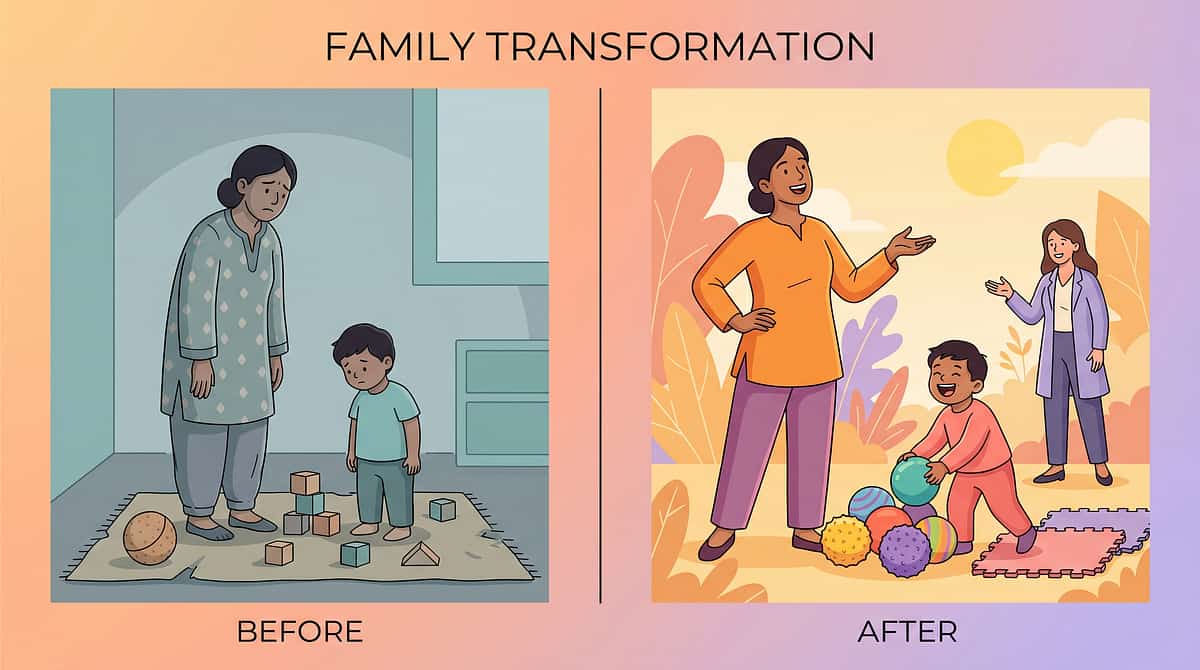
Coordination Is Infrastructure for Everything Else
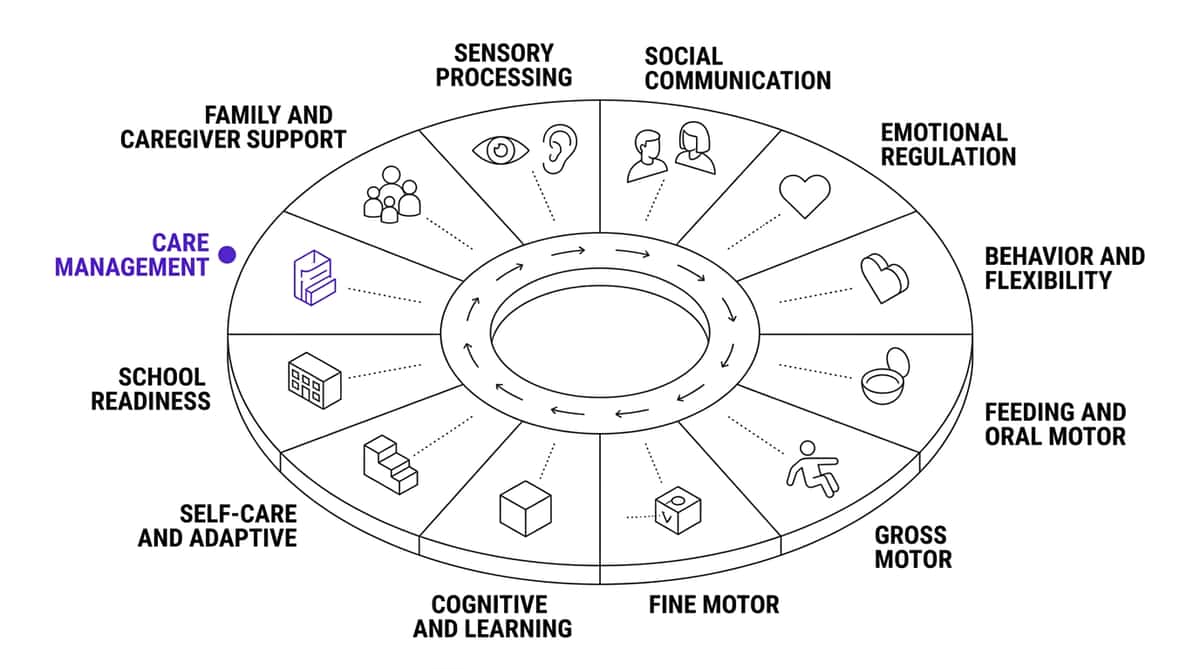
K-908 lives in Domain K — Care Management. But its impact radiates across all 12 domains. When coordination works, every other domain benefits: sensory therapy is consistent, behavioral strategies are aligned, communication goals are reinforced across settings, school and clinic work together. Care coordination is the connective tissue of the entire developmental plan.

From Coordination Chaos to Coordination System: Real Families
Hyderabad — 6-year-old with autism
Before: 12–15 hours per week on coordination. OT and behavioral therapy goals directly contradicting each other. No shared information between providers.
After (8 weeks): 2–3 hours per week on coordination. Goal matrix revealed the contradiction — shared with both providers — who then aligned their approaches in one 30-minute video call.
"I finally feel like I'm the parent again, not just the case manager. The system didn't change. But my tools changed, and that changed everything." — Mother, Pinnacle Network Parent Community
Delhi — Single parent, 7-year-old with medical complexity
Before: 8 active providers. No organization system. Critical information held only in memory. A medication change by one specialist was not communicated to the behavioral team — resulting in a behavioral protocol working against the medication's intended effect for 6 weeks.
After: Care binder with current medication list distributed to all providers at every visit. No repeat of the coordination failure.
From the Therapist's Notes — Pinnacle Blooms Network Clinical Team
"When parents arrive with organized coordination materials — a current summary, a goal matrix, session logs — we can provide better therapy. The first 15 minutes of every intake goes to therapy instead of history-gathering. That time compounds across every session."
Qualitative Research: Parent Motivation and Peer Narrative Influence | Pinnacle Center Outcome Data (aggregate, anonymized)
You Are Not the Only One Holding Fragmented Care Together
Isolation is the enemy of coordination adherence. The parent who connects with others navigating the same burden — who can ask "how did you handle this provider refusing to communicate?" — sustains their coordination system longer, improves it faster, and burns out less.
🟢 Pinnacle Parent WhatsApp Group — Care Coordination
Join a community of parents building coordination systems. Ask questions. Share wins. Learn what worked for families in your situation. Access via 9100 181 181.
🌐 Pinnacle Online Parent Community
Dedicated parent forums organized by technique, age group, and challenge. Available at pinnacleblooms.org/community.
📍 Local Parent Meetups
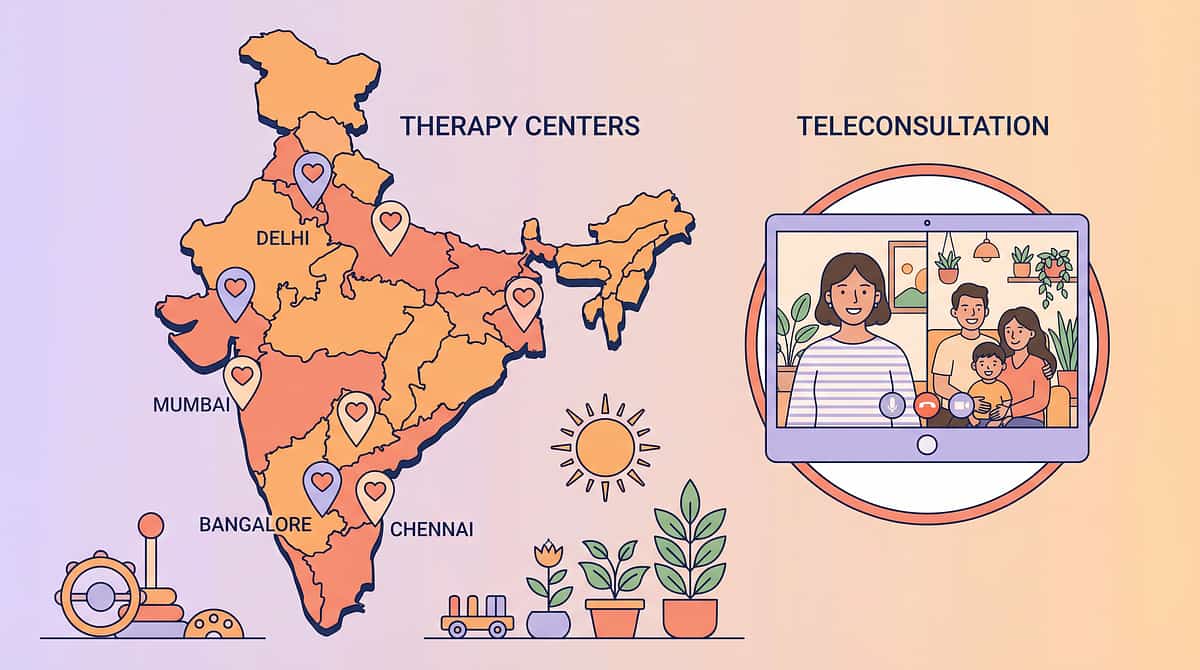
Organized at 70+ Pinnacle centers across India. Ask your nearest center for the current schedule. In-person connection compounds online support.
🤝 Peer Mentoring
Connect with an experienced parent who has built their own coordination system. Ask at any Pinnacle center — your experience can also help another family.
"Your experience — what worked, what failed, what you wish you knew — helps other parents. Consider sharing your coordination journey. The parent drowning right now needs to know it gets manageable."
Professional Coordination Support Across 70+ Centers
🏥 In-Center Coordination Support
Available at all 70+ Pinnacle centers. Our care coordination team can help you build your binder, complete your goal matrix, initiate your first multi-provider meeting, and set up your tracking systems — in a single guided 2-hour session.
💻 Teleconsultation
Book a 45-minute coordination consultation with a Pinnacle care coordinator remotely. Available across India and internationally for families in 70+ countries.
📞 FREE National Autism Helpline
9100 181 181 | Available 24×7 in 16+ languages | Immediate coordination support without an appointment
Pinnacle Specialist Disciplines for Coordination Referral: OT • SLP • ABA/BCBA • SpEd • NeuroDev Pediatrics • CRO • Care Coordination Specialists
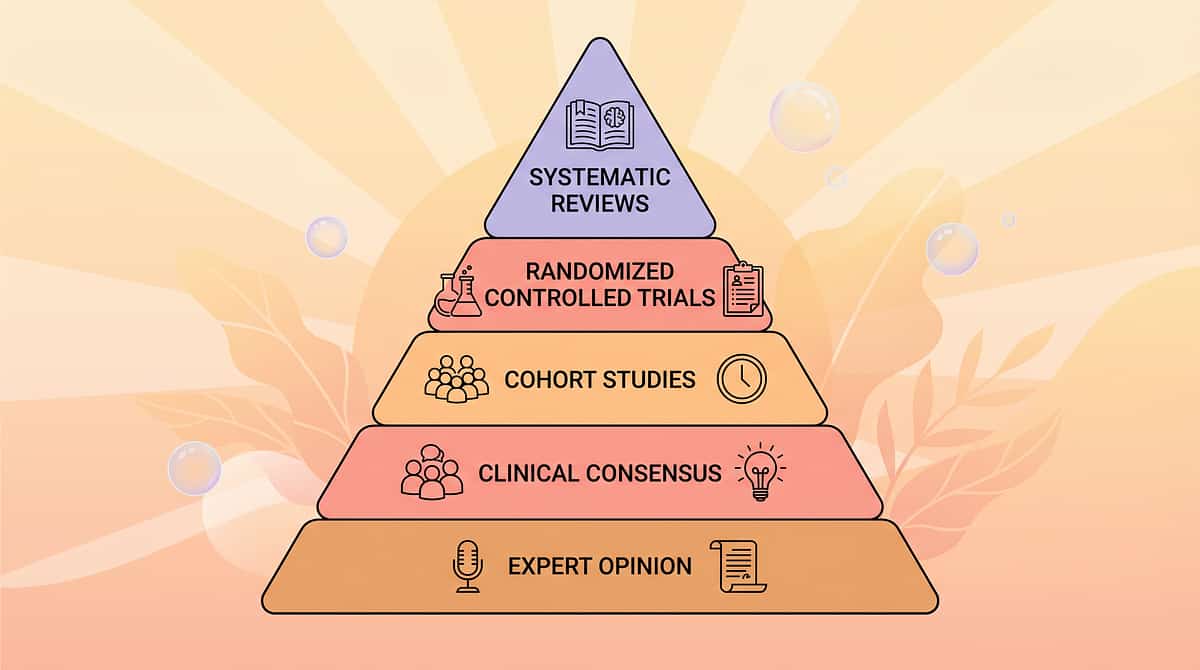
The Science Behind Coordination Systems
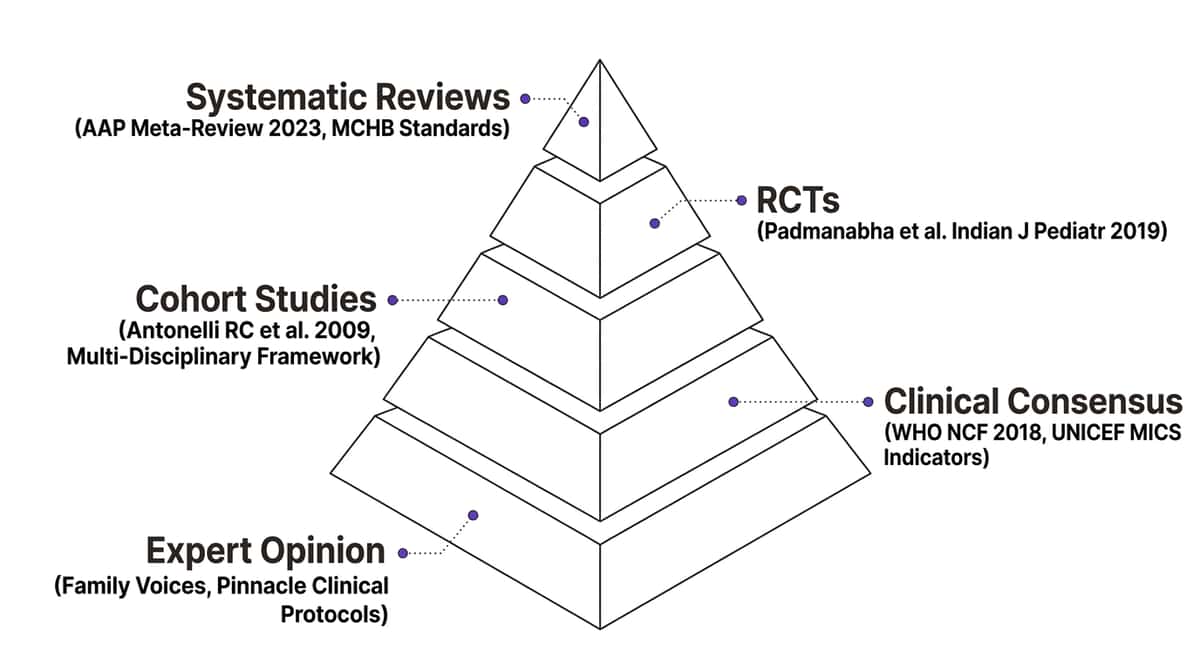
📚 American Academy of Pediatrics (2005, reaffirmed 2023)
Care Coordination in the Medical Home. Demonstrates reduced hospitalizations, improved treatment adherence, and better family outcomes through coordinated care.
📚 Antonelli RC, McAllister JW, Popp J (2009)
Making Care Coordination a Critical Component of the Pediatric Health System. Establishes coordination burden on families as a measurable predictor of child outcomes.
📚 WHO Nurturing Care Framework (2018)
Care coordination as essential equity infrastructure. PMC9978394. Implementation across 54 LMICs. Identifies family-based coordination as the default in fragmented systems.
📚 Padmanabha S et al. (2019)
Home-based intervention outcomes. Indian Journal of Pediatrics. DOI:10.1007/s12098-018-2747-4. Establishes home-based protocols within the Indian pediatric context.
📚 NCAEP Evidence-Based Practices Report (2020)
27 evidence-based practices for autism; visual supports and structured protocols foundational to home-based intervention and coordination systems.
Your Coordination Data Makes Every Child's Care Better
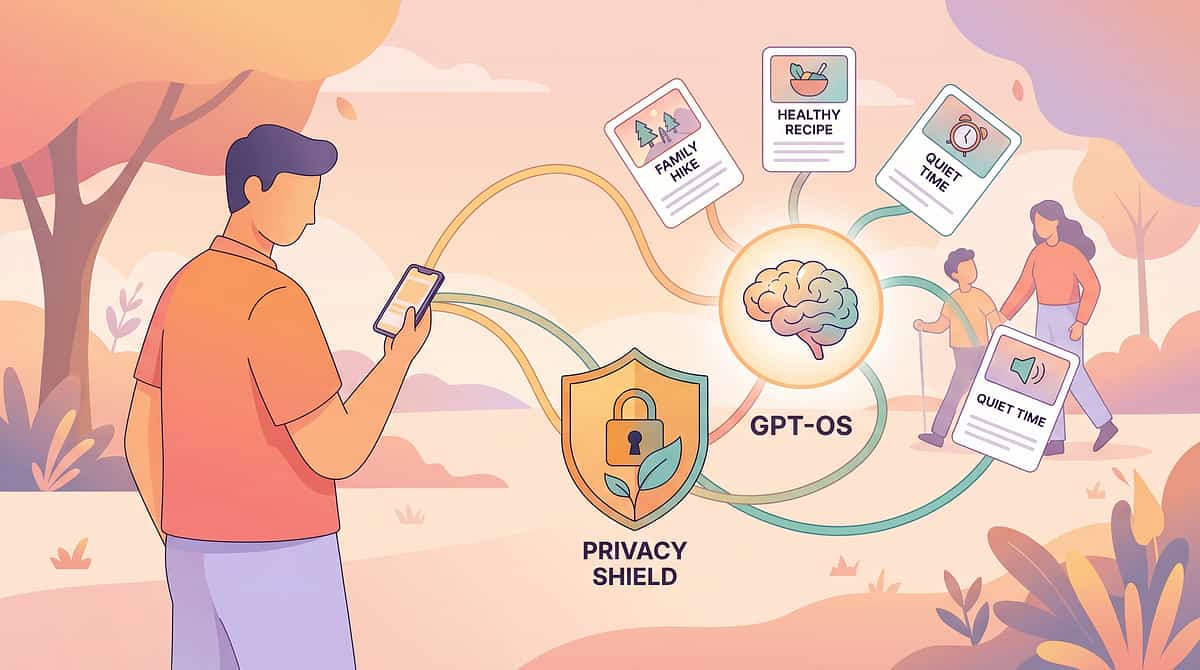
What GPT-OS® Learns from K-908 Data
- Which coordination materials produce the fastest burden reduction
- Which provider communication patterns correlate with improved child outcomes
- Which timing and sequencing of tool adoption is most sustainable
- Which family complexity profiles need professional support vs. tools alone
Your Goal
Your coordination data — the sessions logged, the meetings facilitated, the burden reduced — is not just helping your child. It is improving the precision of GPT-OS® recommendations for every family like yours, across 70+ countries.
GPT-OS® Stack: AbilityScore® | TherapeuticAI® | EverydayTherapyProgramme™ | FusionModule™ | Closed-Loop Therapeutic Control
Digital Health + ASD 2024 Meta-Analysis (21 RCTs, 1,050 participants) | Pinnacle GPT-OS® Architecture

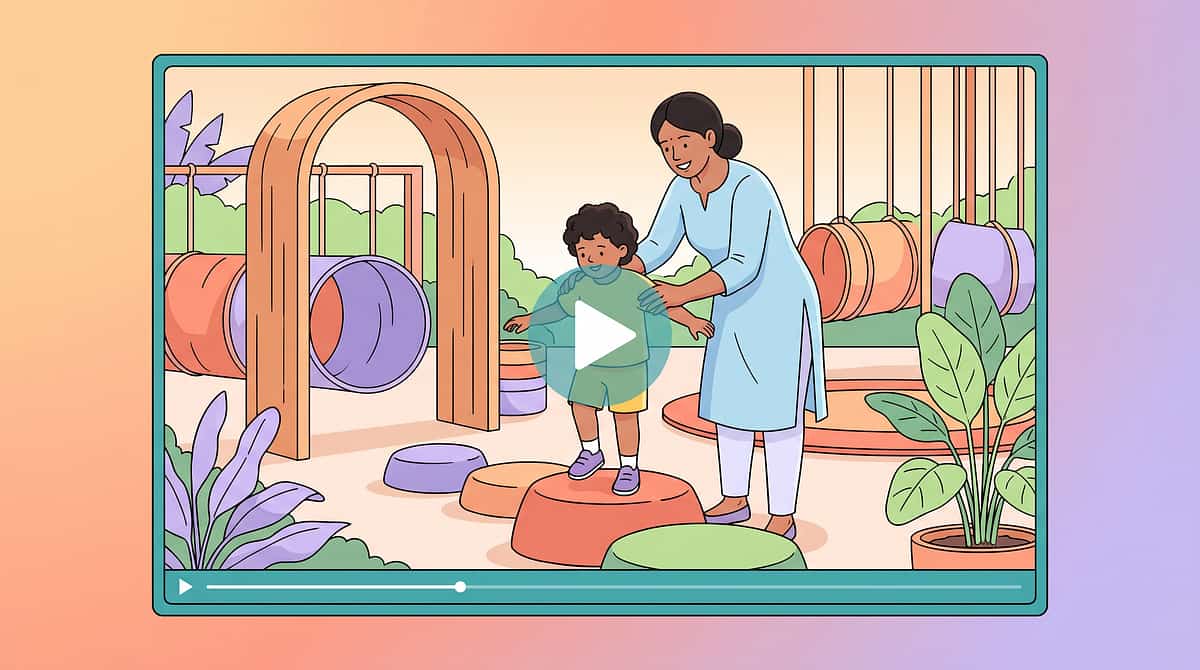
Watch: 9 Materials That Help With Therapy Coordination
🎬 Reel ID: K-908
Care Management and Family Support Series — Episode 908
⏱ Duration: 75–85 seconds
Domain K — Care Coordination / Multi-Provider Integration
🎤 Presenter
Pinnacle Consortium Care Management Team
This visual summary introduces all 9 materials from this page: care binders, one-page summaries, authorization forms, goal matrices, session logs, calendar systems, provider directories, communication templates, and care meeting toolkits. Watch the materials in action before implementing.
→ H-770: 9 Materials That Help With Therapist Coordination
Adjacent technique — in-clinic coordination tools
→ K-909: 9 Materials That Help With School Communication
Next technique in the Care Management Series
→ K-907: 9 Materials That Help With Insurance Authorization
Prerequisite technique — authorization management foundation
NCAEP 2020: Video Modeling as Evidence-Based Practice | Multi-Modal Learning Research (Visual + Text + Demonstration)

Coordination Requires Consistency Across All Caregivers
If only one parent executes the coordination system, it's limited by one person's capacity. When coordination knowledge is shared with spouses, grandparents, school teachers, and support workers, it multiplies the system's effectiveness. The binder serves everyone. The one-page summary was made to be shared.
📋 "Explain to Grandparents" Version
"[Child's name] has many different therapists and doctors. Mum/Dad has built an organized system so nothing gets lost. The blue binder on the shelf has all the important information. The calendar on the phone has all the appointments. The one-page summary in the front of the binder has everything a new provider needs. Here's what you need to know if you're taking [child's name] to an appointment..."
📧 School Communication Template
Dear [Teacher/Principal], I am writing to share our family's care coordination approach for [child's name]. We maintain a goal tracking matrix across all therapy providers and would welcome the opportunity to share our therapy goals with the school team. I have attached a summary of current therapy targets that may support [child's] school program. A signed communication authorization is also attached. — [Parent Name]
PMC9978394 (CCD Multi-Caregiver Training) | WHO CCD Package: Multi-Caregiver Consistency Principle

Answers to the Questions You Haven't Asked Yet
Q: I'm too overwhelmed to set up a coordination system. Where do I actually start?
Start with one thing: create a one-page summary (Material 2). Open a Google Doc, fill in the 11 fields, and save it to your phone. That's your minimum viable coordination system. Total time: 45 minutes. Everything else builds from there.
Q: My providers are in different cities. Can I still coordinate them?
Yes. The goal tracking matrix, one-page summary, session logs, and communication templates all work regardless of geography. Multi-provider meetings happen over Google Meet or Zoom — geography is not a barrier. The authorization framework works across any distance.
Q: I've asked providers to communicate and they don't respond. What do I do?
First: ensure authorizations are in place and attached to your request. Second: make requests specific and actionable — not "please communicate" but "please email [name] your last progress note." Third: send one follow-up 2 weeks after. Fourth: for persistent non-communication, escalate at the next appointment: "Can we schedule 15 minutes to address this together?"
Q: I have digital records but no physical binder. Is that sufficient?
Yes, with one condition: your digital system must be accessible offline and quickly — an emergency doesn't wait for Wi-Fi. At minimum, keep one printed copy of your one-page summary in your wallet and another in your car.
Q: How often should I update the coordination system?
Daily: file new documents and log sessions (2 minutes). Weekly: review calendar and upcoming deadlines (10 minutes). Monthly: update one-page summary and goal matrix (30 minutes). Quarterly: full binder audit and contact directory review (90 minutes).
Q: Is there a point at which I should hand off coordination to a professional?
Yes. If your child qualifies for case management services (check with insurance and government disability services), pursue them. If the coordination burden is significantly affecting your health, professional support is warranted. If your child has medical complexity (8+ active providers), a professional care coordinator is recommended.
Q: My child's school is not responsive to coordination efforts. How do I handle this?
The school has legal obligations under special education law (IEP framework) that make them more responsive to documented requests than informal ones. Always document school communication requests in writing. Use K-909: School-Therapy Communication for school-specific tools. The IEP meeting is your legal forum for coordination.
Q: How is this different from what GPT-OS® offers?
GPT-OS® integrates the clinical coordination function — FusionModule™ ensures all Pinnacle therapists work from shared goals with shared data. K-908 tools address the parent coordination role within a fragmented external system. They are complementary: GPT-OS® coordinates the clinical team internally; K-908 tools coordinate all providers from the family's position.
Preview of 9 materials that help with therapy coordination Therapy Material
Below is a visual preview of 9 materials that help with therapy coordination therapy material. The pages shown help educators, therapists, and caregivers understand the structure and content of the resource before use. Materials should be used under appropriate professional guidance.



You Know What to Do. Start Today.
One action. Right now. The binder gets built. The system gets started.
Therapy Sessions
Delivered and measured across the Pinnacle network
Measured Improvement
Across families using Pinnacle's coordinated approach
Countries
Families supported worldwide through GPT-OS® platform
📞 FREE National Autism Helpline: 9100 181 181
Available 24×7 | 16+ Languages | pinnacleblooms.org
"From fear to mastery. One technique at a time."
Pinnacle Blooms Network® exists to transform the Indian home into a proven, scientific, 24×7, multi-sensory, multi-disciplinary, personalized pediatric therapy center — empowering parents, families, and caregivers to become the most effective intervention agents in their child's developmental journey.
OT • SLP • ABA/BCBA • SpEd • NeuroDev Pediatrics • CRO • WHO/UNICEF-Aligned
CIN: U74999TG2016PTC113063 | DPIIT: DIPP8651 | MSME: TS20F0009606 | GSTIN: 36AAGCB9722P1Z2
© 2025 Pinnacle Blooms Network®, unit of Bharath Healthcare Laboratories Pvt. Ltd. All rights reserved.
GPT-OS® and Pinnacle Blooms Network® are registered trademarks. AbilityScore®, TherapeuticAI®, FusionModule™, and EverydayTherapyProgramme™ are proprietary systems.
When You Became Your Child's Unpaid Case Manager