

9 Materials That Help With Parent Anxiety
Because you can't pour from an empty cup — or a shattered one
Parent Wellbeing & Caregiver Mental Health – Episode 884

Series: Parent Wellbeing
Your Anxiety Is Not Weakness
It's a response to something genuinely hard. Parent anxiety is real — it affects your wellbeing AND your child's progress. You're holding everything together while falling apart inside, and that deserves to be named, not minimized.
"I need to talk about something no one wants to hear. I'm the parent. I'm supposed to be the strong one. The calm one. The one who holds everything together while my child falls apart. But I'm falling apart too."
The anxiety started small — just worry about a diagnosis, a therapy schedule, whether you were doing enough. Normal parent concern. But it grew. Now it's the operating system running in the background of every single day. This reel is for you.
What Parent Anxiety Actually Looks Like
It's not just worrying about your child. It's a complete rewiring of your nervous system into a permanent state of threat detection. Hypervigilance that was adaptive in crisis becomes maladaptive as a permanent state.
1
Waking at 3 AM
Heart racing, running through tomorrow's appointments, IEP meetings, medication schedules — catastrophizing about the future.
2
Body Breaking Down
Headaches, back pain, digestive issues, teeth grinding. Your body keeps score when your mind won't stop.
3
Identity Loss
The person you were before — with hobbies, friendships, interests — fades. Your world shrinks to your child's needs.
4
Profound Isolation
Friends without special needs children don't understand. You're lonely in a way that's difficult to articulate — surrounded by professionals, profoundly alone.

The Signs You Recognize
Parental anxiety in the context of raising children with developmental differences is persistent, elevated, and chronic. It is not a reflection of weakness — it's a predictable response to objectively challenging circumstances.
Emotional Signs
- Persistent worry about present and future
- Irritability and reduced patience
- Catastrophizing — imagining worst-case scenarios
- Rumination — replaying past, rehearsing future
- Sense of being overwhelmed and unable to keep up
- Resentment (with guilt about the resentment)
- Crying episodes, emotional volatility
Physical & Behavioral Signs
- Sleep disturbances — difficulty falling or staying asleep
- Headaches, tension, digestive issues, chronic pain
- Hypervigilance — constantly scanning for problems
- Social withdrawal and isolation
- Loss of interest in previously enjoyed activities
- Difficulty relaxing even when child is cared for
- Neglect of own health — skipped meals, no exercise
Research consistently shows that parents of children with autism, ADHD, and developmental delays experience significantly higher rates of anxiety, depression, and burnout compared to parents of typically developing children.

Material 1 of 9
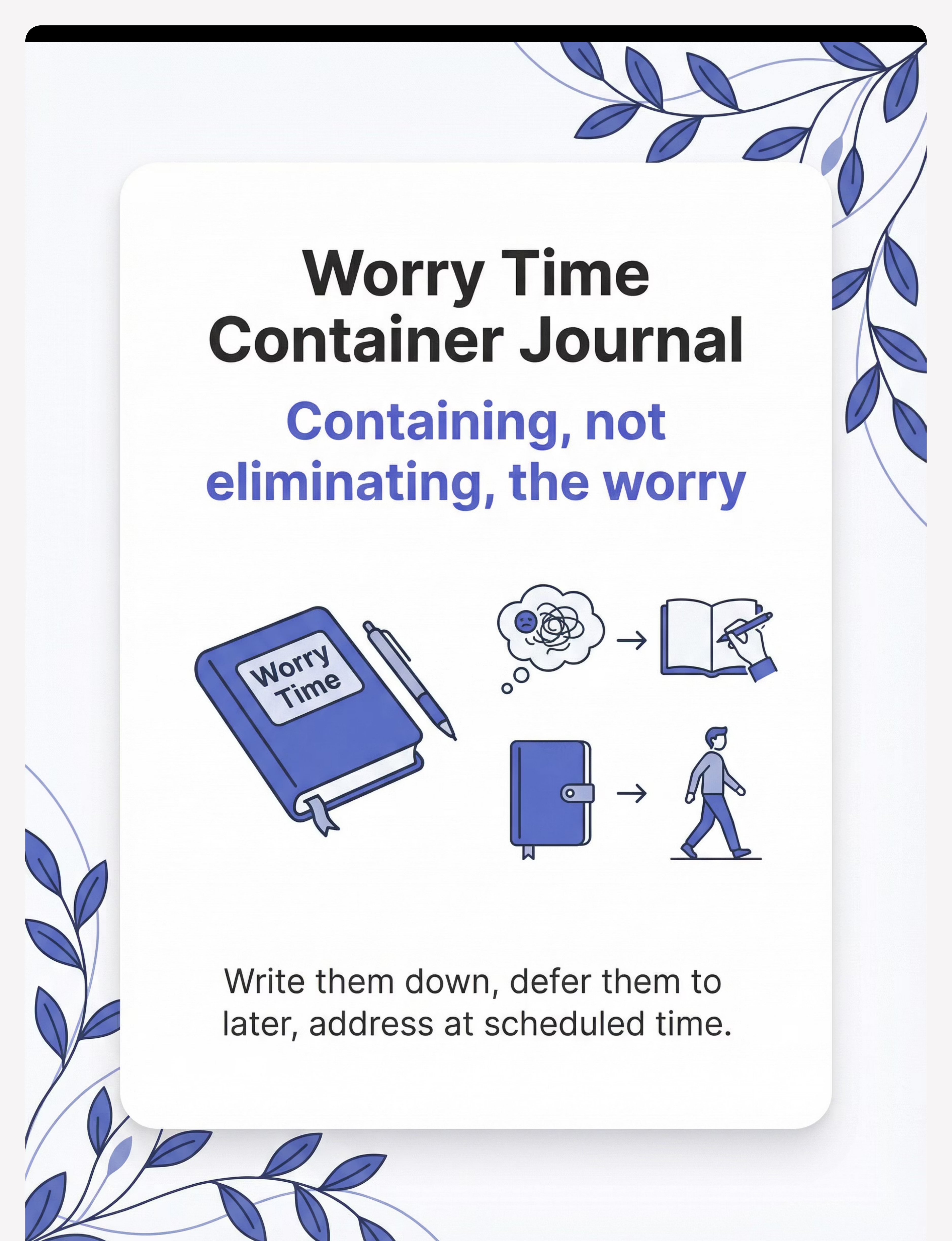
Worry Time Container Journal
Containing, not eliminating, the worry
Anxious minds ruminate constantly — the same worries circling on repeat, intruding during meals, time with other children, attempts at sleep. A worry time container doesn't try to eliminate worry (which often backfires) — it corrals it. Set a specific daily "worry time" of 15–20 minutes. When a worry arises outside that window, write it down and tell yourself: "I'll think about this at 7 PM." This isn't dismissal — it's deferral. The worry is captured, acknowledged, and scheduled for proper attention.
During designated worry time, something interesting often happens: many worries seem less urgent hours later. Some have resolved themselves. You can now give the remaining ones focused attention rather than fragmented anxiety.
Key insight: You can't stop worrying through willpower. But you can contain worry — giving it boundaries instead of letting it colonize your entire day.
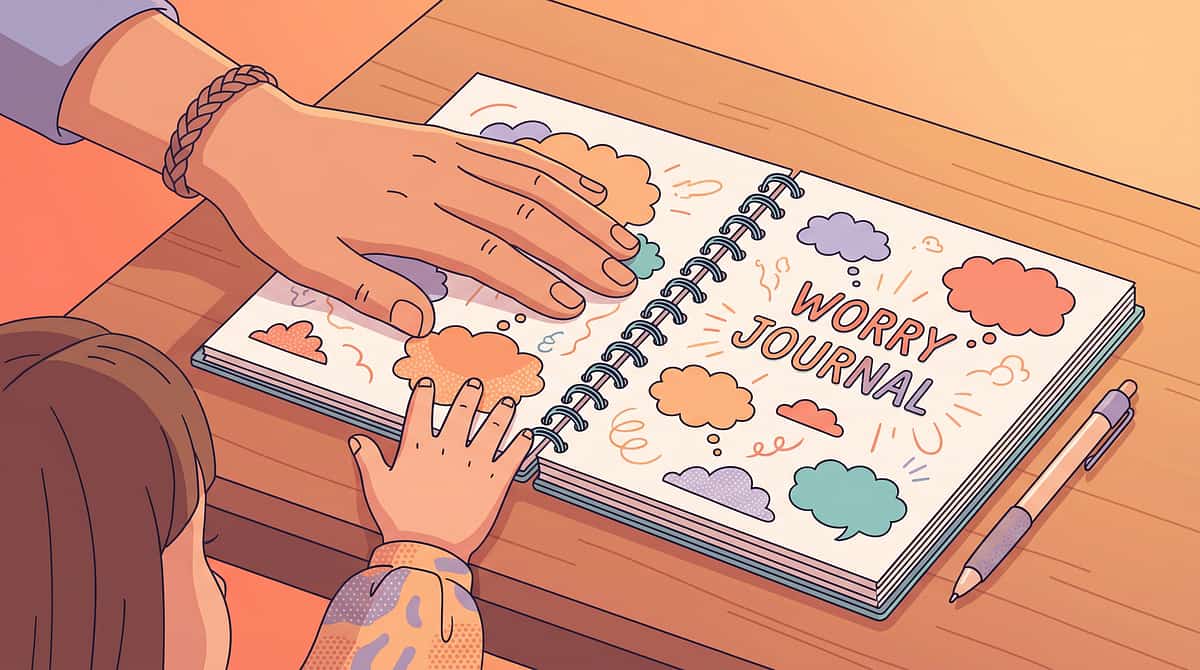
Material 1 – DIY Guide
How to Set Up Your Worry Journal
1
Set Up the Journal
Small notebook that travels with you. Inside cover: "I will address these worries at [specific time]." Columns: Worry | Time written | Addressed?
2
Choose Your Worry Time
15–20 minutes, same time daily. Not right before bed (too activating). Not during high caregiving demands. Example: 7 PM after child's bedtime routine starts.
3
Capture, Don't Analyze
When a worry arises, write it briefly. Don't analyze — just capture. Tell yourself: "I'll think about this at worry time." Return to the present activity.
4
Review at Worry Time
For each worry: Is this still bothering me? Is action possible? Or is this rumination? If action possible: write one small next step. If not: acknowledge and release.
This technique is for chronic background worry — not for worries requiring immediate action. If a worry requires urgent response, take the action first.
What you need: Small notebook, pen, timer or alarm for worry time, a comfortable private space for review.

Material 2 of 9
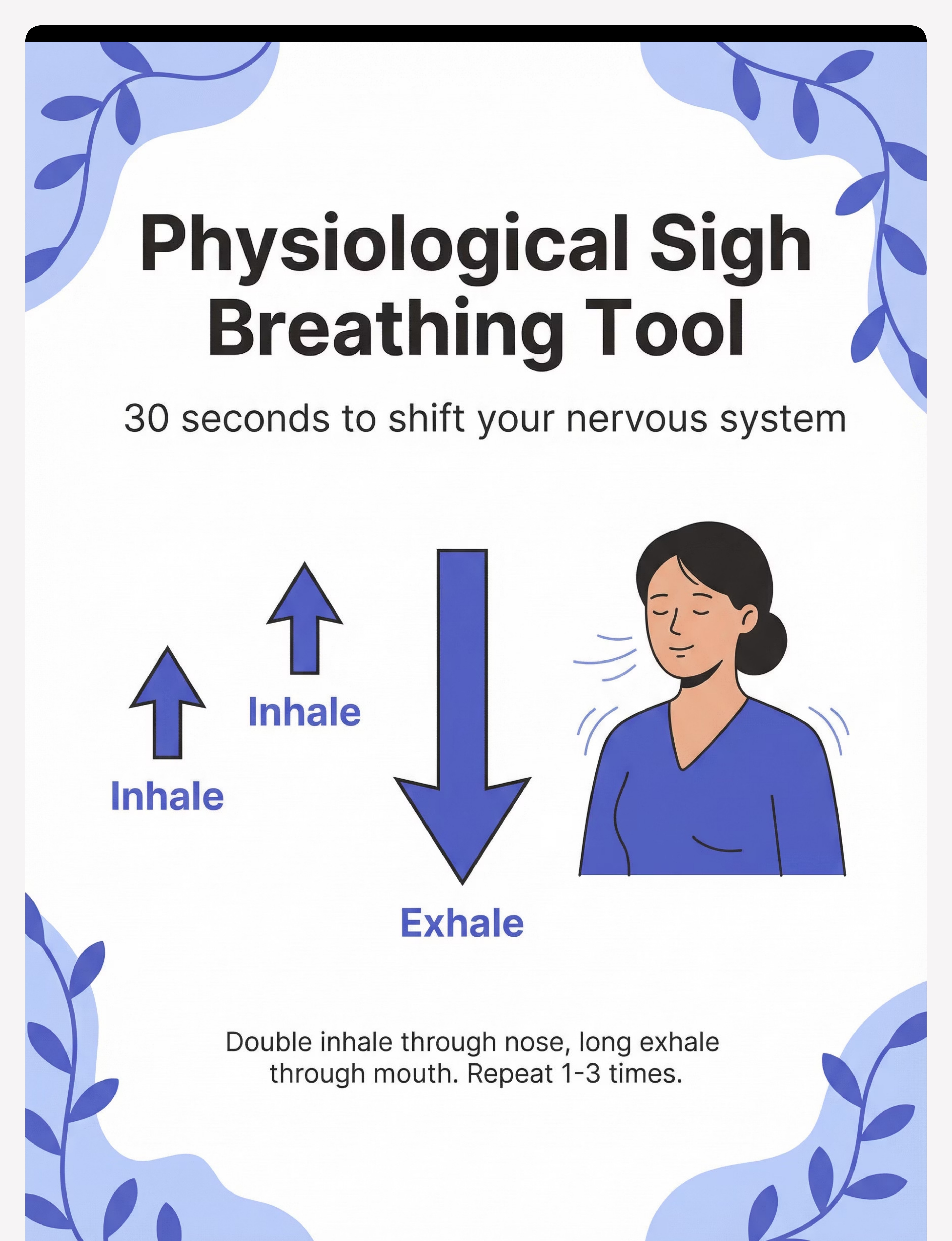
Physiological Sigh Breathing Tool
30 seconds to shift your nervous system
The fastest way to shift from anxious arousal to calm is through the breath — specifically, through exhale-emphasized breathing that activates the parasympathetic nervous system. The physiological sigh, identified by neuroscientist Andrew Huberman, is particularly effective.
Unlike meditation — which requires time and mental space — a physiological sigh can be done in 30 seconds while waiting at a red light, before an IEP meeting, or after putting a dysregulated child to bed.
The double inhale fully inflates the lung sacs, increasing CO₂ release. The long exhale activates the vagus nerve — heart rate slows, muscles relax, anxious arousal decreases.
The Three Steps
- Inhale through nose — fill lungs fully
- One more small sip of air — top off lungs completely
- Long, slow exhale through mouth — longer than both inhales combined
Repeat 1–3 times. That's it. Under 30 seconds.
Price range: ₹0–500 (many options are free)
Key insight: You have a built-in calm switch. The breath is the fastest route to your parasympathetic nervous system — learn to use it.

Material 2 – DIY Guide
Building Your Breathing Practice
Visual Guides
Print a card showing the up-up-down pattern. Place it in your car, kitchen, and bathroom mirror. Use a free animated GIF online for on-screen practice.
Apps & Digital Tools
Breathe (Apple Watch), Calm or Headspace (basic breathing free), YouTube physiological sigh videos, or simple timer apps with custom intervals.
Tactile Reminders
Wear a bracelet — when you feel it, breathe. Keep a stone in your pocket. Touch it, breathe. Before every fidget, take one sigh first.
Building the Habit
Link to existing moments: "Every therapy waiting room = 3 sighs." "Before every IEP meeting, sigh in the parking lot." Practice when calm so it's available when stressed.
Some people feel lightheaded with deep breathing, especially at first. Start gently. If you have respiratory conditions, consult your doctor before breath work practices.
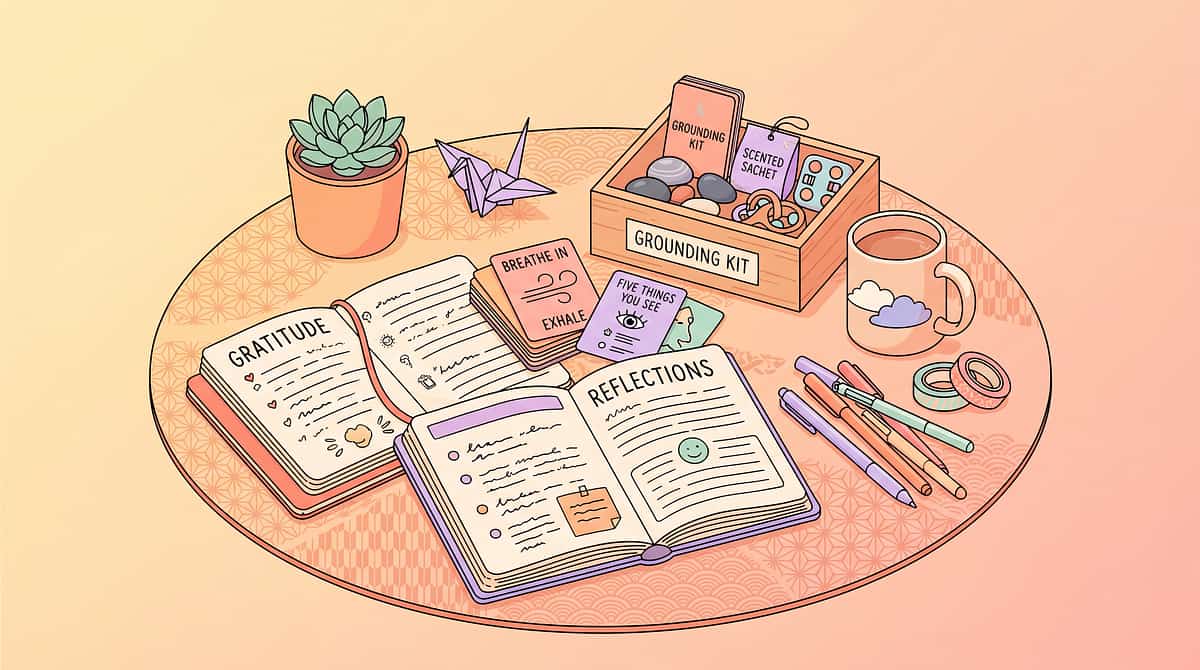
Material 3 of 9
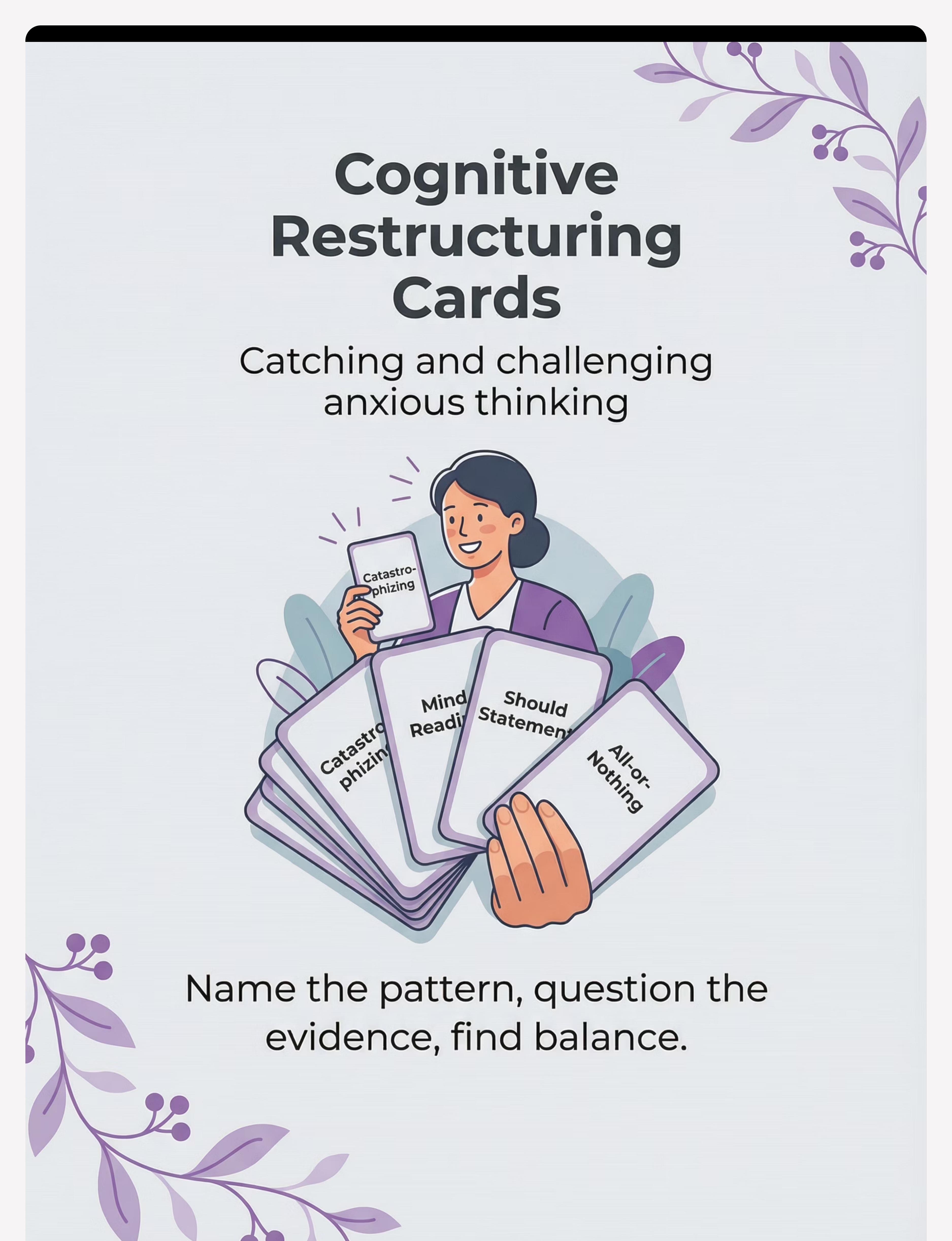
Cognitive Restructuring Cards
Catching and challenging anxious thinking
Anxiety distorts thinking. Catastrophizing, mind-reading, overgeneralizing, filtering — these cognitive distortions are common in anxious minds and particularly insidious for parents of children with challenges. Cognitive restructuring is a core CBT technique that involves identifying distorted thoughts, examining evidence for and against them, and developing more balanced alternatives.
A set of cognitive restructuring cards provides a quick-reference tool. Each card names a common distortion, gives parent-specific examples, and offers questions to challenge the distortion. When you catch yourself in an anxious thought spiral, pulling a card interrupts the spiral and redirects thinking.
Over time, this builds the mental muscle of cognitive flexibility — the ability to see a situation from multiple angles rather than getting locked into the anxious interpretation.
Key insight: Anxious thoughts feel like truth. They're not. Learning to identify and question them is one of the most powerful anxiety-management skills you can develop.

Material 3 – The 8 Essential Cards
Cognitive Distortions for Parents
Catastrophizing
"This meltdown means he'll never function independently." Challenge: What's actually more likely?
All-or-Nothing
"Either therapy works completely or it's wasted money." Challenge: What does partial progress look like?
Mind-Reading
"Everyone at school thinks I'm a demanding parent." Challenge: What's the actual evidence?
Should Statements
"I should be able to handle this without stress." Challenge: Says who? What would I tell a friend?
Filtering
Ignoring gains, focusing only on deficits. Challenge: What am I not seeing? What has improved?
Emotional Reasoning
"I feel overwhelmed, so it must be hopeless." Challenge: Is my feeling a fact or a feeling?
Fortune-Telling
"She'll never live independently." Challenge: Can I actually know the future?
Personalization
"His meltdowns are because I'm doing something wrong." Challenge: What else could be contributing?
Sample restructuring: Distorted: "The therapy isn't working. We've wasted two years." Balanced: "Progress is slow but present. Two years ago she couldn't do X — now she can. Therapy is contributing to gradual gains."
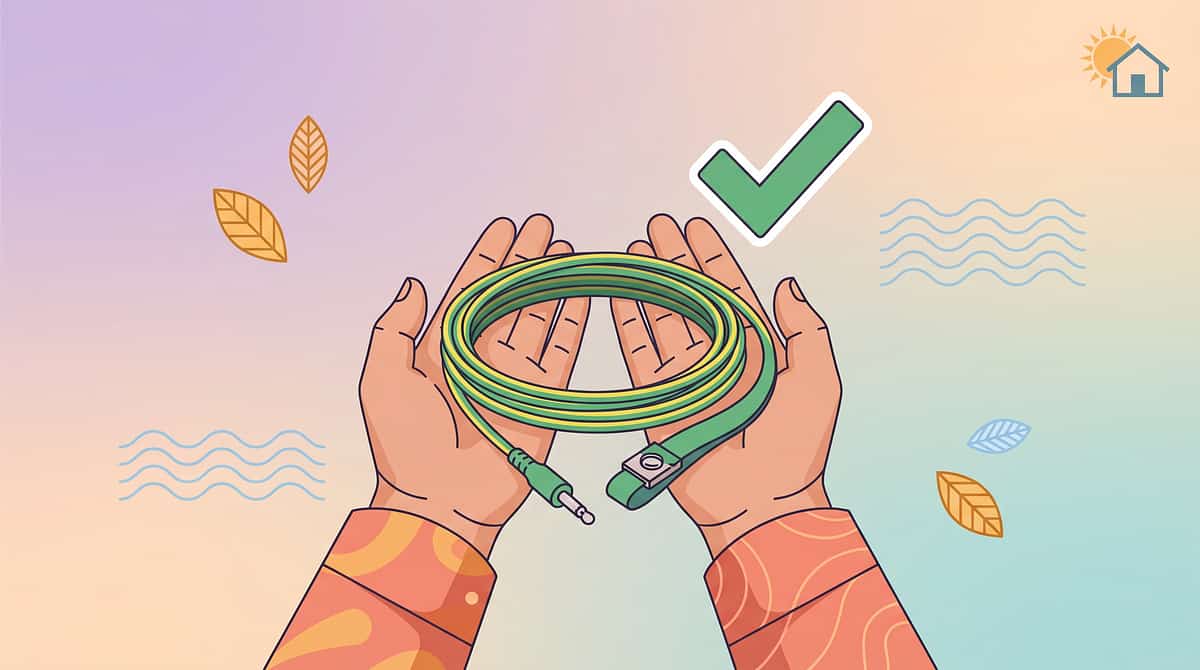
Material 4 of 9
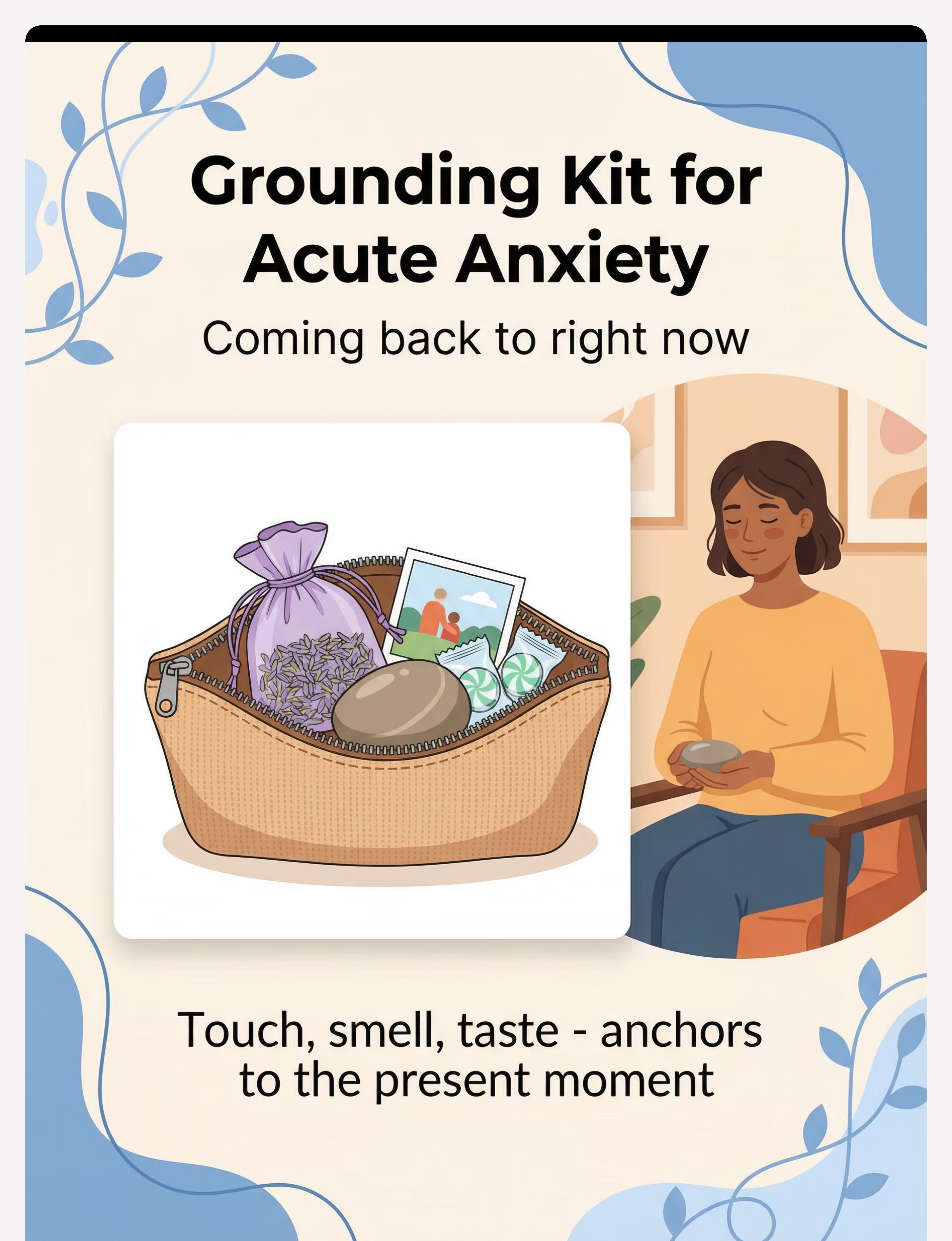
Grounding Kit for Acute Anxiety
Coming back to right now
Acute anxiety pulls you out of the present moment — into past regrets or future fears. A grounding kit is a small, portable collection of sensory items that can interrupt an anxiety spiral by engaging your five senses. The present moment is usually survivable. Anxiety lives in the future and the past. Grounding brings you back to now — which is where you can actually cope.
In the sterile waiting room, the overwhelming IEP meeting, the car after a difficult school pickup — you have tools to come back to the present moment.
Price range: ₹150–500
The 5-4-3-2-1 technique pairs perfectly with a grounding kit: 5 things you see, 4 you hear, 3 you touch, 2 you smell, 1 you taste.
What's Inside
- Touch: Smooth stone, stress ball, textured fabric, or wooden bead
- Smell: Lavender sachet, peppermint oil, scented lotion
- Taste: Strong mints, ginger chews, cinnamon drops
- Sight: Photo of calm place, nature image, mandala card
- Sound: Calming playlist downloaded offline on phone
- Container: Small zippered pouch — inconspicuous, portable

Material 4 – DIY Guide
Building Your Grounding Kit
1
Choose Your Container
A small zippered pouch, makeup bag, or pencil case. It should fit in your purse, car, and desk drawer. Nothing conspicuous — you should be able to use it anywhere.
2
Select One Item Per Sense
Choose items that genuinely soothe you. There are no "correct" grounding objects — only ones that work for your nervous system. Test before committing.
3
Add a 5-4-3-2-1 Card
Include a small card: "5 things I see / 4 I hear / 3 I can touch / 2 I smell / 1 I taste." Use this structure to move slowly through each sense over 2–3 minutes.
4
Place Strategically
Main kit in purse or bag. Mini kit in car. One item in pocket at all times. Know where it is before you need it — not during the spiral.
Grounding is a coping tool for manageable anxiety. It's not sufficient for panic attacks or severe anxiety disorders. If acute anxiety is frequent or debilitating, seek professional support.

Material 5 of 9
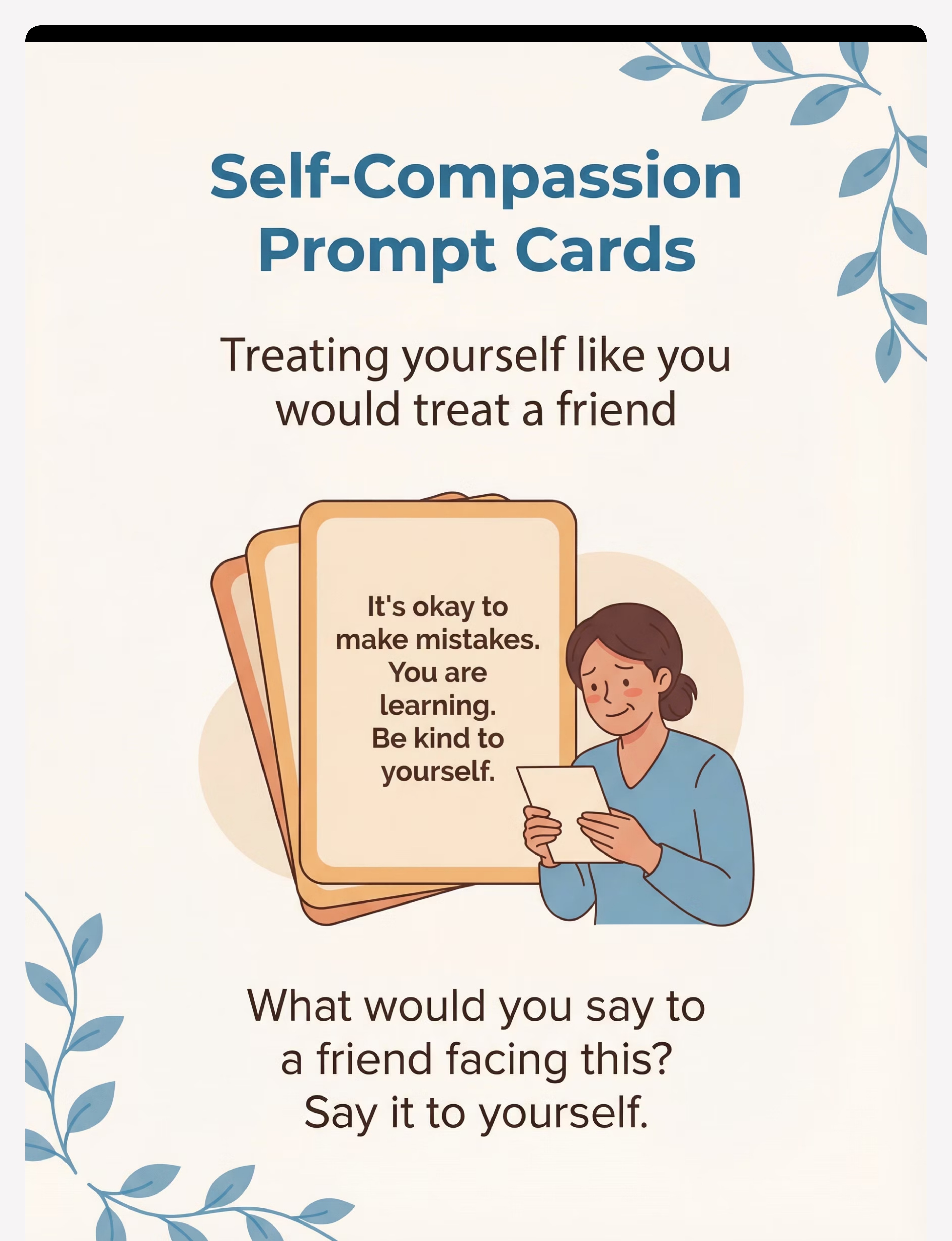
Self-Compassion Prompt Cards
Treating yourself like you'd treat a friend
Parents of children with challenges are often brutally self-critical. They hold themselves to impossible standards and extend to themselves none of the compassion they would readily offer a friend in the same situation. This self-criticism fuels anxiety — it adds a layer of "and I'm failing" to every difficult moment.
Self-compassion, as researched by Kristin Neff, involves three components: self-kindness (treating yourself with warmth rather than criticism), common humanity (recognizing struggle is part of being human, not unique inadequacy), and mindfulness (acknowledging painful feelings without over-identifying with them).
"Research shows that self-compassion reduces anxiety, improves resilience, and paradoxically makes people more likely to take responsibility and grow — the opposite of what self-critics fear."
Key insight: You speak to yourself in ways you would never speak to a friend. That inner critic fuels anxiety. Self-compassion isn't soft — it's a science-backed anxiety reducer.

Material 5 – The Scenario Cards
Self-Compassion Cards by Scenario
1
After a Meltdown
"This was really hard. Meltdowns are hard for both of us. I handled it as best I could in that moment. What do I need right now to recover?"
2
When Feeling Like a Failure
"I am doing something incredibly hard. A good parent isn't a perfect parent — it's a parent who keeps showing up. And I keep showing up."
3
After Losing Patience
"I am human. I got overwhelmed. This moment doesn't define my parenting. What do I need to regulate so I can reconnect?"
4
When Feeling Guilty About Self-Care
"Taking care of myself is part of taking care of my family. I can't pour from an empty cup. My needs matter too."
5
When Feeling Alone
"So many parents understand exactly what I'm experiencing. My struggle connects me to a community even if I can't see them right now."
The Self-Compassion Break: "This is a moment of suffering." (mindfulness) → "Suffering is part of being a parent, being human." (common humanity) → "May I be kind to myself in this moment." (self-kindness)

Material 6 of 9
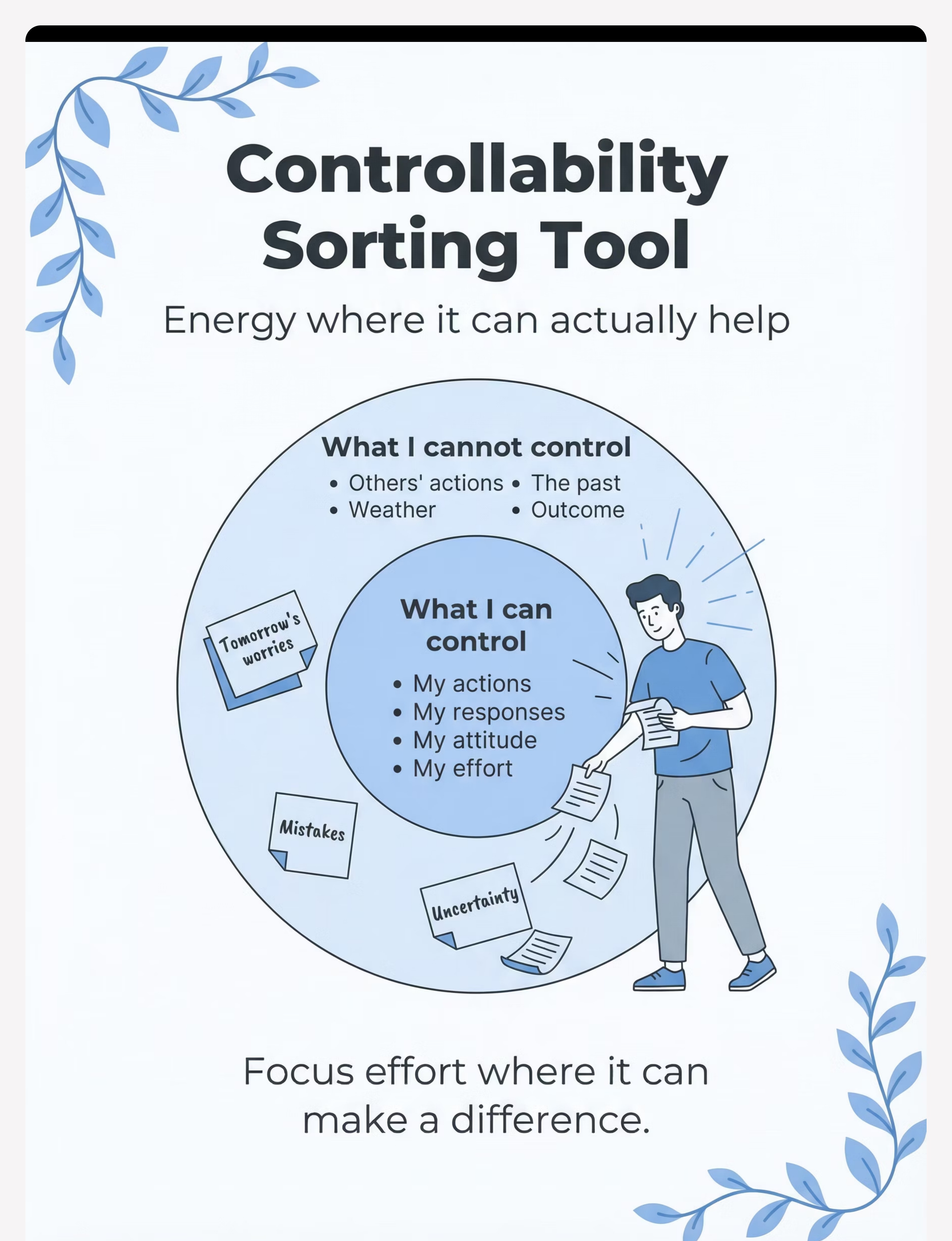
Controllability Sorting Tool
Energy where it can actually help
What This Tool Does
When anxiety rises about a specific issue, you sort it: Is this within my full control? Partially within my influence? Completely outside my control?
For the controllable, you make a plan. For the uncontrollable, you practice acceptance and redirect energy.
This is not passive resignation — it's strategic energy allocation. Worry spent on the uncontrollable is wasted worry.
Price range: ₹50–200
The Three Zones
Zone 1 – Full Control: My actions, my words, my effort, my attitude, how I spend my time.
Zone 2 – Partial Influence: My child's behavior (I can influence but not control), therapy outcomes, others' responses.
Zone 3 – No Control: The diagnosis, systemic issues, other people's opinions, the future, others' emotions.
Acceptance phrases: "I cannot control this, and worrying about it doesn't help." "I'm doing what I can. The rest is not mine to carry."
Key insight: Anxiety often comes from trying to control the uncontrollable. Sorting helps you invest energy where it can actually create change.

Material 6 – Common Worries, Sorted
Where Do Your Worries Live?
Here's how some of the most common parent anxieties map across the three zones. Use this as a starting point — then do the exercise with your own current worries.
Within My Control | Partial Influence | Outside My Control | |
Showing up to therapy consistently | Child's rate of progress | The diagnosis itself | |
Advocating at IEP meetings | School's cooperation and attitude | Other people's judgments | |
My response to meltdowns | Therapy effectiveness | The healthcare system | |
How I talk to my child | Sibling relationships | What the future holds | |
My self-care practices | Extended family understanding | Whether worrying helps | |
What I focus my attention on | Community inclusion | Others' emotions and reactions |
Do this exercise weekly with your current worries. Notice patterns — are you spending most energy on the uncontrollable? Redirect toward what's actually within your power.
Material 7 of 9
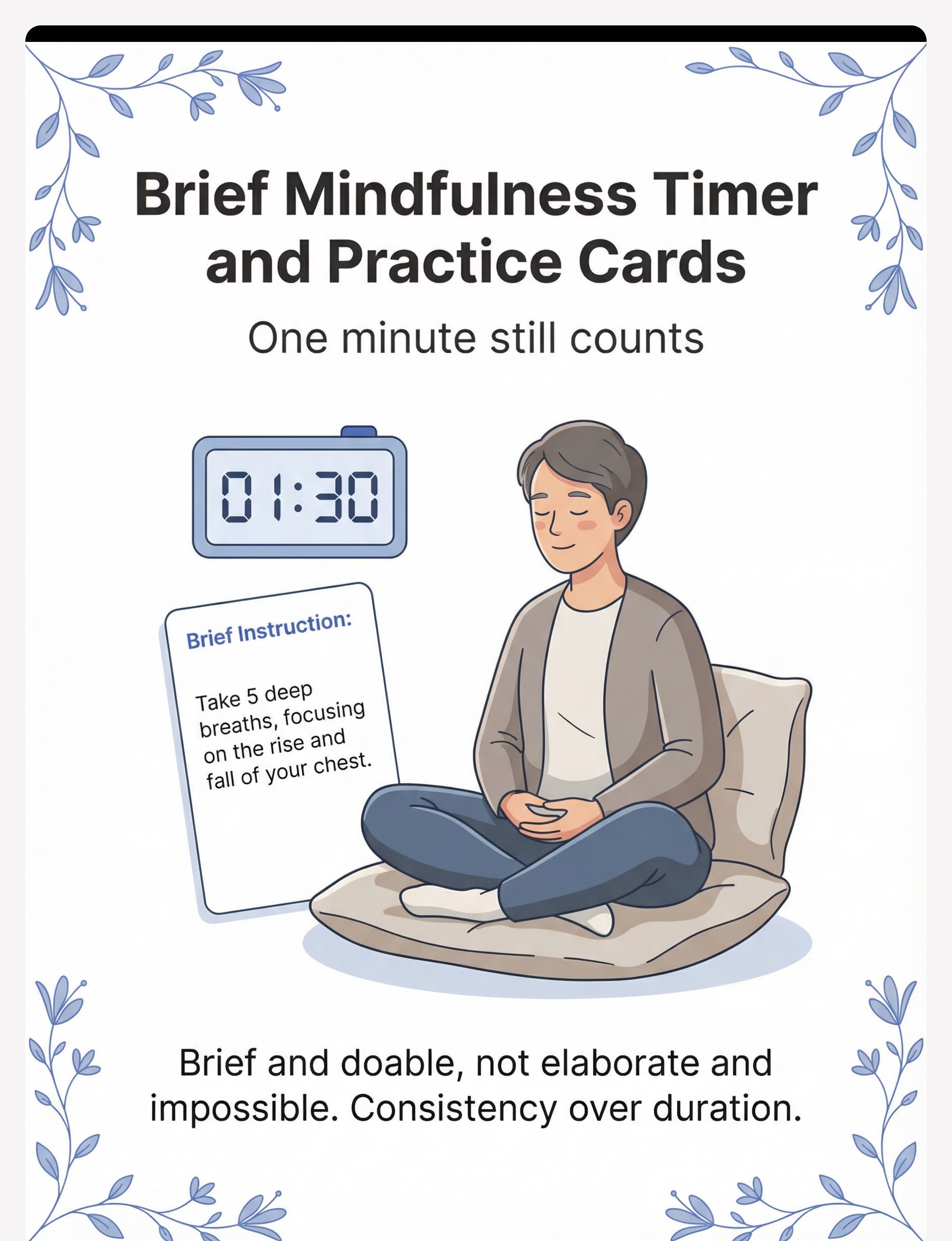
Brief Mindfulness Timer & Practice Cards
One minute still counts
Mindfulness is one of the most researched anxiety interventions — but parents of children with challenges often feel they don't have time. They imagine it requires 30-minute sessions in quiet rooms. It doesn't. A one-minute meditation is still meditation. Three conscious breaths is still mindfulness. A moment of awareness in a therapy waiting room still counts.
A mindfulness timer set for very short intervals (1–5 minutes) makes practice feel achievable. Practice cards offer guided micro-meditations that interrupt the anxiety loop and build present-moment awareness over time.
Research shows even brief, consistent mindfulness practice reduces anxiety, improves emotional regulation, and increases distress tolerance — exactly what stressed parents need.
Price range: ₹0–300 (many options are free) | Key insight: Mindfulness doesn't require a meditation retreat. One minute of conscious breathing, practiced daily, rewires your brain toward calm.

Material 7 – Micro-Practices
One-Minute Practices for Busy Parents
1
Breathing Awareness
For 60 seconds, notice your breath. Don't change it. Just feel the inhale, the exhale. When your mind wanders, gently return. That's the practice.
2
Feet on Floor
Feel your feet on the floor. The weight. The temperature. The texture. Stay with this sensation for 60 seconds. Remarkably anchoring.
3
Sound Bath
Close your eyes. For 60 seconds, just listen. Near sounds, far sounds. Don't label them — just let them arrive and pass.
4
Three Conscious Breaths
30 seconds. Three breaths. Full attention on each one. Inhale, notice. Exhale, notice. That's all — and it's enough.
5
Arrival Practice
Before entering a new space — home, meeting, therapy — pause at the door. One breath. Arrive fully. Then enter.
6
Hands Awareness
Rest your hands on your lap. Feel their weight, temperature, any tingling or stillness. Just the hands — for 60 seconds.

Material 8 of 9
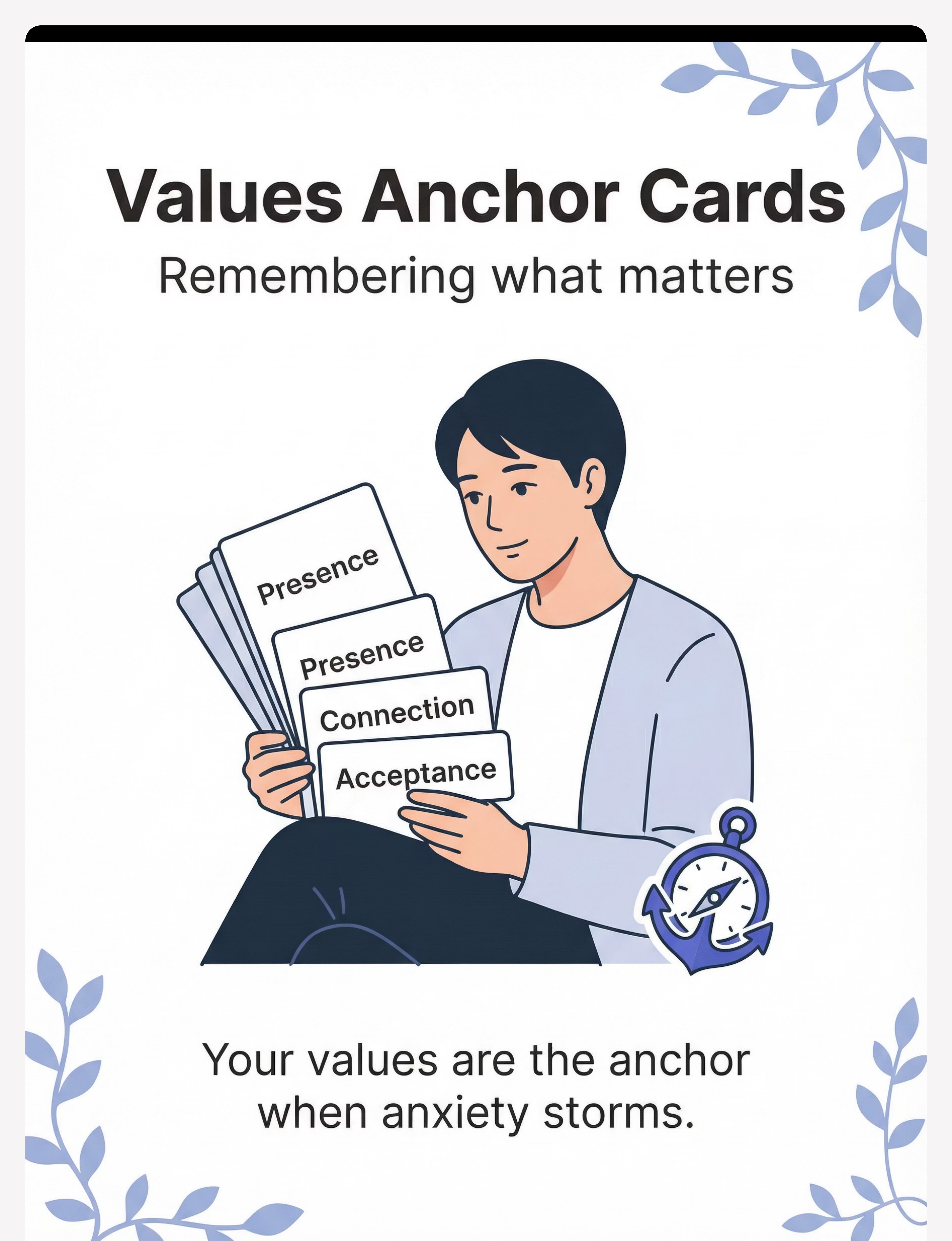
Values Anchor Cards
Remembering what matters
When you're deep in anxiety and caregiving stress, it's easy to lose sight of why you're doing this. You become reactive — just trying to survive each day — disconnected from the deeper meaning that makes the struggle worthwhile. Values anchor cards reconnect you to your core values.
Not goals (which can be achieved or failed) but values — directions you travel, like "compassion" or "connection." When anxiety tells you everything is falling apart, values cards remind you what matters and help you take small, meaningful actions aligned with that.
This is a core concept from Acceptance and Commitment Therapy (ACT): living a values-driven life even in the presence of difficult emotions. Anxiety doesn't have to disappear before you can live meaningfully.
Sample Value Cards
PRESENCE: "Can I put everything else aside and just be with them — even for 5 minutes today?"
MY OWN WELLBEING: "What's one small act of self-care I can do today, even for 2 minutes?"
JOY: "What's one small moment of joy I can create or notice today?"
IMPERFECT ACTION: "What's one small, imperfect step I can take today?"
Price range: ₹100–300
Key insight: You can't wait until anxiety is gone to live a meaningful life. Values are the direction you travel even when the path is hard.

Material 8 – DIY Guide
Creating Your Values Anchor Deck
Identify Your Values
Reflect: "What matters most to me in my parenting? In my life? In who I want to be?" Common parenting values: presence, patience, advocacy, connection, joy, balance, acceptance, growth. Personal values: health, relationships, creativity, contribution, integrity, rest.
Create the Cards
Front: The value in one or two words. Back: A fuller statement plus a reflection question ("How can I move toward this value today, even in a small way?"). Laminate for durability.
Build the Daily Practice
Morning: Draw a card — let that value guide your day. During stress: Pull a card for perspective. Evening: Reflect on how you lived your values today. No judgment — just awareness.
Live Values Despite Anxiety
Values don't require feeling good. You can be anxious AND take a values-aligned action. Small values-aligned actions are still meaningful. Ask yourself: "Did I move toward what matters today, even an inch?"
Values clarification can bring up grief — about the life you imagined, the values you can't fully live right now. This is normal. Hold the grief alongside the values. If grief is overwhelming, support from a therapist can help.

Material 9 of 9
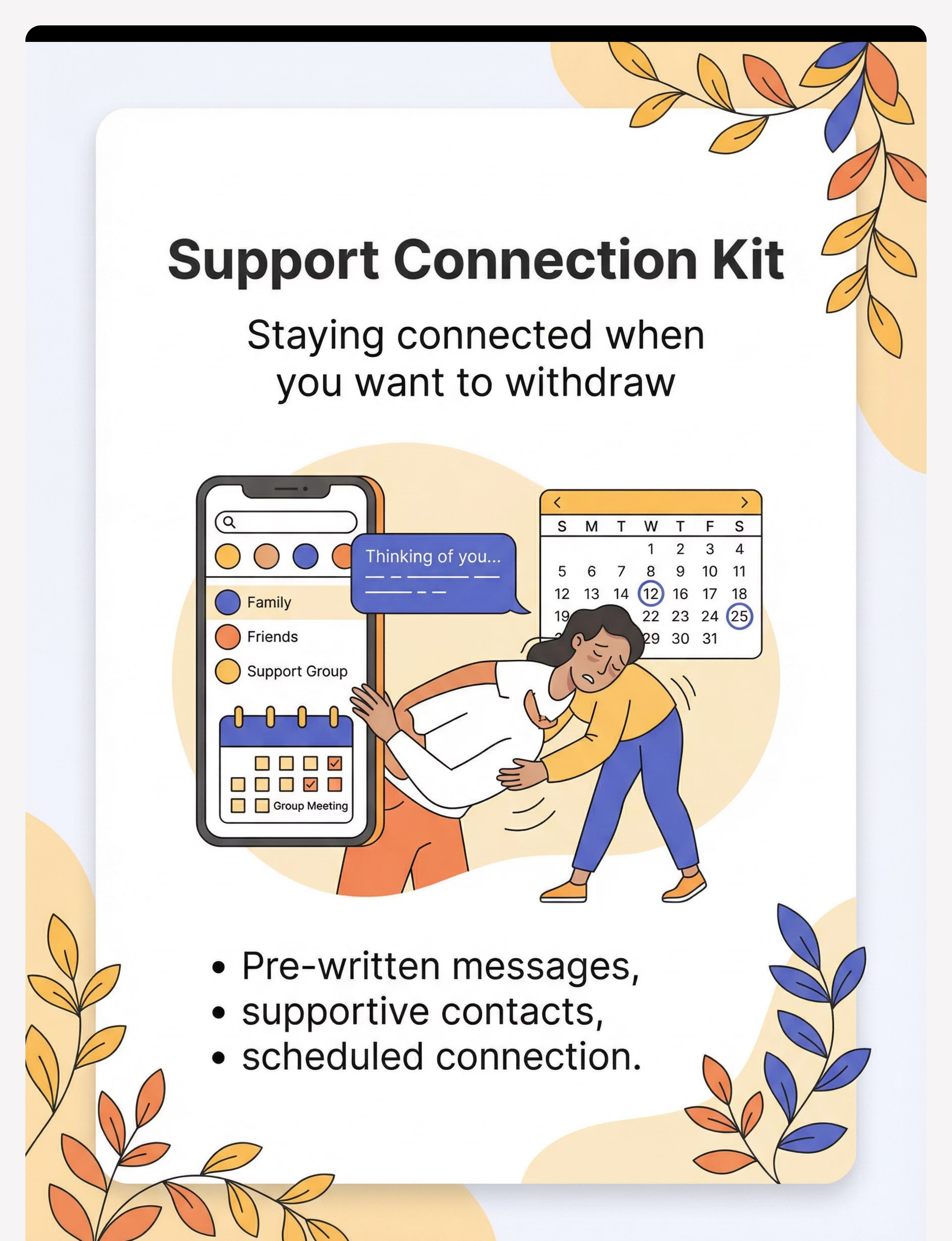
Support Connection Kit
Staying connected when you want to withdraw
Isolation is both a symptom and a driver of parent anxiety. Overwhelmed parents withdraw — they don't have energy for social connection, and explaining their lives to people who don't understand feels exhausting. But isolation removes a crucial buffer against anxiety: the support of others who get it.
A support connection kit is a practical system for maintaining connection even when energy is low. It acknowledges that connection is hard right now AND that it's essential. It reduces the barrier to reaching out by removing decision-making and wordsmithing from the moment of need.
Pre-written message: "I'm having a hard day. Can we talk later?" — ready to copy-paste. No energy required for words when you have none.
Price range: ₹0–100 (mostly free) | Key insight: Isolation feeds anxiety. Connection counters it. Make reaching out as easy as possible by planning for it before you need it.
Material 9 – DIY Guide
Building Your Connection Kit
1
Categorized Contact List
"Gets it" (other special needs parents). "Can help practically" (groceries, childcare). "Makes me laugh" (mood-lifter). "Professional support" (therapist, parent coach, helpline). Include best contact method for each person.
2
Pre-Written Messages
Save in phone notes: "I'm struggling and could use some practical help. Could you [specific ask]?" "No need to fix anything, I just need to vent. Can I text you?" Ready to paste when you have no words.
3
Scheduled Connection
Put recurring support on the calendar like therapy appointments: weekly call with fellow parent (even 10 minutes), monthly support group, quarterly coffee with a friend, daily brief text check-in with partner.
4
Finding Your People
Online parent groups (autism, ADHD, special needs). Local support groups through therapy centers. Parent partner programs. Facebook groups for specific diagnoses. Starting with online connection is completely valid.
If you're experiencing severe isolation, hopelessness, or thoughts of self-harm, reach out to a mental health professional or crisis helpline immediately. This kit is for regular support, not crisis intervention.

All 9 Materials — At a Glance
A complete toolkit for managing parent anxiety in the margins of real life. Each tool is achievable, evidence-based, and designed for the constraints of caregiving.
1. Worry Time Container Journal
Contains and schedules rumination. Corrals worry instead of eliminating it. ₹100–400
2. Physiological Sigh Breathing Tool
30-second nervous system reset. Double inhale, long exhale. ₹0–500
3. Cognitive Restructuring Cards
Catches and challenges distorted anxious thoughts. ₹100–400
4. Grounding Kit for Acute Anxiety
Sensory anchors that return you to the present moment. ₹150–500
5. Self-Compassion Prompt Cards
Kind words for the harsh inner critic. ₹100–300

All 9 Materials — Continued
6. Controllability Sorting Tool
Directs energy toward what can actually change. ₹50–200
7. Brief Mindfulness Timer & Practice Cards
1–5 minute micro-practices that build real calm. ₹0–300
8. Values Anchor Cards
Reconnects you to meaning when anxiety clouds everything. ₹100–300
9. Support Connection Kit
Pre-planned system for staying connected when depleted. ₹0–100
₹500–2,500
Total for All 9
Full toolkit cost — and many items are fully DIY
FREE
Starter Kit Option
Breathing practice, one grounding item, simple journal, supportive contact list
1
Where to Begin
Pick ONE tool. Use it consistently for two weeks before adding another.

A Note on Implementation
These tools require some effort to set up and consistent practice to work. They're not magic. But they're scientifically supported and practically achievable — even within a caregiving life that leaves almost no margin.
Start Small
Pick one tool. Use it consistently for two weeks before adding another. Consistency matters far more than intensity.
Expect Resistance
The anxious brain will say you don't have time, it won't help, you should focus on the child. Notice this resistance as anxiety talking — not truth.
Build Habits
Attach new practices to existing routines: after brushing teeth, before therapy drop-off, in the therapy waiting room. Stack habits, don't add them cold.
Imperfect is Fine
Permission for imperfect self-care. You don't need to do this perfectly. You just need to do something. Something always beats nothing.

When you're regulated,
your child has more to borrow.
your child has more to borrow.
The science of co-regulation is clear: your nervous system state is perceived by your child and directly influences theirs. Taking care of yourself is part of taking care of them.
When These Tools Are Not Enough
Self-help tools are valuable — but not sufficient for everyone. Clinical support is indicated when anxiety significantly impairs daily functioning. Seeking professional help is not a sign that you failed to manage on your own. It's a sign that you're reading your situation accurately.
1
Indicators for Professional Support
- Anxiety significantly impairs daily functioning
- Panic attacks or severe physical symptoms
- Anxiety persists despite consistent use of coping tools
- Suicidal ideation or thoughts of self-harm
- Substance use to manage anxiety
- Inability to care for children safely
- History of anxiety disorder or trauma
- Complete social withdrawal or relationship breakdown
2
What Professional Support Looks Like
- Individual therapy — CBT and ACT are particularly effective for anxiety
- Parent coaching or family therapy
- Psychiatric consultation — medication may be appropriate
- Support groups — peer support is powerful
- Respite care — giving parents actual breaks
- Crisis helplines for acute distress
If you're experiencing severe distress, thoughts of self-harm, or feel unable to care for yourself or your children safely, please reach out for immediate professional help. Your life matters.

Crisis Resources — India
If you're struggling beyond what self-help tools can address, please reach out. Help is available — and asking for it is an act of strength, not weakness.
1
iCall Psychosocial Helpline
9152987821
Mon–Sat, 8 AM – 10 PM. Trained counselors for psychological support and referrals.
2
Vandrevala Foundation
1860-2662-345
24/7 availability. Mental health support and crisis intervention.
3
NIMHANS Helpline
080-46110007
24/7 availability. National Institute of Mental Health and Neurosciences.
4
FREE National Autism Helpline
9100 181 181
16+ languages. 24x7. Pinnacle Blooms Network® — parent support resources available.
You can also reach out to your doctor, a trusted friend, or present to a hospital emergency department if you're in crisis.
Save This 🔖
Share It 📤
You Deserve Care Too
Save this for when you need it. Share it with a parent who's carrying too much alone.
"You can't wait until anxiety is gone to take care of yourself. Start today. One tool. One minute. One small act of self-kindness."
Coming next: 9 Materials That Help With Parent Burnout Recovery (Episode K-885)

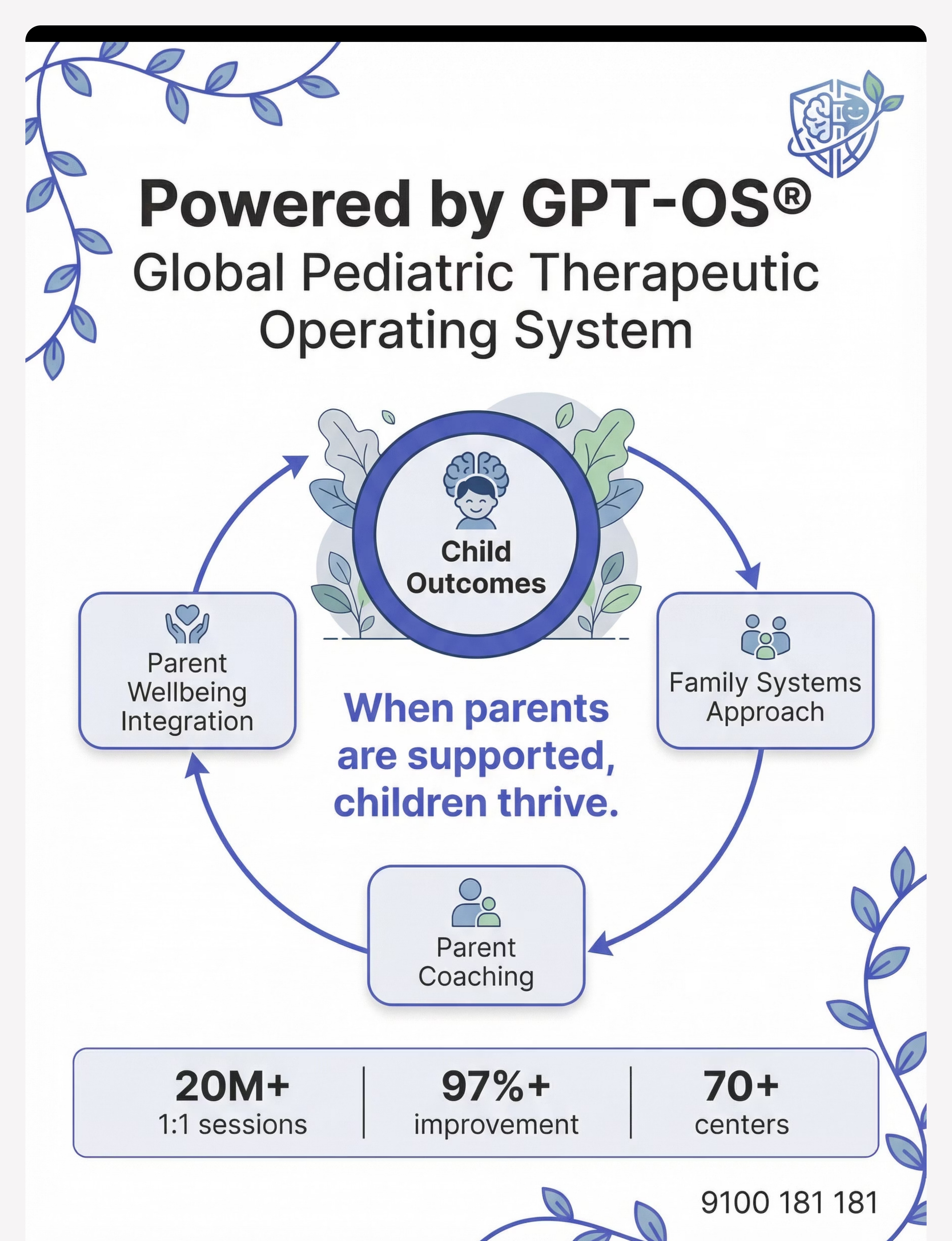
Powered by GPT-OS®
Global Pediatric Therapeutic Operating System
GPT-OS® recognizes that parent wellbeing is not separate from child outcomes — it's integral. Caregiver support is built into the therapeutic system at every level, because sustainable child progress requires sustainable caregivers.
Parent Wellbeing Integration
Therapist teams assess and support parent stress as part of the child's treatment ecosystem — not as an afterthought.
EverydayTherapyProgramme™
Home programs designed to be sustainable, not depleting — acknowledging real parent capacity and energy constraints.
Family Systems Approach
Treatment considers the whole family — not just the identified child. Siblings, partners, and caregivers are part of the picture.
Parent Coaching
Direct support for parents navigating stress, decision-making, advocacy, and self-care throughout the therapeutic journey.
Readiness Focus
Measuring progress through functional readiness — reducing the anxiety of uncertain timelines and comparison benchmarks.
Closed-Loop Communication
Parents are partners, not just recipients — reducing the anxiety of being outside the process and the last to know.

When Parents Are Supported, Children Thrive
This is not a platitude. It is the documented finding of decades of co-regulation research and the lived experience of thousands of families in the Pinnacle network.
"I came to Pinnacle focused entirely on my son. Every conversation was about his therapy, his progress, his needs. After about six months, his therapist gently asked how I was doing. I burst into tears. No one had asked in so long. As I got more stable, something remarkable happened: my son's progress accelerated. His therapist told me: 'The best thing you can do for him is take care of yourself.' I didn't believe it at first. Now I know it's true."
Parent, Pinnacle Network. Illustrative case; parent wellbeing impact on child outcomes is well-documented in research.
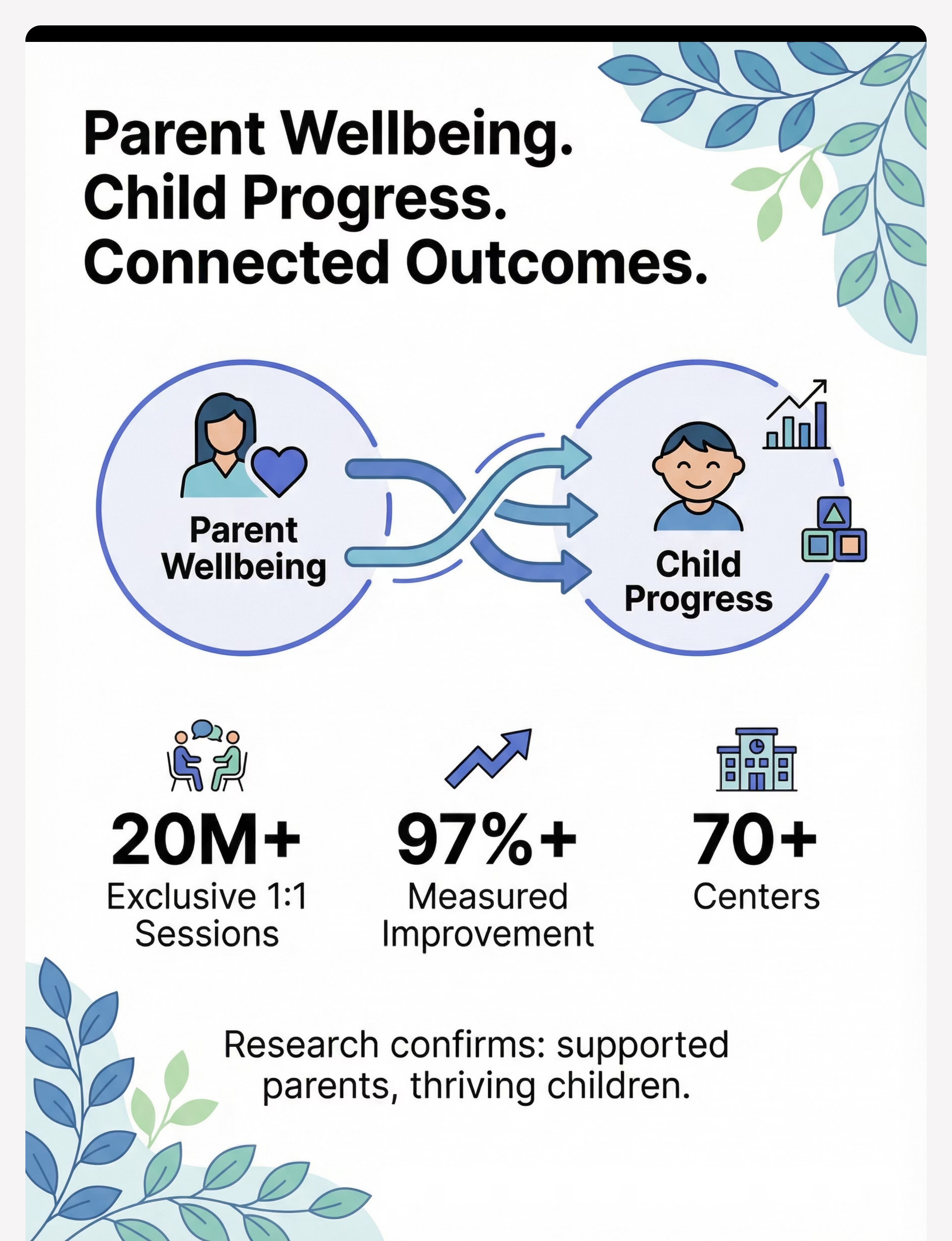
20M+
Exclusive 1:1 Sessions
With parent partnership throughout every stage
97%+
Measured Improvement
In children, supported by active parent involvement
70+
Centers
Family-centered approach across the network

Real-World Evidence
Parent Wellbeing. Child Progress. Connected Outcomes.
Research shows what we observe in practice: when parents access support — coaching, community, self-care tools — their children's therapy engagement improves, home program consistency increases, and child regulation gains are more sustainable.
Parent wellbeing is child wellbeing. These are not competing priorities — they are the same priority measured from two angles. The GPT-OS® system measures both because both matter.

The Science Behind It
The Brain Under Pressure: Parental Anxiety
Parental anxiety isn't merely emotional; it's a profound neurological response. The brain's threat detection system, especially the amygdala and HPA axis, becomes dysregulated. This constant state of alert, triggered even by subtle cues, traps caregivers in a heightened stress loop, eroding wellbeing and capacity.
Threat Detected
The amygdala, the brain's alarm center, goes into overdrive, interpreting typical caregiving demands as imminent threats.
Stress Response
The HPA axis floods the body with cortisol and adrenaline, initiating a sustained fight, flight, or freeze reaction.
Hyper-vigilance
The body remains in a constant state of alert, leading to exhaustion, irritability, and difficulty concentrating.
System Dysregulation
Chronic stress impairs the brain's ability to return to a calm state, perpetuating the anxiety cycle.
Understanding this cycle is the first step toward effective intervention, recognizing that biological mechanisms play a significant role in parental burnout.
Sleep & Anxiety
The Vicious Cycle: Sleep Deprivation & Parental Anxiety
Chronic sleep loss doesn't just make parents tired; it actively amplifies anxiety, creating a detrimental feedback loop. When caregivers are sleep-deprived, their brains are less equipped to manage stress, making everyday challenges feel overwhelming.
This constant state of alert heightens the body's physiological stress response, impacting mood regulation, cognitive function, and emotional resilience. Breaking this cycle is crucial for both parent and child well-being.
Micro-Sleep Strategies for Caregiving Parents
Power Naps
Even 10-20 minutes can significantly reduce sleep debt. Use child's nap time or a trusted partner's shift.
Rest Breaks
When napping isn't possible, prioritize 5-minute seated rests. Close your eyes and focus on breathing to calm your nervous system.
Delegate & Ask
Don't be afraid to ask for help. Enlist family, friends, or paid support for even a short period to catch up on rest.
Strategic Sleep
Plan when you can get uninterrupted sleep. Even one longer stretch a few times a week can make a difference.

Regulation Science
Understanding Your Window of Tolerance
The Window of Tolerance is your optimal zone for processing stress and functioning adaptively. When you're within this window, you can think clearly and respond effectively. Outside it, you might experience hyper-arousal (overwhelmed, anxious) or hypo-arousal (numb, shut down).
Recognizing these states helps parents identify when they're dysregulated. Consistent self-regulation practices, like mindfulness or movement, can gradually expand this window, building greater resilience and capacity to navigate caregiving challenges.

Body Awareness
How Anxiety Shows Up In Your Body
Our bodies are complex communication systems. Anxiety doesn't just reside in our thoughts; it sends clear physical signals. Learning to recognize these cues is the first step towards self-regulation and expanding your window of tolerance.
Chest & Breath
Notice a tight feeling, rapid heart rate, or shallow, constricted breathing. This is your body's alert system engaging.
Jaw & Face
Observe if your jaw is clenched, teeth grinding, or if there's tension around your eyes and forehead. These are common stress holds.
Shoulders & Neck
Feel for stiffness or an upward pull in your shoulders, often riding closer to your ears. Neck tension is a classic sign of stress.
Stomach & Gut
Pay attention to "butterflies," nausea, or digestive discomfort. The gut-brain axis is highly sensitive to emotional states.
By regularly performing a quick 2-minute body scan, parents can cultivate a deeper connection to these signals, empowering them to respond proactively before anxiety escalates. This simple practice builds foundational self-awareness.

Good Enough Is Enough
The "Good Enough" Parent: Releasing the Burden of Perfection
The relentless pursuit of perfect parenting is a significant driver of anxiety and burnout. Donald Winnicott's "good enough parent" concept reveals that striving for flawlessness is counterproductive and often unsustainable. Instead, consistently meeting a child's needs adequately—not perfectly—fosters resilience and healthy development.
This evidence-based approach reduces parental stress, allowing for genuine connection over idealized performance. Embrace imperfection; it's the foundation for true growth and a calmer home for both you and your children.
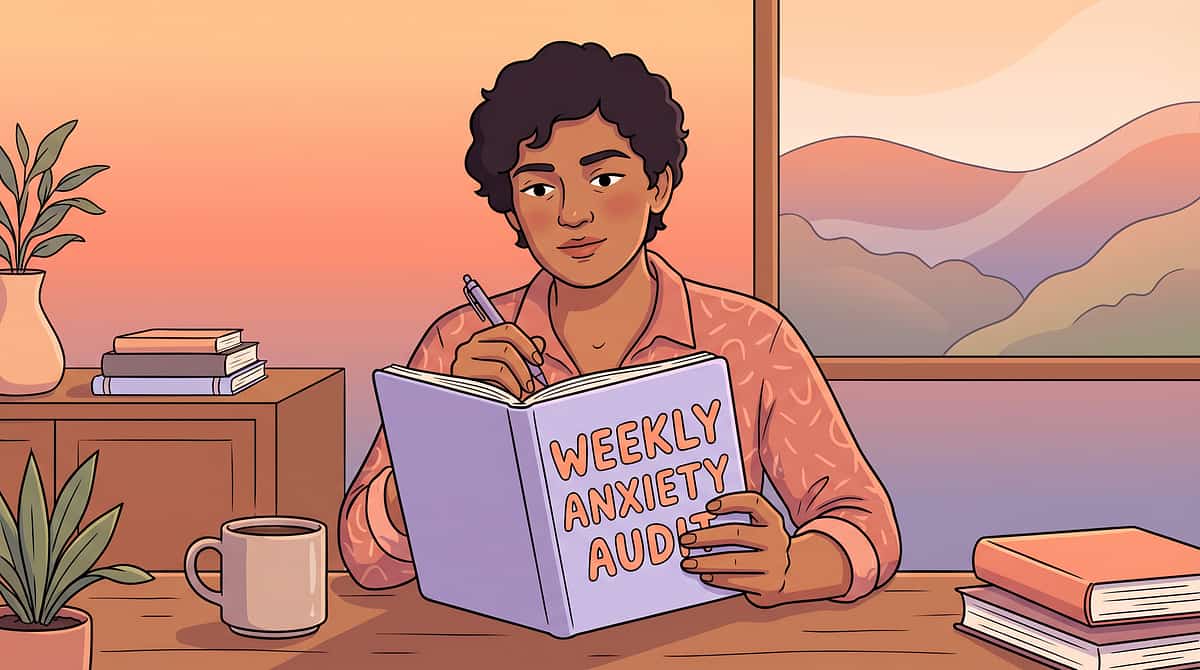
Weekly Anxiety Audit
The Anxiety Audit: Mastering Your Stress Sources
Dedicate 10 minutes weekly to systematically identify and address your anxiety. This structured approach transforms vague worries into actionable steps, fostering a sense of control and clarity over overwhelming feelings.
1
1. Identify Top 3 Triggers
List your primary sources of anxiety from the past week. Be specific about situations or thoughts.
2
2. Categorize & Classify
For each trigger, decide if it's Controllable (you can influence it) or Uncontrollable (outside your direct influence).
3
3. Assign One Action
For each Controllable trigger, commit to one concrete, small step you can take before next week's audit.
Regularly conducting this audit strengthens your self-awareness and empowers you to proactively manage stress, turning anxiety into a roadmap for growth.
Micro-Joy Practice
The Micro-Joy Practice: Cultivating Daily Delight
This intentional practice helps parents counter chronic stress by actively noticing three tiny moments of pleasure or beauty each day. Neuroscience shows that these positive micro-experiences compound, shifting brain pathways towards resilience and contentment, creating an emotional buffer against daily challenges.
Warm Coffee Sip
Savor the aroma and warmth of your morning drink, focusing on the sensory experience.
Child's Quiet Focus
Observe your child absorbed in play, appreciating their peaceful concentration.
Sunlight Through Window
Notice the beauty of natural light, its patterns and warmth, wherever you are.
By consistently integrating these micro-moments, you actively train your brain to seek out and register positivity, enhancing overall well-being and reducing parental overwhelm.
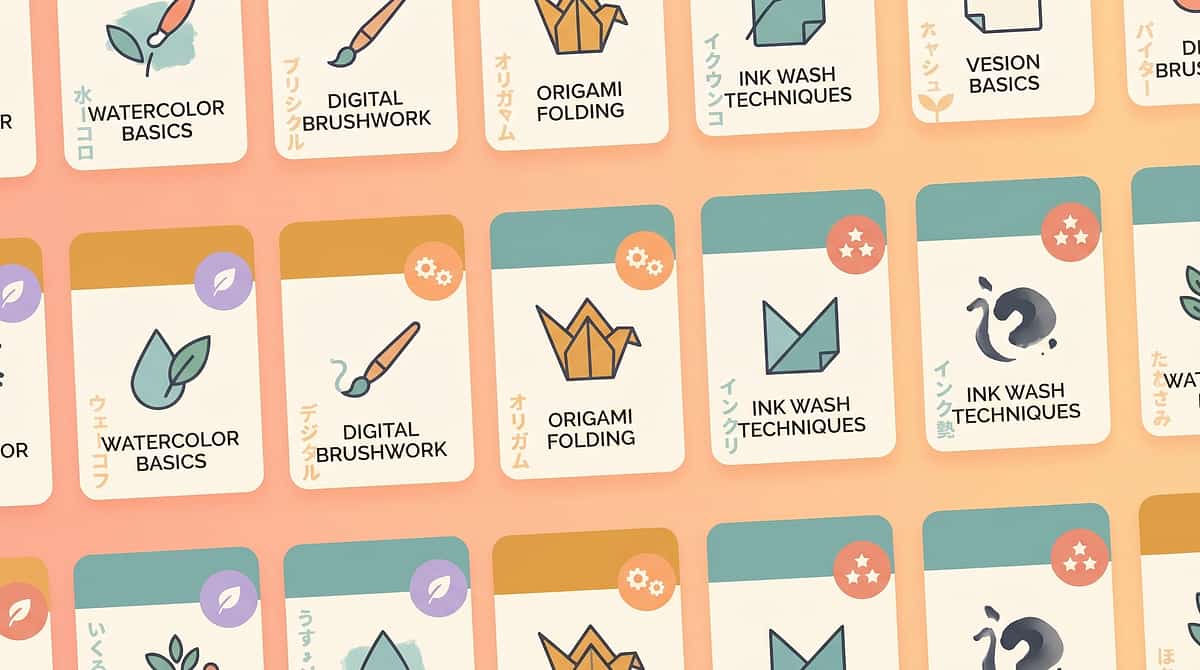
Preview of 9 materials that help with parent anxiety Therapy Material
Below is a visual preview of 9 materials that help with parent anxiety therapy material. The pages shown help educators, therapists, and caregivers understand the structure and content of the resource before use. Materials should be used under appropriate professional guidance.





Link copied!
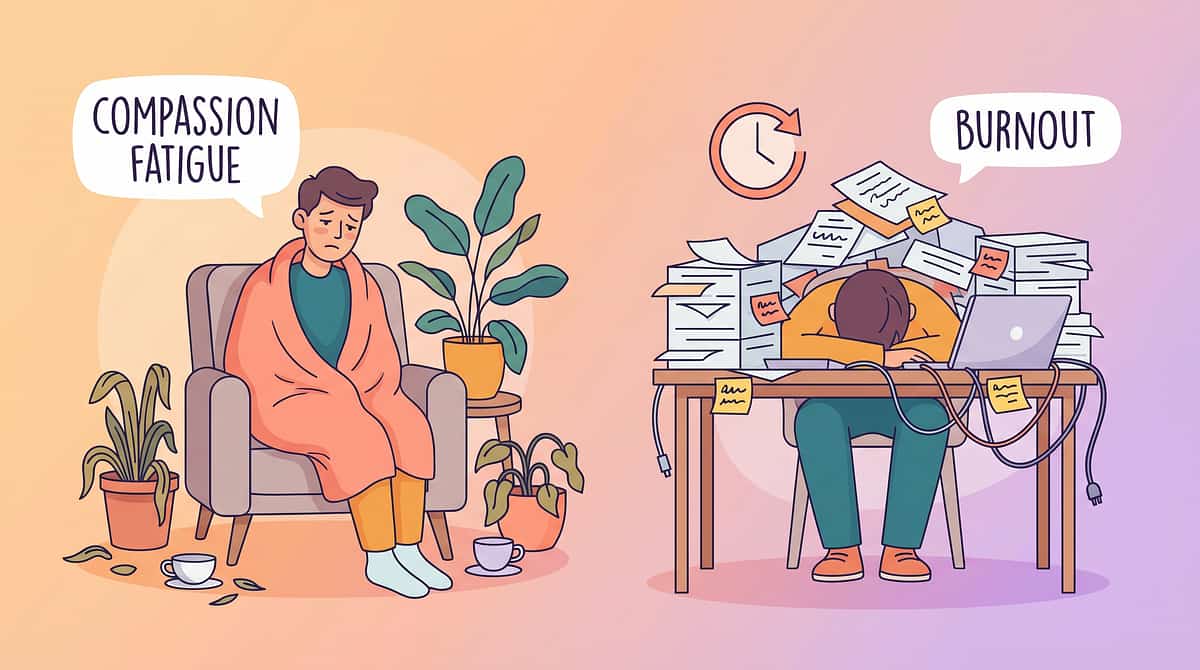
Compassion Fatigue vs. Burnout
Understanding the Toll: Compassion Fatigue vs. Parental Burnout
Distinguishing between compassion fatigue and parental burnout is crucial for effective intervention. While both involve exhaustion, their roots and solutions differ significantly. Identifying the true source helps parents regain energy and presence.
Compassion Fatigue
This is secondary traumatic stress from prolonged empathy, often stemming from witnessing a child's suffering or challenging experiences. Symptoms include emotional numbness, intrusive thoughts, and a diminished capacity for empathy, leading to a sense of emotional depletion.
- Practice mindful self-compassion.
- Process difficult emotions with support.
- Reinforce personal and emotional boundaries.
Parental Burnout
Burnout arises from chronic stress due to overwhelming responsibilities, lack of support, and feeling ineffective in the parenting role. It manifests as extreme exhaustion, cynicism, and detachment from family life, feeling depleted by the sheer workload.
- Delegate tasks and seek practical help.
- Prioritize rest and restorative breaks.
- Adjust expectations and workload as needed.
Recognizing these distinctions empowers parents to implement targeted strategies, transforming their struggles into opportunities for healing and renewed resilience.