

Your child lives entirely in the present. Ask what she wants to be when she grows up — blank stare. Ask what she wants to accomplish this week — she doesn't understand the question. She can't set goals because she can't imagine the future. And you lie awake wondering: will she ever have something to work toward?
Goal Setting — K-906 | Making the invisible future visible. One material at a time.
You are not failing. Your child's brain is wired for NOW — and these 9 materials teach it to reach for LATER.

Millions of Children Live Only in the Present Moment
Goal-setting difficulties are one of the most common — and most overlooked — features of executive dysfunction in pediatric populations worldwide. You are among millions of families navigating this exact challenge. You are not alone. And there is a proven path forward.
Children Affected
Children with ASD, ADHD, or developmental delays show significant goal-directed behavior deficits — affecting future planning, academic achievement, and life independence.
ASD Executive Challenges
Of children with autism display executive function challenges that include future orientation and goal-setting difficulties. (PRISMA Systematic Review 2024 | PMC11506176)
Therapy Sessions
Sessions delivered by Pinnacle across 70+ centers reveal goal-setting deficit as a top-5 parent concern. India alone has 18M+ children with ASD. (GPT-OS® Real-World Evidence)

Goal-Setting Is a Brain Function — Not a Personality Trait
Your child is not unmotivated. Your child's brain cannot yet do what your brain does automatically: imagine a future state that doesn't exist yet, feel motivated by something that hasn't happened, hold a goal in mind while working on something else, or feel the reward of progress accumulating.
What's Happening in Your Child's Brain
Prefrontal Cortex (PFC): The brain's CEO — governs future planning, decision-making, and impulse control. In many children with ASD and ADHD, PFC maturation is delayed by 2–5 years.
Dopamine Reward Pathway: Neurotypical children feel a dopamine "reward signal" when making progress toward goals. In executive dysfunction, this signal is weak — effort doesn't feel rewarding, so motivation collapses before the goal is reached.
Hippocampal Future Projection: Mental time travel — the ability to project oneself forward and imagine future states — depends on hippocampal-PFC networks. When these connections are immature, the future simply doesn't exist neurologically.

Goal-Setting Develops Across Childhood — It's Never 'Too Late' to Build
Ages 3–5: Preschool Foundation
Works toward simple, immediate goals with concrete rewards. "Tomorrow" is barely conceptualized. Goals are adult-set. Milestone: Completes simple task to earn same-day reward.
Ages 6–8: Early Emergence
Can set simple personal goals with heavy support. Understands near-future (end of day). Motivation externally driven. Milestone: Finishes week's reading chart.
Ages 9–11: Consolidation
Can set longer-term goals with scaffolding. Beginning to understand delayed gratification. Milestone: Saves allowance for something desired.
Ages 12–14: Expansion
Can conceptualize abstract, identity-linked goals. Increasing internal motivation for personally meaningful targets. Milestone: Sets semester academic goal with plan.
Ages 15–18: Independence
Developing capacity for life planning. Pursues multi-step goals with moderate independence. Milestone: Plans career pathway, college preparation.

Clinically Validated. Home-Applicable. Parent-Proven.
The evidence base for K-906 spans decades of research across goal-setting theory, self-determination science, and pediatric visual support systems. Five landmark studies form the clinical foundation of this technique.
📚 Goal-Setting Theory (Locke & Latham)
Hundreds of studies confirm: specific, challenging goals consistently outperform vague goals or no goals. SMART frameworks operationalize these principles for pediatric populations. Evidence Level: Meta-analytic consensus
📚 Self-Determination Theory (Deci & Ryan)
Intrinsic motivation requires autonomy (child's own goals), competence (belief in ability), and relatedness (social support). Materials that support these three needs build sustainable motivation. Evidence Level: Decades of empirical support
📚 WOOP Framework (Oettingen, 2014)
Mental contrasting with implementation intentions significantly improves goal attainment over positive thinking alone. Teaching obstacle planning builds resilience. PubMed searchable: Oettingen WOOP 2014.
📚 Visual Supports for ASD (NCAEP, 2020)
Visual supports are classified as evidence-based practice for autism. Visual representations of abstract goals are more accessible than verbal/abstract representations for most learners.
📚 Indian RCT (Padmanabha et al., 2019)
Home-based structured interventions with executive function components demonstrated significant developmental outcomes in Indian pediatric populations. DOI: 10.1007/s12098-018-2747-4
🎯 Goal Setting — Visual Materials Framework
Specification Grid
Age Range: 4–18+ years (developmentally adapted)
Session Duration: 15–45 min (goal-type dependent)
Frequency: Daily review + 2–3x/week active sessions
Discipline Lead: OT + ABA + SpEd (Co-Primary)
Domain Code: EXF-GS | Series: K-906
Series Navigation
K-904: Working Memory →
K-905: Planning →
★ K-906: Goal Setting (YOU ARE HERE)
K-907: Time Management →
K-908: Self-Monitoring

The Pinnacle Consortium Deploys Goal Setting Across 5 Disciplines
Goal setting isn't one therapy's tool — it's the connective tissue of all therapeutic progress. Every discipline uses it differently because the brain doesn't organize itself by therapy type.
Occupational Therapy (OT)
OT structures sensory, fine motor, and ADL targets using visual goal boards as therapy roadmaps. Progress trackers measure functional independence gains. Primary Role: Setting + Tracking sensory & motor goals
Applied Behavior Analysis (ABA)
ABA builds goal-directed behavior through reinforcement science. Token economies, reward planning systems, and SMART behavioral targets are core ABA tools. Primary Role: Reinforcement architecture for goal pursuit
Special Education (SpEd)
Special educators embed goal setting into IEP objectives. SMART frameworks align classroom goals with therapy goals, connecting home practice to school measurement. Primary Role: Academic goal scaffolding + IEP alignment
Speech-Language Pathology (SLP)
SLP uses goal setting to structure communication targets. Visual goal boards give children agency over their language development journey. Primary Role: Communication goal ownership + self-advocacy
Neuro-Developmental Pediatrics
NeuroDev specialists monitor executive function development through standardized goal-setting milestones, guiding calibration of goal complexity to each child's developmental stage. Primary Role: Developmental calibration + prognosis
Goal Setting Is a Precision Instrument — This Is What It Targets
Skill Area | Before | Week 2–4 | Week 5–8+ |
Goal Identification | Blank stare | Names 1 want | Identifies multiple |
Goal Planning | No steps | Needs all steps | Creates 2–3 steps |
Progress Awareness | Unaware | Notices chart | Self-updates chart |
Obstacle Response | Immediate quit | Waits for help | Tries 1 strategy |
Time Awareness | No deadline sense | Notes deadline | Plans toward it |
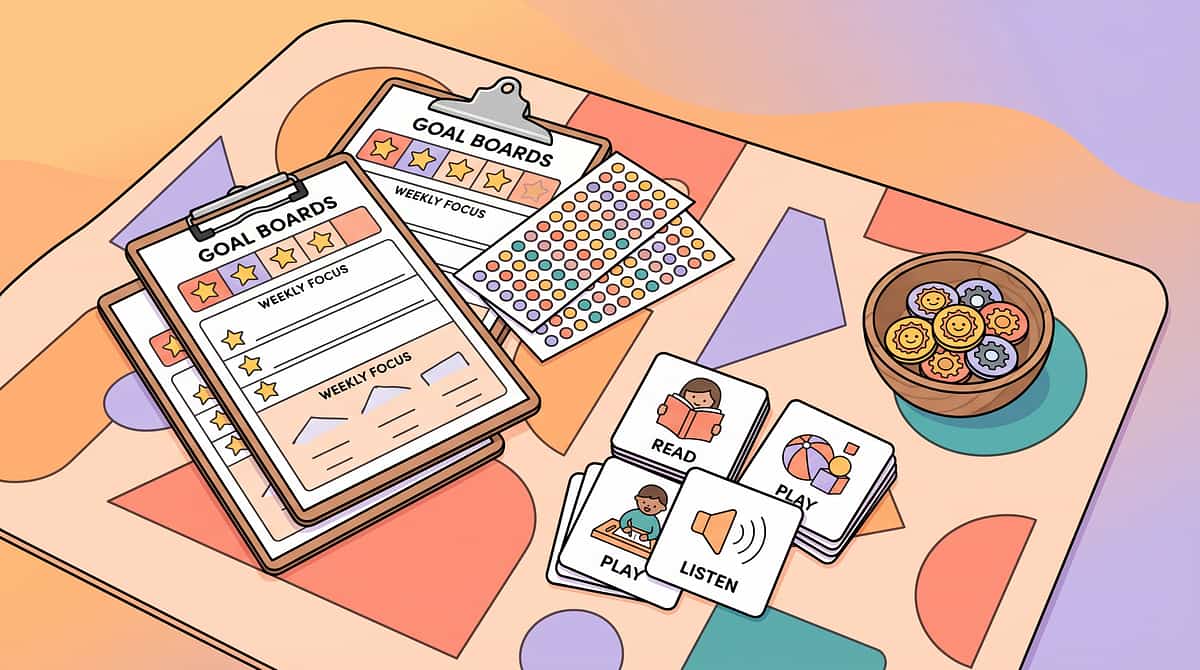
9 Materials That Help With Goal Setting
Each material addresses a specific executive function deficit that prevents goal-directed behavior. Mapped to Pinnacle's 128 Canon Material system. Total starter kit estimate: ₹1,000–3,000 | Full toolkit: ₹3,000–8,000.
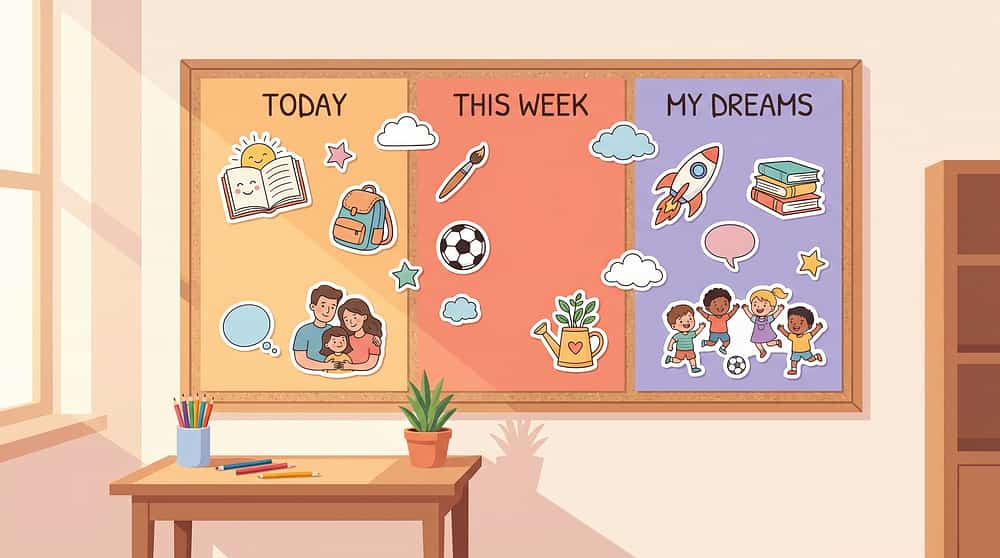
1 — Visual Goal Boards & Dream Mapping
A physical or digital board displaying goals as concrete images — making invisible future states visible, tangible, and daily present. Externalizes the goal representation executive dysfunction prevents the brain from holding internally. ₹300–2,000

2 — Goal Breakdown Worksheets & Step Ladders
Structured worksheets that decompose large goals into small, sequential, achievable steps. Transforms the paralyzing gap between "where I am" and "where I want to be" into a visible, walkable path. ₹0–500

3 — Progress Tracking Charts & Visual Thermometers
Visual systems that make the accumulation of effort visible — thermometers, progress bars, sticker charts, chain calendars. Invisible progress kills motivation. These tools make every action count — visibly, tangibly, in real time. ₹100–800
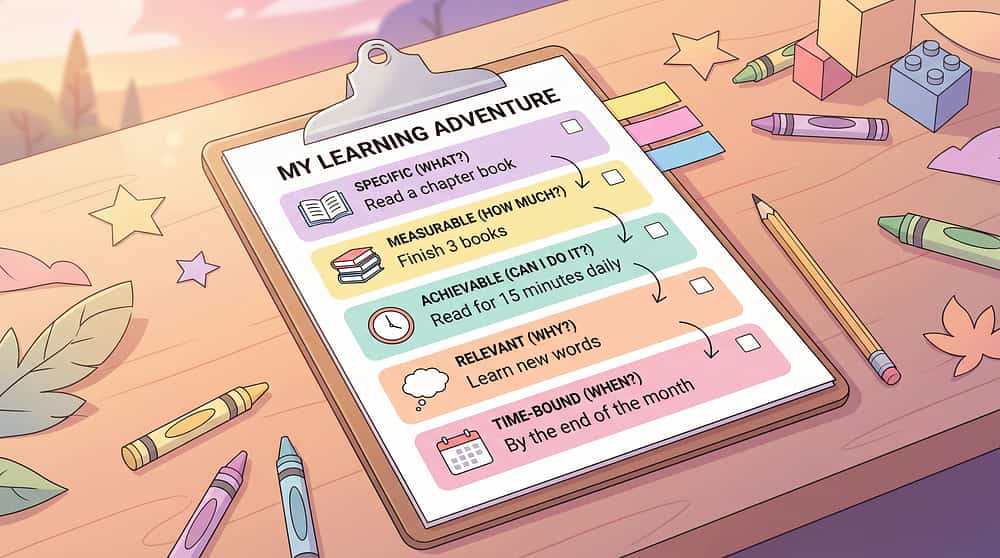
4 — SMART Goal Templates & Structured Frameworks
Structured templates that transform vague wishes into actionable goals: Specific, Measurable, Achievable, Relevant, Time-bound. Forces the clarity that executive dysfunction prevents the brain from generating automatically. ₹0–300
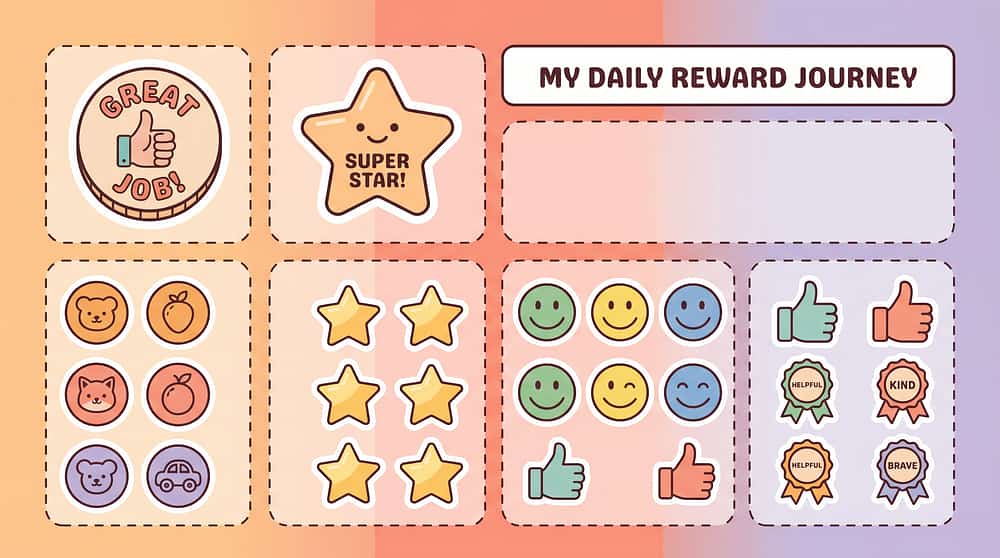
5 — Reward & Reinforcement Planning Systems
Token economies, point systems, and reward menus that connect goal progress to tangible, motivating reinforcement. Compensates for weak intrinsic motivation — building external reward architecture until internal drive develops. ₹200–1,000
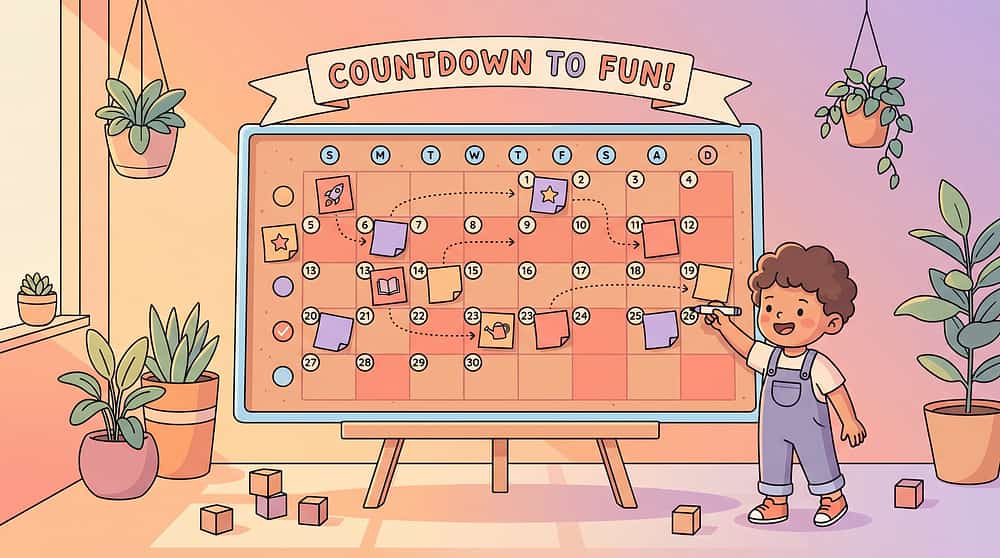
6 — Time Visualization Tools & Deadline Trackers
Countdown calendars, visual timelines, time-blocking templates, and color-coded urgency systems that make invisible time visible. Time blindness makes all deadlines feel either infinitely distant or suddenly immediate — these tools create accurate urgency. ₹200–1,500

7 — Reflection Journals & Self-Assessment Tools
Dedicated journals with structured prompts that build self-monitoring and metacognitive awareness about goal pursuit. Externalizes metacognition — thinking about thinking — which doesn't develop automatically in children with EF challenges. ₹100–600
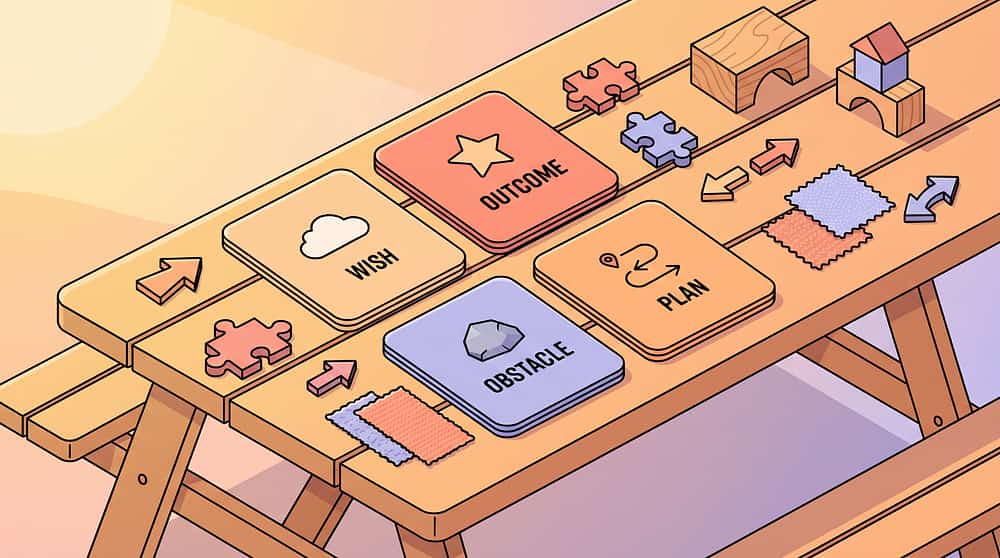
8 — Obstacle Planning & Problem-Solving Cards
Pre-planned response cards for common goal obstacles — WOOP framework, if-then planning sheets, strategy cards. Obstacles don't end goals — lack of preparation ends goals. Pre-planned responses turn "I give up" into "I knew this might happen." ₹0–500
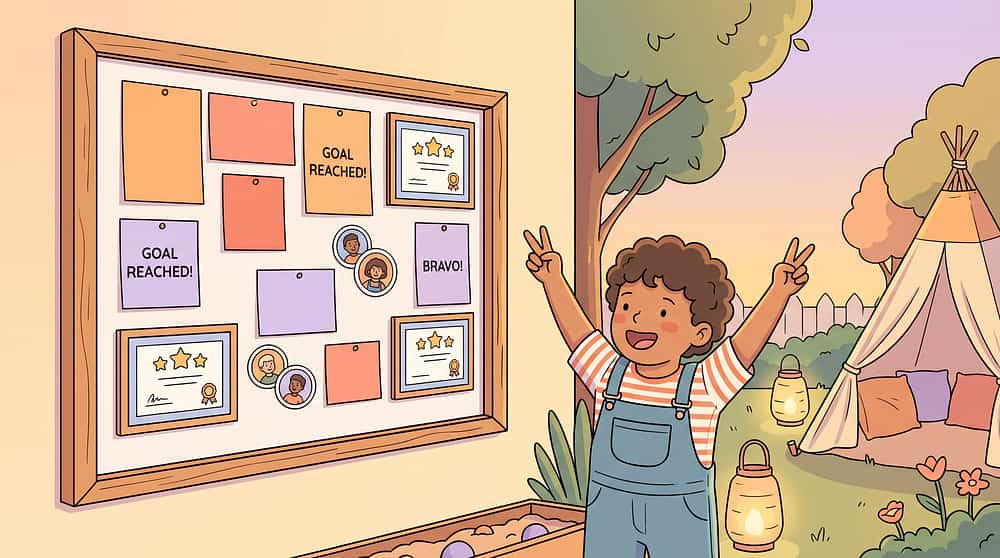
9 — Achievement Celebration & Documentation Systems
Portfolios, certificates, achievement walls, and documentation systems that make success visible, memorable, and cumulative. What gets celebrated gets repeated. Achievement documentation builds the self-efficacy evidence base for every future goal. ₹100–800
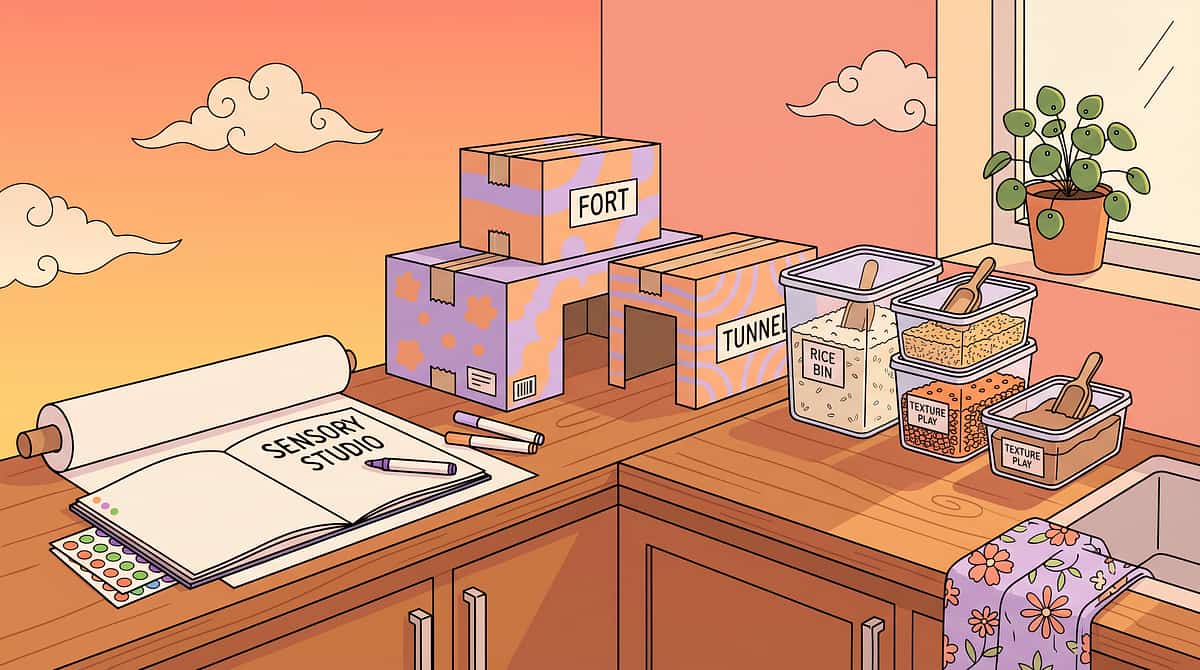
Every Material Has a ₹0 Version
These interventions work on principles — not price tags. A goal is a goal whether it's pinned to a ₹2,000 cork board or drawn on a ₹10 chart paper. Per WHO Nurturing Care Framework: interventions must be accessible to all families, regardless of economic status.
Material | Buy Version | ₹0 DIY Version |
Visual Goal Board | Cork board + pushpins ₹400–800 | Large cardboard opened flat + magazine cutouts + tape. "What matters is daily visibility, not the board material." |
Goal Breakdown Worksheets | Printed workbook ₹200–500 | Draw a ladder on paper — big goal at top, 6 rungs below. Fill in with child. "The act of drawing together is therapeutic itself." |
Progress Thermometer | Laminated chart ₹150–300 | Draw a tall rectangle, divide into 10 sections. Color each section as progress is made. Refill when goal achieved. |
SMART Goal Template | Workbook ₹200–400 | Write S/M/A/R/T on any paper. Ask the 5 questions. Document answers. Post visibly. |
Reward System | Token board + tokens ₹300–600 | Draw a 5×5 grid. Each cell = 1 sticker or tally mark. 25 marks = chosen reward from a child-made list. |
Time Visualization | Countdown calendar ₹200–400 | Circle deadline date on any calendar. Cross off each day. Count remaining days together every morning. |
Reflection Journal | Specialty journal ₹200–500 | Any notebook. Write 3 daily prompts on page 1: "What did I do toward my goal? / What was hard? / What will I try tomorrow?" |
Obstacle Planning Cards | Card deck ₹200–400 | Write 3 index cards: "If I want to quit → I will..." / "If I get distracted → I will..." / "If it's too hard → I will..." |
Achievement Portfolio | Binder + sleeves ₹300–600 | Envelope folder. One envelope per completed goal. Include: photo, completed tracker, one-sentence "I did this" card. |

Before You Begin: Your 60-Second Safety Check
Safety Notes for Specific Materials
- Reward systems: NEVER remove earned tokens as punishment — destroys trust completely
- SMART frameworks: Never impose adult goals disguised as child goals
- Progress trackers: Honest tracking only — inflated tracking teaches effort doesn't matter
- Reflection journals: Stop if content becomes harshly self-critical or hopeless
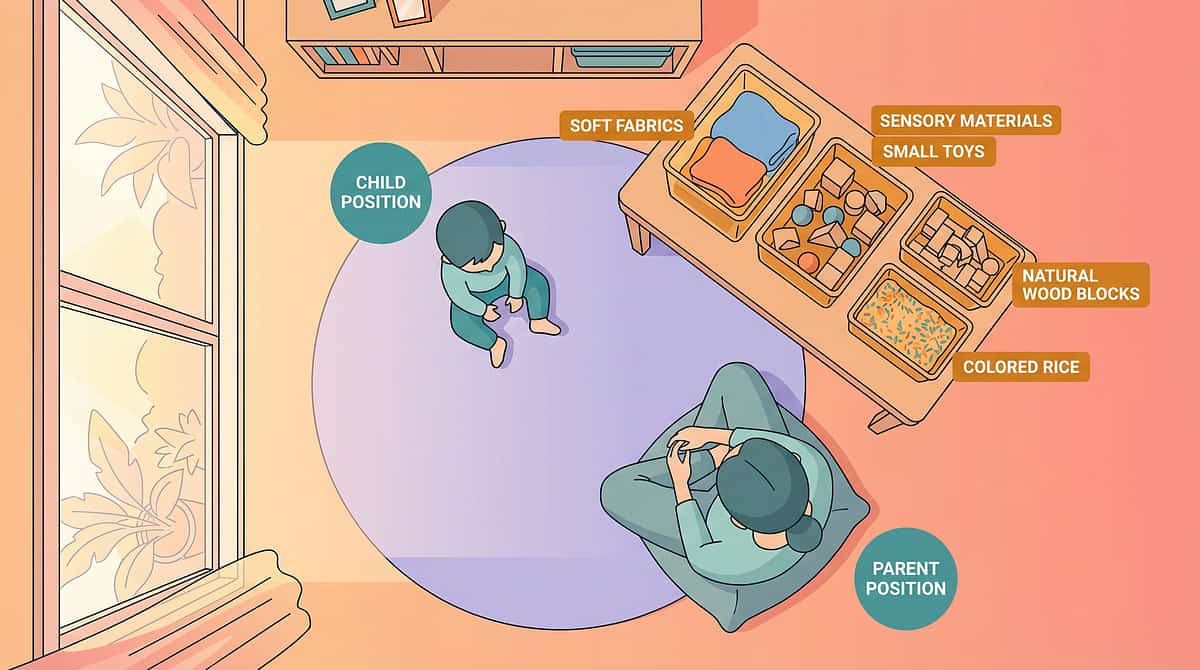
The Right Environment Activates the Right Brain State
Keep in the Space ✅
- Goal board (the anchor of every session)
- Progress tracker for active goal
- Current SMART goal worksheet
- Reflection journal (nearby, accessible)
- Stickers/markers for updating
- One preferred item (for reward system context)
Remove from the Space ❌
- Screens and devices (unless digital tracking)
- Other incomplete tasks or homework
- Items from past failed goals (negativity anchoring)
- Clutter that competes for visual attention
Sensory Environment
Lighting: Natural or warm, bright — avoid harsh fluorescents
Sound: Quiet or soft instrumental music; avoid TV/voices
Temperature: Comfortable; child not too cold or hot
Time of day: After school snack (post-hunger), before evening wind-down
Optimal timing: 20–30 minutes post-school arrival

The 90-Second Pre-Session Assessment
The best goal-setting session is one that starts right. 90 seconds now prevents 30 minutes of frustration.
Indicator | 🟢 GO | 🟡 MODIFY | 🔴 POSTPONE |
Hunger | Fed within 90 minutes | Mildly hungry — offer snack first | Hungry/refusing food — reschedule |
Sleep State | Rested, alert, engaged | Slightly tired — goal board review only (5 min) | Overtired, lethargic — prioritize rest |
Emotional Regulation | Baseline calm, neutral to positive affect | Mildly frustrated — start with achievement review only | Active distress, crying, heightened anxiety |
Transition Readiness | Smooth transition from previous activity | Difficult transition — 5-min preferred activity buffer | Transition meltdown in past 30 minutes |
Engagement Signals | Eye contact, orients to materials, shows curiosity | Passive — use most motivating material first | Actively avoiding, turning away, or perseverating |
Pain/Illness | Healthy, no physical complaints | — | Any signs of illness, pain, or physical discomfort |

THE INVITATION
Every goal-setting session begins with curiosity — not commands
Timing: 30–60 seconds
Principle: Pairing — the goal-setting environment must feel safe and enjoyable BEFORE any demand is placed.
The Script
"[Child's name], I wanted to show you something exciting. Come look at our goal board with me for a minute. What do you think about this one?" [point to existing goal]
— OR for starting fresh —
"Hey, I have a question for you. Is there anything you really want to have, or do, or get better at? Anything at all?"
Parent Body Language
- Position: Sit BESIDE the child — shoulder-to-shoulder, not face-to-face
- Tone: Curious and light — not serious or pressured
- Expression: Genuinely interested, not evaluative
- Hands: Open, relaxed — not holding pen ready to write immediately
Acceptance vs. Resistance Cues
✅ Child glances at goal board | ✅ Child answers even one word | ✅ Child moves toward materials
⚠️ Child looks away → Try a different question | ⚠️ "I don't know" repeatedly → Offer 2 concrete choices | ⚠️ Physically moves away → Briefly follow once; if second refusal, postpone

THE ENGAGEMENT
Making goals real by making them visible
Timing: 3–5 minutes
Child Response Indicators
🟢Engagement: Child actively participates in creating/updating
🟡Tolerance: Child allows the activity but doesn't initiate
🔴Avoidance: Child refuses to touch — try one more approach, then transition to reviewing existing goal board
The Script
"Okay, so you said you want [child's stated want]. Let's put that on your goal board so we don't forget. What picture should we use? [offer options — drawn, printed, or magazine cut]"
— OR for progress tracking —
"Look — you've already done [X steps]. See how much you've done? Let's color in the thermometer / add a sticker / move the marker."
Material Introduction Sequence
- Bring out ONE material at a time (don't overwhelm with the full toolkit)
- Introduce through a question, not an instruction ("What do you think this is for?" not "This is for tracking")
- Let the child touch/hold/examine before using
- Narrate what the material does: "This thermometer fills up as you do the work. When it's full — you've done it!"
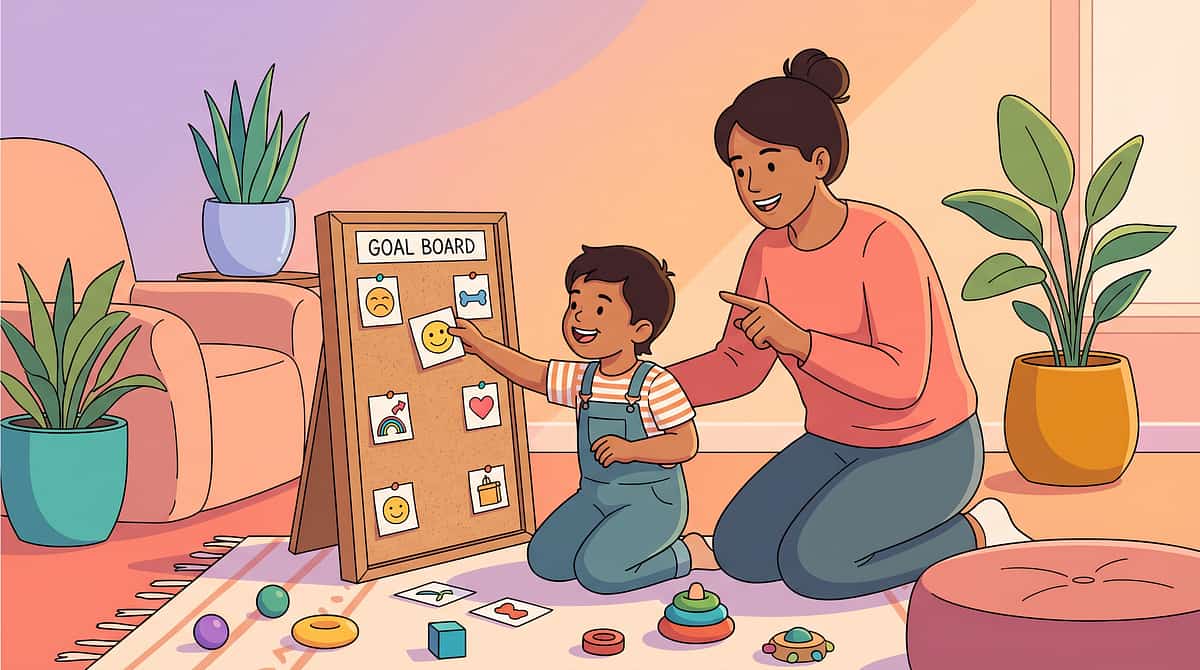
Step 3: The Therapeutic Action
The 6 core goal-setting activities form the heart of K-906. Use 1–2 per session. Frequency for active sessions: 3–5x/week. Daily review of goal board: 5 minutes minimum.
Visual Goal Board Update
Child identifies or reviews 1–3 goals. Adds/removes/updates images. Reviews timeframes: "Is this a this-week goal or a this-month goal?" Duration: 5–10 min | Frequency: Daily 5-minute review
SMART Goal Creation
Work through all 5 criteria for one goal. Parent asks questions; child answers; parent writes (or child if capable). Result: One complete, specific, written SMART goal. Duration: 10–15 min | Frequency: When setting a new goal
Goal Breakdown
Take one SMART goal. Ask: "What's the very first step?" Continue until 5–8 steps identified. Sequence them. Post the ladder alongside the goal. Duration: 10–15 min | Frequency: Once per new goal
Progress Tracking Update
Review data since last session. Color in thermometer / add stickers / update progress bar. Ask: "How much closer are you to your goal?" Duration: 3–5 min | Frequency: Each goal-work session
Obstacle Planning (WOOP)
Work through WOOP — Wish, Outcome, Obstacle, Plan (if-then response for each obstacle). Duration: 10–15 min | Frequency: Once per new goal + when obstacles arise
Reflection Journal Entry
Child answers 3 prompted questions: 1. "What did I do toward my goal today?" 2. "What was hard?" 3. "What will I try tomorrow?" Duration: 5–8 min | Frequency: Daily or 3x/week
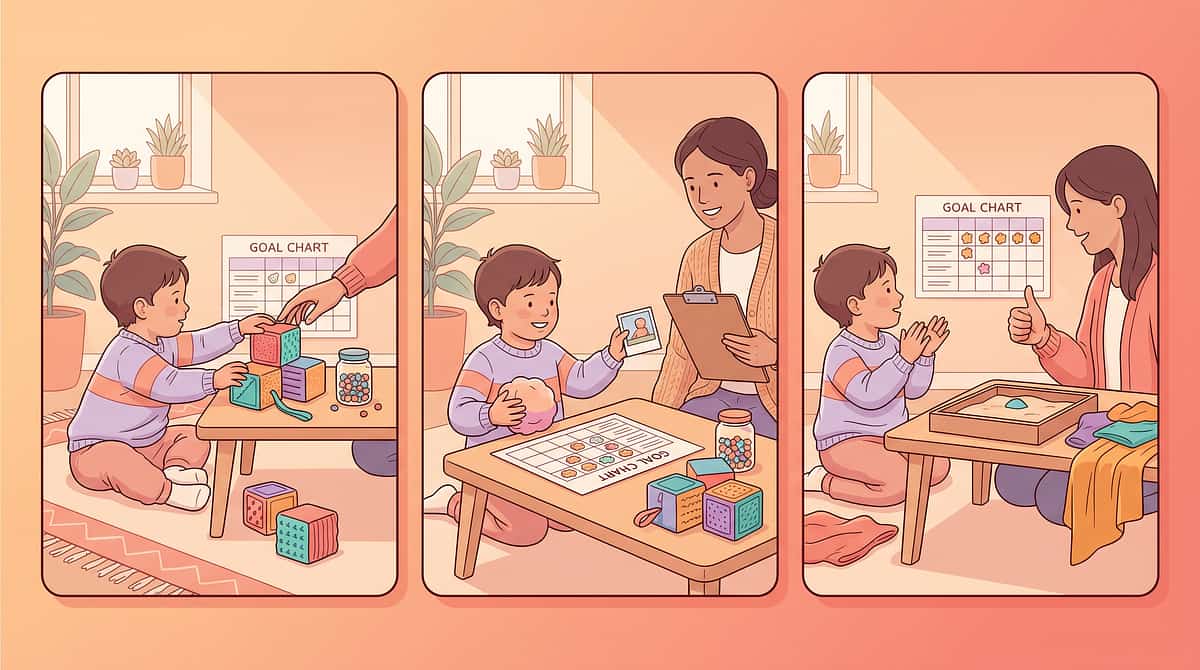
REPEAT & VARY
Dosage is science. Satiation is real.
Satiation Indicators
- Stops engaging with materials
- Gives one-word answers to all questions
- Begins fidgeting or leaving the area
- Explicitly says "I'm done" or "Later"
Dosage Rule: "3 engaged minutes > 10 forced minutes. When satiation appears, close warmly."
Daily Rhythm
☀️Morning (5 min): Review goal board. Identify one action for today toward active goal.
🌙Evening (5 min): Update progress tracker. One reflection question.
📅Weekly (15–20 min): Full goal review. SMART assessment. Obstacle planning update.
🗓️Monthly: Goal board cleanup. Celebrate completed goals. Set new ones.
Variation to Maintain Engagement
Week 1–2: Parent-led with heavy scaffolding
Week 3–4: Shared (parent asks, child answers, child adds to board)
Week 5+: Child-initiated with parent available for support
Material Rotation
- Alternate thermometer/sticker chart/progress bar for different goals
- Change reward menu options monthly
- Vary reflection prompts weekly
- Rotate "special" celebration rituals for milestones

Step 5: Reinforce & Celebrate
What to Reinforce — The Process, Not Just Outcomes
- "You just set a goal that's really specific — that's hard to do!"
- "You updated your progress tracker without being asked — that's huge."
- "You just used a SMART framework. You're thinking like a goal-setter."
- "You didn't quit when it got confusing — you asked for help. That's the right move."
- "Look at this — 6 steps toward your goal completed. Six."
The Praise Formula
[What they did] + [Why it matters] + [What it says about them]
Example: "You created your SMART goal today — that means your brain is learning to think about the future — you're becoming a goal-setter."
Milestone Celebrations
25% filled: Small celebration — sticker, verbal recognition
50% filled: Medium celebration — preferred activity, choice of reward
75% filled: Share with family member
100% filled: GOAL ACHIEVED — full celebration system
Canon Products
Reward Stickers ₹364: amzn.in/d/01wrHJWX
Reward Jar ₹589: amzn.in/d/02C5R9Jn

THE COOL-DOWN
No goal-setting session ends abruptly. The transition is the technique.
Children engaged in goal-setting enter a cognitively demanding, emotionally activating state. Abrupt ending = dysregulation. A structured 2-minute transition prevents post-session distress and anchors positive associations with goal work.
The Transition Script
"Okay, we've got [X minutes] left. Let's do two more things and then we'll put away the materials. You did great today." [2-minute countdown visible on timer]
"One more thing — want to add the sticker? / color in the section? / write one word?"
[Child completes final action]
"Perfect. Now we're going to put the [material] away — where does it live?"
"Done. Your goal board is there when you want to look at it."
Cool-Down Activity (1–2 minutes)
- Option A: Child files/stores today's worksheet in goal portfolio
- Option B: Child chooses tomorrow's first goal-related action
- Option C: Child tells you one thing they're proud of today
- Option D: Together, take a photo of today's goal board update

60 Seconds of Data Now — Saves Hours of Guessing Later
Record session data immediately after each session. This data shows GPT-OS® which goal-setting competencies are developing and which need more support. After 4 weeks of tracking, your child's EF Readiness Index updates automatically. Session abandonment is not failure — it's data. Every tally tells us something.
Data Point 1: Engagement Level
Scale: 1 (refused all activity) → 5 (fully self-initiated). Record today's score.
Data Point 2: Activity Completed
- Goal board review
- New SMART goal created
- Goal breakdown step(s) completed
- Progress tracker updated
- Obstacle planning completed
- Reflection journal entry
Data Point 3: Goal-Directed Behaviors Observed
- Named a goal spontaneously (without prompting)
- Updated own progress tracker without being asked
- Referenced a goal from a previous session
- Planned a specific next step unprompted
- Showed emotional response to progress (positive)
Data Point 4: Challenges Noted
- Refused specific material
- Unable to identify any wants/goals
- Progress tracker caused distress
- Reward system issue noted
- Time/deadline concept not yet accessible

Most Sessions Don't Go Perfectly. That's Normal. Here's What to Do.
Problem 1: Child refuses to engage with the goal board at all
Why: Goal board may contain adult-imposed goals / too cluttered / negative association with "goal" or "plan" language.
What to do: Remove all existing goals. Ask: "What do YOU want on here?" Start with 1 image the child chose. Call it a "want board" or "dream board" if needed.
Problem 2: Child can't name anything they want
Why: Difficulty with future projection / genuine executive function limitation.
What to do: Switch approach — observe rather than ask. What does the child reach for? What makes their face light up? Build the goal FROM observed behavior, not verbal question-answering.
Problem 3: The reward system stopped working after 2 days
Why: Rewards became satiated / reward menu isn't genuinely motivating / effort-to-reward ratio too high.
What to do: Update reward menu with current preferences. Lower the ratio — if 25 tokens felt too distant, try 10. Involve the child in redesigning the system.
Problem 4: Child cries when looking at the progress tracker
Why: Perceives lack of progress as failure / tracker may be scaled wrong / perfectionism / low self-efficacy.
What to do: Shift framing immediately: "Look how much you've already done." Cover the empty portion; only show the filled portion. Rescale — make the tracker represent only the next 5 steps.
Problem 5: Child sets goals but forgets them within hours
Why: Working memory limitation — goals fade without external reminder.
What to do: Increase visual prominence. Add a daily morning "goal check" ritual (30 seconds). Consider small cue cards in lunch box or on bedroom door handle.
Problem 6: SMART goals are too abstract
Why: Developmental stage — SMART is advanced executive function.
What to do: Simplify to two questions: "What do you want?" (Specific) and "When?" (Time-bound). Add Measurable only when Specific is established.
Problem 7: Child gets angry when goals aren't achieved fast enough
Why: Low frustration tolerance / goal was set too large or too far away.
What to do: Break the goal into smaller sub-goals with their own mini-trackers. Introduce the "small win" concept: "Today's win is just doing the first step."
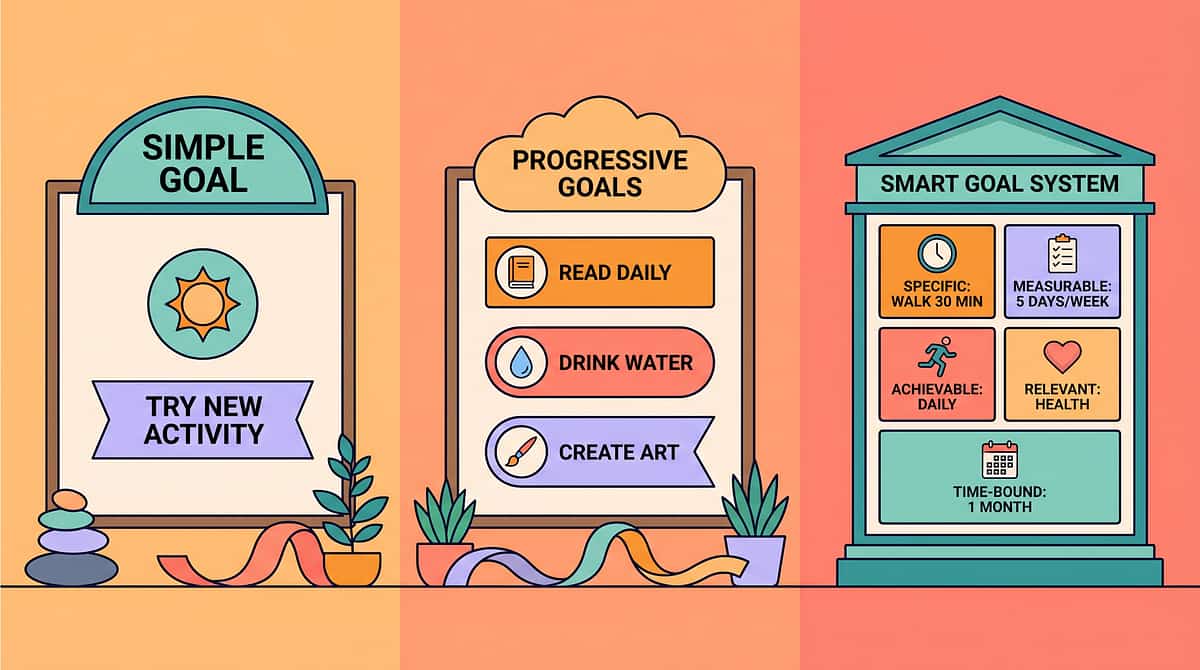
No Two Children Are Identical. Neither Should Their Goal Systems Be.
Profile-Based Variations
Sensory Seeker: Kinesthetic goal board (3D objects, textured materials), active celebration rituals, movement-integrated reward system.
Sensory Avoider: Calm, minimal visual clutter on goal board, quiet reflection space, written/typed responses if verbal feels exposing.
Autism Spectrum: Goals connected to special interests, concrete literal language for all materials, fixed review rituals (same time, same sequence daily), longer processing time.
ADHD: Goal board in multiple locations, shorter more frequent check-ins, digital reminders/apps, gamified reward systems with novelty rotation.
Age Adaptations
Ages 4–7: Picture-based, immediate goals, 1-day to 1-week timeframe.
Ages 8–12: Written + visual, 1-week to 1-month goals, SMART introduction.
Ages 13+: Full SMART, self-directed, digital options, long-range planning.
Discipline-Based Customization
- OT focus: Sensory and motor goals; functional daily living targets
- ABA focus: Behavioral goals with precise measurement + reinforcement schedule
- SLP focus: Communication-specific goals; self-advocacy targets
- SpEd focus: Academic goals aligned with IEP objectives

Weeks 1–2: Tolerance Before Engagement
In weeks 1–2, genuine progress looks more subtle than you might expect. The brain is registering that goals exist. The infrastructure is being built even when engagement isn't visible. Keep the board visible. Keep the rituals brief and non-pressured. The engagement phase comes next.
What IS Progress in Weeks 1–2
- Child tolerates the goal board being in their room (doesn't rip it down)
- Child gives one-word answer when asked about a want or goal
- Child adds one sticker to a progress tracker with adult support
- Goal board review happens 3+ days in the week (even if brief)
- Child accepts the session without significant resistance
What Is NOT Progress Yet — Managing Expectations
- Spontaneous goal identification
- Self-initiated tracker updates
- Sustained motivation beyond the session
- Complete SMART goal creation
- Any reduction in need for adult scaffolding

Weeks 3–4: Neural Pathways Are Forming
These aren't dramatic behavioral changes — they're small sparks. Watch for them. When a child mentions what they're "working toward" in casual conversation, or becomes mildly frustrated if the usual goal-review routine is skipped — that frustration is a positive sign. The routine is anchoring.
🧠 Anticipation Emerging
Child begins to anticipate goal board review without prompting. Child uses the word "goal" correctly in conversation.
🧠 Spontaneous Goal Reference
Child names a goal spontaneously at least once per week. Child remembers yesterday's goal-related action when asked.
🧠 Tracker Ownership Begins
Child notices own progress on tracker without being pointed to it. Progress tracker update becomes part of the child's routine (not just parent-initiated).
🧠 Generalization Seeds
Child says "I want to do this every day so I can get better." Child uses 'steps' language unprompted. Child connects effort to outcome in a new context.

Weeks 5–8: Independence Is Emerging
Mastery Criteria — Observable & Measurable
- Child sets at least one goal per week with minimal adult scaffolding
- Child uses SMART criteria spontaneously (at developmental level)
- Child updates progress tracker 3+ times/week without reminders
- Child references goal board independently at least once daily
- Child creates at least partial goal breakdown (2+ steps) unprompted
- Child uses obstacle language: "If this happens, I'll..."
- Child celebrates own milestone completion (recognizes achievement)
Mastery Unlocked — Badge Criteria
- 🏆 Set and tracked one full goal independently (identification to completion)
- 🏆 Used SMART criteria with minimal prompting for a new goal
- 🏆 Demonstrated obstacle planning before encountering the obstacle
- 🏆 Recognized and celebrated own achievement without adult prompting
Maintenance Check
Test without scaffolding: Go 3 days without any parent goal-board initiation. Does the child reference it? Update it? This is your maintenance check.

You Did This.
You — a parent who was told nothing could be done, who stayed up worrying about whether your child would ever want anything, ever plan for anything, ever have a future worth working toward — You built a goal-setting system in your home. You reviewed the goal board on days when nothing worked. You updated the progress tracker on days your child refused. You celebrated small wins that the world would call insignificant. You gave your child something the most sophisticated clinic can't give: a parent who showed up, consistently, with the right tools.
Your child is goal-setting now. That is not a small thing. That is a human capacity for the future — built from scratch.
🎊 Family Celebration Ideas
Special meal of child's choice. Activity the child has been goal-ing toward. Achievement gallery moment — add to portfolio. Share with one family member who witnessed this journey.
📸 Photo & Journal Prompt
Take a photo of your child's completed goal board — the full one, with the achievement marked. Write the date. Write one sentence about how they got here. This is evidence of the future.
✉️ Letter to Future Self
"Here's what I accomplished and how I did it." Write this together with your child. Seal it. Open it in 6 months. The contrast will astound you both.
"You arrived at Card 01 scared. You leave Card 26 proven."
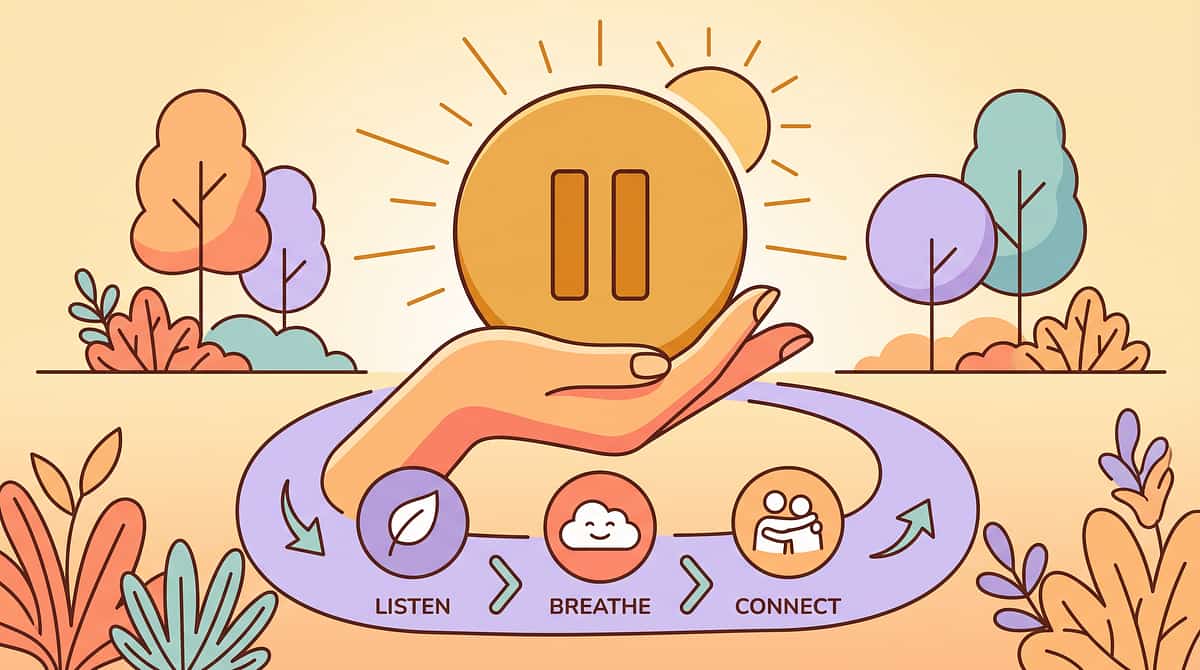
⚠️ Even in the Celebration Zone — Know When to Pause
🚩 FLAG 1: Complete Inability to Identify Any Wants
What it looks like: After 4+ weeks, child still cannot name a single thing they want in any context, with any support.
Why it matters: May indicate deeper executive dysfunction, depression, or severe motivational deficit requiring professional evaluation.
What to do: Schedule AbilityScore® assessment immediately.
🚩 FLAG 2: Persistent Hopelessness About Future
What it looks like: Child consistently says "there's no point," "I can't do anything," "nothing ever works" — across sessions and daily life.
Why it matters: May indicate depression or anxiety disorder requiring mental health support alongside EF intervention.
What to do: Consult NeuroDev pediatrician; call 9100 181 181.
🚩 FLAG 3: Extreme Distress When Goals Aren't Achieved
What it looks like: Self-injurious behavior, extreme meltdowns, or severe anxiety when any goal step is missed or modified.
Why it matters: May indicate perfectionism disorder, OCD, or anxiety requiring clinical-level support before behavioral goal-setting continues.
What to do: Pause goal-setting protocol; seek behavioral/psychological consultation.
🚩 FLAG 4: Regression After Apparent Mastery
What it looks like: Child demonstrates mastery indicators, then rapidly loses all goal-setting capacity without identifiable cause.
Why it matters: May signal health change, neurological event, environmental stressor, or medication change requiring medical review.
What to do: Log regression timeline and consult pediatrician + Pinnacle clinic.
🚩 FLAG 5: Goals Consistently Impossible to Achieve
What it looks like: Despite repeated SMART framework support, every goal is wildly unrealistic or immediately abandoned.
Why it matters: May indicate deeper metacognitive impairment or intellectual disability requiring professional assessment of goal-setting capacity.
What to do: Request Executive Function detailed assessment through Pinnacle.
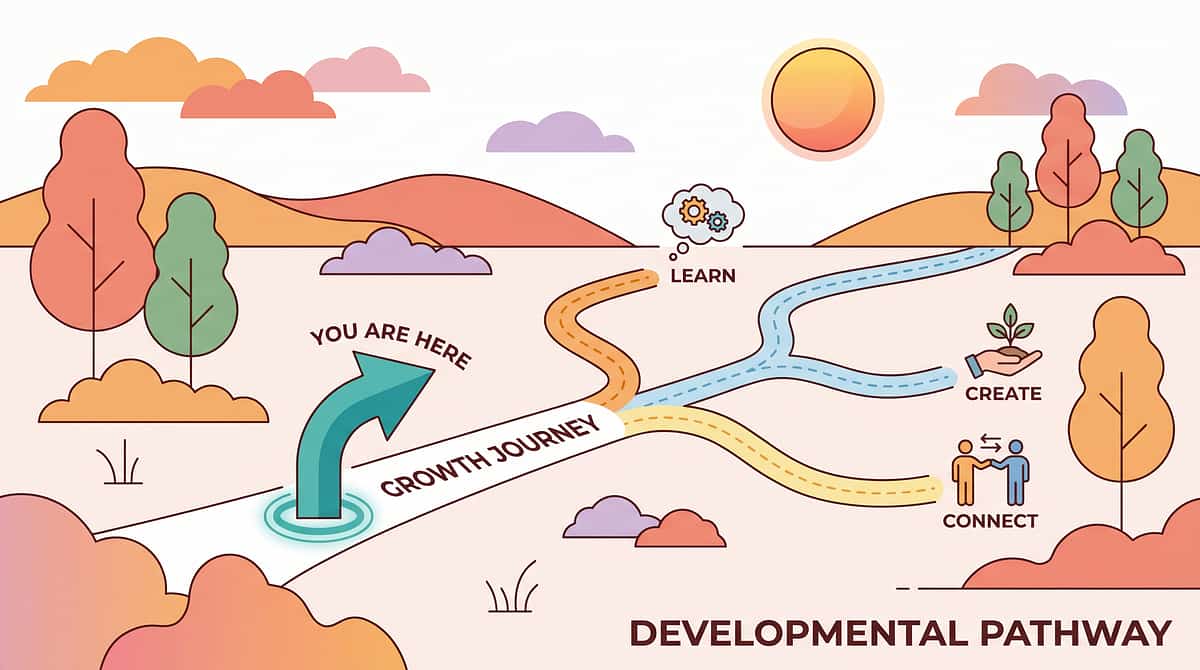
You Are Here. Here Is Where You're Going.
Branching Options from K-906
Path A — Mastered goal identification but struggles with time:
→ K-907: Time Management (most natural next step)
Path B — Setting goals but can't sustain motivation:
→ K-910: Task Initiation (builds the "getting started" capacity)
Path C — Goal-setting strong but academic goals remain elusive:
→ K-912: Sustained Attention (prerequisite for academic goal pursuit)
Path D — Mastered goals but social goals remain impossible:
→ B-221: Social Communication Goal-Setting
Long-Term Developmental Goal
Executive Function Independence — the capacity to set, pursue, and achieve life goals across academic, social, vocational, and personal domains. This is the foundation of adult self-determination.
Lateral Alternatives
If K-906 approach didn't resonate:
→ K-905 revisited: Planning and Sequencing
→ EverydayTherapyProgramme™ Goal Module (intensive support, GPT-OS® governed)
Other Techniques in the Executive Function Domain
You have reward stickers and tracking materials from K-906 — these work directly for K-907, K-908, and K-910. No new purchase needed.
K-904
Working Memory Support
Difficulty: Intro
Canon Materials: Visual schedules, Reminder systems
K-905
Planning and Sequencing
Difficulty: Core
Canon Materials: Step-by-step planners, Visual sequences
K-907 ★
Time Management
Difficulty: Core | RECOMMENDED NEXT
Canon Materials: Time visualization tools, Timer systems
K-908
Self-Monitoring and Metacognition
Difficulty: Advanced
Canon Materials: Self-assessment tools, Data trackers
K-910
Task Initiation
Difficulty: Core
Canon Materials: Visual cues, Starter rituals
K-912
Sustained Attention
Difficulty: Core
Canon Materials: Attention builders, Engagement tools
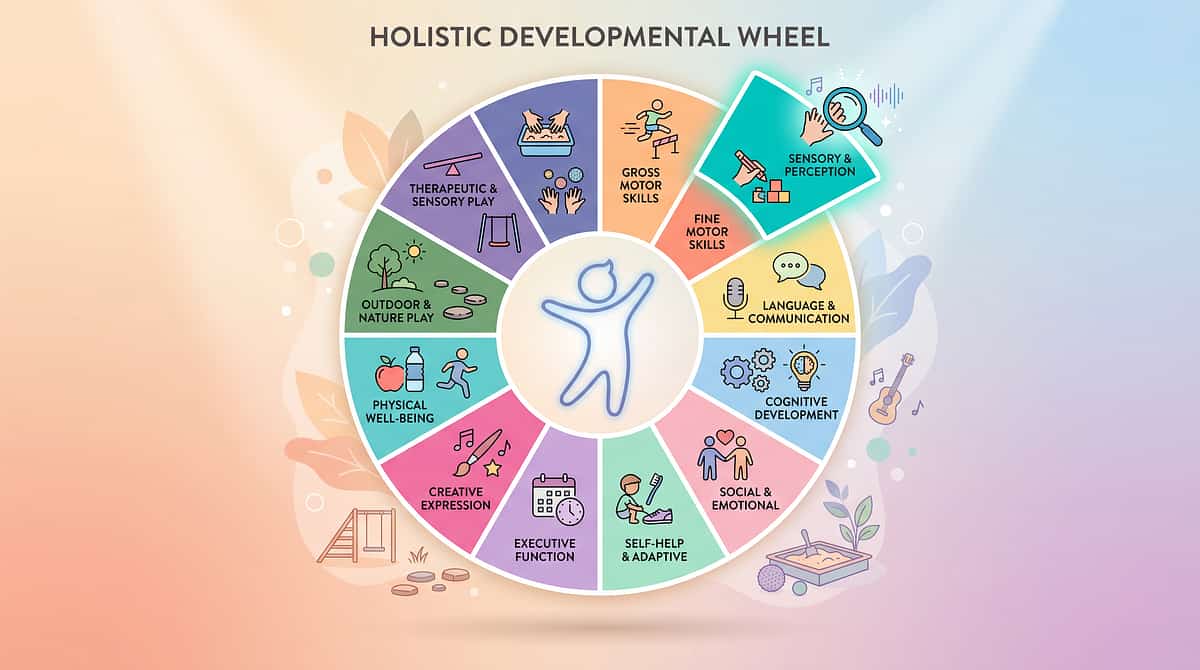
This Technique Is One Piece of a Larger Plan
You Are Here: Domain K — Executive Function
Every Domain K technique you complete adds to your child's capacity to plan their own day, pursue their own goals, monitor their own progress, navigate obstacles independently, and build a future they chose.
"Domain K is not just therapy. It is architecture for a self-determined life."
GPT-OS® Integration
Connect to GPT-OS® to see your child's full developmental profile across all 12 domains. This technique is one piece. GPT-OS® shows you the whole picture.
From the Families of the Pinnacle Network
Anonymized narratives from families in the Pinnacle network. Outcomes vary by condition, severity, and intervention consistency.
8-year-old boy, ADHD — Hyderabad | 14 Weeks
"Ask him what he wants for his birthday — he says 'I don't know.' Ask what he wants to do today — 'I don't know.' He had no goals, no plans, no sense that tomorrow even existed. Everything was now or nothing." → After: "He has a goal board in his room. HE maintains it now. He's saving up tokens toward a LEGO set he chose. He crossed off his first completed goal last month and asked immediately: 'Can we add a new one?'"
Therapist's Note: "The breakthrough wasn't the materials — it was the moment he realized HE got to decide what went on the board. Ownership activated motivation."
11-year-old girl, ASD Level 2 — Bangalore | 20 Weeks
"She understood what a goal was but couldn't connect the concept to herself. Goals were things other people had. She existed outside future planning entirely." → After: "She has three goals on her board right now. One is connected to her special interest in marine biology — she set a goal to learn 50 new species names in one month. She created the tracker herself. She is 73% of the way there and she knows it because she can see it."
Therapist's Note: "Special interest connection was the unlock. The materials held the structure; her interest provided the fuel."
12-year-old boy — Chennai
"My son went from blank stares at future questions to actively maintaining his own goal board. He set a goal to learn a new game and broke it into steps himself. He still needs support. But he THINKS about the future now."
Therapist's Note: "The goal board didn't just build executive function — it gave him agency. Agency is the foundation of self-determination. Self-determination is the foundation of adult independence."

Isolation Is the Enemy of Adherence
You are not the only parent lying awake wondering if your child will ever set a goal. The Pinnacle parent community is 200,000+ families across India and 70 countries, navigating this together. Community is not a supplement to intervention — it IS the intervention environment. (WHO Nurturing Care Framework)
📱 WhatsApp Community
Executive Function & Goal Setting Parents. Real-time support, wins, troubleshooting, tips from parents 6 months ahead of where you are.
💻 Online Forum
Pinnacle Parent Community Hub — searchable discussions, expert Q&A, experience sharing across all 12 developmental domains.
📍 Local Parent Meetups
Organized by Pinnacle centers across 70+ locations. Meet other parents face-to-face. Bring your child's goal board. Share what's working.
🤝 Peer Mentoring
Our peer mentor network connects you with parents 1–2 years ahead of your journey. They've done it. They can show you how. Your child's progress is someone else's hope.
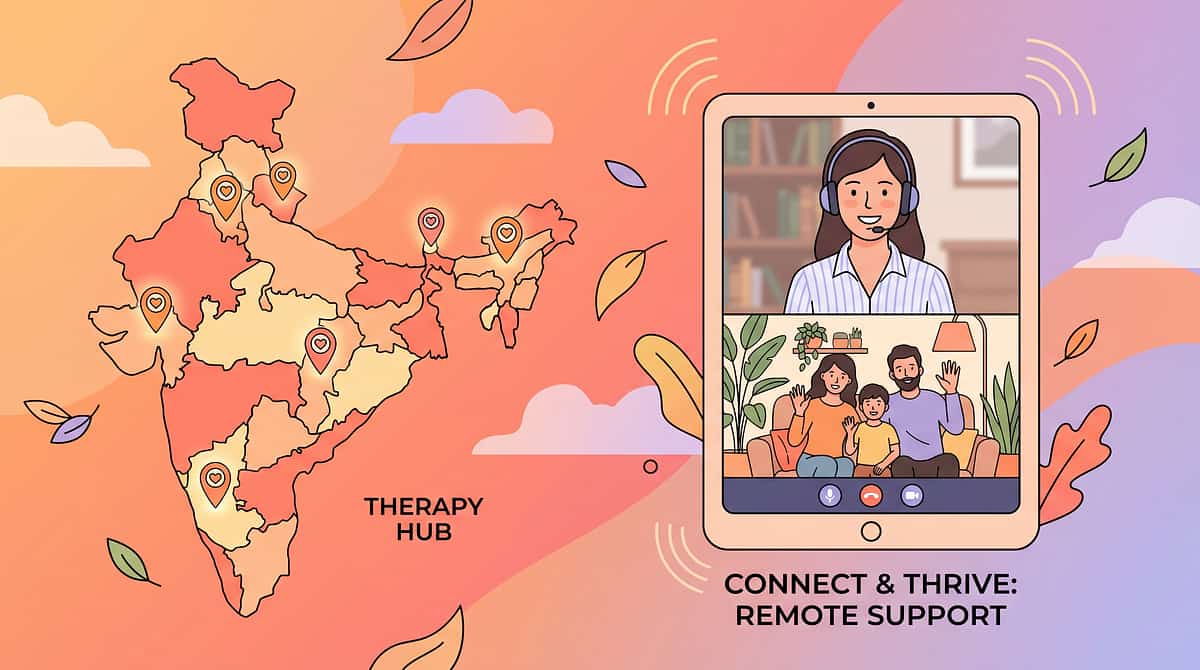
Home + Clinic = Maximum Impact
Home-based intervention achieves its highest outcomes when supported by professional guidance. Every family using K-906 should have at least one professional touchpoint per month.
🏥 In-Clinic Therapy Session
Primary discipline for K-906: OT + ABA (co-primary). Therapist executes goal-setting protocol, calibrates parent technique, assesses EF readiness, updates GPT-OS® profile. Frequency: 1–2x/week for active intervention phase
📞 Teleconsultation
Available for parents with questions, technique adjustments, red flag assessment. OT, BCBA, SpEd, NeuroDev available. Duration: 20–30 minutes. Cost: Free first consultation through helpline
📊 AbilityCore® Assessment
Comprehensive developmental baseline across all 12 domains. Output: AbilityScore® (0–1000) + personalized intervention roadmap. Needed: at treatment start, every 3 months, after mastery milestones.
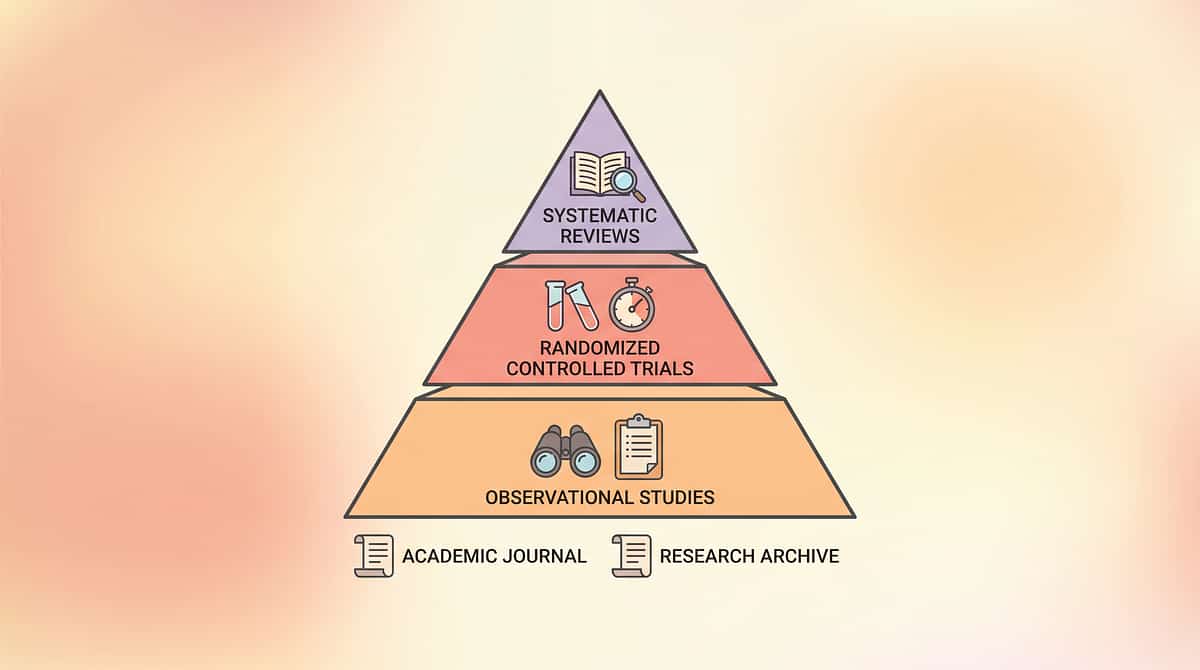
The Evidence Behind K-906: For the Curious Parent
Key Studies
PMC11506176 (2024): PRISMA Systematic Review — confirms visual support systems and structured goal-setting frameworks as evidence-based practices for ASD populations.
PMC10955541 (2024): Meta-analysis of 24 studies — goal-directed behavior training effectively promoted social skills, adaptive behavior, and self-regulation outcomes.
Padmanabha et al. (2019): Indian RCT — demonstrated significant developmental outcomes with parent-administered structured protocols including executive function components. DOI: 10.1007/s12098-018-2747-4
Additional Evidence
NCAEP 2020: Visual supports classified as evidence-based practice for autism. Includes goal boards and progress visualization systems as research-validated tools.
WHO CCD Package (2023): Implemented in 54 low- and middle-income countries. Home-based caregiver-administered interventions demonstrate measurable developmental gains.
Locke & Latham Goal-Setting Theory: Specific, challenging goals consistently outperform vague goals or no goals. Meta-analytic foundation for SMART frameworks across populations.
Additional Reading

Powered by GPT-OS®
What GPT-OS® Learns from K-906 Data
- Goal Identification Index (how readily the child names goals)
- Goal-Planning Readiness (step-creation and SMART use)
- Motivation Maintenance Score (sustaining effort across sessions)
- Future Orientation Index (thinking beyond immediate present)
- Metacognitive Development (self-monitoring, reflection capacity)
The GPT-OS® Stack
AbilityScore® — developmental baseline (0–1000)
Prognosis Engine — developmental trajectory prediction
TherapeuticAI® — session focus + intensity recommendations
EverydayTherapyProgramme™ — daily home micro-interventions
FusionModule™ — OT + ABA + SLP + SpEd + NeuroDev coordination
Population Impact: 20M+ therapy sessions in GPT-OS® means every recommendation for your child is informed by the outcomes of millions of children like yours.
Watch the Reel That Brought You Here
In this 60-second Reel, a Pinnacle consortium therapist walks through all 9 materials that help children build goal-setting skills — from visual goal boards to achievement celebration systems. See the materials in action. Understand how each one works. Share with your family.
Related Reels
→ G-693
9 Materials That Help With Executive Function (broader EF context)
→ H-745
9 Materials That Help With Executive Function School (classroom application)
→ K-907
9 Materials That Help With Time Management (next in series)
Follow Pinnacle Blooms Network® for daily parent education content

Consistency Across Caregivers Multiplies Impact
If only one adult in your child's life practices goal-setting, the impact is limited. When all caregivers — parents, grandparents, teachers, siblings — reinforce the same system, the brain builds the pathways faster, more permanently, and more generalizably.
Who Needs This Page
- 👨👩👧 Both parents — unified approach is essential
- 👴👵 Grandparents — they will need the simplified version
- 👩🏫 Class teacher — school goal alignment amplifies home gains
- 🏥 Therapist team — share your progress tracking data
- 👤 Older siblings — they can co-facilitate goal-board updates
Explain to Grandparents — Simplified Version
"Grandma/Grandpa — [child's name] is working on something important. We have a board in the room with pictures of things they're working toward. When you visit, please:
• Ask them to show you their goal board
• Say 'Wow, you've done so much of that already!'
• Never say 'why don't you have more goals?' or 'you should be further along'
Your encouragement matters more than you know."

The Questions Every K-906 Parent Asks
Q1: How do I know if my child is ready for goal-setting intervention?
If your child is over age 4 and shows ANY of these signs — can indicate one preference when offered two choices, shows interest in ANY outcome, can be redirected from one activity to another — they are ready for K-906 at the earliest stage. Executive function readiness is not a prerequisite; K-906 BUILDS executive function.
Q2: Should I impose goals or wait for the child to set their own?
Neither. Facilitate. Ask open-ended questions, observe what naturally excites the child, offer 2–3 concrete options to choose from. The goal must feel like the child's own — even if you heavily facilitated its identification. Adult-imposed goals create compliance, not motivation.
Q3: My child's goals are completely unrealistic (e.g., "I want to fly"). What do I do?
Honor the dream, then bridge to the achievable. "Flying — I love that you dream big. What about things that FLY, like drones or planes? Could we start with learning about those?" Don't dismiss — redirect toward what's achievable.
Q4: How many goals should be on the board at once?
Start with 1. Max 3 active goals simultaneously. More than 3 creates overwhelm and diffuses motivation. One goal per timeframe category (today goal, this-month goal, someday goal) is a functional structure for most children.
Q5: My child achieved a goal but doesn't seem to care. Is something wrong?
This is common in early stages when intrinsic motivation is still developing. Make the achievement explicit and visible — photograph it, document it, make a ceremony of moving it to the achievement section. The brain needs external celebration to register success until internal reward systems strengthen.
Q6: We've been doing K-906 for 3 months with no visible progress. What now?
Three months without any progress indicators is a signal to seek professional evaluation. This may indicate: goal-setting materials need professional calibration, an underlying condition is blocking progress, or the specific materials don't match the child's learning profile. Call 9100 181 181 for a free assessment consultation.
Q7: Can goal-setting harm my child's self-esteem if goals aren't achieved?
Only if goals are set for judgment rather than growth. Protective practices: always celebrate steps, never shame unachieved goals, always model that obstacles are normal, ALWAYS ensure at least one goal per month is highly achievable for a "quick win." Frame goals as experiments, not tests.
Q8: At what age should we start goal-setting?
Simple version (picture goal board with 1 immediate goal) as early as age 3–4. SMART frameworks from age 8+. Full independent goal-setting typically emerges between ages 12–16 with appropriate scaffolding. Adapt developmental complexity, but never wait — earlier is better.

You've Read Everything. Now Begin.
The goal board doesn't build itself. But you now know exactly how to build it. Your child's first goal is 20 minutes away.
✅ 20M+ Sessions
Evidence-based | WHO/UNICEF aligned | GPT-OS® powered
✅ 97%+ Improvement
Clinically validated | 70+ centers across India
✅ Free Helpline
16 languages | 24x7 availability | No cost. Forever.
Preview of 9 materials that help with goal setting Therapy Material
Below is a visual preview of 9 materials that help with goal setting therapy material. The pages shown help educators, therapists, and caregivers understand the structure and content of the resource before use. Materials should be used under appropriate professional guidance.


The Pinnacle Promise
"From fear to mastery. One technique at a time."
Pinnacle Blooms Network® exists to transform every home into a proven, scientific, 24x7, personalized, multi-disciplinary therapy environment for every child who needs it — regardless of geography, income, or diagnosis. We do this through GPT-OS® — the Global Pediatric Therapeutic Operating System — and 70,000+ intervention techniques built by the world's most comprehensive consortium of pediatric therapy expertise. 21 million therapy services. 97%+ proven improvement. 70+ centers. 70 countries. One mission. Your child's potential is not a ceiling. It is a starting point.
Consortium Disciplines
🤲 OT | 🗣️ SLP | 📊 ABA | 📚 SpEd | 🧠 NeuroDev | 🔬 CRO
Validated by the Pinnacle Blooms Network® Consortium
CIN: U74999TG2016PTC113063 | DPIIT: DIPP8651 (Govt. of India Recognized Startup) | MSME: Udyog Aadhaar Registered | GSTIN: 36AAGCB9722P1Z2
Pinnacle Blooms Network® is a unit of Bharath Healthcare Laboratories Pvt. Ltd.
© 2026 Pinnacle Blooms Network®. All rights reserved. GPT-OS® | AbilityScore® | TherapeuticAI® | FusionModule™ | EverydayTherapyProgramme™ are proprietary systems of Pinnacle Blooms Network® with IP protection filed across 160+ countries. Content references: PMC11506176 | PMC10955541 | PMC9978394 | WHO NCF 2018 | NCAEP 2020 | DOI:10.1007/s12098-018-2747-4 (Padmanabha, Indian J Pediatr, 2019)
This content is educational. It does not replace individualized assessment and intervention from qualified professionals. Strategies should be adapted to the individual child's needs, developmental level, and specific challenges. Individual results may vary. Statistics represent aggregate outcomes across the Pinnacle Blooms Network.
When There Is No Tomorrow — Only Now