

"She Has Meltdowns Out of Nowhere. When I Ask How She's Feeling, She Just Says 'Fine.'"
It's Tuesday evening. Your daughter is coloring quietly — then suddenly she's screaming, throwing crayons, inconsolable. You kneel down, hold her gently and ask, "What's wrong? How are you feeling?" She looks at you, tears streaming, and says: "I'm fine." She's not lying. She genuinely doesn't know. Her body was screaming — tight chest, racing heart, clenched jaw — but her brain never got the message.
Emotion Body Awareness: Building the Bridge Between What Your Child's Body Feels and What Their Heart Knows
You are not failing. Your child's nervous system is speaking a language they haven't learned to read yet. This technique teaches that language — body signal by body signal, emotion by emotion. The WHO Nurturing Care Framework (2018) confirms that early identification and parental awareness directly impacts developmental outcomes.
Pinnacle Blooms Consortium®
OT Lead
SLP
ABA
Special Education
Powered by GPT-OS® Therapeutic Intelligence | Built by Mothers. Engineered as a System.

ACT I: THE EMOTIONAL ENTRY
You Are Not Alone — The Numbers Behind This Challenge
The disconnection between your child's body and their emotional awareness is one of the most common — and most addressable — features of autism spectrum conditions. These numbers tell the story of millions of families just like yours.
~50%
Alexithymia Rate
of autistic individuals experience alexithymia — difficulty identifying and describing their own emotions. That's five times the rate in the general population (~10%).
80%+
Sensory Differences
of children diagnosed with autism display sensory processing difficulties, including interoceptive processing differences that directly affect emotion-body awareness.
Millions
Families Worldwide
navigate this exact challenge daily. In India alone, with an estimated 1 in 100 children on the spectrum, millions of parents hear "I'm fine" when their child's body tells a different story.
You are among millions of families navigating this exact challenge. The disconnection between your child's body and their emotional awareness is one of the most common — and most addressable — features of autism spectrum conditions.
Sources: Kinnaird E, et al. (2019) — Systematic review and meta-analysis of alexithymia in autism | PRISMA Systematic Review (2024), PMC11506176 | Meta-analysis, World J Clin Cases (2024), PMC10955541
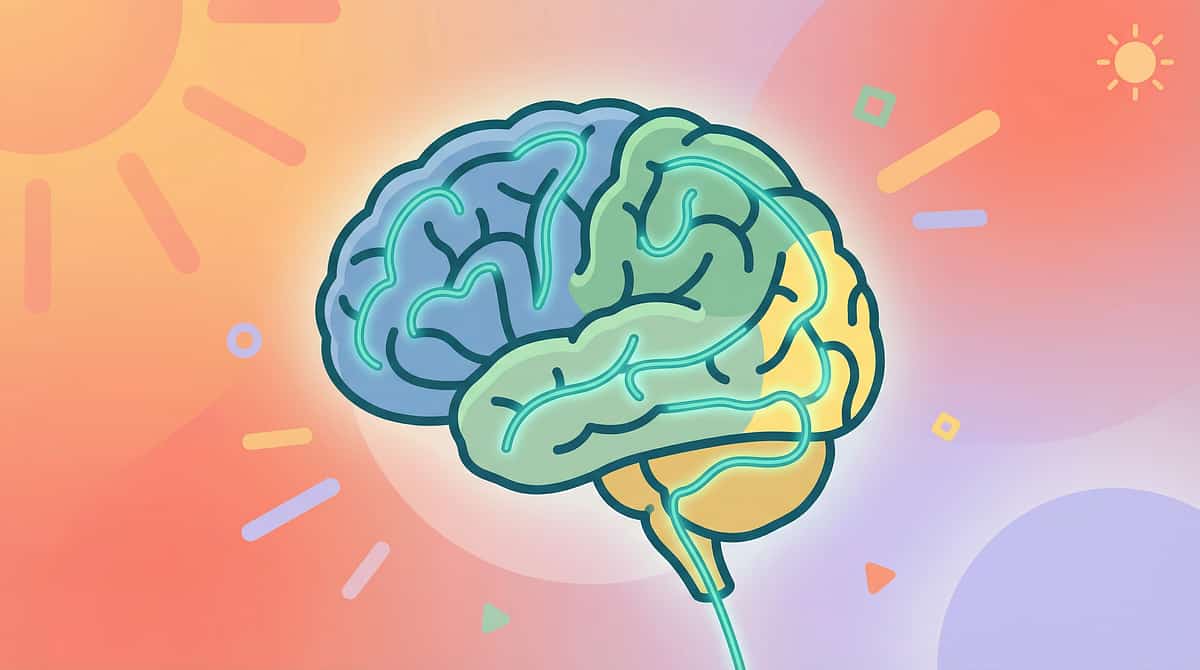
What's Happening in Your Child's Brain: The Body-Emotion Disconnection
Key: Body signals sent ✓ → Signal received but not interpreted ✗ → Emotion label: ???
Emotions are body experiences first.
When you feel anxious, your stomach tightens and your heart races. When you're angry, your face gets hot and your fists clench. When you're sad, your chest feels heavy and your body feels drained.
Your brain's insular cortex — think of it as the "body signal interpreter" — reads these physical signals and translates them into emotional labels: "That tight stomach means I'm nervous."
In your child, this translation pathway works differently. The body still sends the signals — the stomach still tightens, the heart still races, the muscles still clench. But the brain doesn't interpret them as emotions. Your child literally experiences the physical sensations without knowing they mean "I'm scared" or "I'm angry."
This is a wiring difference, not a behavior choice. When your child says "I'm fine" while clearly distressed, they're not lying — they genuinely cannot read their body's emotional messages.
"You can't regulate what you can't feel coming." — This is why meltdowns seem to appear "from nowhere." The warning signs were there — in the body. Your child simply couldn't read them.
Sources: Garfinkel SN, et al. (2016) | DuBois D, et al. (2016) | Frontiers in Integrative Neuroscience (2020), DOI: 10.3389/fnint.2020.556660
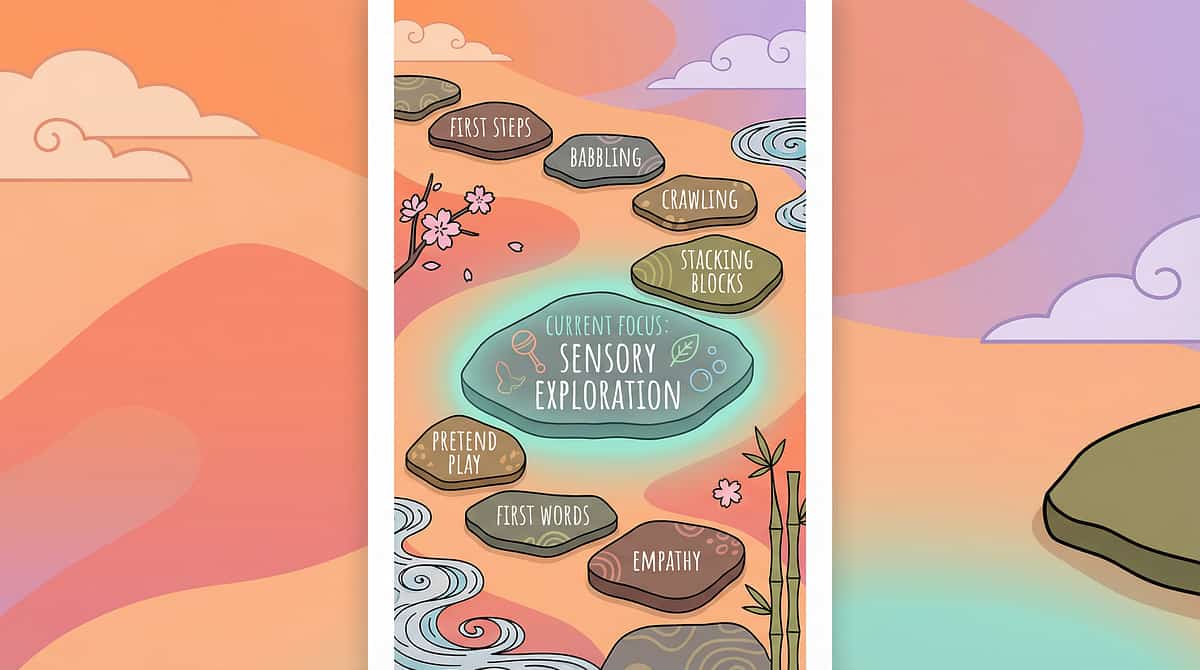
Where Emotion Body Awareness Sits in Your Child's Development
Age 0–1
Basic interoceptive awareness emerging — hunger, pain, temperature
Age 1–3
Emotions expressed through behavior but not yet labeled; body-emotion connections forming implicitly
Age 3–5 ★
GAP BECOMES VISIBLE: Typical children begin naming emotions and connecting to body feelings ("My tummy hurts when I'm scared")
Age 4–8 ★
INTERVENTION WINDOW: Explicit teaching of body-emotion connections is most effective during this neuroplastic period
Age 8–14
Extended intervention window; connections can still be built through systematic teaching
Age 14+
Skills continue developing; adolescent emotional complexity requires stronger body-awareness foundation
Comorbidity Awareness: Emotion body awareness difficulties commonly co-occur with alexithymia, anxiety disorders, sensory processing differences across other interoceptive domains (hunger, bathroom signals, temperature, pain), and emotional regulation challenges.
"Your child is here. Here is where we're heading — from body sensations that are confusing and overwhelming to body signals that are recognized, named, and used as guides for self-regulation."
Sources: WHO CCD Package (2023), PMC9978394 | UNICEF MICS indicators for developmental monitoring

The Evidence Behind This Technique
🛡️ Evidence Grade
LEVEL II
STRONG — Multiple systematic reviews, meta-analyses, and clinical studies support interoception-based intervention for emotional awareness in autism.
12+ peer-reviewed studies directly address interoception and emotional awareness, with additional evidence from 24+ studies on sensory integration therapy effectiveness.
Key Finding
"Systematic interoception training significantly improves emotional awareness, emotional vocabulary, and emotional regulation in children with autism spectrum conditions, with home-based implementation showing comparable outcomes to clinic-based delivery."
Source | Finding | Reference | |
PRISMA Review (2024) | 16 articles confirm SI as evidence-based for ASD | PMC11506176 | |
Meta-Analysis (2024) | SI therapy promotes social skills, adaptive behavior | PMC10955541 | |
Kinnaird et al. (2019) | ~50% alexithymia prevalence; interoception training reduces this | Meta-analysis | |
Garfinkel et al. (2016) | Interoceptive dimensions differentially affected in autism | Research study | |
Padmanabha et al. (2019) | Home-based sensory interventions show significant outcomes in India | DOI: 10.1007/s12098-018-2747-4 | |
Kelly Mahler Research | Body-emotion connection curriculum for autism | kelly-mahler.com |
"Clinically validated. Home-applicable. Parent-proven."
ACT II: THE KNOWLEDGE TRANSFER
Emotion Body Awareness Training
Parent-Friendly Alias: "Teaching Your Child to Read Their Body's Emotional Messages"
Emotion Body Awareness Training is a structured interoceptive intervention that teaches children to recognize, label, and respond to the physical sensations that accompany emotional states. Through systematic use of body maps, sensation vocabulary, check-in routines, and real-time coaching, children learn to identify that "butterflies in my stomach" means nervous, "tight fists and hot face" means angry, and "heavy chest" means sad — connections that typically develop implicitly but require explicit instruction for children with interoceptive processing differences.
Domain
Interoception — Recognizing Emotions Through Body Signals (INT-EMO)
Age Range
4–14 years
Session Duration
10–20 min (home-based)
Frequency
Daily check-ins + 3x/week structured sessions
Setting
Home, School & Therapy
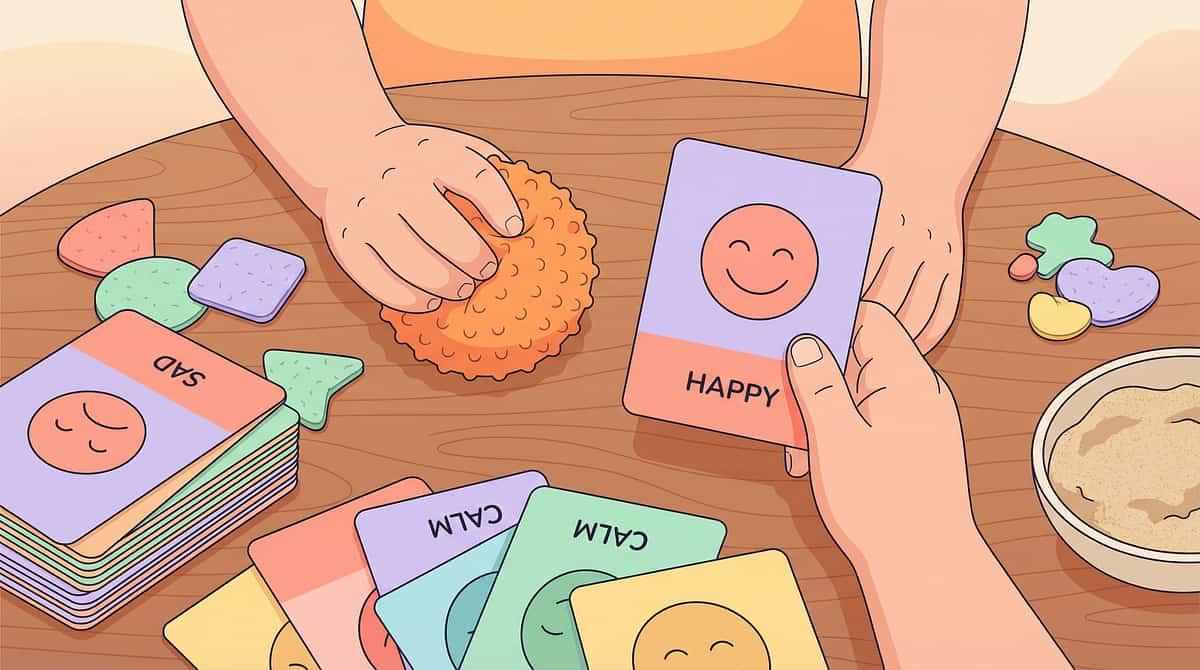
Canon Materials: Emotion Cards & Feelings Faces | Breathing & Relaxation Tools | Behavior & Feelings Thermometer | Social Stories | Calm-Down Kit
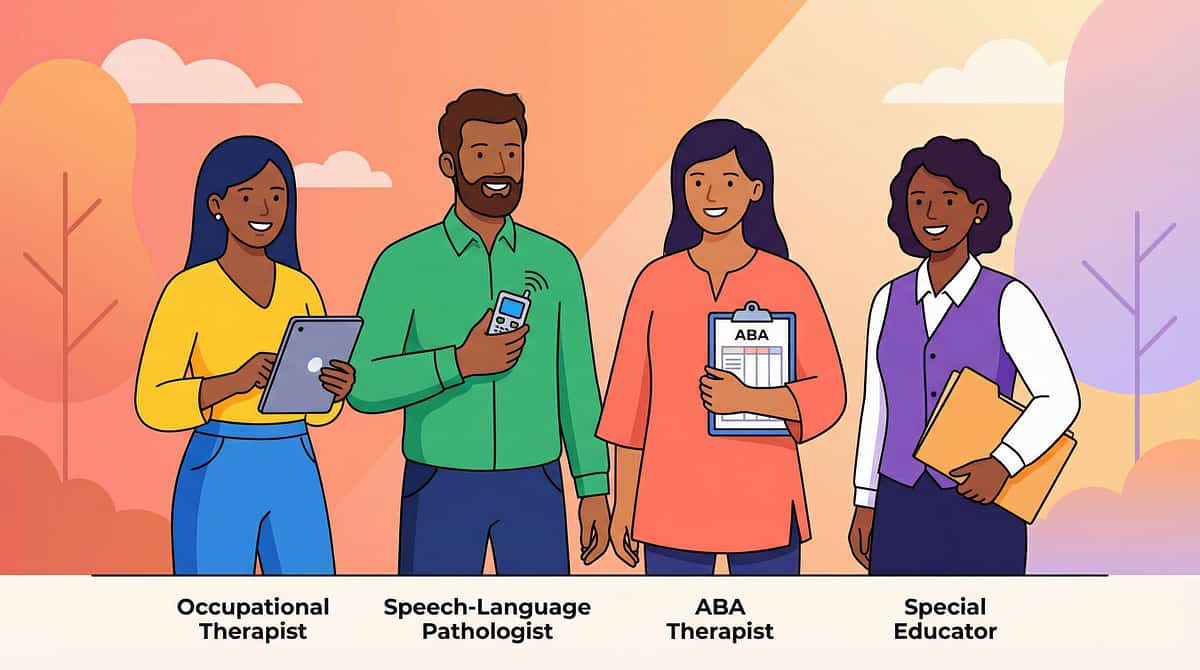
Who Uses This Technique — Your Child's Multi-Disciplinary Team
Occupational Therapist (PRIMARY LEAD)
Designs and delivers interoception curriculum. Assesses sensory processing profile including interoceptive awareness. Creates personalized body maps, selects sensation vocabulary targets, calibrates thermometer scales. Leads body scan protocols and sensory-emotion connection activities.
Board Certified Behavior Analyst (BCBA)
Structures reinforcement schedules for emotion identification attempts. Designs check-in data collection systems. Creates coaching scripts for parents with specific prompts and timing. Tracks emotional labeling as a measurable behavior target with frequency and accuracy data.
Speech-Language Pathologist (SLP)
Builds emotional vocabulary — both receptive and expressive. Teaches the language of body sensations: "butterflies," "heavy," "tight," "jittery." Supports narrative skills through emotion-body social stories. Addresses pragmatic language goals around emotional communication.
Special Educator
Integrates emotion body awareness into classroom routines. Creates visual supports for check-in systems. Adapts materials for the child's cognitive and learning profile. Coordinates with home practice to ensure generalization across settings.
"This technique crosses therapy boundaries because the brain doesn't organize by therapy type. Emotion body awareness requires sensory processing (OT), language development (SLP), behavior shaping (ABA), and learning support (SpEd) — working as one converged system."
NeuroDevelopmental Pediatrician Oversight: Medical oversight ensures no underlying conditions (anxiety disorders, depression, trauma responses) are contributing to or complicating the emotion-body disconnection. Differential diagnosis is critical before intervention begins.

What This Technique Targets — Precision Goals
Observable Behavior Indicators
- ✅ Child points to body area when asked "Where do you feel that emotion?"
- ✅ Child uses sensation vocabulary unprompted ("My chest feels tight")
- ✅ Child rates emotion intensity using thermometer or scale
- ✅ Child connects body feeling to emotion during check-ins
- ✅ Child notices body changes before full emotional escalation
Source: Meta-analysis (World J Clin Cases, 2024): SI therapy effectively promoted social skills, adaptive behavior, sensory processing, and motor skills across 24 studies. PMC10955541
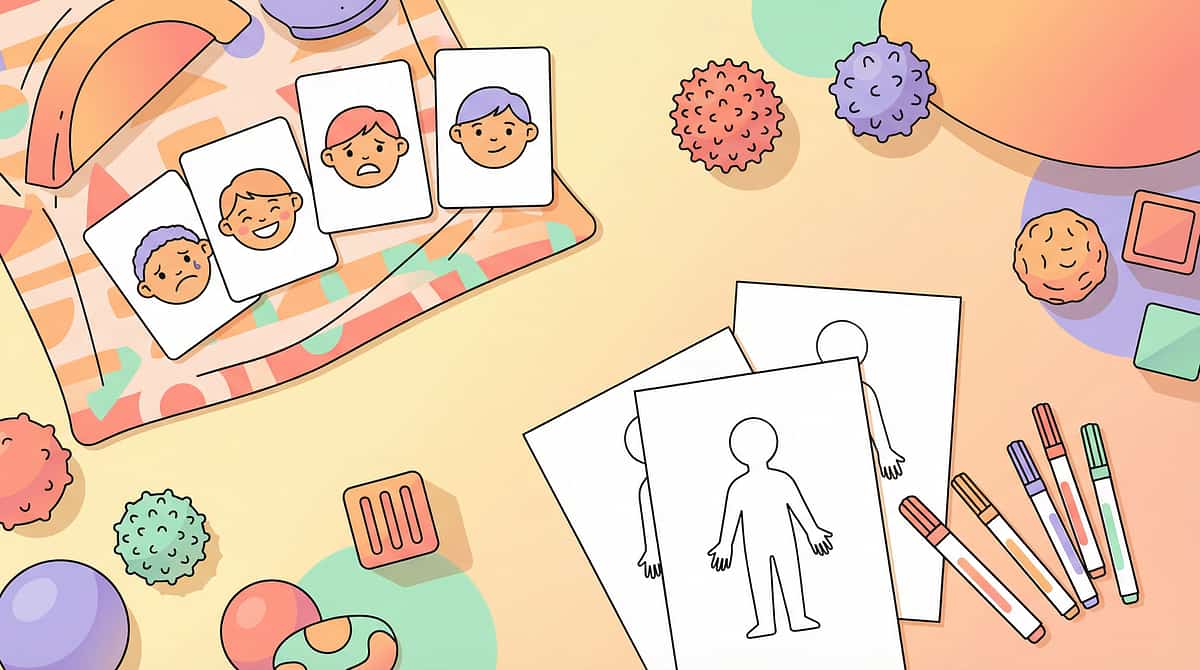
What You Need — 9 Materials for Emotion Body Awareness
Complete setup: ₹1,250–5,800 | Most can be DIY'd for ₹0–200
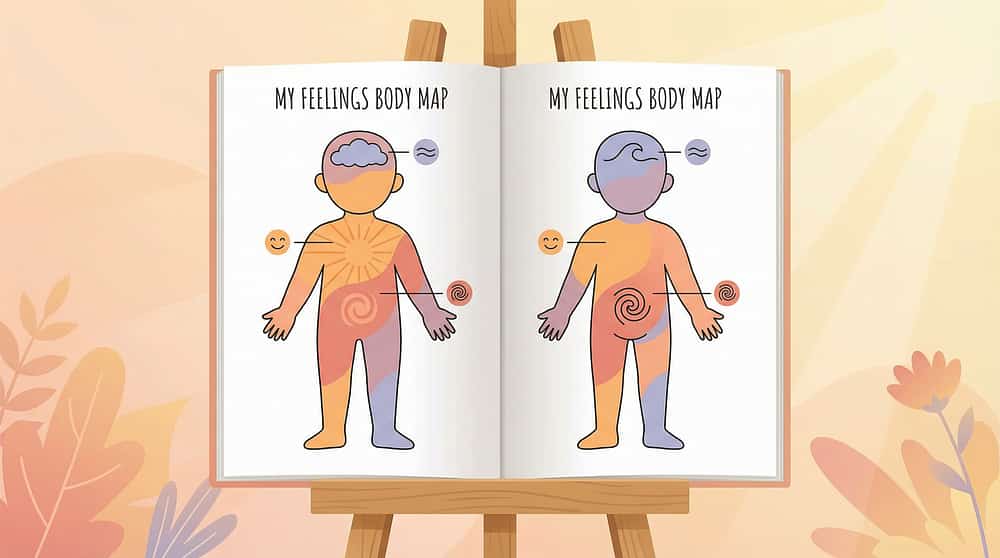
1. Emotion-Body Mapping Charts | ₹200–600
Body outline with colored emotion regions. Child personalizes where THEY feel each emotion. 🏷️ Pinnacle Recommends ✓

2. Body Scan Practice Tools | ₹0–500
Guided audio scripts + visual body part prompts for systematic internal attention. Free audio scripts available online.
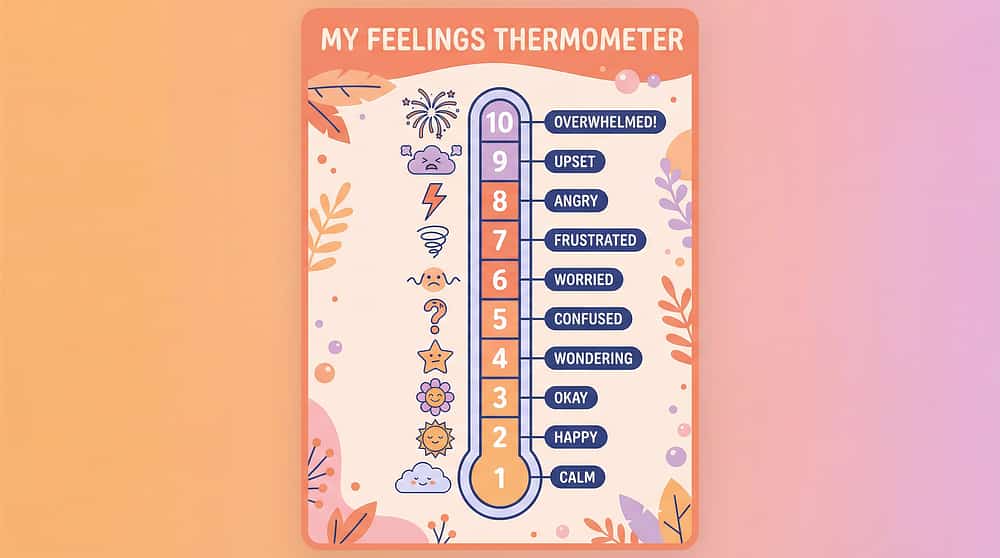
3. Emotion Thermometers & Meters | ₹150–400
Visual 1-10 scale connecting emotion intensity to specific body sensations at each level. 🏷️ Pinnacle Recommends ✓
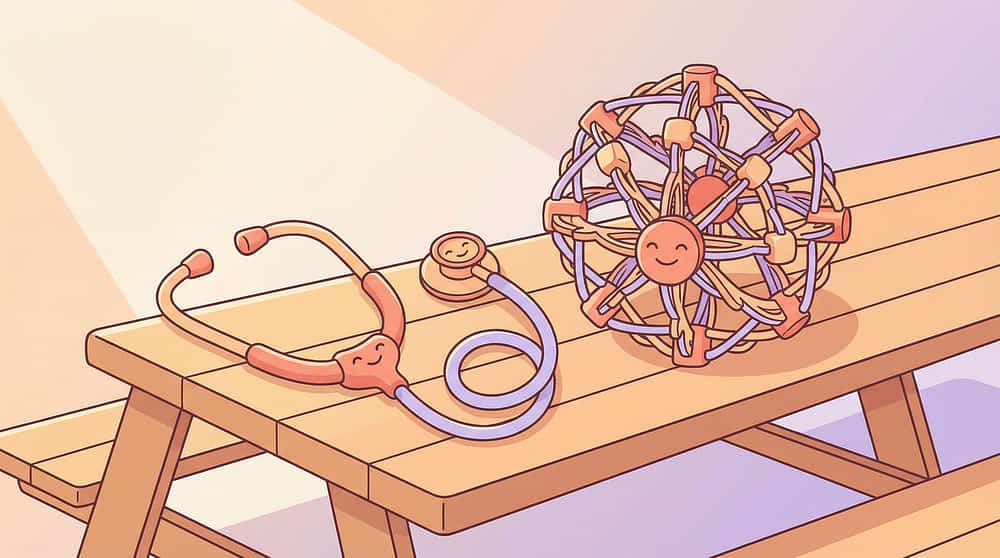
4. Heartbeat & Breathing Tools | ₹300–1,500
Child-friendly stethoscope, Hoberman sphere for breath visualization, simple pulse monitoring tools.

5. Emotion-Sensation Vocabulary Cards | ₹200–500
Flashcards with sensation words: "butterflies," "heavy," "tight," "jittery," "warm," "racing."
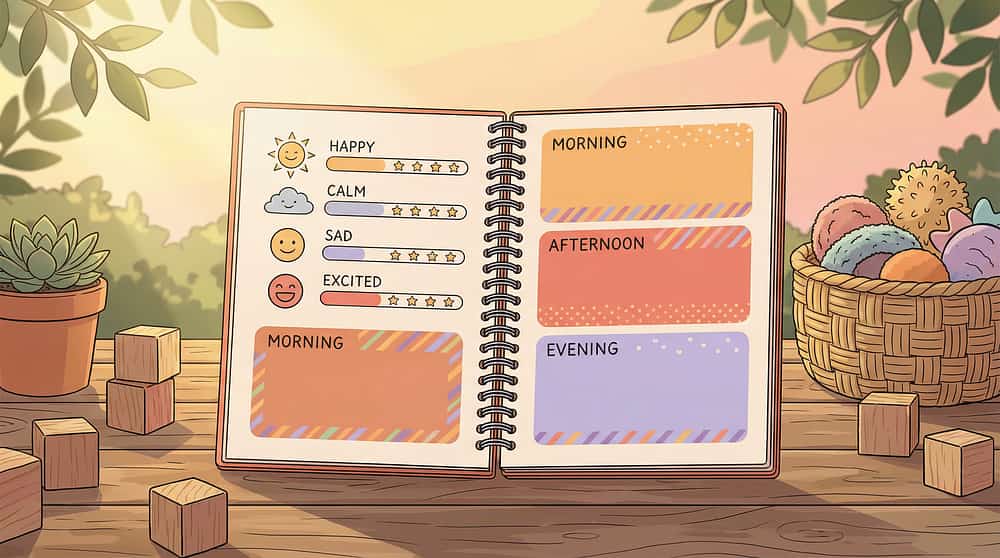
6. Check-In & Journaling Systems | ₹100–400
Structured daily check-in sheets with emotion word, body feeling, and intensity rating fields.
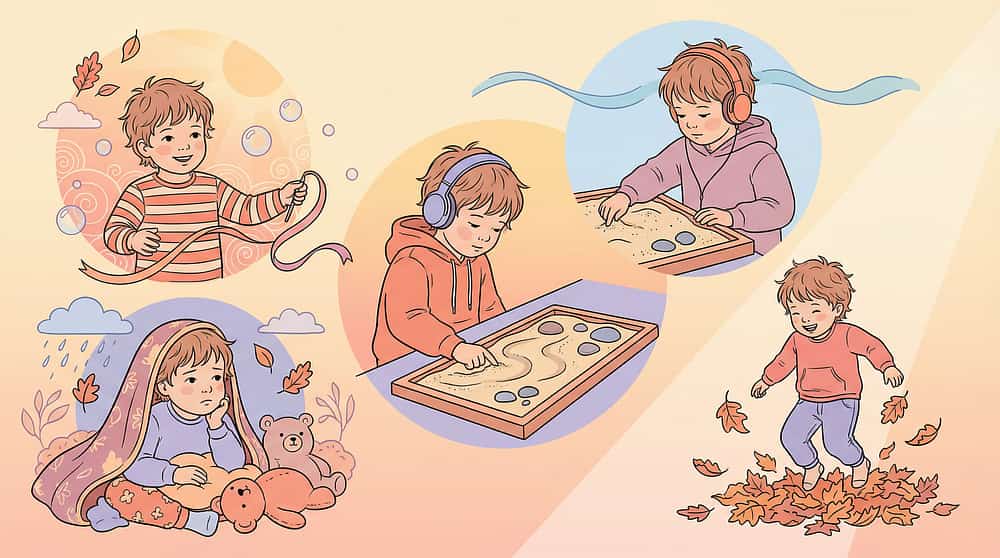
7. Social Stories for Emotion-Body Connection | ₹200–600
Stories about characters who notice body feelings and connect them to emotions. 🏷️ Pinnacle Recommends ✓

8. In-the-Moment Coaching Scripts | ₹100–300
Printed prompt cards for adults to guide body-emotion connections during real emotional moments.
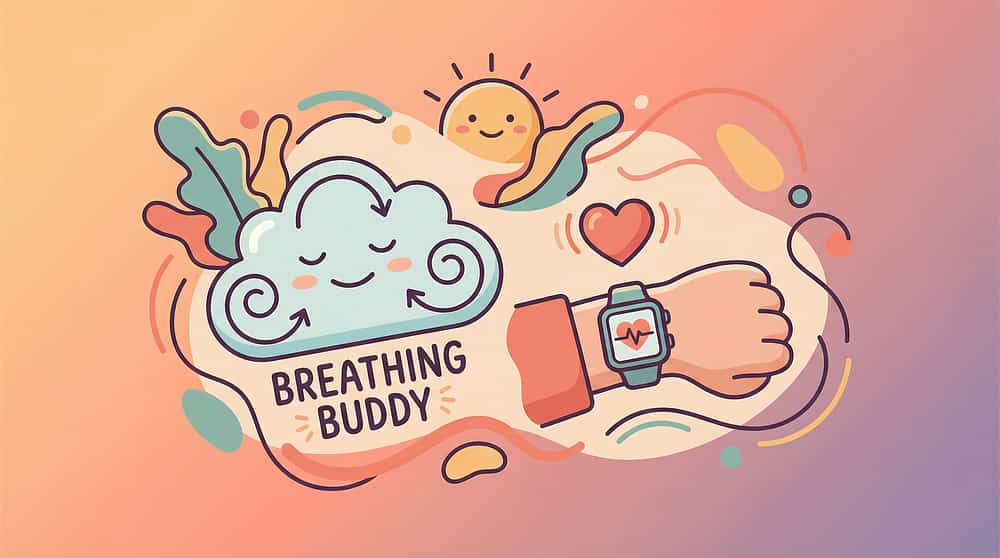
9. Calming Strategy-Body Feedback Tools | ₹0–1,000
Heart rate checks + breathing visuals that show children regulation strategies actually work in their body.

DIY & Zero-Cost Alternatives — Every Family Can Start Today
Equity Statement: Not every family can order from Amazon. Not every village has same-day delivery. The WHO/UNICEF principle of equity demands that every parent, regardless of economic status, can execute this technique TODAY with household items.
Buy This | Make This At Home | |
Emotion-Body Map Chart (₹200-600) | Draw a body outline on chart paper. Use colored markers: blue in chest for sadness, red in face/hands for anger, yellow flutter in stomach for anxiety. Have child personalize: "Where do YOU feel worried?" | |
Body Scan Audio (₹200-500) | Read aloud: "Close your eyes. Notice your feet — heavy or light? Warm or cool? Now your legs..." Start with 2-3 minutes. Free scripts online. | |
Emotion Thermometer (₹150-400) | Draw a thermometer on cardboard with levels 1-5. Level 1 = "body calm." Level 3 = "heart faster, muscles tighter." Level 5 = "body very tense." Use a clothespin as marker. | |
Heartbeat Tools (₹300-1,500) | Place hand on heart during calm time — count beats for 15 seconds × 4. After running, compare: "Your heart is faster now! That can mean excited or worried." | |
Sensation Vocabulary Cards (₹200-500) | Index cards with sensation words and simple drawings: "Butterflies = fluttery nervous feeling in tummy." Connect to emotions on back of card. | |
Check-In System (₹100-400) | Notebook with 3 daily check-in times. Simple format: "Emotion word? Body feeling? Level 1-5?" — 1-2 minutes each. | |
Social Stories (₹200-600) | Write simple story: "Maya noticed her stomach felt fluttery and her hands were shaky. 'I think I'm feeling nervous,' she realized." Discuss: "How did Maya know?" | |
Coaching Scripts (₹100-300) | Sticky note for your fridge: "What does your body feel right now?" → "Where do you feel it?" → "What emotion might that be?" → "Your body gave you good information." | |
Feedback Tools (₹0-1,000) | Check heart rate before and after 5 deep breaths. Count pulse at wrist for 15 seconds × 4. "Your heart went from 90 to 75 — deep breathing calms your body!" |
🟢TOTAL COST TO START: ₹0 — Paper, markers, and your voice are all you need. The therapeutic principle — explicitly connecting body sensations to emotion labels — works regardless of material quality.

⚠️ Safety First — Before You Begin
🟢 GREEN — GO
- Child is in a calm or moderately alert state
- Child has eaten, slept, and is not unwell
- Environment is calm, quiet, distraction-free
- You (the caregiver) are calm and patient
- No recent meltdown in the last 30 minutes
- Child shows willingness or neutral response
🟡 AMBER — MODIFY
- Child is slightly dysregulated but responsive — use simplified version (one material, 2-3 min max)
- Child is tired or hungry — quick check-in only
- Child resists — reframe as play, not instruction
- Multiple sensory demands — reduce to single-focus
🔴 RED — STOP
- Child is in active meltdown or crisis
- Child shows severe distress, self-harm, or aggression
- Child has been physically ill in past 24 hours
- Parent/caregiver is frustrated or emotionally depleted
- Child explicitly refuses with avoidance behavior
Critical Safety Notes for This Technique
- Internal focus can be uncomfortable: Some children find paying attention to body sensations distressing initially. Start very brief (30 seconds) and make practice optional and positive.
- Body maps show common patterns but individual experiences vary. Support your child in discovering THEIR own patterns rather than insisting their experience matches the chart.
- Don't coach during full crisis. Coaching body-emotion connections requires enough cognitive bandwidth. During crisis, only provide safety and calming co-regulation.
- Not every moment needs to be a lesson. Balance teaching with simply being present and supportive.
🚨STOP THE SESSION IMMEDIATELY IF: Child becomes severely distressed during internal body focus. Child shows signs of dissociation (blank staring, unresponsive). Child reports feeling scared by body sensations. Child exhibits self-injurious behavior. → Contact your Pinnacle center or call 9100 181 181.

Set Up Your Space — The Emotion Awareness Zone
Child Position
Comfortable seating — floor cushion, beanbag, or chair. Child should be able to see materials and make eye contact with parent. Avoid desk/table positions for body-focused activities.
Parent Position
Beside child (not across from). Close enough to point to body areas on child or model on own body. At child's eye level — sit on floor together.
Materials Zone
Body map, thermometer, and vocabulary cards placed in front of child within arm's reach. Flat surface (floor mat or low table) for writing/drawing activities.
Comfort Items
Child's preferred calming items within reach (not visible unless needed). Weighted blanket or lap pad if used for regulation.
❌ What to Remove
- Screens (TV, tablet, phone) — all off and out of sight
- Noisy toys or stimulating objects
- Siblings or pets that may interrupt
- Bright overhead lights — use soft, warm lighting
- Strong smells (cooking, cleaning products)
✅ Environmental Settings
- 🌡️Temperature: Comfortable — not too warm
- 🔇Sound: Quiet. Soft instrumental music acceptable.
- 💡Lighting: Soft, warm. Natural light preferred.
- 🕐Timing: Consistent time daily. After school (30 min rest first) or before bed.

ACT III: THE EXECUTION
Pre-Session Readiness Check — 60-Second Assessment
Before each session, run through this quick assessment to ensure your child is in the right state to learn and connect. This takes less than a minute and prevents frustration for both of you.
Physical Readiness
☐ Child is fed (last meal within 2 hours) ☐ Child is rested (not overtired or just waking) ☐ No signs of illness (fever, stomach upset, headache)
Emotional Readiness
☐ Child is in a regulated state ☐ No meltdown in the last 30 minutes ☐ Child is not mid-preferred-activity they'll resist leaving
Caregiver Readiness
☐ Parent/caregiver is calm and emotionally available
✅ All Checks Passed → GO
Begin with Step 1: The Invitation
🟡 1-2 Uncertain → MODIFY
Use simplified 3-minute version: one check-in question + one vocabulary card review
🔴 3+ Not Met → POSTPONE
Alternative: quiet co-regulation activity. Try again tomorrow.
"The best session is one that starts right. A skipped session is data, not failure. Your child's readiness determines the plan — the plan doesn't determine your child."

STEP 1 OF 6
The Invitation — Entering the Emotion Awareness Space
"Hey [child's name], want to do our body-feelings check together? Let's see what our bodies are telling us today."
Body Language Guidance
- Sit at child's level. Relaxed posture. Warm smile.
- Hold up the body map or thermometer — make it visible and inviting.
- Place your hand on YOUR heart first: model the activity before asking.
- Gentle, low-energy tone. Not excited, not serious — calm curiosity.
✅ What Acceptance Looks Like
- Child sits down near you
- Child looks at materials with interest
- Child says "okay" or nods
- Child touches or reaches for materials
⚠️ Resistance + How to Modify
- Says "no" or walks away → "That's okay! Just one question — what does your body feel like RIGHT NOW?"
- Ignores you → Model on yourself: "I'm going to check MY body feelings."
- Becomes upset → Abandon. Return to co-regulation. Try tomorrow.
⏱️ Timing: 30-60 seconds

STEP 2 OF 6
The Engagement — Introducing Today's Material
Rotate through the 9 materials across sessions to keep things fresh and approach the same goal from different angles. Always model FIRST — demonstrate on yourself before asking your child.
For Body Map Sessions
"Here's our body picture. Let's color in where we feel things today. I'll start — I feel a little fluttery RIGHT HERE [point to your own stomach]. That usually means I'm a little excited or nervous. Now your turn — where does YOUR body feel something right now?"
For Thermometer Sessions
"Remember our feelings thermometer? Let's check our levels. I think I'm at a 3 today — my heart is normal speed, my muscles are a little tight. Where do you think YOUR body is on the thermometer?"
For Vocabulary Card Sessions
"Let's look at our body-feeling words. [Spread cards out.] Which one matches how your body feels right now? Butterflies? Heavy? Tight? Jittery? Warm? Racing? Or something else?"
Child Response Indicators
- 🟢Engagement: Child looks at materials, reaches for them, attempts to answer
- 🟡Tolerance: Child is present but passive — accept and narrate YOUR experience
- 🔴Avoidance: Child pushes materials away → "That's okay. Just being here together is enough."
Reinforcement Cue: The moment the child engages in ANY way — looking, pointing, saying a word — immediately reinforce: "You're noticing your body! That's exactly what we're practicing."
⏱️ Timing: 1-3 minutes

STEP 3 OF 6
The Therapeutic Action — Building the Body-Emotion Connection
This is the core moment — the active ingredient of the entire technique. You'll guide your child through three connection steps that explicitly build the bridge between body sensations and emotional awareness.
1
A: NOTICE
"What do you feel in your body right now? Let's scan... head... shoulders... chest... stomach... hands... legs. Anything feel different? Tight? Fluttery? Heavy?"
2
B: LOCATE
"Where exactly do you feel that? Can you point to the spot on your body? Now let's mark it on the body map / find that word in our vocabulary cards."
3
C: CONNECT
"When your [body part] feels [sensation word], that often means [emotion word]. Does that fit for you? Or does it feel like something different?"
Common Execution Errors & Corrections
❌ Error | ✅ Correction | |
Telling the child what they feel | Asking and accepting their answer | |
Rushing through all three steps | Spending more time where the child is engaged | |
Correcting "wrong" body-emotion pairings | Accepting individual variation | |
Requiring verbal answers | Accept pointing, gesturing, card selection, nodding |
🟢Ideal: Child identifies sensation, locates it, connects to emotion | 🟡Acceptable: Child identifies sensation OR location but cannot connect to emotion — still meaningful progress | 🔴Concerning: Child shows distress during internal focus → Move to cool-down
⏱️ Timing: 3-8 minutes (the core therapeutic window)
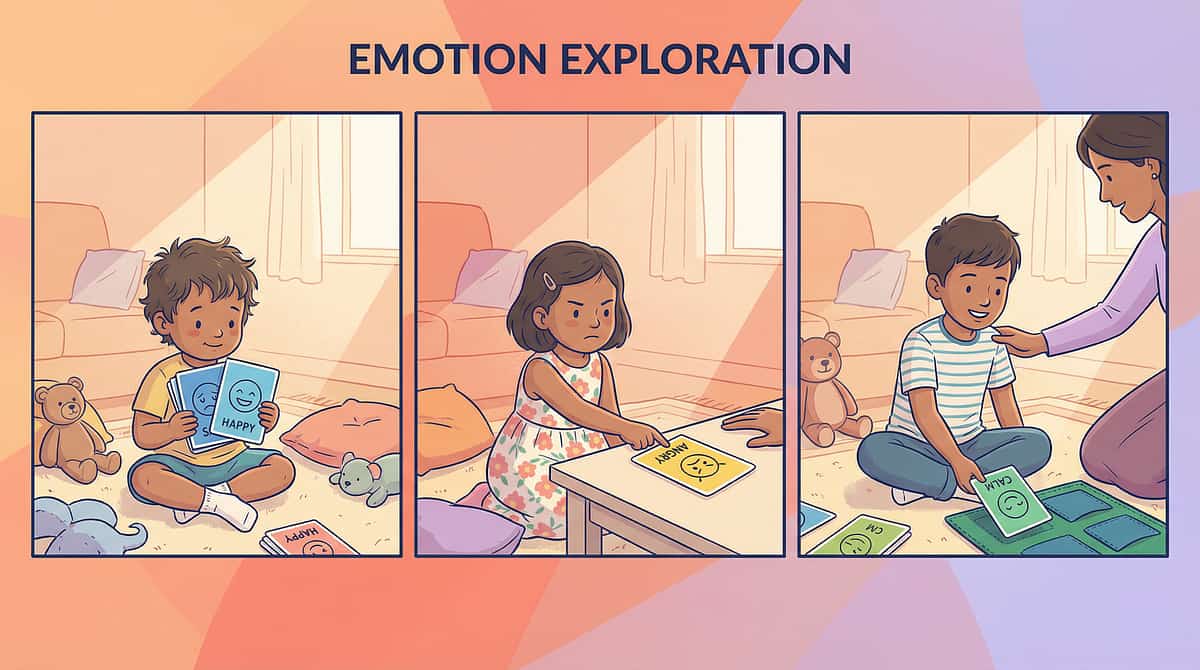
STEP 4 OF 6
Repeat & Vary — Building the Neural Pathway
Complete the 3-step connection sequence (Notice → Locate → Connect) 2-4 times per session using different emotions, body areas, or materials each time.
Variation 1: Switch the Emotion
Round 1: Check current body state. Round 2: "Remember when [recent event]? What did your body feel then?" Round 3: "What does your body feel when you're really happy?"
Variation 2: Switch the Material
Round 1: Body map coloring. Round 2: Vocabulary card matching. Round 3: Thermometer rating. Each approaches the same goal from a different angle.
Variation 3: Role Reversal
"Now YOU ask ME! Ask me where I feel things in MY body." Children who struggle with their own sensations often can identify a parent's — building the cognitive framework.
Variation 4: Story-Based
Read a short social story. Pause: "Maya's heart is racing and her hands are shaky. What emotion might she be feeling? Where in YOUR body do you feel that?"
When to Stop
- 🛑 Child's responses become rote or mechanical
- 🛑 Child starts looking away, fidgeting with non-activity items
- 🛑 Child says "I'm done" or "enough"
- 🛑 Quality of responses decreases
"3 good reps > 10 forced reps. The moment connection quality drops, move to reinforcement."
⏱️ Timing: 3-5 minutes total

STEP 5 OF 6
Reinforce & Celebrate — Your Child Just Did Something Extraordinary
Reinforcement Scripts — Say Within 3 Seconds of Success
For Body Sensation ID
"You noticed your body! You felt that [sensation] in your [body part]. That's amazing — your body is talking to you and you're LISTENING!"
For Emotion Connection
"You figured out that [sensation] means [emotion]! Your body gave you information and you understood it. That is SO important."
For Any Attempt
"You tried to check in with your body. That takes practice and you're getting better every time. I'm proud of you for trying."
Reinforcement Menu — Choose What Works for Your Child
- ⭐ Verbal praise — specific, not generic: "You identified that tight chest meant worried"
- ⭐ High-five, fist bump, or preferred physical celebration
- ⭐ Token/sticker on their body-feelings chart
- ⭐ 2-minute preferred activity as natural reward
- ⭐ "Tell [other parent/grandparent] what you discovered about your body today!"
"Celebrate the attempt, not just the success. A child who says 'I don't know but maybe my stomach?' is showing more awareness than one who perfectly recites a learned answer."

STEP 6 OF 6
The Cool-Down — Transitioning Back to Baseline
Transition Warning
"We have 2 more minutes with our body-feelings check, then we'll be all done." Give 2-minute and 1-minute warnings.
Cool-Down Activity (1-2 min)
End with a calming body scan with a POSITIVE focus: "Let's do one last check. Close your eyes if you want. Notice your body right now. Are your muscles relaxed or tight? Is your breathing slow or fast? Right now, your body feels [calm/settled/okay]. Remember what this feels like."
Material Put-Away Ritual
Let the child help: body map goes back in its folder, vocabulary cards go back in their box. Give closure and ownership.
Transition to Next Activity
"All done with our body-feelings check! Thank you for practicing with me. What would you like to do now?"
If Child Resists Ending: This is actually GOOD news — it means they enjoyed the activity. Offer: "We can do another quick check-in before bed tonight. But for now, let's save our energy for [next activity]."
Visual timer and transition supports are classified as evidence-based for autism (NCAEP, 2020).

📊 Capture the Data — Within 60 Seconds of Session End
Quick ratings are more useful than detailed narratives. Don't overthink it — capture while it's fresh.
Data Point 1: Body Sensation ID
Yes — identified and located a sensation | Partially — identified a general feeling but couldn't locate | No — could not identify any
Data Point 2: Emotion Connection
Yes — spontaneously or with minimal prompting | With Help — connected with adult guidance | No — no connection made
Data Point 3: Engagement Rating (1-5)
1 = Refused/withdrew | 2 = Tolerated passively | 3 = Participated with prompting | 4 = Participated actively | 5 = Initiated and led
📋 Tracking Format
Downloadable PDF: Emotion Body Awareness Tracking Sheet — 8-Week Template
GPT-OS® In-App Tracker: Log at pinnacleblooms.org/tracker
💡 Quick-Entry Principle
"60 seconds of data now saves hours of guessing later."

What If It Didn't Go As Planned? — 7 Common Challenges & Solutions
"My child says 'I don't know' to every question."
Why: This is the most common starting point — it's literally what the technique is designed to address. Solution: Reduce to binary choices: "Does your stomach feel fluttery or still?" Offer two sensation cards. Accept "I don't know" and model on yourself.
"My child repeats the same answer — 'happy' or 'fine.'"
Why: They've learned a socially expected response without checking their body. Solution: Skip emotion labels entirely. Focus ONLY on body sensations: "Is your stomach tight or loose? Are your hands fists or open?" Build body awareness FIRST.
"My child became upset during the body scan."
Why: Internal focus can be overwhelming when unfamiliar. Solution: Shorten to 10-15 seconds maximum. Focus on ONE body part (hands are least threatening). Use external cues first. Build tolerance over weeks.
"My child uses the thermometer randomly — 'Level 10!' for everything."
Why: They enjoy the tool but haven't connected it to body states. Solution: Anchor with BODY evidence: "Level 10 means your whole body is shaking. Is that happening? Maybe we're more like Level 3?"
"I can't tell if my child is genuinely connecting or just saying what I want."
Solution: Test in real moments — not structured sessions. During a natural emotional reaction: "I see your hands are in fists. What does that feel like?" Spontaneous connections > rehearsed ones.
"My child identifies emotions in stories but not in themselves."
Why: Recognizing others' patterns before your own is a typical developmental progression. Solution: Use as a bridge: "Maya's stomach felt fluttery when nervous. Does YOUR stomach ever feel like that? When?"
"We tried for a week and nothing changed."
Why: Interoceptive awareness requires 4-8 weeks for measurable changes. Solution: Look for MICRO-progress: Did engagement increase? Did the child tolerate body scan 10 seconds longer? Did they use ONE new sensation word? These are real progress markers.
"Session abandonment is not failure — it's data. A session that ended early because your child was overwhelmed teaches you about their current threshold. That information shapes tomorrow's session."
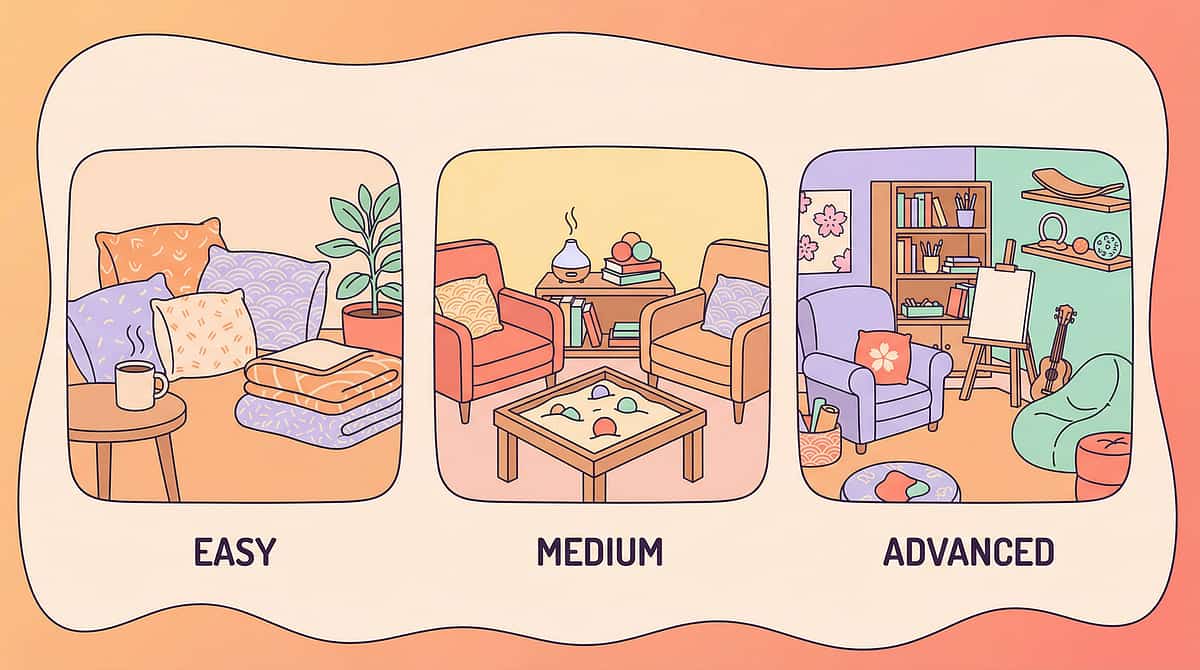
Adapt & Personalize — No Two Children Are Identical
🟢 EASIER (Bad Days / Early Weeks / Ages 4-6)
One material only. Binary choices. 3 min max. Parent models entirely. Body awareness only — no emotion labeling.
🟡 STANDARD (Weeks 2-4 / Ages 6-10)
Two materials per session. Open-ended questions with choices. 10-15 min. Child participates actively. Body → emotion connection practiced. Daily check-ins + 3x/week structured.
🔴 ADVANCED (Weeks 5-8 / Ages 10-14)
Multiple materials combined. Child leads check-ins. Intensity rating + location + strategy. Real-time coaching. Journaling. Cross-context practice.
Sensory Profile Adaptations
For Sensory Seekers: More physical, active body awareness activities. Heart rate checking after movement. Bold, vibrant markers on body maps. Thermometer rated through physical demonstrations.
For Sensory Avoiders: Minimize physical touch references. Visual-only materials first. Short exposures with immediate breaks. Child chooses which body area to focus on.
Age Adaptations
- 4-6 years: Picture-based. Point and match. Adult-led. 3-5 min. Simple: "big feelings," "little feelings."
- 7-10 years: Mixed verbal/visual. Child-led with support. 10-15 min. "butterflies," "tight," "heavy," "racing."
- 11-14 years: Verbal and written. Self-led with coaching. 15-20 min. "dread," "anticipation," "overwhelm."

ACT IV: THE PROGRESS ARC
Week 1-2: Building the Foundation — What to Expect
15%
Progress
Foundation building phase
Observable Indicators for This Phase
- ✅ Child tolerates sitting with body awareness materials for at least 2-3 minutes (up from refusing)
- ✅ Child responds to "What does your body feel like?" with something other than "I don't know"
- ✅ Child can point to at least ONE body area when asked where they feel something
- ✅ Child shows reduced resistance to check-in routines
What IS Progress
"If your child went from 'I don't know' to 'Um... maybe my stomach?' — that is REAL progress. The bridge between body and emotion is being built one tiny connection at a time."
What is NOT Progress Yet
- ❌ Spontaneous emotion-body connections (weeks 5-8)
- ❌ Using sensation vocabulary independently (weeks 3-4)
- ❌ Preventing meltdowns through body awareness (long-term)
- ❌ Perfect responses to check-in questions
"These first two weeks will test your patience. Every researcher and clinician will tell you: the first two weeks plant seeds. They rarely show flowers."

Week 3-4: Consolidation — The Neural Pathways Are Forming
40%
Progress
Consolidation phase
Consolidation Indicators
- ✅ Child begins to use sensation vocabulary unprompted ("My stomach feels weird")
- ✅ Child anticipates check-in routine — may even remind parent it's "body check time"
- ✅ Child can identify 2-3 body areas associated with emotions using the map
- ✅ Emotion thermometer ratings begin showing variation (not always "1" or "10")
- ✅ Child shows preference for certain materials — this indicates engagement
Behavioral Changes Signaling Neural Pathway Formation
- Child may start narrating physical experiences outside of sessions: "My legs feel jumpy"
- Reduced intensity or duration of some emotional outbursts (early signs)
- Child may ask body-related questions about others: "Why is your face red, Mama?"
When to Increase: If consolidation signs are present — add a second material to sessions, extend session length by 2-3 minutes, begin coaching during mild natural emotional moments.
Parent Milestone:"You've been doing this for 3-4 weeks. You know the materials, you know the script, you know your child's patterns. You are becoming your child's interoception therapist."

Week 5-8: Mastery Emerging — Your Child Is Reading Their Body
75%
Progress
Mastery emerging
🏆 Mastery Criteria — Specific, Observable, Measurable
- 🏆 Child spontaneously connects a body sensation to an emotion WITHOUT prompting
- 🏆 Child uses 5+ sensation vocabulary words accurately and in context
- 🏆 Child rates emotion intensity on thermometer with body evidence
- 🏆 Child notices body changes BEFORE reaching emotional overwhelm at least once
- 🏆 Child answers "How are you feeling?" with a body-based response
Generalization Indicators
At School
Using body-emotion language (teacher reports)
At Home
Telling family members how they feel using body words
In Daily Life
Noticing body sensations during daily activities, not just sessions
With Others
Asking about others' body-emotion connections ("Are you angry? Your hands are fists")
🏆 Mastery Unlocked: When 4 out of 5 mastery criteria are met across 3 consecutive sessions → "Emotion Body Awareness: Foundation Mastery Achieved." Move to next level or maintain with weekly sessions.

🎉 Celebrate This Win — You Did This
"5-8 weeks ago, your child couldn't tell you how they were feeling. They said 'fine' when they were breaking apart inside. Meltdowns seemed to come from nowhere because the warning signs — racing heart, tight chest, clenched fists — were invisible to them.
Now, your child is beginning to READ those signals. They can point to where emotions live in their body. They have WORDS for sensations that were once nameless and terrifying. They are building an early warning system that will serve them for the rest of their life.
You did this. You showed up, day after day, with patience and materials and love. Your child grew because of your commitment."
🎨 Family Celebration
Create a "My Body Tells Me" poster — have your child draw their body map with ALL the emotion-body connections they've discovered. Frame it. Put it where the family can see it.
📸 Document This Milestone
Write down the moment your child first spontaneously connected a body feeling to an emotion. What did they say? What was happening? This is a moment you'll want to remember.

🚩 Red Flags — When to Pause and Seek Professional Support
Chronic Physical Complaints
Child repeatedly reports stomachaches, headaches, chest pain, but medical evaluation finds no physical origin. These may be somatized emotions requiring psychological support.
Escalating Outbursts
Extreme emotional outbursts that are INCREASING despite 4+ weeks of practice. If meltdown frequency or intensity is getting worse, additional assessment is needed.
Complete Body Disconnection
Complete inability to identify ANY body sensation after 4 weeks of consistent practice warrants a comprehensive interoception evaluation by an occupational therapist.
Unattributed Depression/Anxiety
Child shows behavioral signs of mood disorder (withdrawal, sleep changes, appetite changes) but cannot articulate the emotional state driving these behaviors.
Self-Harm Without Awareness
Any self-injurious behavior, particularly if the child cannot explain or doesn't seem aware of the emotional trigger. IMMEDIATE professional consultation.
Escalation Pathway
"Trust your instincts. If something feels wrong, pause and ask. Seeking professional support is not failure — it's the smartest thing a parent can do."

The Progression Pathway — Where You Are and Where You're Going
Long-Term Developmental Goal: This technique feeds into: Emotional Self-Regulation → Social-Emotional Competence → Independent Self-Management → Life Readiness
Related Techniques in the Interoception & Emotional Awareness Domain

A-111: Hunger Signal Recognition
Difficulty: Intro | Key Material: Visual Schedule
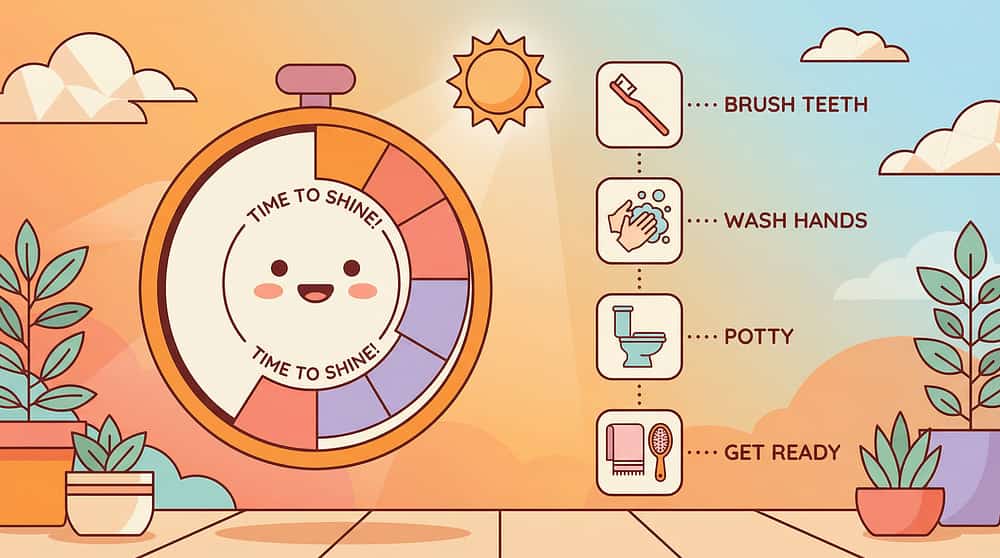
A-112: Bathroom Signal Recognition
Difficulty: Intro | Key Material: Visual Timer
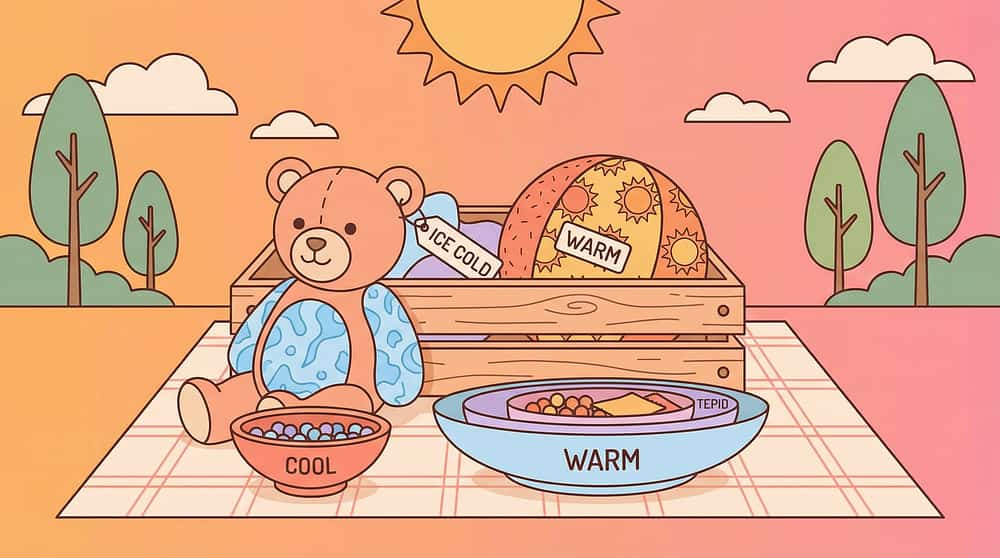
A-113: Temperature Sensation Awareness
Difficulty: Intro | Key Material: Sensory Kit
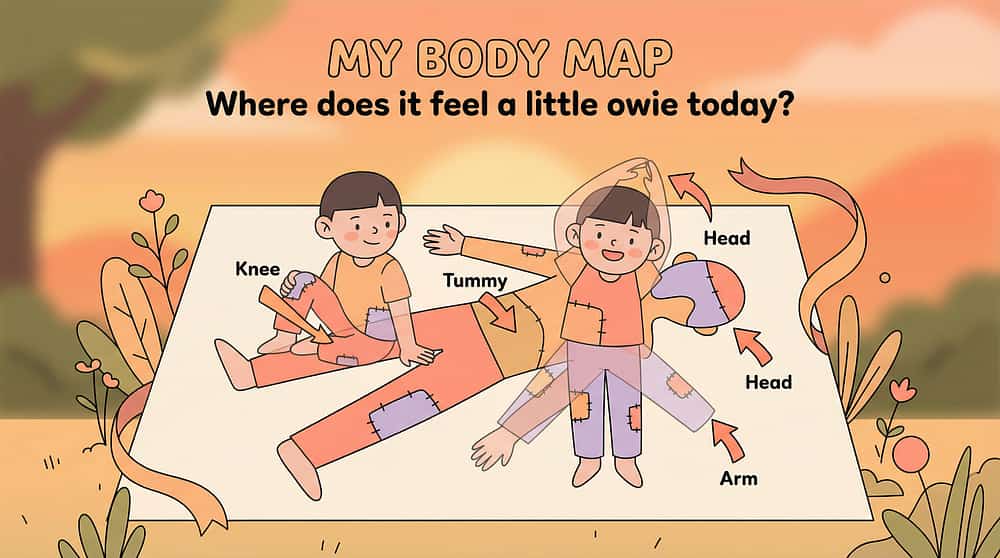
A-114: Pain Recognition
Difficulty: Core | Key Material: Body Map

A-116: Energy Level Awareness
Difficulty: Core | Key Material: Thermometer
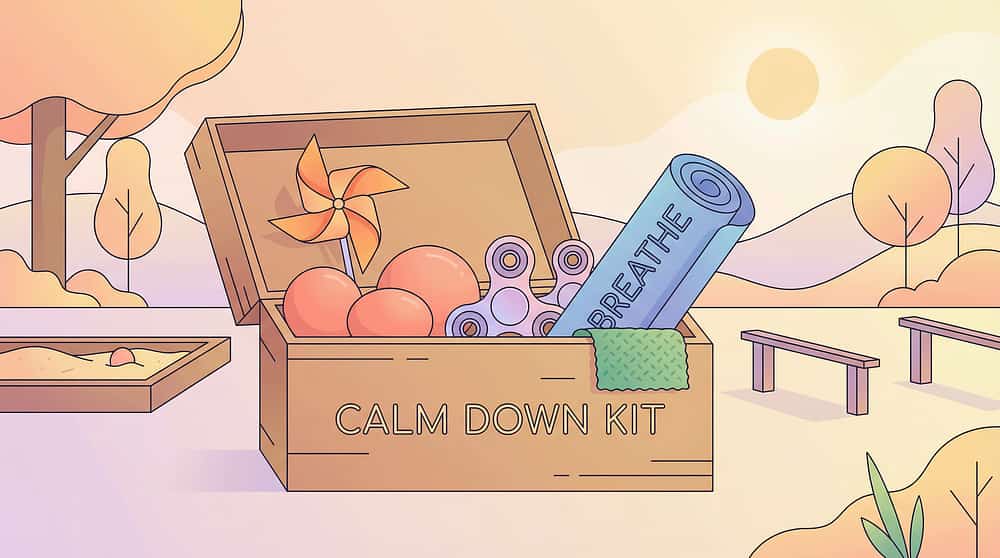
A-82: Emotional Regulation
Difficulty: Advanced | Key Material: Calm-Down Kit
Materials You Already Own: If you've purchased materials for Emotion Body Awareness, you already have what you need for A-114 (Body Map), A-116 (Thermometer), and A-82 (Calm-Down Kit + Social Stories).
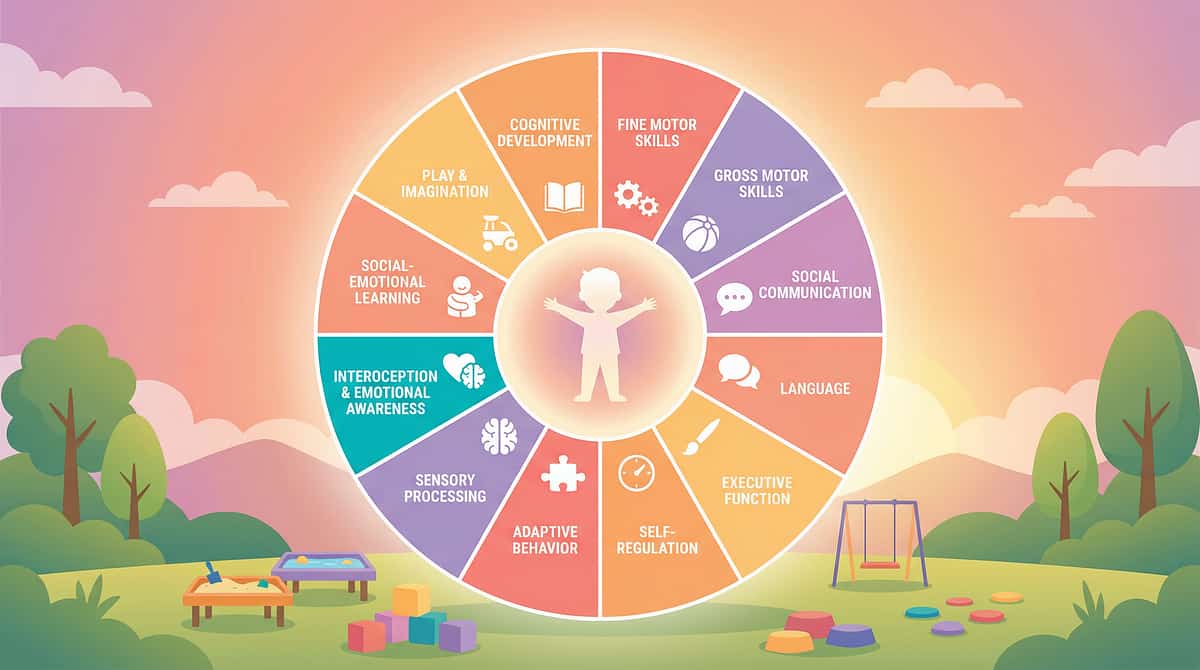
Your Child's Full Developmental Map — The Big Picture
Sensory Processing
Motor Skills
Communication
Social Skills
★ Interoception & Emotional Awareness
Cognitive Development
★ Interoception & Emotional Awareness — This technique (A-115) sits within Domain I, addressing the foundational ability to recognize emotions through body signals. This domain connects to Behavioral Regulation, Social Skills, and Communication — creating a web of developmental progress.
"This technique is one piece of a larger developmental plan. Emotion body awareness feeds directly into emotional regulation, social-emotional competence, communication skills, and eventually, independent self-management."
ACT V: THE COMMUNITY & ECOSYSTEM
Families Who've Been Here — Real Stories, Real Progress
Arjun's Story — Age 7
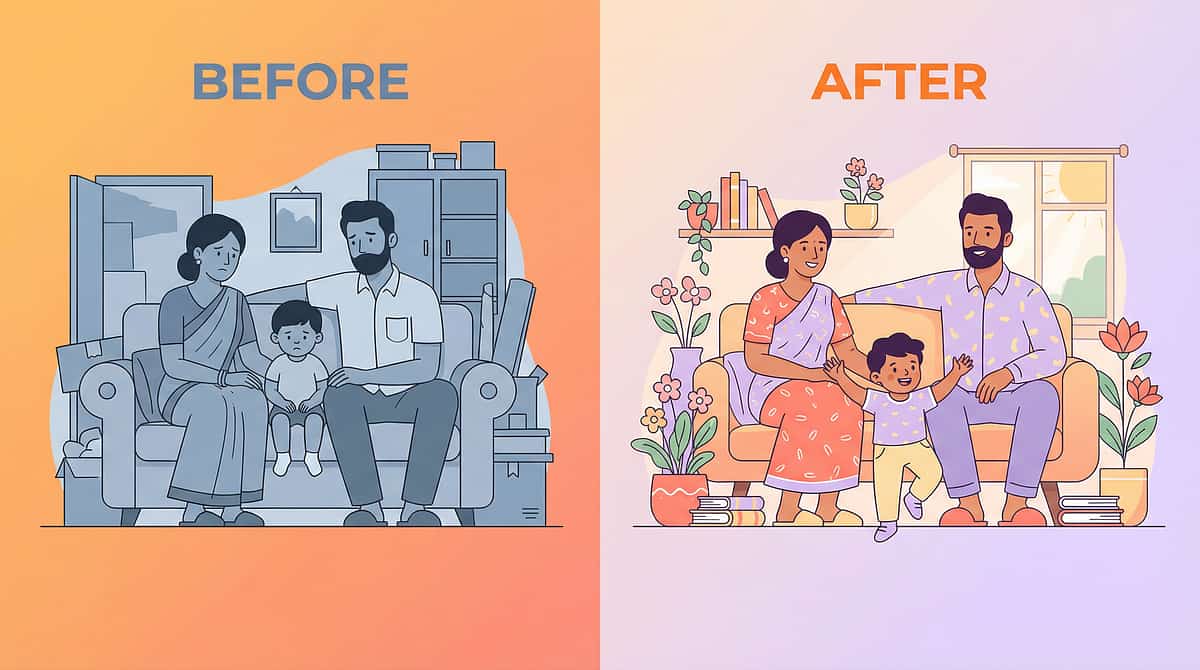
Before: 3-4 meltdowns daily that seemed to appear without warning. Only answers: "fine" or "I don't know." Parents exhausted and confused.
After (8 weeks): Uses body map daily. Told his mother: "My stomach feels tight — I think I'm worried about swimming class." Meltdowns reduced to 2-3 per week. Several prevented through early body warning recognition.
Meera's Story — Age 10
Before: Severe alexithymia. Could identify emotions in others but zero awareness of her own. Constant physical symptoms with no medical cause found.
After (12 weeks): Through systematic body scan practice, began connecting physical symptoms to emotional states. Stomachaches correlated with school anxiety. Targeted support reduced both complaints and anxiety.
"She used to say 'fine' even when she was clearly upset. Now she tells me 'my stomach feels tight — I think I'm worried.' That's huge." — Parent, Pinnacle Network
Illustrative cases; names changed. Outcomes vary by child profile.

Connect With Other Parents — You Are Not Alone in This Journey
Interoception Parent WhatsApp Group
Connect with families working on the same challenge. Share tips, materials, DIY ideas, and celebrate wins together.
Pinnacle Parent Community Forum
Broader community for all developmental domains. Ask questions, share experiences, find local support.
Local Pinnacle Parent Meetups
Monthly meetups at your nearest Pinnacle center. Meet families face-to-face. Children's activities included.
Peer Mentoring
Connect with a parent who has completed this technique journey. Real guidance from someone who's been where you are.
"Your experience helps others. Consider sharing your journey — the parent who starts tomorrow needs to hear from the parent who started 8 weeks ago."
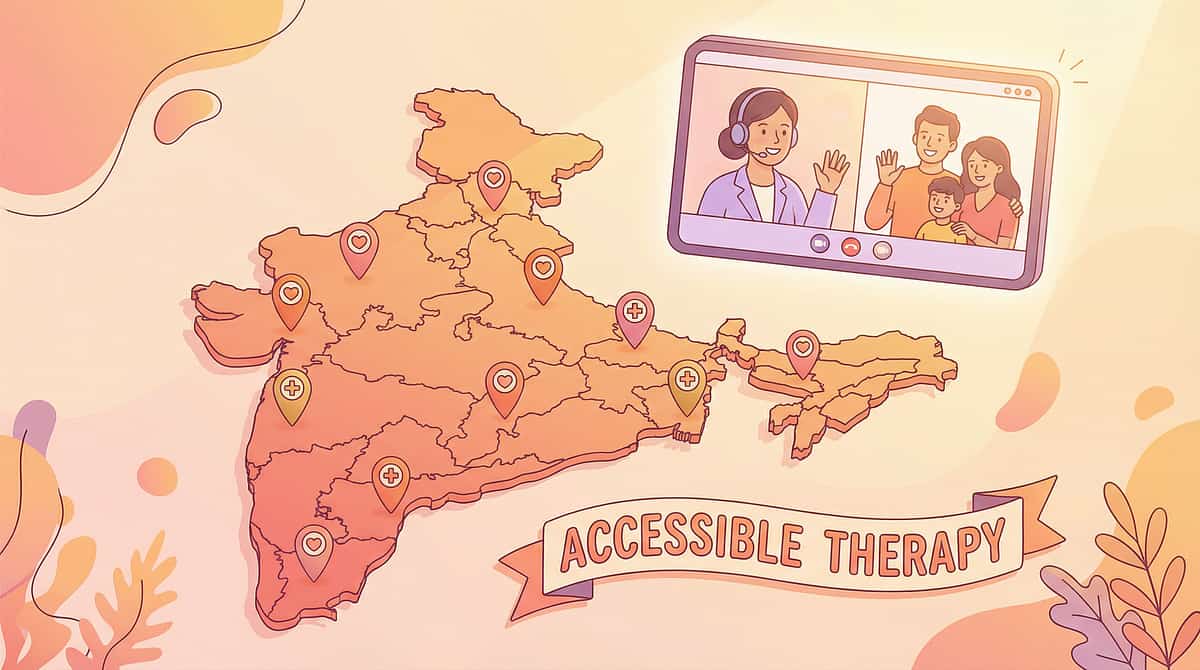
Your Professional Support Team — Home + Clinic = Maximum Impact
Therapist Matching
- Primary: Occupational Therapist (Interoception Specialist)
- Supporting: Psychologist (Emotional Development)
- Supporting: BCBA (Behavior Tracking)
- Supporting: SLP (Emotional Vocabulary)
Assessment Path
- AbilityScore® Assessment (baseline)
- Comprehensive Interoception Evaluation
- Emotional Awareness Assessment
- Alexithymia Screening (if indicated)
- Ongoing: Emotional Regulation Index via GPT-OS®
🗺️ Find Your Nearest Center
70+ centers across India | 1,000+ clinical professionals
Visit: pinnacleblooms.org/centers
📞 Teleconsultation — For Remote Families
Book a teleconsultation with a Pinnacle therapist specializing in interoception and emotional awareness.
Contact
📞 FREE National Autism Helpline: 9100 181 181 (24x7, 16+ languages)
🌐 pinnacleblooms.org
✉️care@pinnacleblooms.org
🌐 pinnacleblooms.org
✉️care@pinnacleblooms.org
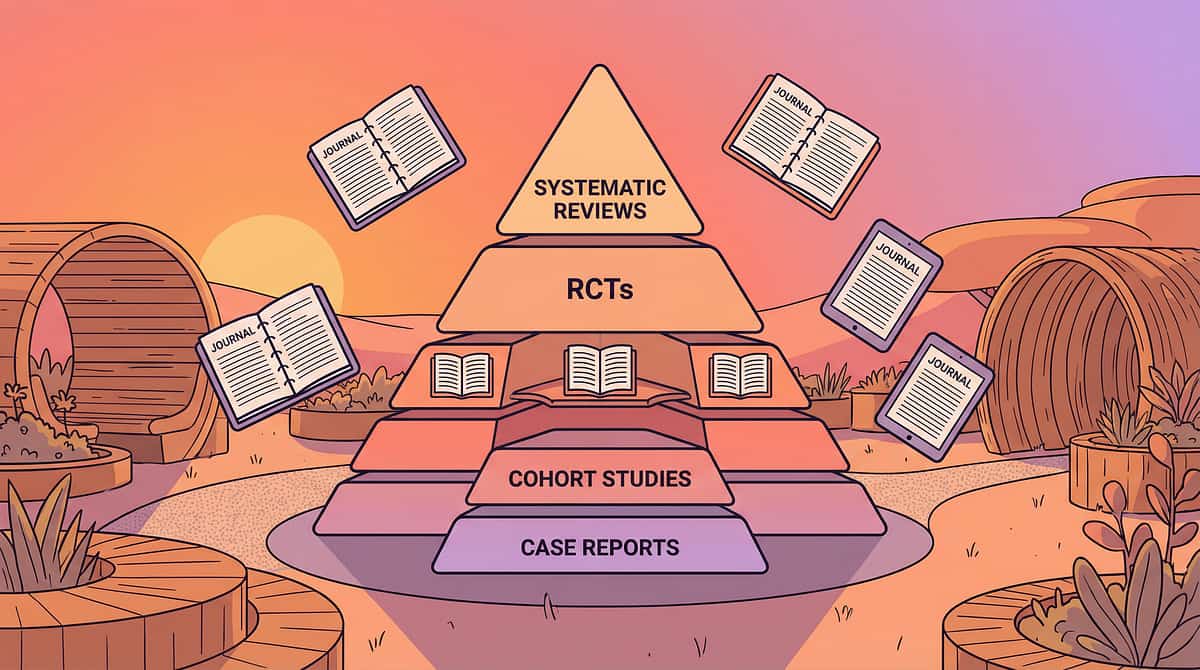
The Research Library — For the Curious Parent
Every recommendation on this page is grounded in peer-reviewed science. Here are the key studies supporting emotion body awareness interventions, organized from highest to standard evidence levels.
📚 PRISMA Systematic Review (2024)
"16 articles from 2013-2023 confirm sensory integration intervention meets criteria for evidence-based practice in ASD." PMC11506176
📚 Meta-Analysis: SI Therapy (2024)
"Across 24 studies, SI therapy effectively promoted social skills, adaptive behavior, sensory processing, and motor skills." PMC10955541
📚 Kinnaird E, et al. (2019)
"Systematic review documenting ~50% alexithymia prevalence in autism — interoception training as primary intervention pathway."
📚 Garfinkel SN, et al. (2016)
"Discrepancies between dimensions of interoception in autism — different interoceptive channels are differentially affected."
📚 DuBois D, et al. (2016)
"Comprehensive review of interoception in ASD — establishing the theoretical basis for body-emotion connection interventions."
📚 Padmanabha et al. (Indian J Pediatr, 2019)
"Home-based sensory interventions demonstrate significant outcomes in Indian pediatric population." DOI: 10.1007/s12098-018-2747-4
📚 Kelly Mahler Interoception Research
"Body-emotion connection curriculum specifically developed for autism and developmental differences." kelly-mahler.com
📚 WHO Nurturing Care Framework (2018)
"Comprehensive framework for ECD with caregiver-mediated intervention as core principle." nurturing-care.org
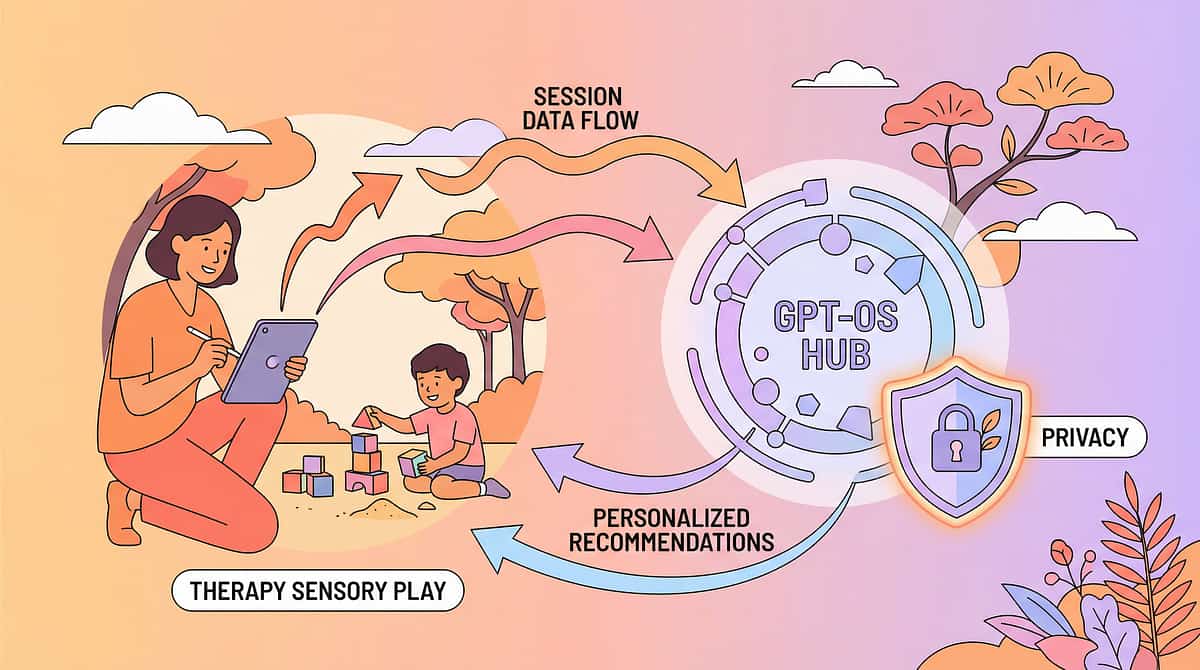
How GPT-OS® Uses Your Data — Transparency & Trust
What GPT-OS® Learns
- Your child's specific body-emotion connection patterns
- Which materials produce highest engagement
- Optimal session duration and frequency
- Progression speed benchmarked against 20M+ sessions
- Early identification of co-occurring challenges
🔒 Privacy & Data Protection
- All data encrypted in transit and at rest
- HIPAA-equivalent privacy standards
- Data never sold to third parties
- Parent maintains full control — view, export, or delete
- ISO/IEC 27001 certified
Population-Level Impact: Your data helps every child like yours. When aggregated and anonymized, insights from your sessions improve GPT-OS® recommendations for all families. You are contributing to the world's largest pediatric therapeutic dataset — 20M+ sessions and growing.

Watch the Reel — 9 Materials That Help With Emotion Body Awareness

🎬 Reel A-115
Sensory Solutions Ep. 115
Reel Details
- Domain: Interoception & Emotional Awareness
- Duration: ~75 seconds
- Language: English (Hindi, Telugu subtitles available)
This reel features a Pinnacle Blooms Occupational Therapist specializing in interoception and emotional awareness. Watch as they demonstrate each of the 9 materials and explain how they build the body-emotion bridge.
Connection to This Page: The reel introduces the materials in 75 seconds. This page teaches you how to use each one — with full protocols, DIY options, troubleshooting, and 8-week progress tracking.
Video modeling is classified as evidence-based practice for autism (NCAEP, 2020).

Share This With Your Family — Consistency Across Caregivers Multiplies Impact
📋 1-Page Family Guide (PDF)
Everything a family member needs on one page: what the technique is, the 6 steps, key materials, and how to do a basic check-in. Designed for grandparents, aunts/uncles, babysitters, and school teachers.
💬 Explain to Grandparents
"[Child's name] is learning to recognize emotions through body feelings. When you notice they're upset, try asking: 'What does your body feel like right now? Is your stomach fluttery? Is your chest tight?' Then help name the emotion: 'Tight chest sometimes means worried. Does that fit?' That's it — you're helping build a lifelong skill."
📝 Teacher Communication Template
"Dear [Teacher], [Child] is working on emotion body awareness skills. It would be helpful if you could: (1) Ask 'What does your body feel like?' instead of 'What's wrong?' (2) Accept body-sensation answers (3) Validate: 'Thank you for telling me what your body feels.' This supports their occupational therapy goals."
ACT VI: THE CLOSE & LOOP
Frequently Asked Questions — Emotion Body Awareness
How long until my child can tell me how they're feeling?
Most children show initial body awareness improvements in 2-4 weeks and begin making spontaneous body-emotion connections by weeks 5-8. Full emotional vocabulary and independent use typically develops over 3-6 months of consistent practice. Every child's timeline is unique.
My child is non-verbal. Can they still benefit?
Absolutely. Non-verbal children can use pointing, picture cards, and body maps to indicate body sensations and emotion connections without words. The body awareness component doesn't require verbal language — it requires internal attention supported through visual tools.
Is this the same as teaching emotions? My child already knows "happy, sad, angry."
Knowing emotion WORDS is different from feeling emotions IN the body. Many children can label emotion faces on flashcards but cannot identify when THEIR body is experiencing that emotion. This technique bridges that gap.
What if my child has alexithymia?
This technique directly addresses the core feature of alexithymia: the disconnect between physical experience and emotional labeling. Research shows ~50% of autistic individuals experience alexithymia, and explicit body-emotion connection training is the primary intervention pathway.
Can I do this alongside current therapy?
Yes. This technique complements — not replaces — clinical therapy. Share your home practice data with your child's OT, BCBA, or SLP so they can coordinate.
My child's meltdowns are physical. Will body awareness help?
Physical meltdowns often occur because the child doesn't recognize emotional escalation BEFORE crisis. By teaching early body warning signs, they gain a window to use calming strategies before the explosion. This is the long-term goal — requiring foundation building first.
What age is too late to start?
There is no "too late." The brain maintains neuroplasticity throughout life. While the 4-8 year window is optimal, adolescents and even adults benefit from explicit interoception training. Start now, wherever your child is.
Where can I get additional support?
Call the FREE National Autism Helpline: 9100 181 181 (24x7, 16+ languages). Book an OT assessment at your nearest center: pinnacleblooms.org/centers. Or ask GPT-OS®: pinnacleblooms.org/gpt-os

Your Next Step — Start Today
You've read the science, learned the protocol, and seen the progress other families have made. Now it's your turn. Every journey starts with one small step — and your child's journey to emotional self-awareness starts here.
✅ Validated by the Pinnacle Blooms Consortium
OT • SLP • ABA • SpEd • NeuroDev • CRO
GPT-OS® Governed | Evidence-Based | Parent-Proven
OT • SLP • ABA • SpEd • NeuroDev • CRO
GPT-OS® Governed | Evidence-Based | Parent-Proven
Preview of 9 materials that help with emotion body awareness Therapy Material
Below is a visual preview of 9 materials that help with emotion body awareness therapy material. The pages shown help educators, therapists, and caregivers understand the structure and content of the resource before use. Materials should be used under appropriate professional guidance.


Link copied!
The Pinnacle Promise
PINNACLE BLOOMS NETWORK®
Consortium of: Clinical Research | Speech-Language Pathology | Occupational Therapy | Applied Behavior Analysis | Special Education | NeuroDevelopmental Pediatrics
Powered by GPT-OS® | Built by Mothers. Engineered as a System.
Powered by GPT-OS® | Built by Mothers. Engineered as a System.
"From fear to mastery. One technique at a time."
Your child arrived at this page with emotions trapped in a body they couldn't read. You arrived scared, confused, exhausted. You leave empowered — with 9 materials, a 6-step protocol, 8 weeks of progress milestones, troubleshooting guides, and an entire consortium standing behind you.
This is one page. One technique. One step in a journey of 70,000+ evidence-based intervention techniques, each as detailed, each as researched, each as parent-focused as this one.
Medical Disclaimer: This content is educational. It does not replace assessment by a licensed occupational therapist, psychologist, or developmental specialist. Individual results may vary. Statistics represent aggregate outcomes across the Pinnacle Blooms Network. Emotional awareness difficulties exist on a spectrum. Some children may have co-occurring conditions requiring additional support. Consult qualified healthcare professionals before implementing strategies. Building emotional body awareness is a gradual process requiring patience and consistent practice.
© 2026 Pinnacle Blooms Network®, unit of Bharath Healthcare Laboratories Pvt. Ltd. All rights reserved.
CIN: U74999TG2016PTC113063 | DPIIT: DIPP8651 | MSME: TS20F0009606 | GSTIN: 36AAGCB9722P1Z2
CIN: U74999TG2016PTC113063 | DPIIT: DIPP8651 | MSME: TS20F0009606 | GSTIN: 36AAGCB9722P1Z2