
When Perfume Causes Real Pain
9 evidence-based materials to protect your child from fragrance sensitivity — validated by the Pinnacle Blooms Consortium of pediatric therapists, behavior analysts, and neurodevelopmental pediatricians.
Pinnacle Blooms Network®
GPT-OS® Therapeutic Intelligence
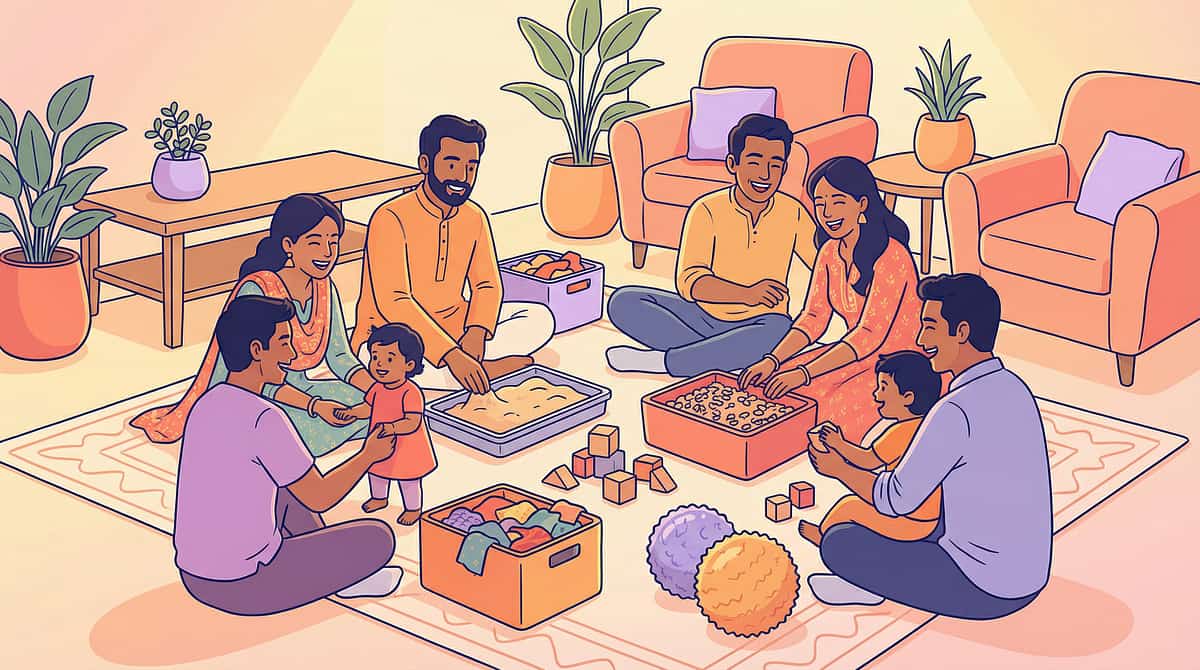
The Recognition Moment
"It's Sunday morning. Your sister has arrived for lunch — her signature perfume fills the hallway before she even reaches the door. Within seconds, your daughter's face crumples. She covers her nose, her eyes water, she's gagging. She runs to her room and slams the door. Your sister looks hurt. You're caught between two people you love, trying to explain something that sounds impossible to others: perfume is causing your child genuine physical pain."
You've cancelled restaurant visits because the hostess wears too much cologne. You've changed seats on airplanes. You've asked relatives — awkwardly, repeatedly — to come unscented. Some comply. Some think you're being dramatic. Your child's world keeps shrinking because the air itself feels hostile.
You are not overreacting. Your child's nervous system is reacting to fragrance compounds at an intensity level that causes genuine headaches, nausea, and distress. This is olfactory over-responsivity to artificial scents — a documented neurological response, not a behavior problem, not pickiness, not drama.
These 9 materials, validated by the Pinnacle Blooms Consortium of pediatric therapists, occupational therapists, behavior analysts, and neurodevelopmental pediatricians, will help you protect your child while keeping their world open.
You Are Not Alone — The Numbers
80%+
Sensory Processing Challenges
Children with autism who experience sensory processing difficulties, with olfactory sensitivity among the most socially disruptive forms
1 in 3
Adults Affected
Adults report adverse health effects from fragranced products — children's developing nervous systems are even more vulnerable
30.5%
Fragrance Sensitivity
Prevalence in the general U.S. population, with significantly higher rates in neurodivergent populations
You are among millions of families worldwide navigating fragrance sensitivity. The perfume industry generates $50+ billion annually — meaning your child's triggers are literally everywhere. This is not rare. This is not unusual. This is one of the most common yet most misunderstood sensory challenges affecting children with autism and sensory processing differences.
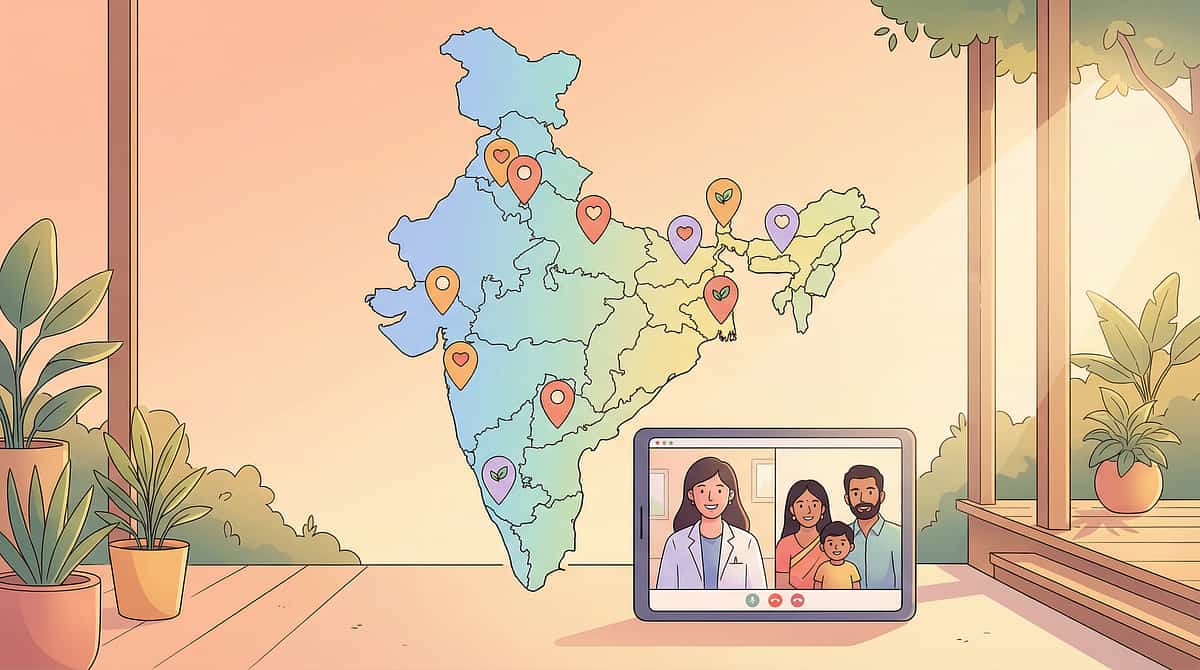
India-Specific Context: With over 1.8 million children receiving autism diagnosis support across India and fragrance deeply embedded in cultural practices — agarbatti, attars, scented religious offerings — the challenge for Indian families is particularly complex. Pinnacle Blooms Network serves families from 70+ countries navigating exactly this challenge.
Research: PRISMA Systematic Review (2024) PMC11506176 | Caress SM & Steinemann AC (2009) | Steinemann A (2016) | Meta-analysis: World J Clin Cases (2024) PMC10955541
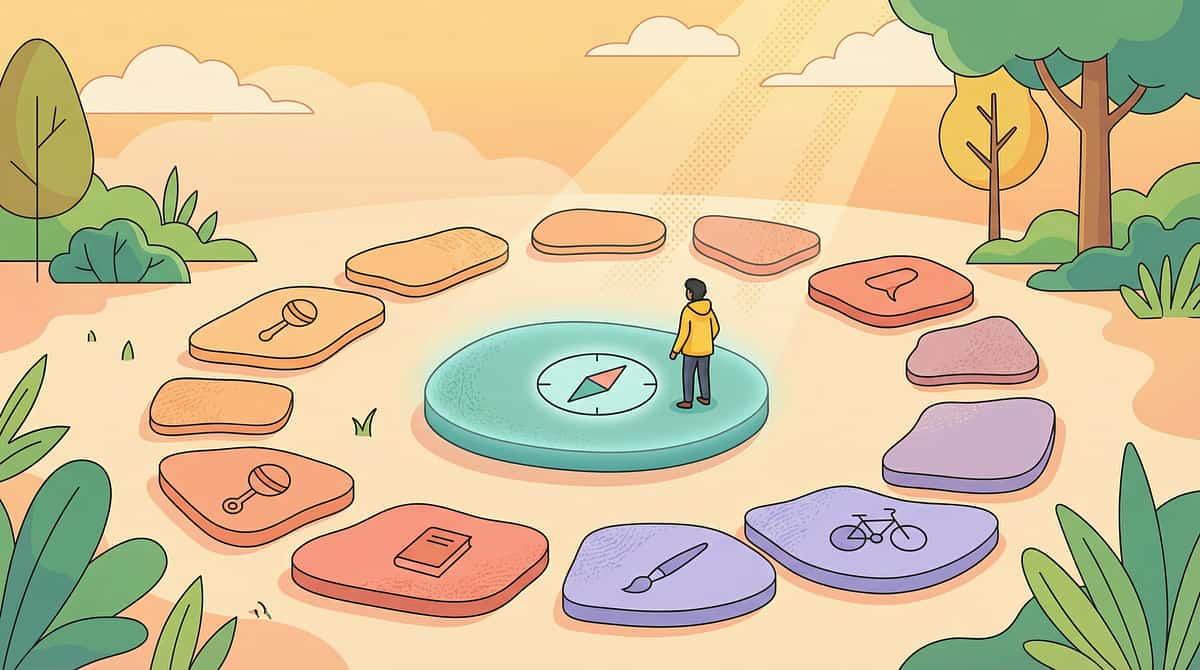
What's Happening in Your Child's Brain
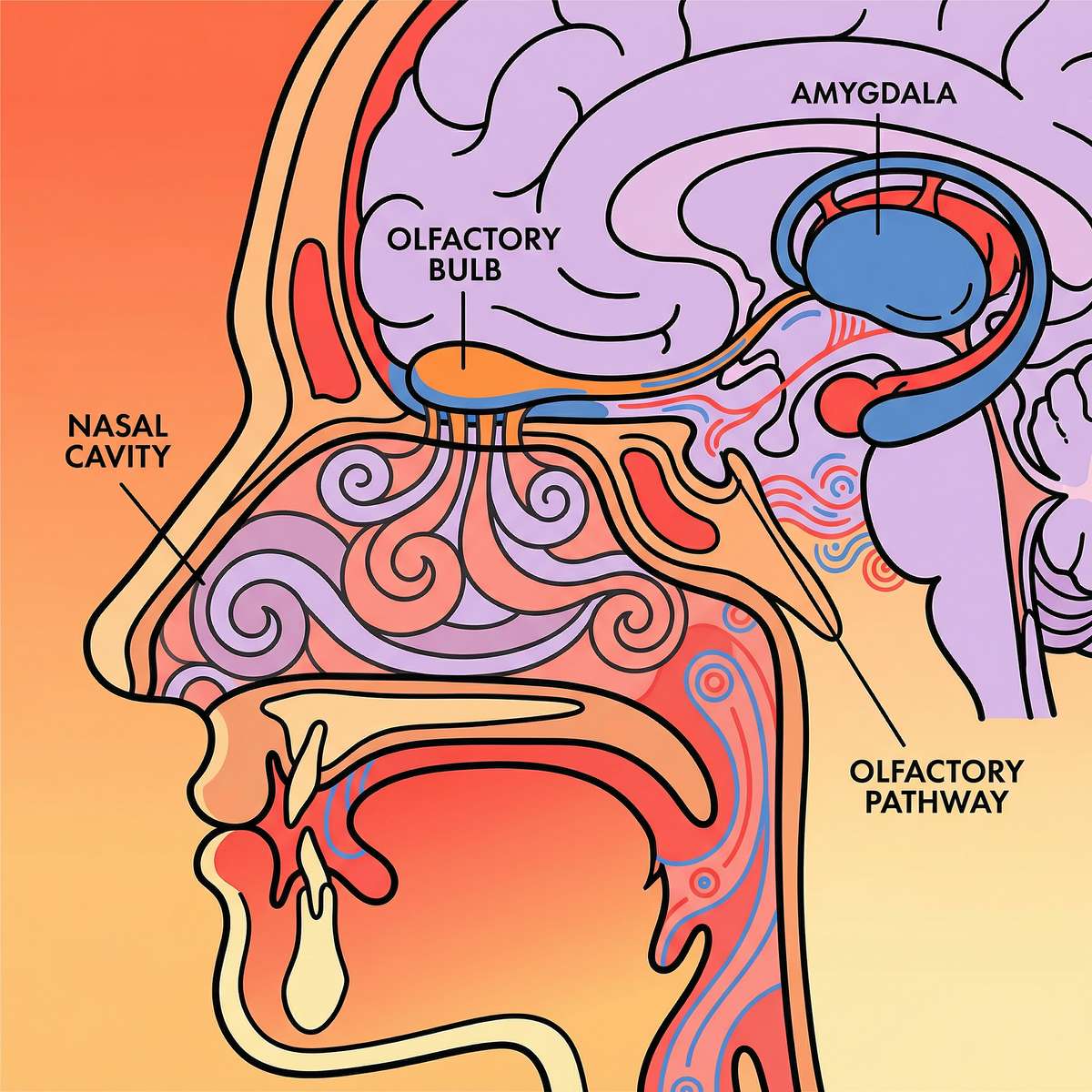
The Olfactory Highway
Smell is the only sense that bypasses the thalamus (the brain's relay station) and sends signals directly to the amygdala — the brain's threat detection center. This means fragrance triggers can produce instant, intense emotional and physical responses faster than any other sensory input.
The Amplification Problem
In olfactory over-responsivity, your child's olfactory receptors detect fragrance compounds at far lower concentrations than typical. Their brain then amplifies these signals, treating a moderate scent as a chemical alarm. The amygdala activates the fight-or-flight response — hence the gagging, headaches, nausea, and meltdowns.

The Autonomic Cascade & Cross-Modal Sensitization
Autonomic Cascade
Fragrance triggers the autonomic nervous system — increased heart rate, nausea (vagus nerve), headache (vasodilation), breathing difficulty (bronchial reactivity), and cognitive fog (cortisol release). These are real physical symptoms.
Cross-Modal Sensitization
Repeated aversive fragrance exposures can sensitize the entire sensory system, making the child more reactive over time — not less. This is why "exposure therapy" to perfume is inappropriate and potentially harmful.
Key Takeaway: This is a wiring difference combined with possible chemical sensitivity — not a behavior choice. Your child cannot "get used to it" through forced exposure. Protection, accommodation, and gradual management are the evidence-based approaches.
Research: Frontiers in Integrative Neuroscience (2020) DOI: 10.3389/fnint.2020.556660 | Dunn W (1997): Sensory over-responsivity framework
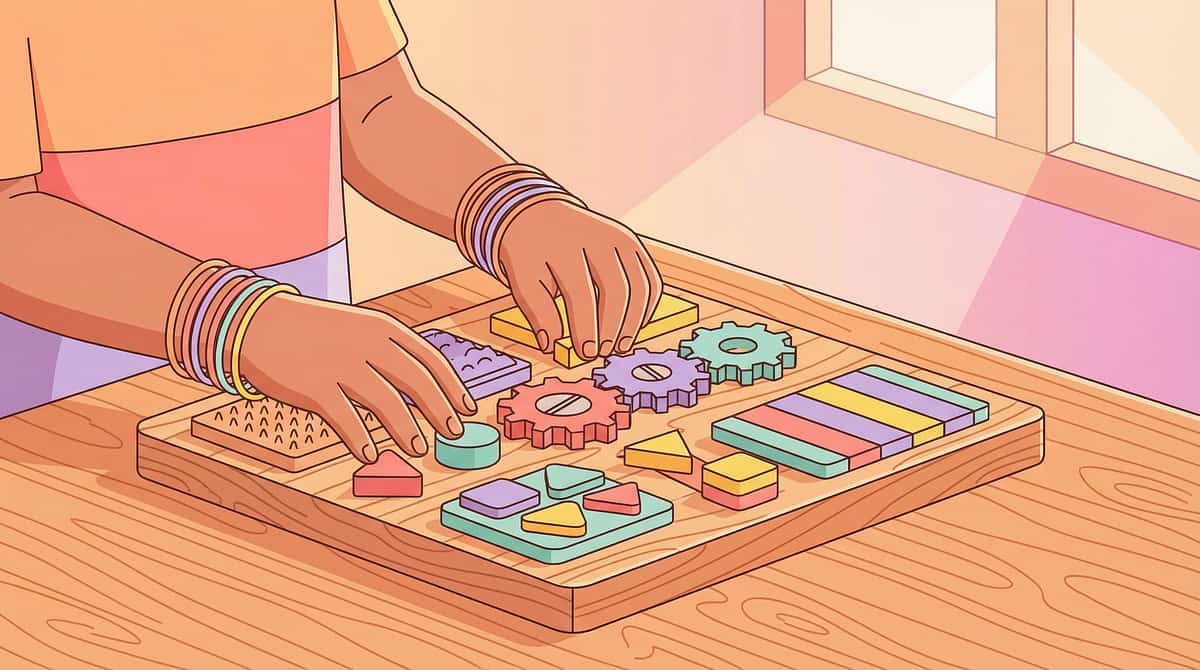
Where Perfume Sensitivity Sits in Development
0–12 Months
Olfactory system fully functional at birth. Early fragrance avoidance may appear as crying or turning away from scented caregivers.
1–3 Years
Sensory preferences and aversions become more defined. Fragrance sensitivity first noticed when child begins verbal protest or physical avoidance.
3–6 Years ⚠️
PRIMARY CHALLENGE ZONE. Perfume sensitivity becomes most disruptive as the child enters school and social settings. Birthday parties and gatherings become battlegrounds.
6–9 Years
With appropriate protection strategies, many children develop effective self-management. Without intervention, avoidance patterns can become entrenched.
9–12 Years
Pre-adolescent social pressure intensifies. Peer use of body sprays and perfumes creates new challenges. Self-advocacy becomes critical.
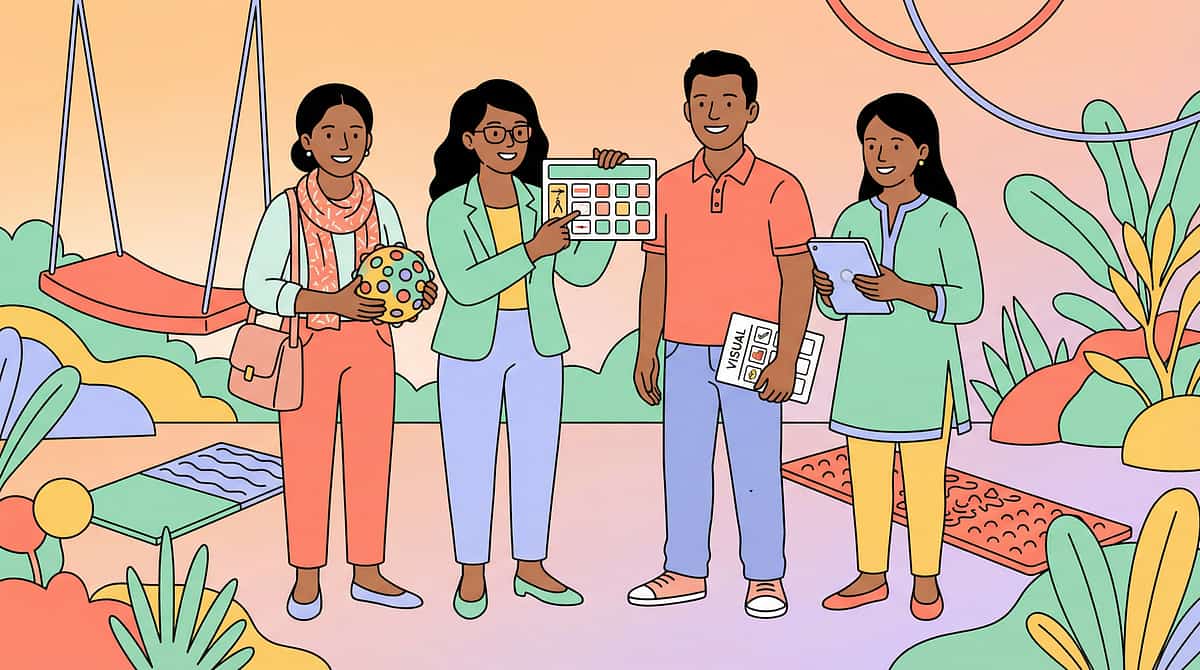
Comorbidity Awareness & Developmental Position
Co-Occurring Sensitivities
Frequently co-occurs with other sensory sensitivities — auditory, tactile, and visual processing differences often present alongside olfactory over-responsivity.
Migraine Vulnerability
Often presents alongside migraine vulnerability, where fragrance serves as a potent trigger for headache episodes in susceptible children.
Respiratory Sensitivities
May co-exist with asthma triggers and respiratory sensitivities that require additional medical evaluation and management.
Chemical Sensitivity (MCS)
Can overlap with Multiple Chemical Sensitivity — requiring comprehensive medical evaluation for complex cases that go beyond sensory processing.
Your child is here. These 9 materials help you meet them where they are and move forward — protecting their participation in life while respecting their neurological reality.
Research: WHO CCD Package (2023) | UNICEF MICS indicators | PMC9978394
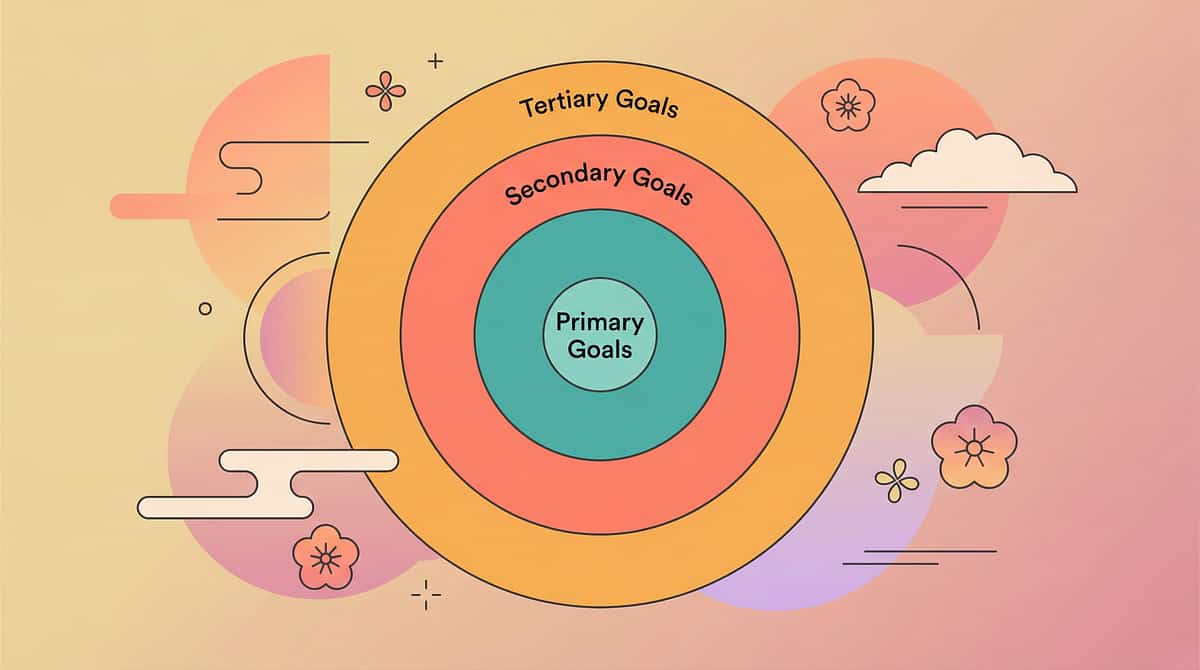
The Evidence Behind Fragrance Protection Strategies
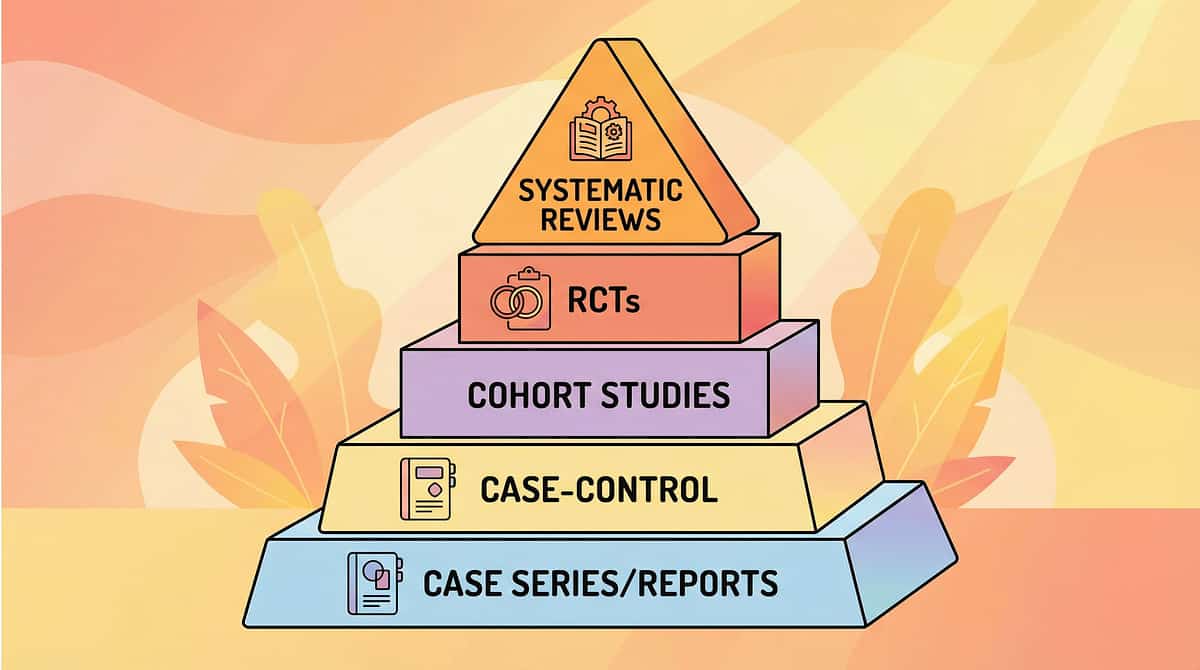
Evidence Grade
Level II–III
Clinical Practice Consensus + Multiple Observational Studies + Prevalence Research
12+ supporting studies across olfactory sensitivity, chemical sensitivity, sensory accommodation, and environmental modification.
Key Finding
Fragrance sensitivity is a documented, measurable neurological response in sensory processing differences. Environmental accommodation and protection strategies — not forced exposure — are the consensus-recommended approach across occupational therapy, allergy/immunology, and environmental medicine.
Supporting Evidence
- PRISMA Systematic Review (2024): 16 articles confirming sensory integration intervention as evidence-based for ASD | PMC11506176
- Steinemann A (2016): Fragranced consumer products research documenting prevalence and symptom patterns
- Padmanabha et al., Indian J Pediatr (2019): Home-based sensory intervention outcomes
- Meta-analysis (2024): Sensory integration therapy effectiveness | PMC10955541
Confidence Statement: Clinically validated. Home-applicable. Parent-proven. Fragrance-free accommodations are increasingly recognized under disability frameworks internationally.
ACT II
The Knowledge Transfer
Now that you understand why your child's brain reacts so intensely to fragrance, let's explore what this technique is, who uses it, what it targets, and exactly which materials you need.
Perfume Sensitivity Protection Protocol — What It Is
Technique A-118
The Clean Air Shield
Formal Name
Environmental Fragrance Accommodation & Olfactory Protection Protocol
This protocol is a comprehensive, multi-layered approach to managing perfume and fragrance sensitivity in children with olfactory over-responsivity. It combines personal protection devices (air filtration, masks, nasal barriers), environmental modification (fragrance-free products, air purifiers), social advocacy (communication tools, accommodation requests), coping strategies (neutralizing scents, exit planning), and recovery support — creating a complete system that allows your child to participate in family life, school, and community activities while managing their sensitivity.
This is not about avoiding life — it's about equipping your child to live fully.
Domain
A — Sensory Processing | Olfactory Over-Responsivity
Age Range
3–12 years
Setting
Home, School & Community
Frequency
Daily (environmental) + as-needed (exposure protection)
Who Uses This Technique
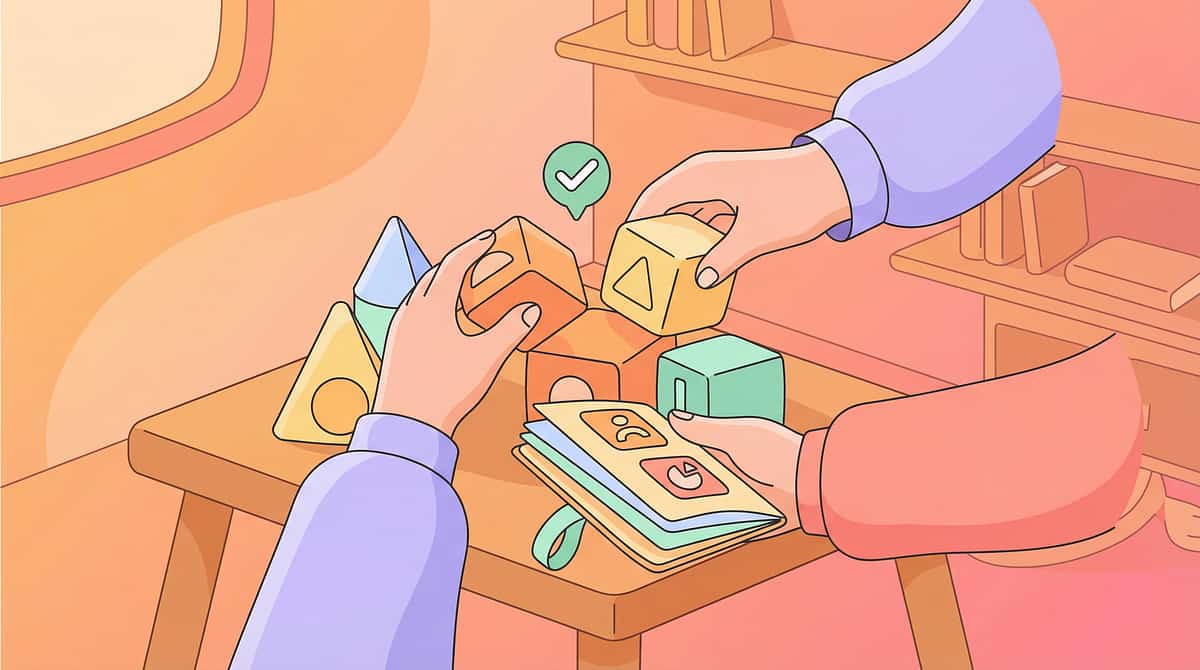
Occupational Therapist (OT) — Primary Lead
Leads sensory processing evaluation, environmental modification planning, and accommodation strategy development. The OT assesses your child's specific olfactory sensitivity profile and designs individualized protection protocols tailored to their unique needs.
Board Certified Behavior Analyst (BCBA)
Addresses behavioral responses to fragrance exposure — meltdowns, avoidance patterns, and anxiety behaviors. Develops functional communication strategies for the child to self-advocate and signal distress appropriately. Designs reinforcement systems for protective strategy use.
Speech-Language Pathologist (SLP)
Supports verbal and non-verbal communication for self-advocacy around fragrance sensitivity. Teaches scripts for requesting accommodation and addresses any breathing or oral motor concerns related to fragrance avoidance behaviors.
Special Educator
Implements school-based accommodation plans. Coordinates classroom environment modification and supports educational continuity when fragrance exposure disrupts learning. Ensures academic participation isn't compromised.
NeuroDevelopmental Pediatrician
Evaluates underlying medical contributions — migraine, respiratory, immunological. Provides medical documentation for school accommodations and monitors for progressive sensitization or emerging chemical sensitivity.
Cross-Discipline Integration: This technique crosses therapy boundaries because the brain doesn't organize by therapy type. The Pinnacle GPT-OS® FusionModule™ coordinates all disciplines into one unified plan.
What Perfume Sensitivity Protection Targets
Observable Behavior Indicators
- Child can enter previously-avoided spaces using protection strategies
- Reduction in frequency and severity of fragrance-triggered meltdowns
- Child uses communication tools to request accommodation independently
- Recovery time after exposure events decreases measurably
- Family reports increased participation in social activities
Materials Guide
What You Need — The 9 Essential Materials
These 9 materials, mapped to the Pinnacle Blooms Canon categories and 687 Product Database, form your child's complete fragrance protection toolkit. Each material addresses a different layer of the protection protocol — from personal nasal barriers to environmental air purification to social advocacy tools.
Total Estimated Investment: ₹8,000–40,000 for comprehensive setup (can be built incrementally, starting with the most impactful items first).
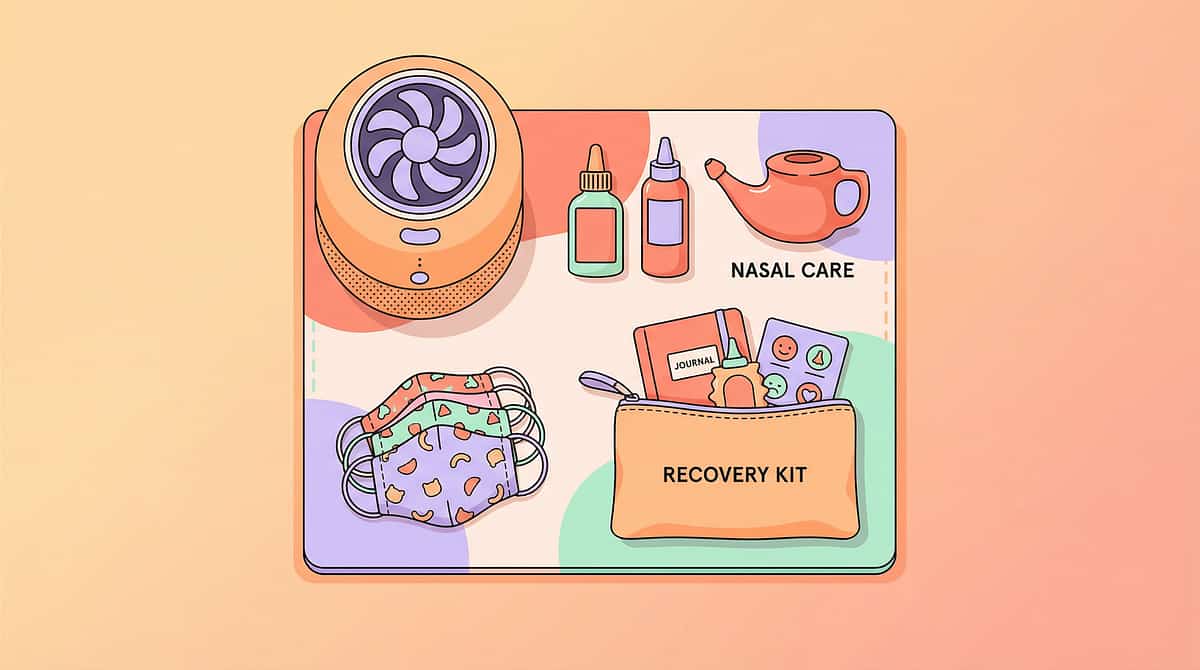
Material 1: Personal Air Purifier

Pinnacle Recommends ✅
Wearable Air Purifier Necklace / Portable HEPA Air Purifier
Canon Category: Aromatherapy & Scent Kit (Olfactory Sensory)
Price Range: ₹2,000–8,000
A personal air purifier creates a zone of cleaner air around your child's breathing space. Wearable necklace designs are discreet and child-friendly, generating negative ions that help neutralize airborne fragrance particles. Portable HEPA units can be placed on desks or carried in backpacks for classroom use.
Related Canon Product: PURE AROMA 300ml Essential Oil Diffuser & Humidifier (₹380) — for room-level purification alternative at home.
Material 2: Activated Charcoal Face Masks
Pinnacle Recommends ✅
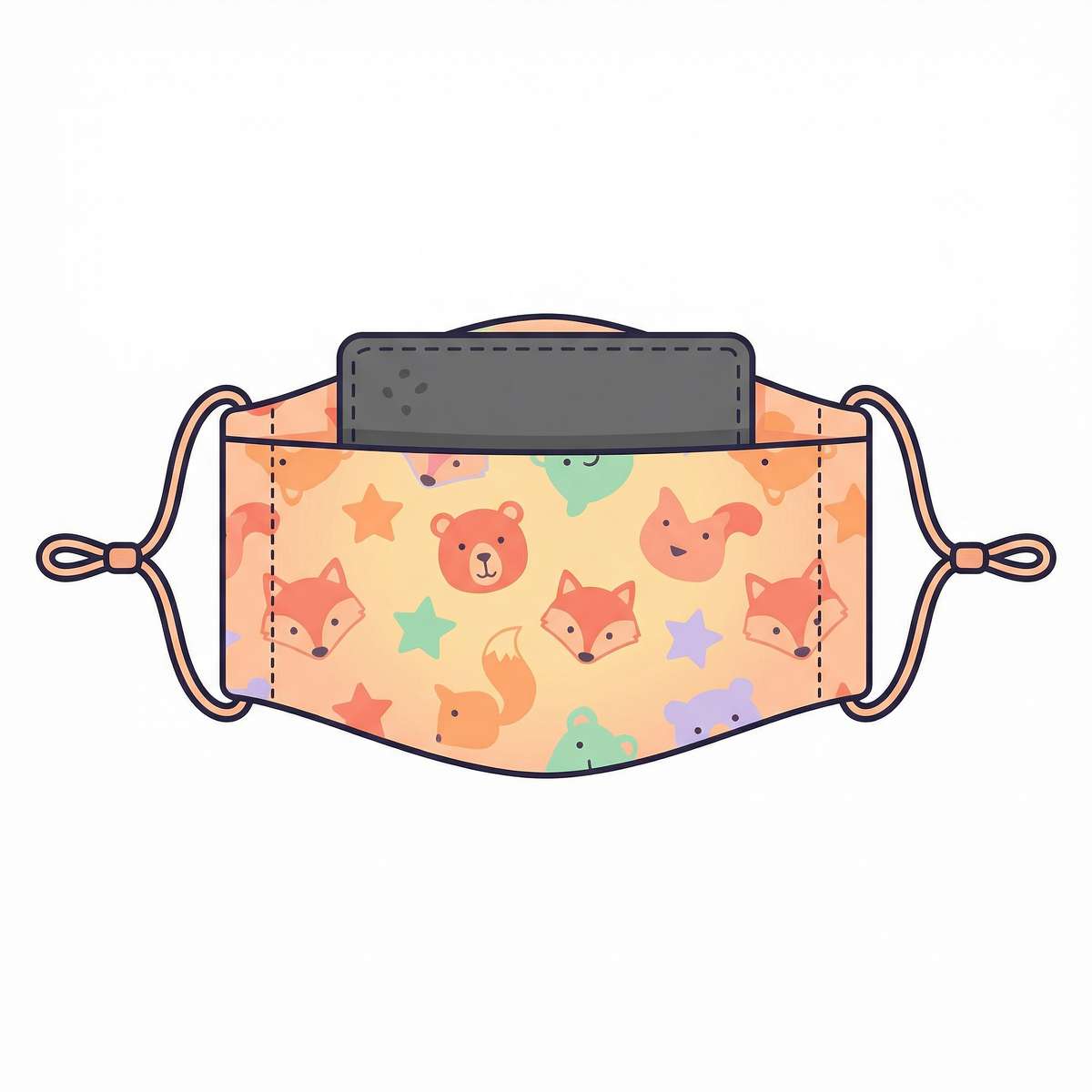
Child-Size Activated Charcoal Filter Masks
Canon Category: Calm-Down Kit & Self-Regulation Toolbox
Price Range: ₹300–1,500
Activated charcoal is one of the most effective materials for absorbing volatile organic compounds — the molecular basis of fragrance. Child-size masks with fun designs (animals, superheroes, patterns the child selects) transform a medical-feeling tool into something empowering. Look for masks with replaceable charcoal filter inserts for ongoing use.
Related Canon Product: Clenare Invisible Nasal Filter Body MEDIUM (₹251) — a discreet nose-level alternative for children who resist mask-wearing.

Material 3: Fragrance-Free Product Collection
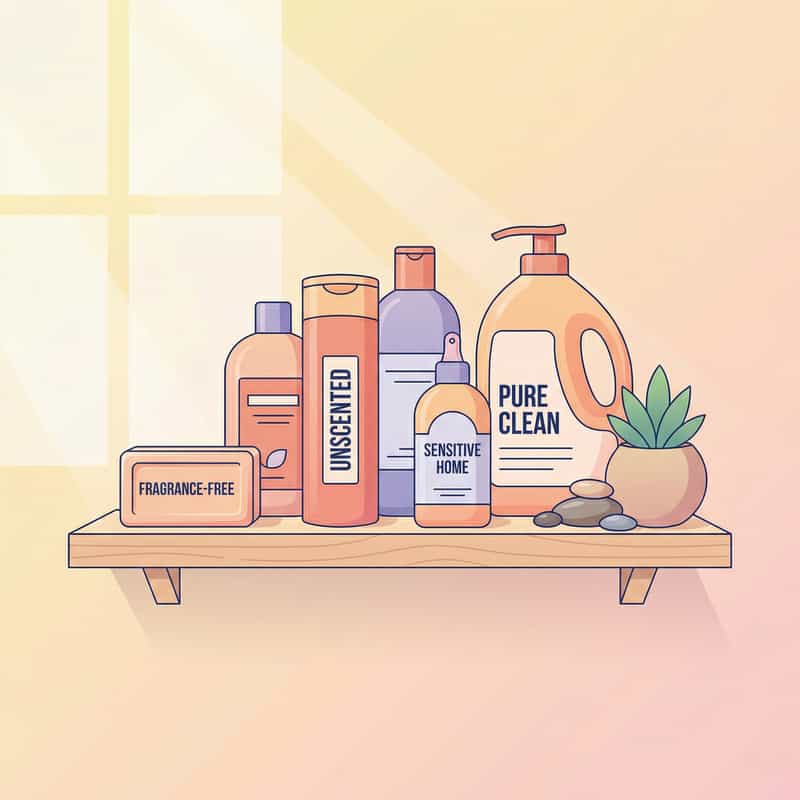
Complete Fragrance-Free Home Transition Kit
Canon Category: Self-Regulation Toolbox
Price Range: ₹200–800 per product
The most impactful single change you can make is transitioning your home to entirely fragrance-free products. This includes laundry detergent (the biggest hidden source), hand soap, shampoo, body wash, cleaning products, and personal care items. Read every label — the word "fragrance" or "parfum" in the ingredient list means added scent chemicals.
Start with the child's bedroom and bathroom, then expand to shared spaces. This transition alone can reduce your child's daily baseline fragrance exposure by 60–80%.
Related Canon Product: Anoya Unscented Natural Handmade Soap (₹89) — verified fragrance-free.
Material 4: Scent-Blocking Nasal Products
Pinnacle Recommends ✅
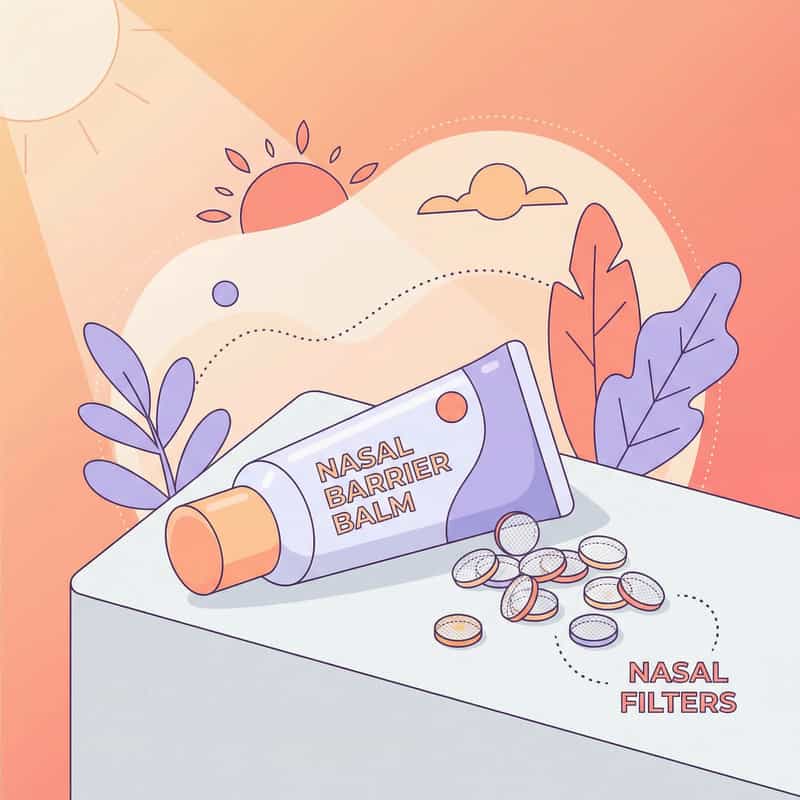
Nasal Barrier Balm + Invisible Nasal Filters
Canon Category: Aromatherapy & Scent Kit (Olfactory Sensory)
Price Range: ₹200–600
Nasal barrier balm creates a thin protective layer around and just inside the nostrils that traps fragrance particles before they reach olfactory receptors. This is often the first-line defense because it's invisible, non-intrusive, and even very young children accept it easily. Invisible nasal filters sit discreetly inside the nostrils and filter incoming air — suitable for children age 5+ (not for younger children due to choking risk).
Related Canon Products: Clenare Invisible Nasal Filter (₹251) | Herbistry Labs 3-in-1 Natural Essential Oil Nasal Inhaler (₹339)
Material 5: Room Air Purifier with Carbon Filter
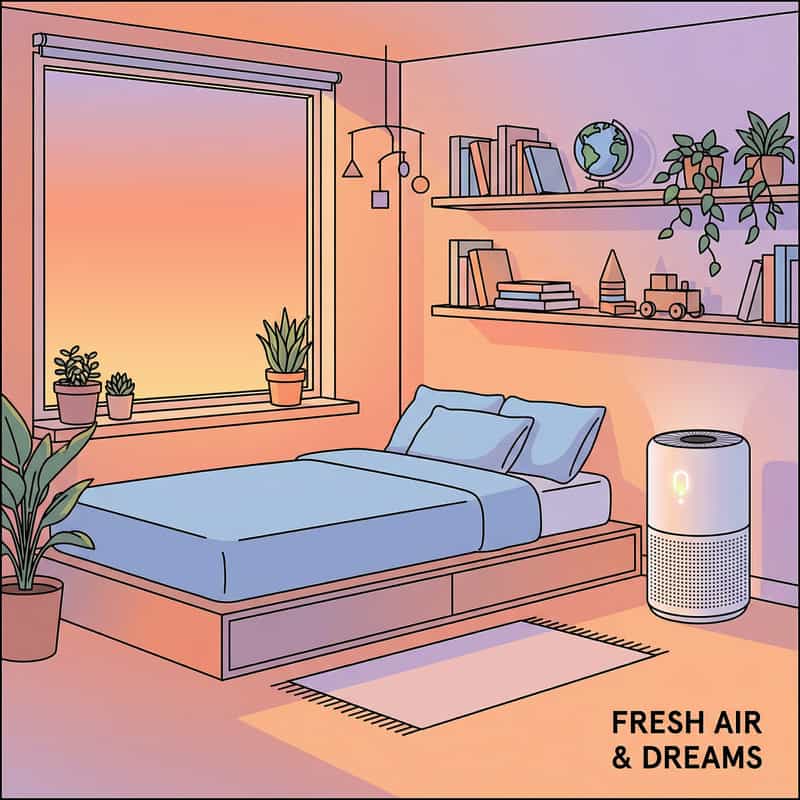
Pinnacle Recommends ✅
HEPA + Activated Carbon Room Air Purifier
Canon Category: Calm Space / Environmental Control
Price Range: ₹5,000–25,000
A room air purifier with both HEPA and activated carbon filters is the gold standard for fragrance-free bedroom environments. The HEPA filter captures airborne particles while the activated carbon filter absorbs volatile organic compounds (VOCs) — the molecular basis of perfume. Run 24/7 on the lowest setting in your child's bedroom to create a true fragrance-free sanctuary.
Important: HEPA-only purifiers are insufficient for fragrance removal. You need the carbon filter component specifically for scent absorption. Check that noise levels are tolerable if your child has co-occurring auditory sensitivity.
Material 6: Communication & Advocacy Cards
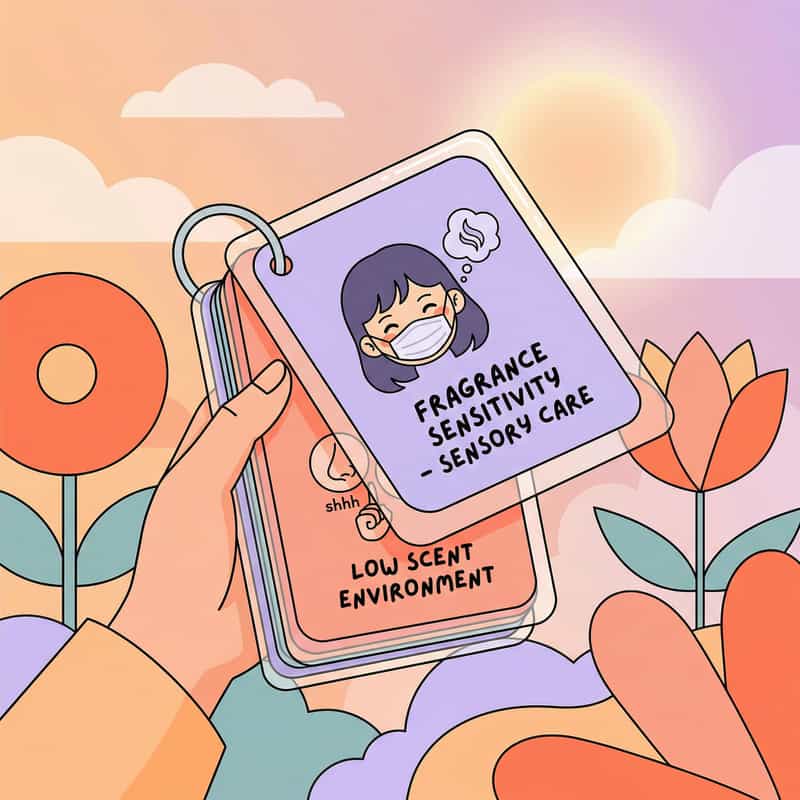
Printed Accommodation Request Cards + School Letter Templates
Canon Category: Social Stories & Narrative Supports / Visual Supports
Price Range: ₹100–500
Communication cards are your social bridge — they transform an awkward, emotional conversation into a calm, informative exchange. Carry 3–4 cards in your wallet for unexpected encounters: "My child has perfume sensitivity that causes headaches and nausea. Would you please avoid wearing fragrance when visiting? Thank you for understanding." School letter templates provide formal documentation for accommodation requests.
These cards remove the emotional charge from the conversation, making it easier for relatives, teachers, and community members to understand and comply.
Related Canon Products: Emotion Cards & Feelings Faces | Choice Boards & Visual Options
Material 7: Neutralizing Scent Inhaler
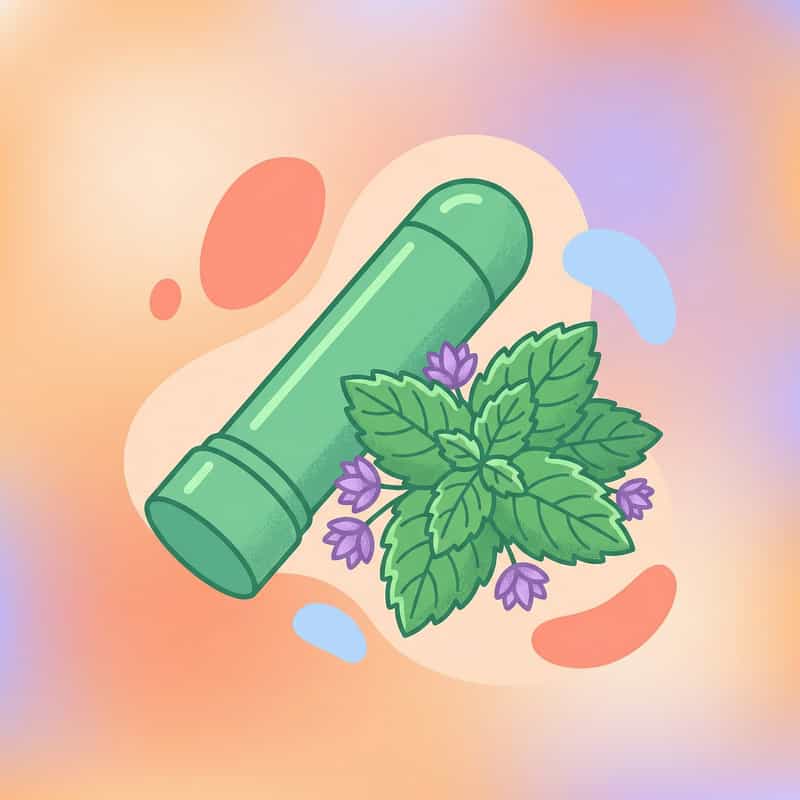
Personal Essential Oil Inhaler (Peppermint/Eucalyptus)
Canon Category: Aromatherapy & Scent Kit (Olfactory Sensory)
Price Range: ₹200–500
A neutralizing scent inhaler provides a preferred, controlled scent that can override or compete with aversive fragrance signals. Peppermint and eucalyptus are most commonly effective, but the key is using a scent your child has chosen and finds calming. The child inhales from their personal stick when they detect triggering fragrance — it's a portable "scent reset" button.
Critical Note: Test carefully before use. Some children find ANY additional scent worsening. Never force. If the child rejects it, skip this material entirely.
Related Canon Products: Herbistry Labs 3-in-1 Nasal Inhaler (₹339) | KICKZU Essential Oil Diffuser Bracelet (₹423) | Pure Source India Aroma Essential Oil (₹446)
Material 8: Exit & Escape Planning Kit
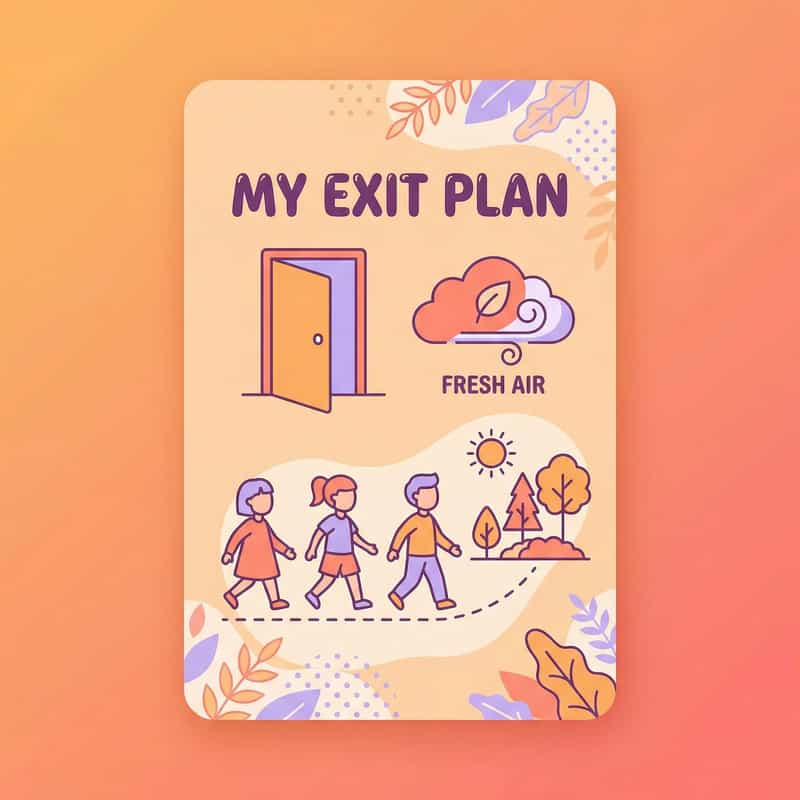
Visual Exit Plan Templates + Signal Cards + Venue Maps
Canon Category: Visual Supports & Scheduling
Price Range: ₹100–300
An exit plan is your child's safety net — the guarantee that if fragrance overwhelm occurs, they have a clear, practiced path to relief. The kit includes visual maps of frequently visited venues (school, grandma's house, place of worship), a practiced exit signal (code word or hand gesture), and identification of the nearest fresh-air access point upon arrival at any new location.
The exit signal is a promise. When your child uses it, you honor it — immediately, without question, without "just five more minutes." This builds the trust that makes future outings possible.
Related Canon Products: Visual Schedule & Routine Boards | Choice Boards & Visual Options
Material 9: Recovery & Symptom Management Kit
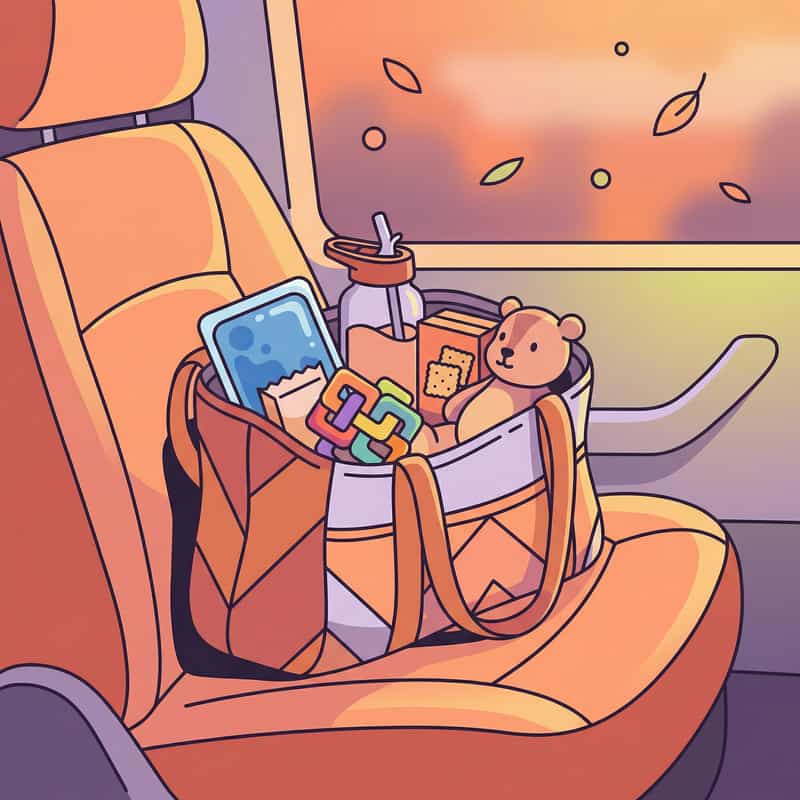
Portable Recovery Bag
Canon Category: Calm-Down Kit & Self-Regulation Toolbox
Price Range: ₹300–800
The recovery kit is your emergency response station — assembled in advance so you're never scrambling during a fragrance-triggered crisis. Contents include a cool compress (for headaches), water bottle (for nausea and hydration), plain crackers (blood sugar support), the child's comfort item from home, and one calming sensory tool (fidget, weighted clip, smooth stone).
Keep one kit in the car and a second in the school bag — permanently. Replenish after each use. The recovery kit transforms a post-exposure crisis into a managed, time-limited event.
Related Canon Products: Calm-Down Kit & Self-Regulation Toolbox | Breathing & Relaxation Tools

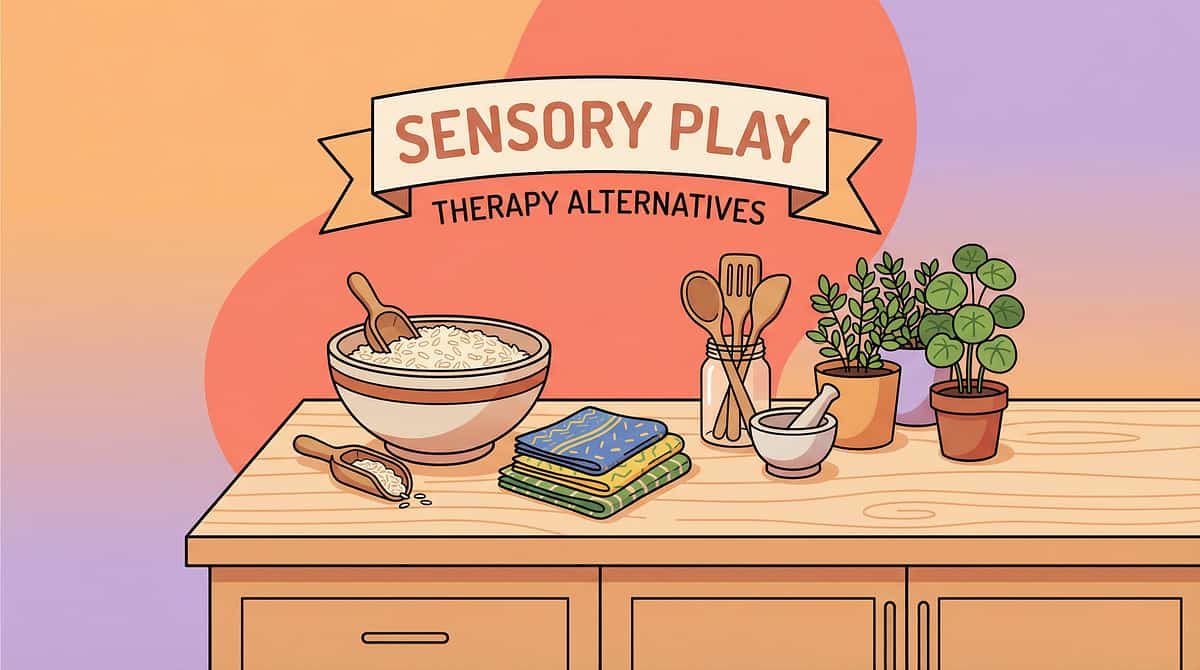
DIY & Zero-Cost Alternatives
Equity Statement: Not every family can order from Amazon. Not every village has same-day delivery. The WHO/UNICEF Nurturing Care Framework demands that interventions be accessible regardless of economic status. Here is how every parent can execute fragrance protection TODAY with household items.

DIY Alternatives — Personal Protection
Buy This | Make This (₹0 Cost) | How-To | |
Personal Air Purifier (₹2,000–8,000) | Clean cotton cloth or handkerchief | Hold over nose in high-fragrance situations. Wet cloth provides slightly better filtration. Open windows for ventilation. | |
Activated Charcoal Mask (₹300–1,500) | Plain cotton mask + water filter charcoal | Insert crushed activated charcoal from water filter cartridge (₹50 refill) into plain cotton mask. Replace charcoal weekly. | |
Scent-Blocking Nasal Products (₹200–600) | Petroleum jelly or coconut oil | Apply thin layer around and just inside nostrils before entering scented environments. Reapply every 60–90 minutes. | |
Neutralizing Scent Inhaler (₹200–500) | Essential oil on cotton ball in container | Few drops of peppermint or eucalyptus oil on cotton ball in small plastic container. Test carefully — some children find ANY scent worsening. |

DIY Alternatives — Environmental & Planning
Buy This | Make This (₹0 Cost) | How-To | |
Fragrance-Free Products (₹200–800/product) | Full product audit + baking soda | Eliminate ALL air fresheners, scented candles, fabric softeners immediately (₹0). Use baking soda for cleaning. Read every label for "fragrance." | |
Room Air Purifier (₹5,000–25,000) | Box fan + furnace filter | Tape furnace filter to back of box fan (documented DIY air purifier). Open windows for cross-ventilation. Remove all scented items from bedroom. | |
Communication Cards (₹100–500) | Hand-written laminated cards | Write on card stock: "My child has perfume sensitivity that causes headaches and nausea. Please avoid wearing fragrance. Thank you." Laminate with clear tape. | |
Exit Planning Kit (₹100–300) | Hand-drawn maps + code word | Draw simple venue maps. Establish hand signal or code word ("blue sky" = "I need to leave NOW"). Practice at home. Identify exits upon arrival. | |
Recovery Kit (₹300–800) | Zip-lock bag essentials | Damp cloth (forehead), water bottle, 2–3 plain crackers, comfort item, one calming sensory object. Keep in car and school bag permanently. |
Caveat: For severe fragrance sensitivity with respiratory symptoms, clinical-grade air purification and medical-grade nasal protection are non-negotiable. Consult your OT and physician.

⚠️ Safety First — Before You Begin
Before introducing any materials or heading into a potentially scented environment, review these critical safety guidelines. Your child's physical safety is the foundation everything else builds upon.

🔴 RED — Do Not Proceed If
Anaphylactic-Type Reactions
Child has history of anaphylactic-type reactions to fragrances — SEEK EMERGENCY MEDICAL EVALUATION immediately before any home-based strategies.
Severe Respiratory Distress
Child shows wheezing, chest tightness, or difficulty breathing with fragrance exposure — requires pulmonologist assessment BEFORE implementing home strategies.
Active Migraine Episode
Child is currently experiencing active migraine or severe headache. Wait until the episode resolves completely before introducing new tools or strategies.
Untested Products
Any products being introduced — nasal balms, essential oils, masks — have NOT been individually allergy-tested on child's skin. Conduct a small patch test 24 hours before use.
Neutralizing Scents Untested
Peppermint, eucalyptus, or other "neutralizing" scents have NOT been tested for child's tolerance — some children react to ALL scents, even those meant to help.
🟡 AMBER — Modify Your Approach If
Co-Occurring Tactile Sensitivity
Child has tactile sensitivity that makes mask-wearing intolerable — skip masks entirely and focus on environmental and nasal protection strategies instead.
Anxiety Around "Medical" Devices
Child has anxiety about wearing devices — introduce personal air purifiers gradually through play, not demand. Frame as accessories, not medical equipment.
Under Age 5
Nasal filters are NOT recommended for young children (choking risk). Use nasal balm only. Masks should be soft, non-restrictive, and never forced.
Essential Oil Safety
Essential oils should NEVER be applied directly to skin undiluted. Always dilute in carrier oil. Keep away from eyes and mouth. Store out of child's reach.
🟢 GREEN — Proceed When Ready
Materials Tested
Individual materials have been tested for tolerance in calm, controlled settings — no adverse reactions observed.
Child Understands
Child understands (at their developmental level) that these tools are "helpers" — not punishments or emergency gear.
Exit Plan Established
Emergency exit plan is established for any outing. Code word or signal is practiced and understood by all caregivers.
Household Briefed
All household members are briefed on the fragrance-free protocol. Everyone understands and supports the changes.
Safe Space Verified
Fragrance-free transition of child's bedroom is COMPLETE. At least one "safe space" is verified fragrance-free. Recovery kit is assembled and accessible.
🔴 RED LINE — STOP IMMEDIATELY IF: Child develops rash, hives, or skin reaction to any product. Breathing difficulties worsen with mask use. Essential oil inhalation causes coughing or eye irritation. Child becomes MORE anxious with protection strategies — consult OT before continuing.
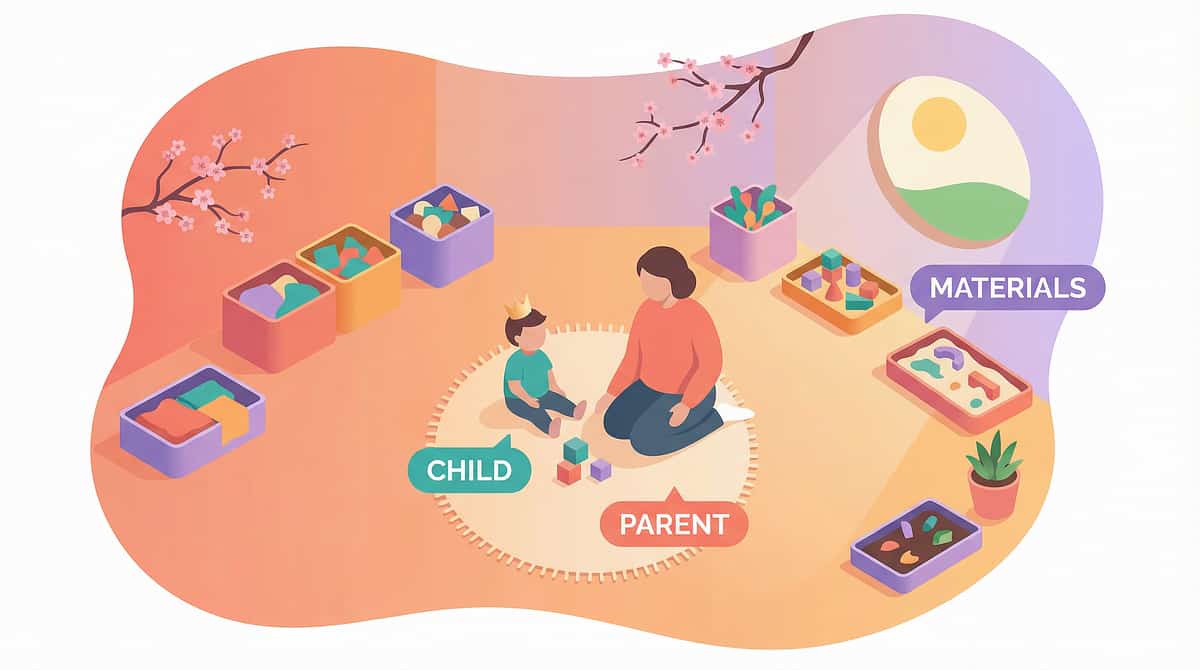
Set Up Your Fragrance-Free Base
The Child's Bedroom — Your Fragrance-Free Sanctuary
1
Air Purifier (HEPA+Carbon)
Running 24/7 on lowest setting. Position near bed, not blocking airflow. Verify noise is tolerable for child.
2
Bed — Fragrance-Free Linens
Washed in unscented detergent only. No fabric softener EVER. Replace if previously washed with scented products.
3
Recovery Kit — Bedside Table
Cool compress, water, crackers, comfort item — always stocked and within child's reach for nighttime comfort.
4
Protection Station — By Door
Mask, nasal balm, scent inhaler, exit cards — child grabs before leaving the room. Make it routine like putting on shoes.
5
Fragrance-Free Products — Shelf
All personal care: unscented soap, shampoo, lotion. ❌ REMOVE: Air fresheners, scented candles, potpourri, perfumed toys.

Environmental & Going-Out Checklist
Bedroom Verification ✅
- Air purifier running (HEPA + activated carbon)
- All bedding washed in fragrance-free detergent
- All scented products removed from room
- Protection station stocked and within child's reach
- Recovery kit assembled and accessible
- Window available for fresh air access
- Room temperature comfortable (fragrance disperses more in heat)
- Sound level check — purifier noise tolerable
Going-Out Station (By Front Door) 🚪
- Mask in child-chosen design
- Nasal balm (small tube, purse-size)
- Scent inhaler (if child uses one)
- Communication cards (3–4 in wallet/purse)
- Recovery kit in small backpack/car
- Exit plan visual (laminated, in pocket)
ACT III
The Execution — Step by Step
Now that your space is set up and your materials are ready, here is the step-by-step protocol for managing fragrance exposure events — from readiness check through recovery.
Is Your Child Ready? — Pre-Protection Readiness Check
Before introducing protection materials or heading into a potentially scented environment, run this 60-second check.
Regulated State
Child is calm, not in the middle of a meltdown or post-meltdown recovery.
Fed & Hydrated
Empty stomach increases nausea vulnerability during fragrance exposure.
Rested
Fatigue amplifies all sensory sensitivities — avoid high-fragrance events when child is tired.
Materials Ready
Protection materials are available and in working condition — mask clean, filter fresh, nasal balm accessible.
Exit Plan Briefed
Child knows the exit signal. Both parent and child know the nearest fresh-air exit.
Child Willing
Child has been involved in choosing which protection tools to use today — no forced compliance.
Duration Planned
Maximum time in scented environment is pre-decided and non-negotiable.
🟢 GO (all 7 checked)
Proceed with full protocol
🟡 MODIFY (5–6 checked)
Shorten duration, max protection
🔴 POSTPONE (fewer than 5)
Not today. Choose fragrance-free activity.
Step 1 — The Invitation to Protect
Timing: 2–5 minutes before entering potentially scented environment
Script (Exact Words to Say): "Hey [child's name], we're going to [grandma's house / the mall / school event] today. Let's get your clean-air tools ready! Which one do you want to start with — your mask or your nose cream?"
Body Language Guidance
- Maintain calm, confident posture — your child reads your anxiety
- Present protection tools as empowerment, not emergency
- Let the child choose from available options — autonomy builds compliance
- Frame as routine: "Just like we put on sunscreen before going in the sun"
Reading Your Child's Cues
Acceptance: Reaches for tools independently, asks questions about scents, practices exit signal, calm body language → Proceed
Resistance: Refuses tools → Offer nasal balm only (least intrusive). Becomes anxious → Reassure exit plan, shorten duration. Says "I don't need it" → Bring tools anyway. Meltdown begins → POSTPONE.
Step 2 — Layering Protection
Timing: 3–5 minutes (preparation before exposure)
Layer 1 — Nasal Protection (First Line)
"Let's put your nose cream on first. Just a tiny bit around here [demonstrate on yourself]. This is your invisible shield!" Apply unscented nasal balm around and just inside nostrils. For older children using nasal filters: "These tiny filters clean the air before it reaches your nose!"
Layer 2 — Personal Air/Mask (Second Line)
"Now let's put on your clean-air [mask/purifier]. Which design today?" Ensure mask fit around nose and chin, adjust ear loops. For wearable purifier: turn on, check battery, position correctly around neck.
Layer 3 — Coping Kit (Third Line)
"Your smell-buster is in your pocket. Your exit card is here. You know the signal?" Confirm neutralizing scent inhaler is accessible. Review exit signal together. Confirm recovery kit location.
Reinforcement Cue: "You're getting SO good at this! Your clean-air gear is all set. You're protected."
Step 3 — Managing the Fragrance Exposure
Timing: Duration of exposure event (typically 30 minutes – 2 hours, with predetermined maximum)
This is not desensitization. This is protected participation. Your child enters the scented environment with layered protection, practiced exit strategies, and your active monitoring. The therapeutic action is the child participating in life while protected — building confidence that scented environments can be navigated, not just avoided.
Parent Monitoring Protocol
- Check in every 10–15 minutes (subtly, not anxiously): "How's your nose shield doing? All good?"
- Watch for early warning signs: Increased fidgeting, face touching, nose rubbing, quieter than usual, moving away from scent sources, irritability onset
- Honor the exit signal INSTANTLY — no "just 5 more minutes," no "we just got here"
- Position child strategically: Near windows/doors, away from heavily perfumed individuals, in most ventilated area
Step 3 — Child Response Spectrum & Common Errors
✅ Ideal Response
Child participates in activity, uses protection tools, shows regulated behavior, may briefly note smells but continues activity.
🟡 Acceptable Response
Child participates with some discomfort signs, needs one check-in reassurance, asks to move seats once, uses scent inhaler.
🔴 Concerning Response
Child becomes increasingly agitated, starts gagging or reporting headache, repeated nose covering → HONOR EXIT IMMEDIATELY.
Common Execution Errors
- ❌ Staying "just a few more minutes" after child signals distress
- ❌ Removing mask because "it looks weird" to other adults
- ❌ Forgetting to bring recovery kit
- ❌ Choosing seat next to most perfumed person out of politeness
- ✅ ALWAYS prioritize child's neurological safety over social convention

Step 4 — Building the Repertoire
Principle: Each successful protected outing builds neural confidence pathways. The goal is not to eliminate sensitivity — it's to build a library of successful strategies the child can draw from.
Variation A — Graduated Duration
Weeks 1–2: 30-minute outings with full protection
Weeks 3–4: 45–60 minute outings, same protection
Weeks 5–8: 60–90 minute outings, child begins choosing layers
Weeks 3–4: 45–60 minute outings, same protection
Weeks 5–8: 60–90 minute outings, child begins choosing layers
Variation B — Graduated Environments
Start: Familiar relative's home (fragrance level known)
Progress: Shopping mall (higher fragrance, more exits)
Advanced: Birthday party/religious gathering (social pressure)
Progress: Shopping mall (higher fragrance, more exits)
Advanced: Birthday party/religious gathering (social pressure)
Variation C — Protection Layer Reduction
Full kit → Drop mask (keep nasal + coping) → Drop scent inhaler → Nasal protection + exit plan only. NEVER force reduction. Child leads this progression entirely.
"3 good protected outings > 10 forced exposures." After 3+ successful outings at the same level, the child may independently reduce protection — CELEBRATE this.
Step 5 — Reinforce & Celebrate
Reinforcement Scripts (Within 3 Seconds of Successful Behavior)
After a successful outing: "You went to [grandma's house] today and you used your clean-air tools perfectly! You even told me when you needed a break. I'm so proud of how you took care of yourself."
After using the exit signal: "You used your signal, we left quickly, and now you're feeling better. That was PERFECT self-advocacy. That takes courage."
After self-selecting tools: "You chose your mask AND your nose cream today all by yourself! You're becoming an expert at protecting yourself."
Verbal Praise
Specific praise about what exactly the child did well — not generic "good job."
Activity Reward
15 minutes of preferred activity after a challenging outing.
Token System
Star on "My Clean Air Adventures" chart building toward a preferred reward.
Natural Consequence
"See? We went and you had fun AND stayed comfortable!"
Key Principle: Celebrate the attempt, not just the success. A child who enters a scented space — even if they exit early — has shown enormous courage.

Step 6 — The Cool-Down & Recovery
Immediate (Within 5 Minutes)
"We're heading to fresh air now. Take some deep breaths. Here's your water." Move to ventilated area, remove mask, offer water and cool compress. DO NOT discuss the event yet — just provide calm presence.
Short-Term (15–30 Minutes)
If recovered: "That went really well! How do you feel?" If still symptomatic: quiet fragrance-free space, dim lights for headache, continue hydration. Remove clothing that may have absorbed fragrance.
Transition Back to Baseline
"Your body is resetting. The perfume air is gone now. You're in your safe clean air. When you're ready, we can [preferred activity]."
If child resists ending protection: Some children want to keep masks on even in safe spaces — allow this. Security object behavior with protection tools is healthy coping, not pathology. Transition gradually: "You can keep it with you. You don't have to wear it, but it's right here."

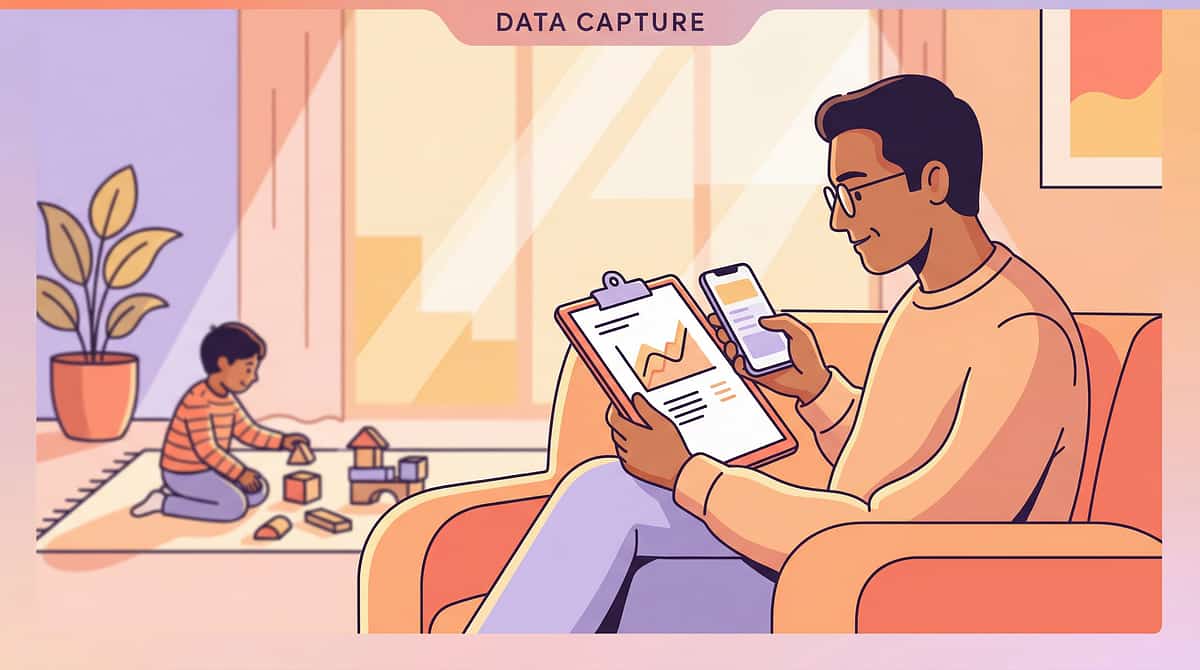
Capture the Data — Right Now (60 Seconds)
Within 60 seconds of returning home, record these five data points. Over 4 weeks, patterns emerge that transform reactive crisis management into proactive planning.
Data Point | How to Record | |
Environment Rating | How scented was the environment? (1 = mild, 5 = intense) | |
Protection Used | Which layers? Nasal / Mask / Purifier / Scent Inhaler / All | |
Duration Tolerated | Minutes in scented environment before exit signal or scheduled departure | |
Symptom Level | 0 = None | 1 = Mild discomfort | 2 = Moderate headache/nausea | 3 = Severe (immediate exit) | 4 = Medical-level reaction | |
Recovery Time | Minutes until child returned to baseline after leaving scented environment |
"60 seconds of data now saves hours of guessing later." Over 4 weeks, this data reveals which environments, which protection combinations, and what duration limits work best for YOUR child specifically.

What If It Didn't Go as Planned?
Every family encounters bumps on this journey. Here are the most common challenges and exactly how to address each one. Remember: session abandonment is not failure — it's data.
Troubleshooting — Part 1
"My child refused to wear the mask."
Why: Tactile sensitivity to mask material, social anxiety about looking different, or autonomy assertion.
Fix: Switch to nasal-only protection. Offer child choice of designs. Practice at home during low-stakes moments. Never force — a resistant child wearing a mask is a dysregulated child.
Fix: Switch to nasal-only protection. Offer child choice of designs. Practice at home during low-stakes moments. Never force — a resistant child wearing a mask is a dysregulated child.
"The protection didn't work — child still got a headache."
Why: Charcoal filter may be saturated (replace). Fragrance concentration may exceed protection capacity. Mask fit may be poor with air leaking around edges.
Fix: Check/replace all filters. Add protection layers. Reduce target duration. For severe environments, avoidance is the appropriate strategy.
Fix: Check/replace all filters. Add protection layers. Reduce target duration. For severe environments, avoidance is the appropriate strategy.
"Family members refuse to come unscented."
Why: They don't understand the severity, feel personally criticized, or view it as preference rather than medical need.
Fix: Share medical documentation. Use communication cards — less confrontational than verbal requests. Offer to host at your fragrance-free home. Your child's health takes precedence.
Fix: Share medical documentation. Use communication cards — less confrontational than verbal requests. Offer to host at your fragrance-free home. Your child's health takes precedence.
"I felt embarrassed to leave an important event."
Why: Social pressure overriding protection protocol.
Fix: The exit signal is a promise. Breaking it destroys trust and willingness to enter challenging environments. ALWAYS honor the signal. Your child will remember who chose them.
Fix: The exit signal is a promise. Breaking it destroys trust and willingness to enter challenging environments. ALWAYS honor the signal. Your child will remember who chose them.
Troubleshooting — Part 2
"Child seems MORE anxious than before."
Why: Protection tools may have inadvertently heightened awareness/anxiety. Over-preparation can signal danger.
Fix: Pull back on verbal preparation. Keep protection tools as routine (like sunscreen) not emergency gear. Consult OT if anxiety is escalating. Consider addressing anxiety through ABA/CBT alongside sensory protection.
Fix: Pull back on verbal preparation. Keep protection tools as routine (like sunscreen) not emergency gear. Consult OT if anxiety is escalating. Consider addressing anxiety through ABA/CBT alongside sensory protection.
"School won't implement accommodations."
Why: Lack of medical documentation, institutional resistance, misunderstanding of needs.
Fix: Obtain OT evaluation report + pediatrician letter documenting medical basis. Reference the Rights of Persons with Disabilities Act (2016 in India). Escalate through school administration. Pinnacle centers provide advocacy documentation.
Fix: Obtain OT evaluation report + pediatrician letter documenting medical basis. Reference the Rights of Persons with Disabilities Act (2016 in India). Escalate through school administration. Pinnacle centers provide advocacy documentation.
"Unexpected exposure — child had severe reaction."
Why: Someone walks by wearing heavy perfume, air freshener in unexpected location.
Fix: Deploy recovery kit immediately. Move to fresh air. Cool compress for headache. Water for nausea. DO NOT PANIC — model calm recovery. Document the exposure for future planning. This IS data: unexpected exposures will happen. Recovery skills are part of the protocol.
Fix: Deploy recovery kit immediately. Move to fresh air. Cool compress for headache. Water for nausea. DO NOT PANIC — model calm recovery. Document the exposure for future planning. This IS data: unexpected exposures will happen. Recovery skills are part of the protocol.
Adapt & Personalize — Difficulty Levels
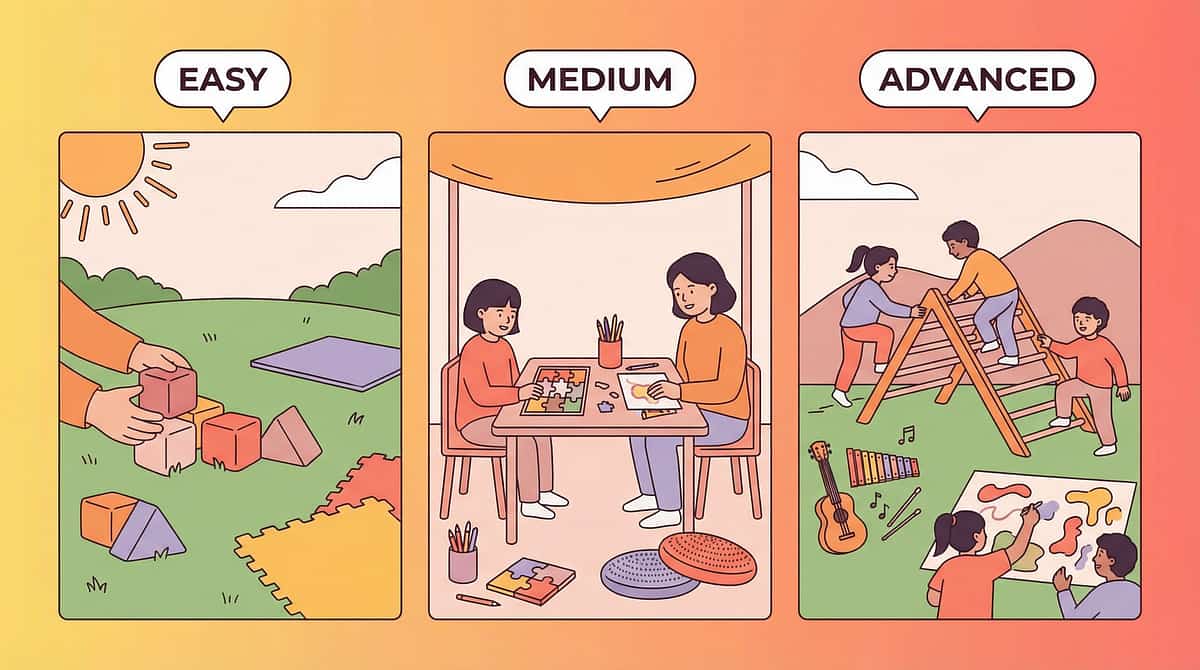
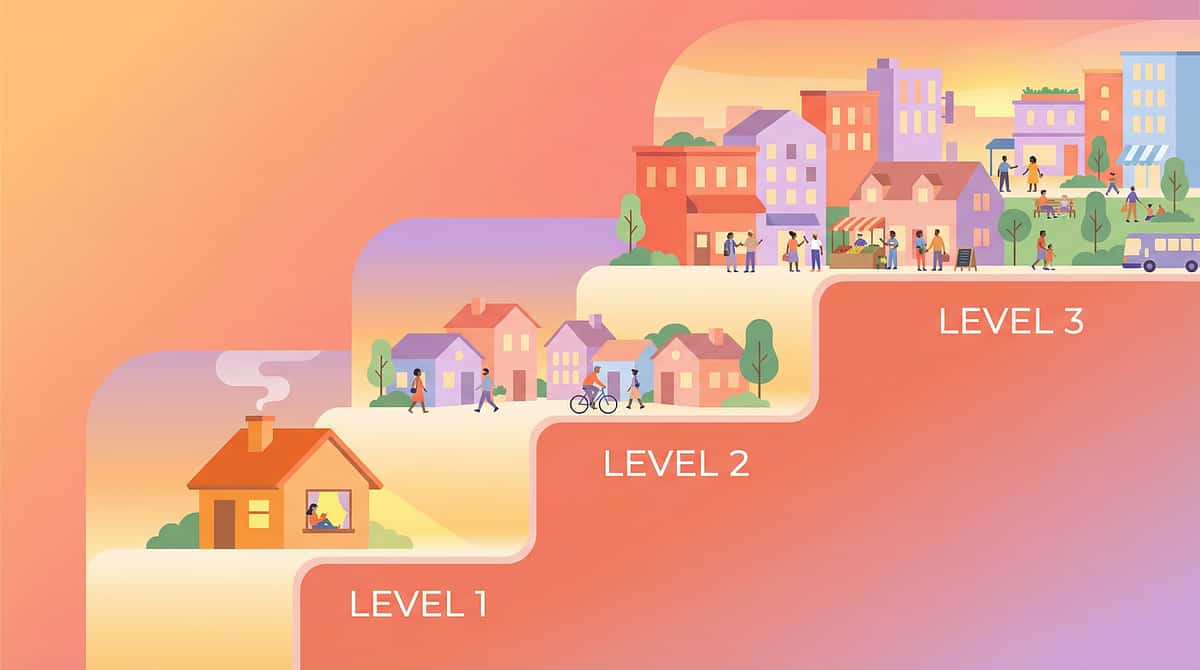
Level 1 — Home Protection Only
Fragrance-free bedroom and bathroom. No scented outings. Focus on recovery skills. For: Recently diagnosed, severe sensitivity, ages 3–4.
Level 2 — Controlled Exposure
Home fully fragrance-free. Short 30-min outings to known environments with full protection. For: Building initial confidence, moderate sensitivity, ages 4–7.
Level 3 — Community Participation
Home + school accommodations in place. Regular 60–90 min outings. Child selects own protection layers. For: Developing self-management, ages 6–10.
Level 4 — Self-Directed Management
Child independently uses toolkit, self-advocates, manages exit timing, plans own strategy. For: Building adolescent independence, ages 9–12.
Sensory Profile & Age Variations
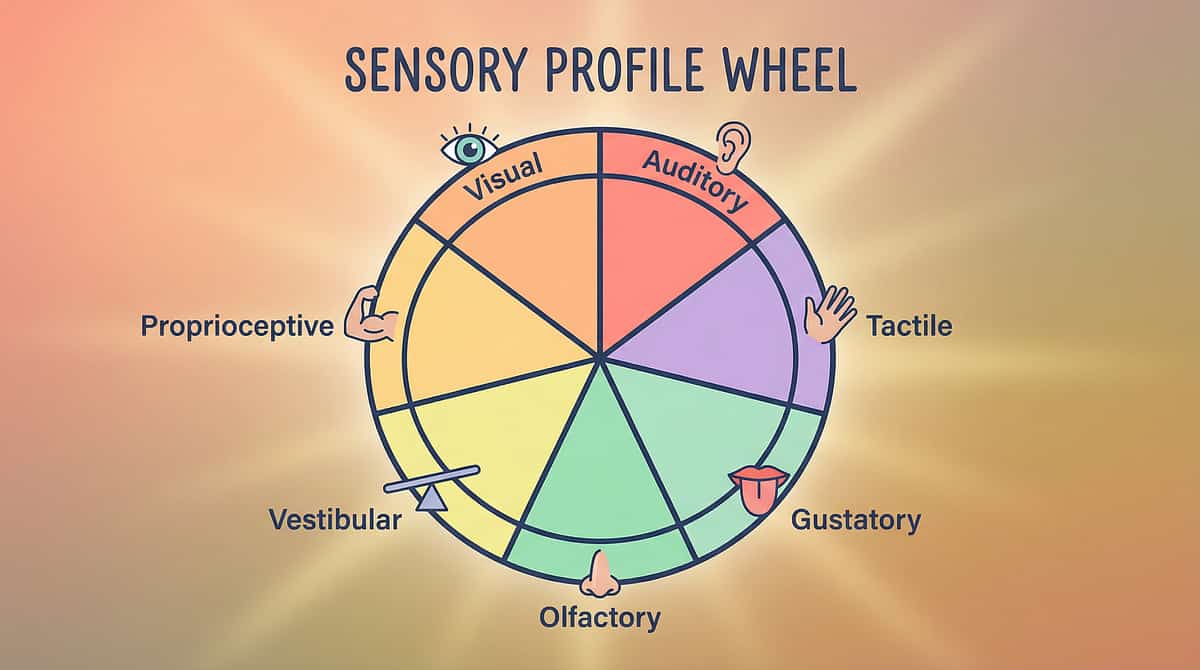
Sensory Profile Variations
Olfactory-Only
Focus on nasal and air protection. Minimal anxiety component. Standard protocol applies well.
Multi-Sensory (Olfactory + Auditory + Tactile)
May not tolerate masks (tactile) or purifier noise (auditory). Use nasal balm + environmental accommodation only.
Anxiety-Dominant Profile
Fragrance sensitivity is genuine, but anxiety amplification is primary. Combine protection with CBT-adapted approaches.
Medical Component (Migraine/Respiratory)
Requires physician-coordinated approach. Protection supplements medical management, doesn't replace it.
Age-Based Modifications
Ages 3–5
Parent-directed. Nasal balm + environmental control. No masks or nasal filters. Focus on safe spaces and calm recovery.
Ages 6–8
Collaborative. Child chooses from options. Beginning to understand why tools help. Practice self-advocacy language together.
Ages 9–12
Self-directed with parent backup. Communication cards used independently. Self-advocacy in school settings without prompting.
ACT IV
The Progress Arc
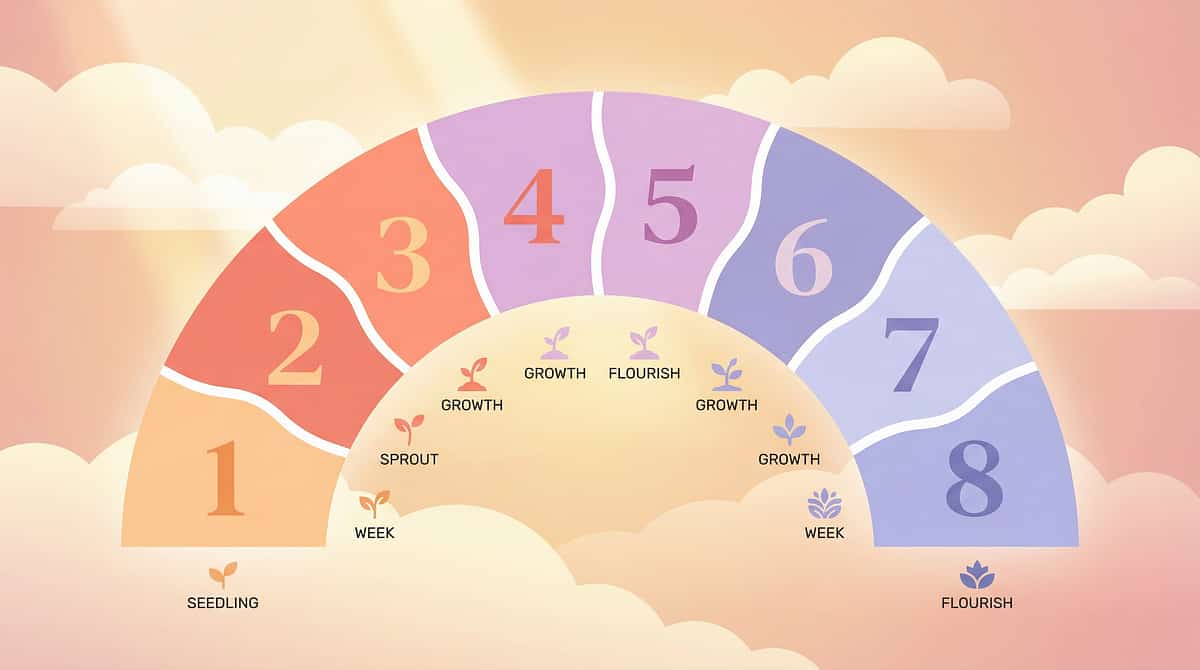
Progress with fragrance sensitivity protection doesn't happen overnight. Here's what to expect week by week — the realistic markers of growth, the moments of breakthrough, and the signs that your approach is working.

Week 1–2: What to Expect
15%
Progress
Early foundation-building stage
Observable Indicators
- Home fragrance-free transition is complete — you'll notice the difference in air quality within 48 hours
- Child may initially resist protection tools — this is NORMAL. Tolerance for mask/nasal balm increases with gentle, repeated introduction
- First 2–3 protected outings may feel stressful for BOTH parent and child — this decreases with practice
- Recovery time after exposure may not yet improve — the protection is reducing severity, not providing elimination
✅ What Progress Looks Like
- Child reaches for nasal balm without prompting (even inconsistently)
- Child can name their exit signal when asked
- One successful protected outing — even if short
- Parent identified 3+ previously-unknown fragrance sources and eliminated them
⏳ What is NOT Progress Yet
- Child spontaneously entering scented spaces without protection
- Zero symptoms during exposure
- Family members consistently remembering to come unscented
"If your child uses their exit signal once this week — and you honored it immediately — that is the single most important progress milestone. You've built trust."

Week 3–4: Consolidation Signs
40%
Progress
Consolidation and routine-building stage
Consolidation Indicators
- Child begins incorporating protection tools into their own routine — reaches for mask before you suggest it
- Protected outings become more routine, less stressful for both parent and child
- Recovery time after exposure events begins to decrease (track your data!)
- Child may begin verbally describing their experience: "That place smelled too strong" instead of just melting down
- Communication cards have been used at least once — the advocacy muscle is activating
Behavioral Changes Signaling Neural Pathway Formation
- Anticipatory preparation: Child asks "Will there be perfume there?" — this is planning, not anxiety
- Self-selection: "I want my mask AND my nose cream today" — layering strategy emerging
- Reduced recovery intensity: Headaches less severe, nausea less frequent, meltdowns less intense
Parent Milestone: You may notice you're more confident too. The awkwardness of sharing communication cards is fading. The guilt of leaving events early is being replaced by pride. This is parental self-efficacy building — the strongest predictor of continued success.

Week 5–8: Mastery Indicators 🏆
75%
Progress
Mastery and generalization stage
Mastery Criteria (Specific, Observable, Measurable)
Independent Preparation
Child independently prepares protection kit before outings — mask, nasal balm, scent inhaler — without prompting.
Recovery Time Reduced
Recovery time reduced by 50%+ compared to Week 1 baseline — measured and tracked in your data sheets.
Self-Advocacy Active
Child has used communication card or verbal self-advocacy at least 3 times independently in real-world settings.
8+ Successful Outings
Family has completed at least 8 successful protected outings across 3+ different environment types.
Can Articulate Needs
Child can express (at their developmental level): "Perfume hurts my head/tummy and I need clean air."
School Accommodation Active
School or primary non-home environment has active fragrance accommodation in place and functioning.
"Mastery Unlocked" Badge Criteria: When 5/6 criteria are consistently met for 2 consecutive weeks → Ready for Level progression.
🎉 Celebrate This Win
"Look how far you've come. Eight weeks ago, a family lunch with perfumed relatives felt impossible. Your child's world was shrinking — events cancelled, hugs avoided, tears at every gathering.Today, your child walks into that same house with their clean-air toolkit, gives grandma a hug (grandma remembered the unscented lotion!), participates for 45 minutes, signals when they're reaching their limit, exits calmly, recovers in the car with their kit, and tells you on the ride home: 'That was okay, Mama. I handled it.'You did this. You audited every product in your home. You had the awkward conversations. You assembled the recovery kit. You honored every exit signal. You tracked the data. You chose your child's nervous system over social convention — every single time. Your child grew because of your commitment."
Family Celebration Suggestion: Create a "My Clean Air Adventures" scrapbook — photos of successful outings with notes about where you went, how long you stayed, and how the child felt. This becomes the child's own evidence of their growing capacity.
🔴 Red Flags — When to Pause
Progressive Sensitization
Sensitivity is WORSENING despite protection. Child now reacts to scents that previously didn't bother them. Trigger list is expanding. May indicate emerging Multiple Chemical Sensitivity (MCS). PAUSE all exposure. Consult allergist/immunologist.
Severe Respiratory Symptoms
Wheezing, chest tightness, persistent cough, shortness of breath not improving with protection. May indicate asthma trigger. STOP exposure immediately. Emergency evaluation if severe. Pulmonologist referral.
Escalating Anxiety Beyond Fragrance
Child anxious about ALL environments, refusing to leave home, panic attacks, new unrelated fears. Protection may have reinforced avoidance. Consult BCBA or psychologist. Address anxiety parallel to protection.

🔴 Additional Red Flags
Weight Loss or Food Refusal
Child refuses food based on smell. Significant reduction in food variety. Olfactory sensitivity expanding to food domain creates nutritional risk. Feeding specialist referral. Medical nutritional assessment. Do not force food exposure.
Social Withdrawal Despite Successful Protection
Child has effective tools but still refuses participation. Isolation increasing. Social anxiety may have become independent of fragrance sensitivity. Consult BCBA for social skills assessment.
⚠️ Anaphylactic-Type Response
Throat swelling, severe breathing difficulty, rapid pulse, skin flushing/hives, loss of consciousness. THIS IS A MEDICAL EMERGENCY. Call 112 (India). Administer epinephrine if prescribed. Do NOT wait to see if it improves.
Trust your instincts — if something feels wrong, pause and ask.

The Progression Pathway
Long-Term Developmental Goal: Full social participation with self-managed fragrance sensitivity — the child independently navigates scented environments using internalized strategies, self-advocates when needed, and recovers efficiently when exposure occurs.
Related Techniques in Sensory Processing
A-116: Gagging at Smells
Difficulty: Intro | Canon: Aromatherapy & Scent Kit
✅ You already own shared materials (nasal protection + scent kit)
✅ You already own shared materials (nasal protection + scent kit)
A-117: Child Sniffs Everything
Difficulty: Intro | Canon: Aromatherapy & Scent Kit
✅ You already own shared materials (scent kit)
✅ You already own shared materials (scent kit)
A-028: Environmental Sensitivity
Difficulty: Core | Canon: Calm-Down Kit, Sensory Tent
✅ You already own shared materials (calm-down kit)
✅ You already own shared materials (calm-down kit)
A-035: Sensory Overload & Meltdowns
Difficulty: Core | Canon: Calm-Down Kit, Weighted Items
✅ You already own shared materials (recovery supplies)
✅ You already own shared materials (recovery supplies)
K-953: Advocating for Sensory Accommodations
Difficulty: Advanced | Canon: Communication Tools
✅ You already own shared materials (advocacy cards)
✅ You already own shared materials (advocacy cards)
K-954: Creating Sensory-Safe Environments
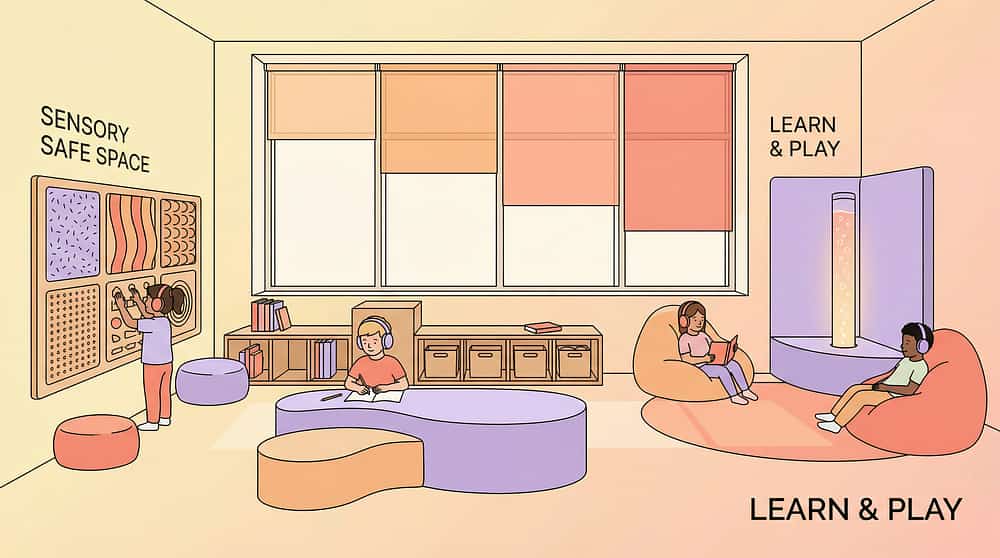
Difficulty: Core | Canon: Environmental Control
✅ You already own shared materials (air purifier, fragrance-free products)
✅ You already own shared materials (air purifier, fragrance-free products)
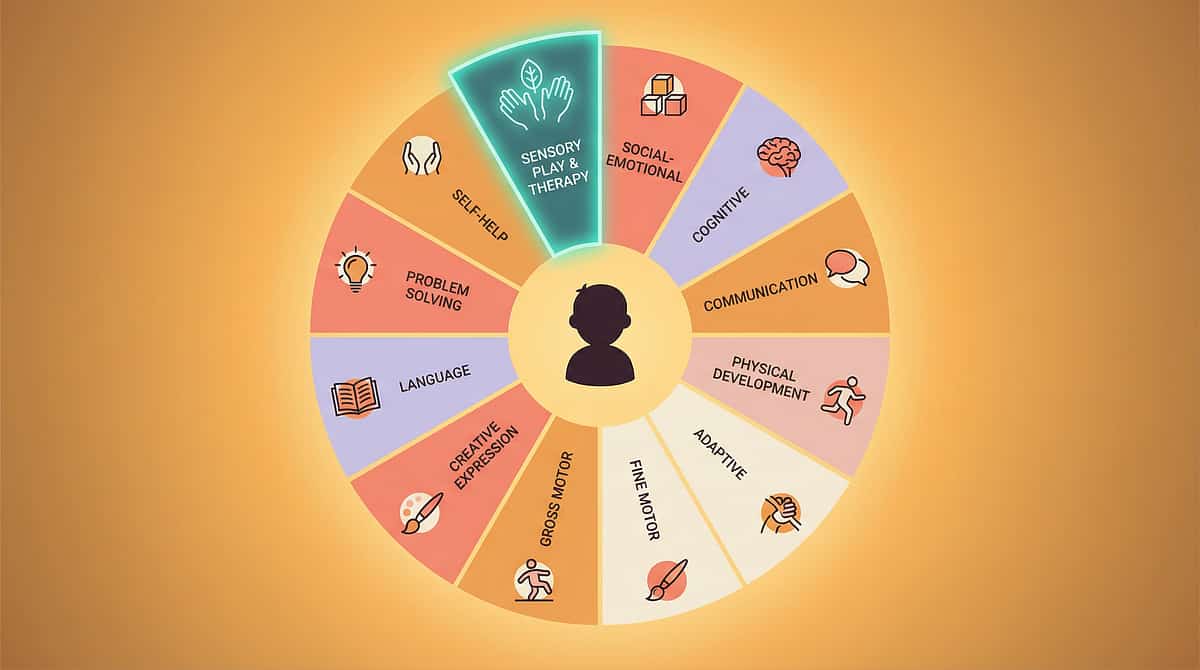
Your Child's Full Developmental Map
Cross-Domain Impact of Fragrance Sensitivity Management
Social Skills
Improved social participation → more opportunities for social skill development
Emotional Regulation
Reduced meltdown frequency → more emotional bandwidth for learning
Daily Living
Independent management → increased functional independence
Academic
Reduced absences → improved academic continuity and performance
"This technique is one piece of a larger plan. Fragrance sensitivity management is not just about avoiding perfume — it's about unlocking your child's participation in every developmental domain."
ACT V
Community & Ecosystem
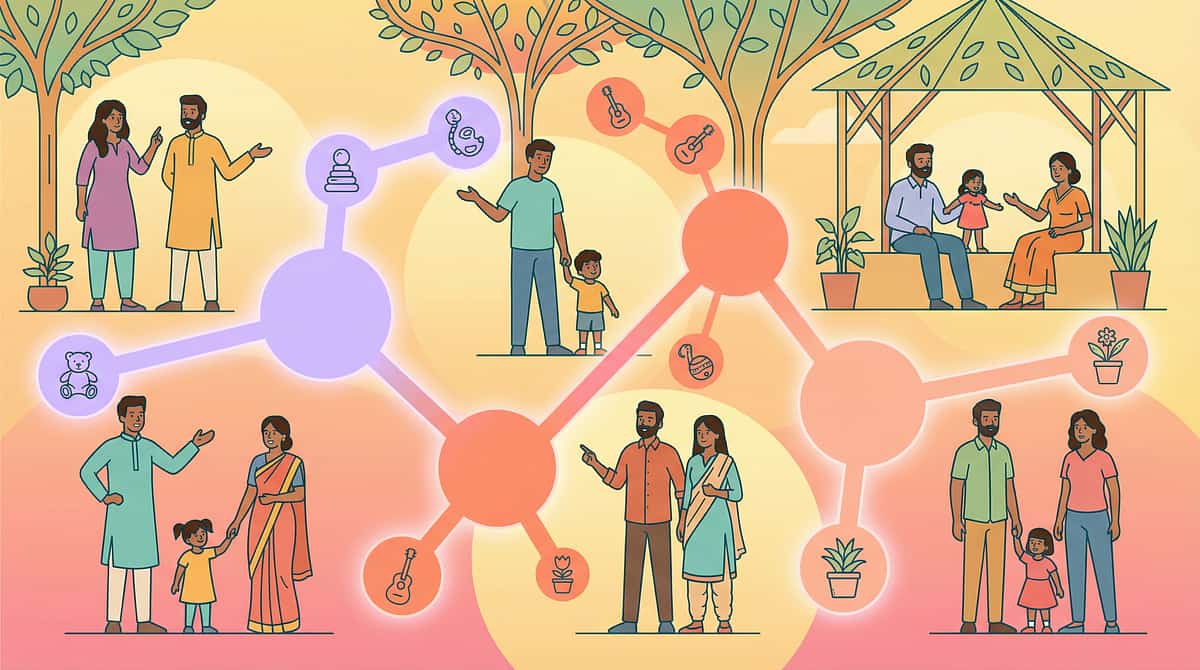
You're not navigating this alone. A growing community of families, therapists, and researchers is working together to make the world more accessible for children with fragrance sensitivity.
Families Who've Been Here
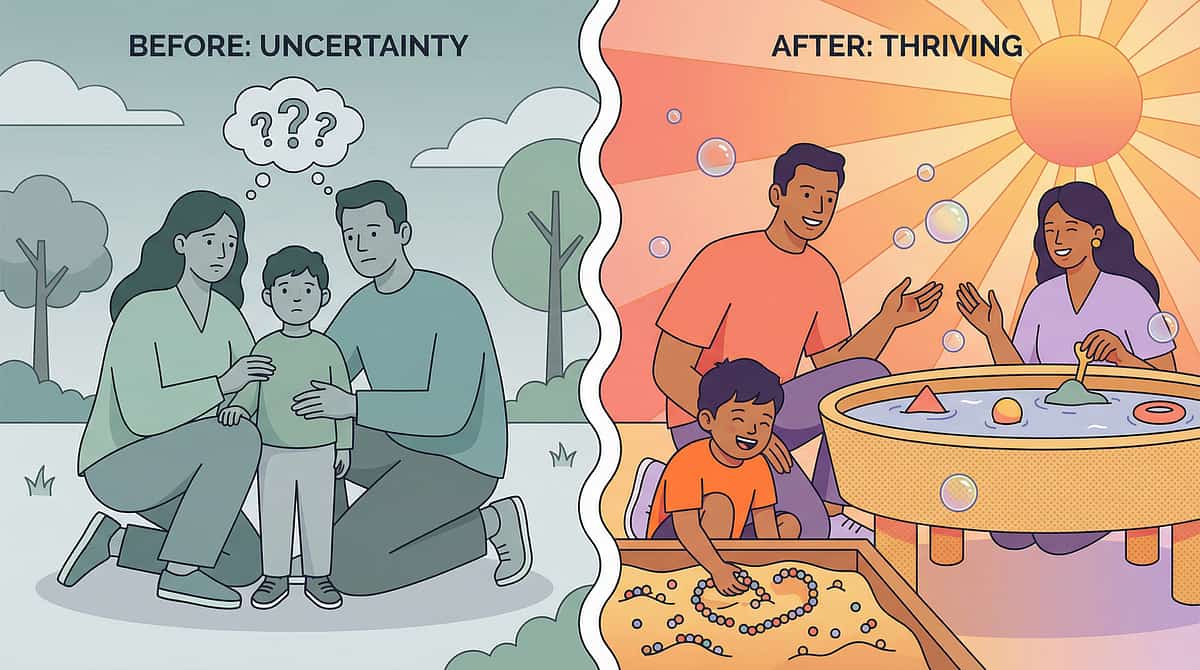
Before: "We couldn't attend any family function because of perfume. My daughter would start gagging within minutes of entering my mother-in-law's house. We stopped going. The family blamed us for being 'too sensitive.' My daughter lost her relationship with her grandparents."
After (12 weeks): "After implementing the full protection protocol — fragrance-free home, nasal balm before visits, recovery kit in the car, and the communication card we gave to my mother-in-law — she now visits every Sunday. My mother-in-law switched to unscented lotion. My daughter gave her a full hug last week. Both of them cried."
— Parent, Pinnacle Network, Hyderabad
Before: "School was a nightmare. His teacher wore strong perfume, the art room had scented markers, and the bathroom had air fresheners. He'd come home with headaches every single day. His grades dropped because he couldn't concentrate."
After (8 weeks): "With the school accommodation letter, the teacher switched to unscented products, scented markers were replaced, and air fresheners were removed. His headache frequency dropped from daily to twice monthly. His grades recovered completely."
— Parent, Pinnacle Network, Bangalore
From the Therapist's Notes: "These families' breakthroughs came when they shifted from apologizing for the sensitivity to educating others about the neurological basis. The communication card removed the emotional charge from the conversation."
Note: Illustrative cases; outcomes vary by child profile.
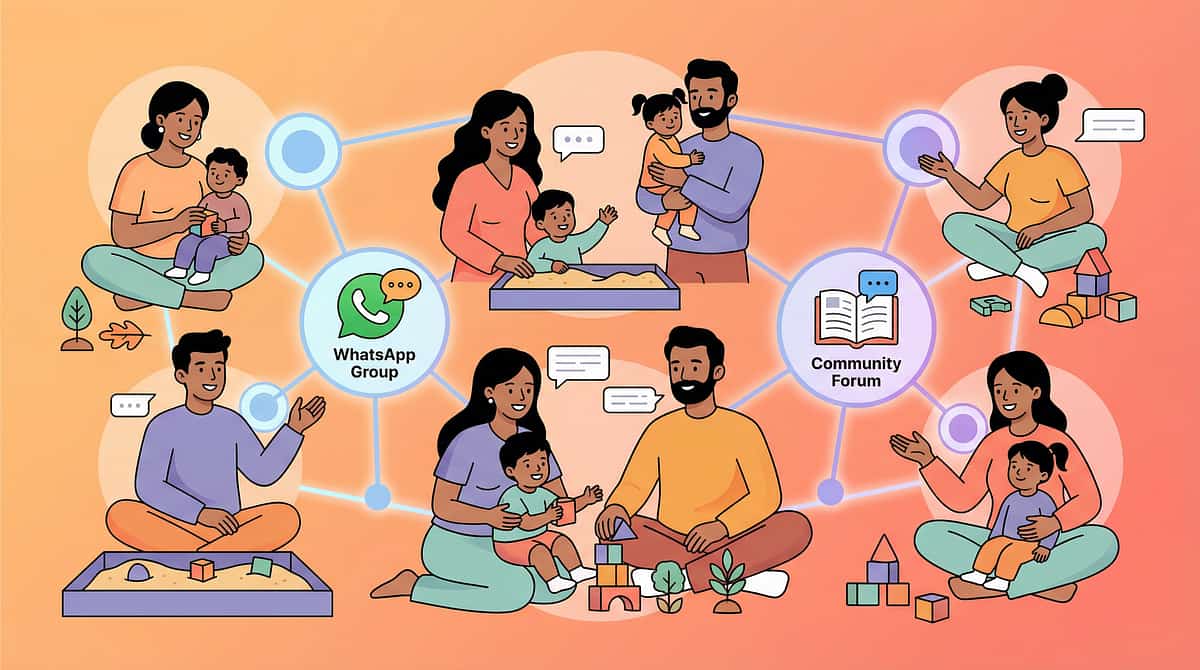
Connect With Other Parents
Fragrance Sensitivity Parent Support Group
WhatsApp community of 500+ families navigating olfactory sensitivity together. Share tips, product recommendations, school accommodation templates, and emotional support.
Pinnacle Blooms Parent Forum
Online forum organized by sensory challenge type. Fragrance sensitivity subforum with moderated discussions and therapist Q&A sessions.
Local Pinnacle Parent Meetup
Monthly in-person meetups at your nearest Pinnacle center. Fragrance-free environment guaranteed. Peer mentoring with experienced parents.
Peer Mentoring Program
Connect 1:1 with a parent who has successfully implemented fragrance protection for 6+ months. Practical guidance from someone who truly understands.
"Your experience helps others. When you share what worked for your family, you light the path for families just beginning this journey."

Your Professional Support Team
🏥 Find Your Nearest Center
70+ centers across India — all operating under GPT-OS® standards.
👩⚕️ Therapist Matching
Request an OT with sensory processing specialization for:
- Comprehensive Sensory Processing Evaluation
- Fragrance Sensitivity Profile Assessment
- School Accommodation Documentation
- Environmental Modification Planning
📱 Teleconsultation
For families outside Pinnacle center reach — available in 16+ languages with 24/7 scheduling.
💙 FREE National Autism Helpline
"Home + Clinic = Maximum Impact." Your home-based protection protocol, guided by professional assessment, produces the strongest outcomes for your child.
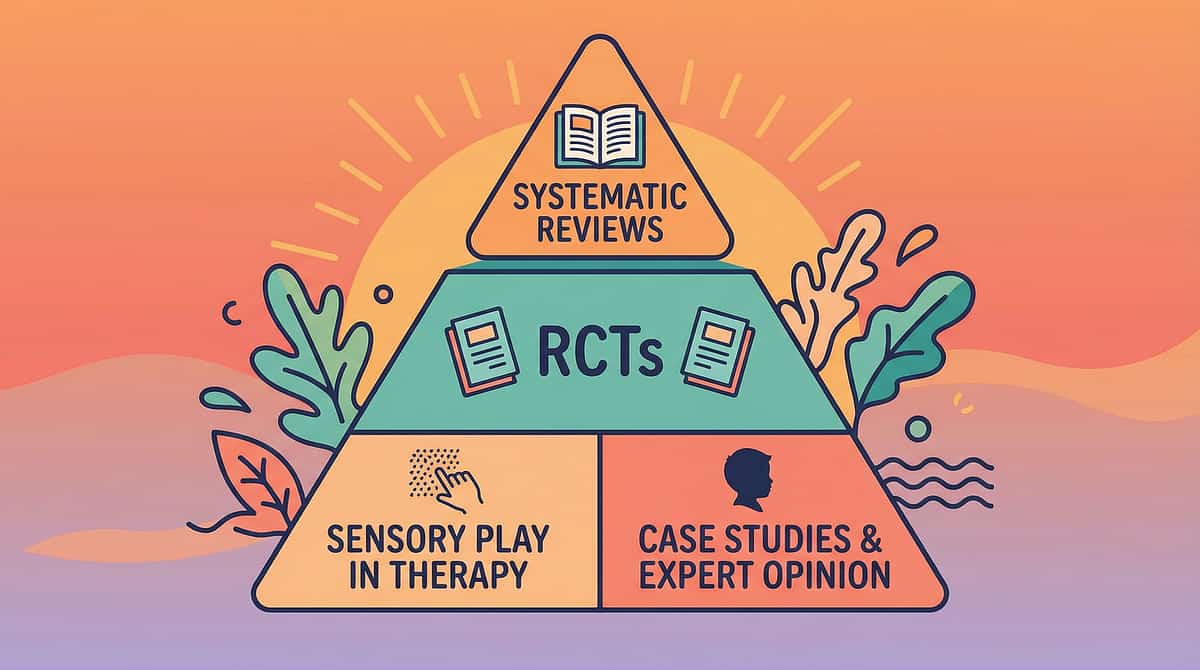
The Research Library
Deeper reading for the curious parent — the evidence base that unleashes every recommendation in this guide.
🔺 Systematic Reviews & Meta-Analyses (Level I)
- PRISMA Systematic Review (2024): 16 articles from 2013–2023 confirm sensory integration intervention as evidence-based for ASD children. | PMC11506176
- Meta-Analysis (2024): Sensory integration therapy effectively promotes social skills, adaptive behavior, sensory processing across 24 studies. | PMC10955541
🔺 Randomized Controlled Trials (Level II)
- Padmanabha et al. (2019): Home-based sensory interventions demonstrate significant outcomes in Indian pediatric population. | DOI: 10.1007/s12098-018-2747-4
🔺 Cohort/Prevalence Studies (Level III)
- Caress SM & Steinemann AC (2009): Prevalence of fragrance sensitivity — 30.5% of U.S. population affected
- Steinemann A (2016): Fragranced consumer products: exposures and effects from emissions
- Dunn W (1997): Impact of sensory processing abilities on daily lives — foundational conceptual model
🔺 Clinical Practice Frameworks
- WHO Nurturing Care Framework (2018): Global framework for early childhood development | nurturing-care.org
- WHO CCD Package (2023): Age-specific evidence-based caregiver recommendations | PMC9978394
- Frontiers in Integrative Neuroscience (2020): Evaluating sensory processing treatment in ASD | DOI: 10.3389/fnint.2020.556660

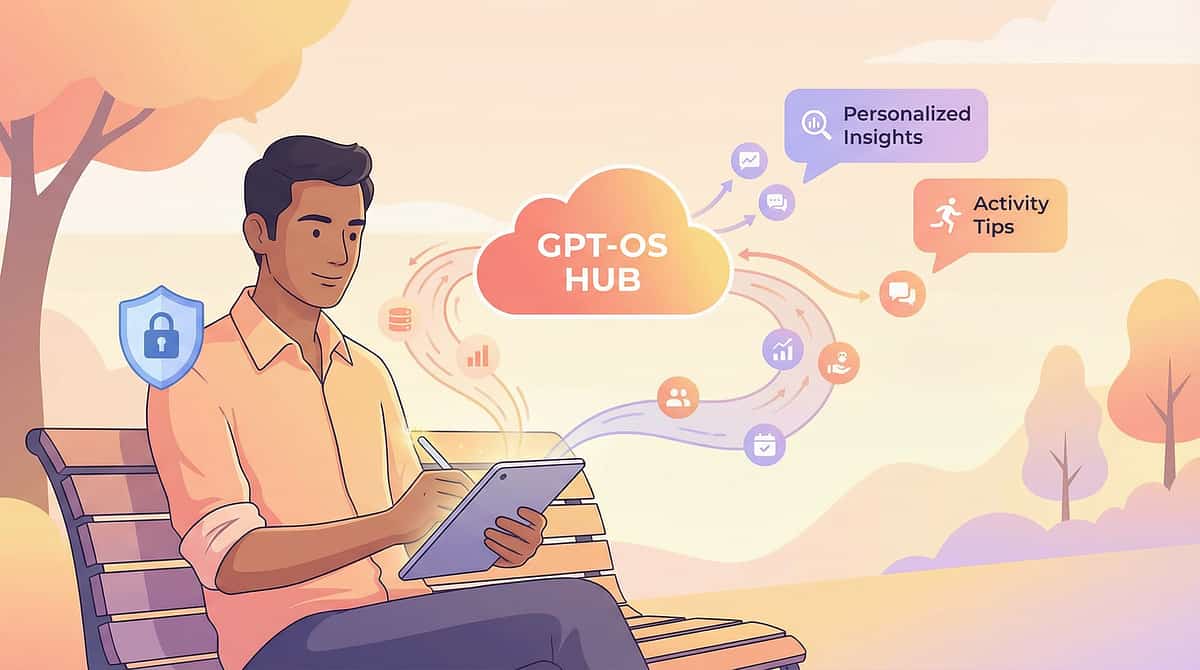
How GPT-OS® Uses Your Data
What GPT-OS® Learns From YOUR Fragrance Sensitivity Data:
- Which protection combinations produce the best symptom reduction for children with your child's profile
- Optimal duration thresholds by environment type and fragrance intensity
- Recovery time benchmarks indicating healthy progression vs. regression flags
- School accommodation language that produces the highest compliance rates
- Product effectiveness ratings from real-world family use across 70+ centers
Privacy: Your child's data is encrypted and HIPAA-equivalent protected. No individual data is shared without explicit consent. Aggregate anonymized data improves recommendations for ALL families. You can request complete data deletion at any time.
"Your data helps every child like yours. When 1,000 families track outcomes, GPT-OS® identifies patterns no single family could see."
Watch the Reel — 9 Materials in Action
▶ Watch: 9 Materials That Help With Perfume Sensitivity
Reel ID: A-118 | Domain: Sensory Processing | Series: Sensory Solutions (Episode 118)
What You'll See:
- Pinnacle therapist demonstrating each of the 9 materials hands-on
- Real-world application of protection strategies with a child
- Visual comparison: unprotected vs. protected in scented environments
- 75-second overview of your complete protection toolkit
Presented by the Pinnacle Blooms Network Occupational Therapy team — specialists in sensory processing assessment and intervention.
"Reading AND watching increases skill acquisition by 65%+." Watch the reel, then return to this page for the detailed protocol.
Share This With Your Family
Share via WhatsApp
Send page link with summary message to family members, teachers, and caregivers.
Share via Email
Pre-formatted email with overview and link — ready to send to school administrators.
Download Family Guide (1-Page PDF)
"Perfume Sensitivity Protection — What Every Family Member Needs to Know"
👵 "Explain to Grandparents" Version
Simplified, large-font, single-page guide: "Your grandchild's brain reacts to perfume the way some people react to very loud noise — it's physically painful. Here's what helps: come unscented, respect their exit signal, and know that accommodating them IS showing love."
👩🏫 Teacher/School Template
Pre-formatted letter for school administration requesting fragrance-free accommodations, with attached medical/OT documentation guidelines. Pinnacle centers provide advocacy documentation support.
"Consistency across caregivers multiplies impact." When grandma, the teacher, and the Sunday school leader ALL understand and accommodate, your child's world opens exponentially.
ACT VI
Frequently Asked Questions
The most common questions from families navigating fragrance sensitivity — answered with clinical clarity and parental empathy.
FAQ — Understanding the Sensitivity
"Is my child's perfume sensitivity real or is she being dramatic?"
It is completely real. Olfactory over-responsivity is a documented neurological condition where the brain amplifies fragrance signals far beyond typical levels. The headaches, nausea, and distress are genuine physical symptoms — not behavior, not manipulation, not pickiness. Research by Steinemann (2016) documents that over 30% of the general population reports adverse effects from fragrances, with rates significantly higher in neurodivergent populations.
"Will my child grow out of fragrance sensitivity?"
Some children's sensitivity moderates with neurological maturation. Others maintain sensitivity into adulthood. With effective management strategies, the impact on daily life can be dramatically reduced regardless of whether the underlying sensitivity changes. The goal is functional participation, not elimination of sensitivity.
"Should I expose my child to small amounts of perfume to help them 'get used to it'?"
No. Unlike some sensory approaches where graduated exposure is therapeutic, forced fragrance exposure can cause sensitization — making the response worse, not better. Protection and accommodation are the evidence-based approaches for olfactory over-responsivity to artificial scents.
FAQ — Practical Challenges
"How do I explain this to family who think I'm overreacting?"
Use communication cards from Material 6. Medical documentation adds clinical authority. Frame it relatably: "Imagine the worst headache of your life. Now imagine it's triggered by something everyone around you wears and thinks smells good. That's what perfume does to [child's name]'s brain."
"Are fragrance-free accommodations a legal right?"
In India, the Rights of Persons with Disabilities Act (2016) provides for reasonable accommodations in educational settings. In the US, fragrance-free accommodations may fall under ADA protections. In the EU, workplace fragrance policies are emerging. Consult your Pinnacle center for region-specific advocacy guidance.
"What if my child's teacher wears heavy perfume?"
This is one of the most common and impactful scenarios. Use the school accommodation letter template (shared in Card 64). Most schools will accommodate with medical documentation. Pinnacle centers provide comprehensive documentation and advocacy support.
FAQ — Technical & Medical Questions
"Can air purifiers really remove perfume from the air?"
Air purifiers with activated carbon filters can significantly reduce airborne fragrance concentrations. HEPA-only purifiers capture particles but are less effective against volatile organic compounds (the molecular basis of fragrance). You need BOTH HEPA + activated carbon for fragrance reduction. Room size, air exchange rate, and concentration all affect effectiveness.
"My child's sensitivity seems to be getting worse. Is that possible?"
Yes — this is called sensitization. Repeated aversive fragrance exposures can progressively lower the reaction threshold. This is a RED FLAG (see Card 52–53) that warrants medical evaluation by an allergist or environmental medicine specialist. It does NOT mean your protection strategies aren't working — it means the underlying condition may be evolving.
Didn't find your answer?
Your Next Step — Start Now
▶ Start This Technique Today
Your child's fragrance-free journey begins with a single step: audit your home for fragrance tonight. Walk through every room, read every label, remove every source of artificial scent from your child's bedroom. That one action — tonight — changes your child's baseline exposure immediately.
Get your child's complete olfactory sensitivity profile evaluated by Pinnacle's OT team.
📞9100 181 181 (FREE National Autism Helpline | 16+ languages | 24/7)
📞9100 181 181 (FREE National Autism Helpline | 16+ languages | 24/7)
🔎 Explore Next Technique
Ready for more? Continue building your child's protective ecosystem.
Validated by Pinnacle Blooms Consortium
OT • SLP • ABA • SpEd • NeuroDev
Preview of 9 materials that help with perfume sensitivity Therapy Material
Below is a visual preview of 9 materials that help with perfume sensitivity therapy material. The pages shown help educators, therapists, and caregivers understand the structure and content of the resource before use. Materials should be used under appropriate professional guidance.


Link copied!
The Pinnacle Promise
Pinnacle Blooms Network®
OT
SLP
BCBA
Special Ed
NeuroDev
"From fear to mastery. One technique at a time."Eight weeks ago, perfume meant pain, isolation, and family conflict. Today, your child has a toolkit, a team, and a trajectory. The air is cleaner. The world is more accessible. The family is closer. This is what evidence-based, parent-empowered, GPT-OS®-governed therapeutic intervention looks like — at population scale.
Medical Disclaimer: This content is for educational and informational purposes only. It does not constitute medical advice, diagnosis, or treatment. Fragrance sensitivity may have sensory, neurological, immunological, or other medical components. Please consult with qualified healthcare professionals, including occupational therapists, allergists, and physicians, for proper evaluation and individualized recommendations. Some products mentioned may require medical guidance. Severe reactions to fragrances may require emergency medical attention. Intervention should be individualized based on thorough professional assessment. Individual results may vary.
© 2025 Pinnacle Blooms Network®, unit of Bharath Healthcare Laboratories Pvt. Ltd. All rights reserved.
CIN: U74999TG2016PTC113063 | DPIIT: DIPP8651 | MSME: TS20F0009606 | GSTIN: 36AAGCB9722P1Z2
CIN: U74999TG2016PTC113063 | DPIIT: DIPP8651 | MSME: TS20F0009606 | GSTIN: 36AAGCB9722P1Z2
techniques.pinnacleblooms.org — 40 cards × 70,000+ techniques = 2,800,000 evidence-linked, parent-empowering knowledge units. The largest structured pediatric intervention knowledge base on Earth.