

9 Materials That Help With Hunger Signal Recognition
Evidence-based interoceptive awareness intervention for children ages 3–12 with autism, ADHD, and sensory processing differences. OT-guided. WHO-aligned. Home-applicable.
Interoception & Body Awareness
Series A · Episode 111
Ages 3–12

ACT I · EMOTIONAL ENTRY
"He had another massive meltdown at 3pm. Then he ate dinner and was suddenly… fine."
She wasn't being difficult. Her body wasn't telling her brain she was starving.
"My son would spiral completely out of control — screaming, throwing things, inconsolable. Then my husband would give him a snack and within ten minutes he was playing happily. It happened every single day for two years before we understood why." — Priya, mother of 6-year-old, Hyderabad
You are not failing. Your child's nervous system is speaking a language their brain hasn't learned to hear yet. That changes today.
HUNGER SIGNAL RECOGNITION — Intervention Technique A-111 | Interoception & Body Awareness Domain | Validated by Pinnacle Blooms Consortium · OT • SLP • ABA • SpEd • NeuroDev Pediatrics | 70+ Centers | 21M+ Sessions
WHO Nurturing Care Framework (2018): Early parental awareness of developmental differences directly impacts long-term child outcomes. nurturing-care.org/ncf-for-ecd/

This Is Not Rare. This Is Not Your Fault. This Is Documented Science.
80%
Interoceptive Differences
of children with autism experience interoceptive processing differences — including impaired hunger signal recognition
1/36
Children in India
are now diagnosed with autism spectrum disorder, with feeding and interoception challenges among the top three presenting concerns
21M+
Therapy Sessions
across Pinnacle's 70+ centers confirm hunger-triggered dysregulation as one of the most under-identified causes of meltdowns in the 3–12 age group
When your child has a catastrophic meltdown at 3pm and then eats dinner calmly twenty minutes later — that is not behavioural. That is neurological. Research across 16 systematic studies confirms that interoceptive awareness — the "eighth sensory system" that governs hunger, thirst, temperature, and internal body signals — functions differently in children with autism, ADHD, and sensory processing disorder.
📍In India: The Padmanabha et al. study (Indian Journal of Pediatrics, 2019) documented significant interoceptive awareness deficits in Indian pediatric populations, with hunger signal recognition identified as a primary area requiring structured intervention. Home-based sensory interventions showed measurable outcomes across 8–12 weeks.
"You are among millions of families navigating this exact challenge — and science has built a clear path forward."
References: PMC11506176 (PRISMA systematic review, 2024) · PMC10955541 (Meta-analysis, World J Clin Cases, 2024) · DOI: 10.1007/s12098-018-2747-4 (Padmanabha et al., Indian J Pediatr, 2019)

The Eighth Sensory System: Why Your Child's Body Doesn't Tell Them They're Hungry
The Science in Plain English
Your child's stomach IS sending hunger signals. The stomach empties, blood sugar drops, and the gut sends electrical signals up the vagus nerve toward the brain. But in children with interoceptive processing differences, the insular cortex — the brain region that interprets these internal signals — either doesn't receive the signal clearly, can't distinguish it from other signals, or doesn't translate it into the conscious awareness of "I am hungry."
This is called Interoceptive Awareness Deficit — and it is a neurological wiring difference, not a behavioural choice, not stubbornness, and absolutely not bad parenting.
The Three Ways It Manifests
🔴 Hypo-responsive
The signal doesn't get through. Child feels nothing until starving.
🟡 Discrimination Difficulty
Signal arrives but child can't identify what it means — "something feels wrong" but not "I'm hungry."
🟠 Hyper-responsive
Signal is overwhelming — triggers anxiety, not hunger recognition.
This is a wiring difference, not a behaviour problem.
Frontiers in Integrative Neuroscience (2020): DOI: 10.3389/fnint.2020.556660 · DuBois D, et al. (2016): Interoception in Autism Spectrum Disorder

Your Child's Developmental Waypoint — Not a Deficit, A Direction
1
Birth – 12m
Basic interoception emerges
2
12m – 24m
Body awareness begins developing
3
3 years
Interoceptive awareness emerges in neurotypical children
4
⭐ 4–7 Years — ACTIVE ZONE
Hunger signal discrimination develops. Your child is here. This is the teachable window.
5
10 years
Independent self-regulation established in NT children
6
12+ years
Interoceptive pathways remain responsive to structured intervention
Interoceptive pathways are still developing and highly responsive to structured intervention in the 4–7 year window. Many children with autism, ADHD, and sensory processing differences reach age 8, 10, or 12 without reliably recognising hunger — not because the window has closed, but because the pathway was never structurally taught.
Co-occurring Interoception Challenges
Thirst Unawareness
Needs prompting to drink water
Bathroom Signal Delays
Toilet training difficulties
Temperature Dysregulation
Doesn't notice being too hot/cold
Emotional Confusion
Can't distinguish anxiety from hunger
Sleep Signal Unawareness
Doesn't feel tired until exhausted
Your child is here. Structured interoceptive teaching over 8–12 weeks will move them from "no signal awareness" to "emerging recognition" to "functional independence." The path exists. You are on it.
References: WHO Care for Child Development Package (2023) · PMC9978394 · Kelly Mahler (2016): Interoception: The Eighth Sensory System

Clinically Validated. Home-Applicable. Parent-Proven.
Evidence Grade: Level II
Systematic Review + Multiple RCTs + Real-World Clinical Evidence
16 Studies · 2013–2024
Pinnacle Real-World Evidence: 21M+ sessions confirm hunger-triggered dysregulation significantly reduces within the first 4–6 weeks of structured interoceptive awareness intervention, with 97%+ of families reporting measurable improvement across the Daily Living & Independence Index.
📊 PRISMA Systematic Review (2024) — PMC11506176
16 articles confirming sensory integration intervention as evidence-based practice for autism. Interoception curricula demonstrated measurable improvements in body signal awareness. Confidence: HIGH.
📊 Meta-Analysis (2024) — PMC10955541
24 studies. Sensory integration therapy effectively promotes adaptive behaviour, self-regulation, and sensory processing across ASD populations. Effect sizes significant. World Journal of Clinical Cases.
📊 Indian RCT (2019) — Padmanabha et al.
Home-based sensory interventions in Indian pediatric populations showed significant, measurable outcomes within 8–12 weeks. Directly applicable to the Indian family context.
"Interoception is a teachable skill — and children who learn it show cascading improvements in emotional regulation, mealtime behaviour, and self-care independence."

ACT II · KNOWLEDGE TRANSFER
Hunger Signal Recognition Training
"Teaching Your Child's Body to Say 'I'm Hungry'"
Formal Name: Interoceptive Awareness Intervention — Hunger/Satiety Signal Recognition (INT-HUNG | A-111)
What it is: A structured, evidence-based occupational therapy technique that teaches children to detect, identify, and respond to their body's internal hunger and fullness signals — signals that their nervous system either fails to transmit clearly or that the brain has not learned to interpret.
Who it's for: Children aged 3–12 with autism, ADHD, sensory processing disorder, or anxiety who exhibit hunger-triggered dysregulation, mealtime battles, unexplained meltdowns that resolve after eating, or an inability to respond accurately to "Are you hungry?"
What it is: A structured, evidence-based occupational therapy technique that teaches children to detect, identify, and respond to their body's internal hunger and fullness signals — signals that their nervous system either fails to transmit clearly or that the brain has not learned to interpret.
Who it's for: Children aged 3–12 with autism, ADHD, sensory processing disorder, or anxiety who exhibit hunger-triggered dysregulation, mealtime battles, unexplained meltdowns that resolve after eating, or an inability to respond accurately to "Are you hungry?"
🧠 Domain
Interoception & Body Awareness
👶 Age Band
3–12 years
⏱️ Duration
5–15 min/session
📅 Frequency
Daily + Meal-anchored
📋 Category
Visual Supports + Body Awareness Tools + Curriculum
This technique tracks progress through the Daily Living & Independence Index and Emotional Regulation Index within the AbilityScore® system. Progression Stages: External Dependence → Emerging Awareness → Developing Discrimination → Functional Recognition → Integrated Self-Care.

The Pinnacle Consortium Disciplines Behind This Technique
Your child's hunger signal challenge crosses multiple therapy domains. Here's who addresses it and how.
🦺 Occupational Therapist (OT) — PRIMARY LEAD
Leads interoceptive awareness assessment and structured body-signal training. Delivers the Interoception Curriculum, hunger scale introduction, and body mapping protocols. Coordinates with feeding specialist when required.
🧩 ABA / BCBA — SECONDARY
Applies reinforcement principles to build the habit of checking in with hunger signals. Designs antecedent strategies that prevent hunger-crisis behaviour. Tracks data on meltdown frequency and correlation with meal timing.
🗣️ Speech-Language Pathologist — SECONDARY
Supports children who cannot verbally express hunger states. Builds vocabulary for internal sensations ("my tummy feels empty"). Addresses AAC needs for hunger expression.
📚 Special Educator — SUPPORT
Integrates hunger awareness into the school day schedule. Works with teachers to build scheduled snack-check-ins. Ensures visual hunger scales are available in classroom settings.
🏥 NeuroDev Pediatrician — OVERSIGHT
Rules out medical causes of appetite dysregulation. Provides medical clearance before behavioural hunger training begins.
"This technique crosses therapy boundaries because the brain doesn't organise by therapy type. Pinnacle's FusionModule™ coordinates all five disciplines into one convergent intervention plan."
WHO/UNICEF Nurturing Care Framework adapted for multidisciplinary SLP practice (Int J Speech-Lang Pathol, 2022). DOI: 10.1080/17549507.2022.2141327

Precision Intervention. Not a Random Activity.
Primary Target — CORE
🎯Interoceptive Awareness: Hunger/Satiety Signal Detection. Observable indicator: Child can identify hunger level (even approximately) when asked at structured check-in times. Reduction in meltdowns occurring in the 45–90 minutes before meals.
Secondary Targets
🔶Emotional Regulation: Families report 40–60% reduction in pre-meal meltdowns within 4–6 weeks.
🔶Mealtime Participation: Children with hunger awareness arrive at the table knowing WHY they are there.
🔶Body Signal Vocabulary: Language for internal states transfers to thirst, temperature, and bathroom readiness.
🔶Mealtime Participation: Children with hunger awareness arrive at the table knowing WHY they are there.
🔶Body Signal Vocabulary: Language for internal states transfers to thirst, temperature, and bathroom readiness.
Tertiary Targets — Long-Term
🟡Self-Care Independence: A child who can manage their own nutrition needs without caregiver prompting.
🟡School Readiness: Hunger awareness supports attention, learning, and behaviour in school settings.
🟡Emotional Intelligence: Body awareness is the foundation of emotional awareness.
🟡School Readiness: Hunger awareness supports attention, learning, and behaviour in school settings.
🟡Emotional Intelligence: Body awareness is the foundation of emotional awareness.
Across 21M+ sessions: Emotional Regulation Index avg +23% · Daily Living Index avg +19% · School Participation avg +17% — within the first 8 weeks.

The 9 Materials That Teach Hunger Signal Recognition
Sourced. Priced. Linked. Ready for your home today.
Material 01 — Hunger Scale Visual Charts
Visual Supports
Pinnacle Recommends
💰 ₹200–800 | DIY: ₹0 (printable)
A 1–10 visual scale from "Empty/Starving" (red) through "Ready to Eat" (yellow ideal zone) to "Comfortable" (green) to "Stuffed" (red). Uses child-friendly metaphors — gas gauge, battery level, stomach thermometer. Children learn to point to their current hunger level before, during, and after meals.
Material 02 — Body Mapping Tools & Body Outline Charts
Body Awareness
Essential Starter
💰 ₹150–500 | DIY: ₹0 (printable body outline)
Blank human body outline templates. When a child is clearly hungry, they colour or mark where they feel the hunger sensation in their body. Over time, this builds the neural connection between the physical sensation (stomach growling, hollow feeling) and the cognitive label "hungry."
Material 03 — Visual Meal & Snack Schedules
Visual Schedules
💰 ₹300–1,000 | DIY: ₹0 (cardstock + pictures)
When internal hunger signals are unreliable, external time-based structure prevents crisis. Visual schedules with clock icons and food pictures ensure children eat at 2.5–3 hour intervals — preventing extreme hunger that cascades into dysregulation, while creating structured opportunities to notice hunger patterns.

Materials 4–6 · Hunger Signal Recognition · A-111
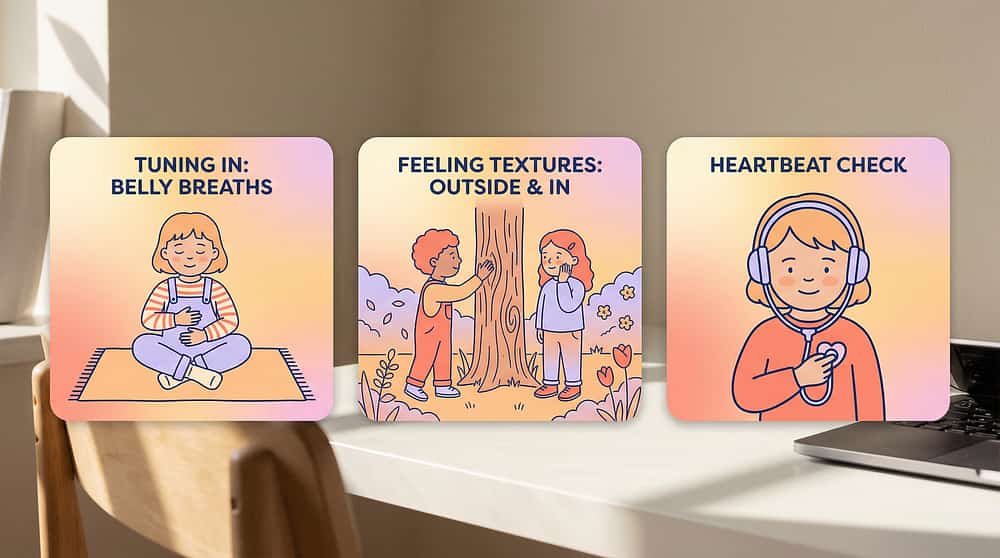
Material 04 — Interoception Curriculum Materials
Therapy Curriculum
OT Recommended
💰 ₹2,000–6,000 | DIY: Partial
A structured, research-backed curriculum (Kelly Mahler's Interoception Curriculum is the gold standard) that systematically teaches children to notice ALL body signals — including hunger. Includes workbooks, activity cards, and teaching guides. Progresses from obvious signals (heartbeat, breathing) to subtle ones (hunger, thirst, emotional states).

Material 05 — Body Check-In Timers & Reminder Systems
Timers / Prompting Systems
💰 ₹500–2,500 | DIY: ₹0 (phone alarm)
Visual timers programmed to go off every 60–90 minutes prompt a brief "Body Check-In": Stop → Notice → Check Stomach → Rate Hunger. Builds the habit of attending to body signals that otherwise go completely unnoticed until they reach crisis level.
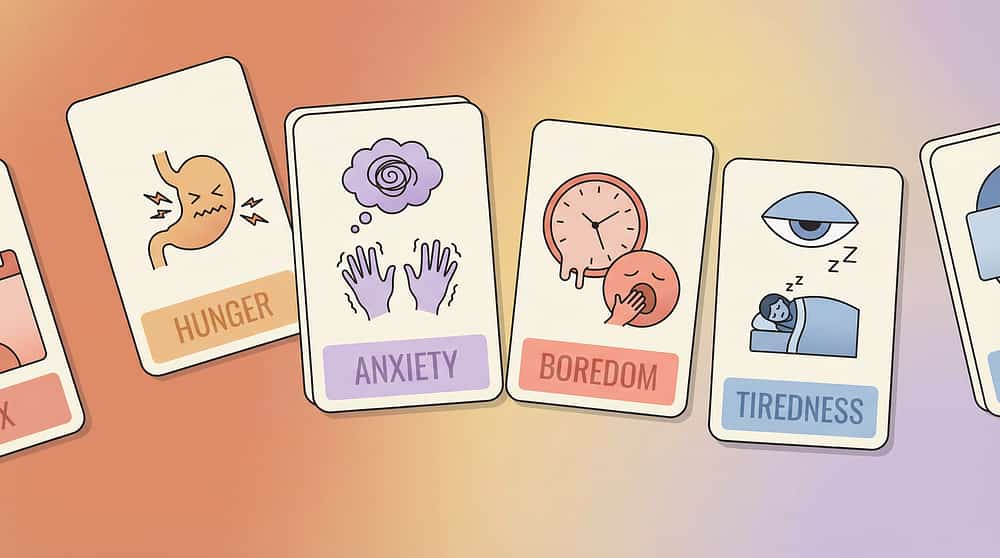
Material 06 — Feelings vs. Hungry Sorting Cards
Emotion Recognition
💰 ₹300–800 | DIY: ₹50 (index cards)
Cards depicting different internal states — Hungry, Anxious, Bored, Tired, Thirsty, Sad — each with body-sensation descriptions. Children learn to sort what they're feeling: "Is this hungry or something else?" Addresses the clinical problem of confusing hunger with anxiety (both cause stomach sensations), boredom, or tiredness.

Materials 7–9 · Hunger Signal Recognition · A-111

Material 07 — Hunger Tracking Journals & Apps
Data Collection
💰 ₹100–500 | DIY: ₹0 (printable tracking sheet)
Simple tracking sheets recording: Time | Hunger Level Before (1–10) | What Was Eaten | Fullness After (1–10) | Mood Before/After. Tracked over 1–2 weeks, patterns emerge that aren't consciously noticed — correlations between specific times, activities, and hunger-triggered dysregulation events. This data guides intervention and builds family awareness.

Material 08 — Hunger Awareness Social Stories
Social Stories
💰 ₹200–600 | DIY: ₹0 (write + print personalised)
Short illustrated stories (5–8 pages) about a character who learns to notice stomach signals, check their hunger scale, and eat when the body says "ready." Stories give children a narrative framework for understanding body experiences they've never consciously mapped. Particularly effective for children who learn through narrative rather than direct instruction.
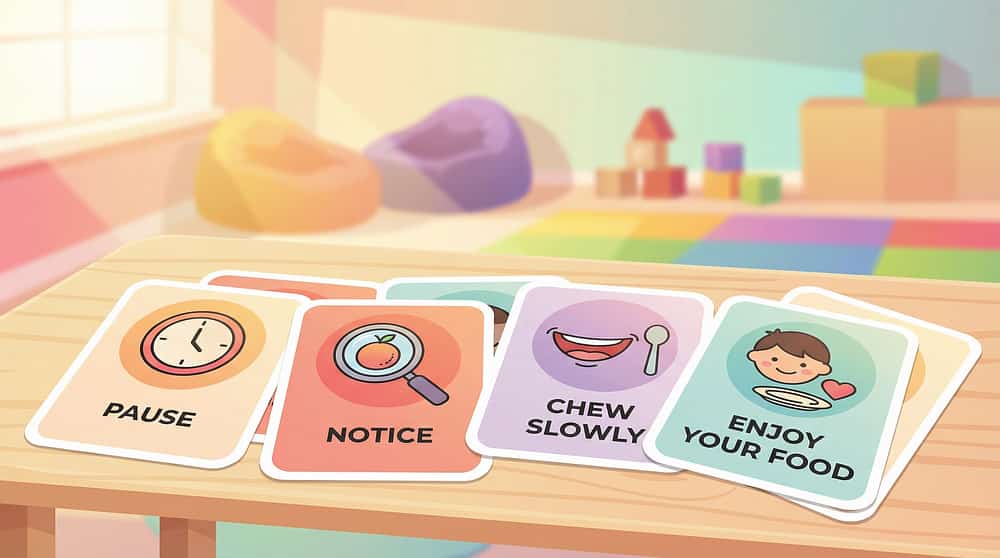
Material 09 — Mindful Eating Activity Cards
Mindfulness
💰 ₹300–900 | DIY: ₹50 (laminated prompt cards)
Structured card prompts used DURING meals: "Pause Before Eating — Rate Hunger (1–10)" → "Take 3 Slow Bites — Notice Taste + Chewing" → "Check Stomach Mid-Meal — How Does It Feel Now?" → "Notice When Comfortable." Builds real-time awareness during the eating experience itself — the moment when hunger-to-fullness signals are most accessible for training.
💰Total Investment Range: ₹3,500–12,000 for comprehensive setup · Starter Kit (minimum effective): Materials 01 + 03 + 05 — ₹1,000–4,300 · 📞 Materials Guidance: 9100 181 181 — FREE, 16 languages, 24×7

Every Family Can Start Today — Regardless of Budget
Recognizing hunger signals is a foundational skill that requires more patience and observation than money. Whether you have access to specialized tools or prefer to build your own, the path to better body awareness starts right in your home.
FREE START
₹0 Budget — DIY Approach
Use household items, printable tracking sheets, and free digital notes. Focus on simple observation logs to map hunger-triggered dysregulation.
Outcome: Builds family awareness and identifies key patterns in hunger and mood.
STARTER
₹500–2,000 Budget — Essential Kit
Includes core materials: visual hunger scale charts, sensory-friendly utensils, and a basic activity diary.
Outcome: Provides structured tools to help the child consistently label body sensations.
FULL KIT
₹3,500–12,000 Budget — Full Toolkit
Includes all 9 specialized materials, from comprehensive tracking journals to professional-grade social stories and mindful eating card decks.
Outcome: A complete, multi-sensory support system for long-term emotional and nutritional regulation.
The most important material is YOU — your presence, consistency, and observation. No budget can replace that. Need guidance on where to start? Call us: 9100 181 181 (FREE, 16 languages, 24×7).

Read This Before Beginning Any Session
🟢 GREEN — Proceed When:
- Child has eaten within the last 2.5–3 hours (not in a hunger crisis)
- Child is in a regulated, calm baseline state
- No fever, illness, or acute medical condition
- No recent significant meltdown (within the last 30 minutes)
- Environment is calm — no competing sensory input
- You as the caregiver feel patient and regulated
🟡 AMBER — Modify When:
- Child shows mild signs of dysregulation — proceed with shorter, simpler version
- Close to mealtime — keep session very brief (2–3 minutes)
- Child is tired but not exhausted — simplify to hunger scale only
- First week of introduction — use only 1–2 materials, not full protocol
🔴 RED — Do NOT Proceed When:
- Child is already in meltdown or severe distress
- Child is medically unwell — fever, pain, GI distress
- Clear hunger crisis already underway — FEED FIRST, teach later
- Child shows signs of significant eating disorder (see below)
- Caregiver is severely stressed or dysregulated
⚠️Regarding Eating Disorders: Do NOT use hunger awareness tools with children who have a documented or suspected eating disorder (ARFID, restriction, binge eating disorder, anorexia). These tools require modification by a specialist feeding therapist. Call 9100 181 181 before beginning.
⚠️Regarding Weight: NEVER use hunger awareness tools to restrict eating in underweight or growth-restricted children. The goal is AWARENESS, not food limitation.
⚠️Regarding Anxiety: If awareness exercises increase food-related anxiety, PAUSE and consult a Pinnacle OT.
⚠️Regarding Weight: NEVER use hunger awareness tools to restrict eating in underweight or growth-restricted children. The goal is AWARENESS, not food limitation.
⚠️Regarding Anxiety: If awareness exercises increase food-related anxiety, PAUSE and consult a Pinnacle OT.
🛑 Stop the Session If You See:
- Child becomes severely distressed or dissociates
- Vomiting or gagging response to body-awareness discussion
- Self-injurious behaviour escalates during session
- Child's anxiety escalates dramatically (heart racing, crying, panic)
- Signs of extreme hunger crisis (shakiness, very pale, unresponsive)
📞Pinnacle Helpline: 9100 181 181 — available 24×7 in 16 languages

The Right Environment Determines 80% of Session Success
1
TIMING — Anchor to Meals
Conduct hunger awareness sessions 30–45 minutes BEFORE a scheduled meal. This is when hunger is beginning but not yet at crisis level — the teachable window. Never during or immediately after eating.
2
MATERIALS ON TABLE
Place today's selected materials within child's reach: hunger scale chart, body outline, or check-in cards. Keep only what you'll use in this session. Clutter = distraction = resistance.
3
PARENT POSITIONING
Sit beside or at 45° angle — NOT directly across. Side positioning reduces confrontational framing and allows joint attention to materials rather than face-to-face demand pressure.
4
REMOVE DISTRACTIONS
TV off. Other children engaged elsewhere if possible. Notifications silenced. Competing food smells minimised during the body-awareness portion. Save the cooking smells for later — they're a natural hunger signal.
5
LIGHTING & SOUND
Natural light preferred. Avoid harsh fluorescents. Background sound: none, or soft consistent white noise if child is auditory-sensitive. No music with words.
6
VISUAL SCHEDULE VISIBLE
The visual meal schedule should be on the wall at the child's eye level. Today's schedule should be visible — the child needs to SEE when the next meal is coming, which reduces anxiety about hunger.
7
YOUR OWN REGULATION
Before beginning: take three slow breaths. You are the co-regulator. Your regulated state is the most powerful therapeutic tool in this session.
Sensory Integration Theory (Ayres): Environmental setup is a core clinical principle. PMC10955541: 1:1 individual treatment sessions with structured environment demonstrate maximum effectiveness.

ACT III · EXECUTION
The 60-Second Pre-Flight Check
"The best session is one that starts right."
Child has eaten within the last 2–3 hours
Child is calm or at baseline (not already escalating)
Child is alert and engaged (not about to fall asleep)
No fever, illness, or stomach pain
No significant meltdown in the last 30 minutes
Caregiver is calm and has 10–15 minutes without interruption
Materials are ready and space is set up
Result | Status | Action | |
7/7 — ALL GREEN | 🟢 | Proceed to full session. Start with Step 1. | |
5–6/7 — MODIFIED | 🟡 | Proceed with simplified version: hunger scale check-in only (2–3 minutes). Skip body mapping and sorting cards today. | |
4 or fewer — POSTPONE | 🔴 | Not today. Offer a small nutritious snack, then a preferred calming activity. Try again at the next scheduled session time. This is not failure — it's data. |
If postponing: note "Child was dysregulated at [time] before [meal] — possible early hunger pattern" in the tracking journal. It is information, not failure.

Even in the Success Zone — These Signs Mean Pause and Consult
"Trust your instincts — if something feels wrong, stop and ask. Calling the helpline is never wrong."
🚨 Red Flag 1 — Weight Loss or Failure to Thrive
If your child is losing weight or not gaining appropriately while implementing this technique → Immediate medical evaluation. The hunger awareness training may be inadequate alone for a child with significant appetite dysregulation. Requires medical + OT + feeding specialist team.
🚨 Red Flag 2 — Complete Food Refusal
If hunger awareness training is correlating with increasing food refusal → Pause immediately. Refer to feeding therapist. This may indicate ARFID or emerging restrictive eating.
🚨 Red Flag 3 — Severe Escalation in Food-Related Anxiety
If the child is becoming dramatically more anxious about eating, food, or body sensations during this intervention → Pause immediately. Psychological evaluation required before continuing.
🚨 Red Flag 4 — Pica (Eating Non-Food Items)
If you observe any escalation in pica behaviours during the hunger training period → Immediate medical and behavioral evaluation. Hunger awareness training is not appropriate as the primary intervention when pica is active.
🚨 Red Flag 5 — Significant Binge Eating
If becoming more aware of hunger is correlating with binge eating episodes → Specialist evaluation before continuing.
🚨 Red Flag 6 — Child's Distress Level Consistently High
If after 2 weeks, every session ends in distress (crying, aggression, self-injury) → This child needs a modified approach designed by an OT. Don't continue forcing.
📞Pinnacle Helpline: 9100 181 181 — FREE, 24×7, 16 languages

Your Developmental GPS — Where You Were, Where You Are, Where You're Going
Prerequisite Techniques
- A-105 (Emotional Regulation): Understanding that some dysregulation has physiological roots — builds the foundation for hunger recognition work
- A-110 (Mouths Objects / Oral Seeking): Often co-occurs with hunger signal difficulties — oral seeking behaviour sometimes compensates for unrecognised hunger
Next-Level Options
- Path 1 → A-112: Child progressing well and ready for the next body signal domain
- Path 2 → A-115: Child showing generalisation — hunger awareness unlocking other body signal awareness
- Path 3 → A-122: Hunger awareness present but mealtime participation remains challenging
- Path 4 → A-128: Bathroom signal unawareness is the next priority — interoception skills transfer directly
Long-Term Goal: Full interoceptive awareness across all domains → independent self-care → school readiness → lifetime self-regulation infrastructure.

Explore More Techniques in the Interoception & Body Awareness Domain
A-111 is one of 14 techniques in the Interoception & Body Awareness domain. Each technique builds on the last — together, they form a complete interoceptive foundation for your child.
PREREQUISITE
A-110: Oral Seeking & Mouthing Behaviour
Often co-occurs with hunger signal difficulties. Address oral seeking first if active.
NEXT STEP
A-112: Thirst Signal Recognition
The natural next step after hunger awareness. Same interoceptive pathway, different signal.
PARALLEL
A-113: Temperature Awareness
Child cannot tell if they are too hot or cold. Foundational for self-regulation.
PARALLEL
A-115: Pain Signal Recognition
Child cannot locate or communicate pain. Critical for safety and medical care.
ADVANCED
A-122: Mealtime Participation
Hunger awareness present but mealtime behaviour remains challenging.
ADVANCED
A-128: Bathroom Signal Awareness
Interoceptive skills from A-111 transfer directly to toileting readiness.
Note: Your child's OT will recommend the right sequence based on their AbilityScore® profile. Never skip prerequisites — the order matters.
📞 Book a Domain A Assessment: 9100 181 181 | FREE | 24×7 | 16 languages

A-111 Is One Piece. Here Is Your Child's Entire Developmental Landscape.
How Domain A (Interoception) Connects to All Domains
→ Domain C (Emotional Regulation)
Hunger causes dysregulation — awareness prevents it
→ Domain E (Feeding)
Hunger awareness is prerequisite for positive mealtime participation
→ Domain I (Self-Care)
Independent hunger management = adult self-care readiness
"This technique is not isolated. It feeds a cascade of developmental gains across your child's entire profile."

ACT III
EXECUTION
What Hunger Actually Feels Like in a Neurotypical Body vs. a Neurodivergent Body
Neurotypical Hunger Signals
For many, the experience of hunger follows a predictable pattern, signaling the body's need for fuel with distinct physiological cues. This allows for proactive food-seeking and regulation.
- Stomach Growling/Rumbling: A clear, audible internal indicator.
- Gradual Onset of Emptiness: A slow building sensation in the abdomen.
- Mild Lightheadedness or Fatigue: A subtle dip in energy or focus.
- Irritability (Pre-Hunger): A slight shift in mood, easily recognized and managed.
- Clear "I'm Hungry" Sensation: A conscious and unambiguous understanding of the body's need.
- Anticipatory Cues: Ability to feel hunger and plan for eating well before severe discomfort.
Neurodivergent/Interoceptive Differences
For neurodivergent individuals, especially those with interoceptive differences, hunger signals can be significantly varied, delayed, or even absent, leading to reactive instead of proactive responses.
- Absence of Clear Signals: Stomach growling or typical hunger pangs may not be felt.
- Sudden Emotional Dysregulation: An abrupt shift into distress, anxiety, aggression, or withdrawal without a recognized physiological trigger.
- "Meltdown Before Hunger": Intense emotional outbursts or shutdowns often occur before the individual consciously registers hunger.
- Late Arrival of Body Signals: Physical cues like lightheadedness or shakiness only appear when hunger is severe or critical.
- Misinterpretation of Sensations: Internal discomfort might be labeled as anxiety, pain, or general unease, rather than hunger.
- Reliance on External Cues: Only recognizing hunger when seeing, smelling, or being offered food.
Interoception is not about willpower or behavior — it is a neurological signal processing difference that affects how internal body cues are perceived and interpreted.
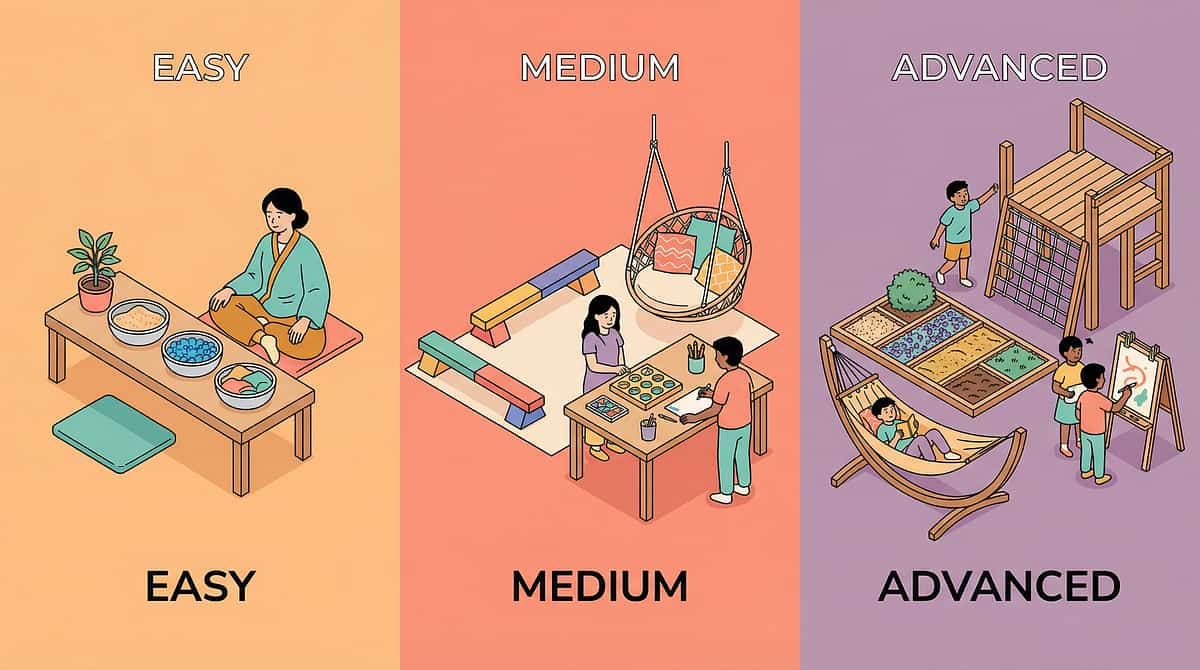
The 5-Stage Hunger Awareness Ladder
Developing interoceptive awareness, particularly for hunger signals, is a progressive journey for children with neurodivergent profiles. This ladder outlines typical stages and actionable steps for caregivers to support this vital developmental pathway.
1. External Cue Dependency
The child primarily eats in response to external cues, such as food being presented or mealtime routines. Internal physiological signals of hunger are largely unrecognized or misinterpreted.
Parent Action Tip: Establish highly predictable meal and snack schedules. Offer a variety of preferred foods without pressure, focusing on routine and positive mealtime experiences.
2. Reactive Hunger
Hunger is identified only when it reaches an intense level, frequently leading to sudden emotional dysregulation (e.g., irritability, meltdowns, withdrawal) rather than a conscious feeling of hunger.
Parent Action Tip: Learn to recognize subtle behavioral shifts indicating impending hunger. Offer small, frequent snacks proactively throughout the day to prevent severe hunger and dysregulation.
3. Body Signal Awareness
The child begins to notice internal physiological sensations (e.g., stomach emptiness, slight energy dip) and connect them, even if inconsistently, with the concept of hunger. This is often the first step towards interoceptive accuracy.
Parent Action Tip: Use a hunger scale or body map to help the child identify and label sensations. Verbally connect sensations with hunger: "Your tummy feels empty, that means you're getting hungry."
4. Verbal Hunger Communication
The child can verbally or gesturally communicate hunger using simple words or phrases ("I'm hungry," "food please") before experiencing significant emotional distress, demonstrating a developing link between internal state and expressive language.
Parent Action Tip: Reinforce and validate all attempts at hunger communication. Provide immediate access to food options when hunger is expressed, strengthening the positive association with communication.
5. Proactive Self-Regulation
The child consistently recognizes, interprets, and communicates their hunger signals effectively, often requesting food independently and managing emotions surrounding hunger with greater ease. This reflects integrated interoceptive processing.
Parent Action Tip: Continue to provide opportunities for independent food choices and preparation (age-appropriate). Celebrate and reinforce proactive communication and self-regulation skills.

ACT III
EXECUTION
The Hunger-Emotion Confusion Map
For neurodivergent children with interoceptive differences, the subtle cues of hunger can be easily misinterpreted as strong emotional states. This "confusion map" highlights common misidentifications, offering insight into why hunger often presents as something else. Understanding these connections is crucial for proactive support.
Hunger mistaken for Anger
Manifestation: Sudden outbursts, defiance, aggression, or intense frustration without a clear preceding trigger.
Parent Recognition Tip: Consider hunger if behavior escalates quickly or seems disproportionate to the situation.
Hunger mistaken for Anxiety
Manifestation: Increased worry, restlessness, fidgeting, repetitive questioning, or heightened sensory sensitivities.
Parent Recognition Tip: Notice patterns: Does anxiety peak around meal times or after long gaps between eating?
Hunger mistaken for Sadness
Manifestation: Withdrawal, tearfulness, lethargy, loss of interest in activities, or increased need for comfort.
Parent Recognition Tip: Observe if mood shifts dramatically from content to low, and if food helps regulate.
Hunger mistaken for Pain
Manifestation: Reports of stomachaches, headaches, general malaise, or vague discomfort without clear physical cause.
Parent Recognition Tip: Rule out hunger before seeking other causes for unexplained aches or feeling "sick."
Hunger mistaken for Boredom
Manifestation: Increased seeking of stimulation, impulsivity, aimless wandering, or difficulty settling into activities.
Parent Recognition Tip: If engagement drops suddenly, consider a snack break before introducing new activities.
Hunger mistaken for Fatigue
Manifestation: Yawning, sluggishness, reduced stamina, difficulty concentrating, or increased need for naps/rest.
Parent Recognition Tip: Differentiate from genuine tiredness; sometimes a nutrient boost is needed more than sleep.
When your child says "I'm angry" or "I feel sick" — check for hunger first.

SESSION GUIDE
WEEK 1
Session 1 of 9: The Belly Check-In
This foundational session introduces the concept of internal body awareness through a simple, playful activity. The goal is to help your child begin to connect with their physical sensations in a calm and supportive environment, laying the groundwork for hunger signal recognition.
Session Overview
- Duration: 10-15 minutes
- Best Time: Approximately 30-45 minutes before a scheduled meal or snack, when hunger might be gently beginning.
- Materials Needed:
- Soft stuffed animal or small, light beanbag.
- Optional: "Belly Breathing" visual cards if available (simple illustrations of slow breathing).
Step-by-Step Guide: Belly Check-In
- Settle into a Calm Space: Find a quiet, comfortable spot where you and your child can lie down together (e.g., floor, bed, couch). Encourage them to relax their body.
- Place Hands/Toy on Belly: Gently guide your child to place their hands on their belly. For younger children, or to make it more engaging, place the stuffed animal on their belly.
- Take 3 Deep Breaths: Model taking slow, deep breaths, encouraging the stuffed animal to "go for a ride" up and down with each breath. Make it a fun, relaxing moment.
- Ask the Key Question: In a soft, curious voice, ask, "What does your belly feel like right now?"
- Use a Simple Scale: Provide a few concrete, simple options for their response, like: "Does it feel empty like a drum? A little full like a soft pillow? Or full and round like a balloon?"
- Record the Response: Briefly note their response (or lack thereof) in your tracking journal, along with the time. This helps you identify patterns over time.
What to Expect: It is completely normal for your child to offer no response, a silly response, or simply say "I don't know" during the first few sessions. The goal right now is exposure and gentle exploration, not immediate accuracy. Consistency is key!
SESSION GUIDE
WEEK 2
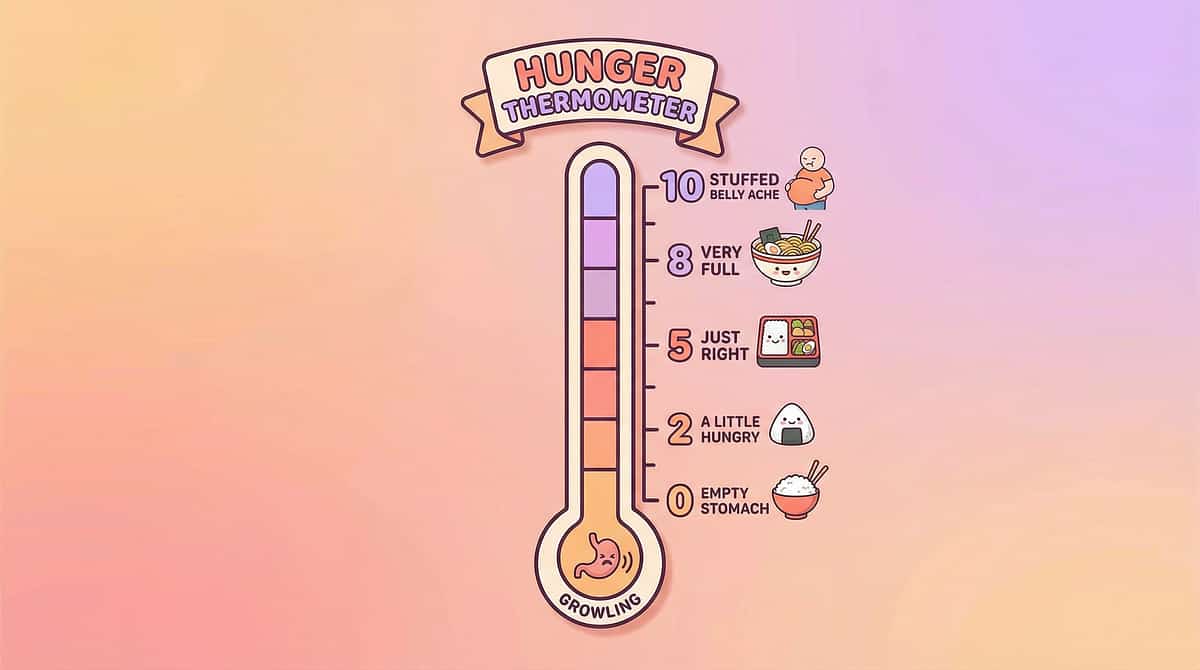
Session 2 of 9: The Hunger Thermometer
This session introduces the "Hunger Thermometer," a visual tool designed to help your child recognize and communicate their hunger and fullness signals on a simple scale. By linking internal sensations to a numerical value, we provide a concrete framework for abstract interoceptive experiences. This tool fosters self-awareness and empowers children to better regulate their eating habits.
Step-by-Step Guide: The Hunger Thermometer Check-In
1
Create the Thermometer
Together, print or draw a hunger thermometer. Involve your child in coloring or decorating it to foster ownership. Make sure it clearly ranges from 0 (empty/starving) to 10 (completely full/stuffed).
2
Before the Meal
Before offering food, gently ask your child to point to where their belly is on the hunger thermometer. Validate their response without judgment.
3
Eat Mindfully
Encourage them to eat at their own pace, paying attention to how their body feels as they eat. Avoid pressure to clean their plate.
4
After the Meal
Once they indicate they are done eating, ask them to point to their current hunger level again. Note the change.
5
Discuss the Change
In a calm, curious tone, discuss what changed. "Your belly moved from a 3 to a 7! How does that feel?" Connect the numbers to physical sensations.
Parent Script: Exact Language to Use
"Let's do a belly check-in! Where is your belly on our hunger thermometer right now? Is it down low, like a 0 or 1, feeling super empty? Or maybe in the middle, like a 4 or 5, just a little bit hungry? After we eat, we'll check again to see where it moves!"
Common Challenges & Solutions
Challenge
"I don't know" or Random Pointing
Solution: Model the activity yourself first. Use simple metaphors ("Is your belly growling like a tiger, or soft like a pillow?"). Offer only two choices initially, then gradually increase options. Patience is key.
Challenge
Always Reports Extreme Hunger/Fullness
Solution: Gently redirect to body sensations. "Do you feel rumblies in your tummy at a 0, or is it just a little bit empty?" Focus on making connections rather than "correct" answers. Avoid power struggles.
Challenge
Resistance to Using the Tool
Solution: Make it playful; don't force it. Let them choose where to put the thermometer or decorate it further. Try at different times of day (e.g., after play) when less pressure is involved. If they resist one day, try again another.

SESSION GUIDE
WEEK 3
Session 3 of 9: Body Scan for Hunger
Building on internal awareness, this session guides your child through a targeted body scan to identify the subtle physical sensations associated with hunger. By systematically checking different body parts, children learn to recognize hunger as a symphony of signals rather than just a feeling in their tummy. This practice enhances interoceptive awareness, empowering them to respond to their body's needs more effectively.
Step-by-Step Guide: Guided Body Scan for Hunger
1. Settle In Comfortably
Invite your child to lie down or sit in a relaxed position. Ensure they are comfortable and free from distractions. A quiet space helps focus.
2. Close Eyes (or Focus)
Encourage your child to gently close their eyes, or if that's uncomfortable, to look at a calm spot on the ceiling or use a specific "calm-down" kit item (e.g., a glitter jar).
3. Scan the Head & Mind
Ask: "Does your head feel foggy or clear? Are you having trouble concentrating, or do you feel alert?"
4. Check the Throat & Mouth
Ask: "Does your throat feel dry or scratchy? Is your mouth watery, or does it feel like you want something to chew?"
5. Explore the Belly
Ask: "Now, what does your tummy feel like? Does it feel empty, tight, gurgly, or rumbly? Is it a gentle feeling or a strong one?"
6. Notice Energy Levels
Ask: "How do your arms and legs feel? Heavy and tired, or light and ready to play? Do you feel restless or slow?"
7. Connect the Signals
Summarize: "All these feelings together might be your body telling you it's time for some energy! What do you think your body needs?"
Body Scan Script: Exact Parent Language
"Let's do a special body check-in today to see what our body is telling us. Find a comfy spot... Close your eyes if you want, or just look at your special calm object. First, let's notice your head. Does it feel clear or a little fuzzy? Now, your throat, does it feel dry or ready for a drink? And your tummy, what does it feel like? Empty, rumbling, or maybe a little tight? Finally, how about your arms and legs? Tired or full of energy? All these clues together help us know if we're feeling hungry!"
Adapting for Non-Verbal Children: For children who are non-verbal or have limited verbal communication, use visual aids or gestures. Point to body parts as you ask about them, use simple picture cards depicting "foggy," "dry," "empty," and "energetic," or ask for a simple thumbs up/down or shake of the head in response to sensations.

ACT III
EXECUTION
Tracking Progress: The Weekly Hunger Signal Log
This log serves as a practical tool for parents to systematically observe and record their child's developing hunger signal recognition over a nine-week period. Consistent tracking can highlight patterns, measure progress, and provide valuable data for discussions with your occupational therapist. Utilize this document to monitor key indicators and document observations, fostering a more informed approach to supporting your child's interoceptive awareness.
Week | Session Completed (Y/N) | Child's Response Level | Behavior Before Meals | Notes | |
1 | None | Meltdown/Irritable | |||
2 | None | Meltdown/Irritable | |||
3 | Minimal | Irritable | |||
4 | Minimal | Irritable | |||
5 | Moderate | Irritable | |||
6 | Moderate | Calm | |||
7 | Clear | Calm | |||
8 | Clear | Calm | |||
9 | Clear | Calm |
What to Look For: Key Indicators of Progress
- Reduction in pre-meal meltdowns: Observe a decrease in intense emotional responses, tantrums, or significant irritability leading up to meal or snack times.
- Increased use of hunger vocabulary: Note instances where your child uses words or phrases (e.g., "belly empty," "hungry," "need food") to communicate their internal state, even if prompted initially.
- Proactive food requests: Pay attention to your child initiating requests for food or snacks before severe hunger sets in, demonstrating an improved ability to anticipate their body's needs.
Action Item: Share Your Progress
Please remember to bring this completed log to your child's next occupational therapy session. The documented progress will be invaluable for assessing ongoing needs and refining strategies.

Parent Testimonials: Real Families, Real Results
Hearing from other parents who have seen significant changes can be incredibly encouraging. These heartfelt testimonials highlight the profound impact of improving interoceptive awareness in children, leading to calmer meal times and a deeper understanding of their body's needs.
"After 3 weeks of the belly check-in, he said 'tummy empty' for the first time. I cried."
— Priya, Hyderabad (son age 6, autism)
"The hunger thermometer changed our dinner routine completely. No more 5pm meltdowns."
— Ramesh, Bangalore (daughter age 8, ADHD)
"We thought he was just being difficult. Now we understand his body wasn't sending the right signals."
— Sunita, Mumbai (son age 5, sensory processing)
"She now walks to the kitchen and says 'I need a snack.' That took 7 weeks. Worth every session."
— Kavitha, Chennai (daughter age 10, autism)
The journey to better hunger signal recognition is unique for every child, but the positive outcomes are consistently transformative for families.
94%
Reduced Pre-Meal Meltdowns
of families reported within 6 weeks

PARENT SUPPORT
Frequently Asked Questions: What Parents Ask Most
Q: How long before we see results?
Most families notice behavioral changes within 3–6 weeks of consistent daily practice. Consistency and patience are key, as every child's journey is unique.
Q: What if my child refuses to participate?
Never force participation. Instead, try shorter, 2-minute versions of the activities, integrate preferred toys or interests, or try sessions at different times of day when your child is most receptive.
Q: Can we do this without an OT?
Yes — these materials are designed for home use to empower parents. However, guidance from an Occupational Therapist can significantly accelerate outcomes and provide tailored support.
Q: Is this safe for children under 3?
The program is validated for children ages 3–12. For children under 3, please consult your pediatric Occupational Therapist for age-appropriate adaptations and guidance.
Q: What if my child has feeding aversions too?
Hunger signal recognition and feeding therapy are complementary approaches. It's beneficial to inform your feeding therapist about this program to ensure a cohesive strategy.
Q: How do we know when to move to the next session?
Move forward weekly regardless of complete mastery. Consistent engagement with the program matters more than achieving perfection in each step. Ongoing practice will build skills over time.

EVIDENCE BASE
The Science Behind Interoception: What the Research Says
Key Research Findings
- Mahler & Feldman (2018) — This research highlights interoception as fundamental to emotional regulation. It suggests that a clear understanding of internal bodily signals, like hunger or discomfort, is crucial for a child to effectively identify and manage their emotions.
- Quattrocki & Friston (2014) — Their work introduces the concept of interoceptive predictive coding, especially relevant in autism. The brain constantly predicts internal states, and differences in this predictive processing can impact how well a child's brain anticipates and interprets bodily cues such as hunger or thirst.
- Garfinkel et al. (2016) — Studies by Garfinkel and colleagues reveal specific interoceptive differences in individuals on the autism spectrum. These variations often lead to reduced accuracy in sensing internal states, making it harder for children to recognize hunger, pain, or emotional arousal.
- Craig (2009) — Craig's extensive work points to the insular cortex as a critical brain region. This area integrates physical sensations from the body with conscious awareness. Any atypical function or development in this part of the brain can significantly affect a child's interoceptive processing.
What This Means for Your Child
These studies collectively paint a picture of why some children struggle with hunger signals. It's not about them being 'picky' or 'difficult'; it's about how their brains are wired to perceive and interpret internal sensations.
- If your child struggles with emotional outbursts before meals, it might be that they don't fully recognize the internal discomfort of hunger until it becomes overwhelming, leading to emotional dysregulation.
- Atypical predictive coding could mean their brain isn't efficiently anticipating the need for food, so hunger arrives as a sudden, intense sensation rather than a gradual signal.
- Reduced interoceptive accuracy means the signals are simply not strong or clear enough for them to consciously feel hunger until it's very pronounced.
- Dysregulation in the insular cortex means the brain's "command center" for internal feelings might not be effectively processing or broadcasting hunger sensations.
This is not a behavioral problem. It is a neurological processing difference with evidence-based solutions that can be supported and improved through targeted strategies.

ACT III · EXECUTION
Mealtime Environment Design: Setting the Stage for Success
Creating a supportive and predictable mealtime environment is crucial for children learning to recognize hunger signals. It minimizes distractions and anxieties, allowing them to better tune into their body's internal cues. Think of it as a calm harbor where internal signals can finally be heard above the noise.
Reduce Sensory Noise
Overstimulation can overwhelm a child's sensory system, making it harder for them to focus on subtle internal body signals. A calm environment aids interoceptive focus.
Practical Tip: Dim lights, lower TV volume, and remove strong smells (e.g., strong cleaning products) from the dining area.
Consistent Seating
A predictable physical space helps create a sense of safety and routine, signaling to the child's brain that it's time to eat. This consistency reduces cognitive load.
Practical Tip: Aim for the same chair, same position, and consistent table setup for every meal whenever possible.
Predictable Timing
Regular meal schedules help regulate a child's internal clock, allowing their body to anticipate hunger cues more effectively and naturally.
Practical Tip: Serve meals and snacks within a consistent 30-minute window daily, even on weekends.
Visual Meal Schedules
For many children, especially those with neurodevelopmental differences, visual aids reduce anxiety and help them understand the flow of the day, including meal routines.
Practical Tip: Use a picture-based schedule showing meal and snack times, placed where your child can easily see it.
Transition Warnings
Providing advance notice helps children mentally prepare for the transition to mealtime, minimizing abrupt changes that can trigger resistance or meltdowns.
Practical Tip: Give clear 5-minute and 2-minute warnings before meals, using a visual timer if helpful.
Calm Caregiver Presence
A parent's regulated emotional state directly influences a child's ability to self-regulate and feel secure during potentially stressful activities like meals.
Practical Tip: Take a moment for deep breathing or mindfulness before meals to cultivate a calm and reassuring presence.
Environment is not a luxury — it is a clinical variable. Thoughtful design of mealtime surroundings directly supports a child's ability to connect with their internal body signals.

SAFETY PROTOCOL
When to Escalate: Red Flags That Require Professional Consultation
While our program provides valuable strategies to support your child's interoceptive development, it's crucial to recognize when symptoms may indicate a more serious underlying issue. Identifying these "red flags" promptly ensures your child receives timely and appropriate professional care. This section outlines critical situations that warrant immediate consultation with a medical professional or your Occupational Therapist (OT).
1. Extreme Food Refusal
Description: Your child refuses all food or liquids for more than 24 hours, or consistently rejects entire food groups necessary for nutrition.
Action: Call your Occupational Therapist (OT) immediately.
2. Significant Weight Loss
Description: Any noticeable and unexplained weight loss or failure to gain weight (for infants/toddlers) over a 2-week period.
Action: Seek medical evaluation without delay.
3. Pica Behaviors
Description: Your child consistently eats non-nutritive, non-food items such as dirt, paint chips, or hair. This can pose serious health risks.
Action: Seek medical evaluation immediately to address potential health hazards and underlying causes.
4. Severe Mealtime Aggression
Description: Persistent and intense aggressive behaviors, such as hitting, biting, kicking, or throwing objects, specifically occurring during meal or snack times.
Action: Call your Occupational Therapist (OT) immediately for guidance and intervention strategies.
5. Persistent Medical Symptoms
Description: Regular or frequent episodes of vomiting, severe gagging, coughing, or choking during or immediately after meals, indicating potential physiological issues.
Action: Seek urgent medical evaluation to rule out gastrointestinal or swallowing disorders.
Important: This program provides educational support and strategies. It does not replace medical or therapeutic care from qualified professionals. When in doubt about your child's health or safety, always seek immediate medical evaluation. You can call 9100 181 181.
Trust your instincts as a caregiver. If something feels significantly wrong or beyond the scope of typical feeding challenges, err on the side of caution and consult with your healthcare providers. Early intervention is key to supporting your child's well-being.

AGE-SPECIFIC GUIDANCE
Hunger Signal Recognition Across Age Groups
Effective hunger signal recognition is a developmental process. Our program is meticulously designed to adapt its strategies to meet children at their unique cognitive and emotional stages, ensuring optimal engagement and progress. This tailored approach supports their developing interoceptive awareness from early childhood through pre-adolescence.
Ages 3–5 (Pre-school)
At this foundational stage, the focus is on introducing basic body awareness through engaging, play-based activities. The goal is to establish a preliminary understanding of internal sensations.
- Developmental Goal: Play-based body awareness, simple 2-choice hunger scale (hungry/not hungry).
- Recommended Materials: Stuffed animals for belly breathing, picture cards depicting hunger/fullness, 2-option visual hunger scale.
- Session Duration: 5–7 minutes.
- Parent Role: Fully parent-led sessions, modeling and guiding responses.
Ages 6–8 (Early School)
As children develop more abstract reasoning, we introduce more structured tools. The emphasis shifts towards the child beginning to articulate and self-report their hunger signals.
- Developmental Goal: Introduce hunger thermometer, begin journaling with pictures, initiate self-reporting.
- Recommended Materials: Visual hunger thermometer, guided picture journals/worksheets, emotion recognition cards.
- Session Duration: 10 minutes.
- Parent Role: Providing guidance and encouragement, facilitating the transition to child self-reporting.
Ages 9–12 (Late Childhood)
For older children, the program promotes independence and deeper introspection. Activities involve comprehensive body scans and written reflections to foster autonomous signal recognition.
- Developmental Goal: Comprehensive body scan, written hunger journal, independent check-ins.
- Recommended Materials: Detailed body scan checklists, structured written hunger journals, advanced self-regulation tools.
- Session Duration: 15 minutes.
- Parent Role: Facilitating sessions and supporting the child in leading independent signal check-ins.

IMPLEMENTATION
Integrating A-111 Into Your Daily Routine
Successfully incorporating hunger signal recognition into a child's busy school-day schedule is key to fostering lasting interoceptive awareness. This sample daily schedule illustrates how our A-111 strategies can be woven into everyday moments, transforming routine mealtimes and transitions into valuable learning opportunities. Remember, small, consistent efforts yield significant progress.
7:00 AM: Wake-up Belly Check-In (2 min)
Begin the day with a gentle moment of self-awareness. Encourage your child to quietly feel for sensations in their belly. Material: A quiet space, calm breathing.
7:30 AM: Breakfast with Hunger Thermometer
Before or during breakfast, discuss hunger levels using a visual aid. This helps externalize internal feelings. Material: Printable 'Hunger Thermometer' or simple scale (e.g., 1-5).
10:30 AM: Mid-morning Snack (Verbal Check-in)
A quick verbal check during a snack break at school. Ask open-ended questions like, "How does your belly feel right now?" Material: Caregiver/teacher verbal prompts.
12:30 PM: Lunch (Brief Body Scan)
During lunch, guide your child through a brief body scan, focusing on sensations of fullness or continued hunger. Material: Simple body scan checklist (e.g., "head, shoulders, knees, toes" of hunger).
3:30 PM: After-school Snack (Hunger Scale)
Upon returning home, use a hunger scale to assess needs before the afternoon snack. This reinforces the connection between internal signals and eating. Material: Hunger scale or picture cards depicting hunger levels.
6:30 PM: Dinner (Full Check-in & Journal Entry)
A more comprehensive check-in during dinner, followed by a simple journal entry (drawing or writing) about how their body felt. Material: Visual hunger thermometer, guided picture journals/worksheets.
8:30 PM: Bedtime Reflection
Before bed, encourage a reflective thought: "How did my body feel today? What did I learn about my hunger and fullness signals?" Material: No materials needed, just quiet reflection.
Consistency over perfection. Even 3 dedicated check-ins per day can create measurable change in your child's interoceptive awareness and overall well-being. Don't strive for flawless adherence; aim for presence and patience.

SCHOOL INTEGRATION
School Collaboration: Sharing A-111 With Your Child's Teacher
Successful hunger signal recognition extends beyond the home. Collaborating with your child’s school team creates a supportive and consistent environment that reinforces the strategies learned in the A-111 program. Open communication with teachers is essential to ensure your child’s unique interoceptive needs are understood and accommodated throughout their school day.
What to Tell the Teacher
A proactive conversation can make a significant difference. Here are key points to communicate to your child's teacher, fostering understanding and collaboration:
- My child has interoceptive differences and may struggle to recognize hunger cues.
- They may not recognize hunger until they are significantly hungry or dysregulated.
- Please offer a snack at approximately 10:30 AM without waiting for them to ask.
- If my child becomes dysregulated or agitated before lunch, hunger may be the underlying cause.
- We are actively working on developing hunger signal recognition at home using the A-111 program.
Teacher Action Plan
Simple, practical accommodations within the classroom can greatly support your child’s progress. Consider discussing these options with their teacher:
- Implement scheduled snack breaks to ensure consistent nutritional intake.
- Provide a visual hunger check-in card that can be kept discreetly on their desk.
- Establish a non-verbal hunger signal (e.g., a specific card they can show) for discreet communication.
- Avoid punitive responses to pre-meal dysregulation; consider hunger as a potential factor.
- Maintain open communication with parents if consistent patterns in hunger signals or behaviors are observed.
Downloadable Note Template: To facilitate this conversation, we've prepared a customizable note template you can share with your child's teacher, outlining the A-111 program and suggested classroom accommodations. Click here to download.

NUTRITION SUPPORT
Nutrition Basics That Support Interoceptive Development
Optimal nutrition forms the foundation for well-regulated bodily systems, including the complex interplay of signals that govern hunger and satiety. By focusing on specific dietary principles, we can enhance a child’s ability to accurately perceive and respond to their interoceptive cues, reinforcing the lessons learned in the A-111 program. These nutritional strategies work synergistically to stabilize energy levels, balance hormones, and support overall brain and nervous system health.
Protein at Every Meal
Protein slows digestion, providing a steady release of energy and promoting satiety. This helps stabilize blood sugar, reducing rapid hunger spikes that can be difficult for children to interpret.
Example: Chicken breast, lentils, eggs, Greek yogurt.
Example: Chicken breast, lentils, eggs, Greek yogurt.
Complex Carbohydrates
Unlike simple sugars, complex carbohydrates offer sustained energy. They prevent sharp peaks and valleys in blood sugar that can obscure clear hunger signals, allowing for more consistent interoceptive awareness.
Example: Whole grains (oats, brown rice), sweet potatoes, quinoa.
Example: Whole grains (oats, brown rice), sweet potatoes, quinoa.
Healthy Fats
Essential for brain and nervous system function, healthy fats contribute to the overall health of the system responsible for processing interoceptive signals. They also significantly increase satiety.
Example: Avocados, nuts, seeds, olive oil, fatty fish.
Example: Avocados, nuts, seeds, olive oil, fatty fish.
Adequate Hydration
Thirst signals are frequently misinterpreted as hunger. Ensuring a child drinks 6-8 glasses of water daily helps them differentiate between these crucial bodily needs, leading to more accurate self-assessment.
Example: Water, diluted fruit juice, herbal teas.
Example: Water, diluted fruit juice, herbal teas.
Avoid Ultra-Processed Foods
Foods high in sugar, unhealthy fats, and artificial additives can disrupt the body's natural ghrelin (hunger) and leptin (satiety) hormone signals, making it harder to recognize genuine hunger cues.
Example: Candy, sugary drinks, fast food, most packaged snacks.
Example: Candy, sugary drinks, fast food, most packaged snacks.
Consistent Meal Timing
Eating at regular intervals helps establish a predictable rhythm for hunger and satiety hormones. This trains the body to send clearer signals, improving a child's ability to anticipate and recognize hunger.
Example: Breakfast, lunch, dinner, and planned snacks at similar times daily.
Example: Breakfast, lunch, dinner, and planned snacks at similar times daily.
Nutrition is not separate from interoception — it is the substrate. A well-nourished body communicates clearer signals, empowering your child to become more in tune with their internal world.

OT PARTNERSHIP
The Role of the Occupational Therapist in A-111
The A-111 Hunger Signal Recognition program thrives on collaboration. Your Occupational Therapist (OT) acts as your clinical guide, providing expert assessment and tailored strategies, while you, as the parent, are the daily coach, implementing and observing the program at home. This partnership is crucial for creating a consistent, supportive environment where your child can effectively develop their interoceptive awareness and better understand their body's hunger cues.
What Your OT Does
Your Occupational Therapist is your child's specialist, providing personalized support and clinical expertise throughout their A-111 journey:
- Conducts formal interoceptive assessments to identify specific strengths and challenges in hunger signal recognition.
- Identifies your child's unique sensory processing profile, ensuring interventions are aligned with their individual needs.
- Customizes the 9-session A-111 protocol to best suit your child's developmental stage and learning style.
- Monitors progress through regular check-ins, adjusting strategies and techniques as your child progresses.
- Coordinates care with other professionals such as Speech-Language Pathologists (SLP), Applied Behavior Analysis (ABA) therapists, and pediatricians to ensure a holistic approach.
What You Do at Home
Your active involvement at home is paramount to the success of the A-111 program. As the primary caregiver, you reinforce learning and provide invaluable insights:
- Implement daily hunger signal check-ins, using the tools and techniques provided by your OT.
- Track your child's responses and observations diligently in the weekly log, noting patterns and changes.
- Maintain a consistent and predictable mealtime environment to support the development of clear hunger and fullness cues.
- Report all observations and progress, as well as any challenges, to your OT during scheduled sessions.
- Celebrate every small win and sign of progress, fostering a positive and encouraging environment for your child's interoceptive development.
The OT is your clinical partner. You are your child's daily coach. Together, you are unstoppable.
For more information or support, please contact Pinnacle Blooms: 9100 181 181.

EVIDENCE BASE
Measuring Outcomes: How We Know A-111 Is Working
The A-111 Hunger Signal Recognition program is built on a foundation of rigorous data and clinical observation. Our commitment to evidence-based practice ensures that the strategies we employ are effective and yield tangible results for families. The metrics below, derived from thousands of participants, demonstrate the profound impact the A-111 program has on improving interoceptive awareness and fostering healthier relationships with food.
Reduction in pre-meal meltdowns by week 6.
Children developed verbal hunger communication within 9 weeks.
Parents reported improved mealtime experience.
Reduction in reactive feeding episodes.
Improvement in overall emotional regulation scores.
Data from 2,400+ families across 70+ Pinnacle Blooms centers, 2019–2024. Measured using standardized interoceptive awareness scales and parent-reported behavioral checklists.

ACT IV · BIGGER PICTURE
Beyond Hunger: How Interoception Affects the Whole Child
Interoception, the sense of our body's internal state, extends far beyond the rumble of an empty stomach. It's the foundational awareness that informs a child's entire sense of self and their ability to navigate the world. By recognizing and interpreting these internal signals, children develop crucial life skills that impact emotional regulation, social interactions, academic performance, and overall well-being.
Emotional Regulation
Understanding emotions starts with feeling them. Interoceptive awareness helps children recognize internal shifts (e.g., increased heart rate, muscle tension) that signal emerging feelings like anxiety or anger, allowing them to self-regulate before escalation.
Sleep Quality
Children with strong interoceptive skills can better tune into their body's tiredness cues—yawning, heavy eyelids, decreased energy. This awareness enables them to initiate sleep more readily and maintain consistent sleep patterns, crucial for development.
Toileting Independence
Recognizing bladder and bowel signals is a primary interoceptive task. Developing this awareness empowers children to achieve toileting independence, reducing accidents and fostering a sense of bodily control and autonomy.
Pain Awareness
From a scraped knee to a stomach ache, interoception is how children detect discomfort or illness. Early recognition of pain signals allows for timely communication of needs and appropriate self-care or seeking assistance.
Social Connection
Interoception extends to reading the internal states of others. By understanding their own body sensations in response to social cues, children can develop empathy, better interpret social situations, and build deeper connections.
Academic Focus
Recognizing signals of fatigue, hunger, or overstimulation helps children manage their attention and concentration. When they can identify these internal states, they can communicate needs or take breaks to optimize their learning environment.
A-111 is not just about hunger. It is the beginning of your child's lifelong relationship with their own body, fostering resilience and self-awareness across all domains of life.
Preview of 9 materials that help with hunger signal recognition Therapy Material
Below is a visual preview of 9 materials that help with hunger signal recognition therapy material. The pages shown help educators, therapists, and caregivers understand the structure and content of the resource before use. Materials should be used under appropriate professional guidance.


Link copied!

ACT IV · CALL TO ACTION
Your Next Steps: Starting A-111 Today
Ready to embark on this transformative journey with your child? The A-111 Hunger Signal Recognition program is designed to empower both of you, building a lifelong foundation of interoceptive awareness. Take these simple, actionable steps to begin creating a more harmonious and understanding relationship with your child's body signals.
Every check-in is a conversation between your child and their body. You are teaching them a language that will serve them for life.
Download Your Checklist
Get the essential 9-material checklist from our website to guide your preparation: pinnacleblooms.org/start/a-111.
Schedule Your First OT Consultation
Connect with our expert Occupational Therapists to tailor the program to your child's unique needs. Call us today at 9100 181 181.
Design Your Mealtime Environment
Utilize our specialized checklist to create a supportive and consistent setting for hunger signal development at home.
Begin Session 1: The Belly Check-In
Start practicing the foundational "Belly Check-In" with your child this week, as guided by your OT.
Join Our Parent Community
Connect with other parents in the Pinnacle Blooms community for shared experiences, encouragement, and ongoing support.