

"He Sniffs Everything — People's Hair, Food, Books, Even Furniture"
Morning drop-off at school. Your son leans in and sniffs his teacher's sleeve. She pulls away, confused. Other parents stare. On the way home, he buries his nose in every surface at the grocery store — the fruit, the packaging, the shopping cart handle. At dinner, he smells every single item on his plate before the first bite touches his lips. You've stopped inviting friends over because he sniffs their hair within seconds of meeting them. You love his curiosity. But the world doesn't understand why he explores it nose-first.
You are not failing. Your child's olfactory system is speaking — loudly. It craves input that most nervous systems take for granted. This is neurology, not misbehavior. And there are nine evidence-backed materials that can meet this need safely, appropriately, and with dignity.
Sensory Solutions Series — Episode 117
Ages 3–12
Home + School + Community

You Are Not Alone — The Numbers Behind Olfactory Sensory Seeking
You are among millions of families worldwide who watch their child explore the world nose-first. Olfactory sensory seeking is one of the most under-recognized sensory patterns in autism — yet when present, it is often intense and defining. Your child's behavior is documented in peer-reviewed research across four continents. You are not alone. And science has answers.
80%
Sensory Differences
of children diagnosed with autism display sensory processing differences, including olfactory seeking patterns
1 in 36
Autism Prevalence
children in the U.S. are diagnosed with autism spectrum disorder, with similar or higher prevalence across South Asia
18M+
Families in India
navigate autism-related sensory processing challenges daily based on WHO/UNICEF prevalence data
India-Specific Data: Indian prevalence studies (Arora et al., 2018; Rudra et al., 2017) confirm that sensory processing differences in Indian children with autism mirror global patterns. The Pinnacle Blooms Network has documented olfactory seeking patterns across 70+ centers serving families from 70+ countries through 21 million+ therapy sessions.
Sources: PRISMA Systematic Review (Children, 2024) — PMC11506176 | CDC MMWR, 2023 | Lancet Global Health | PMC10955541 | DOI: 10.12998/wjcc.v12.i7.1260

What's Happening in Your Child's Brain — The Neuroscience of Olfactory Seeking
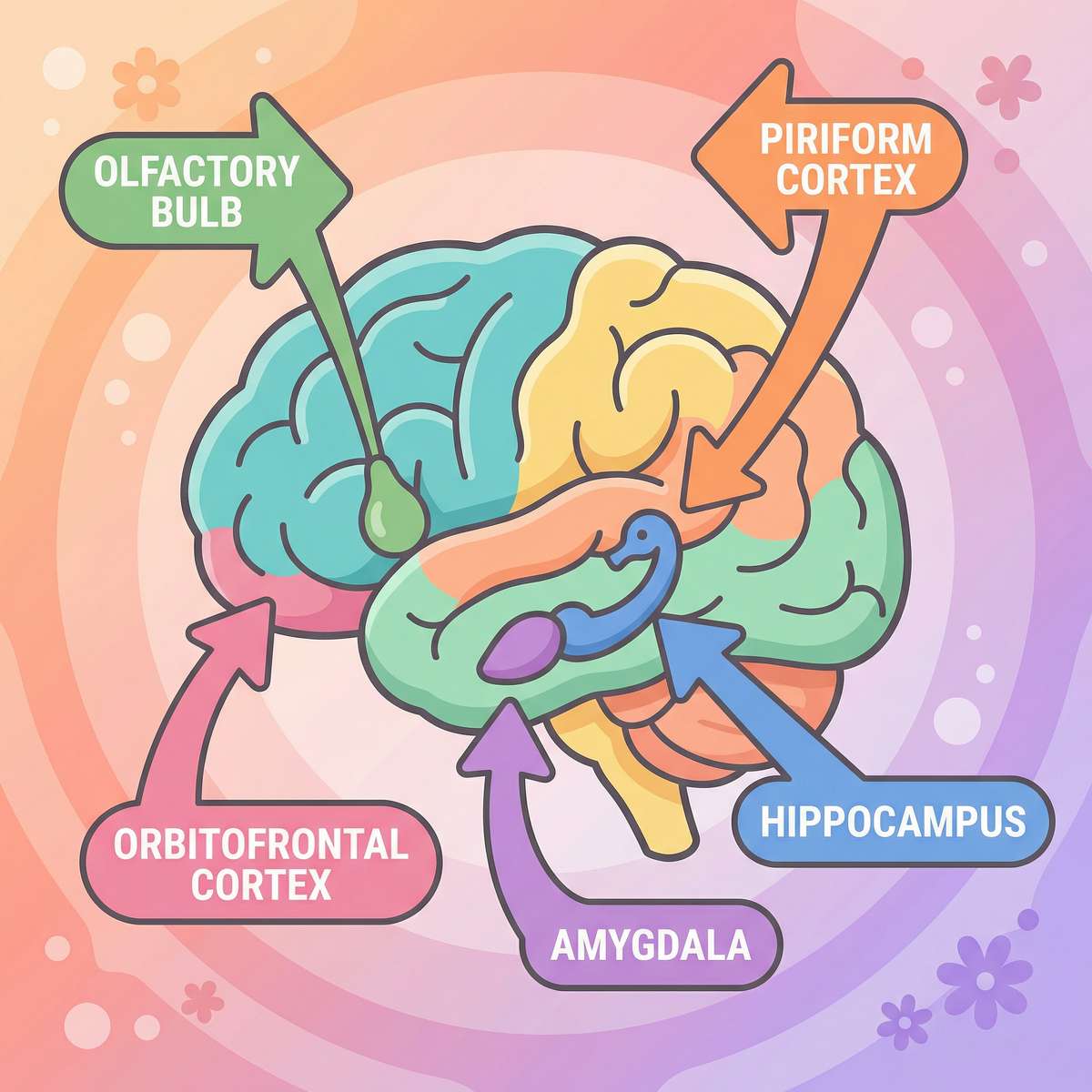
The Under-Responsive Pattern
Your child's olfactory bulb requires more input than typical to register smell information. Where most children process ambient scents passively, your child's nervous system needs active, intense, and repeated olfactory input to achieve the same level of sensory registration.
The Regulatory Pattern
Smell is the only sense that connects directly to the limbic system — the brain's emotional and memory center — without passing through the thalamus relay station. This means olfactory input is uniquely powerful for emotional regulation. Your child may be using smell to calm anxiety, organize scattered attention, or create a sense of safety.
The Mapping Pattern
Some children use olfactory information as their primary way of understanding their environment — mapping spaces, identifying people, and categorizing objects through smell rather than sight or sound. This is a wiring difference, not a behavior choice. Your child's brain genuinely needs this input.
Reference: Frontiers in Integrative Neuroscience (2020) — DOI: 10.3389/fnint.2020.556660

Where Olfactory Sensory Seeking Sits in Your Child's Development
Understanding when olfactory seeking typically emerges — and when it becomes visible — helps you place your child's journey in context. This developmental timeline shows the natural progression and the critical windows for intervention.
Birth–6 Months
Olfactory system is the most developed sense at birth. Newborns recognize mothers by smell. Foundational olfactory processing is established.
6–18 Months
Oral-olfactory exploration peaks. Mouthing and smelling objects is developmentally typical. Children begin associating smells with people and places.
18 Months–3 Years
Typical children begin reducing smell-seeking as other senses mature. Children with sensory processing differences may increase seeking during this period.
3–5 Years ⭐
Window of Emergence: Olfactory seeking becomes clearly visible when peers have moved past exploratory sniffing. Social impact begins. This is often when parents first notice.
5–8 Years
Social awareness increases — the child may begin to feel different. Peer reactions intensify. Safety concerns arise as children become more independent.
8–12 Years
Self-regulation strategies become critical. Social boundary teaching is essential. With proper support, children learn to meet their sensory needs independently.
Comorbidity Awareness: Olfactory sensory seeking commonly co-occurs with tactile seeking (touching/mouthing objects), gustatory seeking (intense food preferences), vestibular seeking (movement craving), and oral sensory seeking (chewing/licking). It may also present alongside anxiety, attention difficulties, or restrictive eating patterns.
Your child is HERE on this journey. The 9 materials in this guide are designed to meet them exactly where they are — and move them toward independent, appropriate, safe olfactory regulation.
Sources: WHO CCD Package (2023) | PMC9978394 | UNICEF 2025 Country Profiles

The Evidence Behind Olfactory Sensory Intervention — What Research Says
Level I–II Evidence
Supported by Systematic Reviews and Randomized Controlled Trials — the highest levels of evidence available
Studies Supporting This Approach
PRISMA Systematic Review
16 articles from 2013–2023 confirm sensory integration intervention meets evidence-based practice criteria for children with ASD. — Children (2024), PMC11506176
Meta-Analysis (24 Studies)
Sensory integration therapy effectively promotes social skills, adaptive behavior, sensory processing, and gross/fine motor skills. — World Journal of Clinical Cases (2024), PMC10955541
Indian RCT
Home-based sensory interventions demonstrate significant outcomes in the Indian pediatric population, with parent-administered protocols showing measurable gains. — Indian Journal of Pediatrics (2019)
Sensory Diet Evidence
Proactive sensory input scheduling shows clinical evidence for reducing maladaptive sensory seeking. — Schoen SA et al., AJOT (2014)
Key Finding: "Providing appropriate sensory outlets — rather than suppressing sensory seeking — leads to measurable reduction in inappropriate seeking behaviors, improved social participation, and enhanced self-regulation capacity."
Pinnacle Real-World Evidence: Across 21 million+ exclusive 1:1 therapy sessions at 70+ centers, olfactory sensory seeking interventions track through the Sensory Regulation Index and Social Participation Index. 97%+ of children show measured improvement across one or more readiness indexes.
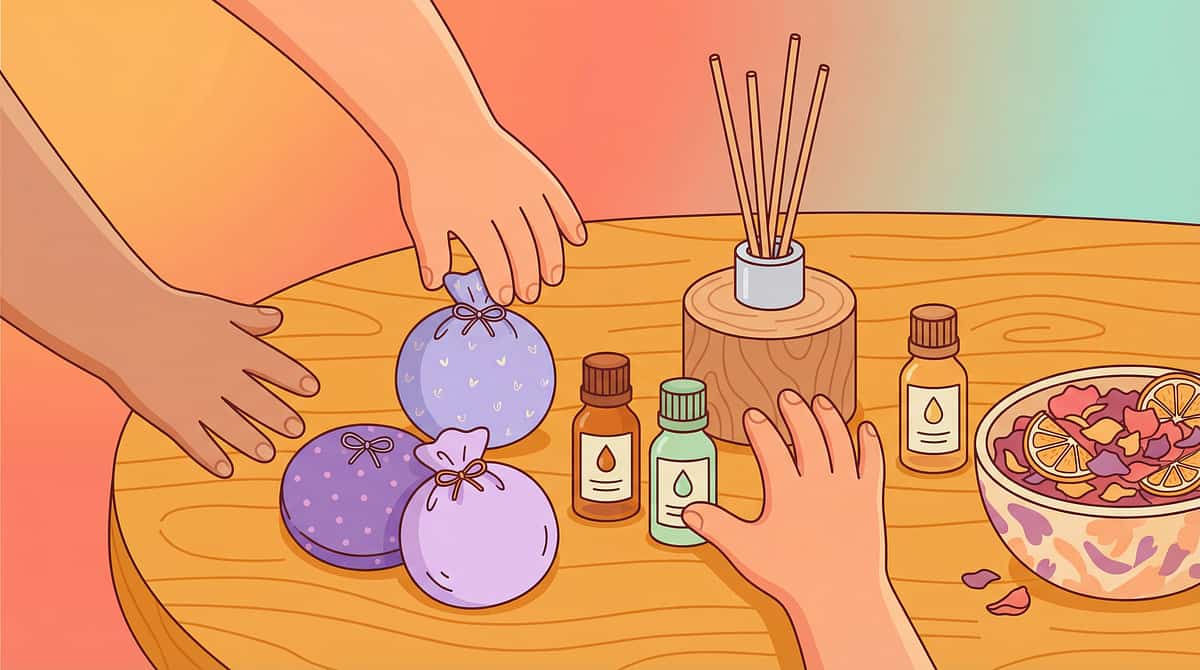
Act II: The Knowledge Transfer
Olfactory Sensory Seeking Intervention — What It Is
Formal Name
Structured Olfactory Sensory Input Protocol with Material-Mediated Regulation
Parent-Friendly Alias
"The Smell-Smart Strategy — 9 Materials That Help Your Child Sniff Safely"
This intervention provides your child with a curated set of 9 evidence-based materials designed to meet their olfactory sensory needs through safe, socially appropriate, and developmentally productive channels. Instead of trying to stop your child's sniffing — which their nervous system genuinely requires — we redirect it through portable scent kits, aromatherapy jewelry, scented play materials, structured smell games, multi-sensory fidgets, dedicated scent stations, social boundary visual supports, safe strong-smell alternatives, and a proactive olfactory sensory diet schedule.
This is NOT behavior elimination. This is sensory need fulfillment — meeting your child's neurological requirement for olfactory input through appropriate, safe, and dignity-preserving tools.
Domain A
Sensory Processing — Olfactory Seeking
Ages 3–12
Ongoing, integrated into daily life
Frequency
Daily — proactive + on-demand
Lead Discipline
Occupational Therapy (SI Certified)
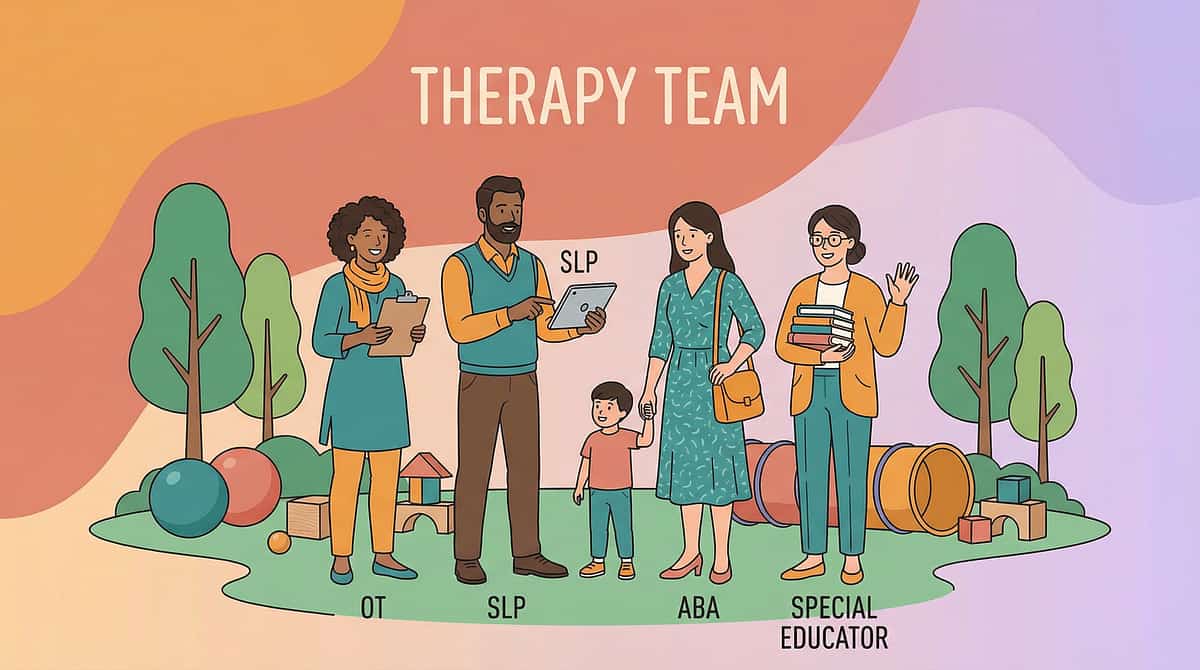
Who Uses This Technique — Your Child's Expert Team
This technique crosses therapy boundaries because the brain doesn't organize by therapy type. Your child's olfactory system connects to emotion, language, behavior, learning, and neurology simultaneously. The Pinnacle Blooms Consortium ensures all five disciplines speak the same language through GPT-OS®.
Occupational Therapist (Primary Lead)
Your OT is the architect of your child's sensory diet. They assess olfactory processing thresholds using standardized tools (Sensory Processing Measure, Sensory Profile-2), design the specific scent combinations for your child's kit, determine the schedule for proactive input, and train you to read your child's sensory signals.
Speech-Language Pathologist
Your SLP connects olfactory input to oral motor development and feeding therapy. They also use scented materials to build vocabulary (naming scents), categorization skills, and narrative language during smell exploration games.
Board Certified Behavior Analyst
Your BCBA designs the social boundary teaching protocol, structures reinforcement schedules for appropriate sniffing, and develops functional behavior plans when olfactory seeking creates safety or social challenges.
Special Educator
Your Special Educator integrates olfactory strategies into the classroom — ensuring scent kits are available during transitions, aromatherapy jewelry is permitted during instruction, and smell exploration games become learning activities.
NeuroDevelopmental Pediatrician
Your NeuroDev Pediatrician rules out medical causes of olfactory seeking, monitors for red flags, and ensures the olfactory intervention integrates with the child's overall medical management.
Reference: Adapted UNICEF/WHO Nurturing Care Framework for SLPs (2022) — DOI: 10.1080/17549507.2022.2141327

What This Technique Targets — Precision Goals
Every intervention needs clear targets. Here's exactly what the 9 materials are designed to achieve, organized from the core outcome to the broader developmental impact.
Observable Indicators of Success
Primary
Child spontaneously reaches for scent kit instead of sniffing people; uses aromatherapy bracelet during high-need moments
Secondary
Child checks visual boundary card before sniffing in new environments; chooses safe strong-smell kit over household chemicals
Tertiary
Reduced peer rejection; improved classroom attention when olfactory needs are proactively met; reduced parental stress around outings
Reference: Meta-analysis (World J Clin Cases, 2024) — PMC10955541
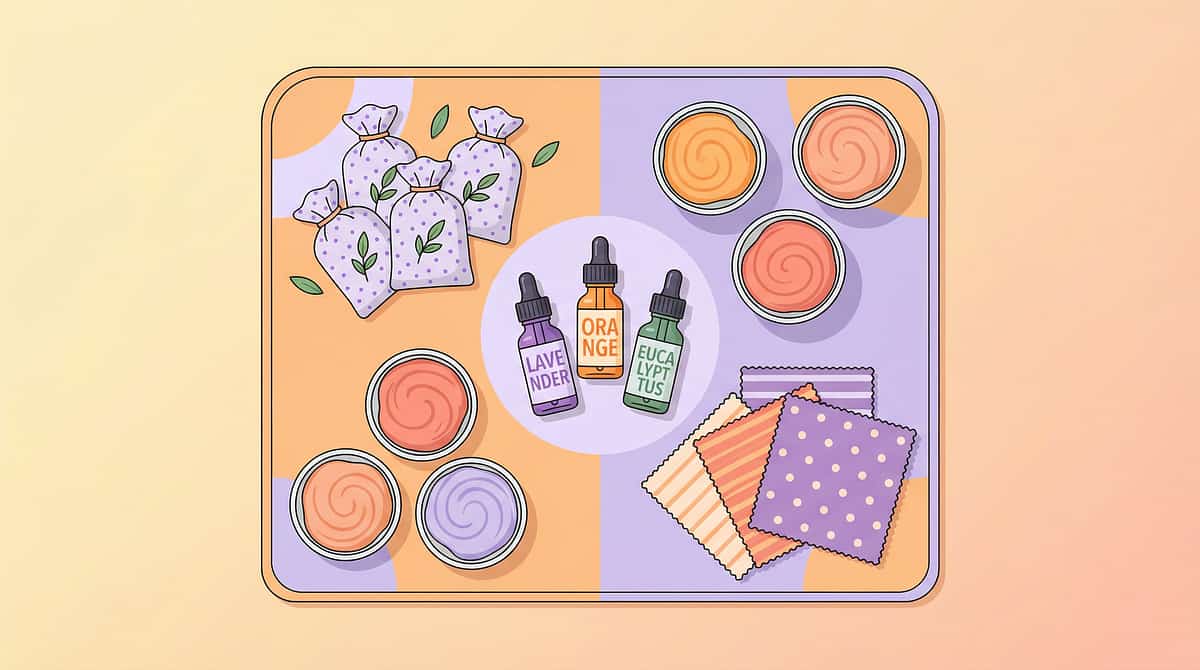
What You Need — The 9 Materials at a Glance
Each material below is evidence-backed, parent-tested, and designed to meet a specific aspect of your child's olfactory sensory needs. You don't need all nine on day one — start with the essentials and build your toolkit over time.
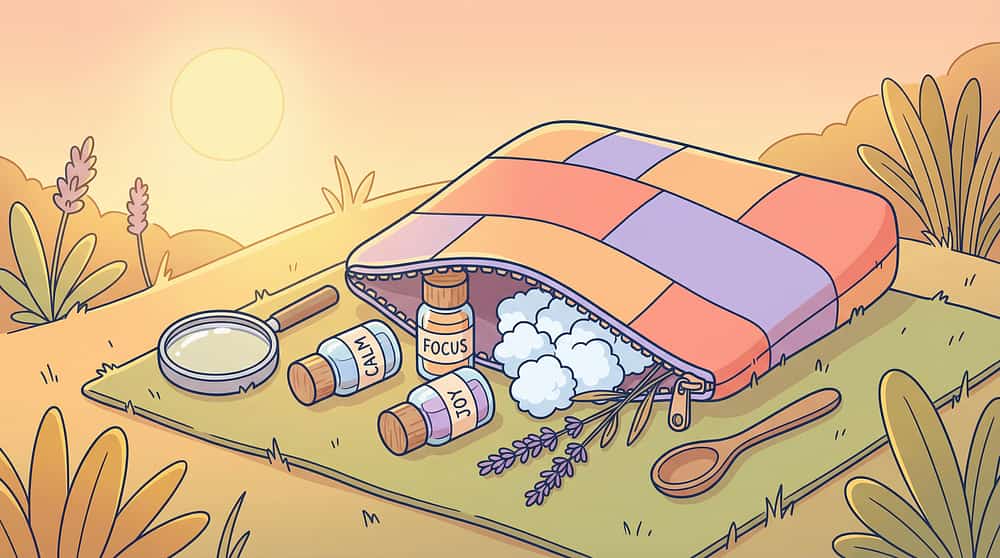
1. Scented Sensory Kit
₹500–2,000 | 🏠 DIY-Friendly
Aromatherapy/Scent Kit for core olfactory exploration
Aromatherapy/Scent Kit for core olfactory exploration

2. Aromatherapy Jewelry
₹200–800 | 📱 Portable
Lava bead bracelet + diffuser necklace for on-the-go access
Lava bead bracelet + diffuser necklace for on-the-go access

3. Scented Play Materials
₹300–1,200 | 🏠 DIY-Friendly
Scented playdough, aromatic slime for combined tactile + olfactory input
Scented playdough, aromatic slime for combined tactile + olfactory input

4. Smell Exploration Games
₹400–1,500 | 👨👩👧 Family Activity
Scent matching, guessing games for learning and discrimination
Scent matching, guessing games for learning and discrimination

5. Scented Fidgets
₹200–800 | 📱 Portable
Scented stress balls and comfort objects for regulation support
Scented stress balls and comfort objects for regulation support
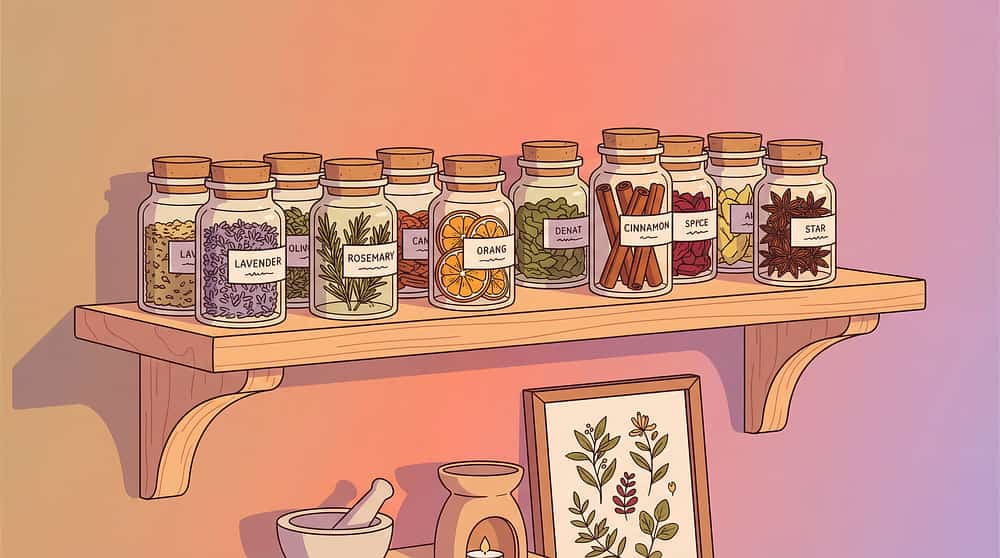
6. Scent Stations
₹500–2,000 | 🏡 Home Setup
Dedicated exploration corner with rotating scent jars
Dedicated exploration corner with rotating scent jars

7. Social Boundary Visuals
₹100–400 | 📋 ABA-Designed
Green/Yellow/Red visual system for appropriate sniffing contexts
Green/Yellow/Red visual system for appropriate sniffing contexts
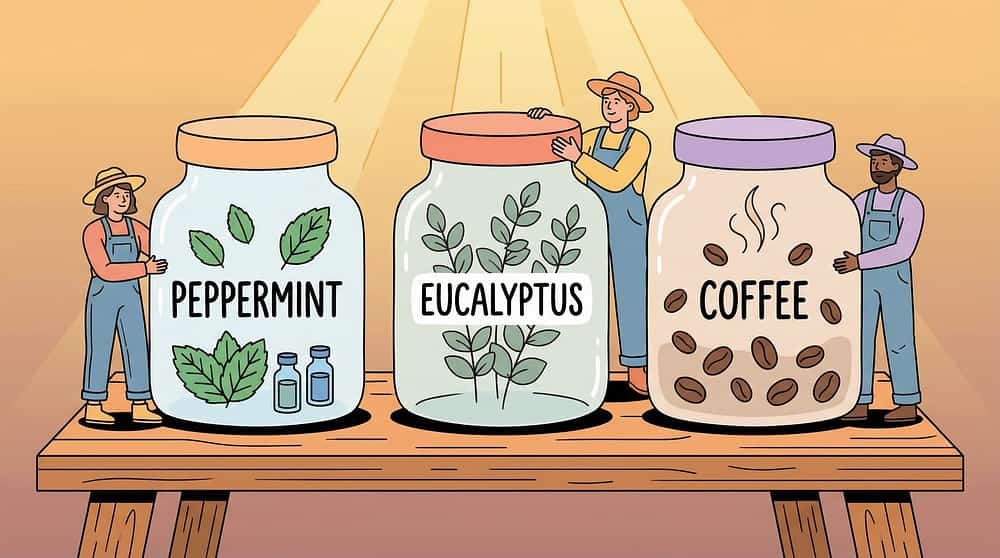
8. Safe Strong-Smell Alternatives
₹200–600 | ⚠️ Safety Critical
Peppermint, eucalyptus, coffee beans for intense seekers
Peppermint, eucalyptus, coffee beans for intense seekers
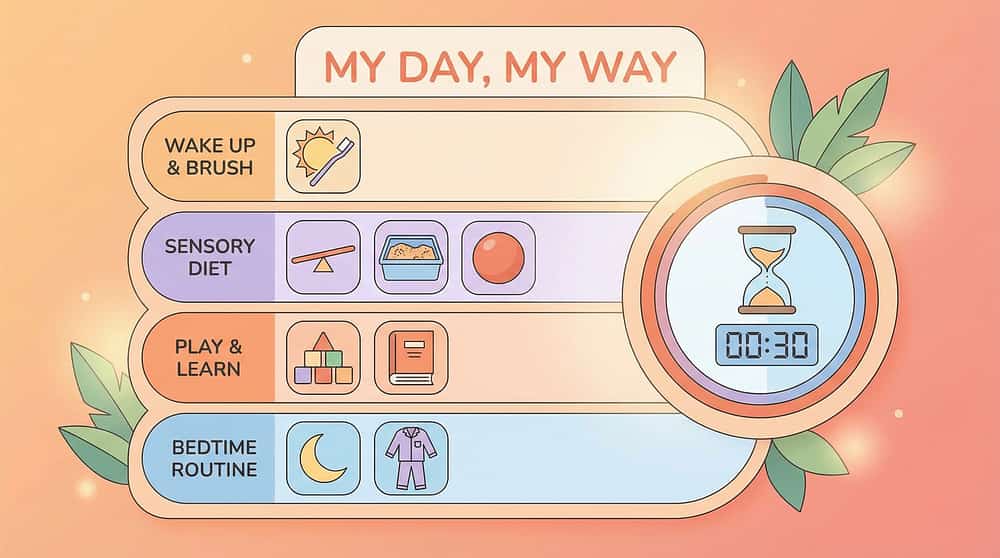
9. Olfactory Sensory Diet Schedule
₹300–1,000 | 📅 Daily Protocol
Visual schedule + timer for proactive sensory input planning
Visual schedule + timer for proactive sensory input planning
Total Setup Cost
₹2,400–10,000 for comprehensive implementation
Essential Starters
If budget-limited: Materials 1, 2, 7, and 8
DIY & Zero-Cost Alternatives — Every Family Can Access This
Not every family can order from Amazon. Not every village has same-day delivery. The WHO Nurturing Care Framework demands that interventions be accessible regardless of economic status. Every material below has a household alternative that works on the same sensory principle.
# | Material | Buy This | Make This | |
1 | Scented Sensory Kit | ₹500–2,000 | Cotton balls with kitchen extracts (vanilla, peppermint) in small zip-lock bags. Add dried tulsi, cinnamon sticks, cloves, cardamom pods, dried orange peel. Cost: ₹50–100 | |
2 | Aromatherapy Jewelry | ₹200–800 | Basic lava bead bracelet (₹50–100) with 1–2 drops kitchen extract. Or tie a scented cloth sachet to wrist or school bag. Refresh every 2–3 days. | |
3 | Scented Play Materials | ₹300–1,200 | Homemade scented playdough: 1 cup flour, ½ cup salt, 1 tbsp cream of tartar, 1 cup water, 1 tbsp oil, food coloring, any kitchen extract. Cost: ₹30–80 | |
4 | Smell Exploration Games | ₹400–1,500 | Same scent on cotton balls in two opaque containers — make 6 pairs. OR "Guess the Smell" with coffee, cinnamon, vanilla, orange peel, ginger, clove. Cost: ₹0–50 | |
5 | Scented Fidgets | ₹200–800 | Add 2–3 drops essential oil to any existing stress ball or stuffed animal. OR fill a balloon with rice + essential oil drops. Cost: ₹20–50 | |
6 | Scent Station | ₹500–2,000 | Old jam jars filled with coffee beans, dried tulsi, cinnamon sticks, vanilla-soaked cotton, dried orange peel, cloves, crushed cardamom. Rotate weekly. Cost: ₹50–200 | |
7 | Social Boundary Visuals | ₹100–400 | Draw three-category card: GREEN (own kit), YELLOW (ask first), RED (not for sniffing). Laminate with tape or use plastic sleeve. Cost: ₹10–30 | |
8 | Safe Strong-Smell Alternatives | ₹200–600 | Kitchen strong-smell kit: peppermint/pudina leaves, coffee powder, fresh ginger, ajwain, camphor (safe distance). Cost: ₹30–80 | |
9 | Sensory Diet Schedule | ₹300–1,000 | Visual schedule on paper with drawn clock faces showing smell break times: morning, before school, transitions, homework, evening. Cost: ₹0–20 |
Zero-Cost Complete Version
Total cost for a complete olfactory intervention setup using DIY alternatives: ₹190–640. The sensory principle is identical.
Reference: WHO Nurturing Care Framework (2018) | PMC9978394 | WHO NCF Handbook (2022)
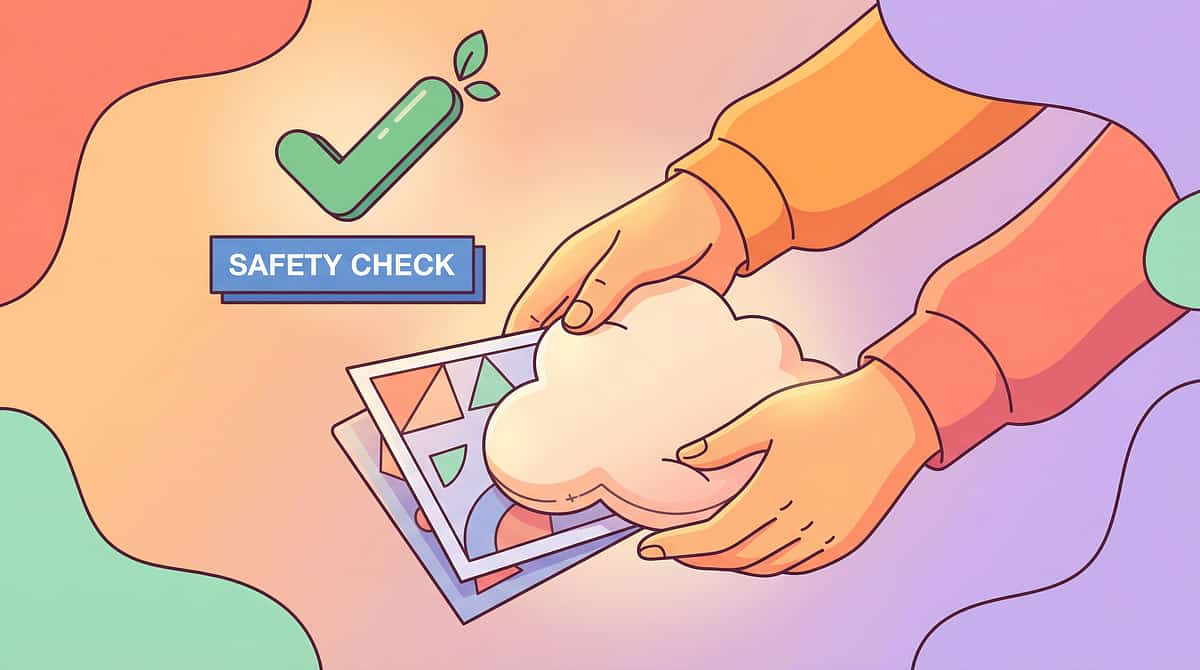
⚠️ Safety First — Before You Begin Olfactory Sensory Intervention
Your child's safety is the non-negotiable foundation of every sensory intervention. Review these guidelines carefully before introducing any olfactory materials.
🔴 RED — Do NOT Proceed If:
- Child has a known allergy to any essential oil, herb, or scent material — perform patch test first
- Child has active respiratory infection, asthma exacerbation, or nasal congestion
- Child is in acute distress, meltdown, or fight-or-flight state
- Child has shown pica behaviors with scented materials (eating/ingesting)
- Any material contains toxic substances, harmful synthetic fragrances, or choking-hazard small parts
- Child actively seeks specifically toxic substances (gasoline, bleach, permanent markers) without redirection success — THIS IS A RED FLAG requiring immediate OT assessment
🟡 AMBER — Modify and Monitor:
- Start with ONE new scent at a time — watch for sensory overload or aversive reactions
- Strong scents (peppermint, eucalyptus, camphor) should be introduced at distance first
- Essential oils must NEVER be applied directly to skin undiluted
- In shared spaces, choose subtle scents that won't disturb others
- Monitor for over-use — even safe scents can irritate nasal passages with excessive inhalation
- Vinegar and strong acids should only be used under supervision
🟢 GREEN — Safe to Proceed When:
- Child is calm, regulated, and receptive
- All materials have been allergy-tested (24-hour skin patch test for new essential oils)
- Environment is ventilated
- Parent has read through the full protocol
- Backup scent options are available
- Emergency plan exists for severe distress
Red Line Indicators — Stop Immediately If: Child develops headache, nausea, or dizziness; becomes MORE agitated after olfactory input; has new onset of intense sniffing not present before; cannot be redirected from toxic substance seeking; or sniffing suddenly interferes with ALL activities including eating, sleeping, and basic function.
Reference: Indian Journal of Pediatrics RCT (2019) — DOI: 10.1007/s12098-018-2747-4
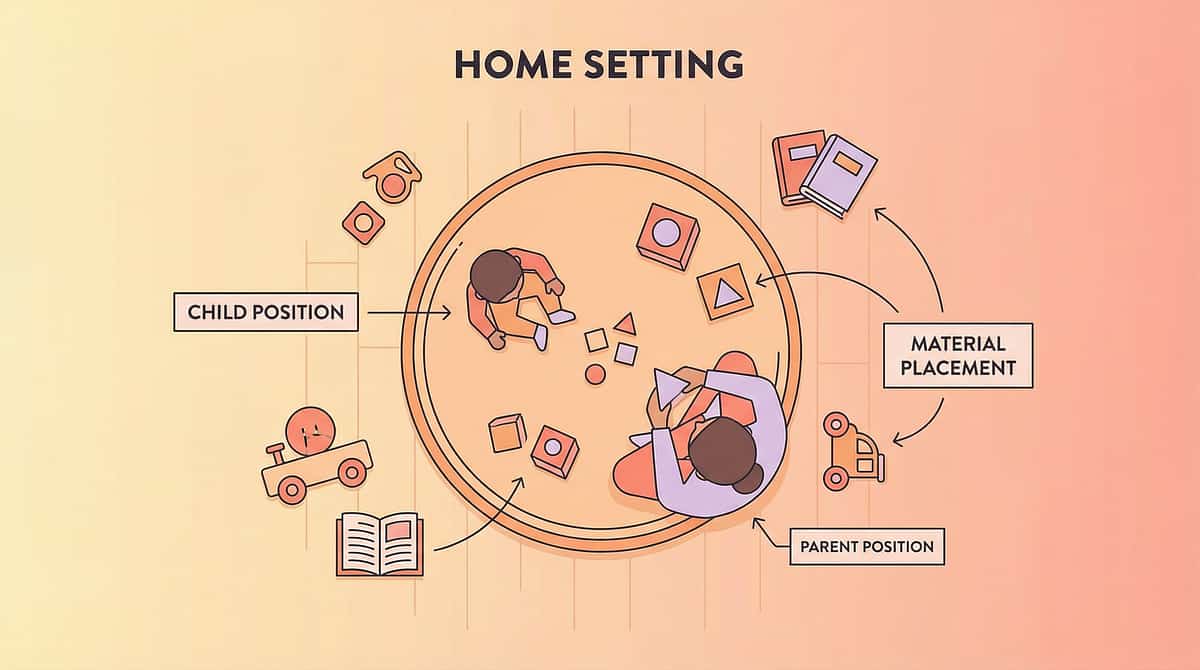
Set Up Your Space — The Olfactory Sensory Environment
Child's Position
Seated at table or on floor mat, comfortable and stable
Parent's Position
Seated beside (not across from) child — same-side positioning allows natural modeling and gentle redirection
Scent Materials
Arranged in a tray within child's arm's reach — organized left-to-right by intensity (subtle → strong)
Visual Supports
Social boundary card and sensory diet schedule posted at child's eye level on nearby wall
Timer + Comfort Items
Visual timer visible to both parent and child. Scented fidget or comfort object within reach for regulation support.
Remove From Space
- Screens and digital devices
- Strong ambient scents (cooking, air fresheners)
- Unsafe strong-smell substances
- Other sensory distractions
Environmental Settings
- Lighting: Natural or warm artificial
- Sound: Quiet ambient
- Temperature: Comfortable
- Ventilation: Open window or fan on low
- Surface: Easy to clean
Best Times: After a meal (child is fed and regulated), mid-morning energy peak, or as a transition bridge. Avoid: Immediately before meals, during tired/cranky periods, or when the child is already seeking intensely.

Act III: The Execution
Is Your Child Ready? — 60-Second Pre-Session Check
Before every structured olfactory session, run through this quick readiness assessment. The best session is one that starts right. There is no failure in postponing — only wisdom in waiting.
Fed Recently
Child has eaten within the past 2 hours (not hungry)
Rested
Child has slept reasonably well (not overtired)
Regulated
Not currently in a meltdown or post-meltdown recovery period
Healthy
No respiratory symptoms, no fever, no illness
Baseline Calm
Able to sit, respond to name, make eye contact or equivalent
No Competing Need
Not in vestibular seeking mode or tactile crisis
Space Ready
Materials are prepared and environment is set up per Card 12
🟢 All Yes → GO
Begin the session with Step 1: The Invitation
🟡 1–2 No → MODIFY
Offer scent kit for free exploration without structured protocol
🔴 3+ No → POSTPONE
Offer a calming activity instead. Try again when more indicators are green.

Step 1 — The Invitation (Not a Command)
Step 1 of 6
"Come sit with me. I have something really interesting for your nose today."(Pause. Wait. Let the child approach at their own pace.)
If the child is already in high seeking mode:
"I can see your nose is busy today! I have some special smells just for you. Want to see?"
Body Language Guidance
- Sit at child's level — on the floor if they're on the floor
- Open body posture — arms relaxed, leaning slightly forward
- Hold one scent jar at your chest level
- Smile with curiosity — mirror the exploratory energy
- Do NOT grab their hand or physically redirect
Acceptance Cues ✅
- Child moves toward you or materials
- Child's eyes focus on the scent materials
- Child reaches for a jar or leans in to smell
- Even a glance = acceptance
If Child Resists
- Moves away → Place one open jar near their play area and wait
- Fixated on other smells → Bring the strongest option as a redirect
- Ignores completely → Not the right time. Try later.
Timing: 30–60 seconds for the invitation phase
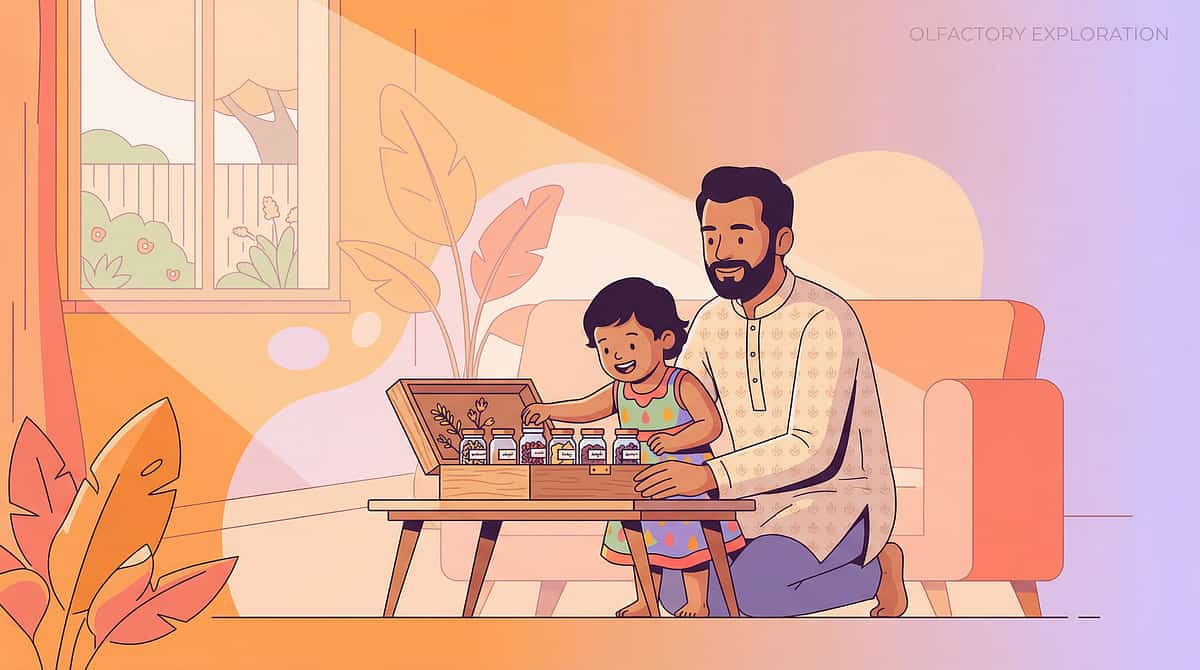
Step 2 — The Engagement (Introducing the Materials)
Step 2 of 6
"Let's explore our smells today. Here are your choices."(Lay out 3–5 scent options from the kit. Not all 9 materials at once — that's overwhelming.)
How to Present
Arrange Containers
Line them up with lids on. Open ONE at a time.
Wafting Technique
Hold container 6–8 inches from child's face. Fan the scent gently toward the child with your hand — the same way scientists smell chemicals safely.
Let Them Lead
Let the child take the container from you when they reach for it. Allow free exploration: pick up, sniff closely, compare, go back to favorites.
Child Response Spectrum
😊 Engaged
Leans in, picks up containers, deep inhales, smiles. Reinforce: "You really like that one! That's cinnamon."
😐 Tolerating
Stays seated, sniffs when offered but doesn't reach independently. Support: Open another option. Try scented playdough for combined input.
😤 Avoiding
Pushes away, turns head, gets up. Respect: "Okay, maybe not this one. Let's try another." If ALL rejected, note and replace next session.
Timing: 1–3 minutes for the engagement phase. Praise the exploration, not compliance.

Step 3 — The Therapeutic Action (Where the Magic Happens)
Step 3 of 6
This is the core of each session. Choose one option based on the day's material focus. Let the child's engagement guide duration — 5 to 15 minutes is the therapeutic window.
Option A — Scent Kit Exploration
Child has 3–5 scent containers open. Encourage systematic exploration: smell each one, compare two at a time ("Which is stronger?"), sort by preference. Name each scent together: "This is lavender — it's gentle and calming."
Option B — Aromatherapy Jewelry
Help the child add 1–2 drops of their chosen oil to lava bead bracelet. Let them smell it on the beads. Practice: "When you want to smell something today, smell your bracelet." Role-play sniffing the bracelet instead of a person.
Option C — Scented Play Session
Provide scented playdough or aromatic slime. Encourage squeezing, rolling, and smelling simultaneously. "Can you smell the orange while you squeeze?" Combine tactile and olfactory input for maximum regulatory benefit.
Option D — Smell Exploration Game
Play the matching game or "Guess the Smell": child closes eyes, parent presents scent, child guesses. Build memory, discrimination, and vocabulary.
Option E — Social Boundary Practice
Using the visual support card: "This is your scent kit — GREEN, always okay." "This is someone else's lunch — YELLOW, ask first." "This is the cleaning spray — RED, not for sniffing." Role-play with toys or stuffed animals.
Common Errors to Avoid:❌ Presenting all 9 materials at once (choose 1–2 per session) ❌ Holding scents too close to child's face ❌ Rushing through scents (lingering IS the therapy) ❌ Correcting the child's sniffing technique ❌ Expecting immediate preference identification
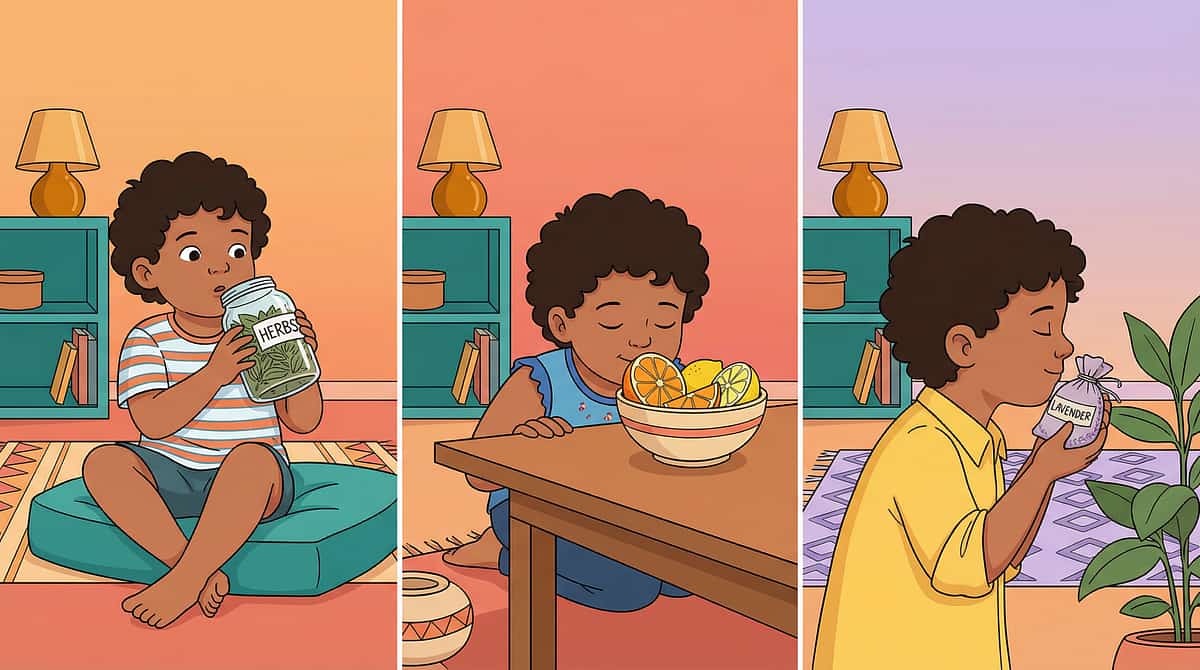
Step 4 — Repeat & Vary (Therapeutic Dosage)
Step 4 of 6
"3 good explorations are worth more than 10 forced ones."
Target Repetitions
- Scent kit exploration: 3–5 different scents per session
- Smell games: 3–6 rounds per session
- Social boundary practice: 2–3 scenarios per session
- Aromatherapy jewelry: Once daily (morning application) with ad-lib sniffing
- Scent station: 5–10 minutes of free exploration
Variation Options 🔄
- Change the scents: Introduce one new scent per week while keeping favorites
- Change the game: Alternate matching, guessing, sorting, and naming
- Change the material: Rotate between playdough, slime, kinetic sand
- Change the context: Kitchen scents during cooking, garden scents during outdoor play
- Change the partner: Practice with siblings, grandparents, or via video call
Satiation Indicators (when your child has had enough): Decreased interest, starting to move toward other activities, saying "all done," or becoming silly or hyperactive. When you see these signs — celebrate and wrap up. Your child's nervous system just got what it needed.
Timing: 3–5 minutes for the repetition/variation phase (or longer if child is deeply engaged)

Step 5 — Reinforce & Celebrate (The Payoff)
Step 5 of 6
Within 3 seconds of the child using materials appropriately, deliver specific praise. Name exactly what they did right — not just "good job."
For Scent Kit Use
"Amazing smelling! You found your favorite scent all by yourself!"
For Bracelet Use
"Great job using your bracelet! That was smart smelling!"
For Game Participation
"You matched all the scents! Your nose is so clever!"
For Boundary Respect
"You checked your card before smelling — that's exactly right!"
Reinforcement Principles
- Timing: Within 3 seconds of the desired behavior
- Specificity: Name exactly what they did right
- Enthusiasm: Match the child's energy level
- Natural Consequences: The best reinforcement for olfactory seeking is MORE access to good smells
Reinforcement Menu Options
- Verbal praise (always)
- Choosing tomorrow's bracelet scent (natural consequence)
- Extra time at scent station (sensory reinforcement)
- Sticker on sensory diet schedule chart
- Special scent exploration activity (baking cookies together = olfactory heaven)
"Celebrate the attempt, not just the success. A child who reaches for their scent kit — even if they also sniffed a person — is making progress."

Step 6 — The Cool-Down (Smooth Transition)
Step 6 of 6 ✓
"Two more smells, then we're all done for now."
(Show two fingers. Count down with each final sniff.)
"One more smell... Last one... All done! Great exploring today."
1
Cool-Down Activity
Close scent containers together. Take 3 deep breaths (in through nose, out through mouth). Child places favorite scent next to bracelet for tomorrow.
2
Put-Away Ritual
"Help me close the jars. Can you put the lid on the lavender? Now the cinnamon. Good — our noses are resting now." Participation builds ownership.
3
Transition
"Our smell time is done. Now it's time for [next activity]. You can smell your bracelet anytime you need to."
If the child resists ending: Offer a "take-away" scent. Point to the sensory diet schedule: "We'll have smell time again at [next scheduled time]." If truly resistant, allow 2 additional minutes, then use visual timer for final countdown. Do NOT forcibly remove materials — negotiate, redirect, offer alternatives.
Reference: Visual supports are classified as evidence-based practice for autism (NCAEP, 2020).

Capture the Data — Right Now (60 Seconds)
Within 60 seconds of session end, record these 3 data points. Data captured now is data that drives progress. 60 seconds of data now saves hours of guessing later.
1
Engagement Duration
How many minutes did your child actively engage with the olfactory materials today?
- Less than 2 min
- 2–5 min
- 5–10 min
- 10–15 min
- 15+ min
2
Materials Used & Preferred
Which materials did your child engage with today? Note favorites.
Scent Kit | Bracelet | Play Dough | Smell Game | Fidget | Scent Station | Boundary Card | Strong Smells | Sensory Diet
Favorite Today: ___________
3
Inappropriate Seeking Instances
How many times today did your child sniff people, unsafe substances, or random objects OUTSIDE of structured activities?
- 0
- 1–3
- 4–7
- 8+
- Lost count
Tracking Format Options
- Downloadable PDF tracking sheet via GPT-OS® parent tracker
- In-app tracker: GPT-OS® → My Child → Sensory Regulation → Olfactory Seeking Log
- Simple notebook: Date | Minutes Engaged | Favorite Scent | Inappropriate Seeks Count

What If It Didn't Go as Planned? — Troubleshooting Guide
Session abandonment is not failure — it's data. Every "failed" session teaches you what to adjust next time. Here are the most common challenges parents encounter and evidence-informed solutions.
❓ "My child rejected all the scents I offered."
The scents may be wrong for this child. Try completely different scent families: if you offered floral (lavender), try food-based (vanilla, cinnamon). If you offered subtle, try intense (peppermint, coffee). Some children prefer "warm" scents while others prefer "cool." Try 3 new options next session.
❓ "My child grabbed the materials and ran off to sniff alone."
This is actually GOOD — they're motivated by the materials! The goal right now is sensory need fulfillment, not structured compliance. Let them explore independently. Over time, gradually introduce structure: "Bring your favorite one back and show me."
❓ "My child preferred sniffing furniture/people over the kit."
The kit scents may not be intense enough. Your child is seeking STRONG input. Add stronger options: peppermint oil, concentrated coffee, eucalyptus. The safe alternative must compete with the preferred unsafe option.
❓ "My child ate/mouthed the scented materials."
Switch immediately to non-ingestible formats: essential oils on cotton balls in closed mesh bags, dried spices in sealed containers with holes, or aromatherapy jewelry only. Discuss combined oral-olfactory strategies with your OT.
❓ "My child got overwhelmed and had a meltdown."
Too many scents, too quickly, in too small a space. Next time: (1) Open only ONE scent at a time, (2) Use ventilated space, (3) Start with the mildest preference, (4) Allow the child to control the pace. Remove ALL scented materials and provide deep pressure input.
❓ "My child used the bracelet at school but got teased."
Reframe the bracelet as "cool jewelry" not "therapy tool." Choose age-appropriate, trendy designs. Work with the teacher to normalize. If bullying persists, switch to less visible options (scented eraser in pocket).
❓ "I can't get the sensory diet schedule consistent."
Start with ONE anchor point — the easiest one (usually morning routine). Add a second only after the first is automatic (usually 2 weeks). One consistent smell break is better than five inconsistent ones.
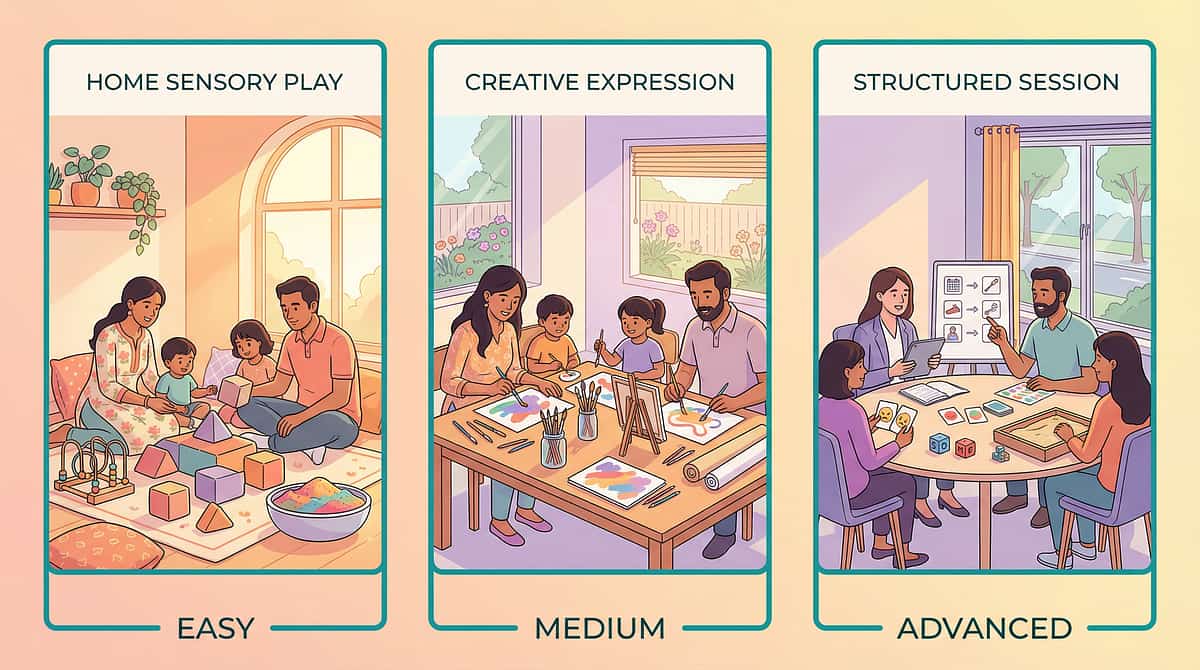
Adapt & Personalize — Making This Work for YOUR Child
No two children have the same sensory profile. Use the difficulty adjustments and sensory profile adaptations below to tailor the intervention to your child's unique needs.
Easier Version
For bad days, younger children, or beginners: 2–3 scent options, no games, no timer, pure free exploration. Parent selects scents.
Standard Version
For most sessions: 5 scent options with structured exploration, one game OR social boundary practice, visual timer, daily bracelet refresh, data capture.
Harder Version
For advancing children: Full 9-material rotation, discrimination challenges, real-world social practice, child manages own sensory diet, teaches others the smell game.
Sensory Profile Adaptations
Intense Seeker
Start with strongest scents: peppermint, concentrated coffee, cinnamon bark. This child needs HIGH intensity to register. Build down to moderate over time.
Broad Seeker
Provide maximum variety. Rotate scents daily. Include unusual: leather, wood shavings, fresh grass, new book smell.
Specific Seeker
Honor the preference. Provide it in multiple formats (liquid, solid, wearable, playable). Gradually introduce ONE related scent alongside.
Anxious Seeker
Prioritize calming scents: lavender, vanilla, chamomile. Ensure comfort scent is available during ALL transitions and stressful moments.

Act IV: The Progress Arc
Week 1–2: What to Expect (Setting Realistic Expectations)
15%
Foundation Phase
Building awareness, tolerance, and initial engagement with olfactory materials
Observable Indicators for Weeks 1–2
- Child shows awareness of the scent kit — looks at it, touches it, reaches for it
- Child tolerates wearing the aromatherapy bracelet for at least part of the day
- One successful redirection from inappropriate sniffing to a safe material
- Child begins to show scent preferences (reaching for the same jar more than once)
- Reduction in resistance to using materials (if there was initial resistance)
What "Progress" Looks Like
If your child sniffs their bracelet once this week instead of sniffing a person — that's real progress. If they voluntarily pick up a scent jar — that's real progress. If they tolerate the materials being in their space — that's real progress.
Managing Expectations
Your child will NOT stop sniffing in weeks 1–2. The inappropriate behavior may actually increase initially as the child learns more olfactory options exist. This is exploration, not regression.
"Patience metrics: You are building new neural pathways. Research shows sensory integration outcomes emerge across 8–12 week timelines. Weeks 1–2 are the foundation — invisible but essential. Like watering a seed, the growth is underground."

Week 3–4: Consolidation Signs (Neural Pathways Forming)
40%
Consolidation Phase
New neural associations between smell needs and appropriate tools are solidifying
Consolidation Indicators
Anticipation
Child goes to the scent station or reaches for kit without prompting
Clear Preferences
Gravitates to 2–3 favorite scents consistently
First-Response Shift
Beginning to use bracelet/fidget as first response (before sniffing people) at least some of the time
Boundary Awareness
Responds to social boundary visual with decreasing need for adult reminders
Game Proficiency
Can play smell matching game with increasing accuracy
Reduced Intensity
May still sniff people/objects but with less urgency and frequency
Watch for Generalization Seeds: Your child may start noticing scents in the environment more intentionally — commenting on cooking smells, noticing perfume, identifying flowers by scent. This is generalization and it's wonderful.
Parent Milestone: You may notice YOU are more confident too. The material setup feels automatic now. You're reading your child's seeking cues before the behavior escalates. You've become a sensory translator.

Week 5–8: Mastery Indicators (Independence Emerging)
75%
Mastery Phase
Child independently selects and uses appropriate olfactory tools with growing confidence
Mastery Criteria (Specific, Observable, Measurable)
Independent Tool Use
Child independently selects and uses appropriate olfactory tools 80%+ of the time when seeking smell input
Behavior Reduction
Inappropriate sniffing of people reduced by 60%+ from baseline (track with session data)
Boundary Decisions
Child can reference social boundary visual and make correct green/yellow/red decisions without prompting
First-Choice Response
Scent kit or bracelet is the child's first-choice response to olfactory seeking urge
Safety Discrimination
Safe strong-smell alternatives used instead of unsafe substances 90%+ of the time
Multi-Setting Success
Child uses strategies in multiple settings and adapts tool choice to context
Maintenance Check: Try reducing prompts for one week. Does the child maintain their self-management? If yes — mastery is solid. If skills decline — return to standard prompting and give it two more weeks.
🏆Mastery Unlocked: When ALL mastery criteria are met for 2 consecutive weeks, the child has achieved mastery at this technique level.

🎉 Celebrate This Win — You Made This Happen
You did this. You learned the neuroscience behind your child's sniffing. You built the scent kits, refreshed the bracelet every morning, played the smell games, posted the boundary visuals, and showed up — session after session, week after week. Your child grew because of YOUR commitment.
Where there was confusion, you brought understanding. Where there was embarrassment, you brought acceptance. Where there was unsafe seeking, you brought safe alternatives. Where there was isolation, you brought connection.
Your Child Can Now:
- Independently access safe olfactory input when they need it
- Distinguish between appropriate and inappropriate sniffing contexts
- Use materials to self-regulate through transitions and stressful moments
- Participate in smell-based learning activities
- Navigate social situations with their sensory needs met
Family Celebration Suggestions
- Have a family "smell feast" — cook a meal together where everyone explores the spices
- Let the child choose a brand new scent for their bracelet as a reward
- Create a "scent memory book" — paste herbs, spices, and scented stickers with photos
- Visit a garden, flower market, or spice shop together as a scent adventure
Photo/Journal Prompt: Document this milestone. Take a photo of your child with their scent kit. Write one sentence about how far you've both come. Capture it.

🚩 Red Flags — When to Pause and Seek Professional Guidance
Trust your instincts — if something feels wrong, pause and ask. You know your child better than any checklist. Here are six specific red flags that require professional attention.
Toxic Substance Seeking Persists
Child continues to seek gasoline, bleach, permanent markers, or toxic substances DESPITE safe alternatives. The safe options aren't matching the specific chemical profile. → Contact OT immediately. Request toxicology-aware sensory assessment.
Inability to Stop Despite Distress
Child is visibly distressed by their own sniffing — they want to stop but cannot. Compulsive, distressing behavior may indicate OCD-spectrum involvement. → Evaluation by neurodevelopmental pediatrician + psychologist.
Total Functional Interference
Child cannot eat, learn, sleep, or play because sniffing dominates every moment, despite 4+ weeks of intervention. → Escalate to comprehensive sensory processing evaluation.
New Onset Intense Sniffing
Child did not previously show olfactory seeking, but it appeared suddenly and intensely. May indicate neurological changes. → Urgent pediatric neurology referral.
Sniffing Combined with Ingestion
Child not only sniffs but eats, licks, or ingests items — particularly non-food items. Crosses into pica territory. → Medical evaluation + ABA functional assessment.
Social Safety Concerns
Child approaches strangers specifically to sniff them, creating vulnerability situations despite teaching. → Intensive ABA social safety training + increased supervision.
📞 Escalation Pathway
Self-resolve → Teleconsultation (pinnacleblooms.org) → Clinic visit → Comprehensive assessment
FREE National Autism Helpline: 9100 181 181 (24×7, 16+ languages)
FREE National Autism Helpline: 9100 181 181 (24×7, 16+ languages)

The Progression Pathway — Where You Are and Where You're Going
You've mastered A-117. Here's the complete map showing where you came from, where you are now, and where you can go next, based on your child's unique response and needs.
Branch A — Material Deep-Dives
If materials are working well: Building the Perfect Scented Sensory Kit, Teaching Sniffing Social Boundaries, Redirecting from Dangerous Smells Safely
Branch B — Expanded Sensory Integration
If co-occurring patterns: Licking Objects/Surfaces (oral-olfactory), Oral Sensory Seeking, Tactile seeking techniques
Branch C — Social-Emotional
If social impact is primary: Social Skills Group Readiness, Community Integration Protocol, Self-Advocacy Training
Long-Term Goal: Independent, appropriate, safe olfactory self-regulation → Full social participation → Academic success → Confident self-advocacy → Thriving adult with understood and managed sensory needs.
Related Techniques in the Sensory Processing Domain
Your child's olfactory sensory seeking doesn't exist in isolation. Explore these related techniques to build a comprehensive sensory support strategy across all domains.

A-20: Smell Sensory Seeking Overview
Domain: Sensory Processing | Difficulty: Intro
The foundational guide to understanding olfactory seeking patterns
The foundational guide to understanding olfactory seeking patterns
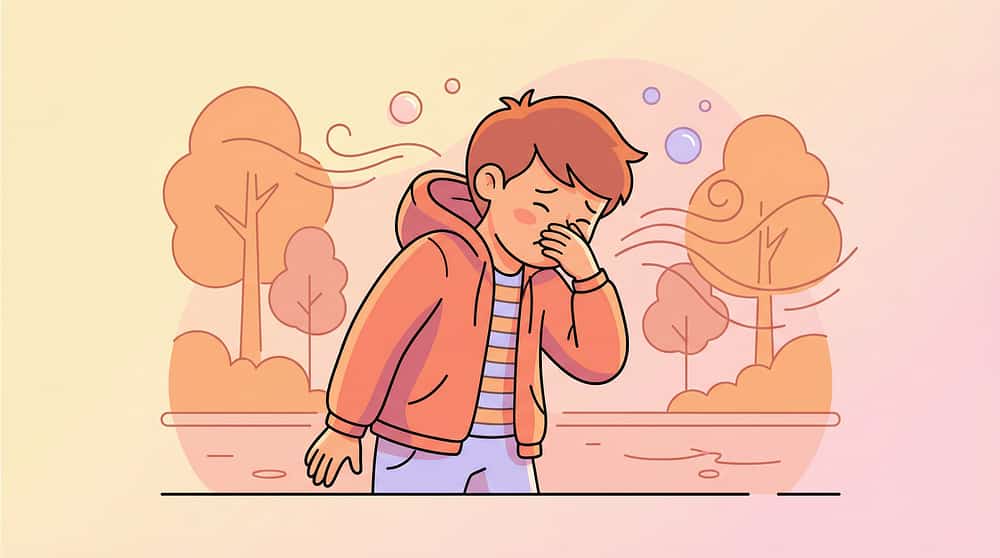
A-116: Gagging at Smells
Domain: Sensory Processing | Difficulty: Core
The opposite pattern — when smells are overwhelming, not sought
The opposite pattern — when smells are overwhelming, not sought

A-5: Licking Objects & Surfaces
Domain: Sensory Processing | Difficulty: Core
Frequently co-occurs with olfactory seeking — combined protocol available
Frequently co-occurs with olfactory seeking — combined protocol available

A-6: Oral Sensory Seeking
Domain: Sensory Processing | Difficulty: Core
When the mouth craves input alongside the nose
When the mouth craves input alongside the nose

K-950: Understanding Sensory Processing
Domain: Parent Education | Difficulty: Intro
The foundational guide to understanding your child's sensory world
The foundational guide to understanding your child's sensory world
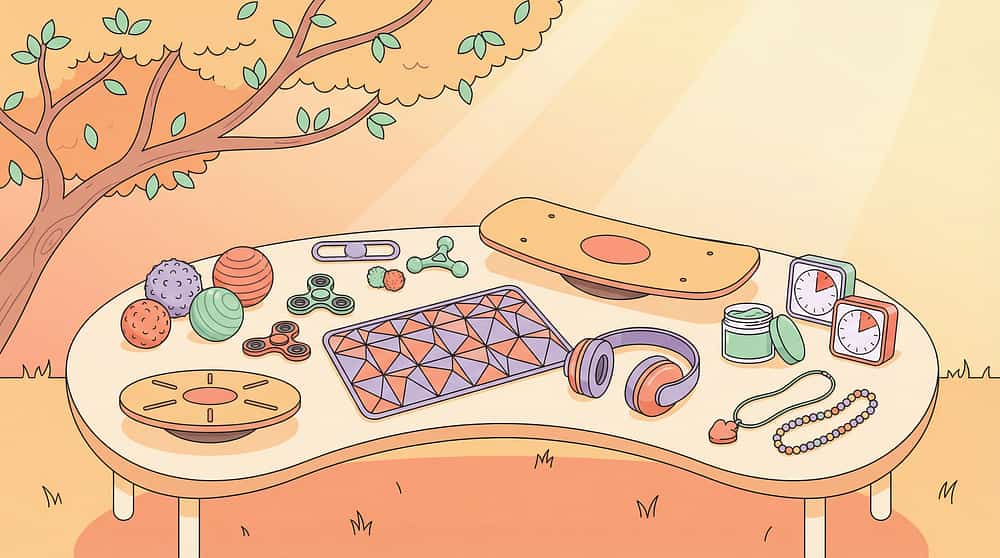
K-952: Building Effective Sensory Diets
Domain: Parent Education | Difficulty: Core
How to create a proactive daily sensory plan across ALL senses
How to create a proactive daily sensory plan across ALL senses
Browse full domain: techniques.pinnacleblooms.org/sensory-processing/
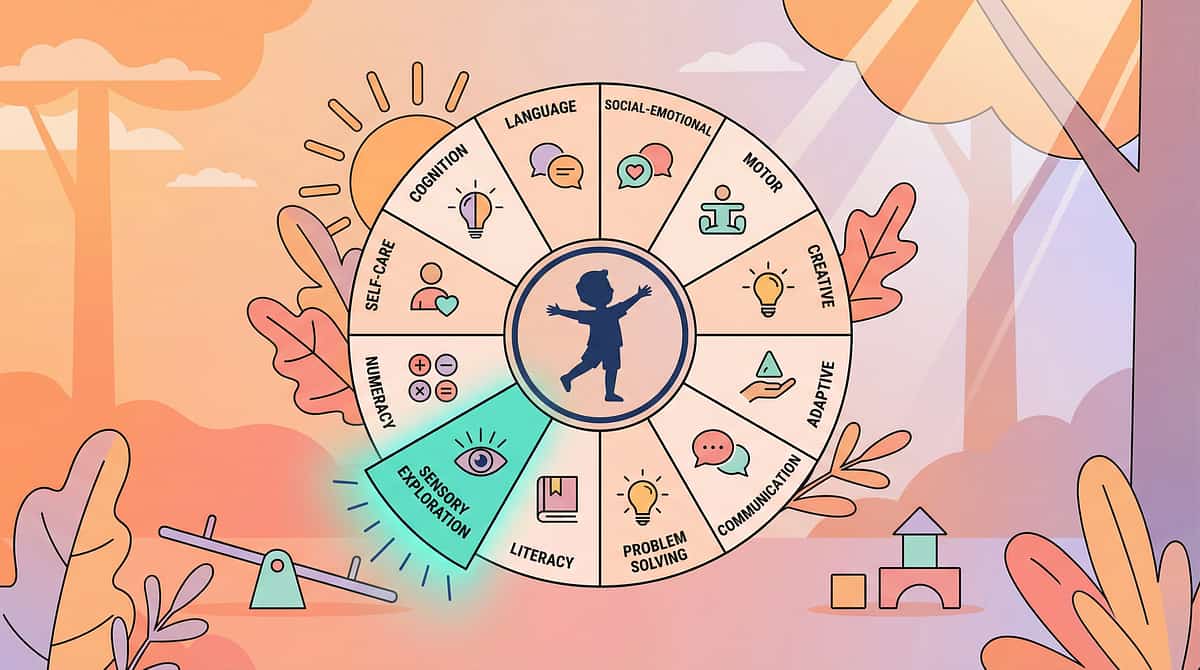
Your Child's Full Developmental Map
This technique sits in Domain A: Sensory Processing. But sensory regulation impacts every other domain. When your child's olfactory needs are met, they can attend better, communicate more effectively, engage socially, and participate in daily life. Sensory regulation is the foundation that enables everything else.
GPT-OS® Integration: Through GPT-OS®, your child's progress in this technique feeds into their personalized developmental profile. The Sensory Regulation Index tracks olfactory seeking management alongside all other sensory domains — creating a complete picture of your child's sensory world.
This technique is one piece of a larger plan. See your child's full profile: pinnacleblooms.org/gpt-os

Act V: The Community & Ecosystem
Families Who've Been Here — Real Stories of Transformation
Aarav, Age 5
Before: "Aarav would sniff every person who entered our home — guests, delivery people, relatives. He'd bury his nose in their clothing before they could even say hello. We stopped having visitors. Our social world collapsed."
After (6 weeks): "Aarav now greets visitors and then walks to his scent station if he needs a smell fix. He still sniffs his bracelet 20 times a day — but he shakes hands instead of sniffing hands. We had a birthday party last month. A real one."
"He used to sniff everyone we met — so embarrassing. Now he has his scent bracelet and knows the rules. He still explores smells, just appropriately." — Parent, Pinnacle Blooms Network
Priya, Age 8
Before: "Priya was known as 'the smelling girl' at school. She sniffed her classmates' lunch boxes, backpacks, and sometimes their hair. Children stopped sitting near her. Teachers didn't know what to do."
After (10 weeks): "With social boundary visuals at school and a scented fidget in her pocket, Priya learned to redirect her seeking. Her teacher reports she now sniffs her fidget during transitions instead of classmates. She made two friends this semester."
— Parent, Pinnacle Blooms Network
From the Therapist's Notes: "Aarav's Sensory Regulation Index showed a 40% improvement in olfactory seeking management within 8 weeks. The key was providing a strong-smell alternative that matched the intensity he was seeking from people. Peppermint oil on lava beads became his anchor."
Illustrative cases based on aggregated clinical experience. Outcomes vary by child profile. Names changed for privacy.

Connect With Other Parents — You're Not Alone in This
Your experience helps others. When you're ready, consider sharing your journey — the parent just starting out needs to hear from someone exactly like you.
Sensory Processing Parent Support Group
WhatsApp community for families navigating sensory challenges. Share tips, ask questions, find solidarity with parents who truly understand.
Olfactory Seeking Parent Circle
Specific to smell-seeking challenges. Share strategies, swap scent recommendations, and troubleshoot together with families on the same journey.
Pinnacle Parent Forum
Online discussion for all therapeutic topics. Connect with parents across India and internationally through the Pinnacle community.
Local Center Parent Meetup
Monthly gatherings at your nearest Pinnacle Blooms center. Meet families in person and build your local support network.
Peer Mentoring Program
Want to connect with a parent who's already been through this journey? Our program matches you with an experienced parent in the Pinnacle network.
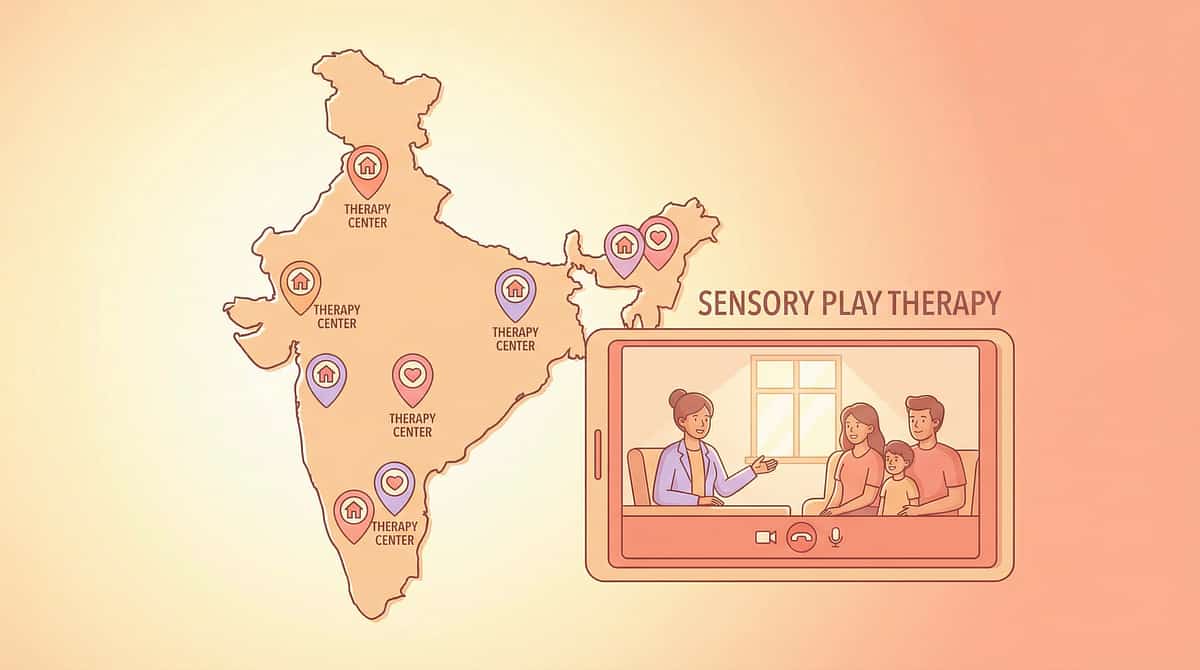
Your Professional Support Team — Pinnacle Blooms Network
Home + Clinic = Maximum Impact. Home-based intervention supported by professional guidance produces the strongest outcomes. Whether you're near a center or accessing support virtually, Pinnacle has you covered.
Find a Center
70+ centers across India. Find your nearest Pinnacle Blooms center for in-person OT sensory assessment and intervention.
Therapist Matching
Matched with an OT experienced in olfactory processing challenges, using Sensory Integration Certification standards.
Teleconsultation
Not near a center? Book a virtual consultation with a Pinnacle OT specialist from anywhere.
📞 FREE National Autism Helpline
9100 181 181
Available 24×7 | 16+ languages
🌐 pinnacleblooms.org | 📧 care@pinnacleblooms.org
Available 24×7 | 16+ languages
🌐 pinnacleblooms.org | 📧 care@pinnacleblooms.org
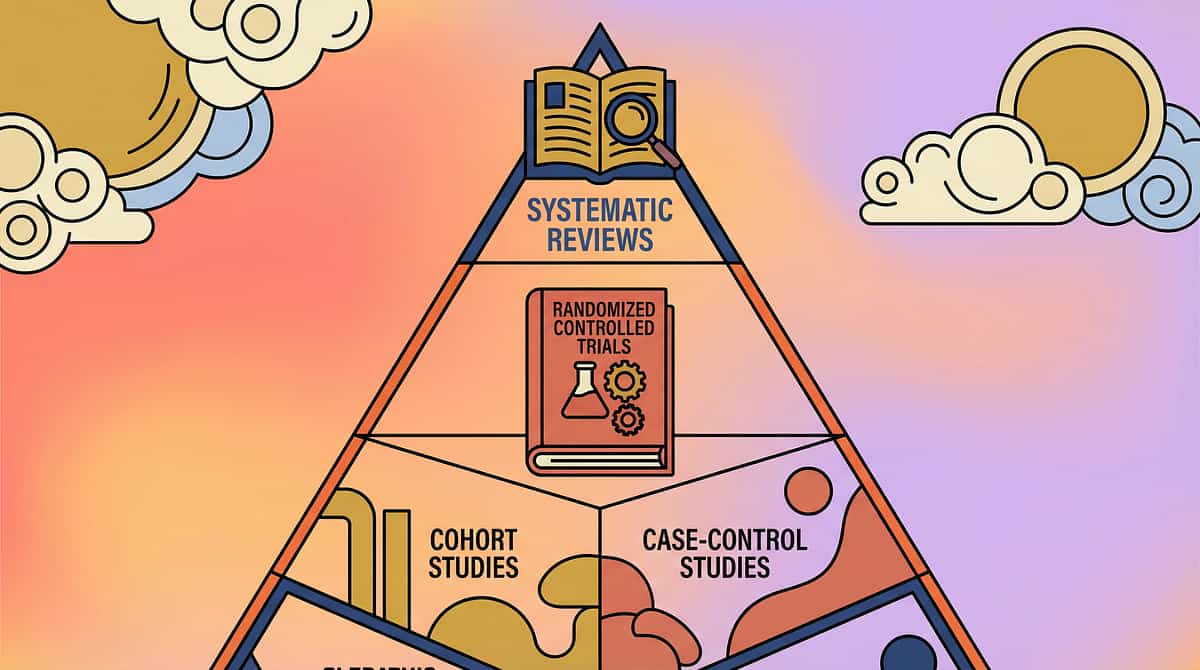
The Research Library — For the Curious Parent
Every recommendation in this guide is anchored in peer-reviewed evidence. Here's the research pyramid supporting olfactory sensory intervention — and evidence your pediatrician will respect.
Level I
Systematic Reviews + Meta-Analyses
Level II
Randomized Controlled Trials
Level III
Foundational Frameworks + Guidelines
Level I — Systematic Reviews & Meta-Analyses
- PRISMA Systematic Review (2024): 16 articles (2013–2023) confirming evidence-based practice status — PMC11506176
- Meta-Analysis (2024): 24 studies confirming effectiveness across social, adaptive, sensory, and motor domains — PMC10955541 | DOI: 10.12998/wjcc.v12.i7.1260
Level II — Randomized Controlled Trials
- Indian RCT (2019): Home-based sensory interventions with significant outcomes using parent-administered protocols — DOI: 10.1007/s12098-018-2747-4
- Gamified Digital Health (2024): 21 RCTs, 1,050 participants demonstrating digital intervention efficacy
Foundational Frameworks
- WHO Nurturing Care Framework — nurturing-care.org/ncf-for-ecd/
- UNICEF Care for Child Development Package — PMC9978394
- Dunn W. (1997) — Impact of Sensory Processing Abilities on Daily Lives
- Comprehensive Framework for Evaluating SI Treatment in ASD — DOI: 10.3389/fnint.2020.556660
- Adapted WHO/UNICEF Framework for SLPs — DOI: 10.1080/17549507.2022.2141327
- NCAEP Evidence-Based Practices Report (2020)
- SPD Foundation and STAR Institute:spdstar.org
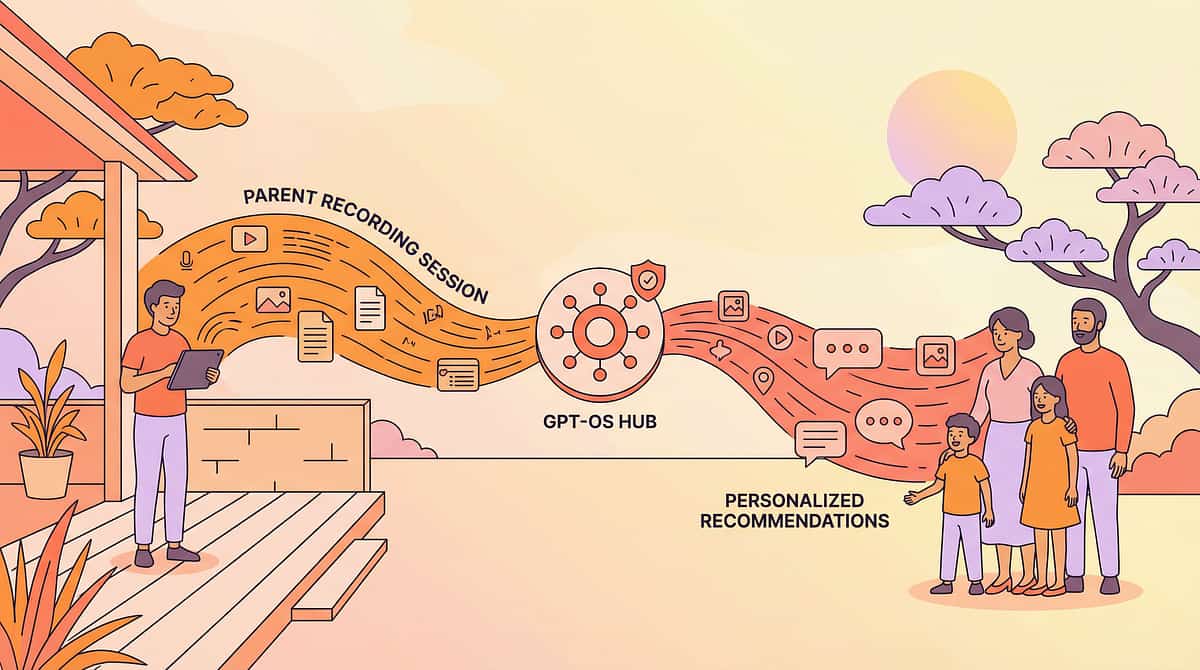
How GPT-OS® Uses Your Data — Transparency & Trust
Your session data doesn't just help your child — it helps every child like yours. Here's exactly how it works, with full transparency.
What GPT-OS® Learns From This Technique's Data
Scent Effectiveness
Which scent combinations are most effective for olfactory seekers at different ages
Optimal Scheduling
Best sensory diet schedules based on real-world family implementation patterns
Time-to-Mastery
Benchmarks for olfactory seeking intervention across child profiles
Safety Signals
Identifying patterns that predict red flag situations before they escalate
Privacy & Data Protection: Your child's data is anonymized and encrypted. Individual data is never shared or sold. You can request deletion at any time. Compliance with Indian Data Protection Act, HIPAA principles, and GDPR where applicable.
Your data helps every child like yours. Population-level patterns from 21 million+ sessions create the most comprehensive sensory processing evidence base on Earth.

Watch the Reel — A-117 in 75 Seconds
Reel A-117
Sensory Solutions Series — Episode 117
Duration: 75 seconds
This Reel introduces all 9 materials covered in this comprehensive guide. Watch a therapist demonstrate each material, see children engaging with olfactory tools, and hear the validation that your child's nose is their superpower.
Duration: 75 seconds
This Reel introduces all 9 materials covered in this comprehensive guide. Watch a therapist demonstrate each material, see children engaging with olfactory tools, and hear the validation that your child's nose is their superpower.
Connected Content
Coming Next: A-117-DD-01 — How to Build the Perfect Scented Sensory Kit for Your Child
Previously: A-116 — When Your Child Gags at Smells (Olfactory Defensiveness)
Presented By
Pinnacle Blooms OT Specialist — Occupational Therapist, Sensory Integration Certified, Pinnacle Blooms Network

Share This With Your Family — Consistency Multiplies Impact
Consistency across caregivers multiplies impact. When everyone in your child's life understands and supports their olfactory needs, progress accelerates. Share this guide with grandparents, teachers, and extended family members.
"Explain to Grandparents" Version
"Your grandchild sniffs everything because their brain needs more smell input than most people. It's not a behavior problem — it's neurology. Here's how you can help:
- Let them use their scent bracelet freely
- Don't scold them for sniffing
- Redirect to their scent kit if they try to sniff you
- GREEN items = always okay. YELLOW = ask first. RED = not for sniffing.
Any questions? Call: 9100 181 181"
Teacher/School Communication Template
"Dear [Teacher],
[Child's name] has olfactory sensory seeking needs. Their OT has designed a sensory protocol that includes:
[Child's name] has olfactory sensory seeking needs. Their OT has designed a sensory protocol that includes:
- A scented bracelet they may sniff during class (quiet and non-disruptive)
- A scent kit in their backpack for break times
- A visual boundary card
We'd love to share more about how to support [child's name]. Contact: [parent phone] or Pinnacle Blooms: 9100 181 181"
Reference: WHO CCD Package — Multi-caregiver training is critical for intervention generalization and maintenance. PMC9978394

Act VI: The Close & Loop
Frequently Asked Questions — Olfactory Sensory Seeking
Is my child's sniffing behavior a sign of autism?
Olfactory sensory seeking is one possible indicator of sensory processing differences, which occur in approximately 80% of children with autism. However, sniffing behavior alone is not diagnostic. It can also occur in typically developing children, children with ADHD, or children with anxiety. A comprehensive evaluation by a developmental pediatrician and OT can determine the underlying pattern. Contact: 9100 181 181 for free guidance.
Will my child ever stop sniffing?
The goal is not to eliminate sniffing but to make it appropriate, safe, and self-managed. Many children's seeking intensity naturally moderates as their nervous system matures, especially when appropriate outlets are consistently provided. With intervention, most children learn to meet their needs discreetly and independently.
Are essential oils safe for children?
Most essential oils are safe when used properly: never applied directly to skin undiluted, never ingested, and always in ventilated spaces. Lavender, vanilla, chamomile, and mild citrus are generally safest. Avoid: tea tree oil on young skin, wintergreen, and concentrated camphor near young children's faces. Always perform a 24-hour patch test. Consult your pediatrician for respiratory conditions.
My child only wants to sniff ONE specific thing — is that okay?
Single-scent fixation is common early on. Honor the preference while gradually expanding. Place the preferred scent alongside one new option. Over time, curiosity often broadens the range. If the fixation is on an unsafe substance, prioritize finding a safe alternative that matches the same intensity profile.
How do I handle sniffing behavior in public?
Ensure portable olfactory tools (bracelet, pocket scent) are available in ALL public settings. Before entering a new space: "Remember, we can smell our bracelet anytime." If inappropriate sniffing occurs, redirect calmly: "Use your scent kit." Over time, practice specific social scripts for different environments.
My child's school won't allow scented materials.
Request a meeting and bring OT documentation explaining medical/therapeutic necessity. Under disability rights frameworks, sensory accommodations are typically protected. Offer alternatives: unscented fidget with a small scent-infused insert, or a single subtle-scent bracelet. Pinnacle Blooms can provide professional documentation.
Can I do this without professional support?
Yes — this guide is designed to be parent-implementable. However, professional support significantly improves outcomes by identifying specific sensory thresholds, customizing scent profiles, addressing co-occurring patterns, and monitoring with standardized tools. We strongly recommend at least an initial OT assessment.
How is this different from just giving my child perfume?
Therapeutic olfactory intervention is structured, intentional, and progressive. This protocol teaches the child to identify preferences, manage seeking urges, respect social boundaries, and use tools proactively. It's the difference between giving someone food when they're hungry and teaching them to cook.
Didn't find your answer? Ask GPT-OS®: pinnacleblooms.org/gpt-os | Book a teleconsult: pinnacleblooms.org/teleconsult

Your Next Step — Start Now
You've read the neuroscience. You've seen the evidence. You've learned the materials, the steps, the troubleshooting, and the progression pathway. Now it's time to act. Your child's sensory needs won't wait — and neither should their solution.
🟣 Start This Technique Today
Download the complete material list + DIY instructions + tracking sheet + social boundary visual as a single starter kit PDF
🔵 Book a Consultation
Connect with a Pinnacle OT specialist for personalized assessment and guidance
⬜ Explore Next Technique
Continue your child's journey with the next recommended technique in the sensory processing domain
Consortium Validated: OT • SLP • ABA • SpEd • NeuroDev Pediatrics
System: GPT-OS® Therapeutic Intelligence | Evidence: PubMed-Referenced | WHO/UNICEF-Aligned
Network: 70+ Centers | 21M+ Sessions | 97%+ Improvement
System: GPT-OS® Therapeutic Intelligence | Evidence: PubMed-Referenced | WHO/UNICEF-Aligned
Network: 70+ Centers | 21M+ Sessions | 97%+ Improvement
Preview of 9 materials that help when child sniffs everything Therapy Material
Below is a visual preview of 9 materials that help when child sniffs everything therapy material. The pages shown help educators, therapists, and caregivers understand the structure and content of the resource before use. Materials should be used under appropriate professional guidance.


Link copied!

The Pinnacle Promise
Pinnacle Blooms Network® — Multi-Disciplinary Expert Consortium
🧠 Occupational Therapy | 🗣️ Speech-Language Pathology | 📋 Applied Behavior Analysis | 📚 Special Education | 👨⚕️ NeuroDevelopmental Pediatrics
Powered by: GPT-OS® — Global Pediatric Therapeutic Operating System
🧠 Occupational Therapy | 🗣️ Speech-Language Pathology | 📋 Applied Behavior Analysis | 📚 Special Education | 👨⚕️ NeuroDevelopmental Pediatrics
Powered by: GPT-OS® — Global Pediatric Therapeutic Operating System
"From fear to mastery. One technique at a time."
You arrived on this page scared, confused, or searching for answers. Your child sniffs everything and the world doesn't understand why. Now you know: it's neurology, it's documented, it's treatable, and it's manageable. You have 9 evidence-backed materials, step-by-step protocols, DIY alternatives, safety guidelines, and a professional support network behind you.
Your child's nose is their superpower. You are the person who will help them channel it.
📞 FREE National Autism Helpline
9100 181 181 — Available 24×7 | 16+ languages
🌐 Online
pinnacleblooms.org
📧 care@pinnacleblooms.org
🏥 techniques.pinnacleblooms.org
📧 care@pinnacleblooms.org
🏥 techniques.pinnacleblooms.org
Medical Disclaimer: This content is educational and does not replace assessment by a licensed occupational therapist, pediatrician, or sensory specialist. Individual results vary. Statistics represent aggregate outcomes across the Pinnacle Blooms Network. Sensory seeking behaviors may have multiple causes. Safety monitoring is essential. Ensure all scented materials are non-toxic and age-appropriate. Intervention should be individualized based on thorough assessment. Please consult qualified healthcare professionals before implementing any strategies.
© 2026 Pinnacle Blooms Network®, unit of Bharath Healthcare Laboratories Pvt. Ltd. All rights reserved.
CIN: U74999TG2016PTC113063 | DPIIT: DIPP8651 (Govt. of India) | MSME: TS20F0009606 | GSTIN: 36AAGCB9722P1Z2
CIN: U74999TG2016PTC113063 | DPIIT: DIPP8651 (Govt. of India) | MSME: TS20F0009606 | GSTIN: 36AAGCB9722P1Z2
Built by Mothers. Engineered as a System.