

Sensory Solutions Series — Episode 119
Gustatory Processing
9 Materials That Help When Your Child Seeks Strong Flavors
When your child craves extremely sour, spicy, or intense tastes — and regular food just doesn't cut it.
"He puts hot sauce on everything and says all regular food is too boring."

Chapter 1
When Mild Flavors Aren't Enough
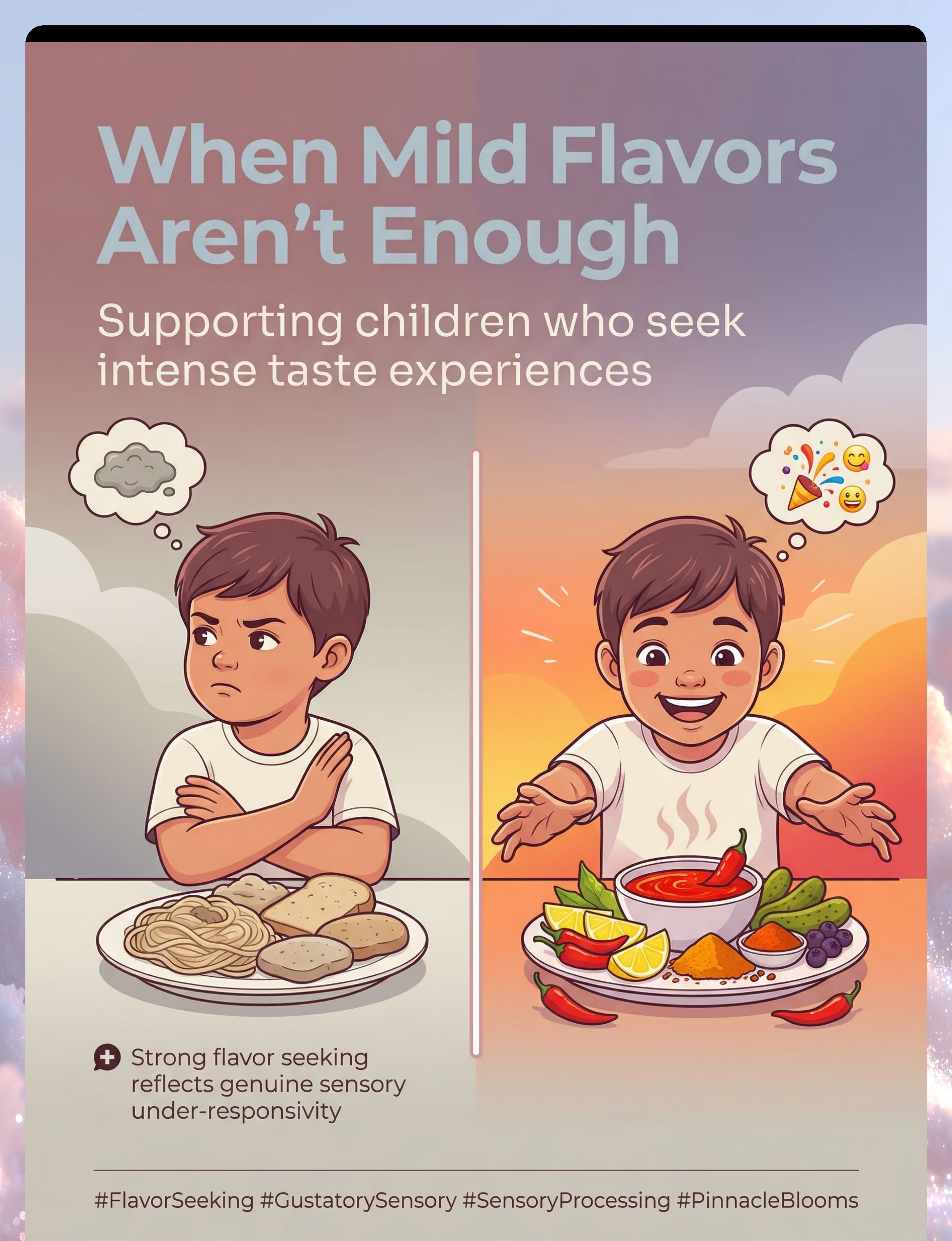
Does your child crave extremely sour, spicy, or intense flavors? Do they add hot sauce to everything and call regular food "boring"? You're not alone — and this isn't picky eating. Their taste system genuinely needs stronger input to register satisfaction.
This behavior is called gustatory seeking, and it reflects a real neurological pattern called oral sensory under-responsivity with intense flavor preference. Your child's taste receptors or neural processing pathways require stronger stimulation to achieve the same level of satisfaction that others experience from milder flavors.
"My child craves extremely sour, spicy, or intense flavors and says normal food is too bland."
The good news? When we understand why your child seeks intense flavors and provide safe, appropriate options, mealtimes transform — from daily battles into moments of genuine connection and satisfaction. Here are nine materials that safely meet their flavor-seeking needs.

Understanding Gustatory Seeking
Strong flavor seeking represents gustatory under-responsivity — a pattern where children require intense taste input to register satisfying oral sensory information. According to the SPD Foundation, these children have higher thresholds for taste detection and satisfaction.
What Does This Look Like?
- Strong preference for extremely sour candies and foods
- Seeking spicy foods beyond age-typical tolerance
- Adding excessive salt, hot sauce, or condiments to meals
- Preferring bitter or intense flavors others find unpleasant
- Dissatisfaction with "normal" or mild-flavored foods
- Eating lemons, limes, or other intense foods plain
- Licking non-food items for taste exploration
- Requesting the strongest flavor options available
Why It Happens
The seeking behavior actually serves a regulatory function. Intense flavors can alert and organize an under-responsive nervous system while providing the strong oral sensory input the child's system requires.
Your child isn't being difficult — their taste system genuinely needs more intense input to register satisfaction. When we provide safe, appropriate options, we meet a real sensory need.
Age Band: 2–12 years | Setting: Home & Therapy

The Flavor-Seeking Journey
Understanding where your child is on the flavor-seeking spectrum helps you choose the right materials and strategies. Most children progress through a natural journey from recognition to independent self-management.
This progression isn't linear — your child may move back and forth between stages depending on stress, fatigue, or environmental changes. The goal is steady, supported movement toward independence with their flavor needs.

Chapter 2
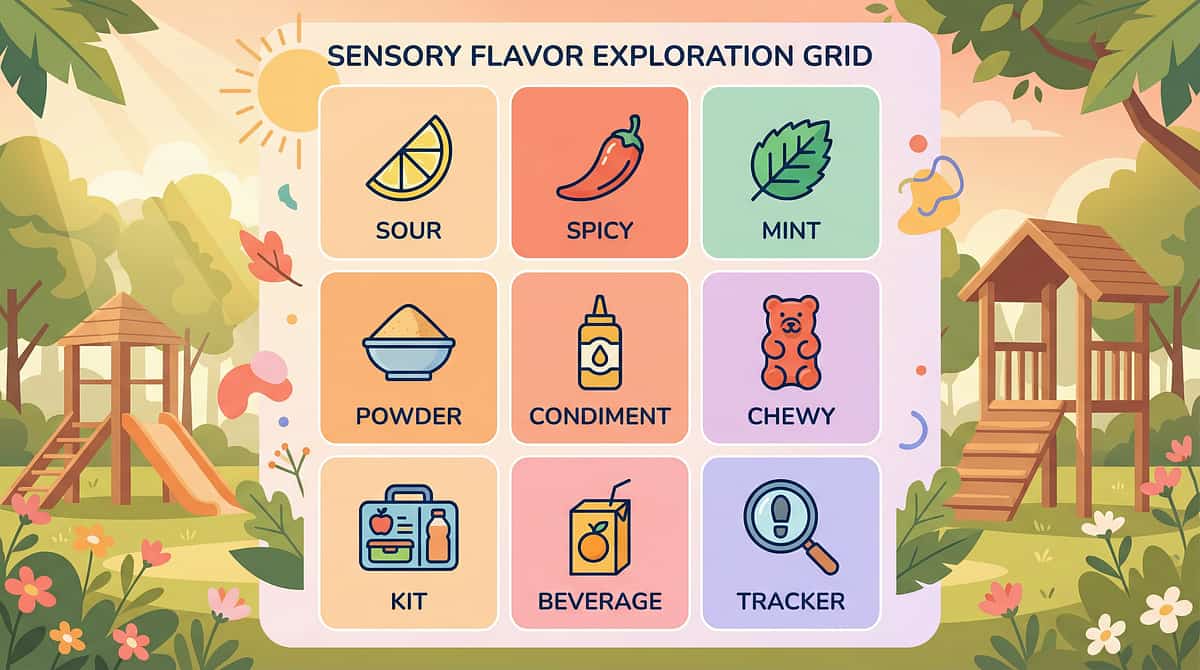
Your 9 Materials at a Glance
Each of these nine materials addresses a different dimension of your child's flavor-seeking needs — from satisfying specific taste cravings to building long-term regulation strategies. Together, they form a comprehensive toolkit.
Sour
Therapeutic Sour Candies & Foods
Spicy
Hot Flavor Options
Cooling
Mint & Cooling Options
Control
Flavor Powder Systems
Boost
Intense Condiment Collection
Chewy
Flavored Chewy Foods
Explore
Flavor Exploration Kits
Sip
Intense Flavor Beverages
Track
Flavor-Intensity Tracking Tools
Material 1 of 9
₹50–500
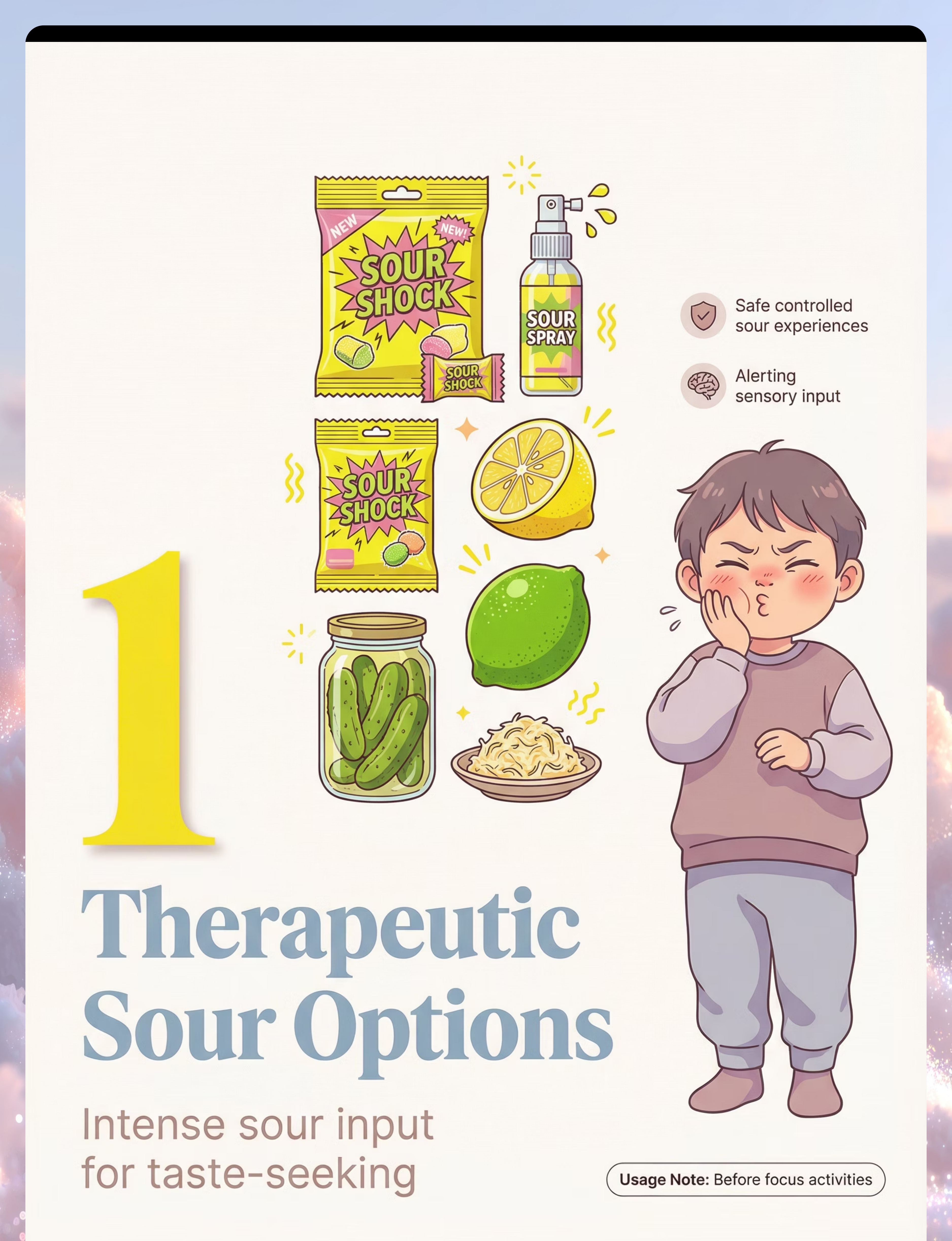
Therapeutic Sour Candies and Foods
Intense sour input for taste-seeking
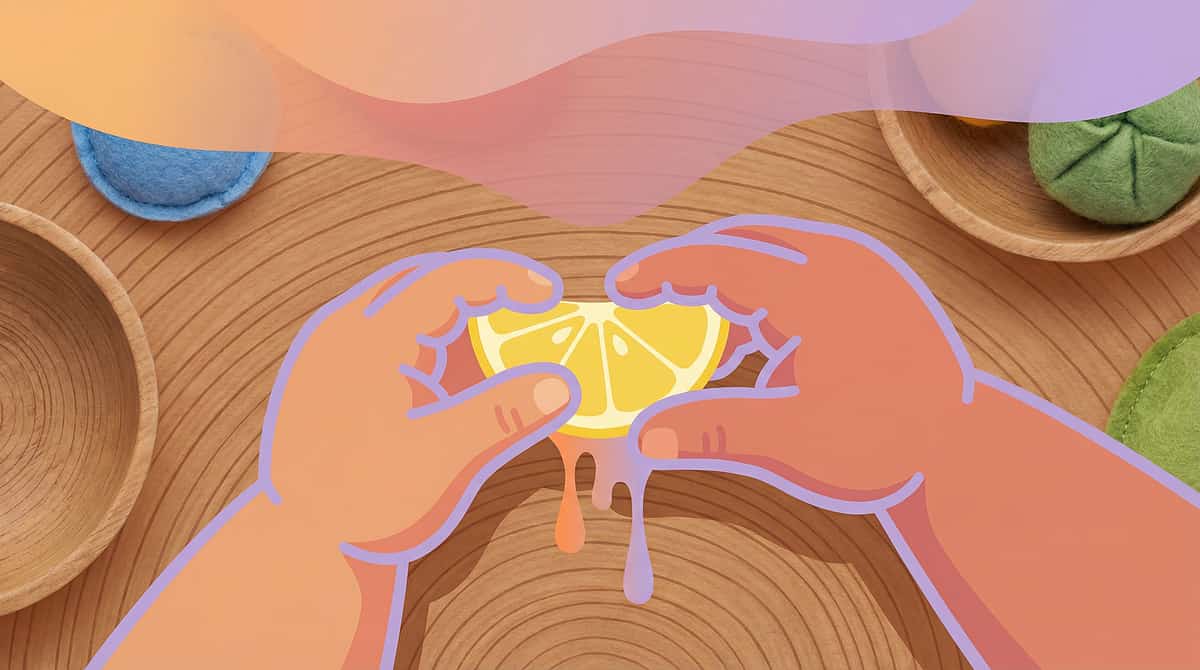
Therapeutic sour options provide intense, safe sour experiences that directly satisfy your child's gustatory craving. Extreme sour candies, sour sprays, and naturally sour foods like pickles and citrus give your child the powerful sour input their taste system craves — in a controlled, age-appropriate way.
Recommended Materials
- Extreme sour candies (Warheads, Toxic Waste)
- Sour spray candy
- Fresh lemon and lime wedges
- Dill pickles and pickle juice
- Sauerkraut
- Tamarind candy
Why the Science Works
Sour flavors activate trigeminal nerve pathways in addition to taste receptors, providing dual sensory input that is uniquely powerful for under-responsive gustatory systems. The intensity of sour registers more strongly than other taste categories, making it an ideal starting point for flavor-seeking children.
Sour Options: DIY, Safety & Practical Use
DIY at Home
Offer lemon wedges, lime slices, or grapefruit as natural sour snacks. Keep dill pickles and sauerkraut on hand. Create sour drinks by adding citric acid powder to water or juice — adjust the intensity to your child's preference.
When & Where to Use
Offer sour input at scheduled times — before meals to "wake up" the mouth, during homework for alerting, or after school for regulation. Use at home, in therapy sessions, and pack portable options for school.
Safety Note
Excessive sour candy can irritate mouth tissues and affect tooth enamel — balance with natural sour options. Provide scheduled, portioned input rather than unlimited access. Monitor for any GI sensitivity and rinse the mouth with water afterward.
Outcome: When sour input is offered strategically, children experience greater mealtime satisfaction, improved oral awareness, and better overall regulation — and they feel understood rather than restricted.
Material 2 of 9
₹100–600
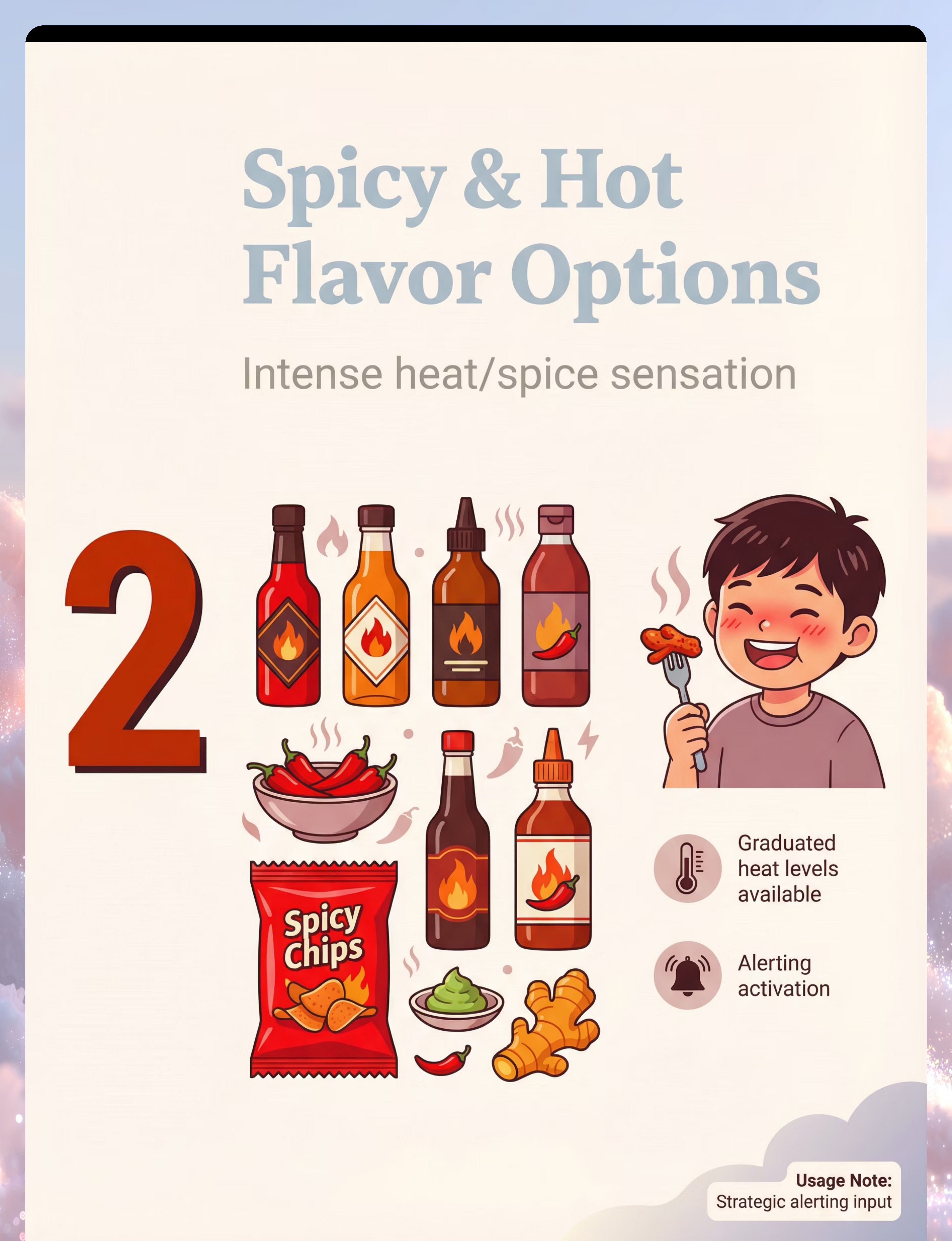
Spicy and Hot Flavor Options
Intense heat and spice sensation for heat-seeking taste needs
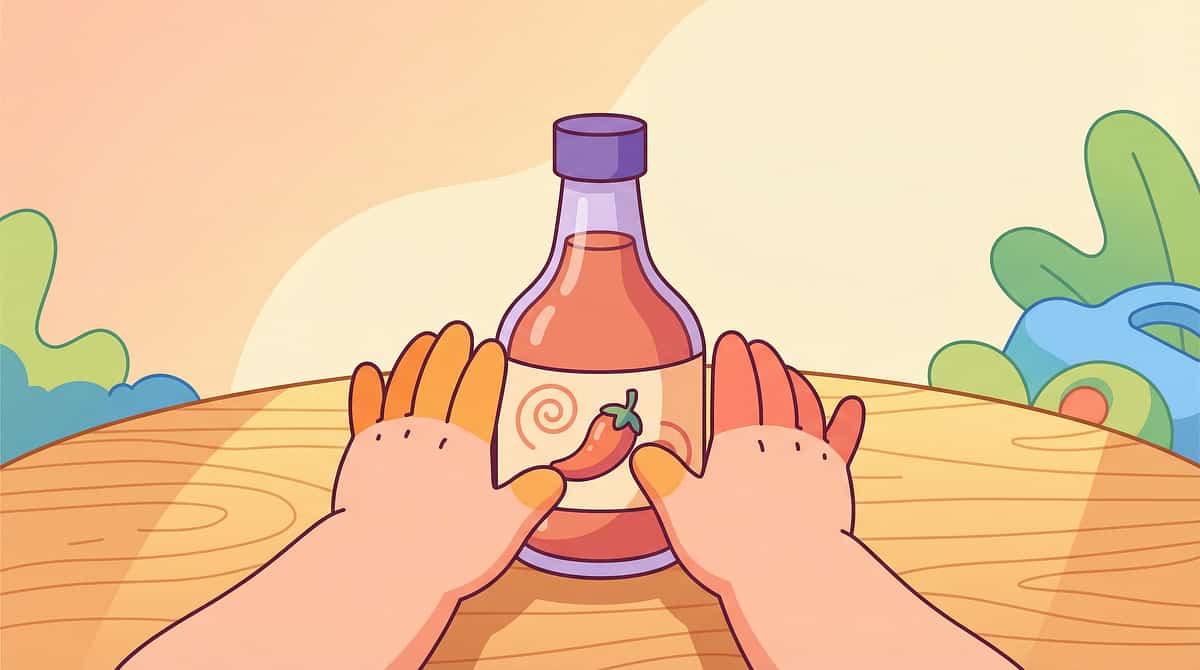
Hot sauce varieties, spicy snacks, and warming spices provide the intense heat sensation that some flavor-seeking children's systems require. Capsaicin — the compound responsible for spicy heat — activates pain receptors that create a uniquely powerful sensory signal, helping under-responsive taste systems achieve the registration they need.
Recommended Materials
- Hot sauce collection (various heat levels)
- Spicy chips and snacks
- Wasabi peas
- Ginger candies and chews
- Cinnamon candies
- Spicy jerky options
The Science Behind It
Capsaicin activates TRPV1 receptors — the same receptors that detect actual heat. This creates a powerful sensory signal that bypasses typical taste pathways, providing the intense input that under-responsive gustatory systems crave. Warming spices like ginger and cinnamon offer gentler versions of this same mechanism.
Spicy Options: DIY, Safety & Practical Use
🛠️ DIY at Home
Add warming spices to everyday cooking: ginger, cinnamon, black pepper, and a pinch of cayenne. Offer chili flakes as a table seasoning your child can control. Build a small hot sauce collection with varying heat levels so your child can match intensity to their needs.
📍 When & Where
Use spicy input during meals to transform "boring" food, or offer a spicy snack mid-afternoon when alertness drops. Keep portable spicy options in school bags. Warming spices in morning oatmeal can help with morning alerting.
🛡️ Safety Note
Spicy foods can cause GI discomfort in some children — monitor tolerance carefully and don't force spice levels beyond comfort. Always ensure water or milk is available for cooling if needed. Start with milder options and gradually increase intensity.

Material 3 of 9
₹50–300
Intense Mint and Cooling Options
Strong cooling oral sensation as an alternative intense experience
Powerful cooling sensations in the mouth provide an entirely different type of intense oral sensory experience. Strong peppermint, menthol products, and cooling mints activate cold-sensitive nerve fibers in the mouth, delivering a sharp, alerting sensation that many flavor-seeking children find deeply satisfying.
Recommended Materials
- Extra-strong peppermints (Altoids)
- Strong mint gum
- Menthol cough drops (sugar-free options)
- Fresh mint leaves
- Peppermint tea
The Science Behind It
Menthol activates TRPM8 receptors — the body's cold-sensing nerve fibers — creating a powerful cooling sensation without actual temperature change. This provides an alternative intensity pathway that's especially effective for children who also seek oral-motor input, as mint gum combines flavor intensity with chewing resistance.

Mint Options: DIY, Safety & Practical Use
DIY at Home
Fresh mint leaves can be chewed for a natural, strong mint experience. Brew strong peppermint tea (serve cooled or warm, depending on preference). Freeze mint tea into ice cubes for an added temperature + flavor intensity combination.
When & Where
Mint is excellent for alerting — offer before homework, tests, or any task requiring focus. The cooling sensation can also help with calming after sensory overload. Keep strong mints in a pocket-sized tin for school and outings.
Safety Note
Some children may not prefer cooling sensation — offer alongside other intensities, not as a replacement. Very strong mint can irritate sensitive mouths. Monitor for overconsumption and introduce gradually.
Material 4 of 9
₹100–400
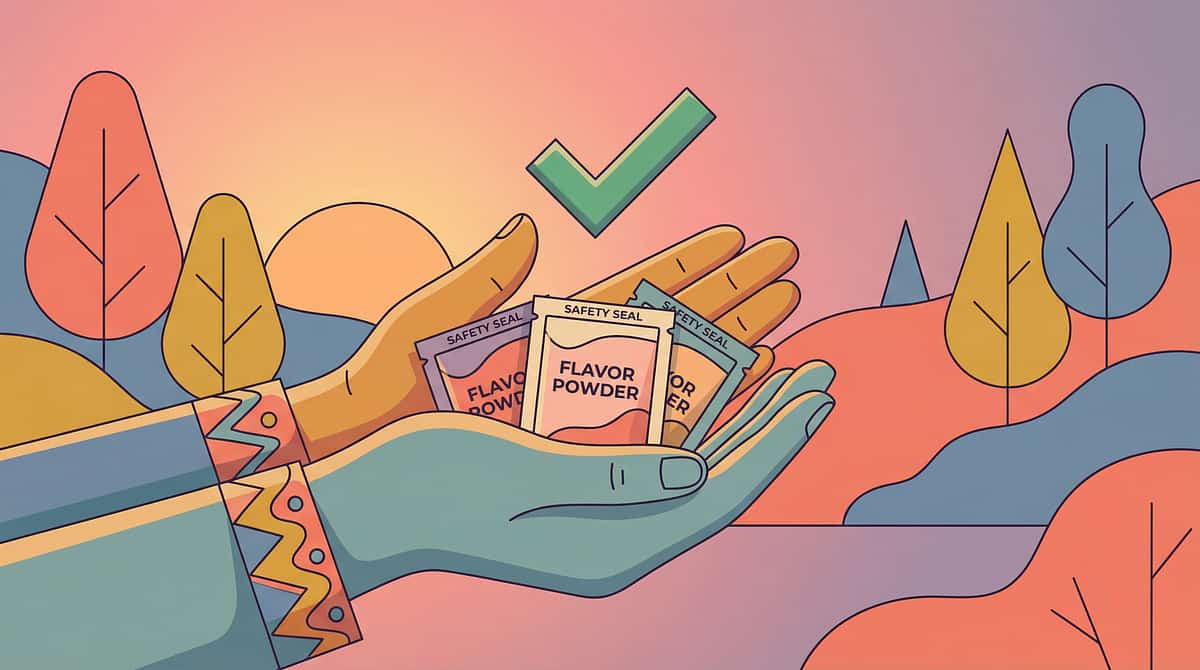
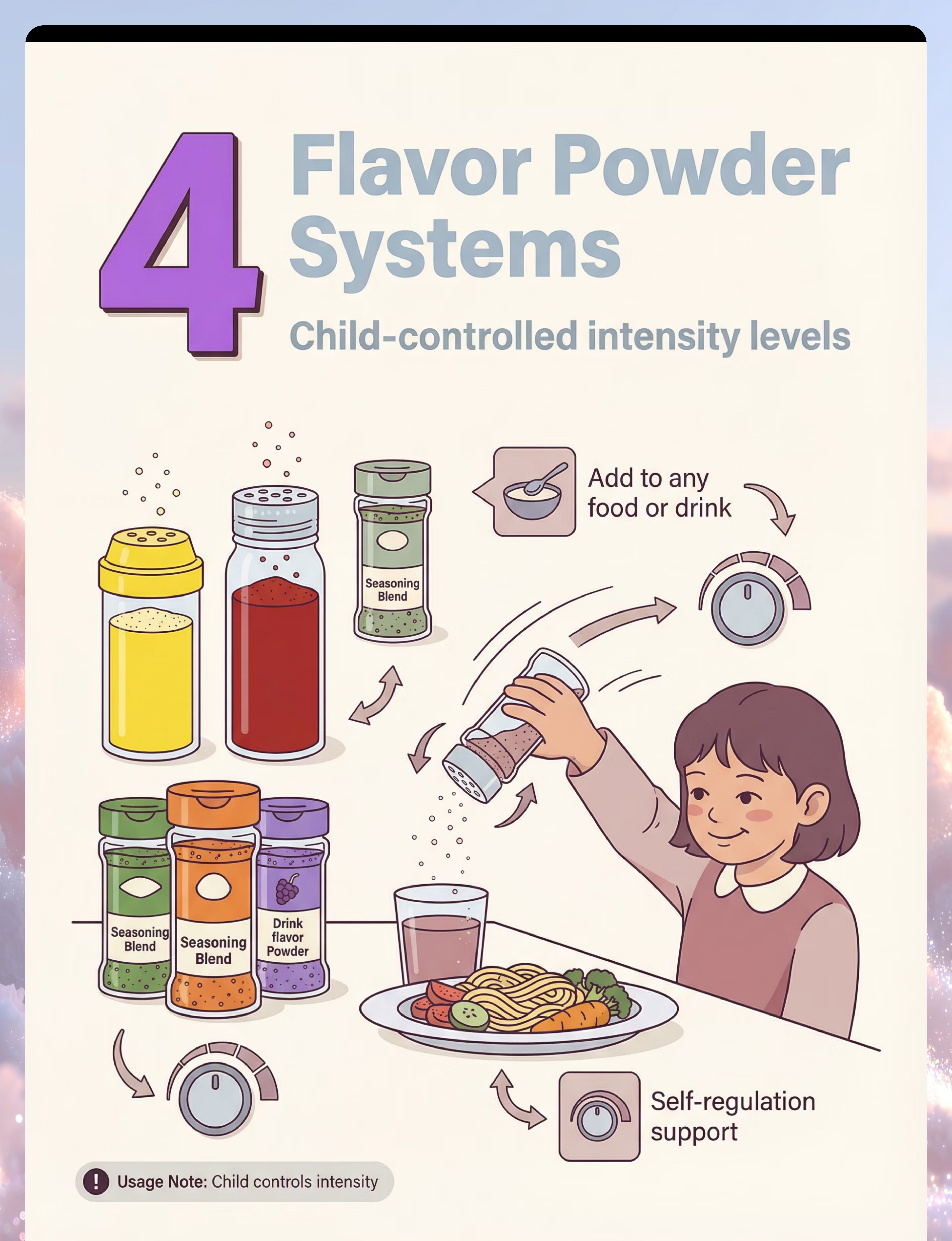
Flavor Powder Systems
Child-controlled intensity levels for any food
Flavor powder systems are uniquely empowering because they put your child in control. Rather than rejecting "boring" food or overloading with one condiment, children can use flavor powders to achieve their preferred level of taste intensity with any food — transforming mealtimes from power struggles into collaborative experiences.
Recommended Materials
- Citric acid powder (sour boost)
- Chili powder and spice blends
- Flavor enhancer powders
- Drink mix powders (intense flavors)
- Seasoning salt varieties
- Flavor shaker containers
The Science Behind It
Giving children agency over their sensory input has profound regulatory benefits. Research shows that self-directed sensory experiences are more organizing than passive ones. When a child chooses to add "three shakes" of sour powder, they're practicing self-regulation, building interoceptive awareness, and developing autonomy — all while meeting their gustatory needs.
Flavor Powders: DIY, Safety & Practical Use
1
DIY at Home
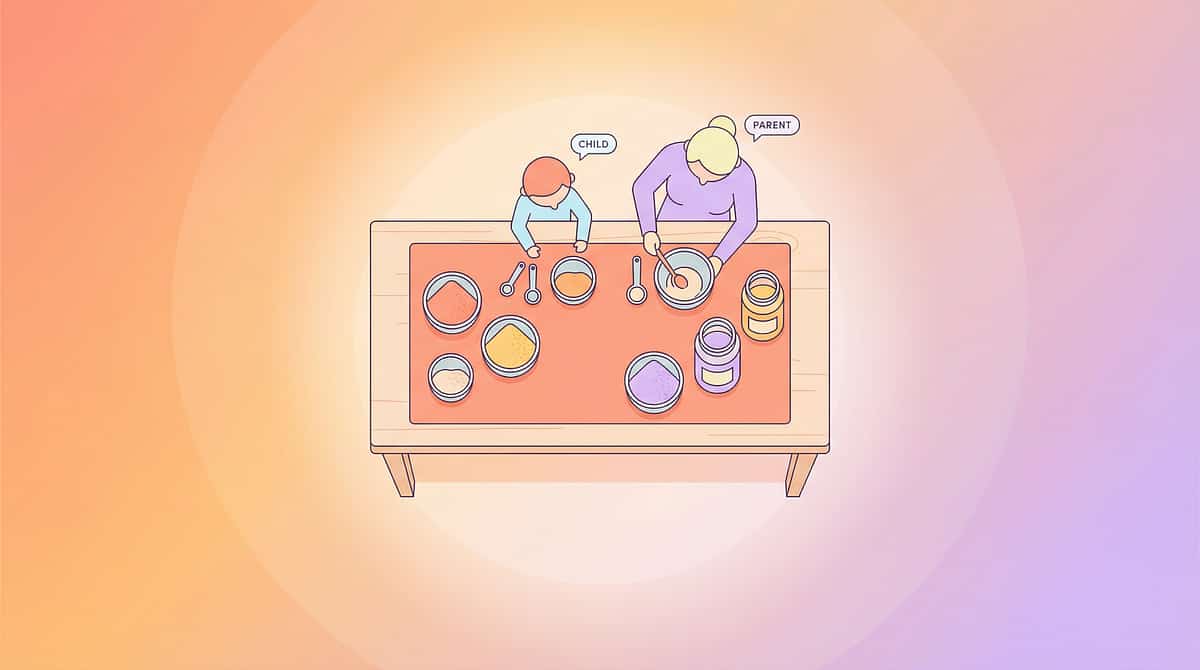
Find citric acid powder in the baking section for a potent sour boost. Use chili powder, seasoning blends, or chat masala as flavor boosters. Fill small shaker containers and let your child label them with flavor names they choose.
2
How to Use
Set up a "flavor station" at the table with 3–4 shaker options. Let your child experiment with amounts. Start with guided portions ("try two shakes first"), then move toward independent use. Encourage trying powders on new foods.
3
Safety Note
Monitor amounts of salt and sugar additions. Teach appropriate amounts to avoid excess — this is a learning process, not a restriction. Consider the nutritional impact of additions and balance flavored meals with naturally flavorful whole foods.

Material 5 of 9
₹200–800
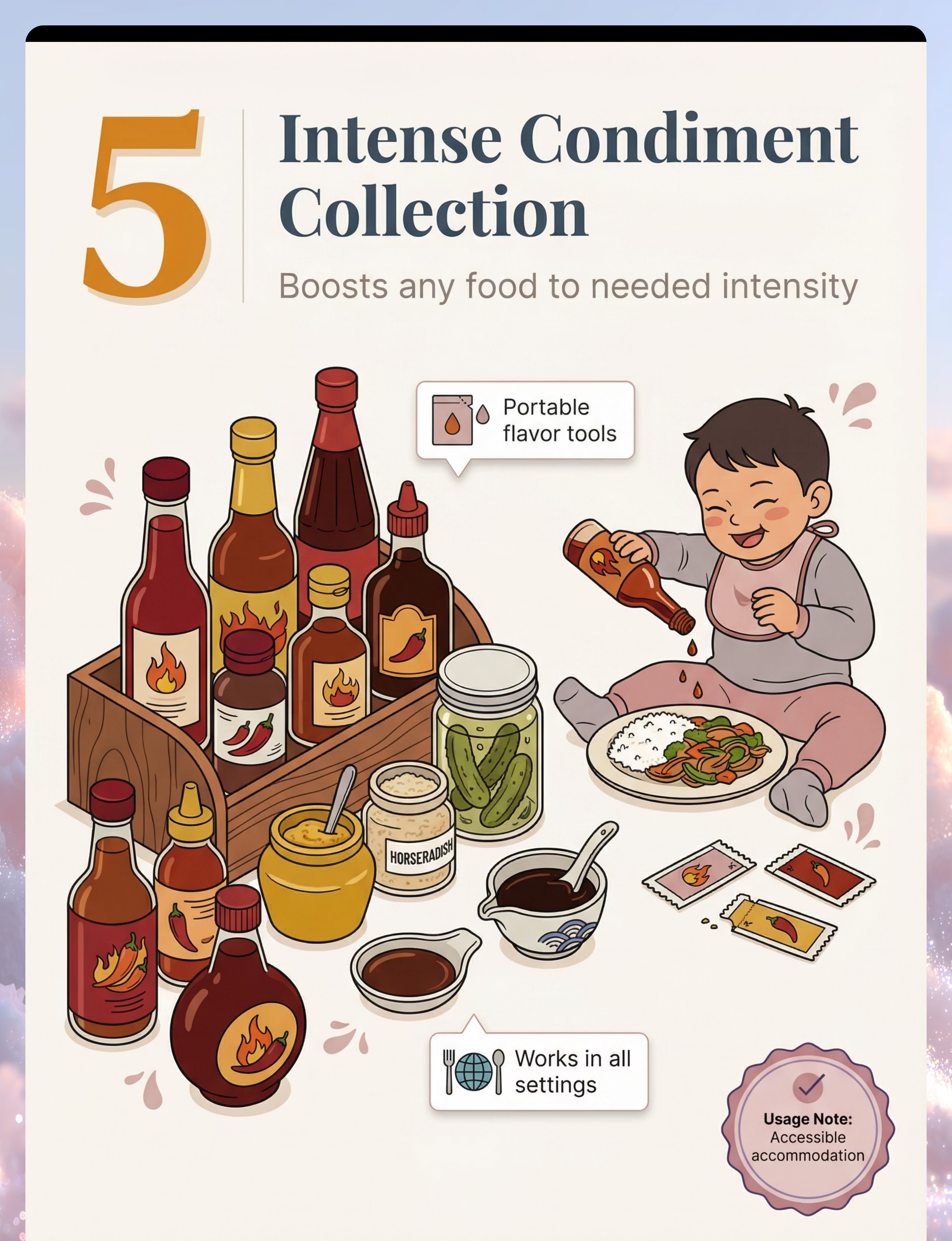
Intense Condiment Collection
Boosts any food to your child's needed intensity level
An intense condiment collection gives your child the tools to transform any meal to meet their flavor needs. Hot sauces, mustards, pickled items, and strong sauces work like a flavor toolkit — empowering your child to make any dish satisfying without requiring you to cook separate meals.
Recommended Materials
- Hot sauce collection (various types and heat levels)
- Spicy mustard varieties
- Horseradish and wasabi
- Pickle varieties
- Strong flavored sauces (soy sauce, fish sauce)
- Portable condiment packets
The Science Behind It
Condiments provide multi-sensory input — combining taste, smell, and sometimes texture. This layered stimulation is particularly effective for under-responsive gustatory systems. Having a personal condiment collection also builds food acceptance by making a wider range of base foods palatable when paired with preferred intensity enhancers.

Condiment Collection: DIY, Safety & Practical Use
🛠️ DIY at Home
Build a condiment collection with your child's input from local grocery stores. Let them choose bottles that appeal to them. Keep small containers portable for school and outings — many restaurants offer single-serve packets that are perfect for on-the-go flavor boosting.
📍 When & Where
Keep the condiment caddy at the family table for every meal. Pack portable packets in lunchboxes. Bring small bottles to restaurants. Use at therapy sessions to practice mealtime skills. The goal: your child can meet their flavor needs anywhere.
🛡️ Safety Note
Monitor sodium and sugar intake from condiment use. Some condiments may cause GI sensitivity in certain children. You may need to teach socially appropriate amounts in public settings — frame this as a social skill, not a restriction on their sensory needs.
Material 6 of 9
₹100–500
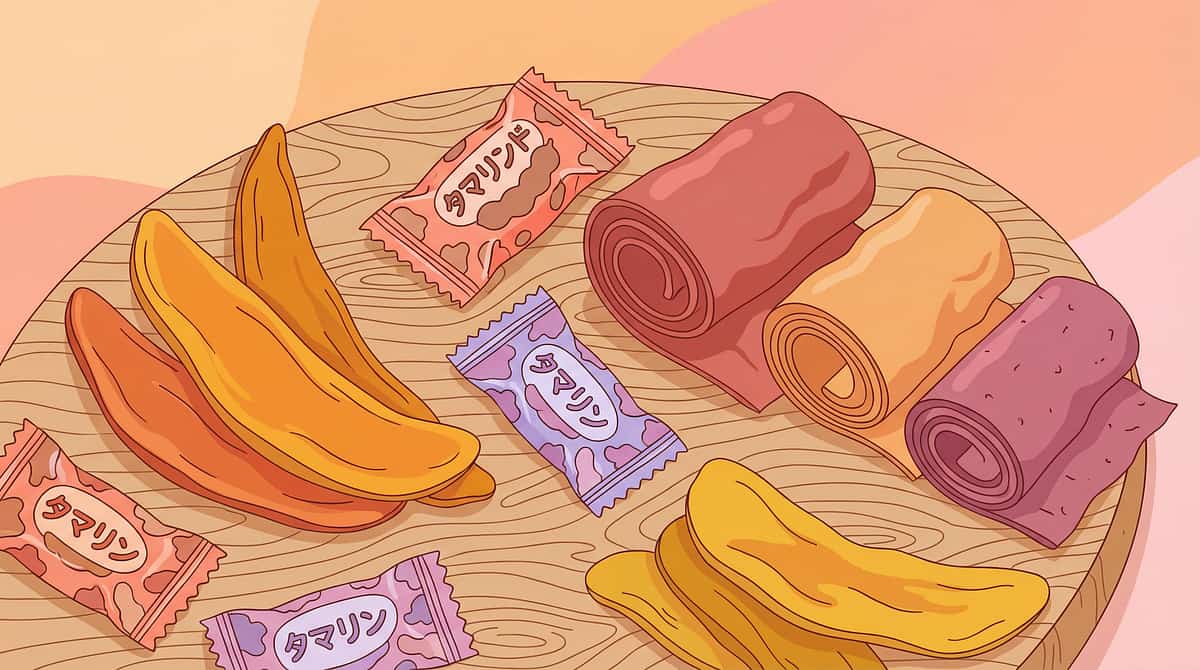
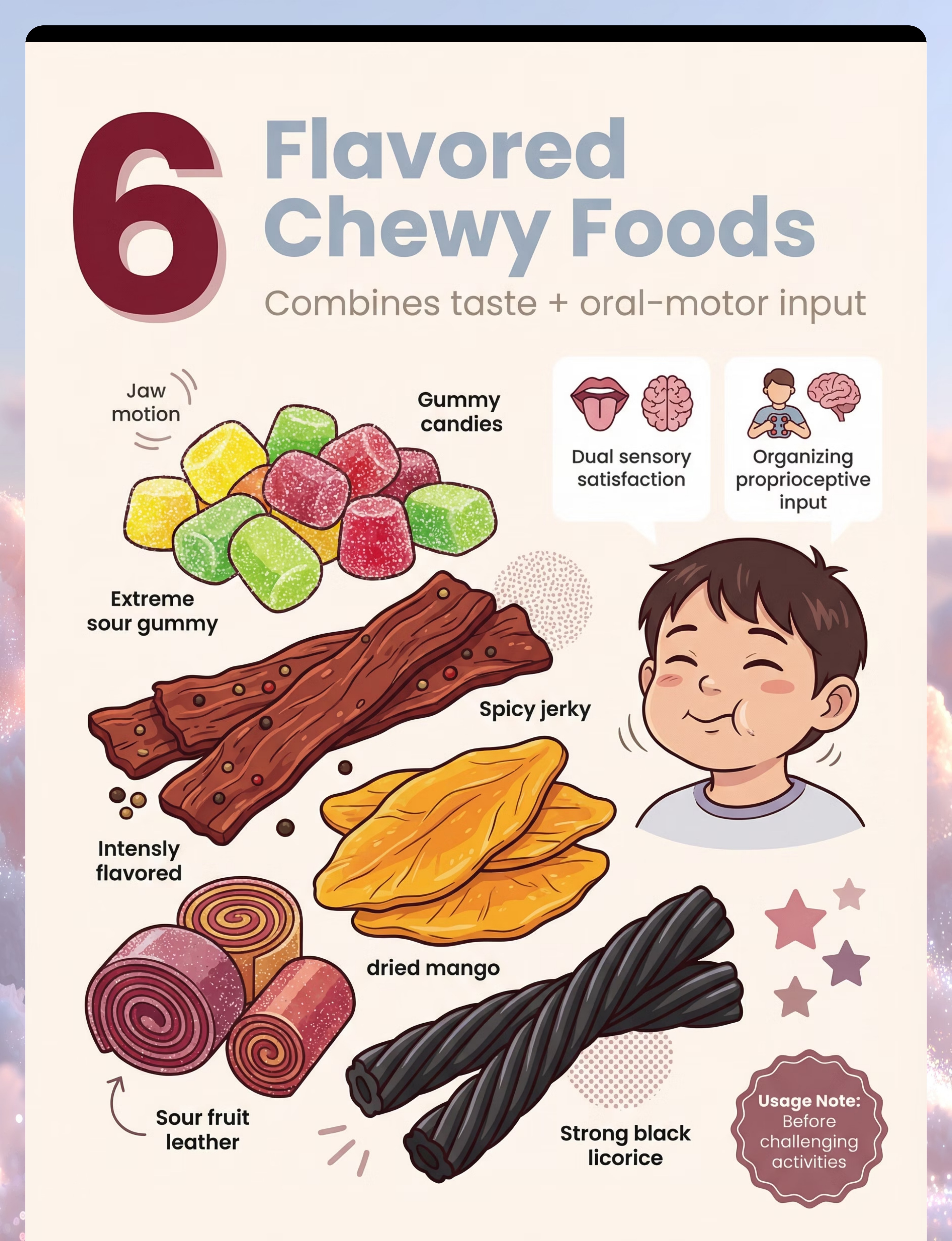
Intensely Flavored Chewy Foods
Combines taste intensity with oral-motor input
Many flavor-seeking children also crave oral-motor input — the deep pressure of chewing, biting, and working their jaw muscles. Intensely flavored chewy foods are a therapeutic powerhouse because they deliver both the flavor intensity and the chewing resistance these children need, in a single satisfying experience.
Recommended Materials
- Extreme sour gummy candies
- Spicy jerky varieties
- Strongly flavored dried fruit
- Intense flavor licorice
- Sour chewy candy
- Dried seaweed (umami chewy)
The Science Behind It
Chewing activates proprioceptive receptors in the jaw, providing calming deep-pressure input. When combined with intense flavor, the oral experience becomes doubly organizing for the nervous system. This is why many flavor-seeking children also mouth objects — they're seeking both taste and pressure simultaneously.

Chewy Foods: DIY, Safety & Practical Use
🛠️ DIY at Home
Dried mango or other dried fruit with intense flavor makes an excellent natural option. Create homemade fruit leather with strong flavors — add citric acid for sour punch. Chewy granola bars with intense flavoring combine convenience with sensory satisfaction.
📍 When & Where
Offer chewy options during transitions, before challenging activities, or when you notice seeking behaviors increasing. They're excellent for car rides, waiting rooms, and any situation where your child needs to self-regulate. Keep a small bag of options readily available.
🛡️ Safety Note
Chewy foods may pose choking risk — ensure they are appropriate for your child's oral-motor skill level. Monitor sugar and nutritional content over time. Very chewy foods may be difficult for some jaw structures, so consult your therapist about appropriate textures.
Material 7 of 9
₹300–1,000
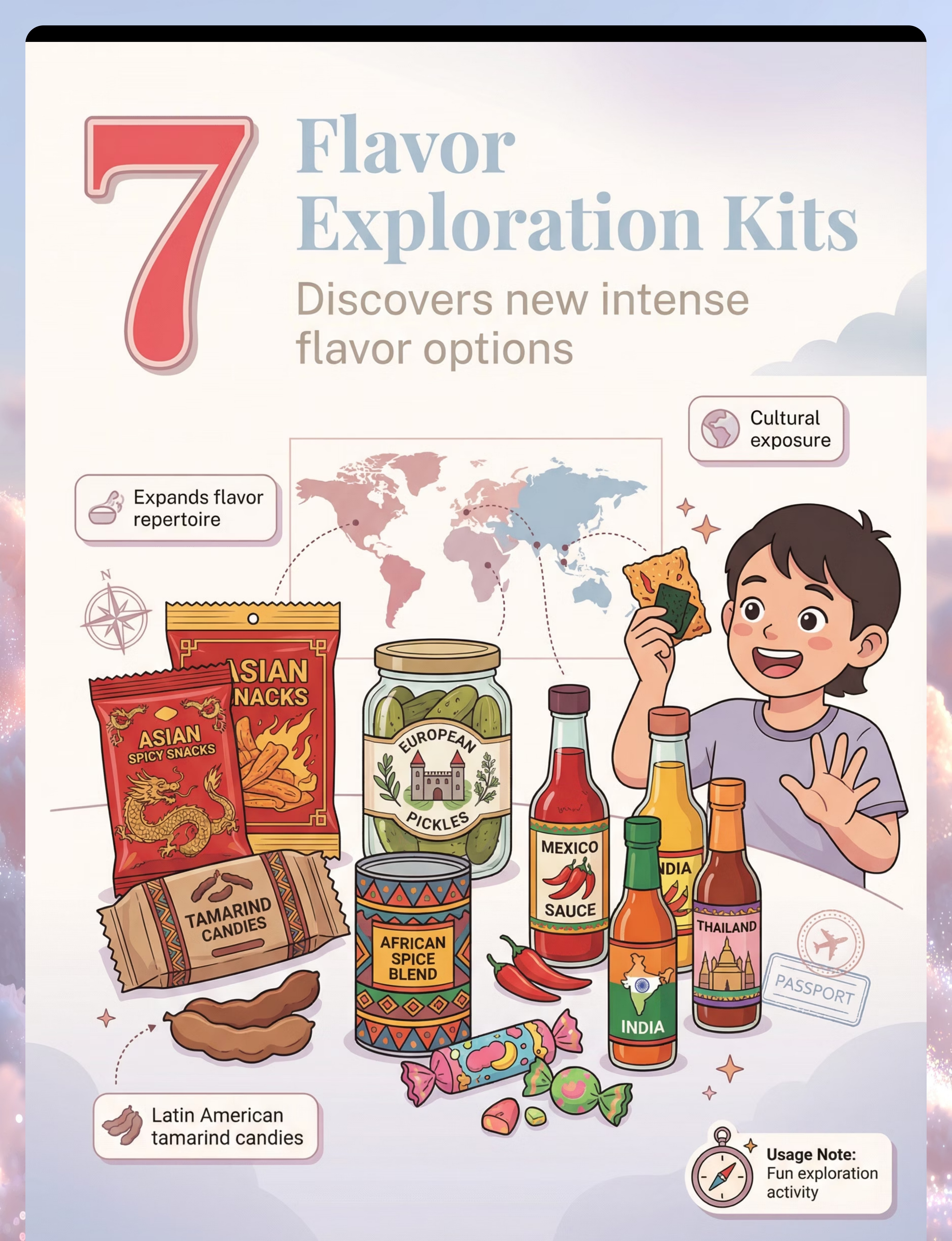
Flavor Exploration Kits
Discover new intense flavor options from around the world
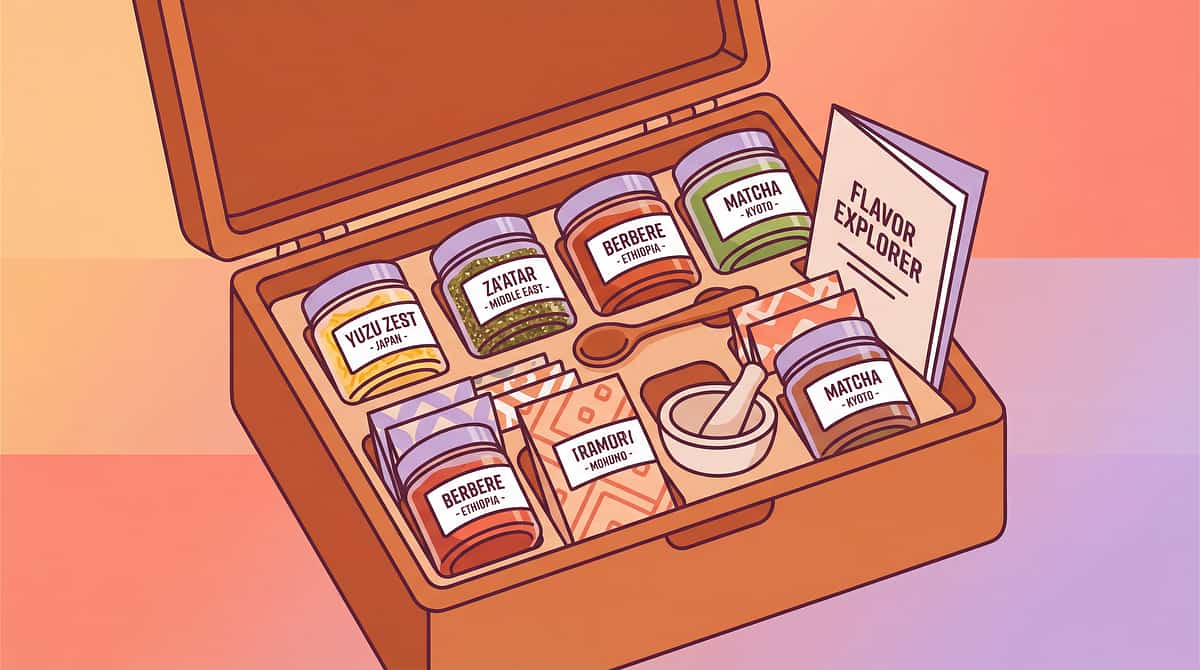
Flavor exploration kits expand your child's intense flavor repertoire in the most exciting way possible. Kits featuring unusual intense flavors from different cultures help your child discover new ways to meet their flavor-seeking needs — turning therapy into adventure and building a richer, more varied sensory diet.
Recommended Materials
- International snack subscription boxes
- World hot sauce collections
- Unusual pickle varieties (Korean, Japanese)
- Intense candy from different countries
- Spice exploration kits
- Fermented food samplers
The Science Behind It
Novel flavor experiences engage the brain's reward and learning circuits alongside gustatory pathways. When a child discovers a new intense flavor they enjoy, it expands their neural mapping of satisfying tastes — reducing rigidity and building flexible coping strategies for meeting sensory needs across different contexts.

Exploration Kits: DIY, Safety & Practical Use
Visit Ethnic Grocery Stores
Explore ethnic grocery stores together for intense flavors from different cultures. Korean gochujang, Indian pickles, Japanese wasabi snacks, and Mexican tamarind candy all offer unique intense profiles.
Create Your Own Kit
Build a custom exploration kit with unusual pickles, international spices, and intense candies. Package it as a "flavor adventure" — let your child rate each item on an intensity scale.
Offer Without Pressure
New foods should always be offered without pressure. Some may contain allergens — check carefully. Monitor for adverse reactions to unfamiliar ingredients. Respect refusals, even within preferred intensity categories.
Build a Favorites Library
Track which new flavors your child loves. Build a growing "favorites" list that expands their repertoire over time, giving them more tools for self-regulation in more settings.

Material 8 of 9
₹50–300
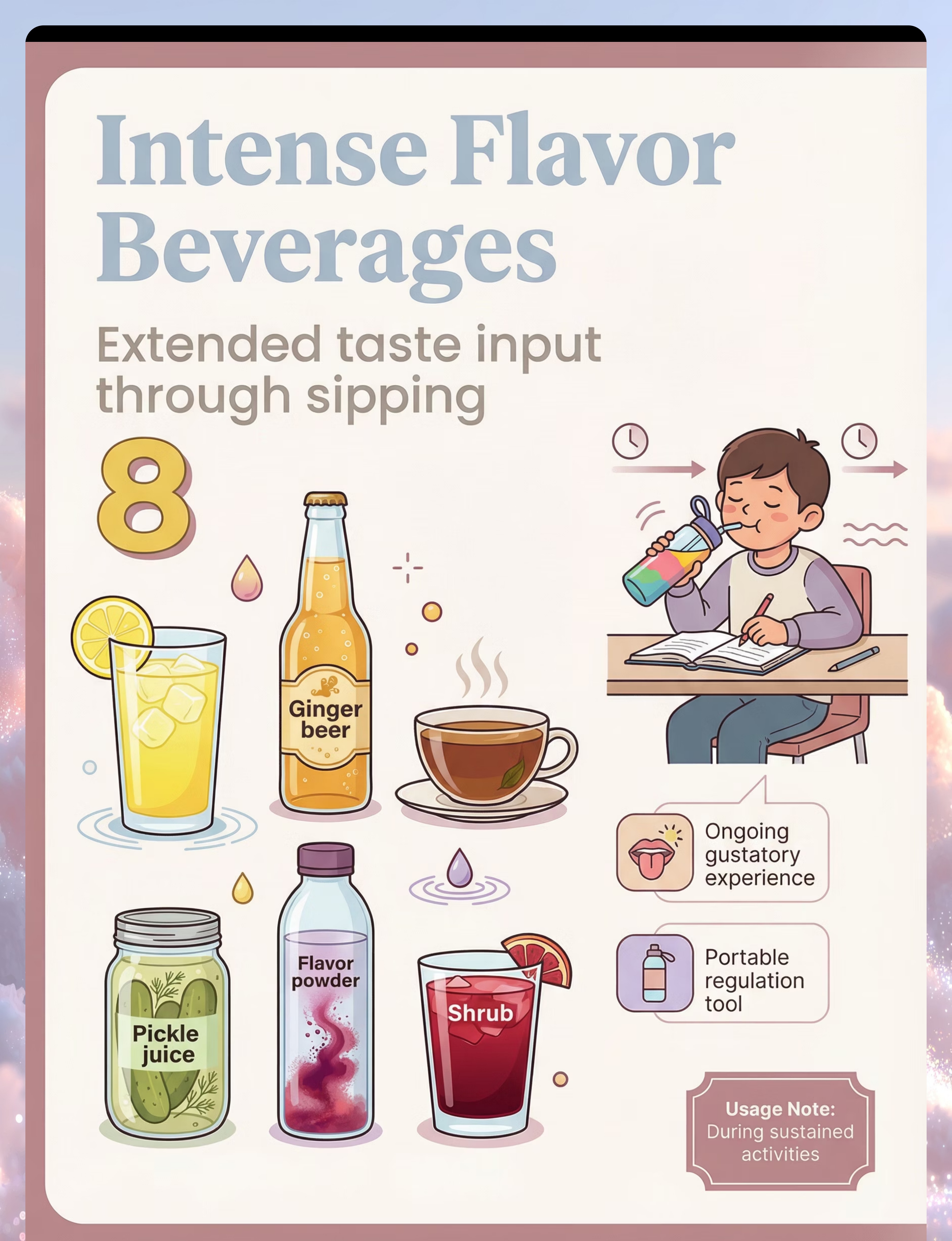
Intense Flavor Beverages
Extended taste input through sipping throughout the day
Strong-flavored drinks offer something unique among flavor tools: sustained, ongoing gustatory input. While a sour candy provides a burst of intensity, an intensely flavored beverage extends the taste experience throughout the day through repeated sipping — providing a gentle, continuous sensory baseline that helps maintain regulation.
Recommended Materials
- Intensely sour lemonade or limeade
- Ginger beer or ginger drinks
- Strong-flavored herbal teas
- Pickle juice
- Intense flavor drink mixes
- Vinegar-based shrub drinks
The Science Behind It
Sipping activates oral-motor patterns that are inherently calming, while the flavor provides ongoing gustatory stimulation. This dual-channel input — motor + taste — creates a powerful background regulation tool that works without interrupting activities like school or play. Flavor beverages also help with hydration compliance in children who resist plain water.

Intense Beverages: DIY, Safety & Practical Use
🛠️ DIY Recipes
Make intense lemonade with extra lemon. Brew strong ginger tea. Add sour powder to water. Pickle juice is a traditional and very effective flavor-seeking option. Experiment with vinegar shrubs — mix fruit, sugar, and vinegar for a tangy sipping drink.
📍 When & Where
Send an intense-flavor water bottle to school. Offer during homework and focused tasks. Use as a transition support — sipping a strong drink can ease the shift between activities. Keep a thermos of strong herbal tea ready for outings.
🛡️ Safety Note
Monitor sugar and acid content of flavored beverages. Frequent sour drinks may affect tooth enamel — use a straw and rinse the mouth with water afterward. Balance flavored beverage intake with plain water throughout the day.
Material 9 of 9
₹0–200
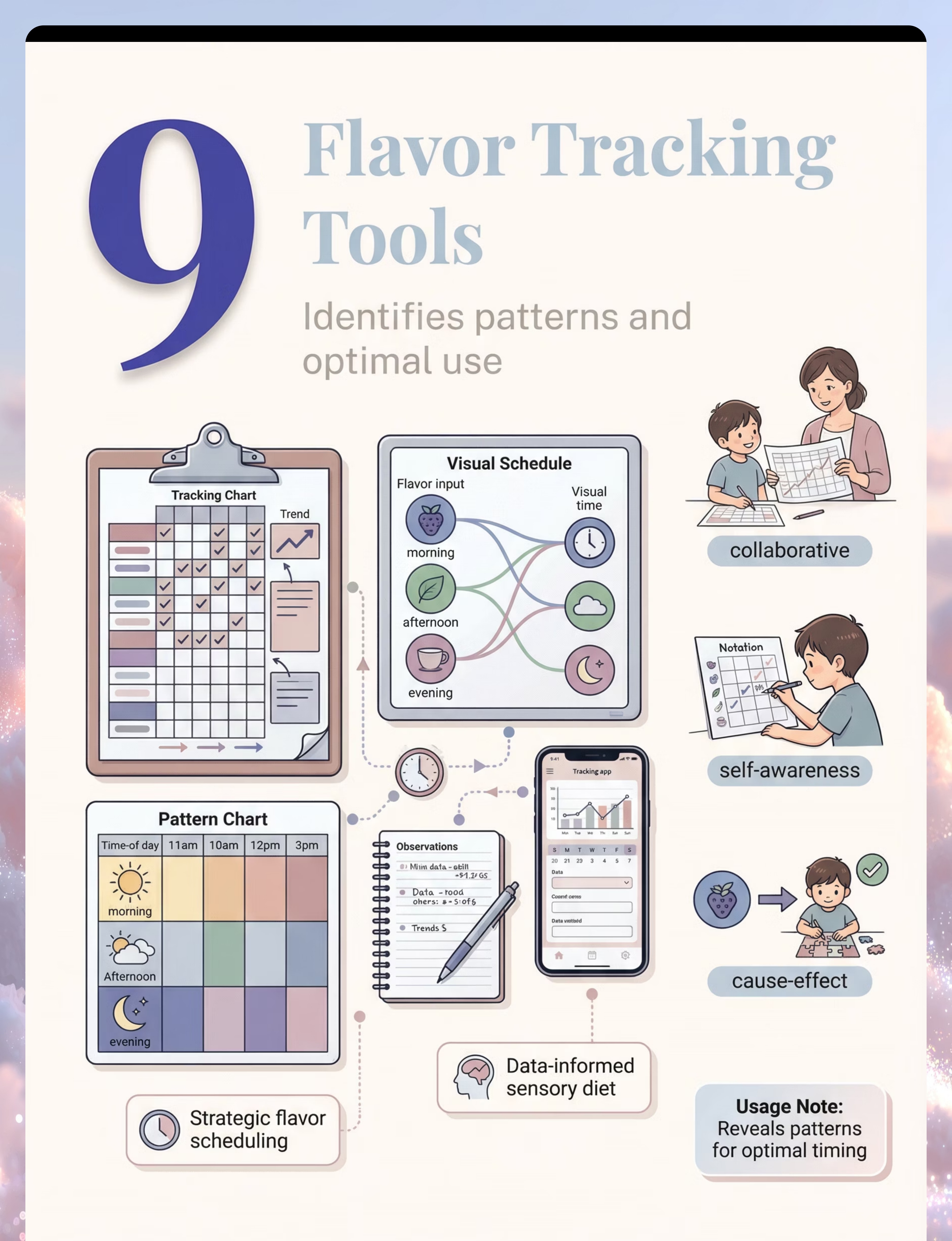
Flavor-Intensity Tracking Tools
Identify patterns and optimize flavor as a regulation tool
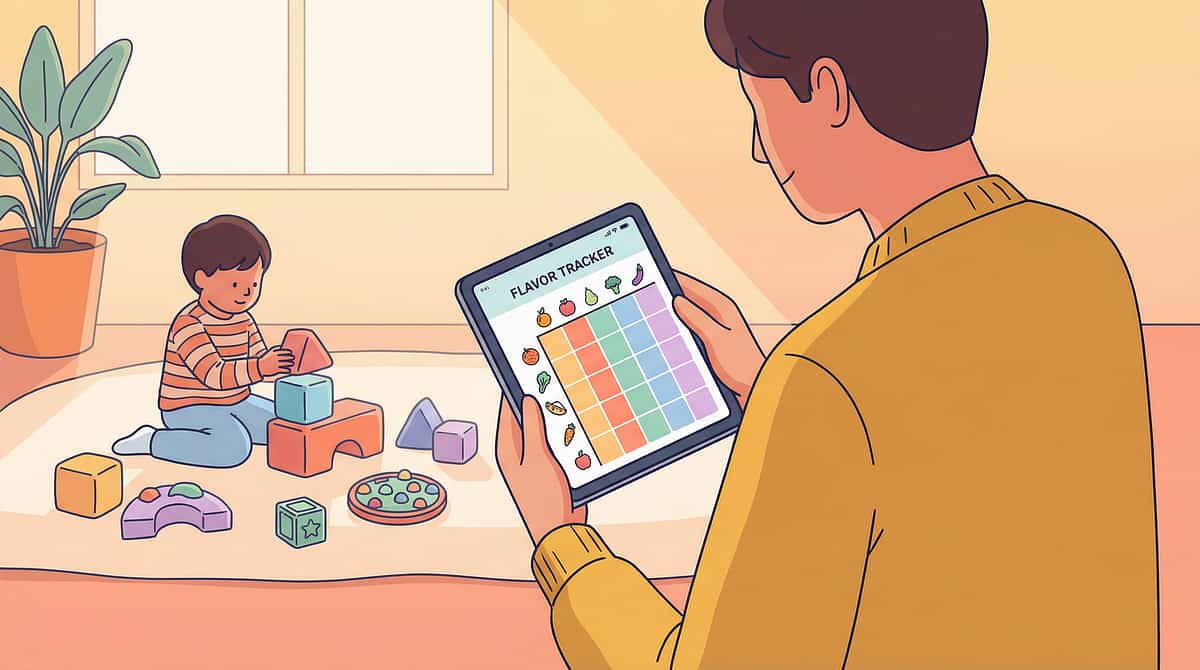
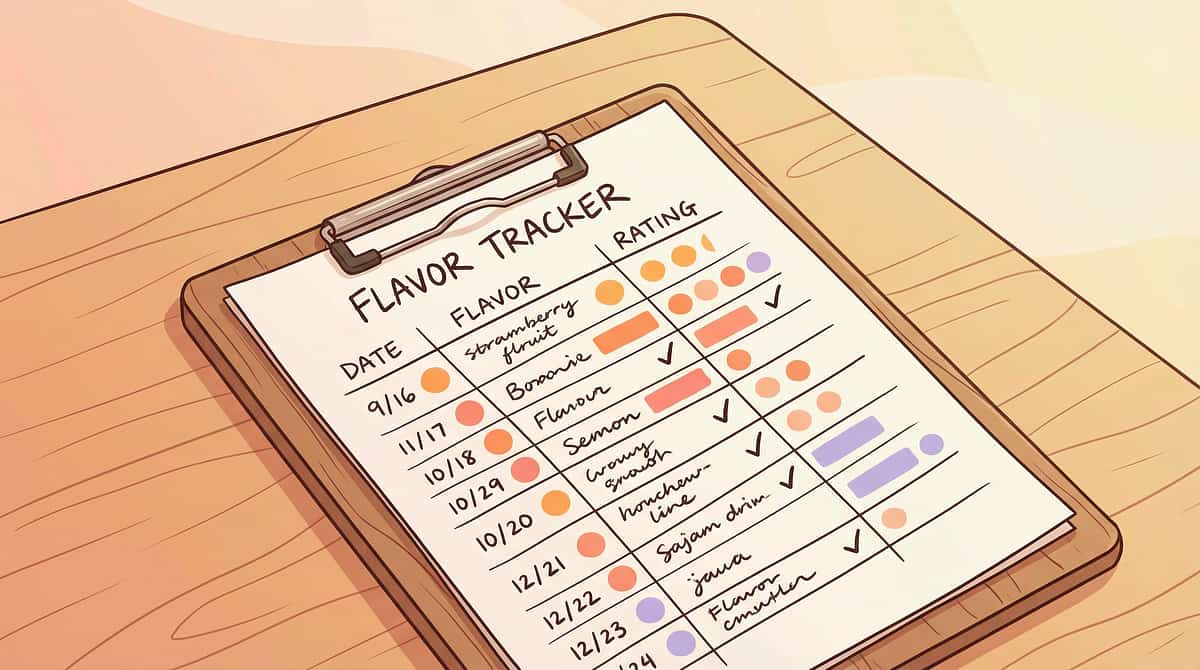
Tracking tools help you uncover the hidden patterns in your child's flavor-seeking needs. Charts that record when intense flavors help most — whether for alerting, calming, or focus — guide the strategic use of flavor as a regulation tool, transforming reactive responses into proactive sensory support.
Recommended Materials
- Flavor-seeking tracking sheets
- Sensory diet scheduling charts
- Visual schedules with flavor input times
- Pattern tracking notebooks
- Before/after regulation rating scales
The Science Behind It
Tracking transforms intuition into evidence. When parents and therapists can see that a child consistently seeks sour input at 3 PM (post-school decompression) or spicy input before focused tasks, they can proactively schedule flavor input — preventing dysregulation before it starts and reducing the appearance of "problem behavior" at mealtimes.
Tracking Tools: DIY, Safety & Practical Use
Create a Simple Tracking Sheet
Record four things: time, flavor sought, activity before/after, and regulation effect observed. Track for 1–2 weeks to identify clear patterns in when and why your child's flavor-seeking intensifies.
Build a Visual Schedule
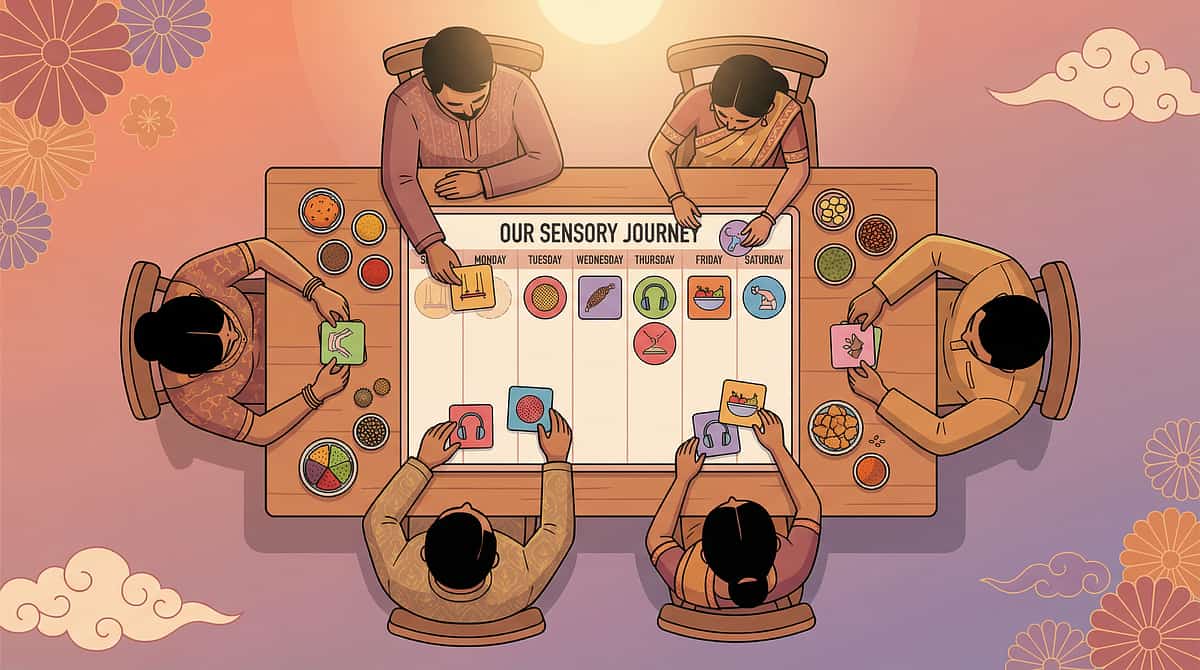
Once patterns emerge, create a visual schedule showing optimal flavor input times throughout the day. Include pictures of the specific flavor tools for each time slot so your child can anticipate and participate.
Maintain Flexibility
Tracking should inform, not rigidly control flavor access. Your child may have legitimate needs for flavor input outside scheduled times. Don't over-structure — maintain flexibility and honor spontaneous requests while using the schedule as a helpful guide.
Chapter 3
Bringing It All Together: Your Flavor Sensory Diet
Now that you know the nine materials, the next step is combining them into a cohesive flavor sensory diet — a personalized plan that provides your child with scheduled, strategic flavor input throughout the day. Here's how these materials work together across categories.
Getting Started: Essential Starters & Budget Guide
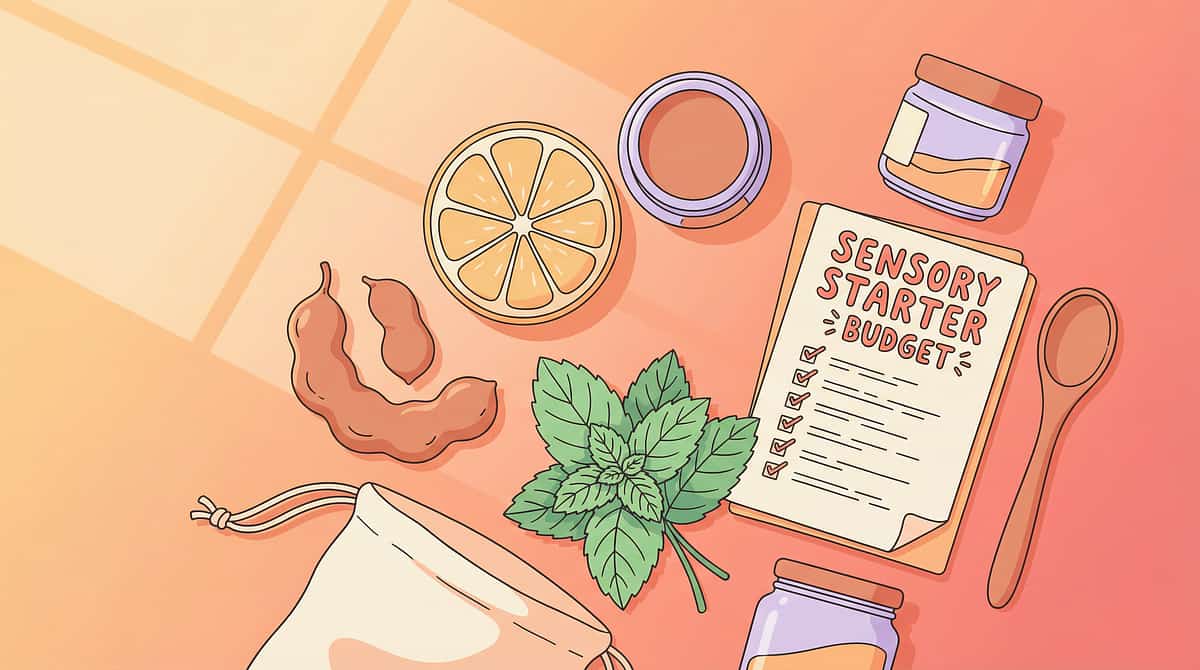
You don't need all nine materials at once. Start with the essentials and build from there. Here's a practical framework for getting started based on budget and priority.
Start Here (₹50–500)
Therapeutic Sour Options + Flavor Tracking Tools — identify patterns and provide immediate relief with sour input, the most universally effective starting point.
Add Next (₹200–1,000)
Intense Condiment Collection + Flavor Powder Systems — give your child control over intensity at every meal, dramatically improving mealtime success.
Full Toolkit (₹950–4,600)
All 9 materials — comprehensive flavor sensory diet with options across every taste category, setting, and regulation need. Maximum flexibility and variety.
DIY-Friendly Materials: Sour Options, Spicy Options, Mint Options, Flavor Powders, Beverages, and Tracking Tools can all be created at home with items from your local grocery store.
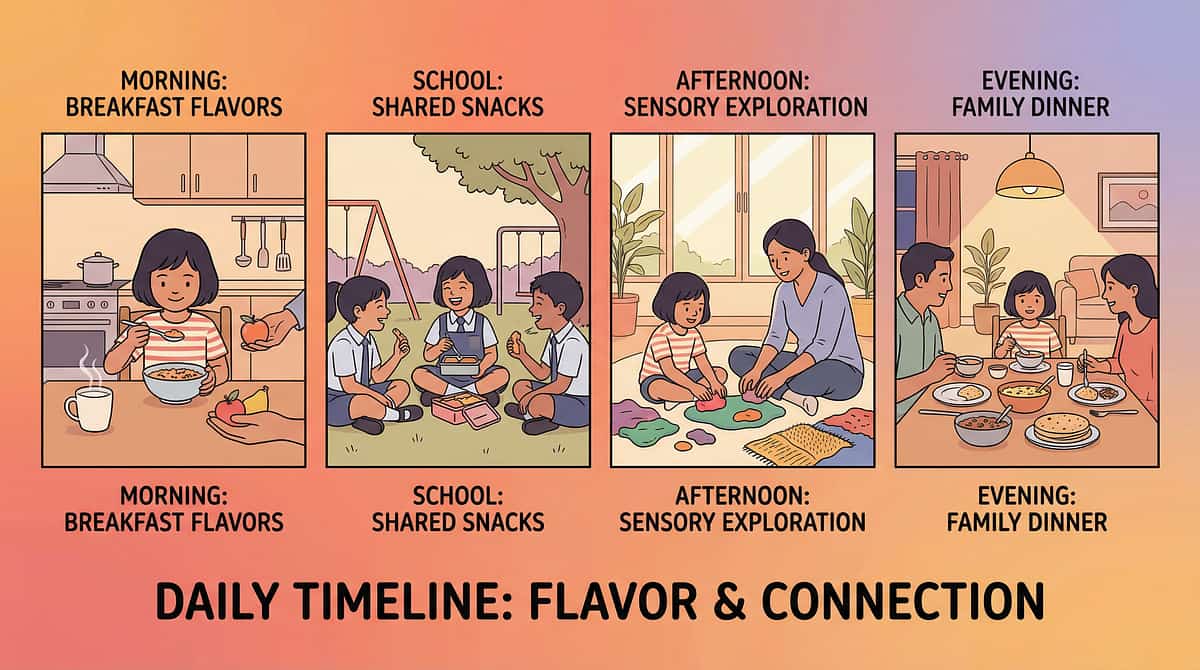
A Typical Day with Flavor Supports
Here's what a well-supported day might look like when you've integrated flavor materials into your child's routine. Remember — this is a guide, not a rigid schedule.
🌅 Morning Wake-Up
Strong mint or ginger tea with breakfast. Warming spices in oatmeal. The intense flavor helps alert the nervous system for the day ahead.
🎒 School Preparation
Pack portable condiment packets, a sour candy for mid-morning, and an intense-flavor water bottle for sipping throughout class.
🍽️ Lunchtime
Flavor powder shaker with lunch. Spicy snack as a side. Condiment packets to boost any school meal to satisfying intensity.
📚 After School / Homework
Intensely flavored chewy snack for decompression. Sour lemonade while doing homework. The combined chewy + flavor input helps with the transition from school to home.
🌙 Dinner & Evening
Full condiment caddy at the table. Flavor exploration kit for family tasting night once a week. Track observations in your notebook before bed.
Materials Comparison at a Glance
Use this reference table to quickly compare all nine materials by type, input category, cost, and whether you can make a DIY version at home.
# | Material | Input Type | Best For | Price | DIY? | |
1 | Sour Candies & Foods | Sour | Alerting, satisfaction | ₹50–500 | Yes ✅ | |
2 | Spicy & Hot Options | Heat/Spice | Alerting, intensity | ₹100–600 | Yes ✅ | |
3 | Mint & Cooling | Cooling | Focus, calming | ₹50–300 | Yes ✅ | |
4 | Flavor Powders | Controlled | Autonomy, meals | ₹100–400 | Yes ✅ | |
5 | Condiment Collection | Multi-sensory | Mealtime success | ₹200–800 | Partial | |
6 | Chewy Foods | Taste + Motor | Dual regulation | ₹100–500 | Yes ✅ | |
7 | Exploration Kits | Novel | Expanding repertoire | ₹300–1,000 | Partial | |
8 | Flavor Beverages | Sustained | All-day regulation | ₹50–300 | Yes ✅ | |
9 | Tracking Tools | Strategic | Pattern identification | ₹0–200 | Yes ✅ |

Key Outcomes You Can Expect
When flavor-seeking needs are met safely and strategically, families consistently report meaningful improvements across multiple areas of daily life. Here's what the evidence shows.
97%+
Measured Improvement
Across one or more readiness indexes in the Pinnacle network
20M+
1:1 Therapy Sessions
Across converged therapy disciplines informing these recommendations
70+
Centers
Operating under a single clinical system nationwide
"Once we understood his flavor needs and provided safe intense options, mealtimes became so much easier."
— Parent, Pinnacle Network
Illustrative case; outcomes vary by child profile. Statistics represent aggregate outcomes across the Pinnacle Blooms Network.

Red Flags: When to Seek Professional Help
While flavor seeking is a legitimate sensory need, certain patterns may signal the need for deeper evaluation. Watch for these warning signs and don't hesitate to reach out to a qualified professional.
Eating Non-Food Items for Taste (Pica)
If your child is licking or eating non-food substances specifically for taste experiences, this requires immediate professional assessment.
Physical Harm from Seeking
Mouth sores, persistent GI distress, or tissue damage from excessive flavor intensity indicates the need for clinical intervention and guided moderation.
Nutritional Imbalance
If your child cannot eat any foods without extreme seasoning, or their diet is severely limited by flavor rigidity, a feeding therapist should evaluate their nutritional status.
Sudden Changes in Preference
A sudden change in taste preferences may indicate medical causes — consider ENT or gastroenterology referral.
Compulsive vs. Regulatory Seeking
If flavor seeking appears compulsive rather than regulatory — driven by anxiety rather than sensory need — behavioral support may be beneficial alongside sensory strategies.

A Message for Parents
Your child isn't being difficult or picky. Their taste system genuinely needs more intense input to register satisfaction. When we provide safe, appropriate intense flavor options, we meet a real sensory need. This isn't giving in — it's therapeutic accommodation.
Flavor seeking reflects genuine gustatory under-responsivity. Your child's taste receptors or neural processing require stronger input to achieve the same registration that others get from milder flavors. When we honor what their nervous system requires, regulation and mealtime success improve — and so does your relationship around food.
The key principle is simple: meet the need safely. When you provide structured, appropriate access to intense flavors, you're not reinforcing a "bad habit." You're building a sensory diet that supports your child's unique neurology and helps them thrive.

Chapter 4
Save 🔖 to Support Flavor-Seeking
Your child's flavor-seeking reflects real sensory needs — not pickiness, not defiance, not a phase. When we understand the neurology behind gustatory seeking and provide safe, strategic tools, everything changes: mealtimes become easier, regulation improves, and your child feels understood.
📖 Save This Guide
Bookmark this resource to reference the nine materials whenever you need them. Share with your child's therapy team for coordinated support.
🔔 Coming Next
Building a flavor sensory diet that works for your family — detailed, week-by-week guidance for implementing these materials into daily routines.
🤝 Get Support
For structured, personalized guidance, contact the FREE National Autism Helpline at 9100 181 181 (available in 16+ languages, 24/7).

Chapter 5
Powered by GPT-OS®
Global Pediatric Therapeutic Operating System
GPT-OS® is the end-to-end operating system that governs diagnosis, prognosis, therapy design, execution, monitoring, and readiness outcomes in child development — as one closed, accountable system. These material recommendations are grounded in data from 20M+ real therapy sessions.
Diagnostic Intelligence Layer
Converts 591+ structured observations across 349 skills and 79 developmental abilities into standardized diagnostic clarity.
AbilityScore®
A patented universal developmental score (0–1,000) establishing baseline, severity, and longitudinal change across domains.
Prognosis Engine
Predicts developmental trajectories using historical response patterns from 20M+ sessions — enabling early course correction.
TherapeuticAI®
Determines therapy focus, intensity, sequencing, and escalation thresholds — always under licensed human clinical authority.
EverydayTherapyProgramme™
Translates clinical plans into daily, home-executable micro-interventions so therapy continues beyond sessions.
FusionModule™
Coordinates speech, OT, behavior, special education, and medical inputs into a single converged therapeutic pathway.
Closed-Loop Therapeutic Control
Observation → score → plan → execute → re-measure → adapt. Plans change only when the child's data changes.
This is not software. This is therapeutic infrastructure.
Measured Outcomes. Readiness, Not Assumptions.
GPT-OS evaluates outcomes using standardized readiness indexes that reflect real-world functional capability. Progress is defined by readiness for life — not therapy completion.
Communication Readiness
Functional communication skills for real-world interaction and self-expression.
Behavioral Self-Regulation
Ability to manage emotions, impulses, and sensory responses independently.
Learning & Academic Readiness
Foundational skills for school participation and academic engagement.
Social Participation
Meaningful engagement with peers, family, and community.
Daily Living & Independence
Self-care, feeding, and functional independence — where gustatory seeking is tracked.
Emotional Regulation
Capacity to identify, understand, and manage emotional experiences.
For gustatory seeking, safe flavor satisfaction and mealtime success are tracked through the Daily Living & Independence Index and Behavioral Self-Regulation Index progression.

Real-World Evidence at Scale
Pinnacle measures readiness for life — not just therapy milestones. These statistics represent aggregate outcomes across the entire Pinnacle Blooms Network, powered by GPT-OS® therapeutic intelligence.
97%+
Measured Improvement
Across one or more readiness indexes
20/20
Million+ Sessions
Exclusive 1:1 across converged disciplines
For Gustatory Seeking Specifically
Safe flavor satisfaction and mealtime success are tracked through the Daily Living & Independence Index and Behavioral Self-Regulation Index progression. Families report meaningful improvements in mealtime harmony, food variety acceptance, and overall regulation when flavor-seeking needs are met strategically.
Evidence-Based Approach
Our recommendations are informed by Dunn's Sensory Processing Framework (1997), Cermak et al.'s research on food selectivity in ASD (2010), and Nadon et al.'s work on eating problems in autism spectrum disorders (2011) — all integrated within the GPT-OS® clinical data system.
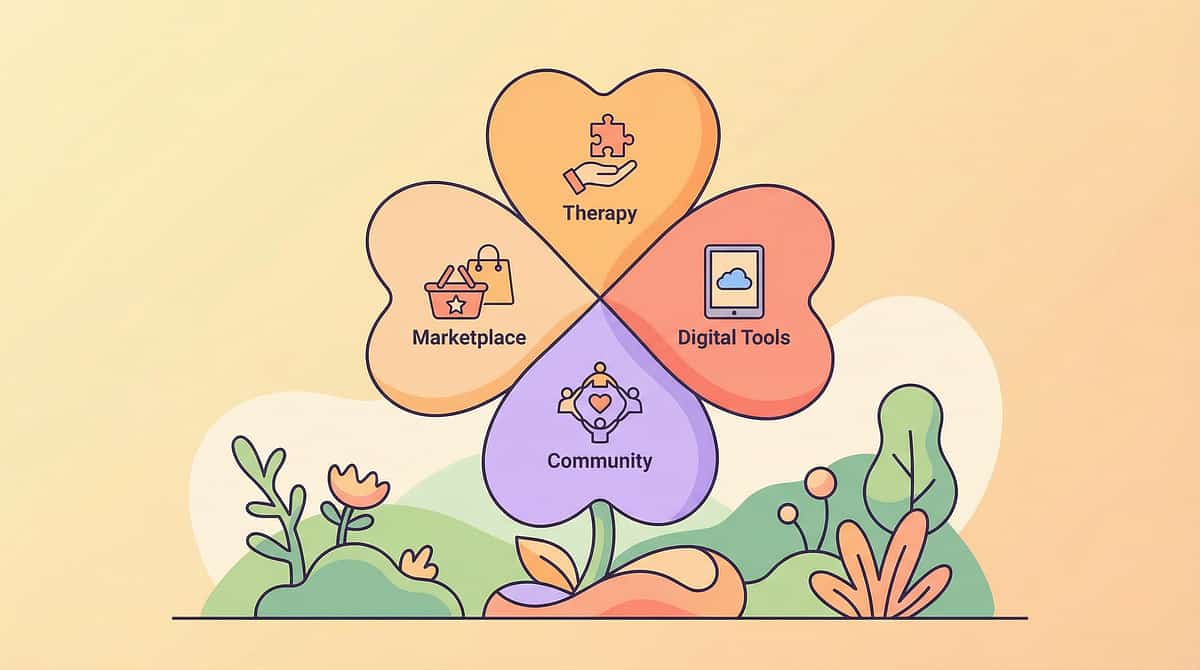
Pinnacle Blooms Network®
Built by Mothers. Engineered as a System.
Pinnacle is the execution layer of GPT-OS® — delivering therapy, daily programs, digital continuity, and marketplace access at population scale. Every recommendation in this guide comes from a system that has served millions of sessions and continues to refine its approach based on real-world outcomes.
Pediatric Therapeutic OTT Platform
On-demand therapy guidance, parent education, and EverydayTherapyProgramme™ delivery — accessible anytime, anywhere.
Hyperlocal Therapeutic Marketplace
Connects families to verified therapists, centers, programs, and resources — mapped to the child's AbilityScore® and readiness needs.
Center Network Execution
70+ physical centers operating under GPT-OS® standards with measurable accountability and consistent quality.
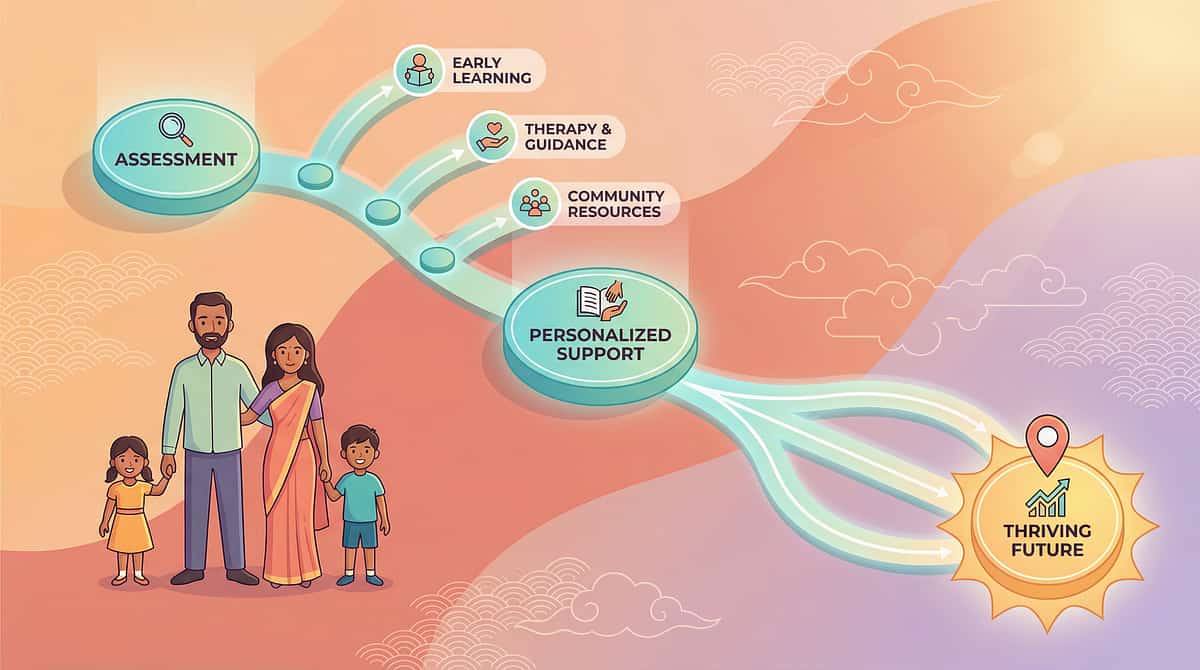
Your Path to Personalized Support
If your child's flavor-seeking behaviors concern you, or if you want structured professional guidance on building a flavor sensory diet, Pinnacle offers a clear assessment pathway tailored to gustatory processing.
AbilityScore® Assessment
Establish baseline across all developmental domains
Sensory-Feeding Evaluation
Comprehensive gustatory processing assessment
Personalized Plan
GPT-OS® governed sensory integration + feeding therapy
Track Progress
Daily Living & Independence Index progression
Therapy is delivered through the FusionModule™, coordinating OT sensory work with feeding intervention, and extended into daily life through the EverydayTherapyProgramme™ for home-based flavor sensory diet implementation.
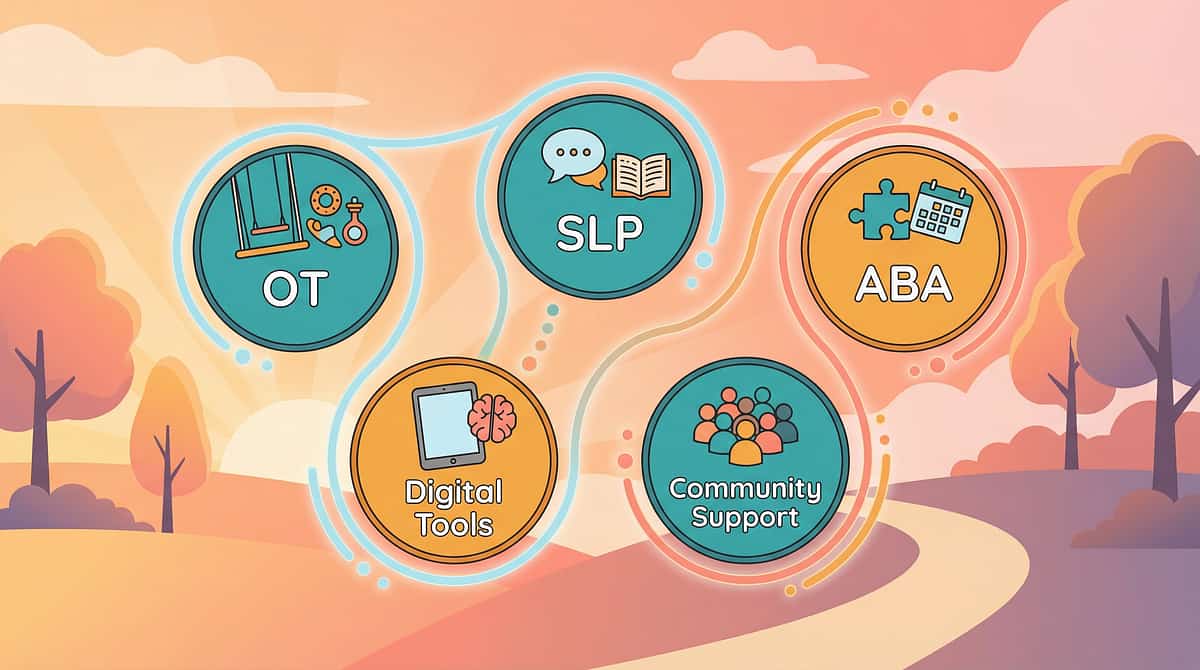
Relevant Pinnacle Services
For children with gustatory seeking, Pinnacle offers a coordinated ecosystem of services — all governed by GPT-OS® for consistency and measurability.

Occupational Therapy
Comprehensive sensory integration addressing gustatory processing within the full sensory profile.
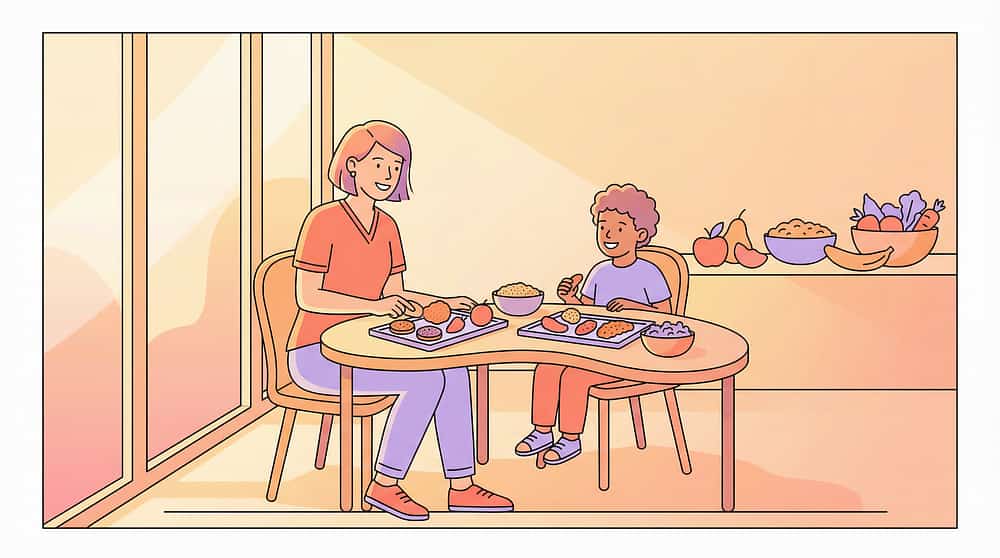
Feeding Therapy
Specialized support for expanding food acceptance and building safe flavor strategies.

Parent Training
Empowering families with knowledge and tools to implement sensory diets at home confidently.

EverydayTherapyProgramme™
Daily micro-interventions ensuring therapy continues beyond clinical sessions — right in your kitchen.

Contact & Get Started Today
Your child's flavor-seeking journey begins with understanding — and Pinnacle is here to walk beside you every step of the way. Reach out through any of these channels for personalized support.
FREE National Autism Helpline
9100 181 181
Available 24/7 in 16+ languages
Available 24/7 in 16+ languages
Website
pinnacleblooms.org
Resources, assessments, and center locator
Resources, assessments, and center locator
Email
care@pinnacleblooms.org
For questions, referrals, and support
For questions, referrals, and support
Proof Strip: 20M+ sessions • 97%+ measured improvement • 70+ centers • Global IP protection across 160+ countries

Related Resources & Further Reading
Your child's flavor-seeking is part of a broader sensory story. Explore these related topics for a more complete understanding of oral sensory processing and feeding.
Related Sensory Topics
- Chews Non-Food Items (oral-motor seeking)
- Mouths Objects (oral seeking)
- Avoids Foods Due to Flavor (opposite pattern)
- Food Texture Sensitivity
- Perfume/Scent Sensitivity
Parent Support Resources
- Parents After Diagnosis — processing and next steps
- Therapy Carryover at Home — extending gains daily
- Understanding Gustatory Processing — deep dive
- Mealtime Success Strategies — practical routines
Clinical Sources
- SPD Foundation — Gustatory under-responsivity research
- Dunn W. (1997) — Sensory processing framework
- Cermak SA et al. (2010) — Food selectivity in ASD
- Nadon G et al. (2011) — Eating problems in autism
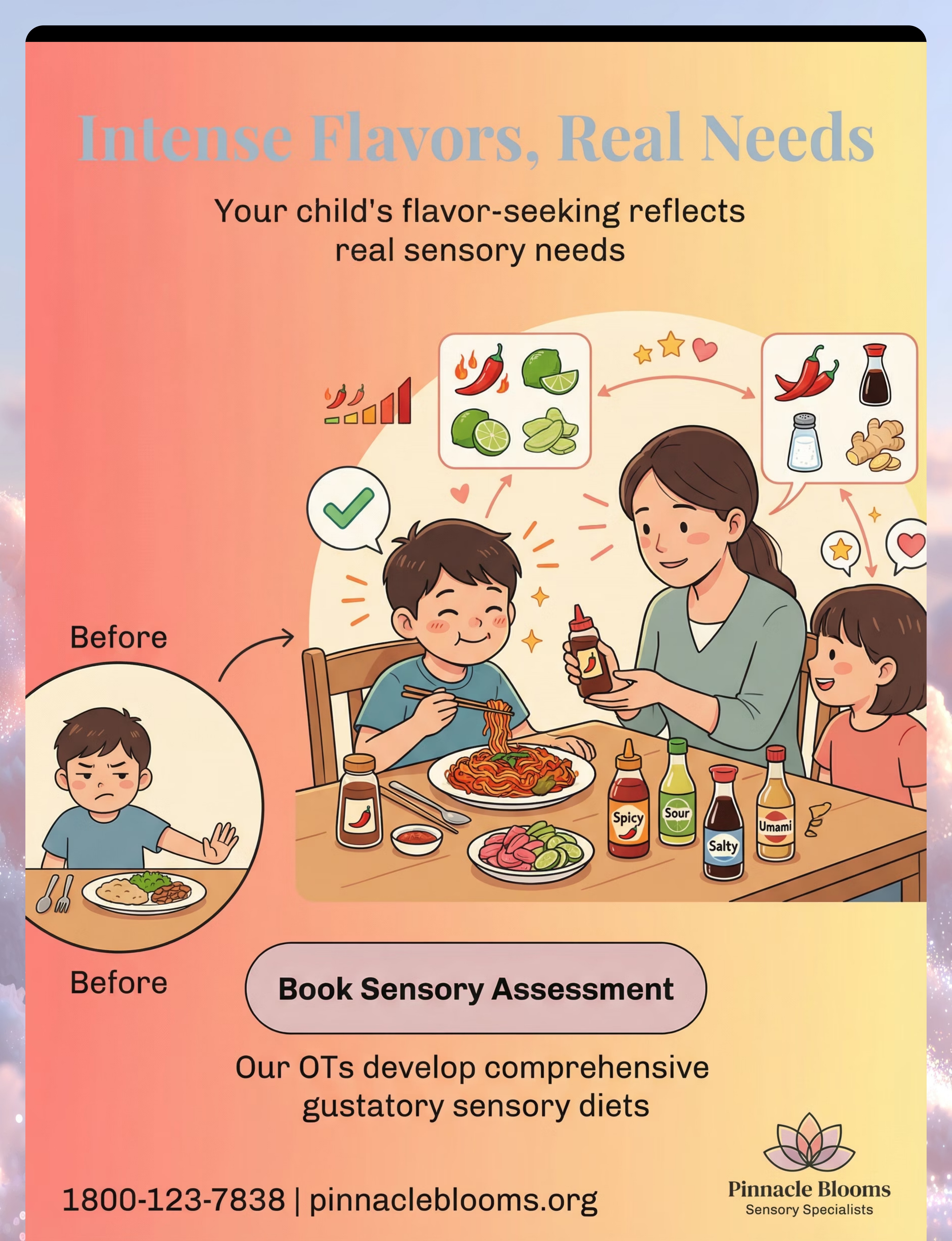
Preview of 9 materials that help when child seeks strong flavors Therapy Material
Below is a visual preview of 9 materials that help when child seeks strong flavors therapy material. The pages shown help educators, therapists, and caregivers understand the structure and content of the resource before use. Materials should be used under appropriate professional guidance.







Link copied!

Important Disclaimer
This content is educational. It does not replace assessment by a licensed occupational therapist or feeding specialist. Gustatory processing differences require professional assessment to develop appropriate individualized intervention plans.
Individual results may vary. Statistics represent aggregate outcomes across the Pinnacle Blooms Network. Every child's needs are unique — please consult with qualified healthcare professionals before implementing any strategies. Consider allergies, dietary restrictions, and individual health conditions. Monitor for any adverse reactions to new foods.
© 2025 Pinnacle Blooms Network®, unit of Bharath Healthcare Laboratories Pvt. Ltd. All rights reserved.
Statutory Identifiers: CIN: U74999TG2016PTC113063 | DPIIT: DIPP8651 (Govt. of India) | MSME: Udyog Aadhaar TS20F0009606 | GSTIN: 36AAGCB9722P1Z2
Pinnacle Blooms Network® — Built by Mothers. Engineered as a System. Powered by GPT-OS® Therapy Intelligence.
#FlavorSeeking
#GustatorySensory
#SensoryProcessing
#OccupationalTherapy
#PinnacleBlooms