
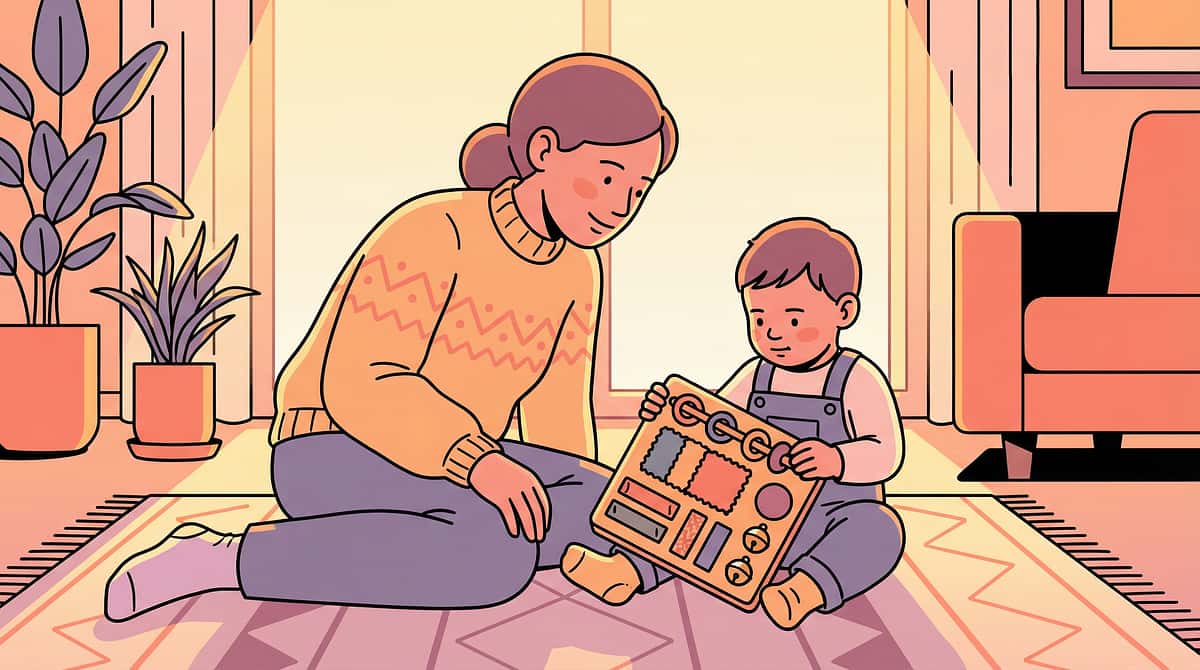
9 Materials That Help With Pain Recognition
Supporting Interoceptive Awareness Development — When Your Child Doesn't Feel Pain the Way Others Do
Sensory Solutions Series — Episode A-114
Domain: Interoception & Safety
Ages 3–12
Pinnacle Blooms Network® | 21M+ Therapy Sessions | 97% Measured Improvement | 80+ Centers | Powered by GPT-OS®
When Pain Signals Don't Register
"He walked around on a broken toe for three days — didn't cry, didn't complain. He just doesn't seem to feel pain."
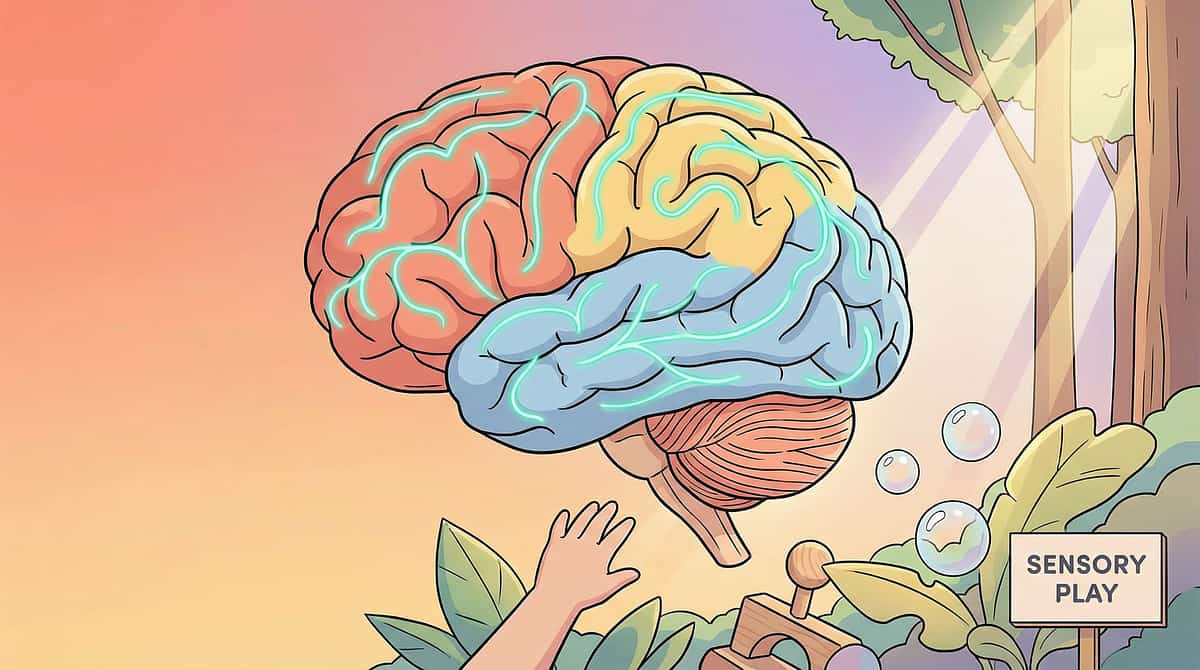
Children with interoceptive differences may genuinely not perceive pain signals that would alert others to injury or illness. This isn't "toughness" or bravery — it is a sensory difference, and it needs careful, compassionate attention. When the brain doesn't fully register pain input from the body, the child isn't ignoring the signal — the signal simply isn't arriving the way it should.
Understanding this distinction changes everything. It shifts the conversation from "Why won't they tell me?" to "How can I help them notice and communicate?" That shift is where healing begins.
Clinical Term: Interoceptive Awareness Deficit — Pain Perception and Communication
1
Body
Sensation originates
2
Awareness
Signal reaches the brain
3
Communication
Child tells a caregiver
Does This Sound Like Your Child?
Many parents of children with interoceptive differences notice a pattern of missed signals. The signs below are not a formal diagnosis — they are a starting point for recognizing when your child may need professional support. Review both columns and see what resonates with your family's experience.
Physical Signs
- No reaction to injuries that would cause significant pain in others
- Discovering bruises, cuts, or injuries with no memory of how they occurred
- Walking on broken bones or continuing activity with significant injuries
- No fever complaints despite high temperature during illness
- Delayed crying or pain response — minutes to hours after injury
Communication Signs
- Unable to point to where it hurts when asked
- Describing all pain the same way regardless of type or severity
- Not reporting headaches, stomachaches, or illness symptoms
- Behavioral changes (irritability, withdrawal) as only pain indicator
- Difficulty distinguishing pain from other sensations
If you checked 3 or more signs — an occupational therapy assessment for interoception can help. Call 9100 181 181.
Why Your Child's Brain Doesn't Receive Pain Signals
Pain serves as the body's critical warning system — it tells us when something is wrong so we can protect ourselves. When interoceptive processing of pain signals is impaired, whether through hyposensitivity, delayed processing, or communication barriers, this vital safety system fails to do its job.
Pain insensitivity is among the most medically dangerous interoceptive differences because injuries can worsen silently and serious conditions can go undetected for hours or even days. A child who doesn't feel a broken bone or an internal infection is at genuine risk.
Key Insight: Both awareness-building AND alternative detection systems are essential. You cannot rely solely on building awareness — you need external safety systems NOW while awareness develops over time.
Research indicates altered pain processing in 50–70% of individuals with autism (Moore DJ, 2015; Rattaz C et al., 2013)

Chapter
The 9 Materials
The 9 Materials
Each of the following nine materials addresses a different aspect of pain recognition — from immediate safety to long-term interoceptive development. Together, they form a comprehensive system that protects your child while building their internal awareness over time.
Visual Pain Scales with Body Maps
Systematic Body Check Routines
Pain Vocabulary Teaching Materials
Behavioral Pain Indicator Charts
Pain Awareness Social Stories
AAC Pain Communication Systems
Enhanced Safety Equipment
Medical Alert Documentation
Interoception Training Activities
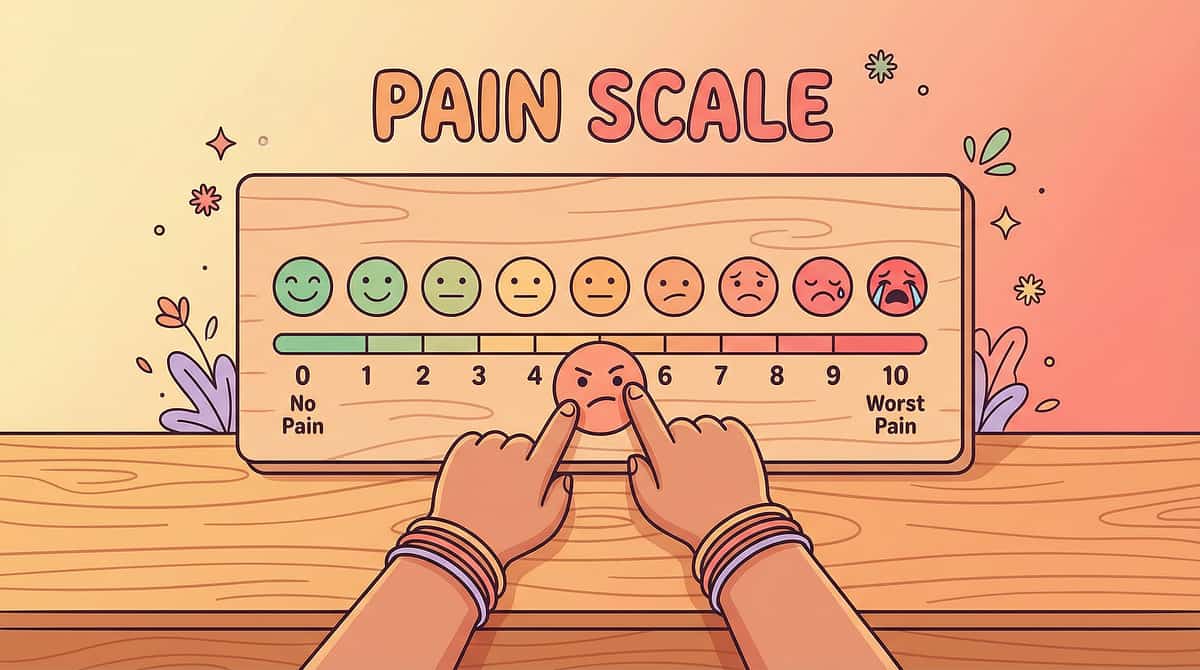
① Material 1
Visual Pain Scales with Body Maps
When a child can't describe what they feel inside, a visual pain scale paired with a body outline map becomes their voice. The child points to a face showing the intensity of pain, then indicates the location on a body outline. Together, these tools create a complete communication system when words fail.
1
Print the Scale
Download and print the Wong-Baker FACES pain scale (available free online) and a simple body outline poster.
2
Practice When Calm
"Show me the face for no hurt. Now show me the face for big hurt." Rehearse during relaxed moments so the tool feels familiar.
3
Use Together
When your child is injured, reference the scale and body map together: "Which face? Where on your body?"
How It Helps
Provides vocabulary and a localization system when internal awareness is limited. Creates a bridge between what the body experiences and what the child can communicate to you.
Price & Safety
₹150–500
Scale may not capture all pain types. Should not replace caregiver observation. Accept approximations — any communication is progress.
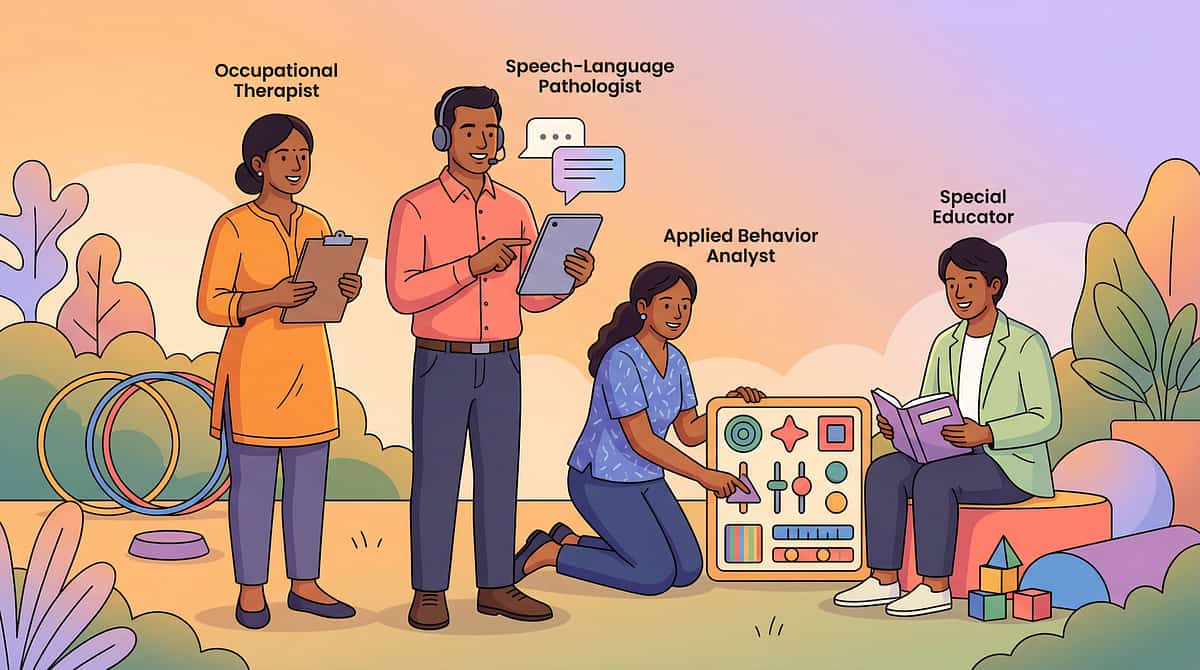
② Material 2
Systematic Body Check Routines
When your child's pain signals are unreliable, a daily visual inspection becomes the external safety net that catches what the internal system misses. Body checks replace absent pain alerts with a consistent, structured scan for bruises, cuts, swelling, or skin changes.
Establish a Daily Routine
Integrate checks during bath time or dressing. Consistency makes it feel normal, not clinical.
Follow a Consistent Sequence
Head to toe, front and back. Look for bruises, cuts, swelling, and redness every single time.
Connect Findings to Pain
When you find an injury, narrate it: "This bruise means your leg got hurt. Can you remember what happened?"
Teach Self-Checking
As your child matures, teach them to use mirrors to check their own body — building independence over time.
Price: ₹100–300
Safety Note: Body checks should be age-appropriate and respect your child's autonomy as they mature. Should not create anxiety. Involve the child as developmentally appropriate.

③ Material 3
Pain Vocabulary Teaching Materials
Many children do feel pain — they simply lack the words to describe it. Explicit instruction in pain descriptors like sharp, dull, throbbing, burning, and aching enables children to communicate effectively with caregivers and medical providers. Building expressive language for pain is a foundational communication skill.
Sharp
"Like a needle poke"
Throbbing
"Like a heartbeat in the hurt spot"
Burning
"Like touching something hot"
Aching
"Like carrying something heavy"
Dull
"Like a soft push that won't stop"
DIY Approach: Create cards matching pain words to concrete, sensory examples your child already understands. Practice during safe, calm contexts and when your child reports any sensation. Start with 3–4 basic descriptors and expand over time.
Price: ₹200–500
Safety Note: Don't overwhelm with too many words at once. Accept approximations — any description is better than none.
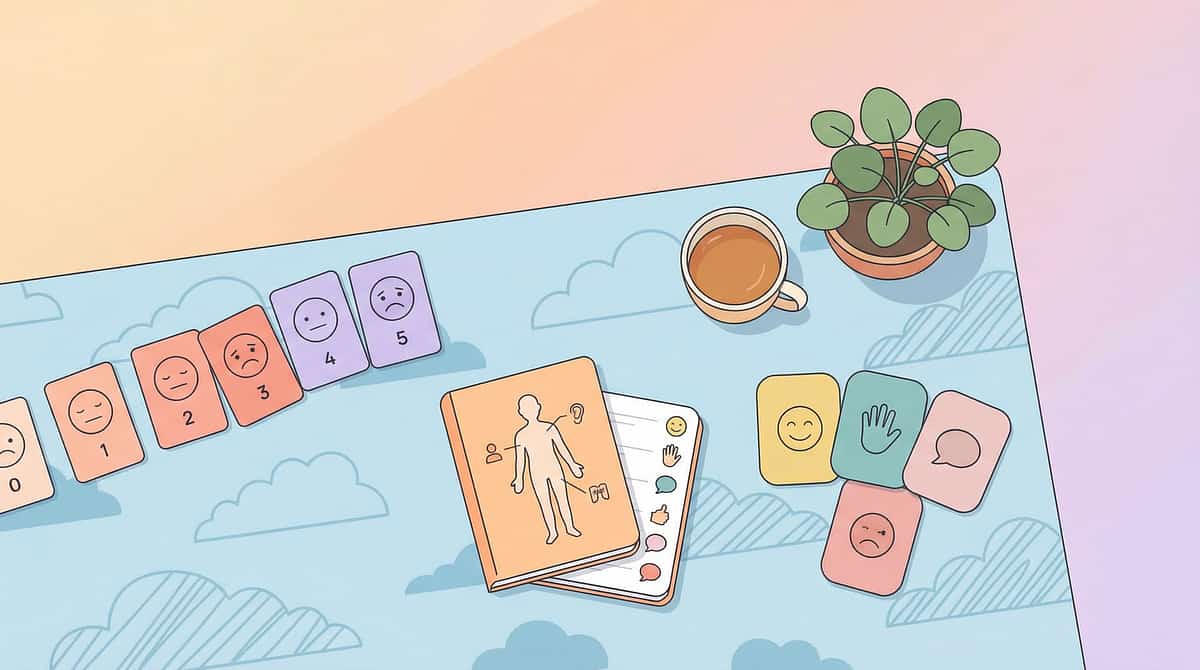
④ Material 4
Behavioral Pain Indicator Charts
When your child cannot tell you they're hurting, their behavior becomes the messenger. Systematic frameworks help caregivers recognize pain through behavioral changes when verbal reporting is absent. Facial expressions, guarding postures, activity changes, and mood shifts may be the only indicators that something is wrong.
Facial Grimacing
Subtle changes in expression — wincing, furrowing brows, or tightening the jaw
Guarding Posture
Protecting a body part, limping, or avoiding use of one arm or hand
Reduced Activity
Sudden decrease in movement, playing less, or avoiding previously enjoyed activities
Sleep Changes
Difficulty falling asleep, waking frequently, or sleeping much more than usual
Irritability & Mood
Unexplained meltdowns, withdrawal, or emotional outbursts without clear trigger
Loss of Appetite
Refusing food, eating less than usual, or showing disinterest in favorite meals
DIY: Learn your child's individual pain indicators. Document specific patterns over time. When behavioral changes occur, investigate for a possible pain source before attributing behavior to other causes.
Price: ₹150–400
Safety Note: Behavioral indicators are not specific — the same behaviors may indicate other distress. Should trigger investigation, not automatic assumption of pain.

⑤ Material 5
Pain Awareness Social Stories
Social stories are powerful narrative frameworks that teach your child what pain means and the appropriate responses to it. Through simple, illustrated stories, children learn to notice body signals, report them to adults, and receive help — creating cognitive templates for pain response that the brain can follow.
Notice
"Something feels different in my body"
Tell
"I tell a grown-up: I'm hurt"
Help
"My grown-up helps me"
Feel Better
"I start to feel okay again"
DIY Story Template: "When something hurts in my body, that means something needs attention. I can tell [adult's name] by pointing to my body or showing the pain faces. Adults can help me feel better. Telling about hurt is important — and it is brave."
Price: ₹200–600
Safety Note: Stories should not create fear or anxiety about pain. Balance the importance of reporting with reassurance and warmth. Customize for your child's specific pain perception pattern.
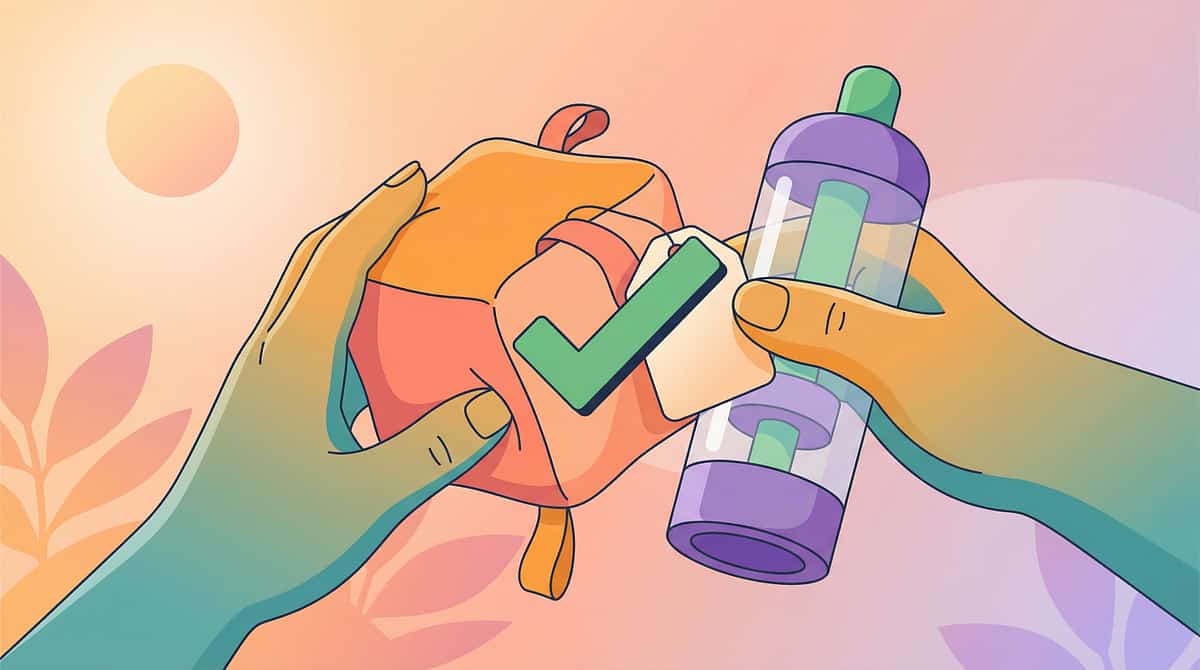
⑥ Material 6
AAC Pain Communication Systems
For non-speaking or minimally speaking children, having immediate, reliable access to pain vocabulary is not a convenience — it is a safety requirement. A dedicated pain page within an AAC (Augmentative and Alternative Communication) system removes the communication barriers that stand between your child and pain reporting.
Essential AAC Pain Elements
- "Hurt," "Pain," and "Ow" buttons — large and easily accessible
- Body part symbols (head, arm, leg, tummy, back)
- Pain level indicators (a little, a lot, very bad)
- Emergency alert button for severe pain
Critical Design Principle
Pain communication must be easily accessible — never buried deep in menus. Create a clear pathway from "I hurt" → body location → description. When pain strikes, your child needs one or two taps, not seven.
DIY: Audit your child's existing AAC system. Ensure pain vocabulary is included and easily reachable. If your child doesn't have AAC, low-tech options like picture boards with pain symbols work too.
Price: ₹500–5,000 (or included in existing AAC)
Safety Note: AAC must be available when pain occurs — ensure consistent access across settings. Don't assume lack of AAC use means no pain.
⑦ Material 7
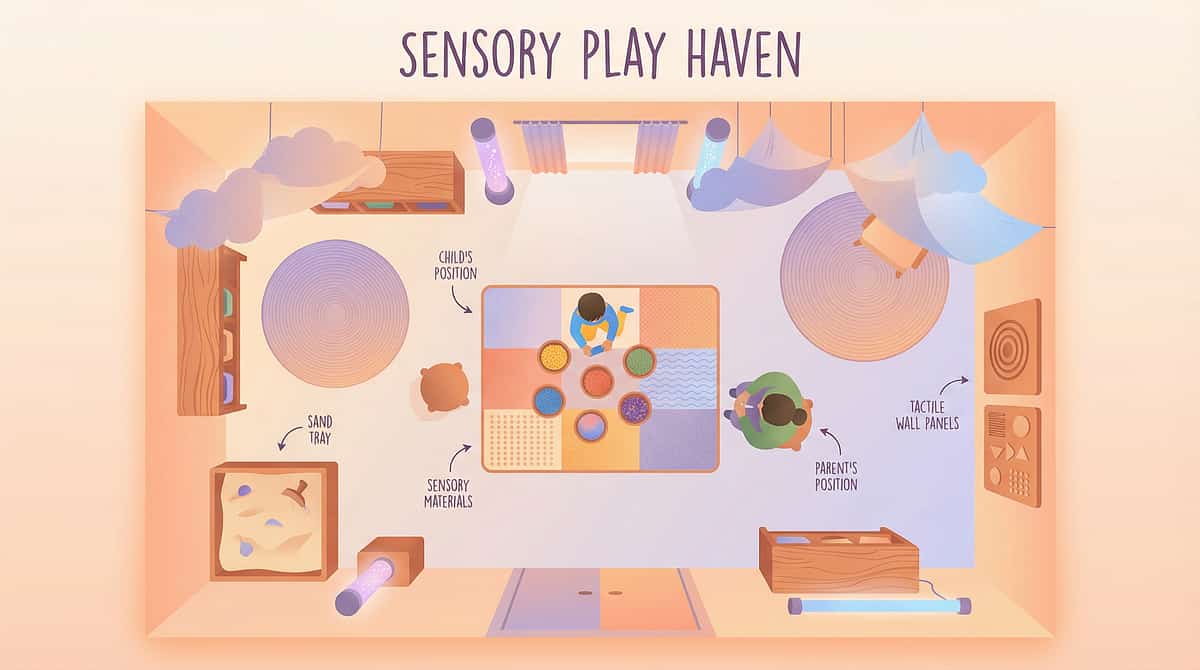
Enhanced Safety Equipment
Pain normally acts as the body's built-in guardian — warning us to stop, slow down, or seek help. When that guardian is absent, physical protection steps in. Helmets, padding, environmental modifications, and thoughtful supervision reduce injury risk when pain cannot serve as a warning system.
Head Protection
Helmets for children with fall risk during active play
Body Padding
Knee and elbow pads for climbing, cycling, and rough play
Environment Mods
Pad sharp corners, reduce fall heights, add soft surfaces
Supervision
Increase monitoring during high-risk activities
DIY: Assess your child's risk areas based on their unique activity patterns and favorite play areas. Start with the highest-risk scenarios and work outward. Reassess regularly as your child develops new skills and interests.
Price: ₹500–3,000
Safety Note: Protection should not become restriction — children still need physical activity and exploration. Balance safety with autonomy, and reassess regularly as your child grows.
⑧ Material 8
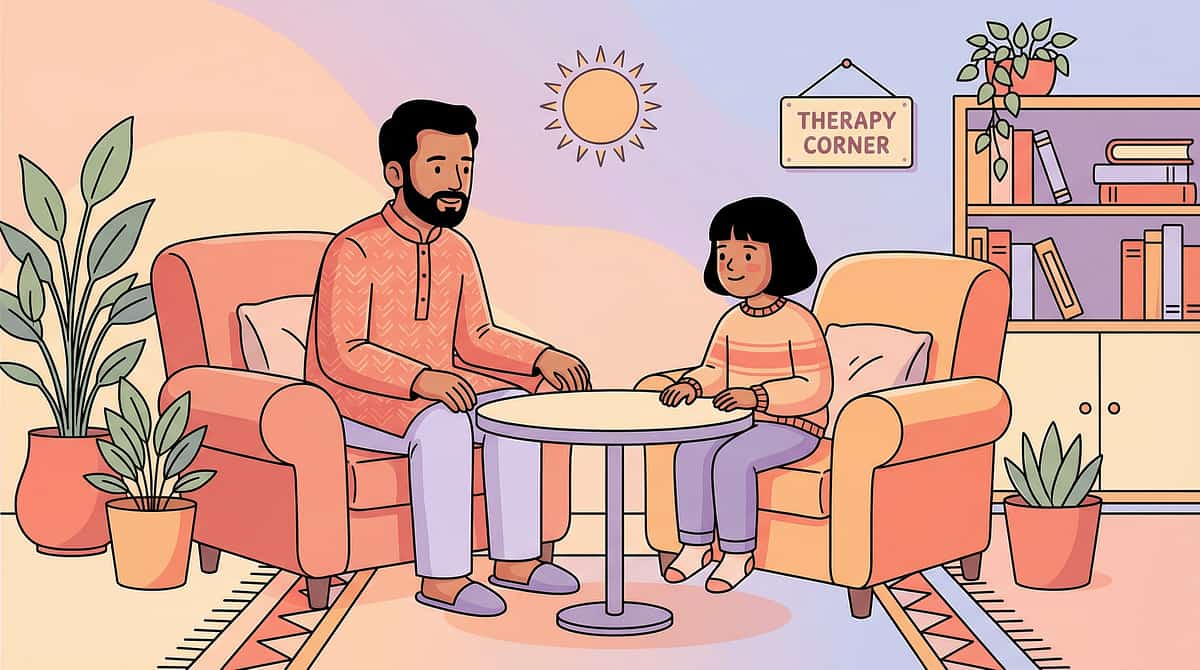
Medical Alert Documentation
In a medical emergency, your child's calm demeanor could be dangerously misleading. Medical professionals are trained to assess pain through patient reports — but when your child doesn't report pain, injuries can be underestimated or missed entirely. Medical alert documentation ensures that every healthcare provider knows to assess thoroughly, regardless of what the child says or doesn't say.
What to Include
Create a medical alert card with clear language:
"This child has pain perception differences. They may not report or react to painful injuries or conditions. Thorough physical assessment required regardless of reported symptoms."
Where to Share
- All healthcare providers and specialists
- School nurse's office
- Sports coaches and activity leaders
- Extended family members and babysitters
- Emergency contacts
DIY: Print wallet-sized cards and share with every adult in your child's life. Consider a medical alert bracelet for continuous, wearable communication.
Price: ₹300–1,500
Safety Note: Documentation is not a substitute for caregiver advocacy during medical encounters. Update regularly. Balance safety with your child's dignity.

⑨ Material 9
Interoception Training Activities
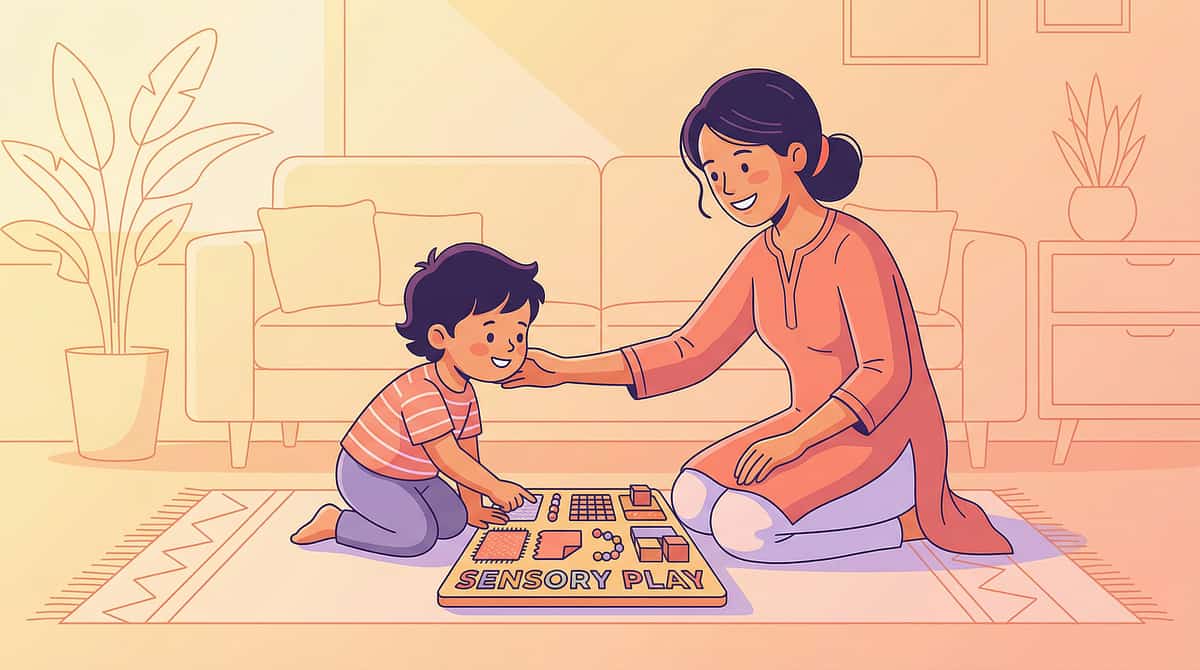
Interoception training is the long game — a systematic body awareness curriculum that builds your child's attention to internal sensations over time. Through body scans, sensation vocabulary practice, and regular guided exercises, children may gradually develop functional pain awareness through directed, patient attention to what's happening inside their bodies.
Body Scans
Practice during calm times — attend to each body part systematically, from head to toe
Name Sensations
Notice and name feelings without judgment: "My tummy feels tight. My legs feel heavy."
Connect to Context
"After running, your legs might feel tired or achy. After eating, your tummy might feel full."
Build Over Time
Gradually expand vocabulary and frequency — consistency matters more than intensity
Price: ₹500–2,000
Safety Note: Interoception training is not a quick fix — it requires long-term commitment and patience. It may not fully remediate neurologically-based pain insensitivity. Should never replace ongoing safety monitoring and external detection systems.
Chapter
Quick Reference
All 9 Materials at a Glance
Here's a consolidated reference of every material, what it does, and how much it costs. Bookmark this card for quick access whenever you need a refresher.
# | Material | Core Function | Price Range | |
① | Visual Pain Scales | Rate pain intensity + locate in body | ₹150–500 | |
② | Body Check Routines | External detection of hidden injuries | ₹100–300 | |
③ | Pain Vocabulary Cards | Words for different pain types | ₹200–500 | |
④ | Behavioral Pain Charts | Recognize unreported pain via behavior | ₹150–400 | |
⑤ | Pain Social Stories | Teaches meaning of pain + what to do | ₹200–600 | |
⑥ | AAC Pain Systems | Removes communication barriers | ₹500–5,000 | |
⑦ | Safety Equipment | Physical protection when signals absent | ₹500–3,000 | |
⑧ | Medical Alert Docs | Critical info for emergency care | ₹300–1,500 | |
⑨ | Interoception Training | Builds internal awareness long-term | ₹500–2,000 |
Where to Start — Your Selection Guide
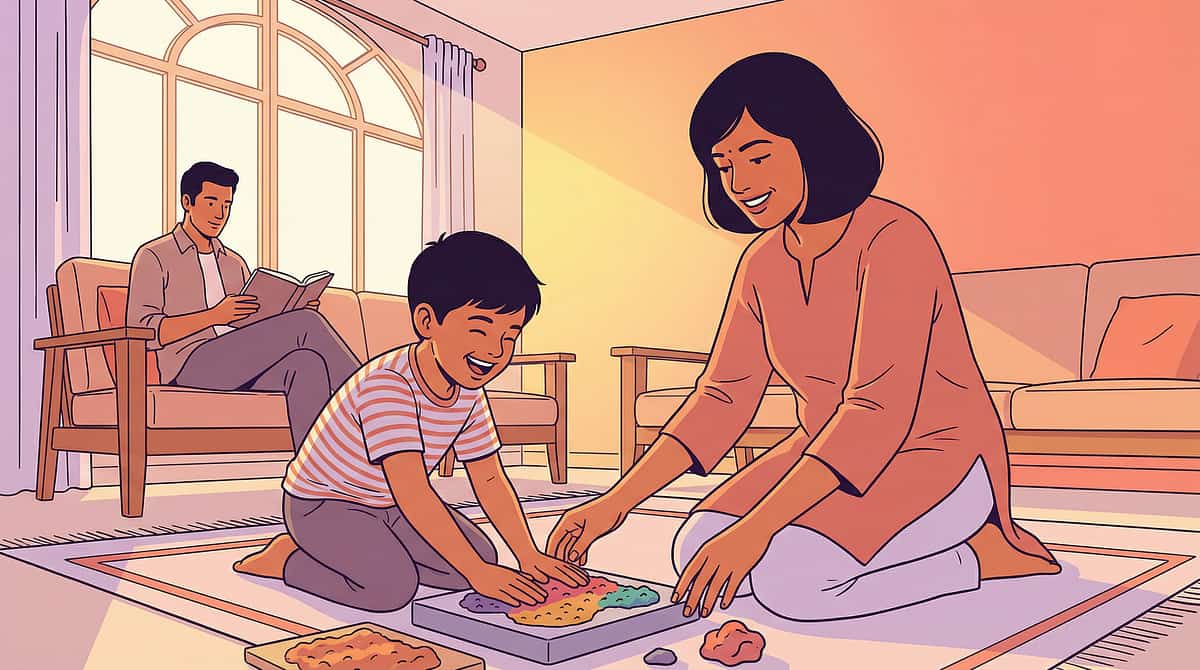
You don't have to do everything at once. This three-tier approach helps you prioritize based on urgency, communication needs, and long-term development. Start with the essentials, build communication tools next, then invest in long-term interoceptive growth.
Long-Term
Behavioral Charts • Safety Equipment • Interoception Training
Communication
Pain Vocabulary • AAC Systems • Social Stories
Start Today
Pain Scales • Body Checks • Medical Alerts
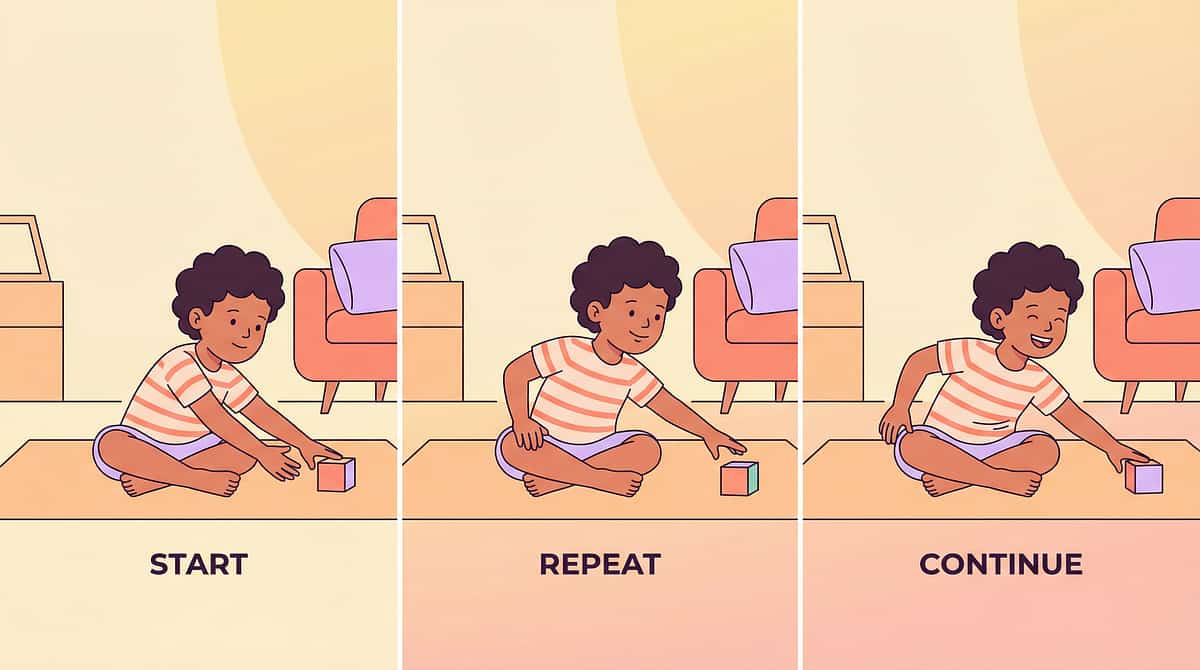
Tier 1 — Start Today (Essential Safety)
These three materials address immediate safety. They require minimal investment, can be set up today, and form the foundation for everything that follows. Don't wait — begin here.
1
Visual Pain Scales
₹150–500 — Print the Wong-Baker FACES scale and a body outline. Practice during calm moments.
2
Body Check Routines
₹100–300 — Establish a daily head-to-toe check during bath or dressing time.
3
Medical Alert Documentation
₹300–1,500 — Create alert cards and share with every healthcare provider and caregiver in your child's life.
Most Tier 1 materials are DIY-friendly and can be created at home with a printer and basic supplies.
Tier 2 — Build Communication
Once safety systems are in place, shift focus to building your child's ability to communicate about pain. These tools give your child the language, narrative understanding, and accessible technology to tell you when something is wrong.
Pain Vocabulary Cards
₹200–500 — Teach descriptors like sharp, dull, throbbing, burning, and aching through concrete sensory examples.
AAC Pain Systems
₹500–5,000 — Ensure your child's communication device has easily accessible pain vocabulary and body part symbols.
Social Stories
₹200–600 — Create narrative frameworks that teach the Notice → Tell → Help → Feel Better sequence.
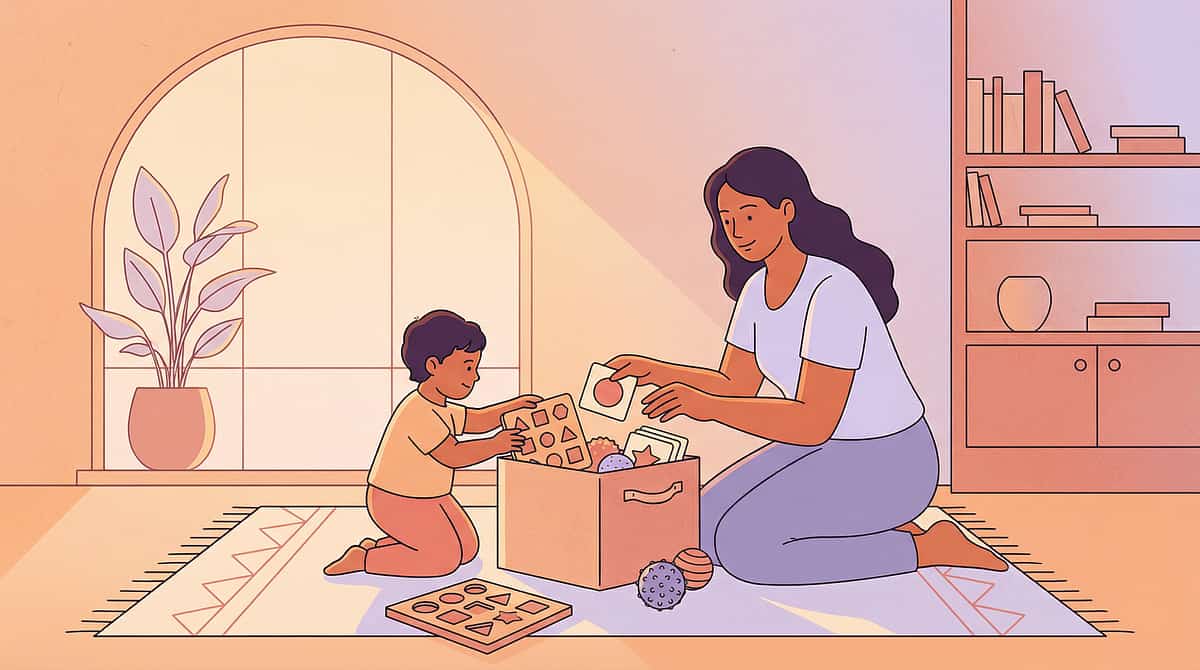
Tier 3 — Long-Term Development
These materials support ongoing growth in interoceptive awareness and environmental safety. They require more sustained commitment but contribute to lasting independence and self-awareness.
Behavioral Pain Charts
₹150–400 — Learn your child's unique behavioral pain indicators and document patterns over time.
Safety Equipment
₹500–3,000 — Helmets, padding, and environmental modifications for high-risk activities and spaces.
Interoception Training
₹500–2,000 — Systematic body awareness activities including body scans, sensation naming, and contextual connections.
Total Investment Range: ₹2,600–13,800 for a comprehensive setup. Most materials are DIY-friendly — pain scales, body checks, vocabulary cards, social stories, and medical alert cards can all be created at home.

Chapter
DIY Guide
DIY-Friendly Materials You Can Make Today
You don't need to wait for a therapy appointment or a product shipment. Many of these materials can be created at home with items you likely already have. Here's your quick-start DIY checklist.
Pain Scale Poster
Download and print the Wong-Baker FACES scale (free online). Laminate or tape to the wall at child's eye level.
Body Outline Map
Trace your child's body on a large piece of paper, or print a body outline template. Laminate for daily use.
Vocabulary Cards
Draw or print images for sharp, dull, throbbing, burning, aching. Pair with a familiar sensory comparison on each card.
Social Story Booklet
Write and illustrate a 4-page story following the Notice → Tell → Help → Feel Better sequence using your child's name.
Medical Alert Card
Print wallet-sized cards with your child's name, condition, and clear instructions for healthcare providers.

Chapter
Age Adaptations
Adapting Materials by Age
Every child develops at their own pace, and these materials should grow with them. Below is guidance on how to adapt the tools based on your child's developmental stage — not just their chronological age. Choose the level that matches where your child is right now.
Ages 3–4
Focus on simple faces (happy/sad/hurt), daily body checks led by parent, picture-based social stories, and maximum environmental protection.
Ages 5–8
Introduce full pain scales, pain vocabulary cards, AAC pain pages, behavioral monitoring, and begin guided body scans with support.
Ages 9–12
Self-checking with mirrors, expanded vocabulary, independent use of pain scales, self-advocacy with medical providers, and deeper interoception practice.
Remember: developmental age matters more than chronological age. A 7-year-old may benefit from strategies designed for ages 3–4, and that's perfectly okay.
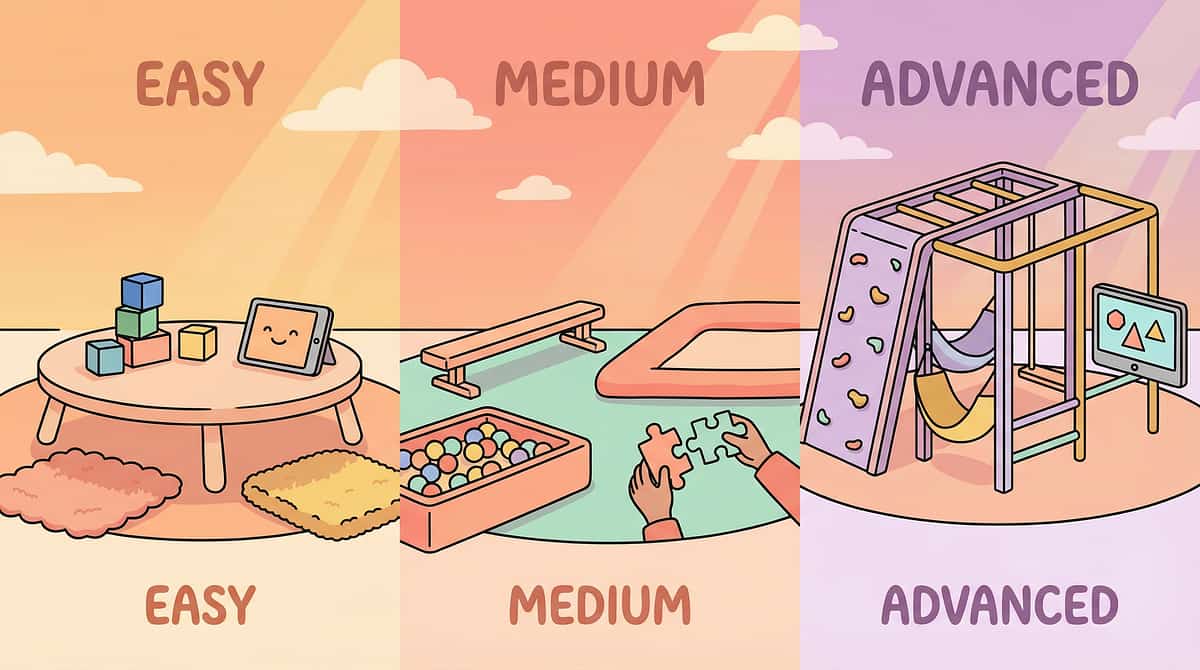
The Therapist's Role in Pain Recognition
While many of these materials are DIY-friendly, an occupational therapist trained in sensory processing brings critical expertise that accelerates your child's progress and ensures safety. Here's what a professional assessment adds.
Comprehensive Sensory Profiling
An OT assessment identifies your child's unique interoceptive profile — not just pain, but all internal sensation processing — to create a targeted, individualized plan.
Material Selection & Customization
Your therapist helps choose the right materials for your child's specific needs, developmental level, and communication style — avoiding a one-size-fits-all approach.
Progress Monitoring
Regular reassessment tracks whether interoceptive awareness is genuinely improving or whether safety systems need to be adjusted.
Family Training
Therapists teach parents and caregivers how to implement materials correctly at home, school, and in the community — creating consistency across environments.

When to Seek Immediate Medical Help
Pain insensitivity is a safety concern that sometimes requires urgent medical attention. Because your child may not report or react to serious injuries or illness, it's important to know when to act immediately — even if your child seems fine.
🚨 Seek Emergency Care If:
- You discover a significant injury (swelling, deformity, deep cut) with no pain report
- Your child has a high fever but shows no distress or complaints
- Behavioral changes suggest internal pain (abdominal guarding, refusal to walk)
- Any head injury — even if your child seems completely unaffected
🩺 Schedule a Medical Review If:
- You're finding unexplained injuries more than once a week
- Your child has never reported pain despite known injuries
- Pain insensitivity seems to be worsening or expanding
- You have concerns about underlying neurological conditions
Remember: When in doubt, always seek medical evaluation. A child's lack of pain response does not mean the injury isn't serious.

Chapter
Home Implementation
Bringing It All Home — Daily Implementation
The most effective pain recognition system is one that integrates seamlessly into your family's daily life. Here's a practical framework for weaving these materials into your existing routines without overwhelming your child or yourself.
1
Morning Routine
Quick visual body check during dressing. Reference the pain scale: "How does your body feel today?"
2
After School
Check-in using pain scale. Review any incidents reported by school. Look for new bruises or injuries.
3
Bath Time
Thorough body scan — head to toe, front and back. Narrate any findings and connect to pain vocabulary.
4
Bedtime
Read a pain awareness social story. Practice a brief body scan: "Let's notice how each part of your body feels."

Pain Recognition at School
Your child spends a significant portion of their day at school — and that's where many injuries happen. Ensuring that teachers, aides, and school nurses understand your child's pain perception differences is critical for safety across environments.
Share With School Staff
- A copy of your child's medical alert card
- A printed pain scale for the classroom
- Your child's specific behavioral pain indicators
- Instructions for body checks after physical activity
- Emergency contact protocols for suspected injuries
Request Accommodations
- Extra supervision during recess and PE
- Access to AAC device throughout the school day
- Permission for staff to conduct visual body checks
- Helmet or padding during high-risk activities
- Regular communication log between home and school
Consistency between home and school is essential. When every adult in your child's life uses the same tools and language, your child's ability to communicate about pain grows exponentially.

Common Parent Questions
"Will my child ever feel pain normally?"
Some children develop greater interoceptive awareness over time with consistent training. Others may always have reduced pain perception. The goal isn't "normal" pain — it's functional safety and communication.
"Isn't it good that my child doesn't feel pain?"
While it may seem like a blessing, pain insensitivity is one of the most medically dangerous interoceptive differences. Pain protects us from worsening injuries and signals illness. Without it, early detection depends entirely on external systems.
"Am I overreacting by doing daily body checks?"
Absolutely not. Daily body checks are a recommended, evidence-informed practice for children with pain perception differences. You are being a thoughtful, proactive parent — not an anxious one.
"My child sometimes seems to feel pain — is this still relevant?"
Pain perception can be inconsistent — present for some types of pain and absent for others, or fluctuating day to day. Inconsistency makes safety systems even more important.

Chapter
Safety Principles
The Two-Track Approach to Pain Safety
The most important concept in this entire guide is this: you need two tracks running simultaneously. Neither track alone is sufficient. Together, they create a comprehensive safety system for your child.
Track 1: External Safety Systems
Body checks, medical alerts, safety equipment, behavioral monitoring, and caregiver vigilance. These protect your child right now while awareness develops.
Track 2: Internal Awareness Building
Pain scales, vocabulary cards, social stories, interoception training, and AAC systems. These build your child's long-term ability to notice and communicate pain.
Critical Reminder: Never reduce external safety systems based on the assumption that internal awareness is "good enough." Even as your child improves, maintain monitoring. The stakes are too high for assumptions.
Tracking Your Child's Progress
How do you know if these materials are working? Progress in interoceptive awareness is often gradual and subtle. Here are concrete milestones to watch for — celebrate every step, no matter how small.
Supported Independence
Self-checks, self-advocacy with doctors, communicates pain details independently
Functional Communication
Uses pain scale or AAC to report pain location, type, and intensity
Developing Recognition
Notices pain sometimes, uses vocabulary cards with prompting
Emerging Communication
Points to body when asked, says "ow" or "hurt" inconsistently
External Dependence
Relies entirely on caregiver detection through body checks and observation
Every child's timeline is different. Some move through these stages in months; others take years. Consistent effort matters more than speed.
Celebrating Small Victories
The first time your child points to a pain chart and tells you "Here. It hurts here." — that moment will change everything. It means the system is working. It means your child is building a bridge between body and voice.
"She used to walk around on injuries for days. Now she points to the pain chart and shows us where it hurts."
— Parent, Pinnacle Blooms Network
1
Before
Pain goes unnoticed → Injuries worsen → Medical emergencies from delayed detection
2
After
Pain communicated → Early detection → Appropriate medical response → Child safety
Illustrative case; outcomes vary by child profile.
Chapter
Evidence & Research
The Research Behind Pain Perception Differences
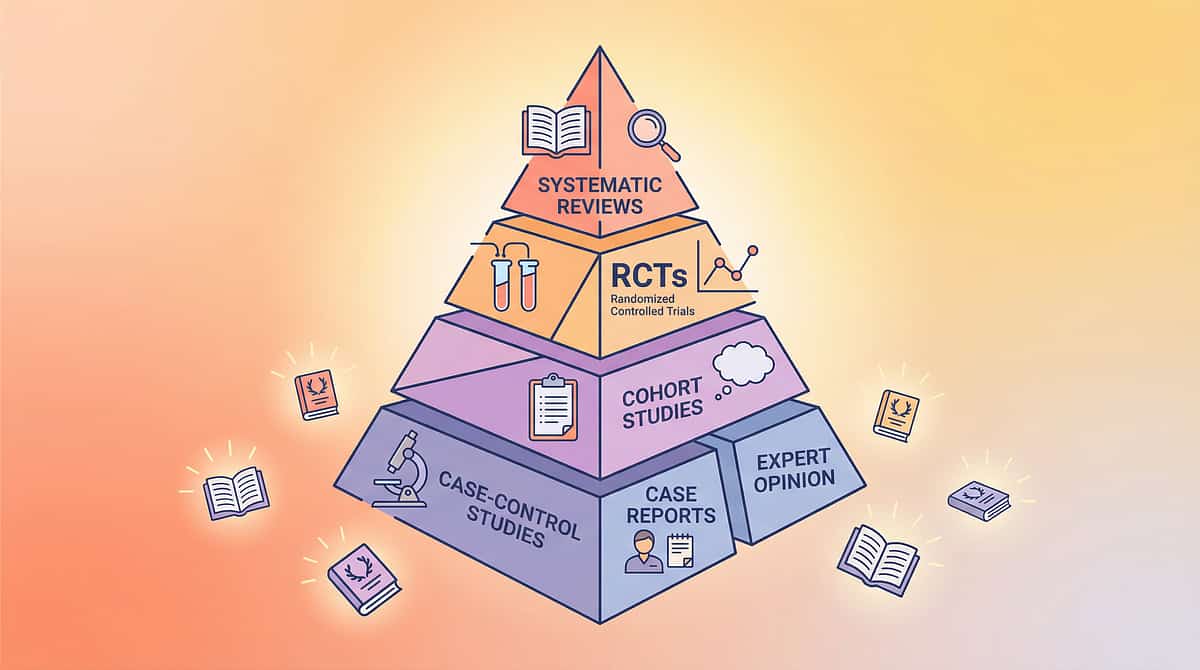
Understanding the science helps parents and clinicians make informed decisions. Pain perception differences in children with autism and sensory processing challenges are well-documented in the research literature.
50-70%
Altered Pain Processing
Percentage of individuals with autism showing altered pain processing (Moore DJ, 2015; Rattaz C et al., 2013)
3x
Injury Risk
Children with pain insensitivity face significantly higher risk of undetected injuries
80%
Communication Gap
Of pain-related ER visits in children with ASD involve delayed detection due to absent pain reports
Research consistently shows that structured intervention — combining external safety systems with interoceptive training — produces the best outcomes for children with pain perception differences. The materials in this guide are grounded in this evidence.

Pain Perception: Hypo vs. Hyper
It's important to understand that pain perception differences exist on a spectrum. While this guide focuses on hyposensitivity (under-registration of pain), some children experience the opposite extreme or fluctuate between both.
Some children even fluctuate between hypo- and hypersensitivity depending on the context, type of sensation, or their arousal state. This inconsistency is common and not a sign that your child is "faking" anything — it reflects genuine neurological variability in how the brain processes internal signals.
Building Your Child's Safety Network
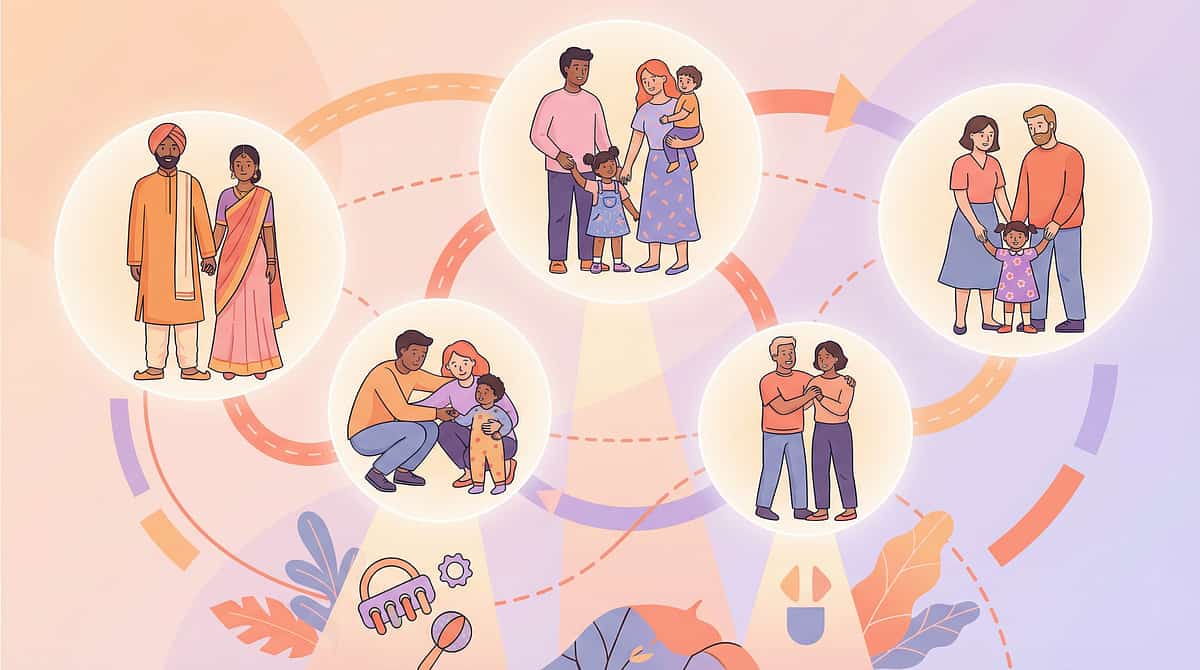
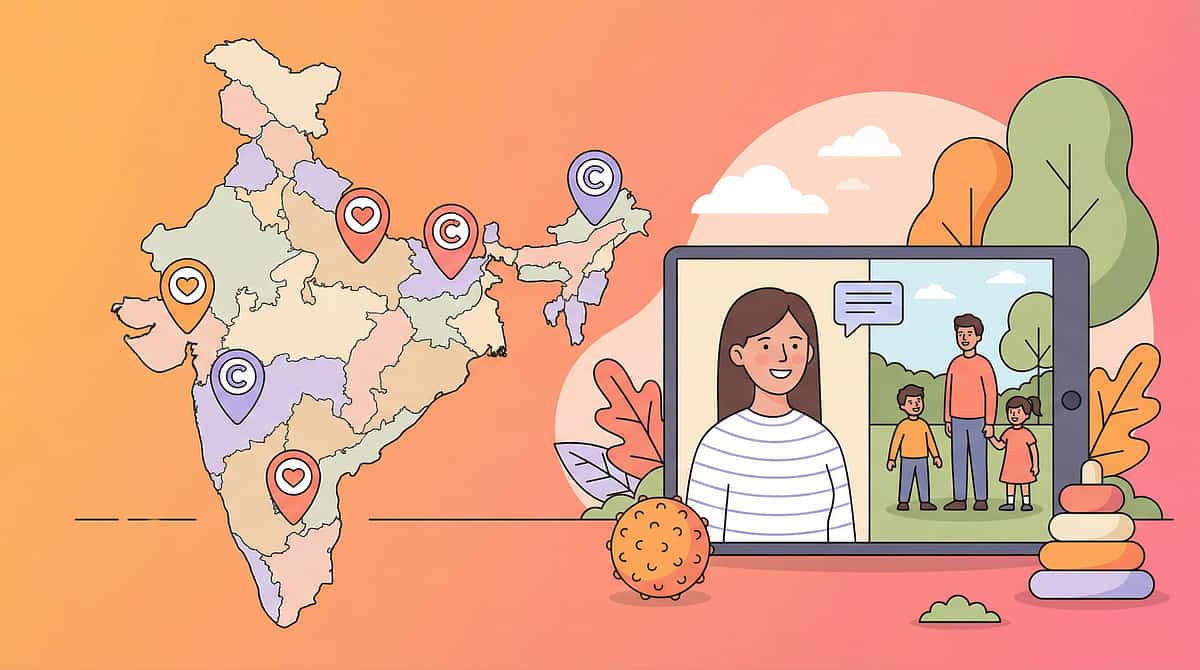
Pain recognition isn't just a parent's job — it's a community effort. Every adult in your child's life needs to understand their pain perception differences and know how to respond. The wider your child's safety network, the safer they are.
Parents & Siblings
Primary daily monitors
Teachers & Aides
School-day oversight
Extended Family
Grandparents, aunts, uncles
Medical Providers
Doctors, nurses, dentists
Caregivers
Babysitters, nannies, helpers
Share medical alert cards, a copy of the pain scale, and a brief explanation of your child's needs with everyone who spends time with your child. Consistency across all environments is the key to safety.
Chapter
Investment Guide
Investment Breakdown — What It Really Costs
One of the most empowering aspects of this pain recognition system is its affordability. Many materials can be made at home for almost nothing, and even the full comprehensive setup is well within reach for most families.
Total Investment Range: ₹2,600–13,800 for a comprehensive setup. Starting with just Tier 1 essentials costs as little as ₹550.
Build Awareness, Ensure Safety
Your child deserves to be safe — and to have a voice for what their body experiences. Our occupational therapists at Pinnacle Blooms Network specialize in interoception and sensory processing development, bringing evidence-based expertise to families just like yours.
Whether you're just beginning to notice signs of pain insensitivity or you're looking for a structured therapy program to build interoceptive awareness, we're here to help — with compassion, clinical rigor, and a plan tailored to your child.
📞 Book OT Assessment
1800-123-7838
🌐 Learn More
pinnacleblooms.org
📞 FREE Helpline
9100 181 181
16+ languages, 24×7
16+ languages, 24×7
Chapter
About GPT-OS®
Powered by GPT-OS® — Global Pediatric Therapeutic Operating System
Standardized. Personalized. Evidence-Based.
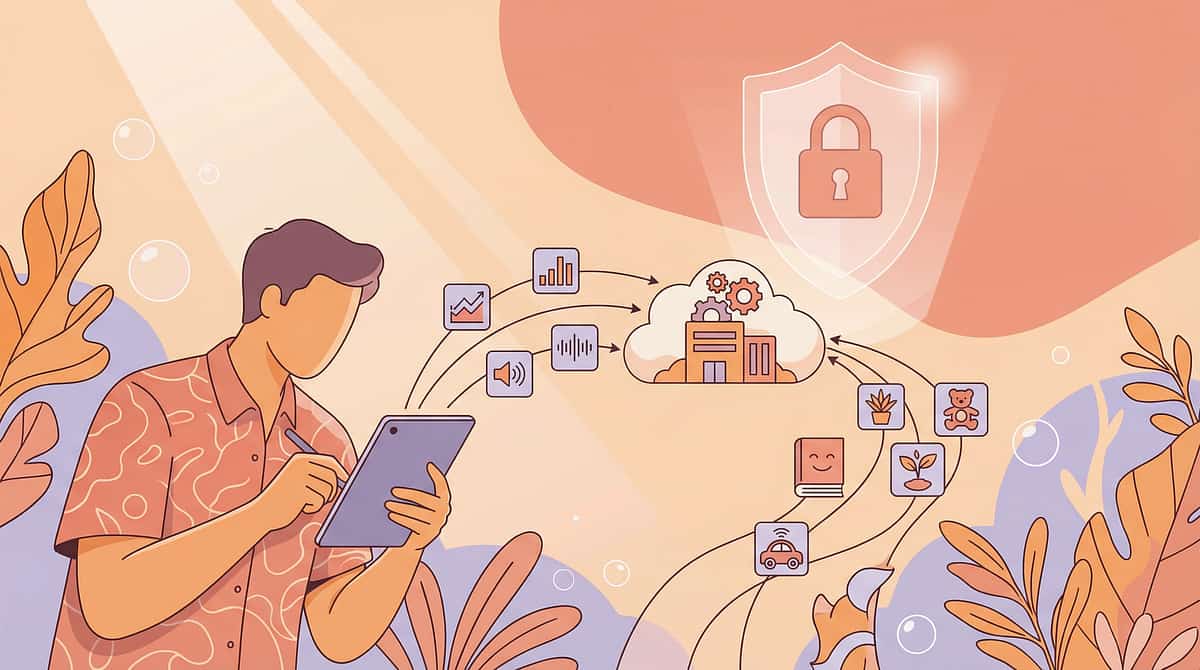
These materials come from GPT-OS® — the operating system governing diagnosis, prognosis, therapy design, execution, monitoring, and readiness outcomes across the entire Pinnacle Blooms Network. The system provides clinical accuracy and consistency, using advanced therapeutic intelligence to ensure evidence-based practice and personalized care.
Diagnostic Intelligence Layer
591+ observations, 349 skills, 79 abilities assessed systematically
AbilityScore®
Universal developmental score (0–1000) for standardized measurement
TherapeuticAI®
Therapy focus, intensity, and sequencing under clinical authority
FusionModule™
Speech + OT + Behavior + Education converged into one integrated approach
EverydayTherapyProgramme™
Daily home micro-interventions that extend clinical work into family life
21M+ Sessions • 97%+ Improvement • 80+ Centers • Patents filed across 160+ countries
This is not software. This is therapeutic infrastructure.
Real-World Evidence Backed
Measured Outcomes. Readiness, Not Assumptions.
21M+
Exclusive 1:1 Sessions
Across converged therapy disciplines
97%+
Measured Improvement
Across one or more readiness indexes
80+
Centers Nationwide
Operating under a single clinical system
Pain-Specific Tracking
For pain awareness, safety and self-advocacy are tracked through the Daily Living & Independence Index and Communication Readiness Index progression — ensuring that improvement is measured, not assumed.
External Dependence
Emerging Communication
Developing Recognition
Functional Communication
Supported Independence
Evidence from practice, insights for progress.

Pinnacle Blooms Network® — India's Leading Autism Therapy Provider
Built by Mothers. Engineered as a System.
Pinnacle Blooms Network is more than a therapy provider — it's a comprehensive system designed around the belief that every child deserves evidence-based, measurable, and compassionate care. With 80+ centers across India, multidisciplinary expert teams, and a family-centered care model, we bring world-class therapy to families who need it most.
80+ Centers Across India
Consistent, standardized care wherever you are
Multidisciplinary Expert Teams
Speech, OT, ABA, education — integrated under one roof
Evidence-Based Interventions
Every approach grounded in research and measured outcomes
Family-Centered Care Model
Parents are partners, not spectators, in therapy
Contact Us
- FREE National Autism Helpline (16+ languages): 9100 181 181
- Website: pinnacleblooms.org
- Email:care@pinnacleblooms.org
CIN: U74999TG2016PTC113063 | DPIIT: DIPP8651 | MSME: TS20F0009606 | GSTIN: 36AAGCB9722P1Z2

Downloadable Checklists & Templates
We want to make it as easy as possible for you to get started. Below are printable resources you can use at home today. These tools are designed to be simple, visual, and child-friendly.
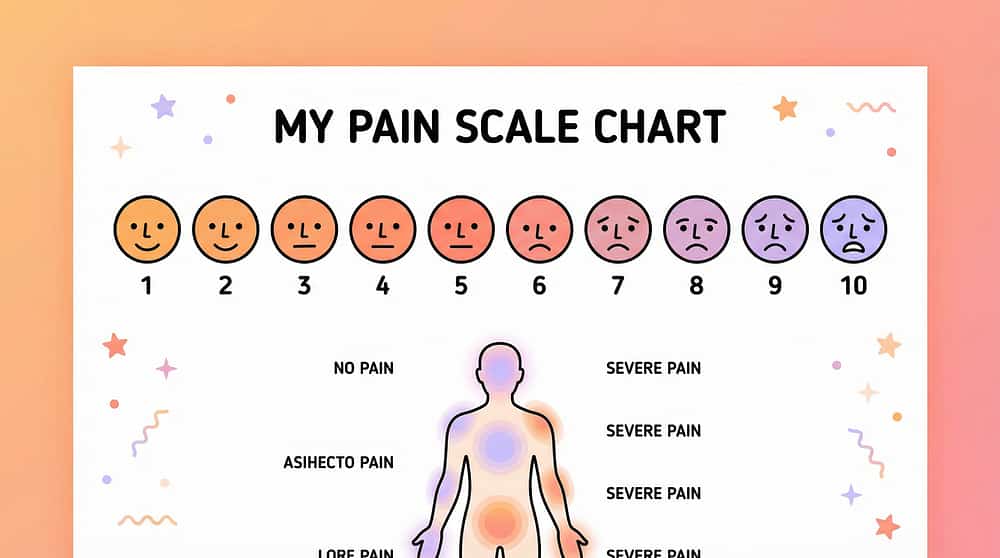
Pain Scale + Body Map
Printable Wong-Baker FACES scale combined with a full-body outline for pointing. Laminate for daily use at home and school.
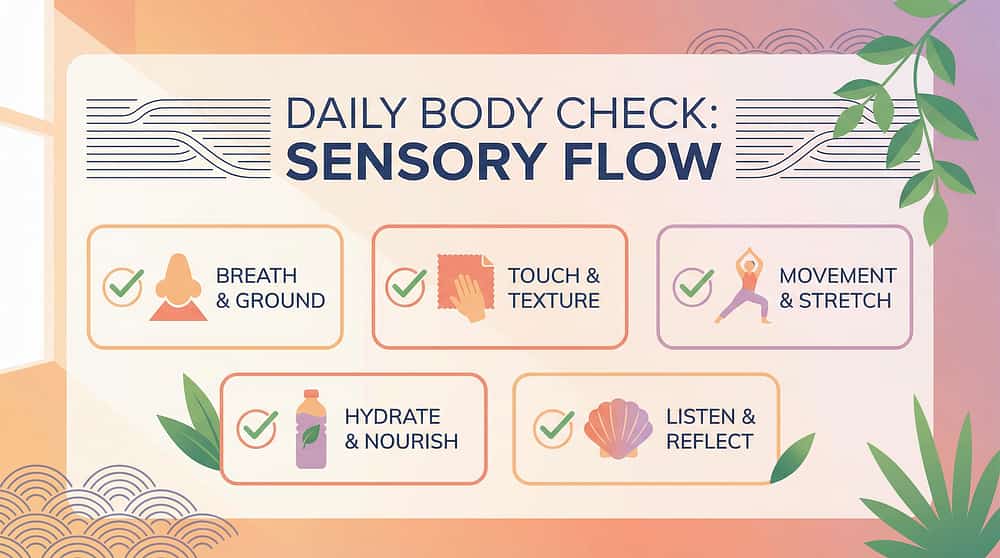
Daily Body Check Checklist
Step-by-step guide for daily visual inspection, with checkboxes for each body area and a notes section for findings.
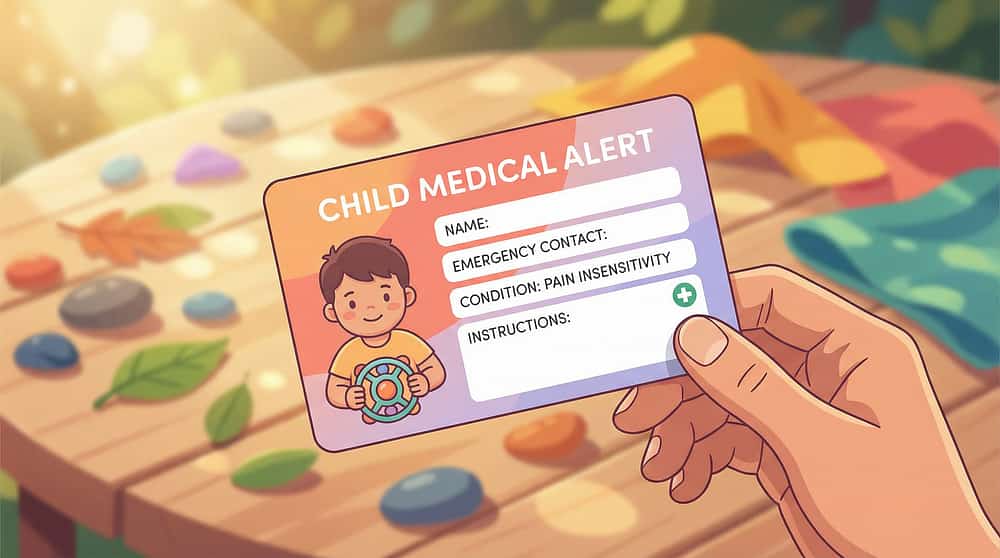
Medical Alert Card
Wallet-sized card template with pre-written language for healthcare providers. Customize with your child's name and specific needs.
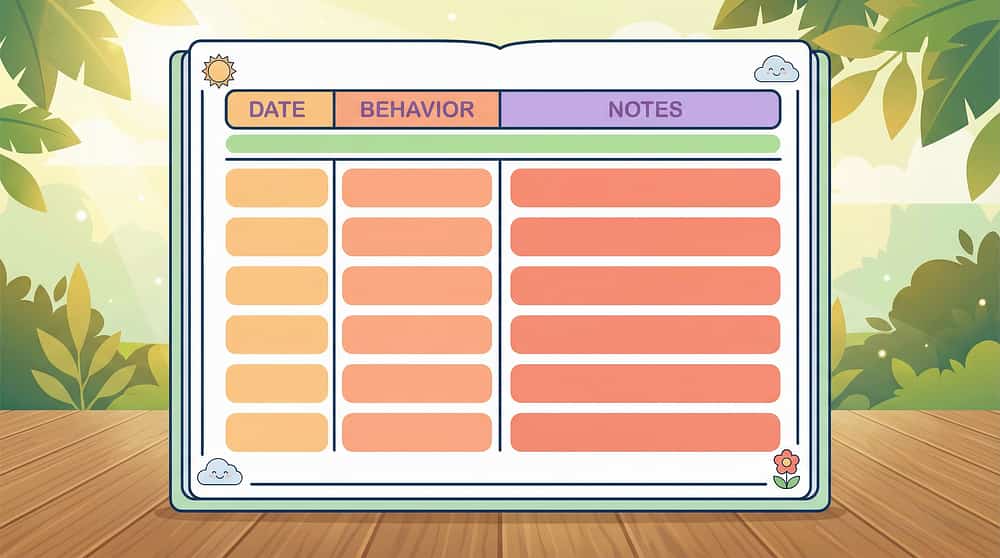
Behavioral Tracking Log
Weekly log for recording behavioral pain indicators, suspected pain sources, and outcomes. Helps identify your child's unique patterns over time.
Visit materials.pinnacleblooms.org for downloadable PDF versions of all templates.

Key Takeaways — What to Remember
Pain insensitivity is one of the most medically significant interoceptive differences your child may face. But with the right materials, consistent implementation, and professional support, you can build a system that keeps your child safe while nurturing their growing awareness. You are not alone in this journey — and your vigilance is an act of profound love.
Preview of 9 materials that help with pain recognition Therapy Material
Below is a visual preview of 9 materials that help with pain recognition therapy material. The pages shown help educators, therapists, and caregivers understand the structure and content of the resource before use. Materials should be used under appropriate professional guidance.


Link copied!
Important Information
This content is educational. It does not replace assessment by a licensed occupational therapist, physician, or developmental pediatrician. Individual results may vary. Statistics represent aggregate outcomes across the Pinnacle Blooms Network.
Pain insensitivity can be a significant safety concern requiring medical evaluation. Children with significant pain perception differences should be evaluated by appropriate medical specialists. Emergency medical care should be sought for any suspected injury regardless of child's pain report.
Always consult with your child's healthcare team before implementing new safety protocols or modifying existing ones. The materials described in this guide are supplementary tools — they are most effective when used as part of a comprehensive therapy plan guided by a qualified occupational therapist.
© 2025 Pinnacle Blooms Network®, unit of Bharath Healthcare Laboratories Pvt. Ltd. All rights reserved.
#PainAwareness #Interoception #SensoryProcessing #AutismSafety #PinnacleBlooms #BodyAwareness #OccupationalTherapy #ChildSafety