
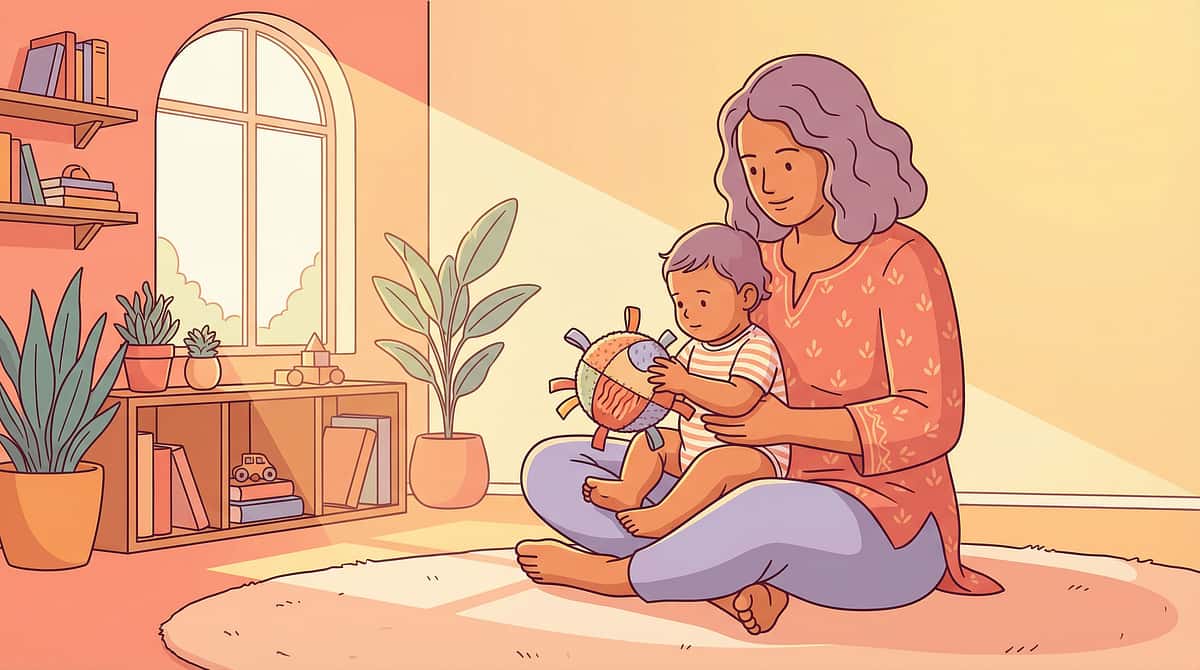
"She had a room full of toys. But she didn't know how to play."
Every morning, you set out the toys. The kitchen set, the blocks, the figurines. And every morning, she goes straight to the window sill — lining up her cars in a perfect row. Then lining them up again. While her cousins down the street are building castles and playing doctor, she watches from the glass door, looking in at a world she doesn't quite understand how to enter.
You've been told: "Play is delayed." But no one told you how to teach something that's supposed to be natural.
G-627 | OT-PLAY
Age Band: 2–8 Years
Pinnacle Blooms Consortium®
Age-Appropriate Play: Building the Skills That Unlock Childhood
"You are not failing. Your child isn't broken. Play is a developmental skill — and like every skill, it can be taught."
🏛️ Consortium-Backed
OT • SLP • ABA • SpEd • NeuroDev — five disciplines, one unified approach for play development.
📋 Technique G-627
Domain: OT-PLAY | Series: Play Development | Age Band: 2–8 years | Daily, 10–20 min sessions.
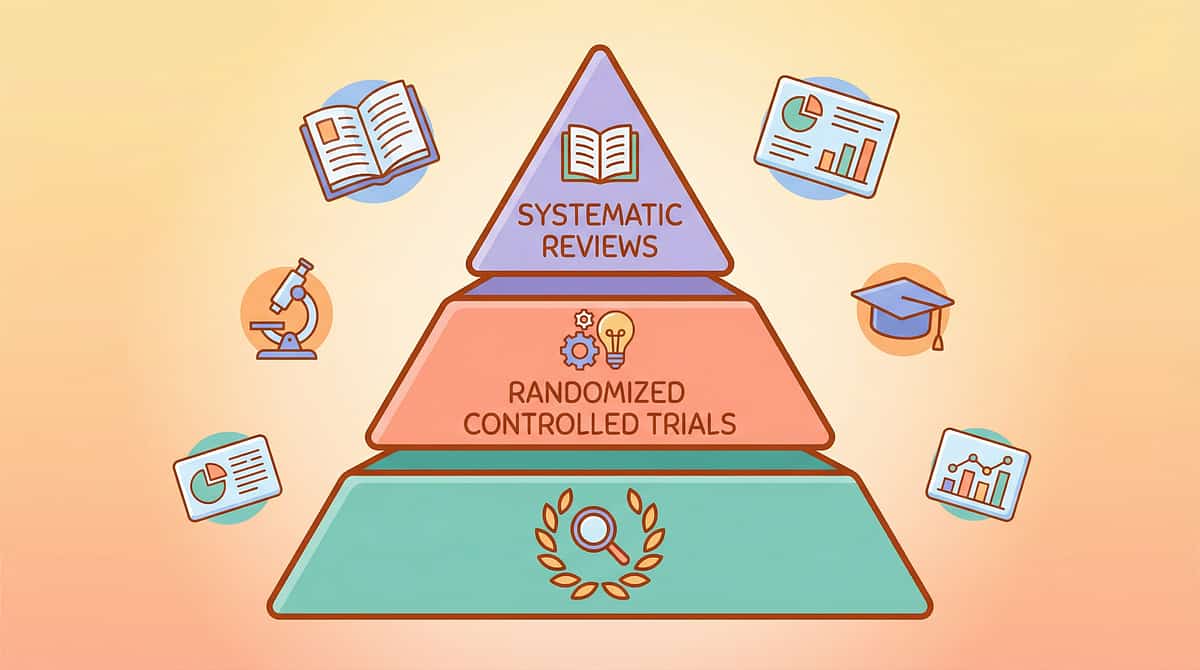
🔬 Level I Evidence
Supported by systematic reviews, meta-analyses, and RCTs across 16–24 studies in developmental populations.
WHO Nurturing Care Framework (2018): Early childhood developmental monitoring and parental responsiveness directly shape developmental trajectories across all domains — including play.

You Are Among Millions of Families on This Exact Journey
Play skill delays are not rare. They are not your parenting failure. They are a recognized, clinically documented developmental difference that affects children across every country, every socioeconomic stratum, and every diagnostic profile.
1 in 36
Children with ASD
Play skill delays affect up to 90% of these children regardless of cognitive ability. CDC Autism Prevalence Report, 2023
1 in 8
Children Globally
Experience some form of developmental delay affecting play — including ADHD, DLD, and sensory processing differences. WHO GBD, 2023
21M+
Therapy Sessions
Delivered by Pinnacle Blooms Network® with play skill development as a core outcome across all disciplines. GPT-OS® Registry, 2025
"You are among millions of families navigating this exact challenge. The path forward is documented, evidence-based, and begins today."
Play Isn't Instinct. It's Neuroscience.
When your child lines up toys instead of playing imaginatively, it isn't stubbornness — it's a predictable, safe, rewarding loop that their brain has learned. Understanding the neuroscience behind this transforms frustration into compassion — and strategy.
The Brain Regions Involved
Prefrontal Cortex → Play planning, sequencing pretend scenarios, holding a "play idea" in mind long enough to act on it.
Mirror Neuron System → Imitation learning — watching another child play and copying. Differences here mean observation-based learning is less automatic.
Default Mode Network → The "imagination engine." Active during pretend play and narrative thinking. Connectivity develops differently in some children.
Basal Ganglia → Habit formation and reward loops. Repetitive play is a deeply reinforcing routine — not defiance.
What This Means at Breakfast
When they watch other children play but don't join, their mirror neuron pathways may not be converting observation into automatic imitation the way other children's do.
When they get upset if you move a toy from the lineup, that's the basal ganglia defending a deeply established routine — not a behavior choice.
"This is a wiring difference, not a behavior choice. The brain can be scaffolded. That's what these materials do." — Pinnacle NeuroDev Pediatrics Team
Play Develops in Stages. Every Stage Has a Gateway.
Many children with developmental differences become "stuck" between Exploratory and Functional play, or between Functional and Symbolic play. Their bodies have grown older, but their play stage hasn't moved forward yet. This is not permanent.
0–18 Months
Exploratory Play — Mouthing, banging, shaking, dropping. "What does this object DO?"
18–36 Months
Functional Play ★ Key Gateway — Using objects as intended. Cup → drinking. "Objects have PURPOSE."
2–4 Years
Pretend / Symbolic Play ★ Key Gateway — Imagination, object substitution, role play. "Objects can BECOME other things."
3–6 Years
Constructive Play — Building and creating with purpose and goal-direction. "I can CREATE something intentional."
4–8 Years
Social / Games with Rules — Turn-taking, cooperative play, shared goals. "I can PLAY WITH others."
Play skill delays commonly co-occur with: Language delays (80%), Sensory processing differences (75%), Social communication challenges (90%+ in ASD), Fine motor delays (60%), and Anxiety around new situations (55%).
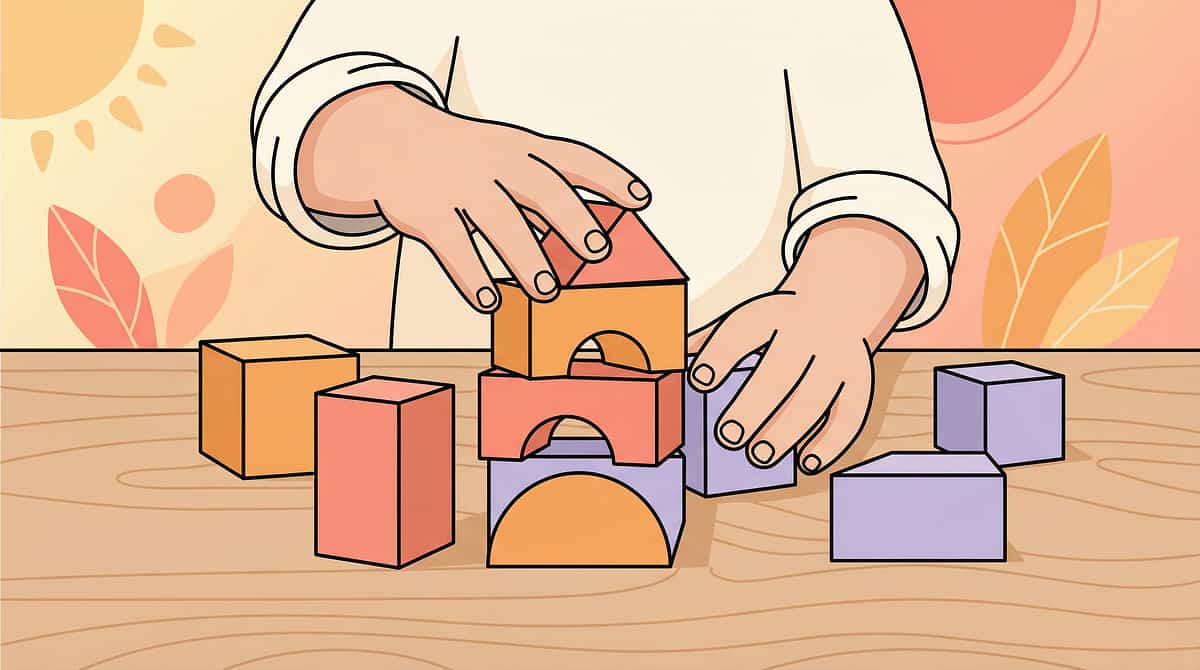
This Isn't Hope. This Is Evidence.
⬛ LEVEL I EVIDENCE
Systematic Reviews + Meta-Analyses + RCTs
"Structured play skill intervention using targeted materials, adult scaffolding, and systematic progression through developmental play stages demonstrates strong evidence of effectiveness for children with ASD and developmental delays."
📄 PRISMA Systematic Review (2024)
16 studies (2013–2023) confirm play-based and sensory integration interventions meet criteria for evidence-based practice in ASD. PMC11506176 → PubMed
📄 Meta-Analysis, World J Clin Cases (2024)
24 studies confirm sensory integration and structured play therapy effectively promotes social skills, adaptive behavior, and developmental progression. PMC10955541 → PubMed
📄 WHO/UNICEF Care for Child Development (2023)
Implemented in 54 LMICs. Home-based play facilitation with caregiver guidance produces measurable developmental gains. PMC9978394 → WHO Link
📄 Indian RCT, Padmanabha et al. (2019)
Home-based structured interventions administered by trained parents demonstrate significant outcomes across developmental domains. DOI: 10.1007/s12098-018-2747-4
85%
Evidence Strength
90%
Home Applicability
92%
Parent-Proven
Play Skill Scaffolding Through Developmentally-Matched Materials
Parent-Friendly Alias:"Teaching Play, One Material at a Time" | Technique Code: G-627 | Domain: OT-PLAY
Age-appropriate play scaffolding is the systematic process of meeting a child at their current play developmental stage and providing structured materials, adult modeling, and graduated challenge to progress through the natural sequence of play development. Rather than forcing a child into imaginative play before functional play is mastered, this approach identifies exactly where the child's play development is "stuck" and provides the right tools and scaffolding to unlock the next gateway. It is the occupational therapy principle of "just-right challenge" applied across the full developmental play continuum.
Domain
OT-PLAY / SLP / ABA
Age Band
2–8 Years
Duration
10–20 min
Frequency
Daily
Setting
Home + Clinic
Position in G-Series: ← G-626 (Functional Play Development) | ★ YOU ARE HERE: G-627 | G-628 (Social Play Skills) →

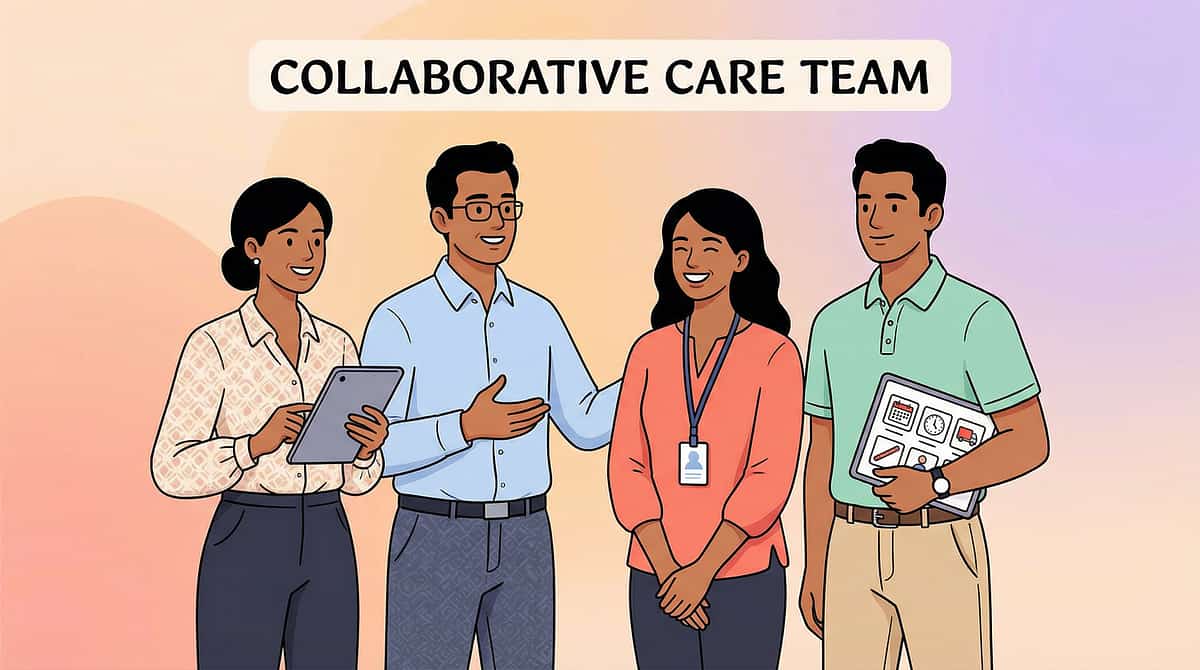
Five Specialties. One Unified Approach.
"This technique crosses therapy boundaries because the brain doesn't organize by therapy type." — Pinnacle Blooms Consortium
🟠 OT — Primary Lead
Uses play as occupation, scaffolds developmental play stages, selects materials matched to sensory and motor profile.
🟣 SLP — Co-Lead
Uses play contexts for language emergence, vocabulary in play sets, narrative in small world, pragmatics in turn-taking.
🔵 ABA — Reinforcement Architecture
Designs reinforcement schedules for new play behaviors, shapes functional play from repetitive patterns, records data.
🟢 SpEd — Generalization
Embeds play skills into classroom and group settings, teaches rules of social play, facilitates peer play.
⚫ NeuroDev — Diagnostic Foundation
Diagnoses underlying neurological basis for play delays, monitors developmental trajectory, guides intensity of intervention.

A Precision Tool, Not a Random Activity.
G-627 targets play development with surgical precision — addressing primary, secondary, and tertiary outcomes simultaneously. Every material in this technique maps to a specific developmental target.
🎯 Primary — Play Stage Progression
Observable indicator: Child engages with toy in developmentally appropriate manner for 3+ minutes; initiates known play sequence without adult prompt.
🔵 Secondary — Language + Social + Motor
Observable indicators: Spontaneous labeling of objects in play; tolerates adult joining; successfully uses pincer grip with small figurines.
🟡 Tertiary — Regulation + Executive Function
Observable indicators: Child initiates play story arc; participates in circle time; generalizes play skills to peer settings.
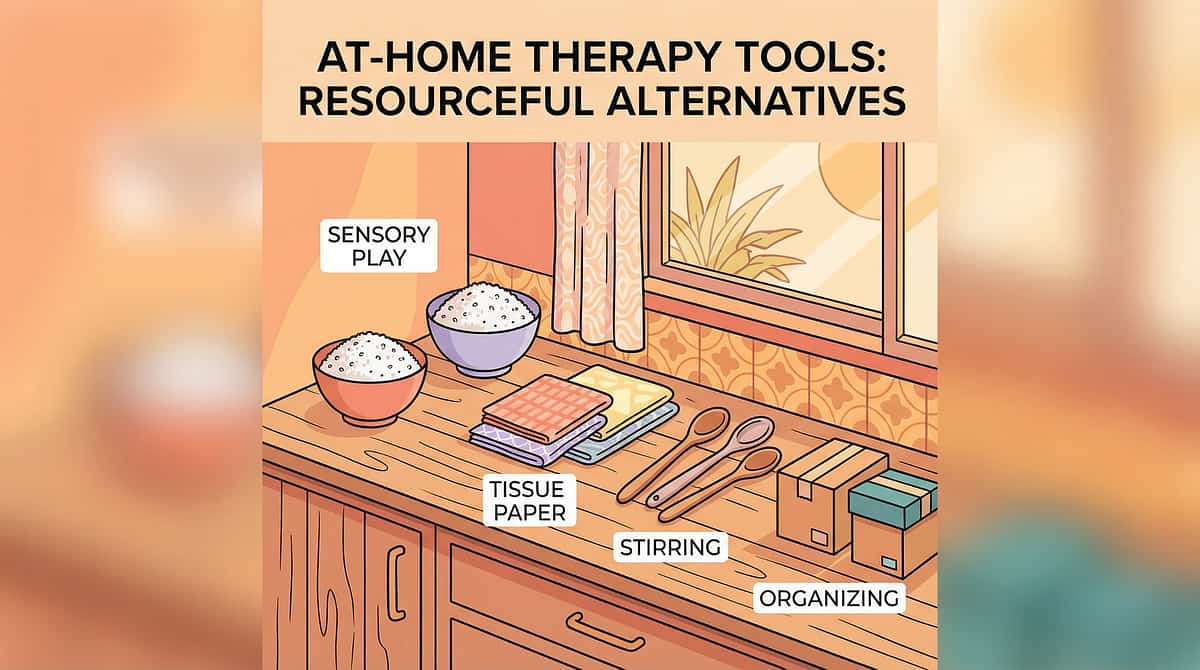
9 Materials. One for Every Gateway in Play Development.
These nine materials are not random toys — each one is a clinically selected scaffold for a specific stage of play development. Introduced in sequence, they build the complete architecture of age-appropriate play.
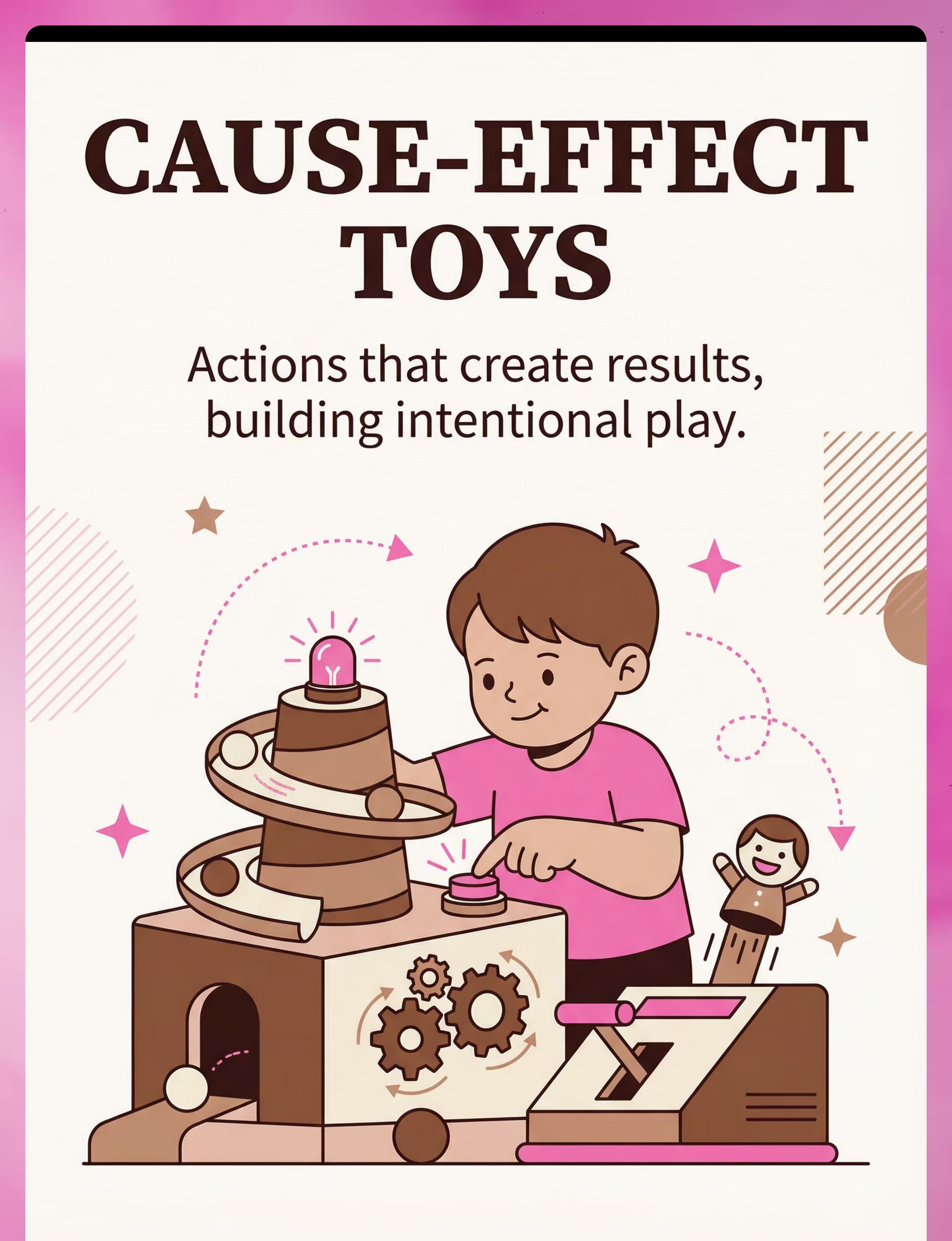
1 🔴 Cause-Effect Toys
Teaches "I make things happen" — prerequisite to all purposeful play. ₹400–1,500
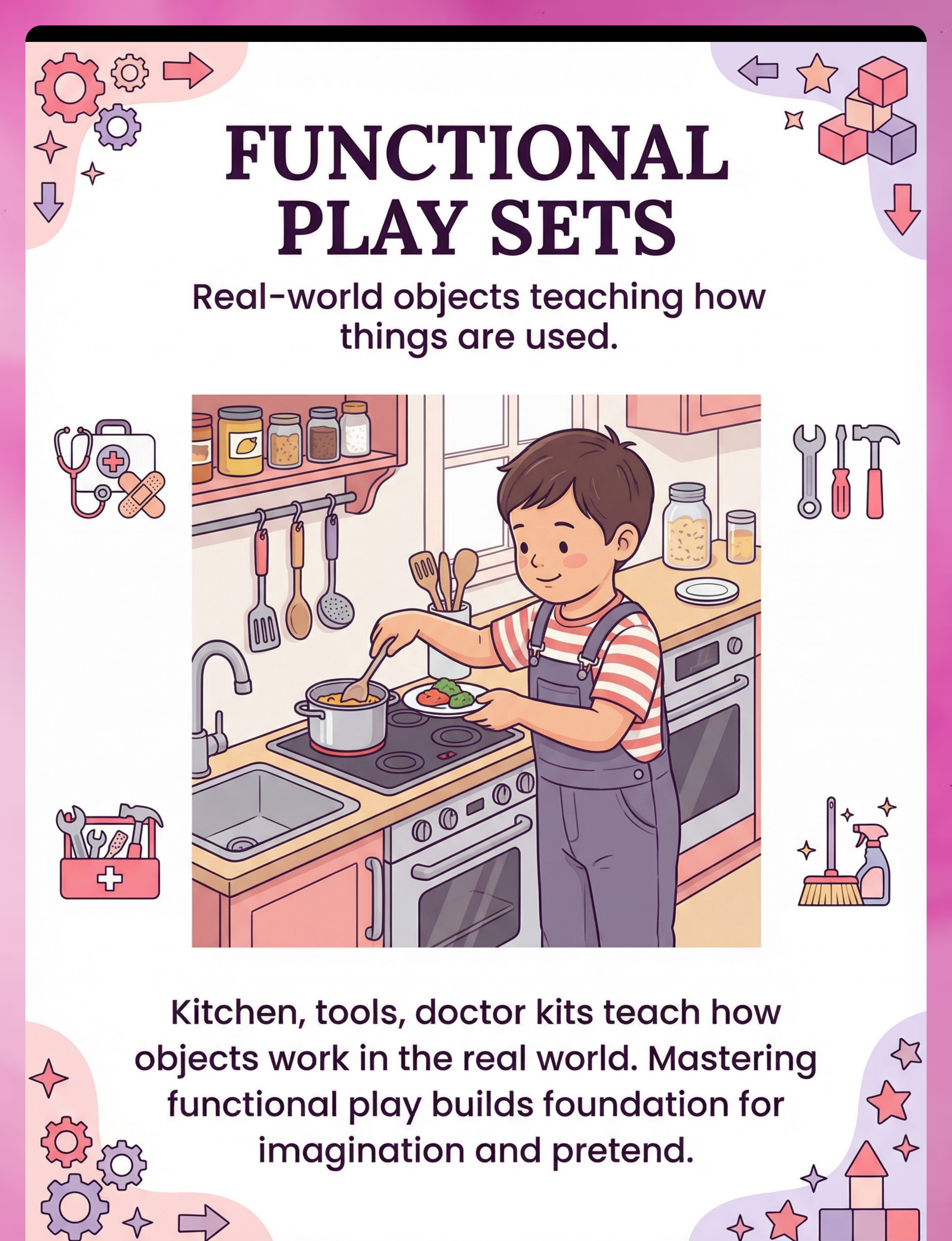
2 🟠 Functional Play Sets
Kitchen, doctor, tools — builds functional play, the gateway that must precede pretend. ₹500–2,500
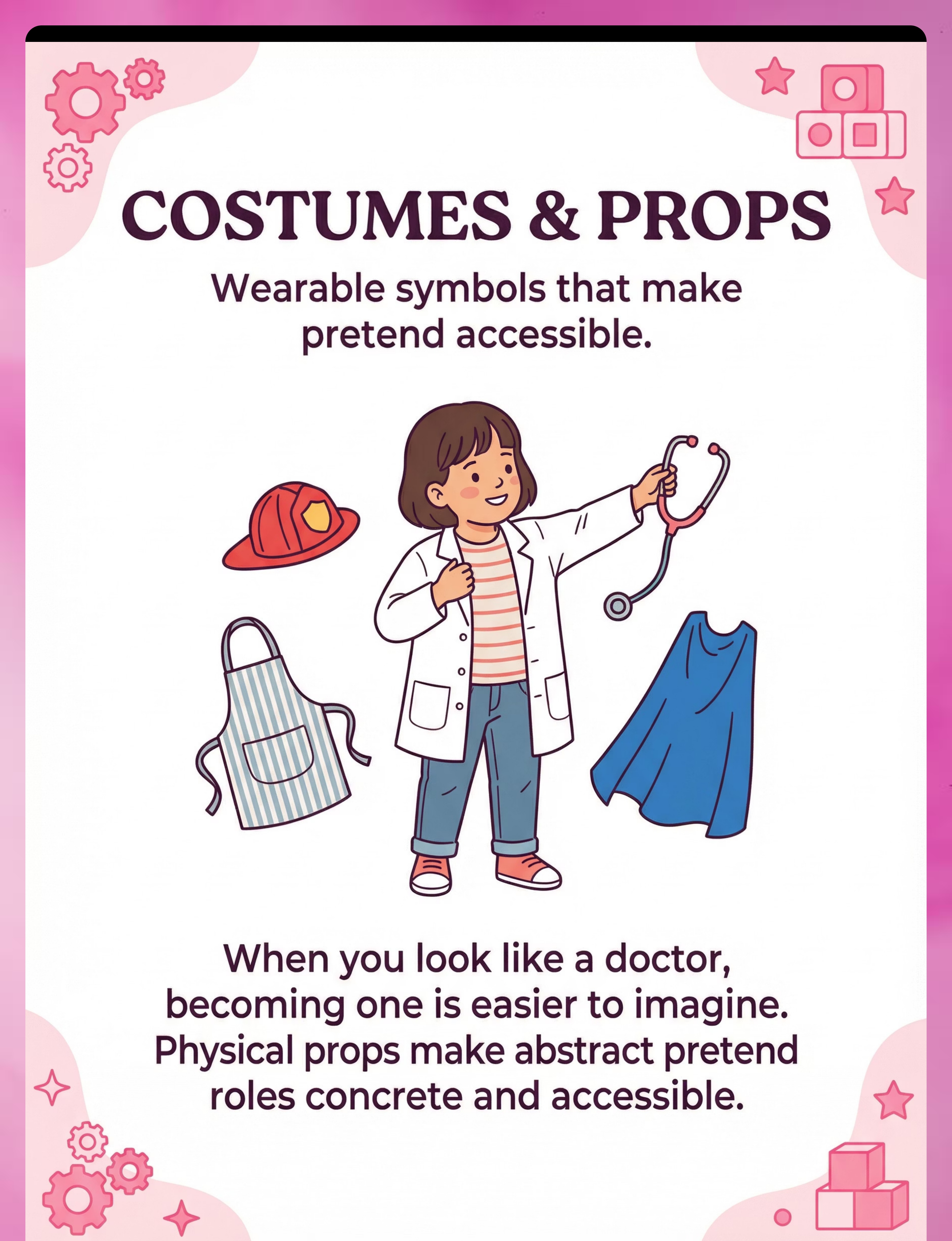
3 🟡 Costumes & Props
Physical props reduce cognitive load of imagining a role — essential for symbolic play emergence. ₹300–1,200
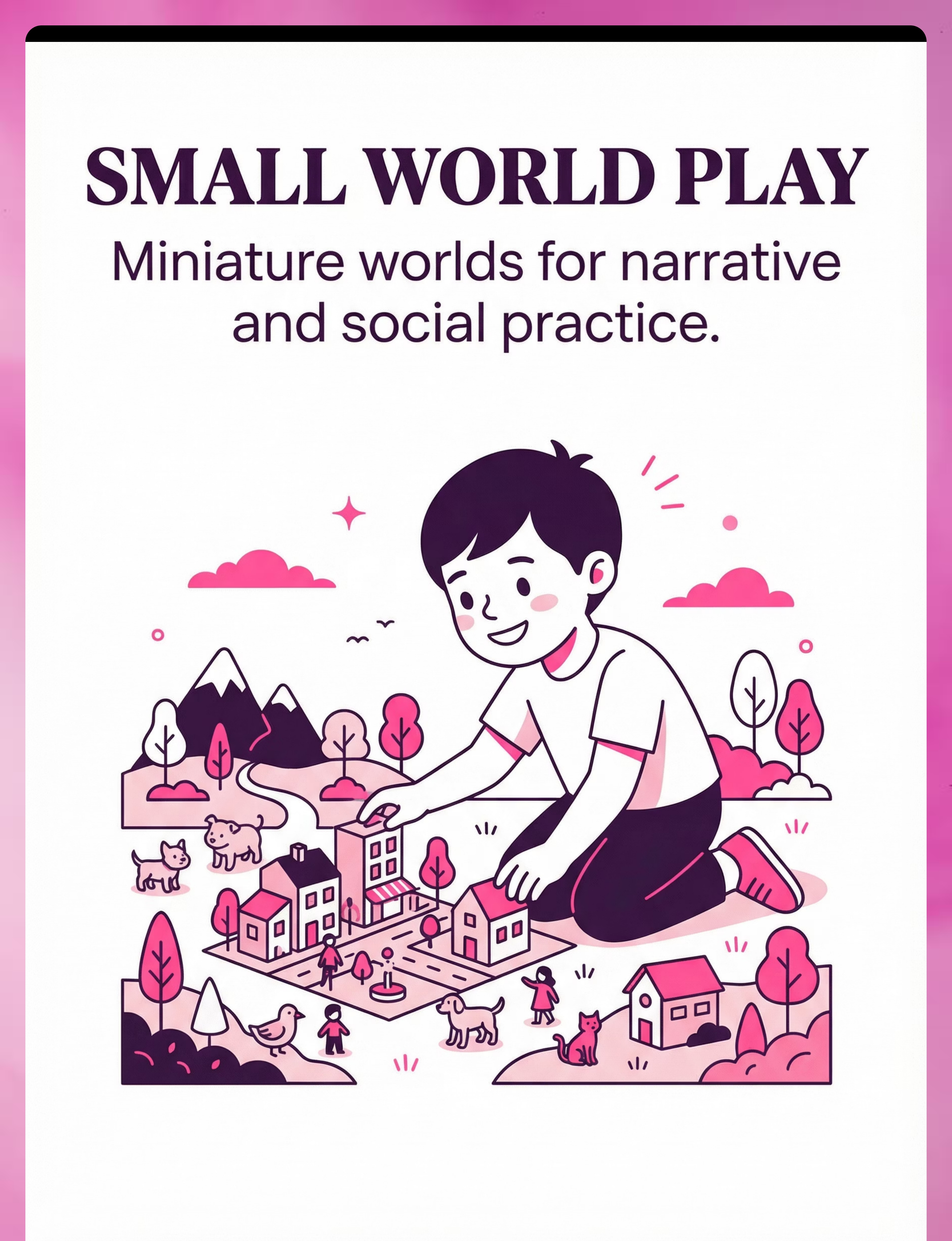
4 🟢 Figurines & Small World
Develops narrative thinking and social scenario practice in a safe, controlled format. ₹400–2,000
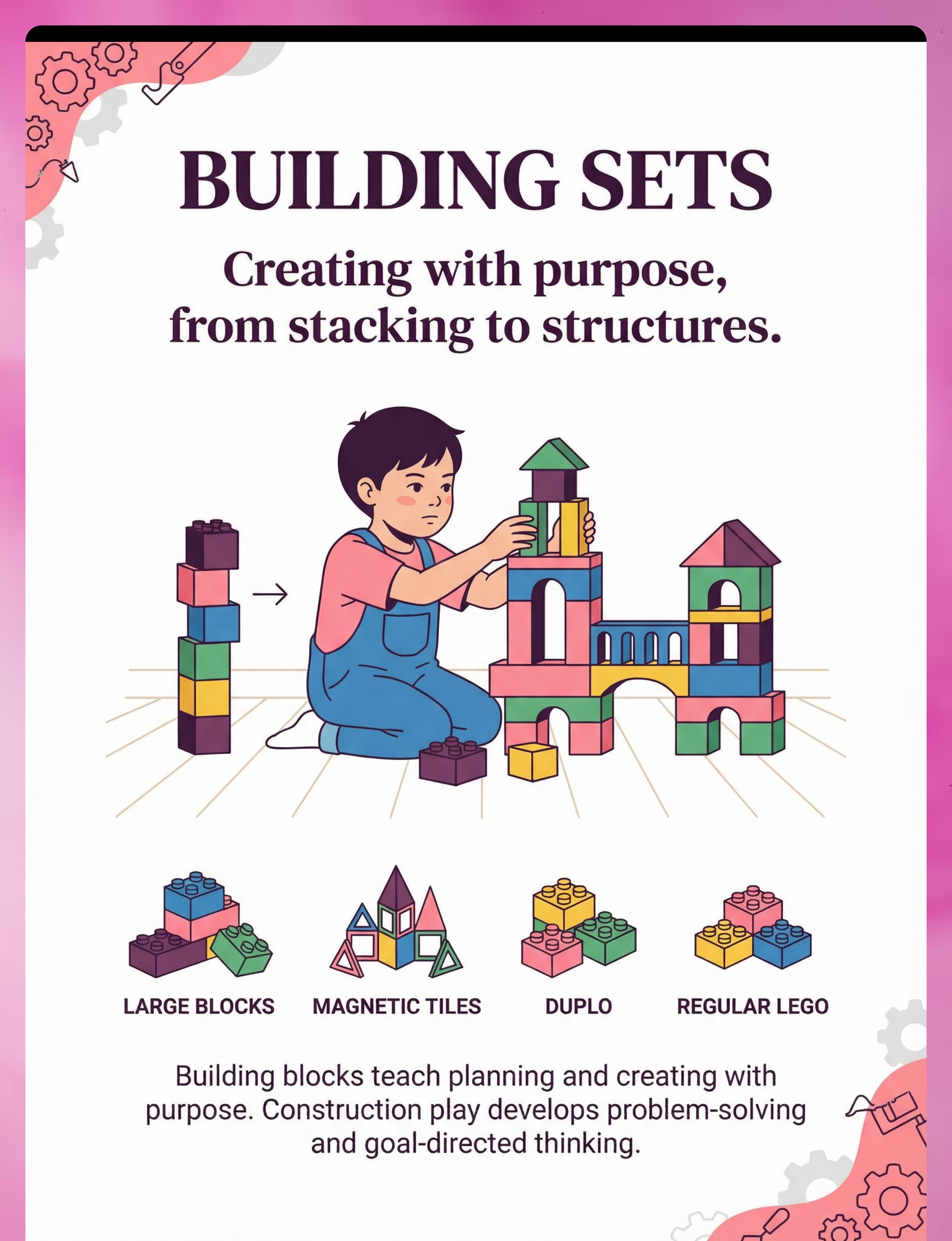
5 🔵 Building Blocks
Develops goal-directed constructive play; spatial reasoning; planning and problem-solving. ₹300–2,000
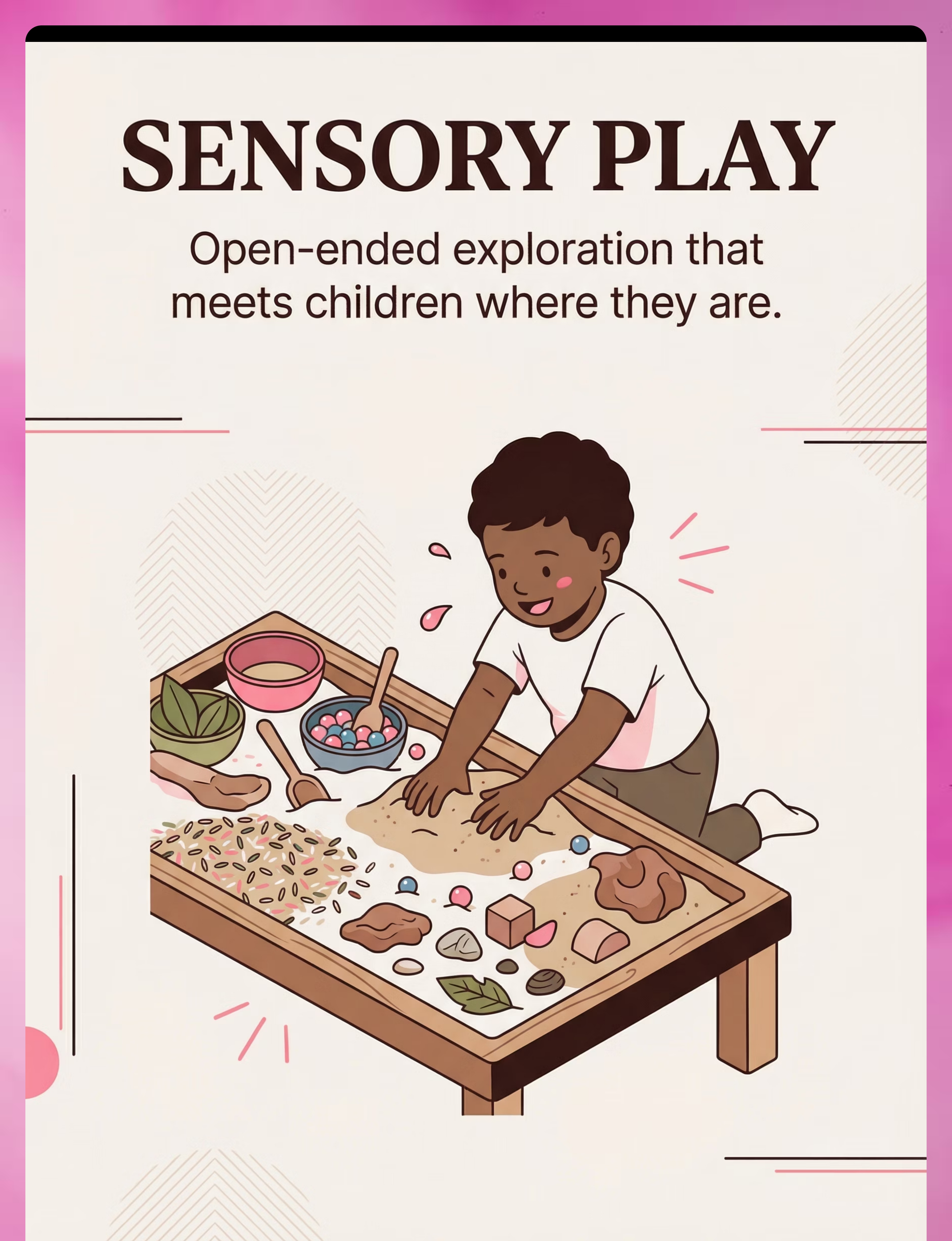
6 🟣 Sensory Play Materials
Most accessible entry point for play-delayed children; regulates nervous system. ₹200–800
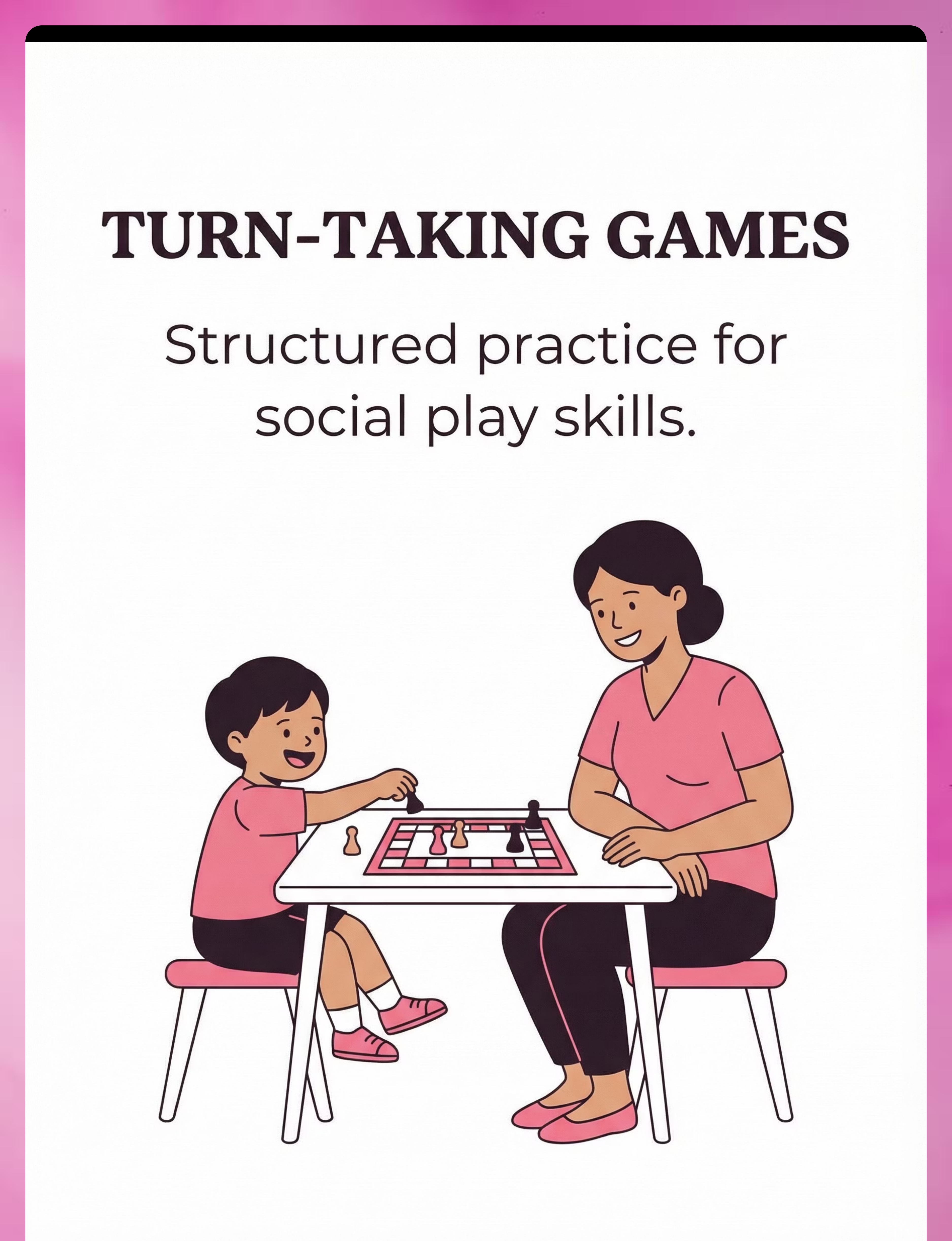
7 🔶 Turn-Taking Games
Structured social play rules make fluid social interaction predictable. ₹200–1,000
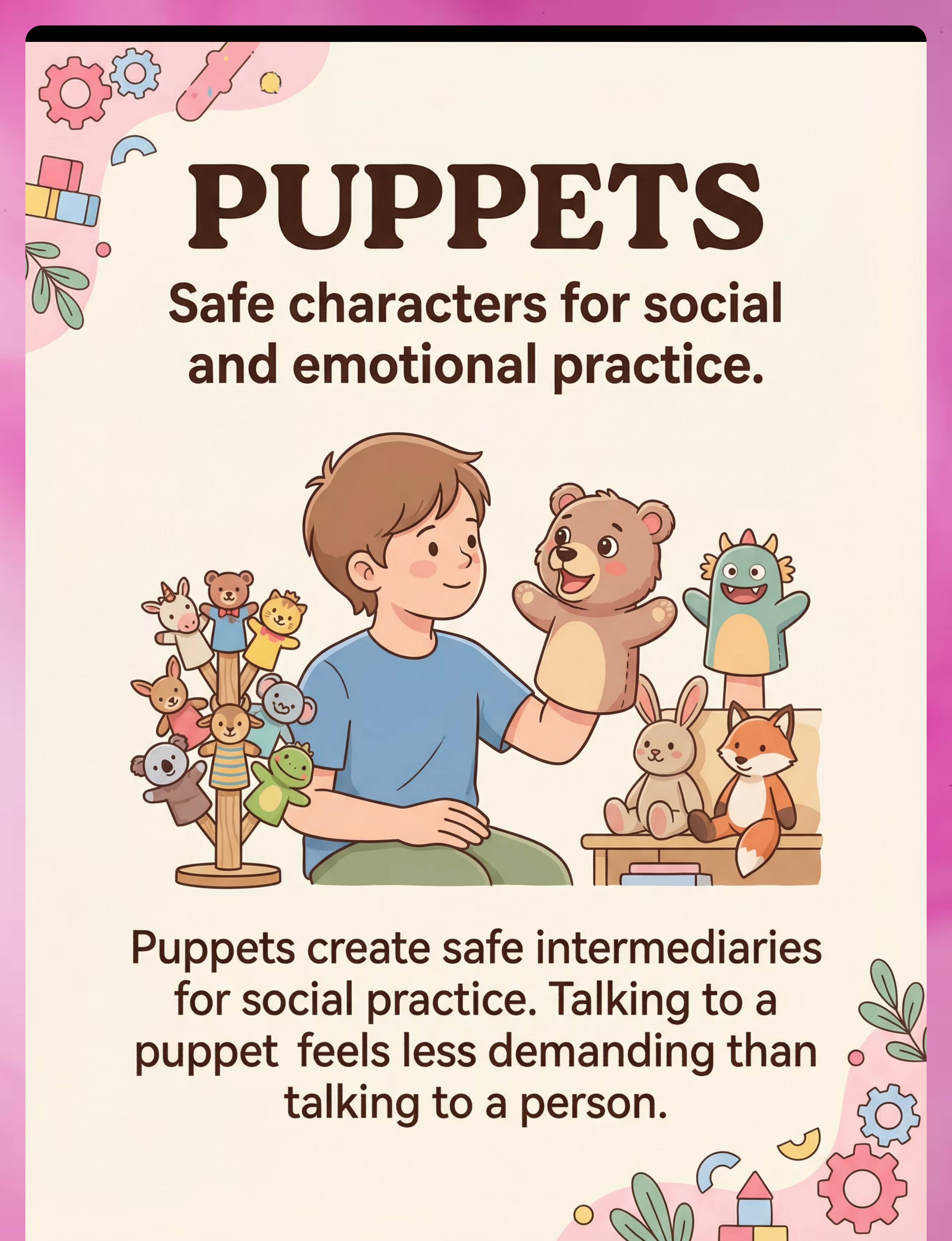
8 🩷 Puppets & Characters
Reduces social demand — child interacts through puppet, building conversational skills. ₹200–1,000
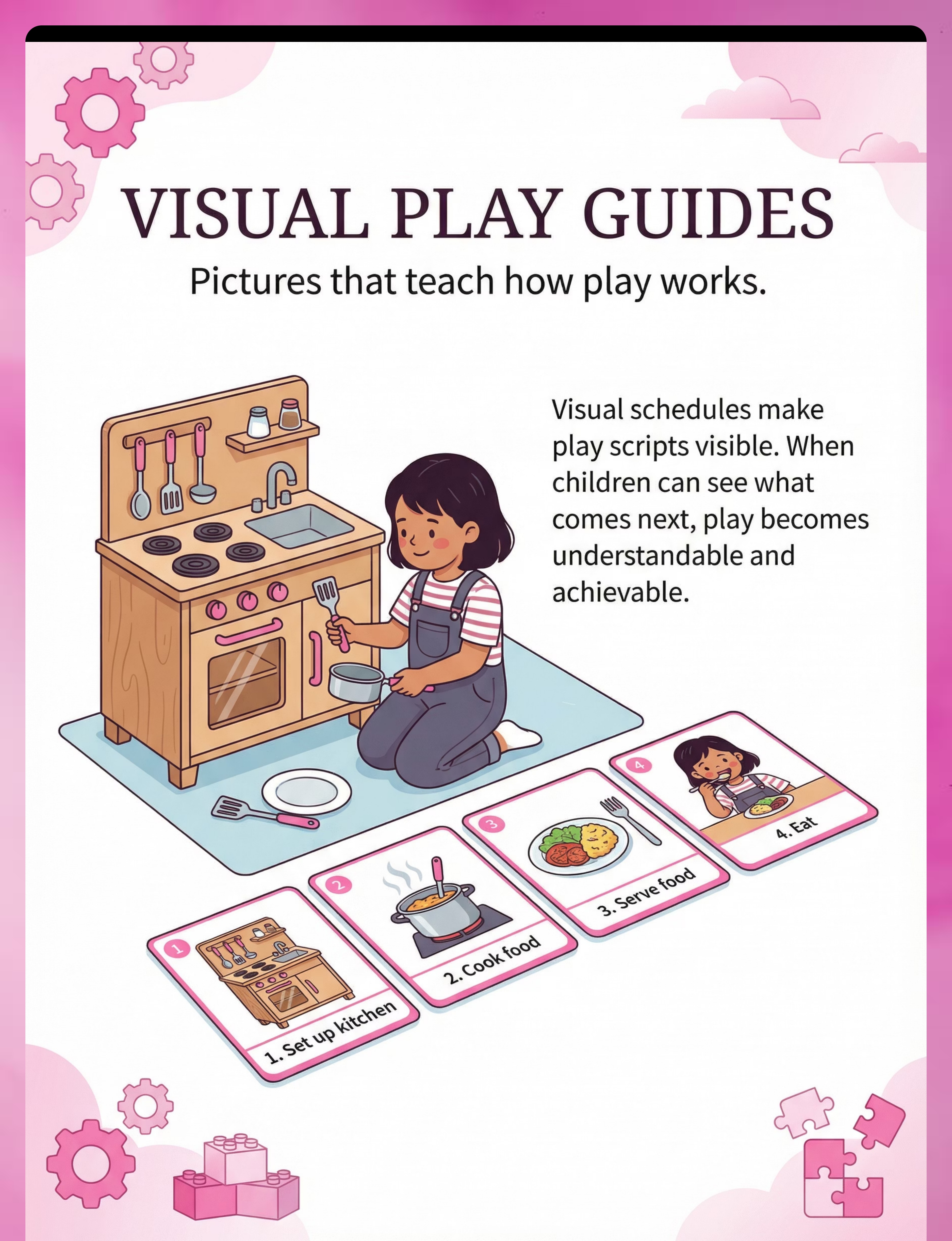
9 ⬜ Visual Play Schedules
Makes invisible play "scripts" visible; reduces cognitive load; supports predictability. ₹100–500
Starter Kit (Budget-Conscious): Cause-effect toy + Basic play kitchen + Building blocks + Animal figurine set. Estimated starter cost: ₹1,600–5,000
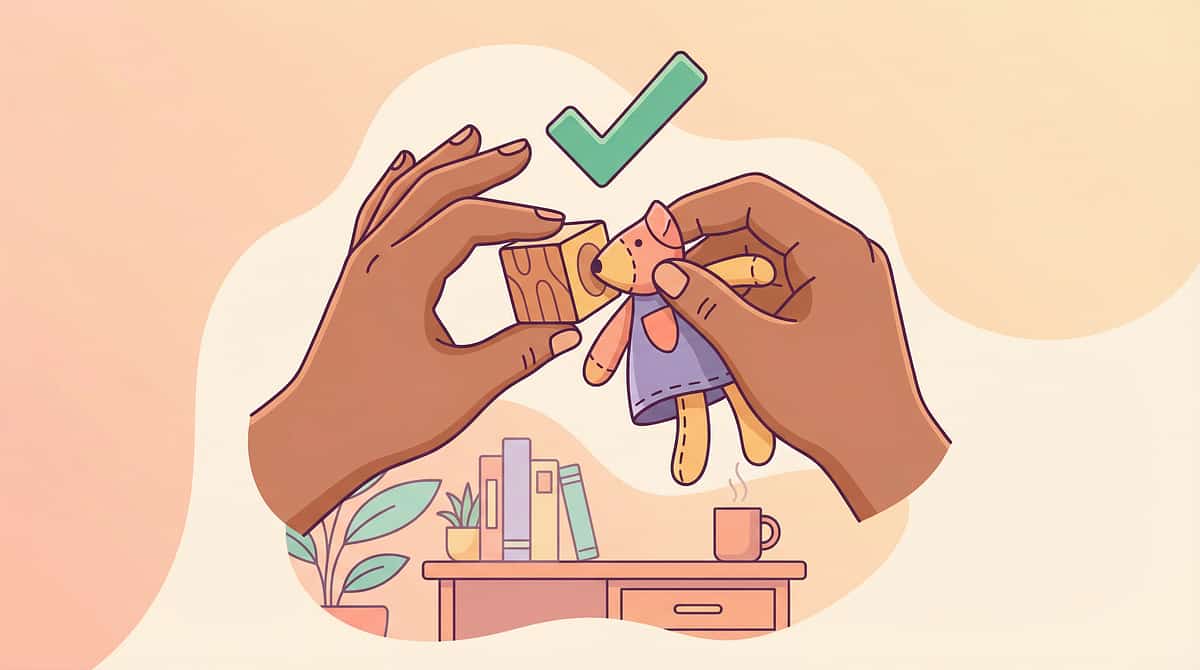
Every Child Deserves This. Regardless of Budget.
The WHO/UNICEF equity principle in your living room. The therapeutic principle is the mechanism — not the product. A cardboard box teaches the same spatial reasoning as a Magna-Tile set. A sock puppet creates the same social intermediary as a professional hand puppet. The materials are delivery vehicles. The vehicle matters less than the journey.
Material | Commercial Option ✅ | FREE / DIY Substitute | |
Cause-Effect Toy | VTech activity centre | Light switch (supervised), doorbell button, kitchen timer | |
Functional Play Set | Toy kitchen set | Real safe kitchen items: wooden spoon + pot lid + empty containers | |
Costumes | Career costume sets | Old oversized shirt = "coat"; colander = "helmet"; towel = "cape" | |
Figurines | Miniature animal sets | Small rocks painted as animals; clay figures; sorted pebbles | |
Building Blocks | Magnetic tiles or Duplo | Cardboard boxes, milk cartons, toilet roll tubes | |
Sensory Bin | Kinetic sand kit | Rice + bowl + spoon; flour + water = cloud dough | |
Turn-Taking Game | Board game set | Ball-roll back and forth; alternating cup stacking | |
Puppet | Hand puppet characters | Sock + buttons = sock puppet; paper bag puppet | |
Visual Schedule | Printed sequence cards | Photos on phone, hand-drawn pictogram cards |
When the clinical material is non-negotiable: If the child has specific sensory sensitivities, fine motor challenges requiring specific resistance levels, or has demonstrated dangerous behavior with improvised materials — the clinically-specified material is worth prioritizing.
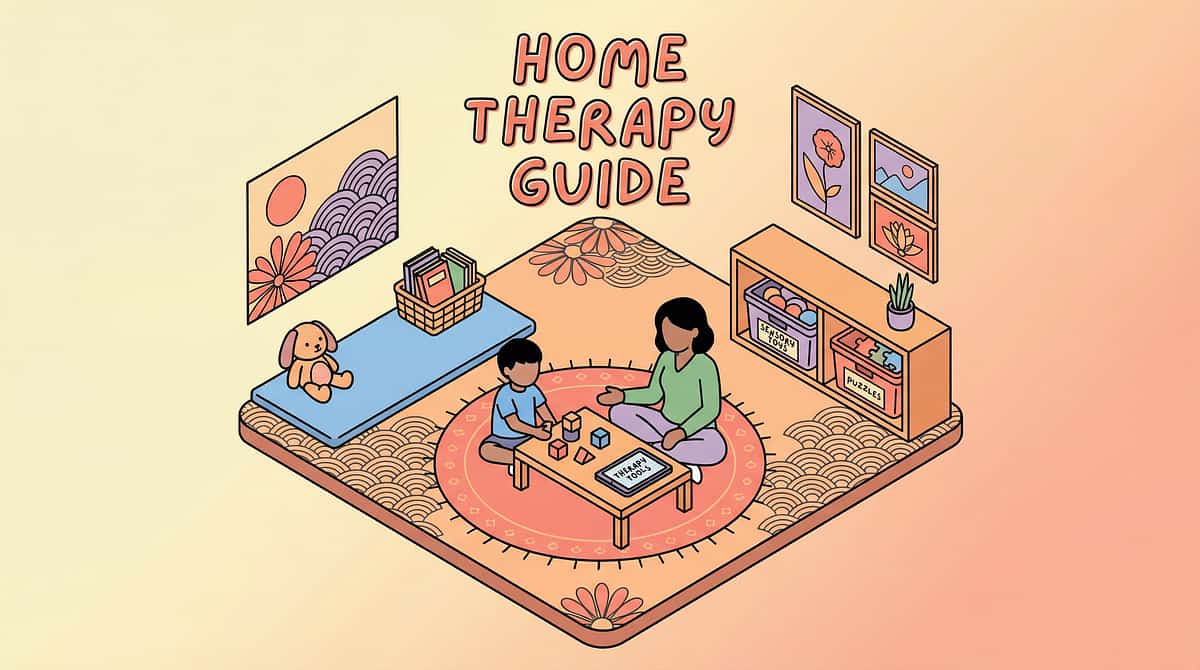
60 Seconds of Safety Check. 20 Minutes of Effective Therapy.
🔴 DO NOT PROCEED IF:
- Child is in active meltdown or has had a significant behavioral episode in the last 30 minutes
- Child is ill, feverish, or showing signs of pain/discomfort
- Child has open wounds, skin conditions, or allergies to materials
- Cause-effect toys have loose battery compartments
- Any material has small parts and child is still mouthing objects
🟡 MODIFY THE SESSION IF:
- Child is tired but not dysregulated — shorten to 5 minutes, use only the most preferred material
- Child has had a challenging morning — begin with sensory bin (lowest demand)
- New material being introduced — reduce duration by 50% for first three sessions
- Child has texture sensitivities — use visual play guides and building blocks first
🟢 PROCEED WHEN:
- Child is fed (within 1 hour), rested, and in a calm-alert state
- Environment is set up per setup instructions
- All materials checked for safety
- Parent/caregiver is regulated and has 20 uninterrupted minutes
🔴Red Line — Stop If: Child begins self-injurious behavior | Child is gagging on a material | Child shows signs of seizure activity | Child's distress escalates beyond Level 3 on your family's distress scale.
📞If unsure: Call Pinnacle FREE Helpline 9100 181 181 before proceeding.
📞If unsure: Call Pinnacle FREE Helpline 9100 181 181 before proceeding.
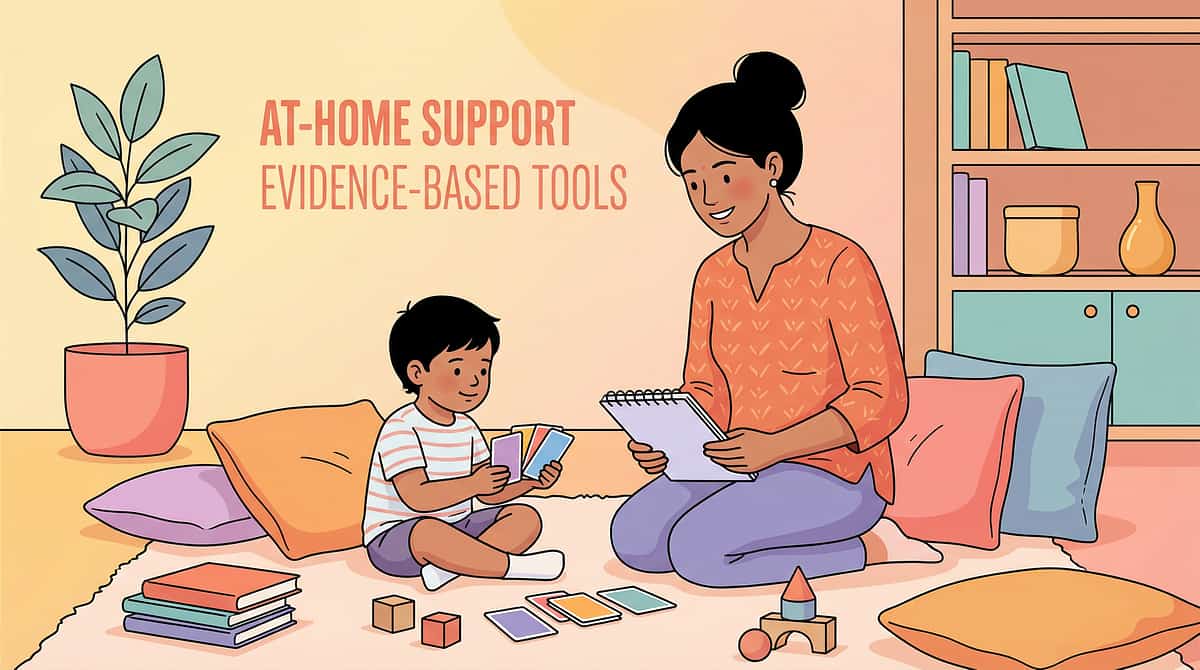
The Right Environment Makes Every Session 3× More Effective.
A consistent, intentionally set-up space signals to your child's brain: "This is where we play and grow." The physical environment is a therapeutic variable — not just a backdrop.
The Play Mat
Soft, washable, 120×90cm minimum. Same mat every session. It becomes the "therapy cue" — child learns: "When I'm on this mat, this is what we do here."
Materials Station
Set up only ONE material type per session. Place on a low shelf or tray slightly out of reach — creates natural motivation to request.
Parent Position
Sit at the child's level — on the floor, side-by-side or slightly in front. NOT behind the child, NOT at a height advantage. Eye level matters enormously.
Reinforcement Station
Sticker chart or reward jar visible but out of immediate reach. Child can see the reward pathway clearly.
Visual Schedule
Affix the session visual sequence at the child's eye level — below 90cm from floor if child is sitting. Lighting: warm 2700K bulb. Temperature: 22–26°C.
What to Remove:❌ Screens (TVs, tablets — off and out of sight) ❌ Other toys not being used this session ❌ Strong scent sources ❌ Loud background noise
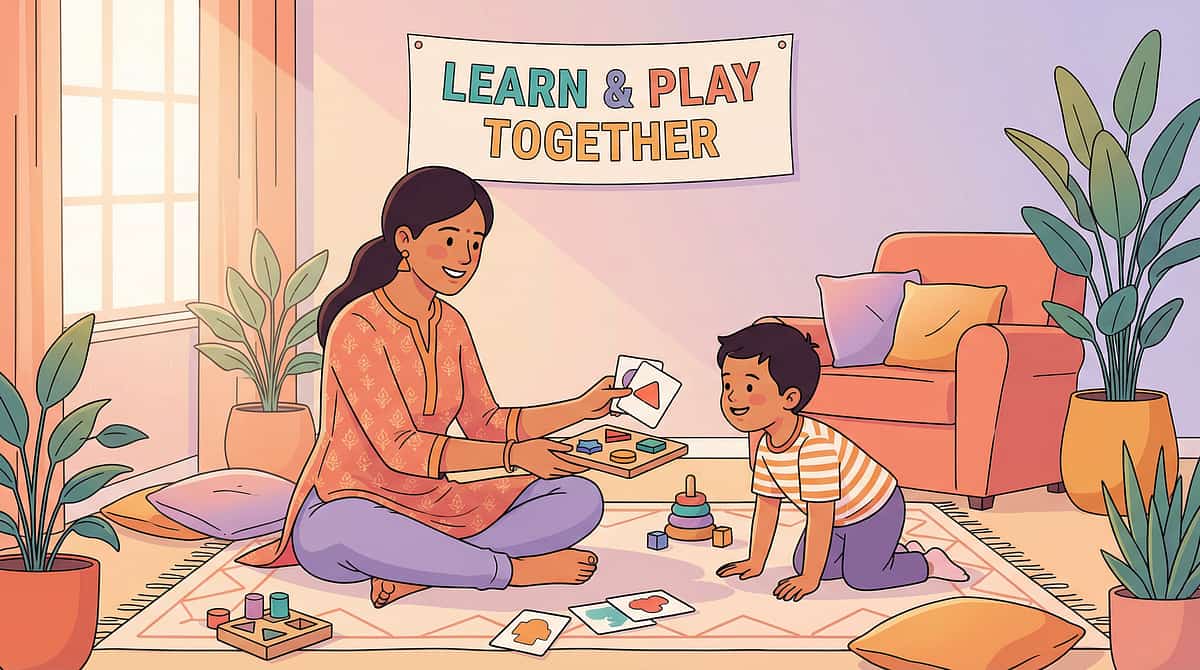
The 60-Second Pre-Flight Check. Start Right or Don't Start.
"The best session is the one that starts right. A 5-minute successful session is worth more than a 20-minute forced one."
Fed
Ate within last 60–90 minutes; not actively hungry.
Rested
Did not miss significant sleep; not overtired.
Regulated
Not in active distress; sensory system is calm-alert — not hyper-aroused, not shut-down.
Medication Timing
If child is on medication — session timed to peak therapeutic window.
No Recent Episode
Last 30 minutes: no meltdown, no significant behavioral event.
You Are Ready
You have 20 uninterrupted minutes; you are calm; you are not on a deadline.
🟢 All Green → Proceed
Move to Step 1: The Invitation.
🟡 2–3 Yellow → Modify
Shorten to 5–7 min. Use only preferred/familiar material. Remove all demands; follow child's lead entirely. Goal: positive association with the mat.
🔴 Red Flag Present → Postpone
Do a calming activity instead (walk, quiet sensory input). "We had a regulated break" — that's therapeutic too.
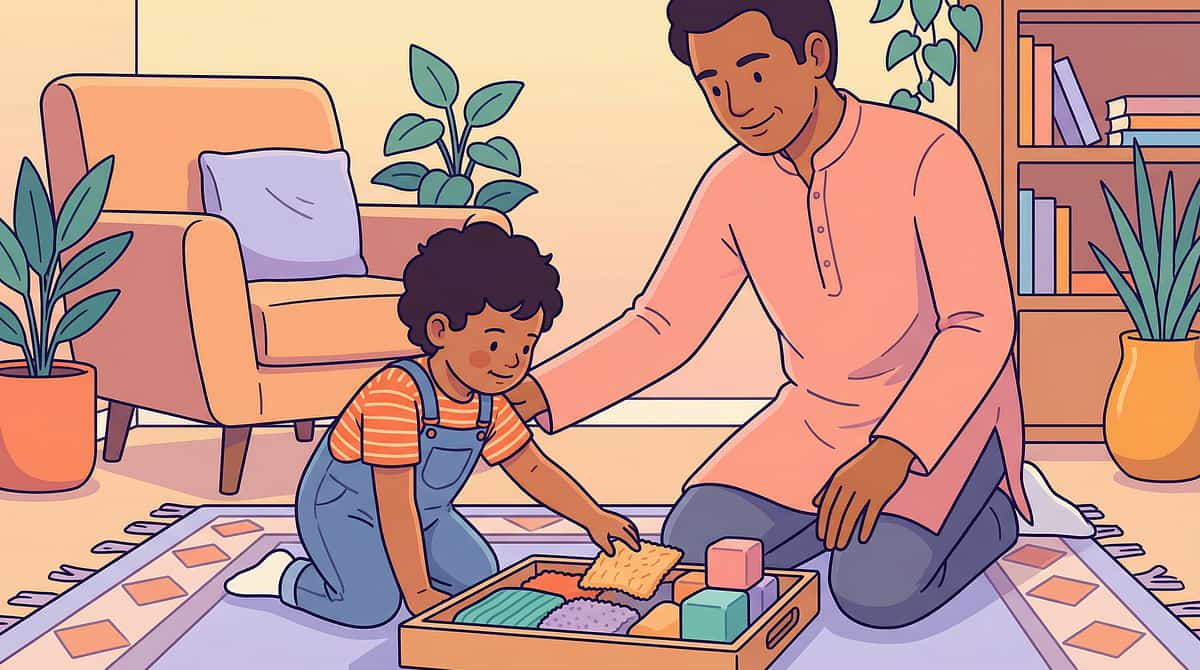
STEP 1 of 6
The Invitation (30–60 seconds)
Bring the child to the play mat using a preferred transition — a song, a hand signal, or their name plus a choice. Never a command. Always an invitation.
"[Child's name], want to come see what's on the mat today? I have something really cool to show you."
If child is non-verbal: Show the visual schedule card for today's session while tapping the mat gently.
Body Language Guide
- Get to the child's level (crouch or sit on floor) before inviting
- Make eye contact without demanding it — soft, available, not staring
- Tone: warm curiosity, not urgency
- Physical: open posture, hands visible and relaxed
Child Acceptance Cues ✅
- Moves toward the mat
- Looks at the material you're holding
- Vocalizes positively or points
- Takes your hand or sits down
Resistance Signals & Responses
⚠️Child moves away → Follow, sit near them, wait 10 seconds, try once more with the material visible.
⚠️Child ignores → Bring the material to where they are; begin engaging with it yourself (parallel play invitation).
⚠️Child protests → Do not push. Return to readiness check. Today may be a 🟡 Modify day.
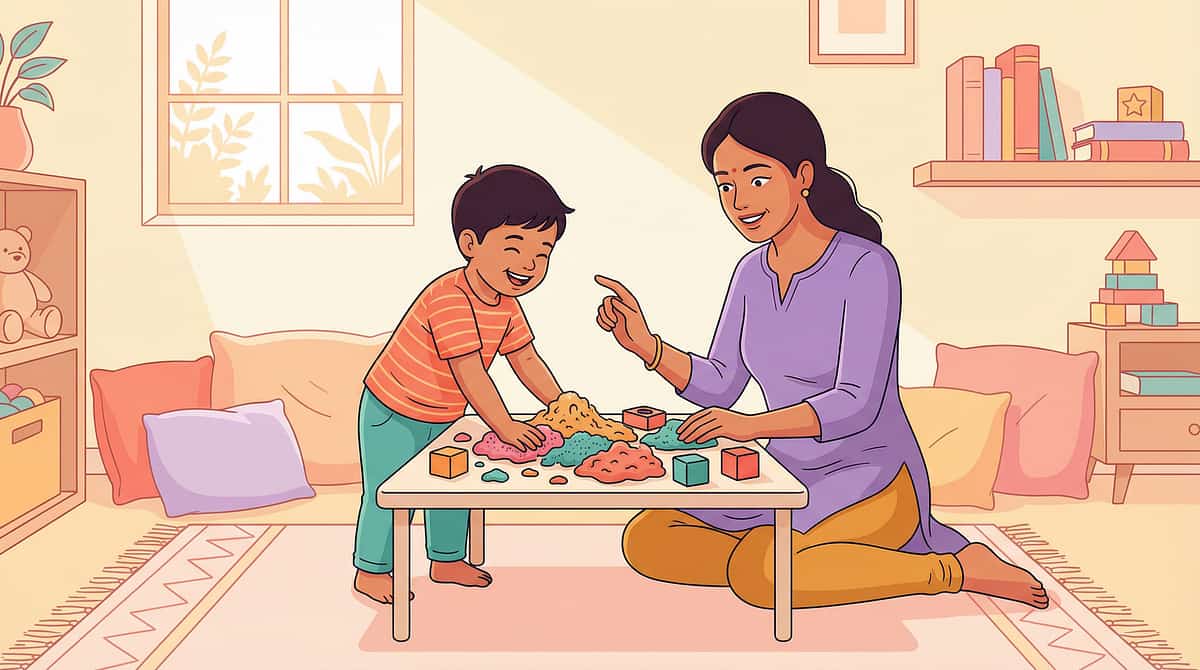
STEP 2 of 6
The Engagement (1–3 minutes)
Introduce today's chosen material. Begin using it yourself — narrate everything you're doing. Do NOT ask the child to do anything yet. You are demonstrating. You are making it irresistible.
🔴 Cause-Effect Toy
Push the button yourself with obvious delight. "Oh WOW! Did you see that?!" Let the child watch 2–3 cycles before offering it.
🟠 Functional Play Set
Start "cooking" — stir the pot, smell the food, exclaim "Mmm! Smells so good!" Let the kitchen come alive before offering utensils.
🟡 Costumes
Put on the costume yourself. "I'm the DOCTOR! Who needs to be checked?" — Playful, not demanding. Let them giggle at you first.
🟢 Figurines
Begin a small narrative with two animals. "Hello cow! Hello horse! Want to eat grass?" — Child watches a world being created.
🔵 Blocks
Start stacking your own tower, narrating. "One block... two blocks... I wonder how tall it can go!" Build the suspense before the topple.
🩷 Puppet
Have the puppet "notice" the child from behind your back. "Oh! Who is that? Is that [child's name]? Hi! I'm Teddy Bear! I was looking for someone to play with..."
Reinforcement Cue: The moment child shows any interest — looking, reaching, pointing, moving toward — THAT is the moment to deliver warm specific praise: "You're looking! I love it. Want to try?"
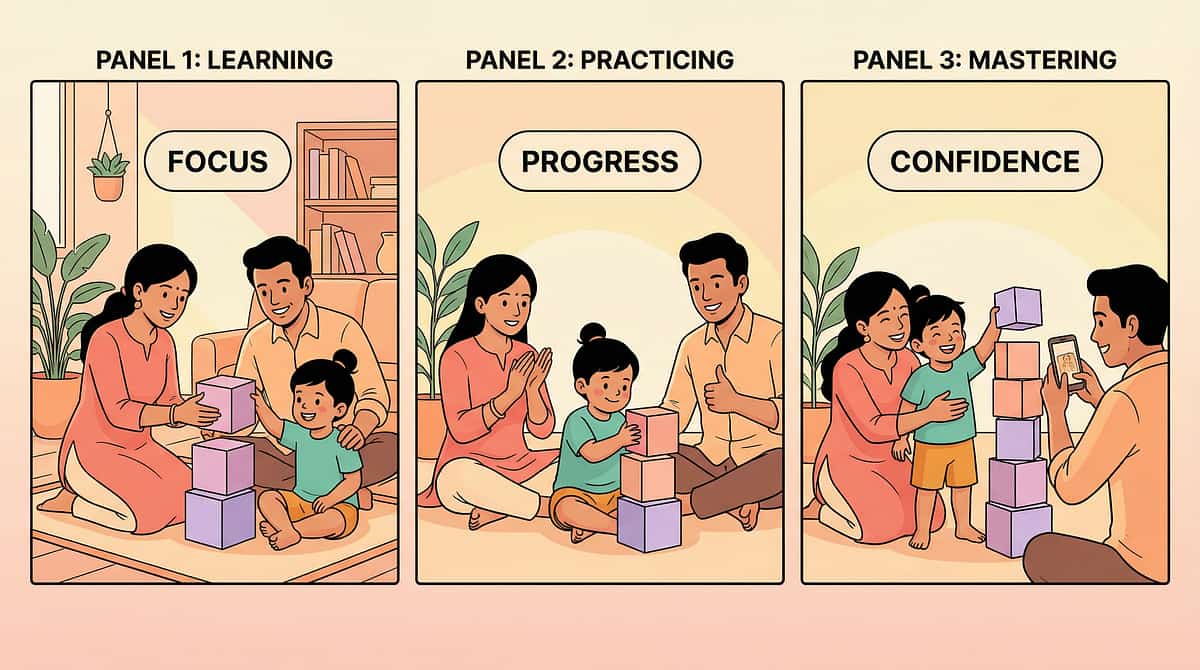
STEP 3 of 6
The Therapeutic Action (5–10 minutes — the active ingredient)
This is where the developmental work happens. Each material has a specific core therapeutic action designed to scaffold the target play stage. Stay in the Ideal or Acceptable response range — never push into Concerning.
🔴 Cause-Effect: Intentional Action Building
Guide child's hand to press button/lever. As soon as the effect happens — pause, make eye contact, CELEBRATE. "YOU did that! YOU made it happen!" Progress: Single button → multiple buttons → anticipating the effect → requesting more
🟠 Functional Play Set: Object Function Teaching
Model functional use: put food in pot → stir → pour on plate → "eat." Invite child to take over one step. Progress: Single action → 2-step → 4-step → child-initiated cooking sequence
🟡 Costumes: Symbolic Identity Adoption
Help child don costume. Stand in front of mirror. "Who are you? Are you... A DOCTOR?!" Begin a simple 2-line pretend scenario. Progress: Costume tolerance → role identity → 2-line script → child-initiated pretend
🟢 Figurines: Narrative Construction
Co-create a simple scene. One "problem" occurs — "Oh no, the duck fell in the water!" — allow child to respond/help. Progress: Child observes → moves one figure → voices one character → creates narrative independently
🔵 Blocks: Goal-Directed Construction
"Let's build a house for the duck." Build together, narrating. Celebrate: "WE BUILT A HOUSE! Duck is safe!" Progress: Random stacking → purposeful stacking → named structure → following instruction blueprint
🟣 Sensory Bin: Exploratory Foundation
Allow free exploration first (3 min). Then introduce a tool. Then a figurine. "A dinosaur in the sand! Where is he hiding?" Progress: Sensory exploration → tool use → figurines in context → narrative

STEP 3 continued
The Therapeutic Action — Games, Puppets & Visual Schedules
🔶 Turn-Taking Game: Social Play Mechanics
Play one complete round together. Use a visual turn token (physical object that moves between players). Say "MY TURN" and "YOUR TURN" clearly every single time. Progress: Physical turn-taking (ball roll) → simple luck game → choice-based game → cooperative game
🩷 Puppet: Social Demand Reduction
Puppet greets child, asks one simple question. Wait 5 seconds. If child responds to puppet — CELEBRATE. If not — puppet shows "disappointment," asks again, parent answers FOR puppet to model. Progress: Tolerates puppet → watches → responds → converses → uses puppet independently
⬜ Visual Schedule: Play Script Externalization
Point to Card 1: child does Step 1. Give sticker/star. Point to Card 2: child does Step 2. Complete the full sequence. Celebrate at the end: "You followed ALL the steps!" Progress: Adult-guided → child points to next card → child follows independently → child creates own sequence
✅ Ideal
Active delight and engagement
🟡 Acceptable
Tolerant participation
🔴 Concerning
Persistent avoidance, distress, or self-injury — STOP

STEP 4 of 6
Repeat and Vary (3–5 minutes)
"3 quality repetitions are worth more than 10 forced ones." The brain builds more durable neural pathways through varied repetition than exact repetition. Every time you change the food being "cooked," the brain has to generalize the functional play schema — which is the actual therapeutic goal.
Material | Target Reps/Session | Variation to Introduce | |
Cause-Effect Toy | 5–8 presses | Change which button; change speed; pause for anticipation | |
Functional Play Set | 2–3 full sequences | Change what's being cooked; add new utensil | |
Costumes | 2–3 role scenarios | Try a second costume; add one prop | |
Figurines | 2–3 narrative rounds | Change the "problem"; introduce a third character | |
Building Blocks | 2–3 constructions | Different structure each time; introduce instruction card | |
Sensory Bin | Open + 2 directed | Change the tool; bury something for child to find | |
Turn-Taking Game | 1 full game (3–5 rounds) | Change number of players; try cooperative variant | |
Puppet | 3–5 exchanges | Change puppet's emotion; introduce new question | |
Visual Schedule | 1 sequence + 2 reps | Change order of 2 steps; add one new step |
Satiation Indicators — When child has had enough:🔴 Pushing material away | 🔴 Increasing vocalization or distress | 🔴 Moving away from mat repeatedly | 🔴 Stereotypic behavior increasing | 🟡 Looking away frequently | 🟡 Slowing down significantly
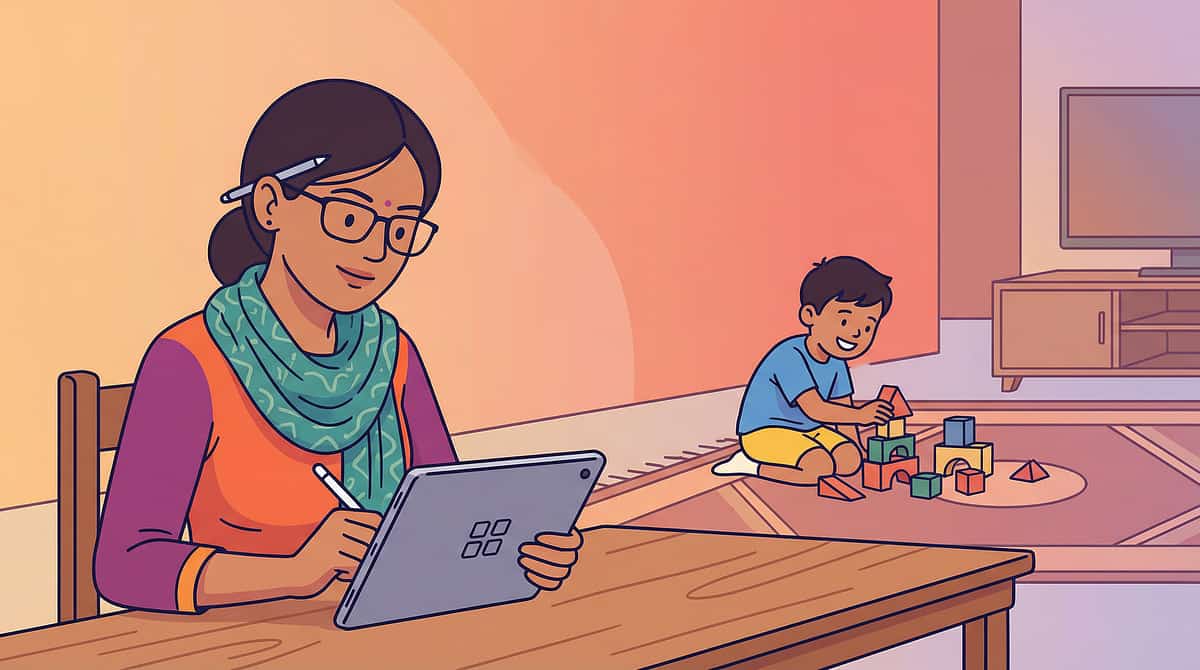
STEP 5 of 6
Reinforce and Celebrate (Throughout + Closing Ritual)
THE GOLDEN RULE: Reinforcement within 3 seconds of the target behavior. Not after. Not when you remember. Within 3 seconds.
Target Behavior | Script | |
Child picks up material | "YES! You grabbed the [material]! Amazing!" | |
Child uses object functionally | "You STIRRED the soup! That's exactly right!" | |
Child accepts costume | "Look at you! You're a doctor! Who are we going to help today?" | |
Child moves figurine | "The horse is moving! Where is he going?" ← follow child's lead | |
Child takes a turn | "YOUR TURN! You did it! You waited and then you went!" | |
Child responds to puppet | "[Puppet] loved that answer! Did you hear? He's so happy!" | |
Child follows visual step | "Step ONE — DONE! You're a star! Look — sticker time!" |
🌟 Verbal Praise
Warm, specific, enthusiastic — never generic "good job."
🌟 Physical Celebration
High five, tickle, spin — if child enjoys physical input.
🌟 Token Economy
Sticker on chart for each successful engagement. Rosette Reward Jar + 1800+ Reward Stickers from Canon.
🌟 Natural Reinforcement
The cause-effect toy's own light/sound IS the reinforcement. The puppet "being happy" IS the reinforcement.
"Celebrate the Attempt, Not Just the Success." If child picks up the stethoscope but doesn't put it to their ear — celebrate the pick-up. The full sequence comes through many small celebrations. Never wait for perfection before reinforcing.
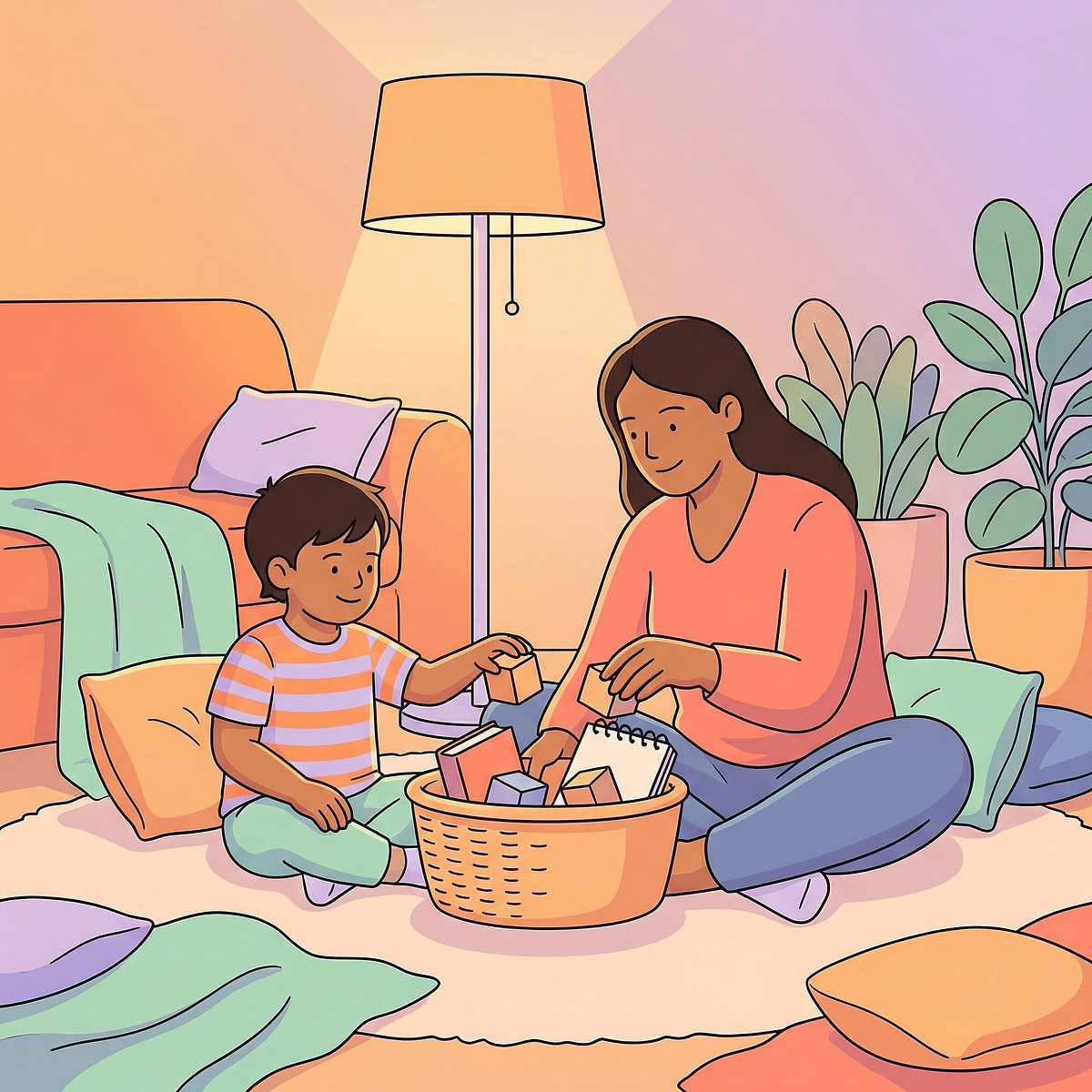
STEP 6 of 6
The Cool-Down (2–3 minutes)
No session ends abruptly. Abrupt endings → protest behaviors → negative associations with therapy → reduced adherence. The cool-down is as therapeutic as the main session.
Every session ends the same way — the ritual builds predictability and positive closure. Name what comes next to prevent post-session dysregulation anxiety.
If child resists ending: Hold the boundary warmly: "I know you want more. Tomorrow we'll do it again! Now it's time for [next activity]." Offer a transition object if needed — a small animal from the play session goes with child to next activity.
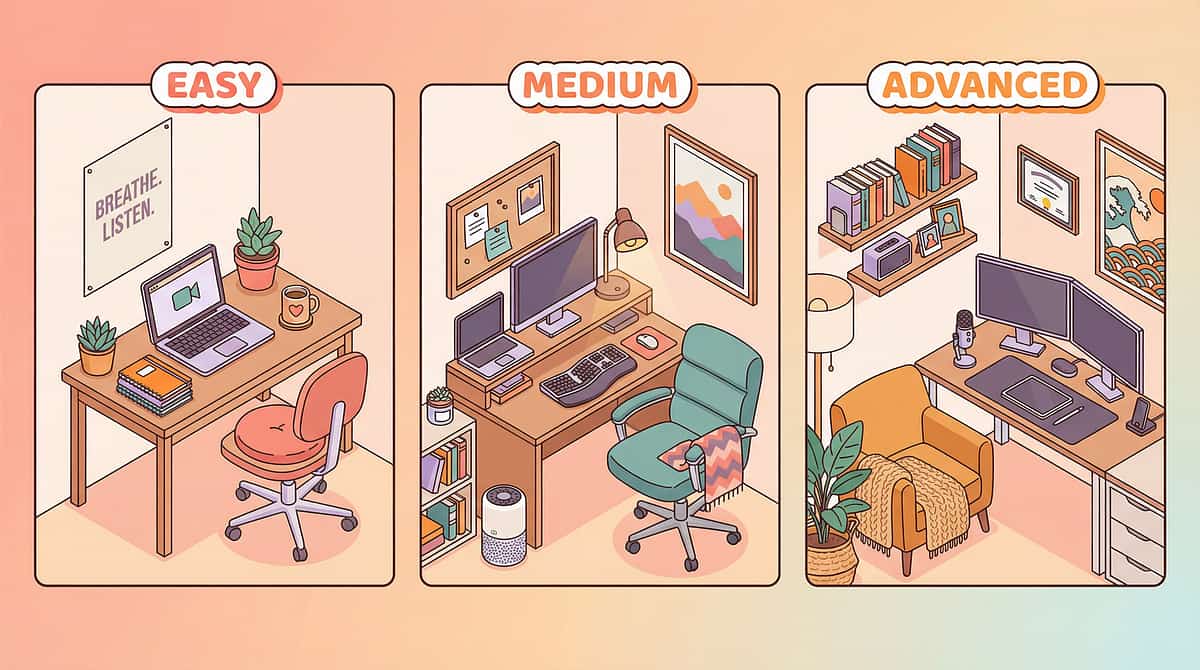
60 Seconds of Data Now Saves Hours of Guessing Later.
Within 60 seconds of session end, record these 3 data points. Your therapist can see at a glance: Is the technique working? At what pace? What materials produce the highest engagement? Without this data, therapy is guesswork. With it, it's precision.
📊 Data Point 1: Engagement Level
Circle: 1️⃣ Refused / 2️⃣ Tolerated / 3️⃣ Engaged / 4️⃣ Enthusiastic
📊 Data Point 2: Target Behavior Count
How many times did child demonstrate the core play behavior today? Tally: ___ reps | Duration: ___ minutes
📊 Data Point 3: Notable Observation
One sentence: What was the most important thing that happened today? Example: "First time she moved a figurine without hand-over-hand prompt."
Most Sessions Are Imperfect. All Data Is Valuable.
"Session abandonment is not failure — it's data." Here are the 7 most common challenges with G-627, and exactly what to do.
❌ "Child refused to come to the play mat"
Why: Mat may have negative association; child may be in hypoarousal; today is a low-readiness day.
Fix: Bring the material to where the child is. Don't insist on the mat. Engage with it yourself for 3 minutes. Try again tomorrow with 5-minute session only.
Fix: Bring the material to where the child is. Don't insist on the mat. Engage with it yourself for 3 minutes. Try again tomorrow with 5-minute session only.
❌ "Child grabbed the material and ran away"
Why: This is actually PROGRESS — the child is engaging! Their use is their starting point.
Fix: Follow. Join their version of play. Add ONE element from the therapeutic sequence without redirecting.
Fix: Follow. Join their version of play. Add ONE element from the therapeutic sequence without redirecting.
❌ "Child broke the sequence after step 2"
Why: Sequence length exceeded current cognitive holding capacity.
Fix: Shorten the sequence. Master 2-step thoroughly (2 weeks) before extending to 3-step.
Fix: Shorten the sequence. Master 2-step thoroughly (2 weeks) before extending to 3-step.
❌ "Turn-taking game ended in meltdown when child didn't win"
Why: Emotional regulation for disappointment not yet in place; game introduced before emotional readiness.
Fix: Pre-teach win/loss reactions before playing. Use cooperative (no-loser) games only for now.
Fix: Pre-teach win/loss reactions before playing. Use cooperative (no-loser) games only for now.
❌ "Child only wanted the sensory bin and ignored other materials"
Why: Sensory bin is the most regulation-supportive material — child is using it therapeutically. This is okay.
Fix: Stay with the sensory bin. Introduce ONE next step (a figurine, a spoon) from within the sensory context.
Fix: Stay with the sensory bin. Introduce ONE next step (a figurine, a spoon) from within the sensory context.
📞If child became severely distressed mid-session: Stop the session immediately. Do a calming sensory activity (deep pressure, weighted blanket, quiet corner). Contact Pinnacle helpline 9100 181 181 if distress is severe or recurrent.

No Two Children Are the Same. Neither Are Two Sessions.
G-627 adapts to every child's sensory profile, verbal ability, and age. Use these modifications to find the "just-right challenge" for your child today.
🌊 Sensory Seeker
- Use kinetic sand and building sets as primary materials
- Increase repetitions per session (10+ reps)
- Allow physical cause-effect play (pull, push, dump, squeeze)
- Progress faster through stages — sensory seekers often acquire quickly
🌿 Sensory Avoider
- Begin with visual play guides and figurines (visual only, no tactile demand)
- Introduce sensory materials with gloves if needed → bare hands over weeks
- Shorter sessions (7 minutes) with higher frequency (twice daily)
- Slower progression — allow 3–4 weeks per stage
🔆 High Verbal / Cognitive Capacity
- Move quickly to pretend play and narrative construction
- Introduce more complex small world scenarios
- Introduce games with strategy (Connect 4) sooner
🌙 Low Verbal / Pre-Verbal
- Prioritize cause-effect toys and sensory bins
- Use gesture + vocalization as the target behavior (not words)
- Visual play guides with photographs (not illustrations)
- Partner with SLP for language targets within play
Age | Primary Focus | Duration | Key Material | |
2–3 years | Functional play, sensory bins | 7–10 min | Kitchen set, sensory bin | |
3–4 years | Pretend play emergence | 10–15 min | Costumes, figurines | |
4–6 years | Constructive + social play | 15–20 min | Blocks, turn-taking games | |
6–8 years | Social/cooperative play mastery | 20 min | Board games, small world narratives |

In Weeks 1–2, You Are Planting Seeds. Not Harvesting.
15%
Progress So Far
Early tolerance and approach behaviors are real neurological progress — even when invisible.
8-12
Weeks to Outcomes
Play-based intervention outcomes emerge across 8–12 week timelines. Early phase focuses on tolerance, not mastery.
3
Seconds of Growth
If child looks at material for 3 seconds longer than Day 1 — that is real, measurable, neurological progress.
✅ Real Progress in Weeks 1–2
Child comes to the mat without significant protest | Looks at material for 5+ seconds | Reaches toward material even once | Allows hand-over-hand guidance | Completes ONE step | Session ends without meltdown
🟡 Not Expected Yet (And That's Normal)
Child is not yet initiating play independently | Does not yet demonstrate the full technique | No generalization to other settings yet | Child is not yet excited by sessions
"The first two weeks are the hardest. Your child is building a new neural pathway while you're building a new skill. Document everything."

The Brain Is Rewiring. Look for These Signs.
Weeks 3–4
Consolidation Phase
40%
Progress Milestone
Consolidation indicators emerge. Neural pathways are strengthening through consistent daily practice.
🧠 Anticipation
Child moves toward the play mat before you invite them — the routine is becoming expected and desired.
🧠 Initiation
Child picks up a material and begins a known play action without being prompted — the play schema is internalized.
🧠 Emotional Shift
Child shows positive affect during sessions — delight, smiling, laughter where there was neutral or resistant affect before.
🧠 Generalization Seeds
Child applying the play behavior outside the structured session — stirs with a spoon during mealtime; hands you a toy car and waits.
"By week 3–4, most parents report feeling more confident — less like a struggling beginner and more like a skilled play partner. That confidence is detected by your child. Your regulated, confident presence is therapeutic in itself."
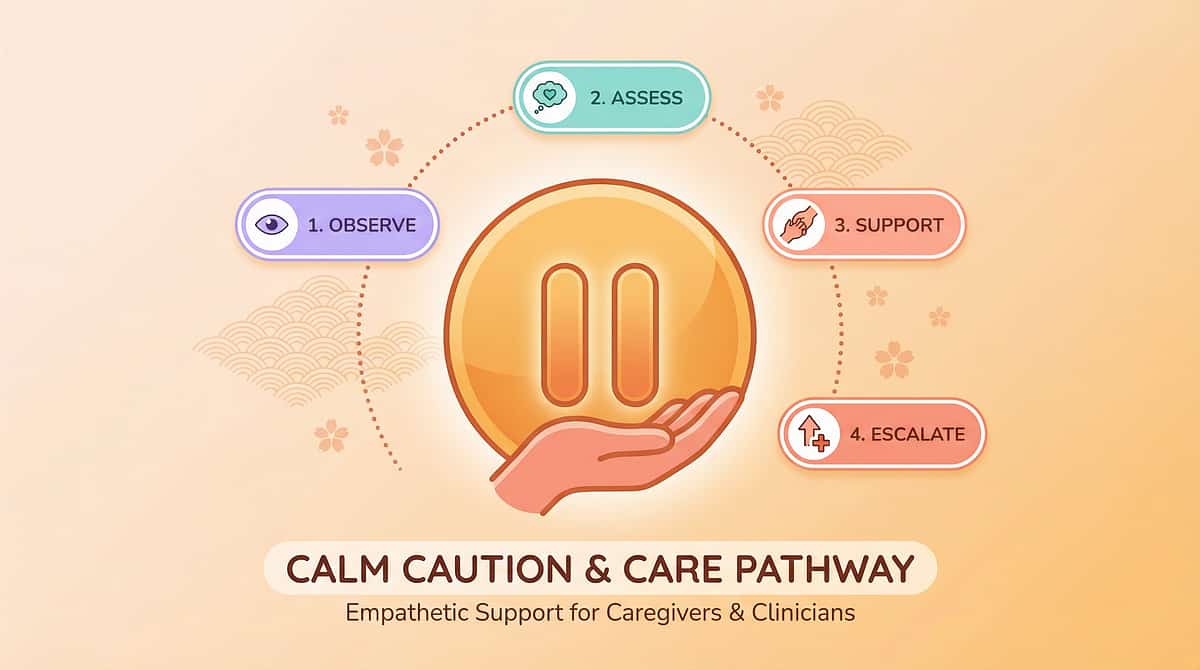
Mastery Is Not Perfection. It's Generalization.
Weeks 5–8
Mastery Phase
75%
Mastery Milestone
Skills consolidating and generalizing across settings, people, and material variations.
🏅 A child has achieved mastery of a play stage material when they demonstrate the target play behavior:
Independently
Without adult prompt — 3 consecutive sessions
2 Different Settings
Home play mat AND another room; home AND grandparent's house
2 Different People
Primary caregiver AND another family member
Material Variation
Different kitchen set, different figurine type — not just one exact scenario
Material | Mastery = | |
Cause-Effect Toy | Independently activates toy, shows delight, repeats — no prompting | |
Functional Play Set | Initiates cooking/doctor/tools sequence unprompted, completes 4+ steps | |
Costumes | Puts on costume, adopts role, maintains for 3+ minutes with minimal support | |
Building Blocks | Announces "I'm going to build a ___" and does it with recognizable intention | |
Turn-Taking Game | Plays full game including waiting, taking turns, and appropriate win/loss response |
Mastery at G-627 → Explore G-628 (Social Play Skills) OR G-629 (Imaginative Play Expansion)
You Did This. Your Child Grew Because of Your Commitment.
"You got on the floor. Repeatedly.
You ran the session when you were tired.
You stayed calm when your child didn't cooperate.
You modified when the plan didn't work.
You tracked the data. You adapted. You persisted.
And now your child is playing.
This is not a small thing. This is everything."
Your child moved from lining up toys in rigid rows to engaging with materials functionally, pretend-playing through the world, building with intention, or taking turns in a social game. This progression — weeks in the making — represents real neural rewiring that will support language, social skills, and emotional regulation for the rest of their development.
🎉 Capture the Moment
Take a video of child's best play moment — share with grandparents as proof of progress.
🎉 Play Portfolio
Create a collection of photographs showing child in each play stage — a visible record of the journey.
🎉 Family Celebration
Family celebration dinner where child is named as the achiever. Their hard work deserves recognition.
🎉 Achievement Toy
Give child a small symbolic "achievement toy" — a new figurine to add to their small world collection.
Trust Your Instincts. These Signs Mean: Pause and Ask.
🔴 Play Regression
Child was showing functional play and has returned to only repetitive/stereotypic manipulation — across multiple sessions, not just a bad day.
🔴 Emotional Escalation Trend
Sessions are getting harder, not easier — distress is increasing week-over-week despite technique modifications.
🔴 Complete Absence of Pretend Play by Age 4
If child shows no evidence of pretend play despite consistent 8-week intervention — professional reassessment warranted.
🔴 Self-Injurious Behavior During Sessions
Any self-hitting, head-banging, or self-harm during play sessions — immediate clinical consultation required.
🔴 Loss of Previously Acquired Play Skills
Child was doing functional play and has lost that skill — this warrants urgent developmental evaluation.
📞Pinnacle FREE Helpline: 9100 181 181 | For Levels 2–4 escalation or any clinical uncertainty.
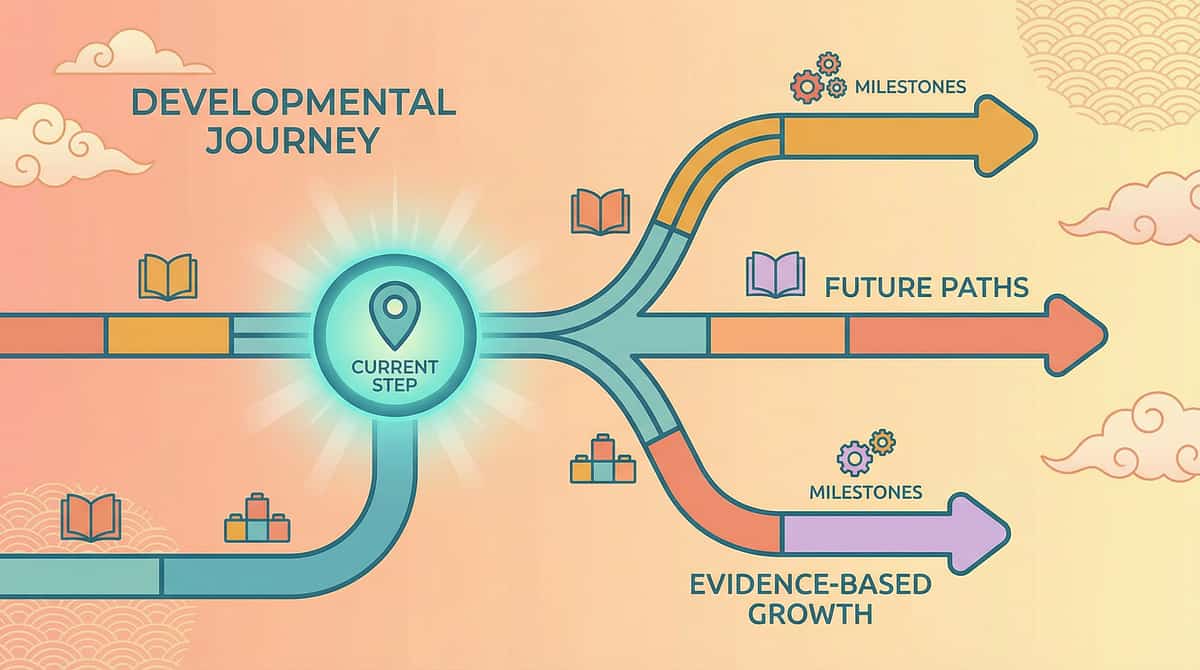
You're Not Done. You're Navigating.
G-627 is one node in a carefully mapped progression. Understanding where you are and what comes next transforms the journey from overwhelming to purposeful.
← Prerequisites
G-625: Exploratory Play — Child engages with objects sensorially
G-626: Functional Play — Child uses common objects as intended in 2-step sequences
→ Next-Level Options
Option A → G-628: Child has developed independent play and is ready to expand into peer play contexts.
Option B → G-629: Child has mastered basic pretend play and is ready for more elaborate, multi-scenario imaginative play.
Long-term destination: Flexible, varied, age-appropriate play with peers across home, school, and community contexts.
You Already Have the Materials. Here's What Else They Build.
If you purchased materials for G-627, you already have what you need for G-625, G-626, G-628, and G-629. Your investment in these 9 materials covers the full play development trajectory.
Technique | Code | Canon Material | Notes | |
Exploratory Play Skills | G-625 🟢 | Sensory bins, cause-effect | Foundation level — prerequisite | |
Functional Play Development | G-626 🟡 | Functional play sets | Gateway technique before G-627 | |
Age-Appropriate Play | G-627 🟠 ★ | All 9 materials | YOU ARE HERE | |
Social Play Skills | G-628 🟠 | Turn-taking games, puppets | Next if peer play is the goal | |
Imaginative Play Expansion | G-629 🔴 | Costumes, figurines, small world | Advanced level — elaborate pretend | |
Turn-Taking & Waiting | B-180 🟡 | Turn-taking games | Parallel social communication technique |
One Technique. One Domain. One Piece of the Whole Child.
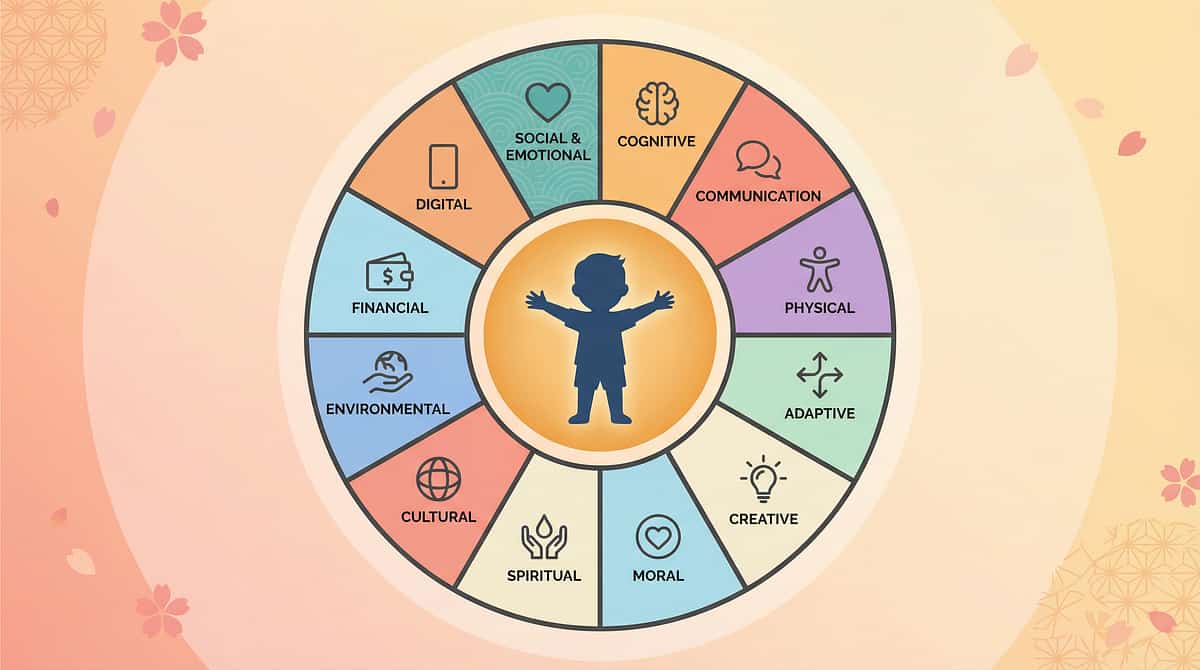
G-627 lives in Domain G: Play Development — but it connects powerfully to every other developmental domain. A child with play skill delays typically also has goals in Domains B, C, and F. G-627 is most effective when running in parallel with social communication, emotional regulation, and sensory processing support.
→ Domain B: Social Communication
Through social play mechanics and puppet-based conversational practice in G-627.
→ Domain C: Emotional Regulation
Through pretend play, emotional exploration, and sensory bin regulation activities.
→ Domain F: Attention & Cognition
Through constructive play, planning in building activities, and play sequence following.
→ Domain A: Sensory Processing
Through sensory play materials, tactile exploration, and material grading by sensory profile.

From Lining Up Toys to Playing Doctor With Her Sister.
Family Vignette 1 | South India | 5-year-old, ASD
Before (Week 0)
"She would sit in the middle of her room surrounded by toys and just line them up in rows. When her cousins came to visit, she'd watch from behind the sofa. Her school reported she never joined free play time."
After (8 Weeks)
"Week 3, she started stirring the play kitchen pot. On her own. Just walked up and started stirring. By Week 6 she was feeding her stuffed animals at the kitchen table. By Week 8 she was having conversations with her doll about what to cook."
"I never thought I'd see her choose to play. She CHOSE. On her own. That was the moment everything changed for me."
Therapist's Note (OT):"We began with the sensory bin to establish regulation, then introduced the functional play set with explicit modeling of stirring and serving. The kitchen set was the breakthrough material — it connected to observed real-world kitchen sequences, giving her a familiar functional script to start from."
Family Vignette 2 | North India | 6-year-old, SPD + ADHD
Before
"He'd grab toys and throw them. He couldn't play with anything for more than 30 seconds. Block towers were built and smashed immediately — not to build something, just to smash. No pretend play at all."
After (8 Weeks)
"The turn-taking game was the thing that unlocked him. He loved the dice — cause-and-effect. By Week 5, he was waiting for his sister's turn AND coaching her. He moved from throwing blocks to building something he called a 'parking garage' with 11 blocks."
"He went from destroying everything to building a garage and being PROUD of it. That pride on his face — I'll never forget that. We're framing the photo."
Isolation Is the Enemy of Progress. Connection Is the Accelerant.
📱 WhatsApp Parent Group
Families navigating the exact same journey. Daily check-ins, session wins, and troubleshooting together. Join the Pinnacle Play Development Group →
💬 Online Community Forum
Parents from 70+ countries discussing G-627 and related techniques. Search: "play skills," "cause-effect toys," "pretend play emergence." Pinnacle Parent Forum →
📍 Local Parent Meetups
Pinnacle centers host monthly parent meetups with structured play dates and peer learning. Find meetups near you →
🤝 Peer Mentoring
Connect with a parent who has completed 8 weeks of G-627 with a child similar to yours. Request a Peer Mentor →
"The parent who shares their Week 3 breakthrough helps the parent who's barely surviving Week 1. Your journey is not only yours. Consider sharing it."
Home + Clinic = Maximum Impact.
Home practice delivers daily dosage. Clinical sessions provide expert assessment, protocol adjustment, and integration with school and family systems. Together, they produce superior outcomes over either approach alone.
🟠 Primary: Pediatric OT
Play skill development and sensory integration — the lead discipline for G-627.
🟣 Supporting: SLP
Language targets within play contexts — vocabulary, narrative, pragmatics.
🔵 Behavioral: ABA/BCBA
Reinforcement design, data systems, and behavioral protocol architecture.
🟢 School: SpEd
Integration with IEP, peer play facilitation, and classroom generalization.
What a Professional Adds
- Formal play assessment (Symbolic Play Test, Functional Play observation)
- Customized material selection based on sensory profile
- Weekly data review and protocol adjustment
- Integration with school IEP
- Monitoring for red flags requiring escalation
📞 FREE National Helpline
9100 181 181
16+ languages | Available now | No appointment needed
The fastest connection to Pinnacle expertise, anywhere in India.
For the Curious Parent. The Science Behind Every Step.
📄 Systematic Review, PMC11506176 (2024)
16 studies confirm structured play intervention meets evidence-based practice criteria for children with ASD. Play skill development through scaffolded material use and adult modeling shows consistent positive outcomes. → PubMed: PMC11506176
📄 Meta-Analysis, PMC10955541 (2024)
24 studies across play-based and sensory-integrated intervention. Outcomes: social skills ✅ motor skills ✅ adaptive behavior ✅ sensory processing ✅→ PubMed: PMC10955541
📄 WHO/UNICEF CCD Package, PMC9978394 (2023)
Implemented in 54 LMICs. Home-based caregiver-facilitated play intervention with targeted materials produces measurable developmental gains across populations. → PubMed: PMC9978394
📄 Padmanabha et al., Indian J Pediatr (2019)
Indian RCT of home-based intervention. Parent-administered structured sessions produce significant outcomes — validates G-627 as a home-applicable protocol. → DOI: 10.1007/s12098-018-2747-4
📄 NCAEP Evidence-Based Practices Report (2020)
Play-based intervention, parent-mediated instruction, and video modeling classified as EBPs for autism. Structured material introduction and adult scaffolding meet practice criteria.
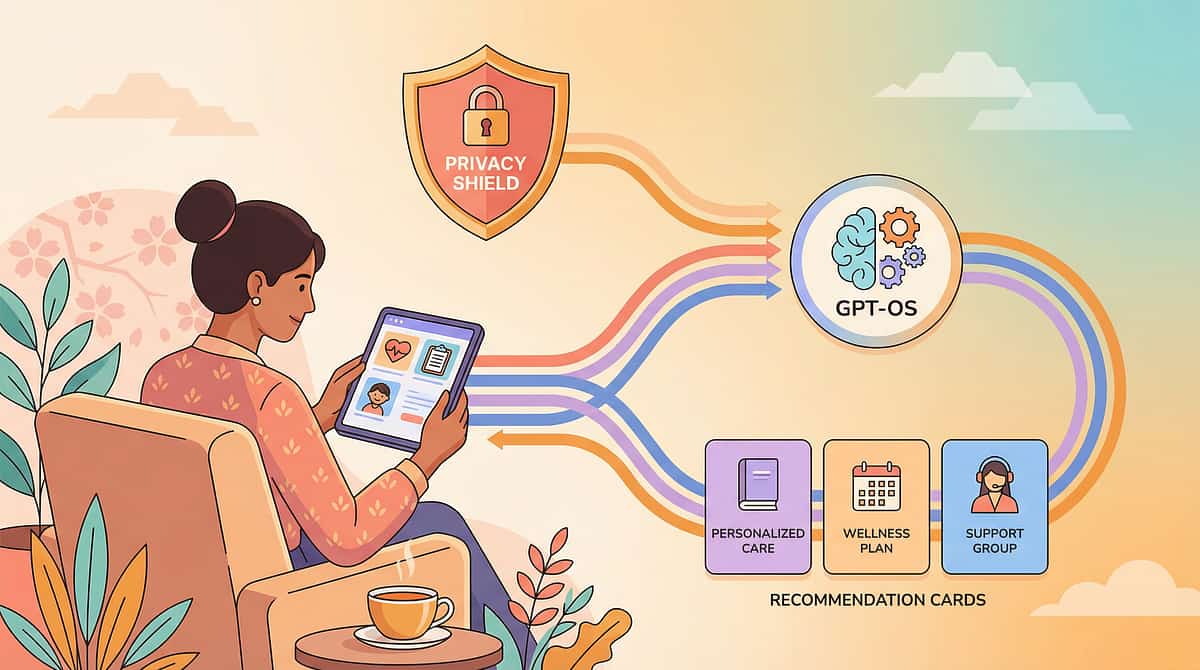
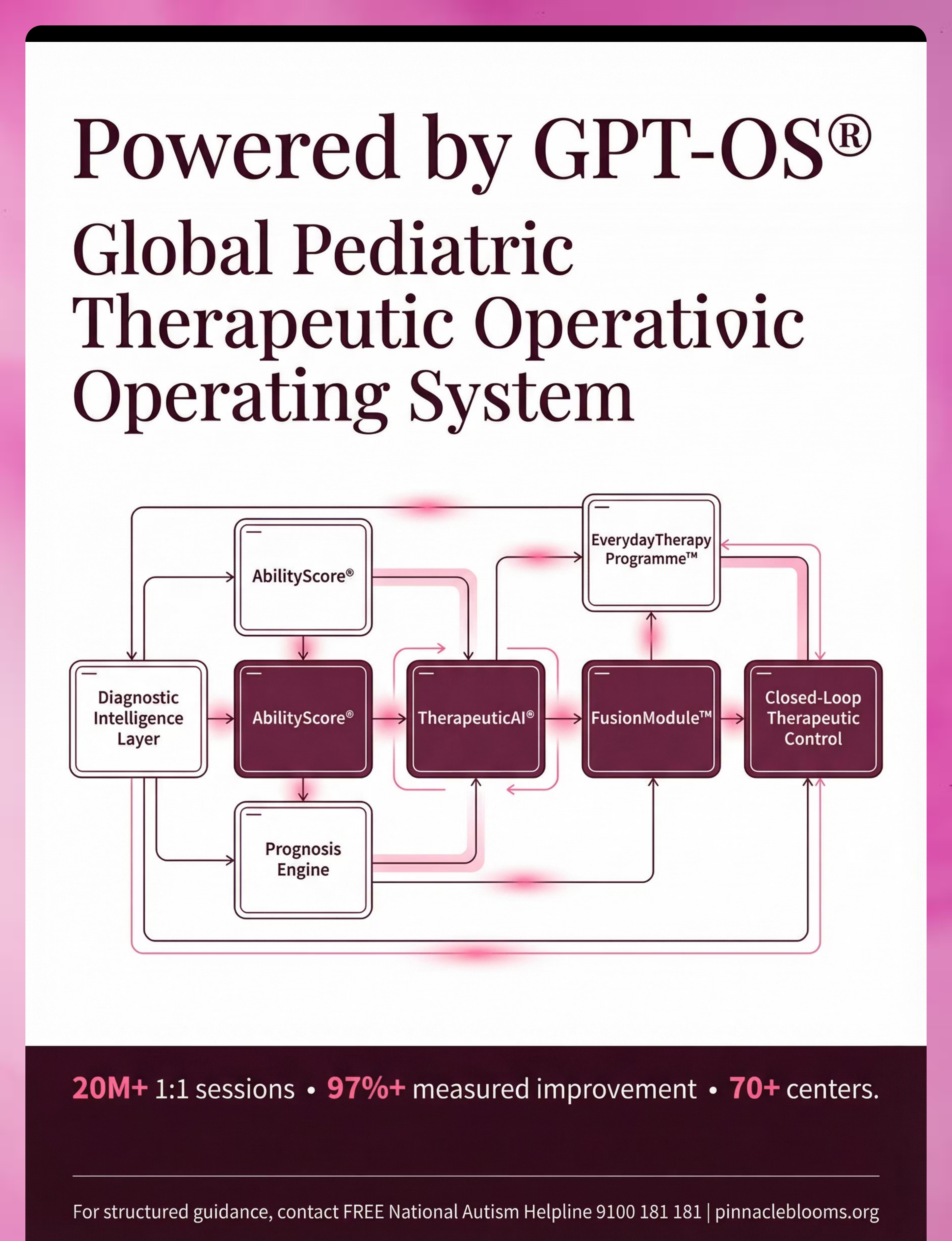
Your 60-Second Data Entry. The Intelligence Behind 21 Million Sessions.
Every session you track feeds the most comprehensive play development intelligence system in pediatric therapy. Here's how your data becomes precision medicine for your child.
AbilityScore®
Universal 0–1000 play skills index. Your child's baseline, current level, and trajectory.
Prognosis Engine
Predicts: "At current pace, child will reach functional play mastery by [date]" — drawn from 21M+ real session patterns.
TherapeuticAI®
Recommends when to increase difficulty, which material to introduce next, and when to bring back a mastered technique for maintenance.
Privacy Assured
All data is pseudonymized. DPDPA (India) compliant. GDPR framework applied. No identifying information shared without explicit consent.
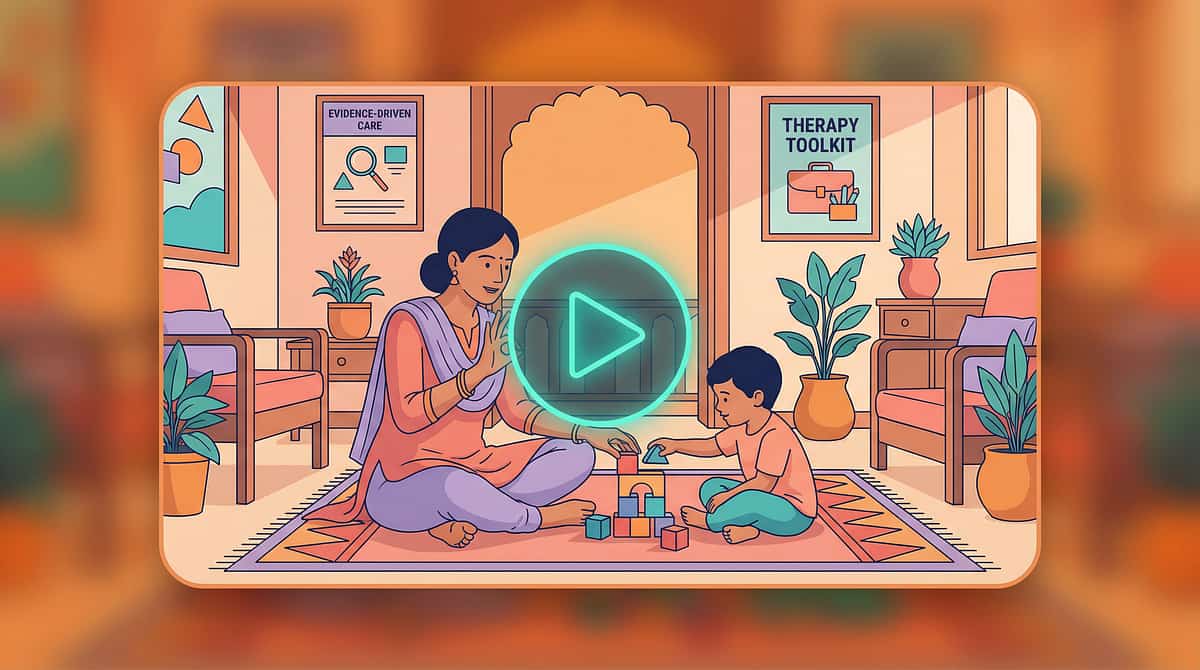
See These Materials in Action.
The G-627 Reel walks through all 9 materials in 60 seconds — showing real children engaging with cause-effect toys, functional play sets, costumes, figurines, building blocks, sensory bins, turn-taking games, puppets, and visual schedules.
"Play is the work of childhood — it's how children learn language, social skills, problem-solving, and emotional regulation. But some children need to learn how to play. With the right materials and adult support, every child can. That's what this page and this Reel are about." — Pinnacle Blooms OT Consortium
▶ G-627 Reel
"9 Materials That Help With Age-Appropriate Play" | Series: Play Development | Episode 627 | Domain: OT-PLAY | Duration: ~75–85 seconds
← G-626
9 Materials for Functional Play Development — the prerequisite technique in this series.
→ G-628
9 Materials for Social Play Skills — the next technique in this series.

Consistency Across Caregivers Multiplies Impact.
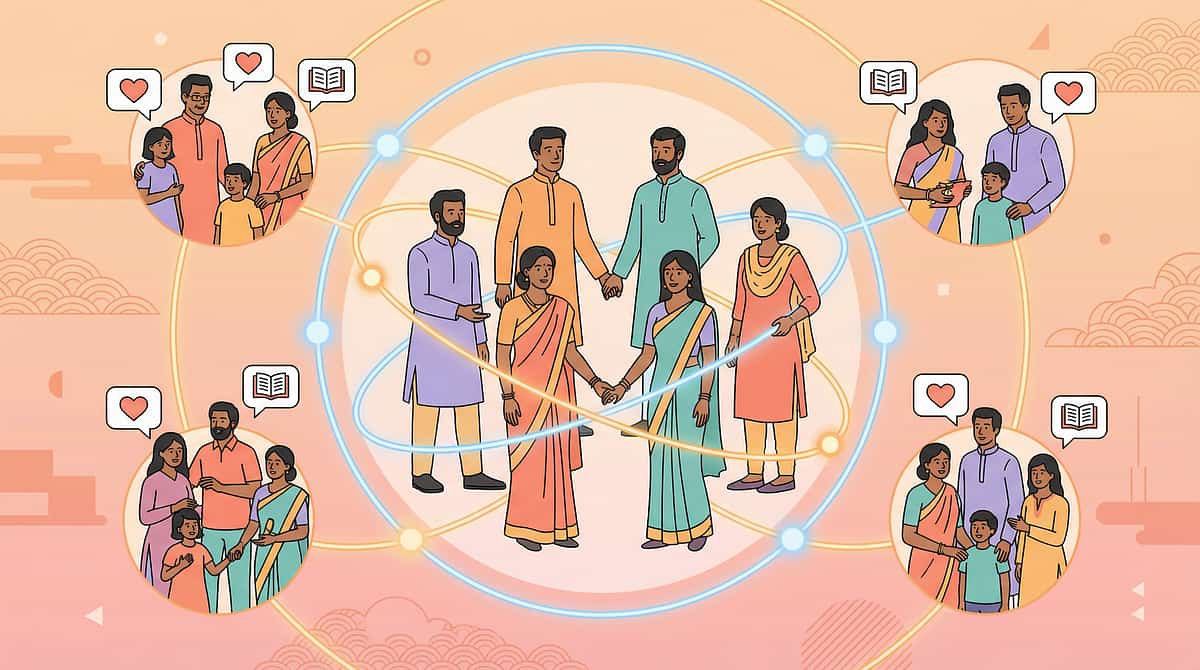
One parent executing the technique produces limited results. Two parents produces 2× the daily dosage. Add a grandparent and a school teacher — the child receives consistent therapeutic input across all environments. This is how developmental change becomes permanent.
For Grandparents
"We're teaching [child's name] how to play — which is a real developmental skill for some children. When you're with them: get on the floor, play alongside them with these materials, and don't force them or correct them. Just play. Your presence is the therapy."
For Teachers
"[Child's name] is working on age-appropriate play skills as part of their developmental program. Their current focus is [functional play / pretend play / building / turn-taking]. In class, please support opportunities for [specific play type] and note any instances of spontaneous play behavior."
📄 Download: G-627 Family Guide
One-page PDF: The 9 materials, the core play sequence, the safety rules, and the helpline number.
Printable. Share it at school. Put it on the fridge. Send it to grandparents.
Share This Page
Every caregiver in your child's life can be a play partner. Share this page and the Family Guide to build a consistent therapeutic team around your child.
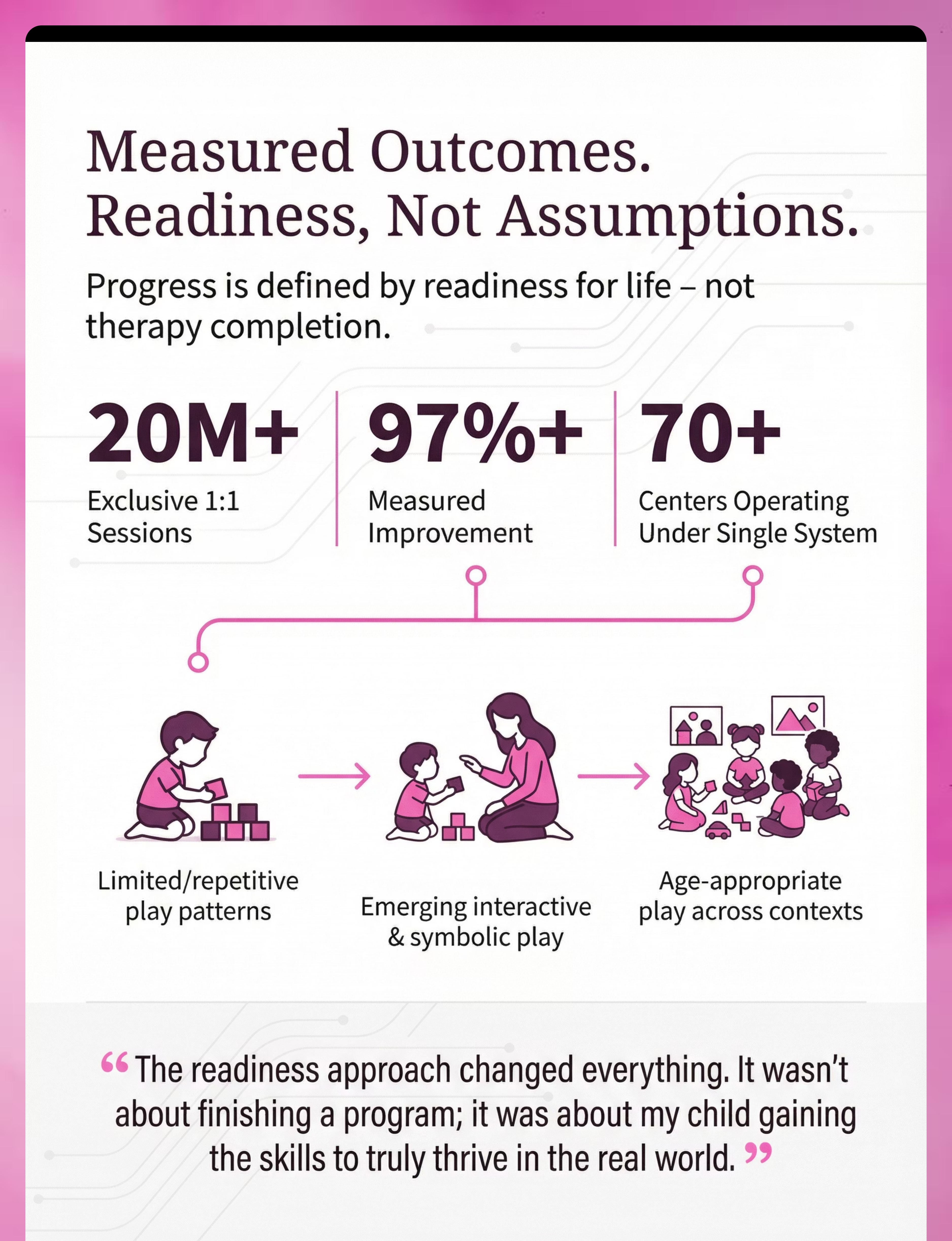
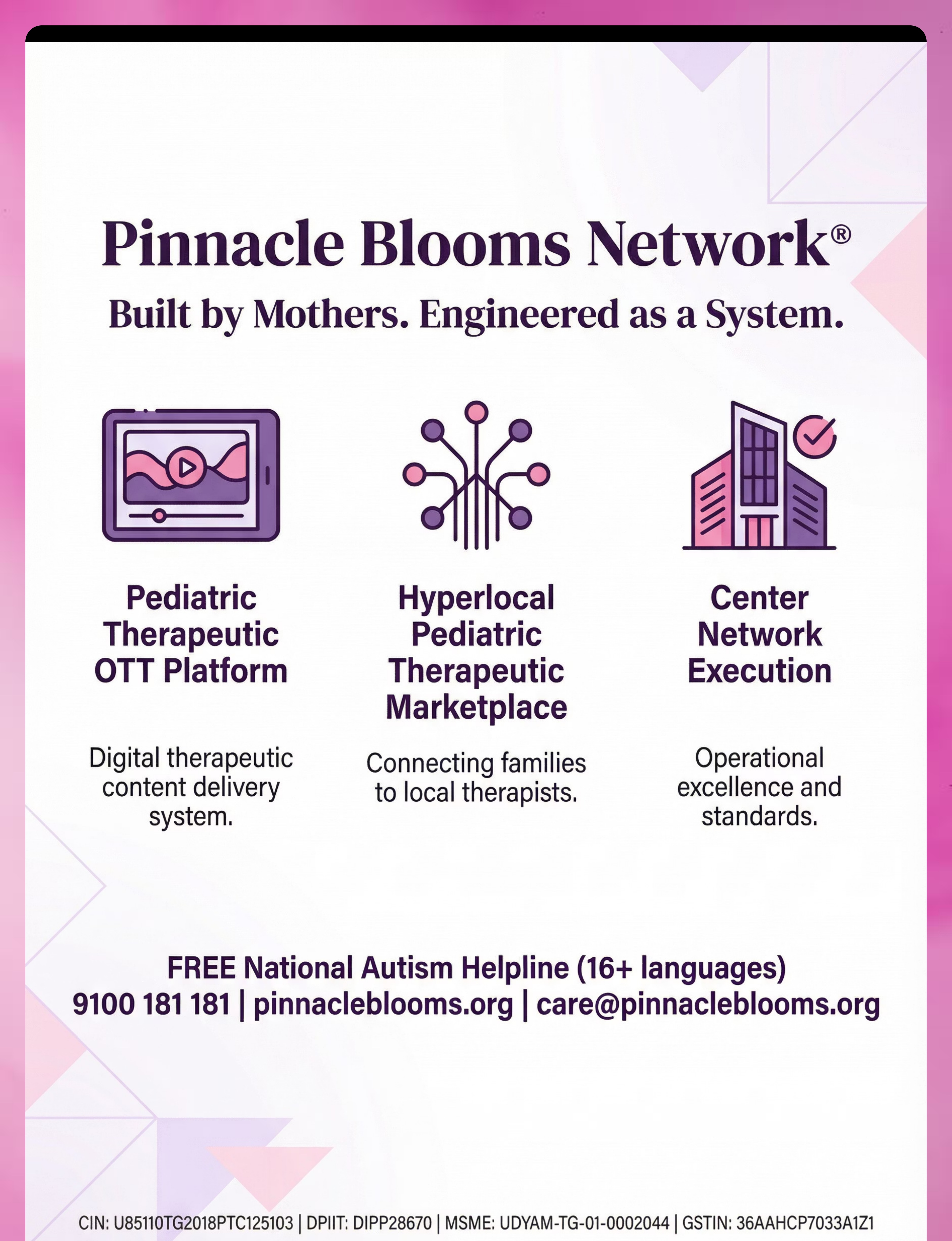
Preview of 9 materials that help with age appropriate play Therapy Material
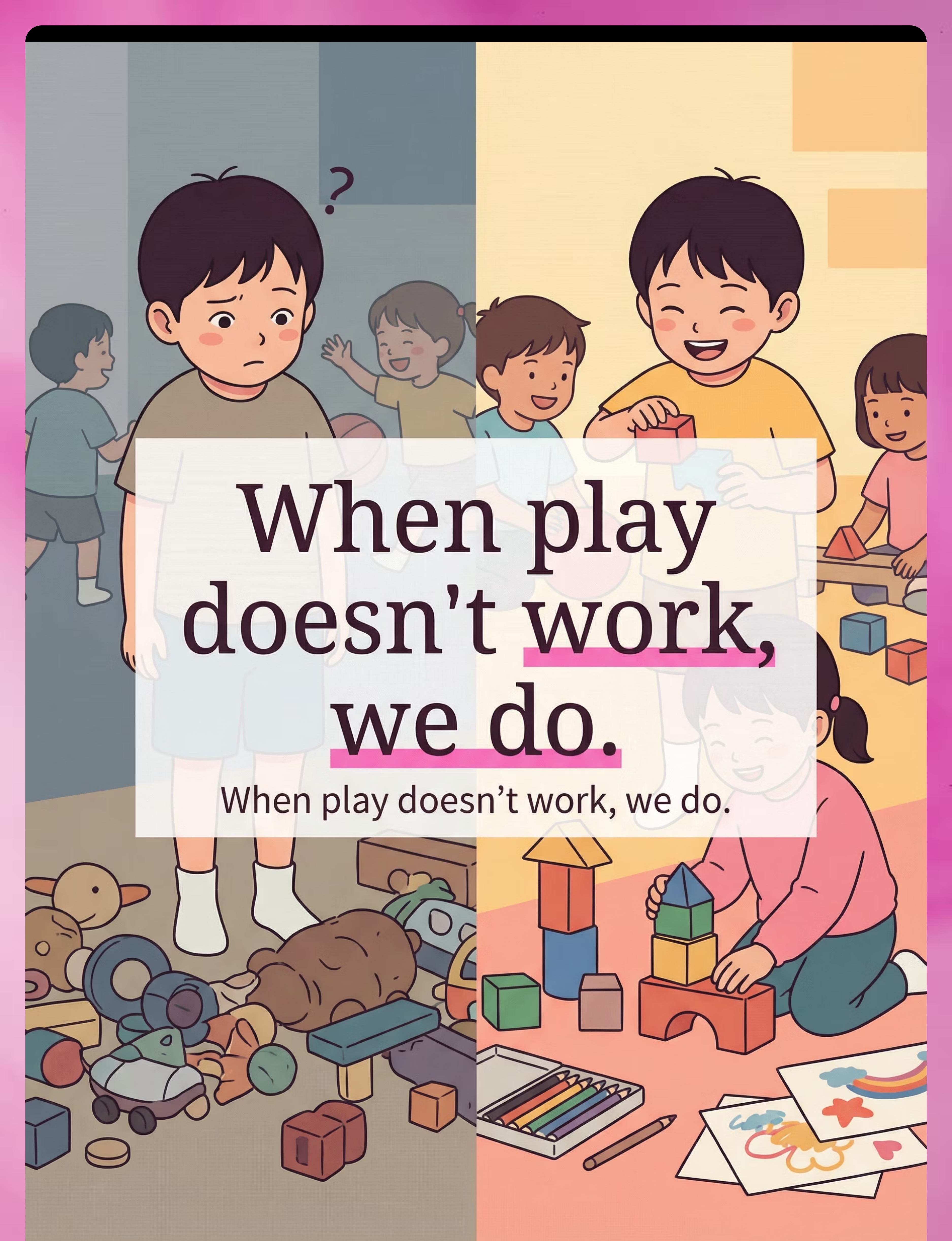
Below is a visual preview of 9 materials that help with age appropriate play therapy material. The pages shown help educators, therapists, and caregivers understand the structure and content of the resource before use. Materials should be used under appropriate professional guidance.


Link copied!

Your Questions. Our Answers. Straight.
❓ My child plays with toys — why would they have a play skill delay?
Playing with toys is different from playing in a developmentally appropriate way. A child can spend 2 hours with toys — lining them up, spinning wheels, opening and closing containers — and still have a significant play skill delay. The question isn't whether they use toys, but whether they use them in the functional, pretend, constructive, and social ways that match their chronological age. → See Card 03: What's Happening in Your Child's Brain
❓ Do I need all 9 materials, or can I start with one?
Start with ONE. Identify your child's current play stage (Developmental Timeline). If they're in early functional play, start with the Functional Play Set. If they're in exploratory play, start with the Sensory Bin or Cause-Effect Toy. Introduce new materials only after mastering the current one. Your budget: buy in sequence of need.
❓ My child refuses to play with anyone. Does this technique work?
G-627 begins with parent-child play — which is more accessible than peer play. You are the first and safest social play partner. As skills develop, the bridge to peer play is built in G-628 (Social Play Skills). Master independent and parent-assisted play first, then expand to peer contexts.
❓ How many sessions per day / week for G-627?
Minimum effective dose: 1 session/day (10–15 min) | 5 days/week. Optimal dose: 2 sessions/day (morning + afternoon, 10 min each). Consistency matters more than duration. A reliable daily 10 minutes outperforms an inconsistent 30-minute weekly session in all developmental outcome research.
❓ My child is 8 years old — is it too late to start?
No. Neural plasticity in the pediatric brain remains significant through middle childhood and into adolescence. Play skill development at 8 requires more explicit teaching and adapted materials, but it is entirely achievable. Focus at 8 shifts to social/cooperative play and games with rules. Contact our team for age-specific protocol guidance: 9100 181 181
❓ I'm not naturally a "playful" person — will I be bad at this?
Many parents aren't naturally playful — and that's okay. This technique gives you a script, a protocol, and a specific sequence so you don't have to improvise. You're not being asked to perform play. You're being asked to follow steps, observe responses, and celebrate small moments. That, most parents can do. And you will get better with every session.
Didn't find your answer? 📞Call Pinnacle FREE Helpline: 9100 181 181 | Book a Teleconsultation →
🟠 Start This Technique Today
Get a personalized step-by-step guide for today's session based on your child's profile.
📞 Book a Consultation
Speak with a Pediatric OT about your child's play development today. FREE National Autism Helpline.
▶ Next Technique
Mastered G-627? Continue the journey with Social Play Skills or Imaginative Play Expansion.
🏛️Validated by the Pinnacle Blooms Consortium | OT • SLP • ABA/BCBA • SpEd • NeuroDev Pediatrics • CRO • WHO/UNICEF-Grade Evidence Standards | 20M+ Sessions | 97%+ Measured Improvement | 70+ Centers | 70+ Countries
Medical Disclaimer: This content is educational and does not replace evaluation and treatment by licensed healthcare providers. Play skill delays may indicate underlying developmental conditions requiring professional assessment. Individual results may vary.
CIN: U74999TG2016PTC113063 | DPIIT: DIPP8651 | MSME: TS20F0009606 | GSTIN: 36AAGCB9722P1Z2 | © 2025 Pinnacle Blooms Network®, unit of Bharath Healthcare Laboratories Pvt. Ltd. | techniques.pinnacleblooms.org | 9100 181 181
"From fear to mastery. One technique at a time." — The loop restarts with G-628: Social Play Skills.