
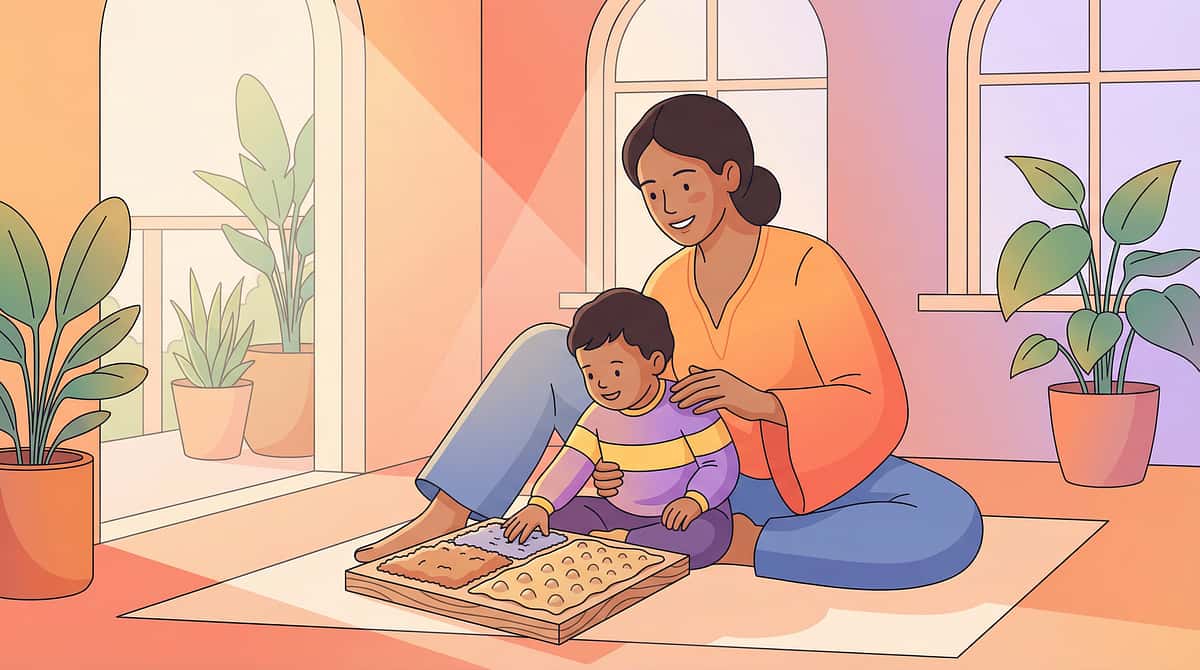
Same toys. Same order. Same script. Every single time.
When your child's play has only one way — and any change means meltdown — you are not failing. Your child's nervous system is speaking. What you're seeing has a name, a science, and a pathway forward.
ACT I · Recognition
Play Development · Cognitive Flexibility
Ages 2–10
"My daughter is five. She lines up her animals — always the elephant first, then the giraffe, then the lion. If anyone adds a zebra or changes the order, she melts down completely. Her dollhouse play follows an identical script every single time. If I try to have the dad doll join for tea, she says: 'No, that's not how it goes.' At preschool, she won't participate if other children want to play differently. We have a playroom full of beautiful toys she's never touched." — Parent, Pinnacle Network
🏥Pinnacle Blooms Consortium® | Domain: Play Development + Cognitive Flexibility | Age: 2–10 years WHO Nurturing Care Framework (2018): "The period from pregnancy to age 3 is key for a child's development." Early identification and parental awareness directly impacts developmental outcomes.

ACT I · Card 02 of 40
You Are Not Alone — The Numbers
Play rigidity touches millions of families worldwide. Here is what the data shows — and why awareness is the essential first step.
80%
Restricted Play Patterns
Of children diagnosed with autism display restricted/repetitive play patterns and insistence on sameness (PRISMA Review, 2024 — PMC11506176)
1 in 36
Children in India
Estimated to be on the autism spectrum — the world's largest affected population. Awareness and early identification remain the most scalable pathways.
20M+
Sessions Logged
Exclusive 1:1 therapy sessions tracked by Pinnacle GPT-OS® monitoring play development milestones across India.
India-Specific Context: An estimated 10–18 million children in India may benefit from play flexibility support. Home-based intervention remains the most scalable, equitable pathway. Source: Padmanabha et al., Indian J Pediatr (2019) | DOI: 10.1007/s12098-018-2747-4
"You are among millions of families navigating this exact challenge. You are not alone. And this challenge is not permanent."
Play rigidity — the need to play the same way every time — is one of the most documented and most isolating challenges families face. It affects social relationships, limits learning, and causes daily distress. But it is also one of the most responsive to the right materials and strategies. PRISMA systematic review (2024): 80% of children diagnosed with autism display sensory processing and play rigidity difficulties. Meta-analysis confirms play-based interventions as evidence-based practice. PMC11506176 | PMC10955541
ACT I · Card 03 of 40
What's Happening in Your Child's Brain
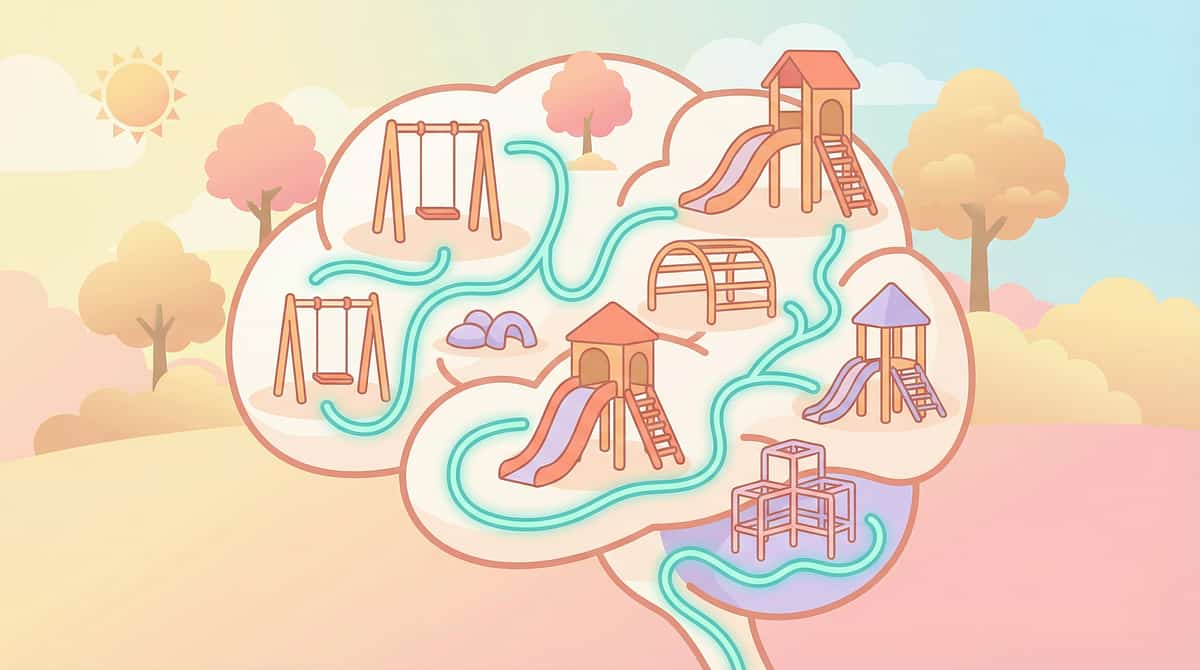
The Cognitive Flexibility Circuit
Play flexibility is governed by the prefrontal cortex — the brain's "shift" button. In children with play rigidity, this circuit is under-developed or differently wired. Switching from one play script to another requires neural effort that feels genuinely overwhelming.
Why the Same Script Feels Safe
The basal ganglia encode habitual sequences. When your child plays the same way repeatedly, these neural highways become deeply grooved. Deviation from the script registers as an error signal — and the amygdala interprets this as a threat.
This is a wiring difference, not a behavior choice. Your child is not being stubborn. Their brain is working exactly as it has learned to work.
Key Brain Regions
Prefrontal Cortex
Executive function & cognitive flexibility center — the brain's "shift" button
Anterior Cingulate
Conflict monitoring and error detection — fires when scripts are violated
Basal Ganglia
Habit formation & repetitive pattern circuits — deeply encodes familiar play
Amygdala
Anxiety & threat detection — interprets script deviation as danger
"The brain's flexibility circuits are plastic — they respond to the right therapeutic input. What feels impossible today is buildable, step by step." — Pinnacle Blooms Consortium® | NeuroDev + OT Lead
Frontiers in Integrative Neuroscience (2020): Comprehensive framework for evaluating sensory integration and cognitive flexibility treatment in ASD — establishing neurological basis for structured play interventions. DOI: 10.3389/fnint.2020.556660

ACT I · Card 04 of 40
Where Play Flexibility Sits in Development
Understanding where your child is in the developmental landscape — and where they're heading — is the foundation of compassionate, effective intervention.
Age 1–2: Foundations
Some repetitive exploration is developmentally normal here. Repetition is how infants learn.
Age 2–3: Scripted Play
Repetitive play is developmentally normal. Scripted sequences help children feel safe in an uncertain world.
Age 3–4: Flexible Beginnings
Children can vary play with adult support and begin to try some new toys. ← Challenge Zone
Age 4–5: Social Flexibility
Negotiates play themes with peers and accepts others' ideas. ↑ Goal Zone
Age 5–8: Creative Mastery
Adaptive, creative, cross-context play with full peer integration. ↑ Mastery Zone
📍Your child may be here: Stuck in the scripted play zone beyond the typical developmental window — showing rigidity patterns that would usually ease by ages 3–5. The materials on this page support the journey forward.
Play Rigidity Commonly Co-Occurs With:
ASD
Autism Spectrum Disorder — most common association
Anxiety
Anxiety disorders amplify need for sameness and script adherence
Sensory
Sensory processing differences drive the need for familiar input
Executive
Executive function challenges limit cognitive set-shifting ability
Developmental
Broad developmental delays across domains
WHO Care for Child Development (CCD) Package: Age-specific evidence-based recommendations implemented in 54 low- and middle-income countries. PMC9978394 | WHO/UNICEF CCD Package (2023)

ACT I · Card 05 of 40
The Evidence Behind These Interventions
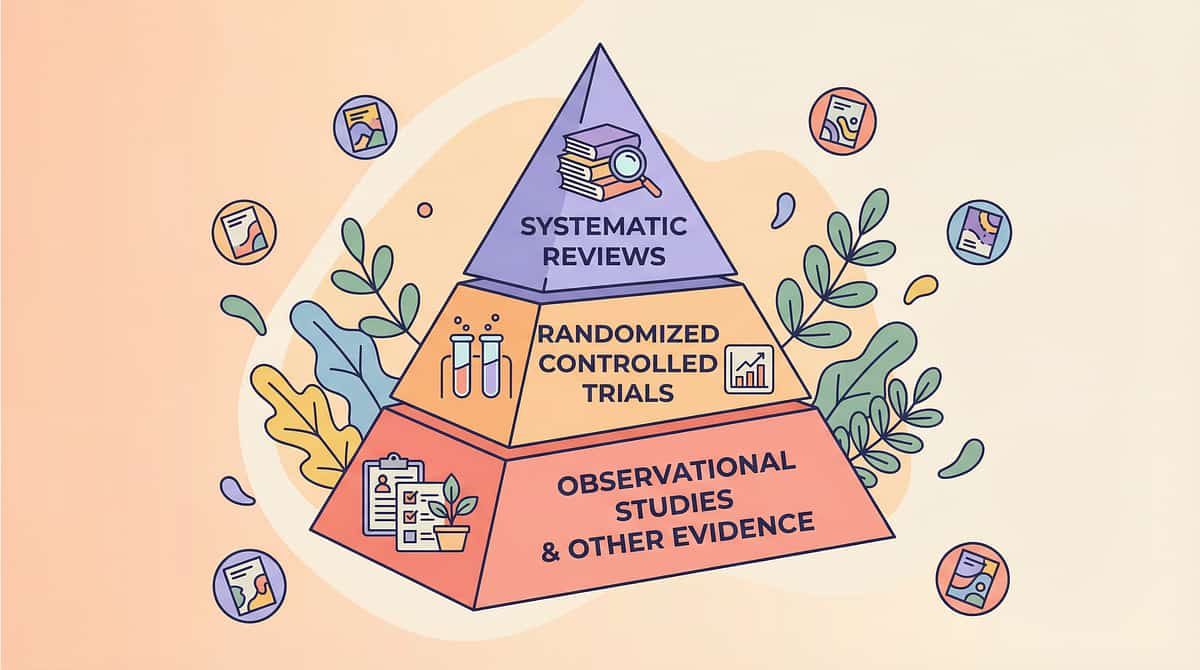
These materials are not guesswork. They are grounded in a robust, multi-layered evidence base spanning systematic reviews, meta-analyses, and randomized controlled trials — including data from Indian pediatric populations.
⭐⭐⭐⭐ Evidence Grade Level II–III
Systematic Review + RCT Backed Clinically validated. Home-applicable. Parent-proven.
Pillar 1: Systematic Review
16 articles (2013–2023) confirm play-based cognitive flexibility interventions meet criteria for evidence-based practice for children with ASD. PMC11506176 — Children, 2024
Pillar 2: Meta-Analysis
24 studies confirm sensory-integrated, play-based interventions effectively promote social skills, adaptive behavior, and cognitive flexibility. PMC10955541 — World J Clin Cases, 2024
Pillar 3: Indian RCT
Home-based play interventions demonstrate significant measurable outcomes across Indian pediatric populations. Padmanabha et al., Indian J Pediatr (2019) | DOI:10.1007/s12098-018-2747-4
NCAEP Badge: National Clearinghouse on Autism Evidence and Practice (NCAEP, 2020): Multiple material-supported strategies used in this page are classified as Evidence-Based Practices for autism.

ACT II · Card 06 of 40
The Knowledge Transfer
🎮 Play Flexibility Intervention
Parent-friendly alias: "The Stretchy Play Method"
Definition: Play Flexibility refers to a child's capacity to adapt, modify, and vary their play — trying new toys, accepting changes to play scenarios, incorporating others' ideas, transitioning between activities, and generating novel sequences rather than repeating identical patterns. When play rigidity is significant — same script, same order, same meltdown when anything changes — it often reflects challenges with cognitive flexibility (the brain's "shift" button), anxiety, sensory processing differences, or developmental differences such as autism spectrum disorder.
The 9 materials on this page address play rigidity through a multi-layered approach: changing the environment, providing visual scaffolding, meeting sensory needs, building new scripts, and reinforcing flexibility attempts. Each material targets a different mechanism of rigidity. You don't need all 9 at once — start with the ones that match your child's primary pattern.
Domain
Play Development + Cognitive Flexibility
Canon Category
Open-Ended Play + Visual Supports + Reinforcement Menus
Age Range
2–10 years
Session Duration
10–20 min daily home practice
📺Reel G-657 | Series: Social-Emotional & Play Development in Children | Episode 657 of 999
ACT II · Card 07 of 40
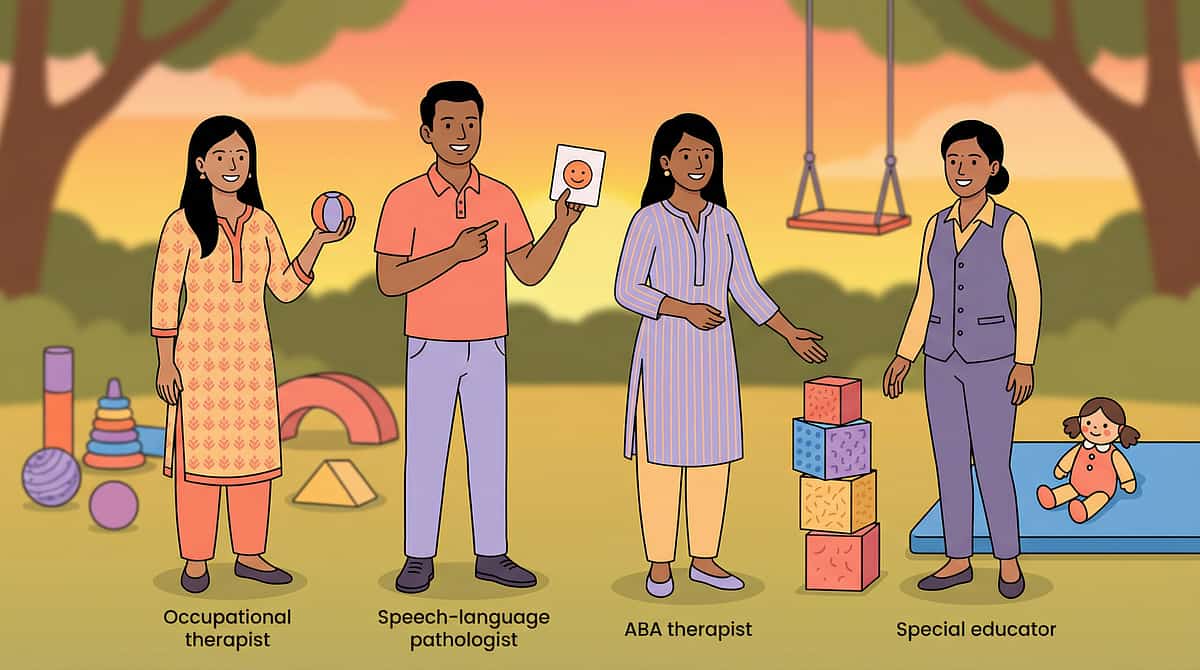
The Pinnacle Consortium Uses This — Here's How
Occupational Therapist (Primary Lead)
Uses open-ended materials, sensory play, and timer-based transitions to build cognitive flexibility through play. Addresses sensory needs driving rigidity.
Speech-Language Pathologist
Uses play script books and social scenario cards to expand the child's play narrative repertoire. Targets social communication within play contexts.
ABA / BCBA
Designs reinforcement systems for flexibility attempts. Uses video modeling and structured turn-taking games. Applies token economies for graduated flexibility.
Special Educator
Implements choice boards and visual play menus in classroom and structured settings. Generalizes flexibility skills across environments.
NeuroDev Pediatrician
Evaluates underlying neurological and diagnostic basis for play rigidity. Guides differential diagnosis (ASD vs. anxiety vs. developmental delay) and overall intervention approach.
"This technique crosses therapy boundaries because the brain doesn't organize by therapy type. Play flexibility is OT's sensory work, SLP's narrative work, ABA's behavioral work, and neurology's cognitive work — all in the same 15-minute play session." — Pinnacle Blooms Consortium®
Adapted UNICEF/WHO Nurturing Care Framework for SLPs (2022): Multiple disciplines contribute to responsive caregiving and early learning outcomes. DOI: 10.1080/17549507.2022.2141327

ACT II · Card 08 of 40
Precision Targets: What Play Flexibility Intervention Addresses
This intervention is designed with layered precision — targeting the core cognitive challenge, supporting emotional and social skills, and building the long-term adaptive behaviors that enable school and peer success.
🎯 Primary Target
Cognitive Flexibility in Play Contexts Tolerance for variation in play sequences · Acceptance of others' ideas · Ability to generate novel play · Reduced distress at transitions
⭕ Secondary Targets
Social play negotiation · Emotional regulation during disruption · Anxiety reduction around novelty · Executive function (set-shifting, cognitive switching)
⭕ Tertiary Targets
Peer relationship formation · Creative and imaginative play · School readiness and classroom participation · Long-term adaptive behavior
Target | Observable Indicator of Success | |
Play flexibility | Child accepts small variation without meltdown | |
Social play | Child incorporates one peer idea into play | |
Emotional regulation | Child uses calm-down tool and re-engages | |
Novelty tolerance | Child touches or attempts a new toy |
Meta-analysis (World J Clin Cases, 2024): Play-based interventions effectively promoted social skills (primary), adaptive behavior (secondary), and motor skills (tertiary) across 24 studies. PMC10955541
ACT II · Card 09 of 40
Your Complete Shopping List
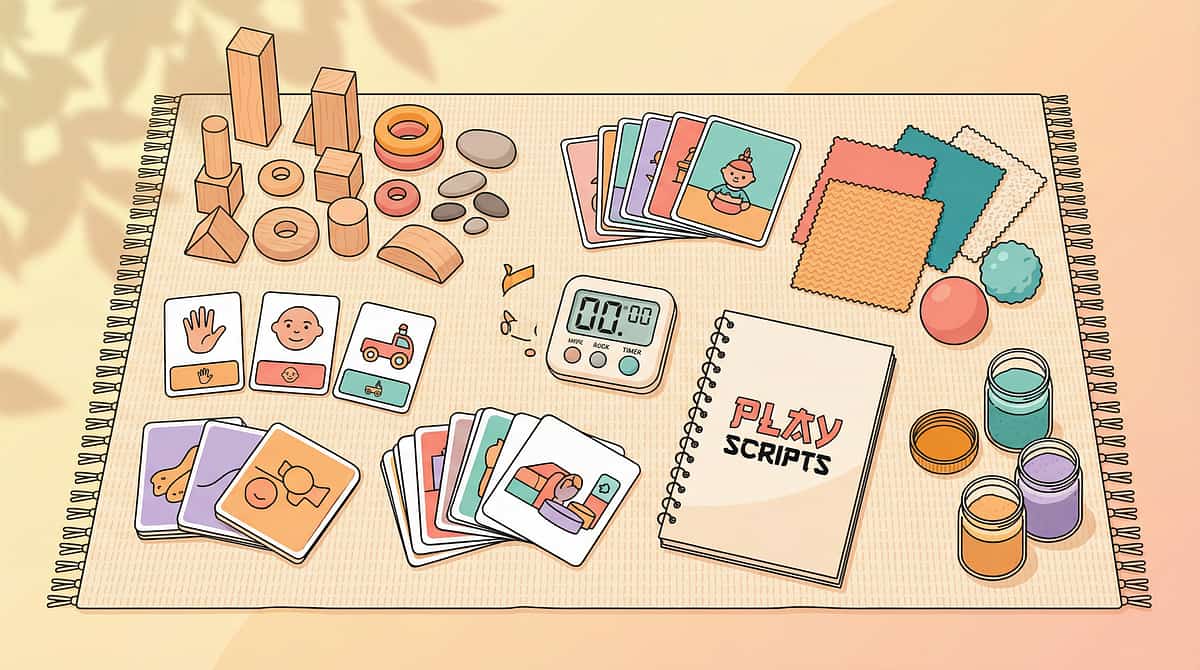
The 9 Play Flexibility Materials
These are the 9 materials clinically validated for building play flexibility. Each addresses a different mechanism of rigidity. You don't need all 9 — start with the ones matching your child's primary pattern. Starter kit: ₹600–1,500 (DIY-focused) | Full setup: ₹2,000–8,000.
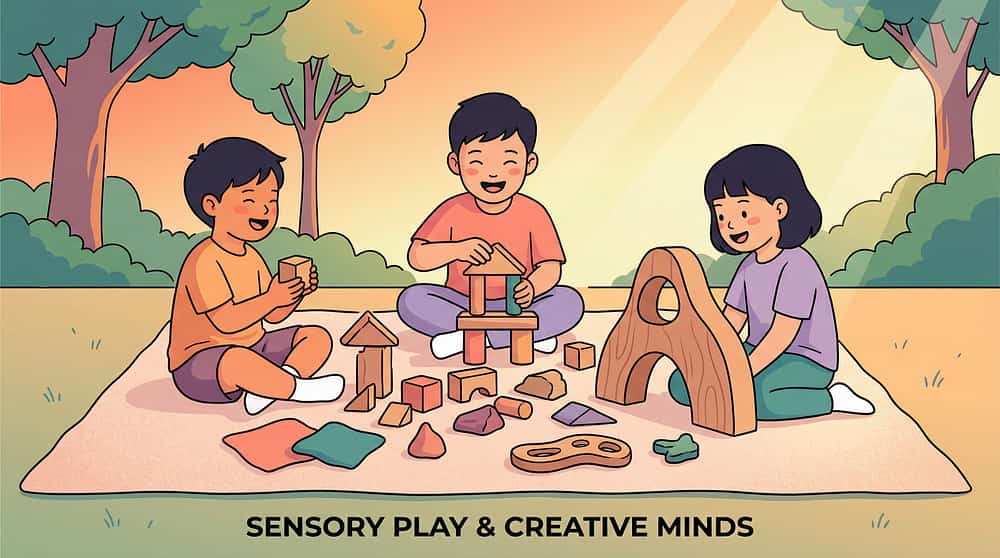
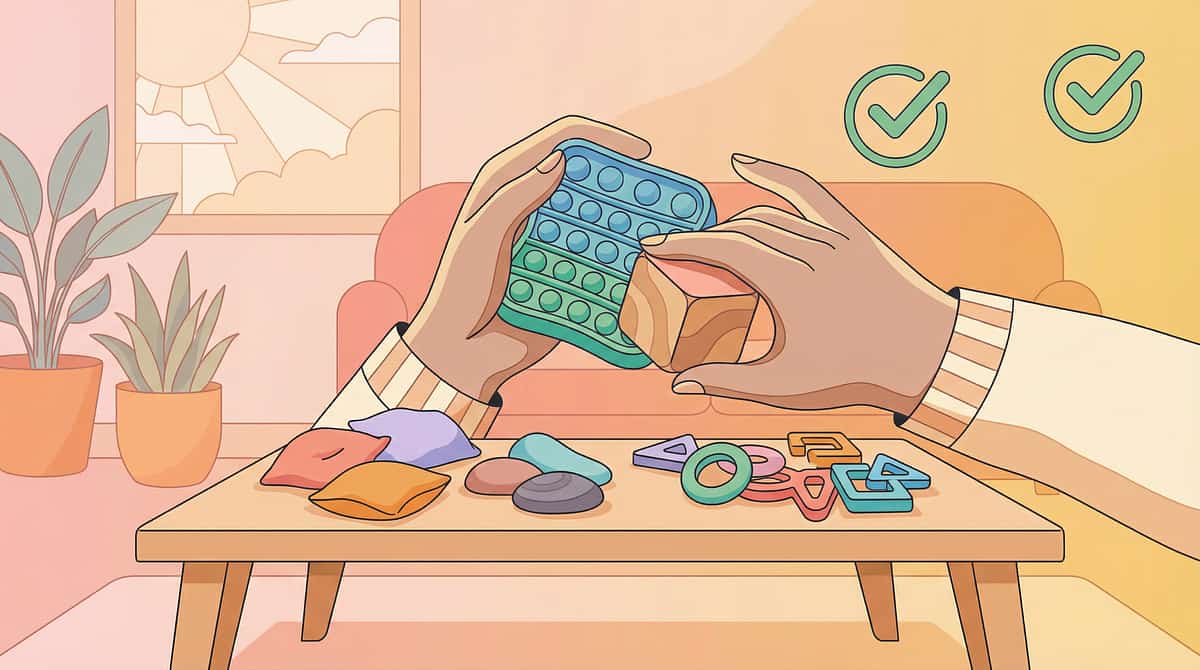
1. Open-Ended Toys & Loose Parts
Canon: Open-Ended Play Materials · ₹200–1,500 WHY: No script = no wrong way to play 🛒Search: Wooden blocks loose parts India
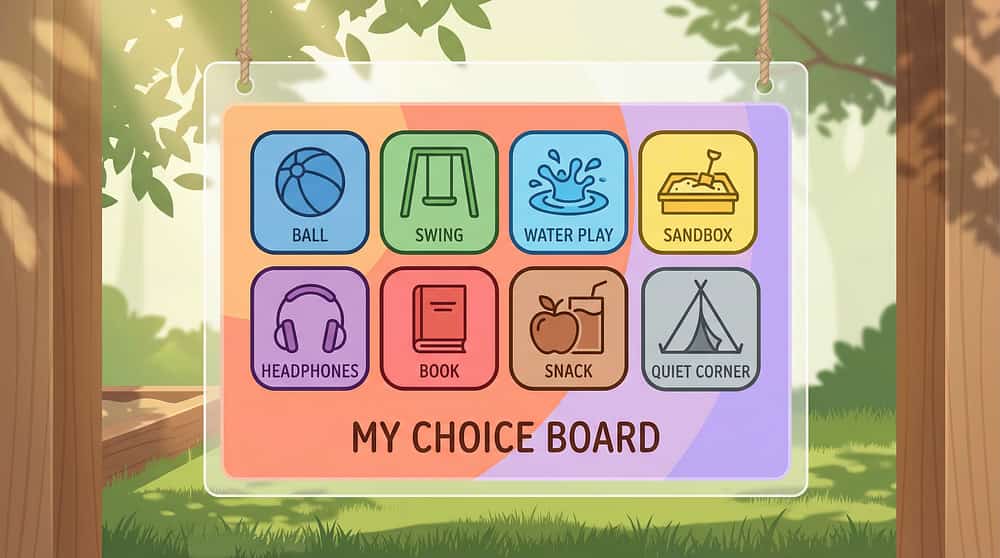
2. Visual Play Menus & Choice Boards
Canon: Visual Supports / AAC · ₹100–400 WHY: Children can't choose what they can't see 🛒Search: Visual choice board India
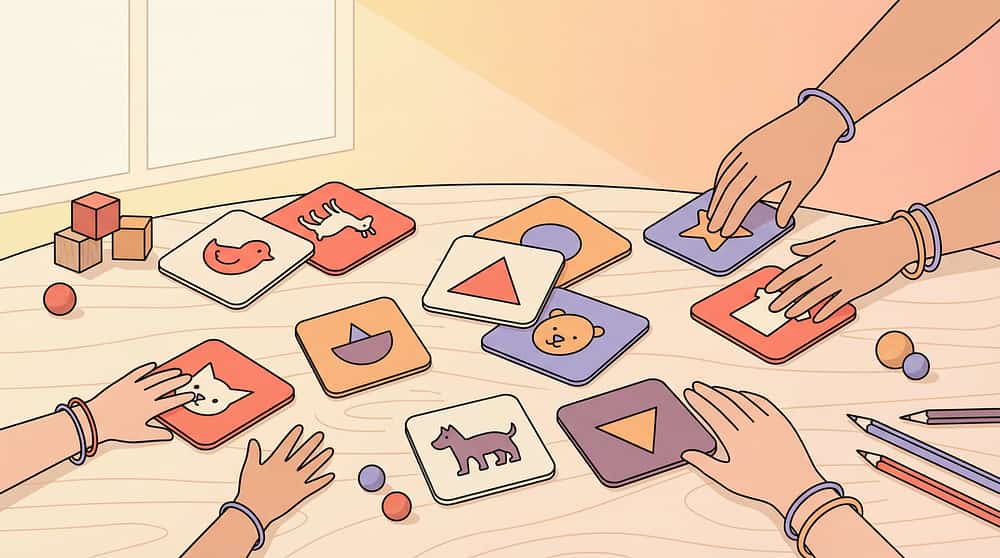
3. Story Variation Cards & 'What If' Prompts
Canon: Social Narrative Cards · ₹100–500 WHY: Flexibility from outside, not inside 🛒Search: Story prompt cards India
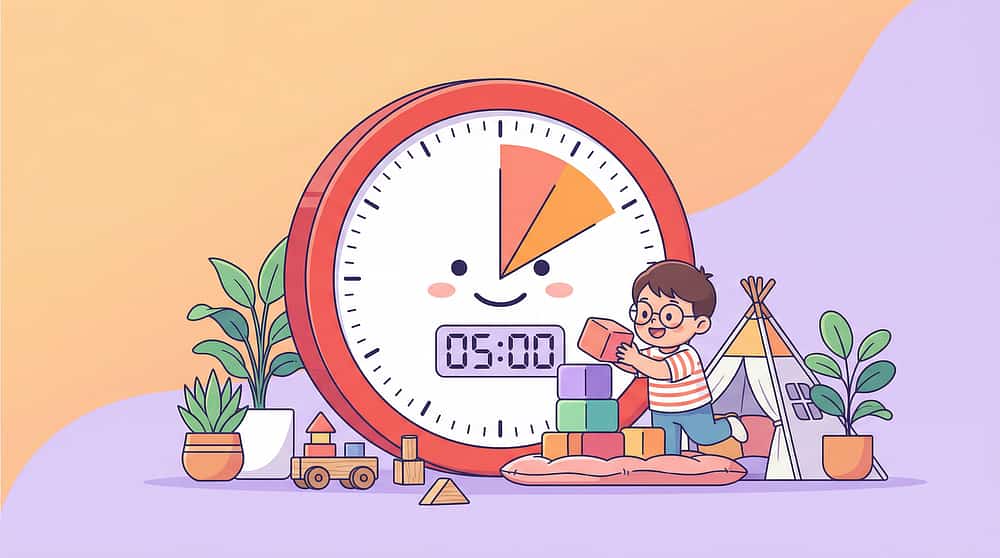
4. Visual Timer
Canon: Visual Timers / Schedule Supports · ₹300–1,500 WHY: Predictable change = manageable change 🛒Search: Visual timer India
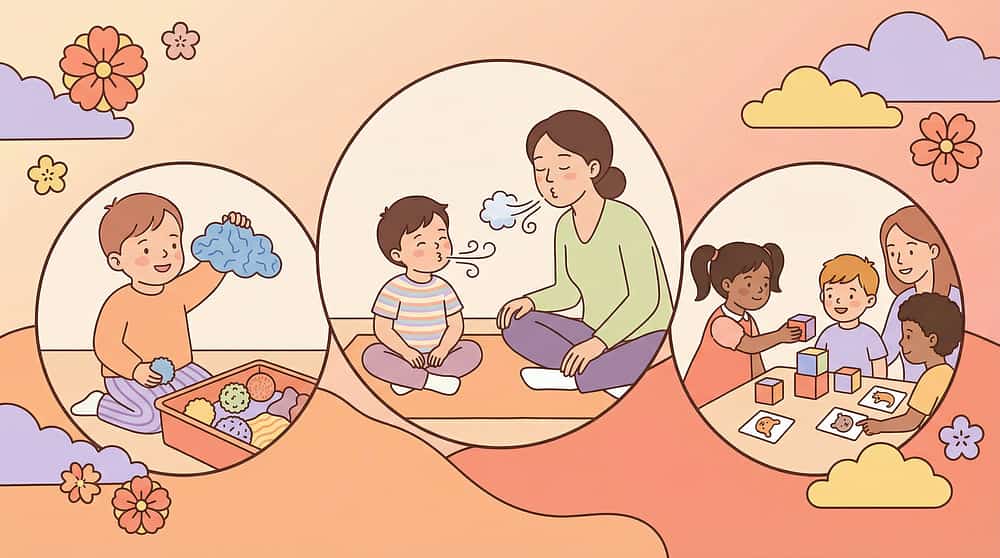
5. Play Script Books
Canon: Social Scripts / Scenario Books · ₹200–800 WHY: More patterns = more flexible choices 🛒Search: Social story book India
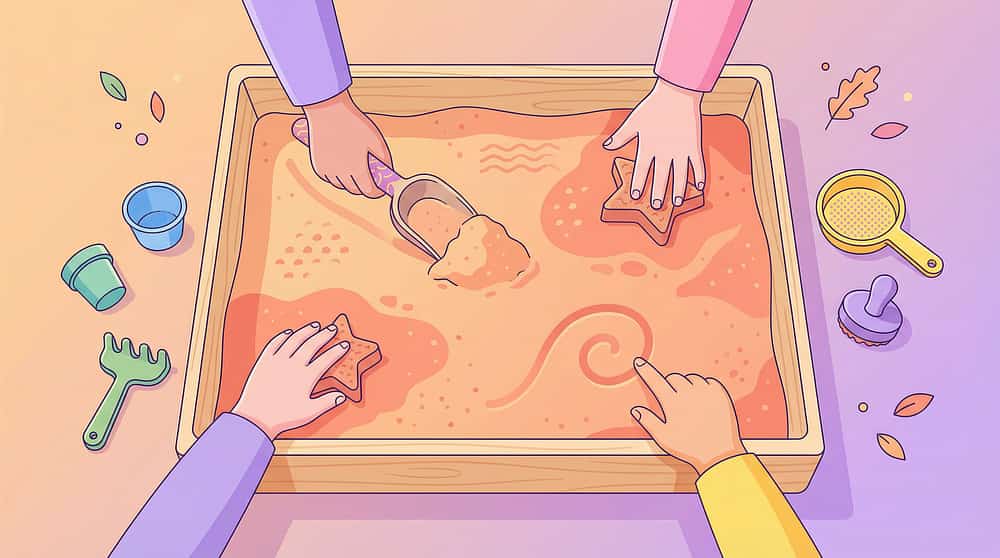
6. Sensory Play Materials
Canon: Sensory Bins / Kinetic Play · ₹200–1,200 WHY: Meet sensory needs flexibly 🛒Search: Kinetic sand sensory bin India

7. Turn-Taking Games with Built-In Variation
Canon: Problem-Solving Toys / Board Games · ₹300–1,500 WHY: Variation inside the rules = safe practice 🛒Dyomnizy Memory Game ₹519 | SHINETOY Shut The Box ₹428
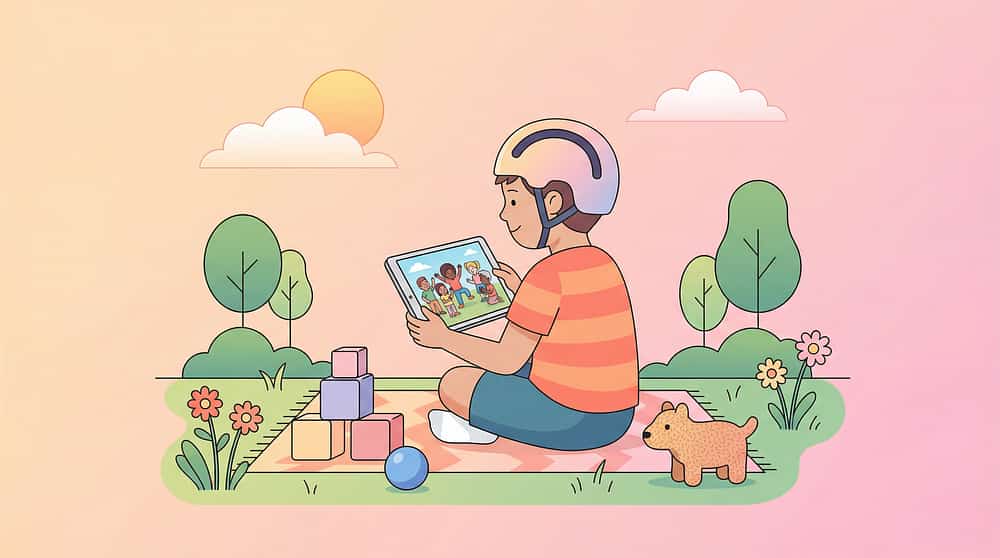
8. Peer Play Videos & Modeling
Canon: Video Modeling Materials · ₹0–500 WHY: See flexibility before you have to do it 🛒 Device/tablet + free YouTube curated playlists · NCAEP Evidence-Based
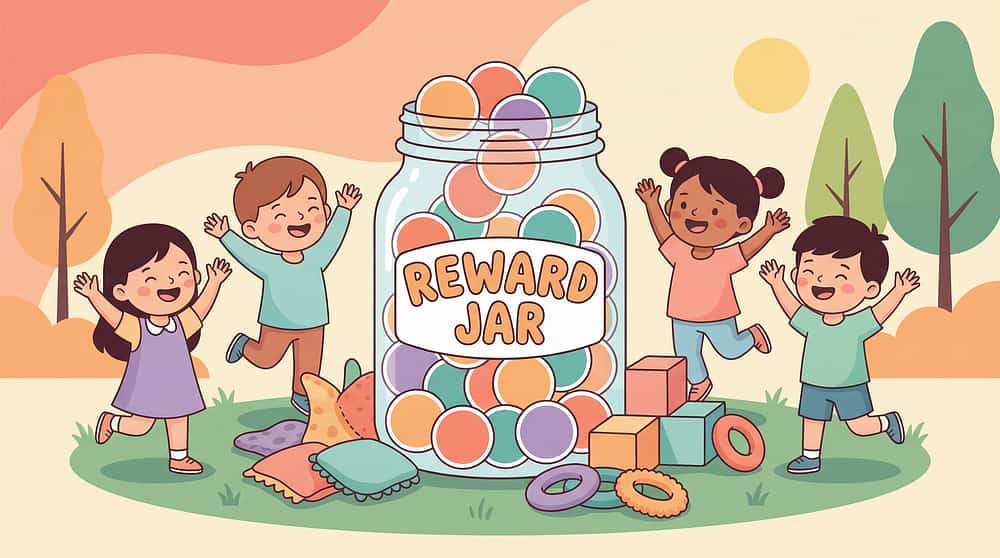
9. Calm-Down Tools & Flexibility Reinforcement
Canon: Reinforcement Menus / Calm-Down Supports · ₹200–1,500 WHY: Regulate first, celebrate flexibility 🛒Rosette Reward Jar ₹589 | 1800+ Reward Stickers ₹364
ACT II · Card 10 of 40
Zero-Cost Versions — Every Material Has a Household Alternative
The WHO/UNICEF equity principle: Every parent, regardless of economic status, can start today.
# | Material | 🛒 Buy This | 🏠 Make This FREE | |
1 | Loose Parts | Wooden block set ₹500 | Bottle caps, stones, cardboard tubes, fabric scraps, empty spools — same principle: no script, open exploration | |
2 | Visual Menu | Laminated choice board ₹300 | Photos on your phone / cut magazine pictures glued to cardboard — visibility is what matters, not format | |
3 | Story Cards | Commercial prompt cards ₹400 | Index cards with hand-drawn or printed scenarios — the variation idea is the tool, not the card quality | |
4 | Visual Timer | Time Timer ₹1,200 | Sand in two plastic bottles (flip when activity changes) — visual time flow is the mechanism | |
5 | Script Book | Printed social story ₹600 | Notebook with photos of child + handwritten scenarios — personalized is more effective anyway | |
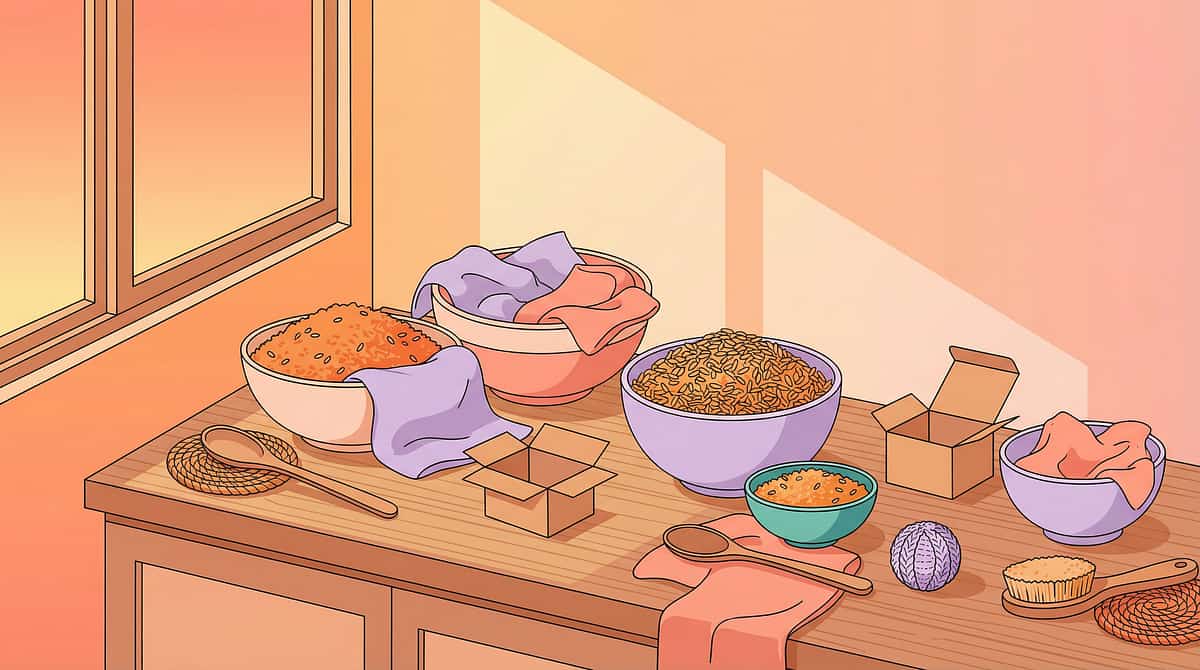
6 | Sensory Play | Kinetic sand ₹800 | Rice/dal sensory bin, homemade playdough (flour+salt+oil) — tactile variety is the therapeutic agent | |
7 | Turn Games | Board game ₹500 | Card-draw movement game made with paper cards — randomness within structure is the mechanism | |
8 | Play Videos | Tablet ₹15,000 | Existing phone + free YouTube — the model content matters, not the device | |
9 | Rewards | Reward jar ₹589 | Sticker on paper, verbal praise, preferred snack — immediacy + specificity > cost |
WHO Nurturing Care Framework (2018): Emphasizes context-specific, equity-focused interventions. CCD Package implemented across 54 LMICs using household materials demonstrates equivalent efficacy. PMC9978394 | WHO NCF Handbook (2022)
ACT II · Card 11 of 40
Safety First
Safety First — Before You Begin
🔴 Red Zone — Do NOT Proceed If:
- Child is significantly dysregulated, having a meltdown, or showing signs of illness
- Child has known severe allergies to sensory materials (playdough ingredients, etc.)
- Any sensory material poses a choking hazard based on child's oral exploration tendencies
- Child shows self-injury behavior — consult BCBA/therapist before introducing any new materials
- Rigidity has increased suddenly and dramatically (may indicate medical cause)
🟡 Amber Zone — Modify Before Proceeding:
- Child has not had adequate food or sleep in the past 4 hours
- A major transition (new school, house move, family change) occurred in the past 2 weeks
- Child just had a significant meltdown in the past 1 hour
- You are feeling stressed or rushed today — your regulation affects the session
🟢 Green Zone — Safe to Proceed:
- Child is calm, fed, rested, and in familiar environment
- All materials have been assessed for age-appropriateness
- You have 15–20 uninterrupted minutes available
- You have a calm-down plan ready if distress emerges
⛔ Red Line — Stop Immediately If You See:
Self-Injury
Head-banging, biting self, hitting self — stop immediately
Sustained Distress
High-intensity distress lasting more than 5 minutes
Aggression
Aggressive behavior toward others
Sensory Overload
Covering ears/eyes, gagging, extreme withdrawal
📞FREE National Autism Helpline: 9100 181 181 — Available 24x7 in 16+ languages. Call before your first session if you are unsure. Indian Journal of Pediatrics RCT (2019): Home-based intervention safety protocols established for parent-administered sessions. DOI: 10.1007/s12098-018-2747-4
ACT II · Card 12 of 40
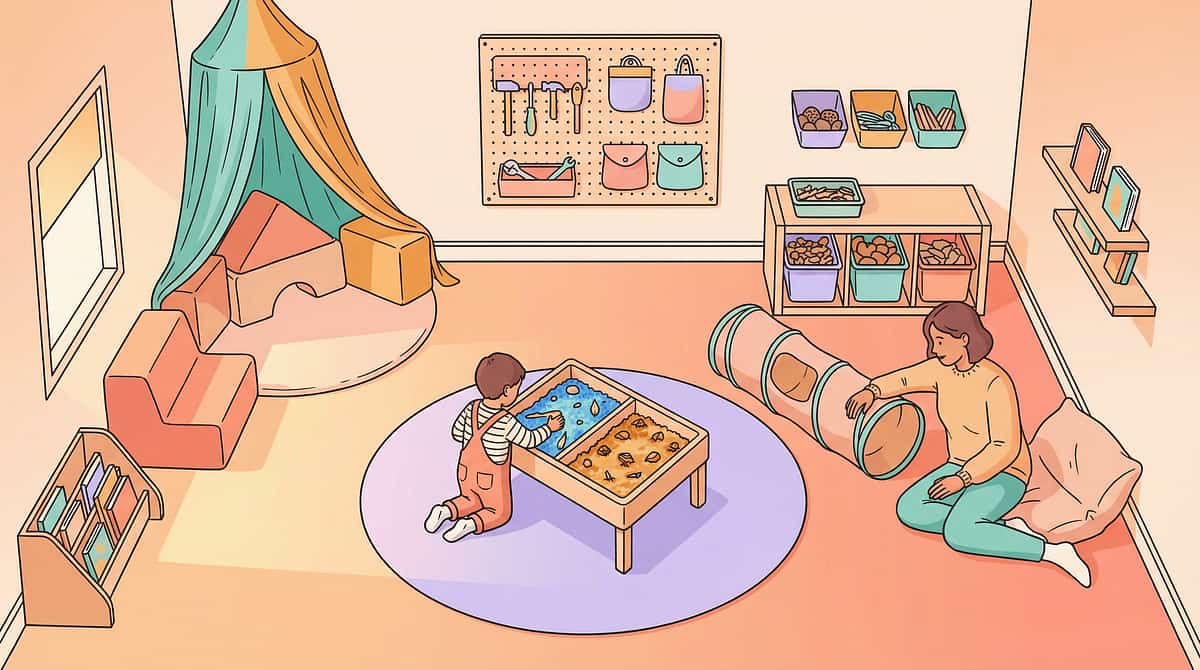
Set Up Your Play Flexibility Space
The environment is a therapeutic tool. A well-arranged play space reduces anxiety, increases engagement, and makes it easier for your child to attempt flexibility with safety.
Room Setup Positions
Loose Parts (Position ①)
Arranged invitingly on a low shelf or floor tray — not overwhelming. Accessible without having to reach or climb.
Visual Menu (Position ②)
At child's eye level, facing toward where child will sit. Wall or low board both work.
Calm-Down Corner (Position ③)
Within 2 arm-reaches. Pre-stocked with breathing visual, fidget, comfort item.
Visual Timer (Position ④)
Positioned where child can see it without turning away from play.
Environment Checklist
- ☐ Remove obvious distractions: screens off, siblings in another room if possible
- ☐ Floor or low table — child should not be perched on high furniture
- ☐ Natural light preferred; avoid harsh overhead fluorescent
Sensory Environment
- 🌡️Temperature: Comfortable, not too hot — heat increases dysregulation
- 🔊Sound: Reduce background noise; soft instrumental music is acceptable
- 💡Lighting: Warm, natural if possible — avoid flickering or harsh lights
- 📐Space: Minimum 1.5m × 1.5m clear floor area
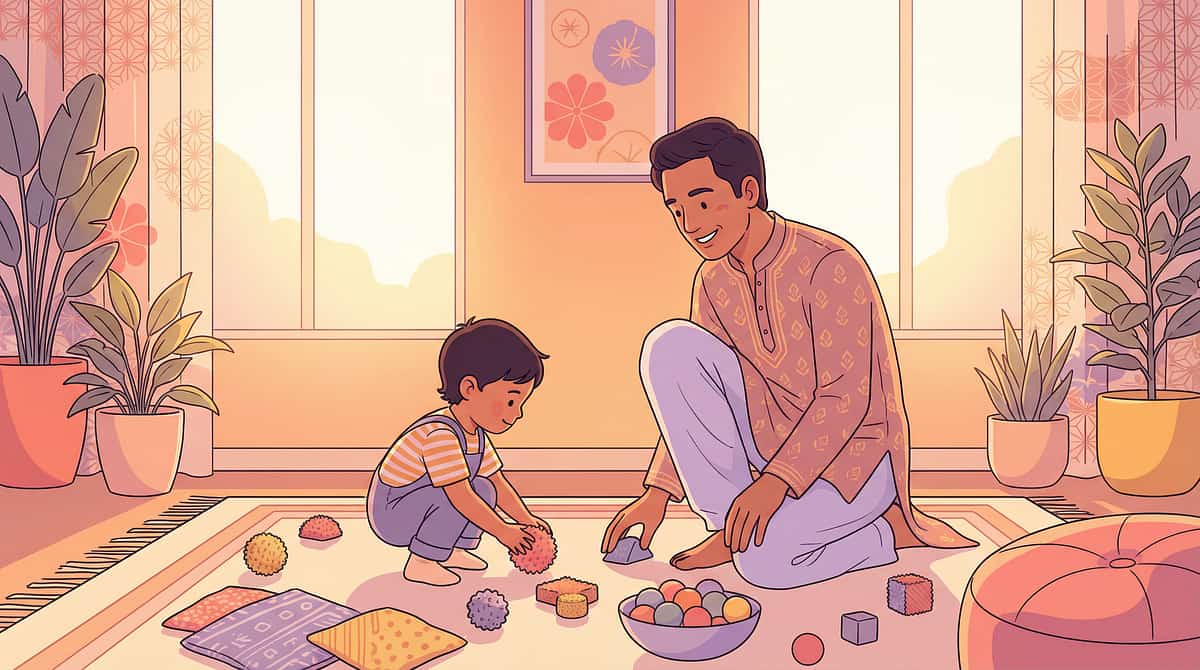
Parent sits beside the child, not opposite. Physical co-regulation reduces anxiety. Sensory Integration Theory (Ayres) — PMC10955541
ACT III · Card 13 of 40
The Execution
Pre-Session Readiness Check — 60 Seconds
The best session is one that starts right. Run through these 7 indicators before beginning.
Indicator | ✅ GO | ⚠️ MODIFY | 🛑 POSTPONE | |
Hunger/Thirst | Ate in last 2 hours | Slightly hungry | Noticeably hungry or thirsty | |
Sleep | Well-rested | Slightly tired | Overtired or just woken | |
Physical state | No illness signs | Minor cold, manageable | Fever, pain, illness | |
Emotional state | Calm, baseline | Mildly elevated | Post-meltdown (within 1 hr) | |
Time since major event | Normal day | Minor change today | Major disruption today | |
Environment | Familiar, settled | Slightly unfamiliar | New/highly unfamiliar | |
Parent state | Calm, present | Slightly rushed | Highly stressed |
✅ 6–7 GREEN → GO
Begin the full protocol as described. All systems clear.
⚠️ 3–5 GREEN → MODIFY
Shorten session to 5 minutes. Use only 1 material. Lower demands significantly.
🛑 1–2 GREEN → POSTPONE
Today is not the day. Offer a preferred, low-demand activity instead. Try tomorrow.
If postponing: Offer a 10-minute session of the child's preferred, already-mastered play with no demands. Warm the relationship, don't push flexibility today. A warm connection is never wasted time.

ACT III · Step 1 of 6 · Card 14 of 40
STEP 1
The Invitation
Every protocol begins with an invitation, not a command. The difference in those two words is the difference between a session that works and one that doesn't.
What to Say — Verbatim Scripts
"Hey, I found something new to play with. Want to come look?"
"I'm setting up something over here — there are no rules, you can use it any way you want."
"Look at these — I wonder what they could be?" [hold up a loose part with genuine curiosity]
Body Language Guidance
- Get to the child's physical level — floor or crouch, not standing over
- Soft, unhurried voice — no urgency
- Look at the material, not directly at the child's face
- Begin exploring yourself — do not wait for the child to initiate
✅ Acceptance Cues — What to Look For
- Child moves toward the space (even slowly)
- Child glances at the material
- Child's body orientation shifts toward you
- Child asks a question ("What is that?")
⚠️ Resistance Cues — How to Modify
- Child ignores entirely → Continue exploring without looking at child; reduce proximity; give 2–3 minutes
- Child says "No" → Acknowledge: "That's okay. I'll play here. You can come look whenever you want."
- Child clings to preferred toy → "You can bring your [preferred toy] — it can come too."
⏱️Timing: 30–60 seconds. Do NOT extend beyond 2 minutes if refusal is firm. Accept and retry later. Forcing an invitation defeats its purpose. ABA Pairing Procedures + OT "Just-Right Challenge"
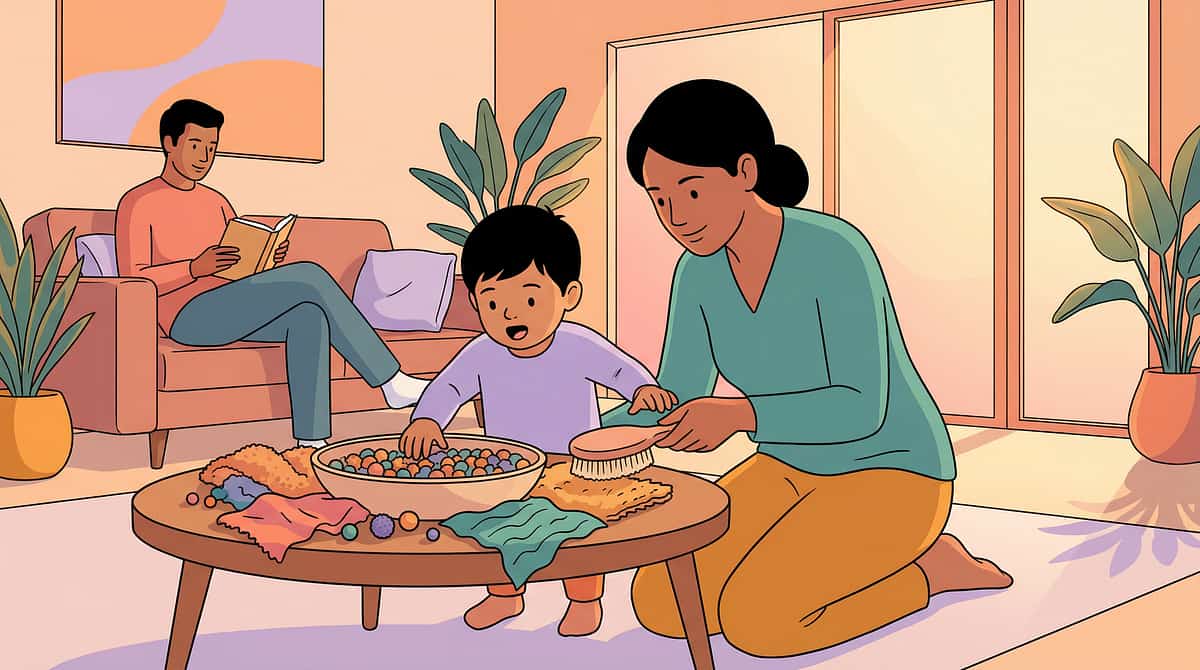
ACT III · Step 2 of 6 · Card 15 of 40
STEP 2
The Engagement
The child is now near the materials. Now you deepen the interaction — gently, playfully, without demand.
🎲 Open-Ended / Loose Parts
Handle a piece yourself with genuine curiosity. "I think this could be a hat. Or a bridge. Or a bed for a tiny animal." Model divergent thinking without asking the child to do anything yet.
📋 Visual Menu
"Let's look at what's on our play menu today." Point to pictures. "Which one looks interesting?" Wait. Give them time to process. Silence is not failure.
🃏 Story Variation Cards
"This is a special magic story box. Want to pick a card to see what happens next in the story?" Novelty framed as magic reduces the threat response.
🧪 Sensory Play
Begin playing in the sensory material yourself. Narrate: "This sand feels so different each time I squish it." Parallel play invites without demanding.
🎮 Turn-Taking Game
"I'm going to set up a little game. The spinner decides what happens — even I don't know!" Shared uncertainty normalizes the unexpected.
🎉 Reinforcement Cues — When to Praise
- Praise ANY approach or glance: "You came to look — that's great!"
- Praise any touch: "You touched it! That's really brave!"
- Do NOT wait for "perfect" engagement — reinforce approximations
Child Response Spectrum
- Engagement: Child touches, handles, or moves material
- Tolerance: Child is near the material but not actively playing — acceptable
- Avoidance: Child moves away → go back to Step 1 with a different material
⏱️Timing: 1–3 minutes. Never rush this phase. PMC11506176
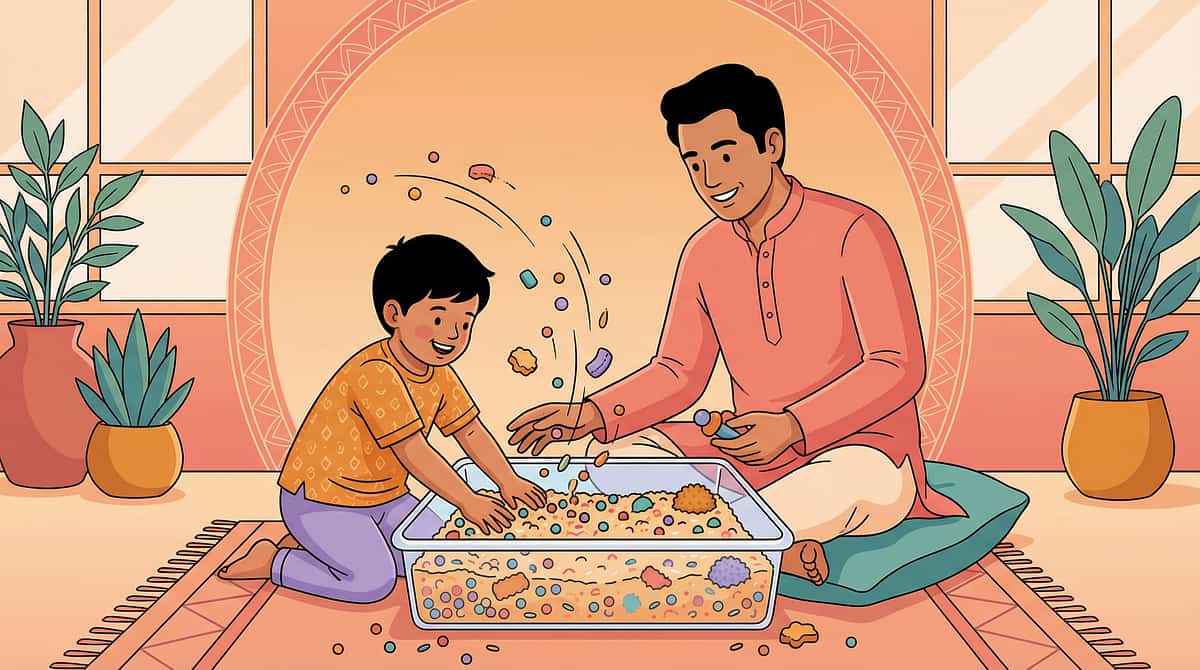
ACT III · Step 3 of 6 · Card 16 of 40
STEP 3
The Therapeutic Action
This is the active ingredient — the moment the flexibility circuit is being gently exercised. This is where the neural work happens.
🎲 Loose Parts
Introduce the "What Else Could It Be?" challenge. Hold an item. Name one use. Then ask: "What else?" Model 2–3 alternatives. Celebrate any child variation — even "wrong" ones.
📋 Visual Menu
Present menu with 3–4 options. WAIT 30 seconds. If no response, point to two: "This one or this one?" Honor any choice that is not the habitual default.
🃏 Story Cards
Child draws a card. Adult reads it. "The card says: a new friend arrives! Who could that be in your story?" Follow the child's lead. Accept minimal implementations.
⏱️ Visual Timer
When timer rings: "The timer says it's time for something new!" Timer is the authority — not you. This reduces parent-child power struggle significantly.
📖 Script Book
"Sometimes the tea party has a dance! Should we try that way today?" Present as a question, not a command. The child's perceived agency is crucial.
🧪 Sensory Play
Parallel play with no agenda. The inherent variability of the material — sand forms differently every time — is itself the therapeutic input. Presence in a variable-outcome activity is the exercise.
🎮 Turn Game
When unexpected outcome occurs: model your response: "Oh! That's different from what I expected. That's okay — that's how the game goes!" You are modeling cognitive flexibility in real time.
Response Spectrum
- Ideal: Child engages with the variation fully
- Acceptable: Child tolerates variation with support, minimal distress
- Concerning: Child escalates to significant distress → cool-down immediately
⏱️Duration: 3–8 minutes on core action. Stop at child's satiation point — quality over quantity. PMC10955541: core action occupies 40–60% of session time.
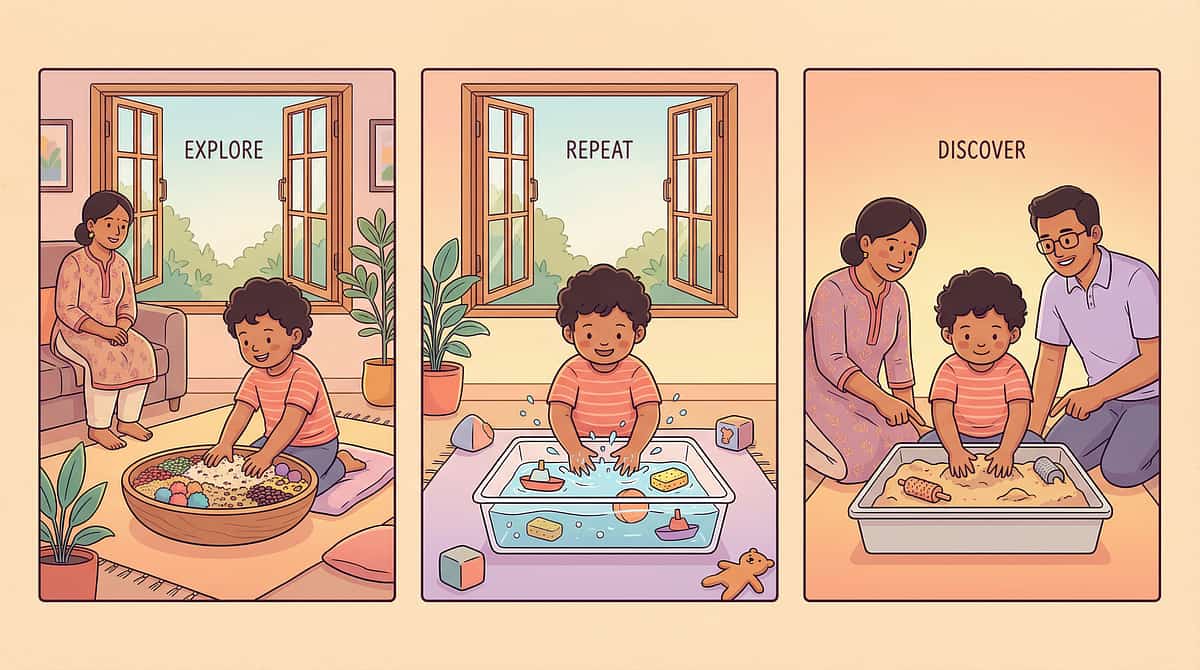
ACT III · Step 4 of 6 · Card 17 of 40
STEP 4
Repeat & Vary
3 good repetitions are worth more than 10 forced ones. The goal is depth of experience, not volume of attempts.
🎯Target: 2–4 flexibility moments per session (not 20). Each "repetition" is one instance of a child tolerating, choosing, accepting, or drawing — any single flexibility act counts.
Change the Material
Move from loose parts to the visual menu. A new material type refreshes attention and resets the challenge level.
Change Adult Role
Shift from less directive to slightly more directive — or vice versa — based on child's response.
Change the Setting
Floor to table is a small environmental variation that keeps the session fresh without introducing new materials.
Change Variation Intensity
Move from a tiny variation to a slightly larger one — only when the child is handling the current level with ease.
🛑 Satiation Indicators — When to Stop
Increasing Rigidity
Child becomes more distressed or more rigid as session continues
Disengagement
Child begins to disengage or shows boredom with the material
Declining Quality
Quality of flexibility attempts is declining from earlier in session
Explicit Stop
Child explicitly requests to stop — honor this immediately
"The goal is not to do the technique perfectly for 20 minutes. The goal is 2–3 moments where the child's brain experienced flexibility and survived. That is today's dose."
⏱️Timing: 3–5 minutes total across repetitions. SI dosage research: 2–3 sessions per week, 8–12 weeks as clinical protocol.

ACT III · Step 5 of 6 · Card 18 of 40
STEP 5
Reinforce & Celebrate
The moment you celebrate flexibility — the brain learns flexibility has value. This step is not optional. It is the mechanism of change.
⚡The Reinforcement Timing Law: Within 3 seconds of any flexibility attempt — not 3 minutes, not "later." The brain connects cause and effect in real time.
After trying something new:
"You tried something new! That's being flexible — your brain just stretched!"
After accepting a timer transition:
"The timer changed things and you were okay with it. That's HUGE."
After a turn-game unexpected outcome:
"Something unexpected happened and you stayed calm! That's flexible!"
After choosing from the menu:
"You picked something different today! Your flexible brain is getting stronger!"
Reinforcement Menu — Canon Products
🌟 Reward Jar
Rosette Reward Jar — ₹589 · Place one token for each flexibility moment
🌟 Sticker Chart
1800+ Reward Stickers — ₹364 · One sticker per flexibility attempt on visual chart
🌟 Verbal Celebration
Verbal praise + 10-second high-energy celebration (clapping, happy voice) — free and powerful
🌟 Earned Activity
Preferred activity for 5 minutes as earned reinforcer · Photograph the flexible play moment — show them later
Celebrate the ATTEMPT, not just the success. A child who tried to pick from the menu and then panicked still made an attempt — that is worth praising warmly.
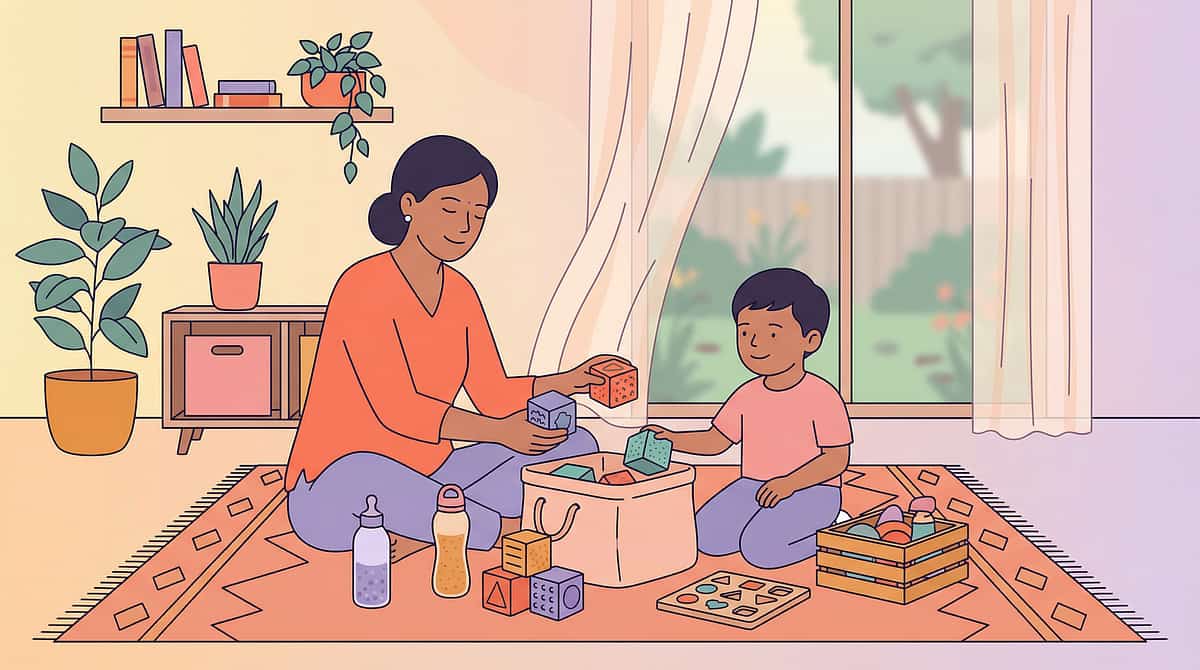
ACT III · Step 6 of 6 · Card 19 of 40
STEP 6
The Cool-Down
No session ends abruptly. The brain needs a runway, not a cliff. A predictable ending is as important as a predictable beginning.
Transition Warning
"Two more, then we're all done for today." [hold up two fingers] → "One more, and then we'll tidy up together." → "All done! You did such great flexible play today."
Material Put-Away Ritual
Child helps put materials away (if able). "Can you help me put the blocks back?" → Promotes ownership and predictability of session ending.
Transition Object
If child resists ending, offer a preferred comfort item or toy to hold during transition. Something to carry bridges the gap between activities.
Proprioceptive Input (if needed)
60 seconds: gentle push on shoulders, bear hug, or carrying something heavy. Proprioceptive input regulates the nervous system quickly and gently.
Transition Cue
Visual schedule showing what comes next. "After play, it's snack time." Show the picture. Predictability of what-comes-next reduces resistance to what's-ending-now.
If Child Resists Ending: "I hear you — you're not ready. The timer says we're done today. Tomorrow we can do it again." Do not extend the session under distress pressure. Honor the structure. Trust builds over time. NCAEP (2020): Visual supports and transition strategies are evidence-based practices for autism.
ACT III · Card 20 of 40
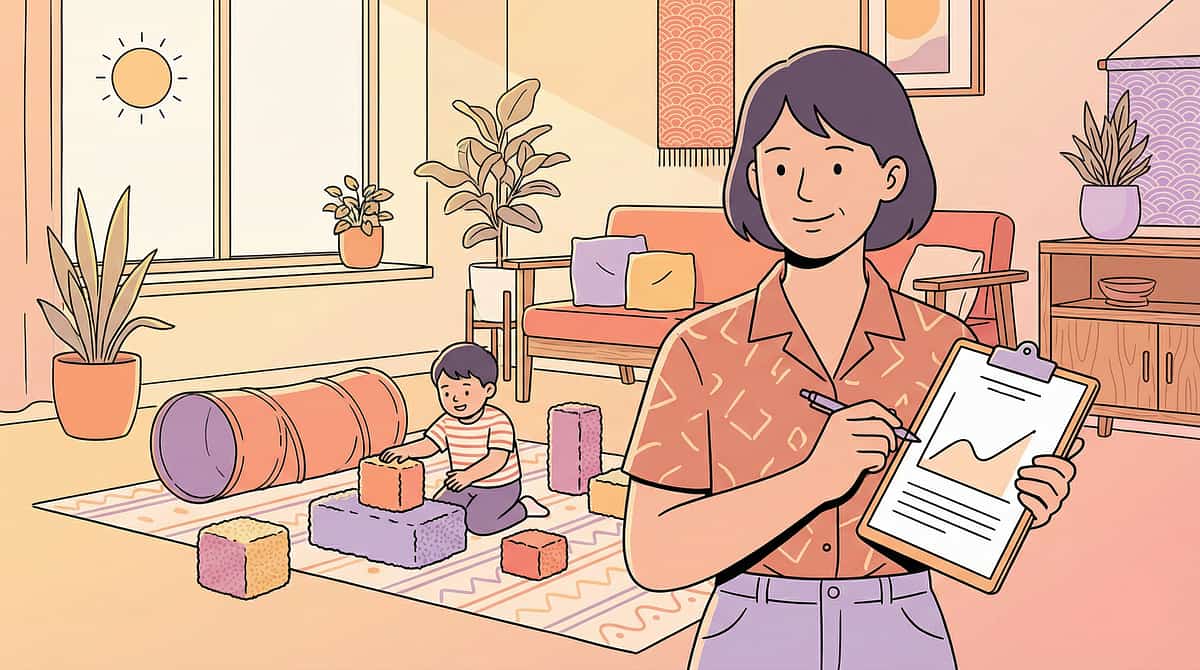
Capture the Data — Right Now
60 seconds of data now saves hours of guessing later. Data transforms your instinct into evidence — and helps professionals help your child more precisely.
Flexibility Moments
How many times did your child tolerate or attempt a variation? ⭕ 0 ⭕ 1 ⭕ 2 ⭕ 3 ⭕ 4+
Distress Level
Highest distress observed during any flexibility attempt? ⭕ None ⭕ Mild ⭕ Moderate ⭕ High ⭕ Session stopped
Materials Used Today
☐ Loose Parts ☐ Visual Menu ☐ Story Cards ☐ Timer ☐ Script Book ☐ Sensory Play ☐ Turn Game ☐ Videos ☐ Calm+Reward
📄Download: G-657 Weekly Progress Sheet (PDF) Track online: pinnacleblooms.org/track/G-657
📞 Not sure what your data means? Call 9100 181 181 — FREE. 24x7. 16+ languages. BACB Guidelines: Continuous measurement and discontinuous measurement as standard ABA practice.
ACT III · Card 21 of 40
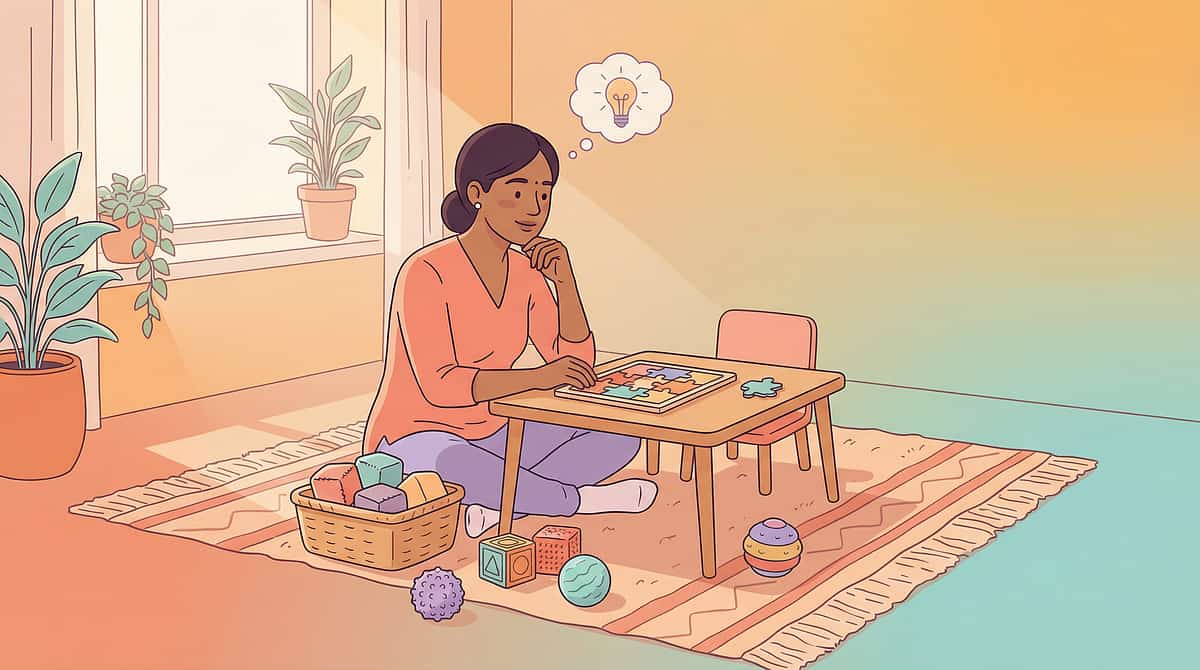
What If It Didn't Go As Planned?
Session abandonment is not failure — it is data. Every difficult session teaches you something essential about your child's current threshold and functional needs.
Problem 1: Child refused to engage with any new material
Why: Anxiety threshold was reached before curiosity. Fix: Start from the child's existing preferred play. Introduce ONE loose part (different colour block) into the existing lineup. The smallest variation that doesn't trigger distress is your starting point.
Problem 2: Child had a major meltdown when the timer rang
Why: Timer was associated with forced change without adequate preparation. Fix: Use timer for preferred activity first with NO change at the end — just praise for watching it. Associate timer with safety before using it to signal transition.
Problem 3: Child accepted one variation then refused every subsequent one
Why: Cognitive flexibility is a resource that depletes, especially early in training. Fix: One variation per session is sufficient. The tank is empty — don't push for more.
Problem 4: Story cards caused immediate refusal ("That's NOT in the story!")
Why: Script adherence is extremely strong; external challenge registered as rule-violation. Fix: Introduce "The Silly Card Game" framing — make the card obviously playful/humorous first. Start with absurd, funny variations (a dinosaur arrives at tea party).
Problem 5: Child now refuses ALL play and only wants preferred materials
Why: Too much pressure introduced too quickly — rigidity increased as a defense response. Fix: Two-week pause. Return to pure child-led, preferred play. Rebuild trust and safety. Then reintroduce with even smaller increments.
Problem 6: Child became severely distressed and I don't know if I should continue
Why: Rigidity may be more anxiety-driven than skill-deficit-driven. Fix: PAUSE PROGRAMME. Call 9100 181 181 for free guidance, or book a professional assessment. Anxiety-driven rigidity requires professional anxiety management alongside flexibility work.
Problem 7: I gave up halfway through because I felt guilty
Why: Watching your child in distress activates your nervous system too — this is completely understandable. Fix: A modified session with no distress is infinitely better than a full session with high distress. You are not failing by adapting. Your wellbeing matters.
ACT III · Card 22 of 40
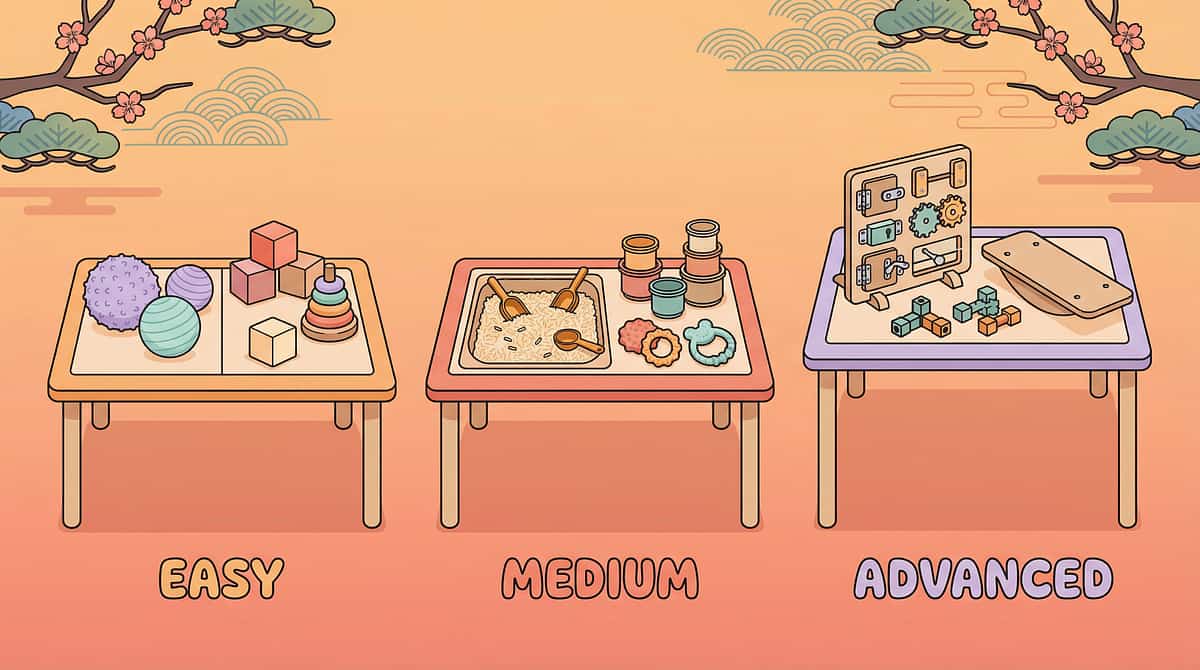
Adapt & Personalize for YOUR Child
No two children are identical. Rigid play serves different functions in different children — anxiety, sensory seeking, skill deficit, or neurological difference. The approach must match the function.
If rigidity is driven by... | Primary Materials | Approach | |
Anxiety | Calm-Down Tools + Sensory Play | Regulate FIRST. Never push flexibility on an anxious child. Visual predictability is essential throughout. | |
Sensory Seeking | Sensory Bins + Loose Parts | Meet sensory need through VARIETY. Provide the sensation differently each time — same input, different delivery. | |
Skill Deficit | Script Books + Video Modeling | Teach new scripts explicitly. Build repertoire before expecting flexibility. More scripts = more flexible choices. | |
Autism RRBs | All 9 materials + structured graduated approach | Slowest, most systematic approach. Accept functional flexibility as the goal, not "typical" flexibility. | |
Executive Function | Visual Timer + Visual Menu | External structure compensates for internal shifting deficit. Fade visual supports gradually over weeks. |
Age Modifications
Ages 2–3
Loose parts only. No expectation of compliance. Pure environmental provision is sufficient.
Ages 3–5
Add visual menu + sensory play. Brief story cards with humor and playfulness.
Ages 5–7
Full protocol. Games + timers + script books all available.
Ages 7–10
Peer-inclusive approaches. Turn games with friends. Video modeling + discussion.

ACT IV · Card 23 of 40
The Progress Arc
Week 1–2: What to Expect
Set realistic expectations. Most parents look for the wrong signs of progress in the first two weeks — and miss the real ones happening right in front of them.
15%
Progress to Date
Early phase: foundation building and tolerance development
✅ Indicator 1: Tolerates New Materials
Child tolerates the new materials being present in the room without distress — even if they don't touch them. This is real progress. Proximity before participation is a neurological milestone.
✅ Indicator 2: Shorter Distress Windows
Distress at variation lasts 10% shorter than it did before. Not gone — just slightly shorter. This is real progress. Neural inhibition is building.
✅ Indicator 3: Glances at Visual Menu
Child glances at the visual menu, even if they still choose the habitual option. Visual awareness is the precursor to visual choice. This is real progress.
✅ Indicator 4: One Timer Transition
Child completes one timer-based transition without full meltdown, even with significant support from you. This is real progress.
What Is NOT Progress Yet (and that's okay): Independent spontaneous flexibility · Choosing novel options unprompted · Playing a turn game without any distress · Incorporating a peer's idea without prompting. These come in weeks 5–8.
"If your child tolerates the material for 3 seconds longer than last week — that is genuine neural progress. Neuroplasticity moves in seconds, not leaps."
You will feel impatient. That is normal. The child's brain is building new circuitry. It cannot be rushed. Trust the process more than the outcome right now. PMC11506176: Play-based intervention outcomes emerge across 8–12 week timelines.

ACT IV · Card 24 of 40
Week 3–4: Consolidation Signs
The neural pathways are forming. Watch for these consolidation signals — they confirm that the new flexibility circuits are becoming habitual rather than effortful.
40%
Progress to Date
Consolidation phase: patterns solidifying, prompting needs reducing
Anticipates the Session
Child begins to anticipate the session — they know what's coming and don't dread it. Anticipation without dread is a profound shift from weeks 1–2.
Timer Transitions Independently
Timer transitions occur with less parent prompting — child begins to honor the timer on their own. The external regulator is internalizing.
Menu Choices Without Resistance
Child picks from the visual menu without significant resistance — even if still choosing familiar options, the act of choosing is becoming habitual and non-threatening.
Spontaneous Material Curiosity
Child shows curiosity toward one of the 9 materials unprompted — approaches the sensory bin, touches loose parts, wants to draw a story card. Intrinsic motivation emerging.
Faster Distress Recovery
Distress at variation is shorter and recovers faster — emotional regulation is actively improving alongside flexibility.
"The most exciting Week 3–4 sign: the child spontaneously applies flexibility in a context you didn't teach. They try a new food. They accept a different route to school. The neural flexibility circuit is generalizing." — Pinnacle Blooms Consortium®
When to increase intensity: If the child is showing all consolidation indicators and distress is minimal → increase session frequency to twice daily, OR introduce a second material type. Neuroplasticity: Synaptic strengthening through repeated structured input.

ACT IV · Card 25 of 40
Week 5–8: Mastery Indicators
75%
Progress to Date
Mastery zone: flexibility becoming generalized and self-sustaining
🏅 Mastery Criterion 1
Child independently selects from visual play menu (without prompting) in at least 3 out of 5 sessions.
🏅 Mastery Criterion 2
Child completes timer-based transition without distress in at least 4 out of 5 sessions.
🏅 Mastery Criterion 3
Child generates at least one self-initiated variation during play at least once per week.
🏅 Mastery Criterion 4
Child tolerates adult introducing a play variation without significant distress in 80%+ of attempts.
Generalization Check
- Is flexibility appearing in more than one setting? (Home + another environment = generalization mastered)
- Is flexibility appearing with more than one person? (Parent + another caregiver = generalization mastered)
Maintenance Check
Take a 5-day break from the active protocol. Does the flexibility persist? If yes — the skill is consolidated, not just performed. You may move to the next technique.
PMC10955541 + BACB mastery criteria standards.

ACT IV · Card 26 of 40
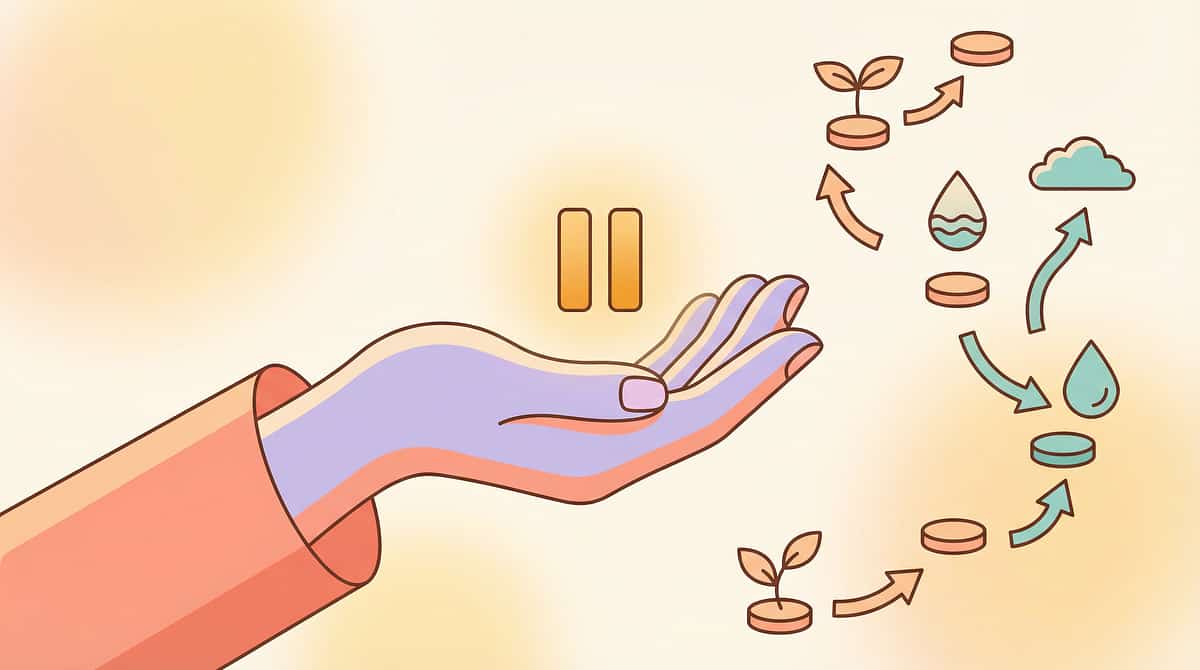
🎉 You Did This.
Your child grew because of your commitment.
Over the past 5–8 weeks, you created a safe, structured play environment from scratch, introduced 9 scientifically-validated materials, executed up to 5 session steps daily, tracked data through distress and doubt, stayed patient when you didn't feel patient, and gave your child's brain the graduated practice it needed to build entirely new neural circuits. That is not a small thing. That is therapeutic-grade work.
Safe Environment
Built from scratch — warm, structured, distraction-reduced
9 Materials Introduced
Each one targeting a different mechanism of rigidity
Data Tracked
Through doubt, through hard sessions, consistently
Patience Sustained
On the days you didn't feel patient — you stayed anyway
Family Celebration Suggestion
Plan a special celebration activity your child chooses — honoring their flexibility work. Let them pick dinner, a game, or an outing. This reinforces the message: "Your flexible brain earns real rewards."
📝 Journal Prompt
"Write down the single most surprising flexibility moment from these weeks. Read it again in 6 months."
Research Grounding
Parent self-efficacy is the strongest predictor of continued home-based intervention implementation. Celebrating milestones reinforces the commitment cycle that sustains long-term progress.
📞 Want to share your progress or plan next steps? 9100 181 181 — free, 24x7.
ACT IV · Card 27 of 40
Safety
Red Flags — When to Pause and Seek Guidance
Trust your instincts. If something feels wrong, pause and ask. The helpline exists precisely for this moment.
🚨 Red Flag 1: Rigidity Worsening
Child is MORE rigid than before you started, despite consistent intervention. This indicates anxiety-driven rigidity needs professional addressing before behavioral flexibility work continues.
🚨 Red Flag 2: New Repetitive Behaviors
Child develops NEW self-stimulatory patterns as flexibility in play increases. May indicate sensory needs are not being met. Consult OT immediately.
🚨 Red Flag 3: Clinical Anxiety Signs
Persistent fear, sleep disruption, or regression in other skills. Pause flexibility work entirely. Prioritize anxiety support first. Contact helpline now.
🚨 Red Flag 4: Social Communication Worsening
Social communication is significantly worsening alongside play changes. Comprehensive developmental evaluation required. Do not continue without professional guidance.
🚨 Red Flag 5: Child Avoids All Play
Child begins avoiding all play entirely (was previously playing rigidly but now avoids play entirely). Avoidance is developmentally worse than rigidity. Immediate consultation recommended.
🚨 Red Flag 6: Parent Burnout
You are experiencing significant distress, burnout, or helplessness about the process. Caregiver wellbeing is part of the intervention. You cannot give what you don't have. Call the helpline — it's for you too.
📞9100 181 181 — FREE | 24x7 | 16+ languages Self-resolve (minor adjustment) → Teleconsultation (book via helpline) → Pinnacle Center Visit (in-person assessment) WHO NCF (2018): Referral pathways integrated into service delivery.
ACT IV · Card 28 of 40
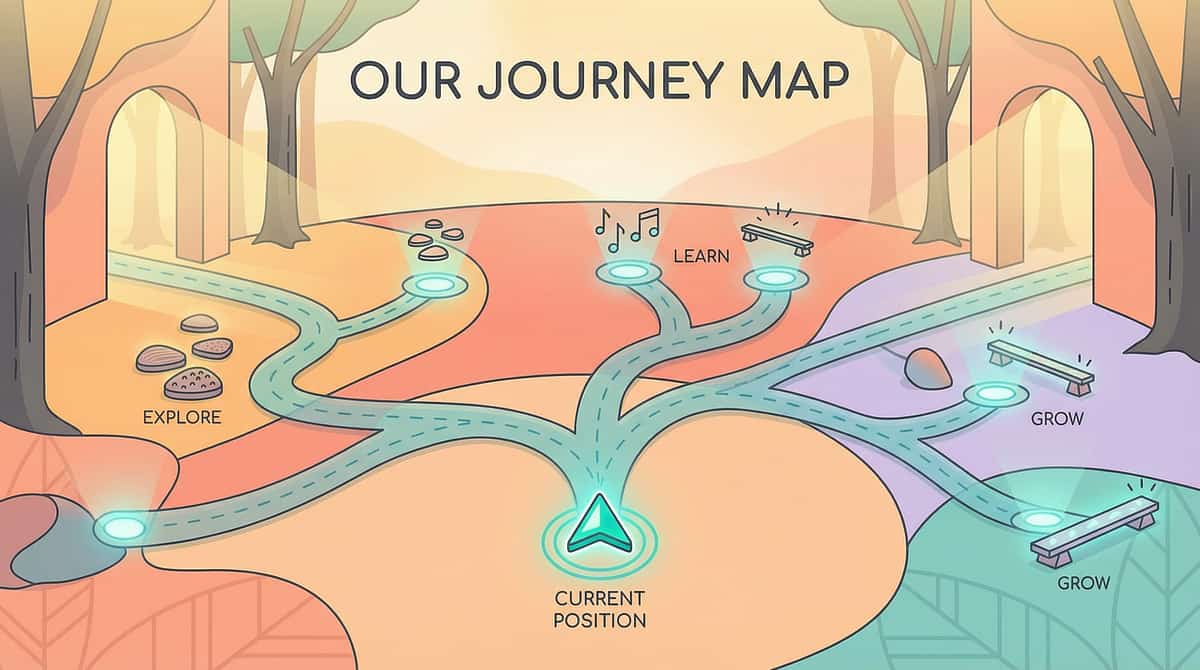
Your Child's Progression Pathway
Every technique lives in a continuum. Here is where G-657 sits in the broader Play Development domain — and where to go next.
→ G-658: Parallel & Interactive Play
If flexibility improved primarily within solo play — the next step is expanding into parallel and side-by-side peer contexts.
→ G-659: Cooperative Play Skills
If flexibility improved and peer interactions increased — ready for collaborative, cooperative play with shared goals.
→ G-430: Transition Difficulties
If transition difficulties persist beyond play flexibility — dedicated transition support techniques.
→ G-600: Cognitive Flexibility
If this approach didn't fully resonate — broader cognitive flexibility challenges domain offers alternative pathways.
Long-term developmental goal: Flexible, socially competent, creative play across contexts → Peer relationships → School participation → Social confidence. Each technique is one step on this path.
ACT IV · Card 29 of 40
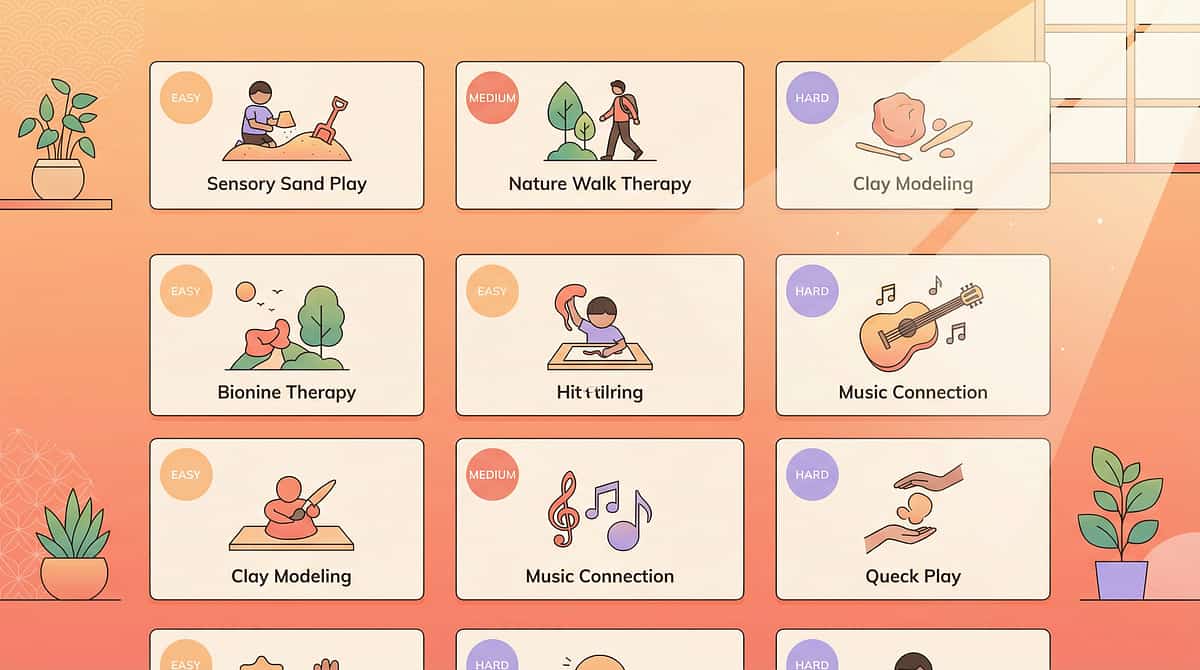
Related Techniques — Play Development Domain
You already understand the foundation. These build on it — each addressing a closely related skill that either precedes or follows play flexibility in the developmental arc.
Code | Technique | Difficulty | Primary Canon Materials | |
G-655 | 🎭 Pretend Play Development | 🟢 Intro | Loose Parts + Visual Supports | |
G-656 | 🌈 Imaginative Play Skills | 🟡 Core | Story Cards + Props | |
G-657 | 📍Play Flexibility ← YOU ARE HERE | 🟡 Core | All 9 Materials | |
G-658 | 👥 Parallel & Interactive Play | 🟡 Core | Turn Games + Visual Supports | |
G-659 | 🤝 Cooperative Play Skills | 🔴 Advanced | Social Scripts + Games | |
G-430 | 🔄 Transition Difficulties | 🟡 Core | Visual Timers + Transition Objects |
📂Domain: Play Development + Cognitive Flexibility + Social-Emotional Development All techniques in this domain are part of the Pinnacle 128 Canon Materials taxonomy. Techniques are sequenced by prerequisite skill, not age alone.
ACT IV · Card 30 of 40
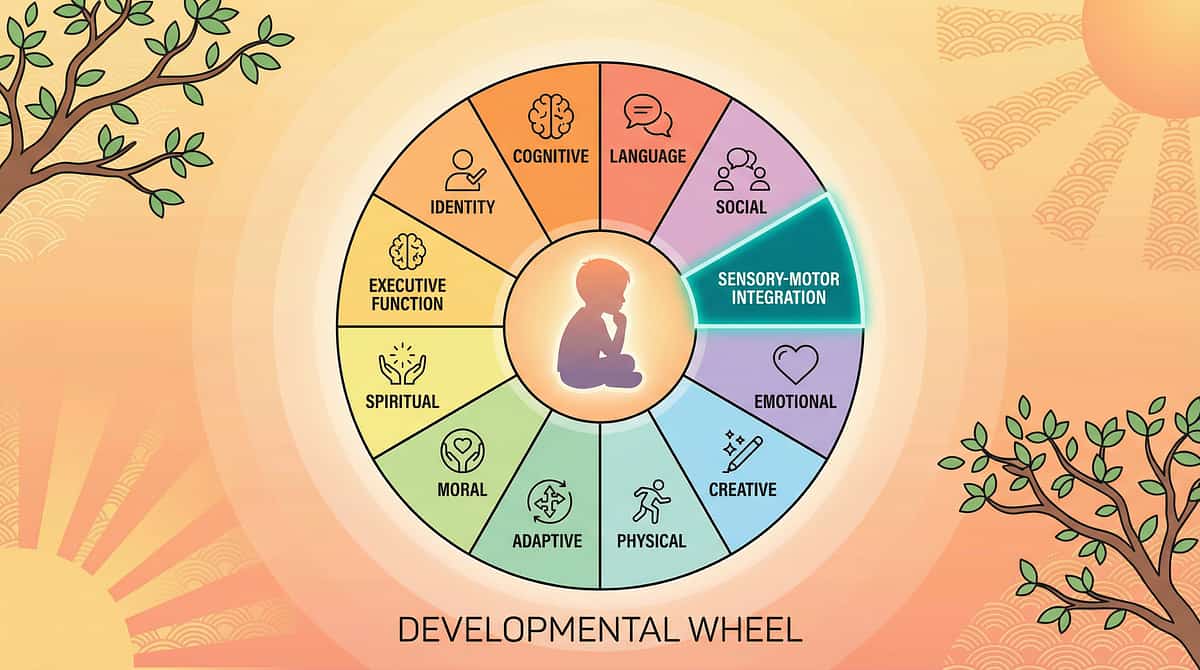
Your Child's Full Developmental Map
This technique is one piece of a larger, holistic plan. The 12-domain map helps families and therapists see how play flexibility connects to the full picture of child development.
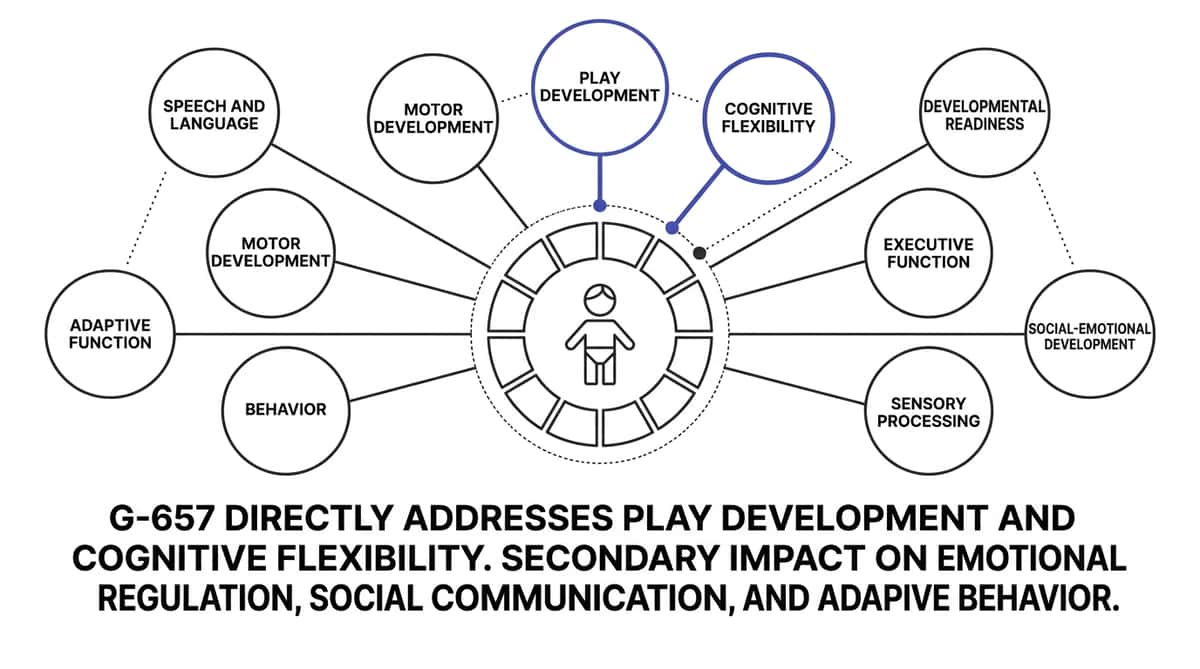
G-657 Domain Impact
Primary: Play Development + Cognitive Flexibility
Direct, targeted intervention across all 9 material categories
Secondary: Emotional Regulation + Social Communication
Cascade benefits from flexibility training extend naturally into these domains
Tertiary: Adaptive Behavior
Long-term functional flexibility across daily life contexts
GPT-OS® Integration
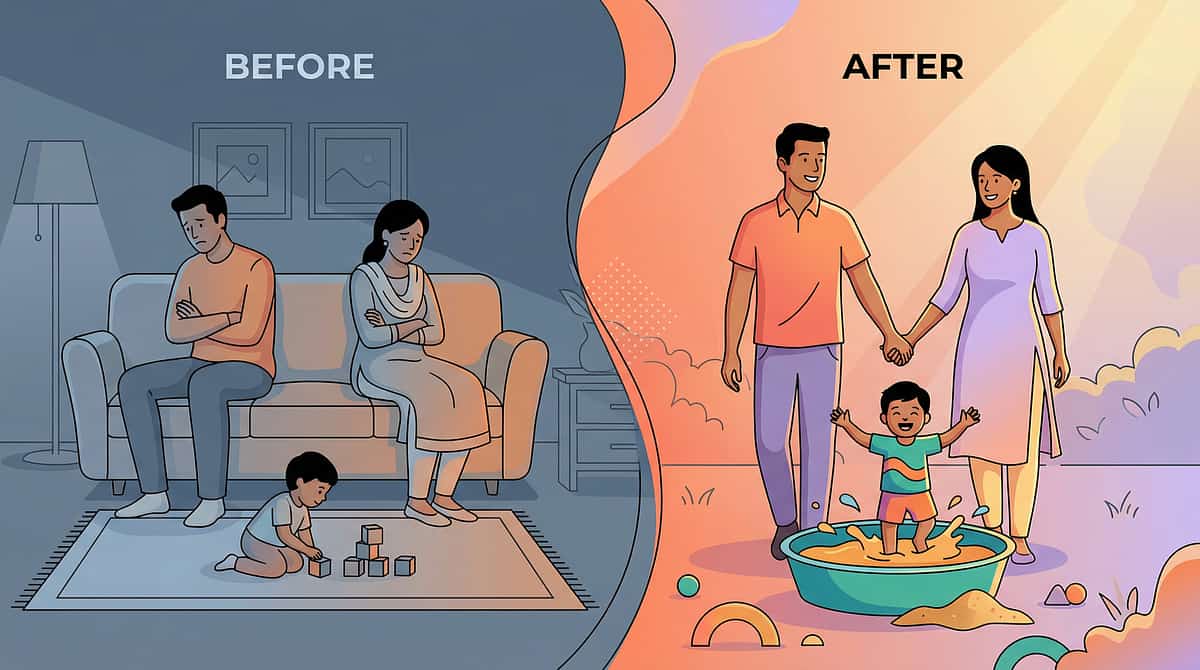
Using Pinnacle GPT-OS®? Your AbilityScore® assessment maps all 12 domains. G-657 interventions automatically update your child's Cognitive Flexibility Readiness Index and Adaptive Play Readiness Index.
WHO/UNICEF Nurturing Care Framework: Five components of nurturing care require holistic developmental monitoring. WHO NCF (2018) | UNICEF 2025 Country Profiles
ACT V · Card 31 of 40
The Community
Families Who've Been Here
Real journeys. Specific outcomes. Behavioral detail — not marketing. Individual outcomes vary by child profile, underlying conditions, and intervention consistency.
"Our son, age 4, only played trains. Not varied train play — the same 7 trains, in the same order, on the same track configuration, every single session. If we moved one engine, he screamed for 45 minutes. We were terrified to go anywhere because any disruption meant hours of recovery. After Week 8: He now has three 'acceptable' train configurations he rotates between. He drew a story card last Tuesday that said 'the train goes to a new city' and instead of melting down, he said 'okay' and moved two engines to a new track segment. Our OT called it a clinical breakthrough. For us, it was just Tuesday." — Parent, Pinnacle Network Center, Hyderabad · 8 weeks · Loose Parts, Visual Timer, Story Cards
"My daughter's play was like watching a movie on repeat — same script, same sequence, every day. We started with tiny changes she could barely notice. One different colour block in the lineup. Then a visual menu with just two choices. Now, eight months later, she played with her cousin for thirty minutes last week. Her cousin picked the game. They changed it halfway through. My daughter laughed when something unexpected happened. That might sound small. For us, it was everything." — Parent, Pinnacle Network, Bengaluru
"The families who see the most progress share one trait: they celebrated every tiny flexibility, even the nearly-invisible ones. The celebration itself is therapeutic — it rewires the child's emotional association with novelty from 'threat' to 'reward'." — Pinnacle OT, Lead Play Development Therapist

ACT V · Card 32 of 40
Connect With Other Parents
Isolation is the enemy of adherence. Community is the multiplier. Families who are connected to other families implementing the same protocol show significantly higher long-term consistency.
Play Flexibility Parent Community — WhatsApp
Join families navigating the same challenge. Share wins, troubleshoot together. A family who is 8 weeks ahead of you is your best guide for the next 8 weeks.
Pinnacle Parent Forum
Online discussions, Q&A with Pinnacle therapists, technique-specific threads. Ask your hardest questions without judgment.
Local Parent Meetups
Pinnacle centers run monthly parent support sessions. Find your nearest center. In-person connection with families in your own city changes the experience.
Peer Mentoring
Connect with a parent who is 6 months ahead of you in the same journey. Request a Mentor Parent — someone who has lived exactly what you are living right now.
"Your experience helps others. Consider sharing your journey — not just the wins, but the hard days too. That's what other parents need to hear." — Pinnacle Blooms Community Lead
📞9100 181 181 — FREE National Autism Helpline | 24x7 | 16+ languages WHO NCF: "Over 1,000 individuals from 111 countries contributed to the framework" — community engagement is a core principle. Parent support networks improve intervention adherence.
ACT V · Card 33 of 40
Your Professional Support Team
Home + Clinic = Maximum Impact. The most effective play flexibility programmes combine parent-administered home practice with coordinated professional support across disciplines.
Your Need | Specialist | Action | |
Play flexibility, sensory integration | Occupational Therapist (OT) | Book OT Session | |
Play scripts, social communication | Speech-Language Pathologist (SLP) | Book SLP Session | |
Reinforcement, video modeling | ABA Therapist / BCBA | Book ABA Session | |
Classroom application | Special Educator | Book SpEd Session | |
Diagnostic evaluation | NeuroDev Pediatrician | Book NeuroDev |
📱 Book Teleconsultation
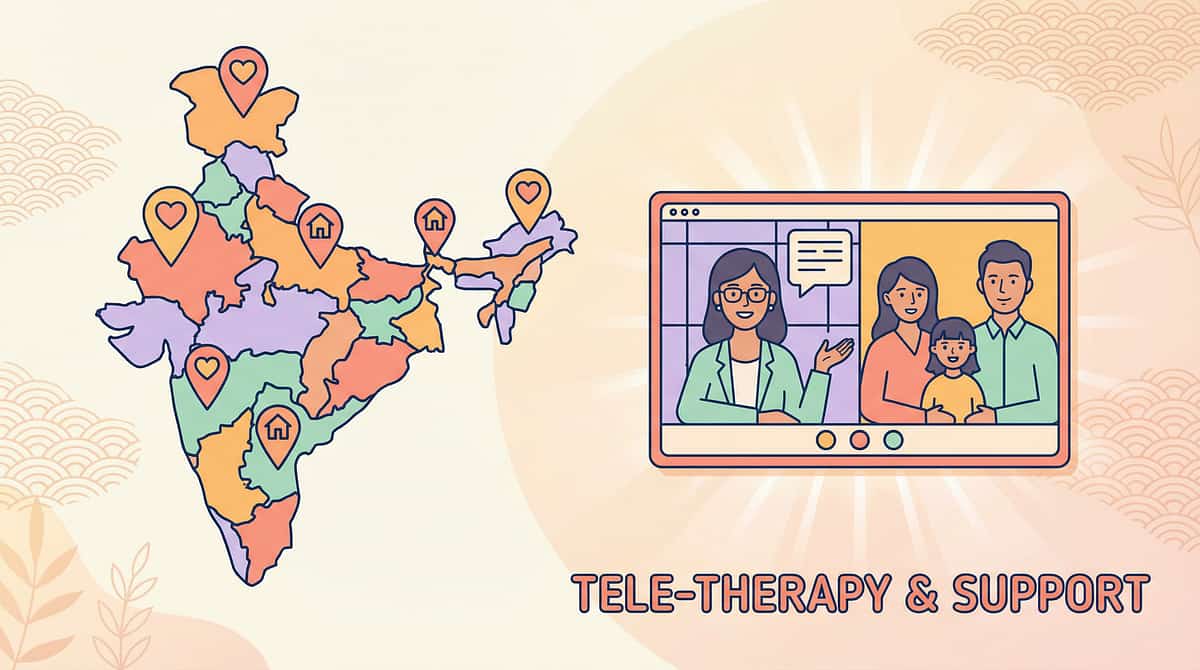
Available Pan-India. Remote families: full consultation via video call. No travel required. Same clinical quality, anywhere in India.
📞 FREE Helpline — Always First
9100 181 181 — Free. 24x7. 16+ languages. First call is always free. No appointment needed. The helpline team will guide you to the right specialist.
WHO NCF Progress Report (2023): 48% increase in countries adopting ECD policies. Primary health care as key platform for reaching all families.
ACT V · Card 34 of 40
The Research Library
For the parent who wants to go deeper — and for every therapist building evidence-based programmes. All citations are live and verifiable.
Study 1: PRISMA Systematic Review (2024)
16 studies confirm play-based cognitive flexibility interventions as evidence-based practice for ASD. 🔗PMC11506176
Study 2: Meta-Analysis, World J Clin Cases (2024)
24 studies: Play-based interventions effectively promote social skills, adaptive behavior, sensory processing. 🔗PMC10955541 | DOI: 10.12998/wjcc.v12.i7.1260
Study 3: Frontiers in Integrative Neuroscience (2020)
Comprehensive neurological framework for cognitive flexibility treatment in ASD. 🔗DOI: 10.3389/fnint.2020.556660
Study 4: Indian RCT, Indian J Pediatr (2019)
Home-based play interventions with significant outcomes in Indian pediatric population. 🔗DOI: 10.1007/s12098-018-2747-4
Study 5: WHO CCD Package (2023)
Evidence-based caregiver recommendations implemented across 54 LMICs. 🔗PMC9978394 | WHO/UNICEF CCD Package
Additional Standards: NCAEP Evidence-Based Practices Report (2020) — Video modeling + Visual supports classified as EBPs for autism · BACB Ethical Guidelines — Reinforcement and ABA practice standards
ACT V · Card 35 of 40
How GPT-OS® Uses Your Session Data
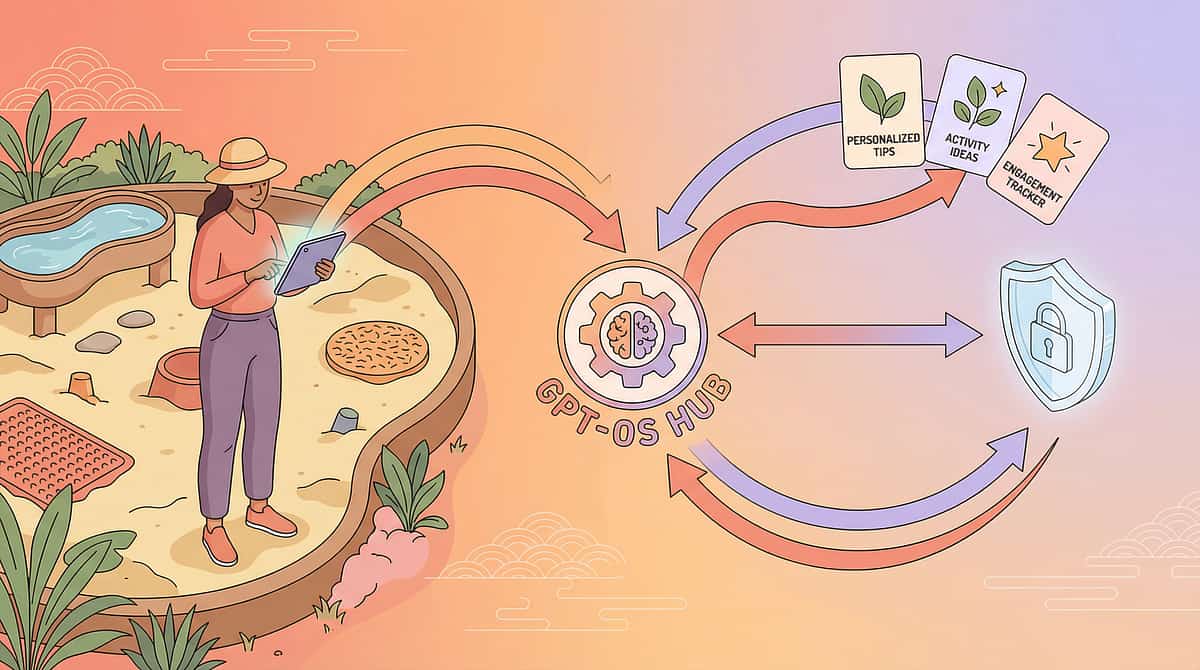
Transparency. Your data. Your child's outcomes. When you record your G-657 session data, it enters a closed-loop intelligence system that makes tomorrow's session smarter than today's.
What GPT-OS® Learns From G-657 Data
- How quickly this child builds flexibility tolerance
- Which of the 9 materials produces the lowest distress for this child specifically
- The optimal session length and frequency for this child's profile
- When to escalate to in-clinic support
🔒 Privacy Assurance
Data is anonymized for population-level learning. Individual data is private. DPIIT DIPP8651 compliance. Pinnacle does not sell or share personal data.
Population Impact
"20M+ sessions have taught GPT-OS® what works, for whom, and when. Your contribution makes the system smarter for the next family."
21 RCTs, 1,050 participants: Gamified digital health interventions for ASD show measurable outcomes (2024 meta-analysis).

ACT V · Card 36 of 40
Watch the Reel — G-657
Watch a Pinnacle therapist demonstrate all 9 materials in action — loose parts exploration, visual menu use, story card sessions, timer transitions, script books, sensory play, turn games, video modeling, and calm-down reinforcement. 60 seconds that can change how you see your child's play.
▶️ G-657 Reel
"9 Materials That Help With Play Flexibility" Series: Social-Emotional & Play Development in Children Episode 657 of 999 Hosted: pinnacleblooms.org/reels/G-657
🎬 Reel Metadata
- Reel ID: G-657
- Series: Social-Emotional & Play Development in Children
- Episode: 657 of 999
- Duration: 75–85 seconds
- Narrator: Pinnacle Consortium OT Lead
Why Watch?
Seeing all 9 materials demonstrated in context — with a real child and a real therapist — accelerates parent skill acquisition more than reading alone. Multi-modal learning is the most efficient path to confident implementation.
NCAEP (2020): Video modeling is classified as an evidence-based practice for autism. Multi-modal learning improves parent skill acquisition.
ACT V · Card 37 of 40
Share This With Your Family
Consistency across caregivers multiplies impact. When grandparents, teachers, and all caregivers understand and support the same approach, progress accelerates significantly.
Share Buttons
📱 WhatsApp
Share directly to family group
📧 Email
Forward to school team
🔗 Copy Link
techniques.pinnacleblooms.org/play-development/play-flexibility-G-657
📄 Downloadable Resources
- G-657 Family Guide — 1-page PDF for grandparents, teachers, and all caregivers
- G-657 School Communication Template — ready-to-send letter for your child's teacher
Explain to Grandparents — Copy This
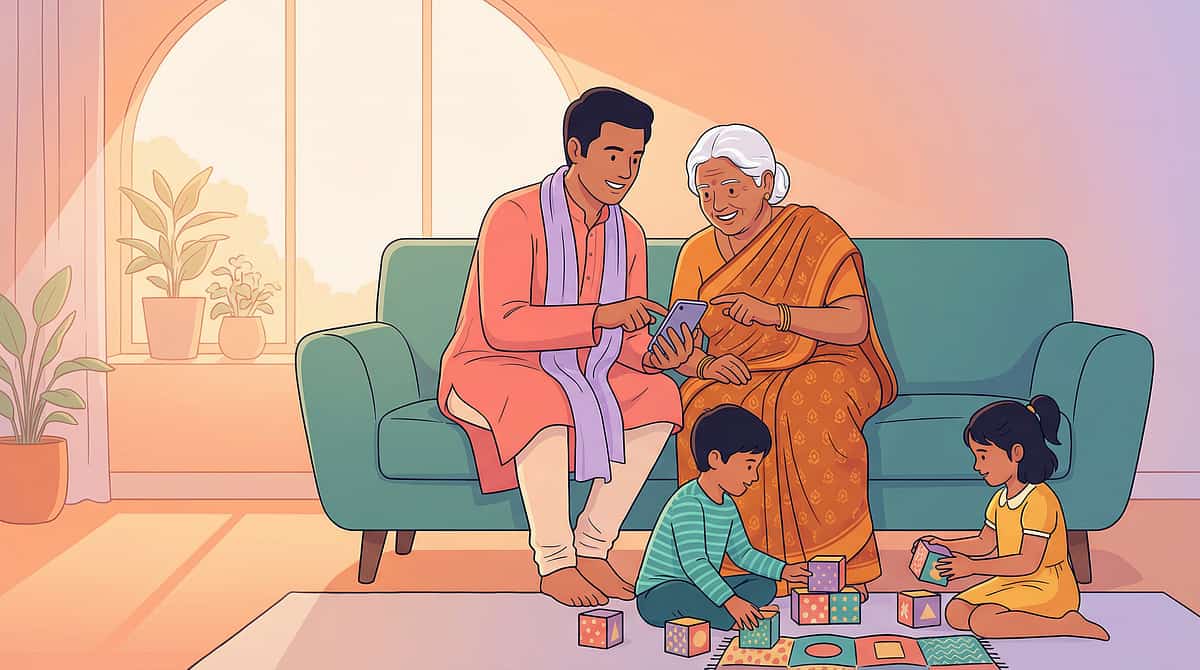
"Your grandchild has difficulty with play flexibility — they need to play the same way every time and become very upset if anything changes. We are helping them by gently introducing small variations using special materials. When you play with them: (1) Follow their lead. (2) If they accept any variation, celebrate it warmly. (3) Don't force new play. (4) Call us if you see major distress. Thank you for helping."
WHO CCD Package: Multi-caregiver training is critical for intervention generalization and maintenance. PMC9978394

ACT VI · Card 38 of 40
The Close
Frequently Asked Questions
Q1: How do I know if my child's play rigidity is a sign of autism?
Play rigidity is one of the diagnostic criteria for ASD, but it also occurs in anxiety, sensory processing differences, and developmental delays. If rigidity is severe, pervasive, and causing distress and social problems, a formal developmental evaluation is warranted. Call 9100 181 181 for guidance on assessment pathways.
Q2: My child is 8 years old — is it too late?
No. Neuroplasticity continues throughout childhood and beyond. The approach may need to be more cognitive (explicit discussion, rule explanation) and less material-based for older children, but flexibility CAN be built at any age. Older children respond well to video modeling and rule-based games.
Q3: How do I introduce loose parts when my child reacts to new things?
Start by placing loose parts in a separate container the child does not have to interact with. Let them be present for several days. Then model using them yourself without inviting the child. Curiosity builds before willingness — every time.
Q4: Can I use all 9 materials at once?
Start with 1–2 materials only. Introduce one new material every 1–2 weeks. Overwhelming a rigid child with nine new approaches simultaneously would be counterproductive and could increase rigidity as a defense response.
Q5: The visual menu isn't working — my child always picks the same option.
Choosing the same option from a menu IS a flexibility milestone early in the programme (vs. not being able to engage with the menu at all). The goal shifts over time to different choices. For now, celebrate the menu interaction itself — it is genuine progress.
Q6: Should I stop the programme if my child is upset?
Mild, brief distress that resolves quickly is part of the flexibility-building process. Significant, sustained distress is a stop signal. Use the red/amber/green framework from Card 11. If in doubt, call 9100 181 181.
Q7: My therapist hasn't mentioned these materials. Should I tell them?
Yes — always share your home programme with your clinical team. This page can be shared directly with your therapist. Pinnacle materials are designed to complement professional therapy, not replace it. Your therapist may have valuable modifications specific to your child.
Q8: How long before I see real change?
Most families see measurable change in flexibility tolerance within 3–4 weeks of consistent daily practice. Full mastery indicators typically appear in weeks 5–8. Some children take longer — this is normal, not failure.
🔗 Didn't find your answer? Ask GPT-OS® | 📅 Book Teleconsultation | ☎️9100 181 181

ACT VI · Card 39 of 40
Your Child's Play Flexibility Journey Starts Today.
You have the science. You have the materials. You have the protocol.
Every day you delay is another day your child's flexibility circuit goes without the exercise it needs. Every day you begin is a day the neural pathway gets a little wider, a little stronger, a little more habitual. Today is the right day.
🏥 Validated By The Pinnacle Blooms Consortium®
OT · SLP · ABA · SpEd · NeuroDev · CRO · WHO/UNICEF-Grade Standards Clinically validated. Home-applicable. Parent-proven.
📞FREE National Autism Helpline: 9100 181 181 Available 24x7 in 16+ languages — No appointment needed. First call is always free.
Preview of 9 materials that help with play flexibility Therapy Material
Below is a visual preview of 9 materials that help with play flexibility therapy material. The pages shown help educators, therapists, and caregivers understand the structure and content of the resource before use. Materials should be used under appropriate professional guidance.


Link copied!

ACT VI · Card 40 of 40
The Pinnacle Promise
From fear to mastery. One technique at a time.
🏥 Pinnacle Blooms Network®
Built by Mothers. Engineered as a System. OT · SLP · ABA/BCBA · SpEd · NeuroDev · Developmental Pediatrics · CRO · WHO/UNICEF 20M+ Sessions · 97%+ Improvement · 70+ Centers · Patents Filed in 160+ Countries
Powered by GPT-OS® Stack
Global Pediatric Therapeutic Operating System AbilityScore® → Prognosis Engine → TherapeuticAI® → EverydayTherapyProgramme™ → FusionModule™ → Closed-Loop Control
Navigate
📞 FREE National Autism Helpline
9100 181 181 16+ languages | 24x7 pinnacleblooms.org | care@pinnacleblooms.org
Legal Identifiers
CIN: U74999TG2016PTC113063 DPIIT: DIPP8651 (Govt. of India) MSME Udyog Aadhaar: TS20F0009606 GSTIN: 36AAGCB9722P1Z2
Medical Disclaimer: This content is educational and does not replace individualized assessment and intervention from licensed developmental specialists, occupational therapists, behavioral therapists, or clinical psychologists. Significant play rigidity may be a feature of autism spectrum disorder, anxiety disorders, or other developmental conditions requiring comprehensive evaluation. Materials and strategies should be matched to each child's specific needs, underlying causes, and developmental profile.
© 2025–2026 Pinnacle Blooms Network®, unit of Bharath Healthcare Laboratories Pvt. Ltd. All rights reserved. · techniques.pinnacleblooms.org/play-development/play-flexibility-G-657