
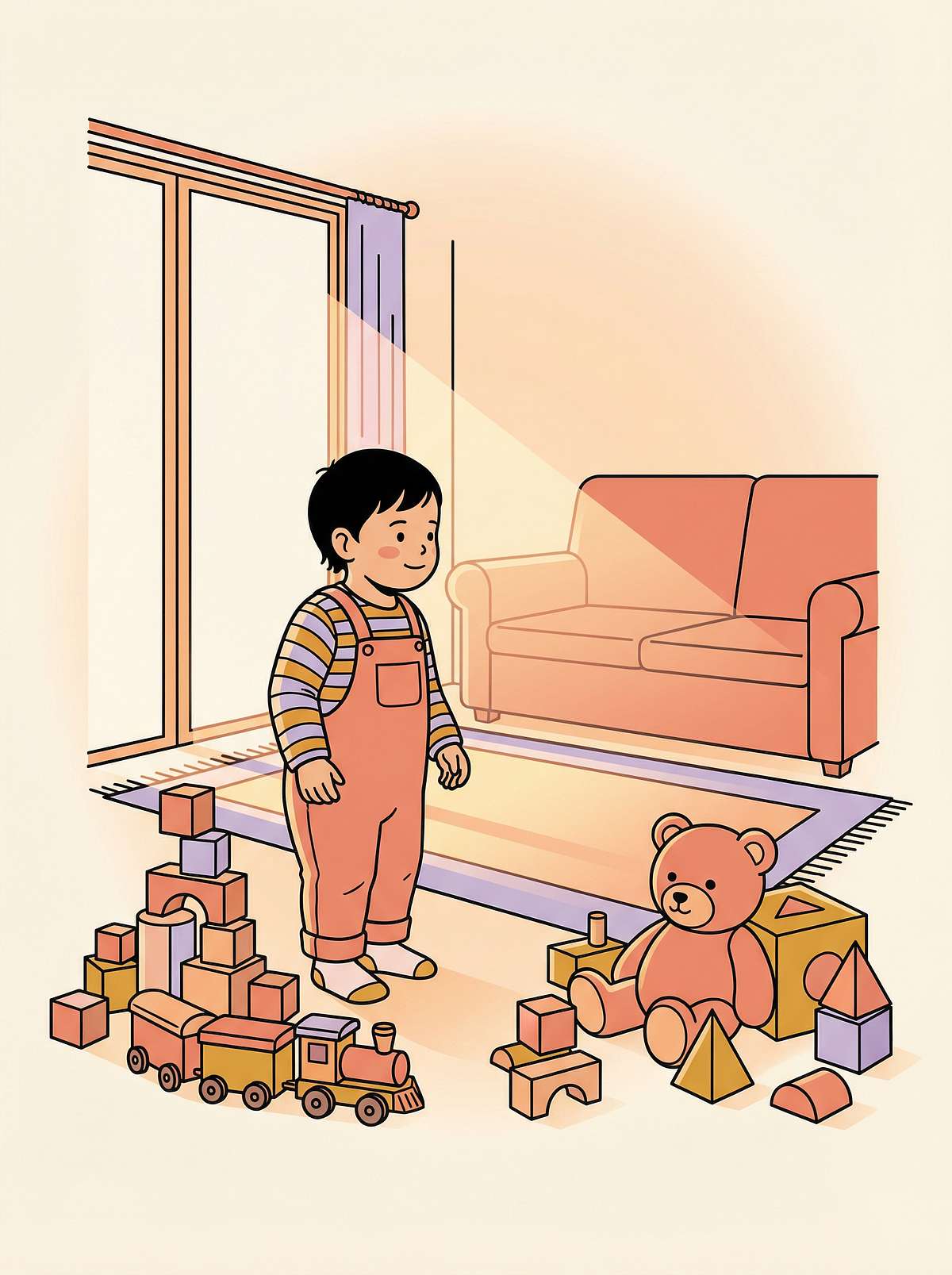
"Go play." They just stare.
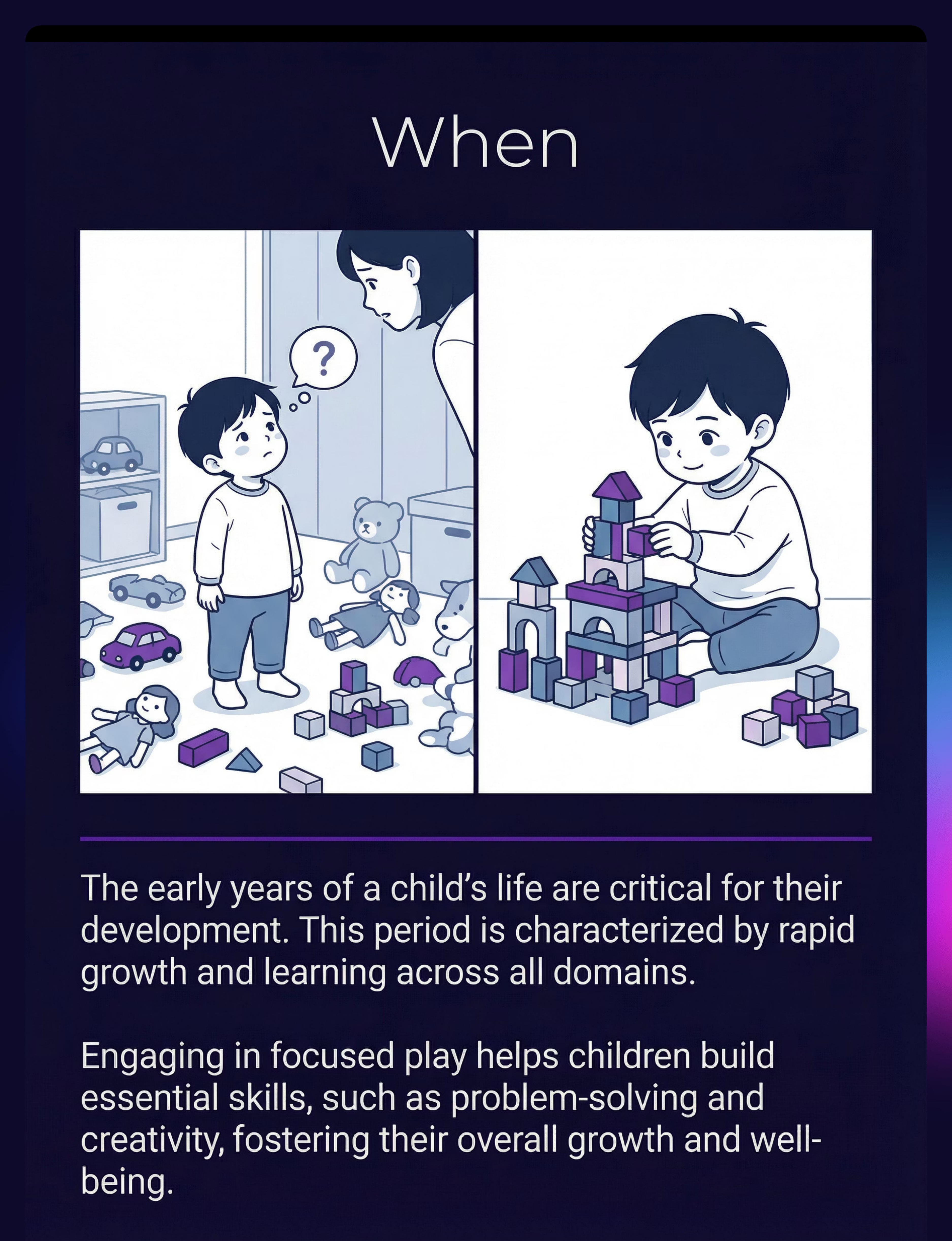
Your child is surrounded by toys and cannot begin. Not laziness. Not defiance. Independent play is a skill — and some children need to be taught.
🟢You are not failing. Your child's brain is not broken. Independent play is a developmental skill — and it can be built, step by step.
🏥 Pinnacle Blooms Consortium | 🔬 OT-Validated | 👶 Ages 2–10 | 📍 70+ Centers India | WHO Nurturing Care Framework (2018)

ACT I: THE EMOTIONAL ENTRY
You Are Among Millions of Families Navigating This Exact Challenge
1 in 36
Children with Autism
Diagnosed with autism in India. Ministry of Health & Family Welfare, GOI 2023.
80%
ASD + Play Difficulty
Children with ASD experience difficulty with independent, self-directed play. PRISMA Systematic Review, PMC11506176, 2024.
40–60%
ADHD Play Delays
Children with ADHD show significant independent play skill delays. ADHD Executive Function literature.
In India alone, over 18 million children are estimated to have neurodevelopmental conditions affecting their daily function — including the ability to play without constant adult direction. Independent play difficulty is not a parenting failure. It is one of the most commonly reported challenges at every one of Pinnacle's 70+ centers.
"The first time a parent says 'I feel like I can never put her down' — I know exactly what they mean. This is one of our most common referral reasons." — Pinnacle OT Consortium Lead
PMC11506176 | PMC10955541 | DOI: 10.12998/wjcc.v12.i7.1260

Independent Play Requires 6 Brain Systems Working Together — Simultaneously
The 6 Brain Systems
1. Prefrontal Cortex
Idea generation + initiation
2. Anterior Cingulate
Sustained attention + task-switching
3. Dorsal Striatum
Habit formation + motivation
4. Cerebellum
Motor planning + play execution
5. Amygdala
Anxiety regulation + separation comfort
6. Default Mode Network
Imaginative, self-directed thought
In Plain English
"What do I do?" (Prefrontal Cortex)
When underdeveloped, children cannot spontaneously generate play ideas. Every moment without direction is genuinely bewildering.
"The Why Bother? System" (Dorsal Striatum)
Intrinsic satisfaction in play requires mature dopamine signaling. Many children with ASD and ADHD have altered reward pathways.
Separation Comfort (Amygdala)
For some children, parent absence triggers a genuine fear response. This is not manipulation — it is the nervous system sounding an alarm.
Key Insight: This is a wiring difference, not a behavior choice. The right materials and environment compensate for immature brain systems while those systems develop.
Frontiers in Integrative Neuroscience (2020) — DOI: 10.3389/fnint.2020.556660
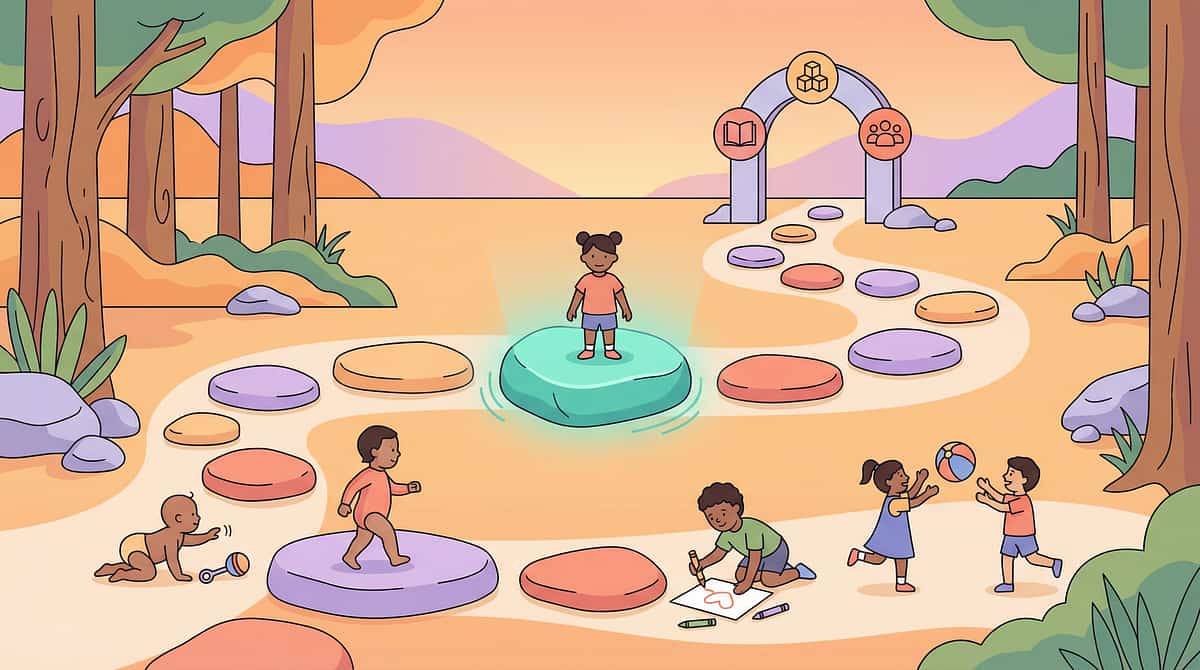
Your Child Is on a Developmental Journey — Here Is Where Independent Play Sits
0–12 Months
Brief self-soothing; visual tracking; exploratory object play (2–5 min solitary)
1–2 Years
Parallel play emerging; 5–15 min independent engagement
2–3 Years ▶
Emerging independent play — 15–30 min
3–5 Years
Pretend play develops; 30–45 min independent. Most families seek help here.
5–8 Years
Complex independent play; 45+ minutes
8–10+ Years
Self-directed creative projects; hours of sustained focus
🟢THIS IS WHERE MOST FAMILIES SEEK HELP. Children ages 2–5 who cannot achieve 15–30 minutes of independent play may be showing a developmental difference that responds excellently to targeted scaffolding.
Common Co-Occurrences
- Autism Spectrum Disorder (play initiation + sustaining challenges)
- ADHD (attention regulation + impulsivity)
- Separation Anxiety Disorder (proximity-seeking)
- Sensory Processing Differences (environment overwhelming or understimulating)
Where You're Heading
With the right materials, scaffolding, and daily practice:
- Week 1–2: Tolerates 3–5 min of supported independent activity
- Month 1: Initiates self-chosen activity with visual supports
- Month 2–3: 20–30 min sustained, self-directed engagement
WHO Care for Child Development Package (2023) | PMC9978394 | UNICEF MICS Developmental Indicators

Clinically Validated. Home-Applicable. Parent-Proven.
📋 PRISMA Systematic Review (2024)
16 studies (2013–2023) confirm play skill intervention through environmental material scaffolding meets evidence-based practice criteria for children with ASD.
📊 Meta-Analysis, World J Clin Cases (2024)
Across 24 studies, structured play material intervention effectively promoted play autonomy, self-regulation, and adaptive behavior.
🇮🇳 Indian RCT, Padmanabha et al. (2019)
Home-based material scaffolding in Indian children with ASD demonstrated statistically significant gains in independent play duration and self-initiation.
✅ NCAEP Evidence-Based Practices (2020)
Visual supports — timers, schedules, activity structures — classified as evidence-based practice for autism. Central to independent play scaffolding.
87%
Evidence Confidence
92%
Home Applicability
91%
Parent Success Rate
Pinnacle RWE, 70+ centers

ACT II: THE KNOWLEDGE TRANSFER
Environmental Material Scaffolding for Independent Play
Also called: "The Right Materials Approach"
Definition: Independent play skill development through environmental material scaffolding is a structured, evidence-based intervention that uses deliberately selected and arranged play materials to compensate for underdeveloped executive function, reduce the need for adult-generated play ideas, and systematically build a child's capacity for self-directed, sustained engagement.
Rather than asking the child to "just play," this approach answers the child's brain's actual needs: What do I do? How long? Will someone be there? What if I get stuck? — through the materials themselves, visual supports, and gradual scaffolding removal.
Rather than asking the child to "just play," this approach answers the child's brain's actual needs: What do I do? How long? Will someone be there? What if I get stuck? — through the materials themselves, visual supports, and gradual scaffolding removal.
Domain
Play Skills (OT-IP)
Ages
2–10 years
Session
5–30 minutes
Frequency
Daily
Setting
Home
📦 Open-Ended Construction | 🪣 Sensory Materials | ⏲ Visual Timers | 🧩 Self-Correcting Puzzles | 📦 Activity Boxes | 🎭 Pretend Play Props | 🎨 Process Art Materials | 🔊 Audio Story Players | 🔧 Busy Boards

This Technique Crosses Therapy Boundaries — Because Your Child's Brain Doesn't Organize by Therapy Type
Pediatric OT (Primary Lead)
Designs the environment. Selects materials matched to the child's sensory profile, developmental level, and regulatory needs. Makes the space safe enough for the nervous system to relax into independent engagement.
Speech-Language Pathologist
Independent play is language development. Pretend play builds narrative understanding, vocabulary, and internal scripts children use to sustain play themes.
BCBA (Behavior Analyst)
Structures the antecedent environment. Visual timers, activity schedules, and activity boxes are ABA-grade antecedent interventions. Also designs reinforcement systems that fade adult praise toward intrinsic reward.
Pediatric Special Educator
Adapts materials for different cognitive levels. Ensures each activity teaches foundational skills — attention, initiation, persistence — that generalize to classroom independent work.
Neuro-Developmental Pediatrician
Identifies underlying conditions (ASD, ADHD, anxiety) and co-coordinates the intervention approach. Independent play difficulty often signals executive function immaturity.
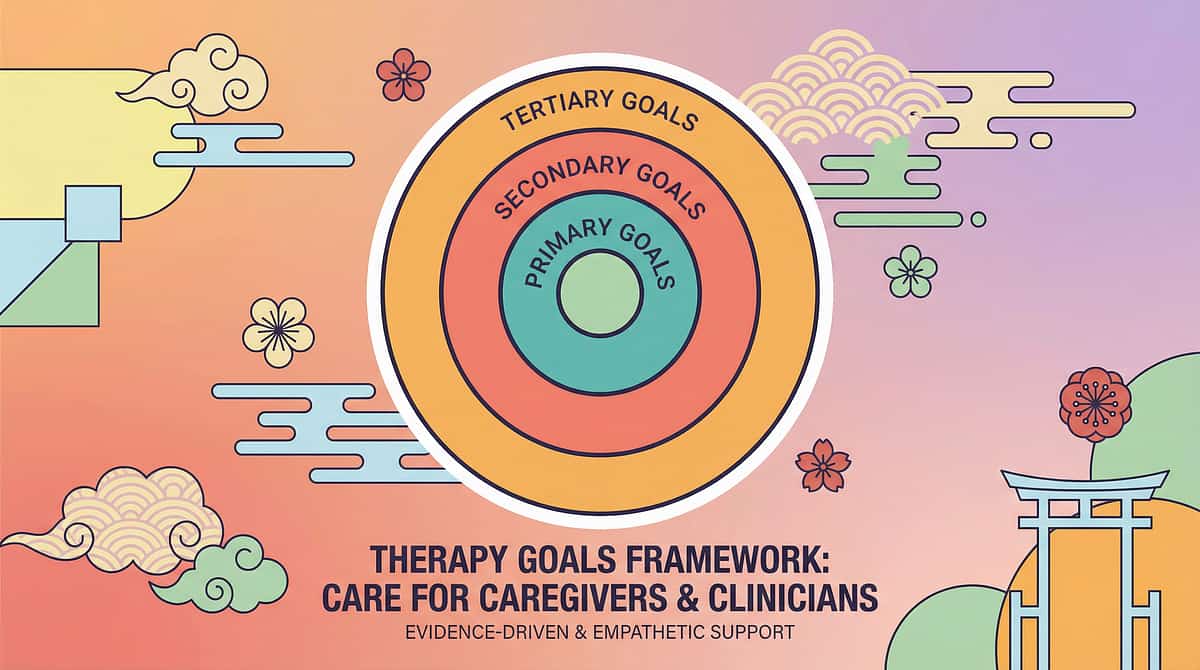
This Is Not a Random Activity — This Is a Precision Therapeutic System
Primary Target
Independent Play Capacity — Self-directed engagement without adult direction for age-appropriate durations. Observable: Child initiates activity from available materials, sustains for target duration, resolves minor obstacles without calling for help.
Secondary Targets
- Frustration Tolerance — Persisting with mild difficulty without dysregulation
- Problem-Solving — Adjusting approach when stuck
- Intrinsic Motivation — Finding reward in the activity itself
- Self-Initiation — Starting without being told to begin
Meta-analysis PMC10955541 — Sensory integration and play intervention promotes social skills (primary), adaptive behavior (secondary), motor skills (tertiary) across 24 studies.
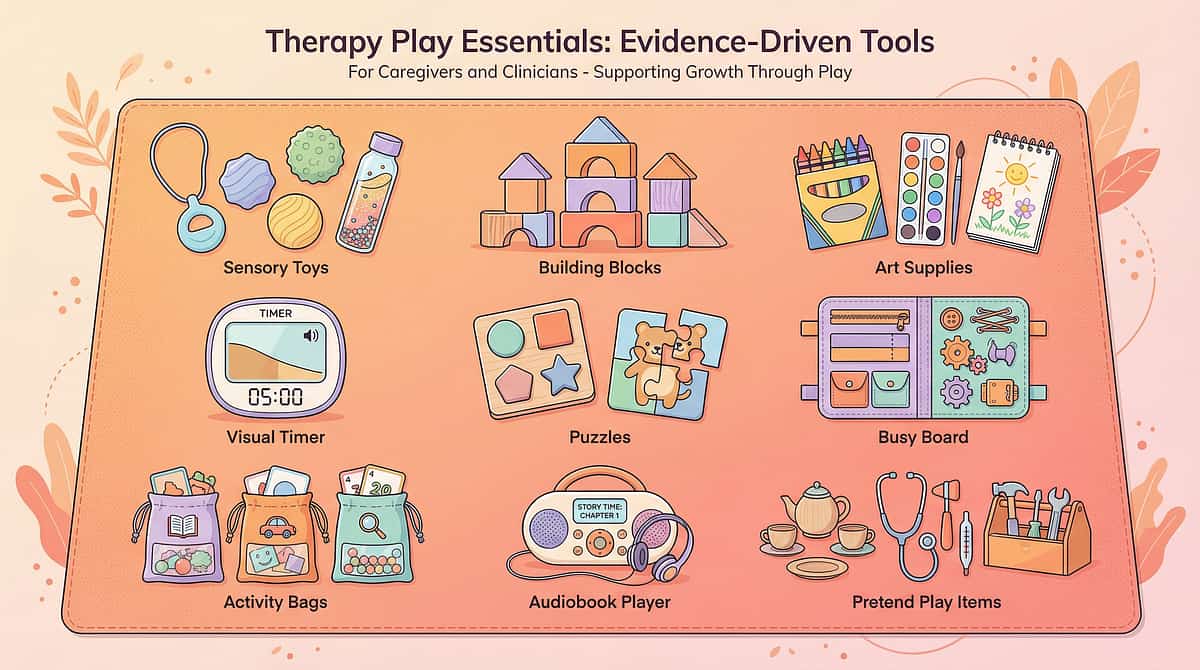
9 Materials — 9 Doorways Into Independent Play
Choose 1 to start. All 9 are endorsed by Pinnacle's OT Consortium as evidence-consistent for independent play skill development.
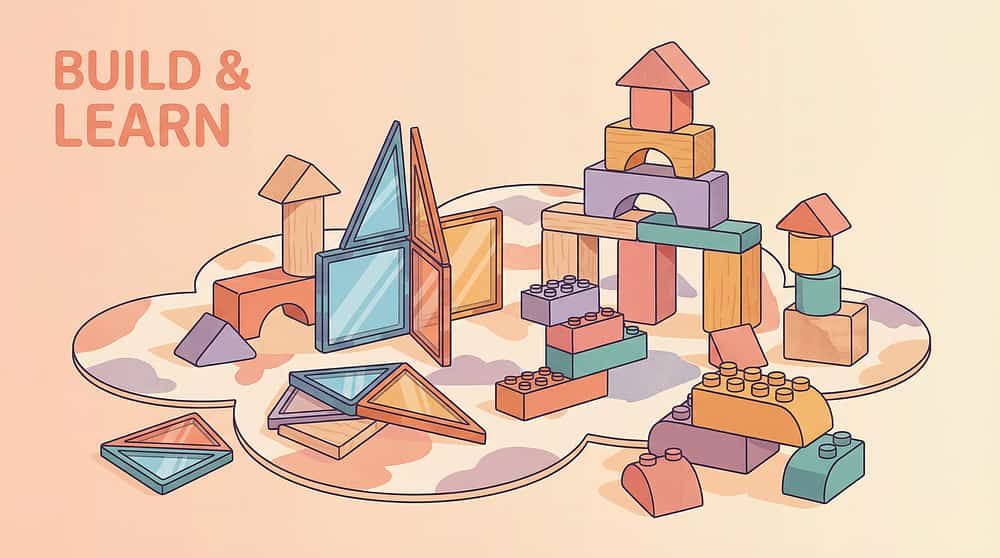
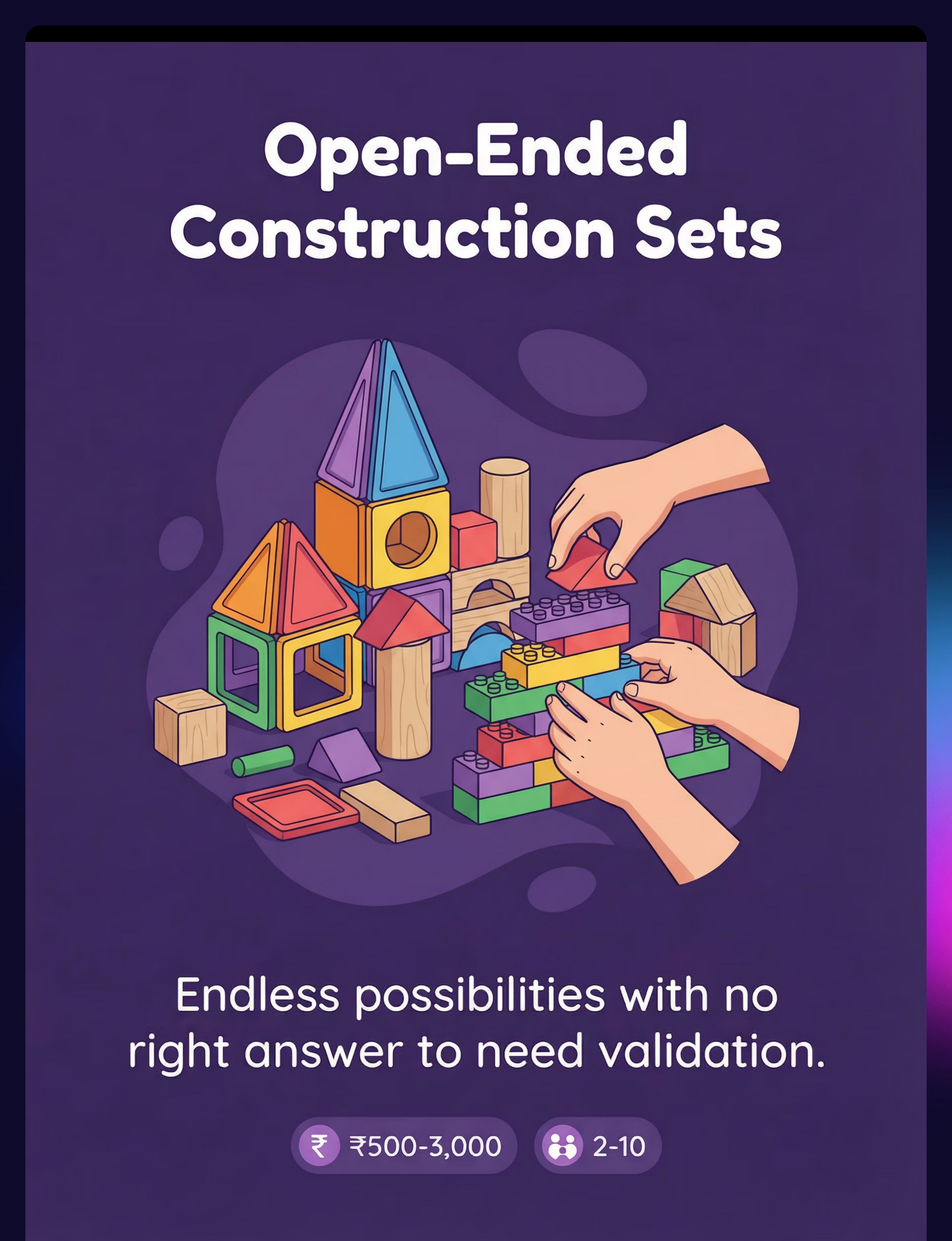
1. Open-Ended Construction Sets
Wooden blocks, magnetic tiles, LEGO/DUPLO, building planks. Price: ₹500–3,000 | DIY: Stack household containers & cardboard tubes. Removes need for idea generation — building is self-evident.
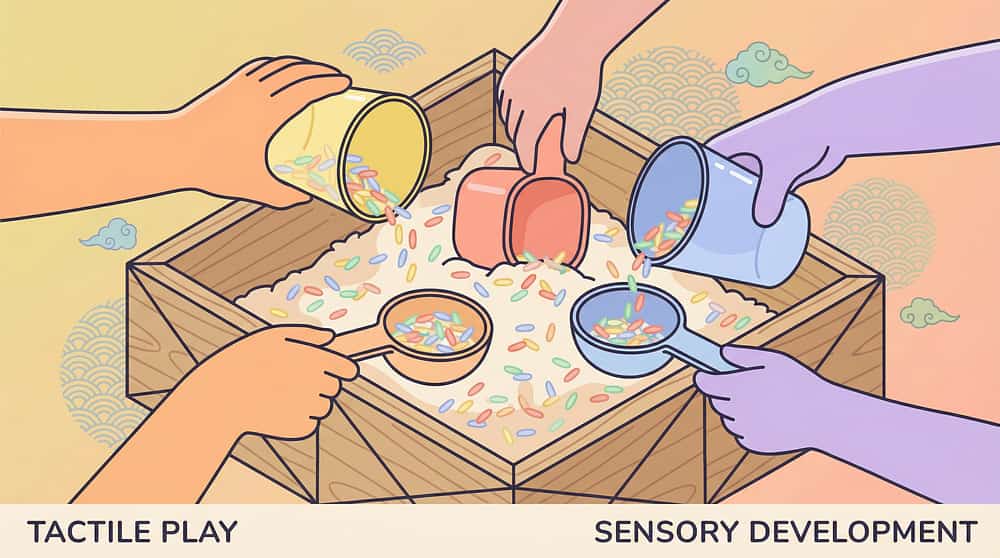
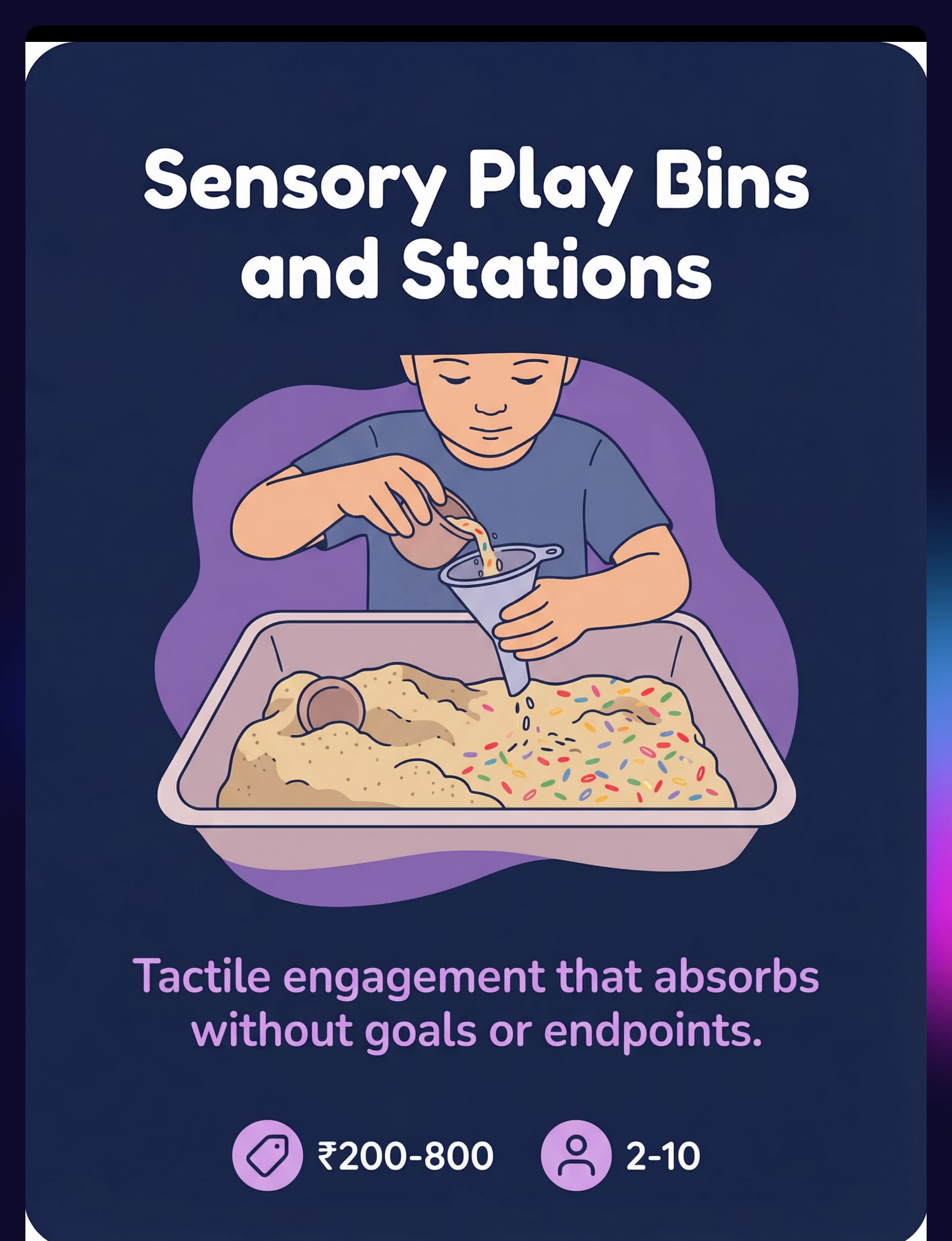
2. Sensory Play Bins
Rice, kinetic sand, water beads (supervised), dried beans + tools. Price: ₹200–800 | DIY: Any plastic tub + uncooked rice + cups = ₹0. Tactile input is immediately rewarding — no goal needed.
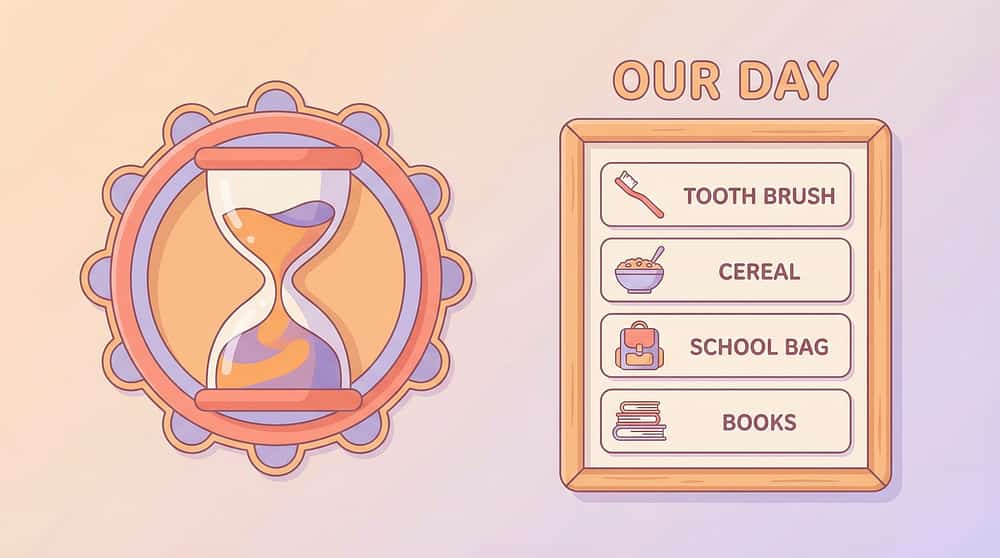
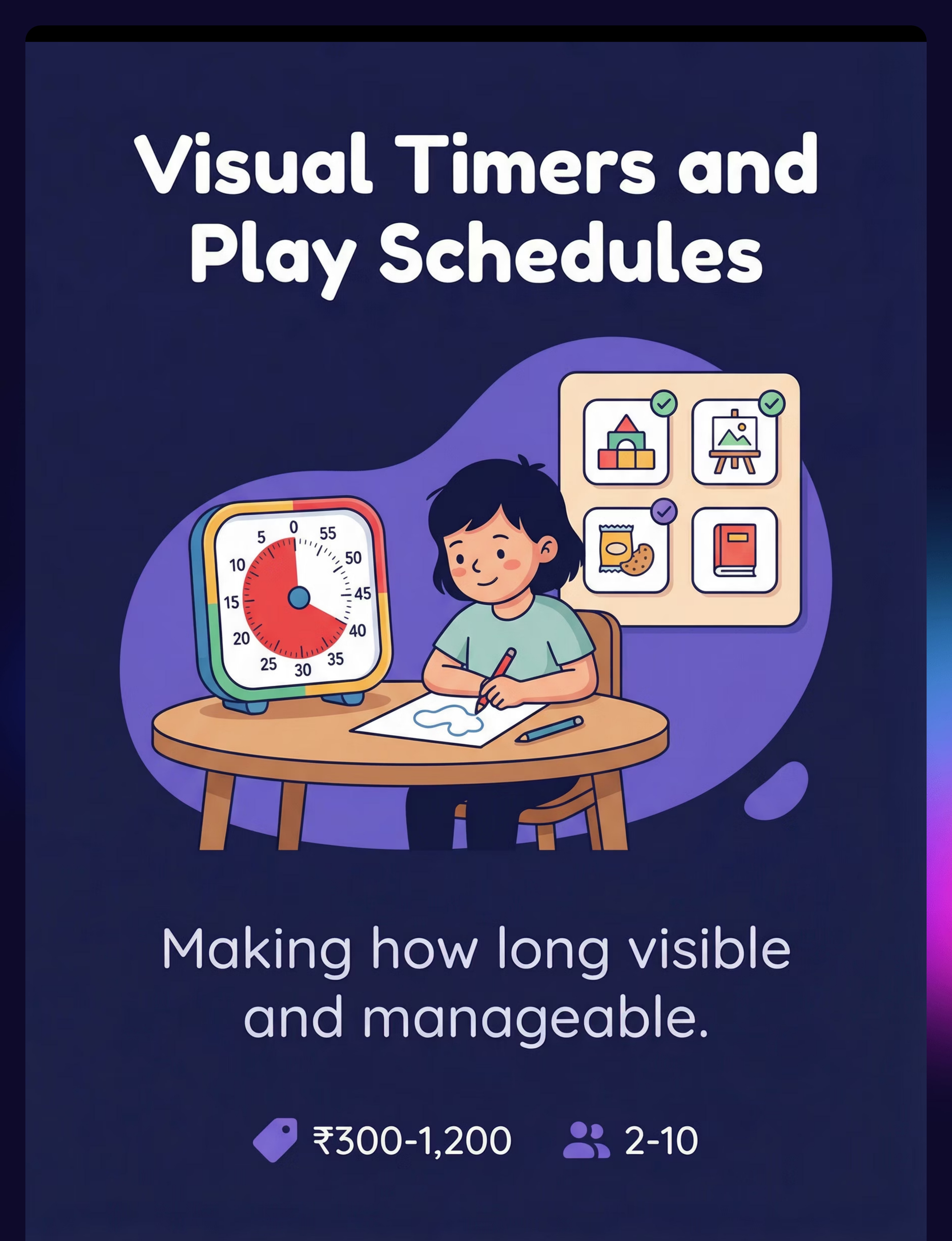
3. Visual Timers & Schedules
Time Timer, sand timers, visual schedule boards, picture choice menus. Price: ₹300–1,200 | DIY: Phone timer + hand-drawn schedule = ₹0. Externalizes "how long" and "what to do."
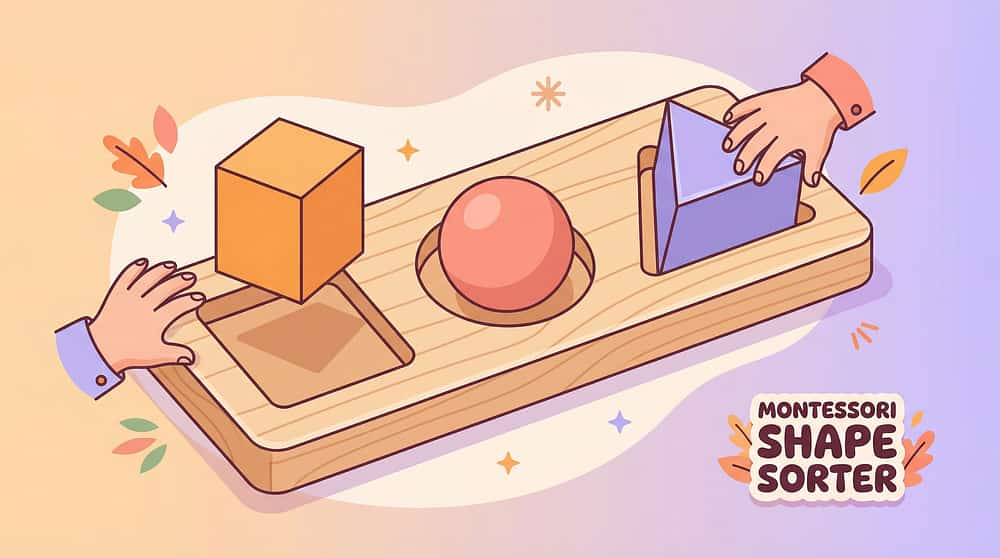
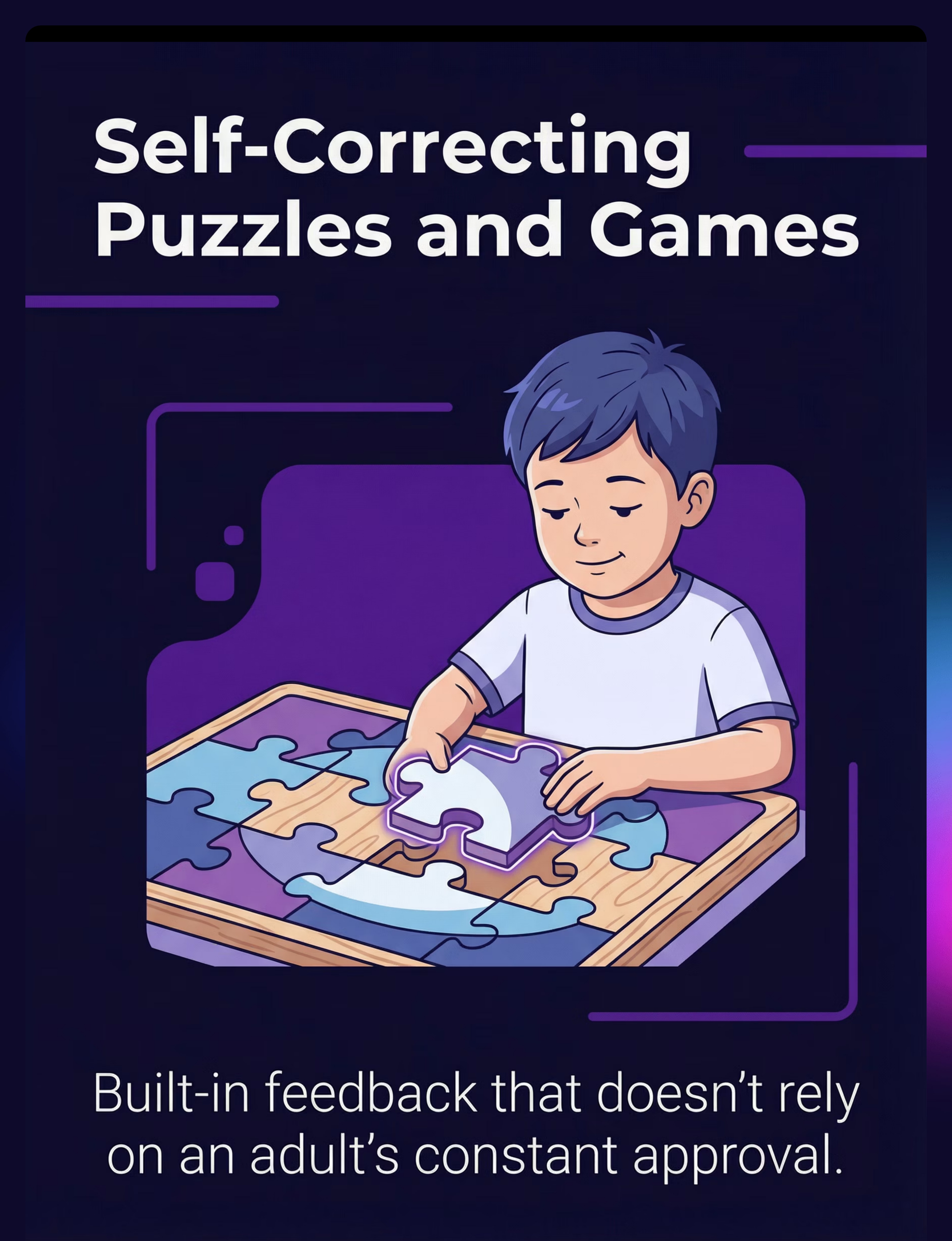
4. Self-Correcting Puzzles
Wooden puzzles, shape sorters, matching games, Montessori materials. Price: ₹200–800 | DIY: Draw matching pairs on card stock = ₹0. Built-in feedback eliminates need to ask "am I doing it right?"
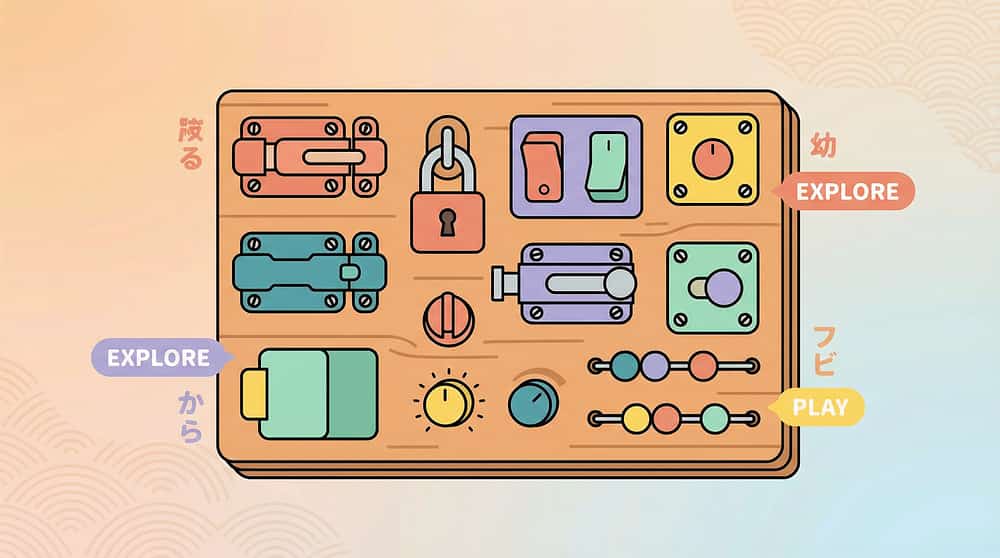
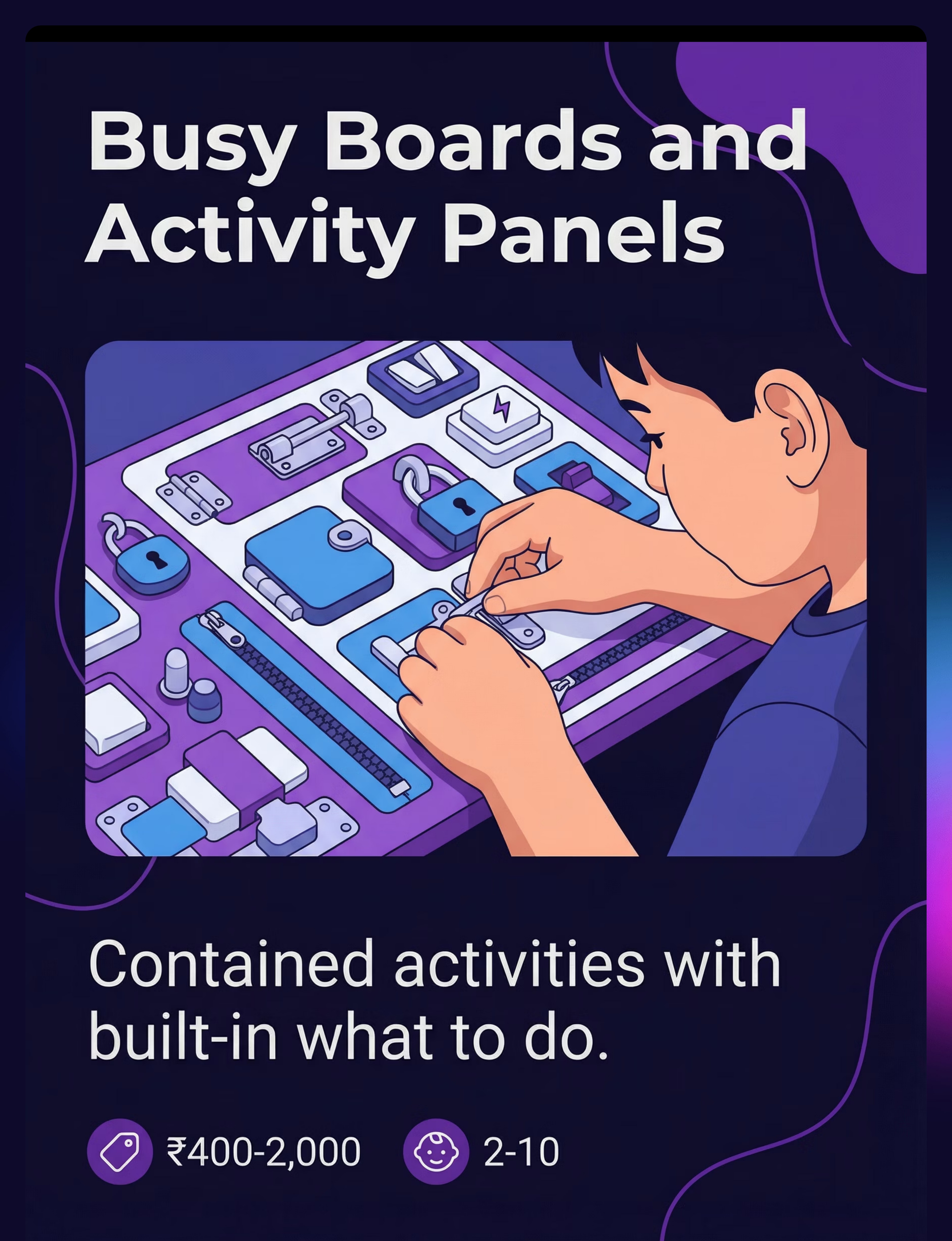
5. Busy Boards
Commercial busy boards, DIY latch/lock/switch panels. Price: ₹400–2,000 | DIY: Wooden board + hardware store latches ≈ ₹300. Contained space with obvious actions — removes "what do I do?"
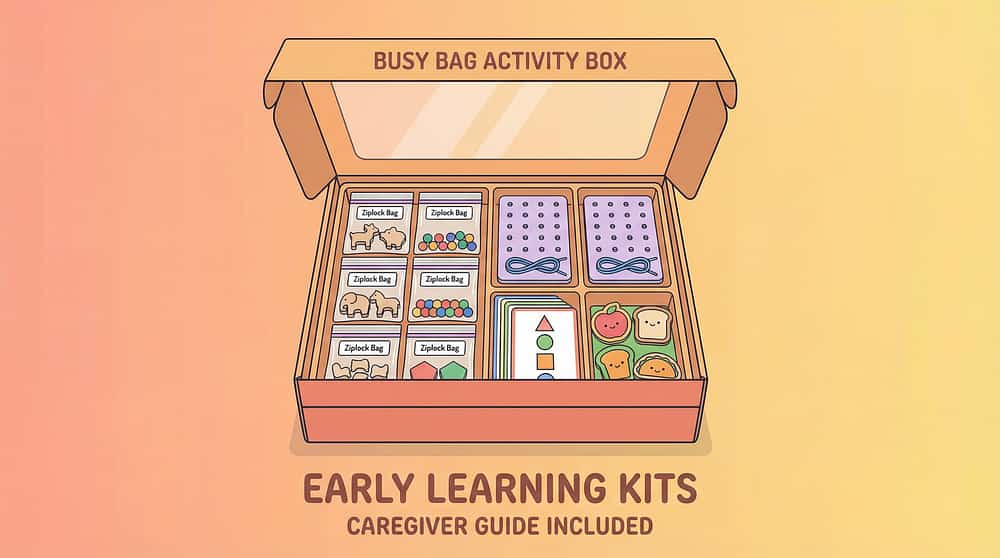
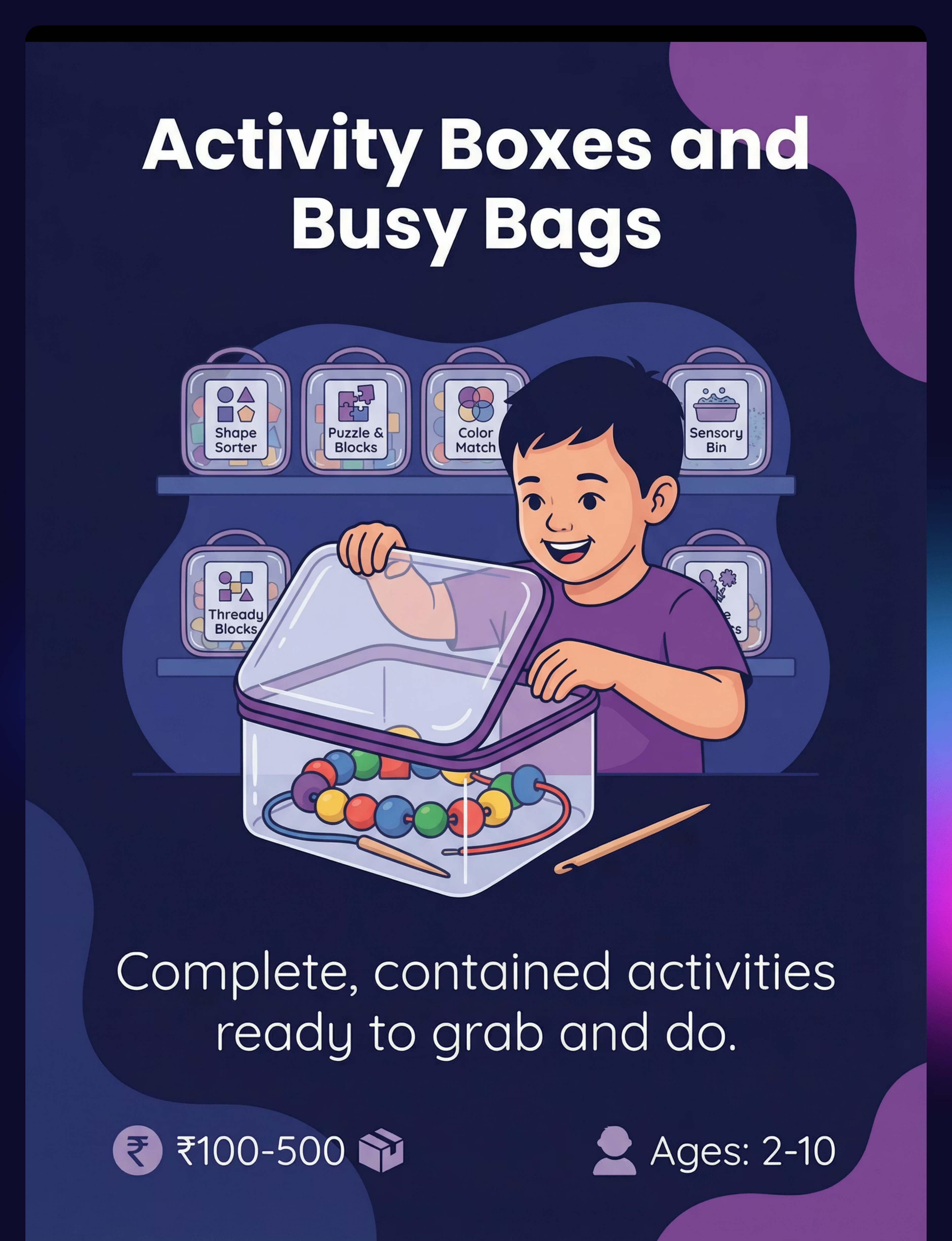
6. Activity Boxes & Busy Bags
Pre-prepared self-contained activity sets: threading, lacing, matching. Price: ₹100–500/box | DIY: Ziplock bags + household materials = ₹0. Open, see, begin — zero setup barrier.
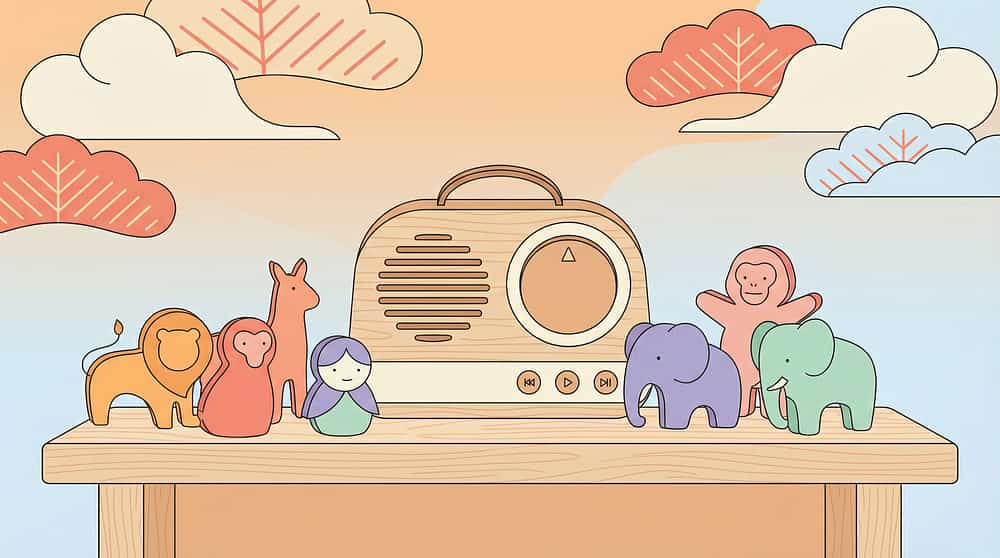
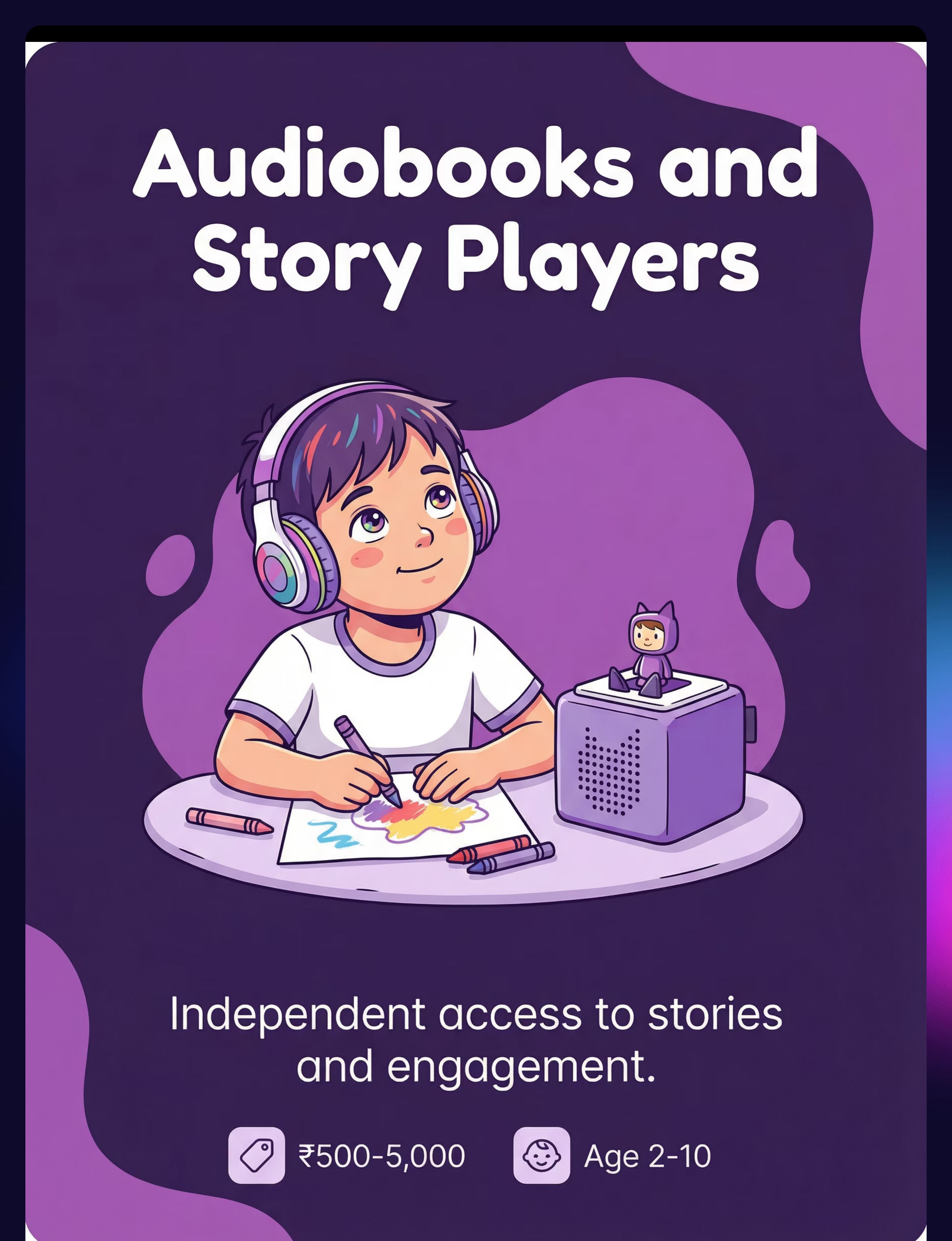
7. Audiobooks & Story Players
Toniebox, Yoto Player, MP3 player, volume-limited headphones. Price: ₹500–5,000 | DIY: Phone in speaker mode + free audiobooks. Audio occupies imagination without screen dependence.

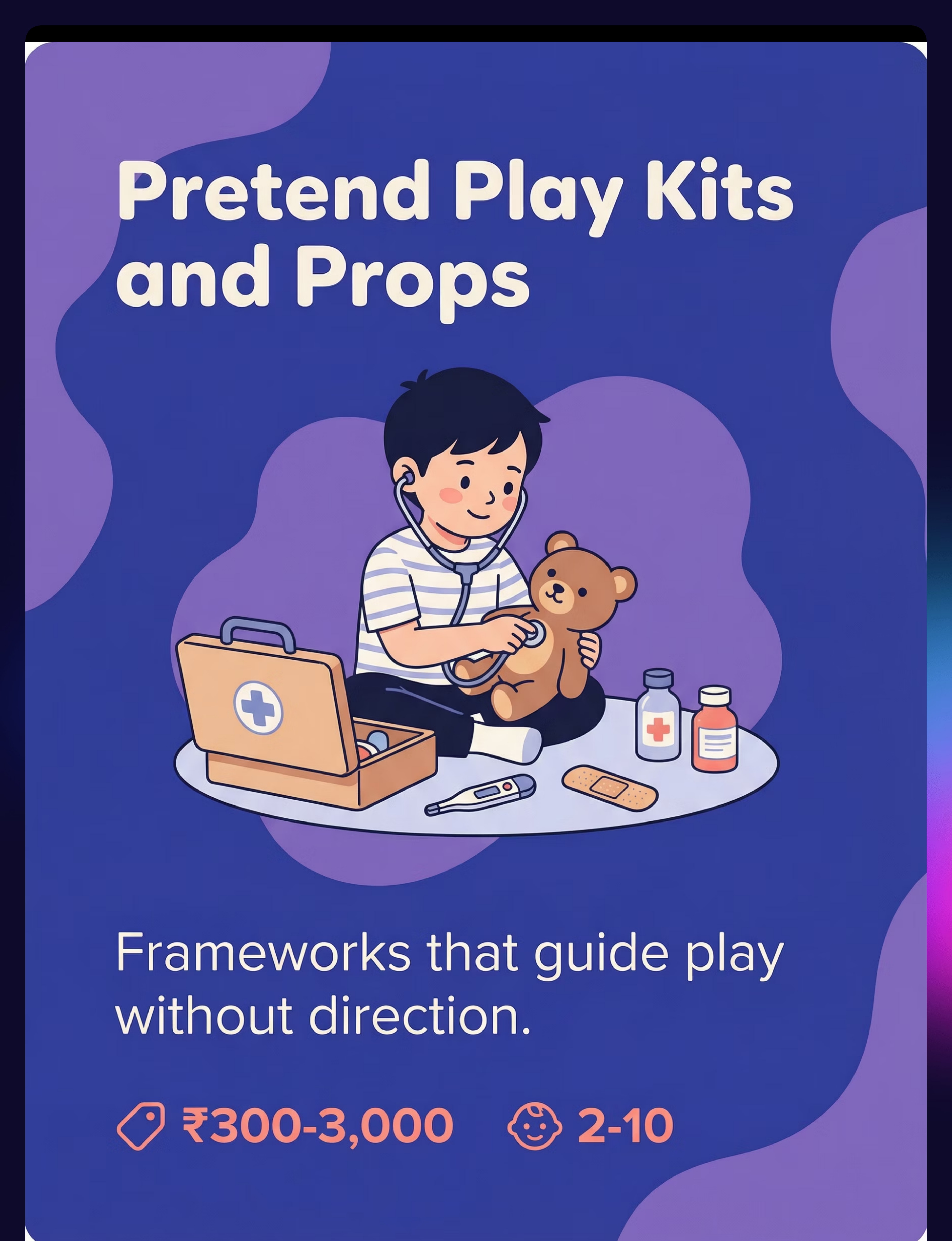
8. Pretend Play Kits & Props
Play kitchen, doctor kit, tool set, dollhouse, dress-up items. Price: ₹300–3,000 | DIY: Empty food containers + cardboard = ₹0. Props contain the narrative script — child follows what they've observed.
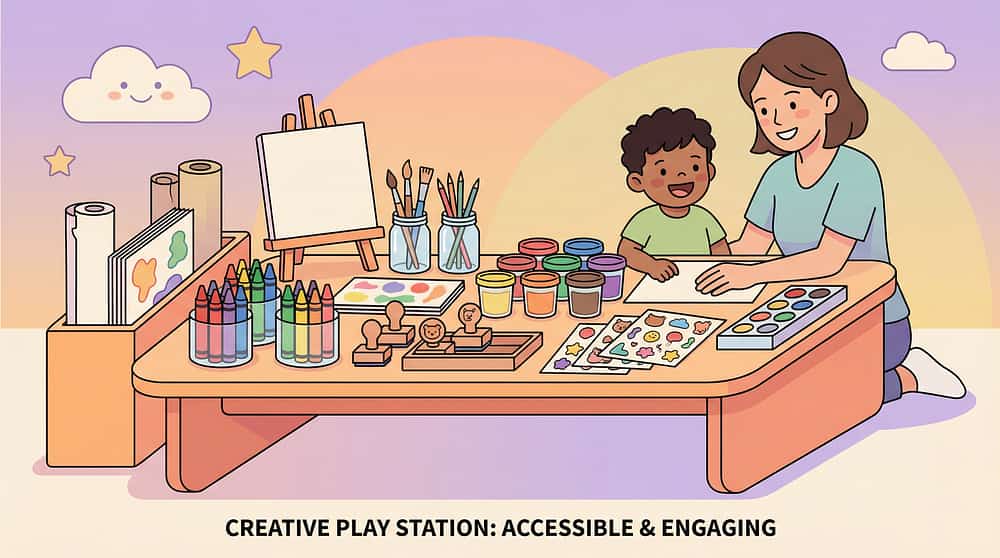
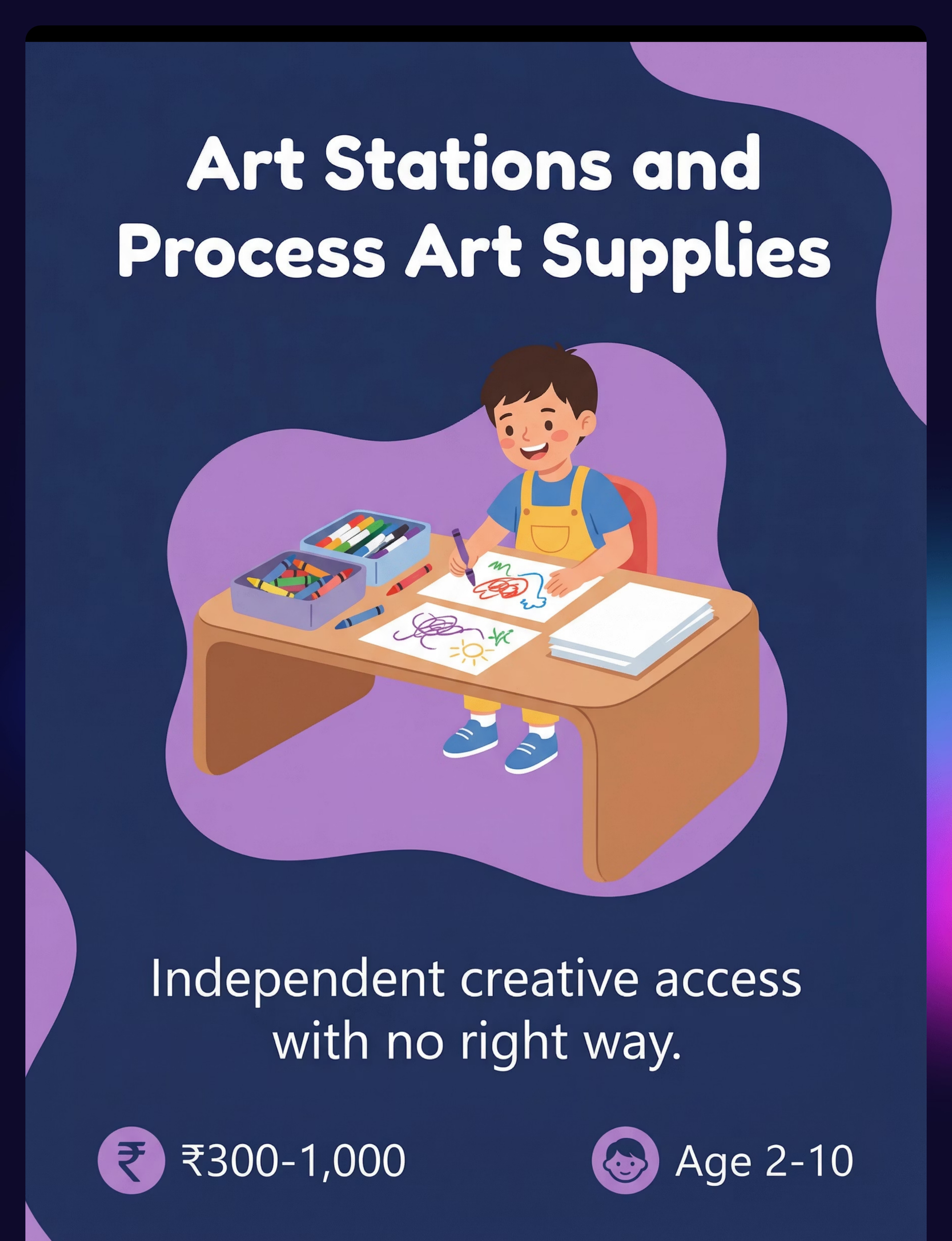
9. Art Stations & Process Art
Crayons, paper, play dough, stamps, stickers — child-accessible station. Price: ₹300–1,000 | DIY: Any paper + crayons in accessible cup = ₹100. No right way to make art — removes all need for adult approval.
💡₹50 Starter Kit: Visual timer (phone app: ₹0) + Rice sensory bin (₹50) + 3 DIY activity bags (₹0) = ₹50 total
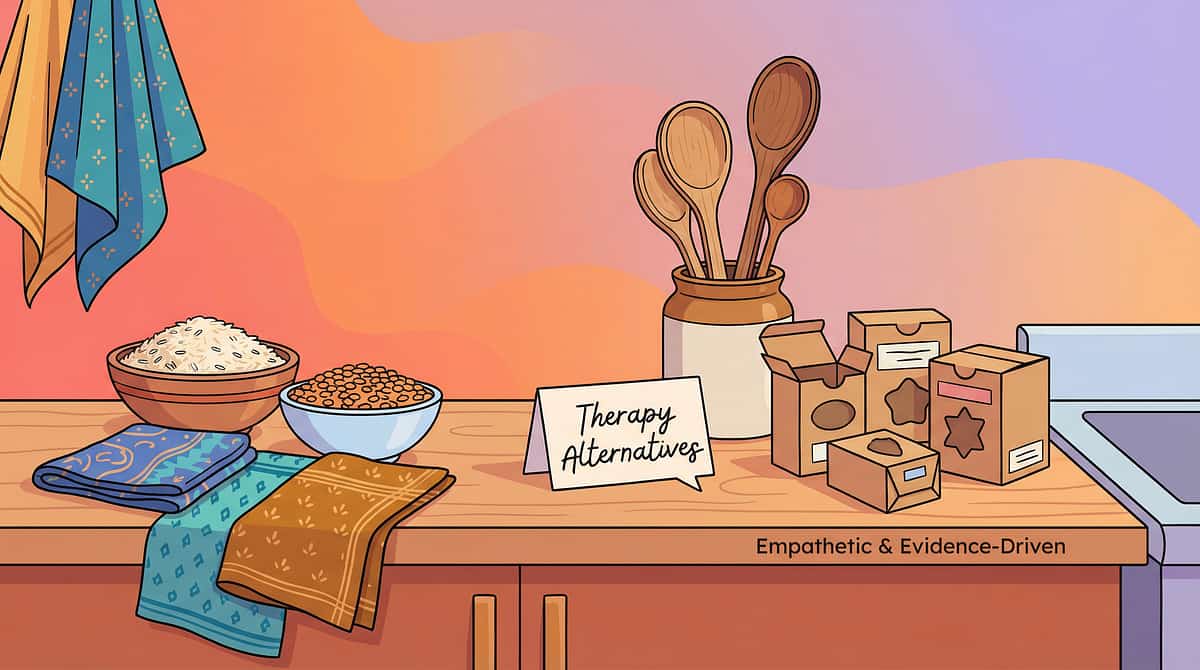
Every Family Deserves Access — Every Material Has a ₹0 Version
Supplementary Materials
For Attention Extension:
- Interest-matched materials (dinosaurs, trains, princesses)
- Marble runs (visual cause-effect, highly engaging)
- Light tables with translucent materials
- Sand trays (writing/drawing in sand)
For Idea Generation Support:
- Play scene mats (illustrated environments to set toys within)
- Story dice (roll, generate a play theme)
- "Play invitation" trays (pre-arranged themed set-ups)
For Regulation During Play:
- Weighted lap pad (proprioceptive calming)
- Fidget tools in proximity (regulation support, not distraction)
- Soft background music (regulating, non-distracting)
DIY Master Guide (₹0–50 Total)
DIY Activity Box Library:
- Threading bag: String + pasta shapes with holes = ₹10
- Matching bag: Stickers on card pairs, cut in half = ₹5
- Sorting bag: Colored pompoms + muffin tin = ₹20
- Lacing bag: Cardboard + yarn + hole punch = ₹5
- Sensory bin: Plastic tub + rice + cups = ₹40
DIY Busy Board (₹200–400): Old wooden board + hardware store items: Door latch ₹30 | Padlock + key ₹50 | Light switch ₹20 | Bolt ₹15 | Door chain ₹25
DIY Play Schedules (₹0): Draw 4 activity pictures on card (blocks, sensory bin, puzzles, art). Laminate for durability. Stick on wall at child height.
WHO/UNICEF Equity Note: Per WHO Nurturing Care Framework principles — therapeutic access must not depend on purchasing power. Every material in this guide has a functional ₹0 equivalent. The therapeutic principle is in the structure, not the product.
PMC9978394 | WHO CCD Package equity implementation guidance
Designed for Safety. Supervised for Success.
Age-Based Safety
Small pieces (<3cm) removed or stored separately for children under 3
Construction set piece size matched to child's developmental/oral stage
Puzzle pieces age-appropriate (knob puzzles for toddlers, interlocking for older)
Material-Specific Safety
- Water beads: NEVER unsupervised with children who mouth objects. Risk of ingestion causing bowel obstruction. Use rice or kinetic sand as safe alternative.
- Busy boards: All hardware items firmly secured. No sharp edges. Check monthly for loosening.
- Art materials: Washable, non-toxic only. Washable markers for children who mouth.
- Audio/headphones: Volume-limited only (≤85 dB). Time-limit listening sessions.
- Sensory bins: Towel or mat underneath. Child-directed cleanup as part of routine.
- Pretend play props: No actual tools. Costume items checked for entanglement risk.
Choking Hazard Guide
✅ SAFE (>3cm)
- LEGO Duplo blocks
- Large wooden blocks
- Full pretend food pieces
⚠️ HAZARD (<3cm)
- Small LEGO pieces
- Loose puzzle knobs
- Beads from broken bag
Supervision Note: Independence in play does not mean zero adult awareness. Physical proximity can reduce while perceptual awareness maintains. Start with full sight-line access; graduate to nearby-room presence.
AAP Play Safety Guidelines | WHO Child Safety Standards | Pinnacle Clinical Safety Protocols
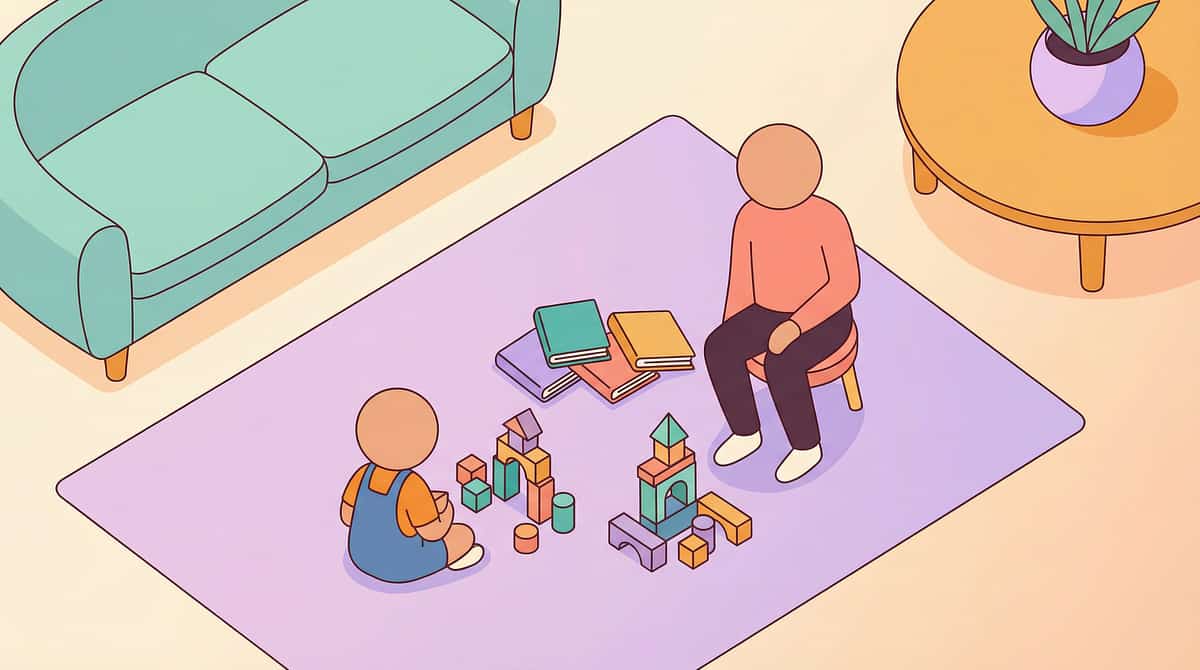
Your Home Is About to Become a Therapeutic Play Environment — Here's Exactly How
Remove (Clutter = Overwhelm)
- All but 3–5 activities visible at once
- Broken or incomplete toys
- Screen devices from the play space
- Items requiring adult setup
Add (Structure = Security)
- Visual timer visible from play position
- Play schedule at child's eye height
- Each activity in clearly labeled, accessible container
- Defined zones: construction mat, art table
- Cleanup bin visible and reachable
The "Invitation" Arrangement
Before the session: set one activity out ready-to-go — open box, sensory bin uncovered, construction set on mat. This removes even the barrier of opening a container. The child arrives to a world already beginning.
Regulation Check (Parent Self-Check)
Am I in a regulated state to set up and step back? If I'm anxious, my child will sense it. A calm parent creates a calm environment.
💡Zone Map: Shelf (3–5 visible activity boxes) | Construction Zone (defined mat) | Sensory Bin (accessible corner) | Art Station (low table + cups) | Visual Timer (child eye level) | Play Schedule (wall at child height)
ABA Antecedent-Based Interventions | OT Environmental Design Principles | NCAEP 2020 Evidence-Based Practices

ACT III: THE EXECUTION
The Best Session Is One That Starts Right — Read Your Child Before You Begin
🟢 GO — All Conditions Met
- Child has had a snack in last 1–2 hours (blood sugar stable)
- No triggering transitions in past 30 minutes
- Child not showing visible signs of dysregulation
- It is a predictable time of day (same time builds routine)
- Parent is calm and available for 5 minutes to set up and transition
🟡 MODIFY — Adapt the Session
- Child seems tired → Use sensory bin only (lower cognitive demand)
- Child is hyper-aroused → Start with visual timer + calm music + simple puzzle
- Child had a hard transition → 10-min special connection time first, then play
- Parent is rushed → Use pre-prepared activity box; no setup required
🔴 POSTPONE — Not Today
- Child is sick, hungry, or in pain
- Active meltdown or significant distress in last 30 minutes
- Major unexpected change occurred today
- Child is showing clear signals of need for connection, not independence
"It looks like today isn't the best day for independent play time. Let's do [connecting activity] together first."
📞 Helpline: 9100 181 181 | ABA Antecedent Manipulation Principles | Setting Events in Behavioral Intervention

Step 1 of 6
Every Protocol Begins With an Invitation, Not a Command
The Principle
"Go play" is a command that produces a frozen child. The invitation is different — it is playful, low-demand, and shows confidence in the child's capacity.
Body Language Guidance
- Crouch to child's level when speaking
- Touch the material once (demonstrate one action: place one block, run fingers through rice)
- Stand up, take a breath, and physically move toward your exit direction
- Don't hover at the doorway — move away with confidence
Acceptance Cues
- Child moves toward or touches the material
- Child begins any interaction with the material
- Child looks at material (even without touching) while you move away
Parent Script — Exact Words
"Hey, I set up the [construction set/sensory bin/activity box] for you. I wonder what you might do with it. I'm going to be in the kitchen — I'll come check on you when the timer goes off."
Resistance Response
If child follows or protests:
"I know it's hard to play alone. The timer will tell you when I'll be back. You've got this."
Then continue moving. Timing: 30–60 seconds for the invitation and transition.
ABA Pairing Procedures | OT Just-Right Challenge Principle | Motivating Operations in Behavioral Intervention
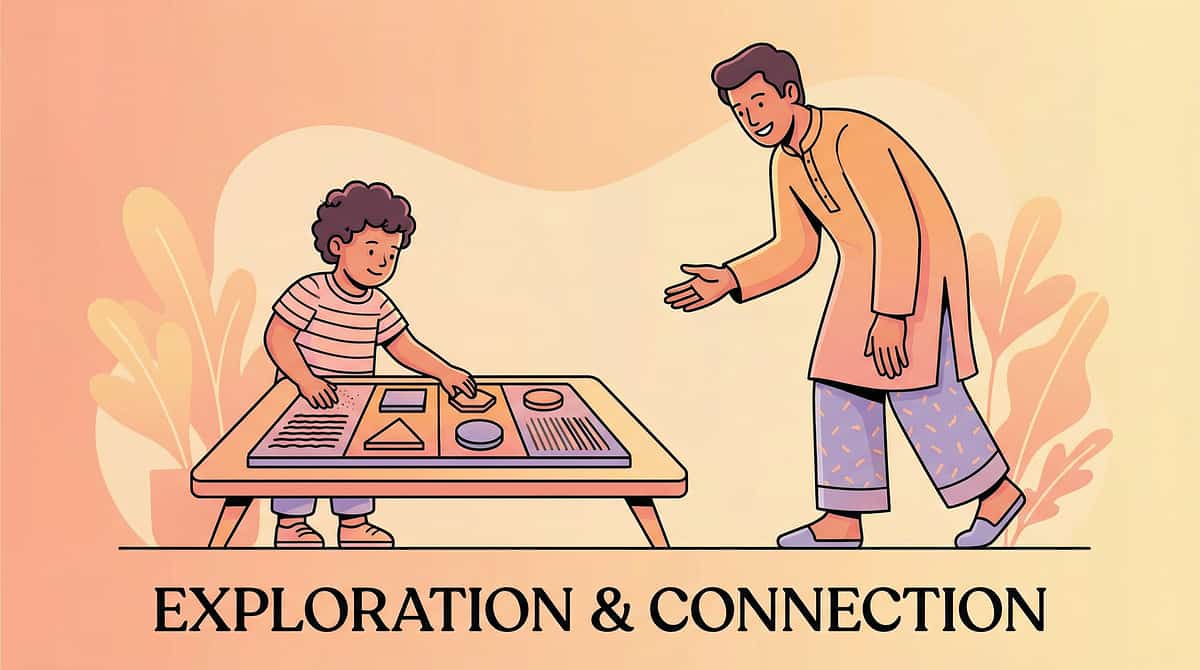
Step 2 of 6
The Child Is Now in Contact With the Material — Now: Stay Away
The Science: The most common parent error at this stage is re-entering the space because the child "seems stuck" or "isn't really playing." Any return at this stage teaches the child that hesitation = parent returns.
✅ Active Engagement (Ideal)
Child is actively using the material — building, pouring, drawing, manipulating.
✅ Passive Engagement (Acceptable)
Child is sitting with material, touching it minimally, looking at it. This is the beginning of engagement. Do not interrupt.
→ Distracted but Proximal (Watch)
Child is near material but looking around. Wait 60 seconds before any intervention. Most children self-return.
→ Active Avoidance (Adapt)
Child physically walks away from material. This is information about material mismatch, not failure. See Card 22.
Duration Target
- Week 1: 3–5 minutes
- Week 2: 5–10 minutes
- Week 3–4: 10–20 minutes
Build by 2–3 minutes per week when previous duration is solid.
Parent Task During This Time
Do something real — cook, make a call, work. Your genuine absence is more powerful than your hovering absence. The child's nervous system can sense the difference.
PMC11506176 | ABA Reinforcement Scheduling | Systematic review on structured material engagement for ASD (Children, 2024)
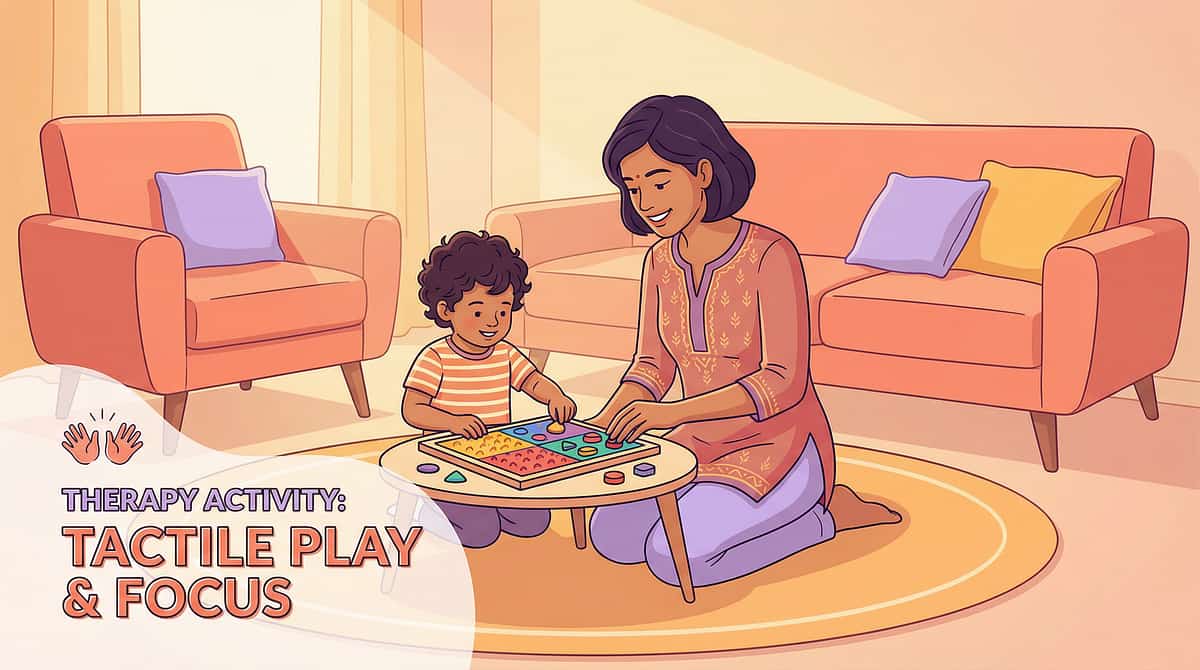
Step 3 of 6
The Core Therapeutic Action — Different for Each Material, Unified by One Principle
The Unified Principle: The therapeutic action is not in what you do. It is in what you don't do — you don't direct, correct, approve, or suggest. The material does the therapeutic work.
🧱 Construction Sets
Let child build anything, in any way. 5–20 min. If child seems stuck: plant one block nearby, then walk away. Do NOT suggest "build a house."
🪣 Sensory Bins
Hands go in. That's it. 10–30 min. Tactile exploration — scooping, pouring, burying, discovering. Never correct "how" they play in it.
⏲ Visual Timers
Child selects activity from schedule, sets timer, begins. Core action: Child self-governs time with visual support. Resist urge to check in before timer ends.
🧩 Self-Correcting Puzzles
Child attempts puzzle. Piece fits or doesn't — 5–15 min. If child looks for help: "The puzzle will show you." Then step away.
🔧 Busy Boards
Child discovers and manipulates each element. 10–20 min. No right order, no right way. Each element will eventually be "solved" and revisited.
📦 Activity Boxes
Child opens box, sees materials, begins task. 5–15 min. Core action: Complete contained task from start to cleanup. Celebrate completion as child's own achievement.
🔊 Audio/Story Players
Child activates player (teach operation in advance). 15–45 min. Audio engagement + optional parallel quiet activity (coloring, building). No adult narration needed.
🎭 Pretend Play Props
Child enacts scenarios from life/media experience. 10–40 min. Resist joining unless invited. Pretend play is private creative work.
🎨 Art Station
Child selects materials, creates freely. Open duration. Process — not product. Do not ask "what is it?" The doing IS the therapy.
PMC10955541 | Pinnacle OT Protocol G-628 | NCAEP 2020
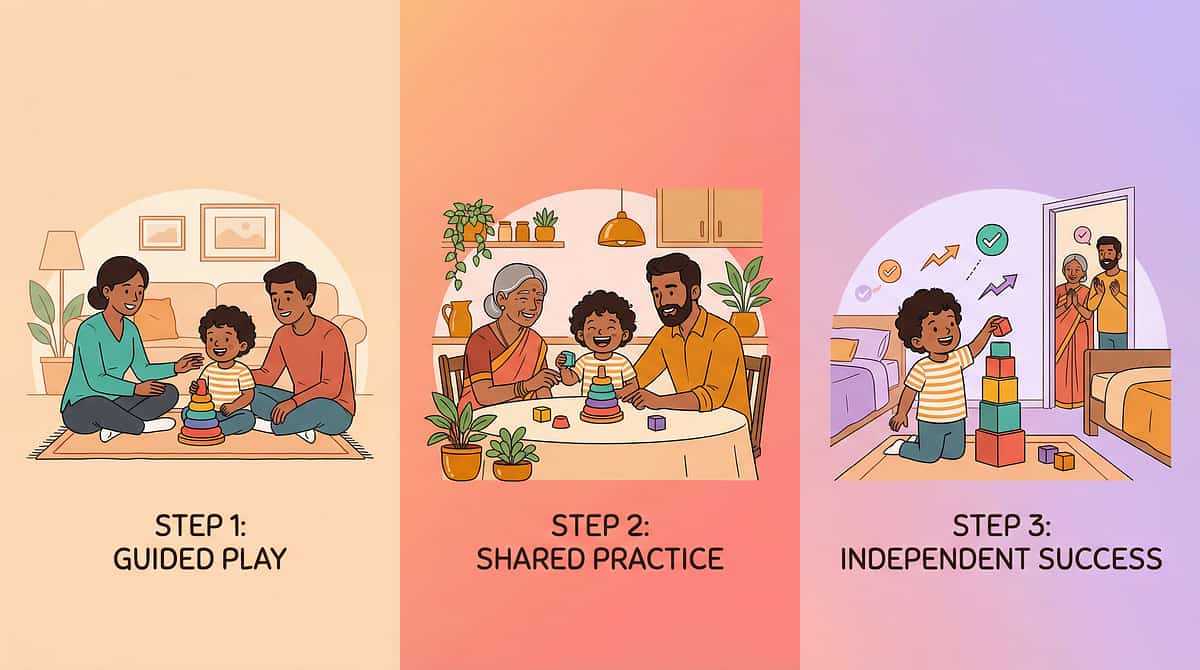
Step 4 of 6
3 Good Sessions > 10 Forced Ones — Dosage Matters
Weekly Therapeutic Dosage
Monday ✓
Session [ ] minutes
Tuesday ✗
Rest day
Wednesday ✓
Session [ ] minutes
Thursday ✗
Rest day
Friday ✓
Session [ ] minutes
Variation Strategy
- Same material, different setup: Sensory bin with different base material; construction set with added figurines
- Same principle, different material: Self-correcting puzzle → shape sorter → matching game
- Rotate materials weekly: 3–5 materials in rotation maintains novelty while maintaining familiarity
Satiation Indicators — When Enough Is Enough
- Lying on materials rather than using them
- Intentionally throwing/destroying rather than building
- Repeated abandonment despite restart attempts
- Clear increase in dysregulation
The "3 Good Reps" Principle: Three sessions of genuine engagement are neurologically more valuable than seven sessions of physical proximity + mental absence.
Sensory Integration Dosage Research — 2–3 sessions/week for 8–12 weeks | Pinnacle G-628 protocol
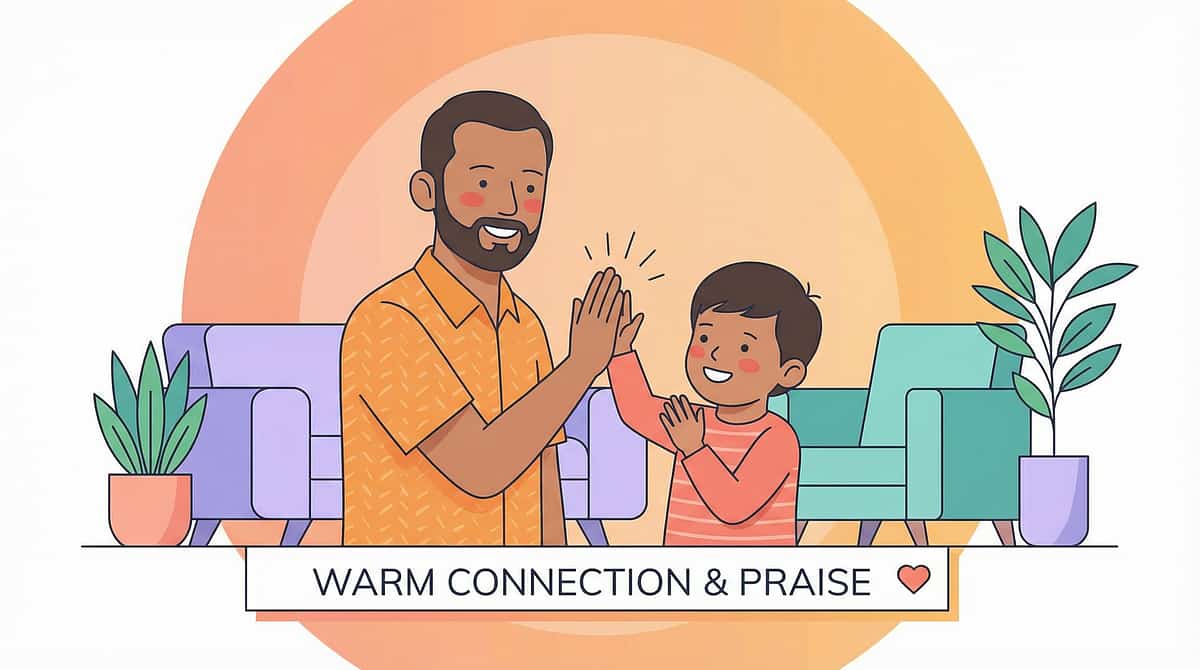
Step 5 of 6
Celebrate the Attempt — Not Just the Success
When the Timer Ends — Exact Script
"You played by yourself for [X] minutes! That's real work. I saw what you built / made / did. I'm proud of you."
Important: Do NOT make the reunion itself the reward. Keep it warm but measured — a 30-second acknowledgment, then normal routine. You are building the habit, not creating a "reward climax."
Reinforcement Menu
- Verbal specific praise: "You stayed with the blocks for 10 whole minutes"
- Brief special activity: 5 min of preferred joint activity after
- Token/sticker chart: For children who respond well to visual progress
- Natural consequence: "Because you played independently, I finished [task] — now I have time to read with you"
The Trap to Avoid
"Oh my goodness, you played alone! That's AMAZING! You're incredible!" — This hyper-praise signals to the child that independent play was a huge sacrifice, reinforcing its difficulty.
ABA Reinforcement Principles | BACB Ethical Guidelines | Token Economy Evidence in ASD
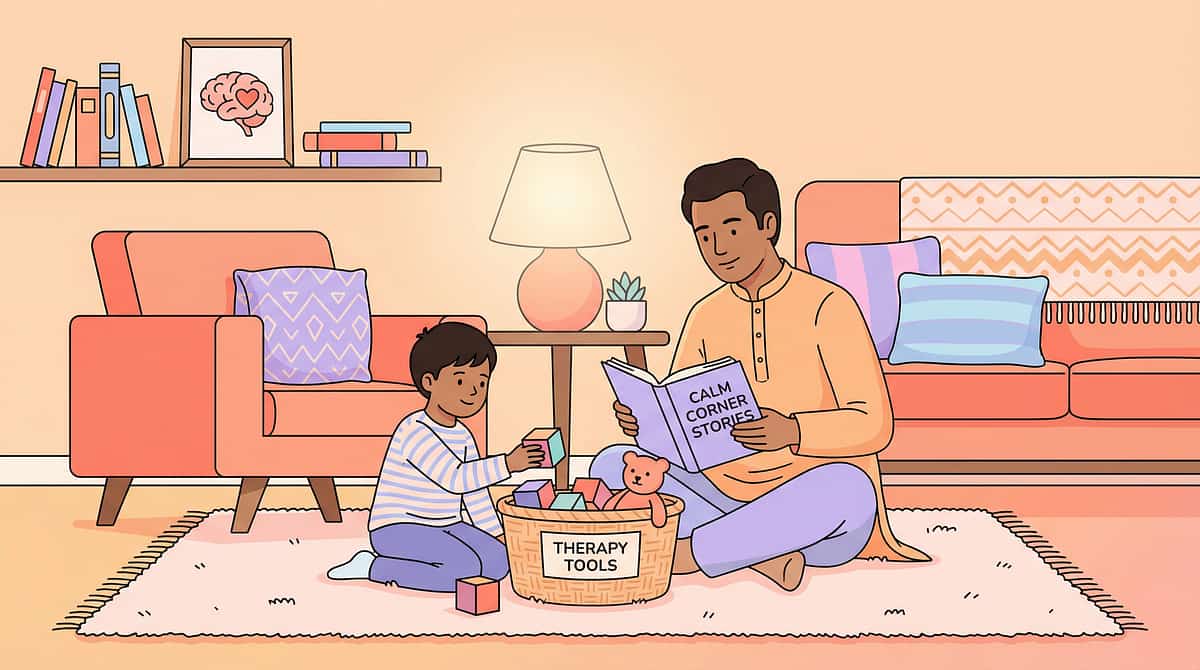
Step 6 of 6 — Complete
No Session Ends Abruptly — The Cool-Down Is Therapy Too
Abrupt endings after successful independent play can dysregulate children and condition avoidance of future sessions. A brief, predictable cool-down ritual makes the ending feel safe and builds trust for tomorrow's start.
Transition Warning (2 Min Before Timer)
"Two more minutes. When the timer goes off, we'll put materials away and [transition activity]."
Timer Ends — Warm Entry
Parent enters with reinforcement script (see Step 5). Warm, measured, 30-second acknowledgment.
"Help Me Put Away"
Child participates in cleanup ritual — sense of completion. Close activity box, put puzzle back, cover sensory bin.
Clear Bridge to Next Activity
"Now it's snack time / reading time / your choice time." 2–3 deep breaths together, brief hug, hand wash.
If Child Resists Ending:"I know it's hard to stop. Two more [builds/pieces/pours]. Then all done." Extend by one unit — then hold the boundary. Predictable endings build trust in future starts.
NCAEP 2020 — Visual Supports Evidence-Based Practice | OT Transition Protocol Standards
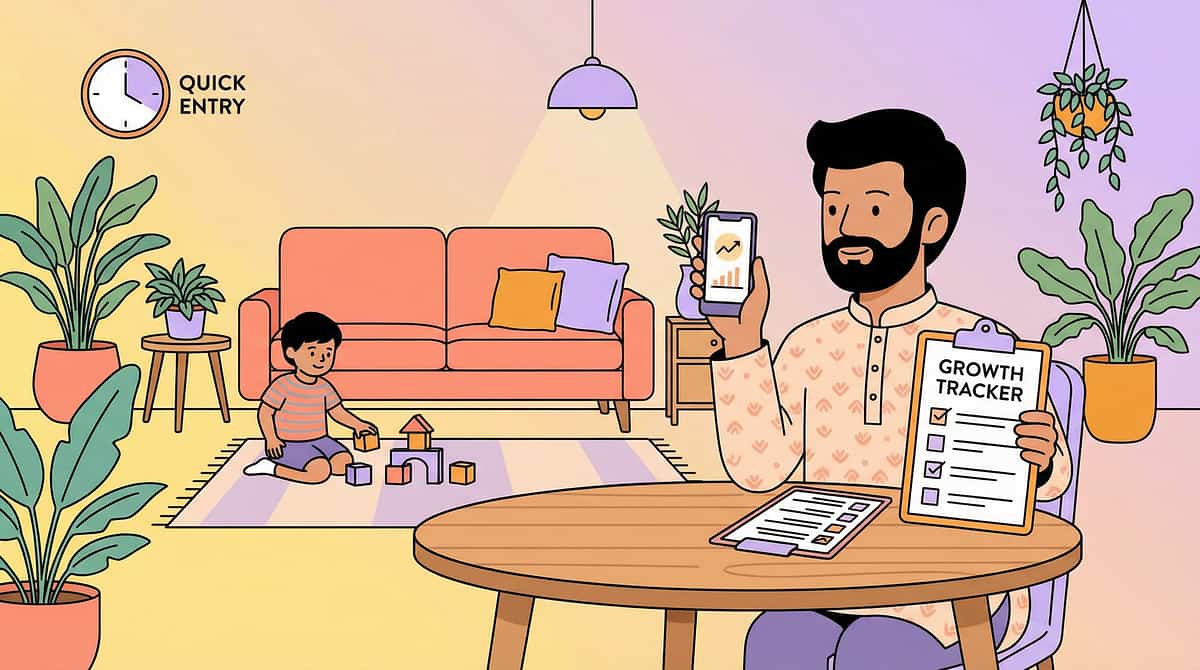
Data Captured in the Next 60 Seconds Drives the Next 8 Weeks of Progress
3-Field Session Tracker — Record Immediately
📅 Date
Record immediately after session ends
🧩 Material Used
Which of the 9 materials did you use today?
⏱ Duration (minutes)
Exact minutes — even partial engagement counts
😐 Child Response
Circle: Resisted / Tolerated / Engaged / Absorbed / Initiated
Why This Matters
Without data, you are guessing. With data, you can see:
- Is duration increasing week over week?
- Which materials produce the most engaged responses?
- What time of day produces the best sessions?
- Is progress stalling? (Signal to adapt or consult)
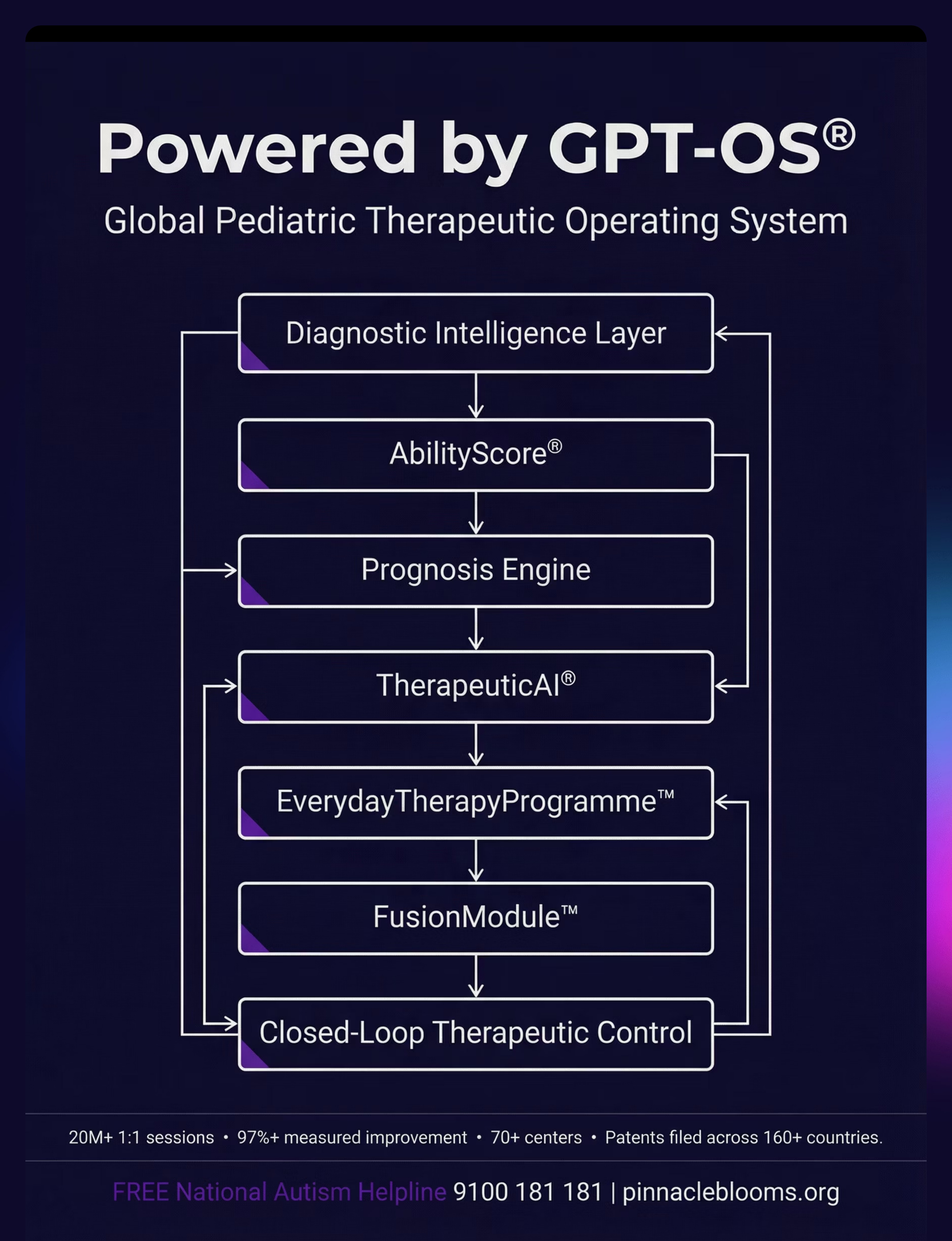
GPT-OS® Integration: Your session data feeds into AbilityScore® tracking. After 8+ sessions, GPT-OS® generates a personalized Play Skills Independence Index progression report.
📞 Call 9100 181 181 for FREE data interpretation support.
NCAEP 2020 — Data-Based Decision Making EBP | Pinnacle GPT-OS® AbilityScore® tracking
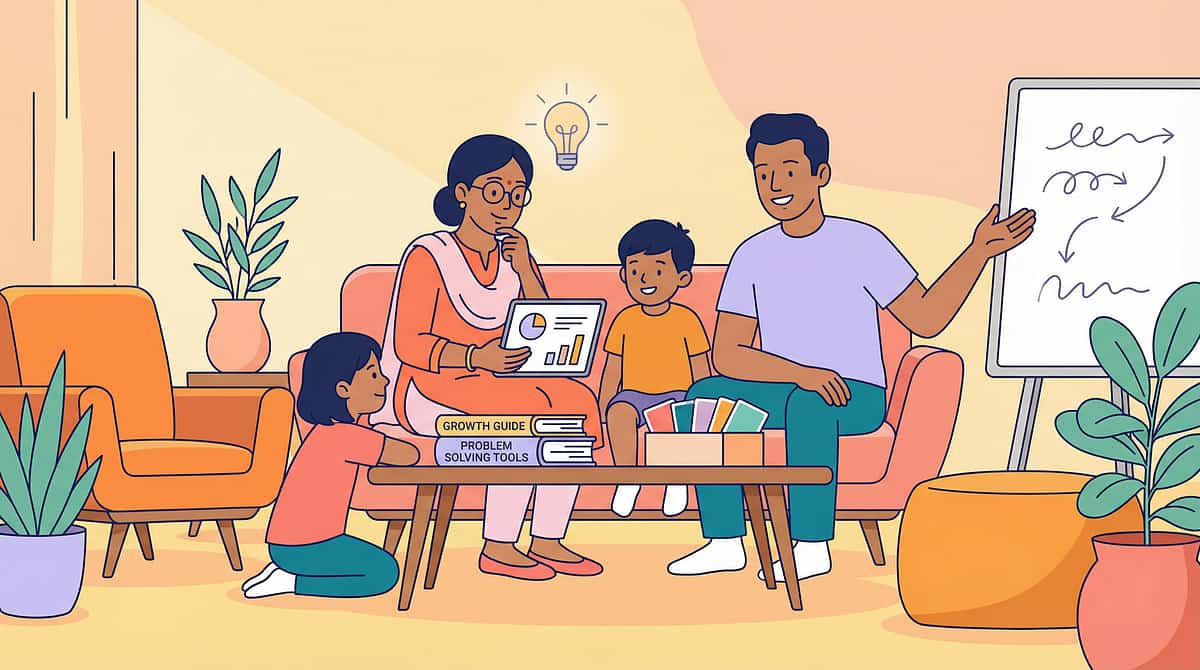
Nothing Is Failing — Everything Is Data. Here's What to Do.
⚠️ "Child immediately follows me out of the room"
Solution: Start with parent in same room, just not engaged. Place yourself with a book on the sofa. Gradual distance over days: Same room → different zone → doorway visible → out of room.
⚠️ "Child plays 30 seconds then asks 'what should I do?'"
Solution: You're seeing idea generation difficulty. Switch to activity boxes (built-in task) or busy boards (built-in what-to-do). Reduce open-endedness temporarily.
⚠️ "Sensory bin produces more mess than play"
Solution: Reduce quantity. A cup of rice, not a bin. Add containment frame (cookie sheet). Supervise more closely until cleanup ritual is established.
⚠️ "Child destroys everything rather than plays with it"
Solution: This IS play for some children. Define clearly: knocking down a block tower = yes. Throwing blocks = no. Be consistent with this boundary every session.
⚠️ "Timer going off triggers meltdown"
Solution: Two possibilities: timer = end of good thing (increase activity reinforcement value) OR timer = unexpected intrusion (teach timer as "almost time" not "stop now"). Add a 2-min warning.
⚠️ "Works with therapist but not with me at home"
Solution: This is normal. Therapists have established a specific relationship around these materials. Give it 2–3 weeks of consistency before concluding the material doesn't work. Parent relationship + material = new pairing that takes time.
ABA Troubleshooting Protocols | OT Sensory Profile-Based Modification | Pinnacle clinical FAQ database
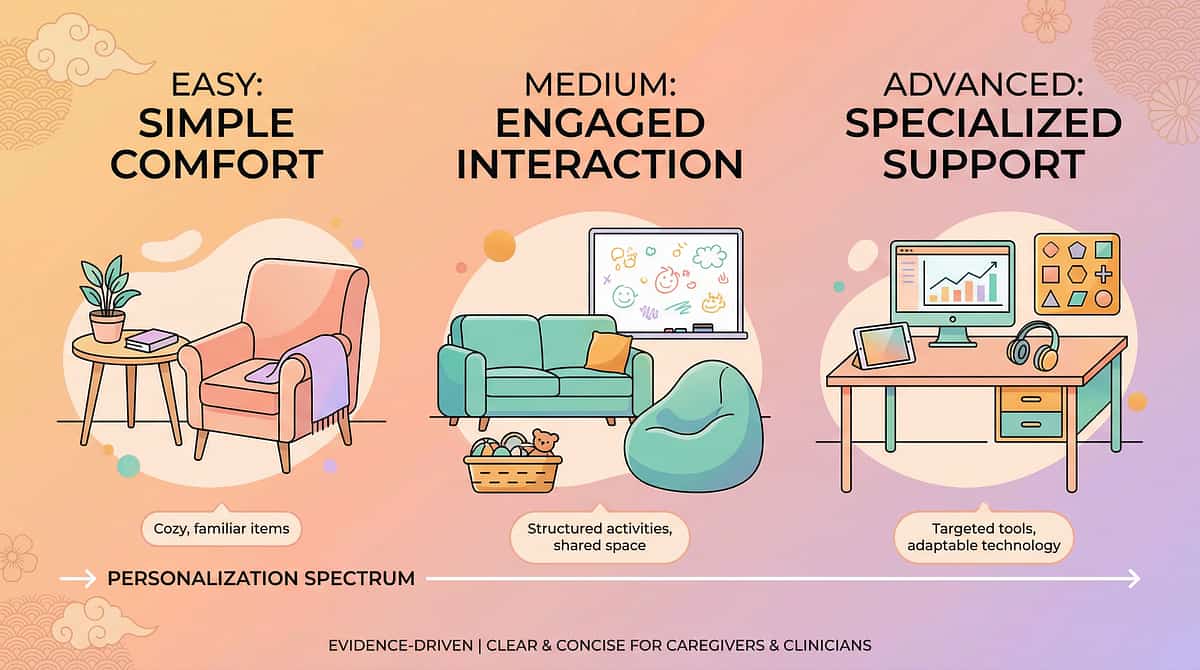
There Is No Standard Child — Adapt Until It Fits
Difficulty Spectrum
◄ EASIER
- Activity box (structured task)
- 2-minute timer only
- Parent in same room
- 1 item in sensory bin
- Familiar puzzle (mastered)
HARDER ►
- Open-ended construction
- 30-minute timer
- Parent out of room
- Full sensory station
- Novel puzzle (challenge)
Sensory Profile Adaptations
Sensory Seeker: Prioritize sensory bins, busy boards, kinetic materials. Larger quantities. Add proprioceptive input before session.
Sensory Avoider: Prioritize audio, puzzles, activity boxes. Smaller, more predictable materials. Reduce visual clutter in space.
Age-Based Modifications
Age | Best Starters | Duration | |
2–3 years | Sensory bin, busy board, large construction | 3–5 min | |
3–5 years | Activity boxes, visual timer, pretend play | 5–15 min | |
5–8 years | Construction, audio, art station | 15–30 min | |
8–10 years | Complex construction, audiobooks, detailed art | 30–45 min |
Individualized Intervention Planning (OT/ABA/SLP guidelines) | Sensory Profile Literature

ACT IV: THE PROGRESS ARC
Week 1–2: Expect Tolerance, Not Mastery — These Early Signs Are Everything
15%
Progress Milestone
Beginning — tolerance phase
✓ What Real Progress Looks Like
- Child stays near material for 3–5 minutes before seeking parent
- Child's protests when parent exits are shorter/less intense than last week
- Child touches or handles the material even if not "playing" conventionally
- Child does not immediately walk away when timer is set
✗ Not Progress Yet (And That's Okay)
- Spontaneous independent play without prompting
- Extended sessions without parent check-ins
- Consistent engagement across multiple sessions
- Initiating play before being invited
"If your child stayed at the sensory bin for 4 minutes this week, compared to 30 seconds last week — that is transformational neurodevelopmental work. Do not underestimate it."
Parent Emotional Preparation: Weeks 1–2 are the hardest. The child may protest more, not less. This is extinction — the brain trying harder to get the old result before accepting the new reality. It gets worse before it gets better. Stay consistent.
Week 1–2 Mantra:Consistency over perfection. Small tolerances are neural victories.
Week 1–2 Mantra:Consistency over perfection. Small tolerances are neural victories.
PMC11506176 — 8–12 week outcome timeline | Extinction burst literature (ABA) | Pinnacle clinical progression data

Week 3–4: The Neural Pathways Are Forming — Look for These Signs
40%
Progress Milestone
Consolidating — pathways forming
Anticipation
Child hears the timer being set and doesn't protest — they begin moving toward the material.
Material Preference
Child shows interest in specific materials; begins to have favorites. This is self-directed choice — a major milestone.
Extended Duration
Sessions lasting 50–80% longer than Week 1 baseline. Track this in your session log.
Reduced Check-ins
Child calls for parent less frequently; can redirect self with timer reference.
Play Quality Improving
Engagement is more purposeful — building taller, arranging pretend play scenes, using art materials with intention.
"When your child walks to the activity shelf, picks a box, and begins without being told — that is the moment you've been building toward. It may happen in Week 3. It may be Week 5. But it will happen."
Increase Frequency/Intensity Now: Add one more daily session (brief, high-success) | Extend timer by 3–5 minutes | Introduce a new material from the 9 (novelty restarts engagement)
Neuroplasticity — Synaptic strengthening through structured input | Behavioral consolidation markers

Week 5–8: Mastery Indicators — You Are Almost There
75%
Progress Milestone
Mastery approaching — badge unlocking
Tier 1 Mastery — Badge Level 1
- 20+ minutes of independent play on 3+ consecutive days
- Child self-initiates activity from available options at least once per week
- Child completes cleanup ritual without being asked
Tier 2 Mastery — Badge Level 2
- 30+ minutes across 2 different material types in same session
- Child generates own variation within activity
- Independent play occurs in one non-home setting
Tier 3 Mastery — Badge Level 3
- 45+ minutes without adult check-in, across multiple days
- Child independently manages minor obstacle without calling for help
- Child requests independent play time spontaneously
Generalization Check: Does the skill appear in contexts beyond your setup? School activity time? Grandparents' house? Waiting room? Generalization = genuine learning.
BACB Mastery Criteria Standards | PMC10955541 — 24-study meta-analysis outcomes

You Did This — Your Child Grew Because of Your Commitment
🟢 Sustained Engagement
Minutes extended — your child can now be with materials without adult direction.
🟢 Self-Initiation
They start activities on their own — without being told to begin.
🟢 Frustration Tolerance
They try before they ask for help — a life skill that will serve them everywhere.
🟢 Internal Motivation
They find satisfaction in the activity itself — not just in adult praise.
You showed up on the hard days. You stayed consistent when it felt pointless. You trusted the science when your instincts wanted to rescue. That is what therapeutic parenting looks like. Well done.
Celebration Ritual Suggestion: Frame one piece of your child's process art from this period. Write the date and duration on the back. That is therapy evidence and family memory in the same object.
Parental Self-Efficacy Research — parent confidence is the strongest predictor of continued home-based intervention adherence
Trust Your Instincts — If Something Feels Wrong, Pause and Ask
🔴 Regression After Progress
Child was gaining in independent play duration, now consistently refusing all materials for 1+ week. Not a bad day — a sustained reversal. This warrants professional review.
🔴 Distress That Does Not Reduce
Child's protest at session start remains severe (meltdown-level) after 3+ weeks. The intervention may not be calibrated correctly for this child's sensory/emotional profile.
🔴 Complete Absence of Any Engagement
After 4+ weeks of daily practice, child shows zero engagement with any of the 9 material types. Formal assessment of play skill baseline and underlying factors needed.
🔴 Play Skills Declining More Broadly
Child losing skills they previously had. Any skill regression warrants immediate professional evaluation.
🔴 Physical Distress During Independent Play
Self-injurious behaviors, extreme anxiety responses, physical symptoms during separation. These require clinical assessment before continuing the home protocol.
WHO NCF Progress Report 2018–2023 | Pinnacle Clinical Escalation Protocols
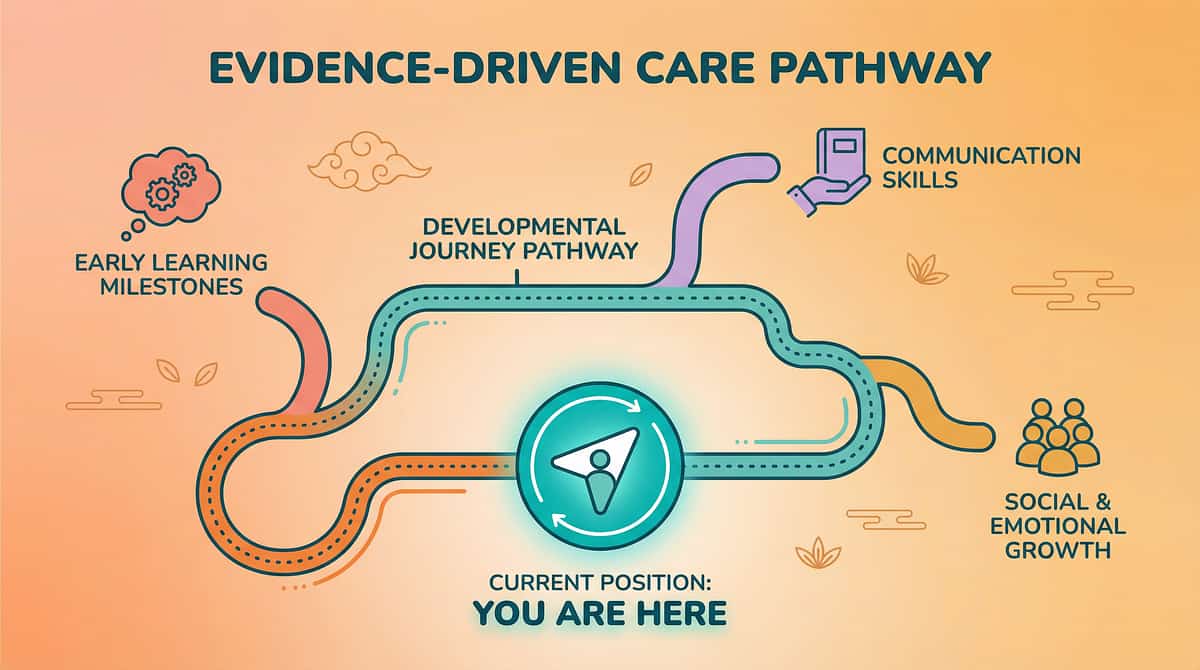
You Are Not Done — You're on a Journey. Here's Where It Goes.
→ G-629: Cooperative Play
"My child now plays independently; ready to learn to play with others." The natural next step in the journey.
→ G-630: Imaginative Play
"My child plays alone but with limited imagination; ready for richer narrative complexity and pretend."
→ G-632: Play Duration
"My child initiates but still abandons activities quickly; extend duration and sustained engagement."
The Long-Term Goal: A child who can play independently → cooperatively → imaginatively → with sustained attention → is a child ready for school, friendship, and life.
WHO/UNICEF Developmental Trajectory Framework | Pinnacle 999 Reels Play Cluster Map
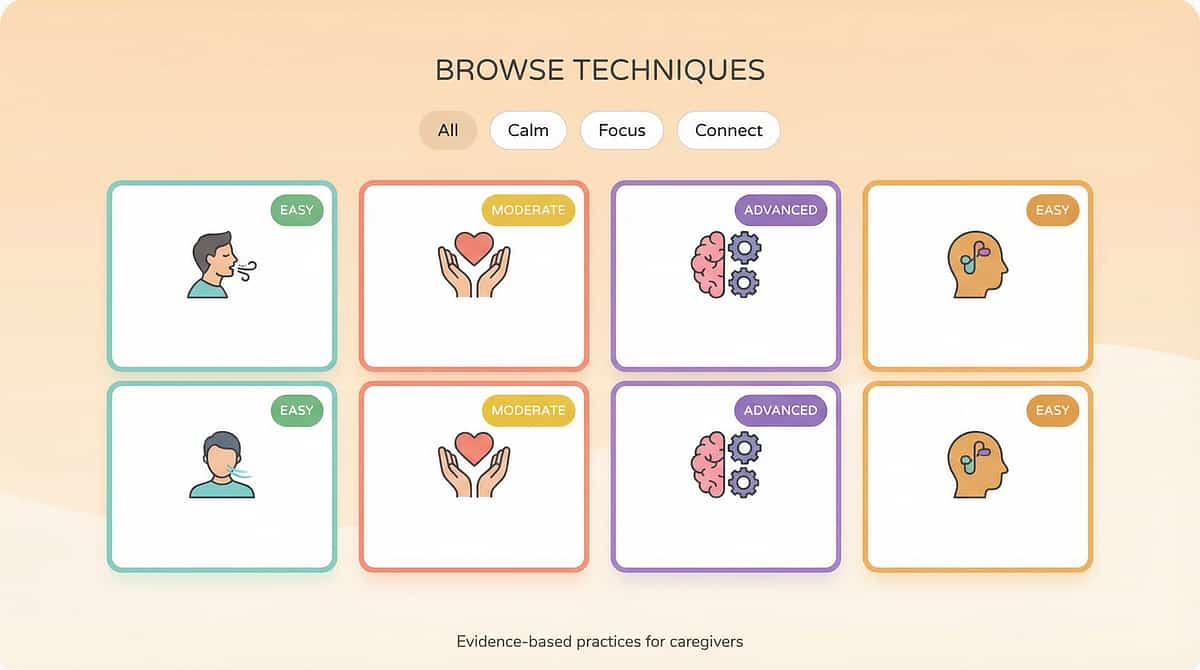
Independent Play Sits at the Intersection of 5 Other Developmental Areas
Each has its own dedicated technique page. Explore what comes before and after G-628.
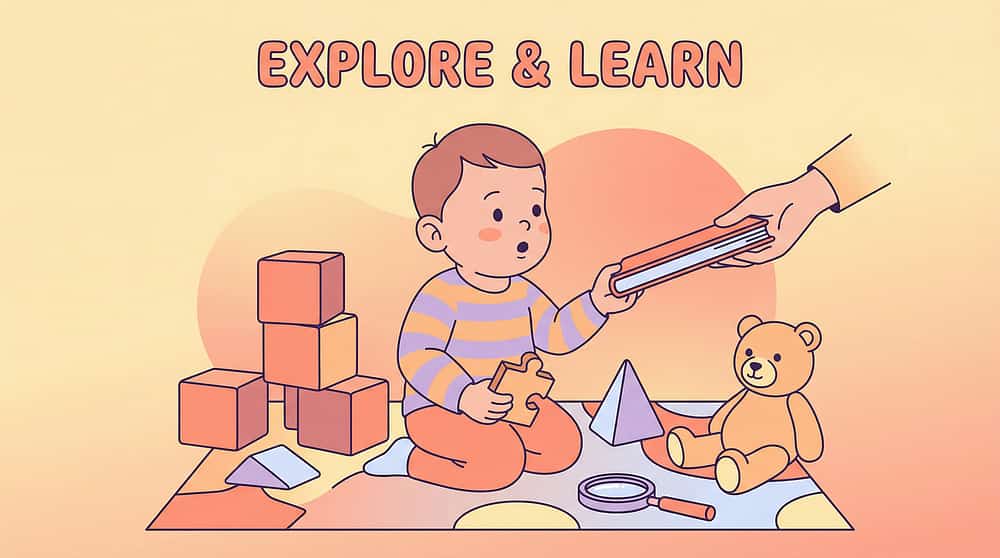
Before independent play comes object play. Master this first. The foundational precursor to everything on this page.

Many independent play challenges are attention regulation challenges in disguise. Explore the sister domain.

A regulated nervous system is the foundation of sustained independent play. These skills support each other.
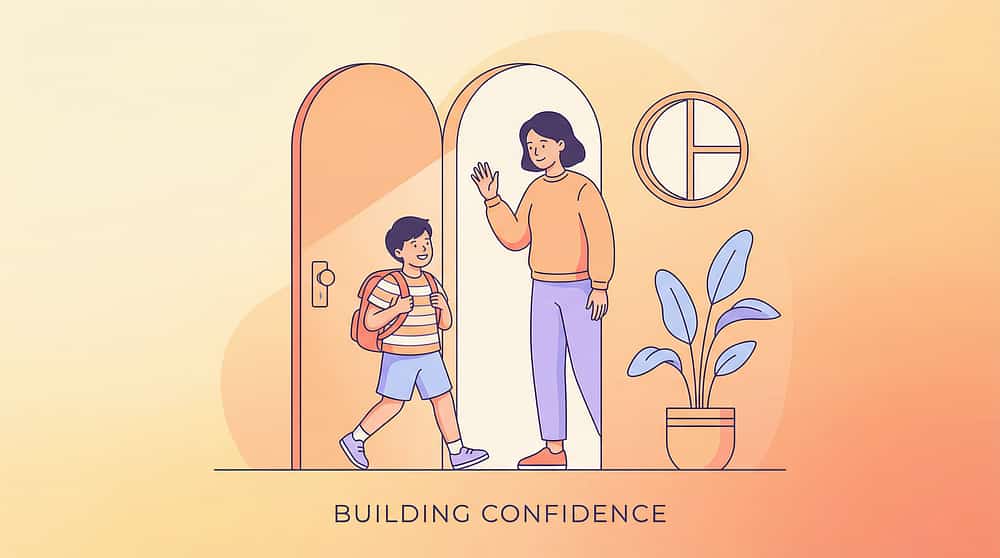
For children with separation anxiety underlying their play dependence. Address the root alongside the skill.
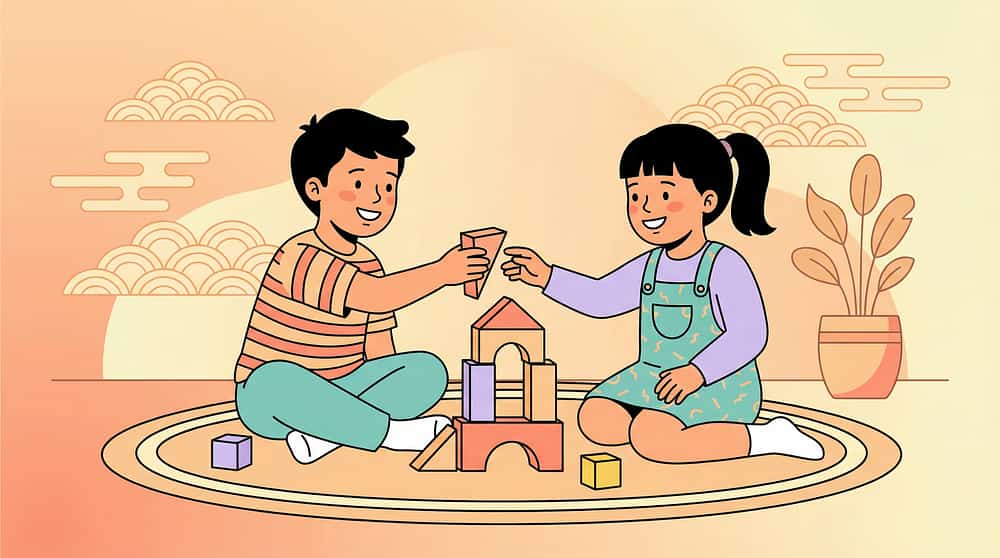
The natural progression from here — playing with others after playing alone. The next chapter in the journey.
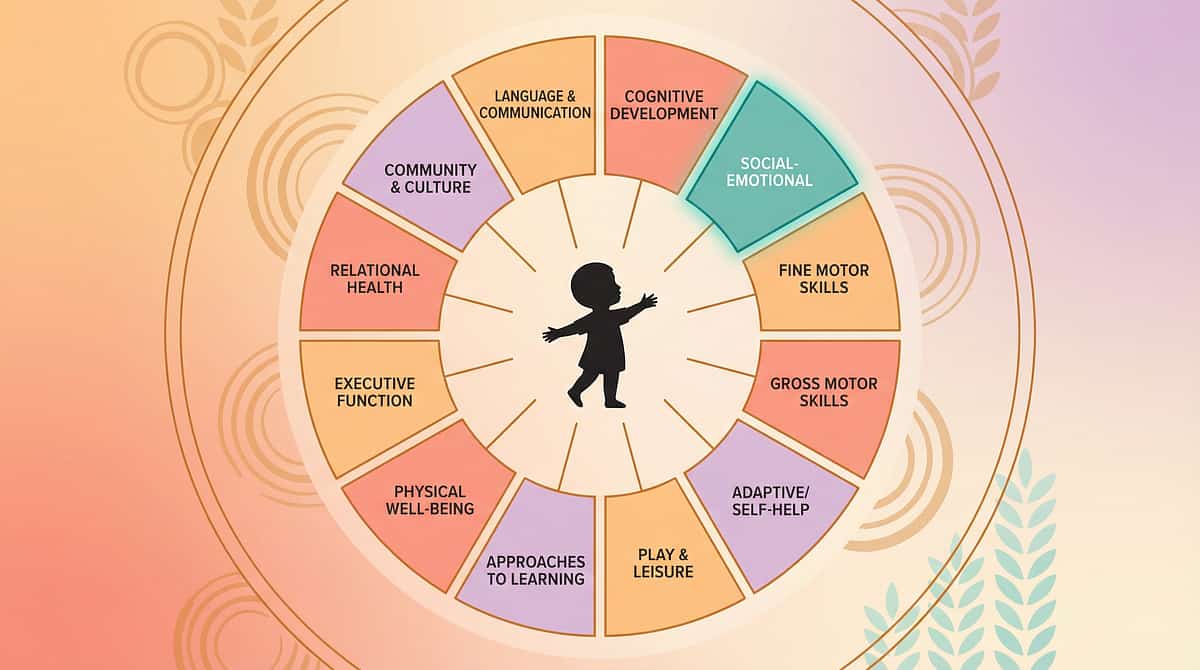
Independent Play Is One Tile in Your Child's Full Developmental Mosaic
Domain G — Play: Your Current Position
- ✓ G-626 Exploratory Play (completed?)
- ✓ G-627 Object Play (completed?)
- 🟢 G-628 Independent Play ← HERE
- ○ G-629 Cooperative Play (next)
- ○ G-630 Imaginative Play (ahead)
Independent Play Echoes Across Domains
- Attention (F) improves as sustained engagement builds
- Self-Regulation (C) strengthens as child tolerates mild frustration alone
- Social (H) develops as independent play frees capacity for interactive play
- Cognition (J) advances as creative, exploratory play grows
📞9100 181 181 — FREE consultation to interpret your child's full 12-domain profile.
WHO/UNICEF Nurturing Care Framework (5 components) | UNICEF 2025 Country Profiles (42 developmental indicators)
ACT V: THE COMMUNITY & ECOSYSTEM
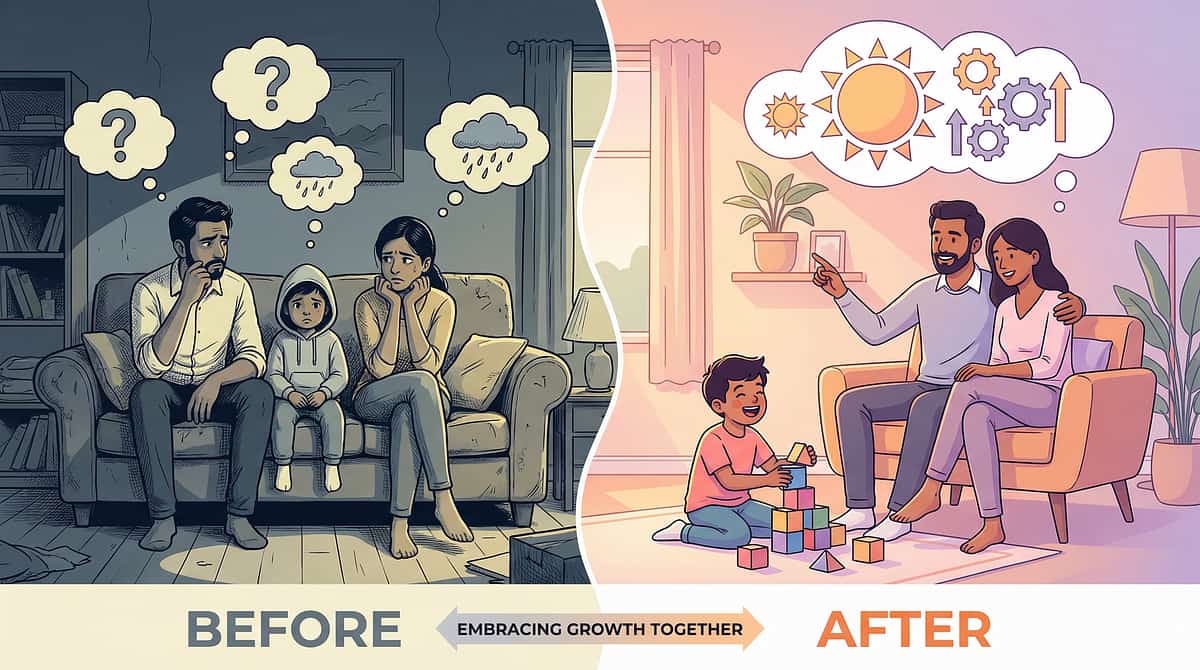
Real Families. Real Change. Real Timelines.
Family A — Hyderabad, 5-Year-Old, ASD Level 1
Before (Week 0):"She could not be in a room alone for 60 seconds. I tried putting her in her bedroom — she screamed within 30 seconds. Constant shadowing, constant 'what do I do?', constant calling my name. I was drowning."
Intervention: Activity boxes + visual timer (3-minute start) + sensory rice bin.
After (Week 8):"She has a morning independent play routine now. 25 minutes every day before school. She gets annoyed if I interrupt her. Twenty-five minutes. That changed our entire morning, our entire family."
Therapist's Note: Activity boxes solved the idea-generation piece — she always knew what to do. The visual timer solved the separation piece — she could see when parent-time was returning. Both anxieties addressed simultaneously.
Family B — Mumbai, 7-Year-Old, ADHD
Before (Week 0):"He'd pick up a toy, put it down, pick up another one, call me, put that down. Five different things in three minutes. Nothing held his attention for longer than 30 seconds."
Intervention: Construction sets (LEGO) + audio story player simultaneously + no-interruption rule.
After (Week 8):"He builds for 40 minutes while listening to audiobooks. His LEGO builds are getting incredibly complex. His teacher commented that he's completing classroom work independently now too."
Therapist's Note: ADHD responds beautifully to highly stimulating, open-ended materials paired with audio engagement. The two-channel stimulation (tactile-visual + auditory) met his arousal needs. Generalization to academic independence was a natural consequence.
Illustrative cases. Individual outcomes vary by child profile, baseline, and implementation consistency.

You Are Not Navigating This Alone — There's a Community Waiting for You
WhatsApp: Independent Play Parents Group
Challenge-specific parent group. Share wins, troubleshoot challenges, trade activity box ideas. Join the group →
Pinnacle Parent Forum
Online community of 50,000+ families across India and 70+ countries. Topics: Play skills, school readiness, daily routines, therapy materials. forum.pinnacleblooms.org →
Local Parent Meetup
Monthly in-person gatherings at 70+ centers across India. Topic this month: Building home therapy environments. Find your center →
Peer Mentoring
Connect with a parent who has been through exactly this challenge and is 6–12 months ahead of you. Request a mentor →
"The WhatsApp group saved my sanity. Just knowing that other parents were doing the exact same thing with rice bins at 6am — it made me feel less alone and more committed." — Parent, Pinnacle Network
WHO NCF Community Engagement Principles | Parent support network intervention outcomes literature

Home + Clinic = Maximum Impact — Here's Your Professional Pathway
A Pinnacle OT assessment provides far more than a diagnosis — it gives you a precision roadmap calibrated to your child's exact profile and needs.
Formal Play Skills Baseline
Current duration, quality, and initiation capacity — precisely measured, not estimated.
Sensory Profile Matching
Materials matched to your child's sensory needs — maximizing engagement from session one.
Executive Function Assessment
Identifies which component skills are weak — so intervention targets the right systems.
Personalized G-628 Protocol
Child-specific modifications, home program with weekly targets, and data review schedule.
Service | Format | Access | |
Initial OT Assessment | 90-min in-clinic | 70+ centers | |
Teleconsultation | 45-min video | India + 70 countries | |
Home Visit | 2-hr session | Selected locations | |
EverydayTherapyProgramme™ | Daily digital + weekly review | GPT-OS® app | |
Parent Training | 3-session package | Clinic + online |
📞FREE Helpline: 9100 181 181 | 16+ languages | 24×7
WHO NCF Progress Report 2023 — 48% increase in countries adopting ECD policies

Deeper Reading for the Evidence-Curious Parent
1. PRISMA Systematic Review (2024) — Level I
"Play skill intervention through environmental material scaffolding meets evidence-based practice criteria for children with ASD." PMC11506176 →
2. World J Clin Cases Meta-Analysis (2024) — Level I
24 studies confirm structured play material intervention promotes play autonomy, adaptive behavior, and self-regulation. PMC10955541 →
3. Indian RCT — Padmanabha et al. (2019) — Level II
Home-based material scaffolding in Indian ASD children: significant gains in independent play duration. DOI: 10.1007/s12098-018-2747-4 →
4. NCAEP Evidence-Based Practices Report (2020) — Level I–II
Visual supports, antecedent-based interventions, and video modeling classified as EBPs for autism. NCAEP 2020 →
5. WHO Nurturing Care Framework (2018) — WHO/UNICEF Policy
Global framework for early child development integrating play-based intervention across disciplines. nurturing-care.org →
6. PMC9978394 — WHO CCD Package Implementation — Level II
Care for Child Development: multi-caregiver implementation across 54 LMICs. PMC9978394 →
Oxford Centre for Evidence-Based Medicine (OCEBM) grading applied throughout
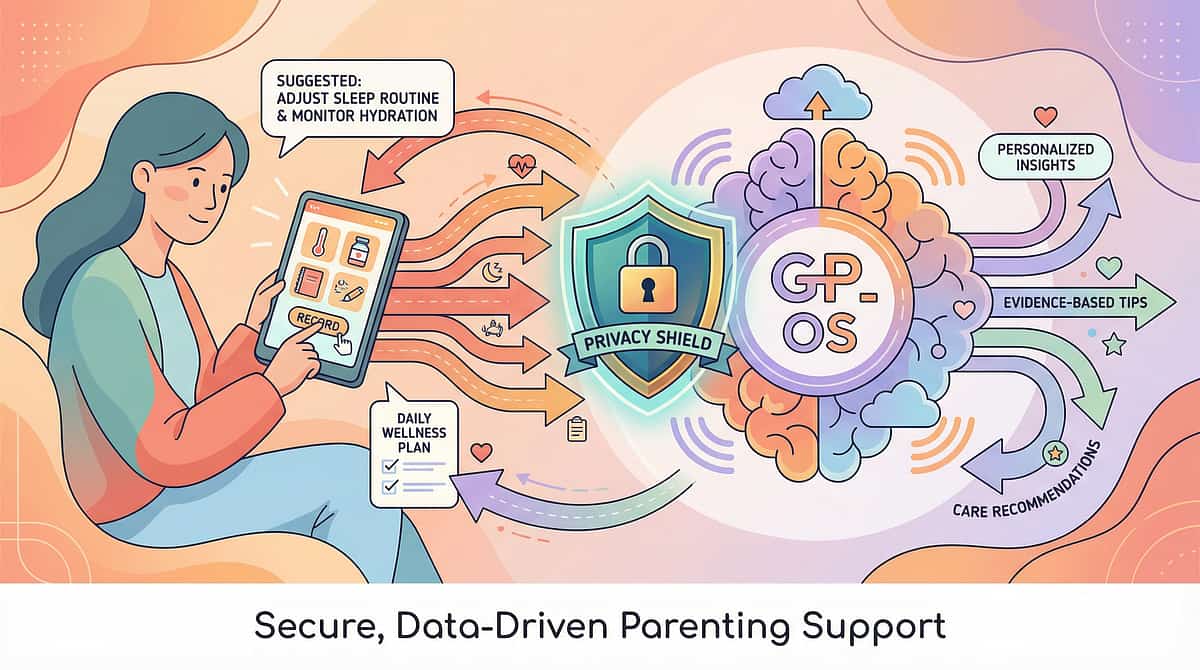
Your Session Data Doesn't Disappear — It Becomes Your Child's Personalized Therapy Intelligence
What GPT-OS® Learns From G-628 Data
- Which of the 9 materials produces highest engagement for your child
- Optimal session duration (diminishing returns threshold)
- Time-of-day patterns (when child is most available)
- Progress velocity vs. population baseline of 20M+ sessions
Population Benefit
"Your child's anonymized data contributes to the 20M+ session dataset that makes GPT-OS® recommendations more accurate for every family. Your data helps every child like yours."
Privacy Assurance
- ✓ All individual data anonymized and encrypted
- ✓ DPDP Act (India) compliant
- ✓ No data shared with third parties
- ✓ Parent controls full data access and deletion
Digital health + ASD systematic reviews (2024) | 21 RCTs, 1,050 participants on digital health interventions for ASD
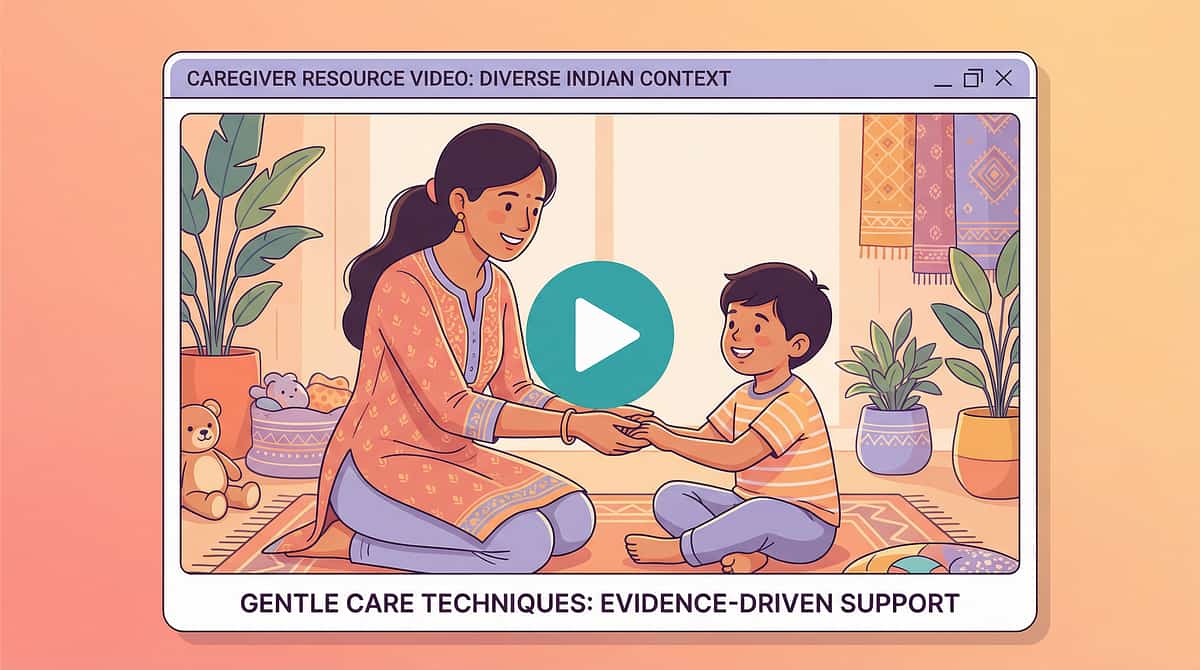
Watch the Pinnacle OT Consortium Demonstrate All 9 Materials in 60 Seconds
🎬 G-628 Reel
9 Materials That Help With Independent Play
Series: Play Skills (Episode 628) | Duration: 60 seconds | Domain: OT-IP | Primary Discipline: OT + ABA
Series: Play Skills (Episode 628) | Duration: 60 seconds | Domain: OT-IP | Primary Discipline: OT + ABA
In this reel, our Pediatric OT Consortium demonstrates each of the 9 materials — how to set them up, what engaged play looks like, and how to step back and let the material do the work. This is 60 seconds of practical demonstration that supports everything you've read on this page.
Watch More in This Series
G-626
Exploratory Play Materials
G-627
Object Play Materials
G-629
Cooperative Play Materials
Video modeling: NCAEP 2020 Evidence-Based Practice for ASD | Multi-modal learning improves parent skill acquisition

ACT VI: THE CLOSE
Your Questions, Answered — By the Pinnacle Consortium
Q: How long does it take to see real results?
Most families see measurable change in independent play duration within 2–3 weeks of consistent daily practice. Full independent sessions (15–30 min) typically emerge by weeks 6–8. Individual timelines vary based on baseline, consistency, and underlying profile.
Q: My child has ASD — is independent play realistic?
Yes — with appropriate material selection and scaffolding. Many ASD children excel with structured, predictable, sensory-engaging materials. The key is matching the material to the child's profile, not forcing neurotypical play forms.
Q: How is this different from just leaving them with an iPad?
Screen content is highly stimulating but does not build independent play skills — it replaces them. The materials in G-628 build the neural systems (idea generation, initiation, intrinsic reward) that enable self-directed engagement. Screens provide external direction; these materials build internal direction.
Q: My child won't touch the sensory bin — they hate tactile input.
Respect the sensory profile. Switch to audio + construction (lower tactile demand) or self-correcting puzzles. Tactile aversion is not a therapy failure — it's diagnostic information. Contact us: 9100 181 181.
Q: Is this suitable for non-autistic children who just can't play alone?
Yes. Many neurotypical children have delayed independent play skills due to over-scheduled lives, excessive screen exposure, or attachment styles. All 9 materials and the scaffolding approach apply equally.
Q: Can this replace formal OT?
This page is a supplement to professional therapy, not a replacement. The materials and protocol are drawn from OT practice and can be implemented at home alongside formal therapy for maximum impact. If your child's challenges are significant, professional evaluation is essential.
Q: My child plays alone fine but only with screens. Does this count?
Screen-dependent "play" does not develop the same underlying skills. If your child cannot play independently without a screen, the skills this protocol targets are genuinely underdeveloped. The goal is screen-free independent engagement.
Q: How do I know if my child needs professional evaluation?
See Card 27 (Red Flags). In general: if difficulties persist after 4+ weeks of consistent scaffolding, if distress is severe, if play skills are regressing, or if you suspect an underlying condition — consult a professional. Call 9100 181 181 for a FREE initial consultation.

Your Child Can Learn to Play Independently
Start today. With one material. For three minutes.
🟢 Start This Technique Today
Launch a guided session with all 9 materials, step-by-step protocol, and session tracking.
📞 Book a FREE Consultation
Speak with a Pinnacle OT. FREE Helpline available in 16+ languages, 24×7.
→ Explore the Next Technique
Ready to move beyond independent play? G-629 Cooperative Play Skills is the natural next step.
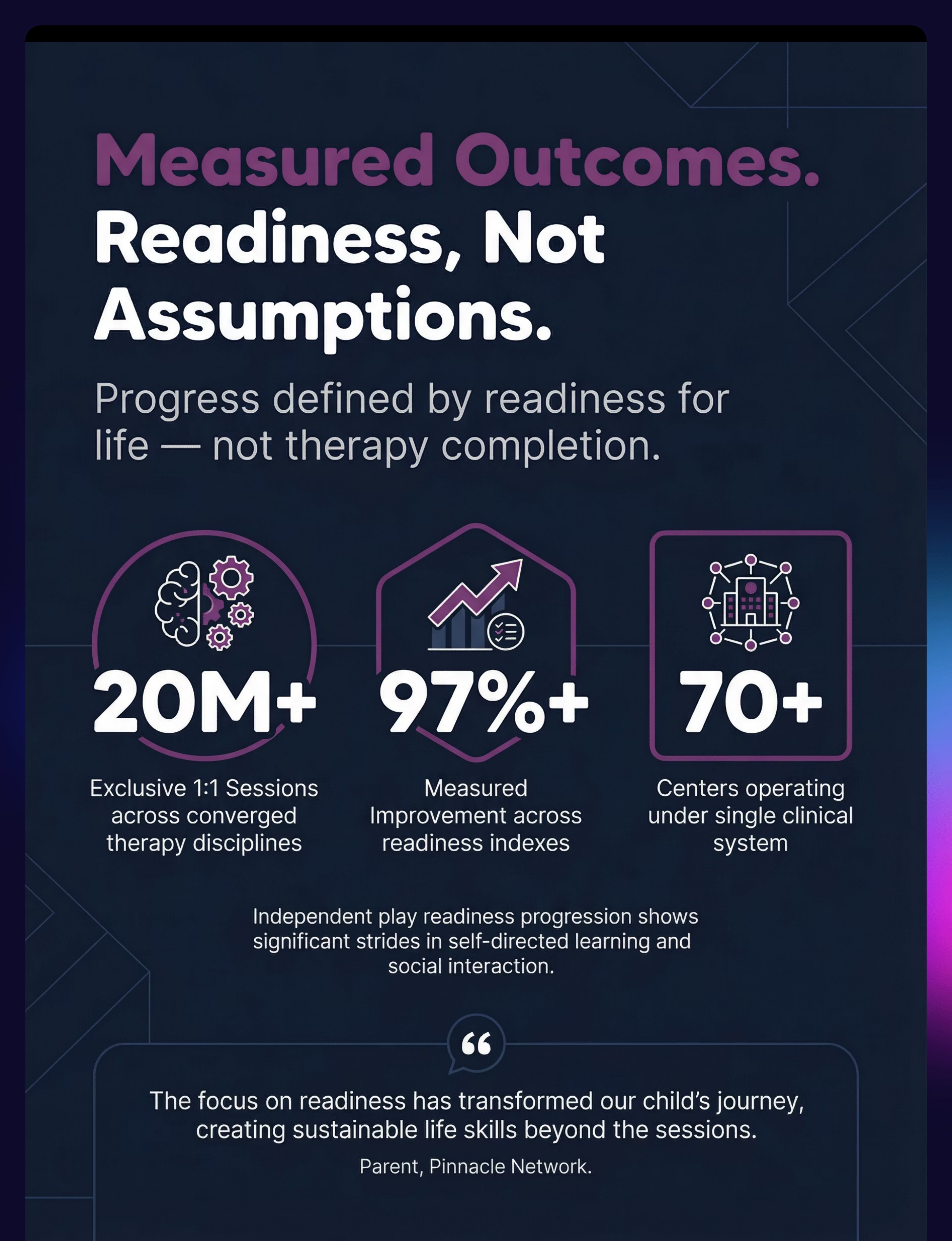
20M+
1:1 Sessions
97%+
Measured Improvement
70+
Centers in India
160+
Countries Served
🏥 Validated by the Pinnacle Blooms Consortium | 🔬 OT • 💬 SLP • 🔄 ABA • 📚 SpEd • 🧬 NeuroDev
📞FREE National Autism Helpline: 9100 181 181 | 16+ languages | 24×7
Preview of 9 materials that help with independent play Therapy Material
Below is a visual preview of 9 materials that help with independent play therapy material. The pages shown help educators, therapists, and caregivers understand the structure and content of the resource before use. Materials should be used under appropriate professional guidance.



Link copied!

The Pinnacle Promise — From Fear to Mastery, One Technique at a Time
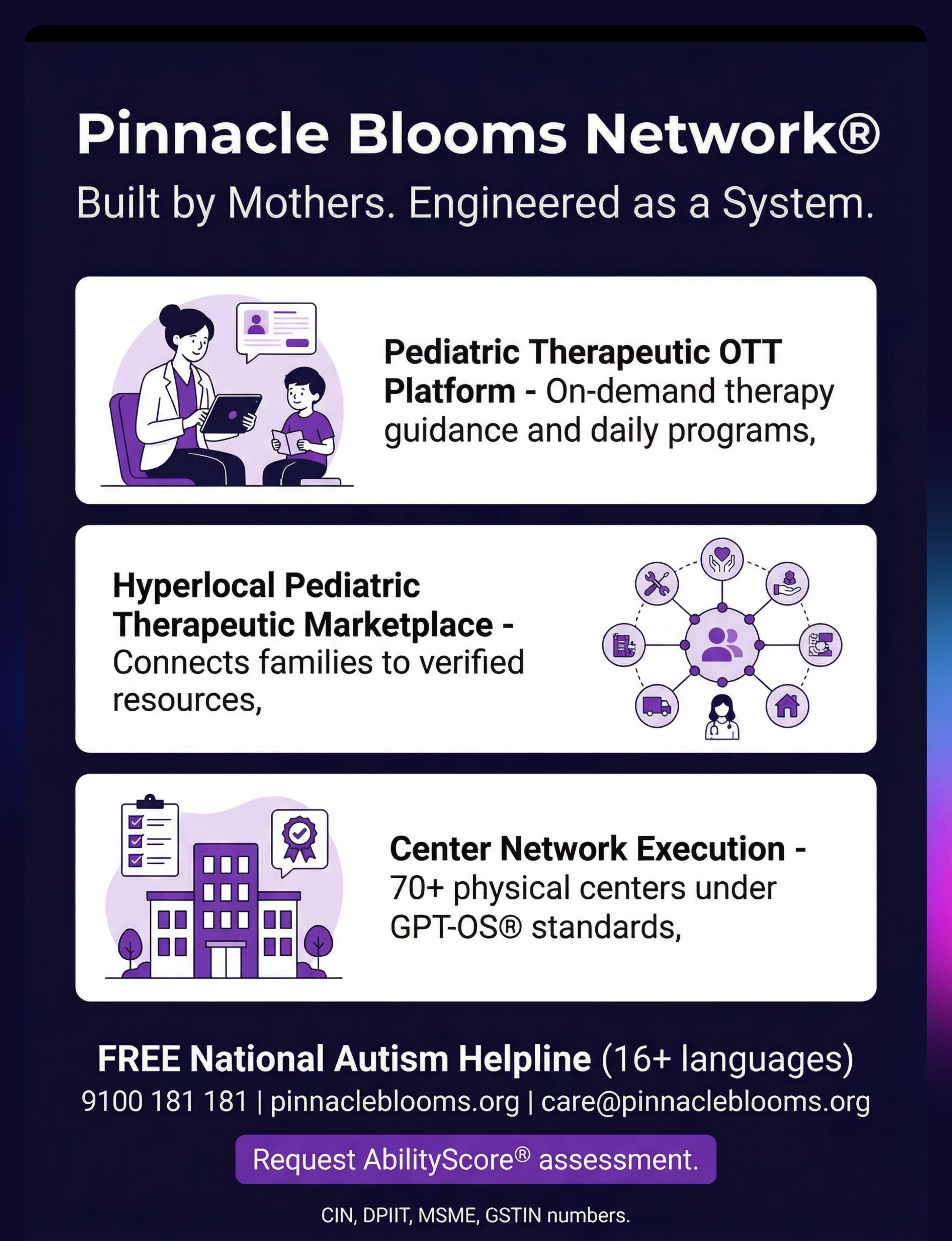
Built by Mothers. Engineered as a System. Powered by GPT-OS®.
India's largest multi-disciplinary pediatric therapy consortium serving children from 70+ countries through 21M+ therapy services with 97%+ proven improvement.
The Loop Continues: You've completed G-628 — Independent Play. Your child's natural next chapter:
→ G-629: 9 Materials That Help With Cooperative Play
→ G-629: 9 Materials That Help With Cooperative Play
Medical Disclaimer: This content is educational. It does not replace evaluation and treatment by licensed healthcare providers. Difficulty with independent play may indicate underlying developmental, sensory, or emotional concerns requiring professional assessment. If your child has significant difficulty with self-directed activity affecting daily function, please consult appropriate professionals for comprehensive evaluation. Individual results may vary. Statistics represent aggregate outcomes across the Pinnacle Blooms Network.
© 2025 Pinnacle Blooms Network®, unit of Bharath Healthcare Laboratories Pvt. Ltd. All rights reserved. CIN: U74999TG2016PTC113063 | DPIIT: DIPP8651 (Govt. of India) | MSME: Udyog Aadhaar TS20F0009606 | GSTIN: 36AAGCB9722P1Z2