
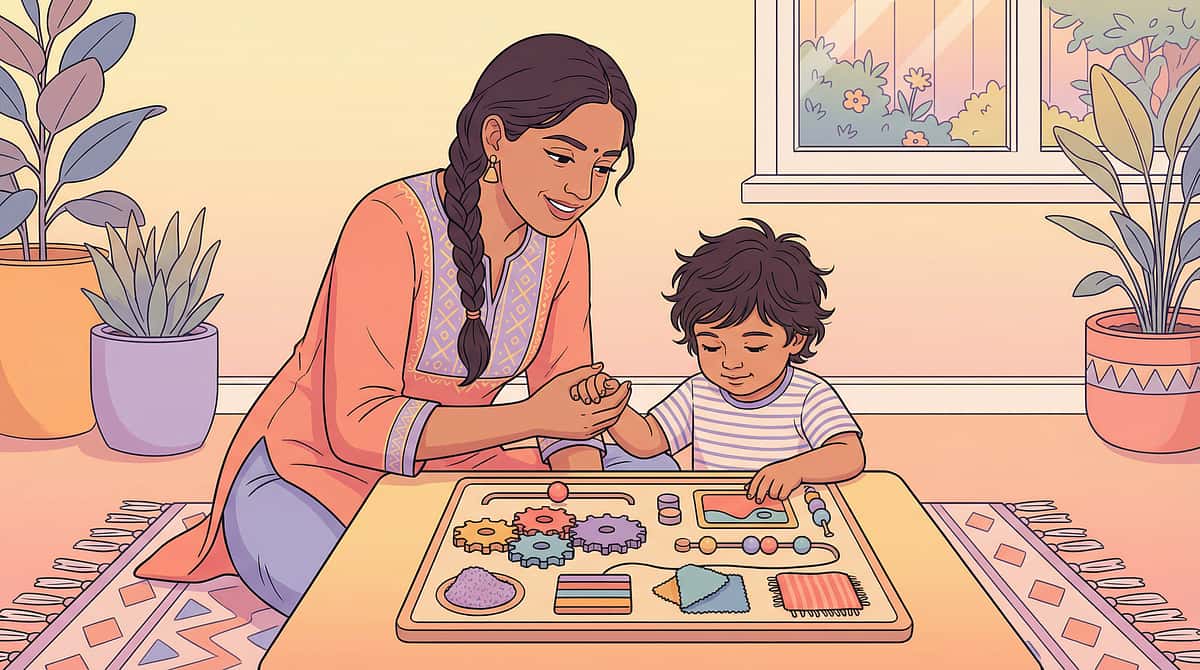
Every Game Ends Badly — Until Now
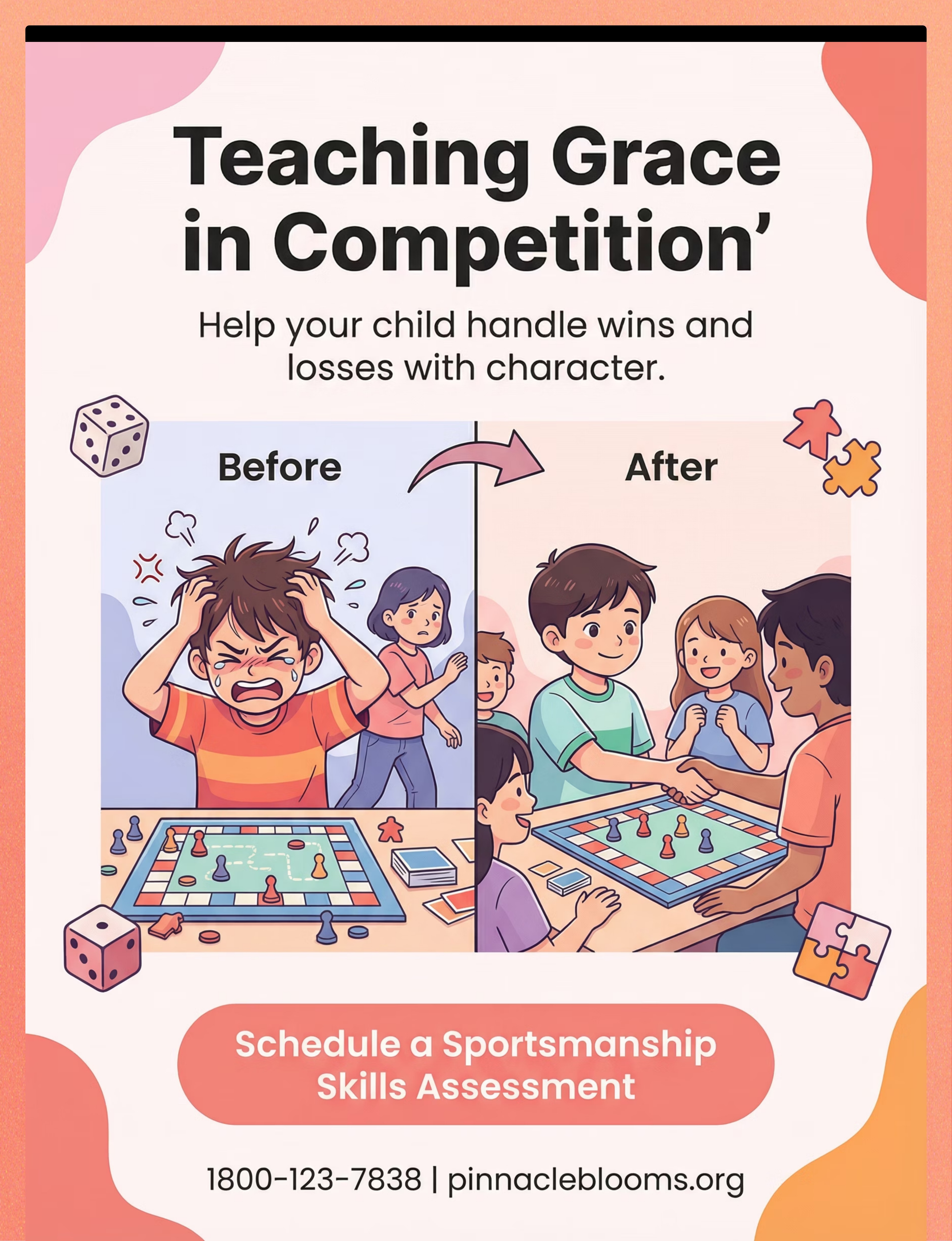
Meltdown when losing. Gloating when winning. You've tried explaining sportsmanship a hundred times. Here are 9 clinically validated materials that actually build the skill — not just the lecture.
G-659
Emotional Regulation
Ages 4–12

ACT I · NORMALIZATION
You Are Among Millions of Families Navigating This Exact Challenge
Difficulty handling winning and losing is not rare, and it is not a parenting failure. Managing competitive outcomes requires the simultaneous execution of emotional regulation, cognitive flexibility, perspective-taking, self-concept stability, and social pragmatics — all in the heat of a charged moment. For children whose regulatory systems are still developing, or who have differences in executive function, sensory processing, or social cognition, this convergence of demands can be genuinely overwhelming.
45–60%
ASD & Competitive Emotion
Children with ASD experience significant difficulties with competitive emotion regulation
3–4×
ADHD Reaction Rate
Higher rate of severe losing reactions in children with ADHD vs. neurotypical peers
70%+
Families Affected
Families who reduce or eliminate game play due to escalating competitive meltdowns
"Your child is not being difficult. Their brain is doing something genuinely hard without the right equipment yet." — Pinnacle Blooms Consortium, Behavioral Therapy Division
Research: PMC11506176 (PRISMA 2024) | PMC10955541 (Meta-analysis 2024) | DOI: 10.12998/wjcc.v12.i7.1260

ACT I · THE NEUROSCIENCE
Why Games Feel Catastrophic
The Regulation Gap — What Fires in Your Child's Brain
🔴The Amygdala Alarm: Loss = perceived threat. For children with differences in emotional processing, losing a game activates the same threat-detection circuitry as physical danger. This is not drama — it is a genuine neurological event.
🟡The Prefrontal Gap: The prefrontal cortex — the brain's regulation center — is not fully developed until the mid-20s. In children with ADHD, autism, or high emotional reactivity, this gap is wider. They literally cannot "calm down" on command because the regulatory hardware is not yet online.
🟢The Reward Hijack: Before a game ends, the striatum predicts reward (winning). When the outcome reverses, the prediction error is experienced as a jolt — disproportionate to the stakes adults see.
Key Brain Regions Involved
Amygdala
Emotion detection and threat response — activates on loss
Prefrontal Cortex
Regulation and reasoning — still developing, wider gap in ADHD/ASD
Anterior Cingulate
Conflict monitoring — registers the mismatch between expected and actual outcome
Striatum
Reward prediction — hijacked by the expected win, creating a jolt on reversal
Wiring difference, not behavior choice. These materials do not fight the brain — they build the missing scaffolding until the brain catches up.
Frontiers in Integrative Neuroscience (2020): DOI: 10.3389/fnint.2020.556660
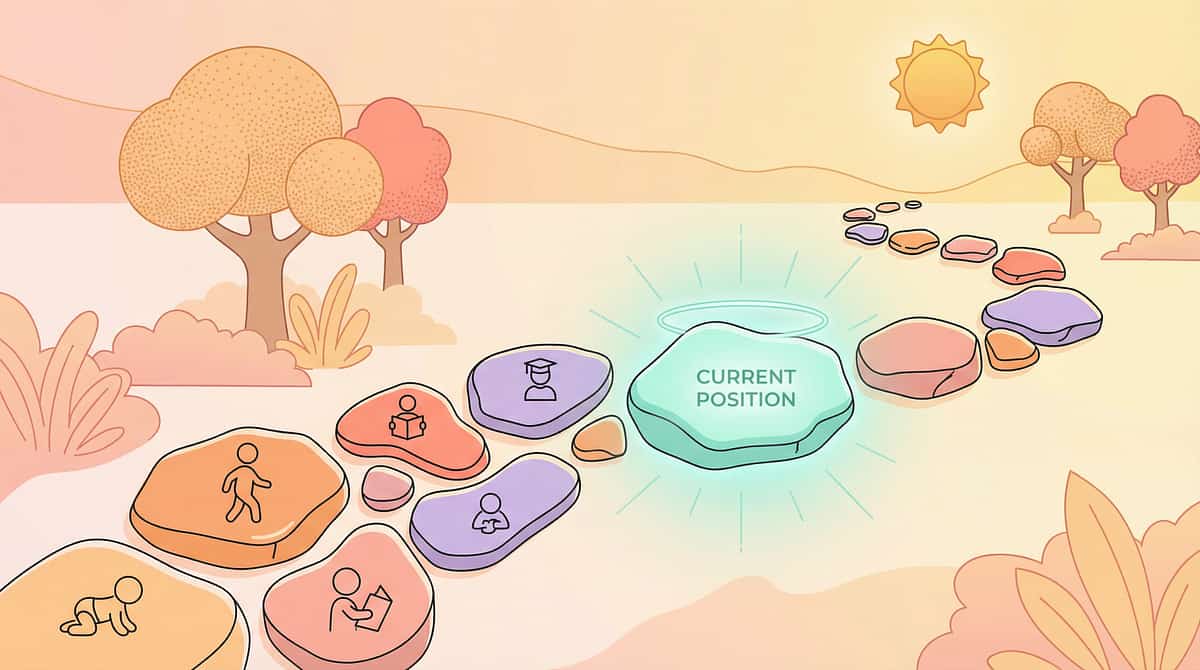
ACT I · DEVELOPMENTAL CONTEXT
Good Sportsmanship Is a Developmental Achievement — Not a Given
Understanding where your child sits on the developmental arc removes the shame — and clarifies the path forward.
Ages 3–4
Cannot lose without distress — developmentally normal
Ages 4–6
Basic tolerance emerges; upset common but recoverable
Ages 7–9
Good sportsmanship consolidates — winning graciously AND losing gracefully
Ages 10+
Generalization across contexts: parties, sports, competitions
Current challenge zone: typically ages 4–10; delayed in ASD, ADHD, and anxiety profiles.
ADHD
Emotional intensity + impulse control deficits → reactions are fast and extreme
ASD
Cognitive inflexibility + perspective-taking challenges → can't accept unexpected outcomes
Anxiety
Catastrophizing → losing = proof of worthlessness
Giftedness
Fixed mindset + perfectionism → any loss is an identity threat
WHO Care for Child Development (CCD) Package — PMC9978394 | WHO/UNICEF CCD Package 2023

ACT I · THE EVIDENCE
Clinically Validated. Home-Applicable. Parent-Proven.
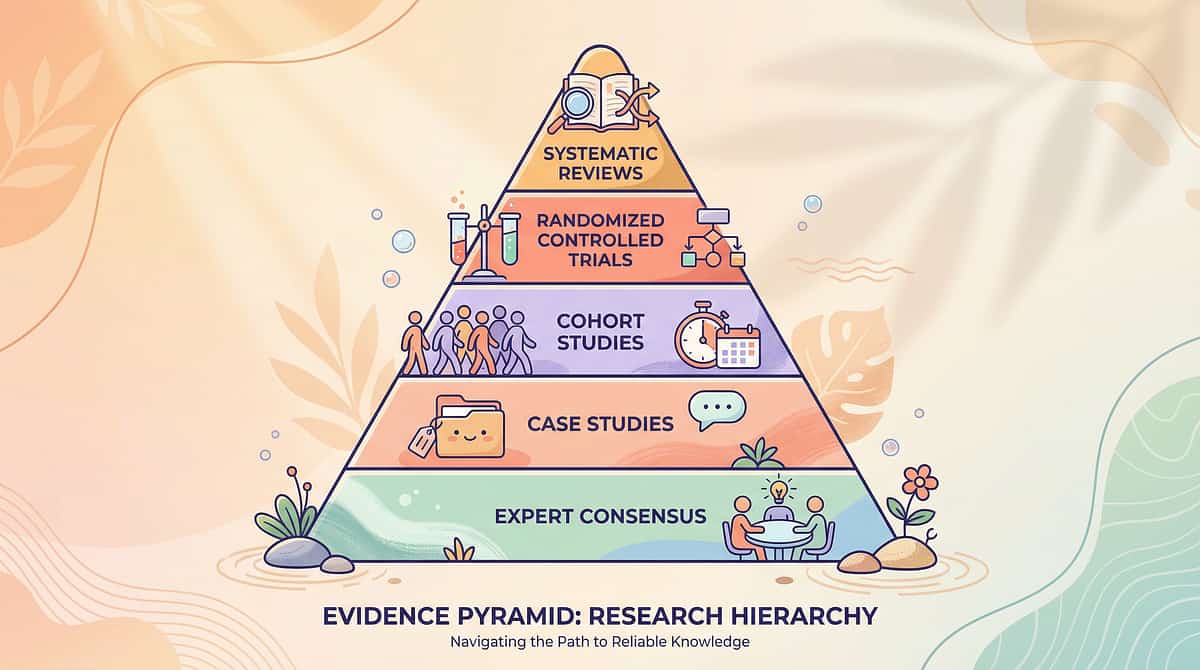
This technique carries Level II Evidence — supported by systematic reviews, meta-analyses, and clinical consensus across ASD, ADHD, and emotional dysregulation populations.
Explicit Skill Teaching
Systematic reviews confirm that explicit teaching of social-emotional rules — through structured stories and scripted responses — significantly improves competitive behavior and reduces meltdowns.
NCAEP Evidence-Based Practices (2020): Social narratives = evidence-based practice for autism
Emotional Regulation Tools
Meta-analysis of emotional regulation interventions confirms structured awareness tools reduce dysregulation frequency and intensity. Coping strategy training shows robust outcomes across pediatric populations.
PMC10955541 | World J Clin Cases, 2024
Behavioral Reinforcement
ABA principles applied to sportsmanship: reinforcing specific good-sport behaviors produces measurable change in competitive responses. Graduated exposure + reinforcement is more effective than punishment alone.
BACB Standards | PMC11506176 | Padmanabha et al., Indian Journal of Pediatrics (2019)
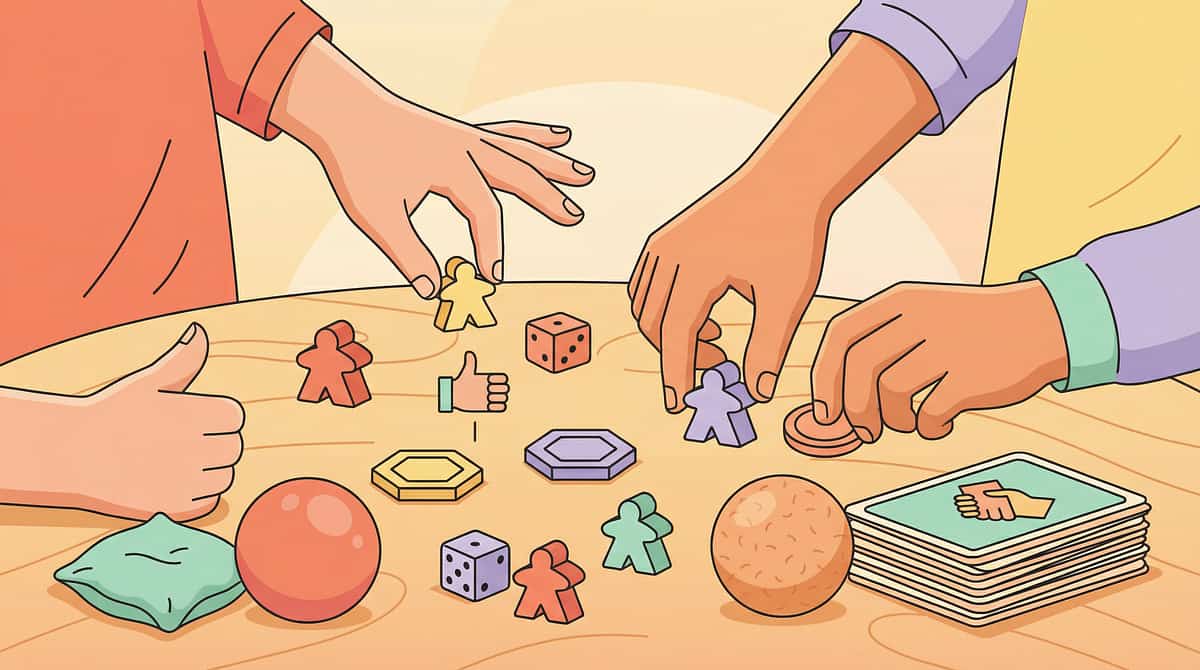
ACT II · THE KNOWLEDGE TRANSFER
9 Materials That Help With Winning and Losing
The Sportsmanship Toolkit
Winning and losing gracefully is one of the most complex social-emotional skills childhood demands — requiring emotional regulation, cognitive flexibility, perspective-taking, self-concept stability, and social pragmatics to converge simultaneously in a charged moment. For children who struggle with competitive outcomes — meltdowns when losing, gloating when winning, refusing to play, or accusing others of cheating — the problem is not willingness. It is the absence of specific, teachable skills.
This collection of 9 materials provides the scaffolding to build those skills systematically: from explicit instruction during calm moments, to in-the-moment regulatory tools, to graduated practice opportunities that build tolerance before the birthday party, the family reunion, or the school sports day.
Emotional Regulation
Sportsmanship
Ages 4–12
5–20 min/session
2–3x per week
8–12 week protocol
ACT II · THE DISCIPLINES
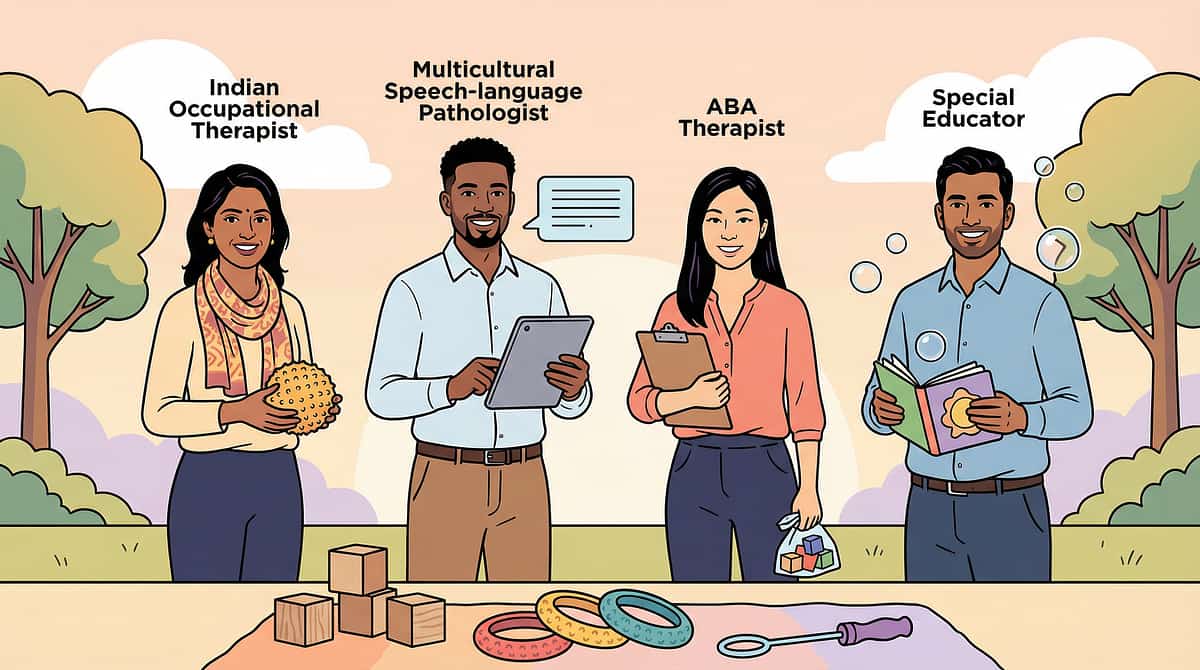
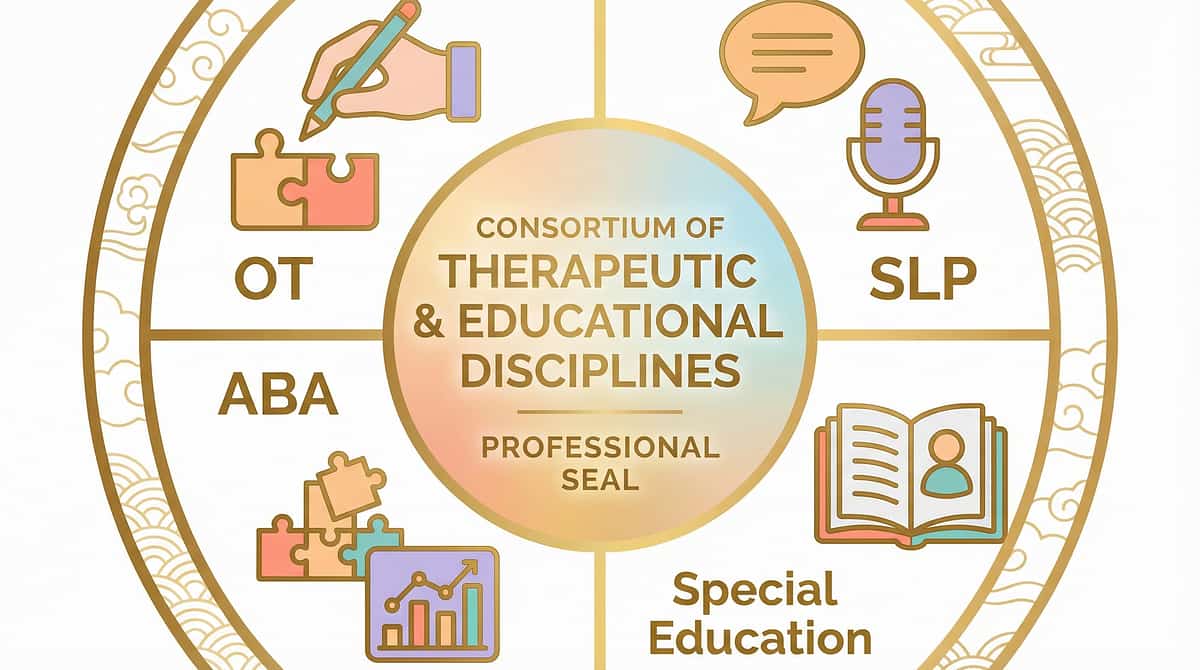
The Consortium Behind This Technique
ABA / BCBA — Primary Lead
Designs behavioral skill-building programs for specific sportsmanship behaviors. Implements reinforcement schedules to reward regulated responses. Conducts functional analysis of meltdown triggers. Runs social skills groups for peer-based practice.
Occupational Therapist — Emotional Regulation
Addresses sensory and emotional regulation components driving dysregulation. Designs the coping kit matched to the child's sensory profile. Addresses co-occurring sensory processing difficulties that lower the threshold for competitive reactions.
Speech-Language Pathologist — Social Communication
Teaches the explicit language of sportsmanship: scripts, conversational repair after conflict, social pragmatics. Critical for autistic children who need the "rules" of sportsmanship made explicit.
Special Education Therapist — Cognitive Flexibility
Addresses rigid thinking patterns that make accepting unexpected game outcomes difficult. Teaches perspective-taking through structured curricula. Supports generalization to school and peer settings.
"This technique crosses therapy boundaries because the brain doesn't organize by therapy type. Winning and losing requires ALL of these skills — simultaneously." — Pinnacle Blooms FusionModule™
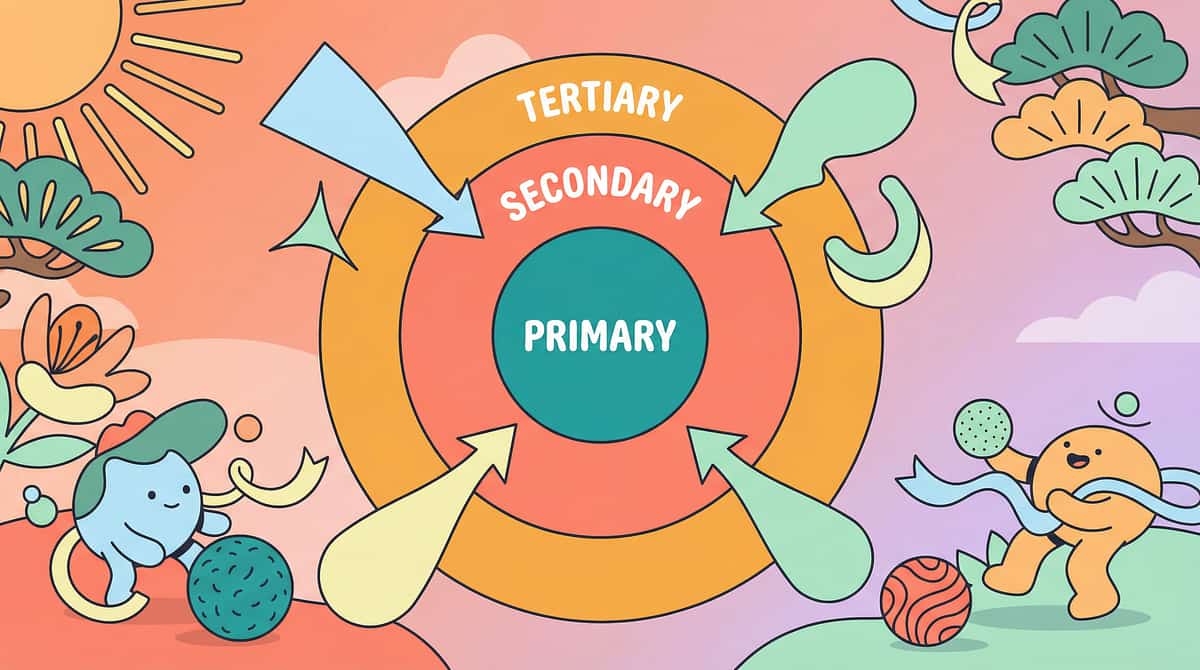
ACT II · THE TARGETS
Precision Intervention Targets
🎯 Primary Target
Competitive Emotion Regulation — the ability to manage the intensity of emotions produced by winning and losing without behavioral dysregulation (meltdowns, throwing, gloating, aggression, refusal).
Secondary Targets
- Frustration Tolerance — tolerance of unfulfilled expectations
- Cognitive Flexibility — acceptance of unexpected outcomes
- Impulse Control — inhibiting automatic reactions
- Social Pragmatics — knowing appropriate winner/loser responses
- Perspective-Taking — understanding the other player's experience
Observable Before → After Behavior Indicators
Before | After (Mastery) | |
Board flip / game piece throwing | Completes games without physical dysregulation | |
Screaming, crying at loss | Takes a breath, uses script | |
Gloating, mocking winner | Congratulates graciously | |
Accusing others of cheating | Acknowledges result calmly | |
Refusing to play | Engages willingly |
Long-Term Tertiary Goals
- Social inclusion and peer acceptance
- Resilience and growth mindset
- Self-concept stability independent of outcomes
- Family relationship preservation — game night restored
- School participation: sports days, classroom games, recess
PMC10955541 (Meta-analysis, 2024): 24 studies confirm intervention promotes social skills, adaptive behavior, and developmental competence.
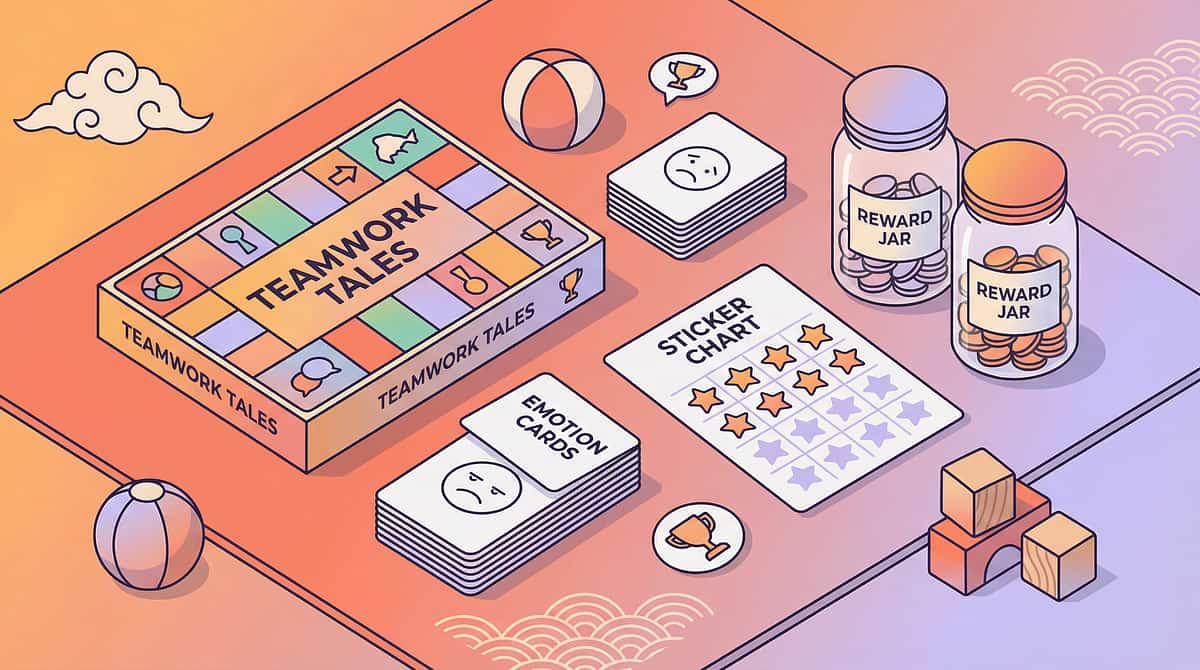
ACT II · YOUR MATERIALS TOOLKIT
9 Materials — All 9 Can Be DIY'd. Some Can Be Bought.
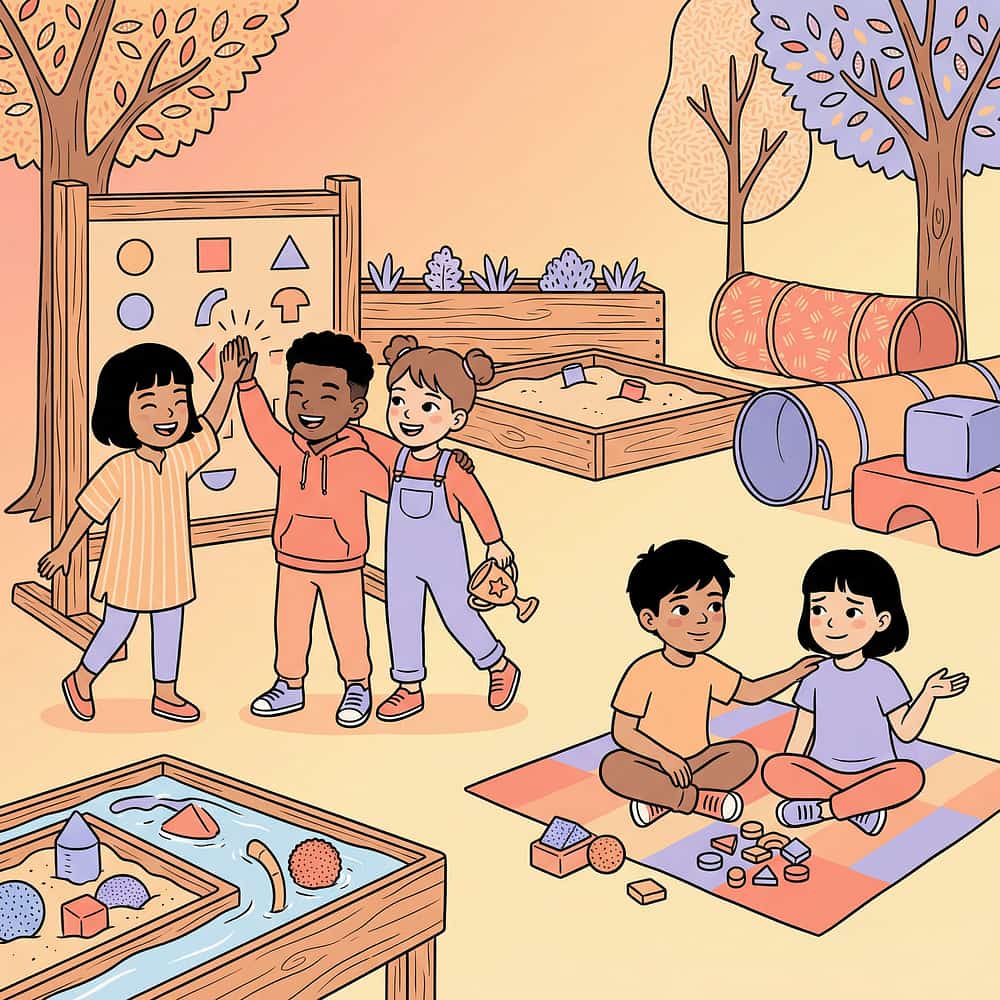
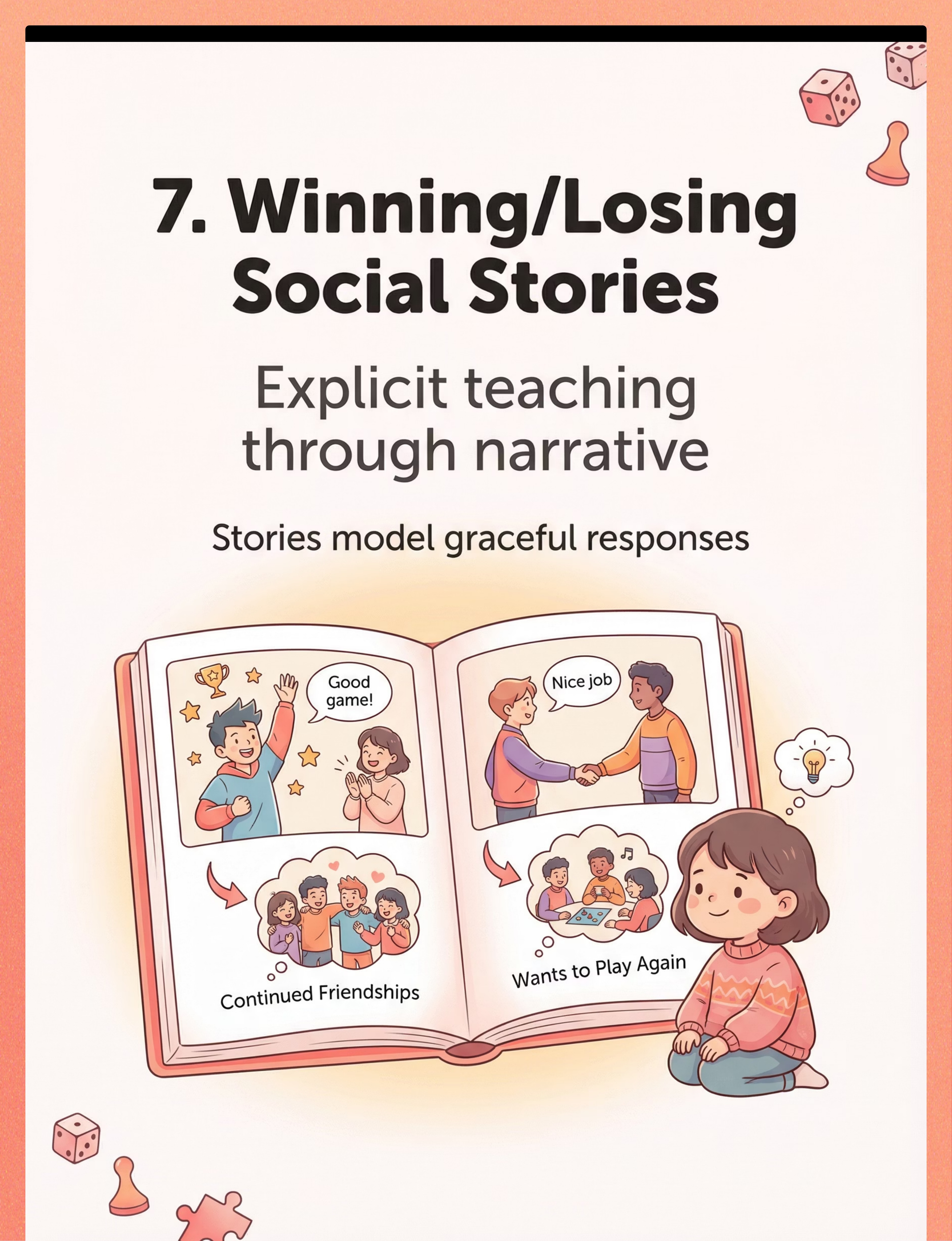
1. Winning & Losing Social Story Book
Canon: Social Story / Narrative Materials
Function: Explicit rule-teaching during calm moments — what to feel, say, and do when winning or losing.
DIY: ₹0–200 (print + laminate) | Commercial: ₹200–800
Pinnacle Recommends: Custom DIY using child's name and photos
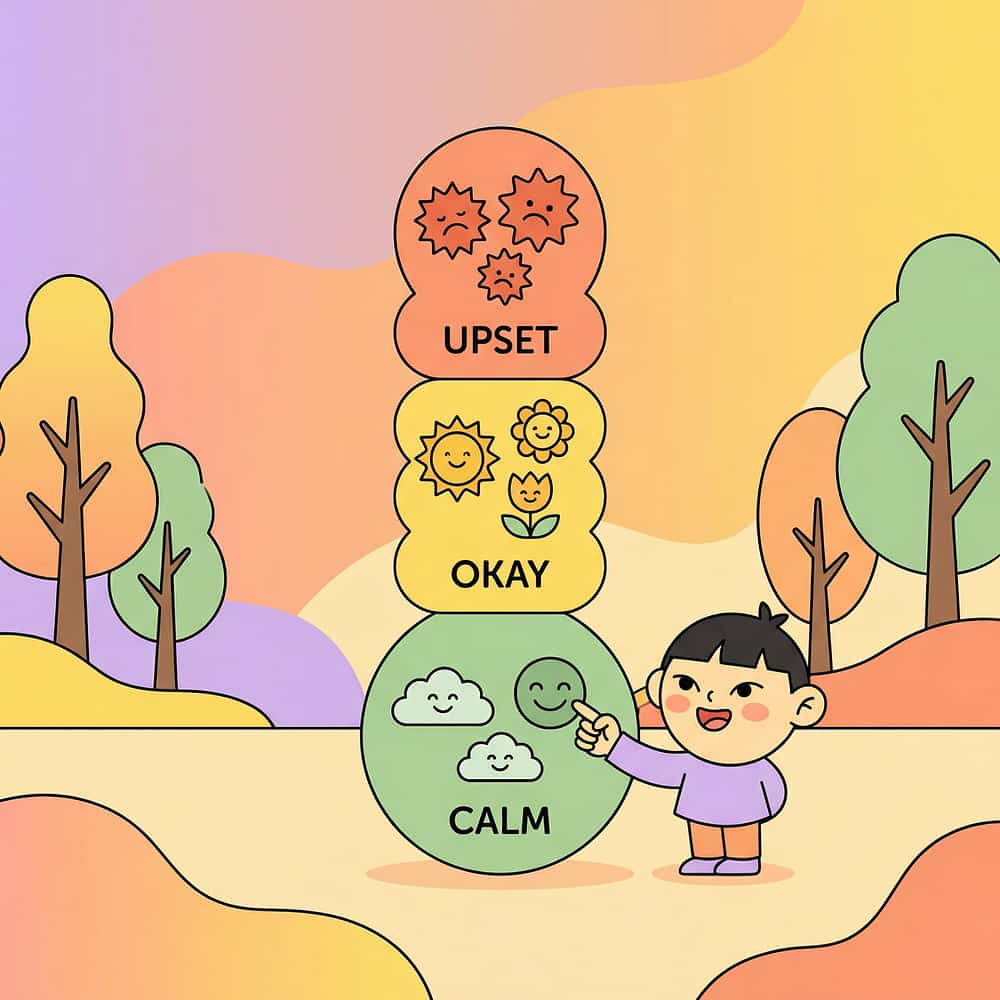
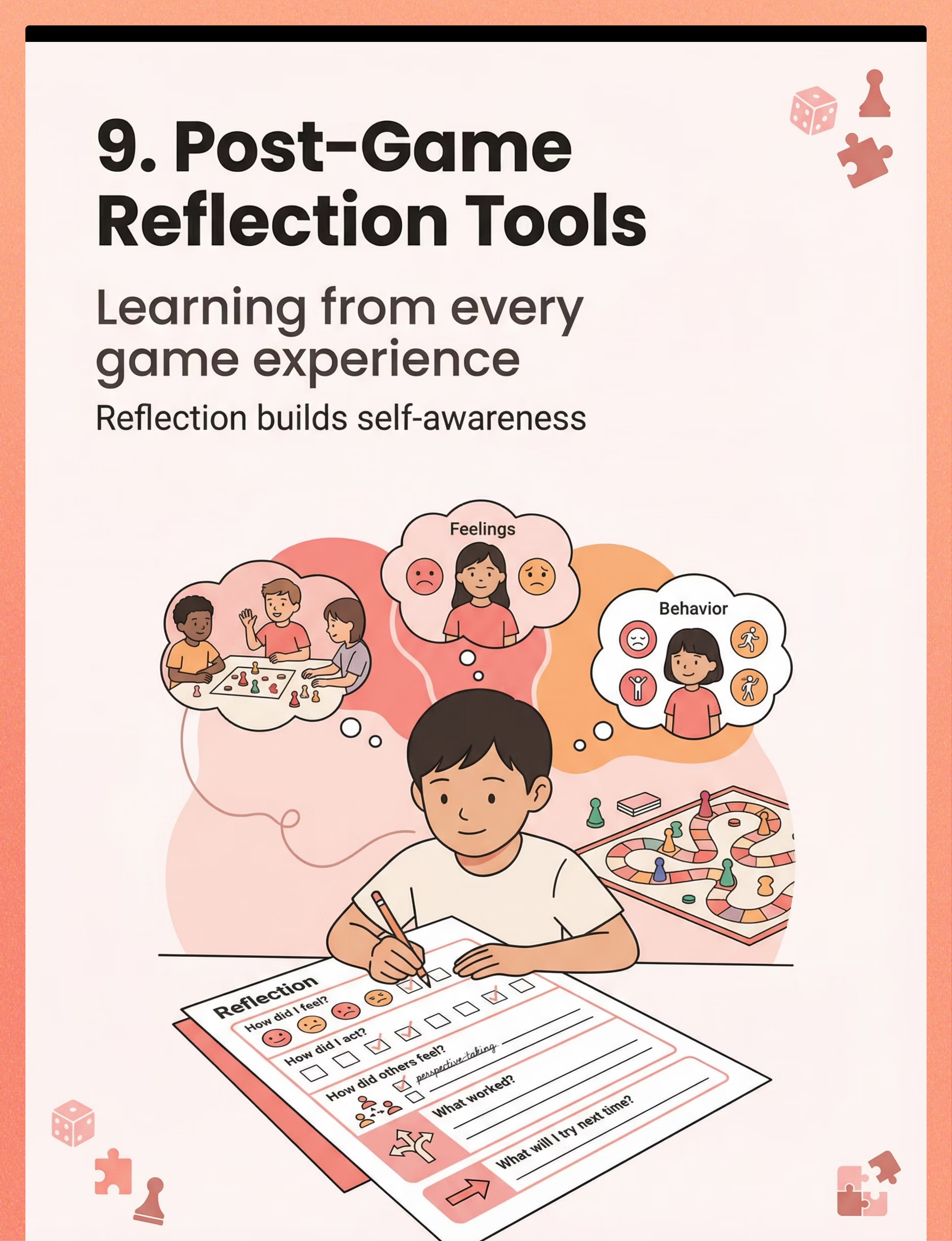
2. Emotion Thermometer Chart
Canon: Visual Supports / Emotional Regulation Tools
Function: Self-monitoring tool — check-in before, during, and after games to catch escalation early.
DIY: ₹0 (drawn or printed) | Commercial: ₹100–500
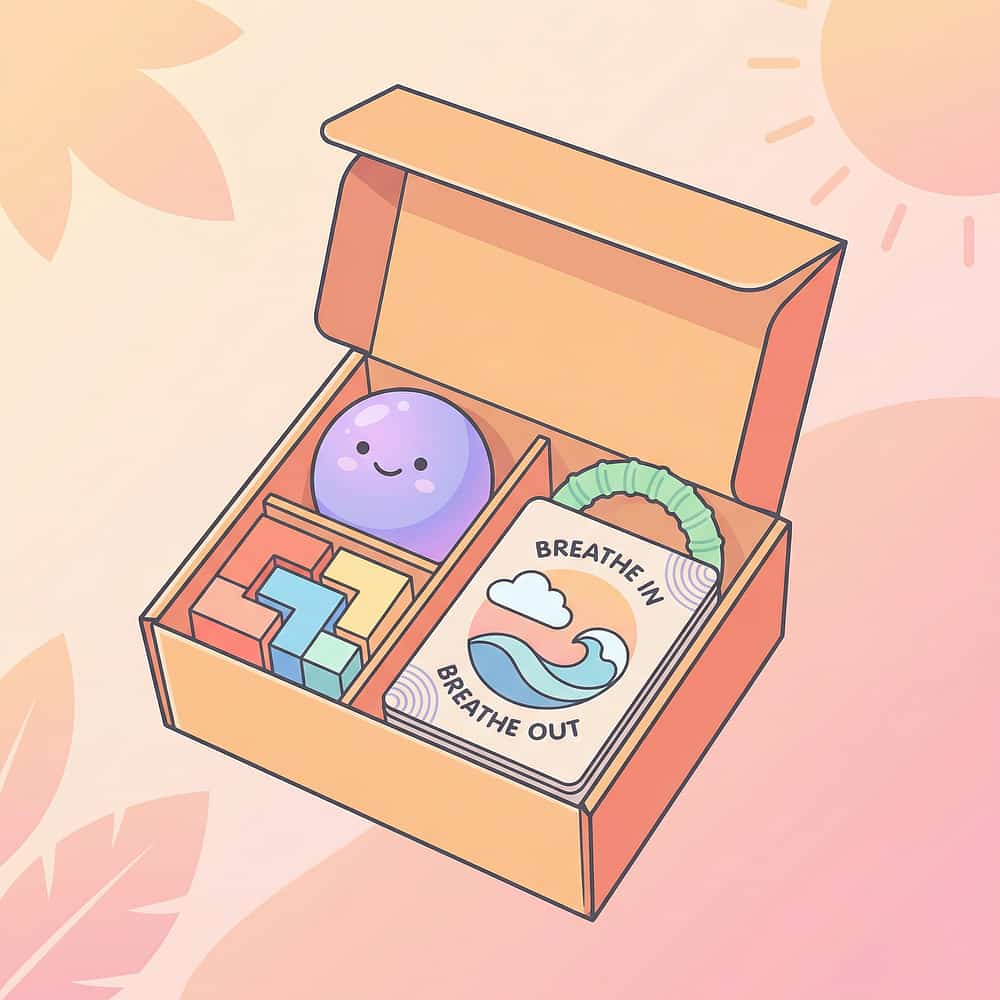
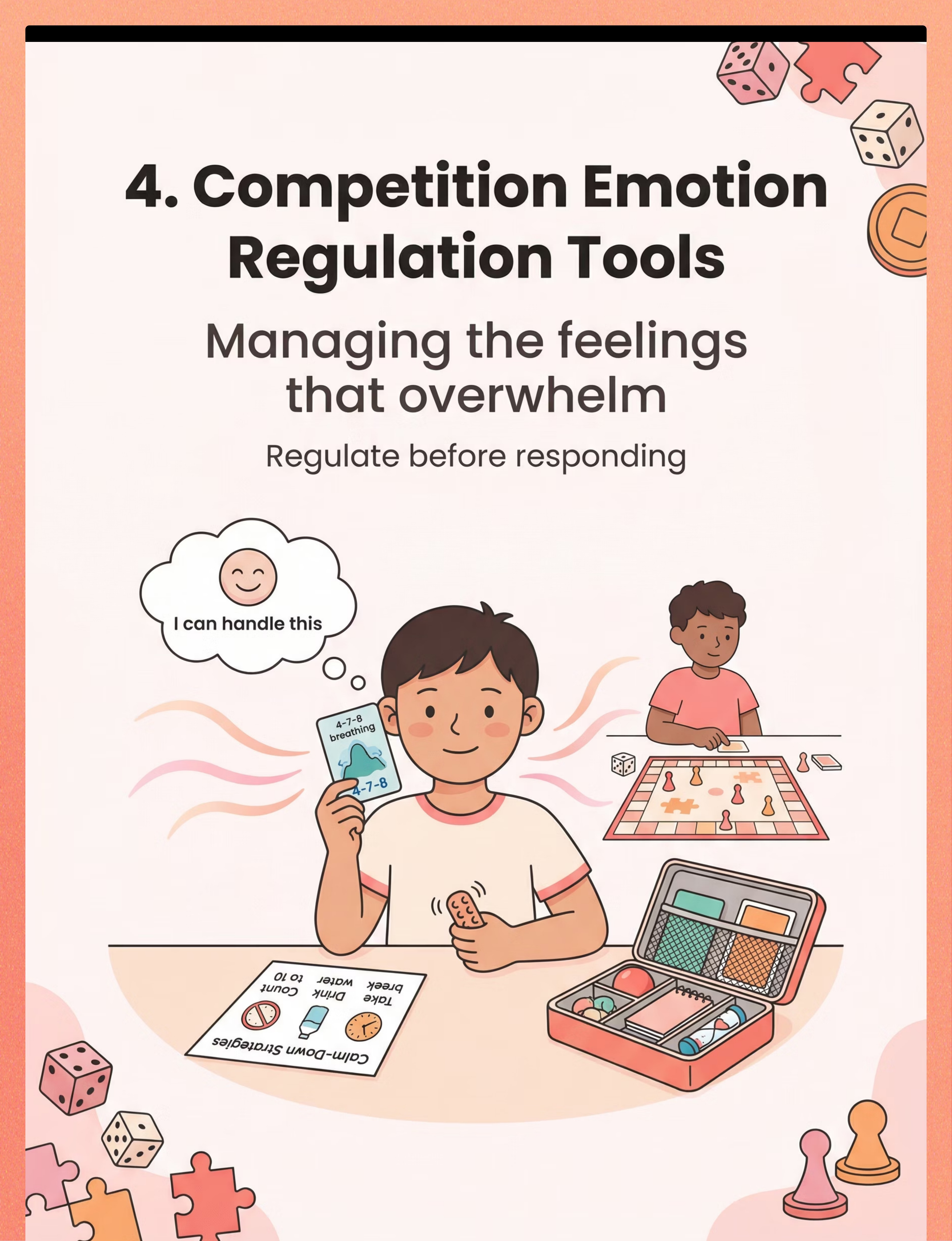
3. Coping Strategy Cards + Cool-Down Kit
Canon: Coping Tools / Sensory Regulation Materials
Function: In-the-moment regulatory tools when feelings get big. Contents: stress ball, breathing card, fidget, comfort object, affirmation cards.
DIY: ₹100–300 | Commercial: ₹200–800
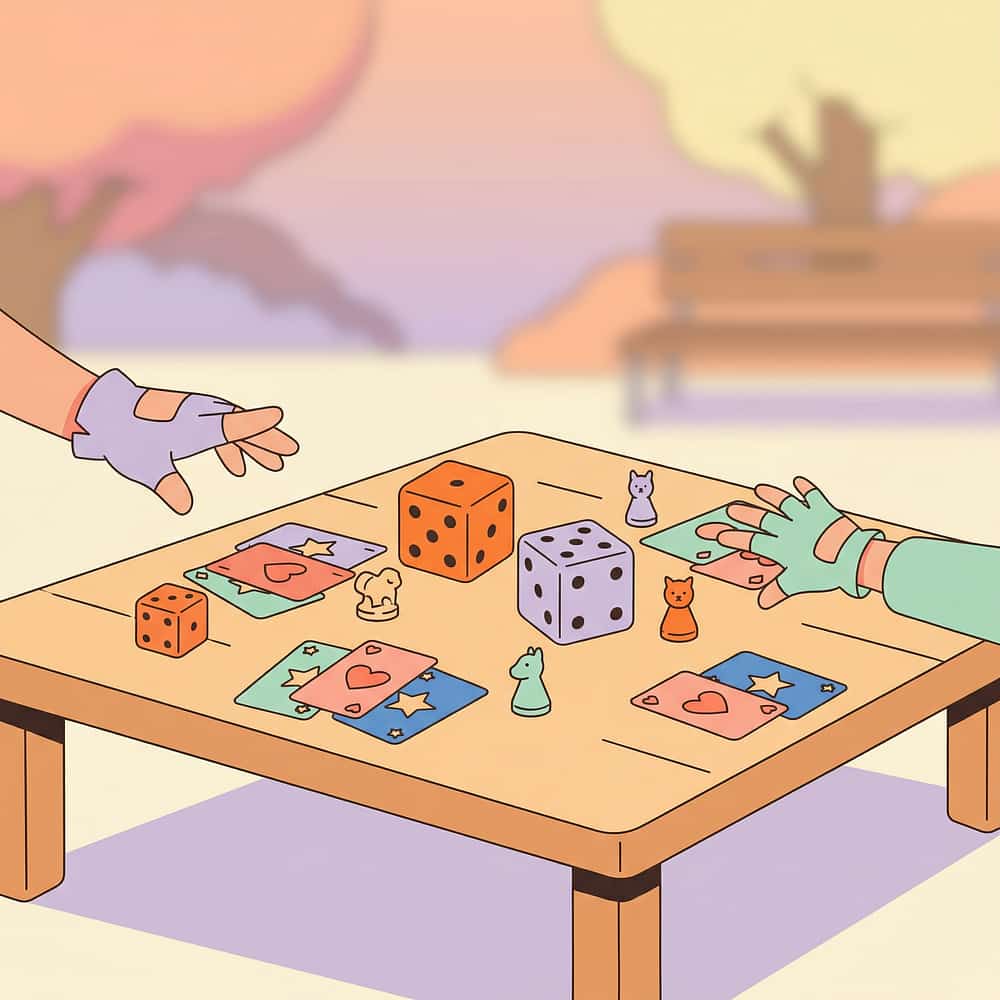
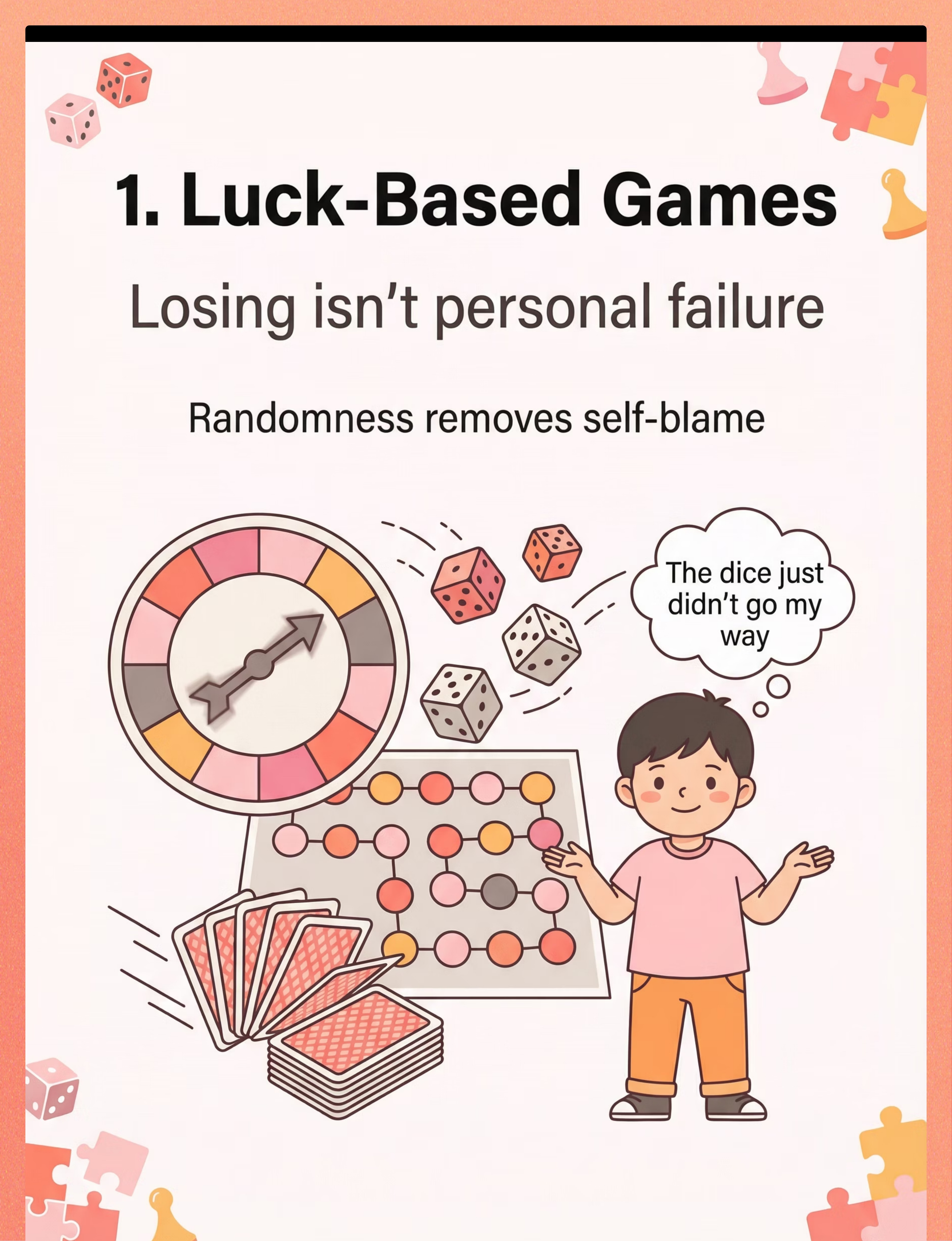
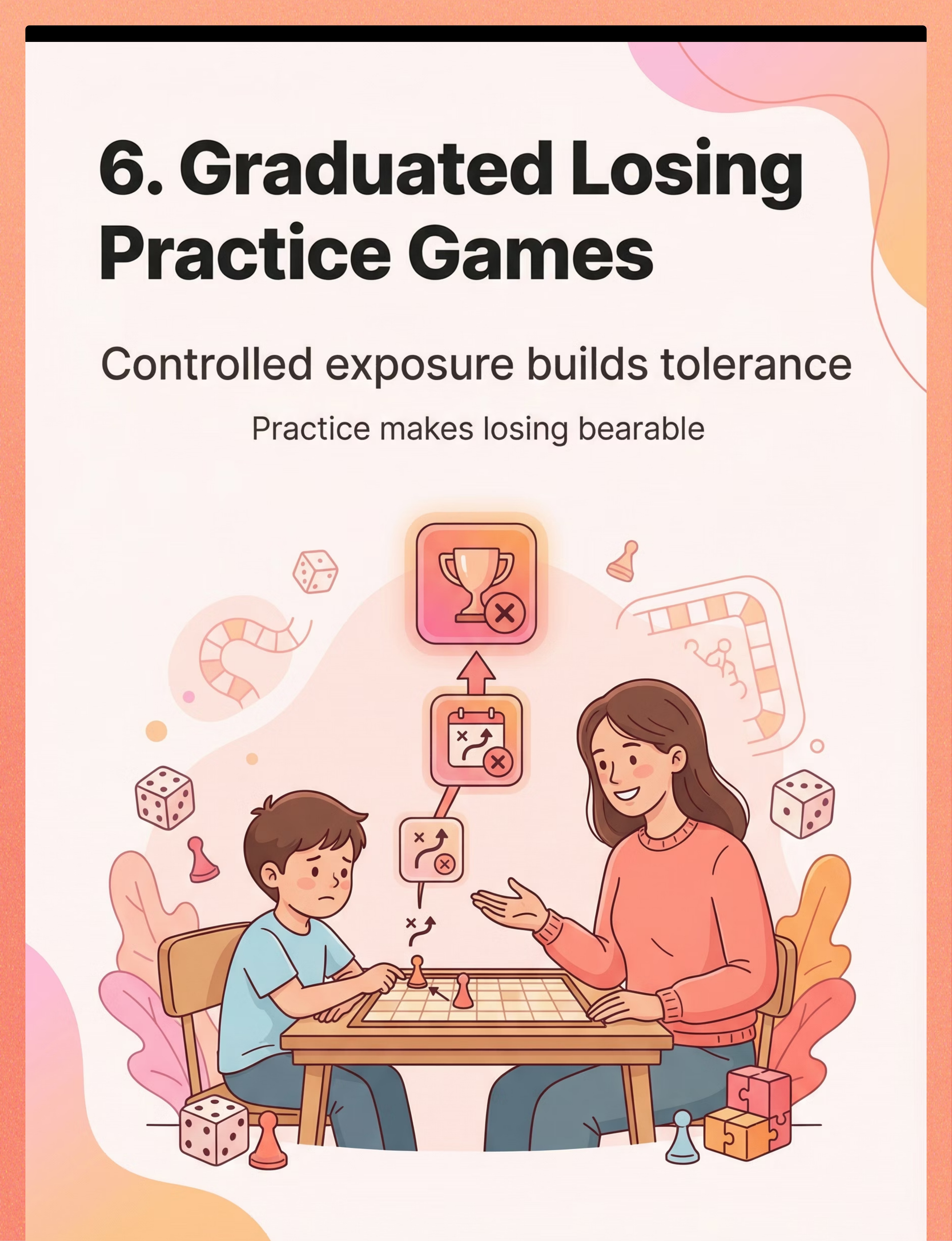
4. Practice Games — Short, Luck-Based
Canon: Cooperative and Practice Play / Problem-Solving Toys
Function: Low-stakes graduated exposure — building tolerance before real games. Examples: War (card game), Candy Land, Rock-Paper-Scissors, dice games.
Cost: ₹0 (use games you own)
🛒SHINETOY 8 Dice Shut The Box Game — ₹610 Buy on Amazon.in(Luck-based, short rounds — ideal for practice)
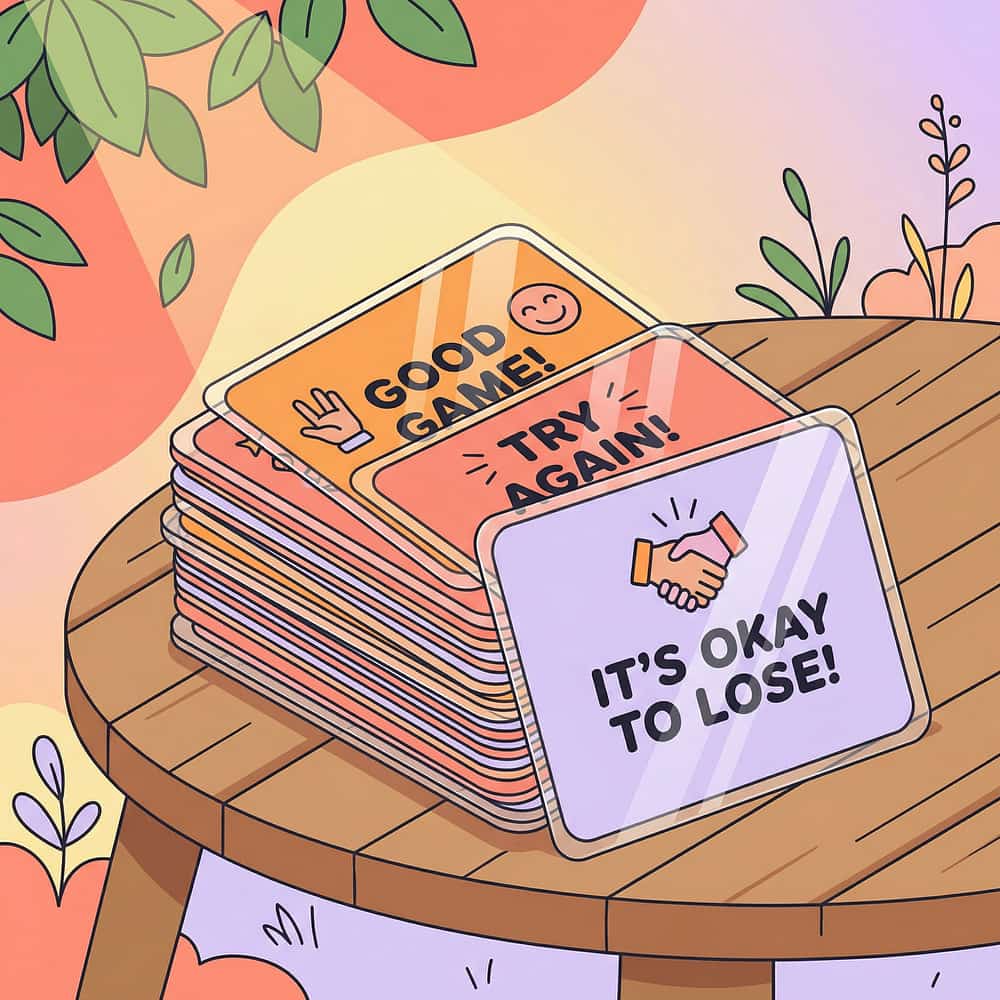
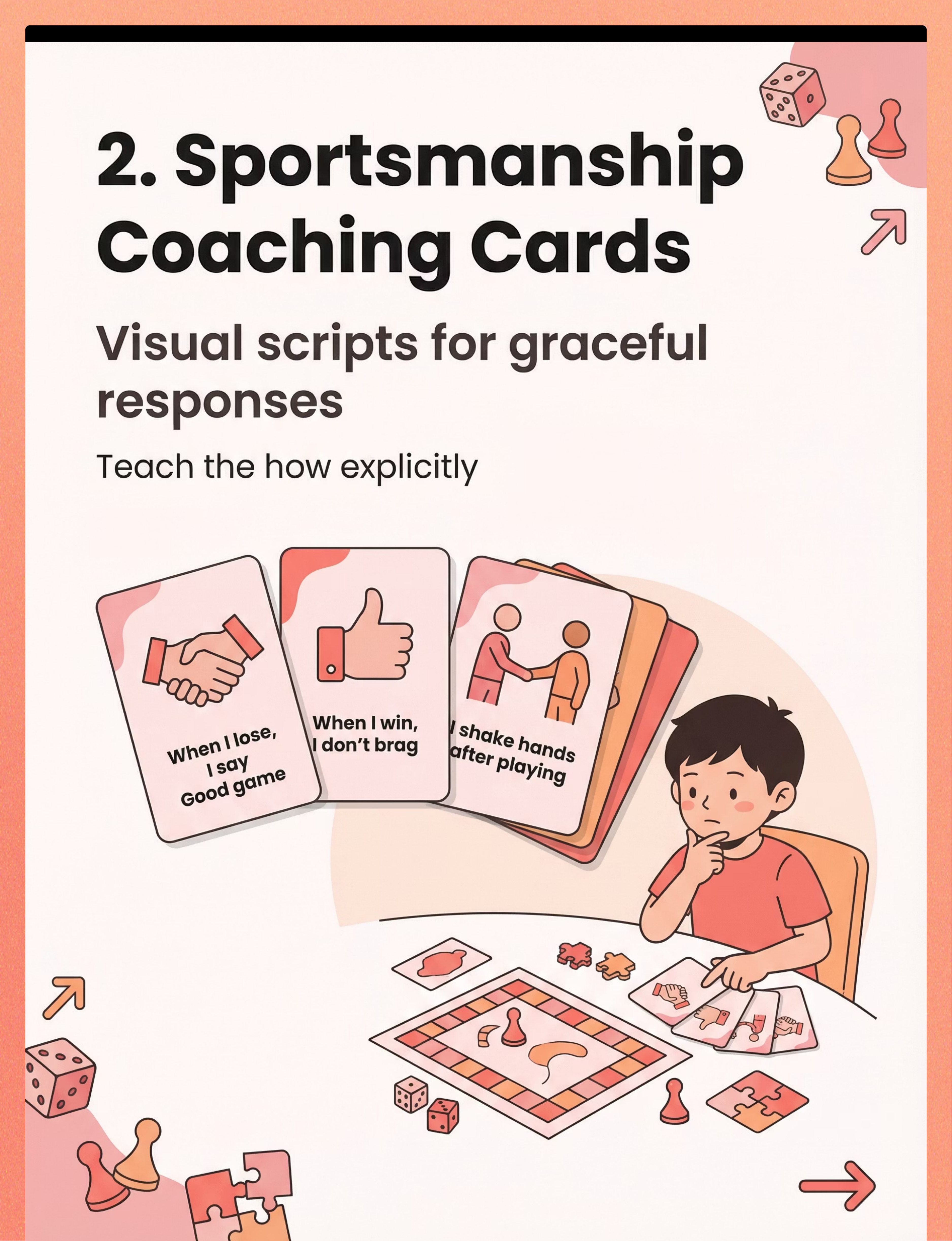
5. Sportsmanship Script Cards
Canon: Social Communication / Script Cards
Function: Pre-written exact words for winning and losing moments — removes the in-the-moment language burden entirely.
DIY: ₹0–100 (printed + laminated) | Commercial: ₹50–200
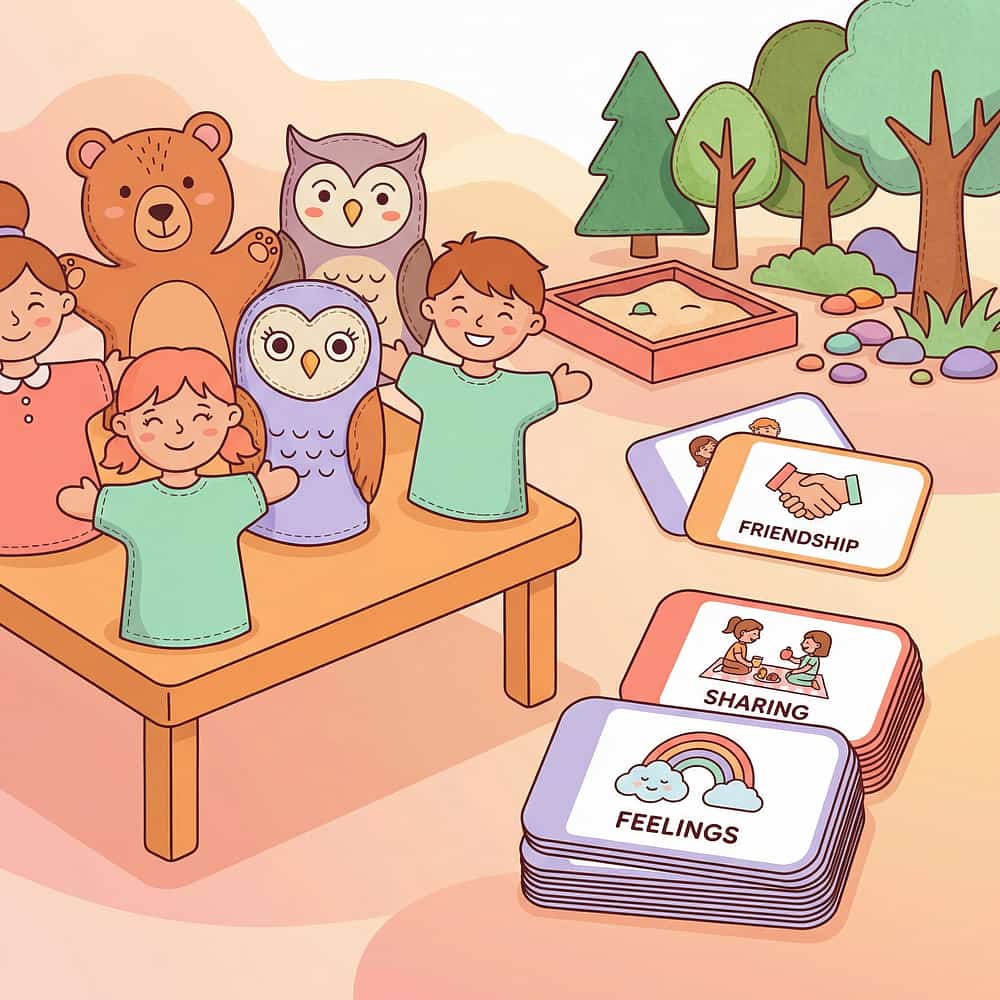
6. Role-Play Props — Puppets / Scenario Cards
Canon: Play Materials / Social Skills Training Tools
Function: Embodied rehearsal of winner/loser responses without real stakes — safe practice before the real moment.
DIY: ₹0–200 | Commercial: ₹0–500
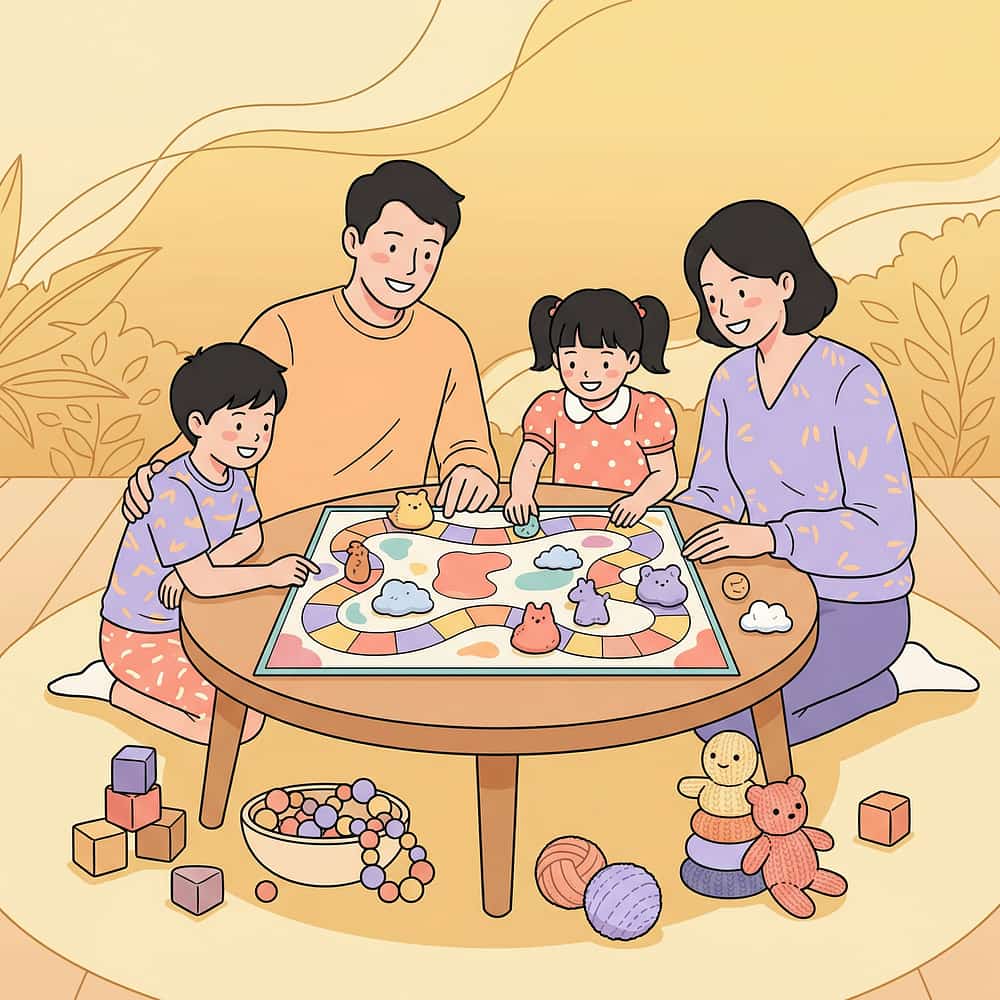
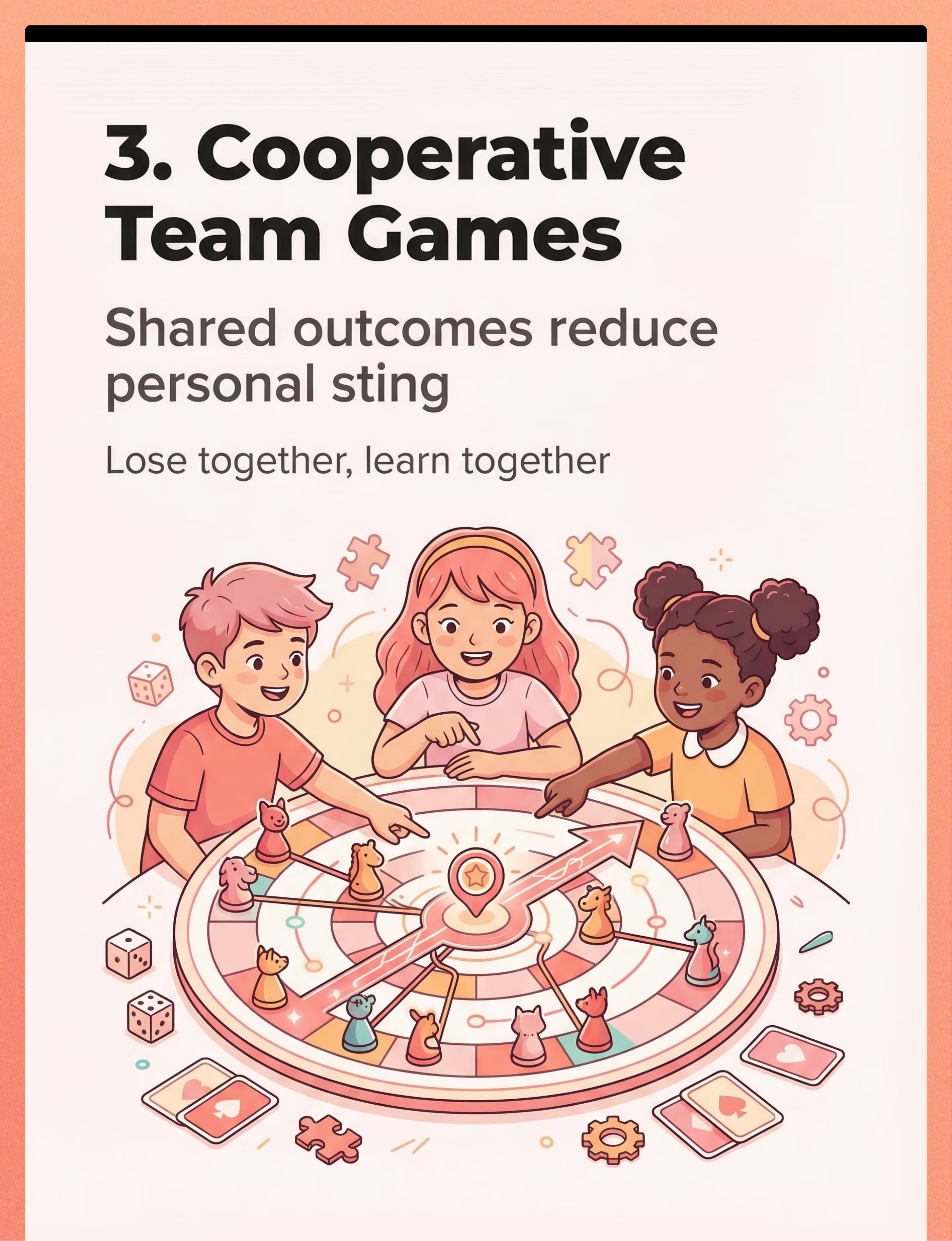
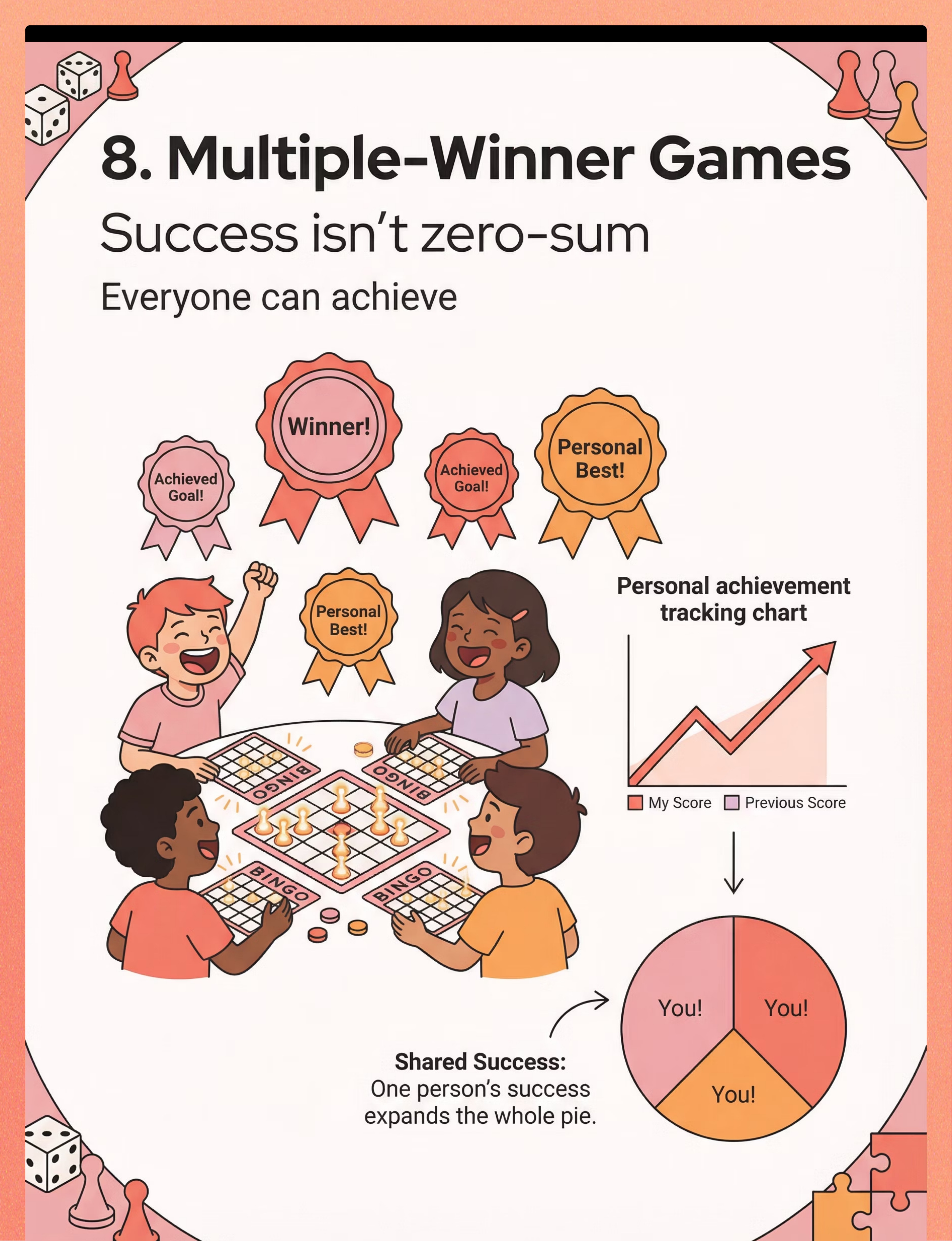
7. Cooperative Board Games
Canon: Cooperative Games / Social-Emotional Play
Function: Game-playing without individual winners/losers — training wheels for competitive tolerance. Ages 4–12.
Cost: ₹500–2,500
🛒Dyomnizy Educational Memory Game (cooperative play mode) — ₹520 Buy on Amazon.in
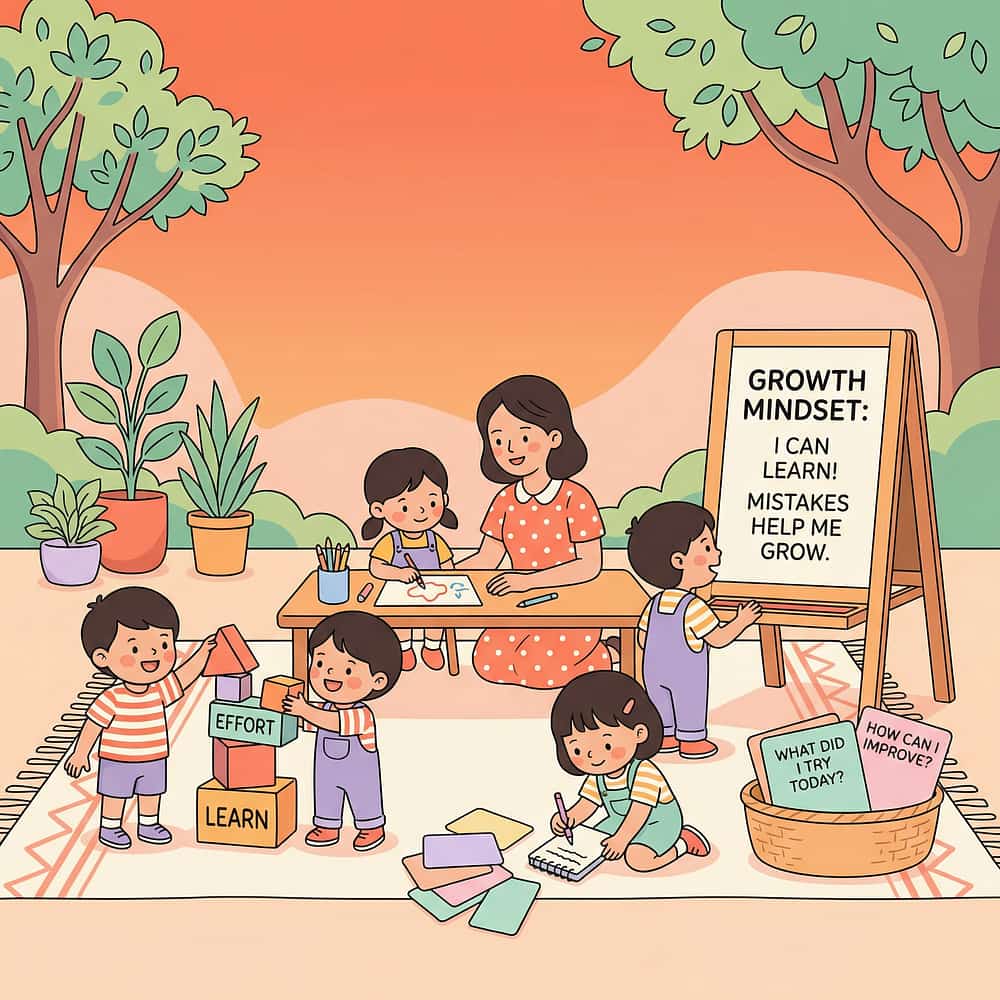
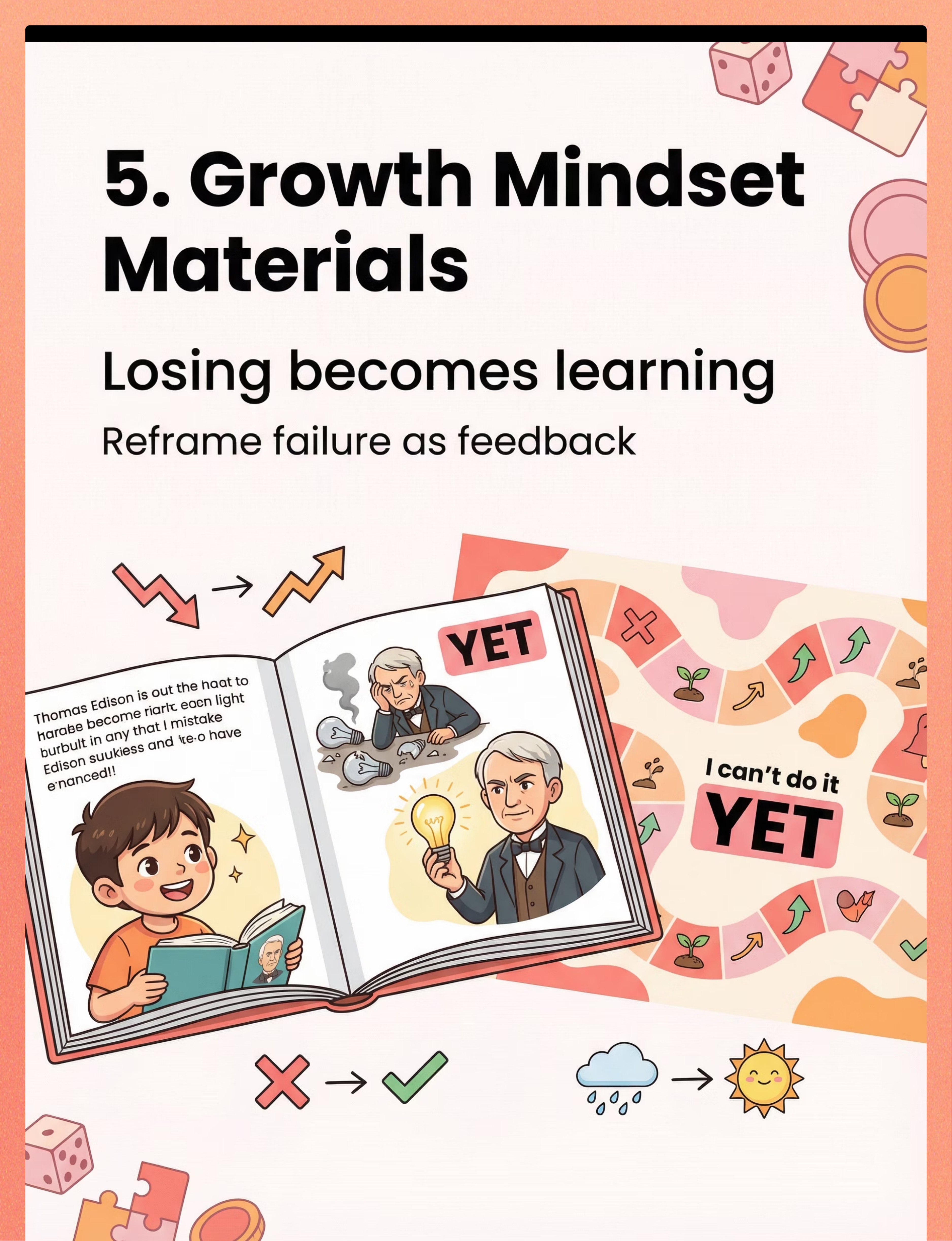
8. Growth Mindset Poster + Reflection Cards
Canon: Visual Supports / Cognitive Reframing Materials
Function: Reframing outcomes as feedback rather than worth statements — building resilience and effort orientation.
DIY: ₹0–100 | Commercial: ₹200–800
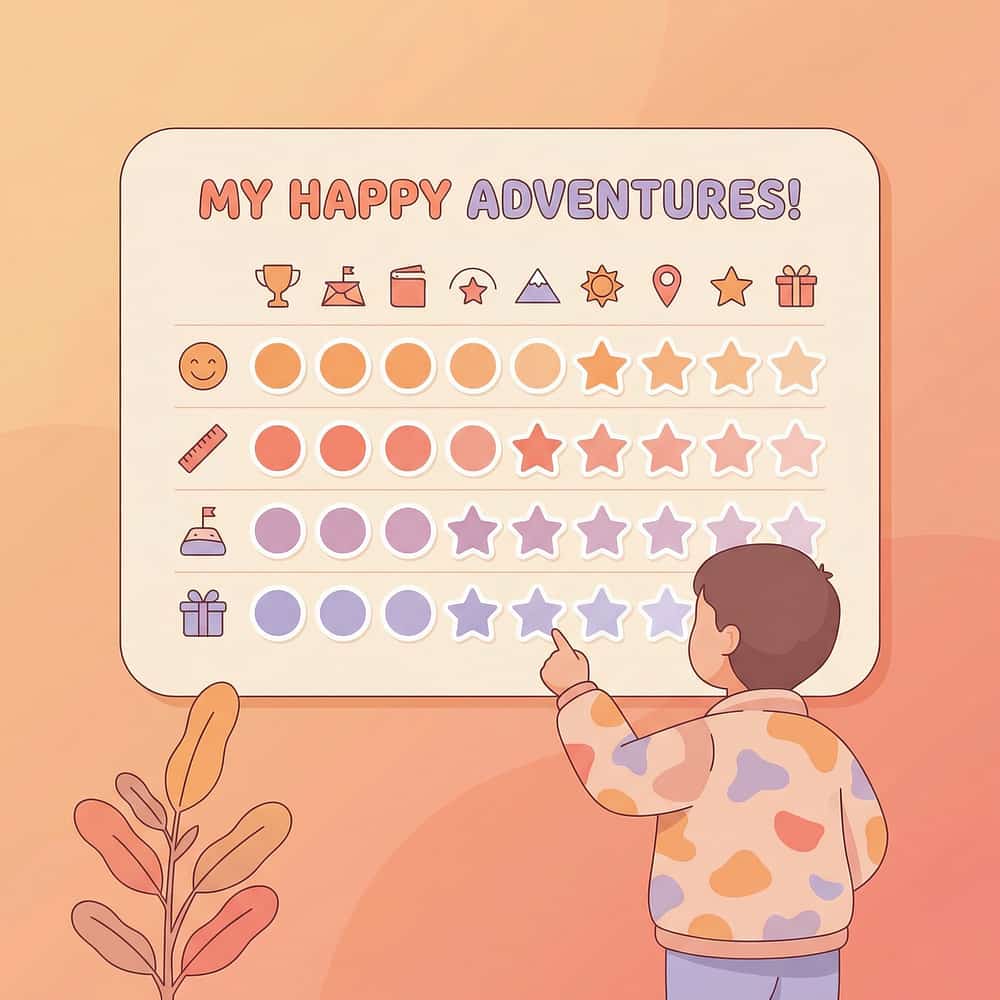
9. Sportsmanship Reward Chart + Stickers
Canon: Reinforcement Menus
Function: Immediate, concrete reinforcement for specific sportsmanship behaviors — not for winning.
DIY: ₹50–150
🛒1800+ Reward Stickers Pack — ₹165 Buy on Amazon.in🛒The Rosette Imprint Reward Jar — ₹695 Buy on Amazon.in
📞FREE National Autism Helpline: 9100 181 181 — Need help choosing materials for your child? Call us — 16 languages, 24×7.

ACT II · EQUITY & ACCESS
Every Family Can Start Today — Including Yours
WHO/UNICEF Equity Principle: Intervention effectiveness must not depend on purchasing power.
Material | ₹0 DIY Version | Why It Works Just As Well | |
Social Story | Write on A4 paper, draw stick figures, staple into booklet | The child's story works better with their name and photos anyway | |
Emotion Thermometer | Draw on cardboard with red/yellow/green marker | Homemade ones often feel more personal and child-created | |
Coping Kit | Old pencil box: rolled socks as stress ball, pencil as fidget, hand-written breathing card | The ritual matters, not the brand | |
Practice Games | Cards from any game, coins, dice from any board game | The low-stakes setup is the intervention, not the specific game | |
Script Cards | Write phrases on index cards, laminate with tape | Exactly as effective as commercial versions | |
Role-Play | No props needed — just family members taking turns | Embodied rehearsal is the intervention | |
Cooperative Games | Turn any competitive game into cooperative mode (everyone vs. the timer) | Same emotional training, zero additional cost | |
Growth Mindset Poster | Print free PDF from MindsetWorks.com or handwrite on A4 | The language, not the paper quality, is the active ingredient | |
Reward Chart | Draw a 10-box grid on paper, use any stickers or stamps | Visibility and consistency matter more than aesthetics |
"The best therapeutic material is the one you will actually use consistently." — Pinnacle Blooms OT Division
WHO NCF (2018): Context-specific equity-focused interventions. CCD Package implemented across 54 LMICs — PMC9978394
ACT II · SAFETY GATE
Read This Before You Begin
🟢 GREEN — Proceed When:
- Child is fed, rested, and in a baseline-regulated state
- No significant meltdown in the last 2 hours
- No illness, pain, or sensory overload currently
- Practice environment is calm and distraction-reduced
- Only supportive family members present
- All materials assembled before session begins
🟡 AMBER — Modify When:
- Child is mildly tired or hungry → shorten, reduce difficulty
- Child has had a difficult day → cooperative games only
- Child recently lost at school → skip practice, use coping tools first
- Caregiver is emotionally activated → defer or take 10 minutes first
🔴 RED — Do Not Proceed When:
- Child is already dysregulated, anxious, or distressed
- Family member conflict within the last hour
- Child is sick or in physical discomfort
- Physical aggression is an active behavior — safety FIRST
- Child is in active meltdown — wait for full recovery
STOP IF YOU SEE: Physical aggression escalating beyond safe limits | Self-injurious behavior | Extreme distress not resolving within 5–10 minutes | Child expressing they feel worthless or hopeless → Call 9100 181 181 immediately.
Material Safety: Stress balls should be too large to be choking hazards for young children. Fidget tools: no small detachable parts for under-4. Cool-down kit items should be age-appropriate.
Indian Journal of Pediatrics RCT (2019): DOI: 10.1007/s12098-018-2747-4 | Pinnacle clinical safety standards
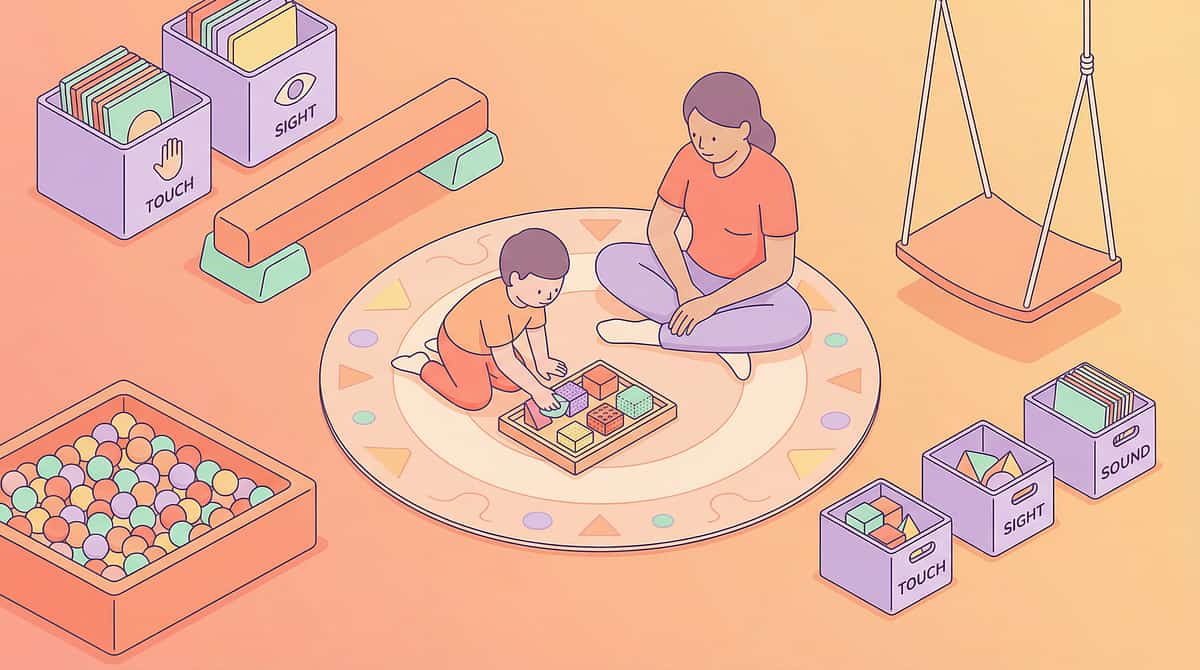
ACT II · SPACE SETUP
The Right Space Makes the Technique Work
Numbered Setup Checklist
① Child's seat: Facing away from TV/screens. Back to wall preferred. Coping kit within arm's reach.
② Caregiver position: Same level as child. Opposite or adjacent. Eye contact accessible. Calm, open body language.
③ Thermometer placement: Visible to child without turning. Wall-mounted at child eye level.
④ Script cards: Placed beside game area. Visible and normalized as "game tools" — not hidden.
⑤ Reward chart: On wall, visible from seat. Stickers/tokens within reach for immediate delivery.
⑥ Remove from space: TV remotes, unrelated toys, other children (initially), phones (caregivers).
Environmental Specifications
Lighting
Natural or warm artificial light — avoid harsh fluorescent
Sound
Quiet; calm background music optional. No TV on.
Temperature
Comfortable, not too warm — warmth increases arousal
Visual Timer
On the table if child responds well to countdowns
Sensory Integration Theory (Ayres): Environmental setup is a core clinical principle. PMC10955541: Structured 1:1 individual sessions most effective.

ACT III · THE EXECUTION — READINESS
60 Seconds Before You Start — Check This
The best session is one that starts right. A 5-minute successful session is worth infinitely more than a 20-minute forced session that ends in meltdown.
Child has eaten in the last 90 minutes
Child is not overtired (no glazed eyes, yawning, baseline irritability)
No meltdown or significant distress in the past 2 hours
Child's body appears regulated — not rocking or physically restless beyond baseline
Caregiver is calm and has 15–20 uninterrupted minutes
Space is set up (Card 12 complete) and all materials assembled
✅ 6/6 = GO
Proceed to Step 1 — The Invitation
🔄 4–5/6 = MODIFY
Shorten to 5 minutes. Use cooperative game only. Increase coping support.
⏸ Under 4/6 = POSTPONE
Today is not the right day. Use a calming activity instead. Reschedule.
ABA Principles: Antecedent manipulation and setting events determine intervention effectiveness. Readiness assessment is core to session design.
ACT III · STEP 1
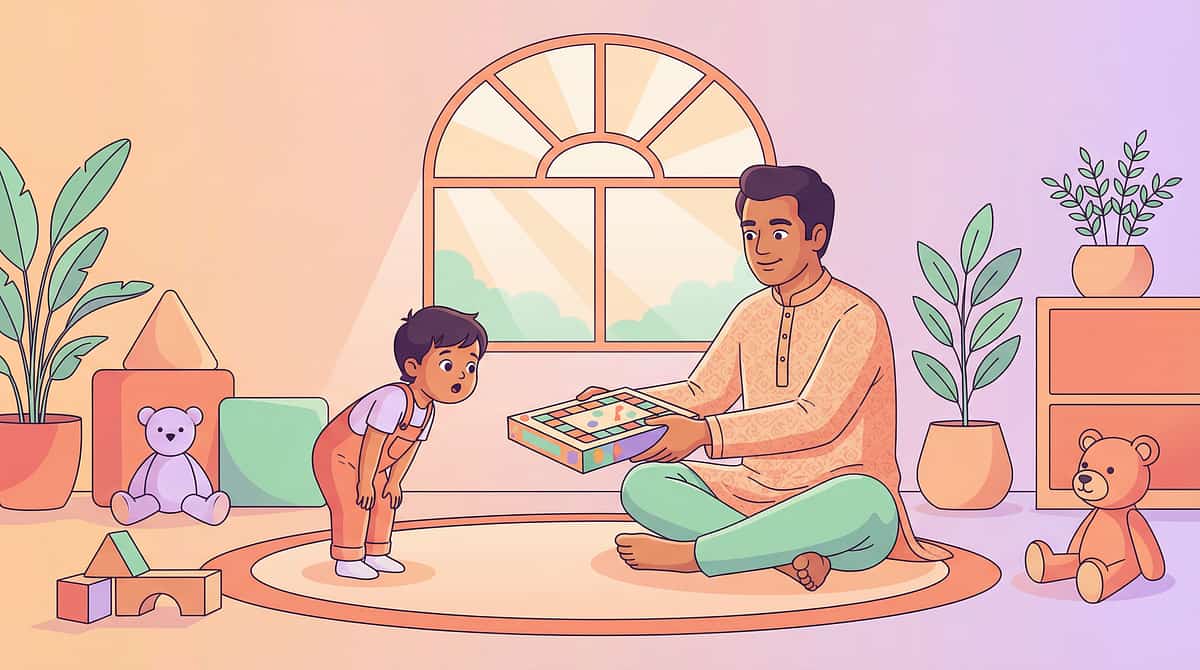
Step 1: Open With Play — Not Instruction
Timing: 1–2 minutes | Tone: Warm, inviting, zero pressure
Exact Words to Say
"Hey [child's name], want to try something different today? I found this game and I thought it might be fun. No pressure — we'll just see how it goes."
Body Language Guidance
- Get to child's eye level physically
- Relaxed, open posture — uncrossed arms
- Match child's energy level
- Have the game already set up — don't make them wait
Acceptance Cues to Look For
- Moves toward the table or materials
- Makes eye contact or looks at the game
- Asks a question about it
- Body relaxes or opens
Resistance Cues and How to Respond
- "I don't want to" → "That's fine. We can just look at it together first." (reduce demand)
- Turns away → Wait 30–60 seconds, offer a preferred item from the coping kit first
- Becomes anxious → Skip today. Not every day is the right day.
ABA Pairing: The game must be paired with positive experience before demand is introduced. A child who has only experienced games as sources of distress needs to re-pair games with safety and enjoyment first.

ACT III · STEP 2
Step 2: Introduce the Support Materials — Before the Game Starts
Timing: 2–3 minutes
Part A: Introduce the Emotion Thermometer (60 seconds)
Script: "Before we start, let's check in. This thermometer shows how we're feeling. Where are you right now — green (calm), yellow (a bit worked up), or red (really feeling a lot)?"
- Child points to or says their zone
- You share yours too — normalizes the check-in
- If child is yellow → offer coping strategy before proceeding
- If child is red → return to readiness check (postpone)
Part B: Review the Script Cards (60 seconds)
Script: "These are our game cards. When the game ends, we check what to say — whether we won or whether we lost. Let's read them together now."
- "When I lose: Good game. Congratulations. You played well."
- "When I win: Thanks for playing. Good game. Want to play again?"
Reinforcement cue:"Thank you for checking in with me — that's a really important thing to do before games."
PMC11506176: Structured material introduction as evidence-based practice. Reinforcement scheduling from ABA literature.
ACT III · STEP 3 — THE CORE ACTION
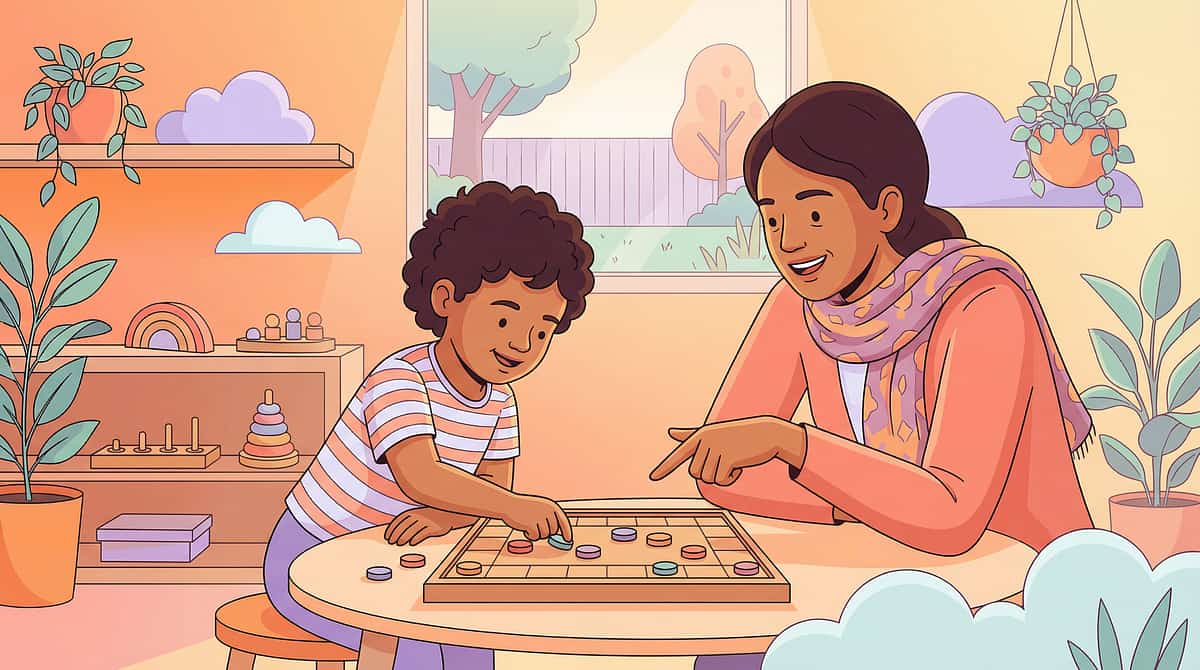
Step 3: The Practice Round
Duration: 3–7 minutes | A deliberately short, structured, supported practice game.
Set the Frame
"This is a Practice Round. We're practicing what we do when we win and when we lose — not just playing the game. At the end, we check our script cards no matter what happens."
Play the Game
Use luck-based, short-duration games initially. Play ONE round only. Caregiver narrates good behaviors as they happen: "I notice you're staying calm even though I'm ahead — that's great regulation."
After the Outcome — Critical Moment
Pause → name the outcome → check script cards → child reads the phrase → immediate specific reinforcement: "You said 'Good game' even though you were disappointed — that's exactly sportsmanship. You earned your star."
✅ Ideal
Completes phrase, regulated, accepts outcome
⚠ Acceptable
Says phrase with prompting, shows disappointment but recovers
🛑 Concerning
Full meltdown → End session, no coaching, go to coping kit. Still valuable data.
Common Errors to Avoid: Skipping the script card check when things go fine (always use it) | Coaching DURING a meltdown (never — wait until regulated) | Praising the outcome instead of the sportsmanship behavior.

ACT III · STEP 4
Step 4: 3 Good Reps > 10 Forced Reps
Rep Targets by Week
Weeks 1–2
1–2 practice rounds per session
Weeks 3–4
2–3 practice rounds per session
Weeks 5–8
Full short game with multiple outcome moments
Satiation Indicators — When to Stop
- Child asks to do something else more than twice
- Quality of regulated responses declining across reps
- Thermometer check shows child at yellow/orange
- Child has been at the table for more than 20 minutes
"Reading satiation correctly is a therapy skill. Stopping at the right moment preserves motivation for next time."
Variation Menu — Introduce One Per Week
Variation 1 — Switch Who Goes First (Wks 1–2)
Changing turn order changes who is in the "expected to win" position.
Variation 2 — Cooperative Mode (Wks 2–3)
Everyone vs. the clock — same mechanics, zero interpersonal competition.
Variation 3 — Add a Third Player (Wks 3–4)
More players = more outcome complexity = more practice opportunities.
Variation 4 — Slightly Longer Game (Wks 5–6)
Endurance under sustained uncertainty is a different emotional demand.
Variation 5 — Bad-Sport Puppet (Wks 4–5)
Caregiver plays Bad-Sport Bear who throws pieces. Child corrects the puppet — teaching through correction builds deeper understanding.

ACT III · STEP 5
Step 5: Reward the Behavior — Not the Outcome
The Critical Distinction
❌Do NOT reward: "You won! Amazing!"
✅DO reward: "You said 'Good game' even though you lost — THAT is what we're celebrating."
Reinforcement Scripts — Immediate, Specific, Enthusiastic
"That right there — 'Good game' — is real sportsmanship. I'm so proud of you for that."
"Checking in with yourself during a game — that is emotional intelligence. Star on the chart."
"You felt big feelings AND you used your strategy. That's exactly what champions do."
"You finished the whole round. That took real strength. You're getting better every time."
Reinforcement Menu — Match to Child's Preference
🏆 Reward Sticker Chart
1800+ Sticker Pack ₹165 Buy on Amazon.in
🏆 Reward Jar Token
Rosette Imprint Reward Jar ₹695 Buy on Amazon.in
🏆 Natural Rewards
Verbal praise, extra screen time choice, special privilege, small tangible reward
Token Economy Timing: Deliver within 3 seconds of the target behavior. Enthusiasm matches the achievement.
ABA reinforcement principles: Immediate, specific reinforcement increases behavior occurrence. BACB ethical guidelines.

ACT III · STEP 6
Step 6: No Session Ends Abruptly
Timing: 2–3 minutes of intentional transition — every time.
2-Minute Warning
"Two more minutes, then we're all done. You're doing so well today." Set visual timer, visible to child.
Material Put-Away Ritual
"Let's put the game away together." Child participates in tidying — normalizes completion as a positive event.
Closing Thermometer Check
"Where are you on the thermometer? Green, yellow, or red?" If green → transition. If yellow → 2 min coping. If red → comfort and preferred activity first.
Verbal Closing
"Good session today. I noticed you [specific behavior]. That's growth." Then: "What would you like to do next?"
If child resists ending:"I know you want to keep going — that's actually a great sign! We'll do it again [next session day]. For now, let's put it away." Use visual timer. Cue card: "Now: put away. Next: [preferred activity]."
NCAEP (2020): Visual supports for transitions are evidence-based practice for autism.

ACT III · DATA CAPTURE
60 Seconds of Data Now Saves Hours of Guessing Later
Data captured within 60 seconds of session end is exponentially more accurate than memory reconstruction later. Record before you move.
Outcome Regulation (0–3 Scale)
- 0 = Full meltdown, could not recover
- 1 = Significant distress, eventually recovered
- 2 = Mild distress, used strategy, recovered
- 3 = Calm or minimal upset, completed sportsmanship behavior independently
Script Use (Y / P / N)
- Y = Independently
- P = With prompting
- N = Did not use, needed full support
Thermometer Accuracy
- ✅ Accurate (within 1 zone)
- ⚠ Under-reported (appeared more activated than rated)
- ❌ Over-reported (appeared less activated)
Trend to watch: After 2 weeks, Outcome Regulation scores should show +0.5 average improvement. If flat after 3 weeks, review the Troubleshooting guide. Having trouble interpreting your data? Call 9100 181 181 — our clinical team helps families read their progress.
ABA Data Collection Standards: Continuous measurement (frequency, duration, latency). BACB Guidelines + Cooper, Heron & Heward (ABA, 8th ed.)

ACT III · TROUBLESHOOTING
Most Sessions Don't Go Perfectly — Here's What to Do
"Session abandonment is not failure — it's data."
Problem 1: Child melted down before the game even ended
Why: Emotional intensity reached threshold before outcome. Regulatory system was depleted, or the game was too long.
Fix: Next session, shorten to 1 round only. Add thermometer check-in every 2 minutes during play. Ensure Green readiness check passes fully.
Problem 2: Child refused to use the script cards
Why: Scripts feel mechanical, punitive, or embarrassing.
Fix: Let child WRITE their own script phrases. Co-create cards together during a different, calm session. Never force script reading during or after meltdown.
Problem 3: Great at losing in practice but melts down at real games
Why: Real games have an audience, identity investment, and no explicit coaching supports.
Fix: This is expected — generalization is a separate skill. Add script cards visibly at real games. Brief thermometer check before. Prepare with social story the day before.
Problem 4: Child accuses you of cheating even in practice
Why: Cognitive inflexibility + need for certainty. Common in ASD.
Fix: Make rules completely explicit and written BEFORE the game. Child agrees in advance (written contract). Consider role-reversing: let child be the rule-keeper.
Problem 5: Does great at losing but gloating when winning is extreme
Why: Winning dysregulation often involves impulse control deficits — a different intervention target.
Fix: Add explicit "When I Win" section to script cards. Practice winning responses in role-play specifically.
Problem 6: Cooperative in practice but refuses competitive games with peers
Why: Peer competition involves social vulnerability that family practice does not.
Fix: Expected progress. Continue family practice. When ready, move to social skills group. Don't rush peer exposure.
Problem 7: Sibling teasing or undermining the practice
Why: Family systems are complex. Siblings may carry their own frustration.
Fix: Practice sessions are ONE-ON-ONE until child is stable. Brief sibling separately on the approach.
ACT III · PERSONALIZE
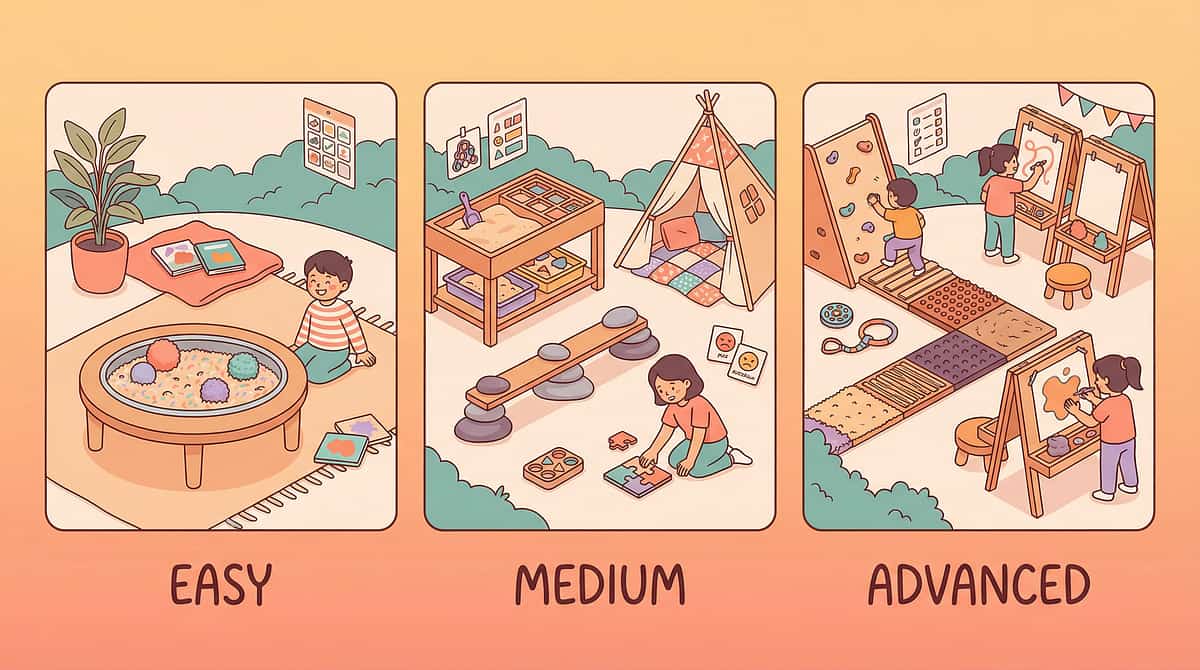
No Two Children Are Identical. This Protocol Flexes.
Adjust the protocol to match your child's profile. Moving along the progression is a clinical decision — not a race.
For ADHD
- Shorter sessions — 10 minutes max initially
- Movement-based coping before game (jumping, wall push-ups)
- Thermometer check every 2 minutes during play
- Extra-immediate reinforcement (within 1 second)
- Games with built-in movement
For ASD
- Social story read every single session
- Rules written and agreed in advance (visual contract)
- More varied scripts ("5 different ways to say good game")
- Preview possible outcomes before game: "Two things might happen: I might win, or you might win. Both are fine."
For High Anxiety
- Weeks 1–3: cooperative games ONLY
- Address catastrophic thoughts explicitly before any competition
- Validate feelings first, EVERY TIME, before any reframe
- Growth mindset materials as primary anchor
Ages 4–6
- Simpler scripts — 1 phrase, not 3
- More visual, fewer verbal instructions
- Rounds under 3 minutes
- More tangible, immediate rewards

ACT IV · THE PROGRESS ARC — WEEK 1–2
In the First Two Weeks, You're Planting Seeds — Not Harvesting
Early progress looks different from what you might expect. Most parents underestimate how significant these first signals truly are.
✅ What DOES Look Like Progress in Weeks 1–2
- Child accepts sitting at the game table without immediate refusal
- Child looks at or touches the script cards — even without using them
- Meltdown duration after practice rounds is 2–3 minutes shorter than before protocol
- Child can name their thermometer zone when asked, even if they can't act on it
- "Good game" said once — even reluctantly, even very quietly — is a breakthrough
- Practice session completed without physical aggression to people or materials
❌ What Is NOT Expected Yet — And That's Okay
- Genuine graceful losing is not expected in weeks 1–2
- Spontaneous script use without prompting is not expected yet
- Real-game performance matching practice performance is not expected yet
Parent Milestone:"You may notice that YOU are calmer during game moments now — because you have a plan. That's real progress too. Your regulated presence is the most powerful intervention."
If your child tolerates the practice material for 3 seconds longer than last week — that is real progress.
PMC11506176 (Children, 2024): Intervention outcomes emerge across 8–12 week timelines. Early indicators focus on tolerance and participation, not mastery.

ACT IV · WEEK 3–4 — CONSOLIDATION
Week 3–4: Consolidation Signs
Something is shifting. The skills are starting to stick — and you'll begin to see it in small, unmistakable moments.
Child anticipates the script card check
Prompts you: "Don't we check the cards?" — they've internalized the structure.
Thermometer ratings become more accurate
Self-reported zone matches what you observe — growing emotional self-awareness.
Meltdown recovery is faster
2 minutes instead of 10 — the nervous system is learning to regulate.
Child chooses a coping strategy independently
Without being offered one — intrinsic regulation beginning to emerge.
Child asks to play again after a loss
Huge indicator — losing is no longer terminal in their mind.
When to increase frequency or intensity: Child consistently reaches Green on post-session thermometer | Meltdowns reduced by 50%+ in frequency | Child spontaneously uses one support tool without prompting. Parent Milestone:"You may notice you are more confident too. That's the therapeutic relationship deepening. Keep going."
Neuroplasticity: Synaptic strengthening through repeated structured input. Behavioral consolidation markers align with neural adaptation curves.

ACT IV · WEEK 5–8 — MASTERY
Week 5–8: Mastery Indicators
Uses sportsmanship phrase without prompting (3/3 trials)
In practice games, independently and consistently.
Thermometer ratings consistently accurate (4/5 sessions)
Emotional self-awareness is now a reliable skill.
Cool-down kit accessed independently when distress occurs
Self-regulation without adult prompting.
Growth mindset language after a loss — at least 1x per week
Unprompted reframing is a sign of internalized resilience.
Practice sessions requested by child
Intrinsic motivation signal — the most powerful indicator of lasting change.
🏆SPORTSMANSHIP LEVEL 1 ACHIEVED: "Regulated Competitor" Can handle competitive outcomes in supported, familiar environments with sportsmanship behaviors. — Pinnacle GPT-OS® Emotional Regulation Readiness Index Next step: When child passes 4/5 mastery criteria for 2 consecutive weeks → real family games, peer social skills group, or community sports contexts.
PMC10955541: 24-study meta-analysis confirms measurable outcomes. Mastery criteria derived from BACB behavioral measurement standards.

ACT IV · CELEBRATE
You Did This. Your Child Grew Because of Your Commitment.
Over the past 5–8 weeks, you have executed 15–24 structured practice sessions, read a social story dozens of times during calm moments, checked in with an emotion thermometer before every game, delivered specific immediate reinforcement, stayed regulated yourself when your child was dysregulated, and built a completely new set of emotional skills in your child.
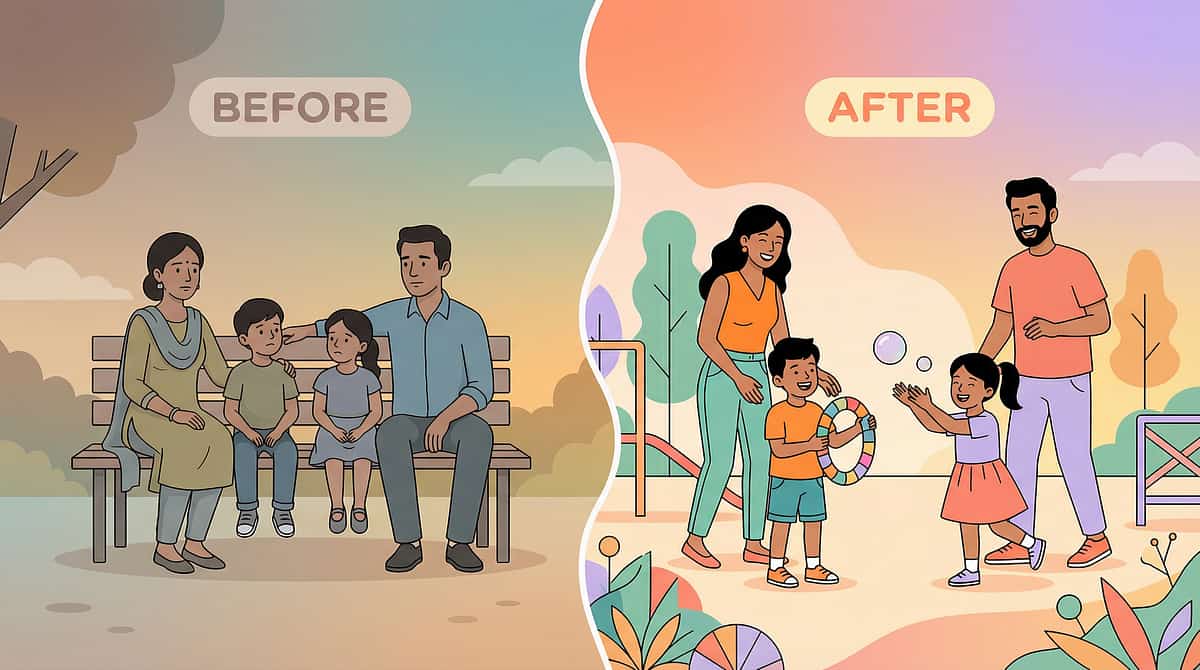
Before
Every game ends in tears, meltdowns, or conflict. Game night abandoned.
After
"Good game" — said with meaning. Competitive moments navigated. Family connection restored.
Family Game Night
A real one — as a milestone celebration of how far you've all come.
Photo Moment
Document your child with their completed sportsmanship chart, full of stickers.
Journal the Change
Write down what you witnessed. You'll want to remember this moment.
Share Your Story
Join the community and share — your journey empowers other families navigating the same path.
"This is not just about games. The child who can say 'Good game' when they're disappointed is building the resilience they will carry into school, into friendships, into adulthood." — Pinnacle Blooms Consortium, NeuroDev Division
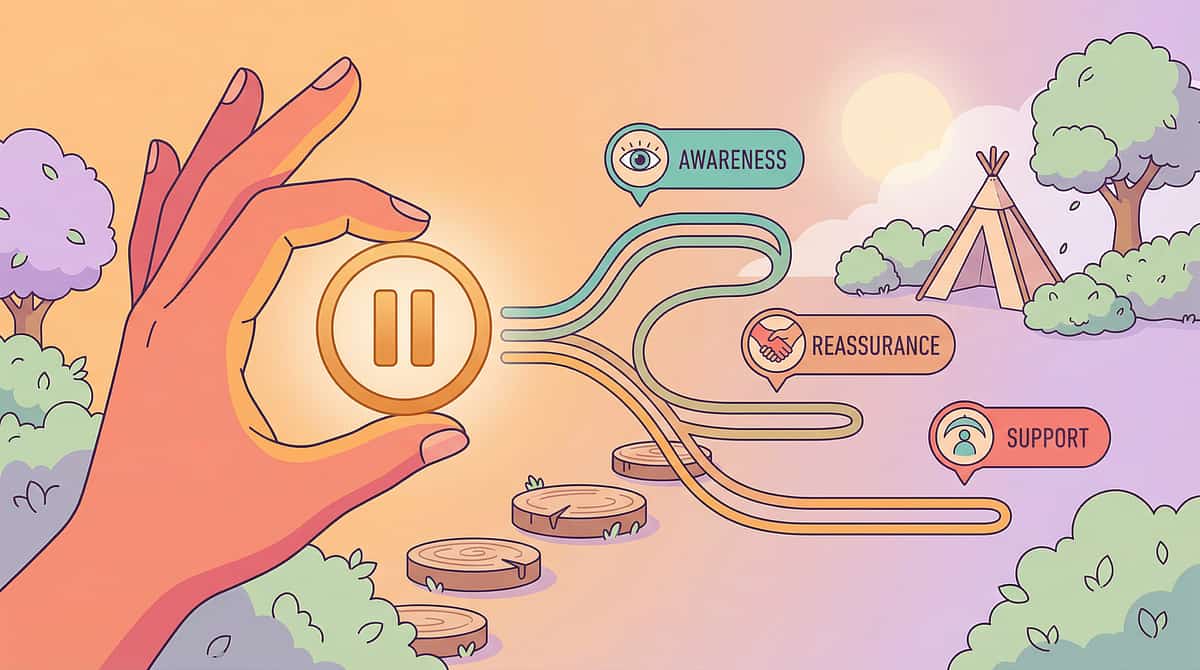
ACT IV · CLINICAL GUARDRAILS
These Signs Mean Pause and Seek Professional Consultation
"Trust your instincts — if something feels wrong, pause and ask."
🔴 Aggression Escalating
Physical aggression toward people or self during games is increasing in frequency or intensity — not decreasing — after 3+ weeks of protocol. Do not push through. Seek behavioral consultation immediately.
🔴 Self-Harm
Child hurts themselves (head banging, biting, scratching) as a response to game outcomes. Safety priority. Pause all competitive protocol. Contact Pinnacle helpline: 9100 181 181.
🔴 Complete Withdrawal
Child has stopped engaging with any social activity due to fear of competitive outcomes. Anxiety evaluation indicated.
🔴 Identity Statements
Child regularly expresses "I'm stupid," "I'm a loser," or "Nobody likes me" in relation to game outcomes. Mental health evaluation warranted.
🔴 No Progress After 8 Weeks
Of consistent protocol implementation. Full behavioral/OT/SLP evaluation may identify underlying barriers not addressed by home protocol alone.
🔴 Family Relationship Damage
The protocol implementation itself is causing significant family conflict or increasing caregiver distress. Adjust approach. Call 9100 181 181 for guided protocol support.
🆘Escalation Pathway: Home monitoring → Pinnacle teleconsultation (pinnacleblooms.org) → Center visit → Full interdisciplinary evaluation 📞9100 181 181 — FREE National Autism Helpline | 24×7 | 16 Languages
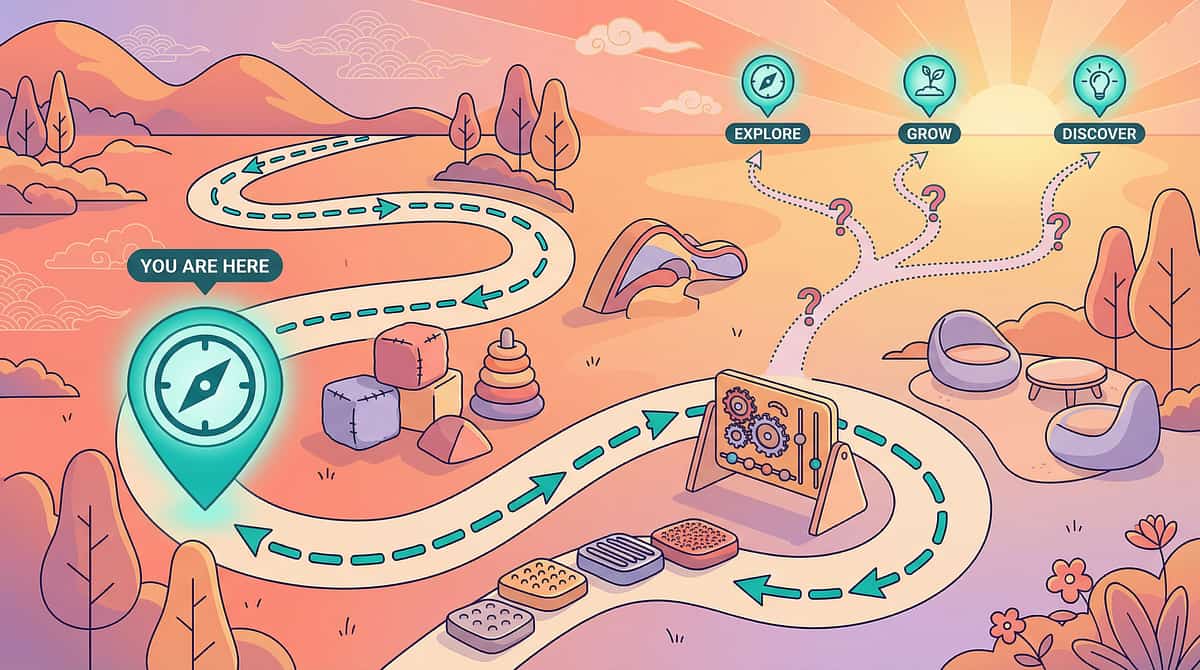
ACT IV · YOUR DEVELOPMENTAL GPS
You Are Not Done — You Are on a Journey
Long-term developmental goal: Independent, graceful participation in competitive social contexts — games, sports, academic competition, peer relationships — across home, school, and community settings.
Responded Best to Social Stories + Scripts
→ Next: G-660 Taking Turns — same explicit teaching approach applies
Responded Best to Coping Kit + Regulation
→ Next: G-650 Emotional Regulation — General — deepen the regulatory toolkit
Struggled Most with Perspective-Taking / Gloating
→ Next: G-661 Sharing & Cooperation — perspective-taking as primary focus
Generalization to Peers Remains the Challenge
→ Next: Social Skills Group — Pinnacle center referral
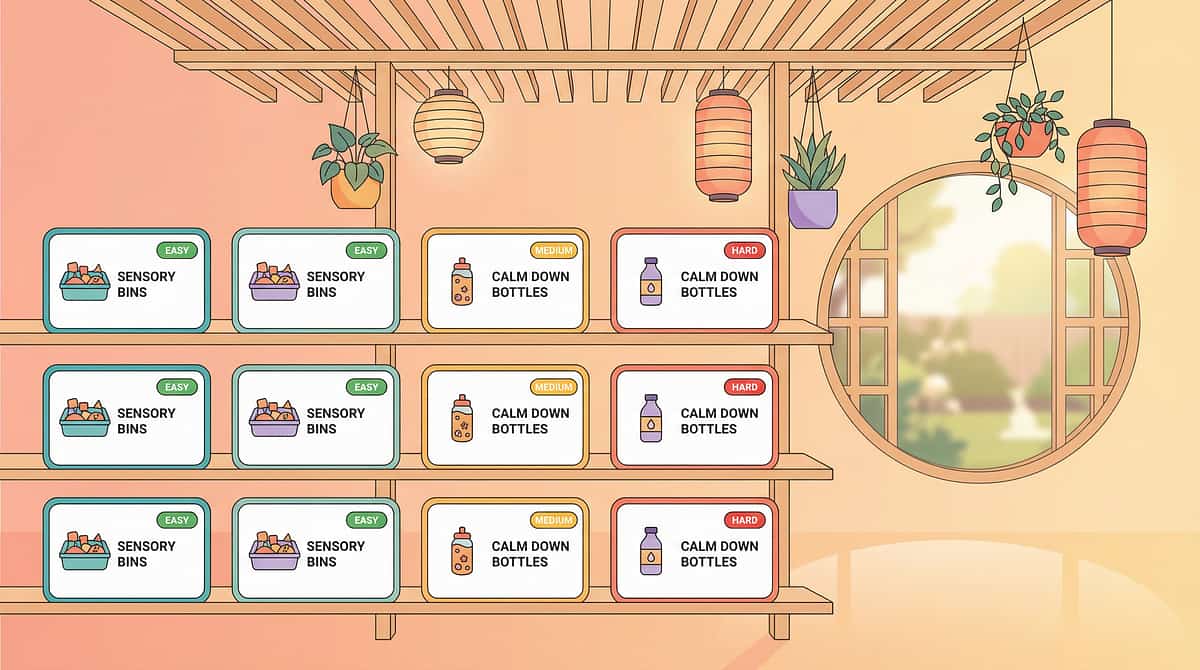
ACT IV · RELATED TECHNIQUES
Other Techniques You Can Layer With This One
If you have completed G-659, you already own the materials for G-655, G-658, G-660, and G-661 — your investment is fully transferable across the domain.
Code | Technique | Level | Canon Materials | |
G-655 | Frustration Tolerance Training | 🟡 Core | Coping tools, visual supports | |
G-658 | Fair Play Understanding | 🟡 Core | Social story, game props | |
G-660 | Taking Turns | 🟢 Intro | Turn cards, timer | |
G-661 | Sharing & Cooperation | 🟢 Intro | Cooperative games | |
G-650 | Emotional Regulation — General | 🔴 Advanced | Full regulation toolkit | |
C-317 | Winning & Losing (ABA Protocol) | 🟡 Core | Reinforcement menus |
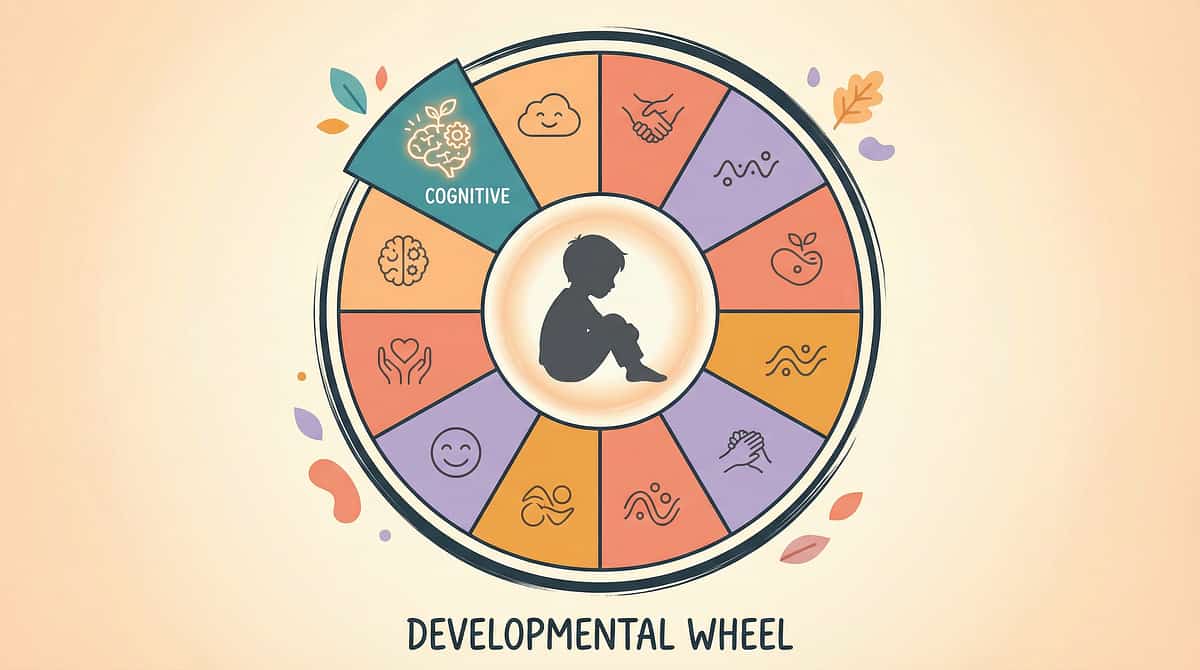
ACT IV · THE FULL PICTURE
This Technique Is One Piece of a Larger Plan
12-Domain Developmental Map
A — Sensory Processing
B — Social Communication
C — Emotional Regulation ← YOU ARE HERE
D — Behavior & Flexibility
E — Feeding & Oral Motor
F — Fine Motor & Handwriting
G — Gross Motor & Coordination
H — Cognitive & Academic
I — Self-Care & Independence
J — Play & Leisure
K — Family & Relationships
L — Community Participation
GPT-OS® Integration
If your child is enrolled in GPT-OS®, this technique's data flows directly into your child's Emotional Regulation Readiness Index under their personalized developmental profile. Progress here updates their plan automatically.
"Your child's development is not 12 separate challenges. It is one child, navigating the world through a developing nervous system. This technique serves Domain C — and strengthens Domains B, D, J, and K simultaneously."
📞9100 181 181 — Call to request your child's AbilityScore® Assessment
WHO/UNICEF Nurturing Care Framework: Five components of nurturing care require holistic developmental monitoring. WHO NCF (2018).
ACT V · THE COMMUNITY & ECOSYSTEM
Real Families. Real Change.
Outcomes vary by child profile, underlying conditions, and implementation consistency. Names changed for privacy.
Family from Hyderabad — 10 Weeks
Before: "My son was the kid no one wanted at their birthday party. Every game ended with him crying, throwing things, or gloating so badly the other children felt terrible. We stopped all games entirely."
Intervention: Social stories + emotion thermometer + sportsmanship reward chart, 3 sessions/week for 10 weeks.
After: "Last week he lost a game at his cousin's house and said 'Good game, can we try again?' — and meant it. His aunt texted me in amazement. Those words represent a complete transformation."
Timeline: 10 weeks | ABA + SLP lead
Family from Pune — 8 Weeks
Before: "My daughter (age 7, ADHD) was winning so aggressively that her younger brother refused to play with her. Family game night was cancelled for 8 months."
Intervention: Growth mindset materials + sportsmanship scripts ("When I Win" card) + role-play practice.
After: "She started congratulating him when HE won. Completely unprompted. She said 'You played really well today.' We all cried."
Timeline: 8 weeks | ABA + SpEd lead
"The most common mistake families make is treating losing reactions as behavioral problems requiring consequences. They are regulatory events requiring scaffolding. Once parents shift that frame — from 'she's being difficult' to 'she doesn't yet have the equipment' — everything changes." — Pinnacle Blooms BCBA, Hyderabad Centre
ACT V · COMMUNITY
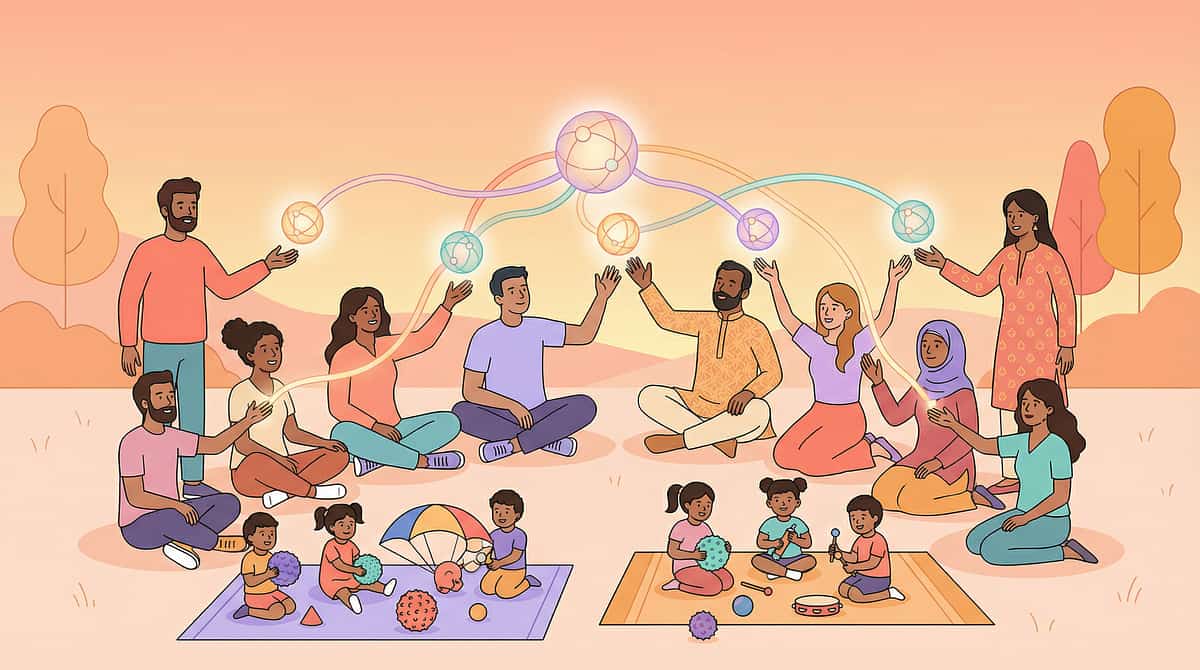
You Are Not Doing This Alone
"Isolation is the enemy of adherence." Parents who connect with others navigating the same challenge are 3× more consistent in implementation.
WhatsApp Parent Group — Emotional Regulation
Join thousands of parents navigating winning, losing, and sportsmanship challenges. Real questions, real answers, real community.
Online Forum — Sportsmanship & Competitive Play
Ask questions, share wins, troubleshoot session failures with experienced parents and clinicians.
Peer Mentoring
Connect with a parent who has walked this exact path and is 3–6 months ahead of you. Available via pinnacleblooms.org or call 9100 181 181.
Local Pinnacle Parent Meetup
Monthly gatherings at all 70+ Pinnacle centers across India. Find your city's group at pinnacleblooms.org/find-center.
📞9100 181 181 — 16 languages, 24×7. No question is too small.
WHO NCF: Community engagement is a core principle. Parent support networks improve intervention outcomes.
ACT V · PROFESSIONAL SUPPORT
Home + Clinic = Maximum Impact
Home practice builds the foundation. Clinic amplifies it. Together, they produce the fastest, most durable outcomes.

ABA / BCBA — Primary
Sportsmanship skill-building programs, behavioral data tracking, social skills groups.
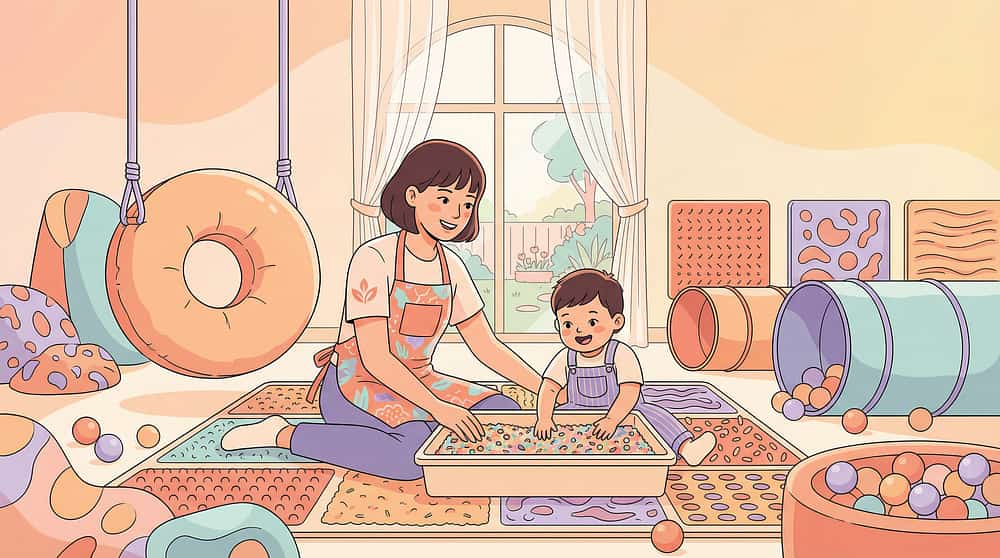
Occupational Therapist — Secondary
Emotional regulation, coping kit design, sensory profile assessment matched to your child's specific needs.
Speech-Language Pathologist — Secondary
Sportsmanship scripts, social pragmatics, perspective-taking curriculum. Essential for autistic children.
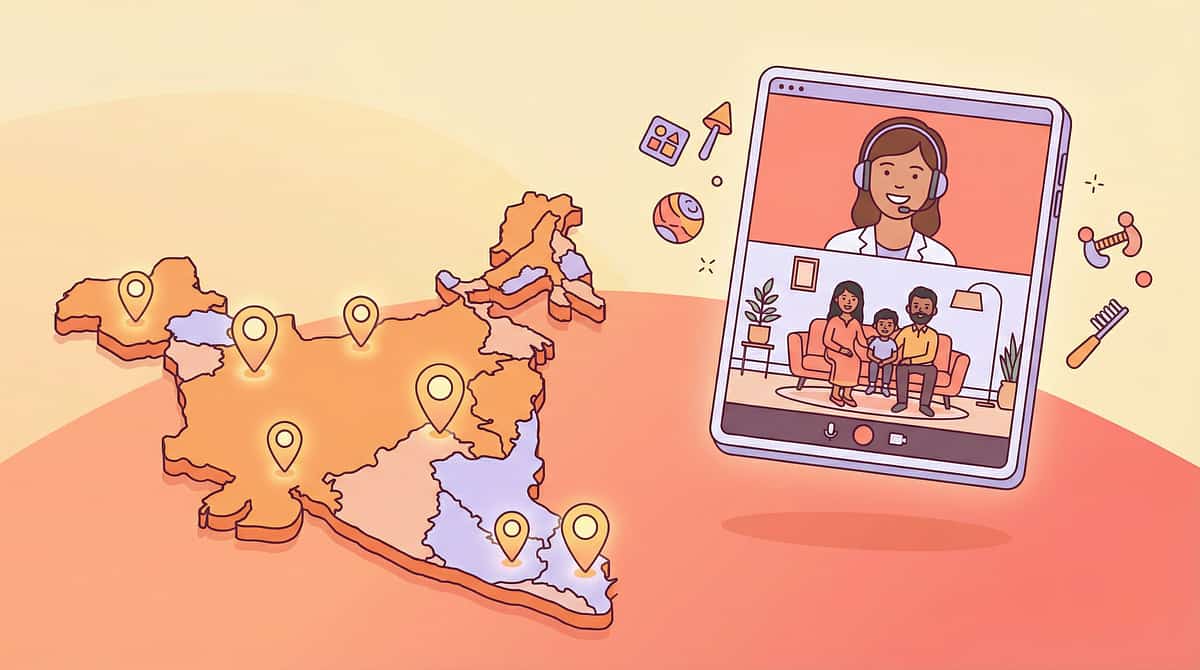
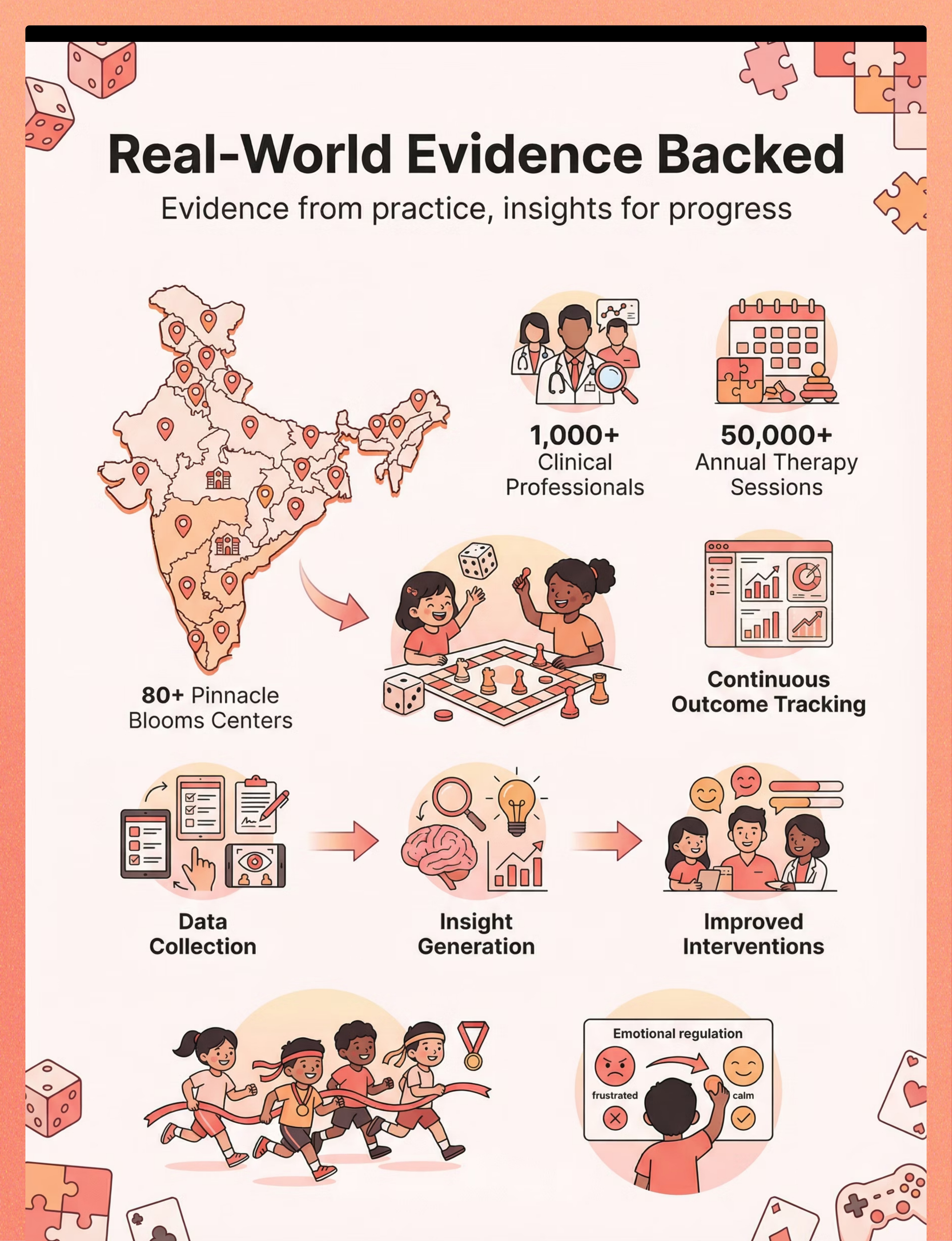
70+ Centers Across India
Hyderabad • Bangalore • Chennai • Mumbai • Delhi • Pune • Kolkata • and growing
Can't Visit in Person?
Our team serves 70+ countries via video teleconsultation. Same clinical expertise, from your home.
AbilityScore® Assessment: Request an evaluation to identify your child's exact starting point across Emotional Regulation + Social Skills domains.
Or call 9100 181 181
ACT V · THE EVIDENCE BASE
Deeper Reading for the Curious Parent
PRISMA Systematic Review (2024)
16 studies (2013–2023) confirm sensory integration and emotional regulation interventions are evidence-based practice for children with ASD. PMC11506176
Meta-Analysis — World J Clin Cases (2024)
24 studies confirm pediatric behavioral intervention promotes social skills, adaptive behavior, and emotional competence. PMC10955541 | DOI: 10.12998/wjcc.v12.i7.1260
WHO Care for Child Development Package
Household-material-based interventions effective across 54 LMICs. Caregiver consistency is a primary outcome driver. PMC9978394 | WHO/UNICEF CCD Package (2023)
NCAEP Evidence-Based Practices (2020)
Social narratives + video modeling + reinforcement = evidence-based practices for autism. Reviewed 1,000+ studies. ncaep.fpg.unc.edu
Padmanabha et al., Indian Journal of Pediatrics (2019)
Home-based behavioral interventions in Indian pediatric populations demonstrate significant outcomes. DOI: 10.1007/s12098-018-2747-4
Dweck — Mindset Research + ABA Token Economy Literature
Growth mindset interventions reduce fixed-mindset competitive responses. Multiple systematic reviews confirm token economy systems show strong evidence in autism intervention. BACB Ethics + Cooper, Heron & Heward, ABA 8th Ed.
ACT V · TECHNOLOGY LAYER
Your Child's Data Builds a Better System for Every Child Like Them
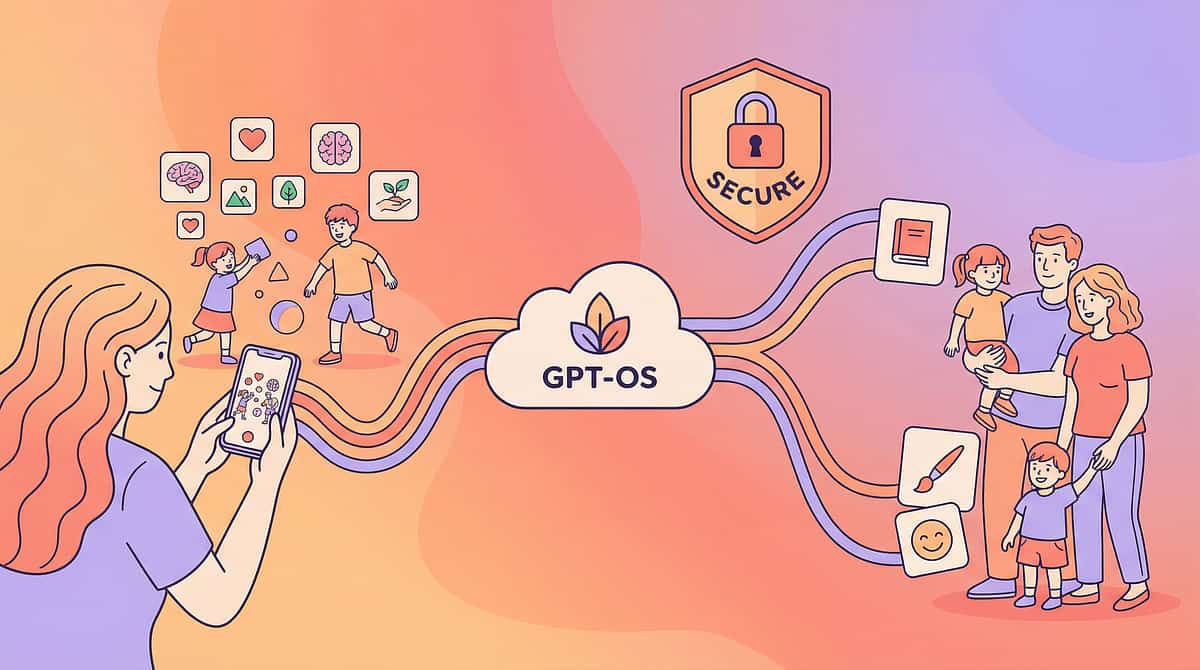
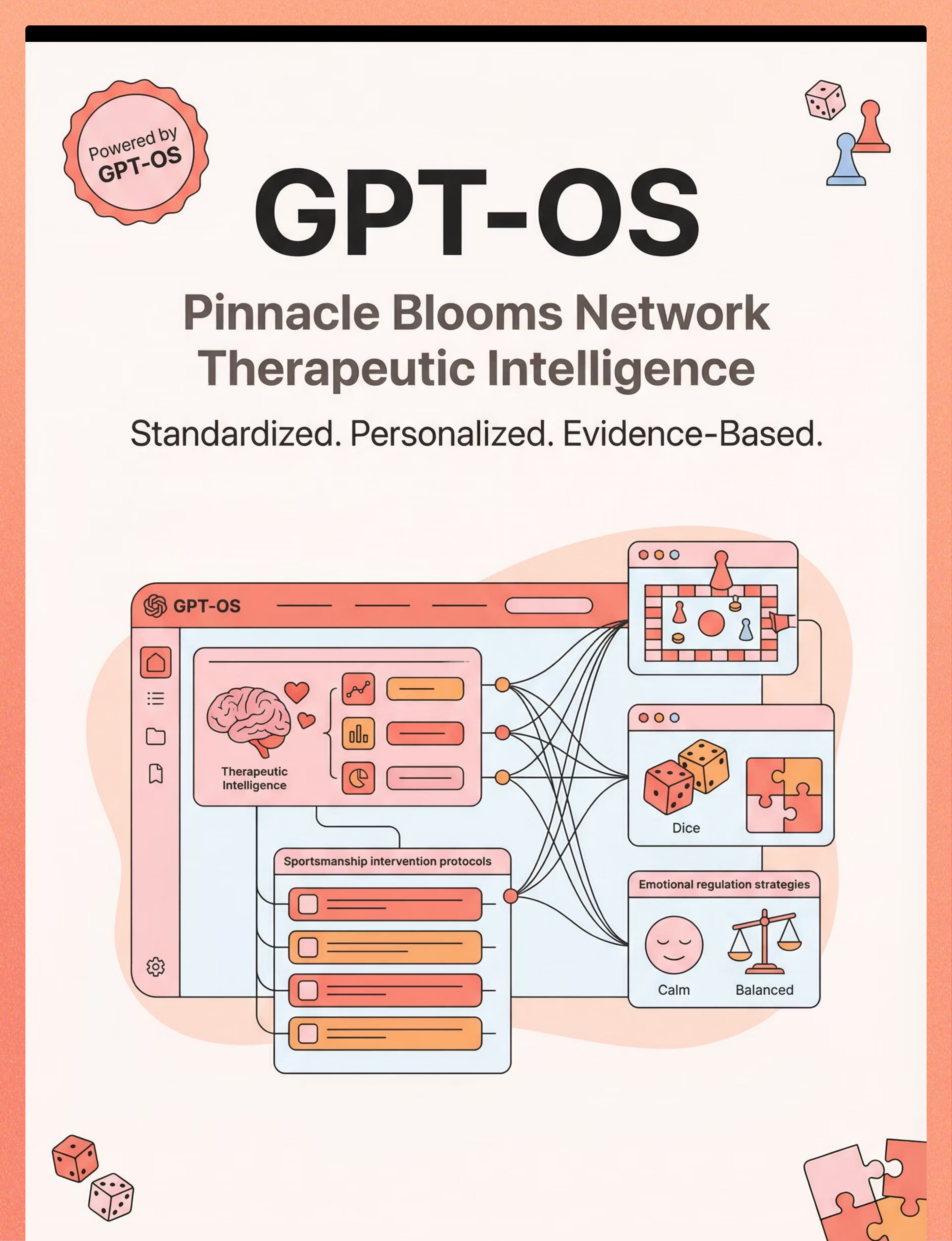
The GPT-OS® Data Flow
You Record Session Data
3 data points, 60 seconds, captured right after the session ends
GPT-OS® Emotional Regulation Readiness Index
Data enters your child's personalized developmental profile
TherapeuticAI® Updates
Personalized recommendations adjust based on your child's patterns
EverydayTherapyProgramme™ Adapts
Next session is calibrated to your child's current readiness
Population-Level Learning
Improves protocols for every child with a similar profile
What GPT-OS® Learns From Your Data
- Which materials produce the fastest regulated response improvement for your child's profile
- Optimal session length and frequency for your child's regulatory baseline
- Which sportsmanship behaviors respond to external reinforcement vs. intrinsic motivation
- Trajectory prediction: when to progress based on consolidation patterns
20M+
Sessions
97%+
Improvement
70+
Centers
🔒 All data is encrypted, anonymized for population-level analysis, and never sold. Governed under India's DPDPA 2023.
ACT V · THE REEL
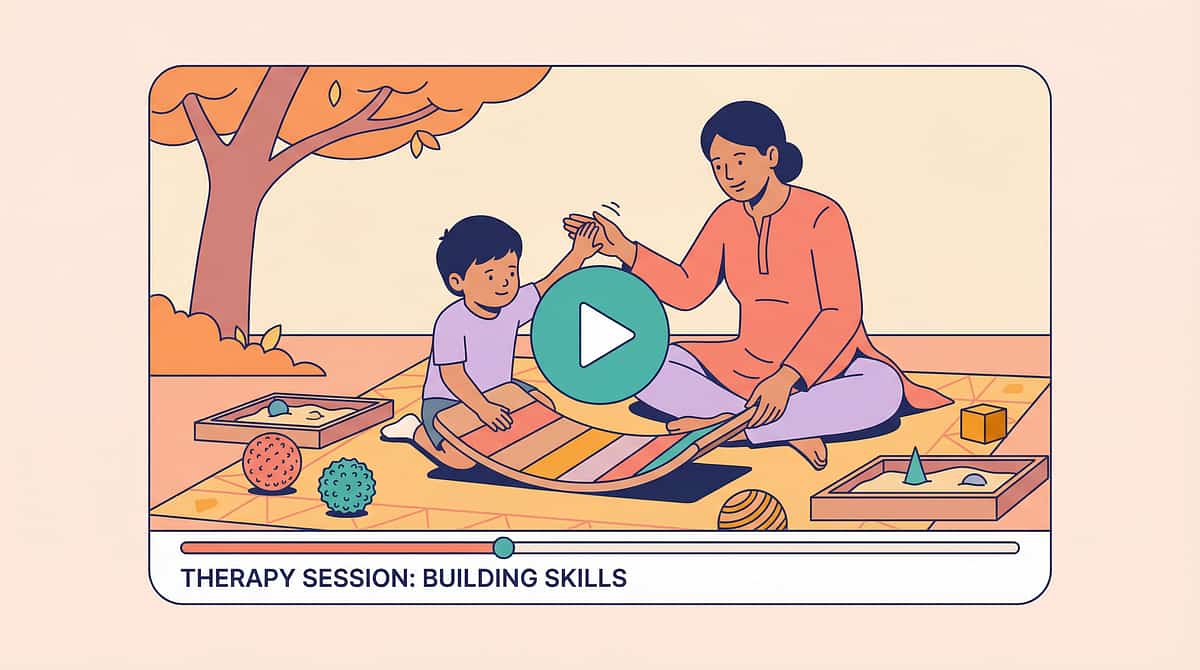
The Video That Brought Thousands of Families to This Page
Reel G-659 — Social-Emotional & Play Development Series
"Meltdown when losing. Gloating when winning. Every game ends badly. Handling winning and losing requires emotional regulation, cognitive flexibility, and social skills — all at once. Here are 9 materials that help children compete without falling apart."
Presented by Pinnacle Blooms Network® Behavioral Therapy Division — part of the Social-Emotional & Play Development in Children series. Duration: 75–85 seconds.
Related Reels in This Series
- G-658: 9 Materials That Help With Fair Play
- G-657: 9 Materials That Help With Competitive Play Skills
- G-660: 9 Materials That Help With Taking Turns
NCAEP (2020): Video modeling is evidence-based practice for autism. Multi-modal learning improves parent skill acquisition.
Reel Metadata
Reel ID
G-659
Series
Social-Emotional & Play Development in Children
Episode
659
Domain
Emotional Regulation / EMREG-WINLOSE
Duration
75–85 seconds
ACT V · GENERALIZE
Consistency Across Caregivers Multiplies Impact
"If the morning routine is therapeutic and the afternoon is random, you're running on one engine."
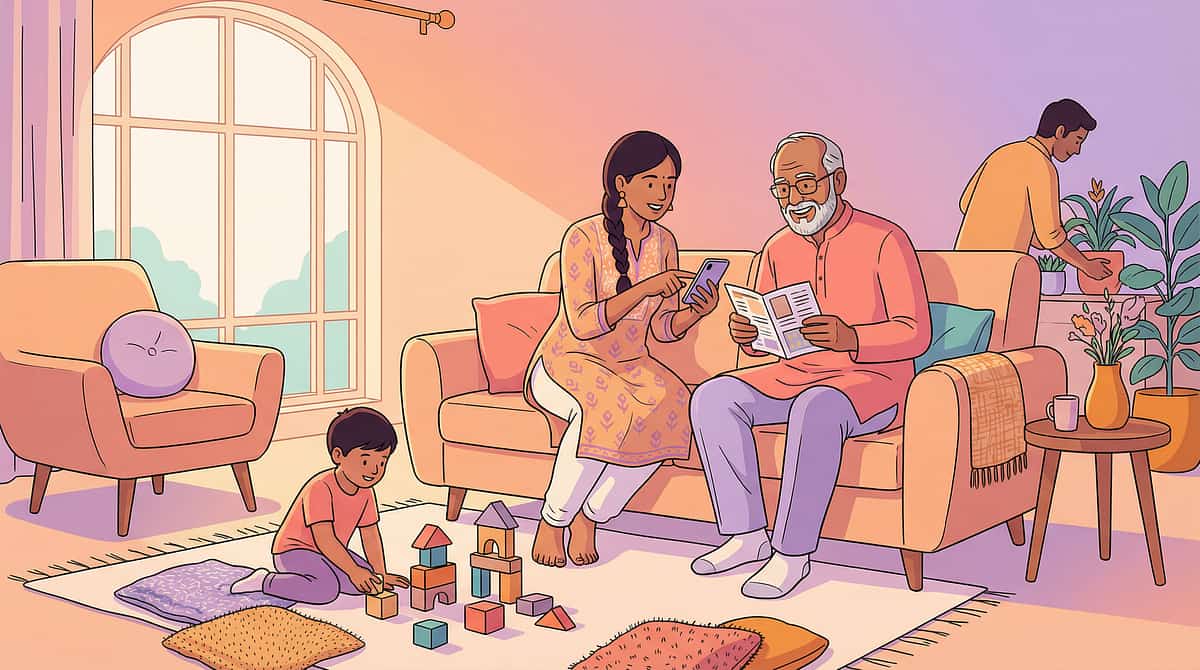
"Explain to Grandparents" — Simplified Version
"When [child's name] loses a game, they feel very big feelings — bigger than most children. We're teaching them tools to manage those feelings. Please: don't say 'it's just a game.' Instead, show them the script card and say 'Let's check what we do when we lose.' That's the plan."
Teacher Communication Template
"Dear [Teacher's name], we are working on sportsmanship and competitive emotion regulation at home using a structured protocol. The key behaviors we are reinforcing: saying 'Good game,' thermometer self-check, and coping strategy use. Script cards are in [child's name]'s bag. Your consistency in reinforcing these behaviors at school would greatly accelerate progress. Thank you."
G-659 Family Guide PDF: One-page printable summary for second parent, grandparents, school teacher, aunts/uncles, babysitter, and domestic helper. Available at pinnacleblooms.org📞9100 181 181 — Available to speak with other caregivers in your family directly.
WHO CCD Package: Multi-caregiver training is critical for intervention generalization and maintenance. PMC9978394

ACT VI · THE CLOSE & LOOP
Questions Parents Ask Most
Q1: My child is 10 — is this too late to start?
No. Sportsmanship is a teachable skill at any age within childhood and beyond. Older children often progress faster because they have more cognitive resources for explicit learning. The approach adjusts for age — older children can engage with more sophisticated growth mindset concepts and understand social consequences more clearly.
Q2: Do we have to use all 9 materials?
Start with the Starter Kit: Social Story + Emotion Thermometer + Script Cards + one Practice Game + one Reward Chart. These five are the core active ingredients. Add others as your child's needs become clearer.
Q3: My child knows they "should" say good game but can't in the moment. Why?
This is the regulation gap. Knowing and doing are different neural pathways. The moment of game completion is high-arousal — the thinking brain is offline. The answer is not more explanation; it's more practice with supported repetition until the response becomes automatic even under arousal.
Q4: My child does well at home but falls apart at parties/school events. Normal?
Yes — completely expected. Generalization (taking skills learned in one setting to another) is a separate skill requiring its own systematic practice. Review the progression card and the pathway to social skills group. Progress is non-linear, and this is a sign to continue, not to stop.
Q5: We've been at this 4 weeks and I'm not seeing progress. Should I stop?
Don't stop — review. Check: Are you consistent (2–3x/week)? Are sessions ending before meltdown? Is the material too advanced? Most "no progress" situations resolve with a protocol adjustment, not abandonment. Call 9100 181 181 for a free consultation.
Q6: What if my child refuses to use script cards — calls them "babyish"?
Let the child redesign the cards. Their words, their style. For older children, the script shifts to "That was a tough one" or "You played well" — more natural language. The function (having words ready) matters more than the format.
Q7: My child has ADHD and cannot control impulses in the moment. Still useful?
Yes, especially the coping kit and thermometer — these give the impulse something physical and concrete to do instead of the dysregulated behavior. ADHD children respond well to immediate, tangible reinforcement. Shorter sessions and more frequent reward delivery are key modifications.
Q8: When is the goal of "perfect sportsmanship" achieved?
Never — and that's not the goal. The goal is regulated enough to participate, connected enough to maintain relationships, and equipped enough to recover when big feelings come. Even professional athletes show disappointment after losses. The target is skillful navigation of real human feelings — not emotionless compliance.

ACT VI · YOUR ACTION
You Have Everything You Need. Start Today.
The child who can say "Good game" when they're disappointed is building resilience that will serve them for life — in school, in friendships, in adulthood.
OT • SLP • ABA • SpEd • NeuroDev • CRO
Validated by the Pinnacle Blooms Consortium®
20M+ Sessions
97%+ Measured Improvement
70+ Centers
Serving families across India and 70 countries
📞FREE National Autism Helpline: 9100 181 181 | 16 Languages | 24×7 | pinnacleblooms.org
Preview of 9 materials that help with winning and losing Therapy Material
Below is a visual preview of 9 materials that help with winning and losing therapy material. The pages shown help educators, therapists, and caregivers understand the structure and content of the resource before use. Materials should be used under appropriate professional guidance.



Link copied!
ACT VI · CLOSE & LOOP
Pinnacle Blooms Network®
Built by Mothers. Engineered as a System.
Our Mission
"We exist to transform every home into a proven, scientific, 24×7, personalized, multi-sensory, multi-disciplinary pediatric therapy environment — regardless of geography, language, or income. From fear to mastery. One technique at a time."
Platform Layers
- Pediatric Therapeutic OTT Platform
- Hyperlocal Therapeutic Marketplace
- 70+ Center Network
- GPT-OS® Therapeutic Intelligence
- EverydayTherapyProgramme™
- 21M+ therapy services | 97%+ improvement | 70 countries
Navigate
CRO • NeuroDev Pediatrics • OT • SLP • ABA • SpEd
WHO/UNICEF-Aligned Protocols across all disciplines
Technique G-659
Part of 70,000+ Intervention Techniques Library — techniques.pinnacleblooms.org
This content is educational. It does not replace individualized assessment from licensed developmental specialists, behavioral therapists, or mental health professionals. Persistent difficulties with competitive emotions may indicate underlying developmental conditions requiring comprehensive evaluation. Individual results may vary.
CIN: U74999TG2016PTC113063 | DPIIT: DIPP8651 | MSME: Udyog Aadhaar TS20F0009606 | GSTIN: 36AAGCB9722P1Z2
© 2025–2026 Pinnacle Blooms Network®, unit of Bharath Healthcare Laboratories Pvt. Ltd. All rights reserved. Technique ID: G-659.