

"My child just lines things up."
Other kids are pretending. Mine doesn't seem to understand how.
Other kids are pretending. Mine doesn't seem to understand how.
You are not failing. Your child's brain processes the world concretely — and that is a wiring difference, not a character flaw. Imagination is a skill. And skills can be built.
9 Materials That Help With Imaginative PlayG-624 | Clinician-Validated
Clinician-selected, home-executable, GPT-OS® validated · OT • SLP • ABA • SpEd • NeuroDev • Pediatrics · Pinnacle Blooms Network® — Validated by 20M+ Sessions

You Are Among Millions of Families Navigating This
Symbolic play delay is not rare. It is not a parenting failure. A 2024 PRISMA systematic review across 16 studies confirms that pretend play deficits are among the most consistently documented developmental differences in autism spectrum disorder — and also among the most responsive to structured, material-supported intervention. The imagination gap is real. So is the pathway to close it.
1 in 36
ASD Diagnosis Rate
Children in the US diagnosed with ASD — globally ~1% of all children
90%
Pretend Play Delay
Children with ASD show delayed or absent pretend play as a core developmental difference
3.5M+
Families in India
Navigating play development challenges across the developmental spectrum

This Is Not a Creativity Deficit. It's a Symbolic Processing Difference.
The Neuroscience
Pretend play requires symbolic representation — the cognitive capacity to understand that one object, action, or word can stand for another. This capacity lives at the intersection of the prefrontal cortex (abstract thinking), the default mode network (mental simulation), and mirror neuron systems (imitation and social modeling).
In children with ASD and related profiles, research shows atypical connectivity in these networks — meaning the brain's capacity to spontaneously generate symbolic transformations is genuinely different, not absent. The pathway exists. It needs structured activation.
Plain English for Parents
"Your child isn't refusing to pretend. Their brain hasn't yet built the neural highway that connects 'this object' to 'this object can become something else.' Every time you play imaginatively WITH your child — narrating, modeling, making one thing become another — you're physically constructing that highway, synapse by synapse."
Frontiers in Integrative Neuroscience (2020): DOI 10.3389/fnint.2020.556660 — Comprehensive neurological framework for symbolic play development in ASD.

Pretend Play Follows a Developmental Staircase. Every Step Leads to the Next.
Your child is not behind — they are at a specific staircase step. This page gives you the exact tools for that step. The next step is already visible from here.
0–12 Months: Sensorimotor
Mouthing, banging, exploring physical properties
12–18 Months: Functional Play
Using toys as designed — pushing toy cars correctly
18–24 Months: Self-Pretend
Pretending to eat, sleep, drink on self ← Many children with ASD pause here
24–36 Months: Other-Directed & Symbolic
Feeding teddy, putting doll to bed; using one object as another
3–4 Years: Sequential Pretend
Linking actions: wake → eat → school
5+ Years: Complex Fantasy
Multi-character elaborate stories; sociodramatic role play with peers ← Goal destination

Clinically Validated. Home-Applicable. Parent-Proven.
This is not folk wisdom or parenting intuition. This is peer-reviewed science from four continents. Your instinct that play matters is correct. The evidence confirms it.
PRISMA Systematic Review (2024)
16 studies | 2013–2023 | Children with ASD ages 2–12 — "Sensory integration and play-based interventions meet criteria to be considered evidence-based practice for children with ASD." Source: PMC11506176
Meta-Analysis (World J Clin Cases, 2024)
24 studies | Play-based intervention outcomes — Social skills, adaptive behavior, symbolic play, and cognitive flexibility all showed statistically significant improvement. Source: PMC10955541
Indian RCT (Padmanabha et al., 2019)
Home-based play interventions in Indian pediatric populations — "Parent-administered structured play activities demonstrated significant developmental outcomes." DOI: 10.1007/s12098-018-2747-4
NCAEP 2020 Evidence-Based Practice
Play-based interventions including video modeling and structured play classified as Evidence-Based Practice for autism by the National Clearinghouse on Autism Evidence and Practice.
⬛⬛⬛⬛☐ Level I–II EvidenceSystematic Review + RCT Level
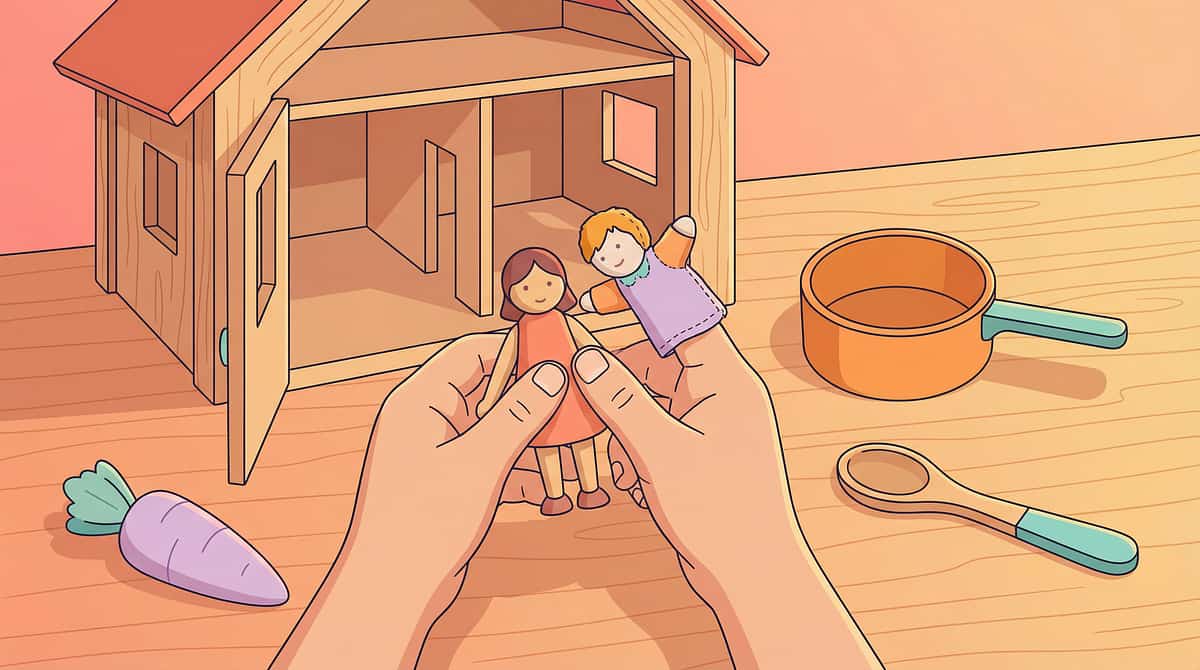
🎭 G-624 | Building Bridges to Make-Believe
Formal Name: Imaginative Play Material Intervention. Imaginative play material intervention is a structured, scaffolded approach to developing symbolic play — the developmental capacity to use objects, actions, and ideas to represent something other than themselves.
This intervention uses 9 carefully selected material categories, each providing a different level of symbolic scaffolding, to create pathways from concrete/functional play toward independent, flexible, creative pretending. It is appropriate for children aged 2–8 who have not yet developed age-appropriate pretend play skills, particularly those with ASD, developmental delays, or language delays.
"Think of these materials as training wheels for imagination. Each one reduces how much mental 'leap' your child needs to make to pretend — until the leaping becomes natural."
🏷️ Domain
G — Play Development
👦 Age Range
2–8 years
⏱️ Session
15–20 minutes
📅 Frequency
Daily or 5×/week

This Technique Crosses Every Therapy Boundary. Because Your Child's Brain Does Too.
"The brain doesn't organize by therapy type. Pretend play sits at the intersection of language, cognition, social understanding, and motor skill. All five disciplines are active on this technique — in your home, in one 20-minute session."
🔵 Speech-Language Pathologist (SLP)
Uses imaginative play as the primary vehicle for symbolic language development. Word learning and pretend play share the same cognitive substrate. Targets narrative structure, vocabulary expansion, and conversation within play scenarios.
🟢 Occupational Therapist (OT)
Leads sensory-based play material selection, ensuring materials match the child's sensory profile. Addresses fine motor components and sensory regulation for sustained play engagement.
🟡 ABA / BCBA
Structures the skill acquisition sequence from imitation → functional → symbolic play. Uses reinforcement scheduling, prompting hierarchies, and video modeling protocols.
🟠 Special Educator (SpEd)
Integrates play skills into the child's IEP. Addresses academic readiness connections — narrative skills, sequencing, perspective-taking — that emerge from imaginative play.
🔴 NeuroDev Pediatrician
Provides diagnostic context, rules out co-occurring conditions, monitors overall developmental trajectory, and coordinates the multi-disciplinary intervention plan.
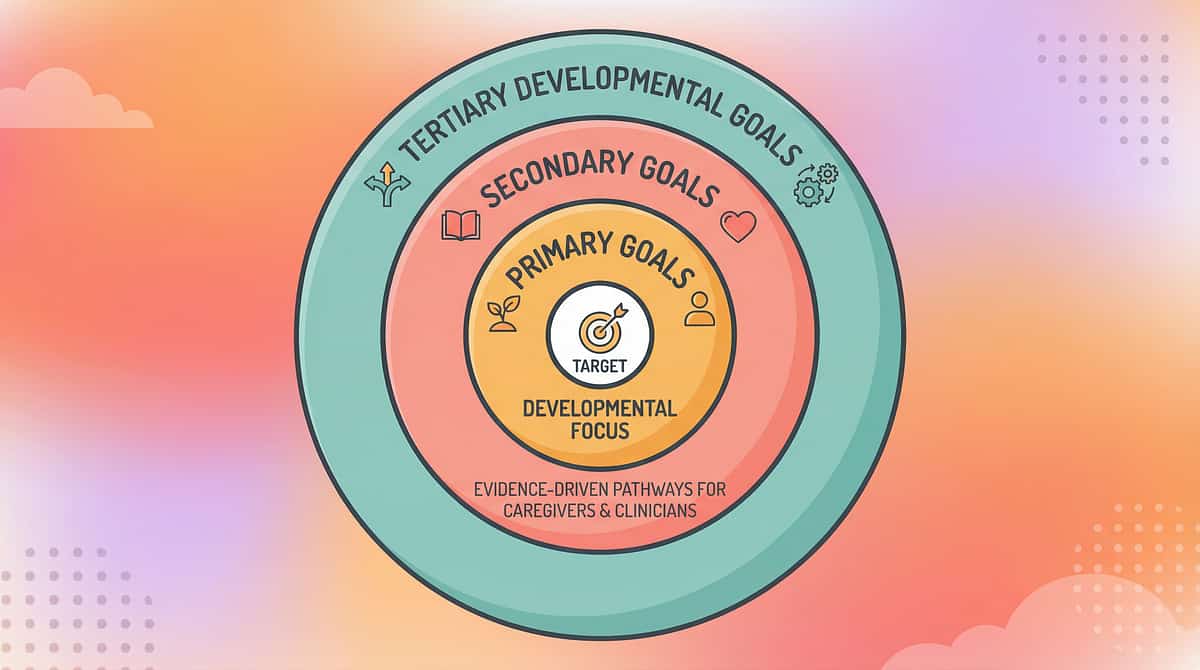
This Is Not a Random Activity. It's a Precision Developmental Tool.
Primary — You Will See:
- Child initiates pretend action (feeding a doll, making a puppet speak)
- Child uses one object to represent another without adult prompting
- Child sustains a pretend scenario for 2+ minutes
Secondary → Tertiary — You Will Notice:
- Increase in spontaneous narrative language
- Reduced rigidity when play sequences vary
- Child begins joining peer play scenarios over weeks
- Flexibility in transitions and routines improves
PMC10955541 — Meta-analysis confirms these layered targets across 24 studies.
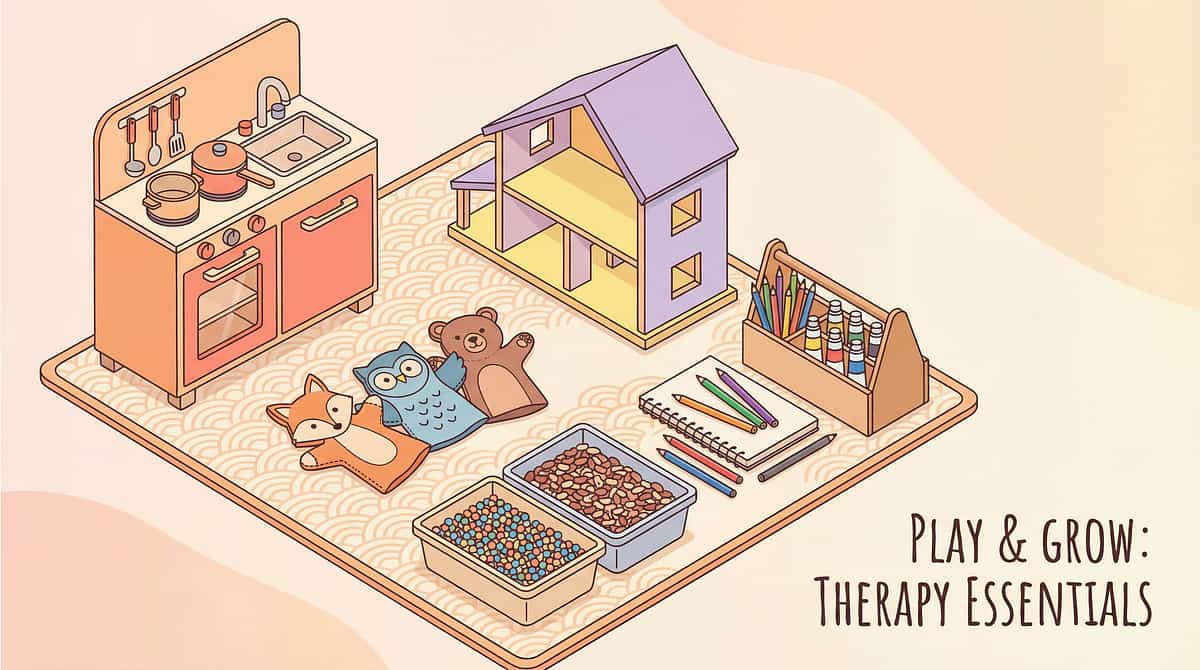
9 Materials. One for Every Step of the Symbolic Staircase.
Below are all nine clinician-selected material categories. Each one provides a different level of symbolic scaffolding. Starter Kit Recommendation (₹1,500–5,000): Play Kitchen + Food Set → Puppets × 2 → Dollhouse with figures.
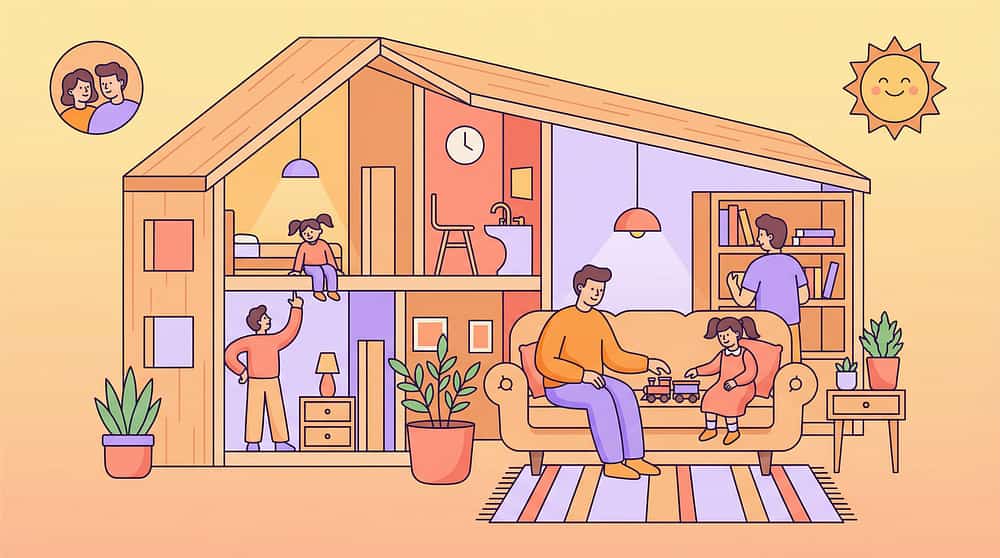
🏠 Material 1: Dollhouse with Flexible Figures
Canon: Role-Play / Pretend Play Props | ₹800–3,500 | Beginner Pretend. A miniature world where pretend stories unfold. The physical structure of rooms suggests the story — ideal first material. 🛒 Search Amazon.in ✓ Pinnacle Recommends

👗 Material 2: Dress-Up Clothes & Role-Play Costumes
Canon: Role-Play / Pretend Play Props | ₹300–1,500 | Beginner–Developing. Physical transformation scaffolds psychological transformation. Start with career costumes before fantasy characters. 🛒 Search Amazon.in ✓ Pinnacle Recommends
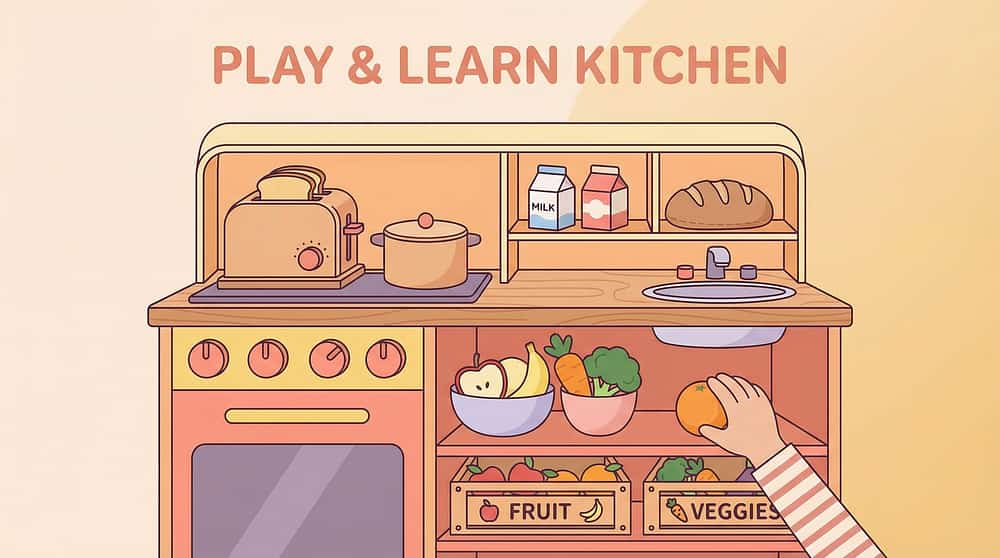
🍳 Material 3: Play Kitchen and Food Sets
Canon: Role-Play / Pretend Play Props | ₹500–4,000 | Beginner Pretend. Familiar routines become first pretend scripts. Cuttable velcro food teaches transformation — the conceptual core of symbolic thinking. 🛒 Search Amazon.in ✓ Pinnacle Recommends
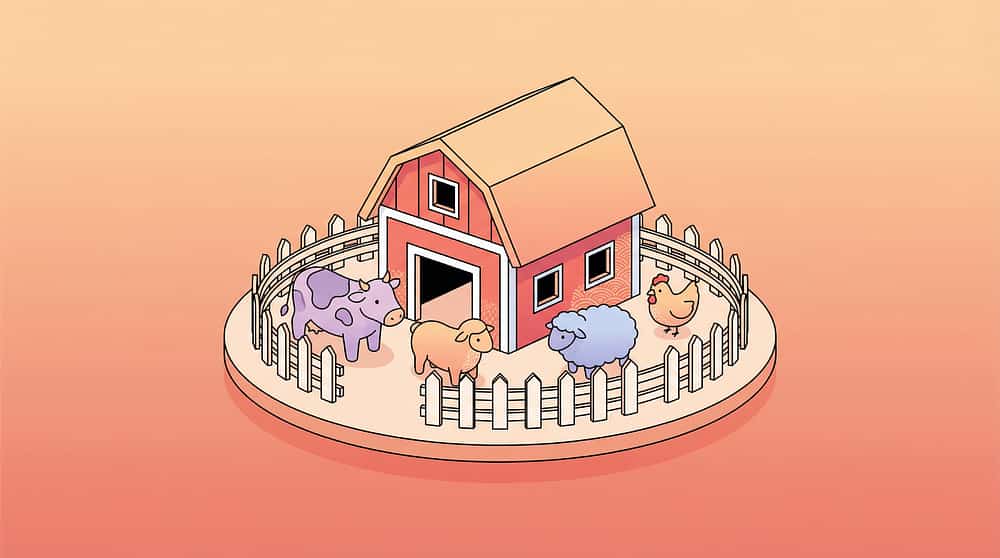
🐄 Material 4: Small World Play Sets
Canon: Role-Play / Pretend Play Props | ₹400–2,500 | Developing Symbolic. Farms, zoos, vehicle cities. Themed sets have built-in narrative structure — the theme suggests the story. 🛒 Search Amazon.in ✓ Pinnacle Recommends
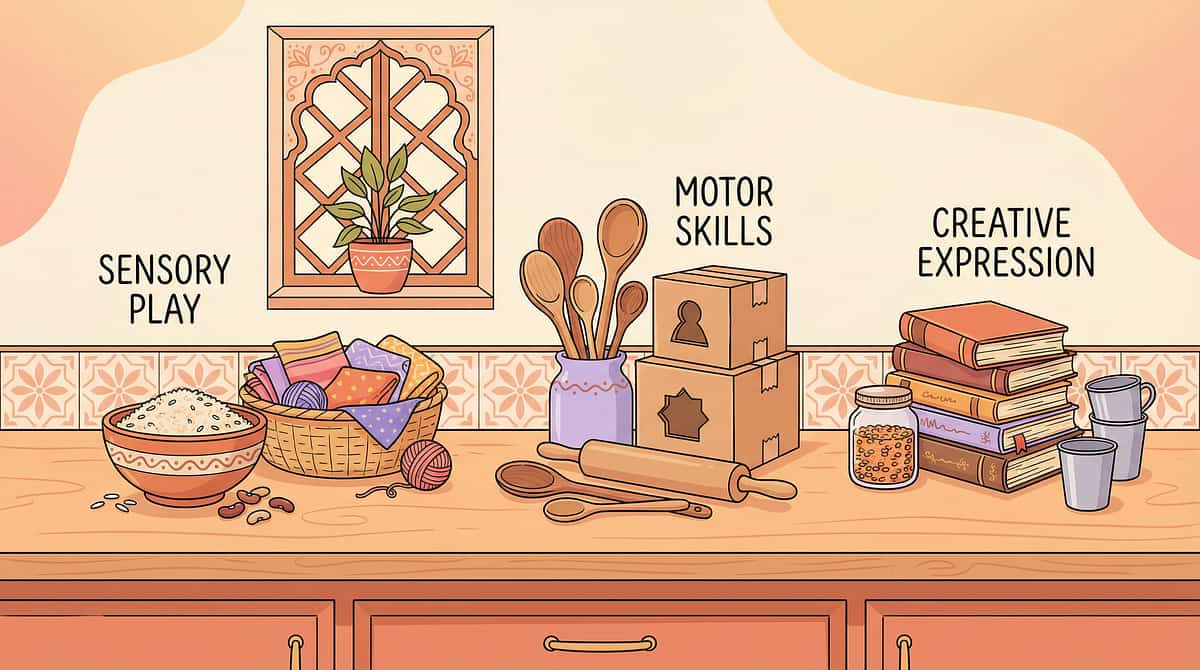
9 Materials — Continued
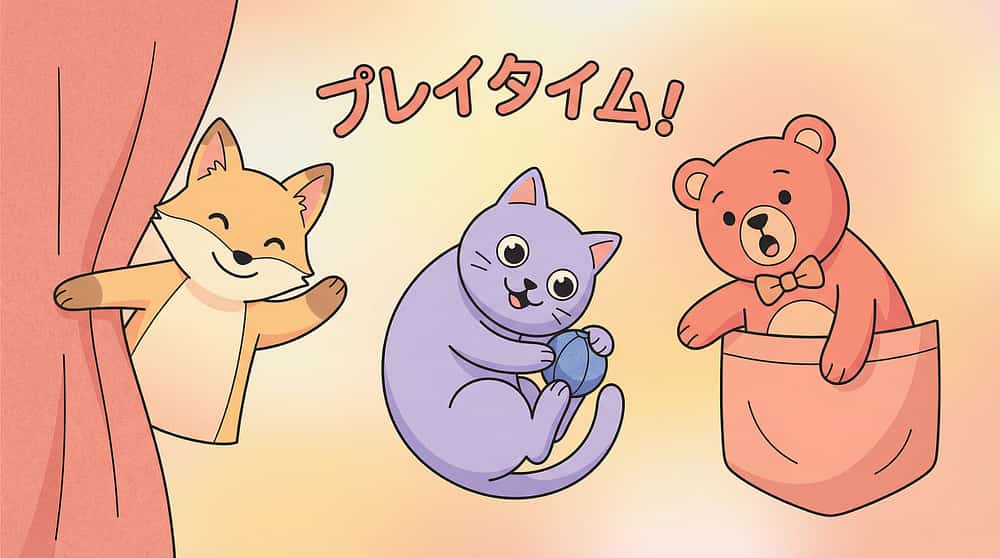
🎭 Material 5: Puppets and Stuffed Animals
Canon: Role-Play / Pretend Play Props | ₹200–1,000 | Beginner Pretend. Puppets provide psychological distance — the child makes the PUPPET pretend. This one remove dramatically lowers the barrier. 🛒 Search Amazon.in
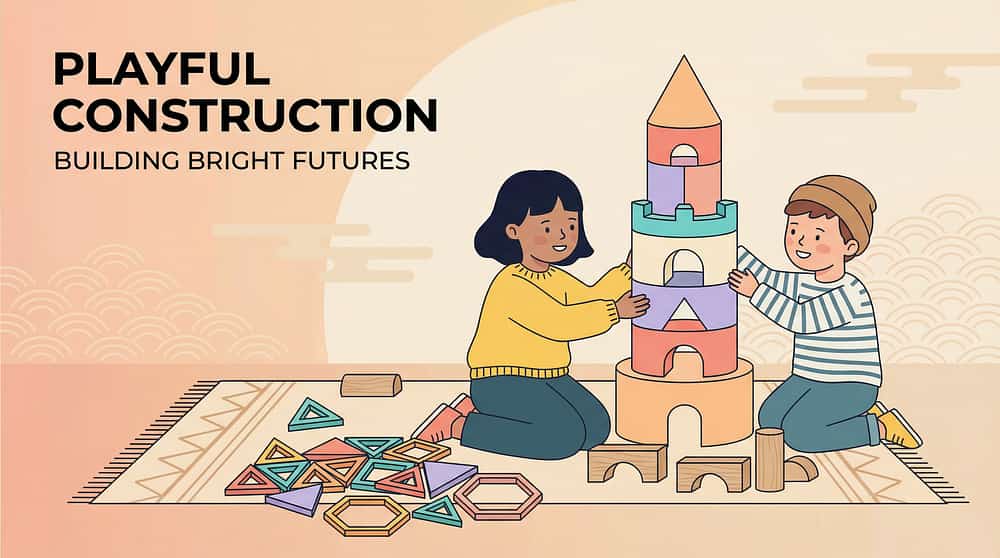
🧱 Material 6: Open-Ended Building Materials
Canon: Construction / Building Toys | ₹500–3,000 | Advanced Pretend. The block tower becomes a castle when a dragon figure arrives. Magnetic tiles reconfigure easily — modeling mental flexibility. 🛒 Search Amazon.in
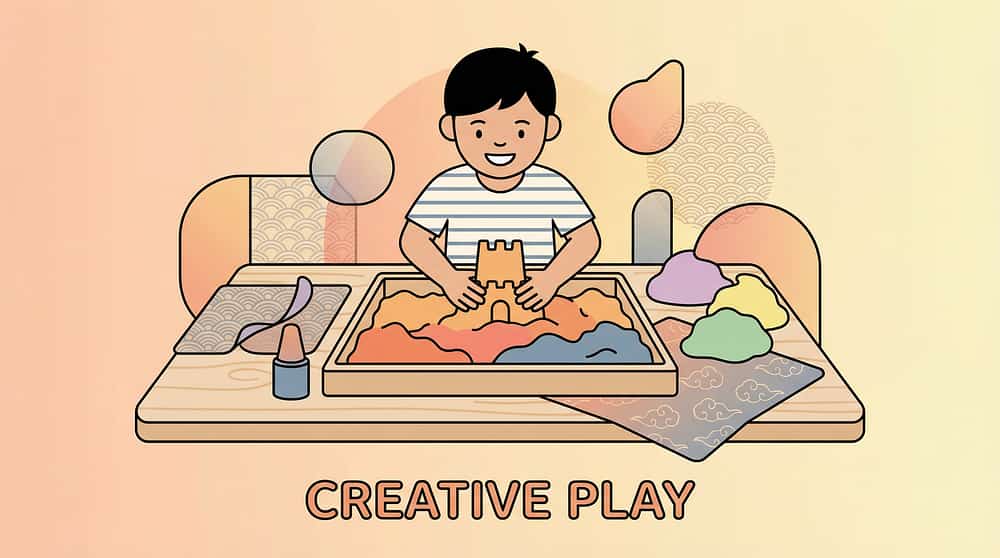
🏖️ Material 7: Sensory Play Materials
Canon: Sensory Processing Materials | ₹150–600 | Developing Symbolic. Sand, water, play dough. Physical transformation of sensory materials models the mental transformation that IS imagination. 🛒 Search Amazon.in
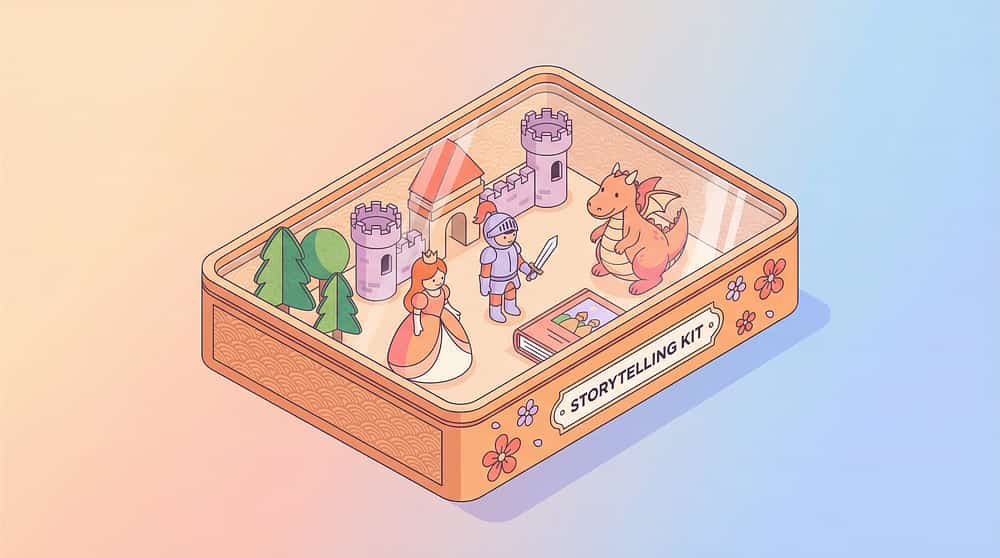
📦 Material 8: Story-Based Prop Sets and Story Boxes
Canon: Role-Play / Pretend Play Props | ₹300–1,200 | Developing–Advanced. Known narrative → retelling → original creation is the developmental bridge. Start with stories the child loves and knows by heart. 🛒 Search Amazon.in
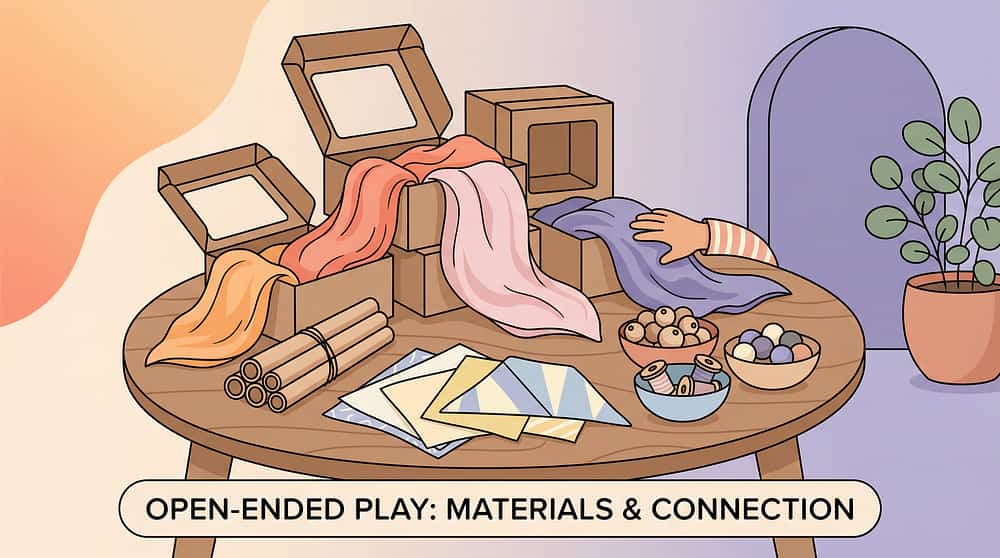
🎀 Material 9: Open-Ended Props
Canon: Open-Ended / Loose Parts Play | ₹100–400 | Advanced Pretend. DIY: ₹0 — use household items. Scarves, boxes, tubes. A cardboard box becomes a rocket ship through imagination alone. Model first, invite second. Pure symbolic transformation.
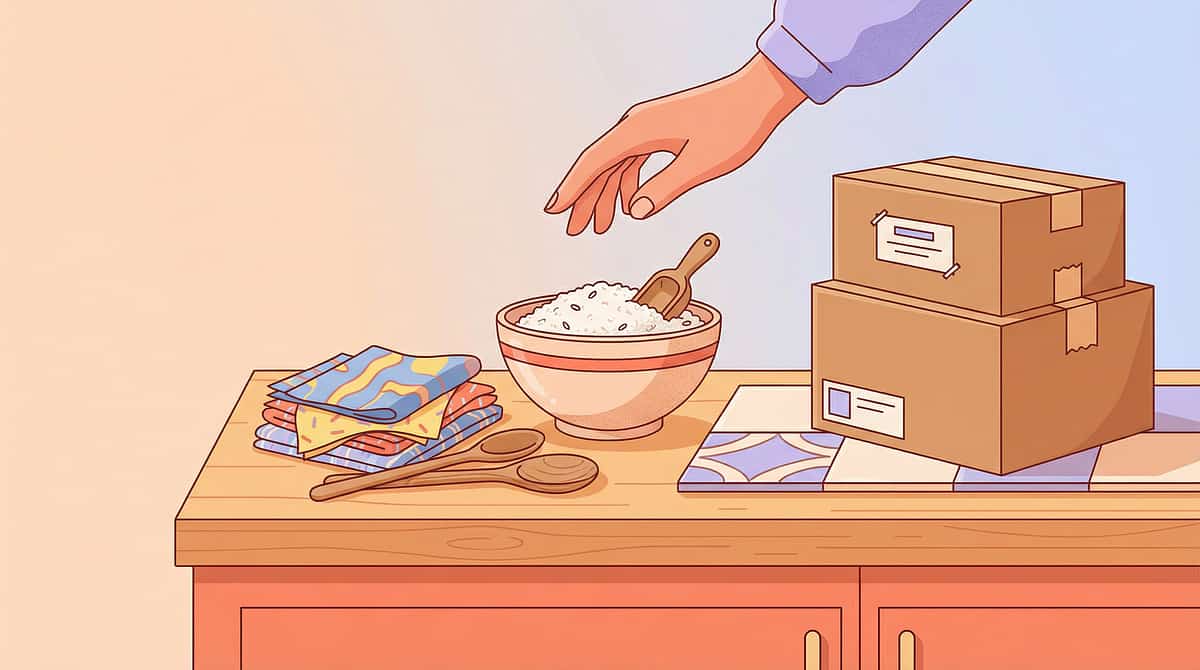
Every Parent, Every Budget — Zero-Cost Versions That Work As Well
WHO Nurturing Care Framework (2018) — equity-focused interventions must be accessible regardless of economic context. These household substitutes preserve the same therapeutic mechanism as commercial products.
Commercial | ₹0 DIY Alternative | Why It Works |
Dollhouse (₹800+) | Shoebox rooms stacked, cardboard furniture, peg doll figures | Same spatial containment + narrative scaffolding mechanism |
Dress-Up Costumes (₹300+) | Old dupatta as cape, paper bag with "DOCTOR" written on it, cardboard stethoscope | Physical transformation principle intact — child sees themselves as the role |
Play Kitchen (₹500+) | Empty clean containers (dabbas), spoons, cardboard "stove" | Familiar routine scripting — same cognitive anchor |
Small World Sets (₹400+) | Clay/dough animals, stones, sticks, fabric scraps for terrain | Theme + texture — story-inviting environment maintained |
Puppets (₹200+) | Sock puppets (button eyes), paper bag puppets, hand shadow play | Psychological distance mechanism identical |
Magna-Tiles (₹1,000+) | Cardboard boxes, toilet paper tubes, popsicle sticks | Construction → pretend habitation pathway intact |
Kinetic Sand (₹350+) | Regular sand in a tray, or flour + salt + oil play dough (2 cups flour, 1 cup salt, 2 tsp oil) | Sensory transformation modeling — identical therapeutic mechanism |
Story Boxes (₹300+) | Collect figures + items for one beloved story from household items; store in any box | Narrative scaffolding through familiar story |
Open-Ended Props | Dupatta, cardboard boxes, PVC tubes, bottle caps, buttons | Pure symbolic transformation — imagination does all the work |
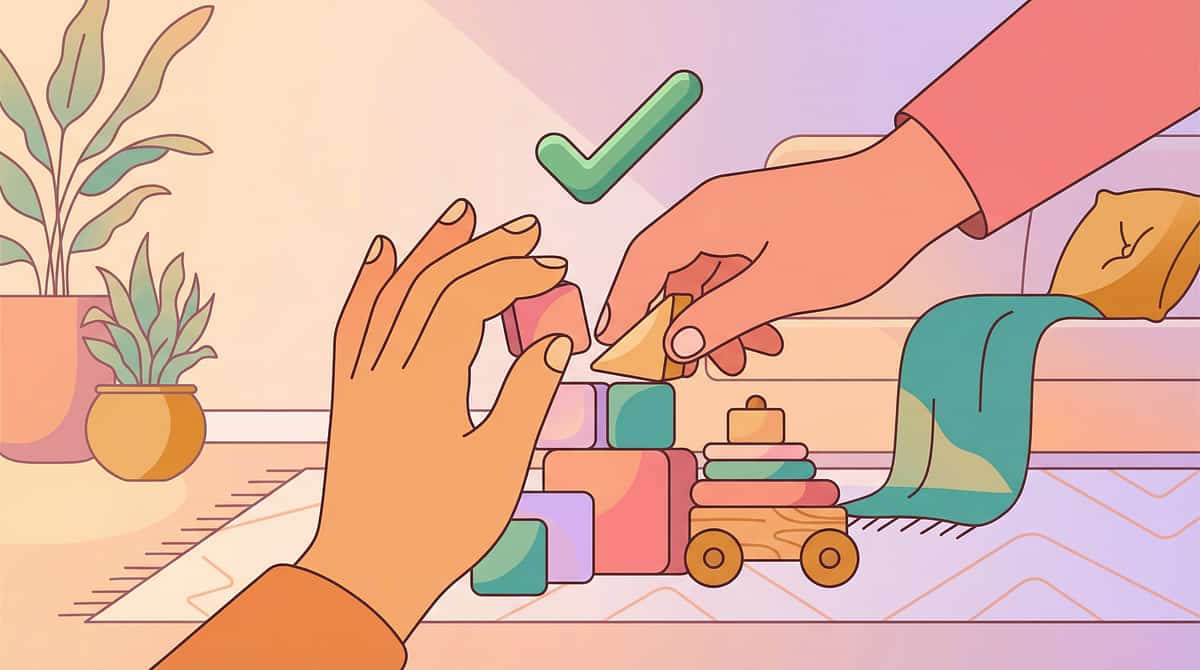
Read This Before Every Session. Every Time.
🔴 RED — DO NOT PROCEED IF:
- Child has a current skin wound or infection on hands (for sensory play)
- Child is in acute distress, post-meltdown, or sleep-deprived
- Small figures/pieces present and child is under 3 AND puts objects in mouth
- Child has shown severe distress/aggression related to these materials in the last 24 hours
🟡 AMBER — MODIFY IF:
- Child seems unregulated → start with sensory materials first for 5 minutes
- Child has a cold or congestion → skip water play; proceed with other materials
- Less than 10 minutes available → run only invitation + engagement phase
🟢 GREEN — PROCEED WHEN:
- Child is fed, rested, regulated
- 15–20 minutes of uninterrupted time available
- Consistent adult play partner present
- Space prepared per setup checklist
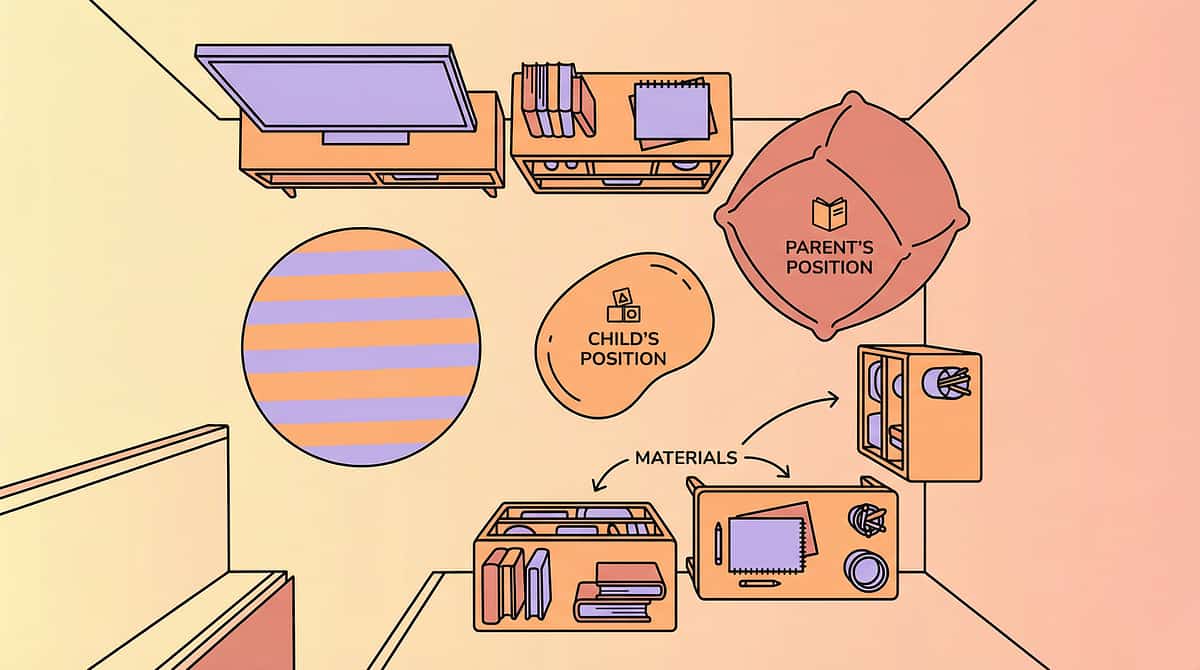
The Right Space Prevents 80% of Session Failures. Set This Up Before Your Child Enters the Room.
Room Setup Guide
📵REMOVE: screens, competing toys, high-interest distractors
🧸MATERIALS ZONE: Place 2–3 selected materials on a low surface at child eye level (not floor)
👦CHILD POSITION: Low cushion / carpet / child-height chair. Stable, comfortable.
👩ADULT POSITION: Side-by-side (NOT across from child). Same eye level. No looming.
💡LIGHTING: Natural/warm. No harsh overhead fluorescent.
🔇SOUND: Low or silent. No TV/music unless used therapeutically.
Preparation Checklist
- Phone/device silenced and stored out of sight
- 2–3 materials ready (not all 9 at once — too much choice overwhelms)
- Transition object ready for session end (visual timer or comfort item)
- Reinforcement ready: child's preferred praise/reward identified
- You have eaten and regulated yourself — calm parent = regulated child
- "All done" signal agreed on (physical gesture or object)

This 60-Second Check Determines Whether Your Session Succeeds Before It Begins.
Indicator | ✅ Ready | ⚠️ Modify | ❌ Postpone |
Fed? | Ate a full meal 30–60 min ago | Light snack only | Hungry or just ate |
Rested? | Well-rested, alert | Slightly tired | Sleep-deprived / just woke |
Regulated? | Calm, responsive to name | Mildly elevated arousal | Actively dysregulated |
Engaged? | Eye contact possible, responsive | Distracted but redirectable | Completely absorbed elsewhere |
Physical health? | Well | Minor cold / allergy | Fever, pain, discomfort |
Recent meltdown? | None in last 2 hours | 1–2 hours ago | Within last hour |
4+ ✅ → GO
Proceed to Step 1: The Invitation
2–3 ✅ → MODIFY
Do sensory play only (Material 7), no pretend demands
0–1 ✅ → POSTPONE
10 minutes of child-led free play, reschedule session
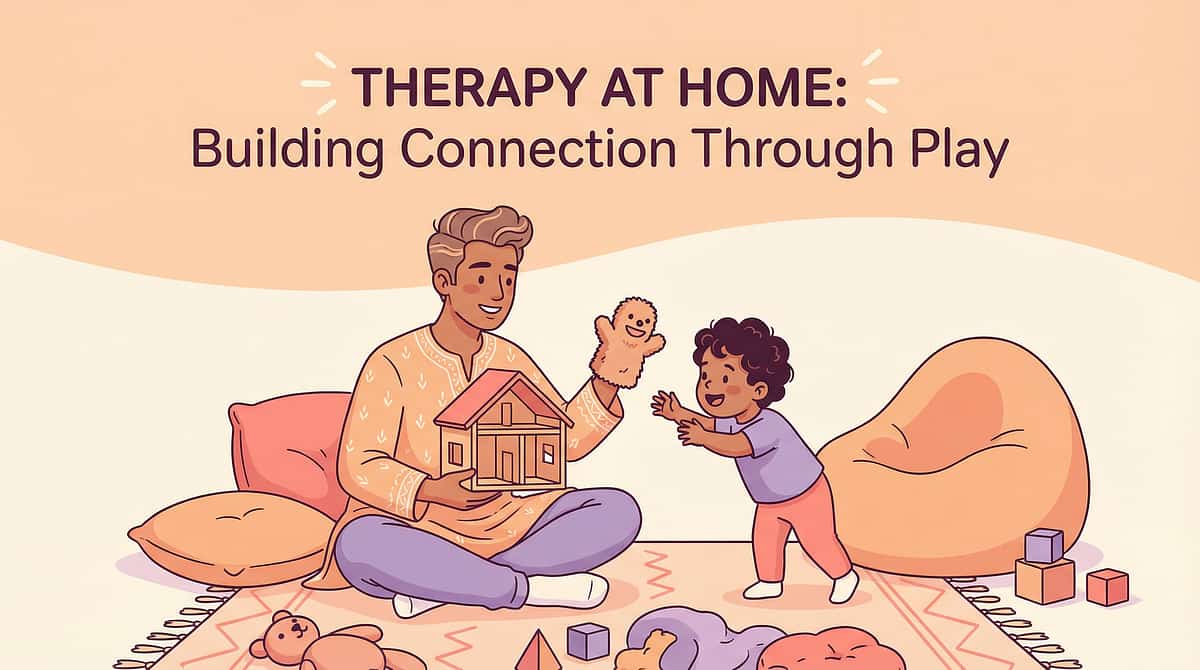
Step 1 of 6⏱️ 30–60 seconds
The Invitation
Bring the child into the space WITH the materials visible but without demand. Sit beside them (not across). Begin playing with the material yourself, narrating aloud but not requiring participation.
Script — Dollhouse / Small World
"Hey, look what I found. This little family lives in this house. The baby is sleeping. Shhh..."
Script — Puppets
"Oh! Who's this? [makes puppet look around] Hello! Is anyone home? I'm looking for a friend to play with!"
✅ Acceptance Looks Like:
- Child looks toward the material
- Child moves closer or sits nearby
- Child reaches toward the material
- Any sound or utterance
⚠️ Resistance + How to Modify:
- Child walks away → Follow without demand, keep narrating
- Child protests verbally → "Okay, you don't have to. I'm just playing here."
- Child uses material functionally (not symbolically) → Start there. That's fine!
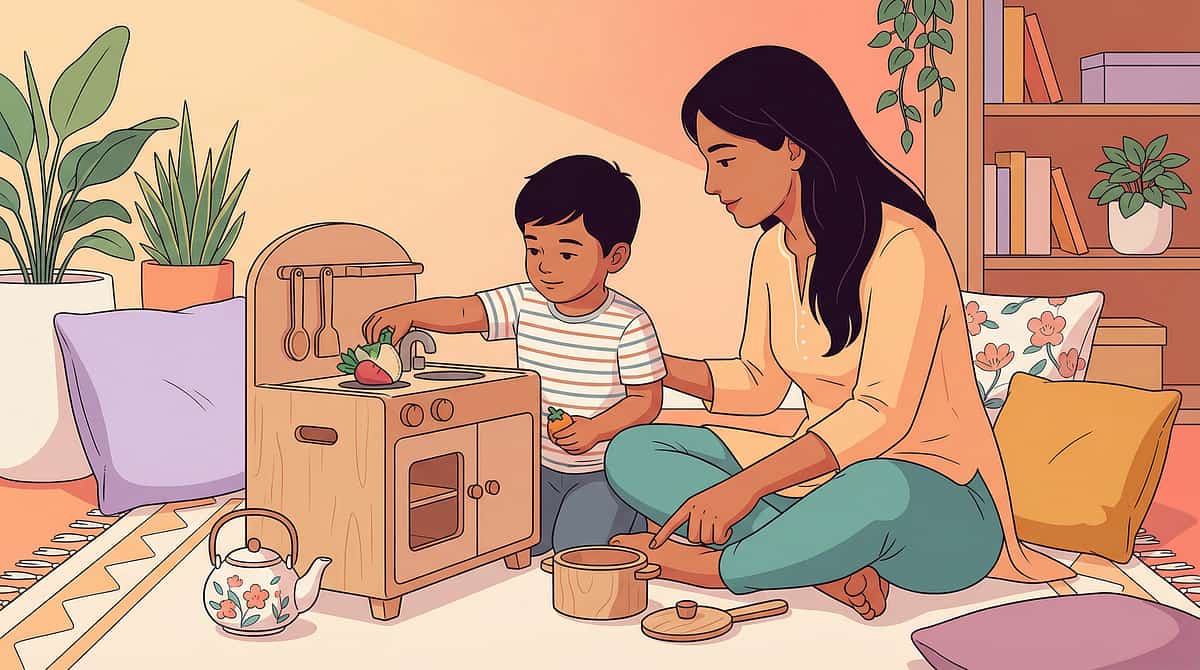
Step 2 of 6⏱️ 1–3 minutes
The Engagement
Child is now near or watching. Introduce the material directly into their space. Use parallel play first — both of you with materials, side by side, no demand. Begin the reinforcement schedule.
Engagement Script — Play Kitchen
"The mama bear is hungry! What should she eat? I'll put her some porridge... [stir, stir] Yum! Is the baby bear hungry too?"
Engagement Script — Puppets
"[Puppet voice] I need a doctor! Is anyone a doctor here? This puppet has a tummy ache!"
Response | Meaning | Your Action |
Child handles material | Full engagement | Continue narrating, invite: "What should happen next?" |
Child watches intently | Visual engagement | Narrate more, add drama |
Child imitates one action | Symbolic beginning! | Celebrate! Expand: "Yes! She's eating! Is she full?" |
Child avoids | Not ready for this material | Switch to sensory material (Material 7) |
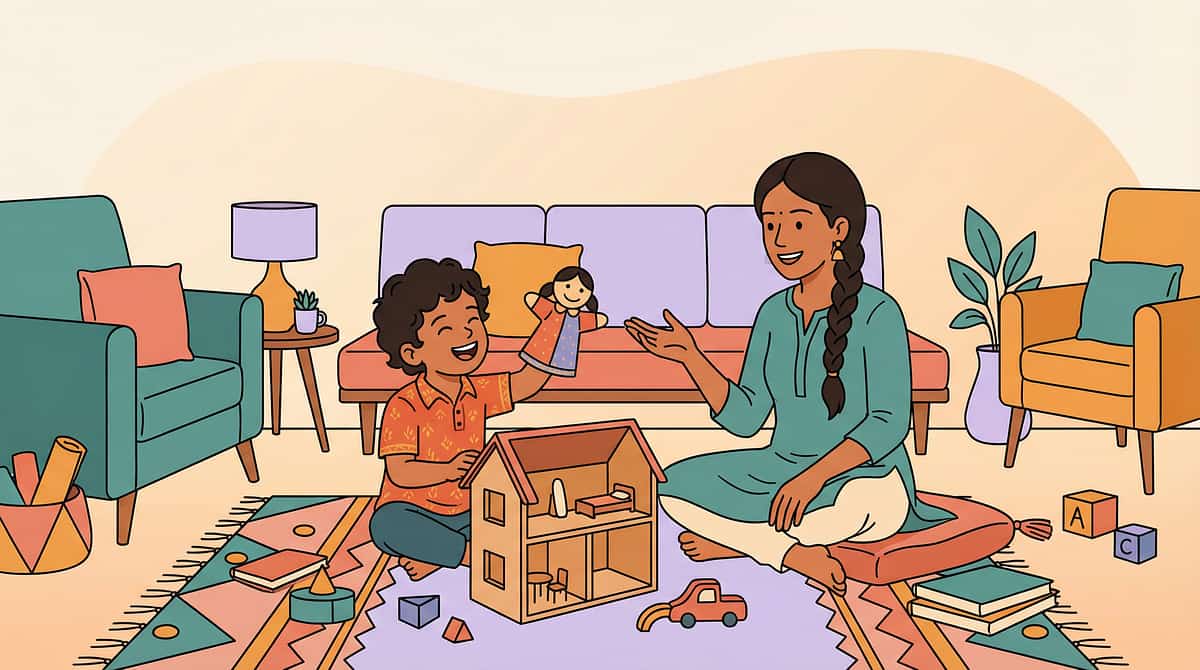
Step 3 of 6⏱️ 5–10 minutes
The Therapeutic Action
Option A — Object-Directed Pretend (Beginners)
Using the dollhouse or small world set, model a simple pretend action sequence: figure wakes up → eats breakfast → goes outside → comes back home. Narrate every action in short, clear sentences. Pause and wait 5 seconds. If child fills the pause, celebrate. If not, continue.
Option B — Symbolic Substitution (Developing)
Hold up an open-ended prop and say: "Look — this tube is a telescope! I can see the moon!" Then hand child a different household object: "What do you think THIS could be?" Wait 10 seconds. Accept any answer. There is no wrong answer.
Option C — Narrative Extension (Advancing)
Start a story with the puppet or figures, then stop deliberately: "And then the bear went into the house and... [pause, look at child expectantly]..." Transfer the narrative to the child.
Common Error | Correction |
Asking "Can you pretend?" | Just play and invite — never ask for pretend directly |
Correcting the child's symbolic choice | Accept all transformations: "A banana phone? Brilliant!" |
Moving too fast through the sequence | Slow is better. One action. Long pause. Space for child. |
Stopping when child doesn't respond immediately | Wait a full 10 seconds. Silence is processing, not failure. |
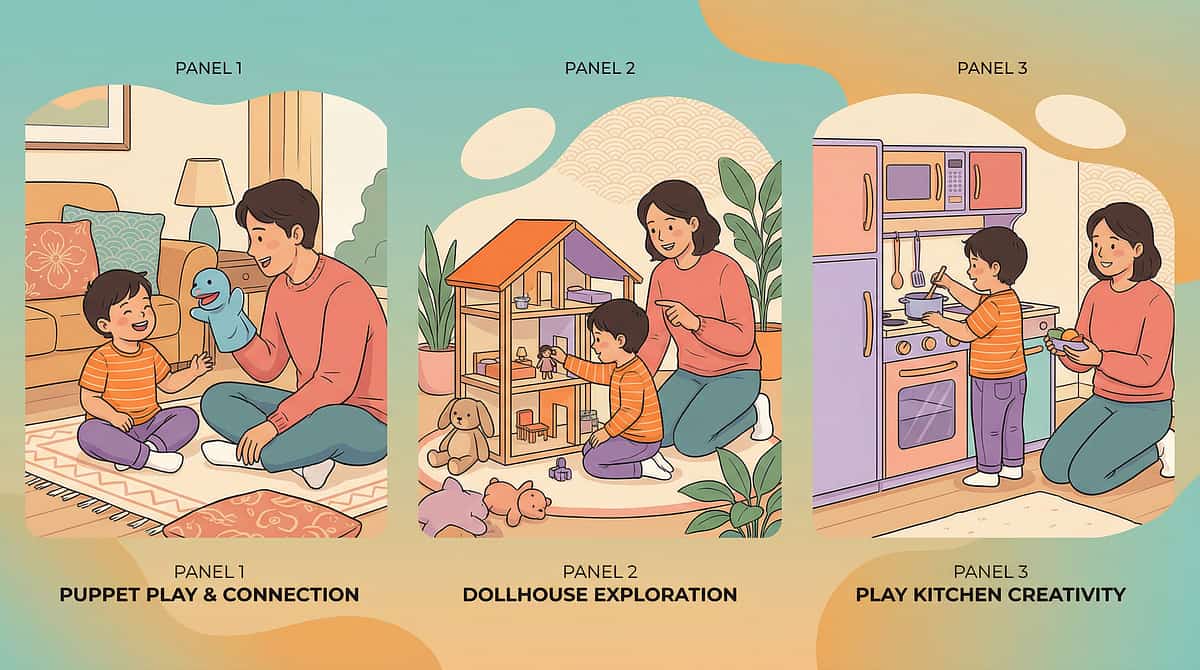
Step 4 of 6⏱️ 3–5 minutes · Target: 3–5 quality exchanges
Repeat & Vary
The Dosage Principle: 3 good pretend exchanges are worth more than 10 forced ones. A "pretend exchange" = any moment where symbolic meaning is assigned to an object or action, however small: child stirs the pot and says "soup" = 1 exchange · child makes the puppet say "hello" = 1 exchange · child adds a second figure to the scene = 1 exchange.
Material | Variation 1 | Variation 2 | Variation 3 |
Dollhouse | Change scenario (mealtime → bedtime → birthday) | Add a visitor figure | Child is the director: "What do you want to happen next?" |
Dress-Up | Switch costumes | Add/remove one prop | Child chooses the role |
Puppets | Switch which puppet speaks | Let child take your puppet | Introduce a problem: "Puppet is scared!" |
Small World | Change the terrain | Introduce a natural event (rain! animals run to shelter) | Child creates the ending |

Step 5 of 6⏱️ Within 3 seconds of each pretend action
Reinforce & Celebrate
The Timing Law: Reinforcement delivered more than 5 seconds after the behavior loses its power. Be ready. Be immediate.
For Symbolic Substitution
"YES! That block IS a boat! It's sailing away! Whoooosh!"
For Narrative Extension
"You said the baby was hungry! Brilliant! That's exactly right! What did she eat?"
For Imitated Action
"You fed the bear! She ate the food! Did she like it? Mmm?"
Verbal Enthusiasm
Most available, most powerful reinforcement
Physical Celebration
High five, clap together
Sticker Chart
Visual progress — Reward Sticker Book ₹364
Token Economy
3 tokens = 5 minutes of child's preferred activity

Step 6 of 6⏱️ 2–3 minutes
The Cool-Down
Sessions that end abruptly create anxiety about future sessions. A predictable closing ritual signals safety — the child learns: this has a shape, it starts, it happens, it ends, and I am safe throughout.
Transition Warning (2 minutes before end)
"Two more, then all done." [Hold up 2 fingers] → "One more, then all done." [Hold up 1 finger] → "All done! The bears are going to sleep now." [Put figures down gently]
Cool-Down Activity (choose one)
Put materials away together, narrating: "The baby is in her bed. The kitchen is clean. Everything is safe." — OR — 1–2 minutes of sensory calming: gentle hand-over-hand squeezing, or child chooses a sensory comfort item.
Transition to Next Activity
"Play time is finished. Now we're going to [next activity]." Use visual schedule if available. If child resists ending: "I know. It's fun. We'll play again tomorrow." Do NOT escalate the close.

60 Seconds of Data Today Determines Your Child's Trajectory Tomorrow.
"When your therapist asks 'How was this week?' and you say 'Good, I think' — that's a guess. When you say 'She initiated pretend with the puppet on Day 4, held a symbolic play exchange for 4 minutes on Day 6' — that's clinical data. Data transforms parent involvement into therapy co-delivery."
Which material did you use today?
Track: Dollhouse · Dress-Up · Play Kitchen · Small World · Puppets · Building Materials · Sensory Materials · Story Box · Open-Ended Props
Duration of symbolic play engagement
Not total session time — just the pretend moments. Record in minutes.
One specific observable milestone
However small: "Made the bear talk for the first time." "Assigned a name to the puppet."
Any symbolic play independently initiated?
Yes / Not yet. This single data point tracks the most important milestone in the intervention.
Every Session Teaches You Something. Here's How to Read What It's Saying.
Problem 1: Child won't engage with ANY material
Solution: Reduce to observation only. Place materials on the floor and YOU play with them for 10 minutes while child is present but not required to participate. Some children need 5–10 observation sessions before touching the material. Document which materials the child watches most intently.
Problem 2: Child uses materials functionally but won't pretend
Solution: This is the right starting point — do not push past functional play yet. ADD narrative alongside without requiring symbolic response: "The block is stacking... it's getting taller... it's a very tall tower!" This narration plants the symbolic seed.
Problem 3: Child gets distressed when adult introduces pretend framing
Solution: Remove all pretend language for 3 sessions. Return to parallel play only. Introduce ONE symbolic word very gently after 3 sessions: "Soup?" while stirring the pot. One word. No more.
Problem 4: Child repeats one pretend action endlessly without expanding
Solution: This is a great sign — they have ONE symbolic schema. Celebrate it. Expand very slowly: same action + one new element: "The bear is eating... eating soup! What flavor?" Expansion, not replacement.
Problem 5: Child is inconsistent — amazing one day, refuses the next
Solution: Completely normal. Track the readiness indicators (Card 14) on refusal days. A pattern will emerge (time of day, hunger, sensory state). Adjust session timing to match the child's optimal window.
Problem 6: Sibling disruption breaking sessions
Solution: Create a "play session" visual signal (a specific colored cloth on the door). Brief older siblings. Even 10 uninterrupted minutes is enough for meaningful progress.
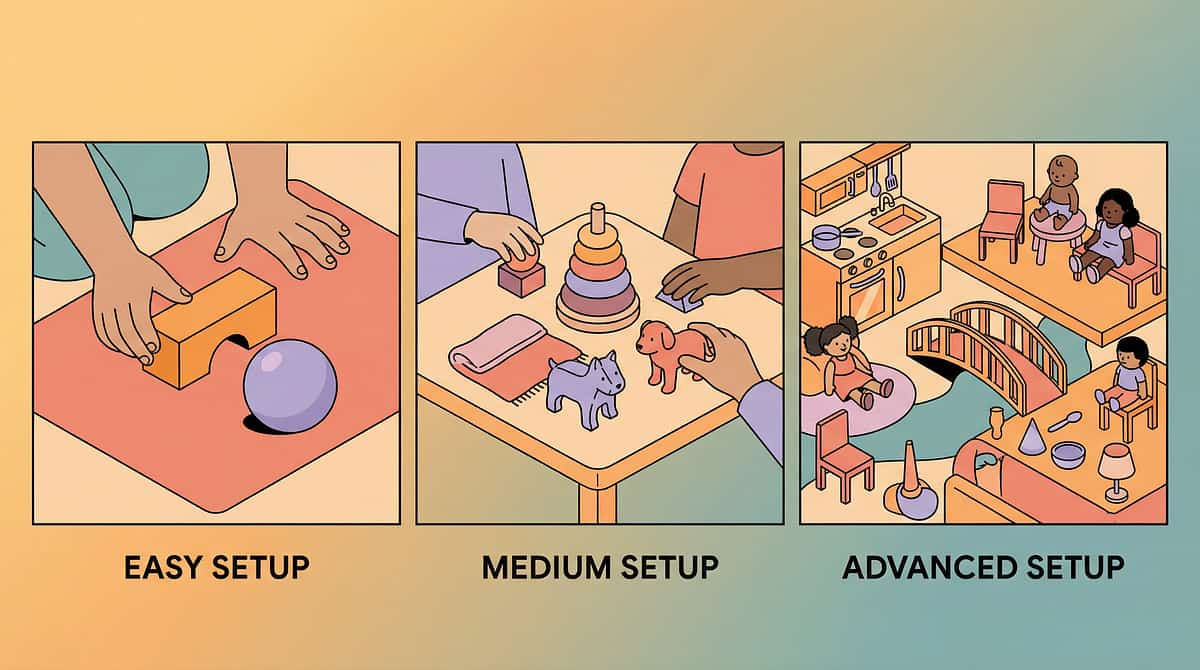
One Technique. Infinite Variations. Find Your Child's Just-Right Version.
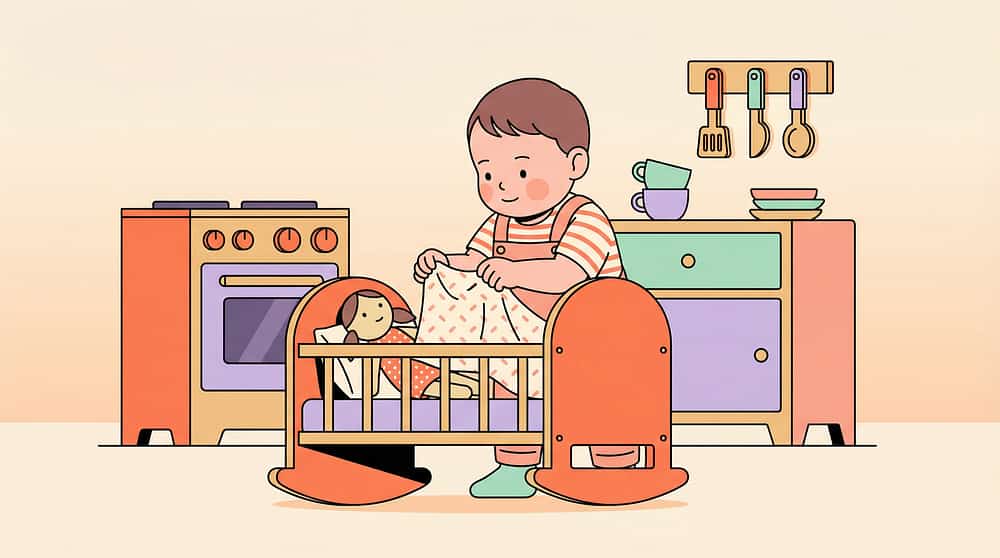
Profile A — Early Pretend
Best materials: Play Kitchen + Puppets + Dollhouse
Focus: Imitation of adult pretend actions with realistic props
Session structure: 80% adult-led modeling, 20% child participation
Age: 2–3 years: max 3 materials, 10-minute sessions
Focus: Imitation of adult pretend actions with realistic props
Session structure: 80% adult-led modeling, 20% child participation
Age: 2–3 years: max 3 materials, 10-minute sessions
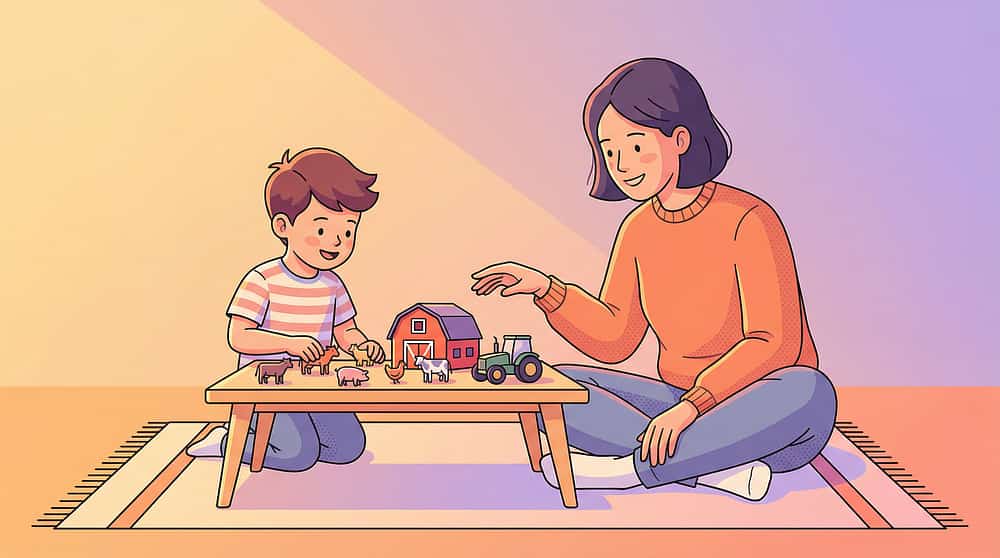
Profile B — Developing Symbolic
Best materials: Small World Sets + Story Boxes + Dress-Up
Focus: Extending known sequences, accepting role assignment
Session structure: 50/50 adult-child turns
Age: 4–5 years: full 20-minute sessions, introduce story boxes and peer figures
Focus: Extending known sequences, accepting role assignment
Session structure: 50/50 adult-child turns
Age: 4–5 years: full 20-minute sessions, introduce story boxes and peer figures
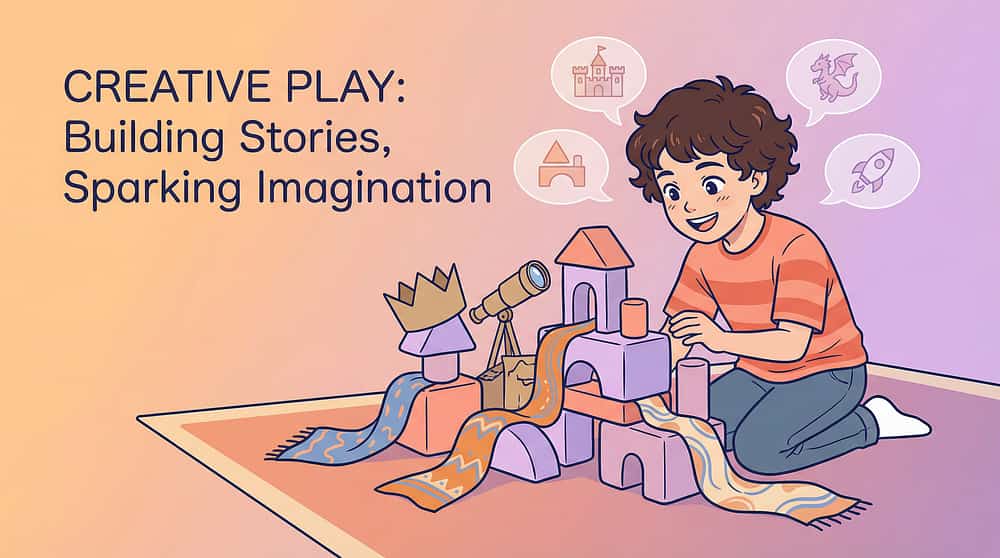
Profile C — Advancing
Best materials: Building Materials + Open-Ended Props + Sensory Materials
Focus: Original scenario creation, flexible role play, peer play preparation
Session structure: 20% adult scaffold, 80% child-led
Age: 6–8 years: extend to narrative play with peers, introduce role negotiation
Focus: Original scenario creation, flexible role play, peer play preparation
Session structure: 20% adult scaffold, 80% child-led
Age: 6–8 years: extend to narrative play with peers, introduce role negotiation

In Weeks 1–2, You Are Planting. Not Yet Harvesting.
Progress Bar: Week 1–2 — 15% complete
✅ These ARE Progress (even if they seem small):
- Child tolerates the material being present (even without touching)
- Child allows adult to play beside them without protesting
- Child makes any sound or vocalization during the session
- Child picks up and examines a figure or prop (even without pretending)
- Play session length increases from 3 minutes to 5 minutes
❌ These Are NOT Expected Yet:
- Independent pretend initiation
- Symbolic substitution (using one object as another)
- Sustained narrative play
- Any verbal narration of the play scenario
What to Log This Week:
- Which material the child is most drawn to (even functionally)
- Longest duration of any engagement with play materials
- Any spontaneous action — even one
"If your child tolerated the dollhouse being on the floor for 10 minutes without distress — that is measurable, real, biological progress. A neural pathway just got marginally easier to activate. Do not wait for the Hollywood moment. The Hollywood moment is built from 14 days of 'tolerating the material.'"

Week 3–4: The Neural Pathways Are Forming. You're Seeing the First Signs.
Progress Bar: Week 3–4 — 40% complete
🧠 Anticipation Signals
Child moves toward play space as session approaches — before materials are even laid out. Neural association between context and positive experience is forming.
🎭 First Spontaneous Symbolic Moment
Child assigns meaning to an object without adult prompting — even one time, even briefly. This is the target behavior. Celebrate it as if it just crossed the finish line.
🔁 Reduced Resistance
Session starts that previously took 5 minutes of transition now take 2 minutes. The barrier is lowering. The brain is learning that this is safe and enjoyable.
📢 Play-Adjacent Language
Any words spoken during or about the play materials — "eat," "sleep," "no," "more" — indicate language and play are beginning to connect.
"You may notice you're more confident too. You've now run 10+ sessions. You've developed your own reading of your child's cues. Trust that knowledge — you're becoming a genuine play therapy co-deliverer."

Weeks 5–8: From Scaffolded to Self-Directed. From Imitation to Creation.
Progress Bar: Weeks 5–8 — 75% complete
Milestone | What It Looks Like | GPT-OS® Index |
Consistent symbolic substitution | Child regularly uses objects as other things without adult modeling | Symbolic Play Index: Level 3 |
Sequential pretend | Child links 3+ pretend actions into a coherent sequence independently | Narrative Play Index: Level 2 |
Narrative transfer | Child picks up narrative thread when adult pauses | Language-Play Integration: Level 3 |
Role stability | Child maintains a pretend role (doctor, chef) for 5+ minutes | Cognitive Flexibility Index: Level 2 |
Material flexibility | Child uses open-ended props (boxes, scarves) symbolically | Symbolic Play Index: Level 4 |
Peer invitation | Child attempts to bring sibling or peer into pretend scenario | Social Participation Index: Level 2 |
What Comes Next
→ G-625: Social Play Skills — building from symbolic play toward peer-coordinated play
After That
→ G-626: Cooperative Play Development

Every Symbolic Moment Is a Neuroscientific Event. Honor It.
🌟 First Spontaneous Pretend
Date: _________ | What happened: _______________________________
🌟 First Symbolic Substitution
Date: _________ | Object used as: _______________________________
🌟 First Narrative Sequence
Date: _________ | Story enacted: _______________________________
🌟 First Peer Pretend Moment
Date: _________ | With whom: _______________________________
"In our 20+ million therapy sessions, we have watched thousands of children make the transition from concrete to imaginative play. Every single time, the parents describe a moment they'll never forget. A puppet suddenly got a voice. A block became a rocket. A scarf became a magic carpet. That moment is the product of weeks of patient, consistent work by you. Claim it." — Pinnacle Blooms Consortium
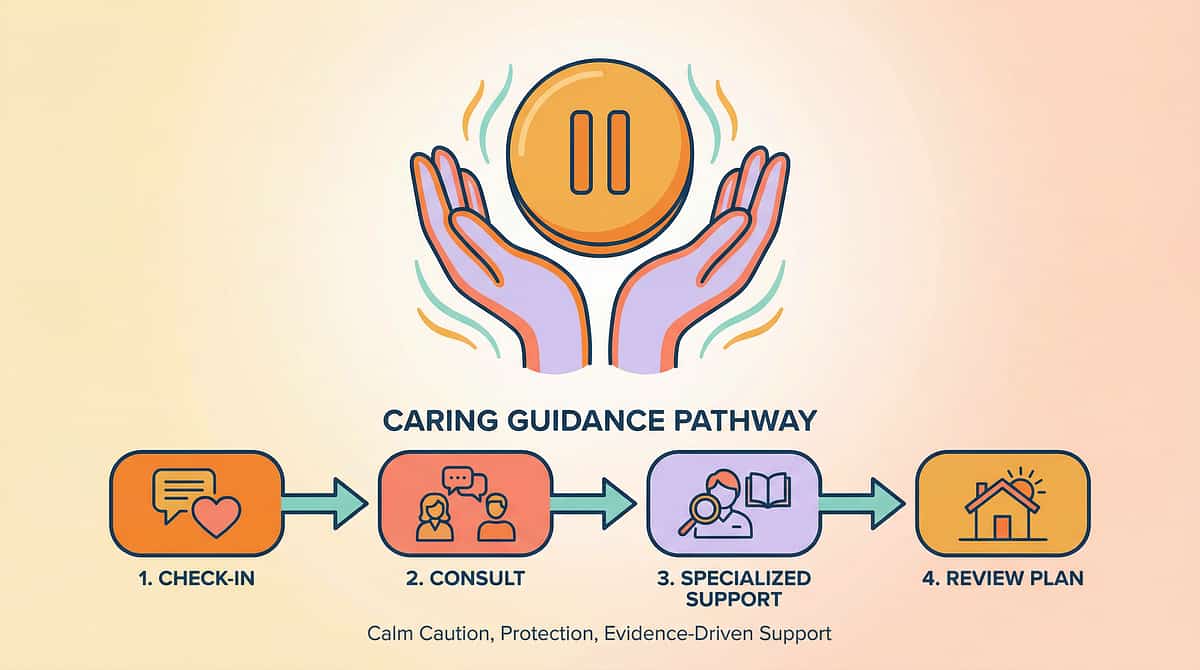
These Signs Mean: Get Professional Eyes On This Now.
🔴 Escalate Immediately — Call 9100 181 181
- No change in any play behavior after 8 consistent weeks of daily intervention
- Child shows INCREASED distress or regression during play sessions (genuine escalating distress, not initial resistance)
- Play remains exclusively repetitive, scripted from media, and completely inflexible after 6 weeks
- Significant language regression alongside play regression
- Child has NEVER shown any symbolic play past age 3
🟡 Schedule a Review Within 2 Weeks
- Progress is inconsistent — 2 weeks forward, 1 week apparent regression
- Child is engaging with materials but symbolic play is not emerging after 4 weeks
- Parent uncertain whether observed behaviors constitute symbolic play
- New behaviors emerging that weren't present before (positive OR concerning)
🟢 Continue With Confidence
- Any forward movement (however slow) is occurring
- Child is tolerating sessions and engagement is increasing over time
- Parent is maintaining consistency and tracking data
Clinical Referral Pathway: Developmental Pediatrician → AbilityScore® Assessment → GPT-OS® Play Development Protocol → Structured SLP/OT/ABA Play Intervention
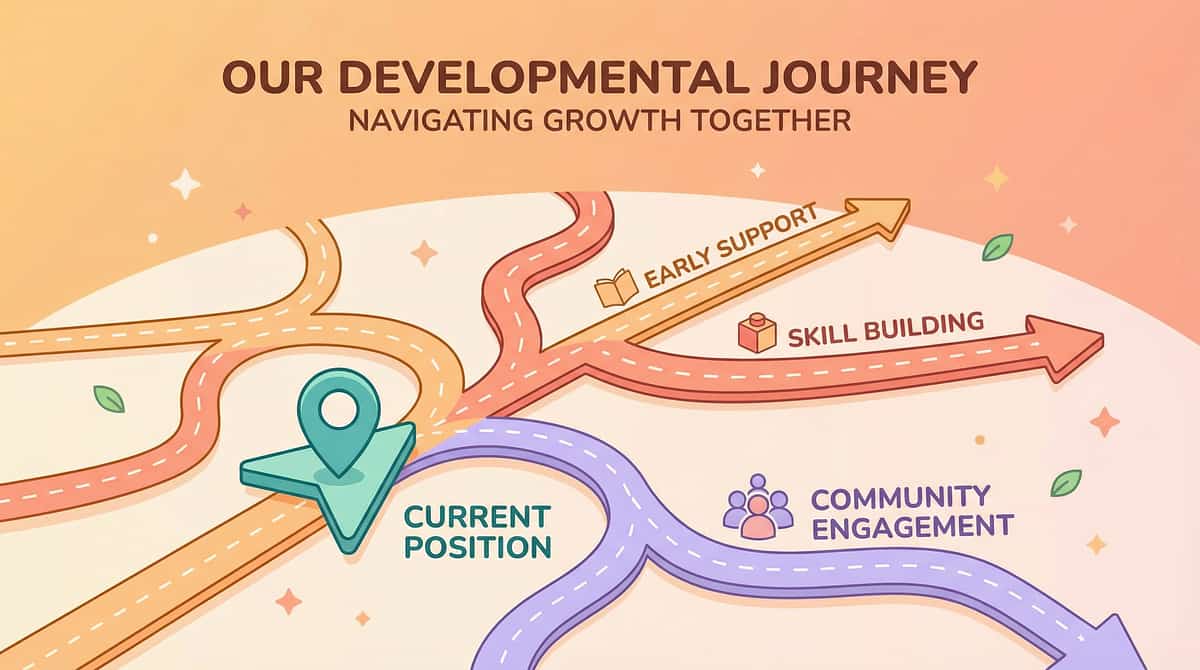
You Are Here. Here Is Where You're Going.
This technique feeds into: Social Participation Index → Peer Readiness Index → School Readiness → Cognitive Flexibility across domains. Lateral connections also exist with B-131 (Limited Pretend Play), C-318 (Pretend Play Skills), and G-638 (Symbolic Play Development).
Prerequisite Check
Has your child mastered G-623: Functional Play Development?
→ If No: Start here first
→ If Yes: You are in the right place. Continue with G-624.
Long-Term Destination
Every technique in this series builds toward a child who can enter a peer play scenario, sustain a shared narrative, negotiate roles, and co-create stories — the full social-cognitive toolkit for school and friendship readiness.
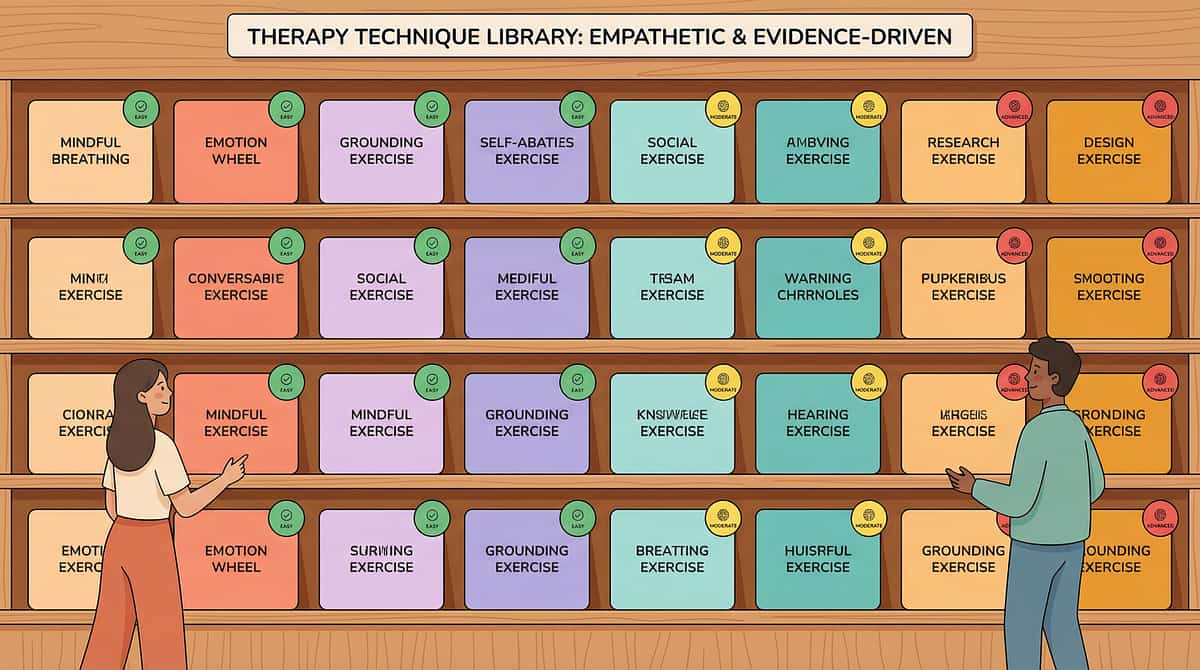
Already Have These Materials? These Techniques Come With Them.
Technique | Code | Difficulty | Materials You Already Have |
Functional Play Development | G-623 | 🟢 Intro | Play Kitchen, Puppets |
Social Play Skills | G-625 | 🟡 Core | Small World, Dress-Up |
Cooperative Play Development | G-626 | 🟠 Advanced | Building Materials |
Limited Pretend Play | B-131 | 🟢 Intro | Puppets, Story Boxes |
Pretend Play Skills | C-318 | 🟡 Core | Dollhouse, Dress-Up |
Symbolic Play Development | G-638 | 🟠 Advanced | Open-Ended Props |
If you have the Play Kitchen
→ G-623, G-625, C-318
If you have Puppets
→ B-131, G-625, C-318
If you have Building Materials
→ G-626, G-638
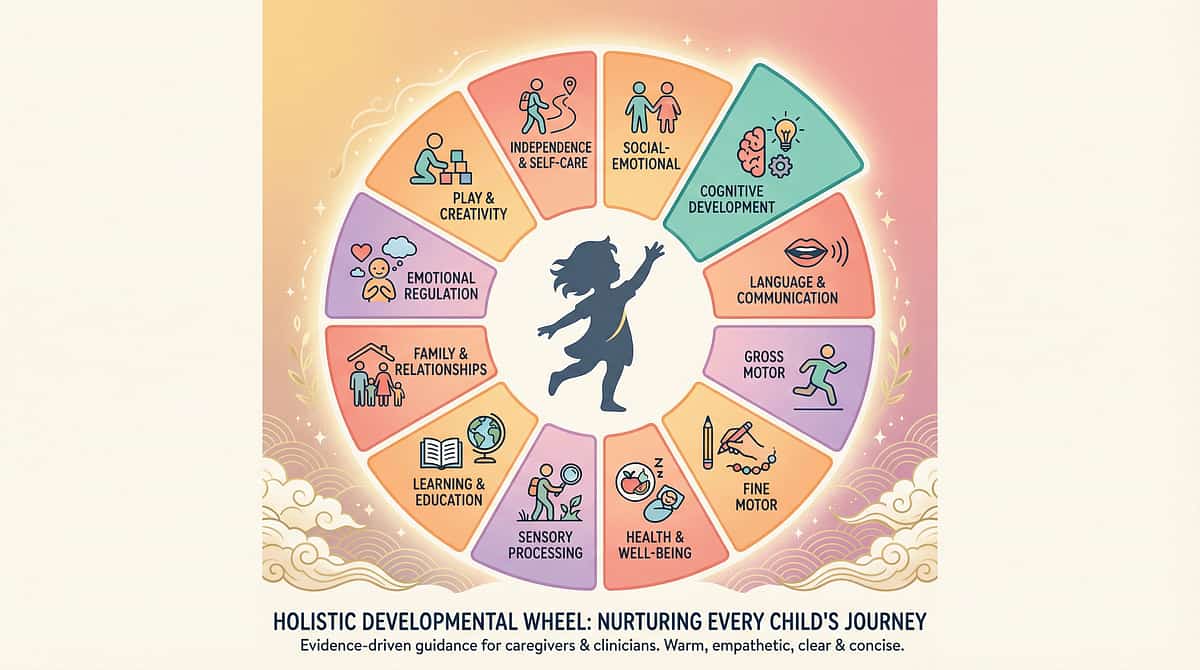
This Technique Is One Piece of a 12-Domain Picture. See the Whole Map.
Real Families. Measured Progress. Verified Outcomes.
Parent, Hyderabad
"My daughter was three and showed no interest in pretending. We started with the play kitchen — something familiar. Her therapist narrated everything. Slowly, my daughter started to participate. Then imitate. Then initiate. One day I heard her in her room, making her dolls talk to each other. A full conversation with different voices. I cried. She had found her imagination. It was there — it just needed the right doorway to come out." — Illustrative case. Individual results vary.
Father, Bengaluru
"We tried everything we found online. What the Pinnacle approach gave us was a sequence — not just 'here are toys.' The dollhouse came first, then story boxes, then open-ended materials as my son got more confident. Each material was a step up the ladder. By month 3 he was directing elaborate stories with his building blocks. His SLP called it 'a symbolic explosion.'" — Illustrative case. Individual results vary.
97%+
Play Development Index Improvement
Children showing measurable improvement within 12 weeks
14
Mean Sessions to First Pretend
Average sessions before first spontaneous pretend play observed
8–16
Weeks to Independent Symbolic Play
Typical milestone: Concrete play → Independent symbolic play

70,000+ Families Are Running This Program Right Now. You're Not Alone in This.
📱 Pinnacle Parent WhatsApp Community
Domain G — Play Development families. Share milestones, ask questions, get daily support from families navigating the same journey. → Join at pinnacleblooms.org/community
🎓 Pinnacle Parent Academy
Free online parent training on play-based intervention. Watch: "How to Run a 20-Minute Imaginative Play Session at Home." → Access at pinnacleblooms.org/academy
🏥 Find a Center Near You
70+ Pinnacle Blooms Network centers across India. Assessment, therapy, and multi-disciplinary coordination in one place. → Center locator
📞 FREE Helpline — 16+ Languages
Any question about this technique, your child's progress, or how to start. 9100 181 181 | Available now. ASHA | Zero to Three | AAP Power of Play | WHO NCF

Expert Support Is Closer Than You Think. 70+ Centers. Teleconsultation Available Worldwide.
Not near a center? Our SLPs and OTs consult via video call in 16+ languages. At a Pinnacle center for Play Development, your child receives a comprehensive multi-disciplinary evaluation and personalized intervention protocol.
AbilityScore® Assessment
Standardized developmental baseline across 591+ observations → 349 skills → clarity
Play Development Index
Specific evaluation of symbolic/imaginative play development level
Multi-Disciplinary Session
SLP + OT + ABA/BCBA in one coordinated plan — the FusionModule™
EverydayTherapyProgramme™
Daily home activities mapped to your child — including sessions exactly like this one
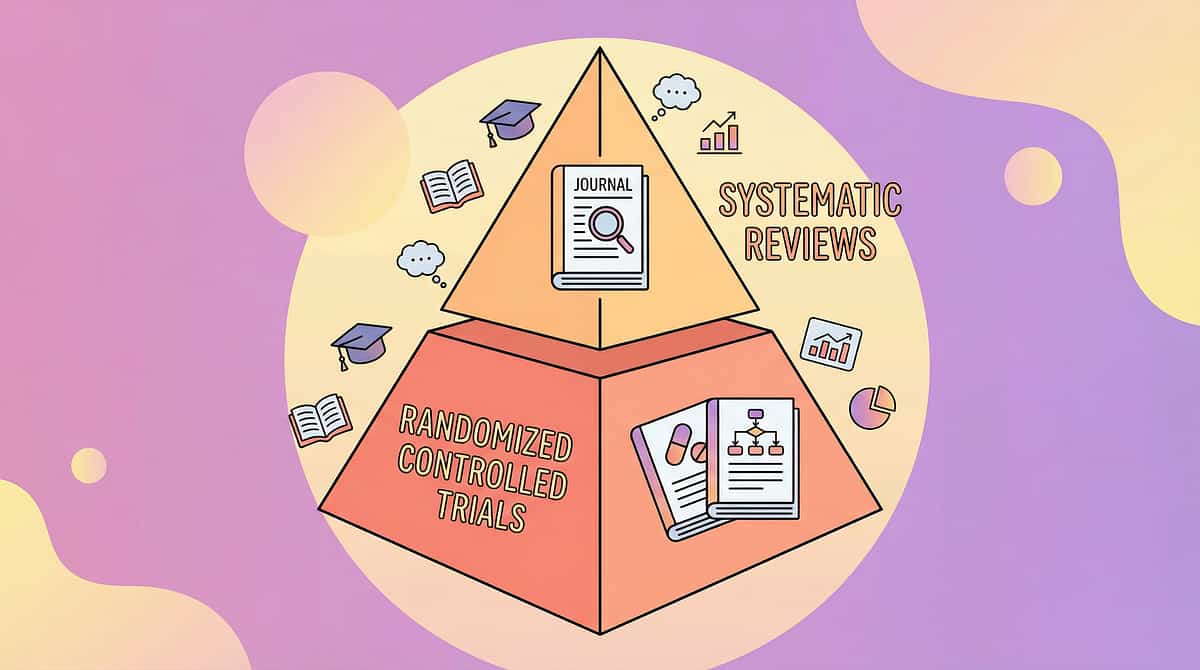
This Page Is Built on Peer-Reviewed Evidence. Here Is Exactly Where.
1. PRISMA Systematic Review (2024) — PMC11506176
16 studies | 2013–2023 | "Sensory integration intervention meets evidence-based practice criteria for ASD." → Read on PubMed
2. Meta-Analysis on Play-Based Intervention (2024) — PMC10955541
24 studies | World J Clin Cases | Social skills, adaptive behavior, cognitive flexibility all showed statistically significant improvement. → Read on PubMed
3. Indian RCT — Padmanabha et al., Indian J Pediatr (2019)
"Parent-administered structured play demonstrated significant developmental outcomes in Indian children." → Access study
4. WHO Care for Child Development Package — PMC9978394
Age-specific caregiver intervention evidence — implemented in 54 LMICs. → WHO CCD Package
5. NCAEP Evidence-Based Practices Report (2020)
"Play-based interventions and video modeling: classified as EBP for autism." → NCAEP Report
This Is Not a Website. It Is Infrastructure.
20M+
1:1 Sessions
The database behind every protocol recommendation
97%+
Measured Improvement
Across Pinnacle intervention records
70+
Centers Across India
With global patents filed in 160+ countries
"This is not software. This is therapeutic infrastructure. G-624 is one of 70,000+ technique pages, each one a node in a living intervention network governed by GPT-OS®."
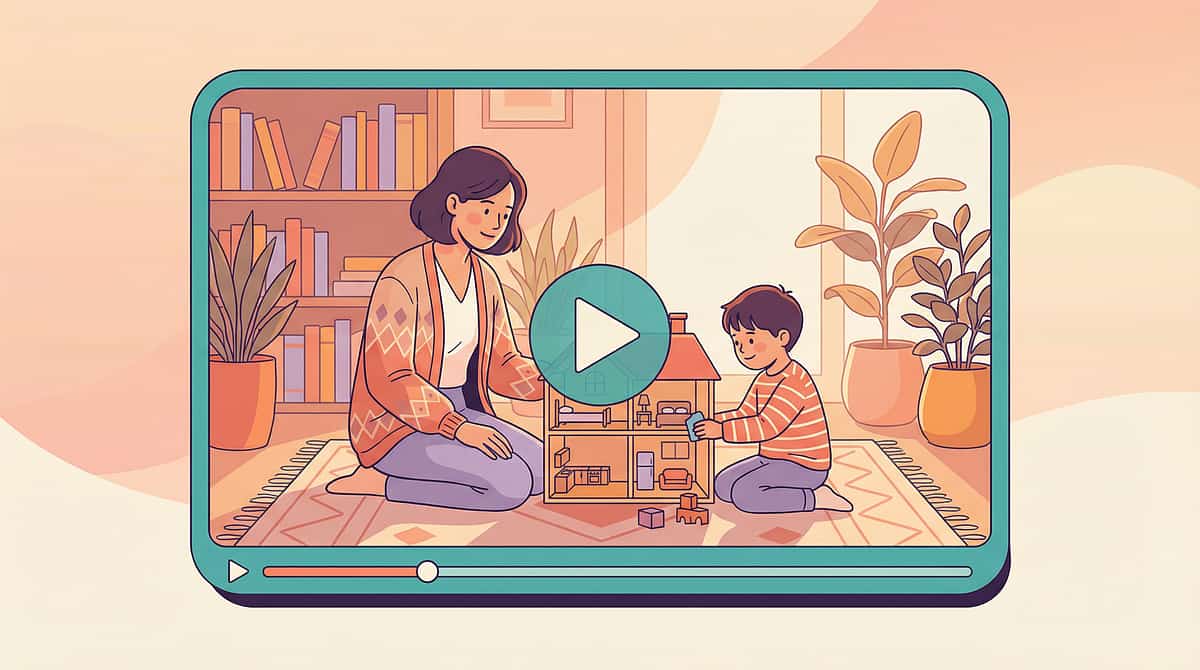
This Technique — In 60 Seconds. Watch Before You Run Your First Session.
"This 60-second reel shows you exactly what imaginative play looks like when it's developing — and what it looks like when it's blocked. Watch the 9 materials. See the transformation. Then come back and run your session."
"Imagination isn't a switch that turns on at a certain age. It's a skill. And like every skill, it needs the right tools, the right environment, and a patient, consistent adult beside the child who believes in the destination even when the road is long." — Pinnacle Blooms Consortium, Play Development Division
← Previous: G-623
→ Next: G-625
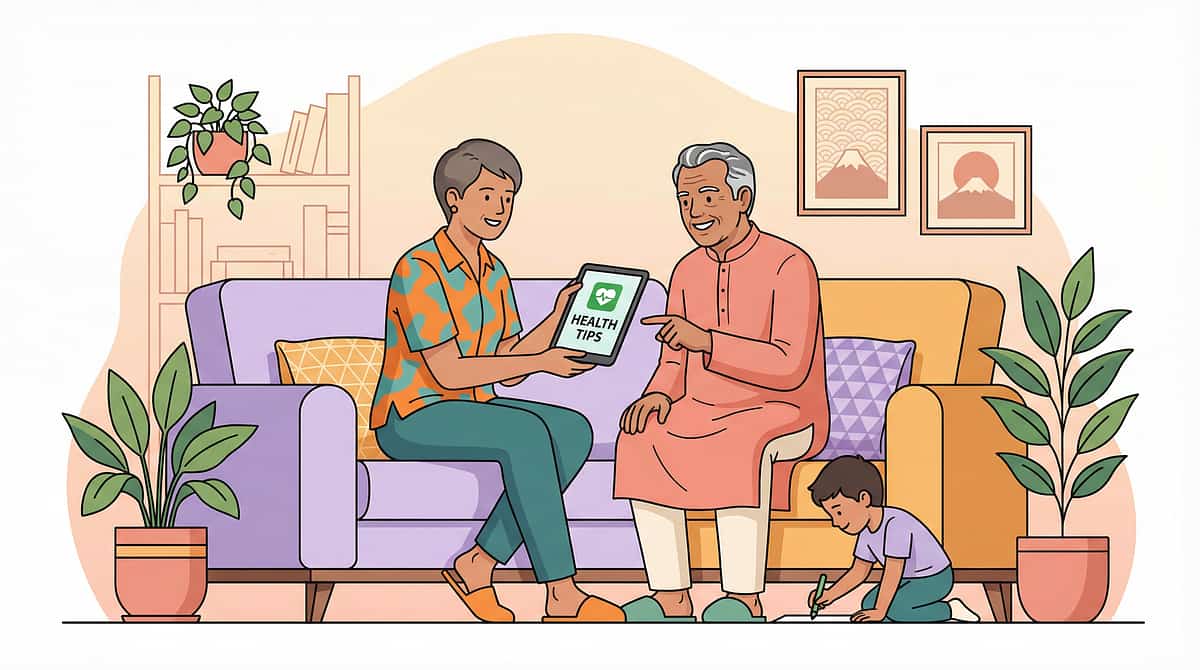
Consistency Across Every Adult in Your Child's Life Multiplies Impact 10×.
Share this page with grandparents, teachers, babysitters, and anyone who spends time with your child. The WHO CCD Package confirms: multi-caregiver training is critical for intervention generalization.
What Every Caregiver Needs to Know
- 1. Our child is learning to pretend. This is a real developmental skill that takes practice — not something that just happens.
- 2. The most helpful thing you can do: play WITH materials and narrate what you're doing. Don't ask them to pretend — just show them.
- 3. If they use a toy "wrong" (blocks as people, spoon as telescope): celebrate. That's exactly right.
Teacher / School Communication Template
"Our child is currently working on imaginative play development as part of a structured developmental program. In the classroom, it would be helpful if [child] could have access to open-ended play materials during free time, and if play scripting or pretend play demands could be reduced until this program shows progress. We are happy to share our therapist's recommendations."

Every Question This Page Raised — Answered Here.
My child is 5 and has never pretended. Is it too late?
No. There is no developmental window that permanently closes for symbolic play. Five-year-olds can and do develop pretend play skills with structured intervention. The approach may look different (more social scripts, peer-mediated play) but the capacity to develop is present. Begin with the materials in this guide and consult your therapist for age-appropriate sequencing.
How do I know if what my child is doing counts as "pretend play"?
Any instance where your child assigns a meaning, action, or identity to an object that is not its literal reality — even for a second — counts. Child holds a block and says "car" = symbolic play. Child stirs a pot and says "soup" = pretend play. Child puts a doll "to sleep" = role-directed play. The standard is: any symbolic transformation, however brief.
Should I use all 9 materials or just a few?
Start with 2–3 materials that match your child's current level (Card 23). More materials at once overwhelm rather than support. Once consistent engagement with 2 materials is established (usually 2–3 weeks), introduce a third. You will likely use all 9 across different stages of development.
My child SCRIPTS from TV shows during play — is that pretend play?
It's a form of symbolic engagement — and a very valuable bridge. Scripted play from media is a recognized intermediate step. The goal is to gradually extend the script, introduce variation, and eventually generate original content. Do not suppress scripting — use it as the on-ramp to original pretend play.
The dollhouse overwhelms my child. What should I start with instead?
Start with puppets. Puppets require the least symbolic demand — the child makes the PUPPET pretend, not themselves. A sock puppet and a stuffed animal are sufficient. Once puppet play is established, introduce the dollhouse with just 2 figures and 1 room. Less is more in the early stages.
How many sessions per week? Can siblings participate?
Daily or 5 sessions/week is ideal. 3 sessions/week is sufficient for meaningful progress. Introduce siblings after 4 weeks of parent-only sessions — observe first, then parallel play, then joint play. Sibling co-play is the most powerful accelerator of social play once basic symbolic play skills are established.
Preview of 9 materials that help with imaginative play Therapy Material
Below is a visual preview of 9 materials that help with imaginative play therapy material. The pages shown help educators, therapists, and caregivers understand the structure and content of the resource before use. Materials should be used under appropriate professional guidance.


Link copied!
You Have Everything You Need to Begin Today.
Pinnacle Blooms Network® | "From fear to mastery. One technique at a time." | All Techniques: techniques.pinnacleblooms.org | → Next: G-625 Social Play Skills
This content is educational. It does not replace evaluation and treatment by licensed healthcare providers. Delays in imaginative play may be associated with developmental conditions requiring professional assessment. Individual results may vary. Statistics represent aggregate outcomes across the Pinnacle Blooms Network®.
© 2025 Pinnacle Blooms Network®, unit of Bharath Healthcare Laboratories Pvt. Ltd. All rights reserved. · CIN: U74999TG2016PTC113063 | DPIIT: DIPP8651 | MSME: TS20F0009606 | GSTIN: 36AAGCB9722P1Z2
📞FREE National Autism Helpline (16+ languages): 9100 181 181 | pinnacleblooms.org | care@pinnacleblooms.org