
9 Materials That Help With Game Rule Understanding
Technique G-658 · Social-Emotional & Play Development in Children · Pinnacle Blooms Network®

ACT I — Recognition
"Explained it a hundred times. Still doesn't stick."
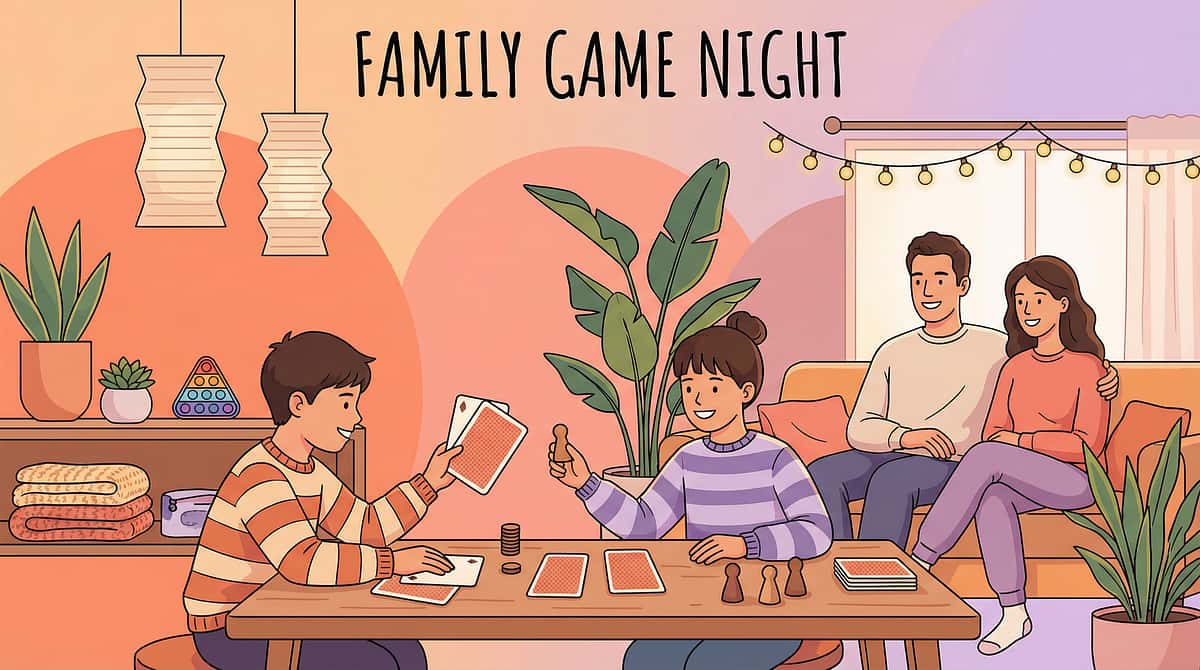
It's game night again. You laid out the Uno cards, explained the rules — patiently, clearly, just like last Tuesday, and the Tuesday before that. Your daughter nodded. The game started. She played a blue card on a red pile, drew when she didn't need to, and looked at you with genuine confusion when you corrected her. Again.
You watched your younger son play flawlessly, and you watched her retreat into silence. She said she hates games. You know she doesn't. You know she wants to play — she just can't hold the rules in her mind the way other children do. And no matter how many times you explain, that wall won't come down.
Game Rule Understanding — The 9 Materials That Change Everything. You are not failing as a teacher. Your child's brain is not broken. What you're experiencing is a cognitive mismatch between how rules are being taught and how your child's brain needs to receive them. This is solvable.
Cognitive Development
Working Memory
Executive Function
Sequential Processing
Social Play
Age Band: 4–12 years · Setting: Home · School · Therapy · Social Groups Pinnacle Blooms Network® | OT · SLP · ABA · SpEd · NeuroDev · GPT-OS® · Built by Mothers. Engineered as a System.

ACT I — The Numbers
You Are Among Millions of Families Navigating This Exact Challenge
1 in 36
Children with ASD
Children diagnosed with ASD globally experience rule comprehension and executive function challenges as a core feature of their developmental profile. Source: CDC Autism Prevalence Report (2023)
40%
ADHD Working Memory Deficit
Children with ADHD — India's most under-identified neurodevelopmental condition — show clinically significant working memory deficits directly affecting game rule retention. Source: PMC10955541 | Meta-analysis, World J Clin Cases 2024
20M+
Therapy Sessions Delivered
Exclusive 1:1 therapy sessions delivered by Pinnacle Blooms Network® — with 97%+ measured improvement across cognitive, language, and behavioral domains. Source: Pinnacle GPT-OS® Real-World Evidence Database
Game rule understanding difficulty is not rare, and it is not a sign of low intelligence. It is a predictable consequence of how certain brains process multi-step procedural information. The child who reads above grade level but cannot remember Uno rules is showing you a specific cognitive profile — not a global deficit. Across Pinnacle's 70+ centers in India and families in 70+ countries, this is one of the most common parent-reported challenges we address through structured intervention.
ACT I — Brain Science
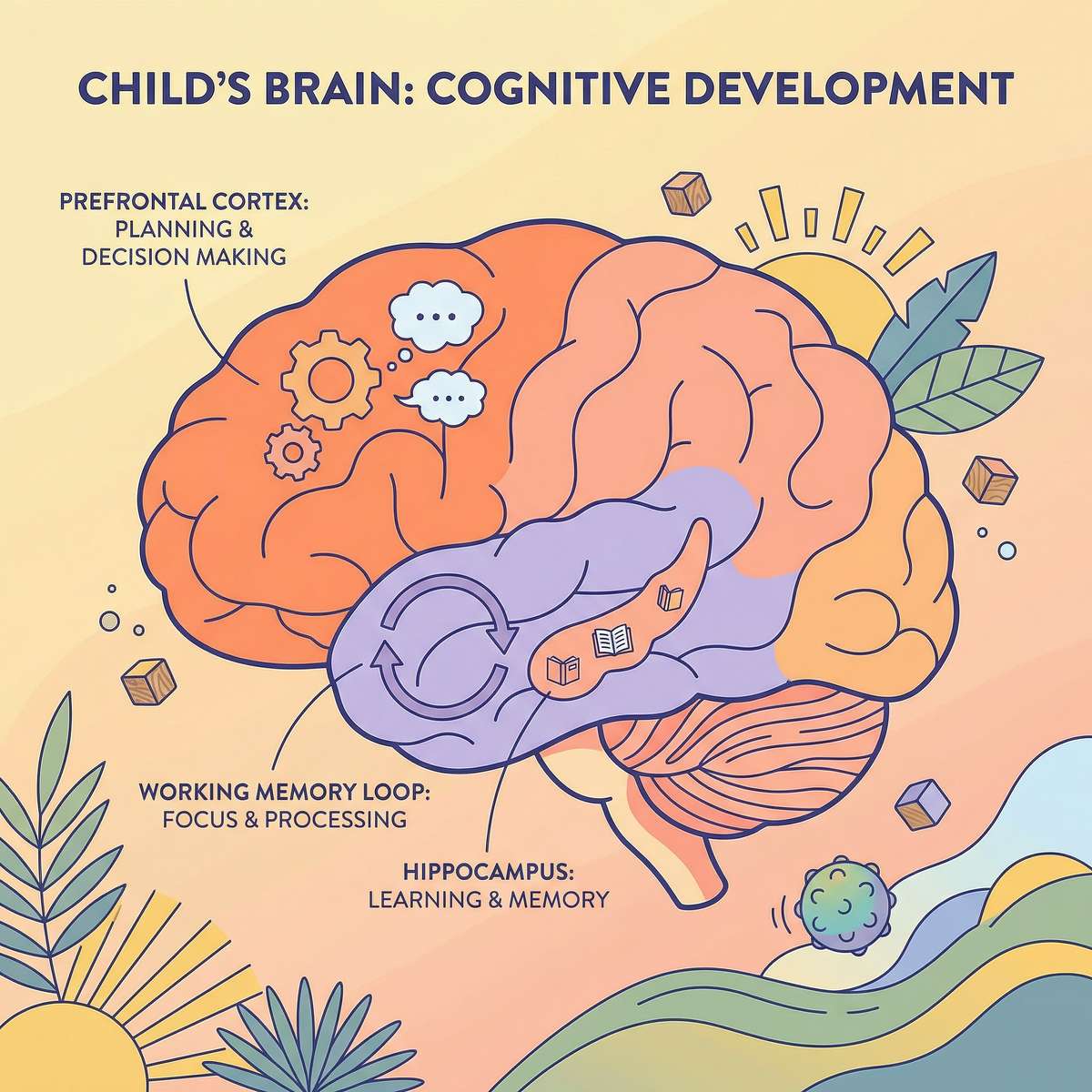
Game Rule Understanding Isn't One Skill. It's Six Cognitive Systems Running in Parallel.
1. Auditory Processing Channel
When you explain rules verbally, the sound enters here. For many children with ADHD or auditory processing differences, rules spoken aloud are partially received — like a phone call with static.
2. Working Memory Hold
The brain must hold multiple rules simultaneously while physically playing. Working memory is like a whiteboard — it has limited space. When the whiteboard is full, earlier rules fall off.
3. Sequential Processing System
Turn structure requires the brain to track WHERE in a sequence it currently sits. For children with sequential processing weakness, the map disappears mid-turn.
4. Conditional Logic Processor
"IF you draw a Skip card, THEN the next player is skipped." This if-then structure is a form of abstract reasoning that develops unevenly — many high-intelligence children with ASD or ADHD have gaps here specifically.
5. Procedural Memory Formation
Rules understood conceptually must eventually become automatic. This procedural automation takes repetition cycles that many children need more of than standard gameplay provides.
6. Cognitive Flexibility Switch
Different situations in a game require different rules. Switching between them demands cognitive flexibility — a core executive function that develops gradually and unevenly.
This is not a behavior problem. This is six different neural systems needing support. The nine materials in this technique address each of them.

ACT I — Developmental Timeline
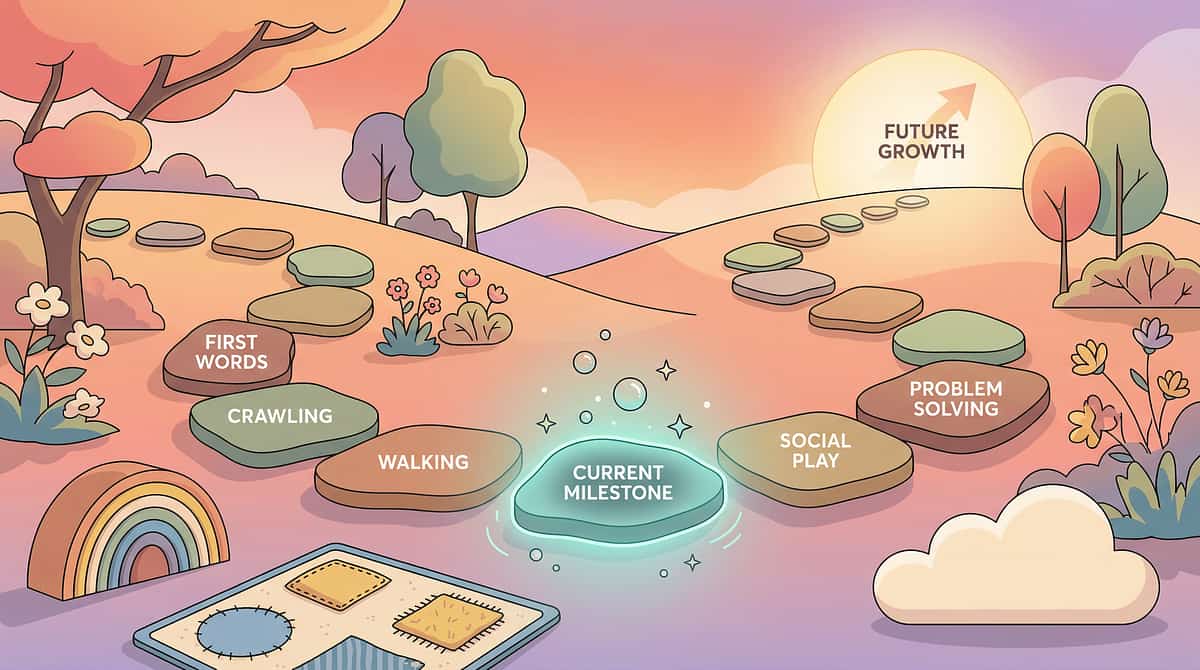
Your Child Is Here. Here Is Where We're Heading.
Ages 3–4 · One-Rule Games
Typical: Can follow a single game rule with demonstration (e.g., "match colors"). Emerging challenge sign: Needs repeated reminders even for one-rule games.
Ages 5–6 · 2–3 Rule Integration
Typical: Manages 2–3 simultaneous rules; begins understanding simple conditional rules. Emerging challenge sign: Understands rules during explanation but forgets during gameplay.
Ages 7–8 · Multi-Rule Games ← Most Families Arrive Here
Typical: Accesses multi-rule games with conditional logic (Uno, Snakes & Ladders variations). Challenge presentation: Makes same errors repeatedly despite correction; sibling comparison distress.
Ages 9–10 · Strategic Play & Rule Teaching
Typical: Can teach games to others; applies rules flexibly across game variations. Mastery target: Child independently learns and teaches new games with minimal support.
Ages 11–12 · Rule Generalization
Typical: Transfers rule-learning strategies to novel games and rule-governed social situations. Long-term outcome: Rule comprehension as a life skill, not just a play skill.
This challenge commonly co-occurs with: ADHD (working memory and attention components) · Autism Spectrum Disorder (conditional logic and flexibility components) · Auditory Processing Disorder (verbal instruction components) · Language Disorders (rule comprehension language components) · Dyslexia (written rule reading components)
ACT I — Evidence Base
Clinically Validated. Home-Applicable. Parent-Proven.
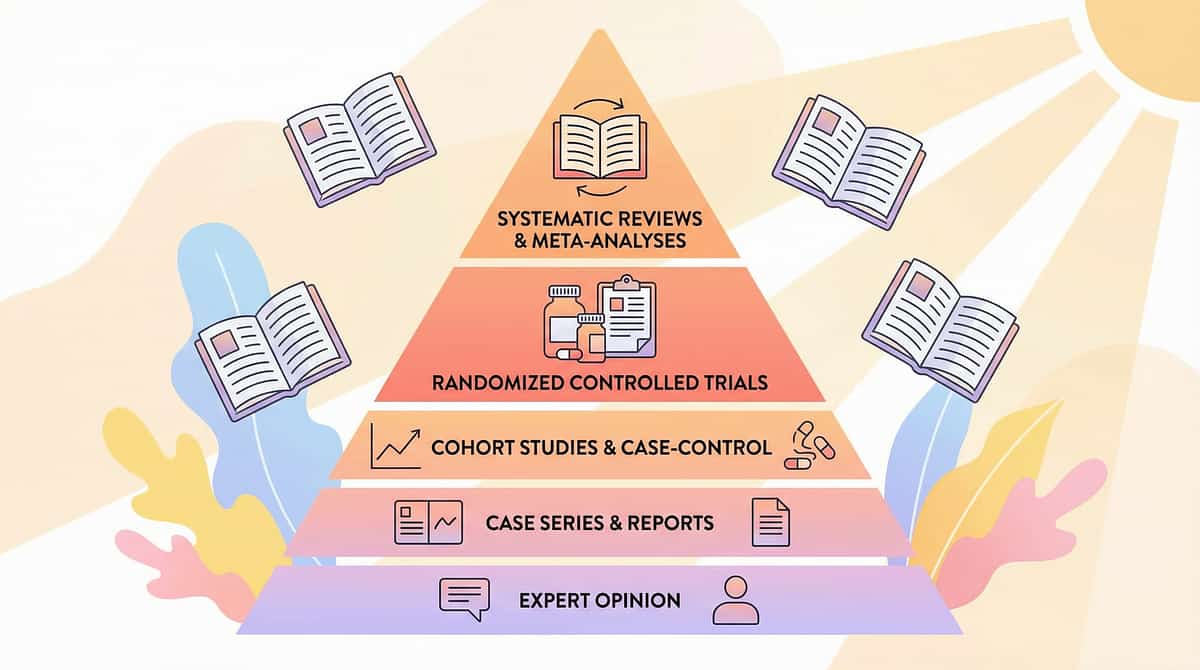
🏅 LEVEL II — STRONG EVIDENCE
Multiple systematic reviews + RCTs supporting visual scaffolding, chunked instruction, and multi-modal learning for rule comprehension in neurodevelopmental populations.
Confidence Level: ████████████ Strong International Evidence Base
PRISMA Systematic Review (2024)
16 studies (2013–2023) confirm visual supports and structured procedural instruction meet evidence-based practice criteria for children with ASD. PubMed: PMC11506176
Meta-analysis, World J Clin Cases (2024)
Across 24 studies, chunked instruction showed the strongest effect size for multi-step procedural learning. PubMed: PMC10955541
NCAEP Evidence-Based Practices Report (2020)
Visual supports and video modeling are classified as evidence-based practices for autism. Both are central materials in this technique set.
Indian RCT, Indian Journal of Pediatrics (2019)
Home-based structured intervention with parent-administered visual supports demonstrated significant developmental outcomes in Indian pediatric populations. DOI: 10.1007/s12098-018-2747-4
WHO NCF (2018) + WHO CCD Package (2023)
Structured home-based intervention delivered by caregivers produces outcomes equivalent to clinic-based intervention for many cognitive domains. PMC9978394

ACT II — The Technique
Multi-Modal Game Rule Scaffolding (G-658)
"Making Rules Visible — 9 Materials That Help Game Rules Stick"
Multi-Modal Game Rule Scaffolding is a structured intervention approach that addresses the gap between verbal rule explanation and actual rule comprehension in children with cognitive, language, or attention-related processing differences. Rather than relying on auditory instruction — which requires simultaneous working memory hold, sequential processing, and verbal-to-action translation — this technique externalizes game rules through visual, physical, and self-monitoring supports.
Age Range
4–12 years
Session Duration
10–20 minutes per practice session
Frequency
3–5 times per week
Equipment Cost
₹0–3,500 (full DIY: ₹0)
ACT II — Disciplines
This Technique Crosses Therapy Boundaries — Because a Child's Brain Doesn't Organize by Therapy Type
Occupational Therapy (OT) — Lead Discipline
OT uses rule scaffolding as a vehicle for building executive function, working memory, and sequential processing skills. OT therapists design the visual scaffold architecture and determine material complexity levels, translating goals into the motivating context of game play.
Speech-Language Pathology (SLP)
SLP addresses the verbal instruction comprehension component — the gap between hearing a rule and linguistically processing it. SLPs adapt rule presentation to visual-language formats and build the conditional language comprehension ("if/when/then") that underlies game rule understanding.
Applied Behavior Analysis (ABA / BCBA)
ABA provides the reinforcement architecture for rule-following behavior. BCBAs design token economies, create drill protocols for procedural fluency building, conduct functional analysis of rule-following errors, and determine reinforcement schedules that make rule compliance intrinsically motivating.
Special Education (SpEd)
SpEd applies differentiated instruction principles — chunking, scaffolding, progressive complexity, and mastery-based advancement — to game rule learning. SpEd specialists identify the specific cognitive bottleneck for each child and design the individualized rule-learning curriculum.
At Pinnacle's 70+ centers, OT, SLP, ABA, and SpEd therapists co-design game rule scaffolding programs through the FusionModule™ — ensuring that the child's rule comprehension intervention is coordinated, not siloed.
ACT II — Targets
This Isn't a Random Activity. It's a Precision Tool Targeting Specific Cognitive Systems.
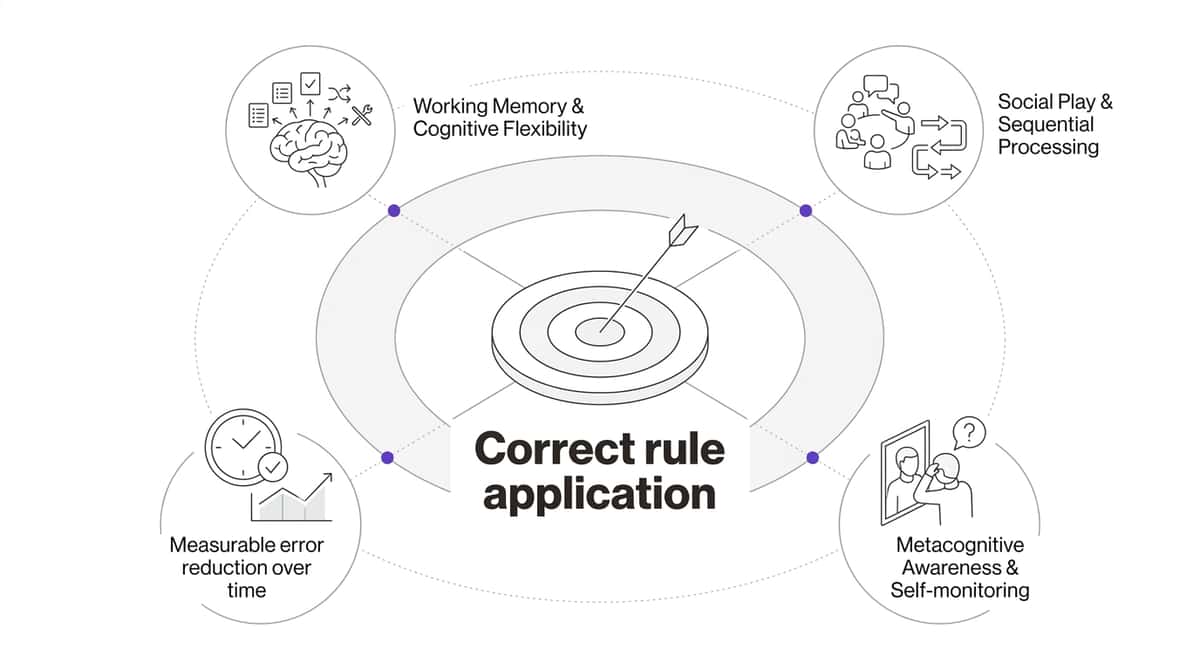
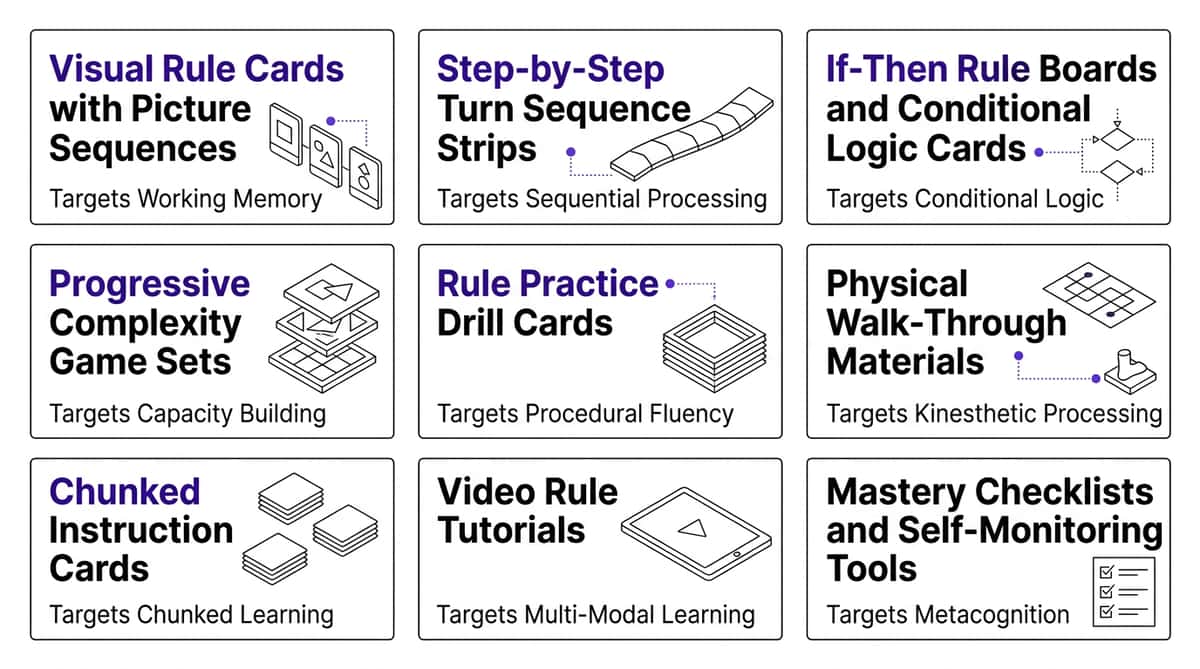
The nine materials in G-658 each address a different cognitive bottleneck: visual working memory (Rule Cards), sequential processing (Turn Strips), conditional logic (If-Then Boards), progressive capacity (Complexity Games), procedural fluency (Drill Cards), kinesthetic processing (Walk-Throughs), chunked instruction (Instruction Cards), multi-modal learning (Video Tutorials), and metacognition (Mastery Checklists).

ACT II — Materials Overview
The 9 Materials — Each Addresses a Different Cognitive Bottleneck
All 9 materials are available in India. Every single one has a free DIY alternative. Below is the full system — from visual rule cards to mastery checklists — designed so any family can begin today regardless of budget.
₹0 DIY Version
Visual rule card (paper) + sequence strip (paper) + existing game modified = COMPLETE
₹500 Starter Kit
Drill cards + reward stickers + one progressive game
₹2,000–3,500 Full Kit
All 9 material categories with commercial products

Materials 1 & 2
Materials 1 & 2: Visual Rule Cards + Turn Sequence Strips
Material 1: Visual Rule Cards with Picture Sequences
Canon Category: Visual Supports / Matching Games
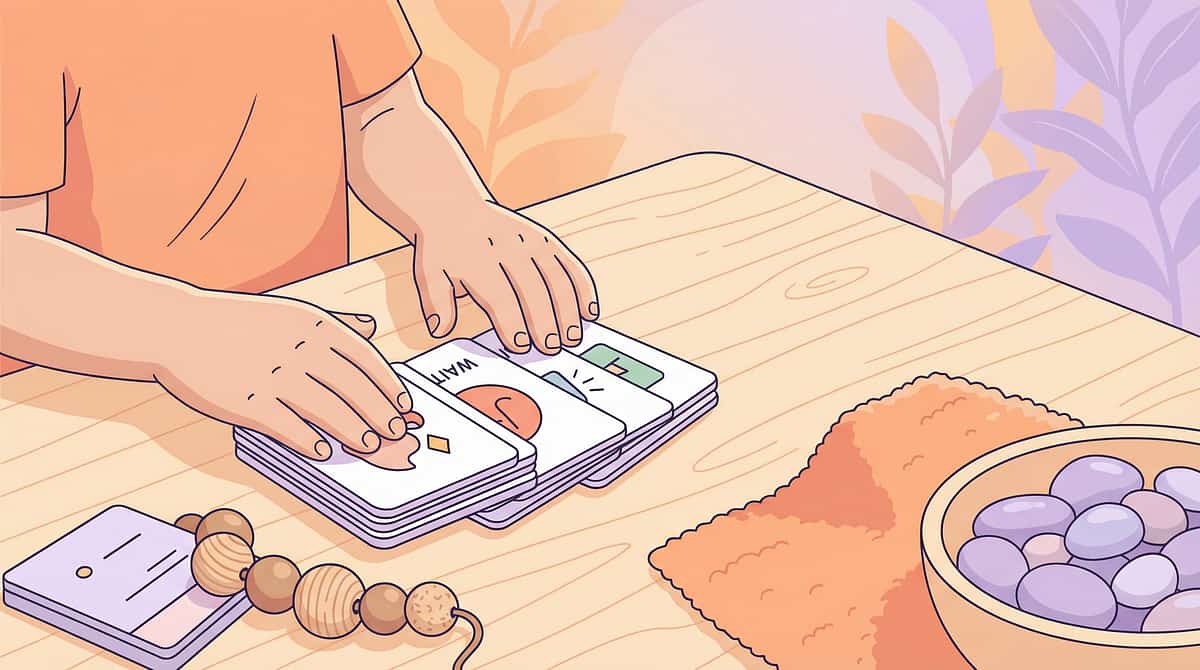
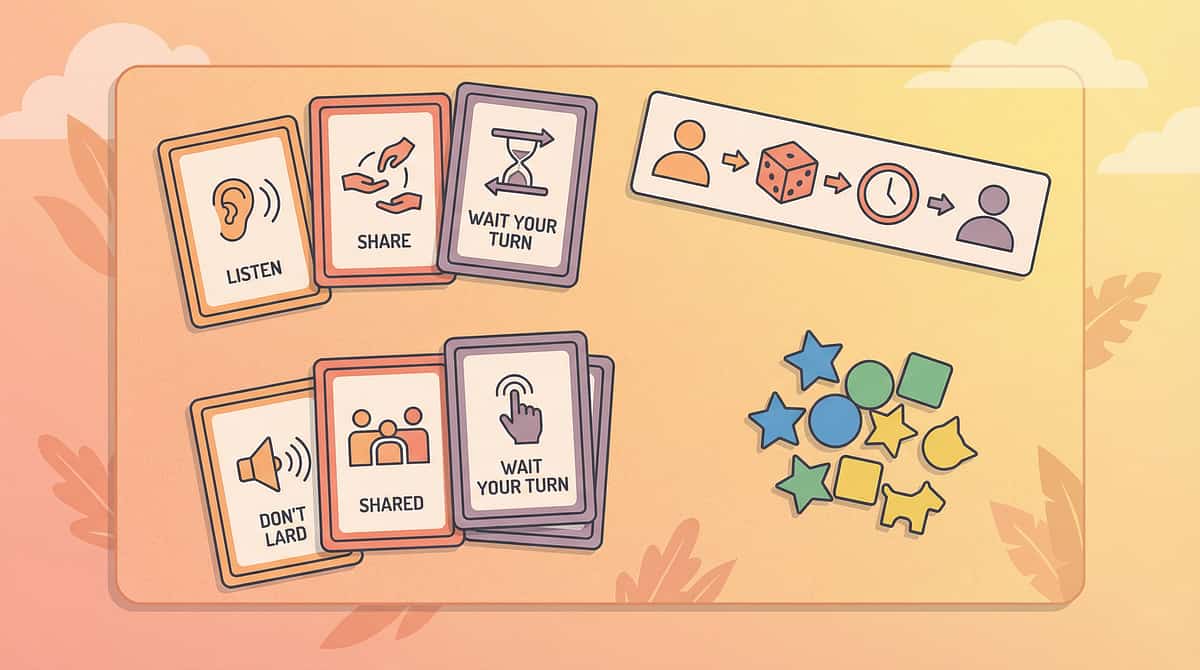
Laminated cards showing game rules in picture-sequence format. The rules are VISIBLE during gameplay — permanently reducing working memory load.
Why it works: Transforms ephemeral verbal information into permanent visual reference. NCAEP (2020) classifies visual supports as evidence-based practice for autism.
DIY Option (₹0): Card stock + printed pictures + laminating sheet. Cost: ₹50–150. Price Range: ₹50–400 (mostly DIY)
Material 2: Step-by-Step Turn Sequence Strips
Canon Category: Visual Supports / Sequential Processing Aids
A horizontal or vertical strip showing each step of a player's turn in numbered picture sequence. The child's finger moves along the strip during their turn.
Why it works: Makes turn structure physically trackable. Prevents "What do I do now?" paralysis and incomplete turns — turns sequence knowledge into a physical act.
DIY Option (₹0): Printed strip with step pictures + laminating. Price Range: ₹0–200 (primarily DIY)
If your child struggles to start their turn, Material 2 is often the single most impactful intervention. Start here.

Materials 3 & 4
Materials 3 & 4: If-Then Rule Boards + Progressive Complexity Games
Material 3: If-Then Rule Boards & Conditional Logic Cards
Canon Category: Problem-Solving Toys / Visual Supports
A board or card set showing IF (game situation picture) → THEN (action picture) pairs for all conditional rules in a game. Externalizes abstract if-then reasoning — the child scans the board instead of holding conditional logic in working memory.
DIY Option (₹0): A4 card with drawn if-then pairs + arrows.
🛒Pinnacle Recommends: SHINETOY 8 Dice Shut The Box Game — Progressive rule complexity | ₹428 | Amazon.in
Material 4: Progressive Complexity Game Sets
Canon Category: Matching Games / Memory Games / Problem-Solving Toys
A sequence of games (or modified versions of one game) starting with 1 rule, building to full complexity. Builds rule-processing capacity through success at each level — never asking the brain to do more than it can currently handle.
DIY Option (₹0): Take any existing card game, remove the complex cards, play simplified version first.
🛒Pinnacle Recommends: Dyomnizy Educational Memory Game — Multi-sensory matching + conditional rules | ₹519 | Amazon.in

Materials 5 & 6
Materials 5 & 6: Rule Practice Drill Cards + Physical Walk-Throughs
Material 5: Rule Practice (Drill) Cards
Canon Category: Problem-Solving Toys / Matching Games
Flashcard-style scenario cards: "The top card is red Skip. What do you do?" Child responds quickly. Builds procedural fluency — responses become automatic, not effortful. The goal is speed and confidence, not effortful recall.
DIY Option (₹0): Handwritten scenario cards on index paper. Cost: near zero.
🛒Pinnacle Recommends: Monkey Minds Clip The Card — Self-checking format adaptable for rule drills | ₹296 | Amazon.in
Material 6: Physical Walk-Through Materials
Canon Category: Uses existing game materials
The actual game, played in slow-motion walk-through sessions outside of real gameplay. Parent demonstrates and narrates; child follows with physical guidance. Creates motor memory pathways — the body "remembers" what to do even when verbal memory fails.
Cost: ₹0 — uses materials you already own. This is often the most powerful starting point for children who resist rule cards initially.
Body memory is powerful. If verbal and visual approaches aren't landing, the kinesthetic pathway often breaks through.

Materials 7, 8 & 9
Materials 7, 8 & 9: Chunked Instruction + Video Tutorials + Mastery Checklists
Material 7: Chunked Instruction Cards
Canon Category: Visual Supports / Problem-Solving Toys. Rule set broken into numbered chunks — Chunk 1: matching only, Chunk 2: add draw rule, etc. Each chunk on its own card. Child masters one chunk before the next is introduced. No rule overload. Ever. DIY (₹0): Index cards numbered by chunk. 🛒 Brainy Bug Resources Flashcards with App-Enabled Audio | ₹305 | Amazon.in
Material 8: Video Rule Tutorials
Canon Category: Technology Supports / Video Modeling. Short video demonstrations of game rules — commercial (YouTube) or custom-recorded by family. Child can watch, pause, rewind as many times as needed. NCAEP (2020): Video modeling is a classified evidence-based practice for autism. Videos don't get frustrated when rewatched for the 20th time. Cost: ₹0 for existing device + free YouTube, or ₹500 for quality headphones.
Material 9: Mastery Checklists & Self-Monitoring Tools
Canon Category: Self-Monitoring / Reinforcement Menus. A rule-by-rule checklist the child uses to track which rules they've mastered. Turns rule learning from a mysterious process into a visible, trackable achievement. 🛒 Rosette Imprint Reward Jar | ₹589 | Amazon.in🛒 1800+ Reward Stickers | ₹364 | Amazon.inDIY (₹0): Printed checklist + star stickers from any stationery shop.
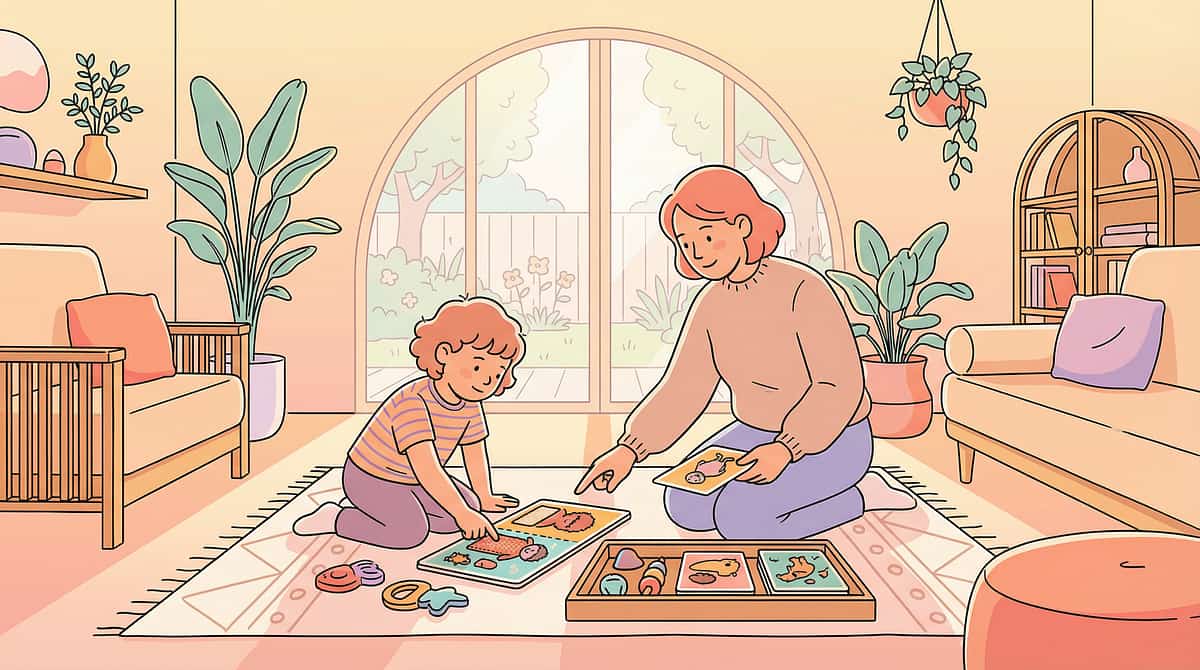
ACT II — DIY vs. Buy
Every Child Deserves Access to These Materials — Regardless of Budget
WHO/UNICEF equity principle in action. A fully functional version of all 9 materials can be created in 2 hours at ₹0 cost using paper, pencil, existing games, and a phone camera.
Material | Buy Option | DIY Option (₹0) — Why It Works | |
Visual Rule Cards | Pre-printed laminated sets | Card stock + printed/drawn pictures + contact paper. Same visual permanence; same working memory reduction. | |
Turn Sequence Strip | Commercial visual schedule strips | A4 paper divided into numbered boxes with drawn steps. Same sequential scaffold; same tracking function. | |
If-Then Board | Pre-made conditional logic boards | Folded A4 with two columns: IF (pictures) → THEN (pictures). Same conditional logic externalization. | |
Progressive Games | Commercial simplified game sets | Remove special/action cards from Uno for Level 1. Same progressive complexity principle. | |
Drill Cards | Clip-card commercial sets | Handwritten index cards with situations on front, answers on back. Same fluency-building function. | |
Walk-Through | N/A — uses existing game | Use any game you own, played slowly with narration. Same kinesthetic learning pathway. | |
Chunked Instruction Cards | Commercial flashcard systems | Numbered index cards, one rule chunk per card. Same chunking principle. | |
Video Tutorial | Commercial video + headphones | Phone video recording of family game demonstration. Custom family context often MORE effective. | |
Mastery Checklist | Reward jar + sticker sets | Printed checklist + star stickers from any shop. Same tracking and motivation function. |

ACT II — Safety
Read Before Executing. Safety Is the First Protocol.
🔴 RED — Do Not Proceed If:
Child is in acute distress, meltdown, or extreme dysregulation · Child had a significant negative game experience within the last 2 hours · Child shows active signs of illness · The setup session feels pressured or punitive — stop and reset · Sibling comparison language is present in the environment
🟡 AMBER — Modify & Proceed With Caution:
Child is mildly fatigued → shorten session to 5 minutes · Child previously refused game-related activities → use walk-through-only approach first · Child is distracted → clear room of competing stimuli · Multiple rules being introduced → reduce to one material, one session
🟢 GREEN — Safe to Proceed:
Child is in a calm, alert, receptive state · At least 30 minutes since last meal · Environment cleared of competing stimuli · Parent is regulated and patient · Clear end-time established using a visual timer
Critical RED LINE — Stop Immediately If: Child shows signs of acute distress, self-injurious behavior, property destruction, or if the activity is triggering significant emotional dysregulation. Session abandonment is therapeutic data, not failure.
ACT II — Environment Setup
The Right Environment Prevents 80% of Session Failures Before They Happen
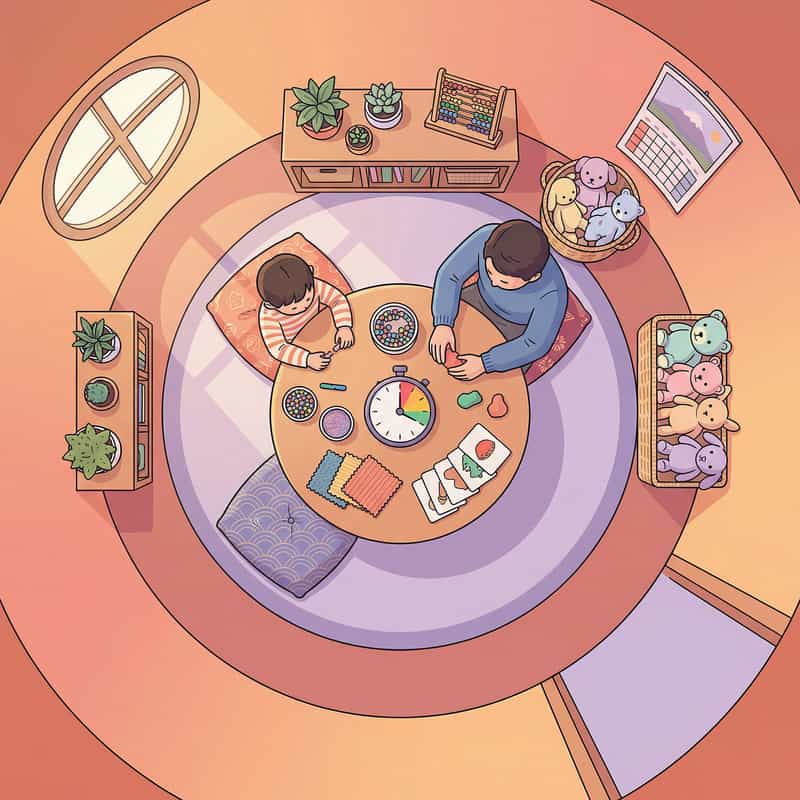
Child Position
Seat the child at a stable table at appropriate height. Face slightly toward the parent — side-by-side is less confrontational and more collaborative.
Parent Position
Sit at 45 degrees to the child — close enough to point to visual supports without reaching across. Not opposite (creates evaluation anxiety).
Game Materials Center
Place the game in the center. For Uno, initially remove Wild Draw Four and Reverse to reduce complexity for new learners.
Visual Rule Card
Position to the child's dominant-hand side where it is naturally visible — leaning upright or laminated flat, never hidden in a stack.
Turn Sequence Strip
Place directly on the child's placemat. This is theirs — not shared.
Visual Timer
Position where both can see it. Child knowing when the session ends reduces anxiety and increases participation.
Remove From Space: Other toys and games · Screens (except intentional video tutorial) · Competing siblings for initial sessions · Clutter and visual noise Environment Settings: Natural or warm lighting · Quiet room · Comfortable temperature

ACT III — Readiness Check
60 Seconds Now Saves 20 Minutes of Session Failure Later
Before you begin, run this quick readiness check. All indicators should be green before starting a full session.
Physical Readiness
Fed within the last 2 hours (not hungry, not immediately post-meal) · Not visibly fatigued or unwell · Sensory system appears calm (no recent overwhelming sensory event)
Emotional Readiness
Child is in a neutral-to-positive emotional state · No significant conflict or distress in the last 30 minutes · Child is not in the middle of a preferred activity (transition warning given)
Cognitive Readiness
Child appears alert and oriented · Can attend to 2–3 verbal instructions in another context right now · No signs of internal distraction or high cognitive load
Environmental Readiness
Space is set up per Card 17 · Materials are organized and accessible · You (the parent) are regulated and have time for the full session
🟢 ALL GREEN → Proceed
Begin the session as planned.
🟡 1–2 AMBER → Modify
Shorten to 5 minutes · Use only one material · Lower rule complexity for today
🔴 3+ RED → Postpone
Offer a preferred calming activity for 10–15 minutes · Attempt session tomorrow. "Postponing is not failing. It's precision timing."
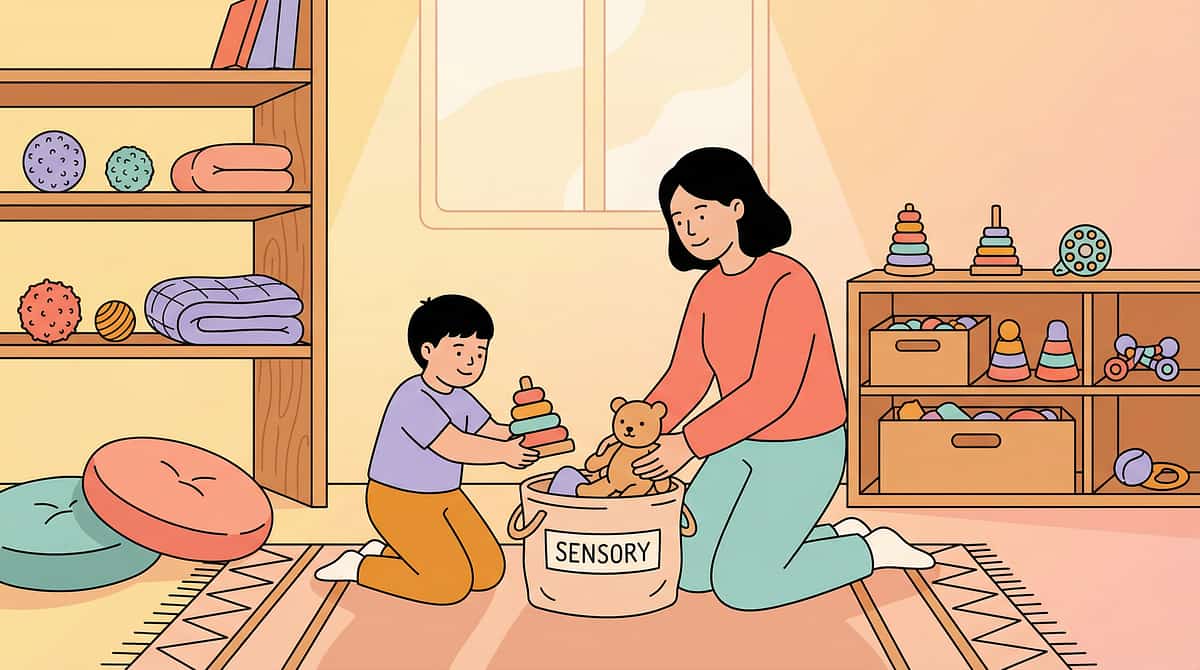
Step 1 of 6
Step 1: The Invitation
Timing: 30–60 seconds · Every rule-learning session begins with an invitation, never a command.
"Hey, I want to try something fun with you — I have a special card that shows us the rules so we don't have to remember them all at once. Want to try it with me? Just for a few minutes?"
Body Language Guidance
- Speak in a light, casual tone — not instructional or formal
- Make the materials visible but not demanding attention
- Allow the child to approach at their own pace — don't direct them to sit immediately
- Smile. Your regulation is contagious.
Reading Acceptance Cues
- ✅ Child moves toward table or looks at materials → Begin Step 2
- ✅ Child asks questions about the materials → Positive engagement; begin Step 2
- ⚠️ Child hesitates → Wait silently 10–15 seconds, then offer a small motivating item
- 🔴 Child refuses → Do not push. Offer alternative activity. Try again at next natural window.

Step 2 of 6
Step 2: The Engagement
Timing: 1–3 minutes · Introduce the material as a helper, not a test.
"Look at this — I made us a card that shows all the rules so we don't have to hold them in our heads. See? Red means play red. Blue means play blue. And there's a picture for what happens when you can't match. You can look at this ANY TIME during the game."
Place it in the child's hands first
Let them touch it. Point to each element while narrating slowly. Don't test comprehension yet — just show.
Position at eye level
Material should be within easy reach and naturally visible from the child's seated position.
First Reinforcement Cue
The moment the child touches or looks at the material intentionally: "Perfect — you're already using it." Immediate, specific, low-key praise. No exaggerated celebration yet.

Step 3 of 6
Step 3: The Therapeutic Action
Timing: 5–12 minutes (core session) · Now: the rule-learning in action. This is where the neural pathway builds.
Using Visual Rule Cards
Play one short round of the simplified game while the child uses the rule card as reference. When a rule situation arises, point to the card: "What does the card say to do here?" Do NOT re-explain verbally — redirect to the card every time.
Using Turn Sequence Strip
Guide the child to place their finger at Step 1 before their turn begins. Walk through each step physically: "Step 1 — look at top card." "Step 2 — check your hand." At the end: "Step done — your turn is complete!"
Using If-Then Board
Present a game scenario. Ask: "Can you find this situation on the board?" Child locates the IF picture. "What does the arrow say to do?" Child reads the THEN action, executes it. Reinforce: "You used the board. That's exactly right."
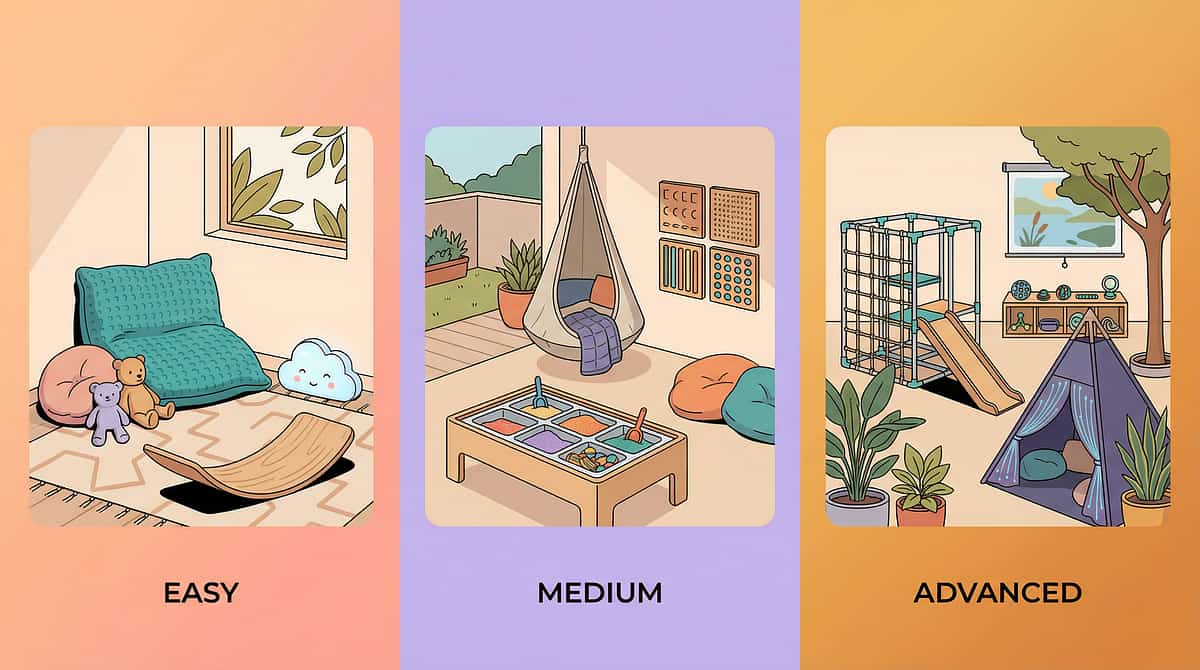
Duration: Core therapeutic action: 5–12 minutes for home sessions. Stop before the child reaches satiation point — always end on a successful moment. If child becomes dysregulated → end session gracefully per Step 6.
Step 4 of 6
Step 4: Repeat & Vary
Timing: 3–5 minutes total · 3 good repetitions beat 10 forced ones. Every time.
Target Repetitions: 3–5 correct rule applications per session. Quality over quantity. A single session of 3 flawless rule-card consultations builds more neural pathway than 15 minutes of struggling guesses.
Variation A: Role Reversal
Child explains the rule to the parent using the visual card. This deepens encoding and builds metacognitive awareness. "Okay, now YOU be the teacher."
Variation B: Rule Card Quiz
Cover one section of the rule card. "Can you remember what this picture means?" This begins fading the external support as comprehension builds.
Variation C: Speed Challenge (Ages 8+)
How quickly can the child locate the correct rule on the if-then board? Time it casually — "Can you beat 5 seconds?"
Variation D: New Game Transfer
Introduce a second, simpler game with the same rule structure. "This game is like Uno but simpler — do you think the same rule card ideas might work?"
Satiation Indicators — Stop here: Child becomes disengaged or fidgety · Child starts making errors they weren't making 5 minutes ago (fatigue signal) · Child asks to stop — always honor this request; forced practice reverses gains.

Step 5 of 6
Step 5: Reinforce & Celebrate
Timing: 30–90 seconds · Timing matters more than magnitude. Immediate, specific, genuine.
Effective reinforcement is delivered within 3 seconds of the desired behavior. Generic praise ("Good job!") is less effective than behavior-specific praise. The goal is to label WHAT the child did.
Script A — Rule Card Use
"Did you see what you just did? You checked the rule card instead of guessing. That's your brain learning to use tools. That's a real skill."
Script B — Turn Completion
"You followed all the steps on the strip, in order, all the way to the end. Your whole turn — complete. That's huge."
Script C — Error-Then-Recovery
"You made a mistake, then you checked the card, then you fixed it. That's not failing — that's exactly how learning works."

Step 6 of 6
Step 6: The Cool-Down
Timing: 1–2 minutes · No session ends abruptly. The cool-down is as therapeutic as the session itself.
"Two more turns with the rule card, then we'll put the game away together."
This warning prevents abrupt transition distress — particularly important for children with ASD who struggle with sudden endings. If Child Resists Ending: Offer a 1-minute bonus extension: "One more turn, then we're done — deal?" · Use visual timer · Accept that sometimes the session runs slightly over; the relationship matters more than the timer.

ACT III — Data
Capture the Data: Right Now
60 seconds of data now saves hours of guessing later. Capture these 3 data points immediately after every session.
Data Point 1: Rule Card Consultations
How many times did the child independently consult the visual rule card (without prompting)? Record: 0 · 1 · 2 · 3 · 4 · 5+
Data Point 2: Rule Errors
How many rule errors occurred today? (A "rule error" = applying wrong rule or not knowing what to do.) Record: 0 · 1 · 2 · 3 · 4 · 5+
Data Point 3: Session Rating
How did the session go overall? 😔 Rough · 😐 Okay · 😊 Good · 🌟 Excellent
Trend Indicators (watching these over 2–4 weeks): Rule card consultations should INCREASE over weeks 1–3 as the child learns to use the tool, then DECREASE as rules become internalized · Rule errors should show a steady downward trend from Week 2 onward · Session ratings should trend upward; if consistently 😔, the material needs adjustment.

ACT III — Troubleshooting
Most Sessions Don't Go Perfectly. Here's What to Do When They Don't.
Child refused to look at the rule card at all
Why: New material, uncertain context, or association with past failure. Fix: Don't introduce the card during a game. Introduce it separately as a "cool object" before any game context. Build familiarity before function.
Child referenced the card but still made errors
Why: The card has too much information or visuals aren't clear enough. Fix: Simplify to one rule per card, maximum. Use photos of actual game cards rather than drawings.
Understood during walk-through but forgot in real play
Why: This is exactly the cognitive profile this technique addresses — real gameplay adds working memory load that walk-throughs don't. Fix: Continue walk-throughs for 2 more weeks. Introduce simplified game version (1–2 rules only) before reintroducing full game.
Session descended into meltdown
Why: Too much demand, wrong timing, or narrow emotional window. Fix: Review Safety (Card 16) and Readiness (Card 18) strictly. Reduce all demands to baseline. Start with 3-minute physical walk-through only — no rule card, no game pressure.
Child mastered one rule but couldn't add the second
Why: Working memory is at its current ceiling for this child at this time. Fix: Stay at one rule for 2–3 more weeks. Mastery at current level builds capacity for the next.
Child became distressed about sibling being better
Why: Sibling comparison is present in the emotional environment. Fix: Practice sessions should be 1:1 only — no siblings present. Frame every session as child-vs-their-own-previous-performance only.
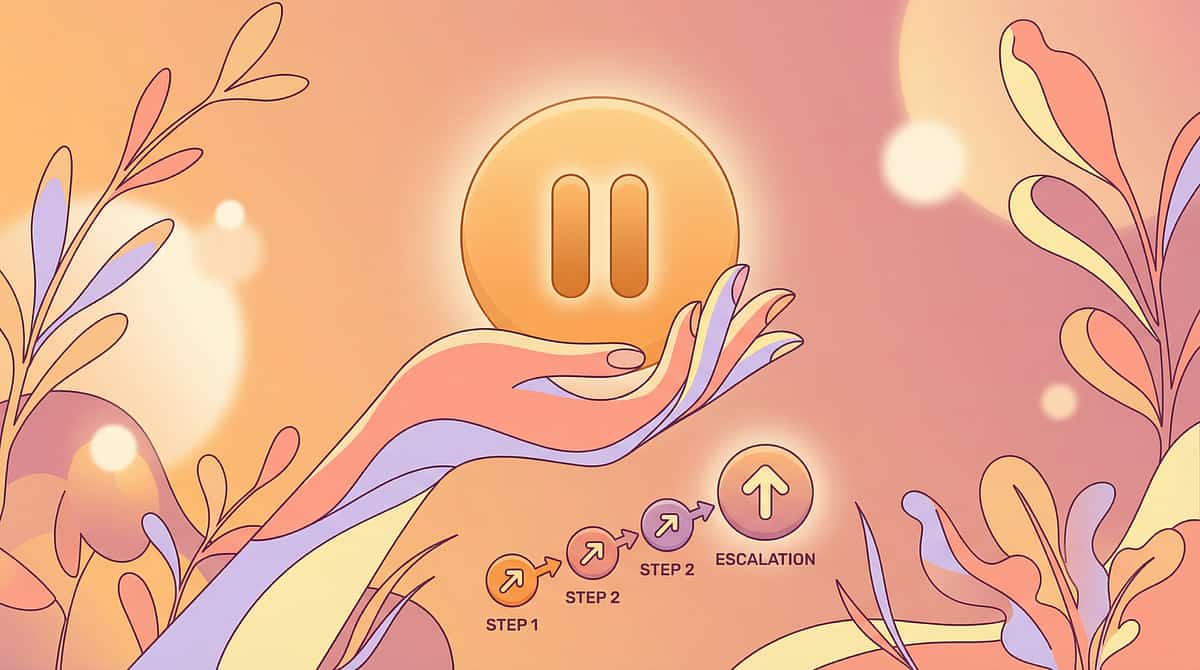
"Session abandonment is not failure — it's data."
ACT III — Personalization
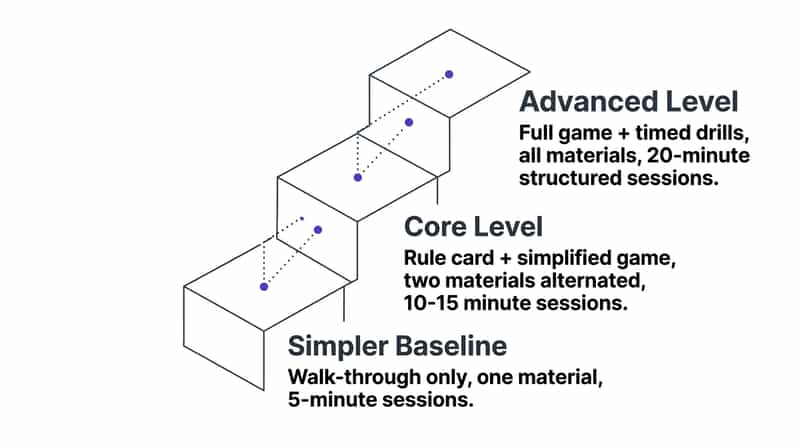
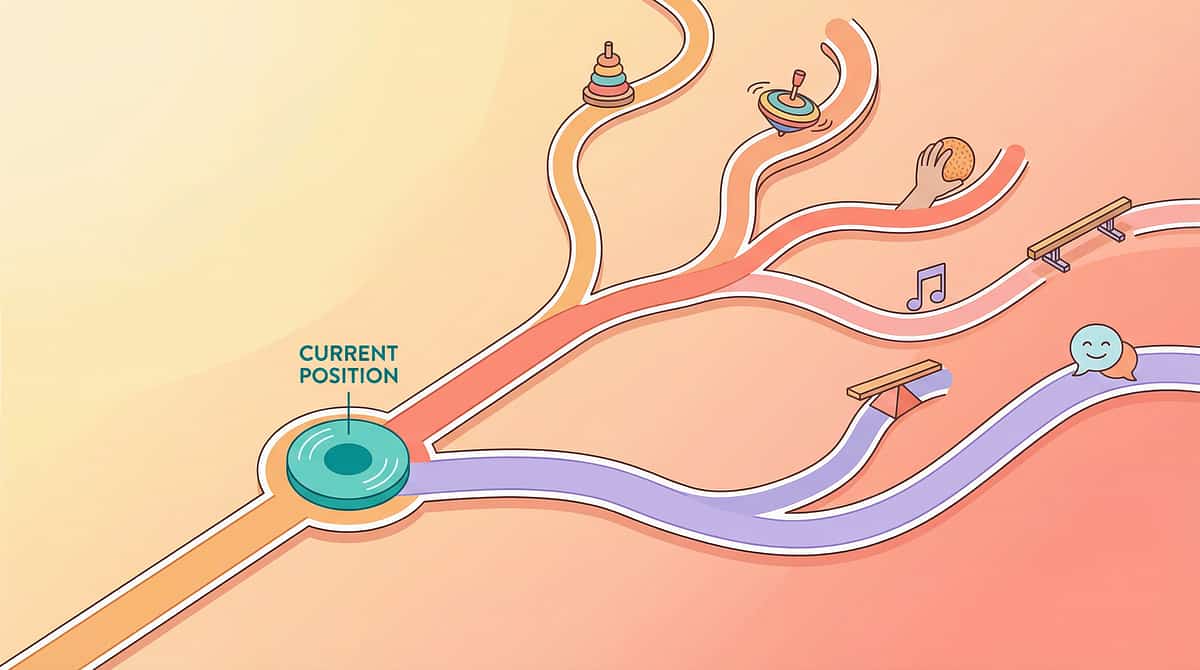
No Two Children Are Identical. Here's How to Calibrate This Technique for Yours.
ADHD Profile
Maximum 3 items on rule cards · 8–10 minute sessions (5 for high-energy) · Add movement breaks · Make drill cards a fast-paced game not a sit-down exercise
Autism Profile
Begin with if-then boards as primary material · Teach ALL rule variations explicitly — "house rules" must never be a surprise · Use video tutorials extensively · Don't progress to competition until rules are deeply established
Auditory Processing Difference
Eliminate verbal explanation almost entirely · Pair every word with a pointing gesture to the visual · Video tutorials (watched multiple times) are highly effective
Intellectual Disability
Begin with 1-rule games and stay there for weeks, not days · Physical walk-throughs are the primary tool · One-rule matching games played successfully are a legitimate achievement
ACT IV — Progress Arc
Week 1–2: What to Expect
Progress in weeks 1–2 looks nothing like what you're hoping for. And that's perfect.
✅ IS Progress (Weeks 1–2)
- Child accepts being near the game and rule materials without resistance
- Child glances at or touches the rule card unprompted even once
- Child completes at least one full turn using the sequence strip
- Session ends without escalation (even if no rules were applied correctly)
- Child agrees to do another session tomorrow
❌ NOT Progress Yet (and that's fine)
- Correct independent rule application — not the Week 1 goal
- Playing a full game successfully — Week 3–4 territory
- Not needing the rule card — Week 6–8 territory
"If your child sat at the table for five minutes and touched the rule card once — that is real, measurable progress."
The real work in these two weeks is: establishing the material as non-threatening, building session tolerance, and beginning the first repetitions of rule-material association. This is invisible neural work — you won't see the output yet, but it's happening.
ACT IV — Weeks 3–4
Weeks 3–4: You'll Notice Something Shift. This Is Neural Consolidation.
40%
Consolidation Phase
Weeks 3–4 progress milestone — foundation is building, first glimpses of automaticity emerging
Child reaches for the rule card before making a move
Independent initiation — the material is becoming a natural tool, not an adult-prompted aid.
Correct rule applications beginning to outnumber errors
The tipping point. Track this shift in your session data — it's the most encouraging signal.
Child makes an error AND self-corrects by checking the card
Self-monitoring emergence — this is a meta-cognitive milestone of the highest order.
Child begins anticipating the activity positively
No longer resisting — the session has become associated with safety and success, not failure.
"You may notice you're correcting less and observing more. That shift in your role is a sign that something real is building." — Parent milestone, Pinnacle Network
When to Increase Intensity: If the child is consolidating reliably, increase frequency from 3× to 5× per week. Or introduce a second rule using the chunked instruction approach.
ACT IV — Mastery
Weeks 5–8: Mastery Indicators
Mastery isn't the absence of the rule card. It's not needing it for familiar rules.
Core Mastery (Minimum Threshold)
3 consecutive sessions with zero rule errors for all practiced rules · Child can correctly respond to rule drill cards in under 5 seconds · Child can state rules verbally when asked
Generalization Mastery
Child applies the same rules in a different game context · Child plays correctly with a different partner (not just primary caregiver) · Child uses the visual rule card independently, without prompting
Independence Mastery
Child sets up their own rule card before beginning a game · Child references materials without adult prompting · Child begins teaching rules to others — the highest generalization indicator
🏅Mastery Badge Unlocked: G-658 Game Rule Understanding — Core Level Next technique: G-659 — Game Strategy Development

ACT IV — Celebration
You Did This. Your Child Grew Because of Your Commitment.
"The moment your child uses a rule card independently, checks the turn strip without prompting, or explains a game rule to someone else — that is the output of your investment. That is therapy working at home. That is you."
Your family navigated a challenge that millions of families struggle with silently. You identified a cognitive bottleneck (verbal-only rule teaching wasn't working). You provided a structured alternative (visual and physical supports). You stayed consistent across weeks, not days. And your child — who once avoided games out of embarrassment — now plays.
📸 Document the Milestone
Take a photo of your child playing their first successful game without errors.
📓 Journal Prompt
"Today, [child's name] played [game name] without needing to be corrected. Here's what I noticed…"
🎉 Host a Game Night
Let your child be the host — let them explain the rules to the family (even with the rule card visible). This ritual confirms the achievement publicly.

ACT IV — Red Flags
Awareness Is Power. These Signs Mean: Pause and Seek Professional Input.
🔴 Behavioral Red Flags
- Extreme distress response to rule correction despite supportive framing — anger, crying, meltdown with every session across 2+ weeks
- Complete avoidance generalization — child now avoids any structured activity with rules (meal routines, school tasks)
- Regression — rule-following abilities that were established deteriorate suddenly and significantly
🔴 Cognitive Red Flags
- No retention whatsoever across 4+ weeks — every session feels like starting from zero with zero transfer
- Unable to track more than 1 rule even with visual support after 6 weeks of consistent practice
🔴 Emotional Red Flags
- Shame language increasing — child saying "I'm stupid," "I'll never get it," "I hate myself" in relation to games
- Social withdrawal expanding — child refusing peer play, birthday parties, or family activities to avoid game exposure
Level 1
Self-Resolve: Pause technique for 2 weeks. Resume with simpler version.
Level 2
Teleconsult: Book a teleconsultation with Pinnacle → pinnacleblooms.org/book
Level 3
Center Visit: In-person evaluation for full AbilityScore® assessment
📞FREE National Autism Helpline: 9100 181 181 | 24×7 | 16+ languages
ACT IV — Progression
G-658 Is a Waypoint, Not a Destination. Here's the Full Journey.
← G-656: Game Play Introduction
Basic game orientation — the starting point for children new to structured game play.
← G-657: Game Participation Skills
Turn-taking, basic game engagement — the prerequisite foundation that makes rule learning possible.
🎯 G-658: Game Rule Understanding — YOU ARE HERE
The 9 materials. Visual scaffolding. Cognitive bottleneck resolution. The technique you've just learned.
→ G-659: Game Strategy Development
Once rules are solid, strategy is the next frontier. For children ready to compete and plan ahead.
→ G-670: Multi-Step Instruction Following
Extending the same sequential processing skill to school and daily life rule-following contexts.
Game rule understanding is one expression of a larger cognitive cluster: procedural learning, conditional logic, working memory, and cognitive flexibility. These same skills underlie academic rule-following, social rule-following, and life skill rule-following. G-658 mastery creates a template that transfers.
ACT IV — Related Techniques
Other Techniques in the Cognitive & Play Development Domain
You may already own the materials for several of these. If you've created rule cards and turn strips for G-658 → you have the core materials for G-633, G-634, and G-657 as well.

🟢 G-657 — Game Participation Skills
Difficulty: Intro · Materials: Turn-taking tools, simple games "The turn-taking foundation that makes game rule learning possible."
🟡 G-659 — Game Strategy Development
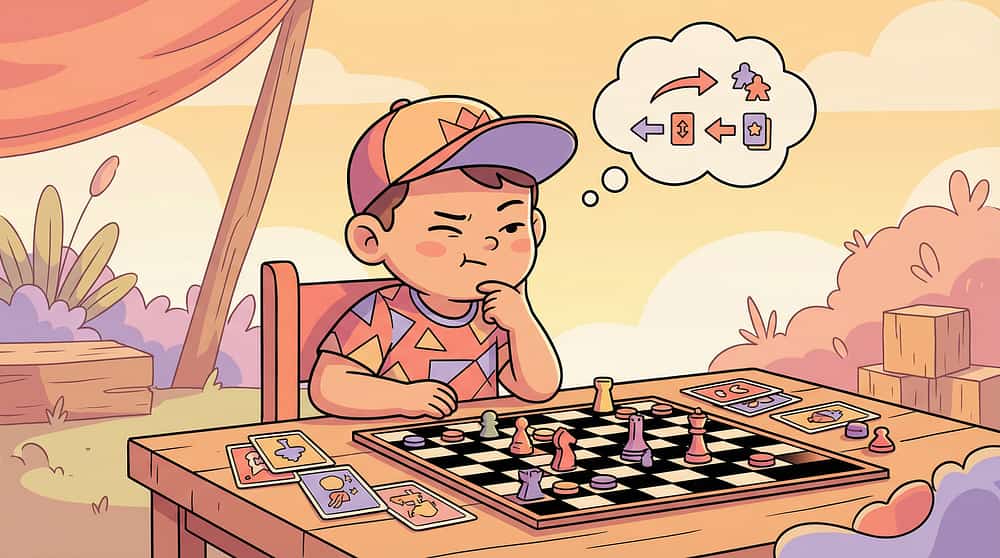
Difficulty: Advanced · Materials: Progressive complexity games, planning boards "Once rules are solid, strategy is the next frontier."

🟢 G-633 — Card Game Introduction
Difficulty: Intro · Materials: Simple card games, visual rule cards "Starter card games designed for rule-learning contexts."
🟡 G-634 — Board Game Fundamentals
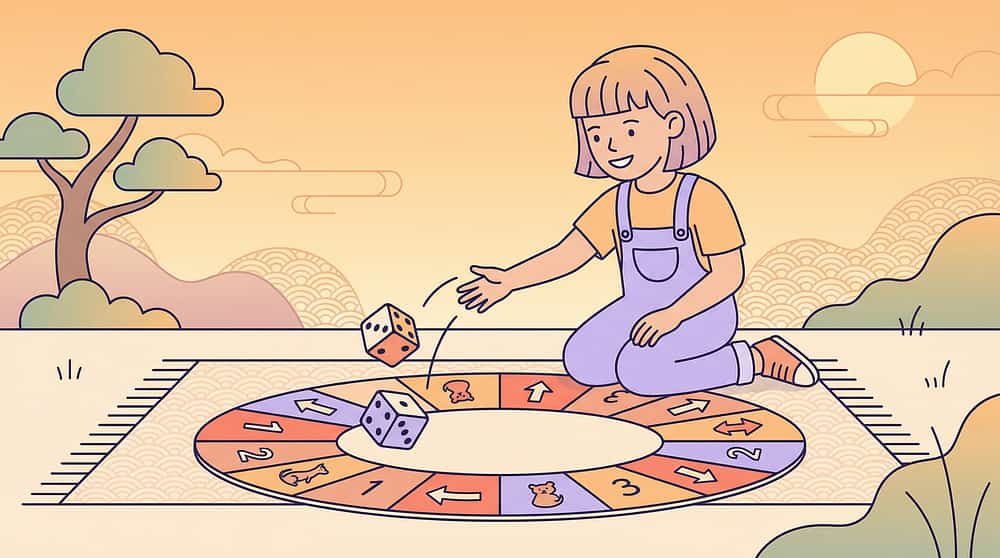
Difficulty: Core · Materials: Dice, game boards, turn strips "Board game rule structure — spatial and sequential."
ACT V — Community
From the Families Who Came Before You. Specific. Real. Measured.
🃏 The Uno Journey
Child: 8-year-old girl with ADHD | Setting: Bengaluru home
Before G-658: Arya had been explained Uno rules approximately "a hundred times" by her parents' count. She would play cards that didn't match, forget to say "Uno," and freeze when special cards appeared — despite clearly listening. Her younger brother (6) was playing independently. She started refusing to play entirely, saying she "hated games."
After 6 Weeks: Arya can play Uno with special cards using the rule card as occasional reference — checked maybe twice per game now. She has added her own annotation to the rule card. Last week, she explained the rules to her cousin.
"The rule card wasn't a crutch — it was the key. The moment she stopped having to remember and could just CHECK, the whole game changed. She taught her cousin. She TAUGHT someone." — Father, Pinnacle Network (Bengaluru)
📋 The Turn Strip Transformation
Child: 9-year-old boy with ASD | Setting: Hyderabad home
Before G-658: Rohan understood individual rules perfectly when asked directly. But during gameplay, his turn would fall apart: he'd forget to check his hand, skip the draw step, or play without checking the top card. He knew the rules but couldn't sequence them into a functional turn.
After 4 Weeks: Turn completion rate went from approximately 30% to 95% correct sequence. Rohan now self-monitors using the strip without prompting and has begun teaching the strip system to a classmate with similar challenges.
"We were explaining the sequence over and over. The strip made the sequence VISIBLE. He didn't need to remember it — he could just read it." — Mother, Pinnacle Network (Hyderabad)
Illustrative cases drawn from Pinnacle Network center outcomes. Identifying details changed for privacy. Outcomes vary by child profile, underlying conditions, intervention consistency, and baseline. Individual results vary.
ACT V — Connect
Isolation Is the Enemy of Adherence. You Don't Have to Figure This Out Alone.
G-658 Parent Practice Group
WhatsApp community for families actively working on game rule understanding across all profiles (ADHD, ASD, APD, SpEd). Join WhatsApp Group →
Pinnacle Parent Forum
Cognitive Development & Play Domain. Discuss challenges, share wins, exchange material templates, and get peer perspective from families who've completed this journey. Join Forum →
Local Parent Meetups
Pinnacle centers host monthly parent meetups organized by domain. Connect with families in your city navigating the same challenges. Find My Nearest Meetup →
Peer Mentoring
Connect with a parent mentor — someone who has completed G-658 with their child and is willing to guide families just starting out. 📞9100 181 181 → Request peer mentor connection

ACT V — Professional Support
Home + Clinic = Maximum Impact. Here's Your Professional Support Layer.
Specialist Matching for G-658
This technique's lead discipline is Occupational Therapy with ABA and SLP co-support. At your nearest Pinnacle center, ask for:
- Occupational Therapist with cognitive/executive function specialization
- BCBA with game-based and procedural learning protocols
- SLP with language processing and conditional language comprehension experience
📞FREE National Autism Helpline: 9100 181 181 24×7 | 16+ languages | All families welcome regardless of center enrollment
Access Options
🗺️ Find Your Nearest Pinnacle Center
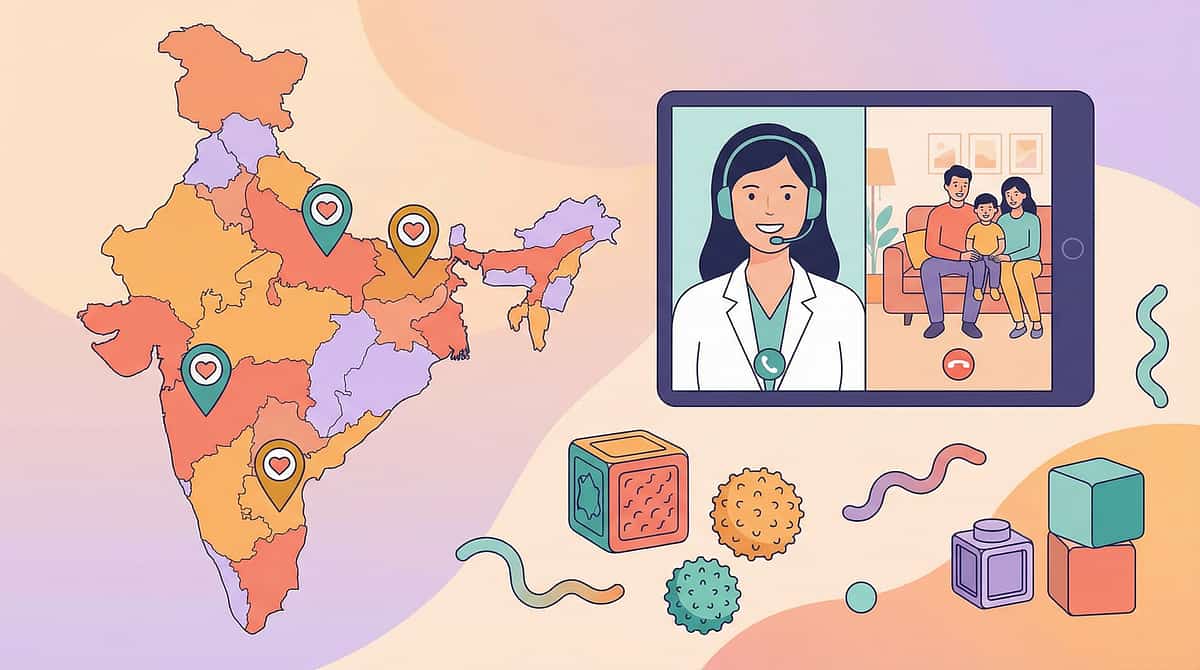
70+ centers across India, filterable by city/state and specialty. Find Centers →
📱 Teleconsultation
For families outside major cities or who prefer home-based professional guidance. Available in 16+ languages. No travel required. Book Teleconsultation →
💰 Insurance & Funding
Several insurance providers in India now cover OT and SLP sessions for children with autism and developmental diagnoses. Ask at your Pinnacle center about current coverage options.

ACT V — GPT-OS®
Your Session Data Doesn't Disappear. It Feeds a System That Gets Smarter for Every Child.
Diagnostic Intelligence
591+ structured observations across 349 skills powering precise intervention sequencing
AbilityScore®
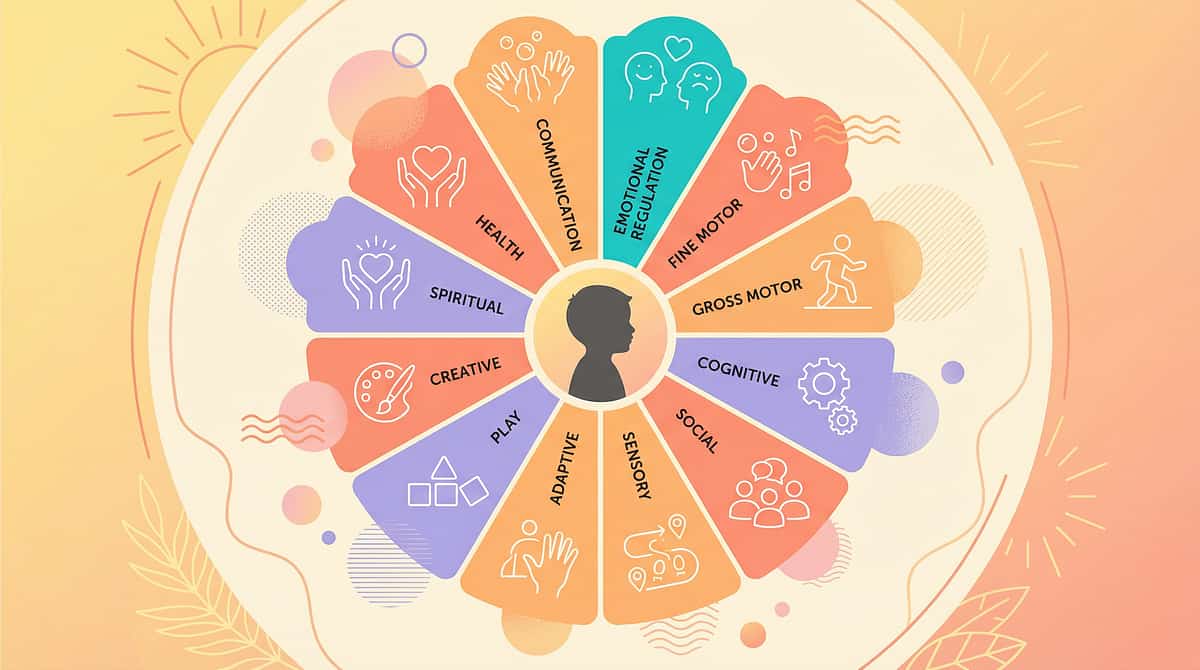
0–1000 universal developmental score tracking G-domain progress across all 12 domains
TherapeuticAI®
Determines next technique, material, and intensity based on your child's actual session data
FusionModule™
Integrates OT, SLP, ABA, and SpEd inputs into one coordinated intervention pathway
"Your data helps every child like yours." Population-level pattern data from 20M+ sessions is the foundation of GPT-OS® recommendations. Privacy assured — all data encrypted, anonymized, and never sold to third parties.

ACT VI — FAQ
The Questions Pinnacle Parents Ask Most About G-658
My child understands during walk-through but still makes errors in real gameplay. Is the technique working?
Yes — this is one of the most common patterns and is clinically expected. Walk-through and real gameplay activate different cognitive demands. Real gameplay adds working memory load, social pressure, and multitasking. Continue walk-throughs for 2–3 more weeks while introducing a simplified game version (1–2 rules only). The gap will narrow with consistent practice.
How long should I keep the visual rule card in place? When do I remove it?
Do not remove it proactively. The rule card should be available for as long as the child finds it useful. Most children naturally stop using it once they've internalized the rules — you'll notice they stop glancing at it. This organic fading is the goal. Artificially removing the card before internalization causes regression and breaks trust.
My child knows the rules perfectly when asked directly but forgets during the game. Why?
This is the classic working memory load phenomenon. The game adds: holding your hand, tracking other players, managing cards physically, and processing social information — all while trying to retrieve the rule. The external supports handle retrieval so the child can direct cognitive resources to gameplay.
My younger child picked this up immediately but my older child (with ADHD) still struggles after a month. Why?
Neurotypical children and children with ADHD have genuinely different working memory architectures. The younger child's faster acquisition is not a comparison point — it's a different cognitive profile. The measure of progress is your older child's improvement from their own baseline, not comparison to a sibling.
Is this approach suitable for my child with autism who gets upset when others don't follow rules?
Yes — with modification. Alongside the 9 materials, introduce the explicit concept of "house rules" (variations families choose) and "friendly mistakes" (errors that happen during play, not violations). If-then boards should cover ALL known variations so no rule change ever comes as a surprise.
Can I use these materials for teaching school rules, classroom rules, or social rules — not just games?
Absolutely. The cognitive mechanisms are identical. Visual rule cards for classroom rules (one rule per card), turn sequence strips for lunch routine procedures, if-then boards for social scenarios. Game rule understanding is the training context; the cognitive skills transfer to all rule-governed domains.
My child is 4 years old. Is this too young for this technique?
Not at all — with appropriate calibration. For ages 4–6: physical walk-throughs as primary tool, visual cards with maximum 2 items, sessions of 3–5 minutes maximum, and one-rule games only. The principles are the same; the complexity and duration are reduced.
Can we do this entirely at home without a therapist?
The home-execution instructions in this page are designed for parent administration without professional presence. Many families achieve excellent outcomes. However, professional assessment accelerates progress significantly — a therapist identifies which specific cognitive bottleneck to address first, saving weeks of trial-and-error. The FREE helpline (9100 181 181) provides guidance from Pinnacle's clinical team at no cost.
Preview of 9 materials that help with game rule understanding Therapy Material
Below is a visual preview of 9 materials that help with game rule understanding therapy material. The pages shown help educators, therapists, and caregivers understand the structure and content of the resource before use. Materials should be used under appropriate professional guidance.


Link copied!

ACT VI — The Pinnacle Promise
The Pinnacle Promise
"From fear to mastery. One technique at a time." — The Pinnacle Blooms Consortium
This technique page is part of the 70,000+ intervention technique knowledge base powered by GPT-OS® at techniques.pinnacleblooms.org. Every page is generated from clinical protocols validated across 20M+ exclusive 1:1 therapy sessions with 97%+ measured improvement. Content is reviewed by the Pinnacle Consortium across OT, SLP, ABA, SpEd, and NeuroDev disciplines.
CIN | U74999TG2016PTC113063 | |
DPIIT Recognition | DIPP8651 (Government of India) | |
MSME Udyog Aadhaar | TS20F0009606 | |
GSTIN | 36AAGCB9722P1Z2 |
Medical & Educational Disclaimer: This content is educational. It does not replace individualized assessment and intervention from licensed developmental specialists, occupational therapists, speech-language pathologists, or educational psychologists. Persistent difficulties with rule comprehension, working memory, and instruction-following may indicate underlying learning differences, attention disorders, or language processing challenges requiring comprehensive evaluation. Materials and strategies should be matched to each child's specific cognitive profile and needs. Individual results vary. Statistics represent aggregate outcomes across the Pinnacle Blooms Network.
© 2025 Pinnacle Blooms Network®, unit of Bharath Healthcare Laboratories Pvt. Ltd. All rights reserved. Technique Code: G-658. Version: 1.0. GPT-OS® | AbilityScore® | TherapeuticAI® | EverydayTherapyProgramme™ | FusionModule™ are registered trademarks and proprietary systems of Bharath Healthcare Laboratories Pvt. Ltd. Patents filed across 160+ countries. 📞FREE National Autism Helpline: 9100 181 181 | 24×7 | 16+ languages | pinnacleblooms.org