

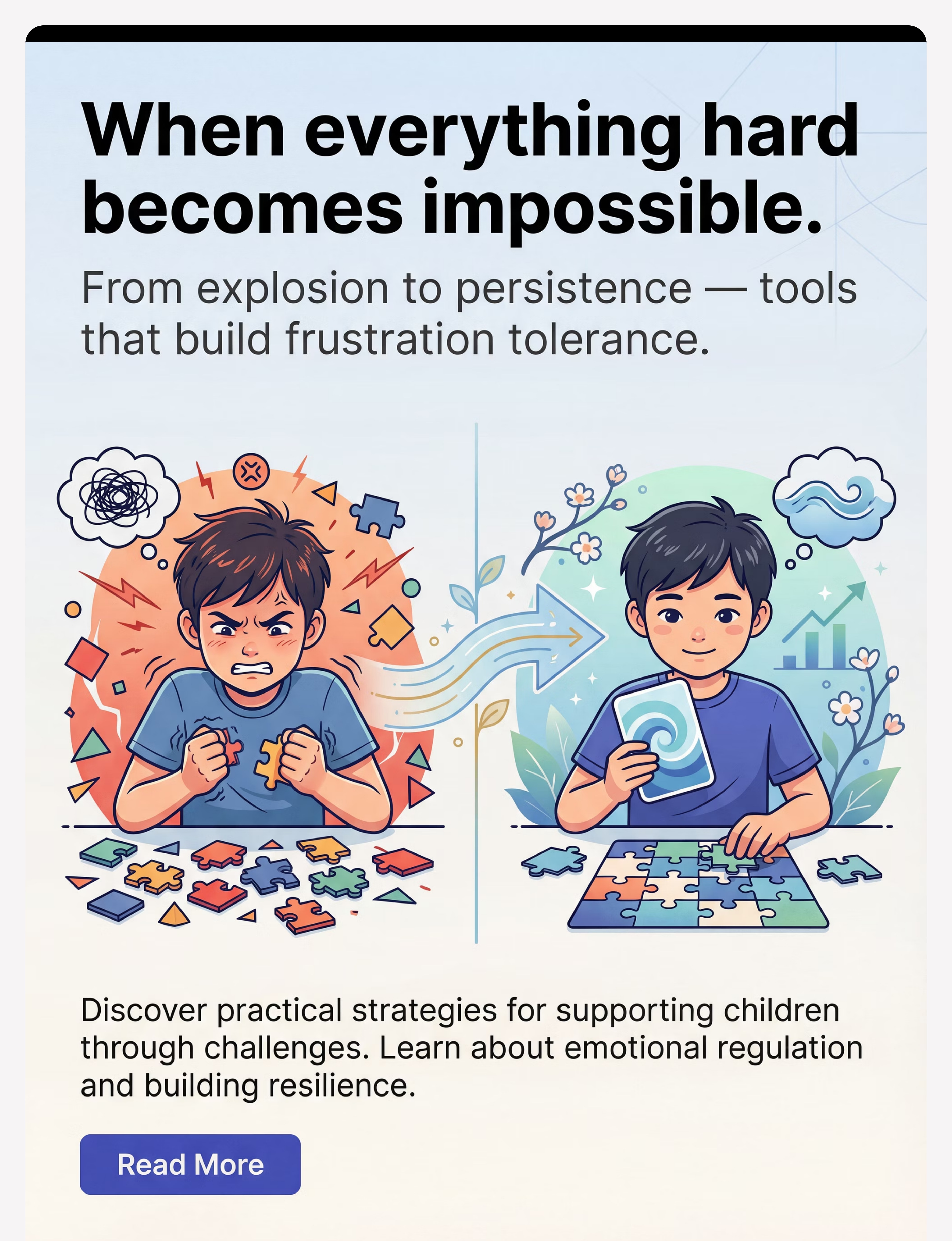
When everything hard becomes impossible.
Frustration Tolerance · Ages 3–12 · Emotional Regulation Domain
"It was just a puzzle. Eight pieces. She sat down so enthusiastically — and then one piece didn't fit immediately, and the screaming started. The puzzle pieces went flying across the room. My daughter sat on the floor, sobbing that she 'hates puzzles' and 'can't do anything.' She's seven. This happens every day — with homework, with games, with anything the least bit difficult. She's brilliant when things come easily. But the moment something requires effort — she's gone. Unreachable. Sometimes destructive. I'm terrified of what this means for her future."
You are not failing. Your child's nervous system hasn't yet learned to tolerate the discomfort of difficulty. That capacity is teachable. These 9 materials are the tools.
9 Materials That Help With Frustration Tolerance — evidence-validated, home-ready, GPT-OS® guided.
Pinnacle Blooms Consortium
Validated: OT · ABA · SLP · SpEd · NeuroDev · CRO
ACT I — Emotional Entry
The Scale of This Challenge
Frustration tolerance difficulties are far more common than most parents realize. They co-occur with Autism Spectrum Disorder, ADHD, Anxiety Disorders, Learning Disabilities, Sensory Processing Differences, and Developmental Delays. This is not a parenting failure — it is a neurological profile requiring structured, systematic intervention.
1 in 3
Neurodevelopmental Differences
Children with neurodevelopmental differences show clinically significant low frustration tolerance
72%
ADHD Comorbidity
Children with ADHD — the most common comorbidity — experience frustration dysregulation as a core feature
20M+
GPT-OS® Sessions
Therapy sessions logged documenting emotional regulation as a primary intervention domain
"You are among millions of families navigating this exact challenge. What you're seeing is real, recognized, and responsive to the right approach." — In India, 18 million children are estimated to live with developmental challenges (NIMHANS data). Frustration tolerance is among the top-5 referral concerns at Pinnacle's 70+ centers nationally.
Research: PMC11506176 | PMC10955541 | PMC9978394 | WHO NCF 2018 | NCAEP 2020

The Neuroscience of Frustration Explosion
What frustration does to the brain
When a child encounters difficulty, the brain's alarm system (amygdala) fires stress signals. In a well-regulated nervous system, the prefrontal cortex intercepts these signals and applies coping strategies. In children with low frustration tolerance — particularly those with ADHD, autism, or sensory differences — this regulatory intercept is underdeveloped or overwhelmed.
The result: The stress signal escalates unchecked → emotional flooding → explosion. This is not a choice. It is a neurological event.
The science of building tolerance
Frustration tolerance is a skill built through neuroplasticity. When a child successfully navigates manageable frustration repeatedly, the prefrontal-amygdala regulatory pathway literally strengthens — the same way muscles strengthen through exercise at the right intensity.
"This is a wiring difference, not a behavior choice."
The 5 Components
- Emotional recognition — knowing when frustration is rising
- Physiological regulation — managing body responses
- Cognitive flexibility — seeing alternatives when stuck
- Behavioral persistence — continuing despite difficulty
- Recovery — bouncing back from setbacks
Research: Frontiers in Integrative Neuroscience (2020): DOI 10.3389/fnint.2020.556660 | PMC5695920 | Growth mindset research, Dweck (Stanford)
Developmental Context
The Developmental Arc of Frustration Tolerance
Age 1–2 (Toddler)
Minimal tolerance — immediate needs feel urgent. Every unmet need = distress. Completely normal.
Age 3–4 (Preschool)
Beginning to tolerate short delays and minor frustrations WITH adult support. Tantrums expected and developmentally appropriate.
Age 5–6 (Early School)
Should manage moderate frustration with emerging strategies. Needs coaching and co-regulation from caregivers.
Age 6–8 ← Most Referrals
Growing independence in frustration management. Children with neurodevelopmental differences often lag significantly at this stage.
Age 10–12 (Pre-adolescence)
Flexible coping, self-directed strategies, generalizes across contexts. Frustration tolerance well-developed for age-appropriate challenges.
"Your child is here. The work ahead is building the capacity they haven't yet developed — not fixing what's broken."
Common conditions where frustration tolerance intervention is essential: ADHD · Autism Spectrum Disorder · Anxiety Disorders · Sensory Processing Differences · Learning Disabilities · Giftedness (yes — gifted children with no history of challenge are often highly fragile)
References: PMC9978394 | WHO/UNICEF CCD Package (2023)

Evidence Foundation
Clinically Validated. Home-Applicable. Parent-Proven.
LEVEL II EVIDENCE
Systematic Reviews + Multiple RCTs + Clinical Consensus
Systematic Review — PMC11506176 (Children, 2024)
16 articles (2013–2023) confirm structured emotional regulation intervention meets evidence-based practice criteria for children with ASD. Frustration tolerance outcomes documented across multiple randomized and quasi-experimental designs.
Meta-analysis — PMC10955541 (World J Clin Cases, 2024)
24 studies confirm sensory integration + behavioral regulation approaches effectively promote adaptive behavior, social-emotional skills, and executive function — the three pillars of frustration tolerance — with statistically significant effect sizes.
Indian RCT — Indian J Pediatr (2019)
Padmanabha et al.: Home-based intervention for Indian children demonstrated significant developmental outcomes. Parental training showed measurable improvement in child regulatory capacity within 8-week protocols. DOI: 10.1007/s12098-018-2747-4
✅ Evidence Grade
Level II — Systematic Review + RCT
✅ Setting Validated
Clinic + Home-based (both confirmed)
✅ Age Range
3–12 years (peak efficacy window)
✅ Pinnacle Outcome
97%+ measured improvement across 20M+ sessions
PMC11506176 · PMC10955541 · PMC9978394 · WHO NCF 2018 · NCAEP 2020 · Padmanabha Indian J Pediatr 2019
ACT II — Knowledge Transfer
Frustration Tolerance Building Through 9 Materials (C-275)
"The Persistence Toolkit"
🧠 Emotional Regulation
⚙️ Executive Function
💪 Behavioral Support
🌱 Social-Emotional Development
Frustration tolerance is the ability to persist through difficulty, manage the emotional discomfort of obstacles and setbacks, and continue goal-directed behavior despite frustration. C-275 introduces 9 specific therapeutic materials — from Zones of Regulation frameworks to cooperative games — that systematically build this critical life skill through recognition training, coping strategy scaffolding, graded challenge exposure, and effort reinforcement.
This is not about teaching children to suppress frustration. It is about teaching them to experience frustration without being destroyed by it — and to persist, adapt, and grow through it.
Zones of Regulation Curriculum
Break Cards & Calm-Down Systems
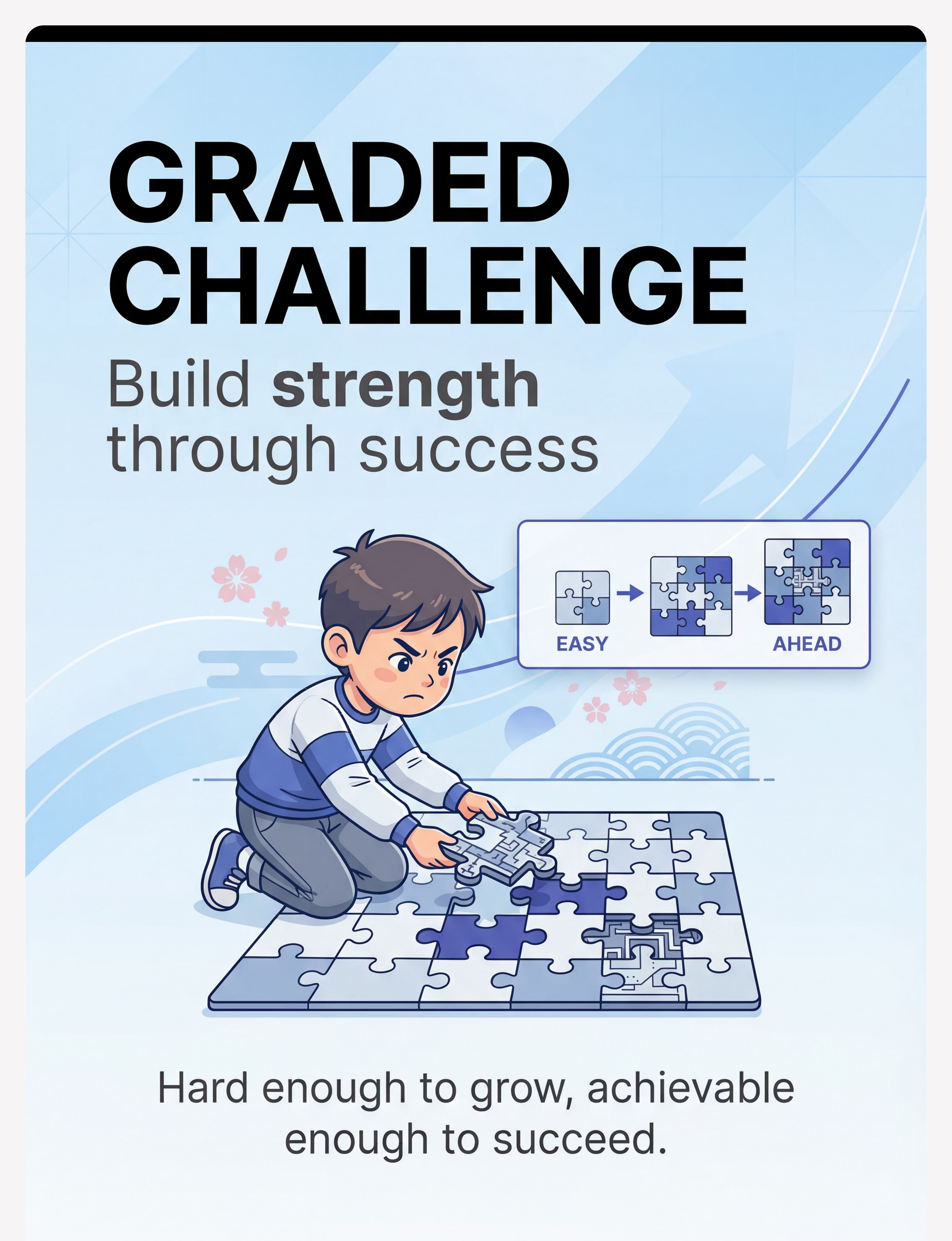
Graded Challenge Activities ("Just Right" Tasks)
Coping Strategy Cards & Visual Menus
Social Stories About Frustration & Trying Again
Sensory Regulation Tools
Effort & Progress Trackers
Problem-Solving Visual Frameworks
Cooperative Games & Turn-Taking Activities

Multi-Disciplinary Consortium
The Consortium Behind C-275
Occupational Therapist (Lead Discipline)
Addresses the physiological component of frustration — sensory regulation, interoception (body awareness of rising frustration), proprioceptive heavy work to calm the nervous system, and environmental design for optimal regulation.
ABA / BCBA Specialist
Designs graded challenge hierarchies, reinforcement schedules for effort and persistence, token economy systems, and data collection frameworks to track frustration tolerance progression.
Speech-Language Pathologist
Builds the language of frustration — Zone vocabulary, coping strategy scripts, social story narration, and verbal problem-solving frameworks. Children who can name frustration have dramatically better outcomes.
Special Educator
Implements frustration tolerance interventions in academic contexts — modified task difficulty, visual supports in learning environments, effort-based grading adaptations, and homework protocols.
NeuroDev Pediatrician / Psychologist
Rules out or addresses comorbidities (ADHD, anxiety, learning disabilities). Manages medication considerations where relevant. Provides family psychoeducation.
"This technique crosses therapy boundaries because the brain doesn't organize by therapy type. Frustration lives at the intersection of body (sensory), mind (executive function), behavior (persistence), and communication (expressing needs). Every discipline has a role."
Therapeutic Targets
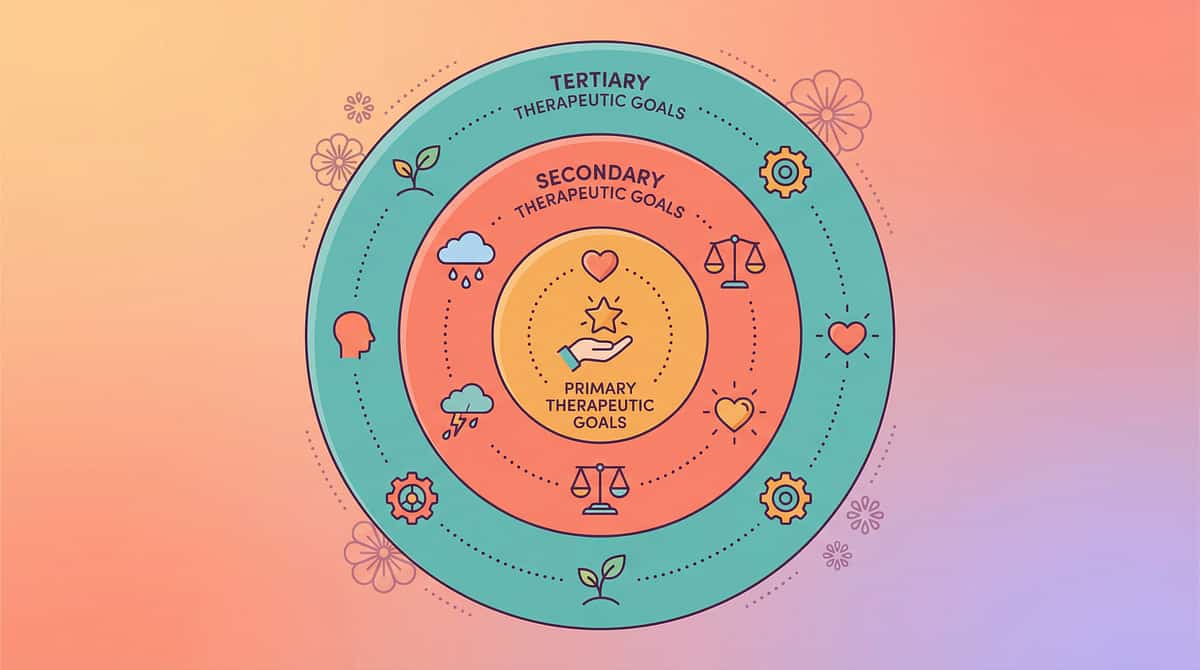
Precision Therapeutic Targets
The three rings represent progressive therapeutic goals. Primary targets (inner) are the direct frustration tolerance skills. Secondary targets build the surrounding coping infrastructure. Tertiary gains are the life-changing downstream outcomes that make this work matter far beyond the therapy session.
Target | Mastery Looks Like | |
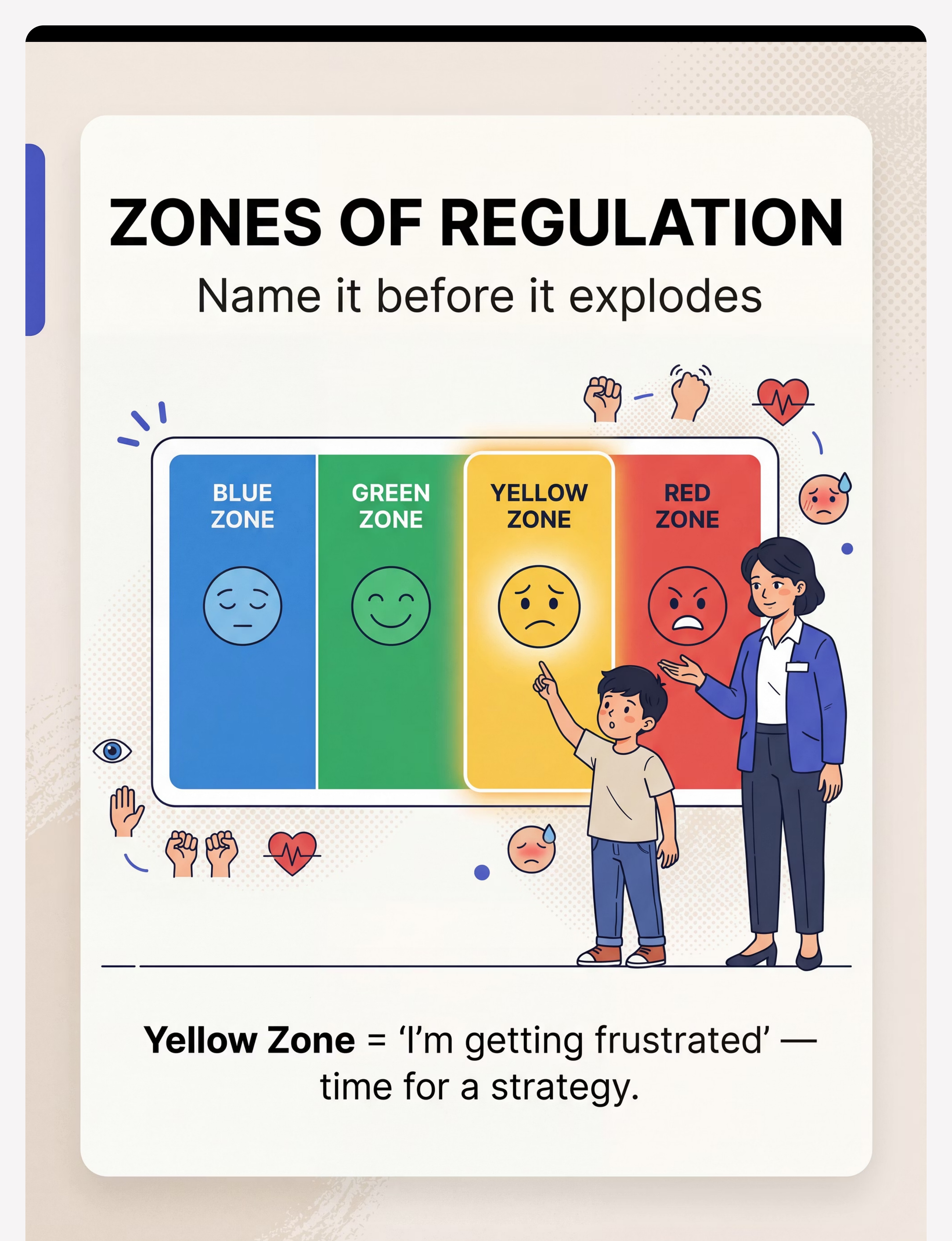
Frustration recognition | Child says "I'm in Yellow Zone" or "I'm getting frustrated" | |
Persistence | Tries 2+ approaches before asking for help or stopping | |
Recovery speed | Returns to calm within 3 minutes vs. 30 minutes | |
Coping strategy use | Reaches for coping tool without prompting | |
Help-seeking | Says "Can you help me?" instead of exploding |

Primary Materials
Your C-275 Toolkit — Primary Materials
Zones of Regulation Visual Kit
Canon: Behavior Support / Visual Supports · ₹300–6,000
Zone chart + body signals poster + coping strategy menu — the complete recognition framework. Full curriculum for clinician; visual chart kit for home.
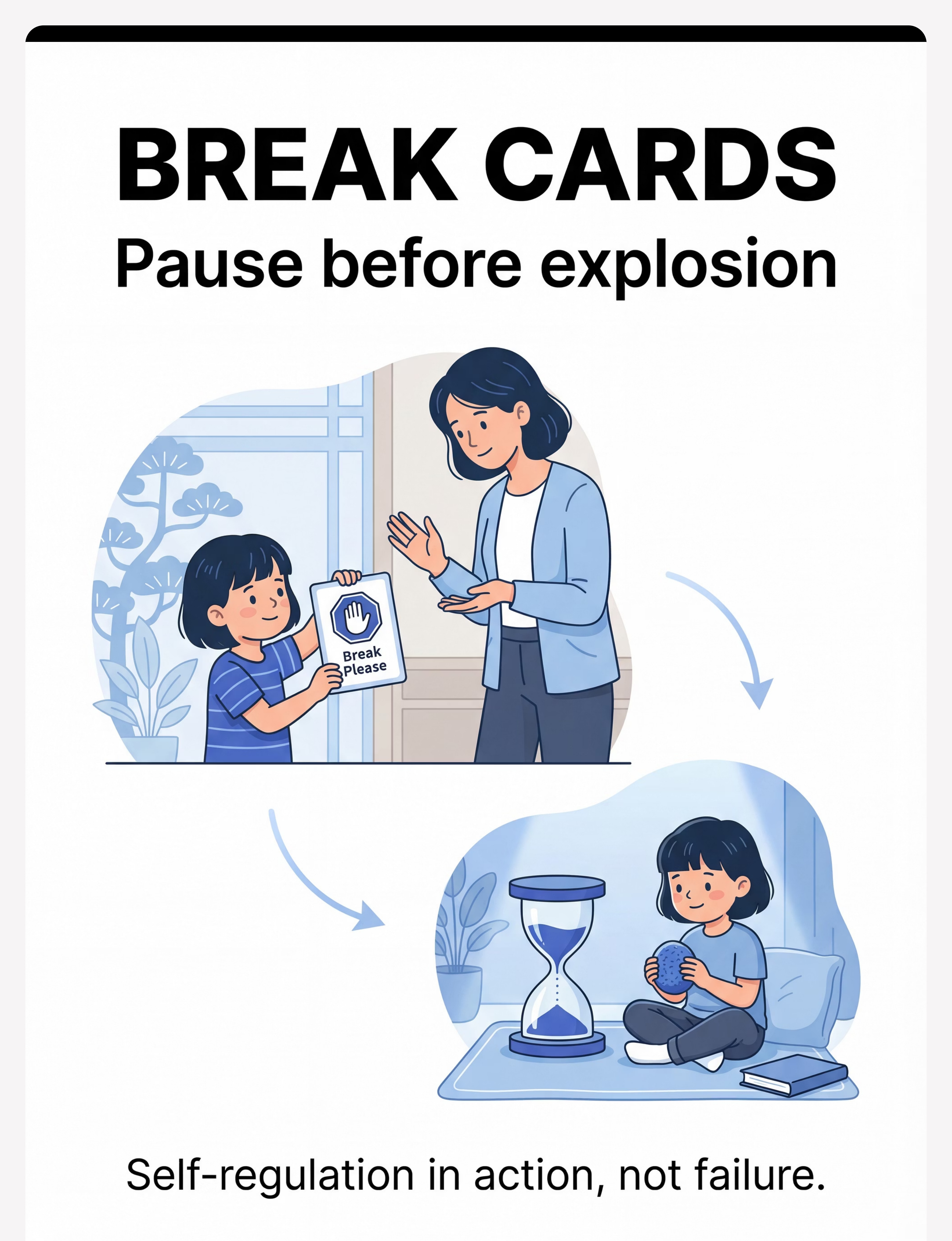
Break Cards System
Canon: Behavior Support / Transition Objects · ₹100–400 | ₹0 DIY
"Break Please" request card + visual break routine + return-to-task card. Simple, laminated, immediate impact.
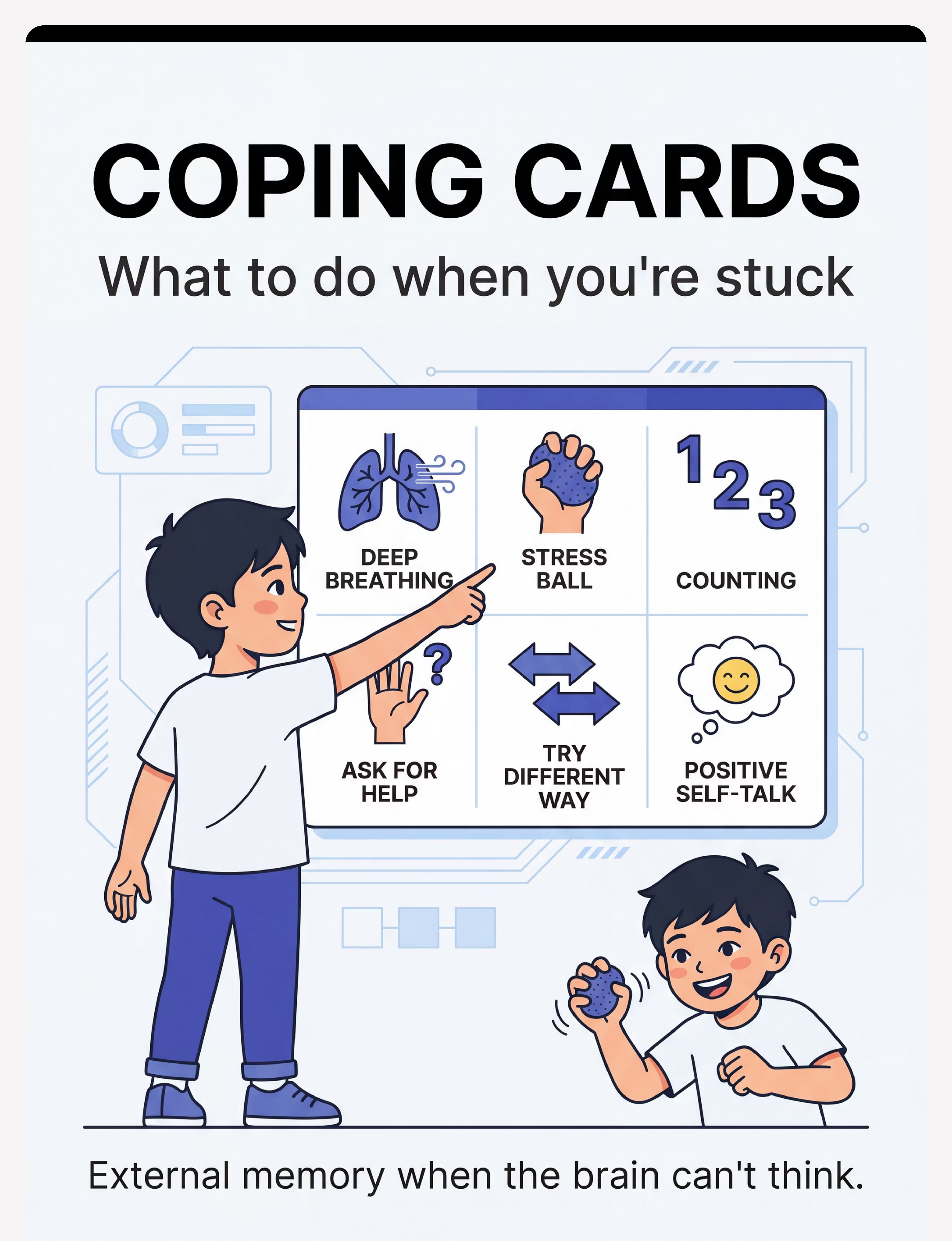
Coping Strategy Cards
Canon: Behavior Support / Visual Supports · ₹200–800
Visual menus of what to do when frustrated. Laminated and portable.
Sensory Regulation Tools
Canon: Sensory Processing / Tactile · ₹300–1,500
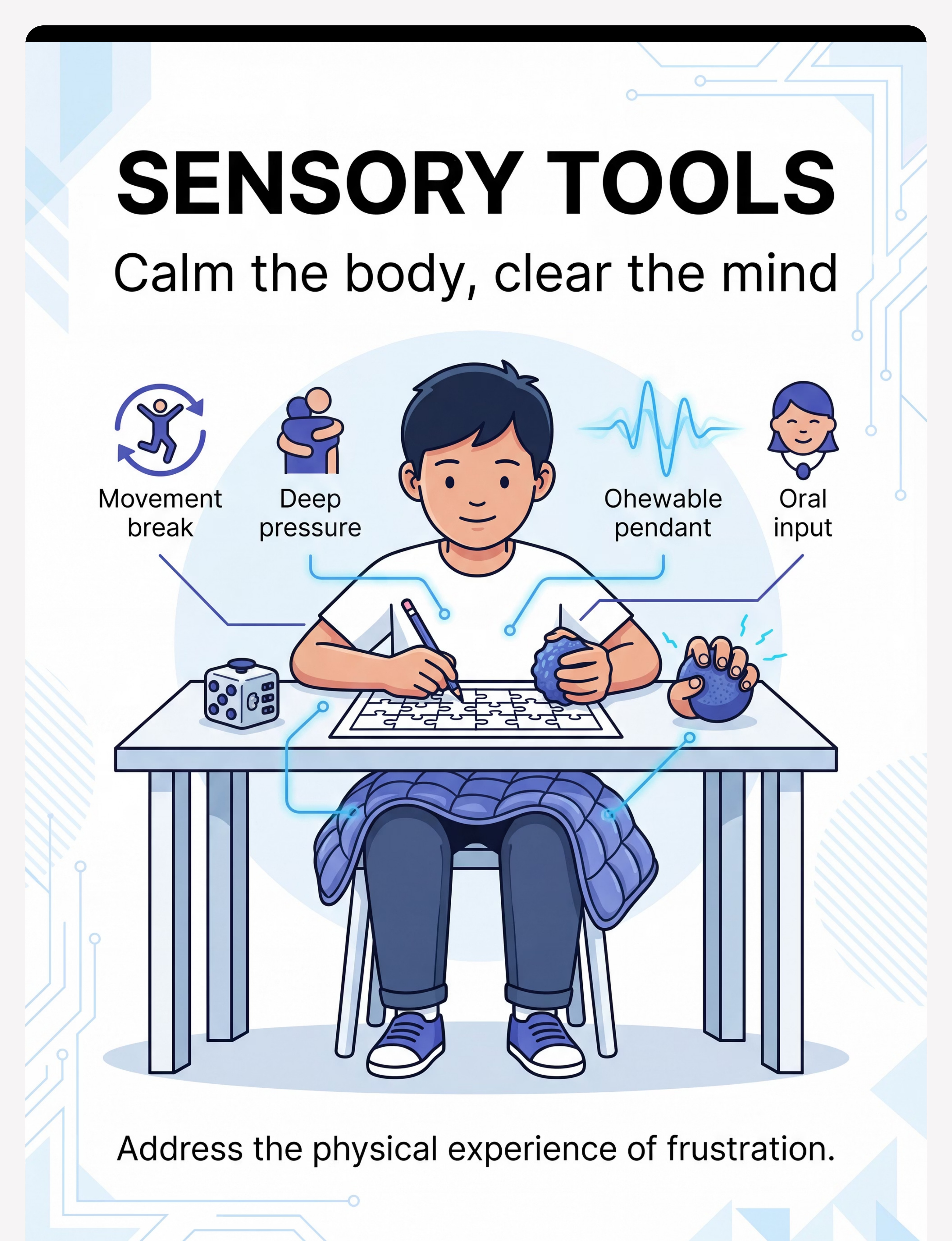
Stress balls, fidget cubes, therapy putty, weighted lap pads.
Effort Trackers
Canon: Behavior Support / Visual Supports · ₹100–500 | ₹0 DIY
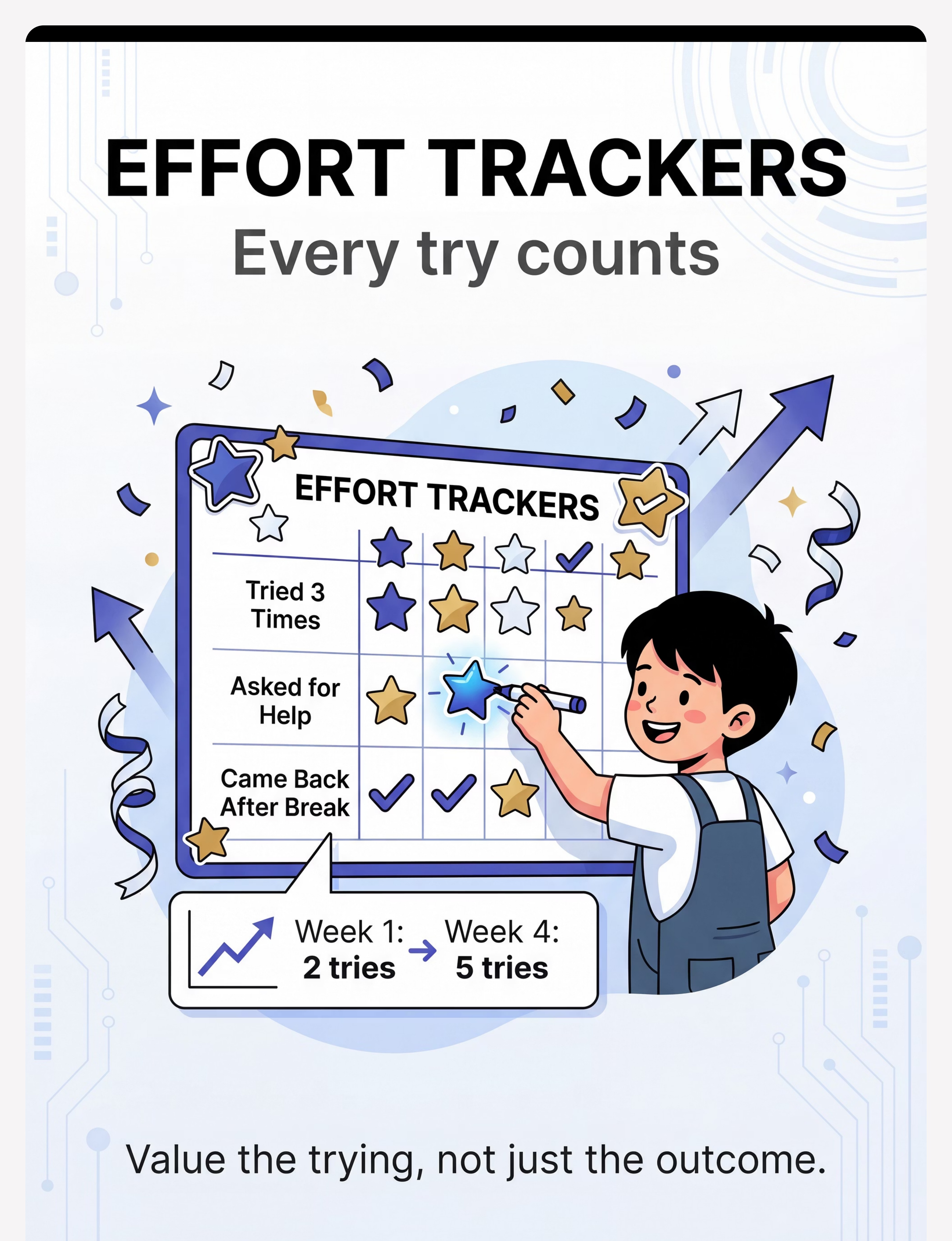
"Every try counts" visual system. Star charts and sticker-based trackers.
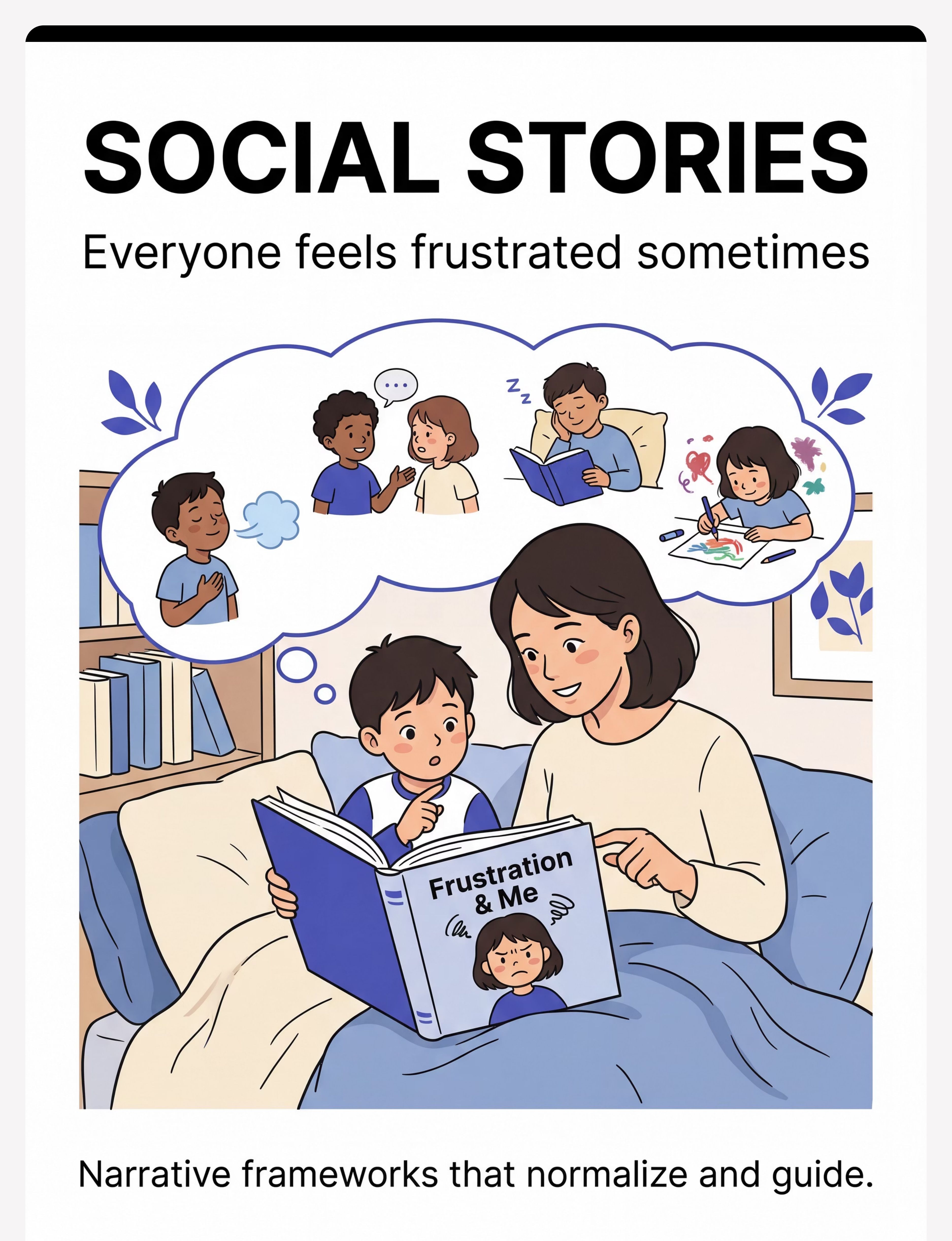
Social Stories (Frustration & Trying Again)
Canon: Social Communication / Story-Based · ₹300–1,200
Narrative frameworks that normalize frustration and model coping strategies.
PINNACLE RECOMMENDS
Clinically Validated by Pinnacle Consortium
Equity & Access
Every Family Can Start Today — Including Yours
WHO Nurturing Care Framework (2018): "Context-specific, equity-focused interventions are essential." No family should be excluded from evidence-based therapy due to resource barriers.
Material | Buy (₹) | DIY (₹0) | |
Zones of Regulation | ₹300–6,000 | Draw four colored boxes (blue/green/yellow/red) on paper. Label with face drawings. Post on wall. | |
Break Cards | ₹100–400 | Write "Break Please" on paper. Laminate with tape. Functional immediately. | |
Graded Challenge | ₹199–579 | Use puzzles you own. Start with 6-piece, work to 12, then 24. Match to child's level. | |
Coping Strategy Cards | ₹200–800 | Draw 5 coping strategies on index cards with stick figures. Post near homework area. | |
Effort Trackers | ₹100–500 | Draw a simple grid on paper. Sticker = one try. Chart hangs on fridge. | |
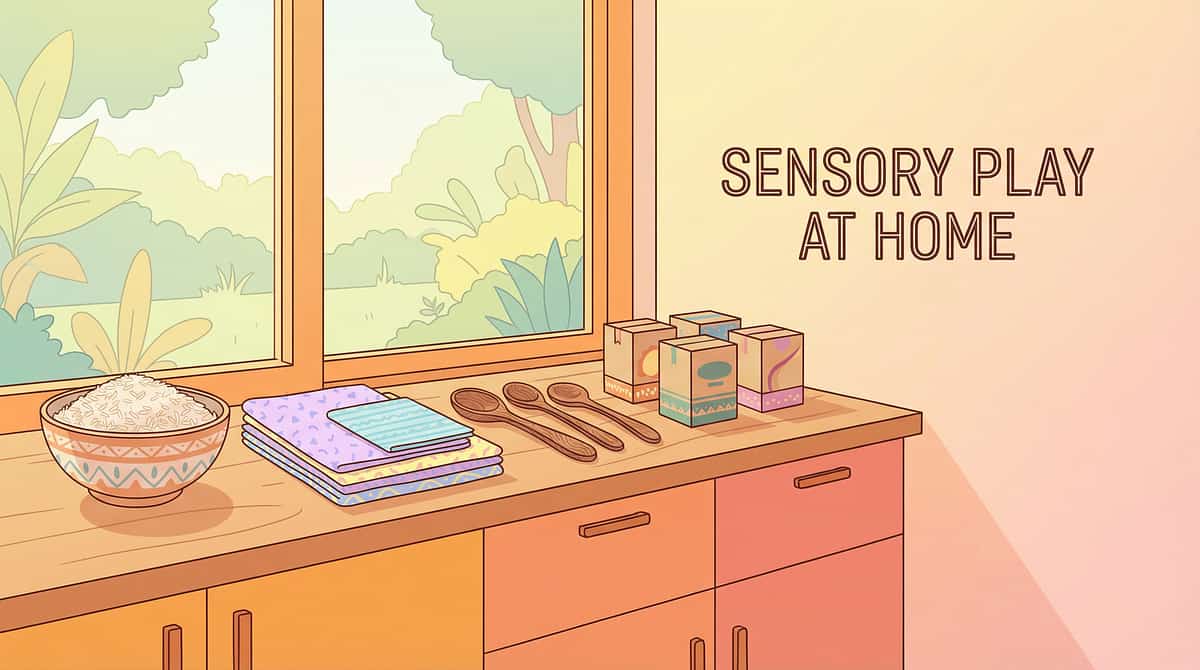
Sensory Tools | ₹300–1,500 | Fill a balloon with flour = squeeze toy. Rice in a container = sensory bin. | |
Social Stories | ₹300–1,200 | Write 5 sentences about frustration in your child's voice. Draw stick figures. Staple together. Read nightly. | |
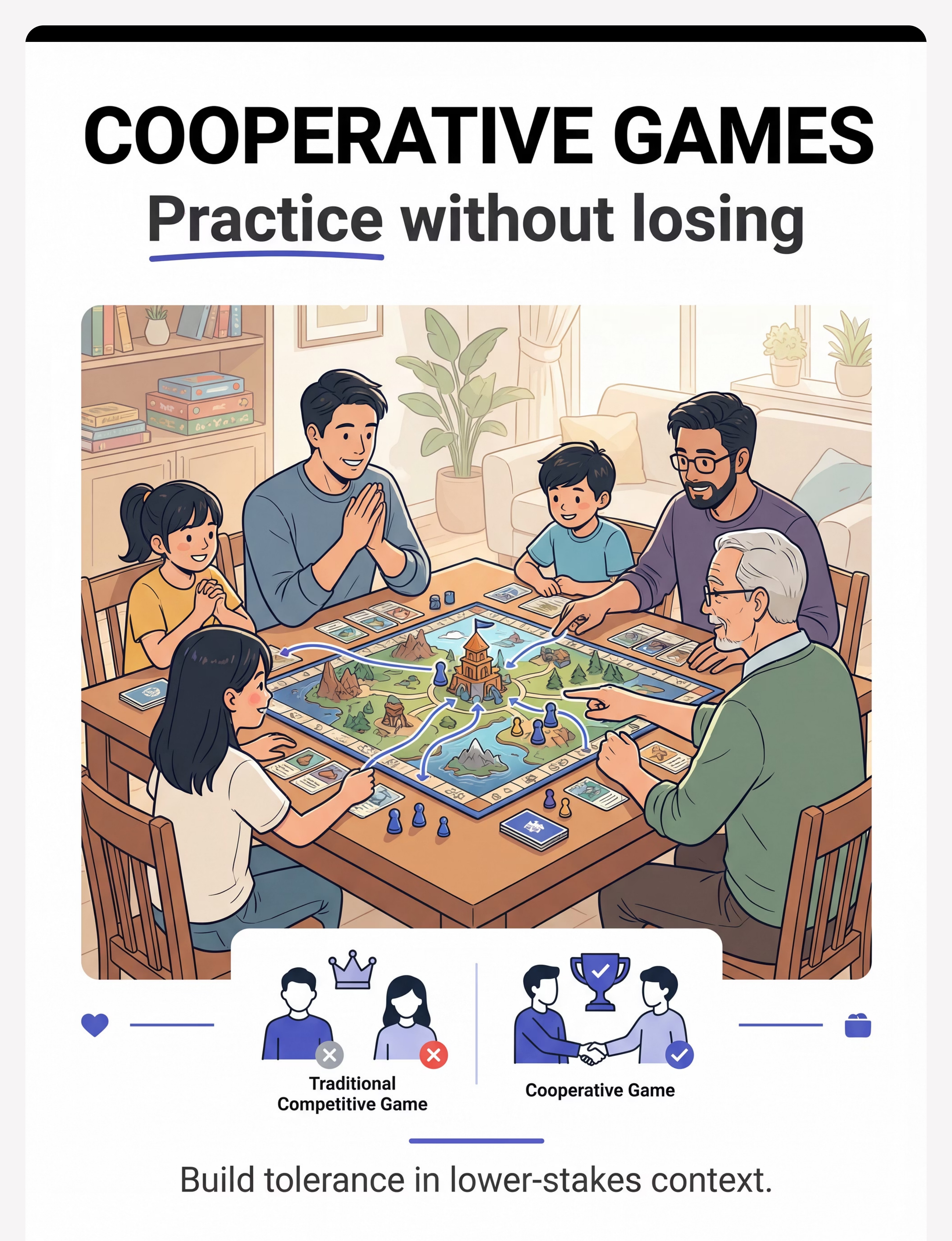
Cooperative Games | ₹800–3,000 | Modify any game to "beat the clock together" instead of competitive. Set a shared timer. | |
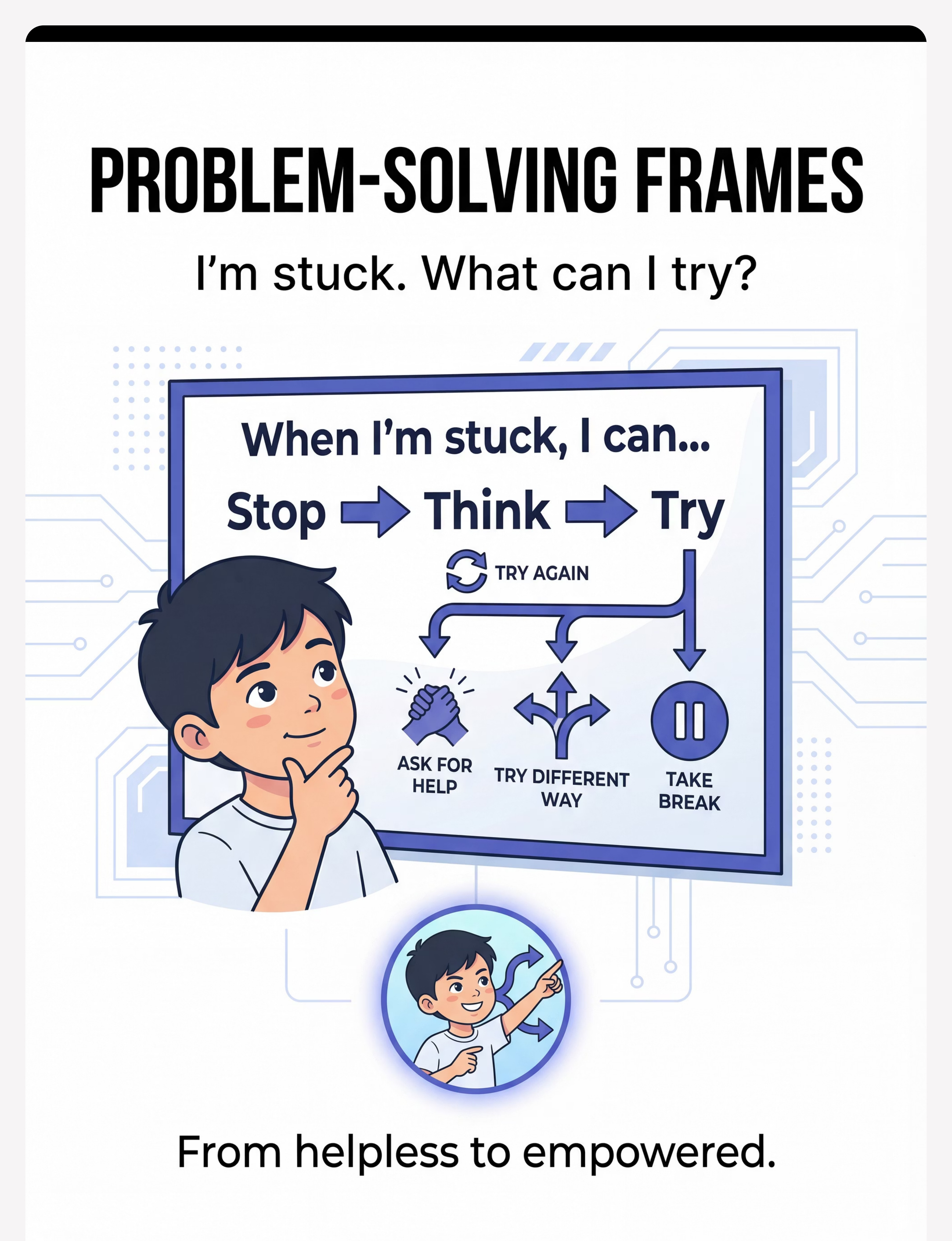
Problem-Solving Frames | ₹200–700 | Write "When I'm stuck: 1) Try again 2) Ask for help 3) Take a break" on a card near the desk. |
The same sensory/behavioral/cognitive principle operates whether you buy a clinical-grade item or build it from household materials. The material is the vehicle. The interaction is the therapy.

Safety Gate
Safety Gate — Read Before Your First Session
🔴 RED: DO NOT PROCEED
- Child is actively self-injuring (hitting self, head-banging, biting self) — requires immediate professional behavioral assessment
- Child is physically aggressive toward others in a way that risks injury
- Child is in acute crisis state: post-meltdown within last 30 minutes, illness, extreme hunger/fatigue
- Sensory defensiveness so severe that any demand placement triggers immediate explosive escalation
- Significant medical conditions affecting pain tolerance or body awareness — consult therapist first
🟡 AMBER: MODIFY
- Child is mildly tired — shorten session to 5 minutes, reduce challenge level one step
- Challenge is triggering frustration faster than expected — dial back difficulty immediately
- Child is resistant to beginning — use the invitation approach for longer before introducing challenge
🟢 GREEN: PROCEED
- Child is fed, rested, in baseline-regulated state
- Child has had a calm period of at least 20 minutes since any previous frustration event
- Environment is set up and materials are ready
- Parent is calm and regulated — co-regulation requires a regulated adult
Material safety notes: Check manufacturer age guidance for choking hazards on all squeeze/fidget items under age 3. Some therapy putty contains latex — verify before purchasing. The break MUST be honored immediately every time it is used — if cards are ignored, child stops using them and returns to explosion.
RED LINE — Stop immediately if: Child shows self-injury, loss of consciousness, breath-holding to point of concern, or behavioral escalation endangering anyone in the space. Session is over. Comfort the child. Document what happened. Contact your therapist.
Space Setup
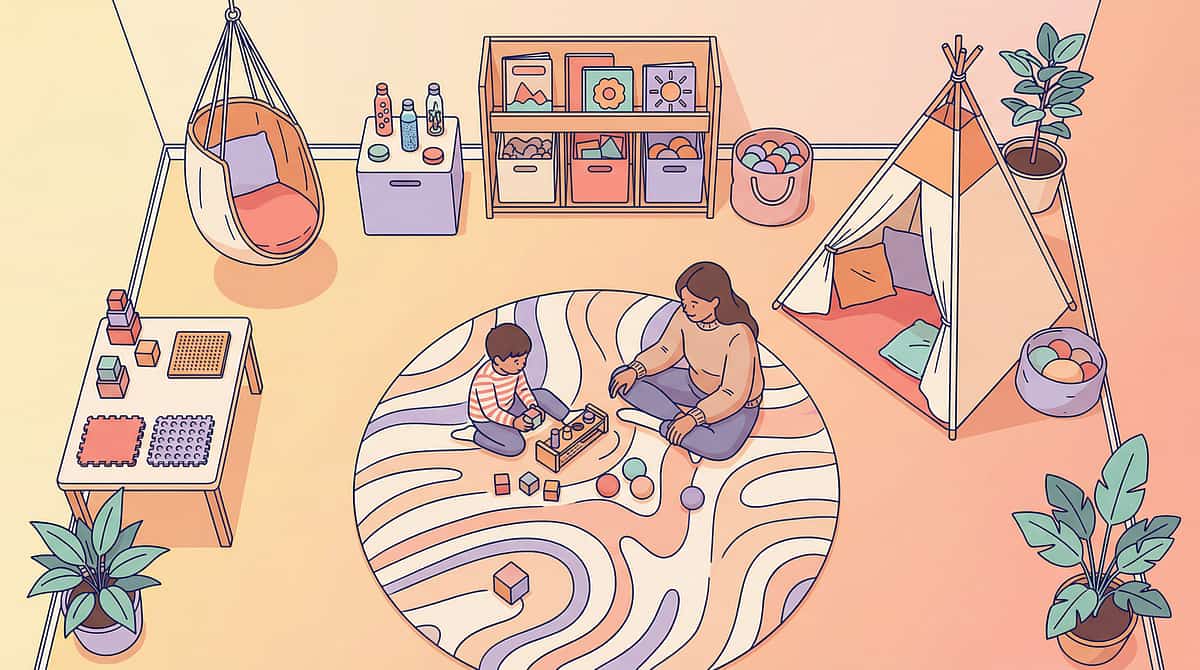
The Frustration Tolerance Station — Your Home Setup
Child's Chair
Facing away from distractions (window, TV, door). Back to wall if possible for sensory security.
Parent's Position
Adjacent to child — not directly opposite. Shoulder-to-shoulder is less confrontational than face-to-face.
Visual Supports
Zones chart + coping strategy menu at child's eye level on the wall. Visible without turning head.
Material Tray
Graded challenge activities arranged easiest→hardest (left to right). Only current challenge activity visible.
Calm Corner
2–3 meters from work station. Cushion, one sensory item (squeeze ball or heavy blanket). Child knows this is the break destination.
Timer + Effort Tracker
Visual timer (hourglass or Time Timer) on table, visible to child. Effort tracker on wall above child's eye line. Stars/stickers readily accessible.
REMOVE from the space: Competing preferred activities (iPad, toys) · Other siblings initially · Background noise above conversational level · Adult frustration — if you are stressed, postpone the session.
"The best session is one that starts right." — Pinnacle OT Consortium | Natural light preferred · Temperature comfortable · Noise below 55dB equivalent · Scent-neutral environment

ACT III — Execution
The 60-Second Pre-Session Readiness Assessment
Indicator | Yes ✅ Go | Somewhat ⚠️ Modify | No 🔴 Action | |
Fed within last 2 hours? | Go | Give snack first | Feed, wait 20 min | |
Slept adequately last night? | Go | Shorten session | Postpone | |
No meltdown in last 30 min? | Go | Wait longer | Postpone | |
Body is calm (not visibly tense)? | Go | 2 min sensory warm-up | Calming activity first | |
Child in Green or light Yellow Zone? | Go | Zone check-in first | Postpone | |
Parent is calm and regulated? | Go | Take your own breath | Don't start yet | |
No major transitions just occurred? | Go | Allow 10 min settle | Postpone |
✅ 5+ Yes: GREEN LIGHT
Begin the protocol (Step 1: The Invitation)
⚠️ Mixed: MODIFY
Start with calming sensory input. Shorten session target by half.
🔴 3+ No: POSTPONE
Use a calming activity instead. "Child not ready" is clinical judgment, not failure.
"The best session is one that starts right. Three good minutes beat thirty forced minutes."
Step 01 of 06
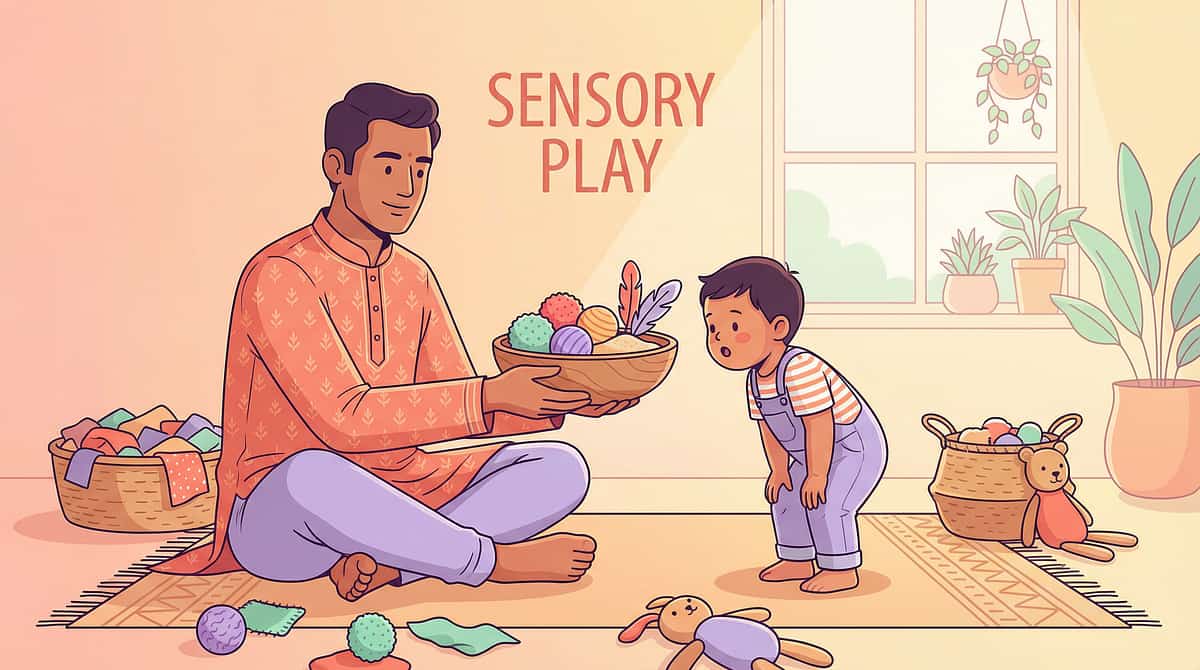
The Opening — Never Start With a Command
"Hey, I found something I think you might like. Want to see? No pressure — we can check it out together."
Why This Wording Matters
- "I think you might like" → activates approach motivation, not compliance
- "No pressure" → lowers defensive arousal before it starts
- "Together" → co-regulation signaled from the very first word
Body Language Guidance
- Posture: Relaxed, open. Sit at child's level — not standing over
- Tone: Curious and light, not loaded with expectation
- Eye contact: Offered, not demanded
- Distance: Close but not in personal space
What Acceptance Looks Like
Child orients toward the activity, leans in, reaches for material, asks "what is it?" — any of these signals acceptance. Proceed to Step 2.
What Resistance Looks Like
Child turns away, says "no," ignores you → Do not push. Say: "Okay, no worries. I'll just leave it here." Wait 2–3 minutes. Often natural curiosity takes over. If not, try again in 10 minutes or on a different day.
Critical ABA Note
Never begin a demand-placement session with high-frustration challenges. Pairing (positive association with the activity) must precede demand. The invitation establishes the motivating operation.
Timing: 30–60 seconds for invitation acceptance

Step 02 of 06
Introducing the Material — The Warm-Up Phase
Once the child has accepted the invitation, introduce the current frustration tolerance material at its easiest level. The warm-up engagement must be below their frustration threshold to establish a positive baseline before challenge is introduced.
For Zones of Regulation
Show the Zone chart. Say: "This chart shows different feelings. Can you point to how you feel RIGHT NOW?" Child points to Green → celebrate. Child in Yellow? Acknowledge: "That's good information. Let's see what helps Yellow."
For Graded Challenge (e.g., puzzle)
Begin with puzzle 2–3 pieces BELOW the child's current frustration threshold. If they struggle at 12-piece, start at 8-piece. Say: "This one is a warm-up. Easy first, then we'll try a trickier one."
Engagement ✅
Leaning in, handling material, making eye contact, asking questions → proceed to Step 3
Tolerance ⚠️
Compliant but passive, not excited → acceptable; proceed carefully
Avoidance 🔴
Pushing away, saying "I can't," tensing body → pause, offer sensory support first, try simpler level
Reinforcement cue: First instance of child engaging with material → verbal praise immediately. Within 3 seconds. Specific: "I love how you just picked that up and started — that's exactly the kind of trying I'm talking about!" | Timing: 1–3 minutes for engagement warm-up
Step 03 of 06
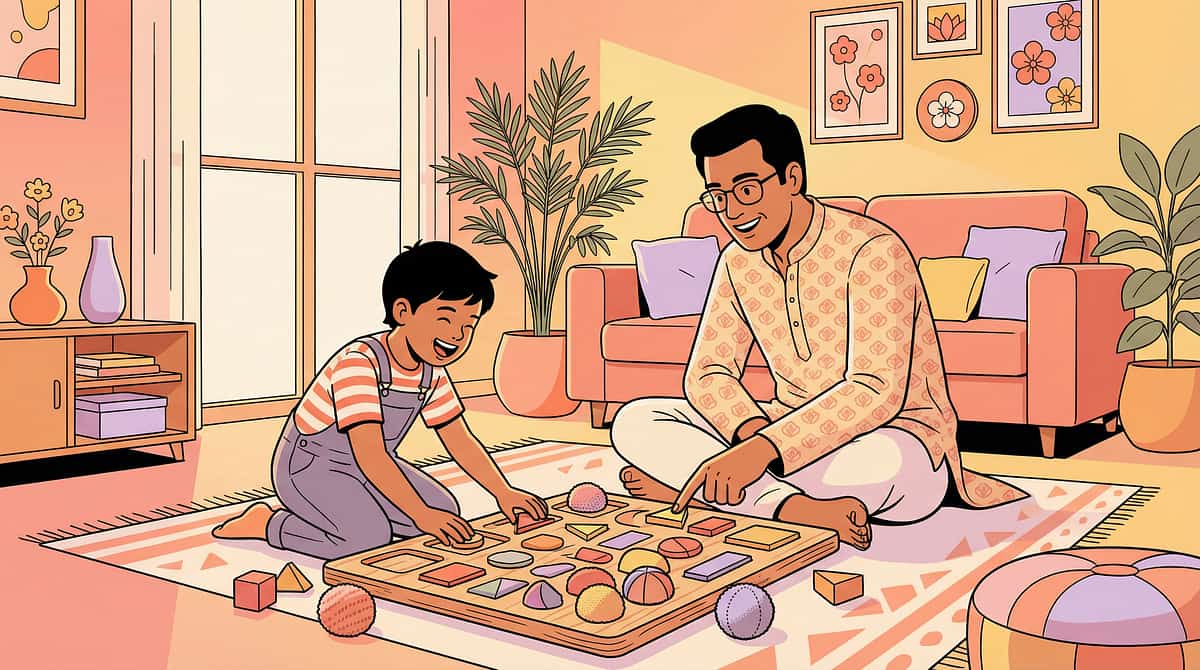
The Active Ingredient — Building Frustration Tolerance Through Action
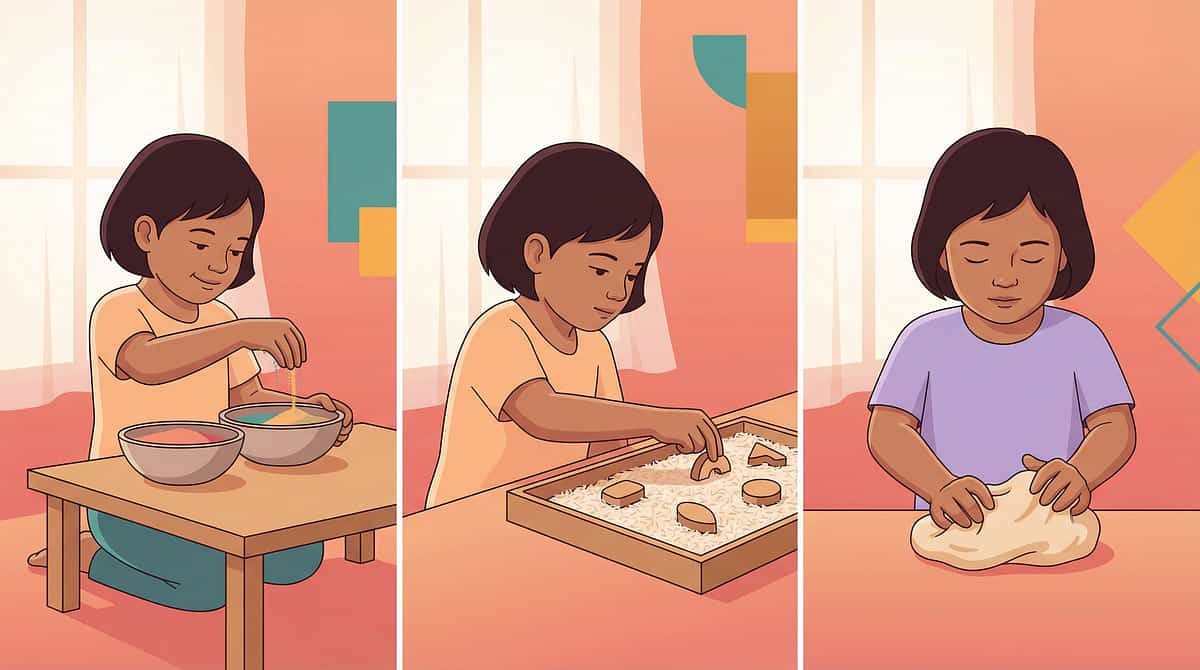
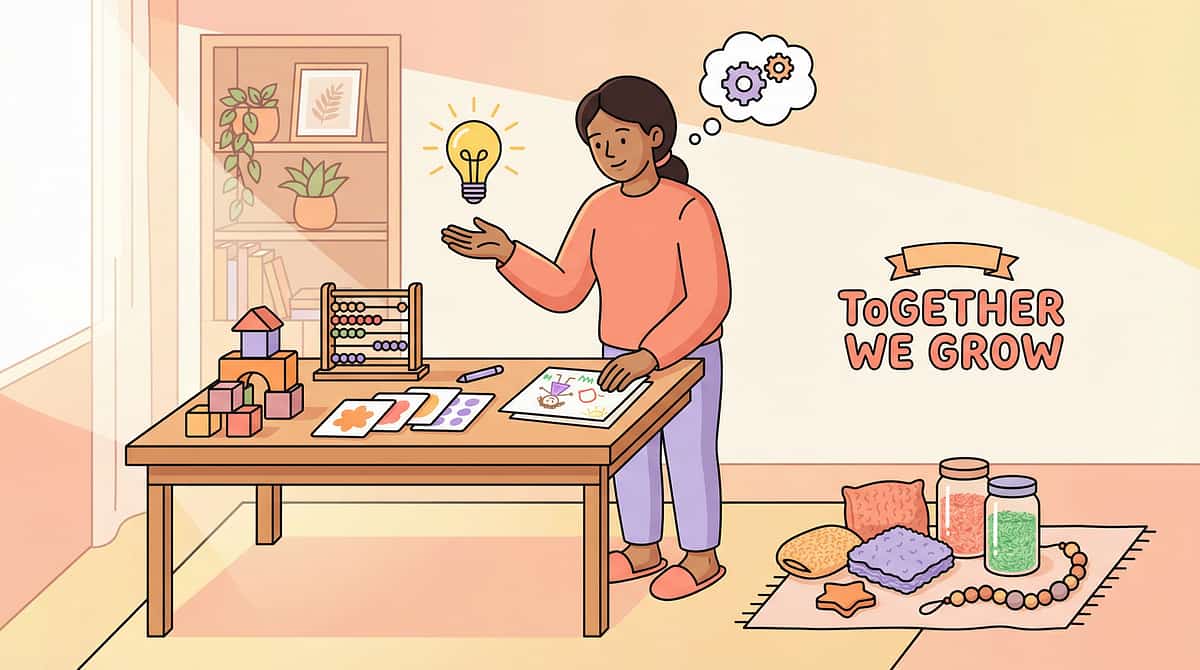
This is where the therapeutic work happens. Choose ONE primary material per session. Rotate across all 9 materials across the week to address all three components: Recognition → Strategies → Practice.
Material 1: Zones of Regulation
Child identifies current Zone. Coach: "What does Yellow Zone feel like in your body?" Practice moving between Zones. Build vocabulary first, then application. Target: Child can identify Yellow Zone before explosion. Duration: 5–8 min.
Material 2: Break Cards
Establish the system today. Say: "Whenever you feel Yellow Zone coming, show me this card. I will always stop and give you a break. No questions asked." Practice showing the card with zero frustration present — this teaches the motor pattern before need arises. Duration: 3–5 min practice.
Material 3: Graded Challenge
Child attempts challenge at calibrated level. At first sign of frustration: PAUSE. Coach: "I see Yellow Zone. What's on the coping menu?" Support ONE coping strategy use. Then: "Let's try again." The therapeutic action is the cycle: frustration → recognition → strategy → try again. Duration: 5–10 min.
Material 4: Coping Strategy Cards
Read through the menu together during calm time. Identify 2–3 strategies the child chooses (agency matters). Practice each one physically: actually take deep breaths, actually squeeze the stress ball. The cards work only when strategies are body-practiced, not just read.
Material 5: Social Story
Read together at bedtime or calm time — NEVER during frustration. Read same story 5–7 nights in a row. Ask: "What did our character do when they got frustrated?" The story builds a mental model before the real moment arrives.
Material 6: Sensory Regulation Tools
Place sensory tool within reach during any challenging task. Offer proactively: "Would the squeeze ball help while we do this?" Build sensory self-regulation as a pre-frustration strategy, not a post-explosion rescue.
Material 7: Effort Tracker
Set the tracker before the session begins. "Today, every time you TRY — even if it doesn't work — you get a star. Just the trying earns it." Award immediately and specifically on any attempt. End session by counting tries together.
Material 8: Problem-Solving Frame
When child says "I can't" — acknowledge first: "I hear you, this is hard." Then point to the frame: "Let's look at our 'stuck' poster. What are our three options?" Walk through options together. Child chooses one.
Material 9: Cooperative Game
Play a cooperative game where all players work toward a shared goal. When the game presents a setback: "We got stuck. That's frustrating. What can our team try?" The game provides real frustration practice at low emotional stakes.
"The therapeutic action is not the material. The therapeutic action is the moment of frustration + recognition + strategy + try-again. The material is the vehicle that generates that moment reliably."
Step 04 of 06
Dosage — How Much, How Many, How Often
Within a Session
Target 3–5 frustration-tolerance cycles (frustration moment → recognition → strategy → try-again).
"3 good cycles > 10 forced cycles" — quality of the cycle matters more than quantity.
Watch for satiation signs: disengagement, yawning, stimming increase, looking for exit. At first satiation sign: Celebrate what happened and begin cool-down.
Variation Options
Easy variation (bad days, first week): Reduce challenge level. Shorten to 5 min. Accept any engagement as success.
Standard variation (typical sessions): Current difficulty level. 10–15 min. Target 3 frustration cycles with strategy use.
Advanced variation (Week 4+): Slightly increase challenge. Brief competitive elements (personal best, not vs. other person). Reduce prompts — wait for child to initiate independently.
Day | Material Focus | Duration | |
Monday | Zones of Regulation + Graded Challenge | 10–15 min | |
Tuesday | Sensory Tools + Cooperative Game | 10–15 min | |
Wednesday | Rest / Free Play (recovery day) | — | |
Thursday | Break Cards + Problem-Solving Frame | 10–15 min | |
Friday | Effort Tracker + Social Story (bedtime) | 5–10 min | |
Weekend | Cooperative Game as family activity | 20–30 min |
Weeks 1–2
5 min sessions · Very easy challenge · Maximum support
Weeks 3–4
8–10 min sessions · Current level challenge · Fading prompts
Weeks 5–8
12–15 min sessions · Just-above-current-level · Independent strategy initiation targeted

Step 05 of 06
The Reinforcement Protocol — Celebrate the TRYING, Not Just the Succeeding
Core ABA Principle: Timing matters more than magnitude. Immediate, specific, enthusiastic reinforcement within 3 seconds of the desired behavior is more powerful than a big reward given later.
Recognizing frustration before explosion
"YES! You said Yellow Zone before the explosion! That is HUGE!"
Using a coping strategy (any strategy)
"I saw you squeeze the ball when you got frustrated — that's exactly what we're building!"
Trying again after frustration
"You wanted to quit and you chose to try again instead. That is frustration tolerance. Right there."
Completing the challenge
Celebrate the outcome — but make it clear: the effort was the real win.
Recovery speed
"Two weeks ago that frustration lasted 20 minutes. Today you were back in 4 minutes. Your regulation is growing."
Script library: "That was Yellow Zone AND a strategy. You just did the hardest thing." · "I don't care if the puzzle got finished. You tried 3 times. That's what matters." · "You showed your brain who's in charge today." · "That's what persistence looks like. I'm proud of you."
Reinforcement menu: Verbal praise (immediate, specific) · Effort tracker star/sticker · Token economy point · Physical celebration (high-five, fist bump, happy dance) · Social reinforcement ("I'm going to tell Daddy/Nana what you did today")

Step 06 of 06
The Session Landing — No Abrupt Endings
An abrupt session end is itself a frustration trigger. The child needs a predictable, gentle transition back to baseline. This prevents post-session dysregulation and keeps the "therapy station" a positive place.
"Two more tries, then we put everything away. Two more." (Show visual timer counting down. This warning prevents surprise endings.)
This predictable six-step close gives children the agency and warning they need to transition without dysregulation.
If Child Resists Ending
Do NOT negotiate or extend. Calmly hold the boundary: "The session is done for today. We'll do it again tomorrow. Let's put it away together." If escalation begins: "I can see you don't want to stop. That's actually a really good sign — it means you like it. We'll do it again soon. Right now it's time for ______."
Post-Session Sensory Care
Offer one regulation activity immediately after: heavy work (carry something, push a chair), proprioceptive input (wall push-ups), or quiet sensory time — whichever the child's profile responds to best.

Session Tracking
60 Seconds of Data Now Saves Hours of Guessing Later
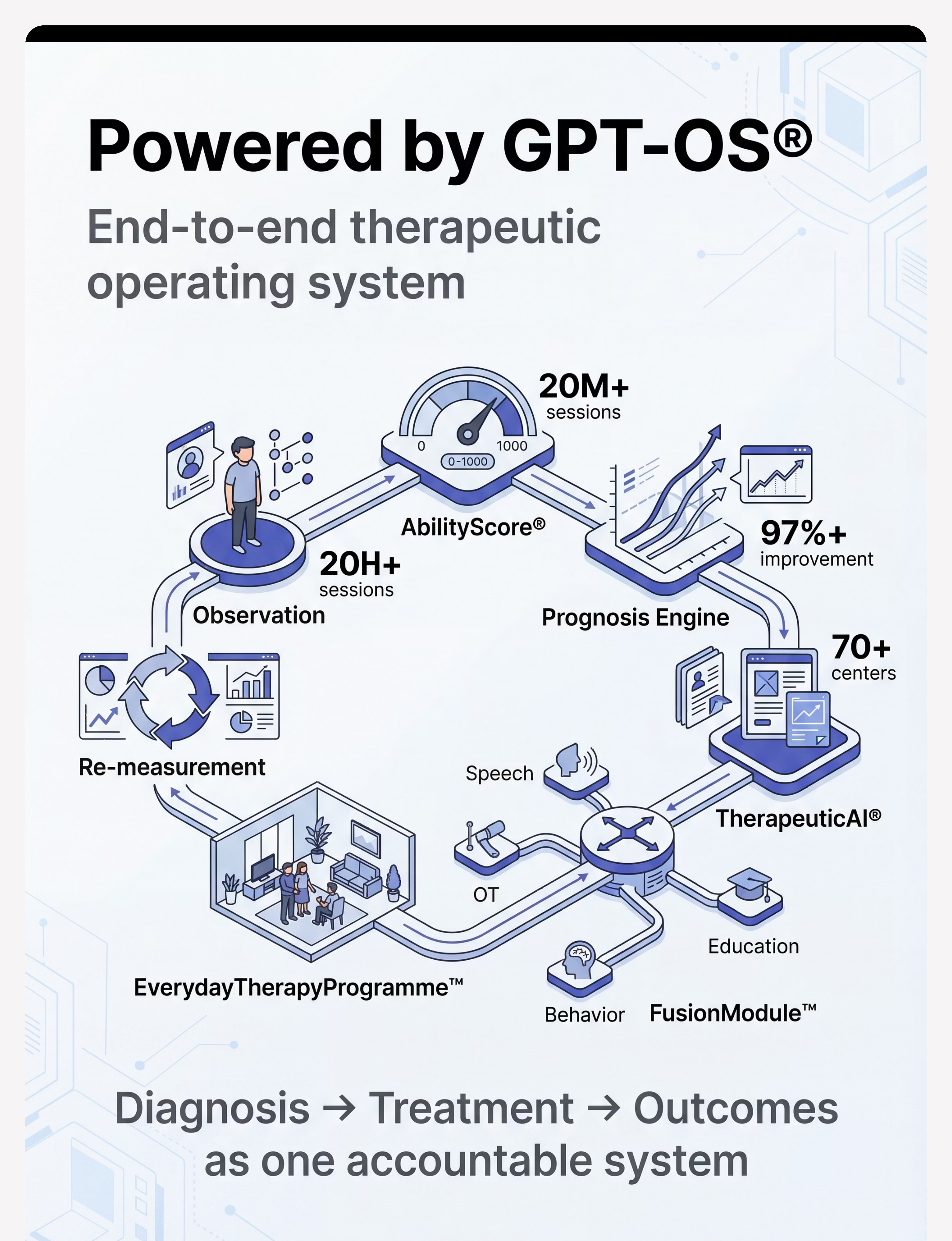
Your session data — entered in just 60 seconds — drives your child's personalized progression plan in GPT-OS®. Every data point updates the Emotional Regulation Readiness Index and informs which materials to prioritize in your child's program.
Field 1: Date + Material Used Today
Zones / Break Cards / Graded Challenge / Coping Cards / Social Story / Sensory Tools / Effort Tracker / Problem-Solving Frame / Cooperative Game
Field 2: Frustration Cycles Completed
Number: 0 / 1 / 2 / 3 / 4 / 5+
Field 3: Best Moment Today
Describe in one sentence — the specific moment of recognition, strategy use, or try-again behavior
Field 4: Peak Frustration Level
Scale 1–5: 1=mild/Yellow · 3=escalating · 5=full explosion/Red
Field 5: Recovery Time
<2 min / 2–5 min / 5–10 min / 10–20 min / 20+ min
📈 Peak Frustration Trend
Tolerance building confirmed over time
⏱️ Recovery Time Trend
Regulation capacity growing measurably
🎯 Material Effectiveness
Dosage optimization for your child
📊 AbilityScore® Update
Feeds personalized GPT-OS® progression plan
📞 Need help with data interpretation? Call 9100 181 181 — FREE, 16+ languages, 24×7
Troubleshooting
Reality Check — Most Sessions Need Adjusting
"Session abandonment is not failure — it's data. The most important thing a parent can say after a hard session is: 'I now know more about my child than I knew before.'"
"The child refused to engage from the first minute."
Why: Material association not yet positive. Motivation too low. Bad day/state. Fix: Do NOT push through resistance. Pair the activity with something highly preferred first (play 5 min with a favorite toy AT the same table before introducing therapy material). Pairing takes priority over content when motivation is absent.
"The child escalated immediately when challenge was introduced."
Why: Challenge level is too high for current capacity. Fix: Reduce difficulty by two steps, not one. If 8-piece puzzle caused explosion, go to 4-piece. Build success at 4-piece for a full week before increasing.
"The coping strategies weren't used — child just exploded."
Why: Strategies haven't been sufficiently practiced during calm states. Fix: Do NOT introduce coping prompts during meltdown. Return to practicing Zone identification during completely calm, low-demand contexts first.
"The break card was shown but I didn't honor it."
Why: Break card system failed because it wasn't honored. Fix: Honor every break card request for the next 2 weeks without exception. The card's power is entirely based on trust that it will work.
"The effort tracker caused MORE frustration."
Why: Effort tracking became outcome-focused rather than process-focused. Fix: Change the frame: "Any try gets a star — even the tries that didn't work." Make the only criteria for a star: "Did you try?"
"The child became severely distressed and the session had to be stopped."
Why: Challenge too high, timing wrong, or unidentified trigger present. Fix: Stop. Comfort. No session review during dysregulation. Wait until fully regulated. Document. If pattern repeats, contact Pinnacle team.
"Nothing happened — child was passive, no frustration tolerance work occurred."
Why: Challenge was too easy. No frustration triggered = no tolerance-building opportunity. Fix: Increase challenge one level. Frustration tolerance is built through successfully navigating actual frustration, not avoiding it.
Personalization
Every Child Is Different — Calibrate to Yours
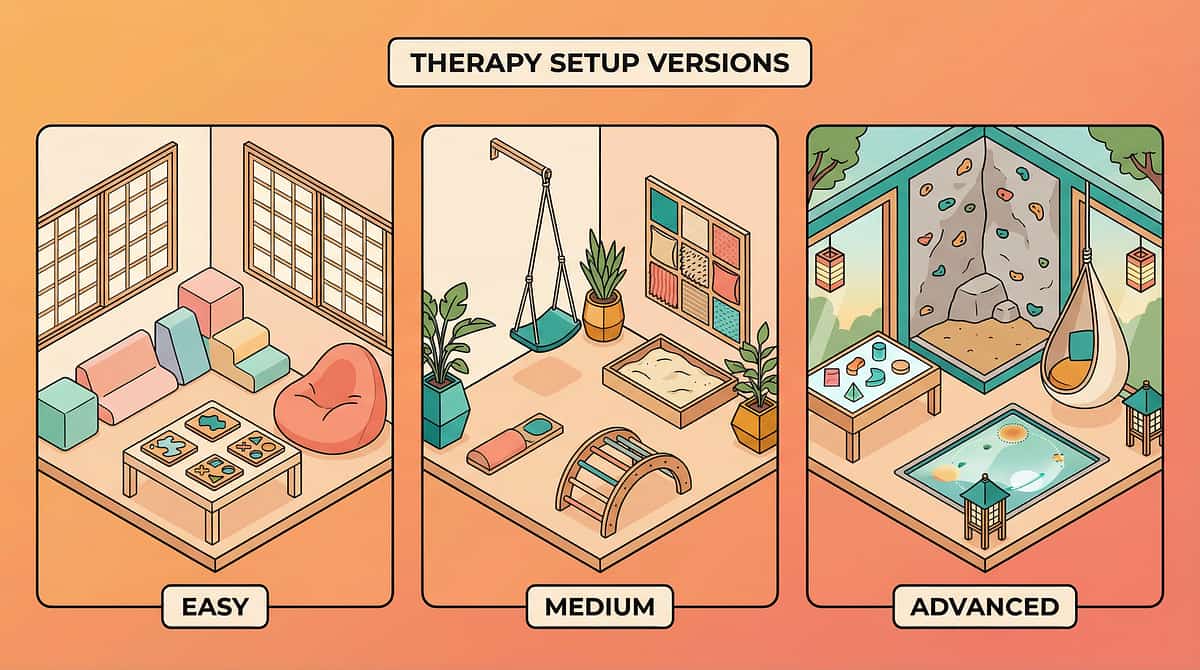
Easier
High-distress days · Early weeks · Severe presentations · 3–5 min sessions · Co-regulation priority throughout
Standard
Typical sessions · Zone ID + one challenge material · 10–15 min · Prompts available but fading
Advanced
Week 5+ · Mild time pressure · Reduced parent proximity · Independent strategy initiation without prompts
🔴 Sensory Seeker
Add proprioceptive heavy work BEFORE challenge activity. Stress balls, fidgets, resistance bands. Channel sensory need INTO the regulation toolkit.
🔵 Sensory Avoider
Reduce environmental demands first. Minimize surprise, noise, texture. Simplify environment aggressively — frustration threshold is lower due to sensory overload.
🟡 ADHD Profile
Shorter sessions (5–8 min max). Immediate, specific reinforcement every 60 seconds. Movement breaks every 3–4 minutes integrated INTO sessions. Token system with immediate exchange.
🟢 Autism Profile
Maximize predictability. Same sequence every session. Visual schedule of session steps. No unexpected changes. Use special interests as motivational bridge for challenge activities.
⬜ Anxiety-Dominant
More safety signals. More parent reassurance. "You can always stop" remains available. Focus heavily on normalizing frustration through social stories before introducing challenge.

ACT IV — Progress Arc · Week 1–2
Week 1–2: The Foundation Phase
Foundation Building
You are here — laying the neural groundwork for everything that follows
✅ What You WILL Likely See
- Child begins to tolerate the therapy station without protest
- First successful use of a break card (even if heavily prompted)
- Child can identify Yellow Zone when shown the chart (post-frustration identification first)
- 1–2 cycles where a strategy was attempted before or during frustration
- Slightly shorter recovery time — even 2 minutes less is real progress
❌ What You Will NOT See Yet (And That's Okay)
- Independent strategy use without prompts
- Mastery of any challenge activities
- Consistent Zone identification before explosion
- Dramatic behavioral change in other settings
"If your child tolerates the frustration tolerance station for 5 minutes without protest after 10 days — that is clinically significant progress. The nervous system is learning something new. It takes time."
"You are building neural pathways. They don't show on the outside yet. The work is happening." — Research: PMC11506176 (8–12 week outcome timelines) | Neuroplasticity pediatric intervention timelines

ACT IV — Progress Arc · Week 3–4
Week 3–4: Neural Pathways Forming
Consolidation Phase
Synaptic pathways are strengthening — you are in the consolidation window
Watch for these specific consolidation indicators — they are the clinical signals that the neural pathway is forming:
🧠 Spontaneous Zone Language
Child uses Zone words OUTSIDE of therapy sessions without being prompted: "I'm in Yellow, can I have a break?" This is the first evidence of true internalization.
🛑 Break Card Initiation
Child shows break card before explosion, not just during or after. This represents the shift from reactive to proactive self-regulation.
🔄 Try-Again Behavior
After a frustration moment, child returns to the activity without being directed to do so. Spontaneous persistence is the hallmark of genuine capacity growth.
💬 Frustration Verbalization
"This is HARD" or "I don't like this" instead of throwing/screaming. Explosive behavior replaced by verbal expression — celebrate this massively.
👀 Anticipatory Strategy
Child picks up the stress ball or fidget before beginning a challenging task. This is proactive self-regulation — among the highest-level consolidation indicators.
"You may notice you're more confident too. That's not incidental — parental confidence is one of the strongest predictors of child outcome."
When to increase intensity: If you're seeing 3+ consolidation indicators, increase challenge difficulty one step and reduce prompts for strategy use. The nervous system is ready for more.

ACT IV — Progress Arc · Week 5–8
Week 5–8: From Practice to Mastery
Mastery Phase
Skills moving from structured practice to naturalized, independent use
🏆 MASTERY BADGE UNLOCK — Emotional Regulation: Frustration Tolerance
📋 Core Mastery Indicators
- Child independently identifies Yellow Zone in real frustration moments ≥3 of 5 occurrences/week
- Child uses 1+ coping strategy before or during (not just after) frustration ≥3 of 5 occurrences
- Child attempts a challenging task ≥2 times before requesting help or stopping
- Recovery time from frustration peak to baseline is ≤5 minutes in most incidents
- Break card used proactively (before explosion) at least 3× in the past week
🌍 Generalization Indicators
- Teacher reports reduced frustration meltdowns at school
- Child tolerates losing a game without explosive behavior (at least occasionally)
- Child completes homework without meltdown ≥3 nights/week
- Child uses Zone language or coping strategy with a grandparent/sibling (generalization beyond primary caregiver)
Maintenance Check
Take a 3-day break from structured sessions. Does the behavior maintain? If yes → maintenance confirmed. If regression → resume structured sessions at current level for 2 more weeks.
"Mastery unlocked" — What now? Ready to progress to C-276 (Emotional Vocabulary) or D-domain techniques integrating frustration tolerance into behavioral flexibility work. See Card 29 for full progression pathway. | Research: PMC10955541 | BACB mastery criteria standards
Milestone Celebration
You Did This. Your Child Grew Because of You.
"Eight weeks ago, every hard thing broke her. Today, she tries again. Same child. Bigger capacity. You built that."
✅ Frustration Recognition System
Zone awareness established — child knows when frustration is rising
✅ Strategy Repertoire Built
Break cards, coping tools, sensory supports — a full personal toolkit
✅ Persistence Grown
Graded challenge practice documented the growth — try counts in the hundreds
✅ Progress Documented
Data proves the growth — recovery time, cycle completion, strategy use all trending
✅ Skills Generalized
The capacity has moved beyond the therapy station into real life
Family celebration suggestion: Plan a special family activity that previously would have triggered frustration — a board game, a puzzle, a challenging outdoor activity. Notice the difference. Name it out loud together: "Remember when we used to have to stop? Look at you now."
Photo/journal prompt: "What I saw my child do this week that they couldn't do 8 weeks ago:" ___________
Photo/journal prompt: "What I saw my child do this week that they couldn't do 8 weeks ago:" ___________
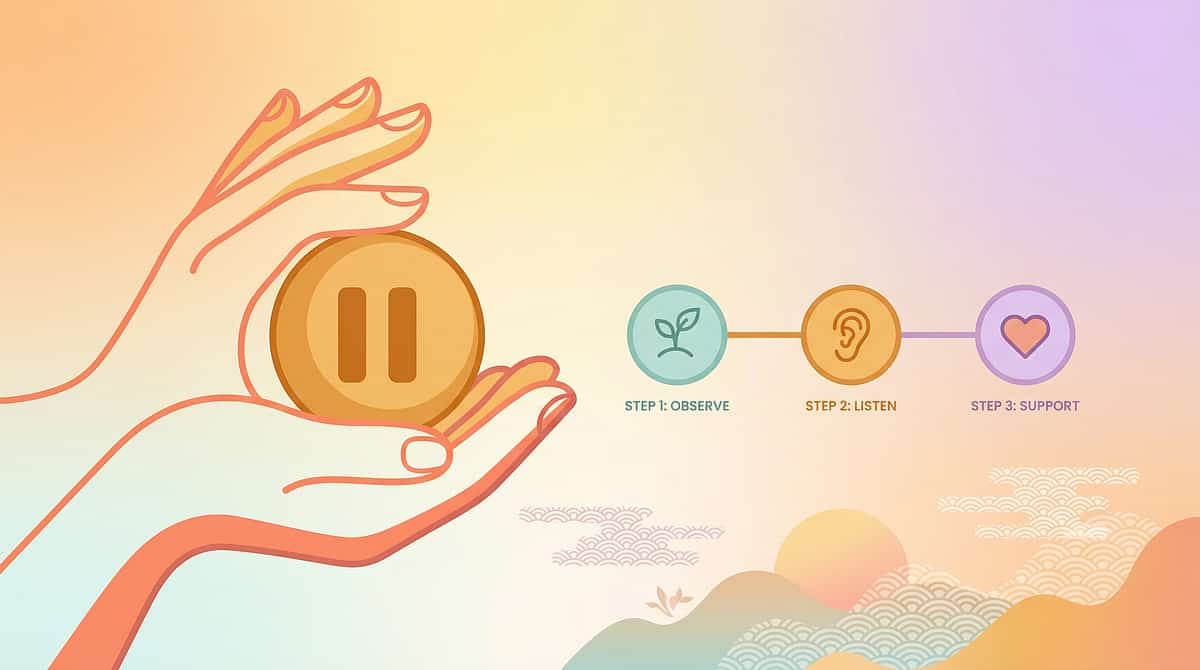
Clinical Guardrails
Clinical Guardrails — Know When to Escalate
🚨 RED FLAG 1: Self-Injurious Behavior
Child hits themselves, bangs head, bites self, scratches when frustrated. Requires functional behavior assessment (FBA) by a BCBA before home protocol continues. Action: Pause home challenge sessions. Call Pinnacle: 9100 181 181.
🚨 RED FLAG 2: Aggression Injuring Others
Hitting, kicking, biting caregivers or siblings with force. Safety planning must precede tolerance-building work. Action: Immediate behavioral consultation needed. Contact center.
🚨 RED FLAG 3: No Progress After 6 Weeks
No measurable change in peak frustration level, recovery time, or strategy use. May indicate need for intensive professional intervention or unaddressed comorbidity blocking progress. Action: Share data with Pinnacle OT or BCBA. Teleconsult to review protocol.
🚨 RED FLAG 4: Anxiety Escalation
Child becomes increasingly anxious about any challenging activities. Avoidance dramatically worsens. Anxiety-dominant profile requires different pacing. Action: Psychology consultation. Slower pace. More safety signals.
🚨 RED FLAG 5: Parent Burnout
Sessions becoming inconsistent, parent dreading the work, anger building. Burned-out caregivers cannot provide the co-regulation that makes this work. Action: Contact Pinnacle parent support. This is normal and fixable. You deserve support too.
Escalation pathway: Self-resolve at home → Teleconsult with Pinnacle therapist → In-center assessment → Multi-disciplinary review

Progression Pathway
Your Child's Developmental GPS — Where This Leads
Every technique in the Pinnacle system has a before and after. C-275 builds on the foundational regulatory capacity established in C-273 and C-274, and unlocks the higher-order skills in C-276 and beyond.
Prerequisites (What Came Before)
- C-273: Understanding Emotional Dysregulation — knowing that emotions dysregulate before knowing how to manage them
- C-274: Self-Regulation Development — building the baseline capacity that frustration tolerance builds upon
Next-Level Options
- Option A → C-276: Emotional Vocabulary (if Zone language is emerging strongly)
- Option B → C-277: Anxiety Management (if anxiety is significantly complicating frustration tolerance)
- Option C → D-domain: Behavioral Flexibility (if rigid thinking is the primary frustration driver)
Long-Term Developmental Goals This Feeds
- → Executive Function Readiness Index
- → Academic Readiness Index
- → Social-Emotional Readiness Index
- → Life Skills and Occupational Participation
Lateral Alternatives
- C-270: Managing Public Meltdowns (if frustration is most problematic in public settings)
- C-274: Self-Regulation Development (if baseline needs more foundational work first)
Domain Navigation
More Techniques in the Emotional Regulation Domain
Code | Technique | Difficulty | Canon Material | |
C-273 | Understanding Emotional Dysregulation | 🟢 Intro | Visual Supports | |
C-274 | Self-Regulation Development | 🟢 Intro | Sensory Tools | |
C-275 | Frustration Tolerance ← YOU ARE HERE | 🟡 Core | Problem-Solving Toys | |
C-276 | Emotional Vocabulary | 🟡 Core | Emotion Cards | |
C-277 | Anxiety Management | 🟡 Core | Coping Cards | |
C-270 | Public Meltdown Management | 🔴 Advanced | Regulation Tools |
You already own materials for: Problem-Solving Toys → applicable to C-274, C-273. Coping Cards → applicable to C-277. Cooperative Games → applicable to C-276. Your C-275 investment extends across the entire domain.

ACT V — Community & Ecosystem
The Big Picture — Where C-275 Lives in Your Child's Development
C-275 is one technique in Domain C. Domain C contains dozens of techniques. The 12 domains together constitute your child's full developmental profile. Frustration tolerance work in Domain C strengthens Executive Function in Domain K and Academic Readiness in Domain I. No domain works in isolation.
If your child is on GPT-OS®, this card links to their AbilityScore® profile showing which domains are active, progressing, and prioritized. Link to AbilityScore® Assessment → 📞9100 181 181 to discuss your child's developmental map with a specialist.
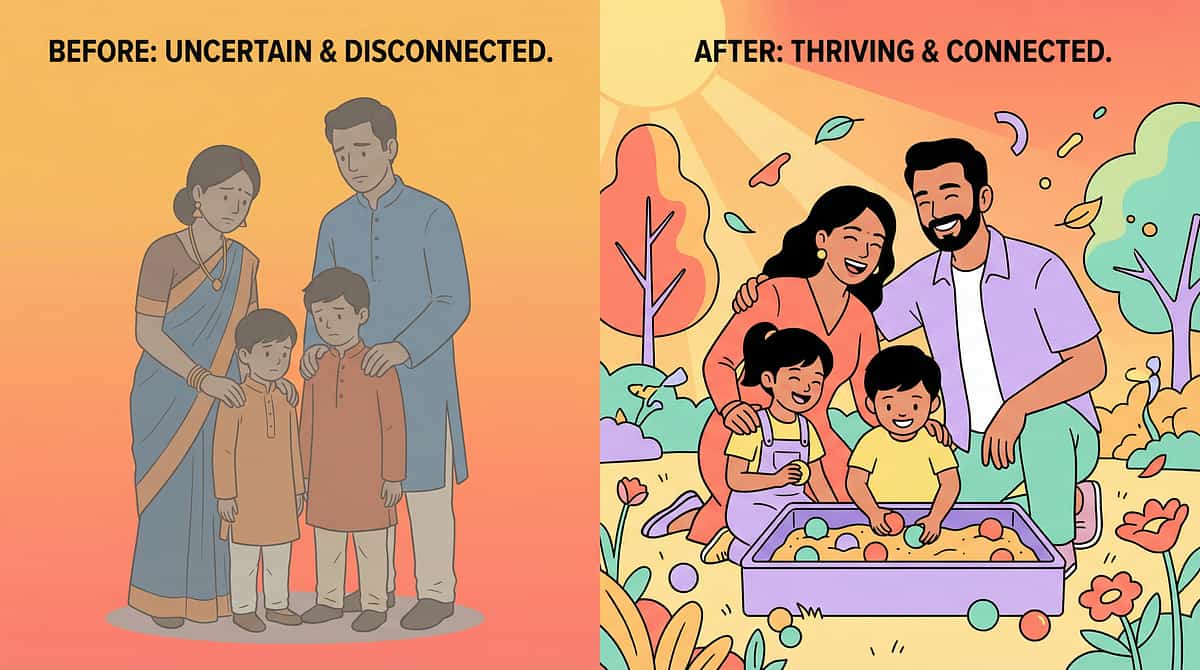
Real Families · Real Outcomes
Real Families. Real Outcomes. Real Hope.

Priya, 7 years — Hyderabad Center
Before: "Homework was a nightly war. Any problem that required thinking beyond 30 seconds ended in screaming, crumpled paper, and my daughter crying that she was stupid. We started dreading 4pm."
After (Week 8): "Last Thursday she got stuck on a math problem. I watched from the doorway. She took a breath, squeezed her stress ball, tried it a different way, asked 'Can you just show me the first step?' and finished the worksheet. I nearly cried. Same child. Completely different capacity."
Timeline: 8 weeks · Zones chart + coping cards + effort tracker
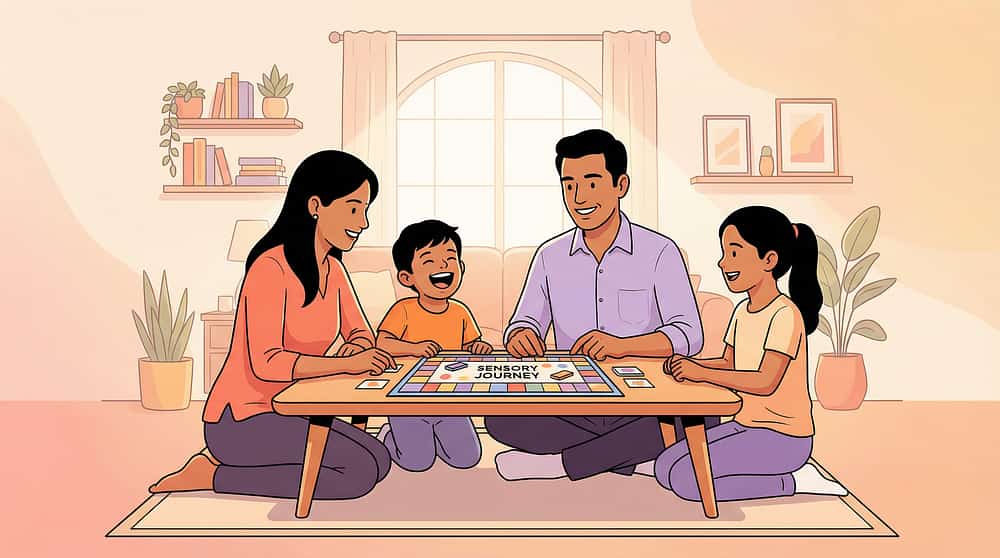
Arjun, 9 years — Bangalore Center (ADHD + ASD)
Before: "Board games were banned in our house. Arjun would flip the board if he was losing. His sister refused to play with him. His teachers called weekly about classroom outbursts."
After (Week 10): "We played Snakes and Ladders last weekend — all four of us. Arjun landed on a snake twice. He said 'Ugh, Yellow Zone!' and took a breath. His sister's face — pure shock. Mine too."
Timeline: 10 weeks · FusionModule™ (OT + ABA) · Cooperative games + sensory tools + token economy
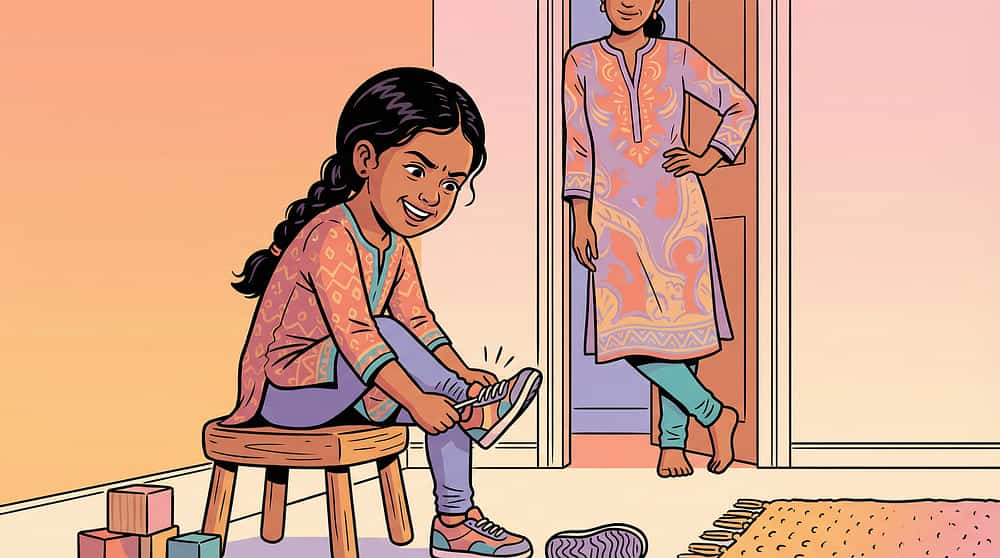
Sadhvi, 5 years — Delhi Center
Before: "I didn't know what frustration tolerance was. I just knew that my daughter threw herself on the floor every time she encountered anything difficult — puzzles, drawing, even putting on her shoes."
After (Week 6): "The shoes thing — that alone. She struggled, said 'I try again,' and got it. Then looked up at me like she'd climbed Everest. She HAD climbed Everest. For her."
Timeline: 6 weeks · EverydayTherapyProgramme™ · Break cards + graded challenge activities
"In frustration tolerance work, the first time a child says 'I try again' after failure — without being asked — is the moment we know the neural pathway has formed. It's the clinical equivalent of a first step." — Pinnacle OT-ABA Team
Illustrative outcomes based on Pinnacle clinical data. Individual results vary. Statistics represent aggregate outcomes.
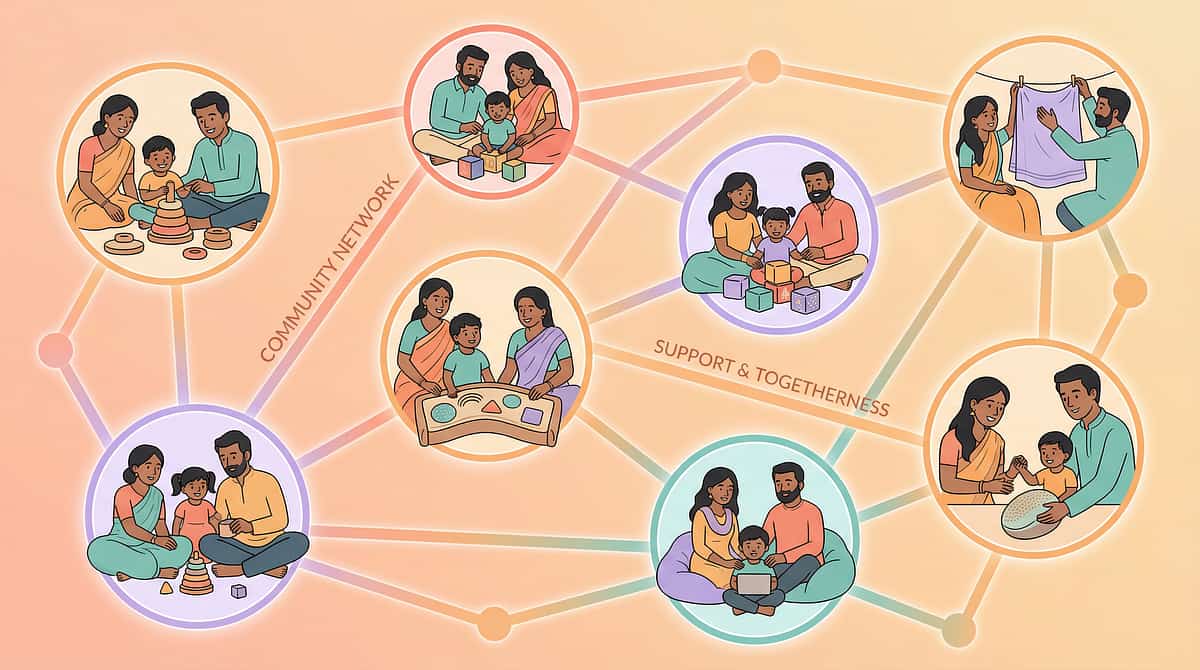
Community
You Don't Have to Navigate This Alone
Pinnacle Blooms Consortium
Validated Parent Support Network
📱 Frustration Tolerance Parent Circle
WhatsApp group for families working on frustration tolerance techniques. Moderated by Pinnacle trained parent mentors. Join the Group →
💻 Online Parent Forum
Discuss C-275 implementation, share what's working, troubleshoot together with hundreds of families. Visit Forum →
👥 Pinnacle Parent Meetups
Monthly in-person parent support groups at 70+ Pinnacle centers across India. Real connection with families who understand. Find a Meetup Near You →
🤝 Peer Mentoring Program
Connect with an experienced parent who has completed frustration tolerance work. Free. Powerful. Their journey is your roadmap. Request a Peer Mentor →
"Your experience helping your child build frustration tolerance is valuable knowledge. Another parent is where you were 8 weeks ago. Consider sharing your journey."
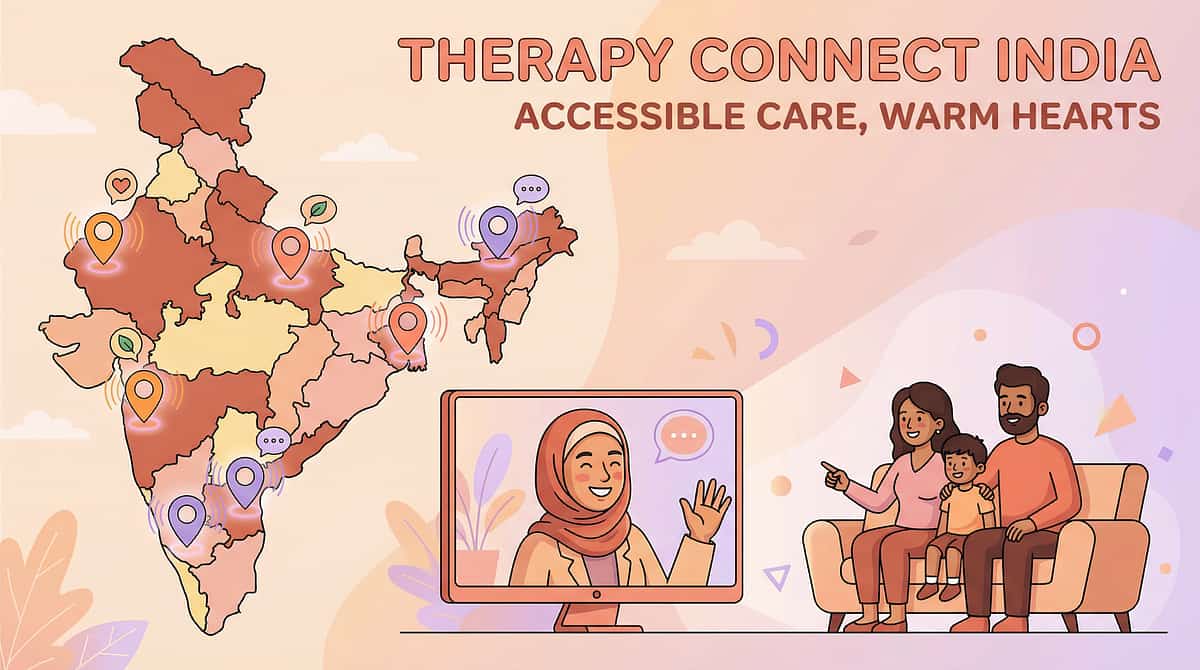
Professional Support
Home + Clinic = Maximum Impact
🟤 Occupational Therapist
Primary lead for sensory regulation + graded challenge calibration. Book first.
🔵 ABA / BCBA Specialist
Behavioral protocol design + data system + reinforcement hierarchy for C-275.
🟣 Psychologist
Anxiety comorbidity + parental guidance + clinical oversight of the full protocol.
🟢 Special Educator
School-setting generalization + homework protocols + teacher alignment.
🩵 NeuroDev Pediatrician
Comorbidity management (ADHD/ASD/anxiety) + medication review where appropriate.
Unlike siloed therapy, Pinnacle's FusionModule™ coordinates all disciplines into a single converged therapeutic pathway. Your child's frustration tolerance data flows across all disciplines. One plan. Multiple expert hands.
"Home-based technique pages like C-275 work best when validated and personalized by a professional. Home is where the hours are. Clinic is where the calibration is."
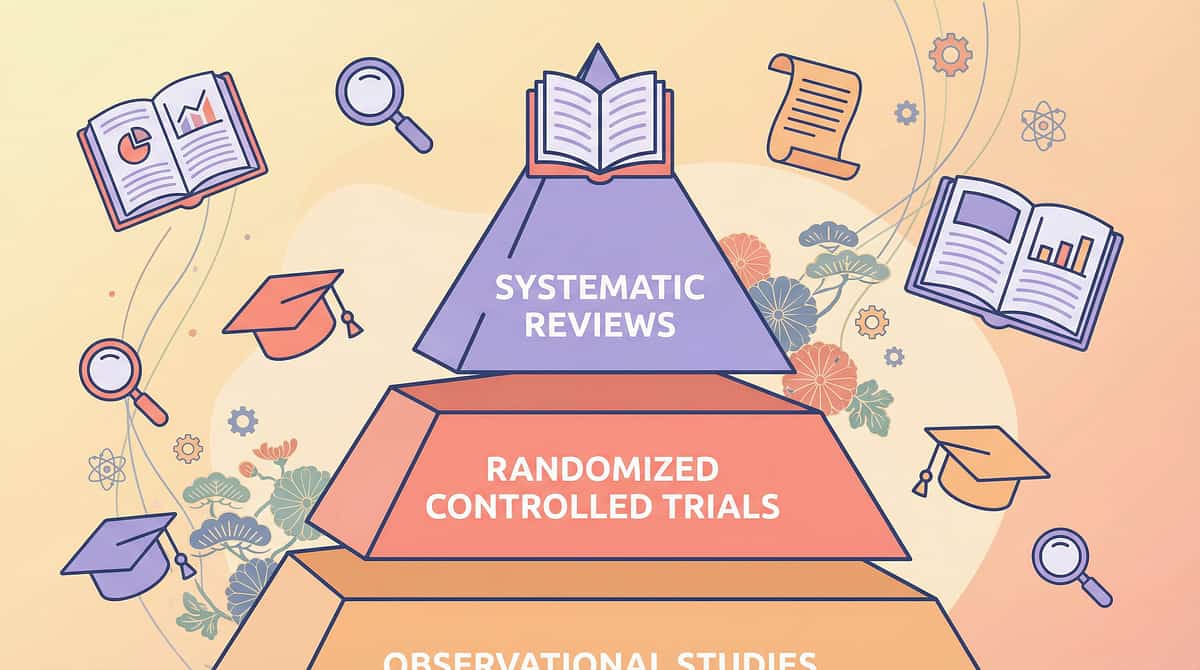
Research Library
The Science Behind C-275 — For the Curious Parent
📖 PMC11506176 — Children (2024)
PRISMA Systematic Review: 16 studies (2013–2023). Structured emotional regulation interventions meet evidence-based practice criteria for children with ASD. Multiple RCTs confirm frustration tolerance is buildable through systematic intervention. Read on PubMed →
📖 PMC10955541 — World J Clin Cases (2024)
Meta-analysis: 24 studies confirming integrated sensory + behavioral approach promotes adaptive behavior with significant effect sizes across pediatric populations. Read on PubMed →
📖 PMC9978394 — WHO/UNICEF CCD Package (2023)
Care for Child Development Package implementation in 54 LMICs: home-based caregiver-delivered intervention demonstrates measurable outcomes, directly validating C-275's home execution framework. Read on PubMed →
📖 Indian J Pediatr (2019) — Padmanabha et al.
Indian RCT on home-based intervention for children with developmental challenges. Significant developmental outcomes through caregiver-administered protocols within 8-week timeframe. Access Article →
📖 NCAEP Evidence-Based Practices Report (2020)
National Clearinghouse on Autism Evidence and Practice: classifies visual supports, break cards, social stories, and video modeling as evidence-based practices for autism. Directly validates Materials 1–5 in C-275. View Report →

Technology Platform
Your Data. Your Child's Personalized Future.

Media & Learning
Watch: 9 Materials That Help With Frustration Tolerance
📹 Reel ID: C-275
⏱️ 75–85 seconds
Presented by the Pinnacle Blooms Consortium OT-ABA-SLP Team
This reel introduces all 9 materials covered in depth on this page. Watch the materials in action. See the frustration-to-persistence arc in real child interactions. Video modeling is classified as an evidence-based practice for autism (NCAEP, 2020) — watching the materials in action multiplies the impact of reading about them.
Reel Content Overview
- 0–6 sec: Hook — "When everything hard becomes impossible"
- 6–51 sec: Materials showcase — all 9 with demonstrations
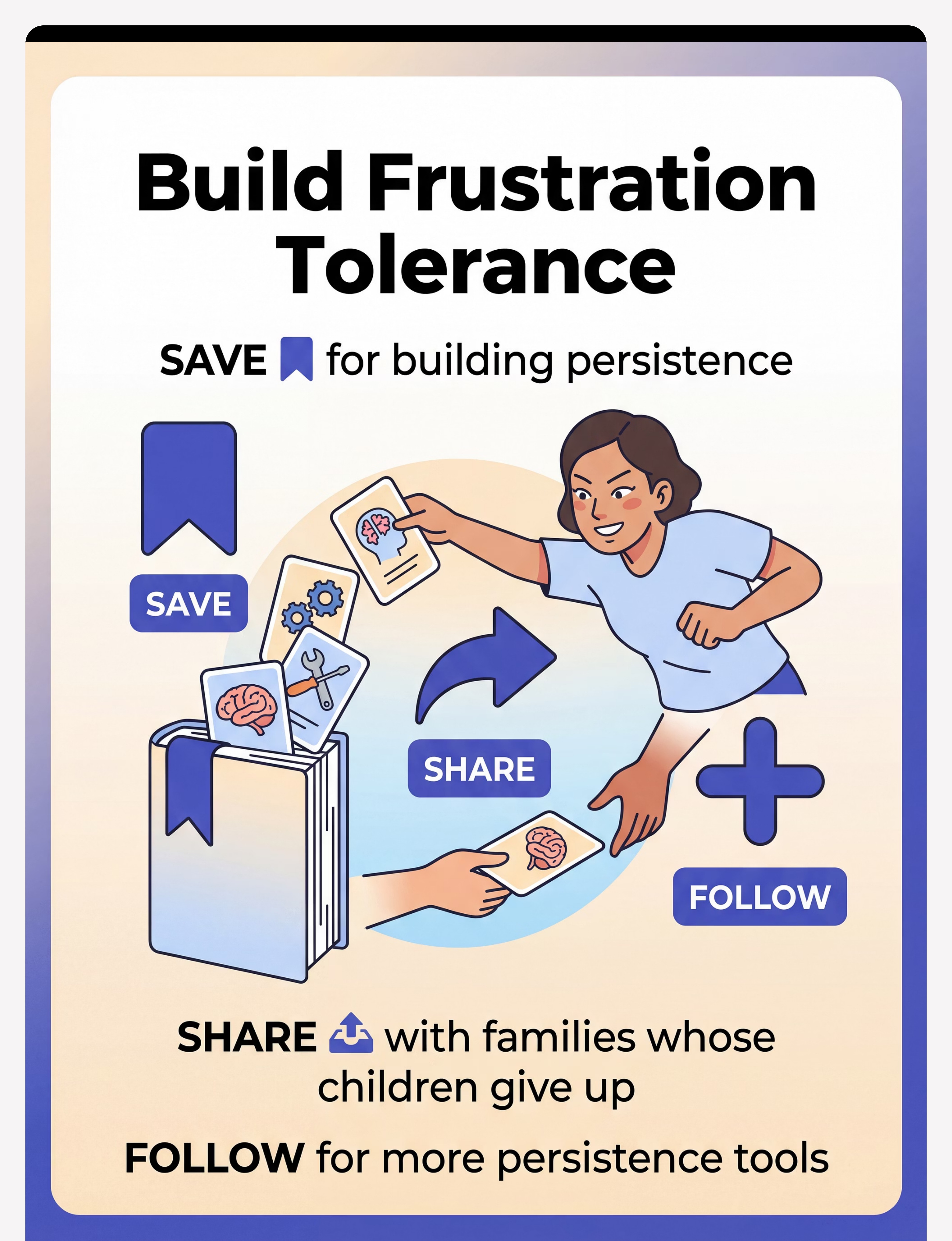
- 51–55 sec: CTA — Save, Share, Follow
- 55–75 sec: GPT-OS® closure + helpline
Series: Emotional Regulation & Behavioral Support · Episode 275 | Domain C — Emotional Regulation / Executive Function
Subscribe to Pinnacle Reels
Caregiver Alignment
Consistency Across Caregivers Multiplies Impact
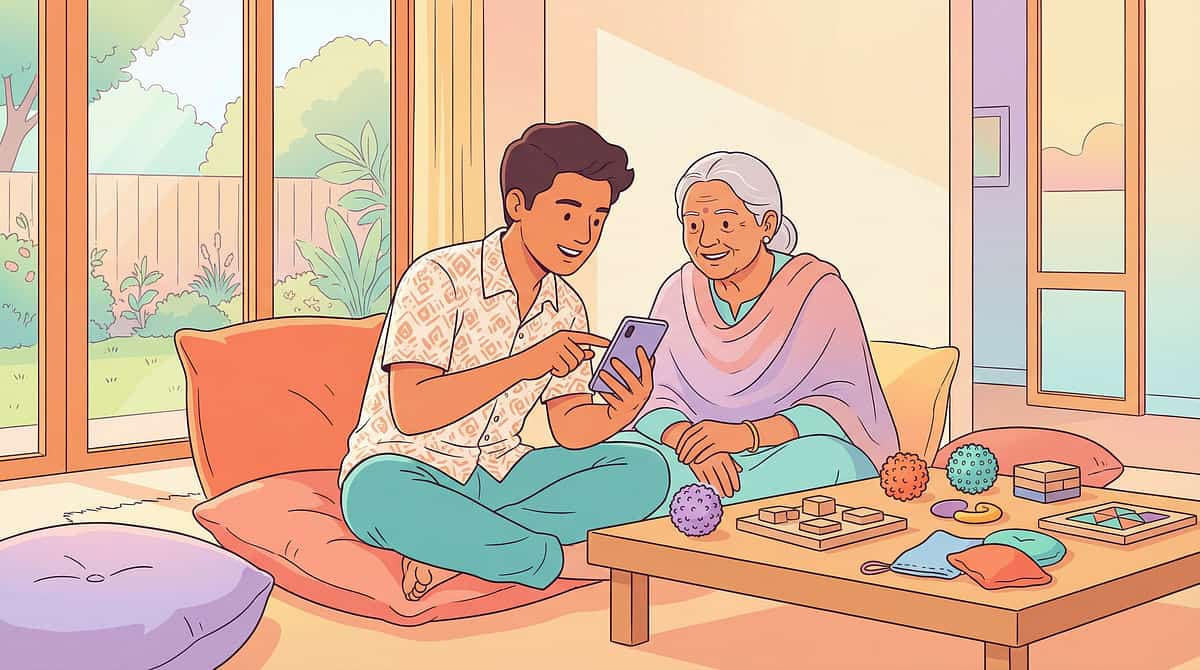
WHO CCD Package: multi-caregiver training is critical for intervention generalization. If only one parent executes C-275, the child's 24×7 environment is 50% therapeutic. If both parents, grandparents, and teachers are aligned — the environment is maximally therapeutic.
Share This Page
📲 Share on WhatsApp: "9 materials that helped our child build frustration tolerance — evidence-based, home-ready: techniques.pinnacleblooms.org/emotional-regulation/frustration-tolerance-C-275"
📧 Share via email · 🔗 Copy page link · 📄 Download Family Guide PDF (1-page summary for grandparents, teachers)
Explain to Grandparents
"Amma/Nanna, when the child gets frustrated and starts to explode — instead of telling them to stop crying or try harder, we're teaching them to recognize that feeling early (Yellow Zone) and use their tools (break card, squeeze ball, coping cards). Please don't remove all challenges — we need them to practice tolerating hard things. If they show you their break card, please honor it immediately. It's how they ask for help without exploding."
Teacher Communication Template: "Dear [Teacher Name], Our child is working on frustration tolerance through C-275 at Pinnacle Blooms. We use Zones of Regulation language (Yellow Zone = frustrated, Red Zone = explosive) and break cards. If [child's name] shows you the break card, please honor it and allow a 3-minute seated break. Home-school consistency is critical for generalization."
ACT VI — Close & Loop
Questions Parents Ask Most About Frustration Tolerance
"How long before I see real changes?"
Most families see initial consolidation signs (Zone language appearing spontaneously, break card used proactively) within 3–4 weeks of consistent daily implementation. Observable behavioral change in outside-session contexts typically emerges at 6–8 weeks. Mastery criteria are achievable within 8–12 weeks for most children.
"My child is 4 years old. Is C-275 appropriate?"
Yes, with modifications. For children 3–5, shorten sessions to 3–5 minutes. Use simplified 2-zone version (Calm/Not Calm). Graded challenge activities should be highly play-based. Social stories are especially effective — read nightly. The break card system works very well from age 3 onward.
"We're already in OT. Should I STILL do home sessions?"
Absolutely yes. Clinic sessions are 1–2 hours per week. Home is where the remaining 166+ hours are. Research consistently shows home-based caregiver execution is the multiplier that makes clinic work meaningful. Discuss C-275 with your OT and align home and clinic activity.
"My child uses the break card to escape ALL work."
Common in early implementation. The fix: break cards are honored (non-negotiable) AND return-to-task is also expected after every break. The break ends → child returns to work. Over time, the break-return cycle itself becomes the regulation skill. The goal is not preventing breaks — it's having the child come back after each one.
"Is frustration tolerance work different for ADHD vs. autism?"
Yes. ADHD profile: shorter sessions, higher reinforcement density, more movement breaks, immediate reward cycles. Autism profile: maximum predictability, special interests as motivational bridges, explicit instruction of each strategy component. Both benefit from the same 9 materials — but calibration differs significantly. Pinnacle's FusionModule™ provides differentiated protocols.
"What if I'm too exhausted to implement this consistently?"
Start with only ONE material (break cards or effort tracker — both require minimal setup). Two minutes of consistent implementation beats thirty minutes of inconsistent exhaustion. Call Pinnacle's helpline: 9100 181 181 — parent support is part of the service.
"My child regressed suddenly — is something wrong?"
Regression is normal in any developmental work, especially around transitions (new school year, family changes, illness). Neural pathways formed are not lost. Return to basic implementation, increase support, reduce challenge level, and wait. Most regressions resolve within 1–2 weeks. If severe or prolonged, contact a Pinnacle therapist.
"Is there a risk coping cards make the child dependent on them?"
The cards are temporary scaffolds. With repeated use, coping strategies are internalized and the external card becomes unnecessary. Most children naturally stop needing visual cards as strategies become automatic — typically between 3–6 months of consistent use. The goal is always internalization.

Your Next Step
You Have Everything You Need. Start Today.
🚀 Start This Technique Today
Launch your C-275 guided session through GPT-OS® EverydayTherapyProgramme™
📋 Book a Consultation
Get your child's AbilityScore® assessment and personalized C-275 calibration. 📞9100 181 181 (FREE, 16+ languages, 24×7)
➡️ Explore the Next Technique
C-276: Emotional Vocabulary → Build the language that frustration tolerance needs
✅ Validated by Pinnacle Blooms Consortium
OT · ABA/BCBA · SLP · SpEd · NeuroDev · CRO · WHO/UNICEF-aligned
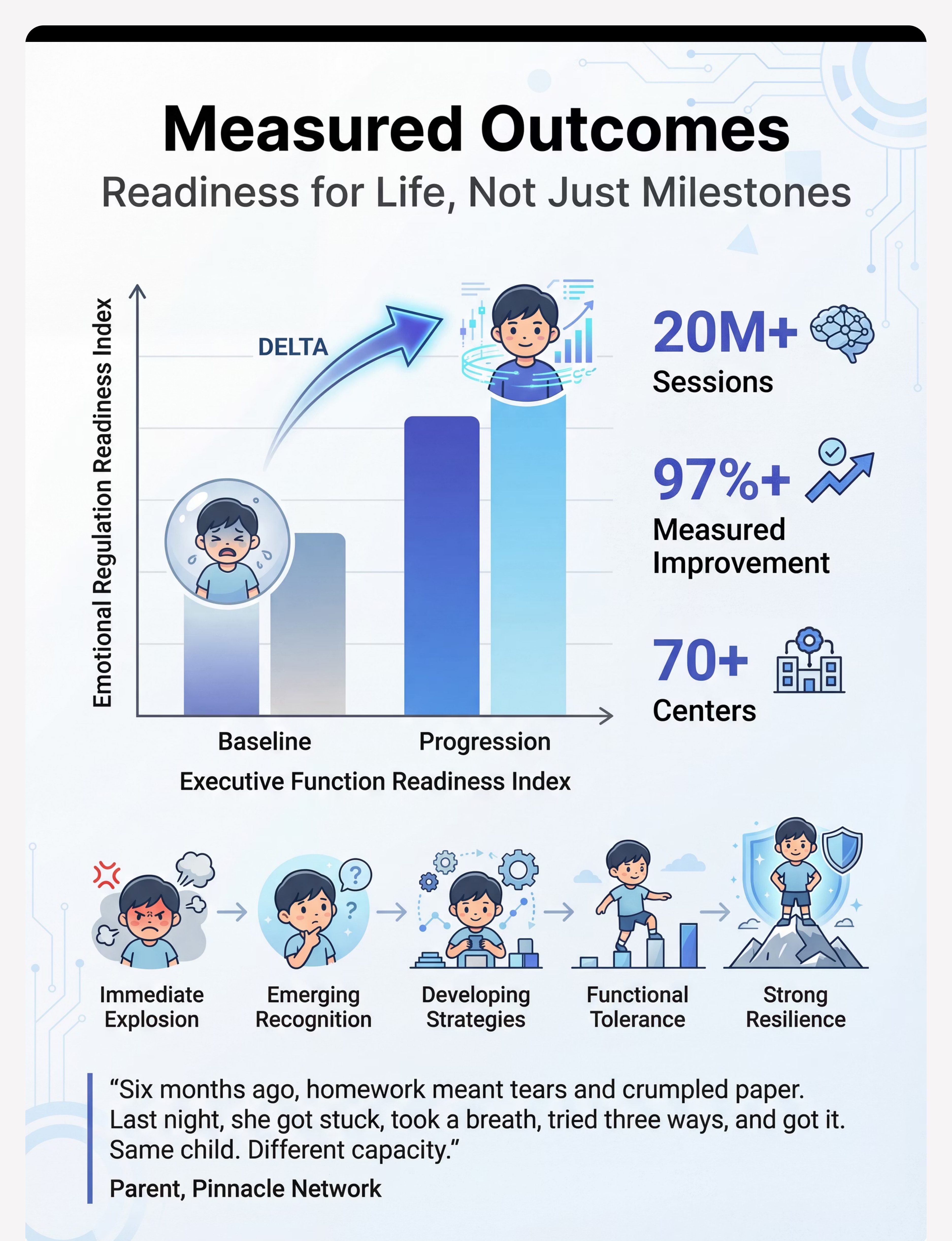
20M+
Sessions Logged
GPT-OS® evidence base
97%+
Measured Improvement
Across Emotional Regulation Readiness Index
70+
Centers Nationally
Across India — find yours today
Level II
Evidence Grade
Systematic Reviews + Multiple RCTs
Preview of 9 materials that help with frustration tolerance Therapy Material
Below is a visual preview of 9 materials that help with frustration tolerance therapy material. The pages shown help educators, therapists, and caregivers understand the structure and content of the resource before use. Materials should be used under appropriate professional guidance.


Link copied!

Pinnacle Blooms Network® | C-275
"From fear to mastery. One technique at a time."
Pinnacle Blooms Consortium
OT · SLP · ABA · SpEd · NeuroDev · CRO · Mothers · Families · WHO/UNICEF Aligned
You arrived at Card 01 with fear. By Card 05, you understood the science. By Card 12, your space was ready. By Card 22, you executed and adapted. By Card 30, you saw the full map. By Card 38, your family was aligned. Now you act. The next technique waits.
This content is educational and informational. It does not replace individualized assessment and intervention planning with licensed professionals including psychologists, occupational therapists, and behavioral specialists. Frustration tolerance interventions should be tailored to individual child profiles by qualified clinicians. Always consult your healthcare provider before beginning any therapeutic intervention. Individual results may vary. Statistics represent aggregate outcomes across the Pinnacle Blooms Network.
© 2025 Pinnacle Blooms Network®, unit of Bharath Healthcare Laboratories Pvt. Ltd. | CIN: U74999TG2016PTC113063 | DPIIT: DIPP8651 (Govt. of India) | MSME Udyog Aadhaar: TS20F0009606 | GSTIN: 36AAGCB9722P1Z2 | ISO 13485 — Medical Device QMS | ISO/IEC 27001 — Information Security | Patents filed across 160+ countries
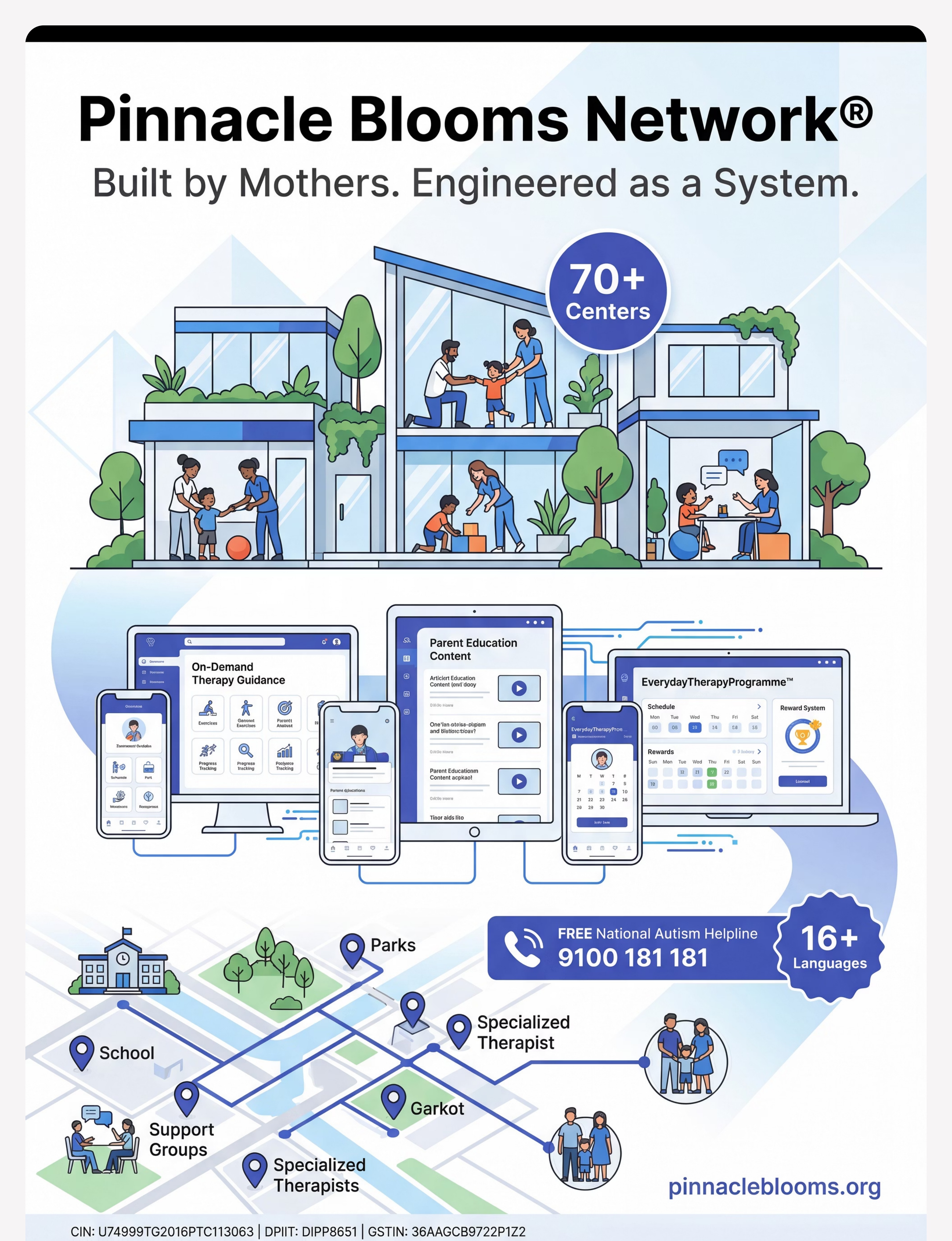
📞FREE National Autism Helpline: 9100 181 181 | 16+ Languages | 24×7 | pinnacleblooms.org