
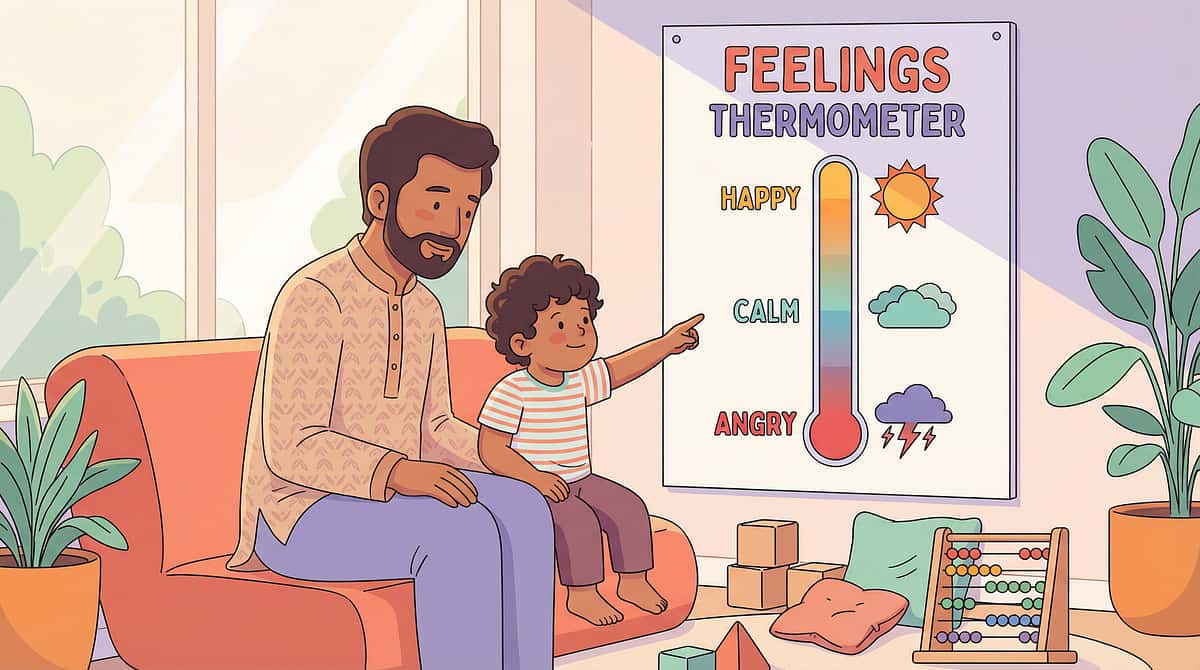
9 Materials That Help With Emotional Thermometer
When your child goes from calm to explosive with no warning — these 9 materials build emotional temperature awareness. Science-backed, home-executable. Trusted by 70+ Pinnacle centers across India.
Domain C — Emotional Regulation
Ages 3–14
C-273

She Goes From Calm to Explosive in Seconds
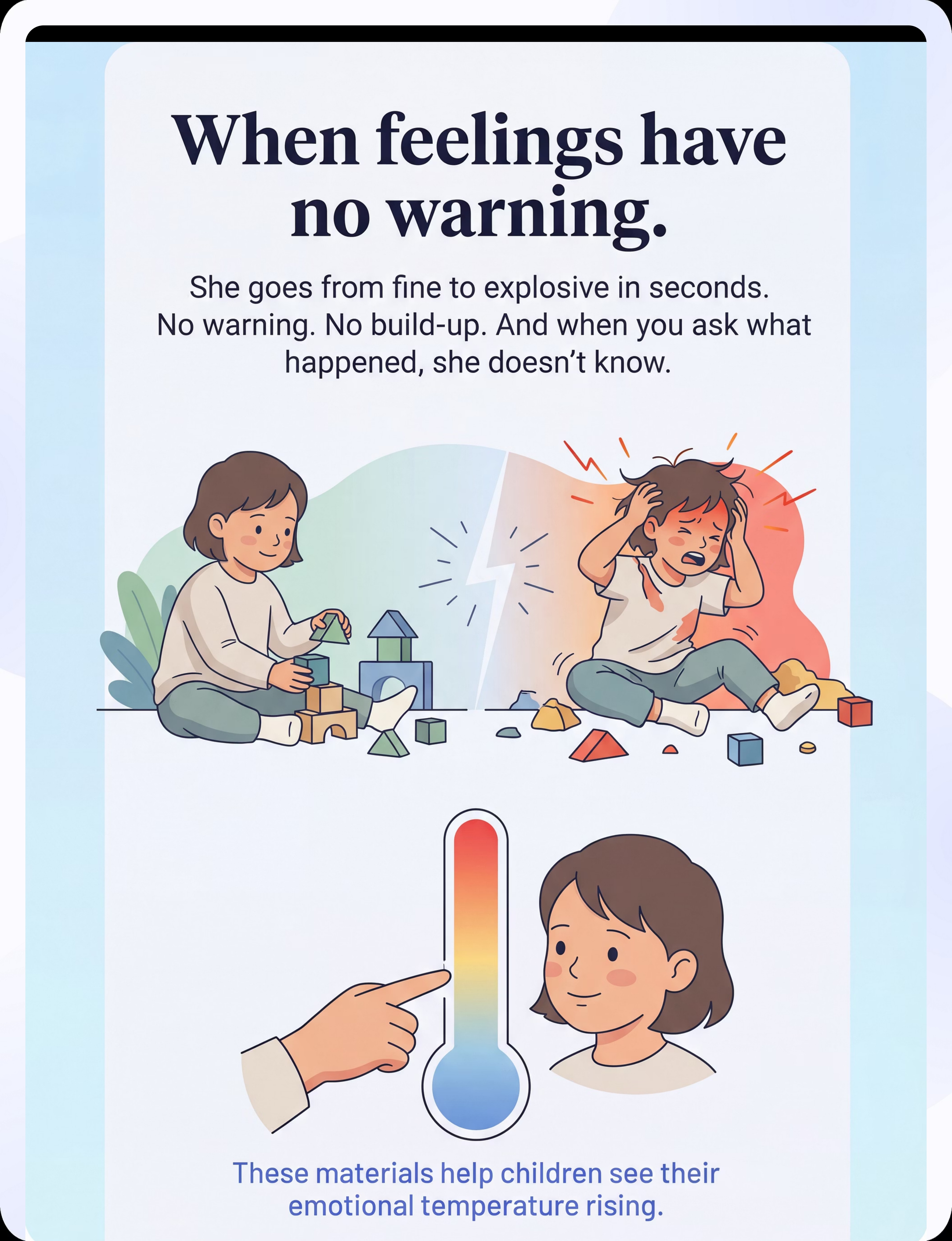
She was playing quietly. Drawing at the table. Then — without warning — she was screaming. Throwing things. Out of control. The trigger? You never saw it coming. And neither did she.
What your child is missing is not self-control. It's emotional temperature awareness — the ability to feel feelings rising before they become a flood. This page is about the 9 materials that give her the thermometer she doesn't have inside.
You Are Not Failing
Your child's nervous system doesn't have a built-in early warning system. These tools build one.
Multi-Disciplinary Verified
Consortium-drafted by OT, Psychology, and ABA specialists. PubMed-referenced. WHO/UNICEF-aligned. Home-executable by parents from Day 1.
WHO Nurturing Care Framework (2018): Parental awareness and early identification of developmental challenges directly impacts long-term outcomes.

You Are Among Millions of Families Navigating This Exact Challenge
80%
Interoceptive Differences
of autistic children show significant interoceptive processing differences affecting emotional awareness
1/36
Children With Autism
diagnosed in the US alone (CDC, 2023) — India data: ~18 million children on the spectrum
70M+
Family Hours Lost
family caregiving hours lost annually to meltdowns that interoceptive awareness tools can help prevent
"Poor interoceptive awareness is not a choice. It is a neurological reality. And it is changeable." — Pinnacle Blooms Consortium, OT + Psychology Division
When your child explodes without warning, it is not a behavioral failure — it is an interoceptive gap. Research published in Frontiers in Psychiatry (PMC11506176, 2024) confirms that poor interoceptive awareness is one of the most prevalent and least-addressed features of autism spectrum disorder. The emotional thermometer is the clinical world's answer to that gap.

The Missing Warning System: Interoception and the Emotional Brain
Clinical Mechanism
Emotions are physical events before they are conscious experiences. The interoceptive system — processed via the insular cortex and the anterior cingulate cortex — monitors internal body signals: heart rate, muscle tension, breathing rate, temperature, gut sensation.
In typically developing children, these signals reach conscious awareness before an emotional event peaks. In many autistic children, this interoceptive signaling is attenuated, delayed, or non-functional. The volcano erupts before the seismograph registers the tremor.
Parent Translation
Your child's brain doesn't receive the "feelings rising" message until the feelings are already at 10/10. It's not that she won't calm down. It's that she doesn't know she needs to — until she can't.
The emotional thermometer is an external interoceptive scaffold — a visual tool placed outside the body that teaches the body to read itself.
This is a wiring difference, not a behavior problem. And wiring can be retrained.

Your Child's Emotional Awareness Journey: Where They Are, Where They're Heading
Age 2–3
Basic emotion recognition (happy/sad/mad) emerging
Age 3–5
Intensity awareness developing; body clue linking begins
Age 5–8
Body clue linking (tight chest = angry) with support
Age 8–12
Independent self-monitoring without consistent prompts
Age 12+
Flexible self-regulation across all contexts
WHO developmental milestones establish that emotional intensity awareness typically emerges between ages 3–5. But for many children with autism, ADHD, sensory processing differences, or anxiety, this checkpoint is delayed by 2–6 years — not because of intellectual limitation, but because of interoceptive system differences.
★ Your child may be at any point on this timeline — regardless of age. The emotional thermometer moves them forward. The path is clear.
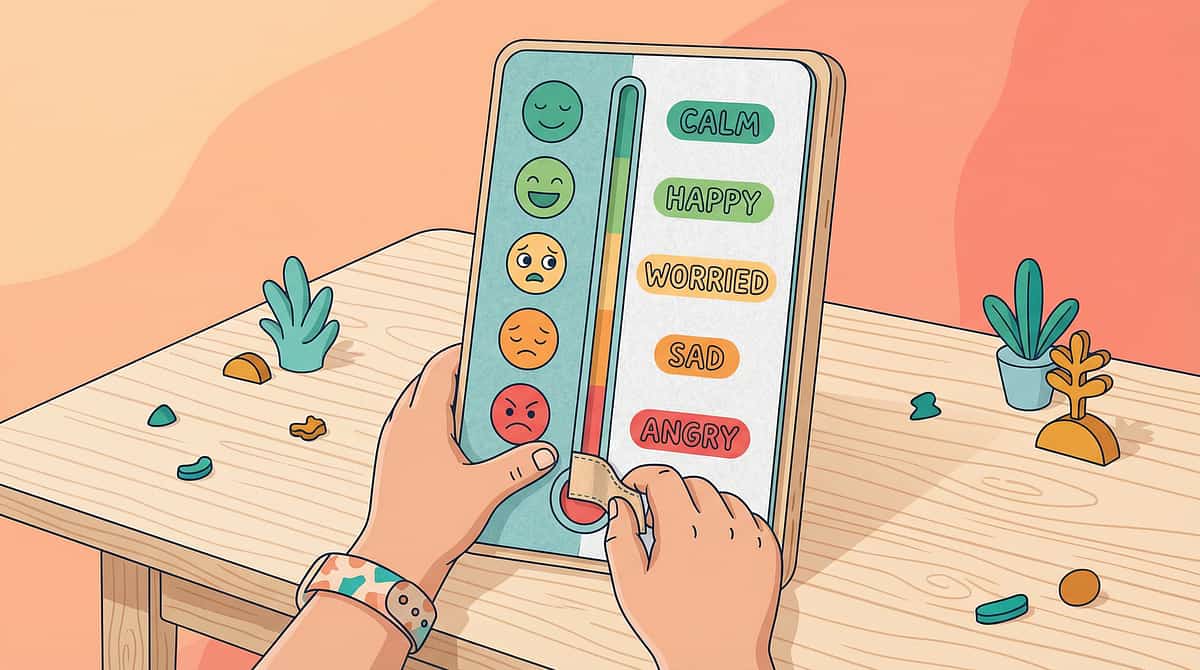
Clinically Validated. Home-Applicable. Parent-Proven.
Evidence Grade: Level II
Systematic Review + RCT Base
Oxford CEBM Classification
Study | Finding | Source | |
PRISMA Systematic Review (2024) | Emotional regulation visual tools meet evidence-based practice criteria for ASD | PMC11506176 | |
Meta-analysis, 24 studies (2024) | Self-monitoring interventions effectively promote adaptive behavior and emotional regulation | PMC10955541 | |
Zones of Regulation Framework | Color-coded zone thermometers show measurable improvement in self-regulation in clinical populations | Kuypers (2011) | |
Indian RCT (2019) | Home-based emotional awareness interventions demonstrated significant outcomes in Indian pediatric population | DOI: 10.1007/s12098-018-2747-4 | |
WHO/UNICEF CCD Package | Parent-administered visual tools for emotional awareness effective across 54 LMICs | PMC9978394 |
Key Finding: Emotional thermometer tools applied consistently for 8–12 weeks produce measurable improvements in interoceptive awareness, emotional vocabulary, and self-regulation readiness. "Clinically validated. Home-applicable. Parent-proven across 20M+ sessions."

The Emotional Thermometer
Domain C — Emotional Regulation
Ages 3–14
C-273
3–5 check-ins daily
An Emotional Thermometer is a visual tool that helps children identify, measure, and communicate the intensity of their emotions on a graduated scale — from calm/low (cool colors, bottom) to high-intensity/crisis (hot colors, top).
Just as a physical thermometer measures heat from cold → warm → hot → boiling, an emotional thermometer measures feelings from calm → starting to warm → getting hot → very hot → boiling over. This tool addresses interoceptive awareness deficits by providing an external visual reference for internal states — teaching children to recognize body signals, label emotional intensity, and identify the optimal moment for using regulation strategies.
Sub-domains
Interoception | Self-Monitoring | Emotional Communication
Duration
Ongoing daily tool — check-ins 30–60 seconds each
Frequency
3–5 check-ins daily minimum
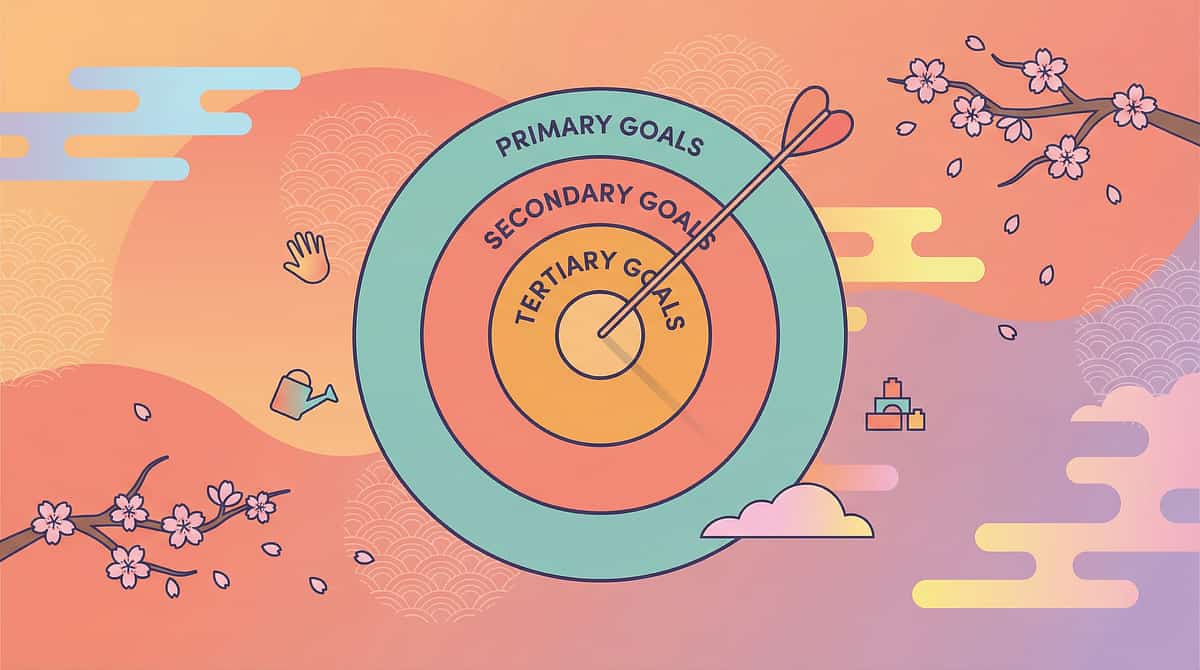
Five Disciplines. One Unified Tool.
Occupational Therapy (Primary Lead)
OT therapists lead interoception training — the foundation of emotional thermometer work. They assess sensory processing profiles, calibrate zone sensitivity, and integrate body sensation mapping. "The OT makes the thermometer feel like a sensory tool, not a behavior chart."
Psychology / Behavioral Specialists
Psychologists embed the thermometer into cognitive-behavioral frameworks — connecting thoughts, body sensations, and emotional labels. They manage anxiety-specific thermometer adaptations.
ABA / BCBA
BCBA therapists use the thermometer to define observable prerequisites for reinforcement. Thermometer data feeds behavioral tracking systems.
Speech-Language Pathology
SLPs expand expressive emotional vocabulary — critical for non-verbal and minimally verbal children. "Are you frustrated or overwhelmed? Let's find the right word."
Special Education
SpEd teachers embed thermometers into daily schedules, morning check-ins, and transition routines for classroom emotional monitoring.
"The brain doesn't organize by therapy type. Emotions cross every domain — and so does the thermometer." — Pinnacle Blooms Network® FusionModule™ Clinical Consortium
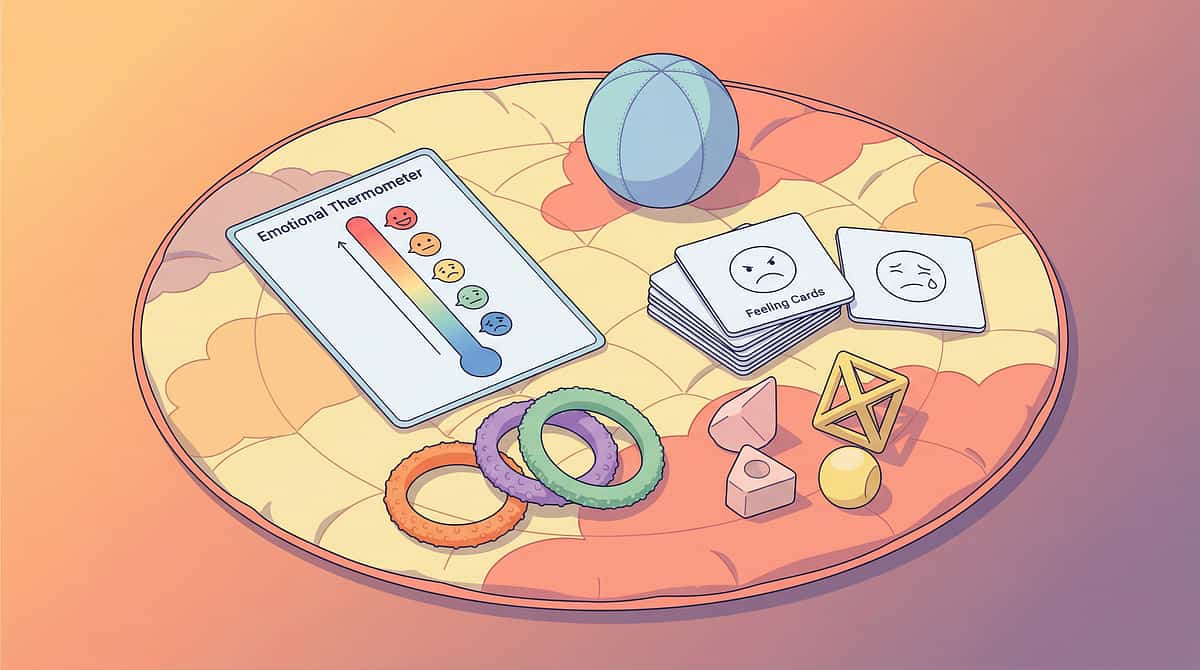
Precision Targeting: What the Emotional Thermometer Builds
Target | Observable Behavior Before | Observable Behavior After | |
Interoception | "I don't know" when asked how they feel | "My heart is fast — I might be nervous" | |
Vocabulary | "Fine" or "angry" only | "Frustrated," "overwhelmed," "worried" | |
Self-monitoring | No check-ins; only post-crisis awareness | Initiates thermometer check before asking for help | |
Meltdown reduction | 5–7 meltdowns/week | 1–2 meltdowns/week at 8-week mark |

The 9 Materials That Help With Emotional Thermometer
From ₹0 DIY to ₹2,000 clinical-grade — every option included. These are the tools that build the external interoceptive scaffold your child needs. Each material targets a different layer of the emotional thermometer skill.
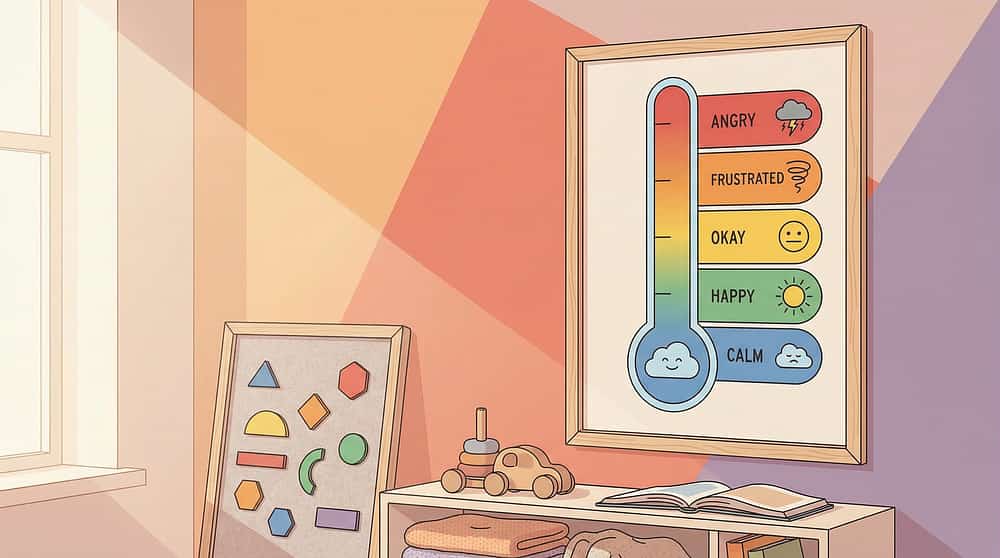
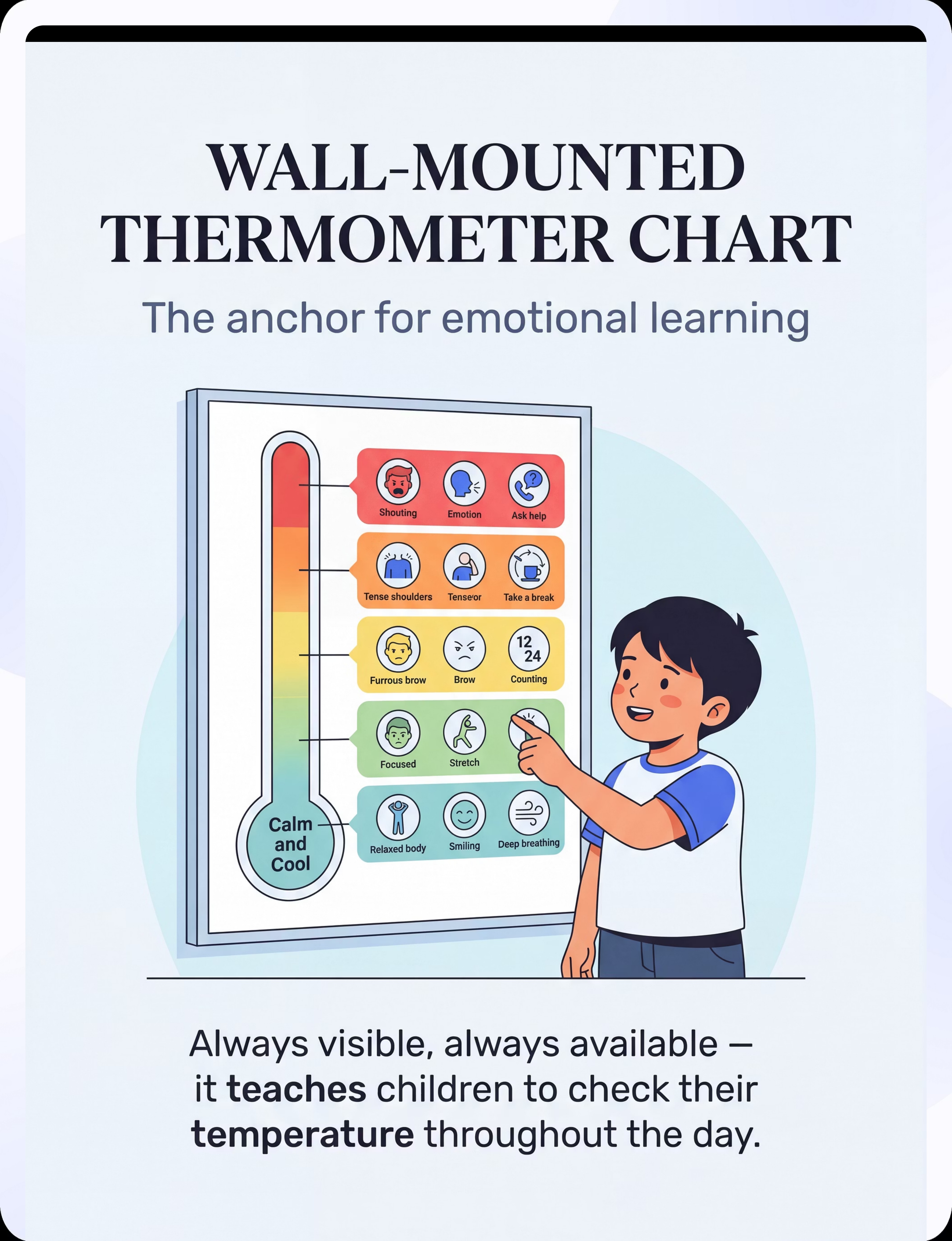
1. Wall-Mounted Emotional Thermometer Chart 📌
The anchor for emotional learning
A large, permanently visible chart showing 5 zones (blue → green → yellow → orange → red) with body clues, feeling words, and strategy prompts at each level. The child can physically point to their current zone throughout the day.
Price: ₹300–1,500 | Search Amazon.in →
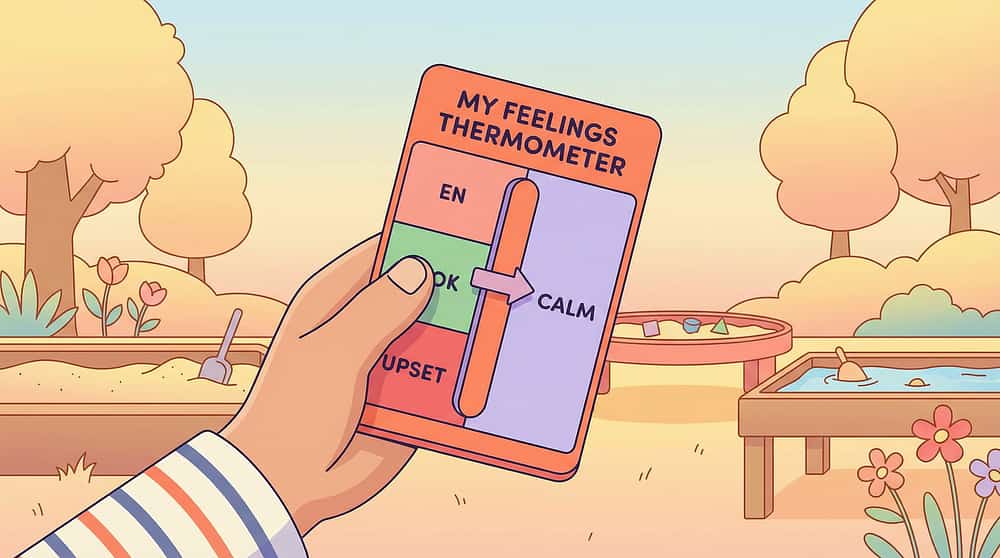
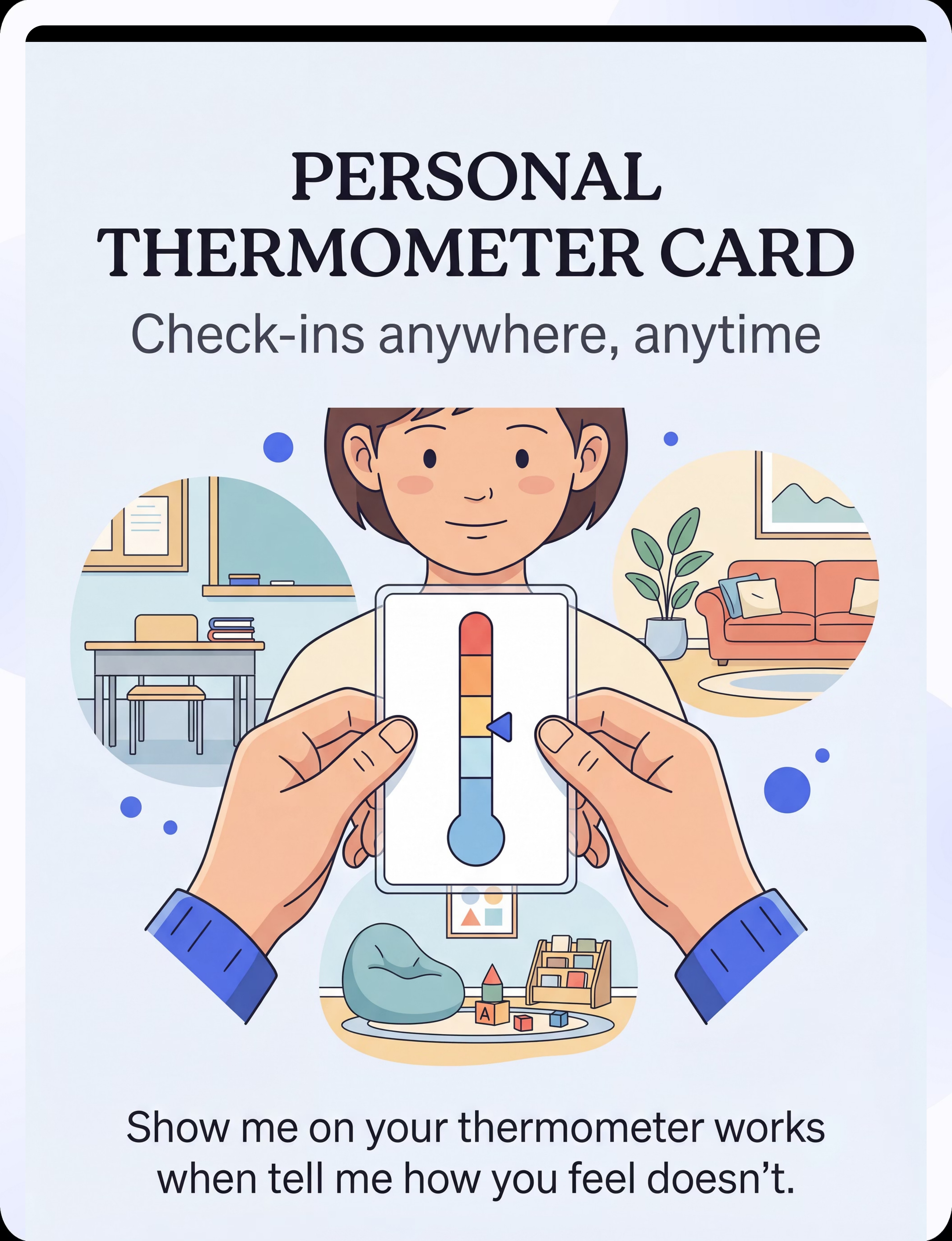
2. Personal Thermometer Card with Moveable Indicator 🃏
Check-ins anywhere, anytime
A pocket-sized card (index card to business card size) with a sliding arrow, velcro marker, or paperclip indicator. Travels to school, therapy, grandma's house. "Show me on your thermometer" works when "tell me how you feel" doesn't.
Price: ₹100–500 | Search Amazon.in →
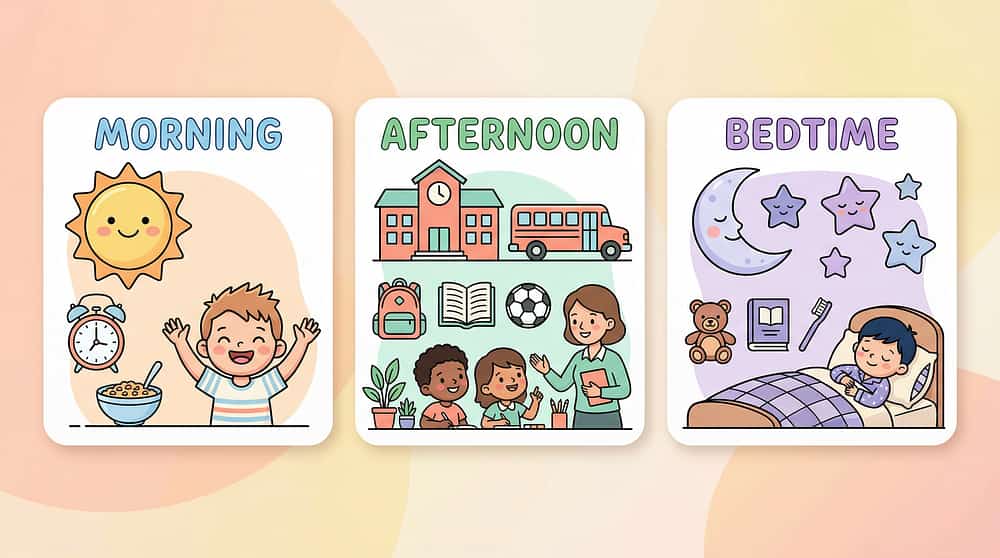
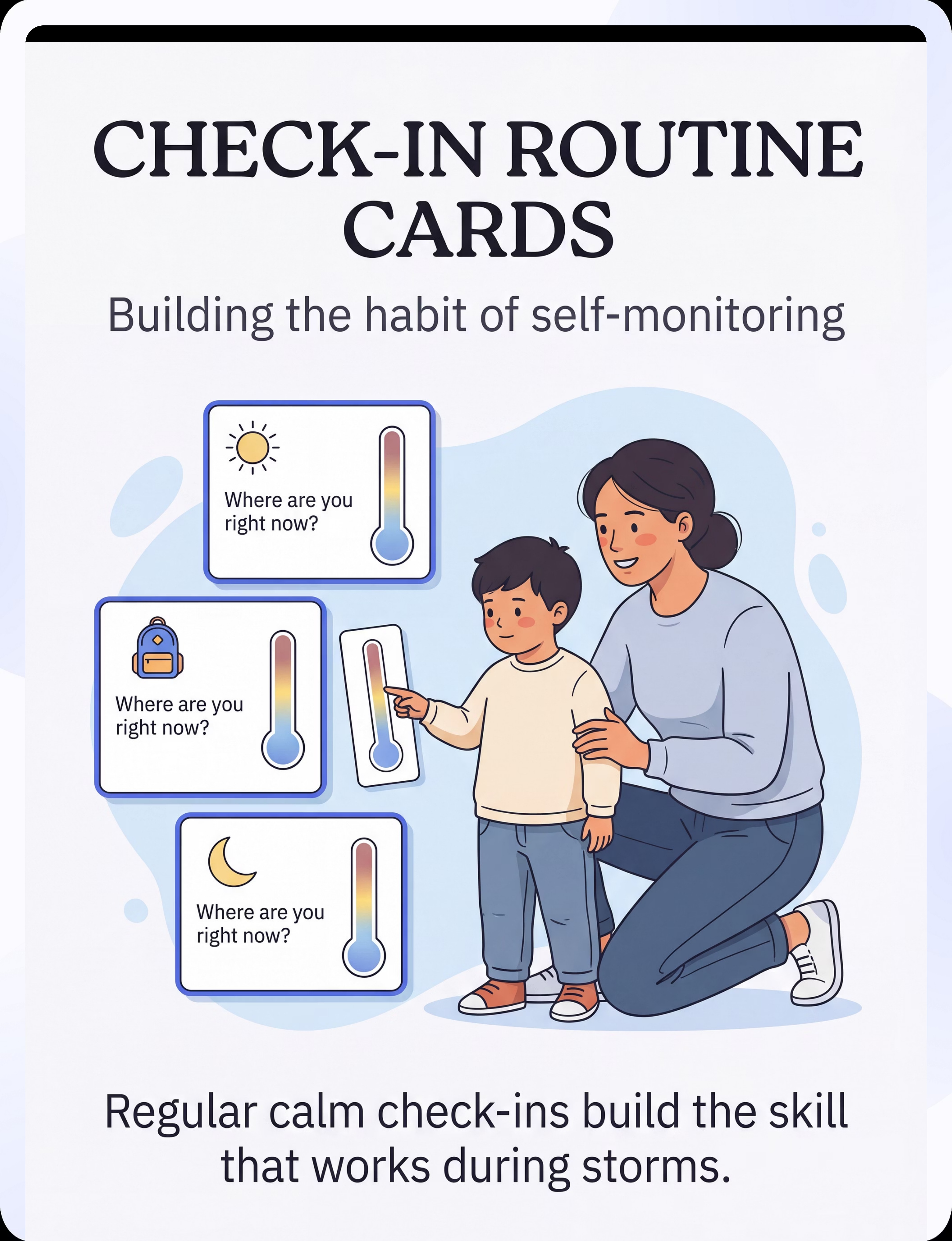
3. Check-In Routine Cards 🗓️
Building the habit of self-monitoring
A set of 5–7 cards for scheduled emotional check-ins (morning, after school, before dinner, bedtime). Each card shows the thermometer and asks: "Where are you right now? What does your body feel like?" Regular calm-time check-ins build the skill that works during storms.
Price: ₹150–600 | Search Amazon.in →

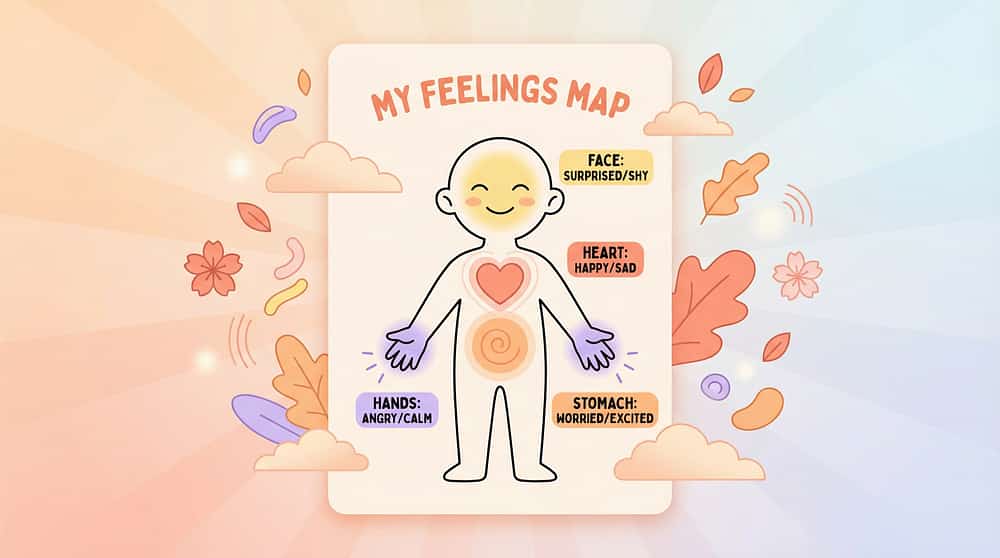
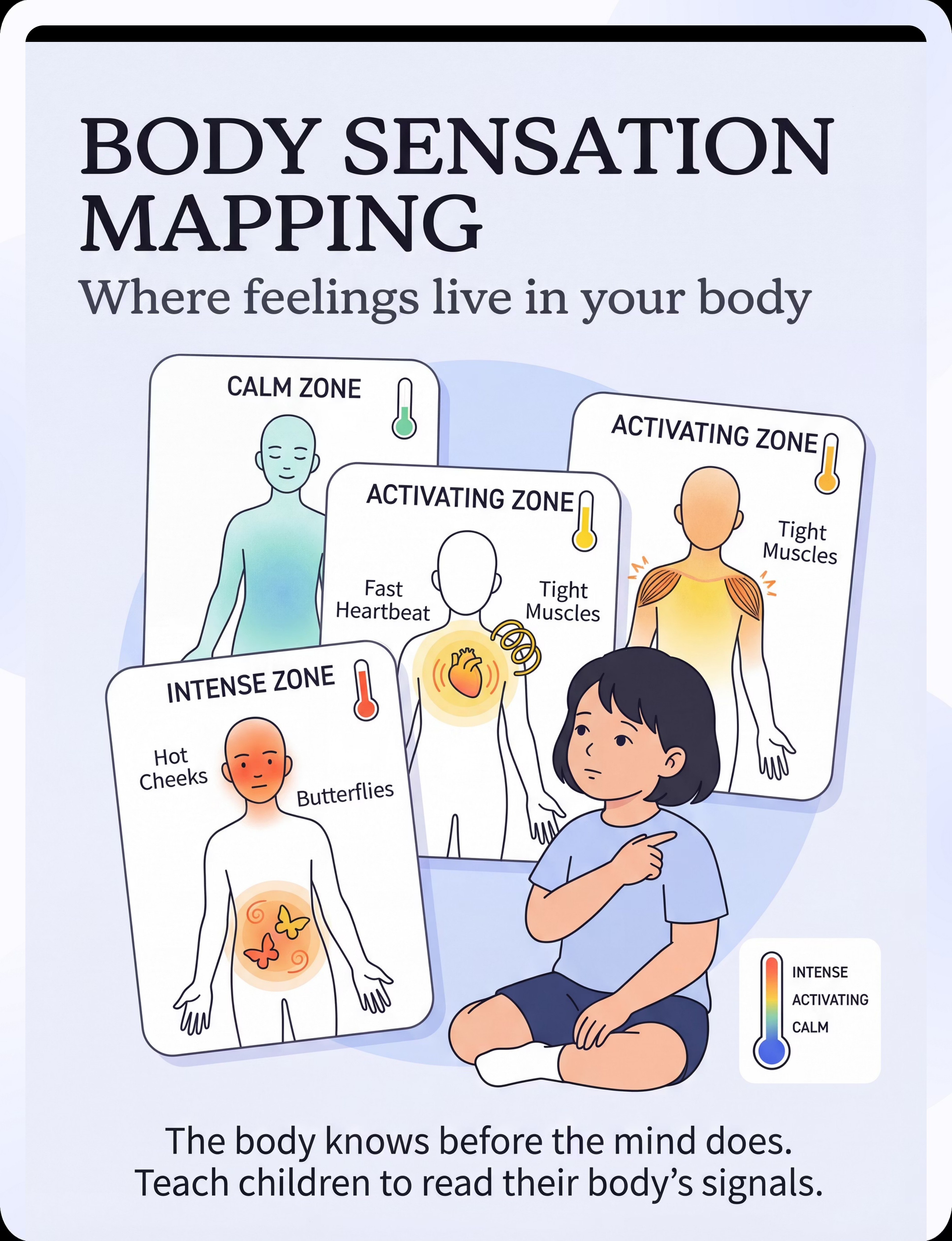
4. Body Sensation Mapping Cards 🫀
Where feelings live in your body
Cards showing a body outline with highlighted areas (heart, stomach, hands, face) matched to thermometer zones. Teaches children to scan for body clues — fast heartbeat, tight shoulders, hot face — the early warning signals most children with interoceptive differences miss.
Price: ₹200–800 | Search Amazon.in →
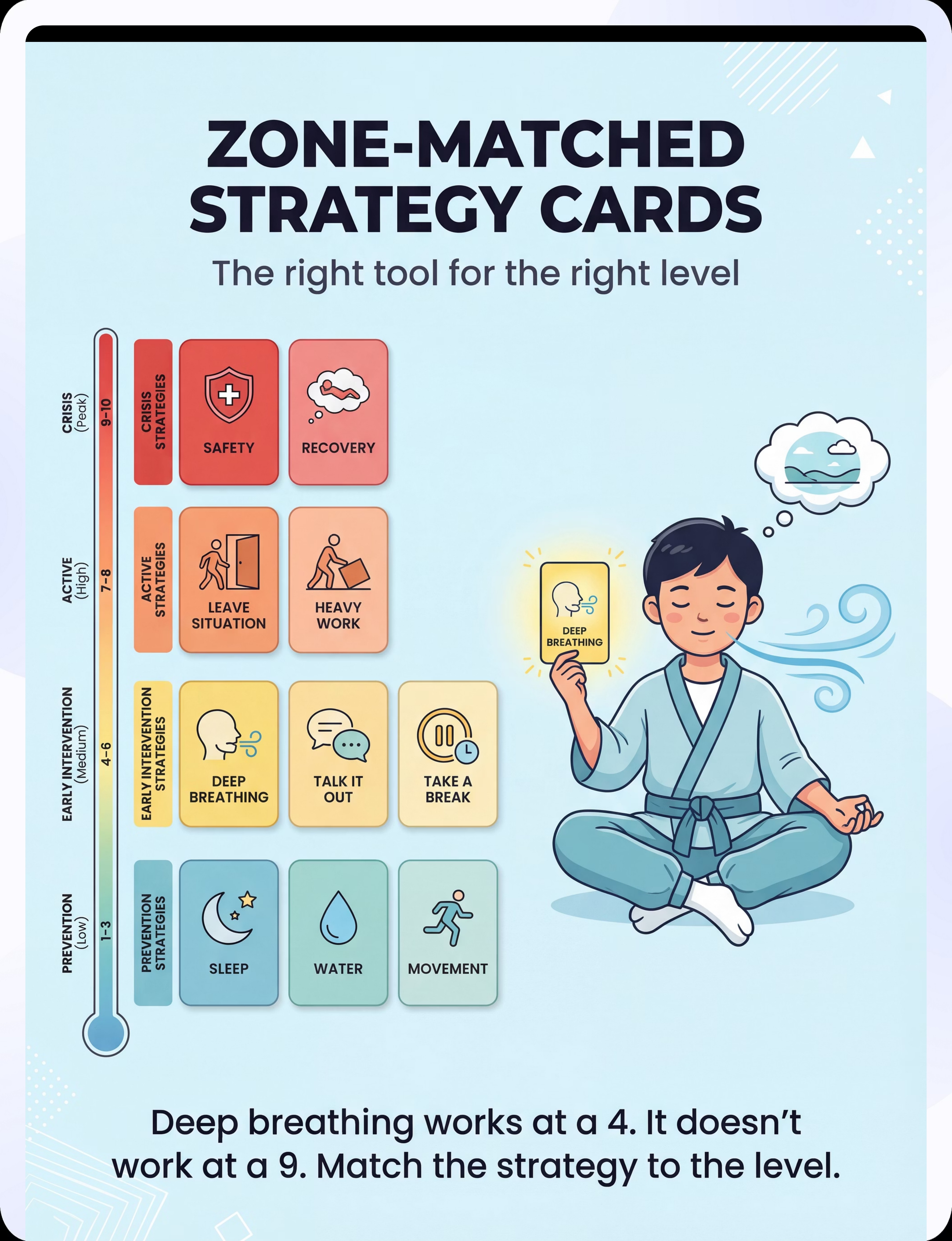
5. Zone-Matched Strategy Cards 🎴
The right tool for the right level
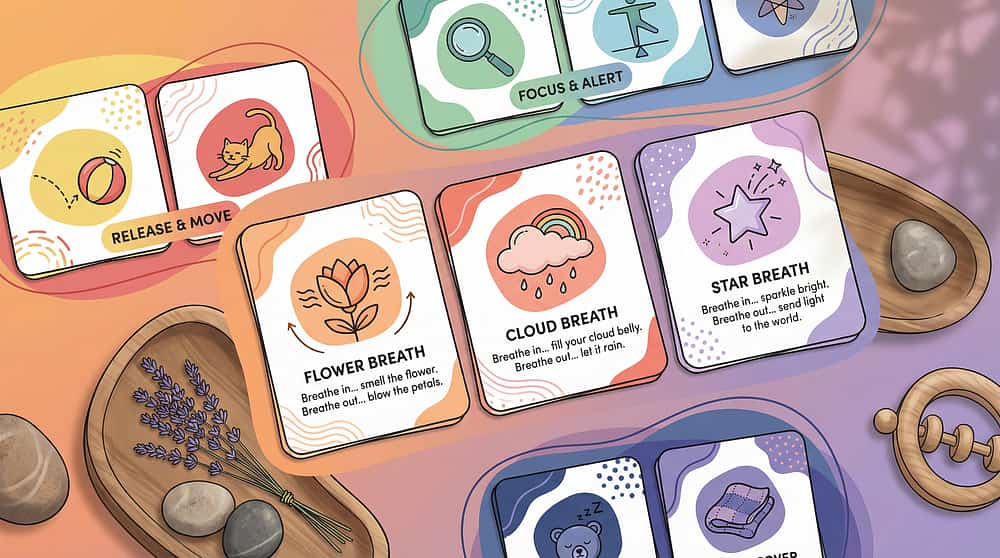
A deck of strategy cards organized by thermometer zone: Green = prevention. Yellow = early intervention (deep breathing, talk it out). Orange = active de-escalation (leave situation, heavy work). Red = safety and recovery. Deep breathing works at a 4. It doesn't work at a 9.
Price: ₹200–700 | Search Amazon.in →
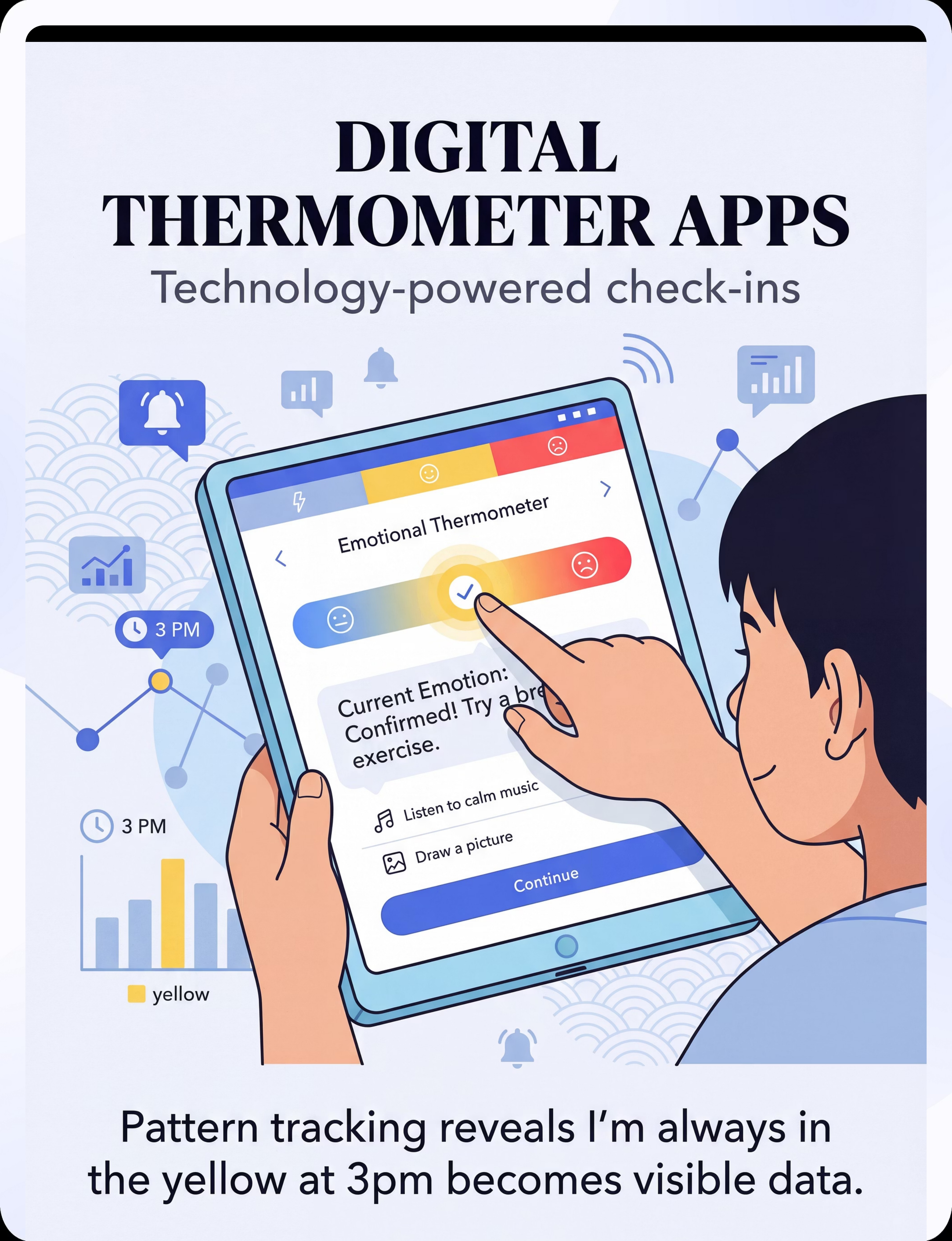
6. Interactive Digital Thermometer Apps 📱
Technology-powered check-ins
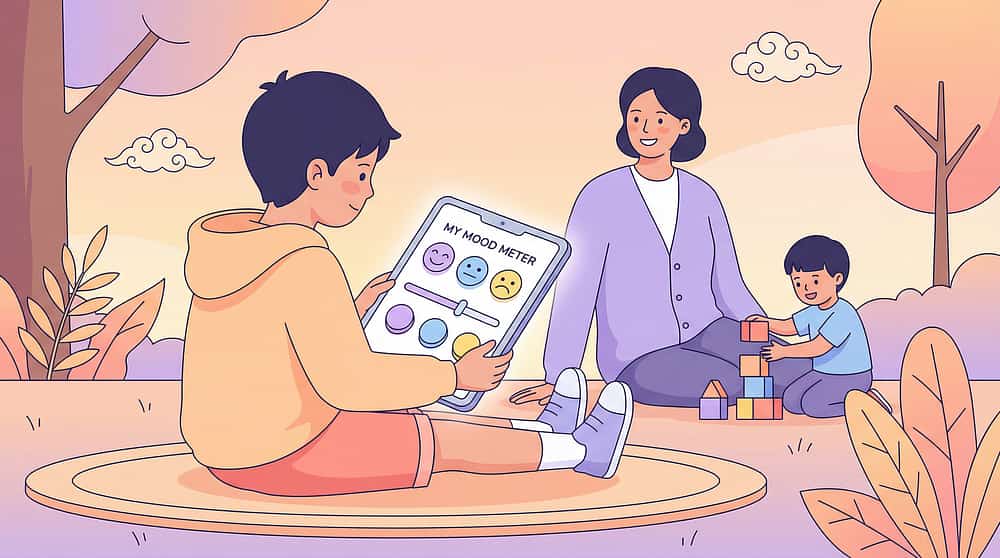
For technology-engaged children: apps that provide regular check-in notifications, track emotional patterns over time ("I'm always in yellow at 3pm — that's data"), and suggest animated strategies. Free apps: Mood Meter, Breathe Think Do (Sesame Street), How Are You Feeling Today.
Price: ₹0–2,000 (free apps available) | Search Amazon.in →

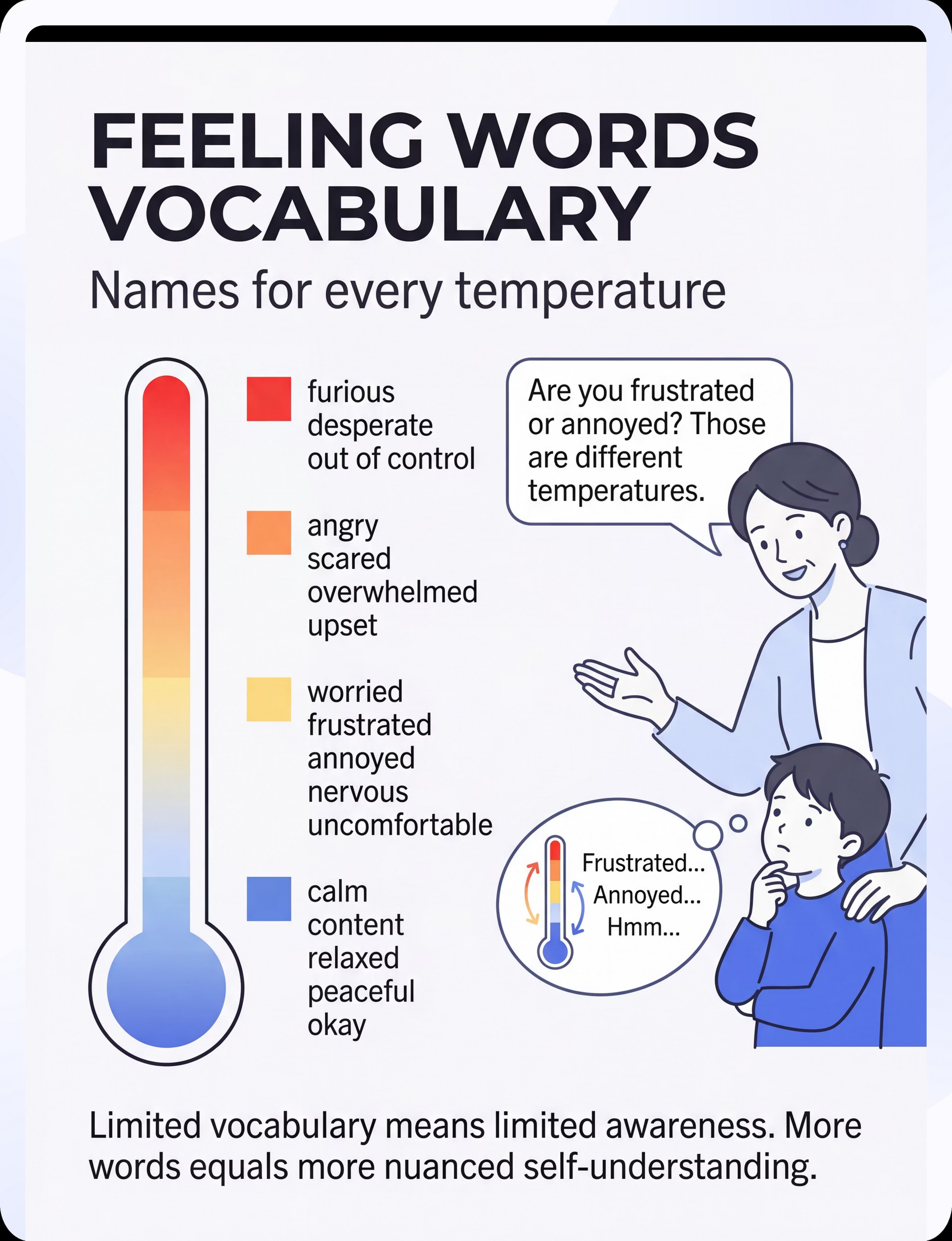
7. Feeling Words Vocabulary Builder by Zone 📚
Names for every temperature
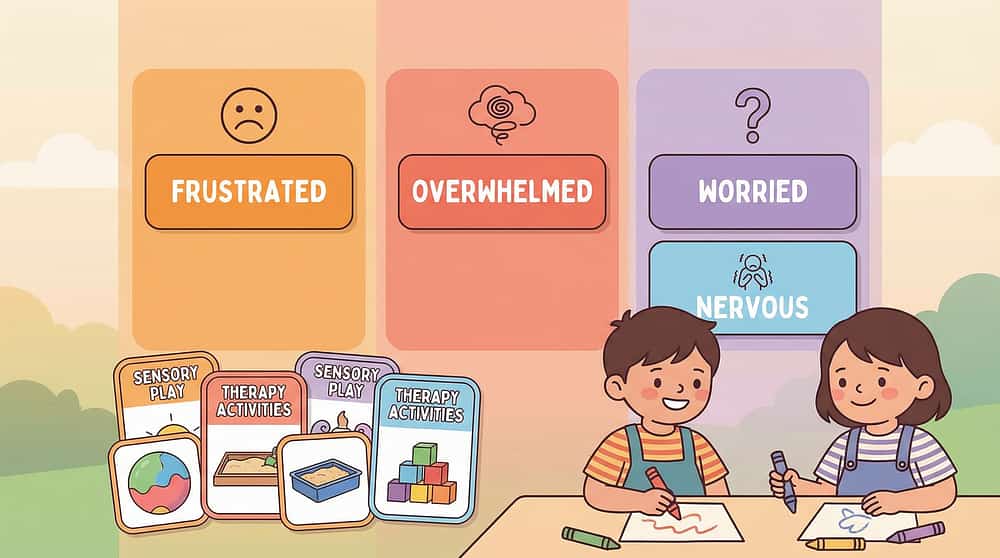
Zone-organized feeling word charts expanding vocabulary beyond "fine" and "angry" to include: worried, frustrated, annoyed, nervous (yellow); overwhelmed, scared, desperate (orange); out of control, crisis, explosive (red). You can't notice what you can't name.
Price: ₹150–600 | Search Amazon.in →
8. Social Stories & Narrative Books 📖
Learning through narrative
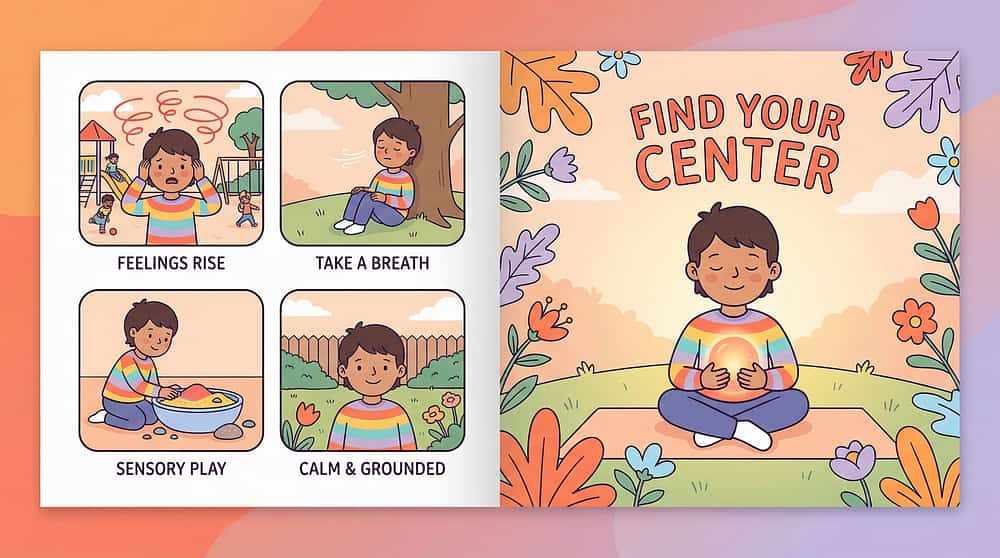
Picture books and personalized social stories showing characters noticing their rising temperature, checking their thermometer, choosing strategies, and successfully regulating. Stories normalize the struggle and model the process. "Has your thermometer ever felt like that?"
Price: ₹250–800 | Search Amazon.in →
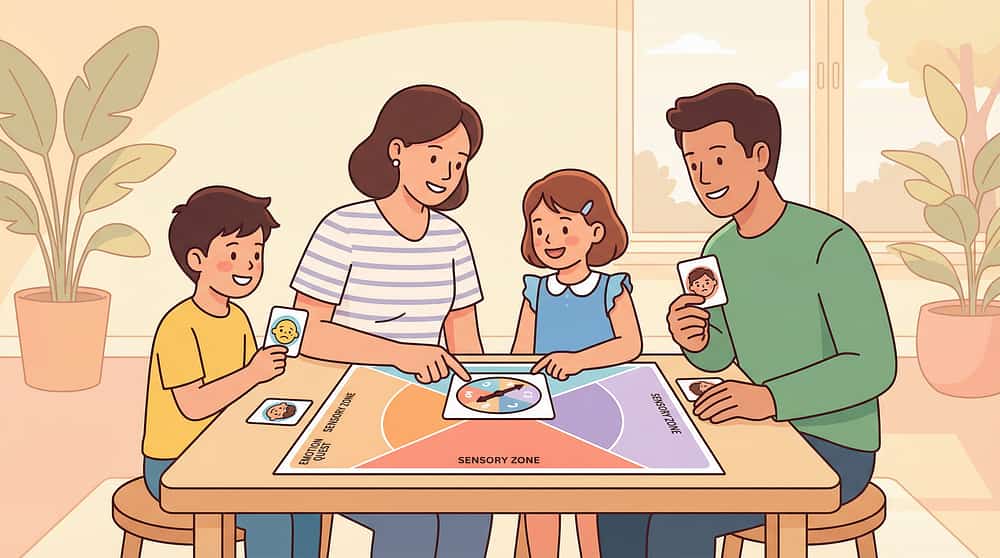
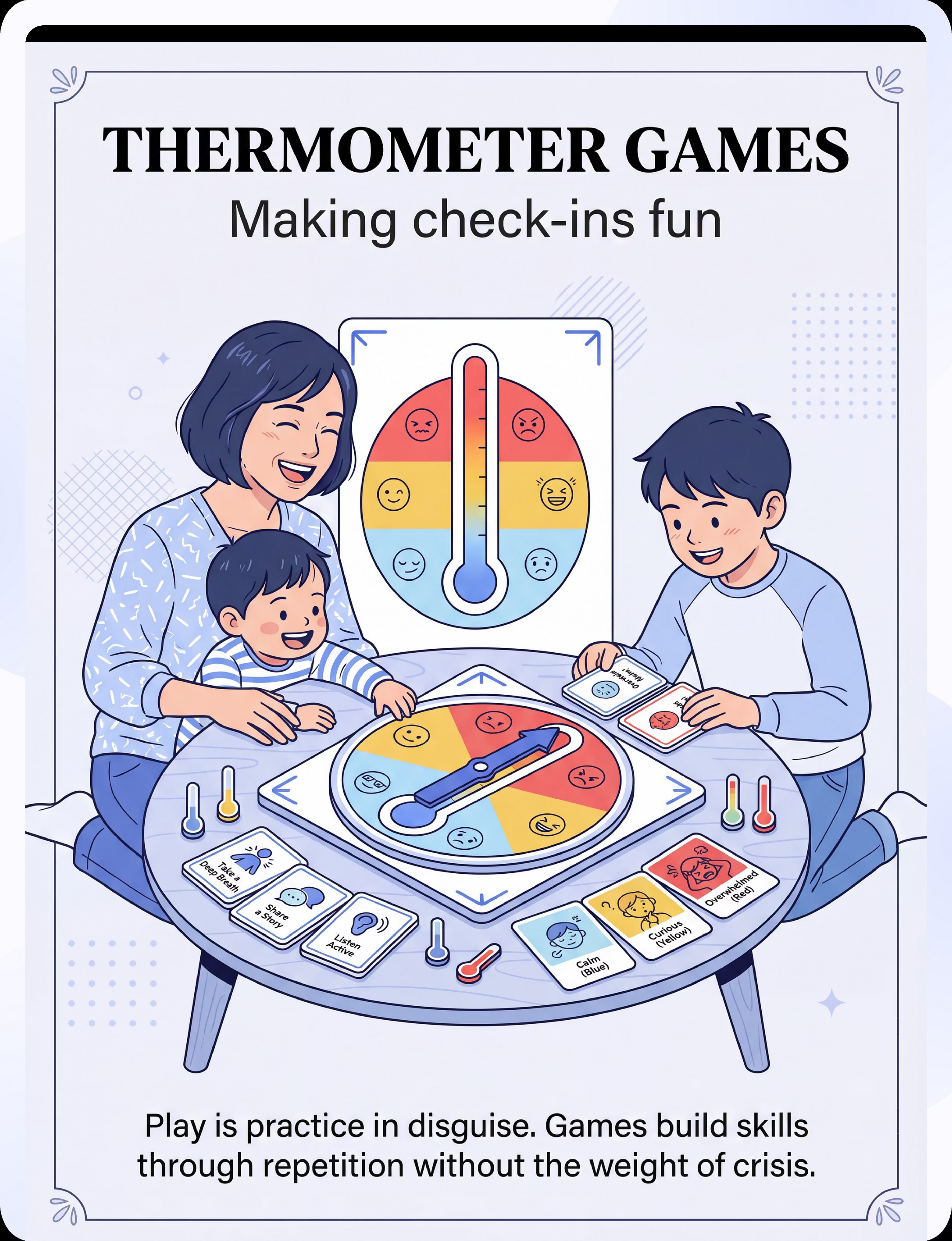
9. Thermometer-Based Emotional Check-In Games 🎲
Making check-ins fun
Games that embed thermometer practice: spinner games where landing on a zone means sharing a memory from that level; card games matching emotions to zones; family board games with thermometer check-in rules. Play is practice in disguise.
Price: ₹200–1,000 | Search Amazon.in →
Pinnacle Recommends for Reinforcement:Reward Chart Stickers ₹364 → and Behavior Reward System ₹589 →

Every Child Deserves This Tool — Regardless of Budget
WHO Equity Principle: Every intervention has a zero-cost version. Here's how.
🛒 BUY THIS | 🔧 MAKE THIS (₹0) | |
Wall Thermometer Chart (₹300–1,500) | Large thermometer on poster board. 5 zones in crayon colors. Body clue drawings by your child. Mount at eye level with blu-tack. | |
Personal Thermometer Card (₹100–500) | A4 paper folded to card size, colored in zones, laminated with tape. Paperclip slides as indicator. | |
Check-In Routine Cards (₹150–600) | Index cards with time-of-day symbols (sun/school bag/moon) + drawn thermometer. Keep in consistent location. | |
Body Sensation Mapping (₹200–800) | Draw your child's body outline on paper. Together, mark where you feel emotions: "Where do you feel angry?" | |
Strategy Cards (₹200–700) | Write/draw strategies on index cards, sort into colored envelopes by zone (blue = calm, red = crisis). | |
Feeling Words Vocabulary (₹150–600) | Post-it notes organized on the wall by zone color. Add new words as child learns them. | |
Thermometer Games (₹200–1,000) | Dice game: roll determines which zone to discuss. "Tell me a time you were in orange zone." Free, immediate. |
"Every family — regardless of geography, income, or access — can execute emotional thermometer work today. The tool is the concept, not the product." — WHO Nurturing Care Framework (2018) | Pinnacle Blooms Interpretation
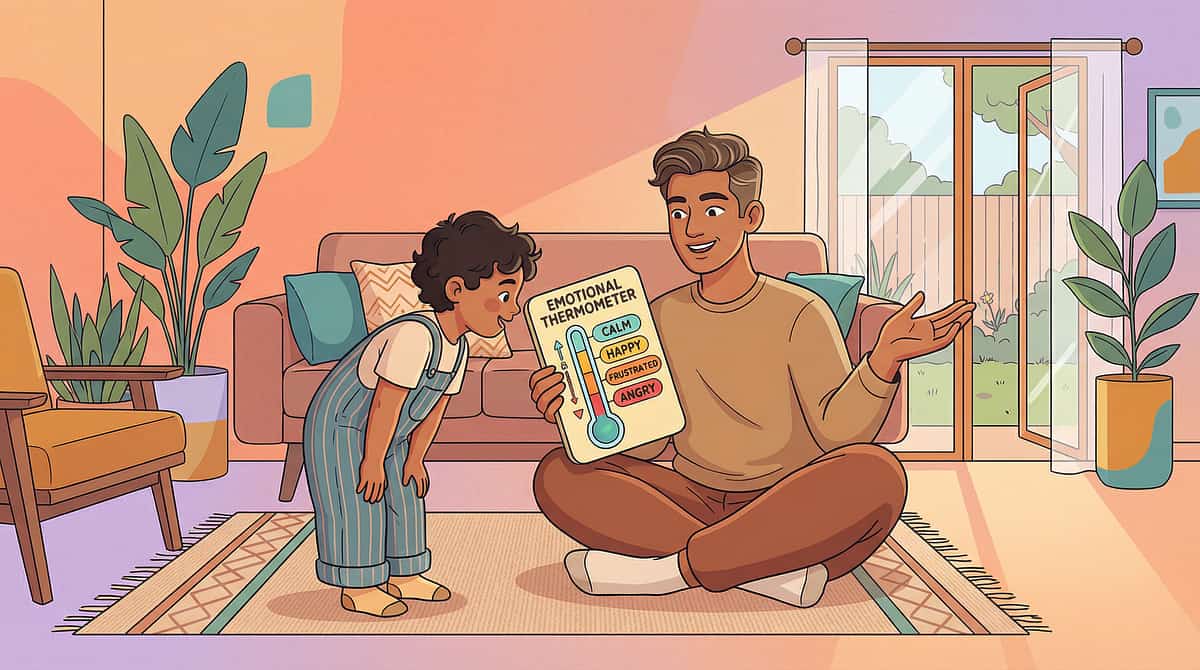
Before You Begin: Clinical Safety Guidelines
🔴 DO NOT PROCEED IF:
- Child is currently in crisis or dysregulated state — thermometer work is for CALM moments only
- Child has a trauma history involving body-focused work — seek OT guidance before introducing body sensation mapping
- Child is ill, sleep-deprived, or significantly hungry — wait for baseline regulation
- Child shows severe self-injurious behavior — professional clinical guidance required before home thermometer work
🟡 PROCEED WITH MODIFICATION IF:
- Child is in yellow zone (mild dysregulation) — use only the check-in card, not full protocol
- Child resists the thermometer visually — try numbers (1–5) or emoji faces instead of color gradient
- Child over-reports (always says "red") — validate, don't correct: "You feel really big feelings. Let's check your body."
- Child under-reports (always says "fine") — model your own check-ins daily; build trust before expecting honesty
🟢 PROCEED WHEN:
- Child is calm, fed, rested, and willing
- It is a scheduled check-in time (not a reactive crisis moment)
- You are yourself regulated and calm
- The space is private and unhurried
🛑 STOP THE SESSION IMMEDIATELY IF:
- Child becomes severely distressed during check-in
- Child uses thermometer to self-harm trigger
- Child dissociates or becomes non-responsive
- Any physical safety concern arises
Safety Principle: Never use the thermometer as punishment. High readings are information, not indictments. A child reporting "red" is being honest — that honesty must be protected.
FREE National Autism Helpline: 9100 181 181
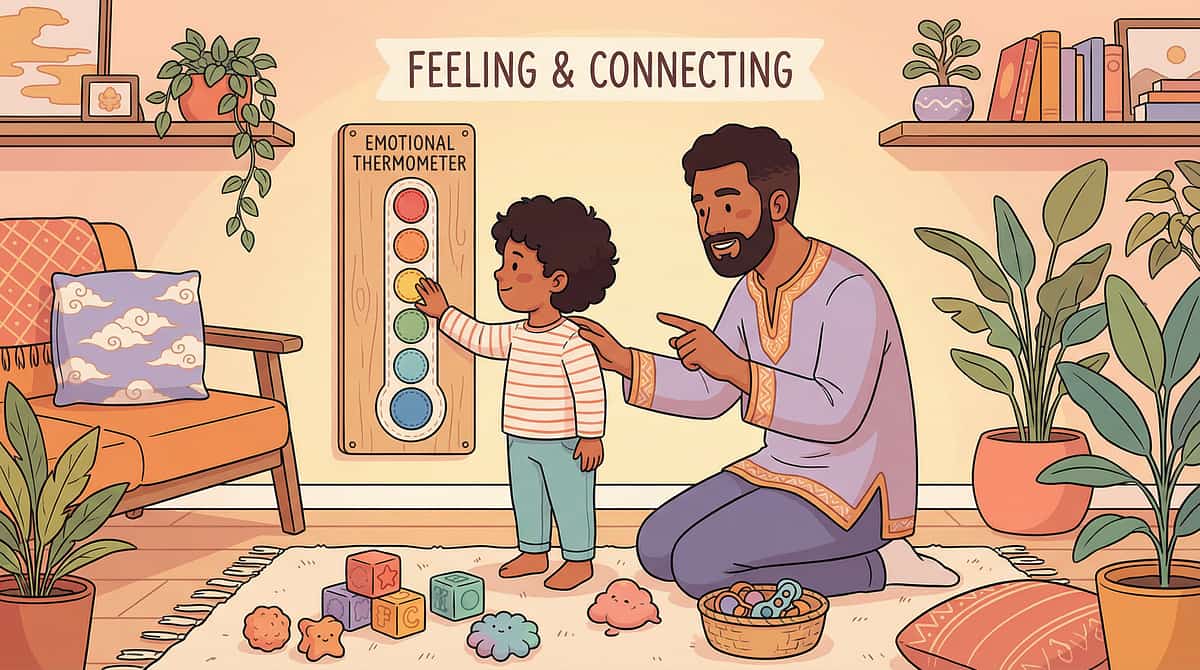
The Emotional Thermometer Environment: 5-Minute Setup
5 Key Positions
- Wall thermometer — permanent, eye level, same location always. Consistency = habit formation.
- Child — sitting comfortably. Floor or low chair preferred. Not at a desk (too formal).
- Parent — same physical level as child. Never standing over child during check-ins.
- Personal card — within child's reach. Child should be able to pick it up independently.
- Strategy cards — visible but not overwhelming. Organized by zone color.
✅ Keep In Space
- Natural or warm light (avoid harsh fluorescent)
- Quiet or soft background music — no TV
- Comfortable temperature
- Digital thermometer app device (if applicable)
❌ Remove From Space
- Screens and other toys
- Other family members during initial learning phase
- Unfinished activities
- Avoid post-school first 30 min (high-arousal window)
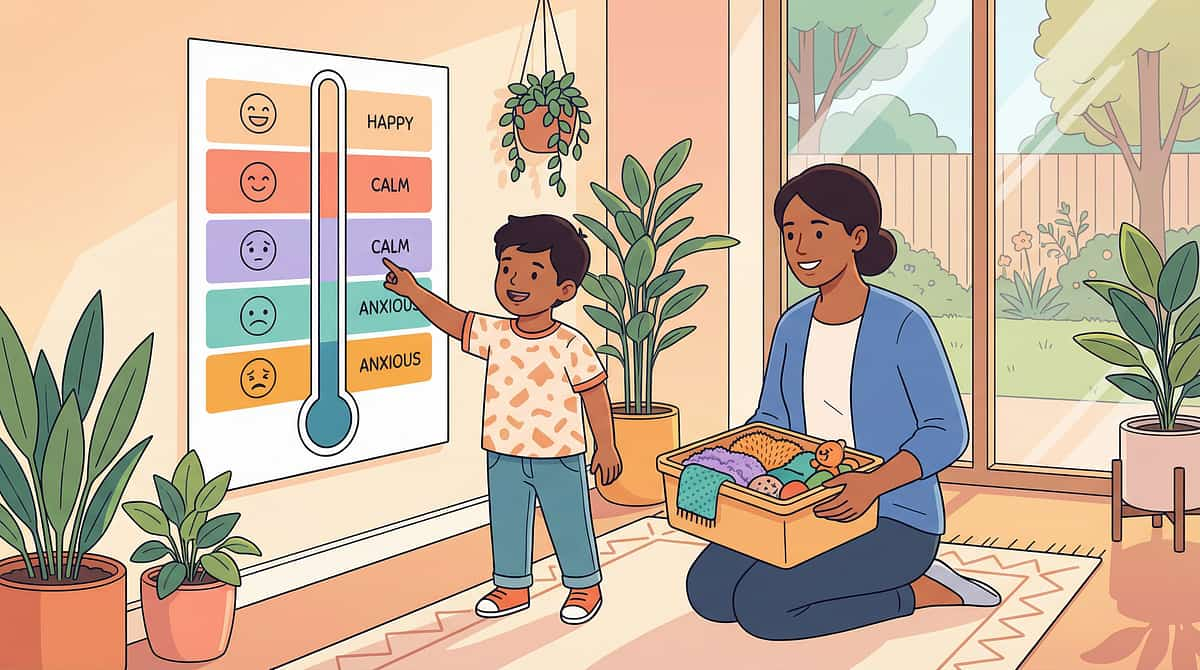
60-Second Readiness Check — Before Every Session
✅ Child has eaten in the last 2 hours
✅ Child has slept adequately (no overtired indicators: eye rubbing, meltdown within last hour)
✅ Child is in green or early yellow zone (not already dysregulated)
✅ No major transition or stressor in the next 30 minutes
✅ No illness symptoms (fever, pain, significant discomfort)
✅ You (the parent/caregiver) are currently regulated and calm
✅ Child is not mid-task or mid-activity (avoid interruption)
Score | Decision | Action | |
7/7 | ✅ GO | Proceed to full protocol — Step 1: The Invitation | |
5–6/7 | ⚠️ MODIFY | Proceed to abbreviated check-in only (personal card, 1 question) | |
Below 5 | 🔁 POSTPONE | Model your own check-in only. "Let's check in later when everyone's ready." |

Step 01 / 06
ACT III — Execution
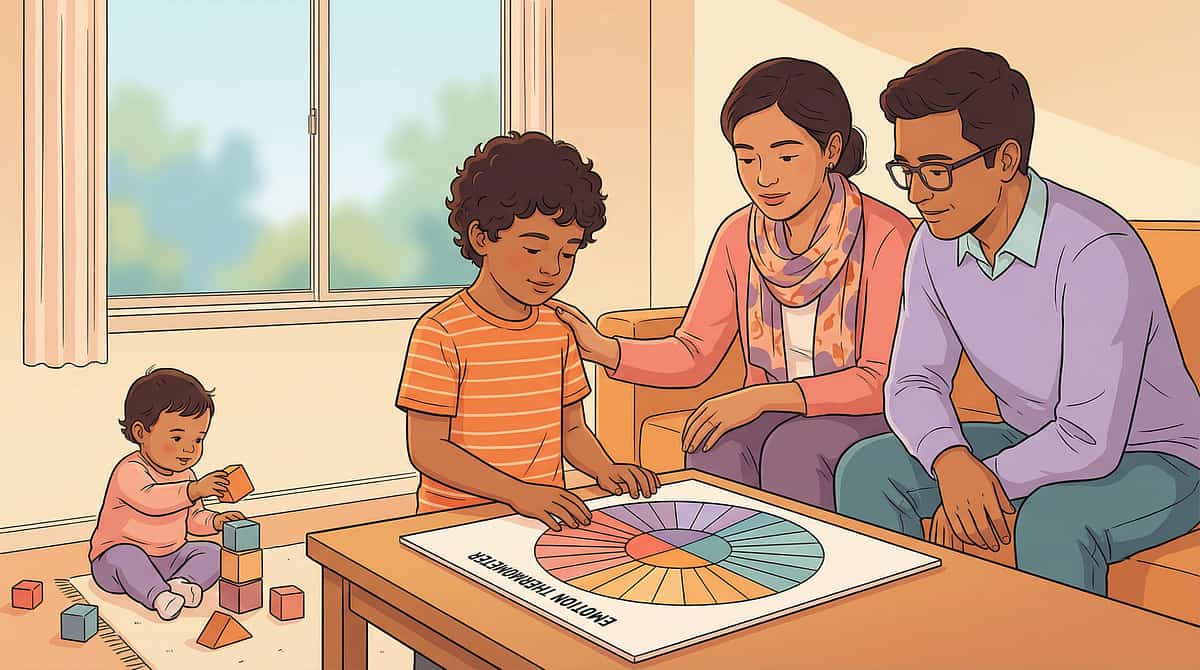
The Invitation: Not a Demand — An Opening
"Hey, let's check our thermometers. I'll go first — I'm going to look at the chart and see where I am today."
[Parent models the check-in by pointing to their own level on the wall chart]
"Now your turn — where do you think you are?"
Body Language Guidance
- Get physically level with your child (kneel, sit on floor)
- Speak in a warm, curious tone — not interrogative
- Pause after asking. Give 10–15 seconds of processing time.
- If no response: "That's okay. Let me just check mine again."
Acceptance vs. Resistance Cues
✅ Acceptance: Child looks at chart, points or touches thermometer, says any emotion word, or silently watches you model.
⚠️ Resistance: Child ignores → try during a natural transition. Child says "no" → model only. Child gives extreme answer → accept and explore body clues.
Timing: 30–60 seconds. ABA pairing procedures: establishing positive associations before demand placement.
Step 02 / 06
ACT III — Execution
The Engagement: Connecting Zone to Body
"You're at [zone they indicated]. Let's figure out what that feels like in your body. When you're at [zone], what do you notice? Is your heart going fast? Is your shoulders tight? Is your tummy feeling funny?"
[Reference body sensation mapping card if available]
"Let's find your body clues for [zone] so we remember them."
🟢 Engagement
Child points to body part, names a sensation, nods, or mirrors your gesture
🟡 Tolerance
Child watches but doesn't respond — acceptable; continue modeling your own sensations
🔴 Avoidance
Child leaves, covers ears, or becomes distressed — move to cool-down immediately
Timing: 1–3 minutes. The moment a child identifies ANY body sensation — even "my tummy" with no elaboration — deliver immediate, specific verbal praise:
"Yes! You noticed your tummy. That's exactly how we do it. You're learning your body's signals."

Step 03 / 06
ACT III — Execution
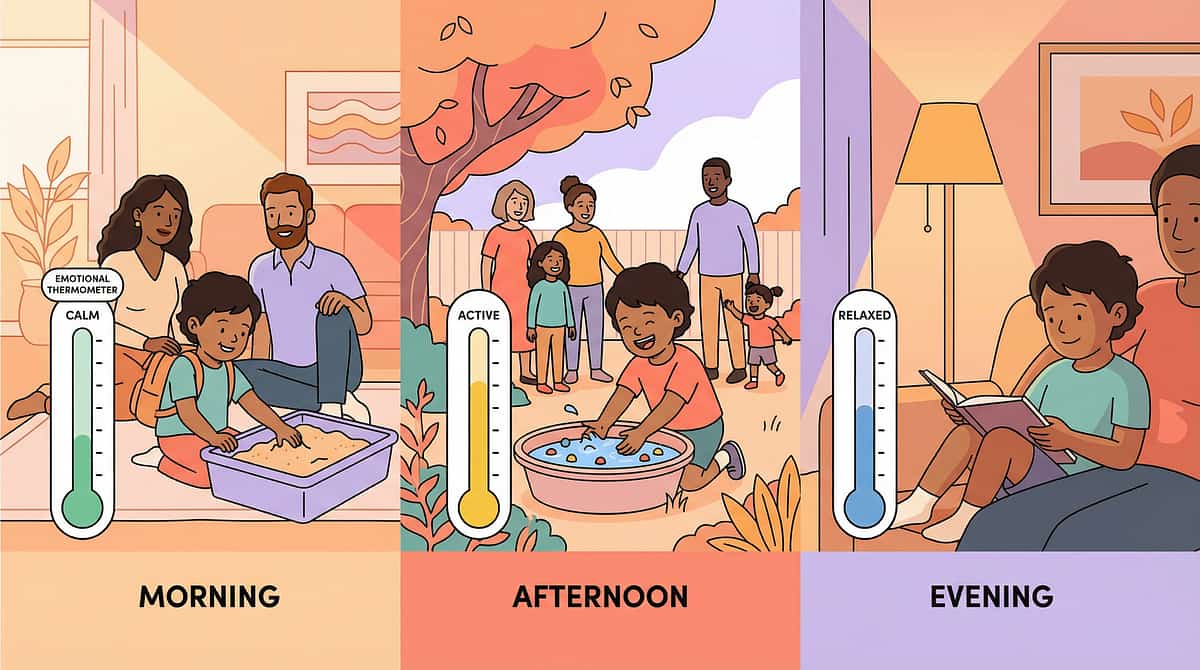
The Core Action: Zone-Check + Body-Connect + Strategy-Select
This three-part sequence is the heart of every check-in. Each sub-step has its own response window — do not rush. If the child is in red zone, safety and de-escalation ONLY; strategy selection requires yellow or below.
Common Errors:❌ Rushing through all three sub-steps — slow down. ❌ Skipping body-connect — it is the most critical step; model your own if child is silent. ❌ Forcing strategy selection when child is in red zone.
Duration: 3–5 minutes total. Child response ideal: Engages with at least 2 of 3 sub-steps independently.
Step 04 / 06
ACT III — Execution
Dosage: How Much, How Often, How to Keep It Fresh
3–5
Daily Check-ins
Morning, post-school, before dinner, before bed, and at transitions
21+
Repetitions for Habit
Consistent repetitions required for automatic behavior formation (neuroscience of habit)
8–12
Weeks to Outcomes
Full measurable outcomes achieved with consistent daily practice across this window
Option A — Location Variation
Breakfast table, car, pillow. Same tool, different environment = generalization.
Option B — Emotional Range
Check in when happy AND sad — not just angry. All emotional states need practice.
Option C — Reverse Modeling
Child rates the parent's zone: "Where do you think Mum is?" Keeps engagement high.
Option D — Ages 3–6
3 zones only. Emoji faces. Max 1 check-in per day. Focus on zone identification only.
Dosage Principle: 3 genuine check-ins per day → beats 1 forced lengthy session per week.

Step 05 / 06
ACT III — Execution
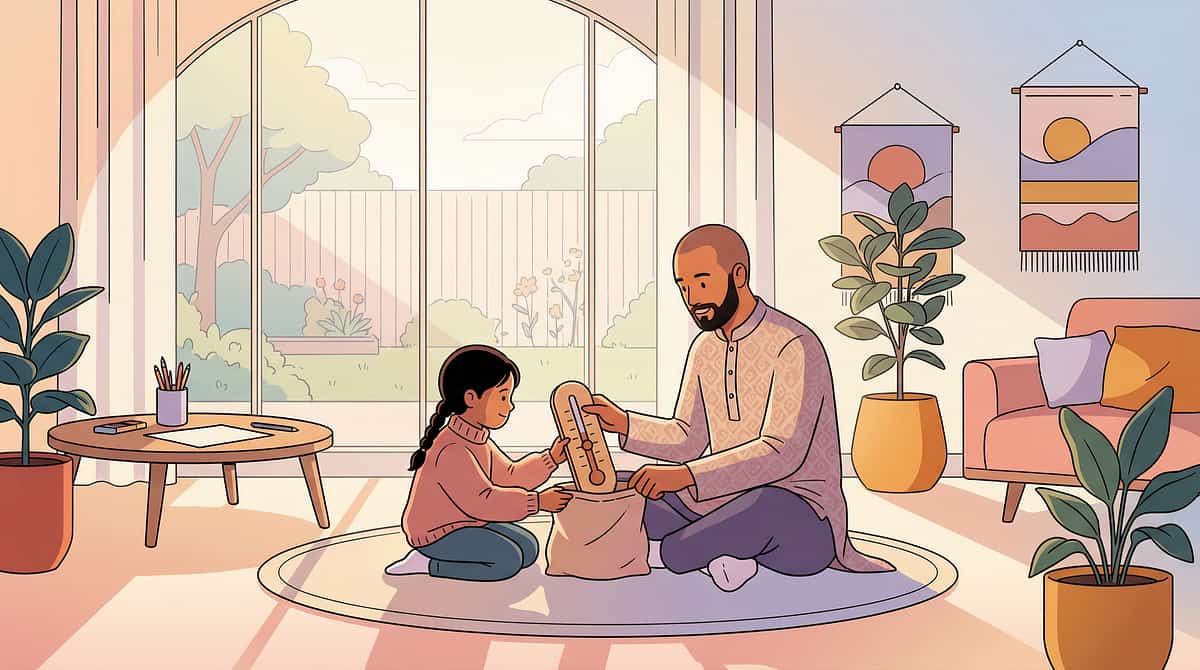
The Reinforcement Moment: What to Say, When to Say It, Why It Matters
Timing Law: Reinforcement must arrive within 3 seconds of the target behavior — or its power is lost.
What to Reinforce
- Any independent zone identification (even inaccurate — reinforce the attempt)
- Any naming of a body sensation
- Any self-initiated check-in (without adult prompting)
- Any use of a strategy card without being told to
- Any accurate report of a non-extreme zone (yellow/orange is VALUABLE)
Verbal Reinforcement Scripts
"You checked your thermometer! You're reading your feelings. That is a SKILL."
"You noticed your heart was fast. Your body told you something and you HEARD it. That's incredible."
"You told me you were in yellow before it got to red. That is exactly what we're building. I'm so proud."
Reinforcement Menu (Pinnacle Canon):Sticker Reward Chart ₹364 → | Behavior Reward System ₹589 → | Natural reinforcers: preferred activity, extra story, choosing dinner, special time with parent.
The Principle: Celebrate the awareness. Not the regulation. Not the "good behavior." The NOTICING.
Step 06 / 06
ACT III — Execution
Closing the Check-In: The Transition That Protects the Learning
An abrupt ending to a thermometer check-in can itself trigger dysregulation — especially for children who have poor transition tolerance. The cool-down signals: "We're moving from this focused moment back to regular life" without emotional whiplash.
"Okay, one more thing — where are you NOW? Did our check-in change anything?"
[Allow child to update their indicator if they wish]
"Thank you for checking in with me. I learned something about you today. Okay — you can go back to [activity]."
🟢 Green Zone
Simply transition back. No cool-down activity needed.
🟡 Yellow Zone
One slow breath together before releasing back to activity.
🟠 Orange Zone
2 minutes of a preferred sensory activity before releasing.
🔴 Red Zone
Skip cool-down script entirely. This is a safety moment, not a check-in session.

60 Seconds of Data Now = Months of Clarity Later
Data Point | What to Record | How | |
📍 Zone at check-in | What zone did child identify? (1–5 or Blue/Green/Yellow/Orange/Red) | Tally or mark | |
🫀 Body awareness | Did child name any body sensation? (Y/N + what they said) | Short note | |
⚡ Initiation | Was check-in prompted (P) or self-initiated (S)? | P or S marker |
Zone at same time of day (after-school zone tends to reveal environment-linked patterns)
Body sensation vocabulary growth (are new words appearing?)
Prompt vs. self-initiation ratio (shifting toward S = real progress)
60 seconds of data now saves hours of guessing later. Patterns you can see are patterns you can change.
Questions about what your data means? FREE National Autism Helpline: 9100 181 181

Most Sessions Don't Go Perfectly. Here's What to Do.
Session abandonment is not failure — it's data.
"My child refuses to engage with the thermometer at all."
Why it happens: New tool = novelty resistance. Child hasn't paired the thermometer with anything positive yet.
Fix: For 1 week, model YOUR check-ins only. Never ask child to check theirs. Build the pairing before the demand.
"My child always says 'green' no matter what — even in obvious distress."
Why it happens: Social desirability, fear of consequences, or genuinely poor interoceptive access.
Fix: Accept "green." Say: "Green! Great. Let's see what green feels like in your body." Gently narrate what you observe. Never contradict; gently explore.
"My child says 'red' constantly — every check-in is red."
Why it happens: Under-calibrated scale, chronic hyperarousal, or learned attention-seeking.
Fix: Expand red zone into sub-zones: "Red 3" (moderate distress) vs "Red 5" (crisis). Also assess for chronic baseline hyperarousal — consider OT consult.
"Check-ins have become a power struggle."
Why it happens: Check-ins have become aversive — too frequent, too demanding, or associated with consequences.
Fix: Pause all formal check-ins for 1 week. Return only through thermometer play (games, stories). Rebuild association. Reduce frequency to 1/day. Never require.
"My child can check in but doesn't use strategies when elevated."
Why it happens: Strategy matching is a separate skill from zone identification. Both need explicit teaching.
Fix: Practice strategy selection ONLY in green zone. Role-play: "If I were in yellow right now, what would help?" The strategy menu needs rehearsal when calm.
"Progress seemed great for 2 weeks and then stopped."
Why it happens: Completely normal. Skill acquisition plateaus are neurological, not behavioral.
Fix: Don't change what's working. Maintain consistency. Growth often resumes after a plateau without any intervention change. Log the plateau — it's data.
"Siblings are disrupting the check-ins."
Why it happens: Sibling curiosity + jealousy of the focused attention.
Fix: Do check-ins when other family members are occupied. Long-term: teach all children in the family to use the thermometer — normalize it as a family practice.
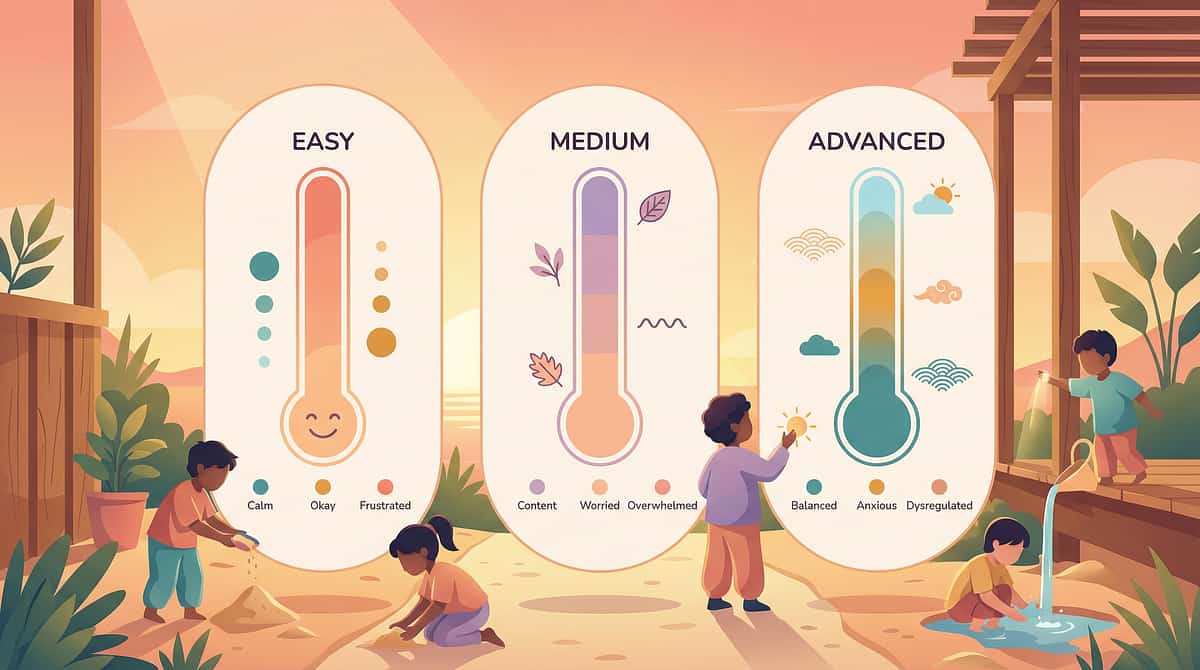
No Two Children Are Identical — Make the Thermometer Theirs
👁️ Strong Visual Learners
Add photographs of the child's own face at different zones. Take photos during calm discussion — NEVER during crisis. Personal faces on the thermometer dramatically increase recognition accuracy.
🔊 Auditory / Verbal Learners
Create an audio recording of the child describing their body clues for each zone. Play back during check-ins. The child's own voice as the teacher is powerfully reinforcing.
🤲 Tactile / Proprioceptive Learners
Create a 3D thermometer with foam zones that can be touched. Body position check-in: "Is your body tight or loose right now?" Links proprioception to thermometer zones.
🎮 Tech-Engaged Children
Use digital app for all check-ins. Gamify zone tracking with achievement badges. Allow child to design their own digital thermometer colors and zone names — ownership drives engagement.
📉 Low-Verbal / Non-Verbal Children
Reduce to 3 zones. Use photos of real children's faces (not cartoons). Use eye-gaze pointing as response modality. AAC device can have thermometer vocabulary programmed in.
Age Band | Format | Frequency & Initiation | |
Ages 3–5 | 3 zones, pictures only | Max 1 check-in/day; parent models 80% of the time | |
Ages 6–9 | 5 zones, words + pictures | 3 check-ins/day; child initiates 50% | |
Ages 10–14 | 5–7 zones, words alone acceptable | 3–5/day; child initiates 70–80%; self-selects strategies |

ACT IV — Progress Arc
Weeks 1–2: Orientation Phase
Weeks 1–2: The Orientation Phase
Progress at Week 2
Building tolerance and positive association — the foundation everything else rests on
✅ What You WILL See
- Child tolerates the thermometer being present without resistance
- Child watches parent model check-ins with curiosity
- Child can identify 2–3 zone names when pointed to
- Occasional pointing to a zone when asked ("Where are you?")
- Parent begins to notice their own patterns
⏳ What You Will NOT See Yet
- Independent self-initiation of check-ins
- Accurate body sensation naming
- Spontaneous strategy use
- Reduction in meltdown frequency
- Consistent zone reporting
Critical Instruction for Weeks 1–2: Do NOT try to use the thermometer during or after a meltdown. Every meltdown-adjacent thermometer use in Weeks 1–2 teaches: "Thermometer = crisis." You need "Thermometer = calm routine."
Many parents feel discouraged in Week 2 because "nothing has changed." Document baseline data from Week 1. Compare against Week 8. The change is invisible until it's undeniable.

ACT IV — Progress Arc
Weeks 3–4: Consolidation Phase
Weeks 3–4: The Consolidation Phase — Watch for These Signals
Progress at Week 4
Neural pathways forming — micro-awareness increments becoming visible to observant parents
🧠 Anticipates Check-In
Child arrives at the thermometer without being called
👁️ Body-Zone Connection
"My tummy is jumpy — I think I'm in yellow" — unprompted
🗣️ Vocabulary Expanding
New emotional words appearing beyond the original 3–5
📉 Longer Meltdown Lead Time
30 extra seconds of detectable warning before escalation
🎯 Self-Selects Strategy
Occasionally picks a strategy card from green/yellow zone independently
Neural pathway forming indicators (what most parents miss): Child comments on another person's emotional state using zone language ("Daddy is at orange"). Child uses thermometer vocabulary spontaneously in play. Check-ins take less adult scaffolding than they did in Week 1.
"You may notice you feel more confident too. You're reading your child better. That's the thermometer working for both of you."

ACT IV — Progress Arc
Weeks 5–8: Mastery Emerging
Weeks 5–8: Mastery Emerging — The Signs You've Been Waiting For
Progress at Week 8
Skill moving from learning to applying — generalization across contexts beginning
Child independently initiates check-ins at routine times without adult prompt (>50% of scheduled check-ins)
Child reliably identifies zone within 1 level of accuracy, confirmed by parent observation
Child names body sensations from at least 3 zones without prompting
Child selects and uses a strategy from the matching zone card (even 1 strategy = mastery indicator)
Meltdown frequency measurably reduced from Week 1 baseline — even 1 fewer/week is significant
Child uses thermometer language at school and with other trusted adults — skill is generalizing
Mastery Unlocked Criteria: Child self-initiates at least 3/5 scheduled check-ins for 7 consecutive days AND uses a matched strategy at least once in that period.

You Did This. Your Child Grew Because of Your Commitment.
For 5–8 weeks, you showed up — even when sessions failed, even when check-ins became power struggles, even when you doubted whether any of it was working.
And now your child has something they didn't have before: a vocabulary for their inner world, a map for their emotional terrain, and an early warning system that was always supposed to be there. You built this. Together.
✅ Your child can identify at least 3 zones on the emotional thermometer
✅ Your child has connected body sensations to at least 2 zones
✅ Your child has used at least one strategy card matched to their zone
✅ Meltdown frequency has reduced from baseline
✅ Your child has a tool they can carry into school, into therapy, into life
Family Celebration: Create a "Thermometer Ceremony" — let your child choose their own zone names, decorate their personal card, and share it with one family member. Teaching it to another reinforces mastery.
Share your milestone with a Pinnacle therapist. FREE National Autism Helpline: 9100 181 181
Trust Your Instincts — These Signs Mean Pause and Ask
🚩 1. Chronic High Reporting Without Behavioral Match
What it looks like: Child consistently reports "red" but appears calm/regulated.
Why it matters: May indicate chronic anxiety, hypervigilance, trauma response, or a learned pattern to avoid demands.
What to do: OT + psychology consultation — explore baseline arousal dysregulation.
🚩 2. Thermometer-Linked Shame or Self-Criticism
What it looks like: Child says "I'm always red. I'm bad at feelings. I can never be green."
Why it matters: Thermometer tool has become a source of self-blame.
What to do: Immediately reframe: "Every zone is information, not a grade." Review Card 11 — safety before you begin.
🚩 3. Thermometer Vocabulary Used to Manipulate
What it looks like: Child learns that saying "I'm at red" produces a specific parent response and uses it to avoid demands.
Why it matters: Undermines authentic reporting, though it is actually sophisticated communicative behavior.
What to do: ABA consultation for functional analysis — differentiate authentic distress from functional behavior.
🚩 4. No Progress Indicator After 8 Weeks
What it looks like: After consistent 8-week practice, no consolidation indicators present.
Why it matters: May indicate interoceptive processing differences too significant for home-only intervention.
What to do: OT assessment for targeted interoception therapy before home continuation.
🚩 5. Significant Increase in Anxiety During Check-Ins
What it looks like: Child becomes more upset during check-in than before it began; avoidance behavior increases.
Why it matters: Body-focused attention can trigger anxiety in some profiles.
What to do: Pause all check-ins immediately. OT + psychology referral.
Escalation Pathway: Self-resolve (1 week) → Teleconsult with Pinnacle therapist → Clinic visit + functional assessment
You Are Not Done — You're on a Journey
If your child has... | Move to... | |
Mastered zone identification → now needs strategies | ||
The thermometer but lacks emotional vocabulary | C-271: Teaching Emotion Words | |
Can monitor but needs frustration-specific work | C-275: Frustration Tolerance | |
Needs a calming space to use strategies | C-274: Calm-Down Corners |
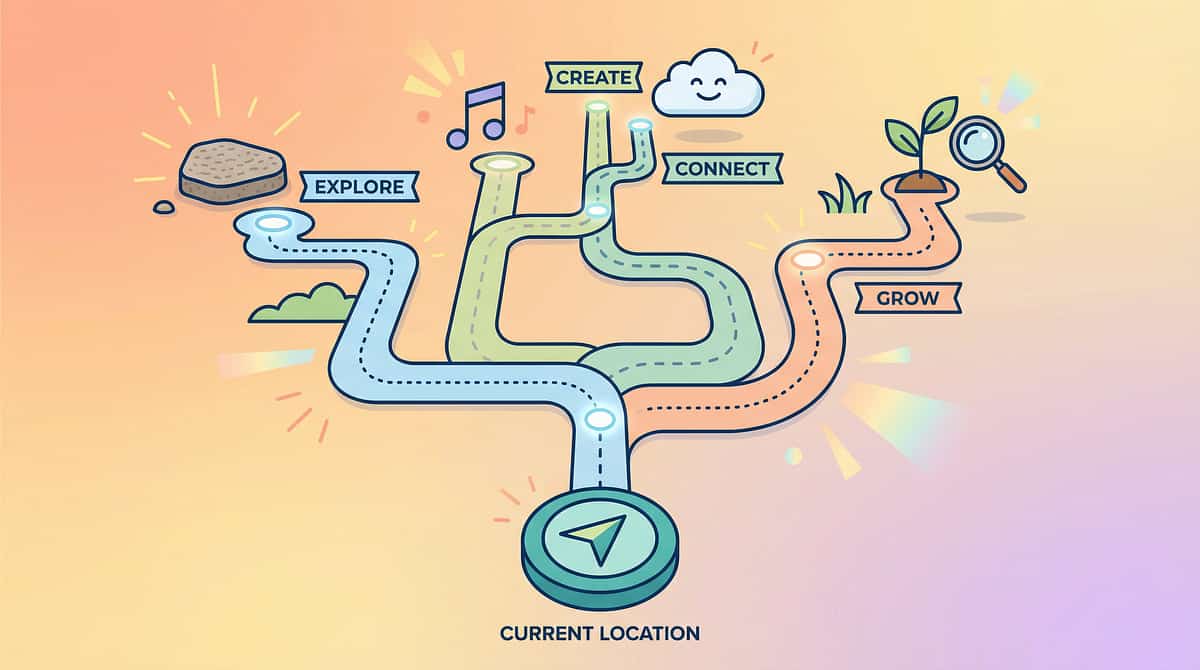
Long-term goal: Emotional Thermometer → Self-Monitoring → Strategy Matching → Flexible Self-Regulation → Social-Emotional Readiness → School & Peer Participation
More Tools in the Emotional Regulation Series
Technique | Code | Difficulty | Materials You Already Own | |
Teaching Emotion Words | C-271 | 🟢 Intro | Feeling words cards | |
Zones of Regulation | C-272 | 🟡 Core | Thermometer chart | |
Emotional Thermometer ★ YOU ARE HERE | C-273 | 🟡 Core | All 9 materials | |
Building Coping Strategies | C-274 | 🟡 Core | Strategy cards | |
Frustration Tolerance | C-275 | 🟠 Advanced | Thermometer + strategy cards | |
Calm-Down Corners | C-280 | 🟡 Core | Sensory materials + strategy cards |
Materials You Already Own: If you've worked through C-273, you now own the core materials for C-274 and C-275. Your investment compounds.
One Technique. Twelve Domains. One Child.
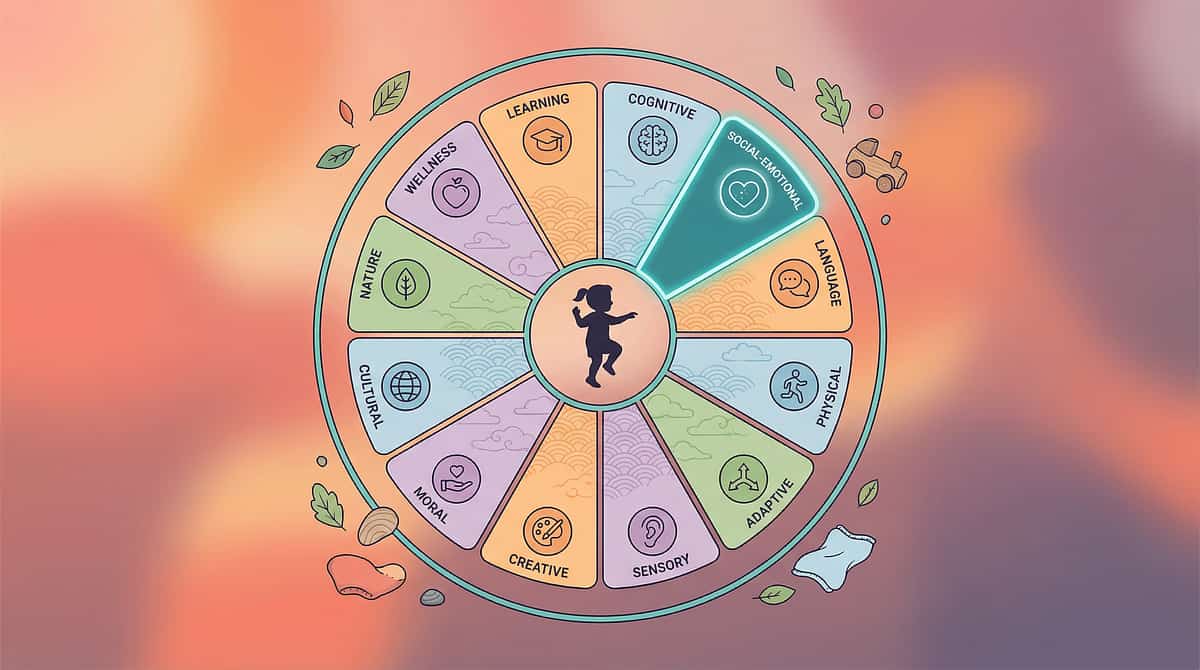
Emotional Regulation is not one skill — it's the central coordinator of all other developmental domains. A child who cannot regulate their emotional state cannot learn, socialize, communicate, or develop flexibility. Domain C is foundational infrastructure.
🟢 Domain B Activated
Social Communication: Emotional vocabulary enables genuine social interaction with peers
🟢 Domain D Activated
Behavior & Flexibility: Regulation capacity reduces behavioral rigidity and transition difficulty
🟢 Domain L Activated
Executive Function: Self-monitoring is a critical executive function precursor skill
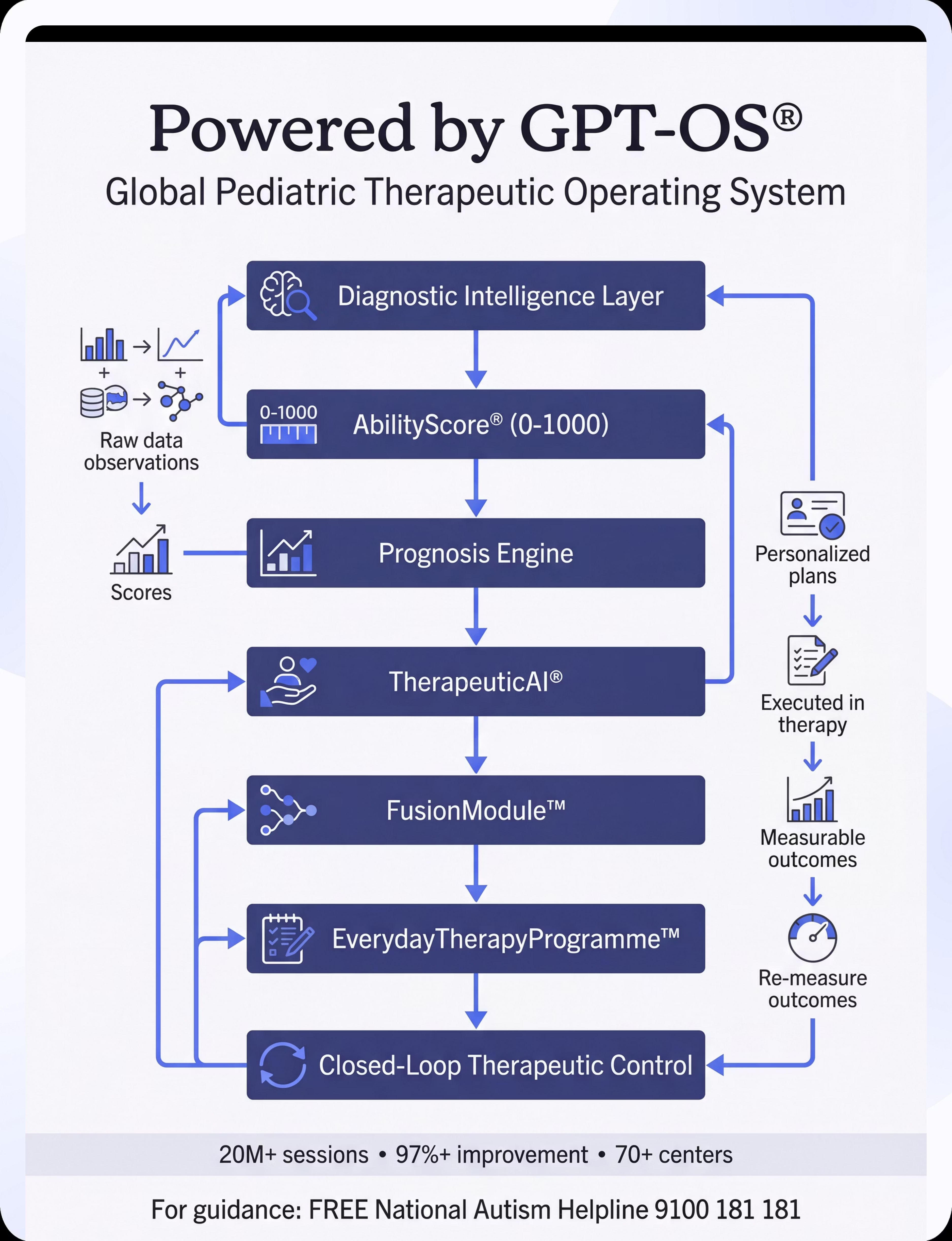
GPT-OS® Integration: "Connect your C-273 progress data to your child's full AbilityScore® profile — see how emotional regulation gains cascade across all 12 domains."
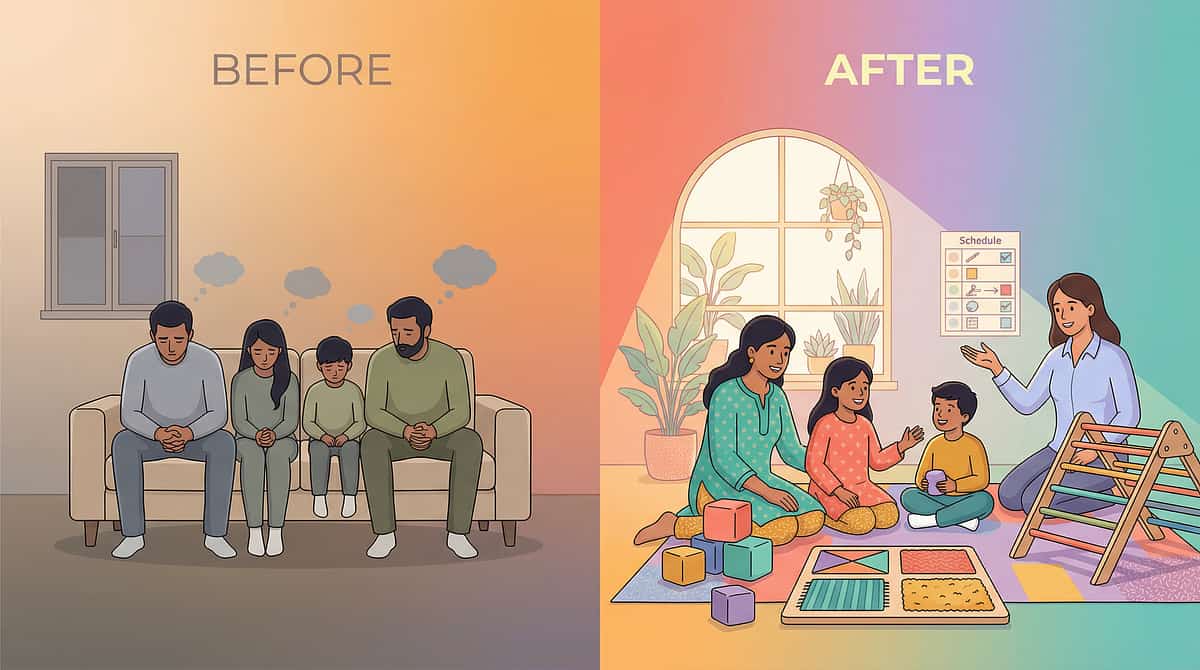
From the Families Who Walked This Path First
Arjun, Age 7 — Hyderabad
Before: He would explode 6–8 times per week with no warning. His mother described it as "a switch with no visible trigger." He could not answer "how are you feeling?" He had no emotional vocabulary beyond "mad."
After 8 weeks: Arjun approaches his mother. "Mum, I'm in yellow. My tummy is weird and my voice wants to get loud. Can I go to my corner?" His mother called the Pinnacle helpline in tears — not of distress, but because her son had just demonstrated every skill the 8-week protocol was designed to build.
"He NOTICED. He NAMED it. He ASKED for help. Before it became a crisis. Eight weeks. I'll never stop recommending the thermometer." — Mother, Pinnacle Network, Hyderabad
Meera, Age 5 — Bengaluru
Before: Non-verbal at time of starting thermometer work. 4–5 meltdowns/day. Her teachers had given up on any emotional communication system.
After 12 weeks: Meera carries her personal thermometer card in her school bag. She walks to her teacher, holds up the card with the yellow zone pointing forward. Teacher responds with a strategy card. Meltdown prevented. No words needed.
"She can't say 'I'm overwhelmed.' But she can show me. The card speaks for her." — School teacher, Pinnacle-partnered school, Bengaluru
From the therapist: "Arjun's case illustrates the typical trajectory: 2 weeks of resistance, 2 weeks of reluctant participation, then a consolidation moment that surprises even the parents. The thermometer doesn't change the emotion — it gives the child a language for it. Once they have the language, they have the power." — Pinnacle OT + ABA Team
Illustrative cases based on clinical composite outcomes. Individual results vary by child profile.

You Are Not Doing This Alone — Join the Community
WhatsApp Parent Group — Emotional Regulation Series
Connect with families working through Domain C techniques. Daily tips, session sharing, celebration moments. unknown link
Pinnacle Online Parent Forum
Technique-specific discussion threads. Ask questions from parents who've been here. Search "C-273 emotional thermometer" to find your specific thread. Visit Parent Forum →
Local Pinnacle Parent Meetup
Every Pinnacle center hosts monthly parent meetups. Find the emotional regulation parents in your city. Find Your Local Meetup →
Peer Mentoring Program
Connect with a parent who completed the Emotional Regulation series 6+ months ago. Real experience, not clinical advice. Request a Peer Mentor →
"Over 1,000 individuals from 111 countries contributed to the WHO Nurturing Care Framework. Community engagement is not optional — it is a core therapeutic mechanism." — WHO NCF, adapted by Pinnacle Blooms Consortium
FREE National Autism Helpline: 9100 181 181 (16+ languages, 24×7)
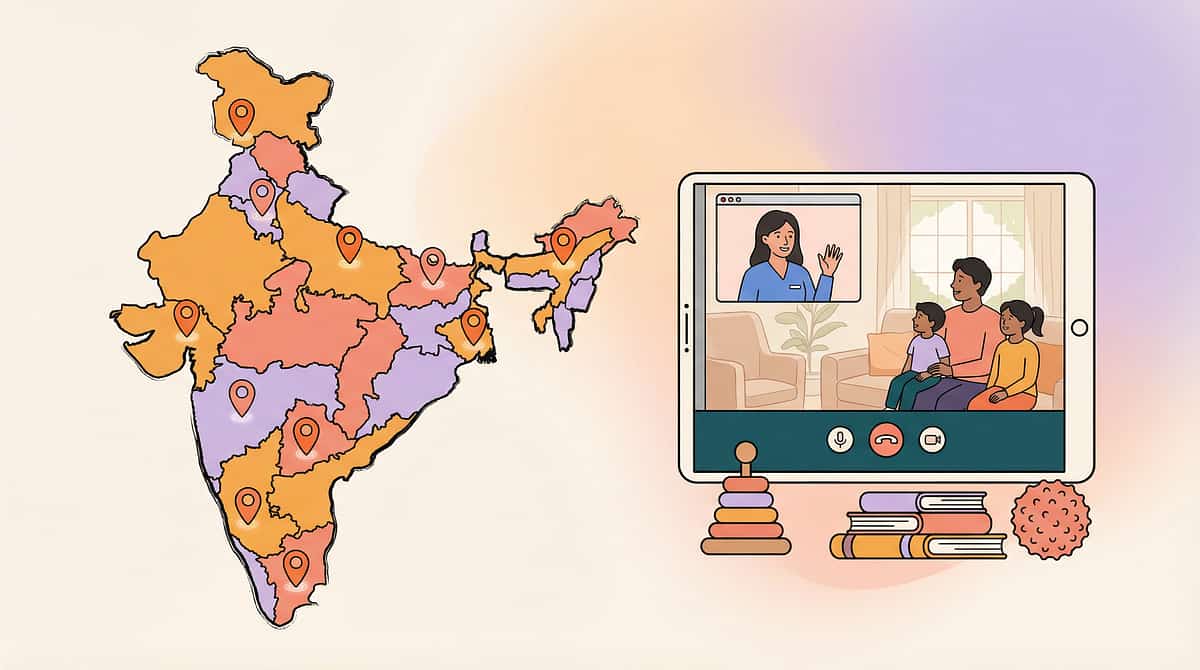
Home Practice + Professional Guidance = Maximum Impact
Need | Specialist | What They Do | |
Interoception training | Occupational Therapist | Sensory processing assessment, body awareness curriculum | |
Emotional vocabulary | Speech-Language Pathologist | Expressive emotional language, AAC for non-verbal children | |
Behavior analysis of check-in data | BCBA / ABA Therapist | Functional analysis, reinforcement optimization | |
Anxiety-linked thermometer work | Child Psychologist | CBT integration, chronic hyperarousal assessment | |
School integration | Special Educator | Classroom check-in systems, teacher training |
Not near a center? Teleconsultation available in 16+ languages. Insurance note: Pinnacle therapy services accepted under CGHS, many state insurance schemes, and private health plans.
"Home + Clinic = Maximum Impact. Neither alone is enough. Together, they are transformative."
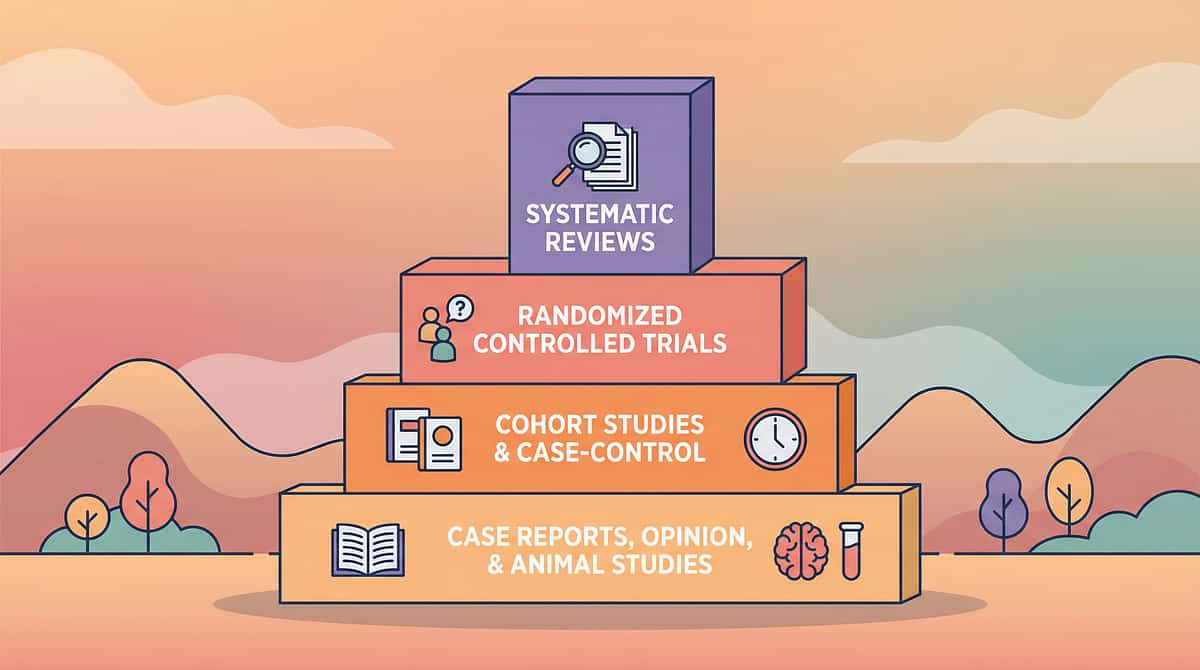
The Science Behind This Page — For the Curious Parent
PRISMA Systematic Review (2024)
Finding: Emotional regulation visual tools meet evidence-based practice criteria for ASD across 16 studies (2013–2023).
Source: PMC11506176 | Read on PubMed → | Level I — Systematic Review
Meta-Analysis, World J Clin Cases (2024)
Finding: Self-monitoring interventions effectively promote adaptive behavior and emotional regulation across 24 studies.
Source: PMC10955541 | Read on PubMed → | Level I — Meta-Analysis
Indian RCT — Home-Based Interventions (2019)
Finding: Parent-administered emotional awareness interventions in Indian pediatric populations demonstrated significant outcomes in home settings.
Source: Padmanabha et al., Indian J Pediatr | DOI: 10.1007/s12098-018-2747-4 → | Level II — RCT
WHO Care for Child Development (2023)
Finding: Parent-administered developmental support tools effective across 54 low- and middle-income countries.
Source: PMC9978394 | WHO Resource → | Level I — WHO Systematic Evidence Base
NCAEP Evidence-Based Practices Report (2020)
Finding: Self-management and self-monitoring classified as evidence-based practices for autism, with visual supports as additional EBPs supporting thermometer work.
Source:Read Full Report → | Level I — National Systematic Review
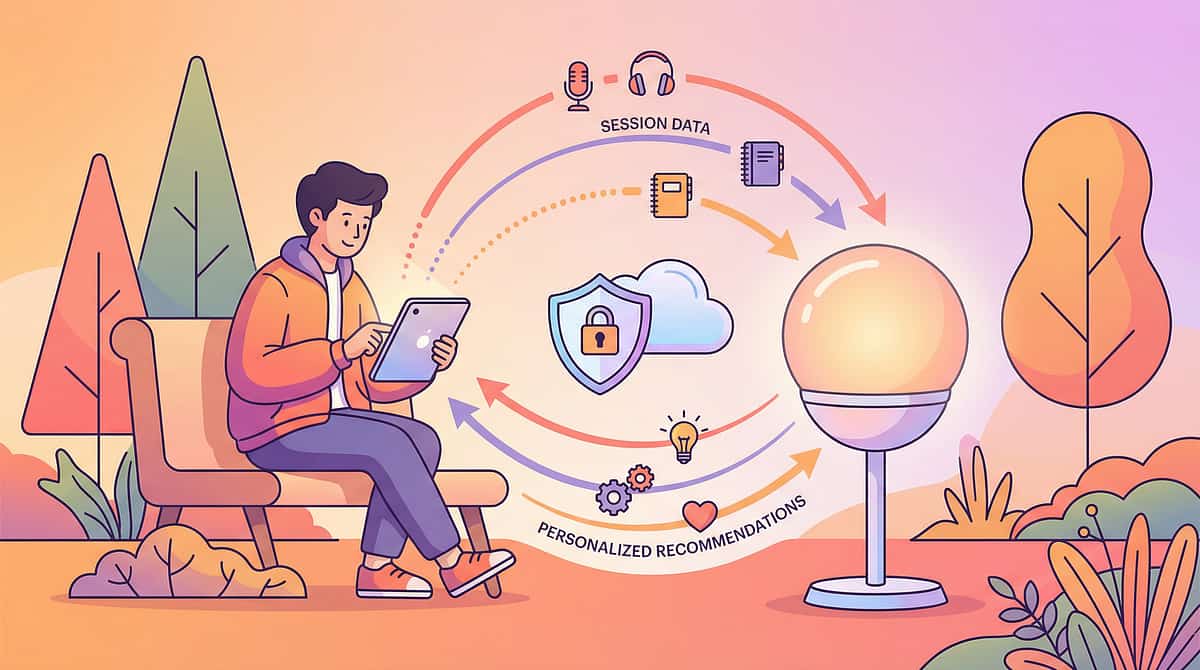
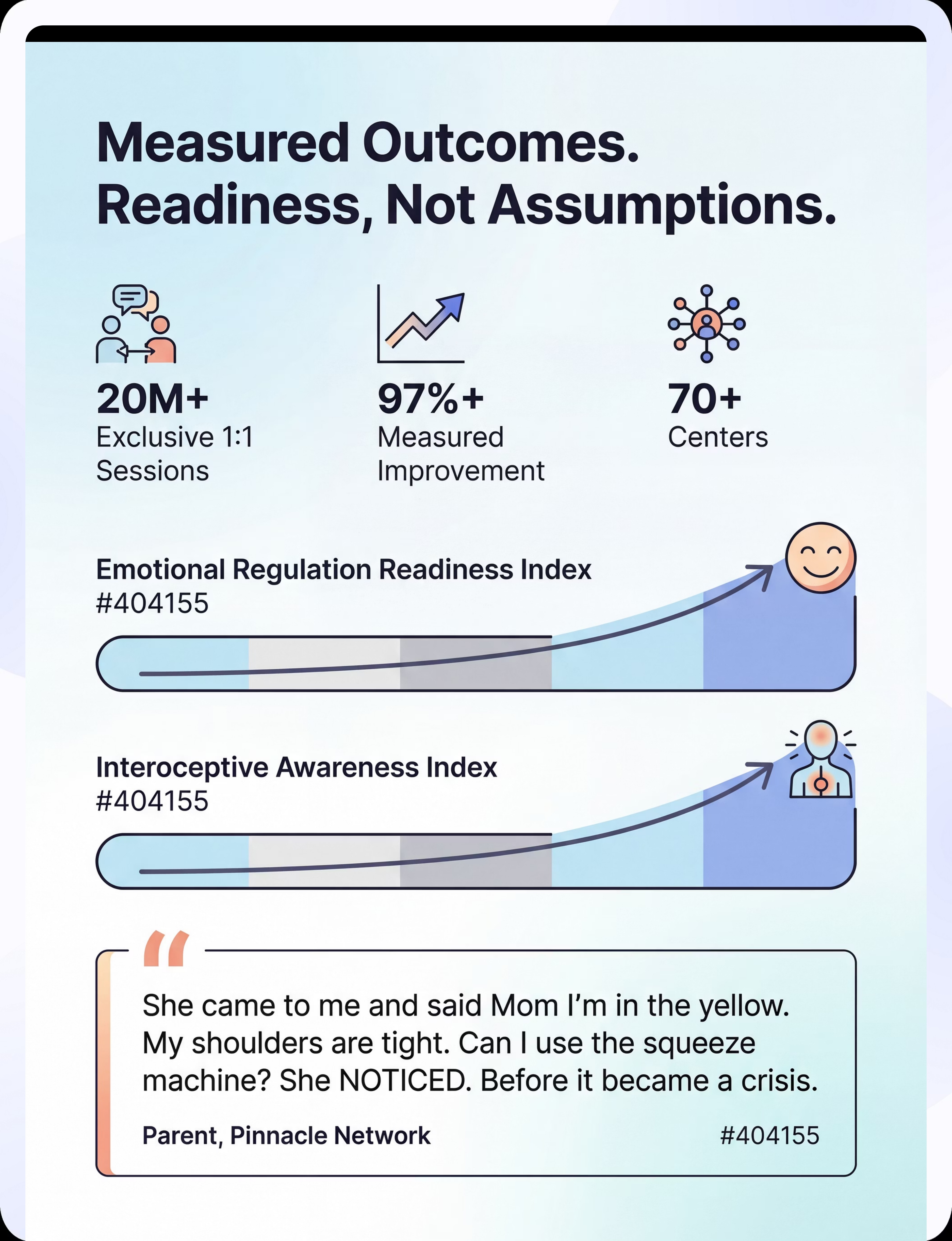
Your Sessions Build Intelligence — For Your Child and Every Child Like Them
Emotional Regulation Readiness Index
Interoceptive Awareness Index
Self-Monitoring Readiness Index
Emotional Communication Index
Adaptive Coping Readiness Index
Privacy Assurance: All data is encrypted, anonymized for population analysis, and DPDP Act (India) + GDPR (international) compliant. Your family's data belongs to your family.
"Your data helps every child like yours. When 20M+ sessions teach the algorithm what works, your child benefits from every other family's experience."

Consistency Across Caregivers Multiplies Impact
If only one parent executes the thermometer check-in, the child receives 3–5 daily signals. If both parents + the teacher + the grandparent all use the same thermometer language, the child receives 15–20 consistent daily signals. Generalization requires repetition across people and places.
"Explain to Grandparents" Version
"Our child's therapist has recommended a tool called the Emotional Thermometer. It's a color chart that helps [child's name] identify when their feelings are getting 'hot' — so they can calm down before reaching a crisis point. Please look at the thermometer chart on the fridge when you visit. When [child's name] points to a zone, accept it and offer them a hug, a drink of water, or a quiet moment. That's the thermometer working."
Teacher Communication Template
"[Child's name] is working on emotional thermometer skills at home. They are learning to identify 5 zones (calm → hot) and use matched strategies. Could you prompt a zone-check at [transition time] each day using their personal thermometer card? We are tracking progress and will share data with you monthly. — [Parent's name]"
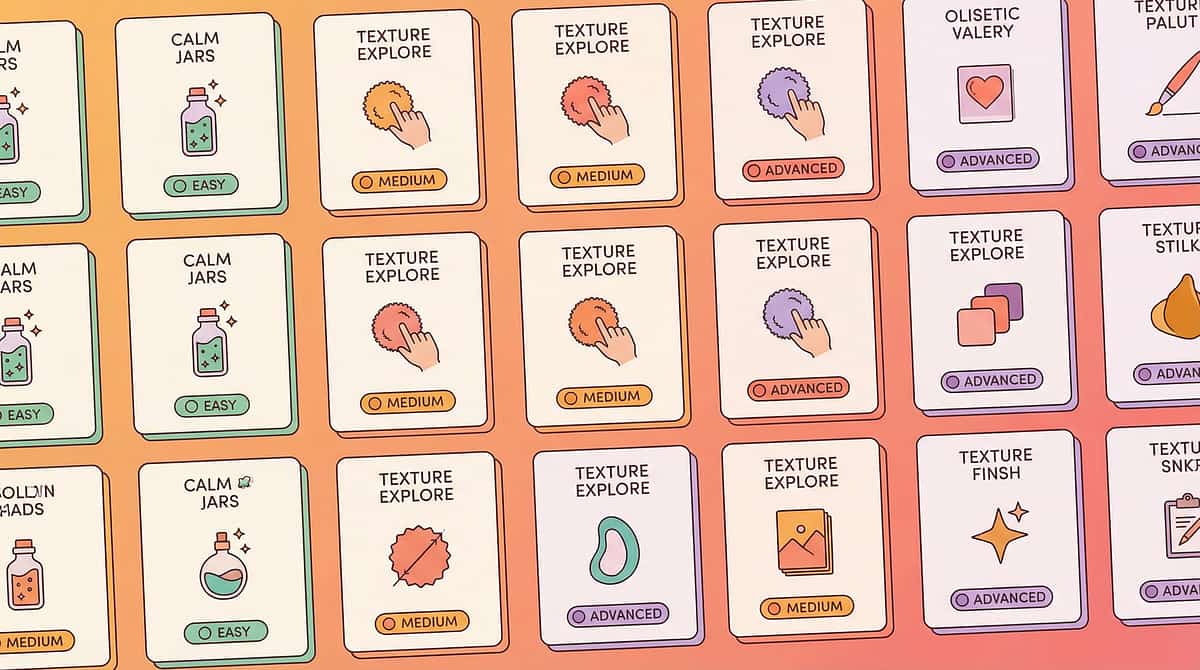
Preview of 9 materials that help with emotional thermometer Therapy Material
Below is a visual preview of 9 materials that help with emotional thermometer therapy material. The pages shown help educators, therapists, and caregivers understand the structure and content of the resource before use. Materials should be used under appropriate professional guidance.



Link copied!

Questions from Real Parents — Answered by the Pinnacle Consortium
How long before I see results?
Most families see consolidation indicators at 3–4 weeks of consistent daily use. Measurable meltdown reduction typically at 6–8 weeks. Internalized self-monitoring (no longer needing the physical tool) typically at 3–6 months. Consistency matters more than technique perfection.
My child is non-verbal — can they use an emotional thermometer?
Yes — and often remarkably effectively. Use 3 zones only, use real photographs of faces (not cartoons), use eye-gaze pointing as the response modality, and consider programming thermometer vocabulary into an AAC device. The thermometer concept works without words.
Should I use the thermometer during a meltdown?
No. During a meltdown, the prefrontal cortex is offline — learning is impossible, and demands can escalate the crisis. The thermometer is a tool for regulated moments. After the meltdown passes (recovery phase, typically 20–60 minutes), a gentle check-in may be appropriate.
My child seems embarrassed by the thermometer at school.
Switch to the personal thermometer card — discrete and pocket-sized. Use a private signal with the teacher. Allow the child to design their own thermometer with custom colors and names — ownership reduces embarrassment significantly.
I forgot to do check-ins for a week — do I start over?
No. Skills in formation are resilient to brief interruptions. Resume as if you never stopped. The thermometer concept hasn't been unlearned — it may need reactivation (model your own check-ins for 2–3 days) but does not require restarting.
Is this the same as Zones of Regulation?
Related but distinct. Zones of Regulation uses 4 color zones with associated behaviors; the Emotional Thermometer emphasizes intensity measurement on a gradient scale. They are compatible — many therapists use both. If your child has already been introduced to Zones, the thermometer is a natural complement.
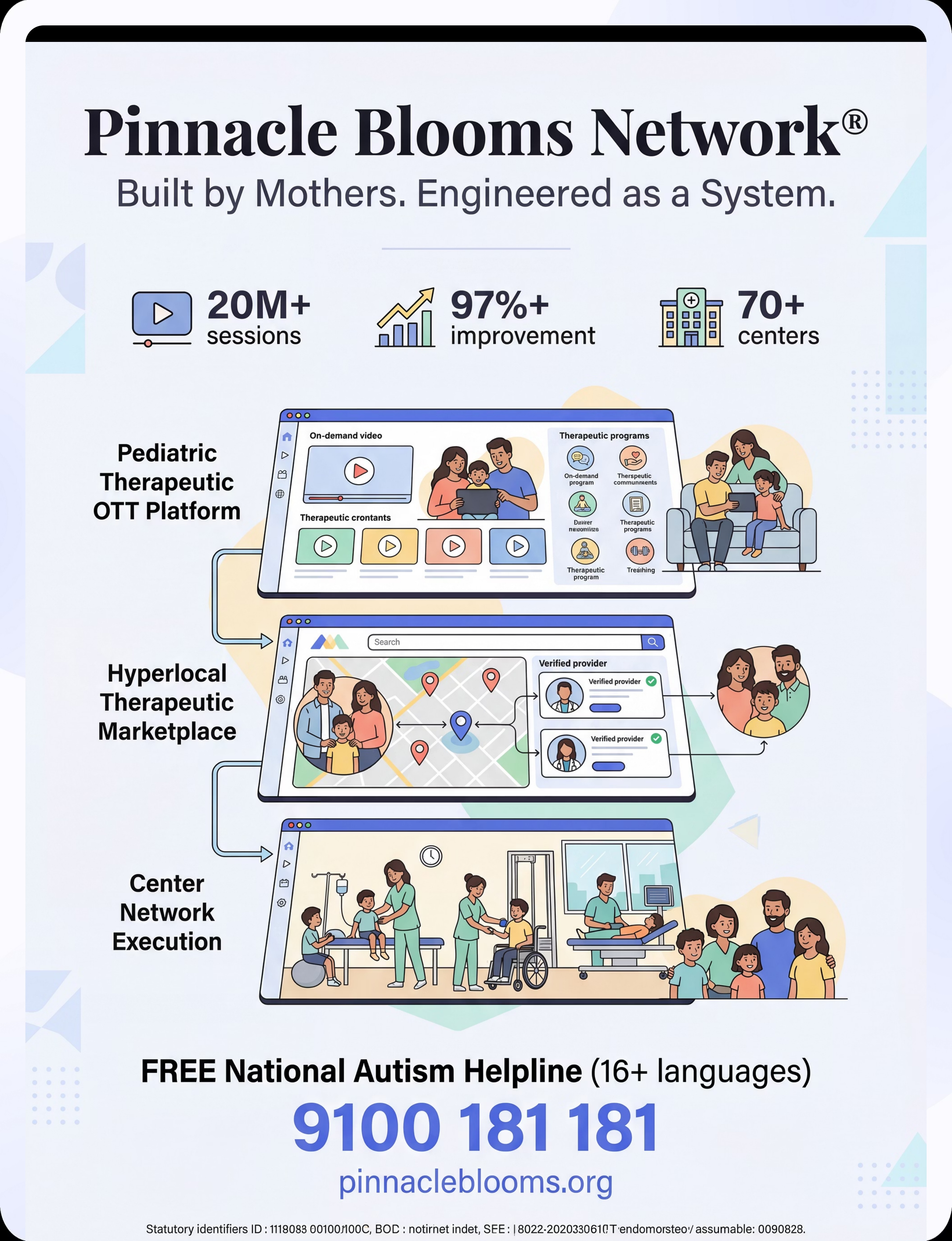
Pinnacle Blooms Network® | Validated by OT • SLP • ABA • SpEd • NeuroDev • Pediatrics | 20M+ Sessions • 70+ Centers
FREE National Autism Helpline: 9100 181 181 (24×7 | 16+ Languages) | care@pinnacleblooms.org | pinnacleblooms.org
This content is educational. It does not replace individualized assessment and intervention planning with licensed professionals. Always consult with qualified professionals before beginning intervention programs. Individual results may vary. Statistics represent aggregate outcomes across the Pinnacle Blooms Network.
CIN: U74999TG2016PTC113063 | DPIIT: DIPP8651 | MSME Udyog Aadhaar: TS20F0009606 | GSTIN: 36AAGCB9722P1Z2 | © 2025 Pinnacle Blooms Network®, unit of Bharath Healthcare Laboratories Pvt. Ltd.