

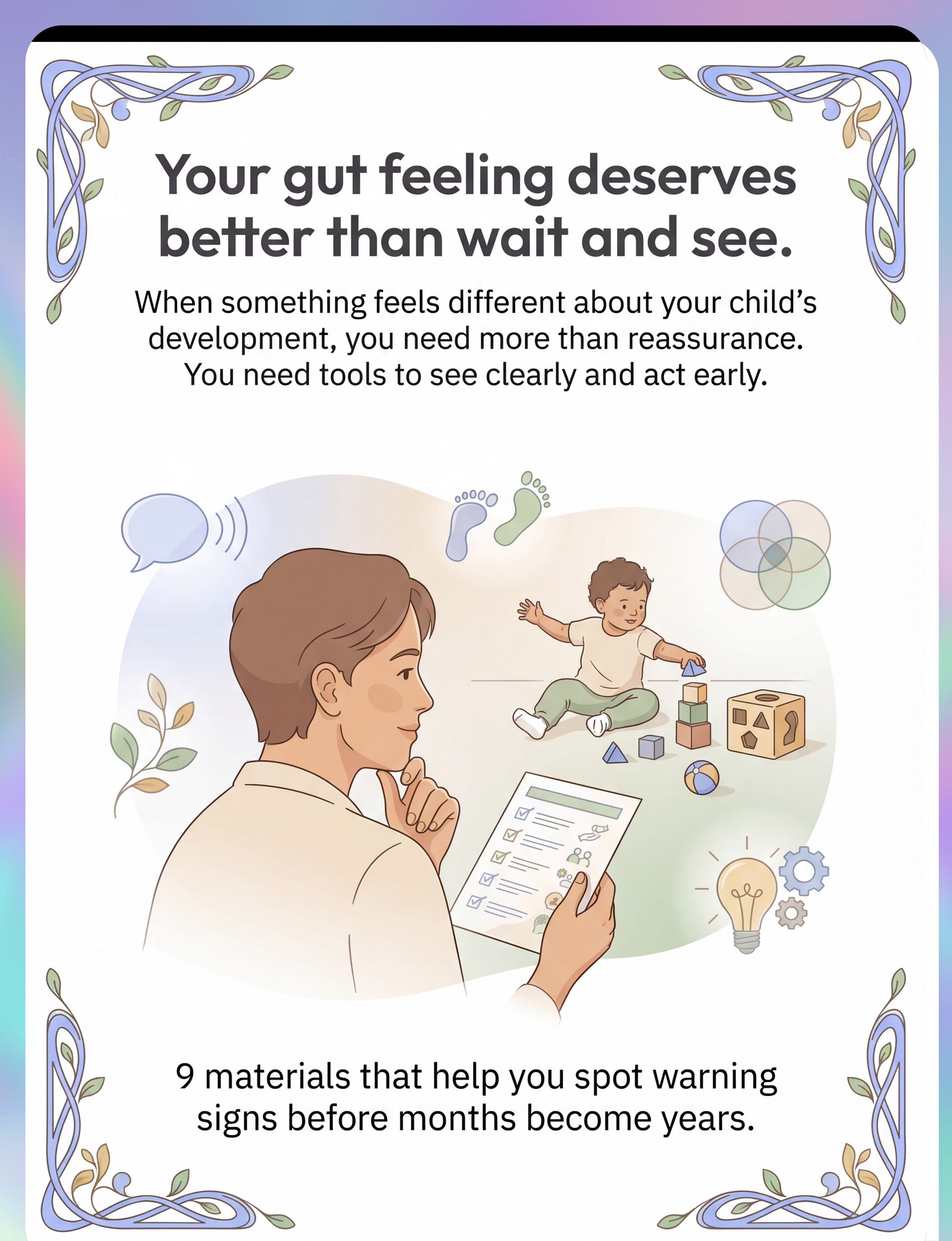
Your gut feeling deserves better than "wait and see."
"She was eighteen months old and she wasn't pointing at the bird outside the window, wasn't waving bye-bye, didn't look up when I called her name. Everyone said 'just shy' or 'she'll catch up.' But something in my gut wouldn't quiet down. By the time she was diagnosed at three, I'd lost eighteen months I could have been helping her. Eighteen months of early intervention during the most critical brain development window. I don't want any other parent to lose that time because they didn't know what to look for." — Mother, Pinnacle Network Family
9 Materials That Help Spotting Early Warning Signs
You are not overreacting. Your instinct is data. What you need is knowledge to trust it.
🔬 Evidence-Based
👶 Ages 0–5
🏠 Home-Ready
₹0–500 Range
🌍 WHO/CDC Aligned
📞 FREE National Autism Helpline: 9100 181 181 | 16+ Languages | 24×7 | Pinnacle Blooms Network®

You Are Among Millions of Parents Who Knew Something Was Different
1 in 36
Children with Autism
Diagnosed in the US (CDC 2023). India's prevalence estimates range 1–2%.
18mo
Diagnostic Gap
Average gap between first parental concern and formal diagnosis in most countries.
97%+
Measured Improvement
In children who receive early GPT-OS® guided intervention at Pinnacle.
"80% of children diagnosed with autism display sensory processing difficulties. Signs of autism can be reliably identified in many children by 12–18 months of age, yet the average age of diagnosis remains 4–5 years — representing a critical 2–3 year window of missed early intervention opportunity." — PRISMA Systematic Review (2024)
India has an estimated 18+ million children with developmental disabilities. Access to early identification tools remains deeply unequal. GPT-OS® was built precisely to change this — for families across all 70+ centres, across 16+ languages, and now through this technique library for 70+ countries.
You are not alone. You are among millions of parents whose instincts were right. The difference between early and late intervention is not luck. It is knowledge.

The First 3 Years: A Window That Will Never Open This Wide Again
🧠 The Science: Neural Plasticity Window
The human brain forms up to 1 million new neural connections per second in the first 3 years of life. This extraordinary neuroplasticity means that targeted early intervention during this period does not merely support development — it redirects developmental trajectories. Skills built now become the scaffolding for every cognitive, social, and language capacity the child will ever develop.
- New neural pathways form more efficiently
- Compensatory brain architecture develops
- Social-communication circuits activate earlier
- Language emergence accelerates significantly
💬 What This Means for Your Child
Your child's brain right now is like wet clay. The shape it takes depends on the experiences, inputs, and interactions it receives daily.
A child who begins early intervention before age 3 has a fundamentally different developmental trajectory than one who begins at age 5 — not because the child is different, but because the window of maximum brain flexibility is different.
Every month of early identification that is lost is a month of intervention that cannot happen during the period when intervention does the most good.
This is not about labelling your child. It is about opening doors while doors are widest.

Level I Evidence: Early Identification Changes Outcomes
🛡️ LEVEL I EVIDENCE
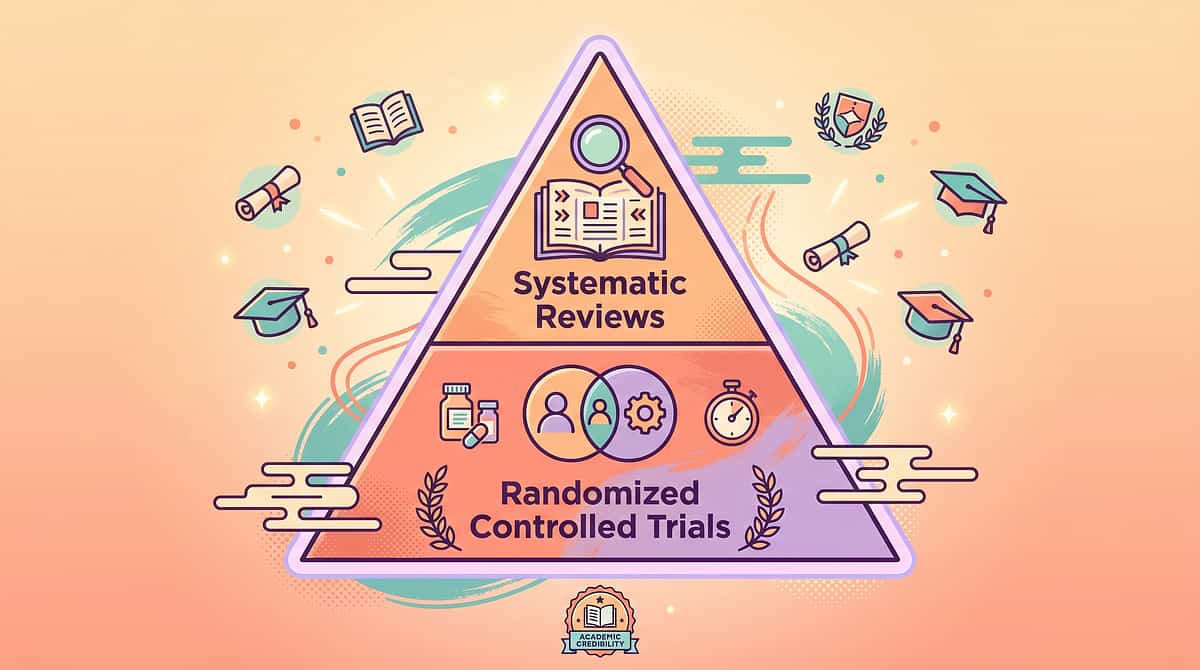
Systematic Reviews + Multiple RCTs
WHO/UNICEF Global Implementation
📋 CDC "Learn the Signs. Act Early."
The CDC's national public health initiative demonstrates that parent-mediated developmental surveillance using validated tools improves early detection rates across diverse populations. Milestone checklists, screening questionnaires, and parent education are the evidence-based foundation.
Source: cdc.gov/ncbddd/actearly
🔬 M-CHAT-R/F Validation Research
The Modified Checklist for Autism in Toddlers (M-CHAT-R/F) is validated for 16–30 months with sensitivity of 91% and specificity of 95% when used with follow-up interview. It is the gold standard parent-completed autism screener globally.
Source: mchatscreen.com | Robins et al., 2014
🌍 WHO Nurturing Care Framework (2023)
48% increase in countries adopting early childhood development policies since framework implementation. Primary health care confirmed as the key platform for reaching all families with essential early identification services.
Source: WHO NCF Progress Report 2018–2023
"Clinically validated. Home-applicable. Parent-proven. The evidence is not ambiguous: earlier identification leads to earlier intervention, and earlier intervention leads to better outcomes." — Pinnacle Blooms Consortium Clinical Review Board

The Technique: What It Is
🔎 C-233
Early Identification Series
Episode 233 of 999
Formal Name
Parent-Mediated Early Developmental Surveillance Using Multi-Material Identification Tools
Parent-Friendly Alias
"Seeing Clearly — 9 Tools That Help You Spot the Signs Before Others Do"
📡 Early Identification
🧩 Developmental Surveillance
👁️ Parent-Driven Screening
🚩 Red Flag Recognition
Definition
Early developmental surveillance refers to the ongoing, systematic process of monitoring a child's developmental progress across multiple domains — social-emotional, communication, cognitive, motor, and adaptive — using validated tools and structured observation frameworks to identify potential delays or differences as early as possible.
Unlike passive observation ("she seems fine"), active surveillance uses specific targets, structured instruments, and documented patterns to move parents from vague concern to informed action.
👶 Ages: 0–5 years | ⏱️ Ongoing daily observation | 📅 Formal screening monthly | 💰 Cost: ₹0–500
📞 Questions about your child's development? FREE Helpline: 9100 181 181 | 24×7 | 16+ Languages

A Full Consortium Approach to Early Identification
NeuroDev Pediatricians
Order formal evaluations, interpret screening results, make diagnostic referrals. Use formal neurodevelopmental assessment tools alongside parent-completed screeners.
Speech-Language Pathologists (SLP)
Screen for communication-specific red flags: babbling patterns, first words timeline, language comprehension. Use CSBS-DP Infant-Toddler Checklist and language milestone tracking.
Occupational Therapists (OT)
Identify sensory processing, motor, and self-regulation red flags. Assess fine motor, play skills, and daily living skills against developmental expectations.
Behaviour Analysts (BCBA/ABA)
Use structured observation and behavioural data collection to identify patterns of concern. Document frequency, duration, and context of behaviours for diagnostic clarity.
Special Educators (SpEd)
Assess learning readiness, adaptive behaviour, and educational milestone progression. Identify early cognitive and adaptive skill delays.
CRO (Clinical Research Operations)
Validate screening tools, standardise assessment protocols, and generate population-level data on early identification effectiveness across the Pinnacle network.
"Early identification is not owned by any single discipline. The brain doesn't organise by therapy type. A child's social communication, sensory processing, motor development, and behavioural profile are all interconnected — and the earliest signs may appear in any domain." — Pinnacle Blooms Consortium, FusionModule™ Clinical Guidelines
Material 1: Developmental Milestone Checklists by Age
📋 Assessment & Screening Tools
₹0 Free
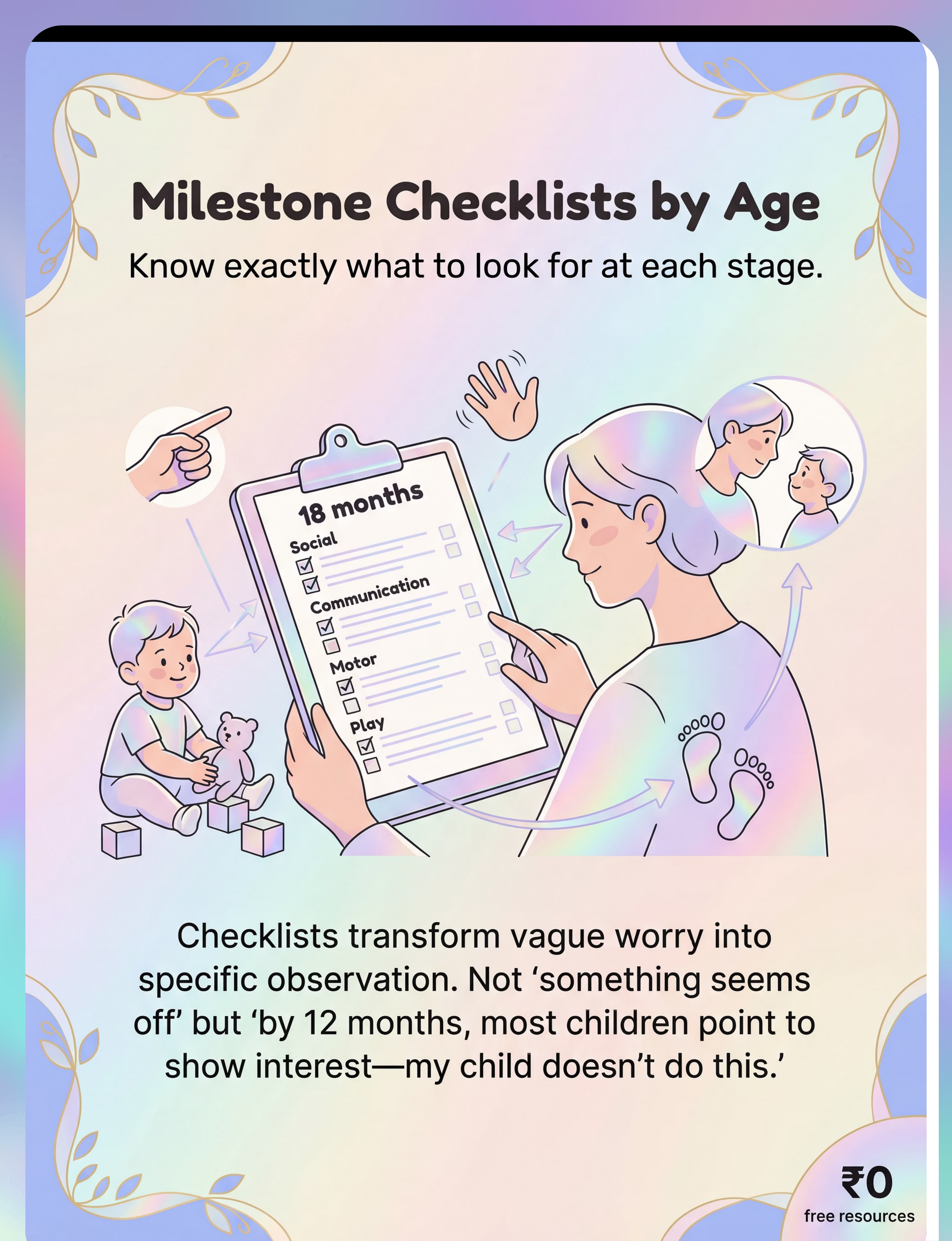
The Science: Age-specific milestone checklists provide comprehensive frameworks covering what most children do by specific ages across all developmental domains — not just walking and talking. The social, emotional, communication, and play milestones that can signal developmental differences earliest are precisely the ones most families are never taught to monitor. These checklists transform vague concern into specific observation: not "something seems off" but "by 12 months, most children point to show interest — my child hasn't done this once."
CDC Learn the Signs
Free, multiple languages → cdc.gov/ncbddd/actearly
AAP Bright Futures
Developmental surveillance forms for paediatric visits
WHO Milestone Charts
Global developmental milestone references
Pathways.org & Zero to Three
Comprehensive family-facing milestone resources
How to Use It: Select the checklist for your child's current age. Review every item honestly — mark Present, Absent, or Emerging. Track monthly. Bring documentation to every paediatric visit.
Key Insight: "You can't spot what you don't know to look for. Checklists give you the specific targets."
Material 2: Video Examples of Typical vs. Atypical Development
🎥 Educational Media
₹0 Free
The Science
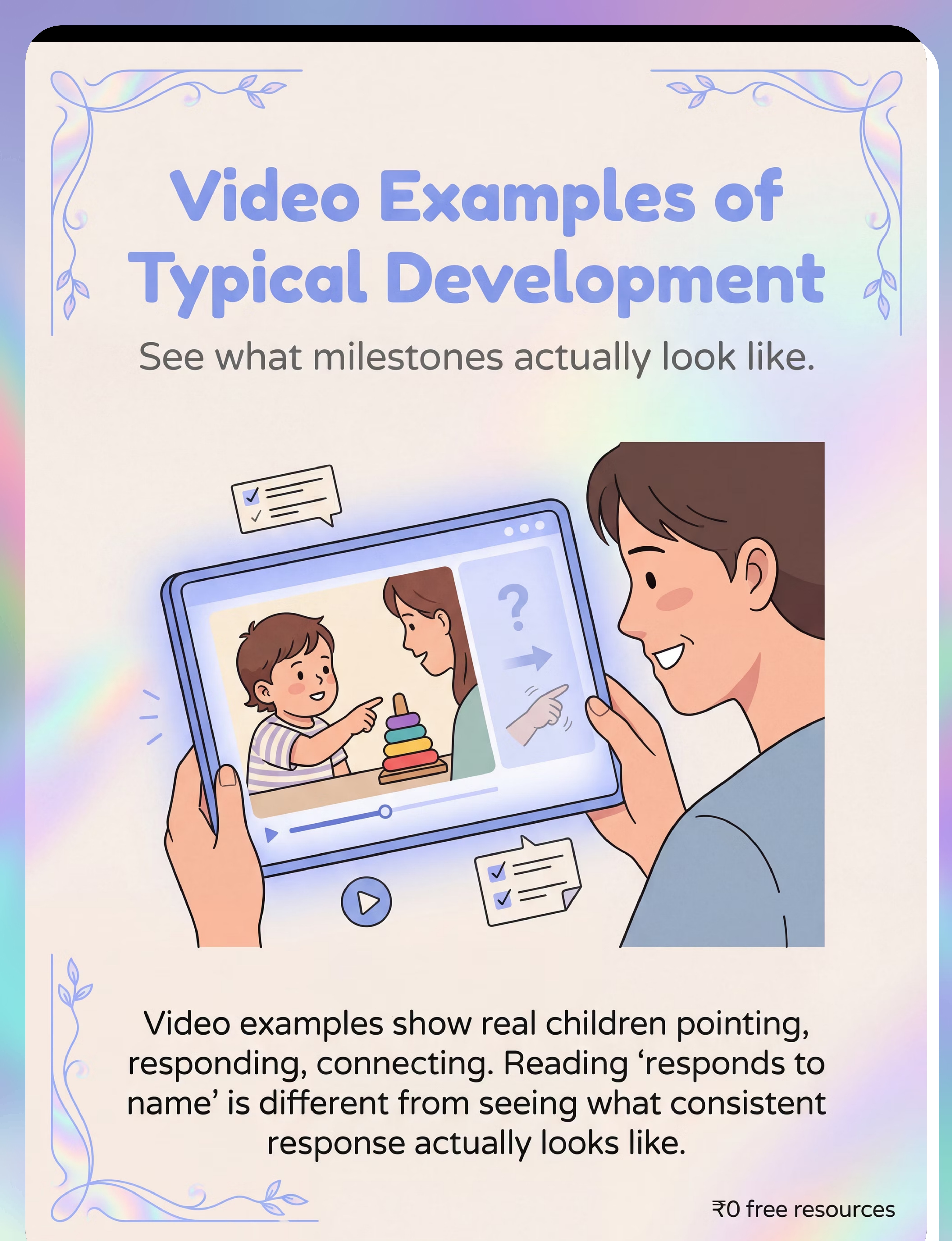
Written descriptions of milestones only go so far. A parent may read "responds to name" and believe their child does this — when the child responds inconsistently, slowly, or only after multiple calls. Video examples show what milestones actually look like in real children: what an 18-month-old's pointing looks like, how typical toddlers engage in back-and-forth play, what age-appropriate eye contact patterns look like during interaction.
Key Resources
- Kennedy Krieger Institute autism video glossary
- CDC milestone video library
- First Signs initiative (University early autism signs videos)
How to Use It
Watch with specific observation questions in mind. Compare to home videos of your own child at similar ages. Focus on social-communication markers, not just motor skills.
What to Look For
- The quality and spontaneity of pointing to share interest
- How a typical toddler makes eye contact during play
- Back-and-forth social reciprocity in action
- Age-appropriate response to name being called
Key Insight: "Reading 'points to show interest' is different from seeing what pointing for shared attention actually looks like in a toddler."

Material 3: Parent-Completed Screening Questionnaires
📝 Validated Screening Instruments
₹0 Freely Available
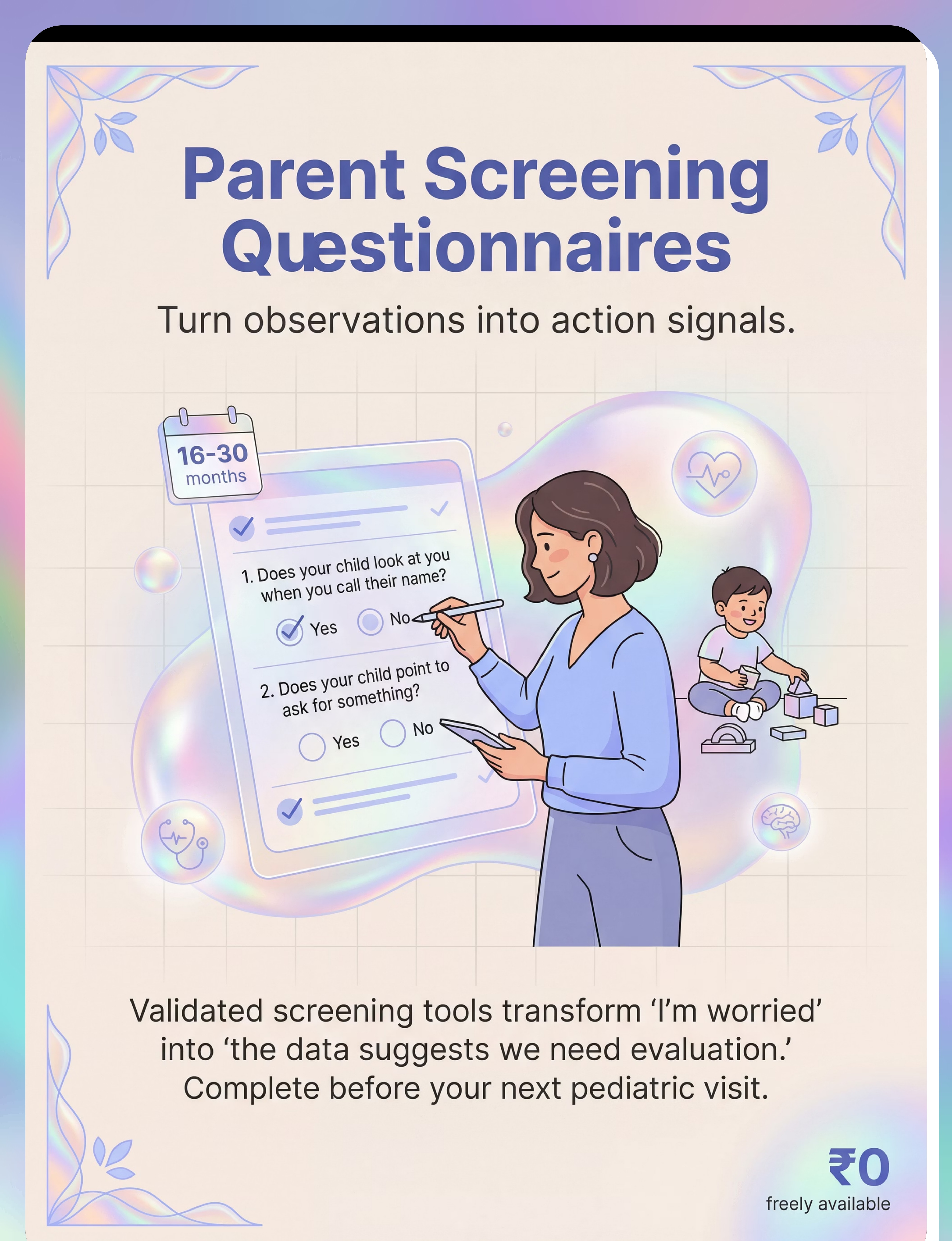
Validated screening questionnaires like the M-CHAT-R/F (Modified Checklist for Autism in Toddlers, Revised with Follow-Up), ASQ-3 (Ages and Stages Questionnaire), and PEDS (Parents' Evaluation of Developmental Status) translate parent observations into structured data that identifies children at risk. These questionnaires ask specific questions parents can answer based on daily observation — and score responses to flag when further evaluation is needed.
M-CHAT-R/F
Free at mchatscreen.com | Ages 16–30 months | Gold standard autism screener globally | Sensitivity 91%, Specificity 95%
ASQ-3
Ages 1–66 months | Covers all developmental domains | Widely used in paediatric practice
PEDS
Birth to 8 years | Brief and validated | Designed to identify parental concerns efficiently
CSBS-DP Infant-Toddler Checklist
Ages 6–24 months | Focuses on communication, social, and symbolic skills
How to Use It: Complete based on typical behaviour, not best-day performance. Score per instructions. Bring results to your paediatrician regardless of outcome. A positive screen means "seek evaluation" — it is not a diagnosis.
Key Insight: "Validated tools transform 'I'm worried' into 'the data suggests we need evaluation.' This changes the clinical conversation."
Material 4: Developmental Domain Explainers
📚 Parent Education Materials
₹0–500
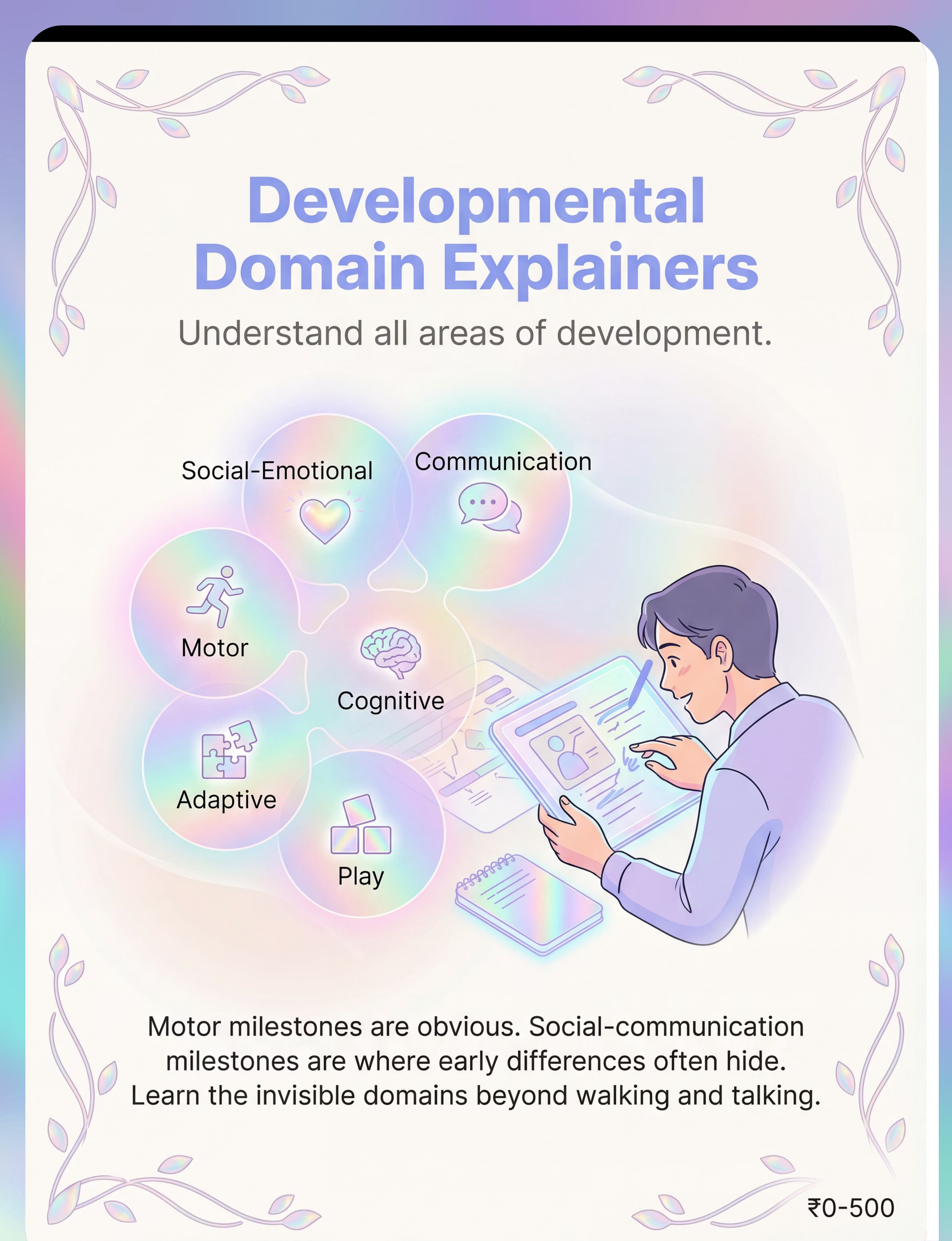
Most parents focus on motor and language milestones because these are most visible. Social-emotional development, joint attention, play skills, and adaptive behaviour remain largely unmeasured in most households. Domain explainers provide education about all areas: what joint attention is and why it matters, what reciprocal social interaction looks like at different ages, how play develops from solitary to parallel to interactive.
A child who walks on time and says some words but doesn't engage in back-and-forth social games, doesn't share interests, and shows rigid play patterns — this profile becomes recognisable only when parents understand social-communication development as distinct from motor and vocabulary milestones.
Zero to Three
Developmental guides by domain — social, emotional, language, cognitive
CDC Domain Breakdowns
Free, evidence-based explanations for each developmental area
Pathways.org Guides
Comprehensive visual and text-based domain explainers
Joint Attention Resources
Dedicated explainers for social referencing and shared attention skills
Key Insight: "Motor milestones are obvious. Social-communication milestones are where early differences often hide. Learn the invisible domains."
Material 6: Home Video Recording & Review Guides
📹 Documentation Tools
₹0 Smartphone Required
The Science
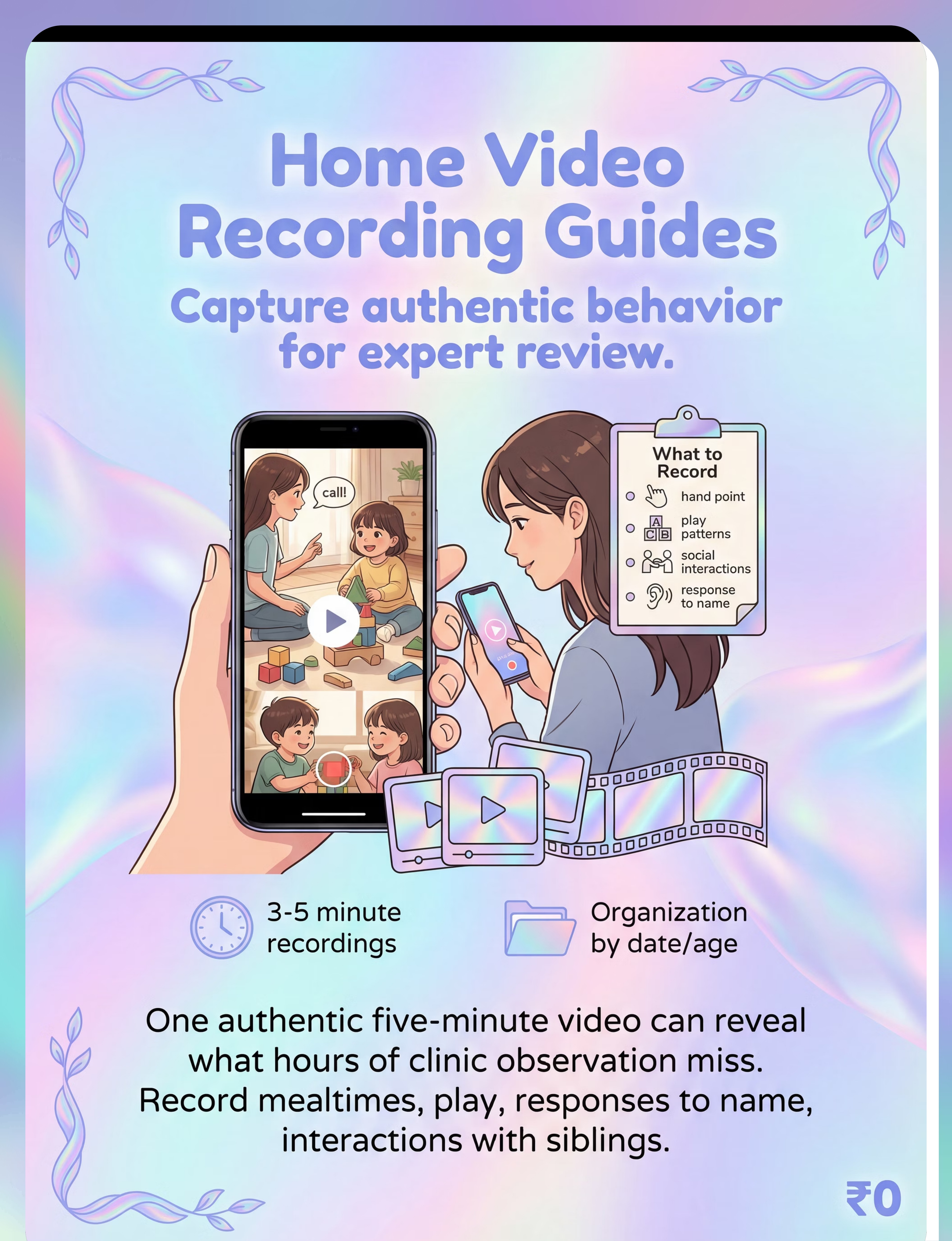
Children often behave differently in clinical settings than at home. Home video recordings capture authentic, daily behaviour that clinicians can review for subtle signs parents might normalise or miss. Many developmental paediatricians now request home videos as part of evaluation — parents who arrive with organised footage accelerate the assessment process significantly.
What to Record
- Response to name called from distance (3–5 metres, quiet room)
- Child pointing to show or request
- Free play alone and with siblings/peers
- Meal times and transitions
- Any repetitive or unusual behaviours
- Reaction to novel people or environments
How to Use It
Record 3–5 minute clips of natural behaviour. Do not coach or prompt. Date all videos. Organise chronologically. Review with milestone checklist in hand.
Pro Tips
- Record from a natural, unobtrusive position
- Include context — label what the child was doing before the clip
- Capture both successful and absent skills
- Share relevant clips at paediatric appointments
Key Insight: "One authentic five-minute video can reveal what hours of clinic observation miss."
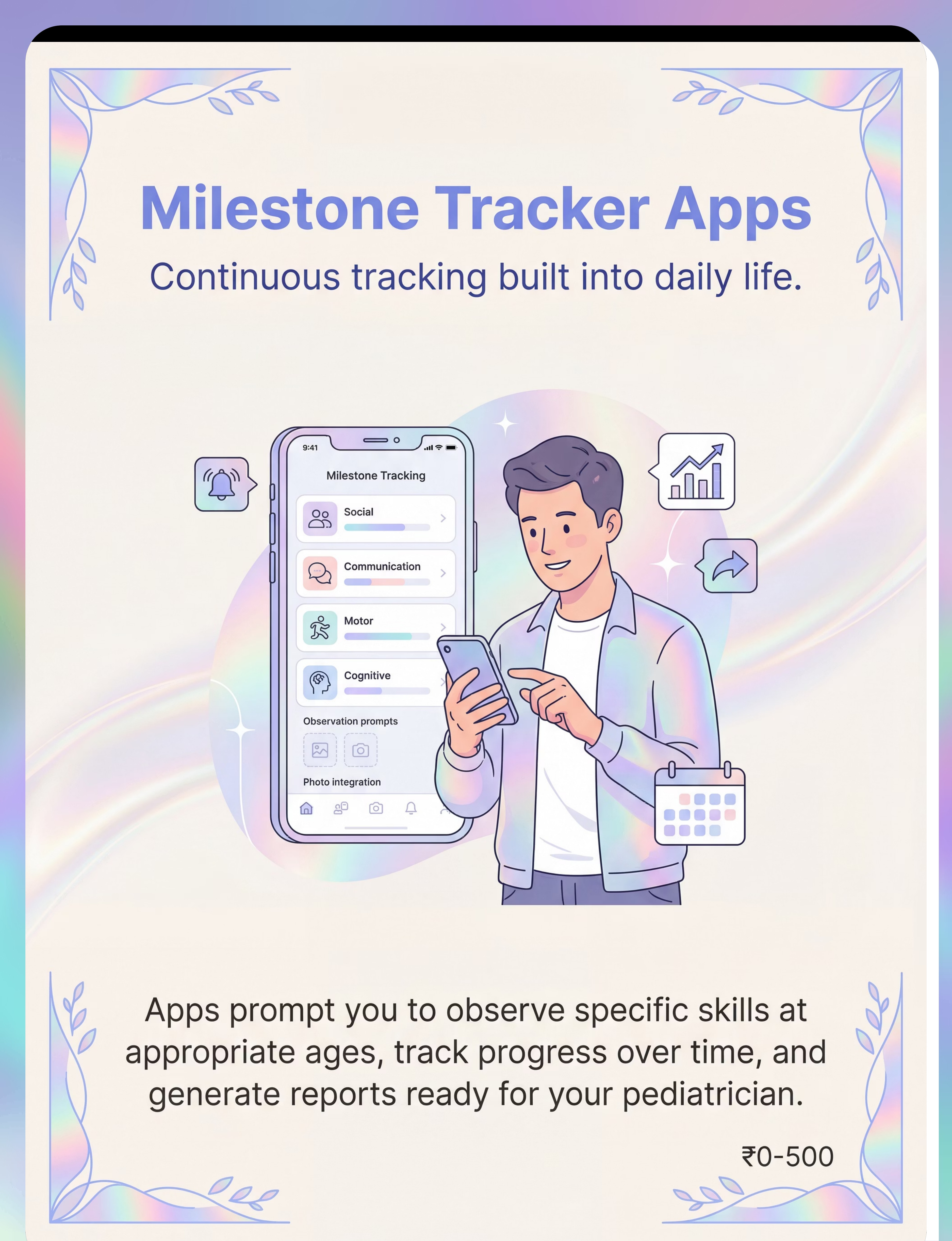
Material 7: Milestone Tracker Apps & Digital Tools
📱 Digital Surveillance Tools
₹0–500
Digital milestone trackers provide structured, ongoing developmental monitoring integrated into daily life. Apps prompt parents to observe specific skills at appropriate ages, track progress over time, and flag when delays accumulate. The best apps connect milestone tracking to paediatric visit preparation, generating reports that summarise developmental status for healthcare provider review.
Push notifications prevent the common pattern of only tracking when concerns already exist — making surveillance continuous rather than episodic.
CDC Milestone Tracker App
Free | Android + iOS | Covers all domains | Generates paediatric visit reports | Official CDC resource
Pathways.org Digital Tools
Research-based milestone tracking with activity suggestions
ASQ Online Tracking System
Structured tracking aligned to the Ages and Stages Questionnaire
Research-Based Baby Apps
Apps with validated milestone databases — look for CDC or AAP alignment
How to Use It: Download the CDC Milestone Tracker app. Set up your child's profile. Follow the prompted observations at each age. Generate a report to bring to your next paediatric visit.
Key Insight: "Episodic concern is less powerful than documented pattern. Apps create the longitudinal view that reveals trajectories."
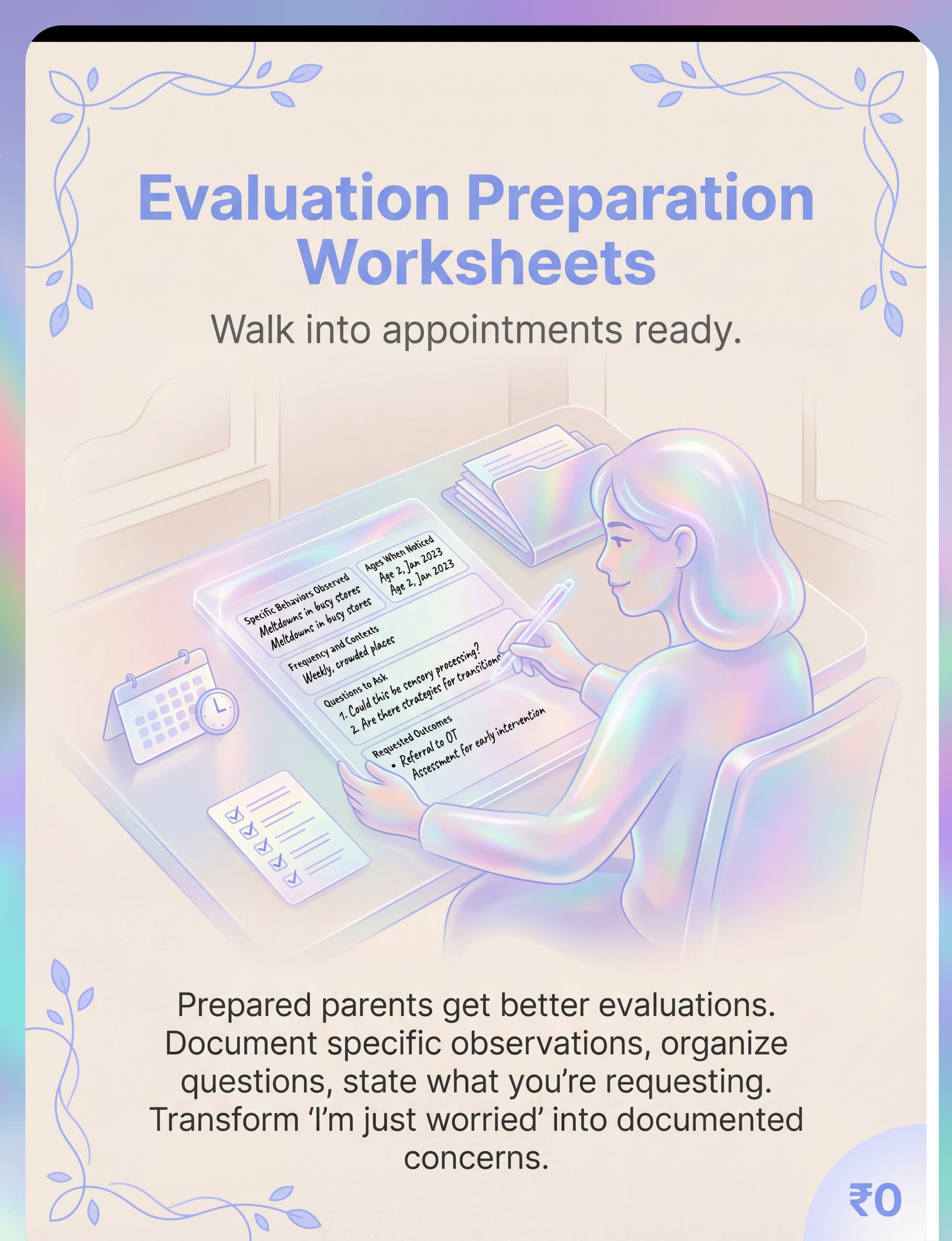
Material 8: Professional Evaluation Preparation Worksheets
📄 Appointment Advocacy Tools
₹0 Printable
Parents often struggle to communicate concerns effectively in time-limited paediatric appointments or feel dismissed when they cannot articulate specific observations. Preparation worksheets help parents organise their concerns before appointments — transforming the conversation from "I'm just worried" to "Here are my documented observations, here are my specific questions, and here is what I am requesting."
1
Specific Behaviours Observed
With 2–3 behavioural examples each, noted with date and context
2
Ages When First Noticed
Track when each concern first emerged and how it has evolved
3
Frequency and Contexts
How often, in which settings, under what conditions
4
Comparison to Peers
Observations relative to typical-aged siblings or same-age children
5
Screener Results
Completed M-CHAT-R/F or ASQ scores with date and child's age
6
Specific Questions & Requested Outcomes
Evaluation referral, hearing test, therapy referral — named explicitly
Key Insight: "Time-limited appointments favour prepared parents. Document, organise, and bring your evidence."
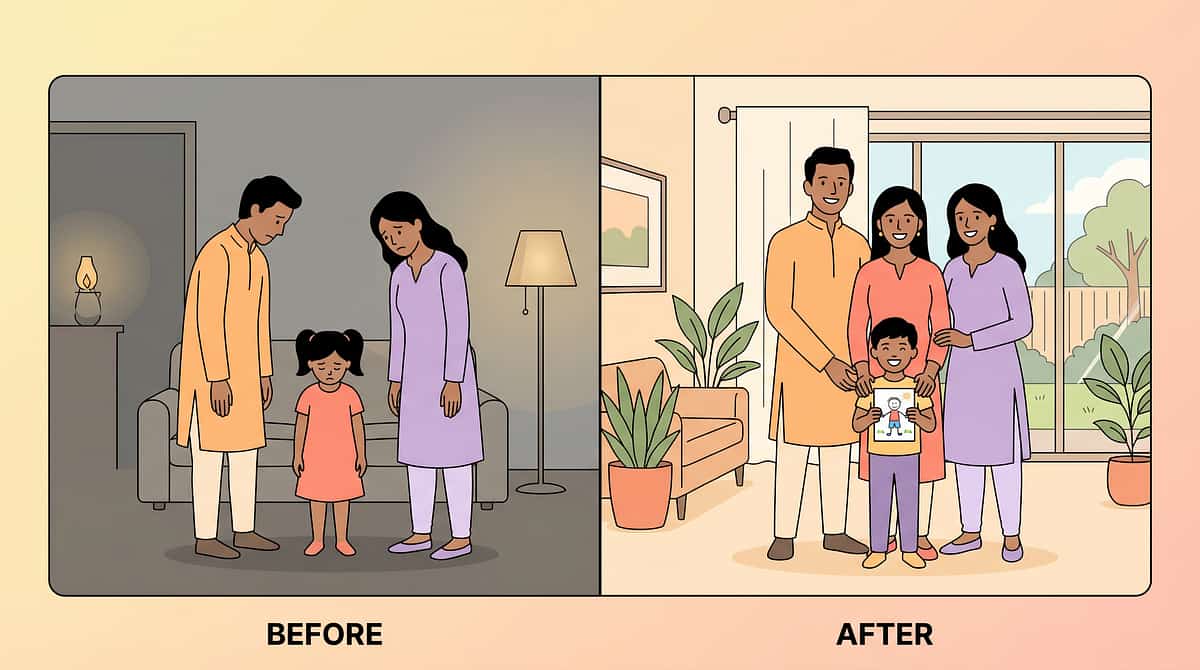
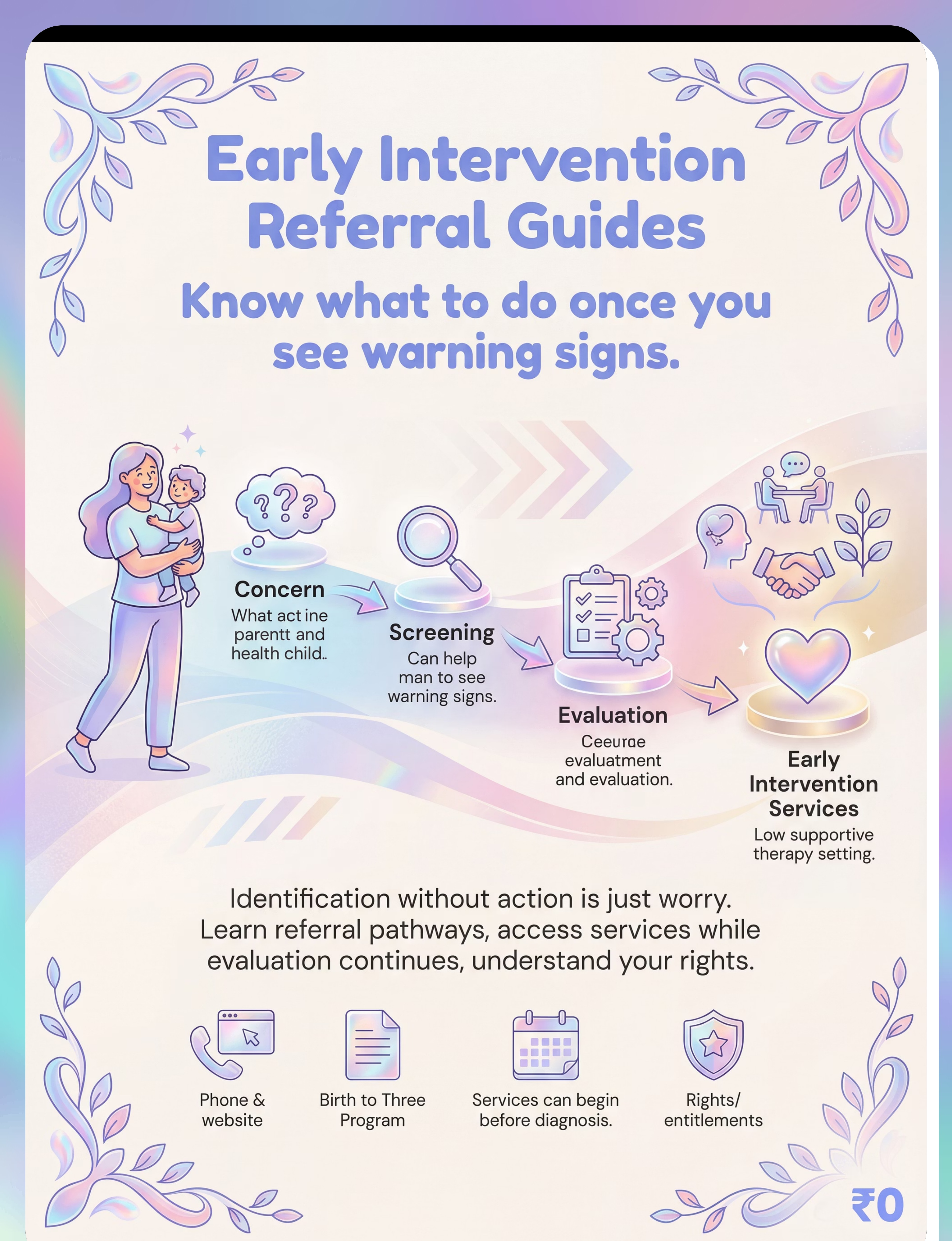
Material 9: Early Intervention & Referral Guides
🗺️ Navigation & Advocacy Resources
₹0 Free
Identifying warning signs is only valuable if parents know what to do next. Early intervention referral guides explain pathways from concern to evaluation to services — including how to access services before formal diagnosis. Many parents do not know that early intervention can begin while evaluation is still ongoing, and that services for children under 3 with documented delays often do not require formal diagnosis to initiate.
Key Insight: "Identification without action is just worry. Know the next steps before you find the signs."

All 9 Materials at a Glance
Material | Type | Cost | DIY Possible | |
Milestone Checklists | Free Download | ₹0 | ✅ Print at home | |
Video Examples | Free Online | ₹0 | ✅ YouTube/CDC | |
Screening Questionnaires | Free Download | ₹0 | ✅ Online | |
Domain Explainers | Free/Paid | ₹0–300 | ✅ Free resources | |
Red Flag Infographics | Free Download | ₹0 | ✅ Print & post | |
Video Documentation Guide | Smartphone | ₹0 | ✅ Any phone | |
Milestone Tracker App | Free App | ₹0 | ✅ CDC app free | |
Prep Worksheets | Printable | ₹0 | ✅ Template online | |
Referral Guides | Free PDF | ₹0 | ✅ Online |
📞9100 181 181 — FREE National Autism Helpline | For guidance on which materials to start with for YOUR child's age and concern
Every Family, Regardless of Income, Can Begin Today
"WHO/UNICEF equity principle: No child should miss early identification because their family cannot afford assessment tools. Every material on this page has a free version."
📱 Digital (Smartphone + Internet)
- ✅Free Milestone Checklist → Download CDC "Learn the Signs. Act Early." at cdc.gov/ncbddd/actearly (available in Hindi, Telugu, Tamil, Bengali, and 10+ other languages)
- ✅Free Screener → Complete M-CHAT-R/F at mchatscreen.com (free, takes 5 minutes, validated)
- ✅Free Video Examples → Search "CDC milestone videos" or "Kennedy Krieger autism early signs" on YouTube
- ✅Free Tracker App → Download "CDC Milestone Tracker" on Android or iOS — completely free
- ✅Free Referral Guide → Search your state + "early intervention programme" + "government" for local pathways
📝 Physical/Offline (No Internet Required)
- ✅DIY Observation Notebook → Any notebook. Create columns: Date | Behaviour Observed | Age | Context. Update weekly.
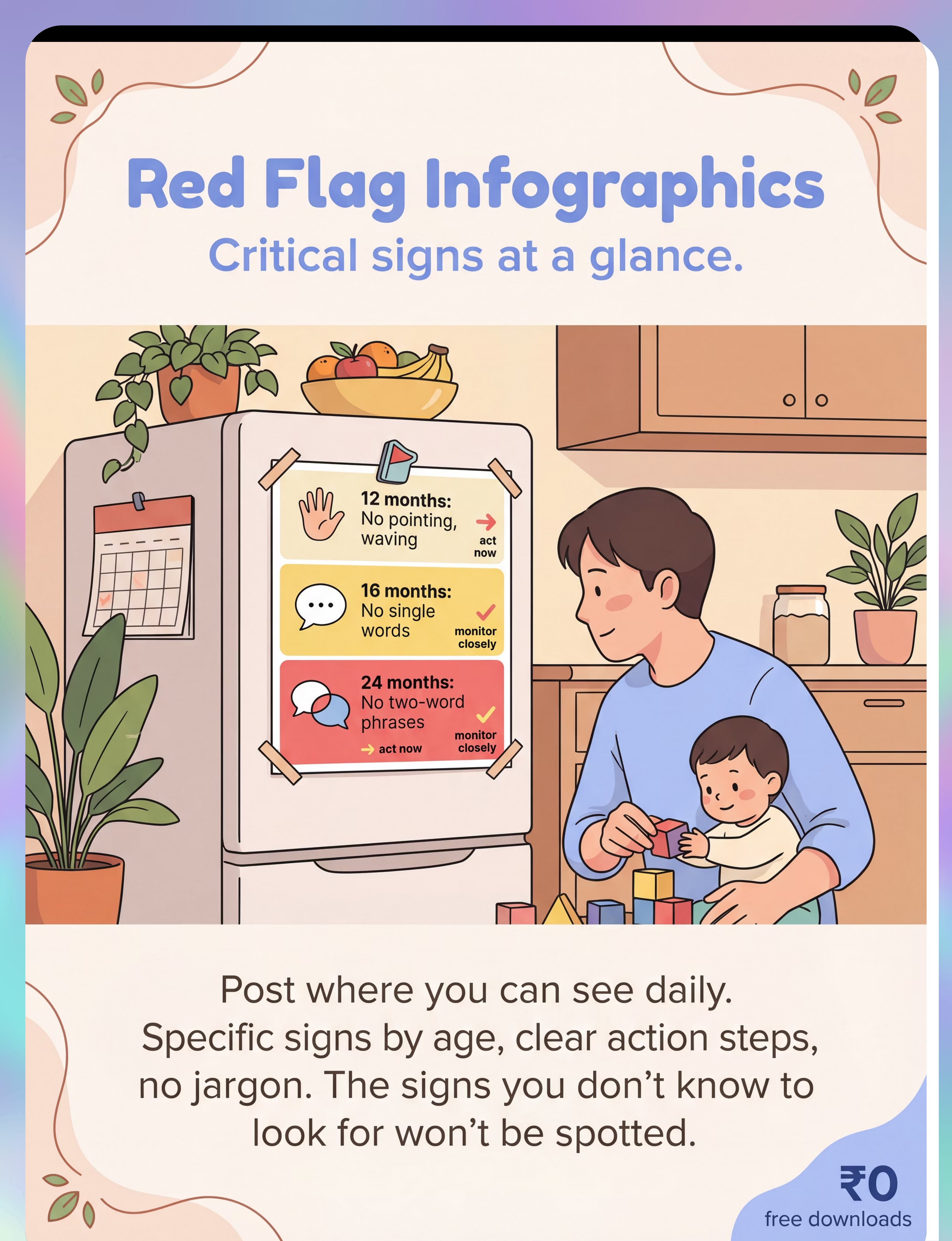
- ✅DIY Red Flag Reference → Hand-write key red flags from this page. Post on your wall or fridge. Review monthly.
- ✅DIY Appointment Prep Sheet → One sheet of paper: What I observed | When I first noticed | How often | What I am asking for today.
- ✅DIY Video Documentation → Every smartphone has a camera. Record 3–5 minute clips weekly. Date them. No equipment needed.
🎯Start Today at ₹0: 1. Download CDC milestone checklist for your child's age | 2. Complete M-CHAT-R/F if child is 16–30 months | 3. Record a 5-minute natural behaviour video | 4. Write down 3 specific concerns for your next paediatric visit. Total cost: ₹0. Time required: 30 minutes.

Using Early Identification Materials: What Every Parent Must Know
✅ Green — Proceed
Any child, any age, 0–8 years. Concerns at any level — vague gut feeling OR specific observed behaviours. Before AND after diagnosis. Even when paediatrician has said "wait and see." Especially for siblings of children with known developmental differences.
⚠️ Amber — Important Cautions
Screening ≠ Diagnosis. A positive M-CHAT-R/F means "this child needs evaluation" — not "this child has autism." One observation ≠ pattern. Normal variation is real. Regression is always a red flag — loss of previously acquired skills at ANY age requires immediate professional evaluation.
🔴 Red — Immediate Consultation Required
No social smiling by 3 months. No babbling by 12 months. No pointing or waving by 12 months. No single words by 16 months. No two-word phrases by 24 months. Any regression. Significant repetitive behaviours. Self-injurious behaviour. Persistent absence of eye contact.
📞 Not sure if what you're seeing requires urgent attention? Call 9100 181 181 — FREE, 24×7, 16+ languages

Your Family Developmental Surveillance System: Set Up in 4 Steps
Before you begin tracking, the right infrastructure takes 45 minutes to build and lasts for years.
Step 1 — Your Tracking Hub 📁
Create a dedicated folder (physical or digital): milestone checklists by age, completed screeners, dated home video clips, appointment notes, professional reports. This folder is your child's developmental record. It is yours. You own it.
Step 2 — Your Observation Schedule 📅
Daily: natural observation. Weekly: 5-minute video clip. Monthly: checklist review. Each paediatric visit: updated checklist + preparation worksheet. At 16 months: complete M-CHAT-R/F. At 24 months: repeat M-CHAT-R/F + full checklist review.
Step 3 — Your Observation Targets 🎯
Focus on: joint attention (pointing to share), name response (consistent orientation), social reciprocity (back-and-forth play), play quality (functional and pretend play emerging by 18 months).
Step 4 — Your Advocacy Readiness 📋
Before every paediatric visit: 3 specific behaviours observed, when first noticed, how often it occurs, completed screening score, and what you are asking for today (evaluation referral, hearing test, specialty referral).
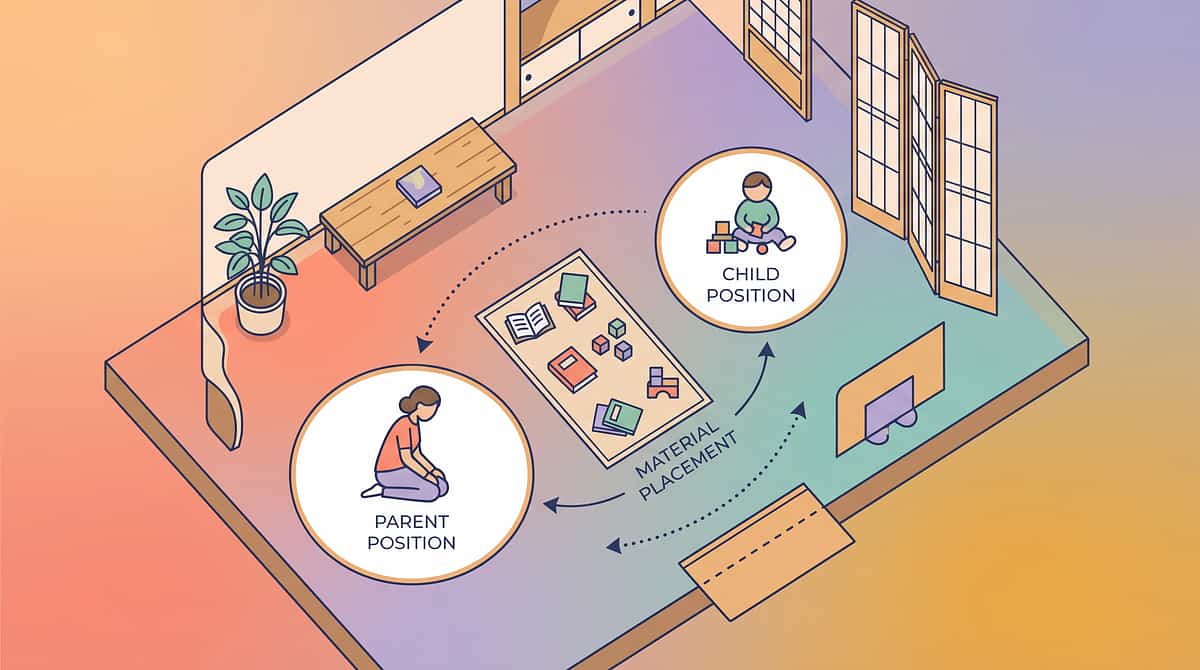
Best Observation Times: Relaxed, familiar home environments. Free play without screen time in the previous 30 minutes. Natural interaction moments — not staged tests.

Readiness Assessment: Can You Begin Active Surveillance Today?
# | Readiness Item | Status | |
1 | I know my child's current age in months | ✅ / ❓ | |
2 | I have downloaded or printed a milestone checklist for this age | ✅ / ❌ → Card 9 | |
3 | I have a smartphone or camera for video documentation | ✅ / ❓ | |
4 | I have a paediatric visit scheduled in the next 3 months | ✅ / ❌ → schedule now | |
5 | I can observe my child for at least 15 minutes daily in natural settings | ✅ / ❌ | |
6 | I have a notebook or digital file for documenting observations | ✅ / ❌ → 5 minutes to create | |
7 | I have noted at least one specific behaviour concern (not just "seems off") | ✅ / ❓ |
🟢 5–7 YES: Go
You are ready to begin structured surveillance today.
🟡 3–4 YES: Modify
Start with what you have. Download one checklist now and set up your tracking system before proceeding.
🔴 0–2 YES: Prepare
Spend 30 minutes on setup before active surveillance. Access free materials and build your system first.
Step 1 ▶ The Invitation: Setting Your Observational Intent
ACT III: The Execution
"Today, I am going to watch [child's name] with informed eyes. I am not looking for problems. I am looking for information. I will observe for 15 minutes without intervening, without directing, without teaching. I am a scientist studying the child I love most in the world."
What Acceptance Looks Like
Your child is in their natural environment. You are present but not directing. You have your checklist or phone nearby. You are observing — not performing a test, not staging situations, not narrating. Pure observation.
Timing
⏱️ 15 minutes of natural observation | Best times: Morning free play, after nap, bath time. Avoid: Immediately before meals, immediately after screen time, during illness.
Parent Body Language
- Position yourself 1–2 metres away, in the child's field of view
- Neutral expression — curious, not anxious
- Phone/checklist held casually, not pointed at child
- Quiet, natural environment — no TV, minimal interruptions
Step 2 ▶ The Engagement: What to Observe During Play
1
Joint Attention 👁️
Does your child point to share interest (not just to request)? When they see something exciting, do they look back at you to share the moment? Do they follow your gaze? Typical: Declarative pointing (sharing) by 14 months.
2
Name Response 📣
Call your child's name from 2–3 metres, quiet room, when not already looking at you. Do they look up consistently? Immediately? After 1 call? Typical: Consistent orientation within 2 seconds of first call by 9 months.
3
Social Reciprocity 🔄
Is your child initiating interaction? Bringing objects to show you? Smiling back? Engaging in back-and-forth games (peek-a-boo, cause-effect toys)? Typical: Clear social reciprocity by 9–12 months.
4
Play Quality 🧸
How does your child use toys? Functionally? Repetitively? Is there pretend play emerging? Typical: Functional toy use by 12 months. Pretend play beginning by 18 months.
5
Communication Gestures 👋
Waving, pointing, reaching with eye contact, showing. These gestures precede verbal language and are the earliest indicators of social communication development. Typical: Waving and pointing by 12 months.
Every observation session completed = one data point in your surveillance record. ✅ Note what you saw, what was present, what was absent.
Step 3 ▶ The Action: Completing Your First Screening
The most important 10 minutes you can spend for your child's developmental future.
After your observation session, complete the M-CHAT-R/F screening questionnaire (if your child is 16–30 months), or complete the age-appropriate milestone checklist for your child's current age. Do this while your observations are fresh — within 60 minutes of observation.
1
Access M-CHAT-R/F
At mchatscreen.com (free) or download the PDF
2
Answer All 20 Questions
Based on your child's typical behaviour, not best-day performance
3
Score Your Results
0–2 (low risk) | 3–7 (medium risk → complete follow-up interview) | 8–20 (high risk → refer for evaluation)
4
Complete Follow-Up If Medium/High Risk
The follow-up interview further refines risk classification
5
Record & File
Record the score, date, and child's age in your tracking folder
❌ Answering for best-day performance → Answer for typical day | ❌ Crediting inconsistent skills as present → "Sometimes" ≠ "Yes" | ❌ Not following up on positive screens → A positive screen requires action, not re-screening

Step 4 ▶ Repeat & Track: Building the Longitudinal Record
When | Action | What to Record | |
Daily | Natural observation (5–10 min) | New skills observed, concerning patterns | |
Weekly | Video documentation (5 min clip) | Label: Child name, age, date, observation context | |
Monthly | Checklist review | Skills present/emerging/absent vs. previous month | |
Every paediatric visit | Bring documentation | Checklist + screener + video evidence | |
Age 16 months | Complete M-CHAT-R/F | Record score and date | |
Age 24 months | Repeat M-CHAT-R/F + full review | Compare to 16-month screening |
Satiation Indicators:✅ 15-minute natural observation completed ✅ Specific behaviours documented (not just "seemed fine") ✅ One new entry in tracking folder. 3 documented observations per week > 21 undocumented observations. Consistency beats intensity.
A single observation is a snapshot. A month of observations is a trajectory. A year of observations is a developmental history that no 15-minute paediatric visit can replicate. Your documentation is irreplaceable clinical data.

Step 5 ▶ Reinforce: Celebrating Your Advocacy Practice
Early identification is a practice. Like any practice, it requires positive reinforcement to sustain.
✅ First Completed Milestone Checklist
Share with your paediatrician
✅ First M-CHAT-R/F Completed
You have done what most parents never know to do
✅ First Appointment with Prep Worksheet
You changed the clinical conversation
✅ First Referral Obtained
You advocated for your child
🛒 Rosette Imprint Reward Jar | ₹589
Use as your "Advocacy Progress" jar — add a note each time you complete an observation session or advocacy step. Visual, tangible, motivating.
🛒 1800+ Reward Stickers | ₹364
Create a simple wall chart: one sticker per completed observation session. Visual progress tracking for the whole family.
Step 6 ▶ Cool-Down: Processing What You Observed
Ending an observation session without reflection loses half its value.
1. Breathe — 60 Seconds
You just observed your child with intentional eyes. That takes courage. Whatever you saw — knowledge is power, not prophecy.
2. Document — 3 Minutes
Before details fade: 2–3 specific behaviours observed (age, date, context). 1 behaviour present that wasn't there last month. 1 behaviour absent that you expected. Your emotional state — this is data too.
3. Transition — 60 Seconds
Close your notebook. Return to your child with presence, not analysis. You are done observing for today. Now you are simply their parent — fully present, fully loving.
What to Do If You Observed Something Concerning: Don't catastrophise. Don't minimise. Document it specifically. Note how many times you've seen it and over how many days. Check the red flags on Card 11. If it meets "always refer" criteria — call 9100 181 181 today.
60 Seconds of Data Now = Hours of Clarity Later
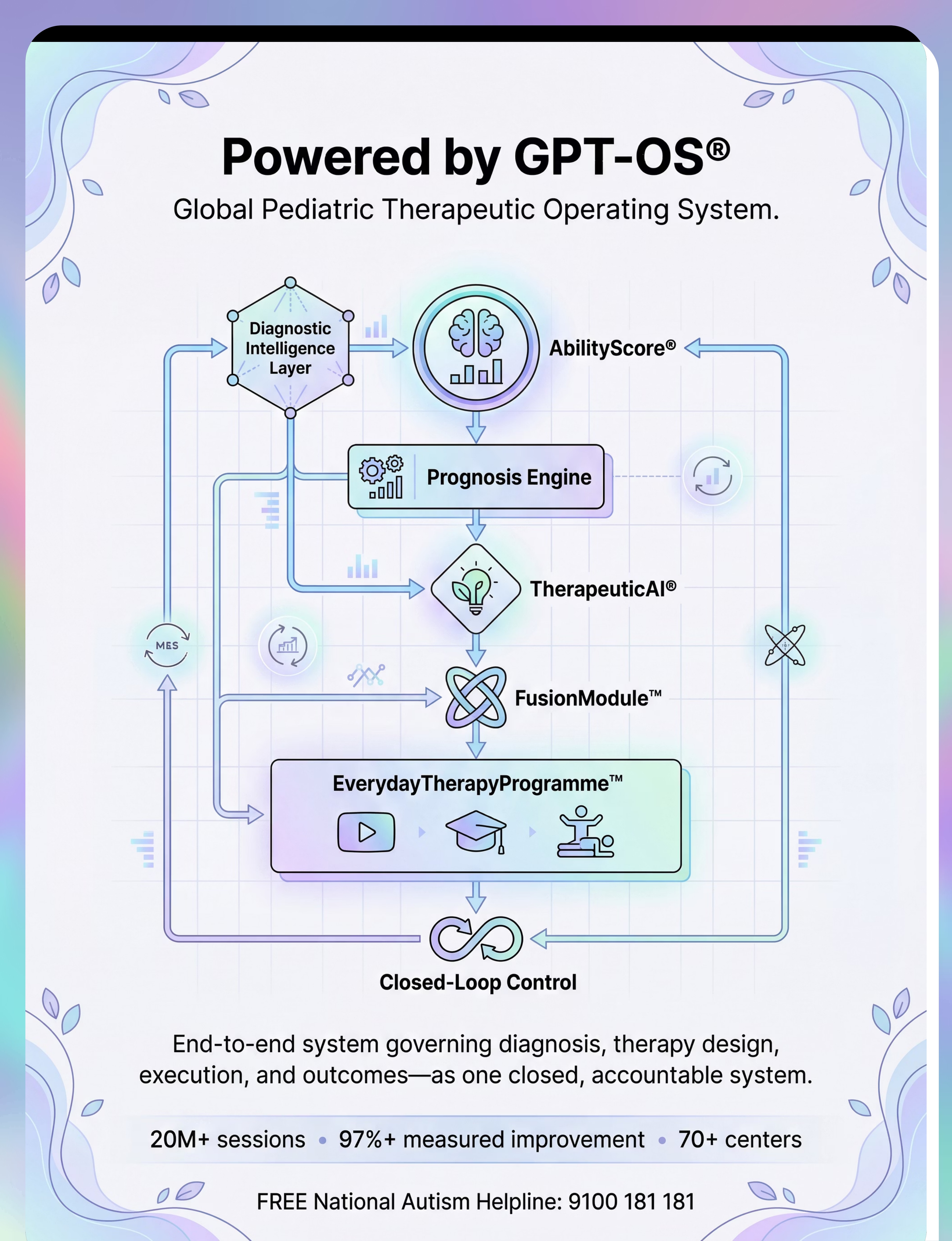
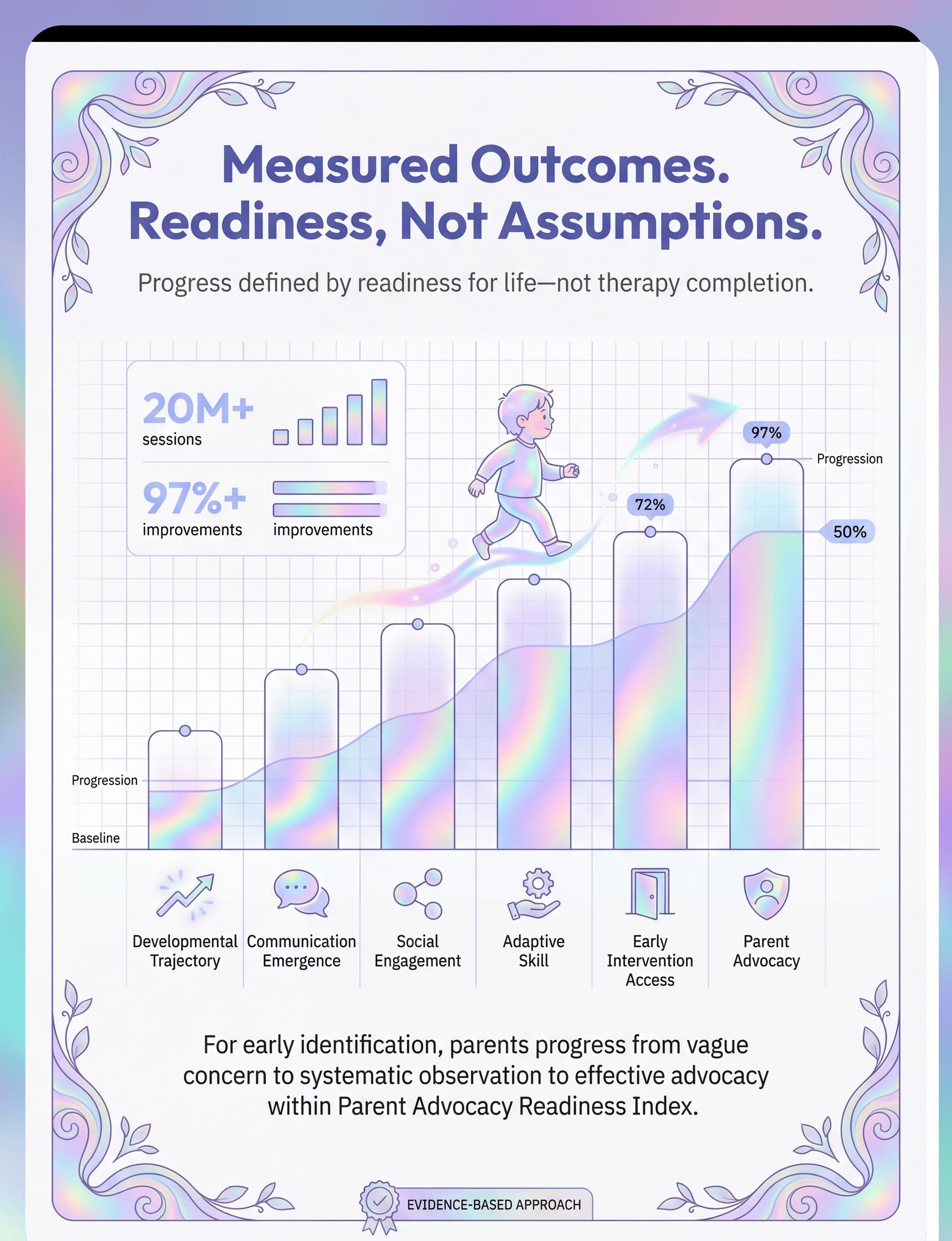
Data captured here feeds directly into the Parent Advocacy Readiness Index within GPT-OS® — tracking your progression from vague concern → systematic observation → effective advocacy → early intervention access.
Manual Tracking Format — For Offline Use
DATE: _____________ | CHILD AGE: ___ months
OBSERVATION CONTEXT: _____________
Skills Present Today: 1. ___ 2. ___ 3. ___
Skills Absent/Emerging That I Expected: 1. ___
Red Flags Observed (if any): ___
M-CHAT-R/F Score (if completed): ___ Date: ___
Confidence in Today's Observation (1–5): ___
OBSERVATION CONTEXT: _____________
Skills Present Today: 1. ___ 2. ___ 3. ___
Skills Absent/Emerging That I Expected: 1. ___
Red Flags Observed (if any): ___
M-CHAT-R/F Score (if completed): ___ Date: ___
Confidence in Today's Observation (1–5): ___
GPT-OS® Integration
Track digitally at pinnacleblooms.org/track
Every data point contributes to your child's personalized developmental trajectory within GPT-OS® — the same system governing 20M+ therapy sessions and 97%+ measured improvement.
"60 seconds of data now saves hours of guessing later. Your observations are the raw material of your child's developmental record."
📞9100 181 181 — If your data is consistently concerning, call immediately. Don't wait for the next scheduled visit.
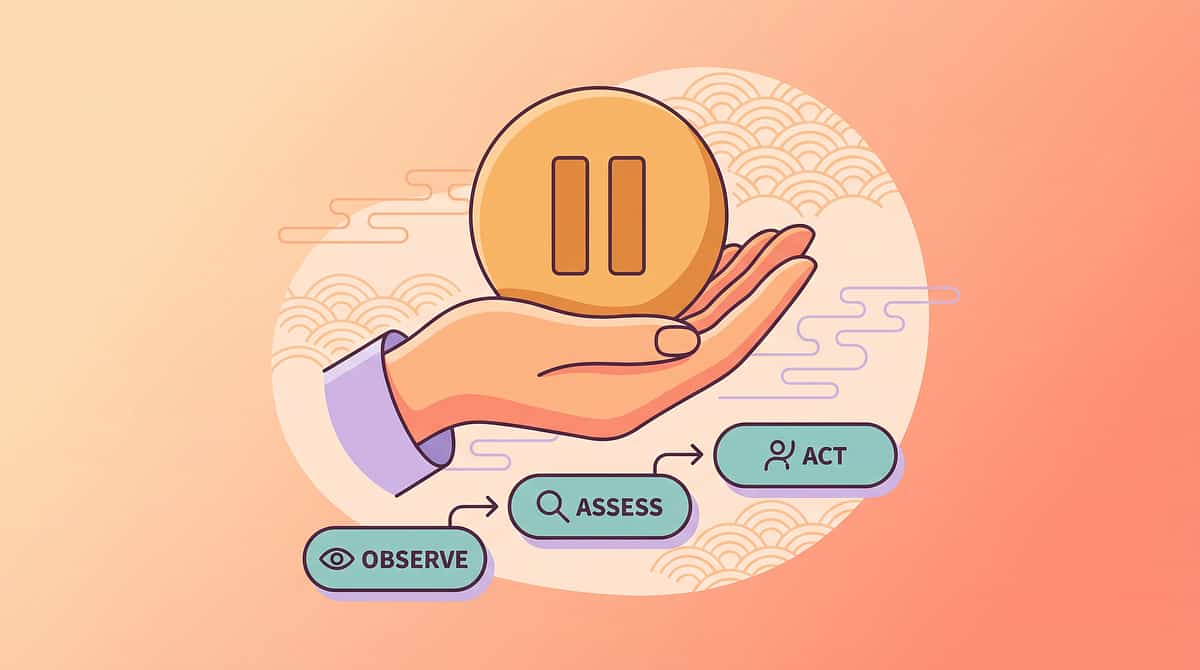
The 7 Most Common Surveillance Challenges (And What to Do)
❓ "My paediatrician keeps reassuring me and dismissing my concerns."
Bring documentation. A completed M-CHAT-R/F score and a specific list of missed milestones changes the clinical conversation. If dismissed with documented concerns, request referral in writing. Seek a second opinion from a developmental paediatrician.
❓ "I don't know if my child is at the 'late end of normal' or actually delayed."
This is exactly what validated screening tools resolve. A positive M-CHAT-R/F or missed milestones on the AAP checklist removes ambiguity. 'Late end of normal' does not mean 'no evaluation needed' — it means 'monitor closely and re-screen in 3 months.'
❓ "My child is now 4 and I missed the early window. Is it too late?"
No. The early window is the most powerful, but the brain retains significant plasticity throughout childhood. Begin systematic surveillance and evaluation now. Earlier than today is better — but today is still early enough to make a difference.
❓ "Other family members think I'm overreacting."
Parent instinct backed by documented observation is clinical data. Show them the screener score. Show them the missed milestones on the checklist. "Overreacting" is a feeling. A documented pattern is evidence.
Troubleshooting Continued: Four More Common Challenges
❓ "My child passed the M-CHAT-R/F but I'm still worried."
A negative screen does not mean "no evaluation needed if concerns persist." Continue surveillance. If concern persists, request formal evaluation regardless of screener outcome. You know your child.
❓ "The waiting list for evaluation is 6–12 months. What do I do while waiting?"
Begin early intervention services immediately. In India, many SLP, OT, and ABA services can begin on documented developmental concerns — you do not need a diagnosis to start. Call Pinnacle at 9100 181 181 for immediate guidance.
❓ "I don't have time for all of this systematic surveillance."
The minimum viable surveillance: One milestone checklist review per month (15 minutes). One M-CHAT-R/F at 18 months (10 minutes). One preparation worksheet before each paediatric visit (10 minutes). Total: approximately 30 minutes per month. The alternative cost: 18+ months of lost early intervention.
Every Child Is Different. Your Surveillance Strategy Should Be Too.
⬅️ Lighter Surveillance
For parents with vague, non-urgent concern:
- Monthly milestone checklist review
- Annual M-CHAT-R/F (at 18 months, 24 months)
- Standard paediatric visit preparation
- Free-play observation 2–3× per week
➡️ More Intensive Surveillance
For parents with specific, persistent concern:
- Weekly milestone checklist review
- Monthly screener completion + trend tracking
- Appointment every 3 months with documented concerns
- Daily video documentation + weekly review
- AbilityScore® assessment at Pinnacle → detailed personalised plan
Child Profile | Surveillance Adaptation | |
Verbal but limited social interaction | Focus on joint attention, social reciprocity, play quality observations | |
Motor delays with typical social skills | Focus on fine motor, gross motor, adaptive behaviour milestones | |
Family history of autism/language delay | Begin surveillance at birth. M-CHAT-R/F at 16 months (earliest validated window) | |
Child in bilingual household | Both languages count — focus on comprehension and social use, not vocabulary count | |
Premature birth | Use corrected age for all milestones until 24 months |
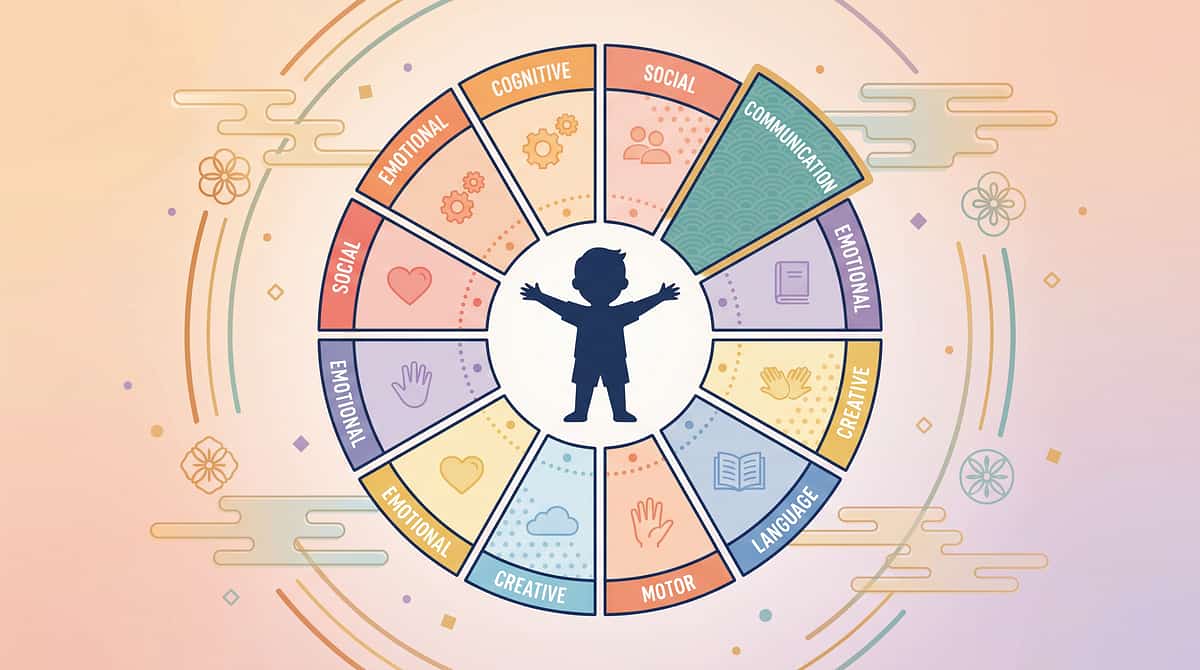
You Did This. Your Child's Future Is Brighter Because of What You Just Did.
You chose knowledge over comfort. You chose action over "wait and see." You chose to be the most informed, most prepared, most effective advocate your child has ever had.
✅ A Developmental Baseline
Across 5+ domains — the foundation of all future advocacy
✅ A Tracking Record
Dated observations and video evidence no 15-minute paediatric visit can replicate
✅ Completed Validated Screener
At least one completed screening questionnaire on record
✅ Clinical Vocabulary
The language to advocate effectively for your child in any clinical setting
📸Family Celebration Prompt: Take a photo of you with your child today. Write in their baby book: "[Date] — I became an informed advocate for your development. The knowledge I gained this month will protect you for the rest of your life."
📞 Ready to take the next step? 9100 181 181 — FREE consultation to interpret your surveillance data and determine appropriate next steps.
Explore the Early Identification Series
Technique ID | Difficulty | Focus | |
C-231: Understanding Developmental Milestones | 🟢 Intro | Milestone knowledge foundation | |
C-232: When to Trust Parental Instinct | 🟢 Intro | Instinct + evidence alignment | |
C-233: Spotting Early Warning Signs ← YOU ARE HERE | 🟡 Core | 9 identification materials | |
C-234: Preparing for Developmental Evaluation | 🟡 Core | Evaluation preparation | |
C-235: Accessing Early Intervention Services | 🟡 Core | System navigation | |
C-236: Understanding Evaluation Results | 🔴 Advanced | Report interpretation |
Materials You Already Have: If you completed this technique, you already have a milestone checklist, M-CHAT-R/F (if applicable), and observation documentation. These materials are directly usable in C-234 and C-235 without new cost.
ACT V: Community & Ecosystem
Three Families. Three Moments of Clarity.
Parent, Pinnacle Network
"My son was 22 months. He had some words but didn't point, didn't wave, didn't look up when I called his name consistently. Our paediatrician said to wait until 2. I felt crazy for worrying. After completing M-CHAT-R/F: Score was 9 — high risk. I walked into our 24-month visit with the printout, a list of 12 specific missed milestones, and a dated log of home video clips. We had a referral for developmental evaluation before we left the office. Diagnosis at 26 months. ABA started at 27 months. He's 5 now. His preschool teacher this year said, 'I can tell he's had excellent support.'" — Parent, Pinnacle Network | Illustrative; outcomes vary.
Occupational Therapist, Pinnacle Blooms Network
"The family came in for an AbilityScore® assessment when their daughter was 18 months. The mother had been tracking milestone checklists for 6 months and had three specific concerns: no declarative pointing, no consistent name response, and repetitive object use. Her documentation was so thorough that our assessment took half the usual time. We confirmed the concerns within the first session. Intervention began at 19 months. Early identification — in the hands of an informed parent — changed this child's trajectory."
Father, Pinnacle Network
"I was the sceptical one. My wife kept saying something felt different. I told her she was reading too many websites. Then she showed me the M-CHAT-R/F score. I watched the CDC video of a 12-month-old pointing and then watched our son's birthday video. He hadn't pointed once. I stopped being sceptical that day. We got an evaluation. We got early intervention. He's seven and doing great in mainstream school. I'm glad my wife trusted herself — and I'm glad she had the tools to show me why." — Father, Pinnacle Network | Illustrative; outcomes vary.
📞 Your story could start today. 9100 181 181 — Free guidance, 24×7
You Are Not Navigating This Alone
Pinnacle Parents WhatsApp Community
India's largest parent network for families navigating developmental concerns. Early identification, evaluation, intervention experiences — peer knowledge from parents who've been exactly where you are. → pinnacleblooms.org/parent-community
Online Forum: Early Identification
Questions, documentation tips, screener interpretation support, paediatric advocacy strategies. → pinnacleblooms.org/forum/early-id
Local Pinnacle Parent Meetups
Monthly gatherings at 70+ Pinnacle centres. Meet families, therapists, and peer mentors in your city. → pinnacleblooms.org/centres
Peer Mentoring
Connect with a parent who navigated early identification 1–2 years ago and can share their lived experience with your specific concerns. → pinnacleblooms.org/peer-mentoring
"Your experience helps others. If early identification changed your child's trajectory, consider sharing your journey. One parent's knowledge reaches thousands of families who are still in the 'gut feeling' stage."
Home Surveillance + Professional Support = Maximum Early Identification Impact
Your Concern | Pinnacle Specialist | What They Do | |
Autism screening positive | Developmental Paediatrician / Child Psychiatrist | Comprehensive diagnostic evaluation | |
Language delay / no words | Speech-Language Pathologist (SLP) | Language evaluation + early intervention | |
Motor concerns | Occupational Therapist (OT) | Motor assessment + sensory evaluation | |
Behavioural patterns | BCBA / ABA Therapist | Behavioural assessment + ABA programme | |
Full developmental evaluation | AbilityScore® Assessment Team | 591+ observation assessment across all domains |
Teleconsultation Available Nationwide
Not near a Pinnacle centre? Teleconsultation is available for: screening questionnaire interpretation, milestone checklist review, evaluation preparation guidance, and early intervention navigation.
Find Your Nearest Centre
70+ Pinnacle centres across India. Your nearest team of SLPs, OTs, BCBAs, NeuroDev paediatricians, and Special Educators is ready to support your family.
📞9100 181 181 | FREE | 16+ Languages | 24×7 | "Home + clinic = maximum impact on your child's developmental trajectory."
The Original Reel That Brought These Materials Together
🎬 C-233
Early Identification Series
Episode 233 of 999
C-233: 9 Materials That Help Spotting Early Warning Signs
This 60–90 second reel introduces all 9 early identification materials in visual format — showing real parents using milestone checklists, completing screeners, recording home videos, and preparing for appointments. Watch the reel, then use this technique page for the deep-dive implementation guide.
This 60–90 second reel introduces all 9 early identification materials in visual format — showing real parents using milestone checklists, completing screeners, recording home videos, and preparing for appointments. Watch the reel, then use this technique page for the deep-dive implementation guide.
Presented by the Pinnacle Blooms Consortium Clinical Faculty | Led by NeuroDev Paediatricians, SLPs, OTs, BCBAs, and Special Educators with combined experience of 20M+ therapy sessions across 70+ centres.
Video modelling is classified as an evidence-based practice for autism by the National Clearinghouse on Autism Evidence and Practice (NCAEP, 2020). Watching how other parents use these identification materials accelerates your own implementation.
C-231
Understanding Developmental Milestones
C-232
When to Trust Parental Instinct
C-234
Preparing for Developmental Evaluation
Consistency Across Caregivers Multiplies Impact
"If only one person in your child's life knows what to look for, you're working with 25% of the available observational data."
Share This Resource
📱 Share on WhatsApp | 📧 Send by Email | 🔗 Copy Link
Link: techniques.pinnacleblooms.org/early-identification/spotting-early-warning-signs-C-233
Download Family Guide
📄 A simplified one-page version designed for grandparents and extended family, school teachers and childcare providers, and spouses/partners who haven't read the full page.
💬 What to Tell Dadi/Nani/Thatha/Paati
"We are tracking [child's name]'s development using tools that doctors recommend. They help us notice important things before they become bigger problems. We'd love for you to know the same things we know so we can all watch together."
📝 Teacher/School Template
"We are monitoring [child's name]'s development and have noted some observations we'd like to share. Could we schedule 15 minutes to discuss what you're seeing in the classroom? Specifically, we're interested in: social interaction with peers, response to instructions, and play patterns."
📞 Is another family member dismissing concerns? 9100 181 181 can provide guidance for the full family.
ACT VI: The Close & Loop
Your Questions Answered
❓ Q1: My child just turned 18 months. Where do I start?
Start here: (1) Download the CDC 18-month milestone checklist — free at cdc.gov/ncbddd/actearly. (2) Complete the M-CHAT-R/F at mchatscreen.com — it takes 10 minutes and is validated for exactly this age. (3) Record a 5-minute home video of your child playing. You now have the three most critical early identification tools in your hands.
❓ Q2: The M-CHAT-R/F said medium risk. What does that mean?
Medium risk (score 3–7) means your child needs follow-up. Complete the follow-up interview questions at mchatscreen.com. If score remains medium or high after follow-up, request evaluation from your paediatrician. This is not a diagnosis — it is a signal to look more carefully.
❓ Q3: How do I bring this up with my paediatrician without being dismissed?
Bring: (1) Completed M-CHAT-R/F with score printed. (2) Age-specific milestone checklist with specific items marked absent/emerging. (3) Your appointment preparation worksheet. Say at the start of the visit: "I have specific developmental concerns I'd like to discuss, with documentation." Specificity commands attention.
❓ Q4: My child says some words. Does that mean they don't have autism?
No. Autism presents across a wide spectrum and many children with autism develop some verbal language. The key early indicators are social-communication milestones: joint attention, pointing to share (not just request), consistent name response, social reciprocity. A child can have vocabulary and still have significant social-communication differences.
Frequently Asked Questions — Continued
❓ Q5: Can early identification cause unnecessary anxiety?
The goal of structured surveillance is to replace vague anxiety with specific, actionable knowledge. Parents who use validated tools consistently report less anxiety — because they know they are seeing their child clearly, and they know what to do with what they see. Uninformed worry is more anxiety-inducing than informed action.
❓ Q6: My child is 4. Is it too late for early identification to matter?
It is never too late to gain accurate information. While the 0–3 window is the period of maximum neuroplasticity, intervention at 4, 5, and beyond still produces significant outcomes. Begin structured assessment and evaluation now. "Early" means "as early as possible from this moment."
❓ Q7: What is AbilityScore® and how is it different from M-CHAT-R/F?
M-CHAT-R/F is a 20-question parent screener for autism risk, designed for 16–30 months. AbilityScore® is Pinnacle's comprehensive developmental assessment system mapping 591+ observations across 349 skills and 79 abilities — applicable from birth through childhood, across all developmental domains, not just autism. AbilityScore® is the professional-grade next step when a screener indicates evaluation is needed.
❓ Q8: I live in a small town. How do I access early intervention?
(1) Call 9100 181 181 — FREE helpline available in 16+ languages, 24×7. Our team navigates families to services in every state. (2) Teleconsultation with Pinnacle specialists is available nationwide. (3) GPT-OS® EverydayTherapyProgramme™ delivers home-based intervention guidance for families without local access. Distance is not a barrier to early identification or early support.
Every Month Matters. Start Today.
You now have everything you need to move from "I'm worried" to "I know, I'm tracking, I'm acting."
📞 FREE National Autism Helpline: 9100 181 181 | 16+ Languages | 24×7 | Guidance in minutes, not months
🤸 OT
🗣️ SLP
🎯 ABA
📚 SpEd
🧠 NeuroDev
🔬 CRO
❤️ Mothers
🏛️ Validated by the Pinnacle Blooms Consortium | OT • SLP • ABA/BCBA • SpEd • NeuroDev Pediatrics • CRO • Mothers
Preview of 9 materials that help spotting early warning signs Therapy Material
Below is a visual preview of 9 materials that help spotting early warning signs therapy material. The pages shown help educators, therapists, and caregivers understand the structure and content of the resource before use. Materials should be used under appropriate professional guidance.


Link copied!

The Pinnacle Promise
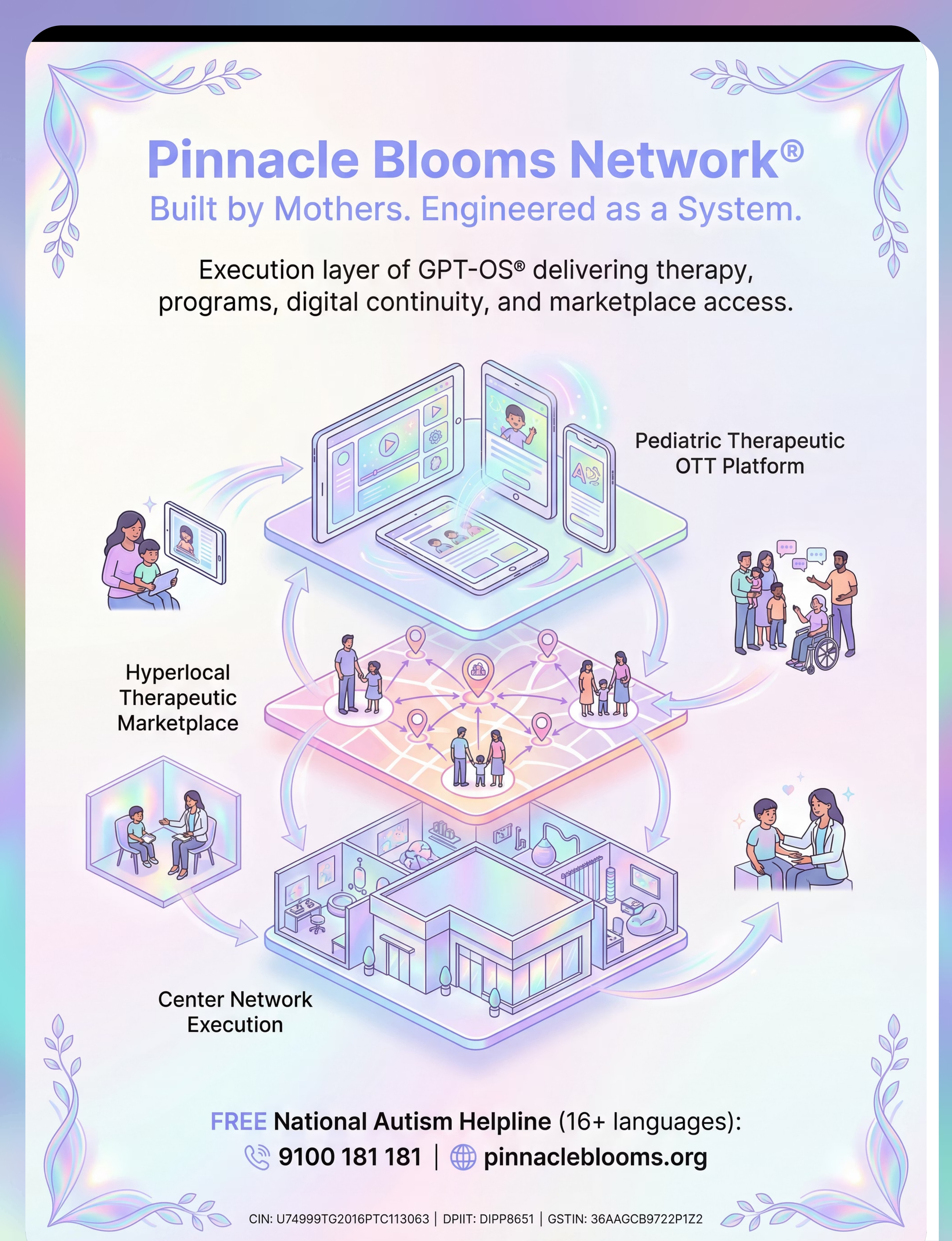
🏛️ Pinnacle Blooms Network®
Built by Mothers. Engineered as a System.
"From fear to mastery. One technique at a time." — The Pinnacle Blooms Consortium
Every technique in this library represents the distilled knowledge of 70+ centres, 20M+ therapy sessions, and thousands of therapists, researchers, and families who have walked the path before you. We built this for every parent whose gut said something is different before they had the words to say why.
A Surveillance System Ready to Deploy
Your infrastructure to observe, document, and track your child's development is built.
Validated Screening Tools at Your Fingertips
M-CHAT-R/F, ASQ-3, CDC checklists — all free, all accessible, all validated.
Clinical Vocabulary to Advocate Effectively
The language to describe what you see, the tools to document it, and the confidence to use both.
Direct Line to 70+ Centres and 20M+ Sessions of Expertise
You are never alone. The Pinnacle network is one call away.
📞FREE National Autism Helpline: 9100 181 181 | 16+ Languages | 24×7 | pinnacleblooms.org | care@pinnacleblooms.org
⚕️This content is educational. It does not replace professional developmental evaluation. If you have concerns about your child's development, consult qualified healthcare providers. Early warning signs indicate the need for evaluation, not diagnosis. Individual results may vary. Statistics represent aggregate outcomes across the Pinnacle Blooms Network.
CIN: U74999TG2016PTC113063 | DPIIT: DIPP8651 (Govt. of India) | MSME Udyog Aadhaar: TS20F0009606 | GSTIN: 36AAGCB9722P1Z2
© 2025 Pinnacle Blooms Network®, unit of Bharath Healthcare Laboratories Pvt. Ltd. All rights reserved.
© 2025 Pinnacle Blooms Network®, unit of Bharath Healthcare Laboratories Pvt. Ltd. All rights reserved.
C-233 | Pinnacle Blooms Network® | GPT-OS® Content Engine | techniques.pinnacleblooms.org