


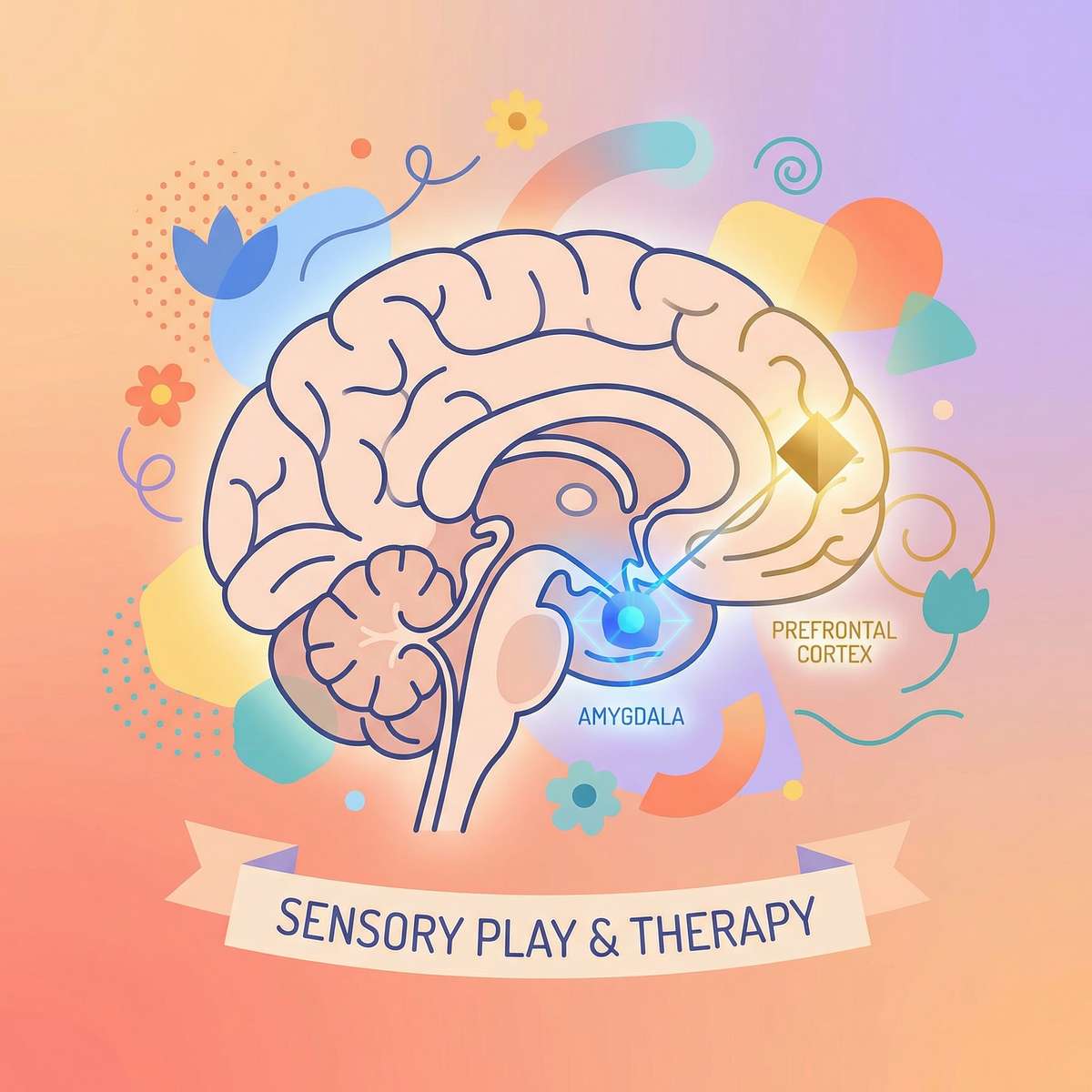
- The amygdala may not automatically generate "caution" signals around unfamiliar people
- Impulse control pathways may not interrupt the natural urge to approach a friendly face
- Theory of Mind differences mean hidden intentions can't be read from behavioural cues
- Literal cognition means the abstract concept "stranger" doesn't form without explicit teaching

Study | Finding | Grade | |
Dixon DR et al. (2010), J Applied Behavior Analysis | ABA-based abduction prevention training effective for children with autism | Level I | |
Koegel LK et al. (2014), Research & Practice for Persons with Severe Disabilities | Safety skills training significantly effective in autism populations | Level I | |
NCAEP Evidence-Based Practices (2020) | Visual supports, social narratives, and modelling classified as EBPs for autism safety skills | Level I | |
Gunnar MR et al. (2000), Dev & Psychopathology | Indiscriminate friendly behaviour — foundational research establishing the pattern | Level II | |
Padmanabha et al. (2019), Indian J Pediatr | Home-based structured interventions produce significant outcomes in Indian paediatric populations | Level II |
Domain | Age Range | Frequency | Session Length | Setting | |
🧠 Social Safety & Boundaries | 3–12 years | Daily (concept review) + 3×/week (active practice) | 10–15 minutes | Home + Community |
- Child shows no response after 4 weeks of consistent home practice
- Child becomes distressed or dysregulated during sessions
- Behaviour is escalating in community settings (school, market, transport)
- You need a formal safety assessment for school or legal purposes
- "We are working on indiscriminate sociability using the Circles of Trust system"
- "We have completed [X] weeks of the Pinnacle 8-week programme"
- "Our current target is [stranger identification / information protection / stop-and-check]"
- "We are tracking [correct sorts / unprompted refusals / safe adult identification]"
Skill Area | Baseline (Week 0) | Target (Week 8) | Mastery Indicator | |
Stranger identification | Cannot distinguish stranger from acquaintance | 80% correct on sorting cards | Spontaneous identification in community | |
Information protection | Shares name/address freely | Correctly sorts 4/5 private info cards | Refuses to share unprompted | |
Stop-and-Check | Approaches all adults freely | Pauses and looks back at parent | Independent stop-and-check in 3 settings | |
Safe adult identification | Cannot name safe adults outside family | Names 3 safe adults with roles | Approaches correct adult when distressed |
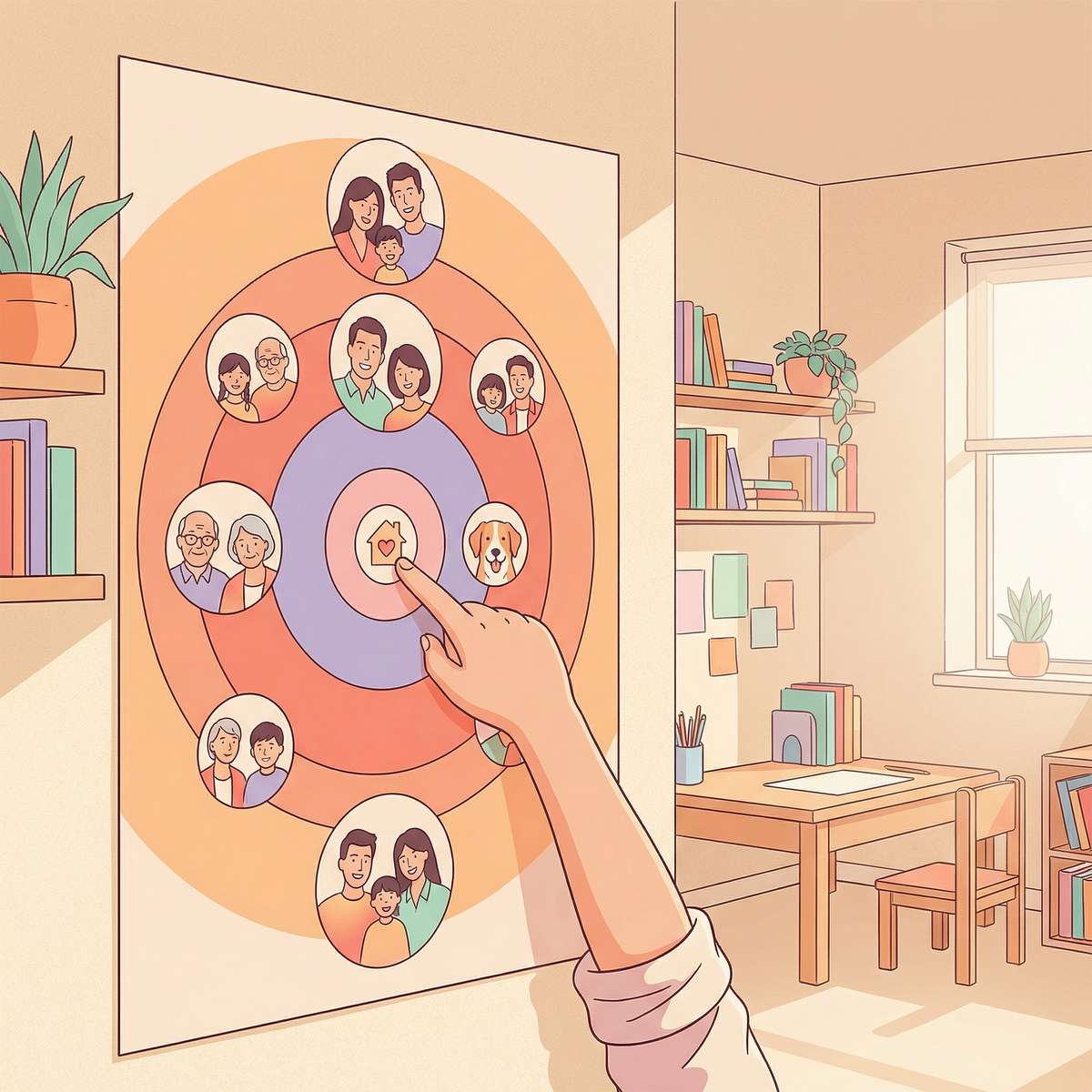
DIY Version: Draw concentric circles on A3 paper; paste printed or cut photos
Cost: ₹0–₹500 (photos + poster board)
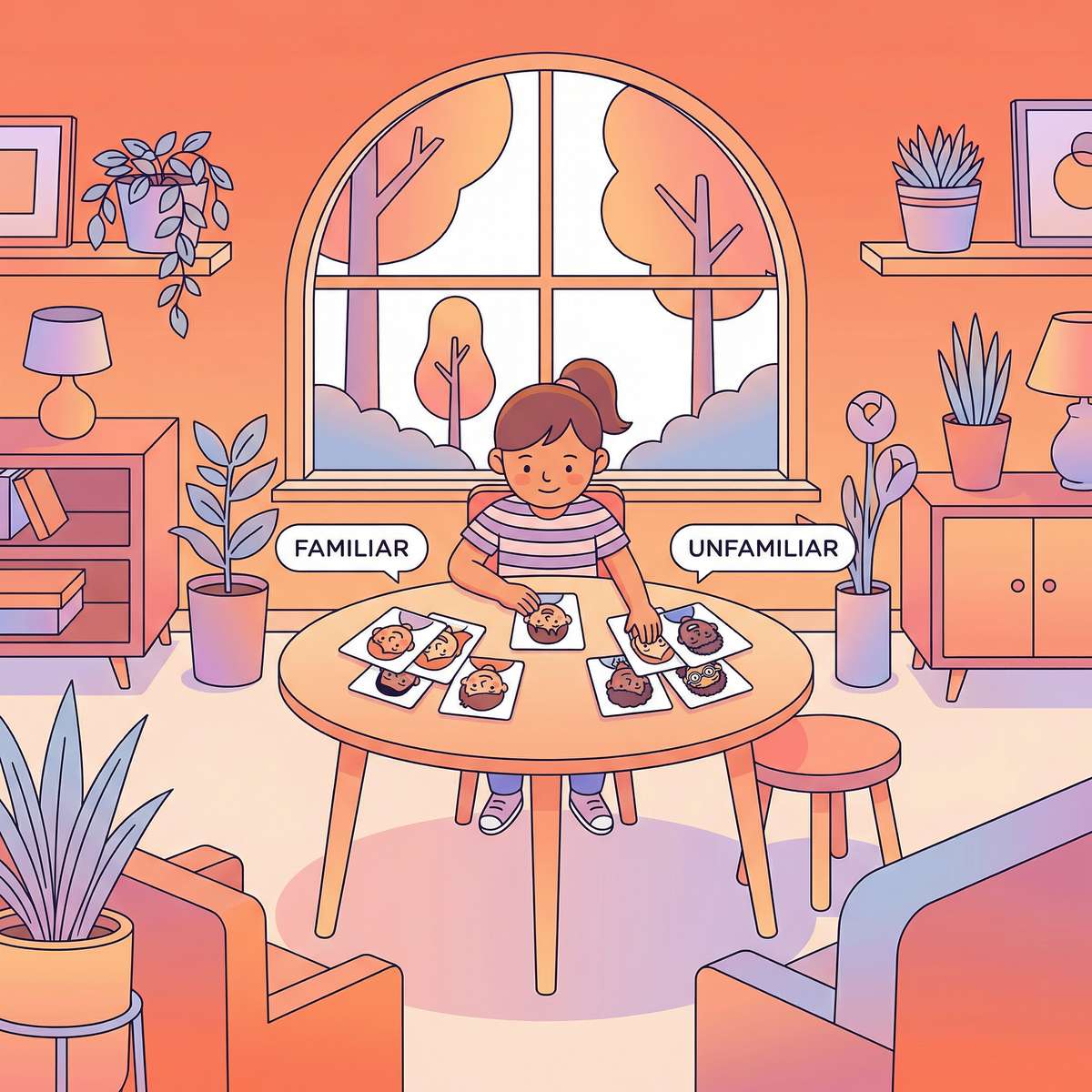
- ABA stranger-concept discrete trial training
- SLP vocabulary building ("family," "friend," "acquaintance," "stranger")
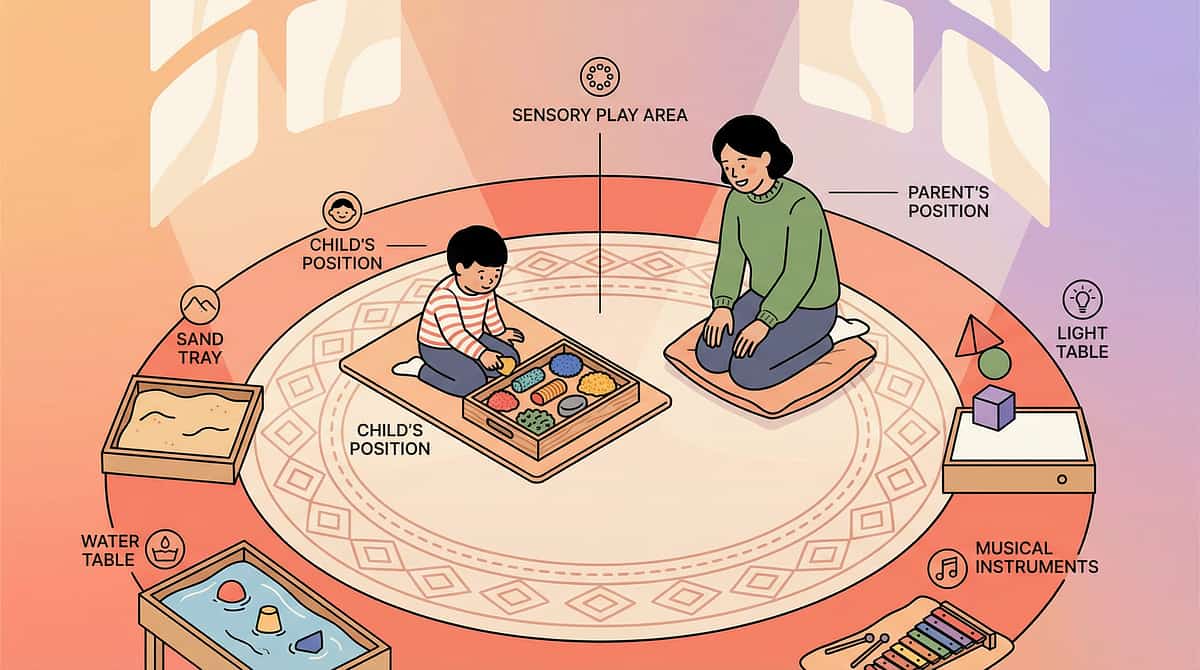
DIY Version: Write rules on index cards; laminate with wide sticky tape (lasts 2–3 months)
Cost: ₹100–₹300 (lamination pouch sets)

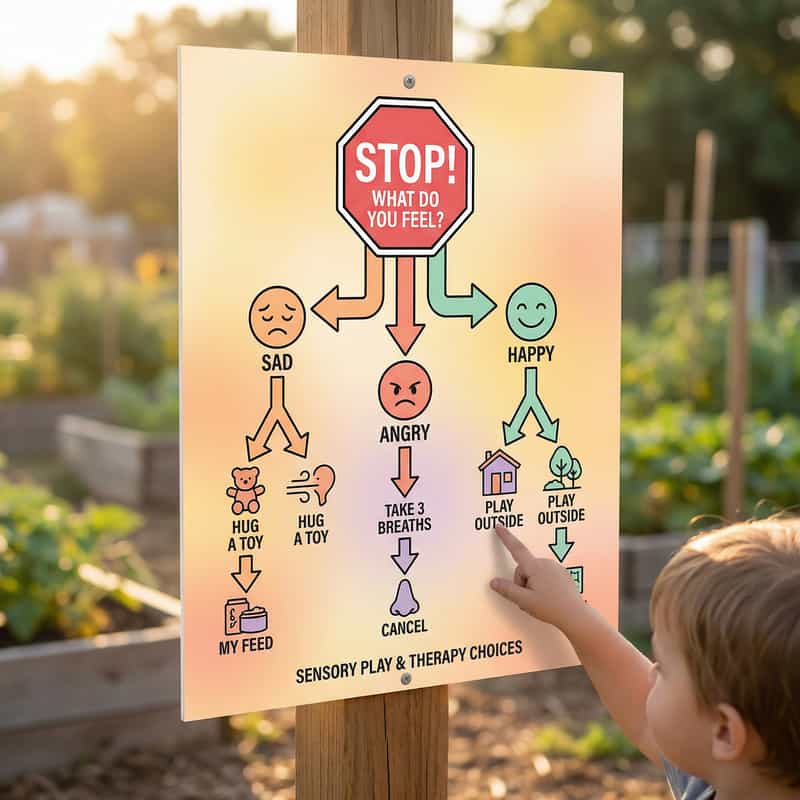

- Start with 5 cards per session — don't overwhelm
- Use real examples: "What if someone at the park asks your phone number?"
- Pair with role-play: child practices saying "That's private"
- Gradually increase to 15–20 cards as mastery builds
- ✅ Child correctly sorts 4 out of 5 cards = strong session
- ✅ Child spontaneously says "that's private" unprompted = generalisation beginning
- 🔁 Child confuses name with private info = normal early stage, keep practising
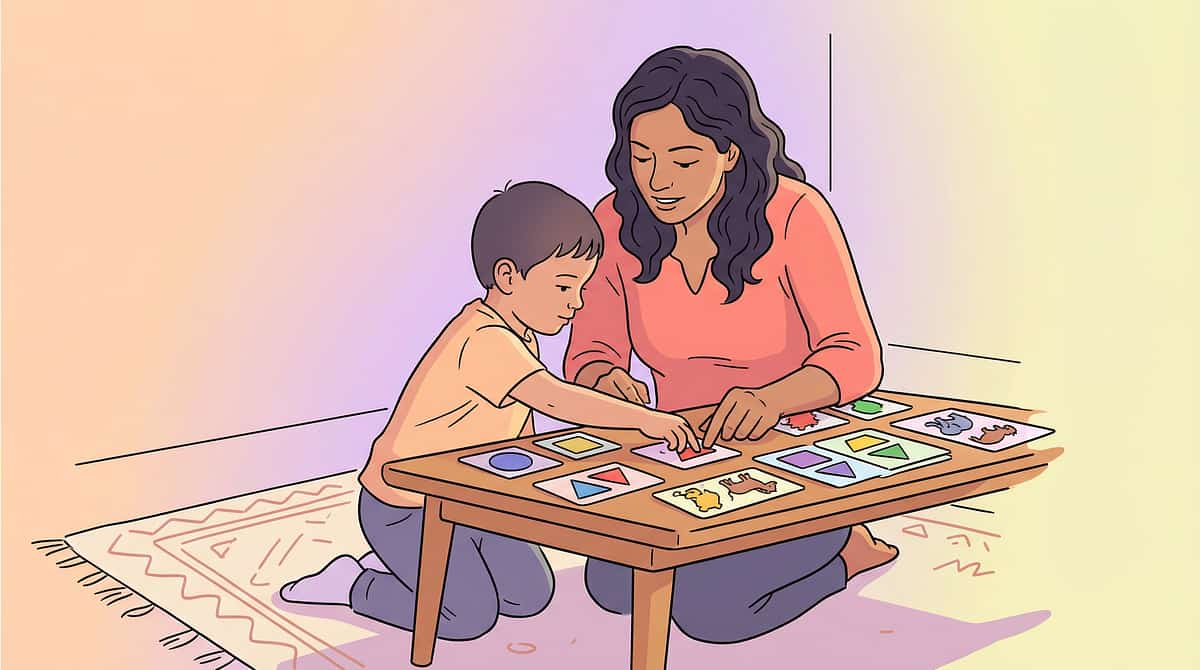

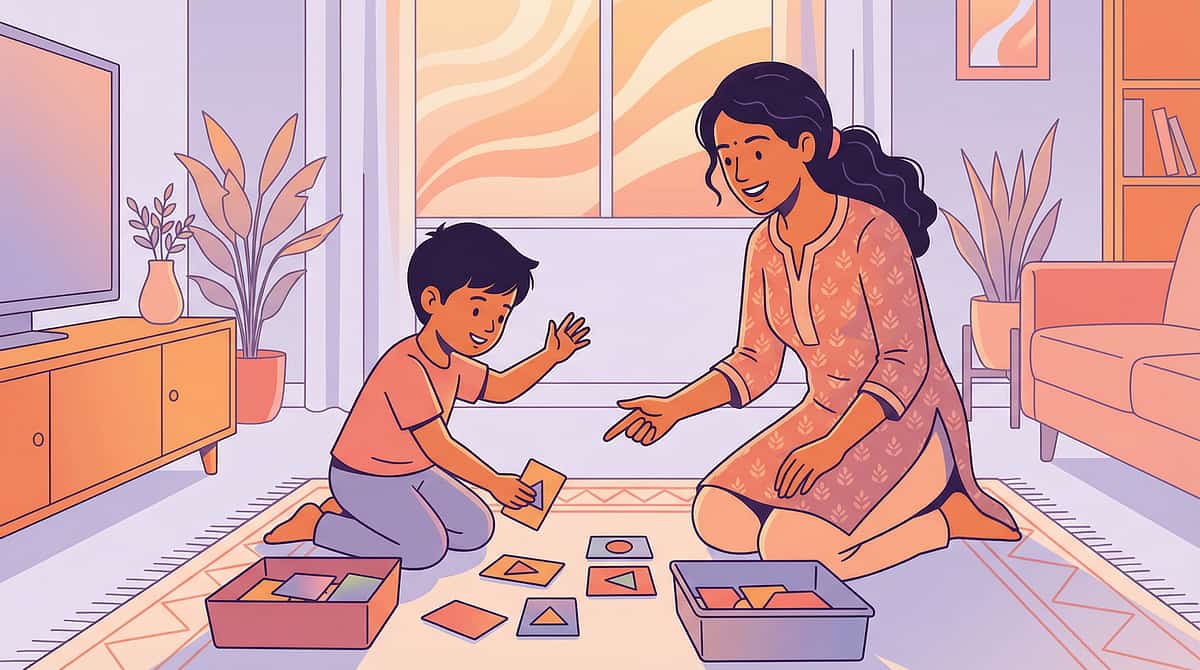
- Written in first person ("When I am at the park and someone I don't know says hello...")
- Includes photos of the child themselves wherever possible
- Shows the correct behaviour, not just the rule
- Ends with the child feeling capable and safe, not afraid
- Read together at a calm moment — not in response to an incident
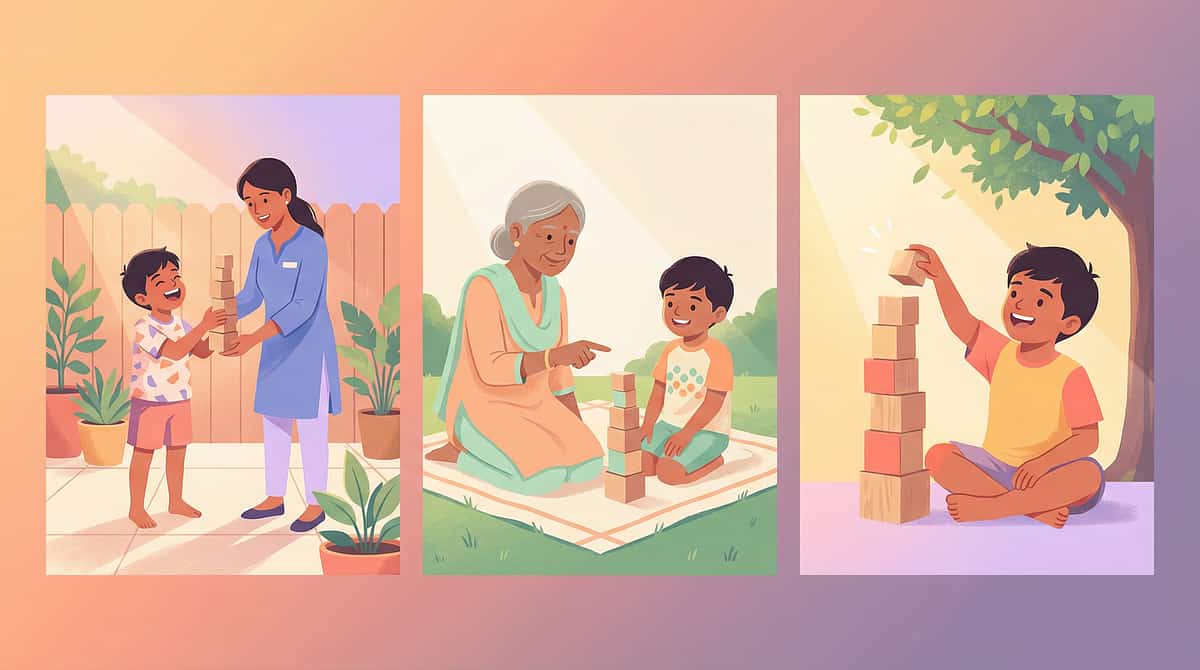
Material | Buy Version | ₹0 DIY Version | Why It Works the Same | |
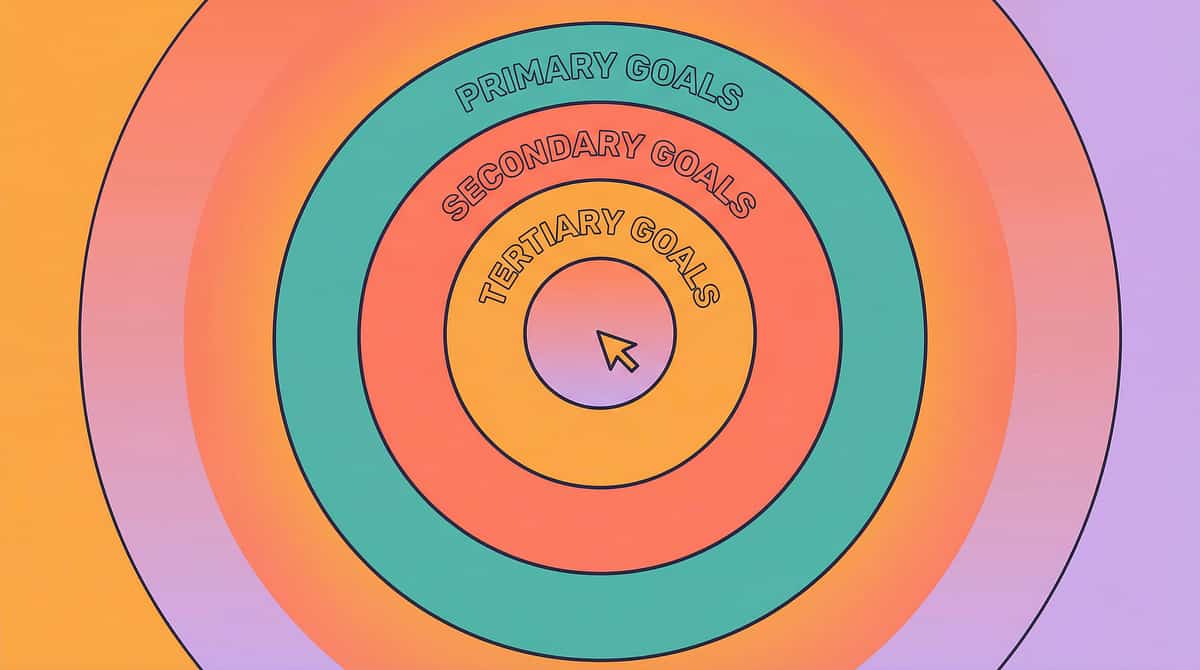
Circles of Trust | Printed laminated poster kit | Draw concentric circles on A3; paste printed/cut photos | Same visual categorisation; photos are more meaningful when personalised | |
Stranger Recognition Cards | Sorting card set (₹305) | Print unknown faces from magazines; family photos from phone; 2 cardboard boxes labelled | Same conceptual sorting behaviour | |
Rule Cards | Laminated card set | Write rules on index cards; laminate with wide sticky tape | Same portable reference; tape laminates last 2–3 months | |
Decision Tree | Printed chart | Draw flowchart on poster; use drawn stop sign + arrows | Same pause-interrupt-decide sequence | |
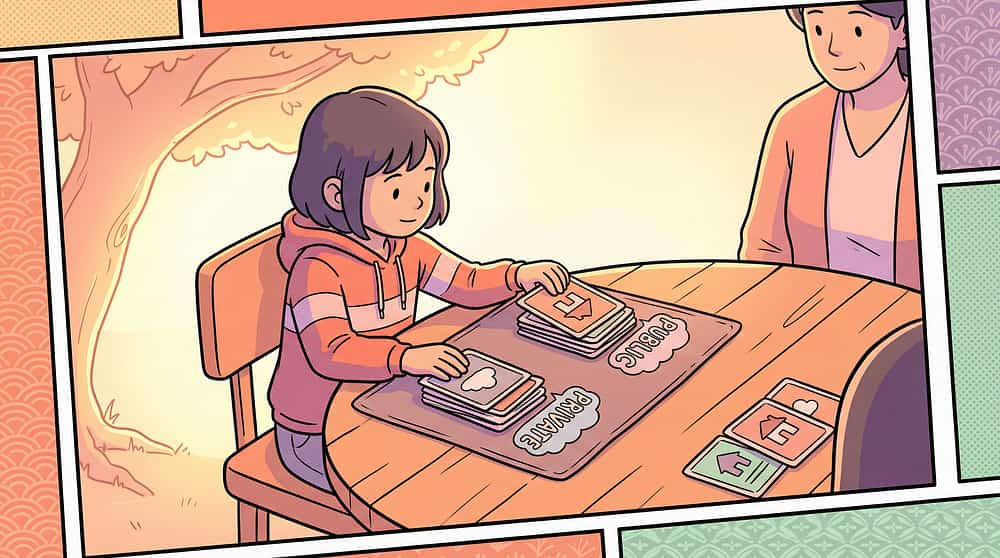
Information Cards | Sorting set (₹628) | Two envelopes: "PRIVATE" (red) / "OKAY TO SHARE" (green) | Same sorting discrimination training | |
Body Map | Purchased poster | Trace child's body on butcher paper; draw circles together | More engaging — child participated in making it | |
Social Stories | Printed book | A4 sheets stapled together; use phone photos of child | Personalisation dramatically increases engagement | |
Role-Play Cards | Scenario cards | 5 situation cards handwritten on paper | Same rehearsal outcomes | |
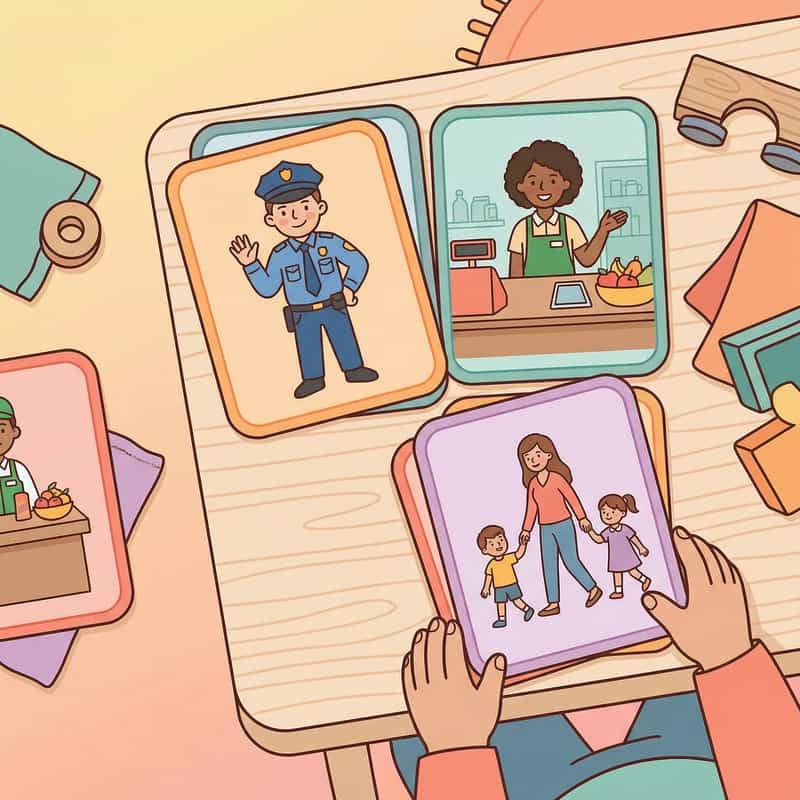
Safe Adult Cards | Photo card set | Photos printed from phone; mounted on cardboard | More locally relevant — use actual local police uniform images |

- Child has a history of trauma or abuse that may be triggered by safety-oriented content
- Child is currently in a state of high dysregulation, meltdown, or illness
- Any professional has flagged attachment disorder as a primary diagnosis (requires specialist protocol)
- Child was recently involved in a near-miss safety incident
- Child is having a difficult day (use gentler, play-based introduction only)
- Child shows extreme anxiety when any "safety" concept is introduced
- Child is younger than 3 (use only simple visual matching; no verbal rules yet)
- Child has comorbid anxiety (consult therapist before role-play)
- Child is calm, alert, fed, and rested
- No recent meltdown in past 2 hours
- You have 15 uninterrupted minutes
- Materials are prepared and ready before the session begins
- You are calm and regulated yourself

- Child has eaten a meal or snack in the last 90 minutes
- Child has not had a meltdown or significant distress in the last 2 hours
- Child is awake and alert (not drowsy or overstimulated)
- Child is not running a fever or showing signs of illness
- Child's preferred sensory regulation is in a settled state
- Parent/caregiver is calm and regulated
- Protected 15-minute window is confirmed

"Hey [child's name], I have something really cool to show you. It's like a special map of people. Want to look at it with me?"Alternate for reluctant child: "I need your help with something — only you can tell me where these people go on our map."
- Position yourself at the child's level (seated/crouched)
- Hold the Circles of Trust poster toward them — let them reach for it
- Smile genuinely — your emotional regulation sets the session's tone
- No demands in this step; this is pure invitation
- Child looks at the material
- Child moves toward you or the poster
- Child reaches for the materials
- Child says anything (even tangential) — they're engaged
- Child turns away: Wait 10 seconds, try alternate script → if still no, postpone to next session
- Child continues another activity: Move physically closer with the material → don't compete with the existing activity
- Child says "no": Honour it → "Okay, maybe later" → try again after 20 minutes

Step 2 of 6: The Engagement
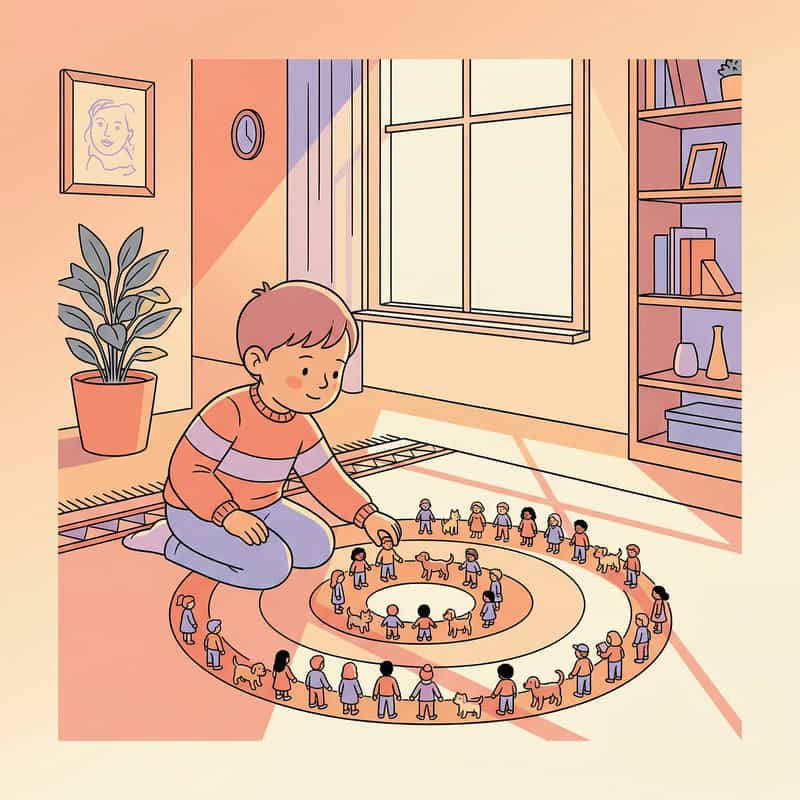
The Child Is With You. Now Introduce the Material. "Look at this — this is our special 'People Map.' See these circles? The people closest to us — family — they go right here in the middle. [Point to centre.] And people we don't know yet — they go way out here. [Point to outer edge.] Let's put some people on our map together." Engagement ✅ Child picks up photos, starts placing, asks questions → full protocol Tolerance 🟡 Child watches but doesn't initiate → use hand-over-hand gently, narrate what you're doing Avoidance 🔴 Child tries to leave → reduce demand, go back to pure naming ("Who's this? Where does Grandma go?") Reinforcement cue: Every correct placement (even approximate) = immediate praise. "YES! That's exactly right — Grandma is family, she goes right in the centre. Amazing job!" Timing: 1–3 minutes Research: PMC11506176 | ABA reinforcement scheduling

Place 8–10 photos face-down. Flip one at a time. "Who is this? Do we know this person?" Child places photo in correct ring.
Show cards one at a time. Practice: "If a stranger says hello, what do I do?" → child demonstrates wave from distance.
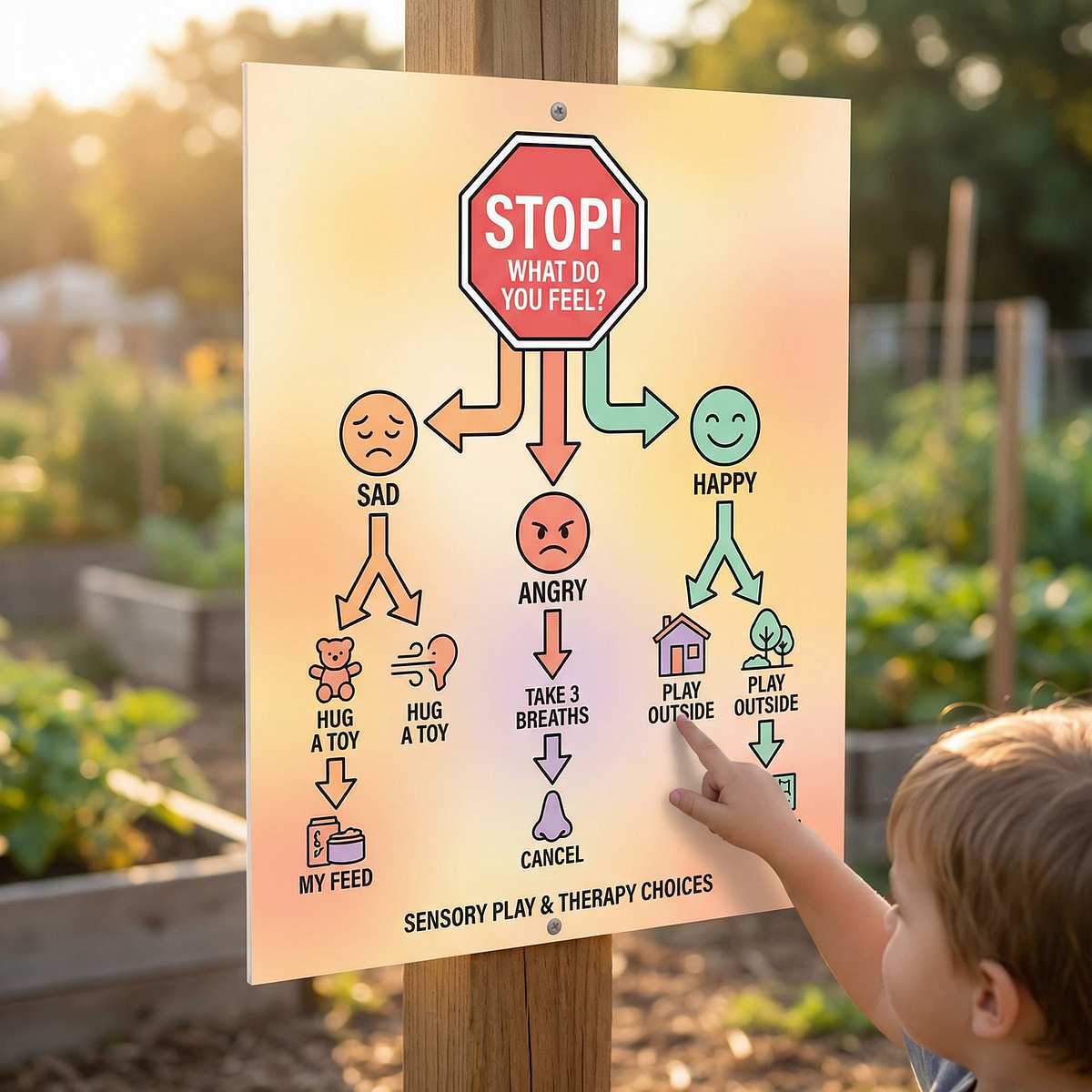
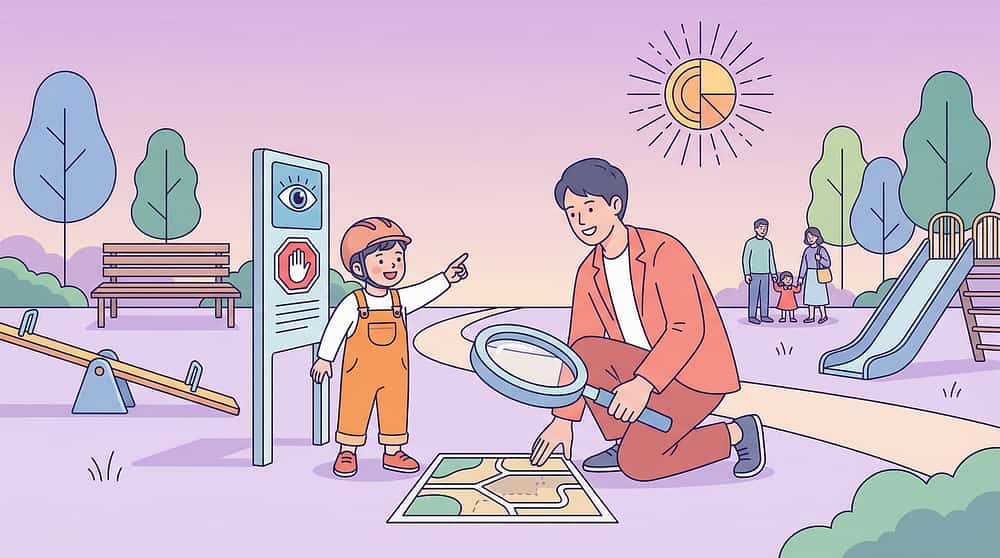
Walk through decision tree: "When I see someone: STOP → Do I know this person? → YES: say hi → NO: check with my adult."
- ❌Rushing through all 9 materials in one session → Fix: Session 1 = Circles of Trust only. Session 3 = add Rule Cards. Session 5 = add Stop-and-Check. Build incrementally.
- ❌Using "bad strangers" framing → Fix: "We don't know them yet" — not "dangerous." Wisdom, not fear.
- ❌Testing the child on the street immediately after → Fix: Practice stays at home for the first 4 weeks. Generalisation comes after home mastery.
- Child looks away repeatedly
- Increased echolalia or stimming without engagement
- Child asks for another activity
- Refusal to engage with next card
- Physical: High-five, tickle, jump together
- Verbal: Specific enthusiastic praise
- Token: Sticker on a safety star chart
- Activity: 2 minutes of preferred play immediately after
"Two more, then we're all done with our People Map for today. You've done such a great job."
Capture the Data: Right Now
Within 60 Seconds of Session End. Data Now = Progress Later. 3-Field Session Tracker Session Duration: ___ minutes Stranger Categorisation Accuracy: ___ / 10 photos correctly sorted Stop-and-Check Use:☐ Used spontaneously ☐ Used with prompt ☐ Not used yet Child Regulation Throughout:☐ Regulated throughout ☐ Needed one break ☐ Session cut short Notes (optional): Any breakthrough moment or challenge? 📋 Open GPT-OS® Session Tracker → ⬇️ Download PDF Tracker — C-333 Why This Matters Progress in stranger safety is gradual. A child who correctly categorises 4 photos today and 7 photos in week 3 has made enormous progress — but you'll only see it if you've been tracking. Data is the difference between feeling like "nothing is working" and seeing the actual trajectory. 📞 9100 181 181 — Discuss your session data with a Pinnacle therapist
Solution: Return to pure pairing — no demands. Play with materials yourself near child. Let curiosity bring them. Reduce session to 3 minutes. Add highly preferred motivator.
Solution: This is the starting point, not a failure. Start with known vs. unknown photos only. Use photos of completely unfamiliar faces. Build the discrimination before building the category label.
Solution: Begin gentle in-home role-play (parent as mock stranger). Then neighbourhood walks with observation practice. Generalisation requires structured exposure across environments.
Solution: STOP and consult professional. Modify to very gentle Circles of Trust only. Consider specialist referral.
Solution: Normal developmental pattern. Continue home practice. Begin community practice only after 3 consistent weeks of correct home performance.

• Only 4 photos (2 family, 2 strangers)
• Only one circle (family / not family)
• Focus only on "Do I know this person? YES or NO"
• Sessions of 5 minutes maximum
• Heavy reinforcement for every attempt
• All 9 materials introduced across 8 weeks
• Rule cards referenced in session
• 10–15 minute sessions
• Introduce nuance: "I know them from school but they're not a close friend — where do they go?"
• Community practice walks
• Role-play with novel scenarios: online interactions, phone calls from unknown numbers
• Information protection drill
Profile | Adaptation | |
Sensory seeker (approach driven by sensory need) | OT must address underlying sensory need first. Add sensory diet. Safety concepts after regulation. | |
Highly verbal / literal thinker | Use exact, concrete language. "A stranger is anyone whose name you don't know and who isn't family." Avoid metaphor. | |
Minimally verbal | Use solely photo sorting and gesture-based indication. No verbal rules required. | |
High anxiety | Extra-gentle introduction. No role-play until week 12. Confidence-building focus throughout. |
- ✅ Child tolerates 5+ minutes with the Circles of Trust poster without resistance
- ✅ Child can correctly sort 4–6 out of 10 photos (family vs. stranger)
- ✅ Child begins to vocalise or gesture when placing photos ("Grandma! Middle!")
- ✅ Child shows curiosity about the materials (touches, asks questions)
- ✅ Child accepts the session routine without major resistance
- ❌ Behavioural change in community settings (too early — home learning is still forming)
- ❌ Spontaneous use of safety rules without prompting (that's week 5+)
- ❌ Perfect categorisation (4/10 correct is real progress in week 1)
"If your child tolerates the poster for 3 seconds longer than last week — that is real, measurable, neurological progress."
- ✅ Child begins to anticipate the session ("People Map time!")
- ✅ Categorisation accuracy improves to 7–8/10 photos
- ✅ Child begins to reference rule cards without prompting during session
- ✅ Child starts to verbalise rules spontaneously: "Strangers: wave from far!"
- ✅ Parent notices a slight "pause" before approach in home/familiar community settings
- ✅ All 9 materials introduced and practised across multiple sessions
- ✅ Child correctly categorises 9–10/10 photos consistently, including nuanced cases
- ✅ Child uses Stop-and-Check routine with verbal/gestural prompt in simulated home scenarios
- ✅ Information protection: correctly identifies "private" vs. "okay to share" across 8/10 scenarios
- ✅ Role-play practice: can demonstrate "no thank you" and "I need to find my parent" in home practice
- ✅ First community generalisation attempts: pausing before approach in familiar community settings WITH parental proximity
"She looked at me first before going to the cashier. Just a glance — but she checked. That pause is everything." — Parent, Pinnacle Network (anonymised)
Eight weeks ago, your child ran toward every stranger without hesitation. Today, they pause. They check. They look back at you. They know what a stranger is. That transformation didn't happen by accident. It happened because you showed up.
Why it matters: Safety training has tipped into fear/anxiety — opposite of the goal.
Action: STOP role-play immediately. Continue only Circles of Trust (positive focus). Consult behavioural therapist.
Why it matters: May signal underlying cognitive challenges, attachment factors, or incorrect technique application.
Action: Call 9100 181 181 — professional assessment needed.
Why it matters: Requires immediate professional assessment; trauma response possible; protocol must be updated.
Action: Professional consultation immediately — 9100 181 181.
Why it matters: Online safety is a critical extension of this protocol; requires expanded training.
Action: Online safety training required — consult digital safety specialist alongside behavioural team.
Why it matters: May indicate attachment-based factors, sensory need, or incorrect execution.
Action: Behavioural specialist consult — approach assessment needed.
- ← C-331: Difficulty with Personal Space
- ← C-332: Child Doesn't Seek Comfort Appropriately
- → unknown link
- → C-335: Not Recognising Unsafe Situations
- → C-340: Elopement and Wandering
- ↔ Video Modelling Protocol (if visual learning is stronger than hands-on)
- ↔ Social Thinking Curriculum (for cognitively advanced children)

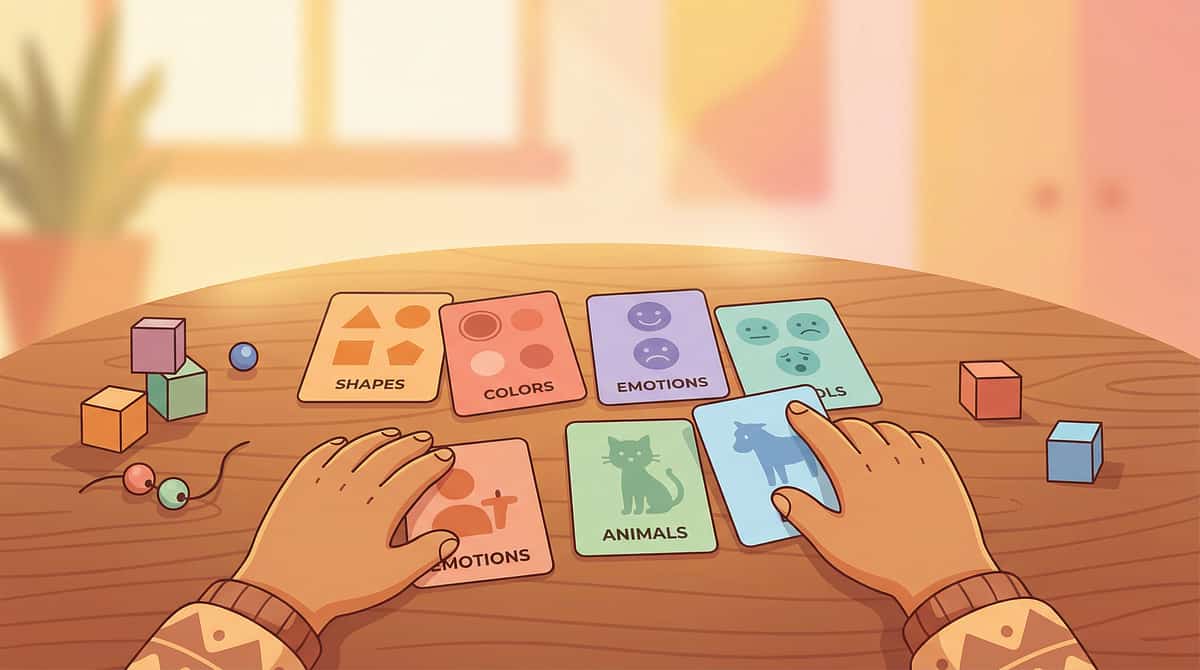
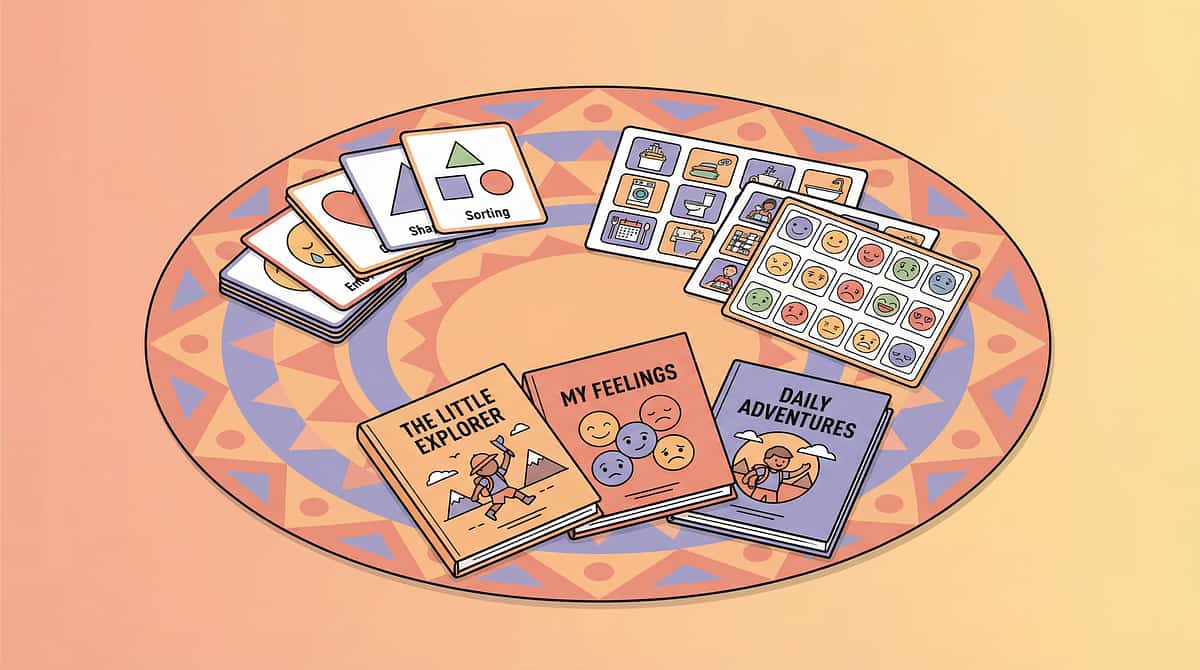
Preview of 9 materials that help with stranger over friendliness Therapy Material
Below is a visual preview of 9 materials that help with stranger over friendliness therapy material. The pages shown help educators, therapists, and caregivers understand the structure and content of the resource before use. Materials should be used under appropriate professional guidance.


"This technique is not an isolated activity. It is one precisely placed node in your child's full developmental profile — sequenced, timed, and monitored by a system that has governed 20M+ sessions."