


Social Connection & Relationship Interventions
- Kasari et al. (2006): Joint attention intervention produces significant gains in social engagement and language
- Mundy & Newell (2007): Joint attention is the strongest early predictor of social development outcomes
- Koegel et al. (2012): Pivotal Response Treatment shows broad-spectrum social gains
- PRISMA Review (2024): 16 studies confirm evidence-based status of structured social-connection intervention
- Meta-analysis (2024): Social skills improvement confirmed across 24 studies
- 🏷️Domain: Social Connection & Relationship (SOC-CON)
- 👶Age Range: 2–12 years
- ⏱️Session Duration: 10–20 minutes
- 📅Frequency: Daily preferred / minimum 3× per week
- 📍Setting: Home (primary) · Clinic (supported)
- 🎯Canon Categories: Matching Games · Cause-Effect Toys · Reinforcement Menus
↔ Domain C (Social Connection) · 12 Domain System
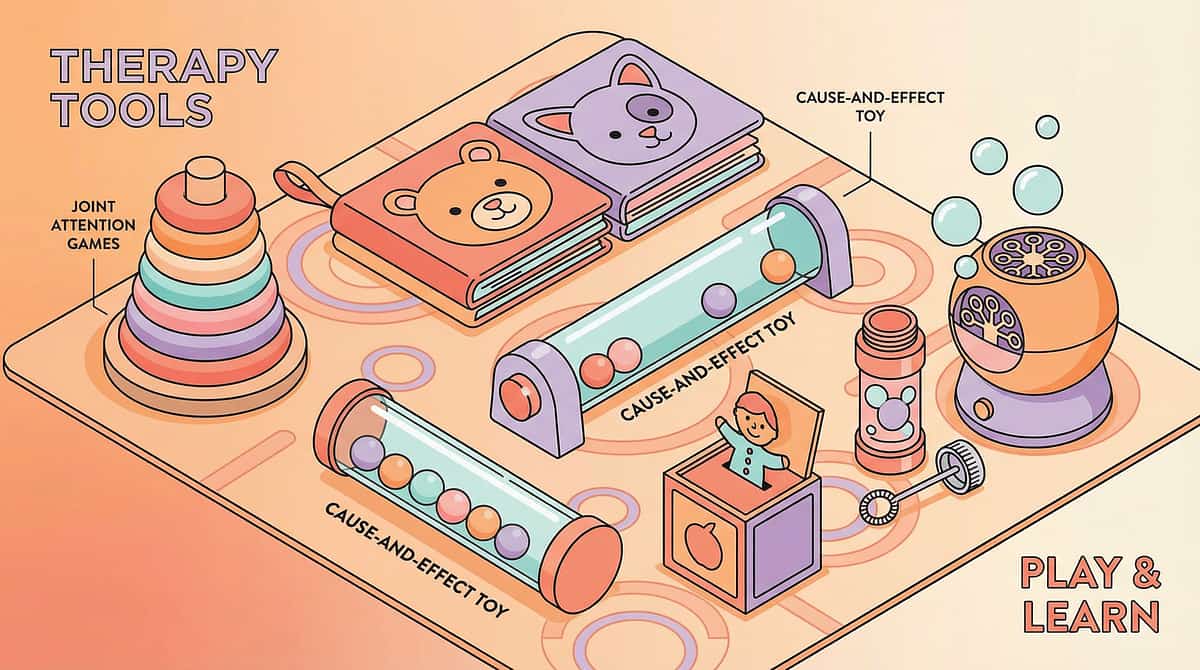

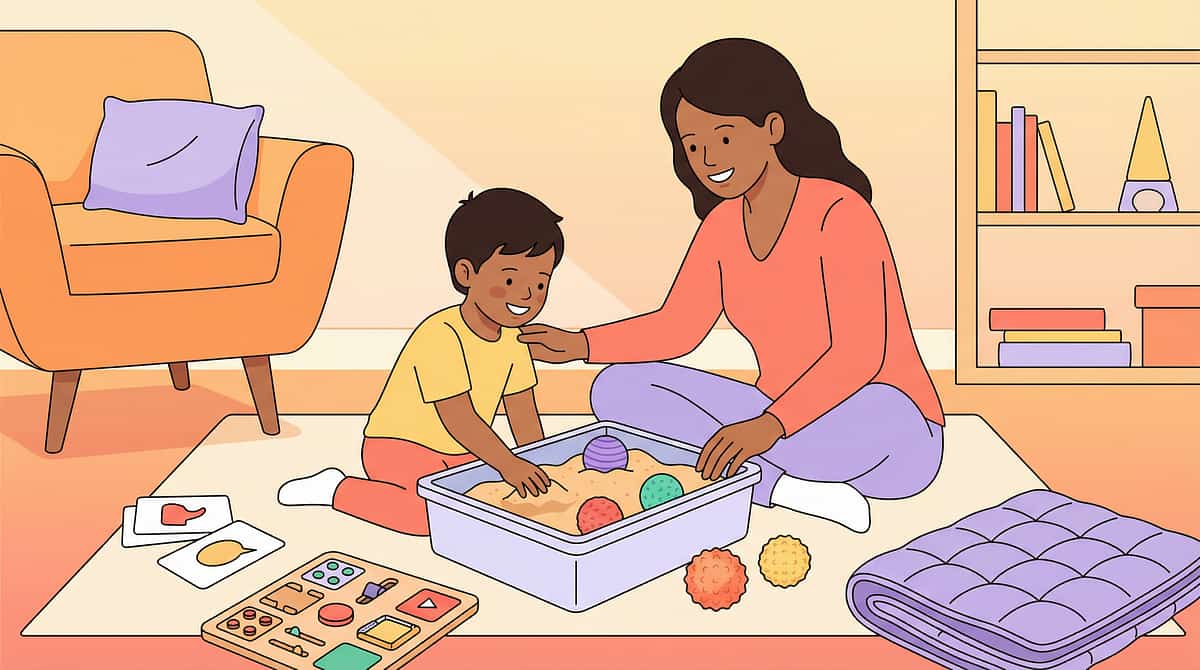
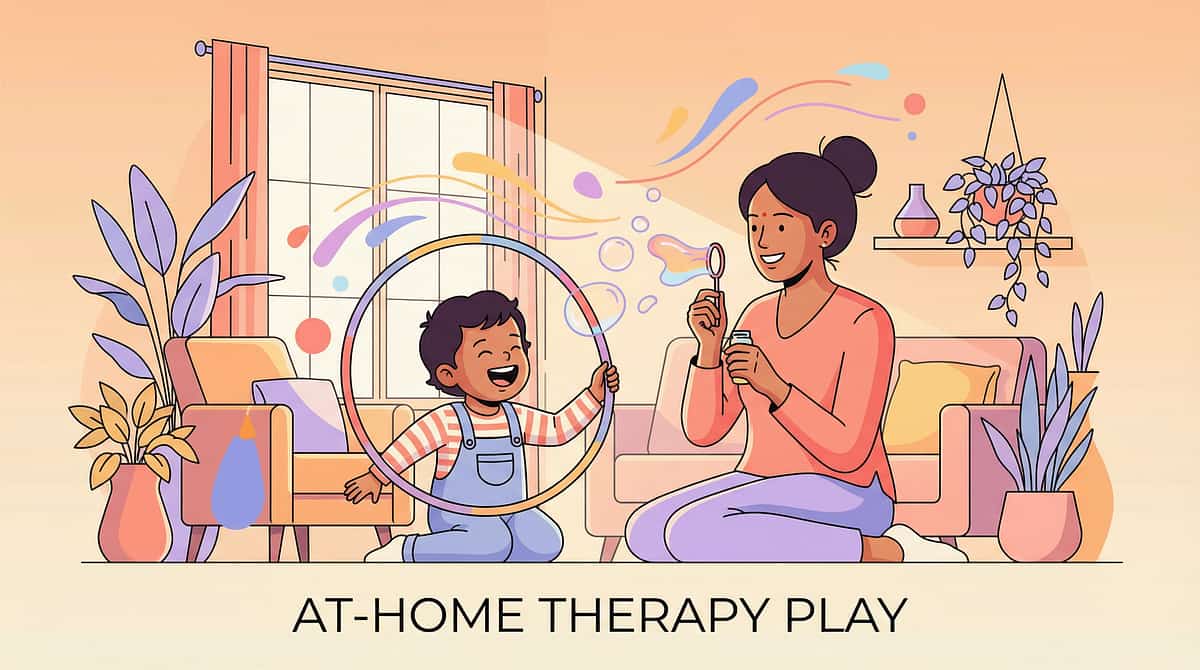
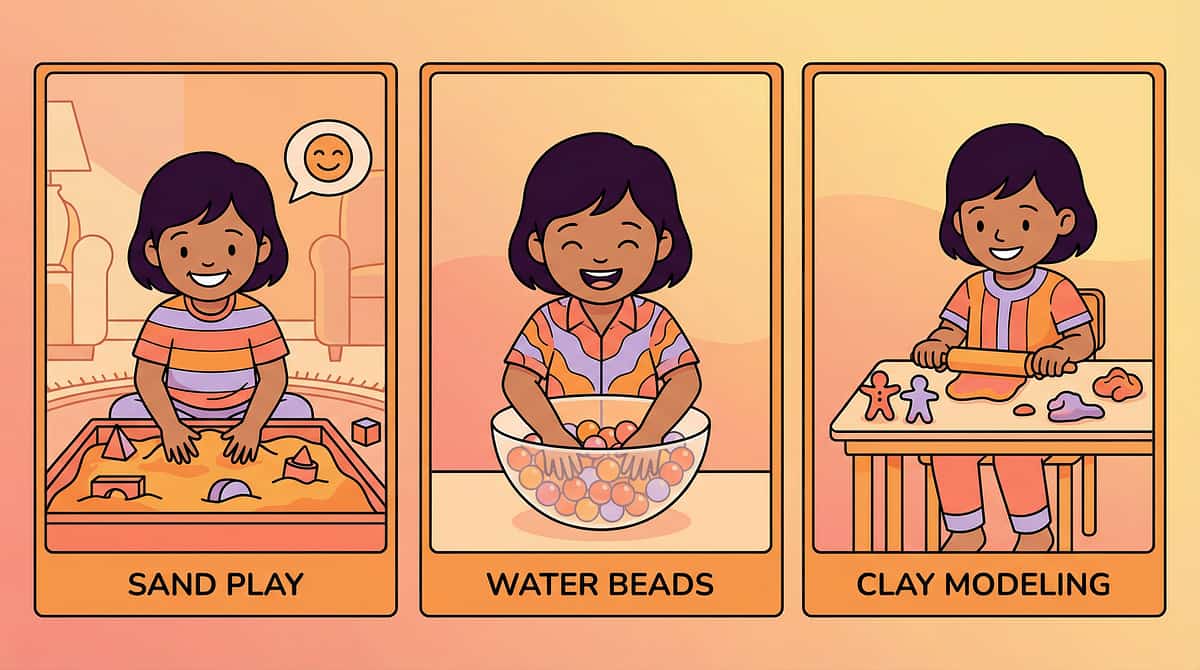

Material | Price Range | Canon Category | |
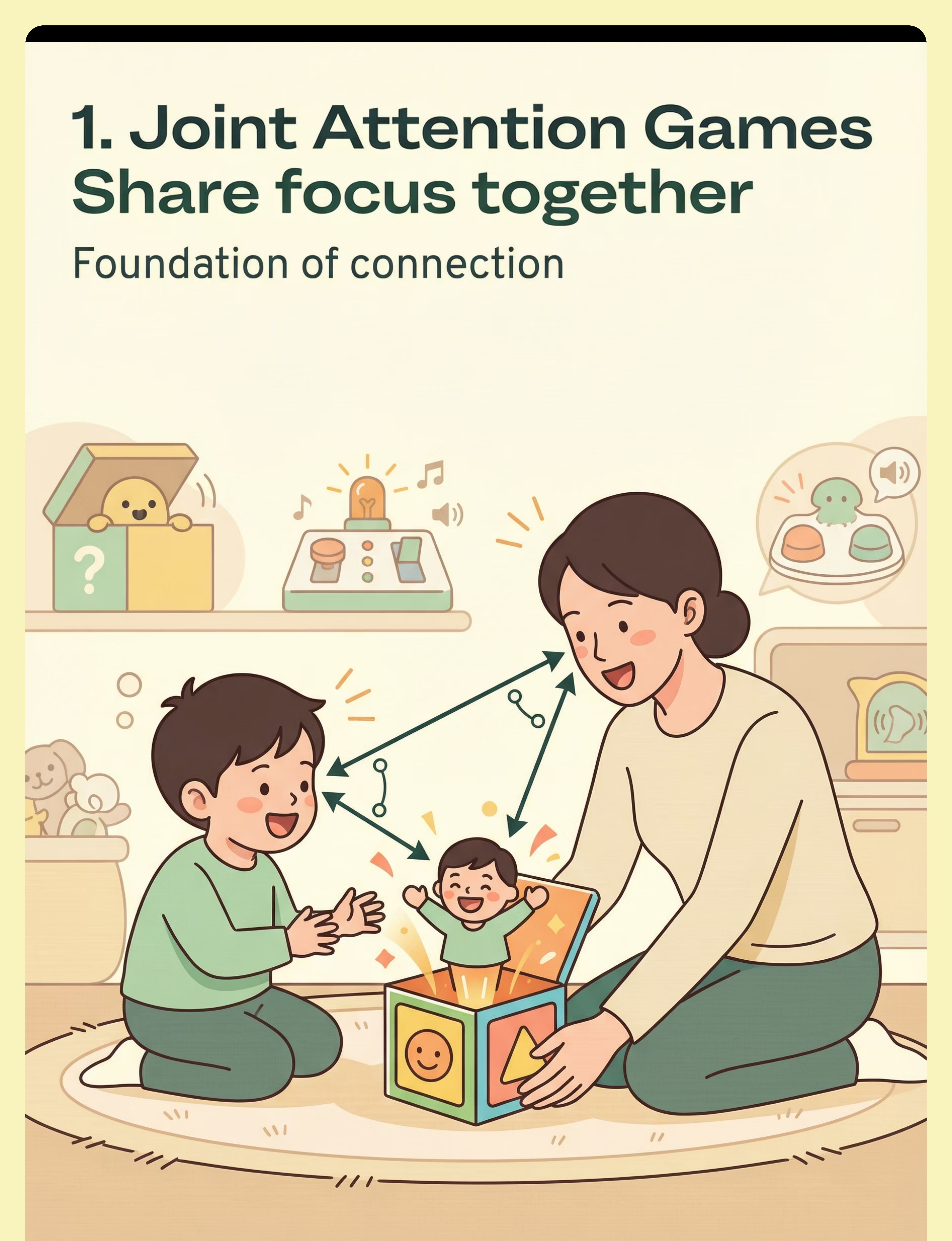
Joint Attention Games | ₹300–800 | Cause-Effect Toys / Matching Games | |
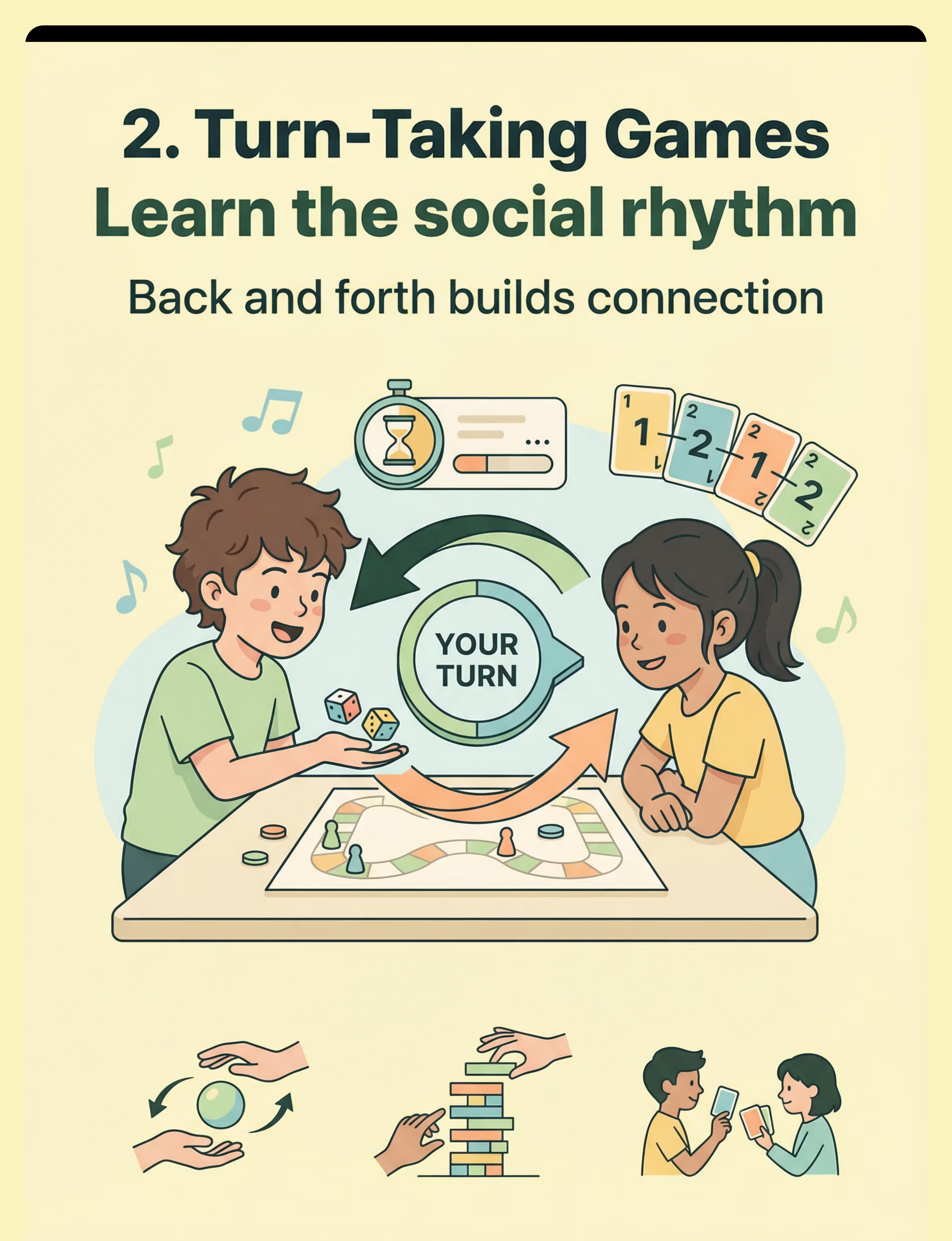
Turn-Taking Games | ₹200–600 | Problem-Solving Toys | |
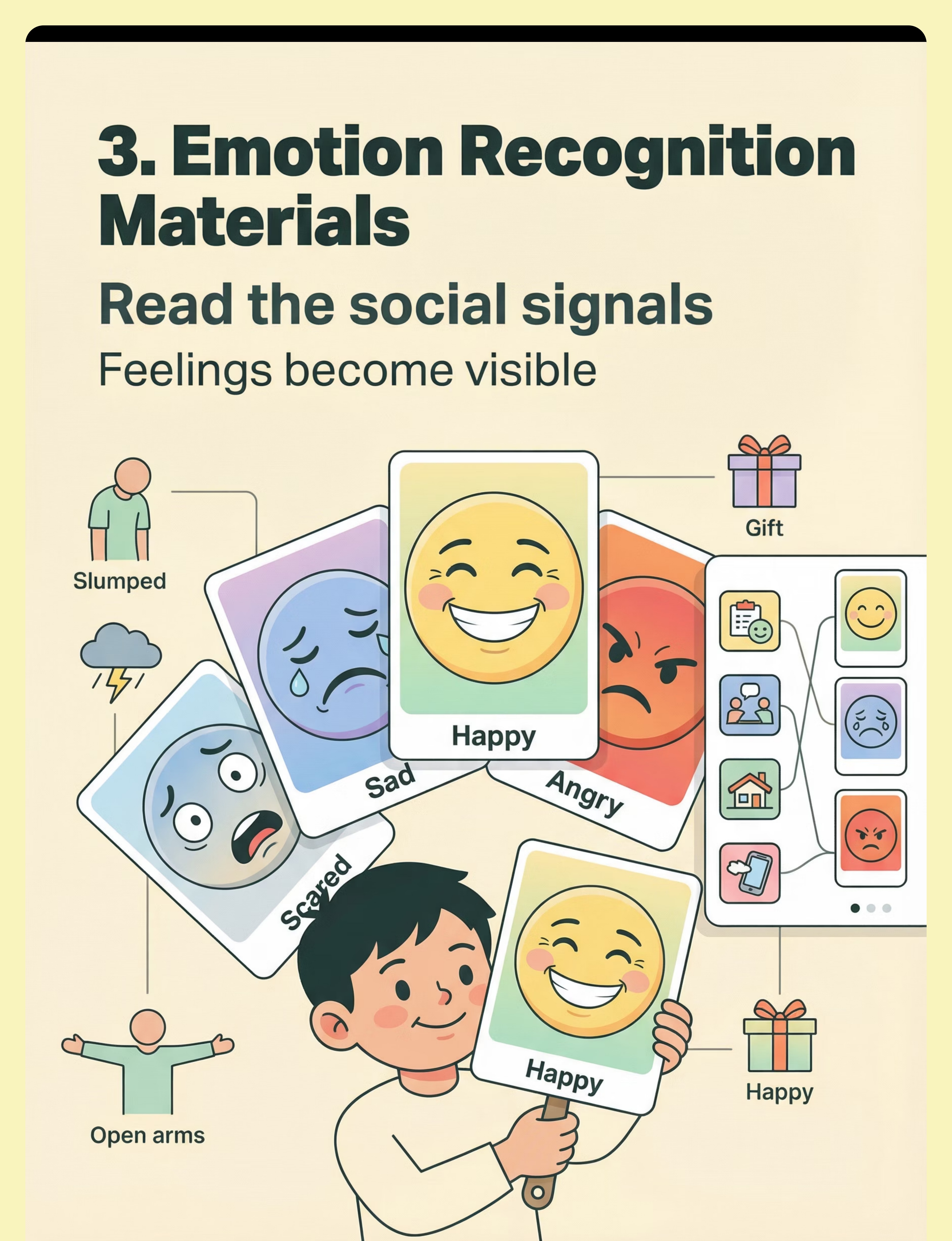
Emotion Cards | ₹200–500 | Matching / Memory Games | |
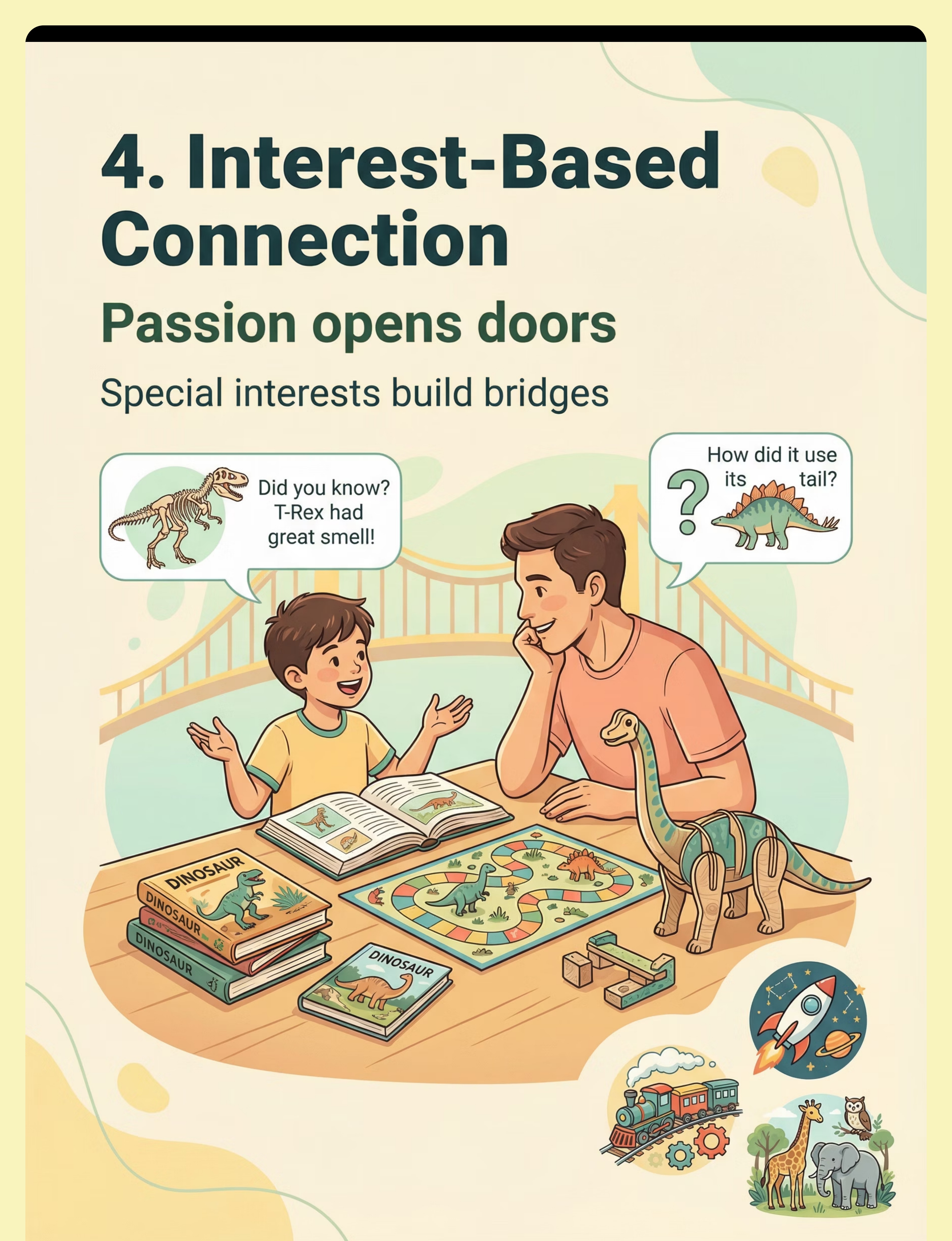
Special Interest Materials | ₹300–1,000 | Problem-Solving Toys (interest-themed) | |
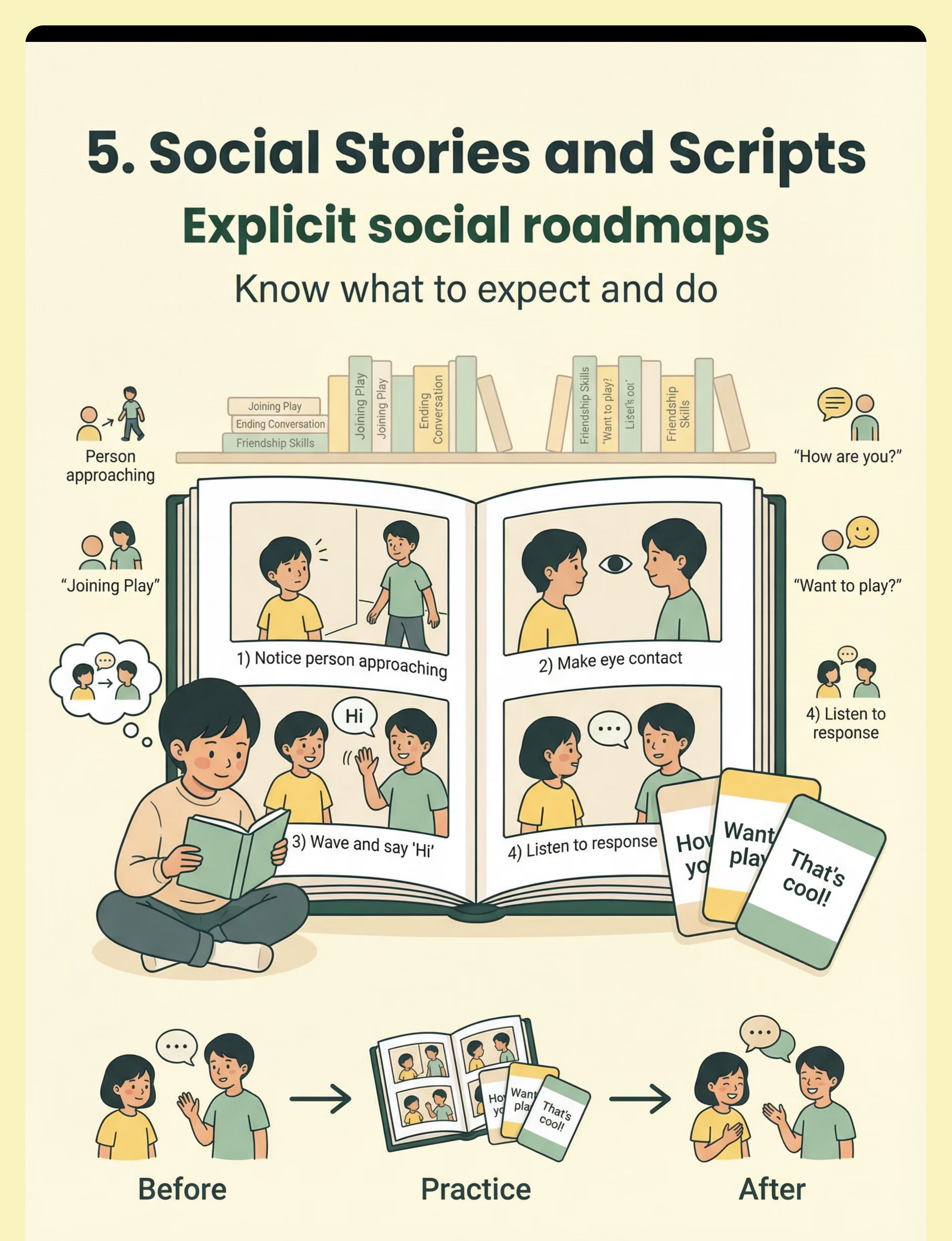
Social Stories | ₹150–400 | Sorting / Social Narrative | |
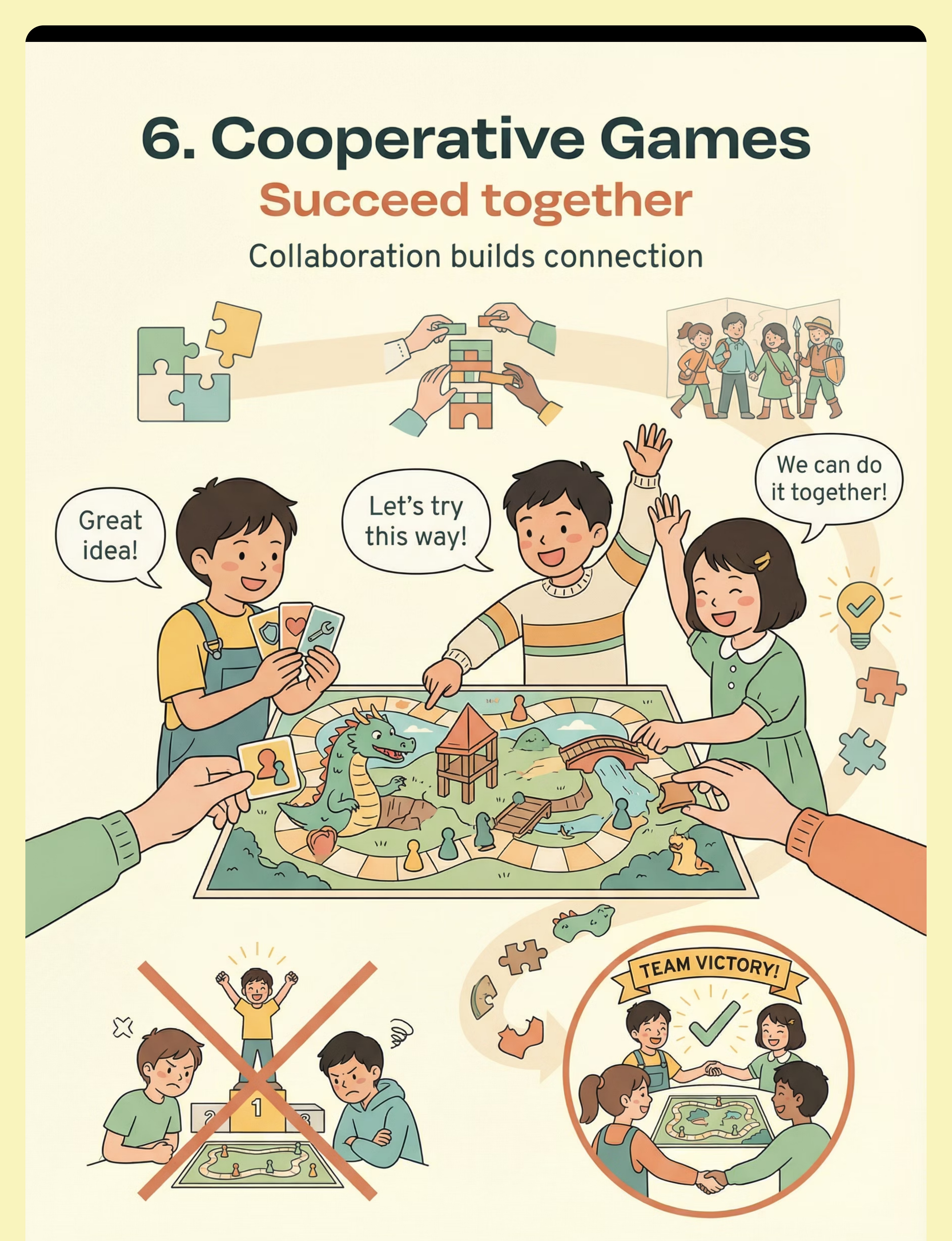
Cooperative Games | ₹400–1,000 | Problem-Solving Toys | |
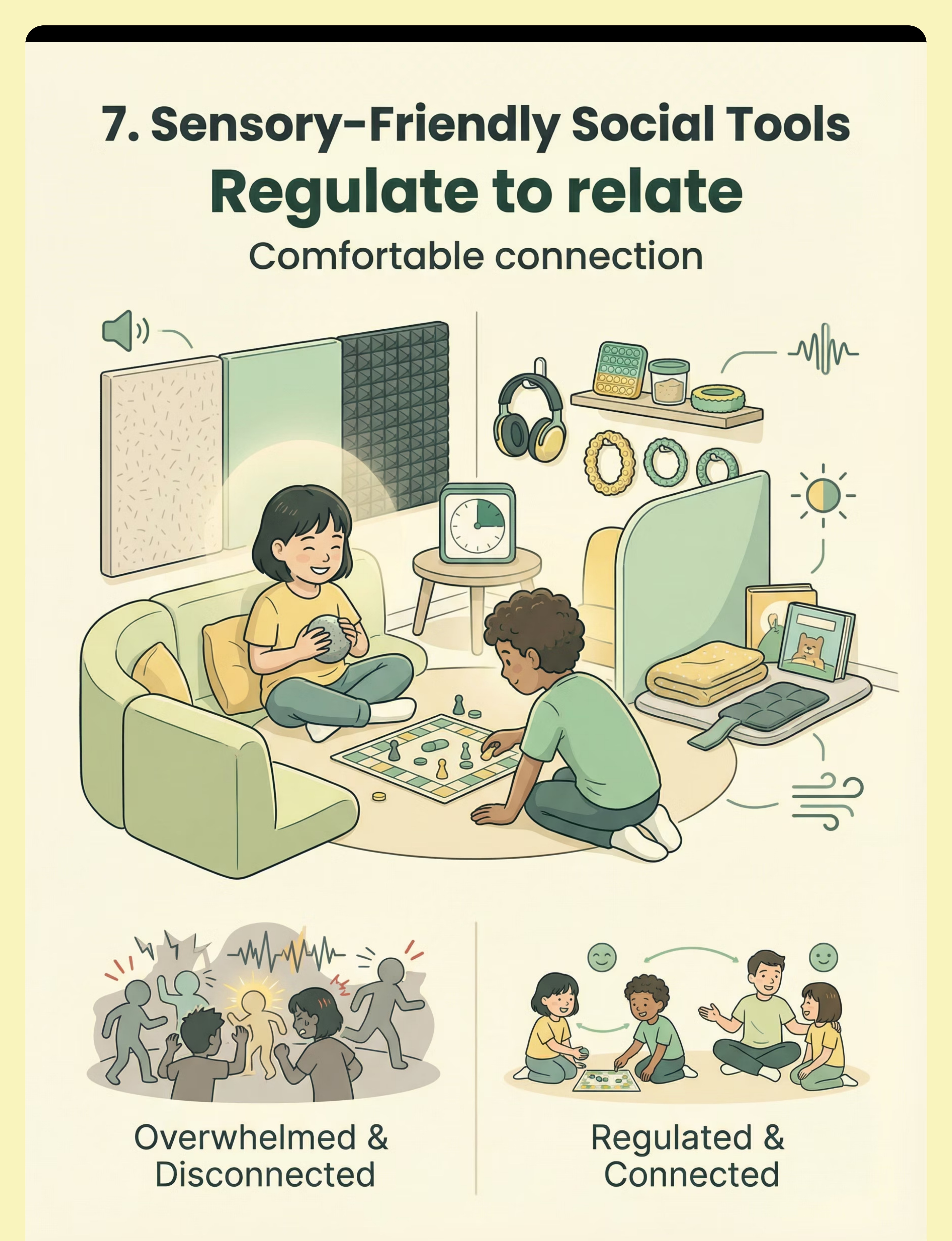
Sensory-Friendly Tools | ₹200–600 | Transition Objects | |
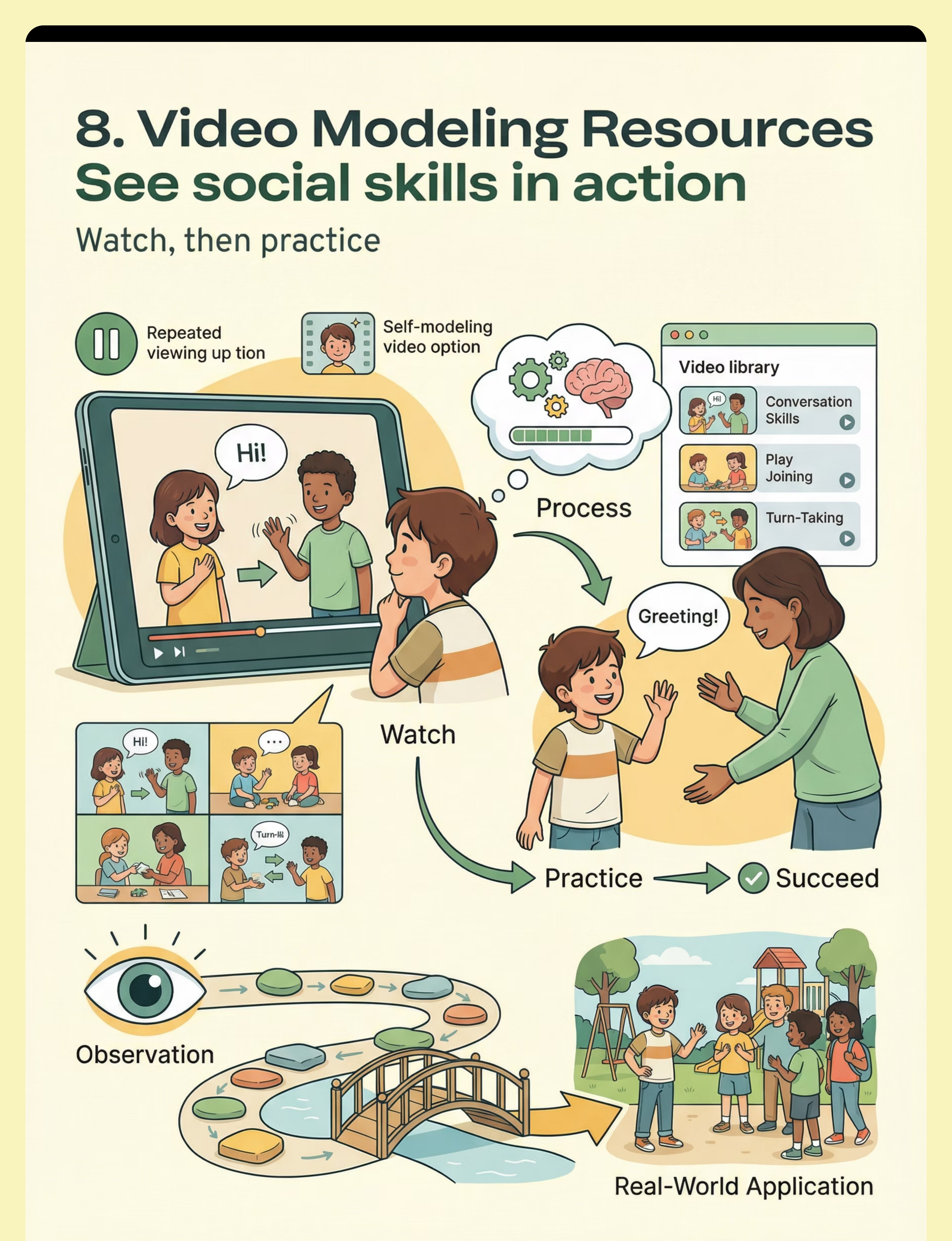
Video Modelling | ₹500–2,000 | Digital / Cause-Effect | |
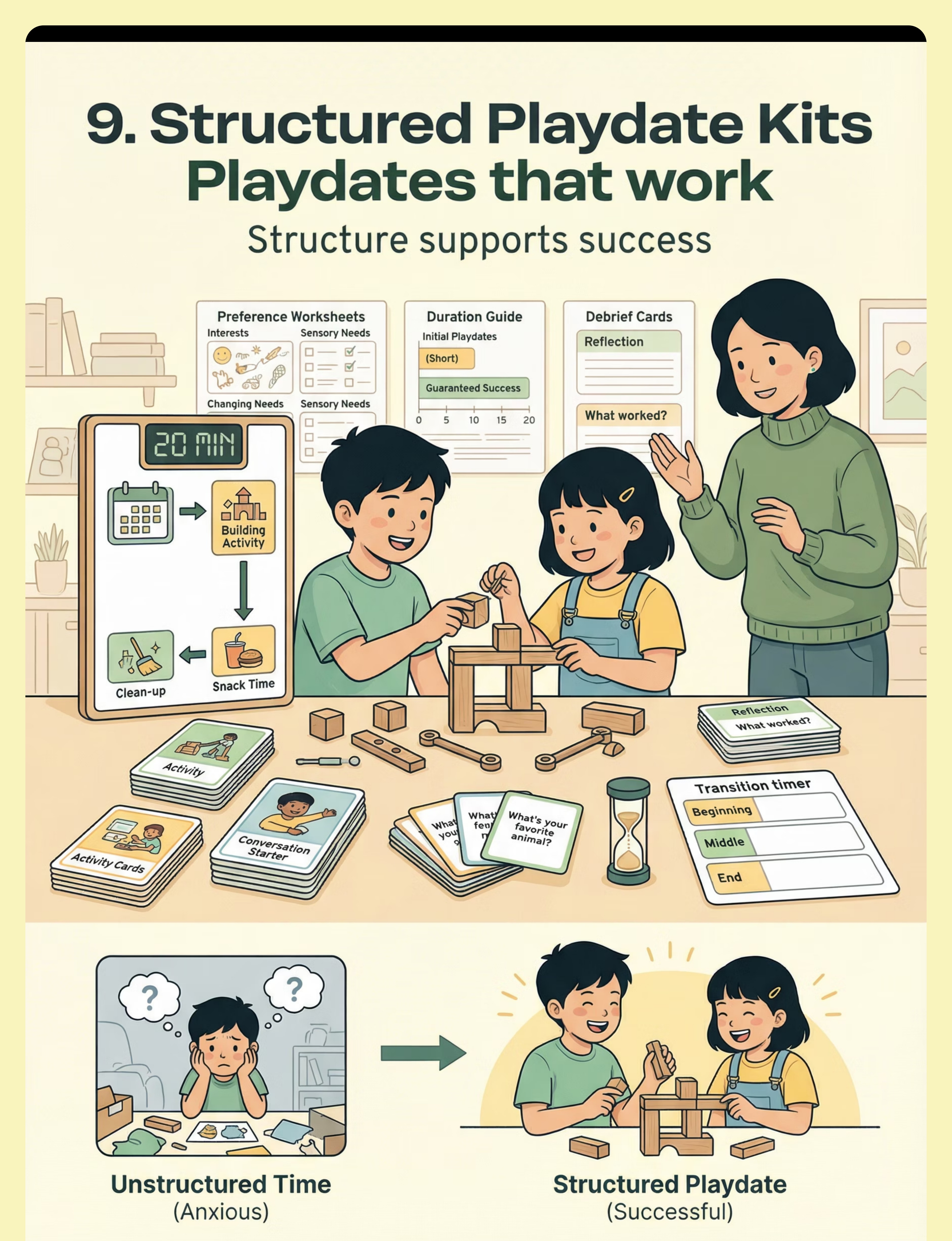
Structured Playdate Kit | ₹300–700 | Sorting / Problem-Solving |
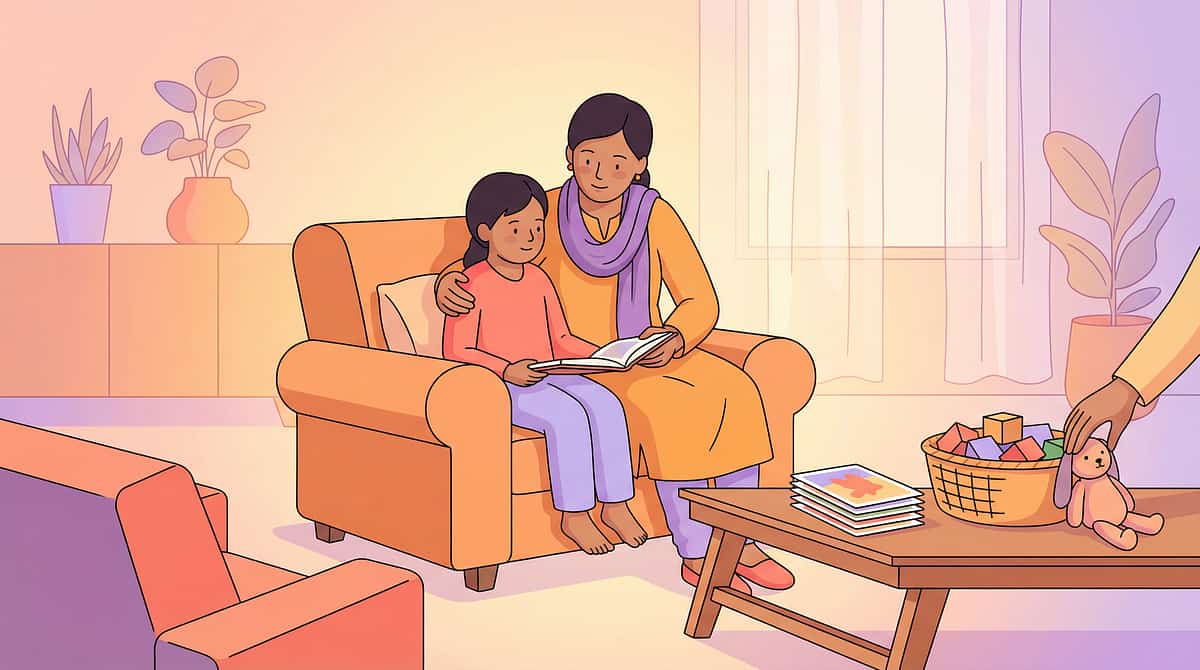
Material | Buy (₹) | DIY Free Alternative | Why It Works | |
Joint Attention Games | ₹519 | Bubbles (soap + water) or peek-a-boo with cloth | Same shared excitement, same joint-look moment | |
Turn-Taking Games | ₹428 | Ball rolling back and forth, or stacking blocks by turns | Same reciprocal rhythm, zero cost | |
Emotion Cards | ₹305 | Family photo album — name emotions in photos you already have | Real faces, real emotions, personal connection | |
Special Interest | ₹300+ | Parent learns the interest — YouTube videos together | Genuine curiosity costs nothing | |
Social Stories | ₹305 | Draw simple 4-panel comic of the social situation on paper | The story matters, not the medium | |
Cooperative Games | ₹296 | "Us vs. the clock" — build a tower together before timer | Shared goal = connection | |
Sensory-Friendly | ₹425 | Favourite blanket, familiar stuffed animal | Regulation through comfort is free | |
Video Modelling | ₹0 | YouTube: "social skills for kids" free content | Video modelling principle works on any screen | |
Playdate Kit | ₹628 | 3 activity cards on paper + kitchen timer | Structure is what matters |
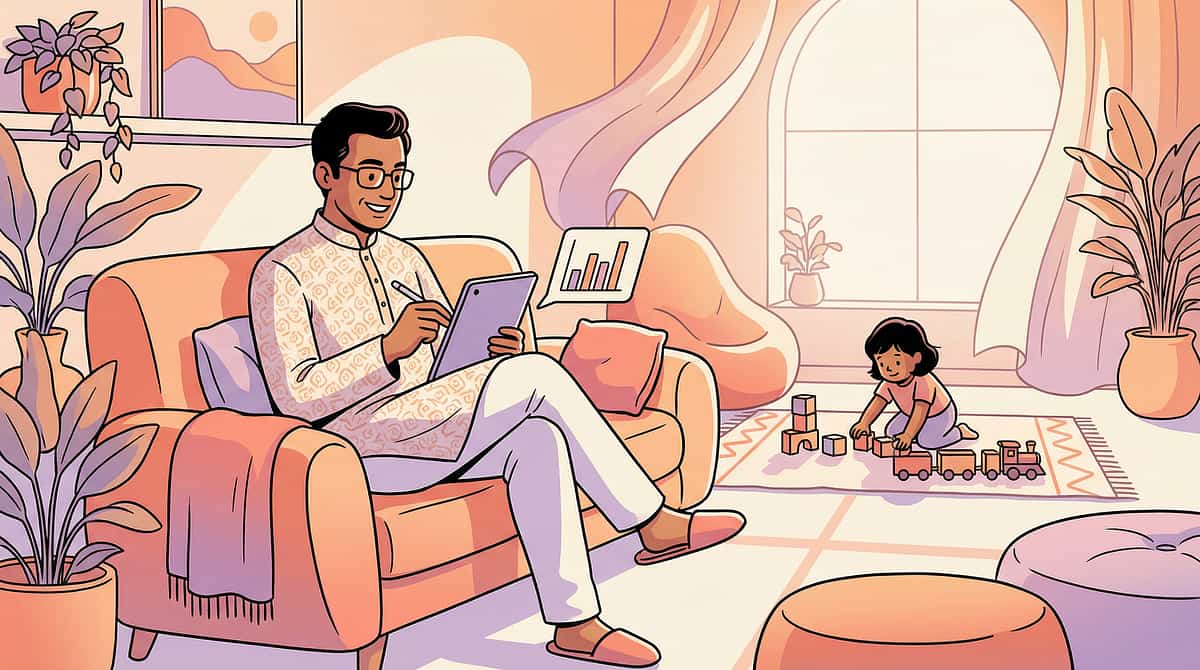
Safety First: Before You Begin
🟢 Green Light — Proceed Child is fed, rested, and in a calm-to-alert state No illness, fever, or significant physical discomfort No major sensory overload in the past 30 minutes Environment is quiet, familiar, and distraction-reduced Caregiver is emotionally regulated — your calm is contagious Session is voluntary — no obligation to participate 🟡 Amber — Modify Session Child appears tired or mildly dysregulated → Shorten to 5 minutes, use only favourite material Child had a challenging morning → Increase warmup, reduce demands, prioritise fun New environment → Familiar activities only, no new materials today Child has been recently ill → Reduce session intensity by 50% 🔴 Red — Postpone Today Active meltdown or severe distress Fever or acute illness Post-meltdown window (within 60 minutes) Child has explicitly refused and escalation is beginning Caregiver is significantly dysregulated Absolute Rules ❌ NEVER force eye contact — let it emerge naturally ❌ NEVER punish social refusal ❌ NEVER use connection time as punishment or coercion ❌ NEVER use special interests as conditional rewards for social compliance ❌ NEVER push through obvious distress signals 🚨 Emergency: If child shows self-injury during session → Stop immediately, provide comfort, call 9100 181 181 for guidance.

- All screens — TV off, phones away (yours too)
- Competing toys not being used today
- Other family members/siblings for first sessions
- Loud background noise sources
- Soft rug or mat for floor seating
- Natural light (avoid harsh overhead lights)
- Child's comfort item (blanket, soft toy) nearby
- Today's 1–2 connection materials within arm's reach
- Visual timer visible to child
- Temperature: Comfortable — not too cold or hot
- Sound: Background quiet or soft instrumental music (no lyrics)
- Duration: 10–20 minutes maximum for home sessions
DIY: Phone countdown timer or sand timer from kitchen
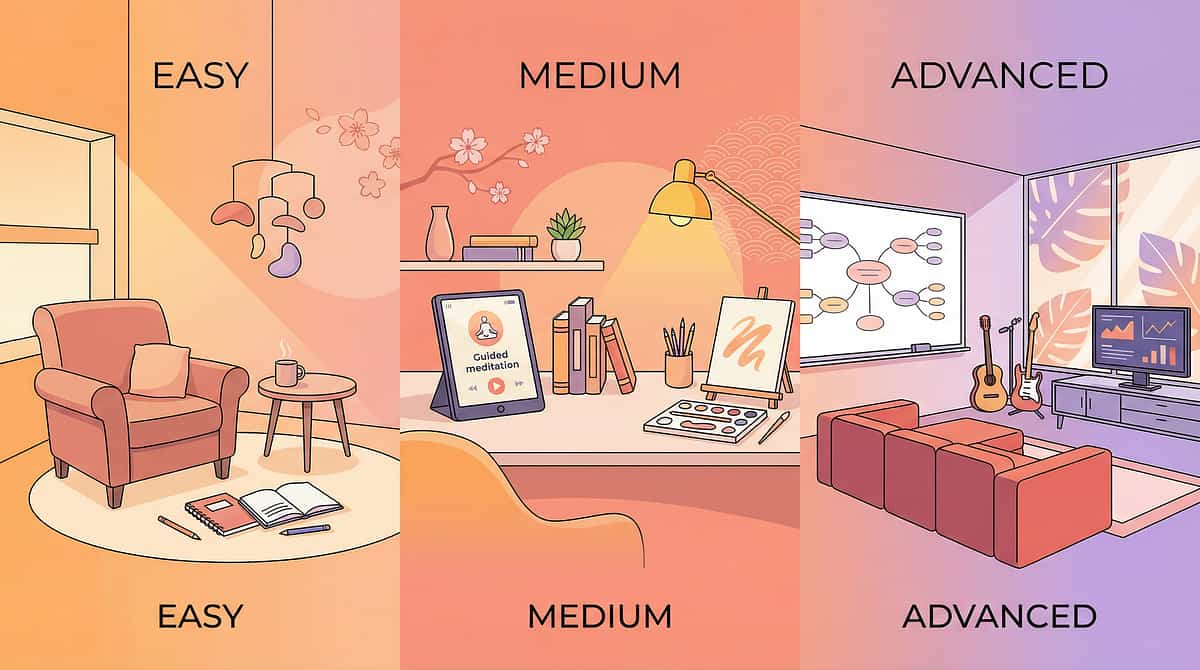
Indicator | ✅ GO | ⚠️ MODIFY | 🛑 WAIT | |
Child's alertness | Alert, responsive | Drowsy but engaged | Asleep / post-meltdown | |
Last meal | 1–3 hours ago | 30–60 min ago | Just ate (needs settle time) | |
Body regulation | Calm, settled | Slightly elevated but manageable | High dysregulation | |
Emotional state | Neutral to positive | Mildly frustrated | Active distress | |
Sensory state | No obvious overload | Minor sensitivity visible | Overwhelmed | |
Social openness | Any eye contact or approach | Tolerating proximity | Actively avoiding all contact | |
Caregiver state | Regulated, patient | Slightly stressed but managing | Significantly dysregulated |

💬 "Hey — I found something. Want to see?"
💬 "[Child's name], look what I have." [produce the material with genuine curiosity]
💬 "I'm going to play with this. Come sit if you want." [begin playing yourself, no demand]
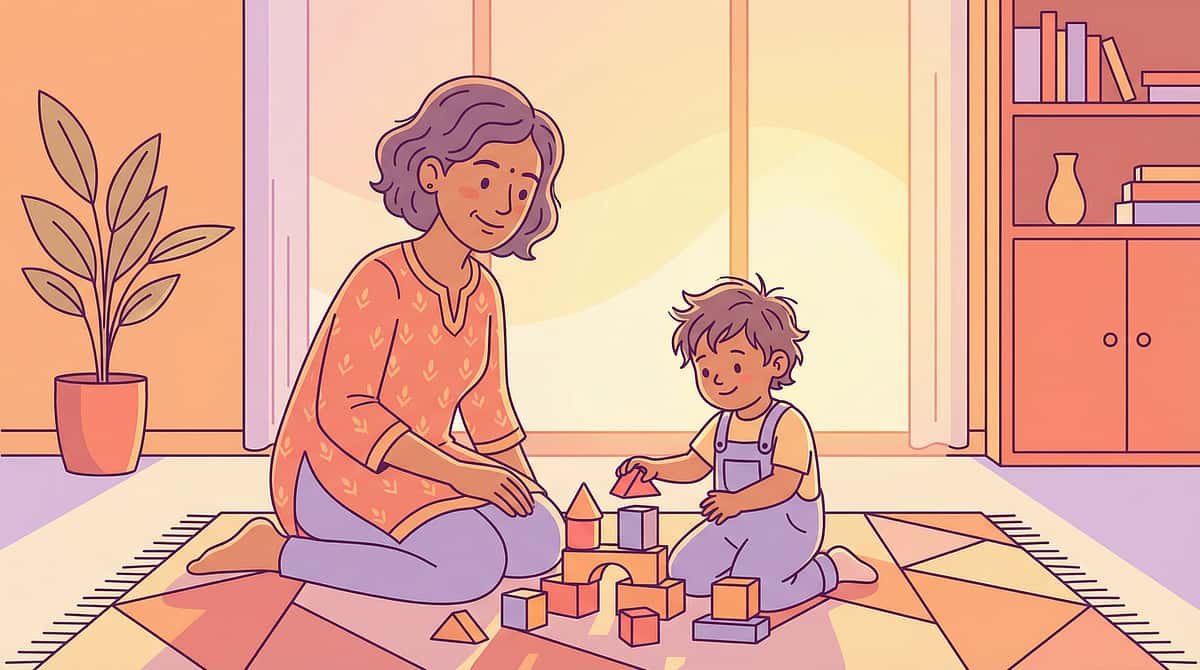
- Get on the floor — same level as your child
- Hold the material where they can see it — don't push it toward them
- Your expression: curious, excited, genuinely delighted (not desperate, not performative)
- Silence is okay — let the material do the invitation
- ✓ Child looks toward the material
- ✓ Child shifts body orientation toward you
- ✓ Child moves physically closer
- ✓ Child reaches for the material (instant success — follow their lead)
- ✓ Child makes any sound of interest
- Ignoring completely → Continue playing yourself, narrate quietly: "Oh! Look at this!"
- Moving away → Don't follow. Allow distance. Curiosity often overcomes resistance.
- Covering ears → The material may be too loud — switch to a quieter option

- Mirror what your child does with the material — if they tap it, you tap it
- Narrate your own actions quietly: "I'm spinning this one... it goes so fast"
- Pause frequently — leave space for them to fill with a look, a sound, or an action
- If they hand you something: receive it with delight. This is a social bid. Honour it.
- Match their energy level — don't amp up if they're calm, don't flatten if they're excited
- ✓ Child looks at your face (even briefly) — this is joint attention. Count it.
- ✓ Child vocalises or speaks in response to your narration
- ✓ Child imitates your action with the material
- ✓ Child hands you a piece or shows you something
- ✓ Child smiles, laughs, or shows excitement
- Child wanders away → Don't call them back. Continue playing. Curiosity often returns.
- Child becomes dysregulated → Slow your movements, lower your voice, reduce stimulation
- Child grabs and runs → Follow at a distance. Narrate. Stay present without pressure.
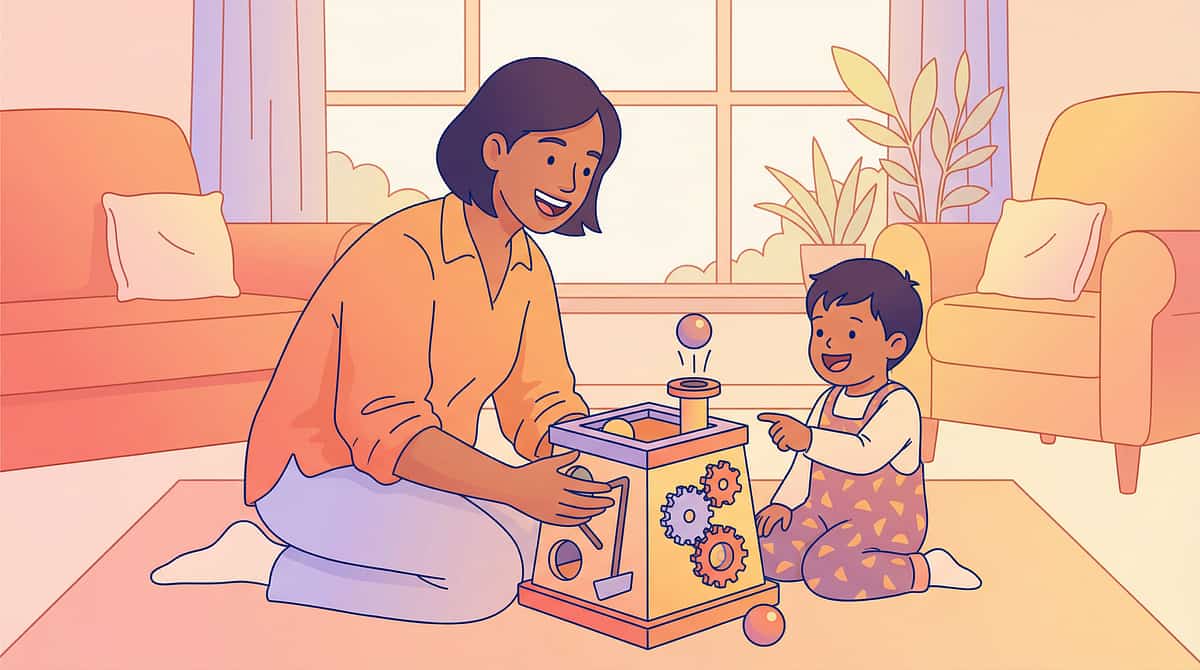
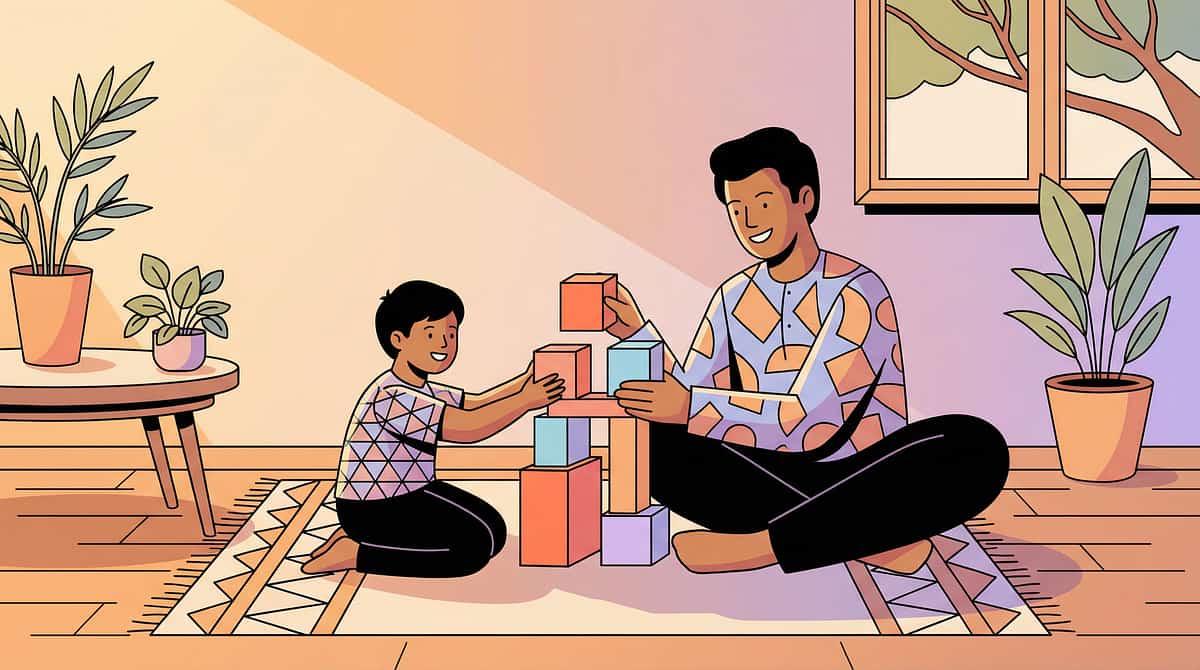
Material | Target Reps Per Session | Duration | |
Joint Attention Games | 5–8 joint attention bids | 10 minutes | |
Turn-Taking Games | 10–15 complete turn exchanges | 8–10 minutes | |
Emotion Cards | 4–6 emotions named/matched | 5–7 minutes | |
Special Interest | 3–5 reciprocal exchanges | 10–15 minutes | |
Social Stories | 1 story + 2–3 discussion points | 5–8 minutes | |
Cooperative Games | 1 complete game round | 10–15 minutes | |
Sensory-Friendly | Throughout entire session | N/A | |
Video Modelling | 1 video + immediate practice | 8–12 minutes | |
Playdate Kit | 1 structured playdate | 20–45 minutes |

- "You looked at me! That was amazing! You shared that moment with me!"
- "Your turn, my turn — you did it! We did that together!"
- "Yes! That IS happy! You read that perfectly!"
- "I loved hearing about that. Tell me more." (natural reinforcement)
- "WE WON! We beat the game together! Team [family name]!"
- 🏷️The Rosette Imprint Reward Jar — Amazon.in ₹589
- 🏷️1800+ Reward Stickers Pack — Amazon.in ₹364
- 🏷️Natural Reinforcement (free): Time with special interest immediately after connection success
💬 "Two more turns, then we're all done."
💬 "One more, then it's time to put away."
💬 "[Child's name], we're going to finish in two minutes. You're doing so well."
- Warning (as above) — 2 minutes before end
- Slow down the activity pace (not sudden stop)
- Put-away ritual — if possible, child helps (promotes closure and ownership)
- Calm physical input if needed — deep pressure hug (if child accepts), slow rocking
- Transition cue — "Session done. You can now [preferred next activity]."
- Joint Attention Count: How many times did the child share focus with you? (Look + look back = 1 point)
- Session Duration: How many minutes before child disengaged? (Baseline this week)
- Initiated vs. Responded: Did your child initiate ANY connection moment? (Y/N)
_ / _ | _______ | ___ | ★★★☆☆ | ____
- Date & Time
- Material used today (from the 9 options)
- Connection Moments Count (0–20)
- Overall session rating (1–5 stars)
- Notes (optional, 1 line)

Next time: Return to pure child-led play with their special interest. No materials, just presence. Connection is the goal, not the material.
Next time: Position yourself directly across from the child. Use more dramatic facial expressions. Wait longer with expectant pauses.
Next time: Switch to fully cooperative games only. Introduce "everyone wins" rule modifications.
Next time: Use a turn-taking token for speaking turns. 1 minute for child, 1 minute for parent. Visual timer on phone.
Next time: Start with only happy/excited emotions. Use cartoon faces instead of photographs initially.
Next time: Shorten to 20 minutes. More structure, clearer transitions. Pre-negotiate an exit plan with both children.
Next time: Position yourself as part of the activity. Become the material — hold it, animate it, give it a voice.
- Start with 1 material only (not all 9)
- Session duration: 5 minutes instead of 20
- Sensory seeker: more intense cause-effect toys (louder, brighter surprises)
- Sensory avoider: quieter games, no sudden movements, all at child's pace
- Younger child (2–4): focus only on joint attention and turn-taking materials
- Lower social initiation: parent initiates ALL connection moments initially
- Add a second person (sibling, grandparent) to the session
- Move to a less controlled environment (kitchen instead of quiet room)
- Introduce a peer for structured playdate
- Reduce visual supports gradually
- Expect child to initiate at least 2 connection moments per session
- Generalise to community settings (park, family gathering)

- Child tolerates your proximity during the activity (even if not engaging directly)
- Child looks at the material when you present it
- Slight reduction in resistance to session initiation
- 1–2 moments where child and you share focus simultaneously (joint attention seeds)
- Caregiver feels more confident and less helpless
- Spontaneous connection initiation by the child
- Consistent turn-taking across full games
- Social generalisation to peers or extended family
- Eye contact during conversation (this comes much later)
- Dramatic behavioural change

- Child begins to anticipate the session (approaches the space, asks for the material)
- Session initiation resistance decreases or disappears
- Joint attention moments increase in frequency (count them!)
- Turn-taking extends to 5+ exchanges without breaking down
- Child begins showing the special interest material TO you spontaneously
- Child seems more comfortable in your presence during the activity
- Smiles or vocalisations during shared moments
- Less "escape" behaviour during the session
- Skill appearing with a second caregiver (grandparent, other parent)
- Skill appearing in a different room/setting
- Skill appearing spontaneously without session context

That is the bridge.
Technique | Code | Difficulty | Materials You Already Have | |
Peer Relationship Difficulties | C-336 | 🟡 Core | Turn-taking games ✓ | |
Conversation Challenges | C-337 | 🟡 Core | Social story cards ✓ | |
Social Anxiety | C-340 | 🔴 Advanced | Sensory-friendly materials ✓ | |
Stranger Over-Friendliness | C-333 | 🟢 Intro | Social stories ✓ | |
Joint Attention Deep-Dive | C-335-DD-01 | 🟢 Intro | All materials ✓ | |
Special Interest Bridges | C-335-DD-02 | 🟢 Intro | Special interest materials ✓ |
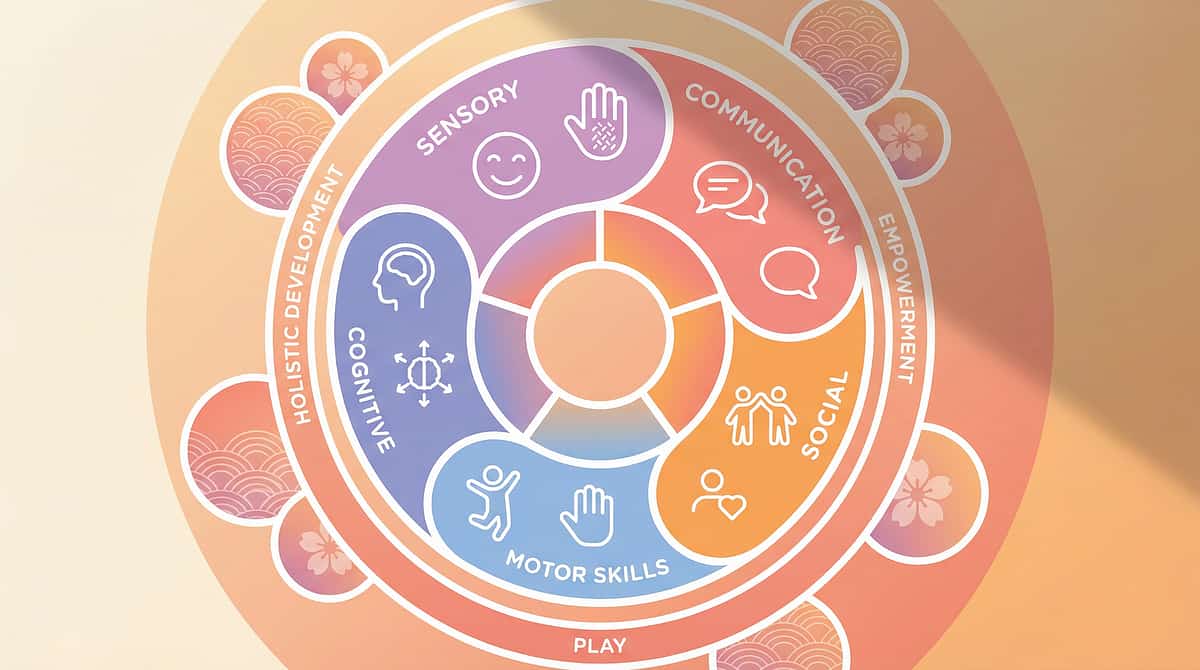
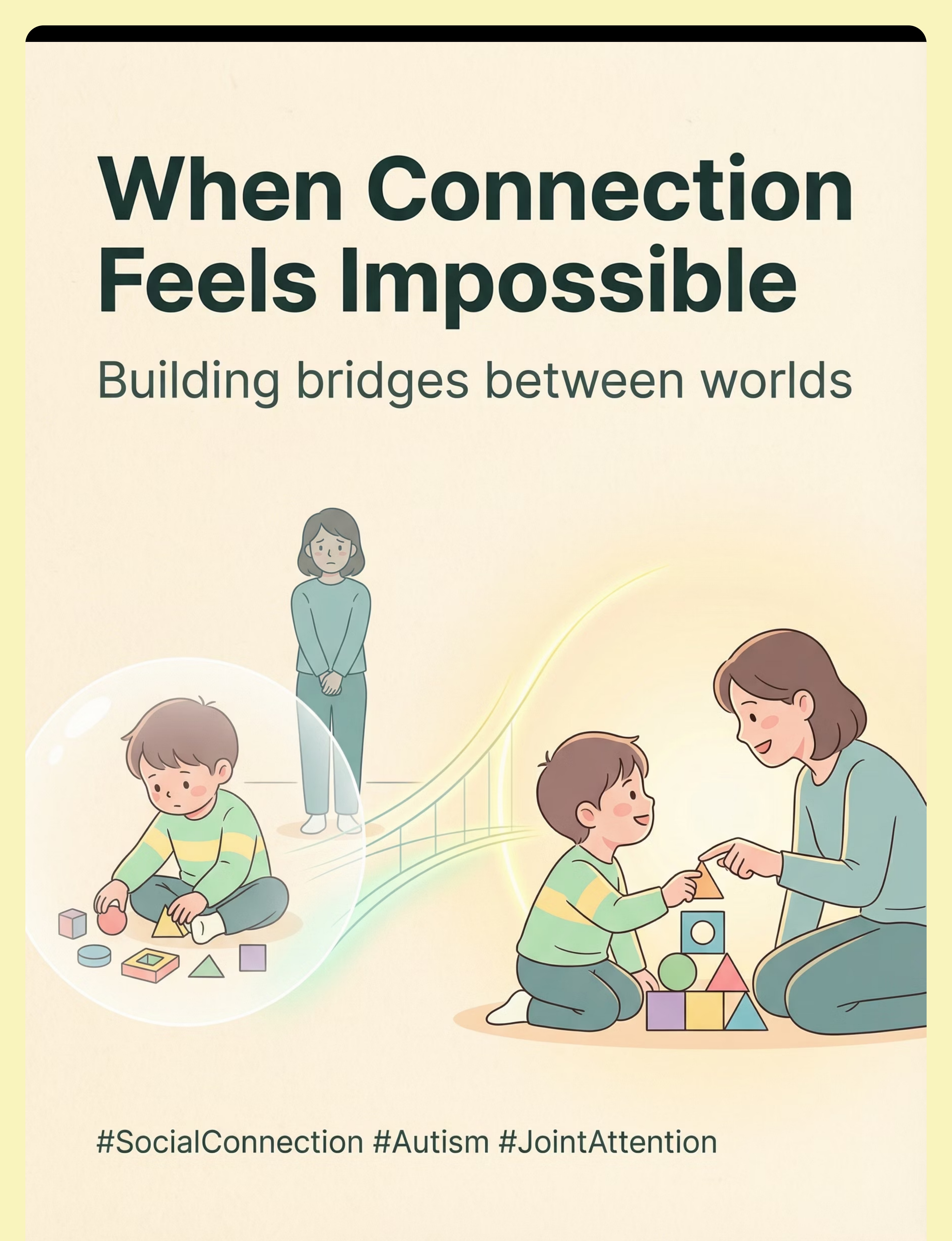
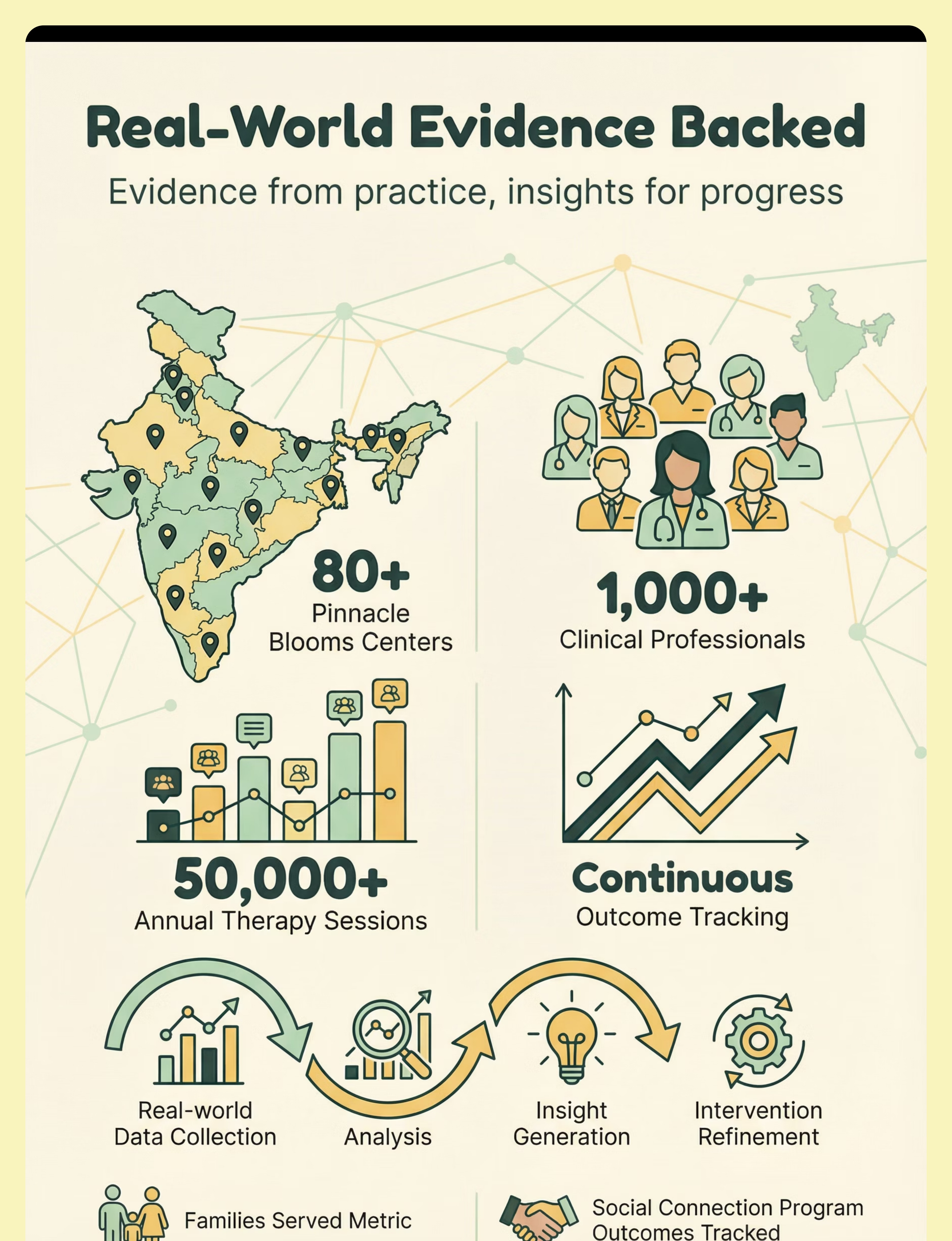
Preview of 9 materials that help building connection Therapy Material
Below is a visual preview of 9 materials that help building connection therapy material. The pages shown help educators, therapists, and caregivers understand the structure and content of the resource before use. Materials should be used under appropriate professional guidance.