

9 Materials That Help Build Reciprocal Interaction
Pinnacle Blooms Network® | Technique C-337 | Social-Communication Domain
Evidence-based materials and a step-by-step protocol for building the back-and-forth of real conversation in autistic children aged 3–12. GPT-OS® validated across 21 million+ therapy sessions.
Navigation
Pinnacle Blooms Network® | C-337
Understand It
The Science
How To Do It
Track Progress
Get Support
Take Action
📞 FREE 24×7 Helpline in 18 languages: 9100 181 181

Act I — The Recognition Moment
"He's been telling me about trains for 45 minutes. Every time I try to join in — nothing. Like I'm not even there."
Building Reciprocal Interaction — The Back-and-Forth of Real Connection
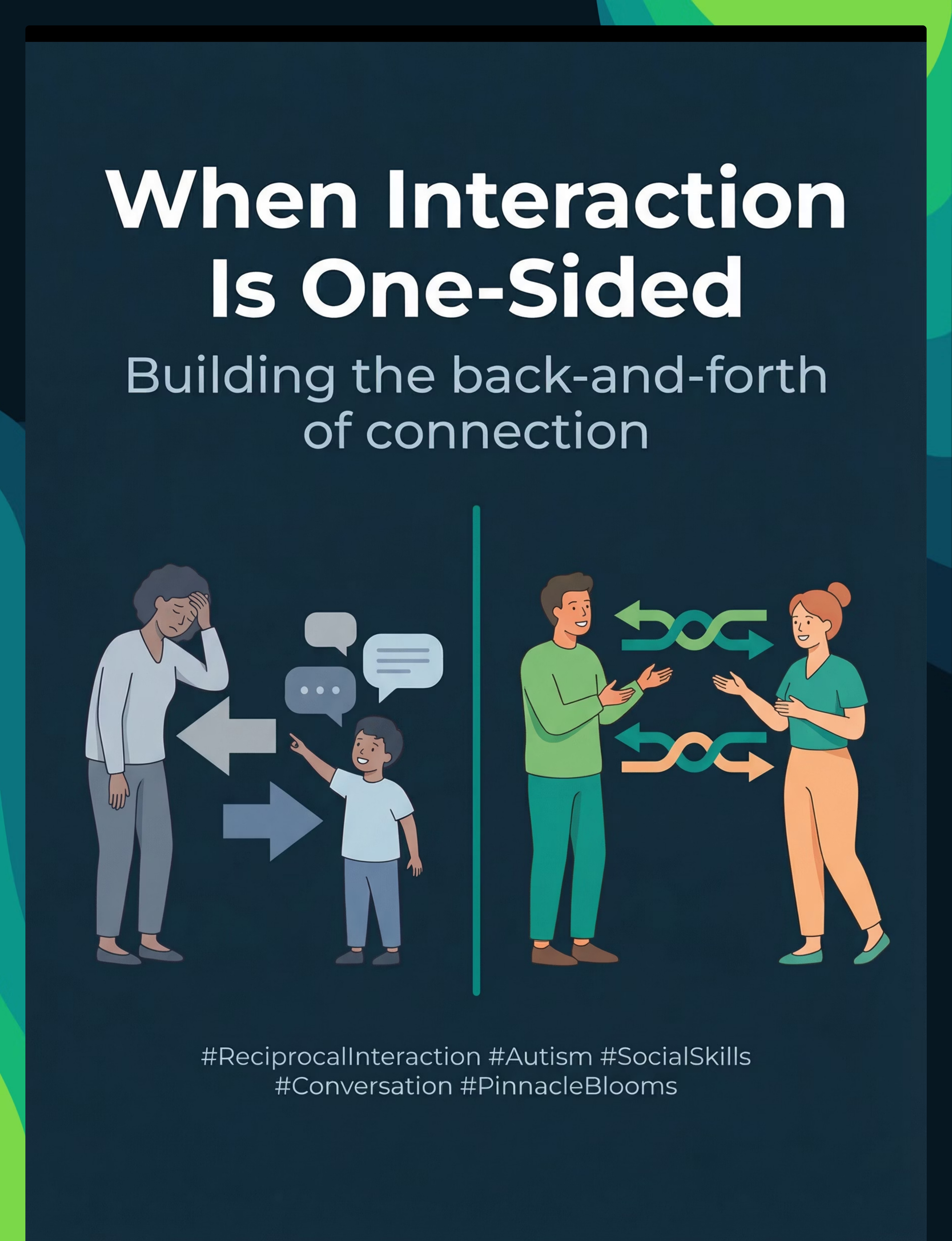
You call his name. He keeps talking. You answer his question. He doesn't register your answer — just continues. You play together, but you've been assigned a role with no room for your input. The natural rhythm of give-and-take that makes connection feel mutual — it seems to be missing.
You are not failing as a parent. Your child's brain is processing the invisible dance of social exchange differently.
"You are not failing. The rules of reciprocal exchange that feel automatic to you are genuinely invisible to your child. They can be made visible. They can be learned."
Pinnacle Blooms Network® | CRO · SLP · OT · ABA/BCBA · SpEd · NeuroDev

Act I — You Are Not Alone
You Are Among Millions of Families Navigating This Exact Challenge
Social reciprocity difficulties — the struggle with back-and-forth exchange — are among the most consistently documented characteristics of autism. This is not a parenting failure. This is a neurodevelopmental difference affecting millions of families across 70+ countries.
1 in 36
Children with ASD
Diagnosed globally (CDC 2023)
70–80%
Reciprocity Difficulties
Of autistic children show significant social reciprocity challenges
21M+
Therapy Sessions
Across the Pinnacle Network tracking this exact challenge
India has an estimated 18 million+ children on the autism spectrum (NIMHANS data). Reciprocity challenges affect the majority. Pinnacle's GPT-OS® has tracked this pattern across 70+ centres, across every socioeconomic stratum, across 18+ languages. You are not alone.
CDC Prevalence Data 2023 | PMC11506176 | PMC10955541 | WHO NCF 2018 | Pinnacle GPT-OS® Real-World Evidence Base | 📞9100 181 181

Act I — The Neuroscience
This Is a Wiring Difference, Not a Willfulness Problem
What's Happening Neurologically
Reciprocal interaction requires the brain to simultaneously: (1) process incoming social signals from a partner, (2) suppress one's own continuing monologue drive, (3) formulate a context-appropriate response, and (4) read subtle cues about when to speak and when to listen.
In autistic children, the mirror neuron system and the temporal-parietal junction — which together govern "reading the room" — process social exchange signals differently. The invisible rhythm of give-and-take that neurotypical children absorb implicitly by age 3 does not register as a salient signal.
Key Insight
"Your child isn't ignoring you. Their brain is not flagging your conversational turn-cue as important information. When we make the cue explicit and tangible — a ball passed, a card flipped, a timer seen — the brain CAN process it."
Discipline Voices
- SLP: "We call this pragmatic social communication. The 'rules' of conversation aren't obvious — they need explicit instruction."
- OT: "Sensory processing differences can affect how quickly social timing cues are processed."
- ABA/BCBA: "We create structured opportunities where the reciprocal exchange produces a meaningful consequence."
- NeuroDev: "This is a cortical processing difference. Early structured intervention reshapes neural pathways."
Frontiers in Integrative Neuroscience (2020) DOI:10.3389/fnint.2020.556660 | Social Responsiveness Scale (Constantino, 2011) | Kasari et al., JASPER RCT (2012)
Act I — Developmental Map
Reciprocal Interaction on the Developmental Map
6–9 Months
Proto-reciprocity (smile back-and-forth)
12–18 Months
Intentional turn-taking in play
24–30 Months
Conversational exchange emerges
3–5 Years
Complex back-and-forth, topic maintenance
6–8 Years
Peer-level reciprocal conversation
Per WHO Care for Child Development (CCD) Package (2023): Responsive caregiving — characterised by mutual, reciprocal exchange — is one of the five pillars of nurturing care. Reciprocity deficits at ages 3–5 predict social participation challenges at school entry without intervention.
Commonly Co-occurring Challenges
1
Joint Attention (C-335)
2
Eye Contact Avoidance (C-336)
3
Conversation Maintenance (C-338)
4
Perspective Taking (C-340)
5
Social Anxiety
6
Processing Speed
"Your child is at a specific point on this journey. Reciprocal interaction is teachable at every age within this window. The brain remains plastic. The window is open."
WHO CCD Package 2023 | PMC9978394 | WHO/UNICEF MICS Developmental Monitoring | UNICEF 2025 Country Profiles
Trust Gate — Evidence
The Evidence Behind This Technique
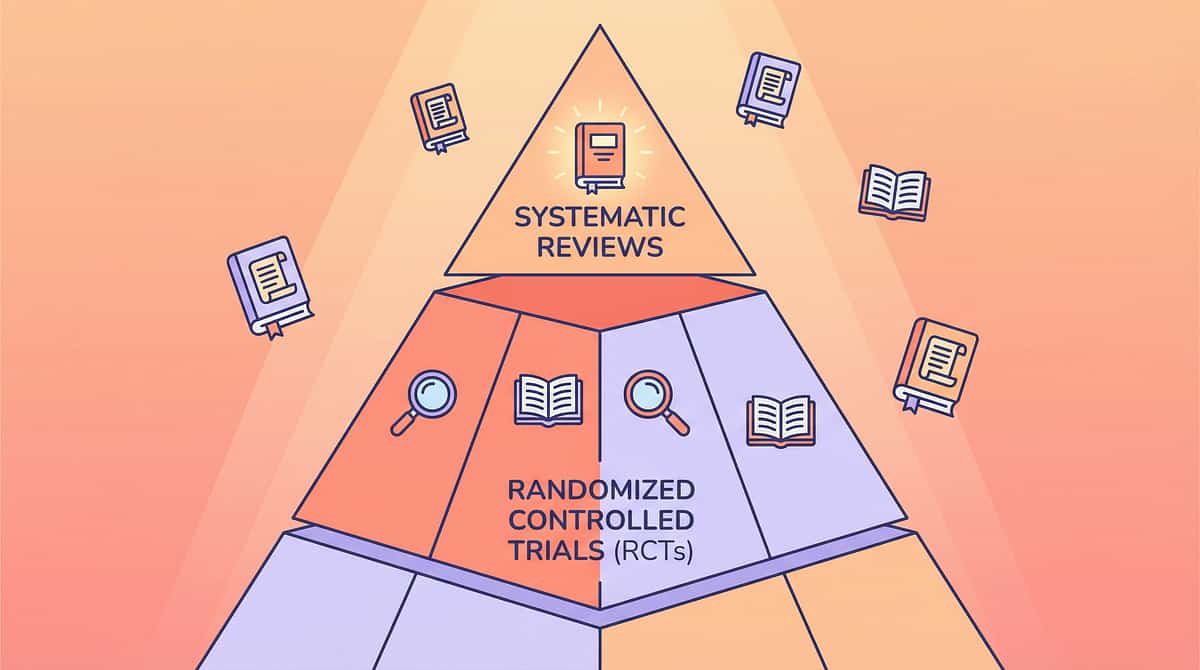
EVIDENCE GRADE: LEVEL I
Systematic Review + Multiple RCTs
Confidence Rating: 82%
████████░░
Clinically Validated · Home-Applicable · Parent-Proven · GPT-OS® Endorsed
Key Studies
Study | Finding | Level | |
Kasari et al. RCT (2012) | JASPER improved joint engagement & reciprocity in ASD (n=98, ages 3–5) | Level I | |
Koegel et al. (2012) | Structured reciprocity training improved social engagement in adolescents | Level I | |
NCAEP EBP (2020) | Turn-taking & social skills training: EVIDENCE-BASED classification | Level I | |
Pinnacle GPT-OS® RWE | 97%+ measured improvement in Social Participation Index (21M+ sessions) | RWE | |
Padmanabha et al. (2019) | Home-based intervention: significant outcomes for Indian paediatric ASD | Level II |
"The materials and techniques on this page are not experimental. They are drawn from peer-reviewed research, WHO/UNICEF-aligned frameworks, and 21 million real therapy sessions at Pinnacle centres. Your child deserves this level of rigour."
PMC11506176 | PMC10955541 | PMC9978394 | DOI:10.1007/s12098-018-2747-4
Act II — The Technique
Reciprocal Interaction Scaffolding (RIS)
Parent-friendly alias: Building the Back-and-Forth
Reciprocal Interaction Scaffolding is a structured, material-supported approach to teaching the rhythm of social exchange. Using tangible tools — games, objects, cards, timers, and visual scripts — it makes the invisible rules of conversation and play explicitly visible. The child practises giving AND receiving: speaking AND listening, asking AND answering, acting AND responding. Over 8–12 weeks, scaffolded exchange becomes internalised natural flow.
Domain
Social-Communication
Sub-Domain
Reciprocity & Exchange
Age Range
3–12 years
Session Duration
15–25 minutes
Frequency
3–5× weekly
Act II — Who Uses This
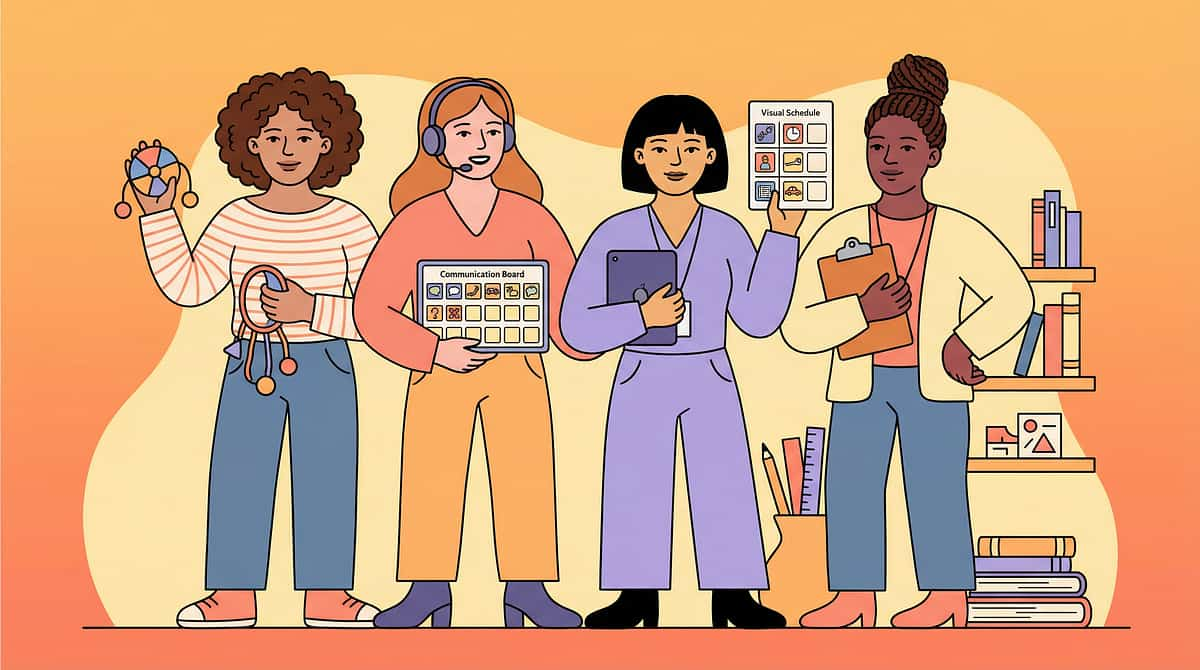
Five Disciplines. One Unified Protocol.
Speech-Language Pathologist (SLP) — Primary Lead
Targets pragmatic social communication: conversational turn-taking, topic maintenance, listener responsiveness. Designs the verbal exchange structure and tracks communicative reciprocity milestones.
Occupational Therapist (OT)
Addresses sensory processing differences that slow social timing. Ensures materials have the right tactile/visual properties for optimal engagement. Designs the physical exchange objects.
ABA/BCBA Behaviour Analyst
Structures reinforcement schedules for reciprocal exchanges. Uses discrete trial training for turn-taking and naturalistic developmental behavioural intervention (NDBI) for generalisation.
Special Educator (SpEd)
Embeds reciprocal interaction practice into structured learning activities. Creates classroom generalisation bridges and peer interaction scaffolds.
NeuroDevelopmental Paediatrician
Monitors underlying social cognitive development, provides diagnostic clarity on reciprocity profile, advises on medication interactions if relevant, and tracks Social Responsiveness Scale (SRS-2) metrics.
"The brain doesn't organise by therapy type. Reciprocal interaction sits at the intersection of language, behaviour, cognition, sensory processing, and executive function. That's why the Pinnacle FusionModule™ coordinates all five disciplines around a single convergent plan."

Act III — What Changes
Precision Targeting: What This Technique Changes
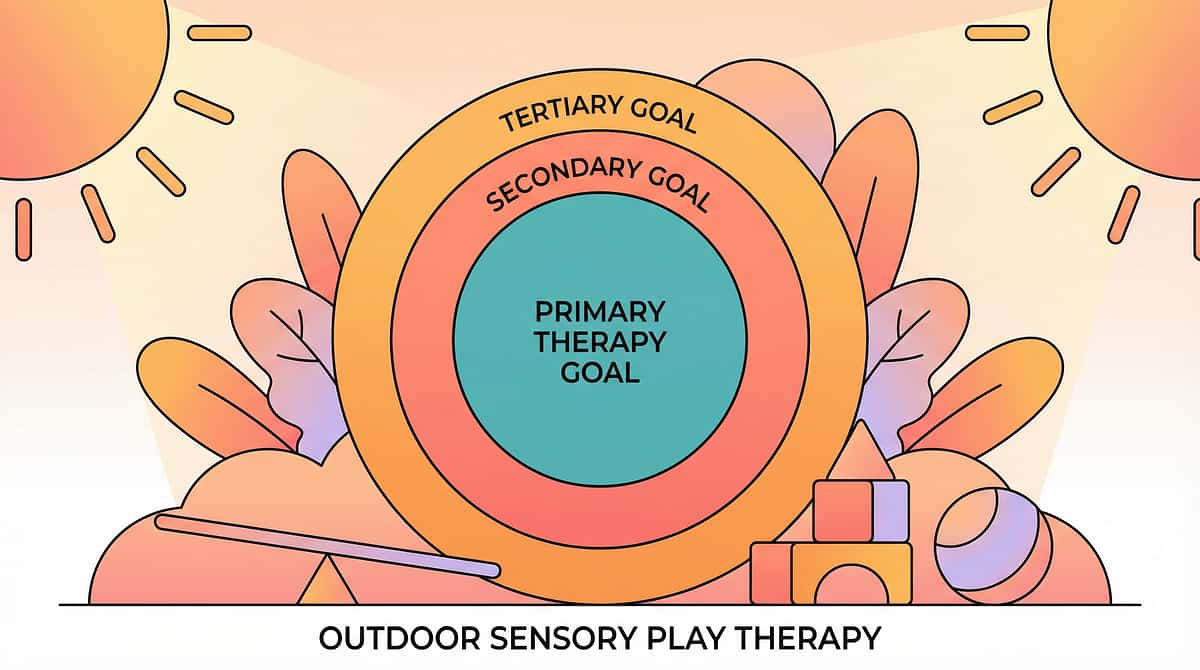
RIS doesn't target everything at once. It works through a layered hierarchy of change—primary outcomes that shift first, secondary outcomes that follow, and tertiary outcomes that emerge over time.
Every session is calibrated to move the needle on all three levels simultaneously.
Primary Targets — The Back-and-Forth Itself
Conversational turn-taking (initiating + responding), topic maintenance across 3+ exchanges, listener responsiveness (eye contact, body orientation, verbal acknowledgement), and joint attention during shared activity. These are the observable, measurable behaviours that shift within the first 2–4 weeks of consistent practice.
Secondary Targets — What Turn-Taking Unlocks
Emotional co-regulation during social interaction, frustration tolerance when communication breaks down, flexible thinking when a conversation goes off-script, and peer interaction confidence. These emerge as the child's nervous system begins to associate reciprocal exchange with safety and reward.
Tertiary Targets — The Long Game
Friendship formation and maintenance, classroom participation, narrative coherence in storytelling, and self-advocacy. These are the life-skill outcomes that parents most deeply want—and they are built, brick by brick, on the foundation of the back-and-forth exchanges practised in every RIS session.
What RIS Does NOT Target Directly
- Expressive vocabulary size
- Reading and writing skills
- Motor coordination
- IQ or academic performance
These may improve as a downstream effect, but they are not the mechanism of change.
How Progress Is Measured
- Social Responsiveness Scale-2 (SRS-2)
- Conversational exchange frequency log
- Video-coded turn ratio analysis
- Parent-reported generalisation diary
- Pinnacle GPT-OS® session tracking
"Most parents come to us wanting their child to 'just have a friend.' RIS is the clinical pathway that makes that possible—one exchange at a time."
Act II — The 9 Materials
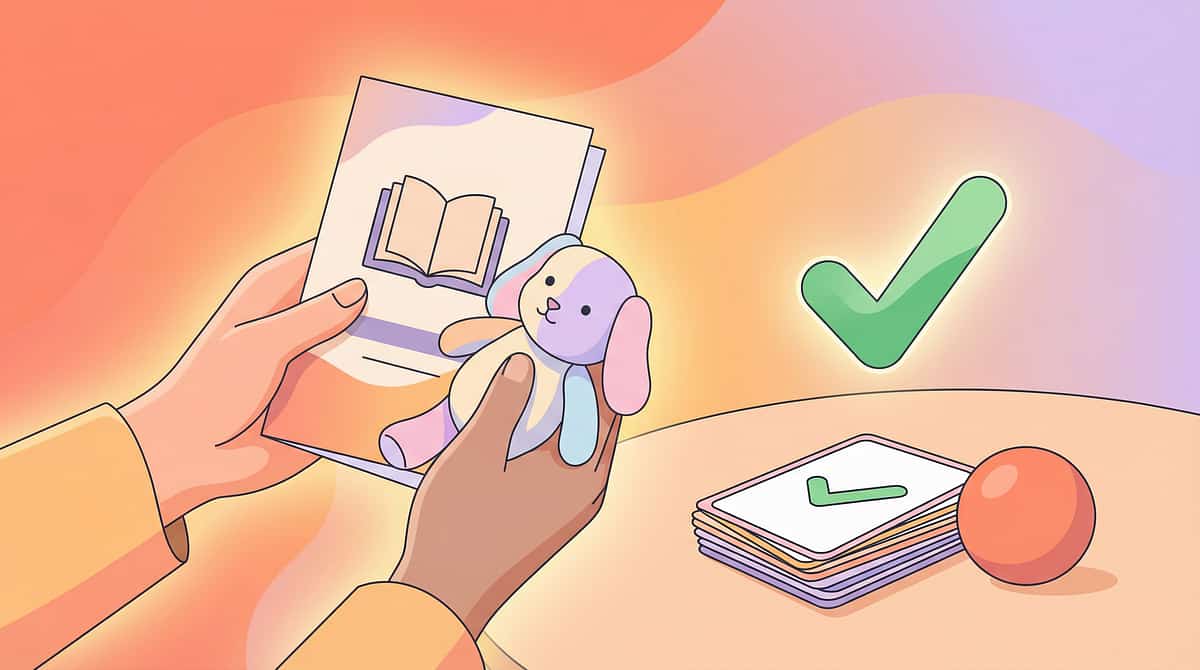
9 Materials That Build the Back-and-Forth
These are the core tools that make the invisible rhythm of reciprocity tangible. Each material targets a specific mechanic of social exchange — visual turn structure, physical turn-taking, or structured exchange practice.
Starter Bundle Recommendation: Begin with Materials 1, 2, and 3. Total investment: ₹600–1,600. These three cover the three core reciprocity mechanics: visual turn structure, tangible turn-taking, and structured exchange practice.
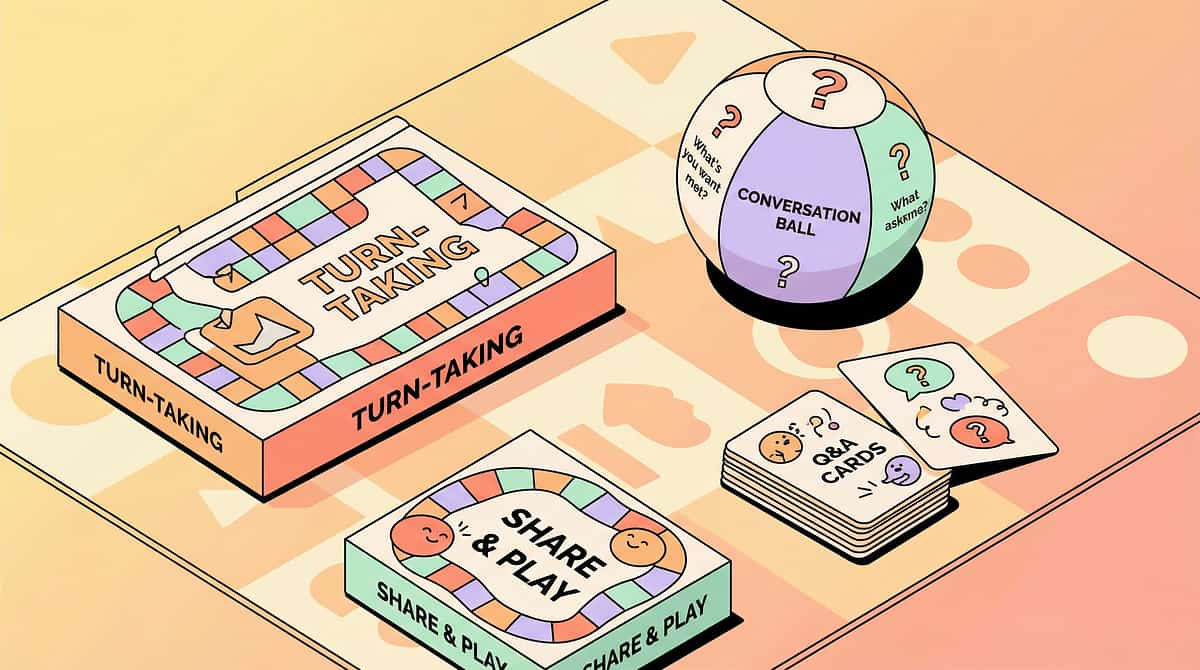
1. Visual Turn-Taking Board Games
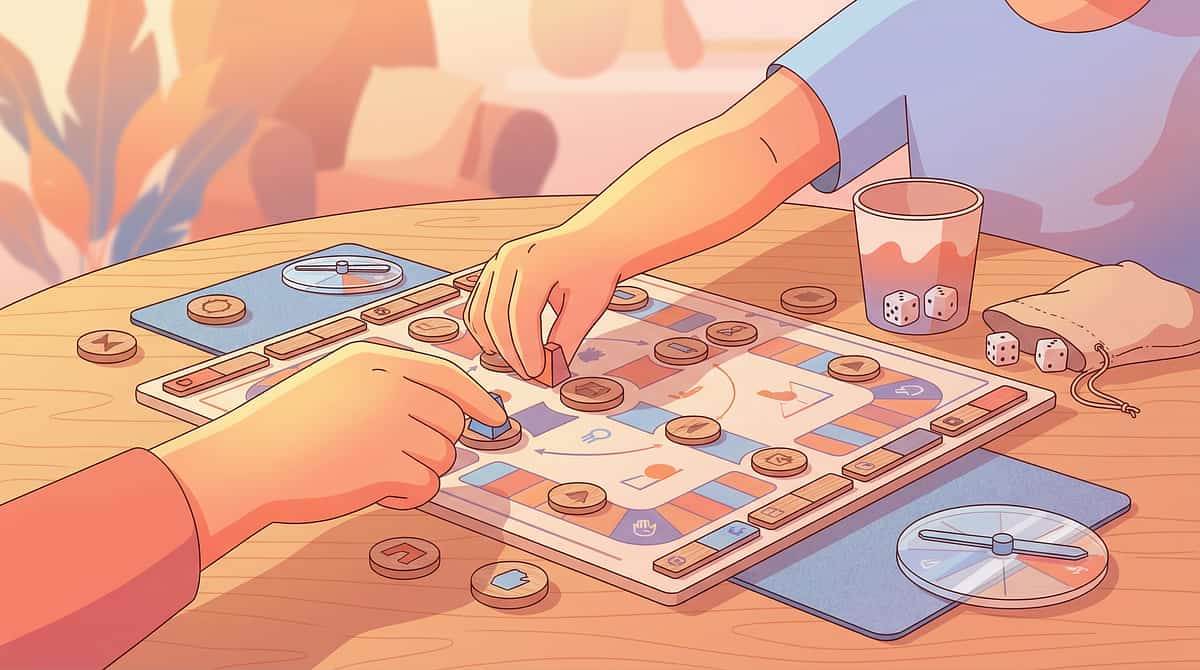
Games like Snakes & Ladders or Ludo with a visual "whose turn" marker. Teaches the fundamental rhythm of I go → you go → I go. Targets: turn initiation, waiting, and exchange sequencing. Cost: ₹200–500.
2. Conversation Ball / Talking Object
A soft ball or designated object passed between parent and child. Whoever holds it speaks; the other listens. Creates a concrete, physical representation of the conversational turn. Targets: speaker/listener role switching, topic initiation. Cost: ₹0–150 (any household object works).
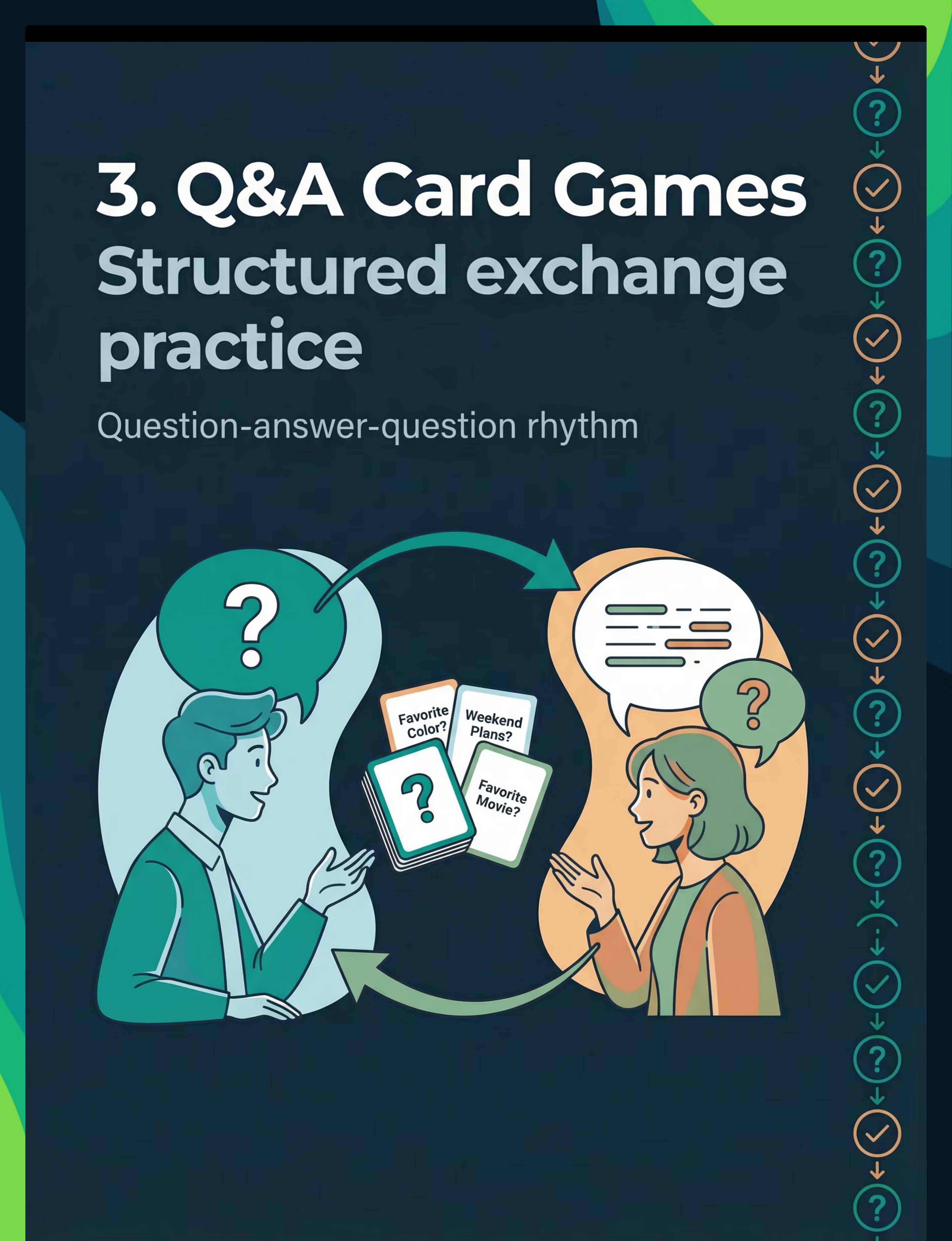
3. Q&A Conversation Starter Cards
Prompt cards with open-ended questions ("What's your favourite part of the day?" / "If you could fly, where would you go?"). Parent asks → child answers → child asks back. Targets: topic maintenance, question-asking, reciprocal exchange. Cost: ₹300–800 or printable free.
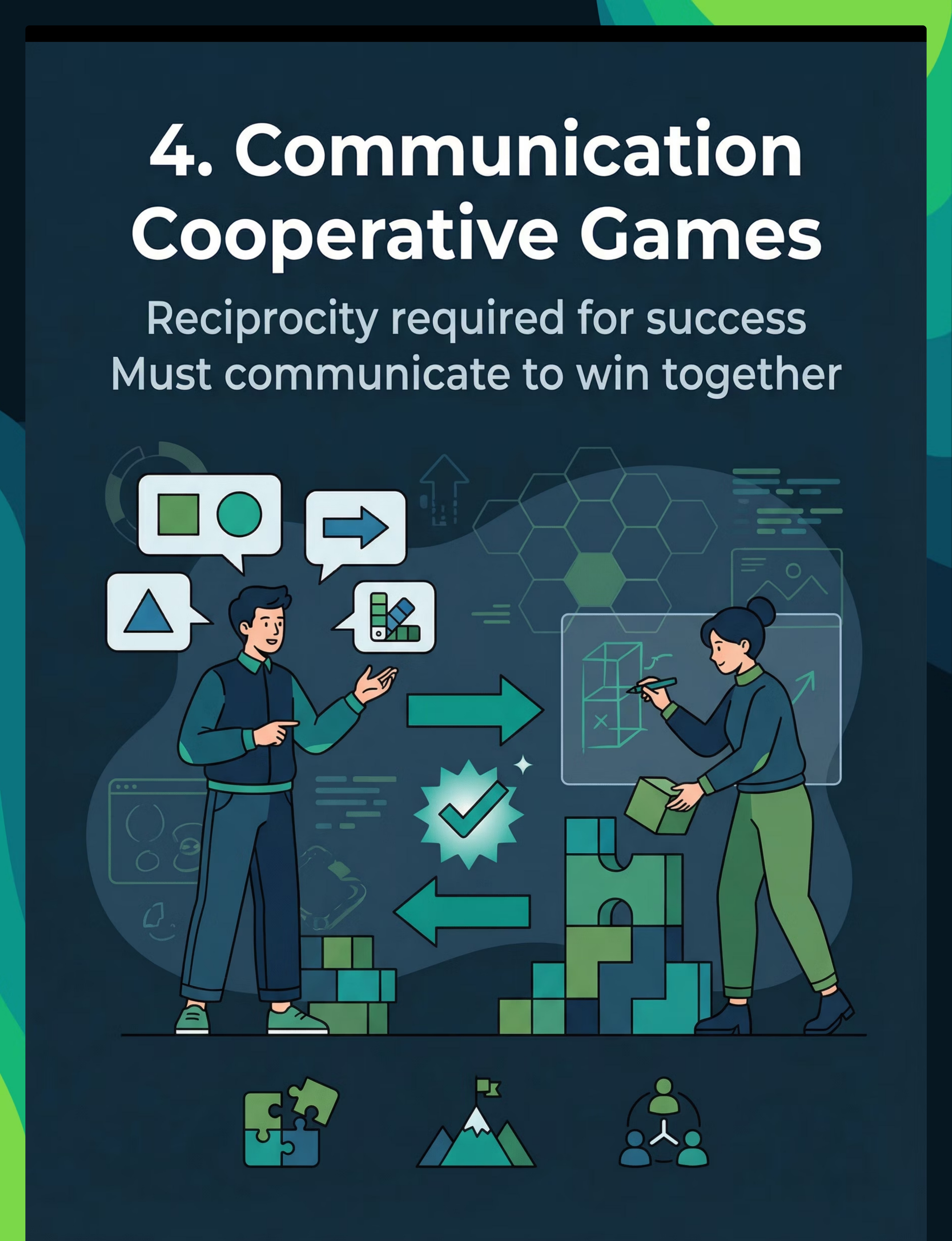
4. Cooperative Communication Games
Games that require both players to share information to win — e.g., Guess Who, Barrier games, or describe-and-draw activities. Neither player can succeed alone. Targets: information exchange, listener responsiveness, joint problem-solving. Cost: ₹400–1,200.
5. Interest Sharing Activity Kit
A small box of items related to the child's special interest (trains, dinosaurs, space) used as conversation anchors. Parent learns 5 facts about the topic and uses them to enter the child's world. Targets: joint attention, topic expansion, emotional connection. Cost: ₹0–500 (use existing toys).
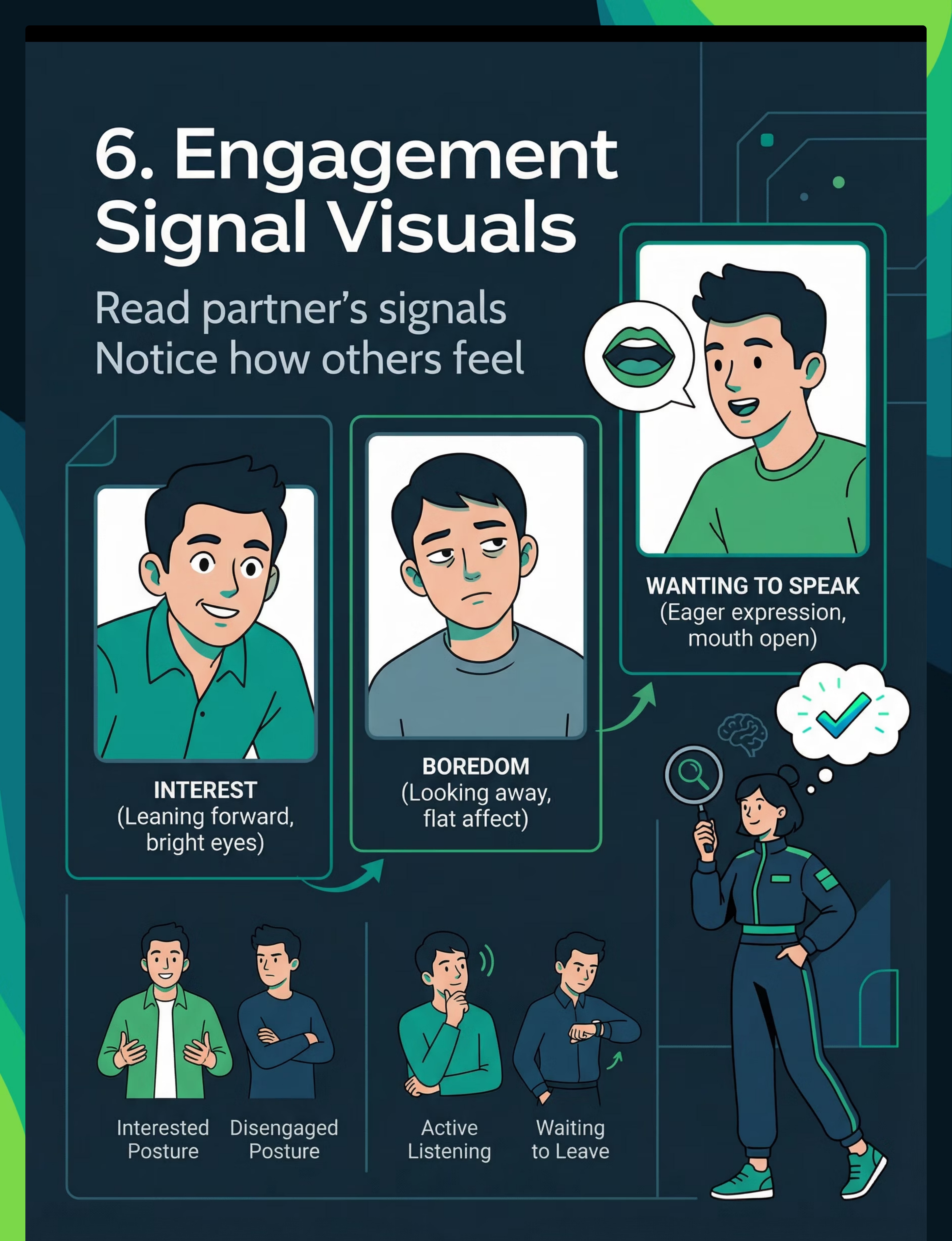
6. Engagement Signal Cards
A set of visual cue cards the child can use to signal "I want to talk," "I need a break," or "Your turn." Reduces the cognitive load of initiating. Targets: communication initiation, self-advocacy, turn signalling. Cost: ₹100–300 or printable.
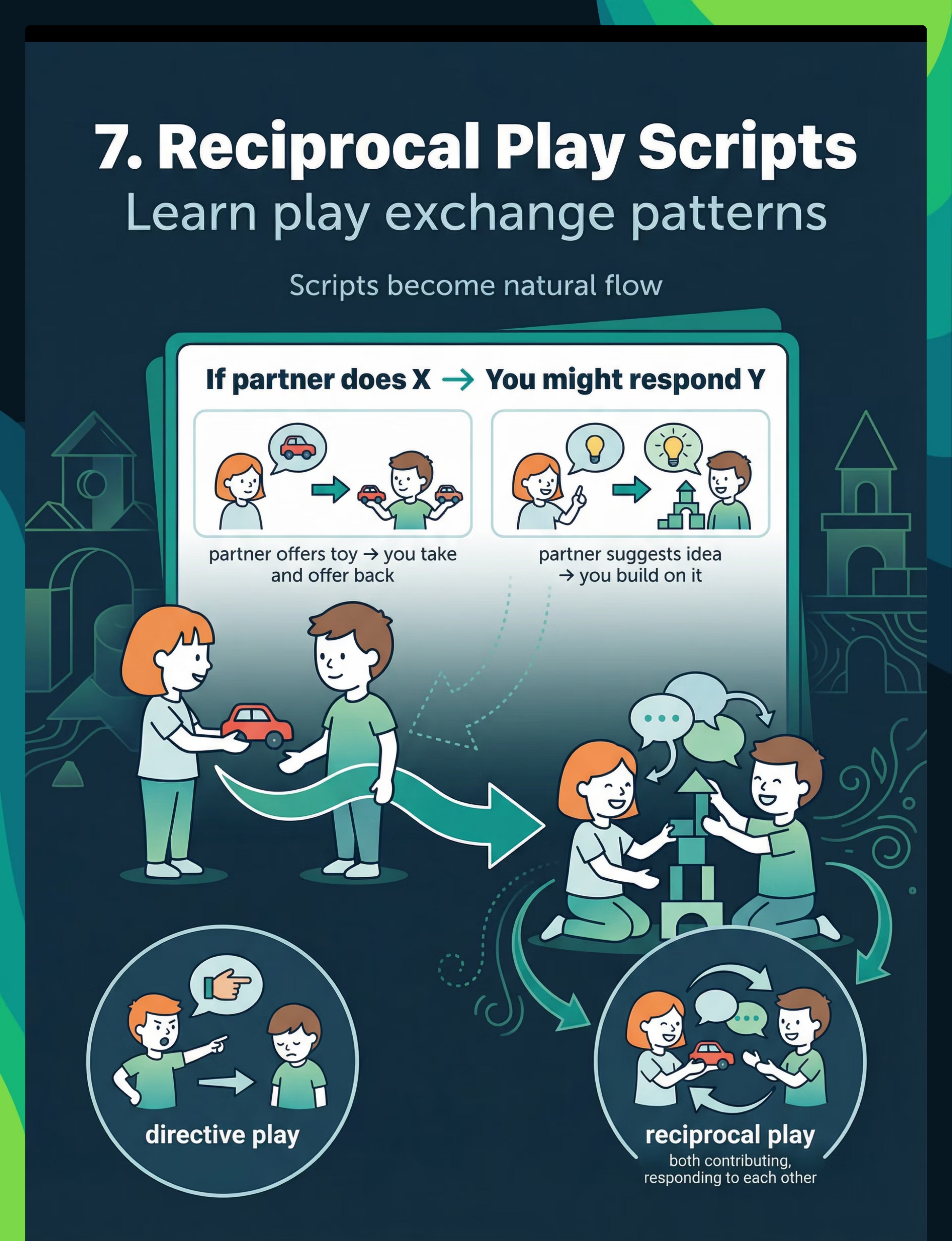
7. Reciprocal Play Script Cards
Simple printed scripts for common social exchanges ("Let's play together" / "Can I have a turn?" / "What do you think?"). Child and parent rehearse scripts, then fade them. Targets: scripted-to-spontaneous transfer, social phrasing, confidence. Cost: ₹150–400 or printable.
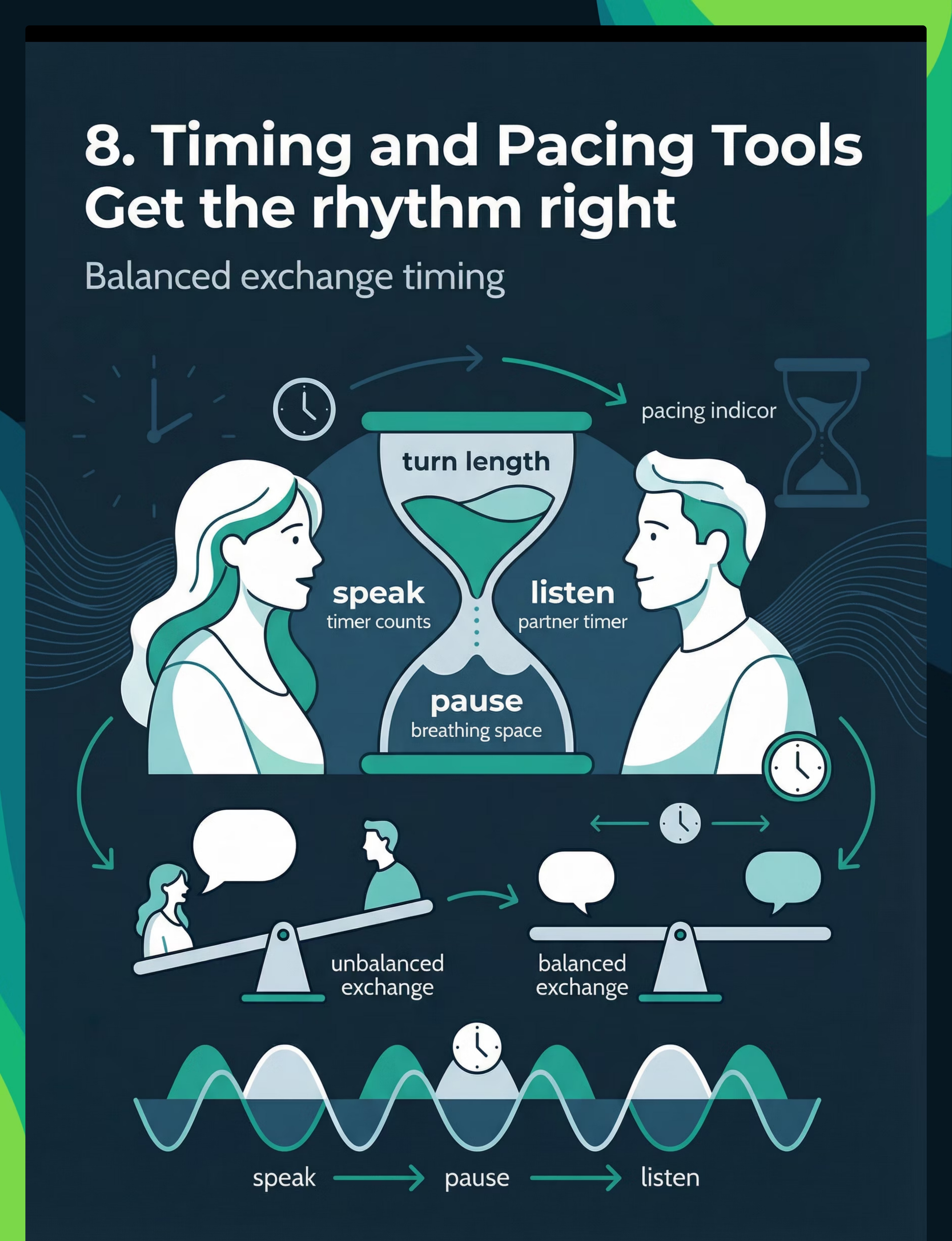
8. Visual Turn Timers (Sand/Digital)
A sand timer or visual countdown timer that makes "your turn" time-bounded and predictable. Reduces anxiety about when the turn will end. Targets: turn duration regulation, waiting tolerance, transition readiness. Cost: ₹200–600.
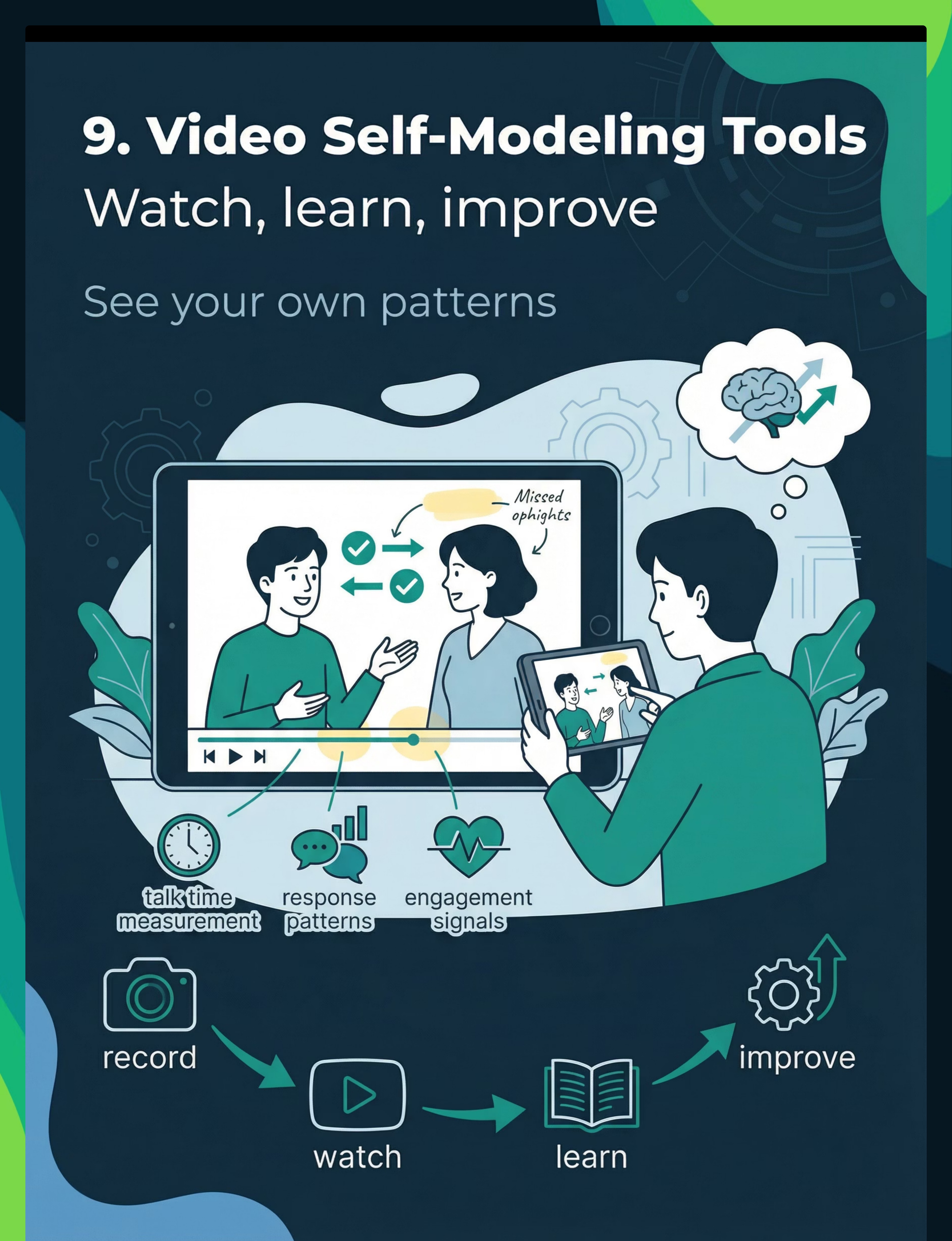
9. Video Recording Device (Smartphone)
Record 2-minute session clips for self-review and therapist feedback. Watching yourself interact is one of the most powerful parent-coaching tools available. Targets: parent attunement, session quality improvement, data capture. Cost: ₹0 (use existing phone).
Where to Source These in India
- Amazon India (search "social skills games for autism")
- Flipkart
- Local stationery shops (for timers and cards)
- Pinnacle Blooms Network® Resource Library (printable versions of Items 3, 6, 7)
Total Investment Range
- Starter Bundle (Items 1–3): ₹600–1,600
- Full Set (All 9): ₹1,350–4,450
- DIY/Printable Version: ₹0–500
No material costs more than one therapy session. Most families already own 3–4 of these items.
Material 1
Visual Turn-Taking Board Games
Canon Category
Matching Games / Memory Games | Problem-Solving Toys
Price Range
₹300–800
Pinnacle Recommends ✓
Starter Bundle Material
Why This Material Works
Visual turn indicators — tokens, cards, markers — make the invisible rhythm of reciprocity visible. Your child can see: your turn → my turn → your turn. The abstract concept of exchange becomes a concrete, trackable object in the physical world.
Board games with built-in turn mechanics do the instructional scaffolding for you. The structure is embedded in the game itself — no additional prompting required.
Material 2
Conversation Ball / Talking Object
Canon Category
Communication Support Tools
Price Range
₹100–300 (or household substitute)
Pinnacle Recommends ✓
Starter Bundle Material
Why This Material Works
Tangible turn-taking at its most elemental. Hold it to speak. Pass it to listen. The abstract exchange of dialogue becomes physically holdable — a sensory anchor for the concept of giving and receiving in conversation.
The conversation ball is one of the most powerful tools in this kit precisely because it requires no reading, no game knowledge, no setup. Any soft object in your home can serve as a substitute.

Material 3
Q&A Conversation Starter Cards
Canon Category
Matching Games / Memory Games
Price Range
₹200–500
Pinnacle Recommends ✓
Starter Bundle Material
Why This Material Works
Conversation starter cards structure the fundamental ask → answer → ask rhythm that is the heartbeat of reciprocal exchange. Each card draw creates a complete conversational loop: one person asks, the other answers, then the cards swap.
Repeated structured practice using cards builds genuine exchange patterns. Over weeks, the ask-and-answer rhythm becomes internalised — the cards become unnecessary because the brain has learned the sequence.
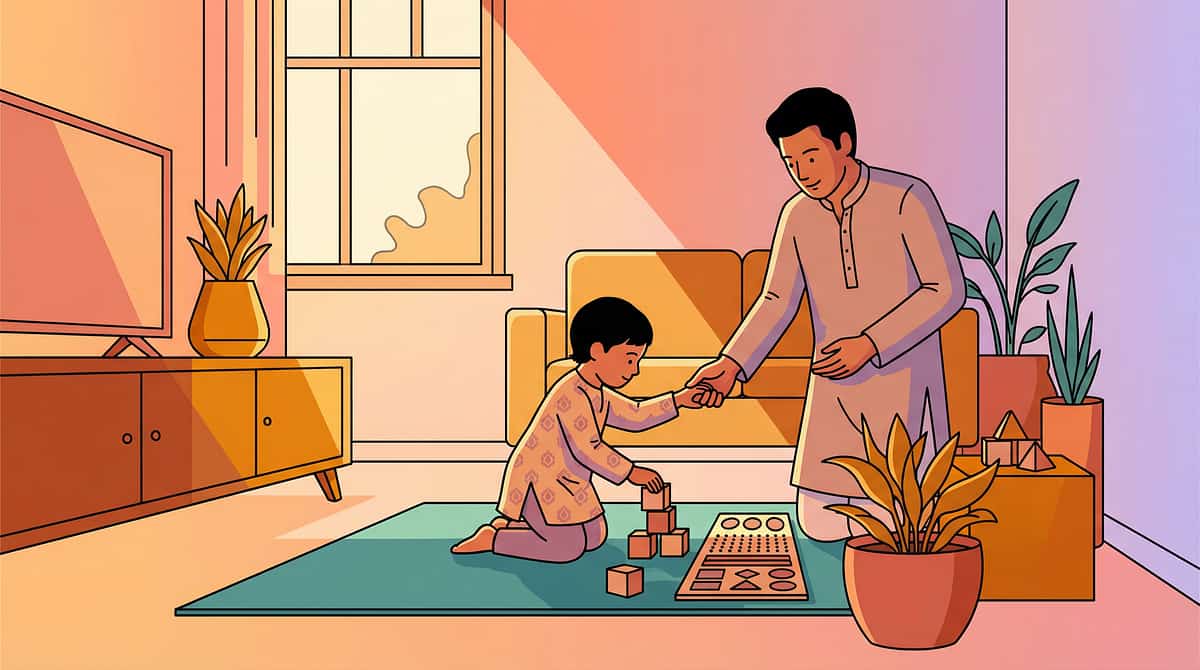
Material 4
Cooperative Communication Games
Canon Category
Problem-Solving Toys | Cause-Effect Toys
Price Range
₹400–1,000
Why This Material Works
Cooperative games require both partners to work toward a shared outcome — meaning neither player can succeed alone. This naturally creates a context where exchanging information, listening to a partner, and coordinating responses are functional and necessary.
Unlike competitive games, cooperative games remove the anxiety of winning and losing, creating a psychologically safer space for exchange practice.
Active Canon Products
Problem-Solving Toy
Matching & Memory Game
Sorting Activity
Problem-Solving Toy

Material 5
Interest Sharing Activity Kit
Canon Category
Communication Support Tools
Price Range
₹100–300 (largely DIY)
Why This Material Works
Meeting the child within their special interest is the most reliable entry point into reciprocal exchange. An interest sharing kit provides structured prompts for the child to share something they love — and then, crucially, to receive information about what you love.
Template cards divided into two sides — "My turn to share / Your turn to share" — make the exchange visible and predictable. Beginning in the child's preferred domain removes the anxiety of unfamiliar topics while still practising the core mechanic: give and receive.
This material is particularly valuable in Week 1–2 when motivation is everything.
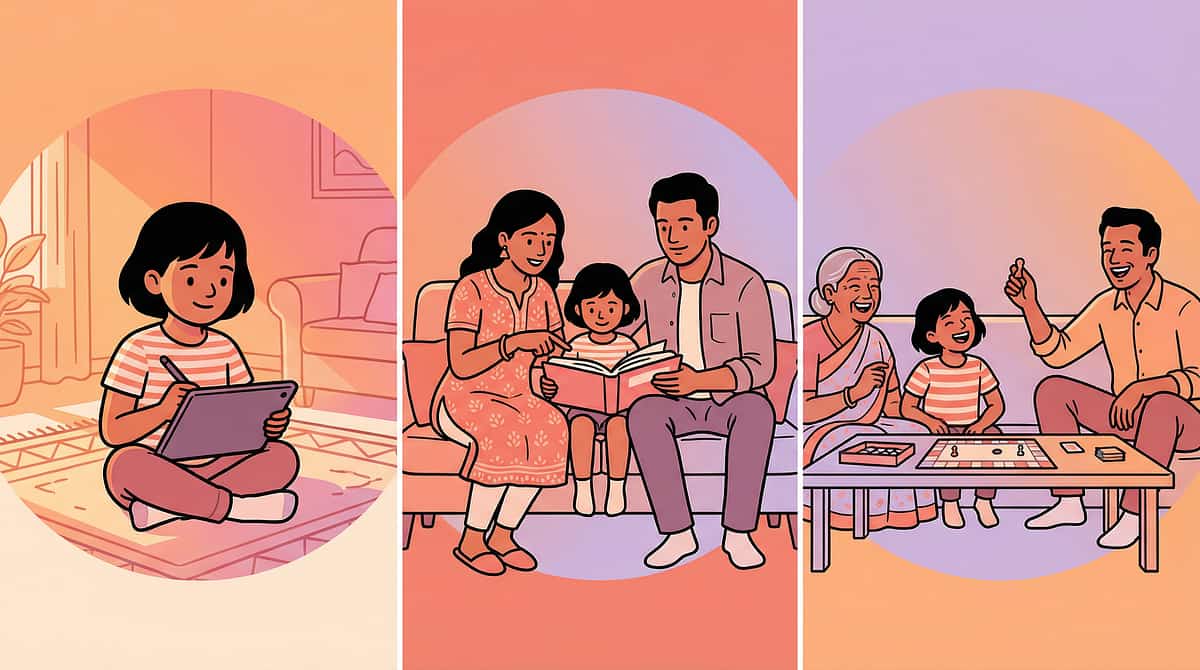
Material 6
Engagement Signal Cards
Canon Category
Communication Support Tools
Price Range
₹150–400 or DIY
Why This Material Works
Engagement signal cards teach children to read — and produce — the facial and postural cues that regulate conversation. Cards showing expressions like "happy/listening," "bored," and "wanting to speak" make social signals explicit and legible.
Many autistic children miss engagement cues not because they don't care, but because the signals are too subtle and fleeting to process in real time. By creating a physical reference set of signals, the cards bridge between the abstract social world and the concrete, processable one.
DIY version: drawn faces on sticky notes are equally effective. The signal, not the medium, is what matters.

Material 7
Reciprocal Play Script Cards
Canon Category
Communication & Language Support Tools
Price Range
₹150–400 or printable free
Difficulty Level
Beginner → Intermediate (scripts are faded as fluency builds)
Session Frequency
Use in every session during Weeks 1–4. Fade from Week 5 onward.
Targets
- Scripted-to-spontaneous language transfer
- Social phrasing and conversational openers
- Confidence in initiating exchanges
- Reducing the cognitive load of "what do I say next?"
Why This Material Works
Most children with social communication differences know what they want to say — they just can't access the words fast enough in the moment. The social world moves too quickly. By the time they've processed what was said and formulated a response, the conversational window has closed.
Reciprocal Play Script Cards solve this by pre-loading the most common social exchange phrases into long-term memory through repetition. Cards contain short, natural-sounding phrases printed on laminated cards — things like "Can I have a turn?", "What do you think?", "That's interesting — tell me more", and "My turn, then yours." The child holds the card, reads it aloud, and gradually internalises it until the script becomes spontaneous speech.
The clinical mechanism is called script fading — a well-validated ABA technique in which the physical prompt (the card) is systematically removed as the phrase becomes automatic. Within 4–6 weeks of consistent use, most children no longer need the card for the phrases they've practised.
How to Use in a Session
- Lay out 3–4 script cards face-up before the session begins
- During the activity, pause at natural exchange points and point to the relevant card
- Child reads the phrase aloud — parent responds naturally
- Repeat the same phrase 3–5 times across the session
- In Week 3, turn the card face-down — child attempts the phrase from memory
- In Week 5, remove the card entirely and observe spontaneous use
DIY Version
Write phrases on index cards in large, clear print. Laminate with sticky tape. Use your child's own preferred phrases — the more personally relevant the script, the faster it internalises. Start with 3 cards maximum. Add new ones only when the previous set is fully faded.
Script Fading Timeline
Week 1–2: Card face-up, child reads aloud. Week 3–4: Card face-down, child recalls. Week 5–6: Card removed, spontaneous use observed. Week 7+: New scripts introduced. Most families see spontaneous use of 2–3 phrases within 6 weeks.
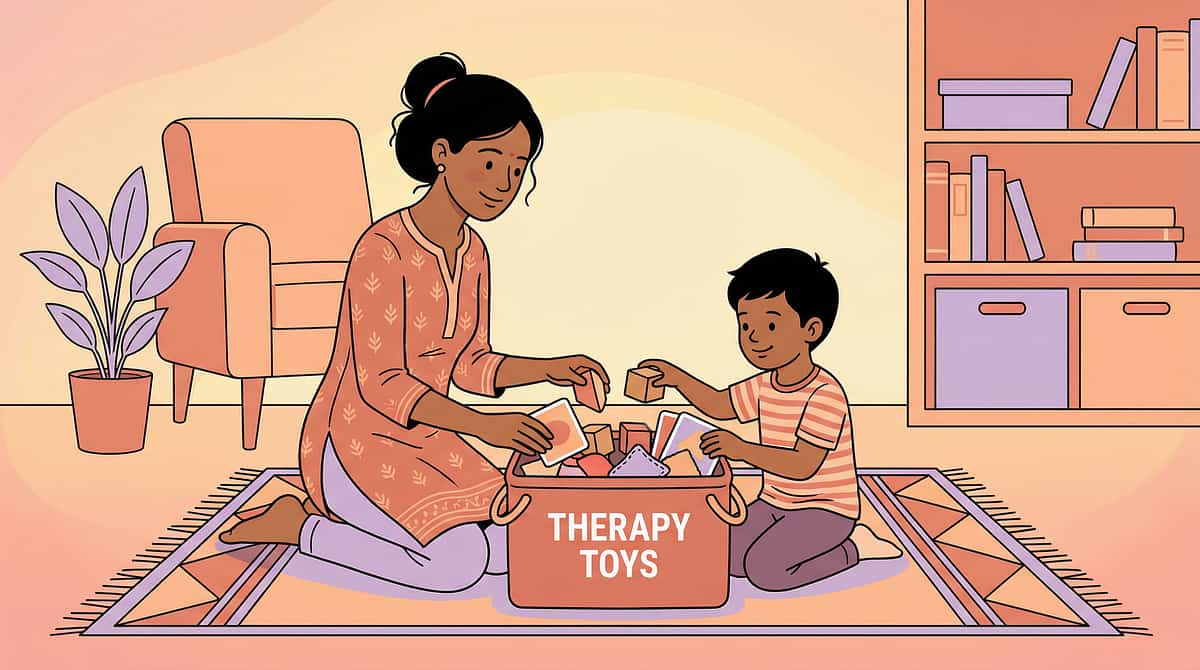
Material 8
Visual Turn Timers (Sand/Digital)
Canon Category
Turn Regulation & Waiting Support Tools
Price Range
₹200–600 (sand timer) / ₹300–900 (digital visual timer)
Difficulty Level
Beginner — suitable from Day 1 of the protocol
Session Frequency
Use in every session. Keep visible on the play surface throughout.
Targets
- Turn duration regulation (knowing when a turn ends)
- Waiting tolerance without anxiety
- Transition readiness between turns
- Reducing "when is it my turn?" interruptions
- Building predictability into the exchange rhythm
Why This Material Works
One of the most common breakdowns in reciprocal interaction isn't unwillingness — it's uncertainty. Children with autism and social communication differences often struggle to tolerate the ambiguity of waiting. "How long do I have to wait?" is not a social question. It's a sensory and regulatory one.
Visual turn timers solve this by making time concrete and visible. A sand timer draining from one chamber to another, or a digital timer with a shrinking colour bar, gives the child a real-time visual representation of "your turn is almost here." The anxiety of waiting dissolves when the wait becomes predictable and bounded.
Sand timers are recommended for children under 7 or those with strong tactile preferences — the physical act of flipping the timer can itself become a satisfying turn-taking ritual. Digital timers (Time Timer® style) are better for older children or those who respond well to colour-coded countdowns.
How to Use in a Session
- Place the timer visibly between parent and child at the start of the session
- When it is the child's turn, flip or start the timer — 60 seconds is a good starting duration
- When the timer ends, say calmly: "Timer's done — my turn now"
- Parent takes their turn for the same duration, then passes back
- Gradually extend turn duration as tolerance builds (60s → 90s → 2 min)
- Over time, fade the timer as the child internalises the rhythm
Choosing the Right Timer
- Age 3–6: Sand timer (60 or 90 seconds), bright colours
- Age 7–10: Time Timer® style digital (visual colour bar)
- Age 10+: Phone timer with a simple countdown display
- Sensory-sensitive children: Silent sand timer only — avoid beeping alarms
The 60-Second Rule
Start every child at 60-second turns, regardless of ability level. This is short enough to feel achievable and long enough to complete a meaningful exchange. Increase by 30 seconds per week only when the child completes 80% of turns without prompting. Most children reach 3-minute independent turns by Week 6.
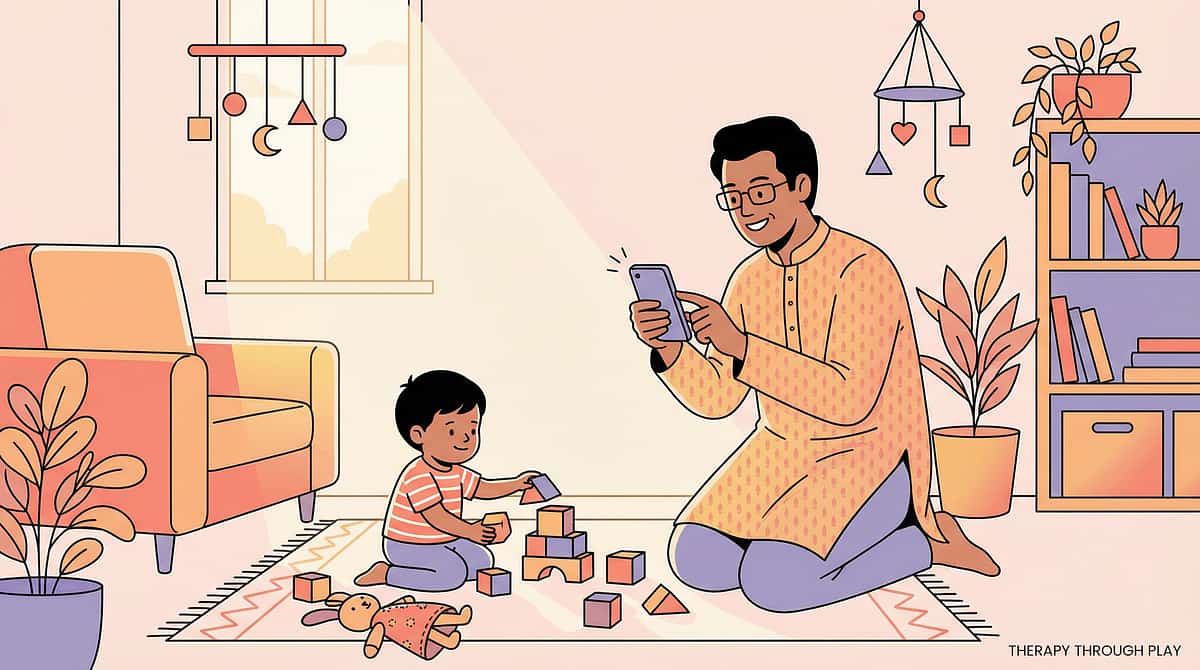
Material 9
Video Recording Device (Smartphone)
Canon Category
Progress Tracking Tools
Price Range
₹0 (existing phone)
Why This Material Works
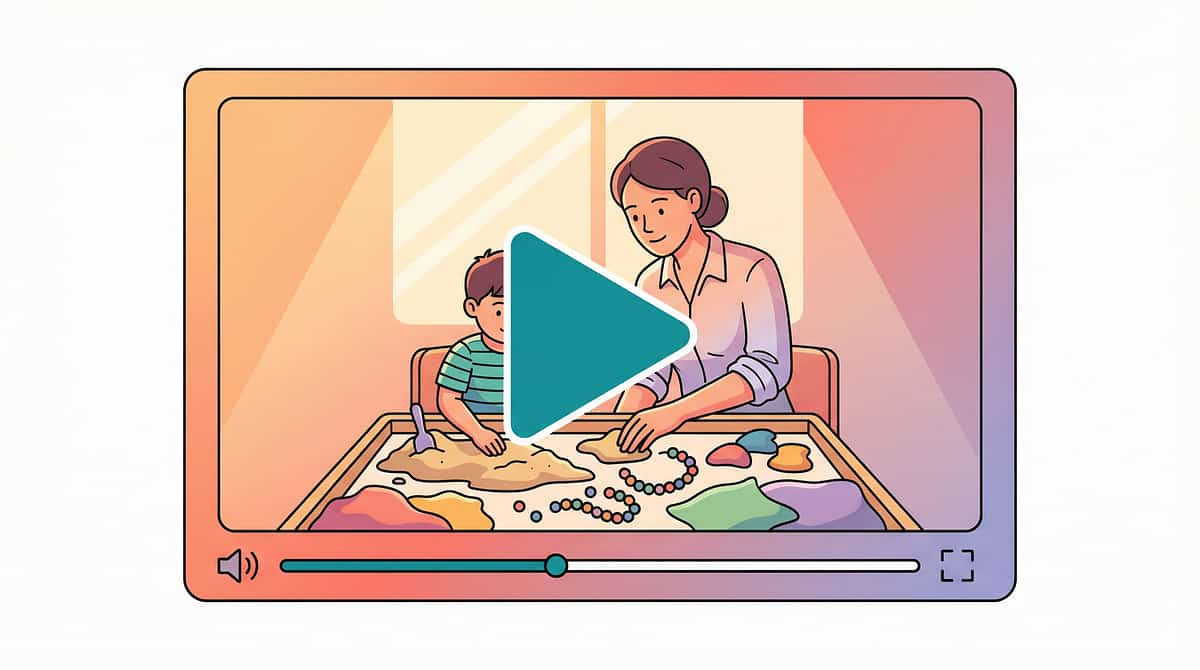
Video review is classified as a Level I evidence-based practice for autism by NCAEP (2020). Recording 2–3 minutes of a session and reviewing it later — even just by yourself as a parent — reveals exchange patterns that are invisible in the moment.
You will notice: when your child almost took a turn. When they looked up. When they began to track what you were saying. These micro-signals are easily missed in real-time but become visible on playback. Over weeks, the recording becomes a progression document — evidence of neurological change made visible.
Safety note: Always obtain your child's assent before recording. Never use footage judgementally.
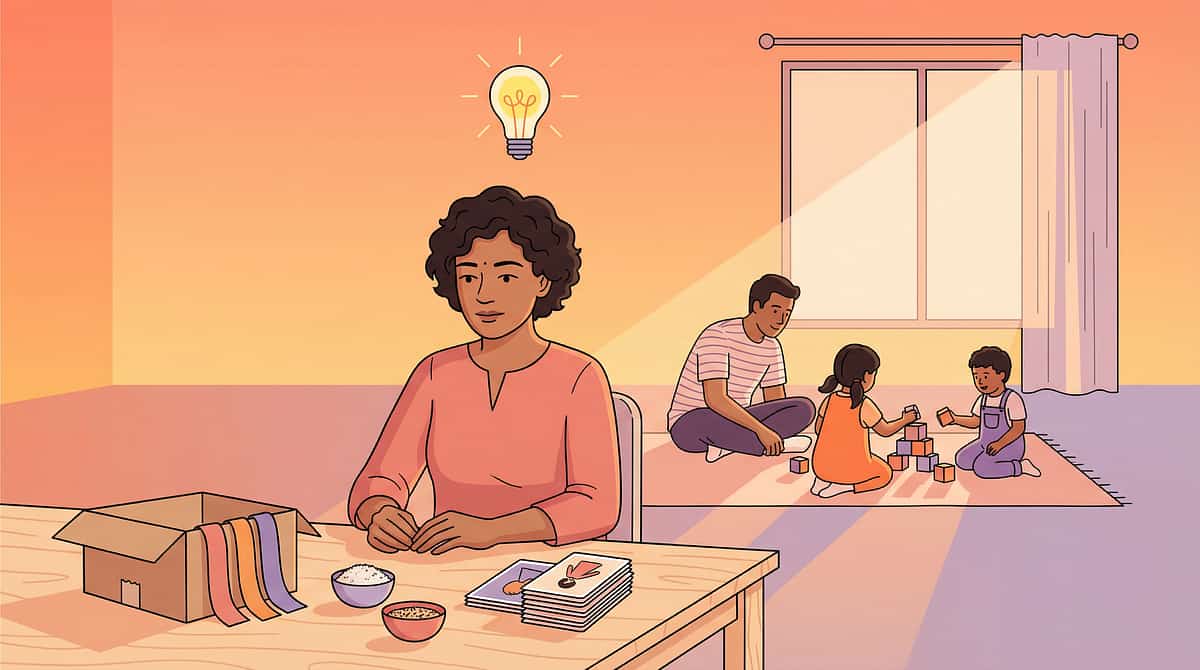
Act II — Budget Adaptations
Every Family Can Start Today — Regardless of Budget
Material | ₹ Store Option | ₹0 DIY Alternative | |
Turn-Taking Game | Board game ₹300+ | Any existing game + a "YOUR TURN" card made from paper | |
Conversation Ball | Foam ball ₹100 | Any soft toy, cushion, or rolled-up sock | |
Q&A Cards | Printed decks ₹200+ | Index cards with handwritten questions | |
Cooperative Game | Commercial set ₹400+ | Describe-and-draw: one describes verbally, other draws | |
Engagement Cards | Printed laminated ₹150+ | Drawn faces on sticky notes: happy/bored/wanting-to-speak | |
Play Scripts | Printed cards ₹150+ | Written scenarios on notebook paper | |
Visual Timer | Sand timer ₹200+ | Phone timer shown to child | |
Interest Sharing Kit | Template cards ₹100+ | Paper divided: "My turn to share / Your turn to share" |
"A piece of paper folded in half with 'MY TURN / YOUR TURN' written on each side. A soft cushion. A list of 10 questions you wrote in 5 minutes. This is a complete reciprocal interaction practice kit. The material supports the learning — but the learning happens in the exchange."
The therapeutic principle — making the invisible turn-taking rhythm tangible and visible — is preserved in every DIY version. The brain processes the signal. The material is the delivery vehicle, not the medicine. When a child needs specific sensory properties (weight, texture, size) as recommended by their OT, consult your therapist before substituting.
Safety Gate
Read This Before Every Session
1
🔴 RED — Do Not Proceed If:
- Child is showing signs of illness, fever, or significant fatigue
- Child has experienced a meltdown or severe distress within the past 2 hours
- Child is currently dysregulated (screaming, self-injuring, severe anxiety)
- Parent is feeling overwhelmed, angry, or under time pressure
- The session would be forced against clear and sustained child resistance
2
🟡 AMBER — Modify Before Proceeding If:
- Child appears mildly tired (shorten to 10 minutes, reduce expectations)
- Child had a difficult day (use preferred topic/material, ultra-low-demand entry)
- Materials are unfamiliar (introduce one at a time over 2–3 days)
- Previous session ended in frustration (begin with guaranteed-success activity)
3
🟢 GREEN — Proceed With Confidence If:
- Child is fed, rested, and in a baseline regulated state
- Child has shown interest in the chosen material before
- Environment is prepared (see Card 12)
- Parent feels calm and has 20 uninterrupted minutes
⛔ STOP SESSION immediately if: Child shows sudden self-injurious behaviour · extreme distress escalation · complete shutdown and withdrawal · signs of physical illness. Small tokens: supervise children under 3 for choking risk. Card sets: rounded corners, laminated preferred.
DOI:10.1007/s12098-018-2747-4 (Padmanabha, Indian J Pediatr, 2019) | Pinnacle Clinical Safety Protocols

Act II — Environment
The Stage Determines the Performance
Room Setup Positions
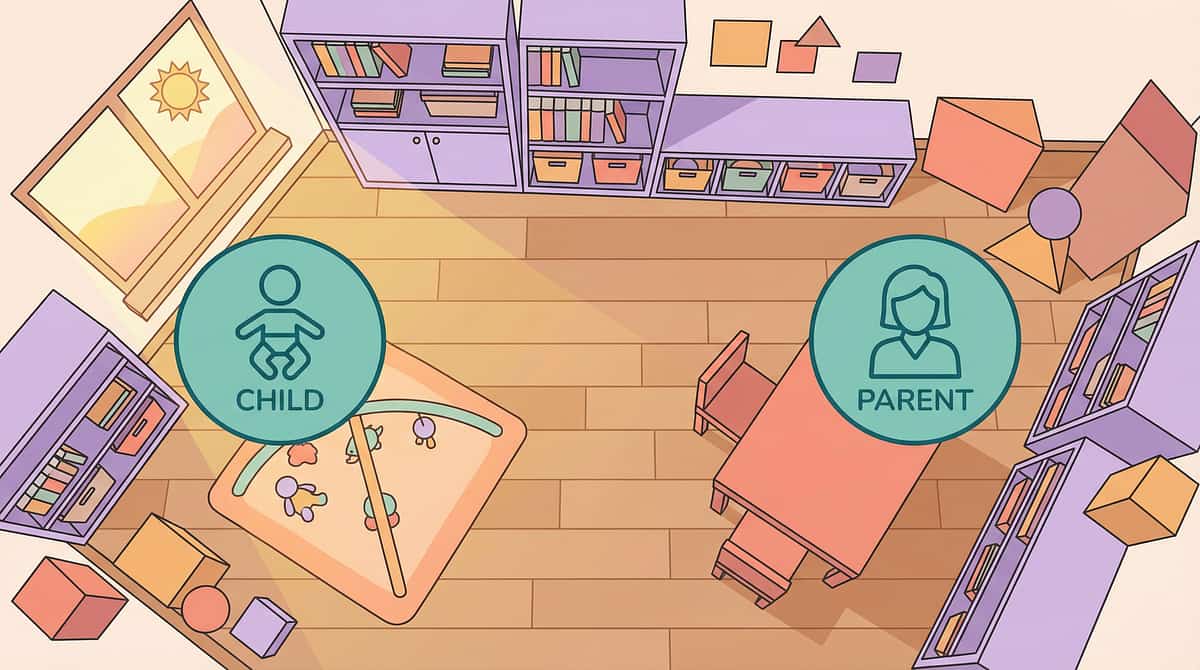
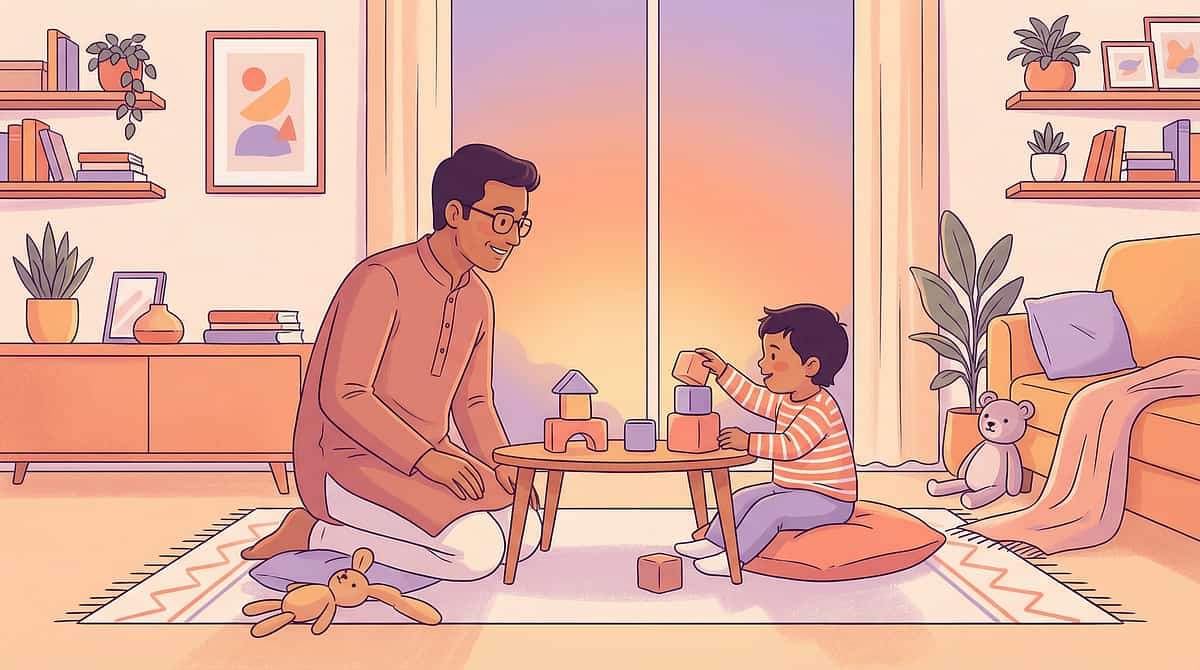
- Child's position: Low chair or floor cushion, facing parent at 90° angle (not face-to-face, which can feel confrontational)
- Parent's position: Same height as child — on floor, at child's eye level
- Materials: Within child's reach, visible but not immediately grabbable (anticipation)
- Exit path: Clear — child never feels trapped
- Remove: Screens, other toys, distracting objects
- Timer: Visible to both child and parent
Environmental Specifications
- Lighting: Warm, natural. Avoid harsh overhead fluorescent.
- Sound: Quiet. No background TV or music during session.
- Space: Minimum 2m × 2m clear floor space
- Temperature: Comfortable 22–26°C
- Time of day: Child's peak alertness window (typically 2–4 hours after waking)
"The physical setup signals to the child: 'This space is for exchanging with you.' A cleared, prepared, intentional space communicates respect. Many reciprocity failures happen before a word is spoken — because the environment cued the wrong behaviour."
Preparation Checklist
1
☐ Materials ready and within reach
2
☐ Phone on silent (parent's)
3
☐ Other siblings managed
4
☐ Child knows the plan
5
☐ Parent has regulated their own state

Act II — Readiness
60-Second Pre-Flight Check
Before every session, run this check. It takes 60 seconds. It prevents 80% of session failures. Most abandoned sessions trace back to one of these five conditions being unmet — not to the child, and not to the technique.
Child State Check
Is your child in a regulated, mid-alert state? Not over-excited, not melting down, not hungry, not post-screen. Green: calm, available, making some eye contact. Amber: slightly dysregulated — do 5 minutes of sensory warm-up first (jumping, squeezing, deep pressure). Red: full meltdown, illness, or extreme fatigue — postpone the session. A dysregulated nervous system cannot learn reciprocity.
Parent State Check
Are you regulated? Rushed, anxious, or frustrated parents transmit that state to their child within 90 seconds of proximity. Green: calm, present, phone away. Amber: take 3 slow breaths before entering the space. Red: if you're in crisis mode today, run a 5-minute low-demand play session instead — connection without agenda is still therapeutic.
Time Window Check
Do you have an uninterrupted 20–30 minutes? Sessions cut short by doorbells, sibling interruptions, or phone calls teach the child that exchanges end unpredictably — the opposite of what RIS is building. Green: 30 minutes clear. Amber: 20 minutes — run a shortened 3-step session (Invitation → Action → Cool-down only). Red: under 15 minutes — skip today and double up tomorrow.
Materials Check
Are your 3 session materials within reach, visible, and ready? Not in a cupboard. Not needing batteries. Not missing a piece. Green: all materials laid out and tested. Amber: one item missing — substitute immediately from your DIY alternatives list. Red: no materials at all — use the Conversation Ball protocol (zero materials required).
Environment Check
Is the space set up correctly? Screens off, floor cleared, exit path open, lighting warm, other children managed. Green: space prepared as per setup guide. Amber: minor distractions present — do a 2-minute tidy before starting. Red: chaotic environment with no quiet space available — move to a bathroom, balcony, or car if needed. The space matters more than the material.
The 3-Question Shortcut
If you only have 10 seconds, ask yourself these three questions:
- Is my child available? (regulated, not hungry, not post-screen)
- Am I available? (calm, present, not rushed)
- Do I have 20 minutes and one material?
If all three are yes — start. If any is no — fix it first or postpone.
What to Do When Conditions Aren't Perfect
- Child dysregulated → 5-min sensory warm-up, then reassess
- Parent dysregulated → 3 breaths + 2-min grounding, then start
- No time → 10-min micro-session: Invitation + 5 exchanges + Cool-down only
- No materials → Conversation Ball protocol (any soft object)
- Wrong environment → Move location; even a car works
The Most Important Pre-Flight Item
Parent regulation. Research on parent-mediated intervention consistently shows that the single strongest predictor of session quality is the parent's own nervous system state at the start. Your child's brain is reading yours before you say a single word. Arrive regulated. Everything else is secondary.
Parent regulation. Research on parent-mediated intervention consistently shows that the single strongest predictor of session quality is the parent's own nervous system state at the start. Your child's brain is reading yours before you say a single word. Arrive regulated. Everything else is secondary.

Step 01 of 06
THE INVITATION — Bring Them In Without Demand
The Invitation is the most underestimated step in the protocol. Done wrong, it triggers resistance before the session has begun. Done right, it creates a moment of genuine curiosity — the child leans in rather than pulling away. The rule is simple: no demand, no pressure, no "you have to." Only interest.
1
For Turn-Taking Board Games
[Place the game visibly within reach but don't open it yet. Sit beside — not opposite — the child.]
"I found this game. I'm going to play it for a bit. You can watch if you want."
[Begin playing alone. Make it look interesting. Narrate quietly: "Ooh — snake! Back I go." Wait. Most children will lean in within 90 seconds. When they do — pause, look at them, and say:]
"Want a turn?"
Do NOT say "Let's play together." Do NOT ask twice. One invitation, then silence.
2
For Conversation Ball
[Hold the ball casually. Don't make eye contact immediately.]
"I've got this ball. I'm going to tell it one thing about my day, then I'm going to put it down."
[Speak one sentence to the ball. Put it down between you. Wait.]
"If you want, you can pick it up and tell it something too."
The ball becomes the social bridge. The child is not talking to you — they're talking to the ball. This removes the social pressure of direct exchange.
3
For Q&A Conversation Cards
[Spread 3–4 cards face-down on the floor between you. Sit at the child's level.]
"These cards have questions on them. I'm going to pick one and answer it out loud. You don't have to do anything."
[Pick a card. Read it. Answer it with genuine enthusiasm — make your answer interesting. Then place the card face-up.]
"There's one more face-down. I wonder what it says."
Curiosity is the invitation. The child's desire to know what the card says pulls them into the exchange.
Child Response | What It Signals | Your Next Move | |
Child moves closer or watches intently | Curiosity activated — pre-engagement | Hold still. Don't rush. Let them come to you. | |
Child picks up material or asks "what's that?" | Invitation accepted — proceed to Step 02 | Smile, hand over material, begin engagement script | |
Child ignores completely for 3+ minutes | Not ready yet — wrong state or wrong material | Put material away. Try again in 10 minutes with a different material. | |
Child grabs material and runs | High interest, low regulation | Gently retrieve. Say: "This one stays here — we play it together." Redirect calmly. | |
Child says "no" or pushes material away | Explicit refusal — honour it | Say: "Okay, no problem." Wait 5 minutes. Try a different material with zero pressure. |
The Golden Rule of the Invitation
Never repeat the invitation more than once. A second invitation becomes a demand. A demand activates the child's threat-detection system and closes the window for reciprocity. One invitation, then silence, then patience. The child's curiosity will do the rest — if you give it space.
Never repeat the invitation more than once. A second invitation becomes a demand. A demand activates the child's threat-detection system and closes the window for reciprocity. One invitation, then silence, then patience. The child's curiosity will do the rest — if you give it space.
Timing: 1–5 minutes | Based on: Pivotal Response Treatment (PRT) — Koegel & Koegel, 2006 | JASPER — Kasari et al., 2010 | DIR/Floortime — Greenspan & Wieder, 1998

Step 02 of 06
THE ENGAGEMENT — The Material Enters the Exchange
1
For Turn-Taking Games
"Okay — here's how this works. I go, then you go, then I go again. Watch." [Take your turn demonstrably. Then pass the turn indicator to your child.] "Your turn now."
2
For Conversation Ball
"I'm going to hold this and tell you one thing. Then I'll pass it to you, and you tell me one thing. Okay? I'll go first." [Hold ball, speak one sentence, pass ball with gesture and eye contact.]
3
For Q&A Cards
"Let's take turns asking each other questions. Draw a card — and ask me what it says." [Child draws card, reads/is helped to read question, parent answers enthusiastically, then immediately draws own card and asks child.]
Child Response Indicators
Response Type | What It Means | Your Response | |
Engagement: child takes turn eagerly | Optimal — neural engagement active | Match their energy, reinforce warmly | |
Tolerance: child takes turn without enthusiasm | Acceptable — processing occurring | Continue calmly, don't over-reinforce | |
Avoidance: child ignores or deflects | Signal to simplify or switch material | Go easier, briefer, less demanding |
Reinforcement cue — first turn: When child completes their FIRST turn (however small), deliver specific praise WITHIN 3 SECONDS: "Yes! You passed it to me — that's exactly how it works!" OR "You asked me a question! That's the give-and-take!"
Timing: 1–3 minutes | PMC11506176 | ABA Reinforcement principles — BACB Guidelines
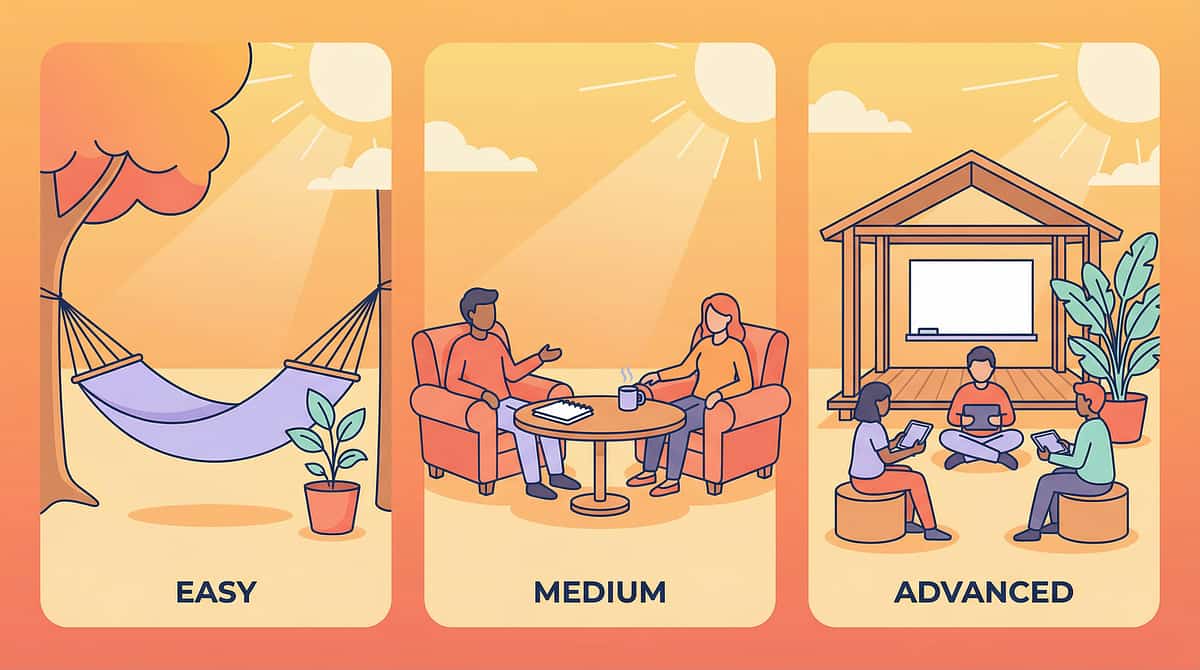
Step 03 of 06
THE THERAPEUTIC ACTION — Practising the Back-and-Forth
The core therapeutic event: the child experiences multiple complete turn cycles — give AND receive — within a single structured exchange. Each cycle that completes (child responds → partner responds → child responds again) lays down a pattern the brain can generalise.
1
Mechanic A — Visual Turn Indicator
The turn token, card, or game marker moves physically between child and parent. Child can SEE: "the object is with me = my turn to act / the object is with them = my turn to listen."
Script: "See how the [token/ball/card] moves? When you have it — it's your turn. When I have it — what are you doing? [Pause] 'Listening?' Exactly. You're listening. That's the give-and-take."
2
Mechanic B — Question-Answer Cycling
Each Q&A card draws a complete reciprocal loop: Question → Answer → Question → Answer. Track turns completed (simple tally on phone or paper).
3
Mechanic C — Interest Exchange
Child shares one thing about their special interest (30–60 seconds). Parent listens visibly (nods, engaged posture). Parent then shares one thing about their interest (30–60 seconds). Child listens (may be prompted). Both ask ONE question about the other's share.
Ideal Response
Child initiates, exchanges spontaneously, notices partner cues
Acceptable Response
Child follows prompts, completes turns with guidance
Concerning Response
No response to prompts after 3 attempts, distress escalating → go to Troubleshooting
Session duration for core action: 8–15 minutes | PMC10955541 | Kasari et al. JASPER 2012 | Koegel 2012
Step 04 of 06
REPEAT & VARY — Therapeutic Dosage
Repetition target:🔄 3–5 complete exchange cycles per session. One cycle = both participants take at least 1 turn each.
The Pinnacle Dosage Principle: 3 complete, joyful, child-initiated exchange cycles are worth more than 12 prompted, mechanical, compliance-based turns. Quality of reciprocal intent beats quantity of mechanical output.
The Pinnacle Dosage Principle: 3 complete, joyful, child-initiated exchange cycles are worth more than 12 prompted, mechanical, compliance-based turns. Quality of reciprocal intent beats quantity of mechanical output.
1
Variation 1 — Increase Exchange Depth
After basic turn-taking is smooth, add: "Now ask me a follow-up question about what I just said." This introduces chaining — extending the exchange beyond one turn.
2
Variation 2 — Switch Roles
Child becomes the "game master" — they manage the turn indicator, decide who goes, confirm turns are complete. Metacognitive awareness of reciprocity mechanics grows rapidly.
3
Variation 3 — Interest-First Entry
Start the exchange with the child's special interest. Begin turns WITHIN their topic, then gradually introduce a pivot: "My turn. I want to tell you about something I love."
4
Variation 4 — Timing Awareness
Introduce the sand timer. "Each turn gets one sand-glass. When the sand runs out, it's the other person's turn." Teaches conversational proportionality.
Satiation Indicators — Know When to Stop
- Child begins repeating themselves verbatim
- Engagement quality drops: shorter turns, monosyllabic responses
- Fidgeting increases, eye contact decreases, body moves away → Begin cool-down immediately. Do not push past satiation.
Step 05 of 06
REINFORCE & CELEBRATE — The Fuel for Change
Reinforcement is not a reward sticker. It is the neurological signal that tells the child's brain: "That behaviour — the exchange, the turn, the response — is worth repeating." Without reinforcement, reciprocal behaviour extinguishes. With it, the brain begins to wire the back-and-forth as a positive, sought-after experience. This step is what makes the technique stick.
The 3-Second Rule
Reinforcement must be delivered within 3 seconds of the target behaviour to be neurologically effective. After 3 seconds, the child's brain has moved on and the reinforcement attaches to whatever they are doing now — not what you intended to reinforce. Watch for the exchange. Respond immediately. Every time.
1
Specific Verbal Praise — The Gold Standard
Generic praise ("Good job!") is weak. Specific praise is powerful. Name exactly what the child did: "You asked me a question — that's the back-and-forth!" or "You waited for my turn and then you went — that's exactly how conversation works!" The specificity teaches the child what behaviour to repeat. Vague praise teaches nothing.
2
Affect Mirroring — Match Their Energy
When the child completes an exchange, let your face show genuine delight. Lean in slightly. Widen your eyes. Smile with your whole face. Children with social communication differences are highly attuned to authentic vs. performed emotion. Flat affect from the parent during reinforcement is one of the most common reasons RIS sessions fail to generalise. Your joy is the reinforcer — not the words.
3
Natural Reinforcers — Let the Activity Reward Itself
The best reinforcement is built into the activity. In a turn-taking game, winning a point IS the reinforcer. In a conversation, the parent's interesting answer IS the reinforcer. Design sessions so that completing the exchange produces something the child naturally wants — information, a turn, a laugh, a win. This is called natural reinforcement and it produces the fastest generalisation.
4
Token Economy — For Children Who Need Tangible Feedback
For children who don't yet respond to social praise, use a simple token board: 5 tokens = 1 preferred activity (5 minutes of trains, a favourite snack, a YouTube clip). Each completed exchange cycle earns one token. Tokens are never removed. The board is visible throughout the session. Fade the token system over 4–6 weeks as social reinforcement becomes intrinsically motivating.
5
The Celebration Ritual — End Every Exchange on a High
Create a short, repeatable celebration ritual that the child enjoys and can anticipate: a specific high-five, a silly handshake, a shared phrase ("Back and forth — that's us!"). The ritual becomes a conditioned reinforcer — over time, the ritual itself signals success and activates the reward pathway. Many families report that children begin initiating the ritual spontaneously, which is itself a reciprocal act.
What NOT to Do — Common Reinforcement Errors
Common Mistake | Why It Backfires | |
Praising compliance ("Good sitting!") instead of exchange | Reinforces passivity, not reciprocity | |
Delayed praise ("You did so well earlier today") | Brain cannot connect praise to behaviour after the moment passes | |
Over-praising every micro-movement | Dilutes the signal — child cannot identify which behaviour matters | |
Withdrawing reinforcement when child makes an error | Creates fear of failure, suppresses initiation | |
Using food as the primary reinforcer long-term | Prevents social reinforcement from developing; creates dependency | |
Praising in a flat, monotone voice | Child reads affect, not words — flat praise registers as neutral, not positive |
Timing: Ongoing throughout session | Based on: ABA Reinforcement Principles — BACB Guidelines | Pivotal Response Treatment — Koegel & Koegel, 2006 | Natural Environment Teaching — Sundberg & Partington, 1998
Step 06 of 06
THE COOL-DOWN — End With Intention
The principle: No session ends abruptly. An abrupt ending disrupts the child's sense of closure and creates anxiety about future sessions. A predictable, gentle transition preserves the positive experience and primes readiness for the next session.
2 Minutes Before
"Two more turns, then we're going to wrap up our [game name]."
1 Minute Before
"One more turn each, then we put it away together."
Final Exchange Ritual
"That was great exchanging with you. You took [X] turns. You even asked me a question — I loved that." Then together, child puts materials away in a designated place.
Transition to Next Activity
"Now we're going to [snack / outside / your choice of activity]." Use a visual schedule cue if available. Transition Object ₹425
If Child Resists Ending
"I know you want to keep going — that tells me you enjoyed it. We'll do it again [tomorrow / this afternoon]. For now, it's [next activity time]." Maintain the boundary. Ending on schedule is part of the therapeutic structure.
Post-Session Parent Moment
Before data capture, take 30 seconds to notice your own emotional state. The reciprocal exchange should have produced a moment of genuine connection — however brief. Honour it.
Act III — Data Capture
60 Seconds of Data Now Saves Hours of Guessing Later
Session Tracker — C-337 Reciprocal Interaction
Field | Record This | Example | |
Date & Time | DD/MM/YYYY | 15/03/2025, 4:30pm | |
Material Used | Which of the 9 materials | Turn-Taking Game + Conversation Ball | |
Turn Cycles Completed | Count of full exchanges (child → parent → child) | 4 complete cycles | |
Quality Rating | 1 (forced/mechanical) to 5 (spontaneous/joyful) | 3/5 | |
Spontaneous Act | Did child initiate any exchange unprompted? | Yes — asked "what's your favourite?" | |
Notes | Any observation worth capturing | Child looked up at partner twice during exchange |
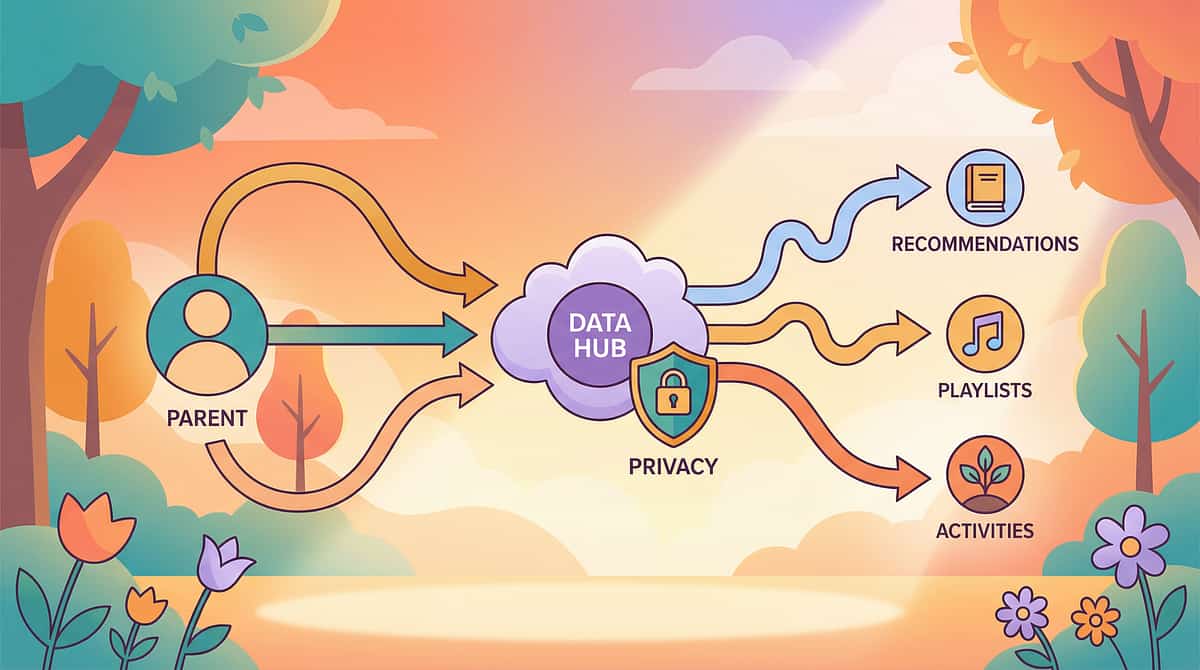
"Every session you track feeds the Social Participation Index inside GPT-OS®. Over 8 weeks, this data becomes a progression curve that your therapist uses to calibrate the next intervention. You are contributing to your child's clinical picture. This 60-second act is part of the therapy."
BACB Data Collection Standards | Cooper, Heron & Heward (ABA, 8th ed.) | GPT-OS® data protocols

Act III — Troubleshooting
Session Abandonment Is Not Failure — It's Data
1
Problem 1: Child refused to engage with any material
Why: Material wasn't motivating enough, or child wasn't in a ready state.
Fix: Use Material 5 (Interest Sharing) — start with THEIR special interest. Reciprocity within interest is the bridge.
Fix: Use Material 5 (Interest Sharing) — start with THEIR special interest. Reciprocity within interest is the bridge.
2
Problem 2: Turns felt robotic/mechanical
Why: Turn-taking is a new skill — mechanical precedes natural. Normal at Weeks 1–3.
Fix: Increase natural reinforcement of spontaneous exchanges. Natural > mechanical.
Fix: Increase natural reinforcement of spontaneous exchanges. Natural > mechanical.
3
Problem 3: Child monopolised the conversation despite visual cues
Why: The drive to continue on their topic overrides the cue-signal.
Fix: Make the cue MORE salient: bigger token, louder "your turn" announcement, physical tap on the indicator. Gradually reduce salience as skill builds.
Fix: Make the cue MORE salient: bigger token, louder "your turn" announcement, physical tap on the indicator. Gradually reduce salience as skill builds.
4
Problem 4: Child distressed when parent "took a turn"
Why: The interruption felt like a rupture to their narrative.
Fix: Give advance notice: "I'm going to take my turn in 30 seconds." Use the timer as a buffer. Predictability reduces distress.
Fix: Give advance notice: "I'm going to take my turn in 30 seconds." Use the timer as a buffer. Predictability reduces distress.
5
Problem 5: Child kept asking questions but couldn't listen to answers
Why: Asking is easier than listening. The listening half of reciprocity is its own skill.
Fix: Make listening observable: "Your job right now is to listen — I'll know you're listening if you can tell me one thing I said."
Fix: Make listening observable: "Your job right now is to listen — I'll know you're listening if you can tell me one thing I said."
6
Problem 6: Session ended in meltdown
Why: Demand was too high, session too long, or material wasn't right.
Fix: Tomorrow, cut to 10 minutes. Use child's most preferred material. Set expectation: 2 exchanges only. Celebrate those 2.
Fix: Tomorrow, cut to 10 minutes. Use child's most preferred material. Set expectation: 2 exchanges only. Celebrate those 2.
7
Problem 7: Parent lost patience and defaulted to lecturing
Why: Reciprocity practice is hard for parents too — especially when exhausted.
Fix: Tomorrow, bring a calmer version of yourself. The technique works best when the parent is genuinely curious about what the child will say next — not performing exchange.
Fix: Tomorrow, bring a calmer version of yourself. The technique works best when the parent is genuinely curious about what the child will say next — not performing exchange.
Act III — Personalise
No Two Children Are Identical — Here's How to Tune This Technique
Easier Modifications
For early weeks or difficult days
- Use child's EXACT special interest as the exchange topic
- Start with non-verbal reciprocity: rolling a ball back and forth
- Single-exchange target: just one complete back-and-forth, then 5 minutes of free preferred activity
- No expectation of questioning — just taking turns communicating at all
Harder Modifications
As skills develop
- Introduce exchange with a peer (not just parent)
- Practise in novel topics (not special interest)
- Add the follow-up question requirement
- Practise in mildly distracting environments
- Introduce "I don't know — tell me more" response
By Age
Age | Appropriate Target | |
3–5 years | Non-verbal physical exchange → simple 1-turn verbal | |
5–7 years | 2–4 exchange turns, preferred topic, familiar partner | |
7–10 years | 5+ turns, topic flexibility, spontaneous questioning | |
10–12 years | Multi-topic exchange, peer generalisation, subtle cue reading |
Sensory Profile Adaptations
Sensory Seeker
Use highly tactile, weighted, or moving turn objects (weighted ball, spinning token)
Sensory Avoider
Use visual cards only (no pressure to touch materials), increase physical distance
Act IV — Progress Arc
Weeks 1–2: Planting Seeds
15%
Foundation Phase
████░░░░░░░░░░░
3
Sessions in Week 1
Quality over quantity
4
Sessions in Week 2
Building the habit
What You'll Realistically See ✅
- Child tolerates the turn-taking game without leaving
- Child accepts the conversation ball being passed to them
- Child completes 1–2 prompted turns per session
- Child's resistance to the structure is reducing
What You're NOT Expecting Yet ❌
- Spontaneous exchanges (unprompted)
- Topic flexibility (staying on their topic is normal)
- Genuine listener behaviour
- Generalisation to other partners
"If your child tolerates being at the exchange activity for 3 minutes longer in Week 2 than Week 1 — that is measurable progress. Tolerance precedes engagement precedes mastery. You are witnessing the first layer of neural change."
Week 1–2 is often the hardest for parents. The technique may feel clunky, forced, and artificial. This is normal. The scaffold must come before the building. Do not judge the intervention by its first two weeks. | PMC11506176
Act IV — Progress Arc
Weeks 3–4: The Neural Pathways Are Forming
40%
Consolidation Phase
██████░░░░░░░░░
Consolidation Indicators — Watch for These
✅ Goes to materials without being asked
Child approaches the turn-taking materials unprompted
✅ Anticipates their turn
Child reaches for the ball before it's passed — the reciprocity circuit is activating
✅ Asks one unprompted question per session
Even if about their own topic — asking IS the exchange
✅ Shows mild frustration if YOU take too long
They're now EXPECTING exchange — that expectation IS the reciprocity circuit
✅ Refers back to something you said
Earlier in the session — they were actually listening
If you're seeing 4+ of the above consolidation signs: consider adding one more session per week, or introducing one exchange with a different familiar partner (grandparent, sibling).
"You may notice you feel more confident. The protocol feels less scripted. You're reading your child's exchange cues more fluidly. This is YOUR neural adaptation to the therapeutic exchange too. You are both changing."
Act IV — Mastery Phase
Weeks 5–8: The Exchange Becomes Natural
75%
Mastery Phase
███████████░░░░
🏆 Mastery Badge Criteria — C-337 Reciprocal Interaction
Indicator | What It Looks Like | Context | |
Spontaneous initiation | Child starts an exchange without prompt | Family home, familiar context | |
Topic flexibility | Child follows parent's topic for at least 2 turns | In exchange session | |
Questioning | Child asks at least 1 question about partner's topic | Unprompted | |
Listening behaviour | Child demonstrates they heard partner (responds to content) | During exchange | |
Pause & wait | Child pauses after speaking, waits for partner response | Without visual cue | |
Generalisation seed | Exchange attempted with one new partner | Outside formal session |
Mastery means: the child has an internal working model of back-and-forth exchange that they can access in familiar contexts with familiar partners. This is a foundation for all future social development — not perfection, not neurotypical conversation.
Next Level Options
C-338
Conversation Maintenance
C-340
Perspective Taking
Peer Group
Social Skills Group
PMC10955541 | BACB mastery criteria standards | JASPER generalisation data
Act IV — Celebrate
You Did This.
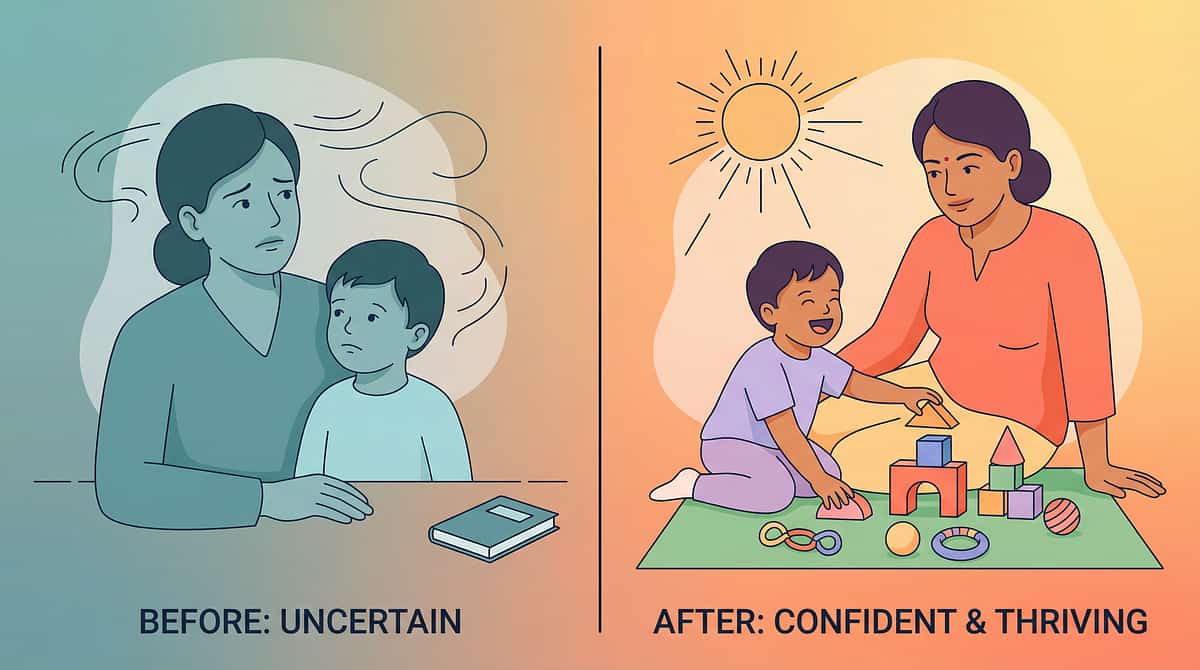
Eight weeks ago, you were exhausted by one-sided conversations. You were grieving the back-and-forth that felt missing. You showed up — session after session — with the games, the ball, the cards, the scripts, the patience, the love.
And now your child has taken a turn in YOUR topic. Your child has waited — really waited — for you to finish speaking. Your child has asked you a question and wanted to know the answer.
"This is not a small thing. This is a neurological achievement. This is a social milestone that researchers track, that clinicians celebrate, that millions of families work years toward."
You built the back-and-forth. One session at a time.
Family celebration suggestion: Tonight, play one more round — just for joy. Not data. Not protocol. Just the exchange.
Journal prompt:"Describe the first moment you saw genuine reciprocal exchange in your child. What did it look like? How did it feel?"
Journal prompt:"Describe the first moment you saw genuine reciprocal exchange in your child. What did it look like? How did it feel?"

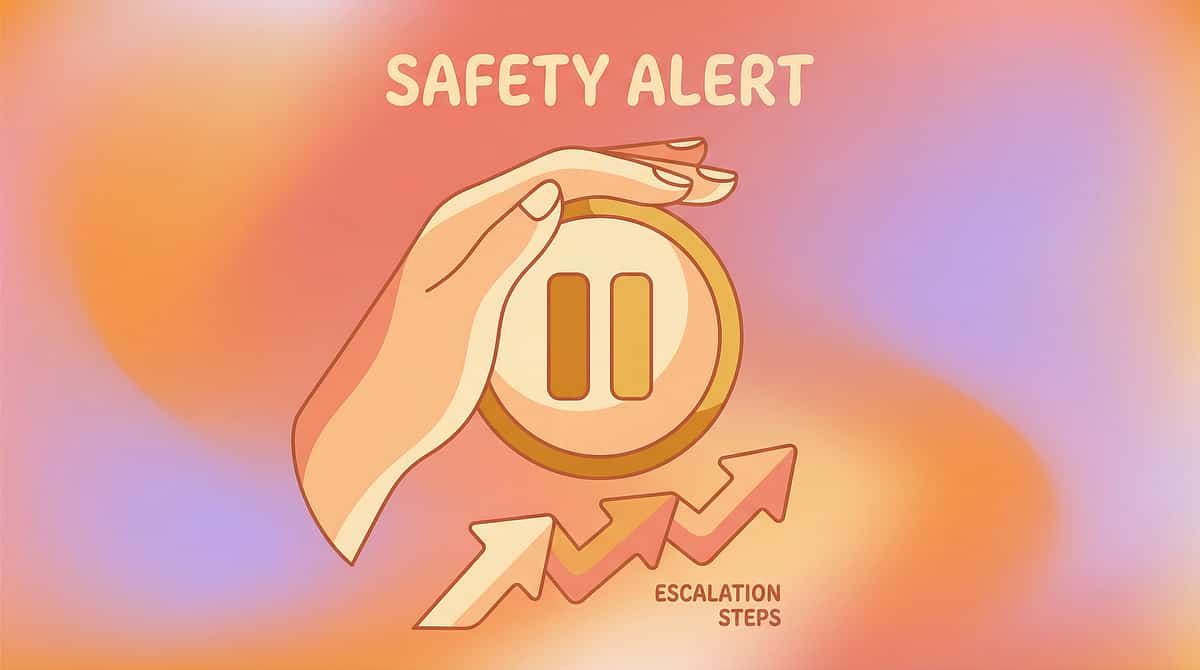
Act IV — Safety Alert
Trust Your Instincts — These Signs Mean Pause and Consult
Sign | What It Looks Like | Why It Matters | Action | |
No progress at Week 8 | Technique feels exactly like Week 1 | May indicate need for professional adjustment | Teleconsult with SLP | |
Complete absence of exchange | Child never responds to any turn-taking attempt | May signal co-occurring anxiety or sensory profile issue | Clinic assessment | |
Regression | Previously achieved exchanges disappear | Could signal life stressor, health issue, or medication change | Consult NeuroDev Paediatrician | |
Severe distress at sessions | Child shows extreme anxiety at session start | Technique may be creating demand pressure beyond threshold | ABA/BCBA consult for modified approach | |
Social isolation worsening | Despite technique, peer rejection increasing | May need social skills group addition | SLP + SpEd consultation | |
Self-injurious escalation | SIB appearing or worsening in sessions | Safety-critical | BCBA + clinic visit URGENT |
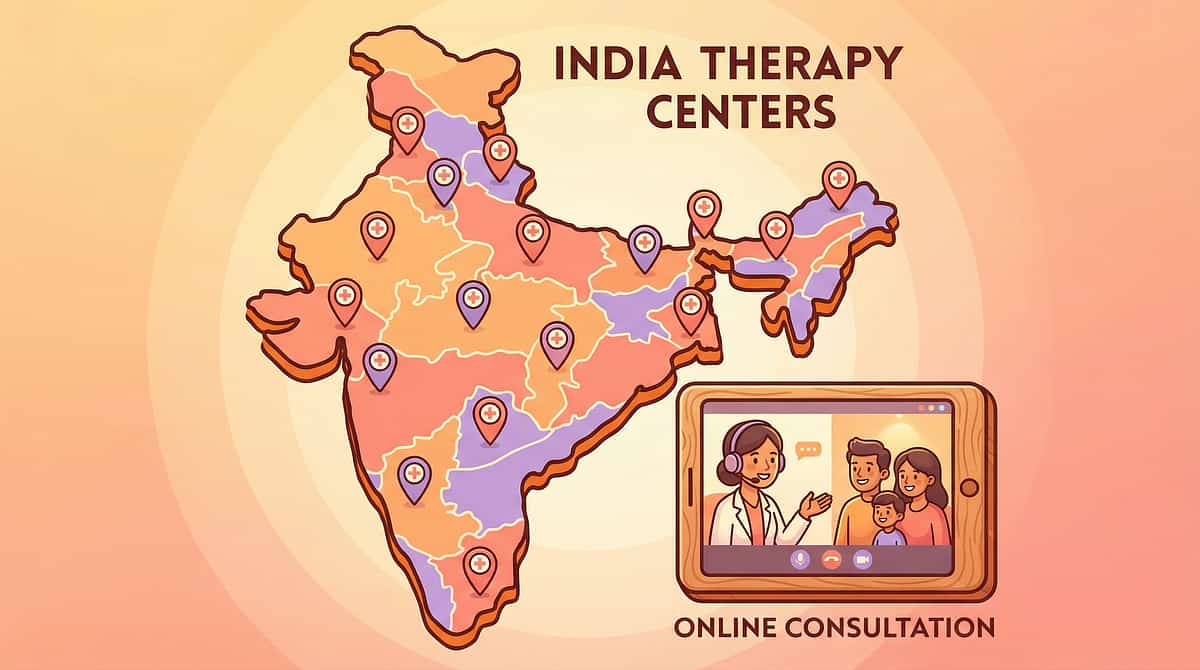
📞9100 181 181 — FREE · 24×7 · 18 languages | Find Your Nearest Pinnacle Centre →

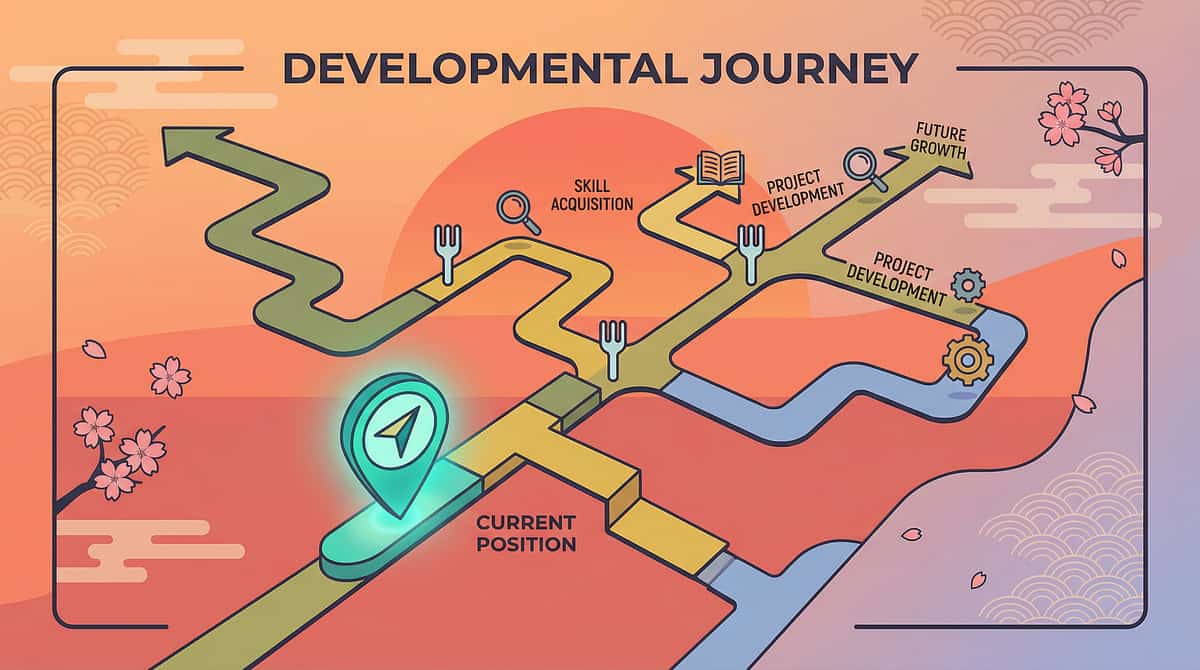
Act IV — Your Pathway
You Are Here — Here Is Where You're Going
1
C-335
Joint Attention
2
C-336
Eye Contact Engagement
3
← C-337 ←
YOU ARE HERE
Reciprocal Interaction
Reciprocal Interaction
4
C-338
Conversation Maintenance
5
C-339 / C-340
Topic Shifting / Perspective Taking
Branching Paths From C-337
Branch A — Verbal Depth
C-338 Conversation Maintenance → C-339 Topic Shifting
Branch B — Social Cognition
C-340 Perspective Taking → Theory of Mind development series
Branch C — Peer Generalisation
Peer Social Skills Group → School inclusion support
Branch D — If C-337 Didn't Resonate
Non-verbal reciprocity first → Physical turn-taking → Re-approach C-337 with new material set
Prerequisite reminder: C-335 Joint Attention (sharing attention on an object/activity) and C-336 Eye Contact (orienting to partner signals) are the foundation that enables reading engagement cues during exchange.
Preview of 9 materials that help building reciprocal interaction Therapy Material
Below is a visual preview of 9 materials that help building reciprocal interaction therapy material. The pages shown help educators, therapists, and caregivers understand the structure and content of the resource before use. Materials should be used under appropriate professional guidance.








Link copied!
Act IV — Related Techniques
More Techniques in the Social Communication Domain
With the C-337 starter kit (turn-taking game + conversation ball + Q&A cards), you already have materials for four additional techniques. One kit, four techniques.
Technique | Code | Difficulty | Materials You May Already Own | |
Joint Attention Building | C-335 | 🟢 Foundational | Matching games ✓ | |
Eye Contact Engagement | C-336 | 🟢 Foundational | Conversation cards ✓ | |
Conversation Maintenance | C-338 | 🟡 Core | Q&A cards ✓ | |
Topic Shifting Practice | C-339 | 🟡 Core | Conversation ball ✓ | |
Perspective Taking | C-340 | 🔴 Advanced | Story cards (new) | |
Social Motivation Building | B-025 | 🟡 Core | Cooperative games ✓ |